Acta Aeronautica et Astronautica Sinica ›› 2025, Vol. 46 ›› Issue (15): 130928.doi: 10.7527/S1000-6893.2024.30928
• Fluid Mechanics and Flight Mechanics • Previous Articles
Yuanwei LYU1,2, Yunduo ZHAO1, Jingyang ZHANG1( ), Lijun CHEN2, Siwei XIAO1
Received:2024-07-10
Revised:2024-08-16
Accepted:2024-10-18
Online:2024-12-02
Published:2024-11-04
Contact:
Jingyang ZHANG
E-mail:zjy@nuaa.edu.cn
Supported by:CLC Number:
Yuanwei LYU, Yunduo ZHAO, Jingyang ZHANG, Lijun CHEN, Siwei XIAO. Numerical investigation of aero-elastic coupling in multi-leaf wave foil type dynamic pressure gas radial bearings[J]. Acta Aeronautica et Astronautica Sinica, 2025, 46(15): 130928.
Fig.1
Physical model
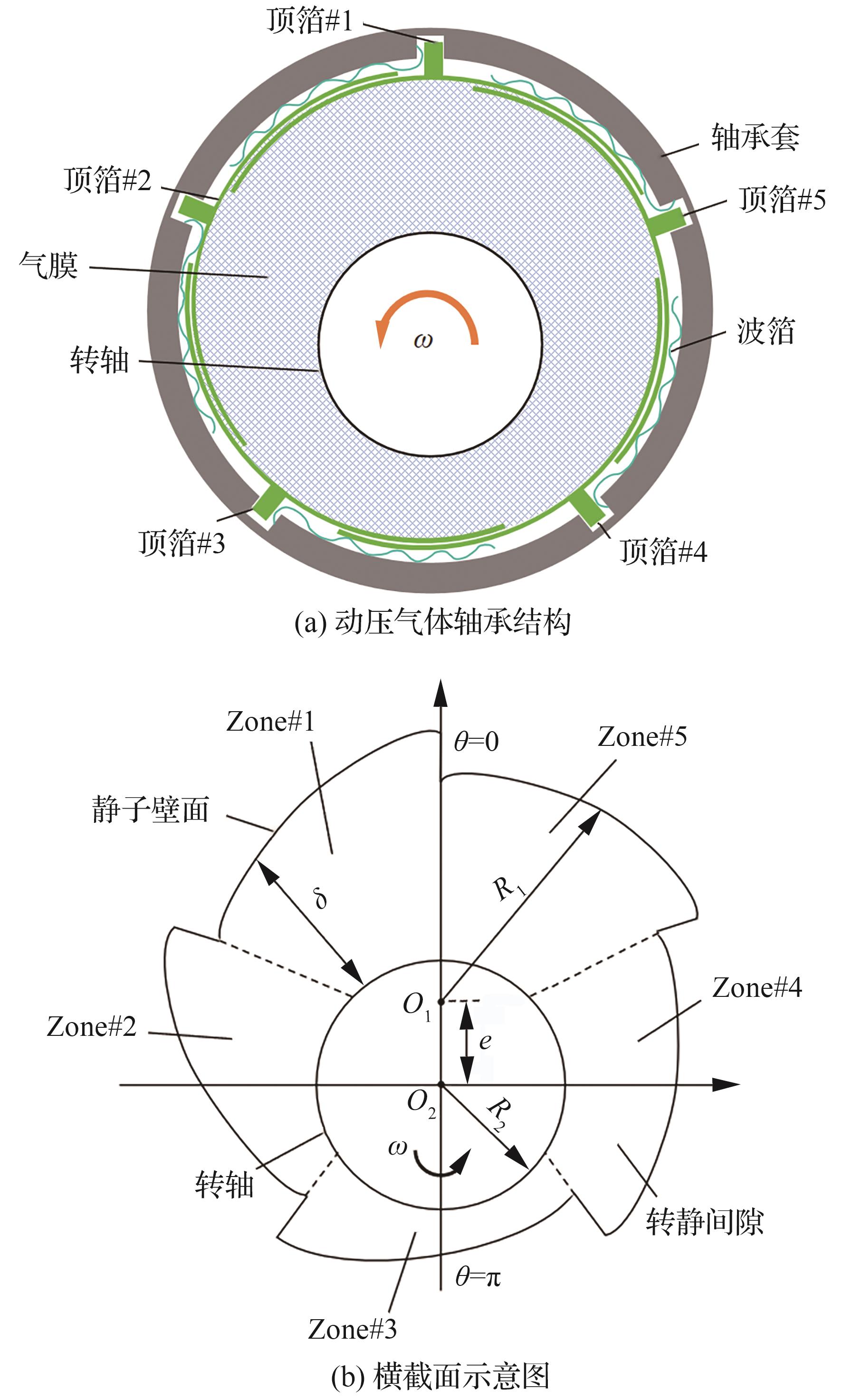

Table 1
Parameters employed in this study
| 参数 | 数值 |
|---|---|
| 顶箔半径R1/mm | 22.9 |
| 转子半径R2/mm | 21.9 |
| 轴承长度L/mm | 25 |
| 顶箔厚度tt/μm | 100 |
| 波箔厚度tb/μm | 100 |
| 泊松比v | 0.29 |
| 杨氏模量E/GPa | 200 |
| 环境压力P0/Pa | 1.013×10⁵ |
| 环境温度T0/K | 293.15 |
| 动态黏度μ/(Pa∙s) | 1.84×10⁻⁵ |
Fig.2
Boundary conditions
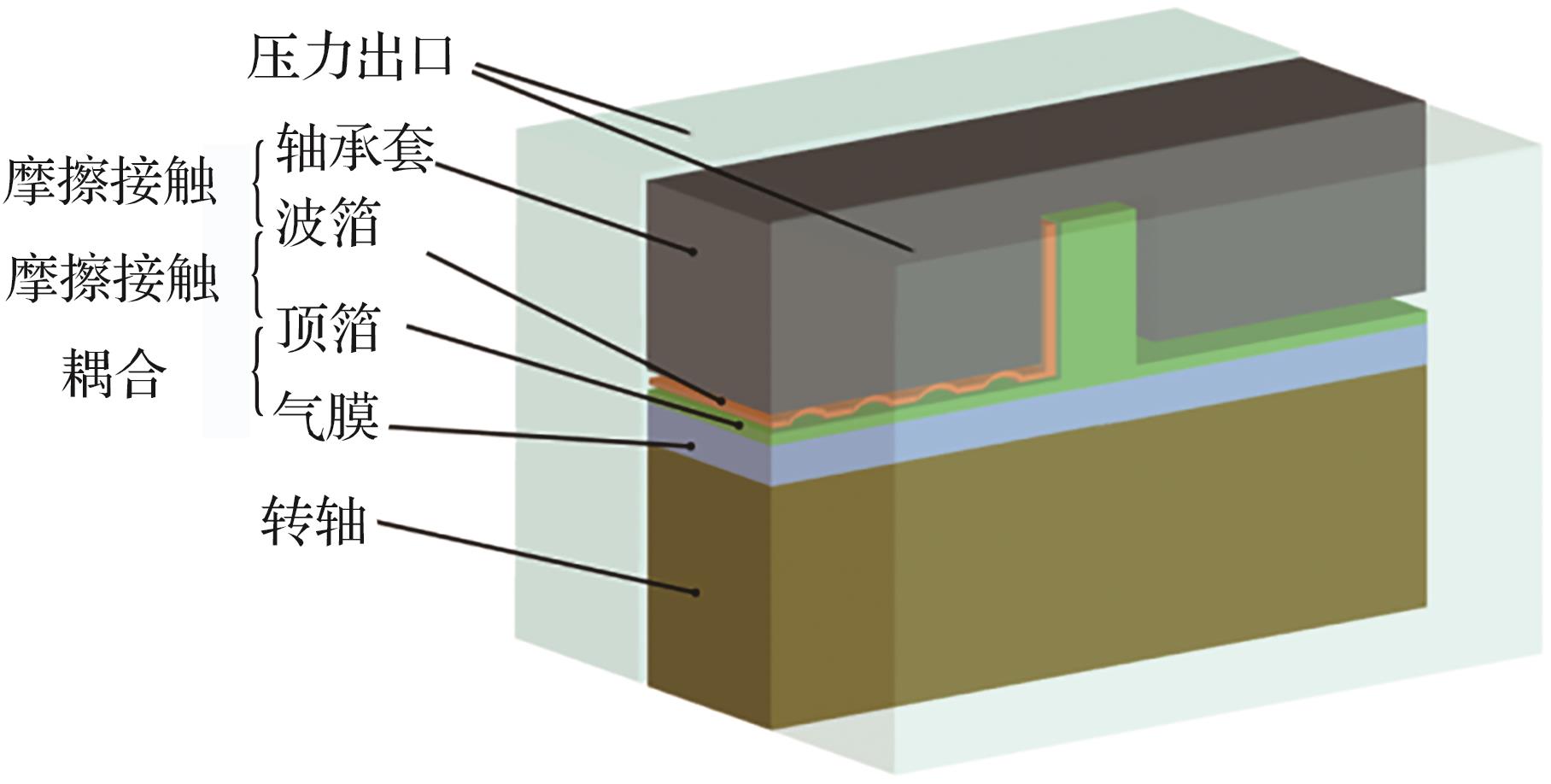
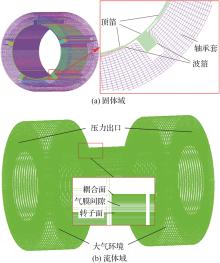
Fig.3
Mesh division
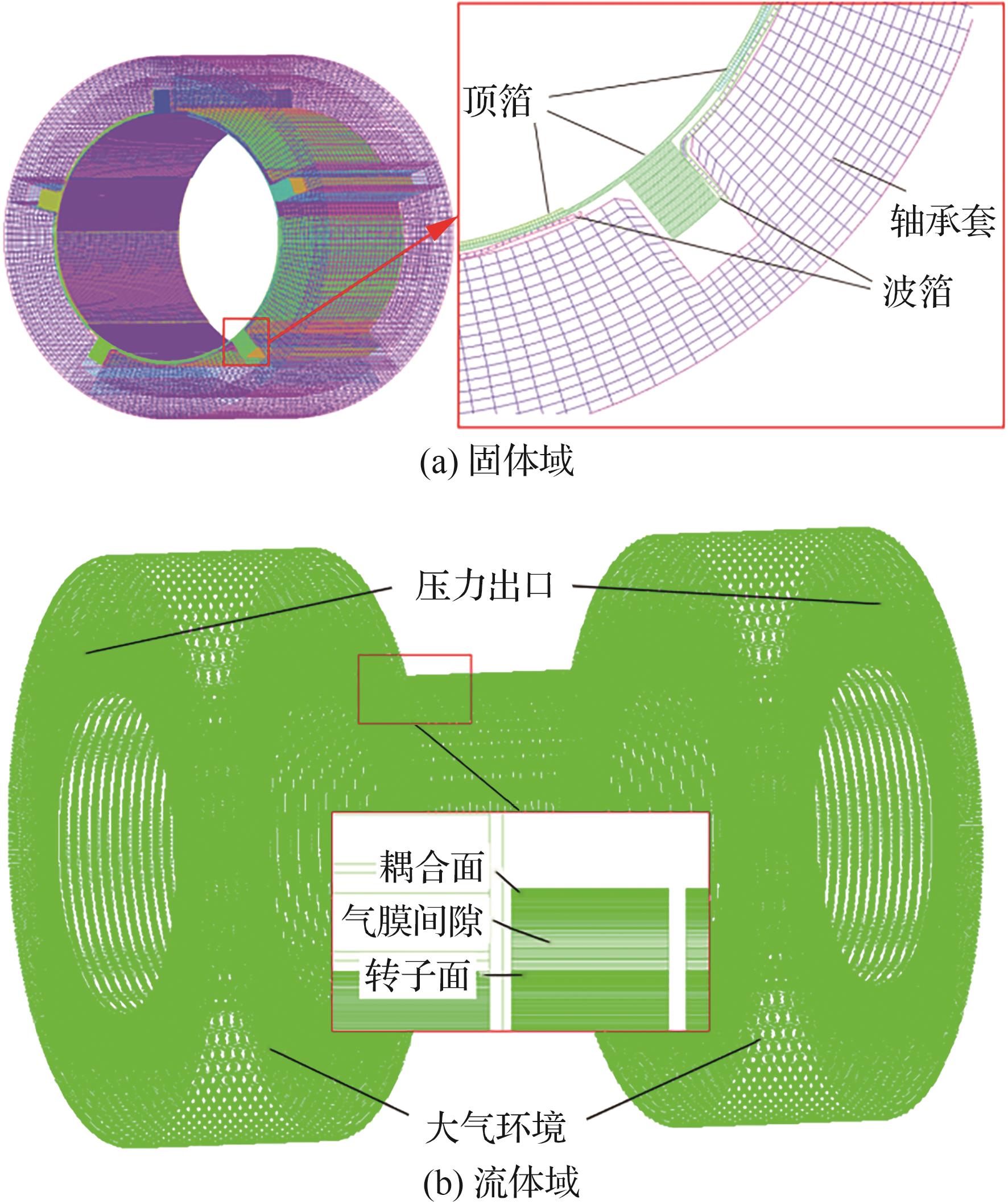
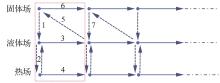
Fig.4
Specific calculation flow of two-way FSI
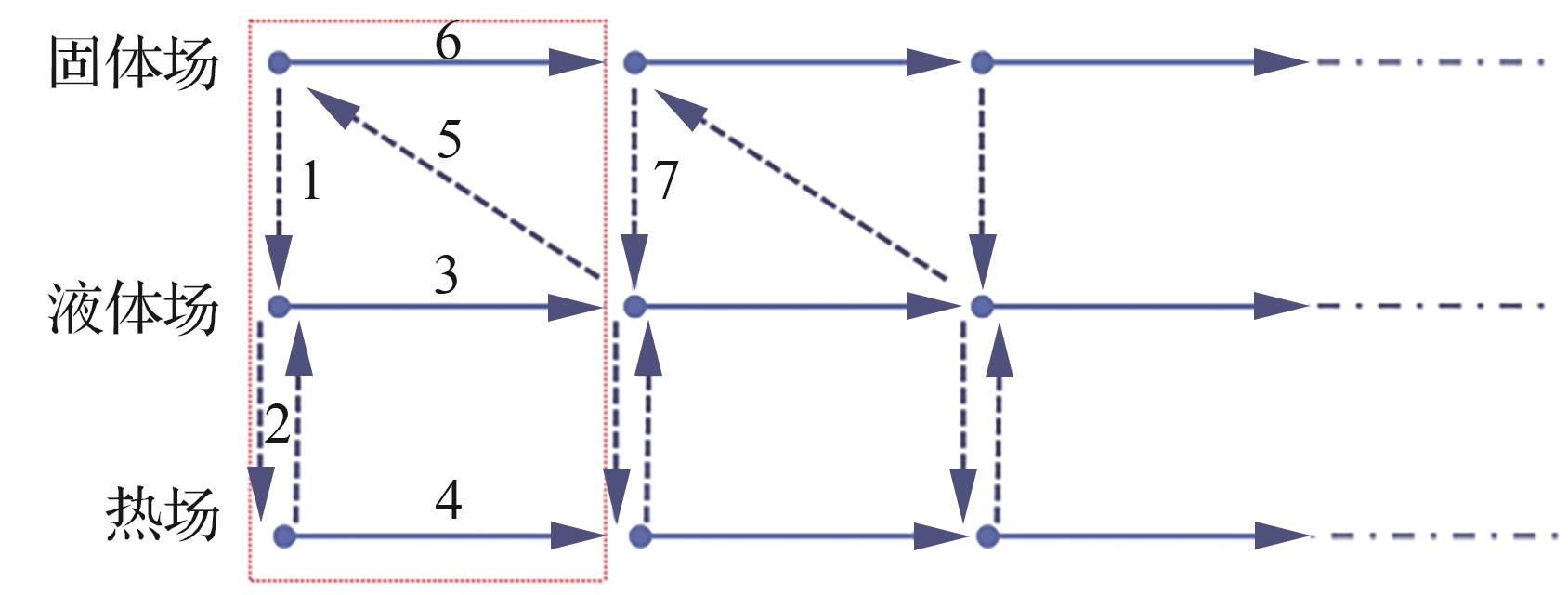
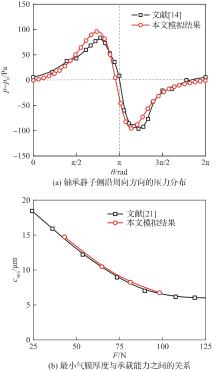
Fig.5
Results of this study compared with literatures[14,21]
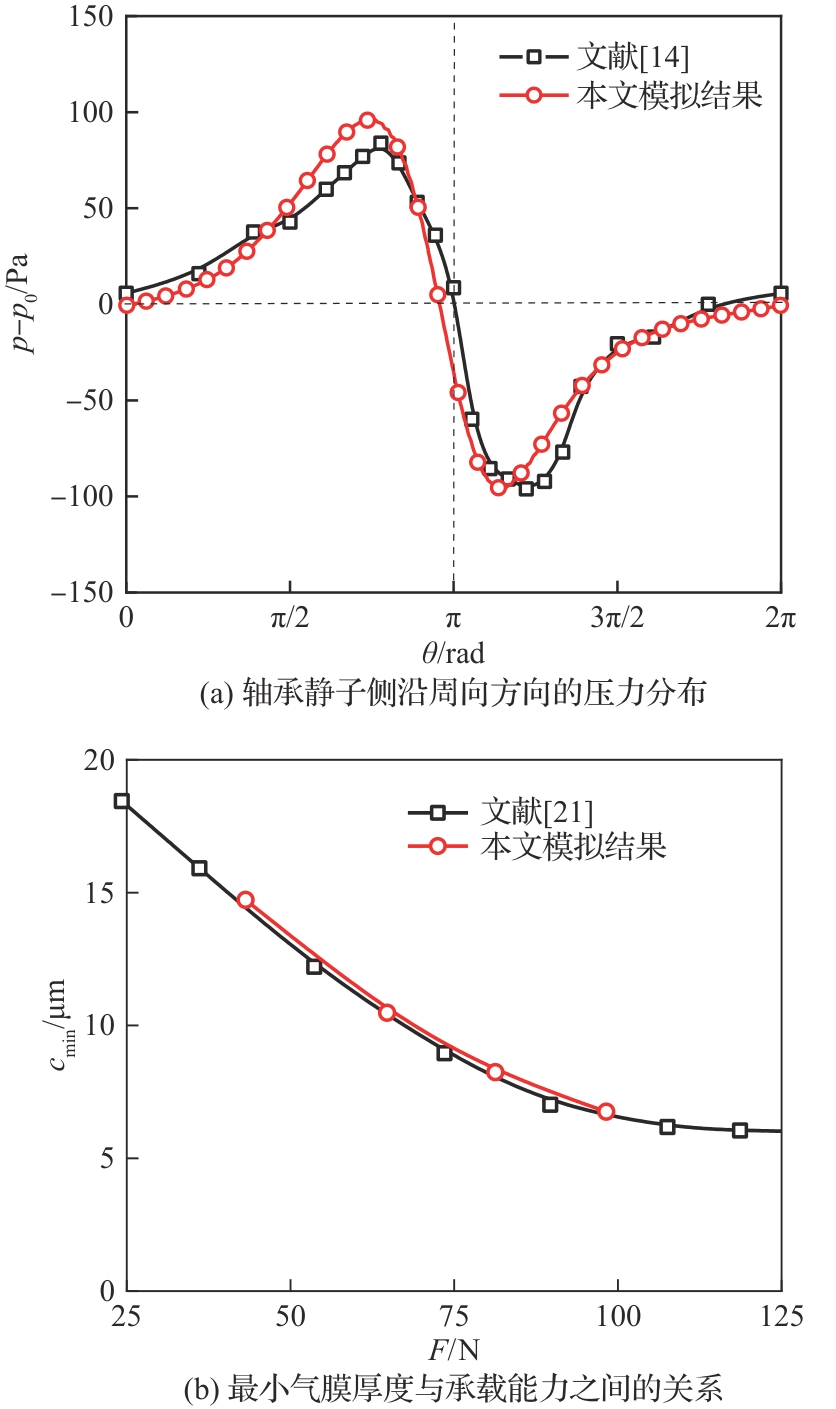
Table 2
Parameters in baseline working condition
| 参数 | 数值 |
|---|---|
| 平均间隙尺度δ/μm | 100 |
| 转速ω/(r·min-1) | 6.0×10⁴ |
| 偏心率ε | 0.6 |
| 箔片杨氏模量E/GPa | 200 |
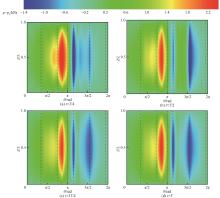
Fig.6
Instantaneous pressure contours of gas film in baseline working condition
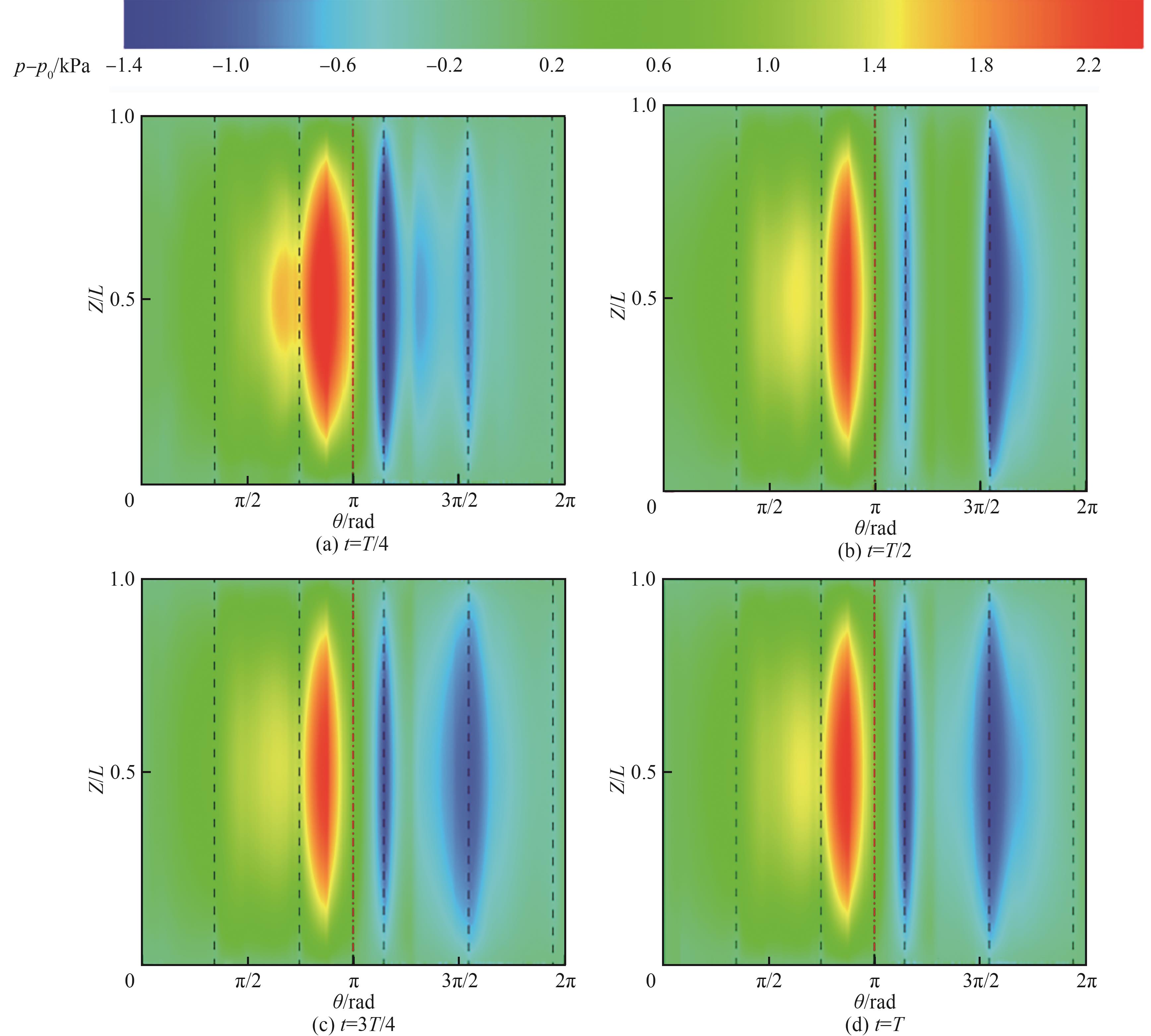
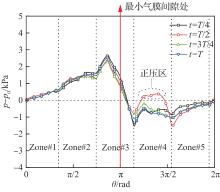
Fig.7
Variation of instantaneous pressure along circumferential direction at Z/L=0.5 in baseline working condition
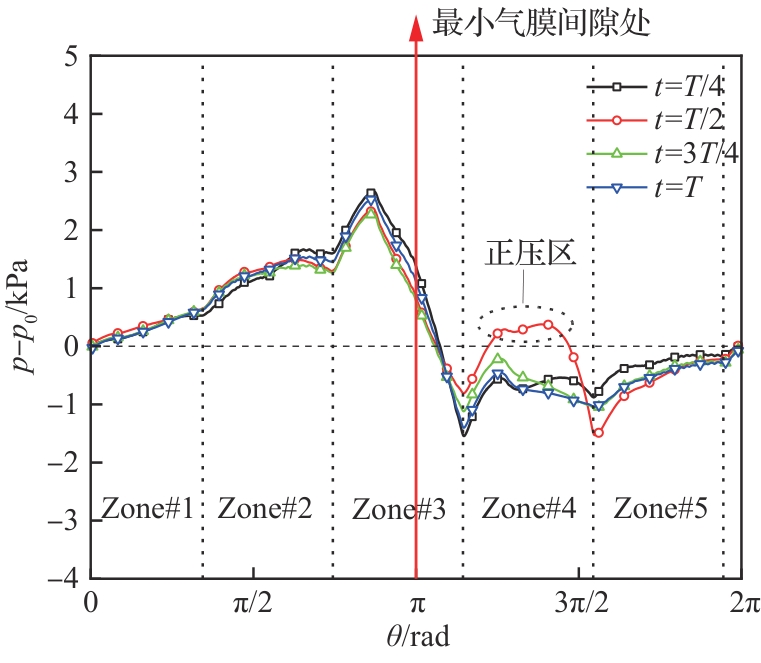
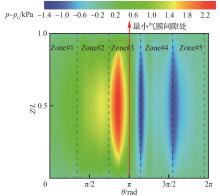
Fig.8
Contours of time-averaged pressure of gas film in baseline working condition
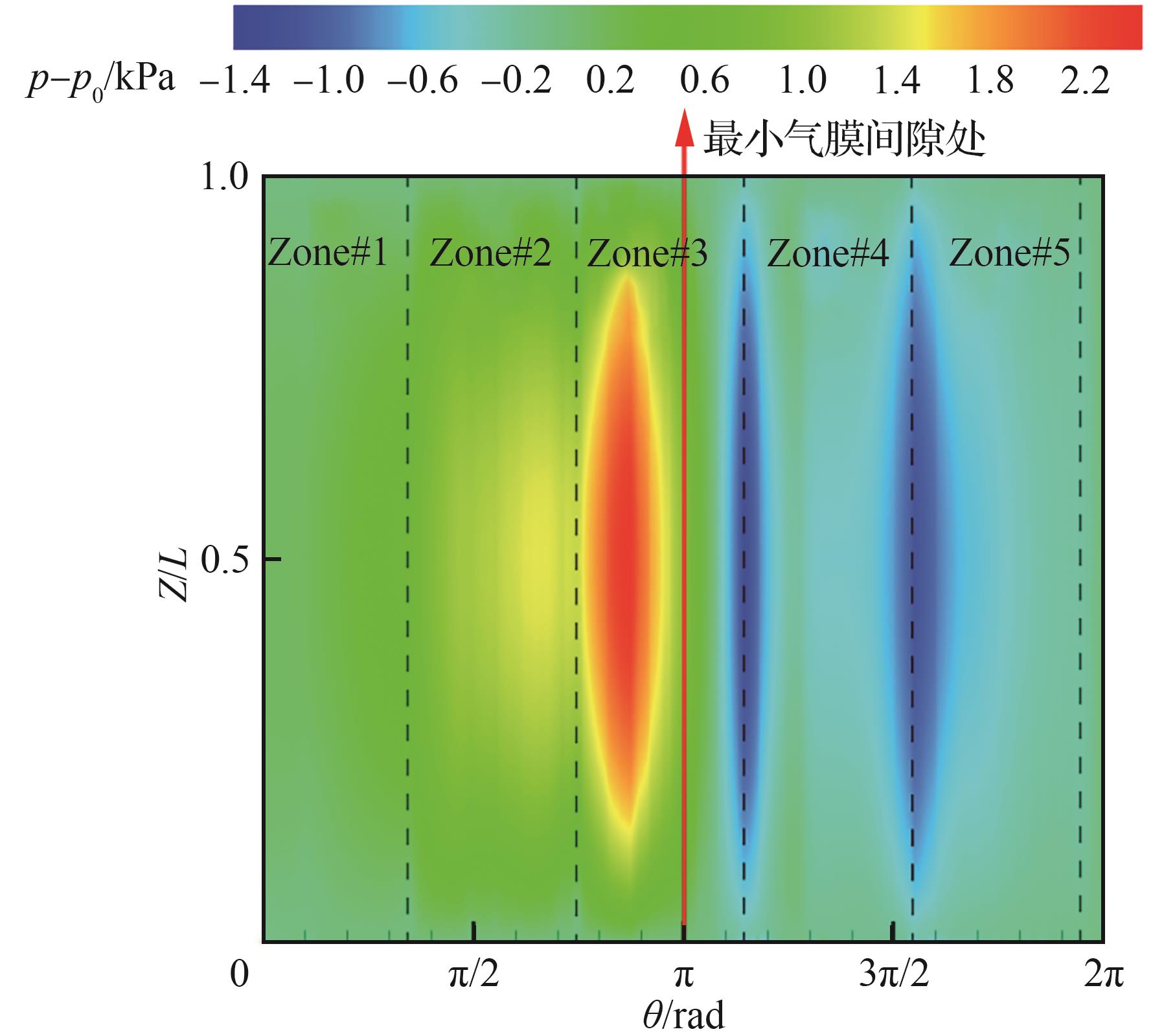
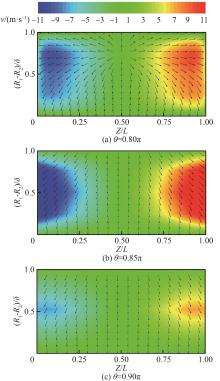
Fig.9
Contours of axial velocities at different clearance at the position of No. 2 foil on the radial section
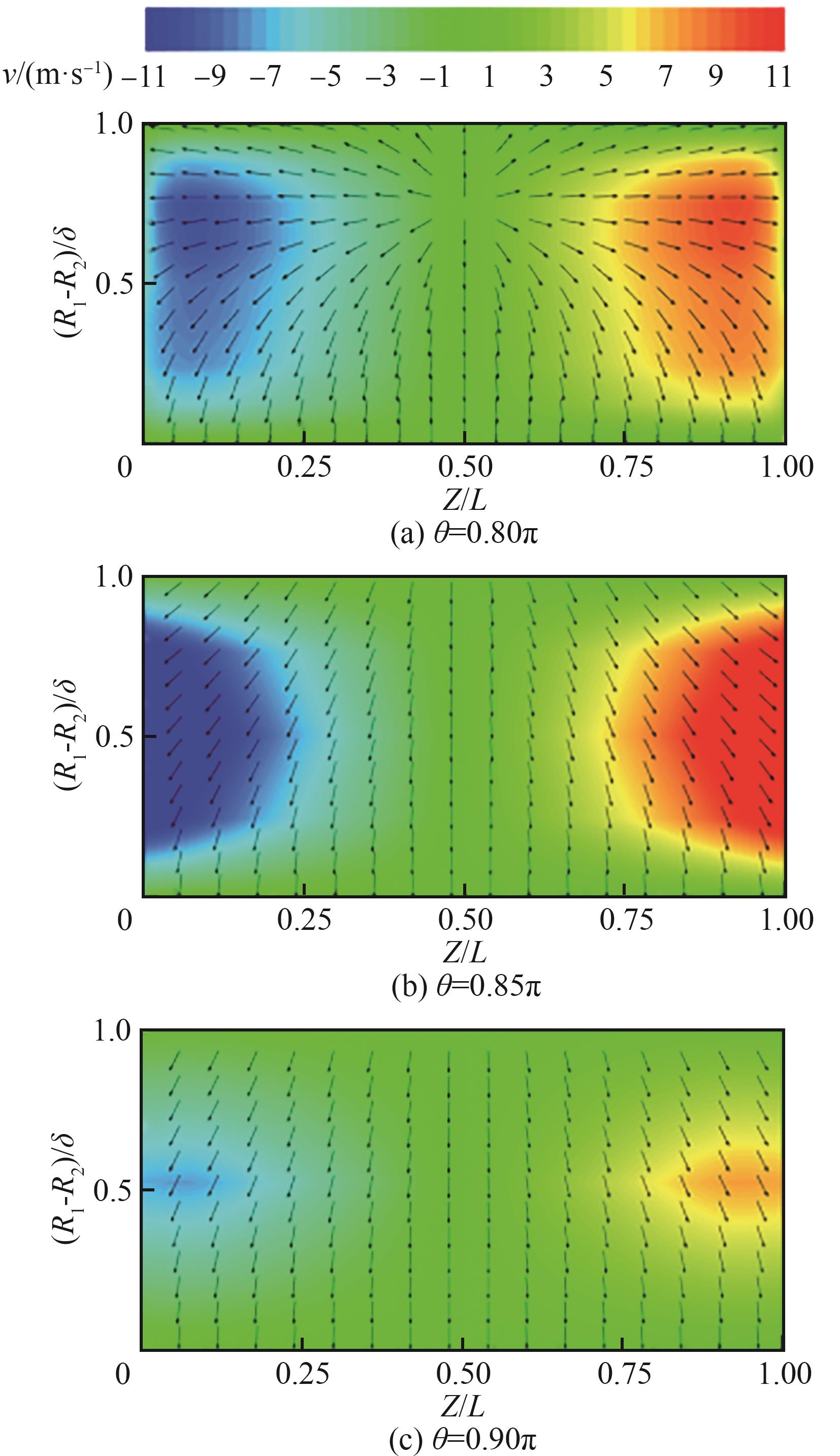
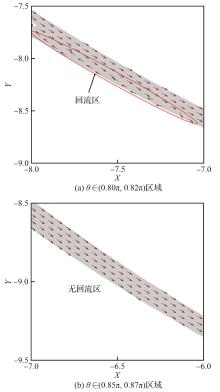
Fig.10
Position of middle section and vector diagram of different regions of No.2 foil in baseine working condition
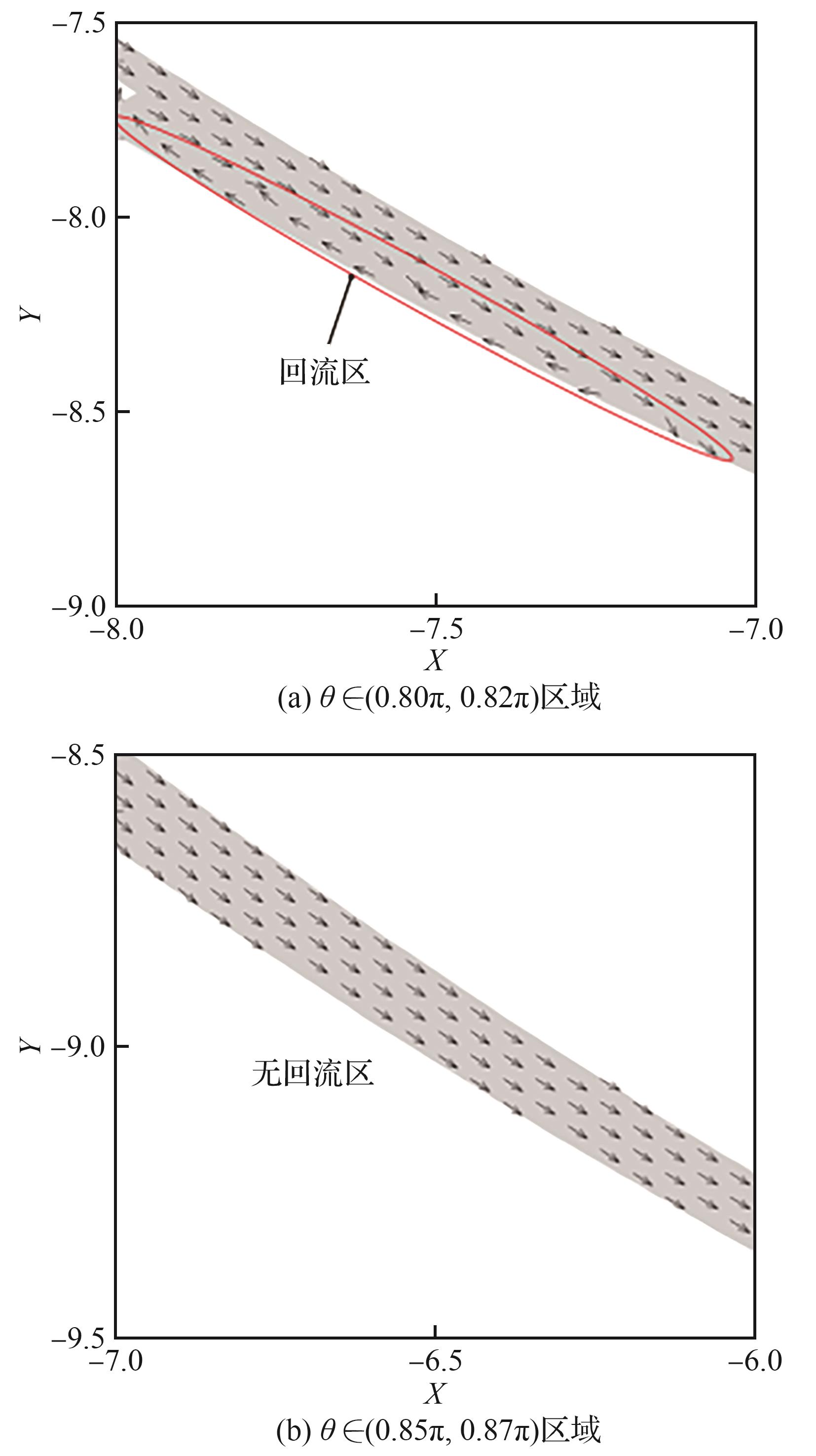
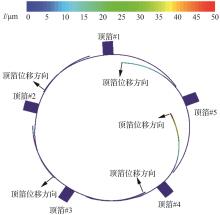
Fig.11
Schematic diagram of deformation of top and bumb foil at the center section in baseline working condition
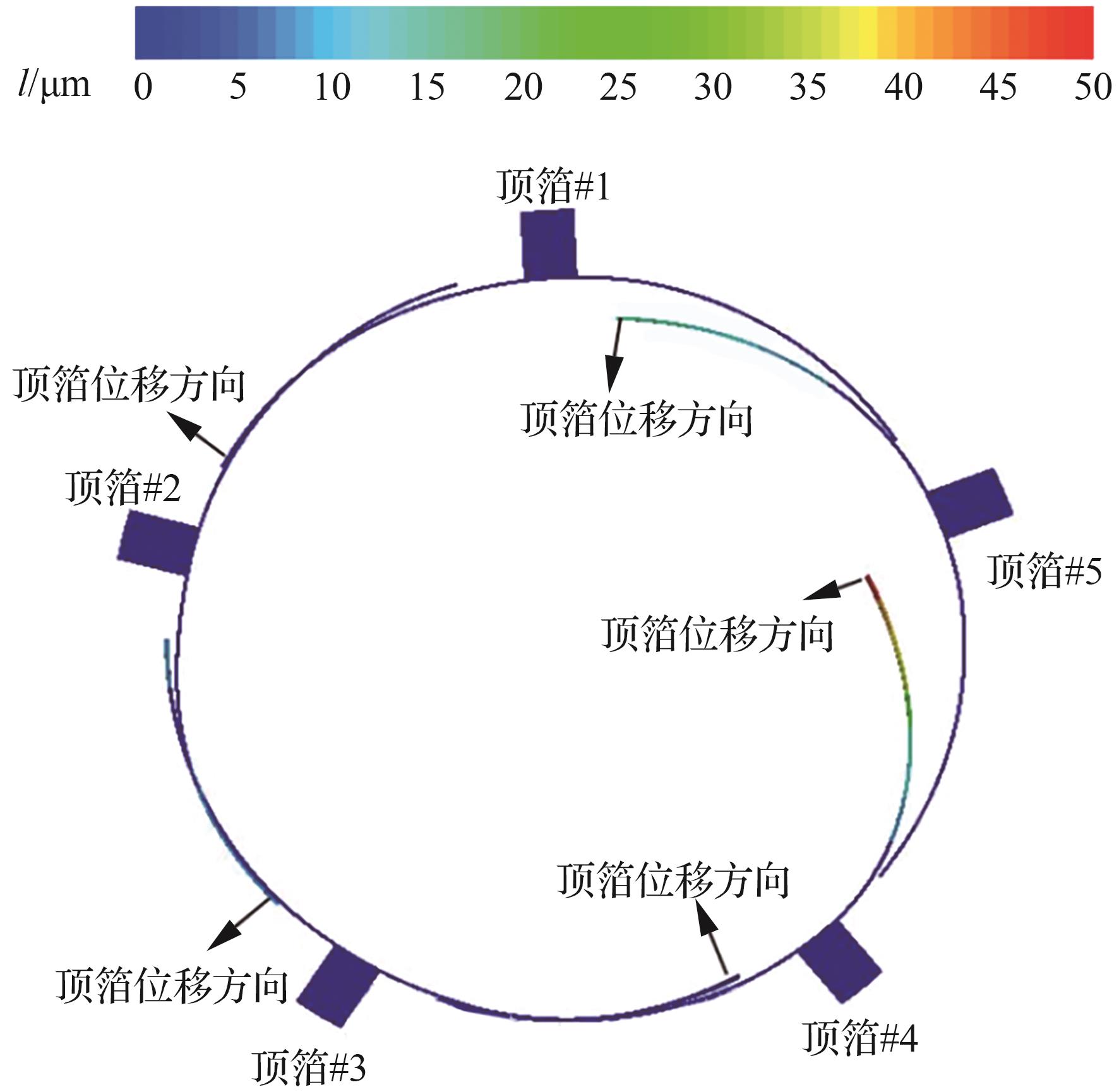
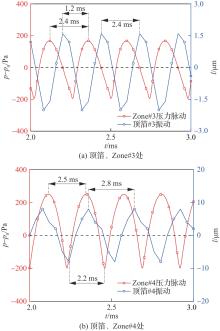
Fig.12
Displacement and pressure of monitoring points with time in baseline working condition under quasi-steady state
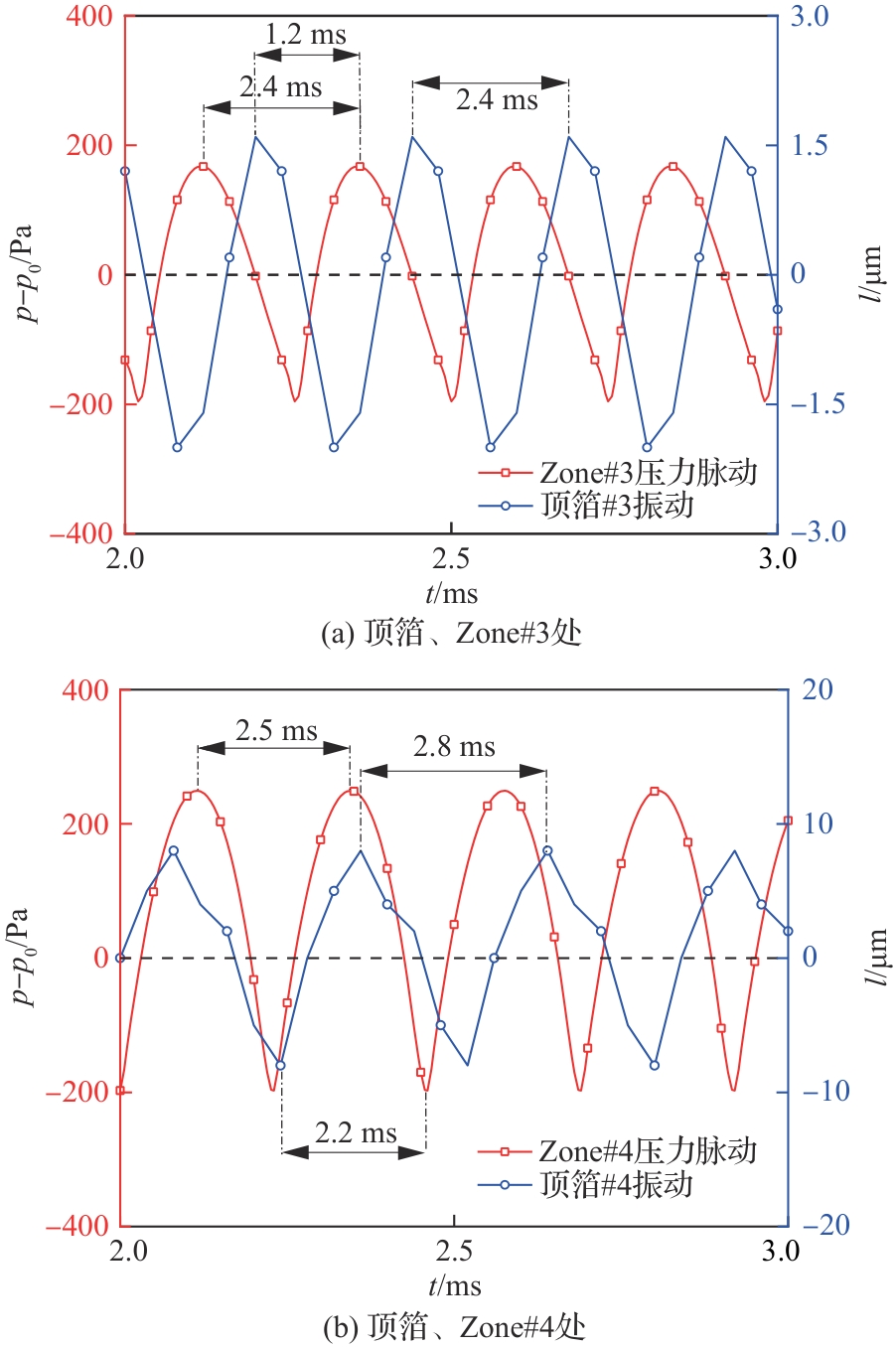
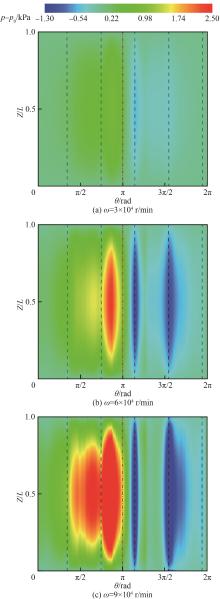
Fig.13
Time-averaged pressure contours of gas film at different rotational speeds under quasi-steady state
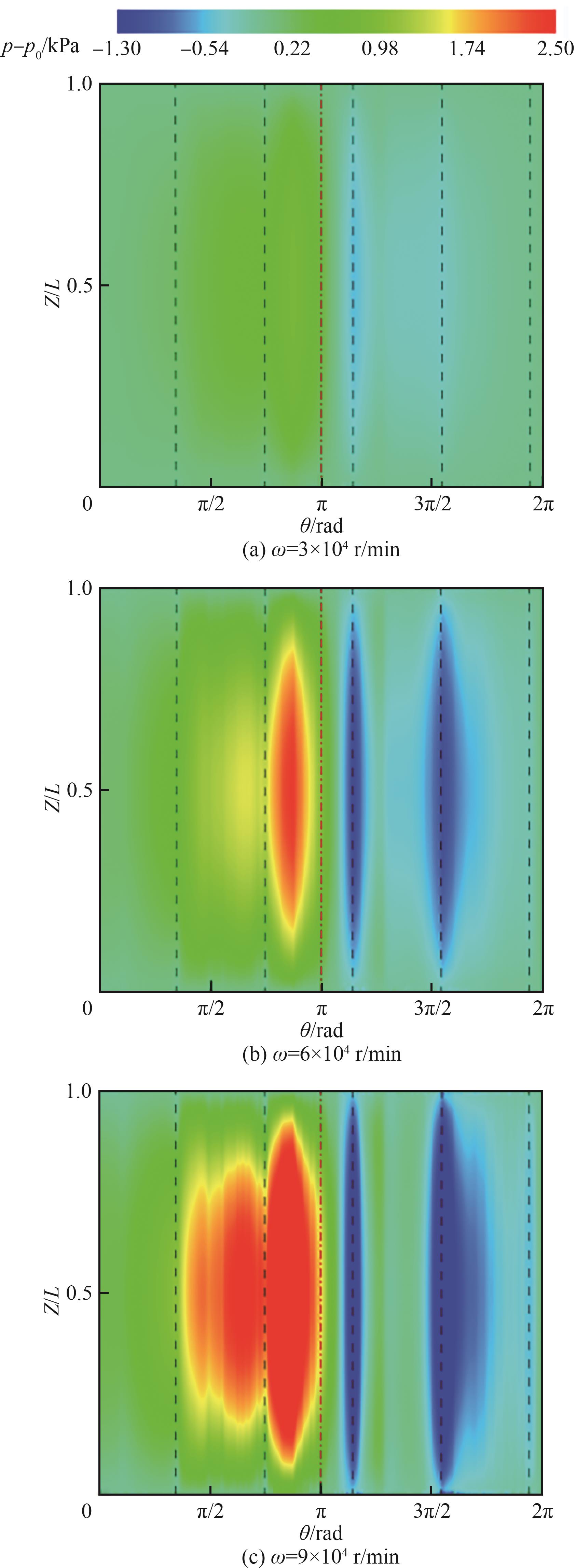
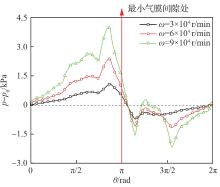
Fig.14
Distribution of time-averaged pressure along the circumference of the center section at different rotational speeds under quasi-steady state
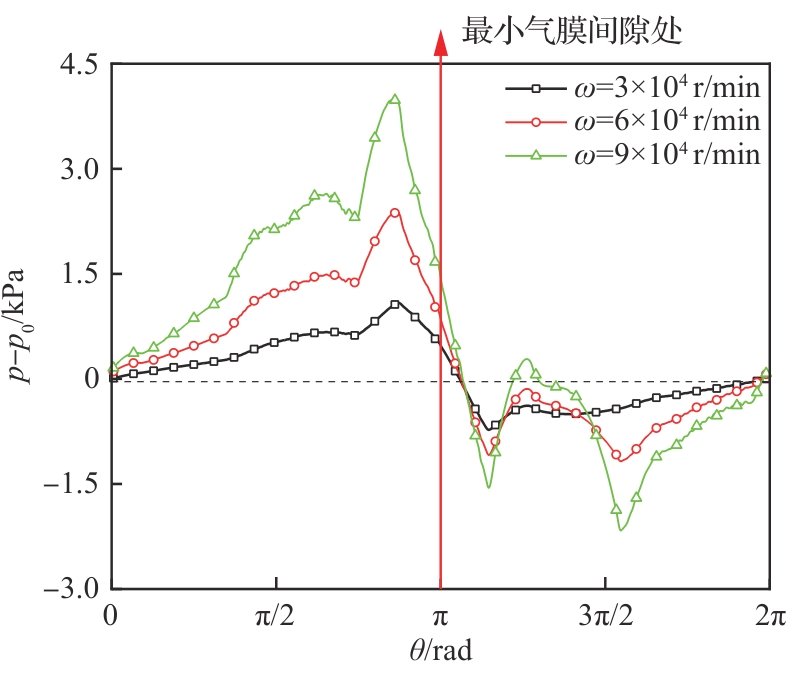
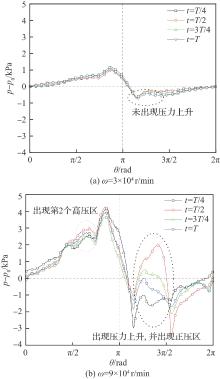
Fig.15
Variation of instantaneous pressure along circumferential direction at different speeds under quasi-steady state
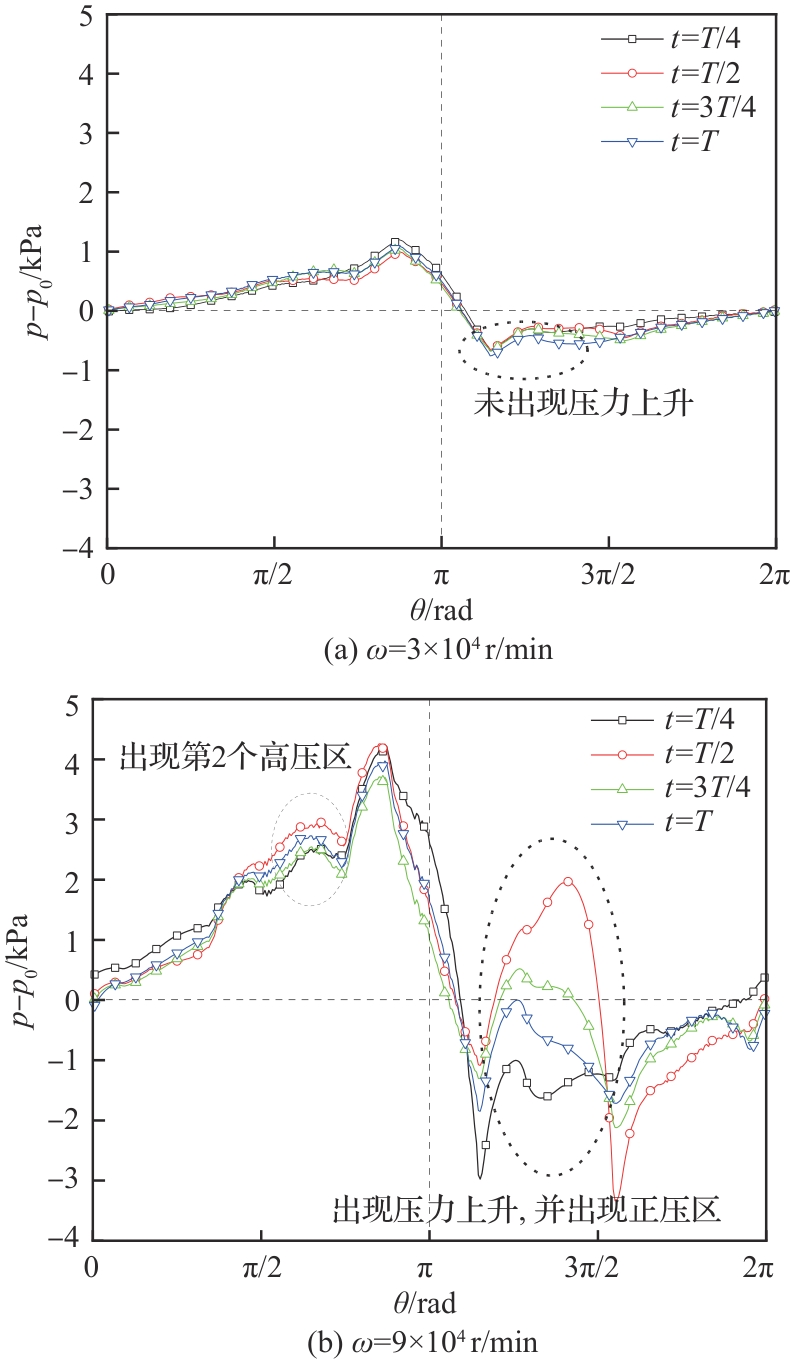
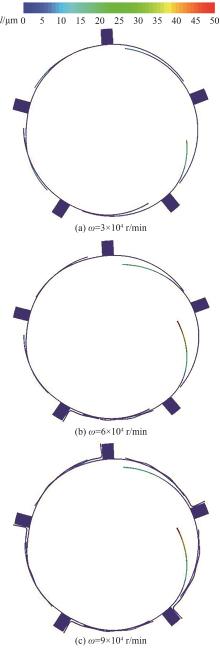
Fig.16
Schematic diagram of time-averaged radial deformation of elastic foil combination at different speeds (30 times enlarged)
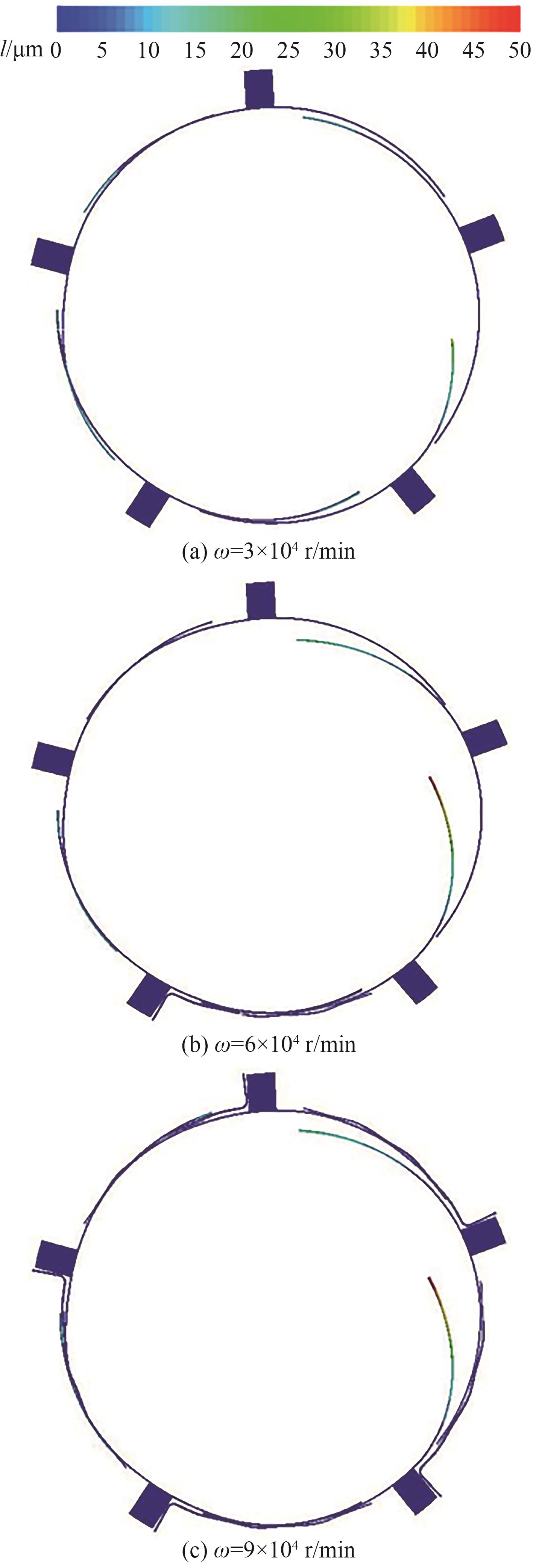
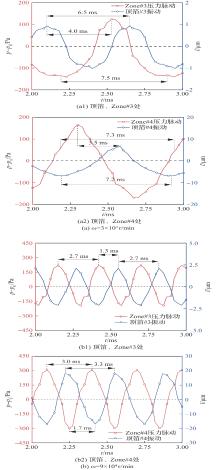
Fig.17
Variation of displacement and pressure of monitoring points with time at different rotational speeds
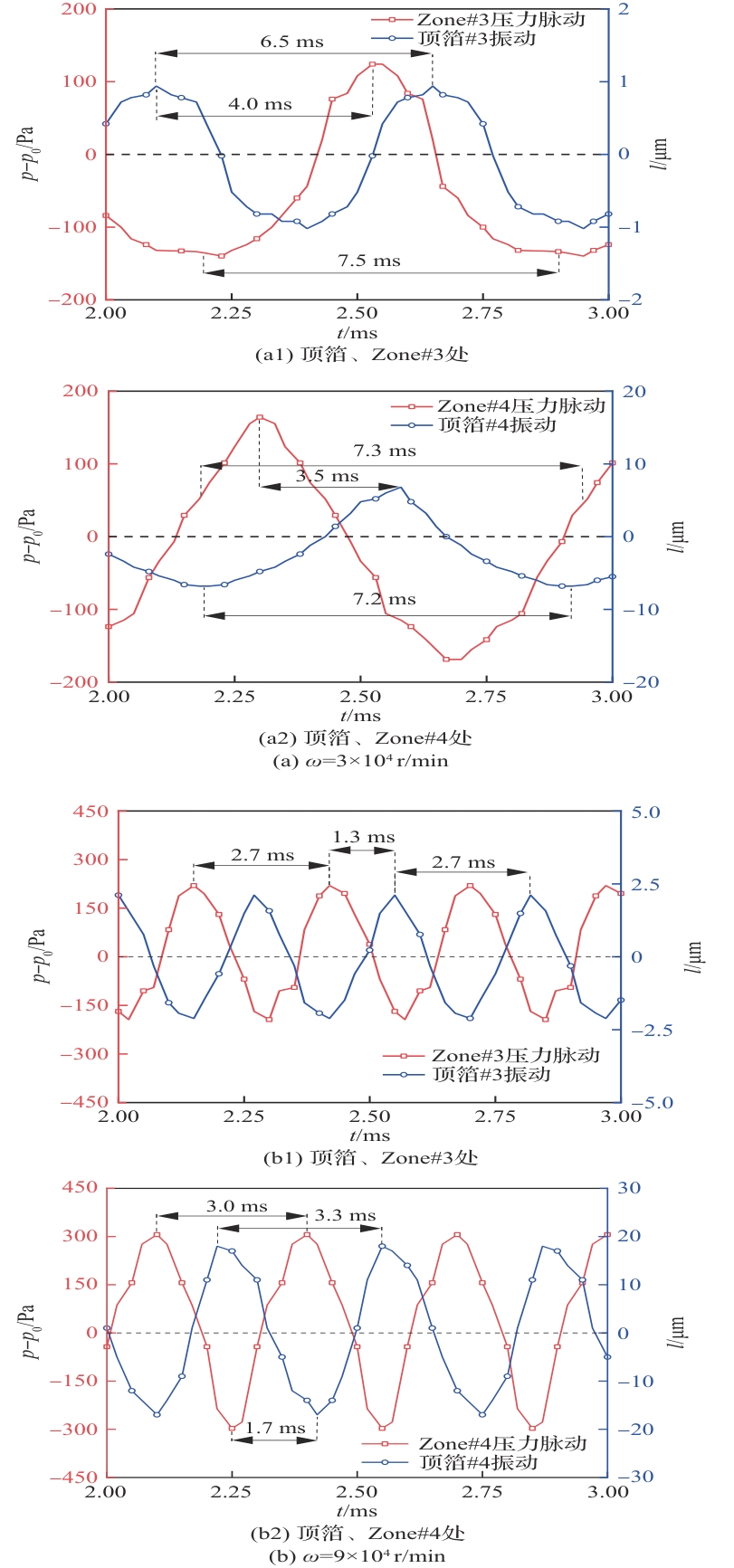
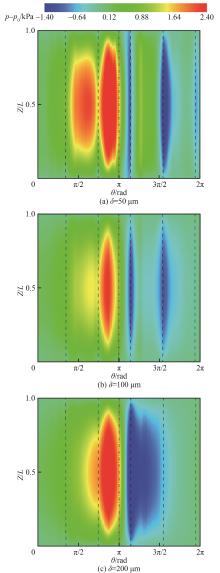
Fig.18
Time-averaged pressure contours of gas film at different clearance heights under quasi-steady state
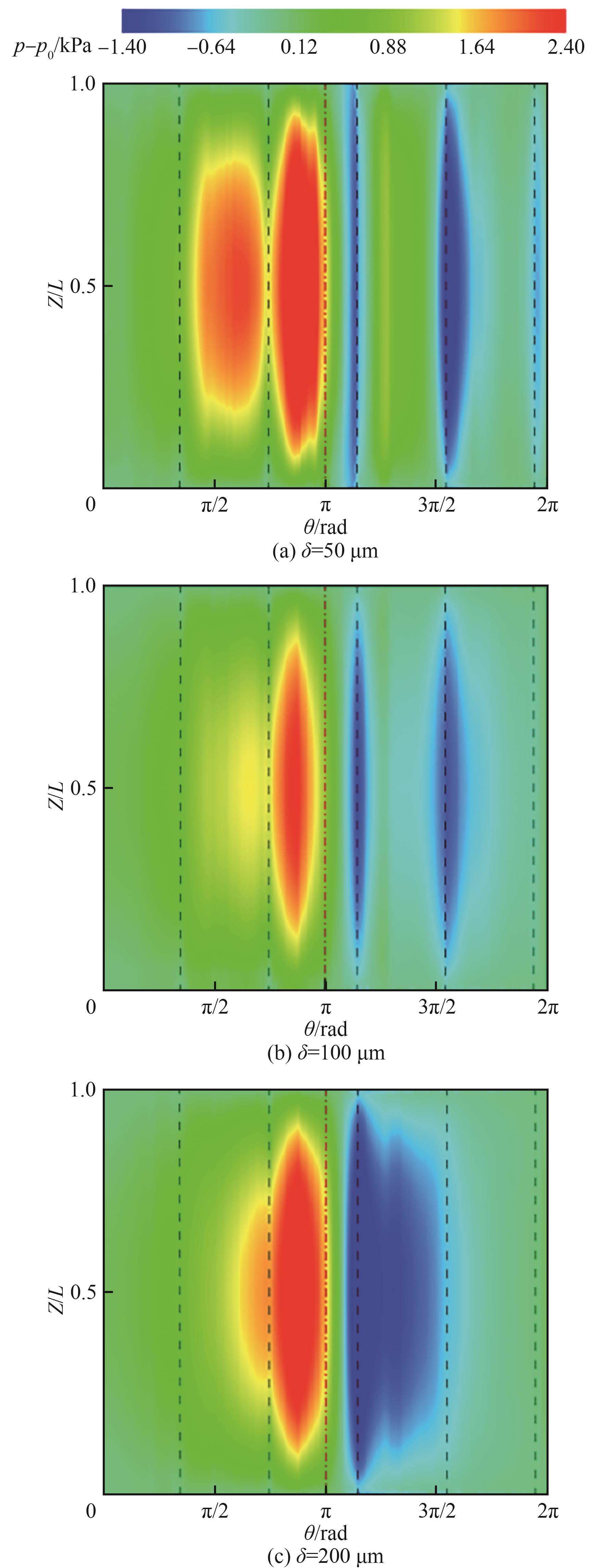
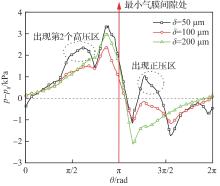
Fig.19
Distribution of time-averaged pressure along the circumference of the center section at different heights under quasi-steady state
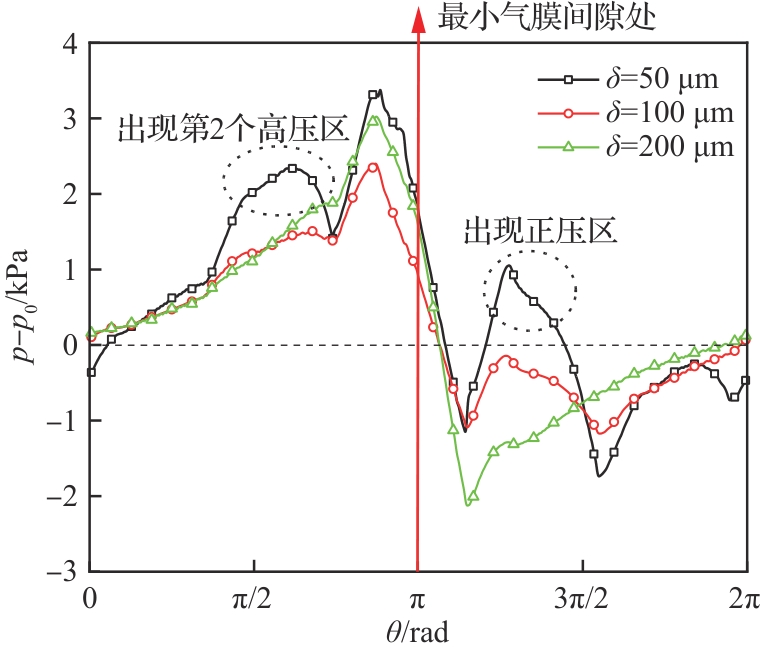
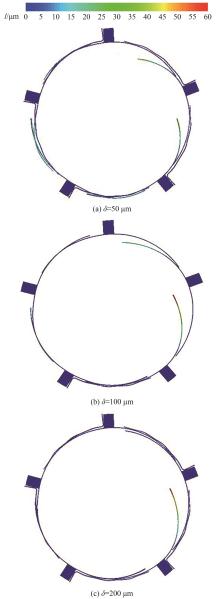
Fig.20
Schematic diagram of time-averaged radial deformation of foils combination at different clearance heights (30 times enlarged)
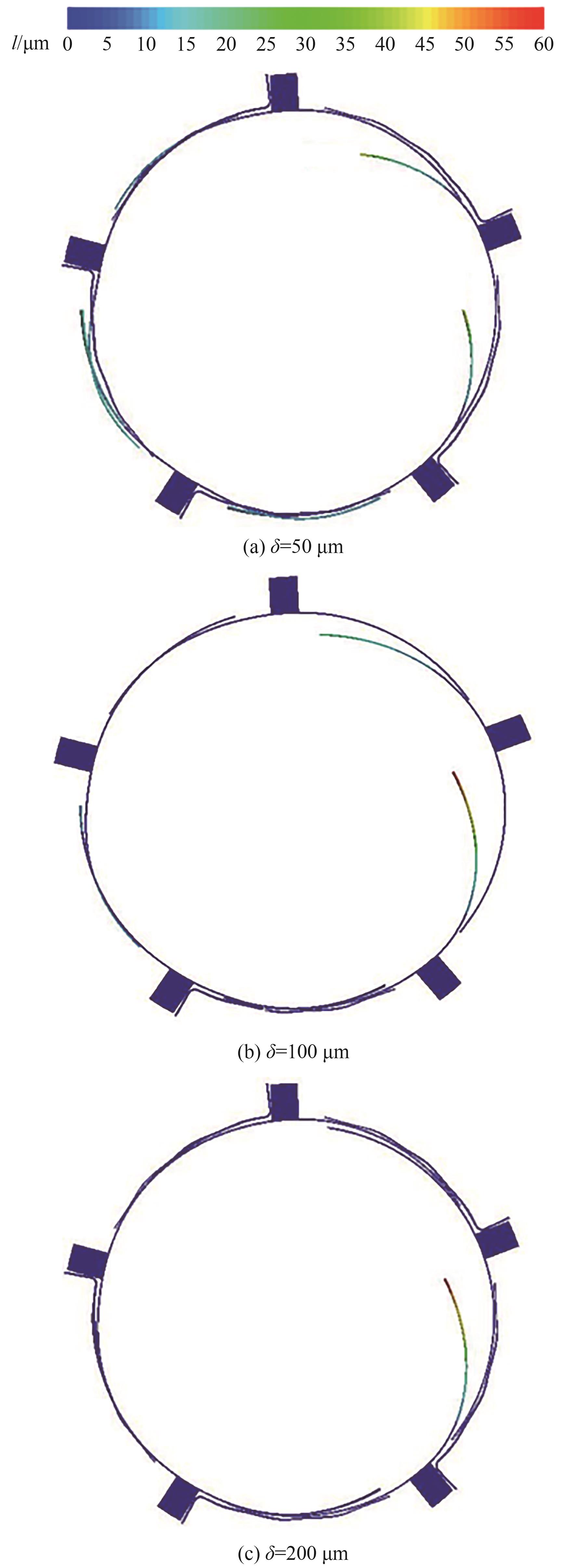
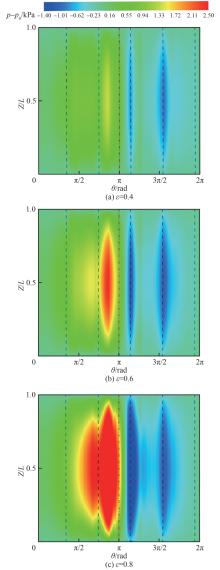
Fig.21
Time-averaged pressure contours of gas film with different eccentricities
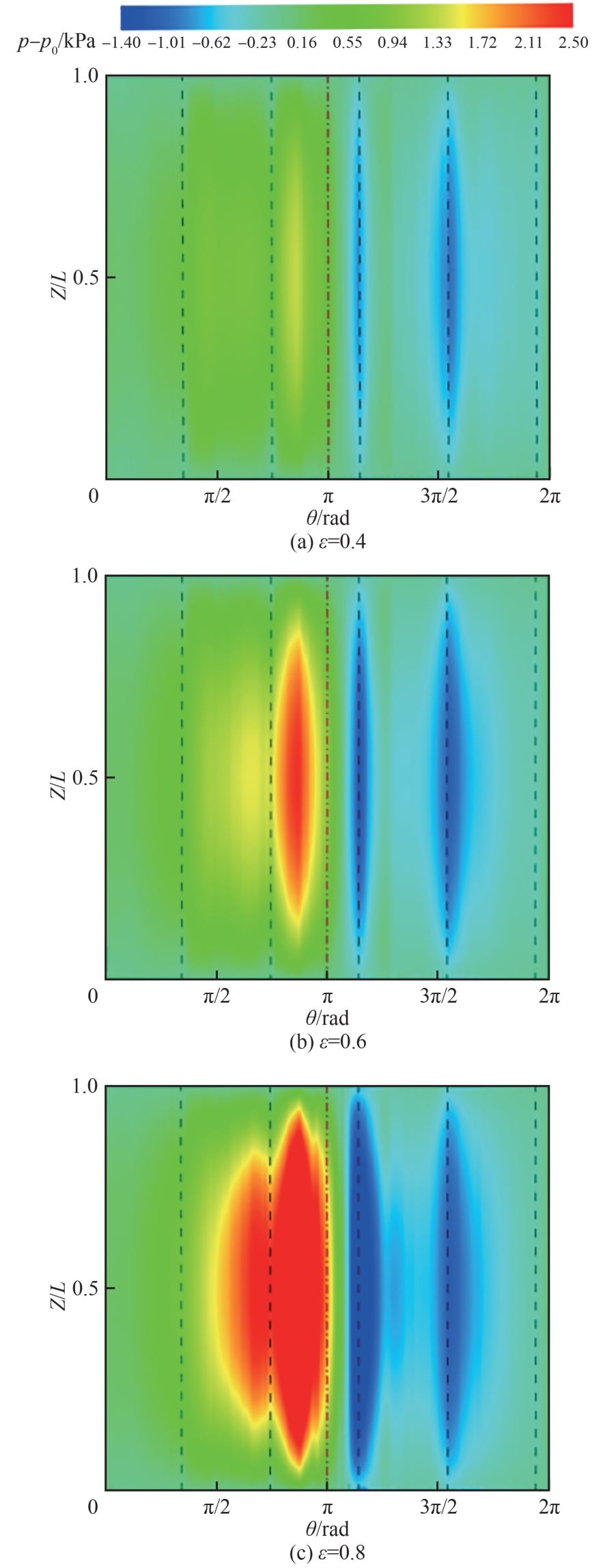
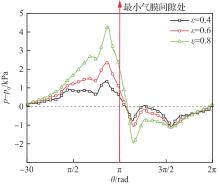
Fig.22
Distribution of time-averaged pressure along the circumference of the center section at different eccentricities under quasi-steady state
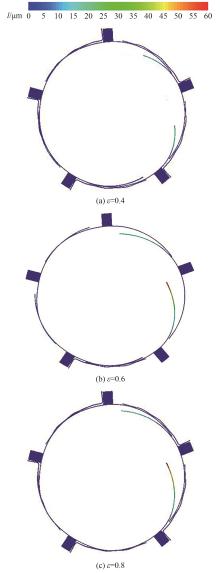
Fig. 23
Schematic diagram of time-averaged radial deformation of foil with different eccentricities under quasi-steady state (30 times enlarged)
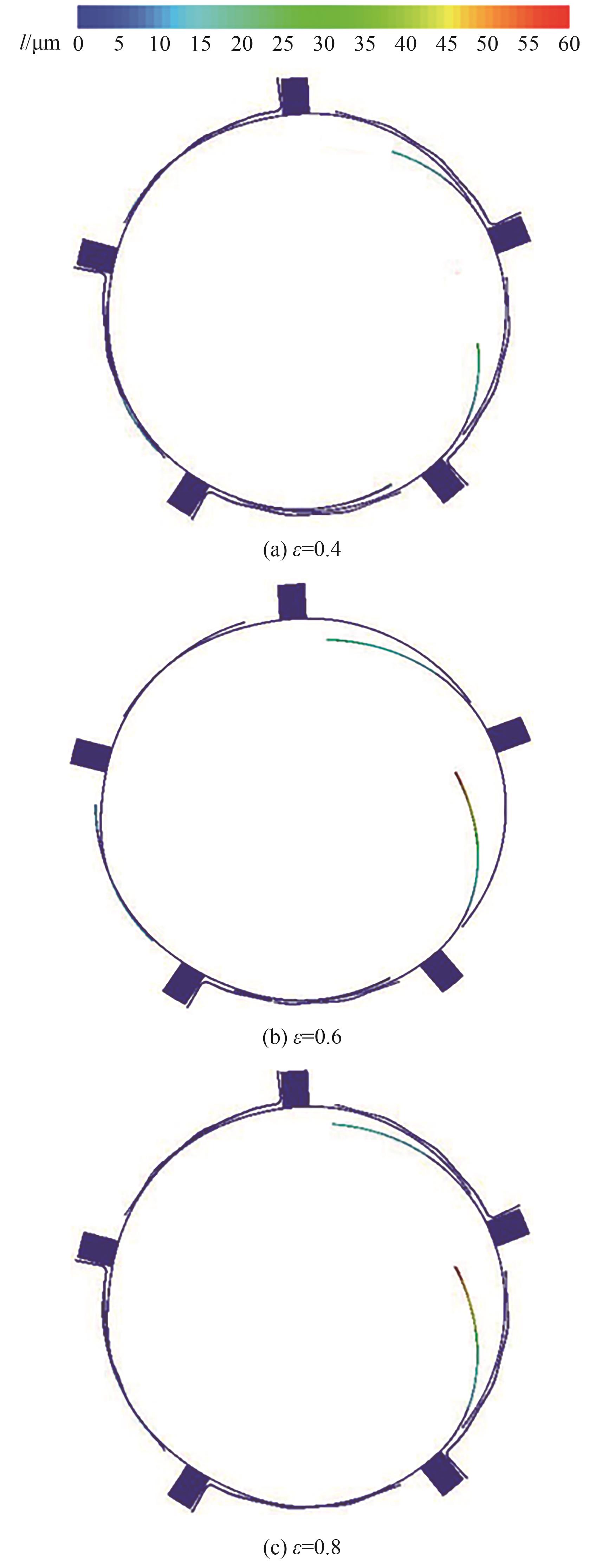
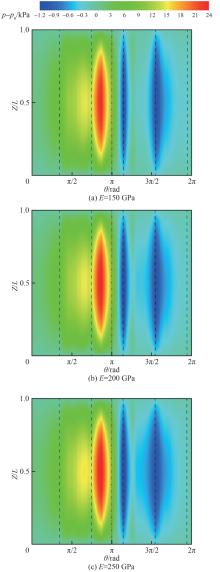
Fig.24
Contours of time-averaged pressure of gas film with different Young’s modulus under quasi-steady state
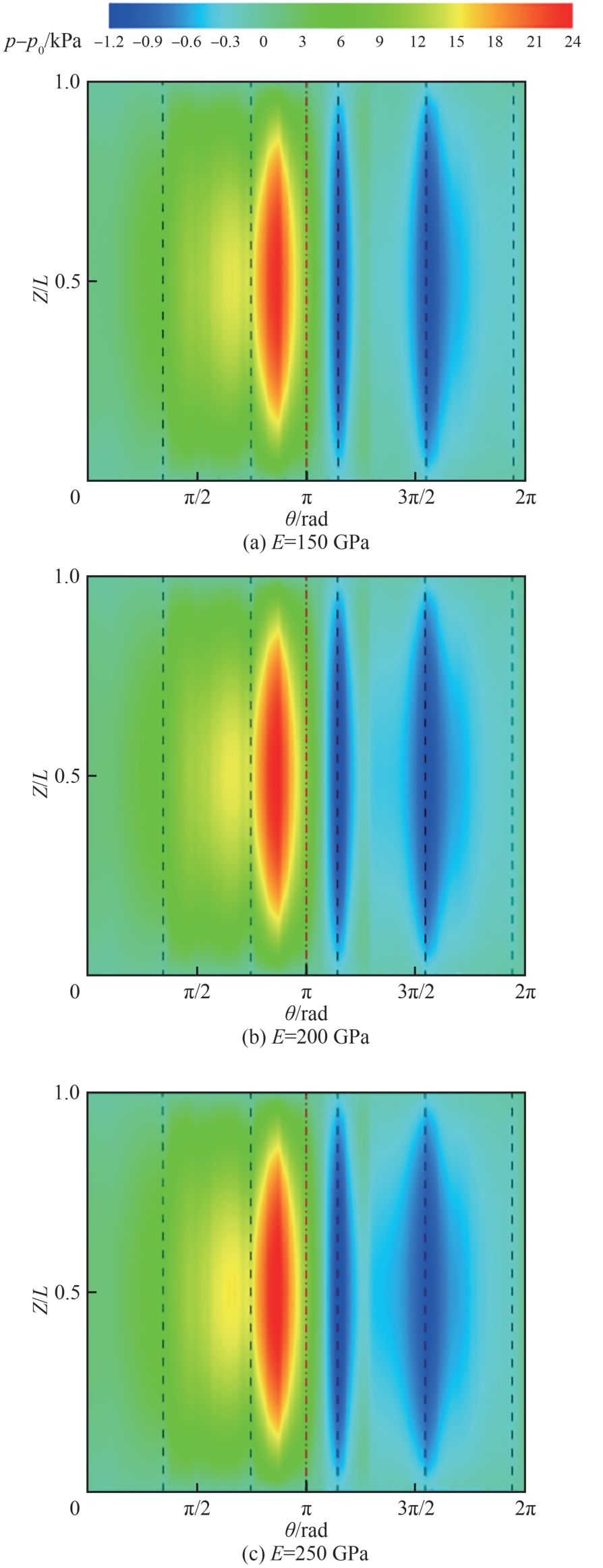
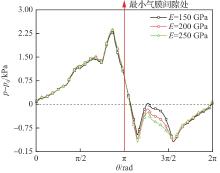
Fig.25
Distribution of time-averaged pressure along the circumference of the center section with different Young’s modulus under quasi-steady state
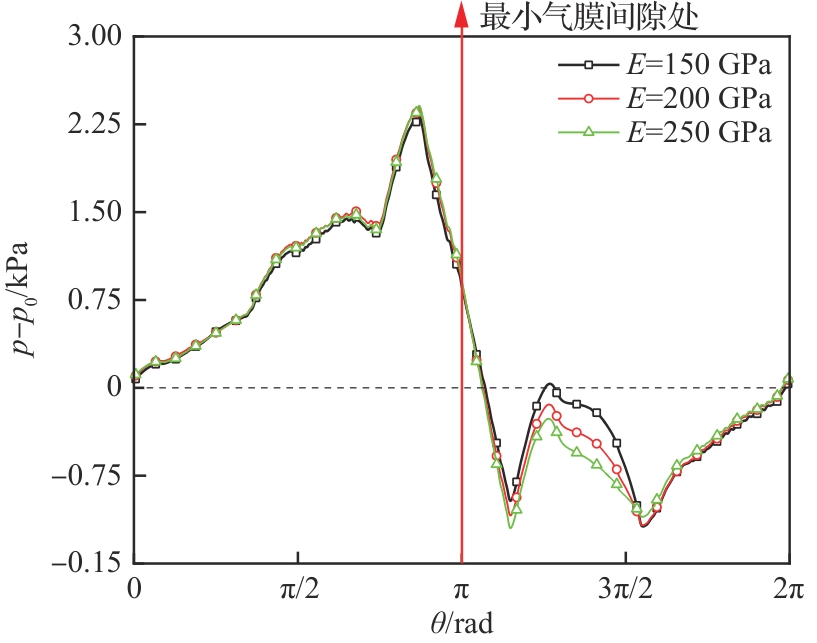
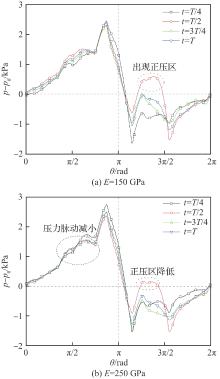
Fig.26
Variation of instantaneous pressure along circumferential direction at different Young’s modulus under quasi-steady state
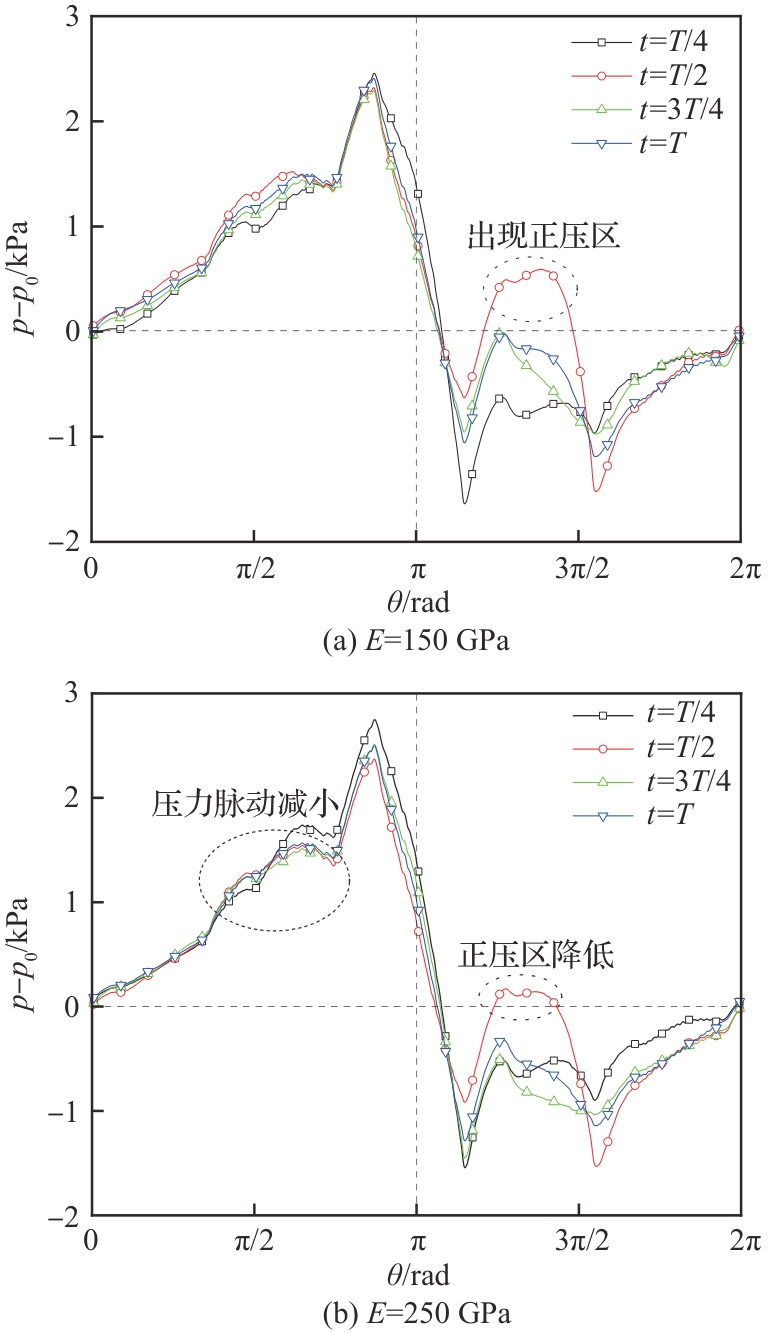
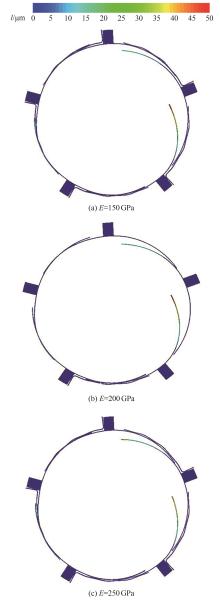
Fig. 27
Schematic diagram of time-averaged radial deformation of foils combinations with different Young’s modulus (30 times enlarged)
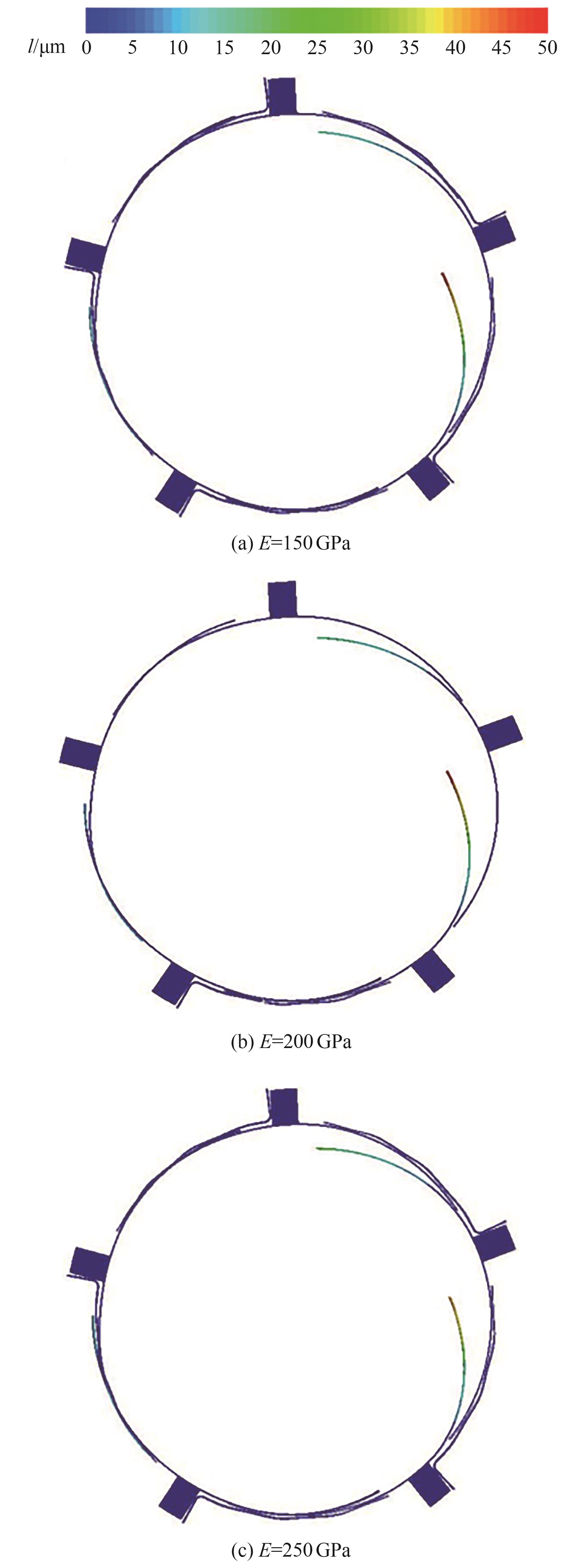
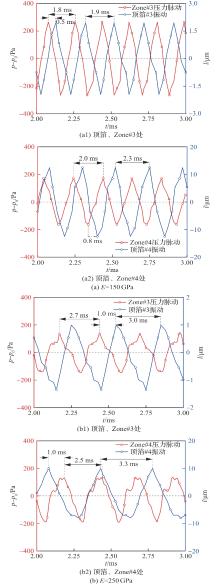
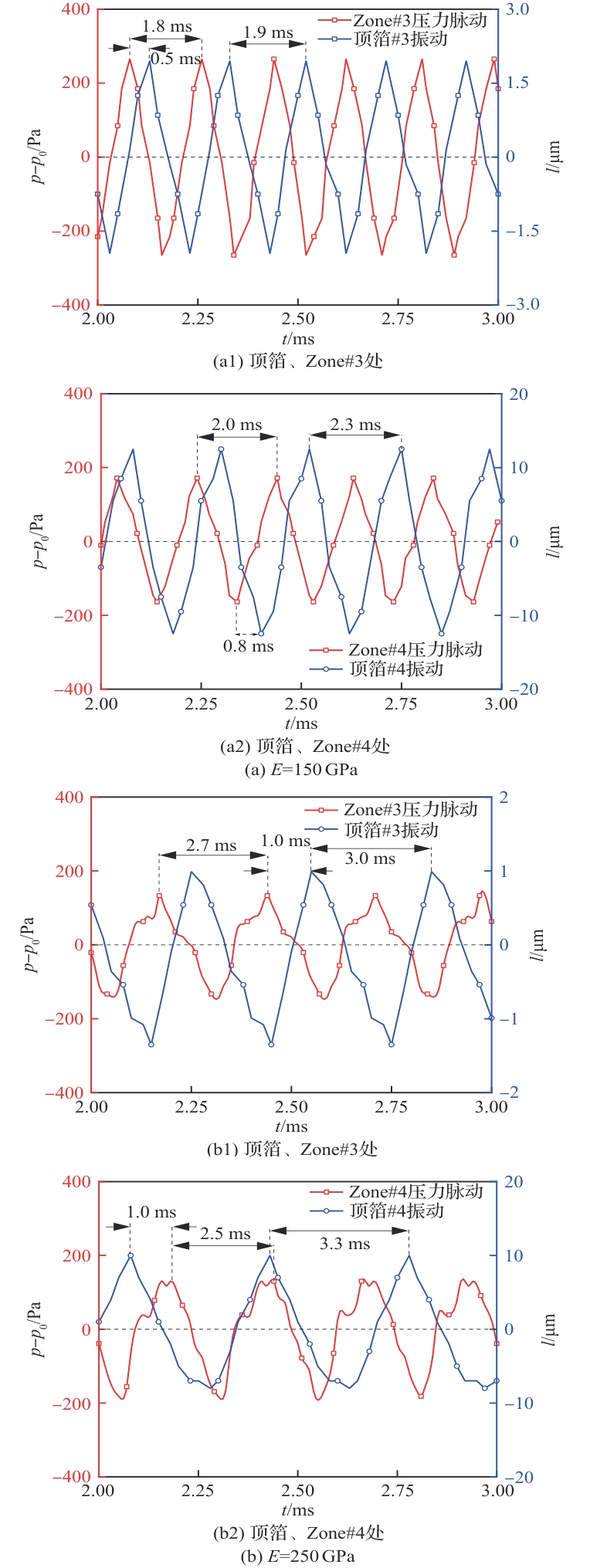
Fig.28
Variation of displacement of monitoring points with time at different Young’s modulus
| [1] | 王云飞. 气体润滑理论与气体轴承设计[M]. 北京: 机械工业出版社, 1999. |
| WANG Y F. Gas lubricated theory and design manual of gas bearings[M]. Beijing: China Machine Press, 1999 (in Chinese). | |
| [2] | 赖天伟, 马斌, 郑越青, 等. 箔片动压气体径向轴承的研究进展[C]∥第十一届全国摩擦学大会论文集. 兰州:中国科学院兰州化学物理研究所固体润滑国家重点实验室, 2013: 288-291. |
| LAI T, MA B, ZHENG Y Q, et al. Research progress of foil dynamic pressure gas radial bearings[C]∥Proceedings of the 11th National Tribology Conference. Lanzhou: State Key Laboratory of Solid Lubrication, Lanzhou Institute of Chemical Physics, Chinese Academy of Science, 2013: 288-291 (in Chinese). | |
| [3] | 丁水汀, 张向波, 杜发荣, 等. 石墨多孔介质气体轴承研究综述[J]. 航空学报, 2022, 43(10): 525655. |
| DING S T, ZHANG X B, DU F R, et al. A review of studies on carbon-graphite porous gas bearings[J]. Acta Aeronautica et Astronautica Sinica, 2022, 43(10): 525655 (in Chinese). | |
| [4] | 丁博, 贾晨辉, 史大炜, 等. 混合式气体动压轴承稳态性能研究[J]. 轴承, 2020(10): 1-6. |
| DING B, JIA C H, SHI D W, et al. Study on steady-state performance of hybrid aerodynamic bearing[J]. Bearing, 2020(10): 1-6 (in Chinese). | |
| [5] | XU F C, KIM D, ZAMANIAN YAZDI B. Theoretical study of top foil sagging effect on the performance of air thrust foil bearing[C]∥ASME Turbo Expo 2016: Turbomachinery Technical Conference and Exposition, Seoul: ASME, 2016: GT2016-56493. |
| [6] | HESHMAT H, WALOWIT J A, PINKUS O. Analysis of gas lubricated compliant thrust bearings[J]. Journal of Lubrication Technology, 1983, 105(4): 638-646. |
| [7] | BONELLO P, HASSAN M F BIN. An experimental and theoretical analysis of a foil-air bearing rotor system[J]. Journal of Sound and Vibration, 2018, 413: 395-420. |
| [8] | CRUMP W J J. Modern developments in lubrication mechanics[J]. Tribology International, 1976, 9(2): 90. |
| [9] | HESHMAT H, WALOWIT J A, PINKUS O. Analysis of gas-lubricated foil journal bearings[J]. Journal of Lubrication Technology, 1983, 105(4): 647-655. |
| [10] | 虞烈. 弹性箔片轴承的气弹润滑解[J]. 西安交通大学学报, 2004, 38(3): 327-330. |
| YU L. Solution of elasto-aerodynamic lubrication for compliant foil bearings[J]. Journal of Xi’an Jiaotong University, 2004, 38(3): 327-330 (in Chinese). | |
| [11] | IORDANOFF I. Analysis of an aerodynamic compliant foil thrust bearing: method for a rapid design[J]. Journal of Tribology, 1999, 121(4): 816-822. |
| [12] | ZHANG J Y, WANG R X, LYU Y W, et al. Thermal effect induced by viscous dissipation on characteristics of aerodynamic foil journal bearing with aero-thermo-elastic coupling[J]. Thermal Science and Engineering Progress, 2024, 50: 102511. |
| [13] | ŻYWICA G, BAGIŃSKI P. Investigation of gas foil bearings with an adaptive and non-linear structure[J]. Acta Mechanica et Automatica, 2019, 13(1): 5-10. |
| [14] | FATU A, ARGHIR M. Numerical analysis of the impact of manufacturing errors on the structural stiffness of foil bearings[J]. Journal of Engineering for Gas Turbines and Power, 2018, 140(4): 041506. |
| [15] | LI C L, DU J J, ZHU J J, et al. Effects of structural parameters on the load carrying capacity of the multi-leaf gas foil journal bearing based on contact mechanics[J]. Tribology International, 2019, 131: 318-331. |
| [16] | 耿海鹏, 戚社苗, 虞烈. 有大预紧效应的多叶径向箔片轴承的分析[J]. 航空动力学报, 2006, 21(3): 569-574. |
| GENG H P, QI S M, YU L. Analysis of the multileaf foil journal bearings with large preload effect[J]. Journal of Aerospace Power, 2006, 21(3): 569-574 (in Chinese). | |
| [17] | 黄钟文, 郭雨, 罗欣洋, 等. 多叶式径向动压气体箔片轴承预紧力仿真[J]. 节能技术, 2024, 42(1): 58-63. |
| HUANG Z W, GUO Y, LUO X Y, et al. Preload simulation of aerodynamic multi-leaf foil journal bearing[J]. Energy Conservation Technology, 2024, 42(1): 58-63 (in Chinese). | |
| [18] | 宋笛. 多箔片气体动压径向轴承特性分析和实验台设计[D]. 北京: 北京工业大学, 2021. |
| SONG D. Characteristic analysis and experimental bench design of multi-foil gas dynamic pressure radial Bearing [D]. Beijing: Beijing University of Technology, 2021. (in Chinese). | |
| [19] | 徐奔, 张镜洋, 陈卫东, 等. 基于接触摩擦的多叶波箔型动压气体轴承静特性研究[J]. 推进技术, 2022, 43(11): 322-331. |
| XU B, ZHANG J Y, CHEN W D, et al. Static characteristics of multi-leaf bump foil aerodynamic bearing based on contact friction[J]. Journal of Propulsion Technology, 2022, 43(11): 322-331 (in Chinese). | |
| [20] | YANG B S, FENG S, TIAN J L, et al. Research on the static performance of multi-cantilever foil bearing with the fully coupled elastic hydrodynamic solution[C]∥2019 IEEE International Conference on Mechatronics and Automation (ICMA). Piscataway: IEEE Press, 2019: 2369-2374. |
| [21] | RUSCITTO D, CORMICK J, GRAY S, et al. Hydrodynamic air lubricated compliant surface bearing for an automotive gas turbine engine journal bearing performance: NASA-CR-135368[R]. New York: NASA Technical Report, 1978. |
| [22] | 肖云峰, 陈在斌, 宋笛, 等. 轴径转速对多箔片气体动压径向轴承静特性的影响[J]. 内燃机与配件, 2022(9): 57-59. |
| XIAO Y F, CHEN Z B, SONG D, et al. Effect of radial speed on static characteristics of multi-foil pneumatic radial bearing[J]. Internal Combustion Engine & Parts, 2022(9): 57-59 (in Chinese). | |
| [23] | 刘恒, 贾晨辉, 刘书明, 等. 多叶箔片气体动压轴承静态特性研究[J]. 轴承, 2023(10): 7-15. |
| LIU H, JIA C H, LIU S M, et al. Study on static characteristics of multileaf foil aerodynamic bearings[J]. Bearing, 2023(10): 7-15 (in Chinese). | |
| [24] | 吕昕. 多叶式波箔气体动压轴承静特性研究[J]. 润滑与密封, 2022, 47(4): 146-153. |
| LYU X. Numerical study on static characteristics of multileaf bump foil aerodynamic bearing[J]. Lubrication Engineering, 2022, 47(4): 146-153 (in Chinese). |
| [1] | Yujia FENG, Zhenhua SUN, Kun WANG, Jiaqi GUO. Advances in boron-loaded gel ramjet technologies [J]. Acta Aeronautica et Astronautica Sinica, 2025, 46(14): 31256-031256. |
| [2] | Chuanyang LIU, Xiaoyu WANG, Guangyu ZHANG, Xiaofeng SUN. Experiment on acoustic impedance of large-thickness perforated plate [J]. Acta Aeronautica et Astronautica Sinica, 2025, 46(14): 331486-331486. |
| [3] | . Experiment on the broadband acoustic performance of acoustic liners under grazing flow [J]. Acta Aeronautica et Astronautica Sinica, 0, (): 1-0. |
| [4] | Ronghui CHENG, Zhishu ZHANG, Wenbo RUAN, Jianfeng WANG. Core key technologies of advanced aircraft engine [J]. Acta Aeronautica et Astronautica Sinica, 2025, 46(12): 31220-031220. |
| [5] | Yicheng YANG, Weihua YANG, Beixuan ZHANG, Zhiheng SONG, Zhaoguo MI. Influence of friction temperature on radial crack formation in turbine blade crown fins [J]. Acta Aeronautica et Astronautica Sinica, 2025, 46(10): 231196-231196. |
| [6] | Feiteng LUO, Zhenming QU, Haitao LI, Xinke LI, Dahao YAO, Wenjuan CHEN, Yaosong LONG, Baoxi WEI, Yanjin MAN, Fujiang YANG, Qiang CHENG, Wubin KONG. Research progress and key issues of inlet pre-injection at hypersonic condition [J]. Acta Aeronautica et Astronautica Sinica, 2025, 46(8): 631189-631189. |
| [7] | Jinglei XU, Shuai HUANG, Ruifeng PAN, Yuqi ZHANG. Research on fluidic thrust vectoring nozzle: Recent developments and future trends [J]. Acta Aeronautica et Astronautica Sinica, 2025, 46(8): 631216-631216. |
| [8] | Jiajian ZHU, Tiangang LUO, Yifu TIAN, Minggang WAN, Mingbo SUN. Enhanced ignition method with synergy of multi-channel gliding arc plasma and fuel injection in a scramjet [J]. Acta Aeronautica et Astronautica Sinica, 2025, 46(7): 131037-131037. |
| [9] | Fan LI, Mingjiang LIU, Mingbo SUN, Guoyan ZHAO, Guangwei MA, Chenxiang ZHAO. Sensitive factors of ethylene combustion heat release under different combustion modes in scramjet engine [J]. Acta Aeronautica et Astronautica Sinica, 2025, 46(4): 130944-130944. |
| [10] | Dong LI, Yining ZHANG, Wenhui LING, Guozhu LIANG, Hao MENG. Inlet flow characteristics analysis of air-breathing rotating detonation engine [J]. Acta Aeronautica et Astronautica Sinica, 2025, 46(2): 130732-130732. |
| [11] | Zhiliang HONG, Yu LI, Wenbo HE, Shuiting DING. Influence of bolt preload on slip characteristics at discontinuous rotor interfaces under thermal load [J]. Acta Aeronautica et Astronautica Sinica, 2024, 45(24): 230402-230402. |
| [12] | Yingjie MEI, Dawei WANG, Chuanzhi SUN, Lamei YUAN, Xiaoming WANG, Yongmeng LIU. A digital twin testing and adjusting system for aero-engine casings based on augmented reality [J]. Acta Aeronautica et Astronautica Sinica, 2024, 45(21): 629462-629462. |
| [13] | Jiangfei YU, Tao TANG, Bo YAN, Hongbo WANG, Yixin YANG, Dapeng XIONG, Mingbo SUN. Flow and combustion characteristic analysis of circular⁃section scramjet under Mach number 6 flight condition [J]. Acta Aeronautica et Astronautica Sinica, 2024, 45(14): 129575-129575. |
| [14] | Dingyuan WEI, Silong ZHANG, Jianfei WEI, Jingying ZUO, Xin LI, Wen BAO. Thermal protection and drag reduction characteristics of discrete hole film cooling in high Mach number combustor [J]. Acta Aeronautica et Astronautica Sinica, 2024, 45(11): 529075-529075. |
| [15] | Jun CHEN, Hanchen BAI, Bing WAN, Qi LI. Dual-mode scramjet: From performance optimization to mode-design [J]. Acta Aeronautica et Astronautica Sinica, 2024, 45(11): 529781-529781. |
| Viewed | ||||||
|
Full text |
|
|||||
|
Abstract |
|
|||||
Address: No.238, Baiyan Buiding, Beisihuan Zhonglu Road, Haidian District, Beijing, China
Postal code : 100083
E-mail:hkxb@buaa.edu.cn
Total visits: 6658907 Today visits: 1341All copyright © editorial office of Chinese Journal of Aeronautics
All copyright © editorial office of Chinese Journal of Aeronautics
Total visits: 6658907 Today visits: 1341

 CJA
CJA
