Acta Aeronautica et Astronautica Sinica ›› 2025, Vol. 46 ›› Issue (23): 131675.doi: 10.7527/S1000-6893.2025.31675
• Fluid Mechanics and Flight Mechanics • Previous Articles
Haiwei XIE, Dongdong ZHANG( ), Zheng XU, Yi HOU, Jianguo TAN, Meng DING, Yunfan ZHOU
Received:2024-12-17
Revised:2025-01-10
Accepted:2025-02-08
Online:2025-02-19
Published:2025-02-18
Contact:
Dongdong ZHANG
E-mail:zhangdd0902@163.com
Supported by:CLC Number:
Haiwei XIE, Dongdong ZHANG, Zheng XU, Yi HOU, Jianguo TAN, Meng DING, Yunfan ZHOU. Flow structure and turbulence statistics of super-sonic mixing layer influenced by splitter plate[J]. Acta Aeronautica et Astronautica Sinica, 2025, 46(23): 131675.
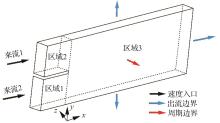
Fig.1
Model of three dimensional mixing layer with a splitter plate
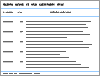
Table 1
Parameters of inlets
| 来流方向 | 速度U/(m·s-1) | 静温T/K | 静压P/Pa | Ma |
|---|---|---|---|---|
| 高速侧 | 952 | 250 | 105 | 3.0 |
| 低速侧 | 444 | 250 | 105 | 1.4 |
Table 2
Computional region and grid division
| 区域 | 计算域尺寸(Lx ×Ly ×Lz )/mm | 网格数量(Nx ×Ny ×Nz ) |
|---|---|---|
| 区域1 | 40×40×16 | 400×151×160 |
| 区域2 | 40×40×16 | 400×151×160 |
| 区域3 | 200×84×16 | 2 000×373×160 |
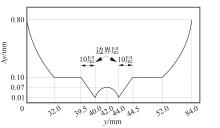
Fig.2
Mesh size distribution along y-direction in Zone 3
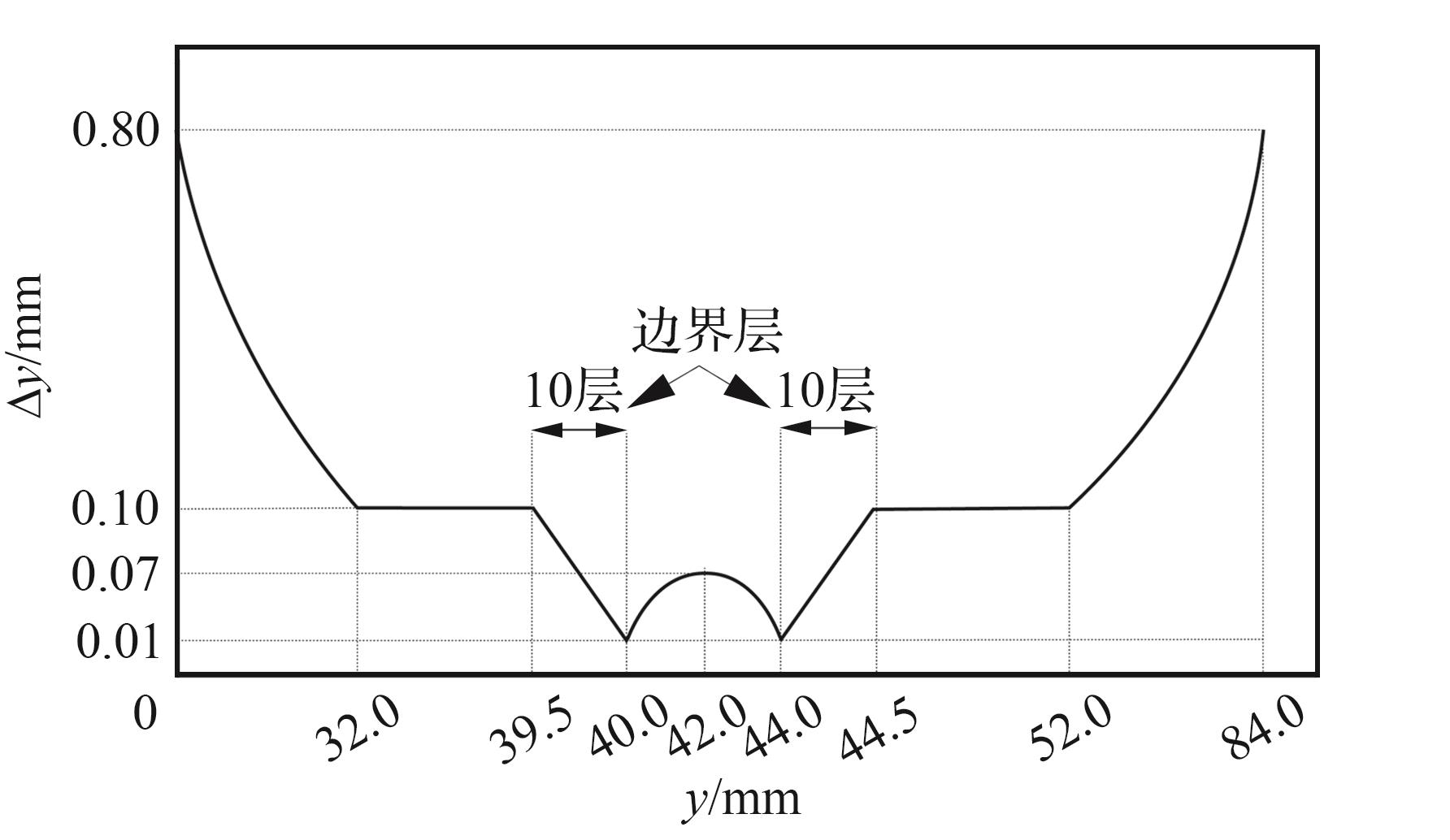
Fig.3
Spanwise two-point correlations in turbulent self-similar region
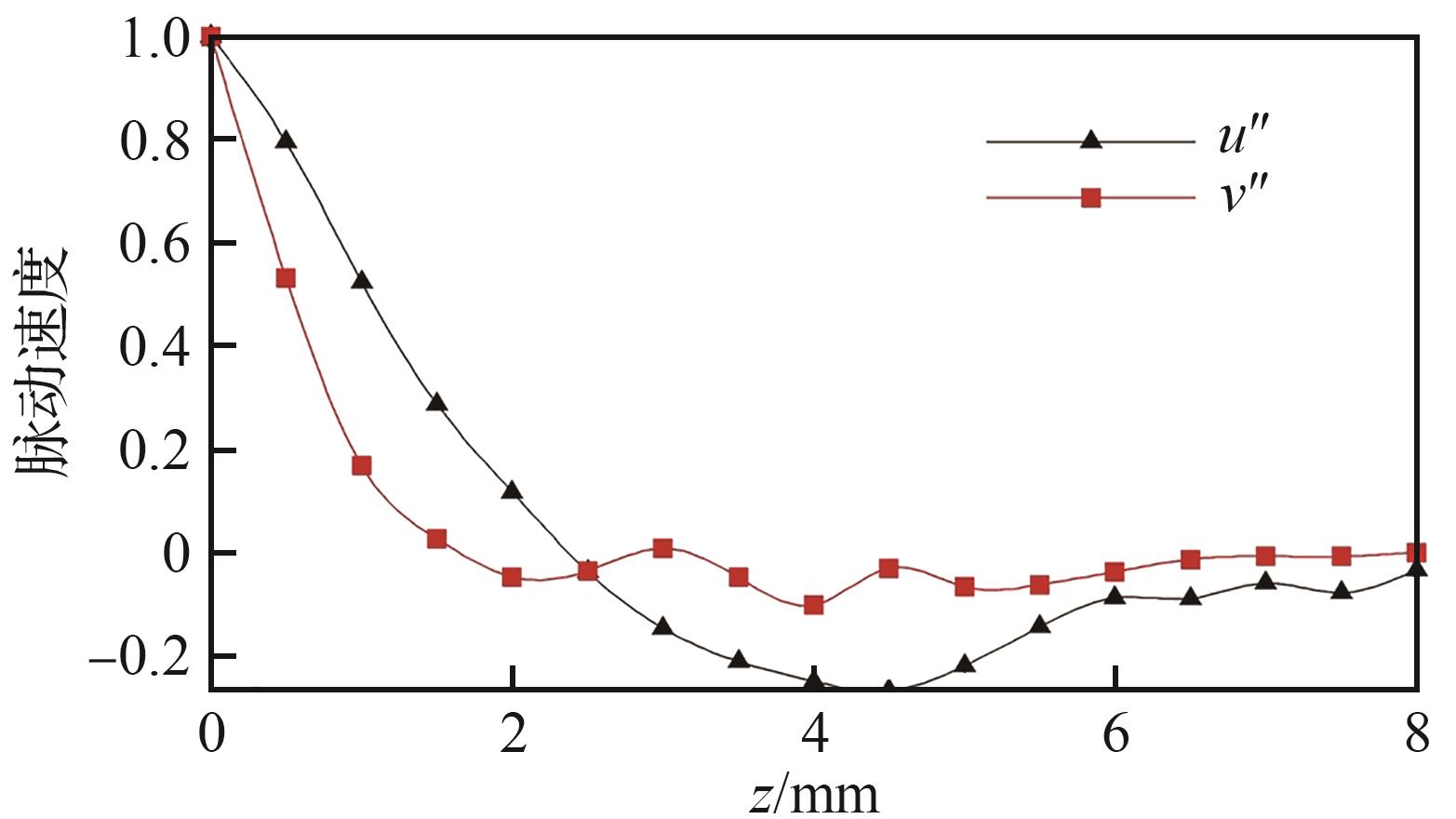
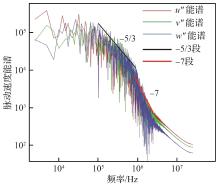
Fig.4
Energy spectra of fluctuation velocities for three velocity components in turbulent self-similar region
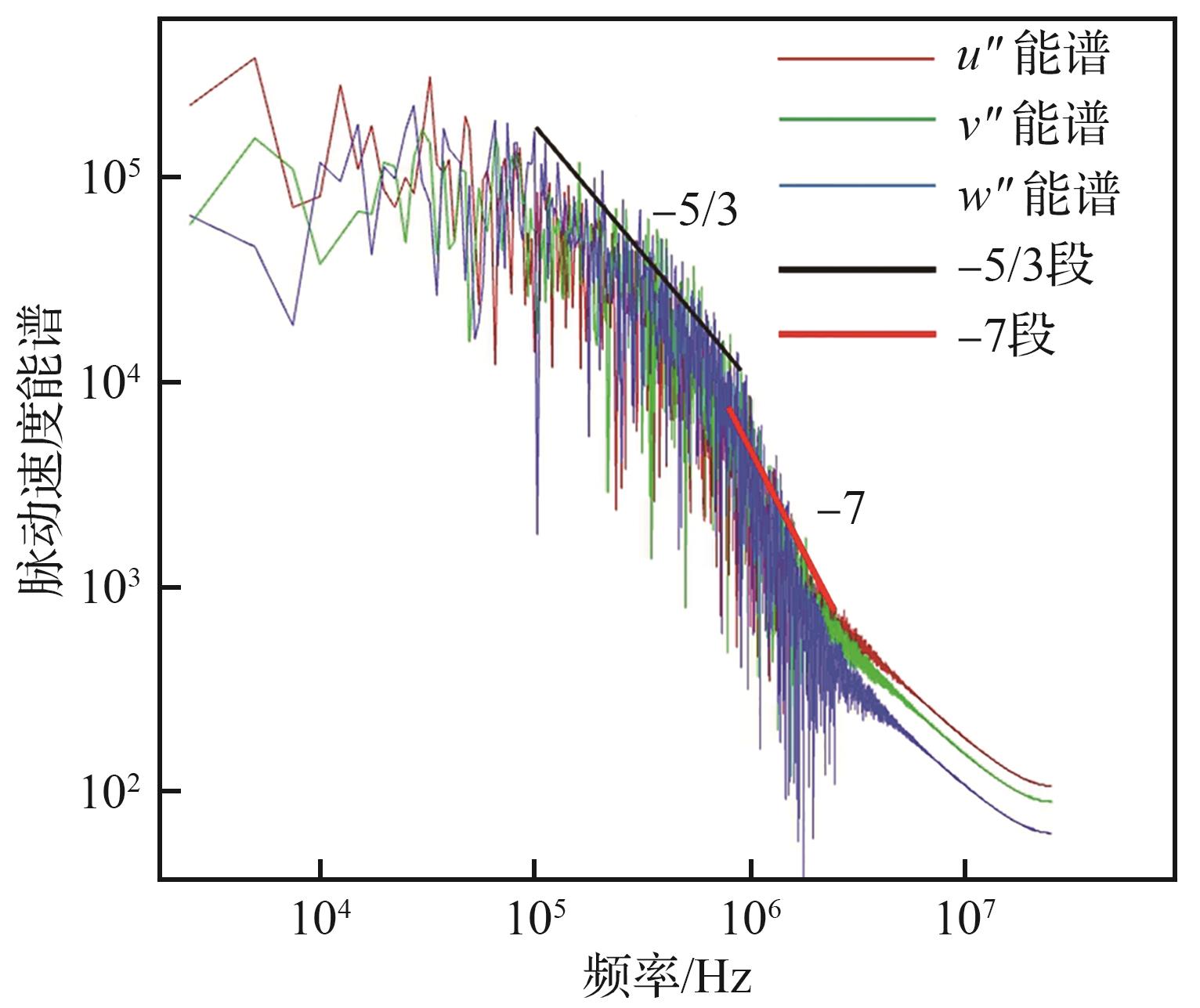
Fig.5
Three dimensional instantaneous visualization of vortex structures using λ2-criteria to identify vortex structure for whole flow field (λ2=0.05)
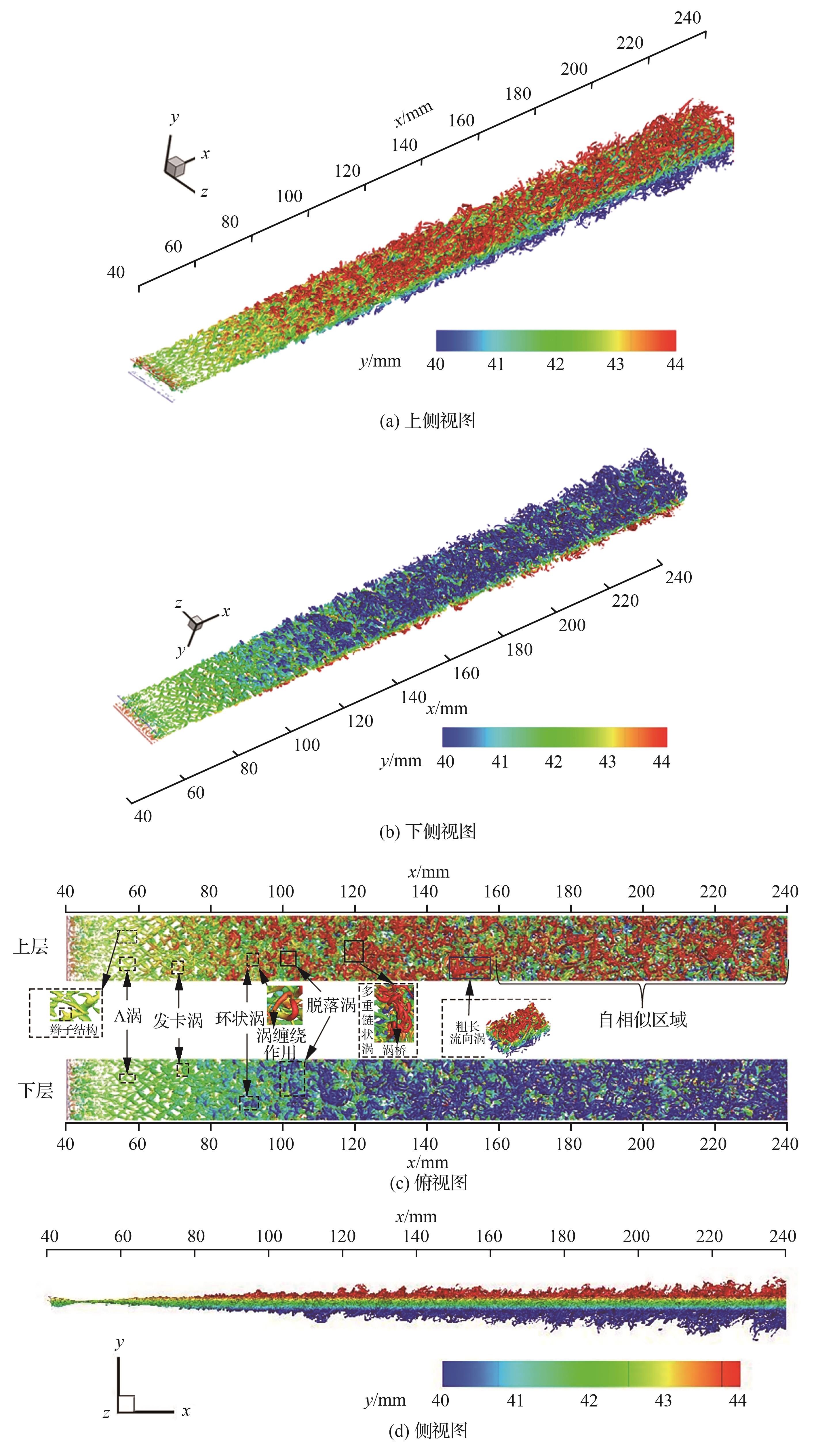
Fig.6
Vortex structures at recirculation region and early stage of transition in streamwise domain [40,70] mm of splitter plate wake
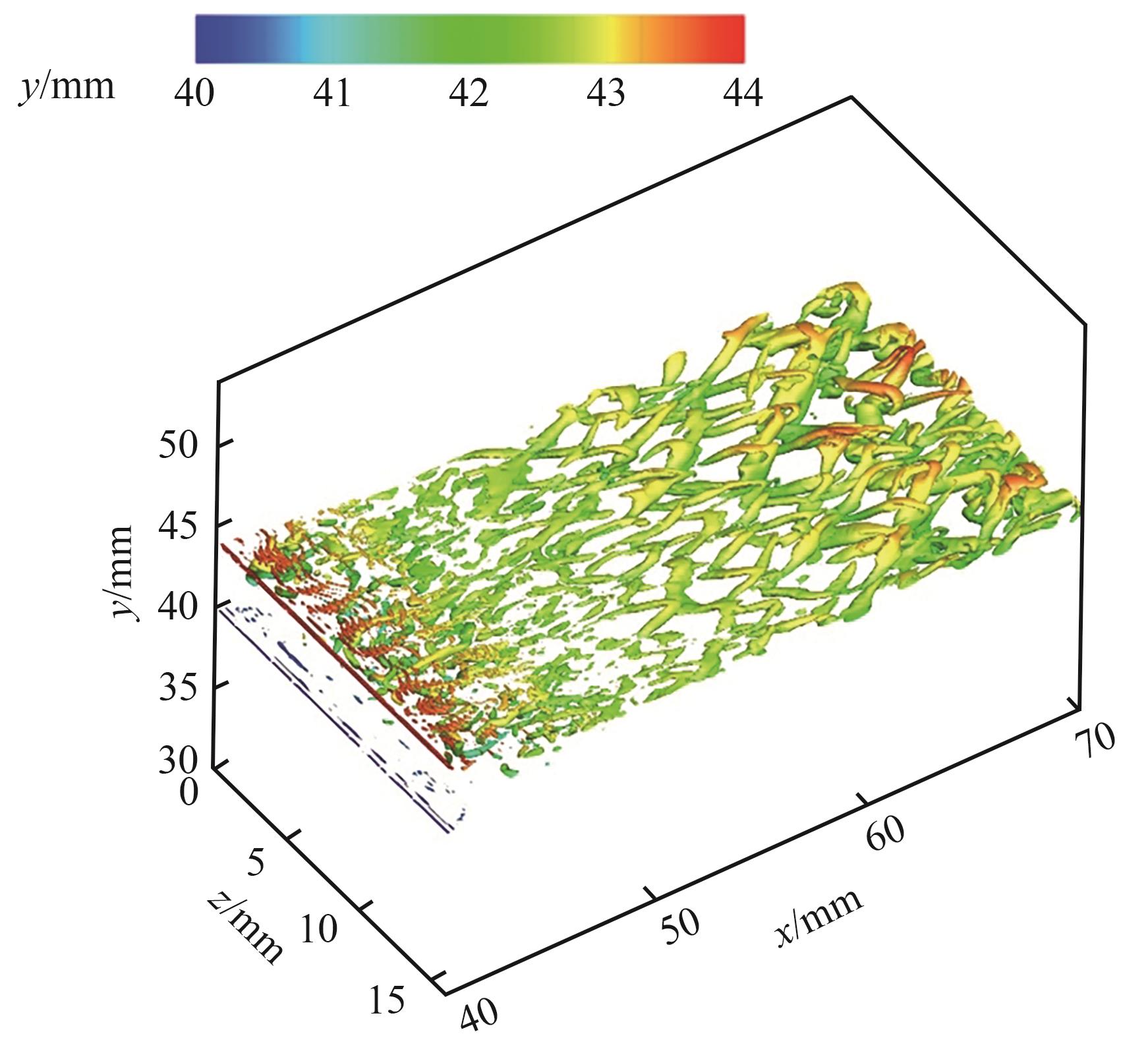
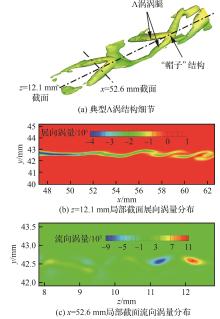
Fig.7
Analysis of Λ vortex structure
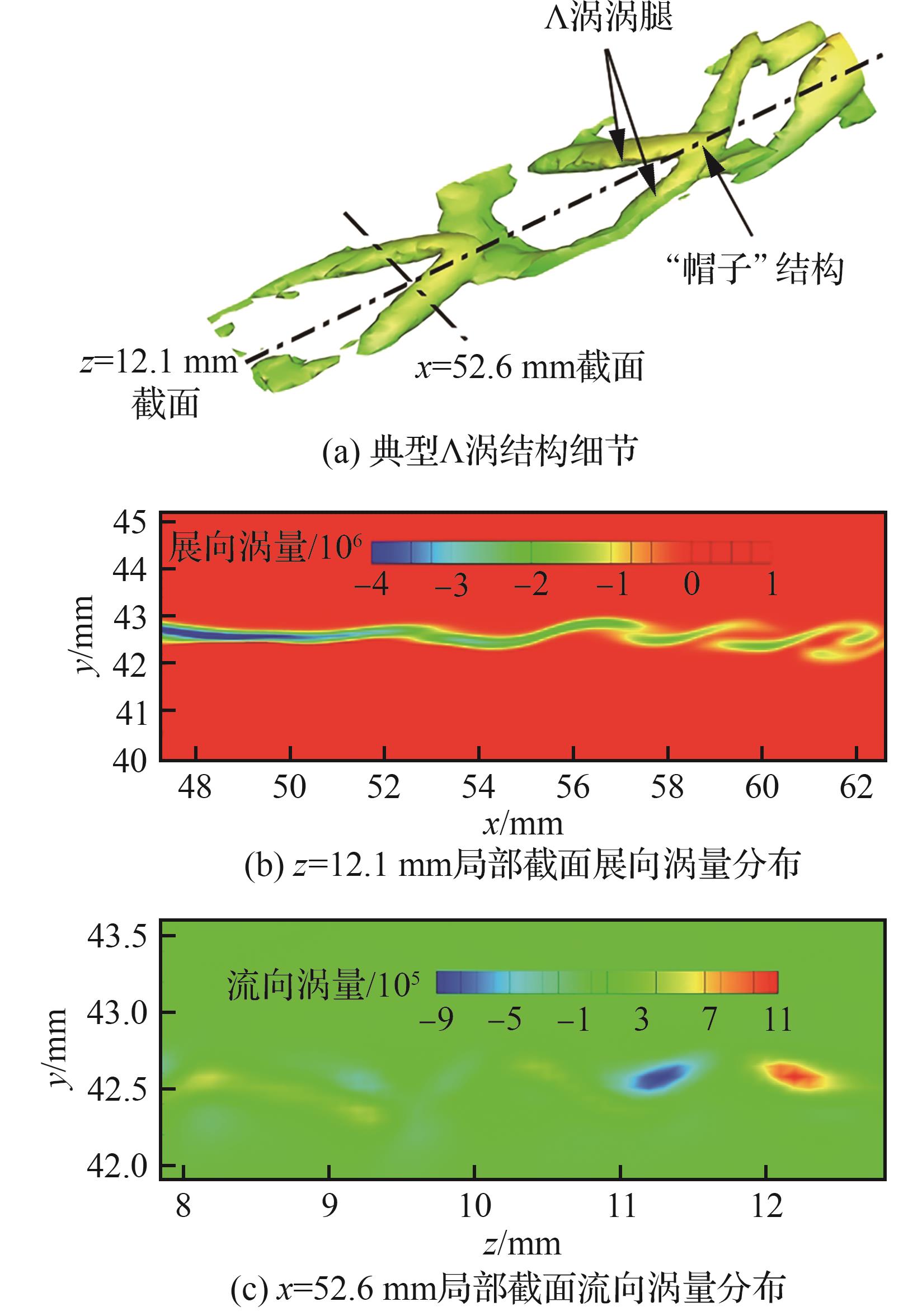
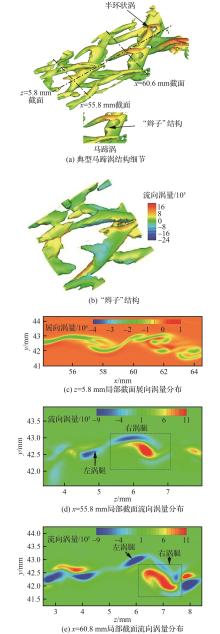
Fig.8
Analysis of horseshoe vortex structure
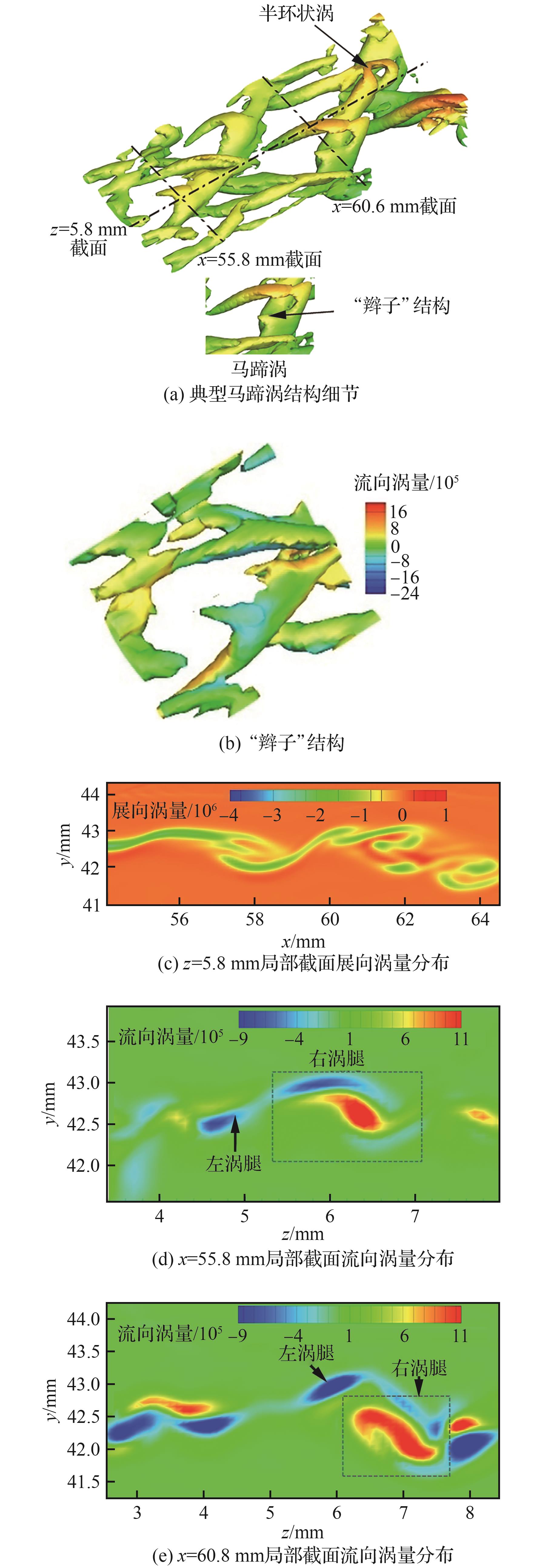
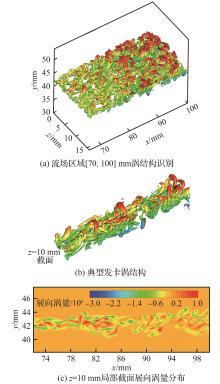
Fig.9
Characteristics of flow field structure in transition development region
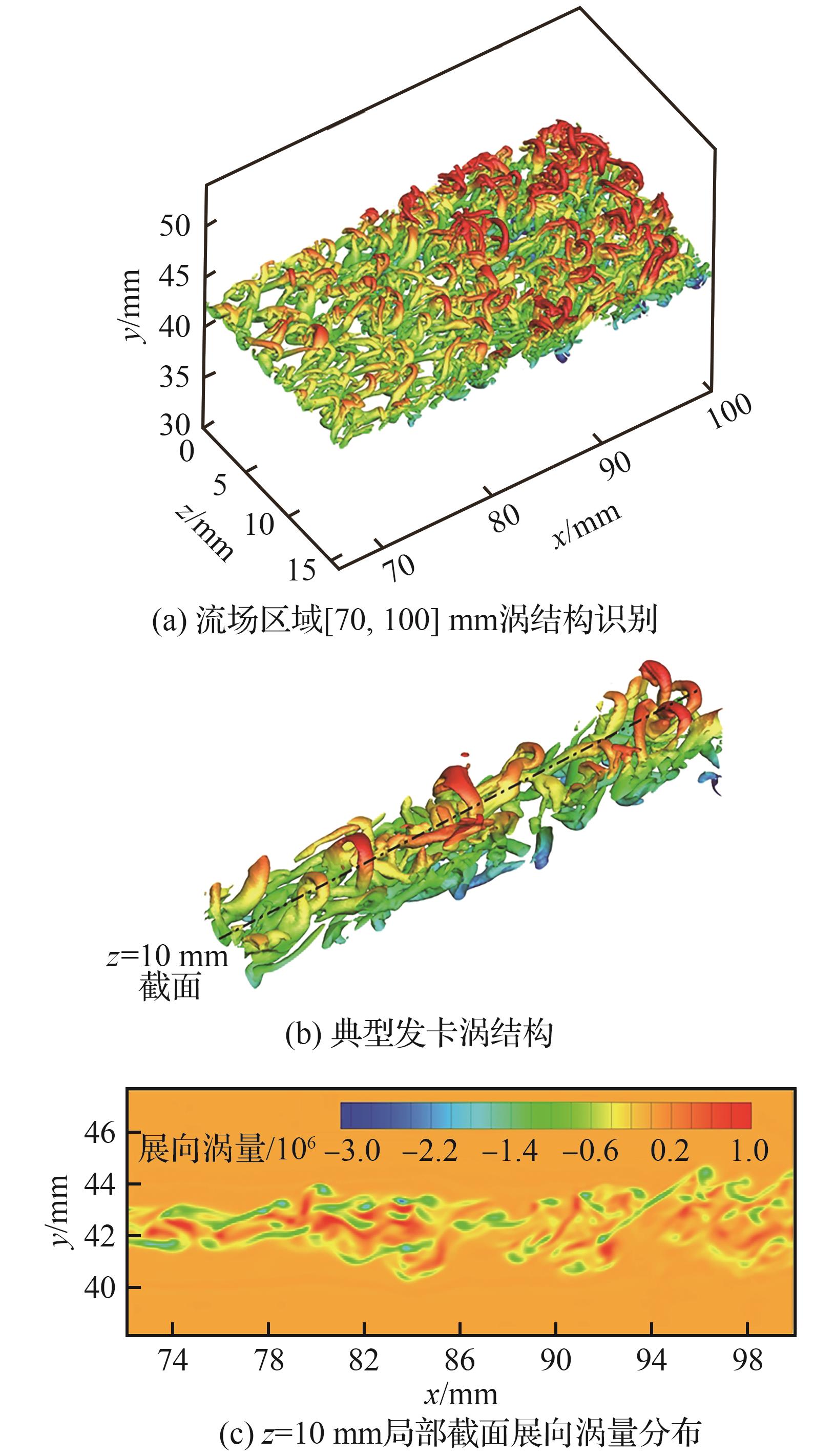
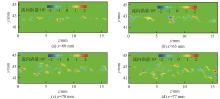
Fig.10
Transient streamwise vorticity distributionsatdifferent streamwise sections within hairpin vortex formation region [60,77] mm
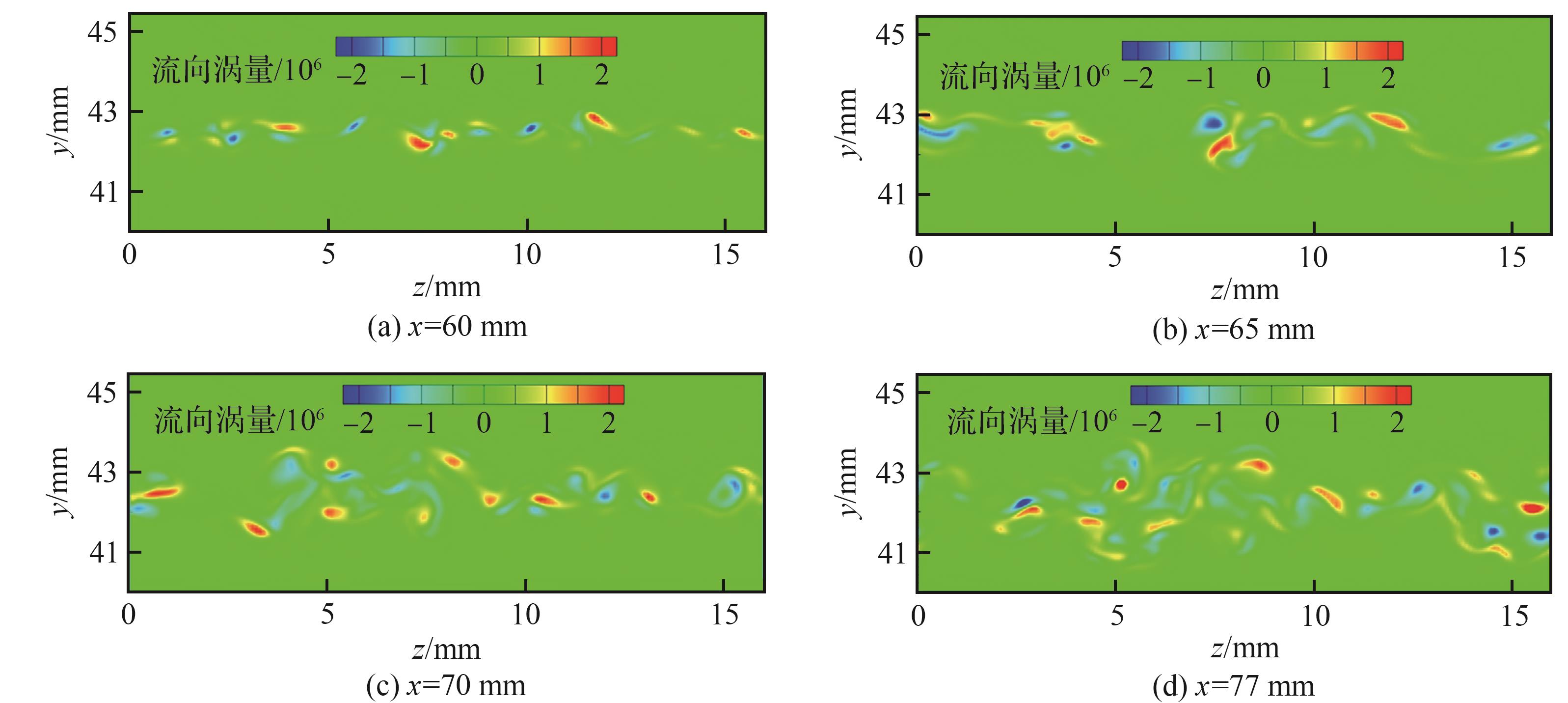
Fig.11
Identification of vortex structure
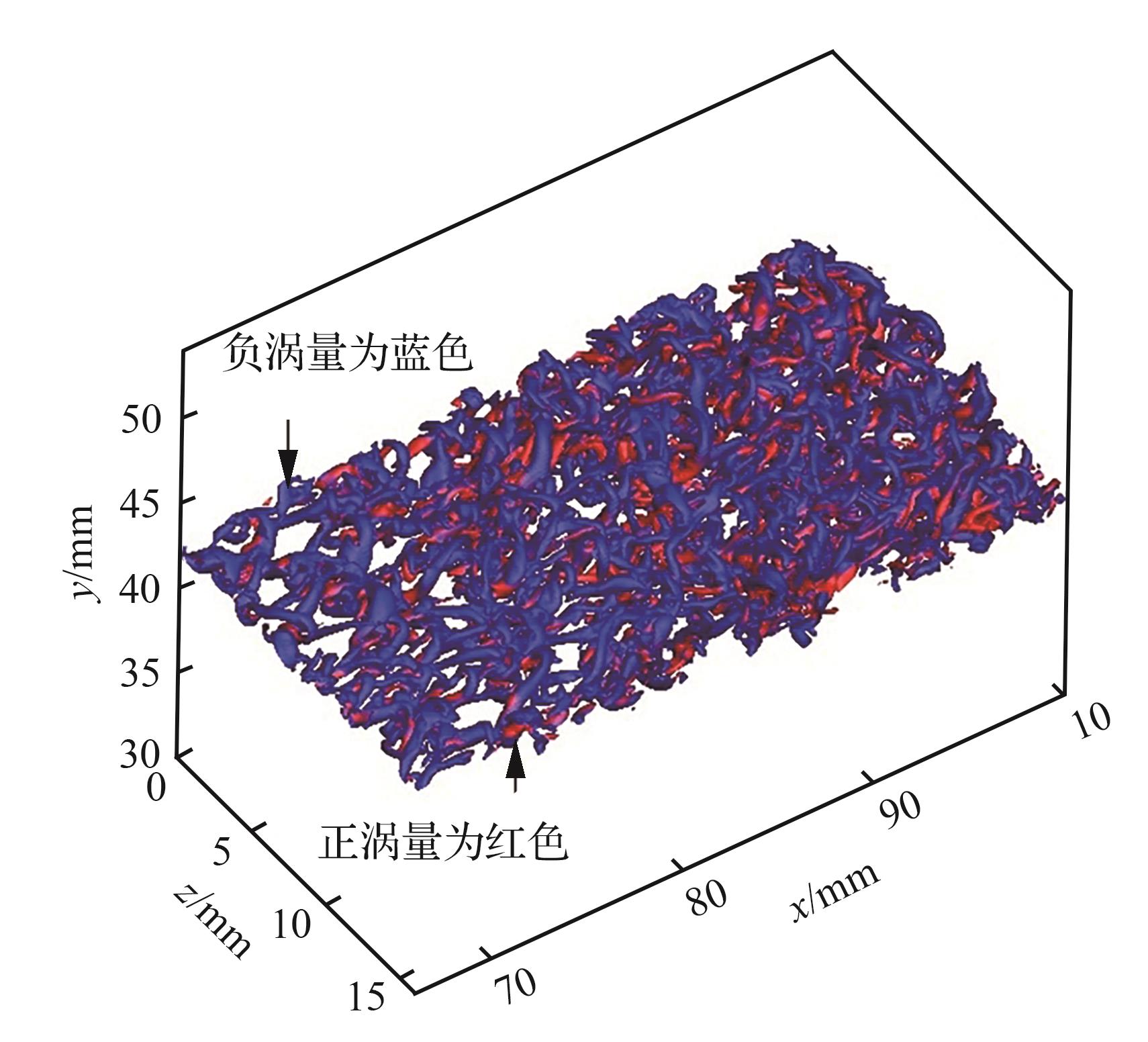
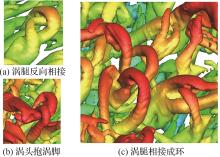
Fig.12
Interactions of hairpin vortices
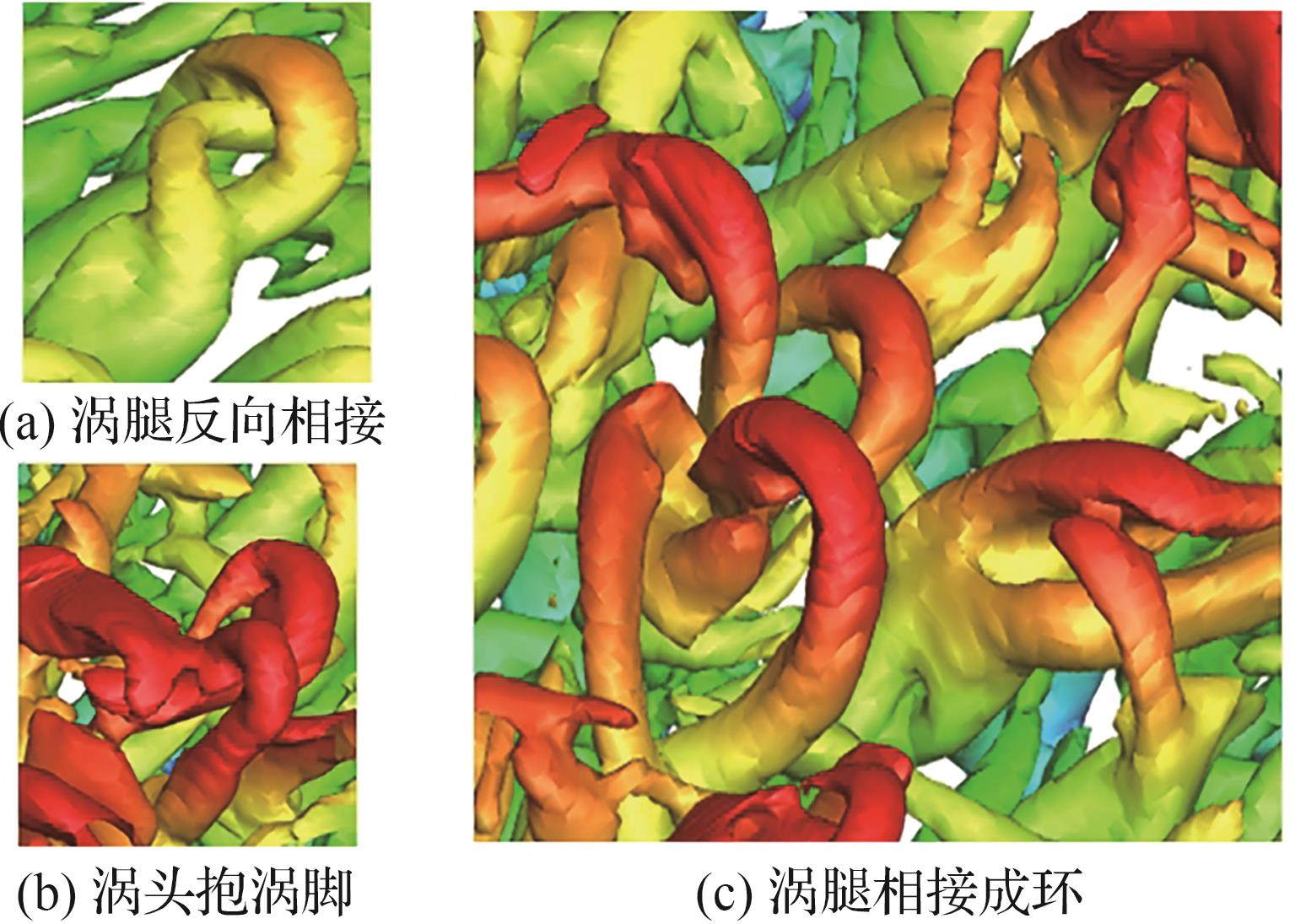
Fig.13
Vortex structures at late stage of transition in streamwise domain [100,160] mm
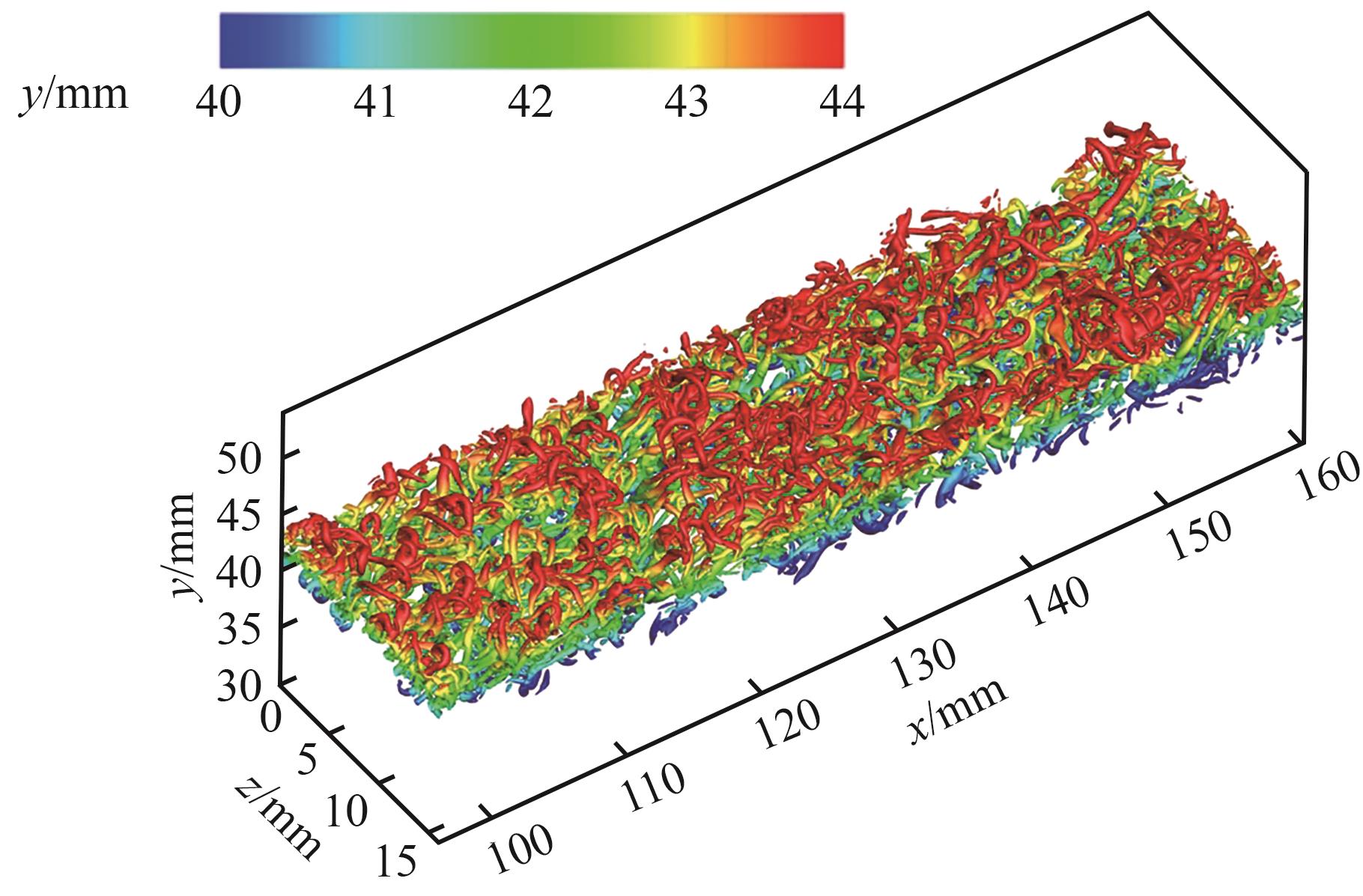
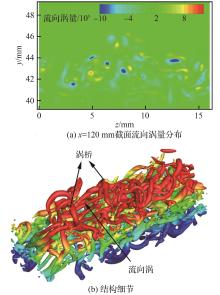
Fig.14
Analysis of multi-necklace like vortex structure
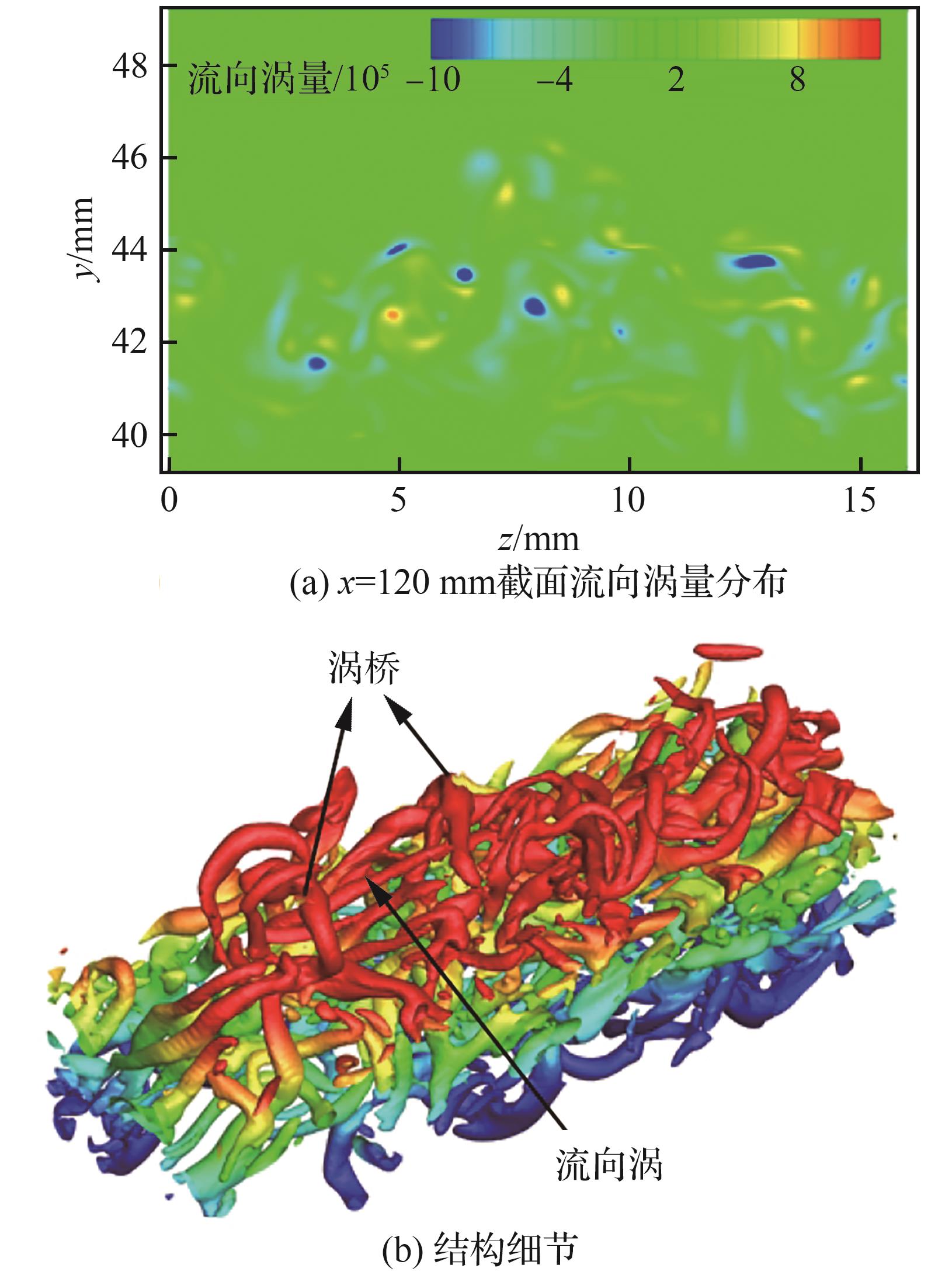
Fig.15
Analysis of quasi-streamwise vortex structures
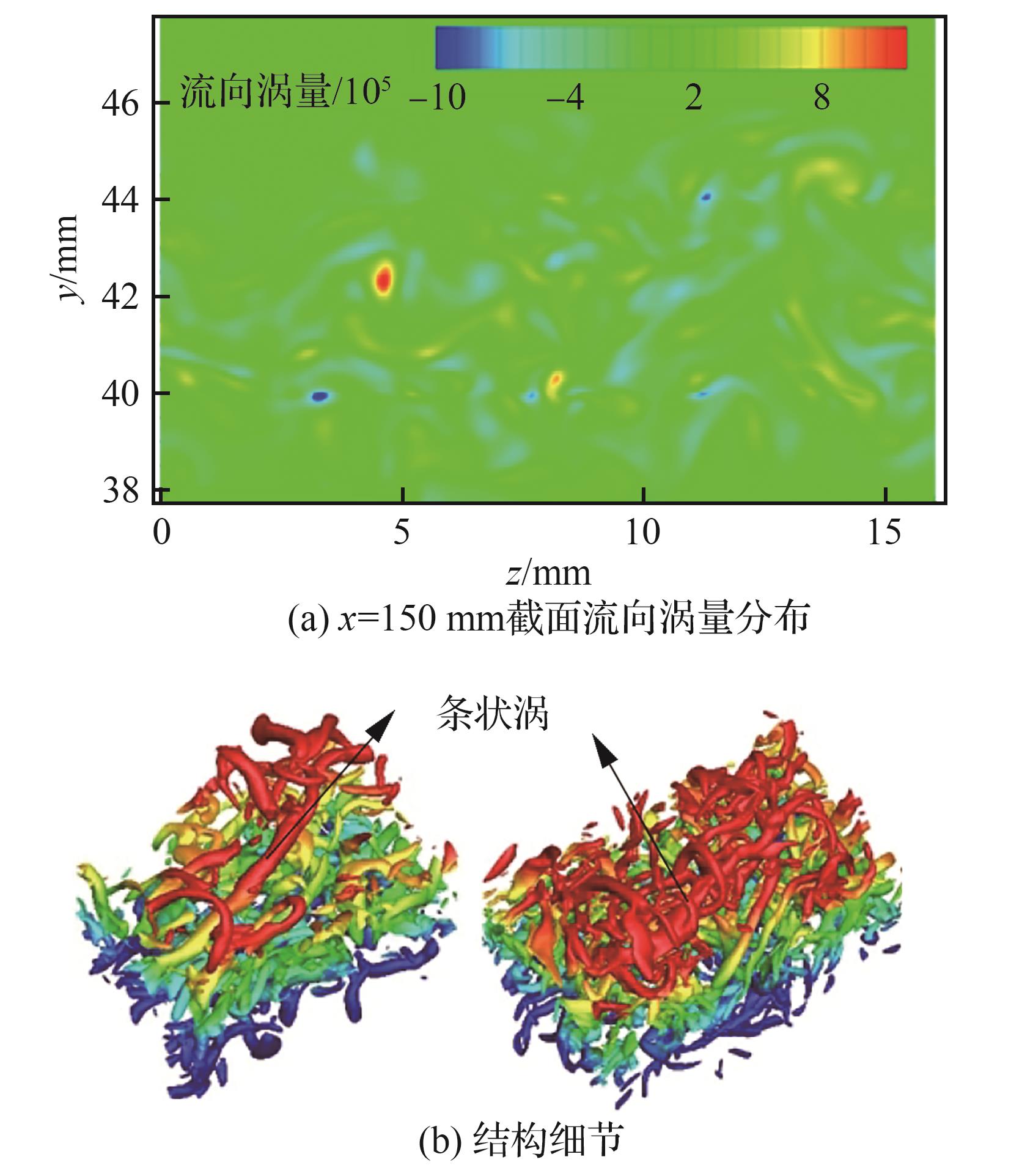
Fig.16
Identification of vortex structures at self-similar region in streamwise domain [160,240] mm
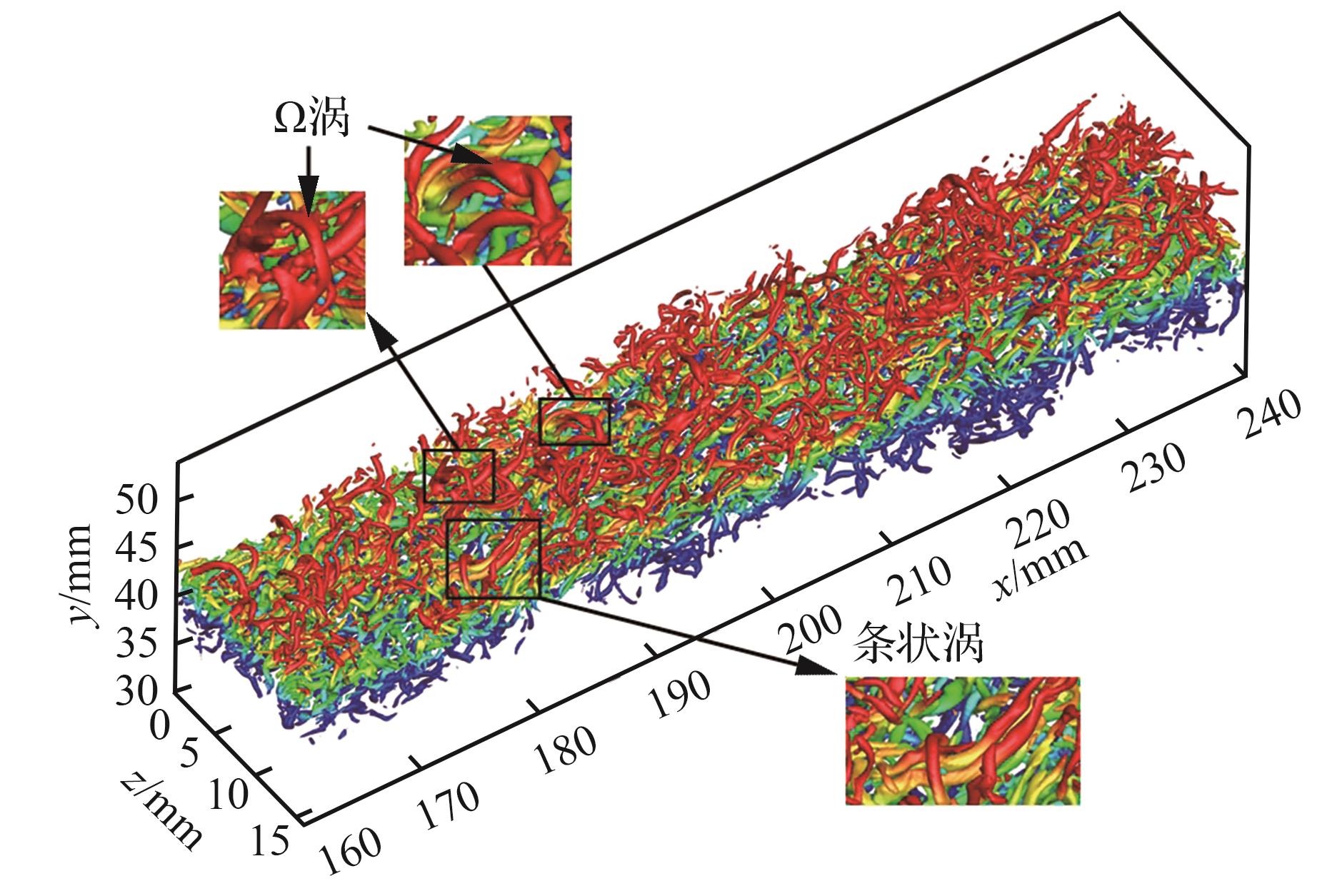
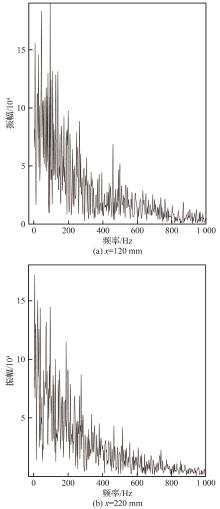
Fig.17
Comparison of frequency spectra for transverse fluctuating velocity in transition region and self-similar region
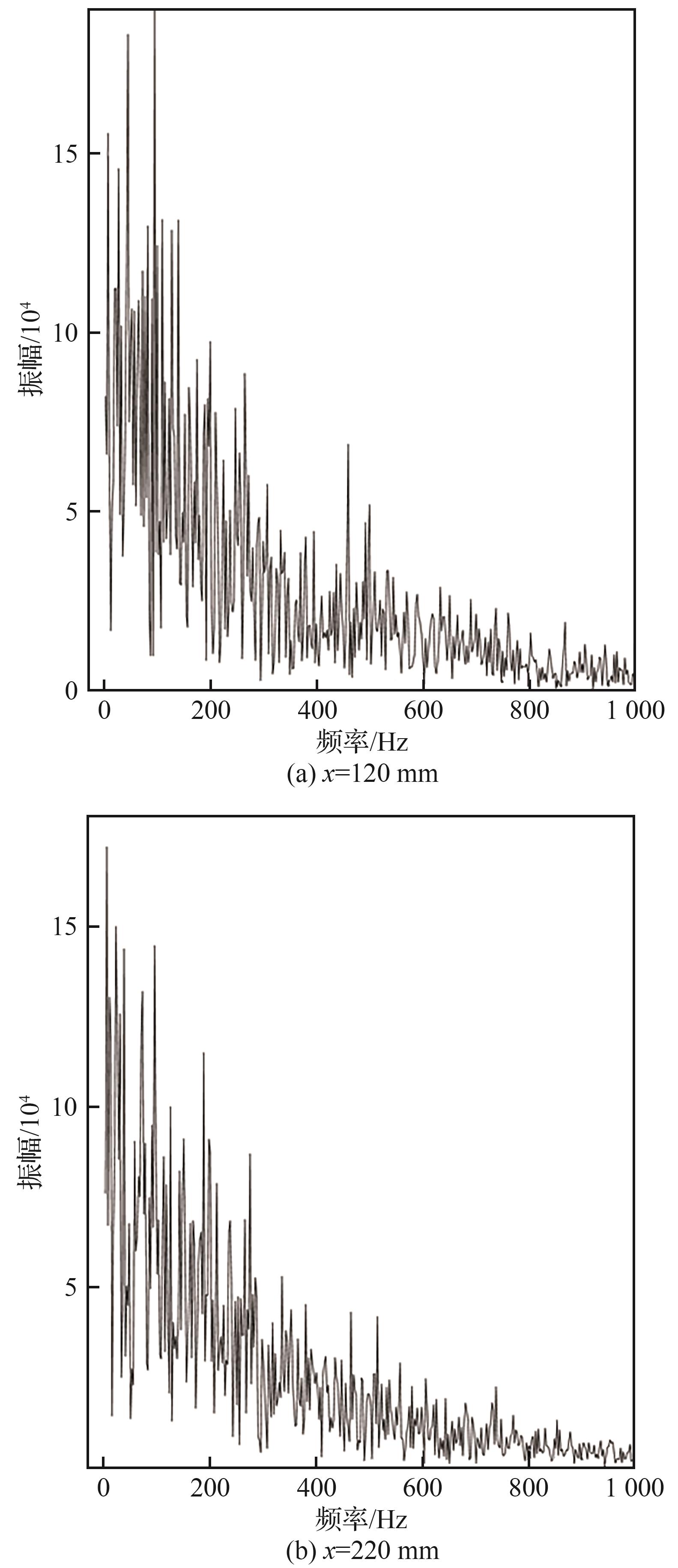
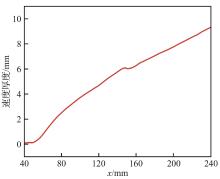
Fig.18
Distribution of velocity thickness along streamwise direction
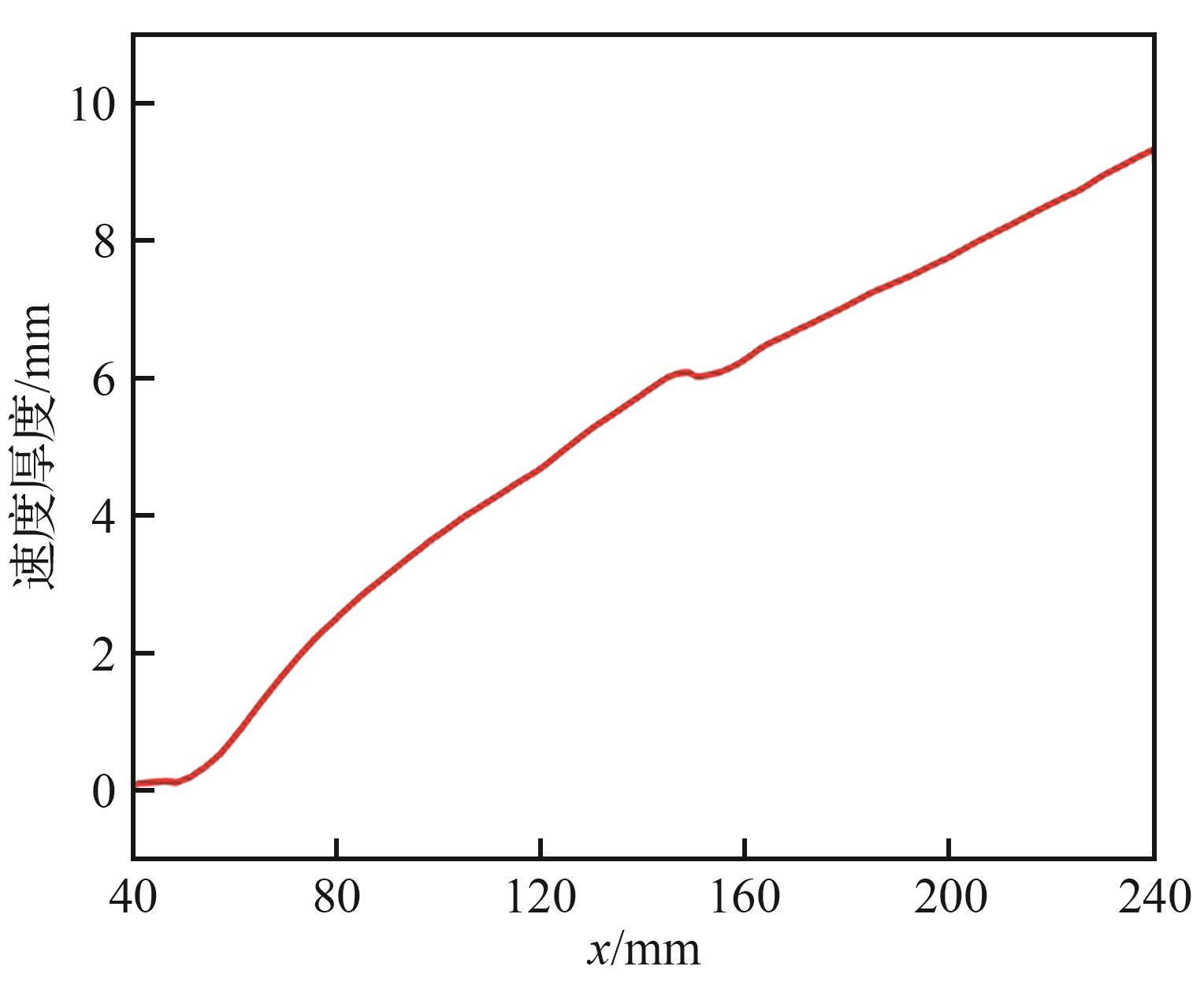
Fig.19
Distribution of vorticity thickness along streamwise direction
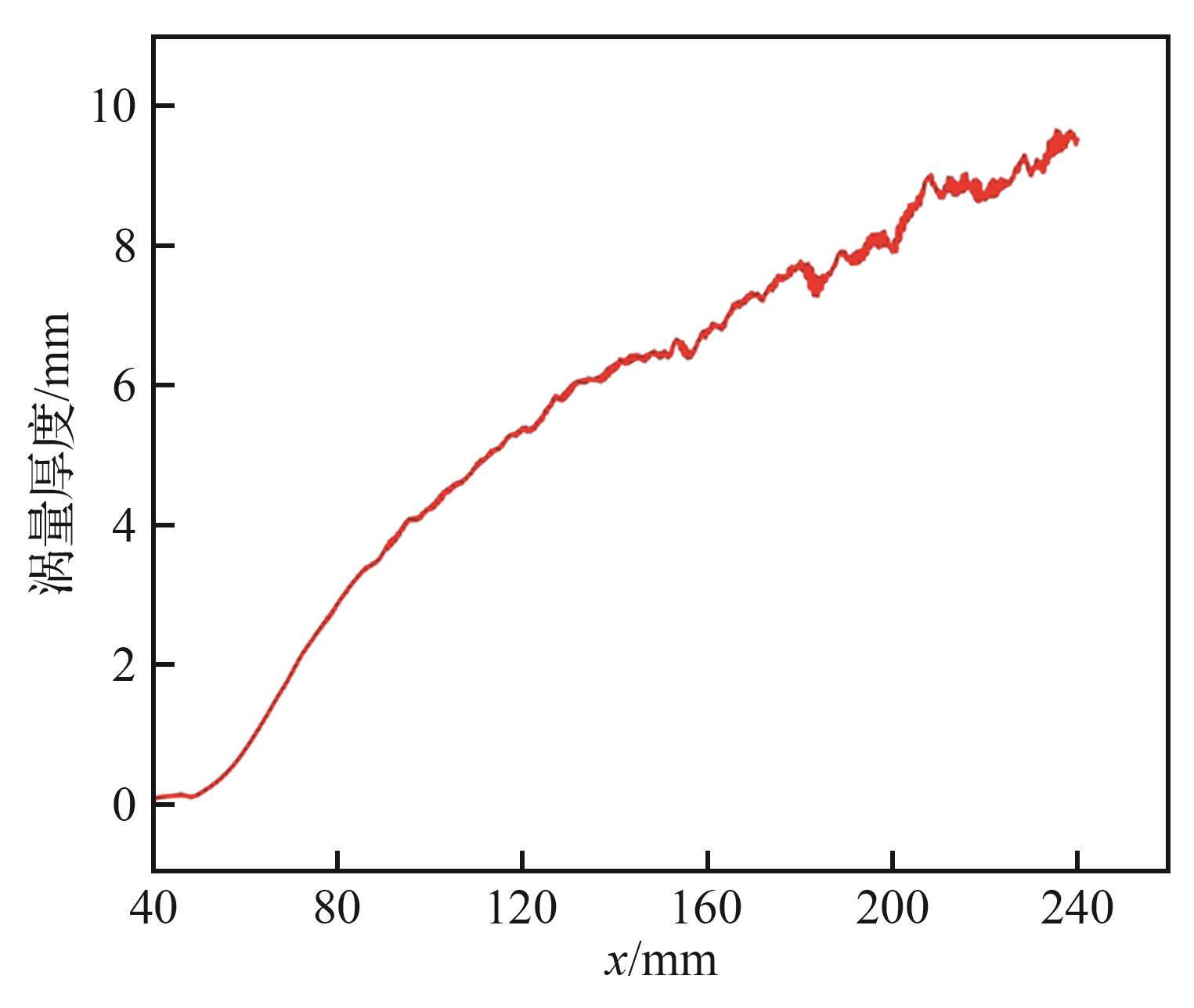
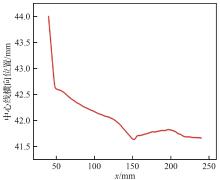
Fig.20
Position of mid-line of mixing layer changes along streamwise direction
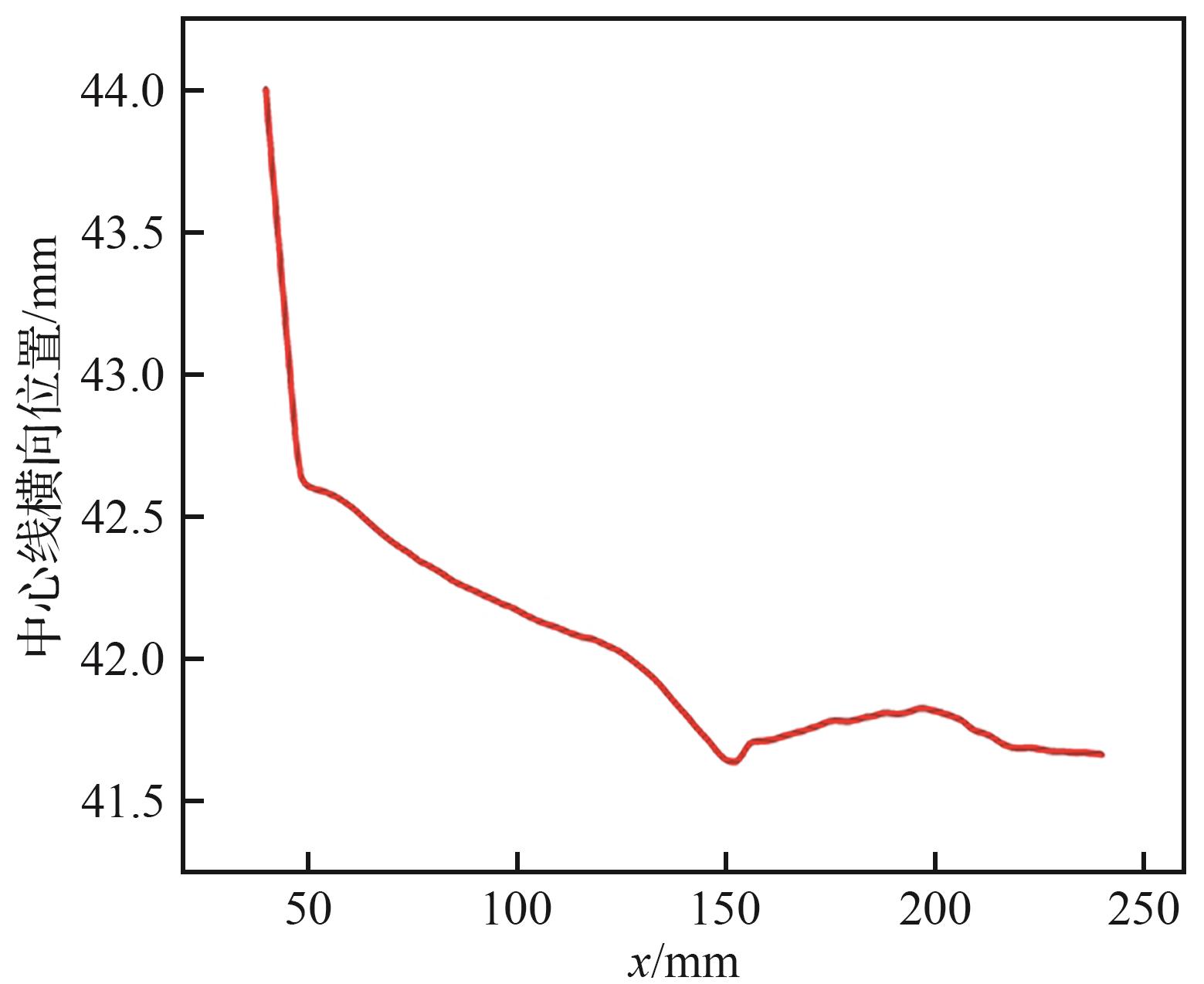
Fig.21
Reynolds shear stress distribution x = 60, 80, 100, 120,150 mm in transition of mixing layer
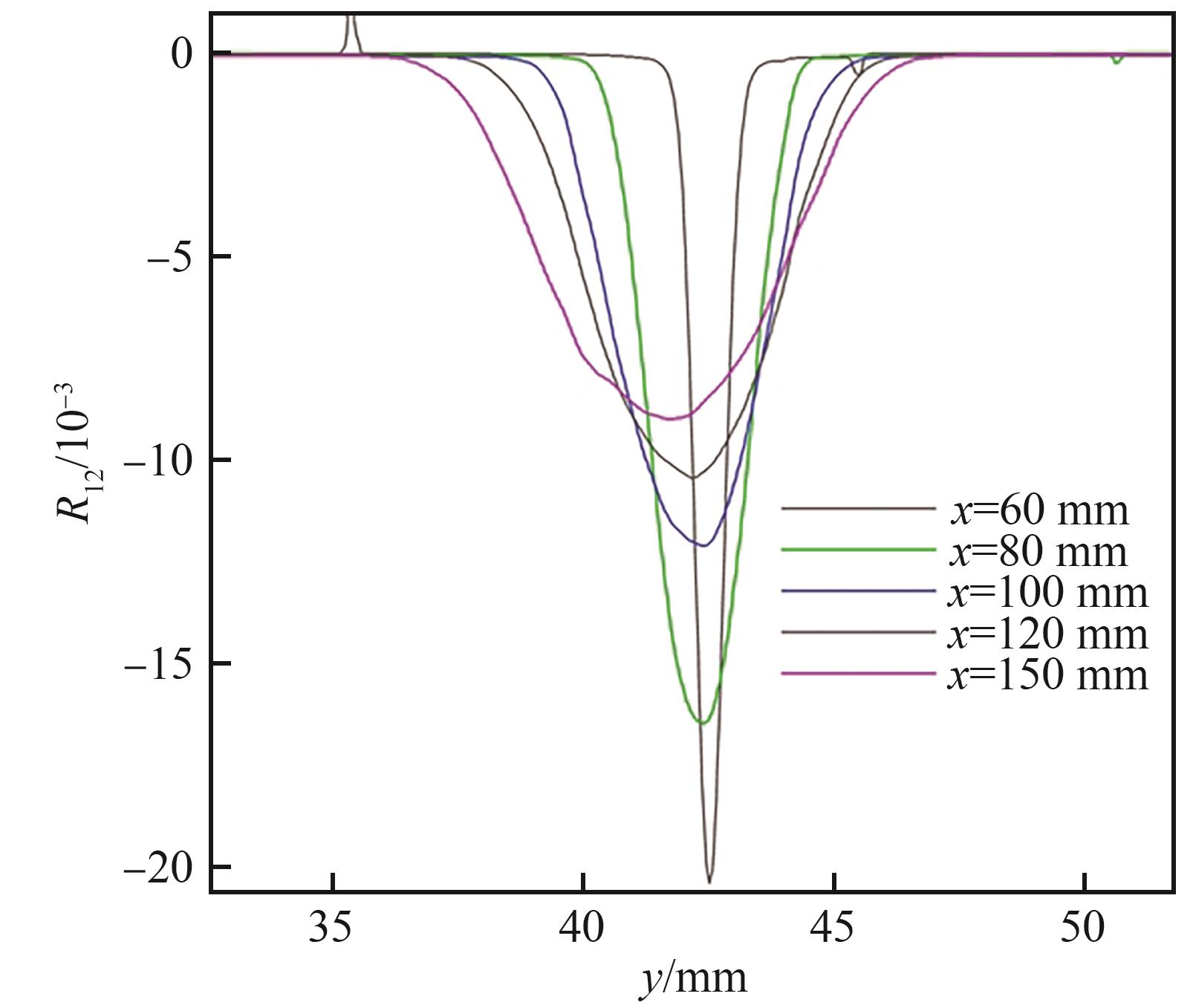
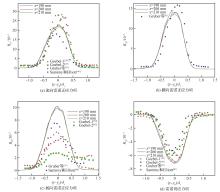
Fig.22
Distribution of Reynolds stress profiles and Reynolds shear stress in turbulent self-preserving stage of mixing layer
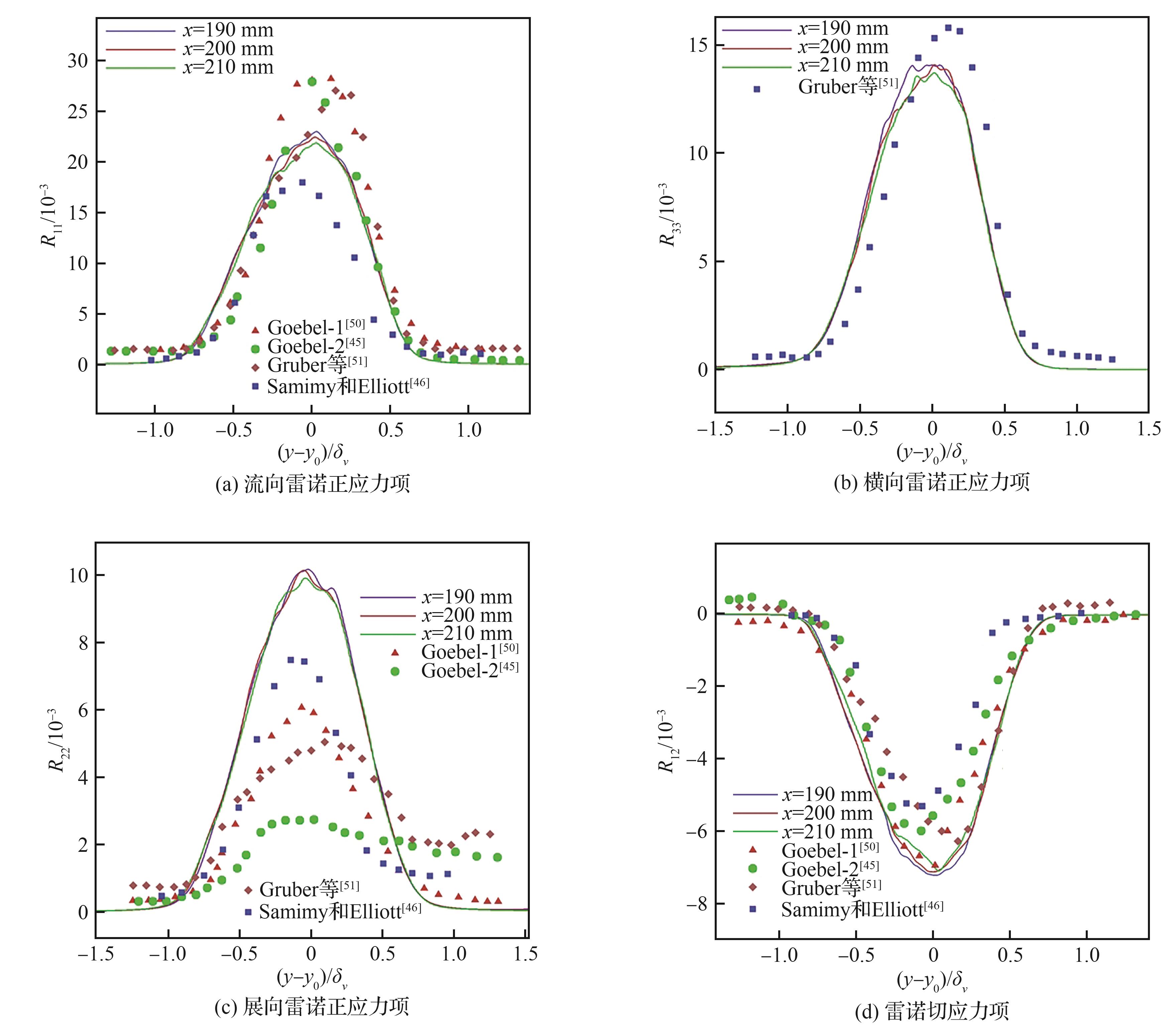
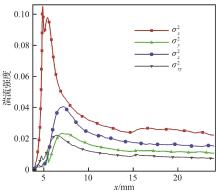
Fig.23
Distributions of turbulent intensity peak value along streamwise direction
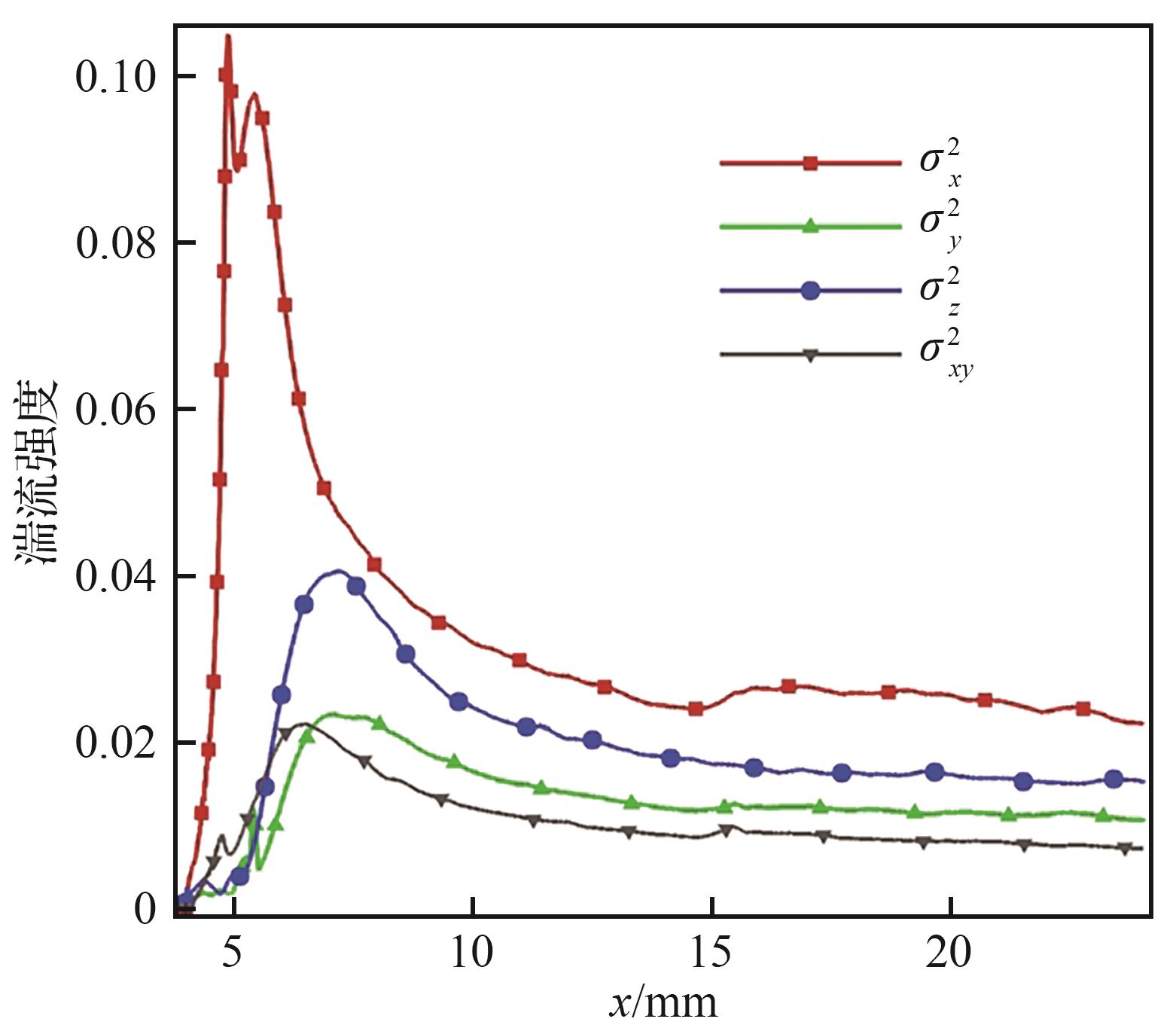
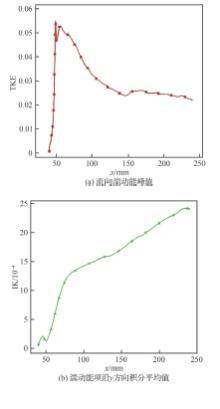
Fig.24
Turbulent kinetic energy distribution along streamwise direction
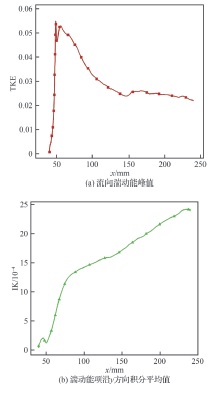
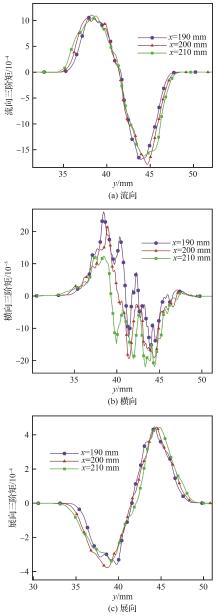
Fig.25
Distribution of third-order moment of fluctuation velocity in self-similar region at x=190, 200, 210 mm
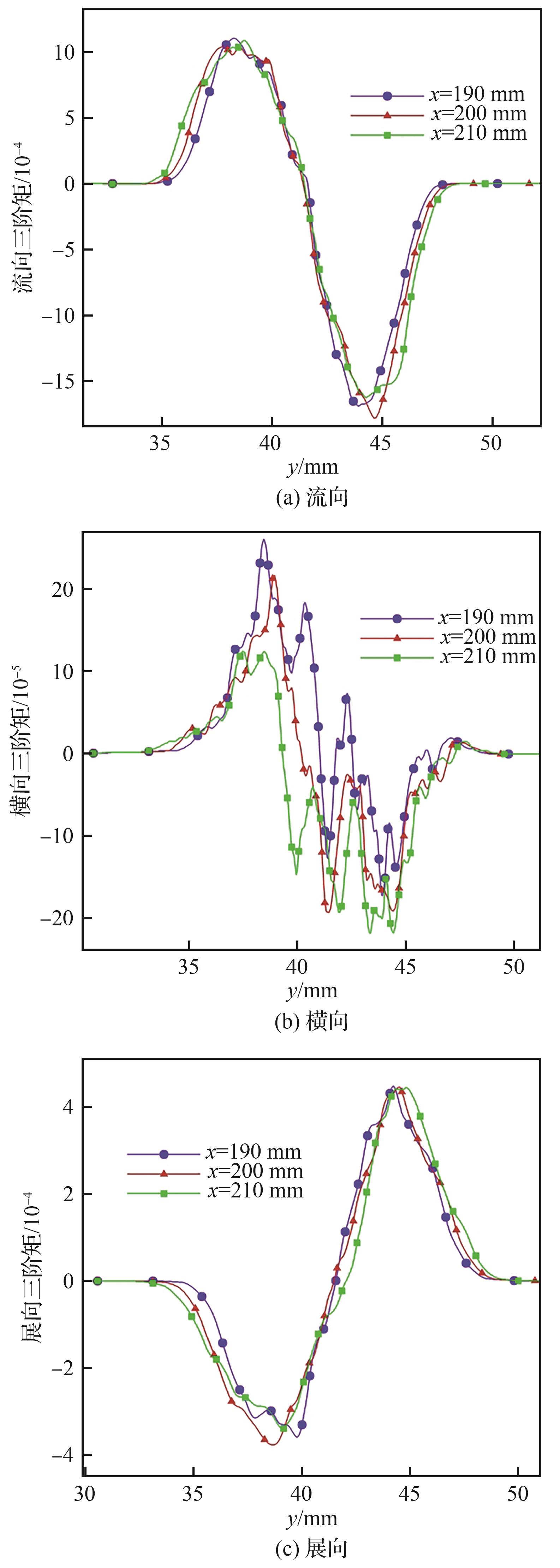
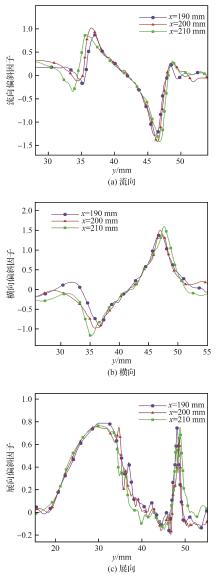
Fig.26
Distribution of skewness of fluctuation velocity in self-similar region at x=190, 200, 210 mm
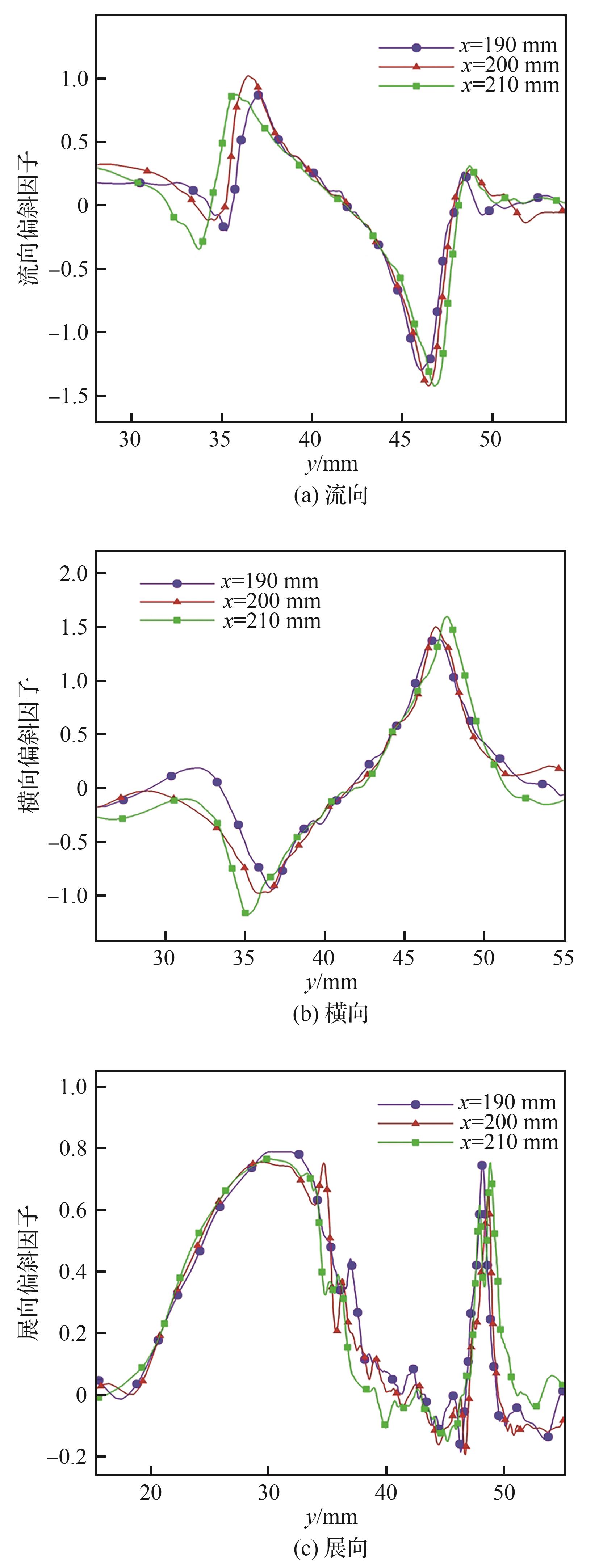
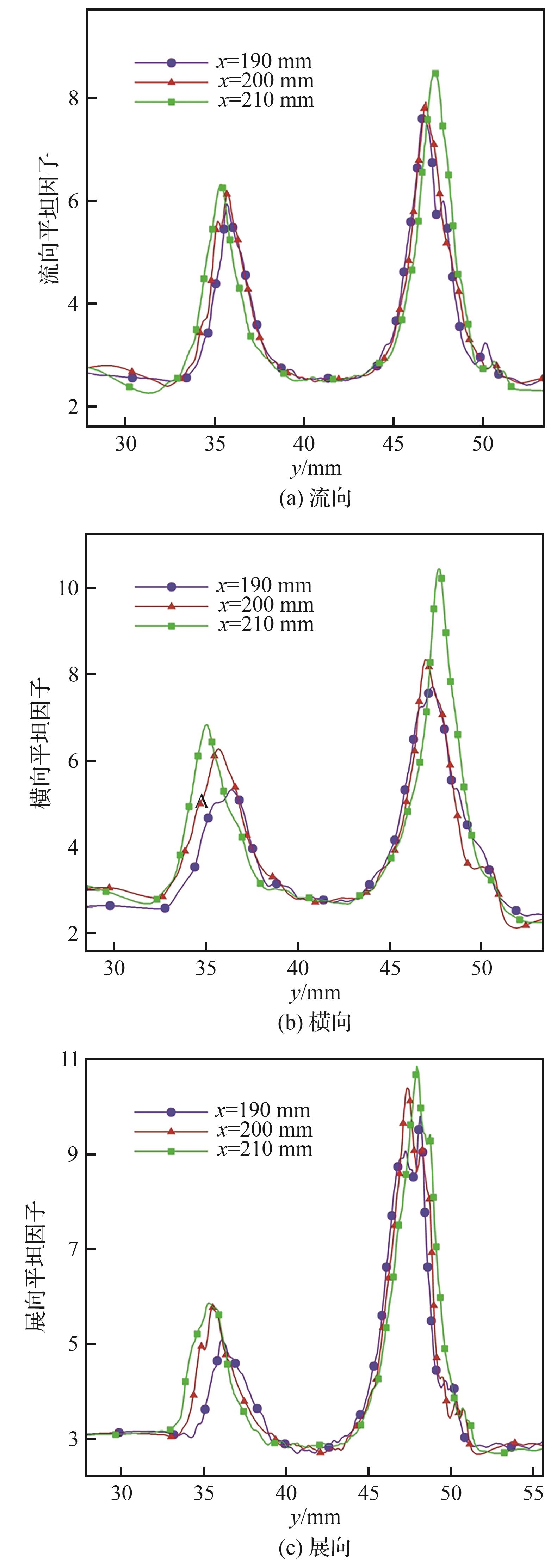
Fig.27
Distribution of flatness of fluctuation velocity in self-similar region at x = 190, 200, 210 mm
| [1] | 段鹏飞, 高书亮, 王恩亮, 等. 吸气式高超声速机动飞行样式及其关键技术分析[J]. 航空兵器, 2024, 31(2): 99-105. |
| DUAN P F, GAO S L, WANG E L, et al. Analysis of air-breathing hypersonic maneuver flight styles and key technologies[J]. Aero Weaponry, 2024, 31(2): 99-105 (in Chinese). | |
| [2] | REN Z X, WANG B, ZHENG L X. Numerical analysis on interactions of vortex, shock wave, and exothermal reaction in a supersonic planar shear layer laden with droplets[J]. Physics of Fluids, 2018, 30(3): 036101. |
| [3] | ISONO T, NAKANO R, TOMIOKA S, et al. Prediction of mixing efficiency between incoming air and embedded rocket exhaust within an RBCC engine[C]∥ 52nd AIAA/SAE/ASEE Joint Propulsion Conference.Reston: AIAA, 2016. |
| [4] | SEGAL C. The scramjet engine[M]. Cambridge: Cambridge University Press, 2009. |
| [5] | 崔朋, 徐万武, 陈健, 等. 火箭基组合循环燃烧组织研究现状[J]. 火箭推进, 2015, 41(4): 1-7. |
| CUI P, XU W W, CHEN J, et al. Research progress about rocket based combined cycle combustion organization[J]. Journal of Rocket Propulsion, 2015, 41(4): 1-7 (in Chinese). | |
| [6] | 刘小勇, 王明福, 刘建文, 等. 超燃冲压发动机研究回顾与展望[J]. 航空学报, 2024,45(5): 529878. |
| LIU X Y, WANG M F, LIU J W, et al. Review and prospect of research on scramjet[J]. Acta Aeronautica et Astronautica Sinica, 2024,45(5): 529878 (in Chinese). | |
| [7] | 夏智勋, 冯运超, 马立坤, 等. 固体火箭超燃冲压发动机燃烧技术研究进展[J]. 航空学报, 2023, 44(15): 528793. |
| XIA Z X, FENG Y C, MA L K,et al. Research progress of solid rocket scramjet combustion technology[J]. Acta Aeronautica et Astronautica Sinica, 2023, 44(15): 528793 (in Chinese). | |
| [8] | 纪鉴恒, 蔡尊, 王泰宇, 等. 宽速域超燃冲压发动机流动燃烧过程研究进展[J]. 航空学报, 2024, 45(3): 028696. |
| JI J H, CAI Z, WANG T Y, et al. Flow and combustion process for wide speed range scramjet: Review[J]. Acta Aeronautica et Astronautica Sinica, 2024, 45(3): 028696 (in Chinese). | |
| [9] | 易仕和, 陈植, 朱杨柱, 等. (高)超声速流动试验技术及研究进展[J]. 航空学报, 2015, 36(1): 98-119. |
| YI S H, CHEN Z, ZHU Y Z, et al. Progress on experimental techniques and studies of hypersonic/supersonic flows[J]. Acta Aeronautica et Astronautica Sinica, 2015, 36(1): 98-119 (in Chinese). | |
| [10] | TIAN L F, YI S H, ZHAO Y X, et al. Study of density field measurement based on NPLS technique in supersonic flow[J]. Science in China Series G: Physics, Mechanics and Astronomy, 2009, 52(9): 1357-1363. |
| [11] | 晏至辉, 刘卫东, 范周琴. 超声速混合层混合LES/RANS模拟[J]. 弹箭与制导学报, 2011, 31(6): 141-145. |
| YAN Z H, LIU W D, FAN Z Q. Numerical simulation of supersonic mixing layers by hybrid LES/RANS method[J]. Journal of Projectiles, Rockets, Missiles and Guidance, 2011, 31(6): 141-145 (in Chinese). | |
| [12] | 徐晶磊, 宋友富, 张扬, 等. 用于可压缩自由剪切流动的湍流混合长度[J]. 航空学报, 2016, 37(6): 1841-1850. |
| XU J L, SONG Y F, ZHANG Y, et al. Turbulence mixing length for compressible free shear flows[J]. Acta Aeronautica et Astronautica Sinica, 2016, 37: 1841-1850 (in Chinese). | |
| [13] | 李新亮. 高超声速湍流直接数值模拟技术[J]. 航空学报, 2015, 36(1): 147-158. |
| LI X L. Direct numerical simulation techniques for hypersonic turbulent flows[J]. Acta Aeronautica et Astronautica Sinica, 2015, 36(1): 147-158 (in Chinese). | |
| [14] | PANTANO C, SARKAR S. A study of compressibility effects in the high-speed turbulent shear layer using direct simulation[J]. Journal of Fluid Mechanics, 2002, 451(1): 329-371. |
| [15] | QAWASMEH B R, WEI M J. Low-dimensional models for compressible temporally developing shear layers[J]. Journal of Fluid Mechanics, 2013, 731: 364-393. |
| [16] | YILMAZ I, EDIS F O, SAYGIN H, et al. Parallel implicit DNS of temporally-evolving turbulent shear layer instability[J]. Journal of Computational and Applied Mathematics, 2014, 259: 651-659. |
| [17] | FERRER P J M, LEHNASCH G, MURA A. Compressibility and heat release effects in high-speed reactive mixing layers Ⅱ. Structure of the stabilization zone and modeling issues relevant to turbulent combustion in supersonic flows[J]. Combustion and Flame, 2017, 180: 304-320. |
| [18] | ZHOU Q, HE F, SHEN M Y. Direct numerical simulation of a spatially developing compressible plane mixing layer: Flow structures and mean flow properties[J]. Journal of Fluid Mechanics, 2012, 711: 437-468. |
| [19] | DAI Q, JIN T, LUO K, et al. Direct numerical simulation of a three-dimensional spatially evolving compressible mixing layer laden with particles. Ⅱ. Turbulence anisotropy and growth rate[J]. Physics of Fluids, 2019, 31(8): 083303. |
| [20] | ZHANG D D, TAN J G, YAO X. Direct numerical simulation of spatially developing highly compressible mixing layer: Structural evolution and turbulent statistics[J]. Physics of Fluids, 2019, 31(3): 036102. |
| [21] | 禹旻, 杨武兵, 沈清. 超声速尾迹-剪切流的混合增强[J]. 航空学报, 2021, 42(12): 625876. |
| YU M, YANG W B, SHEN Q. Mixing enhancement of supersonic wake shear layer[J]. Acta Aeronautica et Astronautica Sinica, 2021, 42(12): 625876 (in Chinese). | |
| [22] | LAIZET S, LARDEAU S, LAMBALLAIS E. Direct numerical simulation of a mixing layer downstream a thick splitter plate[J]. Physics of Fluids, 2010, 22(1): 015104. |
| [23] | ZHANG D D, TAN J G, YAO X. Vortex evolution and flame propagation driven by oblique shock wave in supersonic reactive mixing layer[J]. Aerospace Science and Technology, 2021, 118: 106993. |
| [24] | YAO X, TAN J G, ZHANG D D, et al. Combustion of H2/air supersonic mixing layers with splitter plate: Flame structure and statistical characteristics[J]. Acta Astronautica, 2020, 173: 279-293. |
| [25] | CANTWELL B J. Organized motion in turbulent flow[J]. Annual Review of Fluid Mechanics, 1981, 13: 457-515. |
| [26] | LI N, BALARAS E, PIOMELLI U. Inflow conditions for large-eddy simulations of mixing layers[J]. Physics of Fluids, 2000, 12(4): 935-938. |
| [27] | KEMPF A, KLEIN M, JANICKA J. Efficient generation of initial- and inflow-conditions for transient turbulent flows in arbitrary geometries[J]. Flow, Turbulence and Combustion, 2005, 74(1): 67-84. |
| [28] | FENG J H, LU J Y, SHEN C B. Transverse forcing on supersonic, spatially evolving mixing layers[J]. Journal of Aerospace Engineering, 2020, 33(4): 04020036. |
| [29] | SANDHAM N D, REYNOLDS W C. Compressible mixing layer-linear theory and direct simulation[J]. AIAA Journal, 1990, 28(4): 618-624. |
| [30] | QIN S J, YANG Y, HUANG Y X, et al. Is a direct numerical simulation (DNS) of Navier-Stokes equations with small enough grid spacing and time-step definitely reliable/correct?[J]. Journal of Ocean Engineering and Science, 2024, 9(3): 293-310. |
| [31] | PAPAMOSCHOU D, ROSHKO A. The compressible turbulent shear layer: An experimental study[J]. Journal of Fluid Mechanics, 1988, 197: 453-477. |
| [32] | CHONG D T, BAI Y P, ZHAO Q B, et al. Direct numerical simulation of vortex structures during the late stage of the transition process in a compressible mixing layer[J]. Physics of Fluids, 2021, 33(5): 054108. |
| [33] | 方昕昕. 超声速混合层高精度数值模拟及流向涡混合增强实验研究[D]. 长沙: 国防科技大学, 2020. |
| FANG X X. High-order accurate numerical simulation on supersonic mixing layer and experimental study on mixing enhancement with streamwise vortices[D]. Changsha: National University of Defense Technology, 2020 (in Chinese). | |
| [34] | 冯军红. 超声速混合层增长特性及混合增强机理研究[D]. 长沙: 国防科学技术大学, 2016. |
| FENG J H. Study on growth characteristics and mixing enhancement mechanisms of supersonic mixing layers[D]. Changsha: National University of Defense Technology, 2016 (in Chinese). | |
| [35] | TAN J G, ZHANG D D, LV L. A review on enhanced mixing methods in supersonic mixing layer flows[J]. Acta Astronautica, 2018, 152: 310-324. |
| [36] | ZHANG D D, TAN J G, HOU J W. Structural and mixing characteristics influenced by streamwise vortices in supersonic flow[J]. Applied Physics Letters, 2017, 110(12): 124101. |
| [37] | SANDHAM N D, REYNOLDS W C. Three-dimensional simulations of large eddies in the compressible mixing layer[J]. Journal of Fluid Mechanics, 1991, 224: 133-158. |
| [38] | LUO K H, SANDHAM N D. Direct simulation of scalar mixing in a compressible mixing layer[C]∥ Advances in Turbulence V. Dordrecht: Springer Netherlands, 1995: 340-345. |
| [39] | CHEN L, LIU C Q. Numerical study on mechanisms of second sweep and positive spikes in transitional flow on a flat plate[J]. Computers & Fluids, 2011, 40(1): 28-41. |
| [40] | FENG J H, SHEN C B, WANG Q C, et al. Experimental and numerical study of mixing characteristics of a rectangular lobed mixer in supersonic flow[J]. The Aeronautical Journal, 2015, 119(1216): 701-725. |
| [41] | MCMULLAN A, GAO S A, COATS C. Investigation of coherent structures in turbulent mixing layers using large eddy simulation[C]∥ 48th AIAA Aerospace Sciences Meeting Including the New Horizons Forum and Aerospace Exposition. Reston: AIAA, 2010. |
| [42] | MCMULLAN W, COATS C, GAO S A. Analysis of the variable density mixing layer using large eddy simulation[C]∥ 41st AIAA Fluid Dynamics Conference and Exhibit. Reston: AIAA, 2011. |
| [43] | MARTHA C S, BLAISDELL G A, LYRINTZIS A S. Large eddy simulations of 2-D and 3-D spatially developing mixing layers[J]. Aerospace Science and Technology, 2013, 31(1): 59-72. |
| [44] | ARMS R J, HAMA F R. Localized-induction concept on a curved vortex and motion of an elliptic vortex ring[J]. Physics of Fluids, 1965, 8(4): 553-559. |
| [45] | GOEBEL S G, DUTTON J C. Experimental study of compressible turbulent mixing layers[J]. AIAA Journal, 1991, 29(6): 538-546. |
| [46] | SAMIMY M, ELLIOTT G S. Effects of compressibility on the characteristics of free shear layers[J]. AIAA Journal, 1990, 28(3): 439-445. |
| [47] | PAPAMOSCHOU D. Structure of the compressible turbulent shear layer[J]. AIAA Journal, 1991, 29(5): 680-681. |
| [48] | CLEMENS N T, MUNGAL M G. Large-scale structure and entrainment in the supersonic mixing layer[J]. Journal of Fluid Mechanics, 1995, 284: 171-216. |
| [49] | DAY M J, REYNOLDS W C, MANSOUR N N. The structure of the compressible reacting mixing layer: Insights from linear stability analysis[J]. Physics of Fluids, 1998, 10(4): 993-1007. |
| [50] | GOEBEL S G, DUTTON J C, KRIER H, et al. Mean and turbulent velocity measurements of supersonic mixing layers[J]. Experimentsin Fluids, 1990, 8(5): 263-272. |
| [51] | GRUBER M R, MESSERSMITH N L, DUTTON J C. Three-dimensional velocity field in a compressible mixing layer[J]. AIAA Journal, 1993, 31(11): 2061-2067. |
| [52] | FU S, LI Q B. Numerical simulation of compressible mixing layers[J]. International Journal of Heat and Fluid Flow, 2006, 27(5): 895-901. |
| [53] | SHARMA A, BHASKARAN R, LELE S. Large-eddy simulation of supersonic, turbulent mixing layers downstream of a splitter plate[C]∥ 49th AIAA Aerospace Sciences Meeting Including the New Horizons Forum and Aerospace Exposition. Reston: AIAA, 2011. |
| [54] | BARRE S, BRAUD P, CHAMBRES O, et al. Influence of inlet pressure conditions on supersonic turbulent mixing layers[J]. Experimental Thermal and Fluid Science, 1997, 14(1): 68-74. |
| [55] | LI Q B, FU S. Numerical simulation of high-speed planar mixing layer[J]. Computers & Fluids, 2003, 32(10): 1357-1377. |
| [1] | Chen LI, Dong SUN, Pengxin LIU, Qilong GUO, Xianxu YUAN. Direct numerical simulation of supersonic turbulent boundary layer with plasma actuation [J]. Acta Aeronautica et Astronautica Sinica, 2025, 46(S1): 732187-732187. |
| [2] | Yifan YANG, Xiao WANG. Enhanced hybrid vortex particle method for aerodynamic analysis of tiltrotor rotor/wing interactions [J]. Acta Aeronautica et Astronautica Sinica, 2025, 46(7): 131040-131040. |
| [3] | Min YANG, Guanjun LIU, Ziyuan ZHOU. Control of lunar landers based on secure reinforcement learning [J]. Acta Aeronautica et Astronautica Sinica, 2025, 46(3): 630553-630553. |
| [4] | Jiakun FAN, Junqiang AI, Ningjuan DONG, Jiakuan XU, Lei QIAO, Junqiang BAI. Stationary crossflow induced transition prediction method for supersonic swept-wing based on convolutional neural networks [J]. Acta Aeronautica et Astronautica Sinica, 2025, 46(20): 532012-532012. |
| [5] | Yayun SHI, Xinze JI, Tihao YANG, Pengfei WU, Lu XIE, Junqiang BAI, Kaixuan FENG. Transition prediction and uncertainty analysis of self-developed benchmark models for supersonic laminar wings [J]. Acta Aeronautica et Astronautica Sinica, 2025, 46(20): 531923-531923. |
| [6] | Xueliang LI, Chuangchuang LI, Yahan ZHANG, Wei SU, Jie WU. Effect of distributed ablation pattern on hypersonic boundary-layer instability with a flat plate [J]. Acta Aeronautica et Astronautica Sinica, 2025, 46(2): 130464-130464. |
| [7] | Jianjian LIANG, Shoukun WANG, Shaoming HE. Segmented action guidance strategy for autonomous shipborne landing of fixed-wing UAV [J]. Acta Aeronautica et Astronautica Sinica, 2025, 46(13): 531116-531116. |
| [8] | Yifeng ZHANG, Xinguang WANG, Leitao GUO, Yang XU, Qi CHEN. Measurement and analysis of influence of high-speed boundary layer transition on dynamic aerodynamic characteristics of sharp cone [J]. Acta Aeronautica et Astronautica Sinica, 2025, 46(12): 131430-131430. |
| [9] | Zixu WANG, Pan LI, Junbiao SHEN, Zhenhua ZHU, Renliang CHEN. Dynamic conversion corridor of tiltrotor aircraft under accelerating and decelerating conditions [J]. Acta Aeronautica et Astronautica Sinica, 2025, 46(11): 531377-531377. |
| [10] | Zhixiang WANG, Yongjun LEI, Dapeng ZHANG, Huiru CUI. Mixed-integer sequential approximate optimization method for stiffened cylindrical shells in large launch vehicles [J]. Acta Aeronautica et Astronautica Sinica, 2025, 46(10): 230189-230189. |
| [11] | Yuqing QIU, Yan LI, Jinxi LANG, Yuxian LIU, Zhong WANG. Robust adaptive attitude control of high-speed helicopters in transition mode [J]. Acta Aeronautica et Astronautica Sinica, 2024, 45(9): 529927-529927. |
| [12] | Dingjin ZHANG, Juanmian LEI, Rui ZHAO. Influence of wall temperature on receptivity of hypersonic flare cone boundary layer [J]. Acta Aeronautica et Astronautica Sinica, 2024, 45(24): 130290-130290. |
| [13] | Yong LI, Jianhai YE, Chenghui WANG. Characterization and control of three-cylinder noise in irregular triangular arrangement [J]. Acta Aeronautica et Astronautica Sinica, 2024, 45(23): 630316-630316. |
| [14] | Chengjian ZHANG, Dailin LYU, Chang ZHU, Jianqiang CHEN, Jie WU. Hypersonic boundary layer stability experiment of HyTRV lift body [J]. Acta Aeronautica et Astronautica Sinica, 2024, 45(22): 130272-130272. |
| [15] | Ming HE, Haotian CHEN, Wei HAN, Cheng DENG, Haibin DUAN. Development status and key technologies of cooperative control of bird-inspired UAV swarms [J]. Acta Aeronautica et Astronautica Sinica, 2024, 45(20): 29946-029946. |
| Viewed | ||||||
|
Full text |
|
|||||
|
Abstract |
|
|||||
Address: No.238, Baiyan Buiding, Beisihuan Zhonglu Road, Haidian District, Beijing, China
Postal code : 100083
E-mail:hkxb@buaa.edu.cn
Total visits: 6658907 Today visits: 1341All copyright © editorial office of Chinese Journal of Aeronautics
All copyright © editorial office of Chinese Journal of Aeronautics
Total visits: 6658907 Today visits: 1341

 CJA
CJA
