陈向勇1,2, 李汶洁1( ), 马骥1, 牛奔2, 邱建龙1
收稿日期:2025-10-27
修回日期:2025-11-10
接受日期:2025-11-28
出版日期:2025-12-16
发布日期:2025-12-08
通讯作者:
李汶洁
E-mail:lambda162435@163.com
基金资助:
Xiangyong CHEN1,2, Wenjie LI1(), Ji MA1, Ben NIU2, Jianlong QIU1
Received:2025-10-27
Revised:2025-11-10
Accepted:2025-11-28
Online:2025-12-16
Published:2025-12-08
Contact:
Wenjie LI
E-mail:lambda162435@163.com
Supported by:摘要:
围绕低空环境下无人系统协同控制的前沿进展展开综述。首先,阐述了低空经济的重要性及相关政策支持,指出低空环境的复杂性对无人系统协同控制提出的多重挑战。接着,详细介绍了传统协同控制方法和智能协同控制方法,分析了各方法的优势、局限性及相关研究成果。随后,探讨了无人系统协同控制技术在物流配送、城市治理、应急救援、军事侦察等领域的应用实践。最后,展望了未来研究方向,包括面向复杂动态环境的协同理论深化、异构无人系统协同控制理论拓展等,为低空环境下无人系统协同控制技术的进一步发展提供了参考。
中图分类号:
陈向勇, 李汶洁, 马骥, 牛奔, 邱建龙. 低空环境下无人系统协同控制前沿进展[J]. 航空学报, 2026, 47(S1): 732976.
Xiangyong CHEN, Wenjie LI, Ji MA, Ben NIU, Jianlong QIU. Frontier progress in collaborative control of unmanned systems in low-altitude environments[J]. Acta Aeronautica et Astronautica Sinica, 2026, 47(S1): 732976.
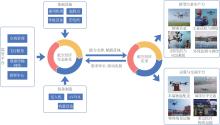
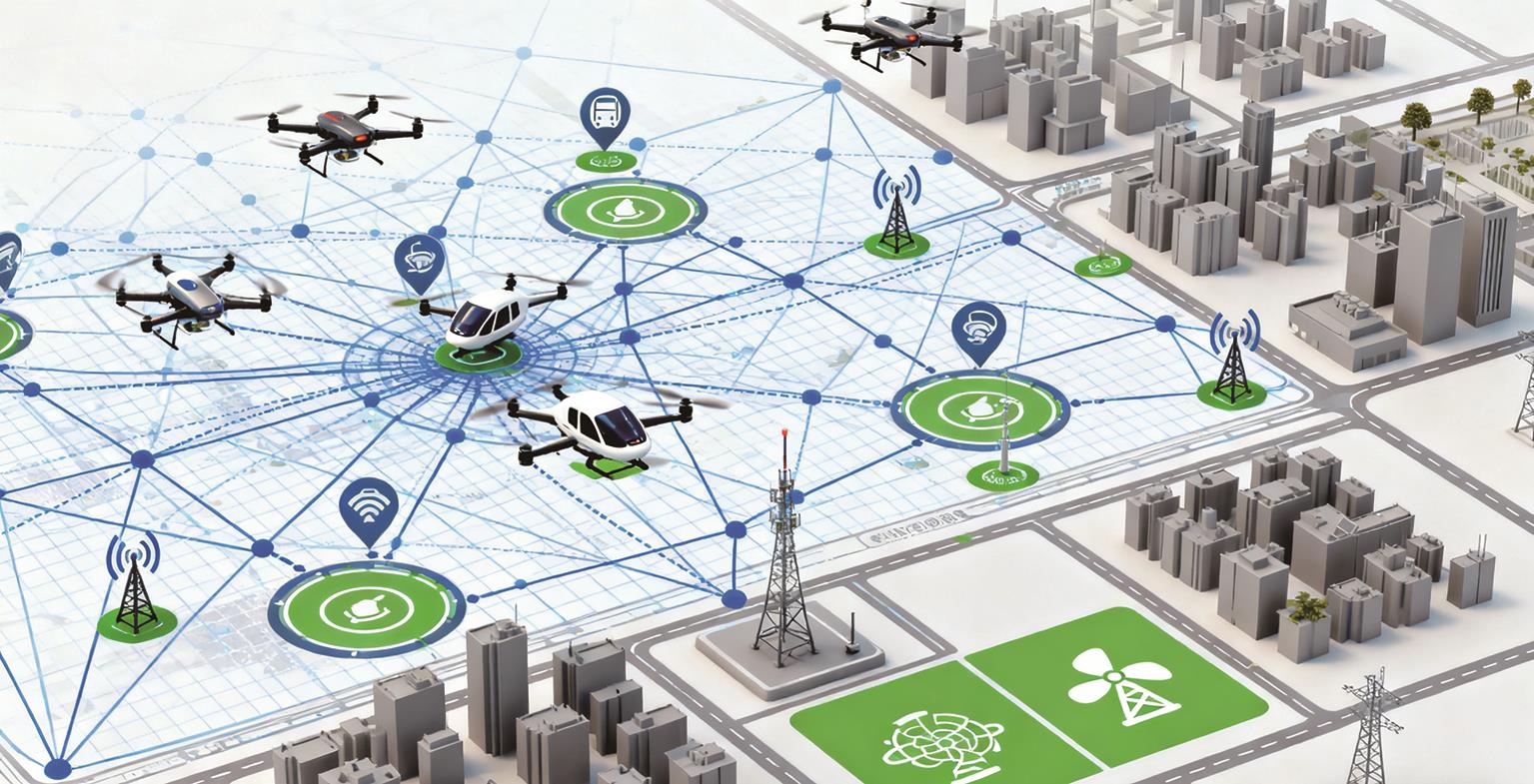
图 1
低空经济体系及应用
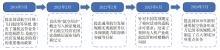
图 2
国内低空经济政策发展
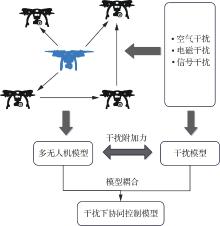
图 3
干扰模型与飞行动力学耦合关系
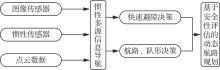
图 4
多约束环境感知和决策
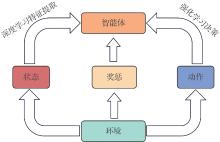
图 5
基于机器学习的低空无人机避障队形决策
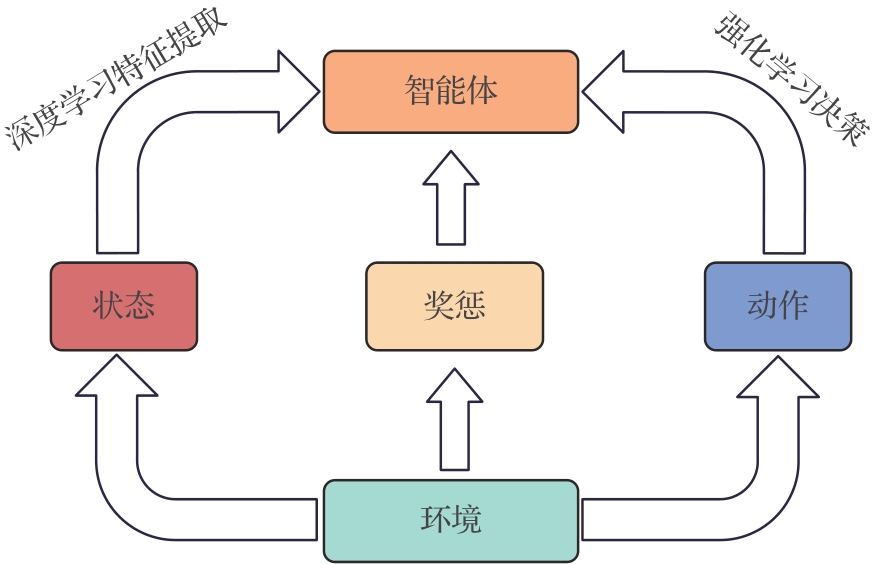
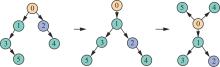
图 6
队形切换
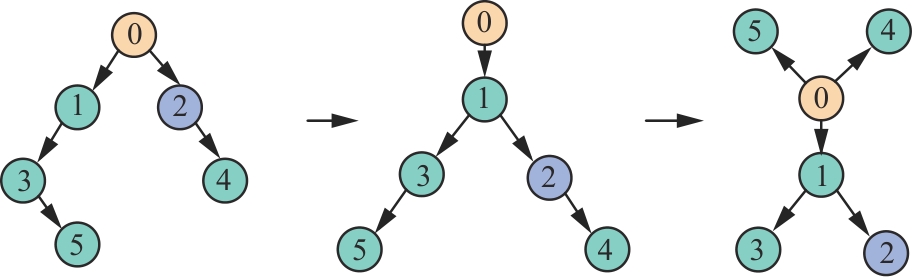
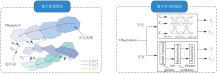
图 7
自主协同规划算法
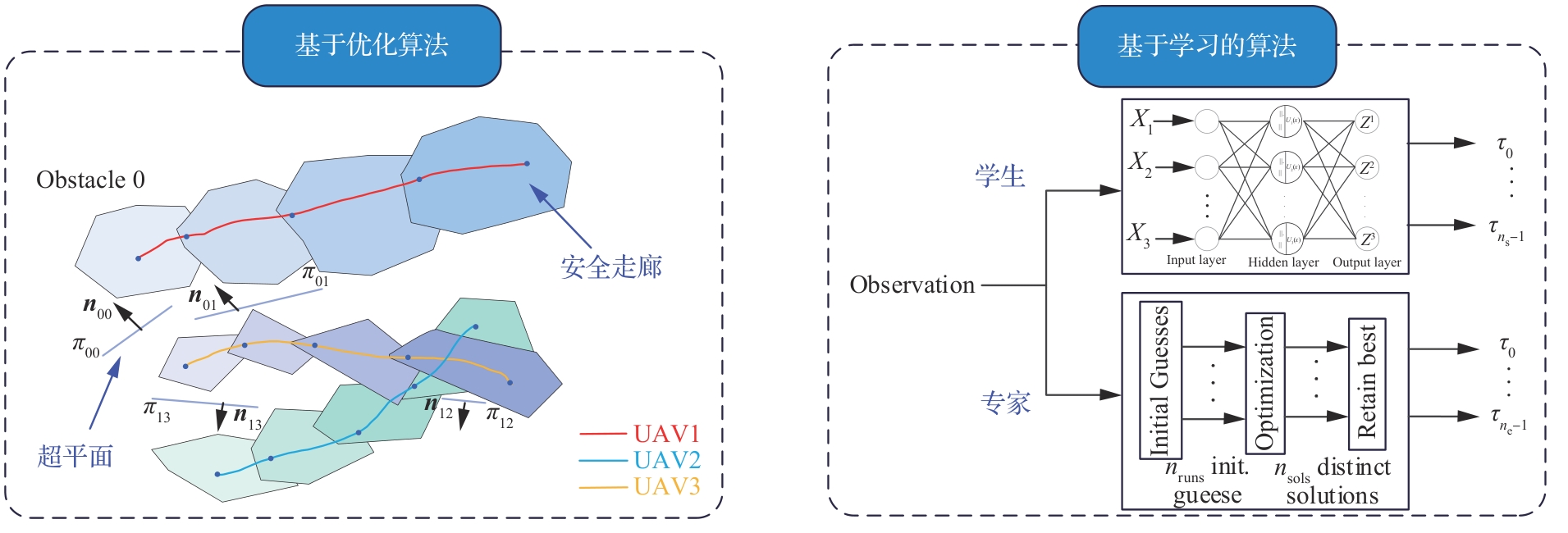
图 8
低空经济典型应用场景
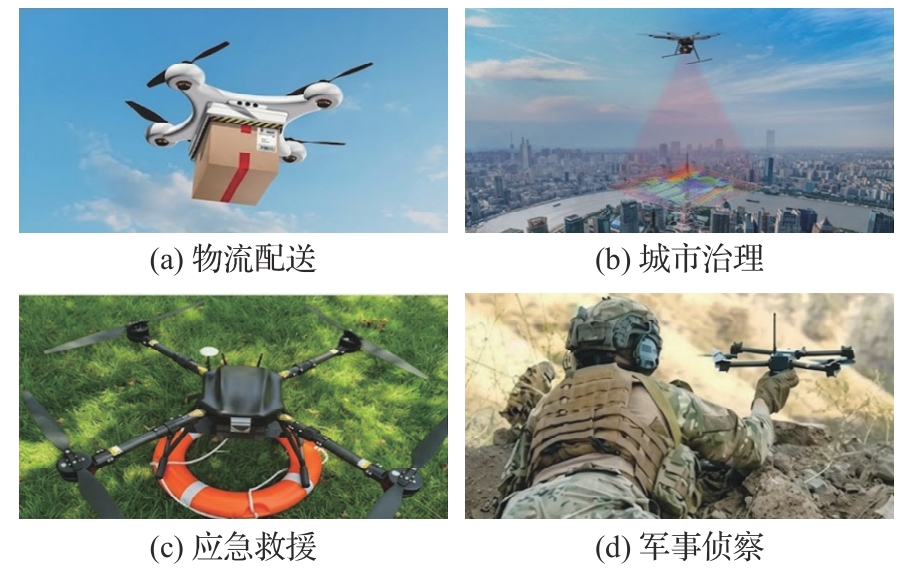
图 9
无人机脆李运输
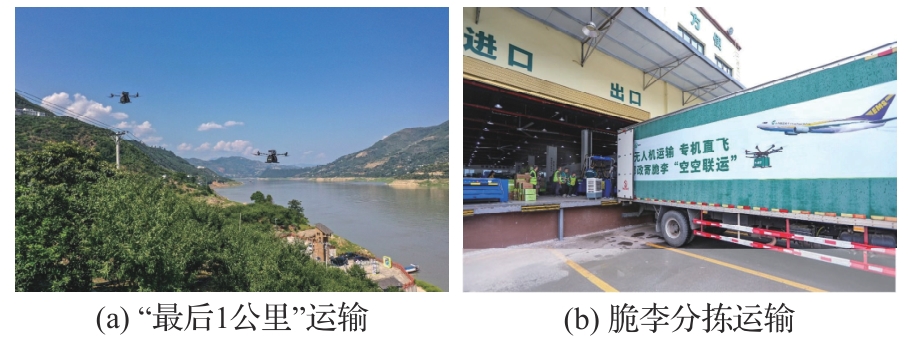
图 10
新昌县综合行政执法局数字城管中心
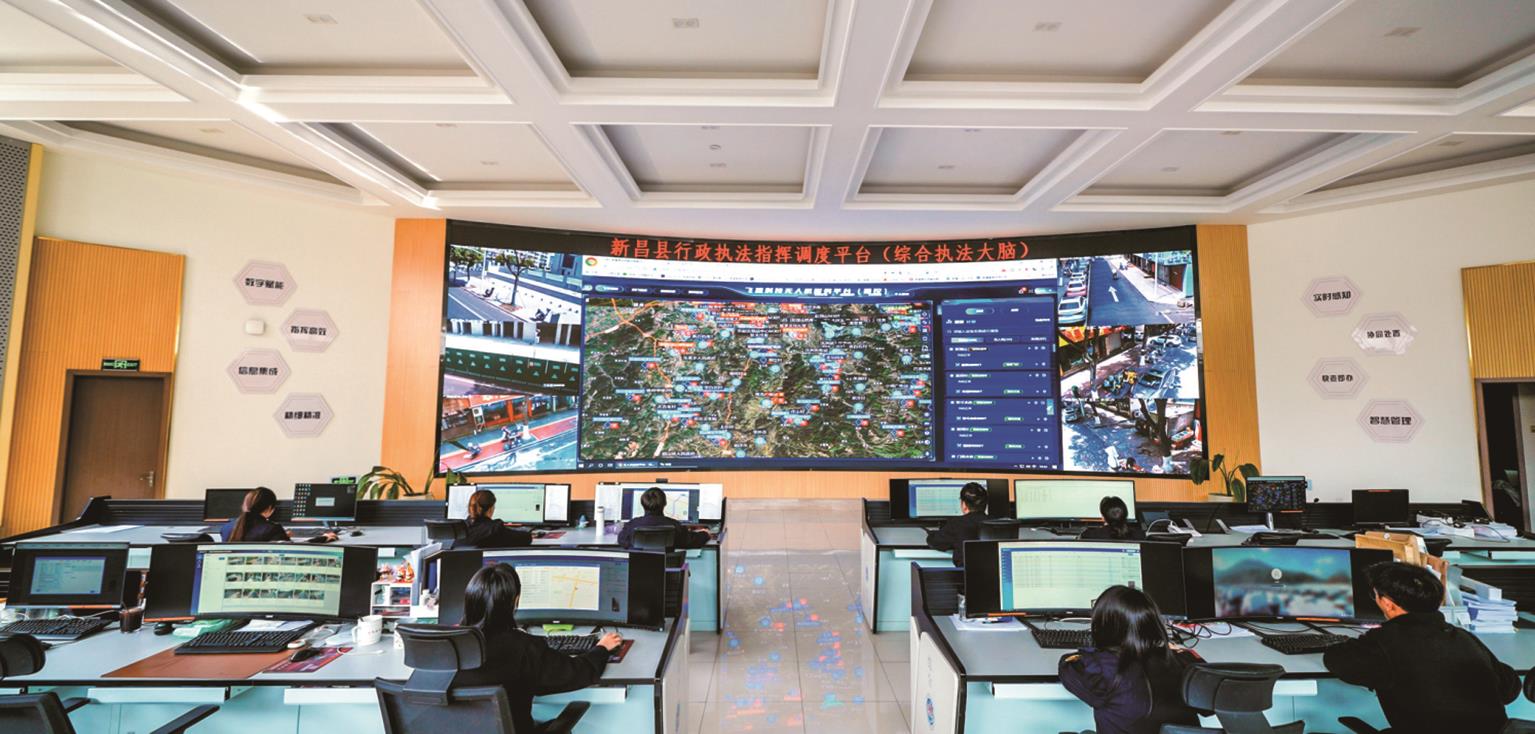
图 11
热成像+摄像头火点检测
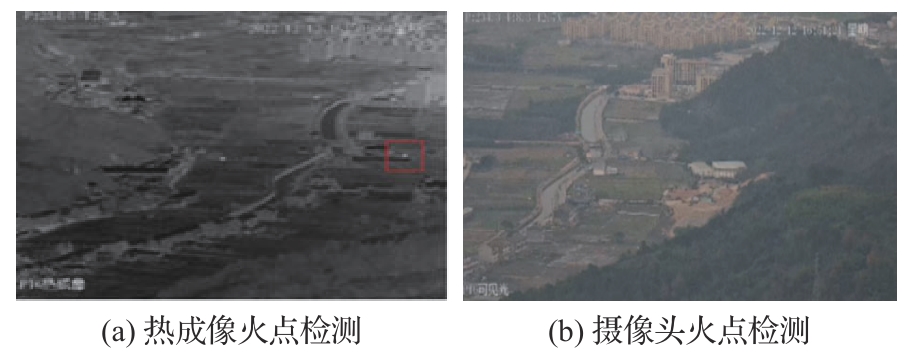
图 12
军事无人机
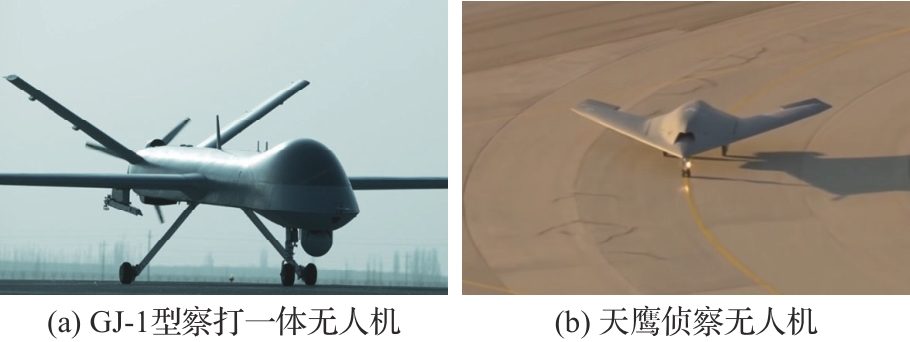
图 13
现有局限和未来展望
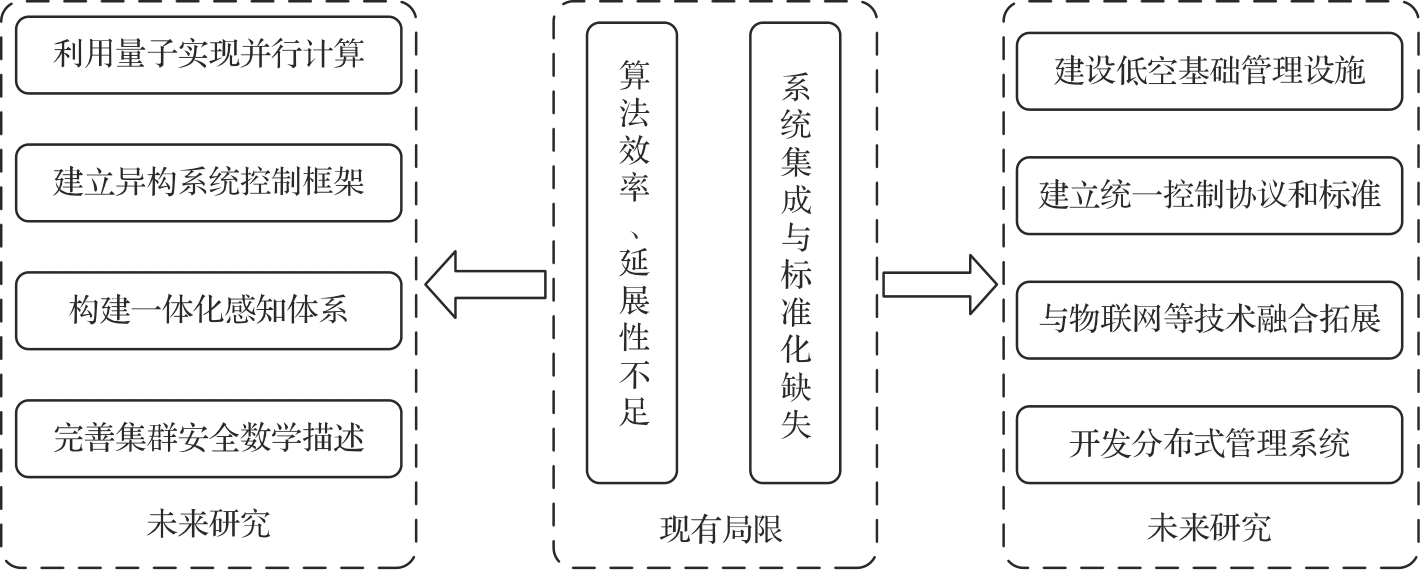
图 14
基于DQN的规划方法
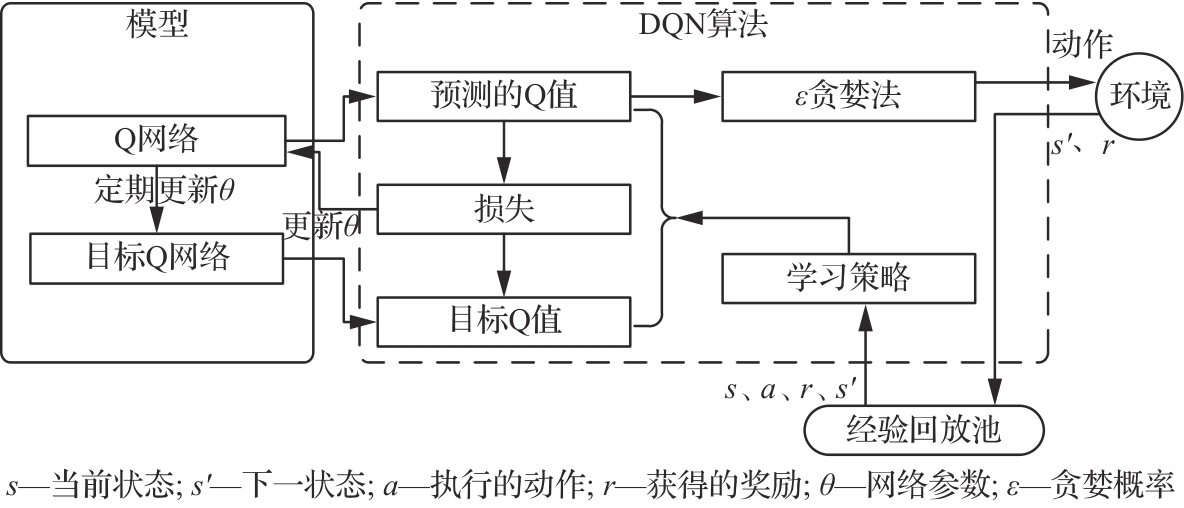

图 15
低空智能交通结构图
| [1] | 国务院. 国家综合立体交通网规划纲要[R/OL]. (2021-02-24)[2025-10-27]. . |
| The State Council of the People’s Republic of China. National comprehensive multidimensional transportation network planning outline[R/OL]. (2021-02-24)[2025-10-27]. (in Chinese). | |
| [2] | 国务院. 无人驾驶航空器飞行管理暂行条例: 国务院令第761号 [S/OL]. (2023-05-31)[2025-10-27]. . |
| The State Council of the People’s Republic of China. Interim regulations on flight management of unmanned aircraft: The State Council order No. 761 [S/OL]. (2023-05-31)[2025-10-27]. (in Chinese). | |
| [3] | 工业和信息化部, 科学技术部, 财政部, 等. 通用航空装备创新应用实施方案(2024—2030年)[EB/OL]. (2024-03-27)[2025-10-27]. . |
| Ministry of Industry and Information Technology of the People’s Republic of China, Ministry of Science and Technology of the People’s Republic of China, Ministry of Finance of the People’s Republic of China, et al. Implementation plan for innovative application of general aviation equipment (2024-2030)[EB/OL]. (2024-03-27)[2025-10-27]. (in Chinese). | |
| [4] | SUN G, ZHANG X T, LIU Y S, et al. Safety-driven and localization uncertainty-driven perception-aware trajectory planning for quadrotor unmanned aerial vehicles[J]. IEEE Transactions on Intelligent Transportation Systems, 2024, 25(8): 8837-8848. |
| [5] | LI H Q, LI X D, DUNKIN F, et al. Trust measurement of visual data based on multigranularity belief fusion for UAV perception system[J]. IEEE Transactions on Instrumentation and Measurement, 2024, 73: 1008313. |
| [6] | BAI Z W, WU G Y, BARTH M J, et al. A survey and framework of cooperative perception: From heterogeneous singleton to hierarchical cooperation[J]. IEEE Transactions on Intelligent Transportation Systems, 2024, 25(11): 15191-15209. |
| [7] | CHEN G J, WANG W C, DONG J X. Performance-optimize adaptive robust tracking control for USV-UAV heterogeneous systems with uncertainty[J]. IEEE Transactions on Vehicular Technology, 2025, 74(5): 7251-7262. |
| [8] | 孔令东, 曹娟, 章国安, 等. 旋翼无人机实时视觉跟踪算法[J]. 南通大学学报(自然科学版), 2017, 16(1): 12-18. |
| KONG L D, CAO J, ZHANG G A, et al. Real time visual tracking algorithm for rotor unmanned aerial vehicle[J]. Journal of Nantong University (Natural Science Edition), 2017, 16(1): 12-18 (in Chinese). | |
| [9] | HU B B, ZHANG H T, LIU B, et al. Coordinated navigation control of cross-domain unmanned systems via guiding vector fields[J]. IEEE Transactions on Control Systems Technology, 2024, 32(2): 550-563. |
| [10] | HUANG D P, LI H Y, LI X. Formation of generic UAVs-USVs system under distributed model predictive control scheme[J]. IEEE Transactions on Circuits and Systems Ⅱ: Express Briefs, 2020, 67(12): 3123-3127. |
| [11] | KITAGAWA T, KAWAMOTO Y, KATO N. Communication scheduling with diversity for unmanned aircraft systems using local 5G[J]. Journal of Communications and Information Networks, 2020, 5(1): 50-61. |
| [12] | 郭雅婧, 孙强, 章嘉懿, 等. 基于智能超表面的无人机通信联合波束赋形与航迹规划[J]. 南通大学学报(自然科学版), 2021, 20(3): 21-27. |
| GUO Y J, SUN Q, ZHANG J Y, et al. Joint beamforming and trajectory design for unmanned aerial vehicle communications based on reconfigurable intelligent surface[J]. Journal of Nantong University (Natural Science Edition), 2021, 20(3): 21-27 (in Chinese). | |
| [13] | CAO X, LIU W Z, REN L. Underwater target capture based on heterogeneous unmanned system collaboration[J]. IEEE Transactions on Intelligent Vehicles, 2024, 9(10): 6049-6062. |
| [14] | 梁成庆, 李蕾, 刘磊. 基于CNN-LSTM融合网络的深度强化学习多无人机自主避碰[J]. 南通大学学报(自然科学版), 2025, 24(4): 1-9. |
| LIANG C Q, LI L, LIU L. Multi-UAV autonomous collision avoidance via deep reinforcement learning with CNN-LSTM fusion networks[J]. Journal of Nantong University (Natural Science Edition), 2025, 24(4): 1-9 (in Chinese). | |
| [15] | 黄陈浩, 吉晓东. 一种高能效的无人机移动中继技术[J]. 南通大学学报(自然科学版), 2021, 20(3): 28-33. |
| HUANG C H, JI X D. A relaying technique of energy-efficient unmanned aerial vehicle[J]. Journal of Nantong University (Natural Science Edition), 2021, 20(3): 28-33 (in Chinese). | |
| [16] | 阚雨婷, 施佺, 王晗. 无人机视角下的特征匹配引导粒子滤波跟踪算法[J]. 南通大学学报(自然科学版), 2018, 17(3): 6-11. |
| KAN Y T, SHI Q, WANG H. Features matching guided particle filter tracking algorithm based on the drone[J]. Journal of Nantong University (Natural Science Edition), 2018, 17(3): 6-11 (in Chinese). | |
| [17] | SAVIOLO A, LOIANNO G. Learning quadrotor dynamics for precise, safe, and agile flight control[J]. Annual Reviews in Control, 2023, 55: 45-60. |
| [18] | ABOUDORRA Y, GABELLIERI C, BRANTJES R, et al. Modelling, analysis, and control of OmniMorph: An omnidirectional morphing multi-rotor UAV[J]. Journal of Intelligent & Robotic Systems, 2024, 110(1): 21. |
| [19] | ERASLAN E, YILDIZ Y. Flexible quadrotor unmanned aerial vehicles: Spatially distributed modeling and delay-resistant control[J]. Journal of Guidance, Control, and Dynamics, 2024, 47(6): 1109-1122. |
| [20] | GRESHAM J L, SIMMONS B M, HOPWOOD J W, et al. Spin aerodynamic modeling for a fixed-wing aircraft using flight data[J]. Journal of Aircraft, 2024, 61(1): 128-139. |
| [21] | ZHANG N W, PENG C C. Loop shaping-based attitude controller design and flight validation for a fixed-wing UAV[J]. Drones, 2025, 9(10): 697. |
| [22] | JEONG H, PARK S. Flight control laws of VTOL aircraft with propellers fixed at an inclined angle[J/OL]. International Journal of Aeronautical and Space Sciences, (2025-10-16)[2025-10-27]. . |
| [23] | DAI B, HE Y Q, ZHANG G Y, et al. Wind disturbance rejection for unmanned aerial vehicles using acceleration feedback enhanced H∞ method[J]. Autonomous Robots, 2020, 44(7): 1271-1285. |
| [24] | DE PAIVA E C, CARVALHO B, RODRIGUES L. UAV optimal guidance in wind fields using ZEM/ZEV with generalized performance index[J]. IEEE Transactions on Aerospace and Electronic Systems, 2020, 56(6): 4594-4605. |
| [25] | YE N Y, ZENG Z Y, ZHOU J D, et al. OoD-control: Generalizing control in unseen environments[J]. IEEE Transactions on Pattern Analysis and Machine Intelligence, 2024, 46(11): 7421-7433. |
| [26] | 周晓雨, 黄江涛, 章胜, 等. 考虑强风干扰的固定翼飞行器“神经元”飞行气动建模[J]. 空气动力学学报, 2024, 42(3): 92-101. |
| ZHOU X Y, HUANG J T, ZHANG S, et al. Aerodynamic modeling of “neural”-fly for fixed-wing aircraft considering strong wind interference[J]. Acta Aerodynamica Sinica, 2024, 42(3): 92-101 (in Chinese). | |
| [27] | 张靖, 李卫红. 基于贝叶斯网络的无人机对地作战威胁评估[J]. 西北工业大学学报, 2023, 41(6): 1054-1063. |
| ZHANG J, LI W H. Threat assessment for air-to-ground combat of UAVs using improved Bayesian networks[J]. Journal of Northwestern Polytechnical University, 2023, 41(6): 1054-1063 (in Chinese). | |
| [28] | PARK J, GUVENC I. Interference analysis for UAV radar networks with guard zones based on stochastic geometry[J]. IEEE Transactions on Aerospace and Electronic Systems, 2023, 59(4): 4092-4104. |
| [29] | GHAZIKOR M, ROACH K, CHEUNG K, et al. Interference-aware queuing analysis for distributed transmission control in UAV networks[C]∥IEEE International Conference on Communications. Piscataway: IEEE Press, 2024: 4524-4529. |
| [30] | DONG C J, HUO Y, HUI N M, et al. Decoupling-free attitude control of UAV considering high-frequency disturbances: A modified linear active disturbance rejection method[J]. Actuators, 2025, 14(10): 504. |
| [31] | ZHOU H, ZHANG S Y, RU C J. Lateral flight control method of UAV based on small disturbance and root locus theory[C]∥2021 33rd Chinese Control and Decision Conference. Piscataway: IEEE Press, 2021: 6949-6954. |
| [32] | ELIF C M, TEKINALP O. A robust nonlinear MPC and incremental dynamic inversion control framework for quadrotors under rotor failure[C]∥IEEE 12th International Workshop on Metrology for AeroSpace (MetroAeroSpace). Piscataway: IEEE Press, 2025: 274-279. |
| [33] | QIAO Y T, LI S, XIN M. Fixed-time air-ground cooperative time-varying formation-containment control of heterogeneous multi-agent systems with well-informed followers[J]. Robotics and Autonomous Systems, 2026, 198: 105225. |
| [34] | 刘琨, 袁万勇, 张洁. 随队支援干扰下编队协同攻击航路规划[J]. 电光与控制, 2022, 29(8): 1-6. |
| LIU K, YUAN W Y, ZHANG J. Path planning for formation coordinated attack under interference of team support[J]. Electronics Optics & Control, 2022, 29(8): 1-6 (in Chinese). | |
| [35] | NI J J, GE Y C, ZHAO Y H, et al. An improved multi-UAV area coverage path planning approach based on deep Q-networks[J]. Applied Sciences, 2025, 15(20): 11211. |
| [36] | YAO C, GE Y T, SHI G W, et al. TAIL: A terrain-aware multi-modal SLAM dataset for robot locomotion in deformable granular environments[J]. IEEE Robotics and Automation Letters, 2024, 9(7): 6696-6703. |
| [37] | LV J J, LANG X L, XU J H, et al. Continuous-time fixed-lag smoothing for LiDAR-inertial-camera SLAM[J]. IEEE/ASME Transactions on Mechatronics, 2023, 28(4): 2259-2270. |
| [38] | ZHOU Y X, LI X X, LI S Y, et al. MASt3R-fusion: Integrating feed-forward visual model with IMU, GNSS for high-functionality SLAM[DB/OL]. arXiv: 2509. 20757v3, 2025. |
| [39] | WANG Q F, WANG Z S, JIA T Y. Adaptive practical finite-time bipartite consensus of nonlinear multi-agent systems with input saturation and non-zero input leader[J]. Journal of the Franklin Institute, 2025, 362(13): 107897. |
| [40] | TAN G L, REN H W, DENG F Q. Finite-time consensus of leader-following multi-agent systems with event-triggered control strategy utilizing absolute velocity information[J]. Engineering Applications of Artificial Intelligence, 2025, 152: 110738. |
| [41] | SHENG L Y, YE H, MENG Y Z, et al. An adaptive output feedback formation control algorithm for multiple unmanned surface vehicles based on virtual structure and line-of-sight guidance[J]. Engineering Applications of Artificial Intelligence, 2025, 157: 111213. |
| [42] | YILDIZ B, ASLAN M F, DURDU A, et al. Consensus-based virtual leader tracking swarm algorithm with GDRRT*-PSO for path-planning of multiple-UAVs[J]. Swarm and Evolutionary Computation, 2024, 88: 101612. |
| [43] | XU Y, ZHANG G Q, LI J Q, et al. Robust extreme learning machine control for offshore nacelle inspection maneuvering of sea-air cooperative vehicles via asynchronous virtual guidance[J]. Ocean Engineering, 2025, 331: 121347. |
| [44] | LU J H, YUAN Z H, WANG N. Dynamic self-triggered fuzzy formation control for UAV swarm with prescribed-time convergence[J]. Drones, 2025, 9(10): 715. |
| [45] | 陈谋, 吴颖. 具有输入时滞的集群无人机事件触发协同最优控制[J]. 南京航空航天大学学报(自然科学版), 2022, 54(5): 958-968. |
| CHEN M, WU Y. Event-triggered cooperative optimal control of swarm UAVs with input delays[J]. Journal of Nanjing University of Aeronautics and Astronautics(Natural Science Edition), 2022, 54(5): 958-968 (in Chinese). | |
| [46] | KANG Y L, SHI M J, YAO Y, et al. Neuroadaptive fixed-time bipartite containment tracking of networked UAVs under switching topologies[J]. Drones, 2025, 9(10): 725. |
| [47] | REN C G, LI R M. Switched observer-based dynamic event-triggered consensus of multi-agent systems under DoS attacks[J]. Journal of the Franklin Institute, 2023, 360(6): 4331-4353. |
| [48] | GAO B B, MA P F, HU G G, et al. Dual-event-triggering ANFIS-based unscented Kalman filter for cluster cooperative navigation with measurement anomalies[J/OL]. Chinese Journal of Aeronautics, (2025-11-23)[2025-11-28]. . |
| [49] | SHAN WONG O, GREGORY M A, LI S. Integration of non-terrestrial network for 5G NR and future 6G: LEO satellite-to-device performance and interference analysis[J]. Computer Networks, 2026, 275: 111870. |
| [50] | SAHEBSARA F, DE QUEIROZ M. A switched control strategy for avoiding flip ambiguities in 3D formations[J]. Journal of Intelligent & Robotic Systems, 2024, 110(1): 39. |
| [51] | YU H Z, MIAO K Z, HE Z Q, et al. Fault-tolerant time-varying formation trajectory tracking control for multi-agent systems with time delays and semi-Markov switching topologies[J]. Drones, 2024, 8(12): 778. |
| [52] | PENG F, GAO Q, LU H Q, et al. Trajectory tracking control method via simulation for quadrotor UAVs based on hierarchical decision dual-threshold adaptive switching[J]. Applied Sciences, 2025, 15(20): 11217. |
| [53] | ZHAO T Y, QIAN R R, WANG Y Q, et al. Flying like birds: Hierarchical-egalitarian switching based control law for multi-UAV systems[C]∥2022 34th Chinese Control and Decision Conference. Piscataway: IEEE Press, 2023: 1332-1337. |
| [54] | WANG X Y, WANG G D, LI S H. Distributed finite-time optimization for integrator chain multiagent systems with disturbances[J]. IEEE Transactions on Automatic Control, 2020, 65(12): 5296-5311. |
| [55] | WANG X Y, WANG G D, LI S H. Distributed finite-time optimization for disturbed second-order multiagent systems[J]. IEEE Transactions on Cybernetics, 2021, 51(9): 4634-4647. |
| [56] | WANG L P, ZHANG H F, GAO F, et al. Finite-time anti-disturbance control for systems with multiple disturbances based on disturbance observer[C]∥2022 34th Chinese Control and Decision Conference. Piscataway: IEEE Press, 2023: 2938-2941. |
| [57] | ZHU Y K, GUO L. A characteristic model-based anti-disturbance intelligent adaptive control law for systems with multiple disturbances[C]∥2019 Chinese Control Conference. Piscataway: IEEE Press, 2019: 2377-2382. |
| [58] | STOJIĆ D, ŠEKARA T. Active disturbance rejection control via transfer function implementation: An improved approach[J]. International Journal of Dynamics and Control, 2025, 13(11): 380. |
| [59] | YIN Z Y, LIN Y, ZHANG Y J, et al. Collaborative multiagent reinforcement learning aided resource allocation for UAV anti-jamming communication[J]. IEEE Internet of Things Journal, 2022, 9(23): 23995-24008. |
| [60] | WANG L G, SONG F, FANG G, et al. A multi-agent reinforcement learning-based collaborative jamming system: Algorithm design and software-defined radio implementation[J]. China Communications, 2022, 19(10): 38-54. |
| [61] | 沈高青, 蔡圣所, 雷磊, 等. 基于数字孪生和强化学习的低空智联网协同认知干扰[J]. 数据采集与处理, 2024, 39(1): 15-30. |
| SHEN G Q, CAI S S, LEI L, et al. Cooperative cognitive jamming in low-altitude intelligent network based on digital twin and reinforcement learning[J]. Journal of Data Acquisition and Processing, 2024, 39(1): 15-30 (in Chinese). | |
| [62] | 解烽, 刘环宇, 胡锡坤, 等. 基于复数域深度强化学习的多干扰场景雷达抗干扰方法[J]. 雷达学报, 2023, 12(6): 1290-1304. |
| XIE F, LIU H Y, HU X K, et al. A radar anti-jamming method under multi-jamming scenarios based on deep reinforcement learning in complex domains[J]. Journal of Radars, 2023, 12(6): 1290-1304 (in Chinese). | |
| [63] | 任坚, 刘剑慰, 杨蒲. 基于增量式策略强化学习算法的飞行控制系统的容错跟踪控制[J]. 控制理论与应用, 2020, 37(7): 1429-1438. |
| REN J, LIU J W, YANG P. Fault-tolerant tracking control for continuous flight control system based on reinforcement learning algorithm with incremental strategy[J]. Control Theory & Applications, 2020, 37(7): 1429-1438 (in Chinese). | |
| [64] | 李博扬, 刘洋, 万诺天, 等. 基于强化学习的无人机电磁干扰感知与抗干扰传输方法[J]. 电讯技术, 2023, 63(12): 1855-1861. |
| LI B Y, LIU Y, WAN N T, et al. An electromagnetic jamming sensing and anti-jamming transmission method of UAV based on reinforcement learning[J]. Telecommunication Engineering, 2023, 63(12): 1855-1861 (in Chinese). | |
| [65] | SUN J M, HUANG Y Q, YU W L, et al. Recursive regulator: A deep-learning and real-time model adaptation strategy for nonlinear systems[J]. Communications Engineering, 2025, 4: 140. |
| [66] | ZHOU S Y, NIU X H, LU S J, et al. Self-organized an-ti-jamming reinforcement learning for resource allocation in UAV-assisted networks[J]. Signal Processing, 2026, 240: 110346. |
| [67] | GONG Z Y, YANG F S, YUAN Y, et al. Secure formation control of multiagent system against FDI attack using fixed-time convergent reinforcement learning[J]. IEEE Transactions on Control of Network Systems, 2025, 12(2): 1203-1214. |
| [68] | YAN Z Y, ZHAO H, LI L. Dynamic role-switching in hypergraphs: Enhancing cooperation via adaptive punishment and reinforcement learning[J]. Physica A: Statistical Mechanics and its Applications, 2025, 677: 130902. |
| [69] | FAROOQ M O. Adaptive cyber defense through hybrid learning: From specialization to generalization[J]. Future Internet, 2025, 17(10): 464. |
| [70] | 廖勇, 覃录智, 刘思其. 无人机在低空经济中的应用综述[J]. 贵州大学学报(自然科学版), 2025, 42(4): 60-72. |
| LIAO Y, QIN L Z, LIU S Q. A review of the application of unmanned aerial vehicle in low altitude[J]. Journal of Guizhou University (Natural Sciences), 2025, 42(4): 60-72 (in Chinese). | |
| [71] | 陈灵犀. 无人机在高密度城市环境中的配送难题及对策[J]. 中国航务周刊, 2025(29): 66-68. |
| CHEN L X. Problems and countermeasures of UAV distribution in high-density urban environment[J]. China Shipping Gazette, 2025(29): 66-68 (in Chinese). | |
| [72] | 沈舟, 郑远, 邹翔, 等. 轻小型物流无人机起降场布局及起降策略设计[J]. 民航学报, 2024, 8(2): 31-36. |
| SHEN Z, ZHENG Y, ZOU X, et al. Light and small logistics unmanned aerial vehicle takeoff and landing port layout and takeoff/landing strategy design[J]. Journal of Civil Aviation, 2024, 8(2): 31-36 (in Chinese). | |
| [73] | 邱佩, 罗帆. 城市无人机物流配送安全风险因素识别与管控[J]. 城市发展研究, 2025, 32(6): 18-25. |
| QIU P, LUO F. Safety risk factors identification and control of UAV logistics and distribution in urban areas[J]. Urban Development Studies, 2025, 32(6): 18-25 (in Chinese). | |
| [74] | 张晓全, 郝维骞. 民用轻小型无人机未来运行风险评估[J]. 综合运输, 2023, 45(7): 60-65. |
| ZHANG X Q, HAO W Q. Research on future operation risk assessment of civil light and small UAV[J]. China Transportation Review, 2023, 45(7): 60-65 (in Chinese). | |
| [75] | 夏小雨, 韩成浩. 基于无人机的低空图像处理技术在农业领域的应用[J]. 农业与技术, 2023, 43(1): 38-41. |
| XIA X Y, HAN C H. Application of low-altitude image processing technology based on UAV in agricultural field[J]. Agriculture and Technology, 2023, 43(1): 38-41 (in Chinese). | |
| [76] | 柳伍生, 余玉竹. 异构无人机群两级协同物流配送调度优化[J]. 长沙理工大学学报(自然科学版), 2025, 22(4): 78-92. |
| LIU W S, YU Y Z. Optimization of two-level collaborative logistics distribution scheduling for heterogeneous unmanned aerial vehicle swarms[J]. Journal of Changsha University of Science and Technology (Natural Science), 2025, 22(4): 78-92 (in Chinese). | |
| [77] | 范厚明, 卞子木, 范昊, 等. 地形限制下车辆-无人机协同配送路径问题[J]. 控制理论与应用, (2025-07-17) [2025-10-27]. . |
| FAN H M, BIAN Z M, FAN H, et al. Vehicle-UAV collaborative delivery path problem under terrain constraints[J/OL]. Control Theory & Application, (2025-07-17) [2025-10-27]. (in Chinese). | |
| [78] | 周剑, 徐晓东, 李航宇, 等. 探析5G网联无人机技术体系对低空监管的作用[J]. 中国安防, 2023(7): 37-42. |
| ZHOU J, XU X D, LI H Y, et al. Analysis on the effect of 5G networked UAV technology system on low-altitude supervision[J]. China Security & Protection, 2023(7): 37-42 (in Chinese). | |
| [79] | 朱庆辉, 周圣闻, 王晨熹, 等. 无人机技术在非法种植毒品原植物识别中的应用[J]. 中国军转民, 2024(24): 23-24. |
| ZHU Q H, ZHOU S W, WANG C X, et al. Application of UAV technology in identification of original plants illegally growing drugs[J]. Defence Industry Conversion in China, 2024(24): 23-24 (in Chinese). | |
| [80] | 曹允春, 翟一冰, 耿劭卿. 考虑灾民心理的震后卡车-无人机协同配送路径优化研究[J]. 安全与环境学报, 2025, 25(12): 4787-4798. |
| CAO Y C, ZHAI Y B, GENG S Q. Optimizing emergency material delivery routes using truck-drone coordination post-earthquake: A focus on victim psychology and road damage assessment[J]. Journal of Safety and Environment, 2025, 25(12): 4787-4798 (in Chinese). | |
| [81] | 裴明阳, 邵康顺, 李林青, 等. 无人机应急救援路径规划建模方法综述与展望[J]. 华南理工大学学报(自然科学版), 2025, 53(12): 17-33. |
| PEI M Y, SHAO K S, LI L Q, et al. Modeling methodologies for unmanned aerial vehicle path planning in emergency rescue: A comprehensive review and prospect[J]. Journal of South China University of Technology (Natural Science Edition), 2025, 53(12): 17-33 (in Chinese). | |
| [82] | 宰存宝. 无人机在消防灭火救援中的应用[J]. 今日消防, 2025, 10(7): 50-52. |
| ZAI C B. Application of UAV in fire fighting and rescue[J]. Fire Protection Today, 2025, 10(7): 50-52 (in Chinese). | |
| [83] | 黄明亮, 陈金, 彭登. 低空经济下关于卫星通信指导无人机在火灾救援中的应用探讨[J]. 江苏通信, 2024, 40(6): 25-28. |
| HUANG M L, CHEN J, PENG D. Discussion on the application of satellite communication to guide UAV in fire rescue under low altitude economy[J]. Jiangsu Communication, 2024, 40(6): 25-28 (in Chinese). | |
| [84] | 李晓东. 徘徊在韩国上空的鹰: KUS-9无人机[J]. 轻兵器, 2012(7): 30-32. |
| LI X D. Eagle hovering over South Korea: KUS-9 UAV[J]. Small Arms, 2012(7): 30-32 (in Chinese). | |
| [85] | 靖时光. 从俄乌冲突看无人机对直升机的冲击及应对研究[J]. 中国军转民, 2025(14): 16-19. |
| JING S G. Study on the impact of UAV on helicopter from the conflict between Russia and Ukraine and its countermeasures[J]. Defence Industry Conversion in China, 2025(14): 16-19 (in Chinese). | |
| [86] | 齐呈荣, 赵刘星, 张向远. 未来战场无人机能否独占鳌头[J]. 科学大观园, 2025(12): 54-57. |
| QI C R, ZHAO L X, ZHANG X Y. Can UAVs dominate the future battlefield[J]. Grand Garden of Science, 2025(12): 54-57 (in Chinese). | |
| [87] | 孙绍芳, 鲁亚飞, 邵帅, 等. 战术侦察无人机装备应用发展综述[J/OL]. 航空工程进展, (2025-07-18)[2025-10-27]. . |
| SUN S F, LU Y F, SHAO S, et al. Review of development and application of tactical reconnaissance UAVs equipment[J/OL]. Advances in Aeronautical Science and Engineering, (2025-07-18)[2025-10-27]. (in Chinese). | |
| [88] | 于澎, 赵国柱. 韩军无人机发展特点及趋势[J]. 航天电子对抗, 2025, 41(3): 64-72. |
| YU P, ZHAO G Z. Developing characteristics and trend of ROK military’s UAVs[J]. Aerospace Electronic Warfare, 2025, 41(3): 64-72 (in Chinese). | |
| [89] | 周兵, 蔡建宇. 无人平台在军事通信中继领域的扩展运用探索[C]∥第十三届中国指挥控制大会论文集(上册). 2025: 353-356. |
| ZHOU B, CAI J Y. Exploration of extended applications of unmanned platforms in military communication relay systems[C]∥Proceedings of the 13th China Command and Control Conference (Volume 1). 2025: 353-356 (in Chinese). | |
| [90] | 刘建新, 沈长征, 郭伟, 等. 浅析无人机蜂群在电子战中的作战应用[C]∥第十三届中国指挥控制大会论文集(下册). 2025: 1076-1079. |
| LIU J X, SHEN C Z, GUO W, et al. Analysis of the combat application of drone swarms in electronic warfare[C]∥Proceedings of the 13th China Command and Control Conference (Volume 2). 2025: 1076-1079 (in Chinese). | |
| [91] | 毛从光, 秦锋, 杜传报, 等. 复杂系统电磁环境效应(E3)评估方法研究进展[J]. 现代应用物理, 2025, 16(4): 9-16. |
| MAO C G, QIN F, DU C B, et al. Research progress on assessment methods for electromagnetic environment effects in complex systems[J]. Modern Applied Physics, 2025, 16(4): 9-16 (in Chinese). | |
| [92] | 武默达, 王海稳, 韩国辉, 等. 基于双深度Q网络的无人车群智感知技术研究[J]. 电子制作, 2025, 33(8): 53-56. |
| WU M D, WANG H W, HAN G H, et al. Research on intelligent perception technology of unmanned vehicle group based on double depth Q network[J]. Practical Electronics, 2025, 33(8): 53-56 (in Chinese). | |
| [93] | 王进月, 尹存珍, 佀庆民, 等. 基于改进近端策略优化算法控制的应急无人机飞行控制系统研究[J]. 科学技术创新, 2024(14): 27-30. |
| WANG J Y, YIN C Z, SI Q M, et al. Research on emergency drone flight control system based on improved near end strategy optimization algorithm control[J]. Scientific and Technological Innovation, 2024(14): 27-30 (in Chinese). | |
| [94] | 王宝楠, 水恒华, 王苏敏, 等. 量子退火理论及其应用综述[J]. 中国科学: 物理学 力学 天文学, 2021, 51(8): 1-13. |
| WANG B N, SHUI H H, WANG S M, et al. Theories and applications of quantum annealing: A literature survey[J]. Scientia Sinica (Physica, Mechanica & Astronomica), 2021, 51(8): 1-13 (in Chinese). | |
| [95] | 曲小波, 王凯, 李奥勇. 飞行汽车如何开启低空智能交通时代: 从交通技术谈起[J]. 交通建设与管理, 2022(3): 48-51. |
| QU X B, WANG K, LI A Y. How flying cars open the era of low-altitude intelligent transportation: Talking from traffic technology[J]. Transport Construction & Management, 2022(3): 48-51 (in Chinese). | |
| [96] | 陈俊彦, 杨晨, 朱洪. 城市空中交通管理的地方法规制度体系研究[J]. 交通与港航, 2025, 12(3): 9-14. |
| CHEN J Y, YANG C, ZHU H. Research on the local regulatory system for urban air traffic management[J]. Communication & Shipping, 2025, 12(3): 9-14 (in Chinese). | |
| [97] | 谷海红, 郑金松, 蒋庆刚, 等. 基于多旋翼无人机在灾害现场救援中的应用[J]. 南方农机, 2021, 52(8): 90-91. |
| GU H H, ZHENG J S, JIANG Q G, et al. Application of multi-rotor UAV in disaster scene rescue[J]. South Agricultural Machinery, 2021, 52(8): 90-91 (in Chinese). | |
| [98] | NIU G C, WU L, GAO Y F, et al. Unmanned aerial vehicle (UAV)-assisted path planning for unmanned ground vehicles (UGVs) via disciplined convex-concave programming[J]. IEEE Transactions on Vehicular Technology, 2022, 71(7): 6996-7007. |
| [99] | LIU Y, CHEN C, QU D, et al. Multi-USV system antidisturbance cooperative searching based on the reinforcement learning method[J]. IEEE Journal of Oceanic Engineering, 2023, 48(4): 1019-1047. |
| [100] | 费伦林, 张一衡. 基于北斗技术的快速综合应急指挥调度系统在智慧高速公路中的应用[J]. 公路交通科技(应用技术版), 2017, 13(11): 273-276. |
| FEI L L, ZHANG Y H. Application of Beidou technology-based rapid integrated emergency command and dispatch system in smart highways[J]. Highway Traffic Technology (Application Technology Edition), 2017, 13(11): 273-276 (in Chinese). | |
| [101] | 王静. 物联网技术在智慧交通体系建设中的应用研究[J]. 石河子科技, 2025(4): 48-49. |
| WANG J. Research on the application of Internet of Things technology in the construction of intelligent transportation system[J]. Shihezi Science and Technology, 2025(4): 48-49 (in Chinese). | |
| [102] | 李梦洁. 低空经济赋能乡村振兴: 无人机与农村物联网的融合应用[J]. 农村经济与科技, 2025, 36(11): 27-29. |
| LI M J. Low-altitude economy empowers rural revitalization: Integrated application of UAV and rural Internet of Things[J]. Rural Economy and Science-Technology, 2025, 36(11): 27-29 (in Chinese). | |
| [103] | 李浩, 仲国强, 姚巩鑫. 基于区块链的集群控制技术[J]. 计算机应用与软件, 2025, 42(7): 76-86. |
| LI H, ZHONG G Q, YAO G X. Blockchain-based cluster control technology[J]. Computer Applications and Software, 2025, 42(7): 76-86 (in Chinese). |
| [1] | 韩德强, 熊伟, 王子玲. 深度多模态时代低空经济与信息融合[J]. 航空学报, 2026, 47(S1): 732853-732853. |
| [2] | 郭晋利, 陈谋. 高速飞行器编队有限时间逆优化复合控制[J]. 航空学报, 2026, 47(S1): 732952-732952. |
| [3] | 王晓娟, 田广泰, 李彬, 何振清. 基于动态补偿器的四旋翼无人机全驱抗干扰控制[J]. 航空学报, 2026, 47(9): 123-135. |
| [4] | 张泽君, 王恩美, 陈泽帅, 李晨龙, 章健淳, 余翔. 考虑测量误差的高超声速飞行器抗干扰追逃博弈[J]. 航空学报, 2026, 47(9): 533305-533305. |
| [5] | 陈谋, 甄子涵, 姜斌. 低空无人机智能避障决策与安全控制技术综述[J]. 航空学报, 2026, 47(9): 533388-533388. |
| [6] | 何有宸, 谭贤四, 曲智国, 侯铭. 多拓扑结构下空天防御装备协同动力学建模与理论分析[J]. 航空学报, 2026, 47(5): 332253-332253. |
| [7] | 罗飞, 蒋彪, 高怡宁, 胡志勇, 刘海良, 张军红, 苏子康. 加油装置空中对接先进控制器设计与风洞试验[J]. 航空学报, 2026, 47(11): 332793-332793. |
| [8] | 袁毓杰, 李嘉帅, 赵昕颐, 王岩韬. 面向动态需求与可变间隔的eVTOL联合调度方法[J]. 航空学报, 2026, 47(1): 631907-631907. |
| [9] | 陈谋, 黄正国, 申耀华, 刘凡. 先进飞行器复合抗干扰控制技术综述[J]. 航空学报, 2025, 46(6): 531303-531303. |
| [10] | 苗永泽, 范兴纲, 李大伟, 孙伟, 黄礼浩, 郝圣桥, 方海洋, 曲荣海, 尤延铖. 电动垂直起降飞行器电驱系统研究进展综述[J]. 航空学报, 2025, 46(22): 332000-332000. |
| [11] | 屈若锟, 王致远, 刘晔璐, 李诚龙, 江波. 面向城市空中交通的无人机视觉定位技术[J]. 航空学报, 2025, 46(11): 531168-531168. |
| [12] | 胡文晓, 牟迪, 李智, 郭盈沂, 陈新民. 低空经济发展的关键技术问题与创新策略[J]. 航空学报, 2025, 46(11): 531539-531539. |
| [13] | 金永光, 叶方伟, 吴启晖. 面向无人机远程识别的位置隐私保护方法[J]. 航空学报, 2025, 46(11): 531341-531341. |
| [14] | 贾永楠. 低空空域无人系统交通管理方案初探[J]. 航空学报, 2025, 46(11): 531399-531399. |
| [15] | 孟凡腾, 秦勇, 崔京, 吴云鹏, 张紫城, 魏少伟. 铁路外部环境无人机图像未知风险检测方法[J]. 航空学报, 2025, 46(11): 531262-531262. |
| 阅读次数 | ||||||
|
全文 |
|
|||||
|
摘要 |
|
|||||
版权所有 © 航空学报编辑部
版权所有 © 2011航空学报杂志社
主管单位:中国科学技术协会 主办单位:中国航空学会 北京航空航天大学

 CJA
CJA
