李祚泰1,2, 陈树生1,2( ), 金世轶1,2, 高正红1,2, 周卫国2,3
收稿日期:2025-03-03
修回日期:2025-04-01
接受日期:2025-05-18
出版日期:2025-05-28
发布日期:2025-05-27
通讯作者:
陈树生
E-mail:sshengchen@nwpu.edu.cn
Zuotai LI1,2, Shusheng CHEN1,2(), Shiyi JIN1,2, Zhenghong GAO1,2, Weiguo ZHOU2,3
Received:2025-03-03
Revised:2025-04-01
Accepted:2025-05-18
Online:2025-05-28
Published:2025-05-27
Contact:
Shusheng CHEN
E-mail:sshengchen@nwpu.edu.cn
摘要:
绿色超声速民机是未来民用飞行器的重要发展方向,声爆是制约其发展的关键因素之一。传统的CFD方法计算量大、耗时长,难以直接用于初期迭代设计;基于面积律的声爆高效预测方法能够在保证一定精度的前提下大幅缩短计算时间,契合了超声速民机初期设计阶段大量、快速的计算需求。因此,首先基于声爆面积律高效预测方法,建立了一套超声速民机低声爆优化设计框架。然后以LM1021无短舱构型为初始构型,验证了多声爆传播角下优化设计的有效性,优化结果均经过高精度CFD验证:0°传播角优化下的远场最大过压降低了32.03%,0°和30°传播角协同优化下的远场最大过压分别降低了30.45%和32.66%。此外借助声爆高效预测方法快速生成超声速民机声爆数据集,采用随机森林和自适应增强算法进行智能数据挖掘,提取超声速民机低声爆关键设计变量。最后经对比验证,数据挖掘结果与CFD流场特征、面积律理论相吻合。结果表明,合理设计机鼻静音锥、翼根翼型及上反角、机尾外形是超声速民机低声爆设计的关键。基于高效预测方法开展的声爆优化设计和数据挖掘表现出显著的效率优势,能够为后续的超声速民机设计工作提供技术支撑。
中图分类号:
李祚泰, 陈树生, 金世轶, 高正红, 周卫国. 基于声爆高效预测的超声速民机优化设计与数据挖掘[J]. 航空学报, 2025, 46(20): 531920.
Zuotai LI, Shusheng CHEN, Shiyi JIN, Zhenghong GAO, Weiguo ZHOU. Optimization design and data mining for supersonic civil aircraft based on sonic boom efficient prediction[J]. Acta Aeronautica et Astronautica Sinica, 2025, 46(20): 531920.
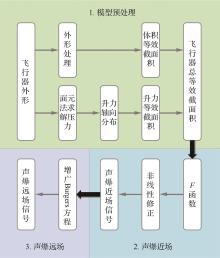
图 1
声爆高效预测方法流程图
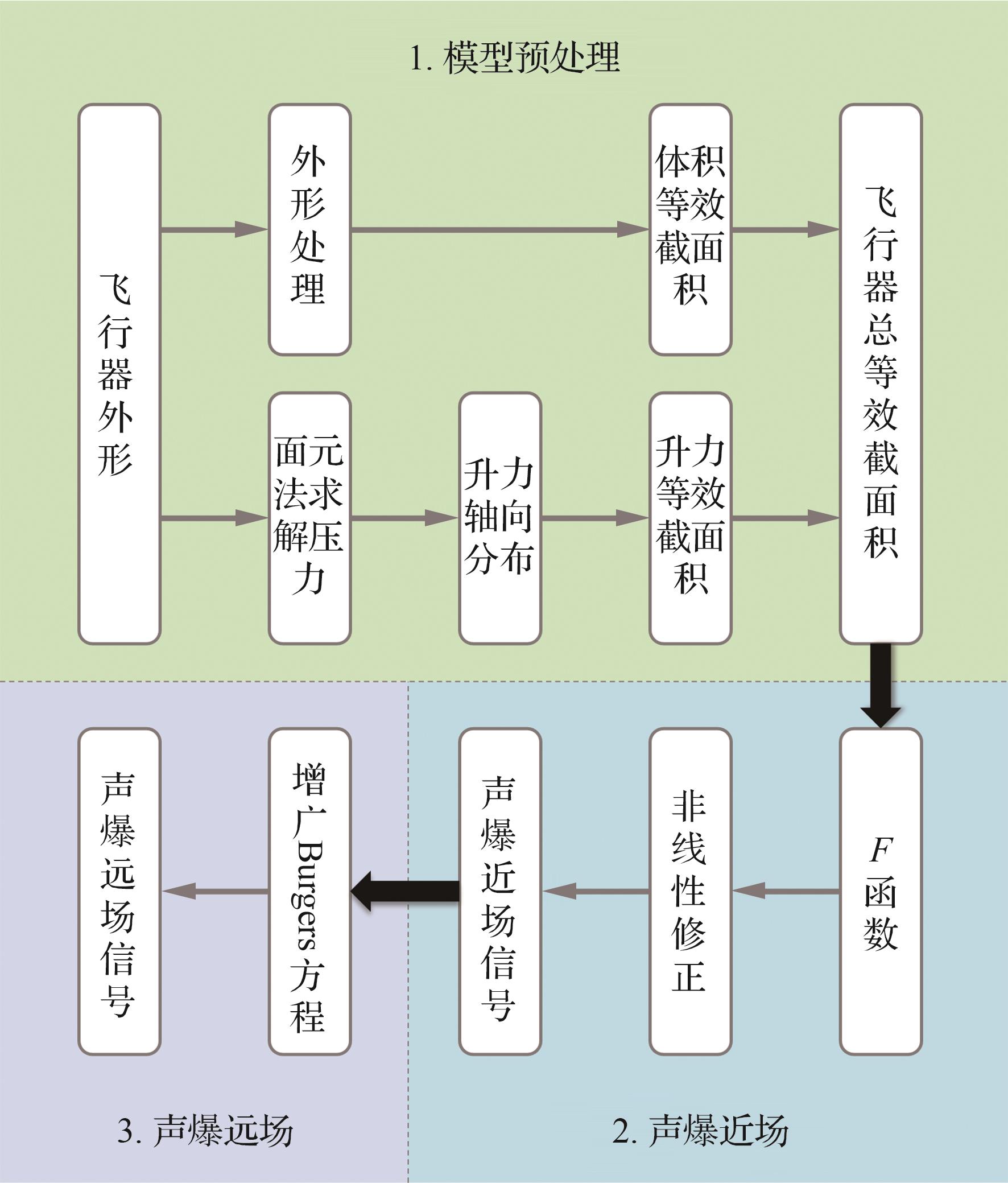
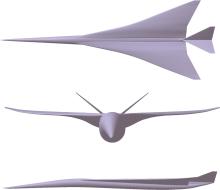
图 2
初始构型外形
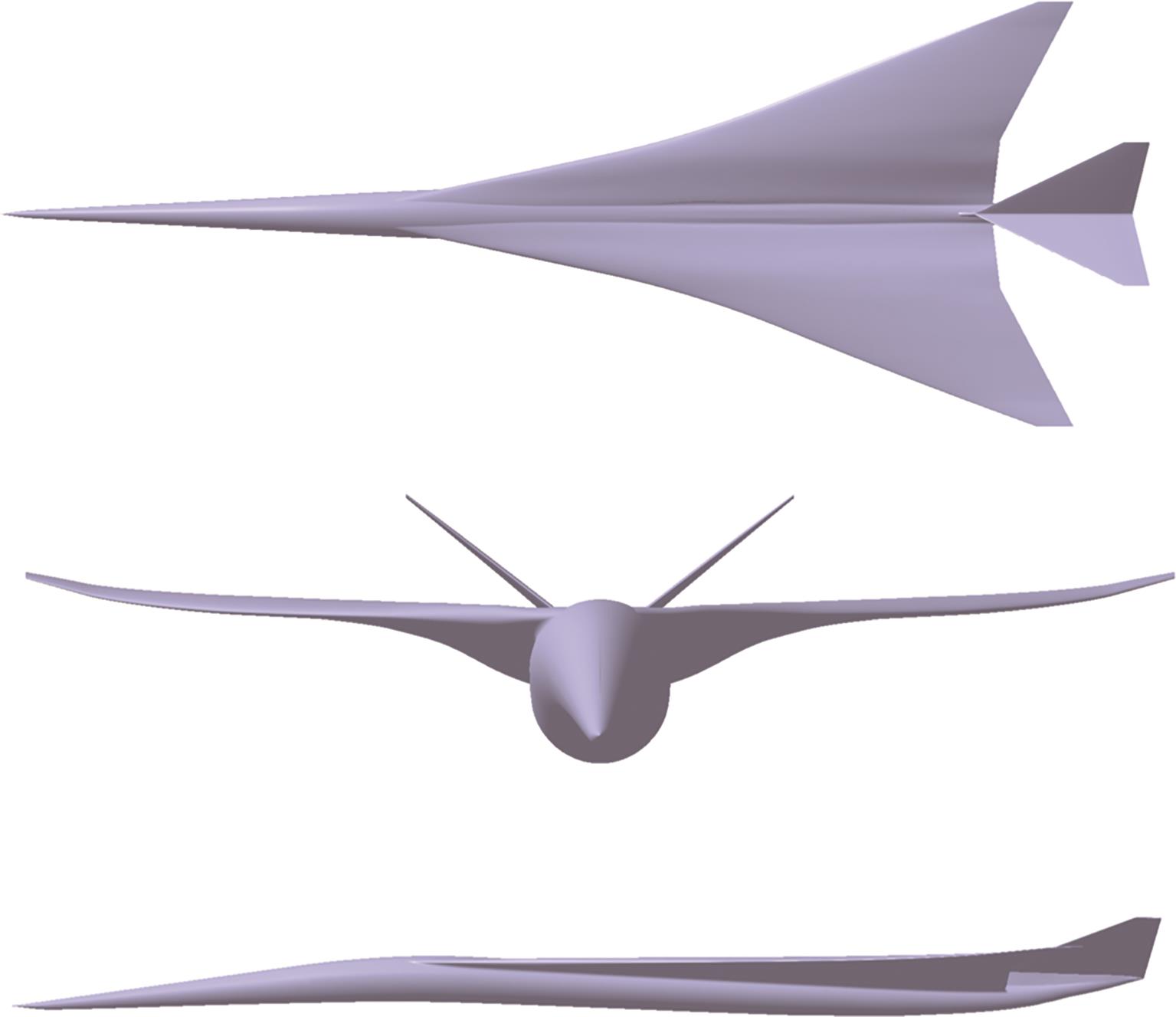

表 1
初始构型外形参数
| 参数 | 机身参考长度/m | 半展长/m | 参考面积/m2 |
|---|---|---|---|
| 数值 | 71.117 3 | 12.795 | 200.397 |
表 2
初始构型飞行条件
| 参数 | 马赫数 | 飞行高度/m | 迎角/(°) |
|---|---|---|---|
| 数值 | 1.6 | 16 764 | 2.1 |
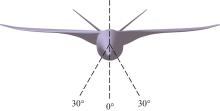
图 3
声爆信号传播方位角示意图
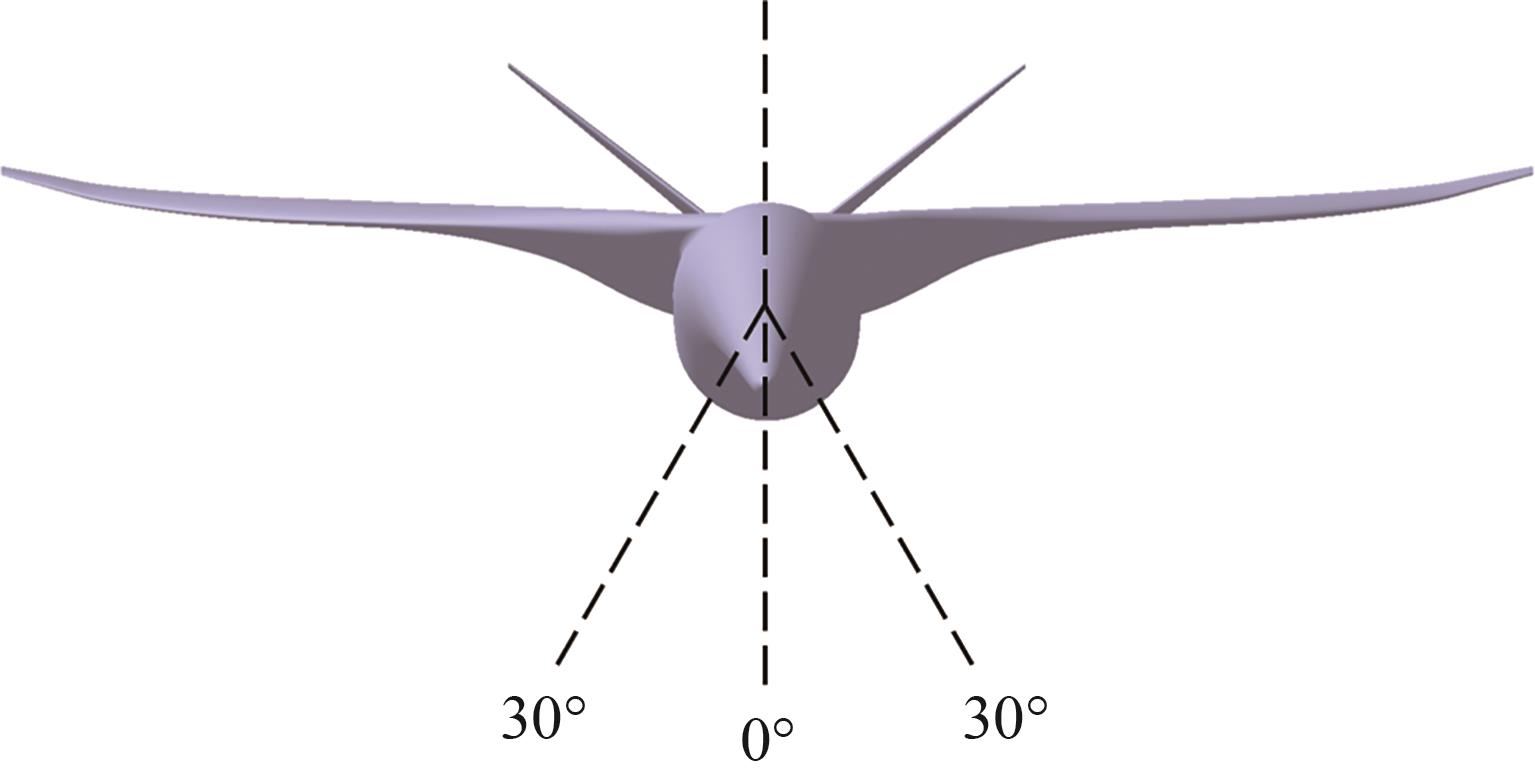
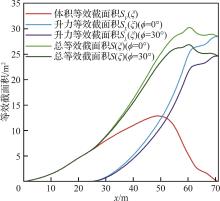
图 4
初始构型等效截面积
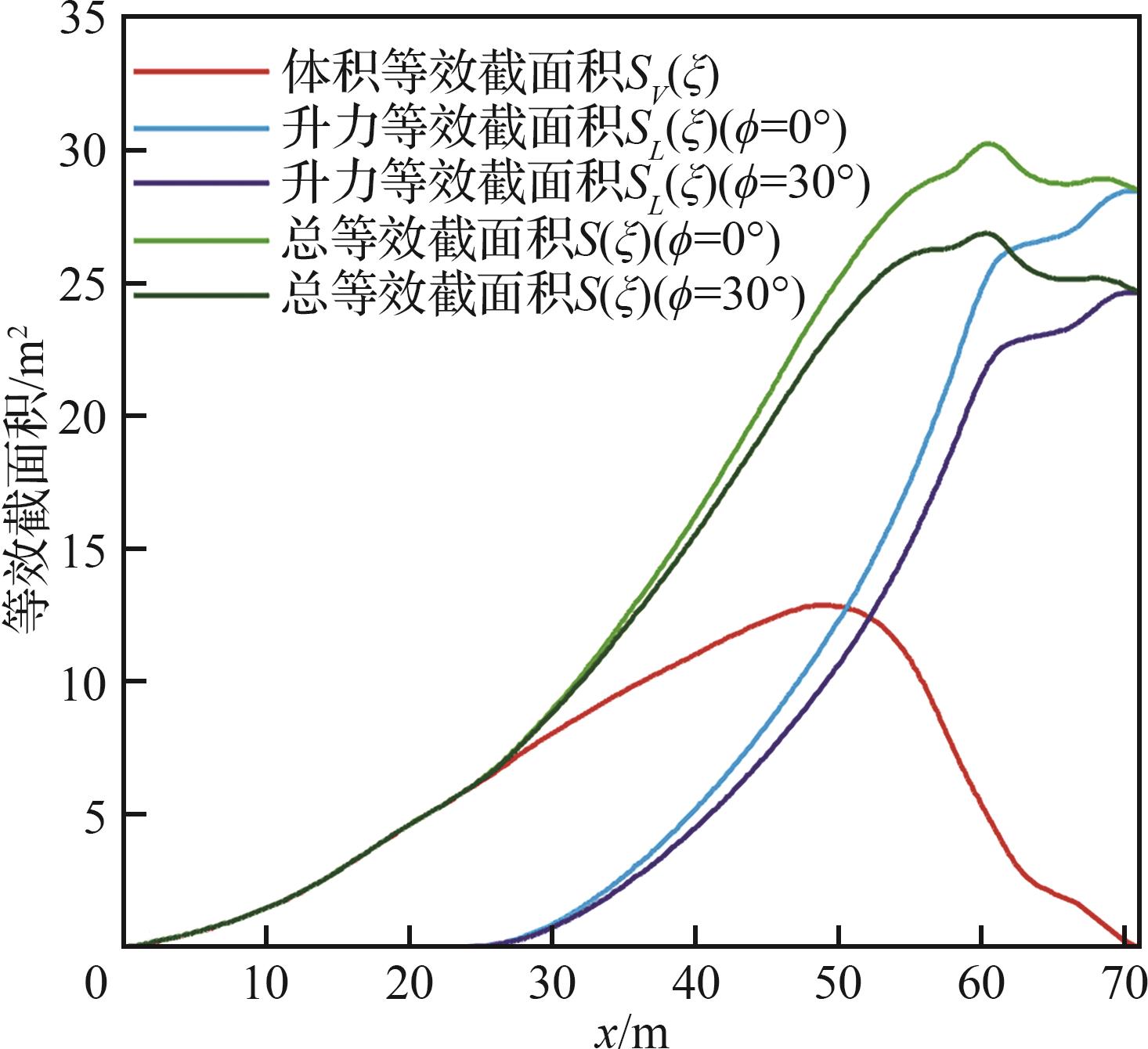
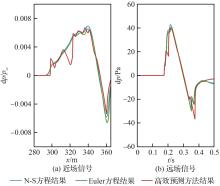
图 5
初始构型ϕ=0°近、远场信号对比
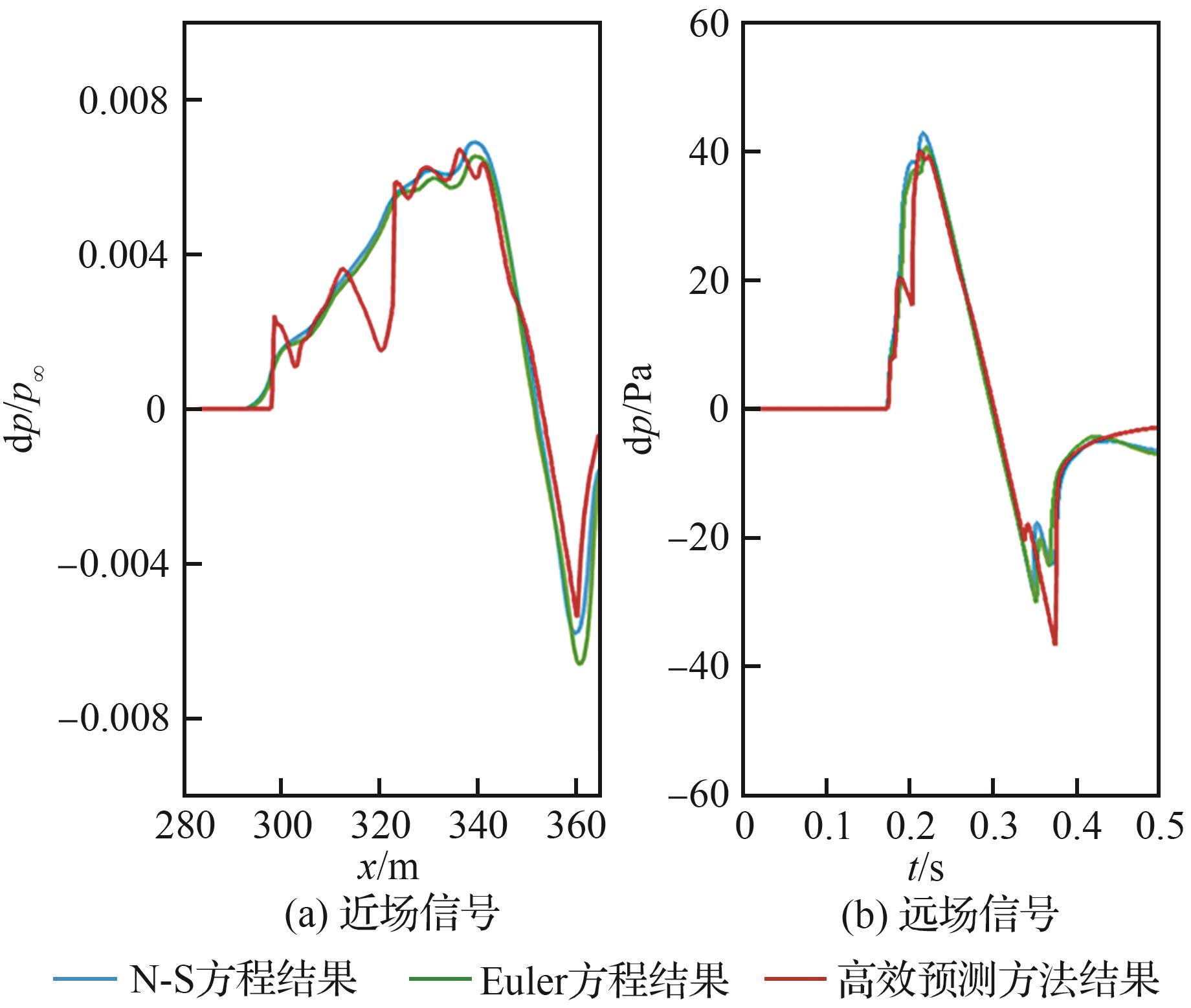
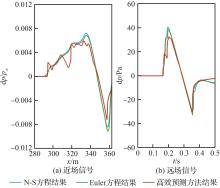
图 6
初始构型ϕ=30°近、远场信号对比
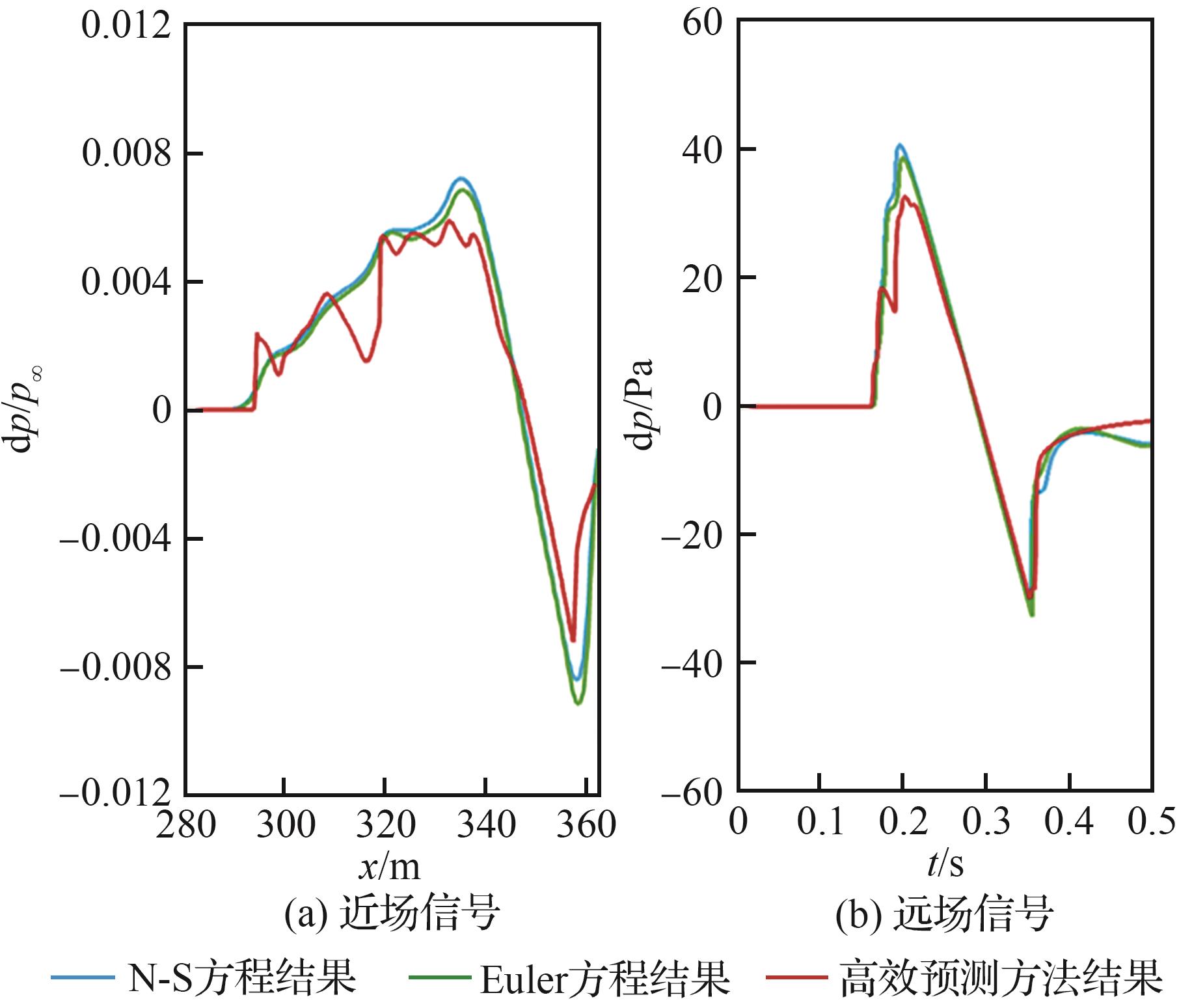
表 3
计算耗时对比
| 计算环节 | 计算耗时/s | ||
|---|---|---|---|
| 高效预测方法 | CFD+增广Burgers方程 | ||
| Euler | N-S | ||
| 近场计算 | 241 | 24 915 | 53 665 |
| 远场计算 | 220 | 228 | 214 |
| 求和 | 461 | 25 143 | 53 879 |
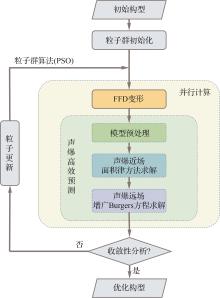
图 7
基于高效预测方法的低声爆优化框架
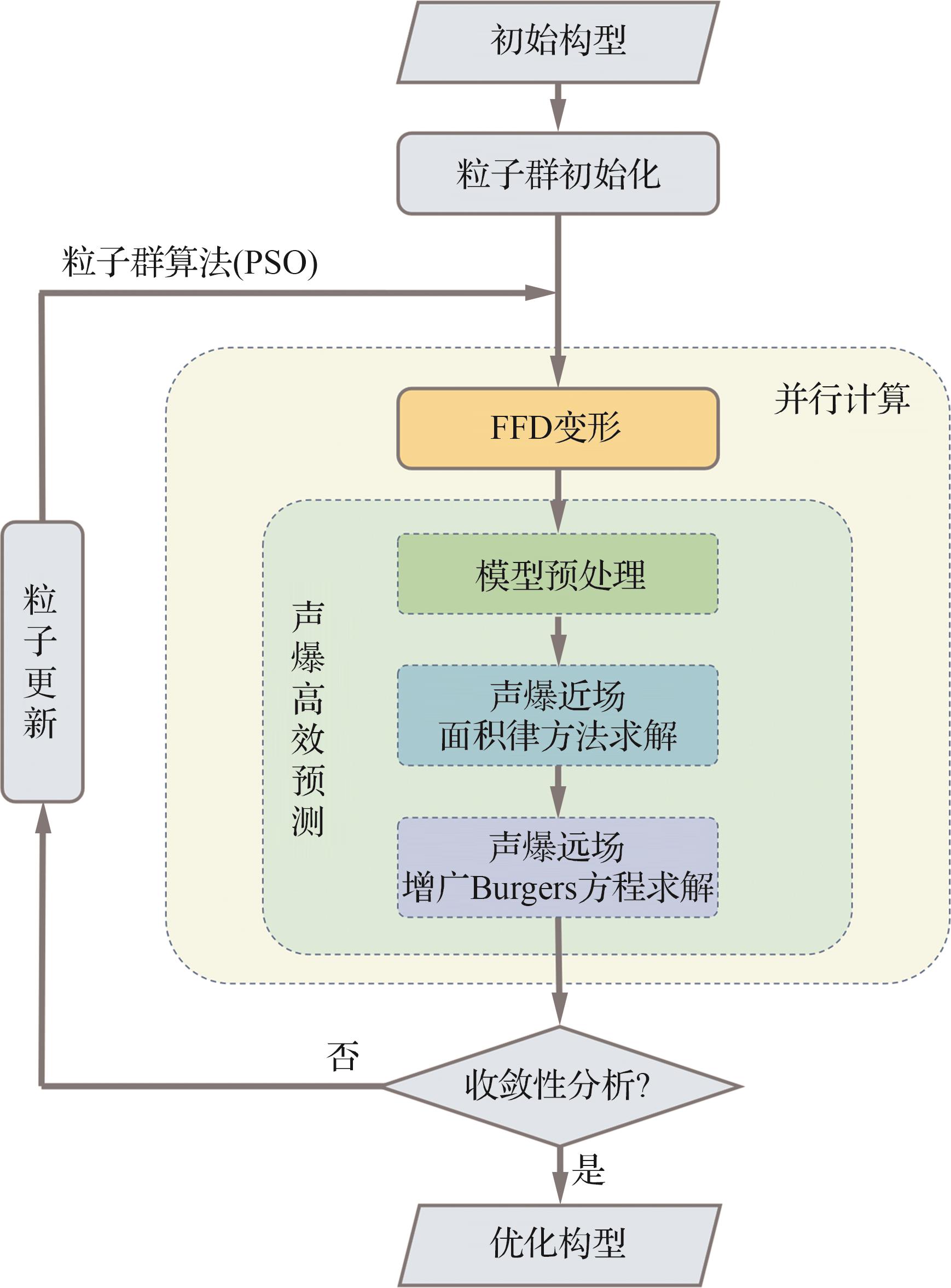
图 8
FFD控制点布置
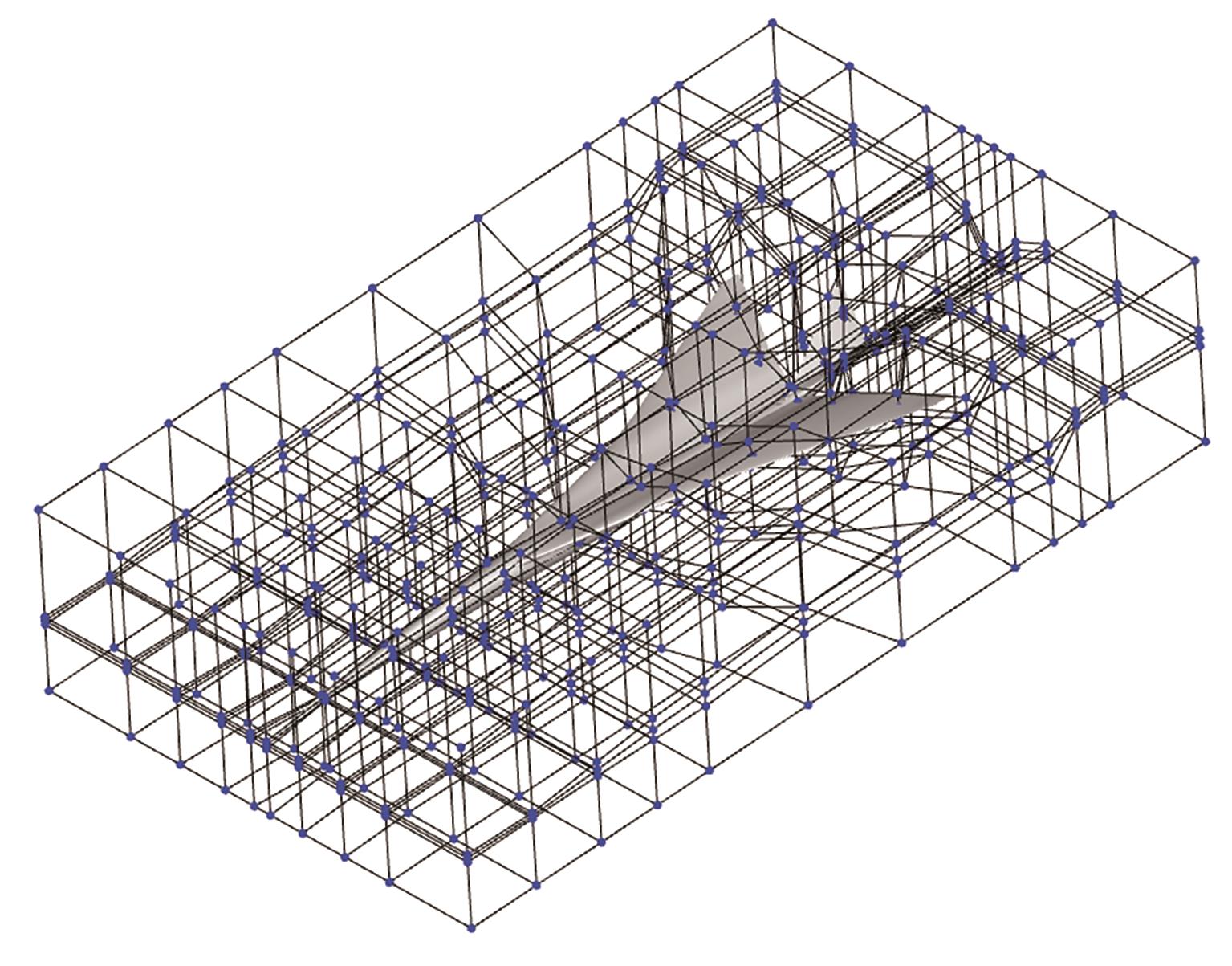
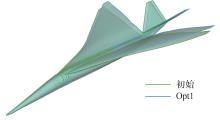
图 9
初始构型与Opt1构型外形对比
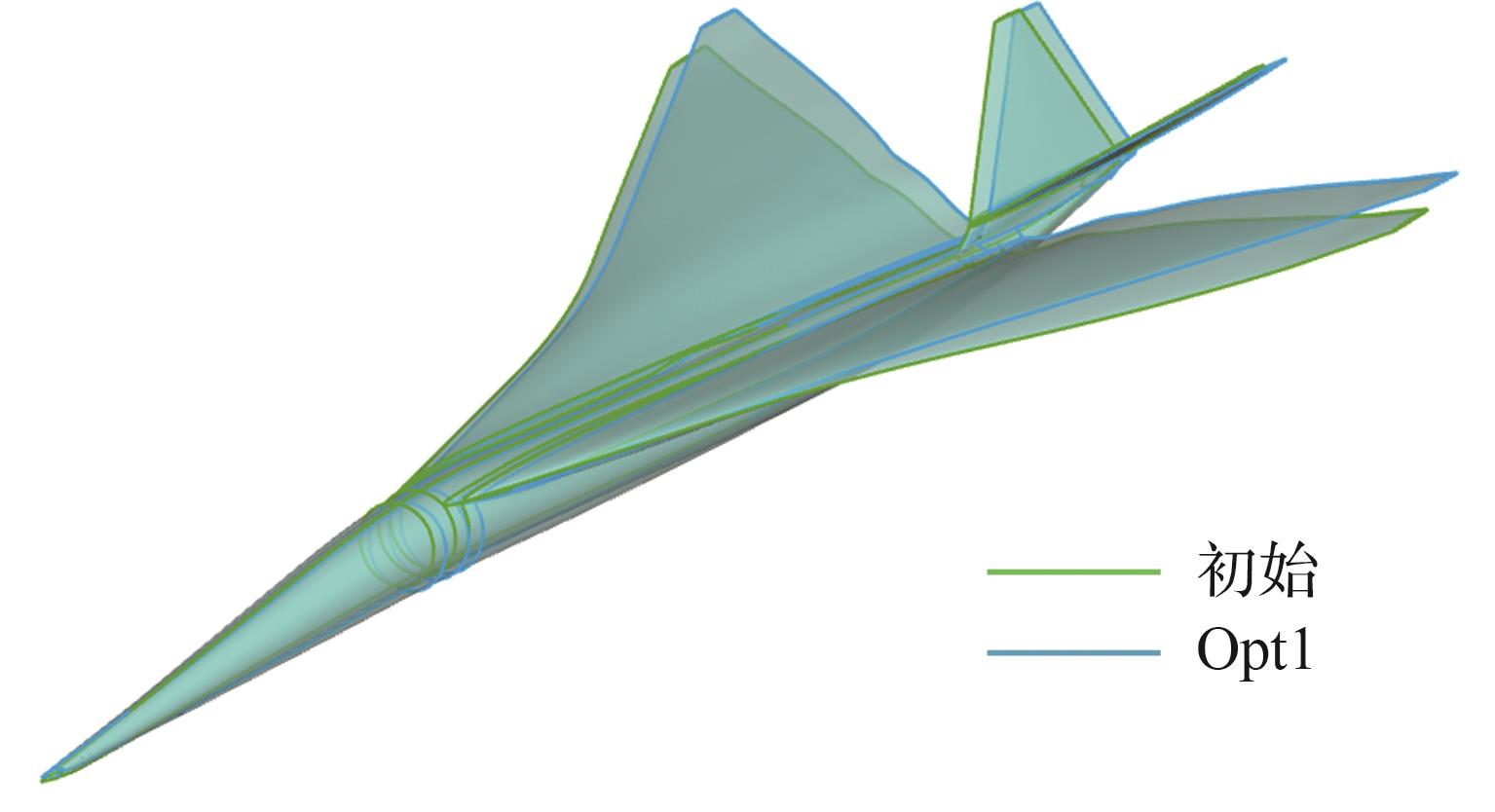
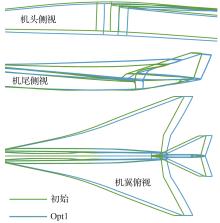
图 10
初始构型与Opt1构型外形局部对比
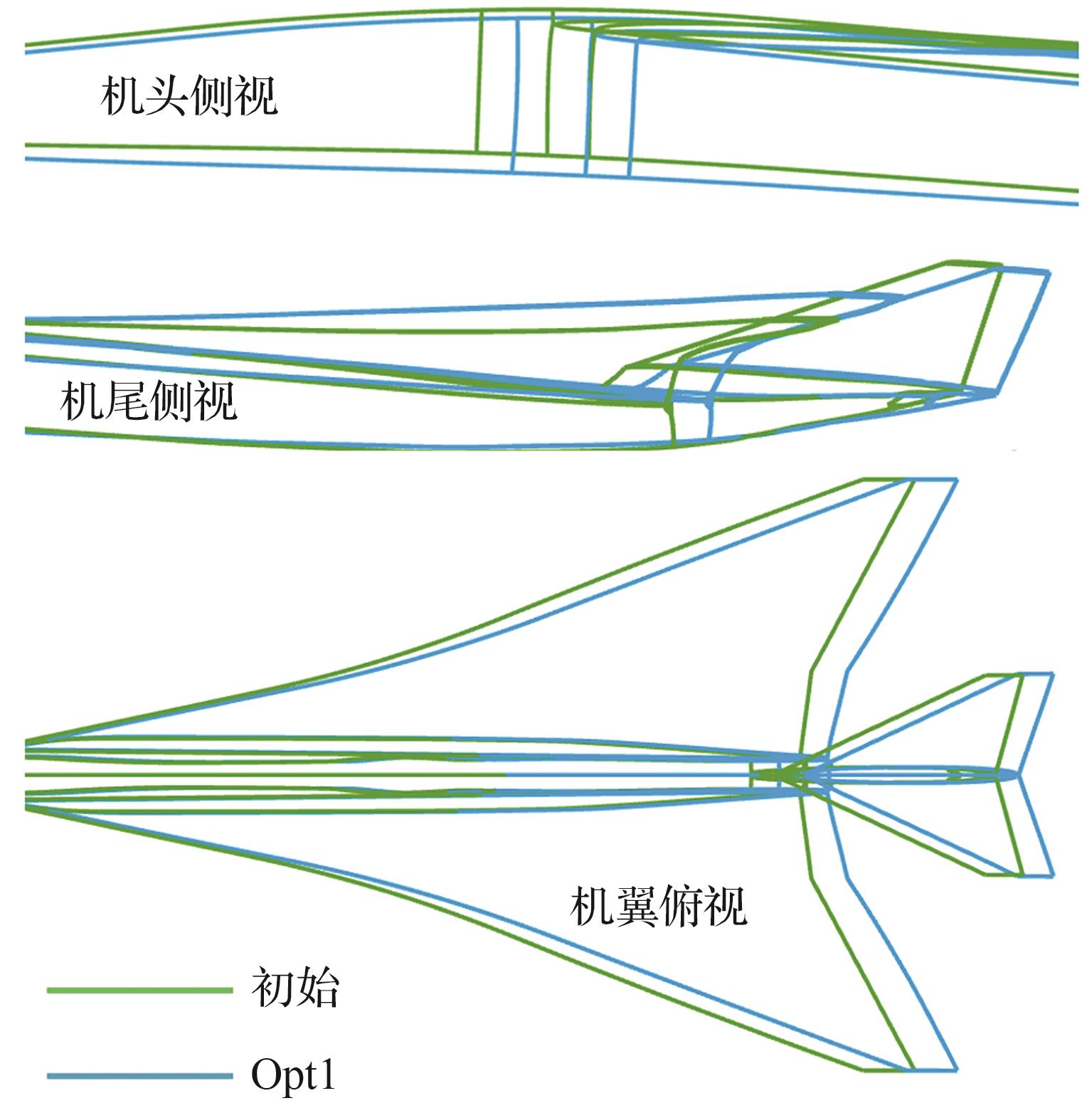
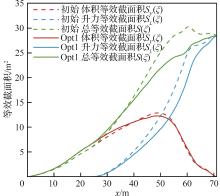
图 11
初始构型与Opt1构型的等效截面积对比
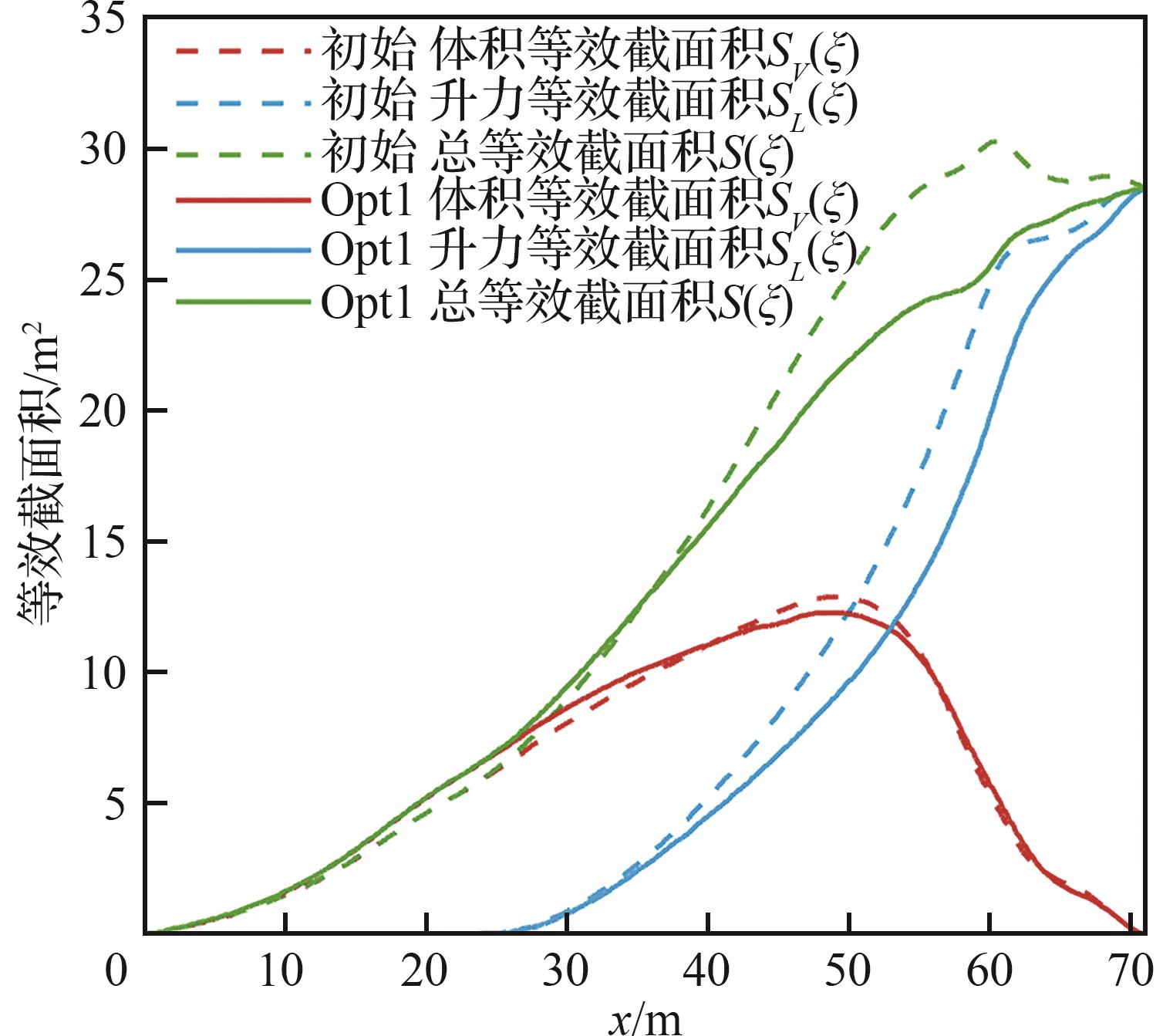
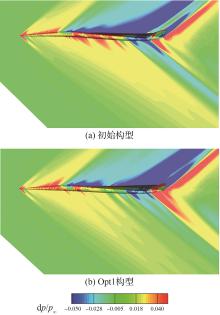
图 12
初始构型与Opt1构型的近场对称面流场对比
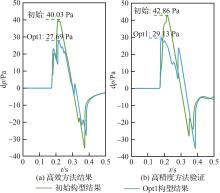
图 13
初始构型与Opt1构型的远场信号对比
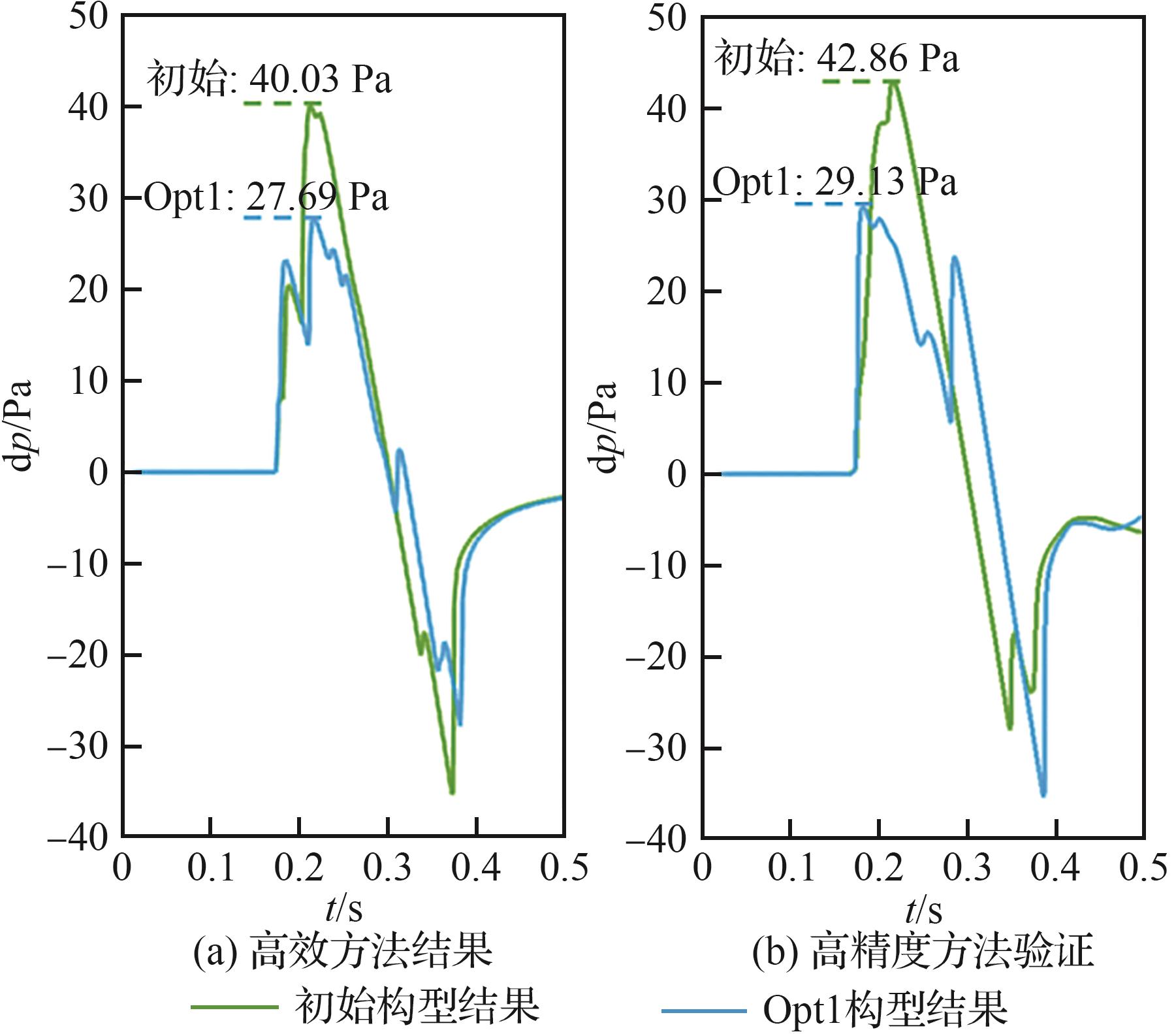
表 4
高精度验证的初始构型与Opt1构型的远场最大过压对比
| 最大过压/Pa | 变化量/% | |
|---|---|---|
| 初始构型 | Opt1构型 | |
| 42.86 | 29.13 | -32.03 |
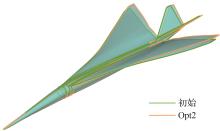
图 14
初始构型与Opt2构型外形对比
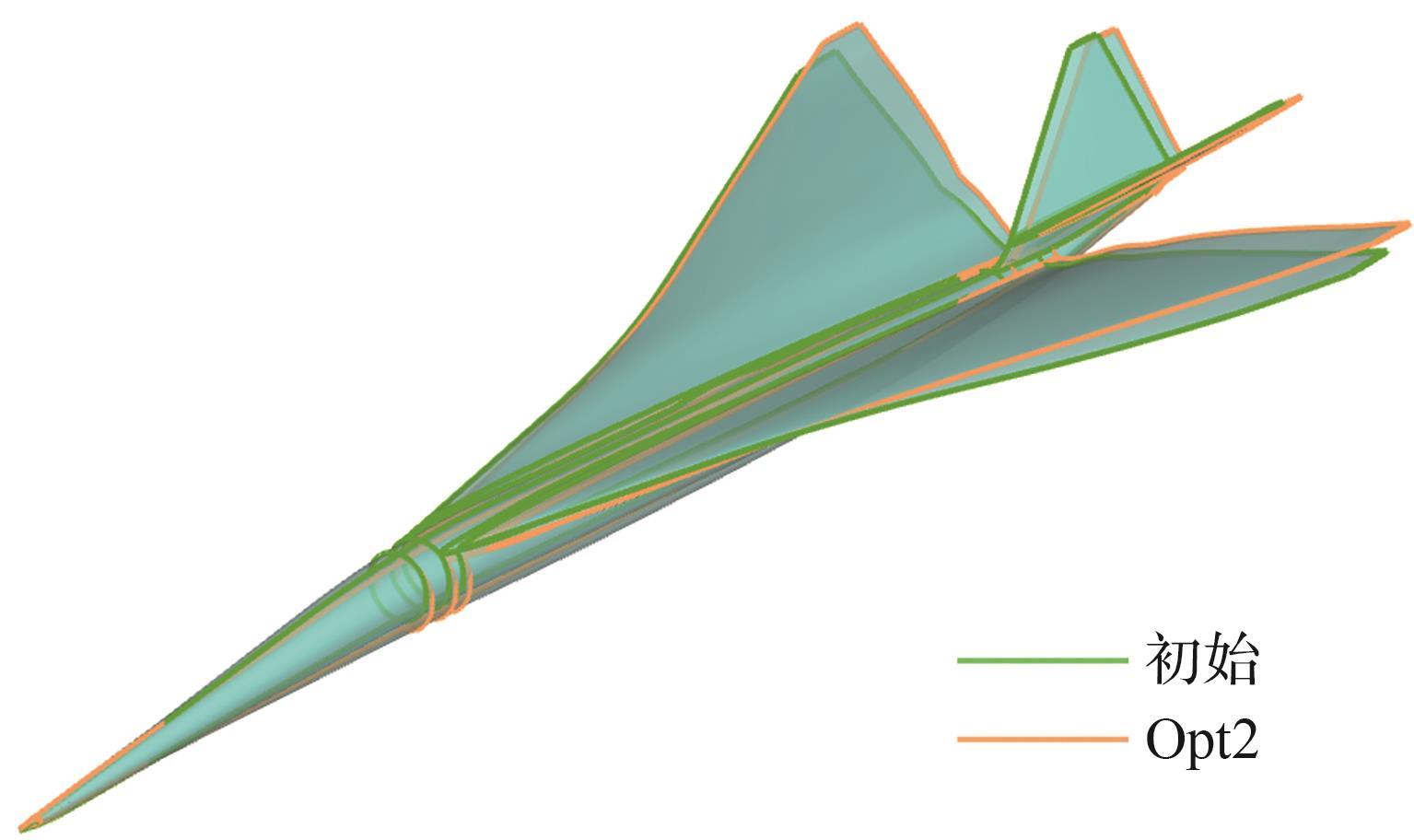
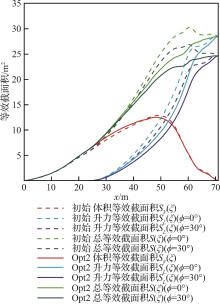
图 15
初始构型与Opt2构型的等效截面积对比
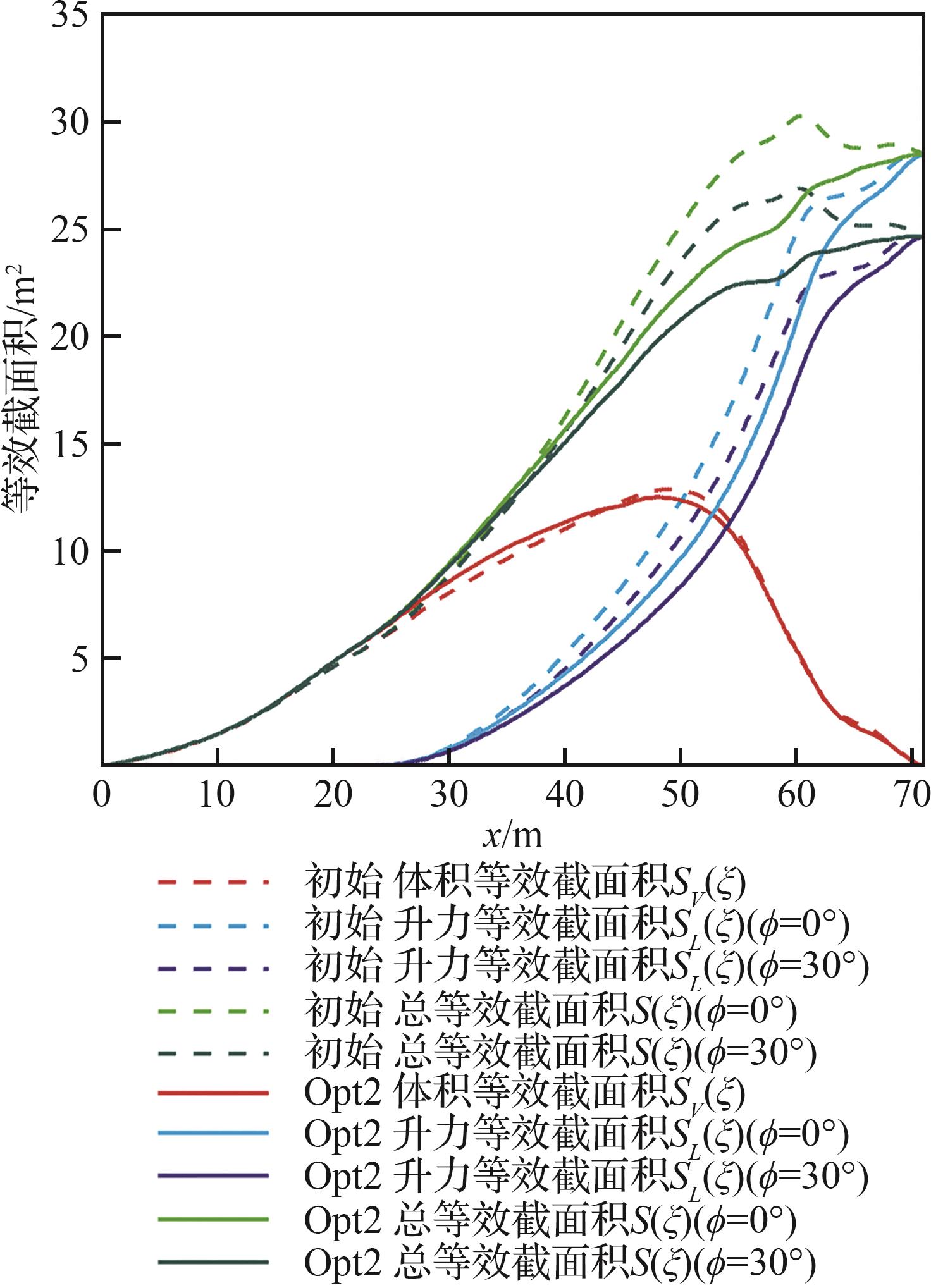
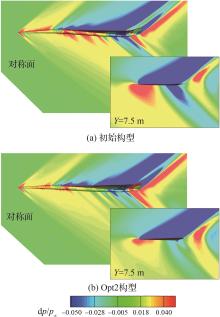
图 16
初始构型与Opt2构型的近场流场对比
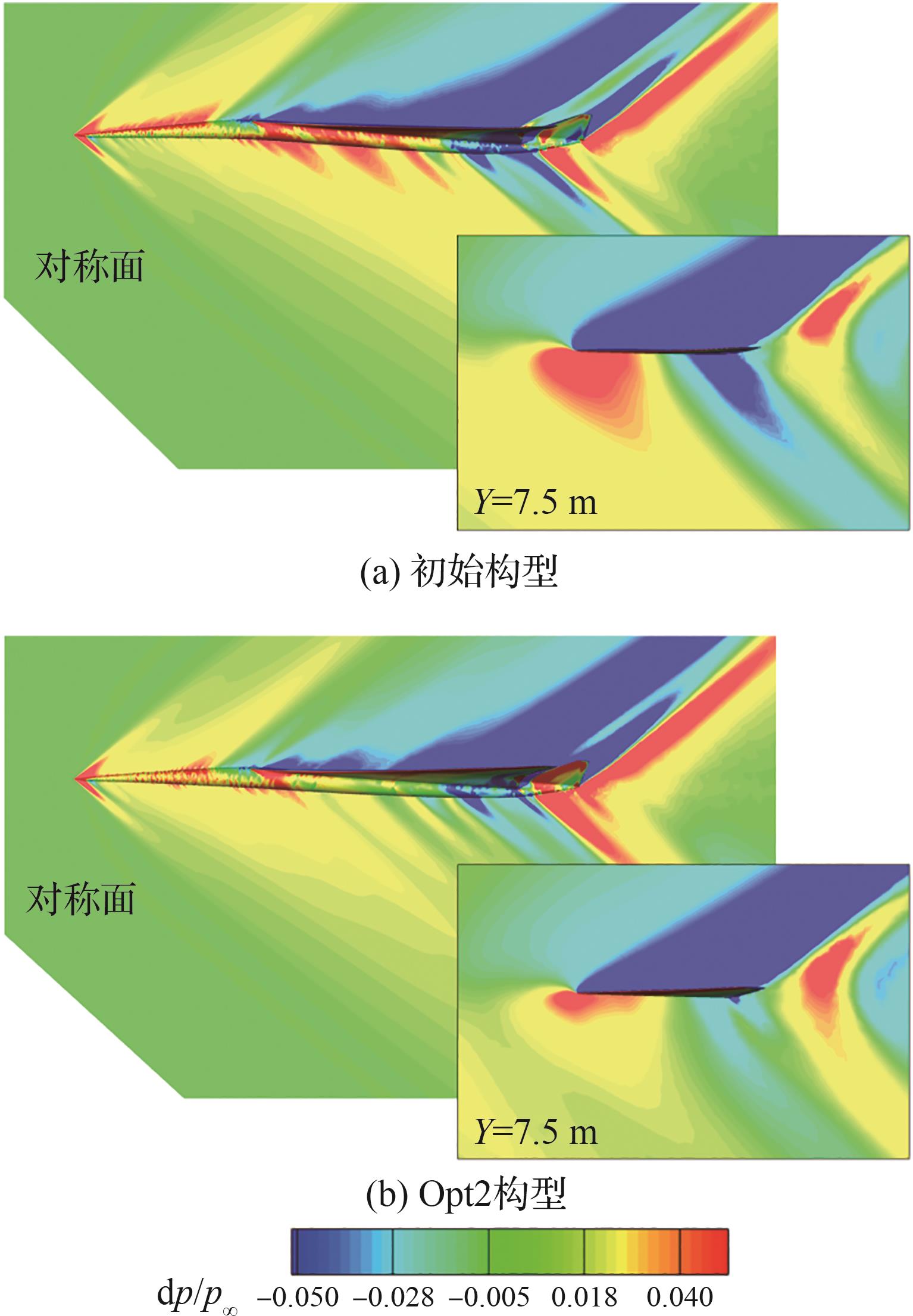
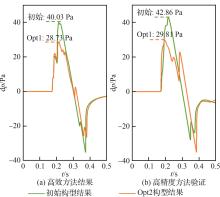
图 17
0°传播角下初始构型与Opt2构型远场信号对比
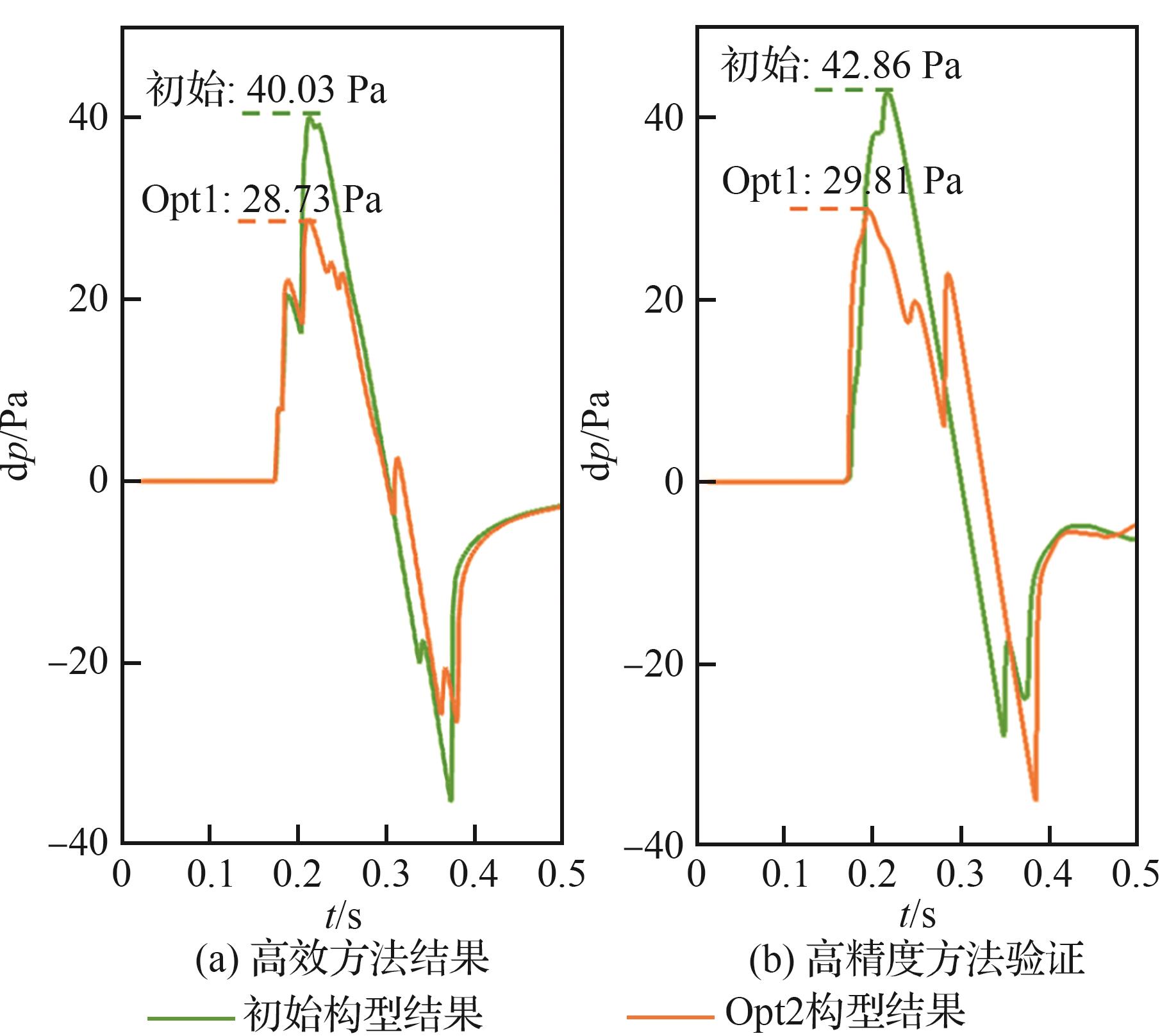
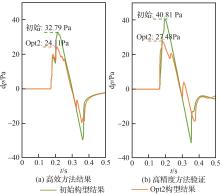
图 18
30°传播角下初始构型与Opt2构型远场信号对比
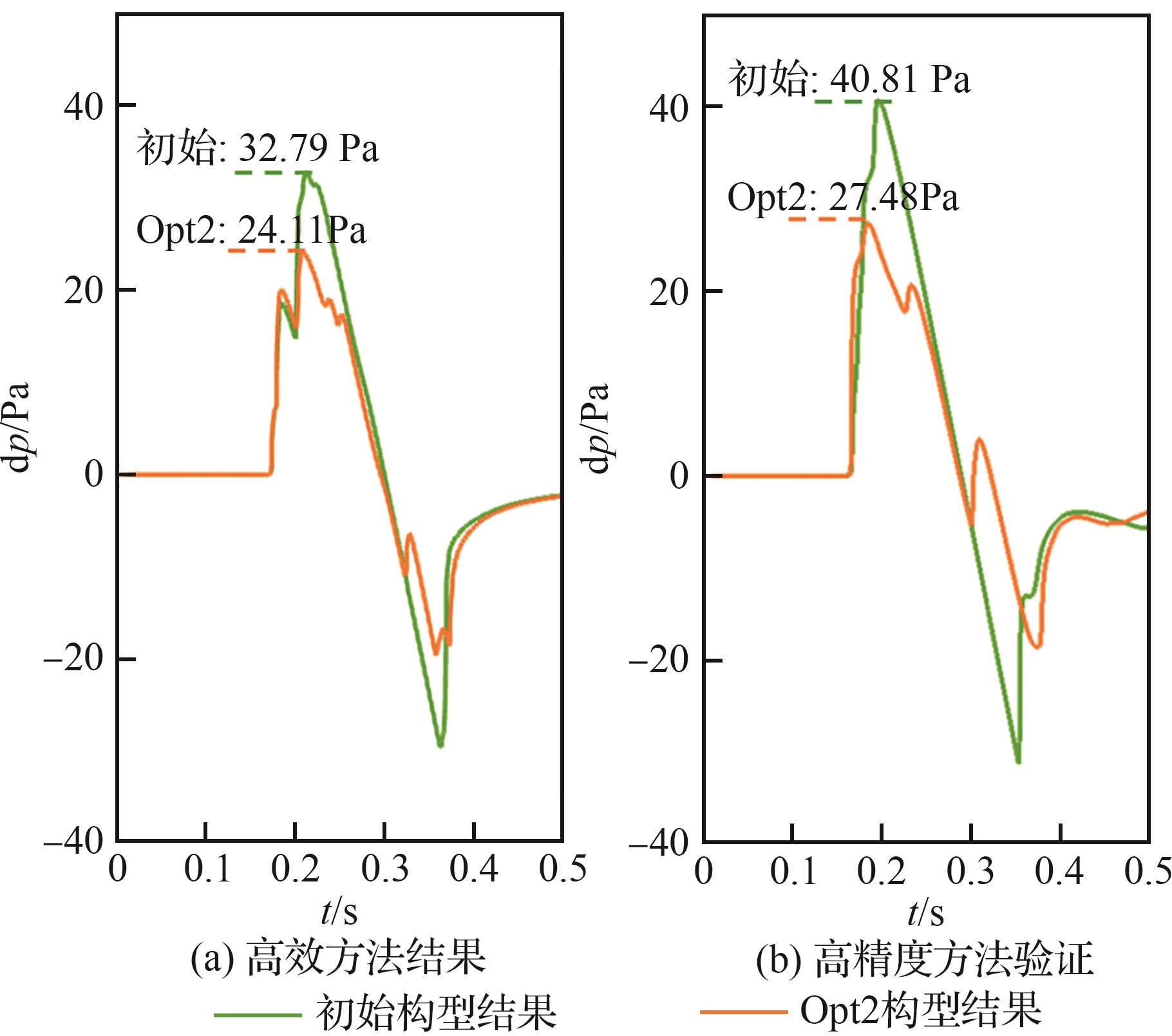
表 5
高精度验证的初始构型与Opt2构型的远场最大过压对比
| 传播角/(°) | 最大过压/Pa | 变化量/% | |
|---|---|---|---|
| 初始构型 | Opt2构型 | ||
| 0 | 42.86 | 29.81 | -30.45 |
| 30 | 40.81 | 27.48 | -32.66 |
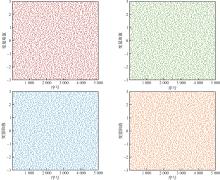
图 19
声爆数据集中部分自变量的分布情况
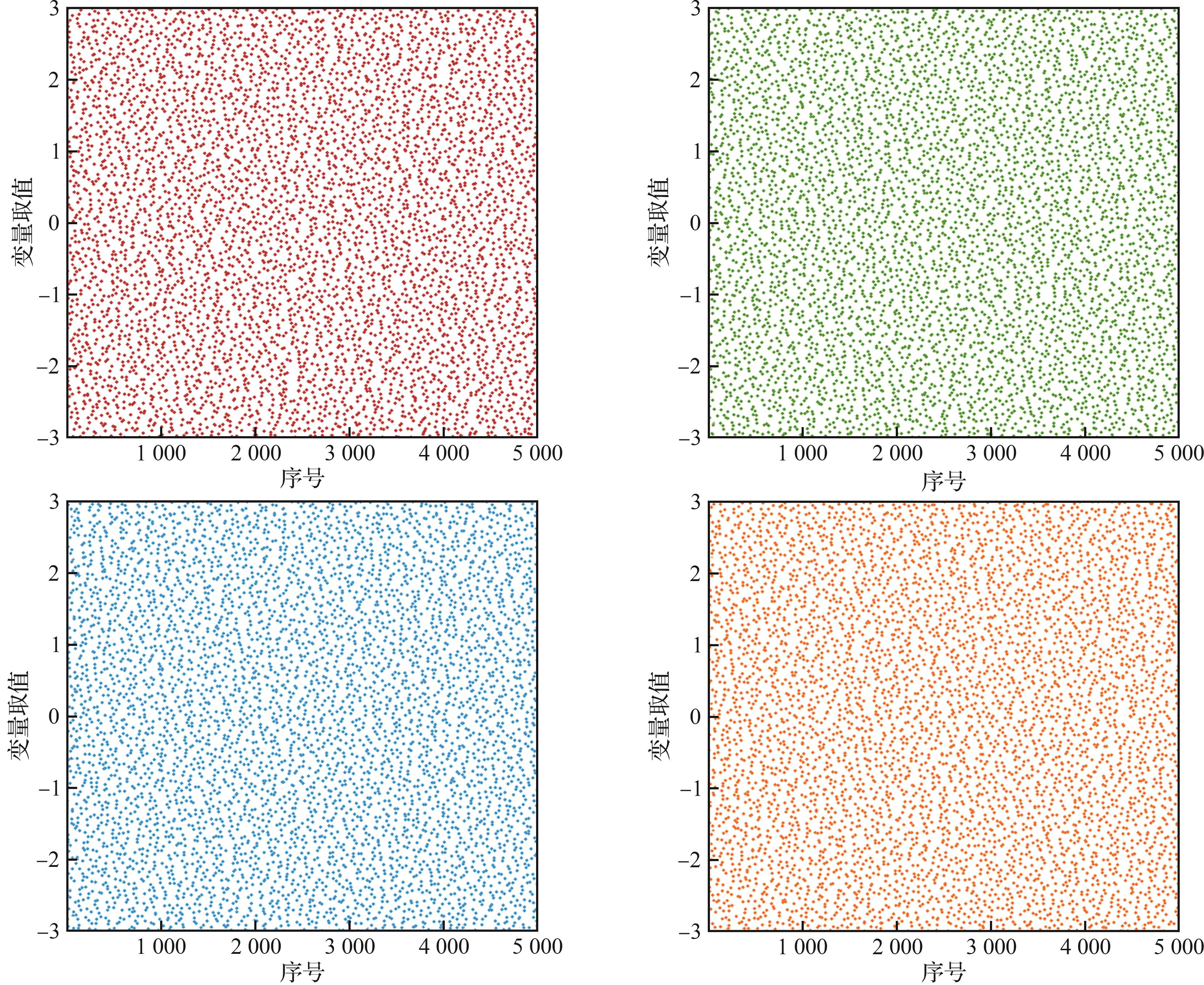
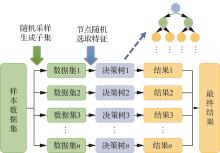
图 20
随机森林算法示意图
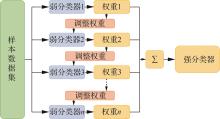
图 21
自适应增强算法示意图
表 6
数据挖掘模型参数及准确率得分
| 算法 | 参数 | 准确率得分 |
|---|---|---|
| 随机森林 | 决策树数:800 最大深度:不限 | 0.902 |
| 自适应增强 | 弱分类器数:1 000 学习率:1 | 0.946 |
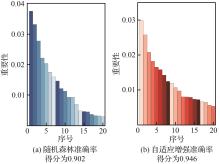
图 22
声爆关键设计变量及重要性
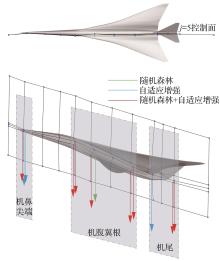
图 23
声爆关键设计变量位置
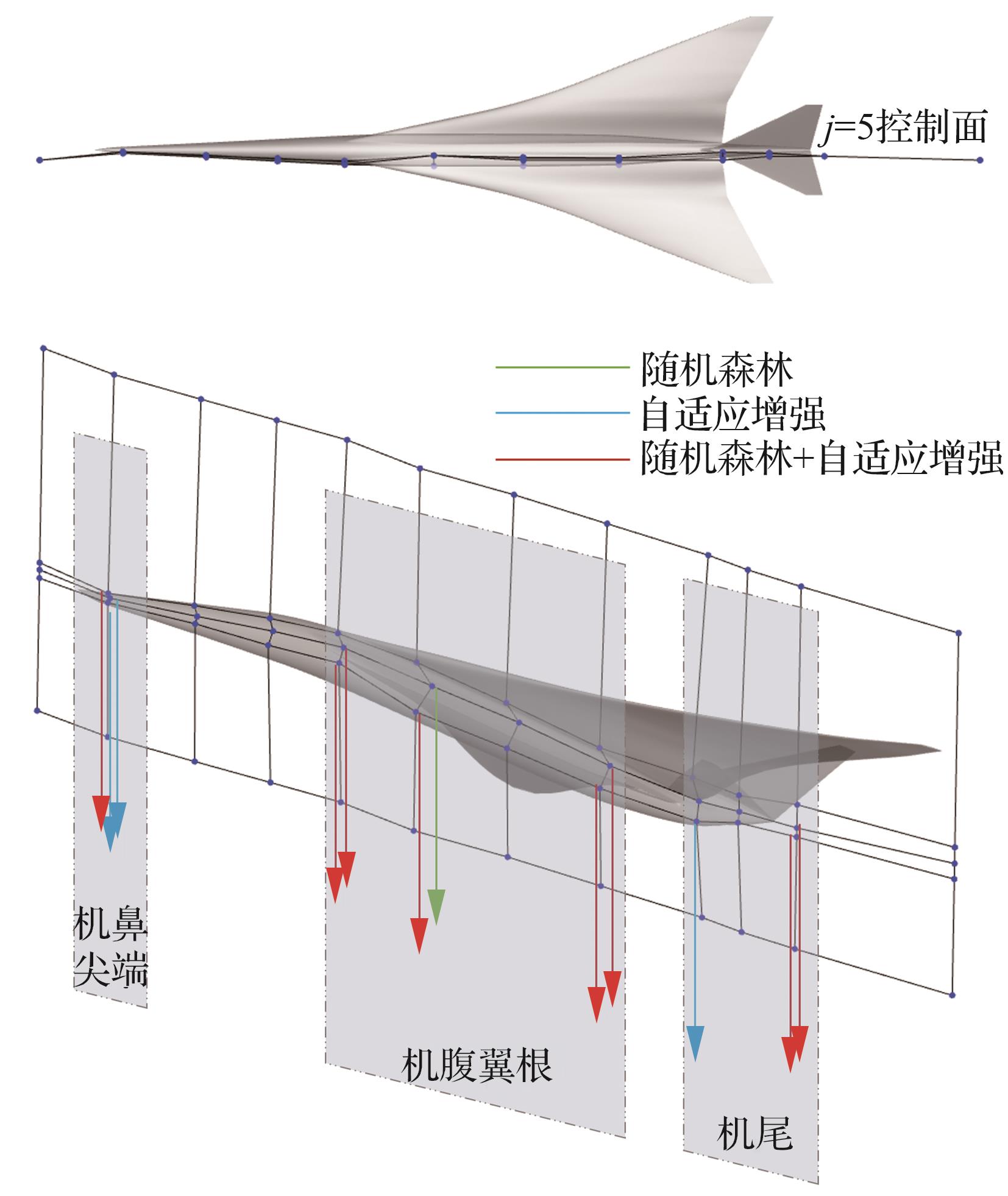
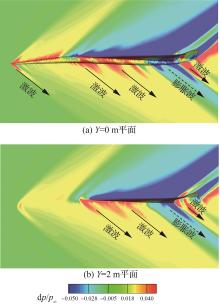
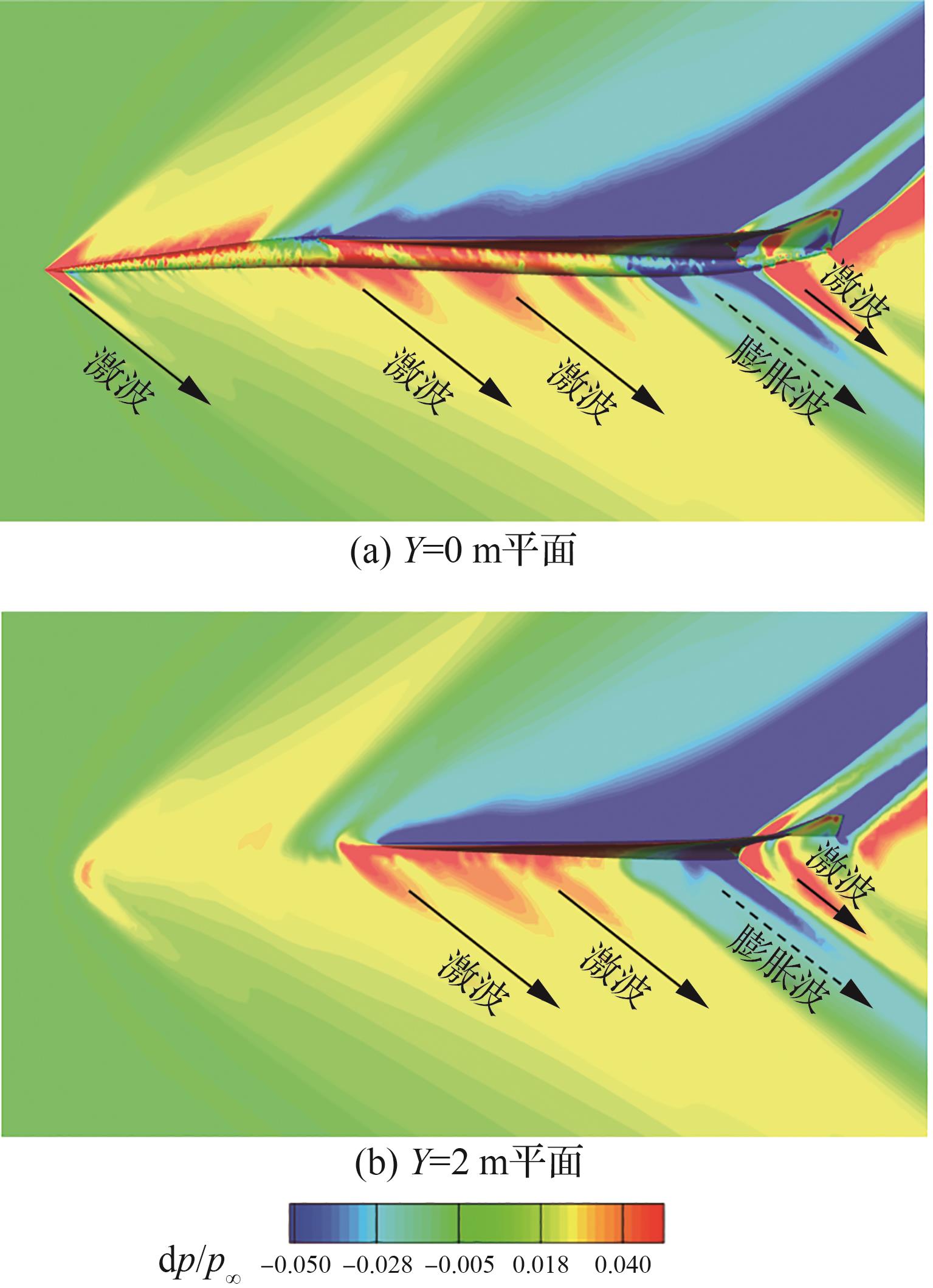
图 24
初始构型近场Y平面过压值云图
| [1] | CANDEL S. Concorde and the future of supersonic transport[J]. Journal of Propulsion and Power, 2004, 20(1): 59-68. |
| [2] | 朱自强, 兰世隆. 超声速民机和降低音爆研究[J]. 航空学报, 2015, 36(8): 2507-2528. |
| ZHU Z Q, LAN S L. Study of supersonic commercial transport and reduction of sonic boom[J]. Acta Aeronautica et Astronautica Sinica, 2015, 36(8): 2507-2528 (in Chinese). | |
| [3] | 丁玉临, 韩忠华, 乔建领, 等. 超声速民机总体气动布局设计关键技术研究进展[J]. 航空学报, 2023, 44(2): 626310. |
| DING Y L, HAN Z H, QIAO J L, et al. Research progress in key technologies for conceptual-aerodynamic configuration design of supersonic transport aircraft[J]. Acta Aeronautica et Astronautica Sinica, 2023, 44(2): 626310 (in Chinese). | |
| [4] | 韩忠华, 乔建领, 丁玉临, 等. 新一代环保型超声速客机气动相关关键技术与研究进展[J]. 空气动力学学报, 2019, 37(4): 620-635. |
| HAN Z H, QIAO J L, DING Y L, et al. Key technologies for next-generation environmentally-friendly supersonic transport aircraft: A review of recent progress[J]. Acta Aerodynamica Sinica, 2019, 37(4): 620-635 (in Chinese). | |
| [5] | RICHWINE D, BRANDON J. Quiet supersonic technology (QueSST) aircraft preliminary design status and low-boom flight demonstration (LBFD) project update: NF1676L-28931[R]. Washington, D.C.: NASA, 2018. |
| [6] | 兰世隆. 超声速民机声爆理论、预测和最小化方法概述[J]. 空气动力学学报, 2019, 37(4): 646-654, 645. |
| LAN S L. Overview of sonic boom theory, prediction and minimization methods for supersonic civil aircraft[J]. Acta Aerodynamica Sinica, 2019, 37(4): 646-654, 645 (in Chinese). | |
| [7] | WHITHAM G B. The flow pattern of a supersonic projectile[J]. Communications on Pure and Applied Mathematics, 1952, 5(3): 301-348. |
| [8] | THOMAS C L. Extrapolation of sonic boom pressure signatures by the waveform parameter method: NASA-TN-D-6832[R]. Washington, D.C.: NASA, 1972. |
| [9] | 王刚, 马博平, 雷知锦, 等. 典型标模音爆的数值预测与分析[J]. 航空学报, 2018, 39(1): 121458. |
| WANG G, MA B P, LEI Z J, et al. Simulation and analysis for sonic boom on several benchmark cases[J]. Acta Aeronautica et Astronautica Sinica, 2018, 39(1): 121458 (in Chinese). | |
| [10] | ISHIKAWA H, TANAKA K, MAKINO Y, et al. Sonic-boom prediction using Euler CFD codes with structured/unstructured overset method[C]∥ 27th Congress of International Council of the Aeronautical Sciences. 2010: 2010-2012. |
| [11] | 黄江涛, 张绎典, 高正红, 等. 基于流场/声爆耦合伴随方程的超声速公务机声爆优化[J]. 航空学报, 2019, 40(5): 122505. |
| HUANG J T, ZHANG Y D, GAO Z H, et al. Sonic boom optimization of supersonic jet based on flow/sonic boom coupled adjoint equations[J]. Acta Aeronautica et Astronautica Sinica, 2019, 40(5): 122505 (in Chinese). | |
| [12] | 单程军, 贡天宇, 易理哲, 等. 超声速民机高效高可信度声爆/气动多学科优化方法[J]. 航空学报, 2024, 45(24): 51-68. |
| SHAN C J, GONG T Y, YI L Z, et al. High-efficiency and high-reliability sonic boom/aerodynamic multidisciplinary optimization method for supersonic civil aircraft[J]. Acta Aeronautica et Astronautica Sinica, 2024, 45(24): 51-68 (in Chinese). | |
| [13] | WALKDEN F. The shock pattern of a wing-body combination, far from the flight path[J]. Aeronautical Quarterly, 1958, 9(2): 164-194. |
| [14] | LIGHTHILL M J. Supersonic flow past slender bodies of revolution the slope of whose meridian section is discontinuous[J]. The Quarterly Journal of Mechanics and Applied Mathematics, 1948, 1(1): 90-102. |
| [15] | BLACKSTOCK D T. Thermoviscous attenuation of plane, periodic, finite-amplitude sound waves[J]. The Journal of the Acoustical Society of America, 1964, 36(3): 534-542. |
| [16] | CARLTON T W, BLACKSTOCK D T. Propagation of plane sound waves of finite amplitude in inhomogeneous fluids[J]. The Journal of the Acoustical Society of America, 1974, 56(S1): S42. |
| [17] | PIERCE A D. Acoustics: An introduction to its physical principles and applications[M]. Gewerbesraße: Springer Cham, 2019: 56-57. |
| [18] | CLEVELAND R O. Propagation of sonic booms through a real, stratified atmosphere[D]. Austin: The University of Texas, 1995. |
| [19] | 张绎典, 黄江涛, 高正红. 基于增广Burgers方程的音爆远场计算及应用[J]. 航空学报, 2018, 39(7): 122039. |
| ZHANG Y D, HUANG J T, GAO Z H. Far field simulation and applications of sonic boom based on augmented Burgers equation[J]. Acta Aeronautica et Astronautica Sinica, 2018, 39(7): 122039 (in Chinese). | |
| [20] | 顾奕然, 黄江涛, 陈树生, 等. 基于逆向增广Burgers方程的声爆反演技术[J]. 航空学报, 2023, 44(2): 626258. |
| GU Y R, HUANG J T, CHEN S S, et al. Sonic boom inversion technology based on inverse augmented Burgers equation[J]. Acta Aeronautica et Astronautica Sinica, 2023, 44(2): 626258 (in Chinese). | |
| [21] | CHEN S S, QIU J Y, YANG H, et al. Deep learning for inverse design of low-boom supersonic configurations[J]. Advances in Aerodynamics, 2023, 5(1): 13. |
| [22] | PARK M A, MORGENSTERN J M. Summary and statistical analysis of the first AIAA sonic boom prediction workshop[J]. Journal of Aircraft, 2016, 53(2): 578-598. |
| [23] | MELISSA C. Lockheed Martin 1021 full configuration (2014 optional)[EB/OL]. (2018-12-21)[2024-10-28]. . |
| [24] | BUONANNO M, CHAI S, MARCONI F, et al. Overview of sonic boom reduction efforts on the Lockheed Martin N+2 supersonic validations program[C]∥32nd AIAA Applied Aerodynamics Conference. Reston: AIAA, 2014: 2138. |
| [25] | PLOTKIN K. Review of sonic boom theory[C]∥12th Aeroacoustic Conference. 1989: 1105. |
| [26] | PARK M A, CAMPBELL R L, ELMILIGUI A A, et al. Specialized CFD grid generation methods for near-field sonic boom prediction[C]∥52nd Aerospace Sciences Meeting. Reston: AIAA, 2014: 0115. |
| [27] | PLOTKIN K, MAGLIERI D. Sonic boom research: History and future[C]∥33rd AIAA Fluid Dynamics Conference and Exhibit. Reston: AIAA, 2003: 3575. |
| [28] | SEDERBERG T W, PARRY S R. Free-form deformation of solid geometric models[C]∥Proceedings of the 13th Annual Conference on Computer Graphics and Interactive Techniques. 1986: 151-160. |
| [29] | LEE C, KOO D, ZINGG D W. Comparison of B-spline surface and free-form deformation geometry control for aerodynamic optimization[J]. AIAA Journal, 2016, 55(1): 228-240. |
| [30] | KENNEDY J, EBERHART R. Particle swarm optimization[C]∥Proceedings of ICNN’95-International Conference on Neural Networks. Piscataway: IEEE Press, 1995: 1942-1948. |
| [31] | MIRJALILI S, SONG DONG J, LEWIS A, et al. Particle swarm optimization: Theory, literature review, and application in airfoil design[M]. Gewerbesraße: Springer Cham, 2020: 167-184. |
| [32] | 张力文, 宋文萍, 韩忠华, 等. 声爆产生、传播和抑制机理研究进展[J]. 航空学报, 2022, 43(12): 025649. |
| ZHANG L W, SONG W P, HAN Z H, et al. Recent progress of sonic boom generation, propagation, and mitigation mechanism[J]. Acta Aeronautica et Astronautica Sinica, 2022, 43(12): 025649 (in Chinese). | |
| [33] | BAN N, YAMAZAKI W, KUSUNOSE K. Low-boom/low-drag design optimization of innovative supersonic transport configuration[J]. Journal of Aircraft, 2017, 55(3): 1071-1081. |
| [34] | PLOTKIN K, SIZOV N, MORGENSTERN J. Examination of sonic boom minimization experienced indoors[C]∥46th AIAA Aerospace Sciences Meeting and Exhibit. Reston: AIAA, 2008: 57. |
| [35] | JEONG S, CHIBA K, OBAYASHI S. Data mining for aerodynamic design space[J]. Journal of Aerospace Computing, Information, and Communication, 2005, 2(11): 452-469. |
| [36] | NUNEZ M, GUENOV M D. Design-exploration framework for handling changes affecting conceptual design[J]. Journal of Aircraft, 2013, 50(1): 114-129. |
| [37] | 张伟伟, 寇家庆, 刘溢浪. 智能赋能流体力学展望[J]. 航空学报, 2021, 42(4): 524689. |
| ZHANG W W, KOU J Q, LIU Y L. Prospect of artificial intelligence empowered fluid mechanics[J]. Acta Aeronautica et Astronautica Sinica, 2021, 42(4): 524689 (in Chinese). | |
| [38] | 金世轶,陈树生,杨华,等. 基于数据挖掘的翼型气动隐身多学科分析[J]. 航空动力学报, 2025, 40(8): 20230435. |
| JIN S Y, CHEN S S, YANG H, et al. Multi-disciplinary analysis of aerodynamics stealth of airfoil based on data mining[J]. Journal of Aerospace Power, 2025, 40(8): 20230435 (in Chinese). | |
| [39] | BIAU G, SCORNET E. A random forest guided tour[J]. TEST, 2016, 25(2): 197-227. |
| [40] | SCORNET E. On the asymptotics of random forests[J]. Journal of Multivariate Analysis, 2016, 146: 72-83. |
| [41] | ALTMAN N, KRZYWINSKI M. Ensemble methods: Bagging and random forests[J]. Nature Methods, 2017, 14: 933-934. |
| [42] | HU W M, HU W, MAYBANK S. AdaBoost-based algorithm for network intrusion detection[J]. IEEE Transactions on Systems, Man, and Cybernetics Part B, Cybernetics, 2008, 38(2): 577-583. |
| [43] | PANDEY P, PRABHAKAR R. An analysis of machine learning techniques (J48 & AdaBoost)-for classification[C]∥2016 1st India International Conference on Information Processing (IICIP). Piscataway: IEEE Press, 2016: 1-6. |
| [44] | HOWE D, SIMMONS III F, FREUND D. Development of the gulfstream quiet spike TM for sonic boom minimization[C]∥46th AIAA Aerospace Sciences Meeting and Exhibit. Reston: AIAA, 2008. |
| [1] | 徐义皓, 董芃呈, 郑俊超, 谭春青, 唐海龙. 自适应循环推进系统总体性能优化方法[J]. 航空学报, 2025, 46(7): 130987-130987. |
| [2] | 屈峰, 王青, 程少文, 王开强. 基于气动/轨迹/控制耦合的飞/发一体高超声速飞机气动外形优化设计[J]. 航空学报, 2025, 46(4): 130874-130874. |
| [3] | 郑可风, 宋文萍, 聂晗, 丁玉临, 乔建领, 陈晴, 王奕衡, 宋科, 张科施. 考虑全机声爆特性的超声速自然层流机翼设计方法[J]. 航空学报, 2025, 46(20): 531214-531214. |
| [4] | 杨超, 谭玉婷, 王伟, 赵彦, 余雄庆. 融入低声爆设计的超声速民机概念方案多学科优化[J]. 航空学报, 2025, 46(20): 531457-531457. |
| [5] | 杨琳萱, 马慧才, 庞丽萍. 超声速民机环控系统设计及性能仿真[J]. 航空学报, 2025, 46(20): 531585-531585. |
| [6] | 贡天宇, 单程军, 易理哲, 龙垚松, 成忠涛. 发动机几何参数对超声速民机声爆特性的影响[J]. 航空学报, 2025, 46(20): 531592-531592. |
| [7] | 陈晴, 韩忠华, 张科施, 乔建领, 丁玉临, 宋文萍. 一种面向超声速民机低声爆布局的全声爆毯优化设计方法[J]. 航空学报, 2025, 46(20): 531909-531909. |
| [8] | 廖振荣, 李军府, 赵博文, 张明, 谢露, 韩忠华, 艾梦琪. 基于工程的超声速民机宽速域机翼设计[J]. 航空学报, 2025, 46(20): 531915-531915. |
| [9] | 李富霖, 陈敏, 唐海龙, 张纪元, 周越, 马静. 考虑环境指标的变循环发动机控制规律设计[J]. 航空学报, 2025, 46(16): 231624-231624. |
| [10] | 张睿韬, 王聪, 陶俊, 王立悦, 孙刚. 基于潜在扩散模型的翼型参数化方法[J]. 航空学报, 2025, 46(10): 631180-631180. |
| [11] | 姜璐璐, 潘鑫, 蒋伟, 冯瑞, 陈刚. 基于融合代理策略的超声速降落伞气动优化设计[J]. 航空学报, 2025, 46(1): 630471-630471. |
| [12] | 王梓旭, 李攀, 鲁可, 朱振华, 陈仁良. 共轴刚性旋翼高速直升机配平策略优化设计[J]. 航空学报, 2024, 45(9): 529069-529069. |
| [13] | 骆燕燕, 杨硕, 潘晓松, 赵绪怀, 张莉. 航空用高速连接器信号反射抑制与优化设计[J]. 航空学报, 2024, 45(7): 328937-328937. |
| [14] | 贾文斌, 方磊, 张根, 史剑, 何泽侃, 宣海军. CNT树脂基复合材料断裂韧性的优化设计[J]. 航空学报, 2024, 45(7): 428971-428971. |
| [15] | 戴今钊, 陈海昕. 流场波系引导的三维消波翼优化设计方法[J]. 航空学报, 2024, 45(6): 628942-628942. |
| 阅读次数 | ||||||
|
全文 |
|
|||||
|
摘要 |
|
|||||
版权所有 © 航空学报编辑部
版权所有 © 2011航空学报杂志社
主管单位:中国科学技术协会 主办单位:中国航空学会 北京航空航天大学

 CJA
CJA
