王成鹏, 郝晨光, 李昊, 薛龙生( ), 焦运, 吴思雨, 马张煜, 袁野, 李伟俊, 侯普晨
收稿日期:2024-10-29
修回日期:2024-11-12
接受日期:2025-01-03
出版日期:2025-02-06
发布日期:2025-02-06
通讯作者:
薛龙生
E-mail:xuels@nuaa.edu.cn
基金资助:
Chengpeng WANG, Chenguang HAO, Hao LI, Longsheng XUE(), Yun JIAO, Siyu WU, Zhangyu MA, Ye YUAN, Weijun LI, Puchen HOU
Received:2024-10-29
Revised:2024-11-12
Accepted:2025-01-03
Online:2025-02-06
Published:2025-02-06
Contact:
Longsheng XUE
E-mail:xuels@nuaa.edu.cn
Supported by:摘要:
激波与边界层干扰(SWBLI)广泛存在于高速飞行器内外流场中,具有多尺度、非线性、非定常等特征,引起局部热流和压力的跃升,给流场品质及结构强度带来影响。详细探讨了激波与边界层干扰的波系结构特征与壁面压升规律,通过对几种典型场景下的激波结构分析,加深对这类复杂流动的机理认识。首先,简述了无黏激波反射理论、自由干扰理论、最小黏性耗散准则等理论模型的研究进展;随后,对比了基于边界层结构与基于激波干扰结构的两种建模思想;最后,着重阐述了最小熵增准则在求解激波与边界层干扰复杂流动问题中的应用。结果表明:最小熵增准则(MEP)作为热力学第二定律的延伸,应用于含分离流动的复杂激波干扰流场时具有较大的优势,在激波结构、压升规律的分析和预测方面表现出与试验结果较好的一致性,为激波与边界层干扰相关的基础科学问题提供了新的解决思路。
中图分类号:
王成鹏, 郝晨光, 李昊, 薛龙生, 焦运, 吴思雨, 马张煜, 袁野, 李伟俊, 侯普晨. 最小熵增准则在激波/边界层干扰分析中的应用[J]. 航空学报, 2025, 46(8): 631458.
Chengpeng WANG, Chenguang HAO, Hao LI, Longsheng XUE, Yun JIAO, Siyu WU, Zhangyu MA, Ye YUAN, Weijun LI, Puchen HOU. Application of minimum entropy production principle to analysis of shock wave/boundary layer interactions[J]. Acta Aeronautica et Astronautica Sinica, 2025, 46(8): 631458.
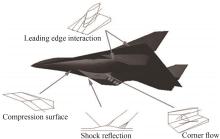
图 1
高速飞行器涉及的激波与边界层干扰现象[11]
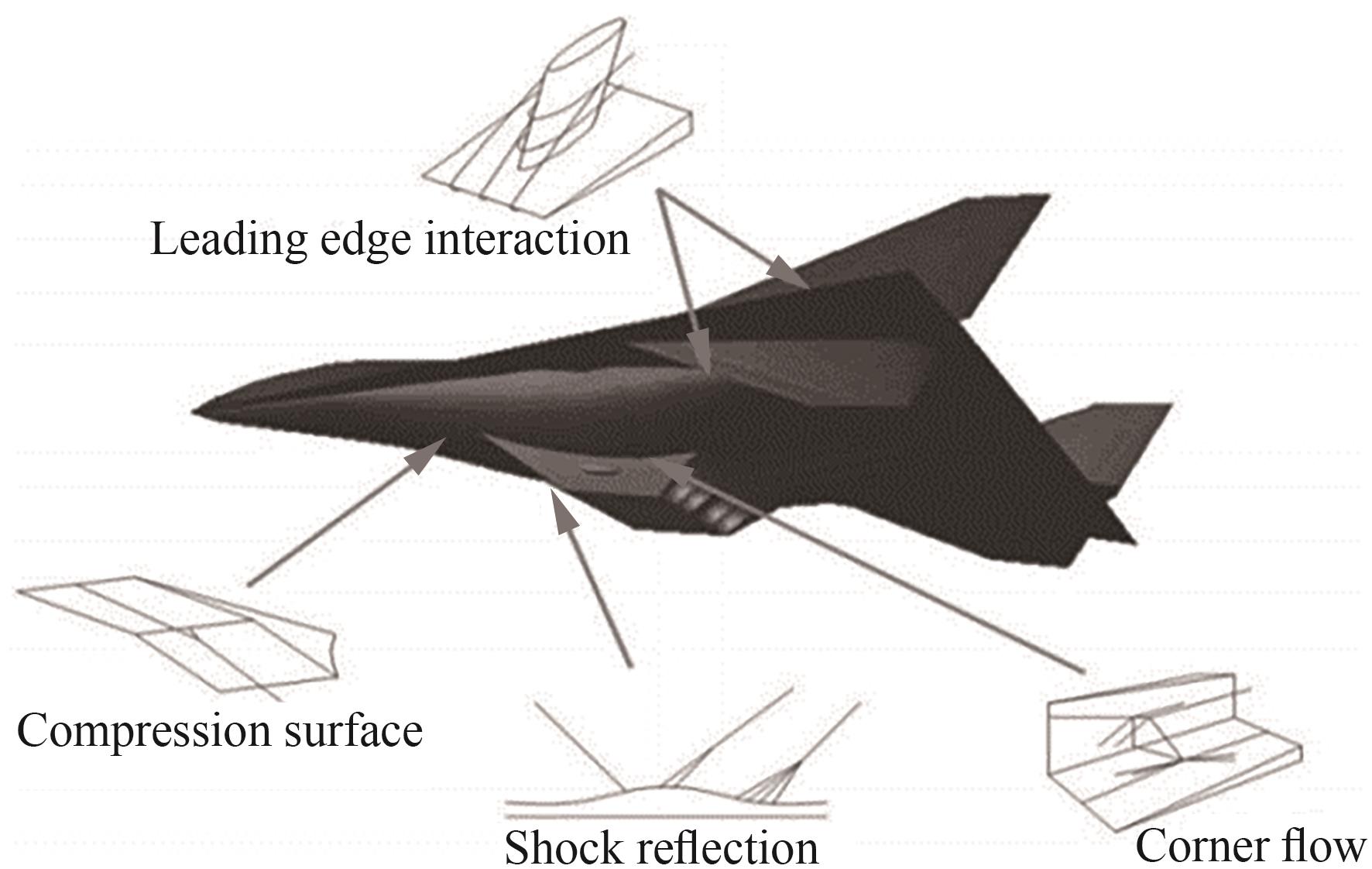
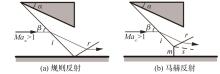
图 2
理想无黏流动的两种激波反射结构[3]
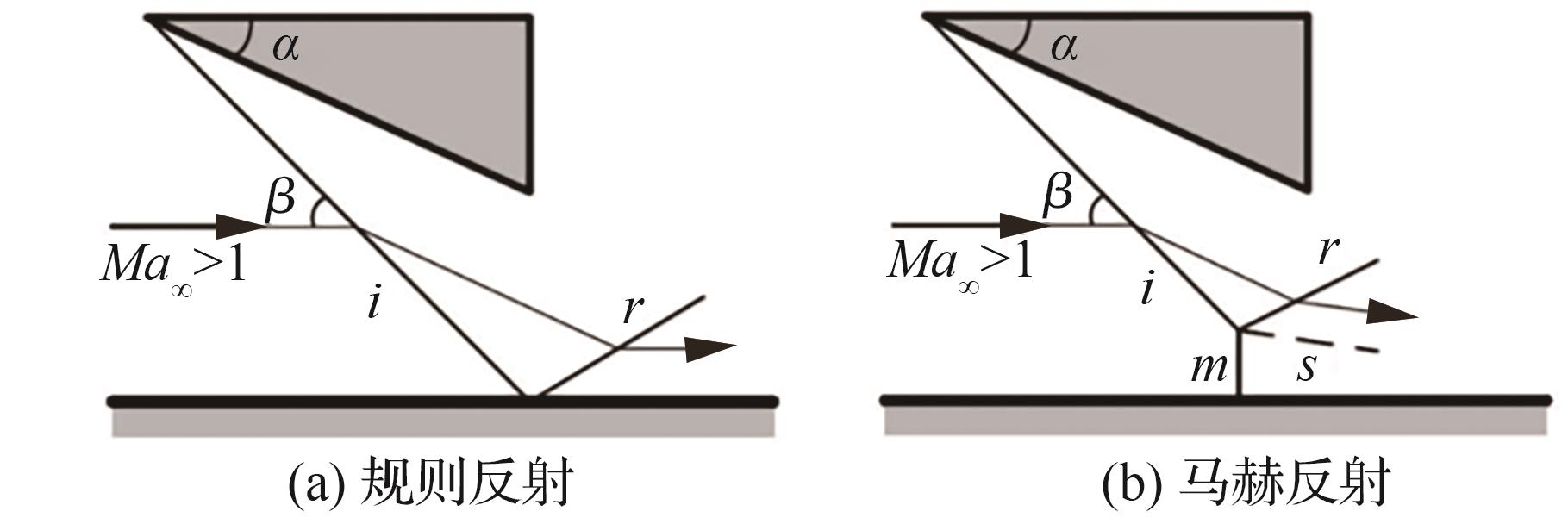
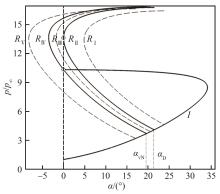
图 3
来流马赫数3的脱体准则和冯·诺依曼准则极曲线[3]
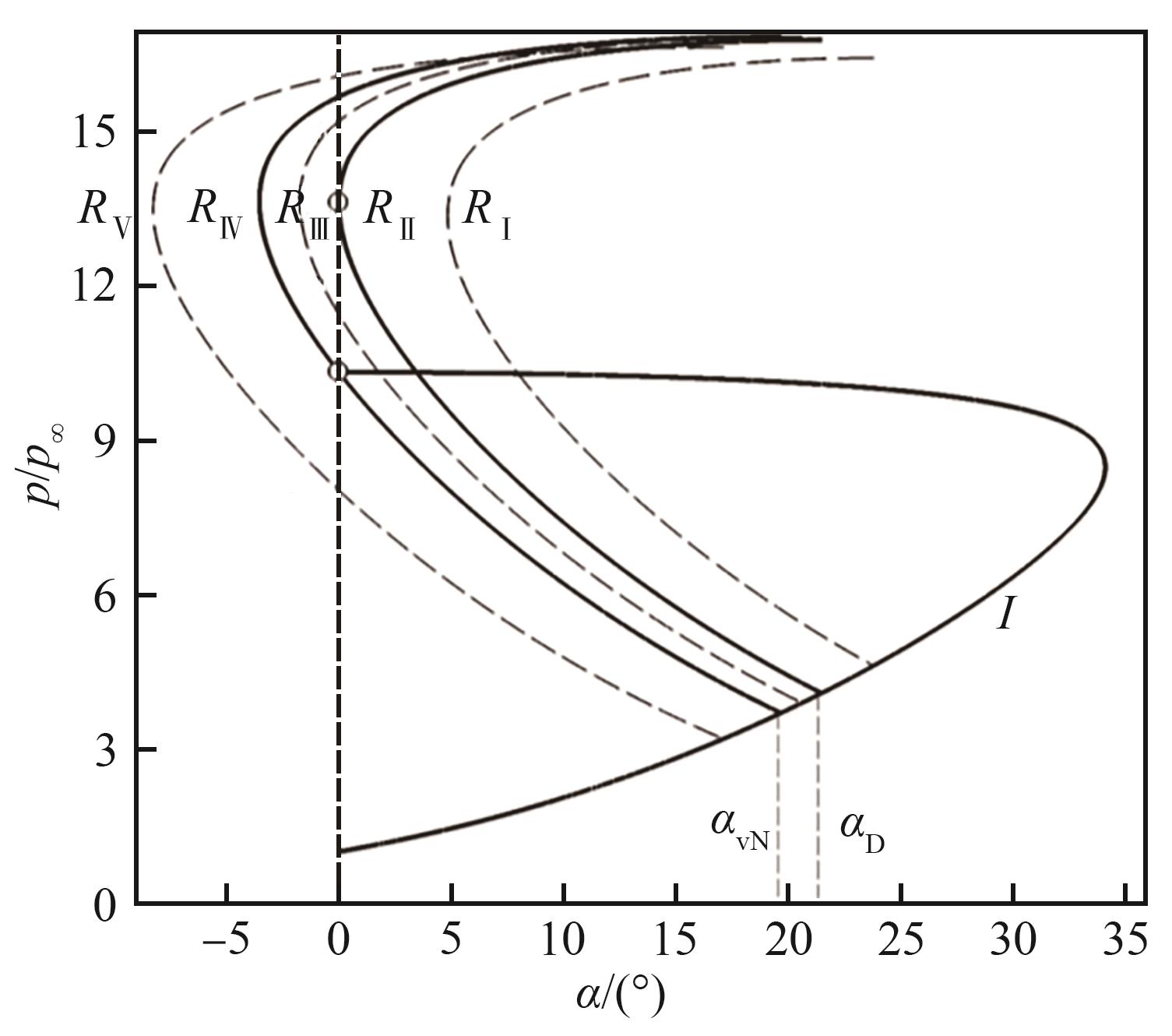
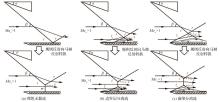
图4
3种典型流场结构[3]
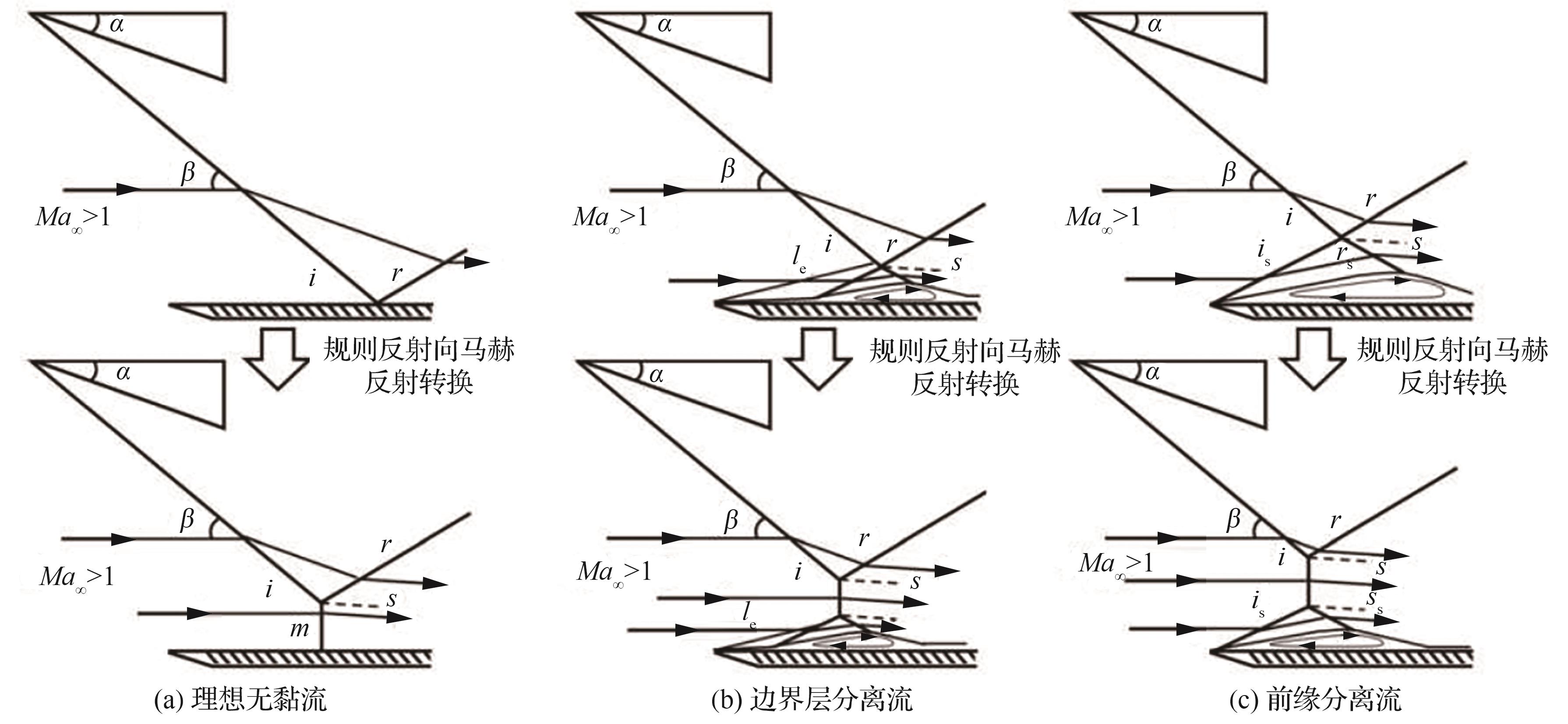
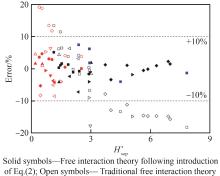
图 5
引入式(2)的自由干扰理论和传统自由干扰理论预测的平台压力误差对比[30]
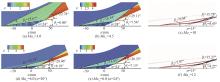
图 6
理论分析结果(虚线)与数值模拟结果对比[31]
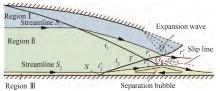
图 7
弯曲激波/湍流边界层干扰流动区域划分[32]
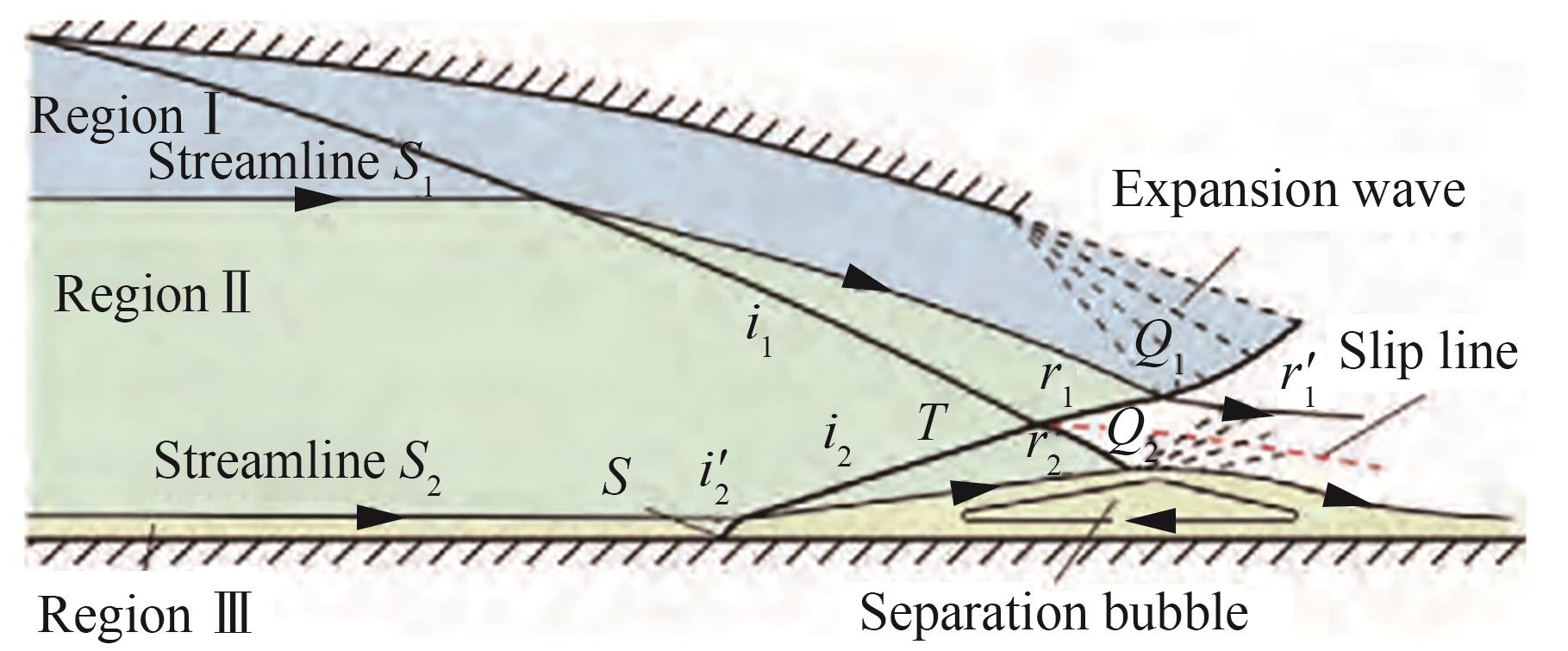
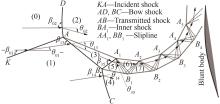
图 8
IV型激波干扰流场的示意图[33]
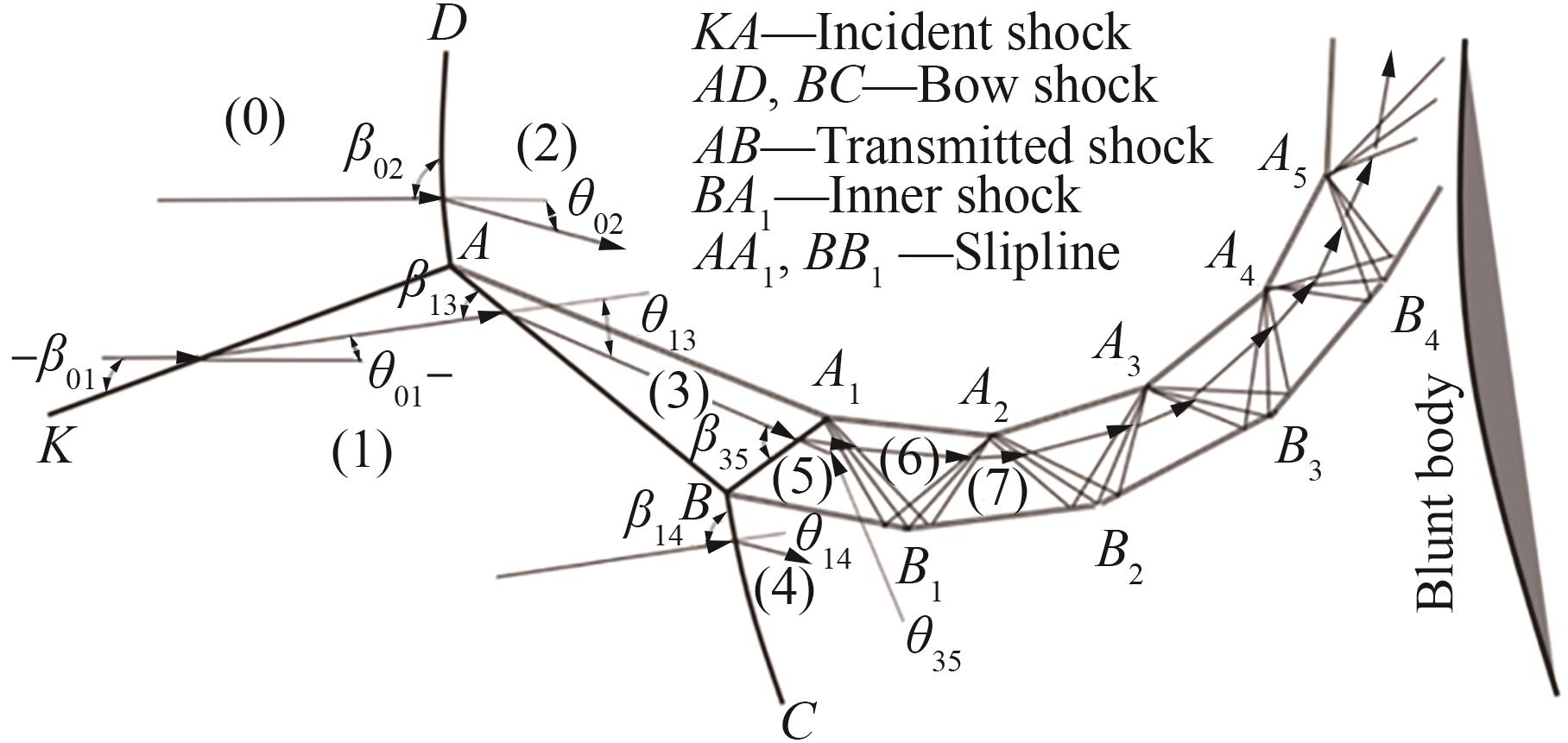
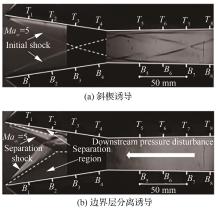
图 9
来流马赫数为5时的激波反射纹影图[37]
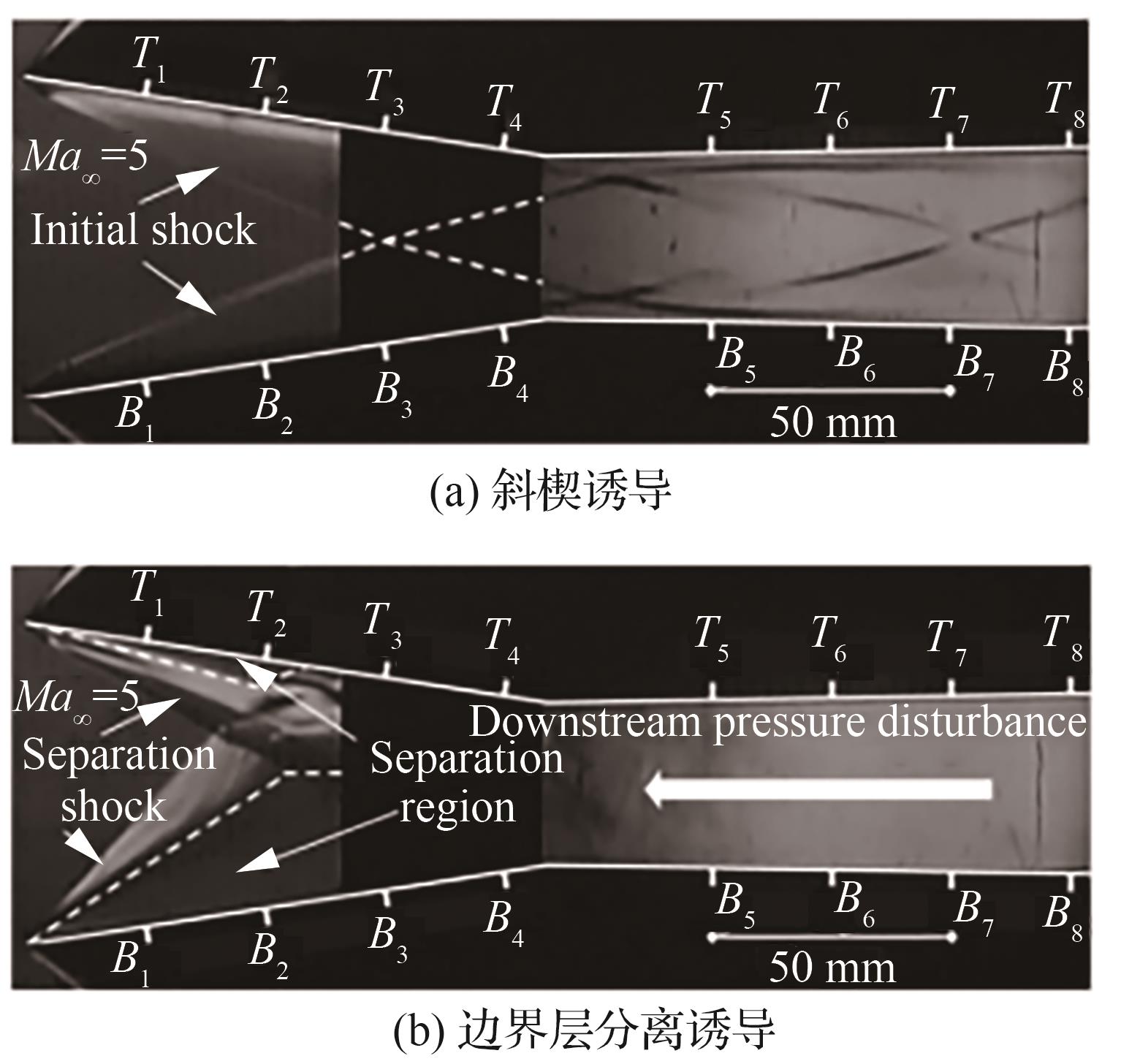
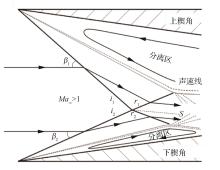
图 10
上下双分离激波干扰及反射结构[37]
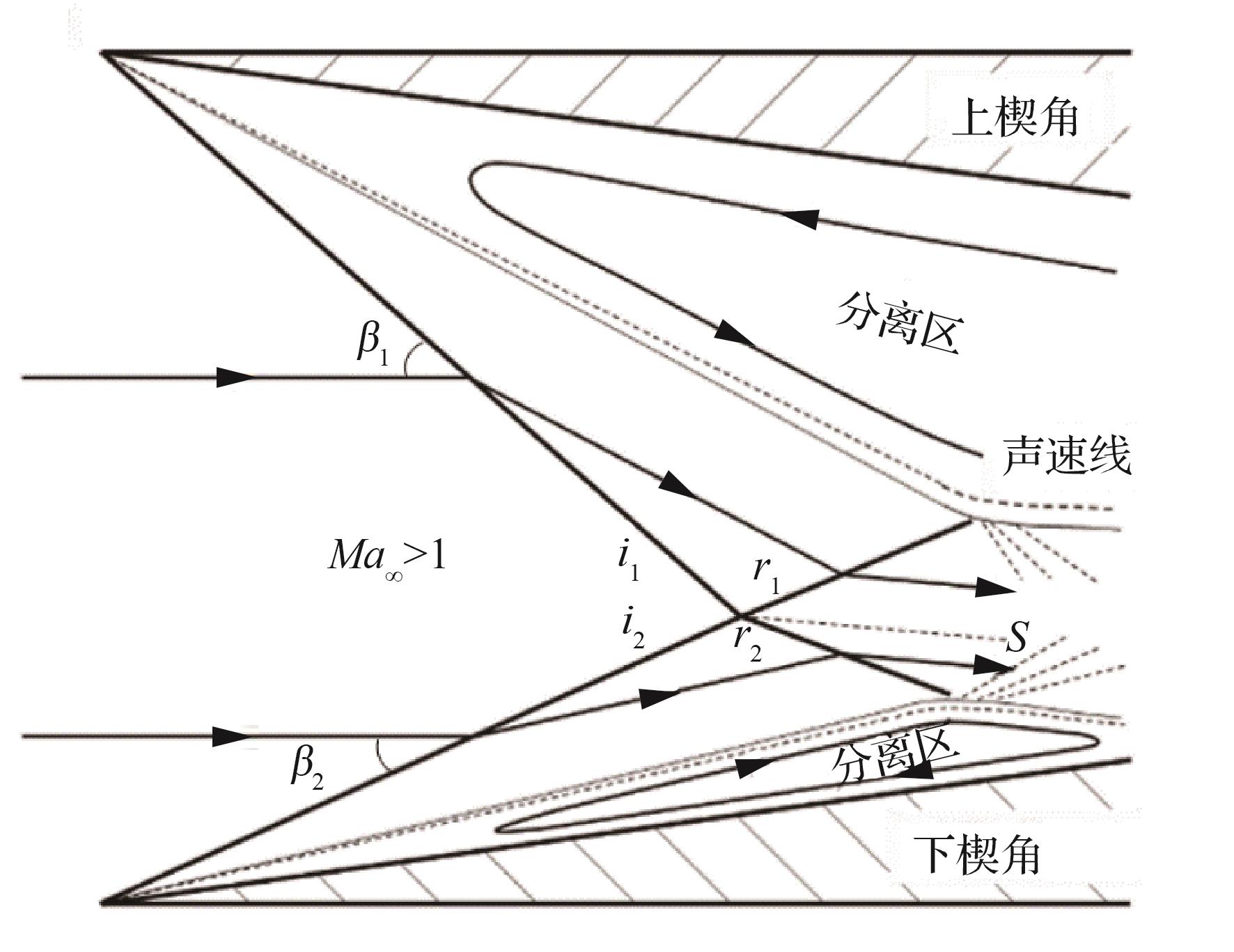
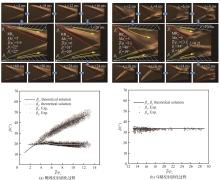
图 11
规则反射(RR)和马赫反射(MR)演化过程及理论解和纹影图统计结果对比[37]
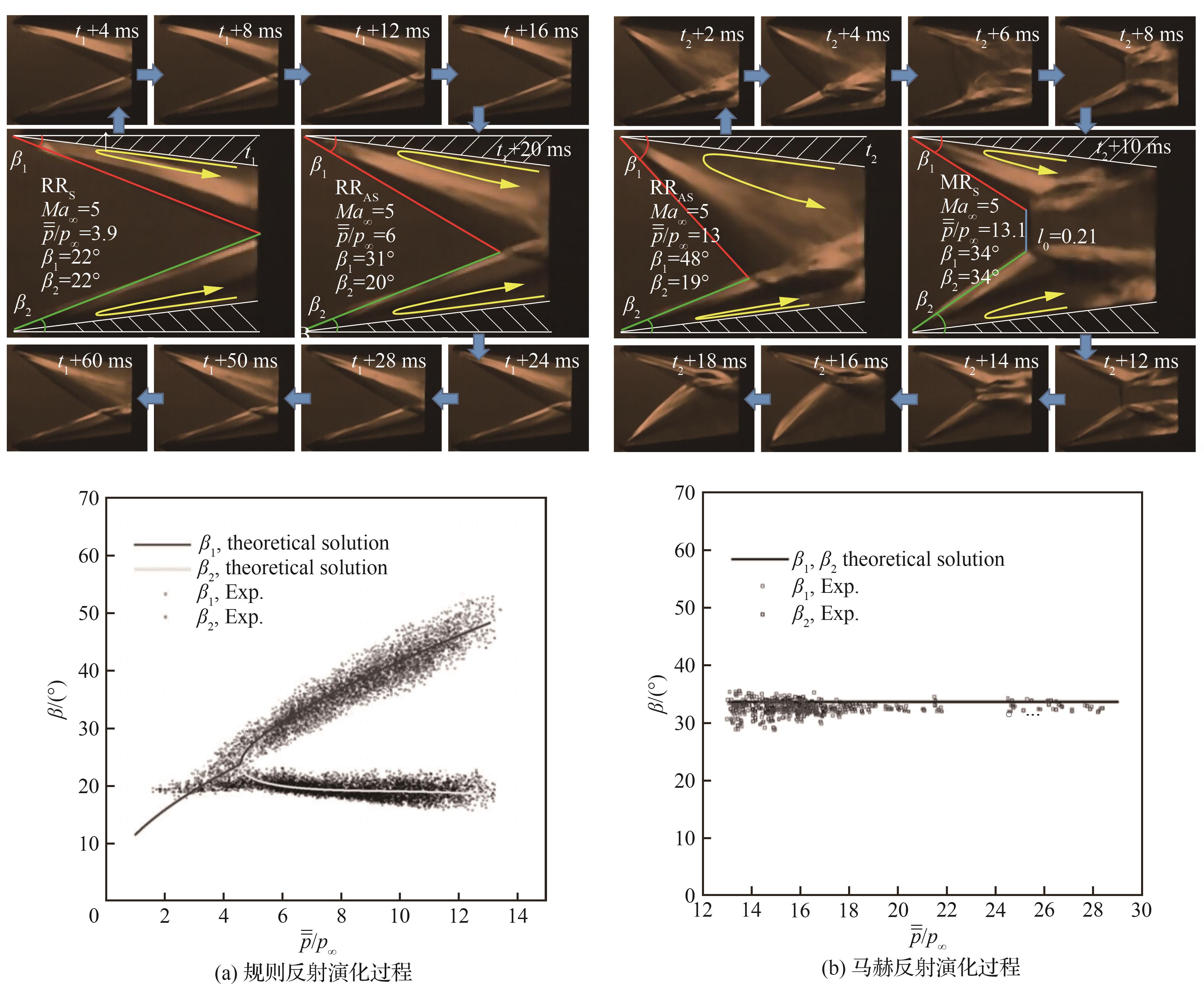
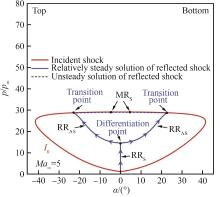
图 12
满足最小熵增的反射激波解路径[37]
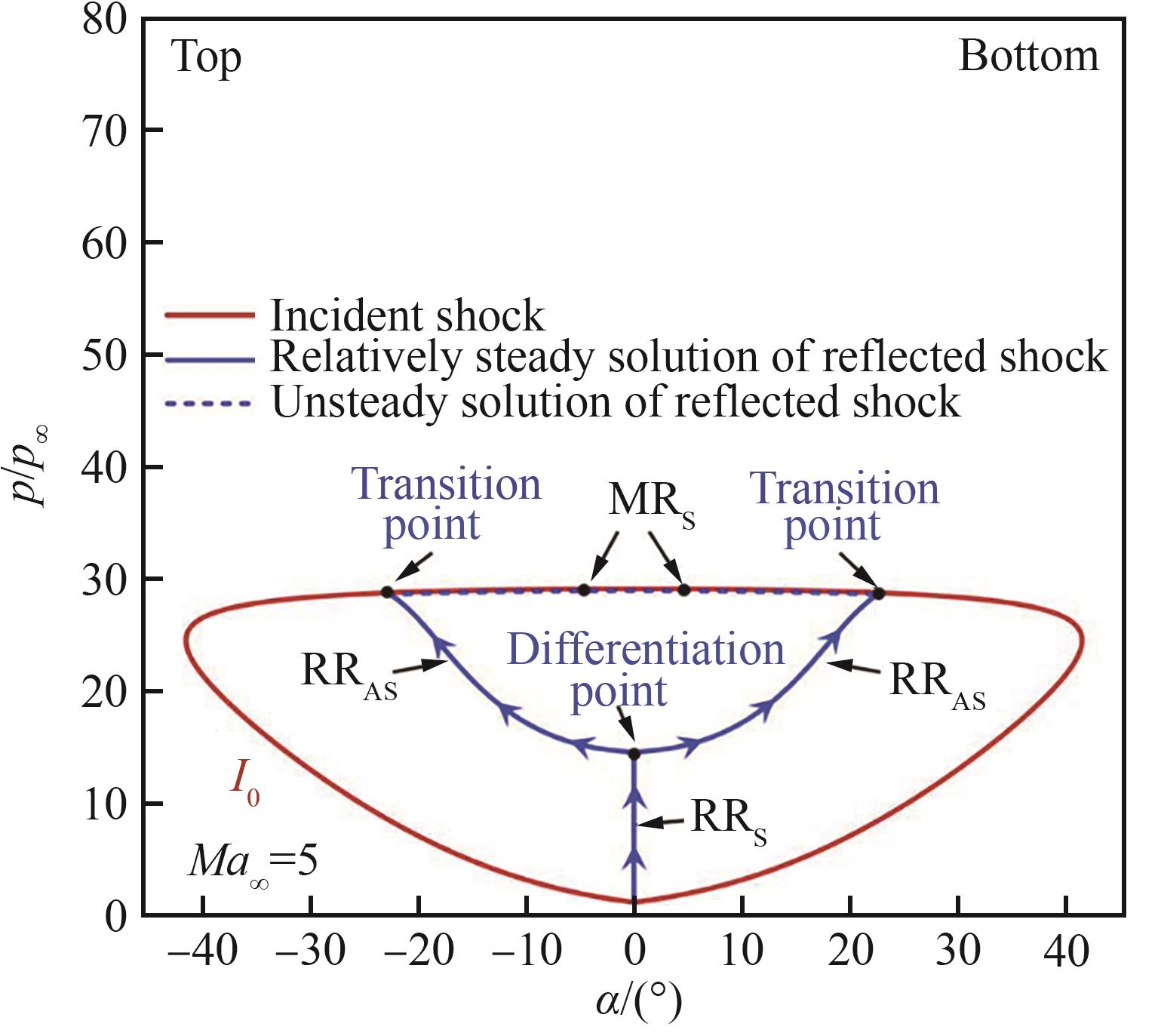
图 13
规则反射激波边界层干扰流场细致划分[39]
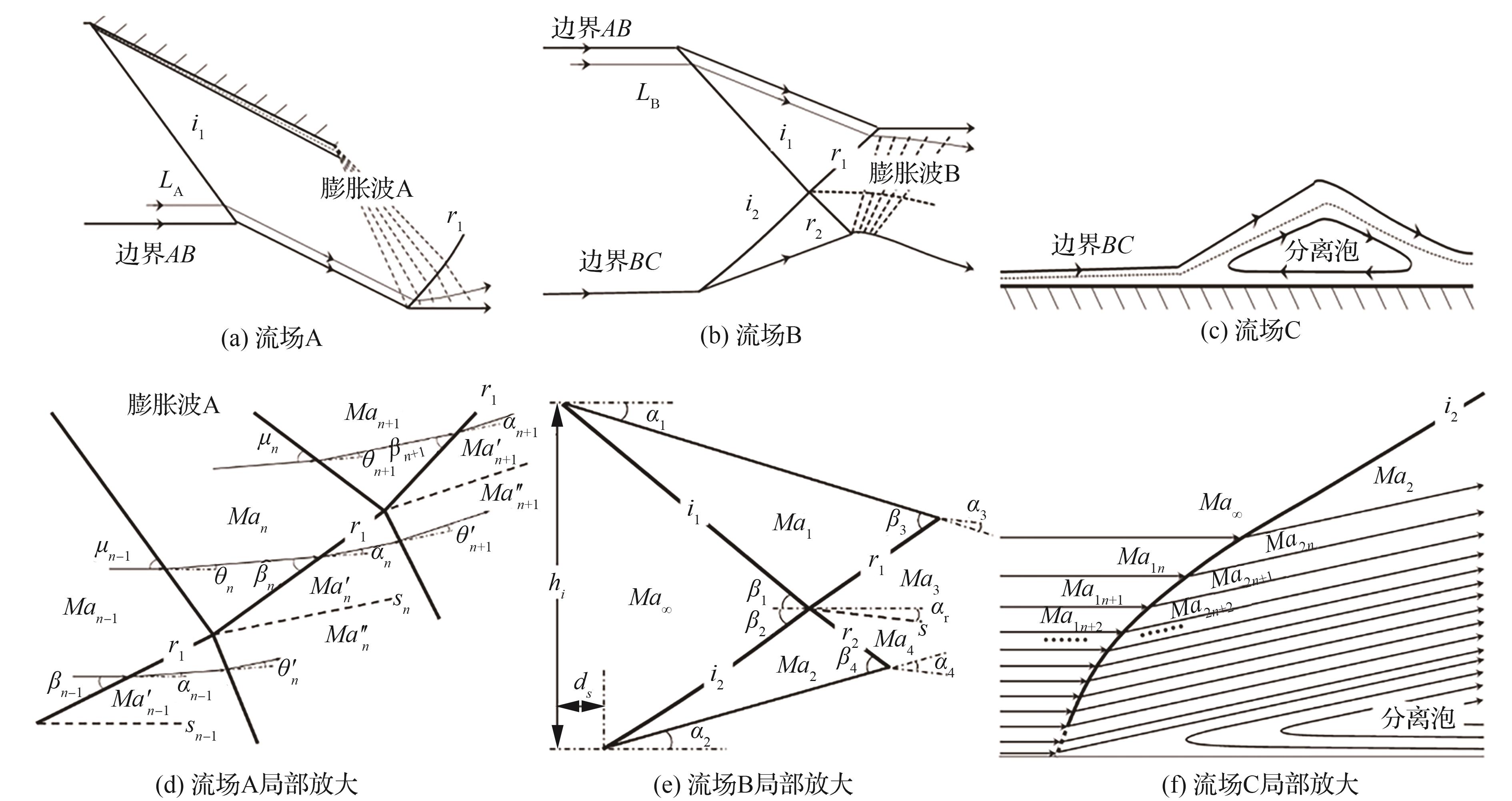
图 14
分离激波角的理论分析解[39]
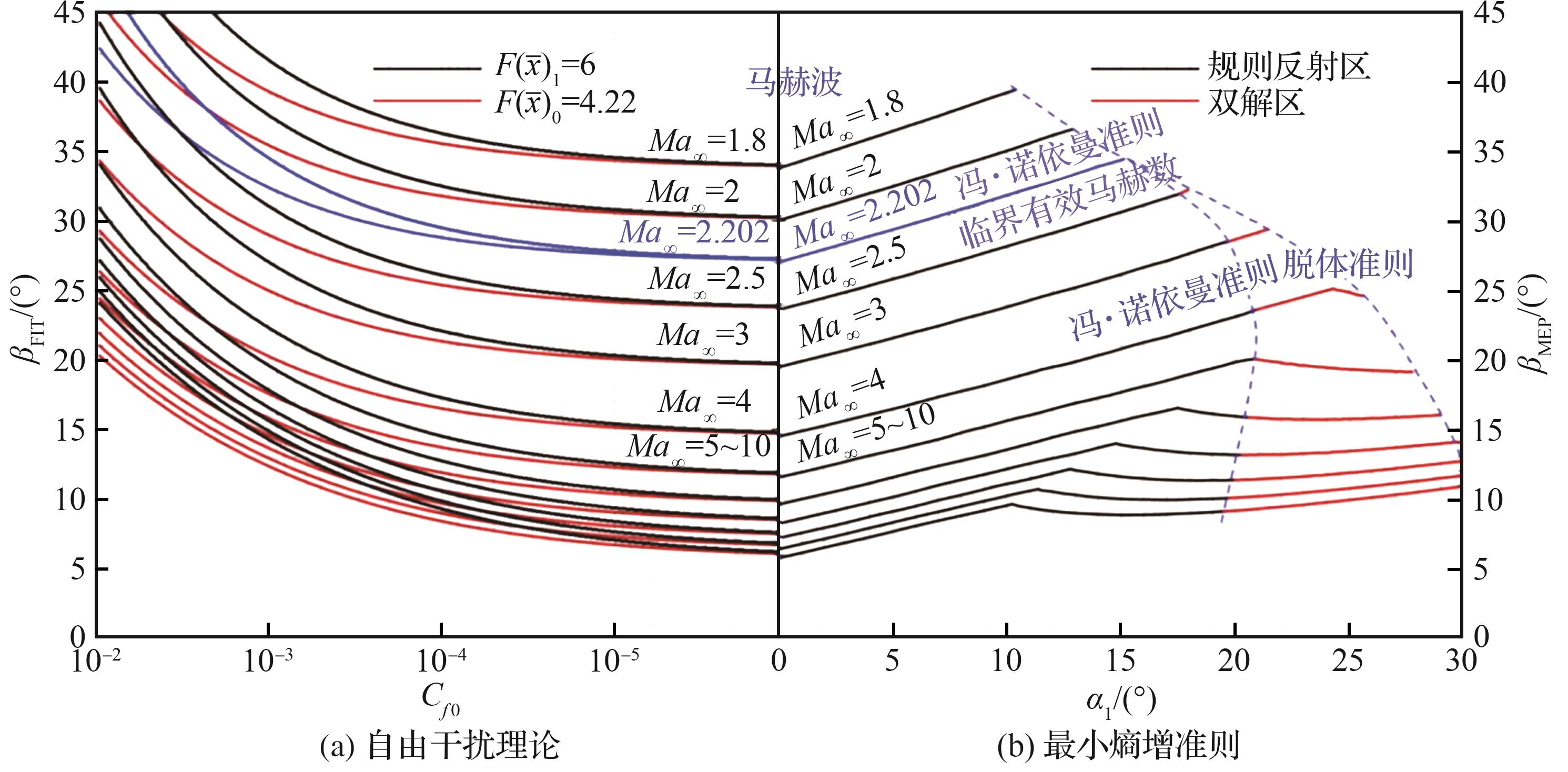
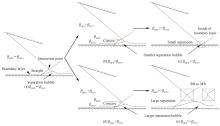
图 15
最小熵增理论与自由干扰理论的不同组合[39]
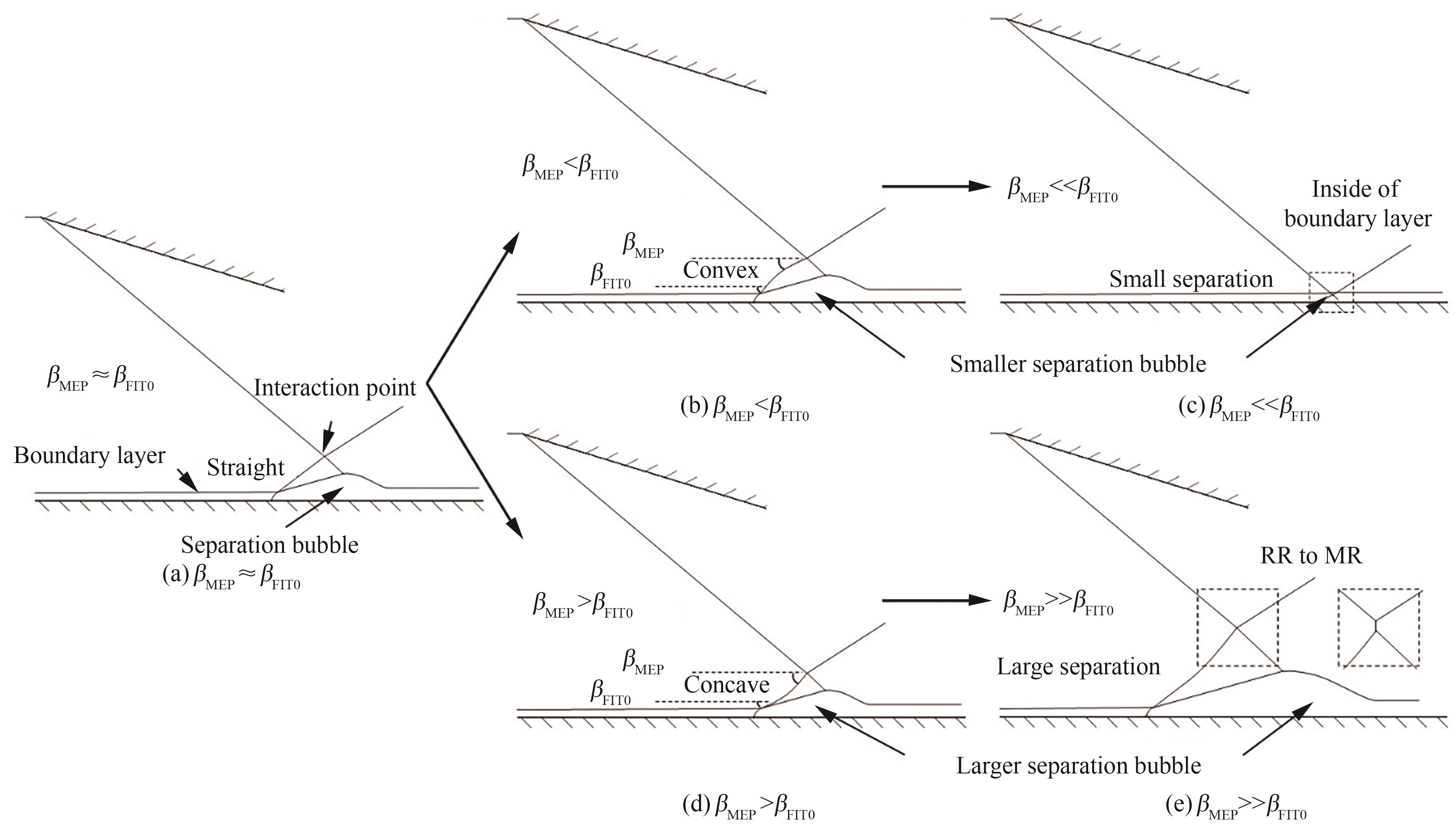
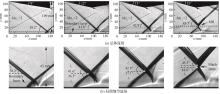
图 16
Ma∞=2、AReff=1.38时的纹影图像[39]
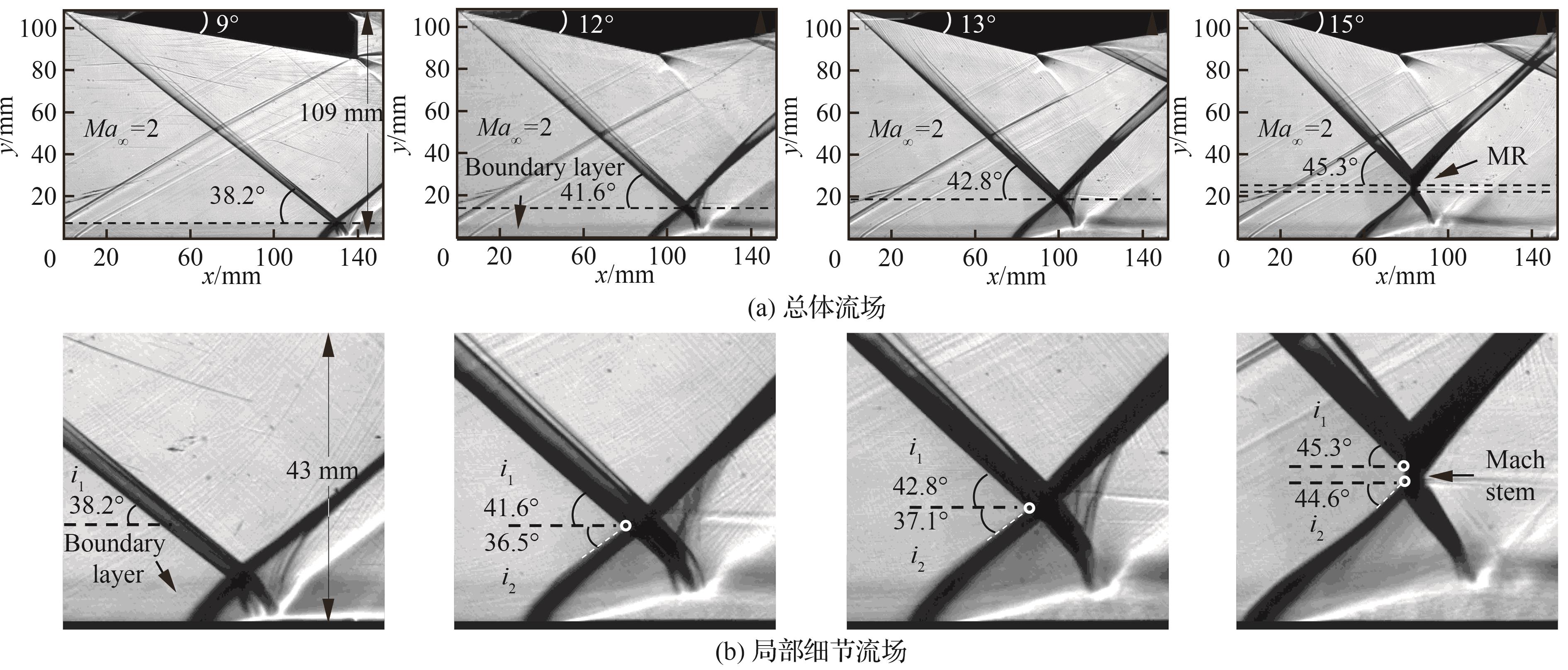
图 17
入射激波诱导边界层分离的流动结构总结[39]
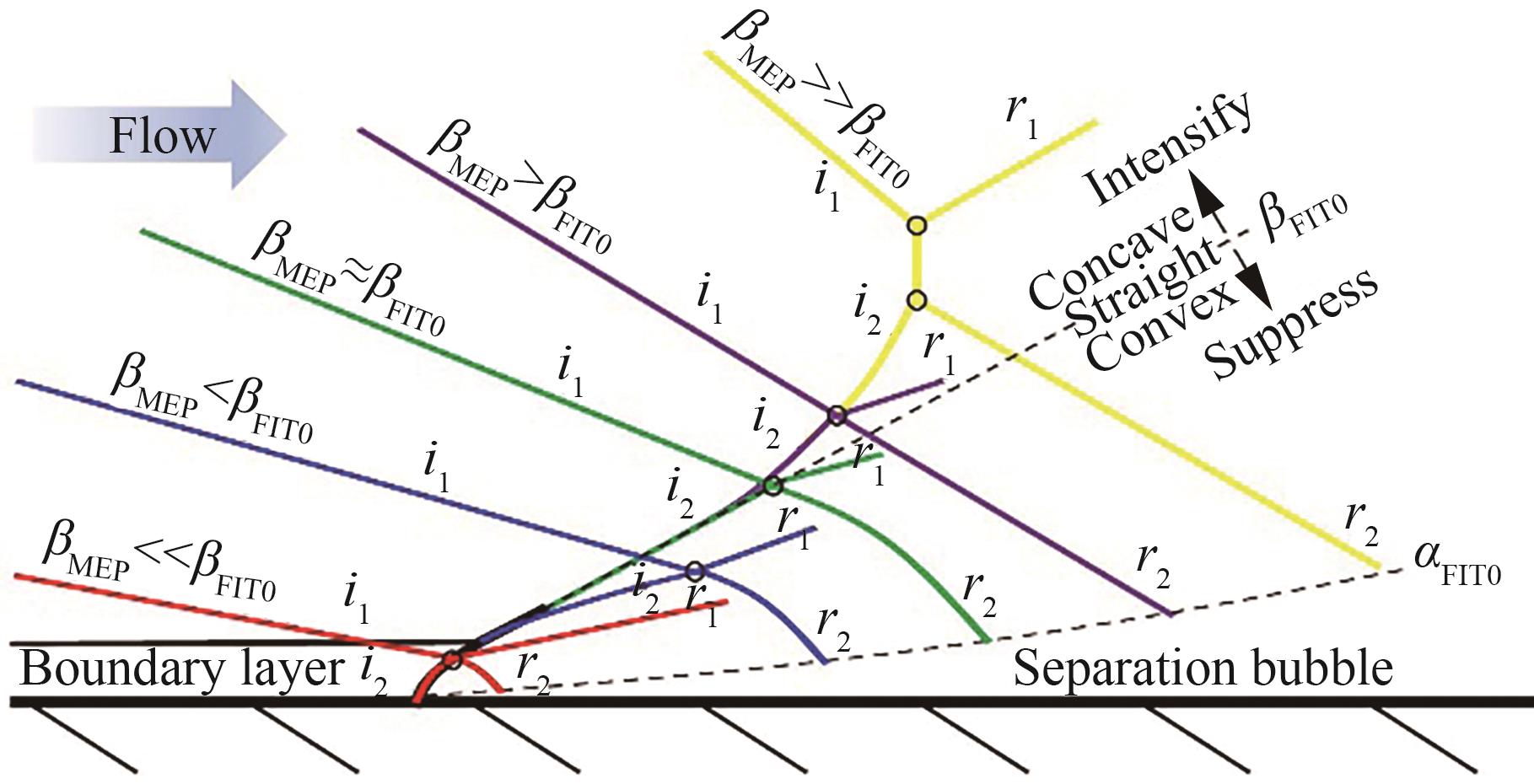
图 18
入射激波诱导边界层分离的示意图[40]
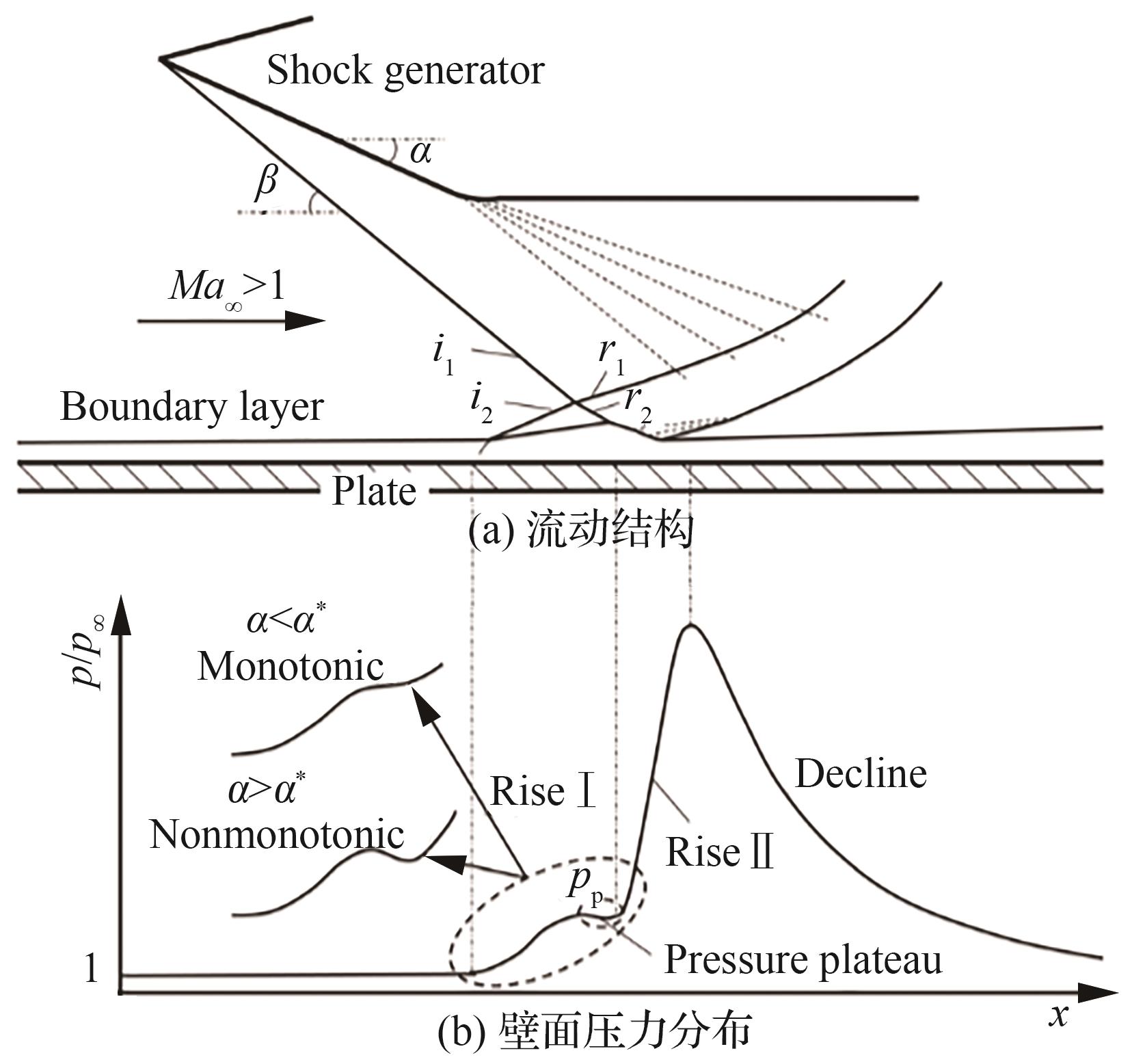
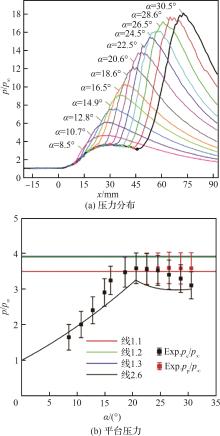
图 19
不同偏转角下的试验结果[40]
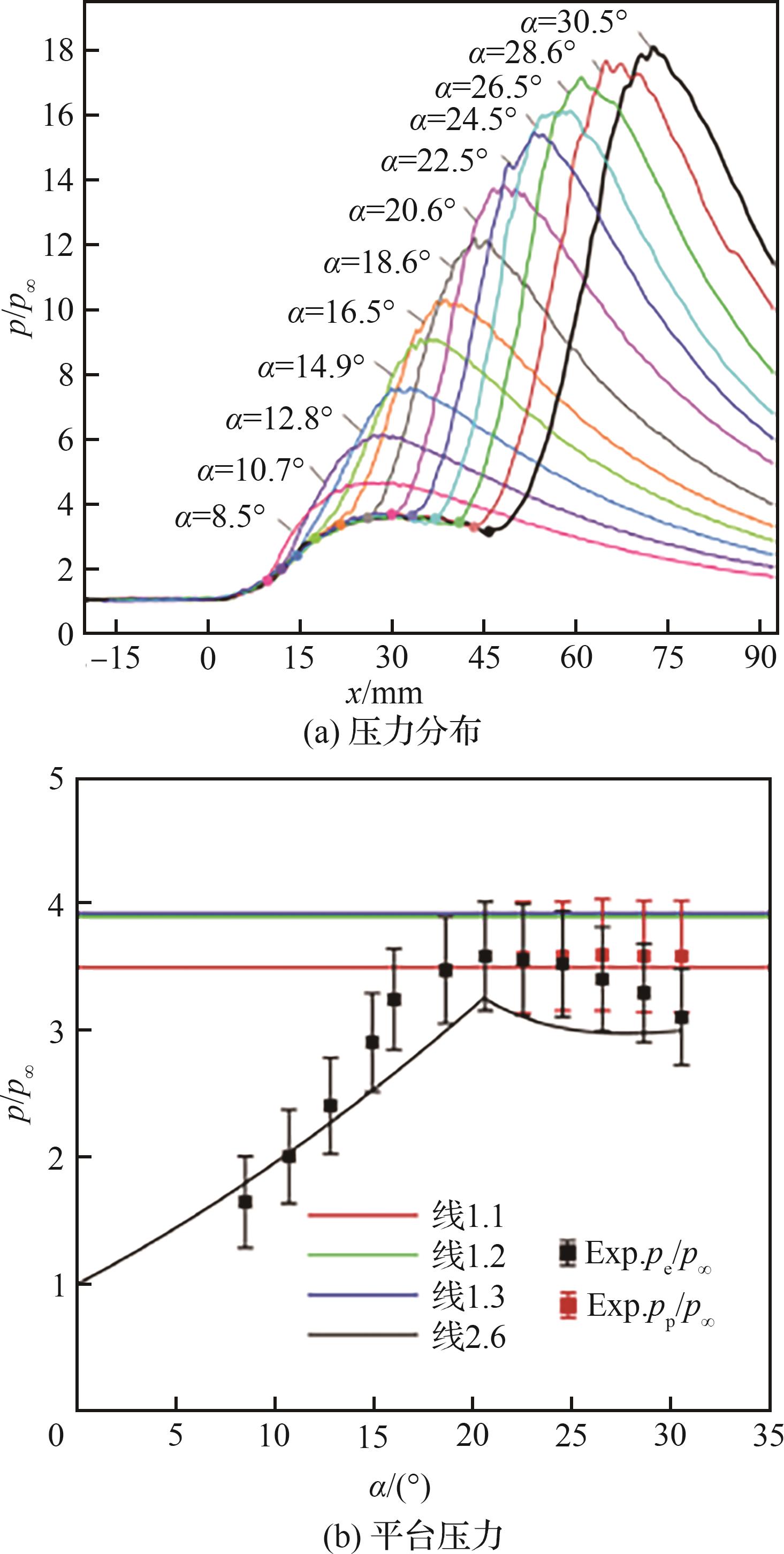
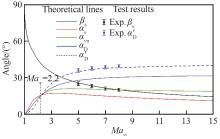
图 20
不同马赫数下的理论结果和试验结果的对比[41]
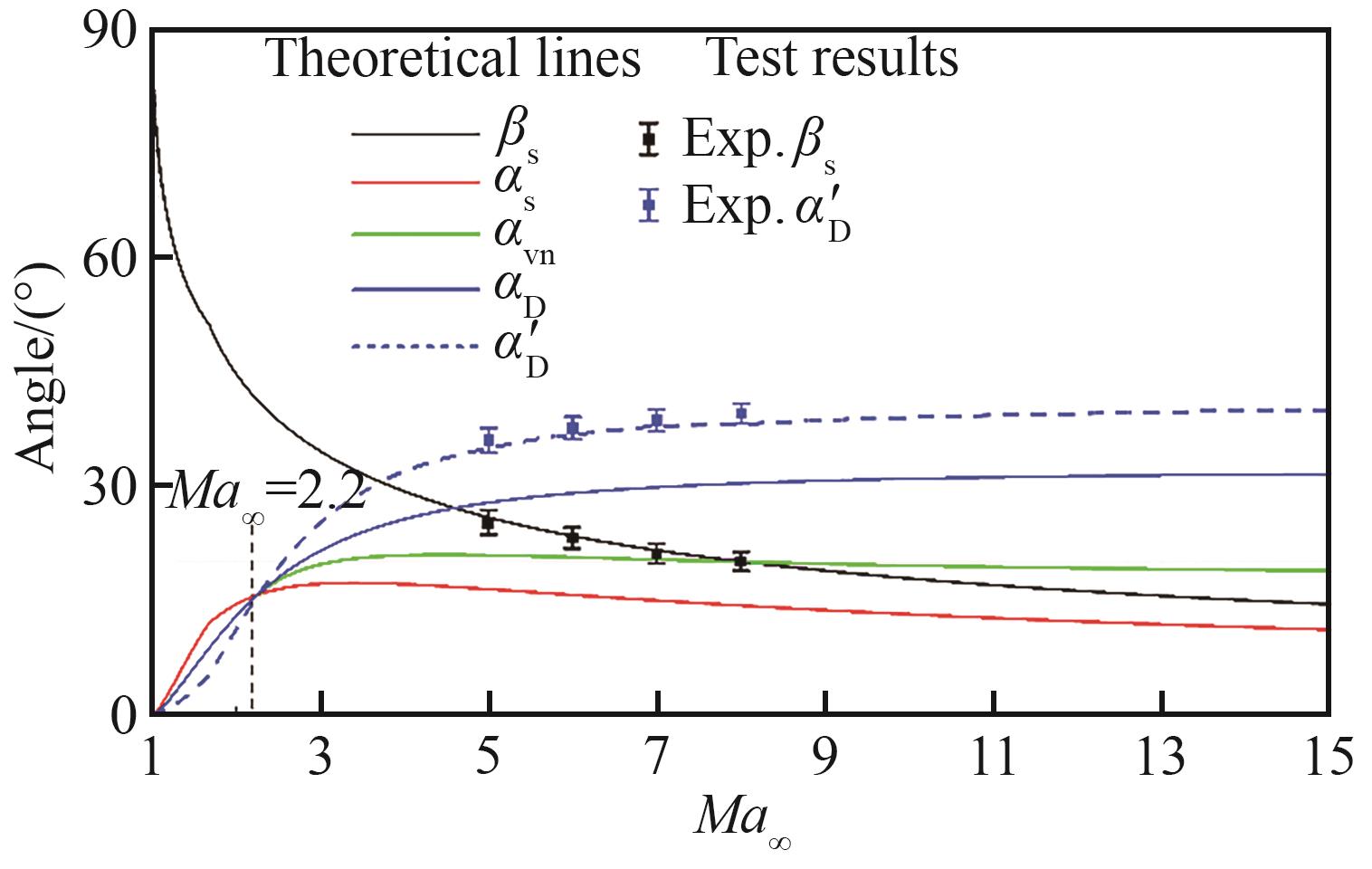
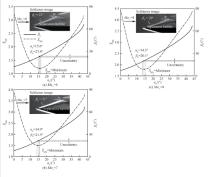
图 21
最小熵增准则理论解曲线与试验结果比较(Ma∞ = 6,7,8)[41]
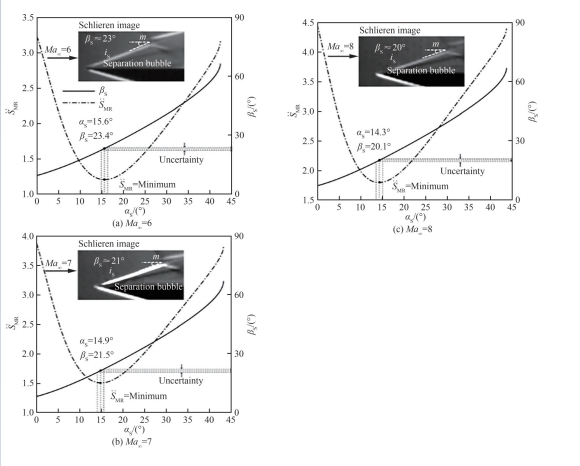
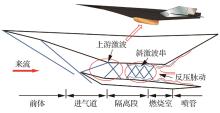
图 22
临近空间高超声速飞行器推进系统示意图[42]
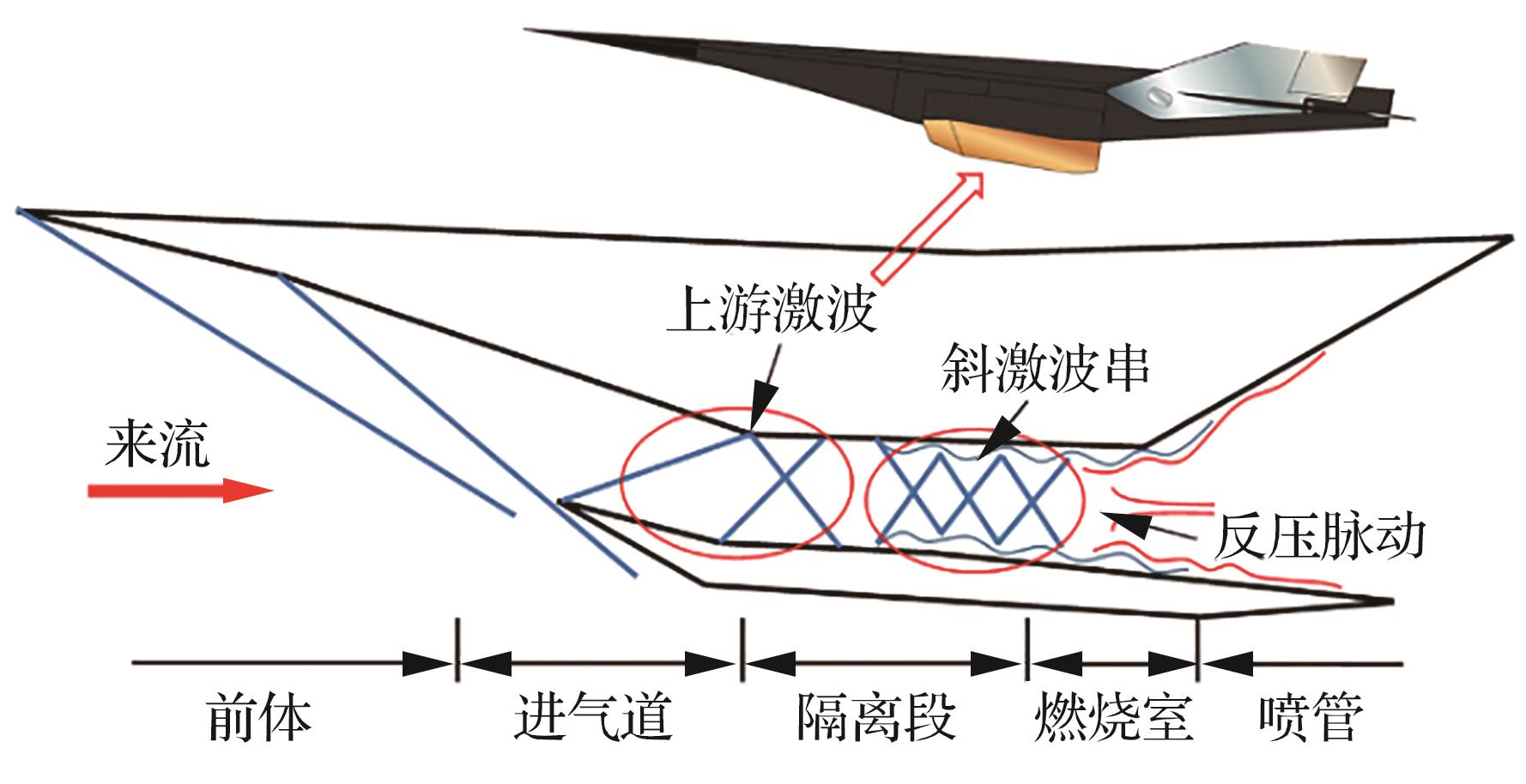
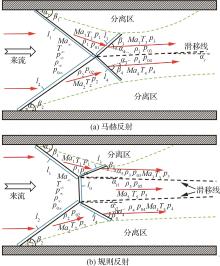
图 23
激波串简化结构示意图[42]
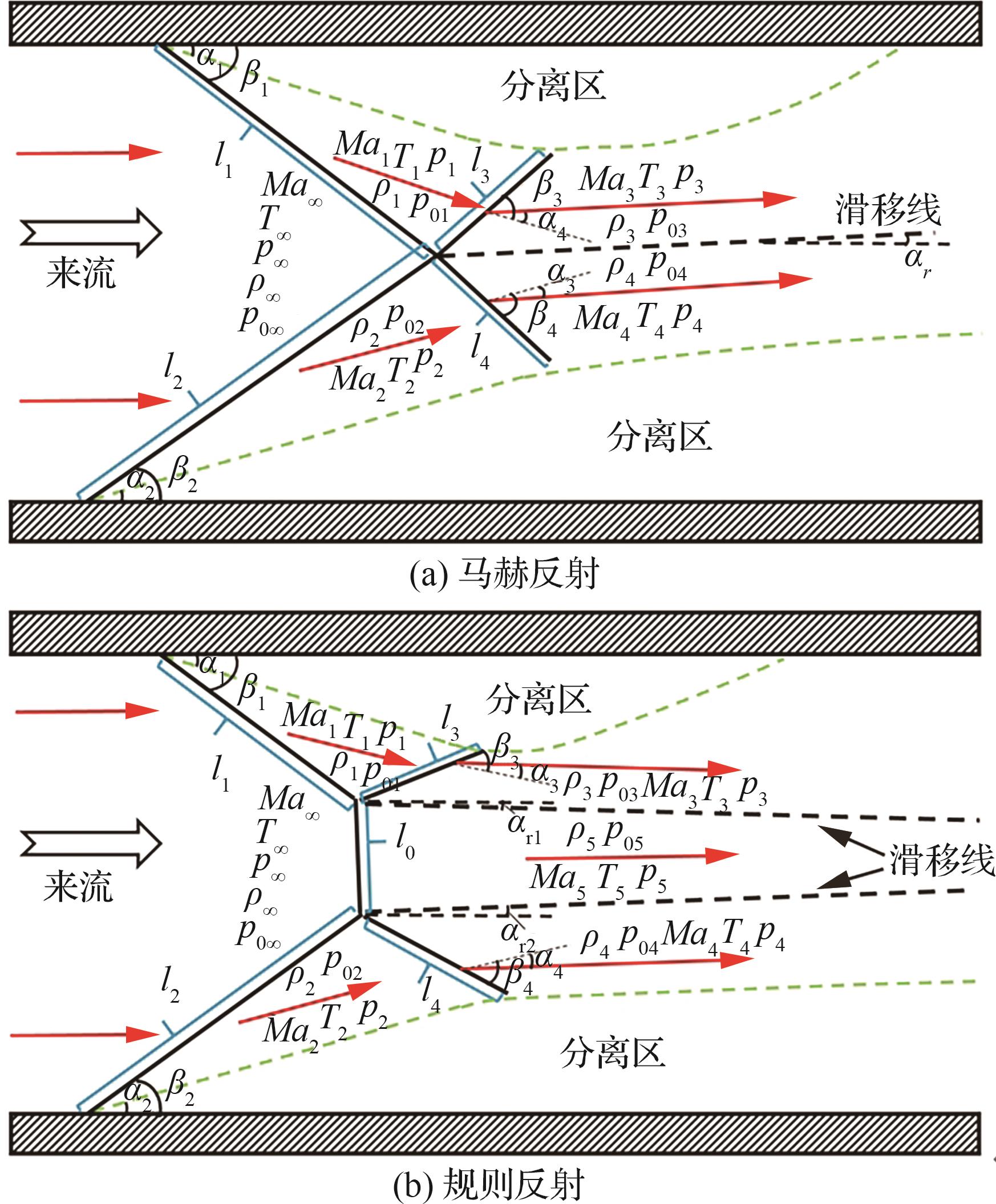
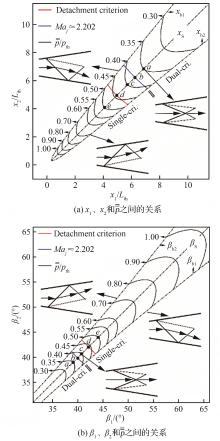
图 24
可能的分离位置和激波角度的示意图
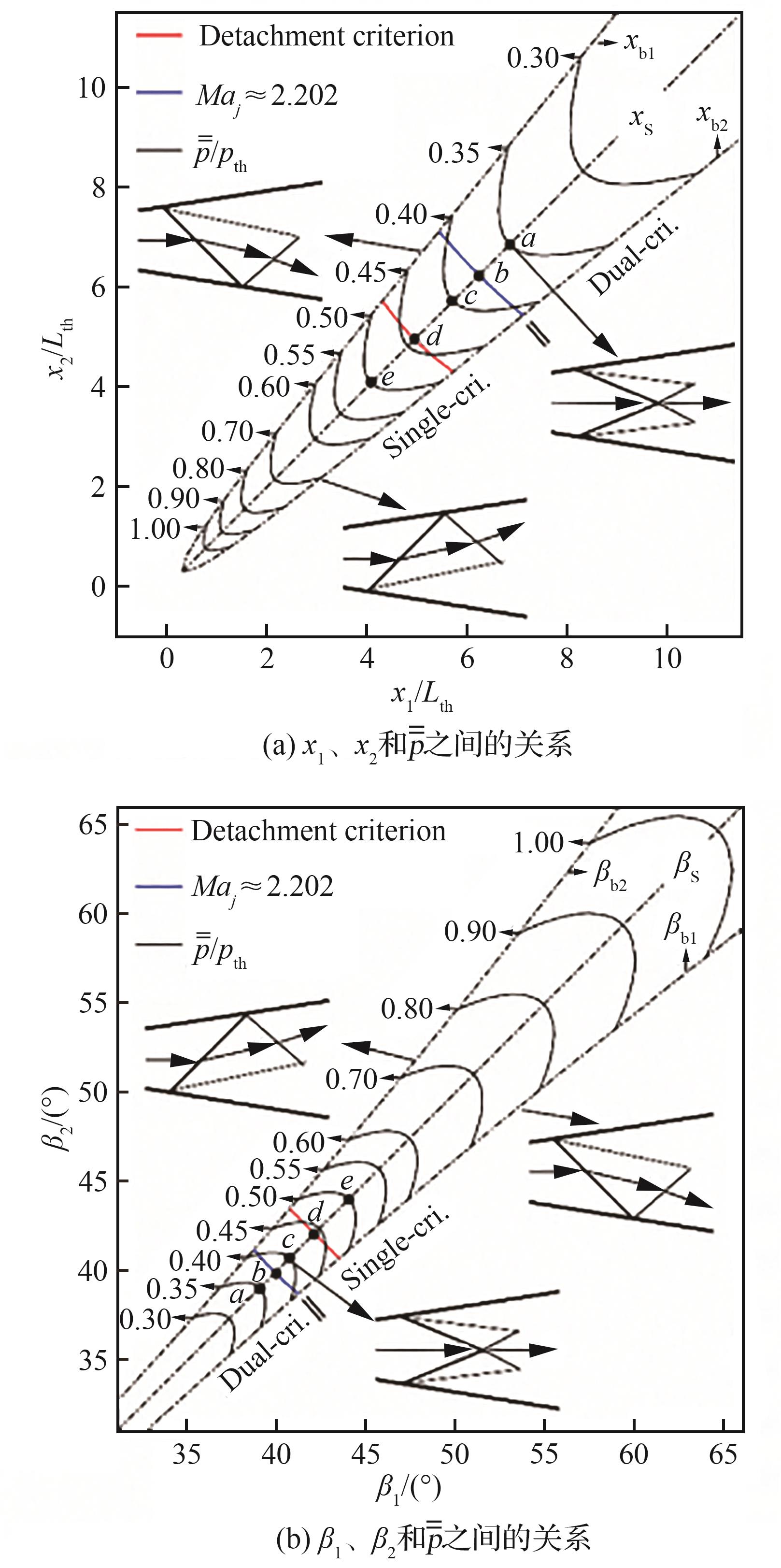
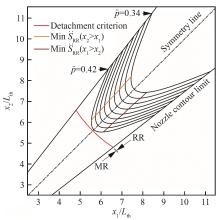
图 25
规则反射中最小熵增准则解析解
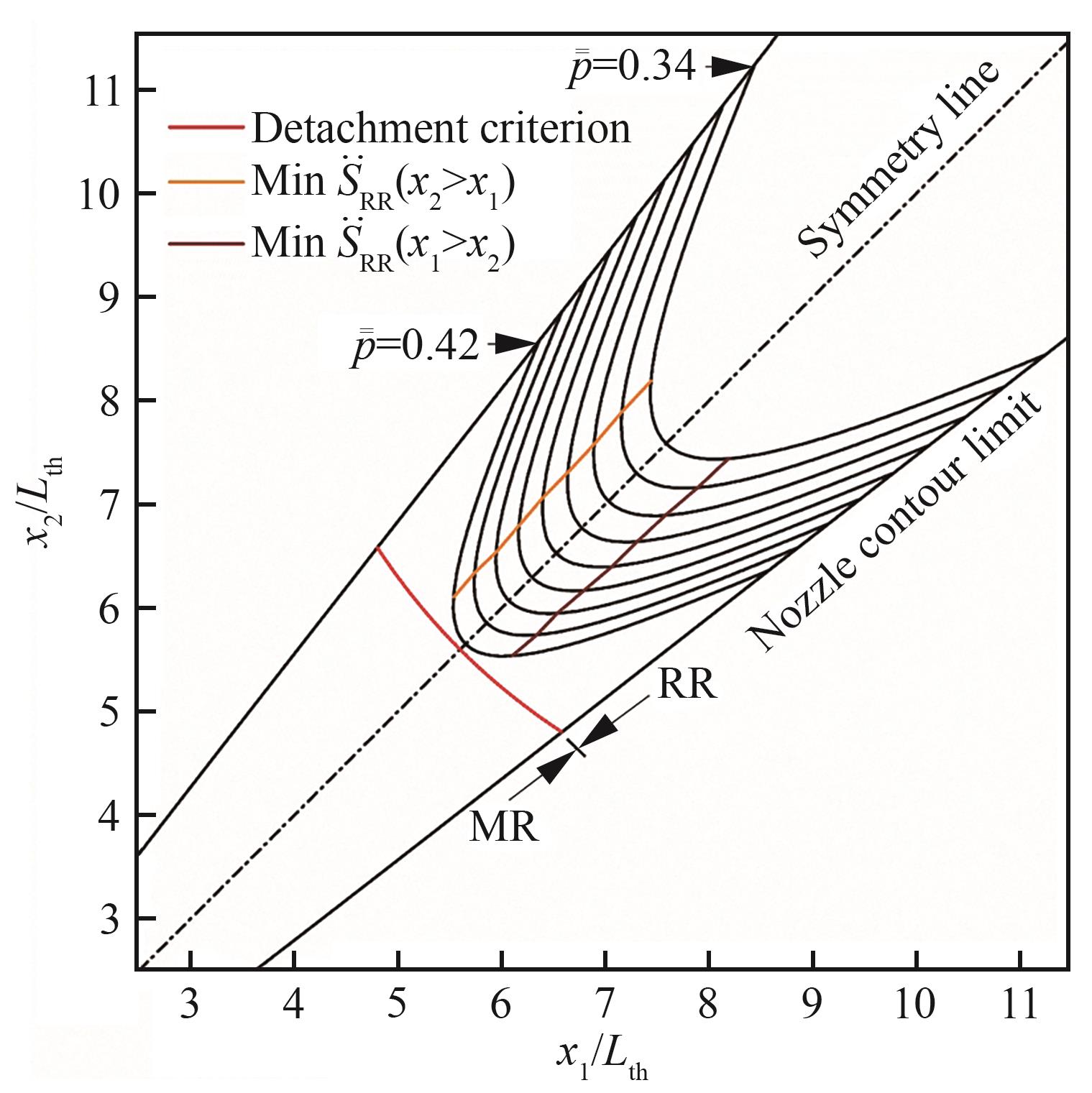
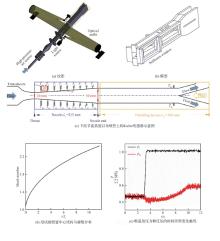
图 26
试验装置示意图
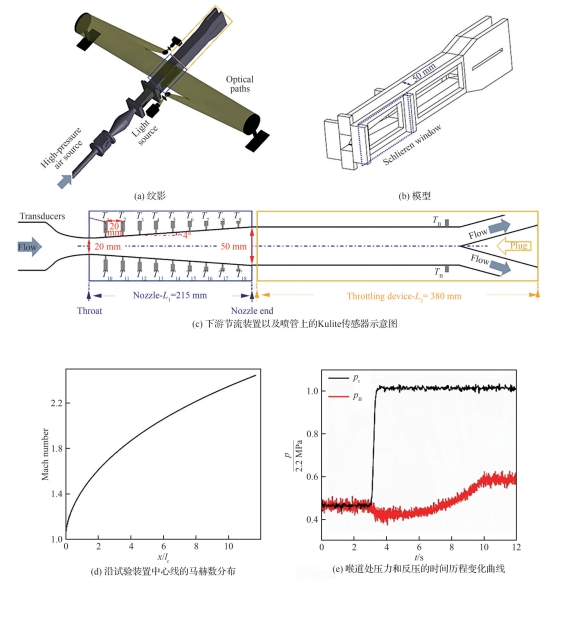
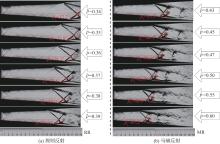
图 27
激波构型的演化过程
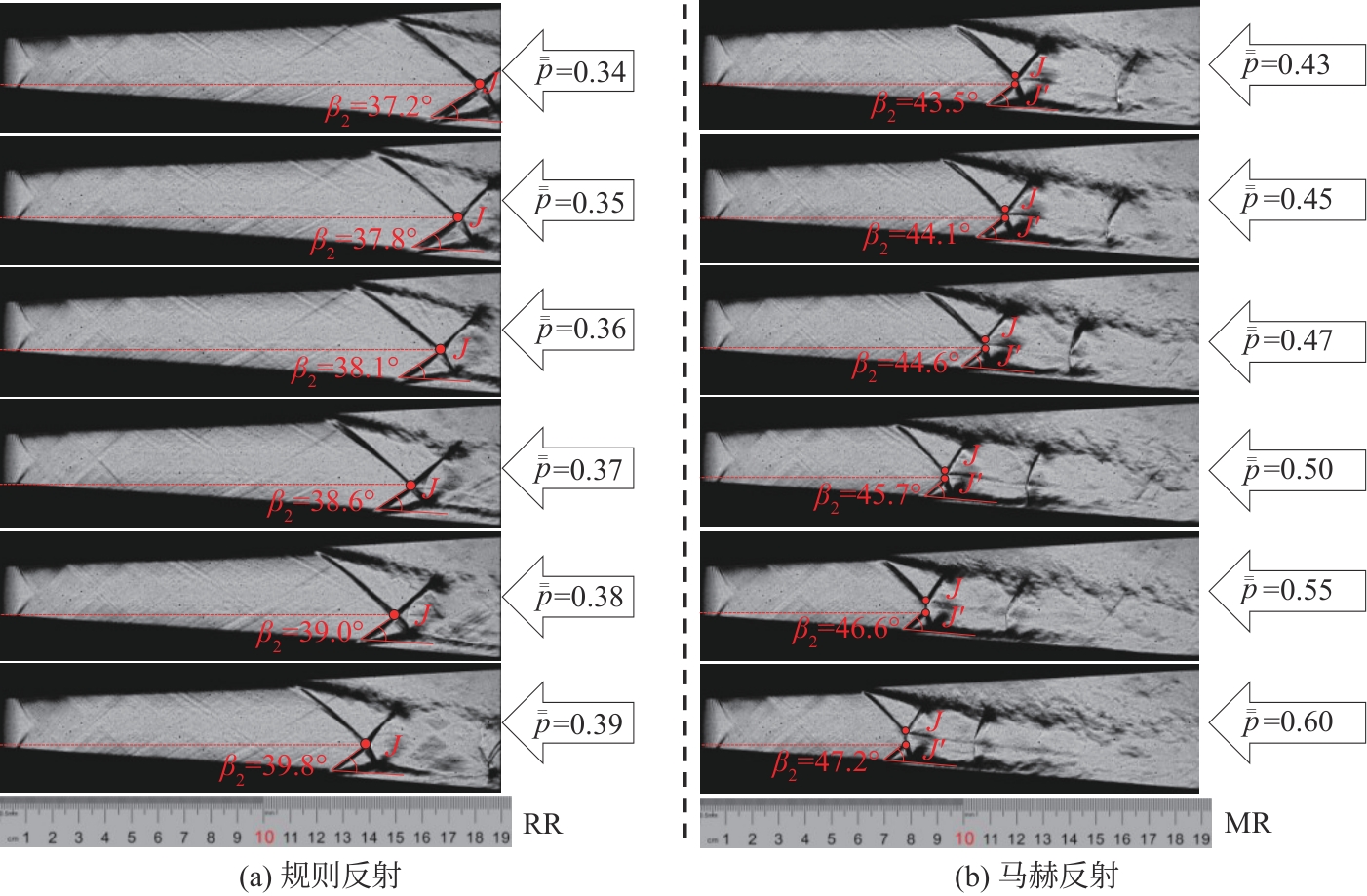
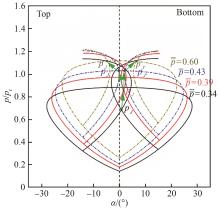
图 28
满足最小熵增的激波极曲线
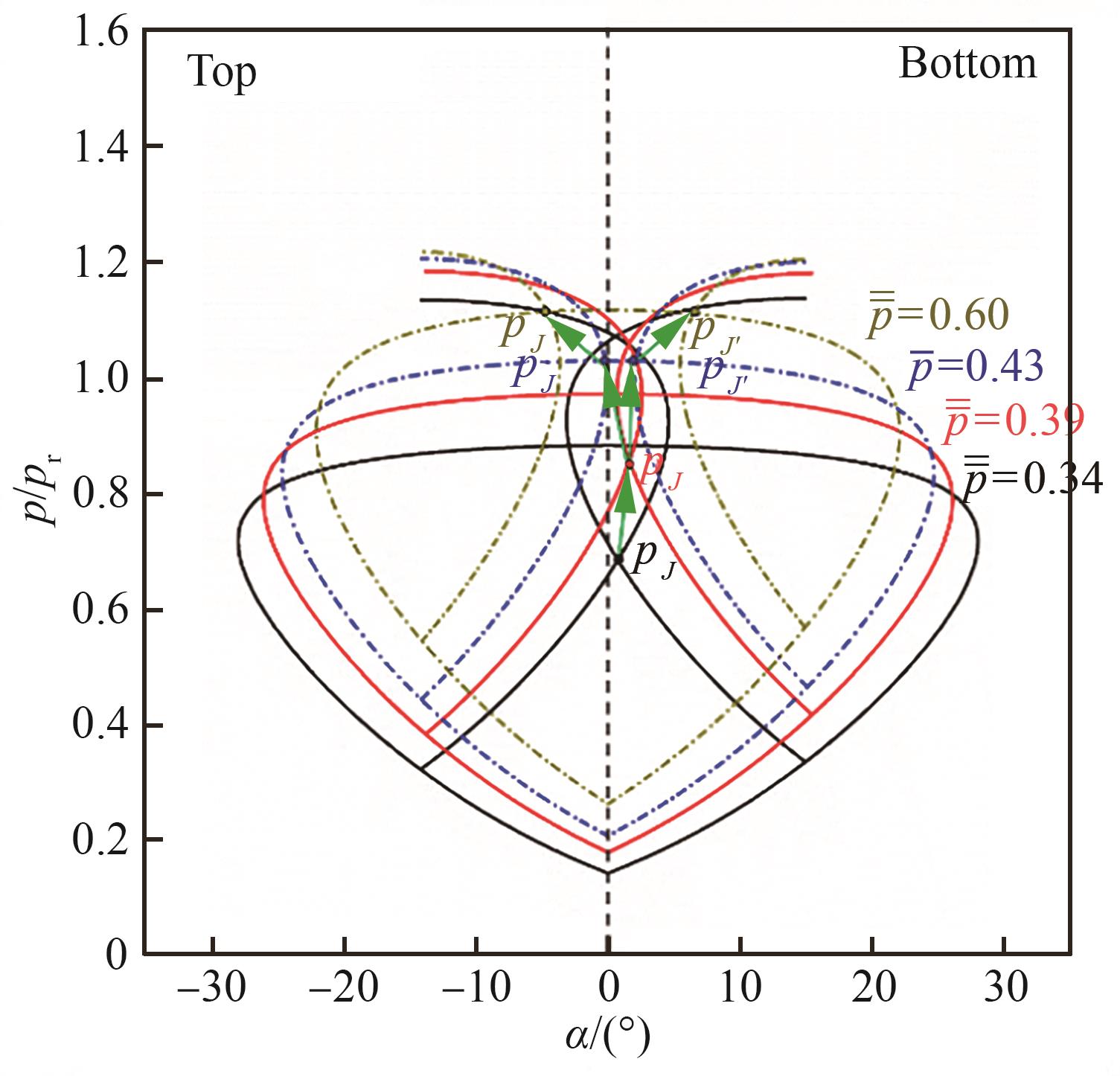
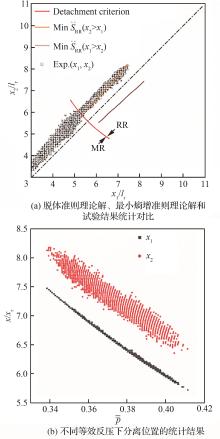
图 29
纹影图像观察到的分离位置的统计结果与理论分析解对比
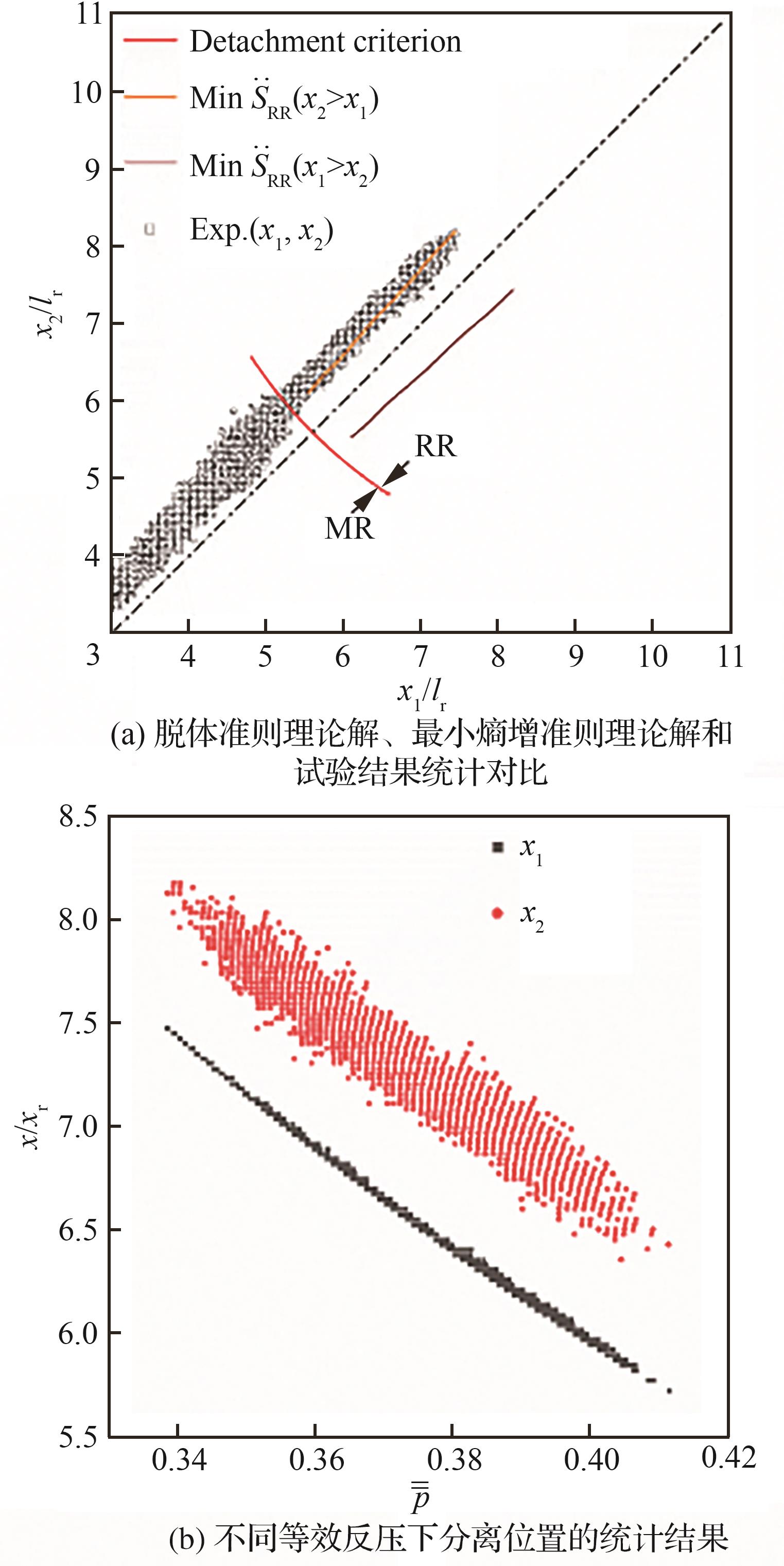
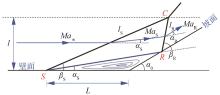
图 30
二维压缩拐角流场熵增模型[50]
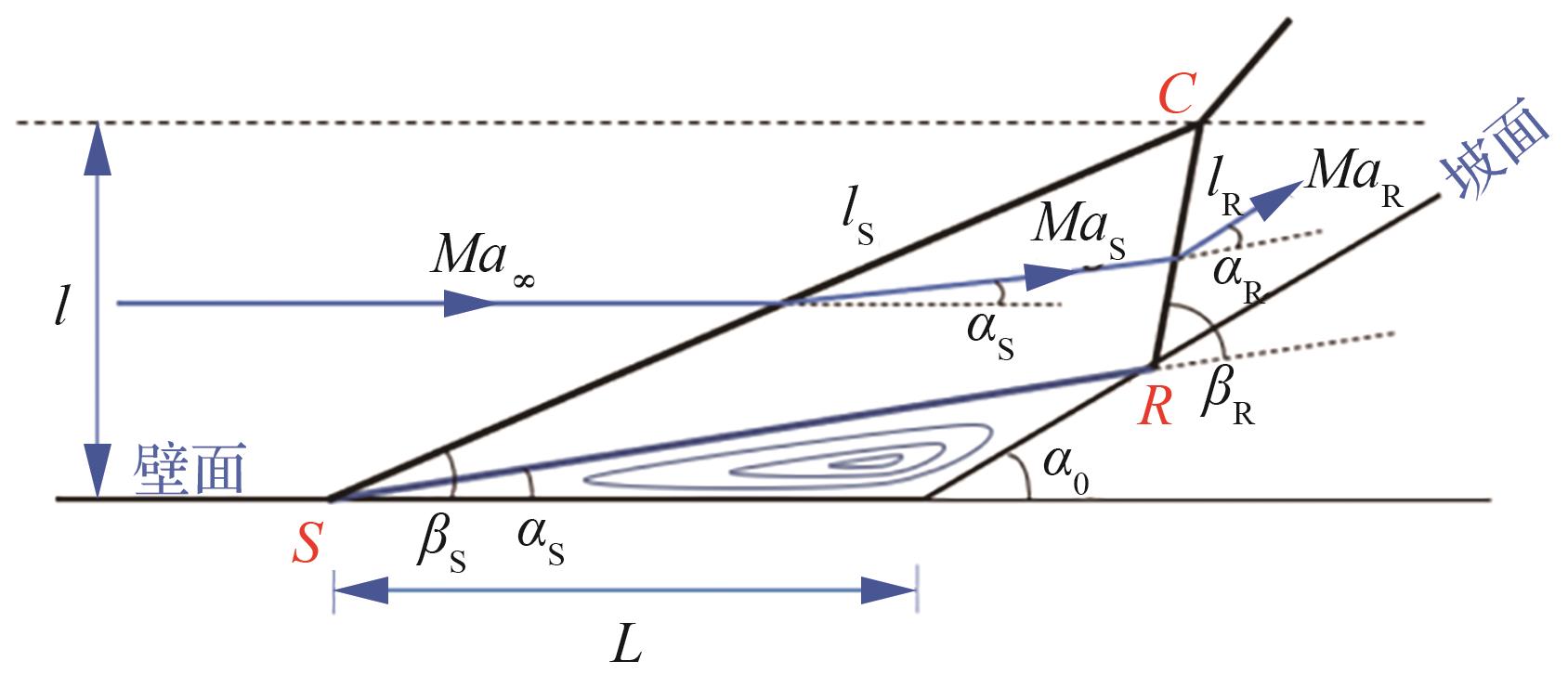
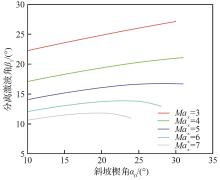
图 31
不同来流马赫数下的压缩拐角分离激波角的最小熵增解[50]
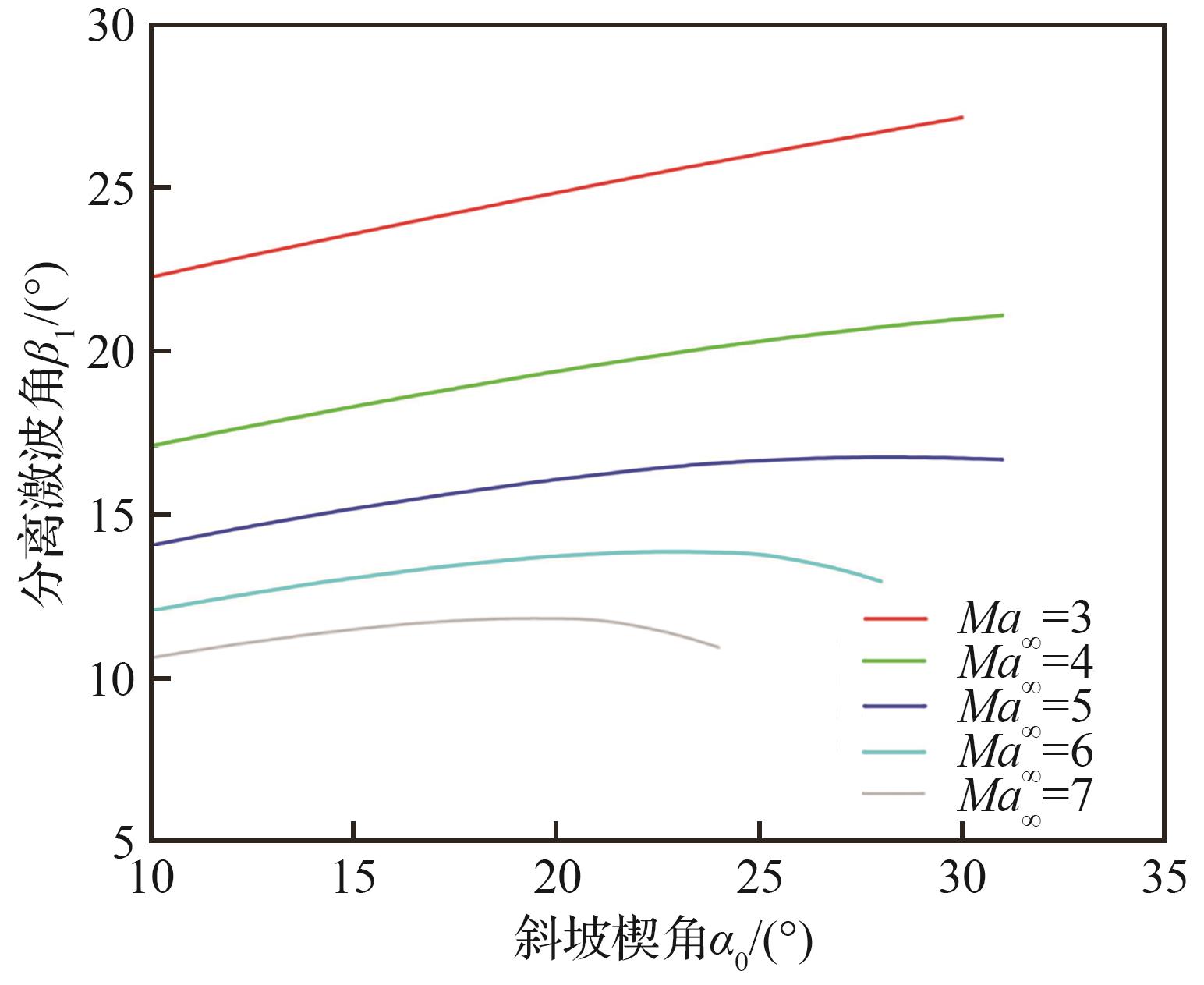
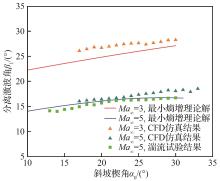
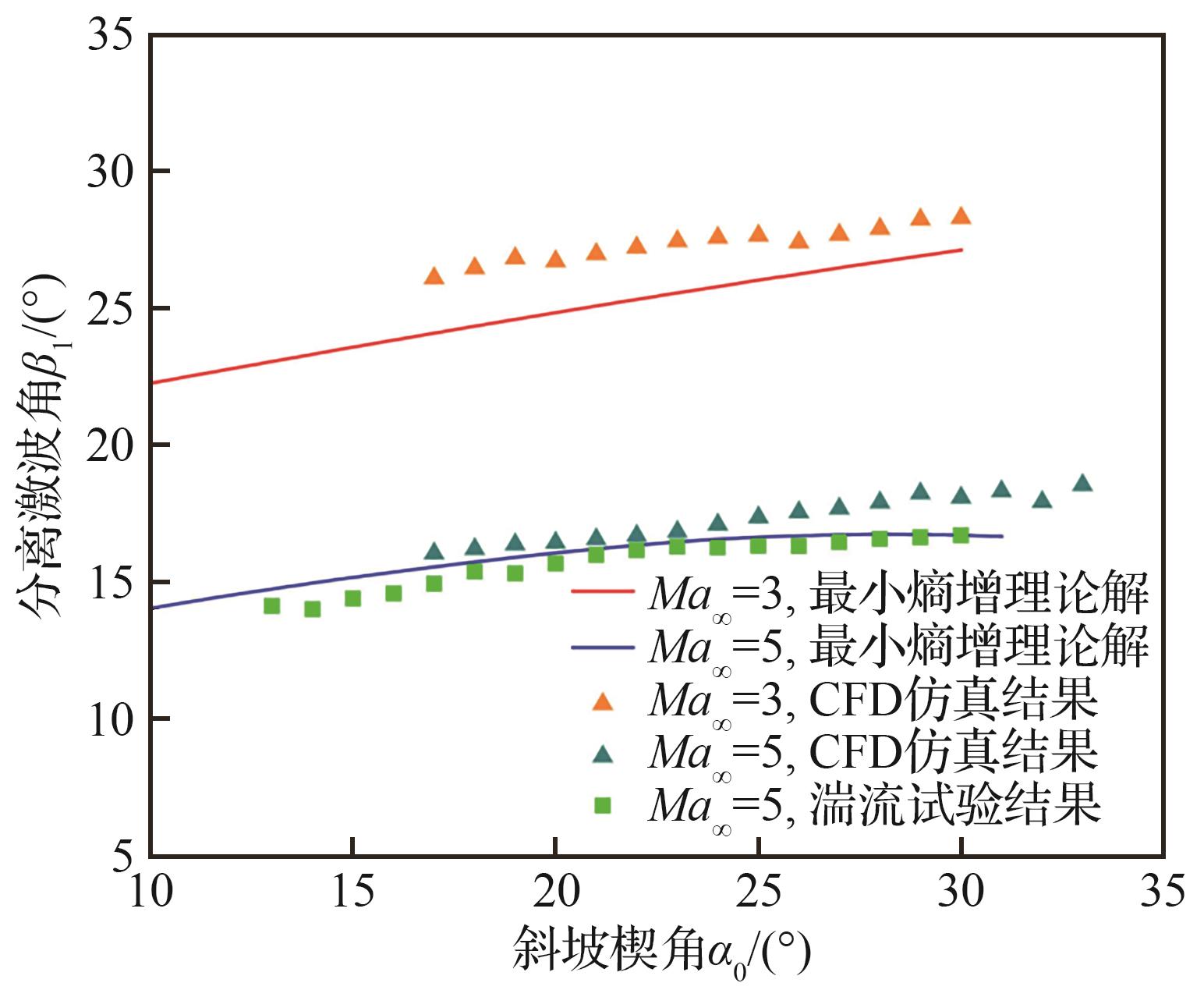
图 32
不同来流马赫数下分离激波角的最小熵增解、CFD 结果和试验结果对比[50]
| 1 | 安复兴, 李磊, 苏伟, 等. 高超声速飞行器气动设计中的若干关键问题[J]. 中国科学: 物理学 力学 天文学, 2021, 51(10): 6-25. |
| AN F X, LI L, SU W, et al. Key issues in hypersonic vehicle aerodynamic design[J]. Scientia Sinica (Physica, Mechanica & Astronomica), 2021, 51(10): 6-25 (in Chinese). | |
| 2 | HARSHA P, KEEL L, CASTROGIOVANNI A, et al. X-43A vehicle design and manufacture: AIAA-2005-3334 [R]. Reston: AIAA, 2005. |
| 3 | 薛龙生. 高超飞行器前体进气道一体化气动设计与试验研究[D]. 南京: 南京航空航天大学, 2018. |
| XUE L S. Integrated aerodynamic design and experimental study on forebody and inlet of a hypersonic vehicle[D]. Nanjing: Nanjing University of Aeronautics and Astronautics, 2018 (in Chinese). | |
| 4 | 范孝华, 唐志共, 王刚, 等. 激波/湍流边界层干扰低频非定常性研究评述[J]. 航空学报, 2022, 43(1): 625917. |
| FAN X H, TANG Z G, WANG G, et al. Review of low-frequency unsteadiness in shock wave/turbulent boundary layer interaction[J]. Acta Aeronautica et Astronautica Sinica, 2022, 43(1): 625917 (in Chinese). | |
| 5 | DOLLING D S. Fifty years of shock-wave/boundary-layer interaction research: What next?[J]. AIAA Journal, 2001, 39(8): 1517-1531. |
| 6 | CLEMENS N T, NARAYANASWAMY V. Low-frequency unsteadiness of shock wave/turbulent boundary layer interactions[J]. Annual Review of Fluid Mechanics, 2014, 46: 469-492. |
| 7 | 童福林, 周桂宇, 孙东, 等. 膨胀效应对激波/湍流边界层干扰的影响[J]. 航空学报, 2020, 41(9): 123731. |
| TONG F L, ZHOU G Y, SUN D, et al. Expansion effect on shock wave and turbulent boundary layer interactions[J]. Acta Aeronautica et Astronautica Sinica, 2020, 41(9): 123731 (in Chinese). | |
| 8 | 陆小革, 易仕和, 何霖, 等. 高分辨率激波/边界层干扰时间演化过程分析[J]. 航空学报, 2022, 43(1): 626147. |
| LU X G, YI S H, HE L, et al. Time evolution process of high resolution shock wave/turbulent boundary layer interaction[J]. Acta Aeronautica et Astronautica Sinica, 2022, 43(1): 626147 (in Chinese). | |
| 9 | 刘晓东, 刘朋欣, 李辰, 等. 高焓激波/湍流边界层干扰直接数值模拟[J]. 航空学报, 2023, 44(13): 127832. |
| LIU X D, LIU P X, LI C, et al. Direct numerical simulation of high enthalpy shock wave/turbulent boundary layer interaction[J]. Acta Aeronautica et Astronautica Sinica, 2023, 44(13): 127832 (in Chinese). | |
| 10 | ANDREOPOULOS J, MUCK K. Some new aspects of the shock wave boundary layer interaction in compression ramp flows: AIAA-1986-0342[R]. Reston: AIAA, 1986. |
| 11 | HUMBLE R, SCARANO F, OUDHEUSDEN B. Unsteady flow organization of a shock wave/turbulent boundary layer interaction[C]∥IUTAM Symposium on Unsteady Separated Flows and their Control. Dordrecht: Springer, 2009: 319-330. |
| 12 | HUANG W, WU H, YANG Y G, et al. Recent advances in the shock wave/boundary layer interaction and its control in internal and external flows[J]. Acta Astronautica, 2020, 174: 103-122. |
| 13 | TAN H J, SUN S, YIN Z L. Oscillatory flows of rectangular hypersonic inlet unstart caused by downstream mass-flow choking[J]. Journal of Propulsion and Power, 2009, 25(1): 138-147. |
| 14 | DUSSAUGE J P, DUPONT P, DEBIÈVE J F. Unsteadiness in shock wave boundary layer interactions with separation[J]. Aerospace Science and Technology, 2006, 10(2): 85-91. |
| 15 | VON NEUMANN J. Oblique reflection of shocks, explosive research rep 12[R]. Washington D.C.: Navy Department, Bureau of Ordnance, 1943. |
| 16 | VON NEUMANN J. Refraction, intersection and reflection of shock waves: NAVORD Rep 203-45[R]. Washington D.C.: Navy Department, Bureau of Ordnance, 1943. |
| 17 | HENDERSON L F, LOZZI A. Experiments on transition of Mach reflexion[J]. Journal of Fluid Mechanics, 1975, 68(1): 139-145. |
| 18 | MÖLDER S. Particular conditions for the termination of regular reflection of shock waves[J]. Transactions of the Canadian Aeronautics and Space Institute, 1979, 25(1):44-49. |
| 19 | KAWAMURA R, SAITO H. Reflection of shock waves-1 Pseudo-stationary case[J]. Journal of the Physical Society of Japan, 1956, 11(5): 584-592. |
| 20 | CHAPMAN D, KUEHN D M, LARSON H K. Investigation of separated flows in supersonic and subsonic streams with emphasis on the effect of transition: NACA Rept. 1356[R]. Washington, D.C.: NACA, 1958. |
| 21 | ERDOS J, PALLONE A. Shock-boundary layer interaction and flow separation[C]∥Proceedings of the 1962 Heat Transfer and Fluid Mechanics Institute. Stanford: Stanford University Press, 1962: 239-254. |
| 22 | BABINSKY H, HARVEY J. Shock wave-boundary-layer interactions[M]. Cambridge: Cambridge University Press, 2011: 423-427. |
| 23 | MATHEIS J, HICKEL S. On the transition between regular and irregular shock patterns of shock-wave/boundary-layer interactions[J]. Journal of Fluid Mechanics, 2015, 776: 200-234. |
| 24 | GIEPMAN R H M, SCHRIJER F F J, VAN OUDHEUSDEN B W. A parametric study of laminar and transitional oblique shock wave reflections[J]. Journal of Fluid Mechanics, 2018, 844: 187-215. |
| 25 | THIVET F, KNIGHT D D, ZHELTOVODOV A A, et al. Insights in turbulence modeling for crossing-shock-wave/boundary-layer interactions[J]. AIAA Journal, 2001, 39(6): 985-995. |
| 26 | TAO Y, FAN X Q, ZHAO Y L. Viscous effects of shock reflection hysteresis in steady supersonic flows[J]. Journal of Fluid Mechanics, 2014, 759: 134-148. |
| 27 | TAO Y, LIU W D, FAN X Q, et al. A study of the asymmetric shock reflection configurations in steady flows[J]. Journal of Fluid Mechanics, 2017, 825: 1-15. |
| 28 | DÉLERY J, MARVIN J G, RESHOTKO E. Shock-wave boundary layer interactions: AGARD-AG-280 [R]. Paris: AGARD, 1986. |
| 29 | GROSSMAN I J, BRUCE P J K. Confinement effects on regular-irregular transition in shock-wave-boundary-layer interactions[J]. Journal of Fluid Mechanics, 2018, 853: 171-204. |
| 30 | XIE W Z, YANG S Z, ZENG C, et al. Improvement of the free-interaction theory for shock wave/turbulent boundary layer interactions[J]. Physics of Fluids, 2021, 33(7): 075104. |
| 31 | HU Y C, ZHOU W F, YANG Y G, et al. Prediction of plateau and peak of pressure in a compression ramp flow with large separation[J]. Physics of Fluids, 2020, 32(10): 101702. |
| 32 | 程剑锐, 施崇广, 瞿丽霞, 等. 二维弯曲激波/湍流边界层干扰流动理论建模[J]. 航空学报, 2022, 43(9): 125993. |
| CHENG J R, SHI C G, QU L X, et al. Theoretical model of 2D curved shock wave/turbulent boundary layer interaction[J]. Acta Aeronautica et Astronautica Sinica, 2022, 43(9): 125993 (in Chinese). | |
| 33 | BAI C Y, WU Z N. Type Ⅳ shock interaction with a two-branch structured transonic jet[J]. Journal of Fluid Mechanics, 2022, 941: A45. |
| 34 | GLANSDORFF P, PRIGOGINE I, HILL R N. Thermodynamic theory of structure, stability and fluctuations[J]. American Journal of Physics, 1973, 41(1): 147-148. |
| 35 | LI H, BEN-DOR G. Application of the principle of minimum entropy production to shock wave reflections. I. Steady flows[J]. Journal of Applied Physics,1996, 80(4): 2027-2037. |
| 36 | CHPOUN A, PASSEREL D, LI H, et al. Reconsideration of oblique shock wave reflections in steady flows. Part 1. Experimental investigation[J]. Journal of Fluid Mechanics, 1995, 301: 19-35. |
| 37 | WANG C P, XUE L S, CHENG K M. Application of the minimum entropy production principle to shock reflection induced by separation[J]. Journal of Fluid Mechanics, 2018, 857: 784-805. |
| 38 | 杨馨. 基于最小熵增原理的分离诱导的激波反射结构研究[D]. 南京: 南京航空航天大学, 2020. |
| YANG X. Study on the structure of shock reflection induced by separation based on the principle of minimum entropy production[D]. Nanjing: Nanjing University of Aeronautics and Astronautics, 2020 (in Chinese). | |
| 39 | XUE L S, SCHRIJER F F J, VAN OUDHEUSDEN W B, et al. Theoretical study on regular reflection of shock wave-boundary layer interactions[J]. Journal of Fluid Mechanics, 2020, 899: A30. |
| 40 | XUE L S, JIAO Y, WANG C P, et al. Pressure plateau of separation induced by shock impingement in a Mach 5 flow[J]. Journal of Fluid Mechaics, 2023, 972: R1. |
| 41 | XUE L S, WANG C P, CHENG K M. A study on the RR-to-MR transition of shock wave reflections near the leading edge in hypersonic flows[J]. Journal of Fluid Mechanics, 2021, 919: A40. |
| 42 | 徐培. 超声速流动中复杂激波干扰结构研究[D]. 南京: 南京航空航天大学, 2019. |
| XU P. Complex shock wave interaction in supersonic flow[D]. Nanjing: Nanjing University of Aeronautics and Astronautics, 2019 (in Chinese). | |
| 43 | HUNT R L, GAMBA M. Shock train unsteadiness characteristics, oblique-to-normal transition, and three-dimensional leading shock structure[J]. AIAA Journal, 2018, 56(4): 1569-1587. |
| 44 | MATSUO K, MIYAZATO Y, KIM H D. Shock train and pseudo-shock phenomena in internal gas flows[J]. Progress in Aerospace Sciences, 1999, 35(1): 33-100. |
| 45 | WANG C P, XUE L S, TIAN X A. Experimental characteristics of oblique shock train upstream propagation[J]. Chinese Journal of Aeronautics, 2017, 30(2): 663-676. |
| 46 | SUN B, WANG C P, ZHUO C F. Theoretical model and numerical analysis for asymmetry of shock train in supersonic flows[J]. Symmetry, 2020, 12(4): 518. |
| 47 | 杨锦富. 激波反射与分离主控的高速流动结构分析[D]. 南京: 南京航空航天大学, 2020. |
| YANG J F. Analysis of high speed flow structure controlled by shock reflection and separation[D]. Nanjing: Nanjing University of Aeronautics and Astronautics, 2020 (in Chinese). | |
| 48 | 周博宇. 复杂流动条件下的激波/附面层干扰结构研究[D]. 南京: 南京航空航天大学, 2021. |
| ZHOU B Y. Study on the structure of shock wave and boundary layer under complicated incoming flow[D]. Nanjing: Nanjing University of Aeronautics and Astronautics, 2021 (in Chinese). | |
| 49 | 徐惊雷, 马静, 沙江, 等. 超声速复杂内、外流场的PIV实验研究[C]∥第三届高超声速科技学术会议会议文集. 南京: 南京航空航天大学, 2010: 8. |
| XU J L, MA J, SHA J, et al. PIV experimental research on the supersonic complex internal/external flowfield[C]∥Proceedings of the Third Hypersonic Science and Technology Conference. Nanjing: Nanjing University of Aeronautics and Astronautics, 2010: 8 (in Chinese). | |
| 50 | 张蓝天. 压缩拐角的激波干扰流场结构研究[D].南京: 南京航空航天大学, 2023. |
| ZHNAG L T. Research on the structure of shock wave interference flow field at compressed corner[D]. Nanjing: Nanjing University of Aeronautics and Astronautics, 2023 (in Chinese). |
| [1] | 朱宇, 程健慧, 陈诚, 黄河峡, 谭慧俊. Bump进气道超声速稳定工作机制[J]. 航空学报, 2024, 45(24): 130408-130408. |
| [2] | 赖江, 范召林, 王乾, 董思卫, 童福林, 袁先旭. 高超声速有攻角锥裙直接数值模拟[J]. 航空学报, 2024, 45(2): 128610-128610. |
| [3] | 熊有德, 李创创, 张振辉, 吴杰. 高超声速风洞自由来流扰动热线测量技术[J]. 航空学报, 2024, 45(10): 129042-129042. |
| [4] | 刘为佳, 李映坤, 陈雄, 李春雷. 基于流固耦合的激波/边界层干扰作用下壁板颤振特性[J]. 航空学报, 2023, 44(6): 127085-127085. |
| [5] | 许开龙, 刘再刚, 姜胜利, 王星, 张磐. 指定流量分配系数的多回流出口边界算法[J]. 航空学报, 2023, 44(5): 126830-126830. |
| [6] | 魏皇生, 黄柱, 席光. 一种基于幅值和波数的耗散控制方法[J]. 航空学报, 2023, 44(4): 126589-126589. |
| [7] | 朱博, 廖达雄, 陈振华, 陈吉明. 跨声速流场扰动模态与湍流度精细测量[J]. 航空学报, 2023, 44(4): 126378-126378. |
| [8] | 王梦格, 何小明, 王娟娟, 张悦, 汪昆, 谭慧俊, 李留刚. 基于振荡式涡流发生器的激波/边界层干扰控制方法[J]. 航空学报, 2023, 44(20): 128503-128503. |
| [9] | 田珊珊, 金亮, 杜兆波, 钟翔宇, 黄伟, 刘远洋. 基于鼓包的激波/边界层干扰控制研究进展[J]. 航空学报, 2023, 44(18): 28411-028411. |
| [10] | 李灿民, 黄河峡, 梁钢, 吕靖昊, 蔡佳, 谭慧俊. 基于后掠唇罩的入射激波/边界层干扰流动控制方法[J]. 航空学报, 2023, 44(16): 128091-128091. |
| [11] | 罗振兵, 谢玮, 解旭祯, 周岩, 刘强. 激波及其干扰主动流动控制研究进展[J]. 航空学报, 2023, 44(15): 529002-529002. |
| [12] | 胡姝瑶, 蒋崇文, 李椿萱. 可压缩流动模拟的多重网格-扰动域推进方法[J]. 航空学报, 2023, 44(11): 127649-127649. |
| [13] | 程剑锐, 施崇广, 瞿丽霞, 徐悦, 尤延铖, 朱呈祥. 二维弯曲激波/湍流边界层干扰流动理论建模[J]. 航空学报, 2022, 43(9): 125993-125993. |
| [14] | 张昊元, 孙东, 邱波, 朱言旦, 王安龄. 湍动能在激波/边界层干扰流动中的影响[J]. 航空学报, 2022, 43(7): 125504-125504. |
| [15] | 王宏宇, 杨彦广, 胡伟波, 陈植, 冯黎明, 周游天. 高频微秒脉冲放电控制激波/边界层干扰非定常性的实验研究[J]. 航空学报, 2022, 43(1): 625905-625905. |
| 阅读次数 | ||||||
|
全文 |
|
|||||
|
摘要 |
|
|||||
版权所有 © 航空学报编辑部
版权所有 © 2011航空学报杂志社
主管单位:中国科学技术协会 主办单位:中国航空学会 北京航空航天大学

 CJA
CJA
