Acta Aeronautica et Astronautica Sinica ›› 2026, Vol. 47 ›› Issue (13): 533473.doi: 10.7527/S1000-6893.2026.33473
• Special Issue: Flow Control and Thermal Management • Previous Articles
Jinhui CHEN1, Wanting LIU1, Zhiyuan LI1, Haoyi CAI2, Jie WU1( )
)
Received:2026-02-06
Revised:2026-02-26
Accepted:2026-03-16
Online:2026-03-26
Published:2026-03-19
Contact:
Jie WU
E-mail:jiewu@hust.edu.cn
CLC Number:
Jinhui CHEN, Wanting LIU, Zhiyuan LI, Haoyi CAI, Jie WU. Drag and heat reduction in a hypersonic turbulent boundary layer via wall blowing[J]. Acta Aeronautica et Astronautica Sinica, 2026, 47(13): 533473.
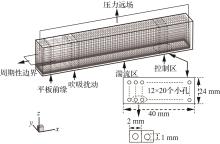
Fig.1
Sketch diagram of gird
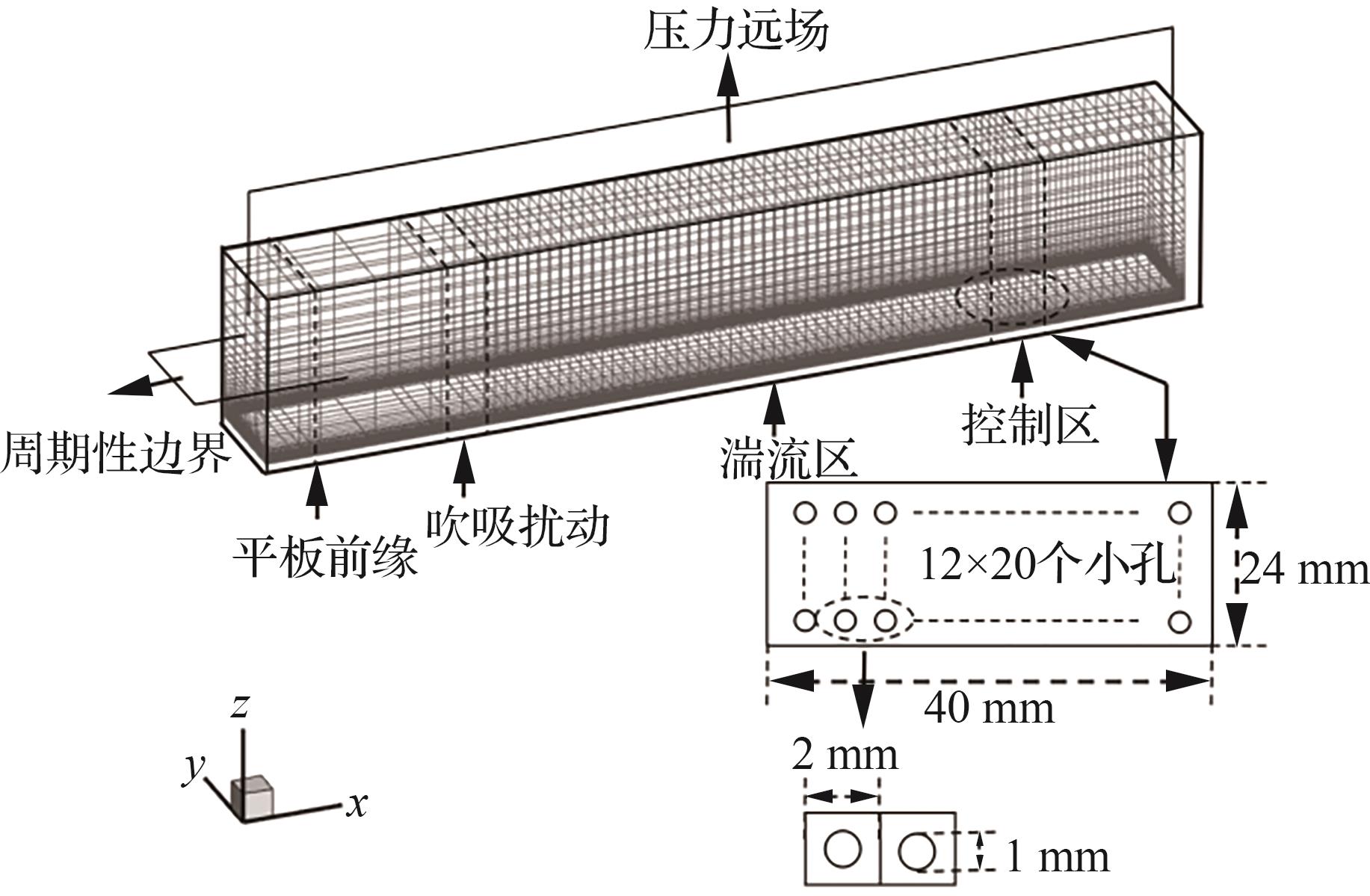

Table 1
Grid parameters and computation conditions
| 网格参数 | 数值 |
|---|---|
| 计算域大小(Lx ×Lz ×Ly )/mm | 1 050×200×24 |
| 网格点数(Nx ×Nz ×Ny ) | 2 500×100×160 |
| 网格分辨率(∆x+ ×∆z+ ×∆y+ ) | 6.40×0.48×4.00 |
| 自由来流马赫数Ma∞ | 6.0 |
| 单位雷诺数Re∞ /(107 m-1) | 1.1 |
| 静温T∞ /K | 52.44 |
| 静压P∞ /Pa | 633.361 |
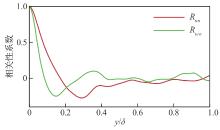
Fig.2
Spanwise correlation of fluctuation velocity
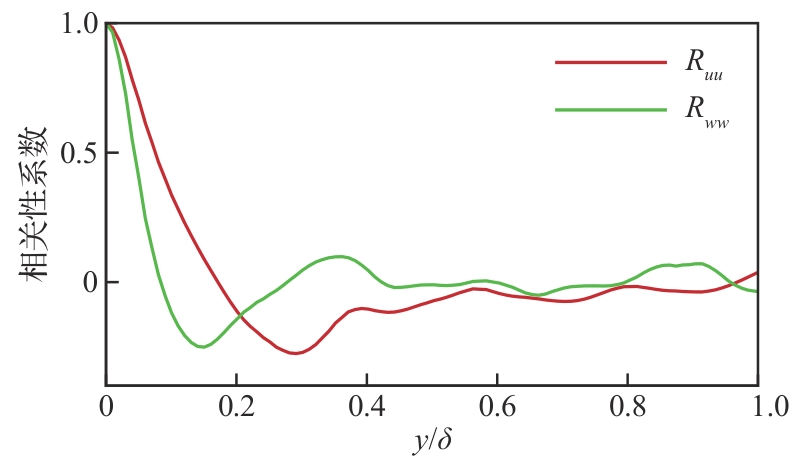
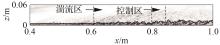
Fig.3
Numerical schlieren visualization for smooth-wall
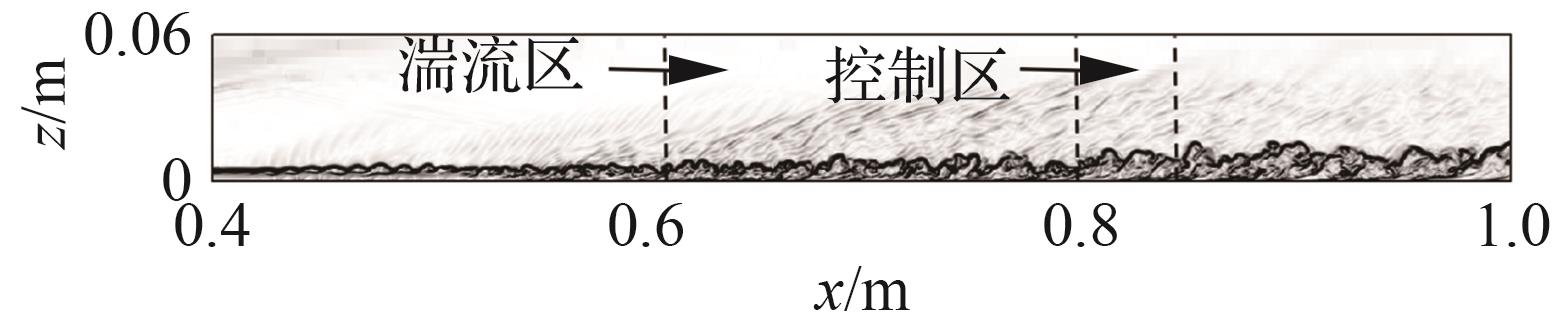
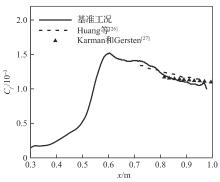
Fig.4
Streamwise distribution of wall friction coefficient
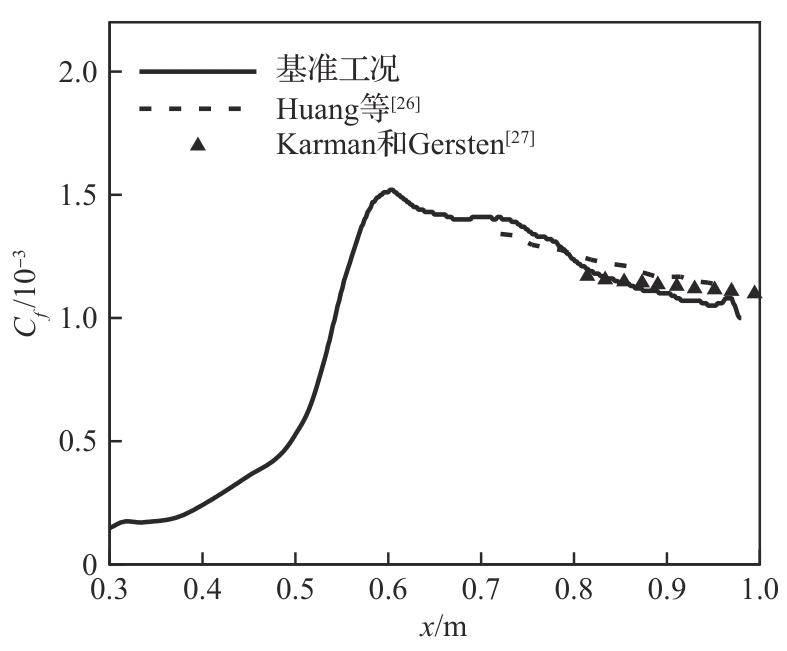
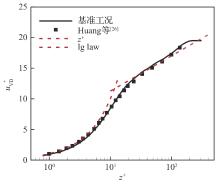
Fig.5
Velocity profile with Van Driest transformation
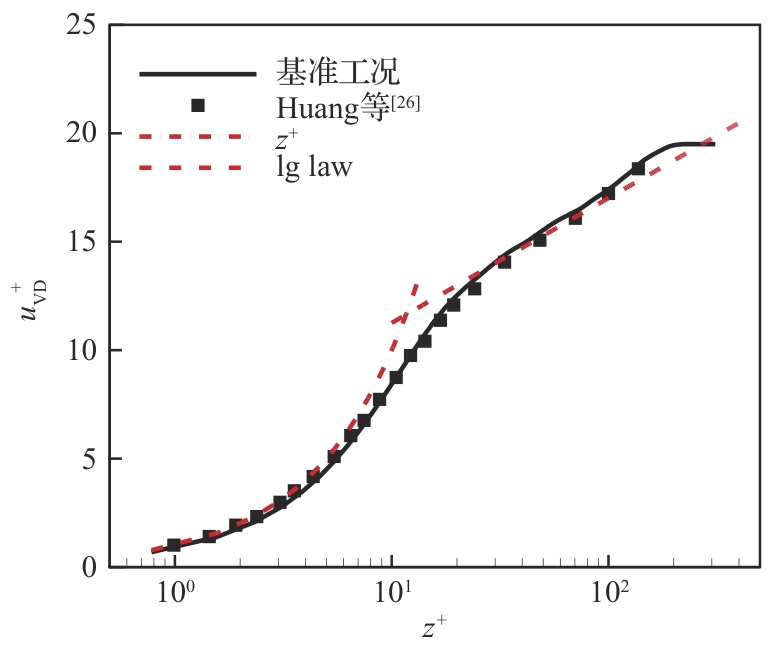
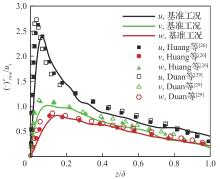
Fig.6
Wall-normal distributions of RMS velocity fluctuations in different directions varying with wall-normal distance
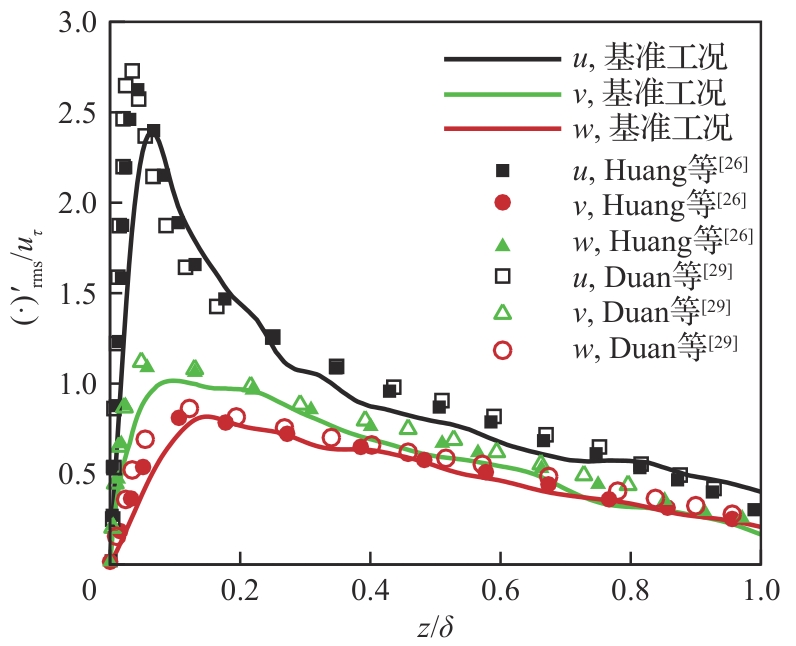
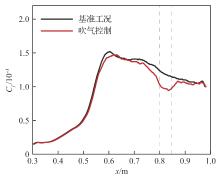
Fig.7
Streamwise variation of wall friction coefficient
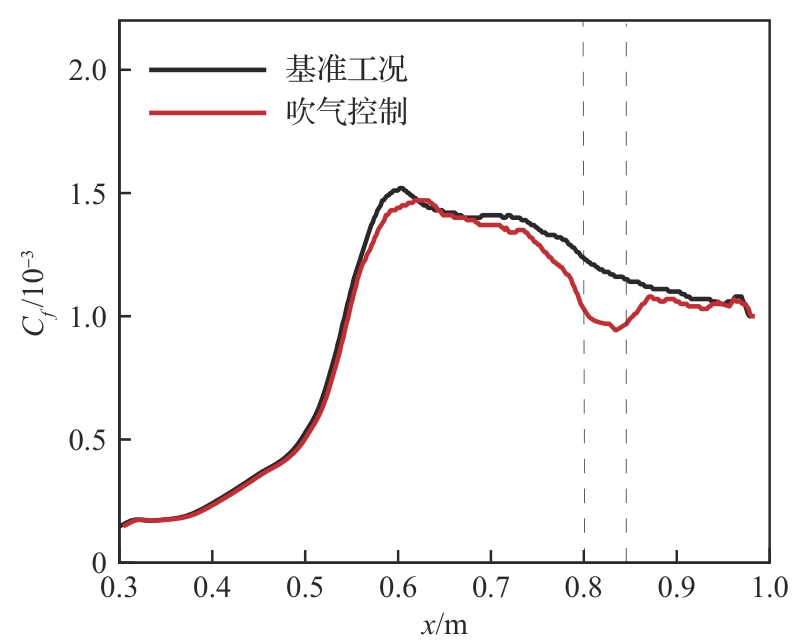
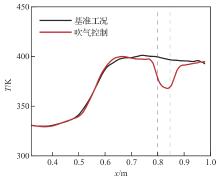
Fig.8
Streamwise variation of wall temperature
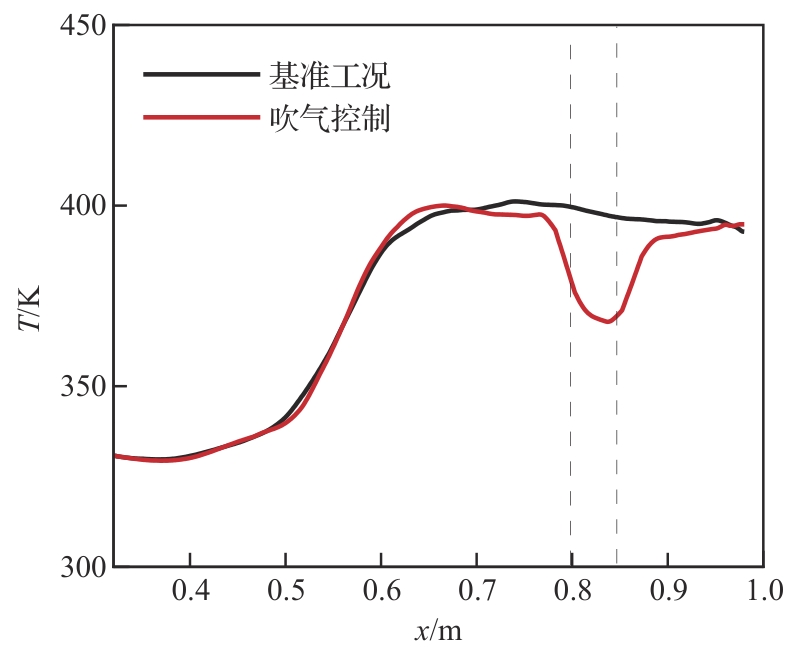
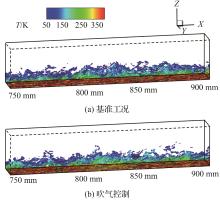
Fig.9
Turbulent coherent structures visualized by Q-criterion
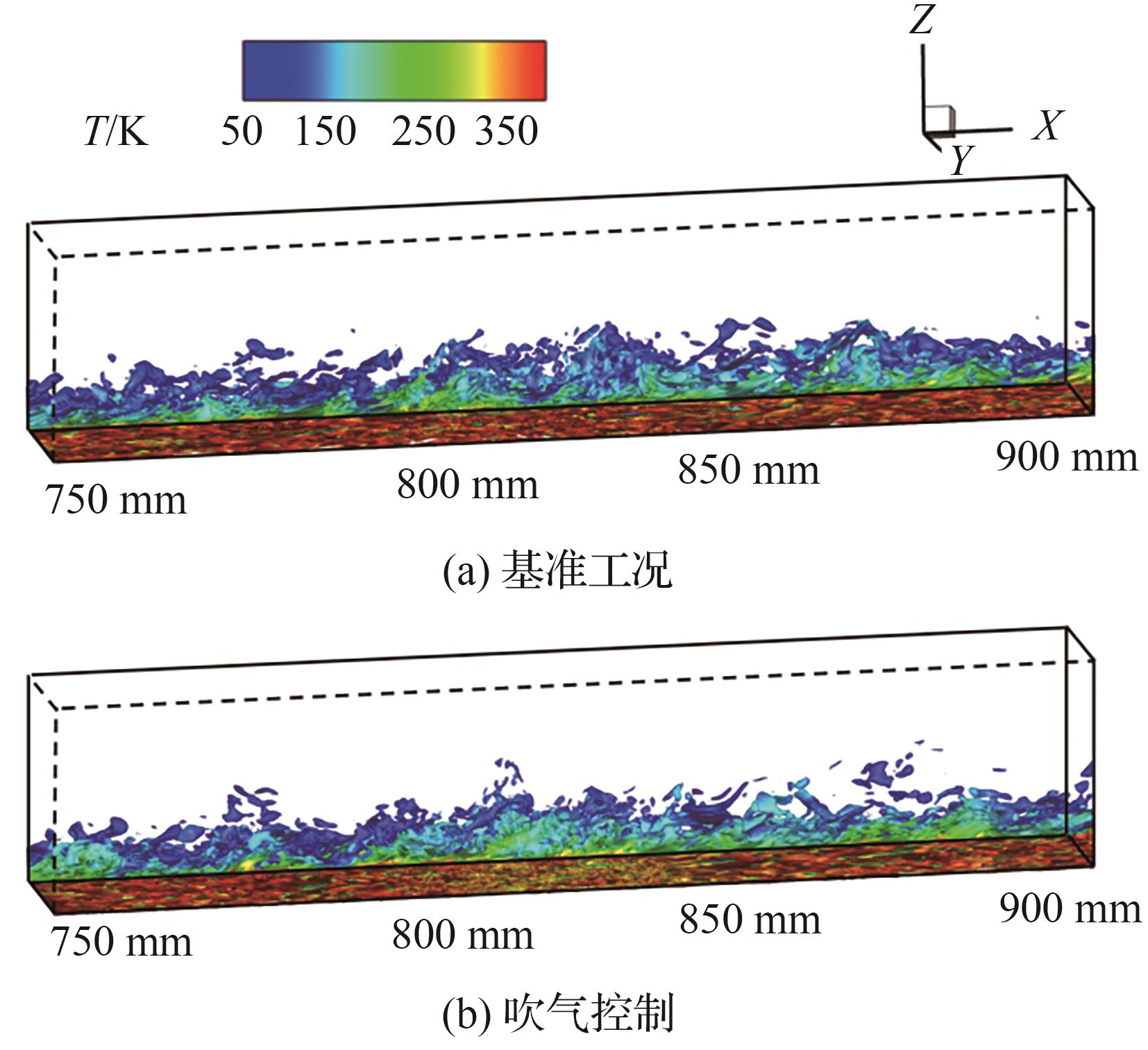
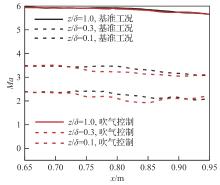
Fig.10
Streamwise variation of Mach number at 0.1, 0.3, and 1.0 times boundary-layer height
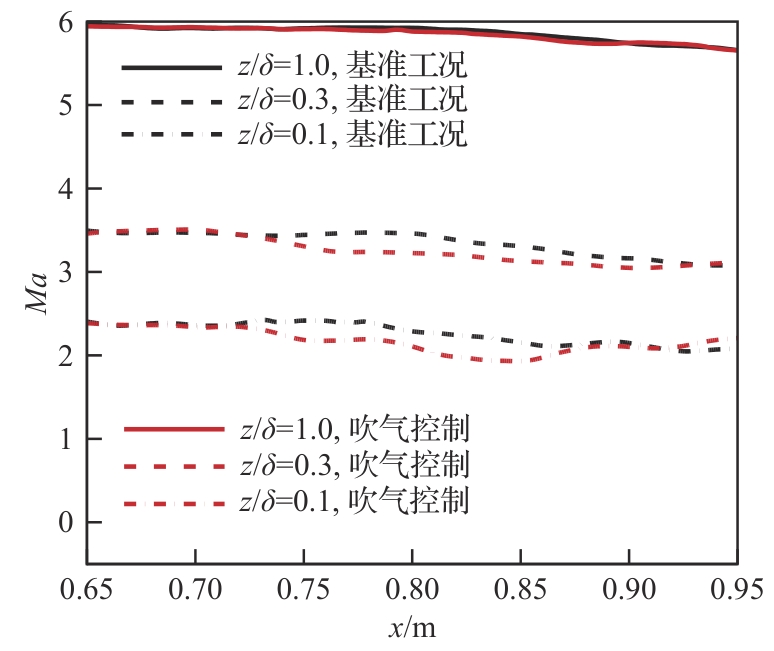
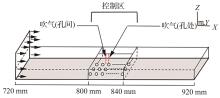
Fig.11
Schematic of sampling points in flow field
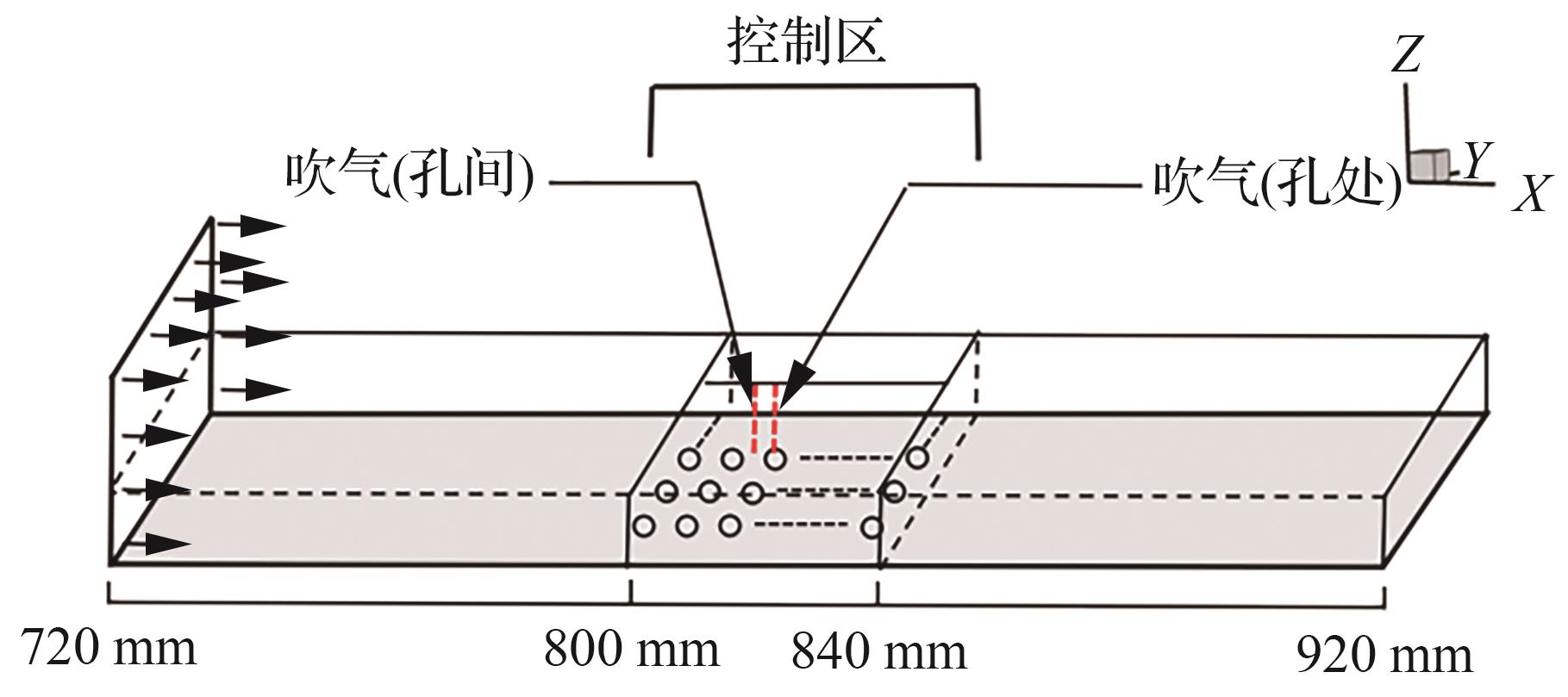
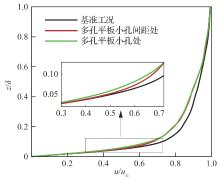
Fig.12
Wall-normal distribution of mean streamwise velocity
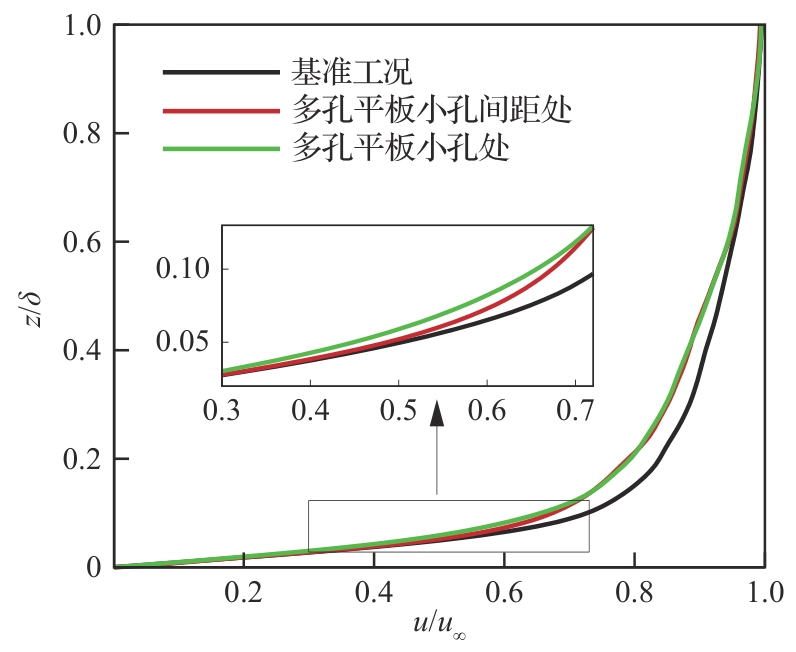
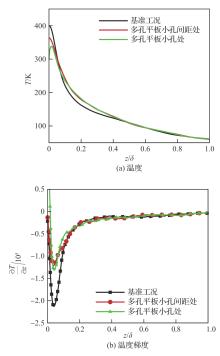
Fig.13
Wall-normal distributions of temperature and temperature gradient
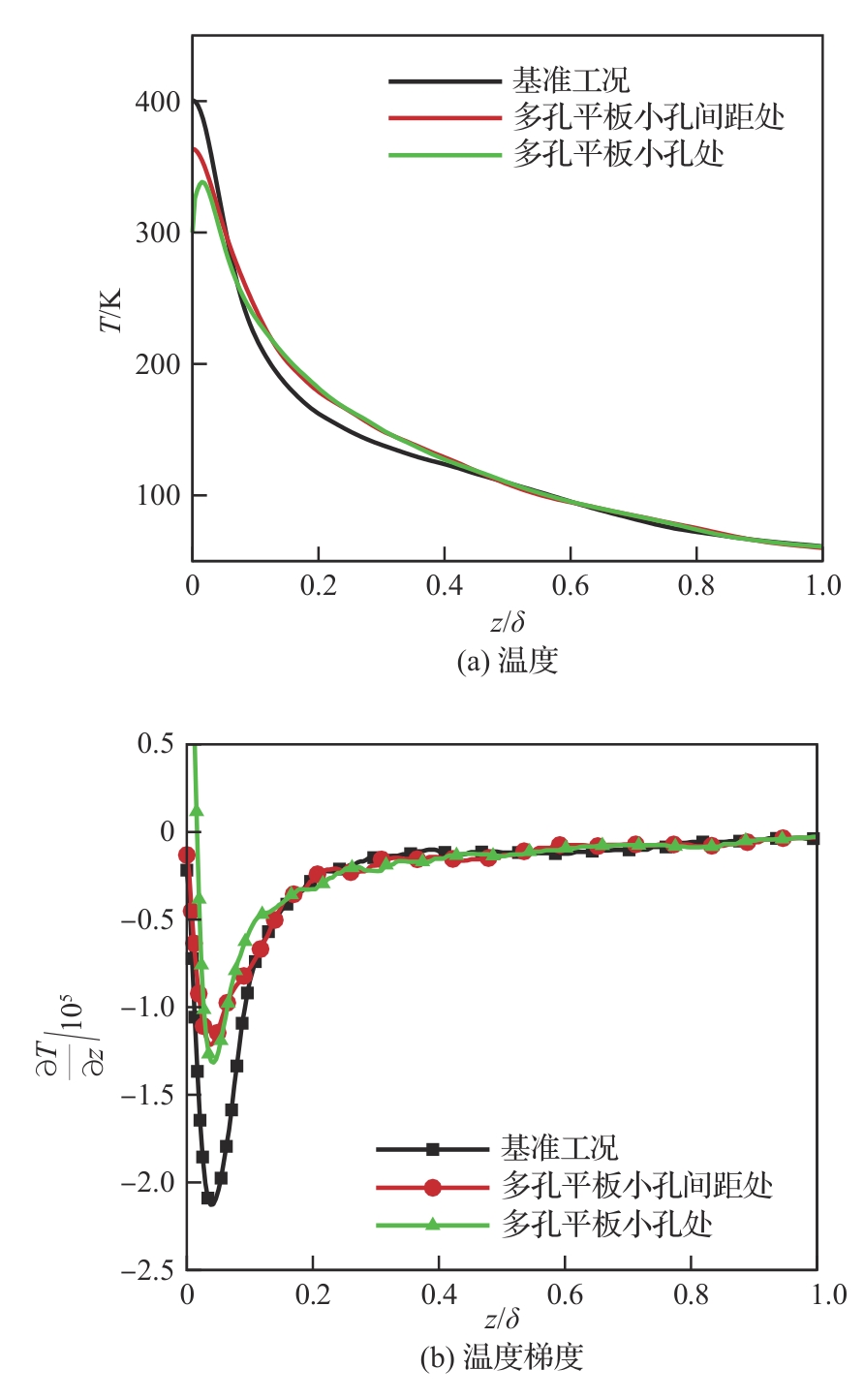
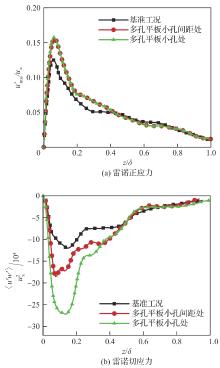
Fig.14
Wall-normal distributions of Reynolds normal and shear stresses in boundary layer
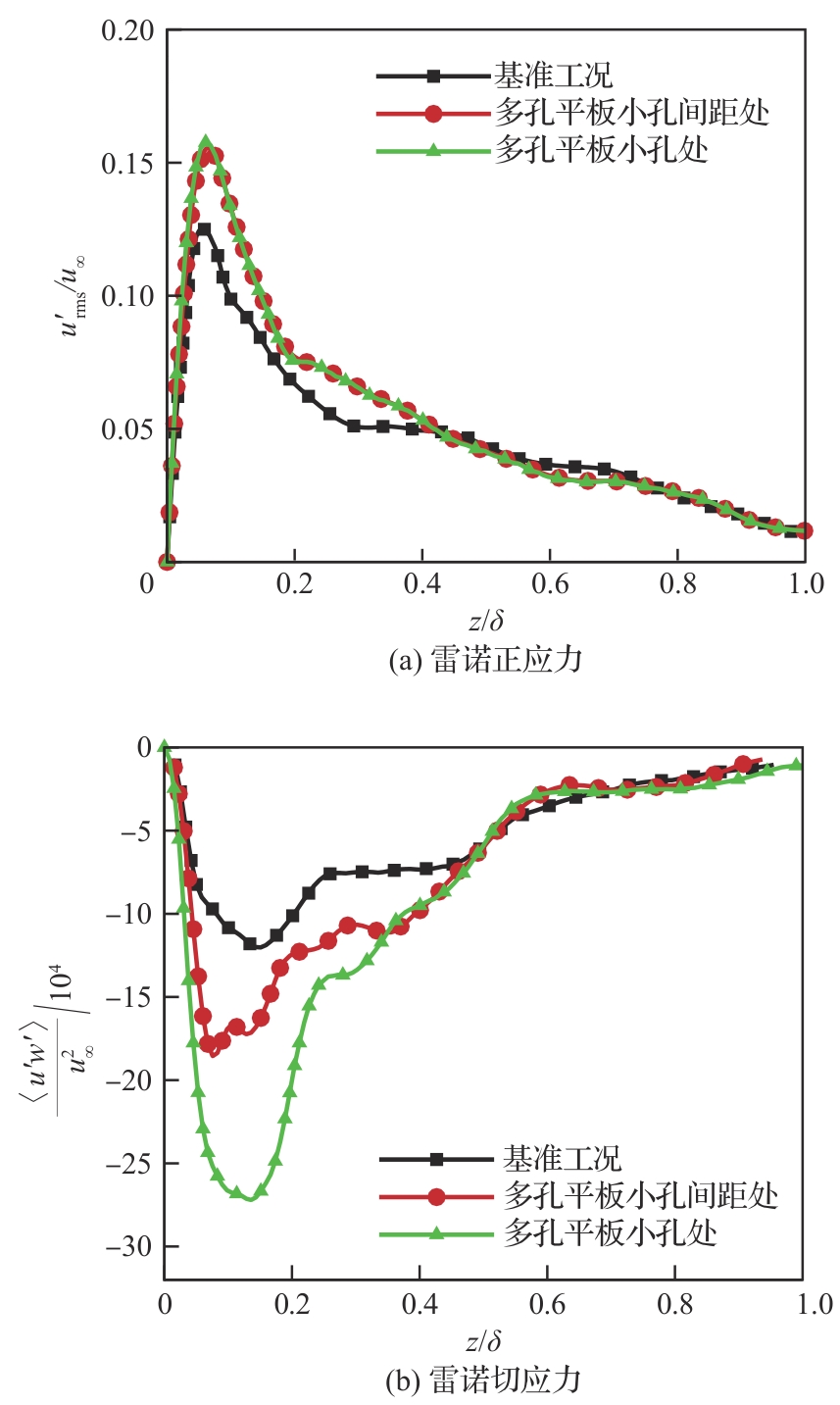
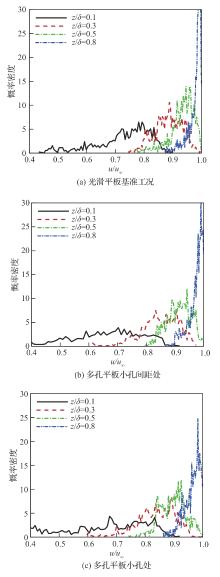
Fig.15
Probability density distributions of instantaneous streamwise velocity for baseline and blowing cases at 0.1, 0.3, 0.5, and 0.8 times boundary-layer height
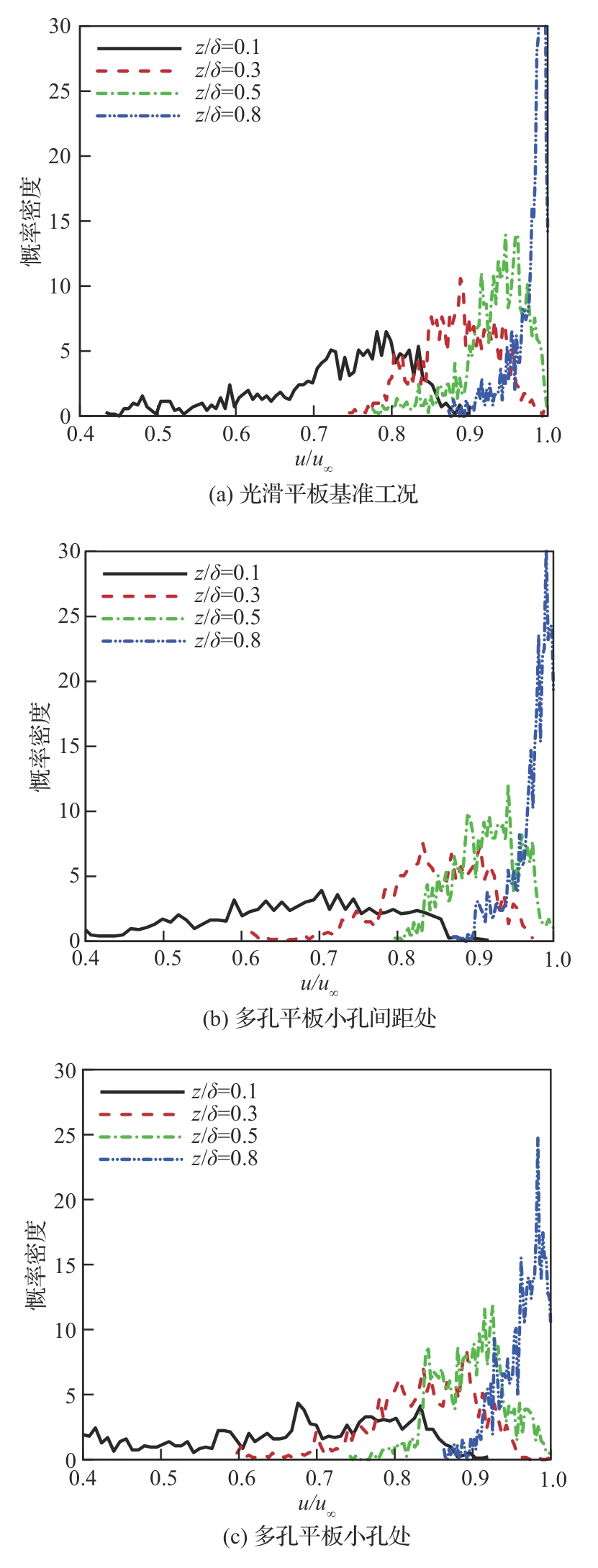
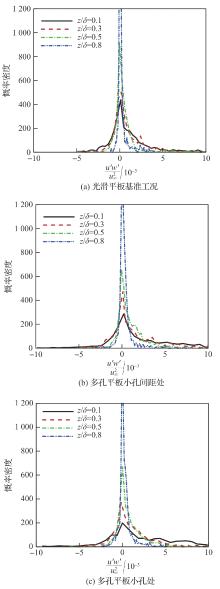
Fig.16
Probability density distributions of Reynolds shear stress for baseline and blowing cases at 0.1, 0.3, 0.5, and 0.8 times boundary-layer height
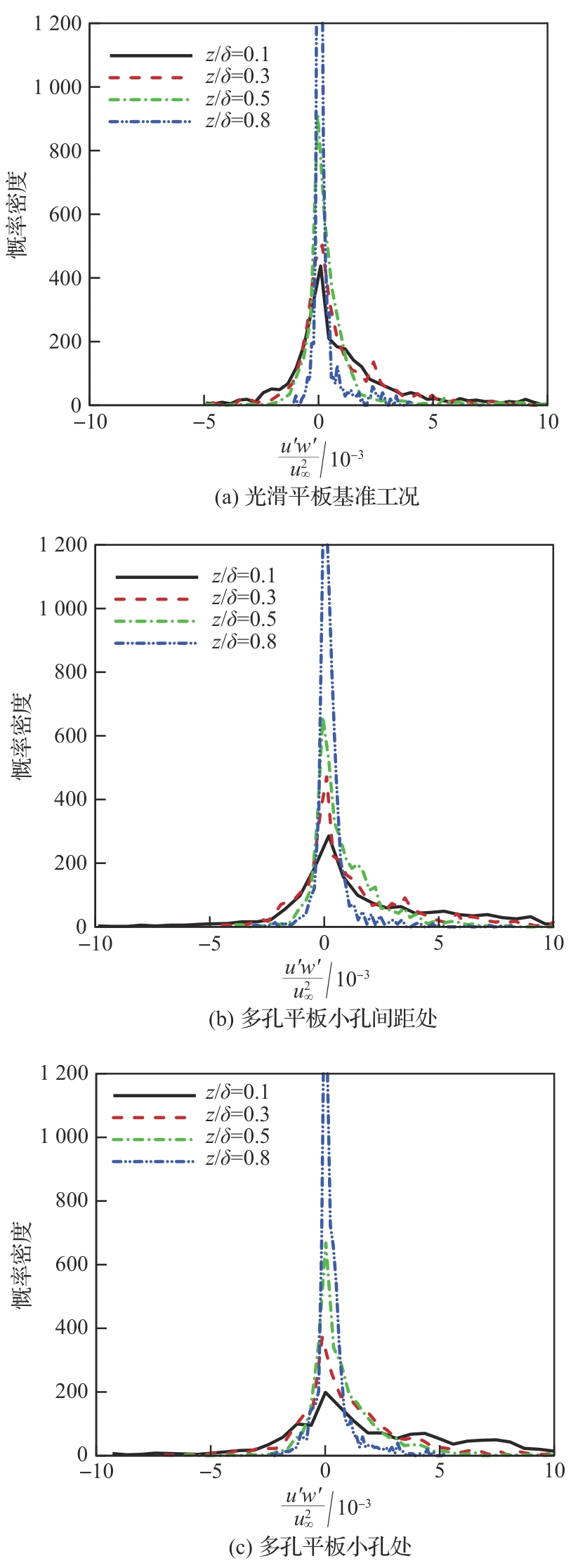
Fig.17
Wall-normal distributions of correlations between velocity and temperature fluctuations
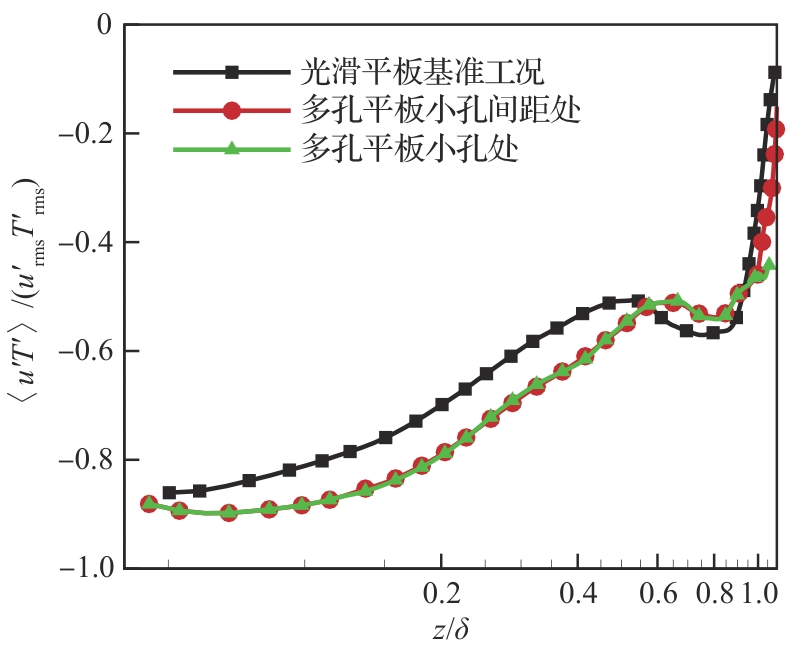
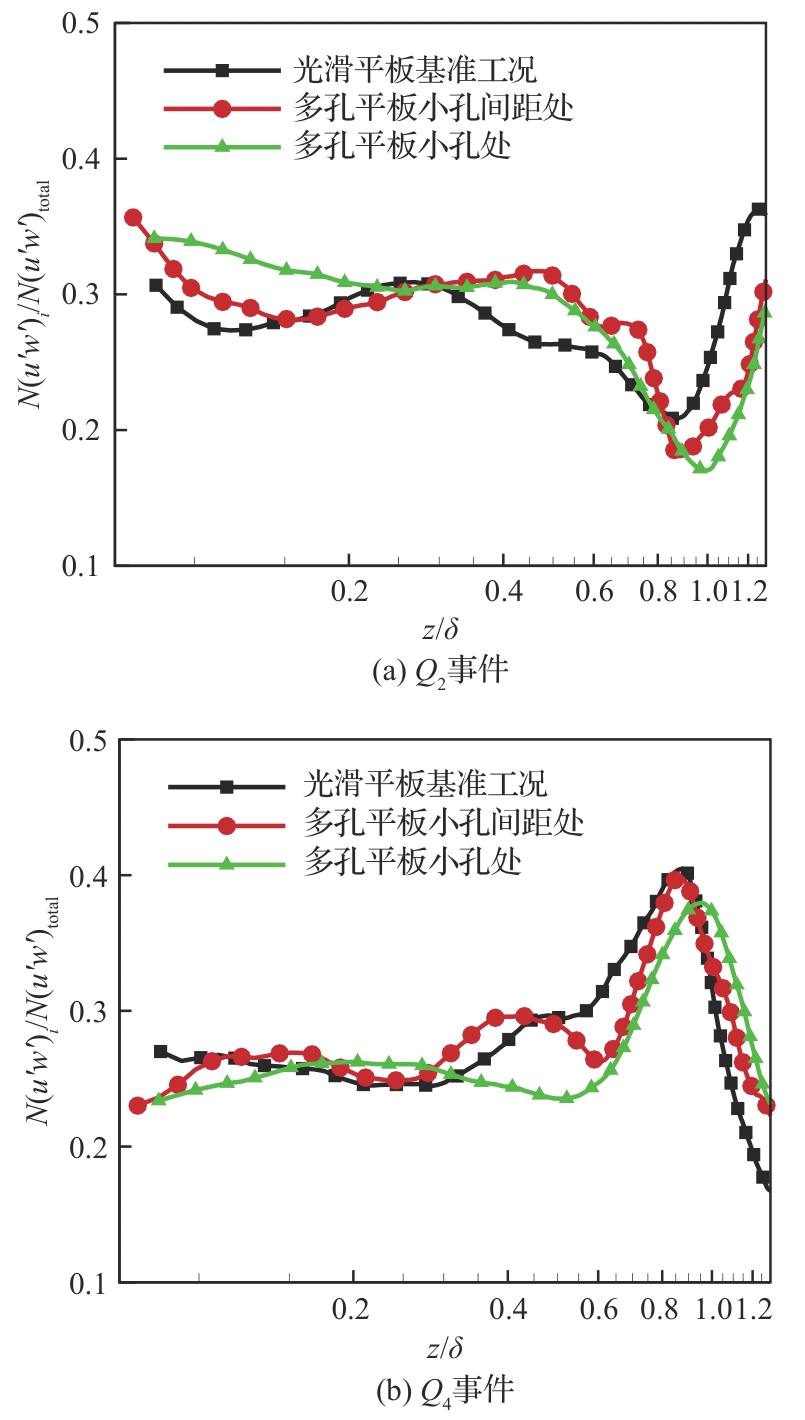
Fig.18
Wall-normal distributions of Q2, Q4 event probabilities
| [1] | 沈清, 杨武兵, 庄逢甘. 航天飞行器中的湍流问题[J]. 现代防御技术, 2012, 40(1): 21-25. |
| SHEN Q, YANG W B, ZHUANG F G. Turbulence of aerospacecraft[J]. Modern Defence Technology, 2012, 40(1): 21-25 (in Chinese). | |
| [2] | SCHMISSEUR J D. Hypersonics into the 21st century: A perspective on AFOSR-sponsored research in aerothermodynamics[J]. Progress in Aerospace Sciences, 2015, 72: 3-16. |
| [3] | BERTIN J J, CUMMINGS R M. Critical hypersonic aerothermodynamic phenomena[J]. Annual Review of Fluid Mechanics, 2006, 38: 129-157. |
| [4] | 李锋, 解少飞, 毕志献, 等. 高超声速飞行器中若干气动难题的实验研究[J]. 现代防御技术, 2014, 42(5): 1-7. |
| LI F, XIE S F, BI Z X, et al. Experimental study of several on aerodynamic problems on hypersonic vehicles[J]. Modern Defence Technology, 2014, 42(5): 1-7 (in Chinese). | |
| [5] | GAD-EL-HAK M. Flow control: The future[J]. Journal of Aircraft, 2001, 38(3): 402-418. |
| [6] | 刘晓波, 陈涛, 周蜜. 主动流动控制技术的发展与应用展望[J]. 空天技术, 2023(5): 54-62, 71. |
| LIU X B, CHEN T, ZHOU M. Development status and application prospect of the active flow control technology[J]. Aerospace Technology, 2023(5): 54-62, 71 (in Chinese). | |
| [7] | 王昊, 牛中国, 蒋甲利. 二维翼型吹/吸气流动控制试验研究[J]. 航空科学技术, 2020, 31(5): 56-63. |
| WANG H, NIU Z G, JIANG J L. Experimental study on 2D airfoil blowing and suction flow control[J]. Aeronautical Science and Technology, 2020, 31(5): 56-63 (in Chinese). | |
| [8] | 朱广生, 姚世勇, 段毅. 高速飞行器减阻降热流动控制技术研究进展及工程应用[J]. 航空学报, 2023, 44(15): 529049. |
| ZHU G S, YAO S Y, DUAN Y. Research progress and engineering application of flow control technology for drag and heat reduction of high-speed vehicles[J]. Acta Aeronautica et Astronautica Sinica, 2023, 44(15): 529049 (in Chinese). | |
| [9] | HWANG D, BIESIADNY T. Experimental evaluation of penalty associated with micro-blowing for reducing skin friction[C]∥36th AIAA Aerospace Sciences Meeting and Exhibit. Reston: AIAA, 1998. |
| [10] | HWANG D P. Skin-friction reduction by a micro-blowing technique[J]. AIAA Journal, 1998, 36: 480-481. |
| [11] | HWANG D P. Experimental study of characteristics of micro-hole porous skins for turbulent skin friction reduction[C]∥23rd Congress of the International Council of the Aeronautical Sciences. Cleveland: ICAS, 2002: 2101.1-2101.7. |
| [12] | HWANG D. Review of research into the concept of the microblowing technique for turbulent skin friction reduction[J]. Progress in Aerospace Sciences, 2004, 40(8): 559-575. |
| [13] | HWANG D. An experimental study of turbulent skin friction reduction in supersonic flow using a microblowing technique[C]∥ 38th Aerospace Sciences Meeting and Exhibit. Reston: AIAA, 2000. |
| [14] | KORNILOV V I, BOIKO A V. Efficiency of air microblowing through microperforated wall for flat plate drag reduction[J]. AIAA Journal, 2012, 50(3): 724-732. |
| [15] | LIU Q, LUO Z B, WANG L, et al. Direct numerical simulations of supersonic turbulent boundary layer with streamwise-striped wall blowing[J]. Aerospace Science and Technology, 2021, 110: 106510. |
| [16] | 曾繁宇, 邱云龙, 曹占伟, 等. 超声速湍流边界层阵列式微吹气流动控制与减阻特性[J]. 航空学报, 2023, 44(): 729396. |
| ZENG F Y, QIU Y L, CAO Z W, et al. Flow control and drag reduction characteristics of micro-blowing array on supersonic turbulent boundary layer[J]. Acta Aeronautica et Astronautica Sinica, 2023, 44(Sup 2): 729396 (in Chinese). | |
| [17] | KAMETANI Y, FUKAGATA K, ÖRLÜ R, et al. Drag reduction in spatially developing turbulent boundary layers by spatially intermittent blowing at constant mass-flux[J]. Journal of Turbulence, 2016, 17(10): 913-929. |
| [18] | LI Z Y, WEI M Y, HUANG R R, et al. Effect of micro-blowing on turbulence characteristics in hypersonic boundary layers[J]. AIAA Journal, 2025: 1-10. |
| [19] | 黄冉冉, 张成键, 李创创, 等. 华中科技大学Φ0.5 m马赫6 Ludwieg管风洞设计与流场初步校测[J]. 空气动力学学报, 2023, 41(1): 39-48, 85. |
| HUANG R R, ZHANG C J, LI C C, et al. Design and preliminary freestream calibration of HUST Φ 0.5 m Mach 6 Ludwieg tube wind tunnel[J]. Acta Aerodynamica Sinica, 2023, 41(1): 39-48, 85 (in Chinese). | |
| [20] | SHARMA P K, DEITERDING R, CERMINARA A, et al. Numerical simulation of transpiration cooling for a high-speed boundary layer undergoing transition to turbulence[J]. Aerospace Science and Technology, 2023, 141: 108581. |
| [21] | ZHANG Z, YI S H, LIU X L, et al. Experimental study on hypersonic conical boundary layer flow under microstructure-seepage[J]. Physics of Fluids, 2025, 37(8): 084143. |
| [22] | XIONG Y D, HUANG R R, YANG Y, et al. Propagation characteristics of acoustic wave emitted from hypersonic turbulent boundary layer[J]. Physics of Fluids, 2025, 37(8): 086163. |
| [23] | 范云涛, 张阳, 叶志贤, 等. 微吹气对湍流平板边界层流动特性的影响及其减阻机理[J]. 航空学报, 2020, 41(10): 123814. |
| FAN Y T, ZHANG Y, YE Z X, et al. Micro-blowing: Effect on flow characteristics in turbulent flat plate boundary layer and drag reduction mechanism[J]. Acta Aeronautica et Astronautica Sinica, 2020, 41(10): 123814 (in Chinese). | |
| [24] | XU D H, WANG J C, CHEN S Y. Skin-friction and heat-transfer decompositions in hypersonic transitional and turbulent boundary layers[J]. Journal of Fluid Mechanics, 2022, 941: A4. |
| [25] | SUN D, LI C, WANG H, et al. Direct numerical investigation on the effects of the uniform blowing in a turbulent boundary layer at Mach 6[J]. Physics of Fluids, 2025, 37(10): 105157. |
| [26] | HUANG R R, LIU W T, CHENG J Y, et al. Measurement of hypersonic turbulent boundary layer on a flat plate using cylindrical focused laser differential interferometer[J]. Physics of Fluids, 2023, 35(3): 035121. |
| [27] | SCHLICHTING H, GERSTEN K. Boundary-layer theory[M]. Heidelberg: Springer Berlin, 2016. |
| [28] | VAN DRIEST E R. Turbulent boundary layer in compressible fluids[J]. Journal of the Aeronautical Sciences, 1951, 18(3): 145-160. |
| [29] | DUAN L, CHOUDHARI M M, ZHANG C. Pressure fluctuations induced by a hypersonic turbulent boundary layer[J]. Journal of Fluid Mechanics, 2016, 804: 578-607. |
| [30] | JEONG J, HUSSAIN F. On the identification of a vortex[J]. Journal of Fluid Mechanics, 1995, 285: 69-94. |
| [31] | BERNARD P S, HANDLER R A. Reynolds stress and the physics of turbulent momentum transport[J]. Journal of Fluid Mechanics, 1990, 220: 99-124. |
| [32] | WALLACE J M, ECKELMANN H, BRODKEY R S. The wall region in turbulent shear flow[J]. Journal of Fluid Mechanics, 1972, 54(1): 39-48. |
| [33] | WALLACE J M. Quadrant analysis in turbulence research: History and evolution[J]. Annual Review of Fluid Mechanics, 2016, 48: 131-158. |
| [34] | LI R X, FU L, XU C X. Correlations between streamwise velocity and temperature fluctuations in compressible turbulent channel flows from the perspective of coherent structures[J]. Journal of Fluid Mechanics, 2025, 1019: A60. |
| [1] | Jiaqi MI, Yongping JIANG, Ruxin GAO. A symplectic-wave-based method for random vibration analysis of orthotropic cylindrical shells [J]. Acta Aeronautica et Astronautica Sinica, 2026, 47(3): 232322-232322. |
| [2] | Yanfang LIU, Hongyue WANG, Yujia E, Naiming QI. A new paradigm of intelligence-driven active mass ejection drag and heat reduction research for hypersonic vehicle boundary layer [J]. Acta Aeronautica et Astronautica Sinica, 2026, 47(2): 132171-132171. |
| [3] | Xi GENG, Pengchang DONG, Qijie SUN, Zhikun SUN, He ZHU, Xiaohui QIAN, Keming CHENG, Zhiwei SHI. Tests on in-flight drag reduction using AC-DBD plasma flow control [J]. Acta Aeronautica et Astronautica Sinica, 2026, 47(13): 533206-533206. |
| [4] | Jiecheng DU, Hanyue RAO, Tihao YANG, Junqiang AI, Yifu CHEN, Yayun SHI, Junqiang BAI. Design space geometric filtering and manifold reconstruction-enhanced gradient optimization design method for laminar flow wing [J]. Acta Aeronautica et Astronautica Sinica, 2025, 46(20): 531917-531917. |
| [5] | Junfu LI, Yan ZHAO, Wei WANG, Lu XIE, Hui ZHANG, Long WANG, Lin YUAN, Yuting TAN, Yu NING. Challenges and prospects for overall aerodynamic technology of next-generation supersonic passenger aircraft [J]. Acta Aeronautica et Astronautica Sinica, 2025, 46(20): 532069-532069. |
| [6] | Chunfeng LIU, Xiaotian HE, Wenbo MIAO, Xuefeng WANG, Xiaoli CHENG. Skin friction measurement technique in rarefied regime and drag force reduction test [J]. Acta Aeronautica et Astronautica Sinica, 2025, 46(12): 131028-131028. |
| [7] | Yu LIU, Miao ZHAO, Qingsong HE. Influence of surface deformation of inflatable deceleration structure on thermochemical non-equilibrium flow [J]. Acta Aeronautica et Astronautica Sinica, 2025, 46(1): 630727-630727. |
| [8] | Xuehe WANG, Chunshuo CHAI, Shilong XING, Feng FAN, Shuilin HUANG. Design of coaxial high⁃speed helicopter airfoil in reverse flow region and its drag reduction mechanism [J]. Acta Aeronautica et Astronautica Sinica, 2024, 45(9): 529960-529960. |
| [9] | Wei XIE, Zhenbing LUO, Yan ZHOU, Qiang LIU, Jianjun WU, Hao DONG. Double wedge shock interaction control using steady jet in hypersonic flow: Experimental study [J]. Acta Aeronautica et Astronautica Sinica, 2024, 45(7): 128813-128813. |
| [10] | Guangjia LI, Hongbo WANG, Kai ZHANG, Zhisheng YI. Lift enhancement and drag reduction technologies of solar powered unmanned aerial vehicles in near space: Review [J]. Acta Aeronautica et Astronautica Sinica, 2024, 45(5): 529644-529644. |
| [11] | Jun ZHANG, Yifan JIANG, Song CHEN, Shuaihui LI. Overview of aerodynamic drag calculation and reduction design for very low Earth orbit satellites [J]. Acta Aeronautica et Astronautica Sinica, 2024, 45(21): 29796-029796. |
| [12] | Dinghua ZHANG, Zhiwei HE, Xuebao ZHANG, Ming LUO. Influence of blade multi-scale surface on aerodynamic performance of compressor and its high-performance manufacturing: A review [J]. Acta Aeronautica et Astronautica Sinica, 2024, 45(13): 629642-629642. |
| [13] | You WU, Bing CHEN, Qingchun YANG, Xu XU. Effects of thermal nonequilibrium on hydrocarbon⁃fueled scramjets [J]. Acta Aeronautica et Astronautica Sinica, 2024, 45(11): 529399-529399. |
| [14] | Dingyuan WEI, Silong ZHANG, Jianfei WEI, Jingying ZUO, Xin LI, Wen BAO. Thermal protection and drag reduction characteristics of discrete hole film cooling in high Mach number combustor [J]. Acta Aeronautica et Astronautica Sinica, 2024, 45(11): 529075-529075. |
| [15] | Fanyu ZENG, Yunlong QIU, Zhanwei CAO, Lun ZHANG, Weifang CHEN. Flow control and drag reduction characteristics of micro-blowing array on supersonic turbulent boundary layer [J]. Acta Aeronautica et Astronautica Sinica, 2023, 44(S2): 729396-729396. |
| Viewed | ||||||
|
Full text |
|
|||||
|
Abstract |
|
|||||
Address: No.238, Baiyan Buiding, Beisihuan Zhonglu Road, Haidian District, Beijing, China
Postal code : 100083
E-mail:hkxb@buaa.edu.cn
Total visits: 6658907 Today visits: 1341All copyright © editorial office of Chinese Journal of Aeronautics
All copyright © editorial office of Chinese Journal of Aeronautics
Total visits: 6658907 Today visits: 1341

 CJA
CJA
