Acta Aeronautica et Astronautica Sinica ›› 2026, Vol. 47 ›› Issue (16): 233068.doi: 10.7527/S1000-6893.2026.33068
• Solid Mechanics and Vehicle Conceptual Design • Previous Articles
Yan WEI1, Jianjiang ZENG2, Xuan WANG1, Xiaolong ZHU1, Tao CHEN1, Mingbo TONG2( )
)
Received:2025-11-10
Revised:2025-12-30
Accepted:2026-03-09
Online:2026-04-01
Published:2026-03-19
Contact:
Mingbo TONG
E-mail:tongw@nuaa.edu.cn
Supported by:CLC Number:
Yan WEI, Jianjiang ZENG, Xuan WANG, Xiaolong ZHU, Tao CHEN, Mingbo TONG. Data-driven virtual-real fusion method for wing structure strength test[J]. Acta Aeronautica et Astronautica Sinica, 2026, 47(16): 233068.
Fig.1
PSO-RF model training process
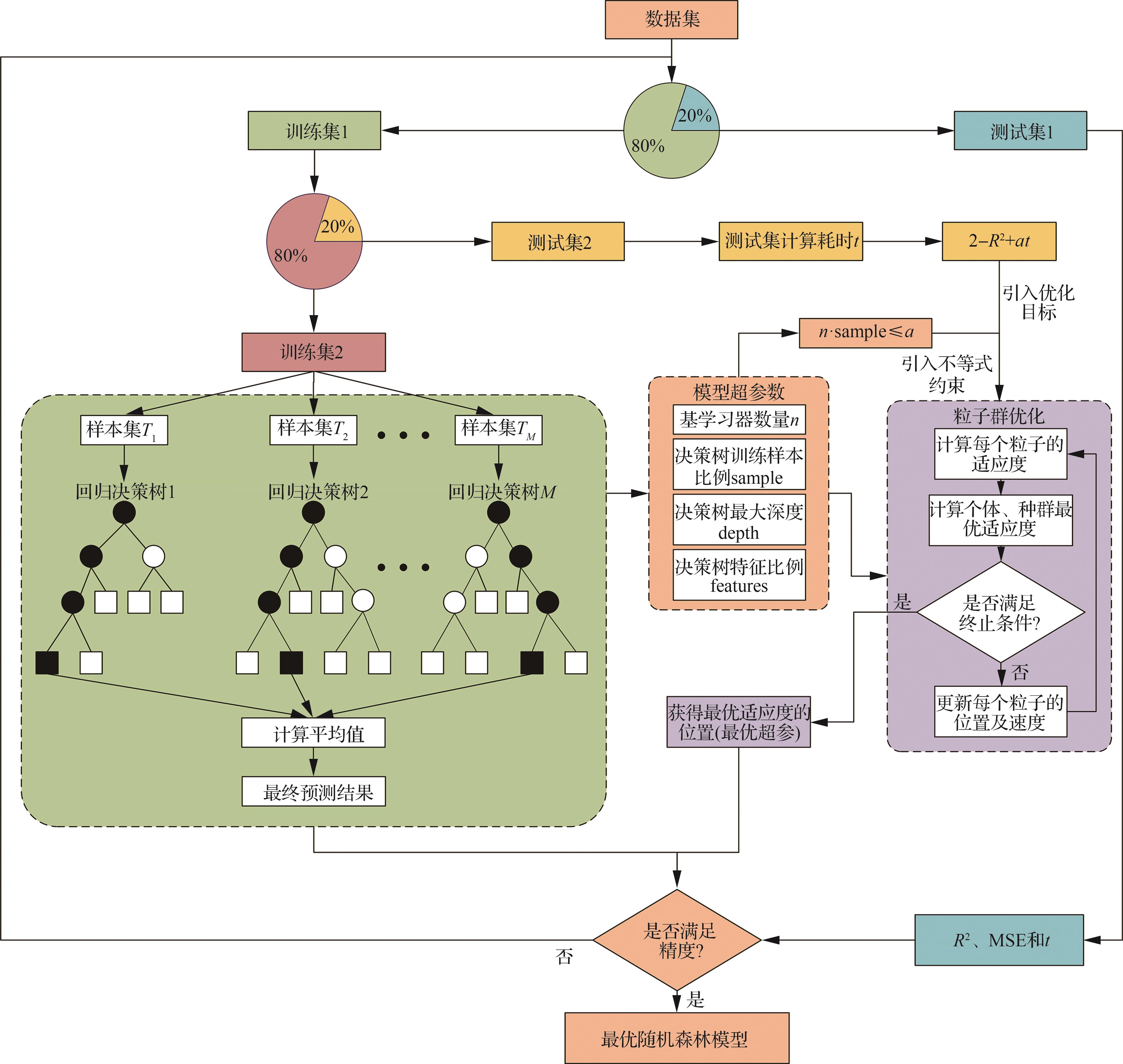
Fig.2
Virtual-real fusion modeling process
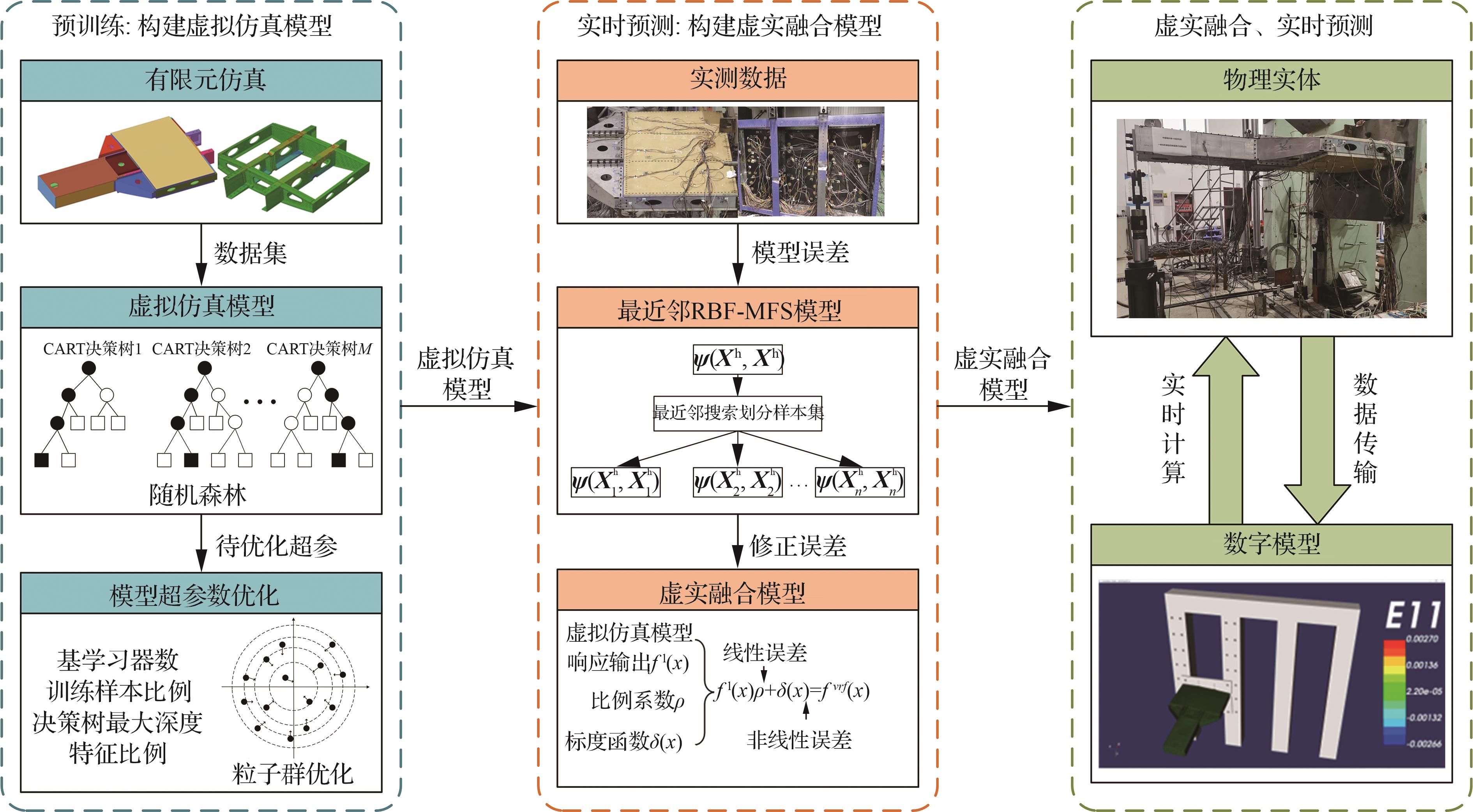
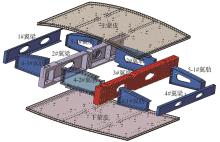
Fig.3
Assembly drawing of wing box section
Table 1
Material list of wing box section
| 零件名称 | 编号 | 材料 |
|---|---|---|
| 蒙皮 | 上蒙皮、下蒙皮 | 玻璃纤维+碳纤维+泡沫夹心 |
| 前主梁、后主梁 | 2#翼梁、3#翼梁 | 30CrMnSiA |
| 前梁、后梁、内侧肋、外侧肋 | 1#翼梁、4#翼梁、4#翼肋、5#翼肋 | 7075铝合金 |
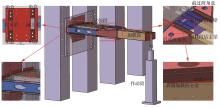
Fig.4
Test loading scheme
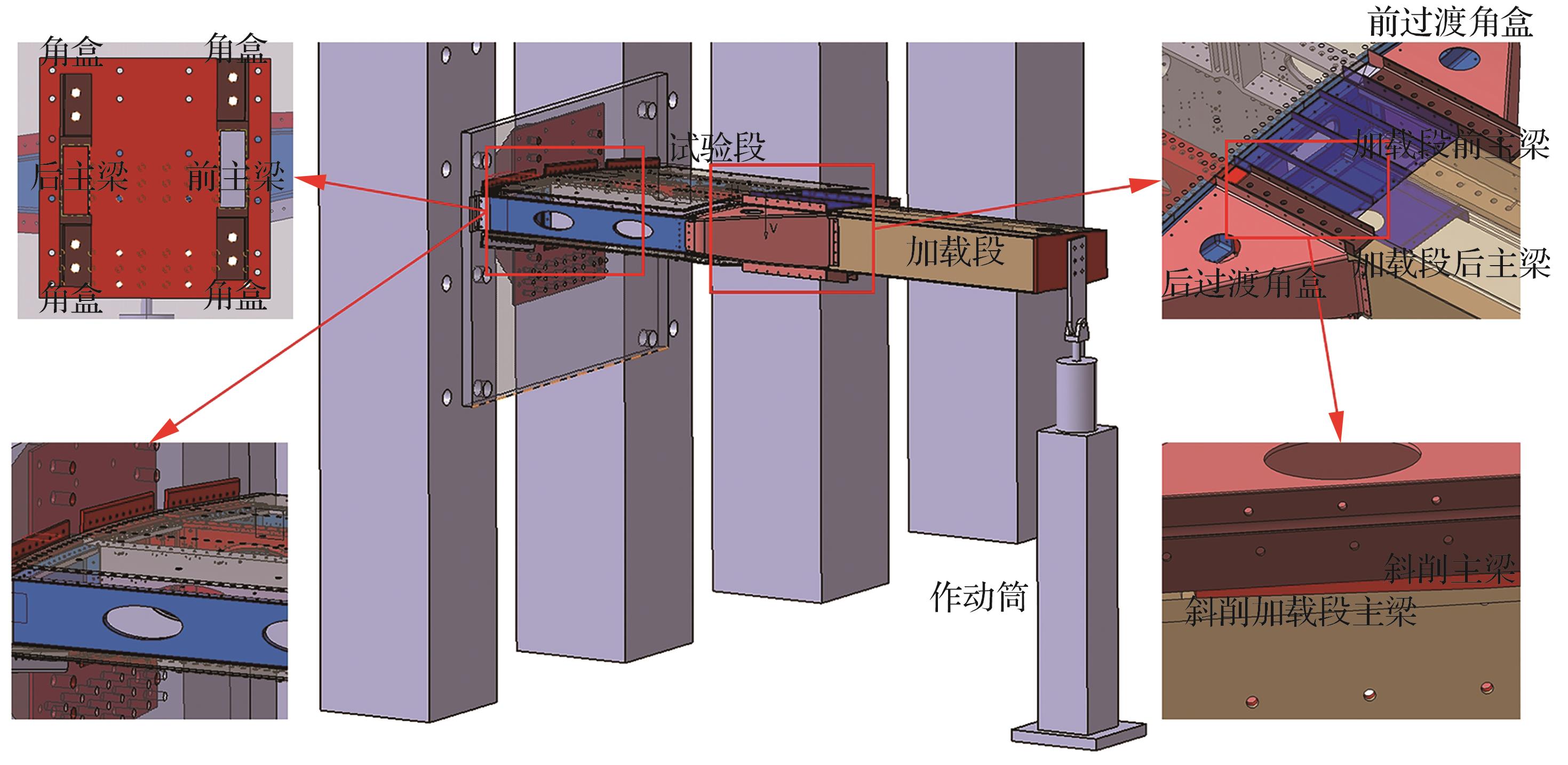
Fig.5
Layout position of strain gauge on wing skin
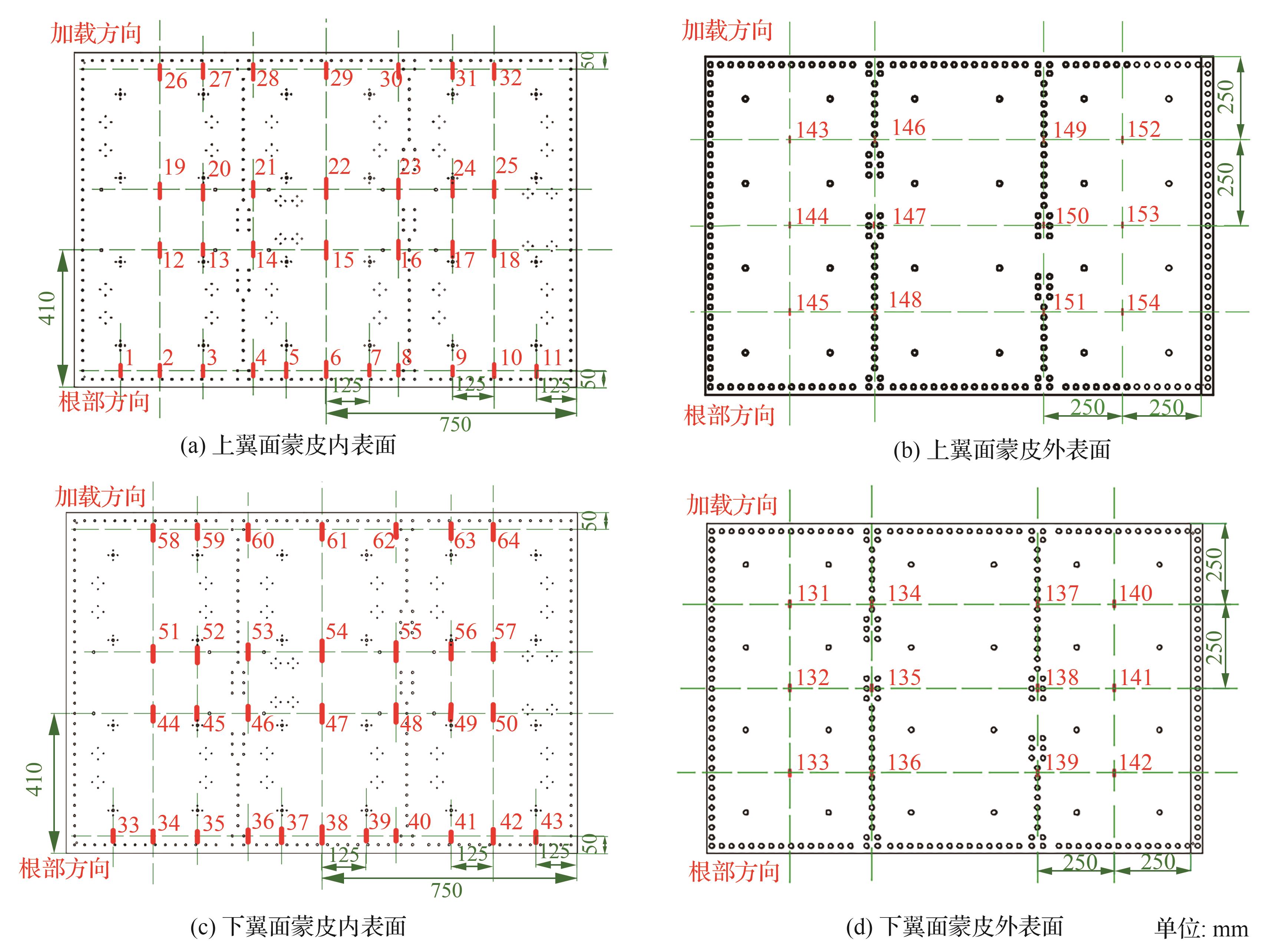
Fig.6
Layout position of strain gauge on wing main girder and loading section
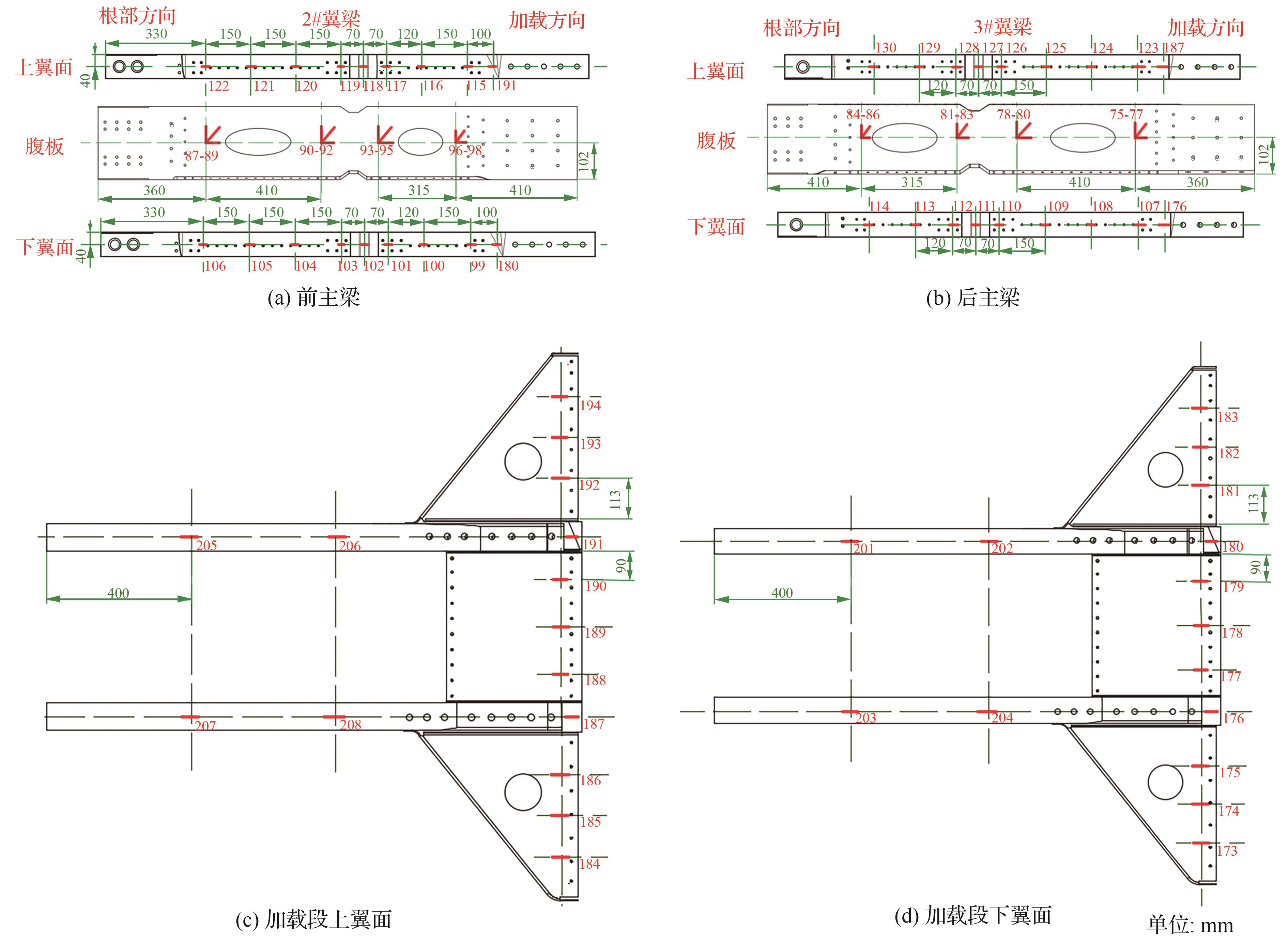
Fig.7
Finite element model of wing box section
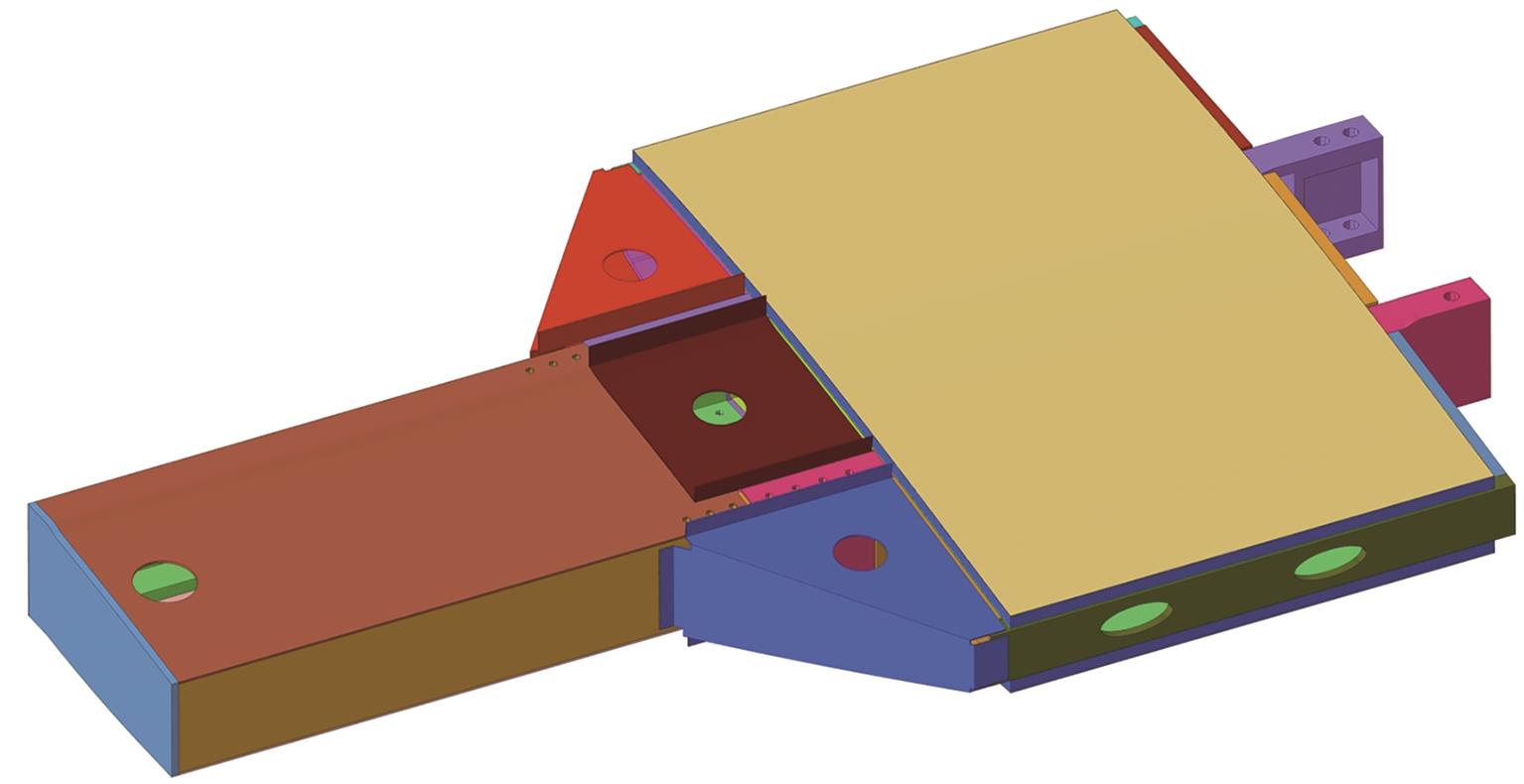
Table 2
Comparison of hyperparameters between RF and PSO-RF
| 模型参数 | RF | PSO-RF |
|---|---|---|
| n | 100 | 23 |
| Sample | 0.2 | 0.83 |
| Depth | 50 | 43 |
| Features | 1.0 | 0.89 |
Fig.8
Comparison of accuracy between RF and PSO-RF
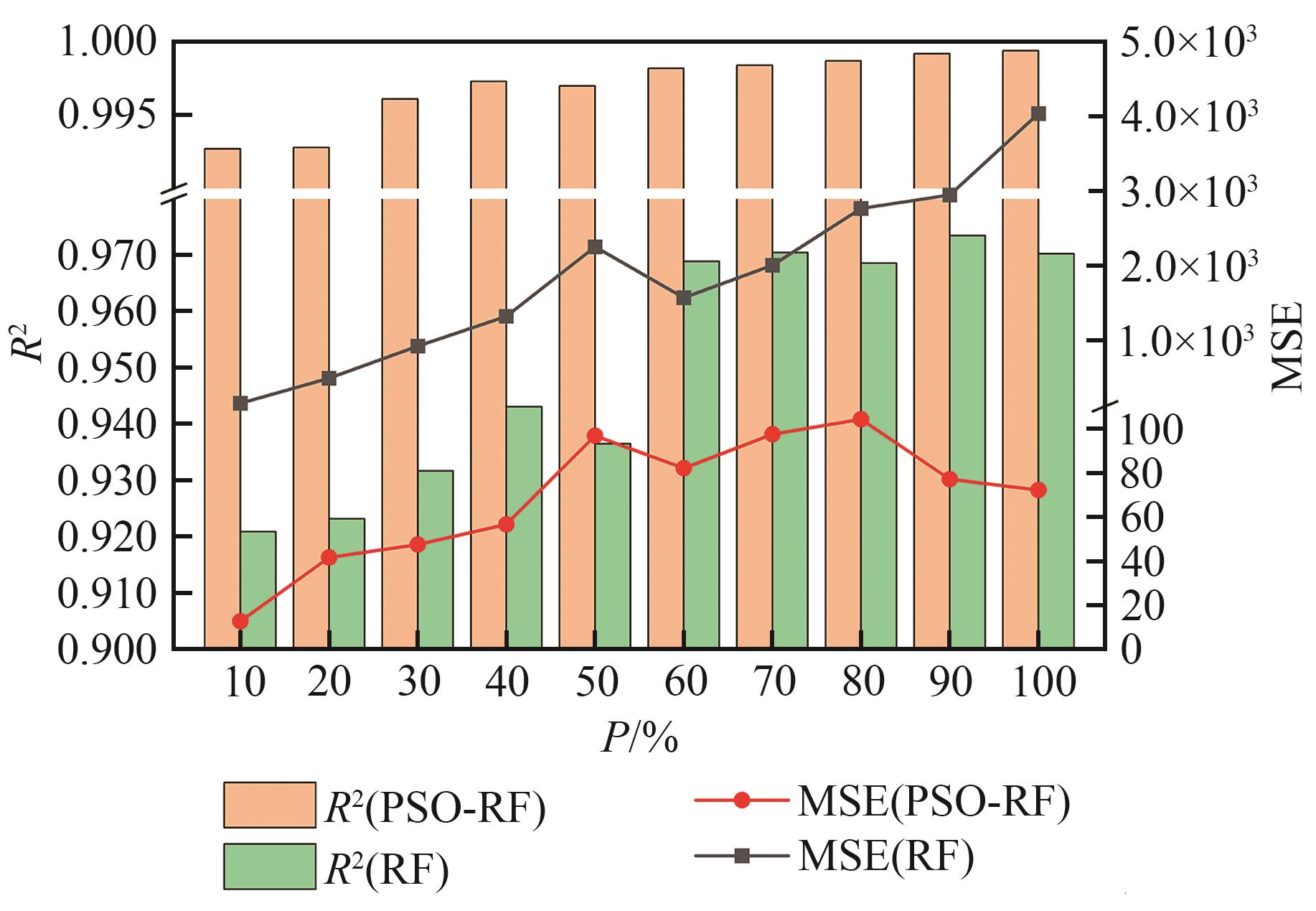
Fig.9
Prediction accuracy of virtual-real fusion model
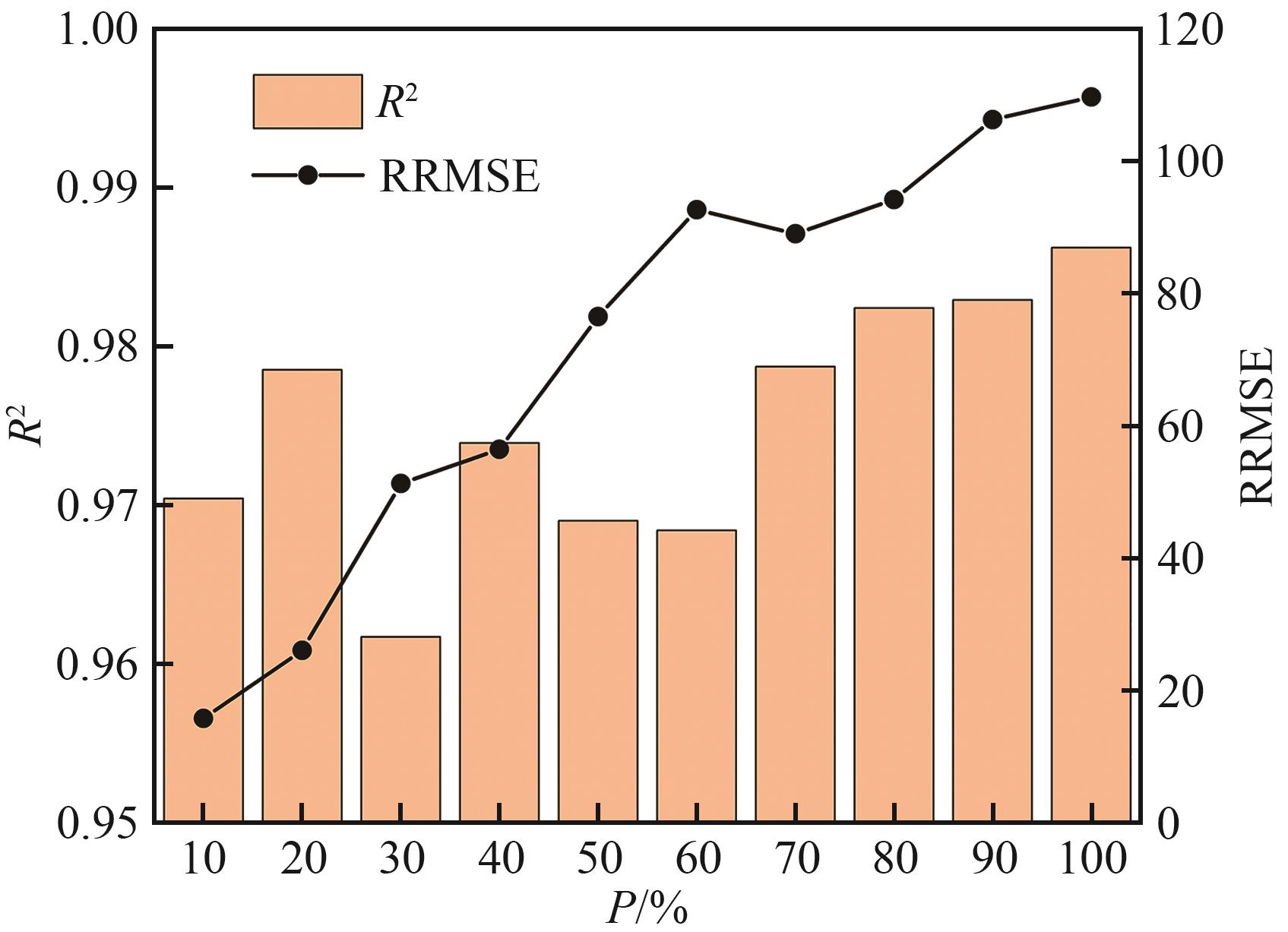
Table 3
Comparison of model strain prediction results in test set and test results
| 编号 | 应变片位置 | 应变/με | 应变绝对误差/με | 相对误差/% | |
|---|---|---|---|---|---|
| 预测值 | 试验值 | ||||
| 12 | 上蒙皮内表面 | -332.68 | -324.00 | 8.68 | 2.68 |
| 16 | 上蒙皮内表面 | -1 072.91 | -927.00 | 145.91 | 15.74 |
| 21 | 上蒙皮内表面 | -573.18 | -698.00 | 124.82 | 17.88 |
| 24 | 上蒙皮内表面 | -756.63 | -766.00 | 9.37 | 1.22 |
| 29 | 上蒙皮内表面 | -1 074.6 | -907.00 | 167.6 | 18.48 |
| 47 | 下蒙皮内表面 | 708.09 | 675.00 | 33.09 | 4.9 |
| 50 | 下蒙皮内表面 | 375.92 | 405.00 | 29.08 | 7.18 |
| 53 | 下蒙皮内表面 | 1 011.78 | 902.00 | 109.78 | 12.17 |
| 102 | 前主梁下翼面缘条转折处 | 1 610.44 | 1 714.00 | 103.56 | 6.04 |
| 118 | 前主梁上翼面缘条转折处 | -2 219.49 | -2 291.00 | 71.51 | 3.12 |
| 123 | 后主梁上翼面下缘条 | 668.89 | -647.00 | 21.89 | 3.38 |
| 132 | 下蒙皮外表面 | -474.75 | 481.00 | 6.25 | 1.3 |
| 151 | 上蒙皮外表面 | -444.74 | -383.00 | 61.74 | 16.12 |
| 184 | 加载段上翼面后过渡角盒 | -101.61 | -95.00 | 6.61 | 6.95 |
| 191 | 前主梁上翼面缘条 | -643.95 | -724.00 | 89.05 | 12.3 |
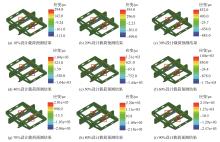
Fig.10
Prediction results of model for maximum strain area
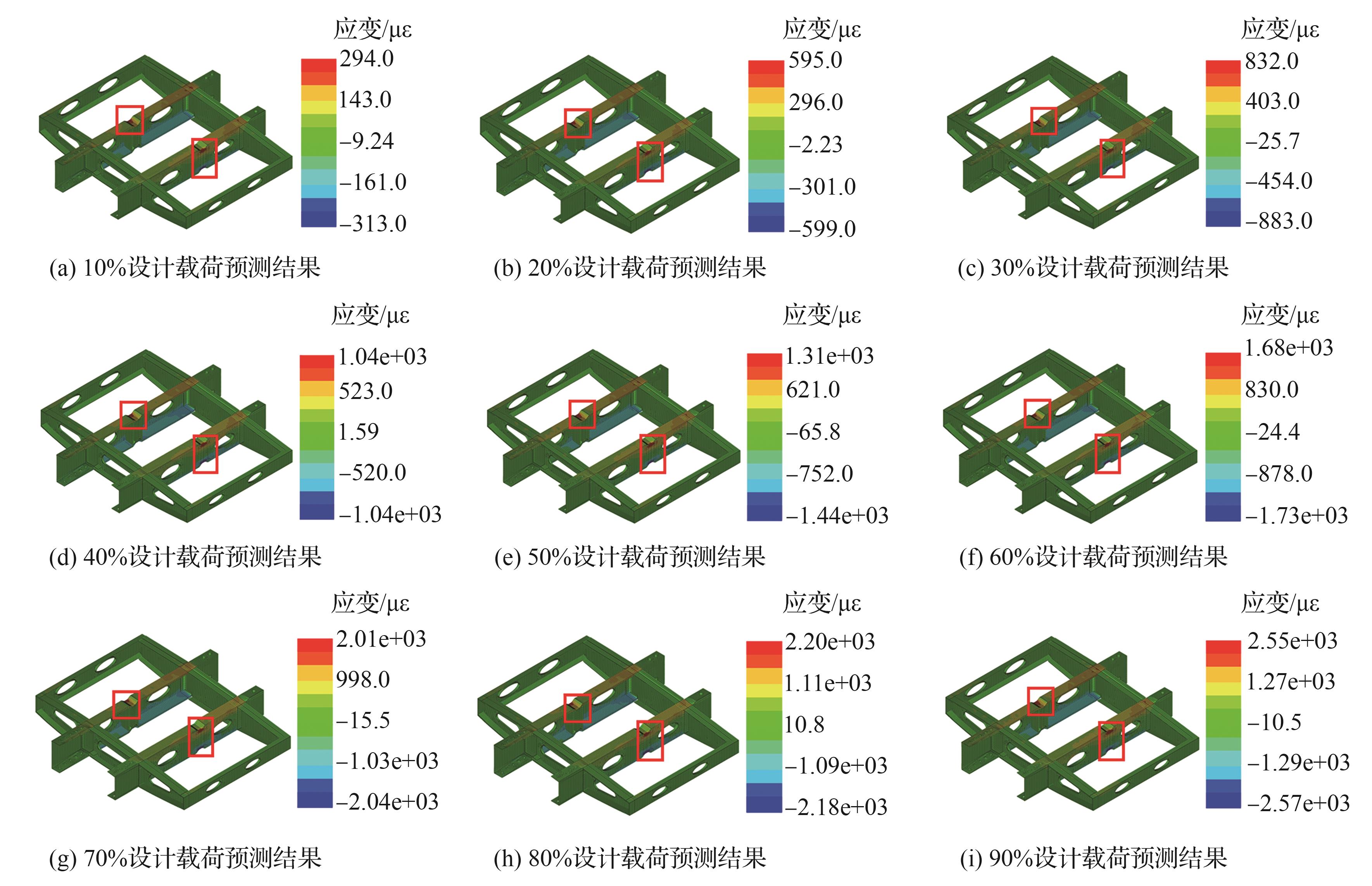
Fig.11
Prediction results of model for maximum and minimum strain
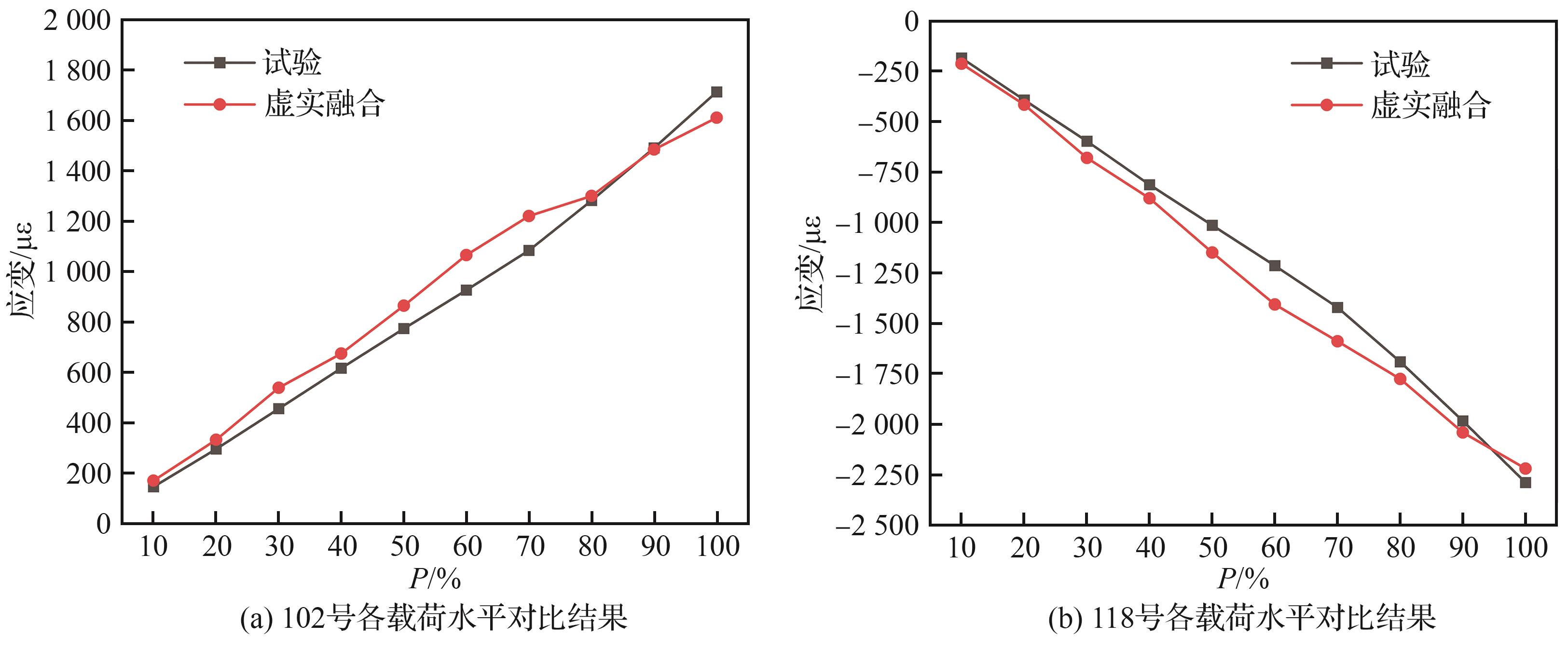
Fig.12
Comparison between virtual-real fusion model and RBF interpolation model
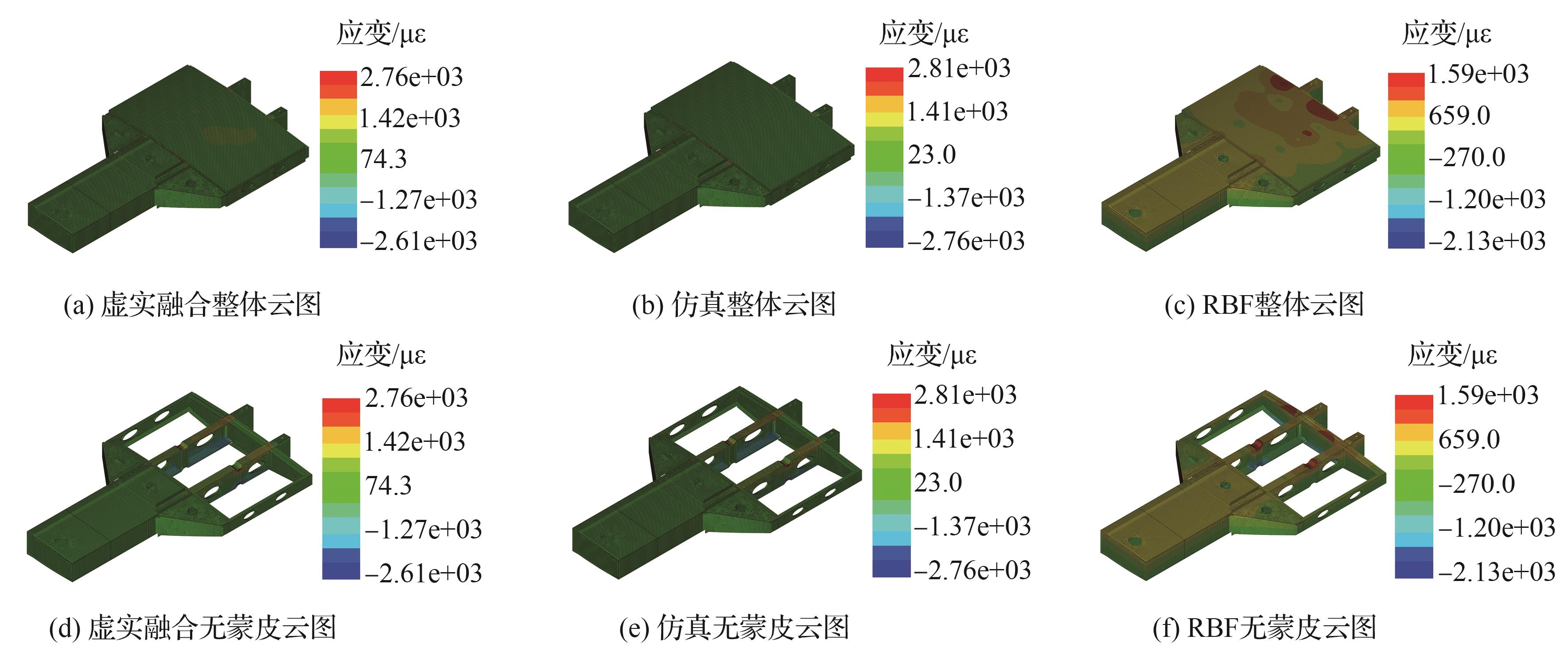
Table 4
Computational environment and efficiency of virtual-real fusion model
| 设备 | CPU | 线程数量 | 内存/GB | 单元数量 | 节点数量 | 计算速度/s |
|---|---|---|---|---|---|---|
| 笔记本电脑 | AMD R7 6800H | 16 | 32 | 233 067 | 330 037 | 0.8 |
| [1] | LI C Z, MAHADEVAN S, LING Y, et al. Dynamic Bayesian network for aircraft wing health monitoring digital twin[J]. AIAA Journal, 2017, 55(3): 930-941. |
| [2] | SCHLUSE M, ROSSMANN J. From simulation to experimentable digital twins: Simulation-based development and operation of complex technical systems[C]∥2016 IEEE International Symposium on Systems Engineering (ISSE). Piscataway: IEEE Press, 2016. |
| [3] | KAPTEYN M G, KNEZEVIC D J, HUYNH D B P, et al. Data-driven physics-based digital twins via a library of component-based reduced-order models[J]. International Journal for Numerical Methods in Engineering, 2022, 123(13): 2986-3003. |
| [4] | 董雷霆, 周轩, 赵福斌, 等. 飞机结构数字孪生关键建模仿真技术[J]. 航空学报, 2021, 42(3): 023981. |
| DONG L T, ZHOU X, ZHAO F B, et al. Key technologies for modeling and simulation of airframe digital twin[J]. Acta Aeronautica et Astronautica Sinica, 2021, 42(3): 023981 (in Chinese). | |
| [5] | 张在房, 林炜, 程辉, 等. 基于数字孪生的航天器舱门展收机构优化设计[J]. 计算机集成制造系统, 2019, 25(6): 1371-1380. |
| ZHANG Z F, LIN W, CHENG H, et al. Design optimization of spacecraft hatch deployable mechanism based on digital twin[J]. Computer Integrated Manufacturing Systems, 2019, 25(6): 1371-1380 (in Chinese). | |
| [6] | LAI X N, WANG S, GUO Z G, et al. Designing a shape-performance integrated digital twin based on multiple models and dynamic data: A boom crane example[J]. Journal of Mechanical Design, 2021, 143(7): 071703. |
| [7] | WANG S, LAI X N, HE X W, et al. Building a trustworthy product-level shape-performance integrated digital twin with multifidelity surrogate model[J]. Journal of Mechanical Design, 2022, 144(3): 031703. |
| [8] | LAI X N, HE X W, WANG S, et al. Building a lightweight digital twin of a crane boom for structural safety monitoring based on a multifidelity surrogate model[J]. Journal of Mechanical Design, 2022, 144(6): 064502. |
| [9] | LAI X N, YANG L L, HE X W, et al. Digital twin-based structural health monitoring by combining measurement and computational data: An aircraft wing example[J]. Journal of Manufacturing Systems, 2023, 69: 76-90. |
| [10] | 田阔, 孙志勇, 李增聪. 面向结构静力试验监测的高精度数字孪生方法[J]. 航空学报, 2024, 45(7): 429134. |
| TIAN K, SUN Z Y, LI Z C. High-precision digital twin method for structural static test monitoring[J]. Acta Aeronautica et Astronautica Sinica, 2024, 45(7): 429134 (in Chinese). | |
| [11] | CHEN Q H, ZHANG Y, DONG X, et al. A high-accuracy shape sensing method for deformation digital twin monitoring of thin-walled aircraft structures[J]. Aerospace Science and Technology, 2026, 168: 110960. |
| [12] | 杨亮亮, 龚壮壮, 何西旺, 等. 面向结构损伤识别的数字孪生建模[J/OL] .机械工程学报, 1-14 [2026-01-16]. . |
| YANG L L, GONG Z Z, HE X W, et al. Digital Twin Construction for Structural Damage Identification Intelligent [J] Journal of Mechanical Engineer-ing, 1-14 [2026-01-16]. (in Chinese). | |
| [13] | XIAO M Y, ZHANG G H, BREITKOPF P, et al. Extended Co-Kriging interpolation method based on multi-fidelity data[J]. Applied Mathematics and Computation, 2018, 323: 120-131. |
| [14] | BAILLY J, BAILLY D. Multifidelity aerodynamic optimization of a helicopter rotor blade[J]. AIAA Journal, 2019, 57(8): 3132-3144. |
| [15] | ZHOU Q, WU Y D, GUO Z D, et al. A generalized hierarchical co-Kriging model for multi-fidelity data fusion[J]. Structural and Multidisciplinary Optimization, 2020, 62(4): 1885-1904. |
| [16] | LIU H, LI G Q, KANG C Y, et al. Enhancing energy efficiency in aero-engines through multi-fidelity optimization of labyrinth seal design[J]. Energy, 2025, 335: 138142. |
| [17] | ZHANG Y M, KIM N H, PARK C, et al. Multifidelity surrogate based on single linear regression[J]. AIAA Journal, 2018, 56(12): 4944-4952. |
| [18] | FERNÁNDEZ-GODINO M G. Review of multi-fidelity models[EB/OL]. arXiv prepint: 1609.07196, 2016. |
| [19] | LI X, GAO W K, GU L X, et al. A cooperative radial basis function method for variable-fidelity surrogate modeling[J]. Structural and Multidisciplinary Optimization, 2017, 56(5): 1077-1092. |
| [20] | CONTI P, GUO M W, MANZONI A, et al. Multi-fidelity surrogate modeling using long short-term memory networks[J]. Computer Methods in Applied Mechanics and Engineering, 2023, 404: 115811. |
| [21] | BREIMAN L. Random forests[J]. Machine Learning, 2001, 45(1): 5-32. |
| [22] | POLI R, KENNEDY J, BLACKWELL T. Particle swarm optimization[J]. Swarm Intelligence, 2007, 1(1): 33-57. |
| [23] | 周奇, 杨扬, 宋学官, 等. 变可信度近似模型及其在复杂装备优化设计中的应用研究进展[J]. 机械工程学报, 2020, 56(24): 219-245. |
| ZHOU Q, YANG Y, SONG X G, et al. Survey of multi-fidelity surrogate models and their applications in the design and optimization of engineering equipment[J]. Journal of Mechanical Engineering, 2020, 56(24): 219-245 (in Chinese). | |
| [24] | DURANTIN C, ROUXEL J, DÉSIDÉRI J A, et al. Multifidelity surrogate modeling based on radial basis functions[J]. Structural and Multidisciplinary Optimization, 2017, 56(5): 1061-1075. |
| [1] | Yu DING, Guoao NING, Kaixin JIN, Bo SUN, Huai LI, Xuanyuan SU. Fault data generation for electromechanical systems based on hierarchical Digital Twin [J]. Acta Aeronautica et Astronautica Sinica, 2026, 47(8): 432663-432663. |
| [2] | Donghuan WANG, Hai JIN, Dongkai WAN, Jun WANG, Hong XIAO. Real-time monitoring and evaluation method for aero-engine performance degradation based on performance digital twin [J]. Acta Aeronautica et Astronautica Sinica, 2026, 47(5): 132459-132459. |
| [3] | Yuqian ZHANG, Yongge LI, Xiaochuan LIU, Yong XU. Digital-twin-driven reliability domain analysis for aircraft landing gear systems [J]. Acta Aeronautica et Astronautica Sinica, 2025, 46(24): 632256-632256. |
| [4] | Lei HUANG, Cong GUO, Xiaobo ZHANG, Liangchen SUN, Yinghui ZUO, Bo WANG, Kuo TIAN. Aircraft structural health management method based on flight parameter-load-life digital twin models [J]. Acta Aeronautica et Astronautica Sinica, 2025, 46(21): 532382-532382. |
| [5] | Yiwei HUANG, Yibin GENG, Tianhe GAO, Xuanwei HU, Yuan WANG, Hongyan MA, Kuo TIAN. Digital twin driven high precision reconstruction method for full-field deformation of structure [J]. Acta Aeronautica et Astronautica Sinica, 2025, 46(19): 530967-530967. |
| [6] | Dingqiang DAI, Xuan ZHOU, Leiting DONG, Xiasheng SUN. Research progress and prospects of digital engineering and digital twin in field of aeronautical fatigue and structural integrity [J]. Acta Aeronautica et Astronautica Sinica, 2025, 46(19): 531022-531022. |
| [7] | Shangyu LI, Hang FENG, Junquan CHEN, Bin CHEN, Dan MEI. A design architecture and conceptual modeling approach for digital twins [J]. Acta Aeronautica et Astronautica Sinica, 2025, 46(19): 531118-531118. |
| [8] | Junqi LEI, Yuehua CHENG, Bin JIANG, Cheng XU, Guili XU, Tianyu SUN. Digital-twin’s modelling and dynamic adjustment mechanism of rudder-loop-system under fault conditions [J]. Acta Aeronautica et Astronautica Sinica, 2025, 46(19): 531273-531273. |
| [9] | Liang CHEN, Lei HUANG, Yuxuan GU, Cong GUO, Kexin LIN, Yu GUAN, Jian SONG. Twinning technology of key part load based on flight parameters [J]. Acta Aeronautica et Astronautica Sinica, 2025, 46(19): 531292-531292. |
| [10] | Yuxuan GU, Cong GUO, Lei HUANG, Yifei DONG, Hongda DONG, Zhilun DENG. Refined management of fleet life driven by digital twins [J]. Acta Aeronautica et Astronautica Sinica, 2025, 46(19): 531290-531290. |
| [11] | Yinxuan ZHANG, Qi ZHANG, Zhenyong XU, Linshu MENG. Predicting method of aircraft mechanical response based on residual neural networks [J]. Acta Aeronautica et Astronautica Sinica, 2025, 46(19): 531295-531295. |
| [12] | Ruoyao XIAO, Lianyu ZHENG, Jian ZHOU, Siru ZHAO, Jieru ZHANG, Yuwu CHEN. Online optimization method for positioning accuracy in cylindrical components aligning based on digital twins [J]. Acta Aeronautica et Astronautica Sinica, 2025, 46(19): 531978-531978. |
| [13] | Jialiang HU, Jiangpeng WU, Sixu HUO, Yidi GAO, Hua ZHENG. Modal parameter estimation based on reconstruction of digital twin sweep data in flutter flight test [J]. Acta Aeronautica et Astronautica Sinica, 2025, 46(19): 531602-531602. |
| [14] | Pengfei WANG, Lifang ZENG, Xueming SHAO, Jun LI. Multi-source data fusion modeling method for aerodynamic load of aircraft wing based on pre-training and fine-tuning [J]. Acta Aeronautica et Astronautica Sinica, 2025, 46(19): 532297-532297. |
| [15] | Yifei WANG, Geyong CAO, Yang CAO, Xiaojun WANG. Uncertainty technologies in aircraft digital strength twins [J]. Acta Aeronautica et Astronautica Sinica, 2025, 46(19): 532408-532408. |
| Viewed | ||||||
|
Full text |
|
|||||
|
Abstract |
|
|||||
Address: No.238, Baiyan Buiding, Beisihuan Zhonglu Road, Haidian District, Beijing, China
Postal code : 100083
E-mail:hkxb@buaa.edu.cn
Total visits: 6658907 Today visits: 1341All copyright © editorial office of Chinese Journal of Aeronautics
All copyright © editorial office of Chinese Journal of Aeronautics
Total visits: 6658907 Today visits: 1341

 CJA
CJA
