Acta Aeronautica et Astronautica Sinica ›› 2026, Vol. 47 ›› Issue (13): 133120.doi: 10.7527/S1000-6893.2026.33120
• Special Issue: Flow Control and Thermal Management • Previous Articles
Jingfei LIU1,2, Longtai HUANG3, Anran JU1,2( ), Chuanbao XU1,2, Runsheng HE1,2, Zizhuo WANG1,2
Received:2025-11-21
Revised:2026-01-04
Accepted:2026-02-27
Online:2026-03-24
Published:2026-03-16
Contact:
Anran JU
E-mail:juanranjar@qq.com
Supported by:CLC Number:
Jingfei LIU, Longtai HUANG, Anran JU, Chuanbao XU, Runsheng HE, Zizhuo WANG. Blowing flow control test of seaplane scaled models with slipstream effects[J]. Acta Aeronautica et Astronautica Sinica, 2026, 47(13): 133120.
Fig.1
FL-8 wind tunnel test equipment
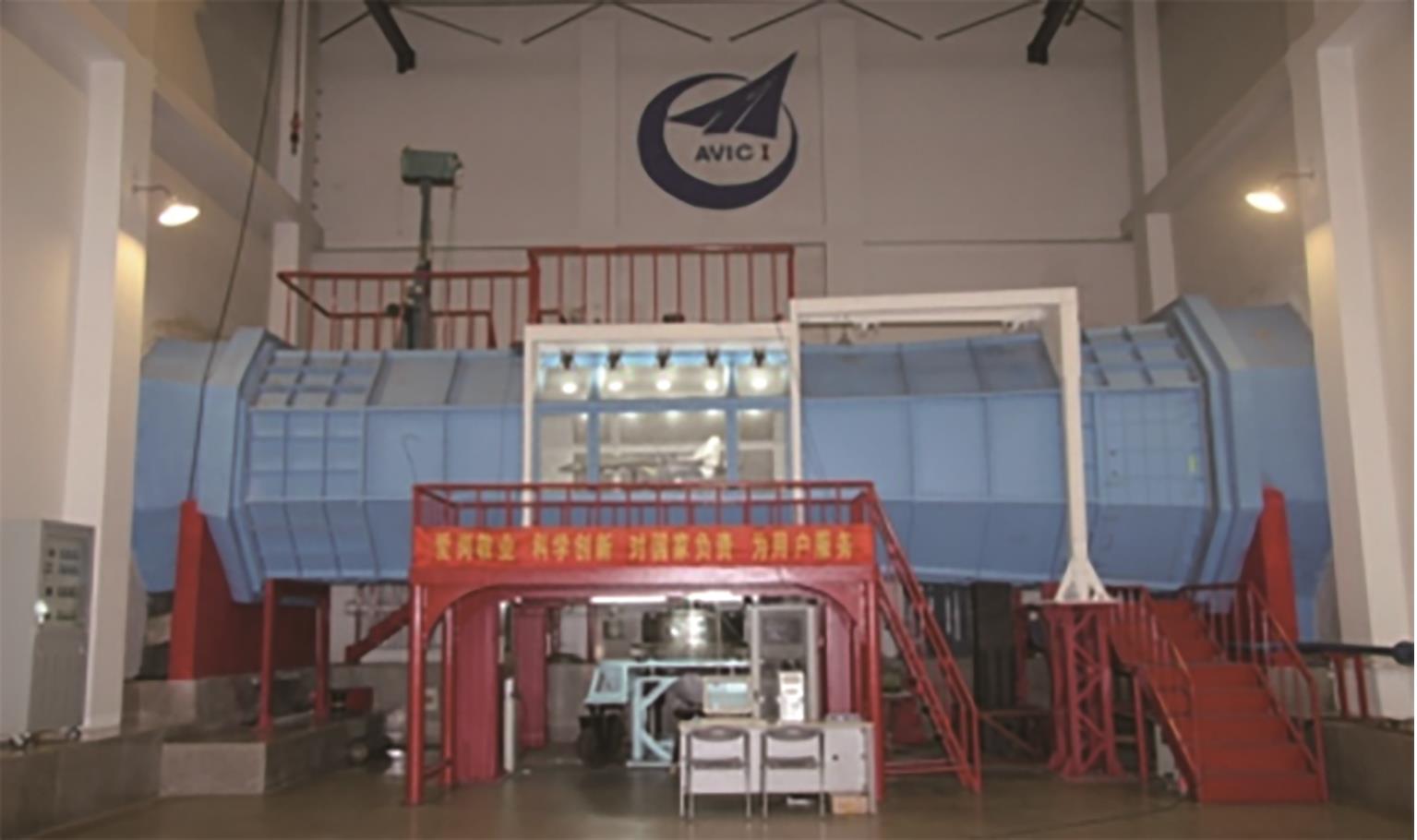
Fig.2
Assembly models of conventional layout and blended wing-body layout
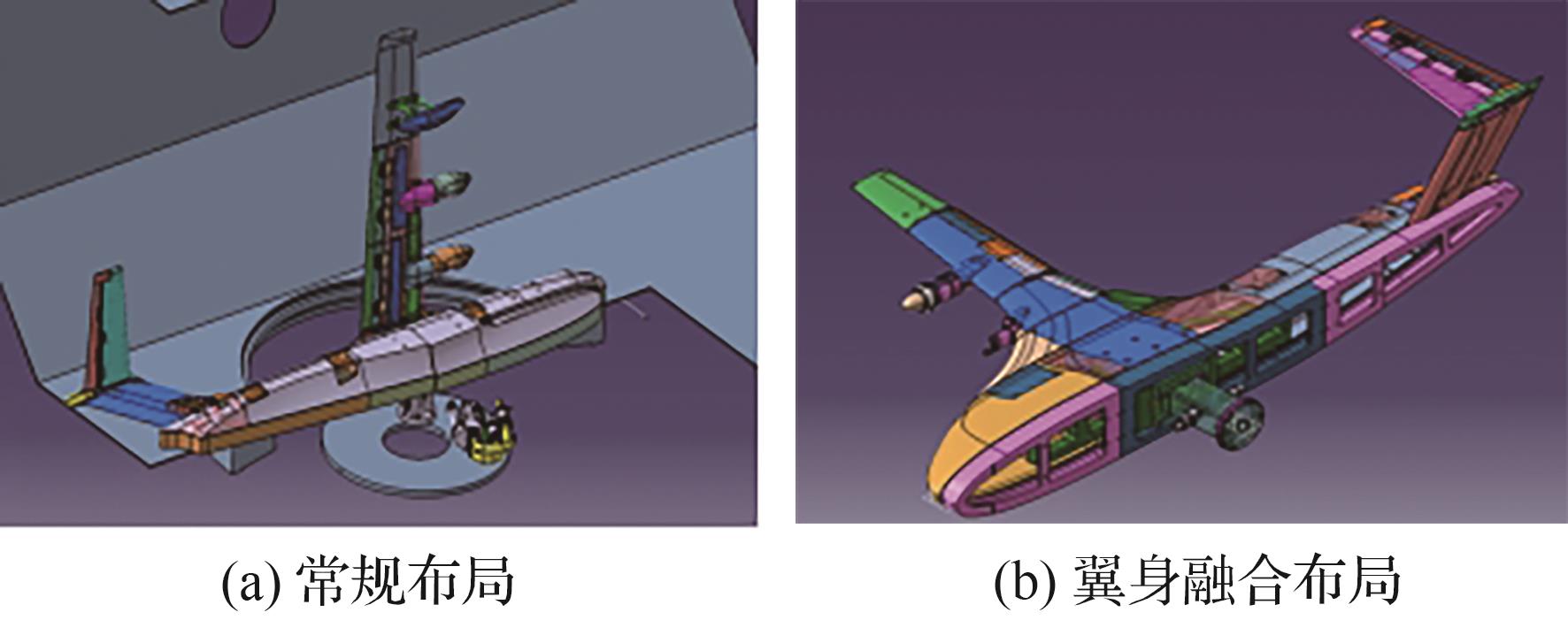
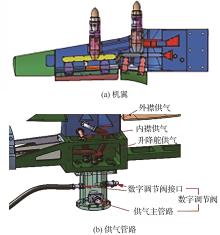
Fig.3
Structural design
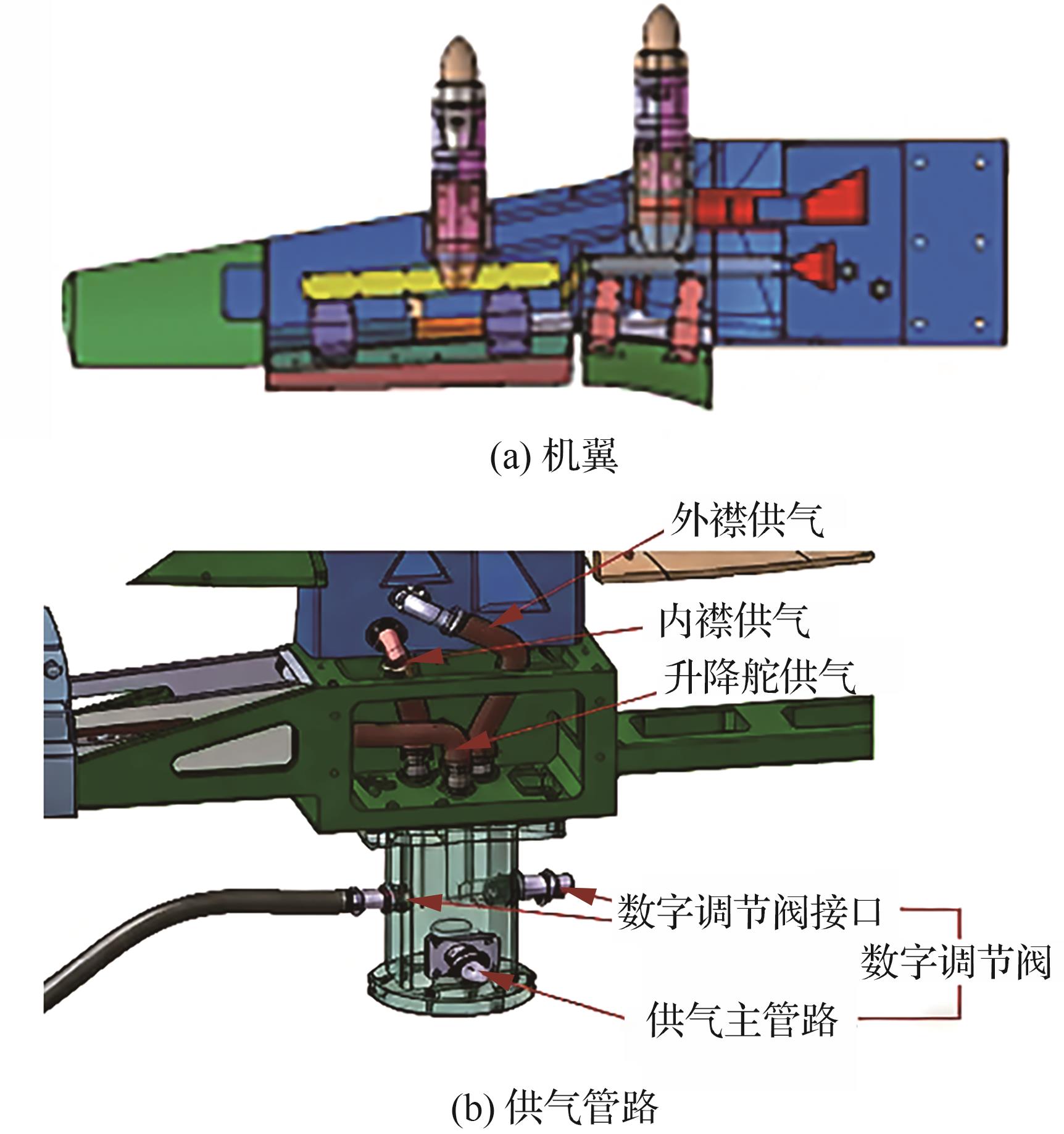
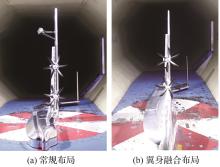
Fig.4
Wind tunnel test model
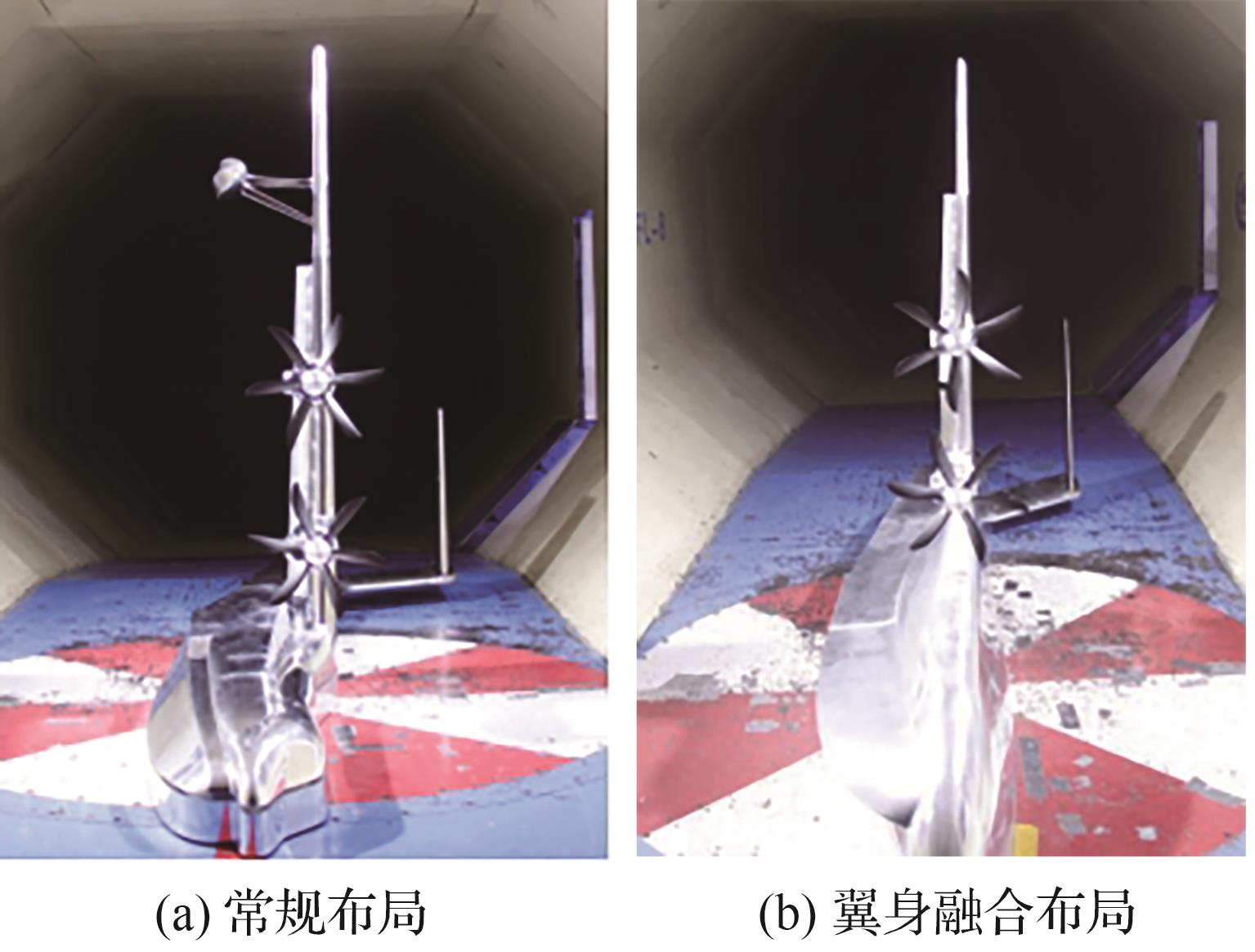
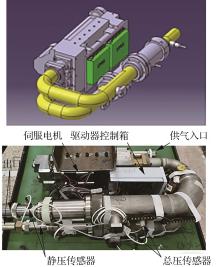
Fig.5
Needle valve
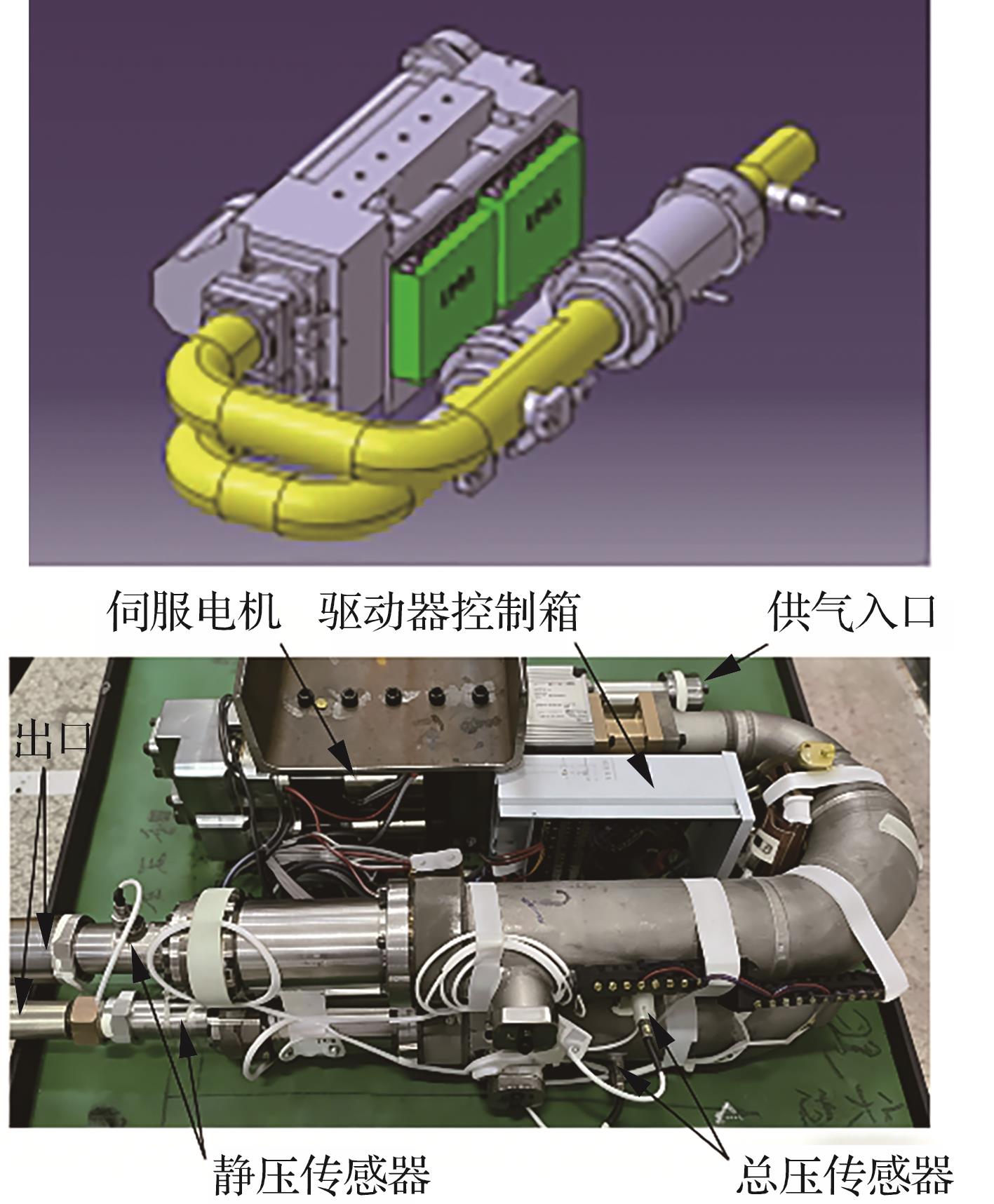
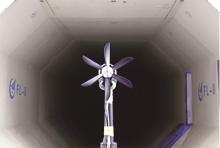
Fig.6
Single propeller test model
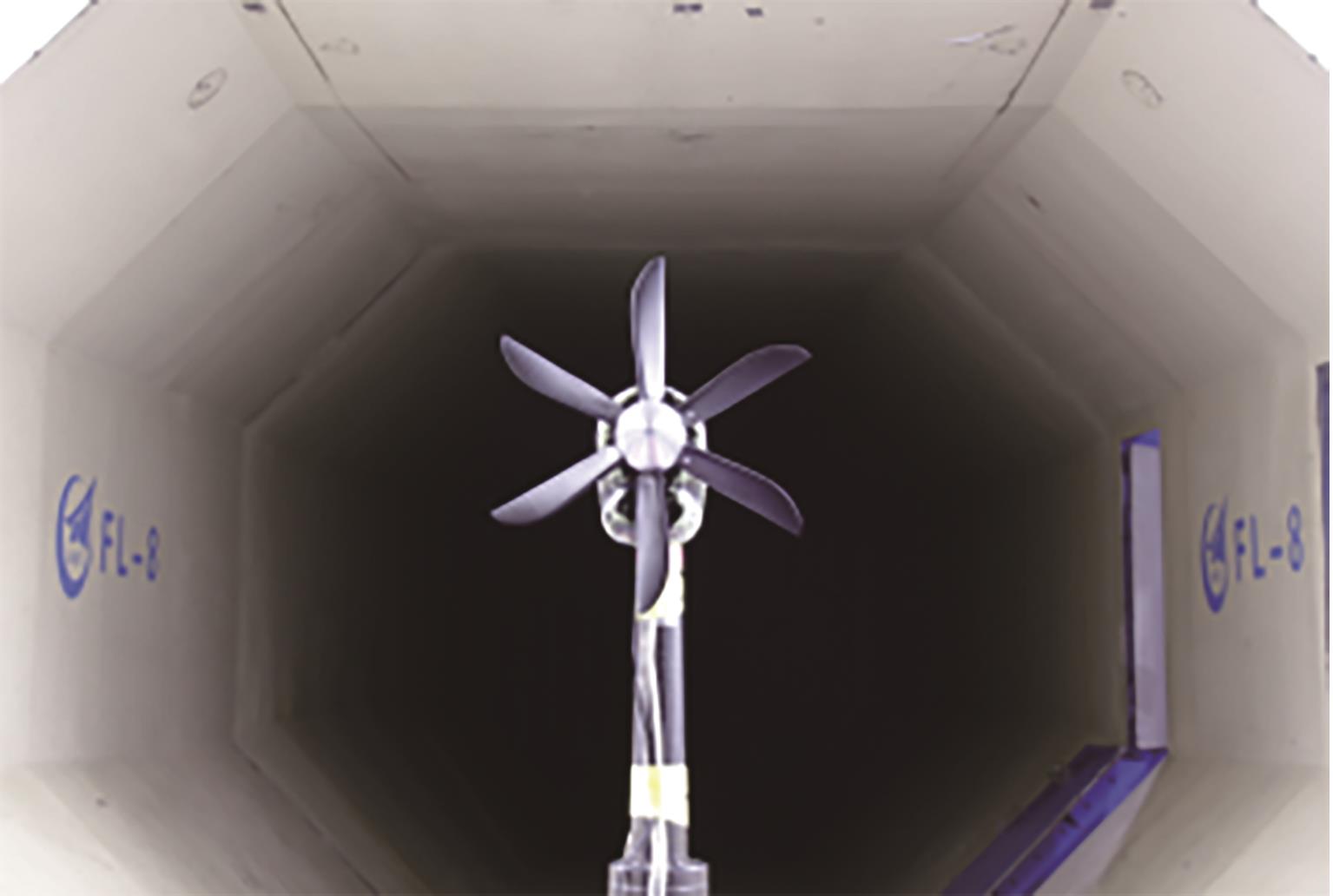
Fig.7
Ground test calibration of air blowing system
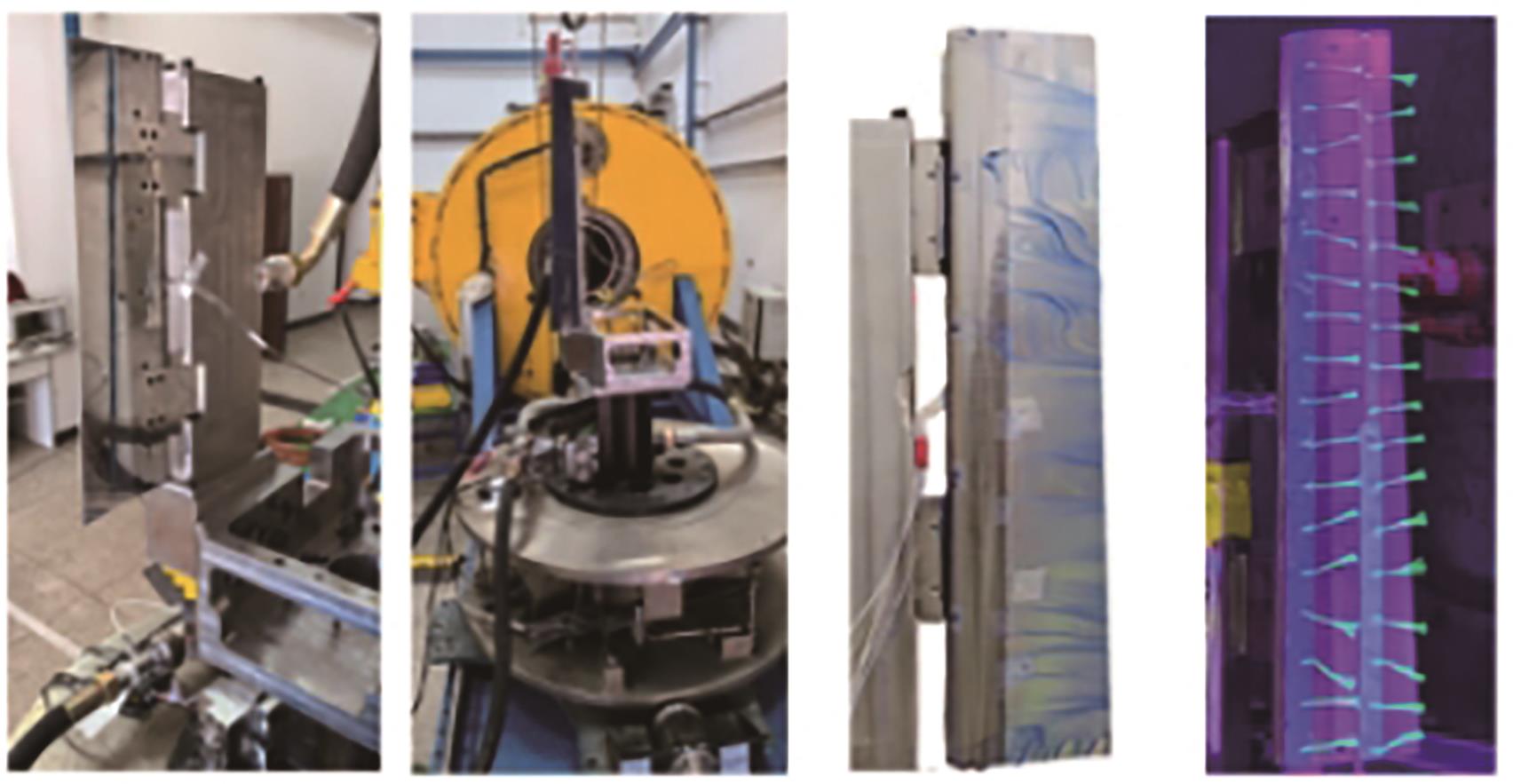
Fig.8
Blowing flow control software interface
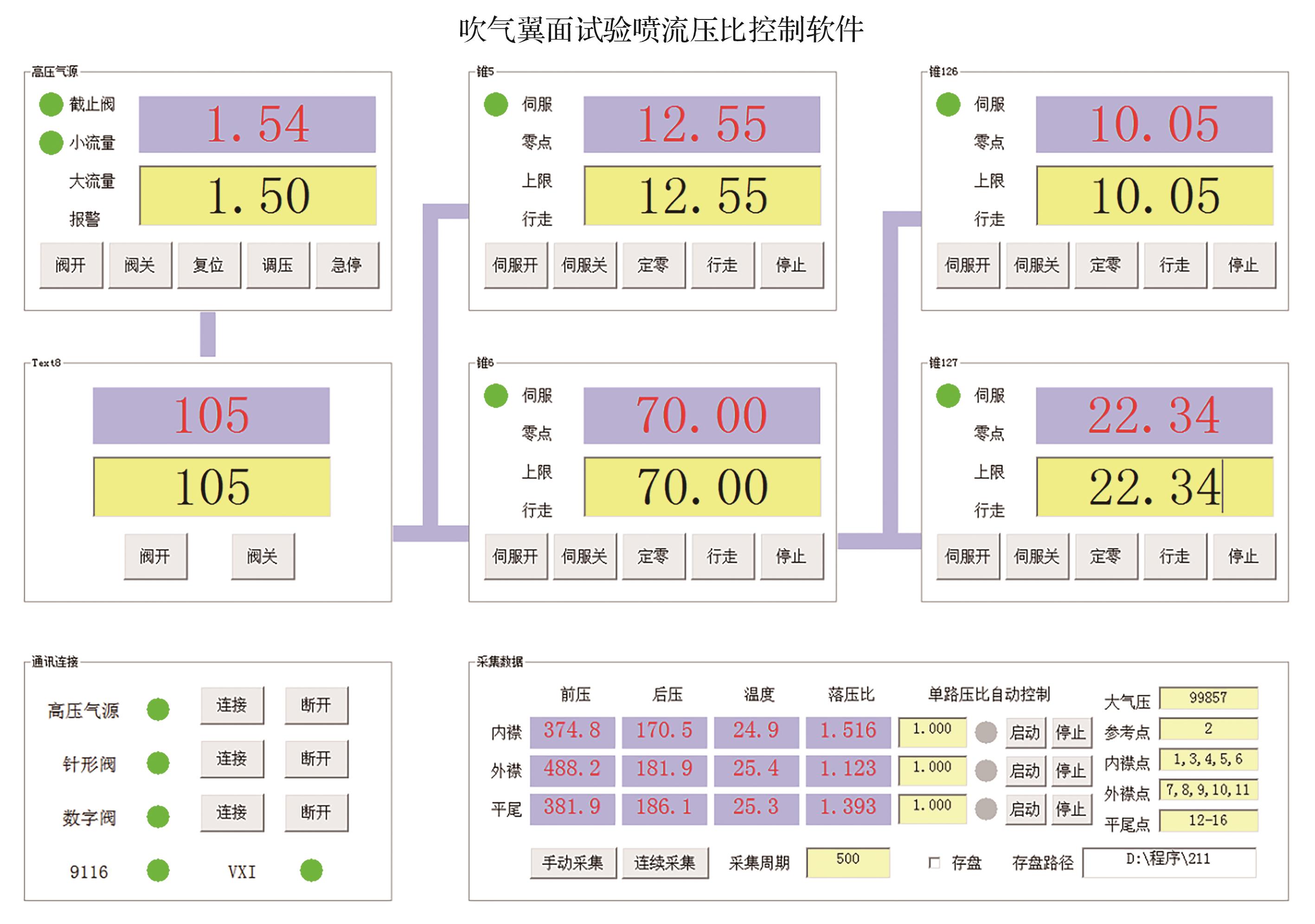
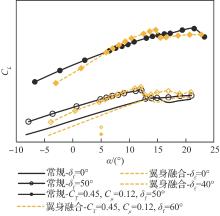
Fig.9
Comparison of lift coefficients between conventional layout and blended wing-body layout under typical conditions
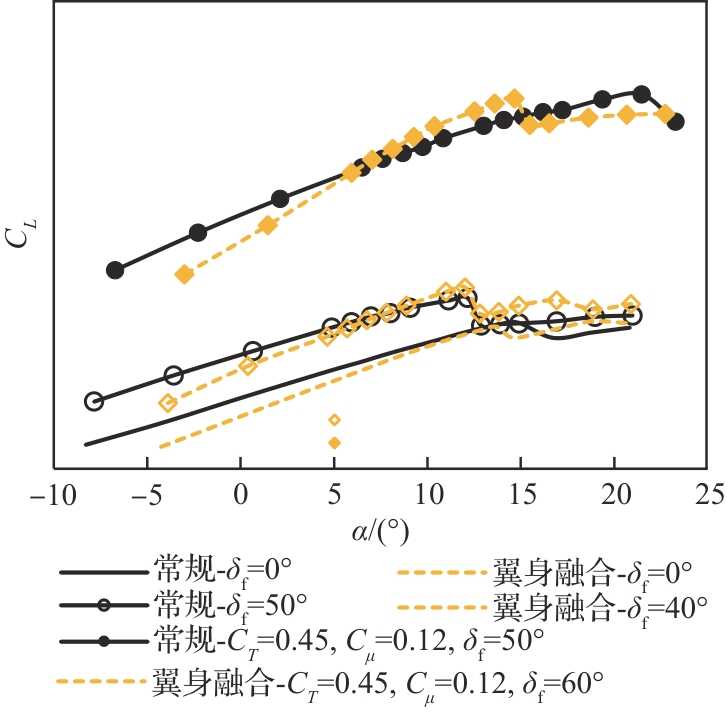
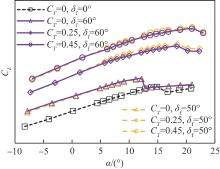
Fig.10
Comparison of lift enhancement effects of slipstream on conventional layout
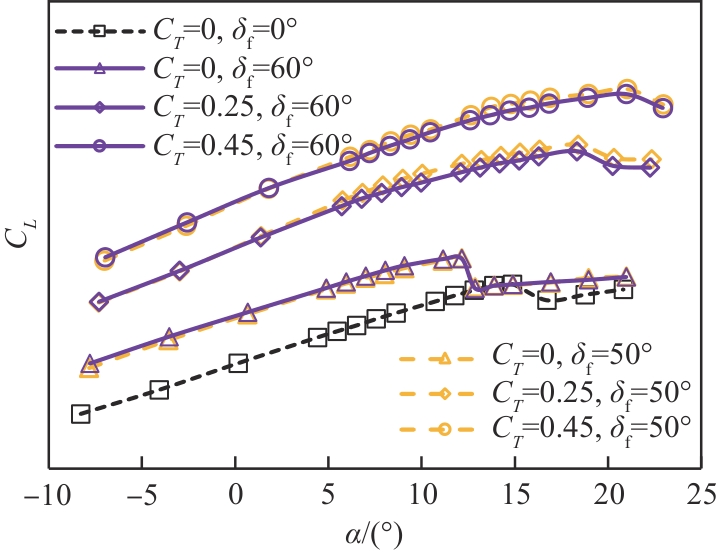
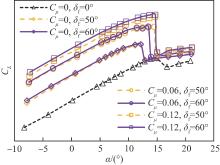
Fig.11
Comparison of lift enhancement effects of blowing on conventional layout
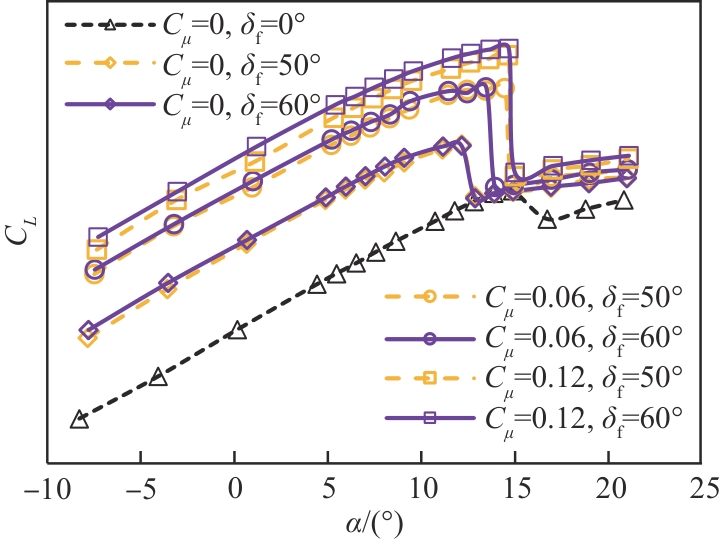
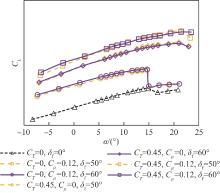
Fig.12
Comparison of lift enhancement effects of slipstream blowing coupling on conventional layout
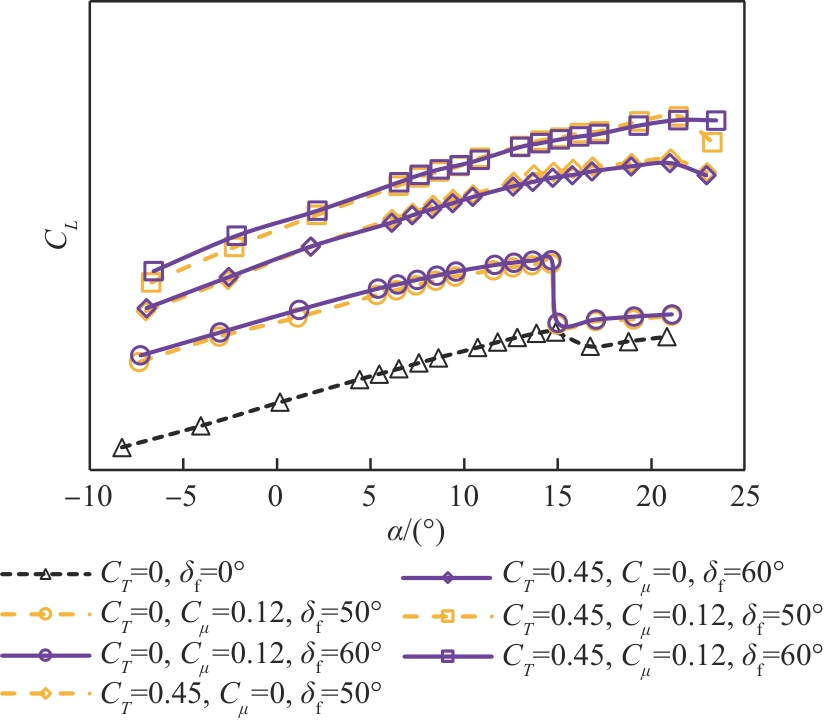
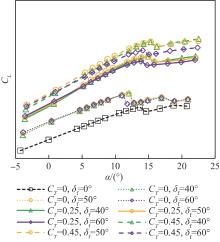
Fig.13
Comparison of lift enhancement effects of slipstream on blended wing-body layout
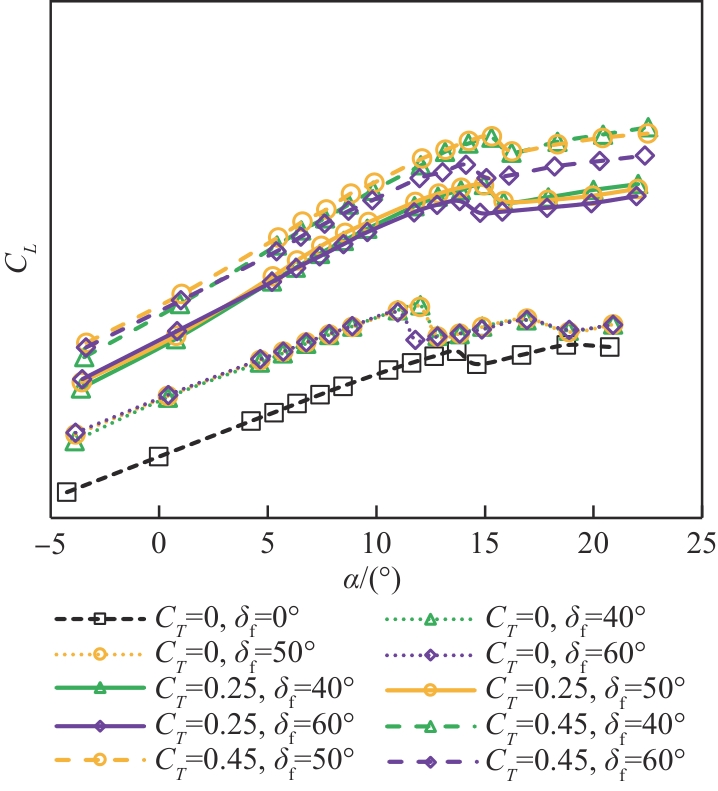
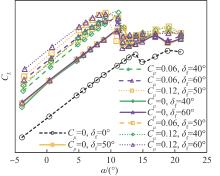
Fig.14
Comparison of lift enhancement effects of blowing on blended wing-body layout
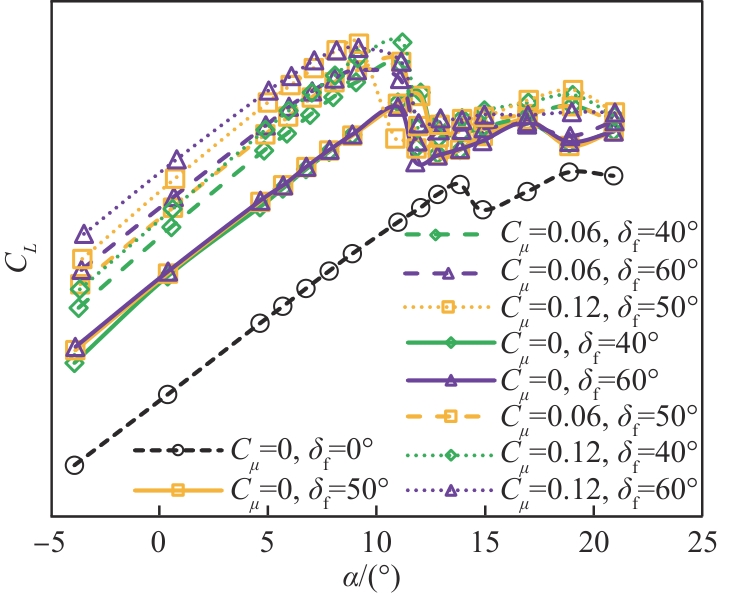
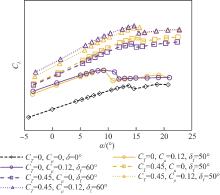
Fig.15
Comparison of lift enhancement effects of slipstream blowing coupling on blended wing-body layout
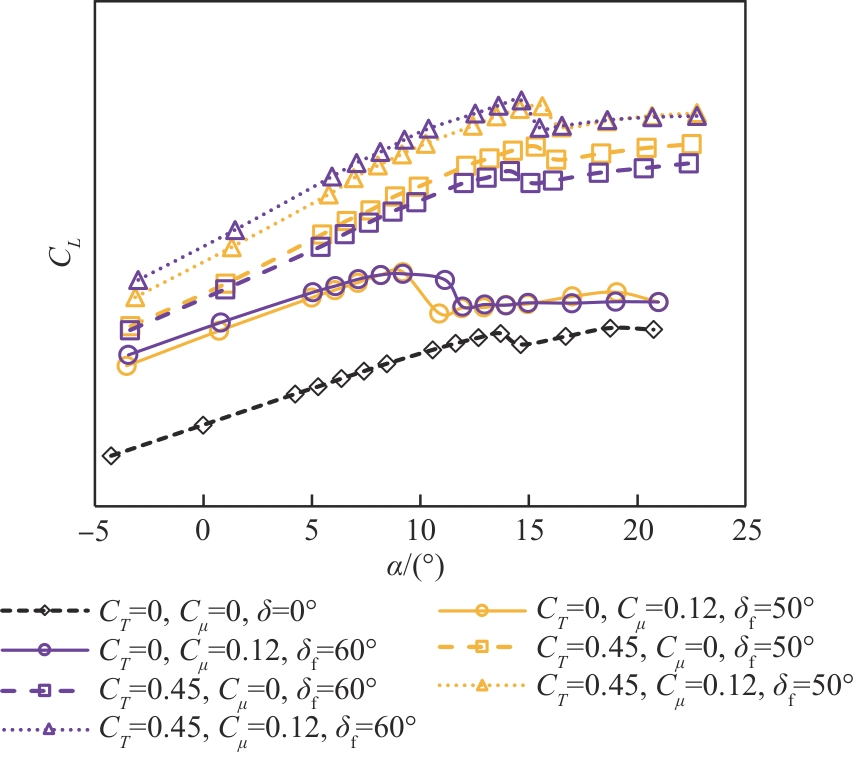
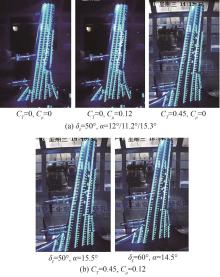
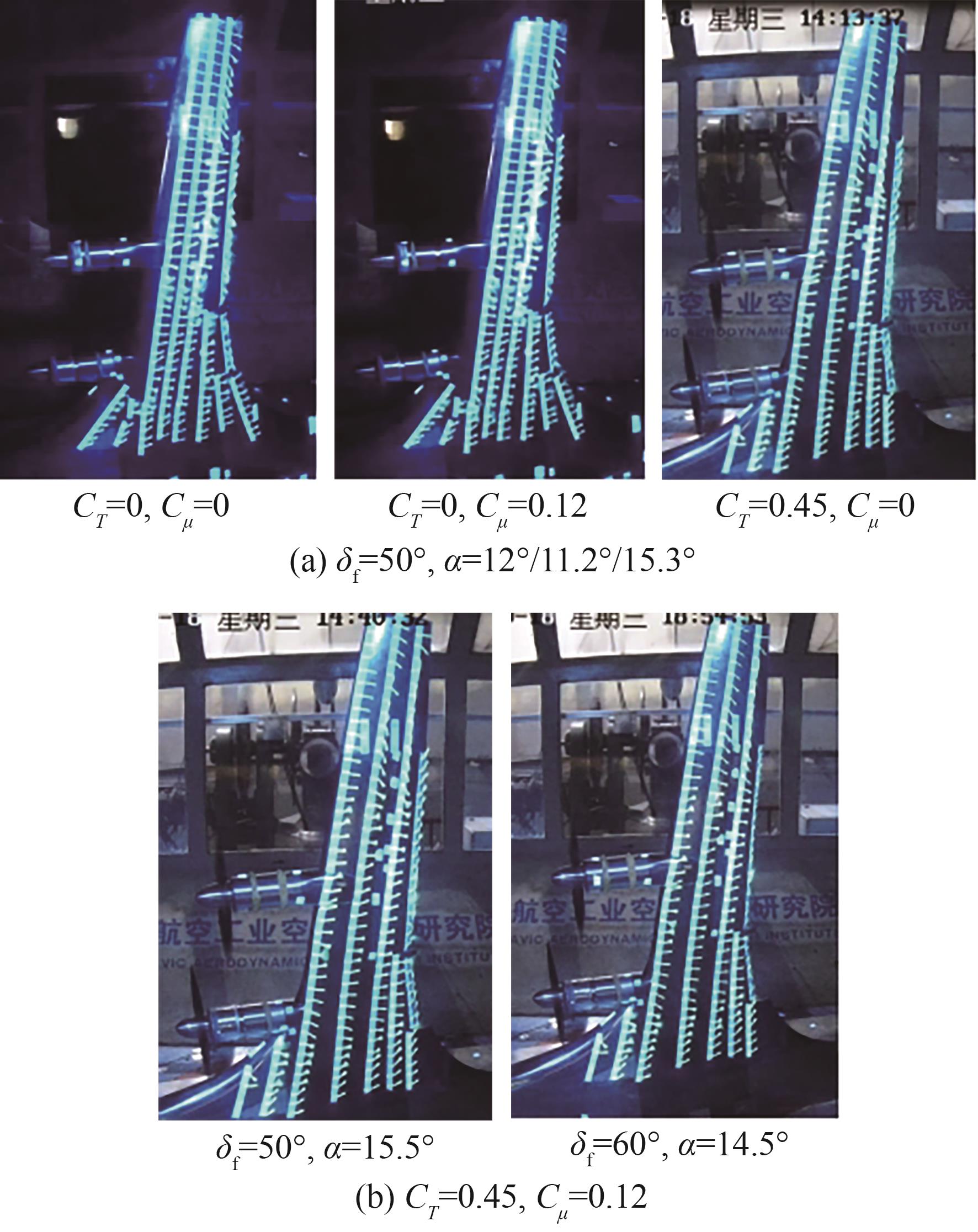
Fig.16
Silk thread flow visualization test results of blended wing-body layout
| [1] | KELLER D, RUDNIK R. Numerical investigation of the dynamic behavior of a high-lift configuration with circulation control[C]∥ 33rd AIAA Applied Aerodynamics Conference. Reston: AIAA, 2015. |
| [2] | BECK N, RADESPIEL R, LENFERS C, et al. Aerodynamic effects of propeller slipstream on a wing with circulation control[J]. Journal of Aircraft, 2015, 52(5): 1422-1436. |
| [3] | MEYER M, MACHUNZE W, BAUER M. Towards the industrial application of active flow control in civil aircraft-an active highlift flap[C]∥ 32nd AIAA Applied Aerodynamics Conference. Reston: AIAA, 2014. |
| [4] | GREENBLATT D, WYGNANSKI I J. The control of flow separation by periodic excitation[J]. Progress in Aerospace Sciences, 2000, 36(7): 487-545. |
| [5] | SOMMERWERK K, HAUPT M C. Design analysis and sizing of a circulation controlled CFRP wing with Coandǎ flaps via CFD-CSM coupling[J]. CEAS Aeronautical Journal, 2014, 5(1): 95-108. |
| [6] | BURNAZZI M, RADESPIEL R. Synergies between suction and blowing for active high-lift flaps[J]. CEAS Aeronautical Journal, 2015, 6(2): 305-318. |
| [7] | RADESPIEL R, BURNAZZI M. Fundamentals in Coanda flap design[C]∥Active Flow and Combustion Control 2014. Cham: Springer, 2015: 101-114. |
| [8] | ABZALILOV D F. Maximizing the lift coefficient of a jet-blown contour[J]. Doklady Physics, 2007, 52(1): 63-66. |
| [9] | JABBAL M, LIDDLE S C, CROWTHER W J. Active flow control systems architectures for civil transport aircraft[J]. Journal of Aircraft, 2010, 47(6): 1966-1981. |
| [10] | 焦予秦, 陆岩. 多段翼型吹气流动分离控制研究[J]. 应用力学学报, 2015, 32(2): 215-220, 350-351. |
| JIAO Y Q, LU Y. Research on flow separation control on multi-element airfoil using air-blowing[J]. Chinese Journal of Applied Mechanics, 2015, 32(2): 215-220, 350-351 (in Chinese). | |
| [11] | 朱自强, 吴宗成. 环量控制技术研究[J]. 航空学报, 2016, 37(2): 411-428. |
| ZHU Z Q, WU Z C. Study of the circulation control technology[J]. Acta Aeronautica et Astronautica Sinica, 2016, 37(2): 411-428 (in Chinese). | |
| [12] | 周涛, 李亚林, 党铁红. 民用飞机增升装置中的流动控制技术[J]. 民用飞机设计与研究, 2013(4): 17-24, 28. |
| ZHOU T, LI Y L, DANG T H. Flow control on high-lift devices of civil aircraft[J]. Civil Aircraft Design & Research, 2013(4): 17-24, 28 (in Chinese). | |
| [13] | 孙卫平, 杨康智, 秦何军. 大型水陆两栖飞机吹气襟翼设计与分析验证[J]. 航空动力学报, 2016, 31(4): 903-909. |
| SUN W P, YANG K Z, QIN H J. Design and test of a jet flap for a large amphibian[J]. Journal of Aerospace Power, 2016, 31(4): 903-909 (in Chinese). | |
| [14] | 郝璇, 刘芳, 王斌. 基于襟/缝翼吹气技术的短距起降飞行器增升策略的数值模拟研究[J]. 航空工程进展, 2016, 7(4): 408-419. |
| HAO X, LIU F, WANG B. The numerical simulation research on high lift enhancement strategies of STOL aircraft based on flap and slat blowing[J]. Advances in Aeronautical Science and Engineering, 2016, 7(4): 408-419 (in Chinese). | |
| [15] | 李志强, 杜曼丽. Gao-Yong模型用于吹气环量控制翼型的研究[J]. 航空动力学报, 2009, 24(6): 1326-1331. |
| LI Z Q, DU M L. Study of circulation control airfoil with blowing jet using Gao-Yong turbulence model[J]. Journal of Aerospace Power, 2009, 24(6): 1326-1331 (in Chinese). | |
| [16] | 王妙香, 孙卫平, 秦何军. 水陆两栖飞机内吹式襟翼优化设计[J]. 航空学报, 2016, 37(1): 300-309. |
| WANG M X, SUN W P, QIN H J. Optimization design of an internal blown flap used in large amphibian[J]. Acta Aeronautica et Astronautica Sinica, 2016, 37(1): 300-309 (in Chinese). | |
| [17] | 刘睿, 白俊强, 邱亚松, 等. 内吹式襟翼几何参数影响研究与优化设计[J]. 西北工业大学学报, 2020, 38(1): 58-67. |
| LIU R, BAI J Q, QIU Y S, et al. Effects of geometrical parameters of internal blown flap and its optimal design[J]. Journal of Northwestern Polytechnical University, 2020, 38(1): 58-67 (in Chinese). | |
| [18] | 赵光银, 姜裕标, 王万波, 等. 螺旋桨滑流对简单襟翼吹气控制的影响[J]. 航空动力学报, 2021, 36(3): 530-542. |
| ZHAO G Y, JIANG Y B, WANG W B, et al. Effect of propeller slipstream on blowing control of simple flap[J]. Journal of Aerospace Power, 2021, 36(3): 530-542 (in Chinese). | |
| [19] | 温庆, 程志航, 邱亚松, 等. 吹气襟翼的螺旋桨滑流影响模拟[J]. 航空动力学报, 2023, 38(5): 1123-1132. |
| WEN Q, CHENG Z H, QIU Y S, et al. Simulation of the effect of propeller slipstream on blowing control of flap[J]. Journal of Aerospace Power, 2023, 38(5): 1123-1132 (in Chinese). | |
| [20] | 温庆, 程志航, 邱亚松, 等. 采用吹气襟翼的机翼外侧前缘缝翼研究[J]. 气动研究与试验, 2023, 1(3): 88-96. |
| WEN Q, CHENG Z H, QIU Y S, et al. Study on the outer leading-edge slats of wing with blowing flaps[J]. Aerodynamic Research & Experiment, 2023, 1(3): 88-96 (in Chinese). | |
| [21] | 温庆, 杨康智, 彭新春, 等. 内吹式襟翼边界层控制技术研究[J]. 气动研究与试验, 2024, 2(5): 52-57. |
| WEN Q, YANG K Z, PENG X C, et al. Research on the boundary layer control of inner-blown flaps[J]. Aerodynamic Research & Experiment, 2024, 2(5): 52-57 (in Chinese). | |
| [22] | 陈耿豪, 陈荣钱, 林泽伦, 等. 基于内吹式襟翼的增升数值模拟[J]. 海军航空大学学报, 2025, 40(5): 791-802. |
| CHEN G H, CHEN R Q, LIN Z L, et al. Numerical simulation of high lift airfoils based on internally blown flap[J]. Journal of Naval Aviation University, 2025, 40(5): 791-802 (in Chinese). | |
| [23] | 张鉴源, 罗振兵, 彭文强, 等. 基于合成双射流的襟翼舵效增强技术研究[J]. 实验流体力学, 2023, 37(4): 76-86. |
| ZHANG J Y, LUO Z B, PENG W Q, et al. Investigation on performance enhancement of flap based on dual synthetic jets[J]. Journal of Experiments in Fluid Mechanics, 2023, 37(4): 76-86 (in Chinese). | |
| [24] | 彭文强, 张鉴源, 龚建宇, 等. 基于合成双射流的三段襟翼上下表面增升控制[J]. 海军航空大学学报, 2025, 40(2): 241-251. |
| PENG W Q, ZHANG J Y, GONG J Y, et al. Lift-enhancement control for upper and lower surfaces of three-stage flaps based on dual synthetic jet[J]. Journal of Naval Aviation University, 2025, 40(2): 241-251 (in Chinese). | |
| [25] | 周子杰, 罗振兵, 邓雄, 等. 基于合成双射流的简单襟翼流动分离控制[J]. 航空学报, 2025, 46(14): 131512. |
| ZHOU Z J, LUO Z B, DENG X, et al. Flow separation control of simple flaps based on dual synthetic jets[J]. Acta Aeronautica et Astronautica Sinica, 2025, 46(14): 131512 (in Chinese). | |
| [26] | 邓熠, 王浩, 赵志杰, 等. 基于合成双射流的边条翼大迎角前缘涡控制研究[J]. 空气动力学学报, 2025, 43(9): 39-50. |
| DENG Y, WANG H, ZHAO Z J, et al. Numerical study of leading-edge vortex control of a strake-wing at large angles of attack based on dual synthetic jets[J]. Acta Aerodynamica Sinica, 2025, 43(9): 39-50 (in Chinese). | |
| [27] | 王博, 杨旭东, 宋笔锋, 等. 协同射流后掠翼增升减阻数值模拟研究[J]. 航空计算技术, 2025, 55(5): 1-6, 12. |
| WANG B, YANG X D, SONG B F, et al. Numerical investigation of lift enhancement and drag reduction on a co-flow jet swept wing[J]. Aeronautical Computing Technique, 2025, 55(5): 1-6, 12 (in Chinese). | |
| [28] | 田卓越, 黄龙太, 阮远, 等. 基于翼身混合布局水陆两栖飞机的协同射流增升效能研究[J/OL]. 航空动力学报, (2025-09-26) [2026-02-12]. . |
| TIAN Z Y, HUANG L T, RUAN Y, et al. Study on the lift enhancement effectiveness of co-flow jet technology in hybrid wing-body amphibious aircraft[J/OL]. Journal of Aerospace Power, (2025-09-26) [2026-02-12]. (in Chinese). | |
| [29] | 郑少增, 严佳, 杨小权. 飞机增升装置振荡射流增升减阻与降噪特性分析[J/OL]. 空气动力学学报, (2025-06-10) [2026-02-12]. . |
| ZHENG S Z, YAN J, YANG X Q. Analysis of the flow control and noise reduction characteristics of aircraft high-lift devices utilizing oscillating jets[J/OL]. Acta Aerodynamica Sinica, (2025-06-10) [2026-02-12]. (in Chinese). | |
| [30] | 张维源, 史志伟, 张伟麟. 飞翼布局飞行器射流增升方案研究[J/OL]. 航空工程进展, (2025-12-04) [2026-02-12].. |
| ZHANG W Y, SHI Z W, ZHANG W L. Research on lift enhancement scheme with surface-normal jet for flying-wing aircraft[J/OL]. Advances in Aeronautical Science and Engineering, (2025-12-04) [2026-02-12]. (in Chinese). |
| [1] | Xu ZHANG, Zhe WENG, Zhuolin ZHAO, Jianing CHEN, Zibin ZHAO, Yan SUN. Airfoil CFD pressure coefficient modification method based on layered interpolation [J]. Acta Aeronautica et Astronautica Sinica, 2026, 47(8): 132788-132788. |
| [2] | Lei LIU, Zhaorui ZHANG, Kun WANG, Zhihao WANG, Chen ZHU, Huijun TAN, Hexia HUANG. Research progress on aerodynamic design and flow control technologies for boundary layer ingestion inlets [J]. Acta Aeronautica et Astronautica Sinica, 2026, 47(7): 632973-632973. |
| [3] | Shijun SUN, Xiao XIE, Kaifu MA, Lihui SHEN. Vortex generator control mechanism and design for enhancing downstream high‑speed inlet flow capture [J]. Acta Aeronautica et Astronautica Sinica, 2026, 47(6): 132575-132575. |
| [4] | Yue ZHANG, Gang YANG, Huijun TAN, Hantian ZHANG, Mingchi PANG, Longzhi ZHANG, Xiahao GAO. Restart characteristics of low-speed duct during mode transition in an over-under inlet [J]. Acta Aeronautica et Astronautica Sinica, 2026, 47(6): 132842-132842. |
| [5] | Zhiming MA, Xin ZHANG. Flow field control over a high-aspect-ratio wing using a plasma actuator at low Reynolds number [J]. Acta Aeronautica et Astronautica Sinica, 2026, 47(5): 132359-132359. |
| [6] | Yakang KONG, Haohua ZONG, Cheng WANG, Jinping LI, Zhi SU, Yun WU, Min JIA, Hua LIANG. Multiphase-modulated arc matrix control of supersonic cavity flow fields [J]. Acta Aeronautica et Astronautica Sinica, 2026, 47(5): 132504-132504. |
| [7] | Bei LIU, Xingya DA, Yaowu ZHU, Yuan YI. Longitudinal aerodynamic/propulsion coupling effects of a distributed propulsion aircraft [J]. Acta Aeronautica et Astronautica Sinica, 2026, 47(4): 132280-132280. |
| [8] | Wei SUN, Yuni ZHANG, Ting LIU, Zheyu SHI, Yongfeng LIN. Experiment on influence mechanism of rotor flow on blade-vortex interaction noise [J]. Acta Aeronautica et Astronautica Sinica, 2026, 47(3): 132182-132182. |
| [9] | Yiyan YANG, Anxiang FU, Yuhui WANG, Zhaoyang TIAN, Lei SHI. Aerodynamic design and wind tunnel test on inward-turning inlet of high-speed rocket-augmented ramjet engine [J]. Acta Aeronautica et Astronautica Sinica, 2026, 47(3): 132202-132202. |
| [10] | Yanfang LIU, Hongyue WANG, Yujia E, Naiming QI. A new paradigm of intelligence-driven active mass ejection drag and heat reduction research for hypersonic vehicle boundary layer [J]. Acta Aeronautica et Astronautica Sinica, 2026, 47(2): 132171-132171. |
| [11] | Jiachen QIN, Zhou ZHOU, Rui WANG, Kelei WANG. Aerodynamic/propulsive coupling model and test validation of distributed propulsion wing [J]. Acta Aeronautica et Astronautica Sinica, 2026, 47(12): 132792-132792. |
| [12] | Tairan CHEN, Qilin YANG, Jincheng LONG, Jun JIAO, Shengzhe SHI. Air-water coupling effect and motion response characteristics of seaplane during takeoff and landing process [J]. Acta Aeronautica et Astronautica Sinica, 2026, 47(12): 232738-232738. |
| [13] | Fei LUO, Biao JIANG, Yining GAO, Zhiyong HU, Hailiang LIU, Junhong ZHANG, Zikang SU. Design and wind tunnel test of an advanced controller for aerial refueling docking [J]. Acta Aeronautica et Astronautica Sinica, 2026, 47(11): 332793-332793. |
| [14] | Yang LIU, Yongjie SHI, Guohua XU. Wind tunnel test of rotor aerodynamic interference characteristics in complex low-altitude wind fields [J]. Acta Aeronautica et Astronautica Sinica, 2026, 47(1): 632054-632054. |
| [15] | Zhihao HE, Peng KOU, Bohua LIANG, Deliang LIANG. Powered yaw predictive control of distributed electric propulsion aircraft considering slipstream effects [J]. Acta Aeronautica et Astronautica Sinica, 2025, 46(S1): 732305-732305. |
| Viewed | ||||||
|
Full text |
|
|||||
|
Abstract |
|
|||||
Address: No.238, Baiyan Buiding, Beisihuan Zhonglu Road, Haidian District, Beijing, China
Postal code : 100083
E-mail:hkxb@buaa.edu.cn
Total visits: 6658907 Today visits: 1341All copyright © editorial office of Chinese Journal of Aeronautics
All copyright © editorial office of Chinese Journal of Aeronautics
Total visits: 6658907 Today visits: 1341

 CJA
CJA
