Acta Aeronautica et Astronautica Sinica ›› 2026, Vol. 47 ›› Issue (5): 132459.doi: 10.7527/S1000-6893.2025.32459
• Fluid Mechanics and Flight Mechanics • Previous Articles
Donghuan WANG1,2, Hai JIN1, Dongkai WAN1, Jun WANG1, Hong XIAO2( )
)
Received:2025-06-23
Revised:2025-07-28
Accepted:2025-09-08
Online:2025-09-28
Published:2025-09-18
Contact:
Hong XIAO
E-mail:xhong@nwpu.edu.cn
Supported by:CLC Number:
Donghuan WANG, Hai JIN, Dongkai WAN, Jun WANG, Hong XIAO. Real-time monitoring and evaluation method for aero-engine performance degradation based on performance digital twin[J]. Acta Aeronautica et Astronautica Sinica, 2026, 47(5): 132459.
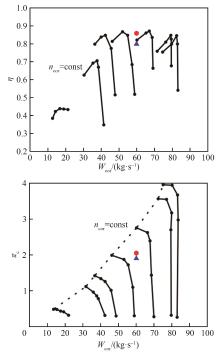
Fig.1
Compressor characteristic curves diagram
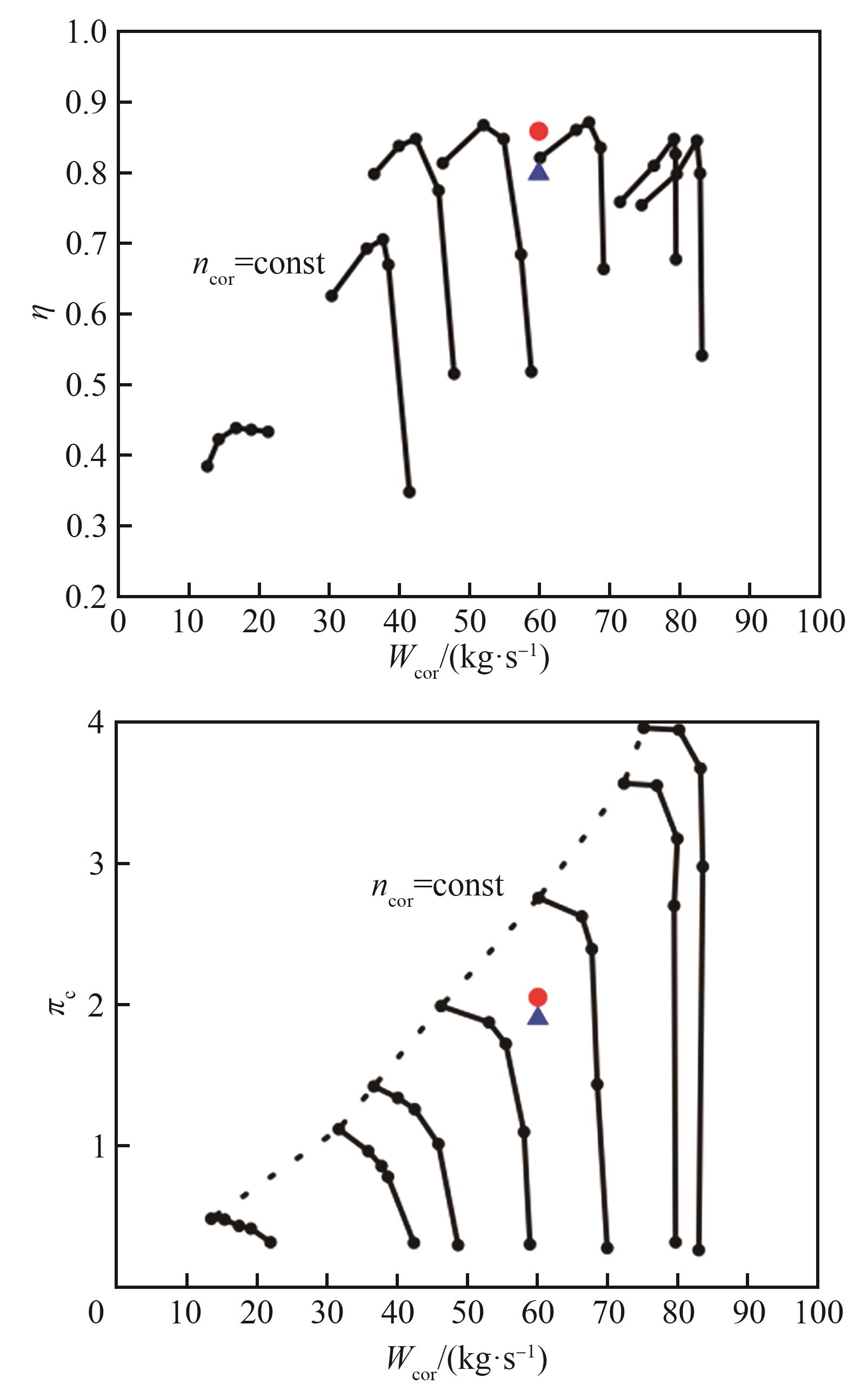
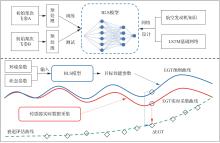
Fig.2
Implementation process diagram of aero-engine performance degradation monitoring and evaluation method based on performance digital twin
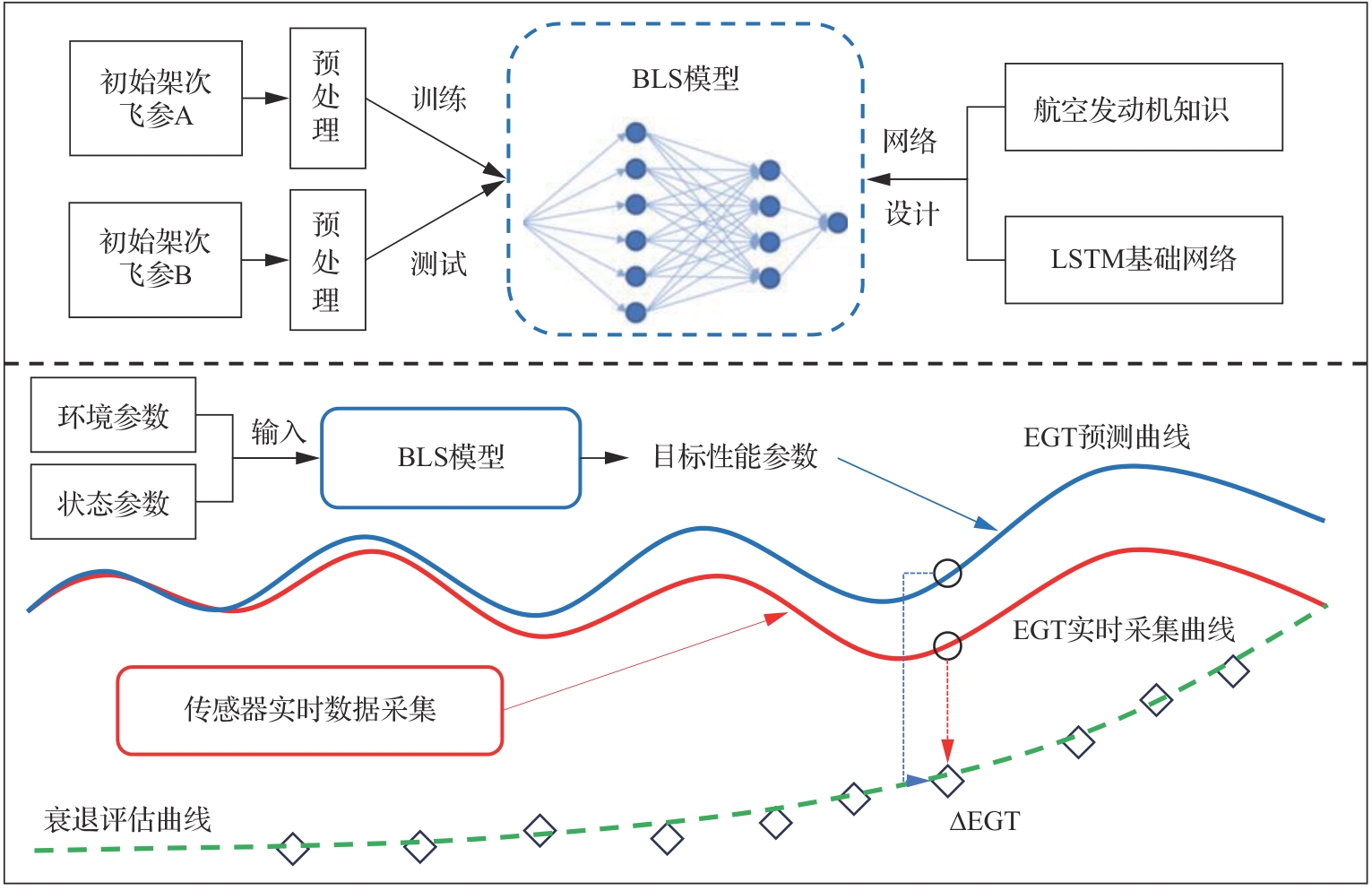
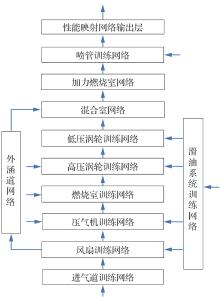
Fig.3
Architecture of the performance digital twin model for dual-rotor turbofan engines
Table 1
Classification of key monitoring parameters for sensors
| 类别 | 符号 | 名称 |
|---|---|---|
| 环境参数 | 进气总温 | |
| Ph | 发动机舱压 | |
| H | 飞行高度 | |
| Ma | 飞行马赫数 | |
| 状态参数 | 低压进口导叶角度 | |
| 高压进口导叶角度 | ||
| 低压转速 | ||
| 高压转速 | ||
| PLA | 油门杆角度 | |
| Wf | 给定燃油流量 | |
| Tm | 滑油回油温度 | |
| 尾喷口喉部直径 | ||
| 性能参数 | 低压涡轮出口温度 | |
| P3 | 高压压气机出口压力 | |
| dn | 转差 |
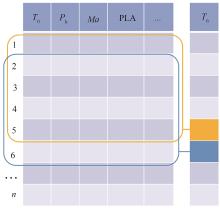
Fig.4
Example of sliding window sampling with a step size of 5
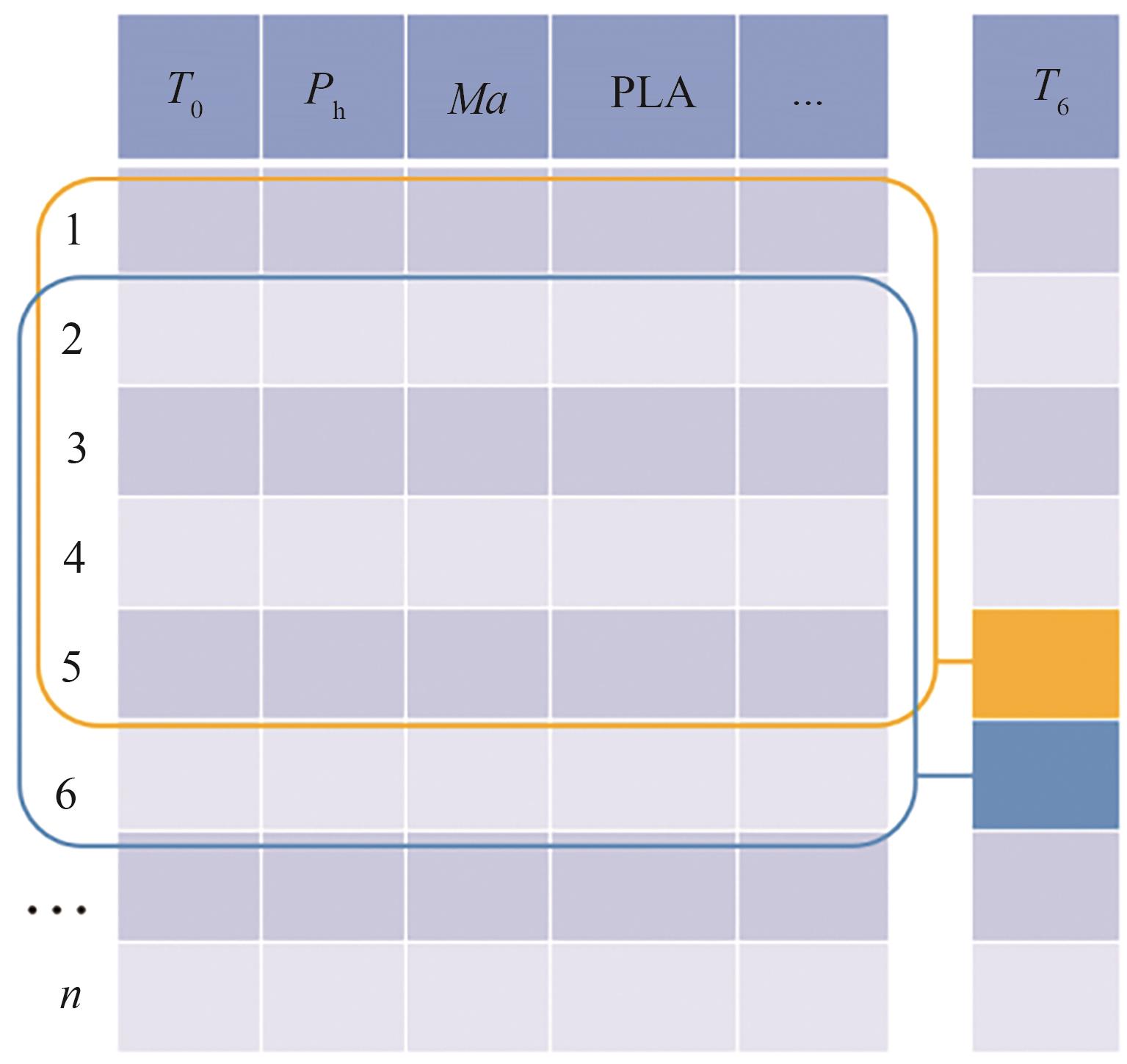
Table 2
Correspondence of parameters and component networks
| 部件网络 | 输入参数 |
|---|---|
| 进气道网络 | |
| HPC网络 | |
| 燃烧室网络 | PLA,Wf |
| HPT网络 | |
| 尾喷管网络 | |
| 滑油网络 | Tm |
Table 3
Model training and related parameter configurations
| 参数名称 | 参数值 |
|---|---|
| CPU | Intel Xeon(R)W-2235@3.80 GHz (未使用GPU计算) |
| 操作系统 | Windows 7 |
| Python | 3.7 |
| Keras | 1.5.1 |
| 训练算法 | RMSProp |
| Batch size | 128 |
| 初始学习率 | 0.001 |
| 训练迭代次Epoch | 300 |
| 训练测试集划分比例 | 4∶1 |
Fig.5
BLS model’s 5-time self-testing and prediction error
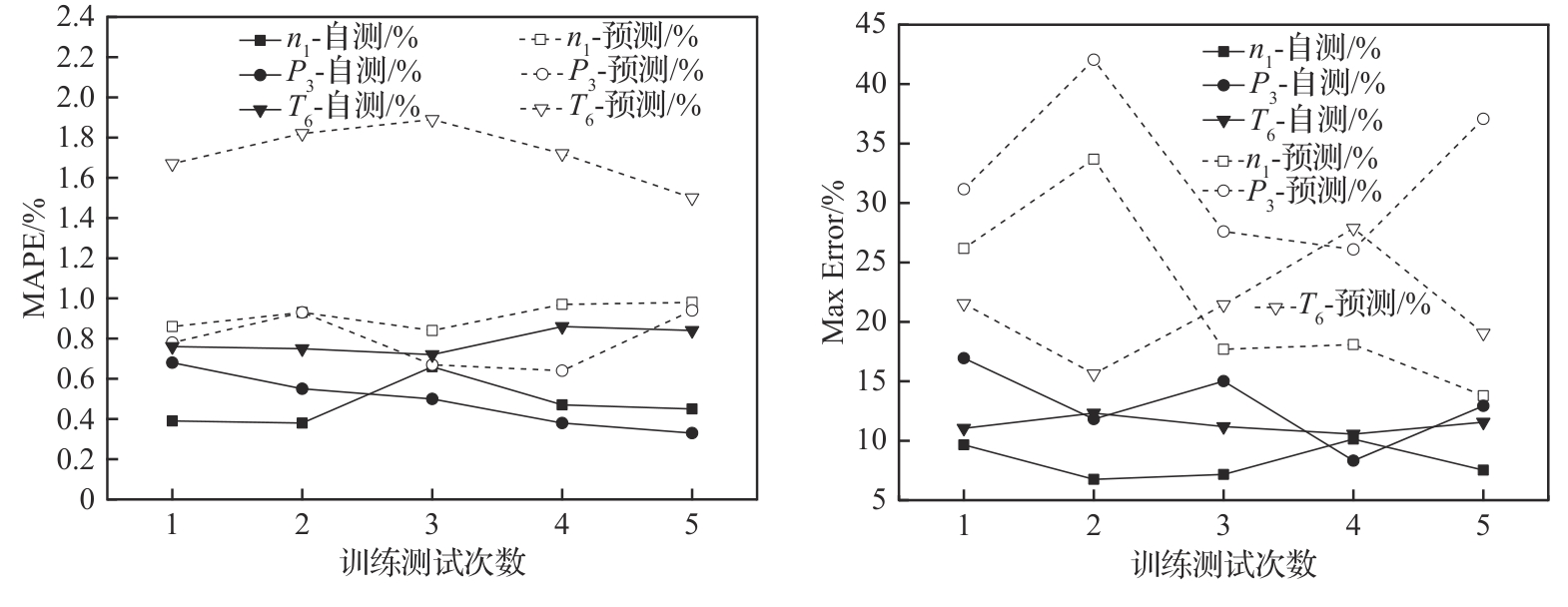
Fig.6
Comparison of local time series predictions(n1, P3, T6)and actual values in the second test of BLS model
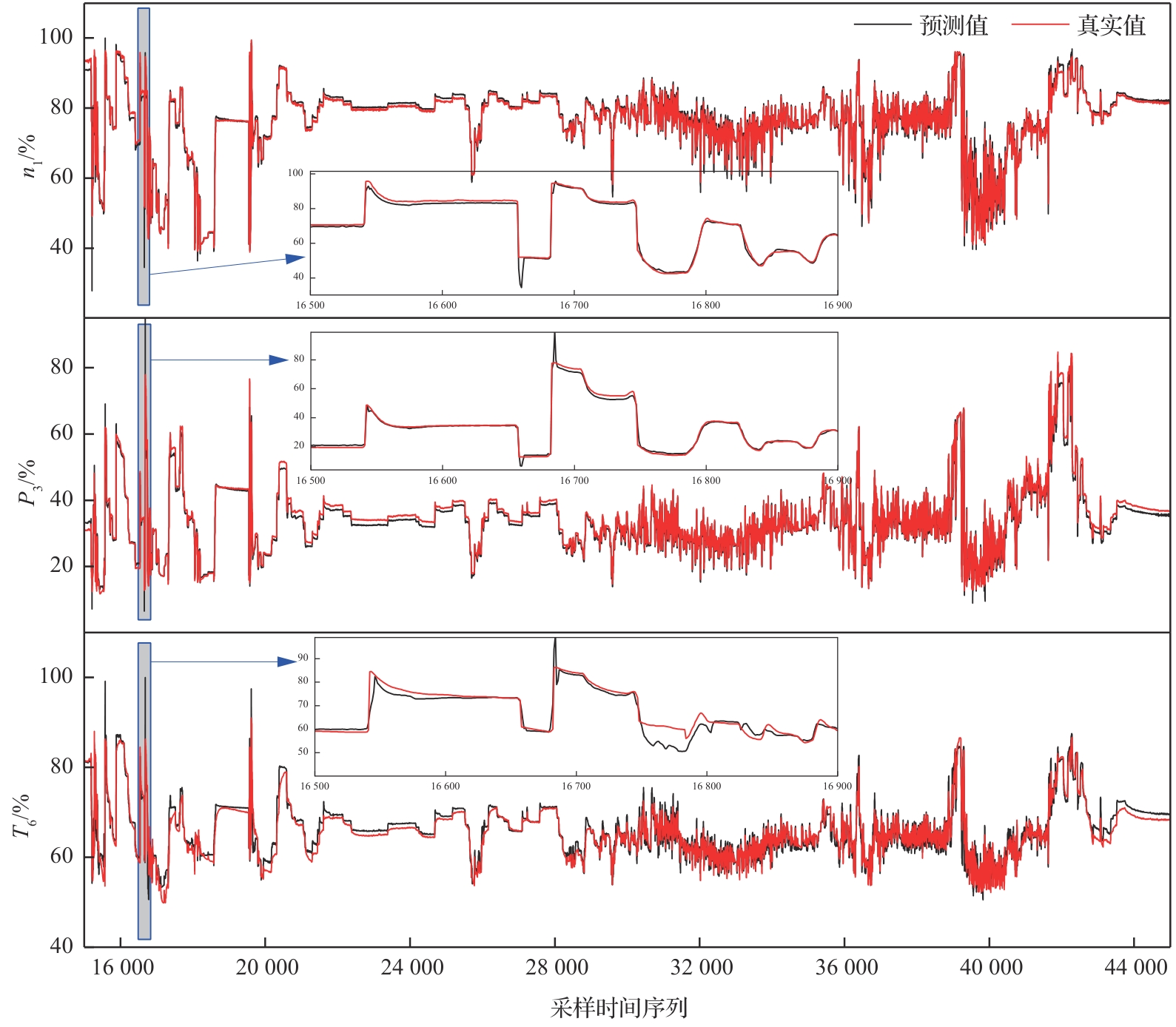
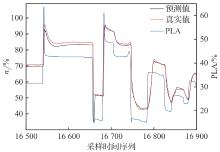
Fig.7
Comparison of predicted and actual values for local time series n1 in BLS model
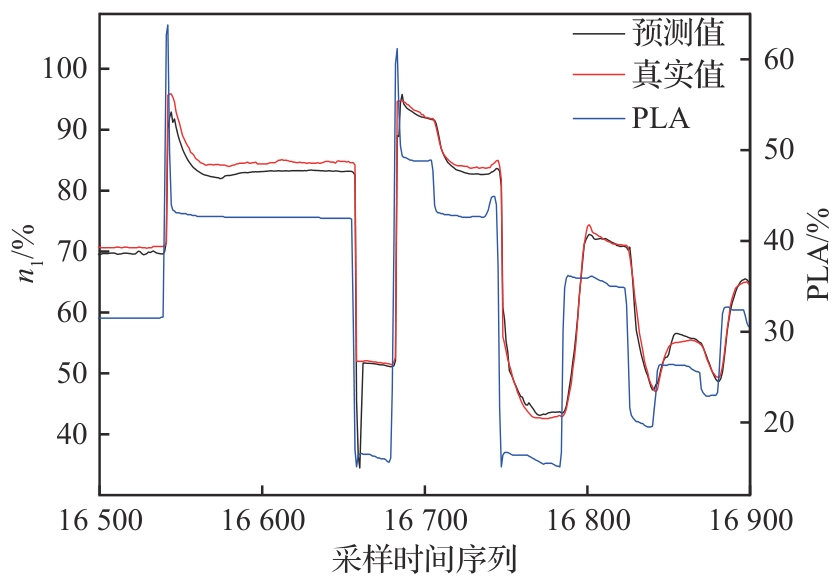
Table 4
Statistical comparison of MAPE among various models in flight parameter predictions
| 预测参数 | 模型 | 参数量 | 测试1 | 测试2 | 测试3 | 测试4 | 测试5 | 平均 | 单点预测时间/ms |
|---|---|---|---|---|---|---|---|---|---|
| n1 | 架构模型 | 56 129 | 0.86 | 0.93 | 0.84 | 0.97 | 0.98 | 0.916 | 0.14 |
| BiLSTM | 54 465 | 1.14 | 0.99 | 0.93 | 1.1 | 1.17 | 1.066 | 0.08 | |
| BiGRU | 57 057 | 0.92 | 1.1 | 0.94 | 1.18 | 1.22 | 1.072 | 0.07 | |
| MLP | 54 017 | 2.02 | 2.69 | 2.52 | 2.6 | 2.48 | 2.462 | 0.05 | |
| P3 | 架构模型 | 56 129 | 0.78 | 0.93 | 0.67 | 0.64 | 0.94 | 0.792 | 0.14 |
| BiLSTM | 54 465 | 1.67 | 1.16 | 1.9 | 1.15 | 1.27 | 1.43 | 0.08 | |
| BiGRU | 57 057 | 1.09 | 1.01 | 1.11 | 1.2 | 1.02 | 1.086 | 0.07 | |
| MLP | 54 017 | 2.3 | 2.22 | 3.49 | 2.7 | 3.71 | 2.884 | 0.05 | |
| T6 | 架构模型 | 56 129 | 1.67 | 1.82 | 1.89 | 1.72 | 1.5 | 1.72 | 0.14 |
| BiLSTM | 54 465 | 1.73 | 1.88 | 1.98 | 1.89 | 2.21 | 1.938 | 0.08 | |
| BiGRU | 57 057 | 1.89 | 1.97 | 1.79 | 1.66 | 1.93 | 1.848 | 0.07 | |
| MLP | 54 017 | 3.05 | 4.59 | 3.12 | 3.91 | 3.96 | 3.726 | 0.05 |
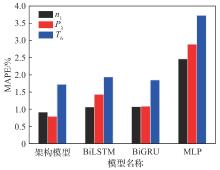
Fig.8
Comparison of average MAPE for n1, P3, T6 predictions by different models
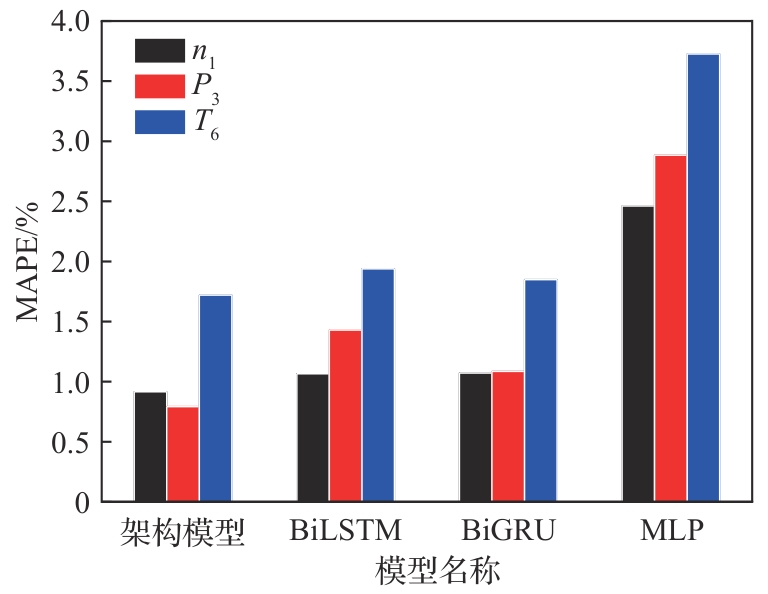
Fig.9
Comparison of predicted and actual non-dimensional exhaust temperature values for selected flights
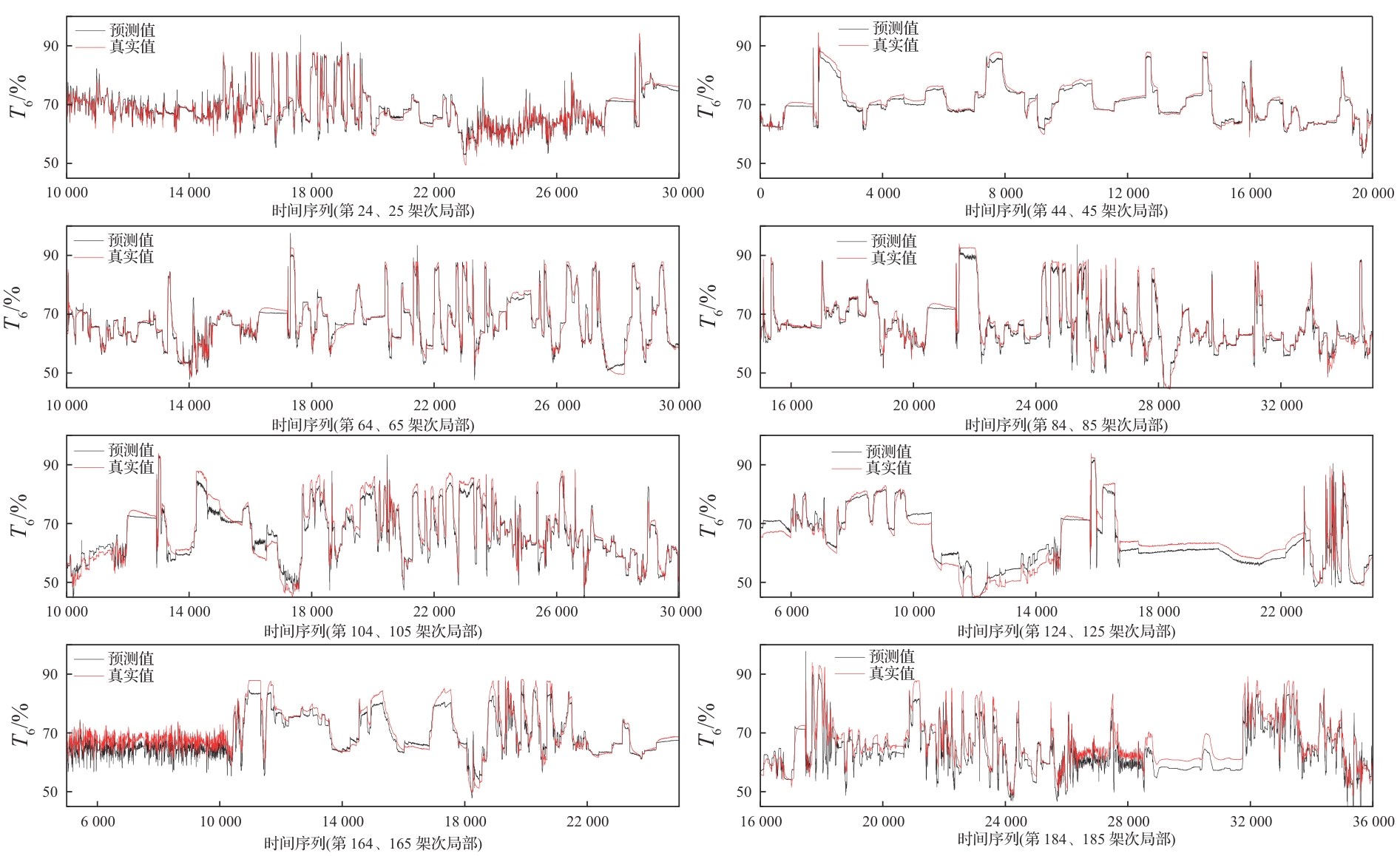
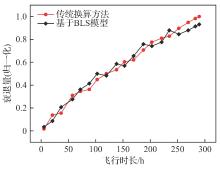
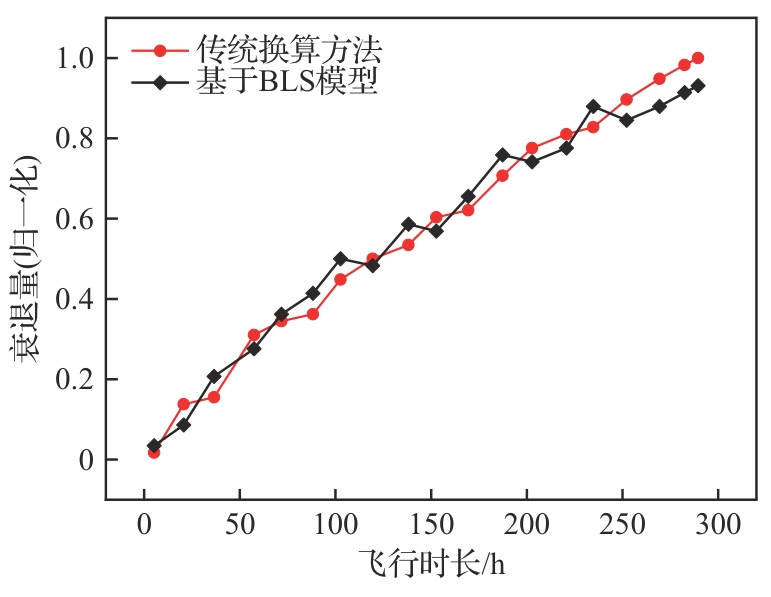
Fig.10
Comparison of engine degradation assessment results
| [1] | SALEM K ABU, PALAIA G, BRAVO-MOSQUERA P D, et al. A review of novel and non-conventional propulsion integrations for next-generation aircraft[J]. Designs, 2024, 8(2): 20. |
| [2] | CHEN Q, SHENG H L, LI J C, et al. Model-based improved advanced adaptive performance recovery control method for a commercial turbofan engine[J]. IEEE Transactions on Aerospace and Electronic Systems, 2023, 59(6): 7440-7454. |
| [3] | KORDESTANI M, ORCHARD M E, KHORASANI K, et al. An overview of the state of the art in aircraft prognostic and health management strategies[J]. IEEE Transactions on Instrumentation and Measurement, 2023, 72: 3505215. |
| [4] | 赵洪利, 张猛. 基于随机维纳过程的航空发动机性能衰退研究[J]. 推进技术, 2021, 42(3): 488-494. |
| ZHAO H L, ZHANG M. Performance degradation of aeroengines based on stochastic Wiener process[J]. Journal of Propulsion Technology, 2021, 42(3): 488-494 (in Chinese). | |
| [5] | DE GIORGI M G, MENGA N, FICARELLA A. Exploring prognostic and diagnostic techniques for jet engine health monitoring: A review of degradation mechanisms and advanced prediction strategies[J]. Energies, 2023, 16(6): 2711. |
| [6] | CHEN Q, SHENG H L, ZHANG T H. A novel direct performance adaptive control of aero-engine using subspace-based improved model predictive control[J]. Aerospace Science and Technology, 2022, 128: 107760. |
| [7] | 曹明, 王鹏, 左洪福, 等. 民用航空发动机故障诊断与健康管理现状、挑战与机遇Ⅱ: 地面综合诊断、寿命管理和智能维护维修决策[J]. 航空学报, 2022, 43(9): 625574. |
| CAO M, WANG P, ZUO H F, et al. Current status, challenges and opportunities of civil aero-engine diagnostics & health management Ⅱ: Comprehensive off-board diagnosis, life management and intelligent condition based MRO[J]. Acta Aeronautica et Astronautica Sinica, 2022, 43(9): 625574 (in Chinese). | |
| [8] | FENTAYE A D, ZACCARIA V, KYPRIANIDIS K. Aircraft engine performance monitoring and diagnostics based on deep convolutional neural networks[J]. Machines, 2021, 9(12): 337. |
| [9] | RATH N, MISHRA R K, KUSHARI A. Aero engine health monitoring, diagnostics and prognostics for condition-based maintenance: An overview[J]. International Journal of Turbo & Jet-Engines, 2024, 40(s1): s279-s292. |
| [10] | 陶飞, 孙清超, 孙惠斌, 等. 航空发动机数字孪生工程: 内涵与关键技术[J]. 航空学报, 2024, 45(21): 7-31, 2. |
| TAO F, SUN Q C, SUN H B, et al. Aero-engine digital twin engineering: Connotation and key technologies[J]. Acta Aeronautica et Astronautica Sinica, 2024, 45(21): 7-31, 2 (in Chinese). | |
| [11] | VOLPONI A J, RAJAMANI R. Hybrid models for engine health management[J]. Machine Learning and Knowledge Discovery for Engineering Systems Health Management, 2016: 395-422. |
| [12] | KIM S, KIM K, SON C. Transient system simulation for an aircraft engine using a data-driven model[J]. Energy, 2020, 196: 117046. |
| [13] | 董威, 尹家录, 郑培英, 等. 航空发动机及燃气轮机整机性能仿真综述[J]. 航空发动机, 2023, 49(5): 8-21. |
| DONG W, YIN J L, ZHENG P Y, et al. Review: engine-level performance simulation of aeroengine and gas turbines[J]. Aeroengine, 2023, 49(5): 8-21 (in Chinese). | |
| [14] | PANG S W, LI Q H, FENG H L. A hybrid onboard adaptive model for aero-engine parameter prediction[J]. Aerospace Science and Technology, 2020, 105: 105951. |
| [15] | GONZÁLEZ-MUÑIZ A, DÍAZ I, CUADRADO A A, et al. Health indicator for machine condition monitoring built in the latent space of a deep autoencoder[J]. Reliability Engineering & System Safety, 2022, 224: 108482. |
| [16] | ZHANG X L, LIN Z L, JI R M, et al. Deep reinforcement learning based active surge control for aeroengine compressors[J]. Chinese Journal of Aeronautics, 2024, 37(7): 418-438. |
| [17] | 马博文, 巫骁雄, 于洋. 基于机器学习方法的压气机落后角与总压损失预测代理模型[J]. 航空动力学报, 2023, 38(7): 1675-1690. |
| MA B W, WU X X, YU Y. Surrogate model for deviation angle and total pressure loss prediction of compressor based on machine learning methods[J]. Journal of Aerospace Power, 2023, 38(7): 1675-1690 (in Chinese). | |
| [18] | 蔡舒妤, 殷航, 史涛, 等. 基于ResNet-LSTM的航空发动机性能异常检测方法[J]. 航空发动机, 2024, 50(1): 135-142. |
| CAI S Y, YIN H, SHI T, et al. Aero-engine performance anomaly detection method based on ResNet-LSTM[J]. Aeroengine, 2024, 50(1): 135-142 (in Chinese). | |
| [19] | ZHAO K, JIA Z, JIA F, et al. Multi-scale integrated deep self-attention network for predicting remaining useful life of aero-engine[J]. Engineering Applications of Artificial Intelligence, 2023, 120: 105860. |
| [20] | ZHOU L, WANG H W, XU S S. Aero-engine prognosis strategy based on multi-scale feature fusion and multi-task parallel learning[J]. Reliability Engineering & System Safety, 2023, 234: 109182. |
| [21] | DE PATER I, REIJNS A, MITICI M. Alarm-based predictive maintenance scheduling for aircraft engines with imperfect Remaining Useful Life prognostics[J]. Reliability Engineering and System Safety, 2022, 221(C): 108341. |
| [22] | DE PATER I, MITICI M. Developing health indicators and RUL prognostics for systems with few failure instances and varying operating conditions using a LSTM autoencoder[J]. Engineering Applications of Artificial Intelligence, 2023, 117: 105582. |
| [23] | HUANG Y F, TAO J, SUN G, et al. A prognostic and health management framework for aero-engines based on a dynamic probability model and LSTM network[J]. Aerospace, 2022, 9(6): 316. |
| [24] | ZHANG Y, XIN Y Q, LIU Z W, et al. Health status assessment and remaining useful life prediction of aero-engine based on BiGRU and MMoE[J]. Reliability Engineering & System Safety, 2022, 220: 108263. |
| [25] | DE GIORGI M G, STRAFELLA L, MENGA N, et al. Intelligent combined neural network and kernel principal component analysis tool for engine health monitoring purposes[J]. Aerospace, 2022, 9(3): 118. |
| [26] | LU F, WU J D, HUANG J Q, et al. Aircraft engine degradation prognostics based on logistic regression and novel OS-ELM algorithm[J]. Aerospace Science and Technology, 2019, 84: 661-671. |
| [27] | LI Z X, WU D Z, HU C, et al. An ensemble learning-based prognostic approach with degradation-dependent weights for remaining useful life prediction[J]. Reliability Engineering & System Safety, 2019, 184: 110-122. |
| [28] | PROTOPAPADAKIS G, APOSTOLIDIS A, KALFAS A I. Explainable and interpretable AI-assisted remaining useful life estimation for aeroengines[R]. New York: ASME, 2022. |
| [29] | HUANG Y F, TAO J, ZHAO J Y, et al. Graph structure embedded with physical constraints-based information fusion network for interpretable fault diagnosis of aero-engine[J]. Energy, 2023, 283: 129120. |
| [30] | LI H H, GOU L F, LI H C, et al. Physics-guided neural network model for aeroengine control system sensor fault diagnosis under dynamic conditions[J]. Aerospace, 2023, 10(7): 644. |
| [31] | XIAO D S, LIN Z F, YU A Y, et al. Data-driven method embedded physical knowledge for entire lifecycle degradation monitoring in aircraft engines[J]. Reliability Engineering & System Safety, 2024, 247: 110100. |
| [32] | ARIAS CHAO M, KULKARNI C, GOEBEL K, et al. Fusing physics-based and deep learning models for prognostics[J]. Reliability Engineering & System Safety, 2022, 217: 107961. |
| [1] | Haolei MOU, Jia ZHANG, Zhenyu FENG, Chunyu BAI. Prediction of axial crushing response for CFRP thin-walled C-columns based on WOA-BP-LSTM autoencoder [J]. Acta Aeronautica et Astronautica Sinica, 2026, 47(4): 232349-232349. |
| [2] | Xueqi CHEN, Zuoxiang ZHANG, Dong WANG, Yanhong MA, Jie HONG. Loading of intermediate bearing-support structure and its impact on structural integrity [J]. Acta Aeronautica et Astronautica Sinica, 2026, 47(1): 232061-232061. |
| [3] | Guanwei YAO, Gaowen LIU, Yan CHEN, Xiaozhi KONG, Aqiang LIN. Forward design of high-performance turbine low-radius pre-swirl system [J]. Acta Aeronautica et Astronautica Sinica, 2025, 46(7): 130832-130832. |
| [4] | Yaling HE, Tao JIANG, Shen DU, Guoqiang XU. Research progress on performance boundary of air heat exchanger within flight envelope [J]. Acta Aeronautica et Astronautica Sinica, 2025, 46(5): 531745-531745. |
| [5] | Yang JIAO, Yuting LU, Ba XU, Jian OUYANG. Transfer prediction of satellite traffic based on spatiotemporal correlation [J]. Acta Aeronautica et Astronautica Sinica, 2025, 46(4): 330938-330938. |
| [6] | Xuanjun TAO, Pingchao YU, Yize JIN, Zhenyang XIANG, Dayi ZHANG. Simulation method and dynamic characteristics analysis of complex blade rubbing in aero-engines [J]. Acta Aeronautica et Astronautica Sinica, 2025, 46(24): 232058-232058. |
| [7] | Yuqian ZHANG, Yongge LI, Xiaochuan LIU, Yong XU. Digital-twin-driven reliability domain analysis for aircraft landing gear systems [J]. Acta Aeronautica et Astronautica Sinica, 2025, 46(24): 632256-632256. |
| [8] | Lei HUANG, Cong GUO, Xiaobo ZHANG, Liangchen SUN, Yinghui ZUO, Bo WANG, Kuo TIAN. Aircraft structural health management method based on flight parameter-load-life digital twin models [J]. Acta Aeronautica et Astronautica Sinica, 2025, 46(21): 532382-532382. |
| [9] | Xianzhao YANG, Gaowen LIU, Lingying GUO, Jiale MA, Aqiang LIN. Design of turbine high radius pre-swirl system with high temperature drop [J]. Acta Aeronautica et Astronautica Sinica, 2025, 46(2): 130672-130672. |
| [10] | Yiwei HUANG, Yibin GENG, Tianhe GAO, Xuanwei HU, Yuan WANG, Hongyan MA, Kuo TIAN. Digital twin driven high precision reconstruction method for full-field deformation of structure [J]. Acta Aeronautica et Astronautica Sinica, 2025, 46(19): 530967-530967. |
| [11] | Dingqiang DAI, Xuan ZHOU, Leiting DONG, Xiasheng SUN. Research progress and prospects of digital engineering and digital twin in field of aeronautical fatigue and structural integrity [J]. Acta Aeronautica et Astronautica Sinica, 2025, 46(19): 531022-531022. |
| [12] | Shangyu LI, Hang FENG, Junquan CHEN, Bin CHEN, Dan MEI. A design architecture and conceptual modeling approach for digital twins [J]. Acta Aeronautica et Astronautica Sinica, 2025, 46(19): 531118-531118. |
| [13] | Junqi LEI, Yuehua CHENG, Bin JIANG, Cheng XU, Guili XU, Tianyu SUN. Digital-twin’s modelling and dynamic adjustment mechanism of rudder-loop-system under fault conditions [J]. Acta Aeronautica et Astronautica Sinica, 2025, 46(19): 531273-531273. |
| [14] | Liang CHEN, Lei HUANG, Yuxuan GU, Cong GUO, Kexin LIN, Yu GUAN, Jian SONG. Twinning technology of key part load based on flight parameters [J]. Acta Aeronautica et Astronautica Sinica, 2025, 46(19): 531292-531292. |
| [15] | Yuxuan GU, Cong GUO, Lei HUANG, Yifei DONG, Hongda DONG, Zhilun DENG. Refined management of fleet life driven by digital twins [J]. Acta Aeronautica et Astronautica Sinica, 2025, 46(19): 531290-531290. |
| Viewed | ||||||
|
Full text |
|
|||||
|
Abstract |
|
|||||
Address: No.238, Baiyan Buiding, Beisihuan Zhonglu Road, Haidian District, Beijing, China
Postal code : 100083
E-mail:hkxb@buaa.edu.cn
Total visits: 6658907 Today visits: 1341All copyright © editorial office of Chinese Journal of Aeronautics
All copyright © editorial office of Chinese Journal of Aeronautics
Total visits: 6658907 Today visits: 1341

 CJA
CJA
