Acta Aeronautica et Astronautica Sinica ›› 2026, Vol. 47 ›› Issue (5): 132452.doi: 10.7527/S1000-6893.2025.32452
• Fluid Mechanics and Flight Mechanics • Previous Articles Next Articles
Hao YUAN1,2,3, Jiaqing KOU1,2,3( ), Weiwei ZHANG1,2,3
Received:2025-06-20
Revised:2025-09-15
Accepted:2025-10-26
Online:2025-11-04
Published:2025-11-03
Contact:
Jiaqing KOU
E-mail:jqkou@nwpu.edu.cn
Supported by:CLC Number:
Hao YUAN, Jiaqing KOU, Weiwei ZHANG. A resolvent-analysis-based optimization design method for airfoils at low Reynolds number[J]. Acta Aeronautica et Astronautica Sinica, 2026, 47(5): 132452.
Fig.1
Process of shape optimization based on resolvent analysis
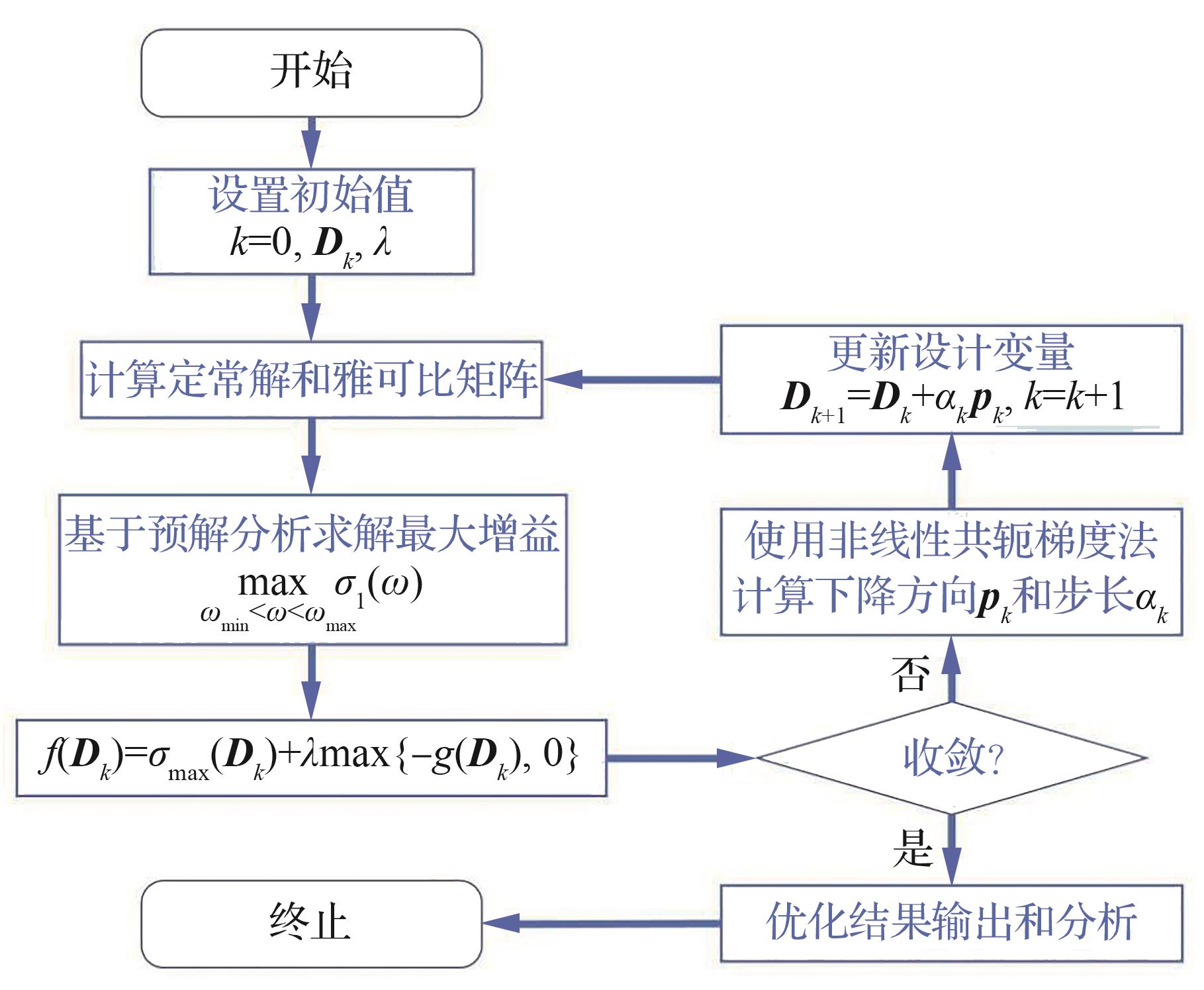
Fig.2
Computational grid for flow around airfoil
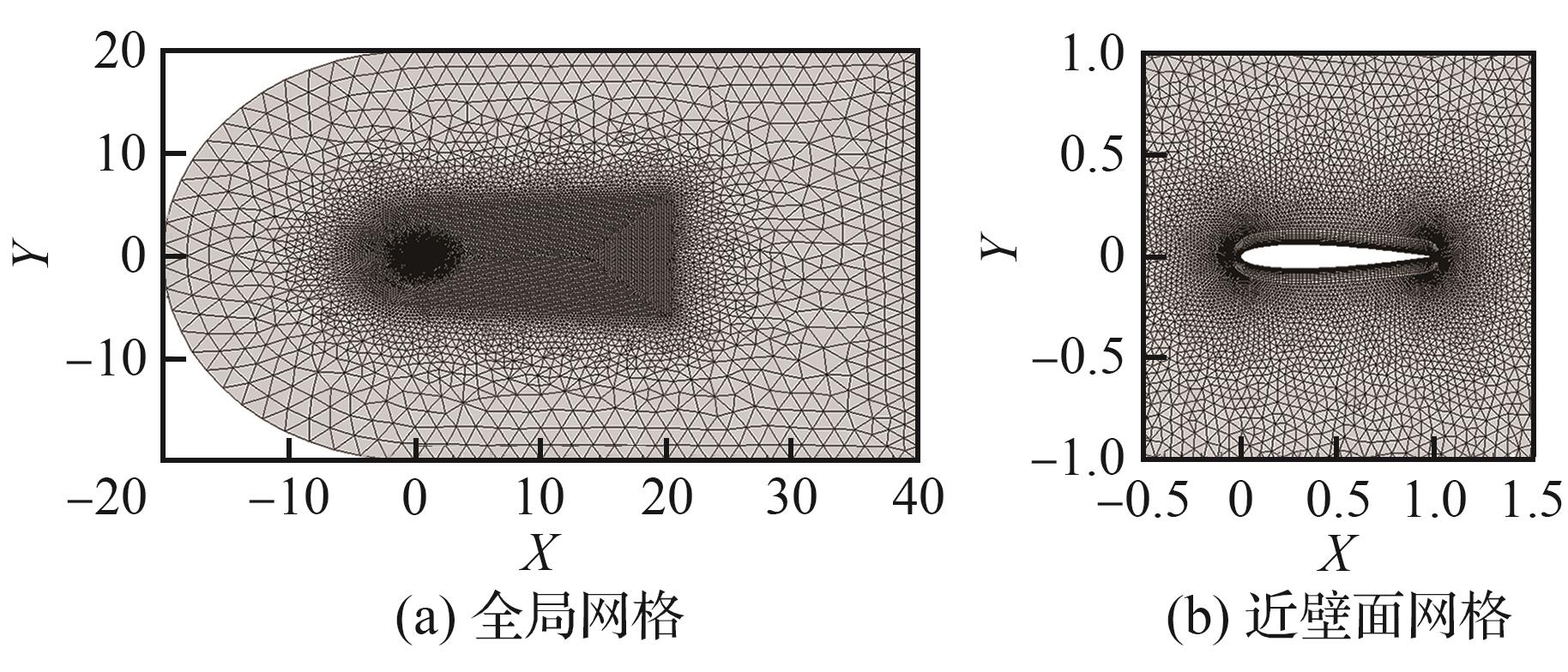
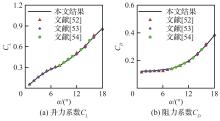
Fig.3
Comparison between computational results presented in this paper and reference data
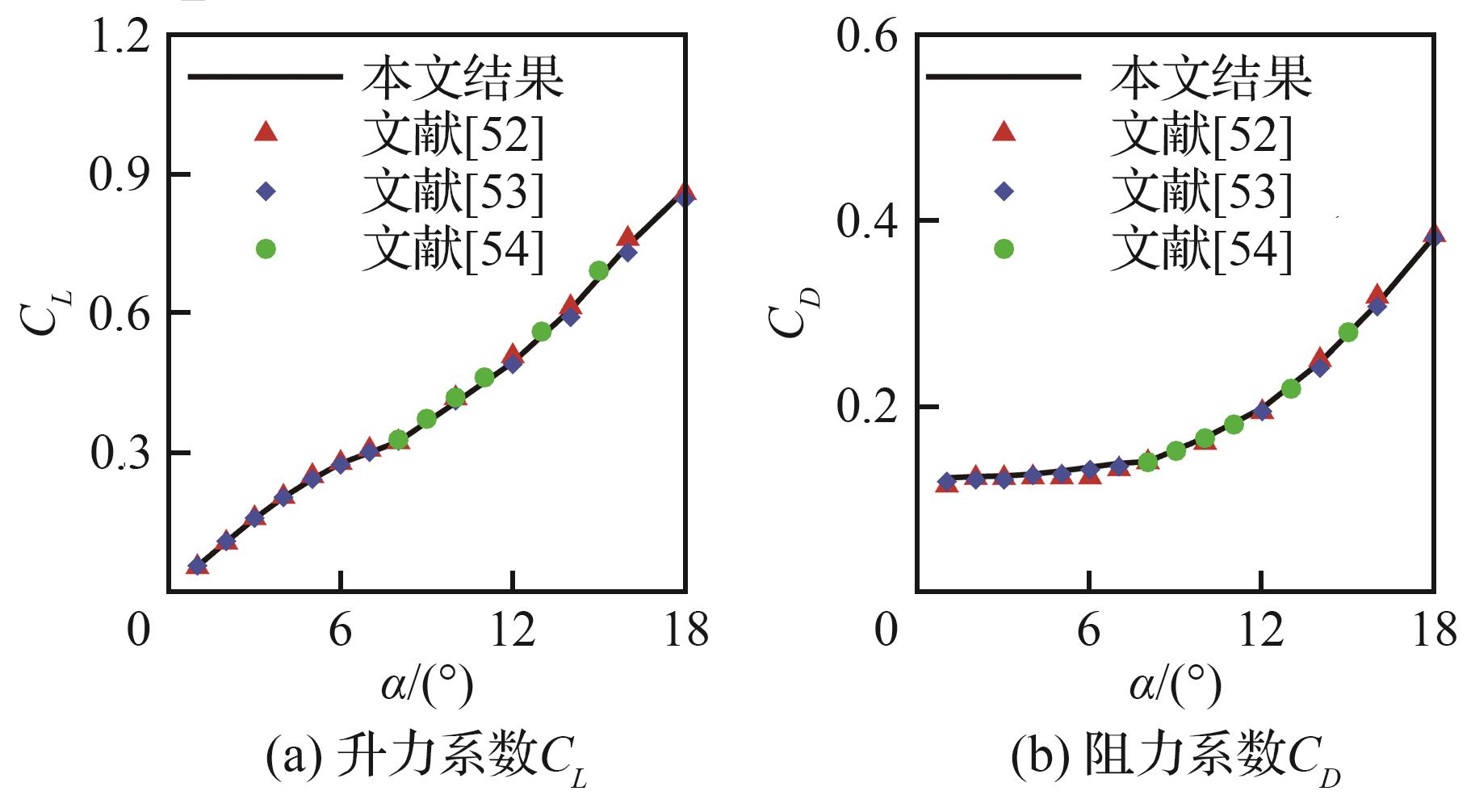
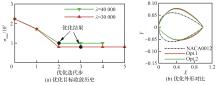
Fig.4
Optimized results with different penalty function parameters
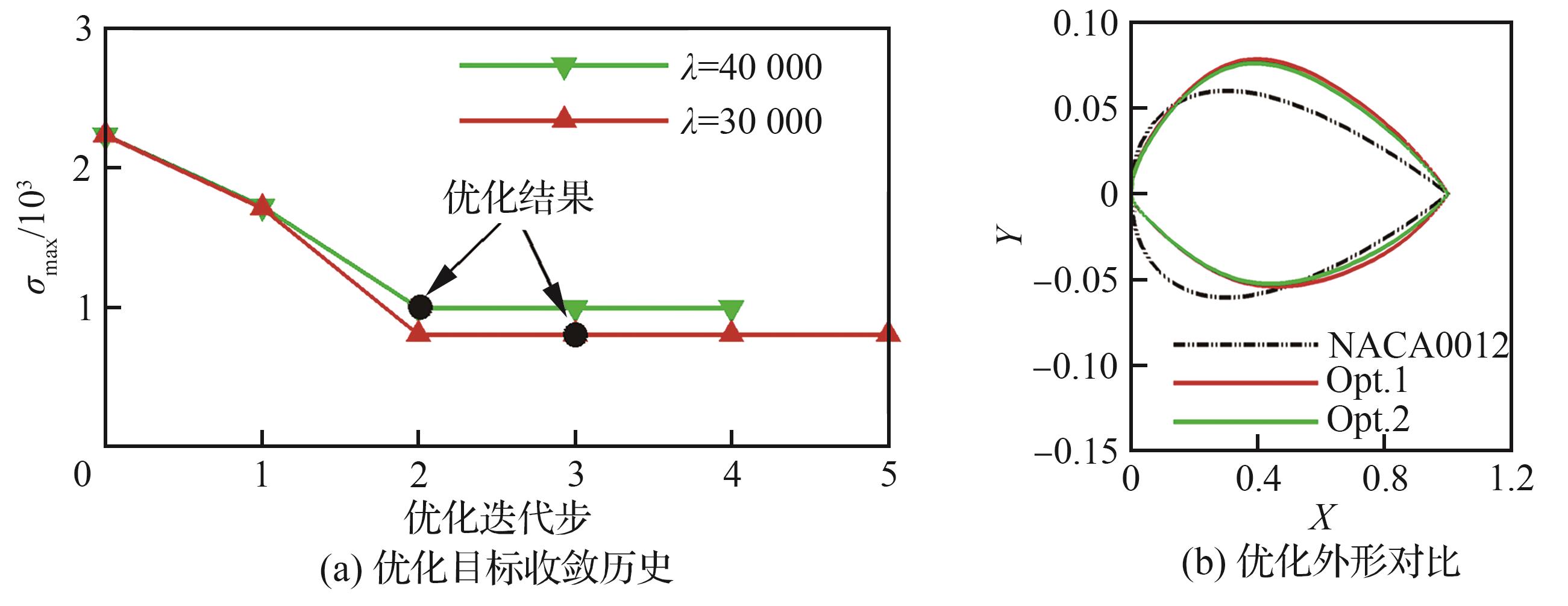

Table 1
CST parameters of optimized airfoils with different penalty function parameters
| 翼型 | ||||||||||||
|---|---|---|---|---|---|---|---|---|---|---|---|---|
| NACA0012 | 0.17 | 0.15 | 0.16 | 0.14 | 0.15 | 0.14 | -0.17 | -0.15 | -0.16 | -0.14 | -0.15 | -0.14 |
| Opt.1 | 0.12 | 0.19 | 0.23 | 0.21 | 0.20 | 0.29 | -0.05 | -0.12 | -0.16 | -0.15 | -0.17 | -0.26 |
| Opt.2 | 0.12 | 0.19 | 0.23 | 0.20 | 0.20 | 0.25 | -0.05 | -0.11 | -0.16 | -0.14 | -0.15 | -0.22 |
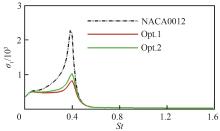
Fig. 5
Comparison of frequency-gain curves of different airfoils under design condition
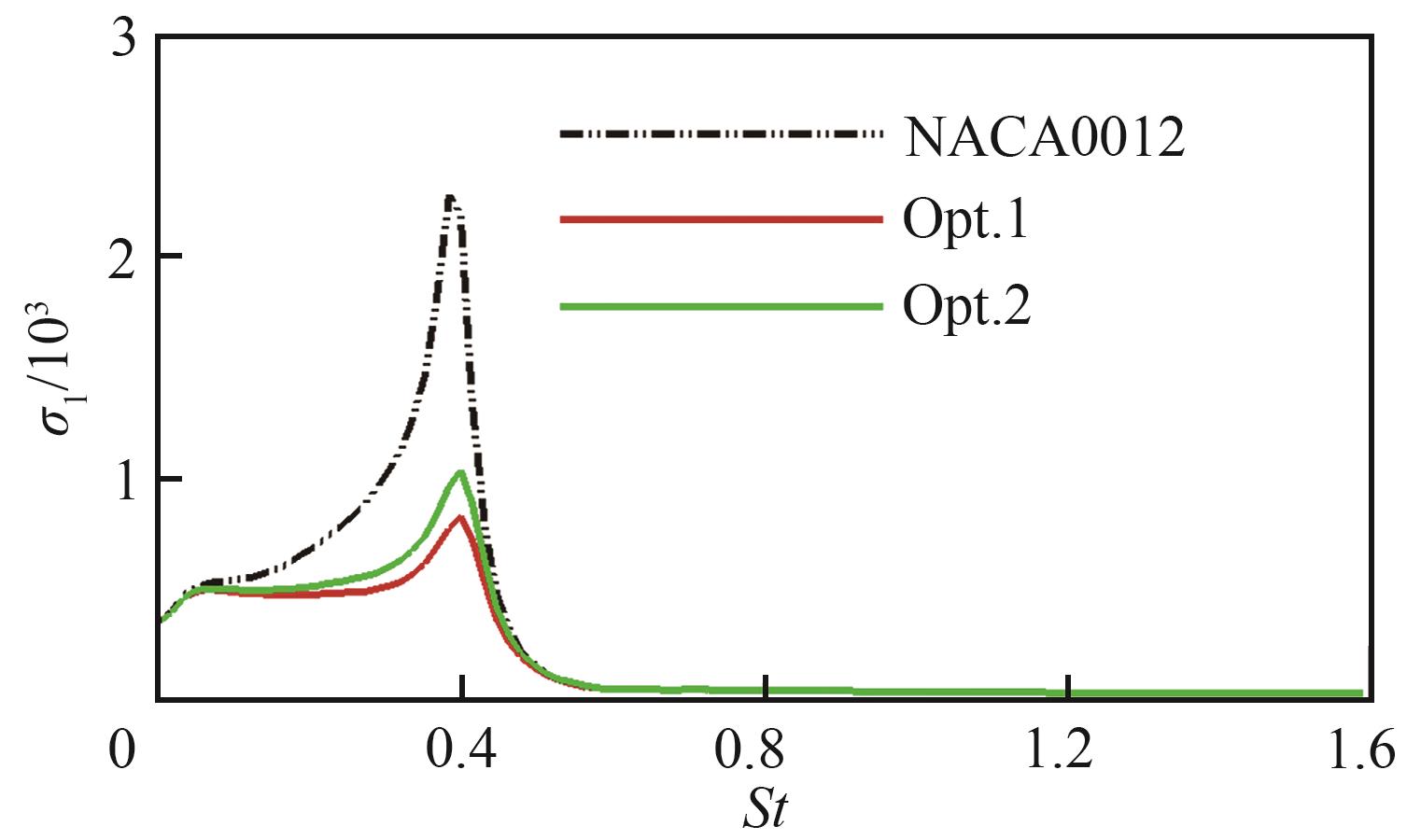
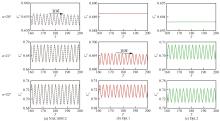
Fig.6
Time-dependent lift curves for different optimized airfoils near critical angle of attack for instability
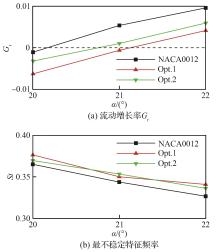
Fig.7
Linear stability analysis results for airfoil flows at various angles of attack at Ma=0.1, Re=200
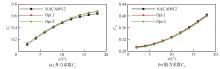
Fig.8
Steady lift and drag of different airfoils within subcritical angle-of-attack range at Ma=0.1,Re=200
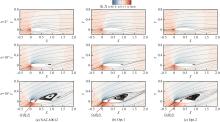
Fig.9
Steady pressure fields of different airfoils within subcritical angle-of-attack range
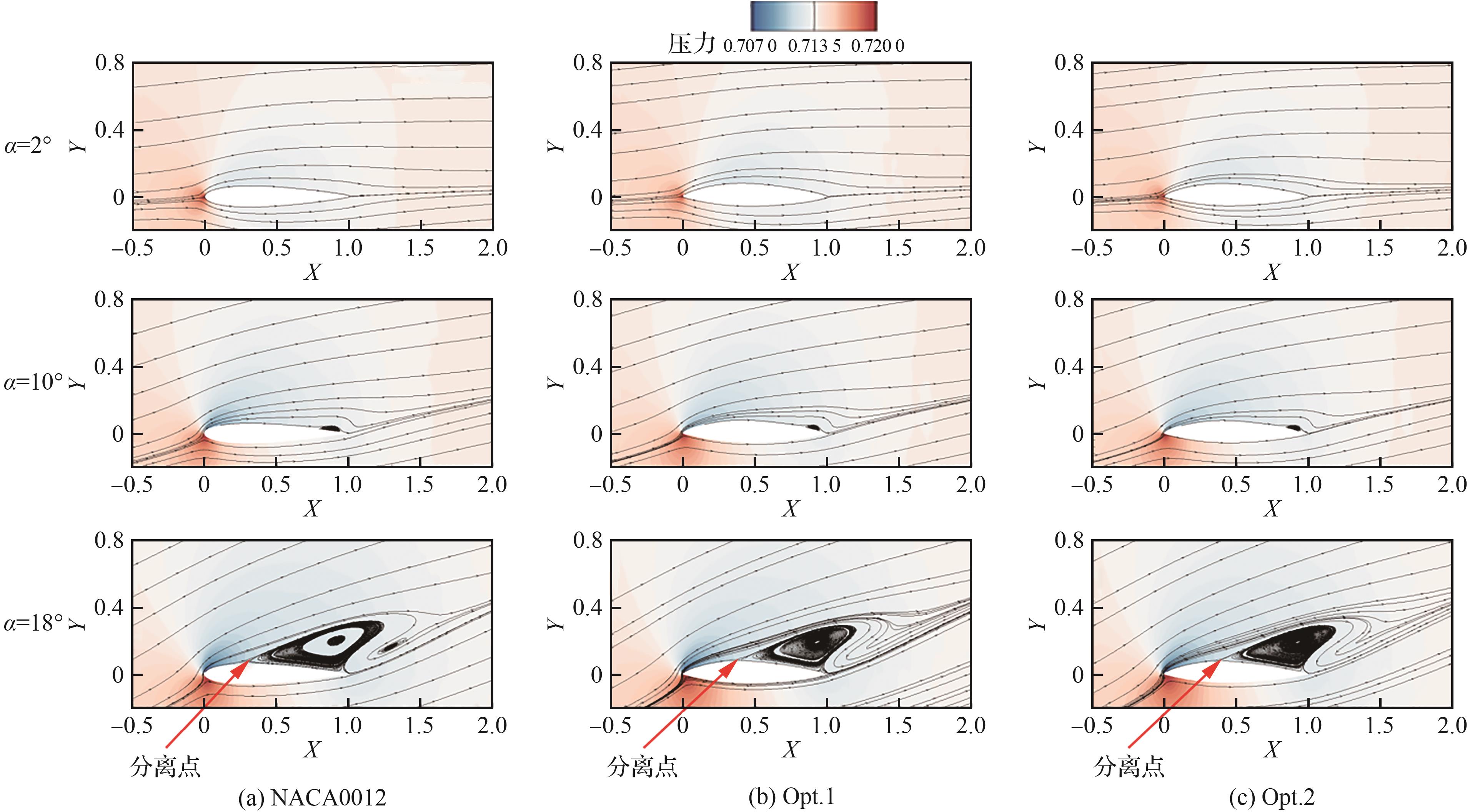
Table 2
Comparison of flow separation point positions at different angles of attack
| 翼型 | 分离点位置X | |
|---|---|---|
| NACA0012 | 0.245 | 0.142 |
| Opt.1 | 0.379 | 0.211 |
| Opt.2 | 0.373 | 0.202 |
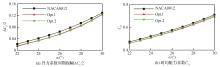
Fig.10
Comparison of aerodynamic characteristics of different airfoils under supercritical high angle-of-attack conditions
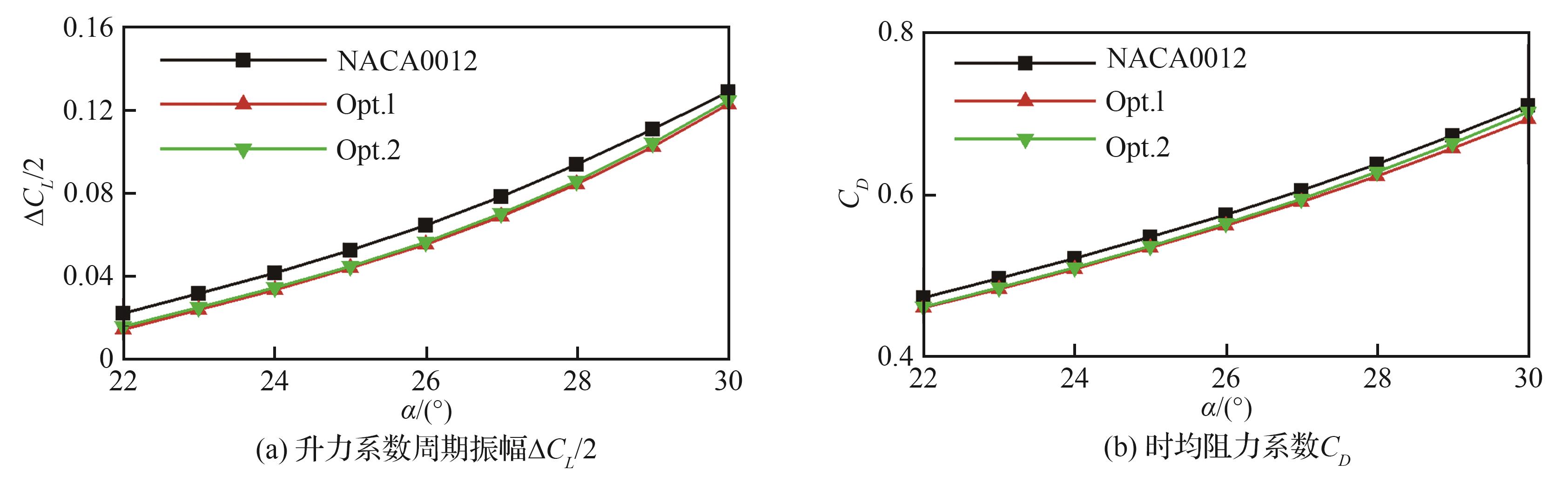
Fig.11
Periodic pressure variations in unsteady flow fields around different airfoils at Ma=0.1,Re=200,α=22°
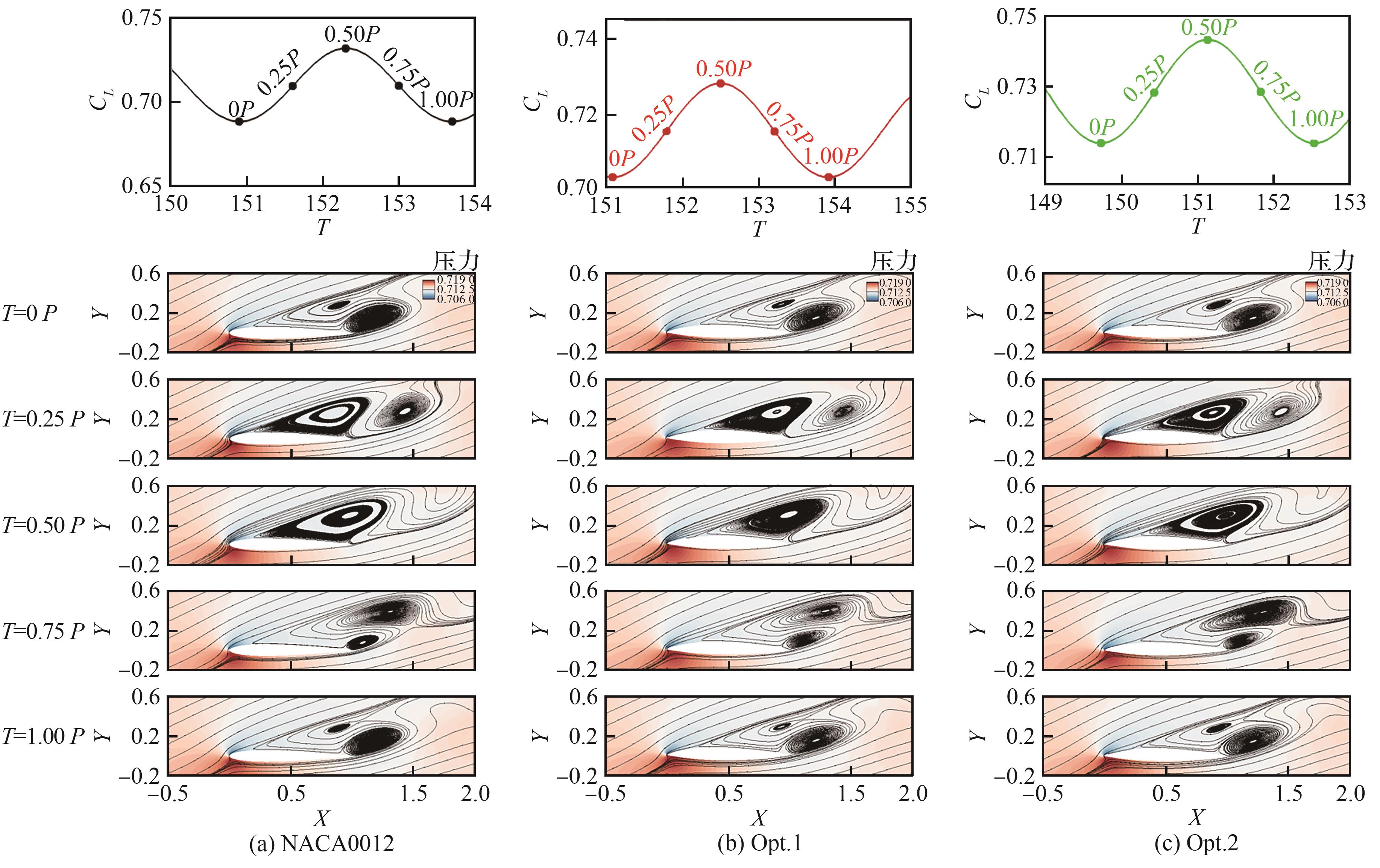
Fig.12
Time-averaged pressure fields of flow around different airfoils at Ma=0.1,Re=200,α=22°
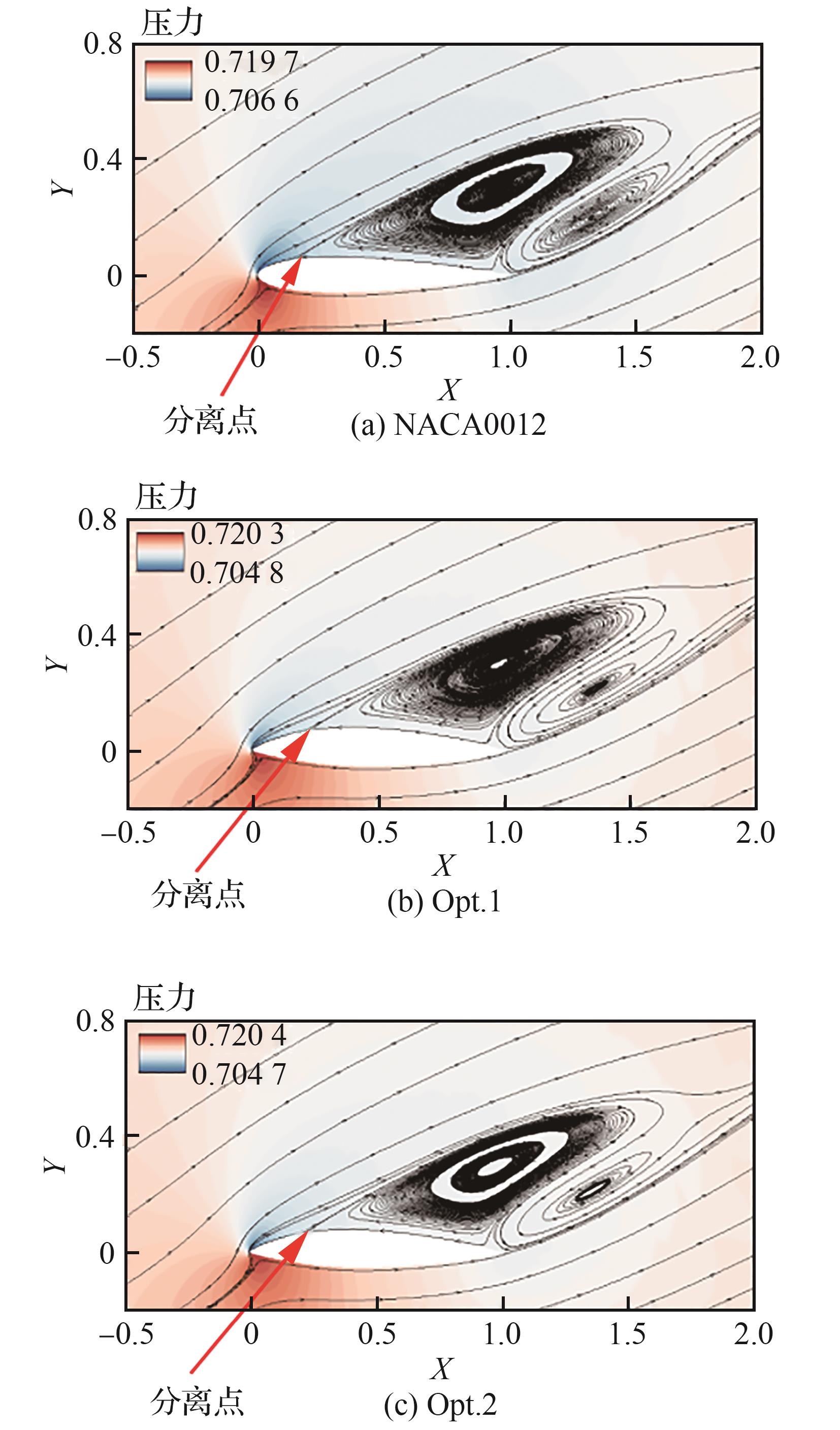
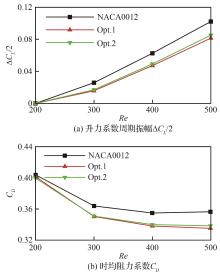
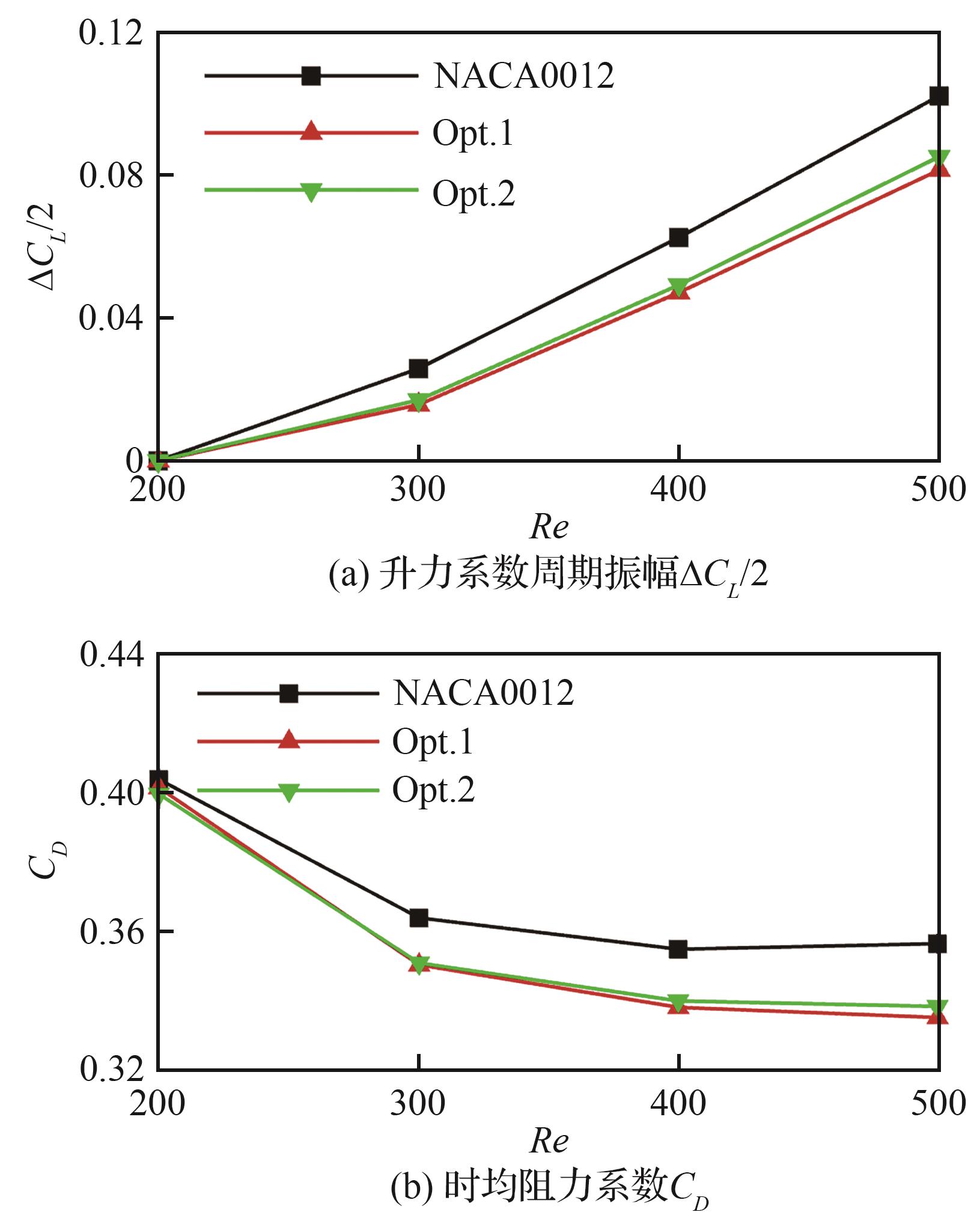
Fig.13
Numerical simulation results of different airfoil flow at higher Reynolds number at Ma=0.1,α=18°
| [1] | LISSAMAN P S. Low-Reynolds-number airfoils[J]. Annual Review of Fluid Mechanics, 1983, 15: 223-239. |
| [2] | 白鹏, 崔尔杰, 李锋, 等. 对称翼型低雷诺数小攻角升力系数非线性现象研究[J]. 力学学报, 2006, 38(1): 1-8. |
| BAI P, CUI E J, LI F, et al. Study of the nonlinear lift coefficient of the symmetrical airfoil at low Reynolds number near the 0° angle of attack[J]. Chinese Journal of Theoretical and Applied Mechanics, 2006, 38(1): 1-8 (in Chinese). | |
| [3] | KOJIMA Y, YEH C A, TAIRA K, et al. Resolvent analysis on the origin of two-dimensional transonic buffet[J]. Journal of Fluid Mechanics, 2020, 885: R1. |
| [4] | 李锋, 白鹏, 刘强. 飞行器低Reynolds数层流分离理论探讨[J]. 气体物理, 2017, 2(5): 1-10. |
| LI F, BAI P, LIU Q. Discussion about the laminar separation theory at low Reynolds numbers[J]. Physics of Gases, 2017, 2(5): 1-10 (in Chinese). | |
| [5] | 朱志斌, 尚庆, 白鹏, 等. 翼型低雷诺数层流分离现象随雷诺数的演化特征[J]. 航空学报, 2019, 40(5): 122528. |
| ZHU Z B, SHANG Q, BAI P, et al. Evolution of laminar separation phenomenon on low Reynolds number airfoil at different Reynolds numbers[J]. Acta Aeronautica et Astronautica Sinica, 2019, 40(5): 122528 (in Chinese). | |
| [6] | ROSSI E, COLAGROSSI A, OGER G, et al. Multiple bifurcations of the flow over stalled airfoils when changing the Reynolds number[J]. Journal of Fluid Mechanics, 2018, 846: 356-391. |
| [7] | CHOI H, JEON W P, KIM J. Control of flow over a bluff body[J]. Annual Review of Fluid Mechanics, 2008, 40: 113-139. |
| [8] | 周子杰, 罗振兵, 邓雄, 等. 基于合成双射流的简单襟翼流动分离控制[J]. 航空学报, 2025, 46(14): 131512. |
| ZHOU Z J, LUO Z B, DENG X, et al. Flow separation control of simple flaps based on dual synthetic jets[J]. Acta Aeronautica et Astronautica Sinica, 2025, 46(14): 131512 (in Chinese). | |
| [9] | HEINE B, MULLENERS K, JOUBERT G, et al. Dynamic stall control by passive disturbance generators[J]. AIAA Journal, 2013, 51(9): 2086-2097. |
| [10] | GROSS A, FASEL H F. Numerical investigation of passive separation control for an airfoil at low-Reynolds-number conditions[J]. AIAA Journal, 2013, 51(7): 1553-1565. |
| [11] | MAYER R, LUTZ T, KRÄMER E. Numerical study on the ability of shock control bumps for buffet control[J]. AIAA Journal, 2018, 56(5): 1978-1987. |
| [12] | WANG J J, LI Y C, CHOI K S. Gurney flap: Lift enhancement, mechanisms and applications[J]. Progress in Aerospace Sciences, 2008, 44(1): 22-47. |
| [13] | NIELSEN E J, ANDERSON W K. Aerodynamic design optimization on unstructured meshes using the Navier-Stokes equations[J]. AIAA Journal, 1999, 37(11): 1411-1419. |
| [14] | 周铸, 黄江涛, 高正红, 等. 民用飞机气动外形数值优化设计面临的挑战与展望[J]. 航空学报, 2019, 40(1): 522370. |
| ZHOU Z, HUANG J T, GAO Z H, et al. Challenges and prospects of numerical optimization design for large civil aircraft aerodynamic shape[J]. Acta Aeronautica et Astronautica Sinica, 2019, 40(1): 522370 (in Chinese). | |
| [15] | 赵轲, 邓俊, 黄江涛, 等. 飞翼布局高低速一体化气动优化设计[J]. 航空学报, 2024, 45(15): 129367. |
| ZHAO K, DENG J, HUANG J T, et al. Aerodynamic optimization design of high and low speed integration for flying wing layout[J]. Acta Aeronautica et Astronautica Sinica, 2024, 45(15): 129367 (in Chinese). | |
| [16] | 陈树生, 冯聪, 张兆康, 等. 基于全局/梯度优化方法的宽速域乘波-机翼布局气动设计[J]. 航空学报, 2024, 45(6): 629596. |
| CHEN S S, FENG C, ZHANG Z K, et al. Aerodynamic design of wide-speed-range waverider-wing configuration based on global & gradient optimization method[J]. Acta Aeronautica et Astronautica Sinica, 2024, 45(6): 629596 (in Chinese). | |
| [17] | 姜璐璐, 潘鑫, 蒋伟, 等. 基于融合代理策略的超声速降落伞气动优化设计[J]. 航空学报, 2025, 46(1): 630471. |
| JIANG L L, PAN X, JIANG W, et al. Optimization shape design of capsule-supersonic parachute system based on fusion surrogate strategy[J]. Acta Aeronautica et Astronautica Sinica, 2025, 46(1): 630471 (in Chinese). | |
| [18] | SRINATH D N, MITTAL S. An adjoint method for shape optimization in unsteady viscous flows[J]. Journal of Computational Physics, 2010, 229(6): 1994-2008. |
| [19] | SRINATH D N, MITTAL S. Optimal aerodynamic design of airfoils in unsteady viscous flows[J]. Computer Methods in Applied Mechanics and Engineering, 2010, 199(29-32): 1976-1991. |
| [20] | CHEN W G, GAO C Q, ZHANG W W, et al. Adjoint-based unsteady shape optimization to suppress transonic buffet[J]. Aerospace Science and Technology, 2022, 127: 107668. |
| [21] | THEOFILIS V. Global linear instability[J]. Annual Review of Fluid Mechanics, 2011, 43: 319-352. |
| [22] | TAIRA K, BRUNTON S L, DAWSON S T M, et al. Modal analysis of fluid flows: An overview[J]. AIAA Journal, 2017, 55(12): 4013-4041. |
| [23] | 白鹏, 李锋, 詹慧玲, 等. 翼型低Re数小攻角非线性非定常层流分离现象研究[J]. 中国科学: 物理学 力学 天文学, 2015, 45(2): 46-57. |
| BAI P, LI F, ZHAN H L, et al. Study about the non-linear and unsteady laminar separation phenomena around the airfoil at low Reynolds number with low incidence[J]. Scientia Sinica (Physica, Mechanica & Astronomica), 2015, 45(2): 46-57 (in Chinese). | |
| [24] | KITSIOS V, RODRÍGUEZ D, THEOFILIS V, et al. BiGlobal stability analysis in curvilinear coordinates of massively separated lifting bodies[J]. Journal of Computational Physics, 2009, 228(19): 7181-7196. |
| [25] | IORIO M C, GONZÁLEZ L M, MARTÍNEZ-CAVA A. Global stability analysis of a compressible turbulent flow around a high-lift configuration[J]. AIAA Journal, 2015, 54(2): 373-385. |
| [26] | GONG Y M, GAO C Q, ZHANG W W. Transonic buffet suppression by airfoil optimization[J]. Aerospace, 2024, 11(2): 121. |
| [27] | WANG Y, FERRER E, MARTÍNEZ-CAVA A, et al. Enhanced stability of flows through contraction channels: Combining shape optimization and linear stability analysis[J]. Physics of Fluids, 2019, 31(7): 074109. |
| [28] | SCHMID P J, BRANDT L. Analysis of fluid systems: stability, receptivity, sensitivity[J]. Applied Mechanics Reviews, 2014, 66(2): 024803. |
| [29] | 袁昊, 寇家庆, 张伟伟. 流体力学预解分析方法研究进展[J]. 力学学报, 2024, 56(10): 2799-2814. |
| YUAN H, KOU J Q, ZHANG W W. Research progress of resolvent analysis in fluid mechanics[J]. Chinese Journal of Theoretical and Applied Mechanics, 2024, 56(10): 2799-2814 (in Chinese). | |
| [30] | TREFETHEN L N, TREFETHEN A E, REDDY S C, et al. Hydrodynamic stability without eigenvalues[J]. Science, 1993, 261(5121): 578-584. |
| [31] | SCHMID P J. Nonmodal stability theory[J]. Annual Review of Fluid Mechanics, 2007, 39: 129-162. |
| [32] | MCKEON B J, SHARMA A S. A critical-layer framework for turbulent pipe flow[J]. Journal of Fluid Mechanics, 2010, 658: 336-382. |
| [33] | ROLANDI L V, RIBEIRO J H M, YEH C A, et al. An invitation to resolvent analysis[J]. Theoretical and Computational Fluid Dynamics, 2024, 38(5): 603-639. |
| [34] | JOVANOVIĆ M R. From bypass transition to flow control and data-driven turbulence modeling: An input-output viewpoint[J]. Annual Review of Fluid Mechanics, 2021, 53: 311-345. |
| [35] | YEH C A, TAIRA K. Resolvent-analysis-based design of airfoil separation control[J]. Journal of Fluid Mechanics, 2019, 867: 572-610. |
| [36] | LIU Q, SUN Y Y, YEH C A, et al. Unsteady control of supersonic turbulent cavity flow based on resolvent analysis[J]. Journal of Fluid Mechanics, 2021, 925: A5. |
| [37] | GROSS A, MARKS C, SONDERGAARD R. Laminar separation control for eppler 387 airfoil based on resolvent analysis[J]. AIAA Journal, 2024, 62(4): 1487-1502. |
| [38] | NAKASHIMA S, FUKAGATA K, LUHAR M. Assessment of suboptimal control for turbulent skin friction reduction via resolvent analysis[J]. Journal of Fluid Mechanics, 2017, 828: 496-526. |
| [39] | LUHAR M, SHARMA A S, MCKEON B J. Opposition control within the resolvent analysis framework[J]. Journal of Fluid Mechanics, 2014, 749: 597-626. |
| [40] | KAWAGOE A, NAKASHIMA S, LUHAR M, et al. Proposal of control laws for turbulent skin friction reduction based on resolvent analysis[J]. Journal of Fluid Mechanics, 2019, 866: 810-840. |
| [41] | CHAVARIN A, LUHAR M. Resolvent analysis for turbulent channel flow with riblets[J]. AIAA Journal, 2019, 58(2): 589-599. |
| [42] | CHAVARIN A, LUHAR M.Optimization of riblet geometry via the resolvent framework[C]∥AIAA SCITECH 2022 Forum. Reston: AIAA, 2022: AIAA 2022-1037. |
| [43] | SIPP D, MARQUET O, MELIGA P, et al. Dynamics and control of global instabilities in open-flows: A linearized approach[J]. Applied Mechanics Reviews, 2010, 63(3): 030801. |
| [44] | YUAN H, KOU J, ZHENG S, et al. Resolvent-based shape optimisation for a two-dimensional cylinder at low reynolds numbers[J]. Journal of Fluid Mechanics, 2025, 1012: A10. |
| [45] | YUAN H, KOU J Q, GAO C Q, et al. Resolvent and dynamic mode analysis of flow past a square cylinder at subcritical Reynolds numbers[J]. Physics of Fluids, 2023, 35(7): 071706. |
| [46] | MA R C, GAO C Q, REN K, et al. Suppression of oscillatory fluid forces in cylinder wake: Optimal jet control position designed through resolvent analysis[J]. Physics of Fluids, 2024, 36(7): 073622. |
| [47] | HERRMANN B, BADDOO P J, SEMAAN R, et al. Data-driven resolvent analysis[J]. Journal of Fluid Mechanics, 2021, 918: A10. |
| [48] | SYMON S, ROSENBERG K, DAWSON S T M, et al. Non-normality and classification of amplification mechanisms in stability and resolvent analysis[J]. Physical Review Fluids, 2018, 3(5): 053902. |
| [49] | HUERRE P, MONKEWITZ P A. Local and global instabilities in spatially developing flows[J]. Annual Review of Fluid Mechanics, 1990, 22: 473-537. |
| [50] | ZHANG W W, LI X T, YE Z Y, et al. Mechanism of frequency lock-in in vortex-induced vibrations at low Reynolds numbers[J]. Journal of Fluid Mechanics, 2015, 783: 72-102. |
| [51] | LI X T, LYU Z, KOU J Q, et al. Mode competition in galloping of a square cylinder at low Reynolds number[J]. Journal of Fluid Mechanics, 2019, 867: 516-555. |
| [52] | KURTULUS D F. On the unsteady behavior of the flow around NACA 0012 airfoil with steady external conditions at Re=1 000[J]. International Journal of Micro Air Vehicles, 2015, 7(3): 301-326. |
| [53] | DI ILIO G, CHIAPPINI D, UBERTINI S, et al. Fluid flow around NACA 0012 airfoil at low-Reynolds numbers with hybrid lattice Boltzmann method[J]. Computers & Fluids, 2018, 166: 200-208. |
| [54] | KARBASIAN H R, VERMEIRE B C. Application of physics-constrained data-driven reduced-order models to shape optimization[J]. Journal of Fluid Mechanics, 2022, 934: A32. |
| [55] | HE W, GIORIA R S, PÉREZ J M, et al. Linear instability of low Reynolds number massively separated flow around three NACA airfoils[J]. Journal of Fluid Mechanics, 2017, 811: 701-741. |
| [56] | KULFAN B M. Universal parametric geometry representation method[J]. Journal of Aircraft, 2008, 45(1): 142-158. |
| [1] | Haipeng CHEN, Haichuan YU, Xiangyu GU, Xinwei WANG, Xiaojiu ZHANG, Jun CHEN. Aerodynamic design methods for cross-domain morphing aircraft oriented to online deformation [J]. Acta Aeronautica et Astronautica Sinica, 2026, 47(5): 132490-132490. |
| [2] | Jiaqi LIU, Rongqian CHEN, Jinhua LOU, Xu HAN, Hao WU, Yancheng YOU. Aerodynamic shape optimization of high-speed helicopter rotor airfoil based on deep learning [J]. Acta Aeronautica et Astronautica Sinica, 2024, 45(9): 529828-529828. |
| [3] | Wentao LI, Yunqin HE, Wenbo LI, Yiyi ZHANG, Guozhu LIANG. 3D grain reverse design and shape optimization for solid rocket motor [J]. Acta Aeronautica et Astronautica Sinica, 2024, 45(11): 529089-529089. |
| [4] | Jing YU, Anlin JIANG, Liang LIU, Xiaojun WU, Yewei GUI, Shenshen LIU. PCA aerodynamic geometry parametrization method [J]. Acta Aeronautica et Astronautica Sinica, 2024, 45(10): 129125-129125. |
| [5] | Shanshan TIAN, Liang JIN, Zhaobo DU, Xiangyu ZHONG, Wei HUANG, Yuanyang LIU. Research progress of shock wave/boundary layer interaction controls induced by bump [J]. Acta Aeronautica et Astronautica Sinica, 2023, 44(18): 28411-028411. |
| [6] | Xiaofeng SUN, Guangyu ZHANG, Xiaoyu WANG, Lei LI, Xiangyang DENG, Ronghui CHENG. Research progress in aero-engine combustion instability prediction and control [J]. Acta Aeronautica et Astronautica Sinica, 2023, 44(14): 628733-628733. |
| [7] | YE Shuran, ZHANG Zhen, WANG Yiwei, HUANG Chenguang. Progress in deep convolutional neural network based flow field recognition and its applications [J]. ACTA AERONAUTICAET ASTRONAUTICA SINICA, 2021, 42(4): 524736-524736. |
| [8] | HAN Zhonghua, XU Chenzhou, QIAO Jianling, LIU Fei, CHI Jiangbo, MENG Guanyu, ZHANG Keshi, SONG Wenping. Recent progress of efficient global aerodynamic shape optimization using surrogate-based approach [J]. ACTA AERONAUTICAET ASTRONAUTICA SINICA, 2020, 41(5): 623344-623344. |
| [9] | HOU Yufei, LI Zhiping. Effect of bionic sinusoidal leading-edge on dynamic stall of airfoil [J]. ACTA AERONAUTICAET ASTRONAUTICA SINICA, 2020, 41(1): 123276-123276. |
| [10] | ZHANG Weiguang, WANG Xiaoyu, SUN Xiaofeng. Passive control of fan noise by vane sweep and lean [J]. ACTA AERONAUTICAET ASTRONAUTICA SINICA, 2017, 38(2): 120265-120273. |
| [11] | ZHU Ziqiang, JU Shengjun, WU Zongcheng. Laminar flow active/passive control technology [J]. ACTA AERONAUTICAET ASTRONAUTICA SINICA, 2016, 37(7): 2065-2090. |
| [12] | WEI Qi, LI Chunna, GU Liangxian, GONG Chunlin. An efficient mesh deformation method based on radial basis functions and peak-selection method [J]. ACTA AERONAUTICAET ASTRONAUTICA SINICA, 2016, 37(7): 2156-2169. |
| [13] | TANG Jing, DENG Youqi, MA Mingsheng, LI Bin. Parameterization and grid deformation techniques for flying-wing aerodynamic optimization [J]. ACTA AERONAUTICAET ASTRONAUTICA SINICA, 2015, 36(5): 1480-1490. |
| [14] | ZHANG Ming, LIU Wenbin, LI Chuang, NIE Hong. Optimization-driven design method of landing gear structure [J]. ACTA AERONAUTICAET ASTRONAUTICA SINICA, 2015, 36(3): 857-864. |
| [15] | SUN Shiping, HU Jiantang, ZHANG Weihong. Shape optimization of openings on rotation shells based on super-elliptic function and sequential response surface method [J]. ACTA AERONAUTICAET ASTRONAUTICA SINICA, 2015, 36(11): 3595-3607. |
| Viewed | ||||||
|
Full text |
|
|||||
|
Abstract |
|
|||||
Address: No.238, Baiyan Buiding, Beisihuan Zhonglu Road, Haidian District, Beijing, China
Postal code : 100083
E-mail:hkxb@buaa.edu.cn
Total visits: 6658907 Today visits: 1341All copyright © editorial office of Chinese Journal of Aeronautics
All copyright © editorial office of Chinese Journal of Aeronautics
Total visits: 6658907 Today visits: 1341

 CJA
CJA
