Acta Aeronautica et Astronautica Sinica ›› 2026, Vol. 47 ›› Issue (5): 232417.doi: 10.7527/S1000-6893.2025.32417
• Solid Mechanics and Vehicle Conceptual Design • Previous Articles
Junchao YANG, Peng ZOU, Xiangming CHEN( ), Lei LI
Received:2025-06-13
Revised:2025-07-21
Accepted:2025-08-20
Online:2025-08-29
Published:2025-08-28
Contact:
Xiangming CHEN
E-mail:asrichenxm@avic.com
Supported by:CLC Number:
Junchao YANG, Peng ZOU, Xiangming CHEN, Lei LI. Evaluation of compressive behavior in composite stiffened panels with initial debonding defects[J]. Acta Aeronautica et Astronautica Sinica, 2026, 47(5): 232417.
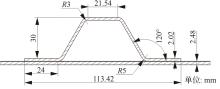
Fig.1
Stringer cross-sectional dimensions
Fig.2
Configuration and dimensions of stiffened panels
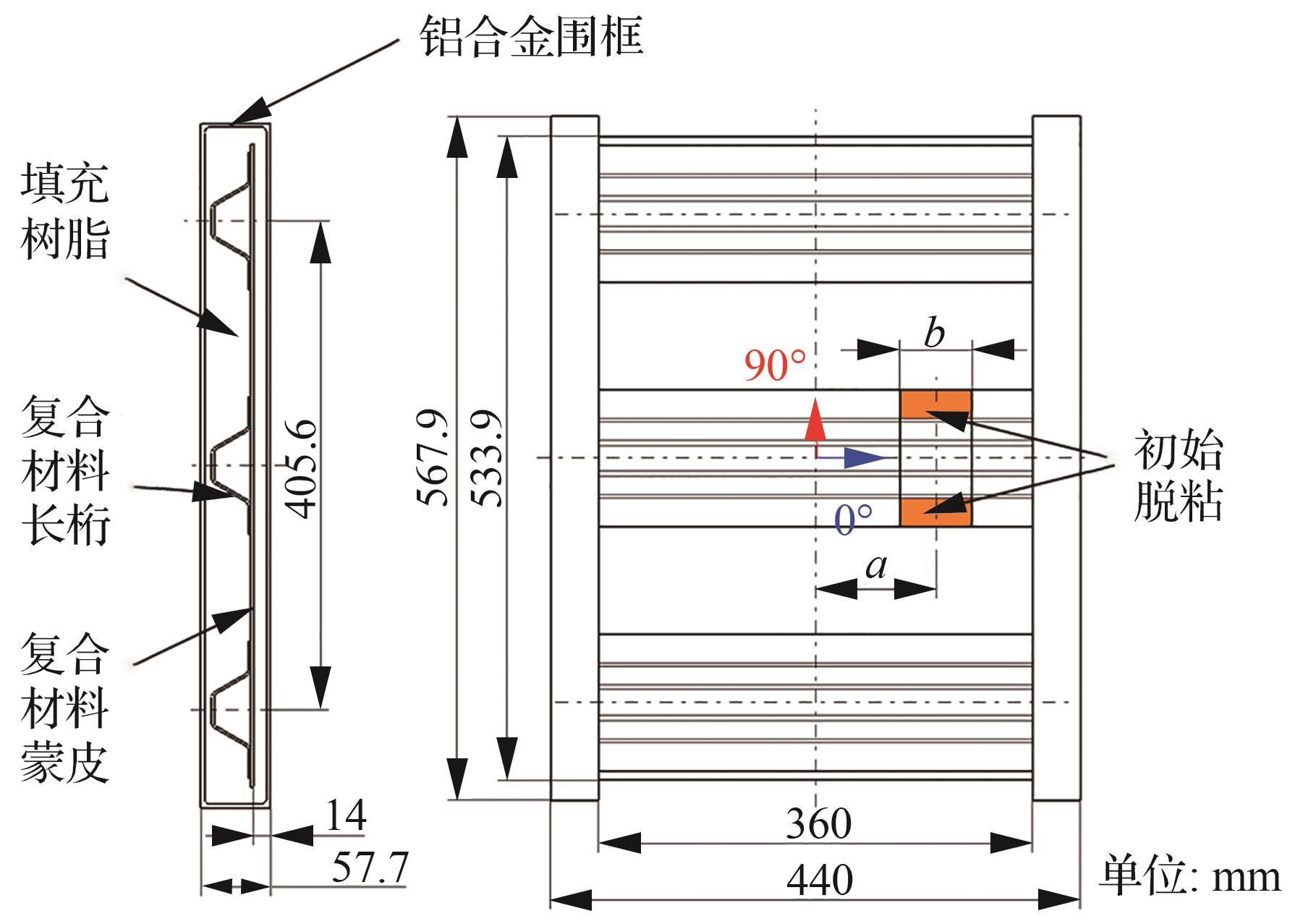
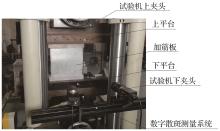
Fig.3
Compression test method for stiffened panel
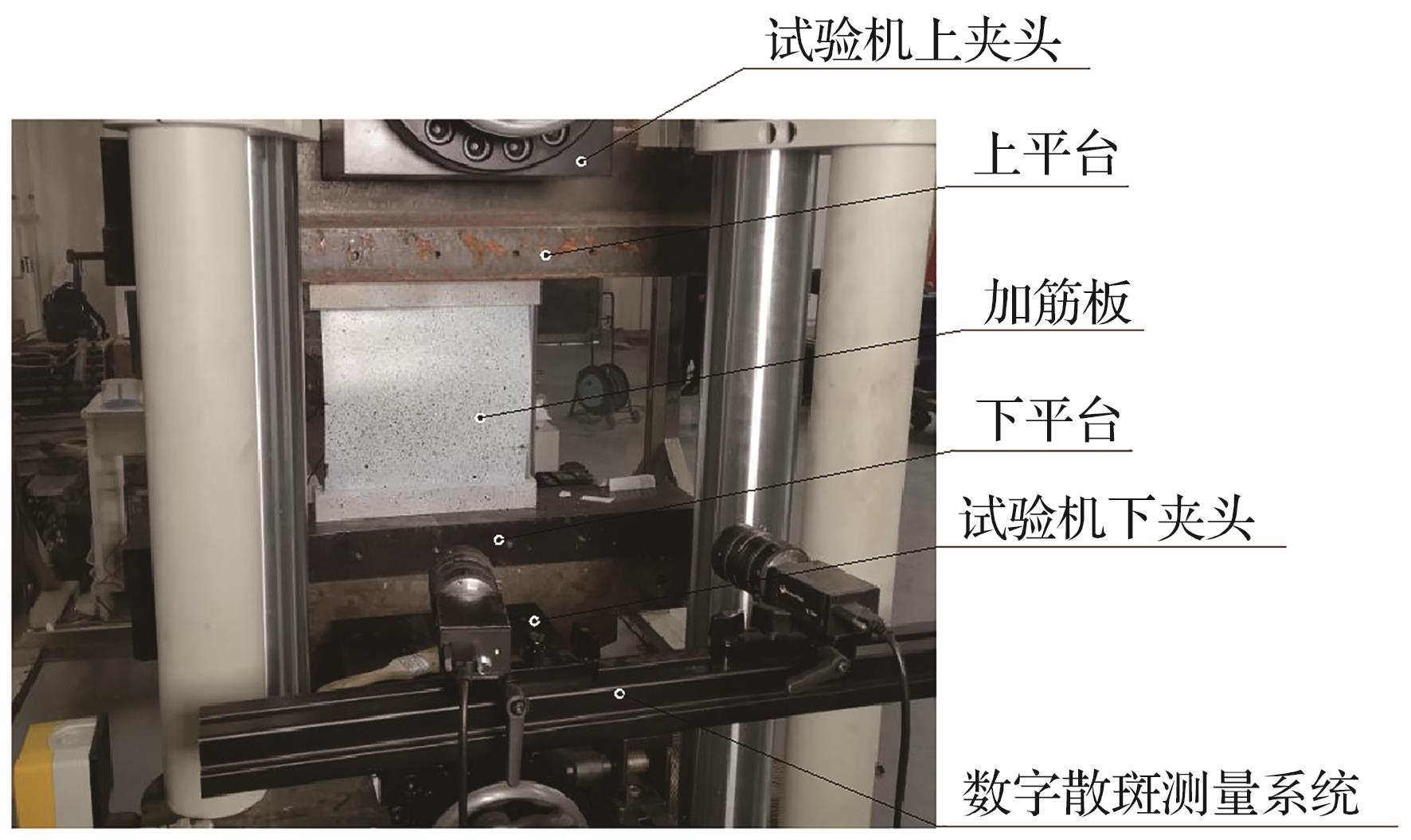
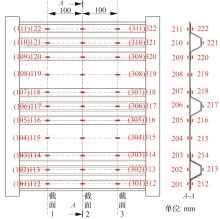
Fig.4
Strain gauges distributions and numbers
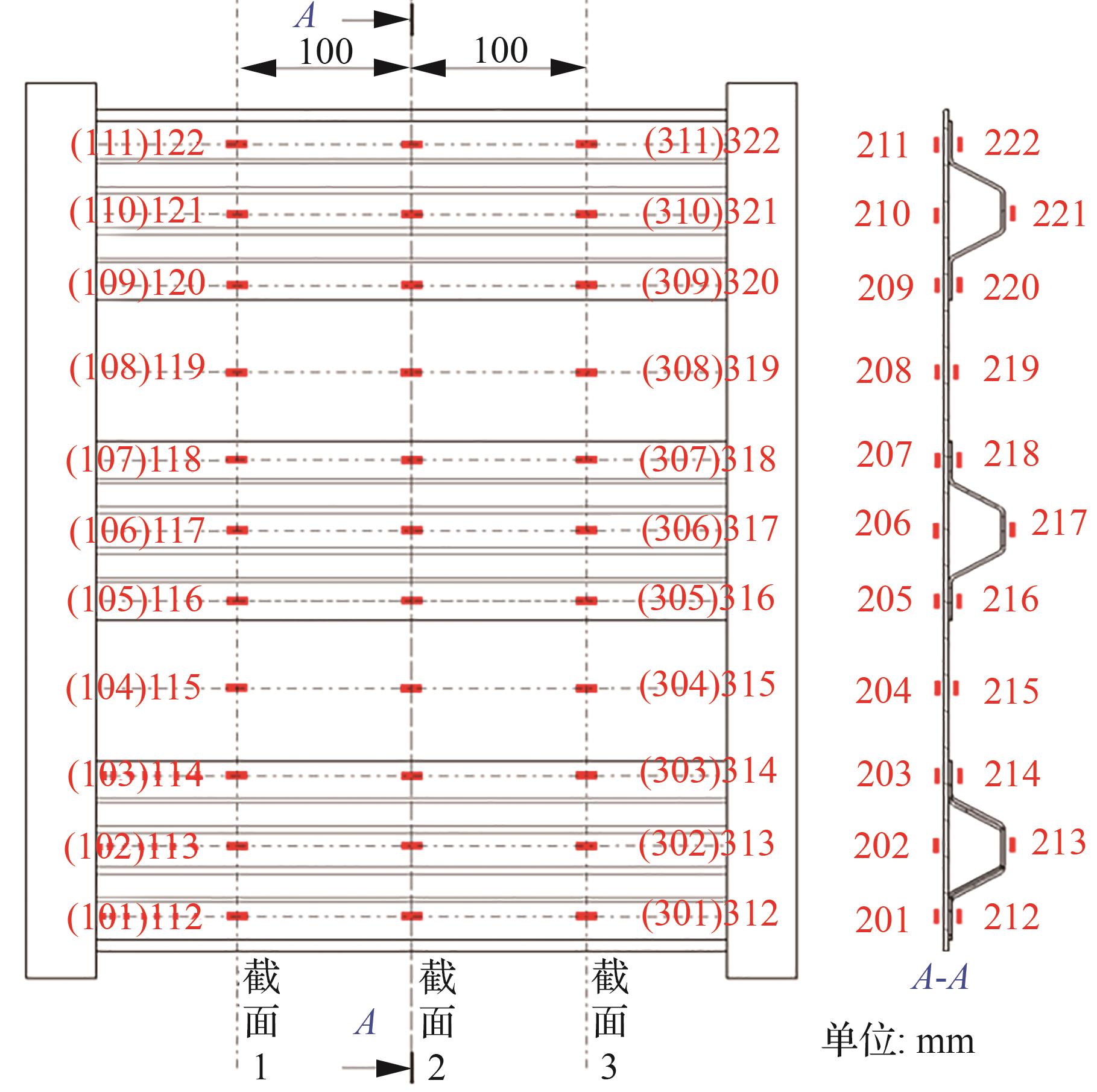
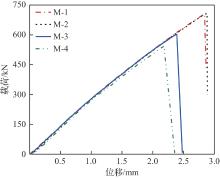
Fig.5
Load-displacement curves of stiffened panels
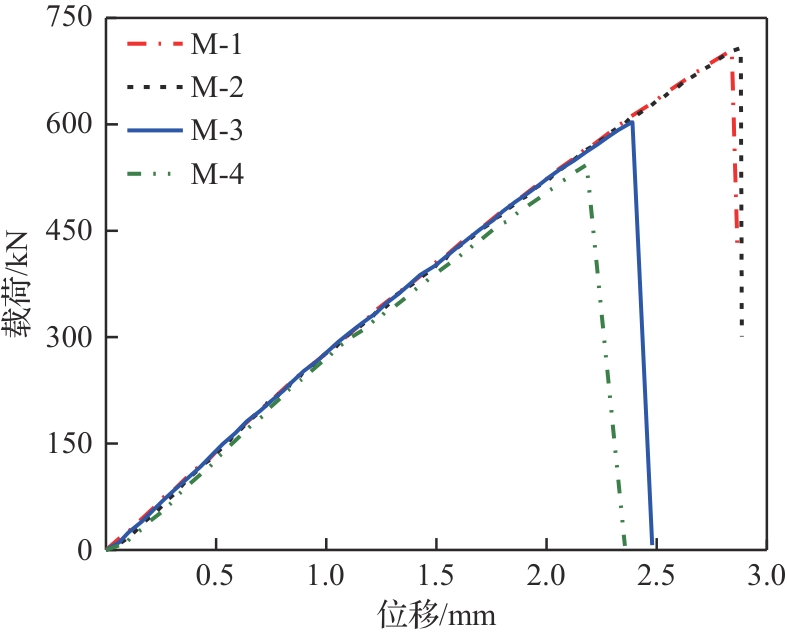
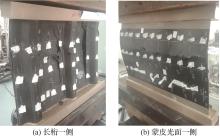
Fig.6
Failure mode of intact stiffened panel (M-1)
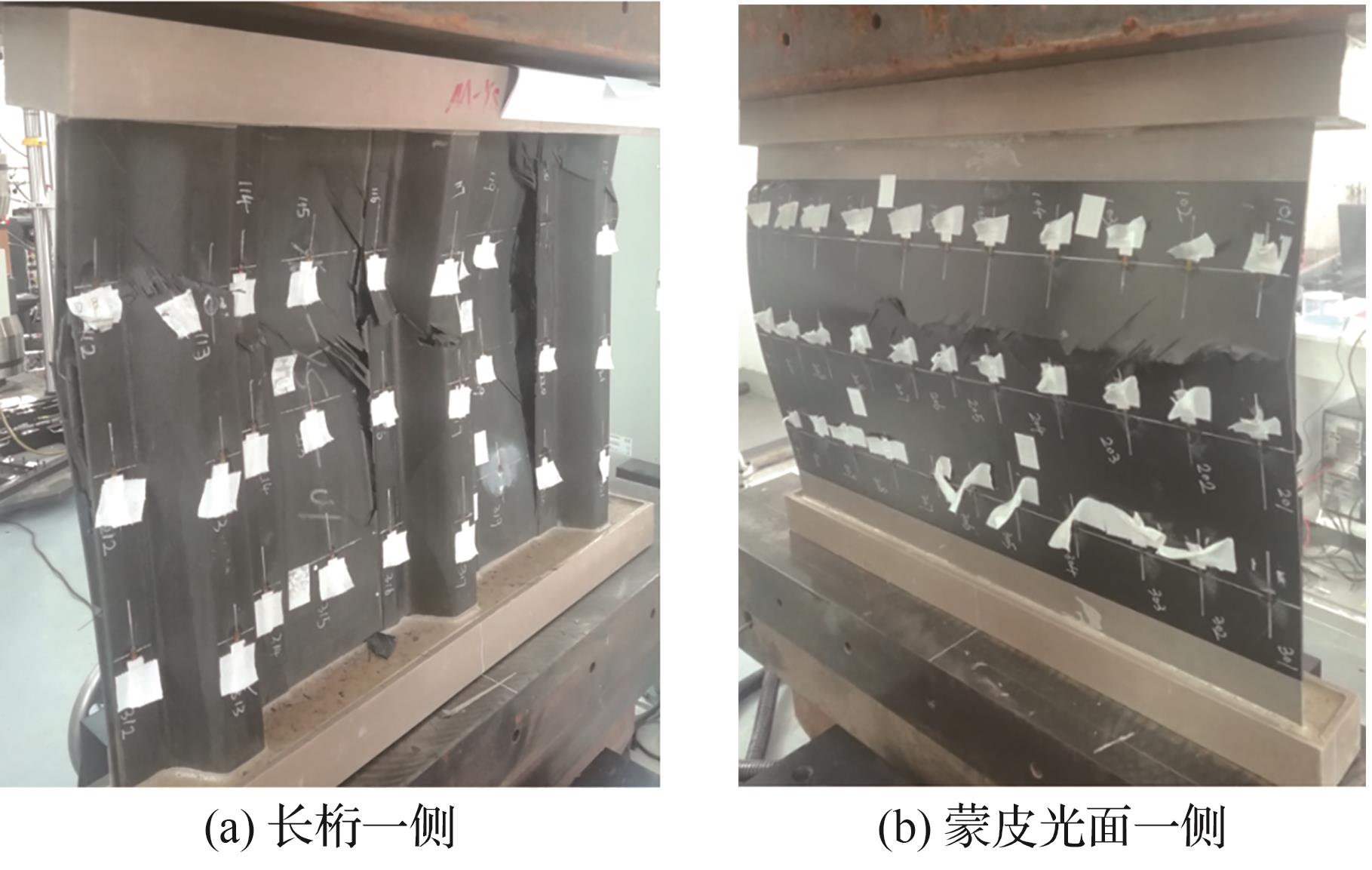
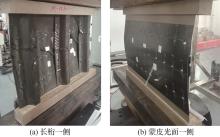
Fig.7
Failure mode of stiffened panel with initial debonding defects (M-3)
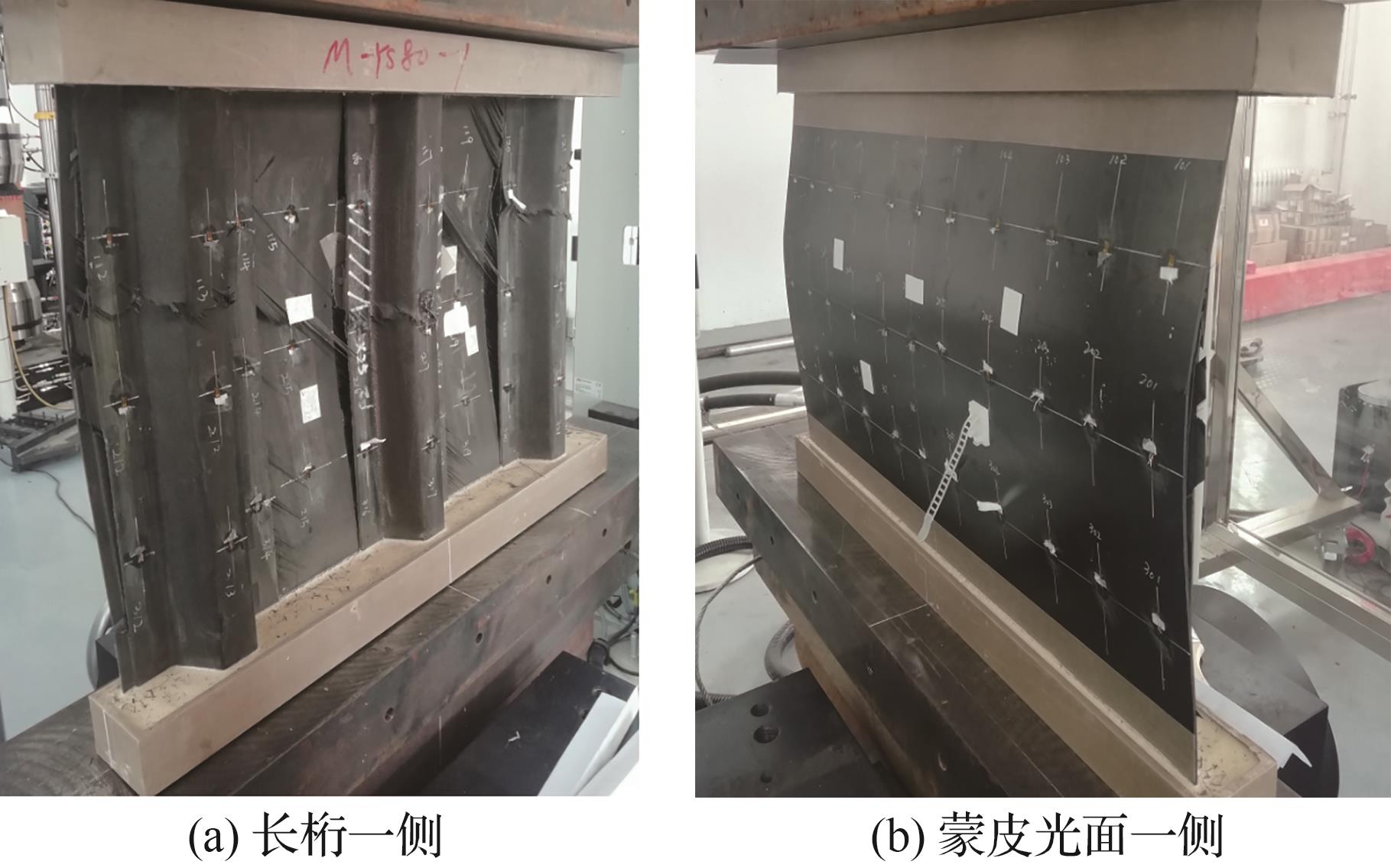
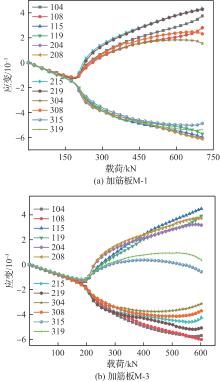
Fig.8
Strain-load curves of critical measurement points
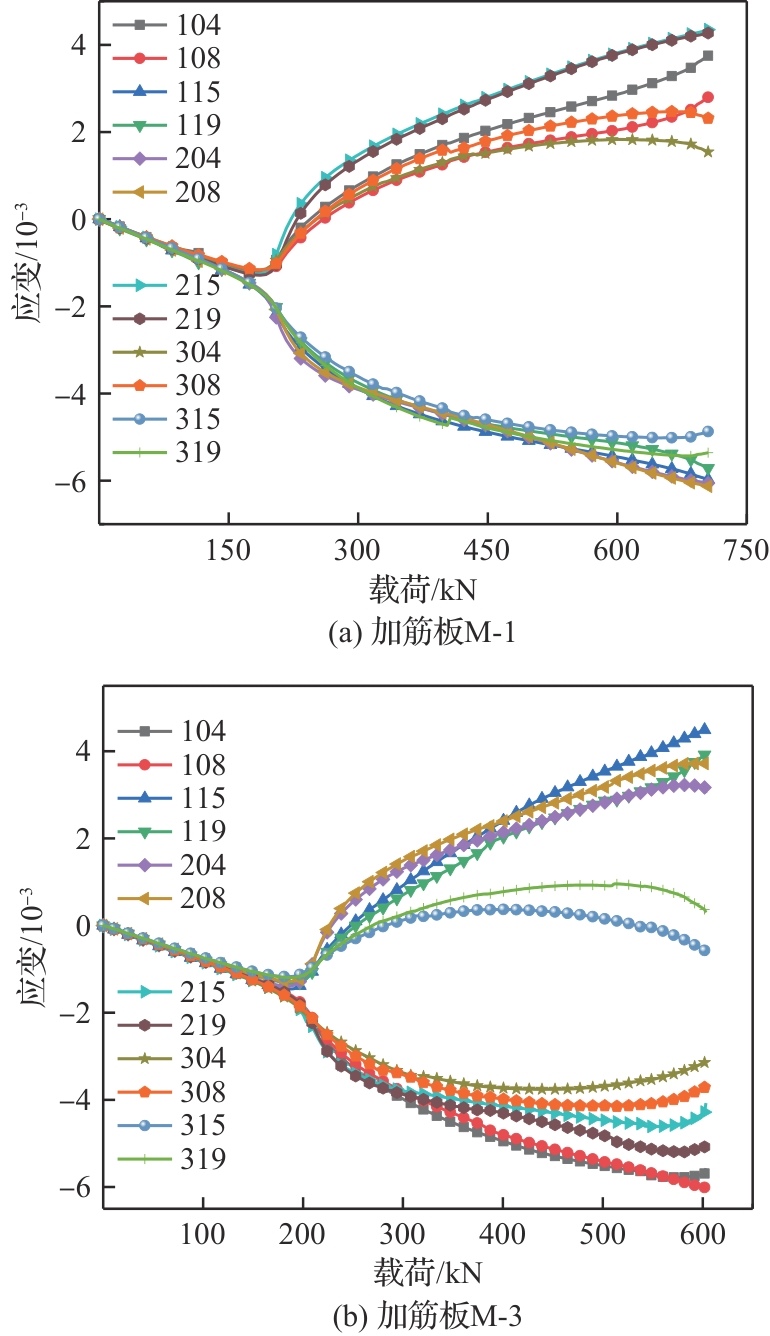
Fig.9
Out-of-plane displacement field of intact composite stiffened panel (M-2)
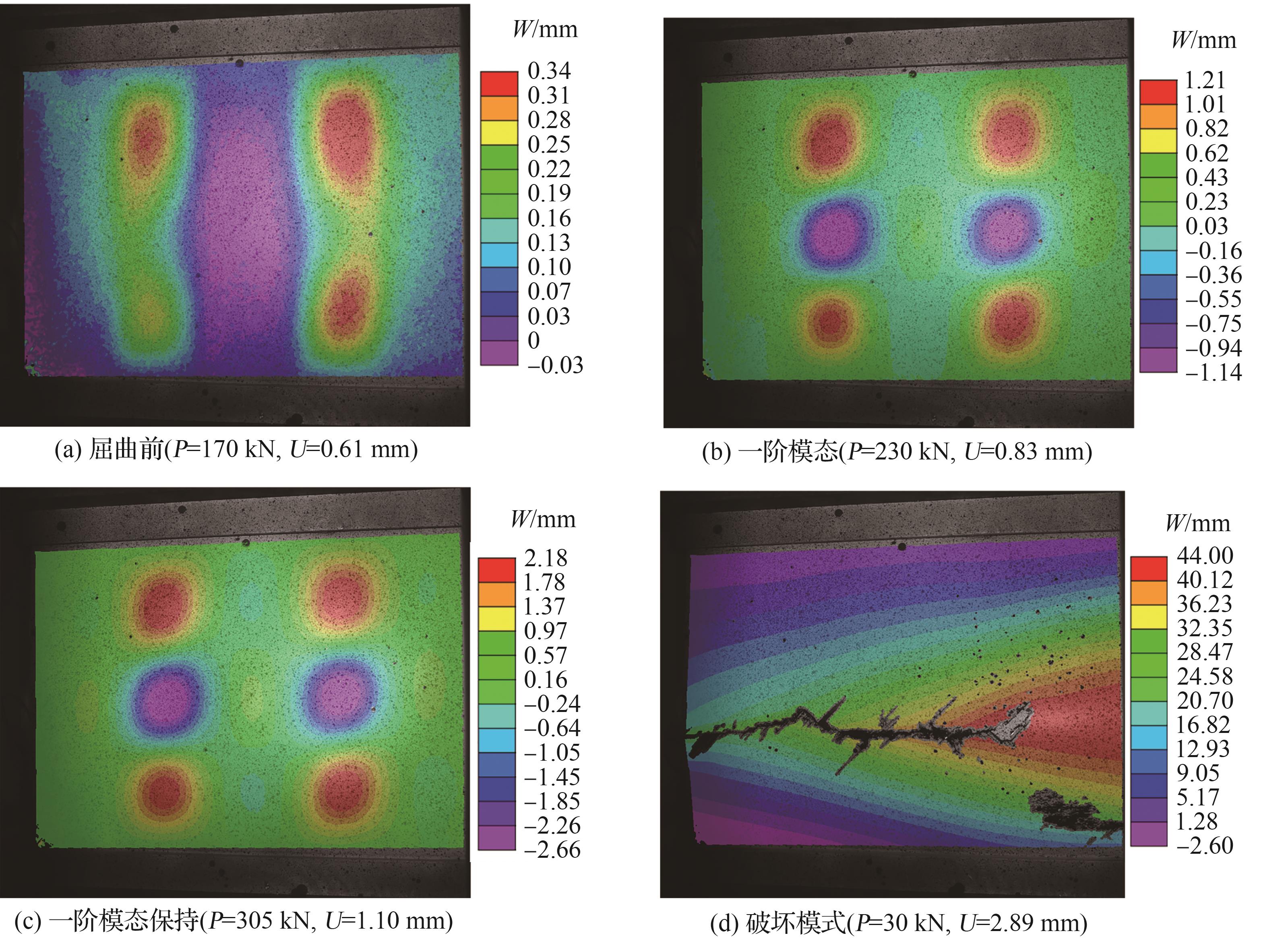
Fig.10
Out-of-plane displacement field of composite stiffened panel with initial debonding defects (M-4)
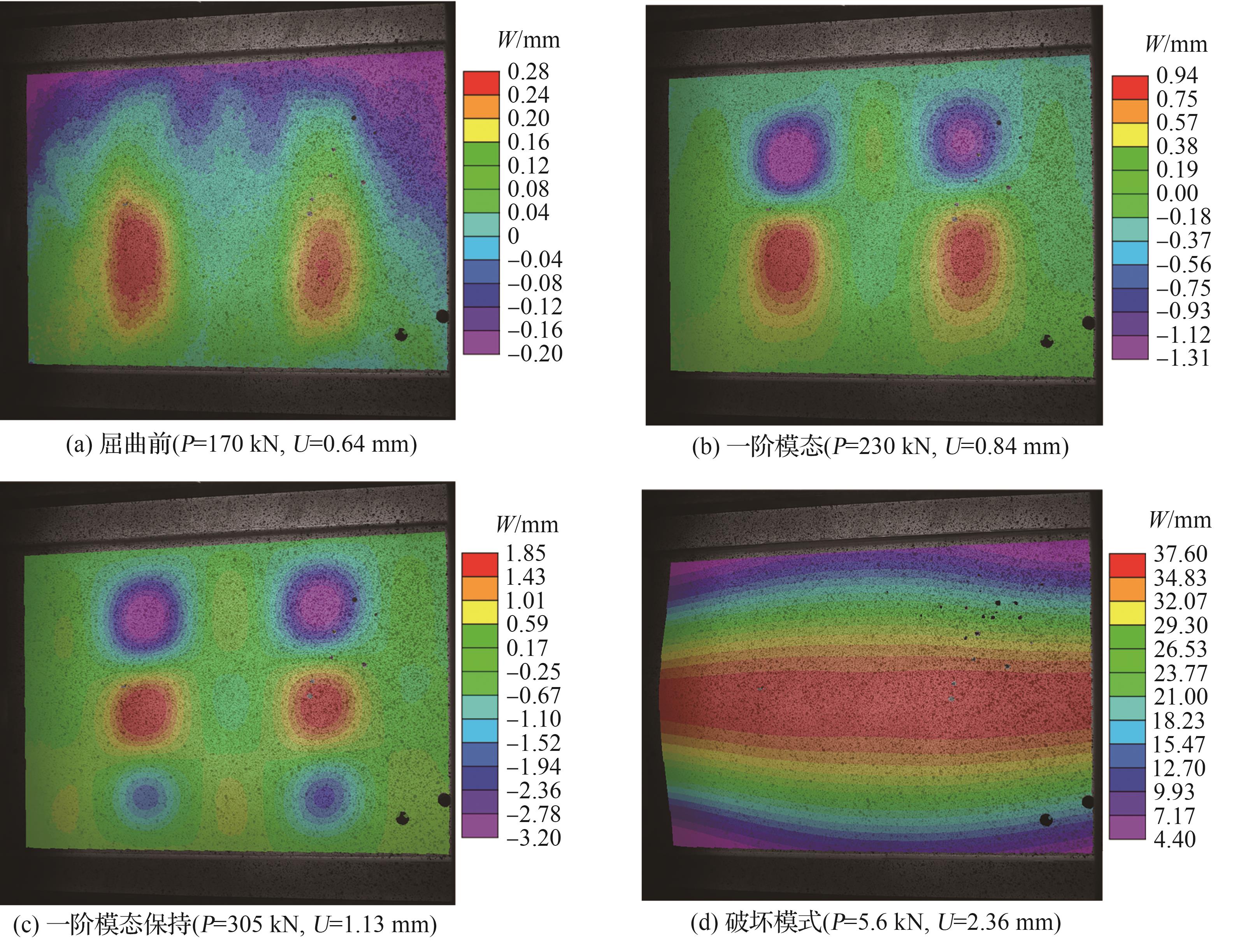

Table 1
Compression test results of composite stiffened panels
| 试件编号 | 损伤状态 | 屈曲载荷/kN | 破坏载荷/kN | ||||
|---|---|---|---|---|---|---|---|
| 试验值 | 平均值 | 相对变化/% | 试验值 | 平均值 | 相对变化/% | ||
| M-1 | 完好 | 186.5 | 188.3 | 709.8 | 709.7 | ||
| M-2 | 190.0 | 709.5 | |||||
| M-3 | 含脱粘缺陷 | 184.4 | 182.2 | -3.24 | 605.3 | 577.7 | -18.6 |
| M-4 | 190.0 | 550.1 | |||||
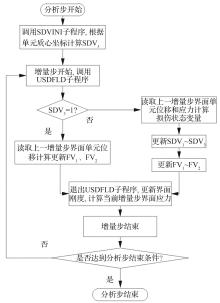
Fig.11
Implementation procedure of cohesive zone hybrid constitutive model
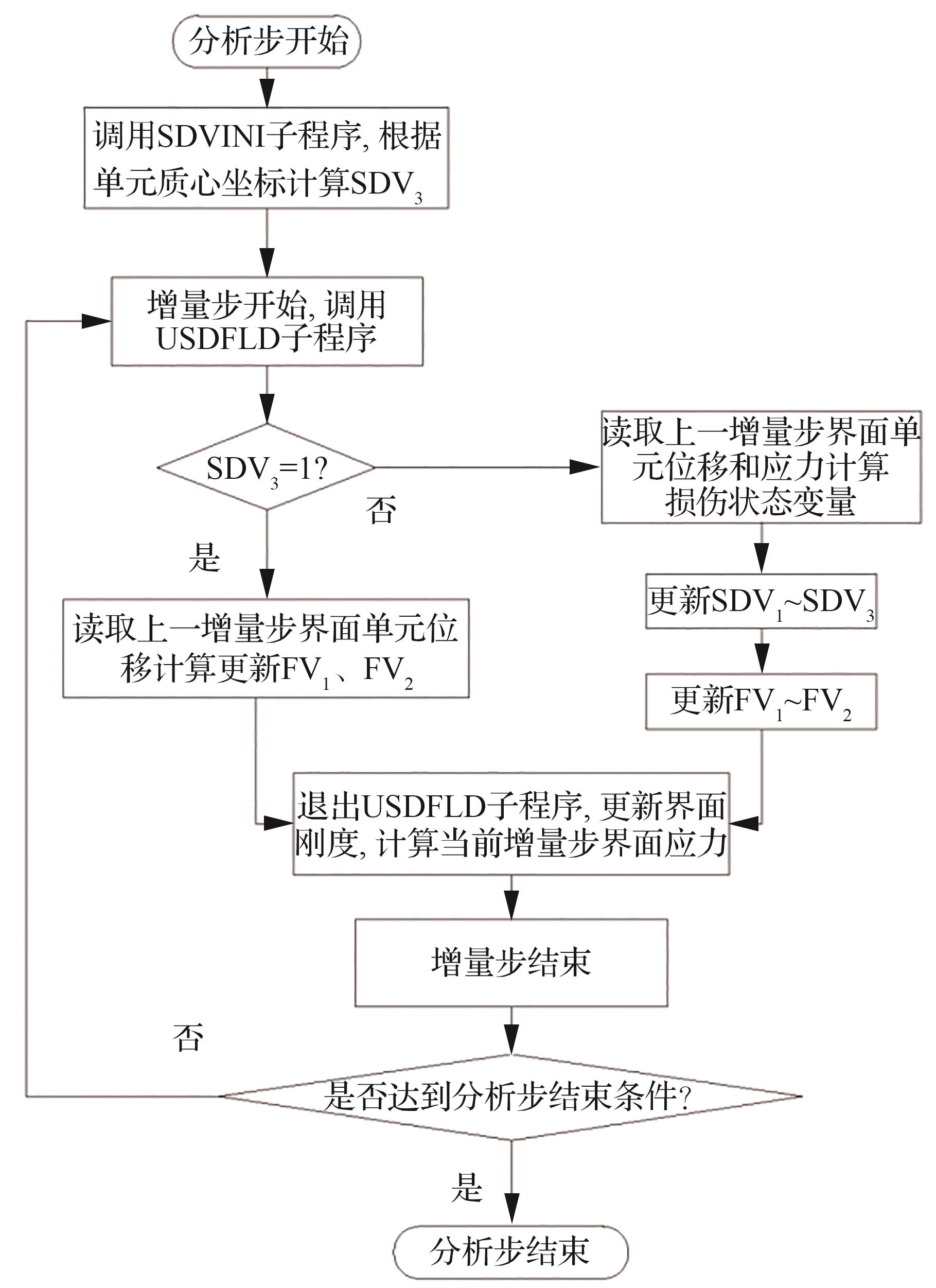
Table 2
Properties of CCF300/BA3202 unidirectional composite material
| E1/GPa | E2/GPa | G12/GPa | ν12 | XT/MPa | |||
|---|---|---|---|---|---|---|---|
| 118 | 8.98 | 4.21 | 0.306 | 1 835 | |||
| XC/MPa | YT/MPa | YC/MPa | S21/MPa | GFT/(kJ·m-2) | |||
| 1 296 | 82.5 | 240 | 166 | 71.4 | |||
| GFC/(kJ·m-2) | GMT/(kJ·m-2) | GMC/(kJ·m-2) | |||||
| 35.6 | 0.744 | 1.90 | 0.007 22 | ||||
Table 3
Properties of interface between stiffener and skin
| Enn/GPa | Ess/GPa | N/MPa | S/MPa | T/MPa |
|---|---|---|---|---|
| 8.98 | 4.21 | 15 | 55 | 40 |
| GIC/(kJ·m-2) | GIIC/(kJ·m-2) | GIIIC/(kJ·m-2) | η | |
| 0.744 | 1.90 | 0.488 | 2.28 |
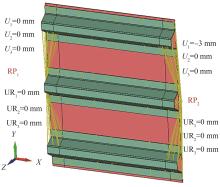
Fig.12
Finite element model of stiffened panel
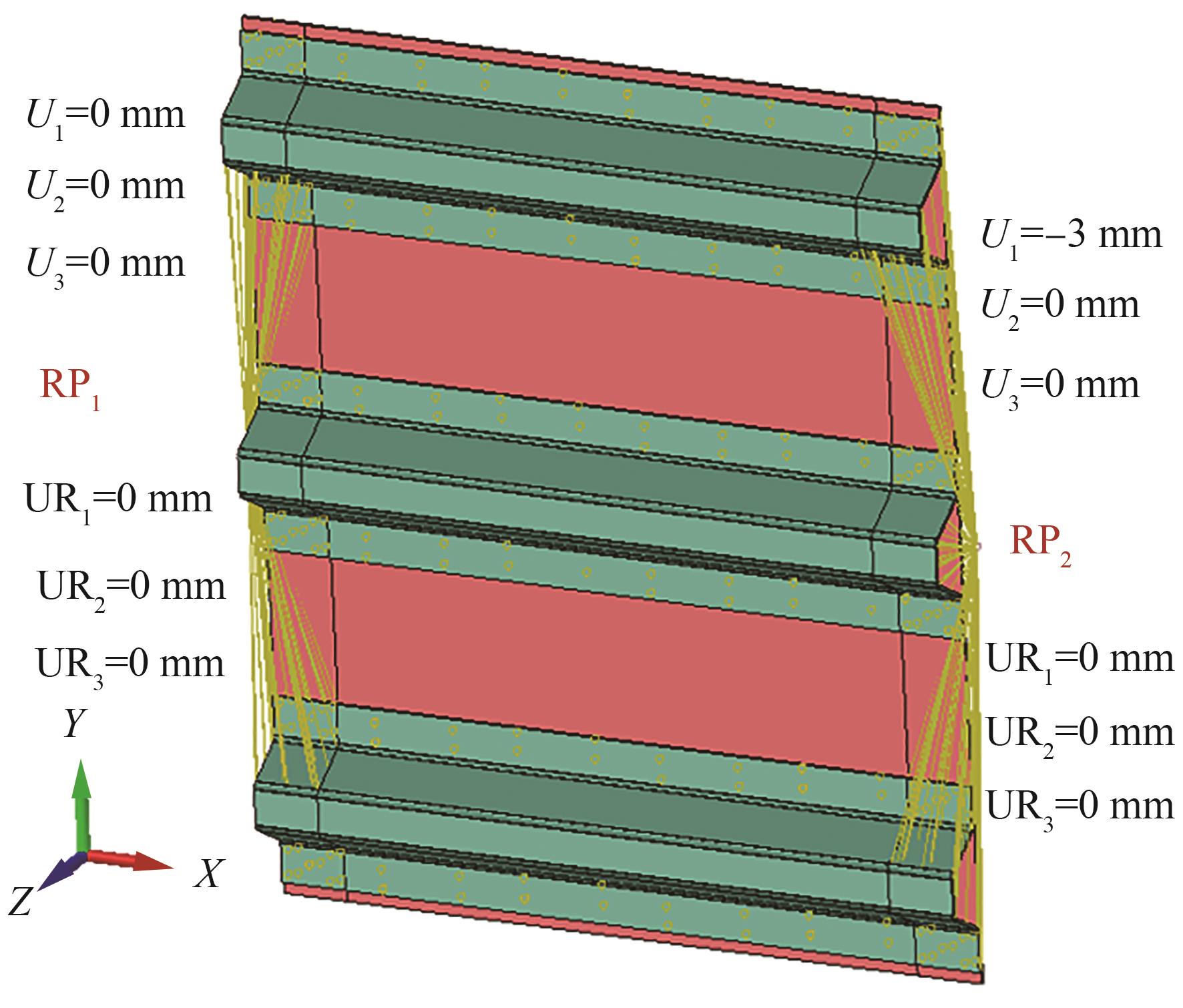
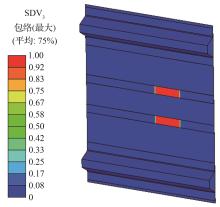
Fig.13
Initial debonding defect distribution in stiffened panels
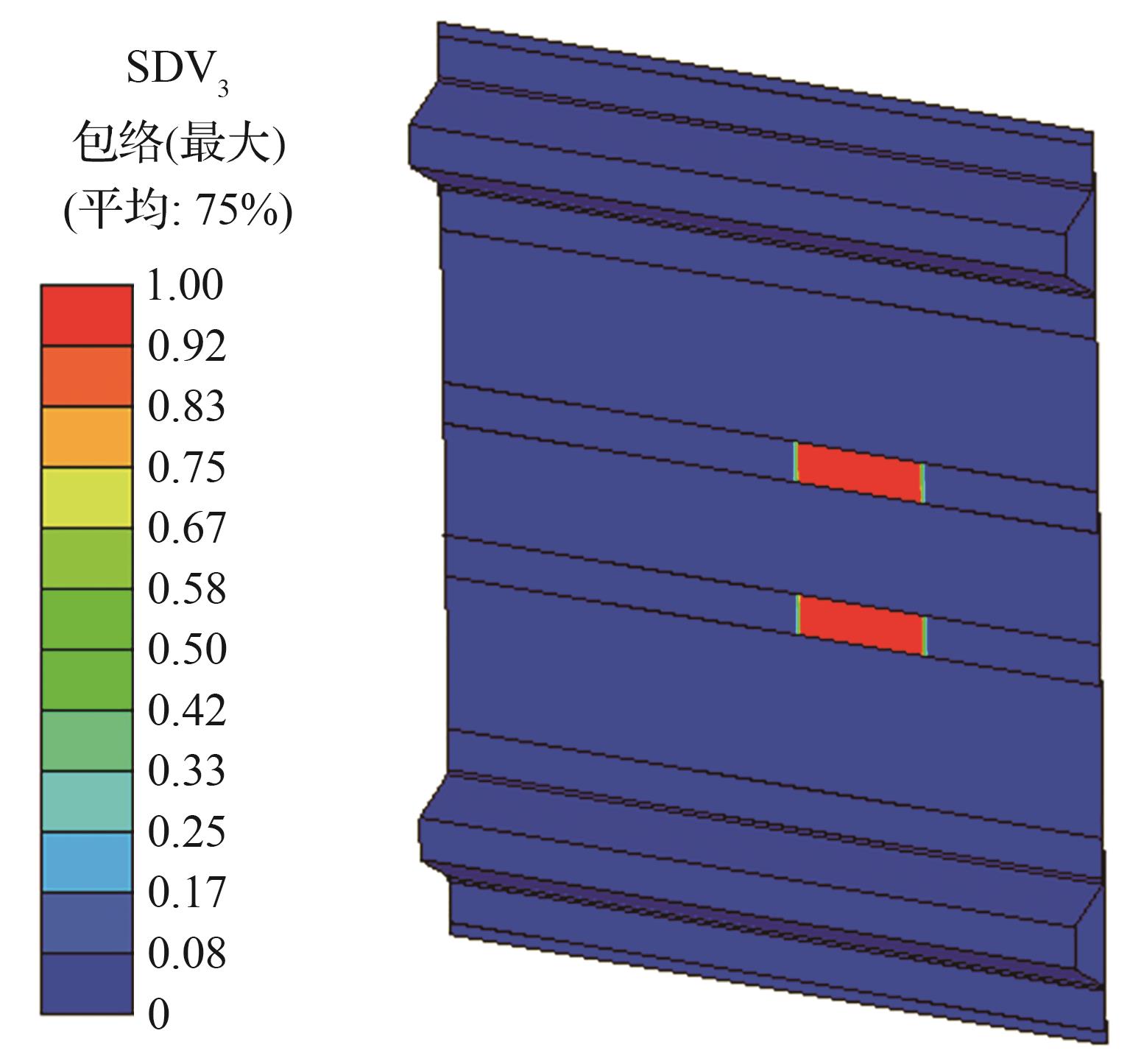
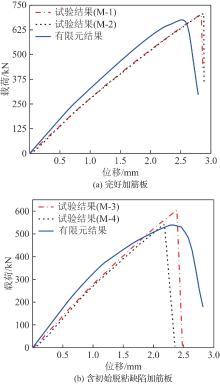
Fig.14
Load-displacement curves of intact and initial debonded stiffened panels
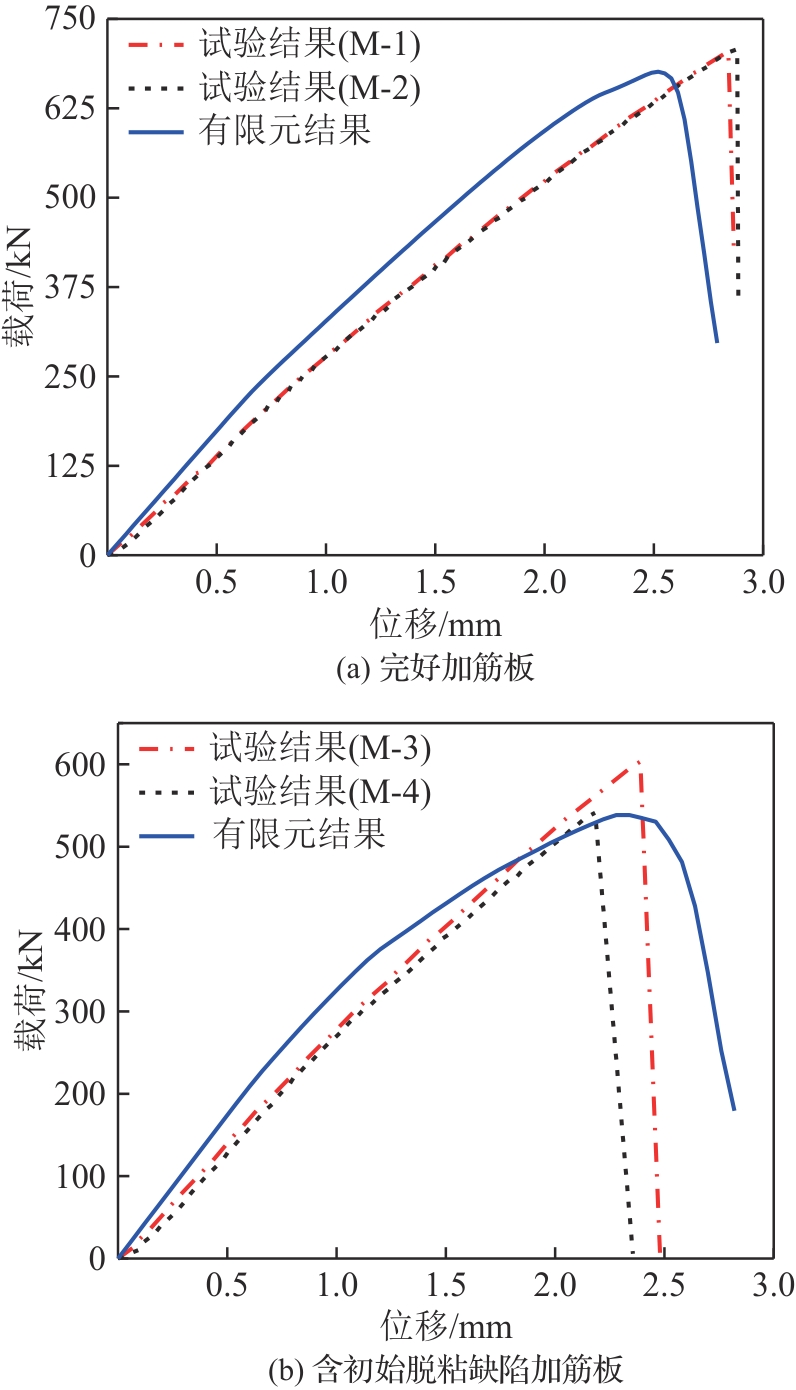
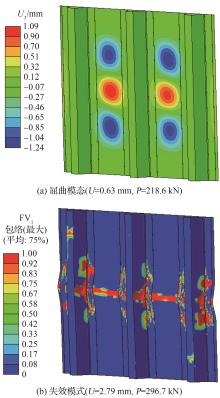
Fig.15
Buckling mode and failure mode of intact stiffened panel
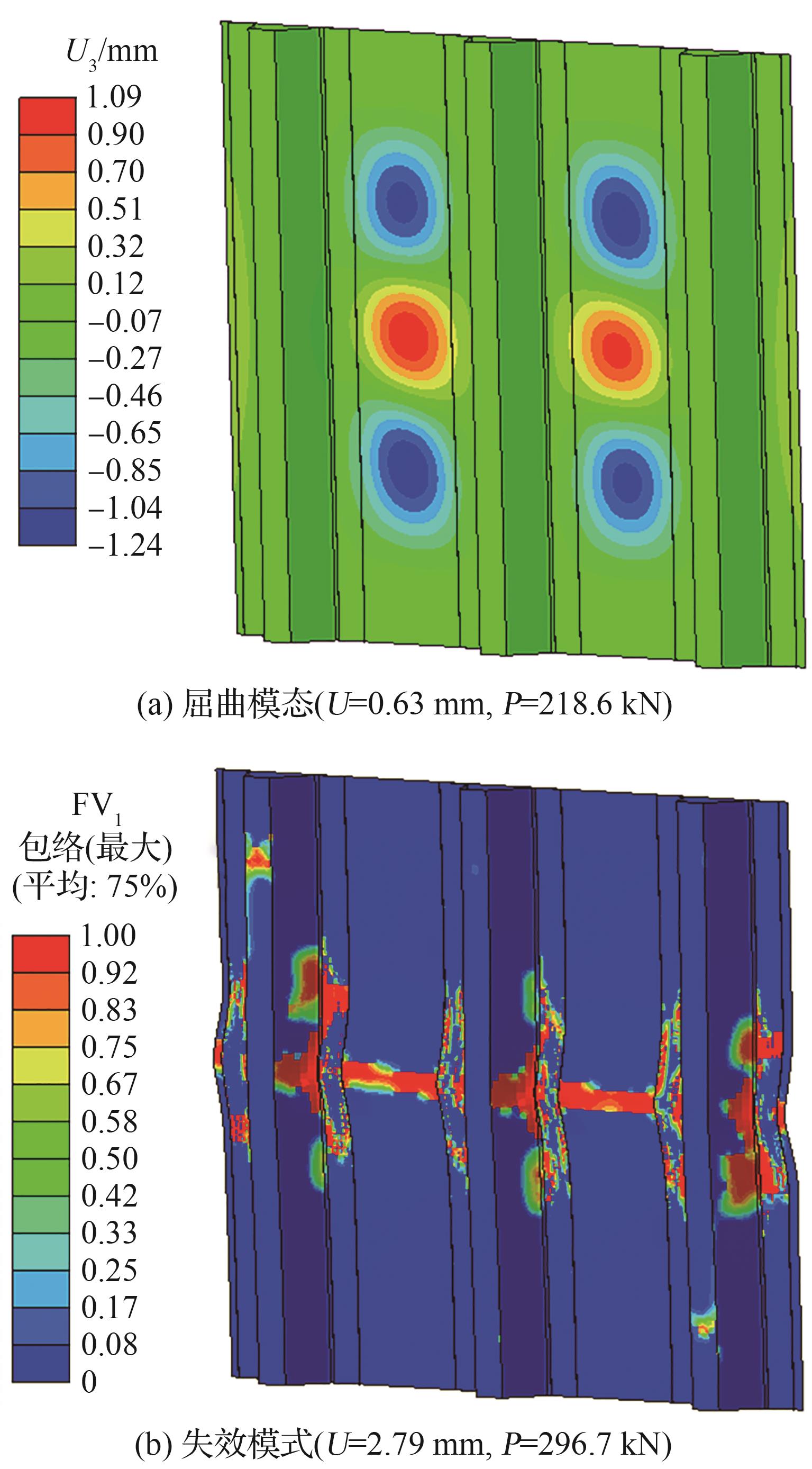
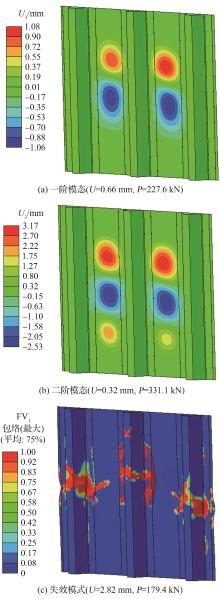
Fig.16
Buckling mode and failure mode of stiffened panel with initial debonding defects
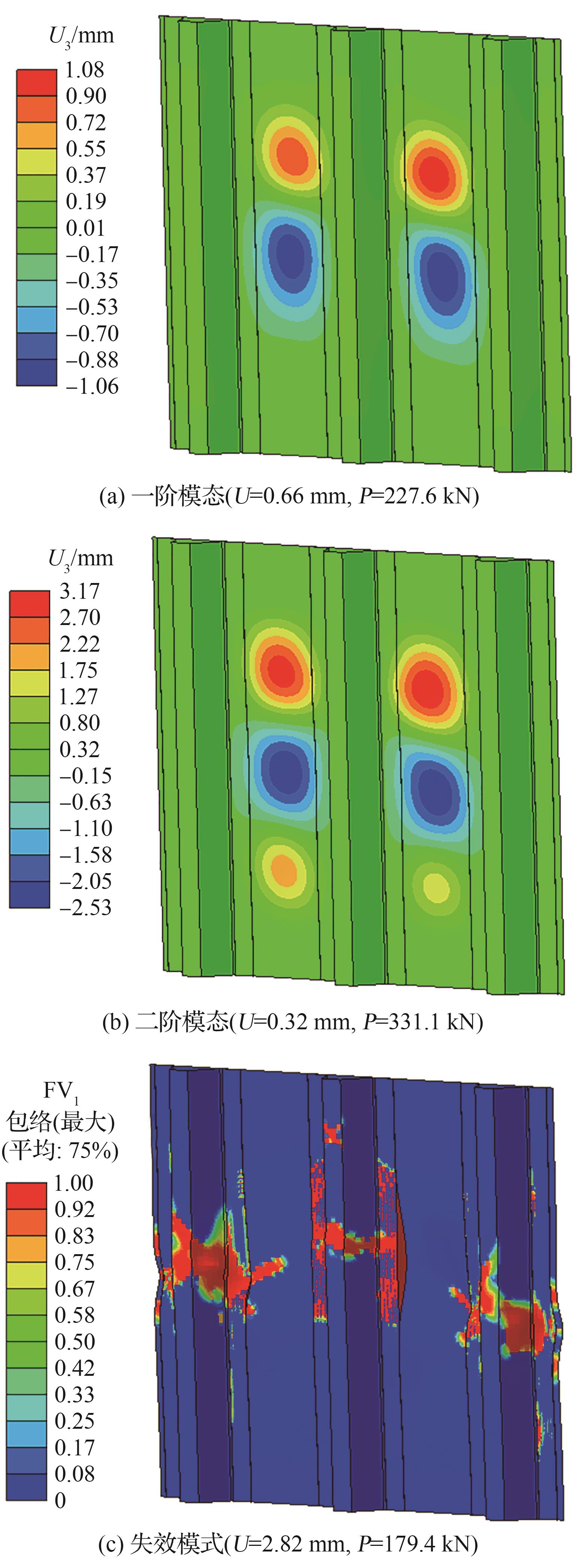
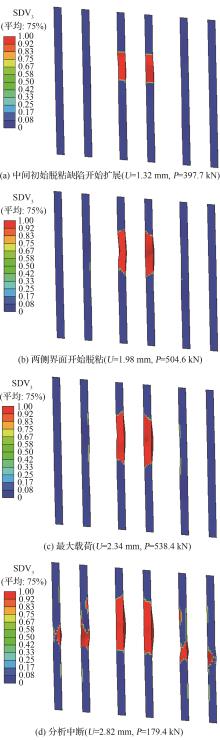
Fig.17
Fiber damage propagation process of stiffened panel with initial debonding defects
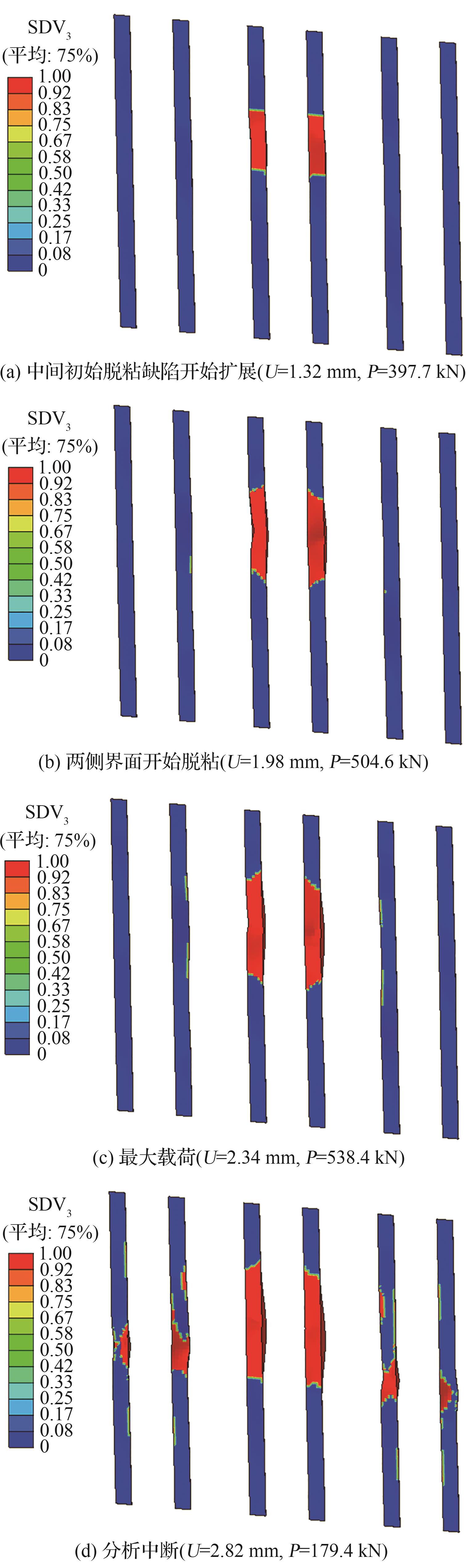
Table 4
Comparison between finite element analysis load and test results
| 损伤状态 | 屈曲载荷/kN | 破坏载荷/kN | ||||
|---|---|---|---|---|---|---|
| 试验平均值 | 有限元结果 | 相对误差/% | 试验平均值 | 有限元结果 | 相对误差/% | |
| 完好 | 188.3 | 187.9 | -0.21 | 709.7 | 676.1 | -4.73 |
| 含初始脱粘缺陷 | 182.2 | 177.5 | -2.58 | 577.7 | 538.4 | -6.80 |
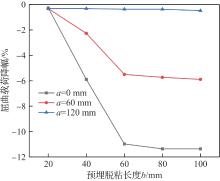
Fig.18
Effects of initial debonding defect size and location on buckling load
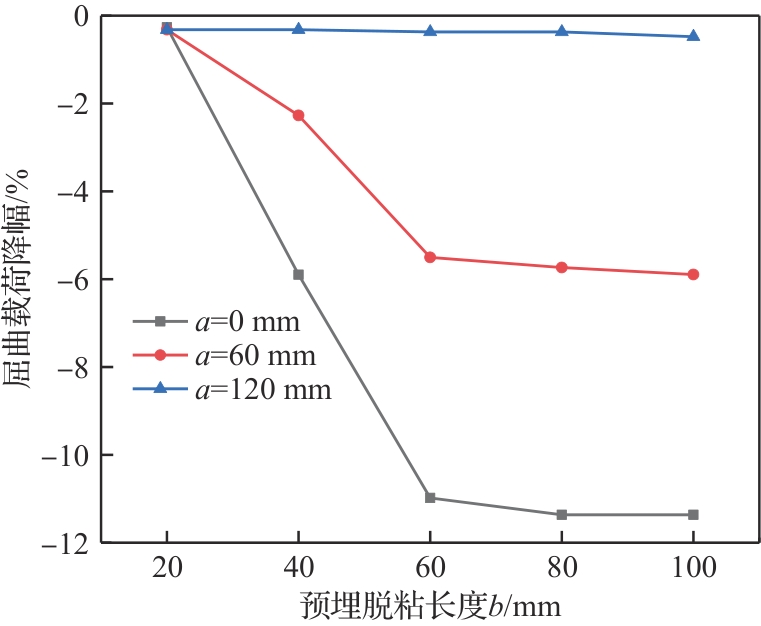
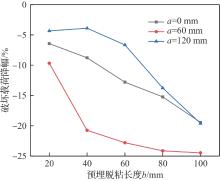
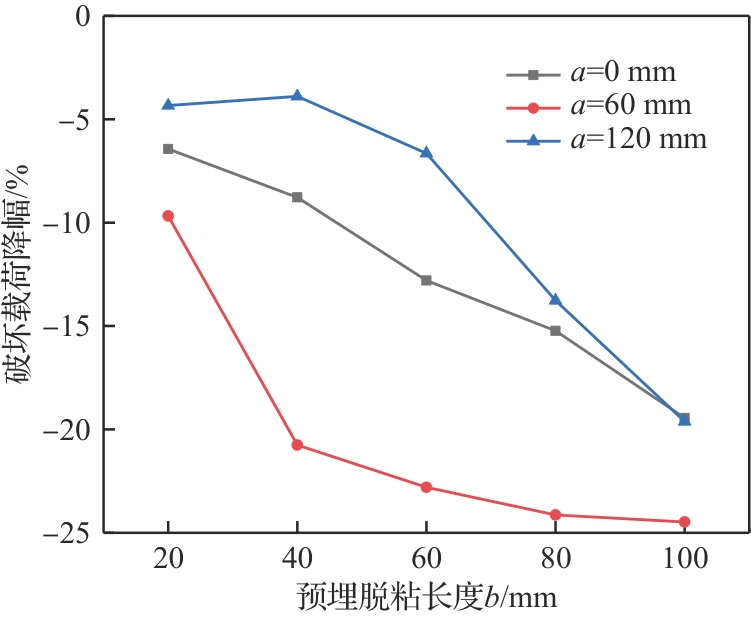
Fig.19
Effects of initial debonding defect size and location on failure load
| [1] | 张卫红, 唐长红. 航空航天装备的轻量化: 挑战与未来[J]. 航空学报, 2024, 45(5): 529965. |
| ZHANG W H, TANG C H. Lightweighting of aerospace and aeronautical equipment: Challenges and perspectives[J]. Acta Aeronautica et Astronautica Sinica, 2024, 45(5): 529965 (in Chinese). | |
| [2] | 赵天, 李营, 张超, 等. 高性能航空复合材料结构的关键力学问题研究进展[J]. 航空学报, 2022, 43(6): 526851. |
| ZHAO T, LI Y, ZHANG C, et al. Fundamental mechanical problems in high-performance aerospace composite structures: State-of-art review[J]. Acta Aeronautica et Astronautica Sinica, 2022, 43(6): 526851 (in Chinese). | |
| [3] | CASTANIE B, AZOTI W, CROUZEIX L, et al. Review of monolithic composite laminate and stiffened structures in aeronautic applications[J]. Composites Part C: Open Access, 2025, 17: 100585. |
| [4] | 陈向明, 李新祥, 柴亚南, 等. 复合材料壁板后屈曲设计与分析技术研究进展[J]. 复合材料学报, 2024, 41(9): 4673-4700. |
| CHEN X M, LI X X, CHAI Y N, et al. Research progress in post-buckling design and analysis techniques for composite stiffened panel[J]. Acta Materiae Compositae Sinica, 2024, 41(9): 4673-4700 (in Chinese). | |
| [5] | DEGENHARDT R, CASTRO S G P, ARBELO M A, et al. Future structural stability design for composite space and airframe structures[J]. Thin-Walled Structures, 2014, 81: 29-38. |
| [6] | GENG X L, JI F F, WANG J, et al. Experimental and numerical investigations of compression stability of stiffened composite panel with ply interleaving[J]. Journal of Composite Materials, 2017, 51(26): 3647-3656. |
| [7] | 陈向明. 复合材料加筋壁板后屈曲失效机理与失效预测方法[D]. 西安: 西北工业大学, 2021. |
| CHEN X M. Postbuckling failure mechanism and failure prediction method of stiffened composite panels[D]. Xi’an: Northwestern Polytechnical University, 2021 (in Chinese). | |
| [8] | AKTERSKAIA M, JANSEN E, HALLETT S R, et al. Analysis of skin-stringer debonding in composite panels through a two-way global-local method[J]. Composite Structures, 2018, 202: 1280-1294. |
| [9] | ZHANG G J, HU Y Y, YAN B, et al. Buckling and post-buckling analysis of composite stiffened panels: A ten-year review (2014—2023)[J]. Thin-Walled Structures, 2024, 205: 112525. |
| [10] | 胡媛媛, 张桂嘉, 陈普会, 等. 复合材料加筋板的屈曲与后屈曲研究综述[J]. 复合材料学报, 2025, 42(5): 2357-2376. |
| HU Y Y, ZHANG G J, CHEN P H, et al. Review on buckling and post-buckling of stiffened composite panels[J]. Acta Materiae Compositae Sinica, 2025, 42(5): 2357-2376 (in Chinese). | |
| [11] | NADEEM MASOOD S, VISWAMURTHY S R, GADDIKERI K M. Composites airframe panel design for post-buckling-An experimental investigation[J]. Composite Structures, 2020, 241: 112104. |
| [12] | PAZ J, RAIMONDO A, BISAGNI C. Experimental study of post-buckled single-stringer composite specimens under fatigue loads with different load levels and load ratios[J]. Composites Part B: Engineering, 2023, 255: 110606. |
| [13] | 杨钧超, 陈向明, 邹鹏, 等. 复合材料层合板剪切稳定性试验及强度预测[J]. 复合材料学报, 2023, 40(3): 1707-1717. |
| YANG J C, CHEN X M, ZOU P, et al. Shear stability test and strength prediction of composite laminates[J]. Acta Materiae Compositae Sinica, 2023, 40(3): 1707-1717 (in Chinese). | |
| [14] | 任涛, 彭昂, 吴大可, 等. 冲击位置对复合材料加筋板冲击后压缩行为影响试验[J]. 复合材料学报, 2022, 39(2): 788-801. |
| REN T, PENG A, WU D K, et al. Experimental study on the influence of impact positions on compression-after-impact behavior of composite stiffened panels[J]. Acta Materiae Compositae Sinica, 2022, 39(2): 788-801 (in Chinese). | |
| [15] | 阳奥, 陈普会, 孔斌, 等. 数字图像相关技术在复合材料加筋曲板压缩试验中的应用[J]. 复合材料学报, 2020, 37(10): 2439-2451. |
| YANG A, CHEN P H, KONG B, et al. Application of digital image correlation technology in compression test of stringer stiffened composite curved panels[J]. Acta Materiae Compositae Sinica, 2020, 37(10): 2439-2451 (in Chinese). | |
| [16] | CASTRO S G P, DONADON M V. Assembly of semi-analytical models to address linear buckling and vibration of stiffened composite panels with debonding defect[J]. Composite Structures, 2017, 160: 232-247. |
| [17] | SILVA D C DA, DONADON M V, ARBELO M A. A semi-analytical model for shear buckling analysis of stiffened composite panel with debonding defect[J]. Thin-Walled Structures, 2022, 171: 108636. |
| [18] | ZHANG X L, LV G C, WANG W J, et al. Numerical and experimental investigation of pre-damaged composite stiffened panel under axial compression[J]. Engineering Fracture Mechanics, 2024, 309: 110406. |
| [19] | RAIMONDO A, RICCIO A. Inter-laminar and intra-laminar damage evolution in composite panels with skin-stringer debonding under compression[J]. Composites Part B: Engineering, 2016, 94: 139-151. |
| [20] | RAIMONDO A, DOESBURG S A, BISAGNI C. Numerical study of quasi-static and fatigue delamination growth in a post-buckled composite stiffened panel[J]. Composites Part B: Engineering, 2020, 182: 107589. |
| [21] | JI R X, ZHAO L B, WANG K K, et al. Effects of debonding defects on the postbuckling and failure behaviors of composite stiffened panel under uniaxial compression[J]. Composite Structures, 2021, 256: 113121. |
| [22] | HU C X, XU Z H, HUANG M X, et al. An insight into the mechanical behavior and failure mechanisms of T-stiffened composite structures with through-interface debonding defects[J]. Ocean Engineering, 2024, 300: 117342. |
| [23] | ZHAO Y R, ZANG J, JIA B, et al. Revealing the interlaminar shear failure behavior of unidirectional laminate under combined compression-shear loads[J]. Journal of Materials Science & Technology, 2023, 157: 110-119. |
| [24] | CHEN X M, SUN X S, CHEN P H, et al. A delamination failure criterion considering the effects of through-thickness compression on the interlaminar shear failure of composite laminates[J]. Composite Structures, 2020, 241: 112121. |
| [25] | WANG B W, CHEN X M, WANG W Z, et al. Post-buckling failure analysis of composite stiffened panels considering the mode Ⅲ fracture[J]. Journal of Composite Materials, 2022, 56(20): 3099-3111. |
| [26] | REEDER J R. An evaluation of mixed-mode delamination failure criteria:104210 [R]. Washington,D.C.:NASA, 1992. |
| [27] | TSAI S W, WU E M. A general theory of strength for anisotropic materials[J]. Journal of Composite Materials, 1971, 5(1): 58-80. |
| [28] | CHEN X M, SUN X S, CHEN P H, et al. Rationalized improvement of Tsai-Wu failure criterion considering different failure modes of composite materials[J]. Composite Structures, 2021, 256: 113120. |
| [29] | PINHO S T, DARVIZEH R, ROBINSON P, et al. Material and structural response of polymer-matrix fibre-reinforced composites[J]. Journal of Composite Materials, 2012, 46(19-20): 2313-2341. |
| [30] | LINDE P, DE BOER H. Modelling of inter-rivet buckling of hybrid composites[J]. Composite Structures, 2006, 73(2): 221-228. |
| [31] | 杨钧超, 王雪明, 陈向明, 等. 低速冲击损伤对复材加筋板压缩性能的影响[J]. 航空学报, 2023, 44(20): 228498. |
| YANG J C, WANG X M, CHEN X M, et al. Effect of low-velocity impact damage on compressive properties of composite stiffened panels[J]. Acta Aeronautica et Astronautica Sinica, 2023, 44(20): 228498 (in Chinese). |
| [1] | Chunhao FAN, Junshan HU, Zhiyong YANG, Fusen HOU, Peilin CHEN, Wei TIAN. Effects of curing residual stress and deformation on tensile performance of CFRP single-sided patch-repaired titanium alloy damaged components [J]. Acta Aeronautica et Astronautica Sinica, 2026, 47(3): 431997-431997. |
| [2] | Jiaqi MI, Yongping JIANG, Ruxin GAO. A symplectic-wave-based method for random vibration analysis of orthotropic cylindrical shells [J]. Acta Aeronautica et Astronautica Sinica, 2026, 47(3): 232322-232322. |
| [3] | Chaofan WANG, Huanlin ZHOU, Xuan WANG. RBF-enhanced direct probability integral method for stochastic buckling analysis of plate and shell structures [J]. Acta Aeronautica et Astronautica Sinica, 2026, 47(3): 232214-232214. |
| [4] | Wei HUANG, Jiahao PAN, Chu HE. Wavelet time-frequency localization-based model compression for UAV object detection [J]. Acta Aeronautica et Astronautica Sinica, 2025, 46(23): 631952-631952. |
| [5] | Qiang ZHANG, Lei LI, Guangqi HUANG, Jiahui XIE, Guibin SONG. Open-hole tensile mechanical behavior of carbon/glass hybrid composites [J]. Acta Aeronautica et Astronautica Sinica, 2025, 46(21): 532312-532312. |
| [6] | Kairui TANG, Zhe WANG, Xiangming CHEN, Baorang CUI, Yanhui CHEN, Puhui CHEN. A multi-fidelity data-driven framework for predicting mechanical property distributions of composite structures and its validation [J]. Acta Aeronautica et Astronautica Sinica, 2025, 46(21): 532180-532180. |
| [7] | Penghui SU, Yihao LIU, Xuhong JIN, Xiaoli CHENG. Numerical investigation of inlet performance of an atmosphere-breathing electric propulsion system and its feasibility analysis [J]. Acta Aeronautica et Astronautica Sinica, 2025, 46(16): 131569-131569. |
| [8] | Miaojiao PENG, Jinwen HUANG, Dianyin HU, Rongqiao WANG, Junjie YANG, Zhigang JIA, Qinglin CHEN, Yifeng SUN, Yingqiang CAI, Kuan FAN, Zhaoyi ZHU, Xiaowen LI. Research progress on interfacial mechanical properties, damage mechanisms, and reinforcement strategies of CFRP composites for aero-engines [J]. Acta Aeronautica et Astronautica Sinica, 2025, 46(16): 231600-231600. |
| [9] | Chen LIU, Chen HE, Wenming GAO, Xianfeng WANG, Lin JIANG, Shuo CHENG, Yong LI, Jun XIAO. Dual scale ply design of composite aircraft auxiliary fuel tank [J]. Acta Aeronautica et Astronautica Sinica, 2025, 46(1): 230541-230541. |
| [10] | Liang MENG, Jinyuan YANG, Zhiwei YANG, Tong GAO, Hongquan LIU, Weihong ZHANG. Buckling⁃resisting optimization design of typical aircraft panel and test validation [J]. Acta Aeronautica et Astronautica Sinica, 2024, 45(5): 529679-529679. |
| [11] | Lili CHEN, Jianxia LIU, Juntao ZHANG, Zheng GUO, Anping WU, Zhongxi HOU. Waverider forebody design method with longitudinal segments and multi-stage compression [J]. Acta Aeronautica et Astronautica Sinica, 2024, 45(4): 128744-128744. |
| [12] | Zhiting GAO, Zhuang MA, Yanbo LIU. Effect of CVD-SiC array structure on ablation resistance of ZrB2/SiC coatings [J]. Acta Aeronautica et Astronautica Sinica, 2024, 45(3): 428842-428842. |
| [13] | Yueqing ZHAO, Dezhi LIN, Hui CHEN, Jiali TANG, Lidong WANG. Research progress on characterization methods for forming performance of unidirectional prepregs [J]. Acta Aeronautica et Astronautica Sinica, 2024, 45(22): 30224-030224. |
| [14] | Liang MENG, Jing ZHANG, Yadong WANG, Yang YU, Fan ZHANG, Jihong ZHU, Weihong ZHANG. Lightweight design of stiffening ribs layout of a bypass engine casing [J]. Acta Aeronautica et Astronautica Sinica, 2024, 45(11): 529021-529021. |
| [15] | Mi XU, Zebei MAO, Bo WANG, Tong LI. An equivalent⁃deformation⁃modulus algorithm for fast optimization of anisotropic material distribution in thin plates [J]. Acta Aeronautica et Astronautica Sinica, 2024, 45(10): 229273-229273. |
| Viewed | ||||||
|
Full text |
|
|||||
|
Abstract |
|
|||||
Address: No.238, Baiyan Buiding, Beisihuan Zhonglu Road, Haidian District, Beijing, China
Postal code : 100083
E-mail:hkxb@buaa.edu.cn
Total visits: 6658907 Today visits: 1341All copyright © editorial office of Chinese Journal of Aeronautics
All copyright © editorial office of Chinese Journal of Aeronautics
Total visits: 6658907 Today visits: 1341

 CJA
CJA
