Acta Aeronautica et Astronautica Sinica ›› 2025, Vol. 46 ›› Issue (19): 532297.doi: 10.7527/S1000-6893.2025.32297
• Special Issue: Aircraft Digital Twin Technology • Previous Articles Next Articles
Pengfei WANG1, Lifang ZENG2( ), Xueming SHAO2, Jun LI2
Received:2025-05-27
Revised:2025-06-16
Accepted:2025-07-17
Online:2025-07-28
Published:2025-07-25
Contact:
Lifang ZENG
E-mail:lifang_zeng@zju.edu.cn
Supported by:CLC Number:
Pengfei WANG, Lifang ZENG, Xueming SHAO, Jun LI. Multi-source data fusion modeling method for aerodynamic load of aircraft wing based on pre-training and fine-tuning[J]. Acta Aeronautica et Astronautica Sinica, 2025, 46(19): 532297.
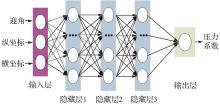
Fig.1
Network structure based on pre-training fine-tuning data fusion model
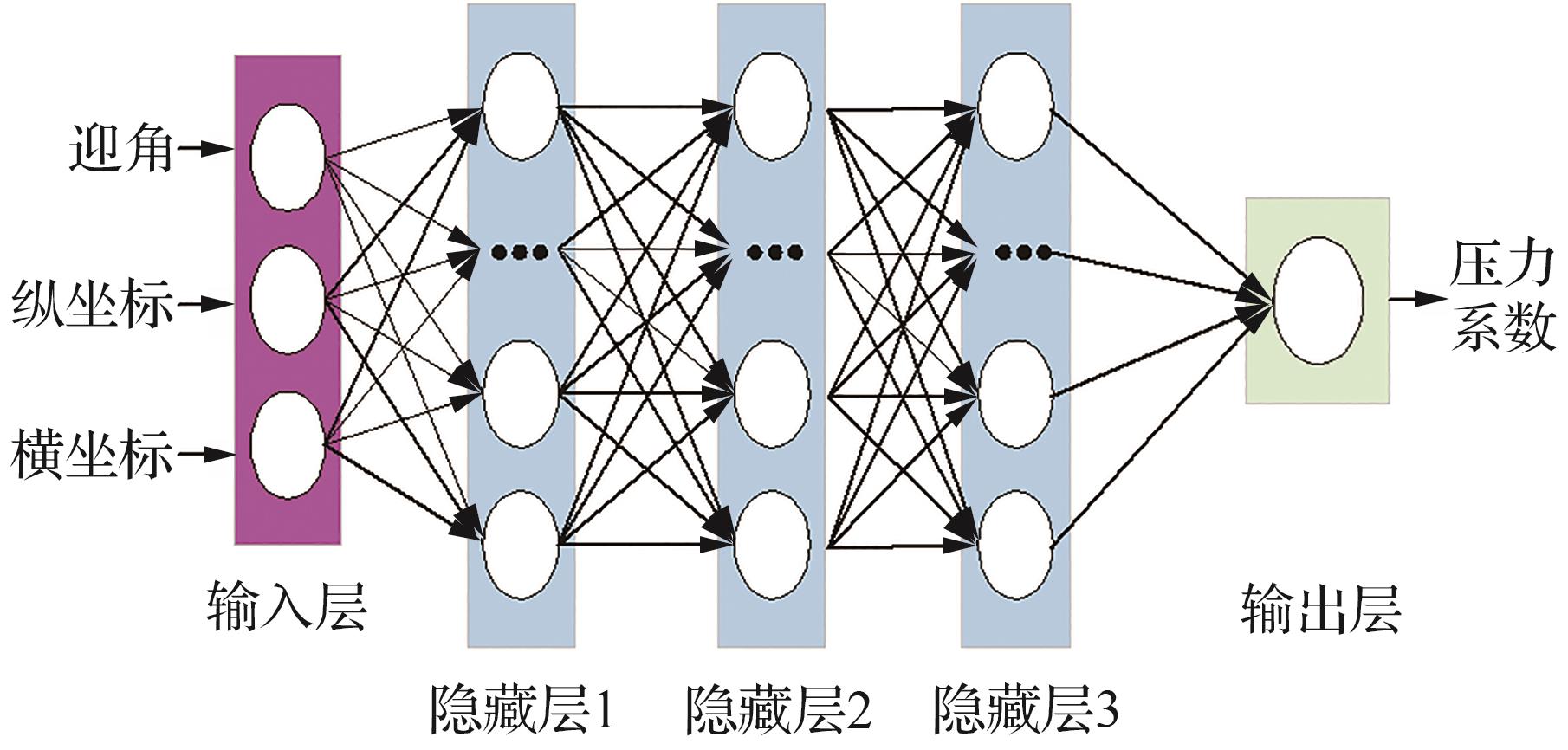
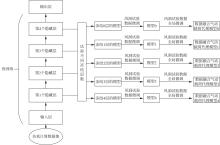
Fig.2
Flowchart for constructing aerodynamic load proxy model based on pre-training fine-tuning data fusion method
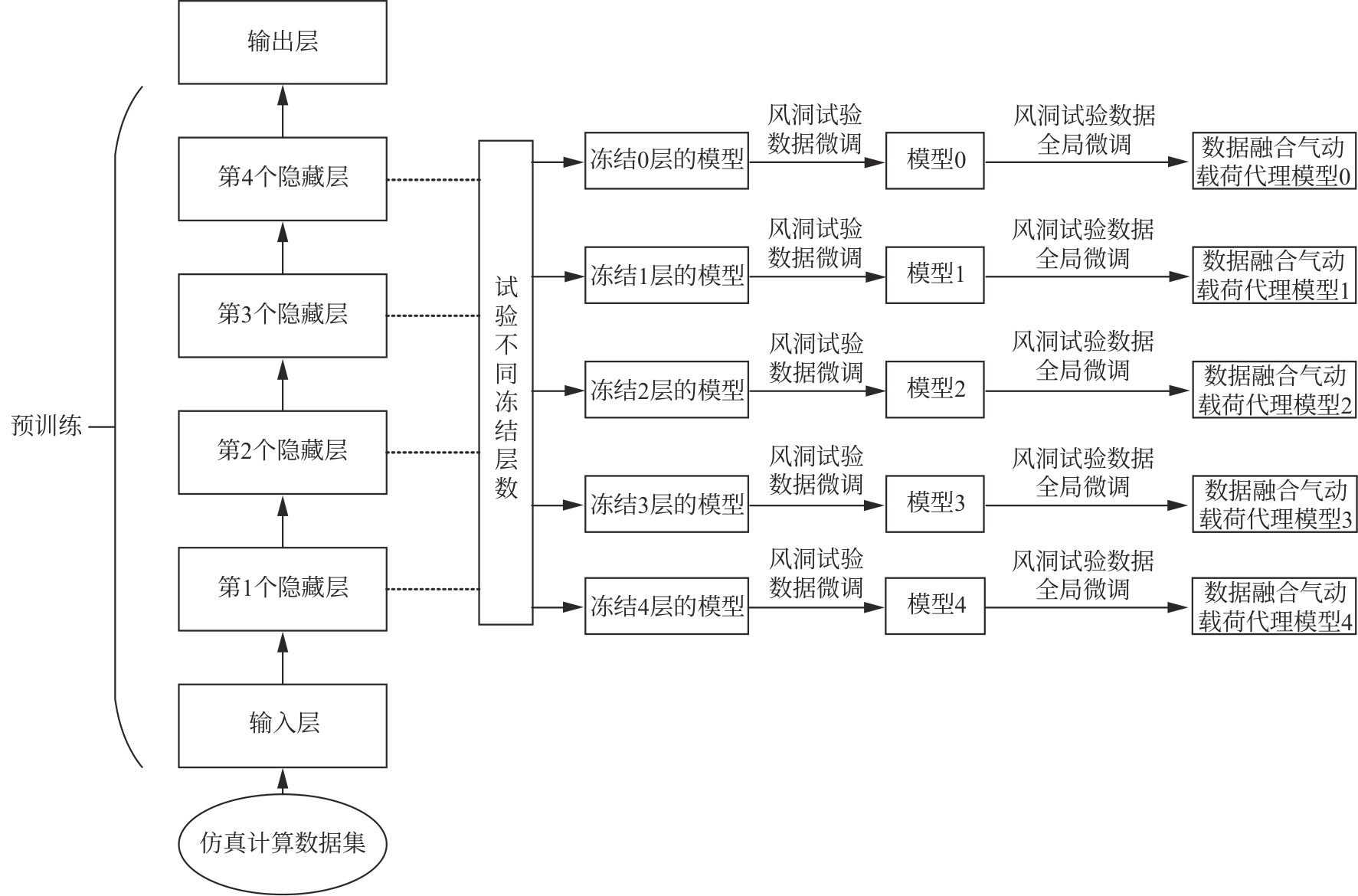
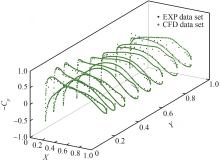
Fig.3
Comparison of simulation and test results for CRM-WB at an angle of attack of 0.23°
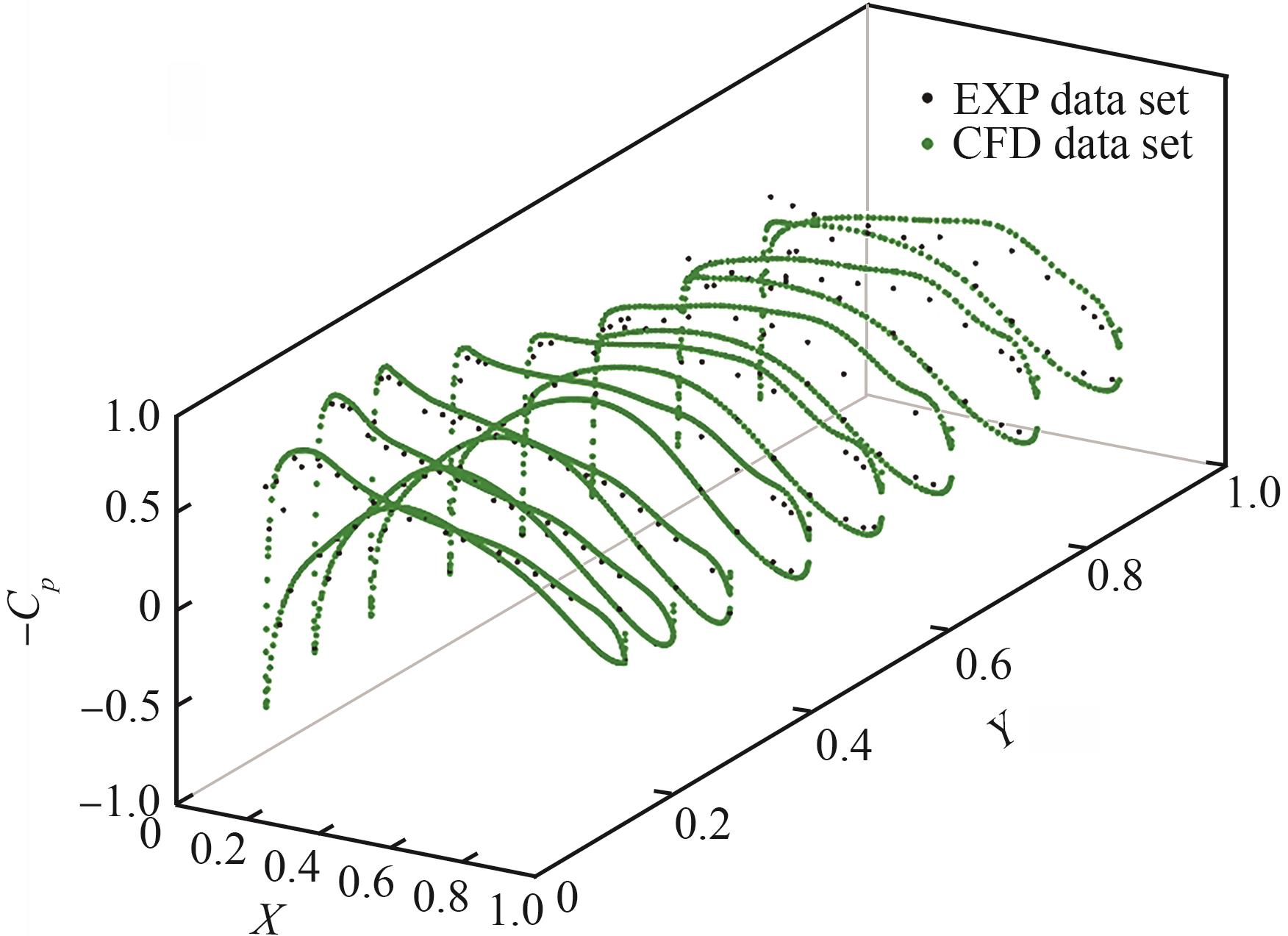
Fig.4
Flowchart for constructing aerodynamic load proxy model based on pre-training packet fine-tuning data fusion method
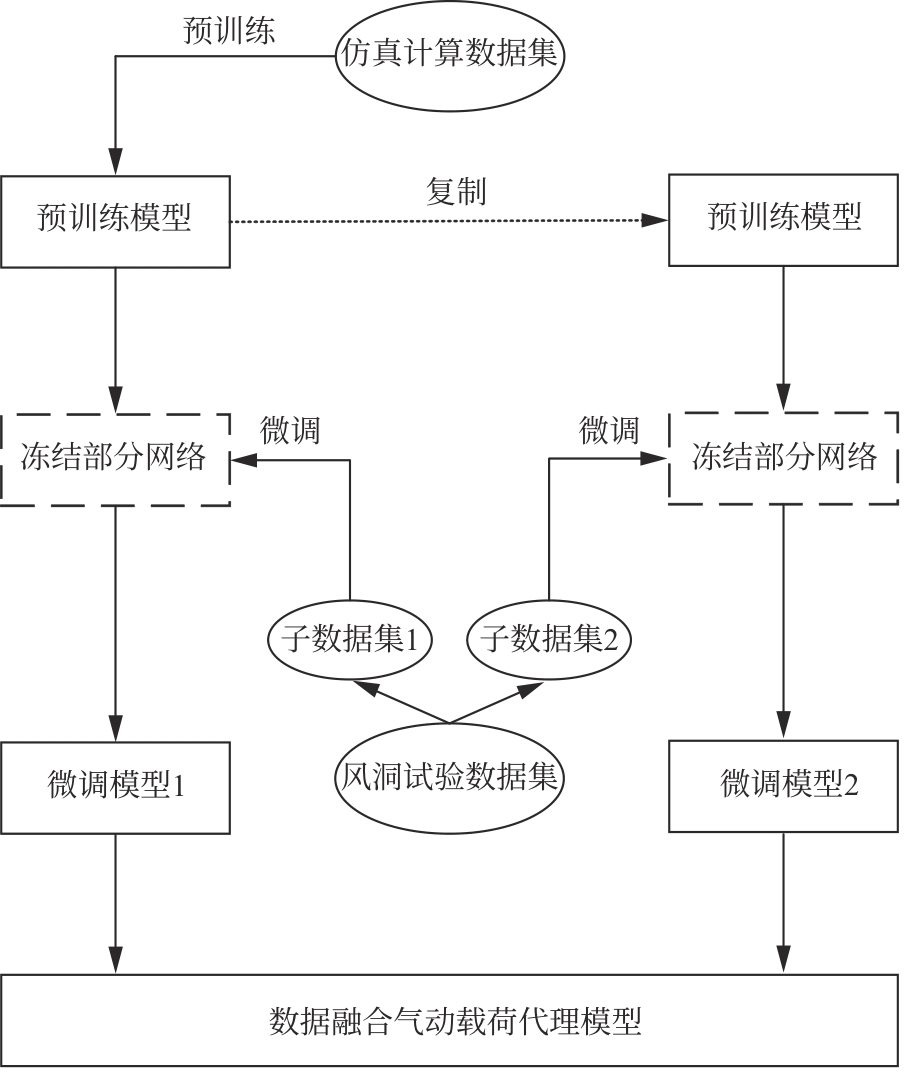
Fig.5
CRM-WB 3D model drawing
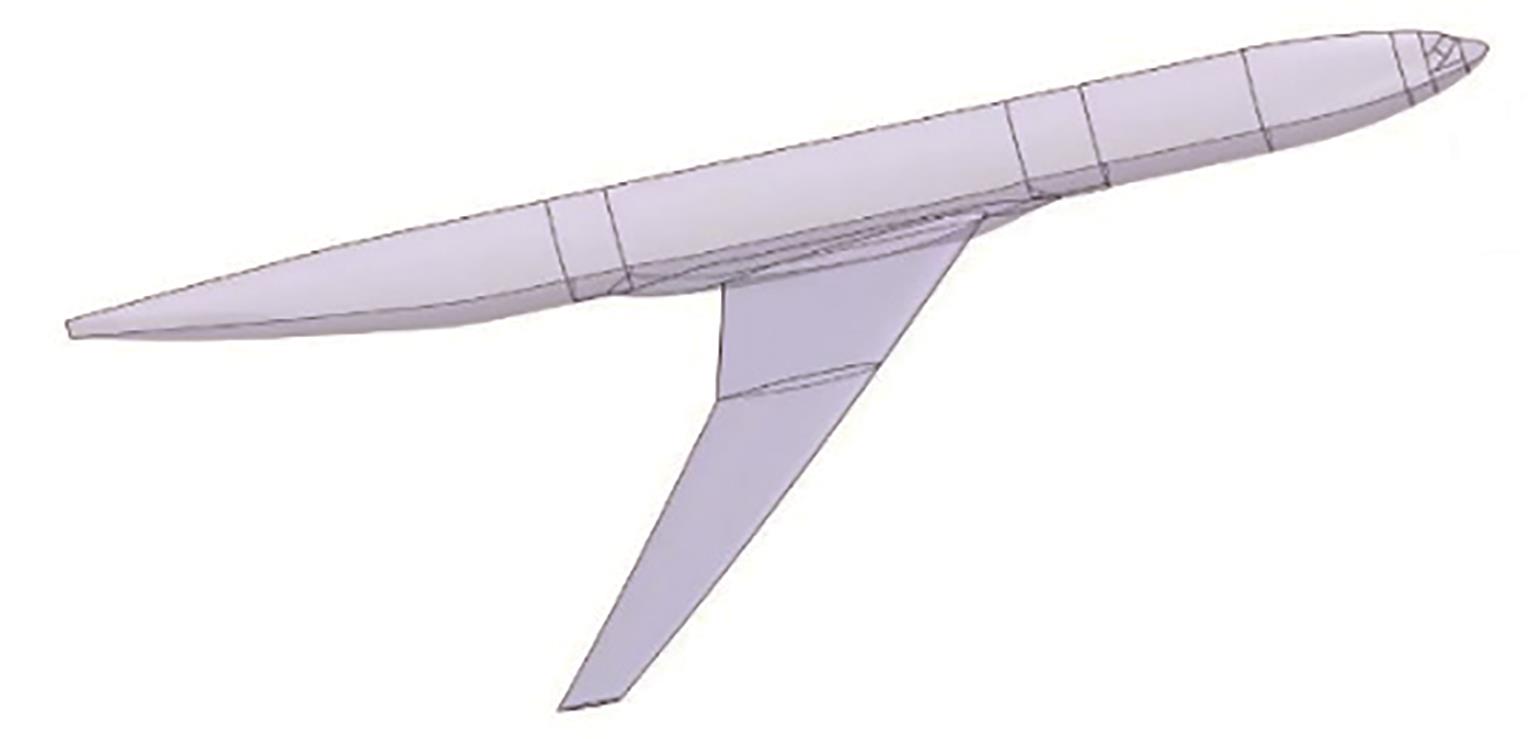
Fig.6
CRM-WB data sample point distribution diagram
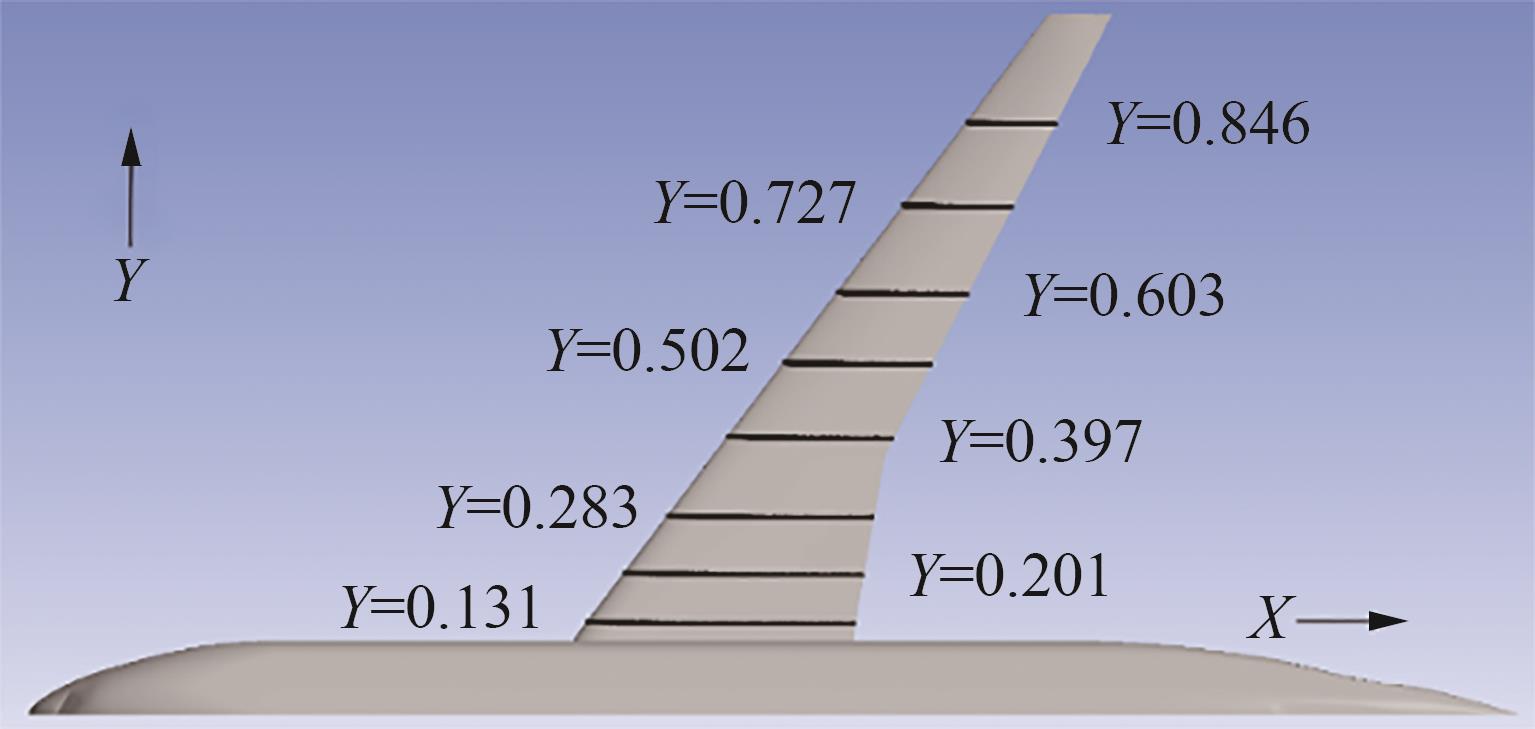

Table 1
Operating conditions for CRM-WB aerodynamic sample set
| EXP case | CFD case | Ma | Re/ | |
|---|---|---|---|---|
| 0.23 | 0.8 | |||
| 1.16 | 0.8 | |||
| 2.16 | 0.8 | |||
| 3.16 | 0.8 | |||
| 4.18 | 0.8 |
Table 2
Mean absolute error of pre-training frozen different layers in test set
| 模型 | 平均绝对误差/% |
|---|---|
| TLDFM0 | 3.72 |
| TLDFM1 | 3.61 |
| TLDFM2 | 4.04 |
| TLDFM3 | 4.17 |
| TLDFM4 | 5.14 |
Table 3
Mean absolute error of each data fusion method in CRM-WB example in test set
| 模型 | 平均绝对误差/% |
|---|---|
| CFD | 7.04 |
| DNN | 5.70 |
| GPR | 6.16 |
| MFDNN | 5.11 |
| TLDFM1 | 3.61 |
| HF-TLDFM | 3.17 |
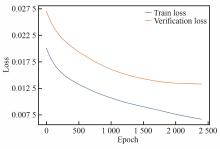
Fig.7
Loss function convergence process of training set and verification set
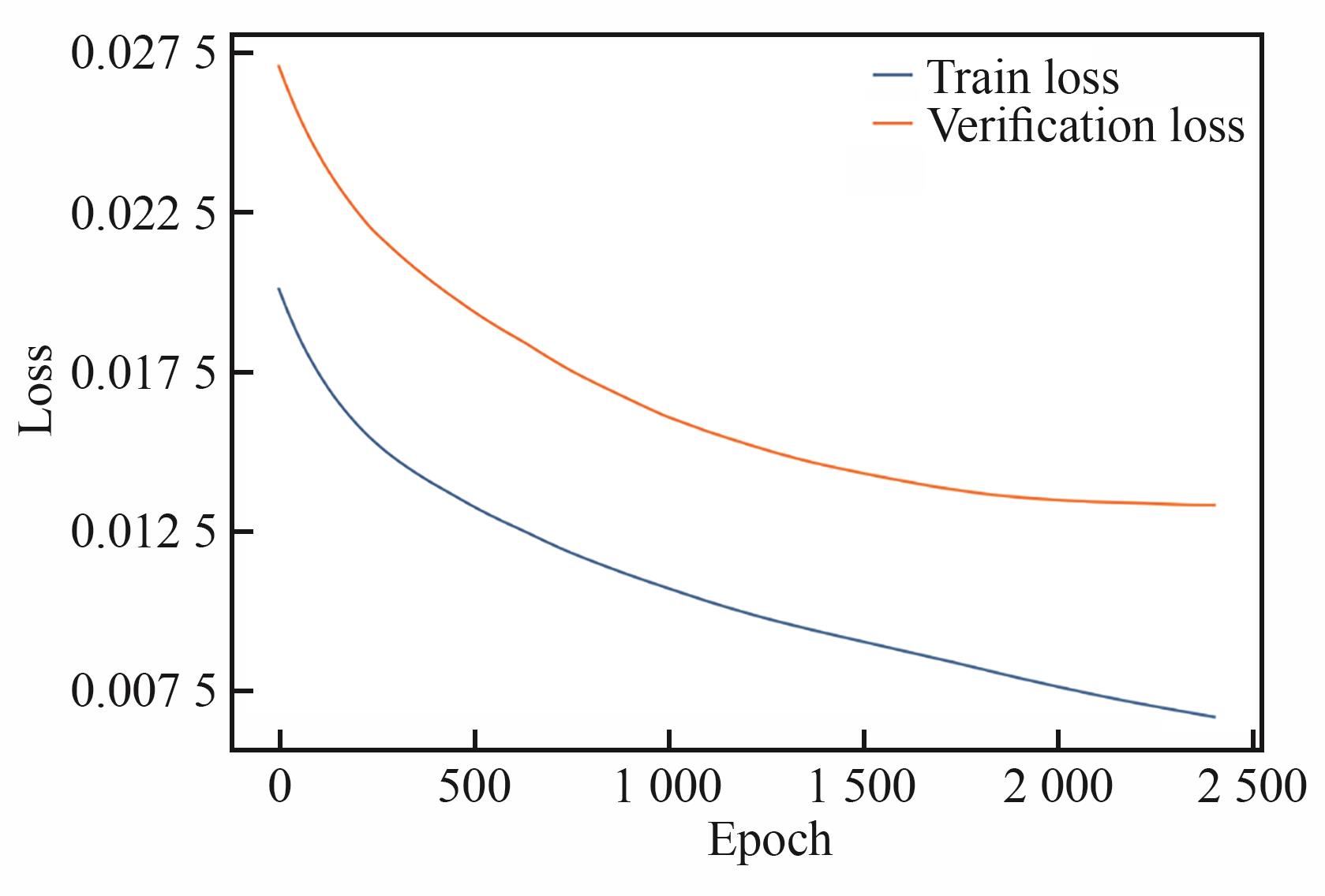
Table 4
Mean absolute error of pressure coefficient obtained by each model in different sections under different operating conditions
| Y | 平均绝对误差/% | ||||||
|---|---|---|---|---|---|---|---|
| CFD | DNN | GPR | MFDNN | TLDFM1 | HF-TLDFM | ||
| 0.131 | 7.57 | 9.13 | 6.48 | 5.97 | 4.40 | 4.03 | |
| 0.201 | 2.35 | 5.08 | 2.94 | 4.59 | 2.47 | 2.52 | |
| 0.283 | 4.35 | 7.57 | 3.98 | 6.95 | 2.77 | 2.42 | |
| 0.397 | 4.94 | 7.19 | 3.35 | 5.72 | 3.39 | 2.90 | |
| 0.502 | 4.93 | 7.89 | 2.69 | 4.94 | 2.44 | 1.76 | |
| 0.603 | 7.16 | 8.24 | 5.22 | 4.89 | 3.59 | 3.35 | |
| 0.727 | 9.61 | 4.11 | 7.52 | 4.13 | 2.96 | 2.98 | |
| 0.846 | 10.54 | 5.65 | 9.29 | 4.01 | 2.69 | 2.36 | |
| 0.131 | 8.48 | 3.32 | 8.97 | 4.26 | 5.53 | 5.48 | |
| 0.201 | 2.96 | 4.04 | 3.88 | 3.48 | 3.56 | 3.11 | |
| 0.283 | 4.87 | 7.42 | 5.46 | 6.70 | 2.89 | 2.33 | |
| 0.397 | 5.58 | 4.11 | 5.38 | 4.37 | 5.17 | 4.45 | |
| 0.502 | 5.80 | 6.01 | 4.93 | 6.17 | 4.02 | 2.97 | |
| 0.603 | 10.36 | 6.39 | 8.20 | 6.09 | 5.13 | 4.34 | |
| 0.727 | 9.40 | 2.57 | 7.74 | 3.74 | 3.19 | 2.71 | |
| 0.846 | 13.41 | 3.92 | 11.69 | 6.22 | 3.82 | 3.10 | |
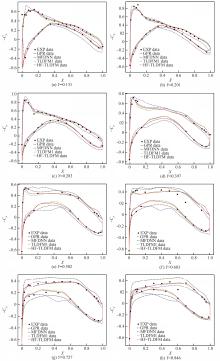
Fig.8
Predicted results of pressure coefficients in different sections of various data fusion methods under E2 conditions
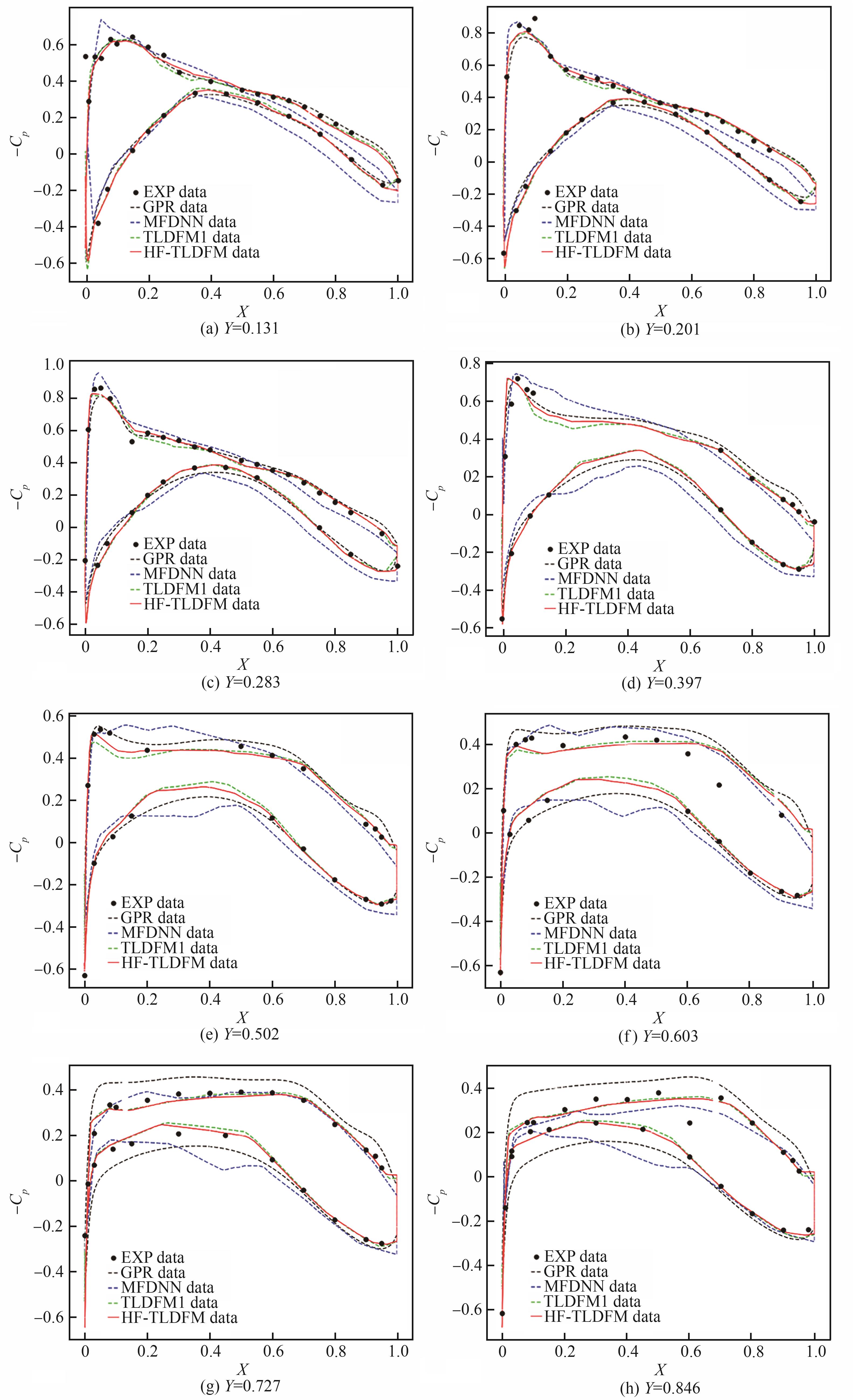
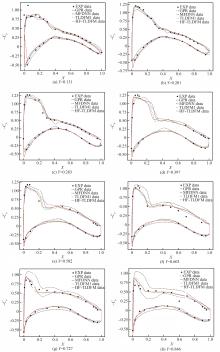
Fig.9
Predicted results of pressure coefficients in different sections of various data fusion methods under E4 conditions
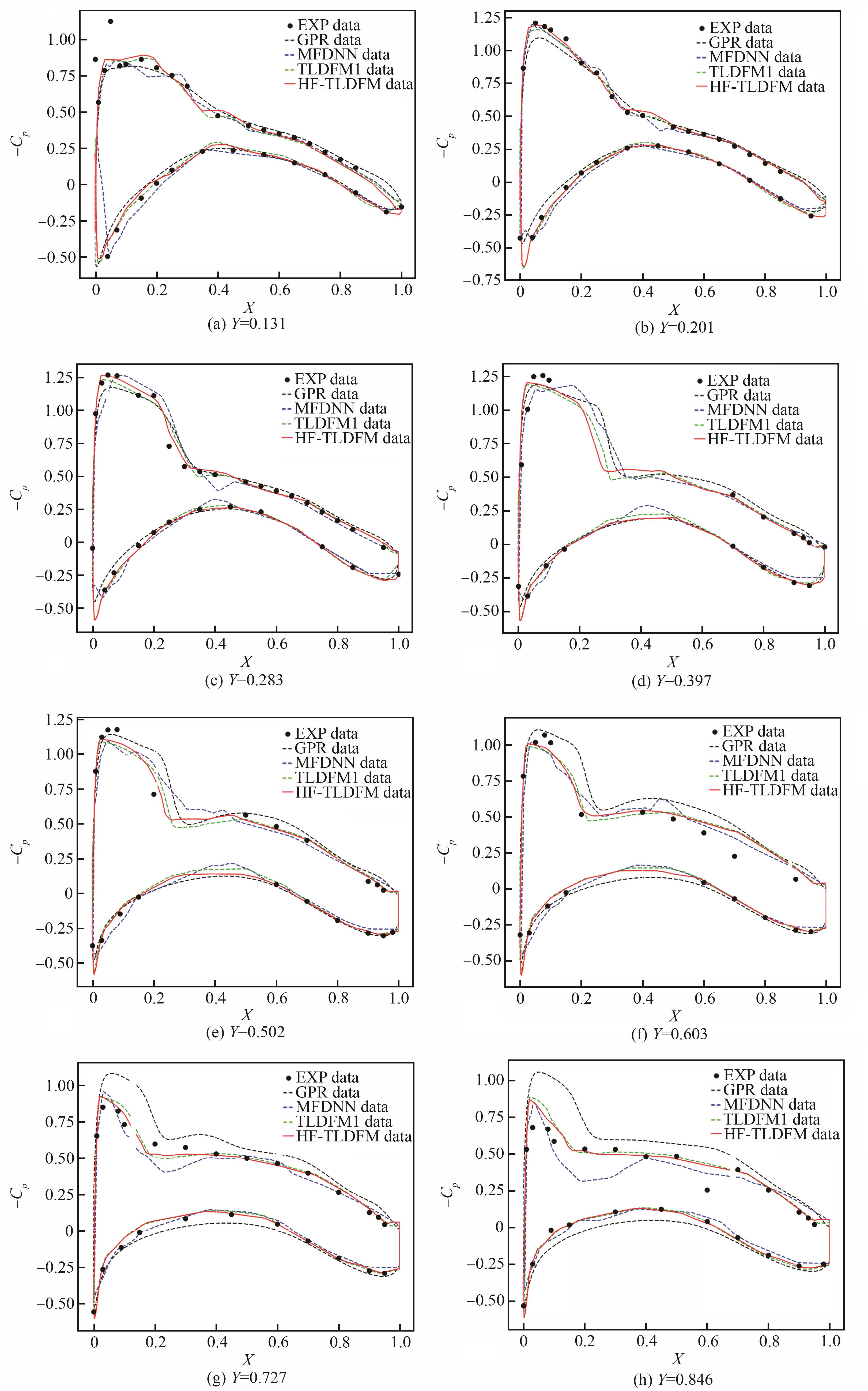
Table 5
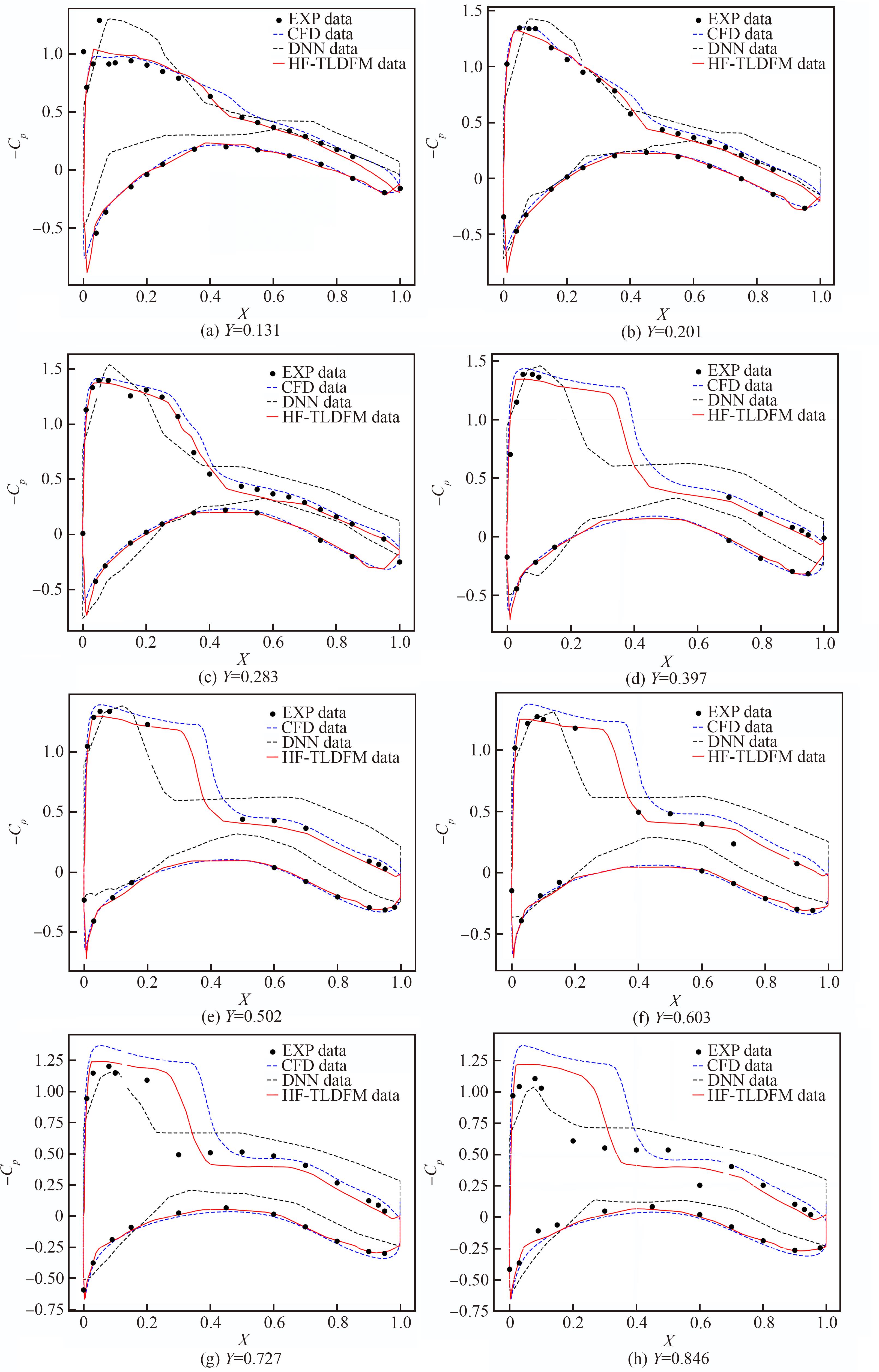
Mean absolute error of each method in test set
| 模型 | 平均绝对误差/% |
|---|---|
| CFD | 7.52 |
| DNN | 16.6 |
| HF-TLDFM | 5.41 |
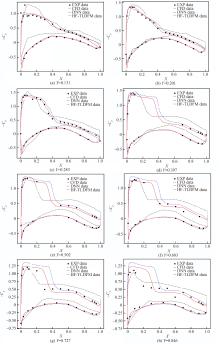
Fig.10
Predicted results of pressure coefficients in different sections by various model methods under E5 conditions
| [1] | 唐志共, 朱林阳, 向星皓, 等. 智能空气动力学若干研究进展及展望[J]. 空气动力学学报, 2023, 41(7): 1-35. |
| TANG Z G, ZHU L Y, XIANG X H, et al. Some research progress and prospect of intelligent aerodynamics[J]. Acta Aerodynamica Sinica, 2023, 41(7): 1-35 (in Chinese). | |
| [2] | 张伟伟, 寇家庆, 刘溢浪. 智能赋能流体力学展望[J]. 航空学报, 2021, 42(4): 524689. |
| ZHANG W W, KOU J Q, LIU Y L. Prospect of artificial intelligence empowered fluid mechanics[J]. Acta Aeronautica et Astronautica Sinica, 2021, 42(4): 524689 (in Chinese). | |
| [3] | LI X D, DUNKIN F, DEZERT J. Multi-source information fusion: Progress and future[J]. Chinese Journal of Aeronautics, 2024, 37(7): 24-58. |
| [4] | 唐志共, 袁先旭, 钱炜祺, 等. 高速空气动力学三大手段数据融合研究进展[J]. 空气动力学学报, 2023, 41(8): 44-58. |
| TANG Z G, YUAN X X, QIAN W Q, et al. Research progress on the fusion of data obtained by high-speed wind tunnels, CFD and model flight[J]. Acta Aerodynamica Sinica, 2023, 41(8): 44-58 (in Chinese). | |
| [5] | 王文正, 桂业伟, 何开锋, 等. 基于数学模型的气动力数据融合研究[J]. 空气动力学学报, 2009, 27(5): 524-528. |
| WANG W Z, GUI Y W, HE K F, et al. Aerodynamic data fusion technique exploration[J]. Acta Aerodynamica Sinica, 2009, 27(5): 524-528 (in Chinese). | |
| [6] | 季廷炜, 查旭, 谢芳芳, 等. 基于高斯过程回归的空天飞行器多精度气动建模方法[J]. 浙江大学学报(工学版), 2023, 57(11): 2314-2324. |
| JI T W, ZHA X, XIE F F, et al. Multi-fidelity aerodynamic modeling method of aerospace vehicles based on Gaussian process regression[J]. Journal of Zhejiang University (Engineering Science), 2023, 57(11): 2314-2324 (in Chinese). | |
| [7] | 邓晨, 陈功, 王文正, 等. 基于飞行试验和风洞试验数据的融合算法研究[J]. 空气动力学学报, 2022, 40(6): 45-50. |
| DENG C, CHEN G, WANG W Z, et al. Research on the data fusion algorithm based on flight test data and wind tunnel test data[J]. Acta Aerodynamica Sinica, 2022, 40(6): 45-50 (in Chinese). | |
| [8] | NIETO-CENTENERO J, CASTELLANOS R, GORGUES A, et al. Fusing aerodynamic data using multi-fidelity gaussian process regression[C]∥15th International Conference on Evolutionary and Deterministic Methods for Design, Optimization and Control. 2023. |
| [9] | 黄红亮, 闫昊, 张鲸超, 等. 多源多精度数据融合与气动特性智能外推[J]. 力学学报, 2024, 56(9): 2775-2787. |
| HUANG H L, YAN H, ZHANG J C, et al. Multi-source and multi-fidelity data fusion and intelligent extrapolation of aerodynamic characteristics[J]. Chinese Journal of Theoretical and Applied Mechanics, 2024, 56(9): 2775-2787 (in Chinese). | |
| [10] | ANHICHEM M, TIMME S, CASTAGNA J, et al. Aerodynamic data modelling and fidelity definition for multifidelity data fusion[C]∥Royal Aeronautic Society Applied Aerodynamics Conference. 2022. |
| [11] | ZHANG X S, XIE F F, JI T W, et al. Multi-fidelity deep neural network surrogate model for aerodynamic shape optimization[J]. Computer Methods in Applied Mechanics and Engineering, 2021, 373: 113485. |
| [12] | FRANCÉS-BELDA V, SOLERA-RICO A, NIETO-CENTENERO J, et al. Toward aerodynamic surrogate modeling based on β-variational autoencoders[J]. Physics of Fluids, 2024, 36(11): 117139. |
| [13] | NING C J, ZHANG W W. MHA-Net: Multi-source heterogeneous aerodynamic data fusion neural network embedding reduced-dimension features[J]. Aerospace Science and Technology, 2024, 145: 108908. |
| [14] | ZHU R, YUAN W X, FEI Q G, et al. Low-resource dynamic loading identification of nonlinear system using pretraining[J]. Engineering Structures, 2025, 323: 119238. |
| [15] | TAN C, SUN F, KONG T, et al. A survey on deep transfer learning[C]∥Artificial Neural Networks and Machine Learning-ICANN 2018. 2018: 270-279. |
| [16] | HENDRYCKS D, LEE K, MAZEIKA M. Using pre-training can improve model robustness and uncertainty[C]∥International Conference on Machine Learning. 2019: 2712-2721. |
| [17] | LECUN Y, BENGIO Y, HINTON G. Deep learning[J]. Nature, 2015, 521(7553): 436-444. |
| [18] | RIVERS M B, DITTBERNER A. Experimental investigations of the NASA common research model[J]. Journal of Aircraft, 2014, 51(4): 1183-1193. |
| [19] | MENG X H, KARNIADAKIS G E. A composite neural network that learns from multi-fidelity data: Application to function approximation and inverse PDE problems[J]. Journal of Computational Physics, 2020, 401: 109020. |
| [20] | 邓晨, 陈功, 王文正, 等. 基于不确定度和气动模型的气动数据融合算法[J]. 空气动力学学报, 2022, 40(4): 117-123. |
| DENG C, CHEN G, WANG W Z, et al. Aerodynamic data fusion algorithms based on aerodynamic model and uncertainly[J]. Acta Aerodynamica Sinica, 2022, 40(4): 117-123 (in Chinese). | |
| [21] | WONG B, KHOO B. Inductive transfer-learning of high-fidelity aerodynamics from inviscid panel methods[J]. Advances in Aerodynamics, 2025, 7(1): 1. |
| [1] | Rongzu LI, Li LIU, Dun YANG. Optimal design of hydrogen-powered UAV based on multi-source domain fusion surrogate model [J]. Acta Aeronautica et Astronautica Sinica, 2025, 46(9): 630979-630979. |
| [2] | Yang JIAO, Yuting LU, Ba XU, Jian OUYANG. Transfer prediction of satellite traffic based on spatiotemporal correlation [J]. Acta Aeronautica et Astronautica Sinica, 2025, 46(4): 330938-330938. |
| [3] | Yingjie SHI, Binchao LIU, Songsong LU, Liang CHEN, Hai SHANG, Rui BAO. Neural network model for wing strain-load relationship based on fusion of real and virtual data [J]. Acta Aeronautica et Astronautica Sinica, 2025, 46(19): 530921-530921. |
| [4] | Yiwei HUANG, Yibin GENG, Tianhe GAO, Xuanwei HU, Yuan WANG, Hongyan MA, Kuo TIAN. Digital twin driven high precision reconstruction method for full-field deformation of structure [J]. Acta Aeronautica et Astronautica Sinica, 2025, 46(19): 530967-530967. |
| [5] | Chengjie GUO, Dian XU, Jinbao LI, Chaoyu CHENG, Shuochang GUO, Rui LI. Stress characterization of high-temperature digital image correlation experiments based on a data fusion-knowledge transfer method [J]. Acta Aeronautica et Astronautica Sinica, 2025, 46(19): 531574-531574. |
| [6] | Yuxuan GU, Cong GUO, Lei HUANG, Yifei DONG, Hongda DONG, Zhilun DENG. Refined management of fleet life driven by digital twins [J]. Acta Aeronautica et Astronautica Sinica, 2025, 46(19): 531290-531290. |
| [7] | Xunliang YAN, Peichen WANG, Yang GUO. Review of trajectory planning and guidance methods for entry glide maneuvering penetration [J]. Acta Aeronautica et Astronautica Sinica, 2025, 46(17): 331810-331810. |
| [8] | Honglin LIU, Guan WANG, Shuaibin AN, Shaojie MA, Kai LIU. Online identification based strong adaptive control of hypersonic morphing vehicles [J]. Acta Aeronautica et Astronautica Sinica, 2025, 46(17): 331654-331654. |
| [9] | Yufeng BAI, Qitong ZOU, Rui HUANG, Haojie LIU, Yuguo RAN. Aeroelastic control of flexible wing with flying-wing configuration and wind tunnel tests [J]. Acta Aeronautica et Astronautica Sinica, 2025, 46(14): 331452-331452. |
| [10] | Ligong LI, Chao ZHANG, Jingting SU. Distributed fusion technology for multi-source landing guidance information [J]. Acta Aeronautica et Astronautica Sinica, 2025, 46(13): 531461-531461. |
| [11] | Tao CHEN, Jian CHEN. Learning-observer-based resilient fault-tolerant control for quadrotor unmanned aerial vehicles [J]. Acta Aeronautica et Astronautica Sinica, 2025, 46(11): 531346-531346. |
| [12] | Yongnan JIA. A scheme for unmanned aerial system traffic management in low-altitude airspace [J]. Acta Aeronautica et Astronautica Sinica, 2025, 46(11): 531399-531399. |
| [13] | Xianchao MENG, Jun TAO. An airfoil inverse design method based on target testing conditional generative adversarial network [J]. Acta Aeronautica et Astronautica Sinica, 2025, 46(10): 631182-631182. |
| [14] | Dengfeng HU, Yu XIANG, Jun ZHANG, Jiachen YANG, Wenyong WANG. Multi-source data fusion method based on radial basis function generative adversarial network [J]. Acta Aeronautica et Astronautica Sinica, 2025, 46(10): 631478-631478. |
| [15] | Zichao LIU, Jiang WANG, Peng WANG, Defu LIN, Zhichuan HE. Time-constrained multi-missile cooperative guidance law [J]. Acta Aeronautica et Astronautica Sinica, 2024, 45(S1): 730607-730607. |
| Viewed | ||||||
|
Full text |
|
|||||
|
Abstract |
|
|||||
Address: No.238, Baiyan Buiding, Beisihuan Zhonglu Road, Haidian District, Beijing, China
Postal code : 100083
E-mail:hkxb@buaa.edu.cn
Total visits: 6658907 Today visits: 1341All copyright © editorial office of Chinese Journal of Aeronautics
All copyright © editorial office of Chinese Journal of Aeronautics
Total visits: 6658907 Today visits: 1341

 CJA
CJA
