Acta Aeronautica et Astronautica Sinica ›› 2025, Vol. 46 ›› Issue (20): 531936.doi: 10.7527/S1000-6893.2025.31936
• Special Issue: Key Technologies for Supersonic Civil Aircraft • Previous Articles
Yutong WANG1,2, Xiao LUO1,2, Hongyang LIU1,2, Chao SONG1,2, Ying ZHAO1,3, Zhu ZHOU1,2( )
)
Received:2025-03-05
Revised:2025-03-18
Accepted:2025-04-27
Online:2025-05-14
Published:2025-05-13
Contact:
Zhu ZHOU
E-mail:f-yforever@126.com
CLC Number:
Yutong WANG, Xiao LUO, Hongyang LIU, Chao SONG, Ying ZHAO, Zhu ZHOU. Sonic boom prediction of supersonic passenger aircraft based on multi-fidelity deep neural network[J]. Acta Aeronautica et Astronautica Sinica, 2025, 46(20): 531936.
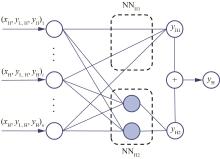
Fig.1
Multi-fidelity deep neural network based on nonlinear combination
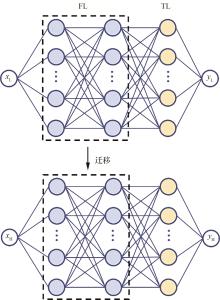
Fig.2
Multi-fidelity deep neural network based on transfer learning

Fig.3
Supersonic passenger aircraft baseline
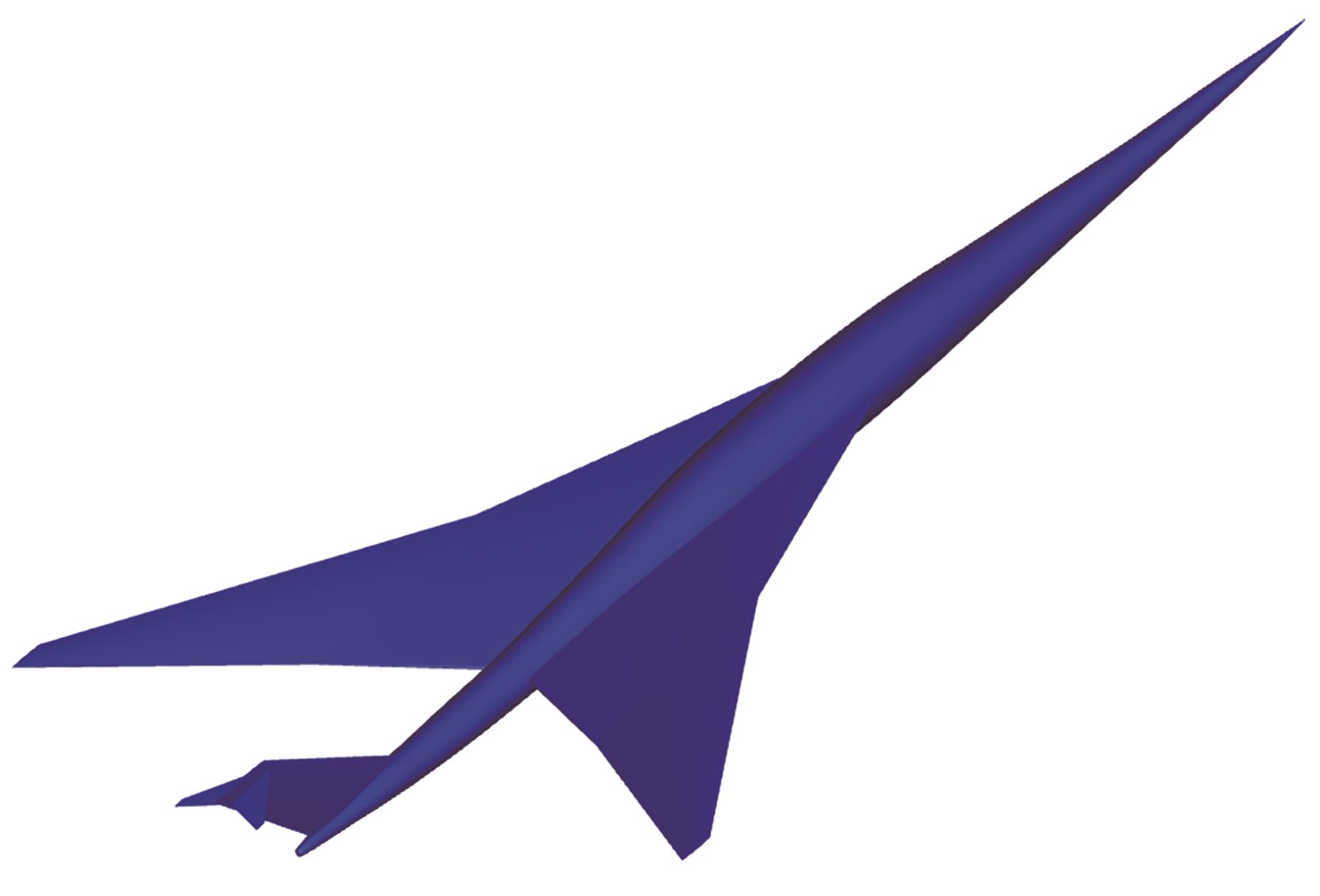
Fig.4
Comparison of multi-fidelity grids and near-field overpressure distributions in baseline
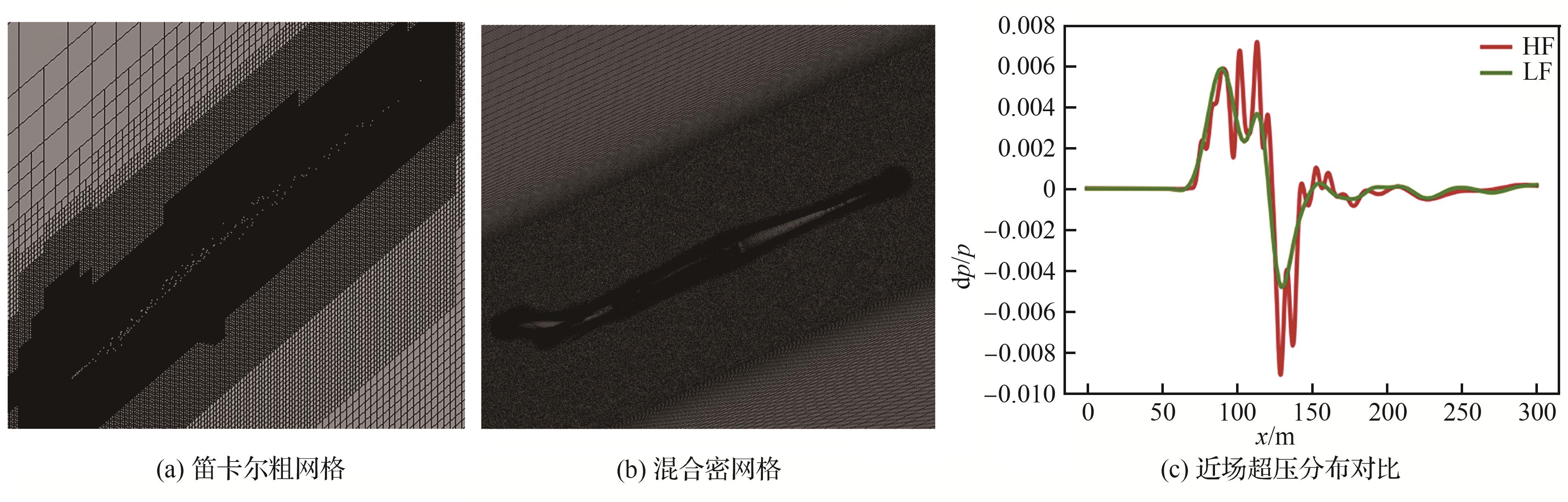
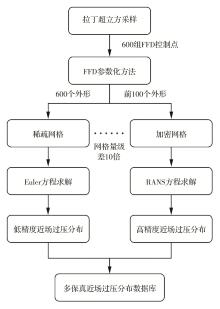
Fig.5
Database construction flowchart
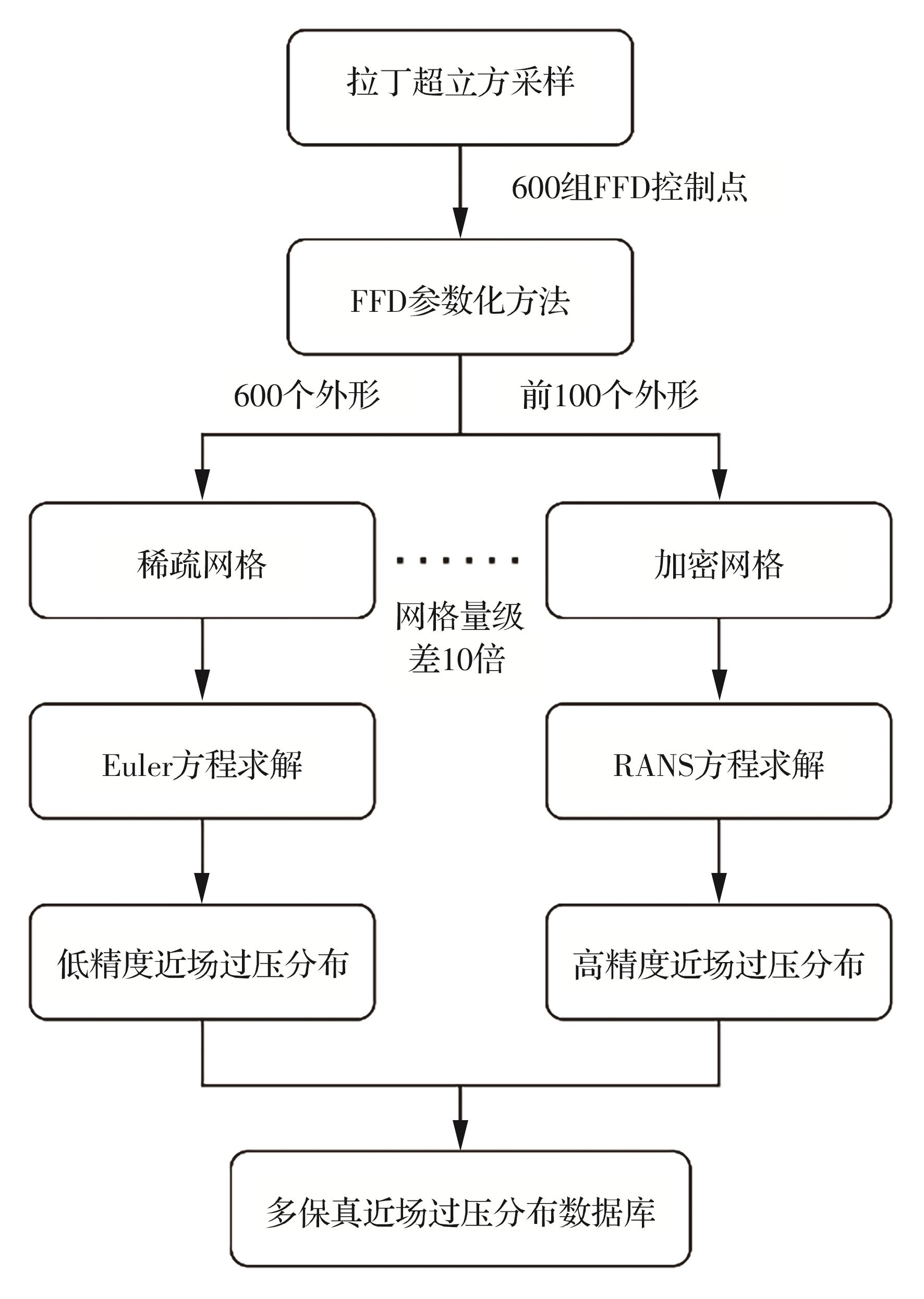
Fig.6
Visualization of design space after PCA
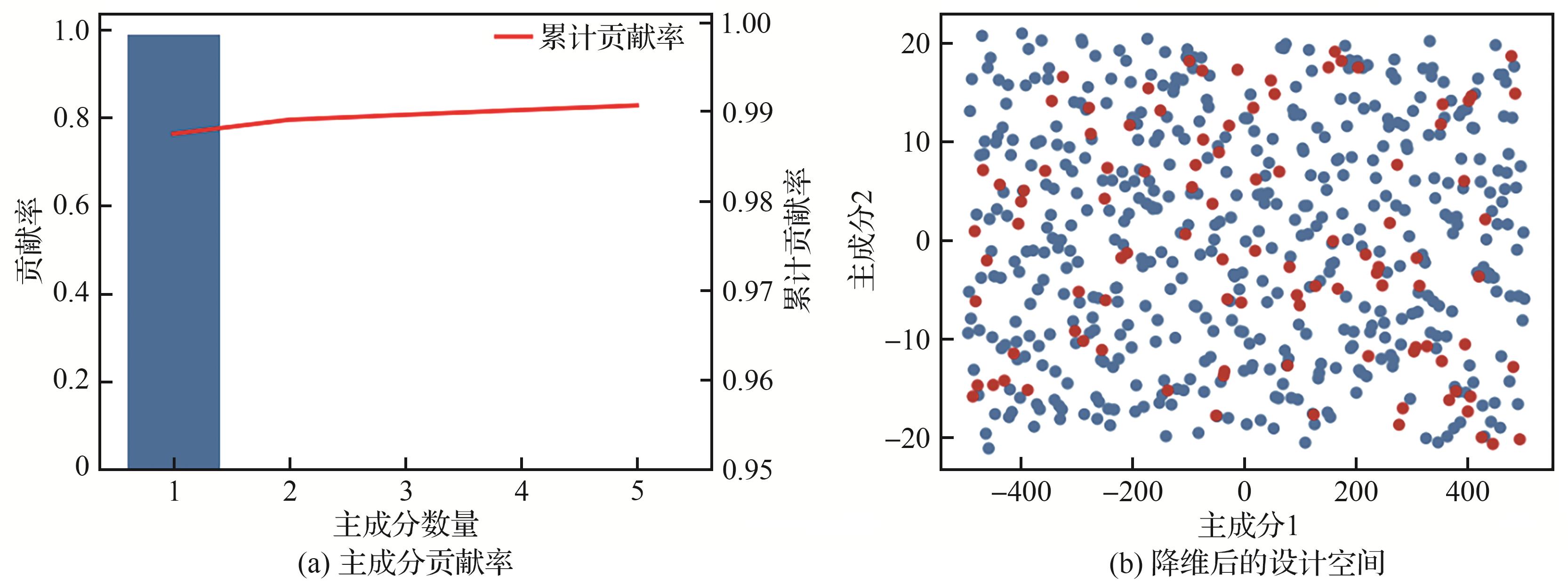
Fig.7
Low-fidelity vs high-fidelity near-field overpressure distribution data
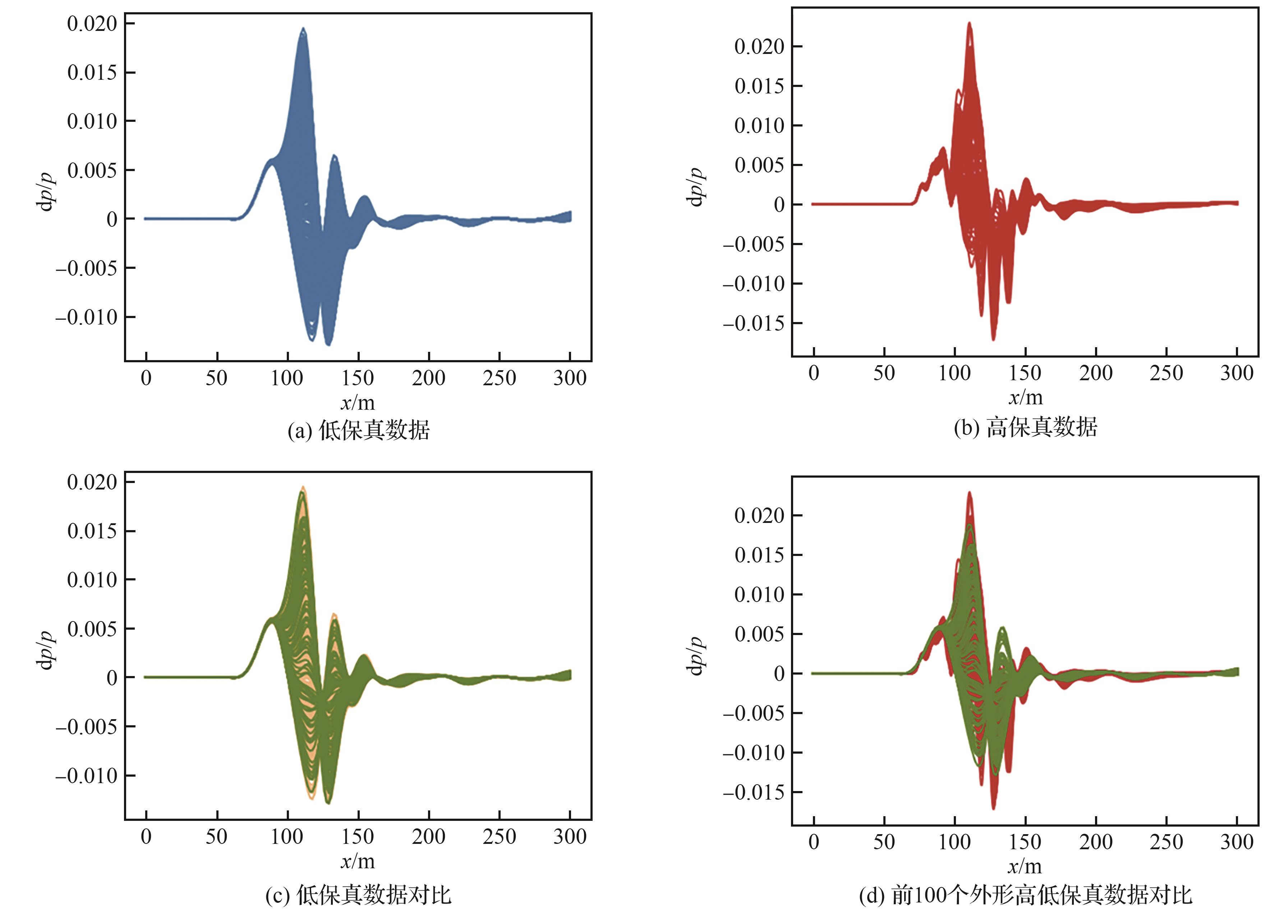
Fig.8
Low-fidelity vs high-fidelity near-field overpressure distribution characteristics comparison for random aircrafts
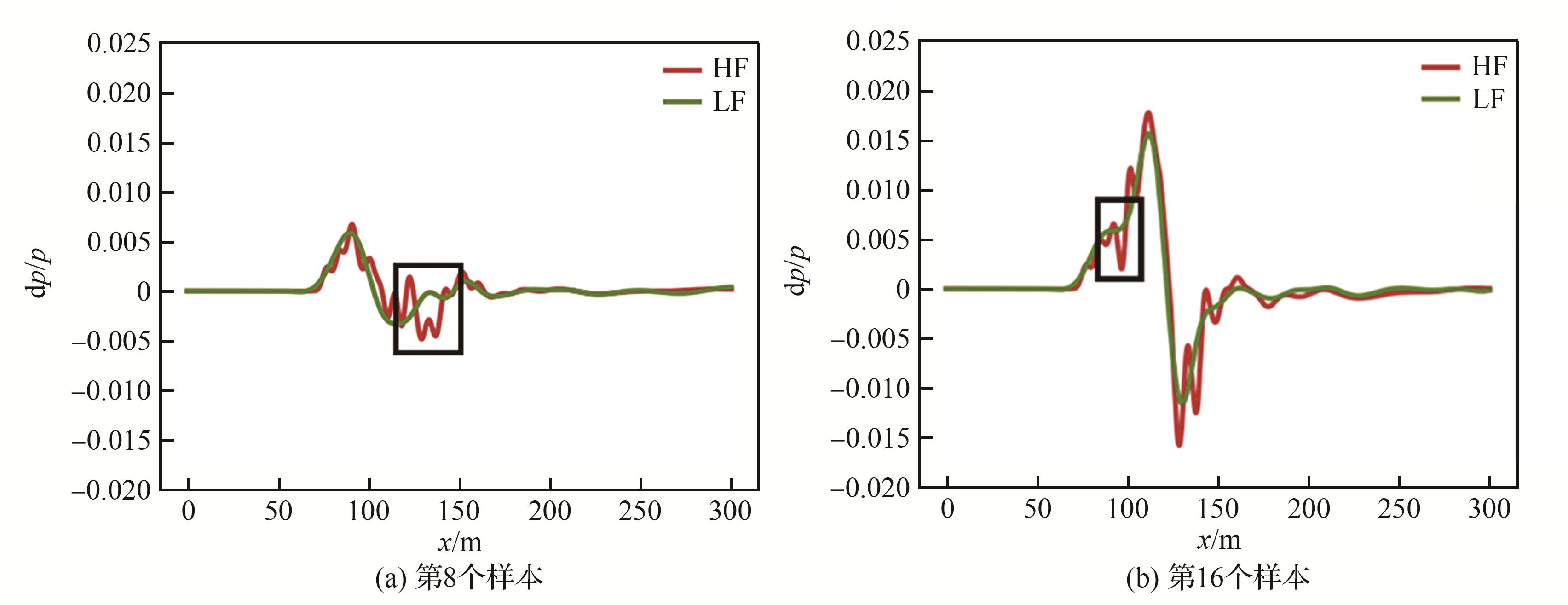
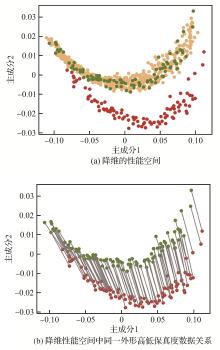
Fig.9
Visualization of performance space after PCA
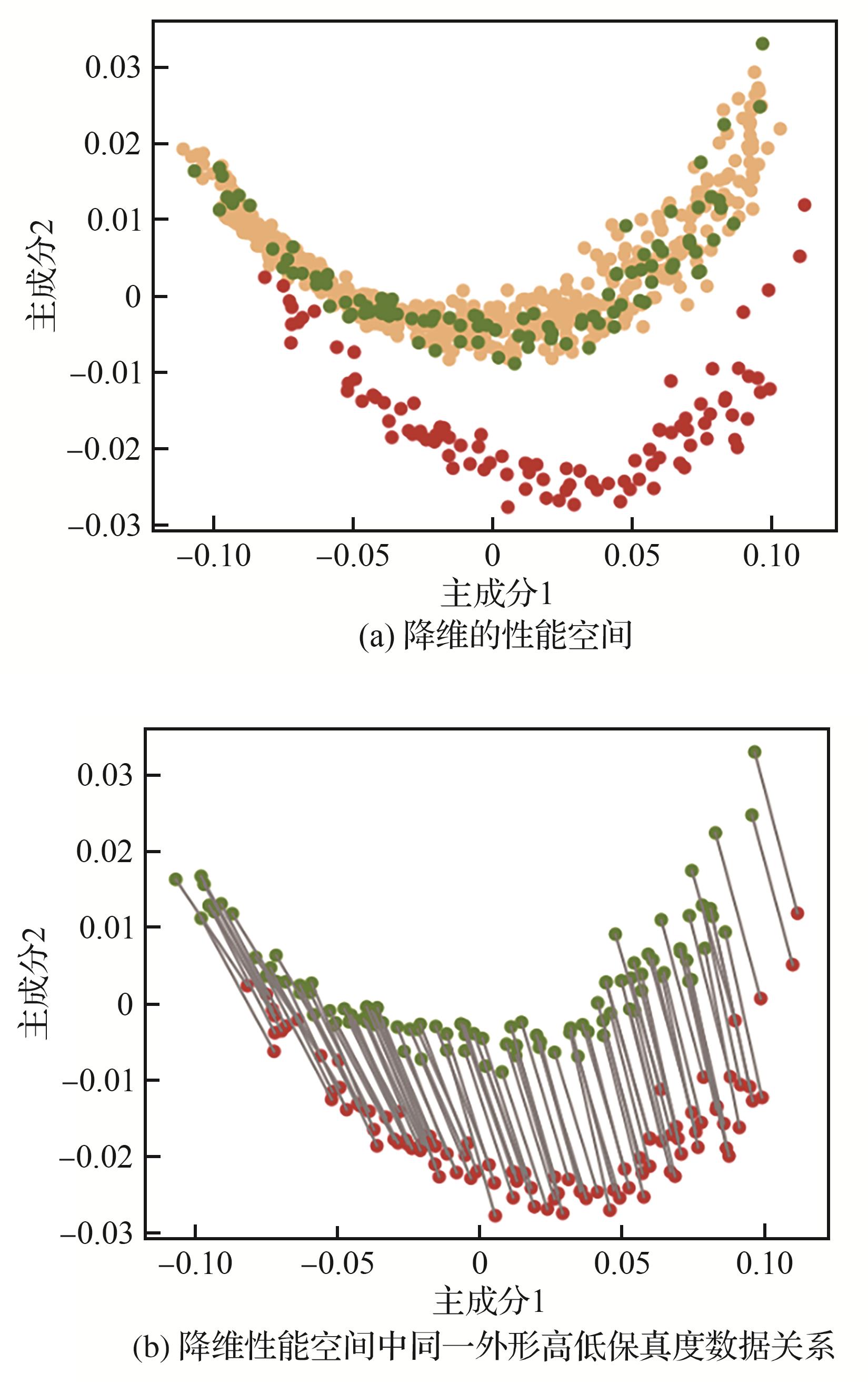

Table 1
Single-fidelity deep neural network architecture
| 模型 | 输入层 | FC1 | FC2 | FC3 | FC4 | 输出层 |
|---|---|---|---|---|---|---|
| DNN-4096 | 33 | 128 | 512 | 2 048 | 4 096 | 1 000 |
| DNN-8192 | 33 | 128 | 512 | 2 048 | 8 192 | 1 000 |
| DNN-10000 | 33 | 128 | 512 | 2 048 | 10 000 | 1 000 |
Table 2
Single-fidelity deep neural network training results
| 模型 | λ | Loss | Train_MSE | Test_MSE |
|---|---|---|---|---|
| DNN-4096 | ||||
| DNN-8192 | ||||
| DNN-10000 | ||||
Fig.10
Single-fidelity deep neural network prediction results
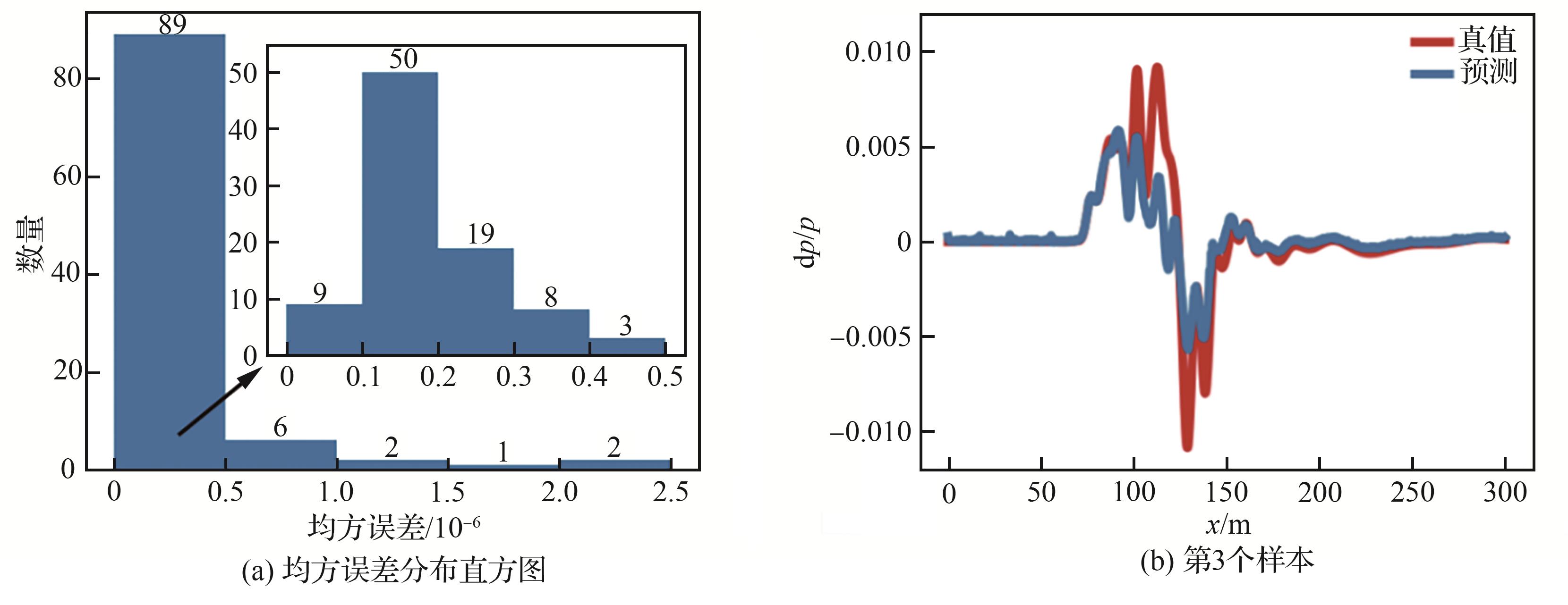
Table 3
Comparison of single-fidelity deep neural network predictions for sonic boom levels
| 样本序号 | 3 | 14 | 17 | 28 | 31 | 35 | 81 | 94 |
|---|---|---|---|---|---|---|---|---|
| HF/PLdB | 87.49 | 94.84 | 87.55 | 85.70 | 86.87 | 85.88 | 96.40 | 86.24 |
| DNN/PLdB | 83.95 | 95.53 | 84.46 | 83.14 | 84.80 | 83.17 | 99.23 | 84.88 |
| 绝对误差 | 3.54 | 0.69 | 3.09 | 2.56 | 2.07 | 2.71 | 2.83 | 1.36 |
| 相对误差/% | 4.05 | 0.73 | 3.53 | 2.99 | 2.38 | 3.16 | 2.94 | 1.58 |
Table 4
Multi-fidelity deep neural network architecture with integrated linear/nonlinear correction
| 类名 | 模块名 | 输入维度 | 输出维度 |
|---|---|---|---|
| NN_H1 | FC1 | 1 033 | 10 000 |
| 输出层 | 10 000 | 1 000 | |
| NN_H2 | FC1 | 1 033 | 4 096 |
| FC2 | 4 096 | 10 000 | |
| FC3 | 10 000 | 10 000 | |
| 输出层 | 10 000 | 1 000 |
Table 5
MF-DNN training results with independent normalization
| 模型 | λ | Loss | Train_MSE | Test_MSE | α 或 β |
|---|---|---|---|---|---|
| MF-DNN-hp-ind | 0.06 | ||||
| 0.07 | |||||
| 0.07 | |||||
| 0.07 | |||||
| AMF-DNN-ind | 0.002 | ||||
| 0.002 | |||||
| 0.002 | |||||
| 0.002 |
Table 6
MF-DNN training results with hybrid normalization
| 模型 | λ | Loss | Train_MSE | Test_MSE | α 或 β |
|---|---|---|---|---|---|
| MF-DNN-hp-mix | 0.08 | ||||
| 0.09 | |||||
| 0.09 | |||||
| 0.09 | |||||
| AMF-DNN-mix | 0.002 | ||||
| 0.002 | |||||
| 0.002 | |||||
| 0.002 |
Fig.11
MF-DNN-hp model prediction results
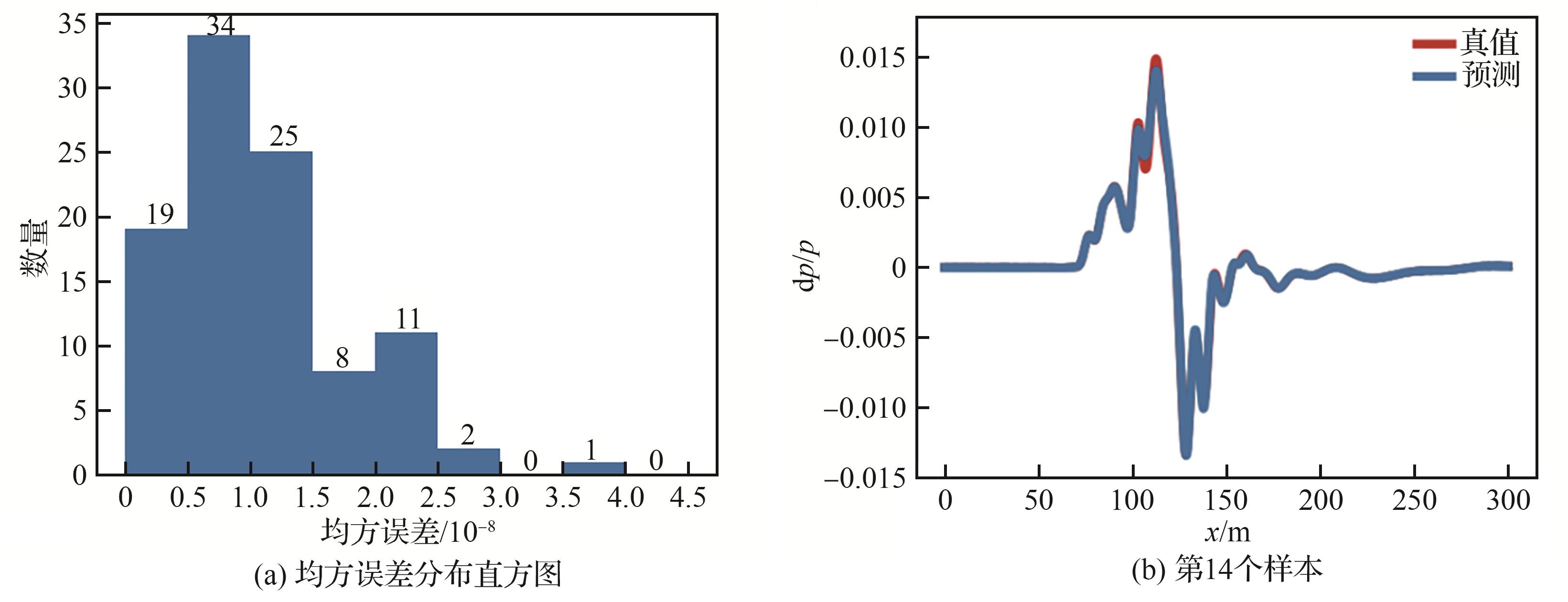
Fig.12
AMF-DNN-hp model prediction results
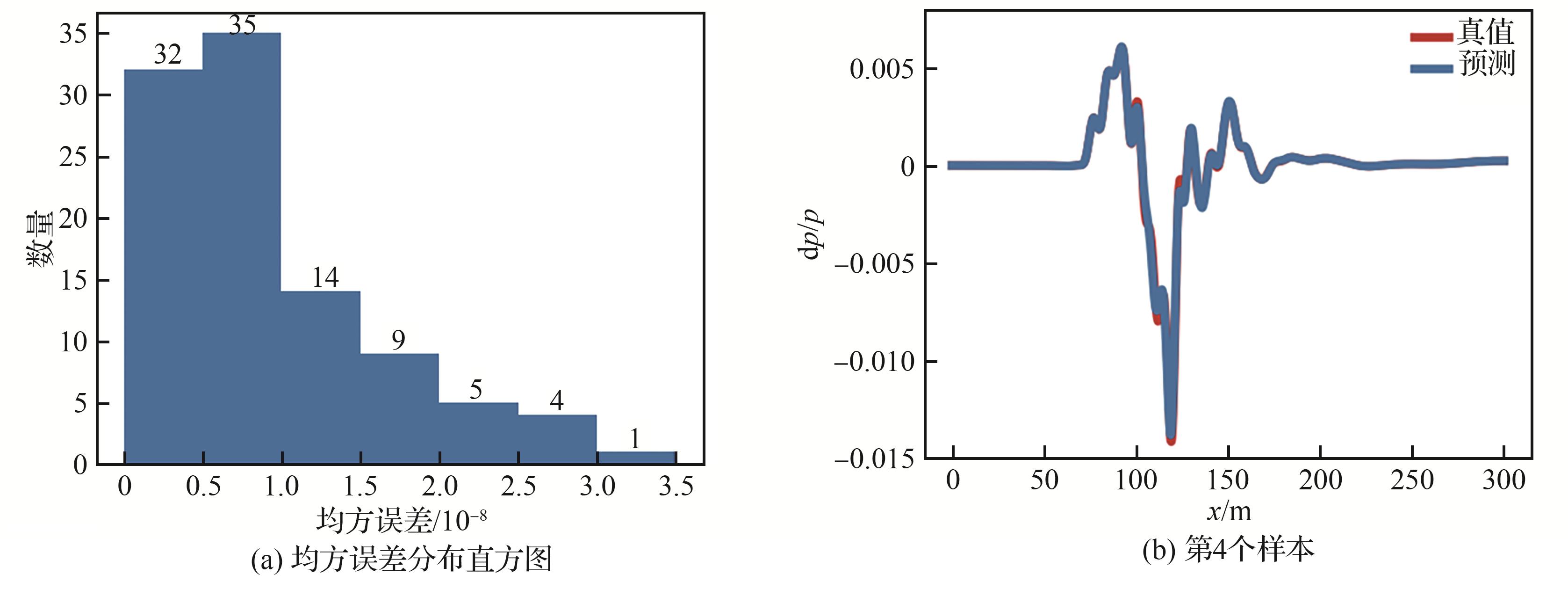
Table 7
Accuracy comparison of farfield sonic boom predictions using MF-DNNs
| 样本序号 | 4 | 3 | 14 | 17 | 28 | 31 | 35 | 81 | 94 |
|---|---|---|---|---|---|---|---|---|---|
| HF/PLdB | 86.96 | 87.49 | 94.84 | 87.55 | 85.70 | 86.87 | 85.88 | 96.40 | 86.24 |
| MF-DNN-hp/PLdB | 87.05 | 87.52 | 94.70 | 87.56 | 85.83 | 86.41 | 86.20 | 96.38 | 85.83 |
| 绝对误差 | 0.09 | 0.03 | -0.14 | 0.01 | 0.13 | -0.46 | -0.32 | -0.02 | -0.41 |
| 相对误差/% | 0.10 | 0.03 | 0.15 | 0.01 | 0.15 | 0.53 | 0.37 | 0.02 | 0.48 |
| AMF-DNN/PLdB | 87.27 | 87.43 | 94.69 | 87.65 | 85.82 | 86.39 | 86.21 | 96.35 | 85.83 |
| 绝对误差 | 0.31 | -0.06 | -0.15 | 0.10 | 0.12 | -0.48 | -0.33 | -0.05 | -0.41 |
| 相对误差/% | 0.35 | 0.07 | 0.15 | 0.11 | 0.14 | 0.55 | 0.38 | 0.05 | 0.48 |
Table 8
Transfer learning-based multi-fidelity deep neural network architecture
| 模型 | 输入层 | FL1 | FL2 | TL1 | TL2 | 输出层 |
|---|---|---|---|---|---|---|
| TF-DNN-4096 | 33 | 128 | 512 | 2 048 | 4 096 | 1 000 |
| TF-DNN-8192 | 33 | 128 | 512 | 2 048 | 8 192 | 1 000 |
| TF-DNN-10000 | 33 | 128 | 512 | 2 048 | 10 000 | 1 000 |
Table 9
Low-fidelity deep neural network in pretraining phase with independent normalization
| 模型 | λ | Loss | Train_MSE | Test_MSE |
|---|---|---|---|---|
| TF-NNL-ind-4096 | ||||
| TF-NNL-ind-8192 | ||||
| TF-NNL-ind-10000 | ||||
Table 10
High-fidelity deep neural network in fine-tuning phase with independent normalization
| 模型 | λ | FL | TL | Loss | Train_MSE | Test_MSE |
|---|---|---|---|---|---|---|
| TF-NNH-ind-4096 | 3 | 1 | ||||
| 2 | 2 | |||||
| 3 | 1 | |||||
| 2 | 2 | |||||
| 3 | 1 | |||||
| 2 | 2 | |||||
| 3 | 1 | |||||
| 2 | 2 | |||||
| TF-NNH-ind-8192 | 3 | 1 | ||||
| 2 | 2 | |||||
| 3 | 1 | |||||
| 2 | 2 | |||||
| 3 | 1 | |||||
| 2 | 2 | |||||
| 3 | 1 | |||||
| 2 | 2 | |||||
| TF-NNH-ind-10000 | 3 | 1 | ||||
| 2 | 2 | |||||
| 3 | 1 | |||||
| 2 | 2 | |||||
| 3 | 1 | |||||
| 2 | 2 | |||||
| 3 | 1 | 4.2 | ||||
| 2 | 2 |
Fig.13
Analysis of TF-NNH-ind model prediction results
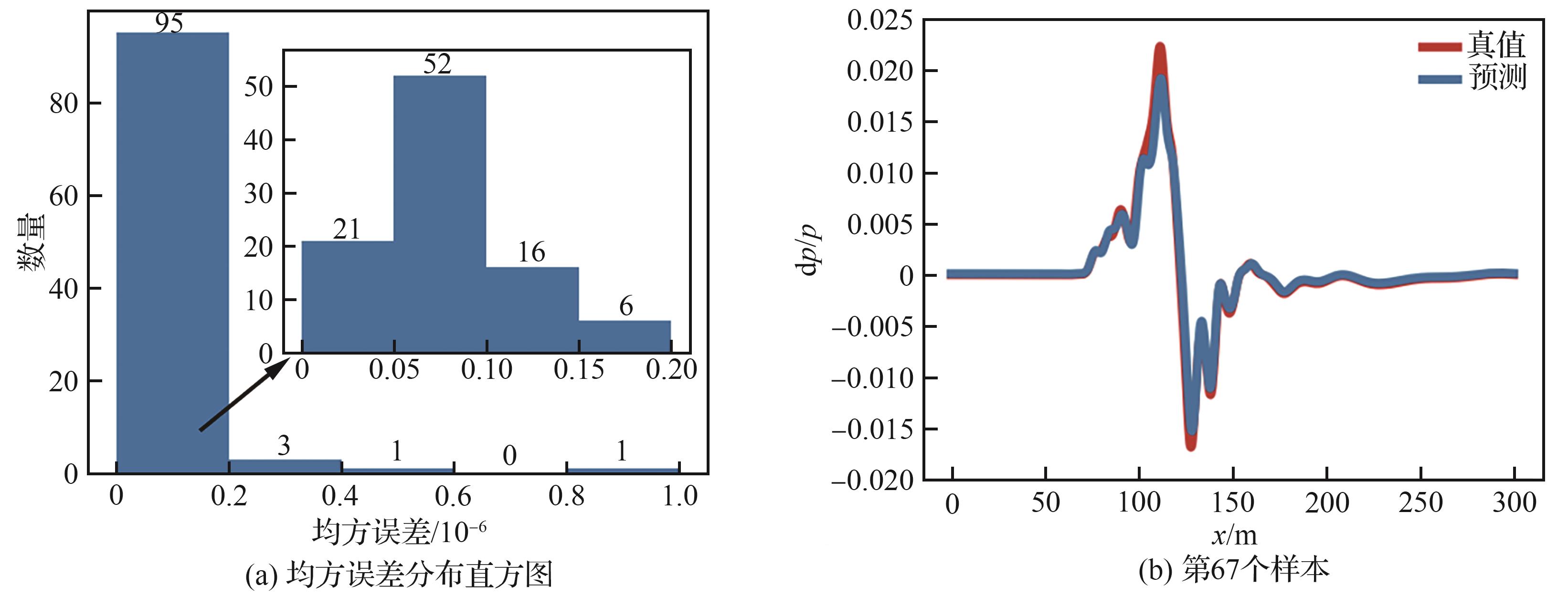
Table 11
Sonic boom level comparison of TF-DNNs-ind
| 样本序号 | 67 | 3 | 14 | 17 | 28 | 31 | 35 | 81 | 94 |
|---|---|---|---|---|---|---|---|---|---|
| HF/PLdB | 101.10 | 87.49 | 94.84 | 87.55 | 85.70 | 86.87 | 85.88 | 96.40 | 86.24 |
| TF-NNH-ind/PLdB | 98.35 | 87.82 | 92.32 | 88.26 | 84.42 | 85.59 | 85.75 | 96.23 | 85.86 |
| 绝对误差 | 2.65 | -0.33 | 2.52 | -0.71 | 1.28 | 1.28 | 0.13 | 0.17 | 0.38 |
| 相对误差/% | 2.62 | 0.38 | 2.66 | 0.81 | 1.49 | 1.47 | 0.15 | 0.18 | 0.44 |
Table 12
Low-fidelity deep neural network in pretraining phase with hybrid normalization
| 模型 | λ | Loss | Train_MSE | Test_MSE |
|---|---|---|---|---|
| TF-NNL-mix-4096 | ||||
| TF-NNL-mix-8192 | ||||
| TF-NNL-mix-10000 | ||||
Table 13
High-fidelity deep neural network in fine-tuning phase with hybrid normalization
| 模型 | λ | FL | TL | Loss | Train_MSE | Test_MSE |
|---|---|---|---|---|---|---|
| TF-NNH-mix-4096 | 3 | 1 | ||||
| 2 | 2 | |||||
| 3 | 1 | |||||
| 2 | 2 | |||||
| 3 | 1 | |||||
| 2 | 2 | |||||
| 3 | 1 | |||||
| 2 | 2 | |||||
| TF-NNH-mix-8192 | 3 | 1 | ||||
| 2 | 2 | |||||
| 3 | 1 | |||||
| 2 | 2 | |||||
| 3 | 1 | |||||
| 2 | 2 | |||||
| 3 | 1 | |||||
| 2 | 2 | |||||
| TF-NNH-mix-10000 | 3 | 1 | ||||
| 2 | 2 | |||||
| 3 | 1 | |||||
| 2 | 2 | |||||
| 3 | 1 | |||||
| 2 | 2 | |||||
| 3 | 1 | |||||
| 2 | 2 |
Fig.14
TF-NNH-mix model prediction results
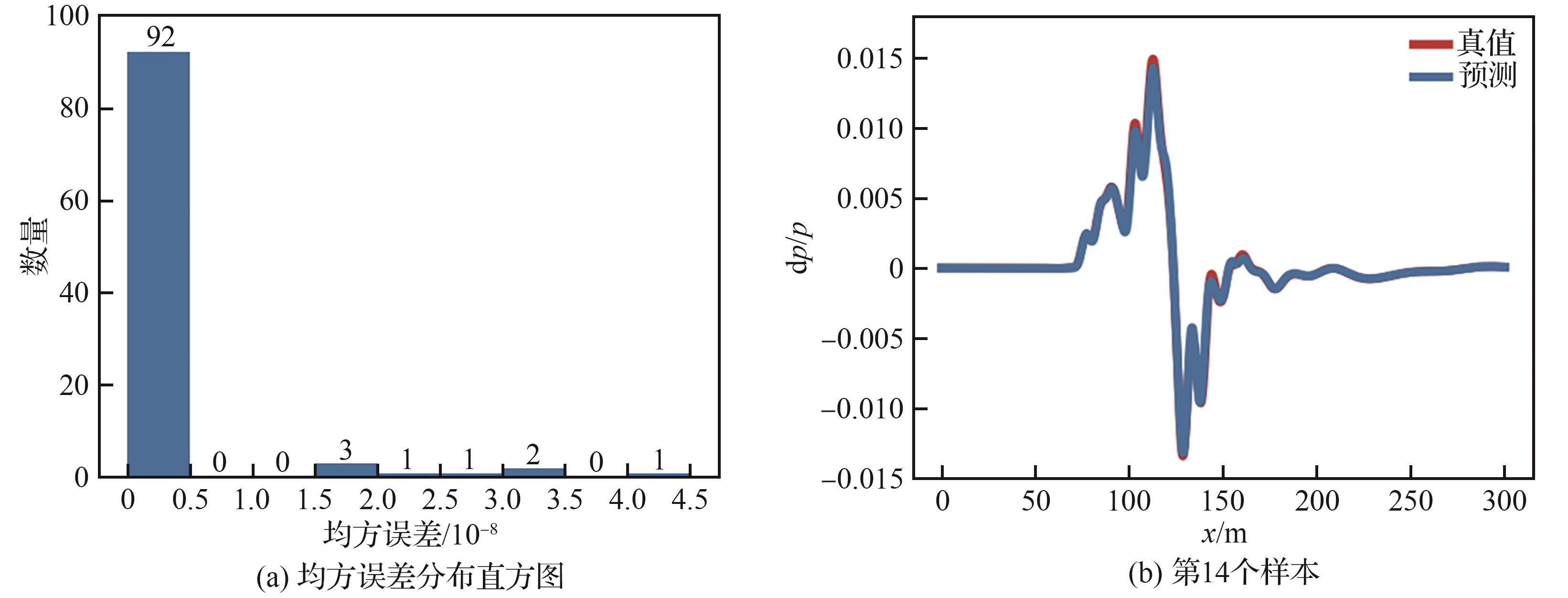
Table 14
Sonic boom level comparison of TF-DNNs-mix
| 样本序号 | 3 | 14 | 17 | 28 | 31 | 35 | 81 | 94 |
|---|---|---|---|---|---|---|---|---|
| HF/PLdB | 87.49 | 94.84 | 87.55 | 85.70 | 86.87 | 85.88 | 96.40 | 86.24 |
| TF-NNH-mix/PLdB | 87.37 | 94.34 | 87.55 | 84.61 | 86.62 | 85.76 | 96.44 | 86.14 |
| 绝对误差 | 0.12 | 0.5 | 0 | 1.09 | 0.25 | 0.12 | -0.04 | 0.1 |
| 相对误差/% | 0.14 | 0.53 | 0 | 1.27 | 0.29 | 0.14 | 0.04 | 0.12 |
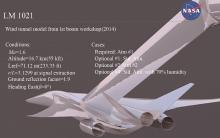
Fig.A1
Geometric configuration of LM1021
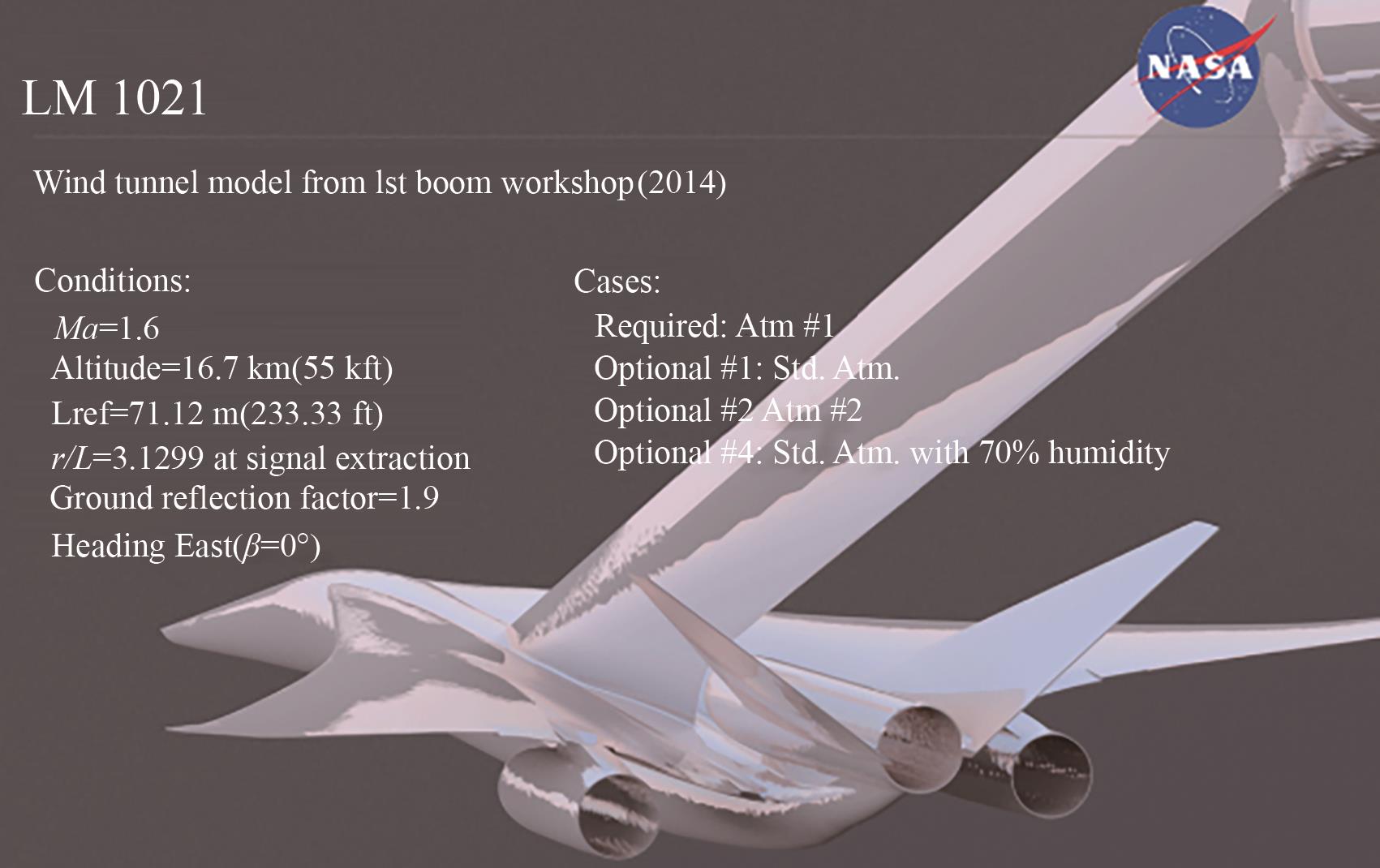
Fig.A2
Grid convergence study at 0° azimuthal angle
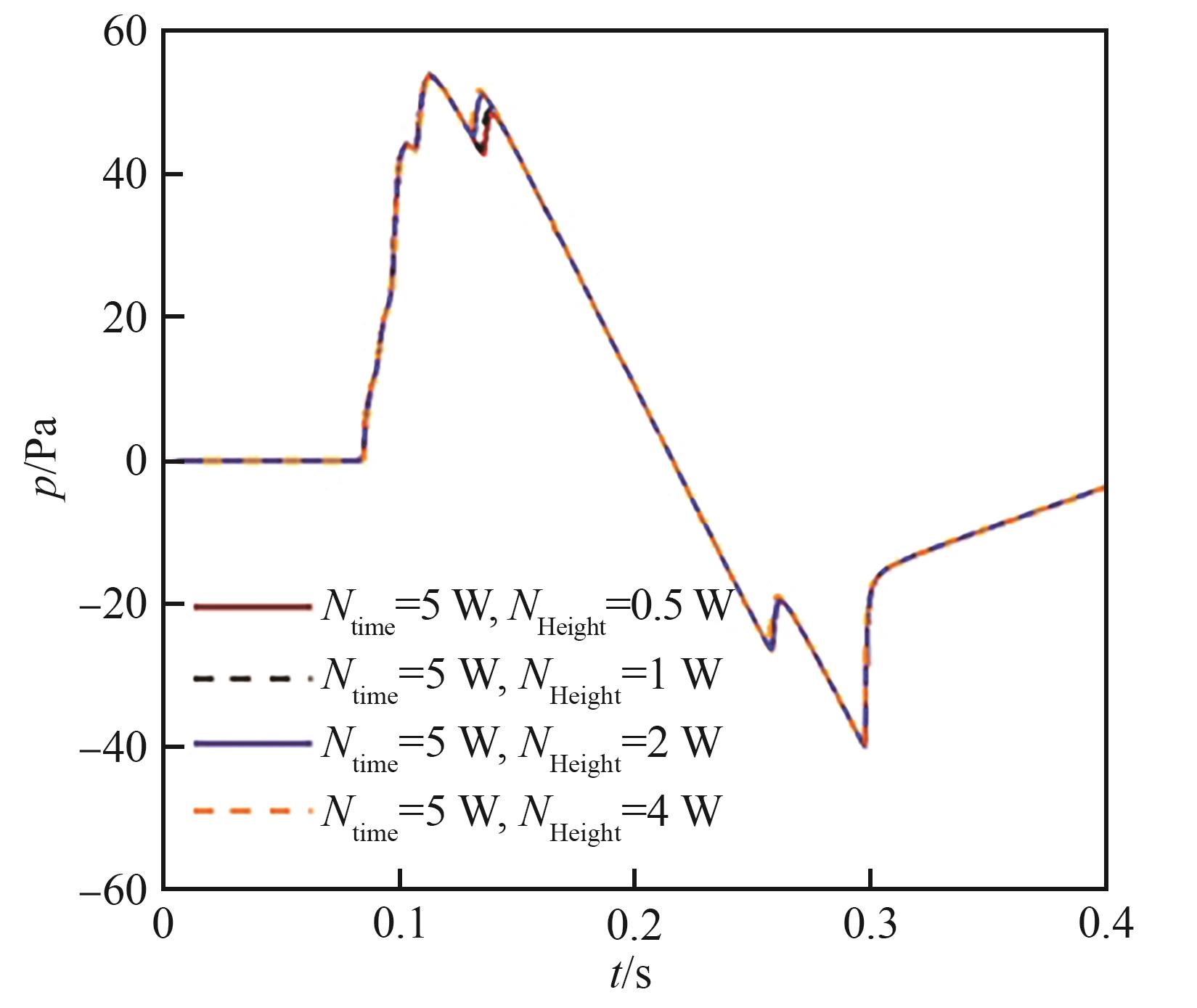
Fig.A3
Temporal grid convergence study at 0° azimuthal angle
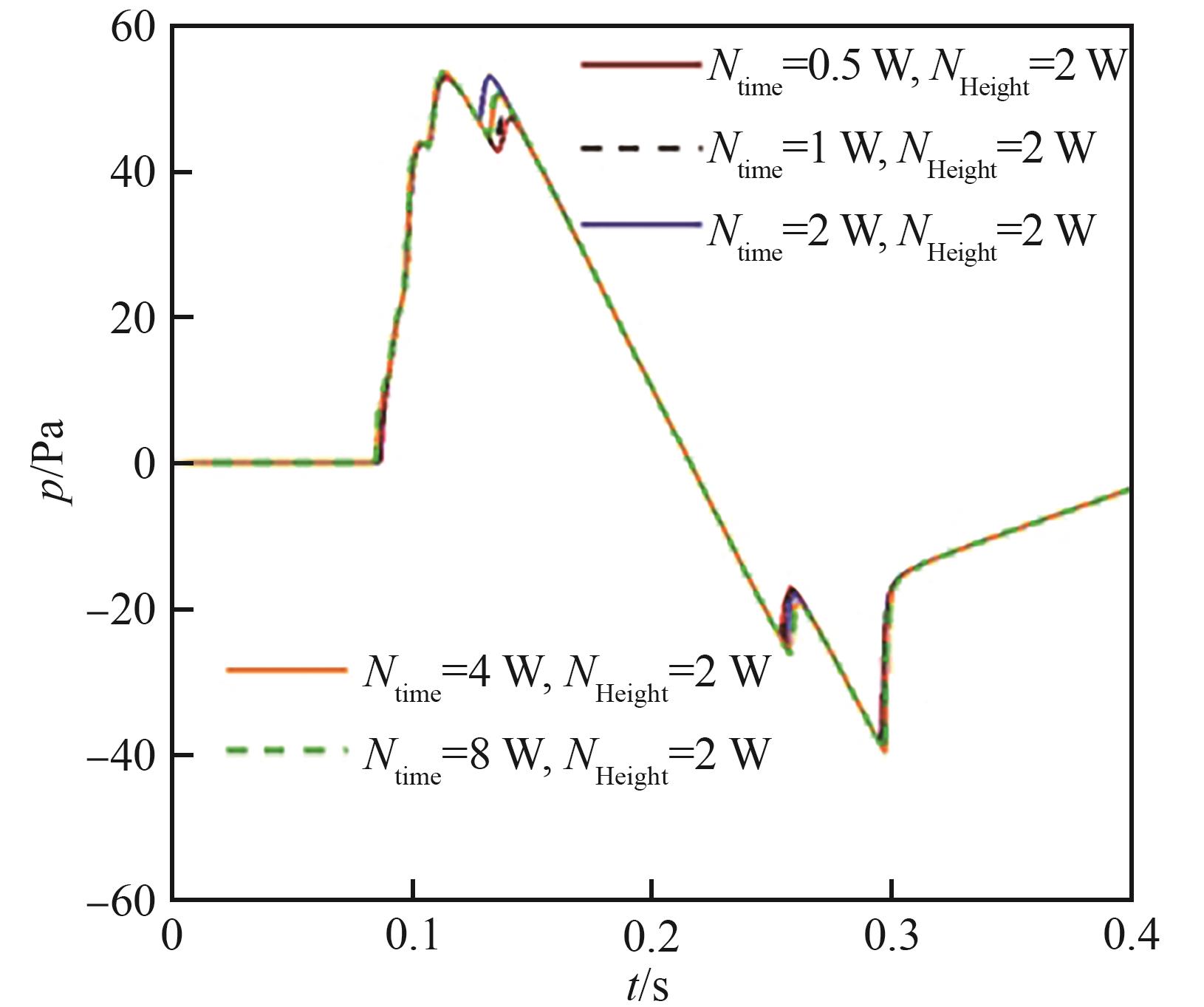
Fig.A4
Grid convergence study at 30° azimuthal angle
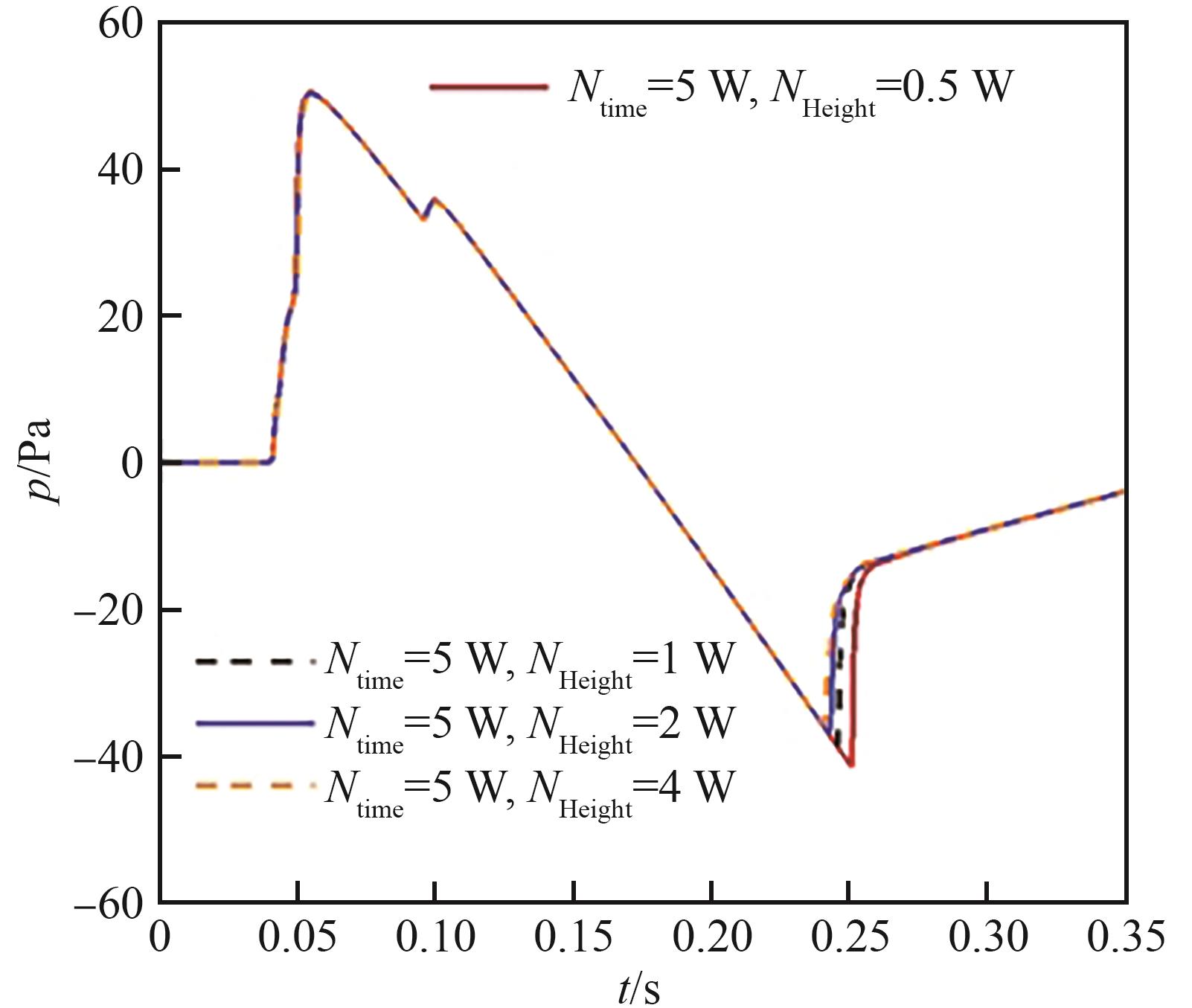
Fig.A5
Temporal grid convergence study at 30° azimuthal angle
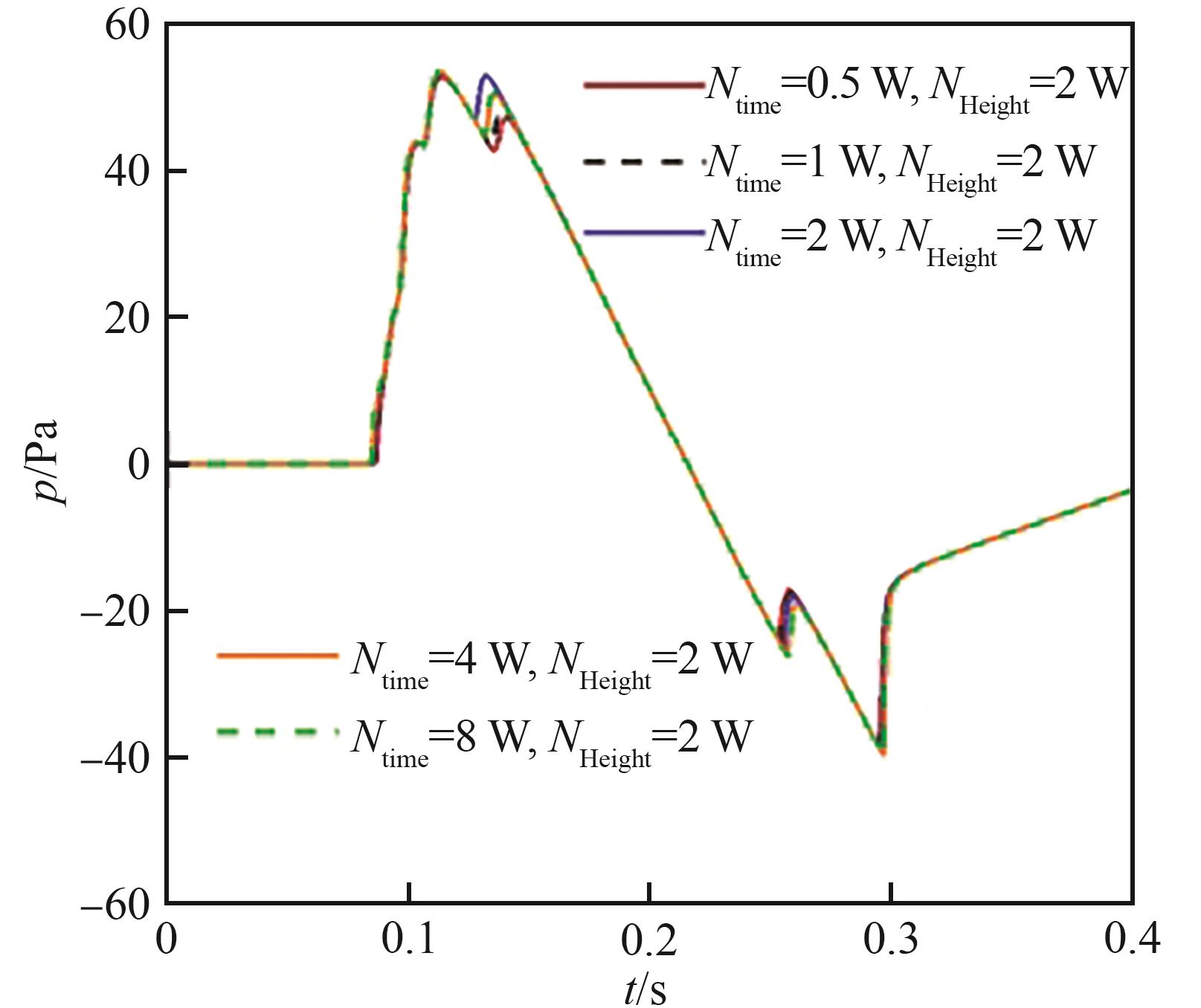
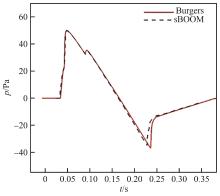
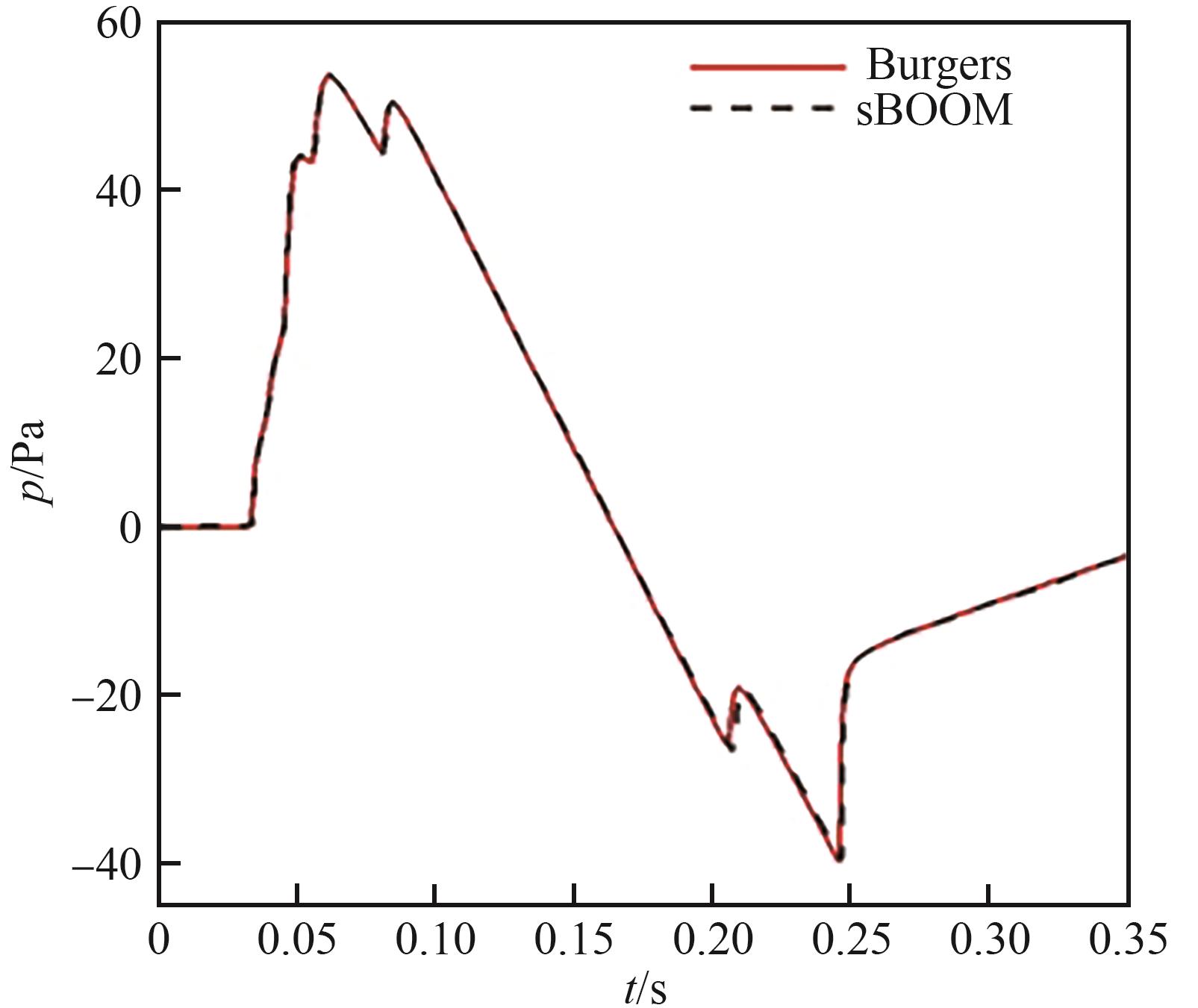
Fig.A7
Ground-level sonic boom signature at 30° azimuthal angle
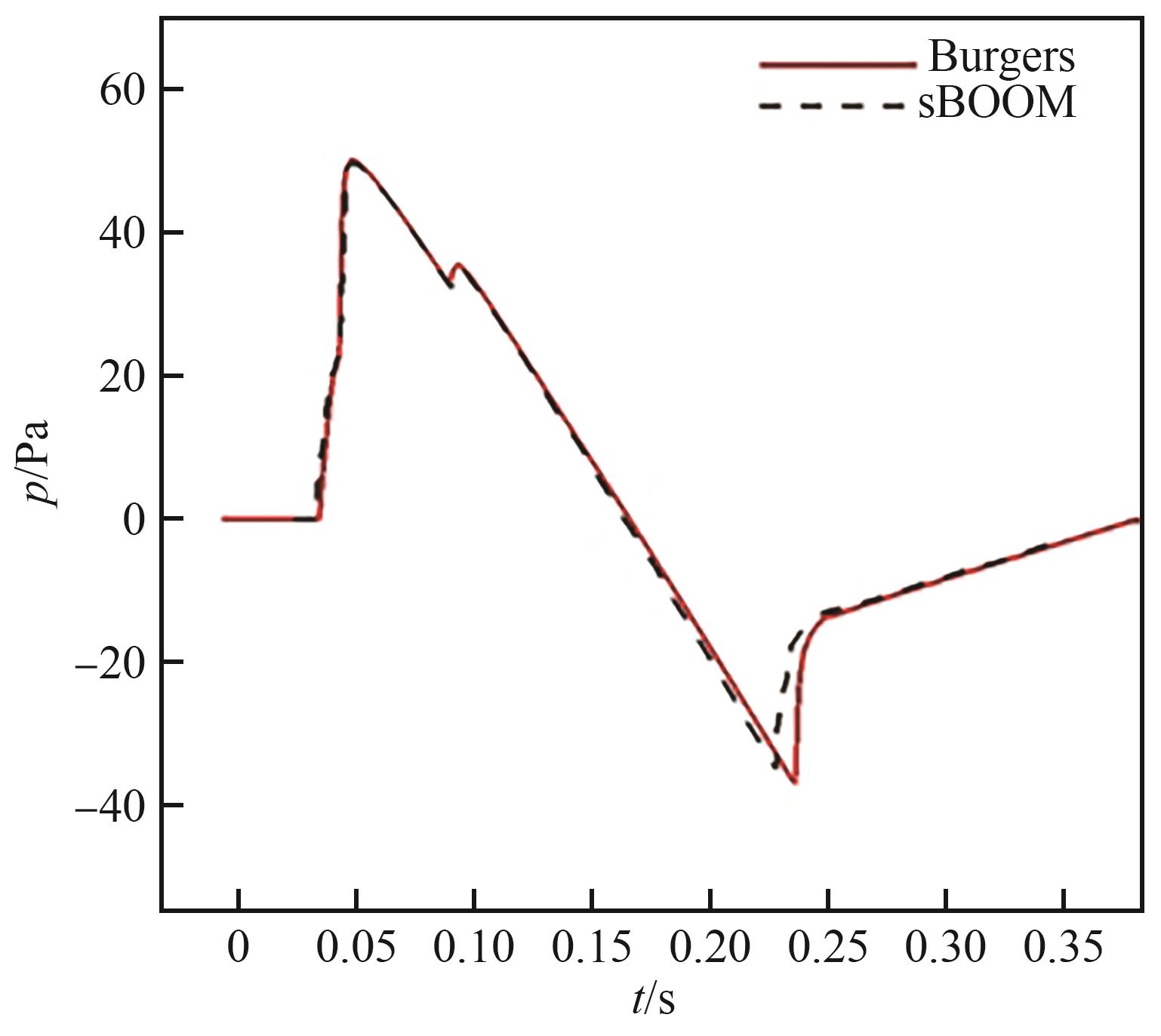
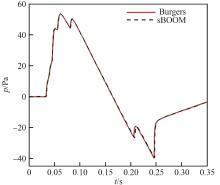
Fig.A6
Ground-level sonic boom signature at 0° azimuthal angle
| [1] | LANDAU L D. On shock waves at large distances from the place of their origin[M]∥Collected Papers of L.D. Landau. Amsterdam: Elsevier, 1965: 437-444. |
| [2] | PLOTKIN K J. State of the art of sonic boom modeling[J]. The Journal of the Acoustical Society of America, 2002, 111(1 Pt 2): 530-536. |
| [3] | HENNE P A, HOWE D C, WOLZ R R, et al. Supersonic aircraft with spike for controlling and reducing sonic boom: United States Patent 8789789[P]. 2004-03-02. |
| [4] | BATDORF S. On alleviation of the sonic boom by thermal means[C]∥7th Annual Meeting and Technical Display. Reston: AIAA, 1970. |
| [5] | GOETHERT B H. Fundamental research on advanced techniques for sonic boom suppression[J]. The Journal of the Acoustical Society of America, 1973, 54(6): 1766. |
| [6] | ZHA G C, IM H, ESPINAL D. Toward zero sonic-boom and high efficiency supersonic flight, part Ⅰ: A novel concept of supersonic bi-directional flying wing[C]∥48th AIAA Aerospace Sciences Meeting Including the New Horizons Forum and Aerospace Exposition. Reston: AIAA, 2010. |
| [7] | ESPINAL D, LEE B, SPOSATO H, et al. Supersonic bi-directional flying wing, part Ⅱ: Conceptual design of A high speed civil transport[C]∥48th AIAA Aerospace Sciences Meeting Including the New Horizons Forum and Aerospace Exposition. Reston: AIAA, 2010. |
| [8] | HORINOUCHI S. Variable forward swept wing supersonic aircraft having both low-boom characteristics and low-drag characteristics: United States Patent Application 20050230531[P]. 2005-10-20. |
| [9] | KUSUNOSE K, MATSUSHIMA K, MARUYAMA D. Supersonic biplane: A review[J]. Progress in Aerospace Sciences, 2011, 47(1): 53-87. |
| [10] | CHEUNG S H, EDWARDS T A. Supersonic airplane design optimization method for aerodynamic performance and low sonic boom: 19920076743[R]. Washington, D.C.: NASA, 1992. |
| [11] | KIRZ J. Surrogate based shape optimization of a low boom axisymmetric body[C]∥2018 Applied Aerodynamics Conference. Reston: AIAA, 2018. |
| [12] | 乔建领, 韩忠华, 宋文萍. 基于代理模型的高效全局低音爆优化设计方法[J]. 航空学报, 2018, 39(5): 121736. |
| QIAO J L, HAN Z H, SONG W P. An efficient surrogate-based global optimization for low sonic boom design[J]. Acta Aeronautica et Astronautica Sinica, 2018, 39(5): 121736 (in Chinese). | |
| [13] | REUTHER J, JAMESON A. Supersonic wing and wing-body shape optimization using an adjoint formulation: NASA-CR-199150[R]. Washington, D.C.: NASA, 1995. |
| [14] | RALLABHANDI S K, NIELSEN E J, DISKIN B. Sonic-boom mitigation through aircraft design and adjoint methodology[J]. Journal of Aircraft, 2014, 51(2): 502-510. |
| [15] | 黄江涛, 张绎典, 高正红, 等. 基于流场/声爆耦合伴随方程的超声速公务机声爆优化[J]. 航空学报, 2019, 40(5): 122505. |
| HUANG J T, ZHANG Y D, GAO Z H, et al. Sonic boom optimization of supersonic jet based on flow/sonic boom coupled adjoint equations[J]. Acta Aeronautica et Astronautica Sinica, 2019, 40(5): 122505 (in Chinese). | |
| [16] | 马创, 黄江涛, 刘刚, 等. 超声速飞行器近场声爆信号反演技术[J]. 空气动力学学报, 2023, 41(4): 1-10. |
| MA C, HUANG J T, LIU G, et al. Inversion technology of near-field sonic boom signal of supersonic aircraft[J]. Acta Aerodynamica Sinica, 2023, 41(4): 1-10 (in Chinese). | |
| [17] | 单程军, 贡天宇, 易理哲, 等 . 超声速民机高效高可信度声爆/气动多学科优化方法[J]. 航空学报, 2024, 45(24):630573. |
| SHAN C J, GONG T Y, YI L Z, et al. High-efficiency and high-reliability sonic boom/aerodynamic multidisciplinary optimization method for supersonic civil aircraft[J]. Acta Aeronautica et Astronautica Sinica, 2024, 45(24): 630573 (in Chinese). | |
| [18] | 杨超, 谭玉婷, 王伟, 等 . 融入低声爆设计的超声速民机概念方案多学科优化[J]. 航空学报, 2025, 46(20): 531457. |
| YANG C, TAN Y T, WANG W, et al. Multidisciplinary optimization with low-boom design for supersonic civil aircraft conceptual design[J]. Acta Aeronautica et Astronautica Sinica, 2025, 46(20): 531457 (in Chinese). | |
| [19] | LI W, SHIELDS E, GEISELHART K. Mixed-fidelity approach for design of low-boom supersonic aircraft[J]. Journal of Aircraft, 2011, 48(4): 1131-1135. |
| [20] | 李军府, 陈晴, 王伟, 等. 一种先进超声速民机低声爆高效气动布局设计[J]. 航空学报, 2024, 45(6): 629613. |
| LI J F, CHEN Q, WANG W, et al. Design of low sonic boom high efficiency layout for advanced supersonic civil aircraft[J]. Acta Aeronautica et Astronautica Sinica, 2024, 45(6): 629613 (in Chinese). | |
| [21] | 谢睿轩, 章子洋, 李锦烨, 等. 远程超声速客机低声爆气动设计及评估[J/OL]. 航空学报, 2025: 1-14. (2025-03-14). . |
| XIE R X, ZHANG Z Y, LI J Y, et al. Aerodynamic design and evaluation of long-range supersonic passenger aircraft with low sound explosion[J/OL]. China Industrial Economics, 2025: 1-14. (2025-03-14). (in Chinese). | |
| [22] | SONG X G, LV L Y, SUN W, et al. A radial basis function-based multi-fidelity surrogate model: Exploring correlation between high-fidelity and low-fidelity models[J]. Structural and Multidisciplinary Optimization, 2019, 60(3): 965-981. |
| [23] | PERDIKARIS P, VENTURI D, ROYSET J O, et al. Multi-fidelity modelling via recursive co-Kriging and Gaussian-Markov random fields[J]. Proceedings Mathematical, Physical, and Engineering Sciences, 2015, 471(2179): 20150018. |
| [24] | MENG X H, KARNIADAKIS G E. A composite neural network that learns from multi-fidelity data: Application to function approximation and inverse PDE problems[J]. Journal of Computational Physics, 2020, 401: 109020. |
| [25] | ZHANG X S, XIE F F, JI T W, et al. Multi-fidelity deep neural network surrogate model for aerodynamic shape optimization[J]. Computer Methods in Applied Mechanics and Engineering, 2021, 373: 113485. |
| [26] | YANG H, CHEN S S, GAO Z H, et al. Reynolds number effect correction of multi⁃fidelity aerodynamic distributions from wind tunnel and simulation data[J]. Physics of Fluids, 2023, 35(10): 103113. |
| [27] | WEISS K, KHOSHGOFTAAR T M, WANG D. A survey of transfer learning[J]. Journal of Big Data, 2016, 3 (1): 1-40. |
| [28] | LIAO P, SONG W, DU P, et al. Multi-fidelity convolutional neural network surrogate model for aerodynamic optimization based on transfer learning[J]. Physics of Fluids. 2021, 33 (12). |
| [29] | SONG D H, TARTAKOVSKY D M. Transfer learning on multifidelity data[J]. Journal of Machine Learning for Modeling and Computing. 2022, 3 (1): 31-47. |
| [30] | 陈柏宁, 谢芳芳, 孟旭辉. 自适应多保真数据融合的神经网络模型[J]. 气体物理, 2024, 9(4): 1-8. |
| CHEN B N, XIE F F, MENG X H. Adaptive multi-fidelity composite deep neural networks[J]. Physics of Gases, 2024, 9(4): 1-8 (in Chinese). | |
| [31] | CASTNER R. Analysis of exhaust plume effects on sonic boom for a 59-degree wing body model[C]∥49th AIAA Aerospace Sciences Meeting Including the New Horizons Forum and Aerospace Exposition. Reston: AIAA, 2011. |
| [32] | KIRZ J. DLR TAU simulations for the third AIAA sonic boom prediction workshop near-field cases[C]∥AIAA Scitech 2021 Forum. Reston: AIAA, 2021. |
| [1] | Rongzu LI, Li LIU, Dun YANG. Optimal design of hydrogen-powered UAV based on multi-source domain fusion surrogate model [J]. Acta Aeronautica et Astronautica Sinica, 2025, 46(9): 630979-630979. |
| [2] | Yang JIAO, Yuting LU, Ba XU, Jian OUYANG. Transfer prediction of satellite traffic based on spatiotemporal correlation [J]. Acta Aeronautica et Astronautica Sinica, 2025, 46(4): 330938-330938. |
| [3] | Ruixuan XIE, Ziyang ZHANG, Jinye LI, Han BAO, Fanghan LU, Qimin WANG, Dawei WU. Low-boom aerodynamic design and assessment of long-range supersonic passenger aircraft [J]. Acta Aeronautica et Astronautica Sinica, 2025, 46(20): 531589-531589. |
| [4] | Tianyu GONG, Chengjun SHAN, Lizhe YI, Yaosong LONG, Zhongtao CHENG. Impact of engine geometric parameters on sonic boom characteristics of supersonic civil aircraft [J]. Acta Aeronautica et Astronautica Sinica, 2025, 46(20): 531592-531592. |
| [5] | Yafei LI, Rui ZHAO. Optimization of supersonic passenger aircraft approach procedure based on noise and fuel consumption [J]. Acta Aeronautica et Astronautica Sinica, 2025, 46(20): 531919-531919. |
| [6] | Liwen ZHANG, Zhonghua HAN, Keshi ZHANG, Ke SONG, Wenping SONG. High-fidelity numerical simulation of near-/mid-field sonic boom propagation using a space-marching method for supersonic civil aircraft [J]. Acta Aeronautica et Astronautica Sinica, 2025, 46(20): 531935-531935. |
| [7] | Zuotai LI, Shusheng CHEN, Shiyi JIN, Zhenghong GAO, Weiguo ZHOU. Optimization design and data mining for supersonic civil aircraft based on sonic boom efficient prediction [J]. Acta Aeronautica et Astronautica Sinica, 2025, 46(20): 531920-531920. |
| [8] | Qing CHEN, Zhonghua HAN, Keshi ZHANG, Jianling QIAO, Yulin DING, Wenping SONG. A full-carpet design optimization method for low-boom supersonic civil aircraft configuration [J]. Acta Aeronautica et Astronautica Sinica, 2025, 46(20): 531909-531909. |
| [9] | Chengjie GUO, Dian XU, Jinbao LI, Chaoyu CHENG, Shuochang GUO, Rui LI. Stress characterization of high-temperature digital image correlation experiments based on a data fusion-knowledge transfer method [J]. Acta Aeronautica et Astronautica Sinica, 2025, 46(19): 531574-531574. |
| [10] | Pengfei WANG, Lifang ZENG, Xueming SHAO, Jun LI. Multi-source data fusion modeling method for aerodynamic load of aircraft wing based on pre-training and fine-tuning [J]. Acta Aeronautica et Astronautica Sinica, 2025, 46(19): 532297-532297. |
| [11] | Zichao LIU, Jiang WANG, Peng WANG, Defu LIN, Zhichuan HE. Time-constrained multi-missile cooperative guidance law [J]. Acta Aeronautica et Astronautica Sinica, 2024, 45(S1): 730607-730607. |
| [12] | Junfu LI, Qing CHEN, Wei WANG, Zhonghua HAN, Yuting TAN, Yulin DING, Lu XIE, Jianling QIAO, Ke SONG, Junqiang AI. Design of low sonic boom high efficiency layout for advanced supersonic civil aircraft [J]. Acta Aeronautica et Astronautica Sinica, 2024, 45(6): 629613-629613. |
| [13] | Jiang CUI, Fan ZHOU, Yongfan CHEN, Li YU, Zhuoran ZHANG. A technique for aerospace generator rectifier fault diagnosis based on GAMF-CNN [J]. Acta Aeronautica et Astronautica Sinica, 2024, 45(24): 330398-330398. |
| [14] | Chengjun SHAN, Tianyu GONG, Lizhe YI, Haohui YANG, Yaosong LONG. High-efficiency and high-reliability sonic boom/aerodynamic multidisciplinary optimization method for supersonic civil aircraft [J]. Acta Aeronautica et Astronautica Sinica, 2024, 45(24): 630573-630573. |
| [15] | Biyao QIANG, Kaining SHI, Junxue REN, Yaoyao SHI. Instance transfer for tool remaining useful life prediction cross working conditions [J]. Acta Aeronautica et Astronautica Sinica, 2024, 45(13): 629038-629038. |
| Viewed | ||||||
|
Full text |
|
|||||
|
Abstract |
|
|||||
Address: No.238, Baiyan Buiding, Beisihuan Zhonglu Road, Haidian District, Beijing, China
Postal code : 100083
E-mail:hkxb@buaa.edu.cn
Total visits: 6658907 Today visits: 1341All copyright © editorial office of Chinese Journal of Aeronautics
All copyright © editorial office of Chinese Journal of Aeronautics
Total visits: 6658907 Today visits: 1341

 CJA
CJA
