Acta Aeronautica et Astronautica Sinica ›› 2025, Vol. 46 ›› Issue (20): 531935.doi: 10.7527/S1000-6893.2025.31935
• Special Issue: Key Technologies for Supersonic Civil Aircraft • Previous Articles
Liwen ZHANG1,2, Zhonghua HAN1,2( ), Keshi ZHANG1,2, Ke SONG1,2, Wenping SONG1,2
Received:2024-03-04
Revised:2024-04-02
Accepted:2024-04-29
Online:2025-05-07
Published:2025-05-06
Contact:
Zhonghua HAN
E-mail:hanzh@nwpu.edu.cn
Supported by:CLC Number:
Liwen ZHANG, Zhonghua HAN, Keshi ZHANG, Ke SONG, Wenping SONG. High-fidelity numerical simulation of near-/mid-field sonic boom propagation using a space-marching method for supersonic civil aircraft[J]. Acta Aeronautica et Astronautica Sinica, 2025, 46(20): 531935.

Table 1
International high-fidelity numerical simulation methods by using a space-marching approach for near-field sonic boom propagation
| 参数 | 文献[ | 文献[ | 文献[ |
|---|---|---|---|
| 控制方程 | 欧拉方程 | 欧拉方程 | 欧拉方程 |
| 计算网格 | 笛卡尔网格 | 结构网格 | 结构网格 |
| 求解框架 | 有限差分 | 有限差分 | 有限体积 |
| 坐标系 | 柱坐标系 | 曲线坐标系 | 曲线坐标系 |
推进方向空间 离散格式 | 显式三阶四层有限 差分近似方法[ | 隐式线雅克比迭代 | 显式三步三阶龙格库塔[ |
非推进方向空间 离散格式 | 三阶DRP | 四阶显式HWCNS[ Roe通量(三阶WENO) | AUSM+_UP、三阶MUSCL插值、 MinMod限制器 |
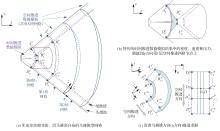
Fig.1
Simulation procedure of high-precision numerical simulation using a space-marching method developed in this paper
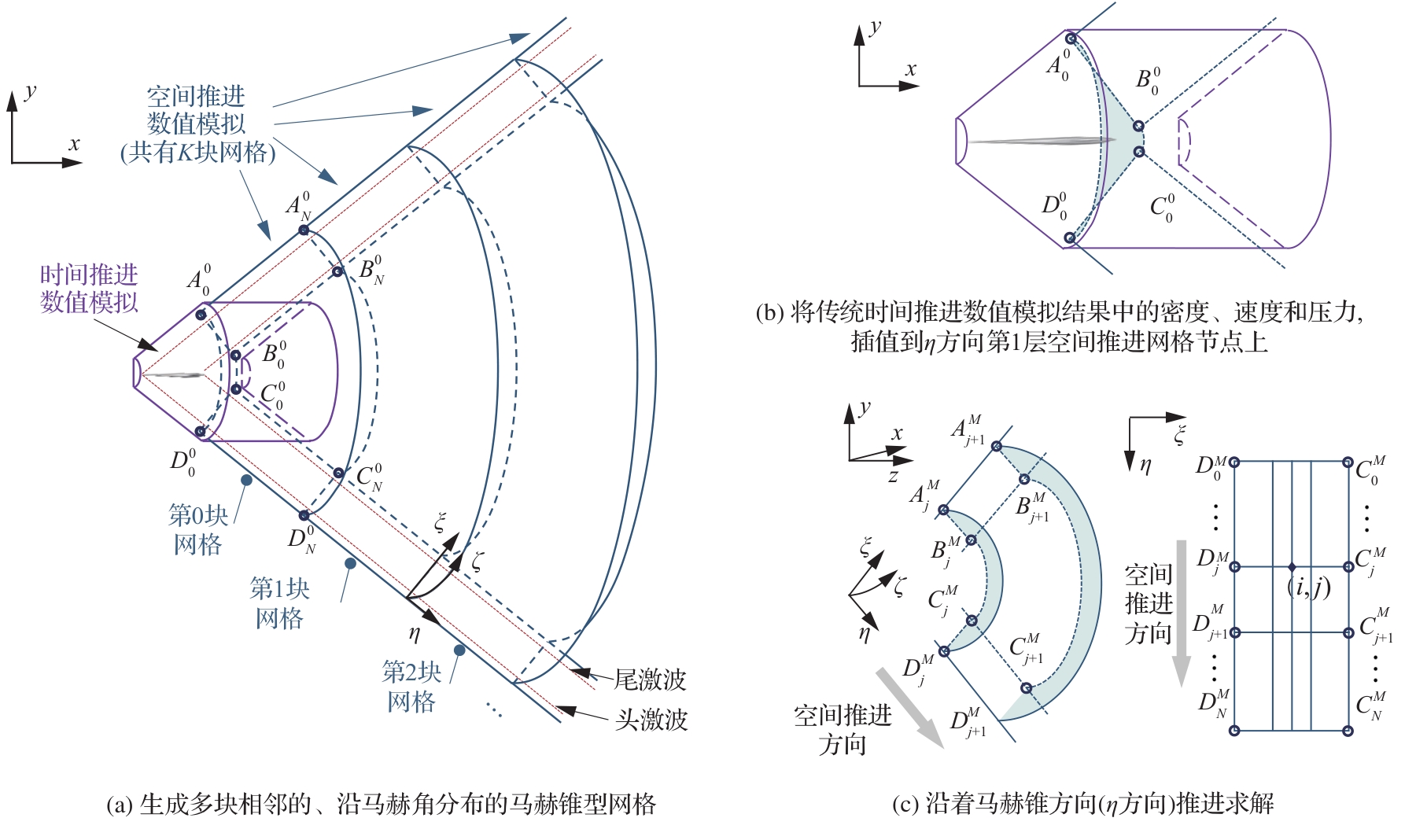
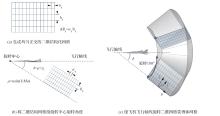
Fig.2
Generation of a Mach-aligned grid for numerical simulation
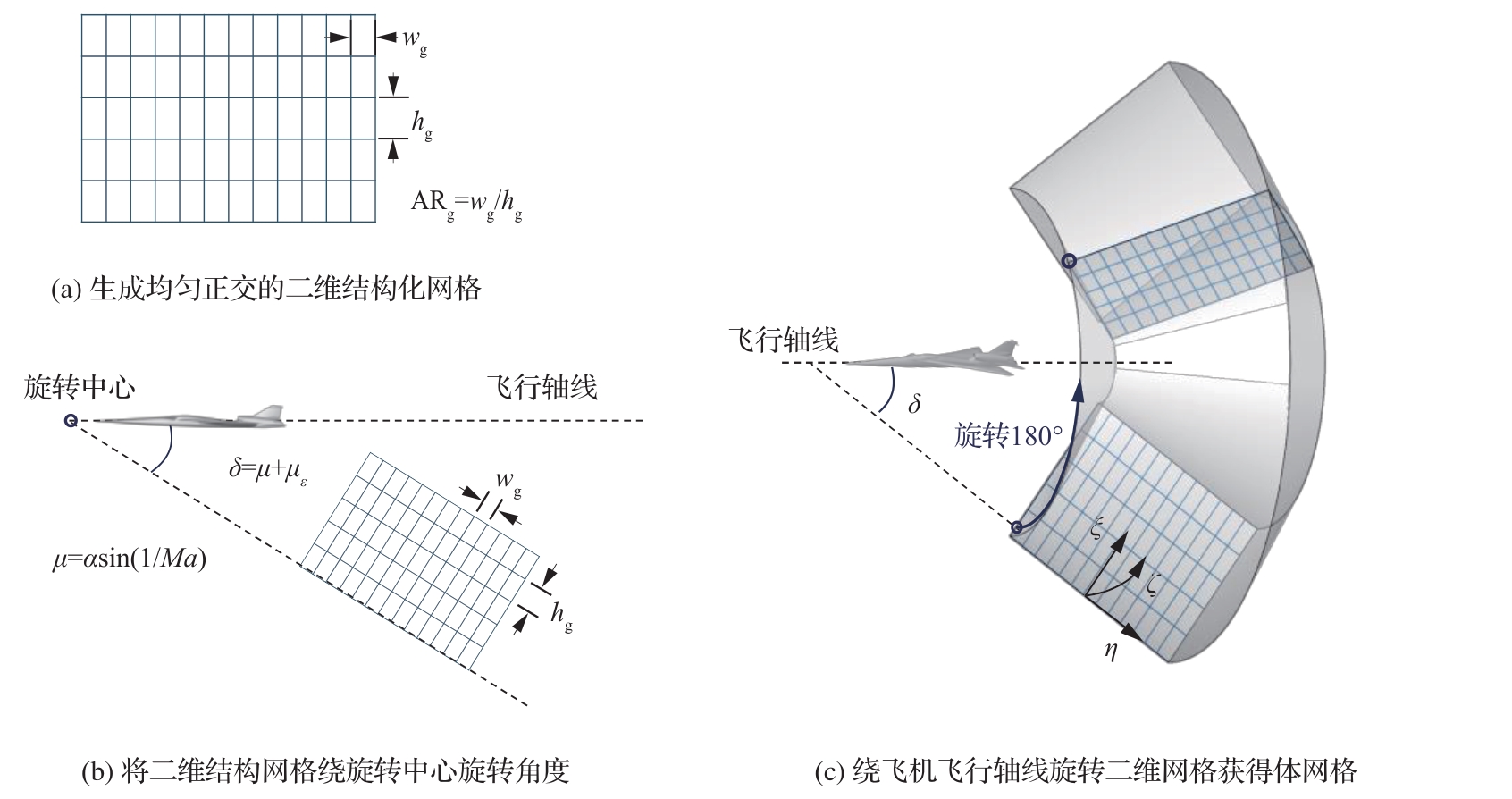
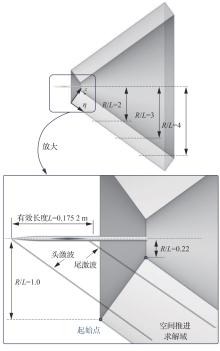
Fig.3
Simulation grid of a DWB model for validation of free-stream preservation
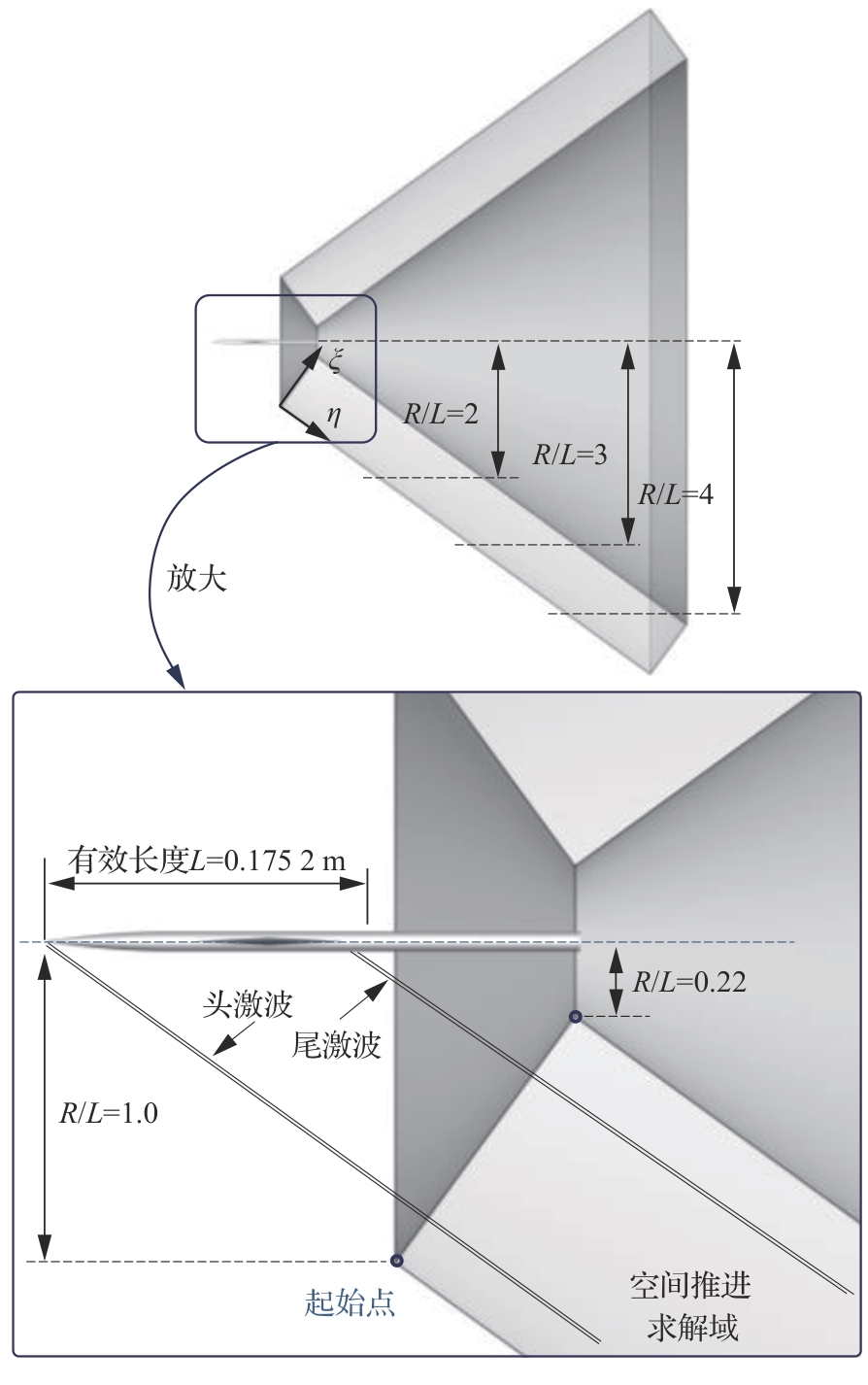
Table 2
Maximum absolute value of Ix, Iy, and Iz
| 参数 | 绝对值最大值 | |
|---|---|---|
| Ix | 2.7×10⁻¹⁷ | |
| Iy | 2.9×10⁻¹⁷ | |
| Iz | 2.8×10⁻¹⁷ |
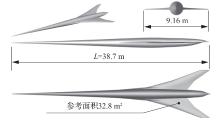
Fig.4
Sketch of a low-boom model JWB
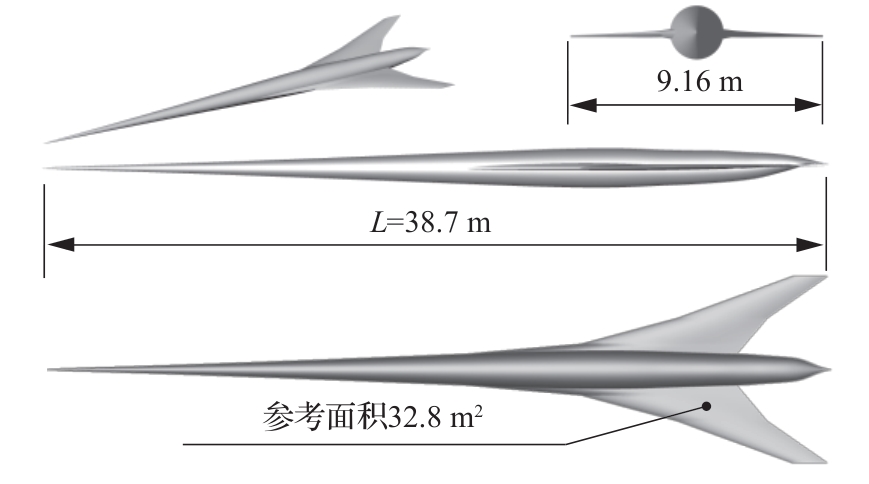
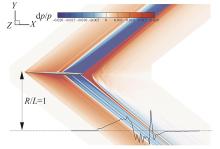
Fig.5
Overpressure contour on symmetry plane for JWB
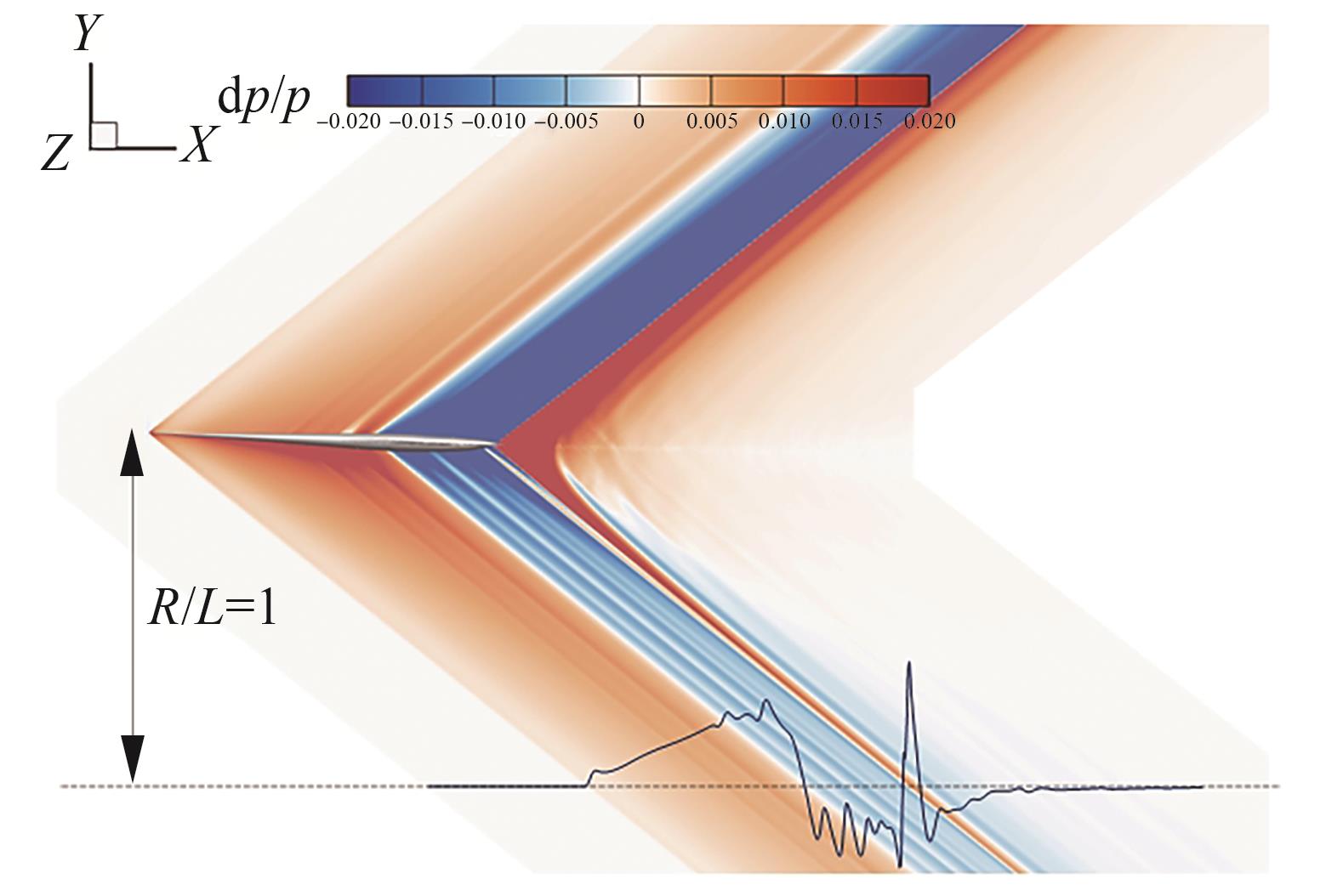
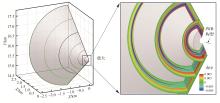
Fig.6
Sketch of the space-marching grid and the flow field simulated by the developed method for JWB model
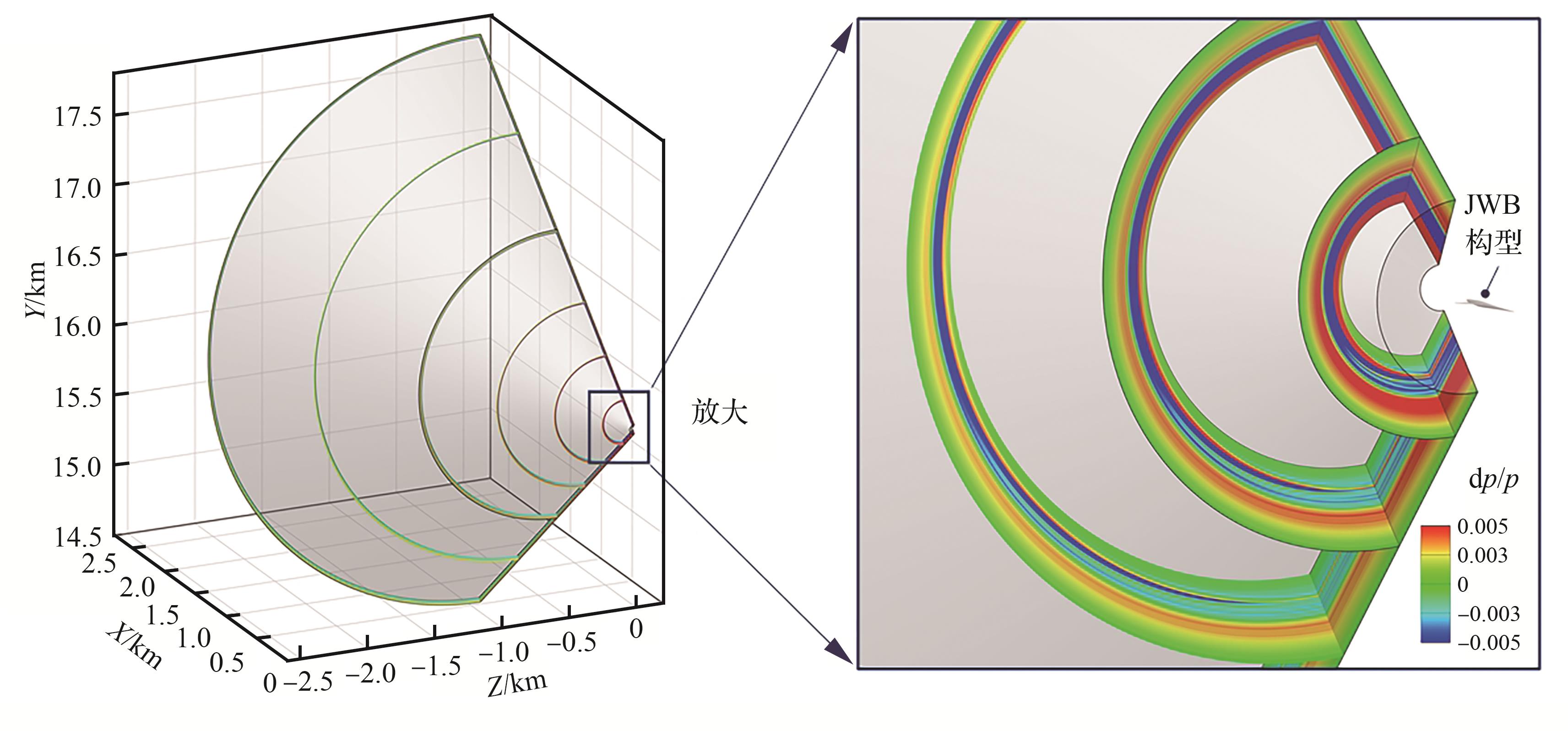
Fig.7
Comparison of the near-field waveforms calculated by the developed method with the data[15] submitted by participants (JWB model, R/L=2.55)
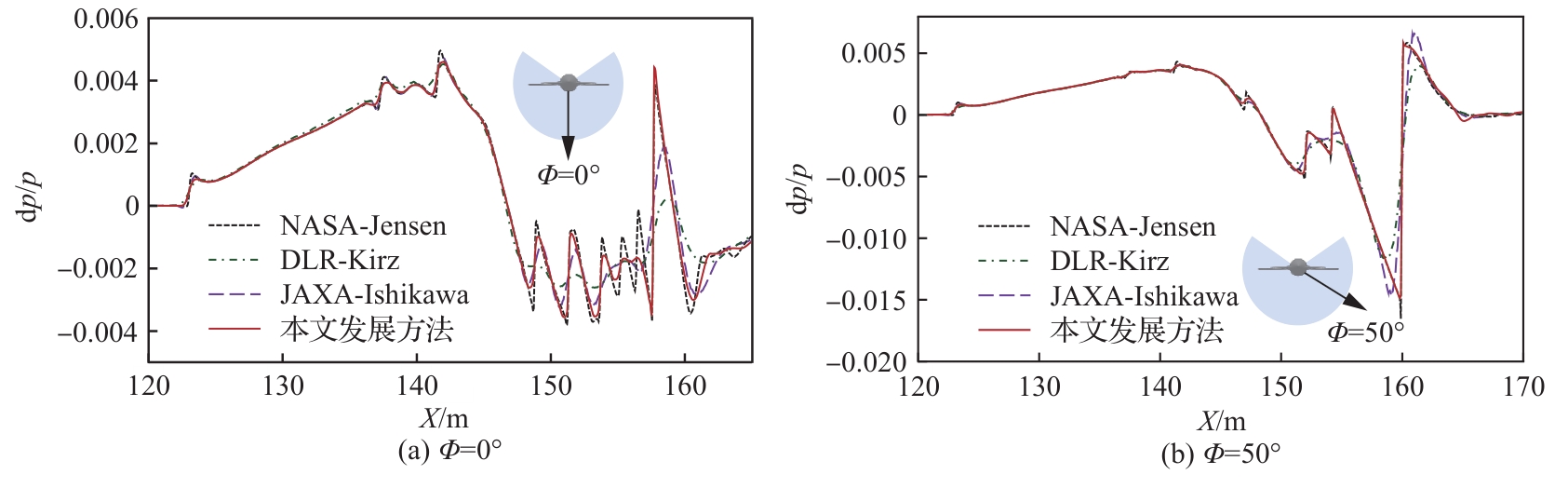
Fig.8
Comparison of density, velocity, and pressure contours simulated by the conventional and developed methods (X=100 m)
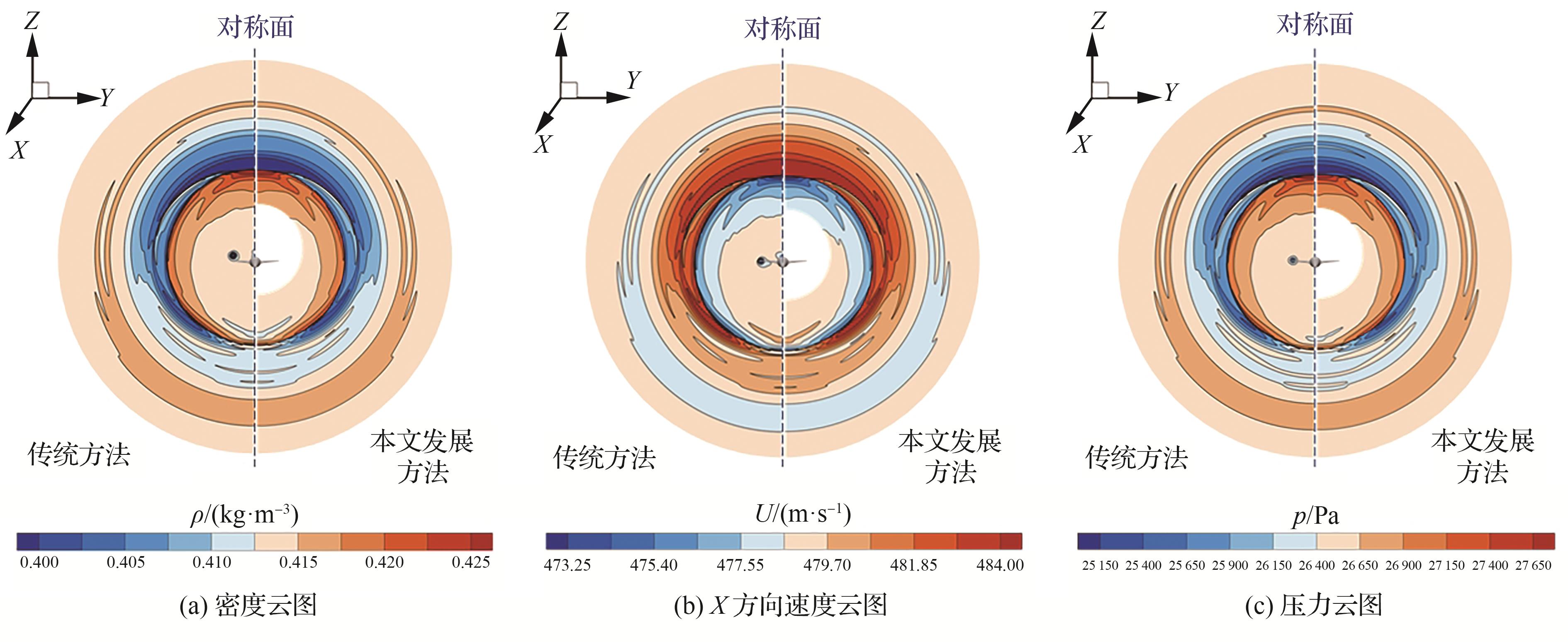
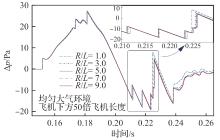
Fig.9
Comparison of far-field waveforms predicted by the augmented Burgers equation varies with near-field extraction locations
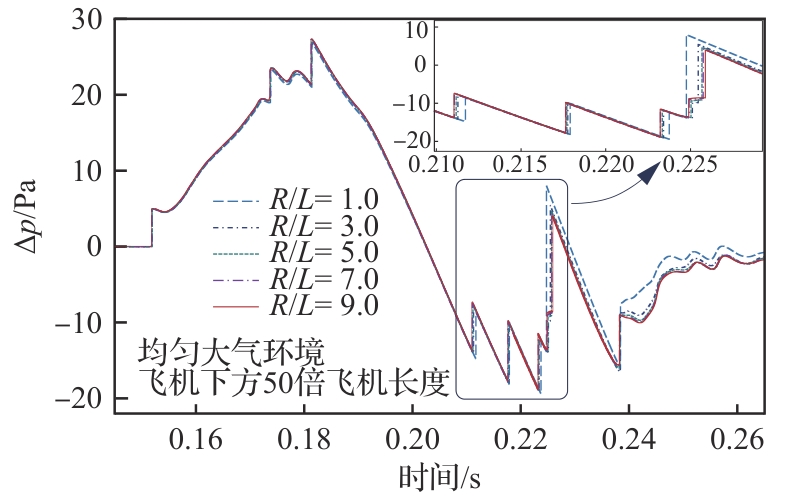
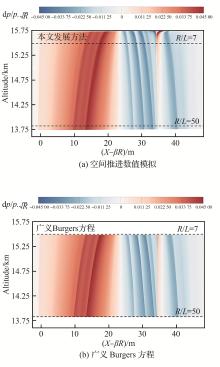
Fig.10
Comparison of evolution of on-track shock systems simulated by the developed method and augmented Burgers equation
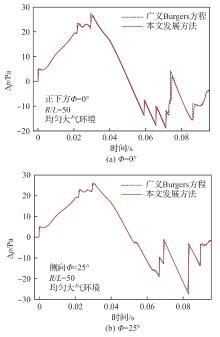
Fig.11
Comparison of mid-field waveforms calculated by developed method and augmented Burgers equation
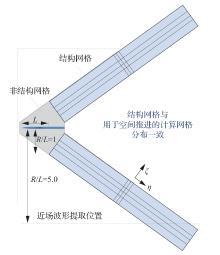
Fig.12
Symmetry grid for conventional CFD simulation
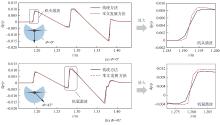
Fig.13
Comparison of near-field waveforms calculated by conventional and developed methods (R/L=5.0)
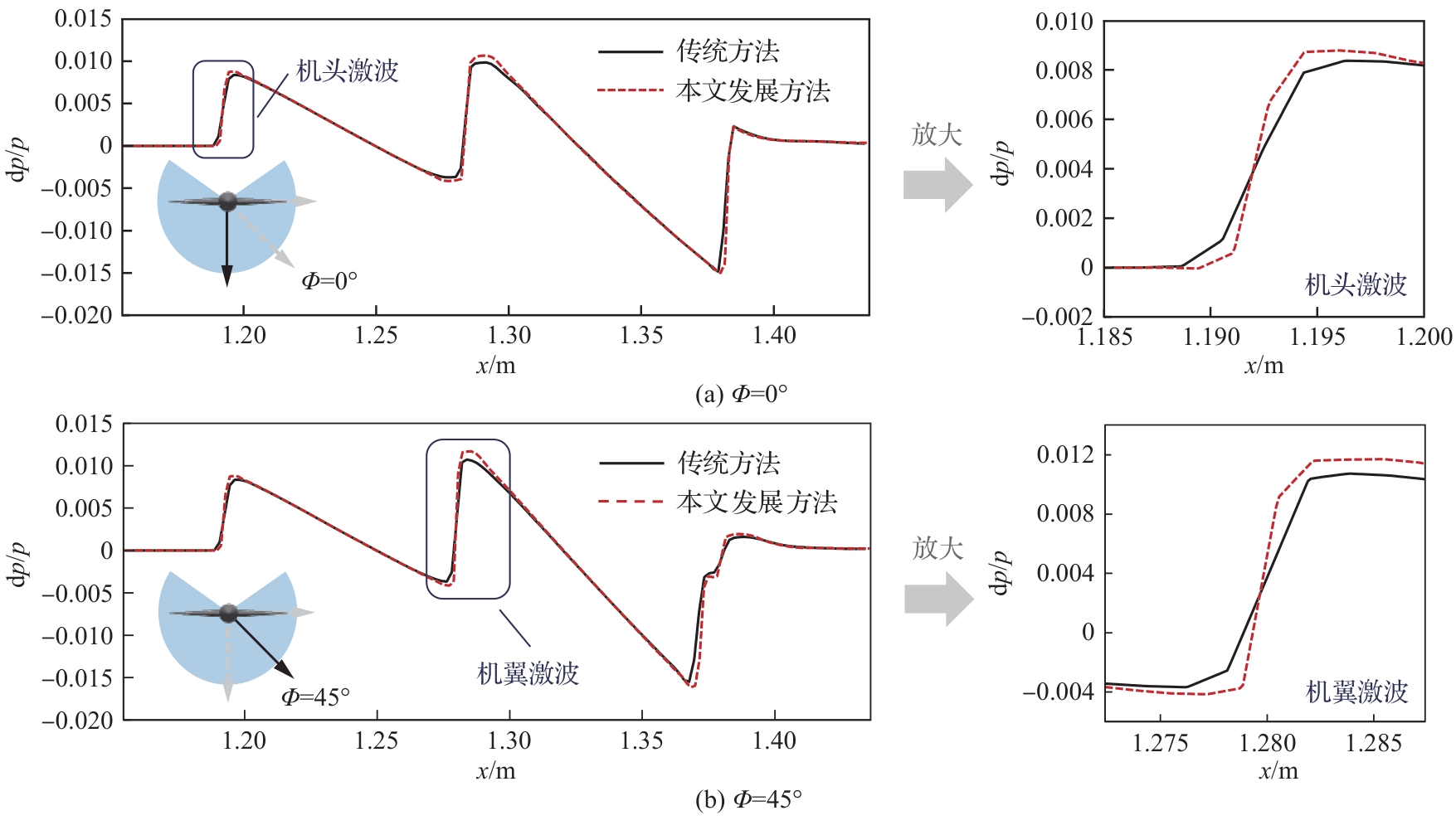
Table 3
Comparison of computational time between conventional and developed methods
| 时间 | 传统CFD方法 | 本文发展方法 |
|---|---|---|
| 总计 | 23 h 40 min | 39 min |
| 时间推进数值模拟 | 23 h 40 min | 24 min |
| 流场插值 | 2 min | |
| 空间推进数值模拟 | 13 min |
| [1] | HAN Z H, QIAO J L, ZHANG L W, et al. Recent progress of efficient low-boom design and optimization methods[J]. Progress in Aerospace Sciences, 2024, 146: 101007. |
| [2] | Aeronautics Research Mission Directorate. NASA aeronautics: Strategic implementation plan 2023:NASA-NP-2023-02-3099-HQ[R]. Washington, D.C.: NASA, 2023. |
| [3] | 新华社. 中国科协发布2019重大科学问题和工程技术难题[EB/OL].(2019-03-30)[2025-02-01] . |
| XINHUA News Agency. China association for science and technology releases major scientific questions and engineering challenges for 2019[EB/OL]. (2019-03-30)[2025-02-01]. (in Chinese). | |
| [4] | CHERNYSHEV S L, POGOSYAN M A, SYPALO K I. On ecologically-safe high-speed vehicles: Conceptual design study of the next generation supersonic transport[J]. Acta Astronautica, 2024, 216: 437-445. |
| [5] | 张力文, 宋文萍, 韩忠华, 等. 声爆产生、传播和抑制机理研究进展[J]. 航空学报, 2022, 43(12): 025649. |
| ZHANG L W, SONG W P, HAN Z H, et al. Recent progress of sonic boom generation, propagation, and mitigation mechanism[J]. Acta Aeronautica et Astronautica Sinica, 2022, 43(12): 025649 (in Chinese). | |
| [6] | 丁玉临, 韩忠华, 乔建领, 等. 超声速民机总体气动布局设计关键技术研究进展[J]. 航空学报, 2023, 44(2): 626310. |
| DING Y L, HAN Z H, QIAO J L, et al. Research progress in key technologies for conceptual-aerodynamic configuration design of supersonic transport aircraft[J]. Acta Aeronautica et Astronautica Sinica, 2023, 44(2): 626310 (in Chinese). | |
| [7] | 李军府, 陈晴, 王伟, 等. 一种先进超声速民机低声爆高效气动布局设计[J]. 航空学报, 2024, 45(6): 629613. |
| LI J F, CHEN Q, WANG W, et al. Design of low sonic boom high efficiency layout for advanced supersonic civil aircraft[J]. Acta Aeronautica et Astronautica Sinica, 2024, 45(6): 629613 (in Chinese). | |
| [8] | LEYMAN C S. A review of the technical development of concorde[J]. Progress in Aerospace Sciences, 1986, 23(3): 185-238. |
| [9] | Durston D A, Wolter J D, Shea P R, et al. X-59 sonic boom test results from the NASA Glenn 8-by 6-foot supersonic wind tunnel[C]∥AIAA Aviation 2023 Forum. Reston: AIAA, 2023. |
| [10] | 宋亚辉, 樊高宇, 瞿丽霞, 等. 航空器声爆飞行试验测量技术研究进展[J]. 航空学报, 2023, 44(2): 626186. |
| SONG Y H, FAN G Y, QU L X, et al. Progress of aircraft sonic boom flight test measurement technology: Review[J]. Acta Aeronautica et Astronautica Sinica, 2023, 44(2): 626186 (in Chinese). | |
| [11] | 刘中臣, 钱战森, 李雪飞, 等. 发动机喷管羽流对近场声爆特性影响的风洞试验技术[J]. 航空学报, 2023, 44(2): 626952. |
| LIU Z C, QIAN Z S, LI X F, et al. Wind tunnel test techniques for exhaust nozzle plume effects on near-field sonic boom[J]. Acta Aeronautica et Astronautica Sinica, 2023, 44(2): 626952 (in Chinese). | |
| [12] | YOSHIDA K, MASAHISA H. D-SEND# 2—flight tests for low sonic boom design technology[C]∥30th ICAS Congress,2016. |
| [13] | MORGENSTERN J, STELMACK M, JHA D P. Advanced concept studies for supersonic commercial transport entering service in 2030-35 (N+3): AIAA-2010-5114[C]∥28th AIAA Applied Aerodynamics Conference. Reston: AIAA, 2010. |
| [14] | PARK M A, MORGENSTERN J M. Summary and statistical analysis of the first AIAA sonic boom prediction workshop[C]∥32nd AIAA Applied Aerodynamics Conference. Reston: AIAA, 2014. |
| [15] | PARK M A, NEMEC M. Nearfield summary and statistical analysis of the second AIAA sonic boom prediction workshop[J]. Journal of Aircraft, 2018, 56(3): 851-875. |
| [16] | PARK M A, CARTER M B. Nearfield summary and analysis of the third AIAA sonic boom prediction workshop C608 low boom demonstrator[C]∥AIAA Scitech 2021 Forum. Reston: AIAA,2021. |
| [17] | YAMASHITA R, SUZUKI K. Full-field sonic boom simulation in real atmosphere[C]∥32nd AIAA Applied Aerodynamics Conference. Reston: AIAA, 2014. |
| [18] | YAMASHITA R, SUZUKI K. Full-field sonic boom simulation in stratified atmosphere[J]. AIAA Journal, 2016, 54(10): 3223-3231. |
| [19] | YAMASHITA R, SUZUKI K. Rise time prediction of sonic boom by full-field simulation[J]. Journal of Aircraft, 2018, 55(3): 1305-1310. |
| [20] | CLEVELAND R O. Propagation of sonic booms through a real, stratified atmosphere[D]. Austin: The University of Texas at Austin, 1995. |
| [21] | QIAO J L, HAN Z H, SONG W P, et al. Development of sonic boom prediction code for supersonic transports based on augmented[C]∥AIAA Aviation 2019 Forum. Reston: AIAA, 2019. |
| [22] | 王迪, 冷岩, 杨龙, 等. 基于广义Burgers方程的声爆传播特性大气湍流影响[J]. 航空学报, 2023, 44(2): 626318. |
| WANG D, LENG Y, YANG L, et al. Atmospheric turbulence effects on sonic boom propagation based on augmented Burgers equation[J]. Acta Aeronautica et Astronautica Sinica, 2023, 44(2): 626318 (in Chinese). | |
| [23] | DUENSING J C, JENSEN J C, HOUSMAN J A, et al. Structured and unstructured simulations for the third AIAA sonic boom prediction workshop[J]. Journal of Aircraft, 2021, 59(3): 624-646. |
| [24] | YAMASHITA R, ISHIKAWA H. A semi-adapted space marching method for fast sonic boom prediction[J]. Journal of Computational Physics, 2023, 487: 112170. |
| [25] | DENG X G, ZHANG H X. Developing high-order weighted compact nonlinear schemes[J]. Journal of Computational Physics, 2000, 165(1): 22-44. |
| [26] | LIU X D, OSHER S, CHAN T. Weighted essentially non-oscillatory schemes[J]. Journal of Computational Physics, 1994, 115(1): 200-212. |
| [27] | JIANG G S, SHU C W. Efficient implementation of weighted ENO schemes[J]. Journal of Computational Physics, 1996, 126(1): 202-228. |
| [28] | DENG X G, MAO M L, JIANG Y, et al. New high order hybrid cell-edge and cell-node weighted compact nonlinear schemes[C]∥20th AIAA Computational Fluid Dynamics Conference. Reston: AIAA, 2011. |
| [29] | SHEN H, LAZZARA D. A space marching method for sonic boom near field predictions[C]∥54th AIAA Aerospace Sciences Meeting. Reston: AIAA, 2016. |
| [30] | HOUSMAN J A, KENWAY G K, JENSEN J C, et al. Efficient near-field to mid-field sonic boom propagation using a high-order space marching method[C]∥AIAA Aviation 2019 Forum. Reston: AIAA, 2019. |
| [31] | HOUSMAN J A, JENSEN J C, KENWAY G K, et al. Algorithmic improvements to a high-order space marching method for sonic boom propagation[C]∥11th International Conference on Computational Fluid Dynamics (ICCFD11), 2022. |
| [32] | YAMASHITA R, MAKINO Y, ROE P L. Fast full-field simulation of sonic boom using a space marching method[J]. AIAA Journal, 2022, 60(7): 4103-4112. |
| [33] | TAM C K W, WEBB J C. Dispersion-relation-preserving finite difference schemes for computational acoustics[J]. Journal of Computational Physics, 1993, 107(2): 262-281. |
| [34] | SHU C W, OSHER S. Efficient implementation of essentially non-oscillatory shock-capturing schemes[J]. Journal of Computational Physics, 1988, 77(2): 439-471. |
| [35] | GUSTAFSSON B. The convergence rate for difference approximations to mixed initial boundary value problems[J]. Mathematics of Computation, 1975, 29(130): 396-406. |
| [36] | NONOMURA T, FUJII K. Effects of difference scheme type in high-order weighted compact nonlinear schemes[J]. Journal of Computational Physics, 2009, 228(10): 3533-3539. |
| [37] | NONOMURA T, IIZUKA N, FUJII K. Freestream and vortex preservation properties of high-order WENO and WCNS on curvilinear grids[J]. Computers & Fluids, 2010, 39(2): 197-214. |
| [38] | CHEN Y M, DENG X G. WCNS schemes and some recent developments[J]. Advances in Aerodynamics, 2024, 6(1): 2. |
| [39] | SPITERI R J, RUUTH S J. A new class of optimal high-order strong-stability-preserving time discretization methods[J]. SIAM Journal on Numerical Analysis, 2002, 40(2): 469-491. |
| [40] | 廖飞. 高阶精度数值方法及其在复杂流动中的应用[D]. 西安: 西北工业大学, 2018: 36-40. |
| LIAO F. Efficient high-order high-resolution methods and the applications[D]. Xi’an: Northwestern Polytechnical University, 2018: 36-40 (in Chinese). | |
| [41] | HINDMAN R G. Generalized coordinate forms of governing fluid equations and associated geometrically induced errors[J]. AIAA Journal, 1982, 20(10): 1359-1367. |
| [42] | VIVIAND H, GHAZZI W. Numerical solution of the compressible Navier-Stokes equations at high Reynolds numbers with applications to the blunt body problem[C]∥Proceedings of the Fifth International Conference on Numerical Methods in Fluid Dynamics. Berlin, Heidelberg: Springer, 1976: 434-439. |
| [43] | THOMAS P D, LOMBARD C K. Geometric conservation law and its application to flow computations on moving grids[J]. AIAA Journal, 1979, 17(10): 1030-1037. |
| [44] | VISBAL M R, GAITONDE D V. On the use of higher-order finite-difference schemes on curvilinear and deforming meshes[J]. Journal of Computational Physics, 2002, 181(1): 155-185. |
| [45] | DENG X G, MAO M L, TU G H, et al. Geometric conservation law and applications to high-order finite difference schemes with stationary grids[J]. Journal of Computational Physics, 2011, 230(4): 1100-1115. |
| [46] | 毛枚良, 姜屹, 闵耀兵, 等. 高阶精度有限差分方法几何守恒律研究进展[J]. 空气动力学学报, 2021, 39(1): 157-167. |
| MAO M L, JIANG Y, MIN Y B, et al. A survey of geometry conservation law for high-order finite difference method[J]. Acta Aerodynamica Sinica, 2021, 39(1): 157-167 (in Chinese). | |
| [47] | 韩忠华, 钱战森, 乔建领. 声爆预测与低声爆设计方法[M]. 北京: 科学出版社, 2022: 52-55. |
| HAN Z H, QIAN Z S, QIAO J L. Prediction of sonic boom and design method of low sonic boom[M]. Beijing: Science Press, 2022: 52-55 (in Chinese). | |
| [48] | ZHANG L W, HAN Z H, QIAO J L, et al. Effect of longitudinal lift distribution on sonic boom of a canard-wing-stabilator-body configuration[J]. Chinese Journal of Aeronautics, 2023, 36(6): 92-108. |
| [1] | Xiaofeng YANG, Xingkao CAI, Lei LIU, Dong WEI, Guangming XIAO, Yanxia DU, Yewei GUI. Coupling simulation of aircraft aerothermodynamics regulated by gradient characteristics of thermal protection structure and its experimental verification [J]. Acta Aeronautica et Astronautica Sinica, 2025, 46(9): 130888-130888. |
| [2] | Kefeng ZHENG, Wenping SONG, Han NIE, Yulin DING, Jianling QIAO, Qing CHEN, Yiheng WANG, Ke SONG, Keshi ZHANG. Natural laminar flow wing design method for supersonic civil aircraft considering full-aircraft sonic-boom characteristics [J]. Acta Aeronautica et Astronautica Sinica, 2025, 46(20): 531214-531214. |
| [3] | Chao YANG, Yuting TAN, Wei WANG, Yan ZHAO, Xiongqing YU. Multidisciplinary optimization with low-boom design for supersonic civil aircraft conceptual design [J]. Acta Aeronautica et Astronautica Sinica, 2025, 46(20): 531457-531457. |
| [4] | Linxuan YANG, Huicai MA, Liping PANG. Design and performance simulation of environmental control system for supersonic civil aircraft [J]. Acta Aeronautica et Astronautica Sinica, 2025, 46(20): 531585-531585. |
| [5] | Tianyu GONG, Chengjun SHAN, Lizhe YI, Yaosong LONG, Zhongtao CHENG. Impact of engine geometric parameters on sonic boom characteristics of supersonic civil aircraft [J]. Acta Aeronautica et Astronautica Sinica, 2025, 46(20): 531592-531592. |
| [6] | Zuotai LI, Shusheng CHEN, Shiyi JIN, Zhenghong GAO, Weiguo ZHOU. Optimization design and data mining for supersonic civil aircraft based on sonic boom efficient prediction [J]. Acta Aeronautica et Astronautica Sinica, 2025, 46(20): 531920-531920. |
| [7] | Qing CHEN, Zhonghua HAN, Keshi ZHANG, Jianling QIAO, Yulin DING, Wenping SONG. A full-carpet design optimization method for low-boom supersonic civil aircraft configuration [J]. Acta Aeronautica et Astronautica Sinica, 2025, 46(20): 531909-531909. |
| [8] | Hui ZHANG, Junqiang AI, Kun QIN, Xiangxi TANG, Jun JI. Wind tunnel test for thrust characteristics of supersonic ejector exhaust system [J]. Acta Aeronautica et Astronautica Sinica, 2025, 46(20): 531934-531934. |
| [9] | Zhenrong LIAO, Junfu LI, Bowen ZHAO, Ming ZHANG, Lu XIE, Zhonghua HAN, Mengqi AI. Broad-speed-range wing design of supersonic civil aircraft based on engineering [J]. Acta Aeronautica et Astronautica Sinica, 2025, 46(20): 531915-531915. |
| [10] | Tingyu GUO, Ming YAN, Chunlei XIE. Aerodynamic characteristics of aggregation-separation aircraft [J]. Acta Aeronautica et Astronautica Sinica, 2024, 45(S1): 730596-730596. |
| [11] | Qi LIU, Yongjie SHI, Zhiyuan HU, Guohua XU. Parameter effects analysis on aerodynamic and aeroacoustic characteristics of coaxial rigid rotor [J]. Acta Aeronautica et Astronautica Sinica, 2024, 45(9): 528856-528856. |
| [12] | Junfu LI, Qing CHEN, Wei WANG, Zhonghua HAN, Yuting TAN, Yulin DING, Lu XIE, Jianling QIAO, Ke SONG, Junqiang AI. Design of low sonic boom high efficiency layout for advanced supersonic civil aircraft [J]. Acta Aeronautica et Astronautica Sinica, 2024, 45(6): 629613-629613. |
| [13] | Chengjun SHAN, Tianyu GONG, Lizhe YI, Haohui YANG, Yaosong LONG. High-efficiency and high-reliability sonic boom/aerodynamic multidisciplinary optimization method for supersonic civil aircraft [J]. Acta Aeronautica et Astronautica Sinica, 2024, 45(24): 630573-630573. |
| [14] | Mingqi LIU, Zhonghua HAN, Tao DU, Chenzhou XU, Han ZENG, Keshi ZHANG, Wenping SONG. Optimal control efficiency characteristics and wide-speed-range aerodynamic design optimization method for grid fins of launch vehicle [J]. Acta Aeronautica et Astronautica Sinica, 2024, 45(20): 129887-129887. |
| [15] | Li LI, Yihua LIANG, Yong YANG, Junsheng WU. WiseCFD V2023: A software framework with open architecture to support verification and validation and credibility assessment of CFD software [J]. Acta Aeronautica et Astronautica Sinica, 2024, 45(20): 630440-630440. |
| Viewed | ||||||
|
Full text |
|
|||||
|
Abstract |
|
|||||
Address: No.238, Baiyan Buiding, Beisihuan Zhonglu Road, Haidian District, Beijing, China
Postal code : 100083
E-mail:hkxb@buaa.edu.cn
Total visits: 6658907 Today visits: 1341All copyright © editorial office of Chinese Journal of Aeronautics
All copyright © editorial office of Chinese Journal of Aeronautics
Total visits: 6658907 Today visits: 1341

 CJA
CJA
