Acta Aeronautica et Astronautica Sinica ›› 2026, Vol. 47 ›› Issue (1): 431803.doi: 10.7527/S1000-6893.2024.31803
• Material Engineering and Mechanical Manufacturing • Previous Articles Next Articles
Jun HE1,2, Shigang XIN1,2( ), Haiyang JIAO1, Qing HUANG1
Received:2025-01-13
Revised:2025-02-10
Accepted:2025-03-14
Online:2025-04-11
Published:2025-04-10
Contact:
Shigang XIN
E-mail:sgxin@mail.sic.ac.cn
CLC Number:
Jun HE, Shigang XIN, Haiyang JIAO, Qing HUANG. Effect of nanotube diameter on adhesion of simulated lunar dust on titanium alloy surface[J]. Acta Aeronautica et Astronautica Sinica, 2026, 47(1): 431803.
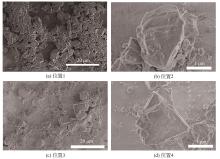
Fig.1
SEM photographs of simulated lunar dust morphology
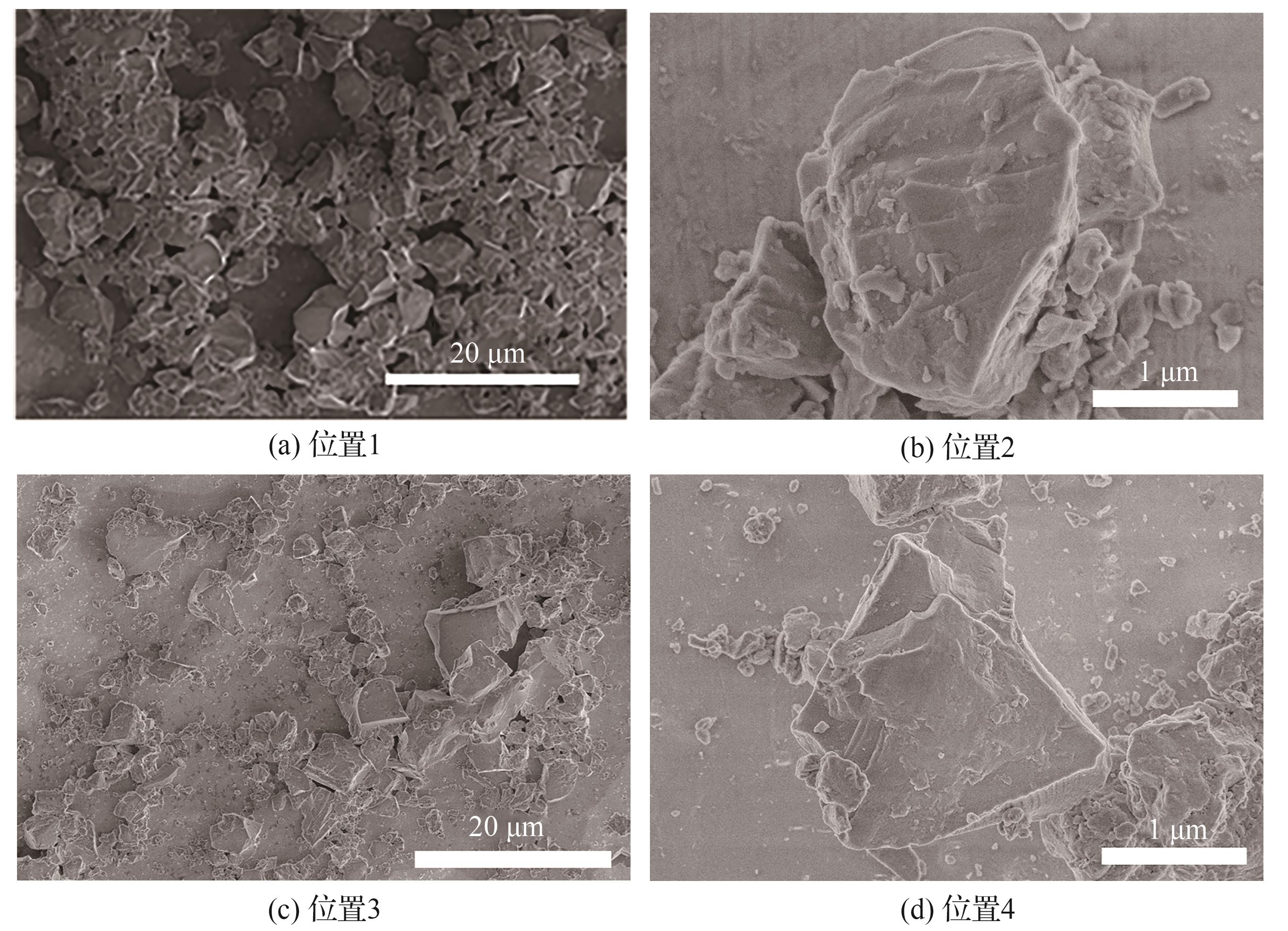
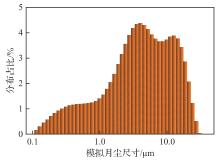
Fig.2
Simulated lunar dust particle size distribution
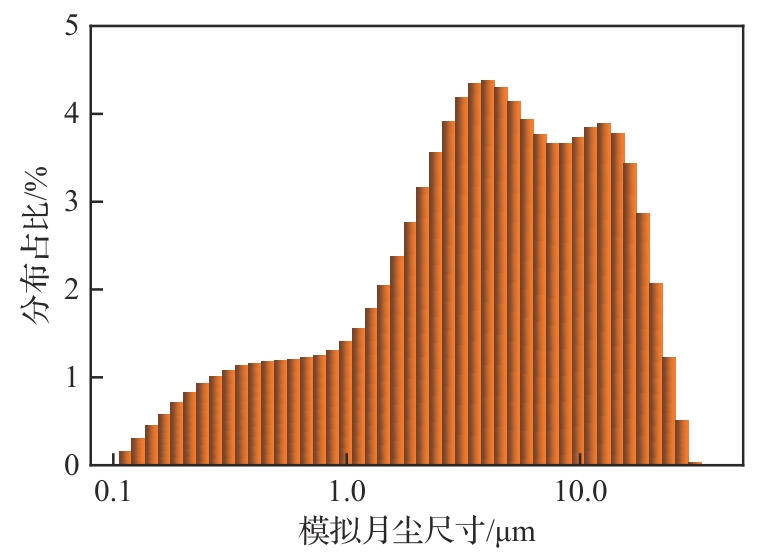

Table 1
Main components of simulated lunar dust and lunar dust
| 成分 | 含量/wt% | |
|---|---|---|
| 模拟月尘 | Apollo 14163[ | |
| Na2O | 4.2 | 0.71 |
| MgO | 5.5 | 8.00 |
| Al2O3 | 18.0 | 19.0 |
| SiO2 | 46.0 | 48.50 |
| K2O | 2.1 | 0.59 |
| CaO | 6.6 | 11.30 |
| TiO2 | 2.2 | 1.70 |
| MnO | 0.2 | 0.12 |
| Fe2O3 | 14.0 | 9.20 |
Fig.3
SEM photographs of particle probes adhered to lunar dust simulant
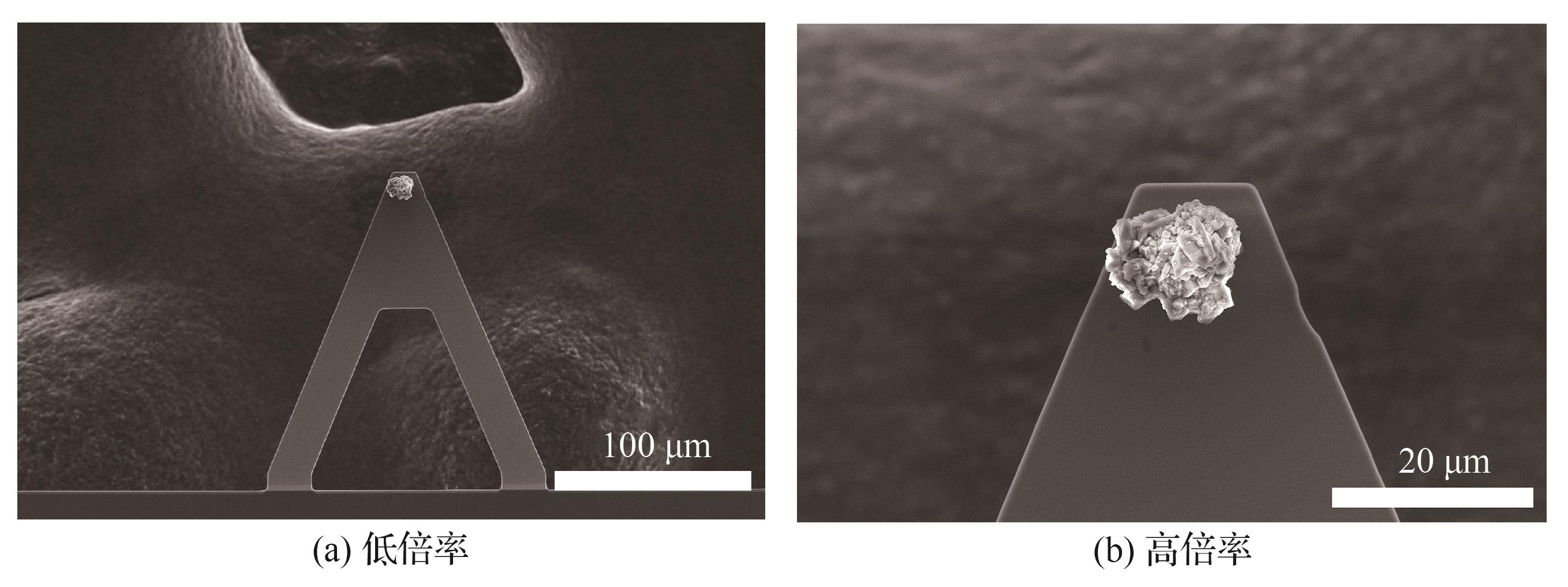
Fig.4
Illustration of simulated lunar dust adhesion equipment
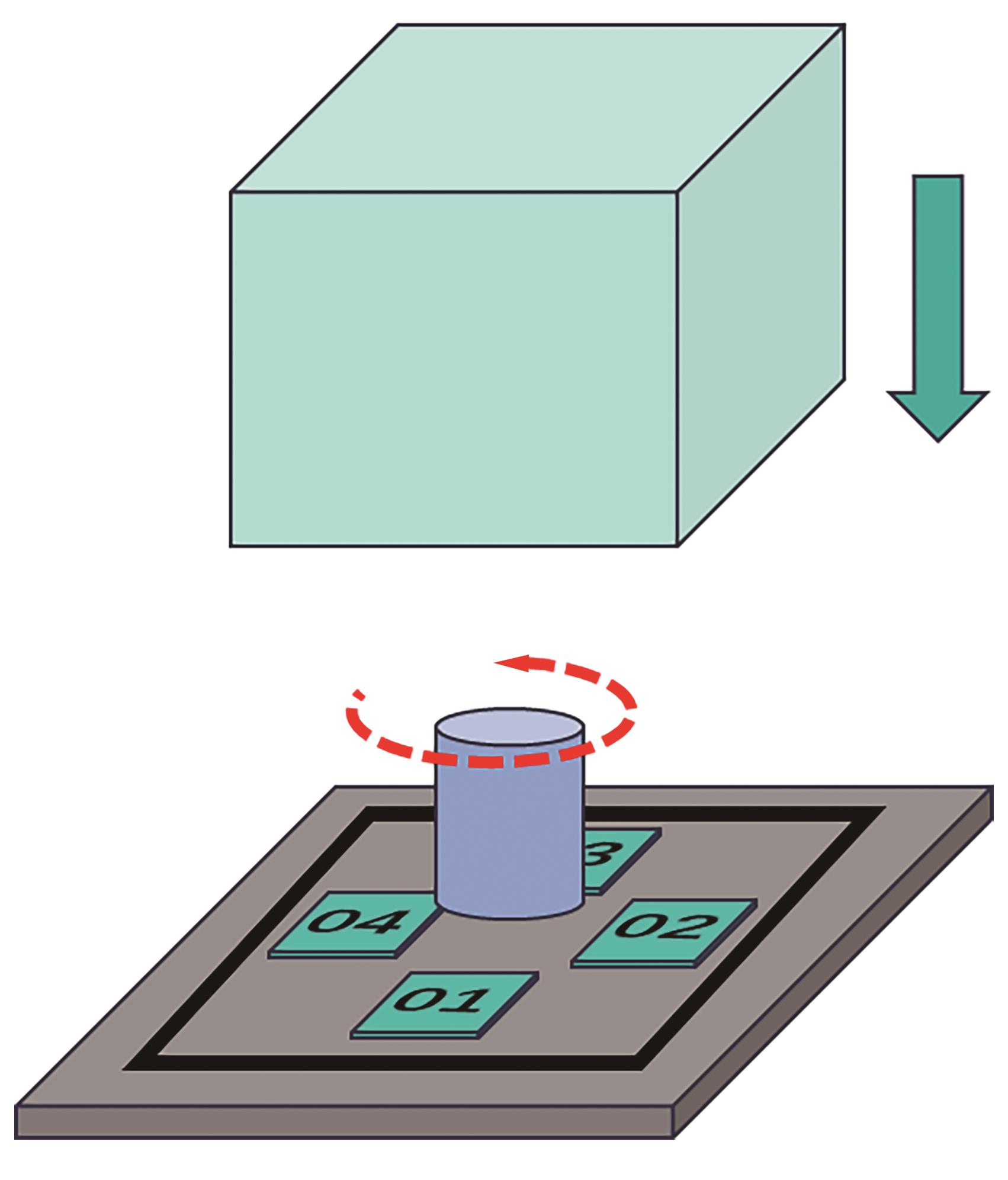
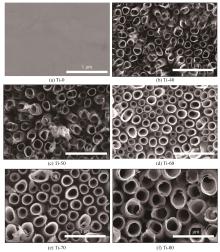
Fig.5
Surface morphology of nanotubes
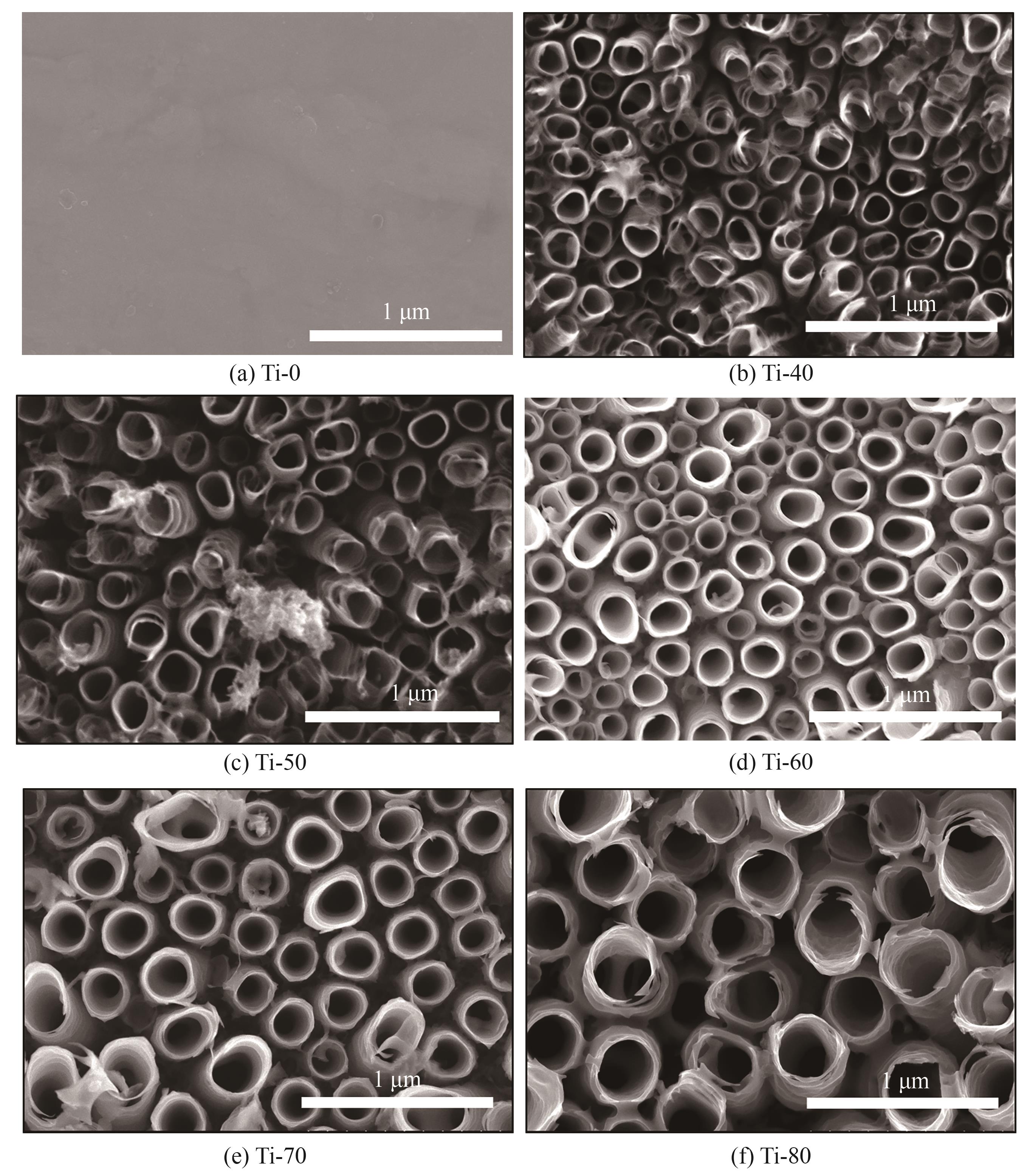
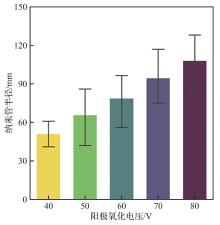
Fig.6
Relationship between radius of nanotubes and oxidation voltage
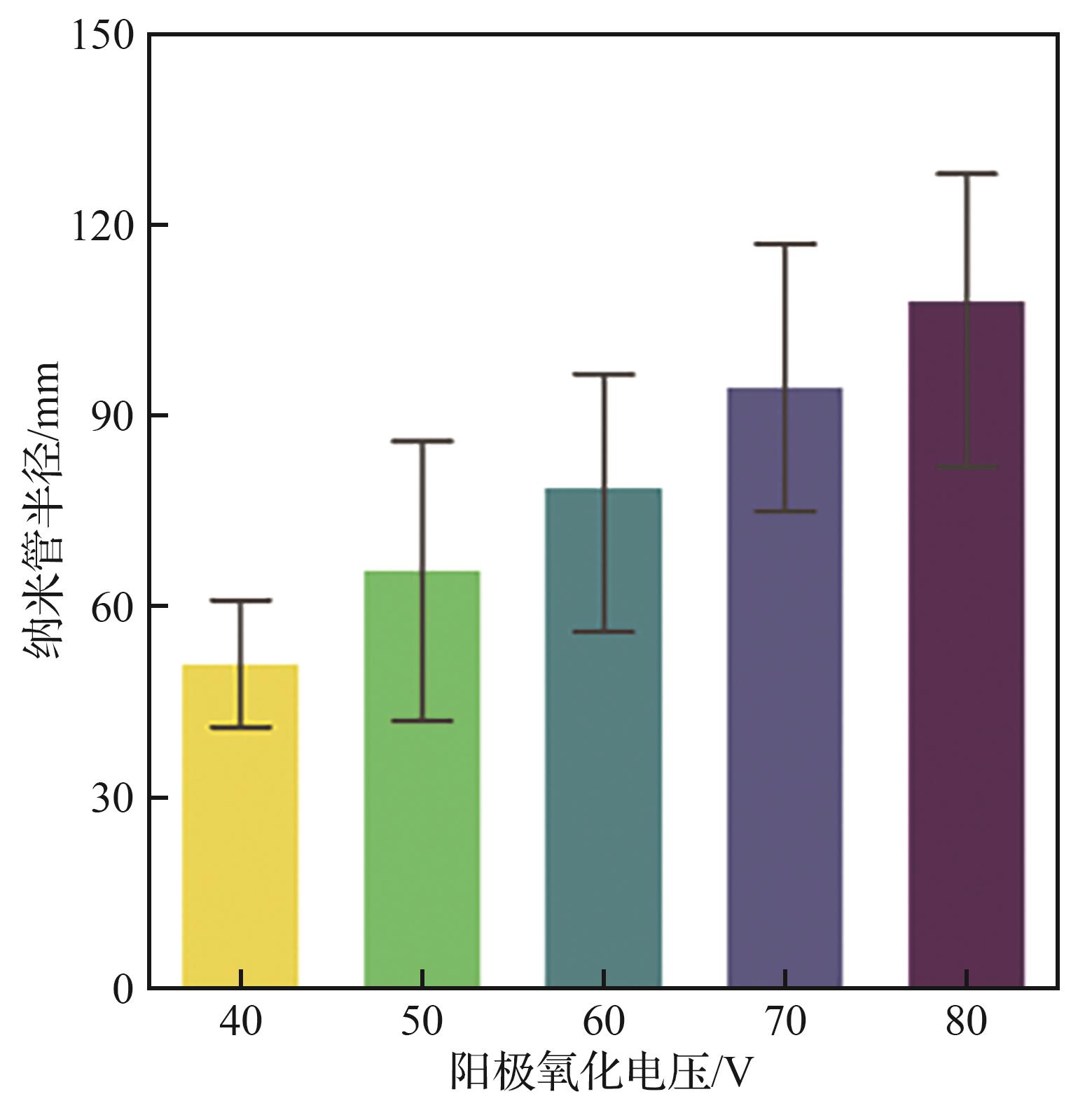
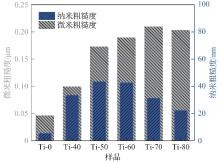
Fig.7
Micro-roughness and nano-roughness of titanium alloy surface
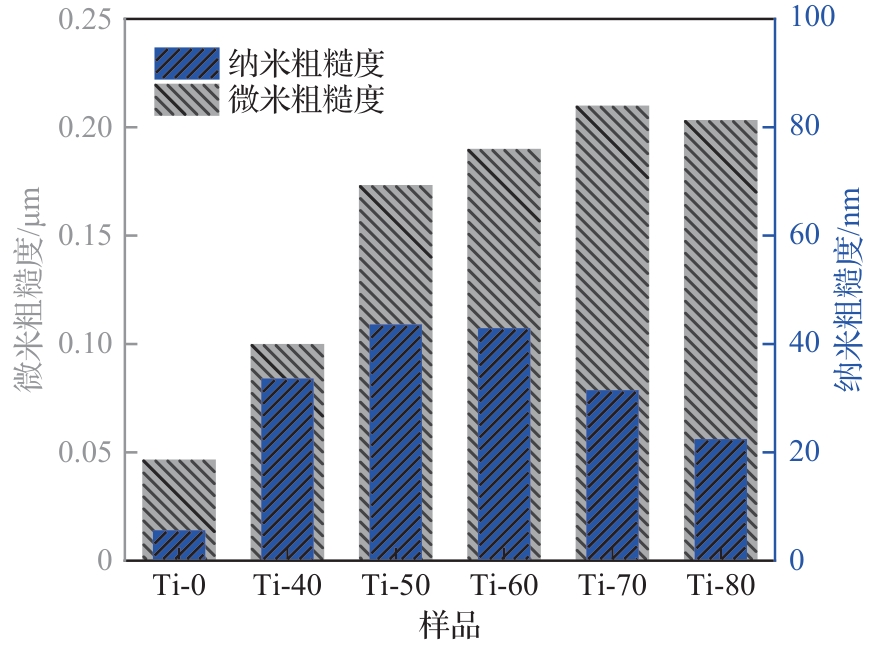
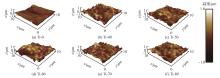
Fig.8
Surface AFM images of nanotube arrays
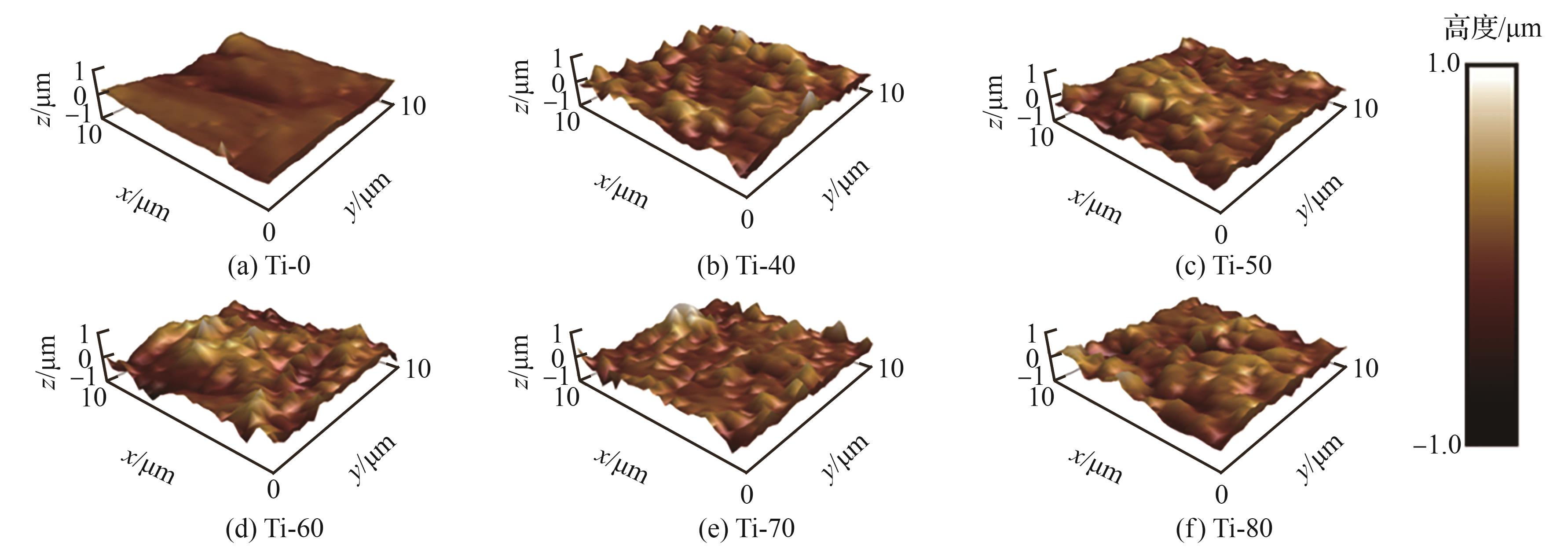
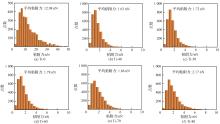
Fig.9
Adhesion force between titanium alloy surface and single lunar dust adhesion force between single lunar dust
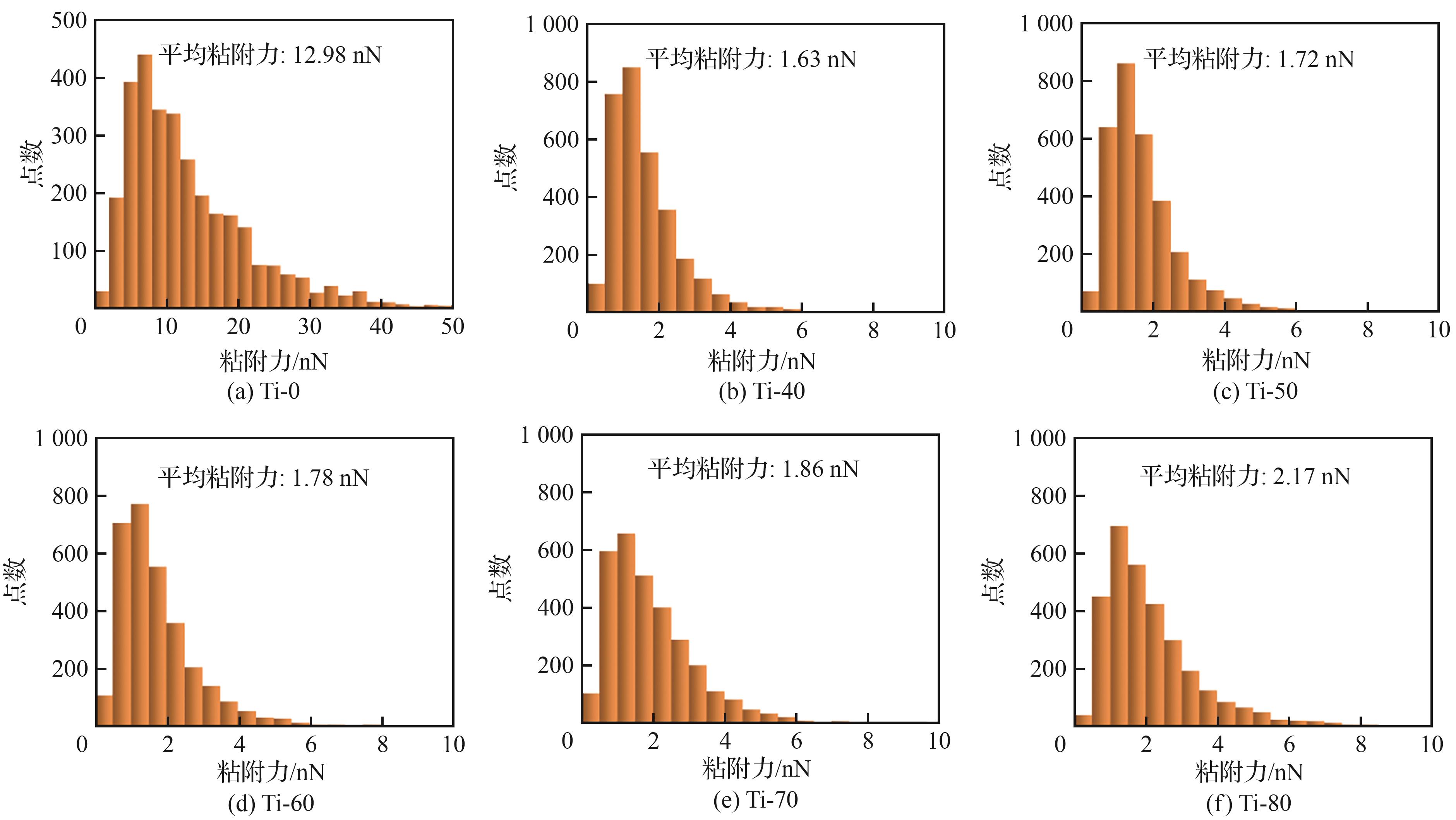
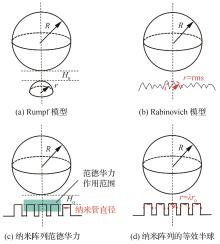
Fig.10
van der Waals force model diagrams
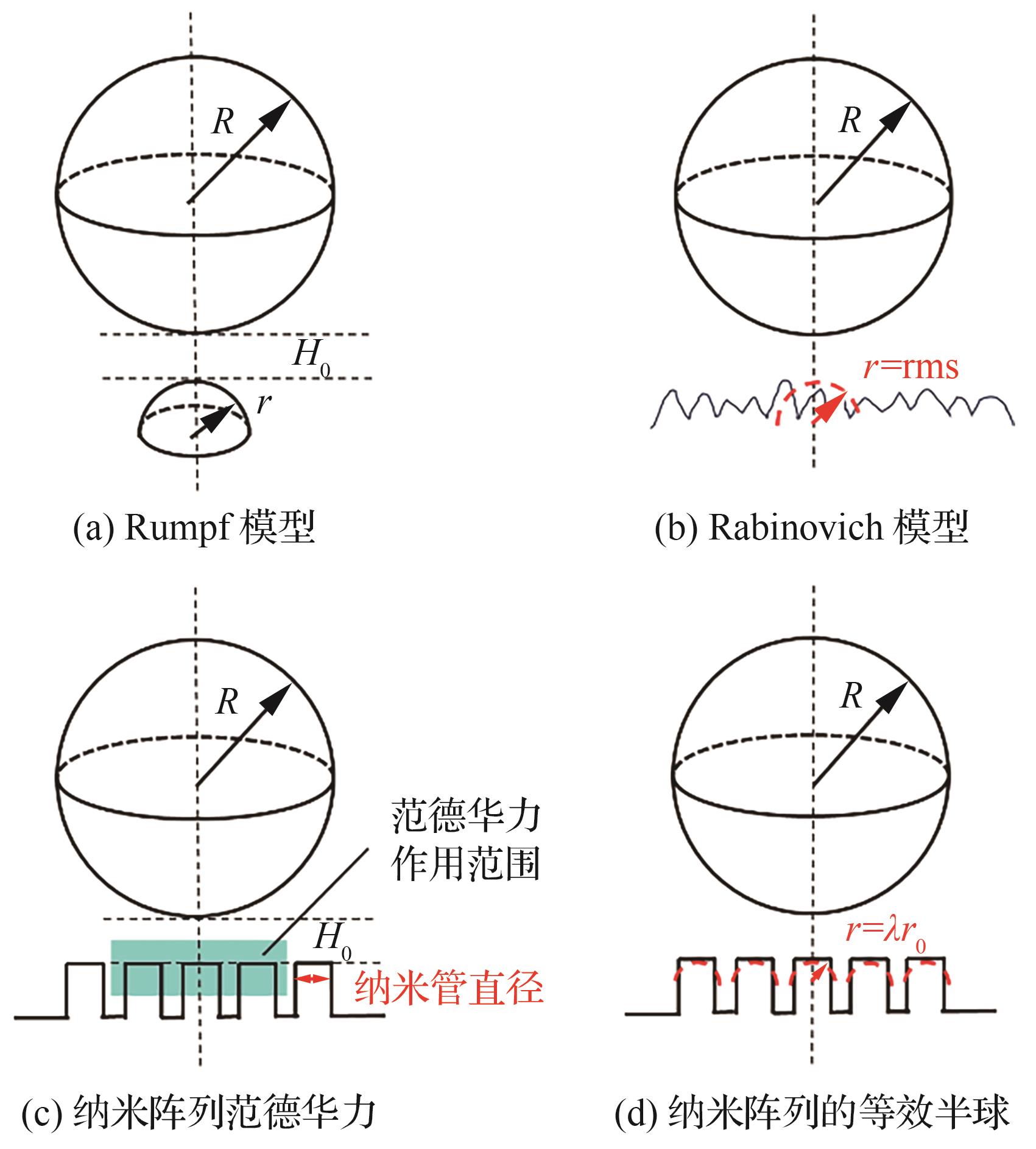
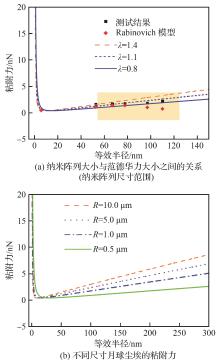
Fig.11
Relationship between van der Waals force and nanostructure, particle size
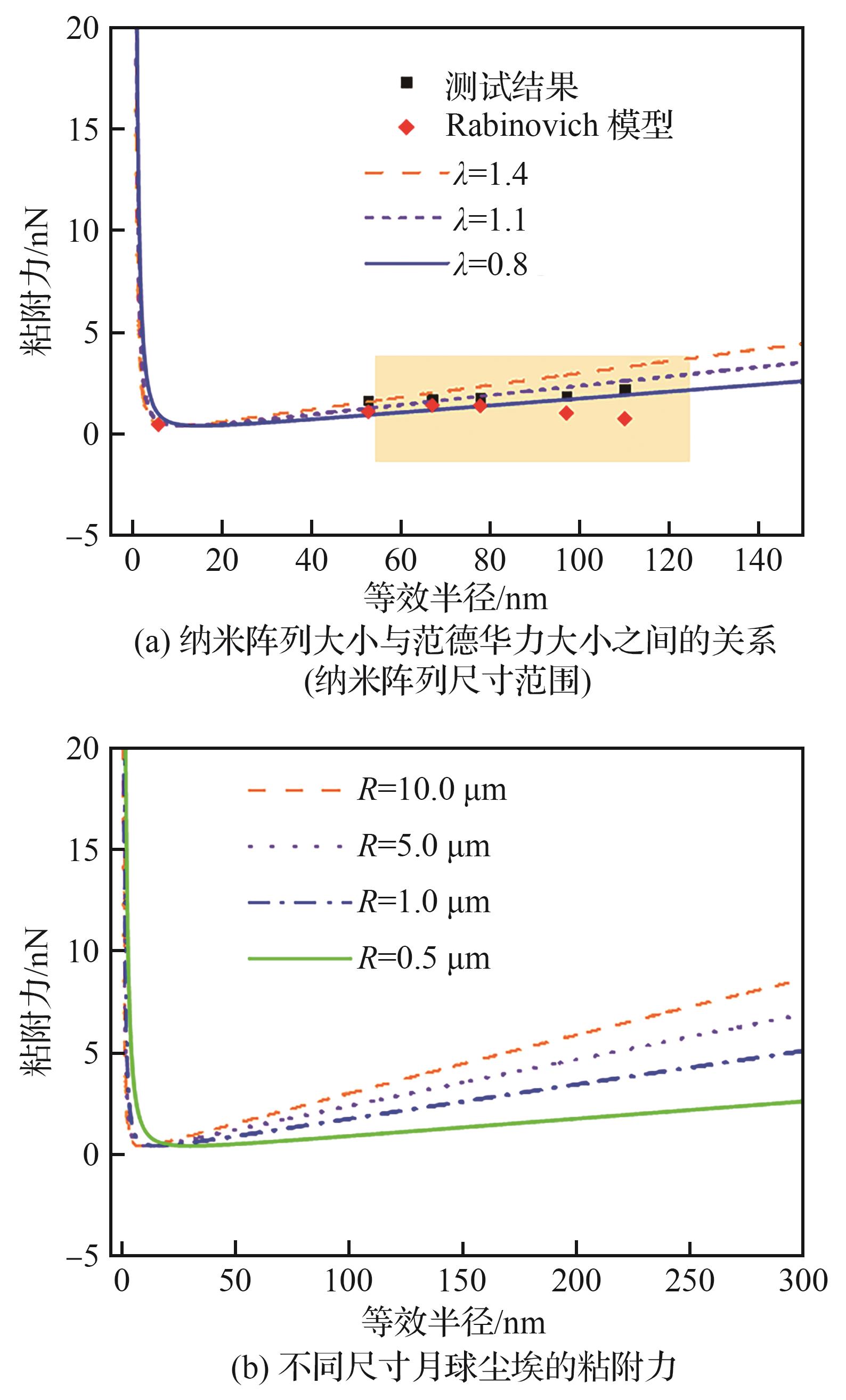
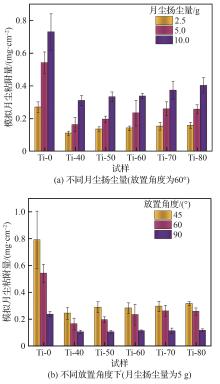
Fig.12
Amount of simulated lunar adhesion under different simulation conditions
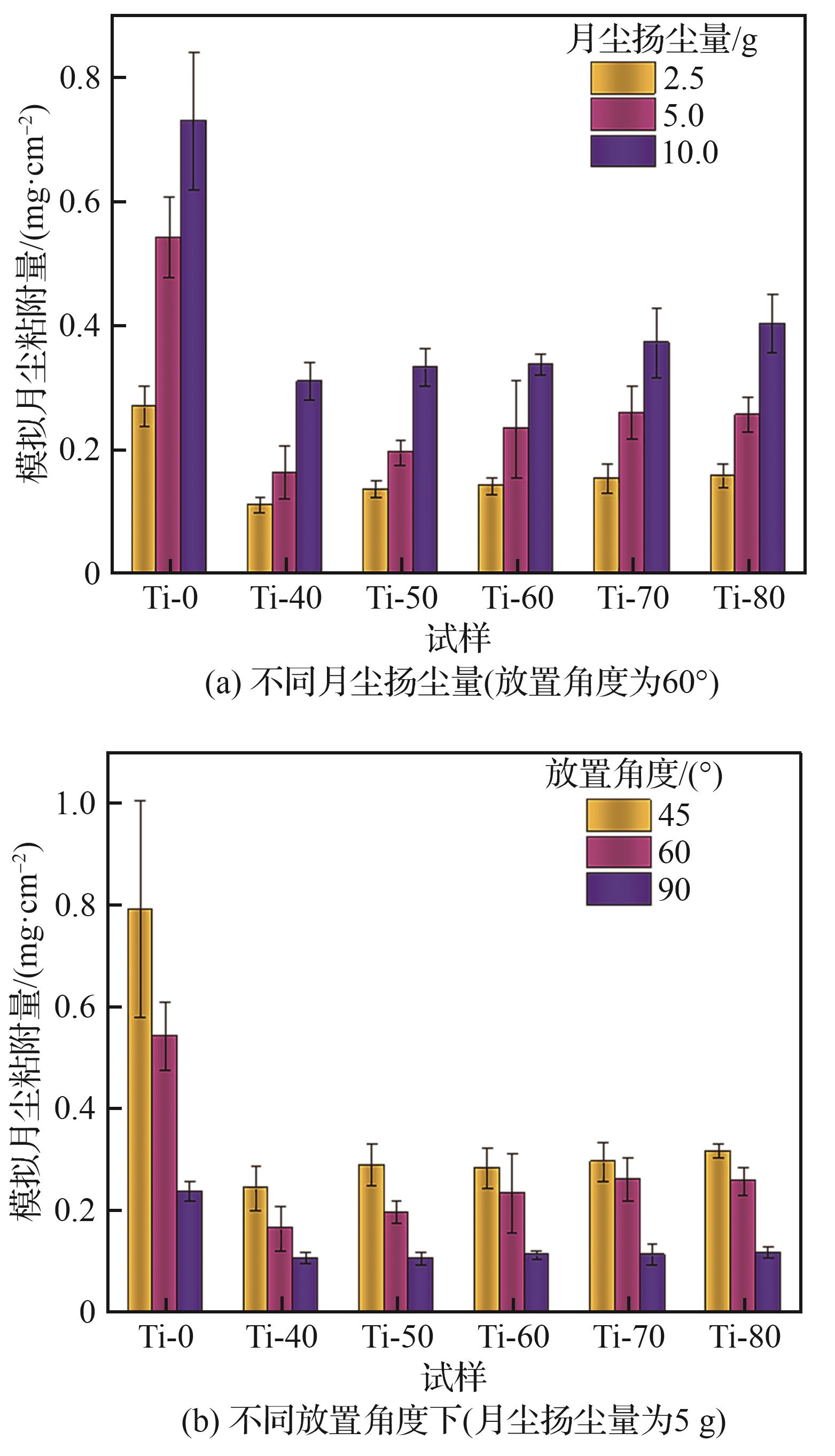
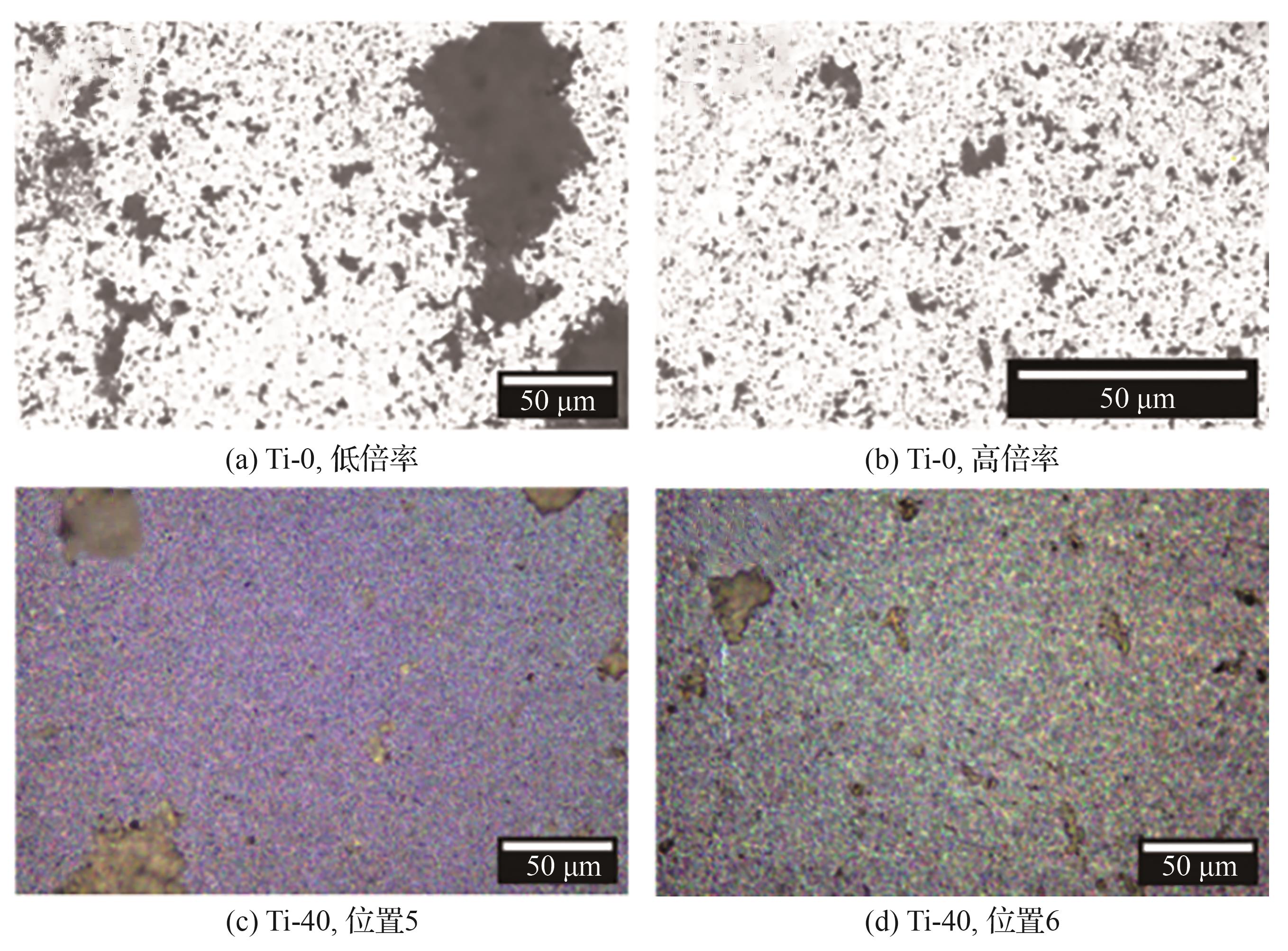
Fig.13
Optical images of simulated lunar dust on surfaces of Ti-0 and Ti-40
| [1] | GRÜN E, HORANYI M, STERNOVSKY Z. The lunar dust environment[J]. Planetary and Space Science, 2011, 59(14): 1672-1680. |
| [2] | GAIER J R. Interpretation of the Apollo 14 thermal degradation sample experiment[J]. Icarus, 2012, 221(1): 167-173. |
| [3] | ZHANG H Y, WANG Y, CHEN L P, et al. In-situ lunar dust deposition amount induced by lander landing in Chang’E-3 mission[J]. Science China Technological Sciences, 2020, 63(3): 520-527. |
| [4] | JIN H, LI X Y, WEI G F, et al. Properties of lunar dust and their migration on the moon[J]. Space: Science & Technology, 2024, 4: 142. |
| [5] | GOLUB’ A P, POPEL S I. On the fluxes of dust particles detected near the lunar surface by the Chang’e 3 lander[J]. Solar System Research, 2021, 55(5): 389-397. |
| [6] | LEMELLE L, ROUQUETTE S, MOTTIN E, et al. Passive limitation of surface contamination by perFluoroDecylTrichloroSilane coatings in the ISS during the MATISS experiments[J]. NPJ Microgravity, 2022, 8: 31. |
| [7] | POPEL S I, ZELENYI L M, GOLUB A P, et al. Lunar dust and dusty plasmas: Recent developments, advances, and unsolved problems[J]. Planetary and Space Science, 2018, 156: 71-84. |
| [8] | CAIN J R. Lunar dust: the hazard and astronaut exposure risks[J]. Earth, Moon, and Planets, 2010, 107(1): 107-125. |
| [9] | ZANON P, DUNN M, BROOKS G. Current Lunar dust mitigation techniques and future directions[J]. Acta Astronautica, 2023, 213: 627-644. |
| [10] | BRADDOCK M. Hazards of lunar regolith for respiratory, central nervous system, cardiovascular and ocular function[M]∥The Human Factor in the Settlement of the Moon. Cham: Springer International Publishing, 2021: 141-157. |
| [11] | CANNON K M, DREYER C B, SOWERS G F, et al. Working with lunar surface materials: Review and analysis of dust mitigation and regolith conveyance technologies[J]. Acta Astronautica, 2022, 196: 259-274. |
| [12] | BARKER D C, OLIVAS A, FARR B, et al. Adhesion of lunar simulant dust to materials under simulated lunar environment conditions[J]. Acta Astronautica, 2022, 199: 25-36. |
| [13] | LEE R G, WORTHY E S, WILLIS E M, et al. Development of a comprehensive physics-based model for study of NASA gateway lunar dust contamination[J]. Acta Astronautica, 2023, 210: 616-626. |
| [14] | JIANG J, LU Y F, ZHAO H Y, et al. Experiments on dust removal performance of a novel PLZT driven lunar dust mitigation technique[J]. Acta Astronautica, 2019, 165: 17-24. |
| [15] | HIRABAYASHI M, HARTZELL C M, BELLAN P M, et al. Electrostatic dust remediation for future exploration of the Moon[J]. Acta Astronautica, 2023, 207: 392-402. |
| [16] | FARR B, WANG X, GOREE J, et al. Improvement of the electron beam (e-beam) lunar dust mitigation technology with varying the beam incident angle[J]. Acta Astronautica, 2021, 188: 362-366. |
| [17] | DOVE A, DEVAUD G, WANG X, et al. Mitigation of lunar dust adhesion by surface modification[J]. Planetary and Space Science, 2011, 59(14): 1784-1790. |
| [18] | JIANG J, LU Y F, YAN X T, et al. An optimization dust-removing electrode design method aiming at improving dust mitigation efficiency in lunar exploration[J]. Acta Astronautica, 2020, 166: 59-68. |
| [19] | FARR B, WANG X, GOREE J, et al. Dust mitigation technology for lunar exploration utilizing an electron beam[J]. Acta Astronautica, 2020, 177: 405-409. |
| [20] | JIANG J, ZHAO H Y, WANG L, et al. Analysis of influence factors on dust removal efficiency for novel photovoltaic lunar dust removal technology[J]. Smart Materials and Structures, 2017, 26(12): 125025. |
| [21] | GAIER J, BERKEBILE S. Implication of adhesion studies for dust mitigation on thermal control surfaces[C]∥50th AIAA Aerospace Sciences Meeting Including the New Horizons Forum and Aerospace Exposition. Reston: AIAA, 2012: 875. |
| [22] | ZHANG H Y, WANG X, ZHANG J, et al. Adhesion effect analysis of ultra-fine lunar dust particles on the aluminum-based rough surface based on the fractal theory[J]. Advances in Space Research, 2022, 69(7): 2745-2755. |
| [23] | ZHANG G L, HUANG J D, WANG L S, et al. Design and fabrication of dust removal nanoarray structure on the surface of solar cell glass cover[J]. Journal of Science: Advanced Materials and Devices, 2023, 8(2): 100545. |
| [24] | WANG X, WANG W D, SHAO H, et al. Lunar dust-mitigation behavior of aluminum surfaces with multiscale roughness prepared by a composite etching method[J]. ACS Applied Materials & Interfaces, 2022, 14(29): 34020-34028. |
| [25] | LEE S S, MICKLOW L, TUNELL A, et al. Engineering large-area antidust surfaces by harnessing interparticle forces[J]. ACS Applied Materials & Interfaces, 2023, 15(10): 13678-13688. |
| [26] | ZHANG J W, WANG W Q, ZHOU S X, et al. Transparent dust removal coatings for solar cell on Mars and its Anti-dust mechanism[J]. Progress in Organic Coatings, 2019, 134: 312-322. |
| [27] | ALIJANI M, SOPHA H, NG S, et al. High aspect ratio TiO2 nanotube layers obtained in a very short anodization time[J]. Electrochimica Acta, 2021, 376: 138080. |
| [28] | ROY P, BERGER S, SCHMUKI P. TiO2 nanotubes: synthesis and applications[J]. Angewandte Chemie International Edition, 2011, 50(13): 2904-2939. |
| [29] | PODDAR S, BIT A, SINHA S K. A study on influence of anodization on the morphology of titania nanotubes over Ti6Al4V alloy in correlation to hard tissue engineering application[J]. Materials Chemistry and Physics, 2020, 254: 123457. |
| [30] | KIM D, GHICOV A, SCHMUKI P. TiO2 nanotube arrays: Elimination of disordered top layers (“nanograss”) for improved photoconversion efficiency in dye-sensitized solar cells[J]. Electrochemistry Communications, 2008, 10(12): 1835-1838. |
| [31] | LIU Y, PARK J, HILL E, et al. Morphology and physical characteristics of Apollo 17 dust particles[C]∥Earth & Space 2006. American Society of Civil Engineers, 2006: 1-6. |
| [32] | PENG M, HAN X, XIAO G Z, et al. Spherical volume elements scheme for calculating van der Waals force between irregular particles and rough surfaces[J]. Chinese Journal of Physics, 2021, 72: 645-654. |
| [33] | PEILLON S, AUTRICQUE A, REDOLFI M, et al. Adhesion of tungsten particles on rough tungsten surfaces using Atomic Force Microscopy[J]. Journal of Aerosol Science, 2019, 137: 105431. |
| [34] | HASEGAWA M, LIU J C, OKUDA K, et al. Calculation of the fractal dimensions of machined surface profiles. [J] Wear 1996, 192(1-2): 40-45. |
| [1] | YANG Huanping, ZHUANG Wei, WANG Yaomian, YAN Wenbin. Influence of severe plastic deformation on thermal oxidation of titanium alloys [J]. ACTA AERONAUTICAET ASTRONAUTICA SINICA, 2021, 42(9): 424656-424656. |
| [2] | DING Wenfeng, XI Xinxin, ZHAN Jinghua, XU Jiuhua, FU Yucan, SU Honghua. Research status and future development of grinding technology of titanium materials for aero-engines [J]. ACTA AERONAUTICAET ASTRONAUTICA SINICA, 2019, 40(6): 22763-022763. |
| [3] | LUO Bin, ZHANG Kaifu, LI Yuan, CHENG Hui, LIU Shunuan. Influence of stiffness on thrust force and exit burr in drilling titanium plates [J]. ACTA AERONAUTICAET ASTRONAUTICA SINICA, 2016, 37(7): 2321-2330. |
| [4] | GUO Lianggang, YANG He, DI Weijia, CHEN Fulong, ZHU Shuai. Filling rules in thin-walled and ribbed conical ring rolling for TC4 titanium alloy [J]. ACTA AERONAUTICAET ASTRONAUTICA SINICA, 2015, 36(8): 2798-2806. |
| [5] | WU Xinchen, CHEN Minghe, XIE Lansheng, ZHANG Tielei, HU Zhihua. Twist-bend forming of aeroengine titanium TC4 wide-chord hollow fan blade with complex geometries [J]. ACTA AERONAUTICAET ASTRONAUTICA SINICA, 2015, 36(6): 2055-2063. |
| [6] | LIU Zhidong, YIN Chunjing, QIU Mingbo, TIAN Zongjun. Titanium alloy controllable melting and explosion efficient turning induced by EDM [J]. ACTA AERONAUTICAET ASTRONAUTICA SINICA, 2015, 36(3): 995-1001. |
| [7] | LIU Jianhua, YANG Kang, YU Mei, LI Songmei, WU Liang, YU Xiumei. Preparation, Characterization and Fatigue Performance of Anodic Oxide Film on Titanium Alloy TC18 in Sodium Tartrate Electrolyte [J]. ACTA AERONAUTICAET ASTRONAUTICA SINICA, 2014, 35(3): 902-910. |
| [8] | ZHU Shuai, YANG He, GUO Lianggang, DI Weijia, FAN Yu. Simulation of Microstructure Evolution During the Whole Process of Radial-axial Rolling of TA15 Titanium Alloy Ring [J]. ACTA AERONAUTICAET ASTRONAUTICA SINICA, 2014, 35(11): 3145-3155. |
| [9] | CHEN Yan, YANG Shubao, FU Yucan, XU Jiuhua, SU Honghua. FEM Estimation of Tool Wear in High Speed Cutting of Ti6Al4V Alloy [J]. ACTA AERONAUTICAET ASTRONAUTICA SINICA, 2013, 34(9): 2230-2240. |
| [10] | HE Qingshan, FU Yucan, XU Hongjun, MA Ke, CHEN Chen. Development of Annular Heat Pipe Grinding Wheel for High Efficiency Machining of TC4 Titanium Alloy [J]. ACTA AERONAUTICAET ASTRONAUTICA SINICA, 2013, 34(7): 1740-1747. |
| [11] | GUO Lianggang, CHEN Jianhua, YANG He, GU Ruijie. Response Rules of Strain and Temperature Fields to Roll Sizes During Hot Rolling Process of TC4 Titanium Alloy Conical Ring [J]. ACTA AERONAUTICAET ASTRONAUTICA SINICA, 2013, 34(6): 1463-1473. |
| [12] | CHEN Longhai, LIU Zhidong, QIU Mingbo, TIAN Zongjun, YIN Chunjing. Technical Research of Combined Machining of TC4 Titanium Alloy by EDM Induced Controllable Combustion and Turning Dressing [J]. ACTA AERONAUTICAET ASTRONAUTICA SINICA, 2013, 34(11): 2626-2634. |
| [13] | WANG Xiangzhi, LIU Zhidong, XUE Rongyuan, TIAN Zongjun, HUANG Yinhui. Research on Self-mixed Oxygen in Discharge Gap to Improve the Processing Characteristics of Titanium Alloy Electrical Discharge Machining [J]. ACTA AERONAUTICAET ASTRONAUTICA SINICA, 2013, 34(10): 2419-2426. |
| [14] | HANG Chao, YANG Guang, LI Yulong, YU Qifeng, GUO Yazhou. Application of Digital Image Correction Method to Test of Mechanical Properties for Weld Materials [J]. ACTA AERONAUTICAET ASTRONAUTICA SINICA, 2013, 34(10): 2372-2382. |
| [15] | WANG Yaoqi, HOU Hongliang, SUN Zhonggang. Plastic Effect of Hydrogenated Ti-6Al-4V Alloy and Its Application [J]. ACTA AERONAUTICAET ASTRONAUTICA SINICA, 2011, 32(8): 1563-1568. |
| Viewed | ||||||
|
Full text |
|
|||||
|
Abstract |
|
|||||
Address: No.238, Baiyan Buiding, Beisihuan Zhonglu Road, Haidian District, Beijing, China
Postal code : 100083
E-mail:hkxb@buaa.edu.cn
Total visits: 6658907 Today visits: 1341All copyright © editorial office of Chinese Journal of Aeronautics
All copyright © editorial office of Chinese Journal of Aeronautics
Total visits: 6658907 Today visits: 1341

 CJA
CJA
