Acta Aeronautica et Astronautica Sinica ›› 2025, Vol. 46 ›› Issue (12): 131430.doi: 10.7527/S1000-6893.2024.31430
• Fluid Mechanics and Flight Mechanics • Previous Articles
Yifeng ZHANG1, Xinguang WANG1, Leitao GUO2, Yang XU2, Qi CHEN1( )
)
Received:2024-10-22
Revised:2024-11-21
Accepted:2024-12-09
Online:2024-12-25
Published:2024-12-23
Contact:
Qi CHEN
E-mail:chenqi@mail.ustc.edu.cn
Supported by:CLC Number:
Yifeng ZHANG, Xinguang WANG, Leitao GUO, Yang XU, Qi CHEN. Measurement and analysis of influence of high-speed boundary layer transition on dynamic aerodynamic characteristics of sharp cone[J]. Acta Aeronautica et Astronautica Sinica, 2025, 46(12): 131430.
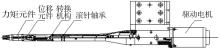
Fig.1
Forced vibration test device
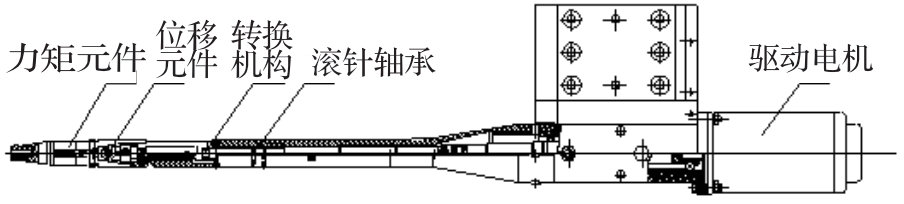
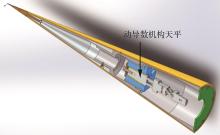
Fig.2
Internal structure of wind tunnel test model
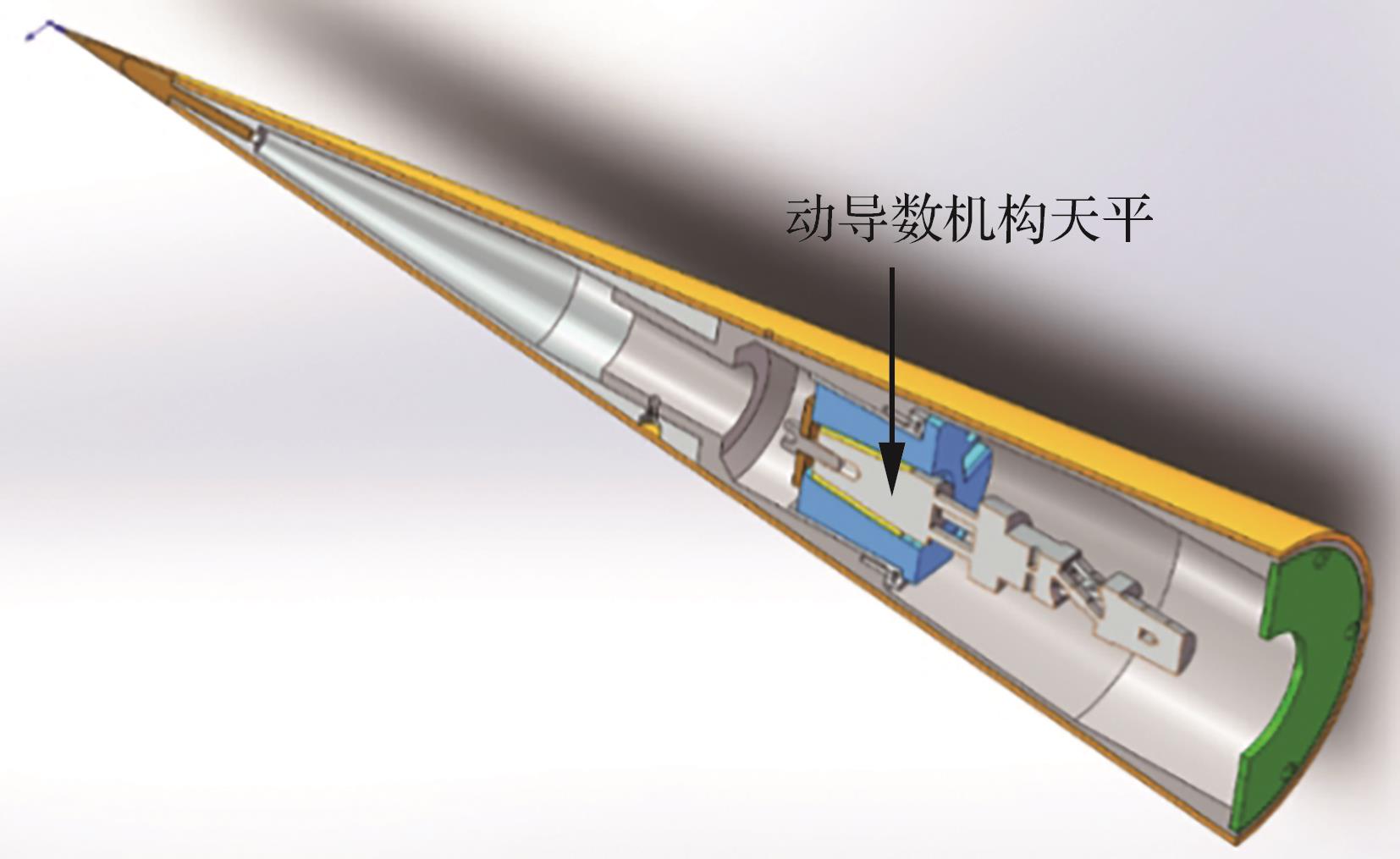
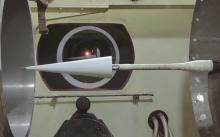
Fig.3
Installation photograph of wind tunnel model
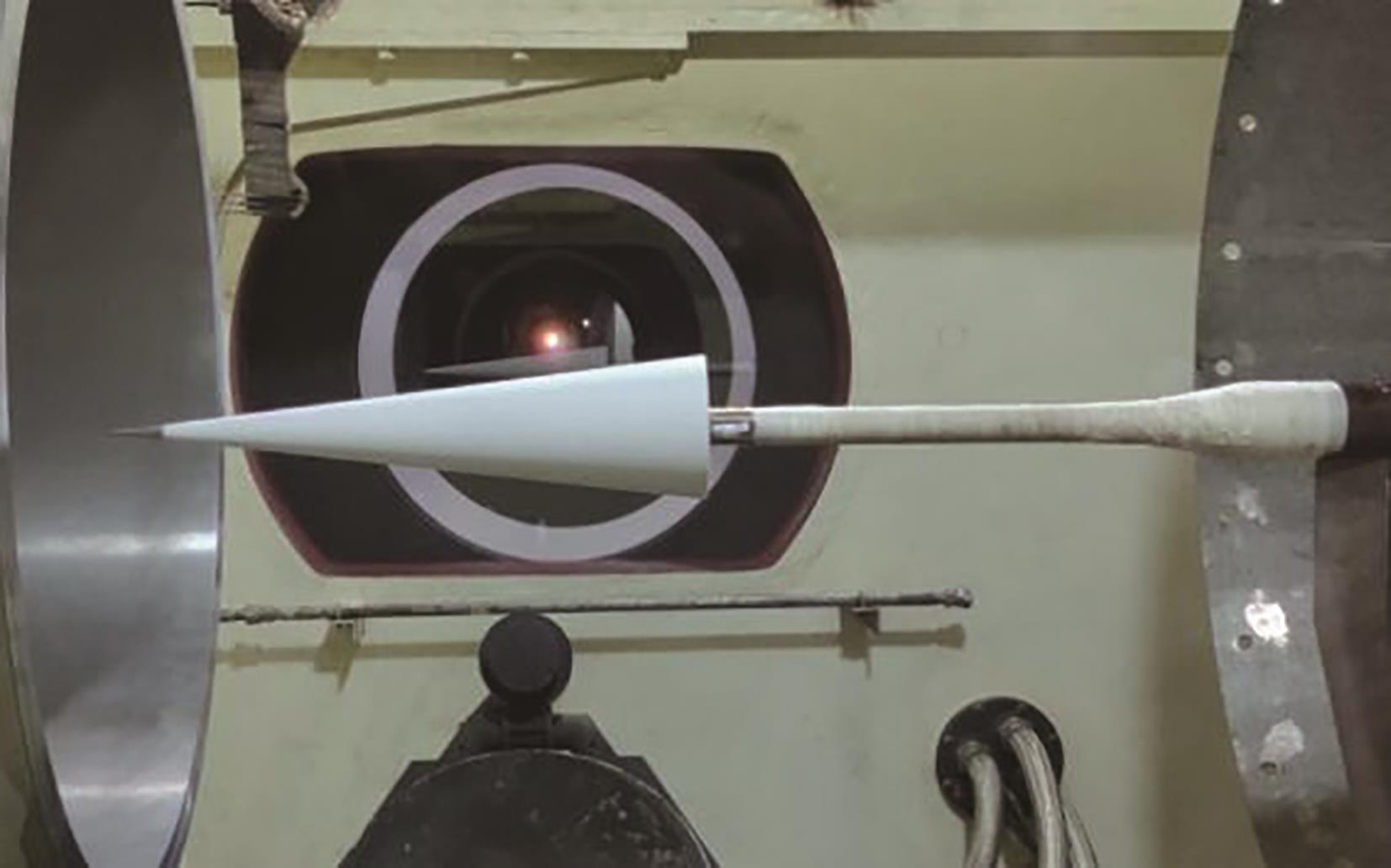
Table 1
Test conditions
| 项目 | Ma | Re∞ /(107 m-1) | α/(°) | f/Hz | K | 研究内容 |
|---|---|---|---|---|---|---|
| 1 | 6 | 1.45 | 0 | 2~8 | 0.001 96~0.007 86 | 频率影响 |
| 2 | 6 | 0.50~3.00 | 0 | 2 | 0.001 96 | 雷诺数影响 |
| 3 | 6 | 1.50 | 0~6 | 2 | 0.001 96 | 攻角影响 |
Table 2
Aerodynamic derivative (repetitive test)
| 试验序号 | Ma | Re∞ /(107 m-1) | α/(°) | Cma | |
|---|---|---|---|---|---|
| No.230374 | 6 | 1.0 | 2 | -0.255 7 | -3.959 2 |
| No.230391 | 6 | 1.0 | 2 | -0.259 8 | -3.400 7 |
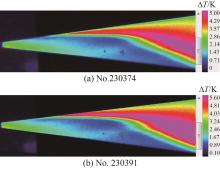
Fig.4
Comparison of temperature increment on sharp cone surface
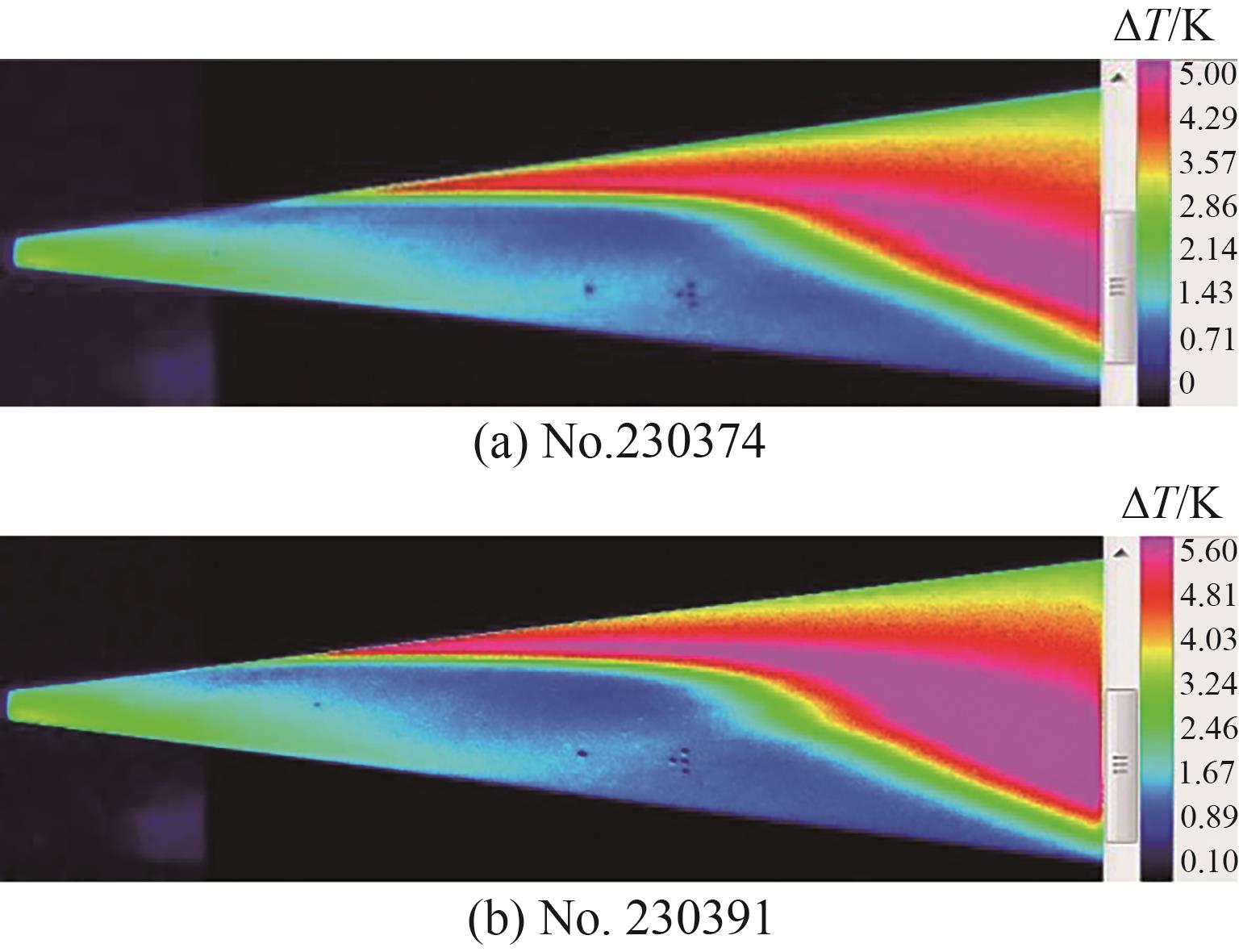
Table 3
Aerodynamic derivative (frequency variation)
| Ma | Re∞ /(107 m-1) | α /(°) | f /Hz | Cma | |
|---|---|---|---|---|---|
| 6 | 1.0 | 4 | 2 | -0.238 5 | -4.327 3 |
| 6 | 1.0 | 4 | 4 | -0.258 2 | -4.303 5 |
| 6 | 1.0 | 4 | 8 | -0.267 2 | -4.277 9 |
Fig.5
Variation of surface temperature increment of sharp cone with Reynolds number (static state α=0°)
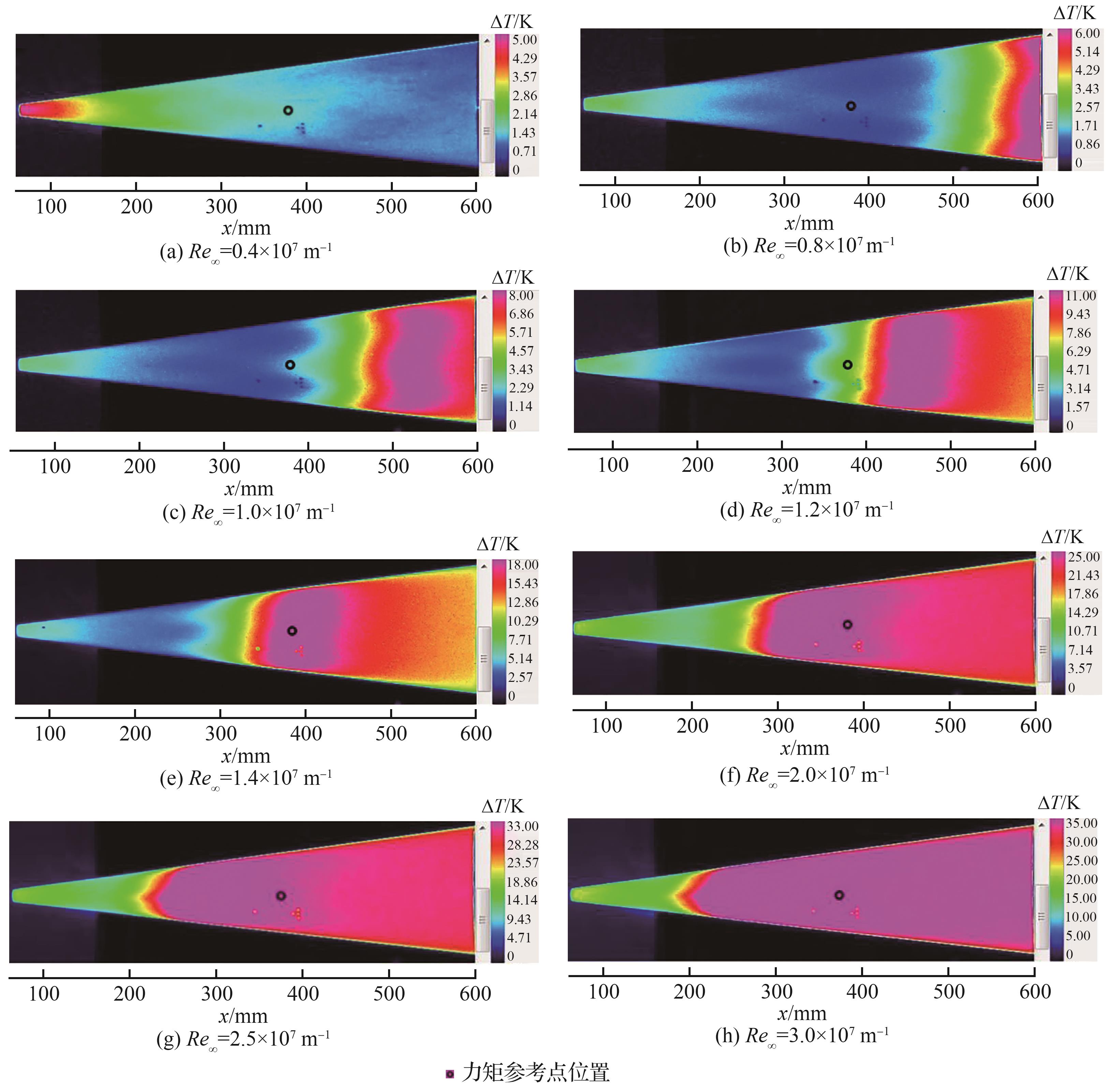
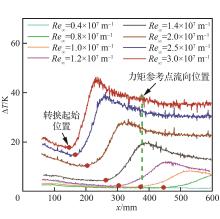
Fig.6
Variation of surface temperature increment along flow direction
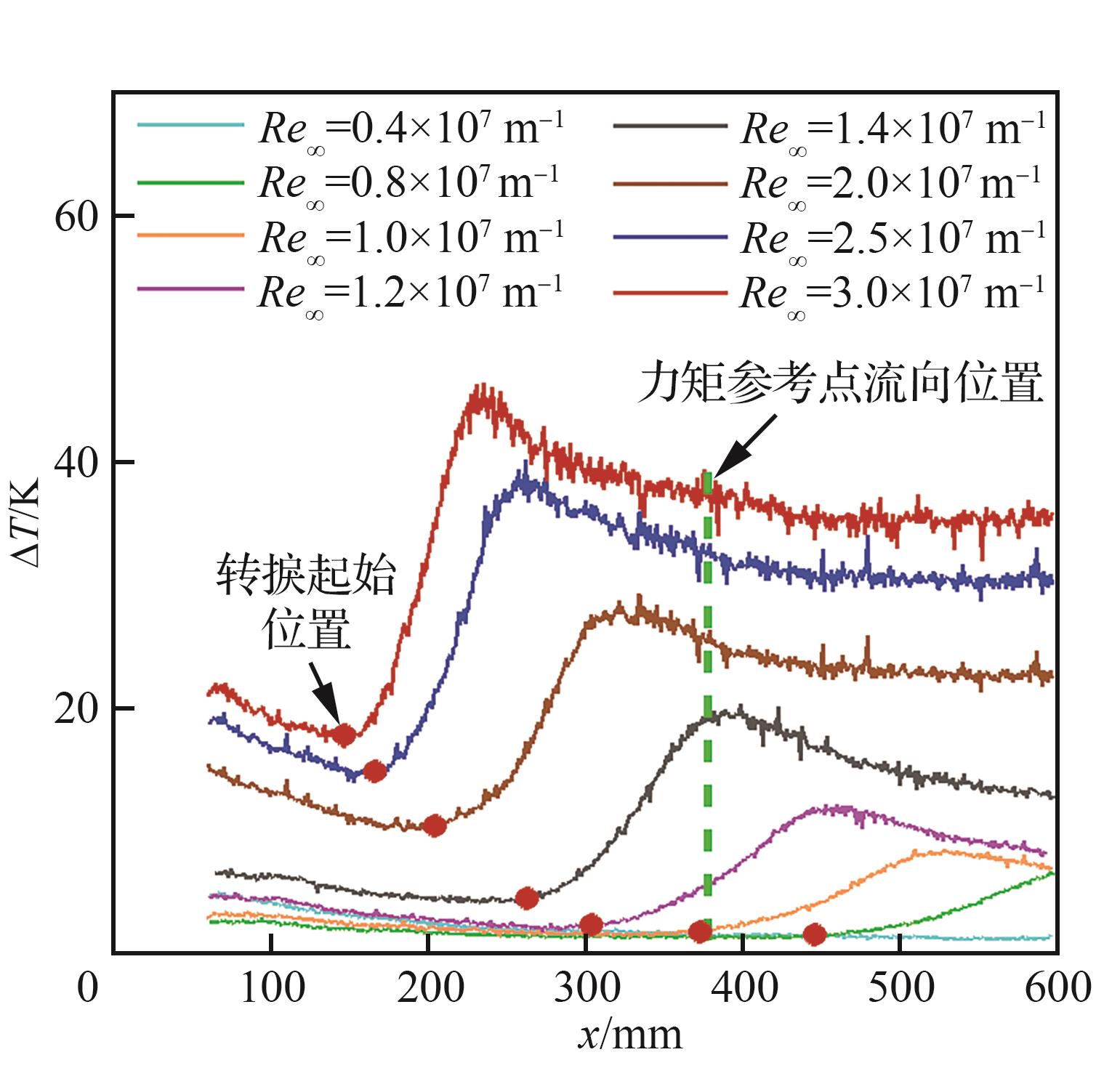
Fig.7
Variation of surface temperature increment of sharp cone with Reynolds number (dynamic state α=1°)
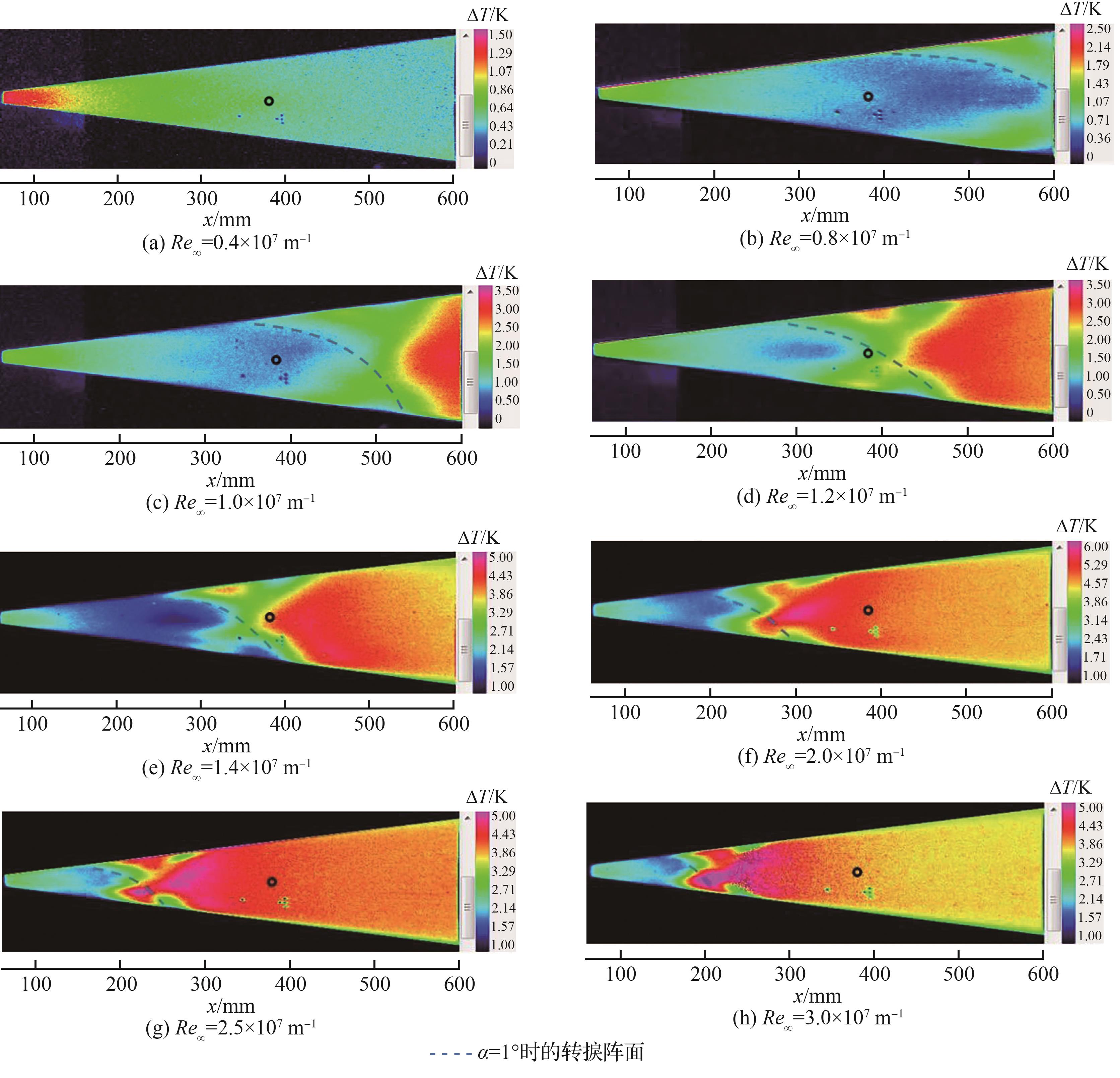
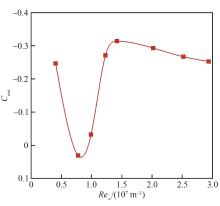
Fig.8
Variation of static derivative of pitching moment with Reynolds number
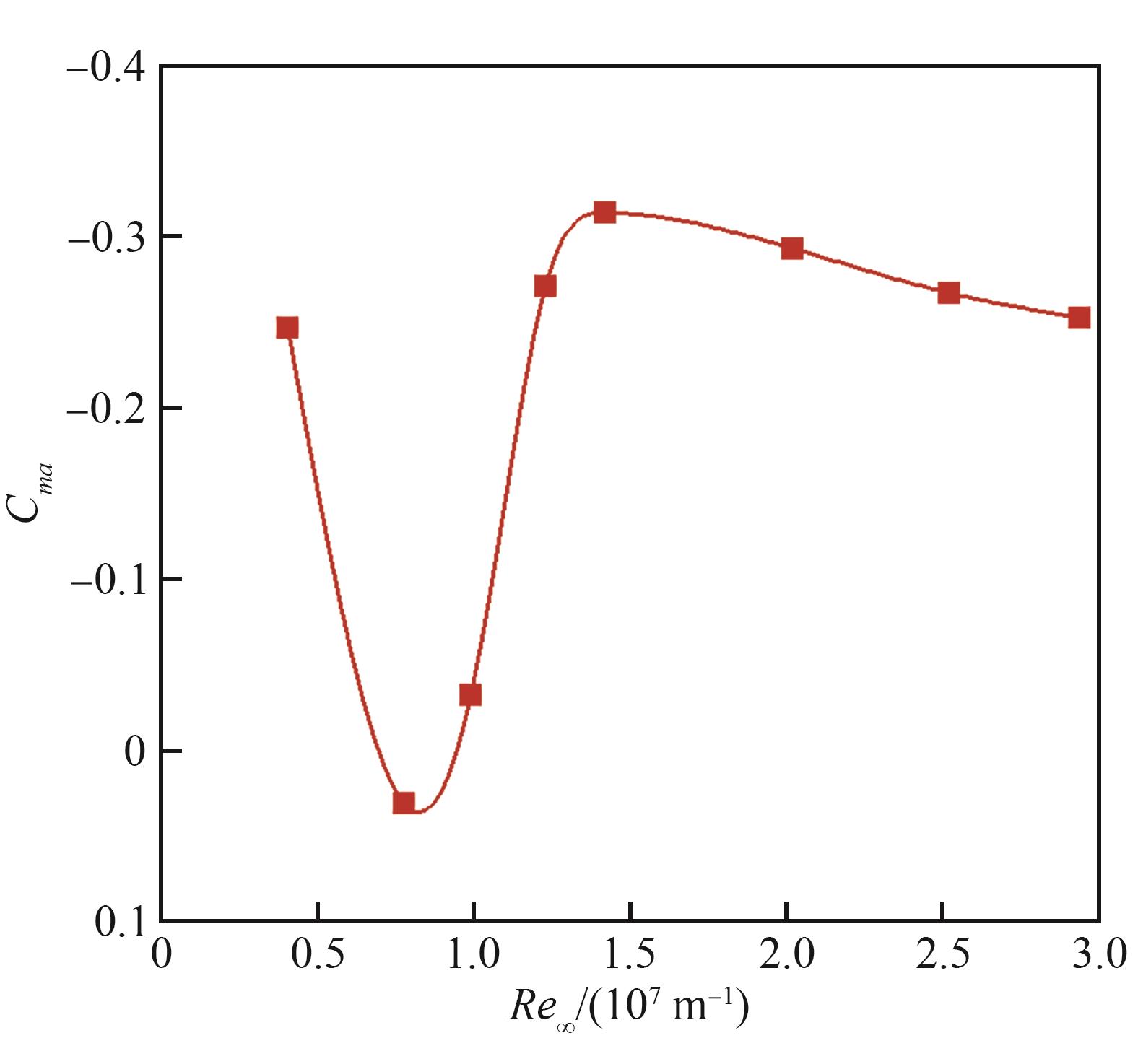
Table 4
Aerodynamic derivative (Reynolds number variation)
| Ma | Re∞ /(107 m-1) | Cma /rad-1 | |
|---|---|---|---|
| 6 | 0.4 | -0.247 2 | -3.656 2 |
| 6 | 0.8 | 0.031 3 | -7.581 6 |
| 6 | 1.0 | -0.032 3 | -6.334 4 |
| 6 | 1.2 | -0.271 6 | -3.127 1 |
| 6 | 1.4 | -0.314 4 | -2.023 2 |
| 6 | 2.0 | -0.293 3 | -2.941 6 |
| 6 | 2.5 | -0.267 5 | -2.893 6 |
| 6 | 3.0 | -0.252 9 | -3.254 6 |
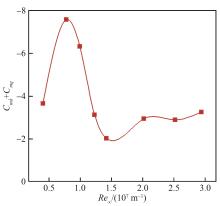
Fig.9
Variation of dynamic derivative of pitching moment with Reynolds number
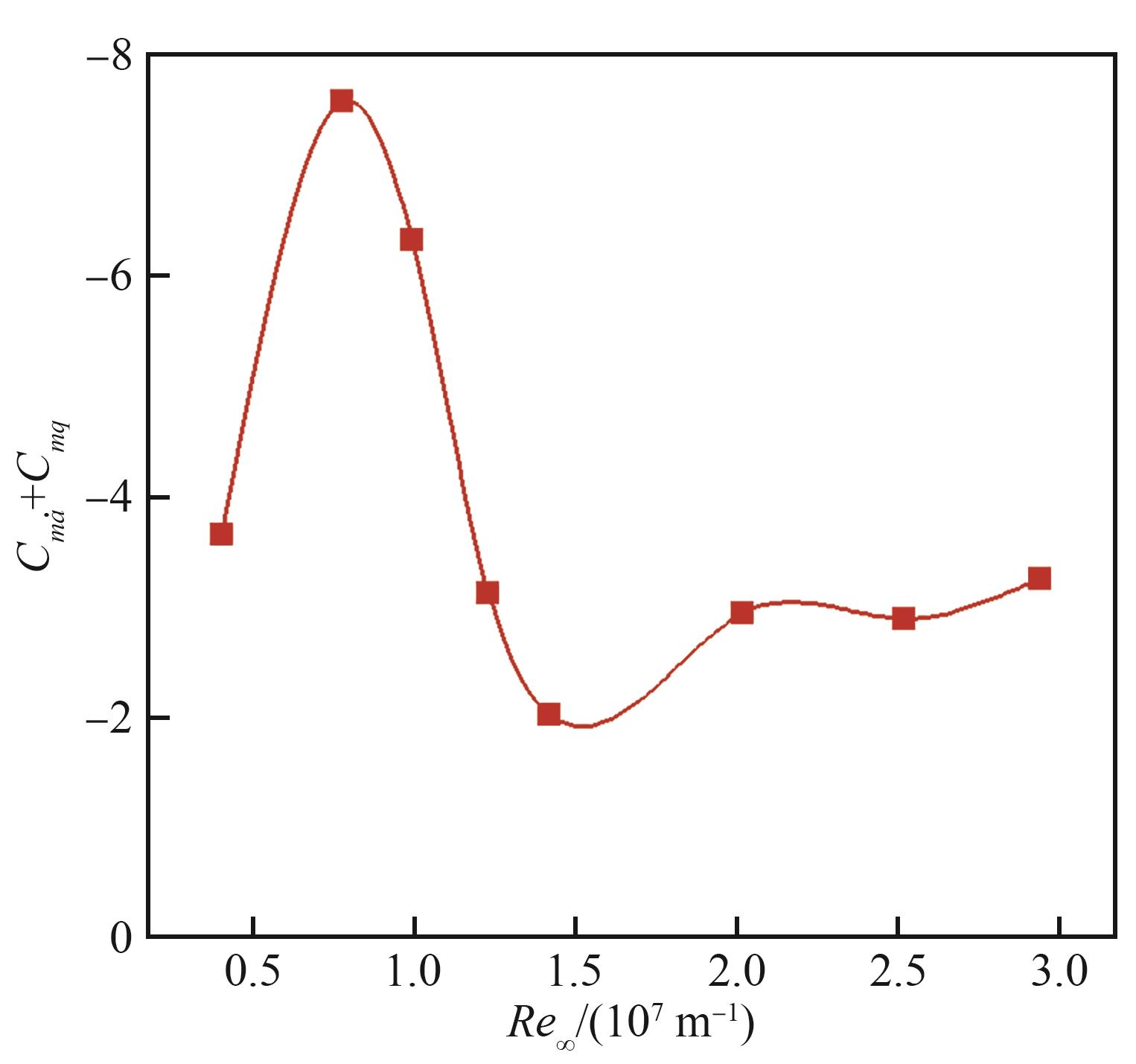
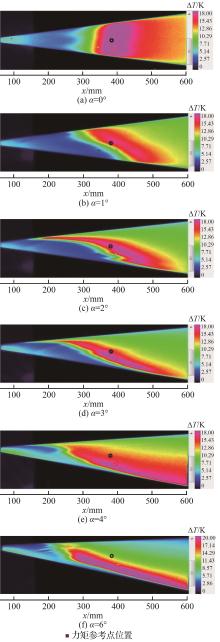
Fig.10
Variation of surface temperature increment of sharp cone with attack angle
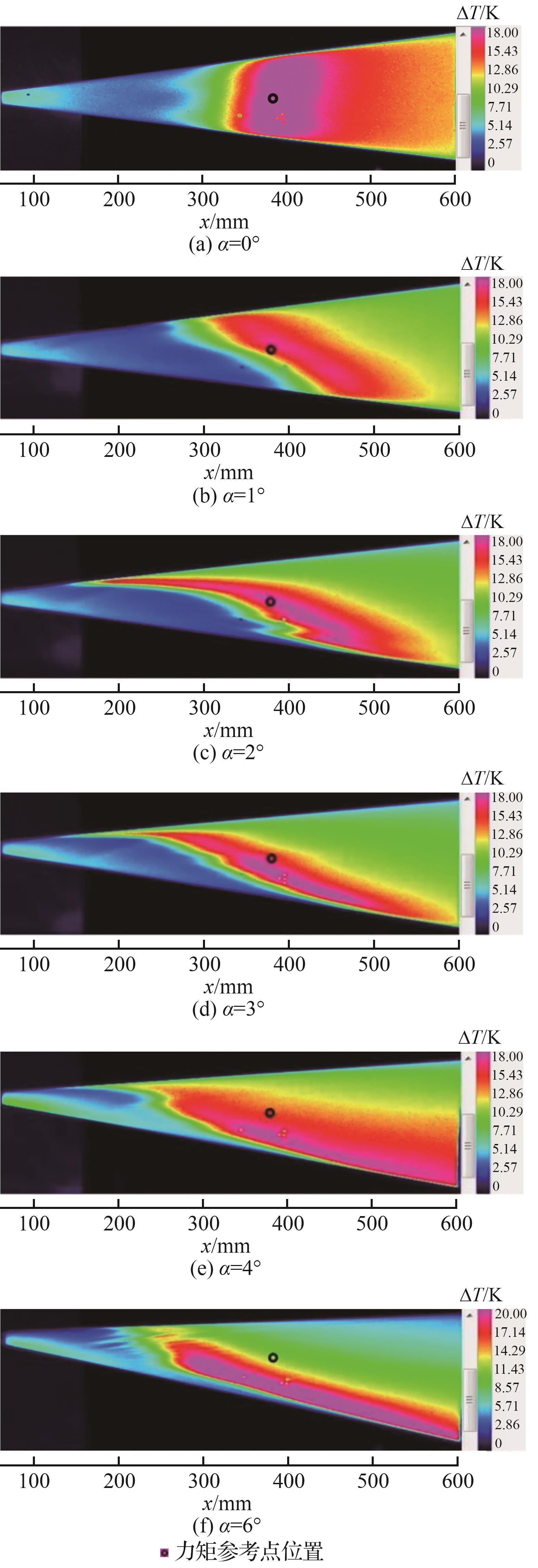
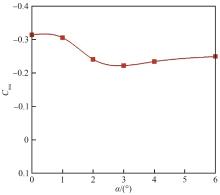
Fig.11
Variation of static derivative of pitching moment with attack angle
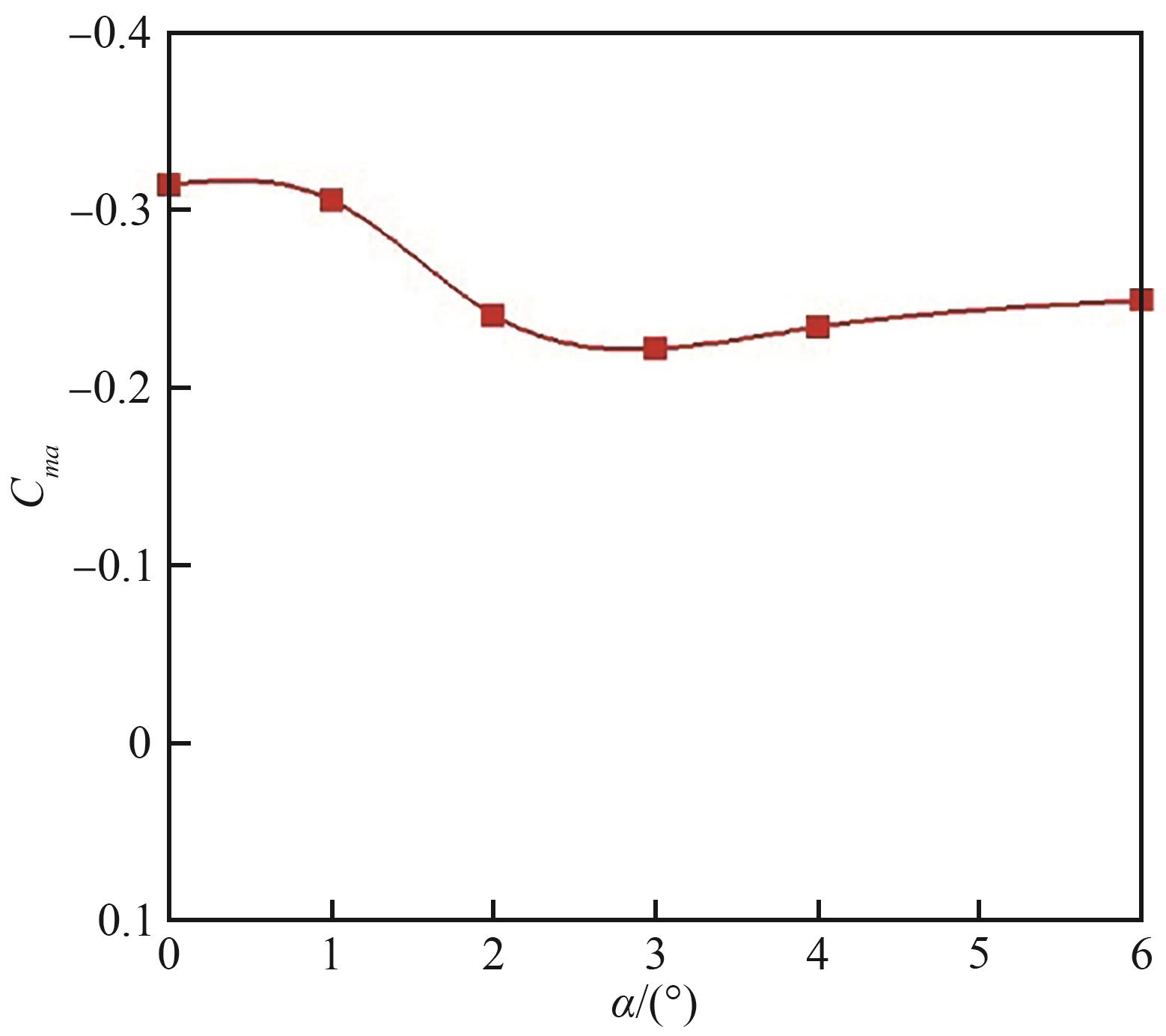
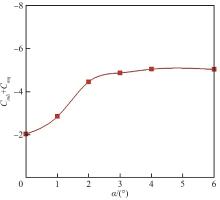
Fig.12
Variation of dynamic derivative of pitching moment with attack angle
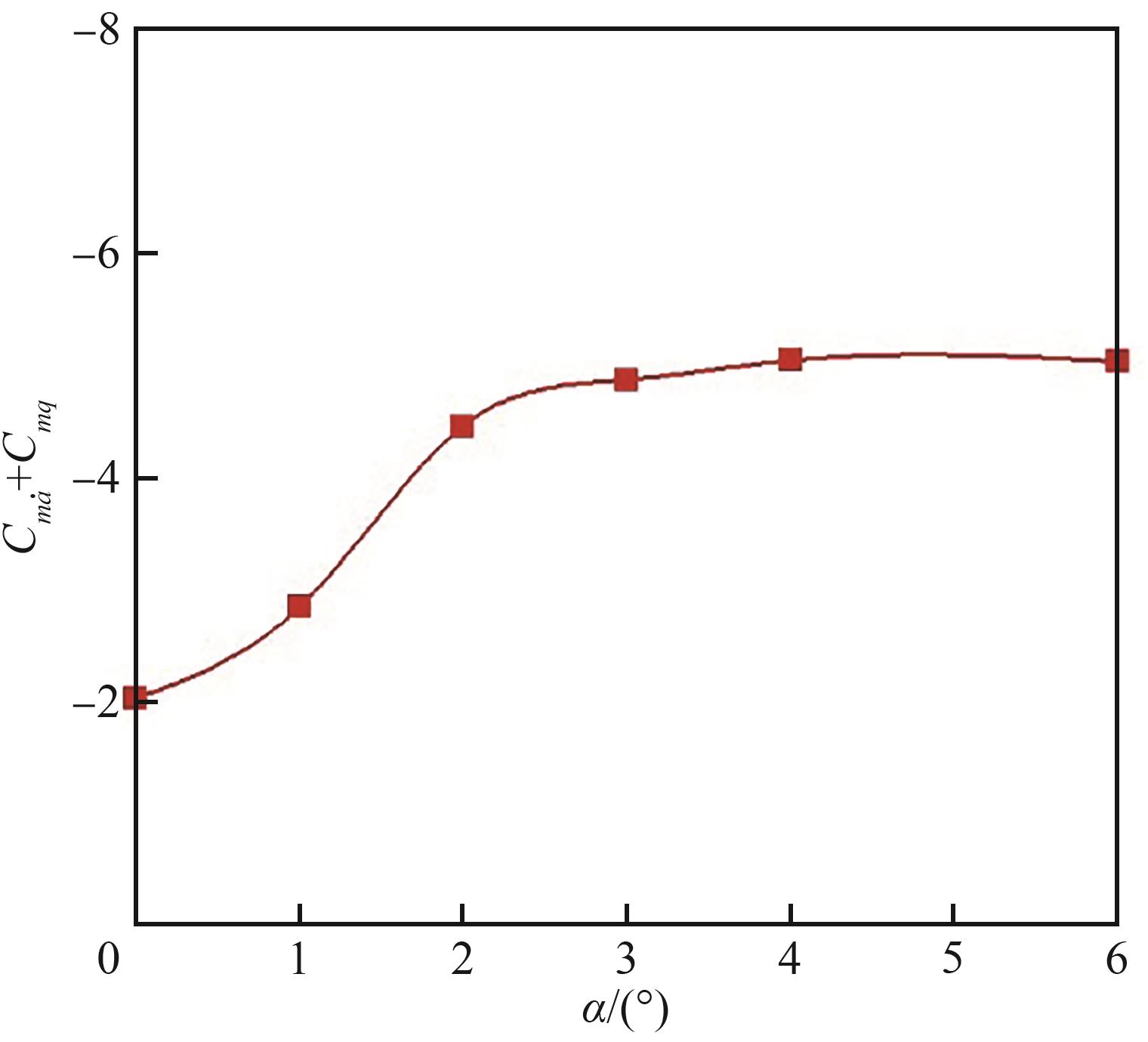
Table 5
Aerodynamic derivatives (attack angle variation)
| Ma | α/(°) | Cma /rad-1 | |
|---|---|---|---|
| 6 | 0 | -0.314 4 | -2.023 2 |
| 6 | 1 | -0.305 5 | -2.837 2 |
| 6 | 2 | -0.240 6 | -4.451 1 |
| 6 | 3 | -0.222 0 | -4.866 2 |
| 6 | 4 | -0.234 1 | -5.037 9 |
| 6 | 6 | -0.249 1 | -5.029 0 |
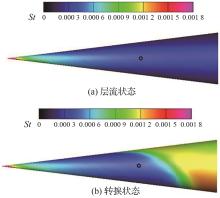
Fig.13
Heat flux distribution on sharp cone surface
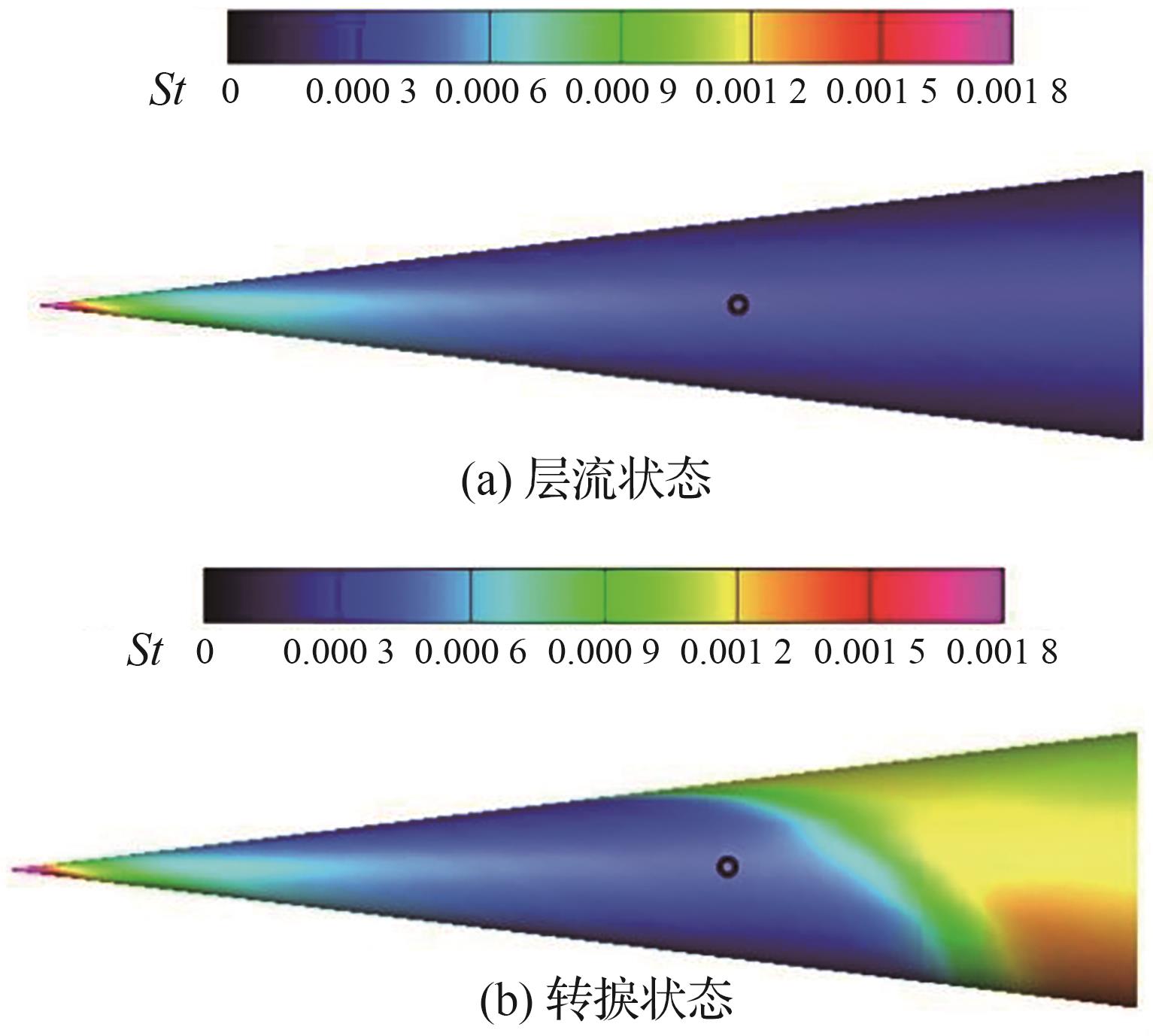
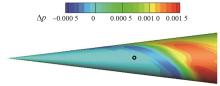
Fig.14
Distribution of surface pressure difference
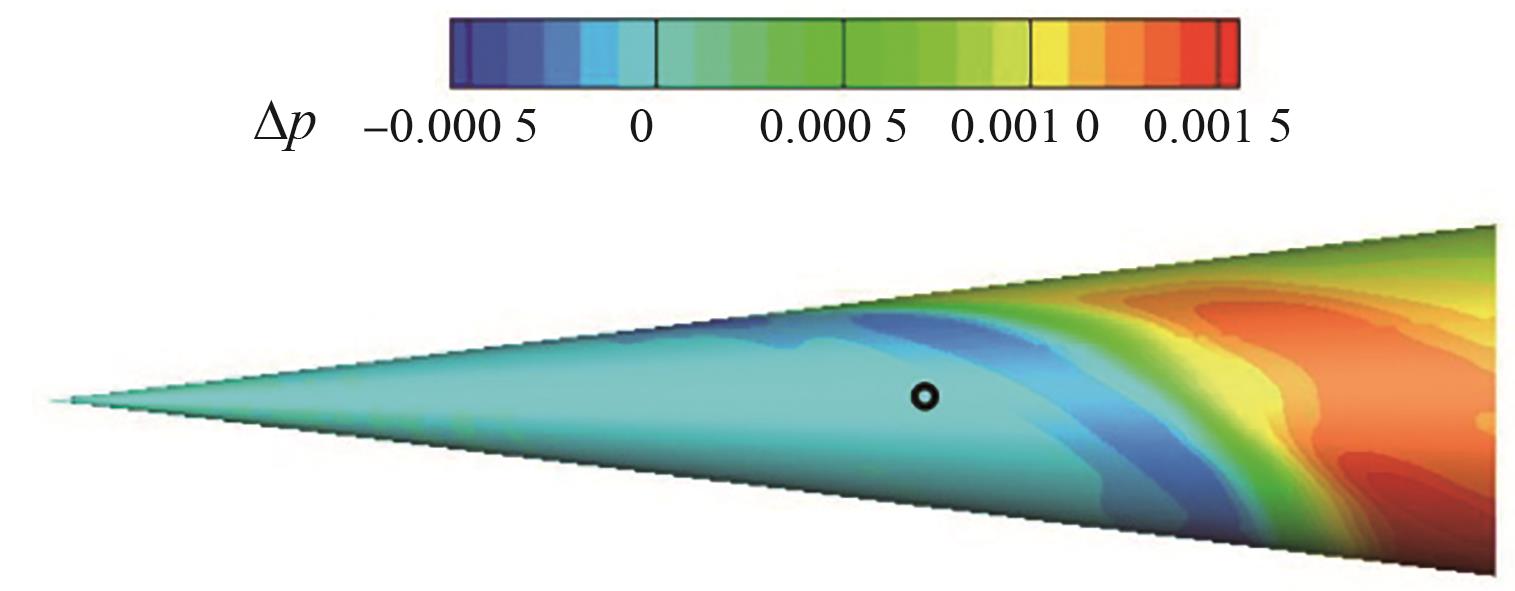
Fig.15
Distribution of surface friction coefficient
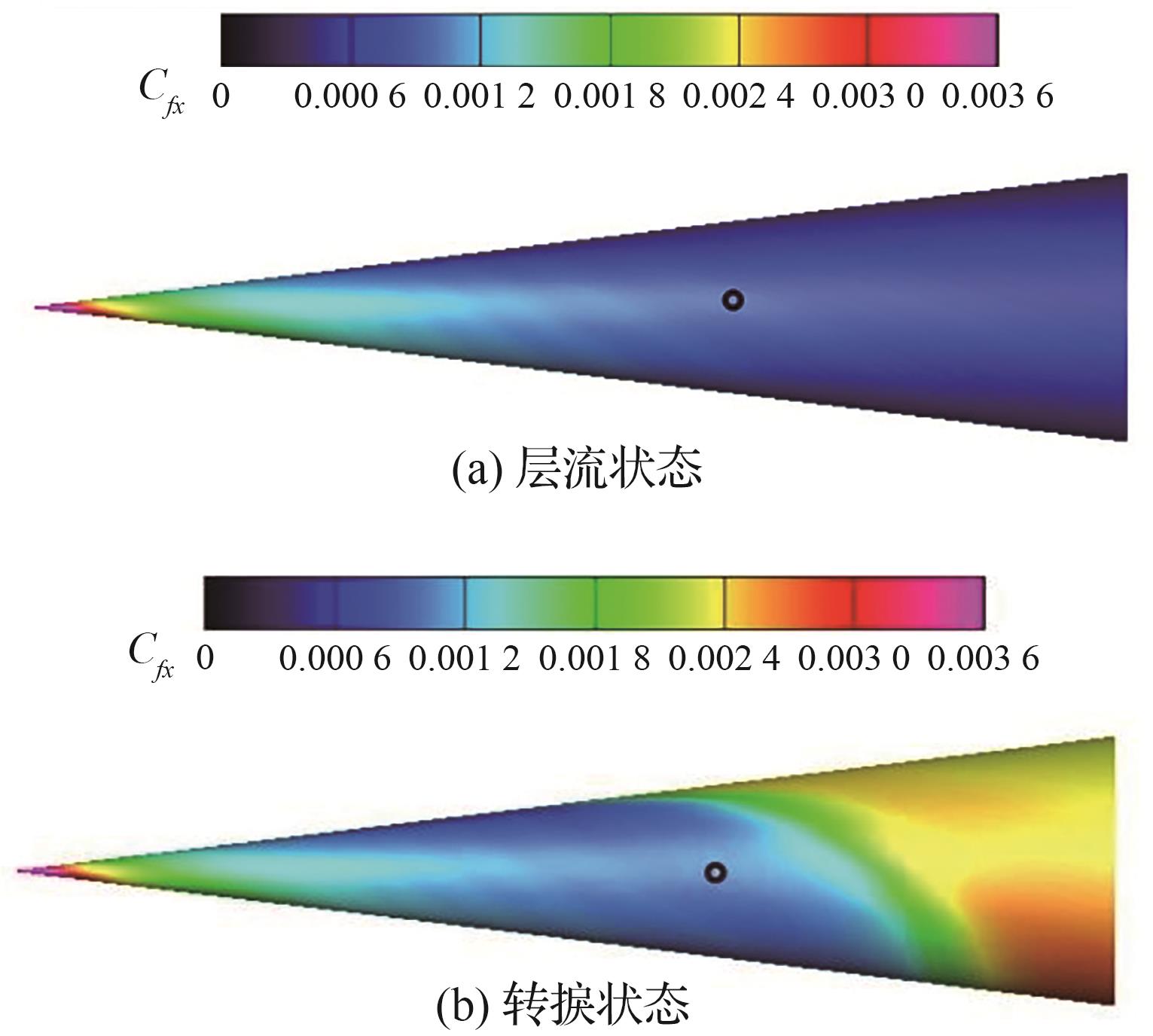
Table 6
Aerodynamic force decomposition
| 状态 | Cm /10-2 | Cmp /10-2 | Cmvis/10-2 | 无黏占比/% | 黏性占比/% |
|---|---|---|---|---|---|
| 层流 | 0.639 8 | 0.620 1 | 0.019 7 | 97 | 3 |
| 转捩 | 0.557 3 | 0.580 9 | -0.023 5 | 104 | -4 |
| 差量 | -0.082 5 | -0.039 2 | -0.043 2 | 48 | 52 |
| [1] | 周恒, 张涵信. 有关近空间高超声速飞行器边界层转捩和湍流的两个问题[J]. 空气动力学学报, 2017, 35(2): 151-155. |
| ZHOU H, ZHANG H X. Two problems in the transition and turbulence for near space hypersonic flying vehicles[J]. Acta Aerodynamica Sinica, 2017, 35(2): 151-155 (in Chinese). | |
| [2] | LIN T C. Influence of laminar boundary-layer transition on entry vehicle designs[J]. Journal of Spacecraft and Rockets, 2008, 45(2): 165-175. |
| [3] | 陈坚强, 涂国华, 张毅锋, 等. 高超声速边界层转捩研究现状与发展趋势[J]. 空气动力学学报, 2017, 35(3): 311-337. |
| CHEN J Q, TU G H, ZHANG Y F, et al. Hypersnonic boundary layer transition: What we know, where shall we go[J]. Acta Aerodynamica Sinica, 2017, 35(3): 311-337 (in Chinese). | |
| [4] | 解少飞, 杨武兵, 沈清. 高超声速边界层转捩机理及应用的若干进展回顾[J]. 航空学报, 2015, 36(3): 714-723. |
| XIE S F, YANG W B, SHEN Q. Review of progresses in hypersonic boundary layer transition mechanism and its applications[J]. Acta Aeronautica et Astronautica Sinica, 2015, 36(3): 714-723 (in Chinese). | |
| [5] | 罗纪生. 高超声速边界层的转捩及预测[J]. 航空学报, 2015, 36(1): 357-372. |
| LUO J S. Transition and prediction for hypersonic boundary layers[J]. Acta Aeronautica et Astronautica Sinica, 2015, 36(1): 357-372 (in Chinese). | |
| [6] | 陈坚强, 袁先旭, 涂国华, 等. 高超声速边界层转捩的几点认识[J]. 中国科学: 物理学 力学 天文学, 2019, 49(11): 125-138. |
| CHEN J Q, YUAN X X, TU G H, et al. Recent progresses on hypersonic boundary-layer transition[J]. Scientia Sinica (Physica, Mechanica & Astronomica), 2019, 49(11): 125-138 (in Chinese). | |
| [7] | CHRUSCIEL G T. Analysis of re-entry vehicle behavior during boundary-layer transition[J]. AIAA Journal, 1975, 13(2): 154-159. |
| [8] | ERICSSON L E. Effect of boundary-layer transition on vehicle dynamics[J]. Journal of Spacecraft and Rockets, 1969, 6(12): 1404-1409. |
| [9] | 楼洪田. 边界层转捩对细长锥静、动稳定性的影响[J]. 宇航学报, 1985, 6(1): 88-98. |
| LOU H T. Transition effects of boundary layer on static and dynamic stability of slender cone[J]. Journal of Astronautics, 1985, 6(1): 88-98 (in Chinese). | |
| [10] | ERICSSON L. Transition effects on slender vehicle stability and trim characteristics[C]∥11th Aerospace Sciences Meeting. Reston: AIAA, 1973. |
| [11] | EAST R A, HUTT G R. Comparison of predictions and experimental data for hypersonic pitching motion stability[J]. Journal of Spacecraft and Rockets, 1988, 25(3): 225-233. |
| [12] | 楼洪田. 转捩诱导法向力及其对细长尖锥气动特性的影响[J]. 宇航学报, 1989, 10(3): 54-64. |
| LOU H T. Transition induced normal force and it’s effects on slender sharp cone aerodynamic[J]. Journal of Astronautics, 1989, 10(3): 54-64 (in Chinese). | |
| [13] | 楼洪田. 10°尖锥气动特性边界层转捩诱导量的测定研究[J]. 宇航学报, 1998, 19(2): 1-6. |
| LOU H T. Measurement study of transition induced aerodynamics on 10° sharp cone[J]. Journal of Astronautics, 1998, 19(2): 1-6 (in Chinese). | |
| [14] | 宋威, 蒋增辉, 贾区耀. 细长锥边界层绊线转捩风洞自由飞试验[J]. 力学学报, 2016, 48(6): 1301-1307. |
| SONG W, JIANG Z H, JIA Q Y. Wind-tunnel free-flight test of boundary layer transition induced by tripped thread for slender cone[J]. Chinese Journal of Theoretical and Applied Mechanics, 2016, 48(6): 1301-1307 (in Chinese). | |
| [15] | 宋威, 赵小见, 鲁伟, 等. 高超声速边界层转捩对旋转钝锥自由飞运动的影响[J]. 航空学报, 2017, 38(11): 121295. |
| SONG W, ZHAO X J, LU W, et al. Effect of boundary layer transition on free flight motion of hypersonic spinning blunt cone[J]. Acta Aeronautica et Astronautica Sinica, 2017, 38(11): 121295 (in Chinese). | |
| [16] | ERICSSON L E. Transition effects on slender vehicle stability and trim characteristics[J]. Journal of Spacecraft and Rockets, 1974, 11(1): 3-11. |
| [17] | 郭雷涛. ∅1米高超声速风洞动导数试验技术研究[D]. 绵阳: 中国空气动力研究与发展中心, 2013. |
| GUO L T. Study on dynamic derivative test technology of ∅ 1 meter high supersonic wind tunnel[D]. Mianyang: China Aerodynamics Research and Development Center, 2013 (in Chinese). | |
| [18] | 袁先旭, 陈琦, 谢昱飞, 等. 动导数数值预测中的相关问题[J]. 航空学报, 2016, 37(8): 2385-2394. |
| YUAN X X, CHEN Q, XIE Y F, et al. Problems in numerical prediction of dynamic stability derivatives[J]. Acta Aeronautica et Astronautica Sinica, 2016, 37(8): 2385-2394 (in Chinese). | |
| [19] | 陈久芬, 凌岗, 张庆虎, 等. 7°尖锥高超声速边界层转捩红外测量实验[J]. 实验流体力学, 2020, 34(1): 60-66. |
| CHEN J F, LING G, ZHANG Q H, et al. Infrared thermography experiments of hypersonic boundary-layer transition on a 7° half-angle sharp cone[J]. Journal of Experiments in Fluid Mechanics, 2020, 34(1): 60-66 (in Chinese). | |
| [20] | JOSHUA B E. Nonlinear growth and breakdown of the hypersonic crossflow instability[D]. West Lafayette: Purdue University, 2019. |
| [21] | 张毅锋, 何琨, 张益荣, 等. Menter转捩模型在高超声速流动模拟中的改进及验证[J]. 宇航学报, 2016, 37(4): 397-402. |
| ZHANG Y F, HE K, ZHANG Y R, et al. Improvement and validation of Menter’s transition model for hypersonic flow simulation[J]. Journal of Astronautics, 2016, 37(4): 397-402 (in Chinese). | |
| [22] | 向星皓, 张毅锋, 袁先旭, 等. C-γ-Reθ 高超声速三维边界层转捩预测模型[J]. 航空学报, 2021, 42(9): 625711. |
| XIANG X H, ZHANG Y F, YUAN X X, et al. C-γ-Reθ model for hypersonic three-dimensional boundary layer transition prediction[J]. Acta Aeronautica et Astronautica Sinica, 2021, 42(9): 625711 (in Chinese). | |
| [23] | 胡震宇, 肖丰收, 陈坚强, 等. 基于C-γ-Reθ 模型的多模态高超声速边界层转捩预测[J]. 航空学报, 2024, 45(12): 129215. |
| HU Z Y, XIAO F S, CHEN J Q, et al. Prediction of multi-mode hypersonic boundary layer transition based on C-γ-Reθ model[J]. Acta Aeronautica et Astronautica Sinica, 2024, 45(12): 129215 (in Chinese). |
| [1] | Xiaoxu ZHANG, Wei XIAO, Jun CAO, Wei LI, Hua ZHOU, Zhuyin REN. Review of mechanism and prediction model of boundary layer flashback in hydrogen-fueled combustor [J]. Acta Aeronautica et Astronautica Sinica, 2025, 46(9): 630952-630952. |
| [2] | Kelei WANG, Zhou ZHOU, Minghao LI. Research and experimental validation of loose coupling design method for propulsion wing unit [J]. Acta Aeronautica et Astronautica Sinica, 2025, 46(9): 212-229. |
| [3] | Lixiang WEI, Jinglei XU, Kuangshi CHEN, Shuai HUANG, Jianhui GE, Guangtao SONG. Scheme design and performance study of adjustable vector nozzle for wide-range hypersonic aircraft [J]. Acta Aeronautica et Astronautica Sinica, 2025, 46(8): 631086-631086. |
| [4] | Chengpeng WANG, Chenguang HAO, Hao LI, Longsheng XUE, Yun JIAO, Siyu WU, Zhangyu MA, Ye YUAN, Weijun LI, Puchen HOU. Application of minimum entropy production principle to analysis of shock wave/boundary layer interactions [J]. Acta Aeronautica et Astronautica Sinica, 2025, 46(8): 631458-631458. |
| [5] | Yifan YANG, Xiao WANG. Enhanced hybrid vortex particle method for aerodynamic analysis of tiltrotor rotor/wing interactions [J]. Acta Aeronautica et Astronautica Sinica, 2025, 46(7): 131040-131040. |
| [6] | Xian YI, Jinghao REN, Qingren LAI, Yu LIU, Qiang WANG. Icing characteristics of full-scale multi-element configurations of large aircraft: Computation and experiment [J]. Acta Aeronautica et Astronautica Sinica, 2025, 46(5): 531575-531575. |
| [7] | Zhiqiang WAN, Shanshan ZHANG, Xiaozhe WANG, Liang MA, Ao XU, Zhigang WU, Chao YANG. Maneuver load analysis and alleviation technology of flexible aircraft: Review [J]. Acta Aeronautica et Astronautica Sinica, 2025, 46(3): 30279-030279. |
| [8] | Min YANG, Guanjun LIU, Ziyuan ZHOU. Control of lunar landers based on secure reinforcement learning [J]. Acta Aeronautica et Astronautica Sinica, 2025, 46(3): 630553-630553. |
| [9] | Bin LIANG, Junbo ZHAO, Zengliang FU, Jiajian ZHOU, Ping ZHOU, Shiyu ZHANG, Weiqi SUN. Effect of gas mass injection on pitching characteristics of blunt cone [J]. Acta Aeronautica et Astronautica Sinica, 2025, 46(3): 130822-130822. |
| [10] | Zhengwu CHEN, Yubiao JIANG, Xiangyu LU, Qiangbin LI. Aerodynamic noise test of open rotor in wind tunnel [J]. Acta Aeronautica et Astronautica Sinica, 2025, 46(2): 130425-130425. |
| [11] | Runyu TIAN, Hongming GONG, Yu CHANG, Xiaoping KONG. Calculation method for heat flow at stagnation point of spherical head based on boundary layer theory [J]. Acta Aeronautica et Astronautica Sinica, 2025, 46(2): 130448-130448. |
| [12] | Xueliang LI, Chuangchuang LI, Yahan ZHANG, Wei SU, Jie WU. Effect of distributed ablation pattern on hypersonic boundary-layer instability with a flat plate [J]. Acta Aeronautica et Astronautica Sinica, 2025, 46(2): 130464-130464. |
| [13] | Ming CAI, Limin GAO, Ruiyu LI, Bo OUYANG, Bo LIU. Establishment of standard model of linear cascade wind tunnel for subsonic compressor [J]. Acta Aeronautica et Astronautica Sinica, 2025, 46(2): 130547-130547. |
| [14] | Chunfeng LIU, Xiaotian HE, Wenbo MIAO, Xuefeng WANG, Xiaoli CHENG. Skin friction measurement technique in rarefied regime and drag force reduction test [J]. Acta Aeronautica et Astronautica Sinica, 2025, 46(12): 131028-131028. |
| [15] | Zixu WANG, Pan LI, Junbiao SHEN, Zhenhua ZHU, Renliang CHEN. Dynamic conversion corridor of tiltrotor aircraft under accelerating and decelerating conditions [J]. Acta Aeronautica et Astronautica Sinica, 2025, 46(11): 531377-531377. |
| Viewed | ||||||
|
Full text |
|
|||||
|
Abstract |
|
|||||
Address: No.238, Baiyan Buiding, Beisihuan Zhonglu Road, Haidian District, Beijing, China
Postal code : 100083
E-mail:hkxb@buaa.edu.cn
Total visits: 6658907 Today visits: 1341All copyright © editorial office of Chinese Journal of Aeronautics
All copyright © editorial office of Chinese Journal of Aeronautics
Total visits: 6658907 Today visits: 1341

 CJA
CJA
