Acta Aeronautica et Astronautica Sinica ›› 2026, Vol. 47 ›› Issue (4): 132261.doi: 10.7527/S1000-6893.2025.32261
• Fluid Mechanics and Flight Mechanics • Previous Articles
Wei ZHANG, Hong ZHAO( ), Ming XU
Received:2025-05-19
Revised:2025-06-19
Accepted:2025-09-01
Online:2025-09-12
Published:2025-09-10
Contact:
Hong ZHAO
E-mail:zhaohongf22@126.com
CLC Number:
Wei ZHANG, Hong ZHAO, Ming XU. Aerodynamic design of coaxial rotor for tailsitter UAV based on multi-fidelity optimization[J]. Acta Aeronautica et Astronautica Sinica, 2026, 47(4): 132261.

Fig.1
Tailsitter UAV design scheme


Table 1
Key parameters of tailsitter UAV
| 参数 | 数值 |
|---|---|
| 起飞质量/kg | 400 |
| 机翼面积/m2 | 3.75 |
| 旋翼直径/m | 2.7 |
| 旋翼垂向间距/m | 0.35 |
| 旋翼转速/(r·min-1) | 悬停:1 400,平飞:1 050 |
| 发动机最大连续功率/kW | 120 |
| 发动机起飞功率/kW | 140 |

Fig.2
Flowchart of coaxial rotor aerodynamic modeling
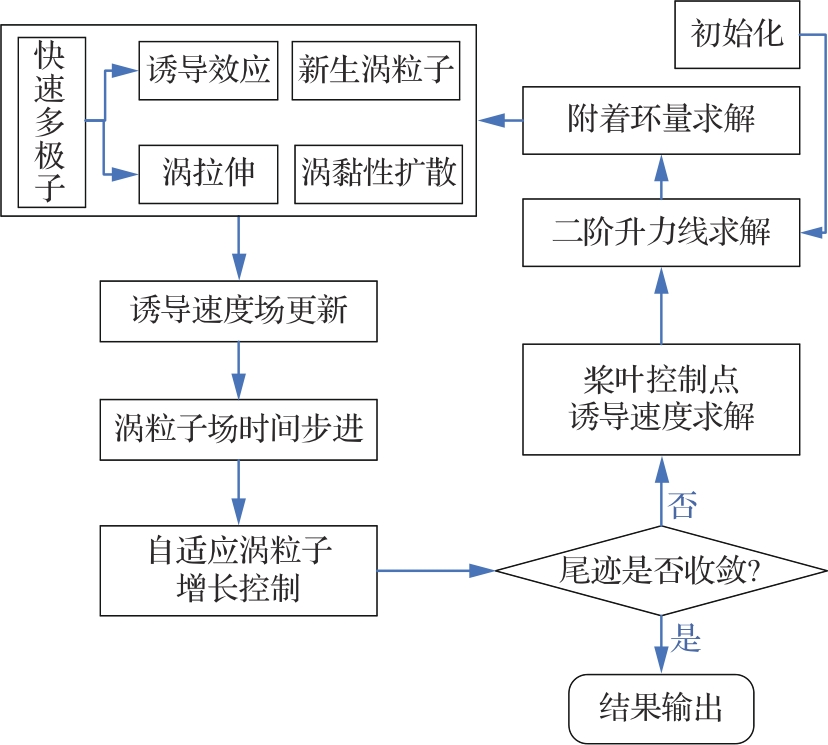

Fig.3
Schematic of vortex particle generation in coaxial rotor


Fig.4
Aerodynamic test for coaxial rotor
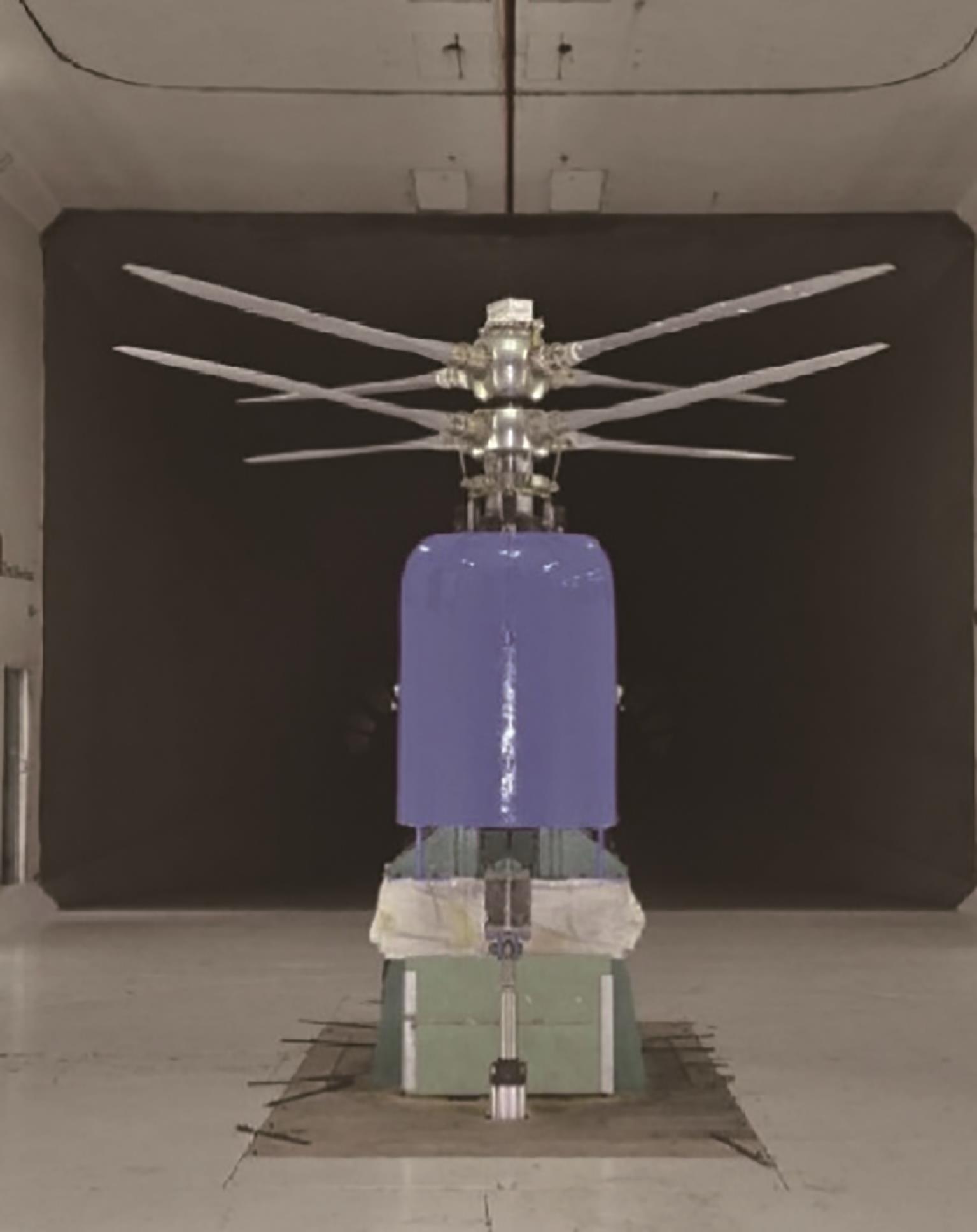
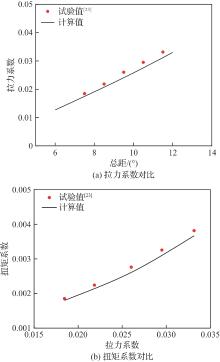
Fig.5
Comparison of calculated and experimental aerodynamic coefficients for coaxial rotor
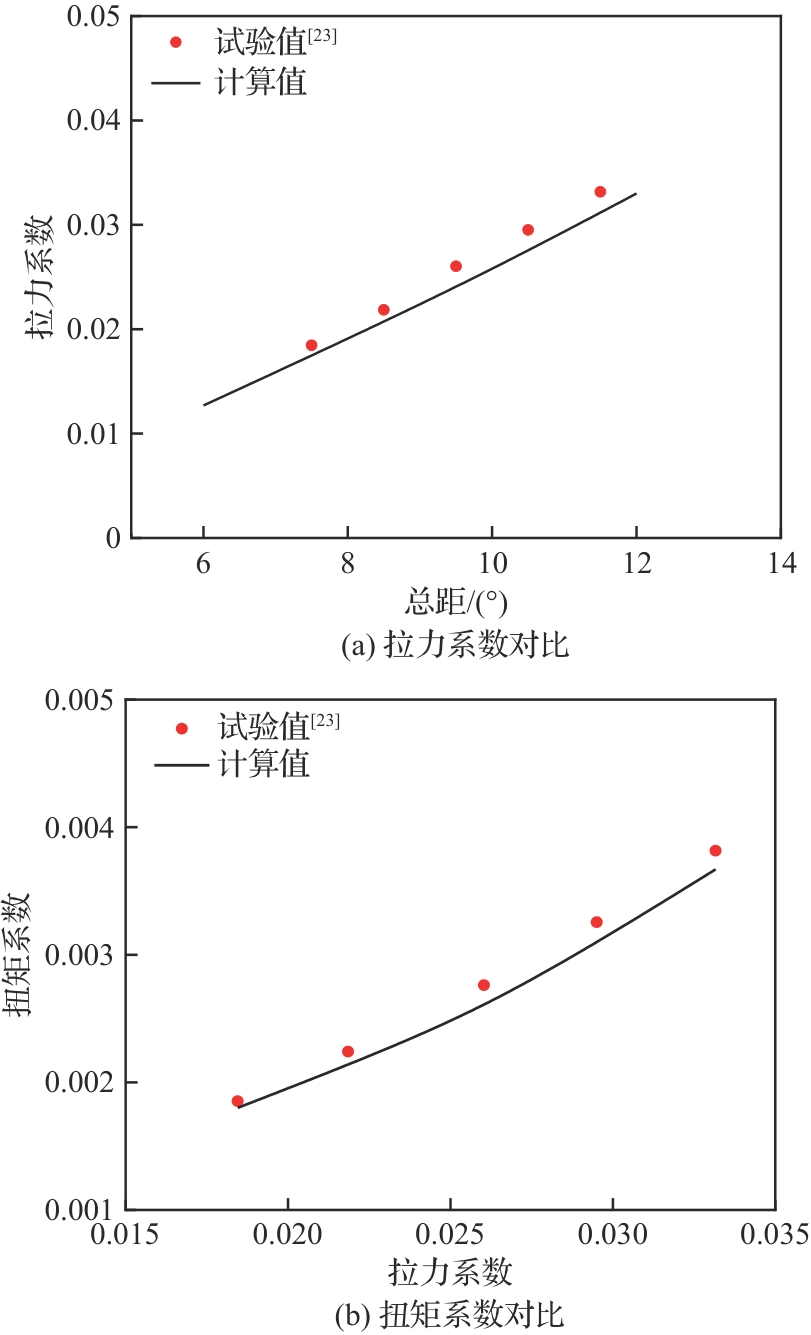
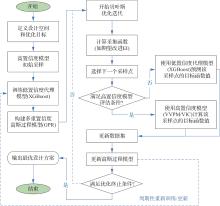
Fig.6
Aerodynamic optimization design process of coaxial rotor
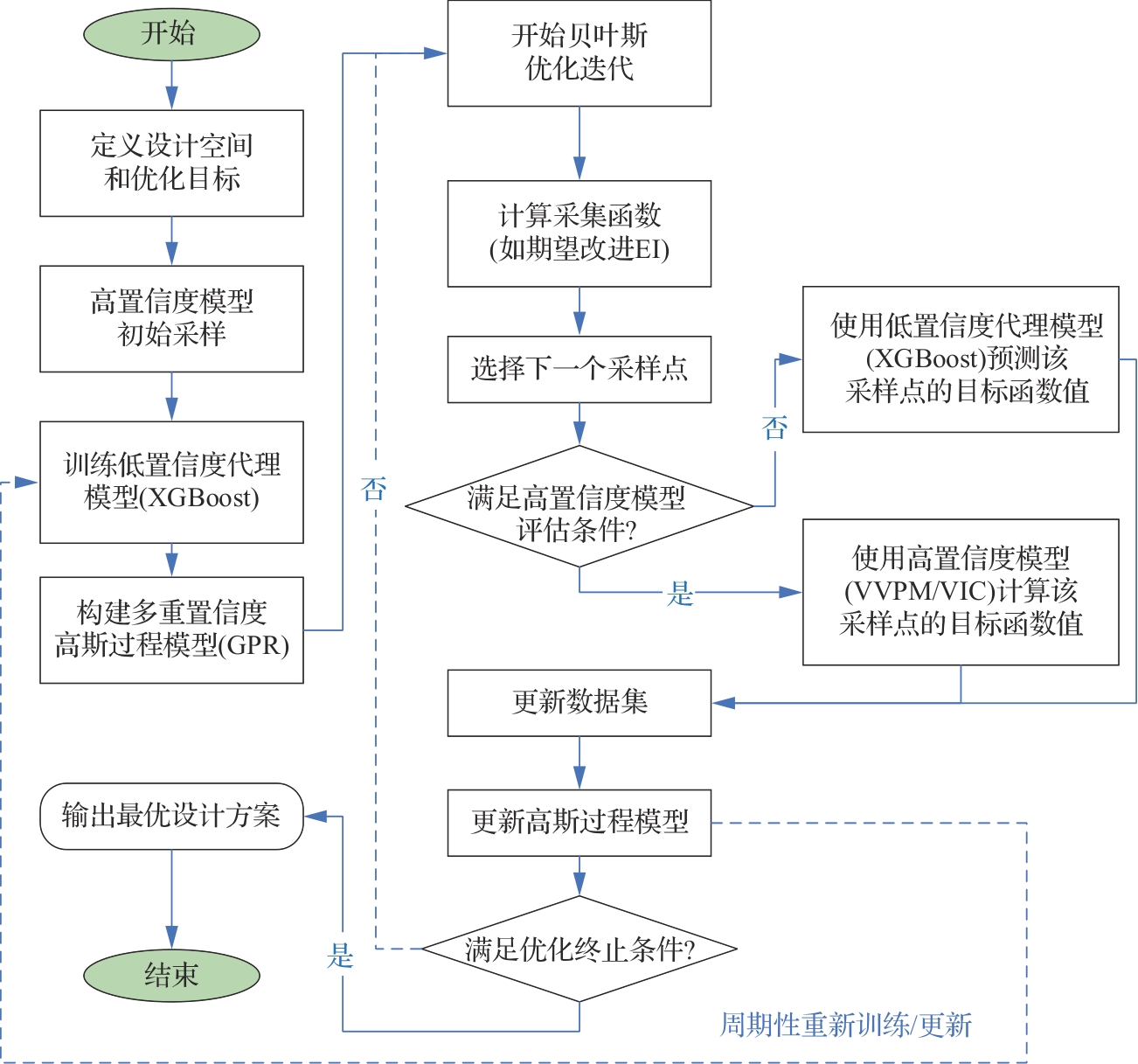
Table 2
Range of design variables
| 变量 | |||||||
|---|---|---|---|---|---|---|---|
| 上限 | 0.17 | 0.15 | 0.1 | 0.055 | 46 | 9 | 1.3 |
| 下限 | 0.035 | 0.04 | 0.04 | 0.01 | 27 | 0 | -1.3 |
Table 3
Thrust requirements and power constraints for coaxial rotor
| 飞行状态 | 拉力要求/N | 功率约束 |
|---|---|---|
| 悬停 | 3 920 | |
| 悬停最大拉力 | 5 096 | 旋翼功率<起飞功率123.5 kW |
| 巡航飞行(252 km/h) | 412 | |
| 最大速度飞行(400 km/h) | 549 | 旋翼功率<最大持续功率105 kW |
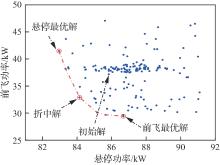
Fig.7
Schematic of Pareto front
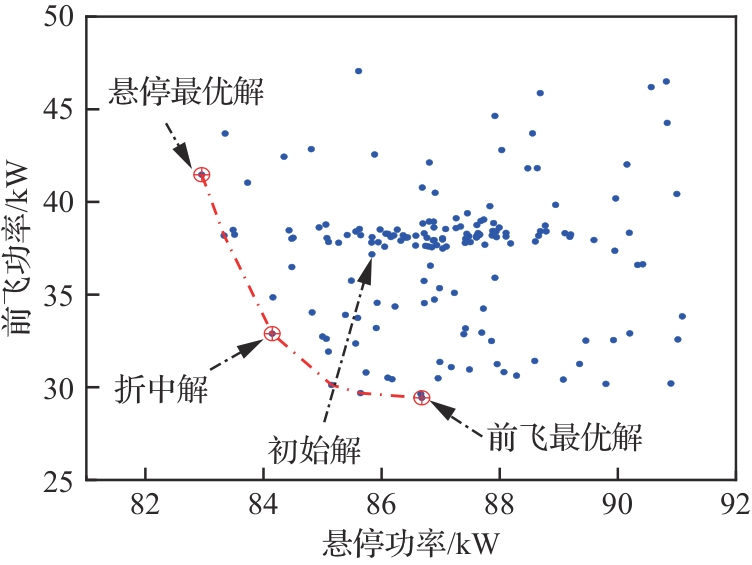
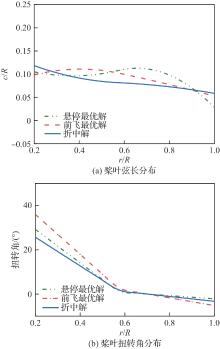
Fig.8
Blade parameters of three optimized designs
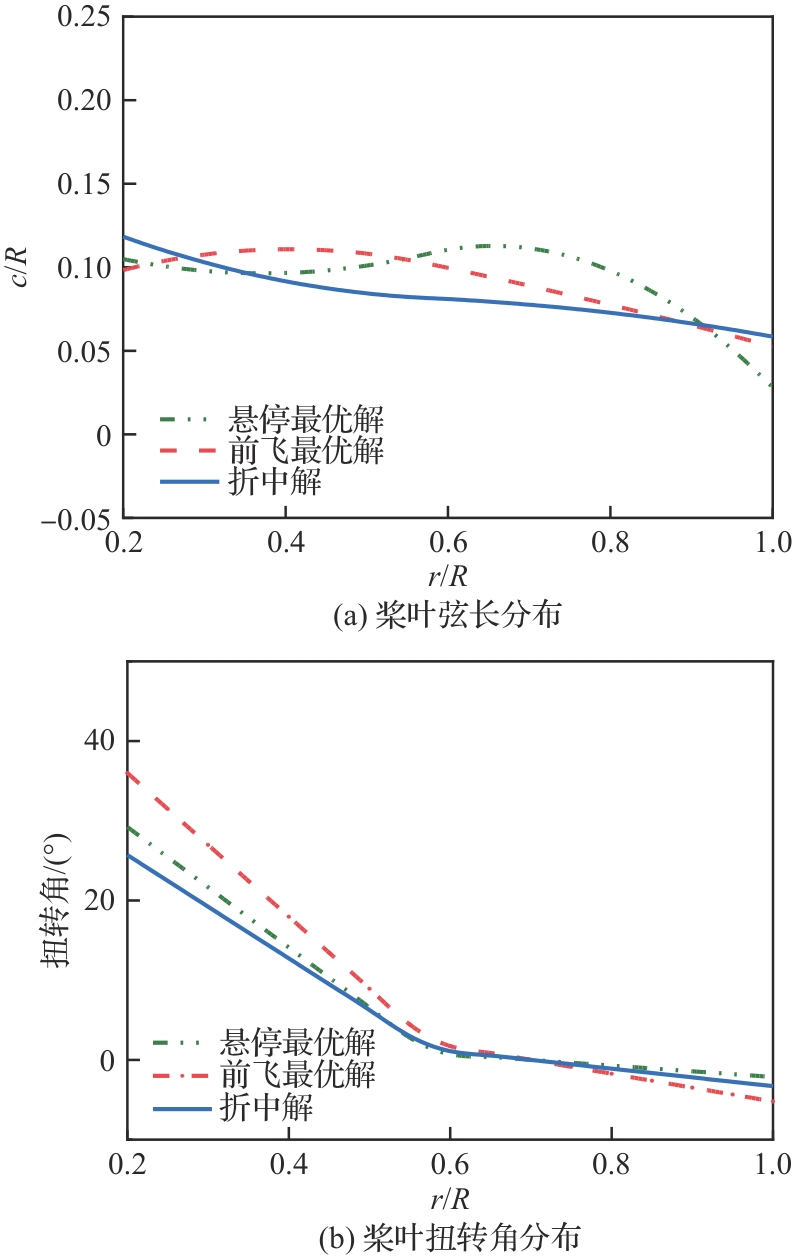
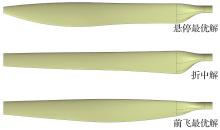
Fig.9
Blade geometry of three optimized designs
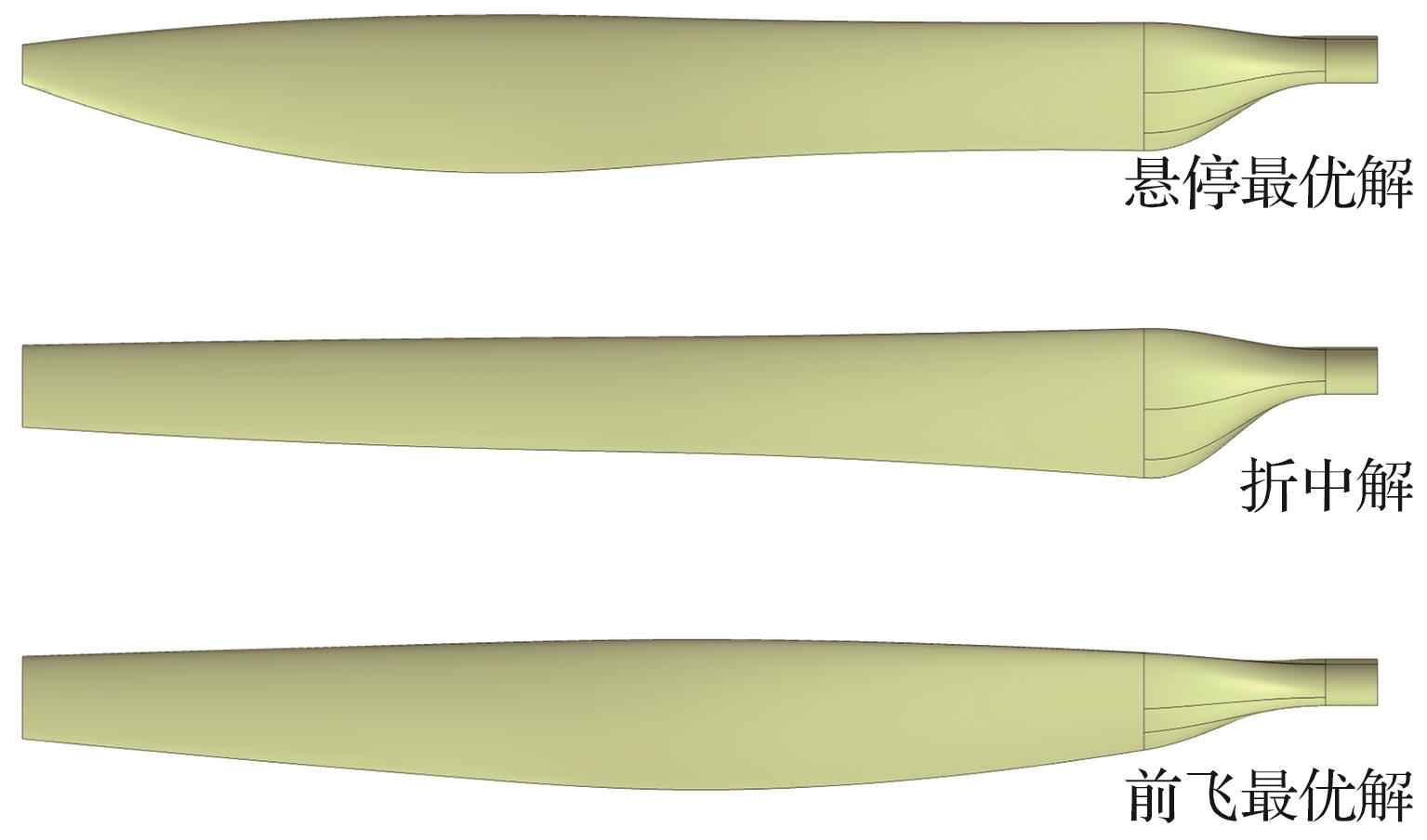
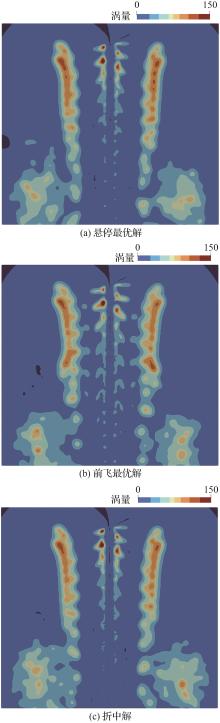
Fig.10
Hover flow field comparison for rotors with different optimized designs
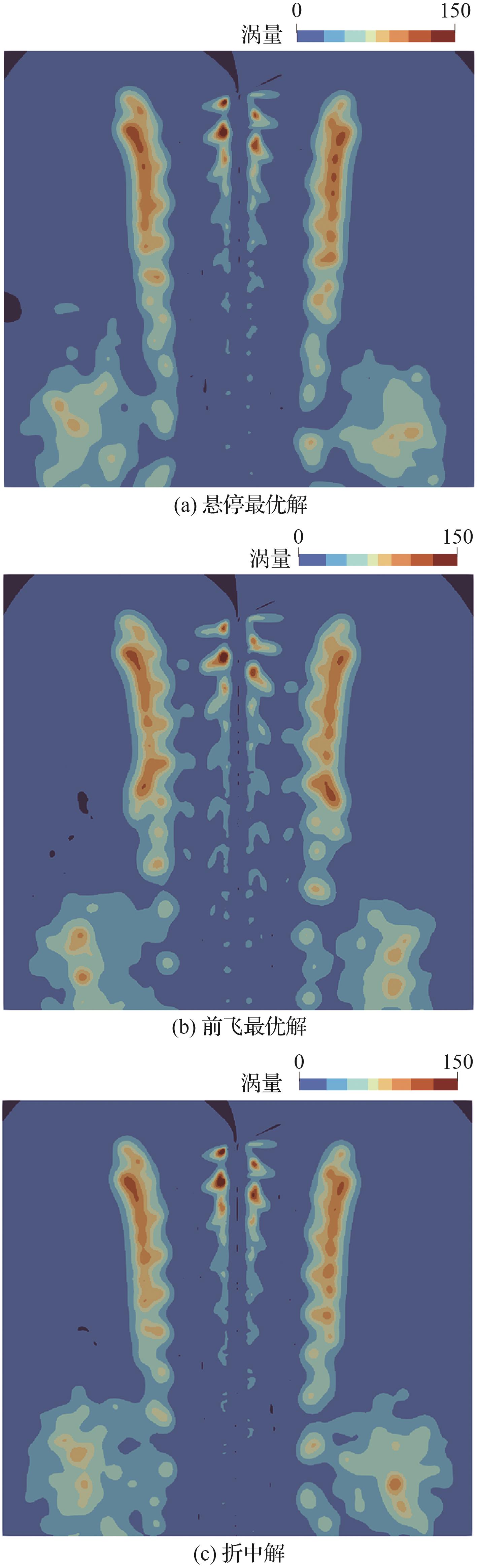

Fig.11
Forward-flight flow field comparison for rotors with different optimized designs

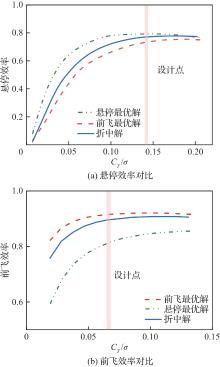
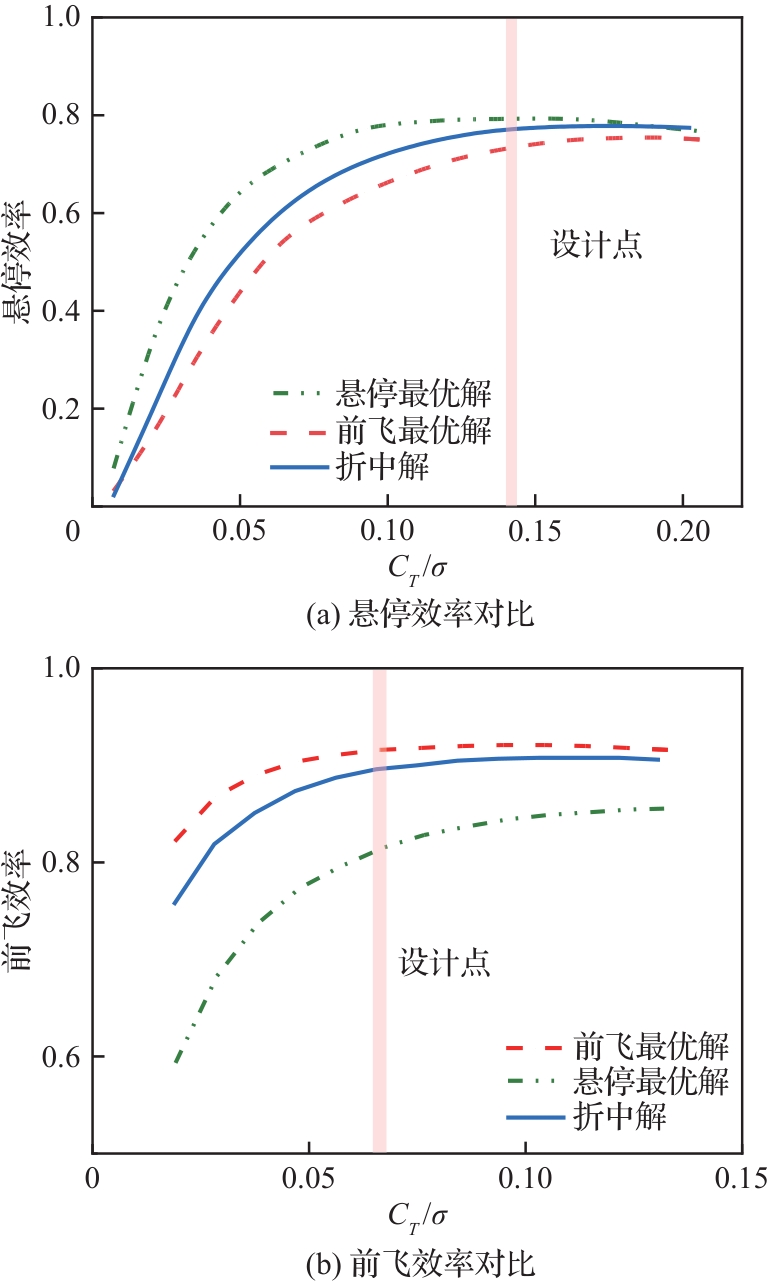
Fig.12
Aerodynamic performance comparison of rotor blades under different optimized designs
| [1] | 王波. 混合型可垂直起降飞行器技术研究[D]. 长沙: 国防科学技术大学, 2016. |
| WANG B. Research on hybrid vertical takeoff and landing aircrafts[D]. Changsha: National University of Defense Technology, 2016 (in Chinese). | |
| [2] | 王科雷, 周洲, 马悦文, 等. 垂直起降固定翼无人机技术发展及趋势分析[J]. 航空工程进展, 2022, 13(5): 1-13. |
| WANG K L, ZHOU Z, MA Y W, et al. Technical development and trend analysis of vertical take-off and landing fixed-wing UAV[J]. Advances in Aeronautical Science and Engineering, 2022, 13(5): 1-13 (in Chinese). | |
| [3] | LEISHMAN J G, ANANTHAN S. An optimum coaxial rotor system for axial flight[J]. Journal of the American Helicopter Society, 2008, 53(4): 366-381. |
| [4] | JUN S, YEE K, LEE J, et al. Robust design optimization of unmanned aerial vehicle coaxial rotor considering operational uncertainty[J]. Journal of Aircraft, 2011, 48(2): 353-367. |
| [5] | RAND O, KHROMOV V. Aerodynamic optimization of coaxial rotor in hover and axial flight[C]∥27th International Congress of the Aeronautical Sciences; Nice, France. 2010: 1-13. |
| [7] | RAJMOHAN N, ZHAO J G, HE C J. A coupled vortex particle/CFD methodology for studying coaxial rotor configurations[C]∥5th Decennial AHS Aeromechanics Specialists Conference; San Francisco, CA. 2014. |
| [8] | JUHASZ O, SYAL M, CELI R, et al. Comparison of three coaxial aerodynamic prediction methods including validation with model test data[J]. Journal of the American Helicopter Society, 2014, 59(3): 1-14. |
| [9] | 招启军, 张威, 原昕, 等. 共轴刚性旋翼气动外形优化设计[J]. 南京航空航天大学学报, 2019, 51(2): 160-165. |
| ZHAO Q J, ZHANG W, YUAN X, et al. Optimization design of coaxial rotor aerodynamic planform[J]. Journal of Nanjing University of Aeronautics & Astronautics, 2019, 51(2): 160-165 (in Chinese). | |
| [10] | BAGAI A, LEISHMAN J G. Free-wake analysis of tandem, tilt-rotor and coaxial rotor configurations[J]. Journal of the American Helicopter Society, 1996, 41(3): 196-207. |
| [11] | LEISHMAN J G, Ananthan S. Aerodynamic optimization of a coaxial proprotor[C]∥62nd Annual Forum of the American Helicopter Society; Phoenix, AZ. 2006: 64-85. |
| [12] | SYAL M, LEISHMAN J G. Aerodynamic optimization study of a coaxial rotor in hovering flight[J]. Journal of the American Helicopter Society, 2012, 57(4): 1-15. |
| [13] | COTTET G H 1, KOUMOUTSAKOS P D. Vortex methods: Theory and practice[M]. Cambridge: Cambridge University Press, 2000. |
| [14] | 魏鹏, 史勇杰, 徐国华, 等. 基于黏性涡模型的旋翼流场数值方法[J]. 航空学报, 2012, 33(5): 771-780. |
| WEI P, SHI Y J, XU G H, et al. Numerical method for simulating rotor flow field based upon viscous vortex model[J]. Acta Aeronautica et Astronautica Sinica, 2012, 33(5): 771-780 (in Chinese). | |
| [15] | 谭剑锋, 王浩文, 吴超, 等. 基于非定常面元/黏性涡粒子混合法的旋翼/平尾非定常气动干扰[J]. 航空学报, 2014, 35(3): 643-656. |
| TAN J F, WANG H W, WU C, et al. Rotor/empennage unsteady aerodynamic interaction with unsteady panel/viscous vortex particle hybrid method[J]. Acta Aeronautica et Astronautica Sinica, 2014, 35(3): 643-656 (in Chinese). | |
| [16] | ALVAREZ E J, MEHR J, NING A. FLOWUnsteady: An interactional aerodynamics solver for multirotor aircraft and wind energy: AIAA-2022-3218[R]. Reston: AIAA; 2022. |
| [17] | HE C J, ZHAO J G. Modeling rotor wake dynamics with viscous vortex particle method[J]. AIAA Journal, 2009, 47(4): 902-915. |
| [18] | DING Z W, DUAN D Y, ZHANG C Q, et al. An rVPM-based aerodynamic hybrid optimization method for coaxial rotor with differentiated upper and lower blades in both hover and high-speed cruising states[J]. Aerospace, 2024, 11(6): 463. |
| [19] | ZHAO H, ZHANG W, XU M, et al. Aerodynamic robust optimization design of the coaxial rotor for a Mars helicopter[J]. Acta Astronautica, 2025, 228: 167-175. |
| [20] | COTTET G H, PONCET P. Advances in direct numerical simulations of 3D wall-bounded flows by vortex-in-cell methods[J]. Journal of Computational Physics, 2004, 193(1): 136-158. |
| [21] | BARBA LA, YOKOTA R. ExaFMM: An open source library for fast multipole methods aimed towards exascale systems[EB/OL]. (2012-05-31)[2025-04-02]. . |
| [22] | ADVANCED R R T I, ZHAO J G, HE C J. Real-time simulation of coaxial rotor configurations with combined finite state dynamic wake and VPM[C]∥Proceedings of the Vertical Flight Society 70th Annual Forum. 2014. |
| [23] | DENG J H, FAN F, LIU P A, et al. Aerodynamic characteristics of rigid coaxial rotor by wind tunnel test and numerical calculation[J]. Chinese Journal of Aeronautics, 2019, 32(3): 568-576. |
| [24] | WU H T, ZHANG Z L, DIAS D. Prediction on compression indicators of clay soils using XGBoost with Bayesian optimization[J]. Journal of Central South University, 2024, 31(11): 3914-3929. |
| [1] | Haiyang TANG, Zhefan REN, Ningli CHEN, Xian YI, Zhiyong CHEN. Optimization design of electrothermal anti-icing power distribution based on PLE network [J]. Acta Aeronautica et Astronautica Sinica, 2026, 47(2): 132179-132179. |
| [2] | Zan MA, Jie BAI, Liqin YAN, Yong CHEN, Shuguang SUN. Safety assessment for airborne intelligent avoidance system based on Bayesian optimization [J]. Acta Aeronautica et Astronautica Sinica, 2026, 47(1): 331973-331973. |
| [3] | Xin WANG, Xiayang ZHANG, Lixiong ZHENG, Jinwu XIANG. High-efficiency and high-precision aeroelastic full coupling method of rotor [J]. Acta Aeronautica et Astronautica Sinica, 2025, 46(S1): 732161-732161. |
| [4] | Xiayang ZHANG, Bin LUO, Xi CHEN, Tao YANG. Optimization design of high-efficiency and low-noise rotor layout for quad-tiltrotor aircraft [J]. Acta Aeronautica et Astronautica Sinica, 2025, 46(S1): 732183-732183. |
| [5] | Yihao XU, Pengcheng DONG, Junchao ZHENG, Chunqing TAN, Hailong TANG. Overall performance optimization method of adaptive cycle propulsion system [J]. Acta Aeronautica et Astronautica Sinica, 2025, 46(7): 130987-130987. |
| [6] | Yanjie LIU, Mingqiang LI, Xuan GUO, Yanfei SU, Bintuan WANG, Yingju XUE. Optimization design of high-load-bearing opening structures in special configuration aircraft [J]. Acta Aeronautica et Astronautica Sinica, 2025, 46(21): 532447-532447. |
| [7] | Zuotai LI, Shusheng CHEN, Shiyi JIN, Zhenghong GAO, Weiguo ZHOU. Optimization design and data mining for supersonic civil aircraft based on sonic boom efficient prediction [J]. Acta Aeronautica et Astronautica Sinica, 2025, 46(20): 531920-531920. |
| [8] | Qing CHEN, Zhonghua HAN, Keshi ZHANG, Jianling QIAO, Yulin DING, Wenping SONG. A full-carpet design optimization method for low-boom supersonic civil aircraft configuration [J]. Acta Aeronautica et Astronautica Sinica, 2025, 46(20): 531909-531909. |
| [9] | Xin WANG, Xiayang ZHANG, Qijun ZHAO, Jinwu XIANG. Aeroelastic loads of rotor during collective pitch ramp increase in hovering state based on VVPM/GEBT coupling method [J]. Acta Aeronautica et Astronautica Sinica, 2025, 46(16): 231628-231628. |
| [10] | Fulin LI, Min CHEN, Hailong TANG, Jiyuan ZHANG, Yue ZHOU, Jing MA. Control law design for variable cycle engine considering environmental indicators [J]. Acta Aeronautica et Astronautica Sinica, 2025, 46(16): 231624-231624. |
| [11] | Ruitao ZHANG, Cong WANG, Jun TAO, Liyue WANG, Gang SUN. Airfoil parameterization method based on latent diffusion model [J]. Acta Aeronautica et Astronautica Sinica, 2025, 46(10): 631180-631180. |
| [12] | Lulu JIANG, Xin PAN, Wei JIANG, Rui FENG, Gang CHEN. Optimization shape design of capsule-supersonic parachute system based on fusion surrogate strategy [J]. Acta Aeronautica et Astronautica Sinica, 2025, 46(1): 630471-630471. |
| [13] | Jiaqi LIU, Rongqian CHEN, Jinhua LOU, Xu HAN, Hao WU, Yancheng YOU. Aerodynamic shape optimization of high-speed helicopter rotor airfoil based on deep learning [J]. Acta Aeronautica et Astronautica Sinica, 2024, 45(9): 529828-529828. |
| [14] | Yanyan LUO, Shuo YANG, Xiaosong PAN, Xuhuai ZHAO, Li ZHANG. Signal reflection suppression and optimized design of high⁃speed connectors for aerospace applications [J]. Acta Aeronautica et Astronautica Sinica, 2024, 45(7): 328937-328937. |
| [15] | Jinzhao DAI, Haixin CHEN. Optimization design method of three⁃dimensional wave cancellation biplane derived by shock⁃wave morphology [J]. Acta Aeronautica et Astronautica Sinica, 2024, 45(6): 628942-628942. |
| Viewed | ||||||
|
Full text |
|
|||||
|
Abstract |
|
|||||
Address: No.238, Baiyan Buiding, Beisihuan Zhonglu Road, Haidian District, Beijing, China
Postal code : 100083
E-mail:hkxb@buaa.edu.cn
Total visits: 6658907 Today visits: 1341All copyright © editorial office of Chinese Journal of Aeronautics
All copyright © editorial office of Chinese Journal of Aeronautics
Total visits: 6658907 Today visits: 1341

 CJA
CJA
