Acta Aeronautica et Astronautica Sinica ›› 2026, Vol. 47 ›› Issue (13): 533104.doi: 10.7527/S1000-6893.2026.33104
• Special Issue: Flow Control and Thermal Management • Previous Articles
Haotian TAN1, Lei NING2, Jiangtao XU1( ), Hongqing LYU1, Linhai ZHU3, Jitao WU1
Received:2025-11-18
Revised:2025-12-19
Accepted:2026-01-28
Online:2026-02-10
Published:2026-02-09
Contact:
Jiangtao XU
E-mail:hit_xjt@163.com
CLC Number:
Haotian TAN, Lei NING, Jiangtao XU, Hongqing LYU, Linhai ZHU, Jitao WU. Analysis on delay characteristics of response modes of aircraft internal circulation fuel thermal management system[J]. Acta Aeronautica et Astronautica Sinica, 2026, 47(13): 533104.
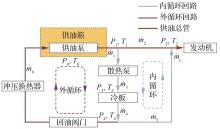
Fig.1
Schematic of aircraft fuel thermal system
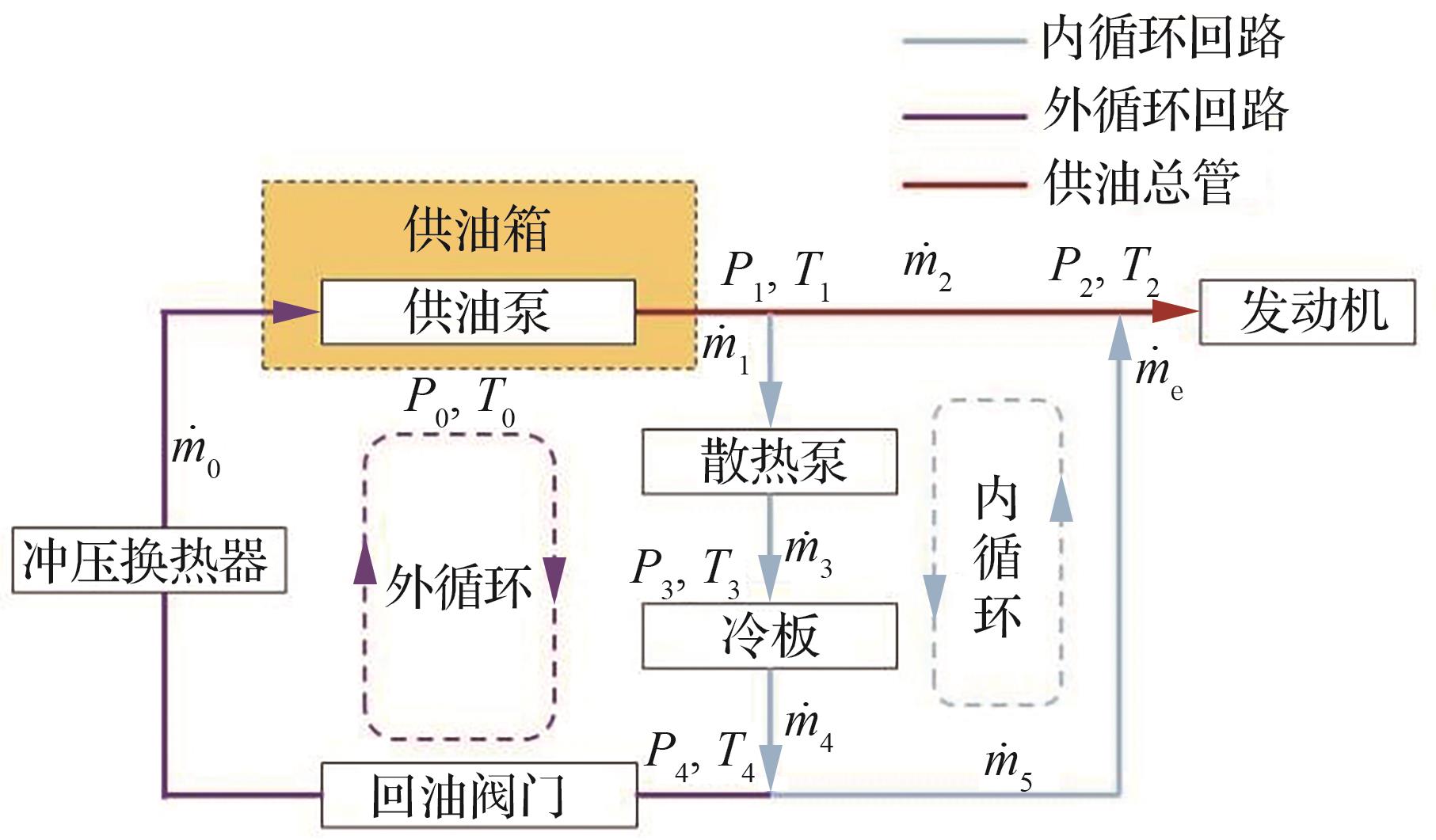
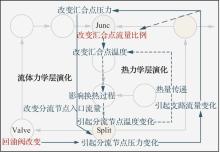
Fig.2
Process of how the fuel return valve affects the node temperature
Fig.3
Equivalent diagram of thermal management system
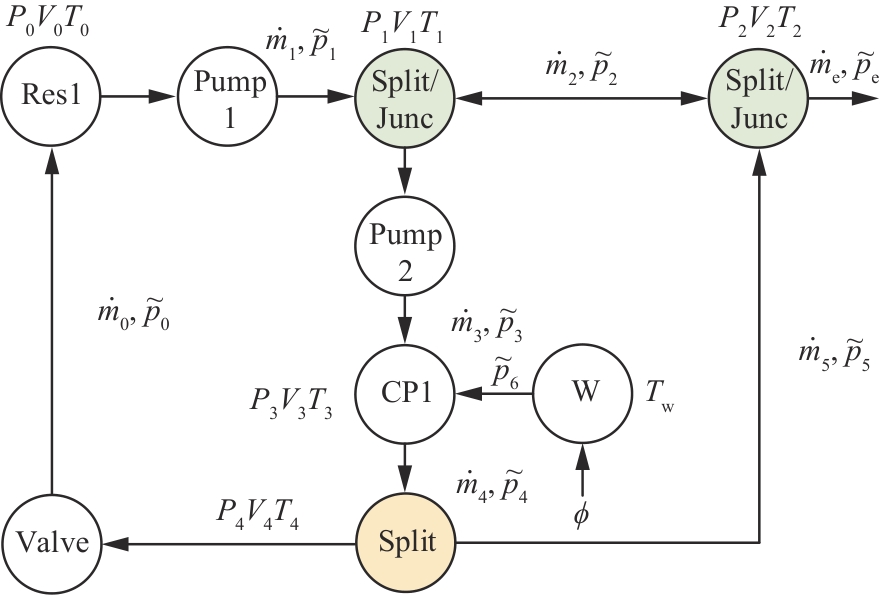

Table 1
Flight condition point parameters
| 变量名称 | 符号 | 数值 |
|---|---|---|
| 飞行高度/km | 2.61 | |
| 飞行马赫数 | Ma | 0.33 |
| 发动机耗油率/(kg·s-1) | 0.30 | |
| 热载荷/kW | 150.00 |
Table 2
Simulation parameters set
| 变量名称 | 符号 | 数值 |
|---|---|---|
| 供油箱容积/m3 | V0 | 12.78 |
| 供油泵出口管路容积/m3 | V1 | 0.005 |
| 发动机入口容积/m3 | V2 | 0.005 |
| 冷板燃油容积/m3 | V3 | 0.005 |
| 换热器出口管路容积/m3 | V4 | 0.005 |
| 冷板质量/kg | Mw | 6 |
Fig.4
Flow distribution in non-internal circulation state
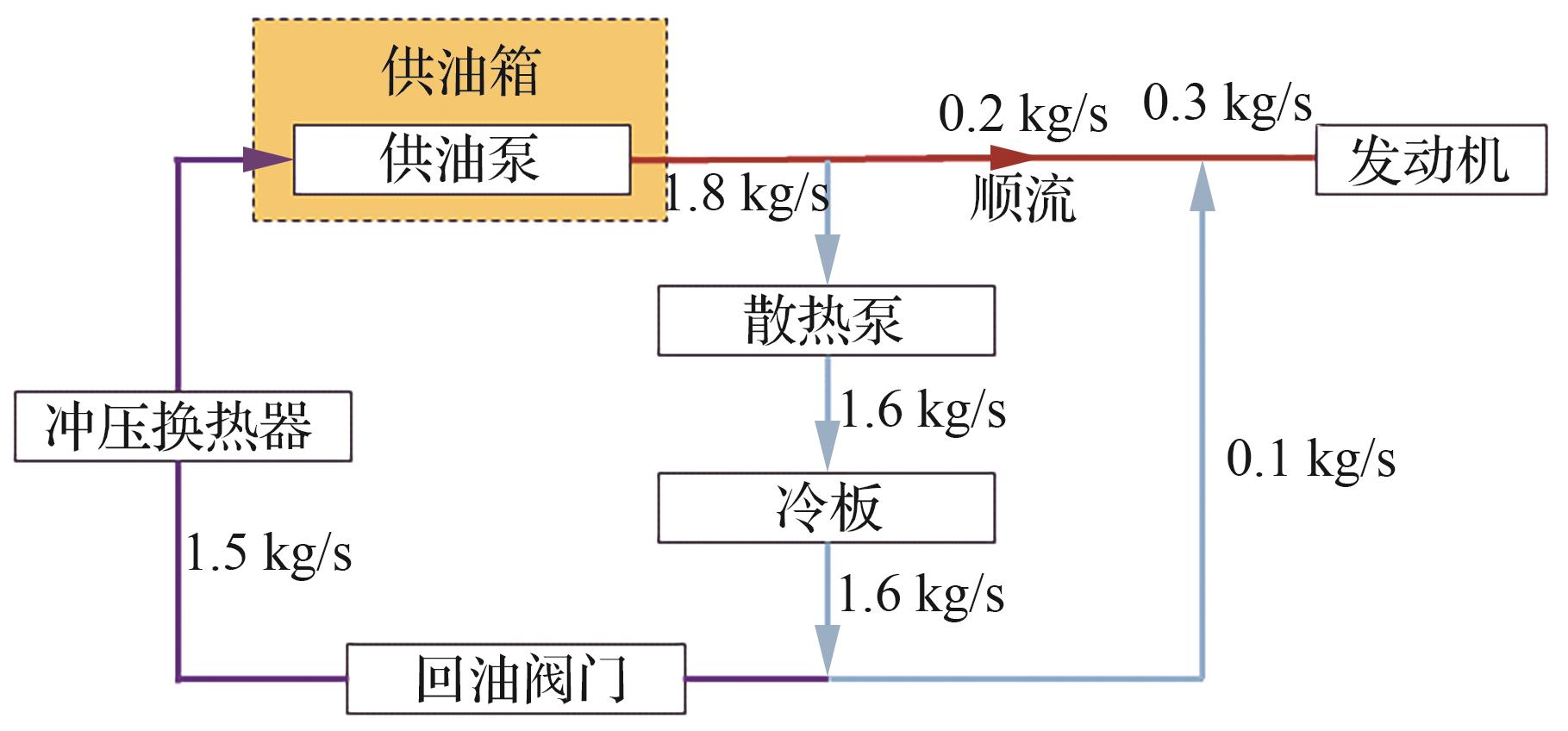
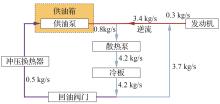
Fig.5
Flow distribution in internal circulation state
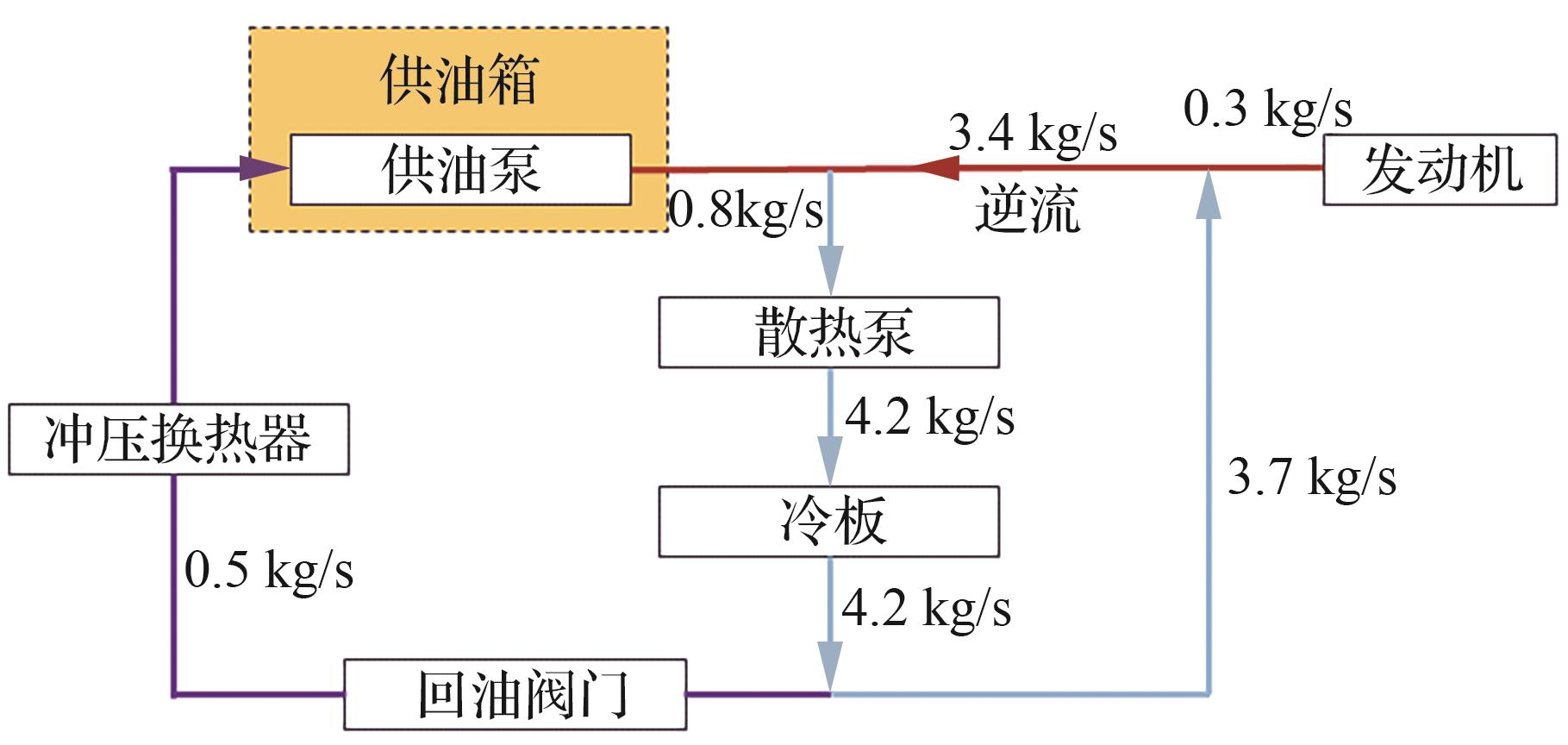
Table 3
Control quantities and simulation state parameters in non-internal circulation state
| 变量名称 | 符号 | 数值 |
|---|---|---|
| 散热泵转速/(r·min-1) | nt | 1 508.88 |
| 回油阀门开度 | vb | 0.45 |
| 供油泵转速/(r·min-1) | ns | 3 210.81 |
| 散热流量/(kg·s-1) | 1.60 | |
| 回油流量/(kg·s-1) | 1.50 | |
| 发动机入口压力/kPa | P2 | 150.00 |
Table 4
Control quantities and simulation state parameters in internal circulation state
| 变量名称 | 符号 | 数值 |
|---|---|---|
| 散热泵转速/(r·min-1) | nt | 5 419.88 |
| 回油阀门开度 | vb | 0.02 |
| 供油泵转速/(r·min-1) | ns | 3 116.12 |
| 散热流量/(kg·s-1) | 4.20 | |
| 回油流量/(kg·s-1) | 0.50 | |
| 发动机入口压力/kPa | P2 | 150.00 |
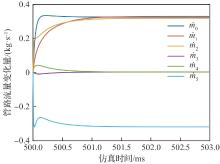
Fig.6
Amesim flow response in non-internal circulation state
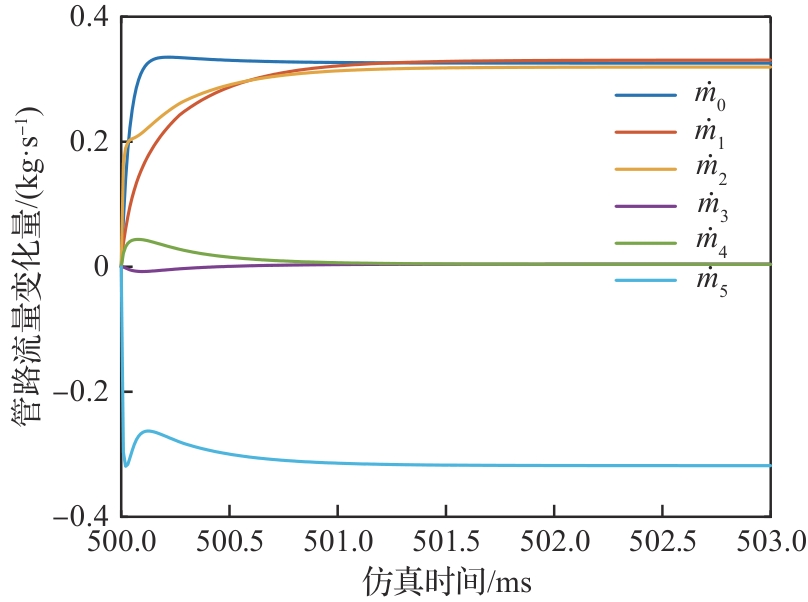
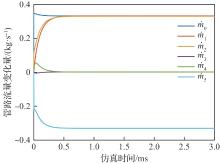
Fig.7
Dynamic model flow response in non-internal circulation state
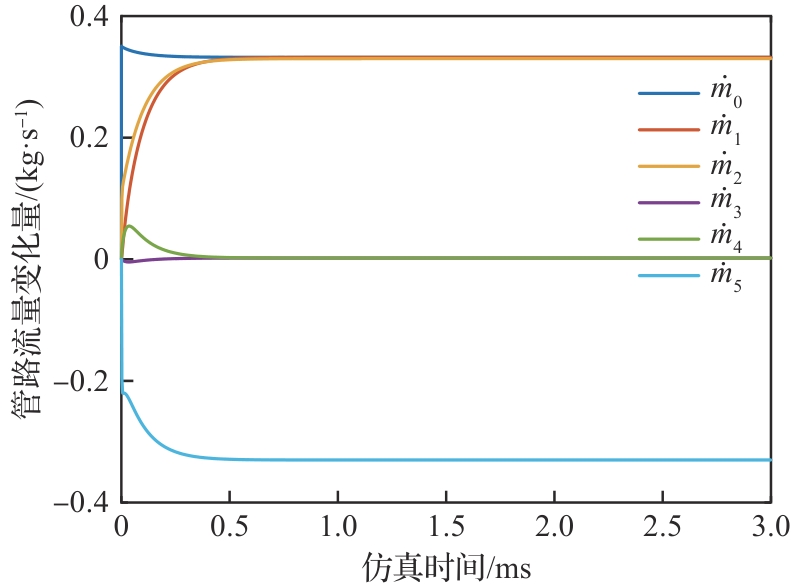
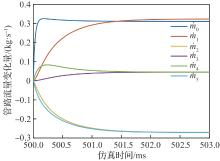
Fig.8
Amesim flow response in internal circulation state
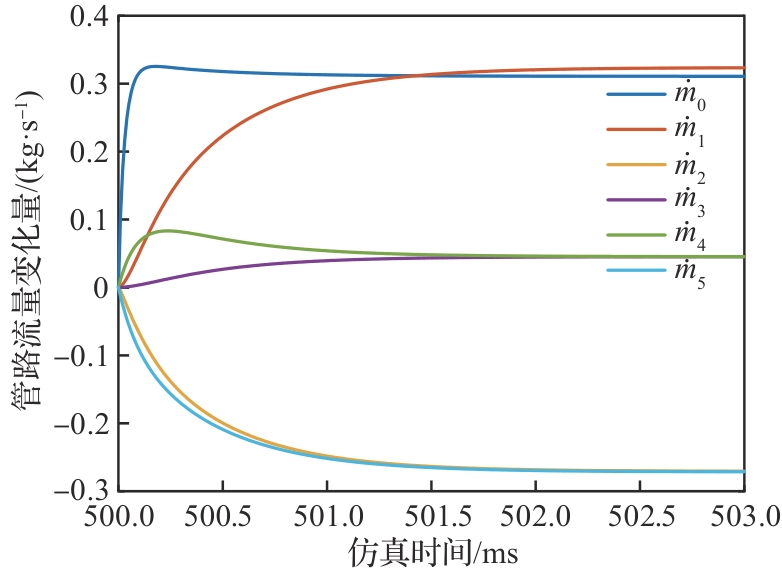
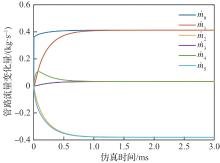
Fig.9
Dynamic model flow response in internal circulation state
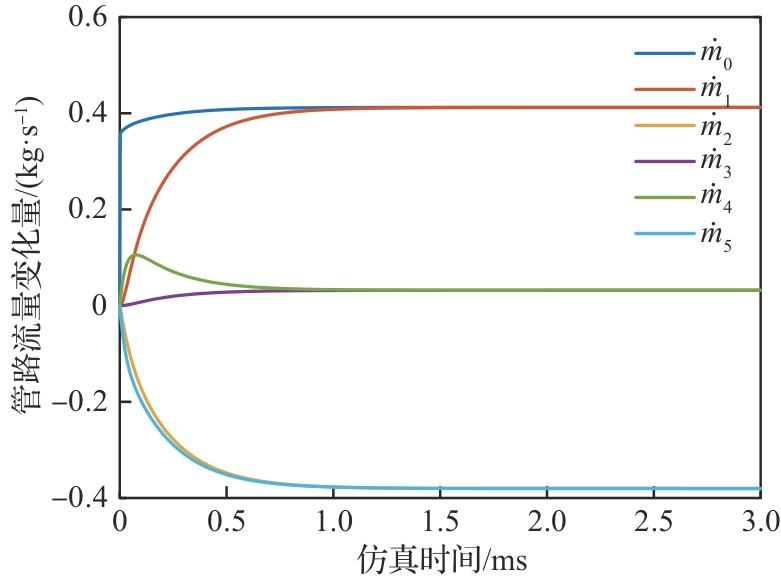
Fig.10
Amesim temperature response in non-internal circulation state
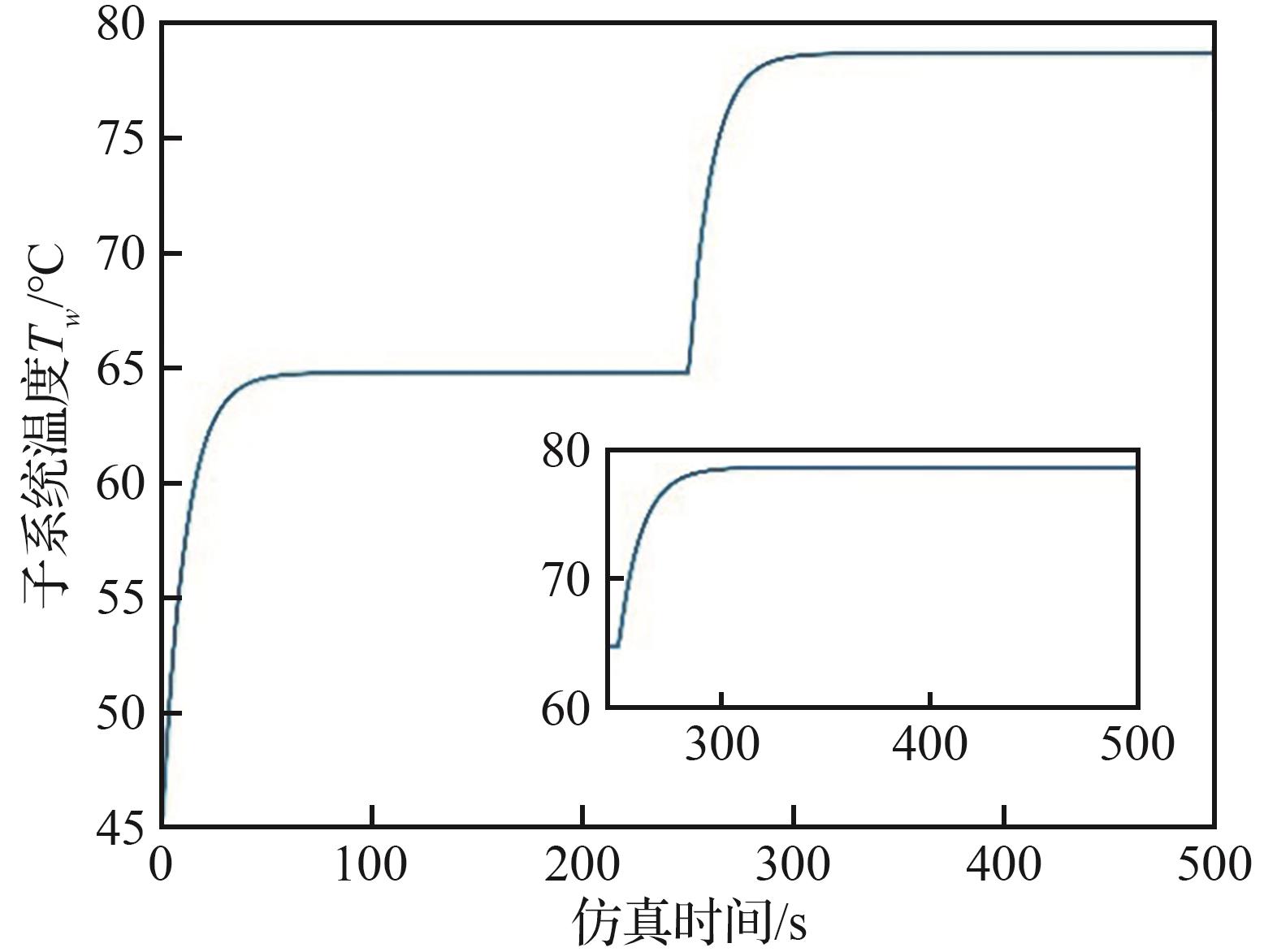
Fig.11
Amesim temperature response in internal circulation state
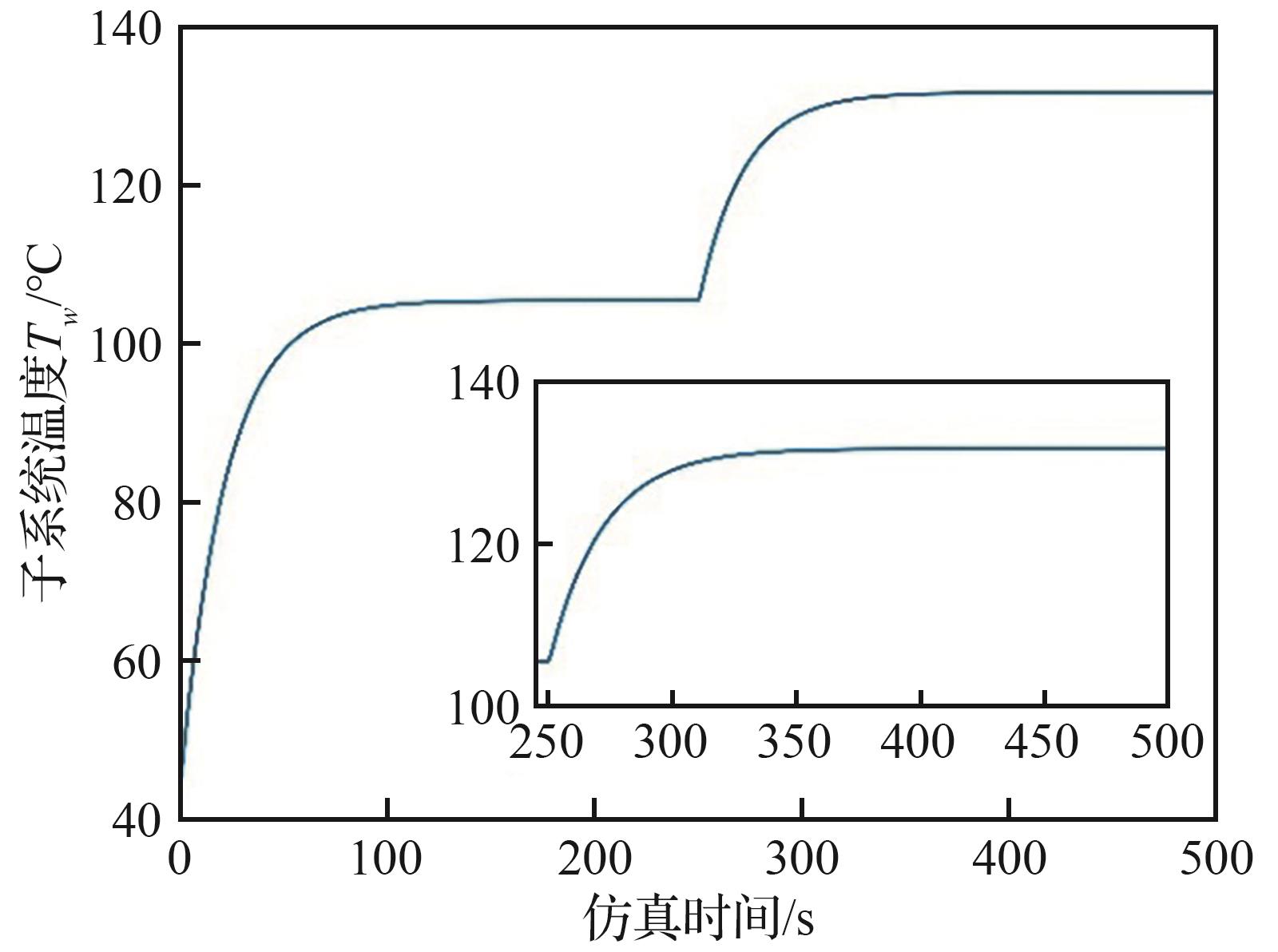
Fig.12
Temperature response in non-internal circulation state
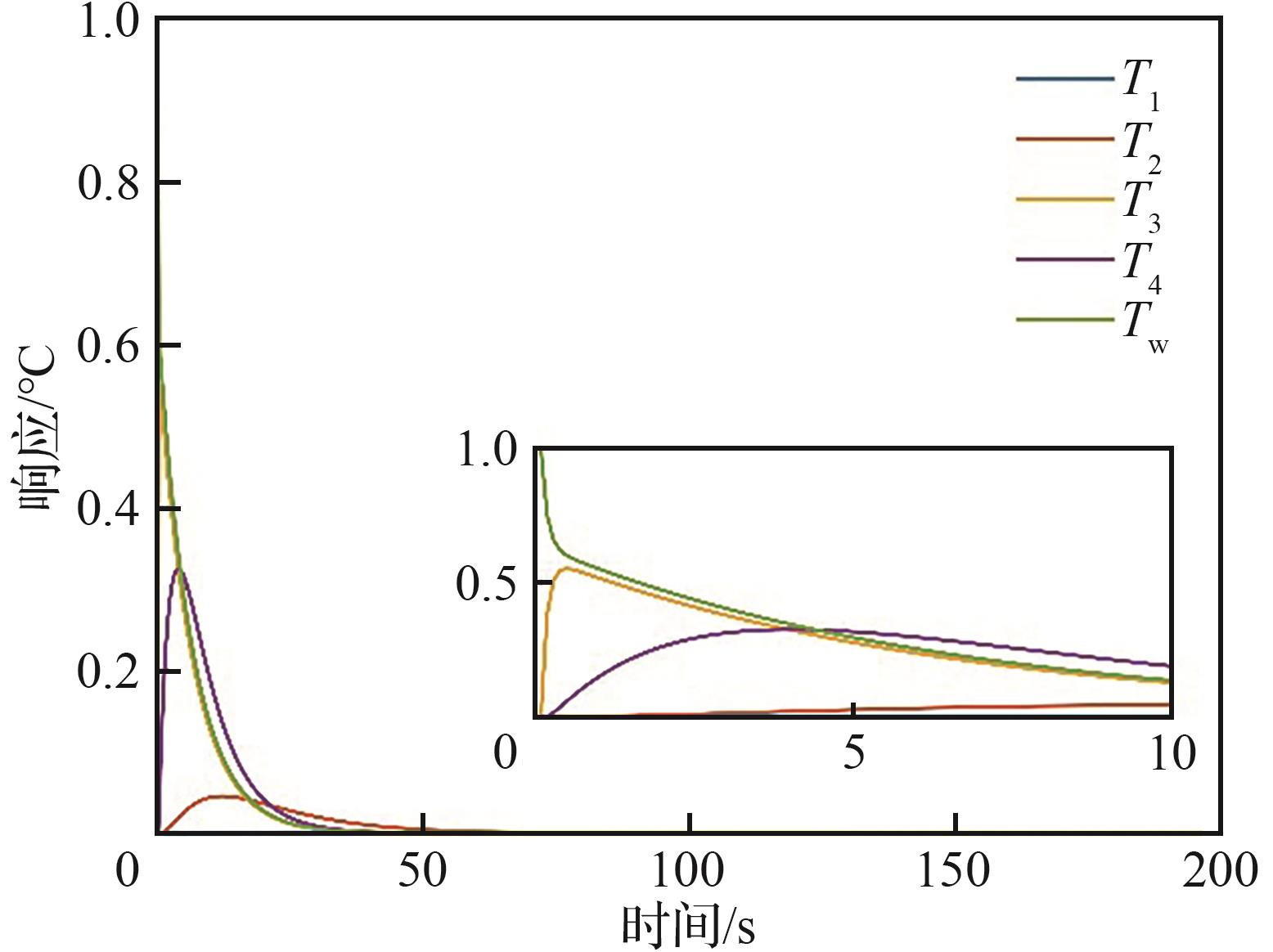
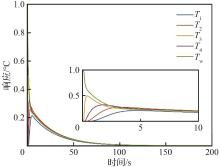
Fig.13
Temperature response in internal circulation state
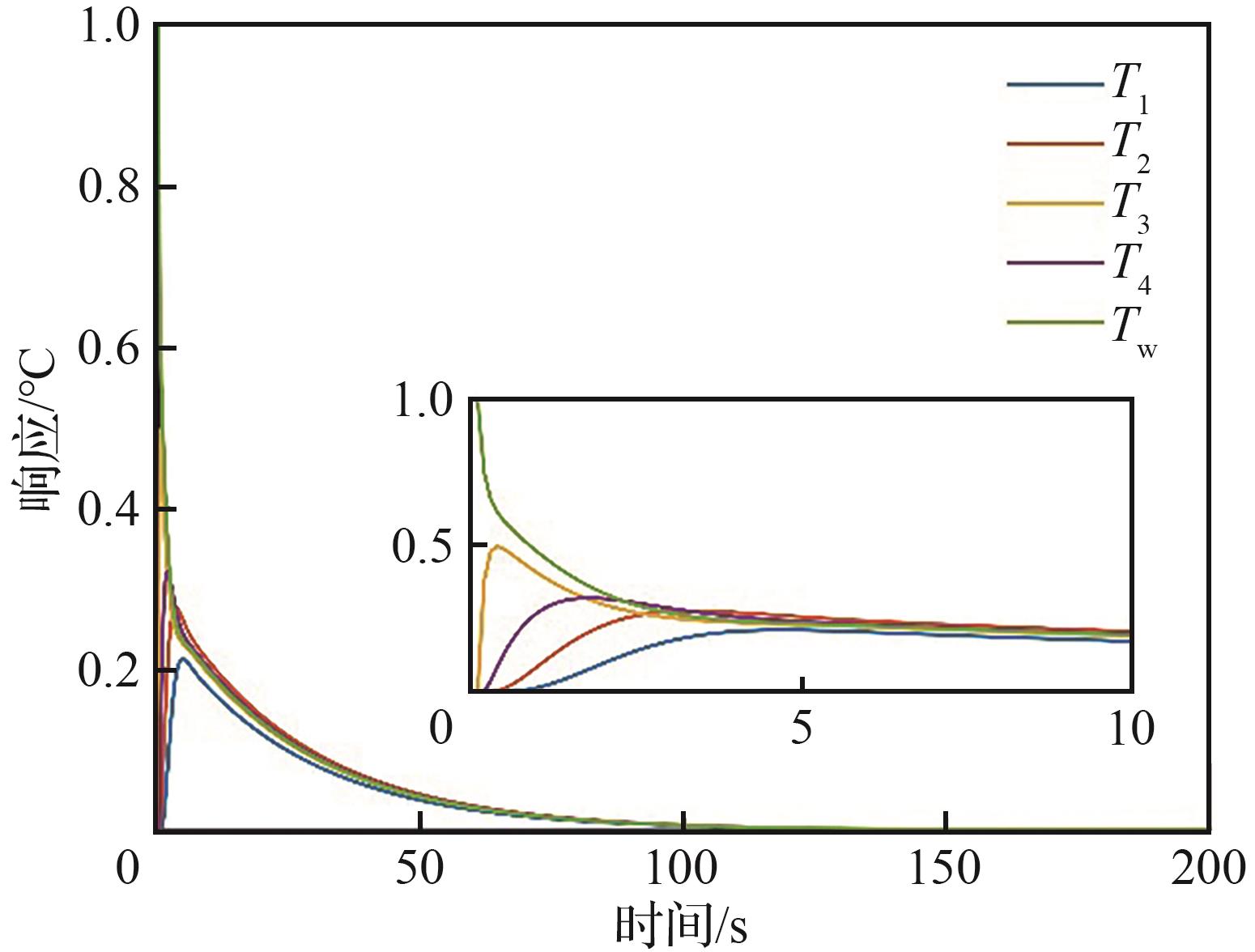
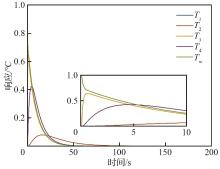
Fig.14
Temperature response in non-internal circulation state
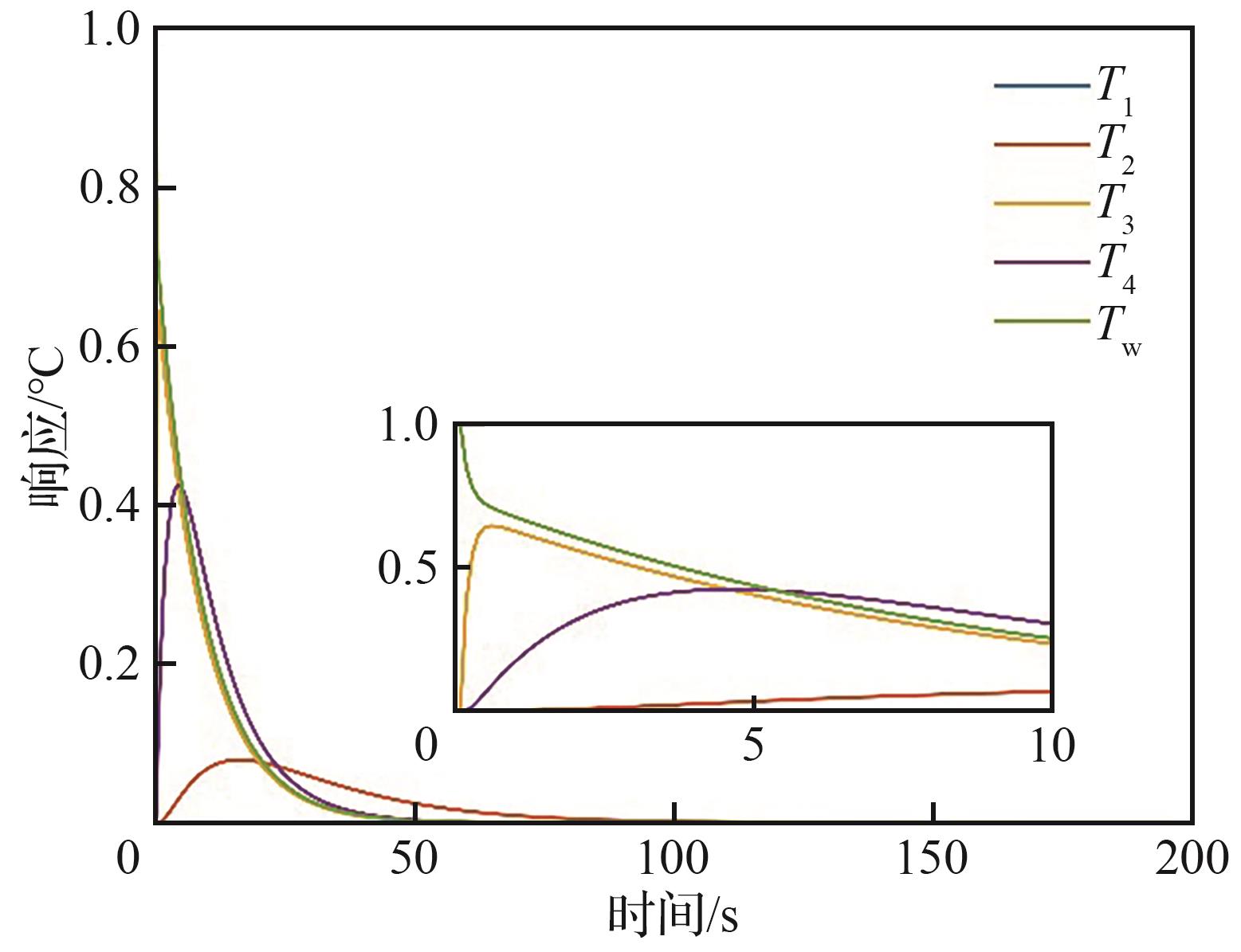
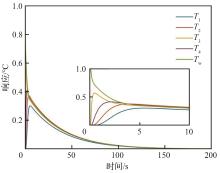
Fig.15
Temperature response in internal circulation state
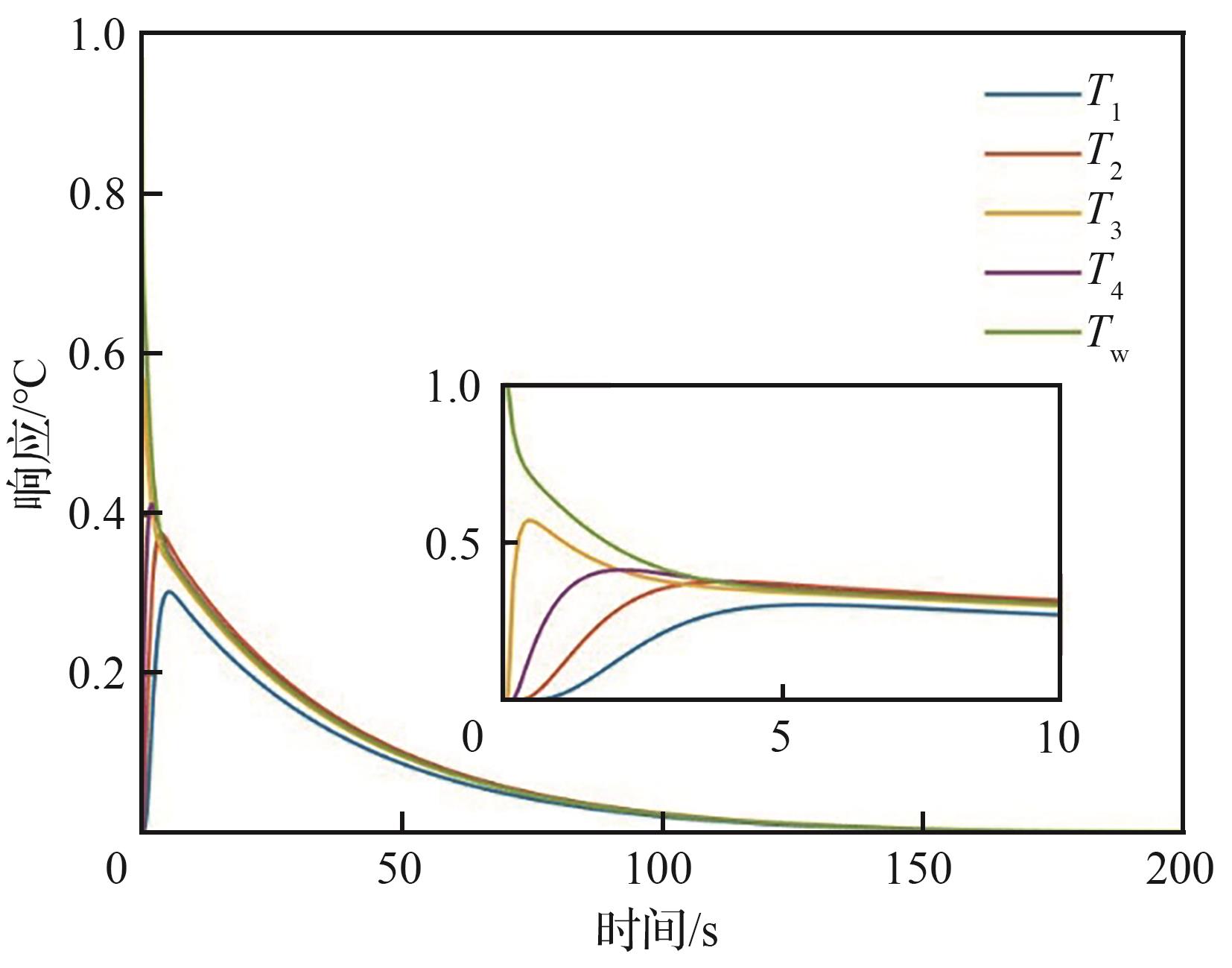
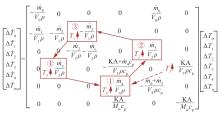
Fig.16
Schematic diagram of the influence relationship of temperature
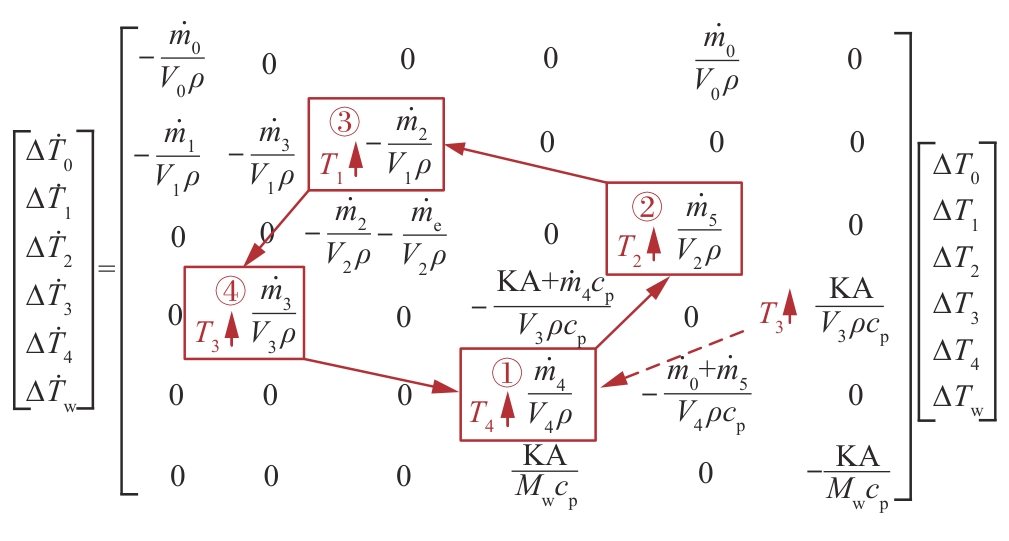
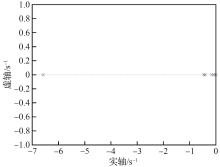
Fig.17
Pole distribution diagram in non-internal circulation state
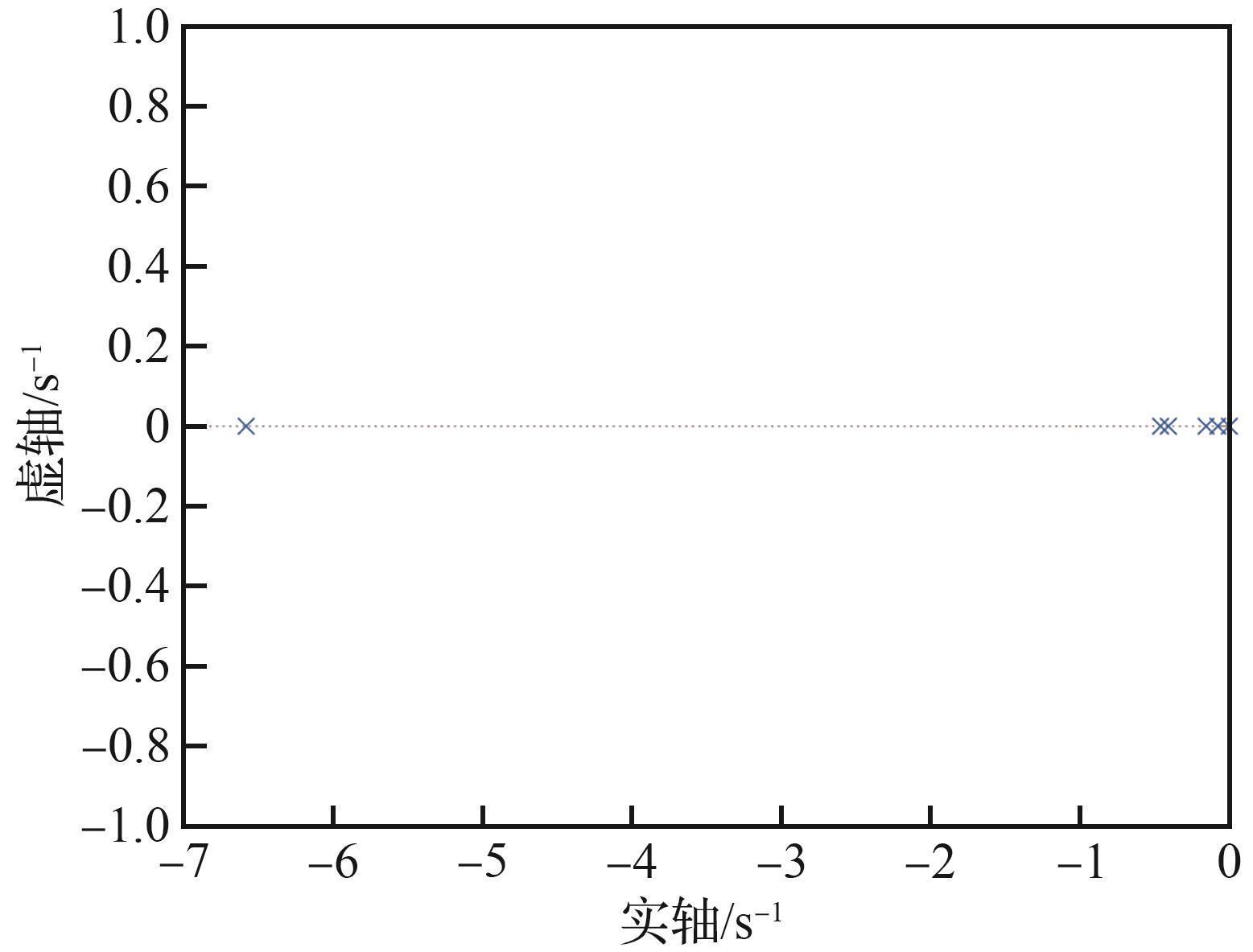
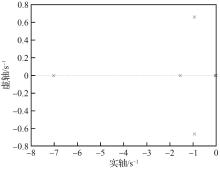
Fig.18
Pole distribution diagram in internal circulation state
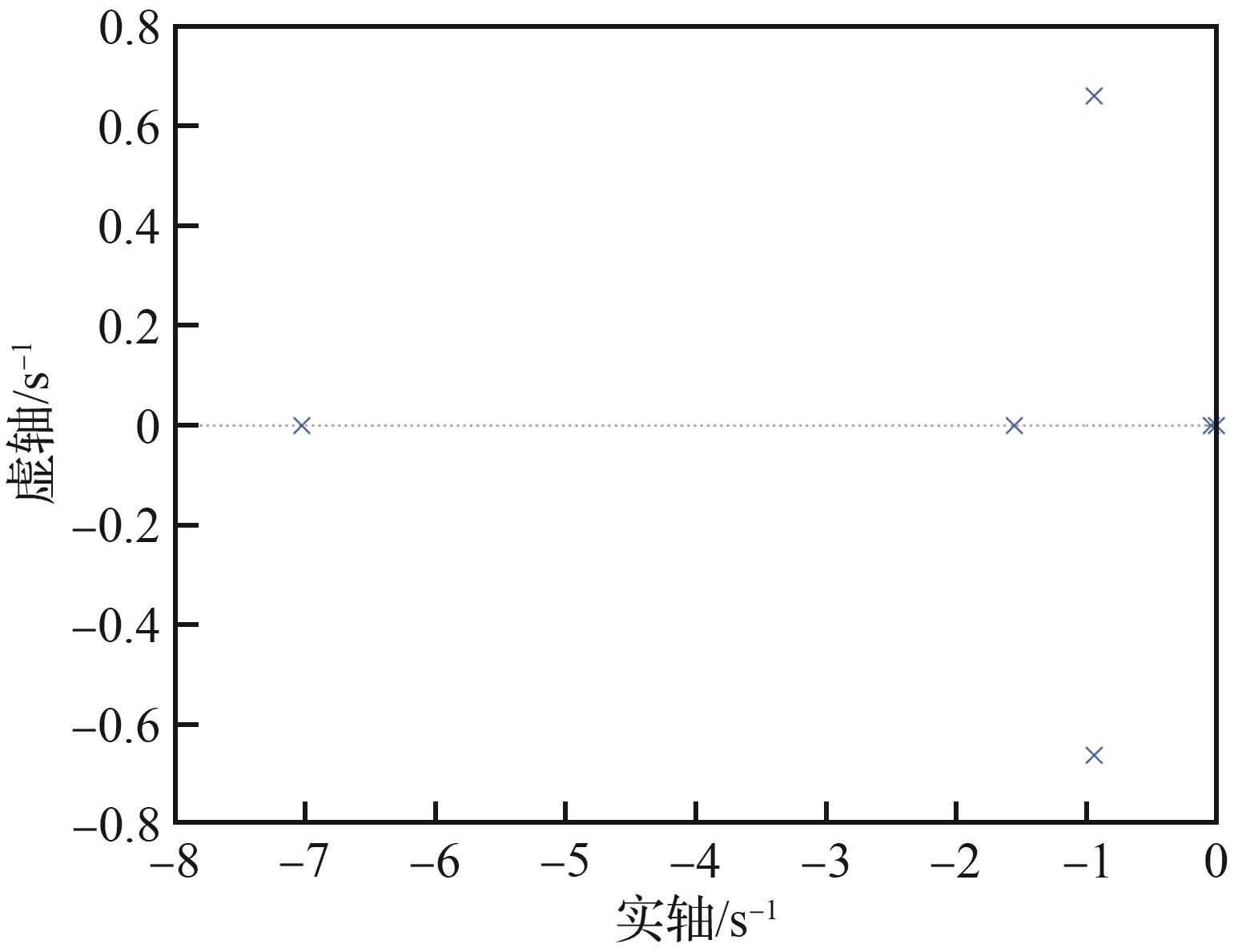
Table 5
Comparison of pole values under condition of whether internal circulation exists
| 非内循环状态极点 | 内循环状态极点 |
|---|---|
| -2.987 5×10⁻⁵ | -2.988 4×10⁻⁵ |
| -0.076 5 | -0.038 6 |
| -0.155 4 | -0.938 0+0.661 8i |
| -0.459 7 | -0.938 0-0.661 8i |
| -0.407 4 | -1.550 9 |
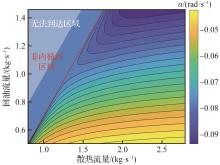
Fig.19
Real part of dominant pole under different flow states
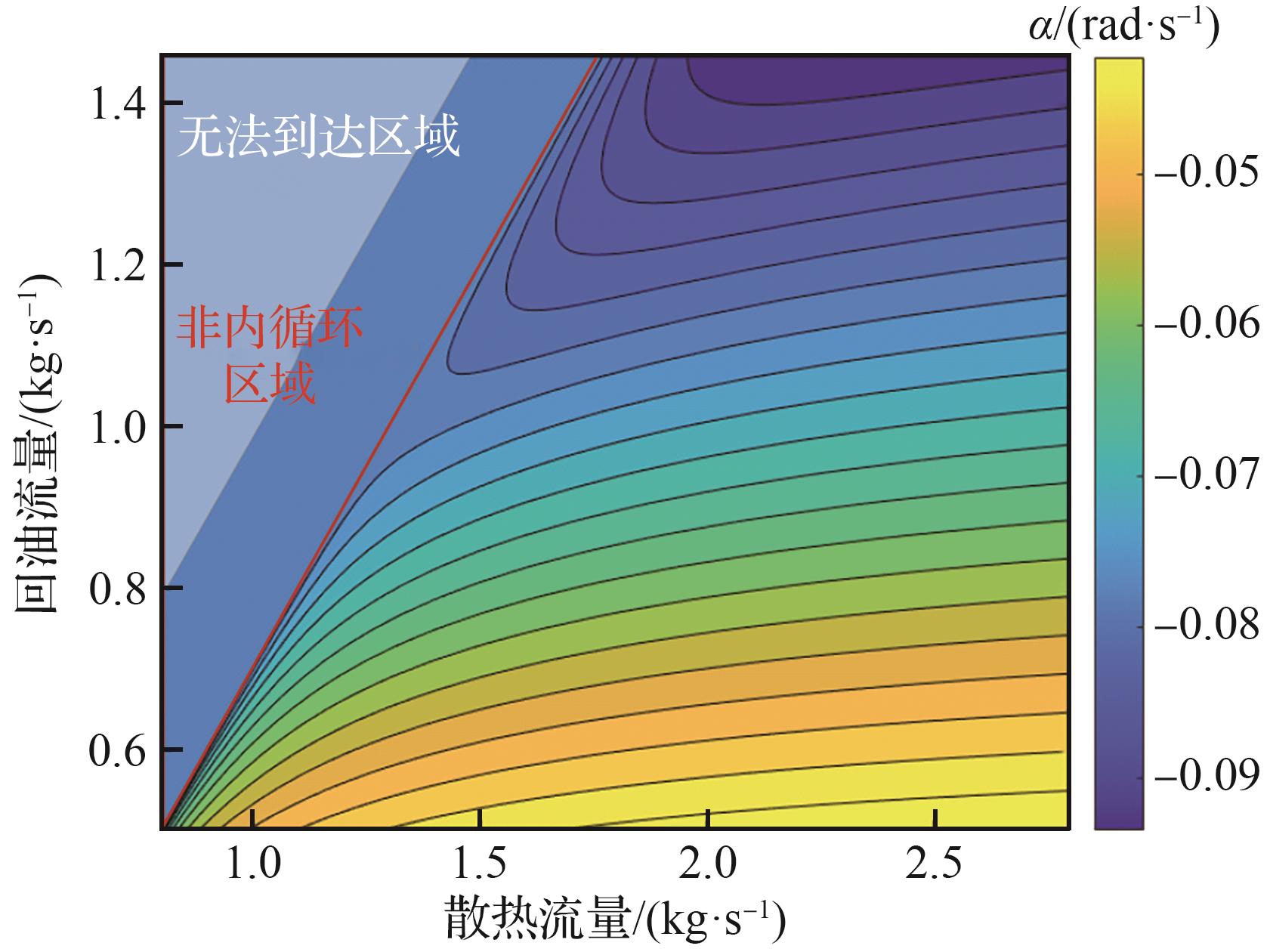
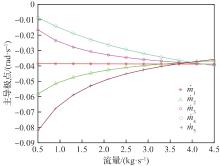
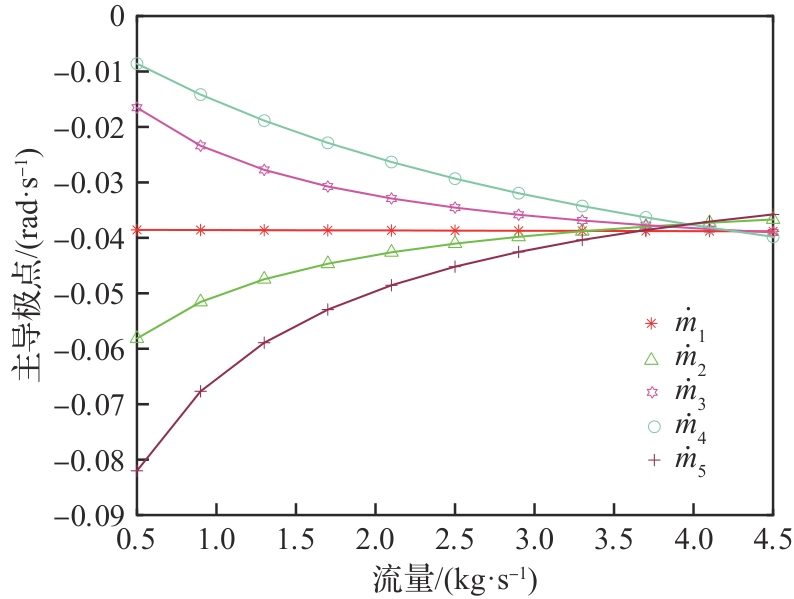
Fig.20
Dominant pole versus a single flow rate
| [1] | 杨琳萱, 马慧才, 庞丽萍. 超声速民机环控系统设计及性能仿真[J]. 航空学报, 2025, 46(20): 531585. |
| YANG L X, MA H C, PANG L P. Design and performance simulation of environmental control system for supersonic civil aircraft[J]. Acta Aeronautica et Astronautica Sinica, 2025, 46(20): 531585 (in Chinese). | |
| [2] | 杨世宇, 于海育, 林远方, 等. 具备消耗性热沉的燃油热管理系统性能分析及优化[J]. 航空学报, 2025, 46(4): 130897. |
| YANG S Y, YU H Y, LIN Y F, et al. Performance analysis and optimization of fuel thermal management system with expendable heat sink[J]. Acta Aeronautica et Astronautica Sinica, 2025, 46(4): 130897 (in Chinese). | |
| [3] | 杨世宇, 林远方, 于海育, 等. 多温度限制点条件下燃油热管理系统热回油特性分析[J]. 清华大学学报(自然科学版), 2024, 64(5): 841-851. |
| YANG S Y, LIN Y F, YU H Y, et al. Analysis of the hot fuel return characteristics for a fuel thermal management system with multiple temperature limit points[J]. Journal of Tsinghua University (Science and Technology), 2024, 64(5): 841-851 (in Chinese). | |
| [4] | VAN HEERDEN A S J, JUDT D M, JAFARI S, et al. Aircraft thermal management: Practices, technology, system architectures, future challenges, and opportunities[J]. Progress in Aerospace Sciences, 2022, 128: 100767. |
| [5] | SIGTHORSSON D, OPPENHEIMER M W, DOMAN D B. Aircraft thermal endurance optimization part Ⅱ: Using a simple dual tank topology and robust temperature regulation[C]∥AIAA Scitech 2019 Forum. Reston:AIAA, 2019. |
| [6] | SIGTHORSSON D, OPPENHEIMER M W, DOMAN D B. Aircraft thermal endurance optimization part Ⅰ: Using a mixed dual tank topology and robust temperature regulation[C]∥AIAA Scitech 2019 Forum. Reston:AIAA, 2019. |
| [7] | 屠敏, 袁耿民, 薛飞, 等. 综合热管理在先进战斗机系统研制中的应用[J]. 航空学报, 2020, 41(6): 523629. |
| TU M, YUAN G M, XUE F, et al. Application of integrated thermal management in development of advanced fighter system[J] Acta Aeronautica et Astronautica Sinica, 2020, 41(6) :523629 (in Chinese). | |
| [8] | 成超乾, 于鹏, 谢宗齐, 等. 基于LNG的高速飞机热管理系统设计建模与分析[J]. 航空学报, 2023, 44(10): 127545. |
| CHENG C Q, YU P, XIE Z Q, et al. Design simulation of thermal management system for hypersonic aircraft based on liquid natural gas[J]. Acta Aeronautica et Astronautica Sinica, 2023, 44(10): 127545 (in Chinese). | |
| [9] | SIGTHORSSON D, OPPENHEIMER M W, DOMAN D B. Aircraft thermal endurance enhancement using a dual tank configuration and temperature regulation[C]∥2018 AIAA Guidance, Navigation, and Control Conference. Reston: AIAA, 2018. |
| [10] | DOTY J, YERKES K, BYRD L, et al. Dynamic thermal management for aerospace technology: Review and outlook[J]. Journal of Thermophysics and Heat Transfer, 2017, 31(1): 86-98. |
| [11] | 王艾伦. 复杂机电系统(键合图—模态分析)方法研究[D]. 长沙: 中南大学, 2004. |
| WANG A L. A research on (bond graph-modal analysis) method for complex elcetro-mechanical system[D]. Changsha: Central South University, 2004 (in Chinese). | |
| [12] | WANG A L. Bond graph method for the dynamic similarity analysis of complex electromechanical system[J]. Journal of Mechanical Engineering, 2010, 46(1): 74. |
| [13] | THOMPSON A F, IEZZI A J, PANGBORN H C, et al. Combined design and open-loop control optimization for propulsion, power, and thermal management of hybrid-electric aircraft[C]∥2023 IEEE Conference on Control Technology and Applications (CCTA). Piscataway: IEEE Press, 2023: 955-962. |
| [14] | AKSLAND C T, TANNOUS P J, WAGENMAKER M J, et al. Hierarchical predictive control of an unmanned aerial vehicle integrated power, propulsion, and thermal management system[J]. IEEE Transactions on Control Systems Technology, 2023, 31(3): 1280-1295. |
| [15] | KOELN J P, PANGBORN H C, WILLIAMS M A, et al. Hierarchical control of aircraft electro-thermal systems[J]. IEEE Transactions on Control Systems Technology, 2020, 28(4): 1218-1232. |
| [16] | PANGBORN H C, KOELN J P, WILLIAMS M A, et al. Experimental validation of graph-based hierarchical control for thermal management[J]. Journal of Dynamic Systems, Measurement, and Control, 2018, 140(10): 101016. |
| [17] | HU H T, SUN H R, WU C Y, et al. A steady-state simulation model of supplemental cooling system integrated with vapor compression refrigeration cycles for commercial airplane[J]. Applied Thermal Engineering, 2020, 166: 114692. |
| [18] | DUAN Z D, SUN H R, WU C Y, et al. Flow-network based dynamic modelling and simulation of the temperature control system for commercial aircraft with multiple temperature zones[J]. Energy, 2022, 238: 121874. |
| [19] | 胡沛, 黄坤山, 何世伟, 等. 高空长航时无人机热管理技术发展及挑战[J]. 航空动力学报, 2025, 40(8):20230171. |
| HU P, HUANG K S, HE S W, et al. Development of thermal management technologies for high-altitude long endurance unmanned aerial vehicles: Challenges and perspectives[J]. Journal of Aerospace Power, 2025, 40(8):20230171 (in Chinese). | |
| [20] | 杜晨慧. 高超声速飞行器综合热管理及关键技术研究进展[J]. 装备环境工程, 2023, 20(1): 43-51. |
| DU C H. Research progress on integrated thermal management and key technology of hypersonic vehicles[J]. Equipment Environmental Engineering, 2023, 20(1): 43-51 (in Chinese). | |
| [21] | 滕润航, 贺克伦, 赵甜, 等. 飞行器能源与热管理系统中多能流统一建模与分析方法[J]. 航空学报, 2023, 44(19): 128427. |
| TENG R H, HE K L, ZHAO T, et al. Unified modeling and analysis method of multi-energy flow for aircraft energy and thermal management system[J]. Acta Aeronautica et Astronautica Sinica, 2023, 44(19): 128427 (in Chinese). |
| [1] | Xiangyu YU, Wen LI, Jie YAN, Shizhe LIANG. Simulation research on thermal management system of fuel cell for liquid hydrogen powered UAV [J]. Acta Aeronautica et Astronautica Sinica, 2025, 46(9): 630964-630964. |
| [2] | Zhichun YANG, Te YANG. Physical embedded neural network model and method for dynamic load identification [J]. Acta Aeronautica et Astronautica Sinica, 2025, 46(5): 531450-531450. |
| [3] | Shiyu YANG, Haiyu YU, Yuanfang LIN, Xingang LIANG. Performance analysis and optimization of fuel thermal management system with expendable heat sink [J]. Acta Aeronautica et Astronautica Sinica, 2025, 46(4): 130897-130897. |
| [4] | Linxuan YANG, Huicai MA, Liping PANG. Design and performance simulation of environmental control system for supersonic civil aircraft [J]. Acta Aeronautica et Astronautica Sinica, 2025, 46(20): 531585-531585. |
| [5] | Weida LOU, Guohua QIN, Min WAN, Zhixiang ZHU. Prediction and experimental verification of time-varying dynamic parameters for milling thin-walled workpieces [J]. Acta Aeronautica et Astronautica Sinica, 2025, 46(14): 431540-431540. |
| [6] | Xiangdong GE, Fayong WU, Yongquan LIU, Zhongyan AN, Baodong QIAO, Qiang GAO, Tianlong QIN, Xiaoyang ZHOU. Research methods for whole aeroengine vibration and their engineering application [J]. Acta Aeronautica et Astronautica Sinica, 2024, 45(4): 628353-628353. |
| [7] | Yuhao WEI, Yuxue GE, Qian ZHAO, Yang PEI. Performance analysis of dual-tank fuel thermal management system [J]. Acta Aeronautica et Astronautica Sinica, 2024, 45(14): 129629-129629. |
| [8] | Shengqing YANG, Jingyu WU, Wenshan ZHU, Chao ZHONG. Control method of constellation relative-configuration maintenance based on inter-satellite links [J]. ACTA AERONAUTICAET ASTRONAUTICA SINICA, 2023, 44(6): 326796-326796. |
| [9] | Runhang TENG, Kelun HE, Tian ZHAO, Xiaoxiao YU, Xikui YU, Xianghua XU, Xingang LIANG, Qun CHEN. Unified modeling and analysis method of multi-energy flow for aircraft energy and thermal management system [J]. Acta Aeronautica et Astronautica Sinica, 2023, 44(19): 128427-128427. |
| [10] | Gang LEI, Wei LUO, Yunshu LI, Canhui LAI. Optimization of reentry maneuver trajectory for hypersonic glide vehicles in multiple no-fly zones [J]. Acta Aeronautica et Astronautica Sinica, 2023, 44(15): 528769-528769. |
| [11] | Chaoqian CHENG, Peng YU, Zongqi XIE, Yang LI, Zongxia JIAO. Design simulation of thermal management system for hypersonic aircraft based on liquid natural gas [J]. ACTA AERONAUTICAET ASTRONAUTICA SINICA, 2023, 44(10): 127545-127545. |
| [12] | WEI Yang, XU Haojun, XUE Yuan, ZHENG Wuji, LI Zhe, PEI Binbin. Aircraft flight safety envelope protection under icing conditions based on adaptive neural network dynamic inversion [J]. ACTA AERONAUTICAET ASTRONAUTICA SINICA, 2019, 40(5): 122488-122488. |
| [13] | WEN Zhuoqun, WANG Pengfei, ZHANG Yan, JIANG Yanfen. Vibration reduction technology of mechanical metamaterials presented to large scale structures [J]. ACTA AERONAUTICAET ASTRONAUTICA SINICA, 2018, 39(S1): 721651-721651. |
| [14] | TAN Guanghui, LI Qiuyan, DENG Jun. Test and analysis of natural modal characteristics of a wing model with thermal effect [J]. ACTA AERONAUTICAET ASTRONAUTICA SINICA, 2016, 37(S1): 32-37. |
| [15] | QU Weiwei, FANG Lei, KE Yinglin, FANG Wei, LIU Siren, XING Hongwen. Analysis of Locating Scheme for Circumferential Track Drilling System [J]. ACTA AERONAUTICAET ASTRONAUTICA SINICA, 2014, 35(8): 2319-2330. |
| Viewed | ||||||
|
Full text |
|
|||||
|
Abstract |
|
|||||
Address: No.238, Baiyan Buiding, Beisihuan Zhonglu Road, Haidian District, Beijing, China
Postal code : 100083
E-mail:hkxb@buaa.edu.cn
Total visits: 6658907 Today visits: 1341All copyright © editorial office of Chinese Journal of Aeronautics
All copyright © editorial office of Chinese Journal of Aeronautics
Total visits: 6658907 Today visits: 1341

 CJA
CJA
