Acta Aeronautica et Astronautica Sinica ›› 2026, Vol. 47 ›› Issue (13): 133030.doi: 10.7527/S1000-6893.2026.33030
• Special Issue: Flow Control and Thermal Management •
Tongyong ZHANG1,2, Mengxiang ZENG1,2, Qiang CHEN1,2, Qingguo FEI1,2, Dahai ZHANG1,2( )
)
Received:2025-11-03
Revised:2025-11-28
Accepted:2026-02-02
Online:2026-02-10
Published:2026-02-09
Contact:
Dahai ZHANG
E-mail:dzhang@seu.edu.cn
Supported by:CLC Number:
Tongyong ZHANG, Mengxiang ZENG, Qiang CHEN, Qingguo FEI, Dahai ZHANG. Intelligent optimization design of composite microchannel liquid cold plate for airborne electronic devices[J]. Acta Aeronautica et Astronautica Sinica, 2026, 47(13): 133030.
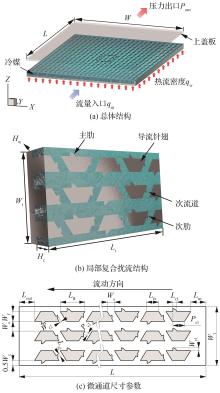
Fig.1
Schematic diagram of microchannel cold plate with composite turbulence-promoting structures
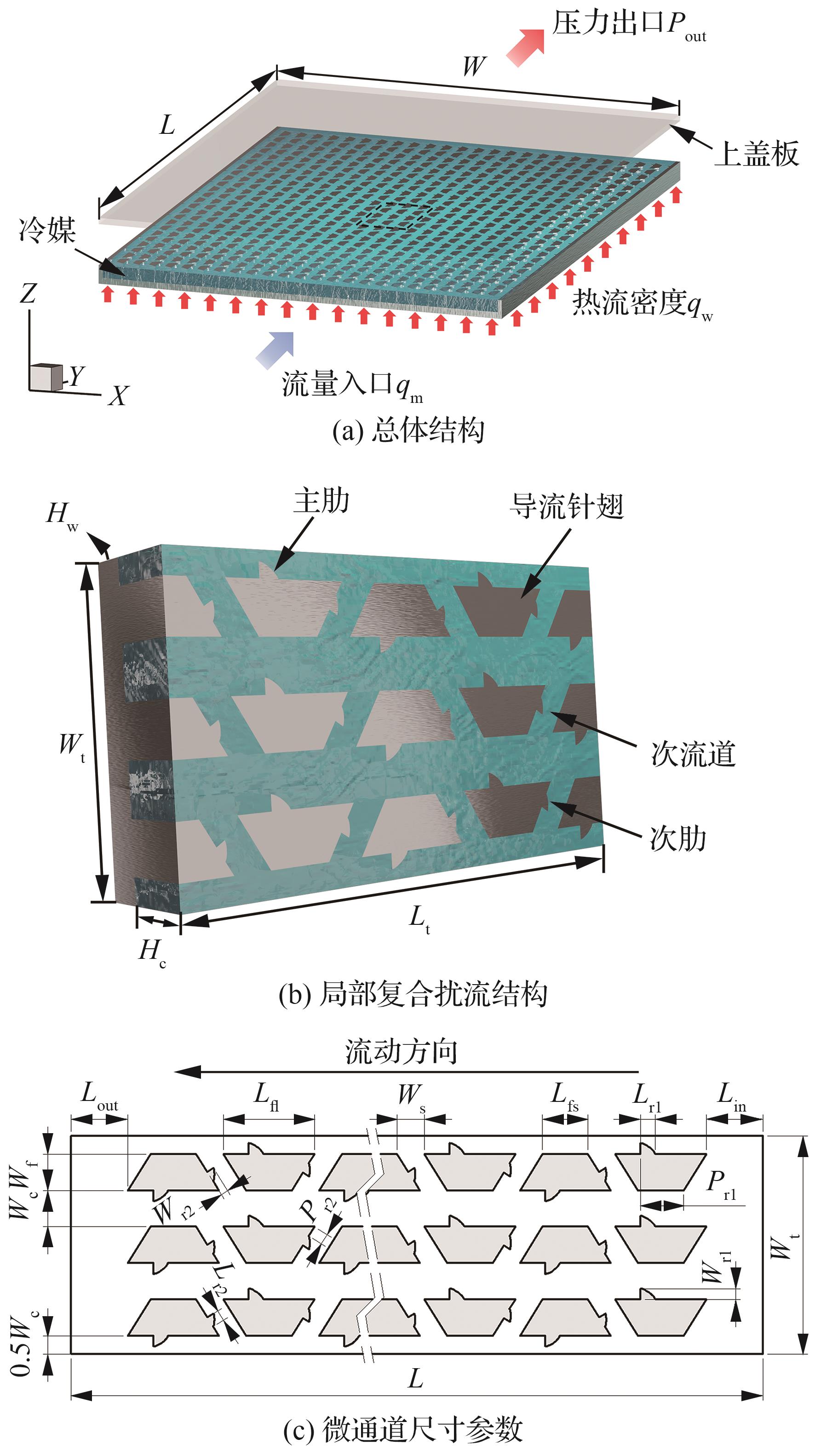

Table 1
Physical properties of aluminum alloy 6061-T6
| Ts/℃ | ρs/(kg·m-3) | λs/(W·(m·K)-1) | cp,s/(J·(kg·K)-1) |
|---|---|---|---|
| 0 | 2 700 | 162 | 917 |
| 93 | 2 700 | 177 | 978 |
| 201 | 2 700 | 192 | 1 028 |
| 316 | 2 700 | 207 | 1 078 |
| 428 | 2 700 | 223 | 1 133 |
Table 2
Thermophysical properties of RP-3 fuel
| Tf/℃ | ρf/(kg·m-3) | λf/(W·(m·K)-1) | cp,f/(J·(kg·K)-1) | μf/(10-3 Pa·s) |
|---|---|---|---|---|
| 0 | 821.3 | 0.142 6 | 1 681 | 1.340 |
| 30 | 796.2 | 0.137 2 | 1 834 | 1.213 |
| 60 | 760.7 | 0.131 8 | 2 045 | 0.745 |
| 90 | 732.1 | 0.126 7 | 2 189 | 0.562 |
| 120 | 701.8 | 0.119 4 | 2 319 | 0.410 |
| 150 | 687.4 | 0.115 7 | 2 427 | 0.334 |
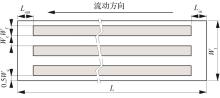
Fig.2
Internal structure schematic of conventional cold plate with straight channels
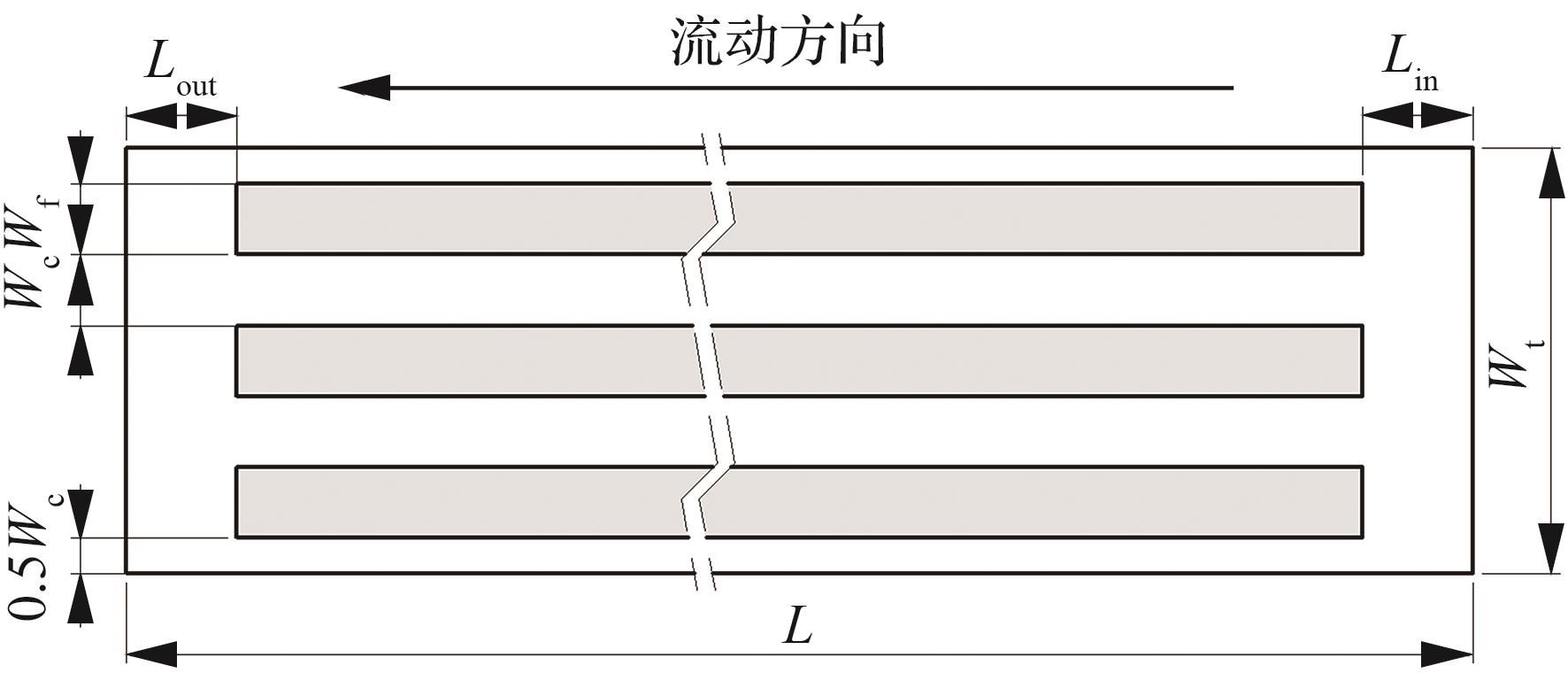
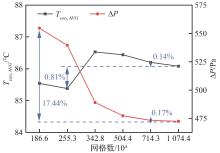
Fig.3
Grid independence verification
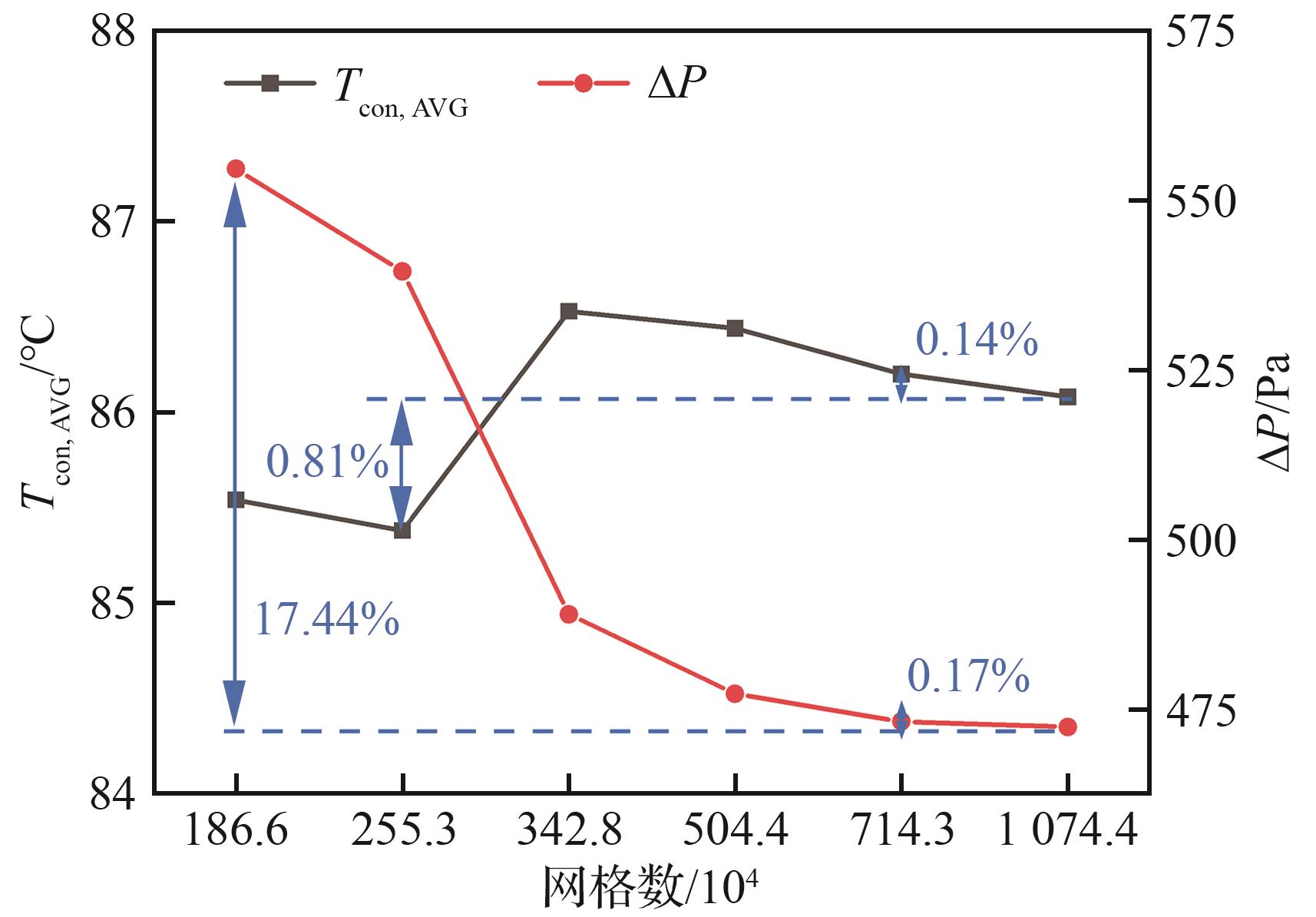
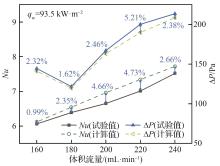
Fig.4
Model validation
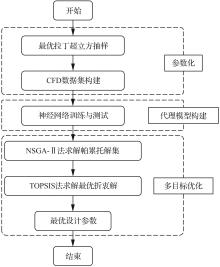
Fig.5
Flowchart of the overall study
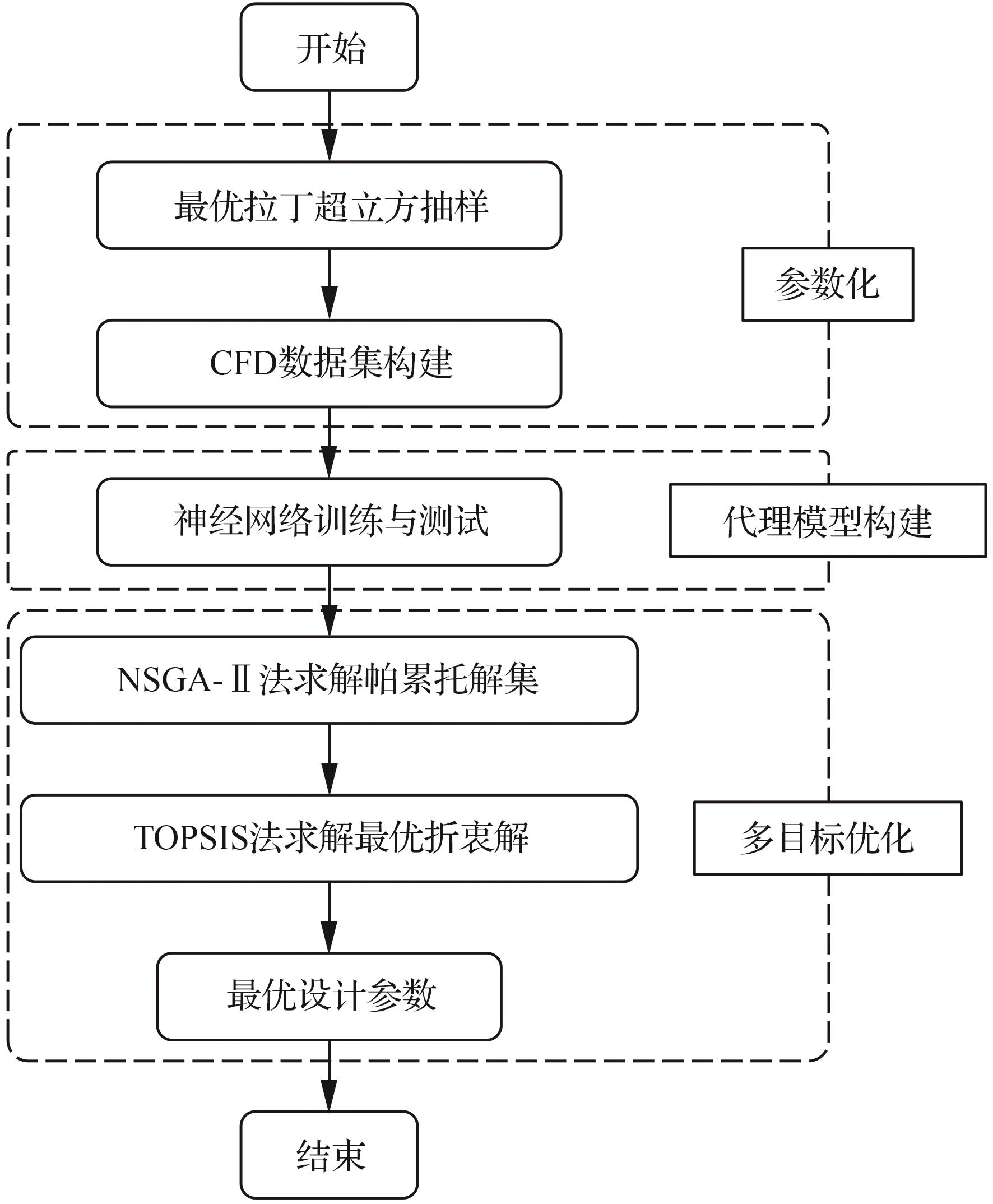
Table 3
Model input parameters
| 设计参数 | 数值范围 | 无量纲参数 | 数值范围 |
|---|---|---|---|
| Ws/mm | 1.1~1.9 | α=Ws/Wc | 0.55~0.95 |
| Wr1/mm | 0.3~1.2 | βr1=Wr1/Wf | 0.15~0.60 |
| Lr1/mm | 0.3~1.2 | δr1=Lr1/Wf | 0.15~0.60 |
| Pr1/mm | 1.25~2.45 | εr1=Pr1/Lfl | 0.25~0.49 |
| Wr2/mm | 0.2~0.7 | βr2=Wr2/Wf | 0.10~0.35 |
| Lr2/mm | 0.3~1.0 | δr2=Lr2/Wf | 0.15~0.50 |
| Pr2/mm | 0.1~0.9 | εr2=Pr2/Lfs | 0.04~0.36 |
| qm/(kg·s-1) | 0.01~0.08 | Re | 84~670 |
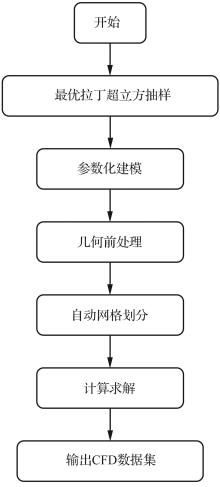
Fig.6
Flowchart of parametric modeling and simulation
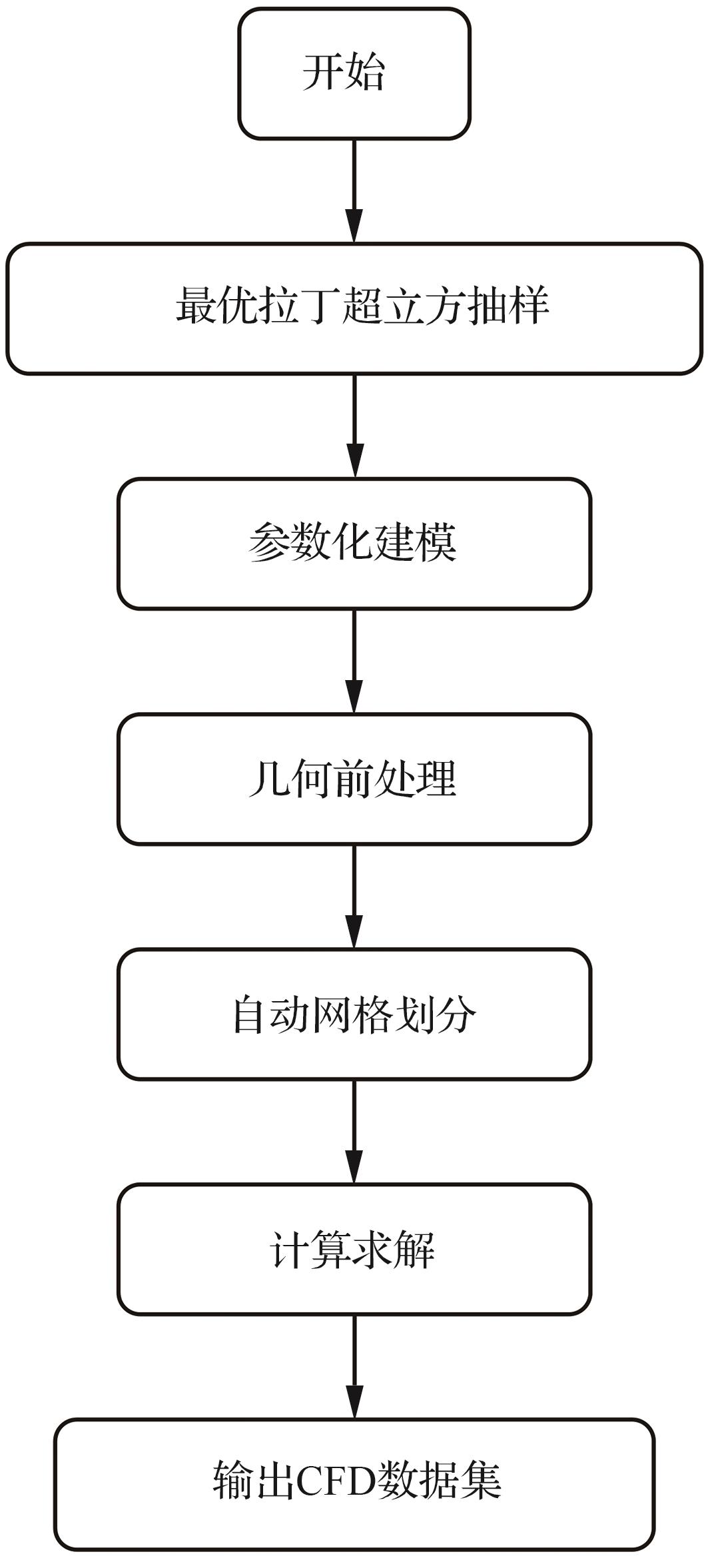
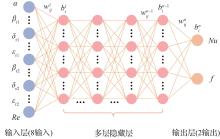
Fig.7
Neural-network surrogate model architecture schematic
Table 4
Ranges of hyper-parameters for optimization
| 超参数 | 寻优范围 |
|---|---|
| 隐藏层层数 | 1~8 |
| 每层神经元数 | 2~64 |
| 激活函数 | Sigmoid,ReLU,Leaky ReLU,Tanh |
| 训练函数 | Trainlm,Trainbfg,Trainrp,Trainscg |
| 初始化函数 | Initnw,Initlay,Initwb |
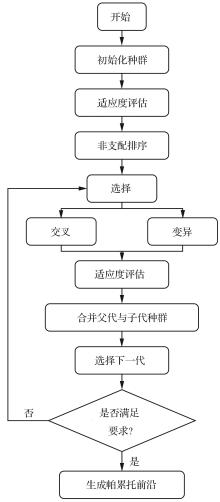
Fig.8
Flowchart of NSGA-Ⅱ algorithm
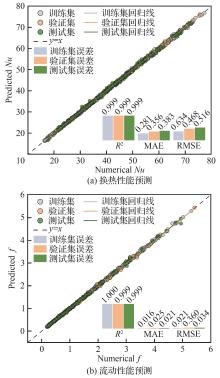
Fig.9
Predictive performance of surrogate model
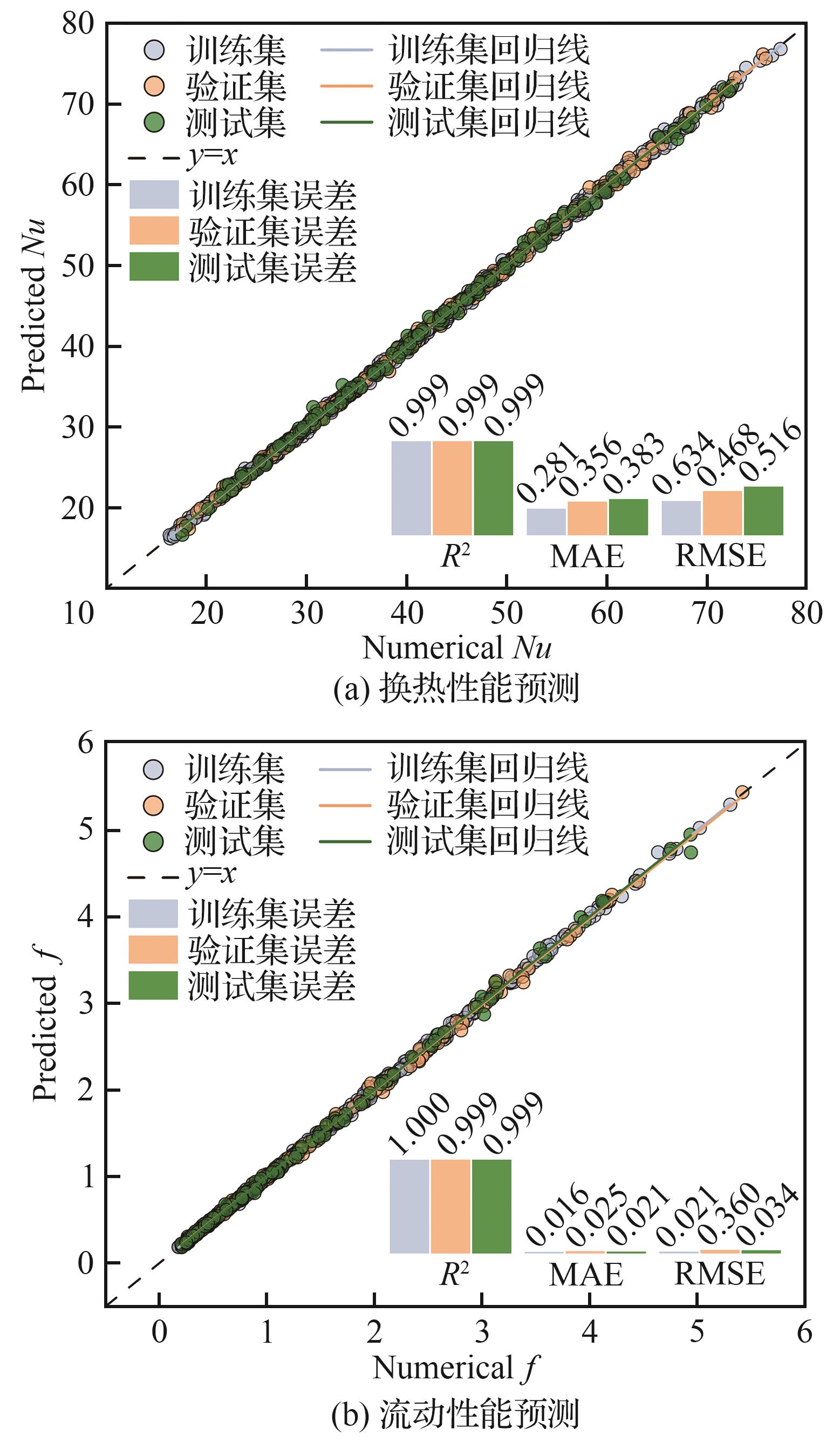
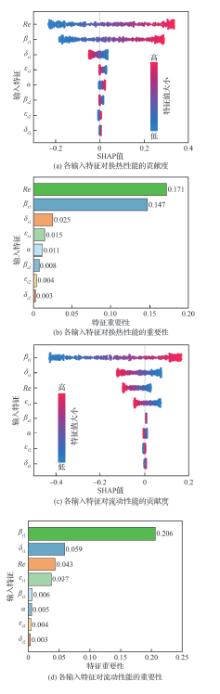
Fig.10
SHAP analysis of surrogate model
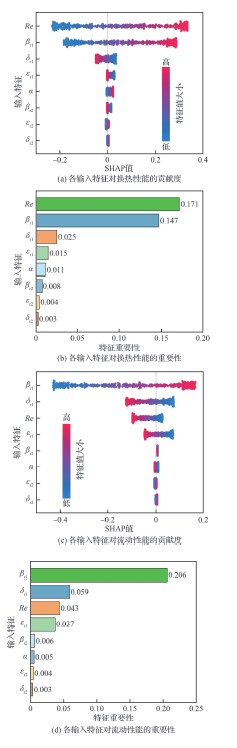
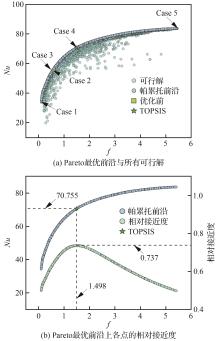
Fig.11
Multi-objective optimization and TOPSIS-based optimal compromise solution
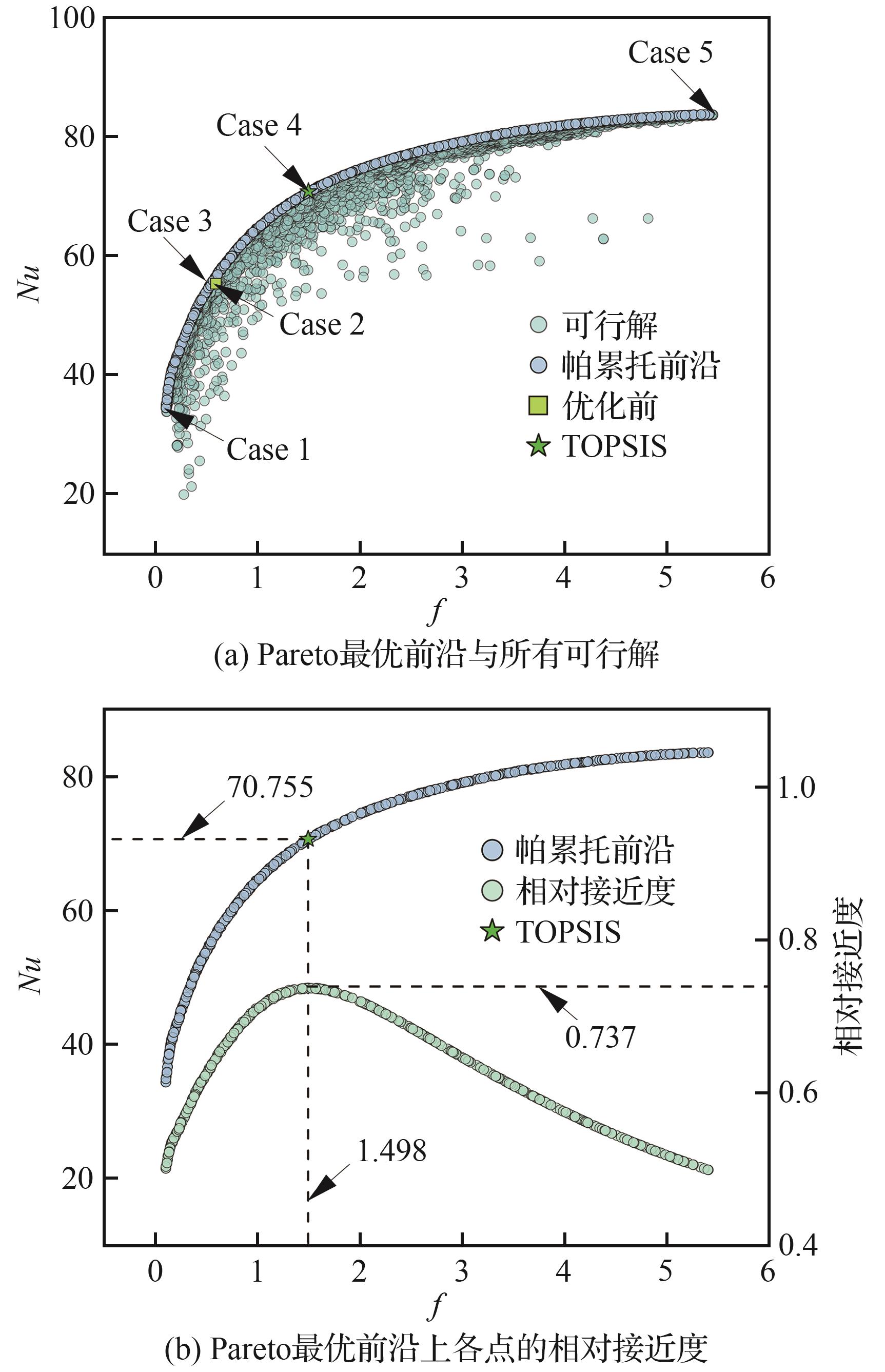
Table 5
Geometrical parameters of selected optimal solutions
| 设计参数 | Pareto解 | ||||
|---|---|---|---|---|---|
| Case 1 | 优化前 | Case 3 | TOPSIS | Case 5 | |
| α | 0.949 | 0.750 | 0.941 | 0.840 | 0.737 |
| βr1 | 0.151 | 0.300 | 0.197 | 0.586 | 0.599 |
| δr1 | 0.505 | 0.400 | 0.544 | 0.448 | 0.154 |
| εr1 | 0.309 | 0.470 | 0.430 | 0.453 | 0.332 |
| βr2 | 0.103 | 0.200 | 0.104 | 0.349 | 0.350 |
| δr2 | 0.491 | 0.300 | 0.319 | 0.200 | 0.351 |
| εr2 | 0.121 | 0.240 | 0.127 | 0.358 | 0.359 |
| Re | 659.66 | 670.00 | 659.55 | 658.54 | 657.53 |
Table 6
Validation of multi-objective optimization results
| Pareto解 | 性能指标 | 模型值 | CFD值 | 误差/% |
|---|---|---|---|---|
| Case 1 | Nu | 34.431 | 35.689 | 3.52 |
| f | 0.105 | 0.110 | 4.84 | |
| 优化前 | Nu | 55.251 | ||
| f | 0.596 | |||
| Case 3 | Nu | 55.408 | 57.355 | 3.40 |
| f | 0.552 | 0.522 | 5.69 | |
| TOPSIS | Nu | 70.755 | 75.544 | 6.34 |
| f | 1.498 | 1.412 | 6.06 | |
| Case 5 | Nu | 83.714 | 81.654 | 2.52 |
| f | 5.408 | 5.235 | 3.30 |
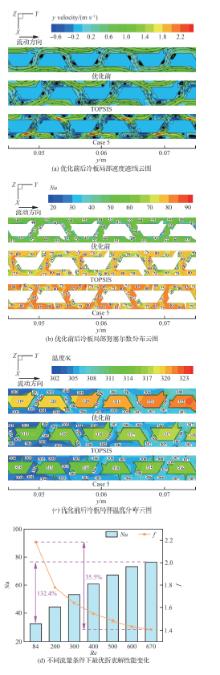
Fig.12
CFD results of the selected optimal solutions
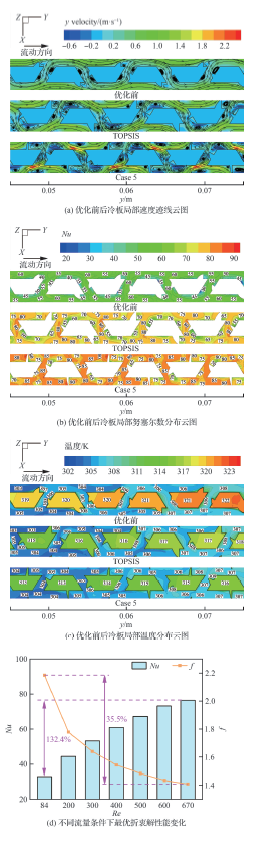
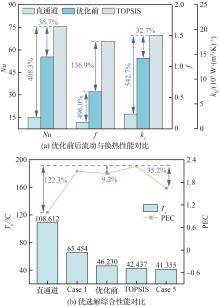
Fig.13
Performance comparison of selected optimal solutions
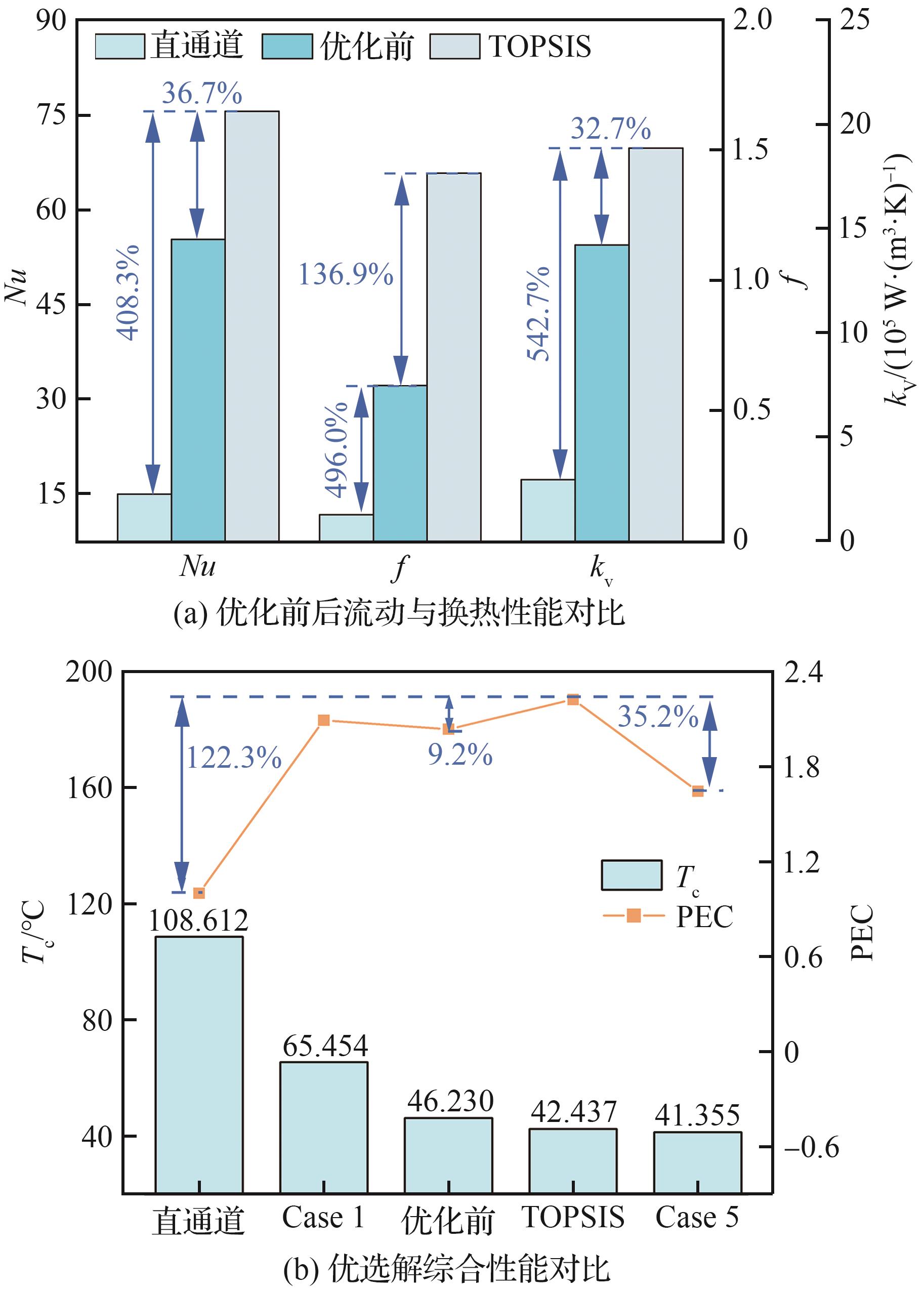
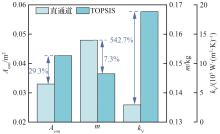
Fig.14
Thermal efficiency and mass analysis of optimal compromise solution
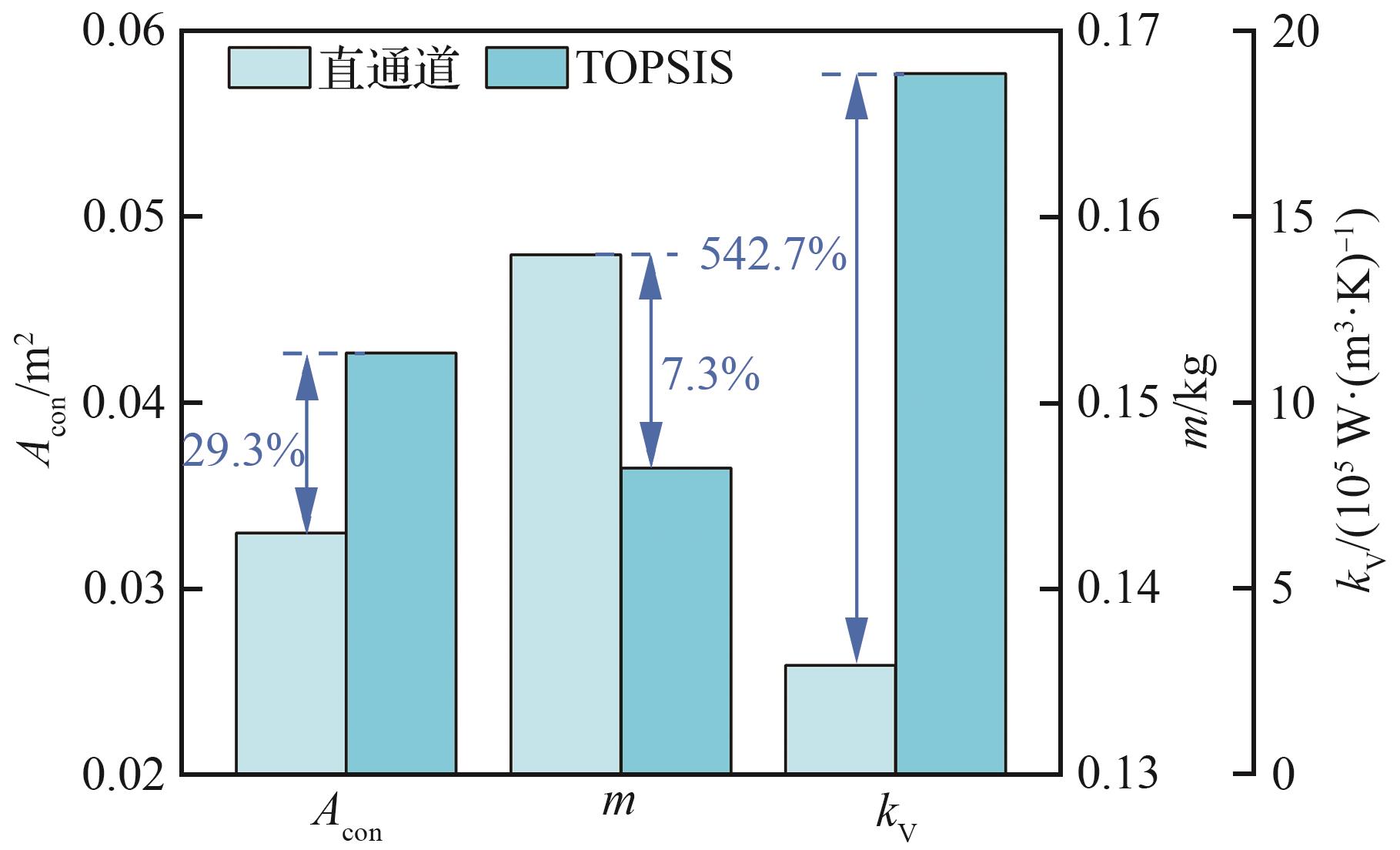
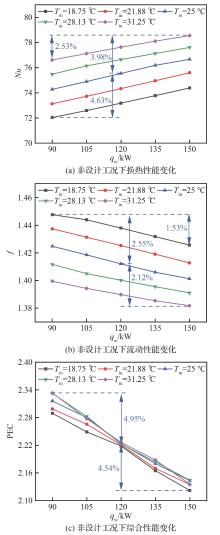
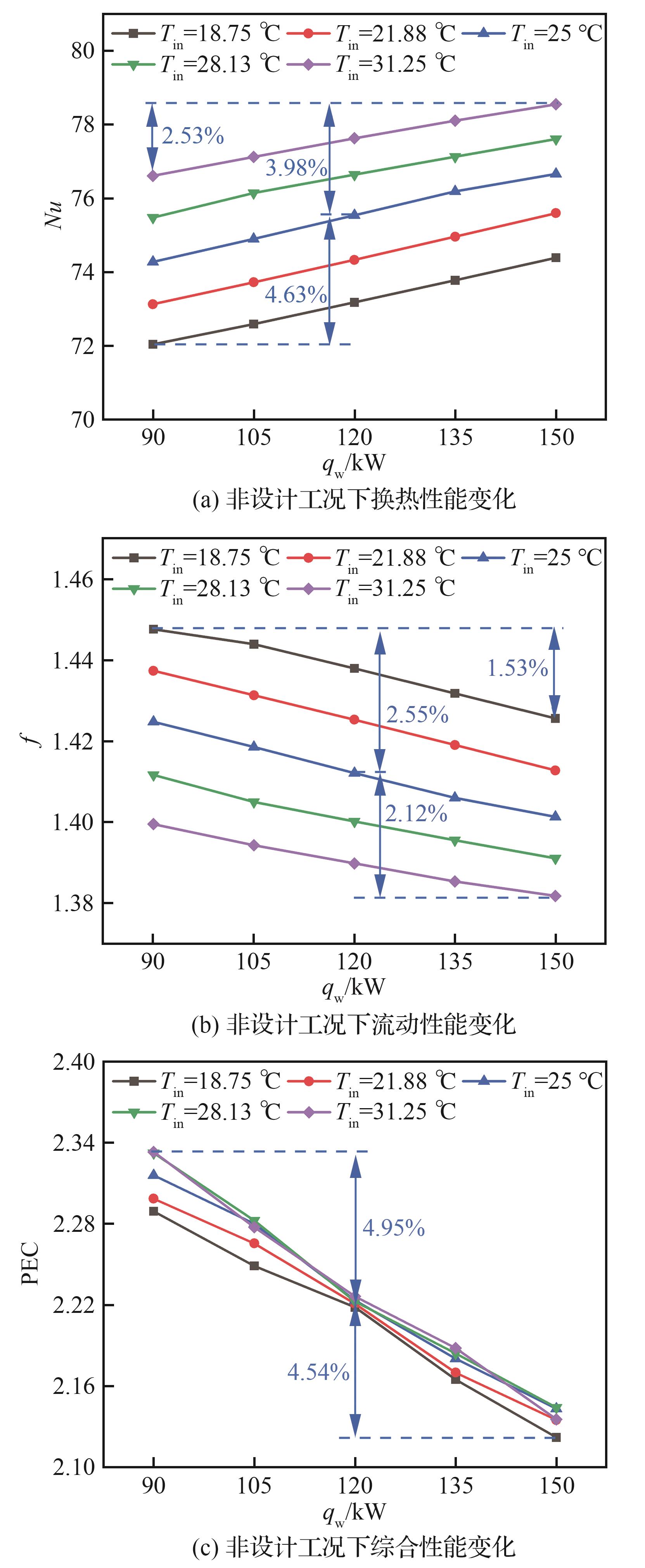
Fig.15
Performance robustness analysis of optimal compromise solution
| [1] | 刘秀芳, 陈佳军, 郑勉, 等. 新型高效机载电子器件冷却系统设计及实验[J]. 航空学报, 2025, 46(9): 131078. |
| LIU X F, CHEN J J, ZHENG M, et al. Design and experiment of a new efficient cooling system for airborne electronic devices[J]. Acta Aeronautica et Astronautica Sinica, 2025, 46(9): 131078 (in Chinese). | |
| [2] | 李延涛, 曹畅, 汪千翔, 等. 双层针翅歧管微通道热沉歧管层优化研究[J]. 工程热物理学报, 2024, 45(12): 3829-3836. |
| LI Y T, CAO C, WANG Q X, et al. Optimization study on manifold layer of a double layer pin-fin manifold microchannel heat sink[J]. Journal of Engineering Thermophysics, 2024, 45(12): 3829-3836 (in Chinese). | |
| [3] | 杨世宇, 于海育, 林远方, 等. 具备消耗性热沉的燃油热管理系统性能分析及优化[J]. 航空学报, 2025, 46(4): 130897. |
| YANG S Y, YU H Y, LIN Y F, et al. Performance analysis and optimization of fuel thermal management system with expendable heat sink[J]. Acta Aeronautica et Astronautica Sinica, 2025, 46(4): 130897 (in Chinese). | |
| [4] | 张卓然, 张健, 胡光源, 等. 多电飞机高功率密度高效电机系统热管理技术[J]. 航空学报, 2025, 46(6): 531380. |
| ZHANG Z R, ZHANG J, HU G Y, et al. Thermal management technologies of high-power-density high-efficiency electric machine systems for more electric aircraft[J]. Acta Aeronautica et Astronautica Sinica, 2025, 46(6): 531380 (in Chinese). | |
| [5] | 王进, 张博瑞, 何玉荣. 基于歧管式微通道的芯片散热特性强化研究[J]. 工程热物理学报, 2025, 46(9): 2974-2980. |
| WANG J, ZHANG B R, HE Y R. Study on enhancing chip cooling characteristics based on manifold microchannels[J]. Journal of Engineering Thermophysics, 2025, 46(9): 2974-2980 (in Chinese). | |
| [6] | 罗振兵, 王浩, 赵志杰. 合成双射流理论及其赋能航空技术进展[J]. 航空学报, 2025, 46(5): 531821. |
| LUO Z B, WANG H, ZHAO Z J. Theory of dual synthetic jets and its empowerment of advancements in aeronautical technology[J]. Acta Aeronautica et Astronautica Sinica, 2025, 46(5): 531821 (in Chinese). | |
| [7] | 秦飞, 赵征, 何国强, 等. 火箭基组合循环发动机热结构技术研究进展[J]. 航空学报, 2024, 45(11): 529572. |
| QIN F, ZHAO Z, HE G Q, et al. Thermal structure technology development of rocket based combined cycle engine[J]. Acta Aeronautica et Astronautica Sinica, 2024, 45(11): 529572 (in Chinese). | |
| [8] | 任恒, 房景仕, 张根烜. 微通道液冷冷板散热特性研究[J]. 雷达科学与技术, 2021, 19(3): 343-348. |
| REN H, FANG J S, ZHANG G X. Study on heat transfer characteristics of micro-channel cold-plates[J]. Radar Science and Technology, 2021, 19(3): 343-348 (in Chinese). | |
| [9] | 胡军, 饶宇, 张月亮. 波纹微通道换热器中超临界二氧化碳流动传热特性数值模拟[J]. 工程热物理学报, 2025, 46(5): 1569-1579. |
| HU J, RAO Y, ZHANG Y L. Numerical study on heat transfer and flow characteristics of SCO2 in wavy micro channel heat exchanger[J]. Journal of Engineering Thermophysics, 2025, 46(5): 1569-1579 (in Chinese). | |
| [10] | TILAK A K, PATIL R S. Study on effects of novel cross sections of microchannel heat sink on thermohydraulic performance[J]. Journal of Heat Transfer, 2020, 142(4): 044506. |
| [11] | QIU J C, ZHOU J H, ZHAO Q, et al. Numerical investigation of flow boiling characteristics in cobweb-shaped microchannel heat sink[J]. Case Studies in Thermal Engineering, 2021, 28: 101677. |
| [12] | DU W D, LIU C Y, PAN Y. Flow maldistribution and heat transfer non-uniformity with an inlet baffle structure in regenerative cooling channels[J]. Applied Thermal Engineering, 2025, 258: 124619. |
| [13] | FENG Z F, ZHOU C L, GUO F W, et al. The effects of staggered triangular ribs induced vortex flow on hydrothermal behavior and entropy generation in microchannel heat sink[J]. International Journal of Thermal Sciences, 2023, 191: 108331. |
| [14] | BHANDARI P, RAWAT K S, PRAJAPATI Y K, et al. Design modifications in micro pin fin configuration of microchannel heat sink for single phase liquid flow: A review[J]. Journal of Energy Storage, 2023, 66: 107548. |
| [15] | LI Y T, JIN S Q, HU X J, et al. Examining performance of microchannel cold plate heat sink from its three parts along coolant flow direction and new structure designs based on the new considerations[J]. Applied Thermal Engineering, 2025, 269: 125963. |
| [16] | TANG X Y, XU Q, LI J F, et al. Experimental study on flow boiling heat transfer in open copper microchannel heat sinks with different aspect ratios[J]. International Journal of Heat and Mass Transfer, 2024, 231: 125879. |
| [17] | ENEREN P, AKSOY Y T, VETRANO M R. Practical challenges in nanofluid convective heat transfer inside silicon microchannels[J]. Energies, 2023, 16(23): 7885. |
| [18] | DU L, HU W B. An overview of heat transfer enhancement methods in microchannel heat sinks[J]. Chemical Engineering Science, 2023, 280: 119081. |
| [19] | DU L, YUAN J, QU Y F, et al. Numerical analysis of fluid flow and heat transfer characteristics in single crystal diamond microchannels with ribs and secondary channels[J]. Chemical Engineering Science, 2024, 300: 120556. |
| [20] | ELMOUAZEN H, ZHANG X B, GIBREEL M. Enhanced heat transfer and flow topology of hydrogen regenerative-cooling channels with novel X-shape ribs[J]. International Journal of Hydrogen Energy, 2023, 48(82): 32110-32124. |
| [21] | YI Z C, WANG T Y, YAO Y F, et al. Parametric study of flow and heat transfer characteristics in a regenerative cooling channel with crescent-shaped ribs under non-uniform heat flux[J]. Results in Engineering, 2025, 28: 107033. |
| [22] | YANG X, CHEN J T, QIN Y F, et al. Synergistic thermo-hydraulic optimization of embedded microchannels: Balancing chip cooling efficiency and pressure fluctuation resistance[J]. Energy, 2025, 330: 136775. |
| [23] | WEN H P, LIANG Z X, LUO Q Y, et al. Heat transfer performance study of microchannel heat sink with composite secondary channels[J]. International Communications in Heat and Mass Transfer, 2023, 143: 106718. |
| [24] | ZHANG T Y, LIU H Z, FEI Q G, et al. Numerical investigation of the hydrothermal performance in novel cooled panels with flow-guided pin fins and secondary channels for reusable launch vehicles[J]. Energy, 2025, 324: 135991. |
| [25] | 龚振国, 周文杰, 蔡博文, 等. 管径渐变的微管换热器流动与传热性能优化[J]. 工程热物理学报, 2025, 46(1): 57-67. |
| GONG Z G, ZHOU W J, CAI B W, et al. Optimization of air-side friction and heat transfer performance of micro-bare-tube heat exchangers with bundle diameters varying gradually[J]. Journal of Engineering Thermophysics, 2025, 46(1): 57-67 (in Chinese). | |
| [26] | 吕进, 彭毅, 关小雅, 等. 基于NSGA-Ⅱ和响应面法的交错内肋微通道热沉的多目标优化[J]. 工程热物理学报, 2025, 46(2): 627-637. |
| LÜ J, PENG Y, GUAN X Y, et al. Multi-objective optimization of staggered ribbed microchannel heat sinks based on NSGA-Ⅱ and response surface methodology[J]. Journal of Engineering Thermophysics, 2025, 46(2): 627-637 (in Chinese). | |
| [27] | RAN L Y, BABIKER S G, SINGH P K, et al. Multi-objective optimization and artificial neural network models for enhancing the overall performance of a microchannel heat sink with fins inspired Tesla valve profile[J]. Case Studies in Thermal Engineering, 2024, 61: 104973. |
| [28] | MAO Q J, GU Y, WU X H. Simulation study of flow and heat transfer in wavy microchannel heat sink with manifolds and secondary channels composite[J]. International Journal of Thermal Sciences, 2024, 206: 109343. |
| [29] | NEKAHI S, MOGHANLOU F S, VAFERI K, et al. Optimizing finned-microchannel heat sink design for enhanced overall performance by three different approaches: Numerical simulation, artificial neural network, and multi-objective optimization[J]. Applied Thermal Engineering, 2024, 245: 122835. |
| [30] | 汪弋乂. 跨季节垂直埋管蓄热系统性能及优化研究[D]. 重庆: 重庆大学, 2024 : 47-60. |
| WANG Y Y. Research on performance and optimization of cross-seasonal vertical buried pipe thermal storage system[D]. Chongqing: Chongqing University, 2024: 47-60 (in Chinese). | |
| [31] | WANG J J, ZHOU Y, ZHANG X T, et al. Robust multi-objective optimization with life cycle assessment of hybrid solar combined cooling, heating and power system[J]. Energy Conversion and Management, 2021, 232: 113868. |
| [32] | MIAO J, LI C, PAN M Q. Experimental and numerical analysis of variable cross-section channel liquid cooling plate for server chips thermal management[J]. Thermal Science and Engineering Progress, 2024, 49: 102470. |
| [33] | 孙鸣鹤. 基于代理模型的薄壁筒壳结构可靠性分析及优化[D]. 哈尔滨: 哈尔滨工程大学, 2024: 78-85. |
| SUN M H. Reliability analysis and optimization of thin-walled cylindrical shell structure based on surrogate model[D]. Harbin: Harbin Engineering University, 2024: 78-85 (in Chinese) . | |
| [34] | WEIEL M, GÖTZ M, KLEIN A, et al. Dynamic particle swarm optimization of biomolecular simulation parameters with flexible objective functions[J]. Nature Machine Intelligence, 2021, 3(8): 727-734. |
| [35] | WANG Z H, LI M X, REN F S, et al. Sobol sensitivity analysis and multi-objective optimization of manifold microchannel heat sink considering entropy generation minimization[J]. International Journal of Heat and Mass Transfer, 2023, 208: 124046. |
| [36] | BREIMANN S, KAMP F, BASSET G, et al. Charting γ-secretase substrates by explainable AI[J]. Nature Communications, 2025, 16: 5428. |
| [1] | Zijun ZHAO, Shitao CHEN, Weiyan HE, Longhao LIU, Zhenghao ZHANG. Intelligent assessment method for MAV/UAV collaborative combat effectiveness [J]. Acta Aeronautica et Astronautica Sinica, 2026, 47(S1): 732887-732887. |
| [2] | Ming LIU, Jiao WU. Neural network-assisted cooperative navigation of spacecraft clusters under GNSS denials [J]. Acta Aeronautica et Astronautica Sinica, 2026, 47(9): 532303-532303. |
| [3] | Nongtian CHEN, Yucheng ZHANG, Linlin LI, Youming ZHENG. Multi-objective optimization of robustness of aircraft scheduled maintenance task scheduling duration based on improved NSGA-Ⅱ [J]. Acta Aeronautica et Astronautica Sinica, 2026, 47(8): 232675-232675. |
| [4] | Yue LIU, Hantao REN, Xiaofeng XUE, Zhicen SONG, Cheng LU, Yunwen FENG. Prediction of bearing strength for composite bolted joint structures based on MCI-PINN [J]. Acta Aeronautica et Astronautica Sinica, 2026, 47(5): 232422-232422. |
| [5] | Haolei MOU, Jia ZHANG, Zhenyu FENG, Chunyu BAI. Prediction of axial crushing response for CFRP thin-walled C-columns based on WOA-BP-LSTM autoencoder [J]. Acta Aeronautica et Astronautica Sinica, 2026, 47(4): 232349-232349. |
| [6] | Enchun MA, Xianglong BAI, Quan PAN, Zengfu WANG. Classification information-assisted adaptive target detection and tracking method [J]. Acta Aeronautica et Astronautica Sinica, 2026, 47(3): 631553-631553. |
| [7] | Lixiong ZHENG, Zhe CHEN, Xin WANG, Qijun ZHAO. Prediction of whirl flutter boundary for tiltrotor aircraft based on BPNN with adaptive data [J]. Acta Aeronautica et Astronautica Sinica, 2025, 46(S1): 732159-732159. |
| [8] | Jiong HE, Binwu REN, Siliang DU, Yousong XU, Bo WANG. Adaptive attitude control for tilt-quadrotor UAV based on ADRC-RBF [J]. Acta Aeronautica et Astronautica Sinica, 2025, 46(S1): 732189-732189. |
| [9] | Tao ZHANG, Pan LI, Zixu WANG, Zhenhua ZHU. Design of reward functions for helicopter attitude control in reinforcement learning [J]. Acta Aeronautica et Astronautica Sinica, 2025, 46(S1): 732184-732184. |
| [10] | Ronghai KOU, Wenbo LI, Qingqing DANG, Jinjin XIE. Fault diagnosis of spacecraft attitude control system driven by data and model [J]. Acta Aeronautica et Astronautica Sinica, 2025, 46(S1): 732259-732259. |
| [11] | Bichen HU, Liangliang HU, Yuxi LIU, Shujun TAN. Aerodynamic parameter identification of launch vehicle based on offline learning and online correction [J]. Acta Aeronautica et Astronautica Sinica, 2025, 46(S1): 732407-732407. |
| [12] | Rongzu LI, Li LIU, Dun YANG. Optimal design of hydrogen-powered UAV based on multi-source domain fusion surrogate model [J]. Acta Aeronautica et Astronautica Sinica, 2025, 46(9): 630979-630979. |
| [13] | Weiwei CAI, Guohua WU, Hengwei LI, Qian YIN. Multi-objective scheduling optimization method for relay satellites considering user preferences [J]. Acta Aeronautica et Astronautica Sinica, 2025, 46(8): 331074-331074. |
| [14] | Haipeng CHEN, Wenxing FU, Jie YAN. Fault diagnosis of thrust offset loss of launch vehicle based on AGABP neural network [J]. Acta Aeronautica et Astronautica Sinica, 2025, 46(8): 231148-231148. |
| [15] | Yifan WANG, Xiyun GUO, Shiyuan JIA, Gang CHEN, Mo REN. Configuration optimization method of three-branch robot for truss holding [J]. Acta Aeronautica et Astronautica Sinica, 2025, 46(7): 431033-431033. |
| Viewed | ||||||
|
Full text |
|
|||||
|
Abstract |
|
|||||
Address: No.238, Baiyan Buiding, Beisihuan Zhonglu Road, Haidian District, Beijing, China
Postal code : 100083
E-mail:hkxb@buaa.edu.cn
Total visits: 6658907 Today visits: 1341All copyright © editorial office of Chinese Journal of Aeronautics
All copyright © editorial office of Chinese Journal of Aeronautics
Total visits: 6658907 Today visits: 1341

 CJA
CJA
