Acta Aeronautica et Astronautica Sinica ›› 2025, Vol. 46 ›› Issue (16): 331655.doi: 10.7527/S1000-6893.2025.31655
• Electronics and Electrical Engineering and Control • Previous Articles
Yuan SONG1,2, Rui LI1,2( ), Zhigang HUANG1
Received:2024-12-12
Revised:2024-12-25
Accepted:2025-02-19
Online:2025-03-07
Published:2025-03-06
Contact:
Rui LI
E-mail:lee_ruin@263.net
Supported by:CLC Number:
Yuan SONG, Rui LI, Zhigang HUANG. Allocation method of RTK integrity indicators[J]. Acta Aeronautica et Astronautica Sinica, 2025, 46(16): 331655.
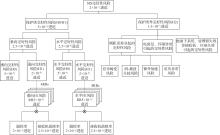
Fig.1
SIS integrity risk allocation for GBAS CAT-I service[25]
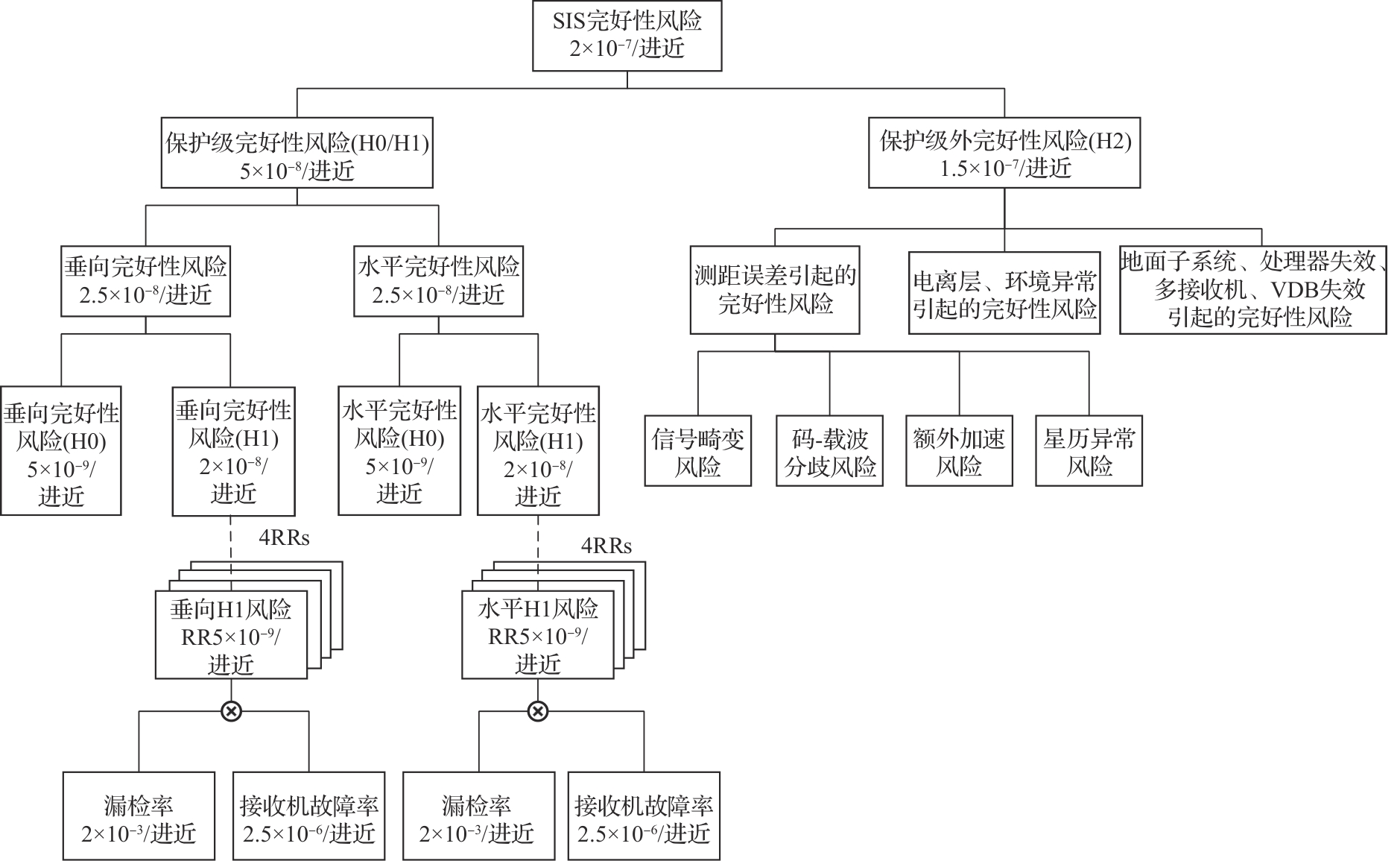
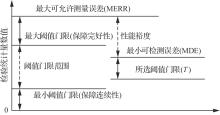
Fig.2
Relationship between threshold, MDE and MERR
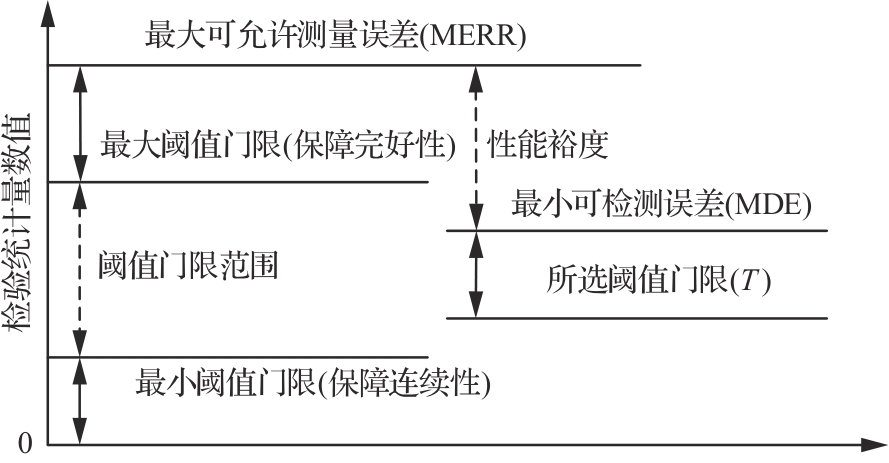
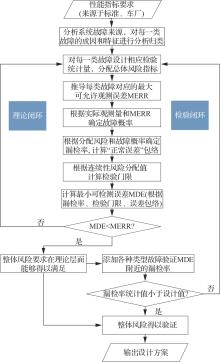
Fig.3
Allocation and evaluation procedure of RTK integrity risk
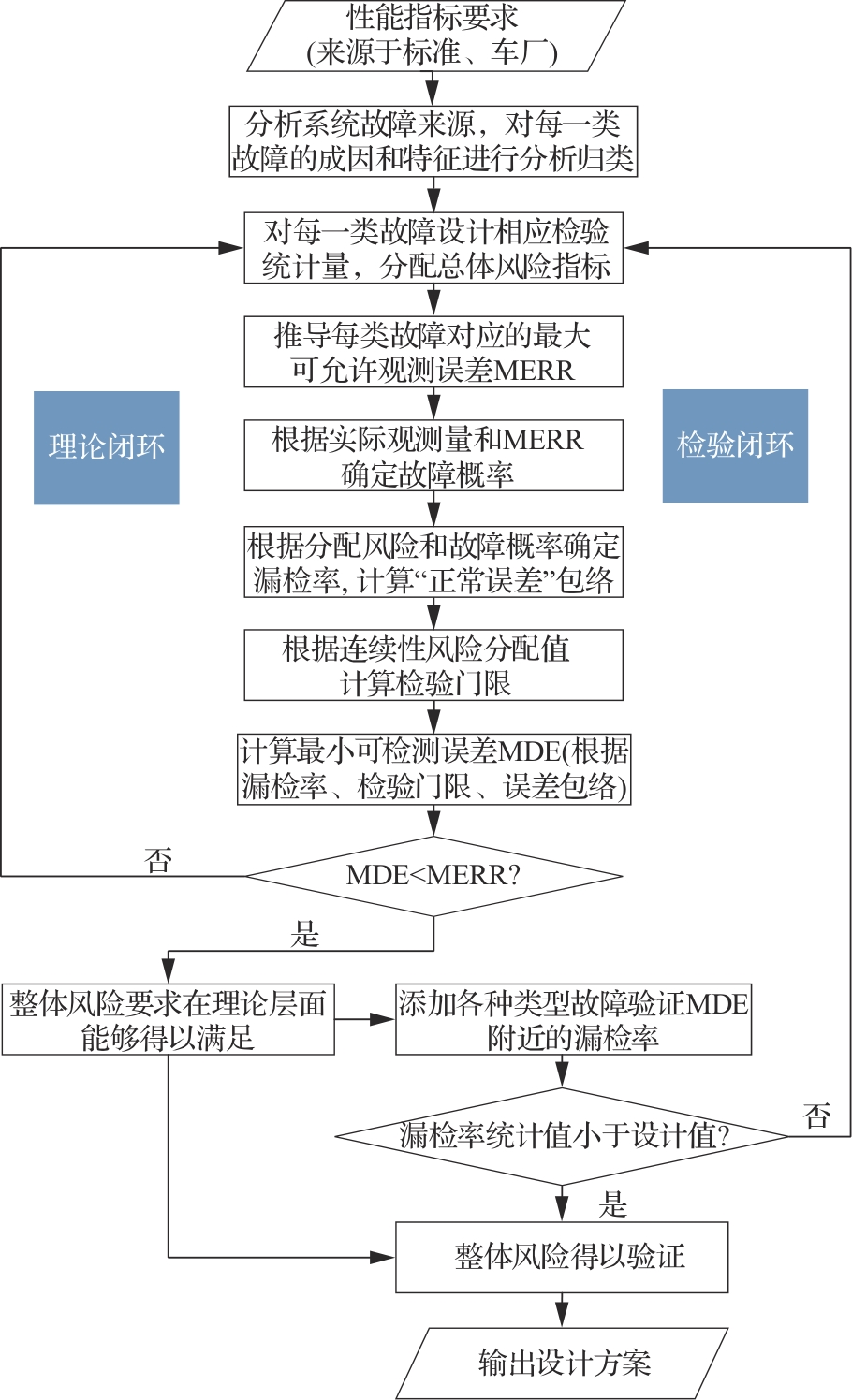
Table 1
RTK integrity requirement in autonomous driving
| 性能指标 | 95%水平精度/m | 完好性风险 | 服务端告警时间/s | 告警门限/m |
|---|---|---|---|---|
| 数值 | 0.6 | 1×10⁻⁵/h | 10 | 3 |
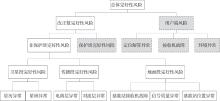
Fig.4
Fault tree for RTK integrity risk allocation
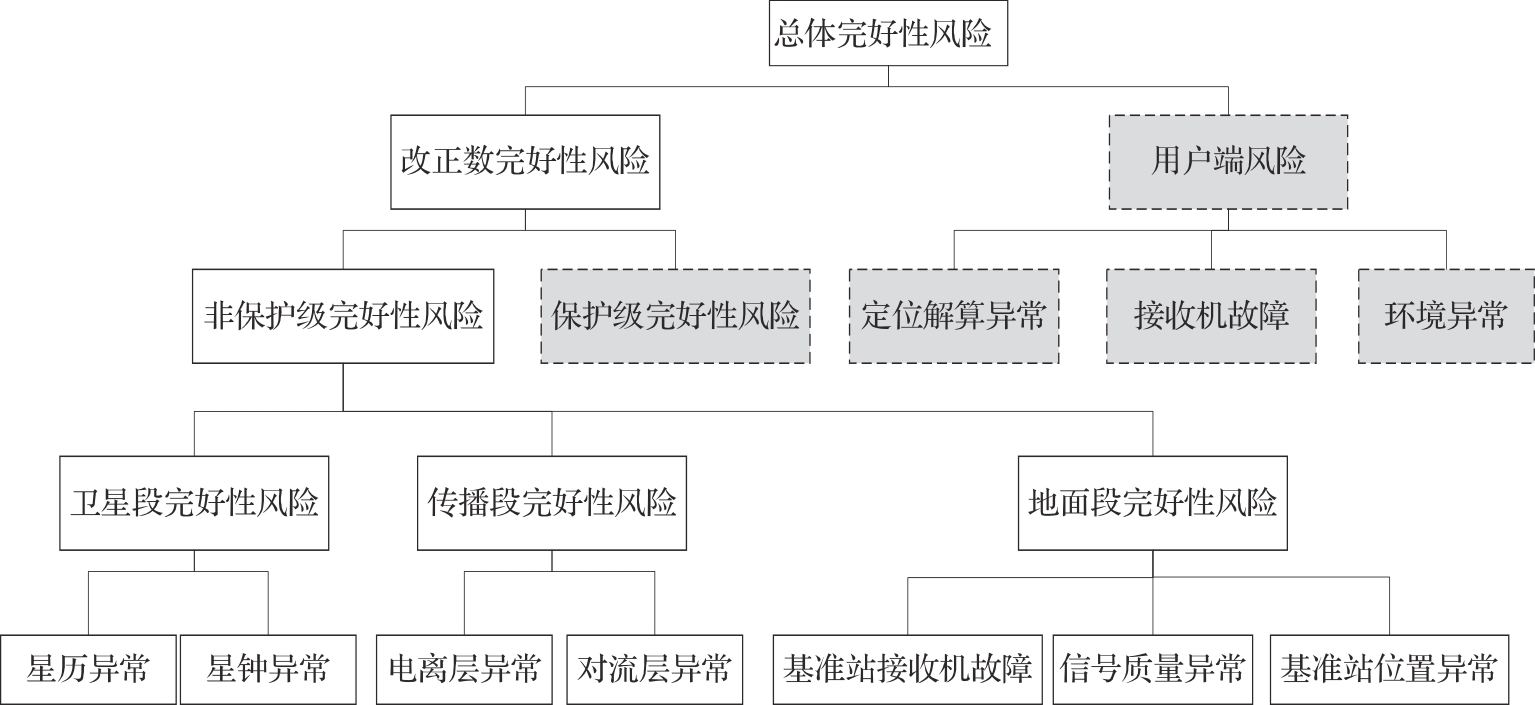
Table 2
Results of positioning error quantiles
| 观测站组合(日期) | 方向 | 定位误差分位数/m | ||
|---|---|---|---|---|
| 95% | 99.9% | 99.999% | ||
| HKLT/HKPC(2020) | E | 0.037 3 | 0.068 6 | 0.215 2 |
| N | 0.022 5 | 0.050 8 | 0.401 1 | |
| U | 0.078 0 | 0.136 2 | 0.284 4 | |
| HKMW/HKCL(2020) | E | 0.028 4 | 0.220 6 | 0.411 1 |
| N | 0.025 6 | 0.057 4 | 0.062 2 | |
| U | 0.077 2 | 0.105 0 | 0.141 6 | |
| HKLT/HKPC(2024) | E | 0.085 4 | 0.356 2 | 0.879 5 |
| N | 0.078 8 | 0.195 8 | 0.309 4 | |
| U | 0.155 6 | 0.360 6 | 1.559 9 | |
| HKMW/HKCL(2024) | E | 0.091 3 | 0.412 0 | 2.141 7 |
| N | 0.072 6 | 0.168 4 | 2.898 6 | |
| U | 0.121 8 | 0.347 9 | 2.610 4 | |
Fig.5
Q-Q plot of eastern positioning error for different receiver combinations
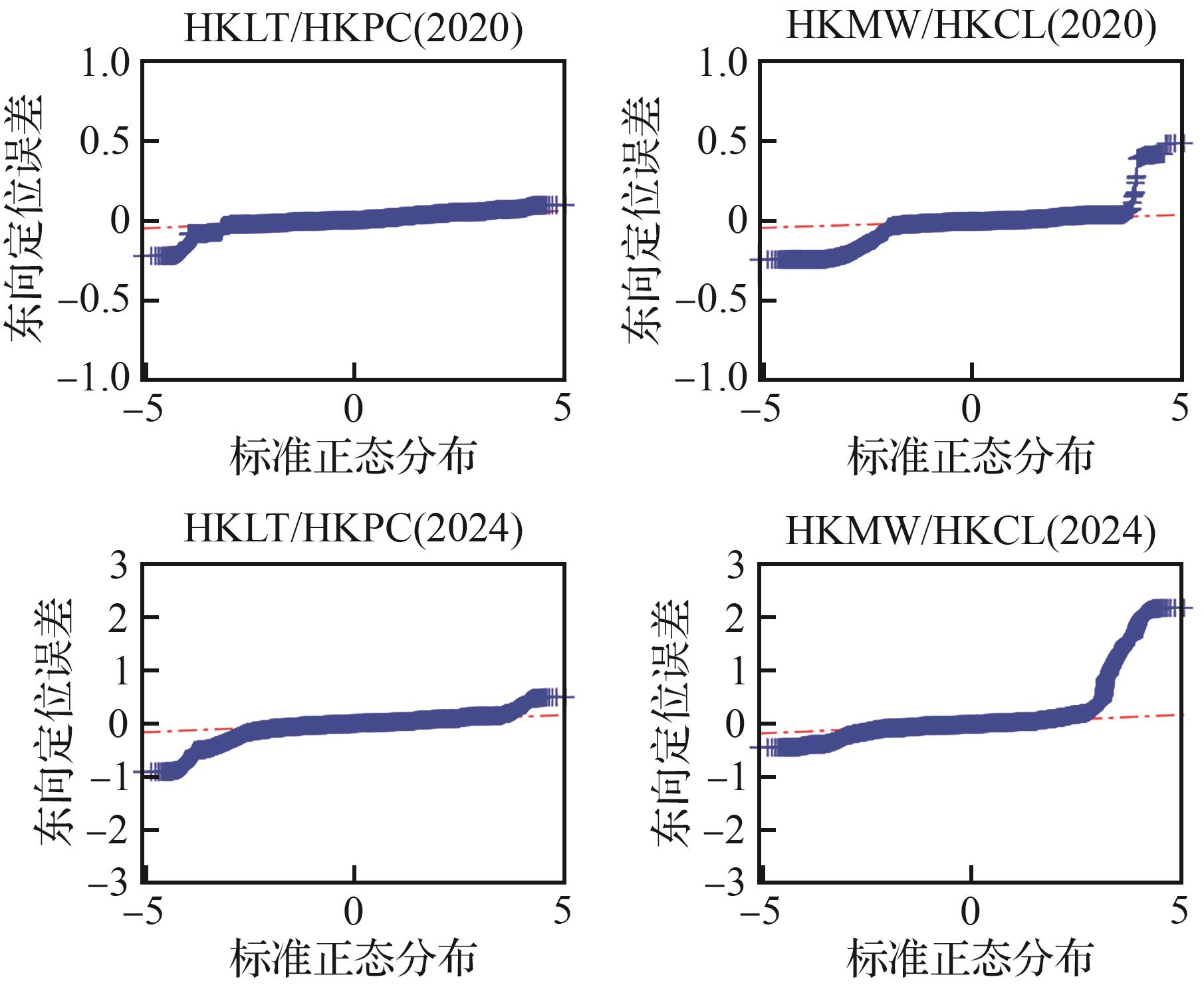
Table 3
Statistical results of receiver fault rate of HK CORS
| 观测站 | 接收机类型 | 载波周跳率/h-1 | 伪距粗差率/h-1 | 接收机故障率/h-1 |
|---|---|---|---|---|
| HKPC | Leica GR50 | 3.2×10⁻³ | 1.7×10⁻³ | 4.9×10⁻³ |
| HKLT | Leica GR50 | 3.6×10⁻³ | 8.54×10⁻⁴ | 4.5×10⁻³ |
| HKCL | Trimble NetR9 | 1.67×10⁻² | 2.6×10⁻³ | 1.93×10⁻² |
| HKMW | Trimble NetR9 | 1.07×10⁻² | 9.2×10⁻³ | 1.99×10⁻² |
Table 4
Allocation of integrity indicators for RTK server-side
| 故障来源 | 故障分类 | 先验故障率/h-1 | 漏检率 | 完好性风险/h-1 |
|---|---|---|---|---|
| 卫星段 | 星历异常 | 1×10⁻³ | 1×10⁻³ | 1×10⁻⁶ |
| 星钟异常 | 1×10⁻³ | 1×10⁻³ | 1×10⁻⁶ | |
| 传播段 | 电离层异常 | 1×10⁻¹ | 2×10⁻⁶ | 2×10⁻⁶ |
| 对流层异常 | 1×10⁻¹ | 1×10⁻⁶ | 1×10⁻⁶ | |
| 地面段 | 基准站接收机故障 | 2×10⁻² | 1×10⁻⁴ | 2×10⁻⁶ |
| 基准站位置异常 | 1×10⁻¹ | 1×10⁻⁵ | 1×10⁻⁶ | |
| 信号质量异常 | 2×10⁻² | 1×10⁻⁴ | 2×10⁻⁶ |
Table 5
Example of MERR allocation (method 1)
| 风险误差项 | 误差标准差/m | 95%误差/m | 风险概率指标 | MERR/m |
|---|---|---|---|---|
| 卫星段测距误差 | 0.10 | 0.15 | 2×10⁻⁶ | 0.47 |
| 电离层测距误差 | 0.12 | 0.23 | 2×10⁻⁶ | 0.57 |
| 对流层测距误差 | 0.08 | 0.15 | 5×10⁻⁷ | 0.40 |
| 接收机故障测距误差 | 0.07 | 0.13 | 2×10⁻⁶ | 0.33 |
| 基准站位置异常 | 0.10 | 0.19 | 1×10⁻⁶ | 0.48 |
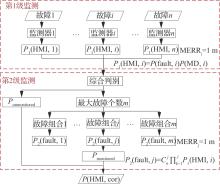
Fig.6
Schematic diagram of hierarchical monitoring process for reference stations
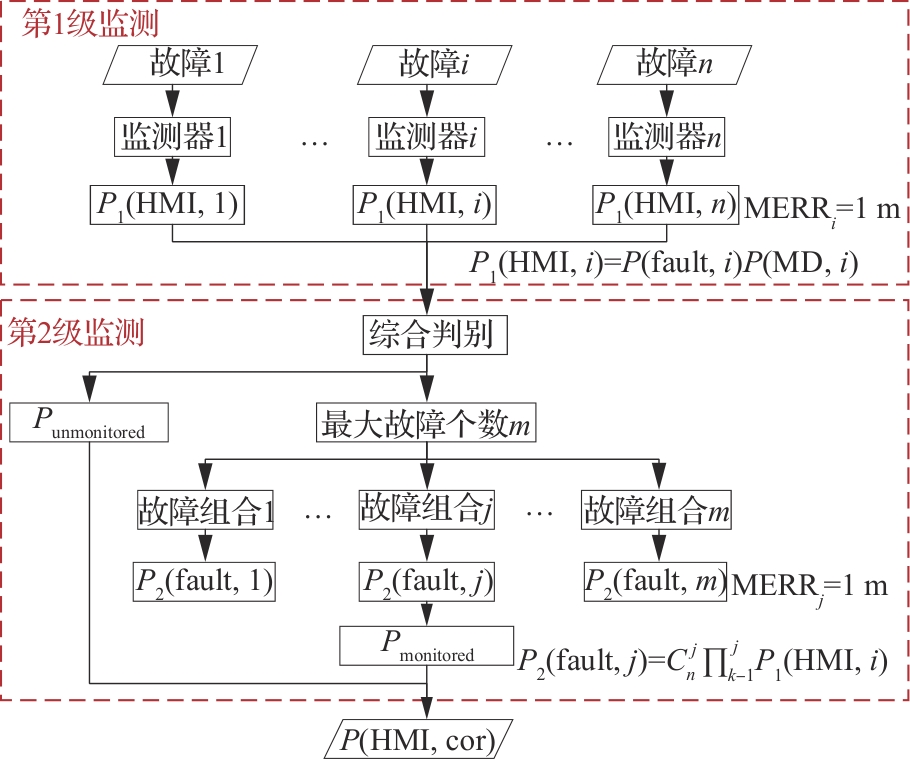
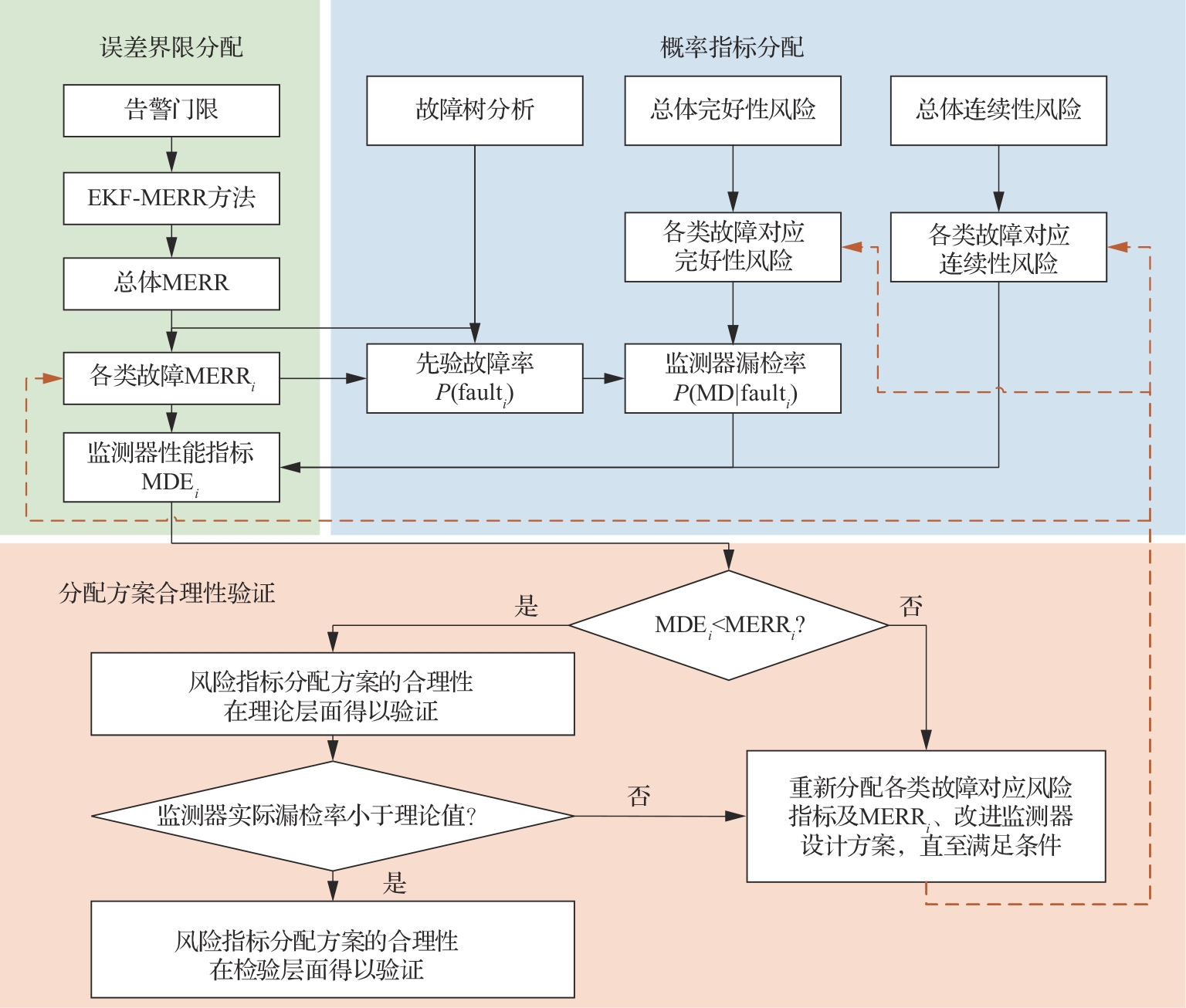
Fig.7
Research topic and process framework of the paper
| [1] | REID T G R, HOUTS S E, CAMMARATA R, et al. Localization requirements for autonomous vehicles[J]. SAE International Journal of Connected and Automated Vehicles, 2019,2(3):173-190. |
| [2] | REID T G R, NEISH A, MANNING B. Localization & mapping requirements for level 2+ autonomous vehicles[C]∥Proceedings of the 2023 International Technical Meeting of The Institute of Navigation. Manassas :ION, 2023: 107-123. |
| [3] | IMO. Revised maritime policy and requirements for a future GNSS: A.925(22) [S]. London: IMO, 2001. |
| [4] | 蒋爱国, 邹付兵, 刘晓林, 等. 北斗/GPS海上实时PPP完好性监测及性能分析[J]. 测绘通报, 2023(8): 97-101. |
| JIANG A G, ZOU F B, LIU X L, et al. BDS/GPS maritime real-time PPP integrity monitoring and performance analysis[J]. Bulletin of Surveying and Mapping, 2023(8): 97-101 (in Chinese). | |
| [5] | HOU P Y, ZHA J P, LIU T, et al. Recent advances and perspectives in GNSS PPP-RTK[J]. Measurement Science and Technology, 2023, 34(5): 051002. |
| [6] | LI X X, HUANG J X, LI X, et al. Review of PPP-RTK: Achievements, challenges, and opportunities[J]. Satellite Navigation, 2022, 3(1): 28. |
| [7] | CAPUA R, PULLEN S, JOERGER M, et al. Development of RTCM SC-134 messages for high-integrity precise positioning[C]∥Proceedings of the 37th International Technical Meeting of the Satellite Division of the Institute of Navigation (ION GNSS+ 2024). Manassas: ION, 2024: 654-668. |
| [8] | GAO Z, ZHAN X Q, YANG R. RTK ramp faults detection and exclusion by the hybrid control chart[J]. Advances in Space Research, 2024, 73(3): 2060-2079. |
| [9] | FENG S J, OCHIENG W, MOORE T, et al. Carrier phase-based integrity monitoring for high-accuracy positioning[J]. GPS Solutions, 2009, 13(1): 13-22. |
| [10] | BARFORD T, LACAMBRE J B, GREER R. Optimizing GNSS time-differenced carrier phase measurements for high-integrity inertial navigation GNSS sensor fusion without ambiguity resolution[C]∥2023 IEEE/ION Position, Location and Navigation Symposium (PLANS). Piscataway: IEEE Press, 2023: 793-804. |
| [11] | GAO Y T, JIANG Y, GAO Y, et al. Solution separation-based integrity monitoring for RTK positioning with faulty ambiguity detection and protection level[J]. GPS Solutions, 2023, 27(3): 140. |
| [12] | EL-MOWAFY A, XU B, HSU L T. Integrity monitoring using multi-GNSS pseudorange observations in the urban environment combining ARAIM and 3D city models[J]. Journal of Spatial Science, 2022, 67(1): 91-110. |
| [13] | WANG Z P, HOU X P, DAN Z Q, et al. Adaptive Kalman filter based on integer ambiguity validation in moving base RTK[J]. GPS Solutions, 2022, 27(1): 34. |
| [14] | VERHAGEN S, TEUNISSEN P J G. The ratio test for future GNSS ambiguity resolution[J]. GPS Solutions, 2013, 17(4): 535-548. |
| [15] | TEUNISSEN P J G, VERHAGEN S. The GNSS ambiguity ratio-test revisited: A better way of using it[J]. Survey Review, 2009, 41(312): 138-151. |
| [16] | KHANAFSEH S, PERVAN B. New approach for calculating position domain integrity risk for cycle resolution in carrier phase navigation systems[J]. IEEE Transactions on Aerospace and Electronic Systems, 2010, 46(1): 296-307. |
| [17] | HOU Y Q, VERHAGEN S, WU J. An efficient implementation of fixed failure-rate ratio test for GNSS ambiguity resolution[J]. Sensors, 2016, 16(7): 945. |
| [18] | WU S W, PECK S R, FRIES R M, et al. Geometry extra-redundant almost fixed solutions: A high integrity approach for carrier phase ambiguity resolution for high accuracy relative navigation[C]∥2008 IEEE/ION Position, Location and Navigation Symposium. Piscataway: IEEE Press, 2008: 568-582. |
| [19] | RUWISCH F, SCHÖN S. Performance assessment of GNSS RTK positioning in urban environments: Outlier detection versus 3DMA-FDE[C]∥Proceedings of the 35th International Technical Meeting of the Satellite Division of the Institute of Navigation (ION GNSS+ 2022). Manassas: ION, 2022: 2649-2663. |
| [20] | KARIMIDOONA A, SCHÖN S. Integrity monitoring of commercial RTK receivers in static open sky and kinematic urban environments scenarios[C]∥Proceedings of the 2022 International Technical Meeting of The Institute of Navigation. Manassas: INO, 2022: 819-34. |
| [21] | WANG K, EL-MOWAFY A, RIZOS C, et al. Integrity monitoring for horizontal RTK positioning: New weighting model and overbounding CDF in open-sky and suburban scenarios[J]. Remote Sensing, 2020, 12(7): 1173. |
| [22] | 喻思琪, 张小红, 郭斐, 等. 卫星导航进近技术进展[J]. 航空学报, 2019, 40(3): 022200. |
| YU S Q, ZHANG X H, GUO F, et al. Recent advances in precision approach based on GNSS[J]. Acta Aeronautica et Astronautica Sinica, 2019, 40(3): 022200 (in Chinese). | |
| [23] | LI R, ZHENG S Y, WANG E S, et al. Advances in BeiDou navigation satellite system (BDS) and satellite navigation augmentation technologies[J]. Satellite Navigation, 2020, 1(1): 12. |
| [24] | RTCA. Minimum operational performance standards (MOPS) for global positioning system/satellite-based augmentation system airborne equipment: RTCA DO-229 [S]. Washington, D.C.: RTCA, 2020. |
| [25] | RTCA. Minimum aviation system performance standards for local area augmentation system (LAAS): RTCA DO-245A [S]. Washington, D.C.: RTCA, 2004. |
| [26] | BRAFF R, SHIVELY C A. Derivation of ranging source integrity requirements for the local area augmentation system (LAAS)[J]. Navigation, 2000, 47(4): 279-288. |
| [27] | 中华人民共和国交通运输部. 公路工程技术标准: [S]. 北京: 人民交通出版社, 2015. |
| Ministry of Transport of the People’s Republic of China. Technical standard of highway engineering: [S]. Beijing: China Communications Press, 2015 (in Chinese). | |
| [28] | 宋远, 黄智刚, 李锐, 等. 基于风险概率分解的RTK完好性评估方法研究 [J/OL]. 北京航空航天大学学报.(2024-05-08)[2024-12-04]. . |
| SONG Y, HUANG Z G, LI R, et al. An RTK integrity evaluation method based on risk probability decomposition[J/OL]. Journal of Beijing University of Aeronautics and Astronautics. (2024-05-08)[2024-12-04]. (in Chinese). | |
| [29] | ICAO. Annex 10-Aeronautical telecommunications-Volume I-Radio navigational aids [S]∥International Standards and Recommended Practices. Montreal: ICAO, 2023. |
| [30] | ICAO. Navigation system panel(NSP), Agenda Item 2: WAAS Status [R]. 2024. |
| [31] | GALLON E, JOERGER M, PERVAN B. Robust modeling of GNSS tropospheric delay dynamics[J]. IEEE Transactions on Aerospace and Electronic Systems, 2021, 57(5): 2992-3003. |
| [32] | SHIVELY C A. Derivation of acceptable error limitsfor satellite signal faults in LAAS[C]∥Proceedings of the 12th International Technical Meeting of the Satellite Division of The Institute of Navigation (ION GPS 1999). Manassas: ION, 1999: 761-770. |
| [33] | RIFE J, PHELTS R E. Formulation of a time-varying maximum allowable error for ground-based augmentation systems[J]. IEEE Transactions on Aerospace and Electronic Systems, 2008, 44(2): 548-560. |
| [34] | SOUALLE F, MINK M, BRAUN R, et al. Methodology for the design of integrity barriers in a regional augmentation satellite system[C]∥Proceedings of the 28th International Technical Meeting of the Satellite Division of The Institute of Navigation (ION GNSS+2015). Manassas: ION, 2015: 1551-1564. |
| [35] | TEUNISSEN P J G. The least-squares ambiguity decorrelation adjustment: A method for fast GPS integer ambiguity estimation[J]. Journal of Geodesy, 1995, 70(1): 65-82. |
| [36] | DOD. Global positioning system standard positioning service performance standard: 5th edition [S]. Washington, D.C.: DOD, 2020. |
| [1] | Bingbing XU, Kai HAN, Richang DONG, Wenbin GONG, Qianyi REN. A high-speed laser backbone node deployment approach for next-generation GNSS [J]. Acta Aeronautica et Astronautica Sinica, 2025, 46(9): 331124-331124. |
| [2] | Chuang SHI, Zhixin WANG, Hao ZHANG, Tuan LI, Zhipeng WANG. Factor graph optimization based multi-GNSS positioning with robust variance component estimation [J]. Acta Aeronautica et Astronautica Sinica, 2025, 46(6): 531623-531623. |
| [3] | Longxia XU, Ya LIU, Xiaohui LI. Applications of GNSS timing and time synchronization in infrastructures [J]. Acta Aeronautica et Astronautica Sinica, 2024, 45(S1): 730567-730567. |
| [4] | Zihan NAN, Dayu LIU, Ming DONG, Wenning LIANG, Xuewei ZHAO, Yilin MA, Yao GUAN. Robust filtering method for GNSS denied multi-source autonomous navigation [J]. Acta Aeronautica et Astronautica Sinica, 2024, 45(S1): 730782-730782. |
| [5] | Jiaxiang LI, Jianhua CHENG, Liang LI, Zhibo NA, Chun JIA. Troposphere anomaly integrity monitoring parameters for GBAS [J]. Acta Aeronautica et Astronautica Sinica, 2024, 45(7): 328817-328817. |
| [6] | Zebo ZHOU, Zeliang ZHANG, Xin PENG, Gun LI, Yang TAO, Liangquan WANG, Xin LUO. Multi-UAV decentralized cooperative navigation method based on memory-fusion [J]. Acta Aeronautica et Astronautica Sinica, 2023, 44(20): 628440-628440. |
| [7] | LIU Shiming, LI Sihai, ZHENG Jiangtao, FU Qiangwen, TAO Yuanbo. Detection of slowly growing faults of GNSS/INS ultra-tight integration based on prefilters and two-stage AIME [J]. ACTA AERONAUTICAET ASTRONAUTICA SINICA, 2022, 43(3): 325168-325168. |
| [8] | WANG Feng, YANG Dongkai, ZHANG Guodong, ZHANG Bo. Measurement of sea surface height using airborne global navigation satellites system reflectometry [J]. ACTA AERONAUTICAET ASTRONAUTICA SINICA, 2022, 43(1): 324852-324852. |
| [9] | XU Rui, YUE Shuai, TANG Ruiqi, ZENG Qinghua, LIU Jianye. GNSS signal estimation and position correction algorithm under spoofing attacks [J]. ACTA AERONAUTICAET ASTRONAUTICA SINICA, 2020, 41(10): 323930-323930. |
| [10] | YU Siqi, ZHANG Xiaohong, GUO Fei, LI Xin, PAN Lin, MA Fujian. Recent advances in precision approach based on GNSS [J]. ACTA AERONAUTICAET ASTRONAUTICA SINICA, 2019, 40(3): 22200-022200. |
| [11] | GAO Han, BAI Zhaoguang, FAN Dongdong. GNSS-R sea surface wind speed inversion based on BP neural network [J]. ACTA AERONAUTICAET ASTRONAUTICA SINICA, 2019, 40(12): 323261-323261. |
| [12] | QI Farui, ZHANG Tisheng, LI Zhuo, TANG Hailiang. A FFT frequency discriminator for improving the dynamic tracking performance of GNSS weak signal [J]. ACTA AERONAUTICAET ASTRONAUTICA SINICA, 2018, 39(8): 321932-321932. |
| [13] | XU Jianxin, XIONG Zhi, CHEN Mingxing, LIU Jianye. Regional navigation algorithm assited by locations of multi UAVs [J]. ACTA AERONAUTICAET ASTRONAUTICA SINICA, 2018, 39(10): 322172-322172. |
| [14] | LI Zheng, ZHANG Hai, WANG Weiyang. A positioning method with two satellites by relative position constraint [J]. ACTA AERONAUTICAET ASTRONAUTICA SINICA, 2017, 38(5): 320503-320503. |
| [15] | NIU Xiaoji, BAN Yalong, ZHANG Tisheng, LIU Jingnan. Research progress and prospects of GNSS/INS deep integration [J]. ACTA AERONAUTICAET ASTRONAUTICA SINICA, 2016, 37(10): 2895-2908. |
| Viewed | ||||||
|
Full text |
|
|||||
|
Abstract |
|
|||||
Address: No.238, Baiyan Buiding, Beisihuan Zhonglu Road, Haidian District, Beijing, China
Postal code : 100083
E-mail:hkxb@buaa.edu.cn
Total visits: 6658907 Today visits: 1341All copyright © editorial office of Chinese Journal of Aeronautics
All copyright © editorial office of Chinese Journal of Aeronautics
Total visits: 6658907 Today visits: 1341

 CJA
CJA
