Acta Aeronautica et Astronautica Sinica ›› 2025, Vol. 46 ›› Issue (10): 631182.doi: 10.7527/S1000-6893.2024.31182
• special column • Previous Articles
Xianchao MENG, Jun TAO( )
)
Received:2024-09-10
Revised:2024-10-08
Accepted:2024-11-04
Online:2024-11-25
Published:2024-11-18
Contact:
Jun TAO
E-mail:juntao@fudan.edu.cn
CLC Number:
Xianchao MENG, Jun TAO. An airfoil inverse design method based on target testing conditional generative adversarial network[J]. Acta Aeronautica et Astronautica Sinica, 2025, 46(10): 631182.
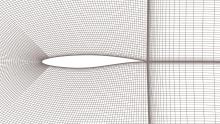
Fig.1
Grid diagram of RAE2822
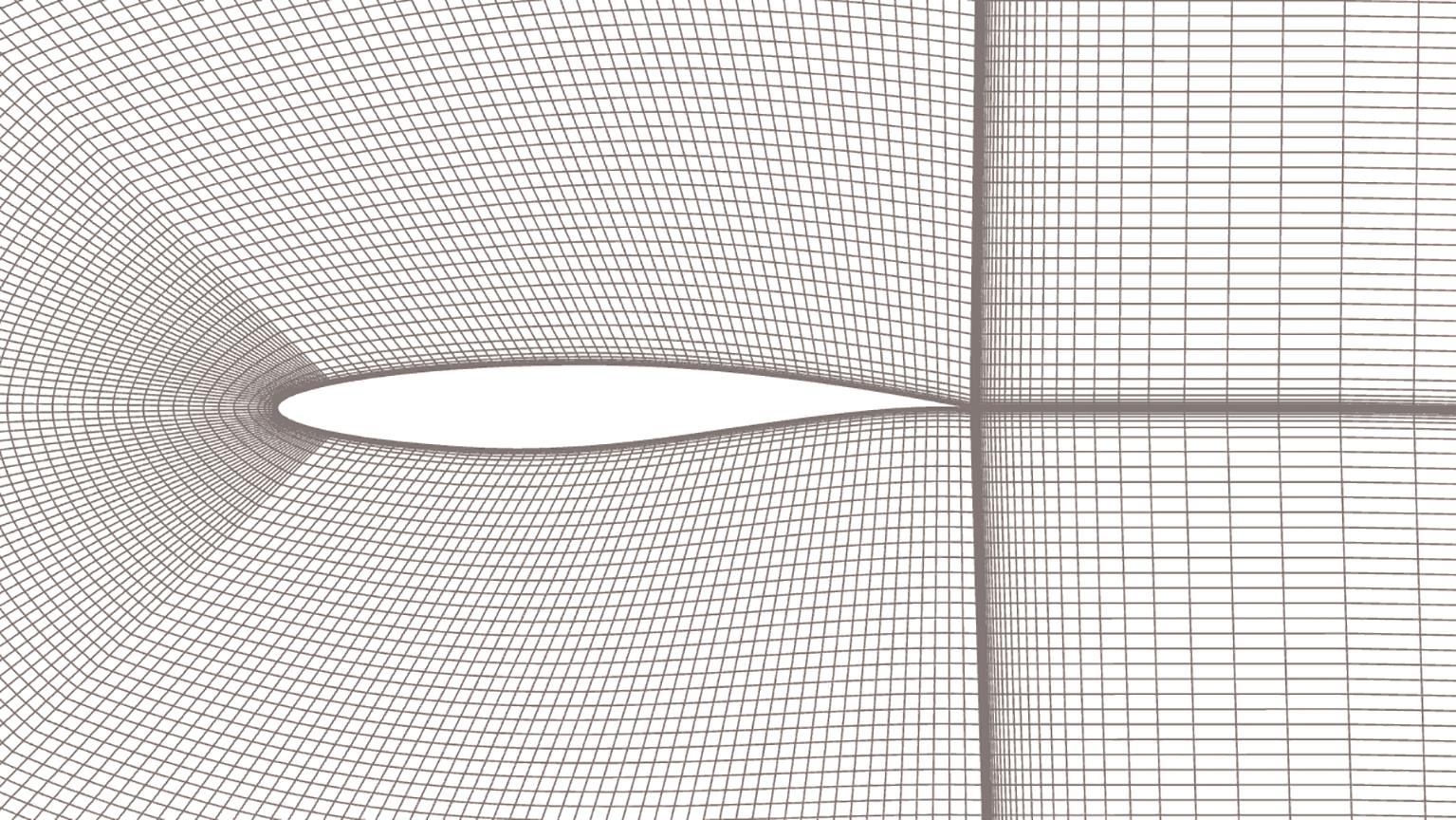

Table 1
Comparison of calculation results of lift and drag coefficients of RAE2822 under design conditions
| 类型 | 升力系数 | 阻力系数 | ||
|---|---|---|---|---|
| 数值 | 相对误差/% | 数值 | 相对误差/% | |
| 试验值 | 0.803 0 | 0.016 8 | ||
| 数值模拟值 | 0.763 7 | 4.894 1 | 0.017 2 | 2.381 0 |
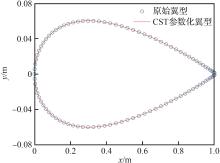
Fig.2
Comparison between original airfoil curve and CST parameterized airfoil curve
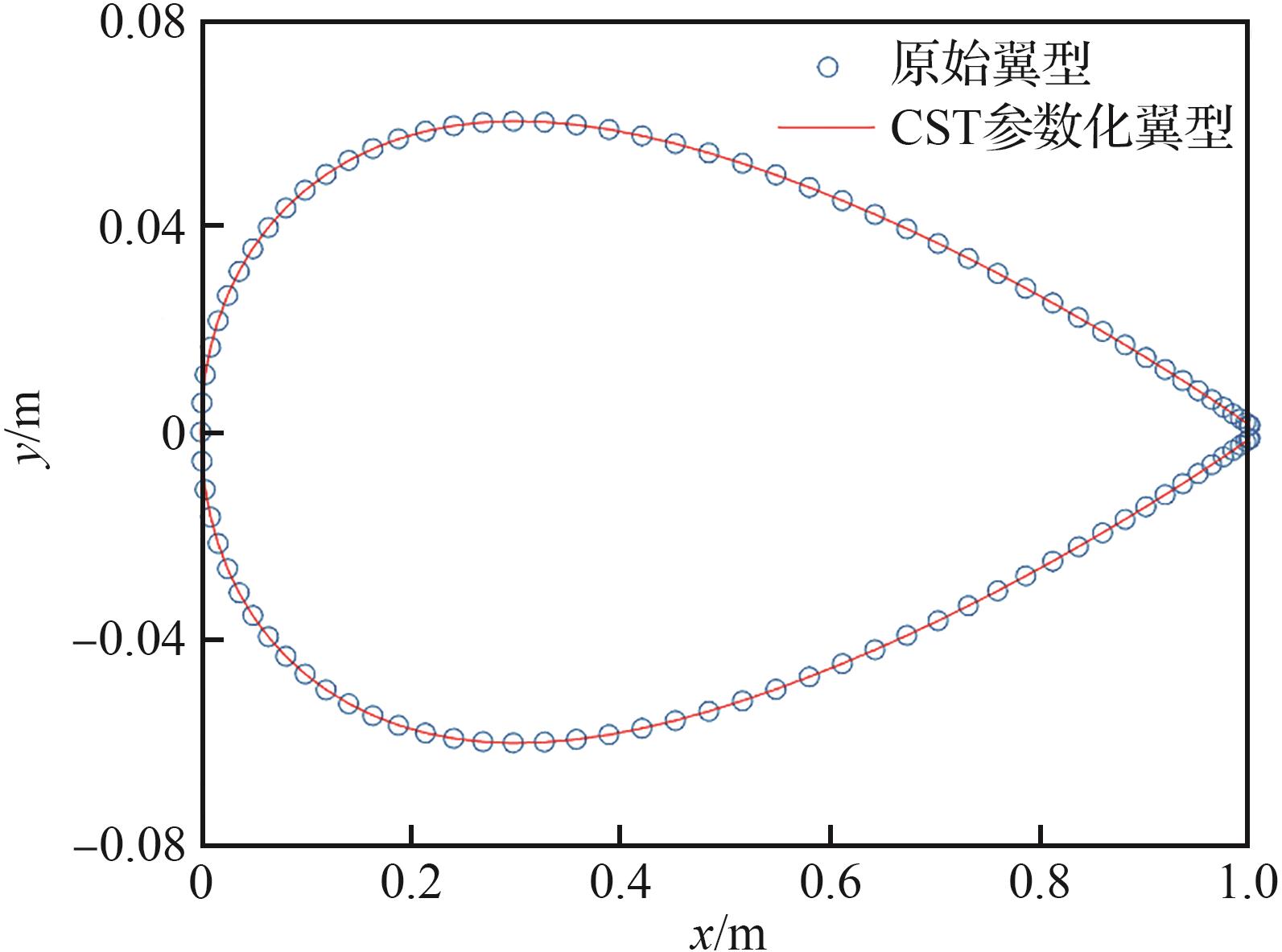
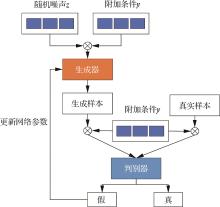
Fig.3
CGAN structure diagram
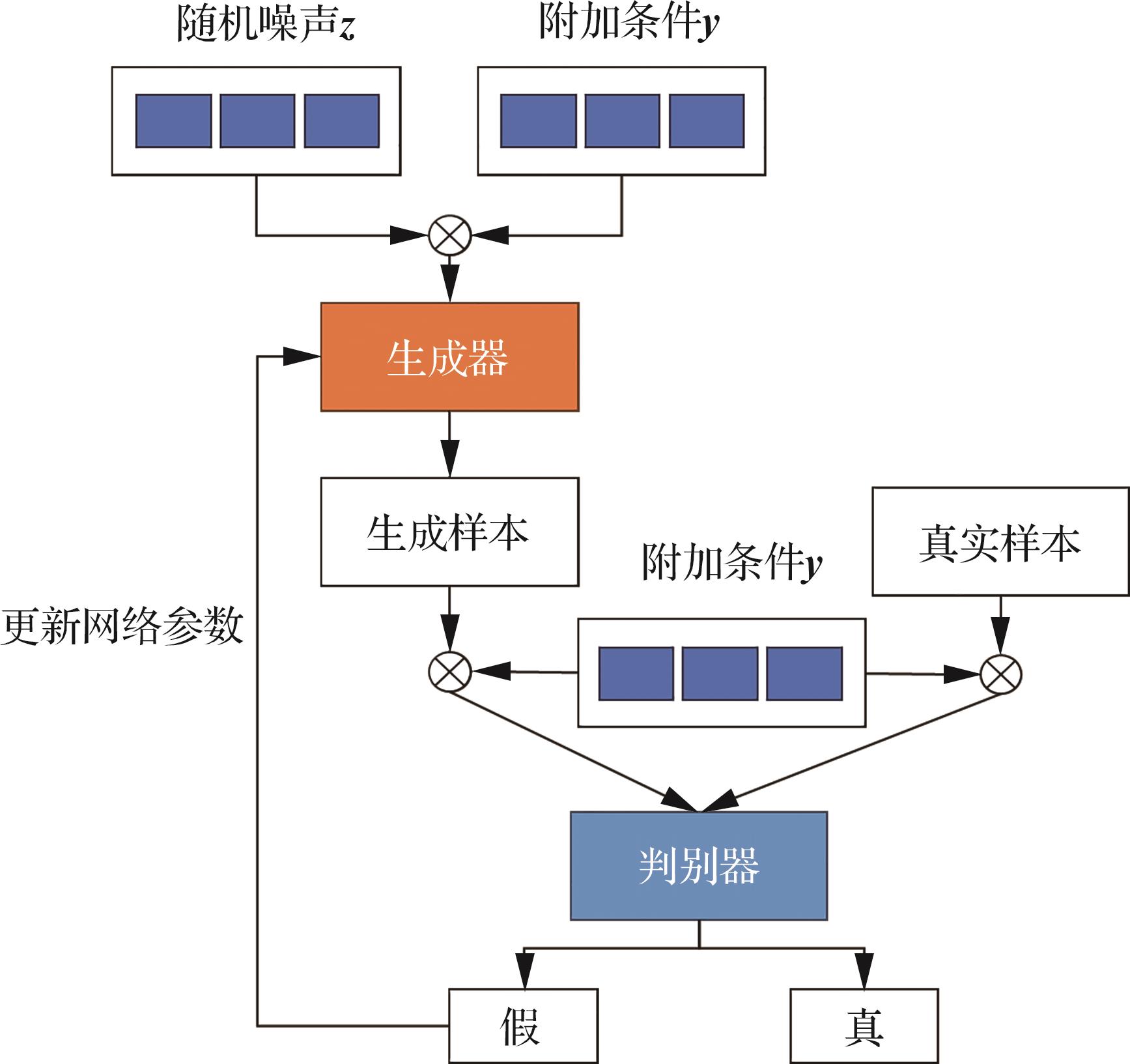
Fig.4
Schematic diagram of deep neural network structure
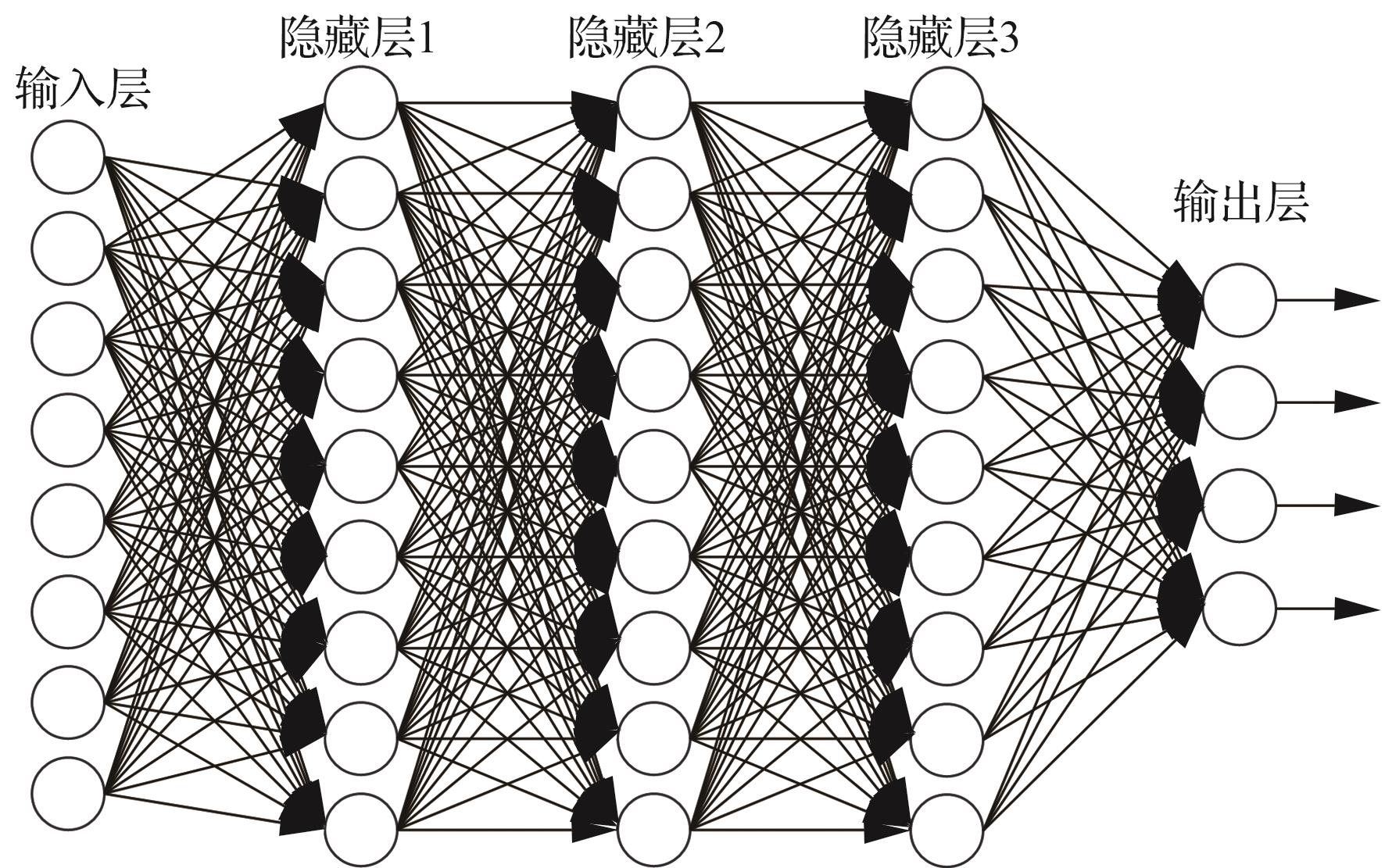
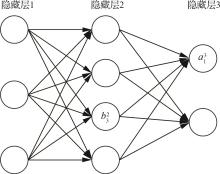
Fig.5
Schematic diagram of forward propagation of deep neural network
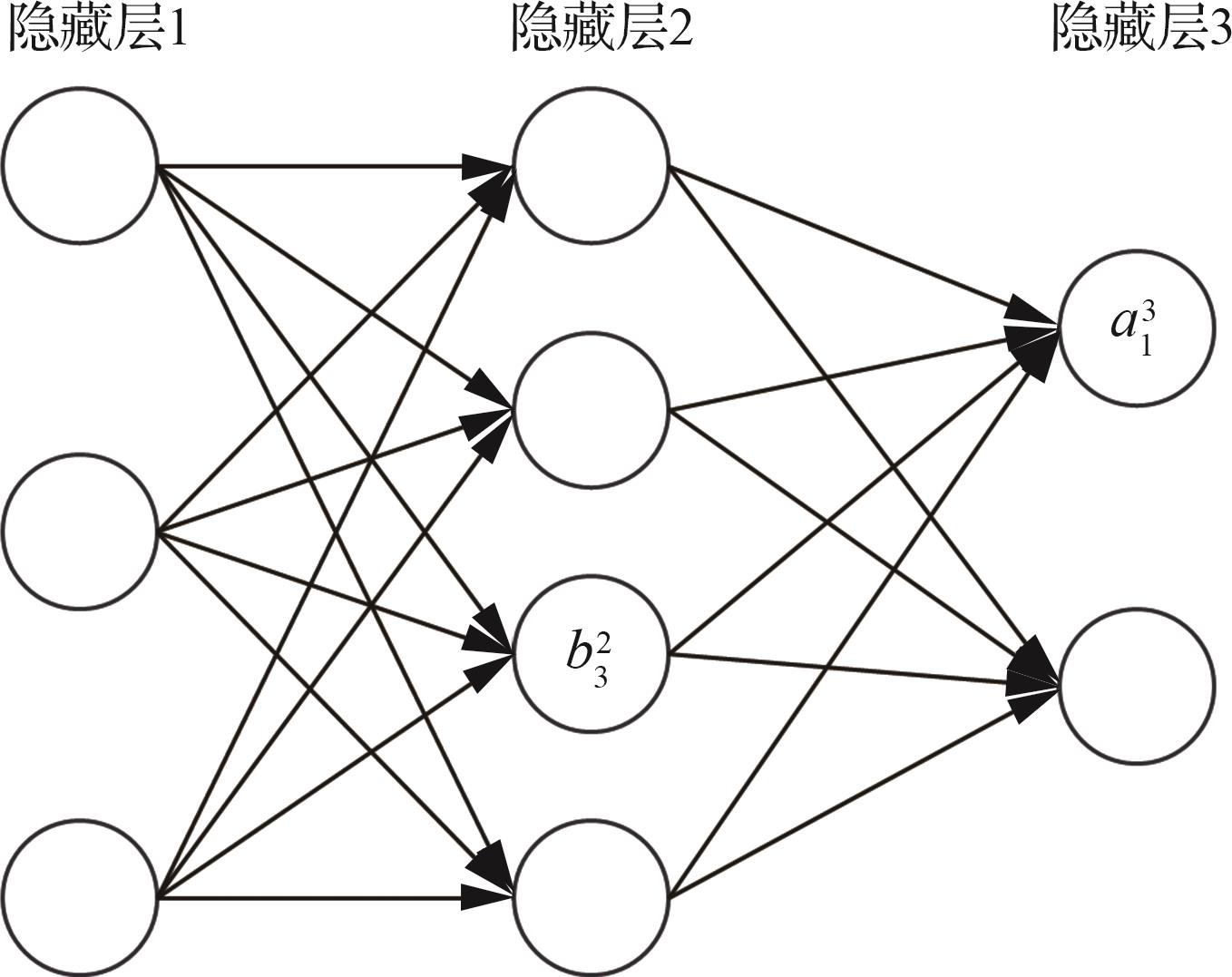
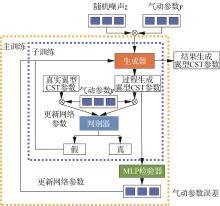
Fig.6
TT-CGAN network structure diagram
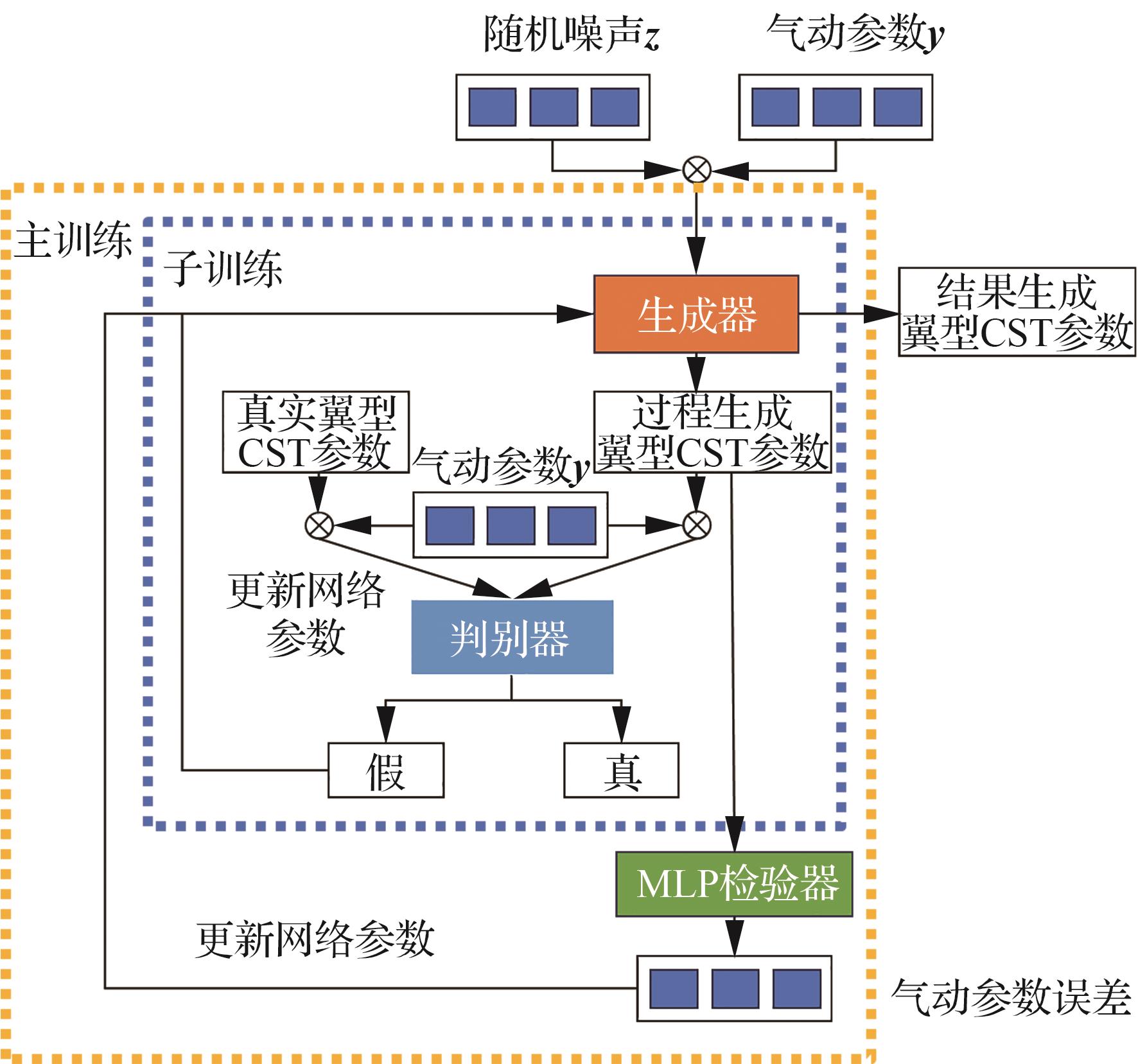
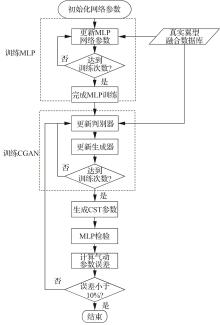
Fig. 7
Flowchart of TT-CGAN
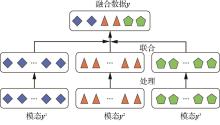
Fig.8
Feature fusion methods
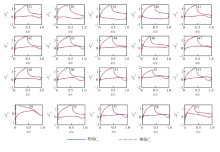
Fig.9
Comparison of original curve and interpolated curves
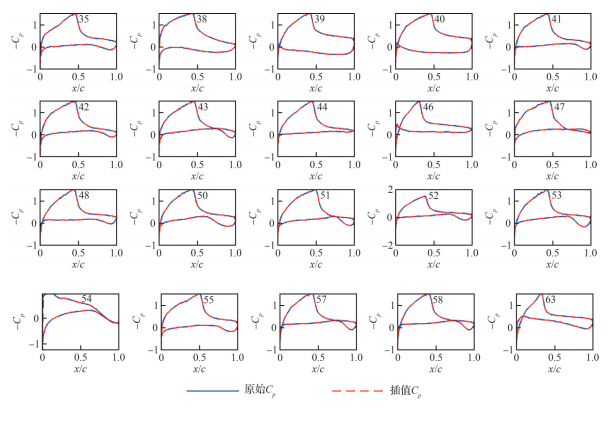
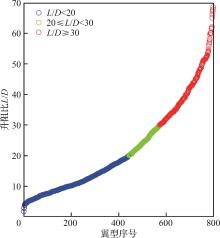
Fig.10
Layout of lift-drag ratio of each airfoil in database
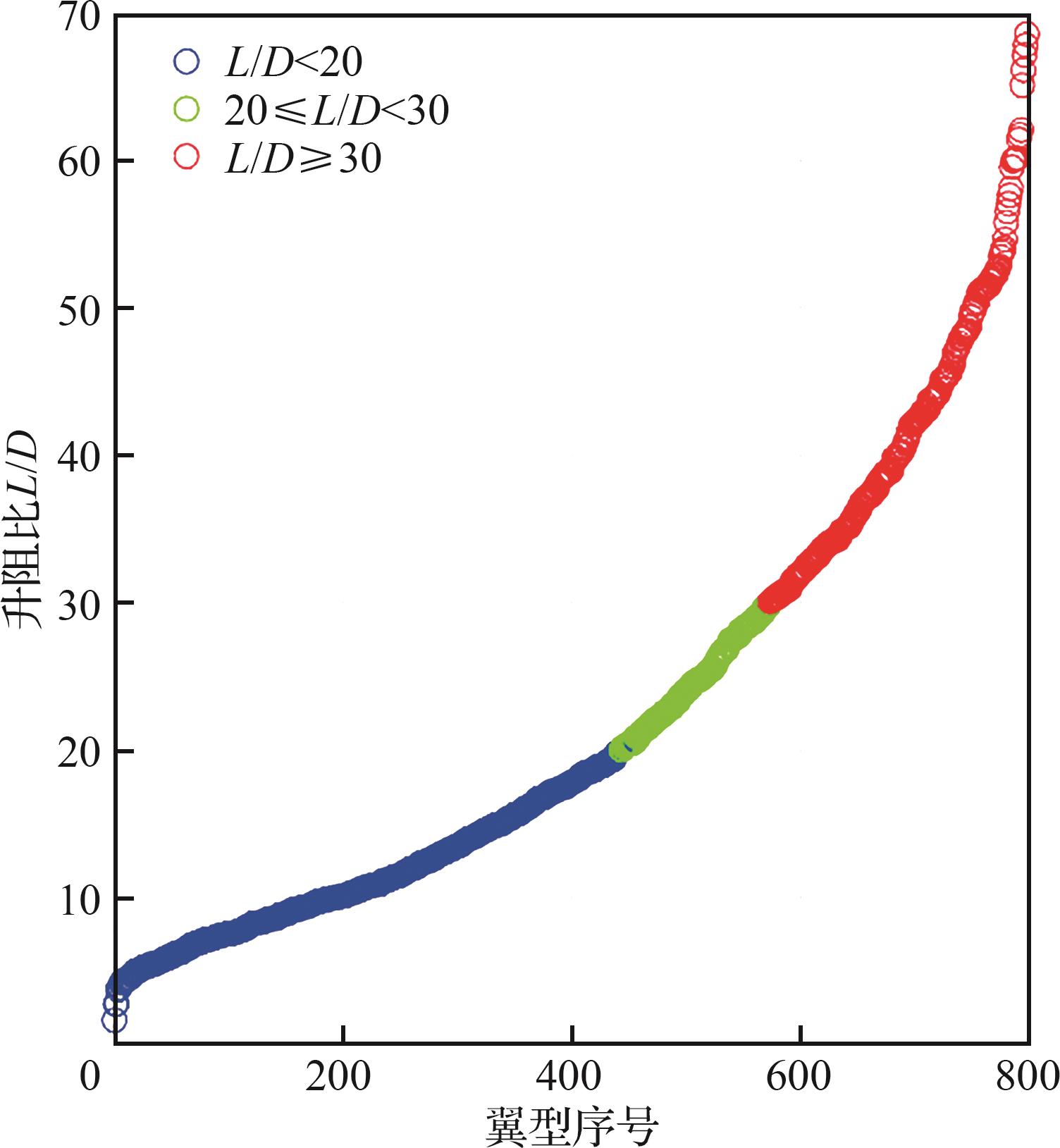
Table 2
TT-CGAN architecture
| 网络名称 | 网络层 | 神经元数目 | 激活函数 |
|---|---|---|---|
| 生成器 | 隐藏层1 | 200 | ReLU |
| 隐藏层2 | 100 | ReLU | |
| 隐藏层3 | 50 | ReLU | |
| 输出层 | 14 | tanh | |
| 判别器 | 隐藏层1 | 500 | LeakyReLU |
| 隐藏层2 | 200 | LeakyReLU | |
| 隐藏层3 | 100 | LeakyReLU | |
| 输出层 | 1 | Sigmoid | |
| 检验器 | 隐藏层1 | 64 | ReLU |
| 隐藏层1 | 128 | ReLU | |
| 隐藏层2 | 80 | ReLU | |
| 隐藏层3 | 20 | ReLU | |
| 输出层 | 2 | ReLU |
Table 3
Hyperparameters of TT-CGAN
| 网络 | 批次 | 学习率 | 迭代 | 优化器 | 损失函数 |
|---|---|---|---|---|---|
| CGAN | 16 | 0.000 1 | 20 000 | Adam | 二元交叉熵损失 |
| MLP | 16 | 0.000 1 | 5 000 | Adam | 均方误差 |
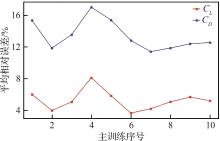
Fig.11
Average relative error of Net1 evaluated by MLP in different main trainings
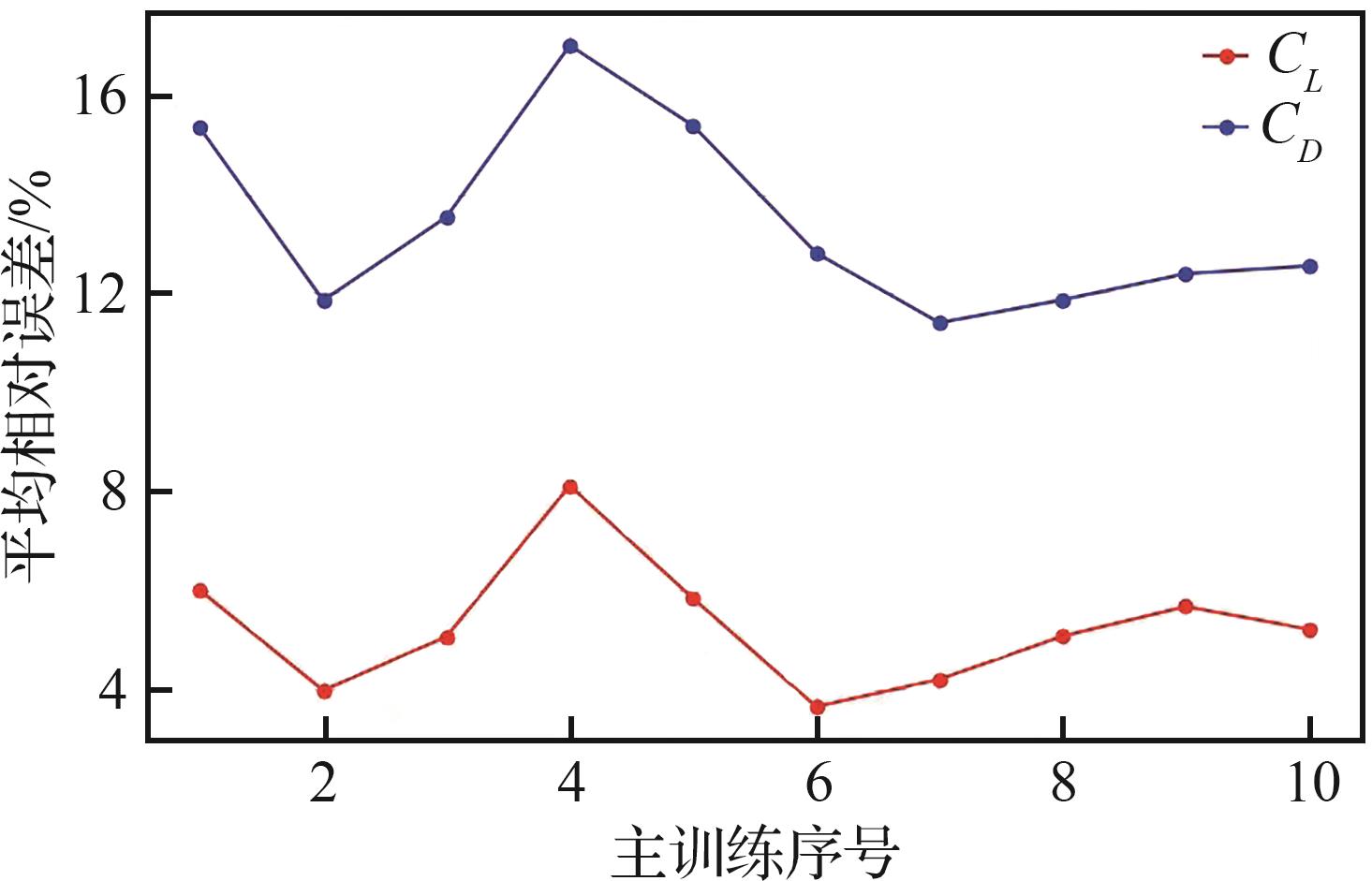
Table 4
Prediction results of MLP tester
| 翼型来源 | 平均相对误差/% | |
|---|---|---|
| Net1 | 4.196 7 | 11.403 9 |
| Net2 | 3.909 7 | 7.303 5 |
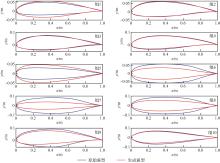
Fig.12
Comparison between generated airfoil of Net1 and original airfoil
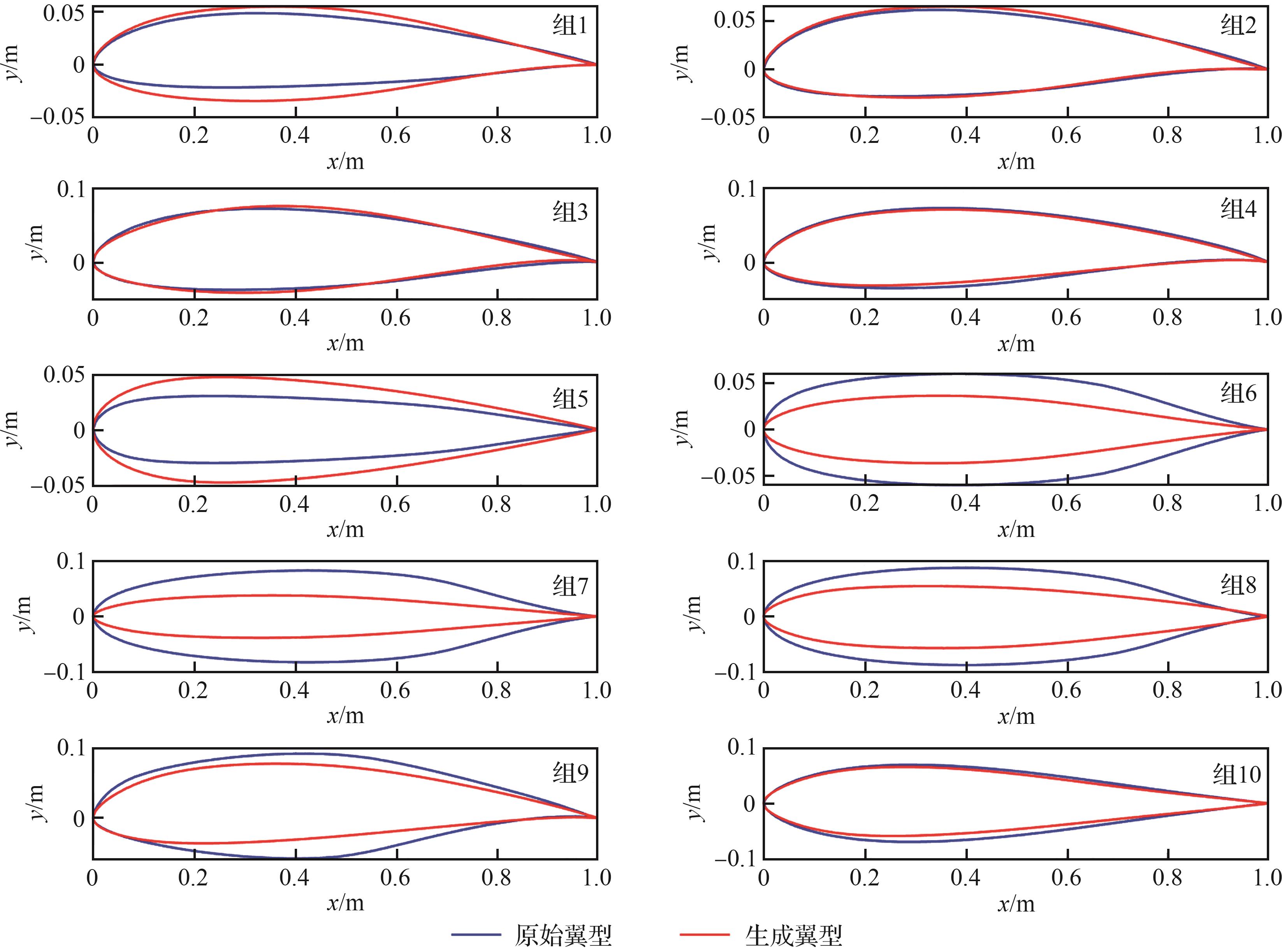
Fig.13
Comparison between generated airfoil of Net2 and original airfoil
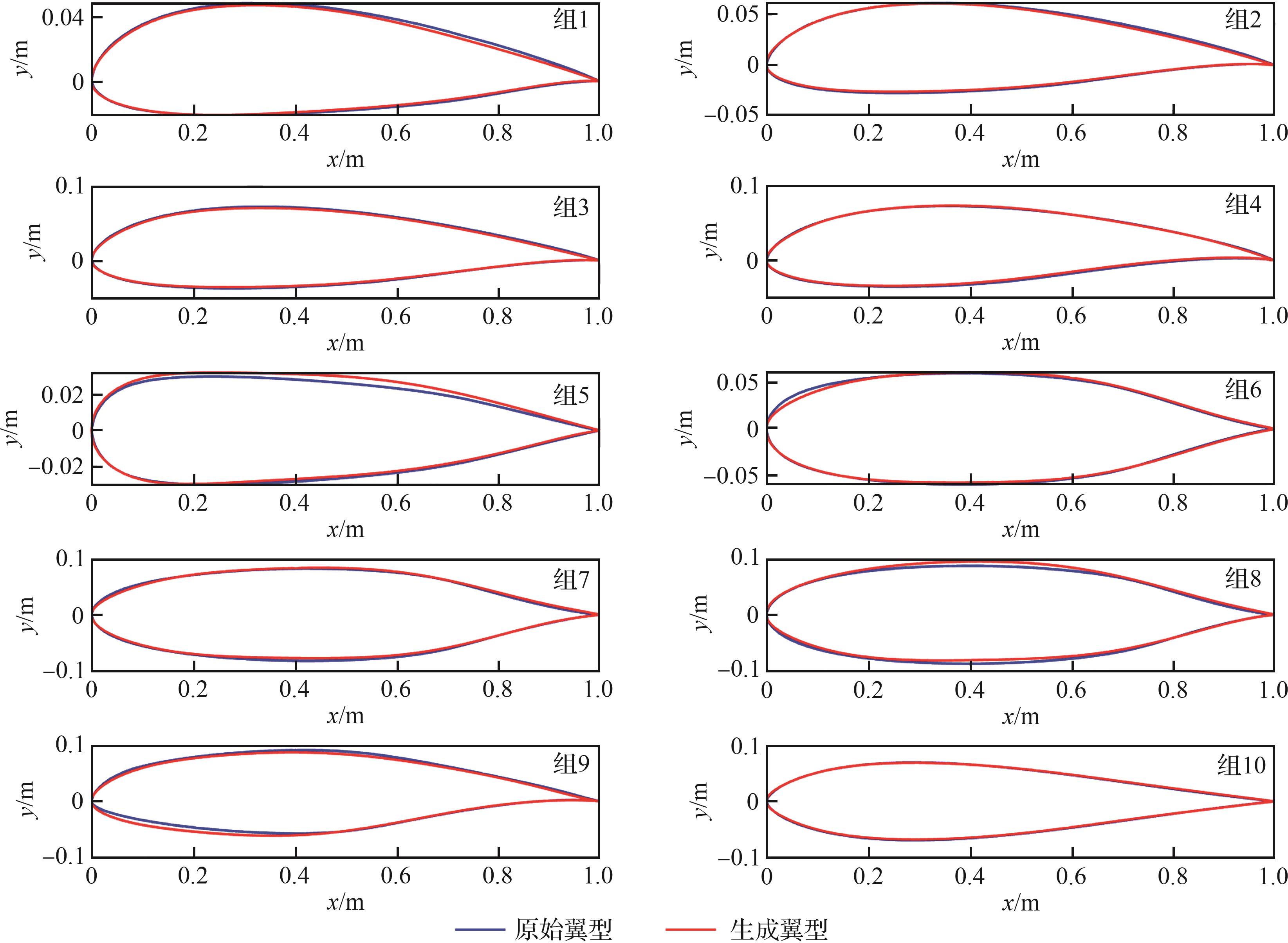
Fig.14
Histogram of airfoil errors generated by Net1 and Net2
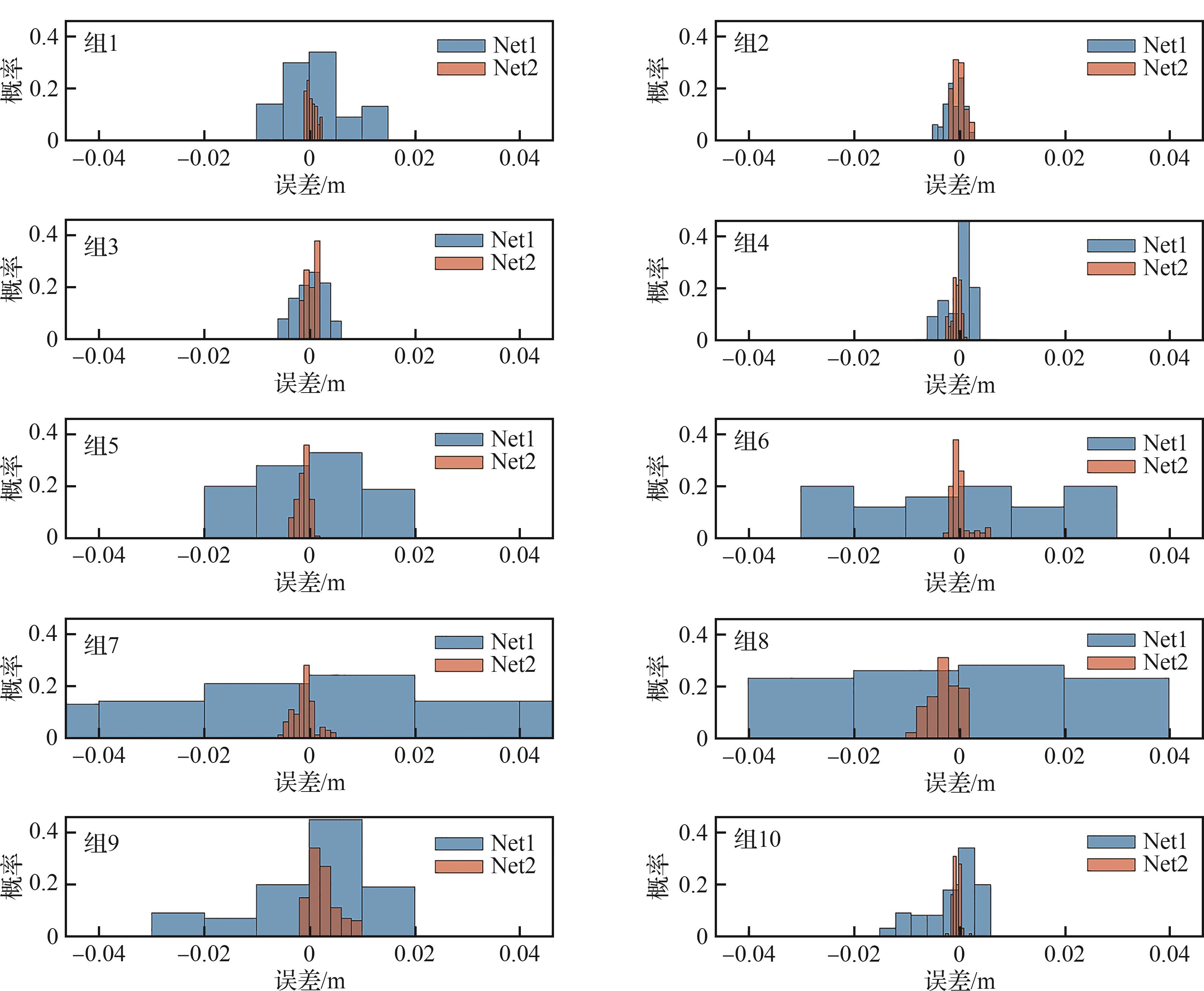
Table 5
Comparison of errors between airfoils generated by Net1 and Net2 and original airfoils
| 网络名称 | 平均 | 平均 |
|---|---|---|
| Net1 | 10.650 | 8.455 |
| Net2 | 1.779 | 1.351 |
Table 6
Results of numerical simulation of airfoils generated by Net2
| 翼型序号 | 设计值 | 数值模拟值 | 相对误差/% | |||
|---|---|---|---|---|---|---|
| CL | CD | CL | CD | CL | CD | |
| 1 | 0.703 0 | 0.014 2 | 0.719 2 | 0.014 1 | 2.261 0 | 0.198 2 |
| 2 | 0.828 6 | 0.021 2 | 0.843 8 | 0.021 0 | 1.791 7 | 0.911 0 |
| 3 | 0.801 4 | 0.026 9 | 0.807 4 | 0.026 7 | 0.744 0 | 0.750 3 |
| 4 | 0.922 6 | 0.030 9 | 0.920 2 | 0.029 8 | 0.256 8 | 3.609 4 |
| 5 | 0.505 6 | 0.016 6 | 0.461 1 | 0.016 3 | 9.642 6 | 1.792 8 |
| 6 | 0.482 7 | 0.011 6 | 0.486 5 | 0.014 2 | 0.787 2 | 18.050 6 |
| 7 | 0.472 3 | 0.014 6 | 0.451 1 | 0.014 0 | 4.688 7 | 4.627 8 |
| 8 | 0.440 3 | 0.016 7 | 0.402 0 | 0.016 6 | 9.520 6 | 0.289 0 |
| 9 | 0.776 8 | 0.031 4 | 0.813 3 | 0.029 6 | 4.483 9 | 5.989 7 |
| 10 | 0.467 3 | 0.021 8 | 0.458 9 | 0.021 6 | 1.821 5 | 1.020 6 |
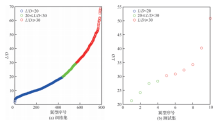
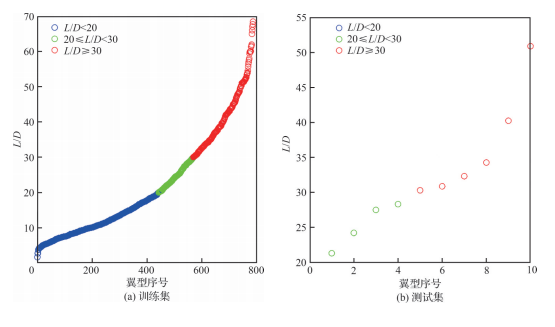
Fig.15
Layout of lift-drag ratio of airfoils
| 1 | 卜月鹏, 宋文萍, 韩忠华, 等. 基于CST参数化方法的翼型气动优化设计[J]. 西北工业大学学报, 2013, 31(5): 829-836. |
| BU Y P, SONG W P, HAN Z H, et al. Aerodynamic optimization design of airfoil based on CST parameterization method[J]. Journal of Northwestern Polytechnical University, 2013, 31(5): 829-836 (in Chinese). | |
| 2 | 王清, 招启军. 基于遗传算法的旋翼翼型综合气动优化设计[J]. 航空动力学报, 2016, 31(6): 1486-1495. |
| WANG Q, ZHAO Q J. Synthetical optimization design of rotor airfoil by genetic algorithm[J]. Journal of Aerospace Power, 2016, 31(6): 1486-1495 (in Chinese). | |
| 3 | 韩忠华, 许晨舟, 乔建领, 等. 基于代理模型的高效全局气动优化设计方法研究进展[J]. 航空学报, 2020, 41(5): 623344. |
| HAN Z H, XU C Z, QIAO J L, et al. Recent progress of efficient global aerodynamic shape optimization using surrogate-based approach[J]. Acta Aeronautica et Astronautica Sinica, 2020, 41(5): 623344 (in Chinese). | |
| 4 | 白俊强, 雷锐午, 杨体浩, 等. 基于伴随理论的大型客机气动优化设计研究进展[J]. 航空学报, 2019, 40(1): 522642. |
| BAI J Q, LEI R W, YANG T H, et al. Progress of adjoint-based aerodynamic optimization design for large civil aircraft[J]. Acta Aeronautica et Astronautica Sinica, 2019, 40(1): 522642 (in Chinese). | |
| 5 | 夏露, 常彦鑫, 张龙. 改进的模拟退火算法在翼型设计中的应用[J]. 飞行力学, 2008, 26(1): 71-74. |
| XIA L, CHANG Y X, ZHANG L. The application of an improved simulated annealing algorithm to airfoil design[J]. Flight Dynamics, 2008, 26(1): 71-74 (in Chinese). | |
| 6 | 许瑞飞, 邓一菊, 钱瑞战. 气动优化设计及其对CFD的需求[J]. 航空科学技术, 2011, 22(2): 50-52. |
| XU R F, DENG Y J, QIAN R Z. Aerodynamic optimzation design and its requirement to CFD[J]. Aeronautical Science & Technology, 2011, 22(2): 50-52 (in Chinese). | |
| 7 | 穆雪峰. 多学科设计优化代理模型技术的研究和应用[D]. 南京: 南京航空航天大学, 2004. |
| MU X F. Research and application of multidisciplinary design optimization agent model technology[D]. Nanjing: Nanjing University of Aeronautics and Astronautics, 2004 (in Chinese). | |
| 8 | 韩忠华. Kriging模型及代理优化算法研究进展[J]. 航空学报, 2016, 37(11): 3197-3225. |
| HAN Z H. Kriging surrogate model and its application to design optimization: a review of recent progress[J]. Acta Aeronautica et Astronautica Sinica, 2016, 37(11): 3197-3225 (in Chinese). | |
| 9 | 郭丽丽, 丁世飞. 深度学习研究进展[J]. 计算机科学, 2015, 42(5): 28-33. |
| GUO L L, DING S F. Research progress on deep learning[J]. Computer Science, 2015, 42(5): 28-33 (in Chinese). | |
| 10 | 廖鹏, 姚磊江, 白国栋, 等. 基于深度学习的混合翼型前缘压力分布预测[J]. 航空动力学报, 2019, 34(8): 1751-1758. |
| LIAO P, YAO L J, BAI G D, et al. Prediction of hybrid airfoil leading edge pressure distribution based on deep learning[J]. Journal of Aerospace Power, 2019, 34(8): 1751-1758 (in Chinese). | |
| 11 | 陈海, 钱炜祺, 何磊. 基于深度学习的翼型气动系数预测[J]. 空气动力学学报, 2018, 36(2): 294-299. |
| CHEN H, QIAN W Q, HE L. Aerodynamic coefficient prediction of airfoils based on deep learning[J]. Acta Aerodynamica Sinica, 2018, 36(2): 294-299 (in Chinese). | |
| 12 | TAO J, SUN G. An artificial neural network approach for aerodynamic performance retention in airframe noise reduction design of a 3D swept wing model[J]. Chinese Journal of Aeronautics, 2016, 29(5): 1213-1225. |
| 13 | 王超杰, 何磊, 李川, 等. 基于注意力机制的翼型反设计方法[J]. 航空动力学报, 2025, 40(1): 20230106. |
| WANG C J, HE L, LI C, et al. Airfoil reverse design method based on self-attention mechanism[J]. Journal of Aerospace Power, 2025, 40(1): 20230106 (in Chinese). | |
| 14 | 赵国庆, 招启军. 基于目标压力分布的旋翼先进气动外形反设计分析方法[J]. 航空学报, 2014, 35(3): 744-755. |
| ZHAO G Q, ZHAO Q J. Inverse design analysis method on rotor with advanced aerodynamic configuration based upon target pressure distribution[J]. Acta Aeronautica et Astronautica Sinica, 2014, 35(3): 744-755 (in Chinese). | |
| 15 | LIGHTHILL M J. A new method of two-dimensional aerodynamic design[R]. London: Aeronautical Research Council, 1945. |
| 16 | STEGER J L, KLINEBERG J M. A finite-difference method for transonic airfoil design[J]. AIAA Journal, 1973, 11(5): 628-635. |
| 17 | CARLSON L A. Transonic airfoil analysis and design using Cartesian coordinates[J]. Journal of Aircraft, 1976, 13(5): 349-356. |
| 18 | SOBIECZKY H, YU N J, FUNG K Y, et al. New method for designing shock-free transonic configurations[J]. AIAA Journal, 1979, 17(7): 722-729. |
| 19 | TAKANASHI S. Iterative three-dimensional transonic wing design using integral equations[J]. Journal of Aircraft, 1985, 22(8): 655-660. |
| 20 | HENNE P A. Inverse transonic wing design method[J]. Journal of Aircraft, 1981, 18(2): 121-127. |
| 21 | CAMPBELL R, SMITH L. A hybrid algorithm for transonic airfoil and wing design[C]∥5th Applied Aerodynamics Conference. Reston: AIAA, 1987. |
| 22 | 华俊, 张仲寅, 乔志德, 等. 一种跨声速翼型设计方法及设计诸例[J]. 空气动力学学报, 1990, 8(2): 117-123. |
| HUA J, ZHANG Z Y, QIAO Z D, et al. A transonic airfoil design method and examples[J]. Acta Aerodynamica Sinica, 1990, 8(2): 117-123 (in Chinese). | |
| 23 | 白俊强, 华俊, 张仲寅. 基于欧拉方程的跨声速翼型设计[J]. 空气动力学学报, 1997, 15(4): 458-449, 460-461. |
| BAI J Q, HUA J, ZHANG Z Y. Transonic airfoil design using Euler equations[J]. Acta Aerodynamica Sinica, 1997, 15(4): 458-449, 460-461 (in Chinese). | |
| 24 | 詹浩, 华俊, 张仲寅. 基于余量修正原理的多翼面气动力反设计方法[J]. 航空学报, 2003, 24(5): 411-413. |
| ZHAN H, HUA J, ZHANG Z Y. Design of multi-lifting surfaces based on iterative residual correction[J]. Acta Aeronautica et Astronautica Sinica, 2003, 24(5): 411-413 (in Chinese). | |
| 25 | BUI-THANH T, DAMODARAN M, WILLCOX K. Aerodynamic data reconstruction and inverse design using proper orthogonal decomposition[J]. AIAA Journal, 2004, 42(8): 1505-1516. |
| 26 | 白俊强, 邱亚松, 华俊. 改进型Gappy POD翼型反设计方法[J]. 航空学报, 2013, 34(4): 762-771. |
| BAI J Q, QIU Y S, HUA J. Improved airfoil inverse design method based on gappy POD[J]. Acta Aeronautica et Astronautica Sinica, 2013, 34(4): 762-771 (in Chinese). | |
| 27 | 宋超, 刘红阳, 周铸, 等. 基于生成拓扑映射的气动外形反设计方法研究[J]. 西北工业大学学报, 2022, 40(4): 837-844. |
| SONG C, LIU H Y, ZHOU Z, et al. Inverse design of aerodynamic configuration using generative topographic mapping[J]. Journal of Northwestern Polytechnical University, 2022, 40(4): 837-844 (in Chinese). | |
| 28 | 吴秋雨. 基于生成式对抗网络的气动外形优化方法研究[D]. 成都: 电子科技大学, 2021. |
| WU Q Y. Research on aerodynamic shape optimization method based on generative countermeasure network[D]. Chengdu: University of Electronic Science and Technology of China, 2021 (in Chinese). | |
| 29 | SEKAR V, ZHANG M Q, SHU C, et al. Inverse design of airfoil using a deep convolutional neural network[J]. AIAA Journal, 2019, 57(3): 993-1003. |
| 30 | 何磊, 钱炜祺, 刘滔, 等. 基于深度学习的翼型反设计方法[J]. 航空动力学报, 2020, 35(9): 1909-1917. |
| HE L, QIAN W Q, LIU T, et al. Inverse design method of airfoil based on deep learning[J]. Journal of Aerospace Power, 2020, 35(9): 1909-1917 (in Chinese). | |
| 31 | 陈鹏, 李擎, 张德政, 等. 多模态学习方法综述[J]. 工程科学学报, 2020, 42(5): 557-569. |
| CHEN P, LI Q, ZHANG D Z, et al. A survey of multimodal machine learning[J]. Chinese Journal of Engineering, 2020, 42(5): 557-569 (in Chinese). | |
| 32 | 黄礼铿, 高正红, 张德虎. 基于变可信度代理模型的气动优化[J]. 空气动力学学报, 2013, 31(6): 783-788. |
| HUANG L K, GAO Z H, ZHANG D H. Aerodynamic optimization based on multi-fidelity surrogate[J]. Acta Aerodynamica Sinica, 2013, 31(6): 783-788 (in Chinese). | |
| 33 | 刘璟, 边枭, 徐冠峰, 等. 基于多可信度代理模型的尾喷管优化设计[J]. 航空工程进展, 2022, 13(6): 29-39. |
| LIU J, BIAN X, XU G F, et al. Optimal design of nozzle based on multi-fidelity surrogate model[J]. Advances in Aeronautical Science and Engineering, 2022, 13(6): 29-39 (in Chinese). | |
| 34 | 张立, 陈江涛, 熊芬芬, 等. 基于元学习的多可信度深度神经网络代理模型[J]. 机械工程学报, 2022, 58(1): 190-200. |
| ZHANG L, CHEN J T, XIONG F F, et al. Meta-learning based multi-fidelity deep neural networks metamodel method[J]. Journal of Mechanical Engineering, 2022, 58(1): 190-200 (in Chinese). | |
| 35 | 屈经国, 王强, 彭博, 等. 基于多模态融合的任意对称翼型结冰预测方法[J]. 航空动力学报, 2024, 39(1): 54-61. |
| QU J G, WANG Q, PENG B, et al. Icing prediction method for arbitrary symmetric airfoil using multimodal fusion[J]. Journal of Aerospace Power, 2024, 39(1): 54-61 (in Chinese). | |
| 36 | GAO J, LI P, CHEN Z K, et al. A survey on deep learning for multimodal data fusion[J]. Neural Computation, 2020, 32(5): 829-864. |
| 37 | 田洁华, 孙迪, 屈峰, 等. 基于CST-GAN的翼型参数化方法[J]. 航空学报, 2023, 44(18): 128280. |
| TIAN J H, SUN D, QU F, et al. Airfoil parameterization method based on CST-GAN[J]. Acta Aeronautica et Astronautica Sinica, 2023, 44(18): 128280 (in Chinese). | |
| 38 | JIN S Y, CHEN S S, CHE S Q, et al. Airfoil aerodynamic/stealth design based on conditional generative adversarial networks[J]. 2024, 36(7): 077146. |
| 39 | WANG Y Q, DENG L, WAN Y B, et al. An intelligent method for predicting the pressure coefficient curve of airfoil-based conditional generative adversarial networks[J]. IEEE Transactions on Neural Networks and Learning Systems, 2023, 34(7): 3538-3552. |
| 40 | REYNOLDS O. On the dynamical theory of incompressible viscous fluids and the determination of the criterion[J]. Philosophical Transactions of the Royal Society of London (A), 1895, 186: 123-164. |
| 41 | WILCOX D C. Turbulence modeling for CFD[J]. Anaheim: DCW Industries, 1998. |
| 42 | SAGAUT P. Large eddy simulation for incompressible flows: An introduction[M]. 3rd ed. Berlin, New York: Springer-Verlag, 2006 |
| 43 | 阎超, 禹建军, 李君哲. 热流CFD计算中格式和网格效应若干问题研究[J]. 空气动力学学报, 2006, 24(1): 125-130. |
| YAN C, YU J J, LI J Z. Scheme effect and grid dependency in CFD computations of heat transfer[J]. Acta Aerodynamica Sinica, 2006, 24(1): 125-130 (in Chinese). | |
| 44 | JIANG G S, SHU C W. Efficient implementation of weighted ENO schemes[J]. Journal of Computational Physics, 1996, 126(1): 202-228. |
| 45 | JAMESON A, YOON S. Lower-upper implicit schemes with multiple grids for the Euler equations[J]. AIAA Journal, 1987, 25(7): 929-935. |
| 46 | WRIGHT M J, CANDLER G V, PRAMPOLINI M. Data-parallel lower-upper relaxation method for the Navier-Stokes equations[J]. AIAA Journal, 1996, 34(7): 1371-1377. |
| 47 | SPALART P, ALLMARAS S. A one-equation turbulence model for aerodynamic flows[C]∥30th Aerospace Sciences Meeting and Exhibit. Reston: AIAA, 1992. |
| 48 | KULFAN B M, BUSSOLETTI J E. “Fundamental” parameteric geometry representations for aircraft component shapes[C]∥11th AIAA/ISSMO Multidisciplinary Analysis and Optimization Conference. Reston: AIAA, 2006. |
| 49 | KULFAN B M. Recent extensions and applications of the ‘CST’ universal parametric geometry representation method[J]. The Aeronautical Journal, 2010, 114(1153): 157-176. |
| 50 | KULFAN B M. A universal parametric geometry representation method-“CST”[C]∥45th AIAA Aerospace Sciences Meeting and Exhibit. Reston: AIAA, 2007. |
| 51 | 徐亚峰, 刘学军, 吕宏强. 基于CST参数化方法的翼型快速设计[J]. 航空计算技术, 2011, 41(5): 24-29, 33. |
| XU Y F, LIU X J, LV H Q. Fast airfoil design based on CST parameterization[J]. Aeronautical Computing Technique, 2011, 41(5): 24-29, 33 (in Chinese). | |
| 52 | 关晓辉, 李占科, 宋笔锋. CST气动外形参数化方法研究[J]. 航空学报, 2012, 33(4): 625-633. |
| GUAN X H, LI Z K, SONG B F. A study on CST aerodynamic shape parameterization method[J]. Acta Aeronautica et Astronautica Sinica, 2012, 33(4): 625-633 (in Chinese). | |
| 53 | MIRZA M, OSINDERO S. Conditional generative adversarial nets[DB/OL]. arXiv preprint:1411.1784, 2014. |
| 54 | 张虎成, 李雷孝, 刘东江. 多模态数据融合研究综述[J]. 计算机科学与探索, 2024, 18(10): 2501-2520. |
| ZHANG H C, LI L X, LIU D J. Survey of multimodal data fusion research[J]. Journal of Frontiers of Computer Science and Technology, 2024, 18(10): 2501-2520 (in Chinese). |
| [1] | Ruitao ZHANG, Cong WANG, Jun TAO, Liyue WANG, Gang SUN. Airfoil parameterization method based on latent diffusion model [J]. Acta Aeronautica et Astronautica Sinica, 2025, 46(10): 631180-631180. |
| [2] | Wei WANG, Hao WANG, Ai ZHOU, He FENG. Stepwise optimal design for shape and topology of variable camber wing [J]. Acta Aeronautica et Astronautica Sinica, 2024, 45(18): 129990-129990. |
| [3] | Jiehua TIAN, Di SUN, Feng QU, Junqiang BAI. Airfoil parameterization method based on CST⁃GAN [J]. Acta Aeronautica et Astronautica Sinica, 2023, 44(18): 128280-128280. |
| [4] | Haoge LI, Hua YANG, Yuxin YANG, Weifang CHEN. Refinement optimization design for heat reduction on windward surface of hypersonic lifting body [J]. ACTA AERONAUTICAET ASTRONAUTICA SINICA, 2022, 43(S2): 124-137. |
| [5] | WEI Yongbin, DUAN Zhuoyi, GUO Zhaodian, YANG Chengfeng. Parameterization investigation method for nacelle aerodynamic performance [J]. ACTA AERONAUTICAET ASTRONAUTICA SINICA, 2022, 43(11): 526742-526742. |
| [6] | CAO Fan, ZHANG Meifang, HU Xiao, TANG Zhili. Natural laminar flow optimization and transition sensitivity analysis of axisymmetric nacelle [J]. ACTA AERONAUTICAET ASTRONAUTICA SINICA, 2022, 43(11): 527330-527330. |
| [7] | ZHANG Wei, GAO Zhenghong, ZHOU Lin, XIA Lu. Adaptive parameterization method for surrogate-based global optimization [J]. ACTA AERONAUTICAET ASTRONAUTICA SINICA, 2020, 41(10): 123815-123815. |
| [8] | WANG Fang, LIN Tao, ZHANG Ke. Control variable parameterization-based computational method for optimal control of initiative anti-interception penetration [J]. ACTA AERONAUTICAET ASTRONAUTICA SINICA, 2015, 36(6): 2037-2046. |
| [9] | TANG Jing, DENG Youqi, MA Mingsheng, LI Bin. Parameterization and grid deformation techniques for flying-wing aerodynamic optimization [J]. ACTA AERONAUTICAET ASTRONAUTICA SINICA, 2015, 36(5): 1480-1490. |
| [10] | WANG Xun, CAI Jinsheng, QU Kun, LIU Chuanzhen. Airfoil optimization based on improved CST parametric method and transition model [J]. ACTA AERONAUTICAET ASTRONAUTICA SINICA, 2015, 36(2): 449-461. |
| [11] | CAO Changqiang, CAI Jinsheng, DUAN Yanhui. Aerodynamic design optimization of supersonic airfoils [J]. ACTA AERONAUTICAET ASTRONAUTICA SINICA, 2015, 36(12): 3774-3784. |
| [12] | QIU Ming, ZHOU Zhenggui, LIU Longlong, CUI Cui. Supersonic Compressor Blade Profile Design Method [J]. ACTA AERONAUTICAET ASTRONAUTICA SINICA, 2014, 35(4): 975-985. |
| [13] | CHEN Song, BAI Junqiang, SUN Zhiwei, WANG Dan. Aerodynamic Optimization Design of Airfoil Using DFFD Technique [J]. ACTA AERONAUTICAET ASTRONAUTICA SINICA, 2014, 35(3): 695-705. |
| [14] | GUAN Xiaohui, SONG Bifeng, LI Zhanke. Extended Far-field Composite Element Supersonic Wing-body Wave Drag Optimization Method [J]. ACTA AERONAUTICAET ASTRONAUTICA SINICA, 2013, 34(5): 1036-1045. |
| [15] | BAI Junqiang, LIU Nan, QIU Yasong, CHEN Yingchun, LI Yalin, ZHOU Tao. Optimization of Multi-foil Based on RBF Mesh Deformation Method and Modified Particle Swarm Optimization Algorithm [J]. ACTA AERONAUTICAET ASTRONAUTICA SINICA, 2013, 34(12): 2701-2715. |
| Viewed | ||||||
|
Full text |
|
|||||
|
Abstract |
|
|||||
Address: No.238, Baiyan Buiding, Beisihuan Zhonglu Road, Haidian District, Beijing, China
Postal code : 100083
E-mail:hkxb@buaa.edu.cn
Total visits: 6658907 Today visits: 1341All copyright © editorial office of Chinese Journal of Aeronautics
All copyright © editorial office of Chinese Journal of Aeronautics
Total visits: 6658907 Today visits: 1341

 CJA
CJA
