Acta Aeronautica et Astronautica Sinica ›› 2024, Vol. 45 ›› Issue (24): 630481.doi: 10.7527/S1000-6893.2024.30481
• special column • Previous Articles Next Articles
Xingdong LUO, Zihao HOU, Keming WU, Zhen SHEN, Shenrong ZHANG( )
)
Received:2024-04-03
Revised:2024-05-20
Accepted:2024-06-21
Online:2024-12-25
Published:2024-06-25
Contact:
Shenrong ZHANG
E-mail:zsrben@126.com;zsrben@163.com
Supported by:CLC Number:
Xingdong LUO, Zihao HOU, Keming WU, Zhen SHEN, Shenrong ZHANG. Separation safety analysis for Stargazer using electromagnetic propulsion system[J]. Acta Aeronautica et Astronautica Sinica, 2024, 45(24): 630481.
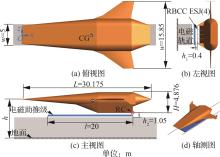
Fig.1
Electromagnetic assisted launch system
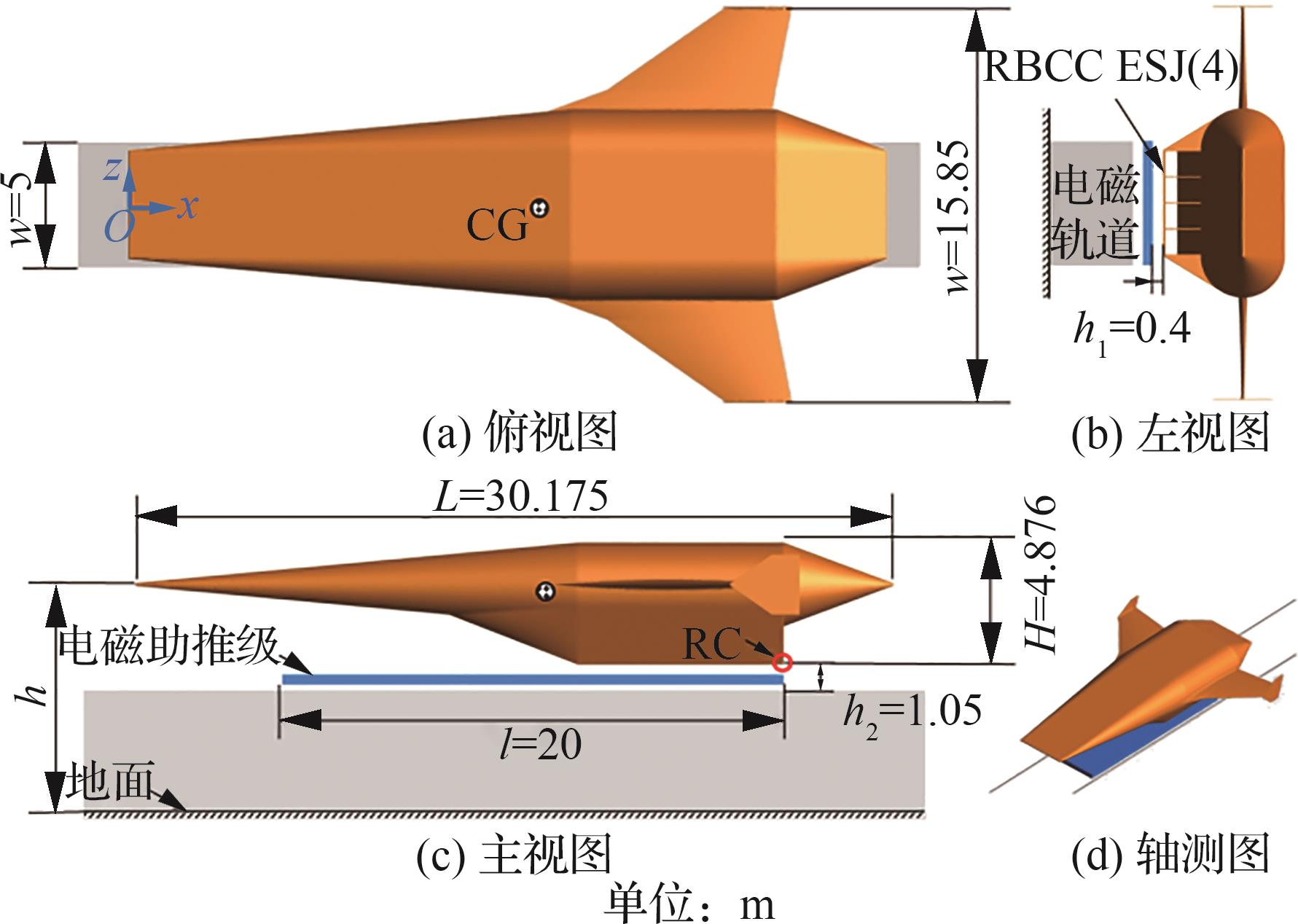
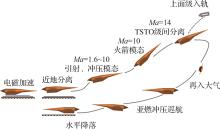
Fig.2
Mission profile of Stargazer using electromagnetic assisted launch system
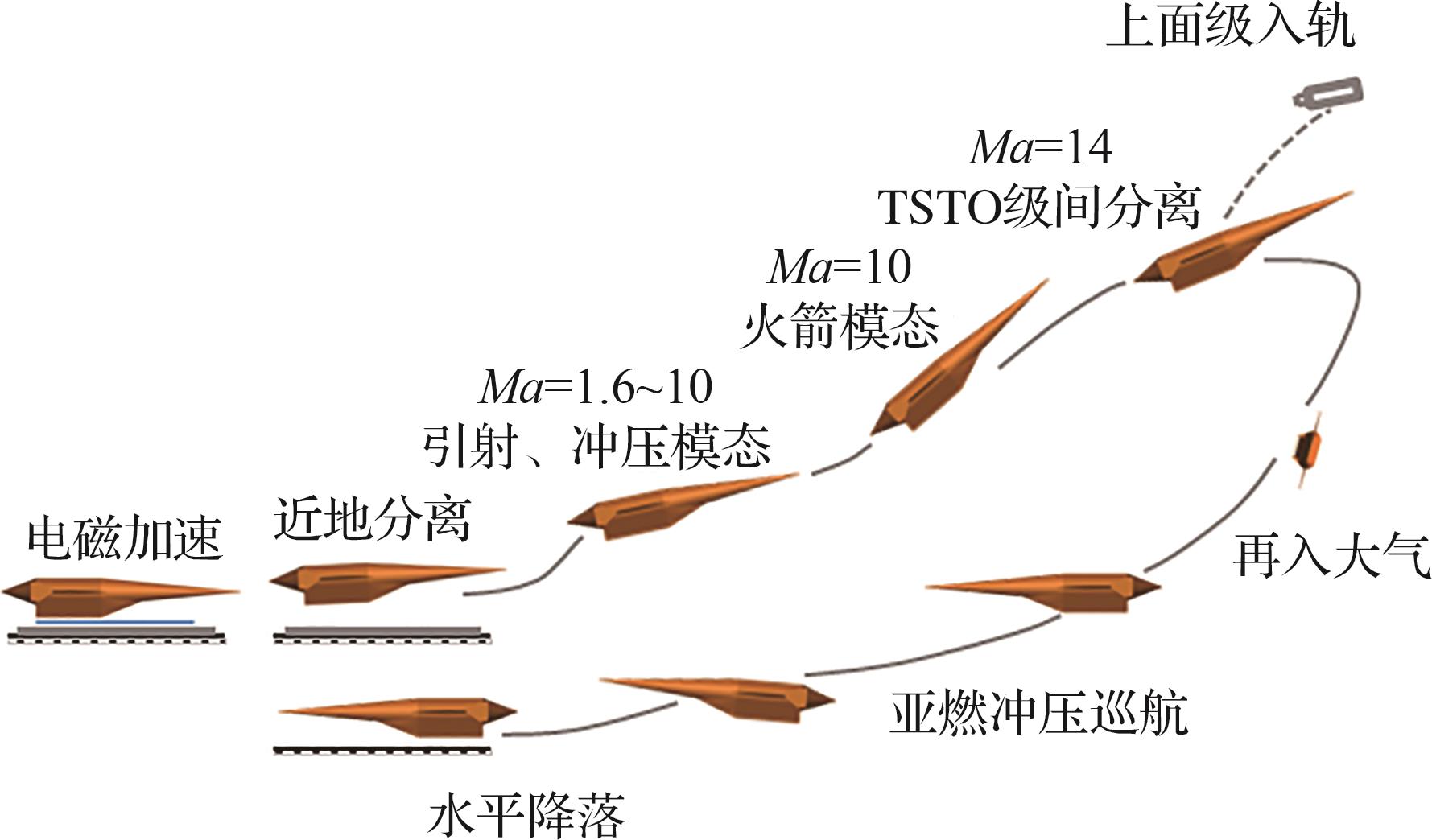
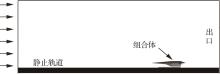
Fig.3
Computational domain
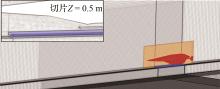
Fig.4
Overset grids around the aircraft
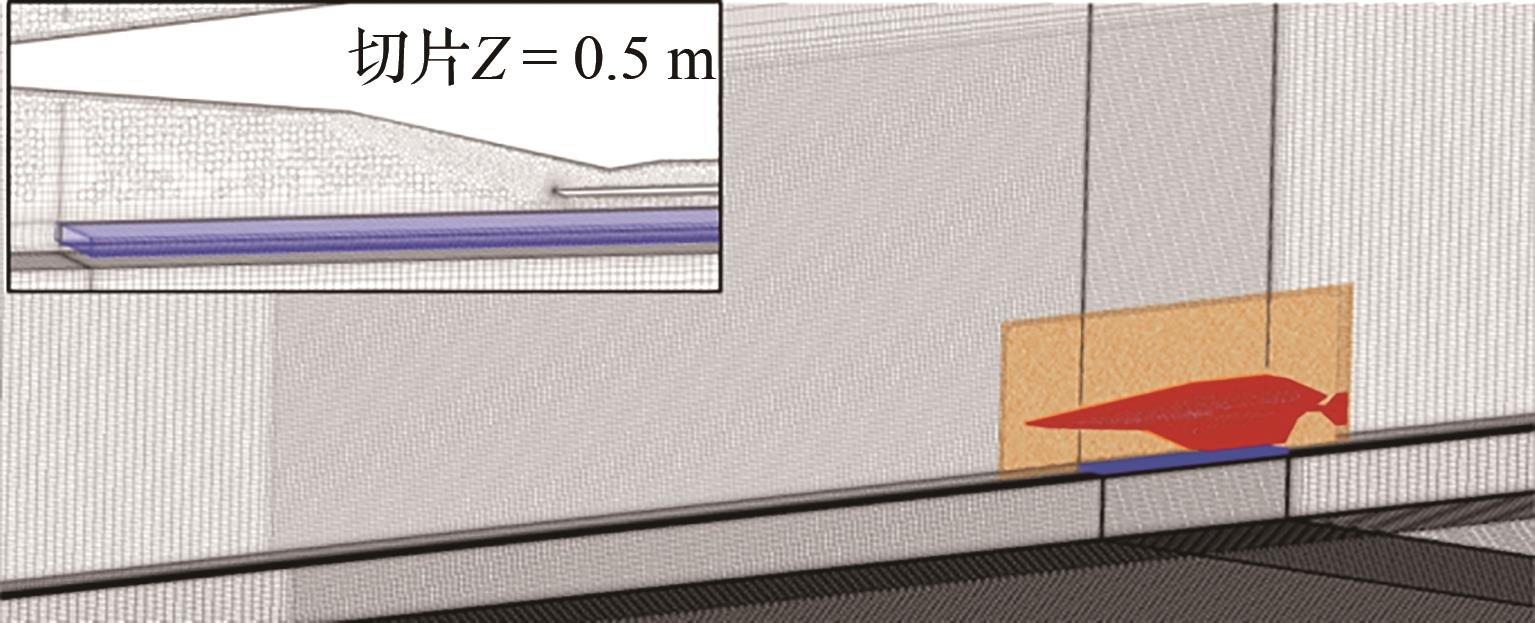

Table1
Mesh independency validation
| 网格量/107 | CD | CL | Cm |
|---|---|---|---|
| 1.6 | 0.465 | 0.413 | 0.029 |
| 2.3 | 0.461 | 0.410 | 0.027 |
| 2.9 | 0.461 | 0.405 | 0.028 |
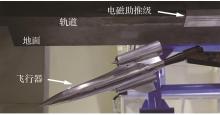
Fig.5
Test models of near-ground multi-body interference between aircraft and electromagnetic sled
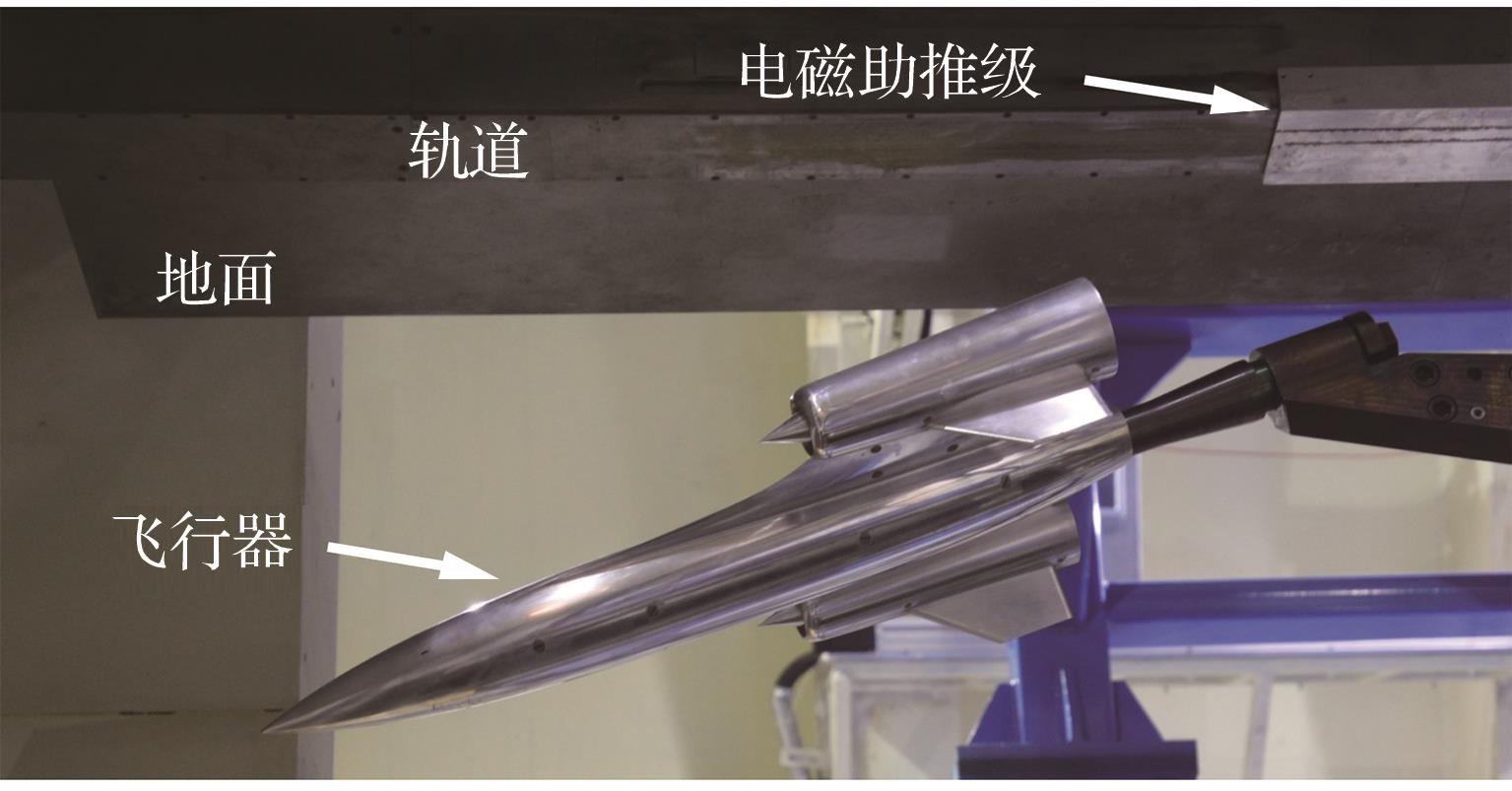
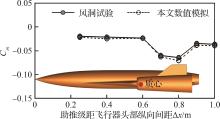
Fig.6
Lift coefficients and moment coefficients of aircraft under the interference of electromagnetic sled
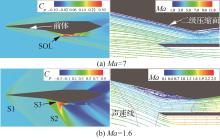
Fig.7
Flow field structure of Stargazer in free space
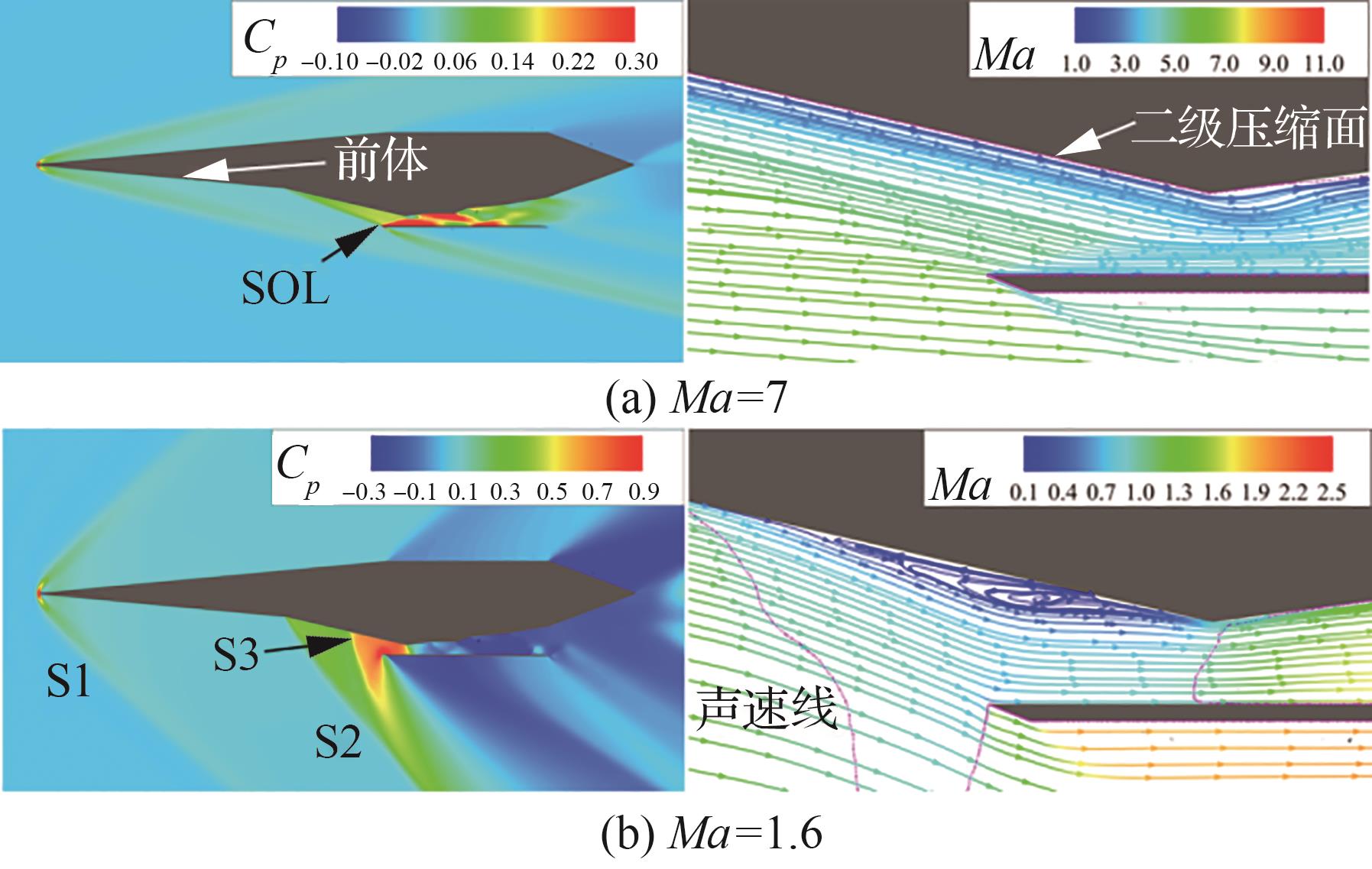
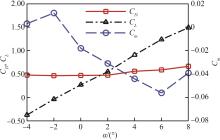
Fig.8
Aerodynamic characteristics of Stargazer in free space (Ma=1.6)
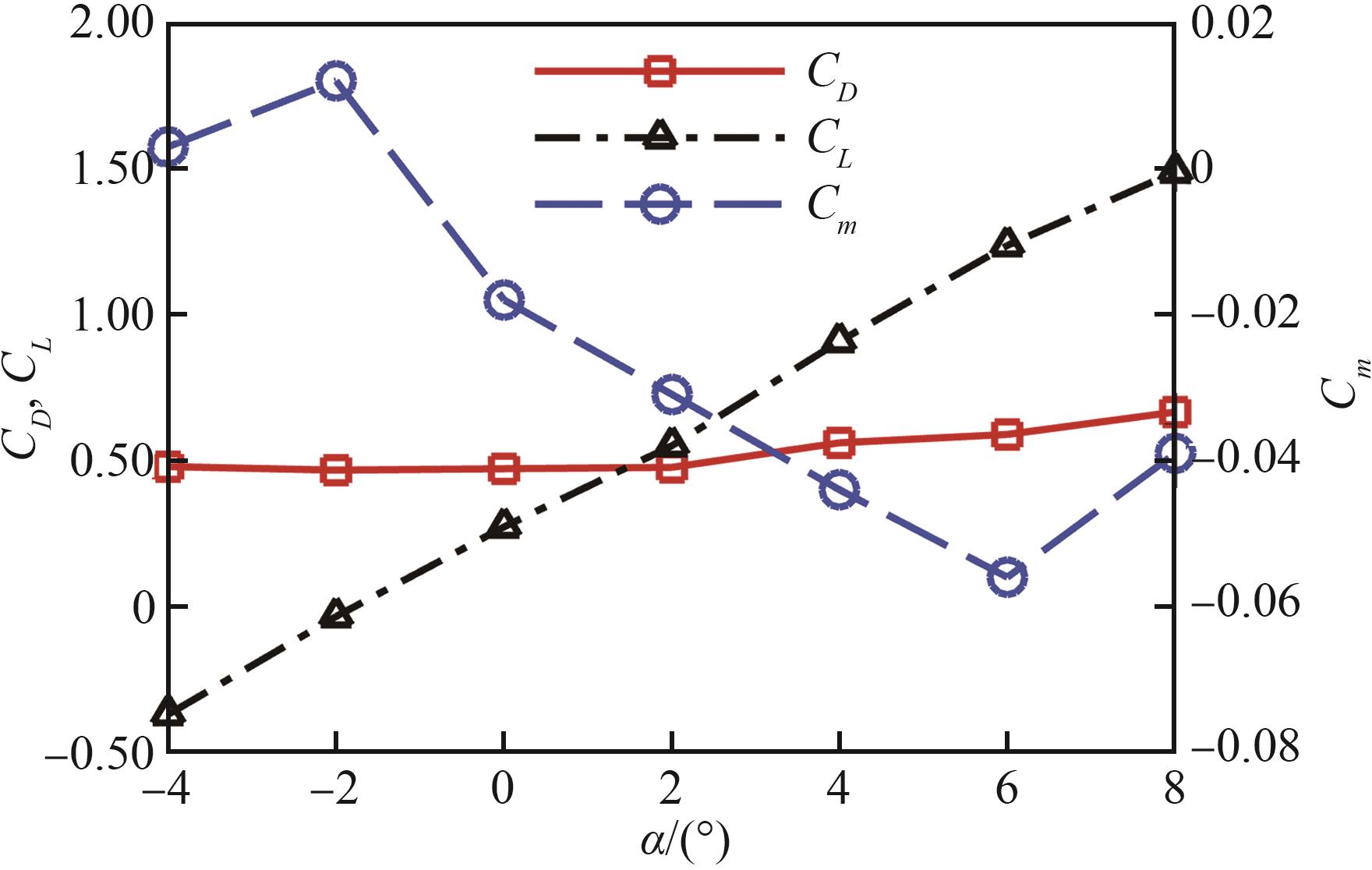
Fig.9
Flow structures in chocked stage during separation
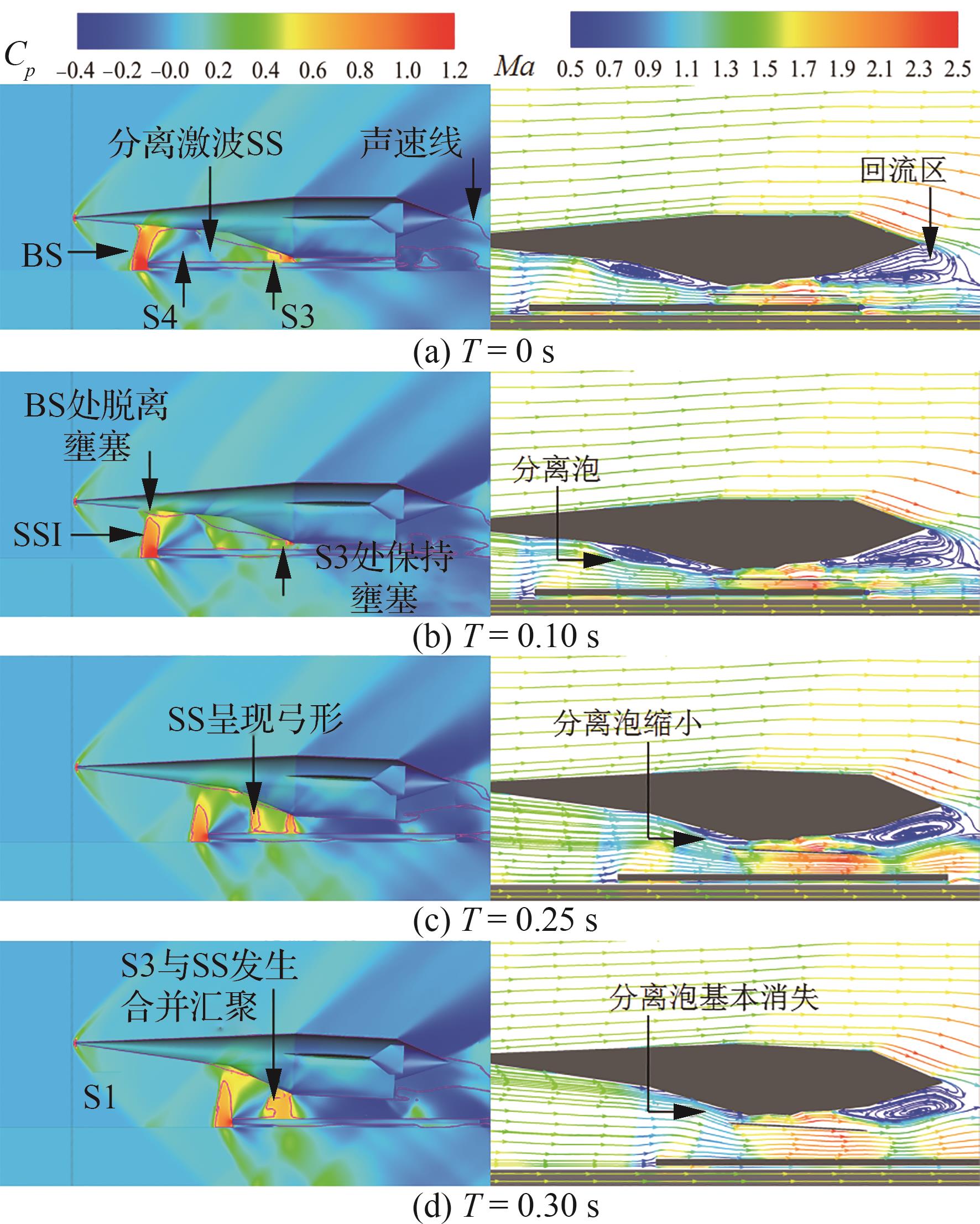
Fig.10
Flow structures in the second and third stages
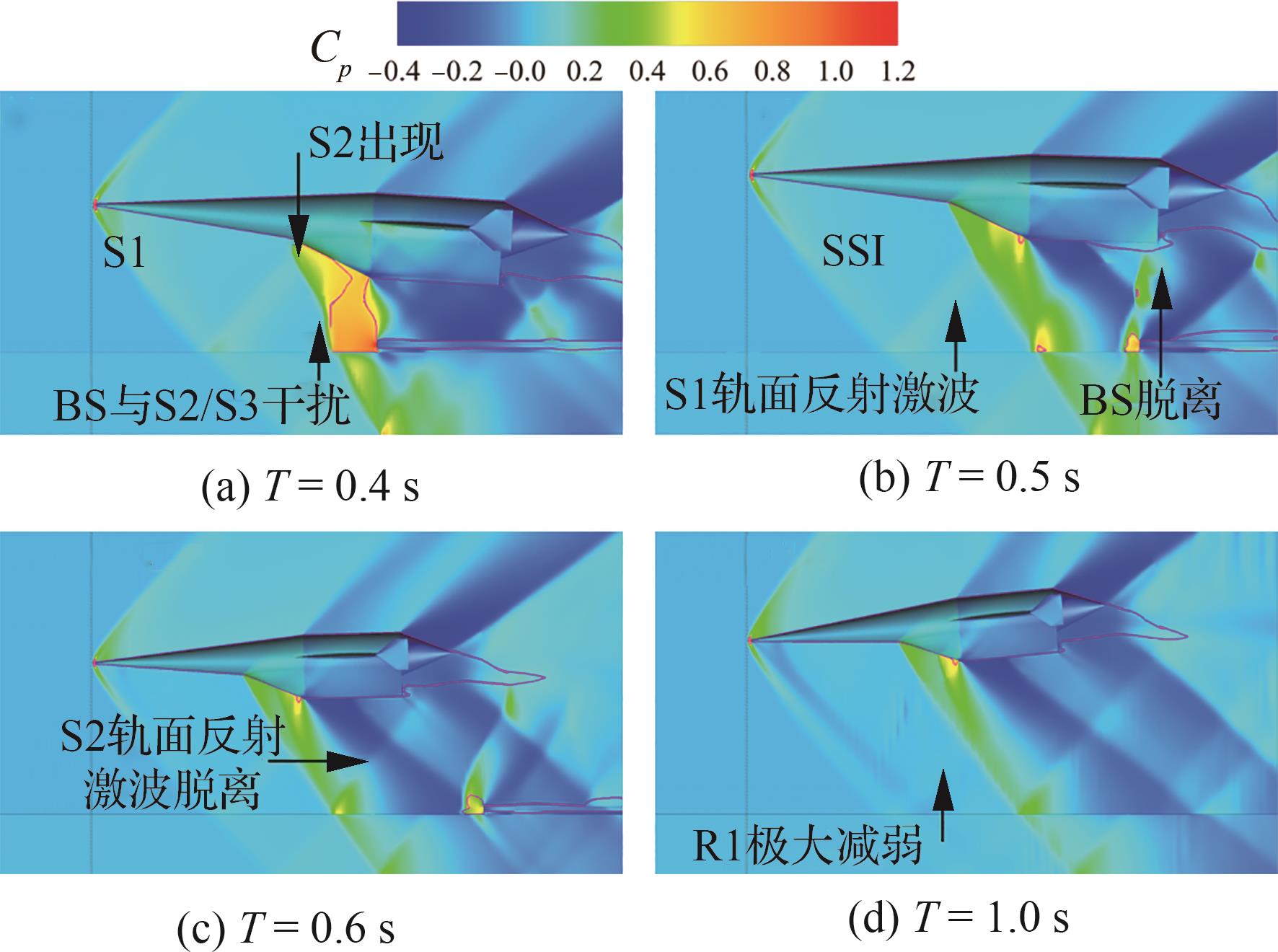
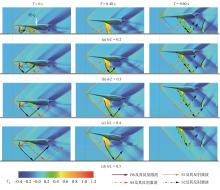
Fig.11
Shock waves during separation in different ground clearances
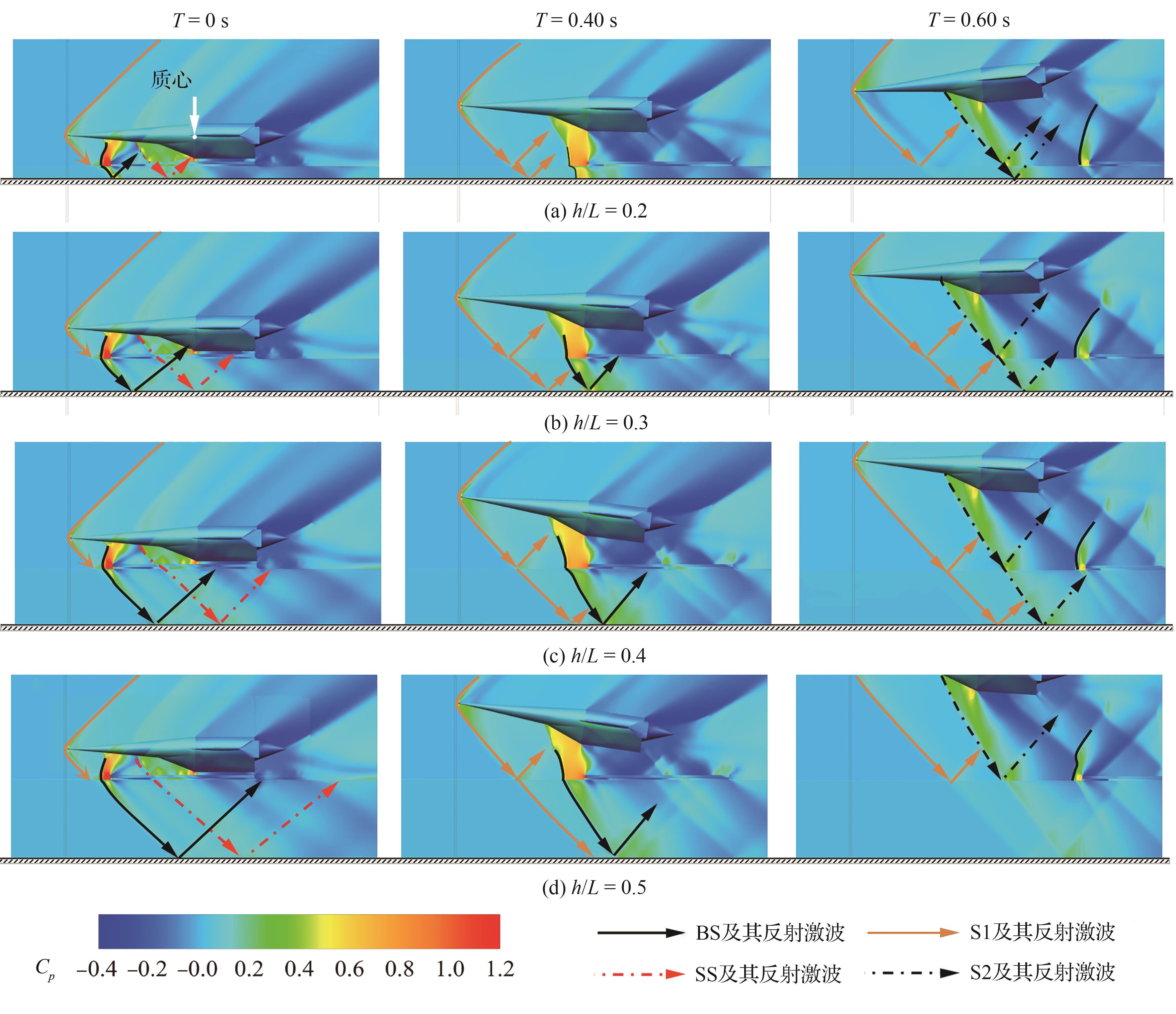
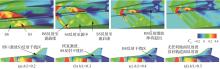
Fig.12
Influence of initial ground clearances on reflected shock waves(T = 0 s)
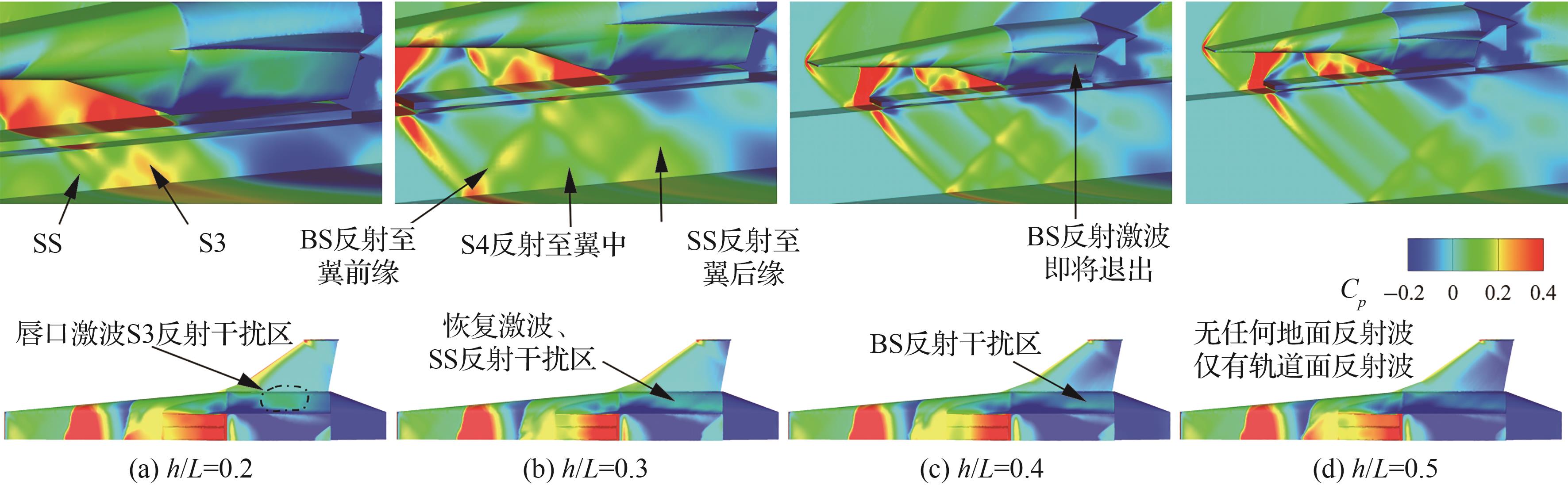
Table 2
Influence of relative ground clearances on initial aerodynamic characteristics of Stargazer during separation
| 相对离地高度h/L | CD | CL | Cm |
|---|---|---|---|
| 0.2 | 0.501 | 0.525 | 0.028 |
| 0.3 | 0.471 | 0.434 | 0.022 |
| 0.4 | 0.449 | 0.276 | 0.053 |
| 0.5 | 0.462 | 0.236 | 0.067 |
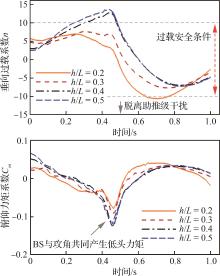
Fig.13
Influence of ground clearances on aerodynamic characteristics of Stargazer
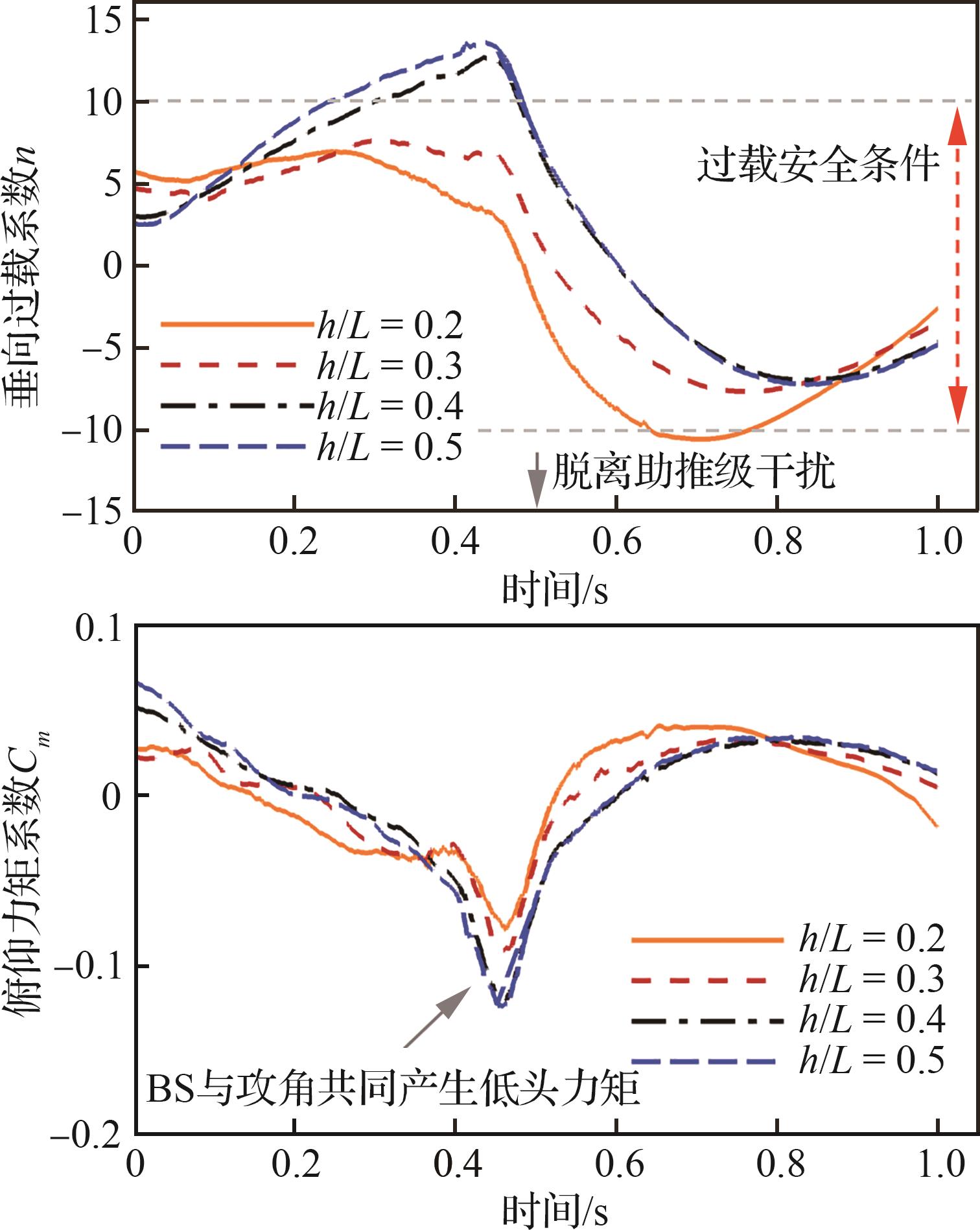
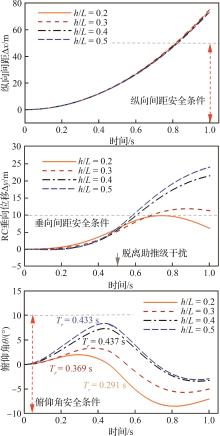
Fig.14
Influence of ground clearances on relative displacements and pitch angles of Stargazer
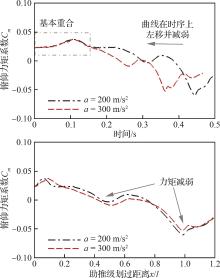
Fig.15
Effect of brake accelerations on pitching moment coefficient of fixed Stargazer
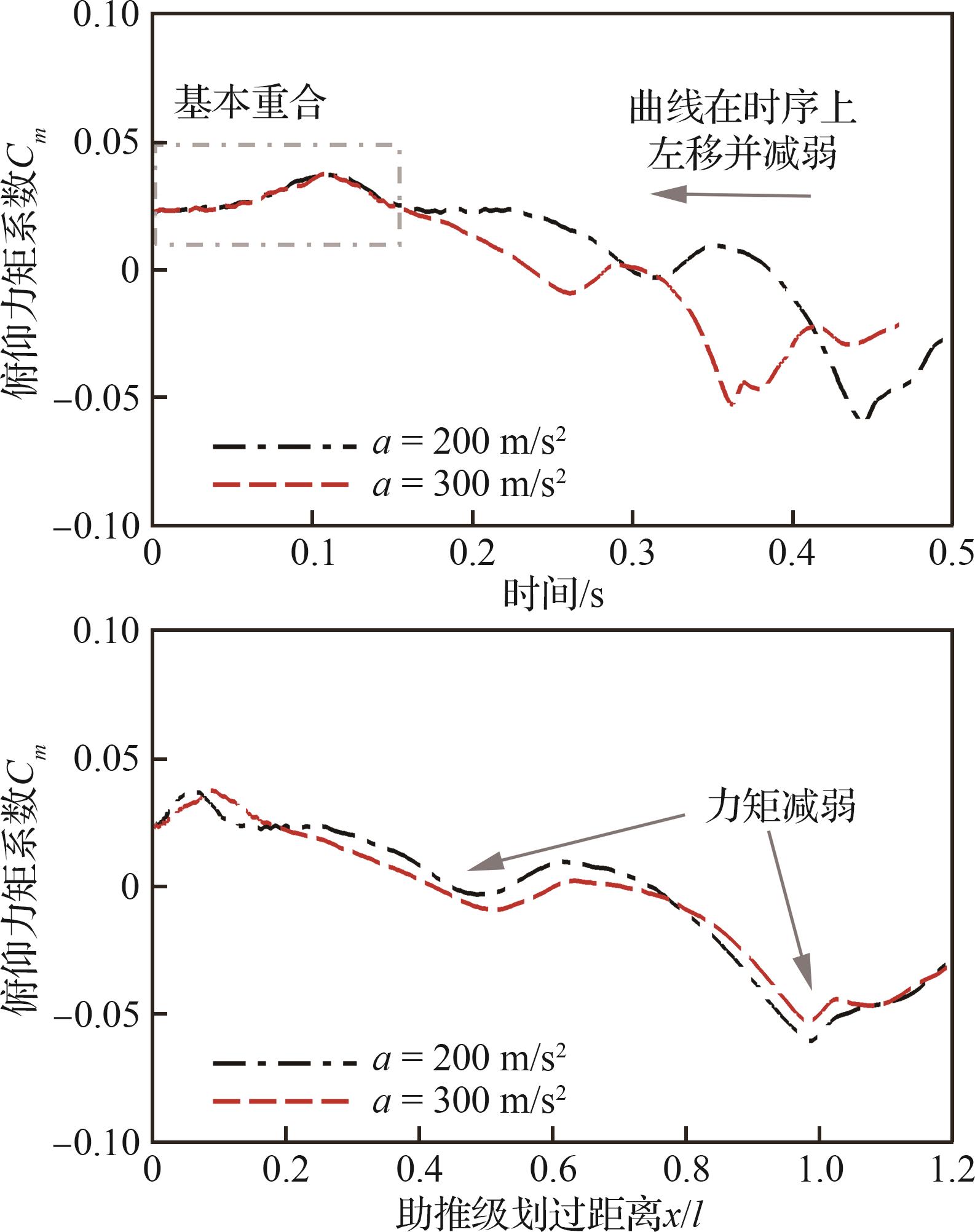
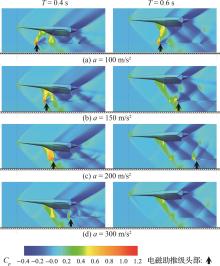
Fig.16
Flow structures of separation with different brake accelerations
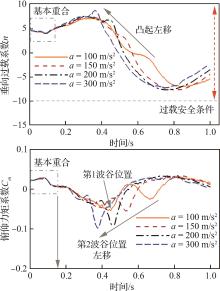
Fig.17
Influence of braking accelerations on air forces
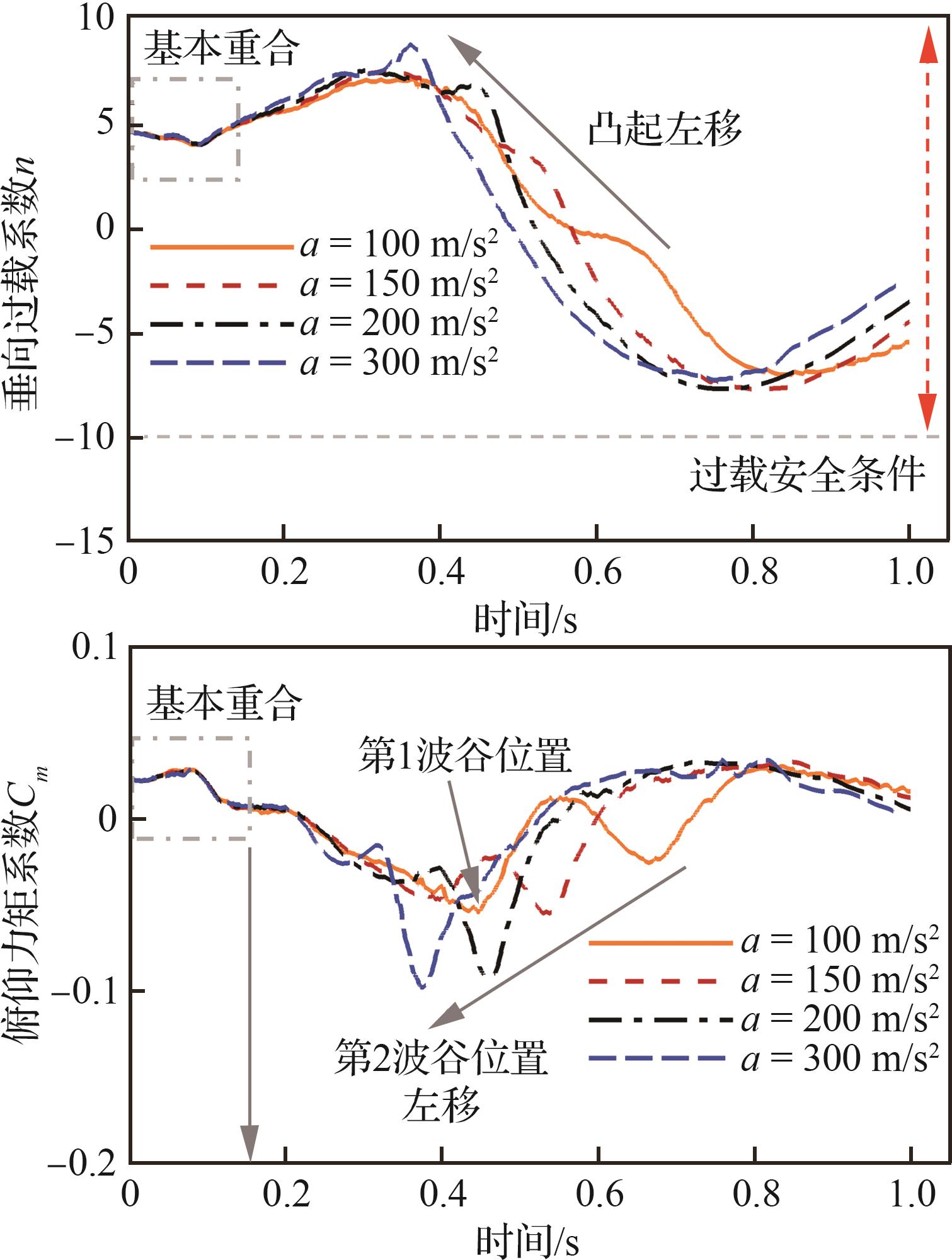
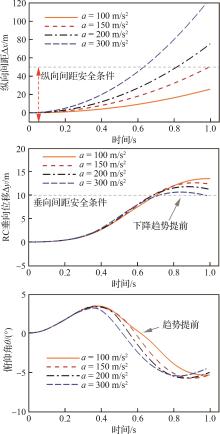
Fig.18
Influence of braking accelerations on relative displacements and pitch angles of Stargazer
| 1 | 侯晓. 组合循环发动机技术研究进展[J]. 航空学报, 2023, 44(21): 529824. |
| HOU X. Research progress in combined cycle engines[J]. Acta Aeronautica et Astronautica Sinica, 2023, 44(21): 529824 (in Chinese). | |
| 2 | 谢赞, 周灿灿, 赵振涛, 等. 宽速域飞行器发展及研究现状综述[J]. 空天技术, 2022(4): 28-39,86. |
| XIE Z, ZHOU C C, ZAHO Z T, et al. Overview of development and research status of wide speed range aircraft[J]. Aerospace Technology, 2022(4): 28-39,86 (in Chinese). | |
| 3 | 贺翔, 曹群生. 电磁发射技术研究进展和关键技术[J]. 中国电子科学研究院学报, 2011, 6(2): 130-135. |
| HE X, CAO Q S. Development and critical techniques of electromagnetic launch technology[J]. Journal of CAEIT, 2011, 6(2): 130-135 (in Chinese). | |
| 4 | 张明元, 马伟明, 汪光森, 等. 飞机电磁弹射系统发展综述[J]. 舰船科学技术, 2013, 35(10): 1-5. |
| ZHANG M Y, MA W M, WANG G S, et al. Overview on a significant technology of modern aircraft carrier-electromagnetic aircraft launch system[J]. Ship Science and Technology, 2013, 35(10): 1-5 (in Chinese). | |
| 5 | 胡振娴, 张艳清, 尹军茂, 等. 空天飞行器磁悬浮电磁助推发射技术综述[J]. 飞航导弹, 2016(12): 54-59. |
| HU Z X, ZHANG Y Q, YIN J M, et al. Overview of magnetic levitation electromagnetic assisted launch technology for aerospace vehicles[J]. Aerodynamic Missile Journal, 2016(12): 54-59 (in Chinese). | |
| 6 | 罗世彬, 刘庆豪, 黄佳, 等. 电磁悬浮助推空天飞行器气动关键技术分析[J]. 飞行力学, 2020, 38(5): 1-7. |
| LUO S B, LIU Q H, HUANG J, et al. Analysis of key aerodynamic technologies of electromagnetic levitation assisted aerospace vehicle[J]. Flight Dynamics, 2020,38(5): 1-7 (in Chinese). | |
| 7 | DOIG G C, BARBER T J, LEONARDI E, et al. Methods for investigating supersonic ground effect in a blowdown wind tunnel[J]. Shock Waves, 2008, 18(2): 155-159. |
| 8 | DOIG G. Transonic and supersonic ground effect aerodynamics[J]. Progress in Aerospace Sciences, 2014, 69: 1-28. |
| 9 | DOIG G, WANG S B, KLEINE H, et al. Aerodynamic analysis of projectiles in ground effect at near-sonic Mach numbers[J]. AIAA Journal, 2016, 54(1): 150-160. |
| 10 | BARBER T J, LEONARDI E, ARCHER R D. A Technical Note on the appropriate CFD boundary conditions for the prediction of ground effect aerodynamics[J]. The Aeronautical Journal, 1999, 103(1029): 545-547. |
| 11 | KLEINE H, YOUNG J, OAKES B, et al. Aerodynamic ground effect for transonic projectiles[C]∥28th International Symposium on Shock Waves. Berlin: Springer, 2012: 519-524. |
| 12 | SHERIDAN C, YOUNG J, KLEINE H, et al. Ground effect of transonic and supersonic projectiles: influence of Mach number and ground clearance[C]∥30th International Symposium on Shock Waves. Cham: Springer, 2017: 635-640. |
| 13 | PURDON J P, MUDFORD N R, KLEINE H. Supersonic projectiles in the vicinity of solid obstacles[C]∥ Proceedings of the 27th International Congress on High-Speed Photography and Photonics. SPIE, 2007: 1-8. |
| 14 | SUGAR-GABOR O. Numerical study of the circular cylinder in supersonic ground effect conditions[J]. International Review of Aerospace Engineering (IREASE), 2018, 11(1): 15. |
| 15 | GAO B S, QU Q L, AGARWAL R K. Aerodynamics of a transonic airfoil in ground effect[J]. Journal of Aircraft, 2018, 55(6): 2240-2255. |
| 16 | 陈晓东, 杨文将, 刘宇, 等. 磁悬浮助推发射气动力分析及风洞试验[J]. 航空动力学报, 2007, 22(9): 1560-1564. |
| CHEN X D, YANG W J, LIU Y, et al. Aerodynamic analysis and wind tunnel testing on maglev launch assist[J]. Journal of Aerospace Power, 2007, 22(9): 1560-1564 (in Chinese). | |
| 17 | YU Y Y, WANG B, XU C Y, et al. Aerodynamic characteristics of supersonic rocket-sled involving waverider geometry[J]. Applied Sciences, 2022, 12(15): 7861. |
| 18 | GARDNER C S, LUDLOFF H F. Influence of acceleration on aerodynamic characteristics of thin airfoils in supersonic and transonic flight[J]. Journal of the Aeronautical Sciences, 1950, 17(1): 47-59. |
| 19 | ROOHANI H, SKEWS B W. The influence of acceleration and deceleration on shock wave movement on and around aerofoils in transonic flight[J]. Shock Waves, 2009, 19(4): 297-305. |
| 20 | ROOHANI H, SKEWS B W. Effect of acceleration on shock-wave dynamics of aerofoils during transonic flight[C]∥Proceedings of the Shock Waves: 26th International Symposium on Shock Waves. Berlin: Springer, 2009. |
| 21 | ROOHANI H, SKEWS B W. Unsteady aerodynamic effects experienced by aerofoils during acceleration and retardation[J]. Proceedings of the Institution of Mechanical Engineers, Part G: Journal of Aerospace Engineering, 2008, 222(5): 631-636. |
| 22 | MARQUART J E, EASTEP F E. Numerical representation of pitching and nonpitching airfoils undergoing linear acceleration[J]. Journal of Aircraft, 1998, 35(5): 761-768. |
| 23 | IVANOV M S, BEN-DOR G, ELPERIN T, et al. Flow-mach-number-variation-induced hysteresis in steady shock wave reflections[J]. AIAA Journal, 2001, 39(5): 972-974. |
| 24 | 宋威, 艾邦成. 多体分离动力学研究进展[J]. 航空学报, 2022, 43(9): 025950. |
| SONG W, AI B C. Multibody separation dynamics: review[J]. Acta Aeronautica et Astronautica Sinica, 2022, 43(9): 025950 (in Chinese). | |
| 25 | 王粤, 汪运鹏, 薛晓鹏, 等. TSTO马赫7安全级间分离问题的数值研究[J]. 力学学报, 2022, 54(2): 526-542. |
| WANG Y, WANG Y P, XUE X P, et al. Numerical investigation on safe stage separation problem of a tsto model at Mach 7[J]. Chinese Journal of Theoretical and Applied Mechanics, 2022, 54(2): 526-542 (in Chinese). | |
| 26 | 王粤, 汪运鹏, 王春, 等. 一种并联两级入轨飞行器纵向分离方案的数值研究[J]. 航空学报, 2023, 44(11): 127634. |
| WANG Y, WANG Y P, WANG C, et al. Numerical study of longitudinal stage separation for parallel-staged two-stage-to-orbit vehicle[J]. Acta Aeronautica et Astronautica Sinica, 2023, 44(11): 127634 (in Chinese). | |
| 27 | 王粤, 汪运鹏, 姜宗林. 激波风洞 TSTO 纵向级间分离试验技术研究[J]. 航空学报, 2023, 44(20): 128126. |
| WANG Y, WANG Y P, Jiang Z L. Research on the test technology of longitudinal stage separation for TSTO in shock tunnel[J]. Acta Aeronauticaet Astronautica Sinica, 2023, 44(20): 128126 (in Chinese). | |
| 28 | DECKER J P, Aerodynamic interference effects caused by parallel-staged simple aerodynamic configurations at Mach numbers of 3 and 6: NASA-TN-D-5379[R]. Washington: NASA, 1969. |
| 29 | CVRLJE T, BREITSAMTER C, LASCHKA B. Numerical simulation of the lateral aerodynamics of an orbital stage at stage separation flow conditions[J]. Aerospace Science and Technology, 2000, 4(3): 157-171. |
| 30 | 李少伟, 宁昕, 罗星东, 等. 电磁发射Ma1.6近地多体分离气动干扰特性[J]. 航空学报, 2024, 45(11):329884. |
| LI S W, NING X, LUO X D, et al. Aerodynamic interference characteristics of Ma1.6 near-ground multibody separation by electromagnetic launch[J]. Acta Aeronautica et Astronautica Sinica, 2024, 45(11): 329884 (in Chinese). | |
| 31 | OLDS J, LEDSINGER L, BRADFORD J, et al. Stargazer-a TSTO Bantam-X vehicle concept utilizing rocket-based combined-cycle propulsion[C]∥Proceedings of the 9th International Space Planes and Hypersonic Systems and Technologies Conference. Reston: AIAA, 1999. |
| 32 | 宋威, 艾邦成. 多体空气动力学研究进展[J]. 力学学报, 2022, 54(6): 1461-1484. |
| SONG W, AI B C. Research progress on multibody aerodynamics[J]. Chinese Journal of Theoretical and Applied Mechanics, 2022, 54(6): 1461-1484 (in Chinese). | |
| 33 | 郑书娥, 廖志忠. 空空导弹机弹分离安全性研究[J].四川兵工学报, 2015(5): 17-19. |
| Zheng S E, Liao Z Z. Study on air-to-air missile safety separation technology from craft[J]. Journal of Sichuan Ordnance, 2015(5): 17-19 (in Chinese). | |
| 34 | HEIM R R. CFD wing/pylon/finned store mutual interference wind tunnel experiment: AEDC-TSR-91-P4 [R]. Tennessee: Arnold Engineering Development Center,1991. |
| [1] | Dongping JIN, Dingfeng DING, Lin WU, Hao WEN, Xiaotong ZHANG, Jialiang SUN. Key technologies and prospects for separation dynamics of stacked satellite systems [J]. Acta Aeronautica et Astronautica Sinica, 2025, 46(5): 531342-531342. |
| [2] | Zonglin JIANG, Guilai HAN, Yunpeng WANG, Yunfeng LIU, Chaokai YUAN, Changtong LUO, Chun WANG, Zongmin HU, Meikuan LIU. Theoretical bases and key technologies of JF-22 hypervelocity wind tunnel [J]. Acta Aeronautica et Astronautica Sinica, 2025, 46(5): 531130-531130. |
| [3] | Nuo MA, Shechun WEI, Junhui MENG, Qingyang LIU, Yusheng LEI. Flow field characteristics and dynamics of internal supply chamber separating from UAV considering effect of deceleration parachutes [J]. Acta Aeronautica et Astronautica Sinica, 2025, 46(3): 130755-130755. |
| [4] | Lixin YANG, Yanbin LI, Qingguo FEI. Research progress and prospect of electromagnetic functional structure of aerospace vehicles [J]. Acta Aeronautica et Astronautica Sinica, 2025, 46(18): 331808-331808. |
| [5] | Ruochen JIN, Zhibo YANG, Laihao YANG, Baijie QIAO, Junnan FENG, Huan ZHANG, Zhijun YANG, Xuefeng CHEN. Frequency estimation method for blade tip timing using continuous compressed sensing [J]. Acta Aeronautica et Astronautica Sinica, 2025, 46(17): 231620-231620. |
| [6] | Dongyang ZOU, Anping WU, Jingzhou LIN. Safety judgment method of forward separation of protective shield [J]. Acta Aeronautica et Astronautica Sinica, 2025, 46(12): 131005-131005. |
| [7] | Yunxiang CHEN, Jianping ZHANG, Zhiyuan WANG, Xiang ZOU, Yifei ZHAO, Tingfeng LAI. Safety separation calculation model for multi-rotor drones in low-altitude airspace based on avoidance strategy [J]. Acta Aeronautica et Astronautica Sinica, 2025, 46(11): 531887-531887. |
| [8] | Tingyu GUO, Ming YAN, Chunlei XIE. Aerodynamic characteristics of aggregation-separation aircraft [J]. Acta Aeronautica et Astronautica Sinica, 2024, 45(S1): 730596-730596. |
| [9] | Xuehe WANG, Chunshuo CHAI, Shilong XING, Feng FAN, Shuilin HUANG. Design of coaxial high⁃speed helicopter airfoil in reverse flow region and its drag reduction mechanism [J]. Acta Aeronautica et Astronautica Sinica, 2024, 45(9): 529960-529960. |
| [10] | Jiang LAI, Zhaolin FAN, Qian WANG, Siwei DONG, Fulin TONG, Xianxu YUAN. Direct numerical simulation of hypersonic cone-flare model at angle of attack [J]. Acta Aeronautica et Astronautica Sinica, 2024, 45(2): 128610-128610. |
| [11] | Le JIANG, Yibiao CHEN, Yanjun LI, Guilin LI, Tao LIU. Flow and separation characteristics of pressurized centrifugal separator for aero⁃engine [J]. Acta Aeronautica et Astronautica Sinica, 2024, 45(2): 128675-128675. |
| [12] | Shaowei LI, Xin NING, Xingdong LUO, Zihao HOU, Jinglong BO. Aerodynamic interference characteristics of near⁃ground multibody separation by electromagnetic launch [J]. Acta Aeronautica et Astronautica Sinica, 2024, 45(18): 129884-129884. |
| [13] | Ke ZHAO, Jun DENG, Jiangtao HUANG, Shusheng CHEN, Zhenghong GAO. Aerodynamic optimization design of high and low speed integration for flying wing layout [J]. Acta Aeronautica et Astronautica Sinica, 2024, 45(15): 129367-129367. |
| [14] | Quanfeng JIANG, Shusheng CHEN, Hua YANG, Zuotai LI, Zhenghong GAO. Precise control of interstage separation attitude of two⁃stage⁃to⁃orbit vehicle [J]. Acta Aeronautica et Astronautica Sinica, 2024, 45(13): 129270-129270. |
| [15] | Binbin WEI, Yongwei GAO, Bo SUN, Yalong ZHANG, Shuling HU, Lishu HAO. Development mode of initial disturbance in multibody separation: Theoretical analysis [J]. Acta Aeronautica et Astronautica Sinica, 2024, 45(12): 129214-129214. |
| Viewed | ||||||
|
Full text |
|
|||||
|
Abstract |
|
|||||
Address: No.238, Baiyan Buiding, Beisihuan Zhonglu Road, Haidian District, Beijing, China
Postal code : 100083
E-mail:hkxb@buaa.edu.cn
Total visits: 6658907 Today visits: 1341All copyright © editorial office of Chinese Journal of Aeronautics
All copyright © editorial office of Chinese Journal of Aeronautics
Total visits: 6658907 Today visits: 1341

 CJA
CJA
