Acta Aeronautica et Astronautica Sinica ›› 2026, Vol. 47 ›› Issue (14): 132986.doi: 10.7527/S1000-6893.2025.32986
• Fluid Mechanics and Flight Mechanics • Previous Articles
Gaoxiang LI1, Xianjun YU1, Haiyang HU2( ), Qiang WANG2, Yihan LI2, Yiwei CHEN2
Received:2025-10-29
Revised:2025-11-25
Accepted:2025-12-30
Online:2026-01-16
Published:2026-01-15
Contact:
Haiyang HU
E-mail:09451@buaa.edu.cn
Supported by:CLC Number:
Gaoxiang LI, Xianjun YU, Haiyang HU, Qiang WANG, Yihan LI, Yiwei CHEN. Numerical study on infrared characteristics of aero-engine exhaust plume considering TRI effects[J]. Acta Aeronautica et Astronautica Sinica, 2026, 47(14): 132986.
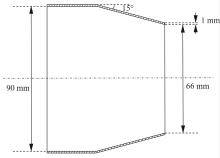
Fig.1
Nozzle geometric model
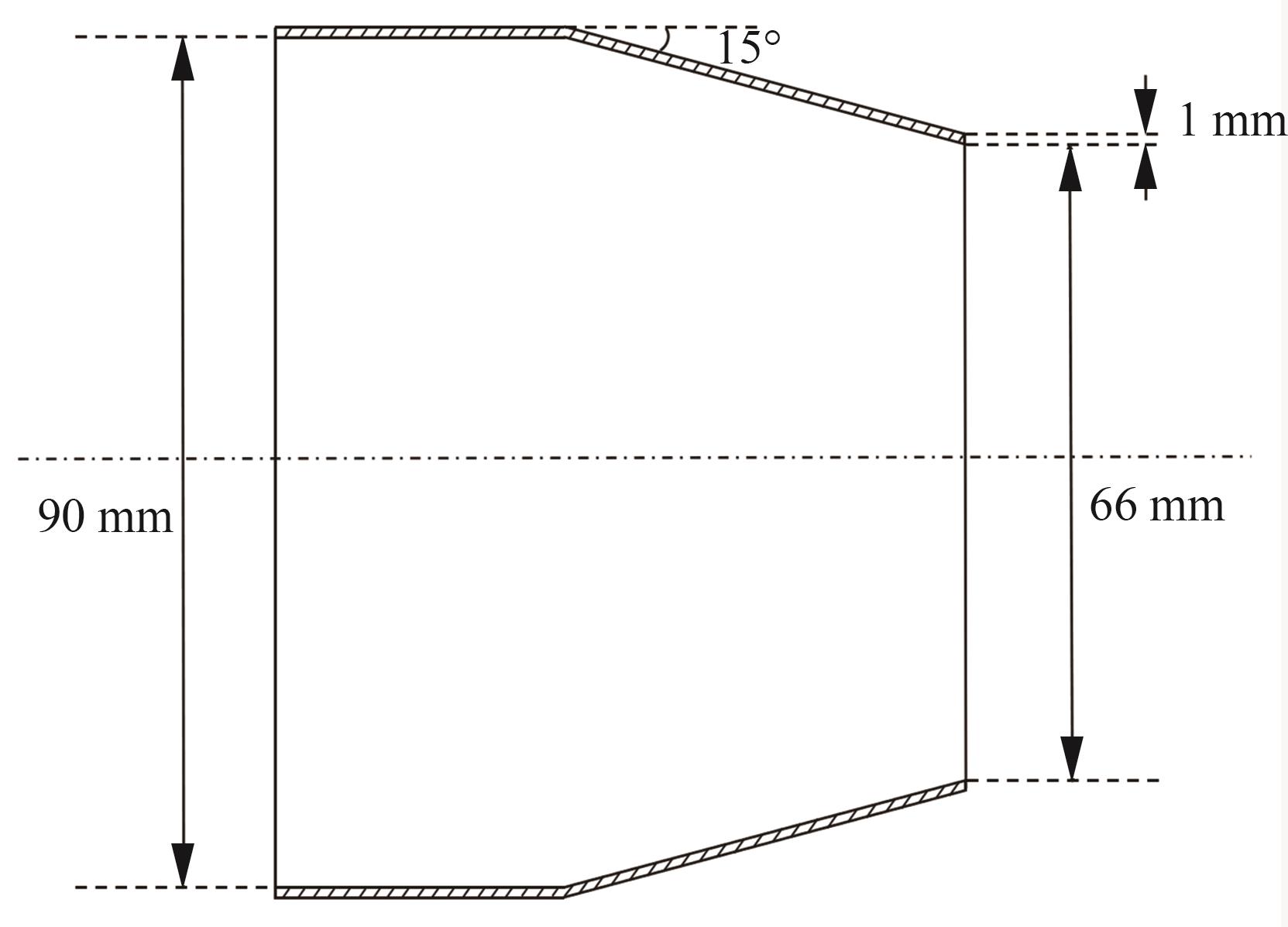
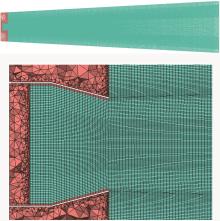
Fig.2
Schematic diagram of computational zones for ELES (top) and locally enlarged view of nozzle inlet (bottom)
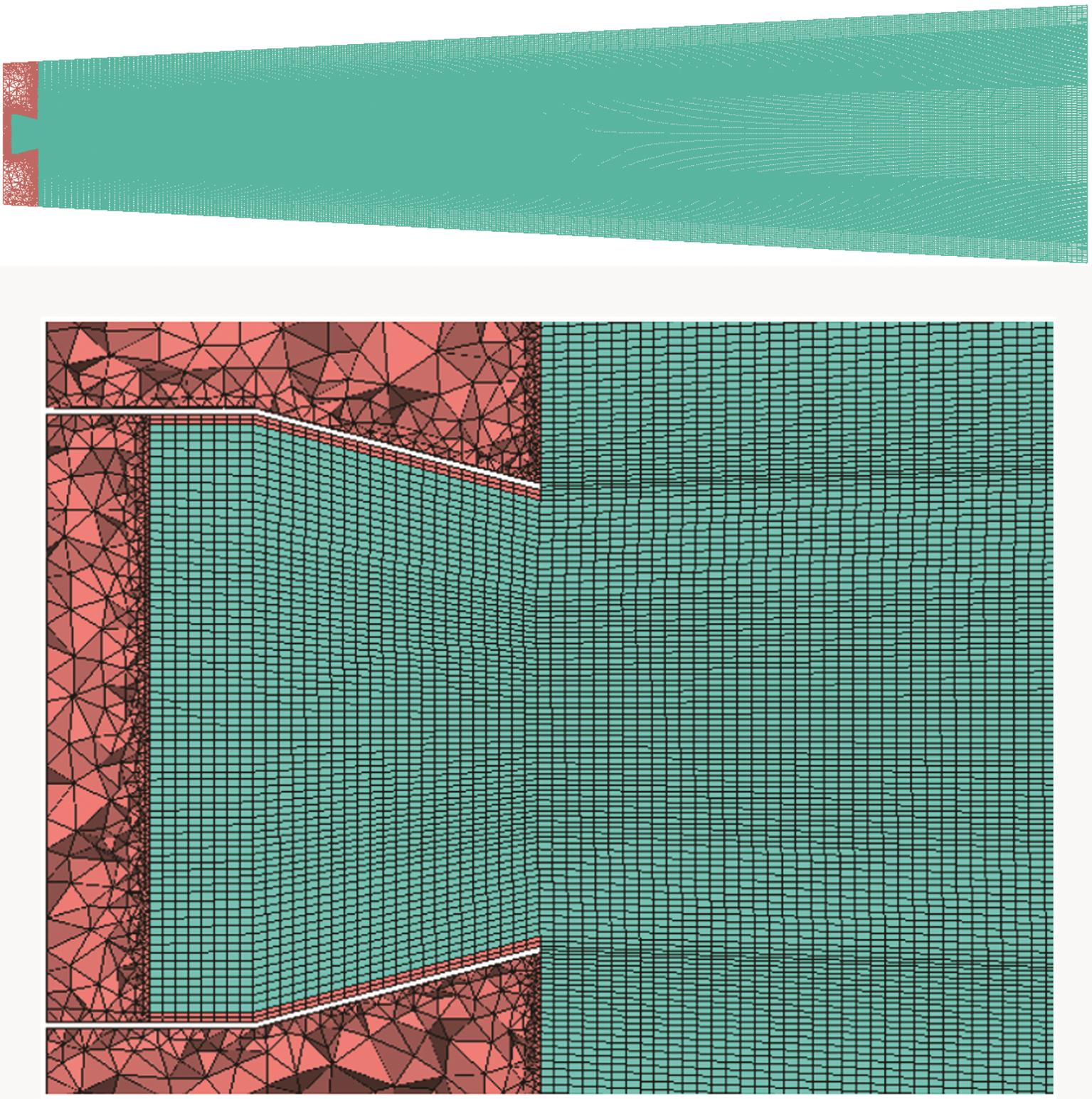
Fig.3
ESTRI solution procedure flowchart
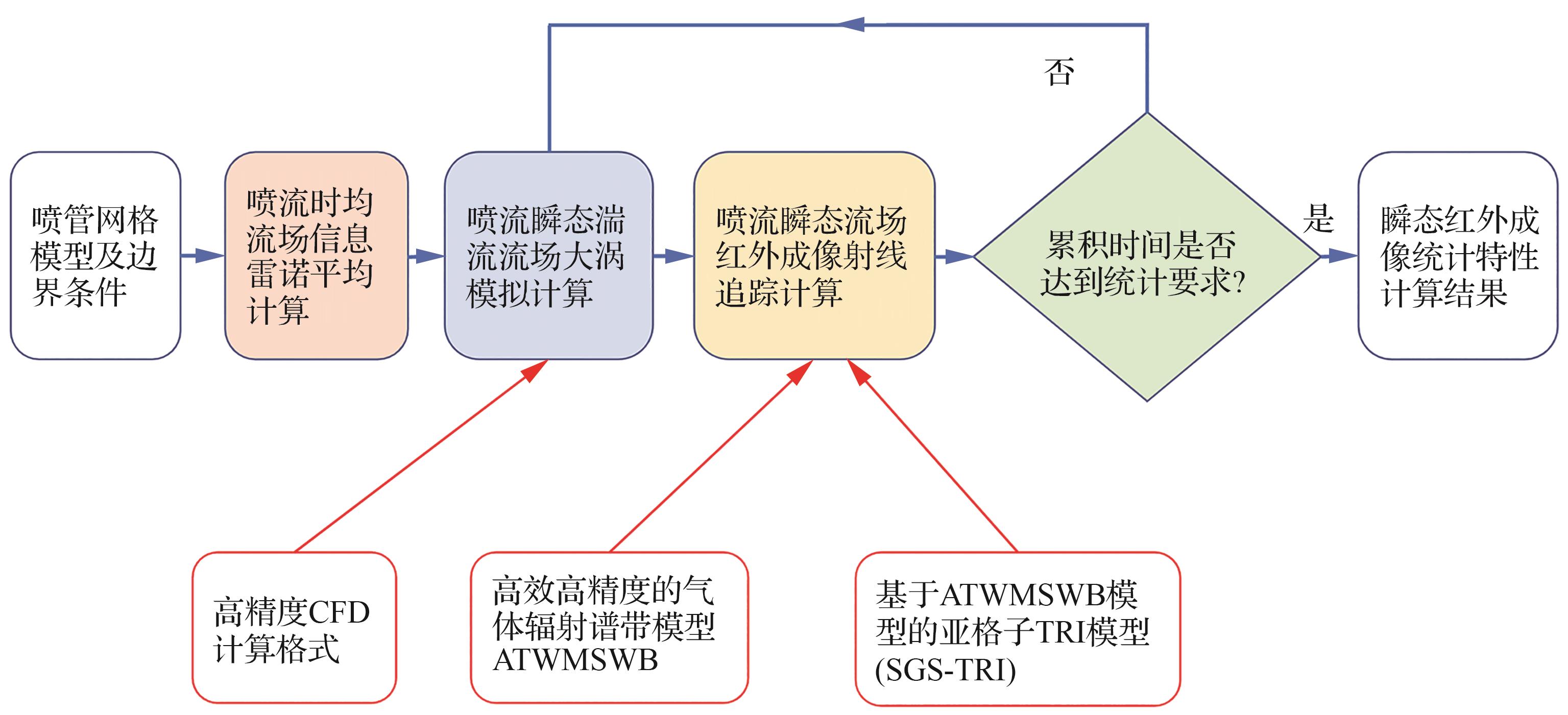
Fig.4
Interpolated calculation results of solid wall temperature distribution along axial direction
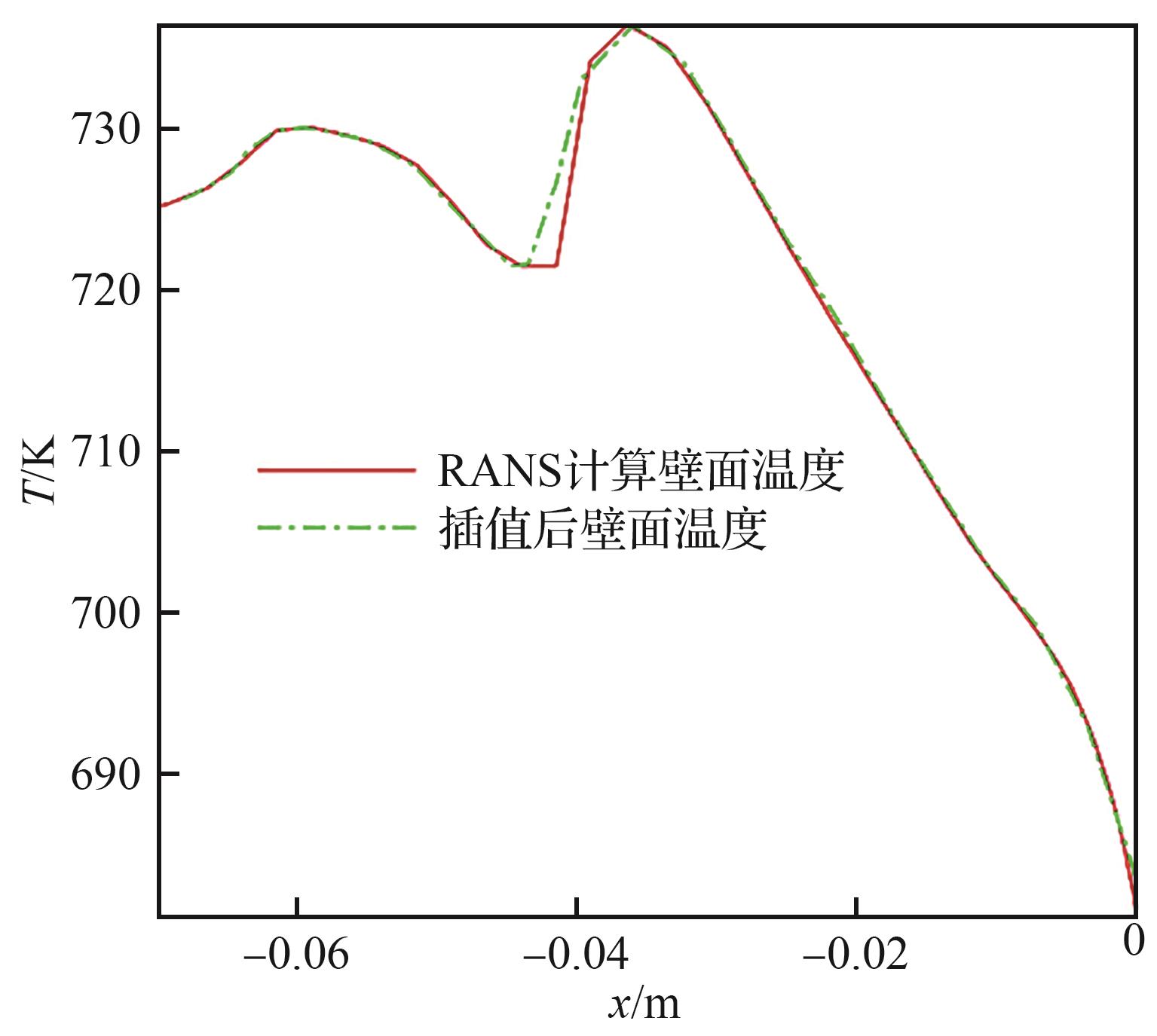

Table 1
Atmospheric parameters
| 参数 | 数值 |
|---|---|
| 压力/Pa | 101 300 |
| 温度/K | 299.7 |
| 水蒸气摩尔分数 | 2.59×10⁻² |
| 二氧化碳摩尔分数 | 4.20×10⁻⁴ |
| 一氧化碳摩尔分数 | 1.50×10⁻⁷ |
| 臭氧摩尔分数 | 2.870×10⁻⁸ |
| 一氧化二氮摩尔分数 | 3.377×10⁻⁷ |
| 甲烷摩尔分数 | 1.921×10⁻⁶ |
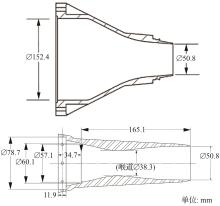
Fig.5
Subsonic converging nozzle SMC000 (top) and supersonic Laval nozzle SMC020 (bottom)
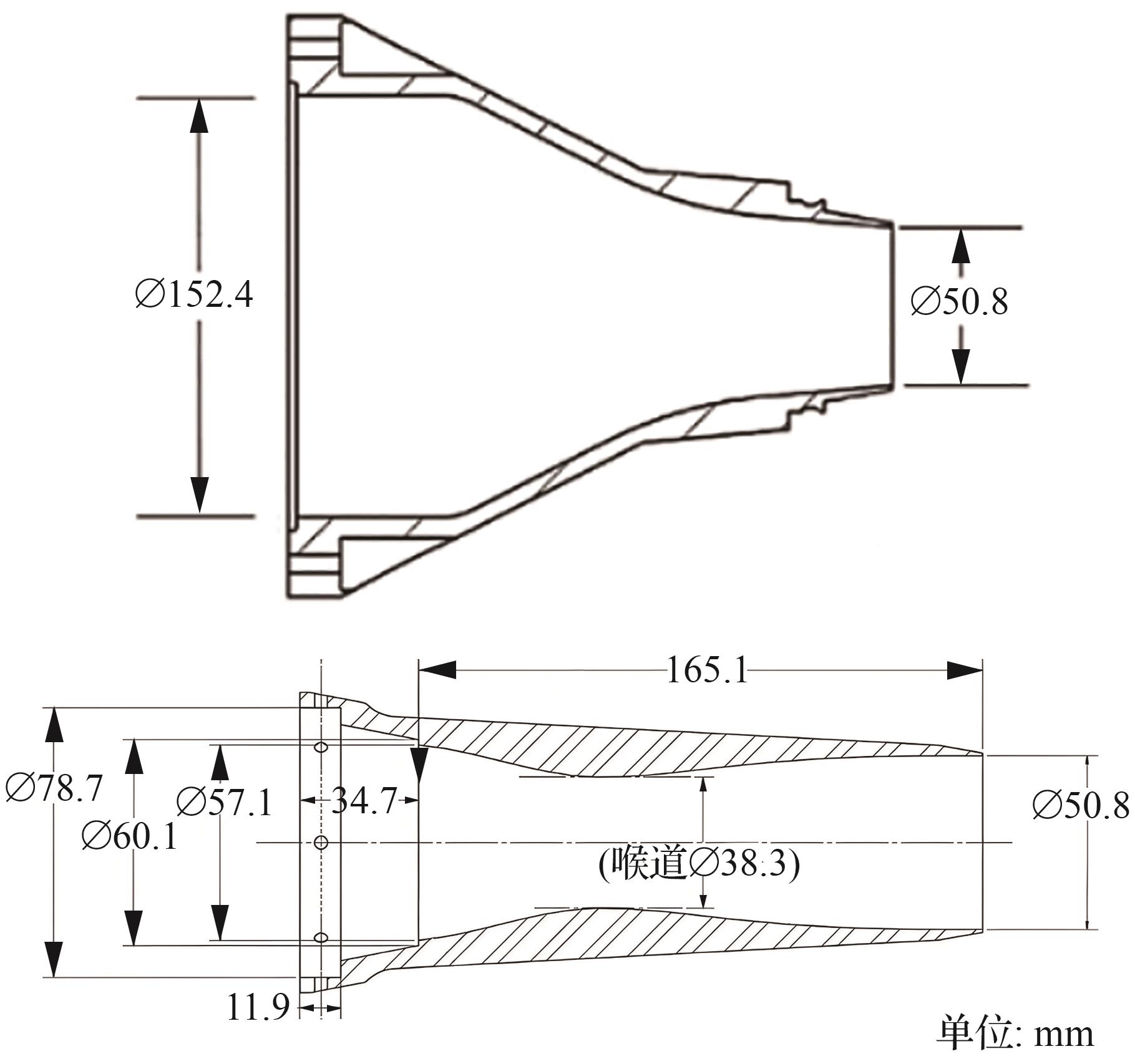
Table 2
Nozzle geometric parameters
| 喷管编号 | 喷管类型 | A/A* | Din/mm | D/mm | LN/mm |
|---|---|---|---|---|---|
| SMC000 | 收缩喷管 | 152.4 | 50.8 | 165 | |
| SMC020 | 收扩喷管 | 1.757 | 57.1 | 50.8 | 165 |
Table 3
Nozzle computation cases
| 喷管编号 | Maout | Tout/T∞ | NPR | 出口雷诺数Re |
|---|---|---|---|---|
| SMC000 | 0.67 | 1.764 | 1.357 | 8.91×10⁵ |
| SMC020 | 2 | 1.818 | 7.722 | 1.204×10⁶ |
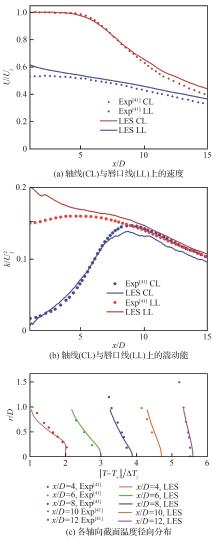
Fig.6
Comparison between calculated and experimental results of time-averaged wake flow field of SMC000 nozzle
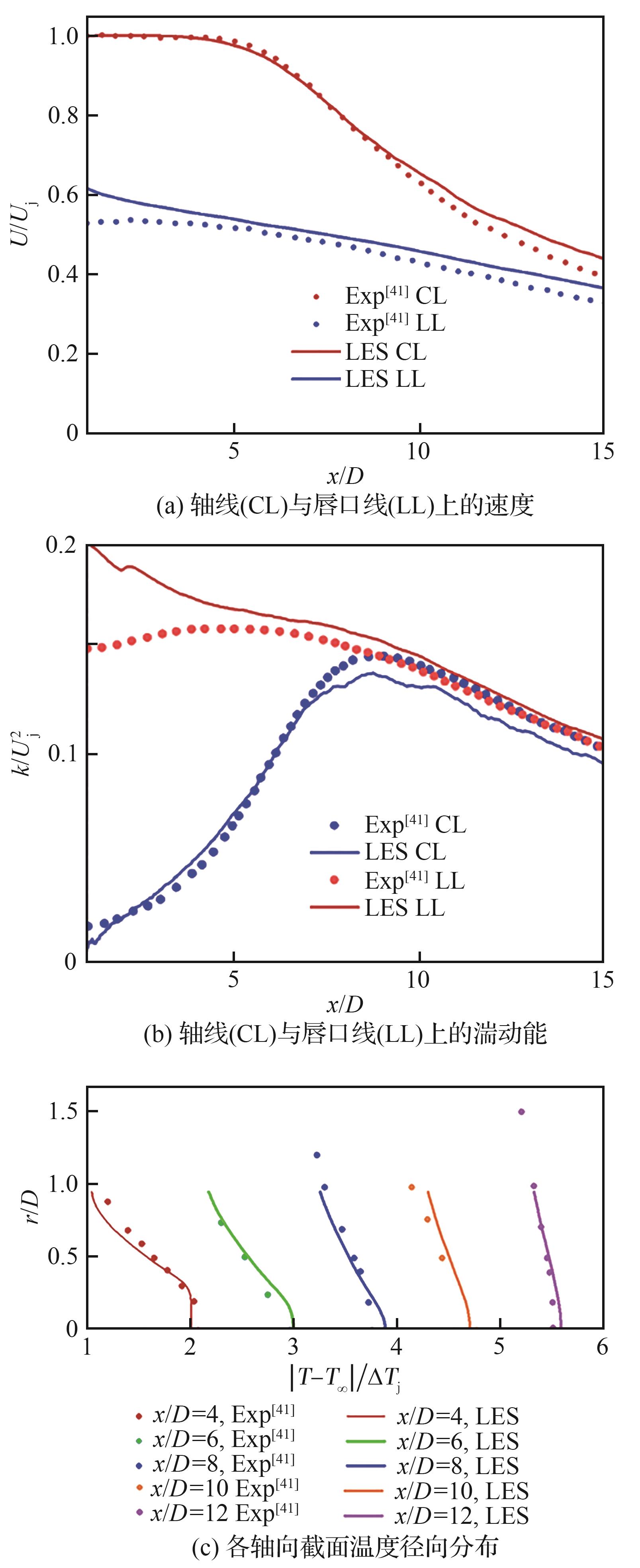
Fig.7
Comparison between calculated and experimental results of time-averaged wake flow field of SMC020 nozzle
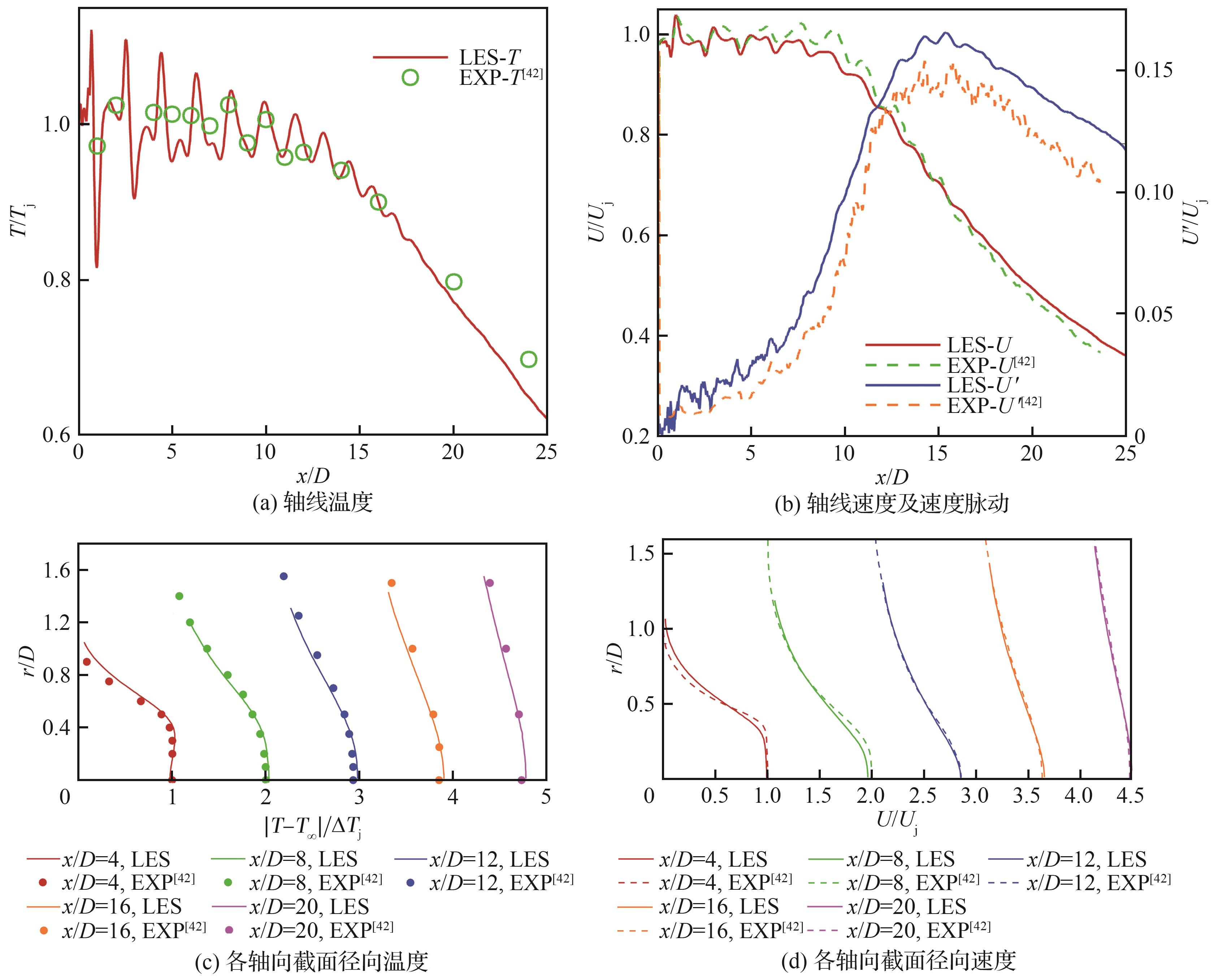
Table 4
Nozzle inlet experimental conditions
| 热力学参数 | 测量方法 | 数值 |
|---|---|---|
| 总压/Pa | 总压探针 | 114 691 |
| 总温/K | 总温热电偶 | 890 |
| 二氧化碳摩尔分数 | 基于涡喷发动机的油气比及其吸入环境空气的组分 | 0.037 3 |
| 水蒸气摩尔分数 | 0.062 8 |
Fig.8
Transient infrared false-color image of a turbojet engine captured by a thermal imager
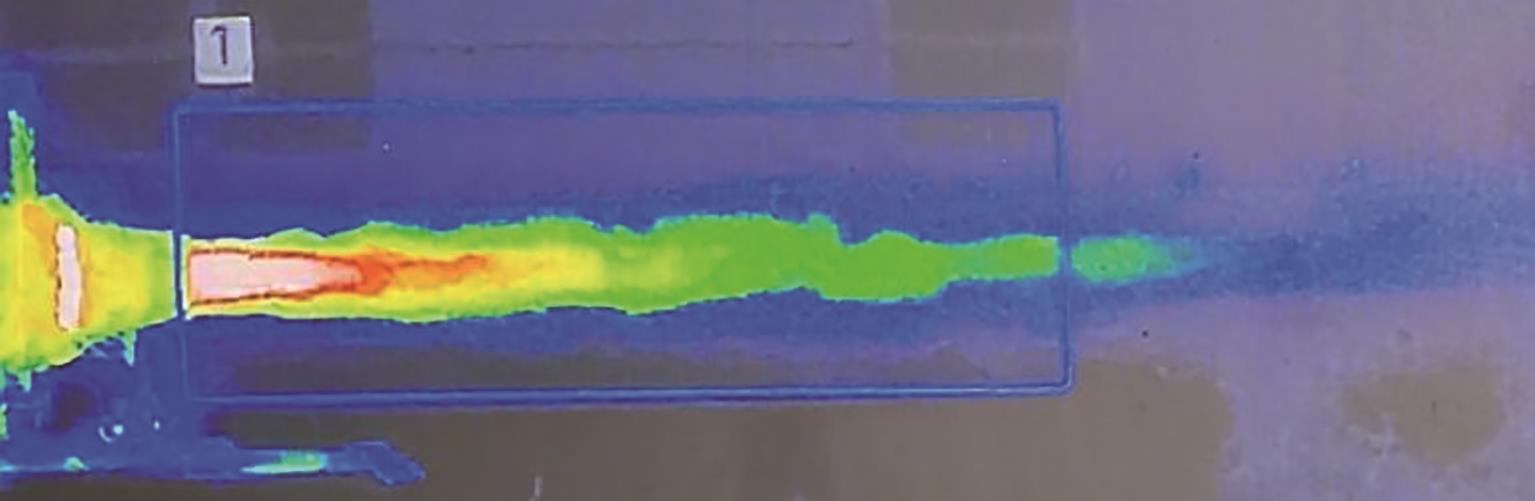
Fig.9
Meridional plane distributions of instantaneous flow field temperature (top) and H₂O/CO₂ mole ratio (bottom)
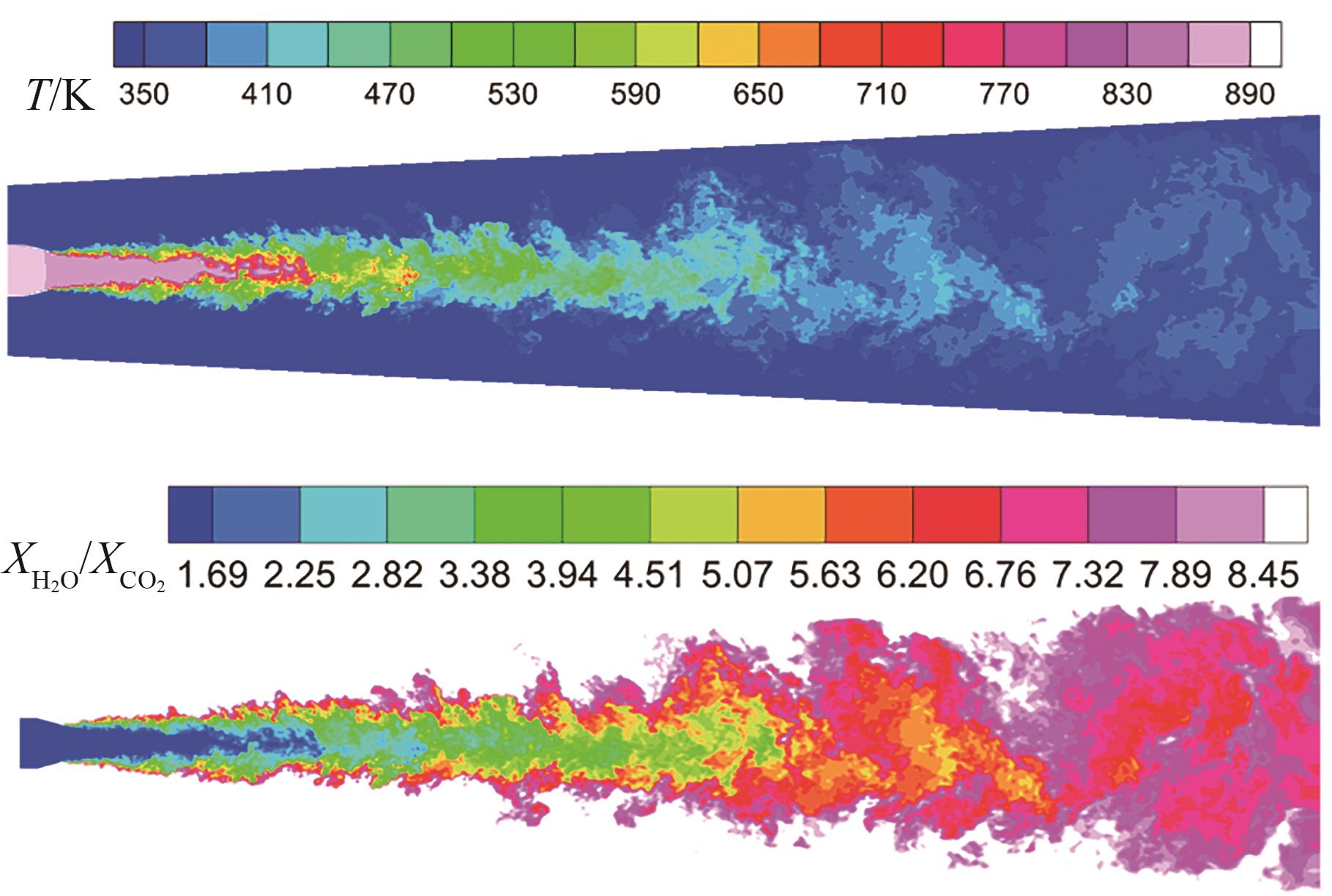
Fig.10
Variation of integrated radiation intensity of instantaneous flow field with time
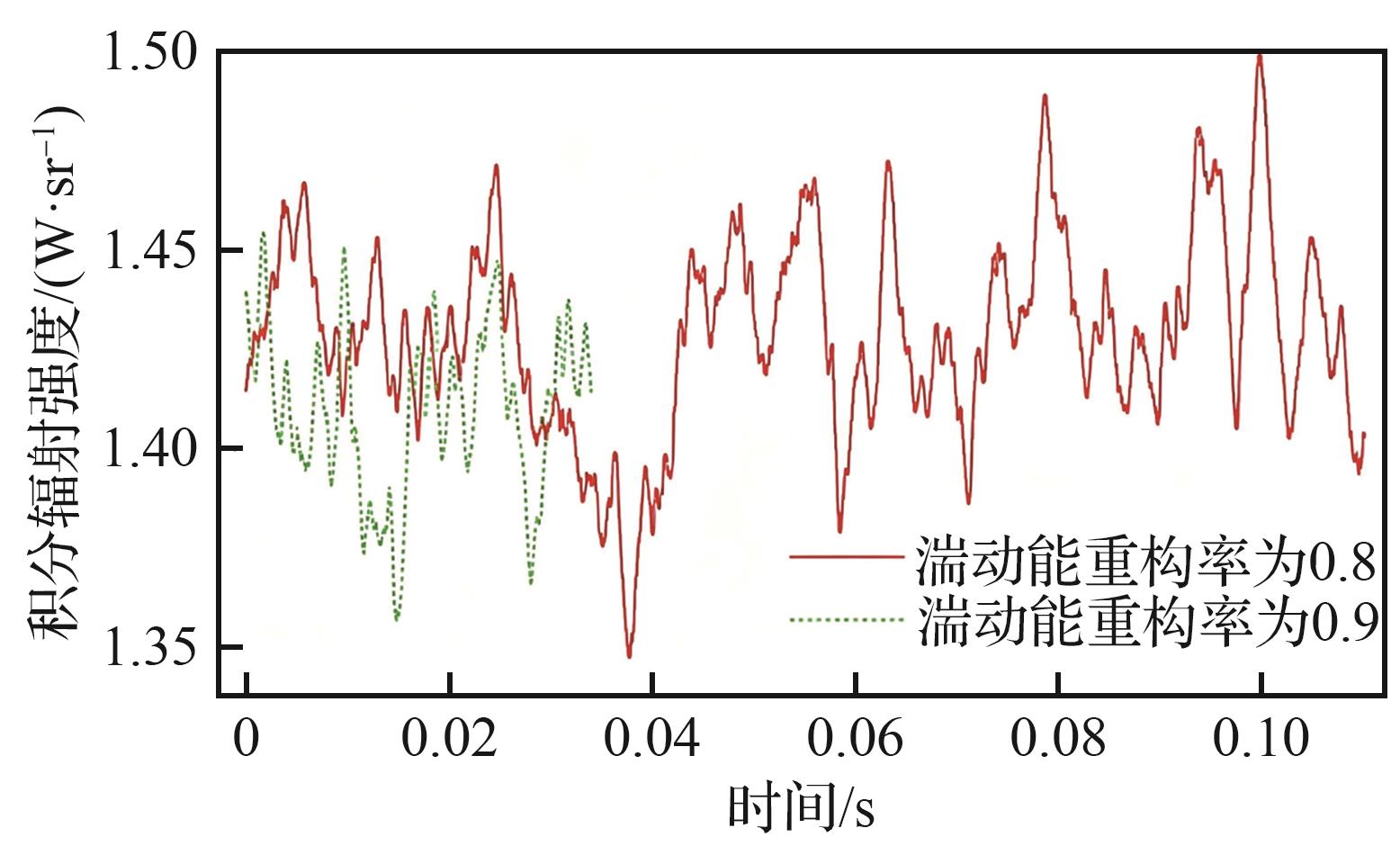
Fig.11
Transient infrared image of jet calculated by ATWMSWB model at a distance of 8 m and a detection angle of 90°
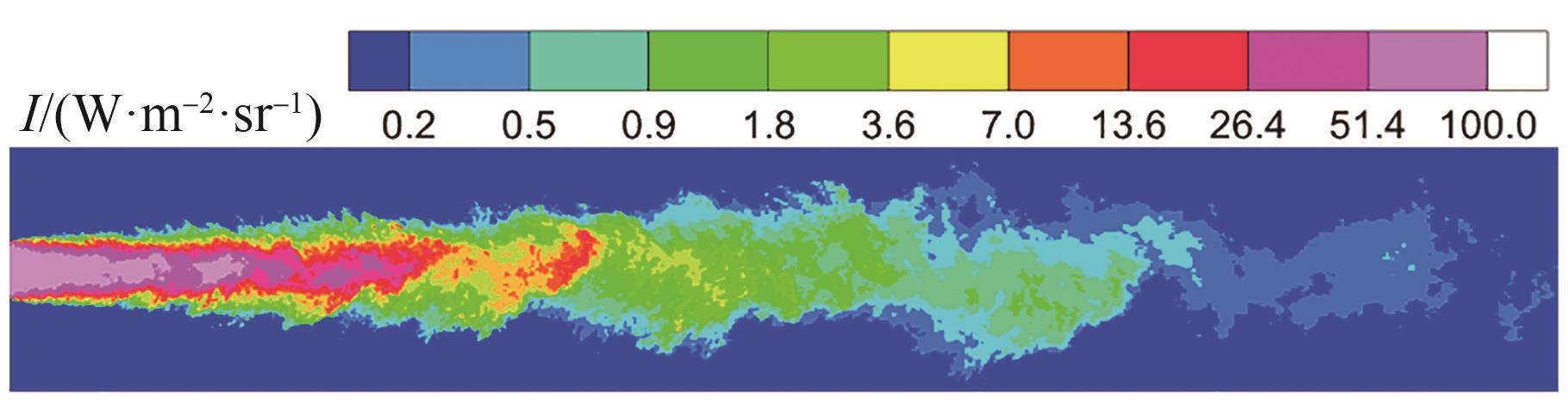
Fig.12
Transient infrared image of jet calculated by ATWMSWB model at a distance of 20 km and a detection angle of 30°
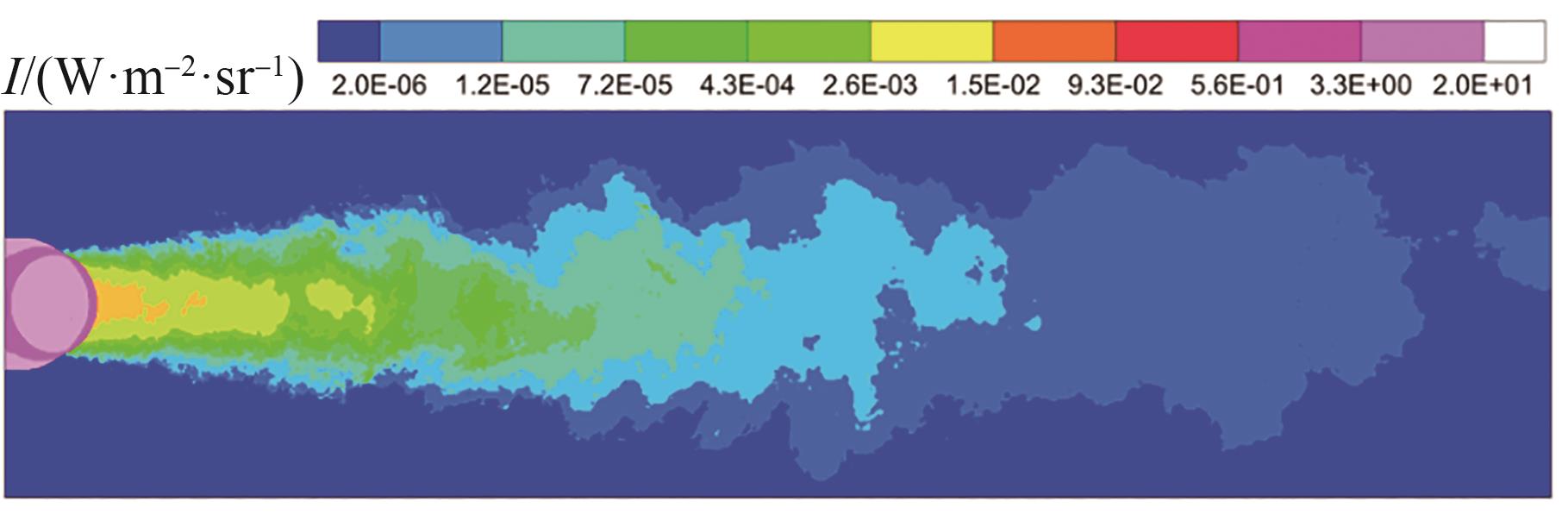
Fig.13
Relative error distribution of infrared imaging calculations by ATWMSWB model at an imaging distance of 8 m and an imaging angle of 90°
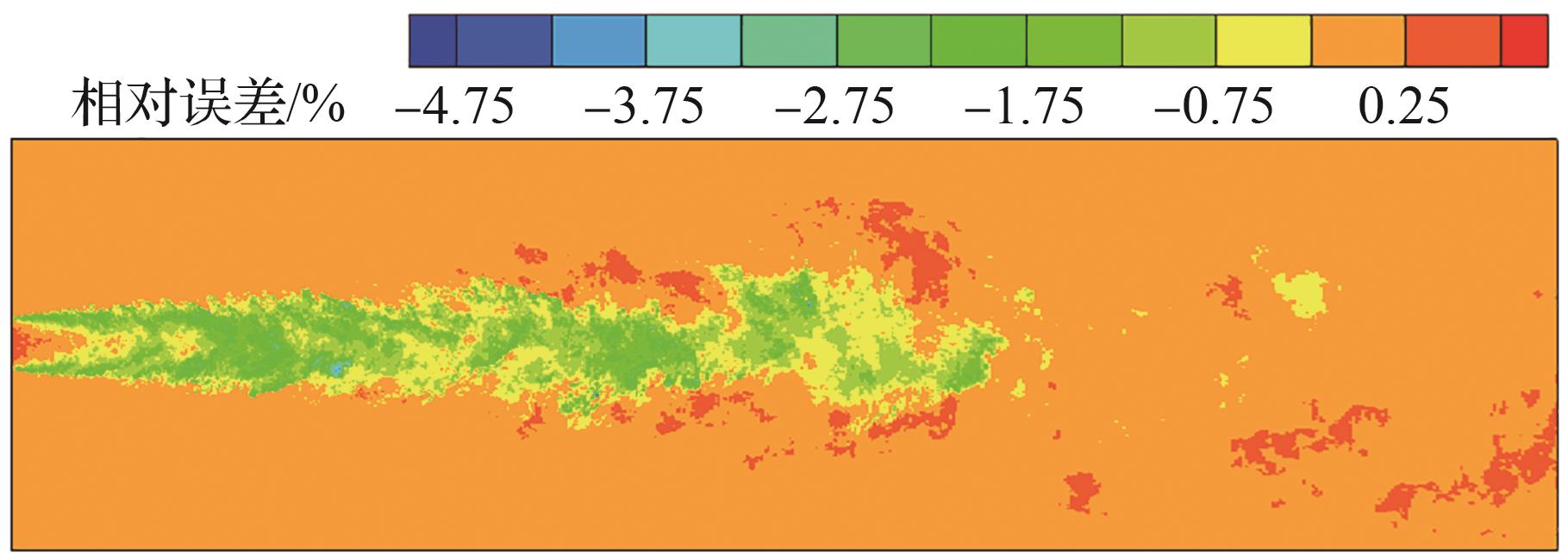
Fig.14
Relative error distribution of infrared imaging calculations by ATWMSWB model at a distance of 20 km and an imaging angle of 30°
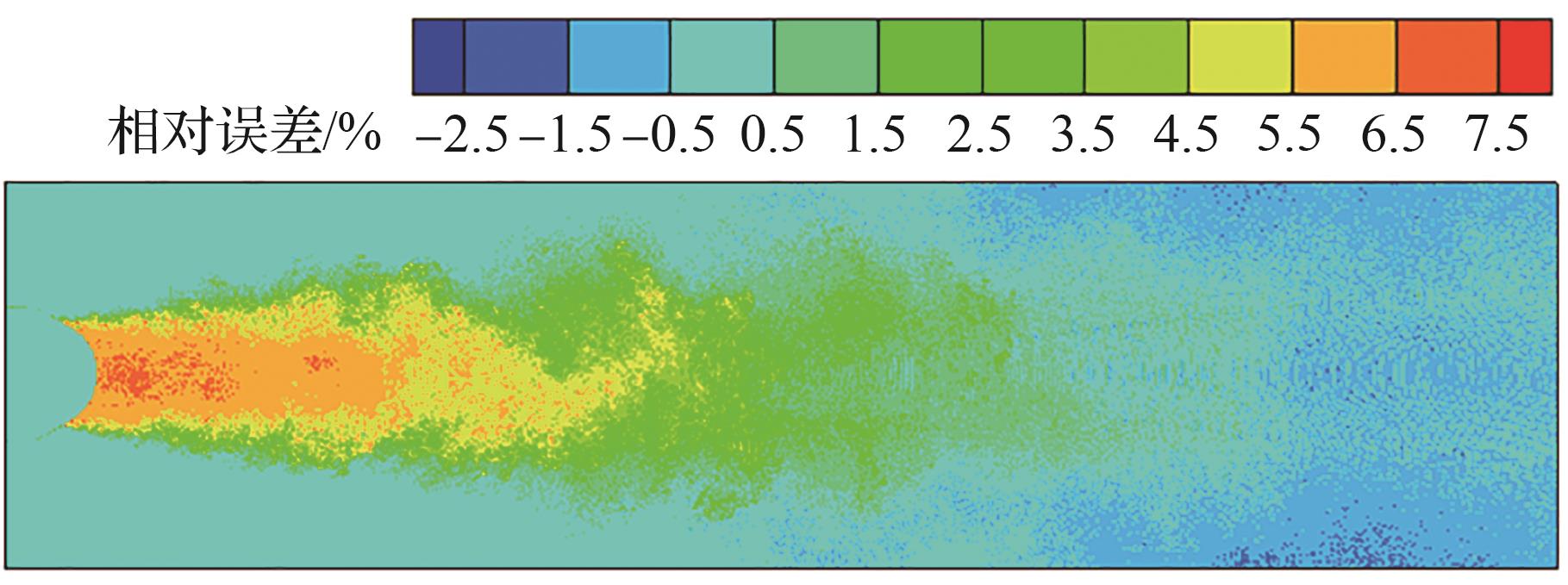
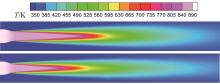
Fig.15
Time-averaged meridional plane temperature distributions calculated based on RANS (top) and ELES (bottom)
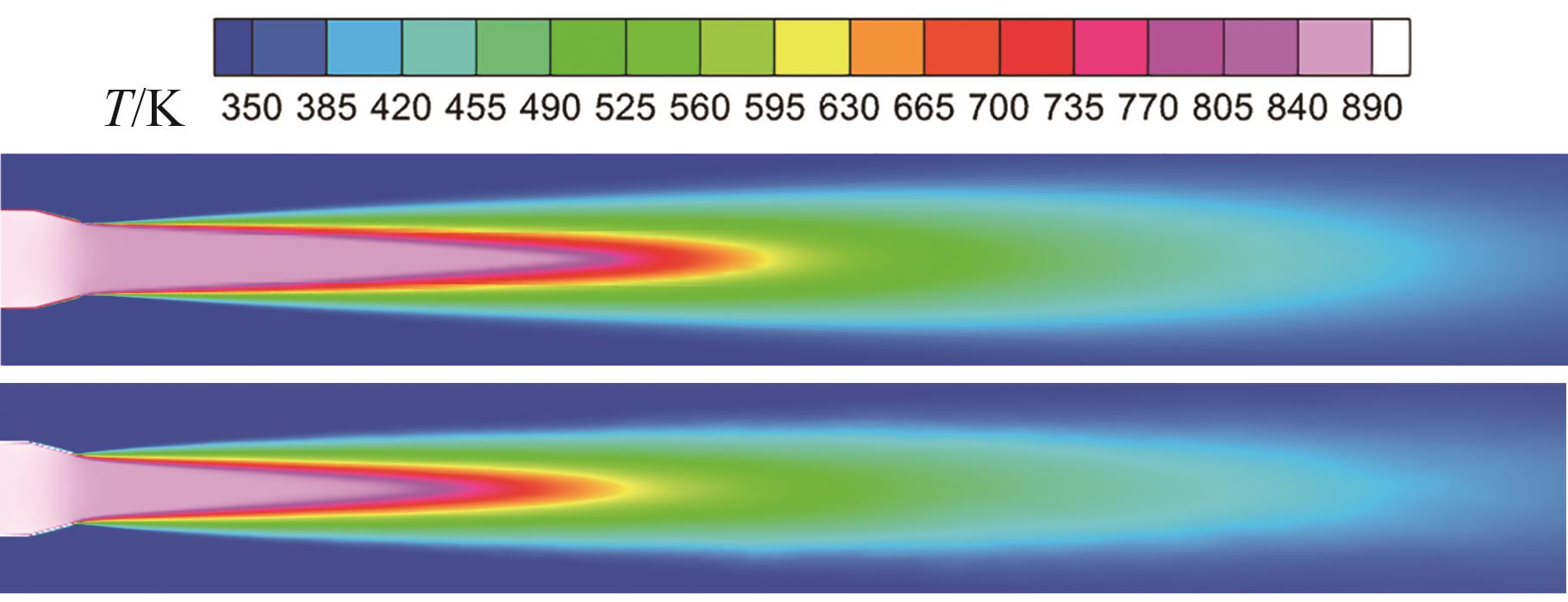
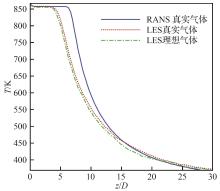
Fig.16
Comparison of flow field temperatures for jet under RANS, LES with constant specific heat, and LES with variable specific heat conditions
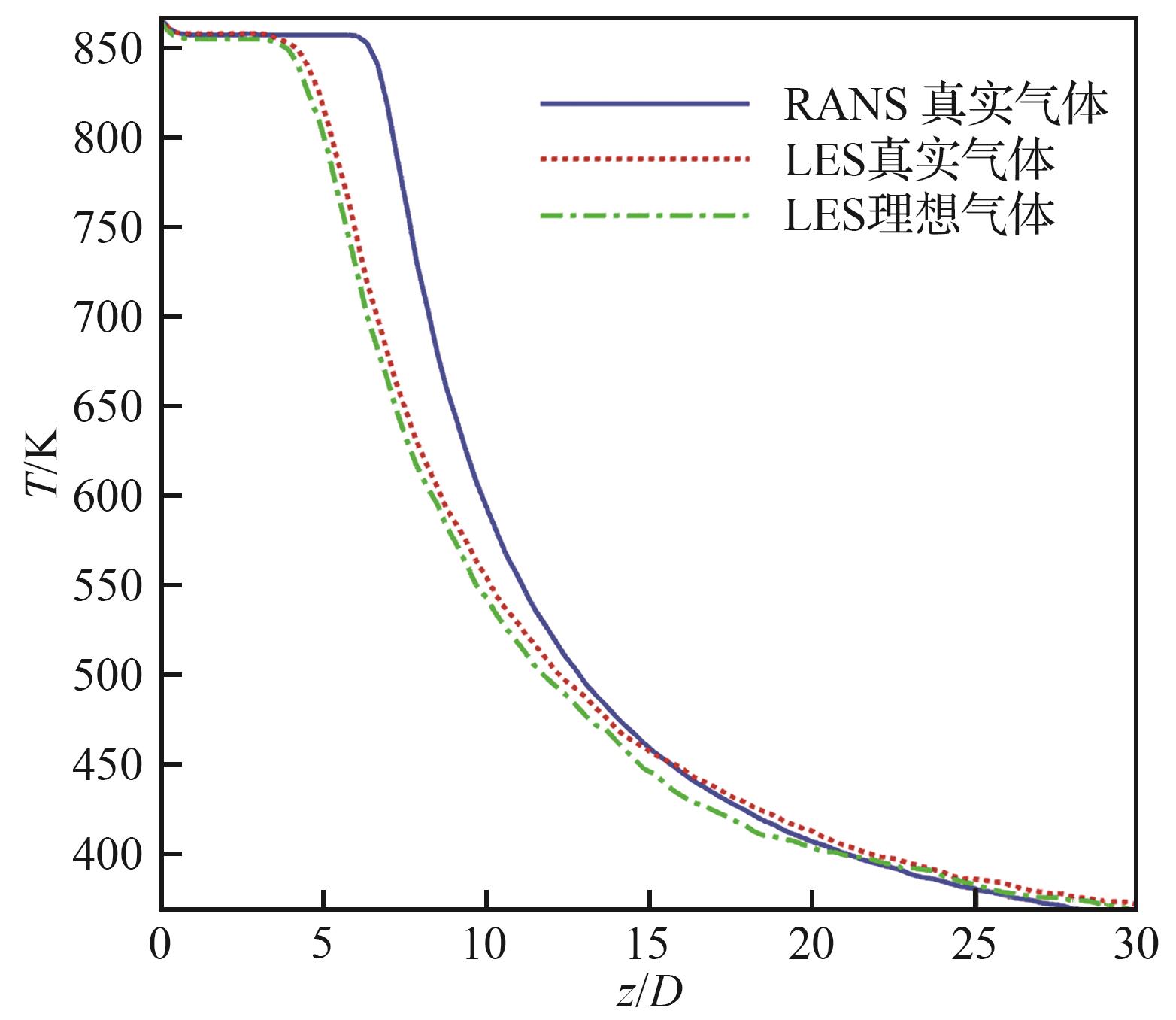
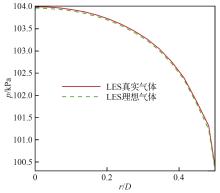
Fig.17
Comparison of nozzle exit pressure under LES with constant specific heat and LES with variable specific heat conditions
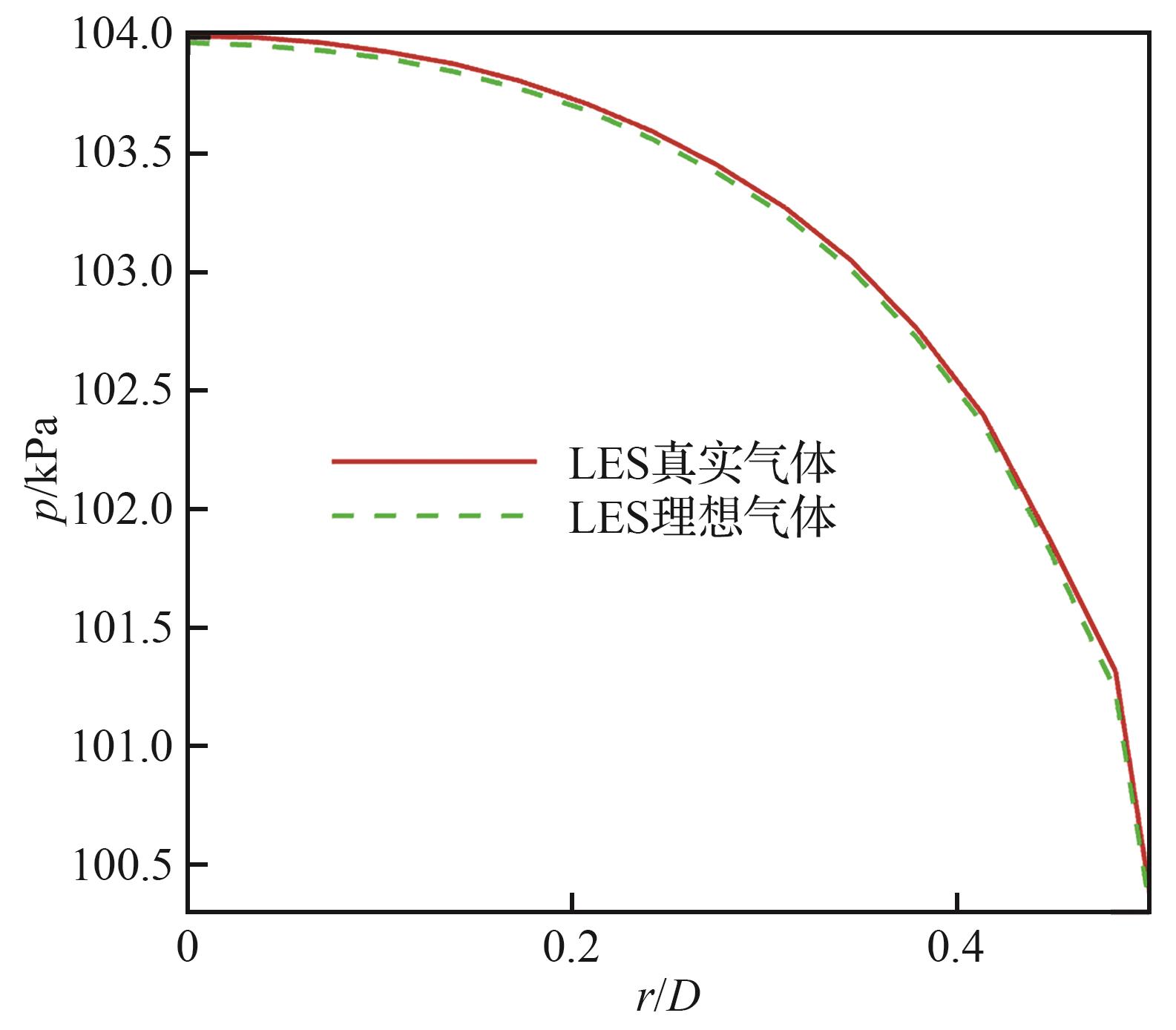
Table 5
Integrated radiation intensity of exhaust plume under various computational conditions
| 探测距离/m | 成像角度/(°) | 空气 类型 | 燃气类型 | TRI | 积分辐射强度/(W·sr-1) |
|---|---|---|---|---|---|
| 8 | 90 | 干空气 | 真实 | 无 | 1.25 (基于RANS) |
| 8 | 90 | 湿空气 | 真实 | 有 | 1.43(TRI占比33.53%) |
| 8 | 90 | 湿空气 | 真实 | 无 | 0.95 |
| 8 | 90 | 干空气 | 真实 | 有 | 1.41 |
| 8 | 90 | 湿空气 | 理想 | 有 | 1.35 |
| 400 | 90 | 湿空气 | 真实 | 有 | 0.142 2(TRI占比36.37%) |
| 400 | 90 | 湿空气 | 真实 | 无 | 0.09 |
| 400 | 90 | 干空气 | 真实 | 有 | 0.136 0 |
| 400 | 90 | 湿空气 | 理想 | 有 | 0.135 4 |
| 2×10⁴ | 90 | 湿空气 | 真实 | 有 | 5.7×10⁻⁵(TRI占比38.51%) |
| 2×10⁴ | 90 | 湿空气 | 真实 | 无 | 3.5×10⁻⁵ |
| 2×10⁴ | 90 | 干空气 | 真实 | 有 | 3.8×10⁻⁵ |
| 2×10⁴ | 90 | 湿空气 | 理想 | 有 | 5.4×10⁻⁵ |
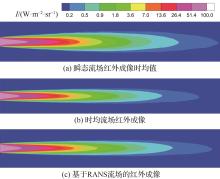
Fig.18
Calculation results of ESTRI software (infrared imaging band: 3.7-4.8 μm, imaging distance: 8 m)
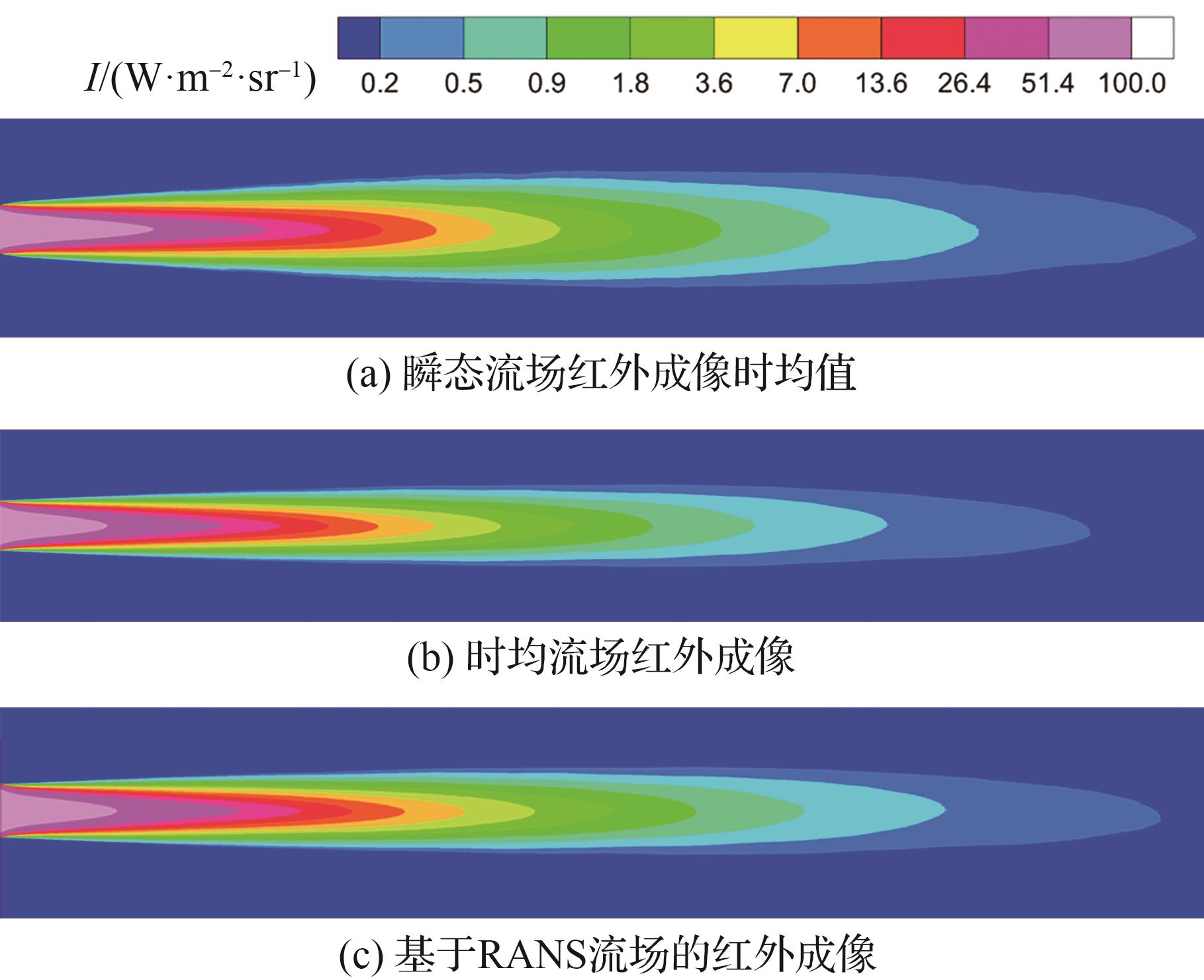
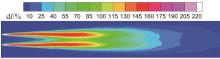
Fig.19
Distribution of relative contribution percentage of TRI to infrared imaging radiance
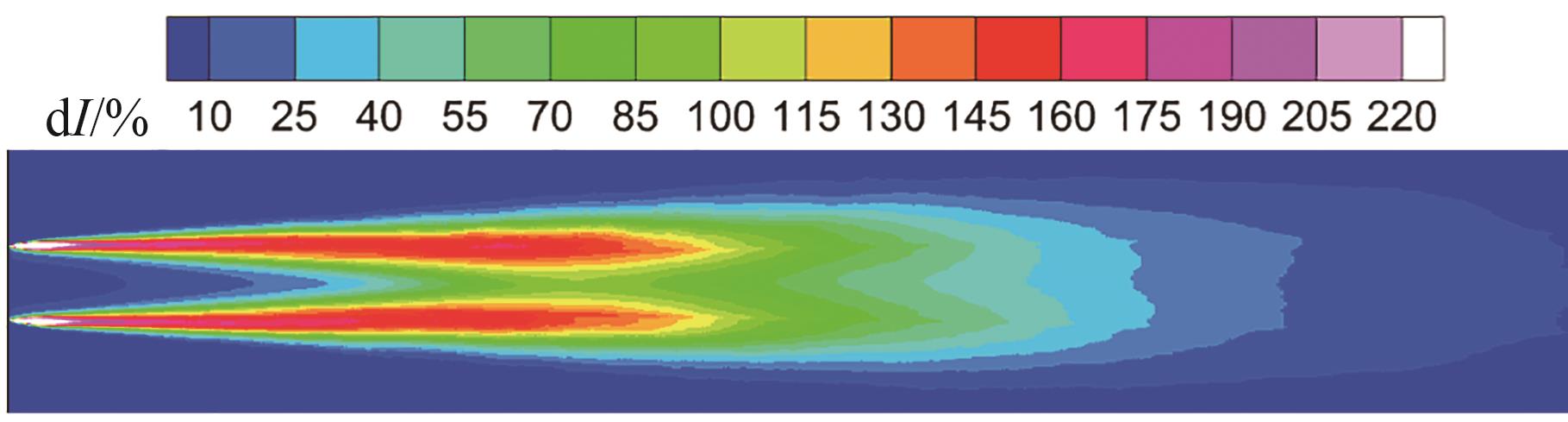
Fig.20
Jet infrared imaging at a 20 km detection range for engine ingesting dry air (top) and humid air (bottom)
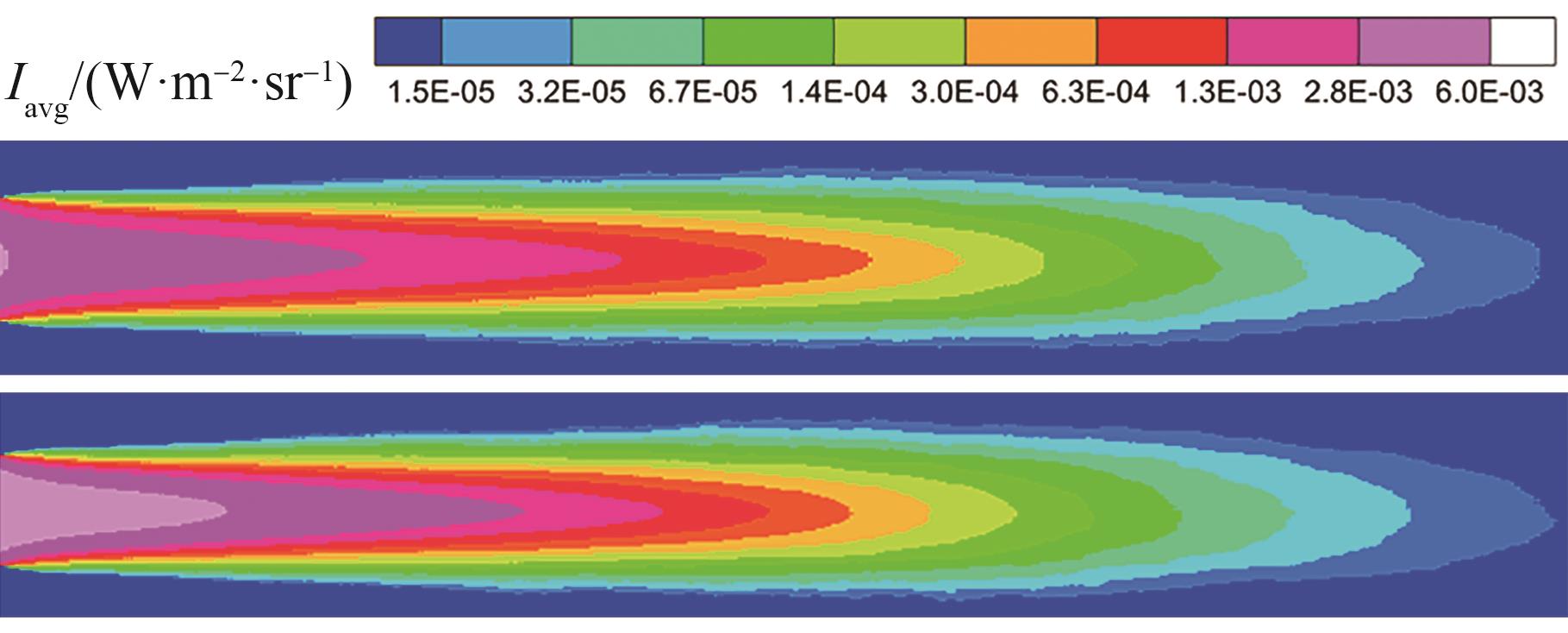
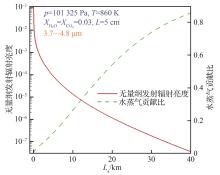
Fig.21
Normalized radiation fraction of water vapor vs atmospheric transmission distance
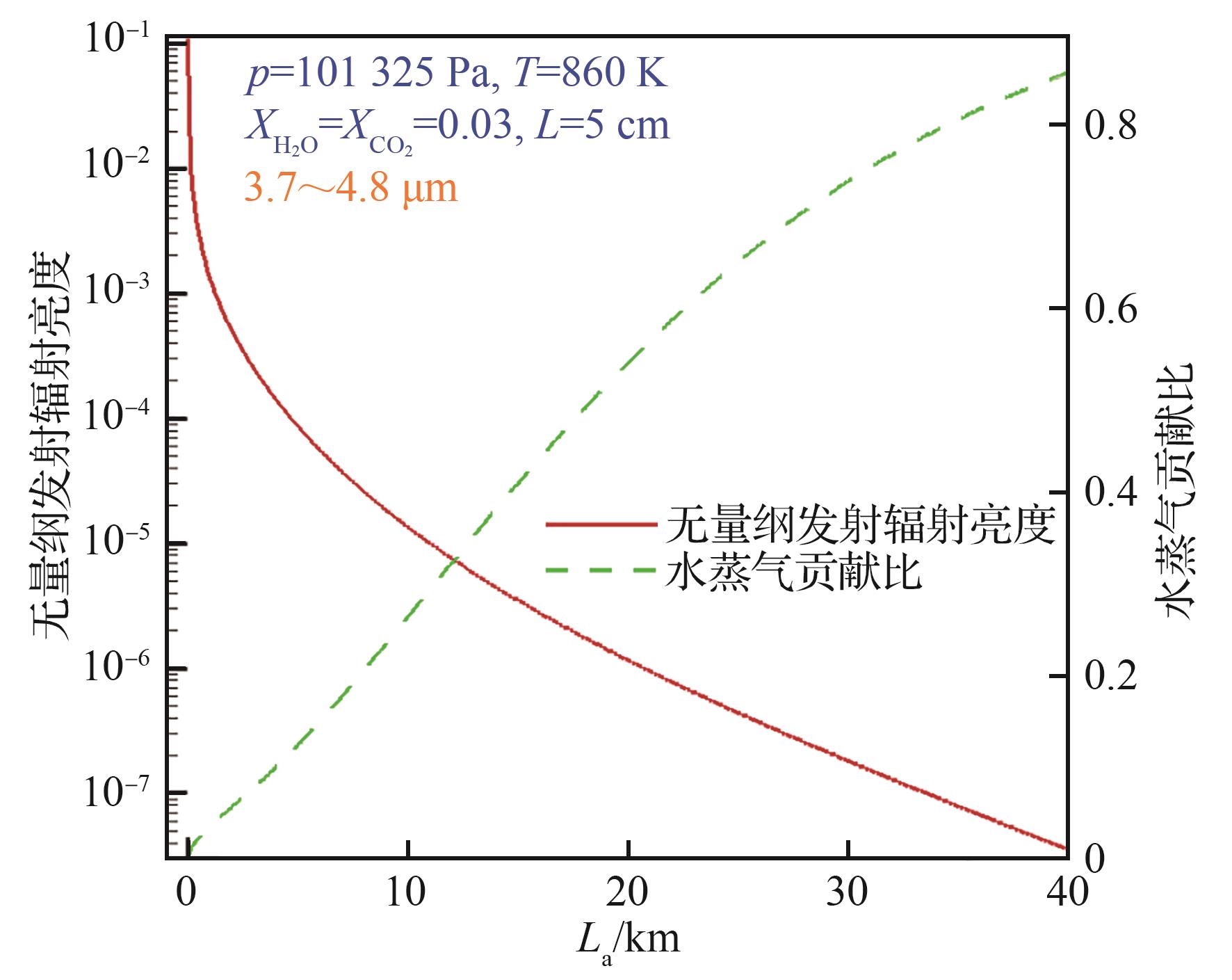
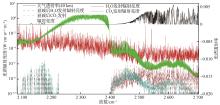
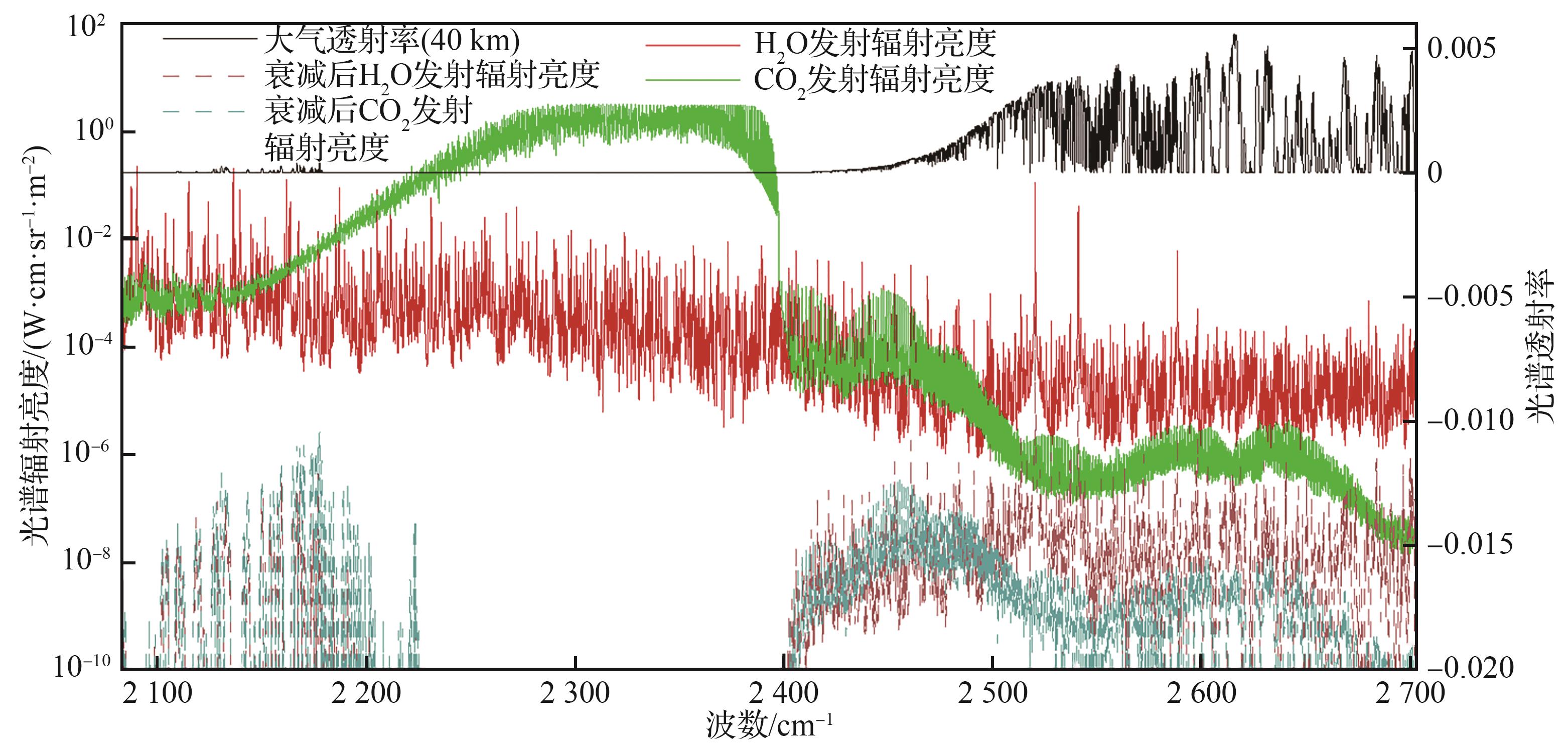
Fig.22
Comparison of effects of atmospheric transmission on spectral radiance of water vapor and CO₂ (with 40 km path attenuation)
| [1] | AJDARI E, GUTMARK E, PARR T P, et al. Thermal imaging of afterburning plumes[J]. Journal of Propulsion and Power, 1991, 7(6): 873-878. |
| [2] | PEARCE B E, VARMA A K. Radiation-turbulence interaction in a tactical missile exhaust plume[C]∥ 16th Thermophysics Conference. Reston: AIAA, 1981. |
| [3] | 马晓平, 赵良玉. 红外导引头关键技术国内外研究现状综述[J]. 航空兵器, 2018(3): 3-10. |
| MA X P, ZHAO L Y. An overview of infrared seeker key technologies at home and abroad[J]. Aero Weaponry, 2018(3): 3-10 (in Chinese). | |
| [4] | KABASHNIKOV V P, MYASNIKOVA G I. Thermal radiation in turbulent flows—Temperature and concentration fluctuations[J]. Heat transfer/Soviet Research, 1985, 17(6): 116-125. |
| [5] | LIU L H, XU X, CHEN Y L. On the shapes of the presumed probability density function for the modeling of turbulence-radiation interactions[J]. Journal of Quantitative Spectroscopy and Radiative Transfer, 2004, 87(3-4): 311-323. |
| [6] | SNEGIREV A Y. Statistical modeling of thermal radiation transfer in buoyant turbulent diffusion flames[J]. Combustion and Flame, 2004, 136(1-2): 51-71. |
| [7] | BOGEY C, BAILLY C, JUVÉ D. Noise investigation of a high subsonic, moderate Reynolds number jet using a compressible large eddy simulation[J]. Theoretical and Computational Fluid Dynamics, 2003, 16(4): 273-297. |
| [8] | POITOU D, AMAYA J, HAFI M EL, et al. Analysis of the interaction between turbulent combustion and thermal radiation using unsteady coupled LES/DOM simulations[J]. Combustion and Flame, 2012, 159(4): 1605-1618. |
| [9] | RODRIGUES P, GICQUEL O, FRANZELLI B, et al. Analysis of radiative transfer in a turbulent sooting jet flame using a Monte Carlo method coupled to large eddy simulation[J]. Journal of Quantitative Spectroscopy and Radiative Transfer, 2019, 235: 187-203. |
| [10] | MASHHADIMOSLEM H, GHAEMI A, PALACIOS A. A comparative study of radiation models on propane jet fires based on experimental and computational studies[J]. Heliyon, 2021, 7(6): e07261. |
| [11] | POITOU D, HAFI M EL, CUENOT B. Diagnosis of turbulence radiation interaction in turbulent flames and implications for modeling in Large Eddy Simulation[J]. Turkish Journal of Engineering and Environmental Sciences, 2007, 31(6): 371-381. |
| [12] | FRAGA G C, MIRANDA F C, FRANÇA F H R, et al. Assessment of a model for emission subgrid-scale turbulence-radiation interaction applied to a scaled Sandia flame DD[J]. Journal of Quantitative Spectroscopy and Radiative Transfer, 2020, 248: 106986. |
| [13] | 郝健辛, 王强, 胡海洋. 基于改进SGS-TRI模型的湍流燃气射流红外辐射特性[J]. 航空学报, 2025, 46(17): 131549. |
| HAO J X, WANG Q, HU H Y. Infrared radiation characteristics of turbulent gas jets based on improved SGS-TRI model[J]. Acta Aeronautica et Astronautica Sinica, 2025, 46(17): 131549 (in Chinese). | |
| [14] | TULLIS M, WALTERS D K. A near-wall methodology for large-eddy simulation based on dynamic hybrid RANS-LES[J]. Entropy, 2024, 26(12): 1095. |
| [15] | TOULORGE T, DESMET W. CFL Conditions for Runge-Kutta discontinuous Galerkin methods on triangular grids[J]. Journal of Computational Physics, 2011, 230(12): 4657-4678. |
| [16] | YAN Z G, PAN Y, CASTIGLIONI G, et al. Nektar++: Design and implementation of an implicit, spectral/hp element, compressible flow solver using a Jacobian-free Newton Krylov approach[J]. Computers & Mathematics with Applications, 2021, 81: 351-372. |
| [17] | LEI D, YANG H, ZHENG Y, et al. A modified shielding and rapid transition DDES model for separated flows[J]. Entropy, 2023, 25(4): 613. |
| [18] | EKATERINARIS J A. High-order accurate, low numerical diffusion methods for aerodynamics[J]. Progress in Aerospace Sciences, 2005, 41(3-4): 192-300. |
| [19] | HARTMANN J M, LEVI DI LEON R, TAINE J. Line-by-line and narrow-band statistical model calculations for H2O[J]. Journal of Quantitative Spectroscopy and Radiative Transfer, 1984, 32(2): 119-127. |
| [20] | SOUFIANI A, TAINE J. High temperature gas radiative property parameters of statistical narrow-band model for H2O, CO2 and CO, and correlated-K model for H2O and CO2 [J]. International Journal of Heat and Mass Transfer, 1997, 40(4): 987-991. |
| [21] | MODEST M F. Narrow-band and full-spectrum k-distributions for radiative heat transfer: Correlated-k vs. scaling approximation[J]. Journal of Quantitative Spectroscopy and Radiative Transfer, 2003, 76(1): 69-83. |
| [22] | ANDRÉ F. The ℓ-distribution method for modeling non-gray absorption in uniform and non-uniform gaseous media[J]. Journal of Quantitative Spectroscopy and Radiative Transfer, 2016, 179: 19-32. |
| [23] | ZHANG H M, MODEST M F. Scalable multi-group full-spectrum correlated-k distributions for radiative transfer calculations[J]. Journal of Heat Transfer, 2003, 125(3): 454-461. |
| [24] | ANDRÉ F, HOU L F, ROGER M, et al. The multispectral gas radiation modeling: A new theoretical framework based on a multidimensional approach to k-distribution methods[J]. Journal of Quantitative Spectroscopy and Radiative Transfer, 2014, 147: 178-195. |
| [25] | CAI J, MODEST M F. Improved full-spectrum k-distribution implementation for inhomogeneous media using a narrow-band database[J]. Journal of Quantitative Spectroscopy and Radiative Transfer, 2014, 141: 65-72. |
| [26] | HU H Y, WANG Q. Improved spectral absorption-coefficient grouping strategies in radiation heat transfer calculations for combustion gases with pressure and temperature inhomogeneity[J]. Numerical Heat Transfer, Part B: Fundamentals, 2019, 75(3): 178-197. |
| [27] | KHODYKO Y V, KURSKOV A A, ANTIPOROVICH N V. Multigroup method for the calculation of selective IR radiation transfer in nonhomogeneous media[J]. Journal of Applied Spectroscopy, 1986, 44(3): 284-288. |
| [28] | PIERROT L, RIVIÈRE P, SOUFIANI A, et al. A fictitious-gas-based absorption distribution function global model for radiative transfer in hot gases[J]. Journal of Quantitative Spectroscopy and Radiative Transfer, 1999, 62(5): 609-624. |
| [29] | SOUFIANI A, ANDRÉ F, TAINE J. A fictitious-gas based statistical narrow-band model for IR long-range sensing of H2O at high temperature[J]. Journal of Quantitative Spectroscopy and Radiative Transfer, 2002, 73(2-5): 339-347. |
| [30] | WEST R, CRISP D, CHEN L K. Mapping transformations for broadband atmospheric radiation calculations[J]. Journal of Quantitative Spectroscopy and Radiative Transfer, 1990, 43(3): 191-199. |
| [31] | ANDRÉ F, SOLOVJOV V P, WEBB B W, et al. Spectral mapping method based on intervals of comonotonicity for modelling of radiative transfer in non-uniform gaseous media[J]. Journal of Quantitative Spectroscopy and Radiative Transfer, 2019, 229: 33-39. |
| [32] | PIERROT L, SOUFIANI A, TAINE J. Accuracy of narrow-band and global models for radiative transfer in H2O, CO2, and H2O-CO2 mixtures at high temperature[J]. Journal of Quantitative Spectroscopy and Radiative Transfer, 1999, 62(5): 523-548. |
| [33] | SHI G Y, XU N, WANG B, et al. An improved treatment of overlapping absorption bands based on the correlated k distribution model for thermal infrared radiative transfer calculations[J]. Journal of Quantitative Spectroscopy and Radiative Transfer, 2009, 110(8): 435-451. |
| [34] | LI Y H, HU H Y, HU Q R, et al. Genetically grouped atmospheric transmissivity weighted multi-group wide-band k-distribution model for remote infrared imaging[J]. Infrared Physics & Technology, 2026, 152: 106181. |
| [35] | HU H Y, LI G X, LI Y H, et al. An atmospheric transmissivity weighted MSWB model used to calculate TRI characteristics for remote infrared signals of jet engine exhaust systems[J]. Case Studies in Thermal Engineering, 2026, 77: 107626. |
| [36] | 罗明东, 吉洪湖, 黄伟. 非加力涡轮发动机排气系统红外辐射强度的数值计算[J]. 航空动力学报, 2007, 22(10): 1609-1616. |
| LUO M D, JI H H, HUANG W. Numerical evaluation on infrared radiant intensity of exhaust system of turbine engine without afterburning[J]. Journal of Aerospace Power, 2007, 22(10): 1609-1616 (in Chinese). | |
| [37] | BO L, WANG Q, HU H Y. Multidisciplinary design optimization of axisymmetric exhaust systems: Integrating aerodynamic performance and infrared stealth capabilities[J]. International Journal of Thermal Sciences, 2025, 208: 109462. |
| [38] | 吕蓉, 牛青林, 董士奎. 类B-2型飞行器红外辐射特性数值模拟[J]. 红外与激光工程, 2023, 52(7): 20220810. |
| LV R, NIU Q L, DONG S K. Numerical simulation of infrared radiation characteristics of the B-2-like aircraft[J]. Infrared and Laser Engineering, 2023, 52(7): 20220810 (in Chinese). | |
| [39] | PIERCE C D, MOIN P. A dynamic model for subgrid-scale variance and dissipation rate of a conserved scalar[J]. Physics of Fluids, 1998, 10(12): 3041-3044. |
| [40] | 魏合理, 戴聪明, 武鹏飞, 等. 通用大气辐射传输软件CART在场景计算中的应用[J]. 红外与激光工程, 2022, 51(5): 1-10. |
| WEI H L, DAI C M, WU P F, et al. Applications of scene calculations of atmopsheric radiative transfer by using of CART[J]. Infrared and Laser Engineering, 2022, 51(5): 1-10 (in Chinese). | |
| [41] | LOCKE R J, WERNET M P, ANDERSON R C. Rotational Raman-based temperature measurements in a high-velocity, turbulent jet[J]. Measurement Science and Technology, 2018, 29(1): 015205. |
| [42] | WERNET M P, GEORGIADIS N J, LOCKE R J. Velocity, temperature and density measurements in supersonic jets[C]∥ AIAA Scitech 2021 Forum. Reston: AIAA, 2021. |
| [43] | GEORGIADIS N J, DEBONIS J R. Navier-Stokes analysis methods for turbulent jet flows with application to aircraft exhaust nozzles[J]. Progress in Aerospace Sciences, 2006, 42(5-6): 377-418. |
| [44] | MAZUMDER S, MODEST M F. Turbulence-radiation interactions in nonreactive flow of combustion gases[J]. Journal of Heat Transfer, 1999, 121(3): 726-729. |
| [1] | Sirui WANG, Xiaojuan SHI, Shihao JIANG, Honghu JI. Influence of aircraft afterbody on infrared radiation characteristics of S-shaped nozzles [J]. Acta Aeronautica et Astronautica Sinica, 2026, 47(7): 632744-632744. |
| [2] | Jianyu XU, Li ZHOU, Zhanxue WANG, Jie SHI, Hao SHI. Calculation method for hypersonic plume infrared radiation based on a fast line-by-line calculation model [J]. Acta Aeronautica et Astronautica Sinica, 2025, 46(8): 630778-630778. |
| [3] | Lingling CHEN, Yang ZHANG, Yongqiang SHI, Qingzhen YANG. Film cooling performance/nozzle performance/infrared radiation characteristics of a vector nozzle [J]. Acta Aeronautica et Astronautica Sinica, 2025, 46(8): 631139-631139. |
| [4] | Jianxin HAO, Qiang WANG, Haiyang HU. Infrared radiation characteristics of turbulent gas jets based on improved SGS-TRI model [J]. Acta Aeronautica et Astronautica Sinica, 2025, 46(17): 131549-131549. |
| [5] | Yiqiang SUN, Tanxiao ZHU, Qinglin NIU, Zhihong HE, Shikui DONG. Altitude-scaling law for multi-band radiation signals from liquid-propellant rocket engine exhaust plumes [J]. Acta Aeronautica et Astronautica Sinica, 2024, 45(24): 630568-630568. |
| [6] | Jie SHI, Li ZHOU, Jingwei SHI, Zhanxue WANG. Influence of design parameters on infrared radiation characteristics of serpentine nozzles under complex flow conditions [J]. Acta Aeronautica et Astronautica Sinica, 2024, 45(17): 530082-530082. |
| [7] | Jie SHI, Li ZHOU, Jingwei SHI, Zhanxue WANG. Rapid prediction model for tail infrared radiation characteristics of serpentine nozzles [J]. Acta Aeronautica et Astronautica Sinica, 2024, 45(14): 129639-129639. |
| [8] | Zongyao YANG, Jingzhou ZHANG, Yong SHAN. Suppression of exhaust plume infrared and jet noise of large aspect ratio curved mixing duct [J]. Acta Aeronautica et Astronautica Sinica, 2023, 44(5): 126848-126848. |
| [9] | WANG Li'nan, CAI Chuhan, LIU Guosheng, MA Bang, MA Xianjie. Electro-optical countermeasure simulation of fighter terminal based on effectiveness evaluation [J]. ACTA AERONAUTICAET ASTRONAUTICA SINICA, 2021, 42(8): 525834-525834. |
| [10] | YANG Zongyao, ZHANG Jingzhou, SHAN Yong. Effects of slot-inlet arrangement at infrared-suppressor-integrated rear airframe on flow organization and infrared radiation characteristics [J]. ACTA AERONAUTICAET ASTRONAUTICA SINICA, 2021, 42(7): 124445-124445. |
| [11] | LI Yanqing, XUAN Yimin. Coupling analysis method for helicopter thermal management and infrared radiation characteristics [J]. ACTA AERONAUTICAET ASTRONAUTICA SINICA, 2021, 42(3): 124270-124270. |
| [12] | JIANG Kunhong, ZHANG Jingzhou, SHAN Yong, ZHENG Zhen, YANG Zongyao. Effects of sheltering and outlet shaping on surface temperature and infrared radiation characteristics of rear airframe with an integrating infrared suppressor [J]. ACTA AERONAUTICAET ASTRONAUTICA SINICA, 2020, 41(2): 123497-123497. |
| [13] | ZHENG Jiansheng, SHAN Yong, ZHANG Jingzhou. Cooling and infrared radiation suppression effect of plug trailing-body of two-dimensional vector plug nozzle [J]. ACTA AERONAUTICAET ASTRONAUTICA SINICA, 2017, 38(12): 121384-121384. |
| [14] | GAO Hui, ZHAO Songqing, WU Genshui, CHEN Haiyan, ZHAO Xishuai. Infrared radiation scene generation technology based on resistor array [J]. ACTA AERONAUTICAET ASTRONAUTICA SINICA, 2015, 36(9): 2815-2827. |
| [15] | ZHANG Jingzhou, WANG Xu, SHAN Yong. Effects of plug rear-body film cooling on infrared radiation and aerodynamic performance of axisymmetric plug nozzle [J]. ACTA AERONAUTICAET ASTRONAUTICA SINICA, 2015, 36(8): 2601-2608. |
| Viewed | ||||||
|
Full text |
|
|||||
|
Abstract |
|
|||||
Address: No.238, Baiyan Buiding, Beisihuan Zhonglu Road, Haidian District, Beijing, China
Postal code : 100083
E-mail:hkxb@buaa.edu.cn
Total visits: 6658907 Today visits: 1341All copyright © editorial office of Chinese Journal of Aeronautics
All copyright © editorial office of Chinese Journal of Aeronautics
Total visits: 6658907 Today visits: 1341

 CJA
CJA
