Acta Aeronautica et Astronautica Sinica ›› 2026, Vol. 47 ›› Issue (3): 431981.doi: 10.7527/S1000-6893.2025.31981
• Material Engineering and Mechanical Manufacturing • Previous Articles
Haolin LI1, Hongsheng CHEN1( ), Fei CHAI2, Jie LIANG3, Baodong WANG4, Huihui NIE1, Ke YUAN1
Received:2025-03-17
Revised:2025-04-16
Accepted:2025-06-13
Online:2025-06-23
Published:2025-06-20
Contact:
Hongsheng CHEN
E-mail:chenhongsheng@tyut.edu.cn
Supported by:CLC Number:
Haolin LI, Hongsheng CHEN, Fei CHAI, Jie LIANG, Baodong WANG, Huihui NIE, Ke YUAN. Microstructure and performance of hot spinning of aluminum alloy shell with internal grid reinforcement[J]. Acta Aeronautica et Astronautica Sinica, 2026, 47(3): 431981.
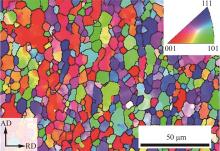
Fig.1
Initial microstructure of 5A06 aluminum alloy
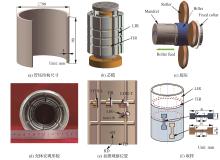
Fig.2
Schematic diagram of shell preparation process and characterization
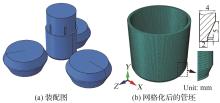
Fig.3
Spinning model assembly drawings and gridded tube billets
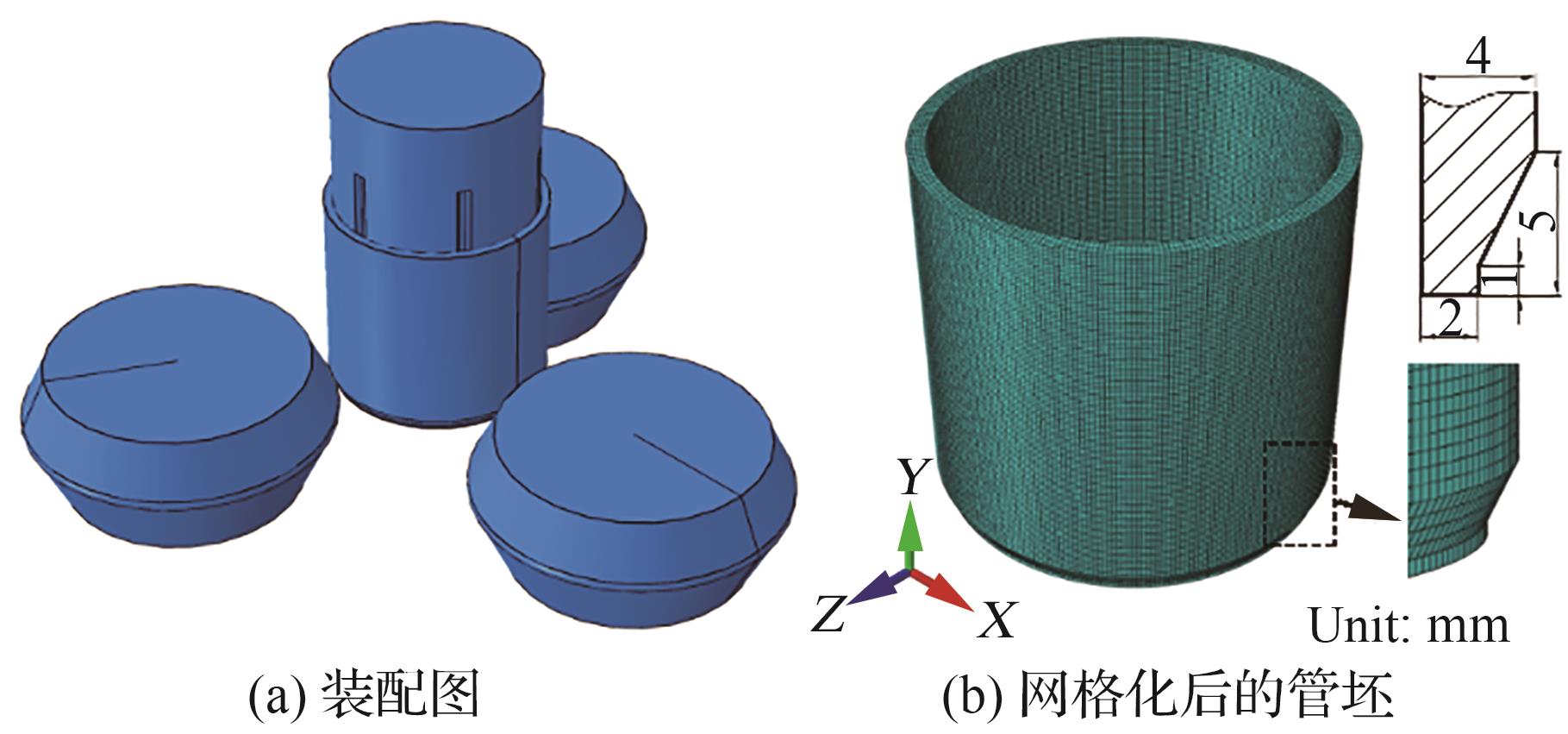
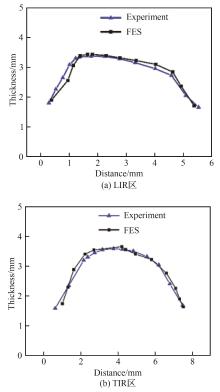
Fig.4
Comparison of inner ribs profile measured by experiment of 5A06 thin-walled shell and results of finite element simulation
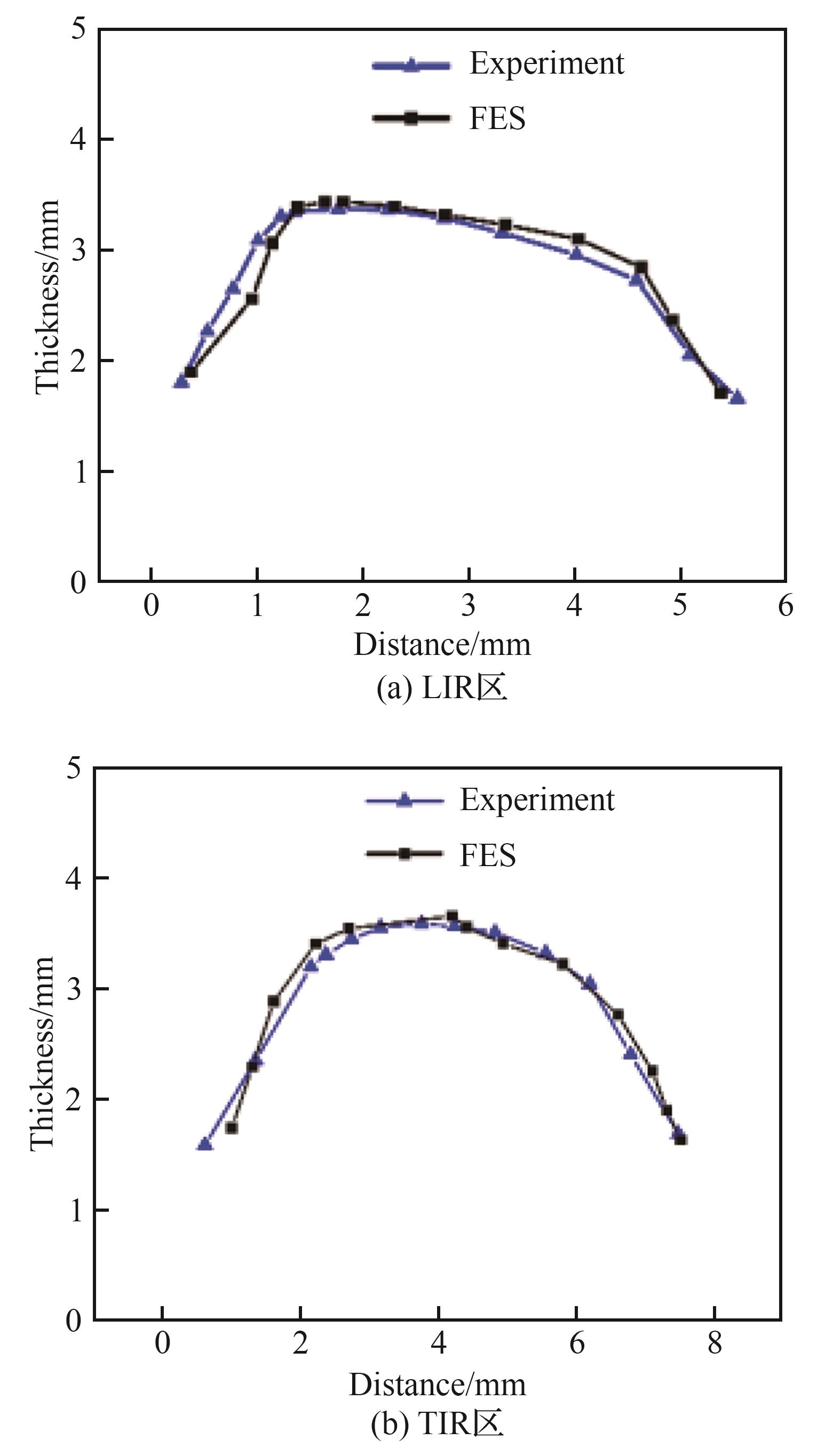
Fig.5
OM diagrams of different regions of 5A06 thin-walled shells
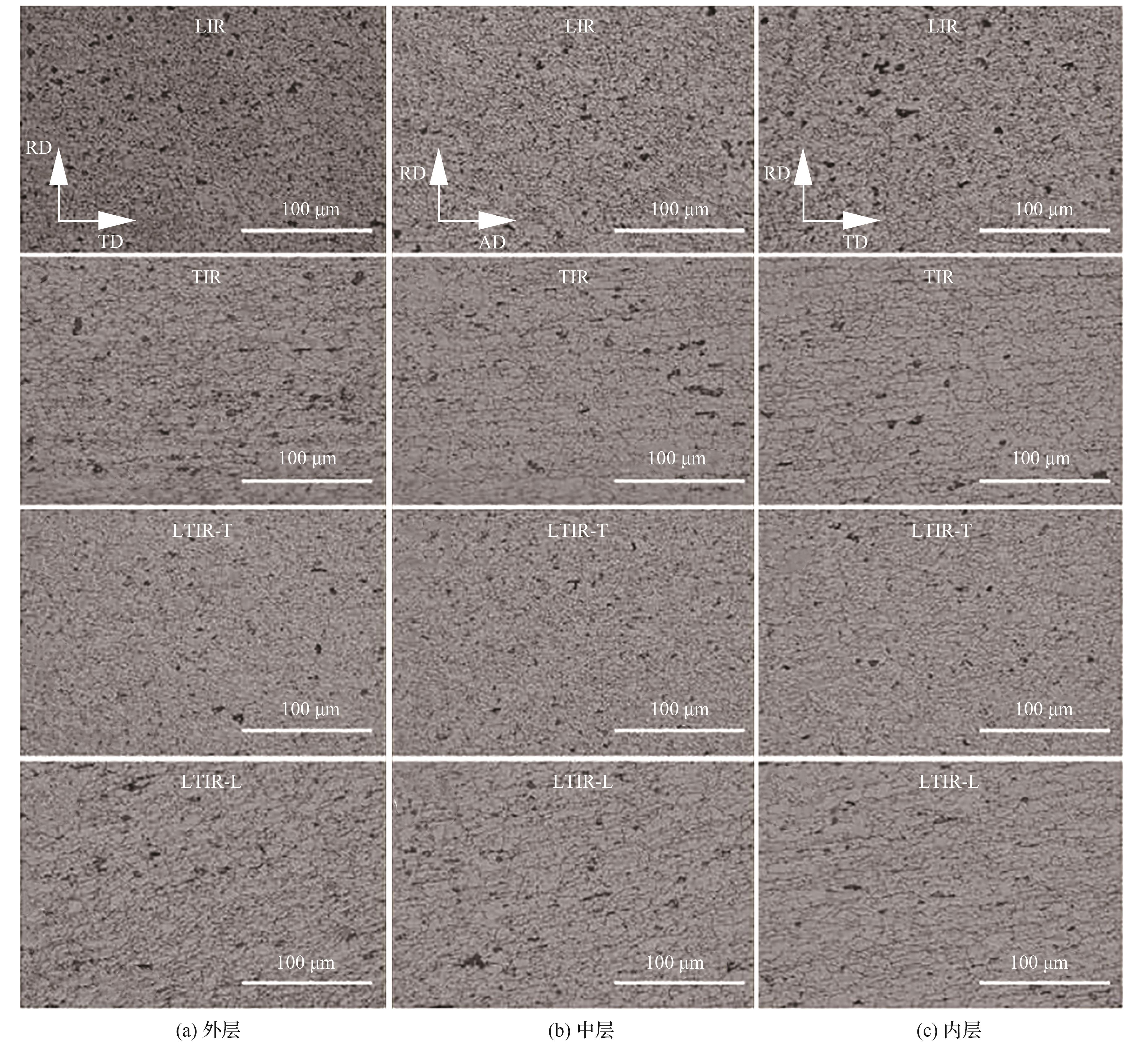
Fig.6
SEM microstructure of 5A06 thin-walled shells
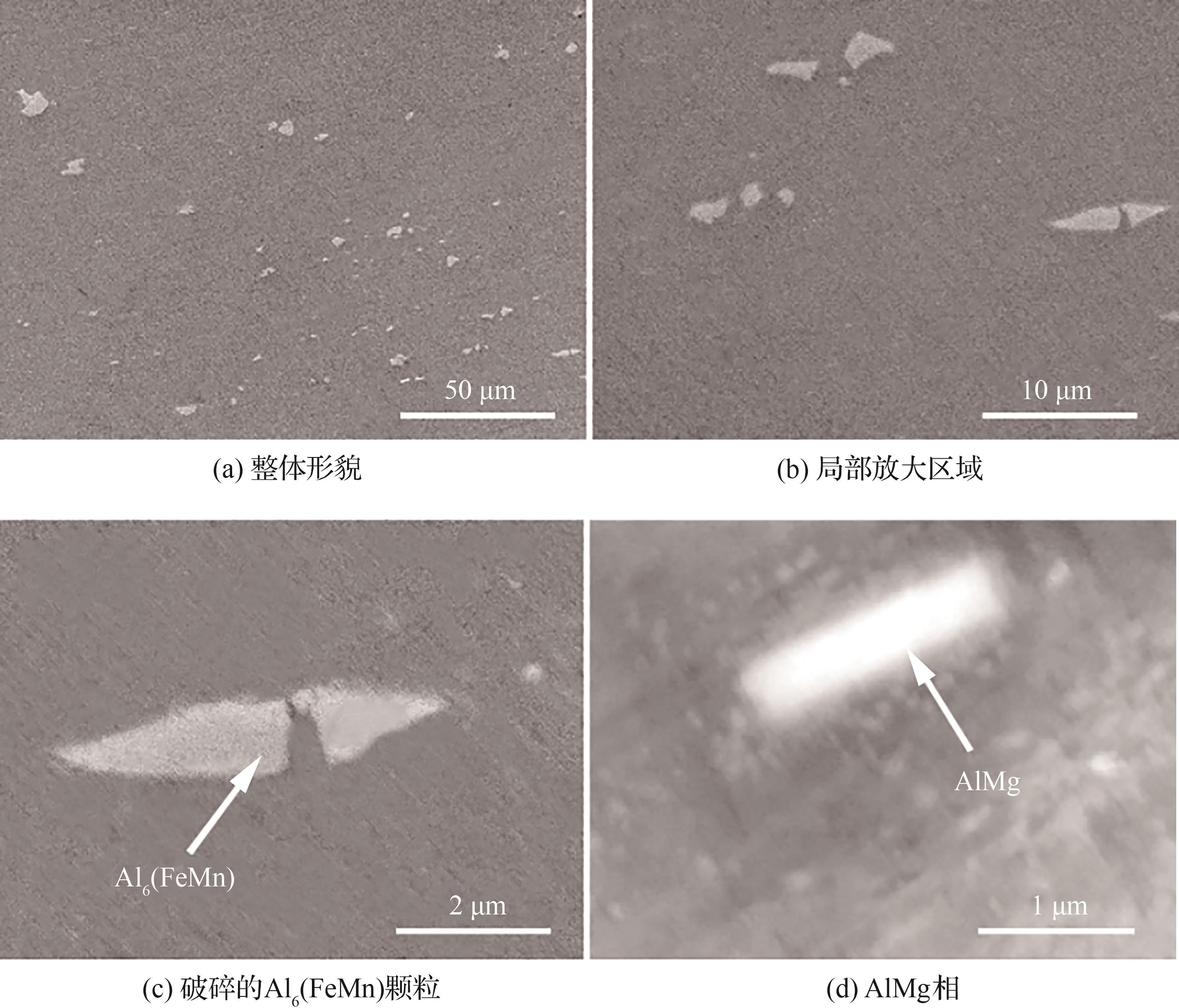
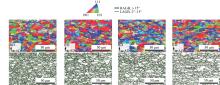
Fig.7
IPF diagram, GB diagram and corresponding statistical diagram of 5A06 thin-walled shell at different spinning temperatures
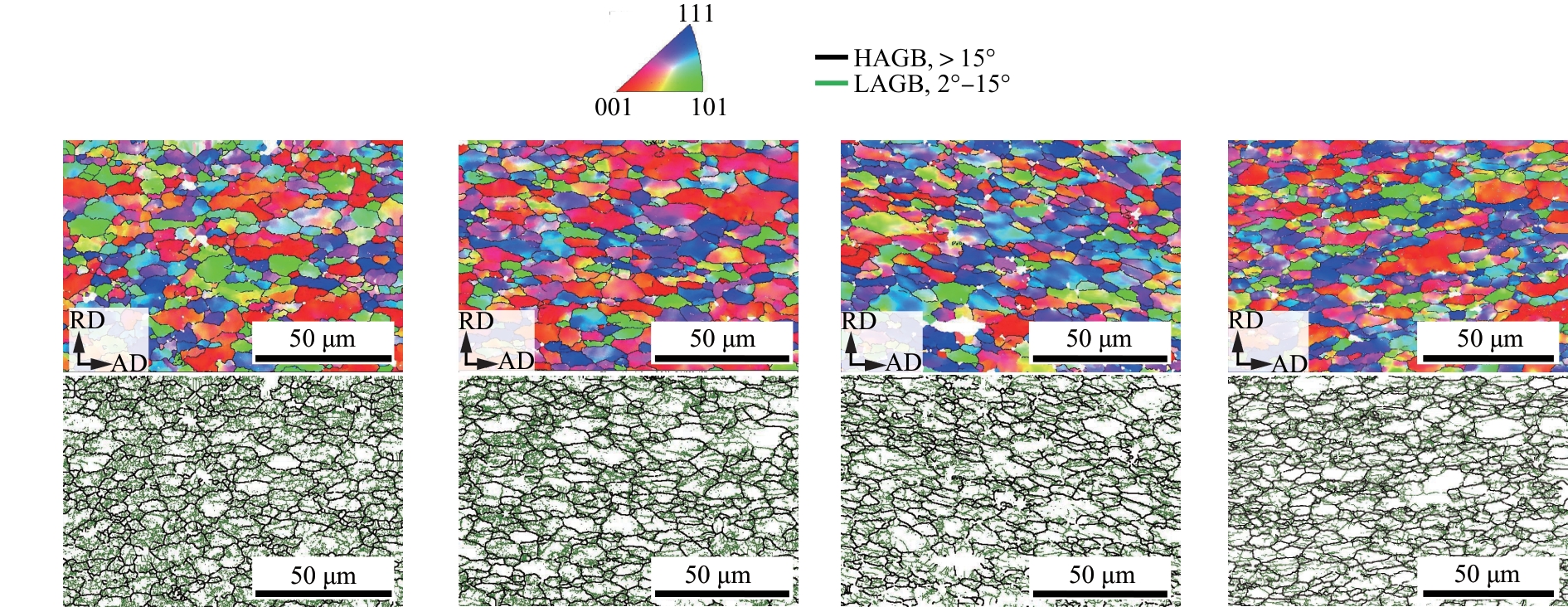
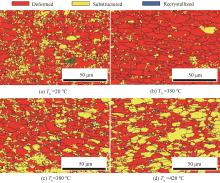
Fig.8
Recrystallization diagrams of 5A06 thin-walled shell at different spinning temperatures (TS)
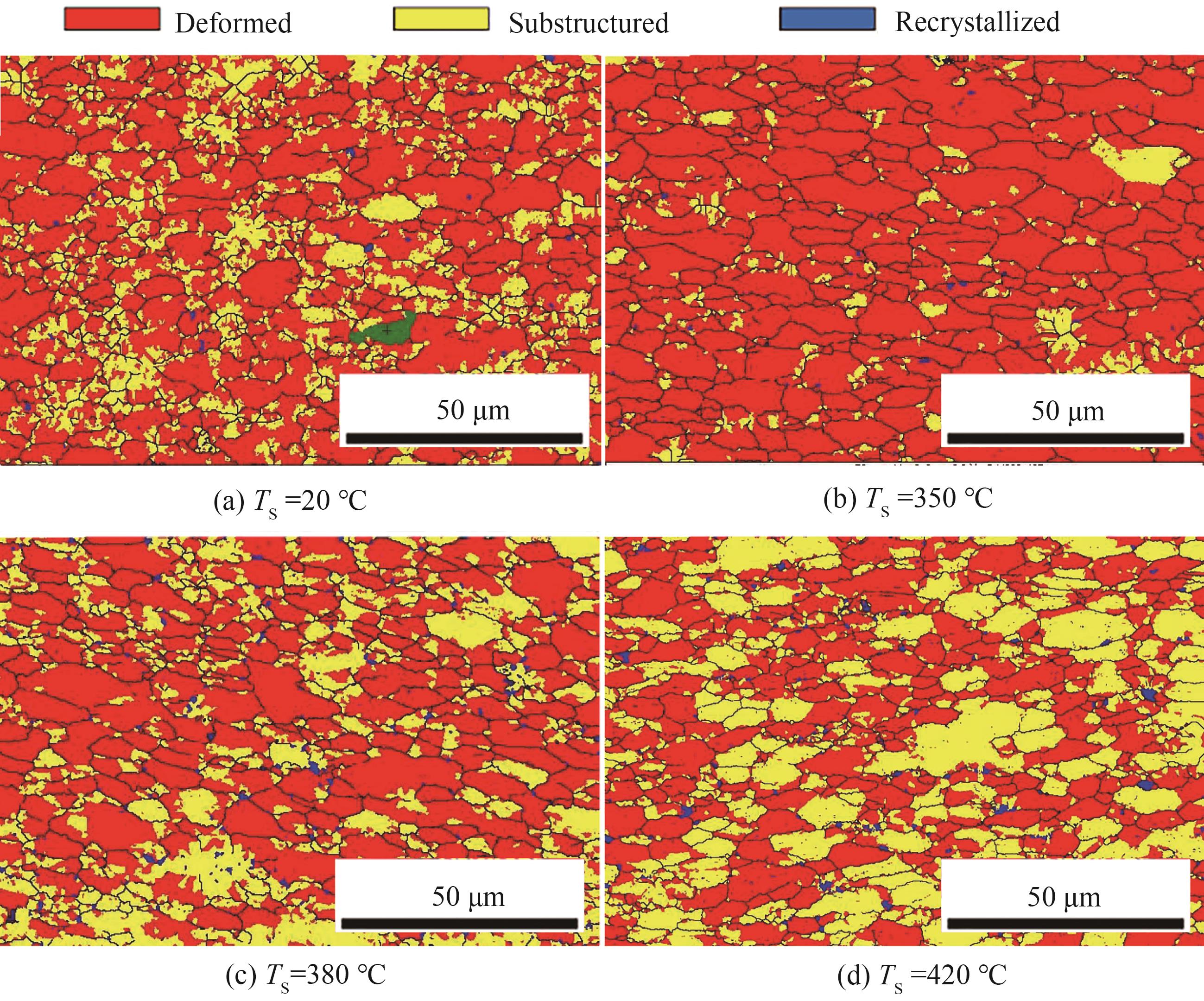
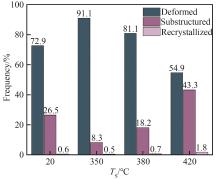
Fig.9
Recrystallization ratio of shell at different spinning temperatures
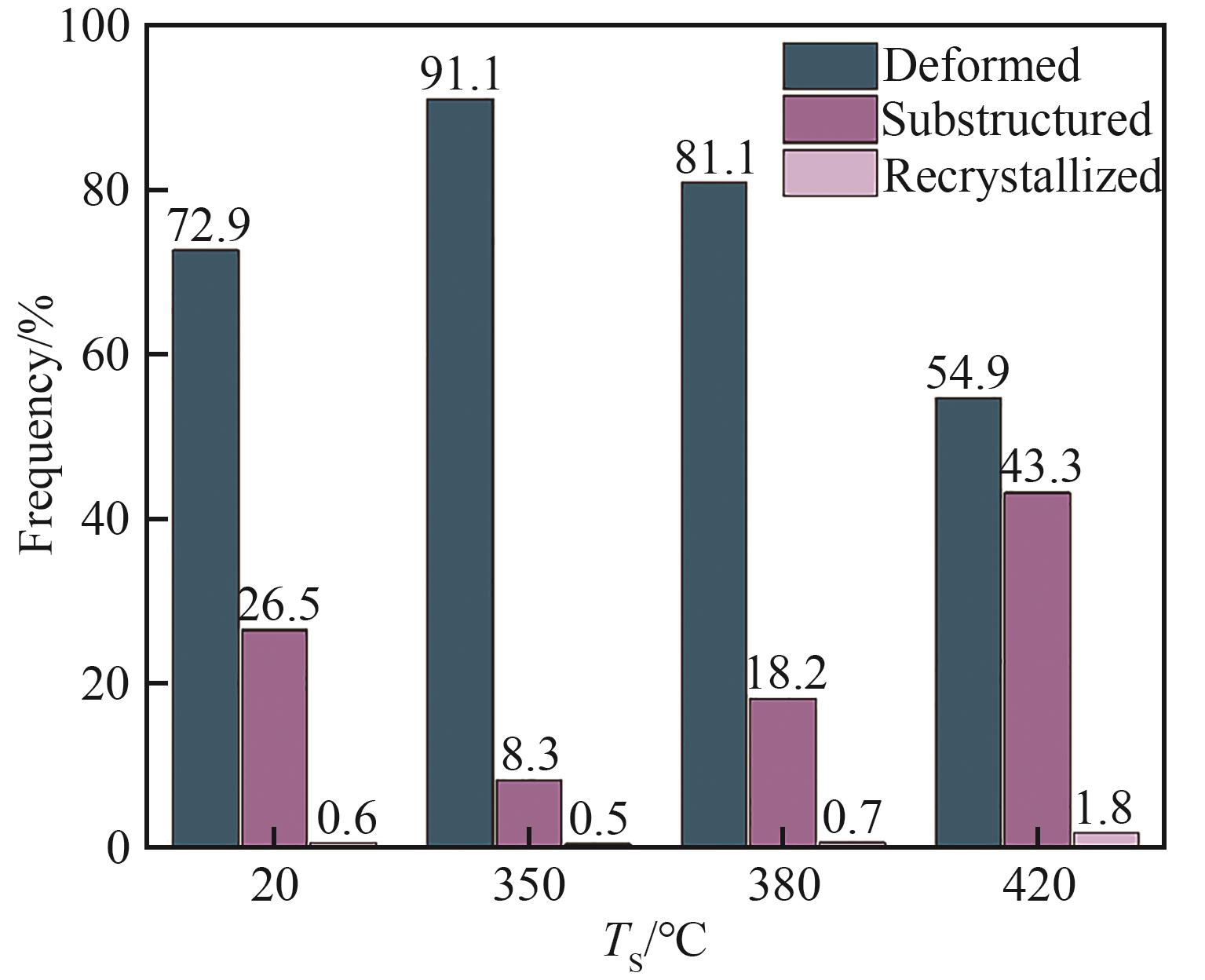
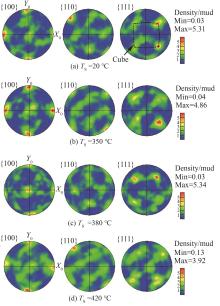
Fig.10
Polar diagrams of shell at different spinning temperatures
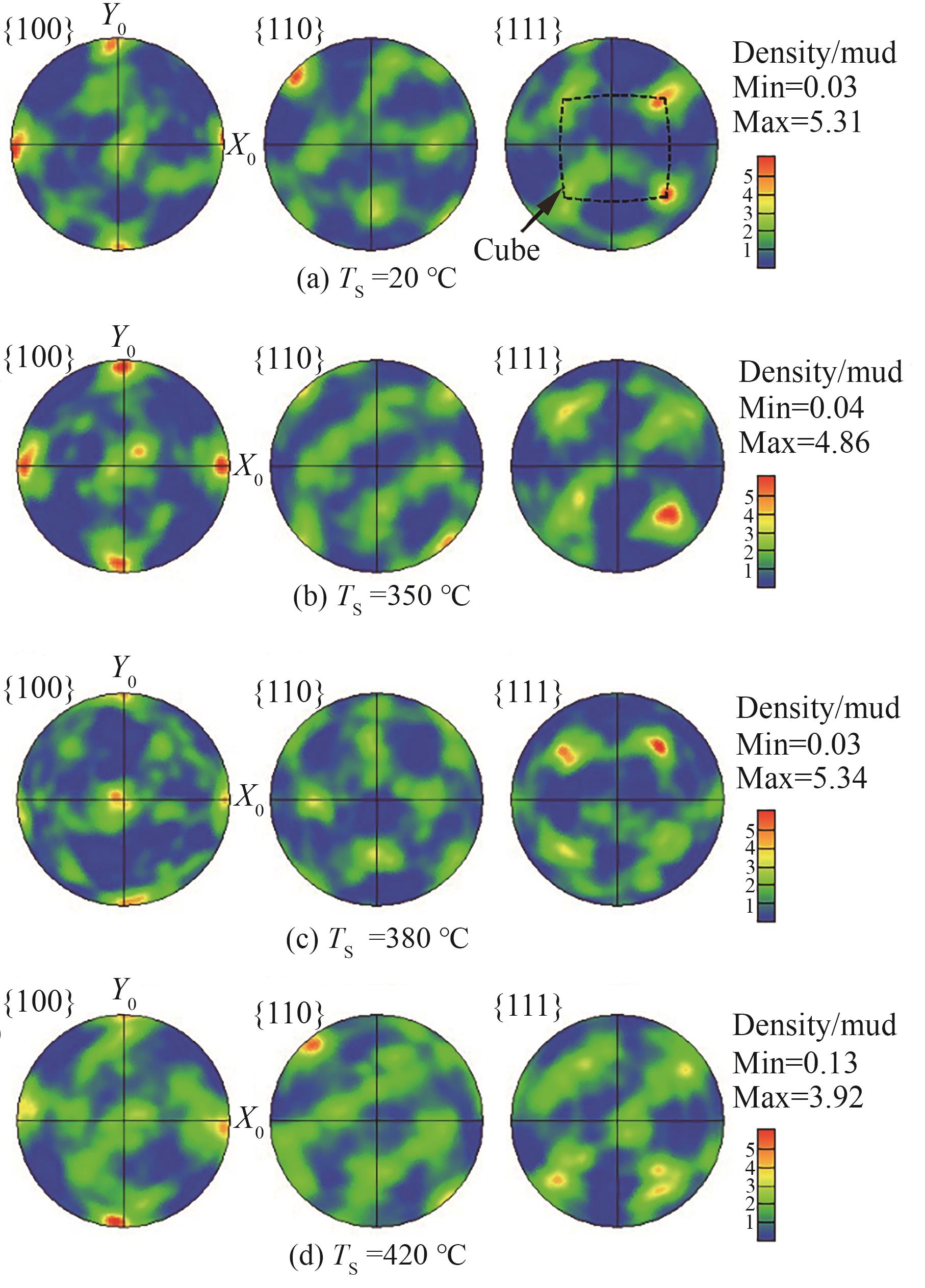
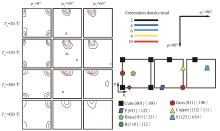
Fig.11
ODF diagrams of shells in different states
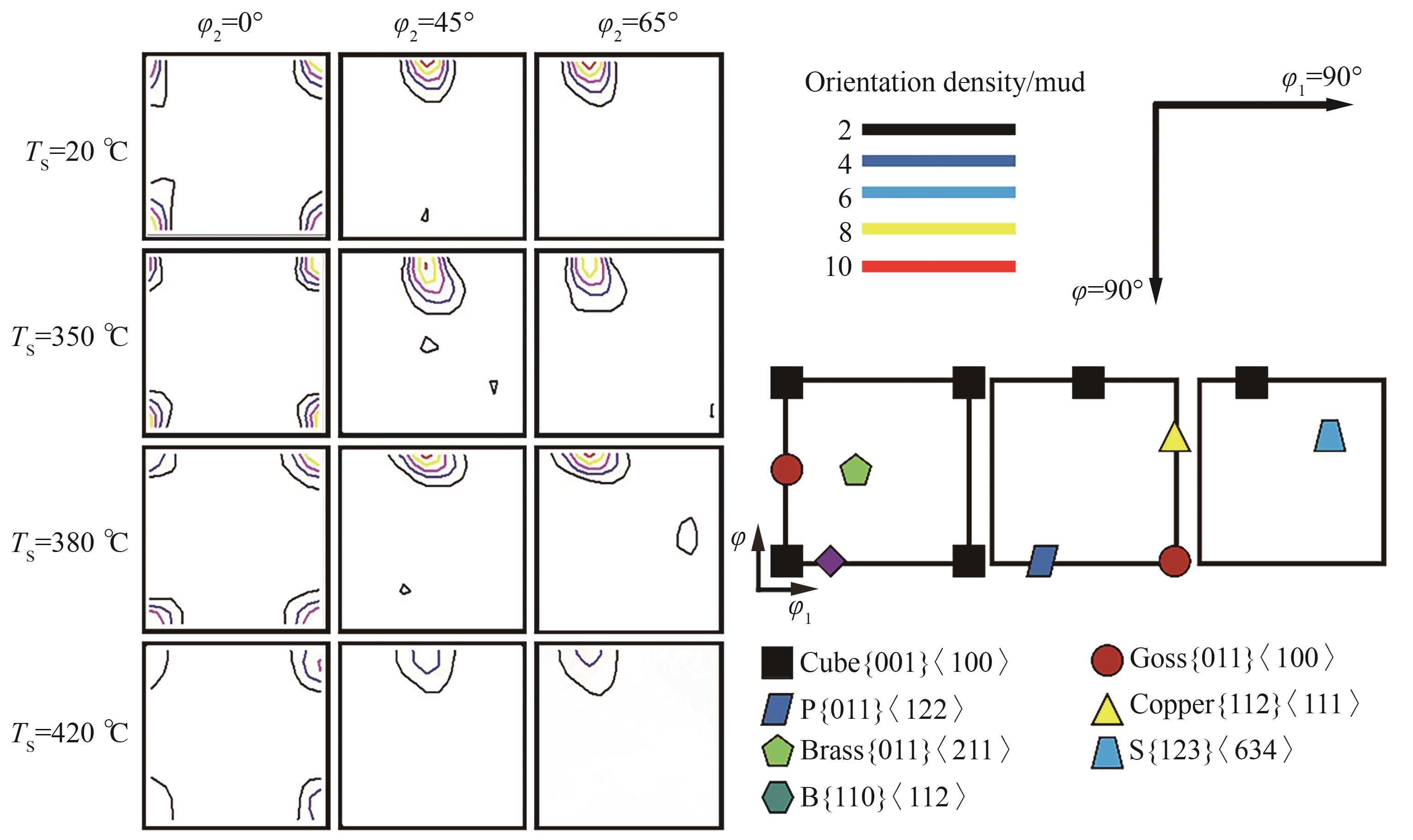
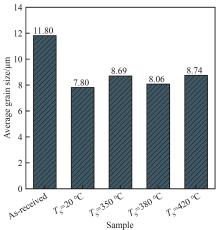
Fig.12
Grain size statistics of shell before and after spinning
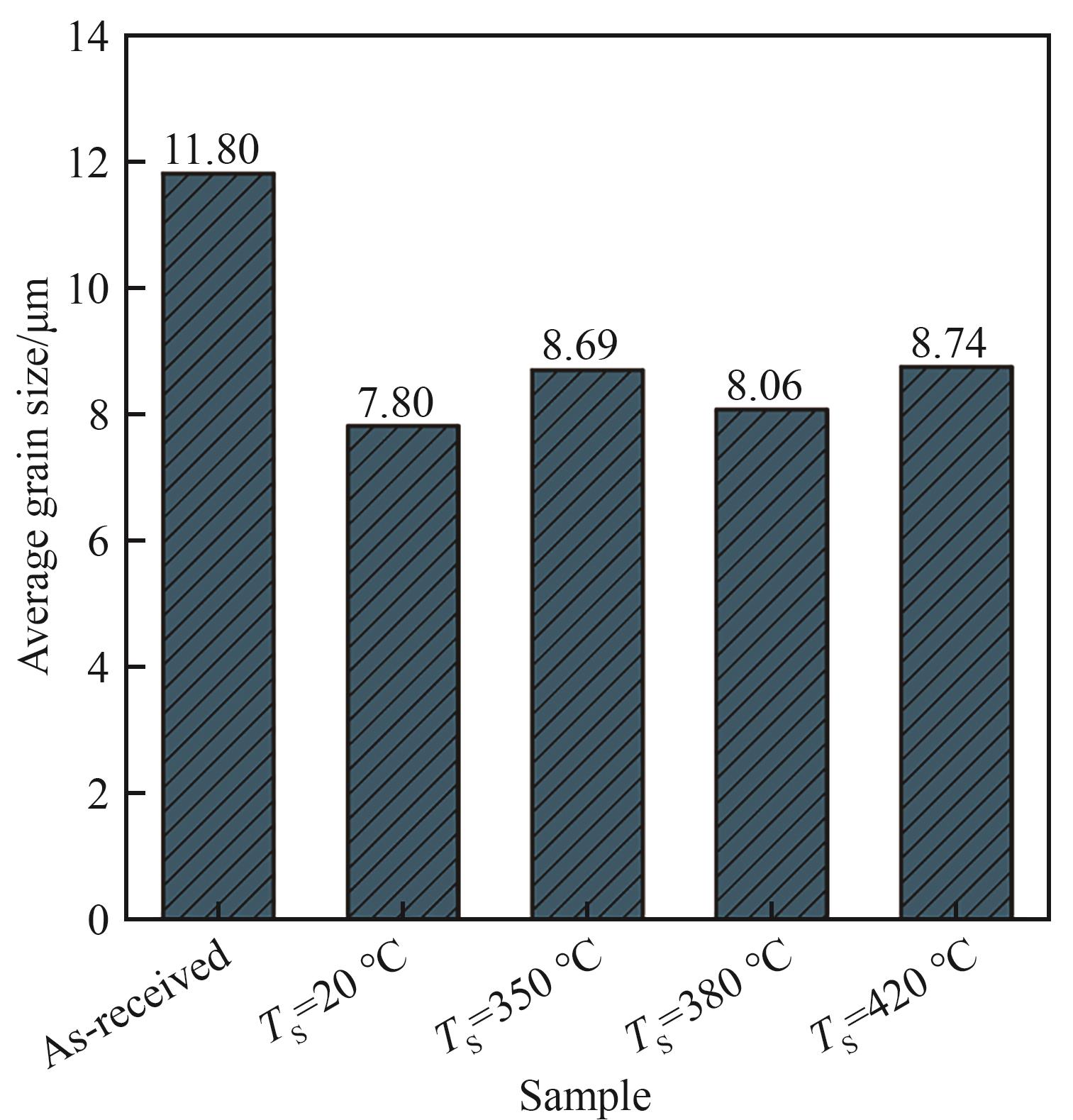
Fig.13
KAM diagrams and corresponding statistical diagrams of 5A06 thin-walled shells at different spinning temperatures and KAM diagrams at room temperature
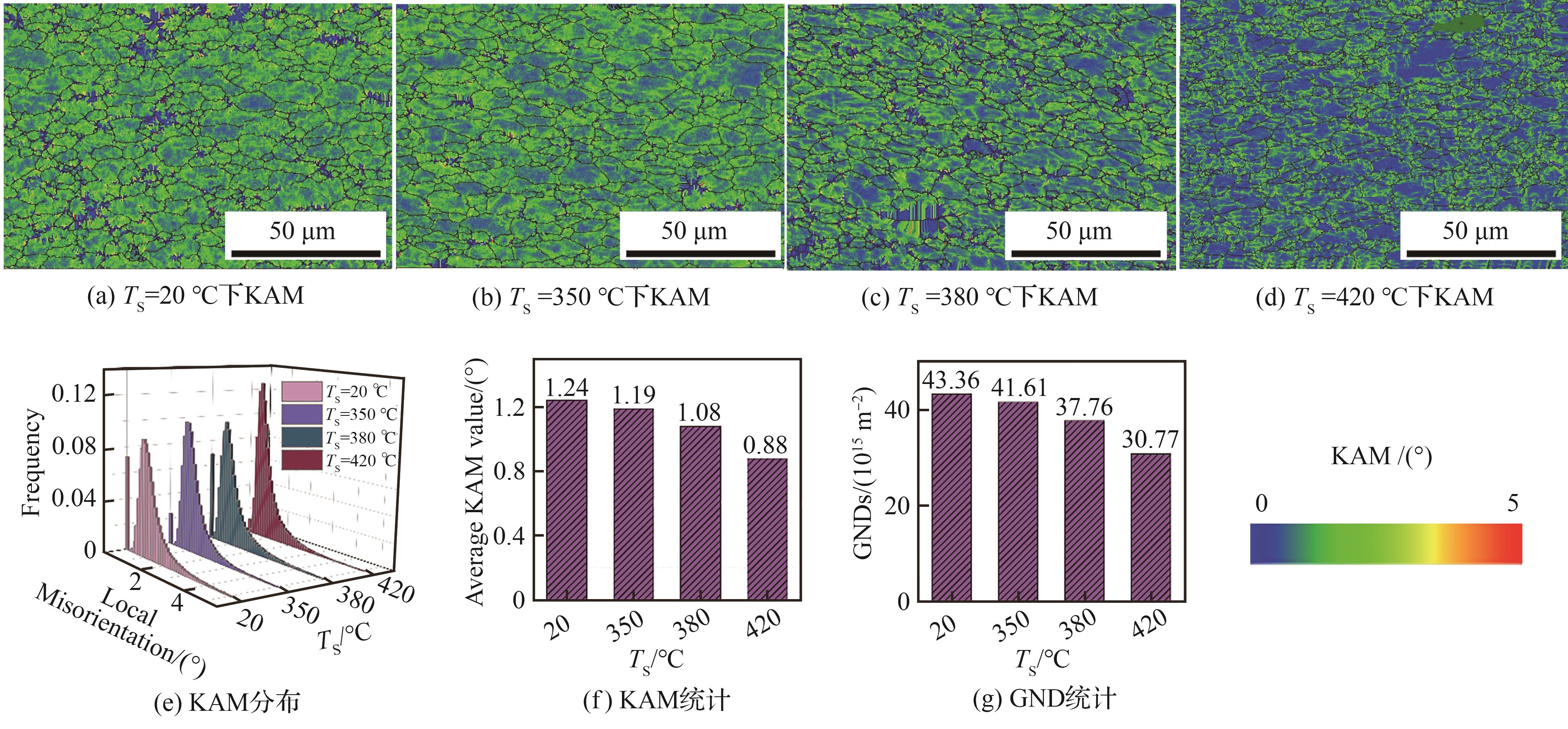
Fig.14
Equivalent stress (PEEQ) distribution of shell under different spinning temperatures
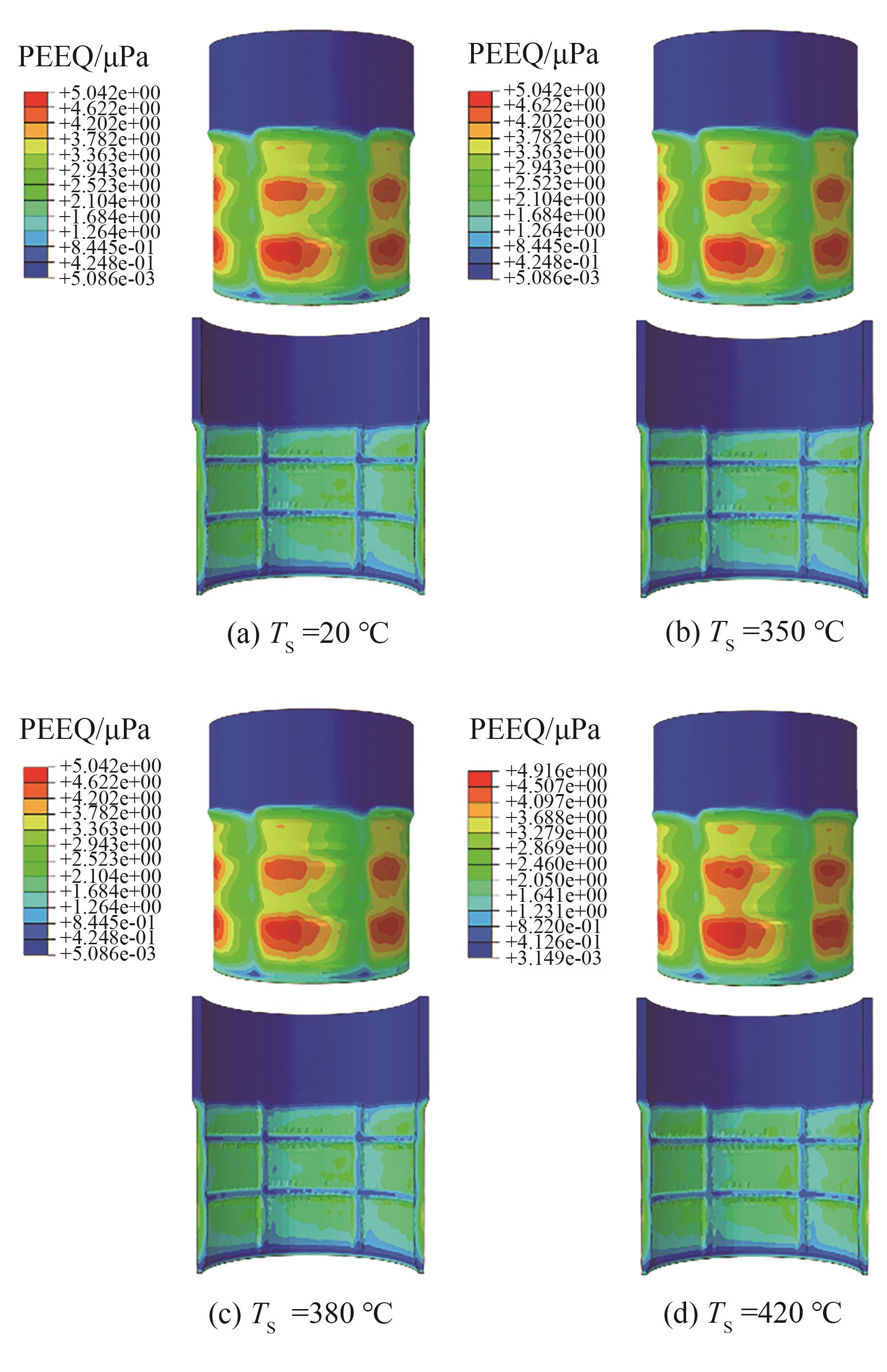
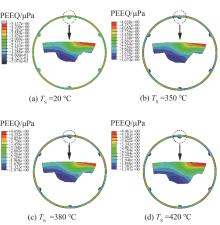
Fig.15
Equivalent stress distribution on cross section of shell at different spinning temperatures
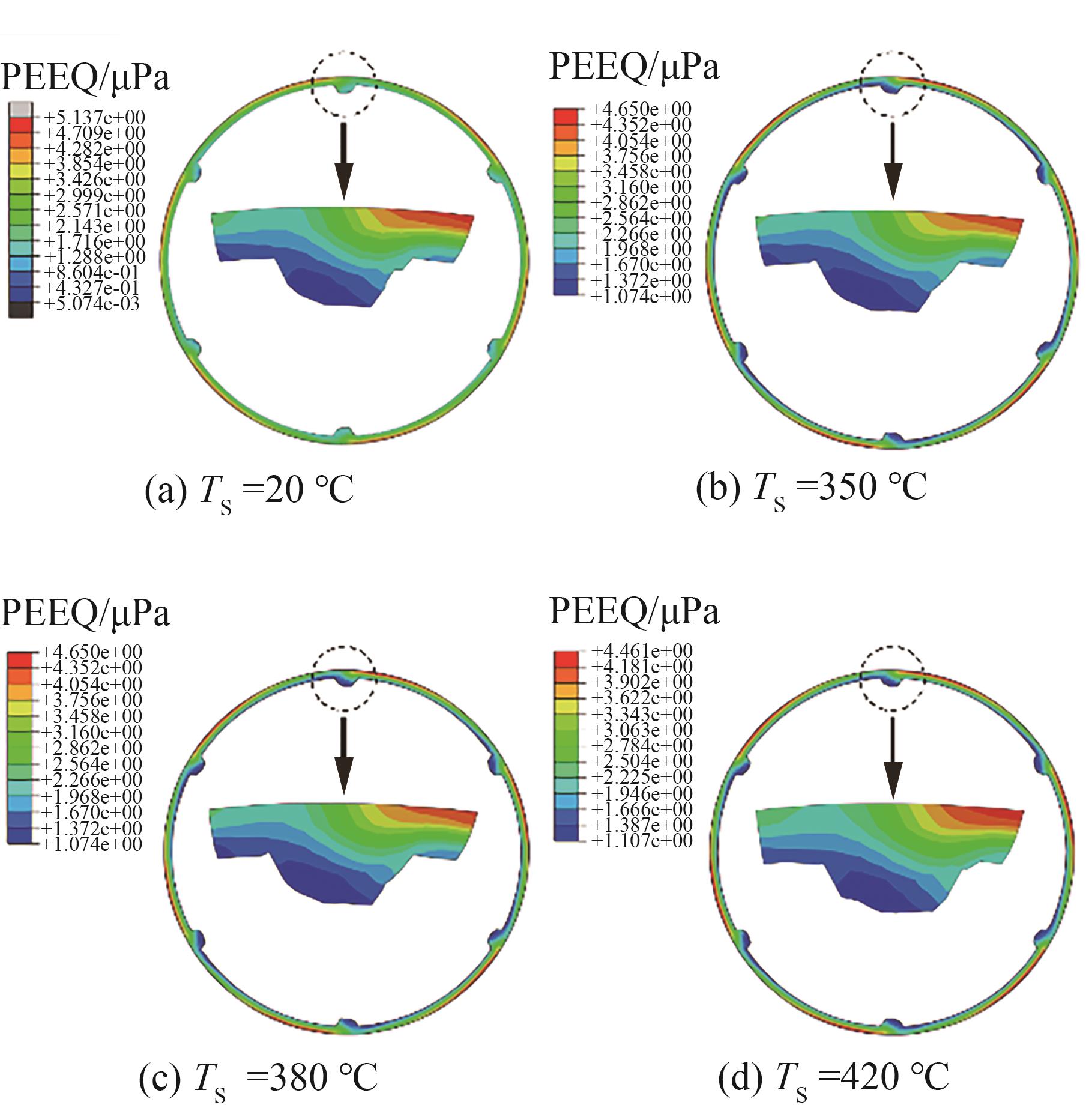
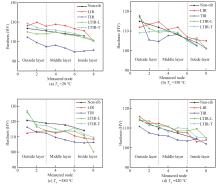
Fig.16
Vickers hardness distribution of shells at different spinning temperature
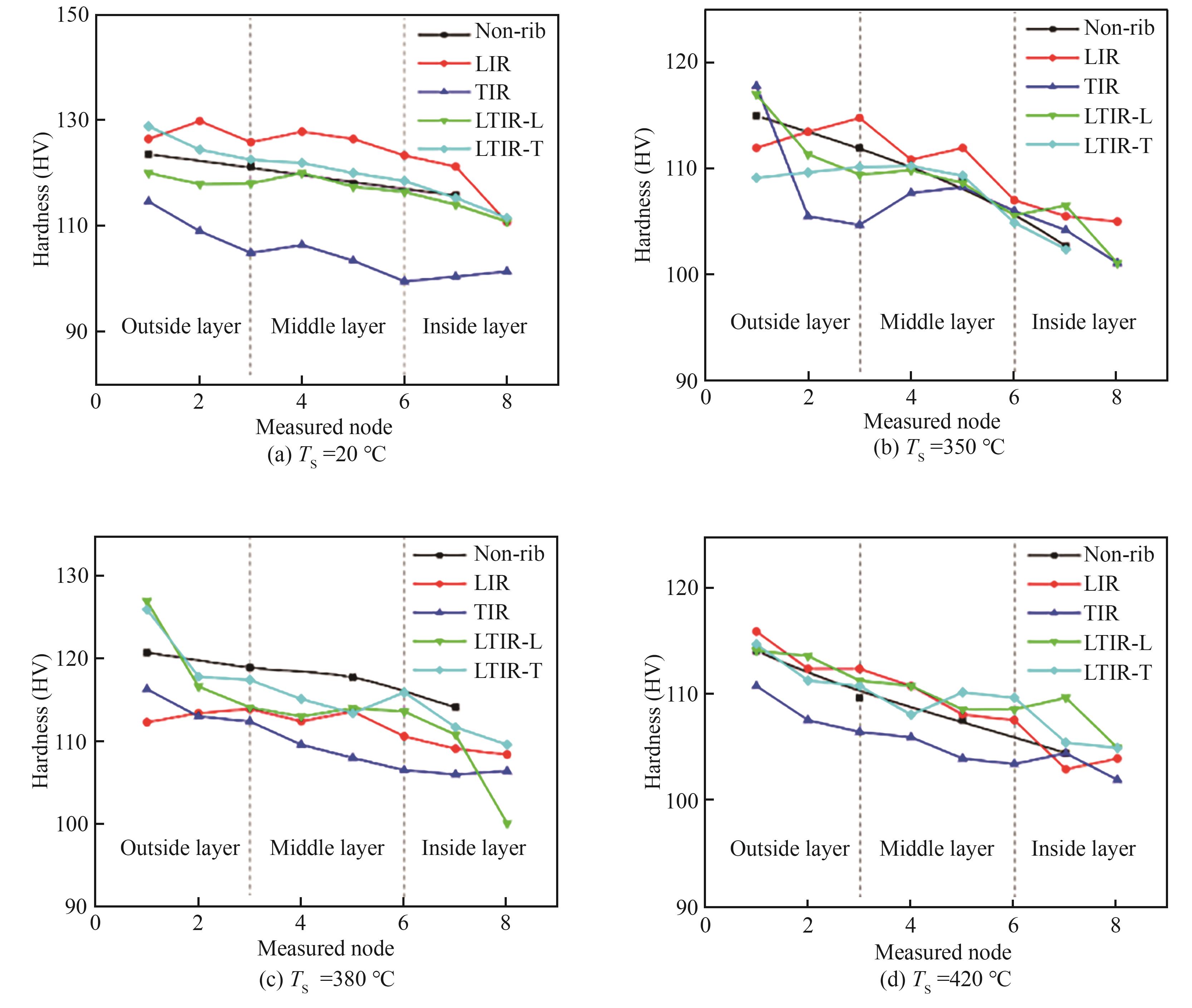
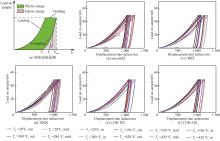
Fig.17
Load-displacement curves of nanoindentation in different regions of shell
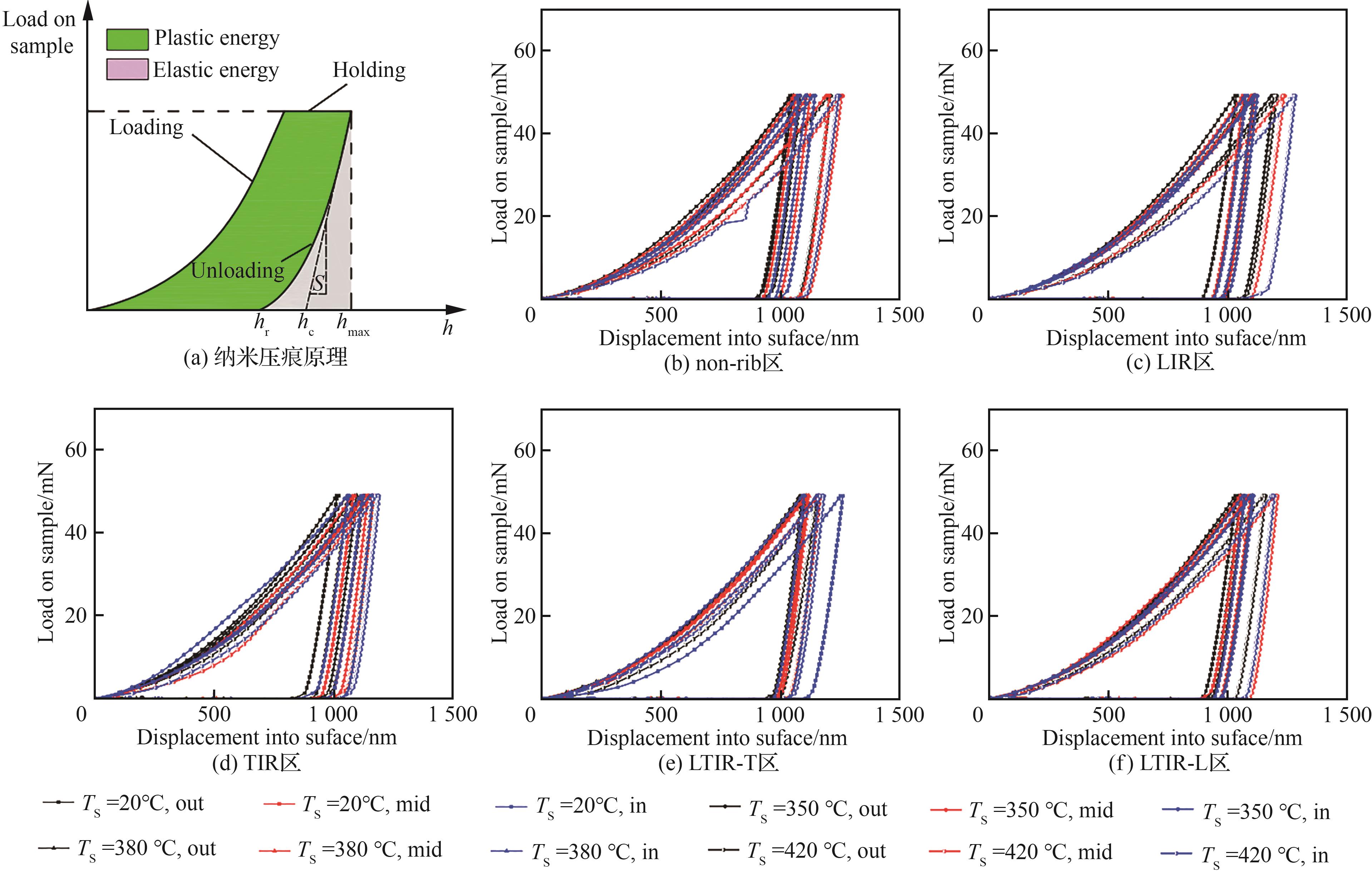
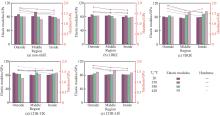
Fig.18
Nanoindentation results in different regions of shells
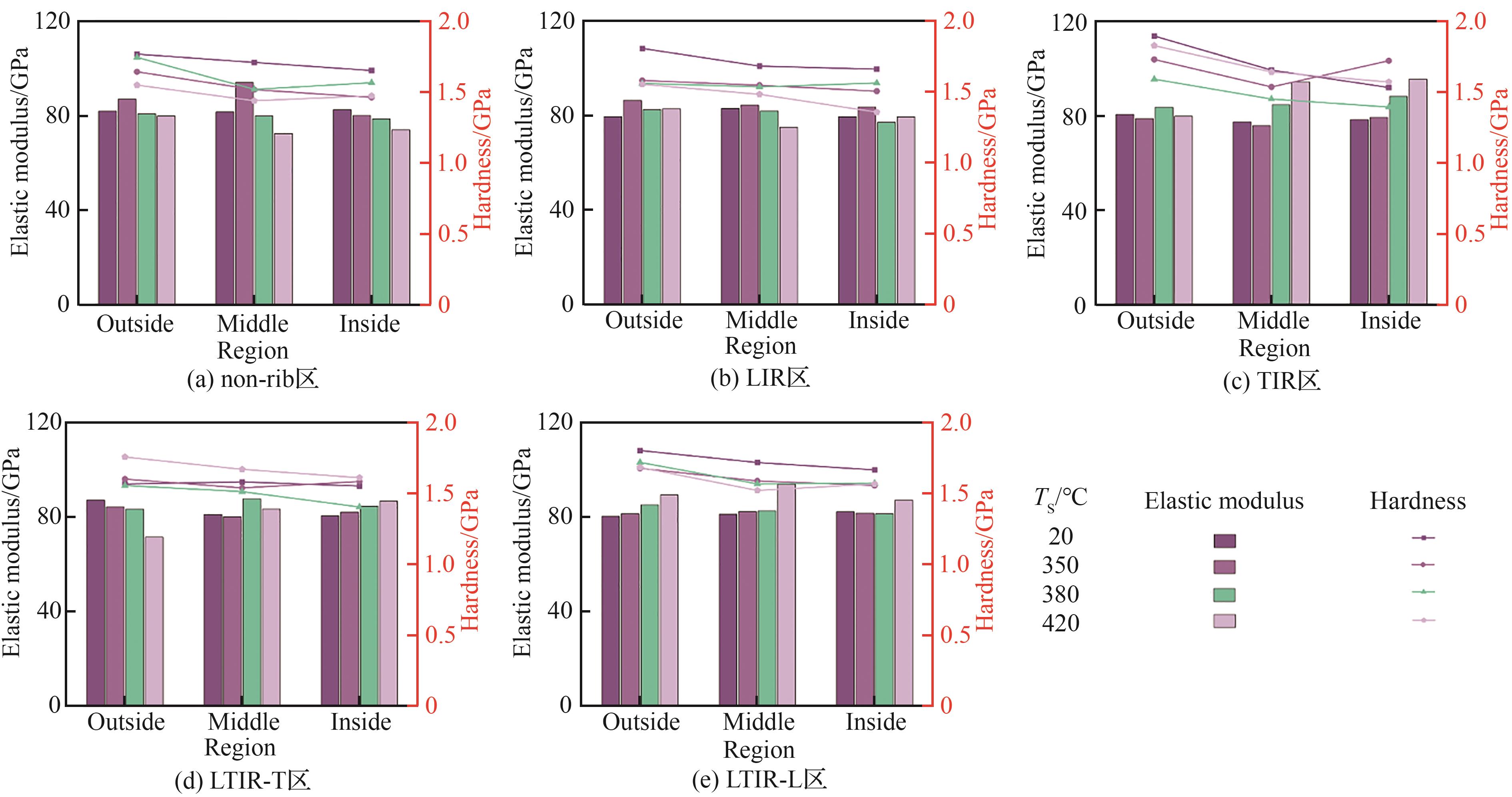
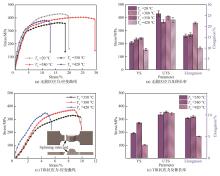
Fig.19
Mechanical properties of non-rib zone and TIR zone of shell at different spinning temperatures
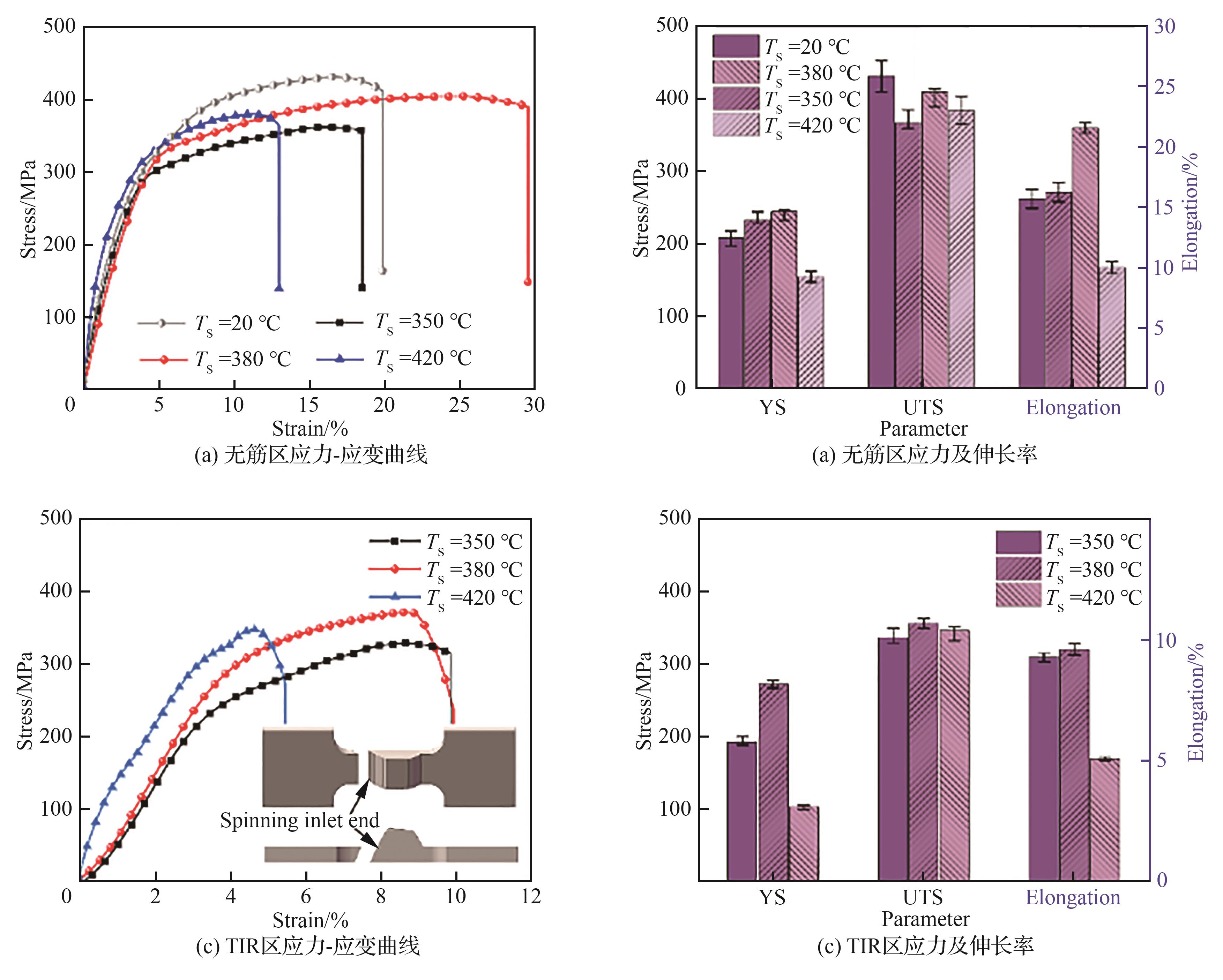
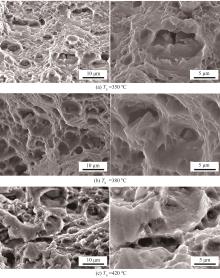
Fig.20
Fracture topography of TIR zone of shell at different spinning temperatures
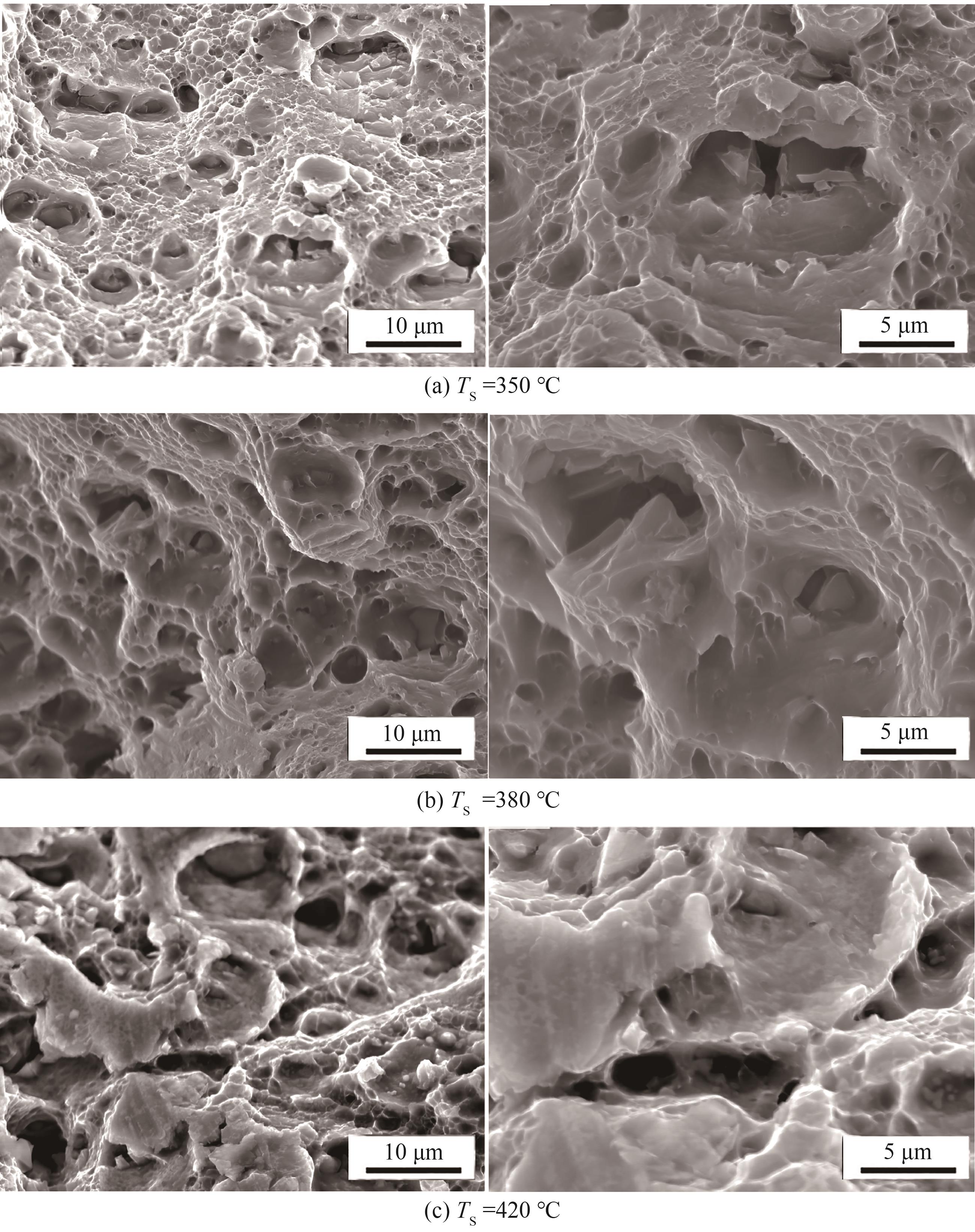
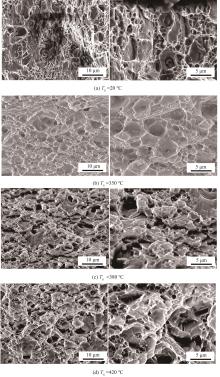
Fig.21
Fracture topography of non-rib zone of shell at different spinning temperatures
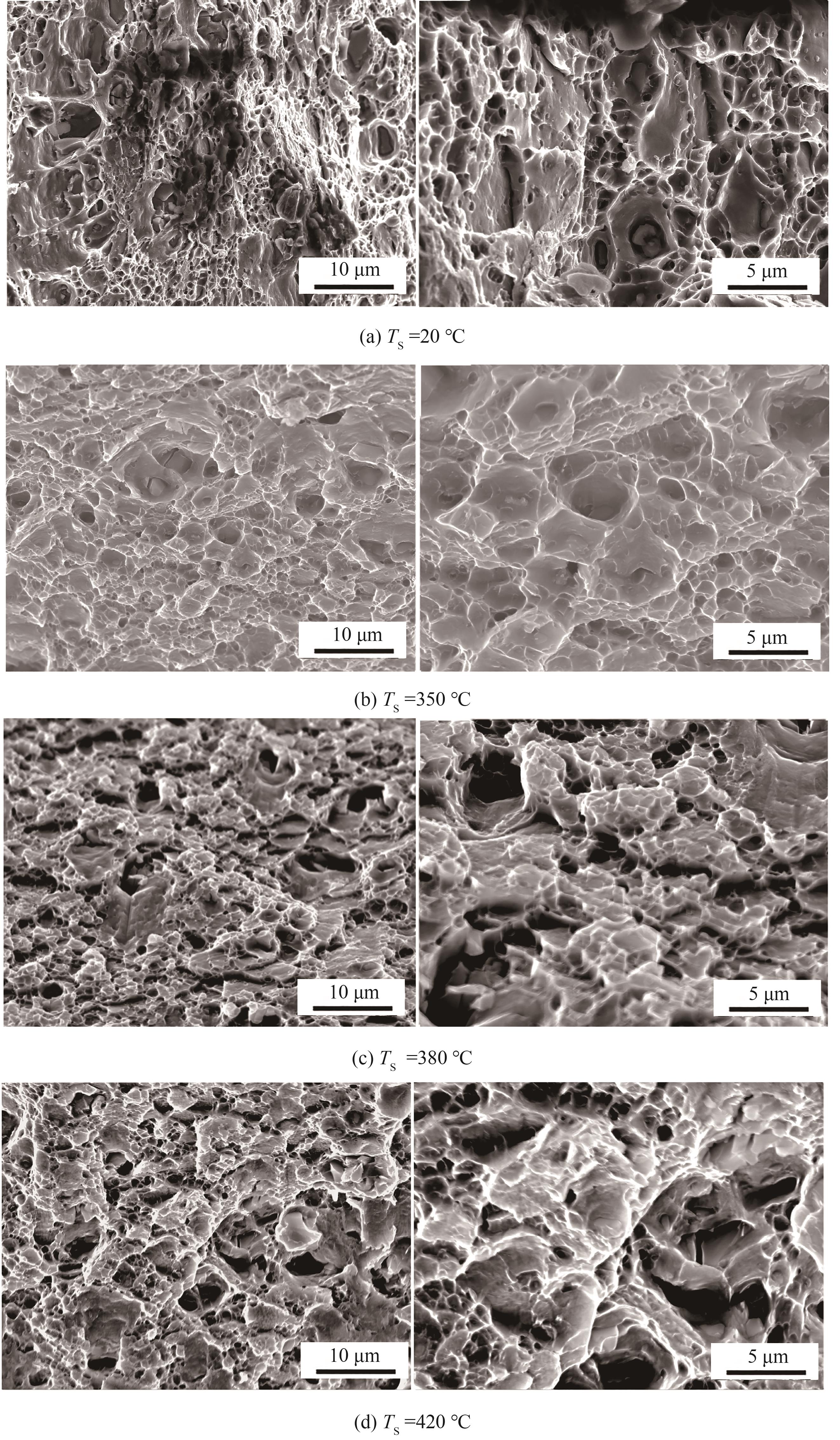
Fig.22
BED-C diagram of fracture surface of shell at 420 ℃
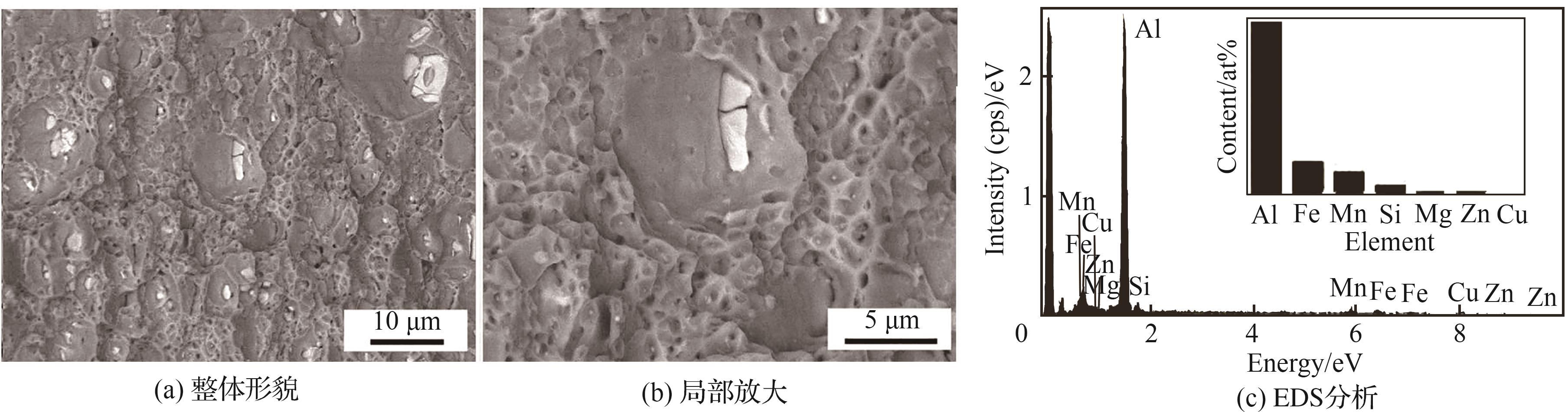
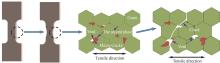
Fig.23
Fracture mechanism of unreinforced zone of shell
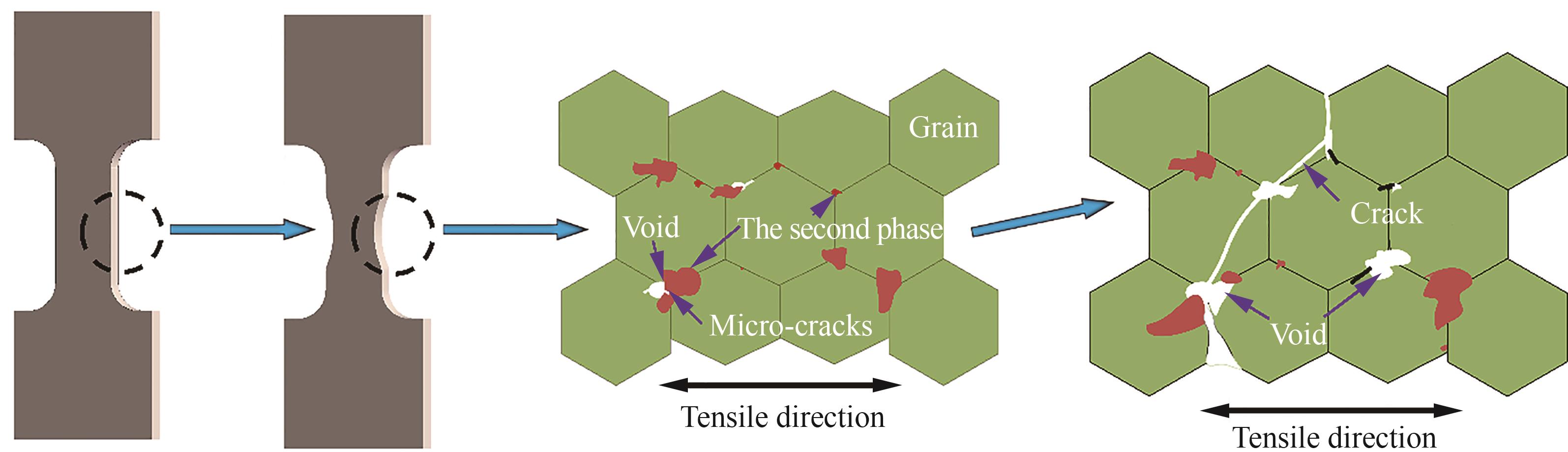
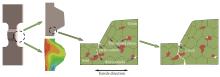
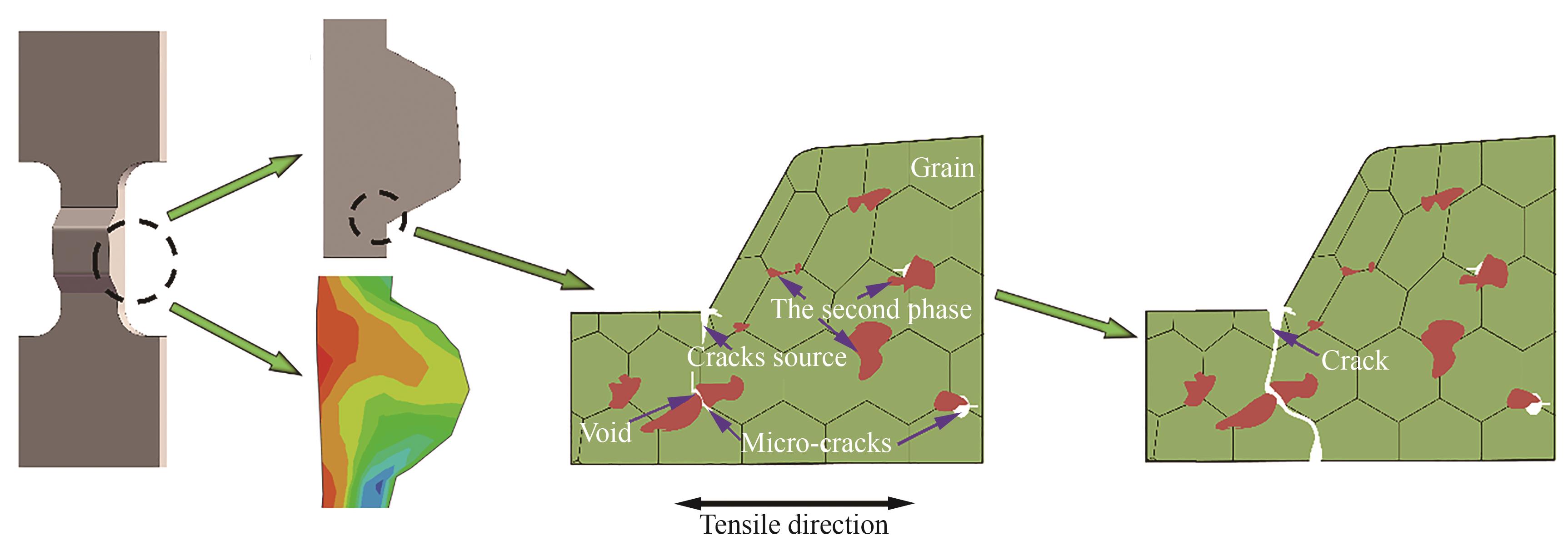
Fig.24
Fracture mechanism of TIR zone of shell
| [1] | 王凤琪, 于忠奇, 孟烨晖, 等. 复杂内筋铝筒段旋压变形规律和再结晶组织演变数值仿真[J]. 航空学报, 2023, 44(9): 627341. |
| WANG F Q, YU Z Q, MENG Y H, et al. Deformation mechanism and recrystallization microstructure evolution of aluminum stiffened cylinder during hot flow spinning based on numerical simulation[J]. Acta Aeronautica et Astronautica Sinica, 2023, 44(9): 627341 (in Chinese). | |
| [2] | ZENG X, FAN X G, LI H W, et al. Die filling mechanism in flow forming of thin-walled tubular parts with cross inner ribs[J]. Journal of Manufacturing Processes, 2020, 58: 832-844. |
| [3] | 王文煜, 李锋, 任飞翔, 等. 轻质高强复合材料网格加筋壳体结构设计方法及力学性能研究进展[J]. 航空学报, 2024, 45(17): 530001. |
| WANG W Y, LI F, REN F X, et al. Research progress on structural design methods and mechanical properties of lightweight high-strength composite lattice stiffened shell structure[J]. Acta Aeronautica et Astronautica Sinica, 2024, 45(17): 530001 (in Chinese). | |
| [4] | 林忠钦, 于忠奇, 戴冬华, 等. 复杂高筋薄壁构件旋压-增材复合制造技术发展与展望[J]. 航空学报, 2023, 44(9): 627493. |
| LIN Z Q, YU Z Q, DAI D H, et al. Development and prospect of metal spinning: Additive hybrid manufacturing technology for complex thin-walled component with high ribs[J]. Acta Aeronautica et Astronautica Sinica, 2023, 44(9): 627493 (in Chinese). | |
| [5] | 周宇, 赵勇, 于忠奇, 等. 交叉内筋薄壁筒体错距旋压成形数值仿真[J]. 上海交通大学学报, 2022, 56(1): 62-69. |
| ZHOU Y, ZHAO Y, YU Z, et al. Numerical simulationof stagger spinning of cylindrical part with cross inner ribs[J]. Journal of Shanghai Jiaotong University, 2022, 56(1): 62-69 (in Chinese). | |
| [6] | MUSIC O, ALLWOOD J M, KAWAI K. A review of the mechanics of metal spinning[J]. Journal of Materials Processing Technology, 2010, 210(1): 3-23. |
| [7] | 司林林. 7075铝合金薄壁壳体热旋压成型工艺研究[D]. 长春: 长春理工大学, 2019: 10-20. |
| SI L L. Study on hot spinning forming of 7075 aluminum alloy thin-walled shell[D]. Changchun: Changchun University of Science and Technology, 2019: 10-20 (in Chinese). | |
| [8] | MARINI D, CORNEY J. A methodology for assessing the feasibility of producing components by flow forming[J]. Production & Manufacturing Research, 2017, 5(1): 210-234. |
| [9] | PAN J Q, ZHANG W C, LI H, et al. Microstructure characteristics, yield asymmetry and fracture mechanism of the fine grained thin-wall Mg-6.03Zn-0.55Zr tubes fabricated by hot spinning[J]. Journal of Alloys and Compounds, 2024, 983: 173841. |
| [10] | WANG F Q, YU Z Q, GAN T. Study on microstructure evolution mechanism and inhomogeneous characteristic of 2219 aluminum alloy in hot flow forming[J]. Materials Characterization, 2024, 215: 114156. |
| [11] | MENG Y H, YU Z Q, ZHAO Y X. Fold defects mechanism of aluminum alloy thin-walled stiffened cylinders during flow forming[J]. Thin-Walled Structures, 2024, 201: 112018. |
| [12] | HUANG Z S, DENG K K, WANG C J, et al. Influence of spinning on the microstructure and mechanical properties of AZ91 alloy tubes[J]. Materials Science and Engineering: A, 2025, 921: 147581. |
| [13] | WANG L, LONG H. Investigation of material deformation in multi-pass conventional metal spinning[J]. Materials & Design, 2011, 32(5): 2891-2899. |
| [14] | ZHAO Y X, WAN X M, GAO L T, et al. Theoretical prediction of sheet metal wrinkling based on the potential function analysis[J]. Journal of Manufacturing Science and Engineering, 2018, 140(10): 101012. |
| [15] | WONG C C, DEAN T A, LIN J. Incremental forming of solid cylindrical components using flow forming principles[J]. Journal of Materials Processing Technology, 2004, 153: 60-66. |
| [16] | CHEN C, XIAO G F, XIA Q X, et al. Macroscopic and microscopic deformation mechanism of cup-shaped part made of difficult-to-deform metal during the current-assisted flow spinning process[J]. Journal of Materials Processing Technology, Volume 340, 2025, 118859. |
| [17] | 王清松, 徐戊矫, 吴道祥, 等. 变形态2219铝合金高温塑性变形的本构模型[J]. 铝加工, 2021(3): 27-31. |
| WANG Q S, XU W J, WU D X, et al. A constitutive model of high temperature plastic deformation of 2219 aluminum alloy for ring[J]. Aluminium Fabrication, 2021(3): 27-31 (in Chinese). | |
| [18] | KAREEM S A, ANAELE J U, AIKULOLA E O, et al. Hot deformation behavior of aluminum alloys: A comprehensive review on deformation mechanism, processing maps analysis and constitutive model description[J]. Materials Today Communications, 2025, 44: 112004. |
| [19] | GAN T, YU Z Q, ZHAO Y X, et al. A continuous dynamic recrystallization constitutive model combined with grain fragmentation and subgrain rotation for aluminum alloy 2219 under hot deformation[J]. Modelling and Simulation in Materials Science and Engineering, 2021, 29(2): 025002. |
| [20] | WANG Y, YANG B W, GAO M Q, et al. Microstructure evolution, mechanical property response and strengthening mechanism induced by compositional effects in Al–6 Mg alloys[J]. Materials & Design, 2022, 220: 110849. |
| [21] | LI S M, LI Y D, ZHANG Y, et al. Effect of intermetallic phases on the anodic oxidation and corrosion of 5A06 aluminum alloy[J]. International Journal of Minerals, Metallurgy, and Materials, 2015, 22(2): 167-174. |
| [22] | ZHAN X, TANG J G, TU W B, et al. Evolution of microstructure, texture and formability of Al-Mg-Si alloys at different hot rolling finish temperatures[J]. Journal of Materials Research and Technology, 2024, 32: 318-337. |
| [23] | 王祝堂, 田荣璋. 铝合金及其加工手册[M]. 3版. 长沙: 中南大学出版社, 2005. |
| WANG Z T, TIAN R Z. Handbook of aluminium alloys and their processing [M]. 3rd ed. Changsha: Central South University Press, 2005. | |
| [24] | YU J Q, ZHAO G Q, CUI W C, et al. Microstructural evolution and mechanical properties of welding seams in aluminum alloy profiles extruded by a porthole die under different billet heating temperatures and extrusion speeds[J]. Journal of Materials Processing Technology, 2017, 247: 214-222. |
| [25] | KOU L Y, ZHAO Y X, WANG G, et al. Damage mechanisms of 2195-O aluminum alloy sheet induced by microstructural evolution during tensile deformation at different temperatures[J]. Materials Science and Engineering: A, 2024, 914: 147096. |
| [26] | LIN C N, TZENG Y C, LEE S L, et al. Microstructure evolution and Zener-Hollomon parameter analysis as-extruded 7005 aluminum alloy during hot deformation[J]. Materials Today Communications, 2023, 37: 107604. |
| [27] | ZHANG Y, JIANG J F, WANG Y, et al. Hot deformation behavior and microstructure evolution of hot-extruded 6A02 aluminum alloy[J]. Materials Characterization, 2022, 188: 111908. |
| [28] | TANG J W, CHEN L, FAN X K, et al. Co-extrusion of dissimilar AA6063/AA7075 by porthole die at various temperatures[J]. Journal of Alloys and Compounds, 2018, 764: 162-169. |
| [29] | CALCAGNOTTO M, PONGE D, DEMIR E, et al. Orientation gradients and geometrically necessary dislocations in ultrafine grained dual-phase steels studied by 2D and 3D EBSD[J]. Materials Science and Engineering: A, 2010, 527(10-11): 2738-2746. |
| [30] | LV Y T, DING Y, CUI H Z, et al. Investigation of microscopic residual stress and its effects on stress corrosion behavior of NiAl bronze alloy using in situ neutron diffraction/EBSD/tensile corrosion experiment[J]. Materials Characterization, 2020, 164: 110351. |
| [31] | YAN Z F, WANG D H, HE X L, et al. Deformation behaviors and cyclic strength assessment of AZ31B magnesium alloy based on steady ratcheting effect[J]. Materials Science and Engineering: A, 2018, 723: 212-220. |
| [32] | FAN X Y, LI Y, XU C, et al. Improved mechanical anisotropy and texture optimization of a 3xx aluminum alloy by differential temperature rolling[J]. Materials Science and Engineering: A, 2021, 799: 140278. |
| [33] | DHAL A, PANIGRAHI S K, SHUNMUGAM M S. Insight into the microstructural evolution during cryo-severe plastic deformation and post-deformation annealing of aluminum and its alloys[J]. Journal of Alloys and Compounds, 2017, 726: 1205-1219. |
| [34] | XIA Q X, LONG J C, XIAO G F, et al. Deformation mechanism of ZK61 magnesium alloy cylindrical parts with longitudinal inner ribs during hot backward flow forming[J]. Journal of Materials Processing Technology, 2021, 296: 117197. |
| [35] | LI S L, ZHU Z W, ZHAO Y X, et al. Numerical simulation of ultrasonic field and its acoustoplastic influence on ribbed cylindrical parts in ultrasonic-assisted flow spinning process[J]. Journal of Manufacturing Processes, 2024, 121: 408-426. |
| [36] | 郑可, 李传维, 顾剑锋. 固溶态和时效态7075铝合金的微纳米压痕力学行为[J]. 材料热处理学报, 2023, 44(1): 39-48. |
| ZHENG K, LI C W, GU J F. Micro-nano indentation mechanical behavior of 7075 aluminum alloy in solution and aging states[J]. Transactions of Materials and Heat Treatment, 2023, 44(1): 39-48 (in Chinese). | |
| [37] | GUBICZA J, CHINH N Q, CSANÁDI T, et al. Microstructure and strength of severely deformed FCC metals[J]. Materials Science and Engineering: A, 2007, 462(1-2): 86-90. |
| [38] | WANG Z M, OLIVEIRA J P, ZENG Z, et al. Laser beam oscillating welding of 5A06 aluminum alloys: Microstructure, porosity and mechanical properties[J]. Optics & Laser Technology, 2019, 111: 58-65. |
| [39] | SHOKUHFAR A, NEJADSEYFI O. A comparison of the effects of severe plastic deformation and heat treatment on the tensile properties and impact toughness of aluminum alloy 6061[J]. Materials Science and Engineering: A, 2014, 594: 140-148. |
| [1] | Meng WU, Duosheng LI, Yin YE, Xuyong LI, Xueyuan XU, Jiawei CHEN. Laser cleaning of C919 aircraft Al-Li alloy skin coating [J]. Acta Aeronautica et Astronautica Sinica, 2025, 46(14): 431414-431414. |
| [2] | Fengqi WANG, Zhongqi YU, Yehui MENG, Tian GAN, Yixi ZHAO. Deformation mechanism and recrystallization microstructure evolution of aluminum stiffened cylinder during hot flow spinning based on numerical simulation [J]. ACTA AERONAUTICAET ASTRONAUTICA SINICA, 2023, 44(9): 627341-627341. |
| [3] | Zhiqiang ZHANG, Ziming YU, Tiangang ZHANG, Qian YANG, Hao WANG. Microstructure of TiC x reinforced Ti-based composite coating prepared by laser cladding and first principle study on reinforced phase [J]. ACTA AERONAUTICAET ASTRONAUTICA SINICA, 2023, 44(8): 427294-427294. |
| [4] | LIU Zengfei, LIU Kai, ZHANG Binbin, LI Xuefeng, GE Jingran, HUANG Jian, LI Chao, SUN Xinyang, SUN Yu, LIANG Jun. Effect of yarn size on tensile properties of 3D woven composites [J]. ACTA AERONAUTICAET ASTRONAUTICA SINICA, 2022, 43(6): 525453-525453. |
| [5] | ZHAO Tian, LI Ying, ZHANG Chao, YAO Liaojun, HUANG Yixing, HUANG Zhixin, CHEN cheng, WANG Wandong, ZU Lei, ZHOU Huamin, QIU Jinhao, QIU Zhiping, FANG Daining. Fundamental mechanical problems in high-performance aerospace composite structures: State-of-art review [J]. ACTA AERONAUTICAET ASTRONAUTICA SINICA, 2022, 43(6): 526851-526851. |
| [6] | ZHAO Kehan, LIU Duo, ZHU Haitao, CHEN Bin, HU Shengpeng, SONG Xiaoguo. Effect of brazing temperature on microstructure and mechanical property of C/C/AgCuTi+Cf/TC4 joint [J]. ACTA AERONAUTICAET ASTRONAUTICA SINICA, 2022, 43(4): 525007-525007. |
| [7] | WANG Miao, WANG Wei, YANG Yunlong, TAN Caiwang, WANG Gang. Effect of brazing time on microstructure and properties of SiC ceramic brazed with CoFeNiCrCu [J]. ACTA AERONAUTICAET ASTRONAUTICA SINICA, 2022, 43(4): 525057-525057. |
| [8] | CHEN Bo, MENG Zheng, MA Chengyuan, XI Xin, WANG Xinxin, TAN Caiwang, SONG Xiaoguo. Welding properties and molten pool flow behavior of TC4 titanium alloy by oscillating galvanometer laser [J]. ACTA AERONAUTICAET ASTRONAUTICA SINICA, 2022, 43(4): 525223-525223. |
| [9] | YANG Bingxin, MA Yunwu, SHAN He, YANG Tianhao, SUN Jing, LI Yongbing. Mechanical performance of friction self-piercing riveted joint for 2A12-T4 aluminum alloy [J]. ACTA AERONAUTICAET ASTRONAUTICA SINICA, 2022, 43(2): 625111-625111. |
| [10] | LU Chuanyang, CHEN Gangqiang, TANG Xiatao, HE Yanming, YANG Jianguo, ZHENG Wenjian, MA Yinghe, LI Huaxin, GAO Zengliang. Microstructure and mechanical properties of Hastelloy N superalloy joints brazed using BNi71CrSi filler alloy [J]. ACTA AERONAUTICAET ASTRONAUTICA SINICA, 2022, 43(2): 625040-625040. |
| [11] | LI Xiaopeng, HAN Rui, QIAN Xusheng, ZHANG Binggang, WANG Kehong. Effect of adding boron element on microstructure and shear strength of Ni-25at%Si/Ti600 joint [J]. ACTA AERONAUTICAET ASTRONAUTICA SINICA, 2022, 43(2): 625069-625069. |
| [12] | SHEN Gaofeng, WANG Zhenjun, LIU Fenghua, ZHANG Yingfeng, CAI Changchun, XU Zhifeng, YU Huan. Quasi-static tensile behavior and failure mechanism of laminated puncture CF/Al composites [J]. ACTA AERONAUTICAET ASTRONAUTICA SINICA, 2021, 42(12): 424816-424816. |
| [13] | CHEN Xiangming, YAO Liaojun, GUO Licheng, SUN Yi. 3D printed continuous fiber-reinforced composites: State of the art and perspectives [J]. ACTA AERONAUTICAET ASTRONAUTICA SINICA, 2021, 42(10): 524787-524787. |
| [14] | CHENG Hui, FAN Xintian, XU Guanhua, YANG Yu, WANG Lan. State of the art of precise interference-fit technology for composite structures in aircraft [J]. ACTA AERONAUTICAET ASTRONAUTICA SINICA, 2021, 42(10): 524876-524876. |
| [15] | WANG Cunxian, GAO Haomai, GONG Xu, SUO Tao, LI Yulong, TANG Zhongbin, XUE Pu, HOU Liang, LIN Jiajian. Impact responses of aeronautic riveting structures [J]. ACTA AERONAUTICAET ASTRONAUTICA SINICA, 2019, 40(1): 522484-522484. |
| Viewed | ||||||
|
Full text |
|
|||||
|
Abstract |
|
|||||
Address: No.238, Baiyan Buiding, Beisihuan Zhonglu Road, Haidian District, Beijing, China
Postal code : 100083
E-mail:hkxb@buaa.edu.cn
Total visits: 6658907 Today visits: 1341All copyright © editorial office of Chinese Journal of Aeronautics
All copyright © editorial office of Chinese Journal of Aeronautics
Total visits: 6658907 Today visits: 1341

 CJA
CJA
