刘明, 吴姣( )
)
收稿日期:2025-05-28
修回日期:2025-06-27
接受日期:2025-09-03
出版日期:2025-09-05
发布日期:2025-09-05
通讯作者:
吴姣
E-mail:wn941030@163.com
基金资助:
Ming LIU, Jiao WU()
Received:2025-05-28
Revised:2025-06-27
Accepted:2025-09-03
Online:2025-09-05
Published:2025-09-05
Contact:
Jiao WU
E-mail:wn941030@163.com
Supported by:摘要:
针对航天器集群在轨自主导航时全球卫星导航系统(GNSS)短期拒止情况下的导航发散问题,引入航天器间基于数据链(DL)的相对测距系统及神经网络辅助系统,提升拒止期间导航品质。考虑到惯性导航系统(INS)、GNSS及DL系统采样频率不同,构建具有即插即用特点的因子图(FG)架构,并采用置信传播规则动态融合INS/GNSS/DL多源测量信息,实现多航天器协同导航。为避免数据链测距信息解算时的误差放大,设计基于旋转矩阵的相对测距信息解算方法;设计基于惯性积分状态及历史测量残差的复合故障诊断环节,结合因子图即插即用特点,实现GNSS故障及DL故障的检测与隔离;此外,针对GNSS拒止情况,设计广义回归神经网络(GRNN)与Elman神经网络(ENN)组合的辅助系统,对历史时刻GNSS与INS导航数据之间的潜在关系进行拟合,并对缺失GNSS导航数据进行在线预测与补偿。将GNSS预测数据与INS/DL数据进一步融合,获得GNSS拒止情况下的组合导航结果。仿真结果表明,在所设计的基于因子图的协同框架下,组合使用基于数据链的相对测距信息及GRNN-ENN神经网络辅助系统能有效缓解GNSS拒止情况下的导航发散情况。
中图分类号:
刘明, 吴姣. GNSS拒止下神经网络辅助的航天器集群协同导航[J]. 航空学报, doi: 10.7527/S1000-6893.2025.32339.
Ming LIU, Jiao WU. Neural network-assisted cooperative navigation of spacecraft clusters under GNSS denials[J]. Acta Aeronautica et Astronautica Sinica, doi: 10.7527/S1000-6893.2025.32339.
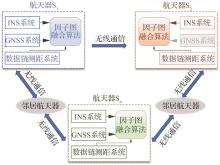
图 1
基于因子图的分布式协同导航系统架构
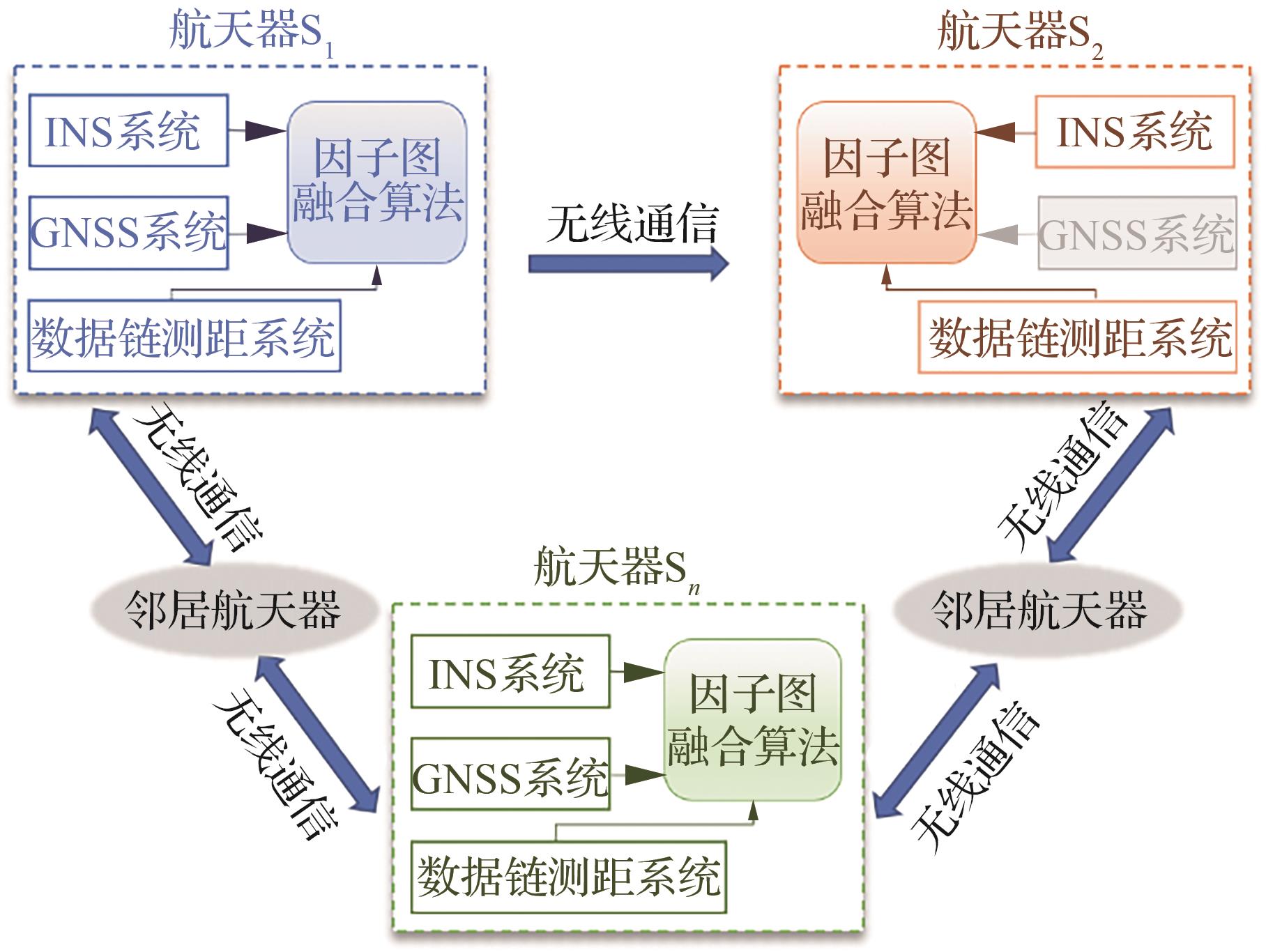
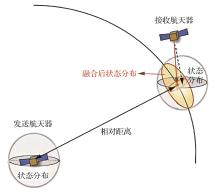
图 2
基于数据链相对测距的协同导航原理示意图
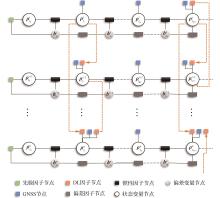
图 3
航天器集群INS/GNSS/DL协同导航因子图
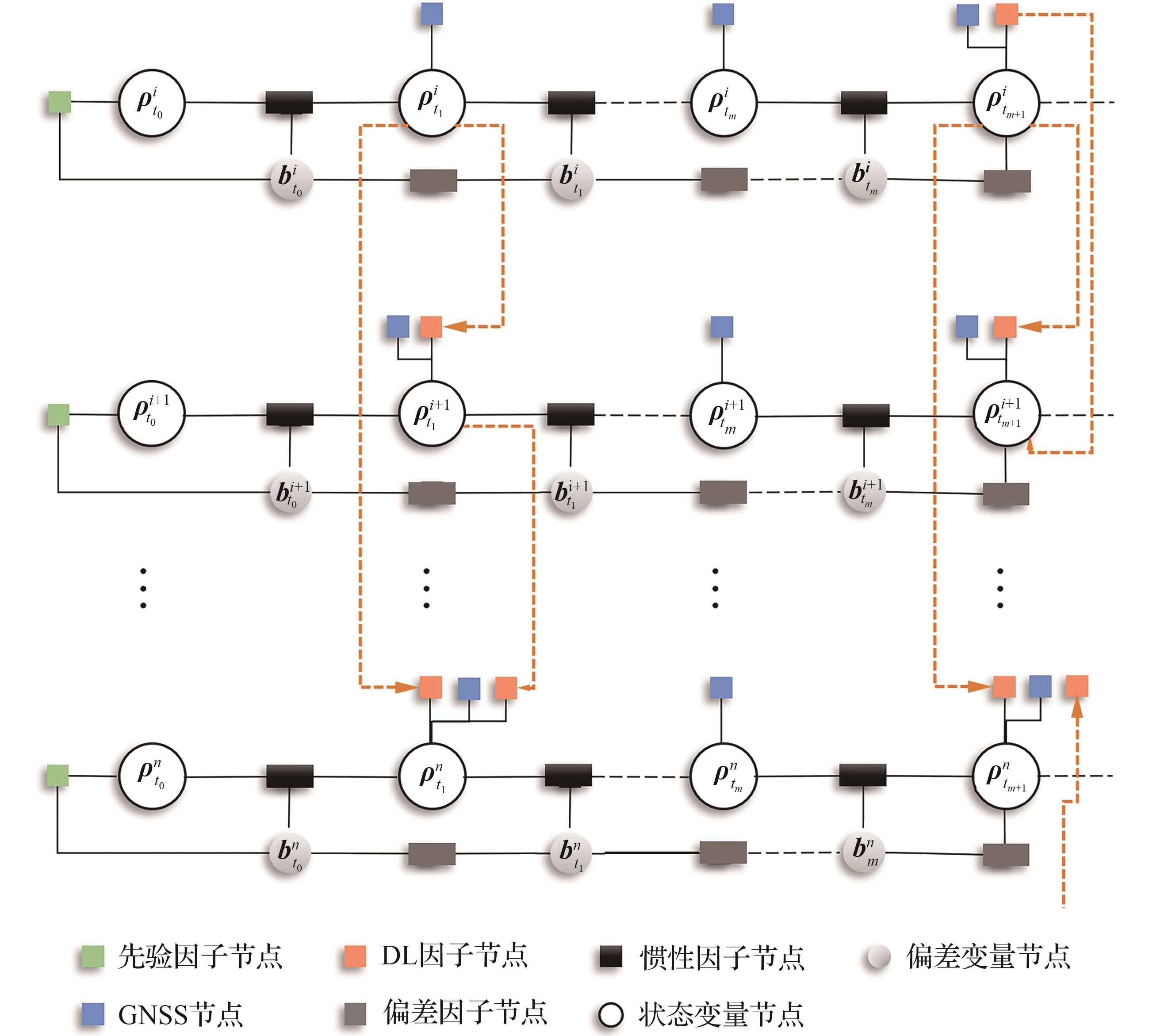
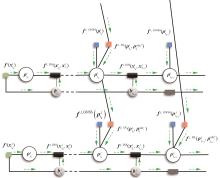
图 4
INS/GNSS/DL协同导航消息传递过程
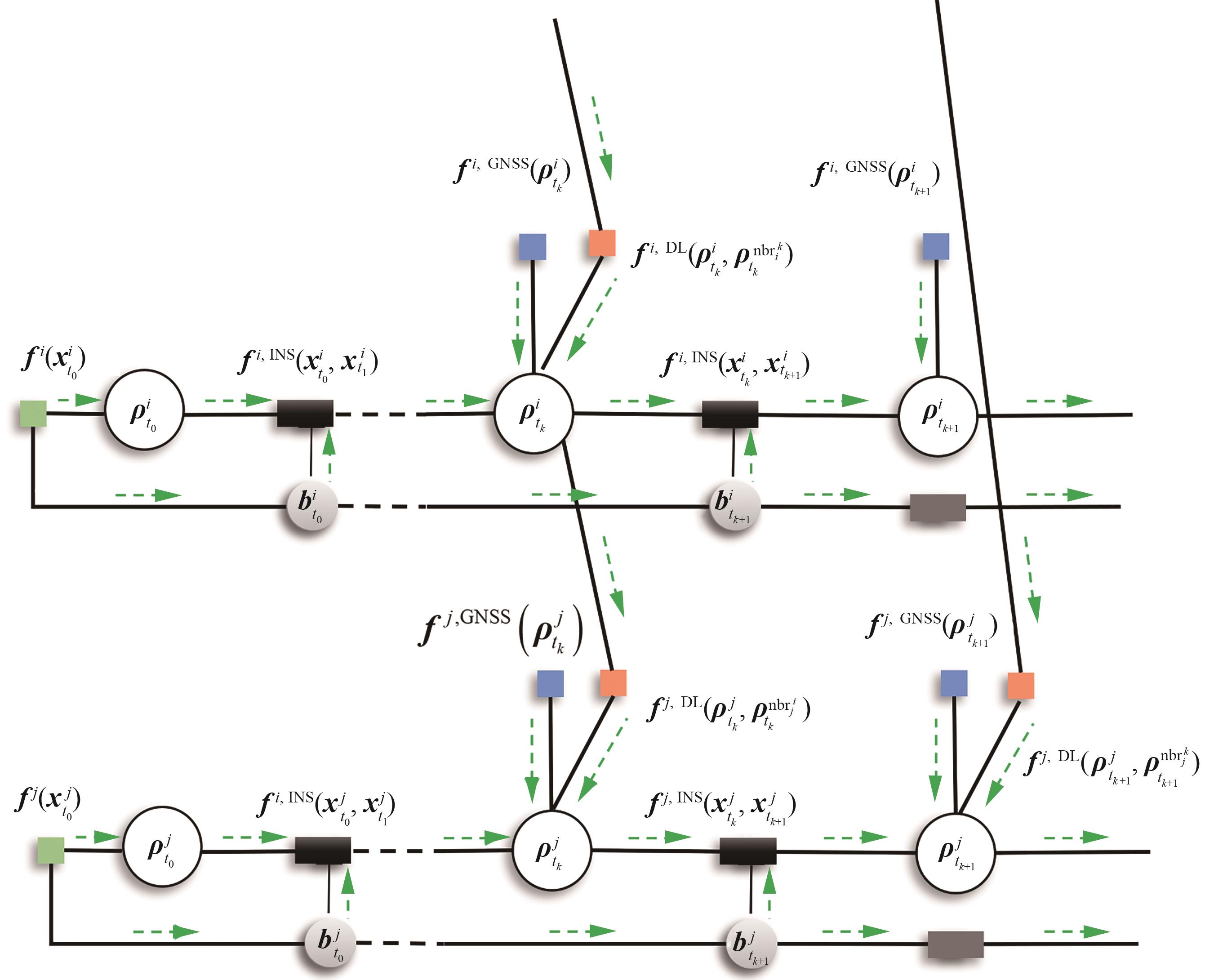
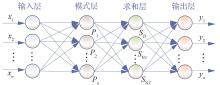
图5
GRNN网络结构示意图
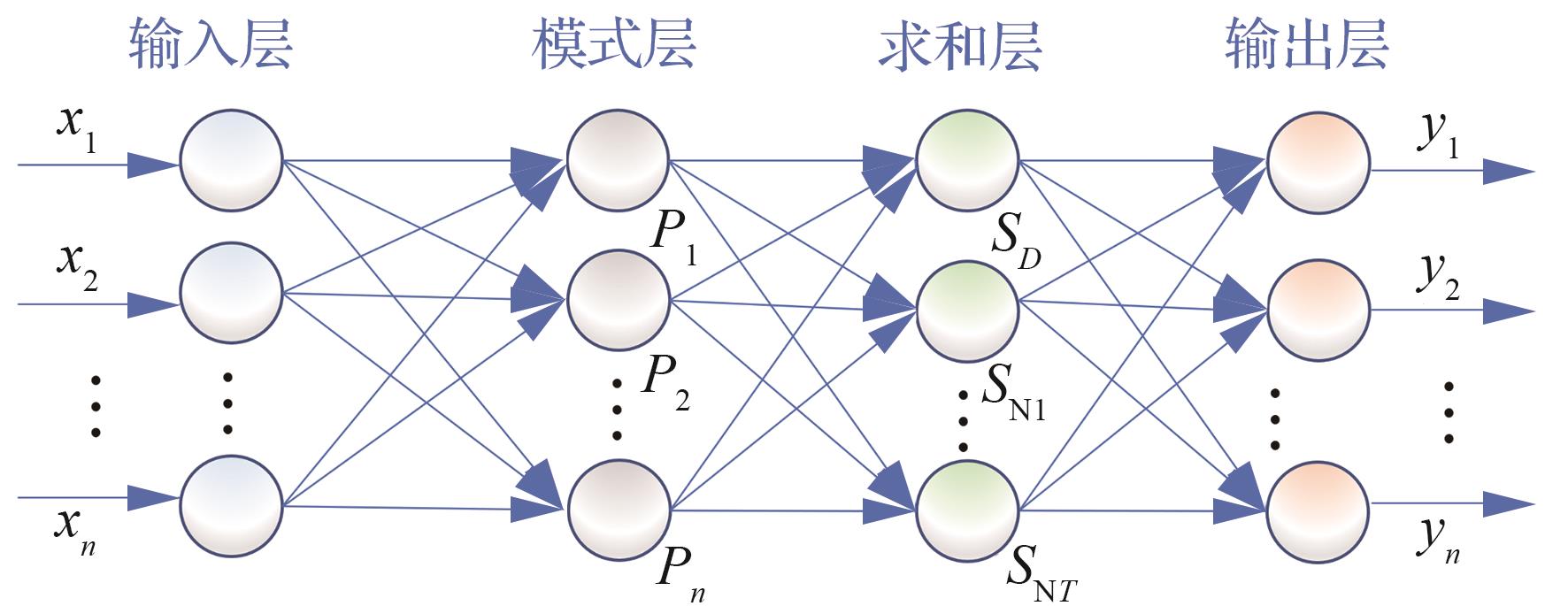
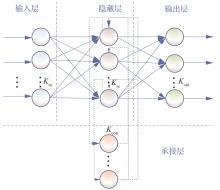
图 6
ENN网络结构示意图
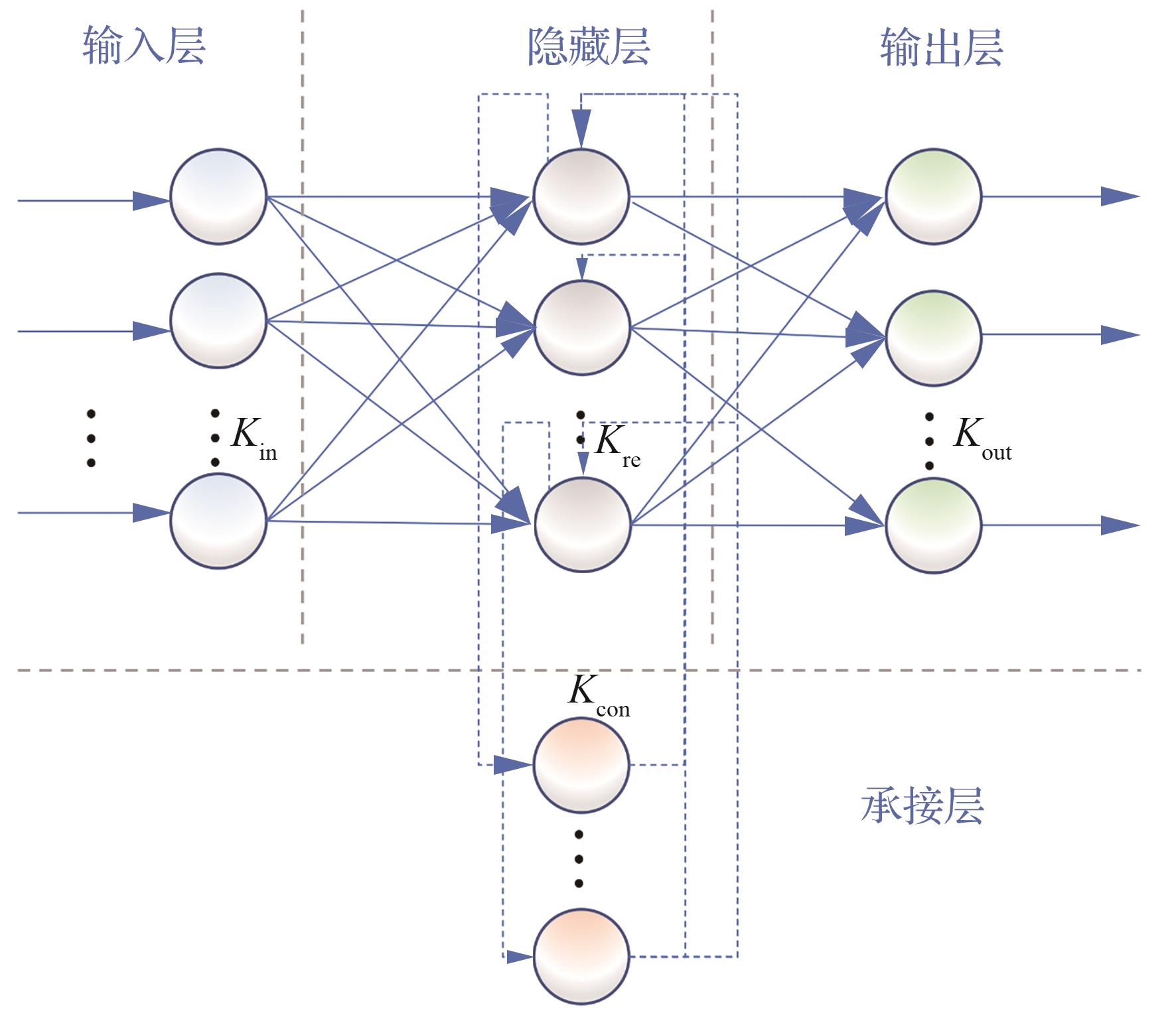
表1
航天器初始轨道根数均值
| 参数 | ||||||
|---|---|---|---|---|---|---|
| 数值 | 6 878.14 | 0.01 | 30 | 120 | 45 | 90 |
表2
航天器初始轨道根数分布方差
| 参数 | ||||||
|---|---|---|---|---|---|---|
| 方差 | 2 | 1×10⁻⁴ | 4×10⁻⁸ | 4×10⁻⁸ | 4×10⁻⁸ | 4×10⁻⁸ |
表3
GNSS仿真参数
| 工况 | 正常 | 低精度 | 故障 | 拒止 |
|---|---|---|---|---|
| 频率/Hz | 1 | 1 | ||
| 噪声标准差/m | [2,2,8] | [8,8,32] | 500 |
表4
IMU及DL仿真参数
| 传感器 | 频率/Hz | 白噪声标准差 | 随机游走 |
|---|---|---|---|
| 加速度计 | 100 | ||
| 陀螺仪 | 100 | 0.05 (°)/h | |
| 数据链 | 10 | 1 m |
表5
工况1下100颗航天器定位结果的RMSE
| 算法 | 位置误差RMSE (10~500 s)/m |
|---|---|
| INS/GNSS | 1.198 3 |
| INS/GNSS/DL(DL测距精度1 m) | 0.681 5 |
| INS/GNSS/DL(DL测距精度3 m) | 0.704 5 |
| INS/GNSS/DL(DL测距精度5 m) | 0.836 3 |
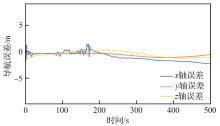
图 7
正常工况下FG-INS/GNSS导航位置误差
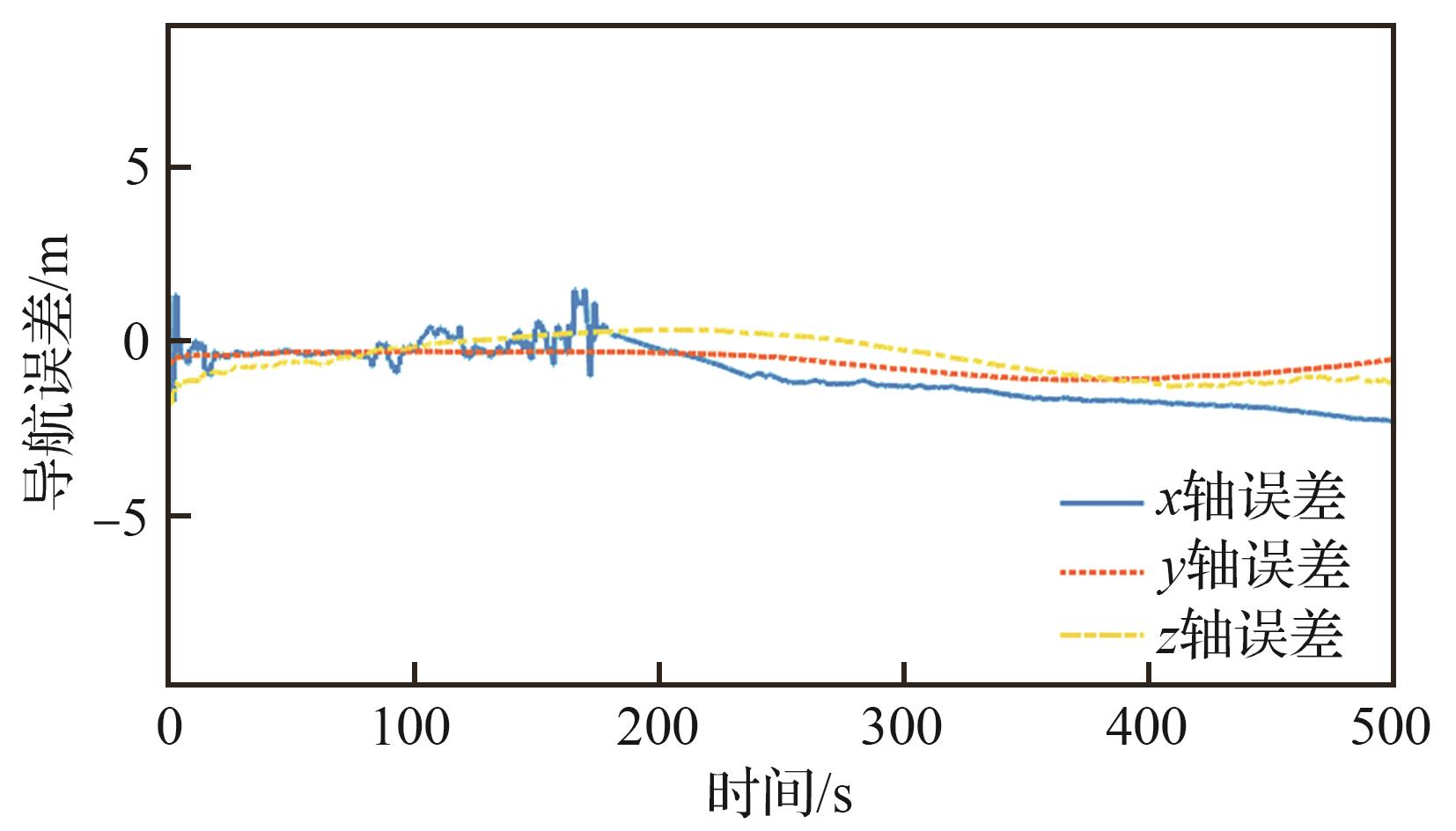
图 8
正常工况下FG-INS/GNSS/DL导航位置误差
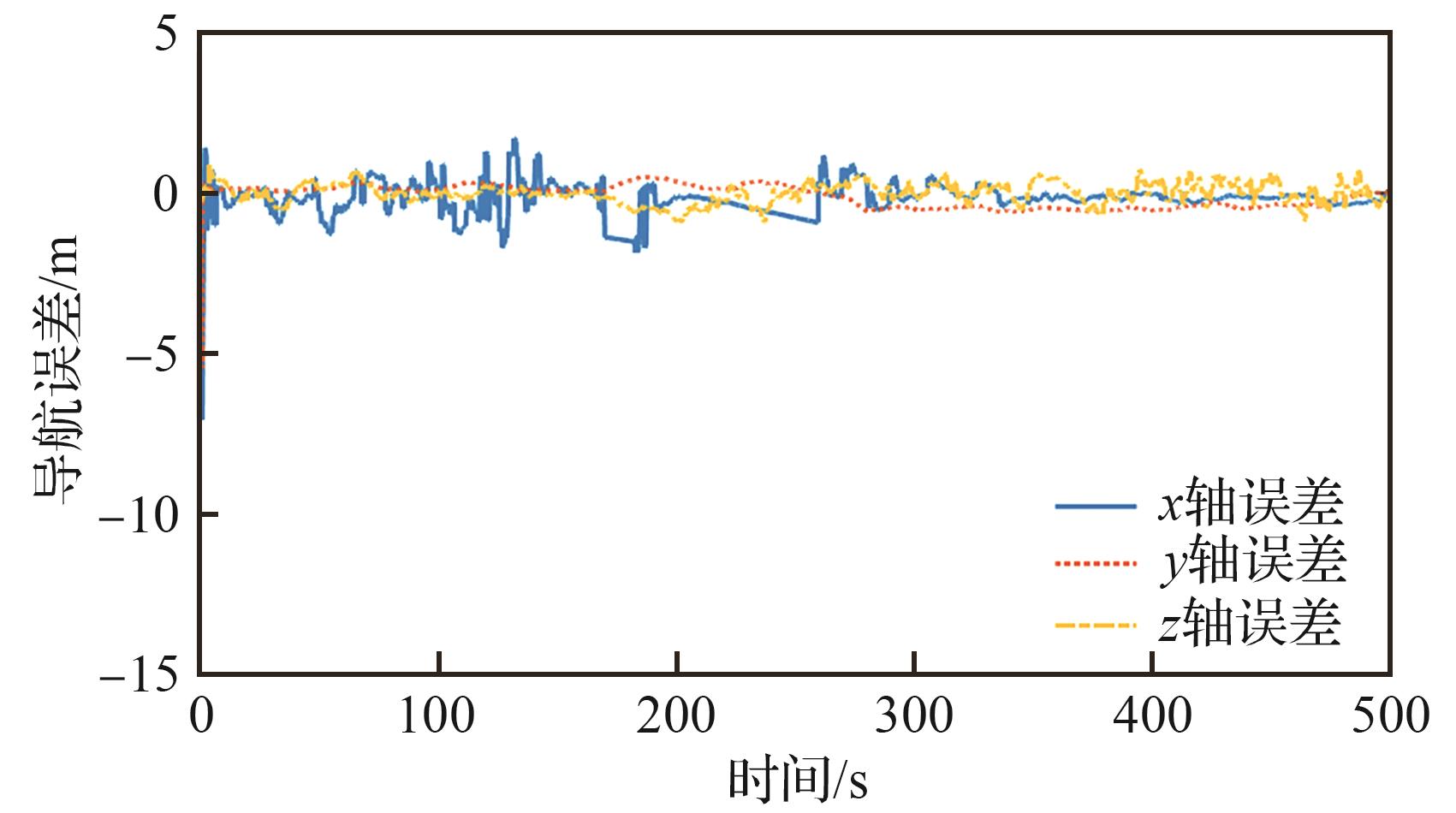
表6
GNSS低精度模式下100颗航天器定位结果的RMSE
| 算法 | 位置误差RMSE (10~500 s)/m |
|---|---|
| INS/GNSS | 2.819 3 |
| INS/GNSS/DL(DL测距精度1 m) | 2.026 2 |
| INS/GNSS/DL(DL测距精度3 m) | 2.148 3 |
| INS/GNSS/DL(DL测距精度5 m) | 2.298 8 |
图 9
低精度GNSS工况FG-INS/GNSS导航位置误差
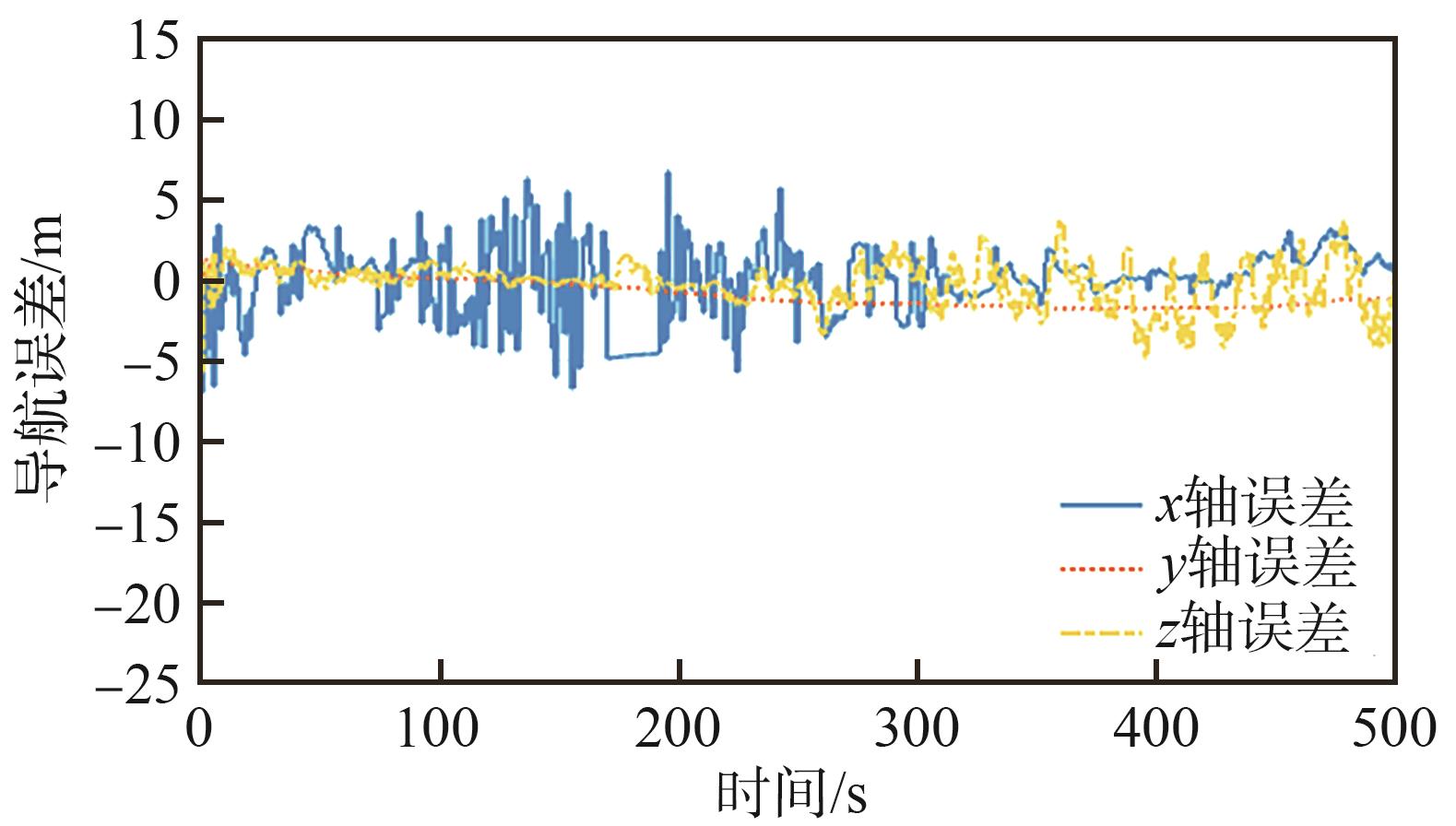
图 10
低精度GNSS工况FG-INS/GNSS/DL导航位置误差
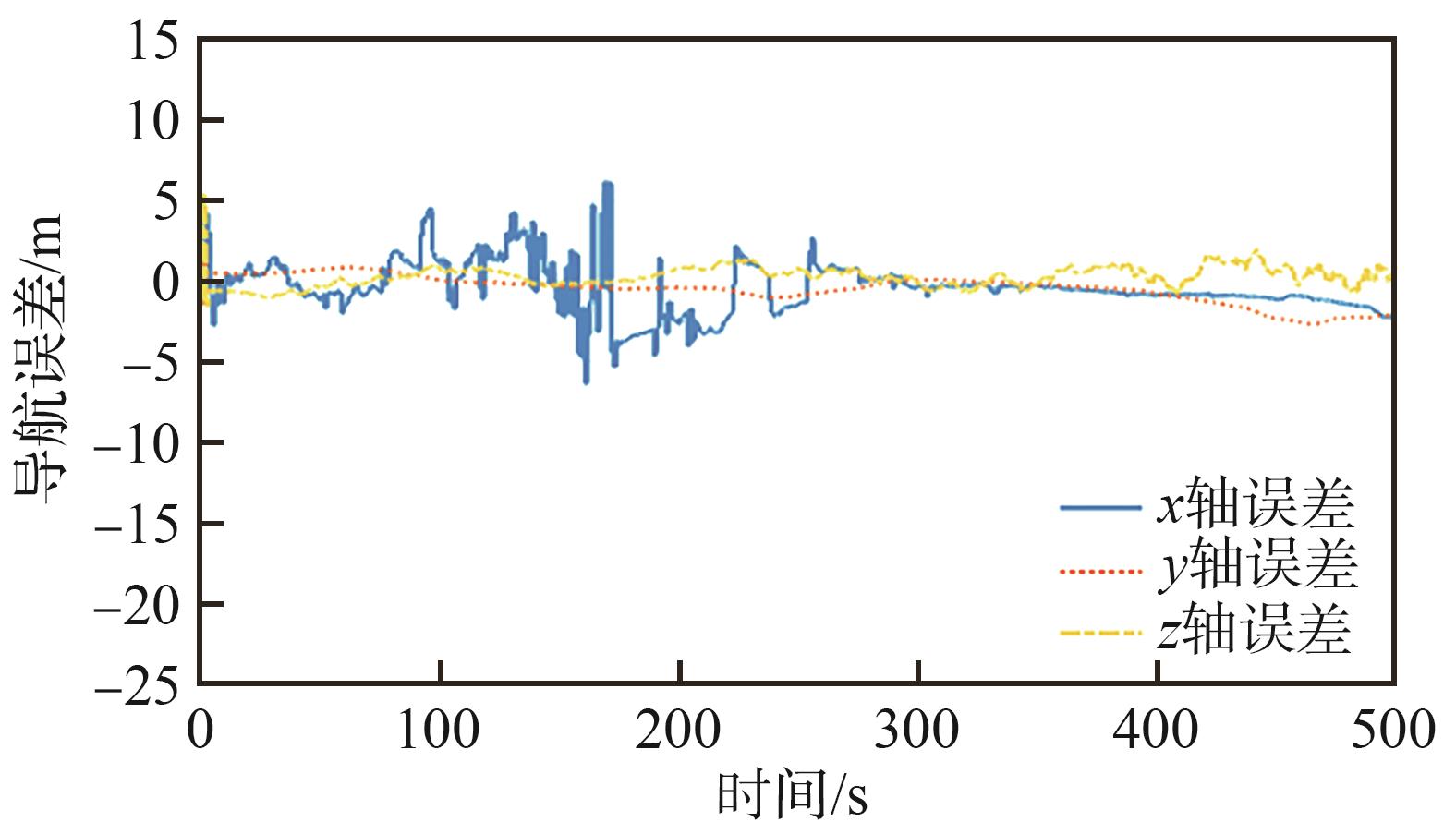
图 11
GNSS故障下INS/GNSS导航位置误差
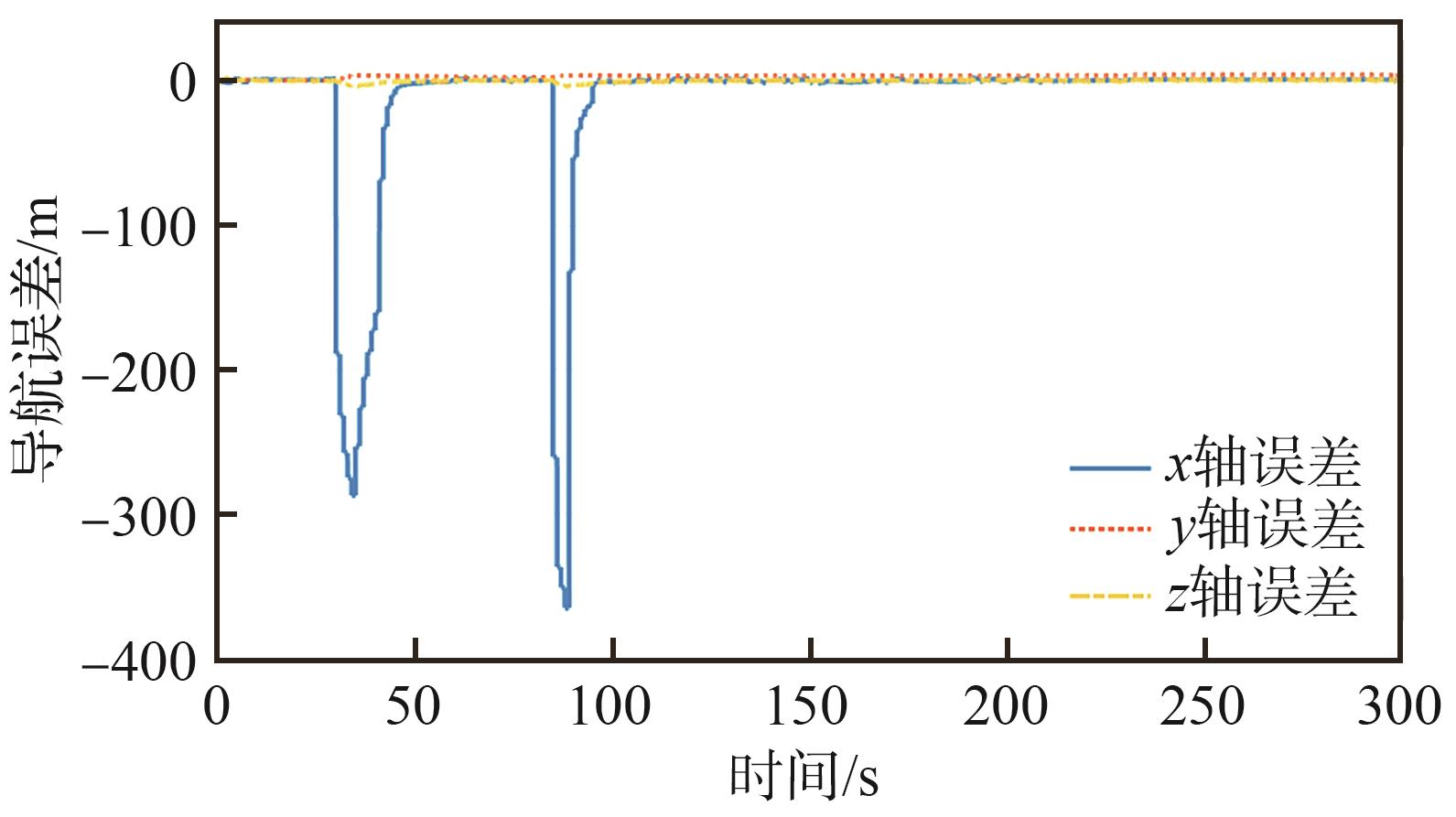
图 12
GNSS故障隔离后INS/GNSS导航位置误差
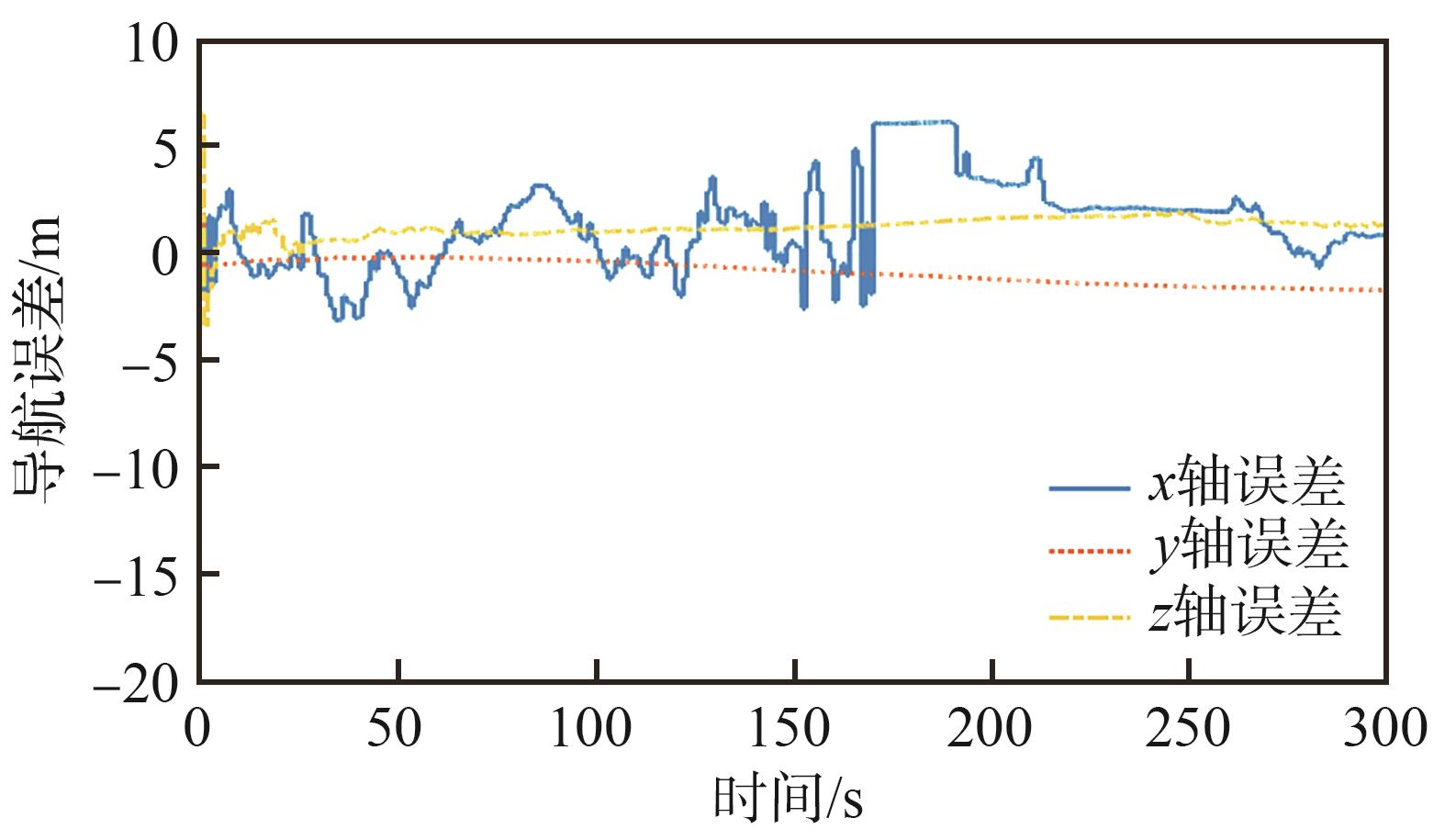
图 13
GNSS及DL故障下INS/GNSS/DL导航位置误差
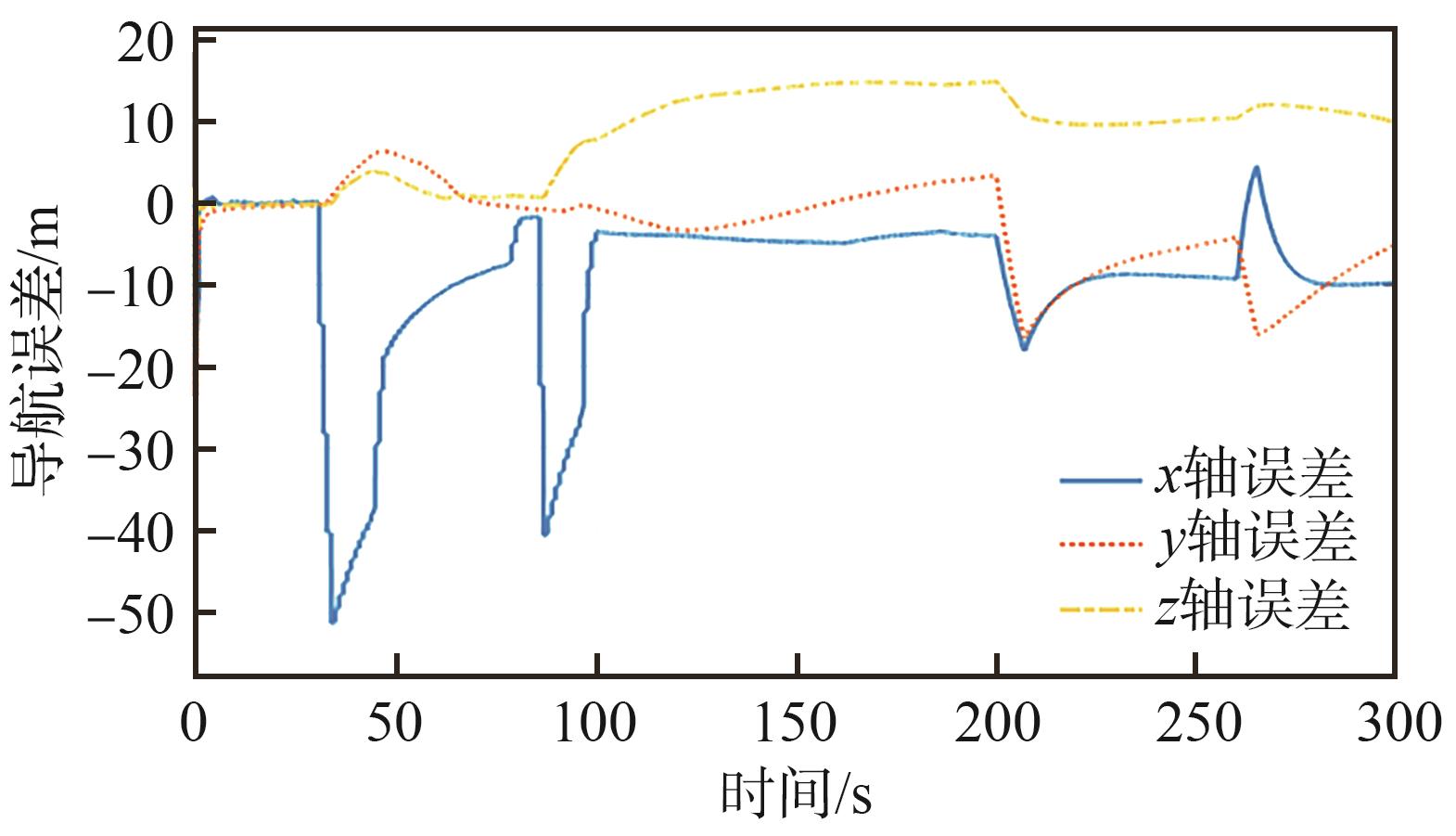
图 14
GNSS及DL故障隔离后INS/GNSS/DL导航位置误差
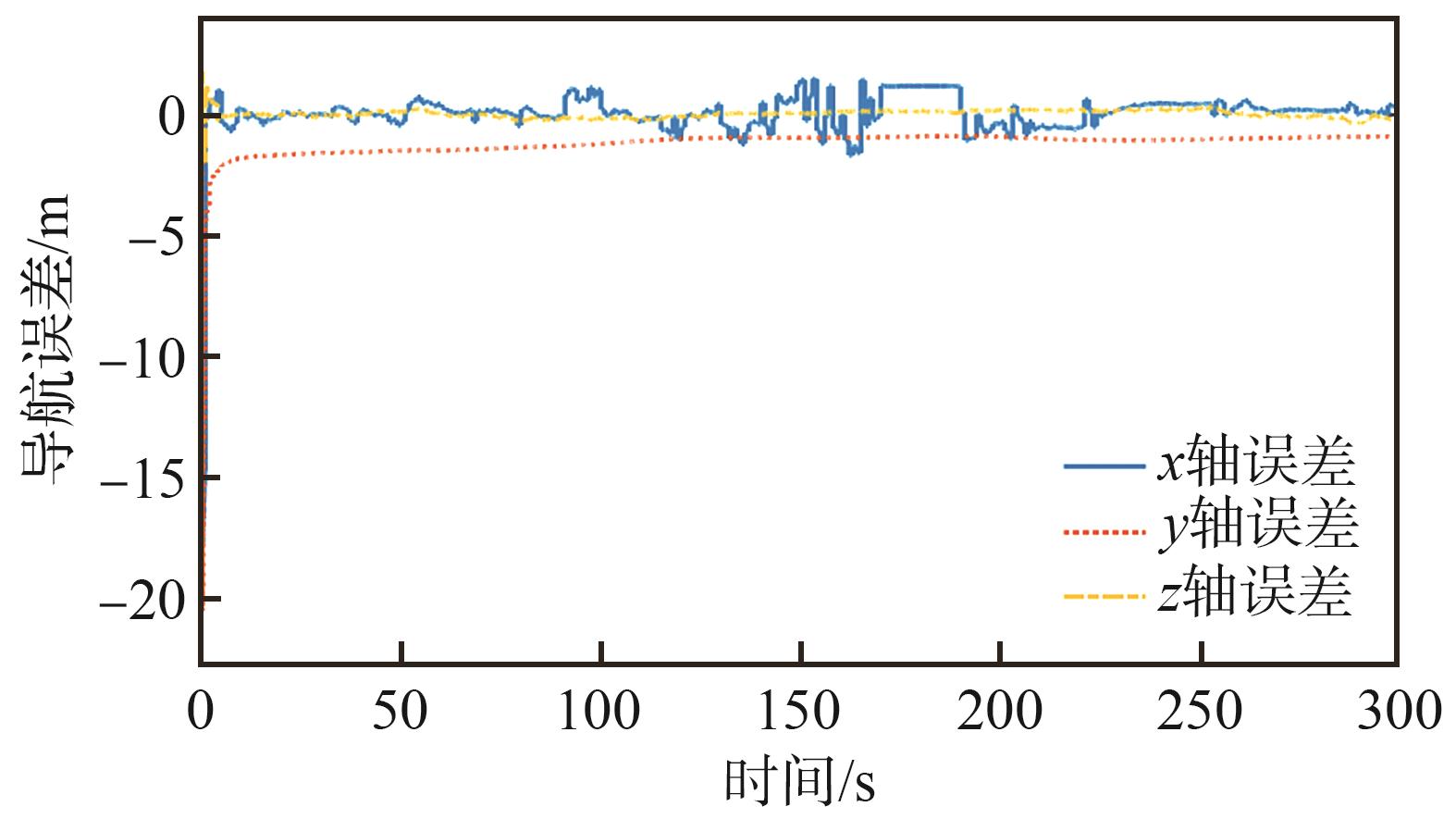
表7
故障情况下100颗航天器定位结果
| 算法 | 位置误差RMSE(30~120 s)/m |
|---|---|
| INS/GNSS 故障未隔离 | 67.915 0 |
| INS/GNSS 故障隔离 | 1.937 3 |
| INS/GNSS/DL 故障未隔离 | 23.212 5 |
| INS/GNSS/DL 故障隔离 | 0.991 7 |
图 15
GNSS拒止情况下INS导航位置误差
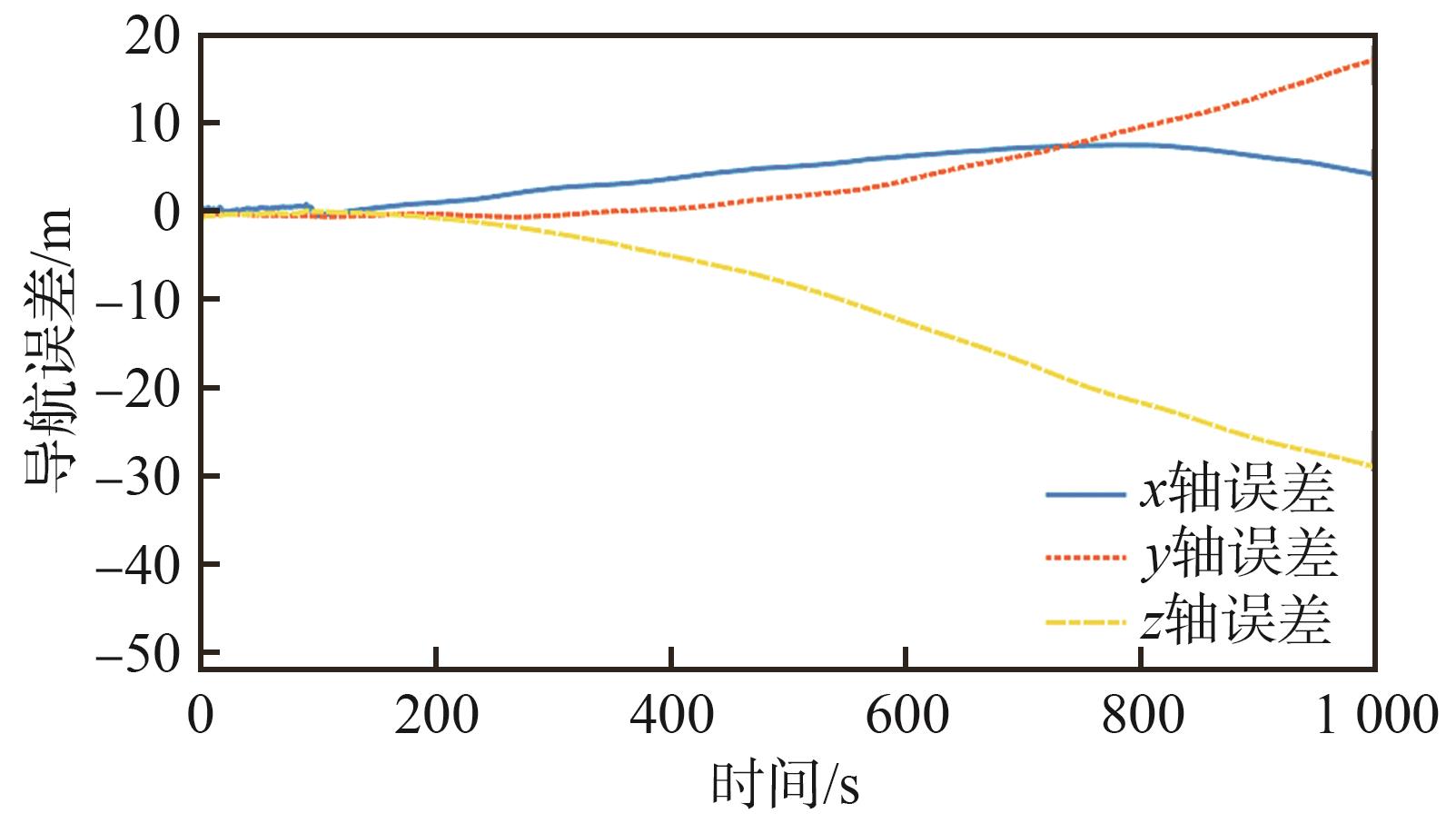
图 16
GNSS拒止时INS/DL导航位置误差
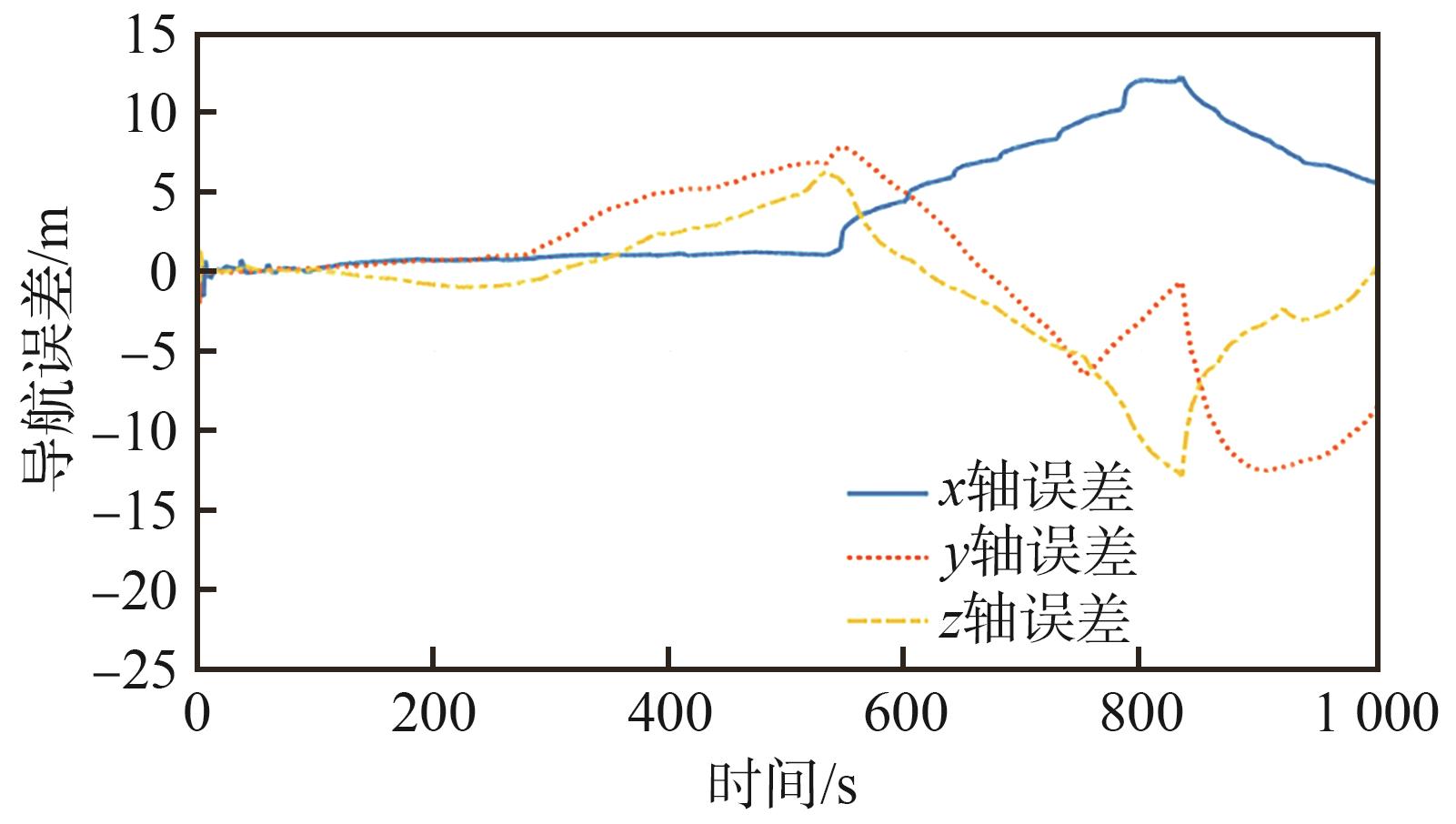
图 17
GNSS拒止时GRNN-ENN辅助的INS/DL导航位置误差
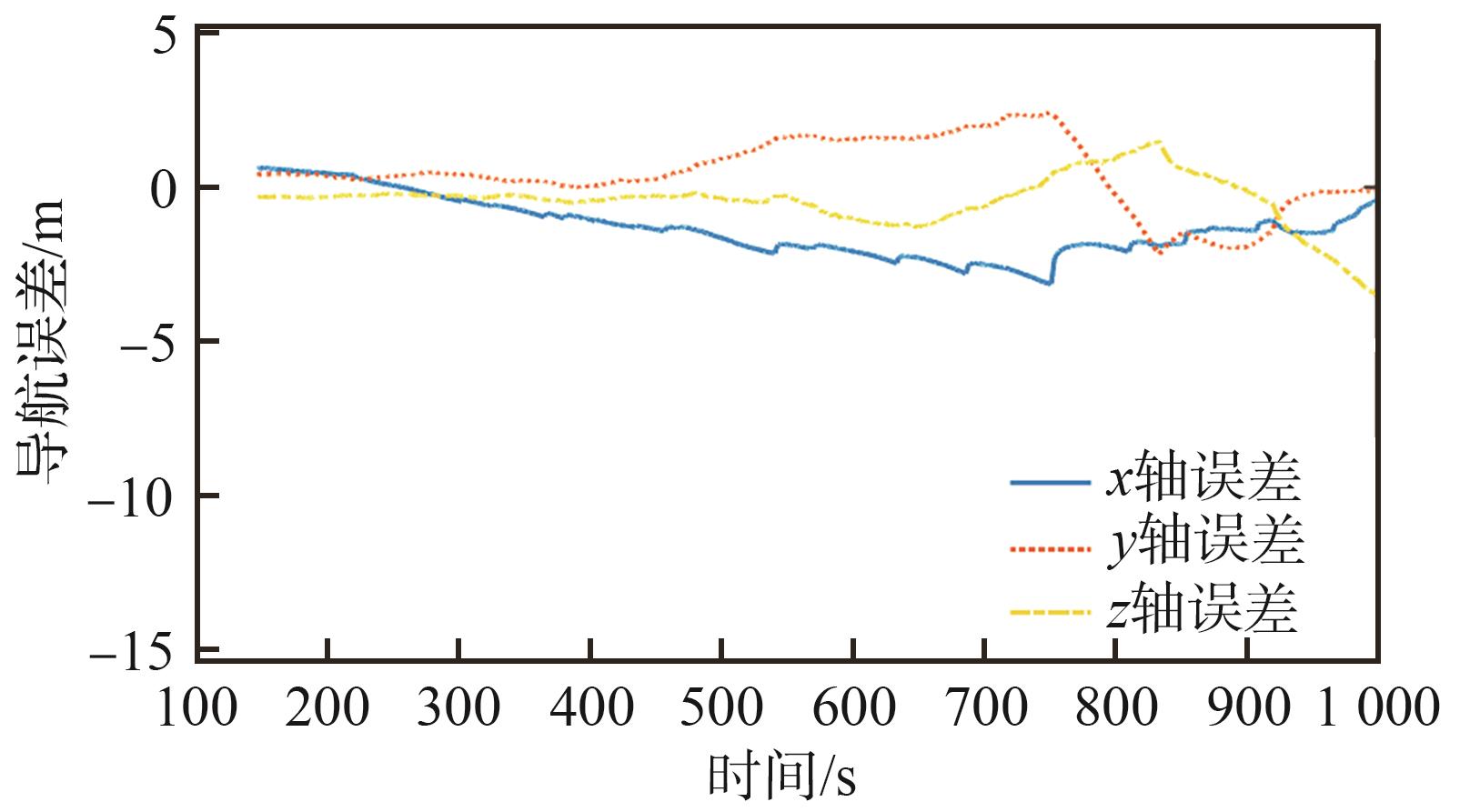
图18
GNSS拒止时LSTM辅助的INS/DL导航位置误差
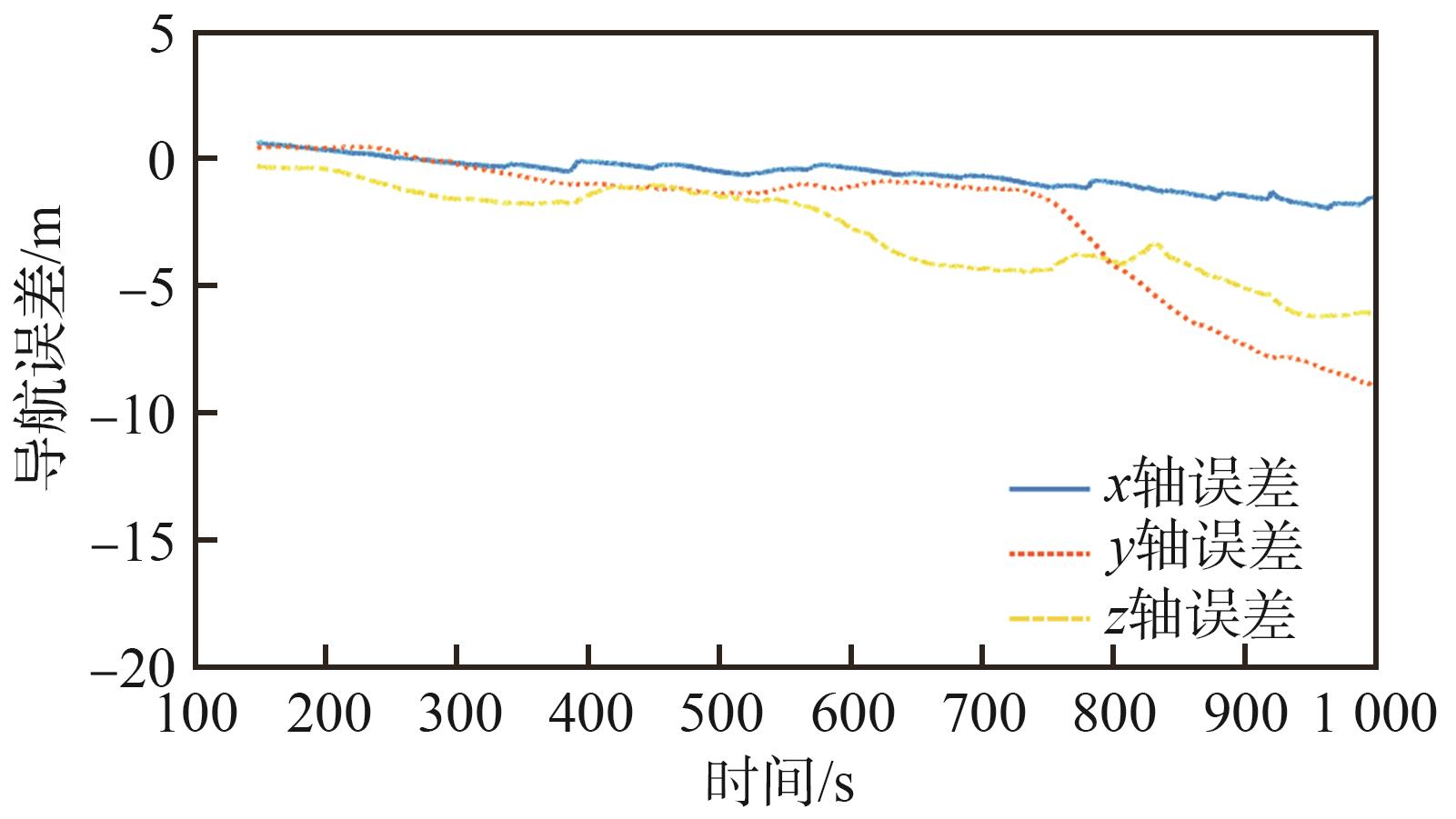
图19
GNSS拒止时ENN辅助的INS/DL导航位置误差
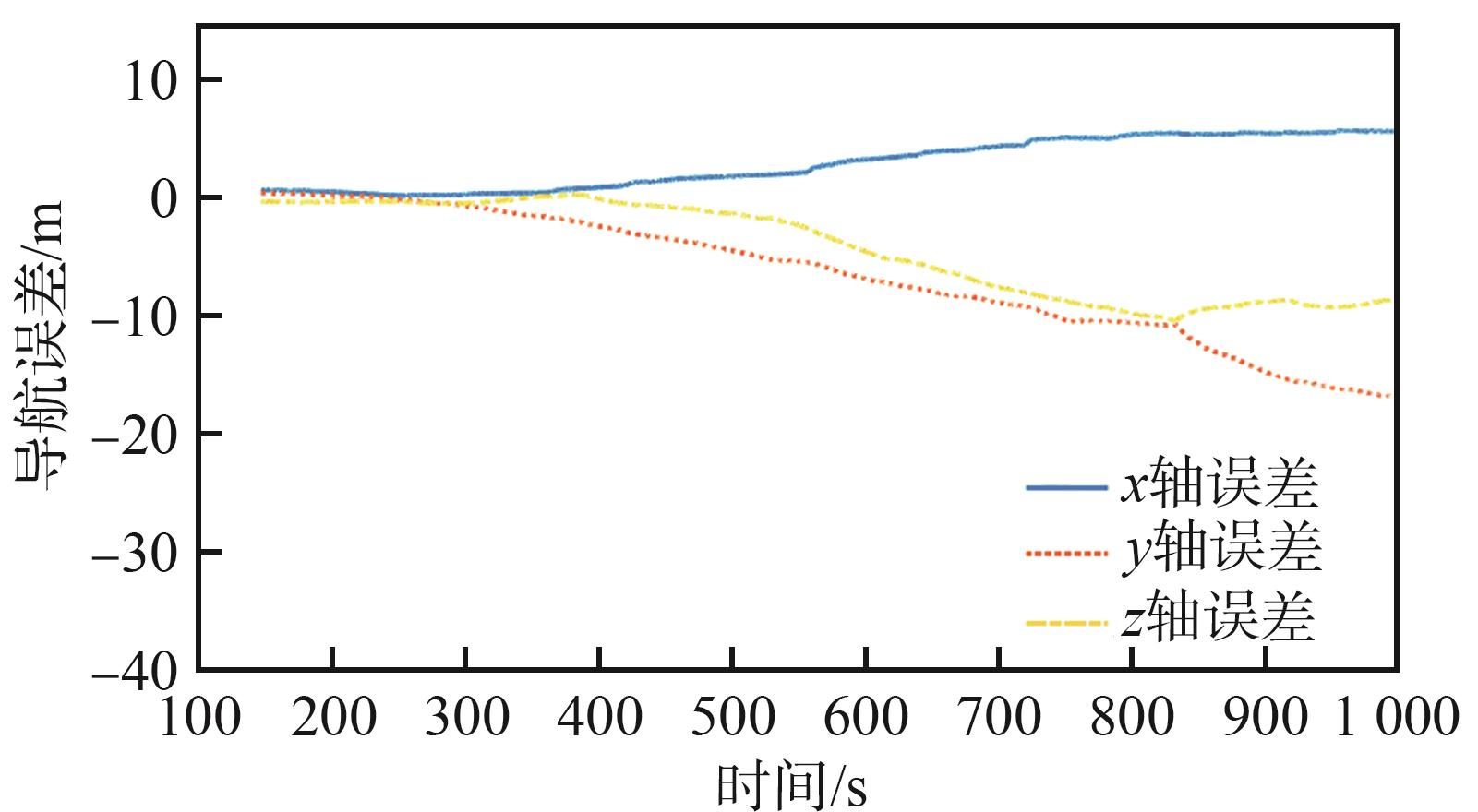
表8
GNSS拒止场景下100颗航天器定位统计结果
| 算法 | 位置误差RMSE/m | |
|---|---|---|
场景时间 150~600 s | 场景时间 600~1 000 s | |
| INS | 8.561 3 | 28.106 1 |
| INS/DL | 5.580 0 | 13.423 2 |
| INS/DL+ENN | 3.080 8 | 11.738 8 |
| INS/DL+GRNN-ENN | 1.677 3 | 4.780 5 |
| INS/DL+LSTM | 1.722 5 | 5.463 0 |
表9
100颗航天器神经网络训练及预测情况统计
| 算法 | 平均训练时间(5 000轮)/s | 训练RMSE(5 000轮)/m | 平均预测时间/(10-3 s) |
|---|---|---|---|
| ENN | 8.179 9 | 12.673 4 | 1.195 1 |
| GRNN-ENN | 23.212 3 | 1.789 8×10⁻⁴ | 1.102 4 |
| LSTM | 35.689 5 | 0.035 8 | 1.114 0 |
| [1] | MO J R, HU S B, YAN T T, et al. Transmit power allocation with connectivity probability for multi-QoS in cluster flight spacecraft network[J]. Wireless Communications and Mobile Computing, 2020, 2020: 8676835. |
| [2] | 苏继东, 徐伟琳, 翟盛华, 等. 航天器自组网技术实践与展望[J]. 航空学报, 2024, 45(5): 529912. |
| SU J D, XU W L, ZHAI S H, et al. Practice and prospect of space AD hoc network technology[J]. Acta Aeronautica et Astronautica Sinica, 2024, 45(5): 529912 (in Chinese). | |
| [3] | 陈庆, 张锦绣, 曹喜滨. 集群航天器网络发展现状及关键技术[J]. 哈尔滨工业大学学报, 2017, 49(4): 1-7. |
| CHEN Q, ZHANG J X, CAO X B. Development status and key technology of spacecraft cluster network[J]. Journal of Harbin Institute of Technology, 2017, 49(4): 1-7 (in Chinese). | |
| [4] | 牛小骥, 班亚龙, 张提升, 等. GNSS/INS深组合技术研究进展与展望[J]. 航空学报, 2016, 37(10): 2895-2908. |
| NIU X J, BAN Y L, ZHANG T S, et al. Research progress and prospects of GNSS/INS deep integration[J]. Acta Aeronautica et Astronautica Sinica, 2016, 37(10): 2895-2908 (in Chinese). | |
| [5] | WANG X G, CUI N G, GUO J F. INS/VisNav/GPS relative navigation system for UAV[J]. Aerospace Science and Technology, 2013, 28(1): 242-248. |
| [6] | HARDY J, STRADER J, GROSS J N, et al. Unmanned aerial vehicle relative navigation in GPS denied environments[C]∥2016 IEEE/ION Position, Location and Navigation Symposium (PLANS). Piscataway: IEEE Press, 2016: 344-352. |
| [7] | 方文轩, 丛佃伟. 卫星/惯性/视觉组合导航多源融合技术现状及发展[J]. 无线电工程, 2022, 52(10): 1813-1820. |
| FANG W X, CONG D W. Status and development of multi-source information fusion technology for satellite/inertial/visual integrated navigation[J]. Radio Engineering, 2022, 52(10): 1813-1820 (in Chinese). | |
| [8] | 武成锋, 程进, 郭晓云, 等. 飞行器集群协同定位与导航对抗技术发展与展望[J]. 宇航学报, 2022, 43(2): 131-142. |
| WU C F, CHENG J, GUO X Y, et al. Development and prospect of aircraft clusters cooperative positioning and navigation countermeasures technology[J]. Journal of Astronautics, 2022, 43(2): 131-142 (in Chinese). | |
| [9] | 谢启龙, 宋龙, 鲁浩, 等. 协同导航技术研究综述[J]. 航空兵器, 2019, 26(4): 23-30. |
| XIE Q L, SONG L, LU H, et al. Review of Collaborative Navigation Technology[J]. Aero Weaponry, 2019, 26(4): 23-30 (in Chinese). | |
| [10] | 杜君南. 基于相对测量信息的集群飞行器协同导航关键技术研究[D]. 南京: 南京航空航天大学, 2021. |
| DU J N. Research on key technologies of cooperativenavigation of aircraft swarm based on relative measurement information[D]. Nanjing: Nanjing University of Aeronautics and Astronautics, 2021 (in Chinese). | |
| [11] | 王振宇. 基于惯性/线激光三角测量组合的航天器相对导航技术[D]. 南京: 南京航空航天大学, 2017. |
| WANG Z Y. Relative navigation of spacecraft based on the combination of inertial navigation and linear laser triangulation[D]. Nanjing: Nanjing University of Aeronautics and Astronautics, 2017 (in Chinese). | |
| [12] | 龚柏春, 王沙, 张伟夫, 等. 近地轨道航天器编队仅测距相对导航方法[J]. 宇航学报, 2022, 43(8): 1088-1096. |
| GONG B C, WANG S, ZHANG W F, et al. Range-only relative navigation for spacecraft formation in low earth orbit[J]. Journal of Astronautics, 2022, 43(8): 1088-1096 (in Chinese). | |
| [13] | 周子寒. 基于数据链相对信息的无人车协同导航与路径规划算法研究[D]. 南京: 南京航空航天大学, 2021: 18-22. |
| ZHOU Z H. Research on collaborative navigation and path planning algorithm of unmanned vehicle based on relative information assisted by data link[D]. Nanjing: Nanjing University of Aeronautics and Astronautics, 2021: 18-22 (in Chinese). | |
| [14] | 高超, 黄郑, 赵轩, 等. 基于构型优选的5G集群无人机协同导航方法[J]. 2024(4): 981-990. |
| GAO C, HUANG Z, ZHAO X, et al. Collaborative navigation method for 5G cluster UAV based on configuration optimization [J]. 2024(4): 981-990 (in Chinese). | |
| [15] | 魏帅迎, 杜雨桐, 胡博, 等. GNSS拒止环境下UAV集群协同导航技术发展现状及分析[J]. 导航与控制, 2023, 22(4): 5-16. |
| WEI S Y, DU Y T, HU B, et al. Development status and analysis of UAV swarm cooperative navigation technology in GNSS-denied environment[J]. Navigation and Control, 2023, 22(4): 5-16 (in Chinese). | |
| [16] | 刘鹏, 田玉平, 张亚. 有限时间一致无迹Kalman滤波器[J]. 自动化学报, 2020, 46(7): 1357-1366. |
| LIU P, TIAN Y P, ZHANG Y. Finite-time consensus based unscented Kalman filter[J]. Acta Automatica Sinica, 2020, 46(7): 1357-1366 (in Chinese). | |
| [17] | XU Y, WANG K, YANG C, et al. GNSS/INS/OD/NHC adaptive integrated navigation method considering the vehicle motion state[J]. IEEE Sensors Journal, 2023, 23(12): 13511-13523. |
| [18] | 李杰, 陈帅, 王琮, 等. 基于因子图的无人机多源组合导航算法研究[J]. 航天控制, 2021, 39(1): 52-57. |
| LI J, CHEN S, WANG C, et al. Research on UAV multi-source integrated navigation algorithm based on factor graph[J]. Aerospace Control, 2021, 39(1): 52-57 (in Chinese). | |
| [19] | ALI J, FANG J C. SINS/ANS/GPS integration using federated Kalman filter based on optimized information-sharing coefficients[C]∥ AIAA Guidance, Navigation, and Control Conference and Exhibit. Reston: AIAA, 2005. |
| [20] | 戴海发, 卞鸿巍, 马恒, 等. 基于因子图的鲁棒性增量平滑算法的水面无人艇组合导航方法[J]. 中国惯性技术学报, 2018, 26(6): 778-786. |
| DAI H F, BIAN H W, MA H, et al. Application of robust incremental smoothing algorithm based on factor graph in integrated navigation of unmanned surface vehicle[J]. Journal of Chinese Inertial Technology, 2018, 26(6): 778-786 (in Chinese). | |
| [21] | FRASER C T, ULRICH S. Adaptive extended Kalman filtering strategies for spacecraft formation relative navigation[J]. Acta Astronautica, 2021, 178: 700-721. |
| [22] | 潘献飞, 宁治文, 王茂松, 等. 基于因子图的导航定位技术应用分析与思考[J]. 控制理论与应用, 2023, 40(12): 2130-2141. |
| PAN X F, NING Z W, WANG M S, et al. Analysis and reflection on the navigation and positioning application based on factor graph[J]. Control Theory Applications, 2023, 40(12): 2130-2141 (in Chinese). | |
| [23] | LOELIGER H A. An introduction to factor graphs[J]. IEEE Signal Processing Magazine, 2004, 21(1): 28-41. |
| [24] | 罗子岩, 陈帅, 王国栋, 等. 多源融合导航系统的因子图算法综述[J]. 导航与控制, 2021, 20(3): 9-16. |
| LUO Z Y, CHEN S, WANG G D, et al. A survey of factor graph algorithms for multi-source fusion navigation system[J]. Navigation and Control, 2021, 20(3): 9-16 (in Chinese). | |
| [25] | 牛皓飞, 蔡庆中, 李健, 等. 基于图优化的通信受限环境下协同导航方法[J]. 航空学报, 2023, 44(11): 327342. |
| NIU H F, CAI Q Z, LI J, et al. Method for cooperative navigation in constrained environment based on graph optimization[J]. Acta Aeronautica et Astronautica Sinica, 2023, 44(11): 327342 (in Chinese). | |
| [26] | 熊骏, 解相朋, 熊智, 等. 基于图模型的无人集群同步自定位与相对定位[J]. 航空学报, 2023, 44(S2): 729708. |
| XIONG J, XIE X P, XIONG Z, et al. Synchronized self-localization and relative-localization of unmanned swarms based on graph model [J]. Acta Aeronautica et Astronautica Sinica, 2023, 44(S2): 729708. | |
| [27] | 陈恩庆, 肖素珍, 高新利. 因子图在卫星姿态估计中的应用[J]. 计算机仿真, 2015, 32(6): 63-66. |
| CHEN E Q, XIAO S Z, GAO X L. Estimation of satellite attitude angular velocity based on factor graph[J]. Computer Simulation, 2015, 32(6): 63-66 (in Chinese). | |
| [28] | 唐成凯, 张玲玲, 廉保旺. 基于因子图协同定位辅助的单星定位方法[J]. 系统工程与电子技术, 2017, 39(5): 1085-1090. |
| TANG C K, ZHANG L L, LIAN B W. Cooperation factor map of co-location aided single satellite navigation algorithm[J]. Systems Engineering and Electronics, 2017, 39(5): 1085-1090 (in Chinese). | |
| [29] | 南子寒, 刘大禹, 苏牡丹, 等. 拒止环境下基于LSTM神经网络的自主导航方法[J]. 中国惯性技术学报, 2025, 33(4): 331-339, 349. |
| NAN Z H, LIU D Y, SU M D, et al. Autonomous navigation method based on LSTM neural network in denial environment[J]. Journal of Chinese Inertial Technology, 2025, 33(4): 331-339, 349 (in Chinese). | |
| [30] | 李正帅, 缪玲娟, 周志强, 等. 神经网络修正的速度约束辅助车载SINS定位算法[J]. 宇航学报, 2022, 43(9): 1236-1245. |
| LI Z S, MIAO L J, ZHOU Z Q, et al. Vehicle SINS positioning algorithm assisted by velocity constraint based on neural network modification[J]. Journal of Astronautics, 2022, 43(9): 1236-1245 (in Chinese). | |
| [31] | FANG W, JIANG J G, LU S Q, et al. A LSTM algorithm estimating pseudo measurements for aiding INS during GNSS signal outages[J]. Remote Sensing, 2020, 12(2): 256. |
| [32] | 白相文, 杨建华, 杨志强. 神经网络辅助的组合导航算法研究[J]. 导航定位学报, 2020, 8(1): 93-98. |
| BAI X W, YANG J H, YANG Z Q. Research on neural network-assisted integrated navigation algorithm[J]. Journal of Navigation and Positioning, 2020, 8(1): 93-98 (in Chinese). | |
| [33] | ZHANG L, HSU L T, ZHANG T. A novel INS/USBL integrated navigation scheme via factor graph optimization[J]. IEEE Transactions on Vehicular Technology, 2022, 71(9): 9239-9249. |
| [34] | 赵仁杰, 李开龙, 胡柏青, 等. 基于改进四元数阻尼误差模型的SINS初始对准算法[J]. 系统工程与电子技术, 2021, 43(11): 3330-3337. |
| ZHAO R J, LI K L, HU B Q, et al. SINS initial alignment algorithm based on improved quaternion damping error model[J]. Systems Engineering and Electronics, 2021, 43(11): 3330-3337 (in Chinese). | |
| [35] | LI X, CHEN W, CHAN C, et al. Multi-sensor fusion methodology for enhanced land vehicle positioning[J]. Information Fusion, 2019, 46: 51-62. |
| [36] | WEN W S, HSU L T. Towards robust GNSS positioning and real-time kinematic using factor graph optimization[C]∥ 2021 IEEE International Conference on Robotics and Automation (ICRA). Piscataway: IEEE Press, 2021: 5884-5890. |
| [37] | 乔广欣, 张慧君, 李博, 等. GNSS驯服芯片级原子钟方法研究[J]. 导航定位与授时, 2022, 9(2): 153-159. |
| QIAO G X, ZHANG H J, LI B, et al. Research on the method of GNSS-disciplined chip-scale atomic clock[J]. Navigation Positioning and Timing, 2022, 9(2): 153-159 (in Chinese). | |
| [38] | 范世伟. 自主水下航行器协同定位算法研究[D]. 哈尔滨: 哈尔滨工业大学, 2020: 47-66. |
| FAN S W. Research on cooperative position algorithm for autonomous underwater vehicles [D]. Harbin: Harbin Institute of Technology, 2020: 47-66 (in Chinese). | |
| [39] | SPECHT D F. The general regression neural network-Rediscovered[J]. Neural Networks, 1993, 6(7): 1033-1034. |
| [40] | 陈秀德, 刘惠, 蔚保国, 等. 北斗/GNSS广域精密定位技术与服务: 现状与展望[J]. 武汉大学学报(信息科学版), 2025, 50(3): 413-429. |
| CHEN X D, LIU H, YU B G, et al. BeiDou/GNSS wide-area precise positioning technology and service: Current situation and prospects[J]. Geomatics and Information Science of Wuhan University, 2025, 50(3): 413-429 (in Chinese). | |
| [41] | 韩德强, 钟斌, 张龙平, 等. 基于星载单频BDS/GPS数据的实时低轨卫星定轨精度分析[C]∥第十二届中国卫星导航年会论文集. 北京:中国卫星导航系统管理办公室学术交流中心, 2021: 136-141. |
| HAN D Q, ZHONG B, ZHANG L P, et al. Accuracy analysis of real time LEO satellite orbit determination based on single frequency BDS/GPS data[C]∥12th China Satellite Navigation Conference (CSNC). Beijing: Academic Exchange Center of China Satellite Navigation Office, 2021: 136-141 (in Chinese). |
| [1] | 刘明, 吴姣. GNSS拒止下神经网络辅助的航天器集群协同导航[J]. 航空学报, 2026, 47(9): 532303-532303. |
| [2] | 施闯, 王智新, 张昊, 李团, 王志鹏. 基于抗差方差分量估计的多系统GNSS定位因子图优化算法[J]. 航空学报, 2025, 46(6): 531623-531623. |
| [3] | 王尔申, 刘泽新, 王德琰, 于腾丽, 孟凡琛, 刘亚仪, 徐嵩. 双重因子图与模糊度优化的双动态载体定位算法[J]. 航空学报, 2025, 46(13): 531332-531332. |
| [4] | 程建华, 程思翔, 齐兵, 范世龙, 赵国晶, 陈思成. 电离层闪烁环境下PPP/INS组合导航性能分析[J]. 航空学报, 2024, 45(S1): 730676-730676. |
| [5] | 赵靖, 宋丹. 无人机GNSS/IMU组合导航系统完好性监测方法[J]. 航空学报, 2024, 45(7): 328943-328943. |
| [6] | 钟伦珑, 岳文静, 李雪艳. 基于EWMA控制图抗差估计的欺骗干扰检测算法[J]. 航空学报, 2024, 45(15): 329655-329655. |
| [7] | 张栩琪, 刘海琪, 钟金山, 沈晓静. 一种可扩展的集群目标信念传播跟踪方法[J]. 航空学报, 2023, 44(S2): 729761-729761. |
| [8] | 车沣竺, 米长伟, 张昊平, 张鑫. 基于标量化处理的协同航弹高精度导航系统[J]. 航空学报, 2023, 44(S1): 727632-727632. |
| [9] | 王禹淞, 王奕迪, 郑伟. 太阳信息辅助的脉冲相位估计方法及导航应用[J]. 航空学报, 2023, 44(S1): 727651-727651. |
| [10] | 万宏发, 李姗姗, 蓝朝桢, 向明志. 基于因子图的无人机视觉定位方法[J]. 航空学报, 2023, 44(S1): 727627-727627. |
| [11] | 牛皓飞, 蔡庆中, 李健, 杨功流. 基于图优化的通信受限环境下协同导航方法[J]. 航空学报, 2023, 44(11): 327342-327342. |
| [12] | 孙洪驰, 穆荣军, 龙腾, 李寿鹏, 崔乃刚. 临近空间飞行器北斗/INS高动态深组合导航方法[J]. 航空学报, 2022, 43(9): 325672-325672. |
| [13] | 宁晓琳, 梁晓钰, 吴伟仁, 房建成. 月球探测器天文测角/单程无线电时间差分测距/差分测速导航方法[J]. 航空学报, 2021, 42(11): 524531-524531. |
| [14] | 王巍, 邢朝洋, 冯文帅. 自主导航技术发展现状与趋势[J]. 航空学报, 2021, 42(11): 525049-525049. |
| [15] | 张浩, 肖勇, 杨朝旭, 张睿, 许斌. 基于双状态卡方故障检测的组合导航系统[J]. 航空学报, 2020, 41(S2): 724271-724271. |
| 阅读次数 | ||||||
|
全文 |
|
|||||
|
摘要 |
|
|||||
版权所有 © 航空学报编辑部
版权所有 © 2011航空学报杂志社
主管单位:中国科学技术协会 主办单位:中国航空学会 北京航空航天大学

 CJA
CJA
