陶冶( ), 汤锦辉, 闫震, 周臣, 王冲
收稿日期:2025-04-11
修回日期:2025-05-15
接受日期:2025-07-24
出版日期:2025-09-11
发布日期:2025-08-28
通讯作者:
陶冶
E-mail:taoyedlmu@163.com
基金资助:
Ye TAO(), Jinhui TANG, Zhen YAN, Chen ZHOU, Chong WANG
Received:2025-04-11
Revised:2025-05-15
Accepted:2025-07-24
Online:2025-09-11
Published:2025-08-28
Contact:
Ye TAO
E-mail:taoyedlmu@163.com
Supported by:摘要:
空中交通管制监视系统采集的民航航迹数据存在完整性缺失的问题,不仅影响了空管监视的时空连续性,更制约了基于航迹运行框架下智能化技术的应用潜力。针对这一问题,提出一种融合表征转换与模式回归的航迹插补方法。本方法的技术实现路径包含3个核心构件:首先,构建基于时空四维航迹数据向RGB通道彩色图像表征形式转换的编码模型,通过将缺失航迹插补问题转换为图像修复任务,实现问题域的创新性转换;其次,设计具备多尺度感知能力的回归模型架构,并在各分辨率信息传递路径中分别引入多卷积融合模块与改进型混合注意力机制模块,有效提升复杂时空模式的表征能力;最终,采用提出的基于自适应权重分配的全局与局部特征融合训练策略,系统性地优化模型整体拟合性能。实验环节在真实航迹数据集上构建多维评估体系,结果表明:相较于传统统计插值方法与现有深度学习方法,提出方法针对90%缺失率以下的航迹数据插补精度有明显提升,同时消融实验证实各创新模块与训练策略的有效性。上述结果充分说明提出方法在解决航迹完整性不足问题时,展现出泛化性能优势与工程应用鲁棒性。
中图分类号:
陶冶, 汤锦辉, 闫震, 周臣, 王冲. 融合表征转换与模式回归的航迹插补方法[J]. 航空学报, 2026, 47(1): 332106.
Ye TAO, Jinhui TANG, Zhen YAN, Chen ZHOU, Chong WANG. A trajectory imputation method integrating representation transformation and pattern regression[J]. Acta Aeronautica et Astronautica Sinica, 2026, 47(1): 332106.
表1
常规民航航迹表征形式
| 序号 | 经度/(°) | 维度/(°) | 高度/m | 时间戳/s |
|---|---|---|---|---|
| 1 | Lon0 | Lat0 | Alt0 | 0 |
| 2 | Lon | Lat | Alt | |
| 3 | null | null | null | null |
| N-1 | null | null | null | null |
| N | Lon N-1 | Lat N-1 | Alt N-1 |
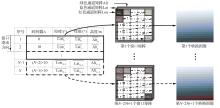
图 1
图像表征转换架构
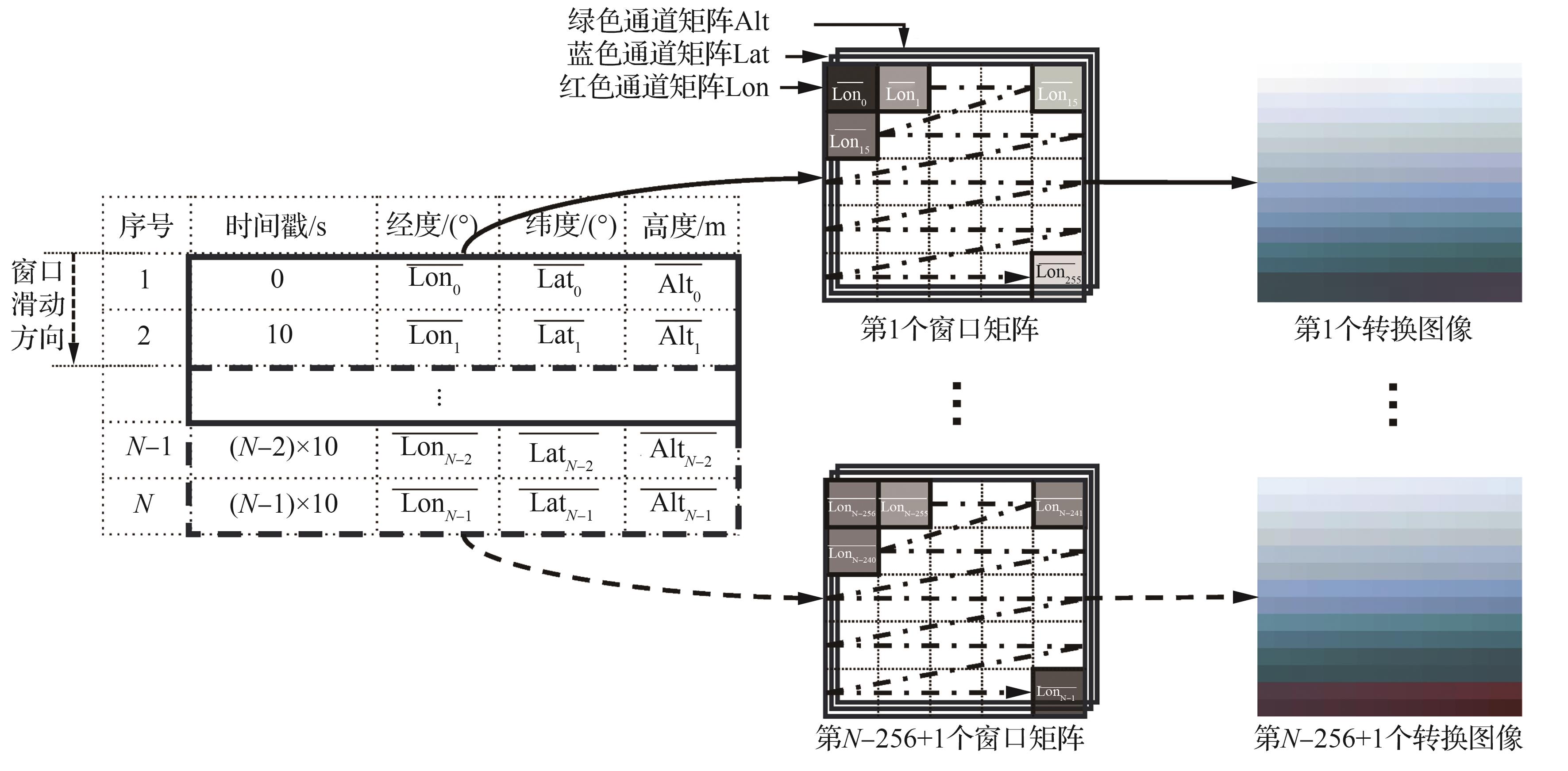
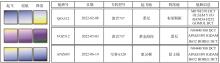
图 2
彩色航迹图像以及其所表征的轨迹相关信息
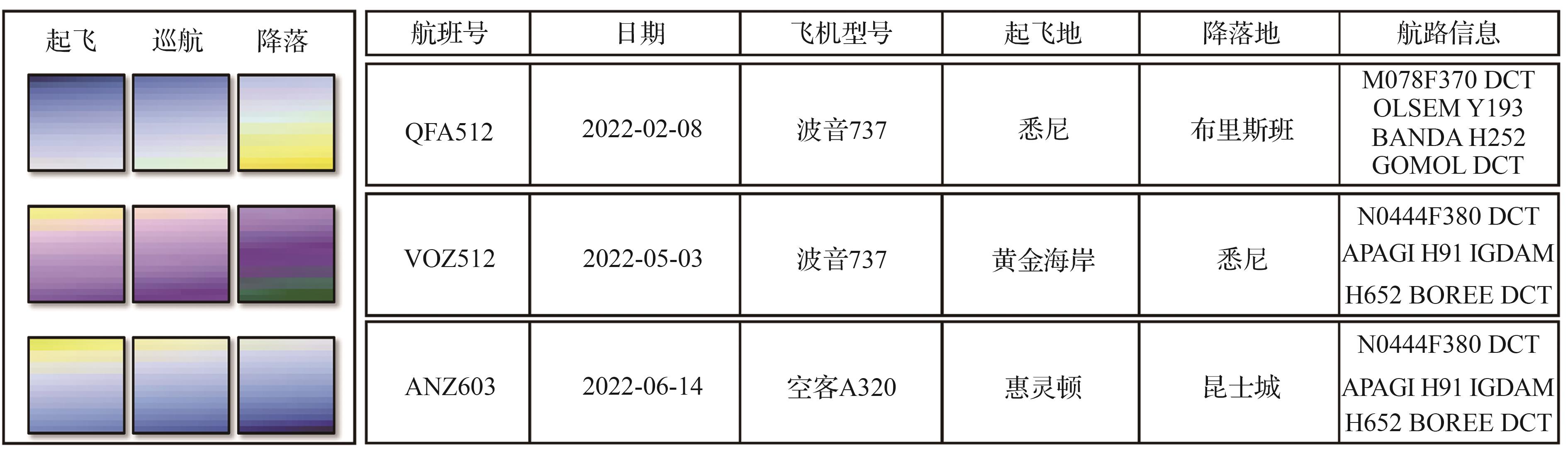
图 3
多尺度融合混合注意力的回归模型架构
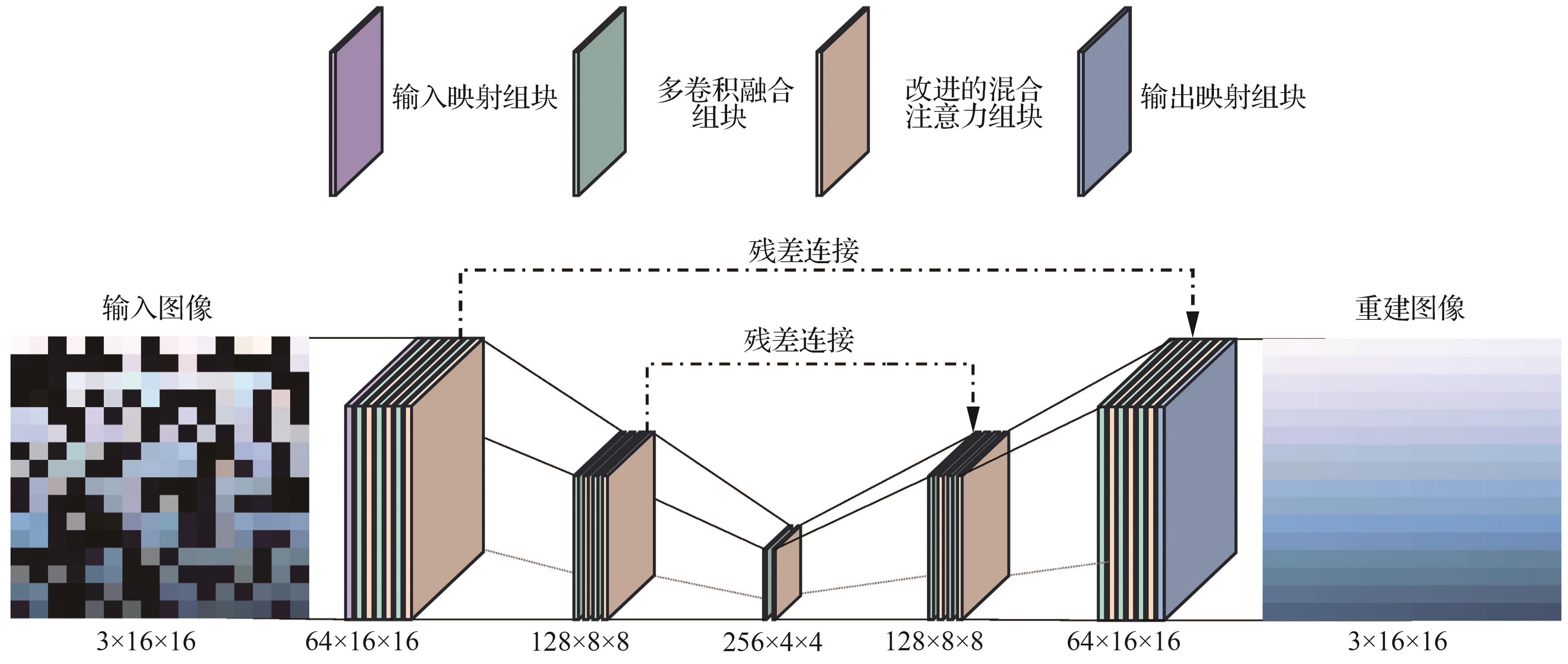
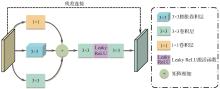
图 4
MKF模块的结构
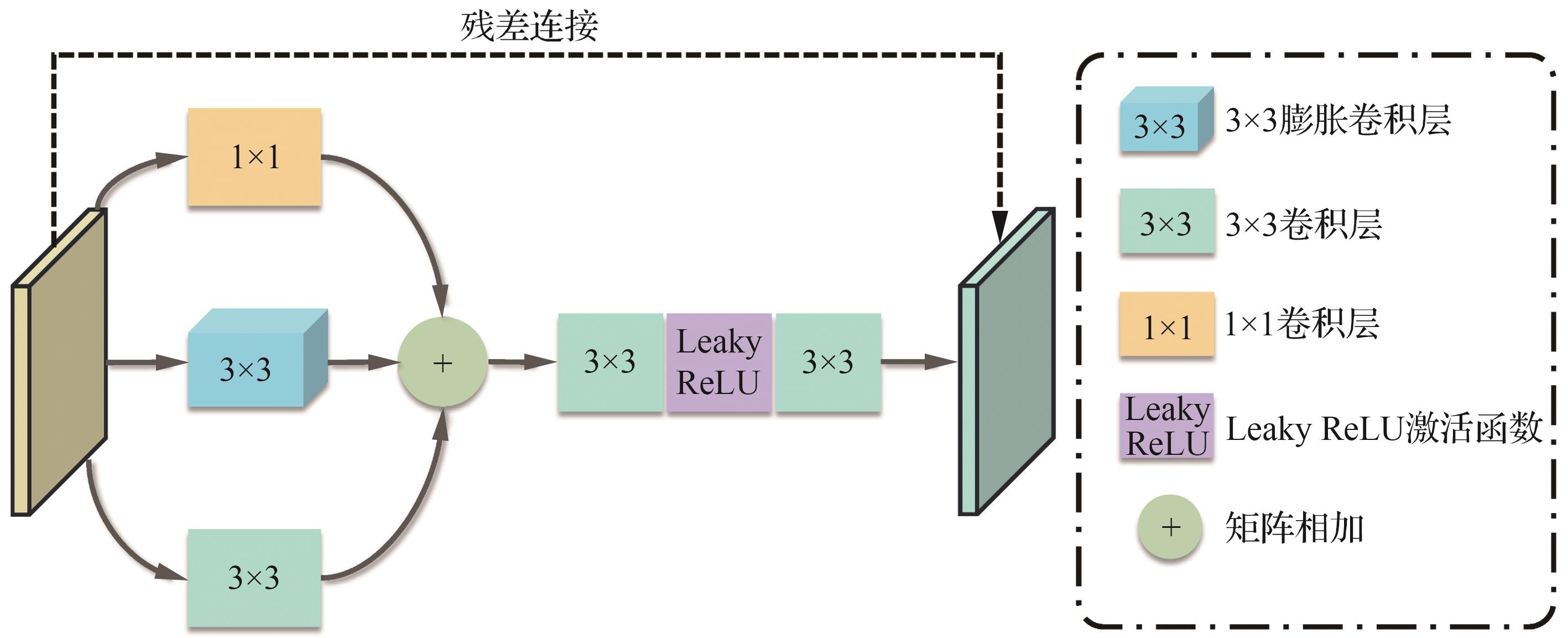
图 5
IHA模块的结构
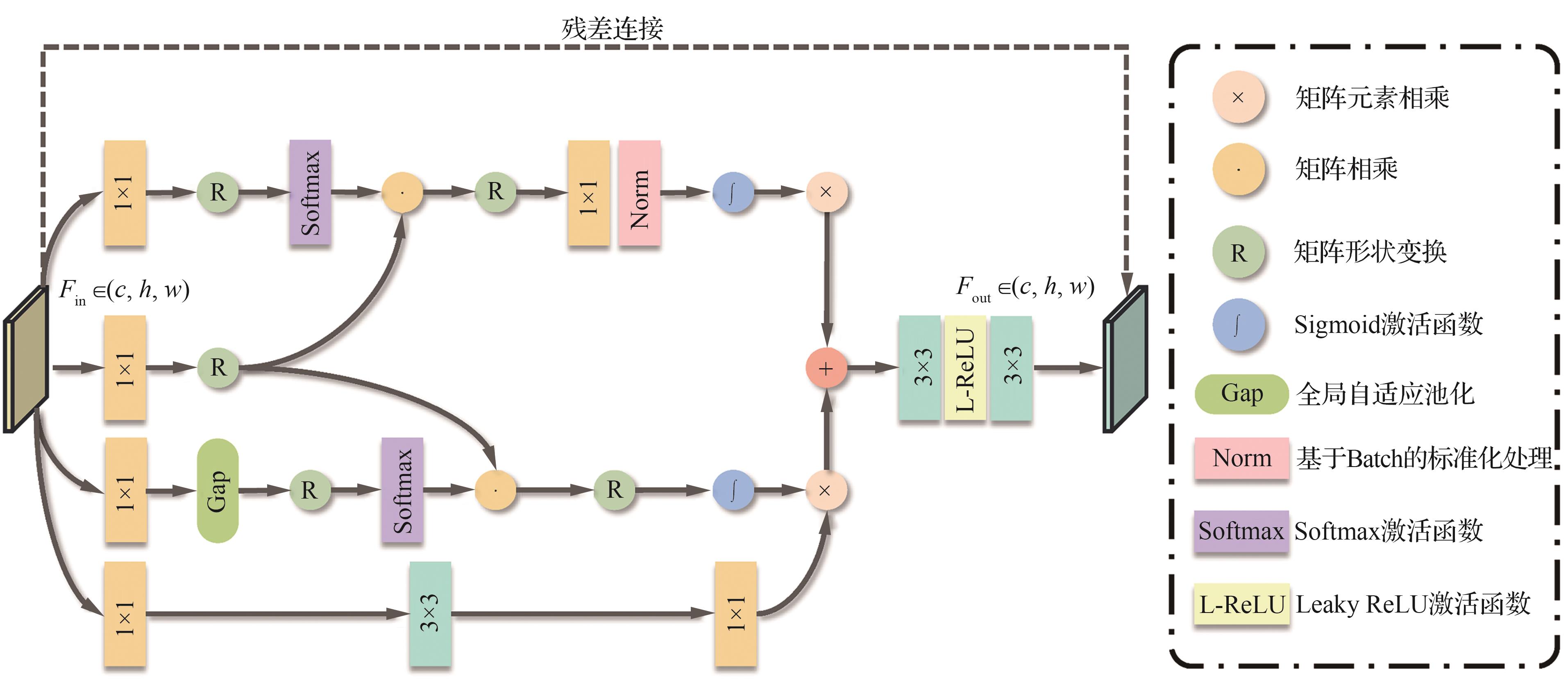
表2
IHA模块不同处理层中特征图的尺寸
| 分支名称 | 输入特征尺寸 | 处理层名称 | 输出特征图尺寸 |
|---|---|---|---|
| 通道注意力处理信息流 | |||
| 矩阵形状变换 | |||
| Softmax 激活函数 | |||
| 矩阵相乘 | |||
| 矩阵形状变换 | |||
| 基于Batch的标准化处理 | |||
| Sigmoid 激活函数 | |||
| 矩阵元素相乘 | |||
| 共享的辅助信息流 | |||
| 矩阵形状变换 | |||
| 空间注意力处理信息流(上分支) | |||
| 全局自适应池化 | |||
| 矩阵形状变换 | |||
| Softmax激活函数 | |||
| 矩阵相乘 | |||
| 矩阵形状变换 | |||
| Sigmoid激活函数 | |||
| 矩阵元素相乘 | |||
| 空间注意力处理信息流(下分支) | |||
图 6
训练策略示意图
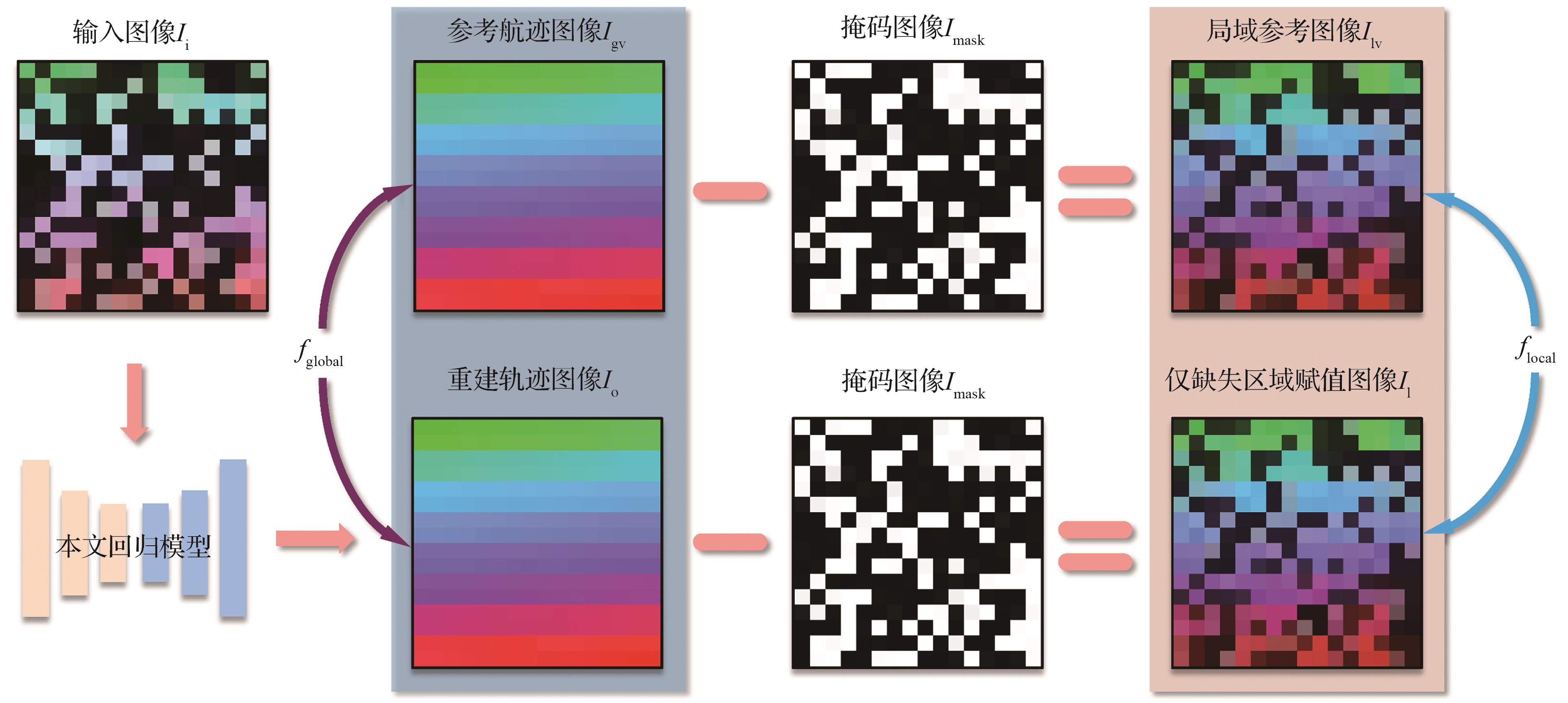
表3
下载的航迹点所包含的具体信息
| 数据类型 | 数据示例 |
|---|---|
| Unix时间戳/s | 1 609 725 600 |
| ICAO航空器识别号 | 45ce55 |
| 经度/(°) | 50.675 17 |
| 纬度/(°) | 6.738 18 |
| 水平速度/(km·h-1) | 141.197 77 |
| 航向/(°) | 86.857 05 |
| 垂直速度/(km·h-1) | -3.251 20 |
| 通信呼号 | SRR7 881 |
| 航空器处于地面标识 | False |
| 告警状态 | False |
| 二次代码 | 1 155 |
| 气压高/m | 3 398.52 |
| 最后更新Unix时间戳 | 1 609 725 598.995 |
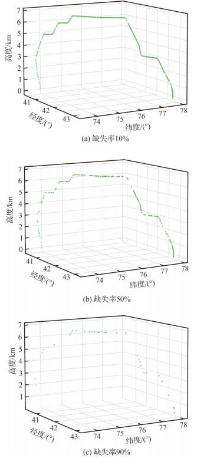
图 7
不同缺失数据率(10%、50% 和 90%)下 JBU486 航班轨迹的可视化
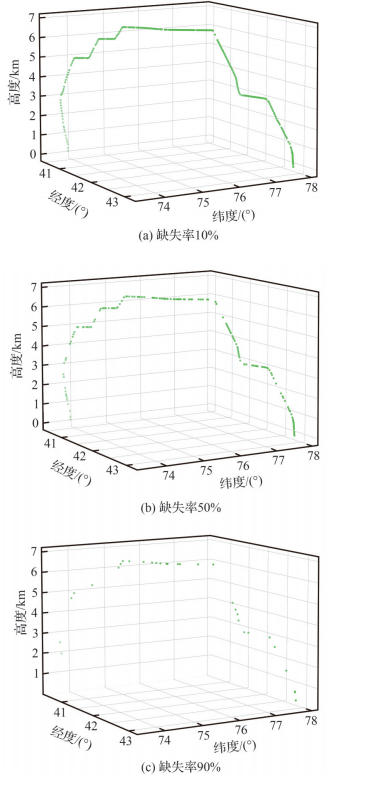
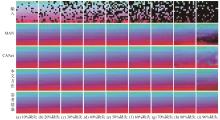
图 8
JST 724 航班轨迹各方法重建图像的对比
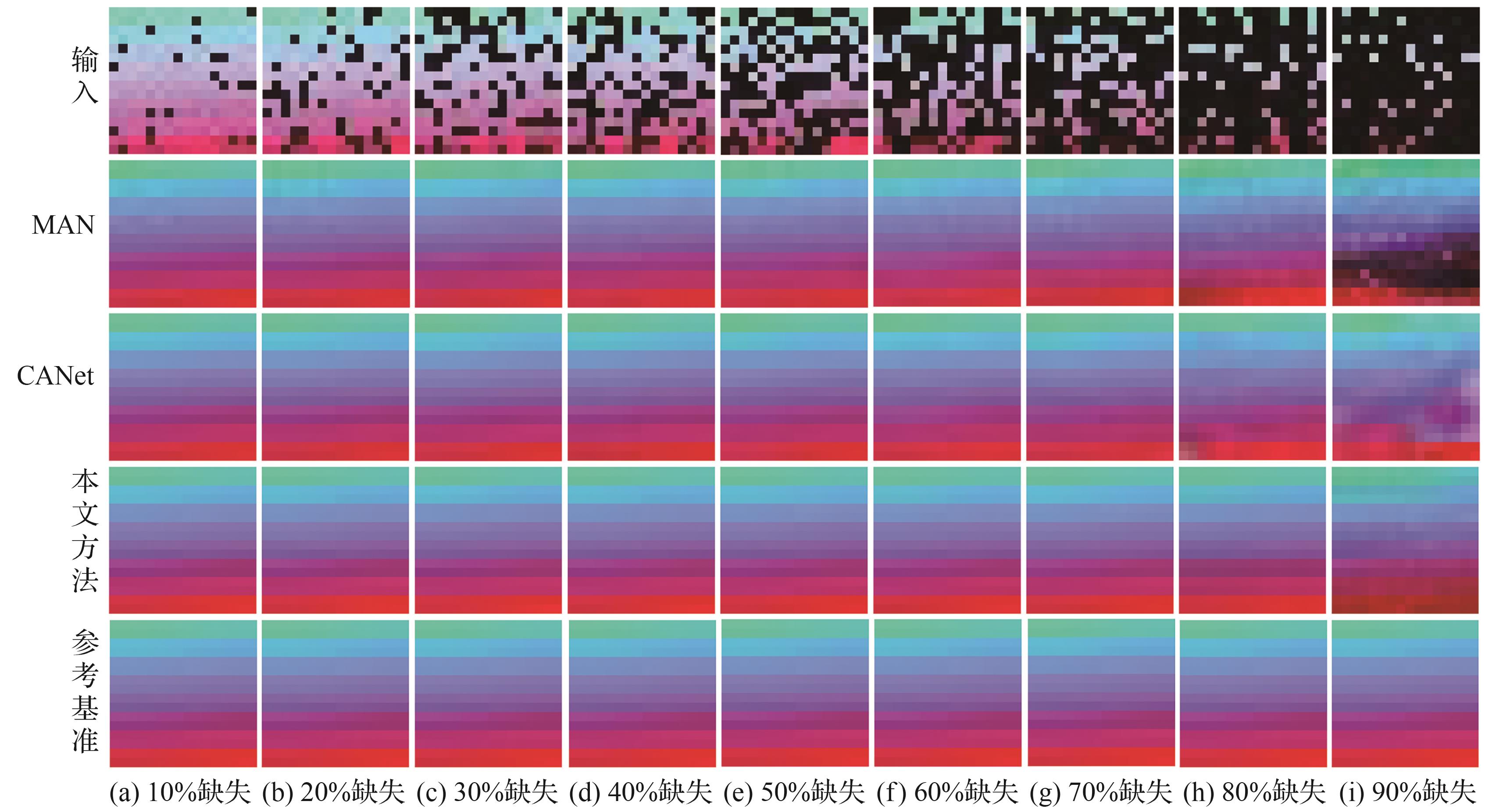
表4
基于SSIM、PSNR的各方法重建航迹图像定量对比
| 子集类型 | 图像数量 | 输入图像 | MAN重建图像 | CANet重建图像 | 本文方法重建图像 | ||||
|---|---|---|---|---|---|---|---|---|---|
| SSIM | PSNR/dB | SSIM | PSNR/dB | SSIM | PSNR/dB | SSIM | PSNR/dB | ||
| 10%缺失率 | 11 259 | 0.648 7 | 27.375 8 | 0.921 2 | 35.635 7 | 0.982 1 | 39.337 0 | 0.999 8 | 48.503 4 |
| 20%缺失率 | 11 259 | 0.599 5 | 26.869 0 | 0.906 7 | 32.278 4 | 0.980 0 | 38.954 2 | 0.999 7 | 48.496 4 |
| 30%缺失率 | 11 259 | 0.554 1 | 24.551 1 | 0.894 7 | 32.038 0 | 0.959 8 | 37.088 8 | 0.999 2 | 48.166 2 |
| 40%缺失率 | 11 259 | 0.511 3 | 23.001 9 | 0.864 7 | 30.829 5 | 0.927 8 | 35.685 7 | 0.999 1 | 47.539 0 |
| 50%缺失率 | 11 259 | 0.462 4 | 21.200 2 | 0.840 5 | 29.826 4 | 0.901 0 | 32.181 5 | 0.999 0 | 47.141 4 |
| 60%缺失率 | 11 259 | 0.407 0 | 19.244 4 | 0.789 2 | 28.883 8 | 0.886 7 | 31.020 0 | 0.992 0 | 42.735 6 |
| 70%缺失率 | 11 259 | 0.358 3 | 16.871 2 | 0.752 1 | 28.060 4 | 0.857 0 | 29.773 4 | 0.983 6 | 38.921 6 |
| 80%缺失率 | 11 259 | 0.317 7 | 15.401 6 | 0.694 7 | 27.998 6 | 0.805 3 | 29.266 2 | 0.902 4 | 32.668 9 |
| 90%缺失率 | 11 259 | 0.293 9 | 13.134 8 | 0.659 7 | 27.560 8 | 0.767 8 | 28.003 4 | 0.851 2 | 29.605 9 |
图 9
2022年7月25日记录的UAL 1667航班在不同缺失数据率(40%、80%)下轨迹插补结果对比分析
表5
对测试集中10%~90%缺失数据率下不同方法的轨迹重建结果进行对比
| 方法名称 | 评价指标 | 缺失率 | ||||||||
|---|---|---|---|---|---|---|---|---|---|---|
| 10% | 20% | 30% | 40% | 50% | 60% | 70% | 80% | 90% | ||
| CSI | 0.201 | 0.202 | 0.202 | 0.203 | 0.203 | 0.204 | 0.209 | 0.211 | 0.243 | |
| 0.206 | 0.207 | 0.208 | 0.208 | 0.209 | 0.210 | 0.214 | 0.218 | 0.254 | ||
| 243.6 | 244.1 | 224.9 | 246.0 | 247.5 | 249.9 | 259.1 | 274.7 | 352.8 | ||
| 18 826.9 | 18 844.1 | 18 890.9 | 18 931.5 | 19 023.6 | 19 084.1 | 19 509.7 | 19 870.2 | 23 037.8 | ||
| 0.095 | 0.099 | 0.102 | 0.106 | 0.110 | 0.117 | 0.143 | 0.147 | 0.249 | ||
| 0.097 | 0.100 | 0.104 | 0.108 | 0.112 | 0.119 | 0.145 | 0.154 | 0.265 | ||
| 217.0 | 219.7 | 223.4 | 227.3 | 233.0 | 243.2 | 286.6 | 325.5 | 530.8 | ||
| 8 782.5 | 9 091.6 | 9 435.5 | 9 758.2 | 10 151.7 | 10 789.1 | 13 215.9 | 13 879.9 | 23 859.5 | ||
| SA-AEGAN | 0.026 | 0.046 | 0.064 | 0.081 | 0.102 | 0.131 | 0.183 | 0.329 | 0.717 | |
| 0.028 | 0.050 | 0.069 | 0.088 | 0.110 | 0.141 | 0.203 | 0.365 | 0.780 | ||
| 53.3 | 81.9 | 105.0 | 130.6 | 164.3 | 214.7 | 345.3 | 795.6 | 2 259.5 | ||
| 2 587.9 | 4 596.9 | 6 344.1 | 8 080.4 | 10 086.1 | 12 992.9 | 18 676.8 | 33 614.4 | 73 064.9 | ||
| 0.095 | 0.118 | 0.131 | 0.142 | 0.152 | 0.174 | 0.228 | 0.361 | 0.615 | ||
| 0.101 | 0.127 | 0.140 | 0.152 | 0.164 | 0.187 | 0.248 | 0.395 | 0.656 | ||
| 204.7 | 227.5 | 237.6 | 250.9 | 274.4 | 319.4 | 458.2 | 845.9 | 1 641.4 | ||
| 9 040.6 | 11 230.4 | 12 420.3 | 13 446.8 | 14 456.4 | 16 458.3 | 21 649.7 | 33 971.6 | 54 604.6 | ||
| MTSIT | 0.012 | 0.018 | 0.023 | 0.027 | 0.033 | 0.044 | 0.075 | 0.187 | 0.626 | |
| 0.014 | 0.022 | 0.028 | 0.035 | 0.045 | 0.061 | 0.095 | 0.195 | 0.589 | ||
| 32.9 | 56.3 | 76.1 | 97.5 | 121.4 | 159.8 | 239.5 | 481.65 | 2 051.1 | ||
| 1 586.6 | 2 671.3 | 3 621.3 | 4 649.1 | 5 695.8 | 7 320.5 | 11 343.2 | 25 583.9 | 59 708.4 | ||
| 0.051 | 0.059 | 0.061 | 0.067 | 0.074 | 0.089 | 0.144 | 0.247 | 0.548 | ||
| 0.057 | 0.066 | 0.069 | 0.077 | 0.088 | 0.104 | 0.150 | 0.259 | 0.579 | ||
| 134.7 | 166.2 | 182.3 | 198.9 | 215.5 | 246.1 | 328.9 | 570.7 | 1 530.1 | ||
| 5 788.9 | 6 832.0 | 7 541.7 | 8 796.2 | 9 168.1 | 10 352.2 | 14 622.6 | 28 356.5 | 51 858.8 | ||
| DTIN | 0.007 | 0.013 | 0.018 | 0.023 | 0.028 | 0.041 | 0.066 | 0.138 | 0.453 | |
| 0..007 | 0.013 | 0.020 | 0.025 | 0.032 | 0.046 | 0.073 | 0.146 | 0.471 | ||
| 18.1 | 35.7 | 51.8 | 67.7 | 87.2 | 115.5 | 163.7 | 369.1 | 1 557.5 | ||
| 962.7 | 1 710.6 | 2 364.9 | 3 224.6 | 4 310.9 | 5 943.3 | 9 478.2 | 18 854.4 | 47 973.4 | ||
| 0.028 | 0.041 | 0.048 | 0.057 | 0.070 | 0.100 | 0.143 | 0.241 | 0.522 | ||
| 0.031 | 0.045 | 0.053 | 0.065 | 0.077 | 0.105 | 0.146 | 0.236 | 0.523 | ||
| 78.6 | 110.1 | 129.6 | 144.7 | 165.4 | 202.1 | 268.6 | 401.1 | 1 589.9 | ||
| 3 556.4 | 4 534.4 | 5 189.1 | 6 576.9 | 8 079.0 | 9 845.1 | 13 125.6 | 24 944.0 | 46 023.7 | ||
| 本文方法 | 0.006 | 0.012 | 0.017 | 0.021 | 0.026 | 0.033 | 0.048 | 0.100 | 0.392 | |
| 0.006 | 0.013 | 0.019 | 0.024 | 0.030 | 0.038 | 0.051 | 0.095 | 0.400 | ||
| 14.8 | 28.6 | 41.7 | 54.0 | 68.2 | 88.3 | 128.3 | 255.7 | 991.8 | ||
| 658.7 | 1 226.1 | 1 722.3 | 2 186.3 | 2 680.7 | 3 422.7 | 4 846.8 | 9 449.4 | 38 429.4 | ||
| 0.027 | 0.036 | 0.041 | 0.045 | 0.049 | 0.055 | 0.071 | 0.125 | 0.410 | ||
| 0.029 | 0.039 | 0.045 | 0.050 | 0.054 | 0.061 | 0.077 | 0.128 | 0.428 | ||
| 63.6 | 84.5 | 98.7 | 109.1 | 119.9 | 140.1 | 195.6 | 393.5 | 1 405.1 | ||
| 2 632.1 | 3 435.4 | 3 918.1 | 4 368.7 | 4 692.9 | 5 284.5 | 6 661.8 | 11 406.7 | 37 849.8 | ||
图 10
PWA 631与FD 286航班在70%缺失率下的轨迹插补结果对比分析
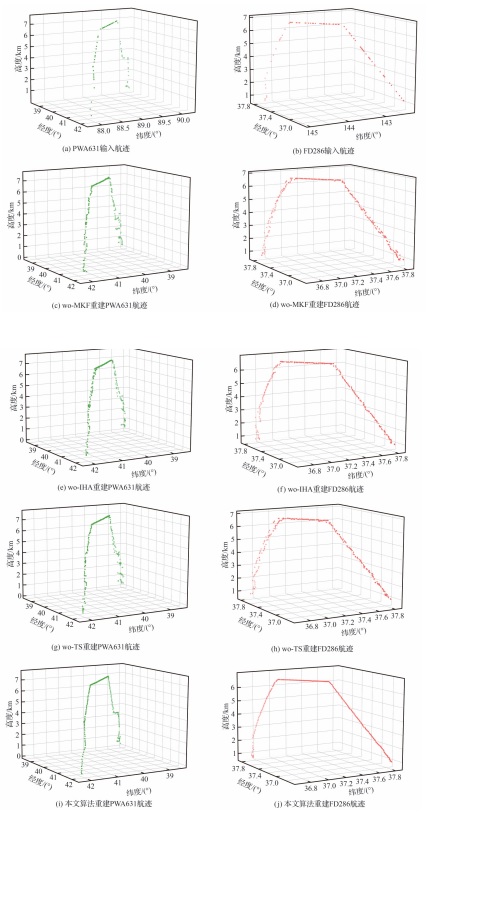
表6
SSIM、 PSNR、 MEAN和SD指标分别对基于不同模型配置重建的全部测试集轨迹进行评估的平均值对比
| 模型配置 | 数据数量 | 模块/策略选用 | 重建航迹图像Traj-images | 重建轨迹 | ||||
|---|---|---|---|---|---|---|---|---|
| MKF | IHA | TS | ||||||
| wo-MKF | 112 590 | × | √ | √ | 0.955 9 | 39.651 3 | 10 690.20 | 16 438.19 |
| wo-IHA | 112 590 | √ | × | √ | 0.937 6 | 37.063 1 | 13 334.36 | 18 957.75 |
| wo-TS | 112 590 | √ | √ | × | 0.831 5 | 30.819 5 | 14 892.19 | 16 840.29 |
| 本文方法 | 112 590 | √ | √ | √ | 0.969 5 | 42.419 8 | 7 187.27 | 8 916.67 |
| [1] | 陈志杰, 汤锦辉, 王冲, 等. 人工智能赋能空域系统,提升空域分层治理能力[J]. 航空学报, 2021, 42(4): 525018. |
| CHEN Z J, TANG J H, WANG C, et al. Using artificial intelligence in airspace system to improve airspace hierarchical governance capability[J]. Acta Aeronautica et Astronautica Sinica, 2021, 42(4): 525018 (in Chinese). | |
| [2] | 陈雨童, 胡明华, 杨磊, 等. 受限航路空域自主航迹规划与冲突管理技术[J]. 航空学报, 2020, 41(9): 324045. |
| CHEN Y T, HU M H, YANG L, et al. Autonomous trajectory planning and conflict management technology in restricted airspace[J]. Acta Aeronautica et Astronautica Sinica, 2020, 41(9): 324045 (in Chinese). | |
| [3] | 崔亚奇, 熊伟, 何友. 不确定航迹自适应预测模型[J]. 航空学报, 2019, 40(5): 322557. |
| CUI Y Q, XIONG W, HE Y. Adaptive forecast model for uncertain track[J]. Acta Aeronautica et Astronautica Sinica, 2019, 40(5): 322557 (in Chinese). | |
| [4] | 王飞, 韩翔宇. 基于分形插值的空中交通流量短期预测[J]. 航空学报, 2022, 43(9): 325585. |
| WANG F, HAN X Y. Short-term prediction of air traffic flow based on fractal interpolation[J]. Acta Aeronautica et Astronautica Sinica, 2022, 43(9): 325585 (in Chinese). | |
| [5] | 隋东, 蔡向嵘. 智能飞行冲突解脱算法的持续学习机制[J]. 系统工程与电子技术, 2025, 47(10): 3300-3312. |
| SUI D, CAI X R. Continual learning mechanism for intelligent flight conflict resolution algorithm[J]. Systems Engineering and Electronics, 2025,47(10): 3300-3312 (in Chinese). | |
| [6] | ZHANG Z, GUO D Y, ZHOU S Z, et al. Flight trajectory prediction enabled by time-frequency wavelet transform[J]. Nature Communications, 2023, 14: 5258. |
| [7] | 霍丹, 余付平, 沈堤, 等. 基于深度强化学习的多机冲突解决方法的研究[J]. 计算机科学, 2025, 52(7): 271-278. |
| HUO D, YU F P, SHEN D, et al. Research on multi-machine conflict resolution based on deep reinforcement learning[J]. Computer Science, 2025, 52(7): 271-278 (in Chinese). | |
| [8] | 李萌. TBO模式下航空器四维航迹规划技术[D]. 唐山: 华北理工大学, 2022: 9-17. |
| LI M. 4D trajectory planning technology of aircraft in TBO mode[D]. Tangshan: North China University of Science and Technology, 2022: 9-17 (in Chinese). | |
| [9] | CHANDAR B S, RANGANATHAN P, SEMKE W. Imputing ADS-B/GPS dropouts using machine learning models[C]∥2024 IEEE 14th Annual Computing and Communication Workshop and Conference (CCWC). Piscataway: IEEE Press, 2024: 63-72. |
| [10] | 王培晓. 时空视图学习支持的城市交通数据缺失补全与短期预测[J]. 测绘学报, 2024, 53(10): 2037. |
| WANG P X. Missing imputation and short-term prediction of urban traffic flow based on spatiotemporal view learning[J]. Acta Geodaetica et Cartographica Sinica, 2024, 53(10): 2037 (in Chinese). | |
| [11] | XU Y, BAZARJANI A, CHI H G, et al. Uncovering the missing pattern: Unified framework towards trajectory imputation and prediction[C]∥2023 IEEE/CVF Conference on Computer Vision and Pattern Recognition (CVPR). Piscataway: IEEE Press, 2023. |
| [12] | MA Q L, LI S, COTTRELL G W. Adversarial joint-learning recurrent neural network for incomplete time series classification[J]. IEEE Transactions on Pattern Analysis and Machine Intelligence, 2022, 44(4): 1765-1776. |
| [13] | 赵永梅, 董云卫. 低秩张量补全的时空交通数据预测[J]. 交通运输工程学报, 2024, 24(4): 243-258. |
| ZHAO Y M, DONG Y W. Spatio-temporal traffic data prediction based on low-rank tensor completion[J]. Journal of Traffic and Transportation Engineering, 2024, 24(4): 243-258 (in Chinese). | |
| [14] | LIN Y, LI Q, GUO D Y, et al. Tensor completion-based trajectory imputation approach in air traffic control[J]. Aerospace Science and Technology, 2021, 114: 106754. |
| [15] | ZHAO J Q, RONG C T, DANG X, et al. QAR data imputation using generative adversarial network with self-attention mechanism[J]. Big Data Mining and Analytics, 2024, 7(1): 12-28. |
| [16] | 胡中华, 许昕, 陈中. 无人机三维航迹非均匀三次B样条平滑算法[J]. 控制工程, 2020, 27(7): 1259-1266. |
| HU Z H, XU X, CHEN Z. Non-uniform cubic B-spline curves interpolation for UAV 3-D track smoothing[J]. Control Engineering of China, 2020, 27(7): 1259-1266 (in Chinese). | |
| [17] | SCHÄFER M, STROHMEIER M, LENDERS V, et al. Bringing up OpenSky: A large-scale ADS-B sensor network for research[C]∥IPSN-14 Proceedings of the 13th International Symposium on Information Processing in Sensor Networks. Piscataway: IEEE Press, 2014: 83-94. |
| [18] | ZHANG X L, QIAN B Y, LI Y, et al. Context-aware and time-aware attention-based model for disease risk prediction with interpretability[J]. IEEE Transactions on Knowledge and Data Engineering, 2023, 35(4): 3551-3562. |
| [19] | SCARSELLI F, GORI M, TSOI A C, et al. The graph neural network model[J]. IEEE Transactions on Neural Networks, 2009, 20(1): 61-80. |
| [20] | 杨燕, 沈汪良. 多尺度细节增强与分层抑噪的图像去雾算法[J/OL]. 吉林大学学报(工学版), (2024-05-15) [2024-08-12]. . |
| YANG Y, SHEN W L. Multi-scale detail enhancement and layered noise suppression algorithm for image dehazing[J/OL]. Journal of Jilin University (Engineering and Technology Edition), (2024-05-15) [2024-08-12]. (in Chinese). | |
| [21] | WU X P, YANG H Y, CHEN H, et al. Long-term 4D trajectory prediction using generative adversarial networks[J]. Transportation Research Part C: Emerging Technologies, 2022, 136: 103554. |
| [22] | QUAN W Z, CHEN J X, LIU Y L, et al. Deep learning-based image and video inpainting: A survey[J]. International Journal of Computer Vision, 2024, 132(7): 2367-2400. |
| [23] | WANG N, MA S H, LI J Y, et al. Multistage attention network for image inpainting[J]. Pattern Recognition, 2020, 106: 107448. |
| [24] | DENG Y, HUI S Q, ZHOU S P, et al. Context adaptive network for image inpainting[J]. IEEE Transactions on Image Processing, 2023, 32: 6332-6345. |
| [25] | NILSSON J, UNGER J. Swedish civil air traffic control dataset[J]. Data in Brief, 2023, 48: 109240. |
| [26] | 陈蜀喆, 王子威, 龚彪. 基于滑动窗口算法的船舶避碰转向点数据挖掘模型[J]. 中国航海, 2025, 48(1): 124-131. |
| CHEN S Z, WANG Z W, GONG B. Data mining model of ship collision avoidance turning points based on sliding window algorithm[J]. Navigation of China, 2025, 48(1): 124-131 (in Chinese). | |
| [27] | 郭树强, 黄蕊, 李卿. 改进加权朴素贝叶斯的软件缺陷预测算法[J]. 控制工程, 2021, 28(3): 600-605. |
| GUO S Q, HUANG R, LI Q. A software defect prediction algorithm using improved weighted naive Bayesian[J]. Control Engineering of China, 2021, 28(3): 600-605 (in Chinese). | |
| [28] | 李强, 马超, 黄民. 基于注意力的多尺度残差卷积网络轴承故障诊断[J]. 电子测量技术, 2025, 48(9): 19-26. |
| LI Q, MA C, HUANG M. Attention-based multi-scale residual convolutional network for bearing fault diagnosis[J]. Electronic Measurement Technology, 2025, 48(9): 19-26 (in Chinese). | |
| [29] | TAO Y, TANG J H, ZHAO X W, et al. Multi-scale network with attention mechanism for underwater image enhancement[J]. Neurocomputing, 2024, 595: 127926. |
| [30] | CHEN G, ZHANG G P, YANG Z G, et al. Multi-scale patch-GAN with edge detection for image inpainting[J]. Applied Intelligence, 2023, 53(4): 3917-3932. |
| [31] | YAO C, XIAO J M, TILLO T, et al. Depth map down-sampling and coding based on synthesized view distortion[J]. IEEE Transactions on Multimedia, 2016, 18(10): 2015-2022. |
| [32] | PAN J S, SUN D Q, ZHANG J W, et al. Dual convolutional neural networks for low-level vision[J]. International Journal of Computer Vision, 2022, 130(6): 1440-1458. |
| [33] | KHAN S, NASEER M, HAYAT M, et al. Transformers in vision: A survey[J]. ACM Computing Surveys, 2022, 54(10s): 1-41. |
| [34] | LI X, WANG W H, HU X L, et al. Selective kernel networks[C]∥2019 IEEE/CVF Conference on Computer Vision and Pattern Recognition (CVPR). Piscataway: IEEE Press, 2019: 510-519. |
| [35] | HU H G, YU C H, ZHOU Q W, et al. HDConv: Heterogeneous kernel-based dilated convolutions[J]. Neural Networks, 2024, 179: 106568. |
| [36] | OYEDOTUN O K, ISMAEIL K AL, AOUADA D. Training very deep neural networks: Rethinking the role of skip connections[J]. Neurocomputing, 2021, 441: 105-117. |
| [37] | HU J, SHEN L, ALBANIE S, et al. Squeeze-and-excitation networks[J]. IEEE Transactions on Pattern Analysis and Machine Intelligence, 2019, 42(8): 2011-2023. |
| [38] | ZENG X F, PAN Y S, ZHANG H, et al. Unpaired salient object translation via spatial attention prior[J]. Neurocomputing, 2021, 453: 718-730. |
| [39] | LIU H J, LIU F Q, FAN X Y, et al. Polarized self-attention: Towards high-quality pixel-wise mapping[J]. Neurocomputing, 2022, 506: 158-167. |
| [40] | ZHU M H, JIAO L C, LIU F, et al. Residual spectral–spatial attention network for hyperspectral image classification[J]. IEEE Transactions on Geoscience and Remote Sensing, 2020, 59(1): 449-462. |
| [41] | WANG N, ZHANG Y P, ZHANG L F. Dynamic selection network for image inpainting[J]. IEEE Transactions on Image Processing, 2021, 30: 1784-1798. |
| [42] | 王超学, 王磊. 融合多尺度特征和双分支并行的肺结节图像分割网络[J]. 计算机系统应用, 2025, 34(4): 166-174. |
| WANG C X, WANG L. Pulmonary nodule image segmentation network integrating multi-scale features and dual-branch parallelism[J]. Computer Systems and Applications, 2025, 34(4): 166-174 (in Chinese). | |
| [43] | 申秋慧, 张宏军, 徐有为, 等. 知识图谱嵌入模型中的损失函数研究综述[J]. 计算机科学, 2023, 50(4): 149-158. |
| SHEN Q H, ZHANG H J, XU Y W, et al. Comprehensive survey of loss functions in knowledge graph embedding models[J]. Computer Science, 2023, 50(4): 149-158 (in Chinese). | |
| [44] | LI C Y, ANWAR S, HOU J H, et al. Underwater image enhancement via medium transmission-guided multi-color space embedding[J]. IEEE Transactions on Image Processing, 2021, 30: 4985-5000. |
| [45] | LI Y, FANG A Q, GUO Y M, et al. Smooth fusion of multi-spectral images via total variation minimization for traffic scene semantic segmentation[J]. Engineering Applications of Artificial Intelligence, 2024, 130: 107741. |
| [46] | 徐雯, 于瓅. 基于迭代收缩阈值与深度学习的压缩感知图像重构网络[J]. 计算机工程与科学, 2025, 47(3): 485-493. |
| XU W, YU L. A compressive sensing image reconstruction network based on iterative shrinkage thresholding and deep learning[J]. Computer Engineering & Science, 2025, 47(3): 485-493 (in Chinese). | |
| [47] | 王成, 刘坤, 杜砾. 全参考图像质量指标评价分析[J]. 现代电子技术, 2023, 46(21): 39-43. |
| WANG C, LIU K, DU L. Evaluation and analysis of full reference image quality indicators[J]. Modern Electronics Technique, 2023, 46(21): 39-43 (in Chinese). | |
| [48] | SUN Z Y, LI H Z, WANG W H, et al. DTIN: dual transformer-based imputation nets for multivariate time series emitter missing data[J]. Knowledge-Based Systems, 2024, 284: 111270. |
| [49] | YıLDıZ A Y, KOÇ E, KOÇ A. Multivariate time series imputation with transformers[J]. IEEE Signal Processing Letters, 2022, 29: 2517-2521. |
| [50] | 孟庆成, 万达, 吴浩杰, 等. 基于卷积神经网络的混凝土裂缝图像识别方法[J]. 沈阳建筑大学学报(自然科学版), 2021, 37(5): 832-840. |
| MENG Q C, WAN D, WU H J, et al. Image recognition method of concrete cracks based on convolutional neural network[J]. Journal of Shenyang Jianzhu University (Natural Science), 2021, 37(5): 832-840 (in Chinese). |
| [1] | 徐建宇, 周莉, 王占学, 是介, 史毫. 基于快速逐线计算模型的高超声速羽流红外辐射计算方法[J]. 航空学报, 2025, 46(8): 630778-630778. |
| [2] | 孟令捷, 李红光, 李新军. 基于地貌类别信息指导的SAR图像仿真方法[J]. 航空学报, 2025, 46(7): 331003-331003. |
| [3] | 赵志浩, 杨照华, 吴云, 余远金. 弱光环境下基于深度学习的单光子计数成像去噪方法[J]. 航空学报, 2025, 46(3): 630531-630531. |
| [4] | 吴一全, 童康. 基于深度学习的无人机航拍图像小目标检测研究进展[J]. 航空学报, 2025, 46(3): 30848-030848. |
| [5] | 项子健, 麻震宇, 杨希祥. 基于深度学习的复合材料结构性能参数反演[J]. 航空学报, 2025, 46(24): 231877-231877. |
| [6] | 范天麒, 邹征夏, 史振威. 基于强化学习数据合成的典型遥感目标检测[J]. 航空学报, 2025, 46(23): 631955-631955. |
| [7] | 刘奎, 孙浩, 伍瀚, 计科峰, 匡纲要. 动态亮度重建的无人机可见光-红外融合目标检测[J]. 航空学报, 2025, 46(23): 631968-631968. |
| [8] | 彭勃, 白吉康, 陈伟文, 郑向涛, 雷建军, 卢孝强. 基于深度学习的无人机搜救方法研究进展[J]. 航空学报, 2025, 46(23): 632761-632761. |
| [9] | 周锦伦, 张洪海, 李雯清. 推进民航自主运行所需关键技术及其部署方案[J]. 航空学报, 2025, 46(22): 331998-331998. |
| [10] | 姜筱巍, 吴一全. 无人机航拍图像拼接方法研究进展[J]. 航空学报, 2025, 46(17): 331799-331799. |
| [11] | 陈霖, 顾曦文, 陈知颖, 张倬, 孙晓亮. 适应着舰引导大距离跨度的高精度单目视觉位姿测量[J]. 航空学报, 2025, 46(15): 331568-331568. |
| [12] | 孙彬, 游航, 李文博, 刘祥瑞, 马佳义. 双光载荷图像融合及其在低空遥感中的应用[J]. 航空学报, 2025, 46(11): 531343-531343. |
| [13] | 孟凡腾, 秦勇, 崔京, 吴云鹏, 张紫城, 魏少伟. 铁路外部环境无人机图像未知风险检测方法[J]. 航空学报, 2025, 46(11): 531262-531262. |
| [14] | 陈唯实, 牛红闯, 王鑫, 万健, 卢贤锋, 张洁, 王青斌. 机场净空区飞鸟与无人机多源探测技术综述[J]. 航空学报, 2025, 46(10): 31251-031251. |
| [15] | 林杰, 唐志共, 钱炜祺, 王岳青, 张鹏, 徐炜遐, 刘杰. 飞行器生成式模型气动设计研究进展与展望[J]. 航空学报, 2025, 46(10): 631679-631679. |
| 阅读次数 | ||||||
|
全文 |
|
|||||
|
摘要 |
|
|||||
版权所有 © 航空学报编辑部
版权所有 © 2011航空学报杂志社
主管单位:中国科学技术协会 主办单位:中国航空学会 北京航空航天大学

 CJA
CJA
