王重, 郎金溪, 李俨( )
收稿日期:2025-07-23
修回日期:2025-10-09
接受日期:2026-05-08
出版日期:2026-06-03
发布日期:2026-05-28
通讯作者:
李俨
E-mail:liyan@nwpu.edu.cn
基金资助:
Zhong WANG, Jinxi LANG, Yan LI()
Received:2025-07-23
Revised:2025-10-09
Accepted:2026-05-08
Online:2026-06-03
Published:2026-05-28
Contact:
Yan LI
E-mail:liyan@nwpu.edu.cn
Supported by:摘要:
直升机因其独特的飞行能力在军事与民用领域得到广泛应用,但其复杂的飞行包线和固有的非线性、强耦合动力学特性,使得飞行安全面临严格的边界限制。飞行边界保护技术旨在通过预测潜在的越限风险并采取有效的避免措施,以降低飞行员工作负荷、提升飞行安全和最大化可用机动性能,是现代直升机飞行控制领域的核心研究方向。系统综述了直升机飞行边界保护的关键技术和研究进展。首先概述了直升机飞行边界的构成、分类及其典型限制参数。随后,按照“边界预测”与“边界规避”两大核心环节,详细阐述了多种边界保护方法。在边界预测方面,重点分析了动态配平法、峰值响应估计法和数据驱动方法的原理和适用性;在边界规避方面,评述了基于座舱告警的边界保护策略,以及基于指令限制和控制限制的自动干预架构、基于状态限制和保护量反馈的边界规避方法,以及边界约束与控制律的融合设计等方法。通过对不同边界保护方法的仿真对比,展现了各种方法在机动性、边界保护效果和鲁棒性等方面的特点。最后,总结了当前研究面临的主要挑战,包括先进构型直升机的边界保护策略设计、边界保护与飞行品质的权衡以及不确定性与故障下的鲁棒容错边界保护等,并对未来向智能化、自适应化和一体化发展的趋势进行了展望。旨在为直升机边界保护技术的研究与工程应用提供有价值的参考。
中图分类号:
王重, 郎金溪, 李俨. 直升机边界保护控制方法综述[J]. 航空学报, 2026, 47(17): 332611.
Zhong WANG, Jinxi LANG, Yan LI. Survey of flight envelope protection control methods for helicopters[J]. Acta Aeronautica et Astronautica Sinica, 2026, 47(17): 332611.
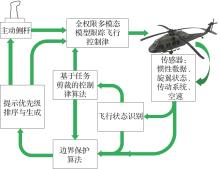
图 1
HACT项目飞行控制系统结构[23]
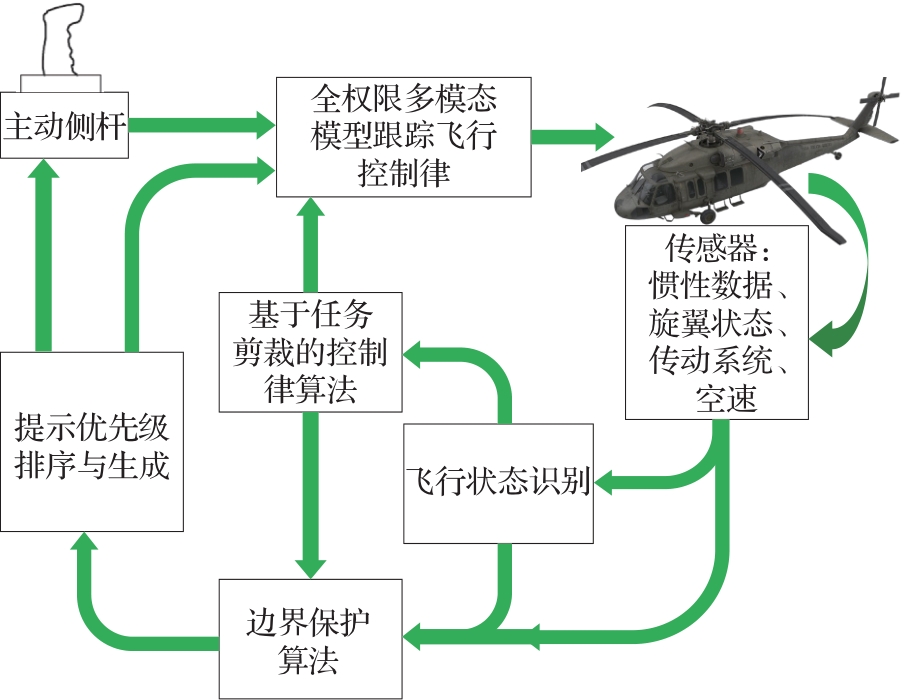
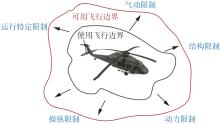
图 2
直升机飞行边界示意图
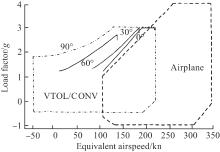
图 3
V-22倾转旋翼机V-n图[38]
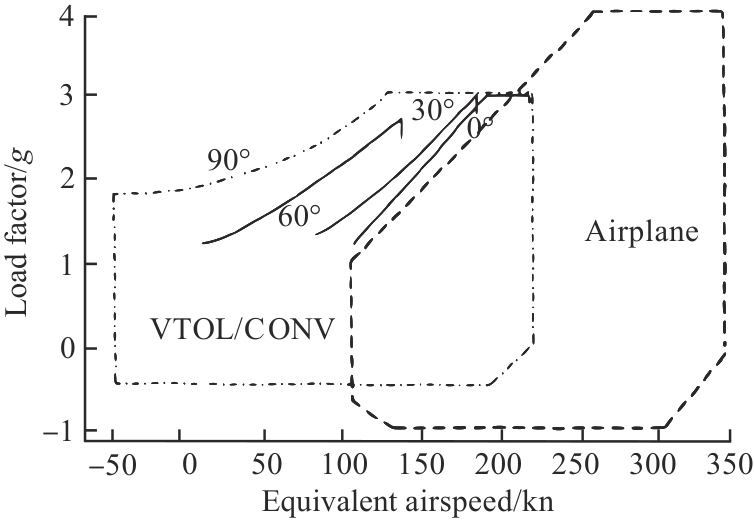
表1
不同类型直升机的典型限制参数
| 直升机类型 | 相同限制参数 | 特有或需特别关注的限制参数 |
|---|---|---|
| 单旋翼直升机 | 空速、过载[ | 尾桨功效 |
| 共轴刚性旋翼直升机 | 上下旋翼桨尖间隙 | |
| 倾转旋翼机 | 迎角、左右旋翼传动轴扭矩[ |
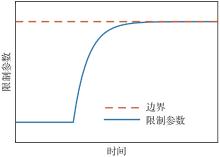
图 4
稳态响应型边界
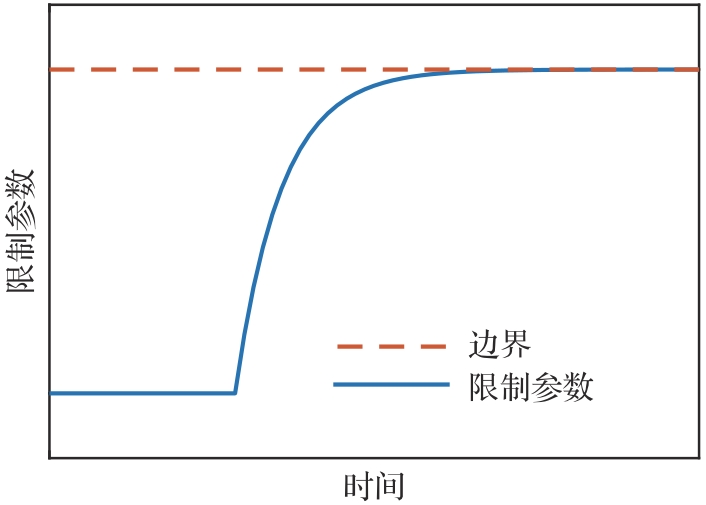
图 5
瞬态响应型边界
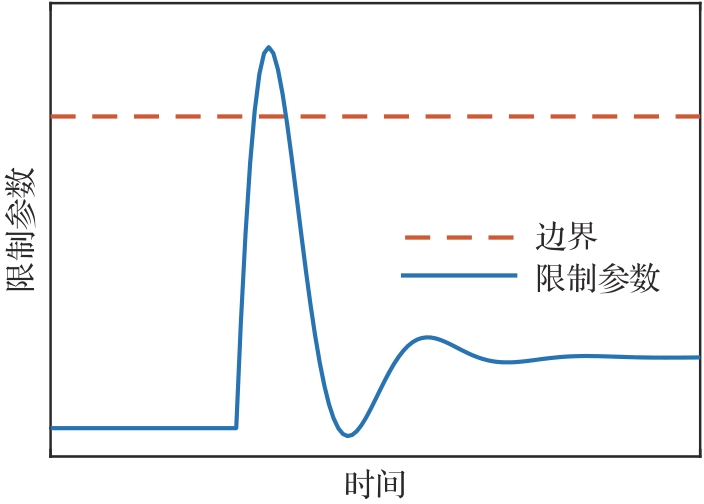
图 6
积分响应型边界
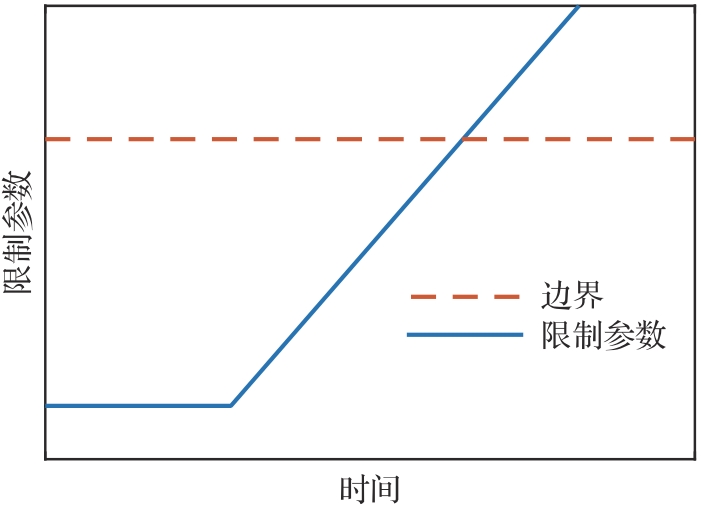
图 7
混合响应型边界
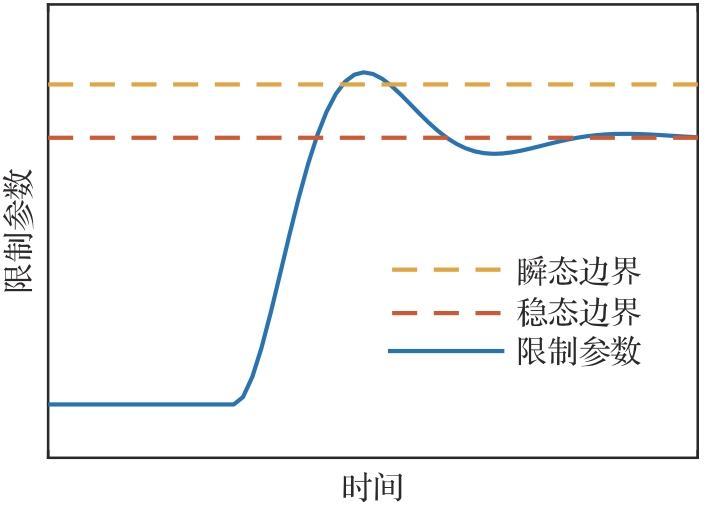
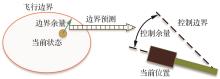
图 8
边界余量向控制余量的映射
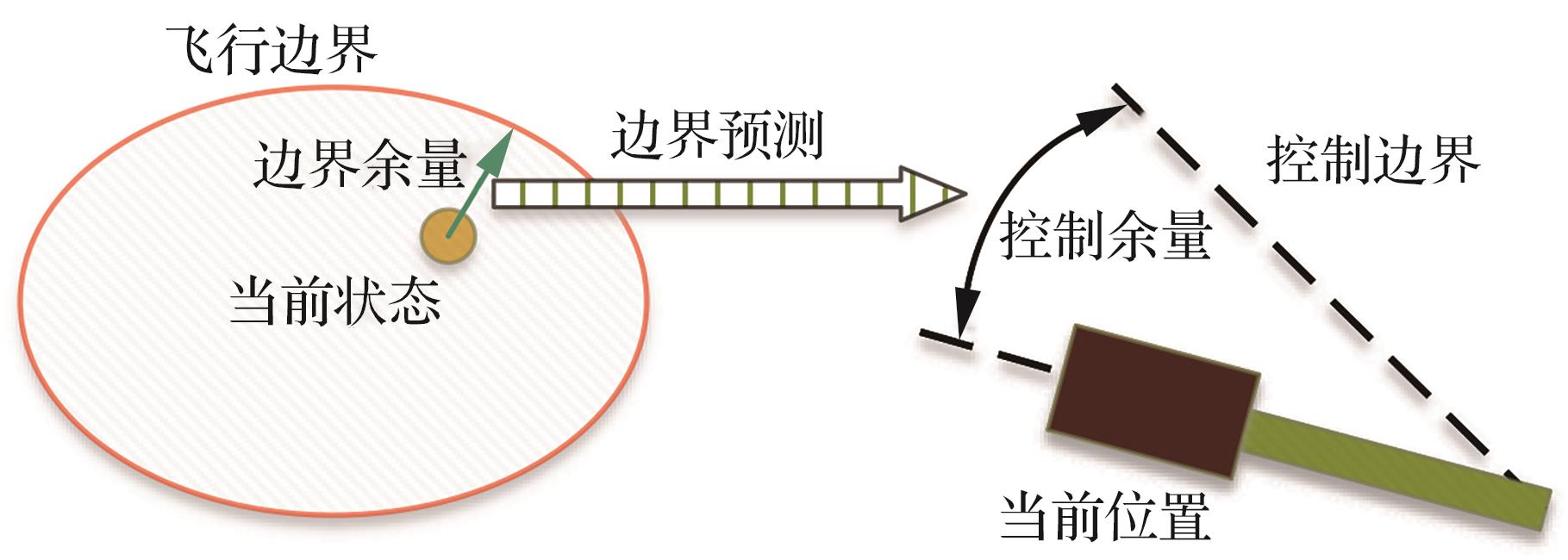
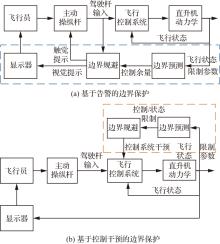
图 9
直升机边界规避示意图
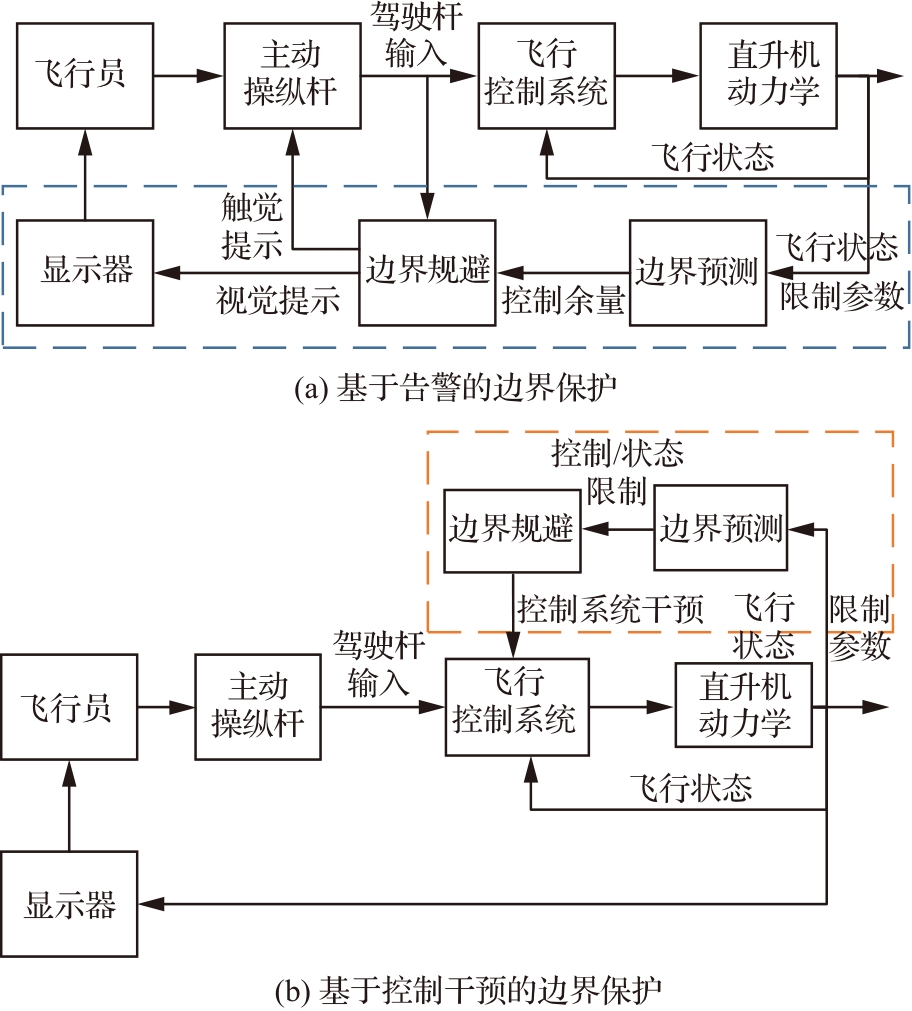
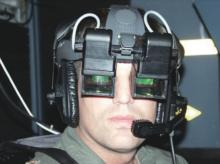
图 10
RAH-66“科曼奇”直升机头盔显示器[72]
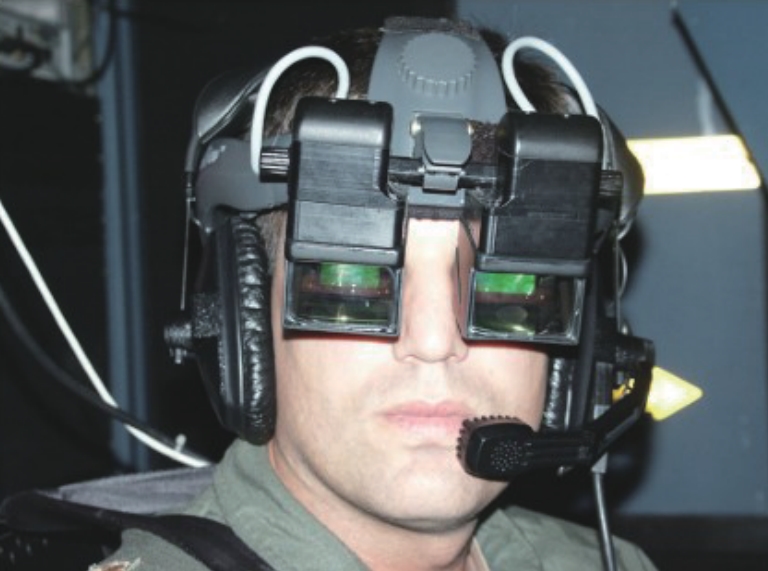
图 11
基于指令限制的边界规避
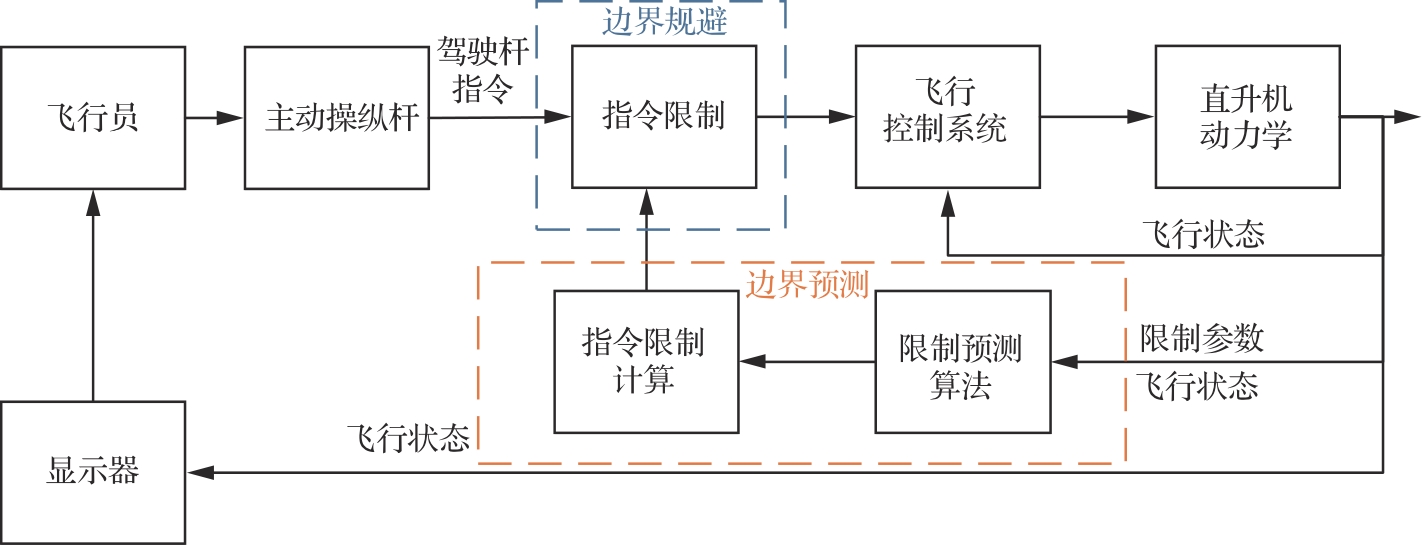
图 12
基于控制限制的边界规避
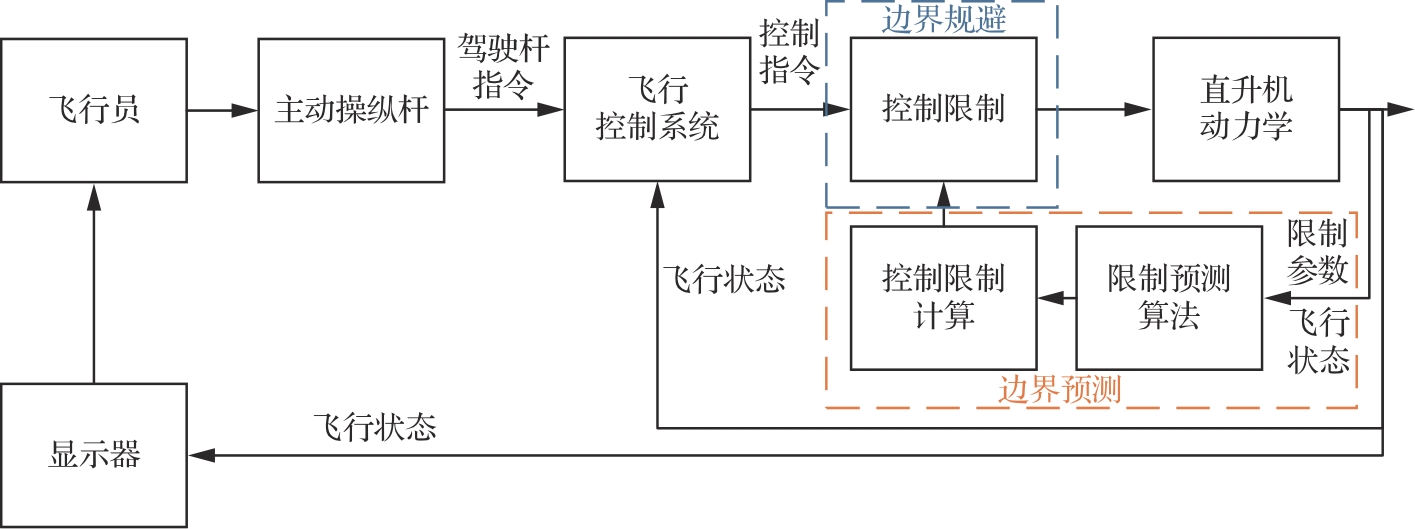
图 13
基于状态限制的边界规避
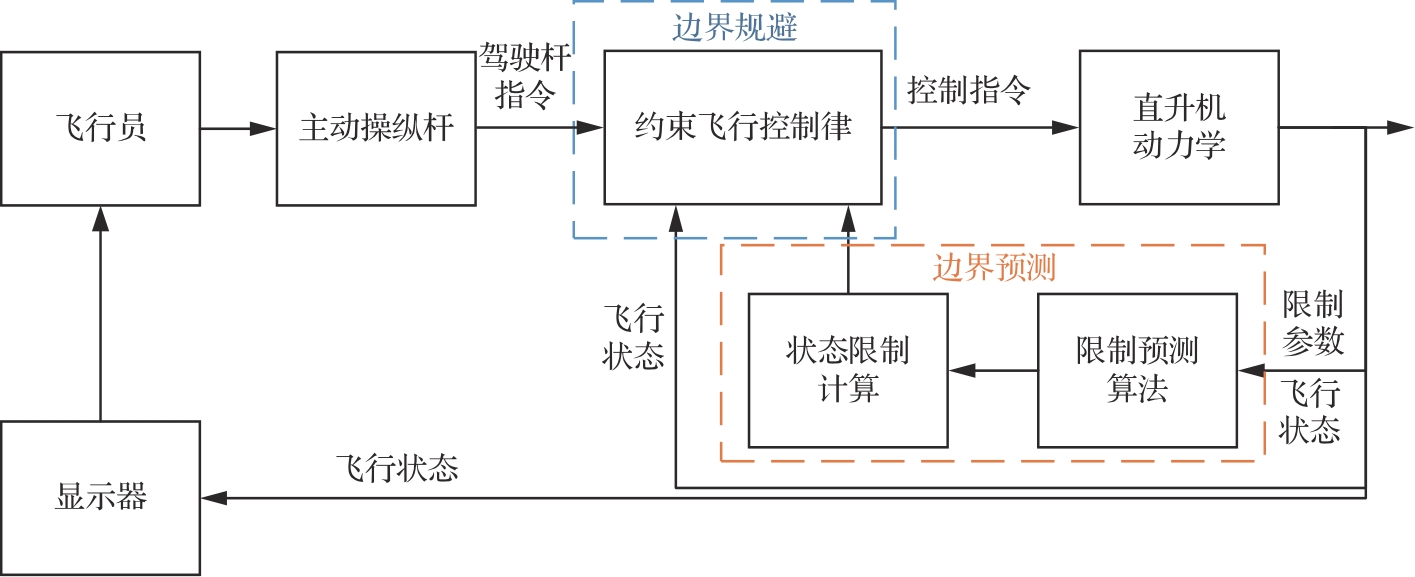
图 14
基于保护量反馈的边界规避
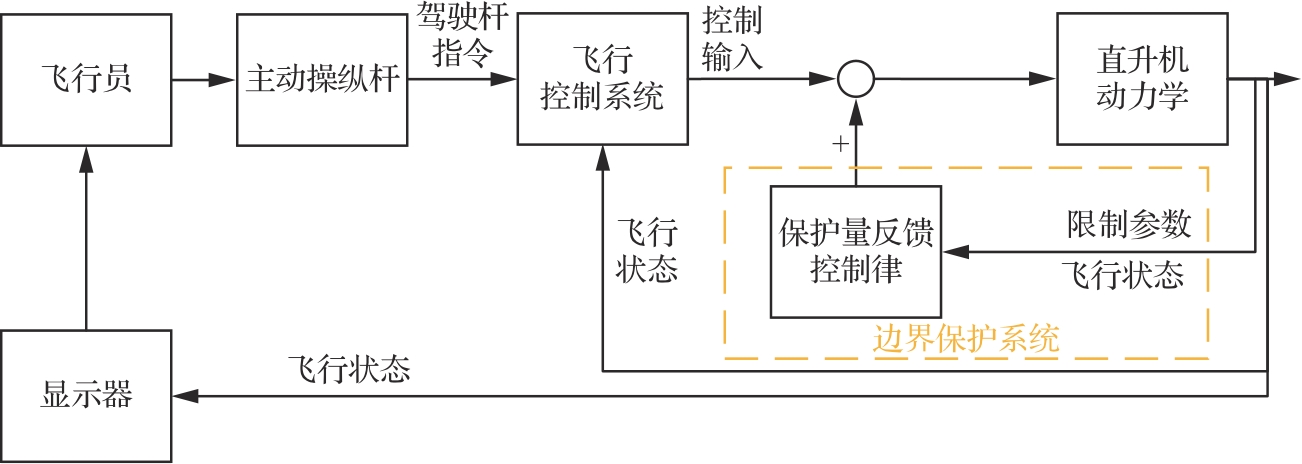
表2
边界预测与规避方法总结
| 方法类别 | 方法 | 文献 | 特点、优点 | 存在的问题 |
|---|---|---|---|---|
| 边界预测 | 动态配平法 | [ | 适用于稳态响应型限制参数;预测限制参数在准稳态机动下的未来响应;采用在线自适应神经网络可适应飞行条件变化,减少对先验信息的依赖;可用于计算控制极限或指令裕度 | 仅适用于最大值在稳态时达到的限制参数;预测依赖于对“快慢状态”的划分和动态配平条件的满足;求解控制极限需要迭代计算 |
| 峰值响应法 | [ | 适用于瞬态响应峰值处达到极限的参数(如挥舞角、桨毂力矩);基于简化的线性模型解析预测峰值 | 严重依赖精确的线性模型,获取困难且适用范围窄;求解临界操纵输入通常需要迭代 | |
| 数据驱动方法 | [ | 适用于复杂非线性边界保护问题、可在线补偿模型不确定性影响、可用于限制参数预测和控制余量估计 | 依赖训练数据、泛化性和可解释性不足 | |
| 边界规避 | 座舱提示 | [ | 通过视觉、听觉、触觉等方式向飞行员告警;触觉告警直观,不易忽略,能提供修正指引,提高操纵性能和安全性;保留飞行员最终控制权 | 视觉/听觉告警可能被忽略或引起不当反应;触觉告警依赖主动驾驶杆硬件和精确的控制极限计算;告警设计的合理性影响飞行员接受度和人机交互效果,可能产生告警疲劳或诱发振荡 |
| 指令限制 | [ | 在飞行控制系统高层指令路径中限制目标姿态、角速度等指令;与底层飞行控制律相互分离,集成相对简单;对飞行控制律稳定性影响较小 | 依赖边界预测的精度;高层指令与限制参数间存在复杂非线性关系,极限映射困难;其效果严重依赖控制律的跟踪性能 | |
| 直接控制限制 | [ | 在飞行控制系统较低层级,直接限制舵面偏转或发动机指令;在某些情况下,状态极限到舵面极限的映射可能更直接 | 舵面限制易引发输入饱和问题,与高带宽控制律易产生冲突和抖振,系统稳定性需重新评估或设计抗饱和措施 | |
| 反应式边界保护 | [ | 基于有限时域预测与安全响应轨迹跟踪,可将边界保护要求直接转化为控制修正或控制余量;具有隐式预测提前量 | 依赖限制参数动态模型或在线自适应估计的准确性,以及安全响应轨迹参数设计的合理性 | |
| 状态限制 | [ | 将边界限制作为内在约束,直接集成到控制律设计(如MPC、PPC、BLF)中;能显式处理多变量约束,理论完备性强 | 控制律设计通常更为复杂,对模型的依赖性强;在线计算量可能较大(尤其对于非线性MPC),实时性是关键 | |
| 保护量反馈 | [ | 针对特定结构载荷或限制参数(保护量),设计专用反馈回路进行主动抑制(如SLA);可利用优化控制(LQR)或控制分配技术,将保护目标融入控制律或操纵面分配,协同提升性能和安全性 | 通常为针对性设计,通用性不强;效能受限于作动器能力和反馈测量精度;对关键保护量的精确、实时测量(尤其在旋翼上)是技术难点 |
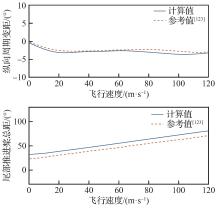
图 15
共轴高速直升机配平结果
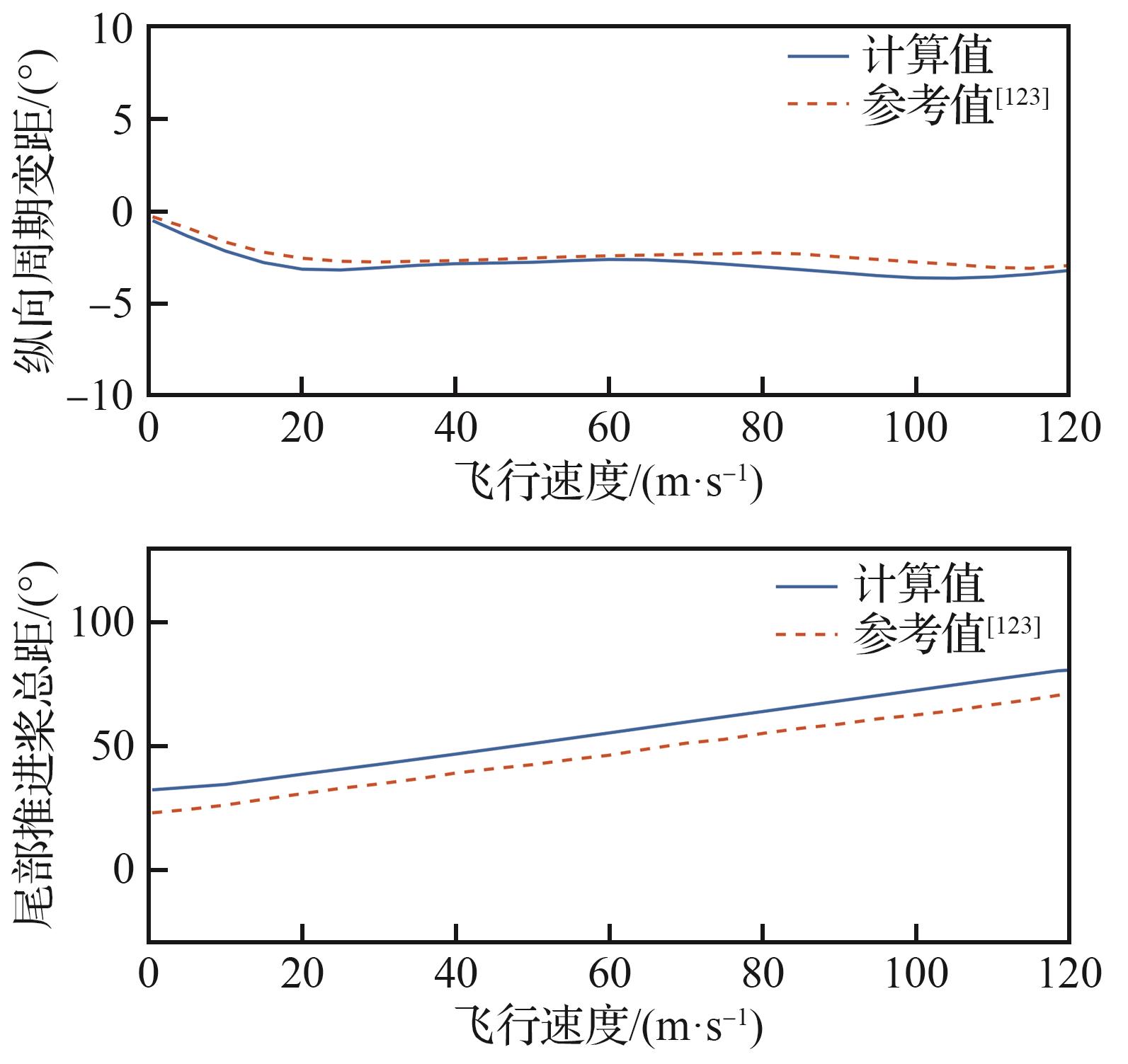
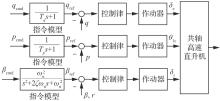
图 16
共轴高速直升机飞行控制律结构
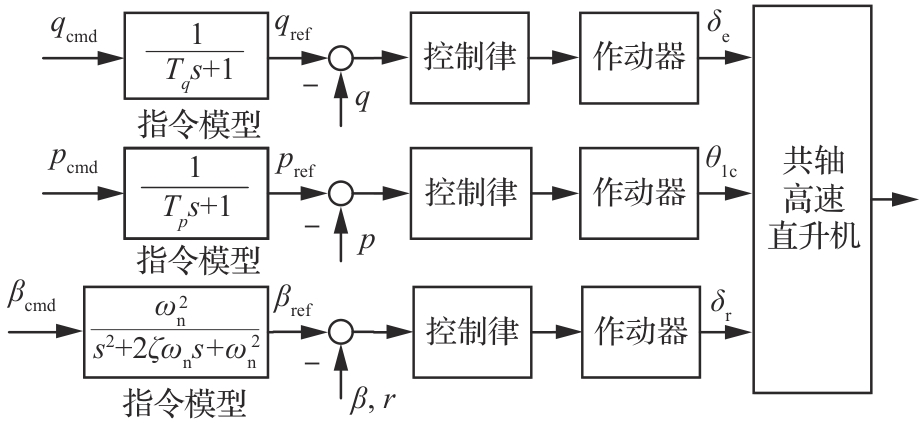
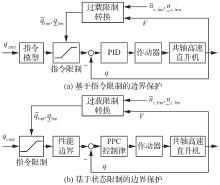
图 17
基于状态约束的边界保护控制结构示意图
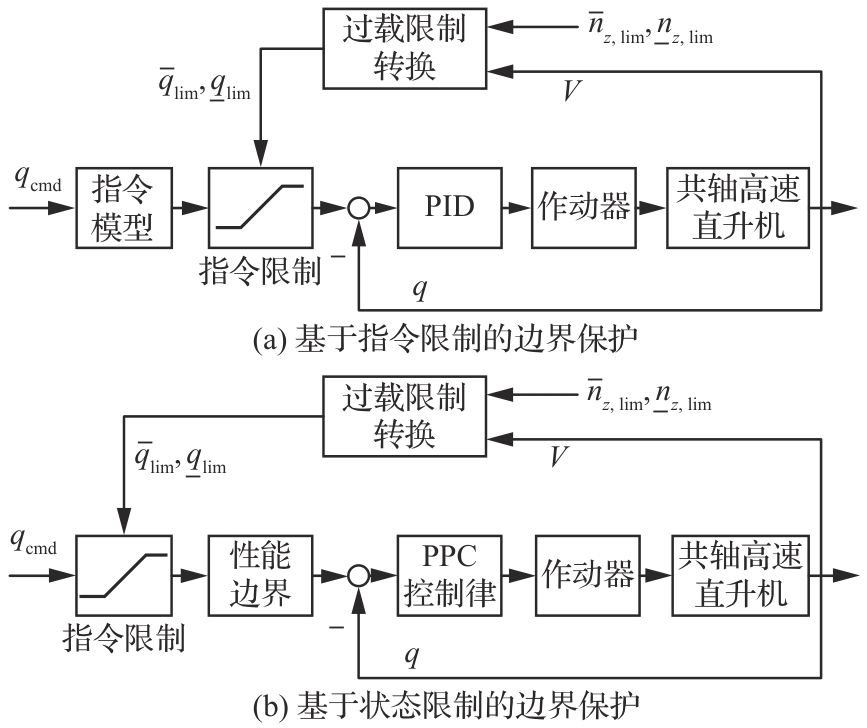
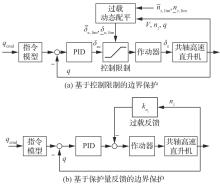
图 18
基于输入约束的边界保护控制结构示意图
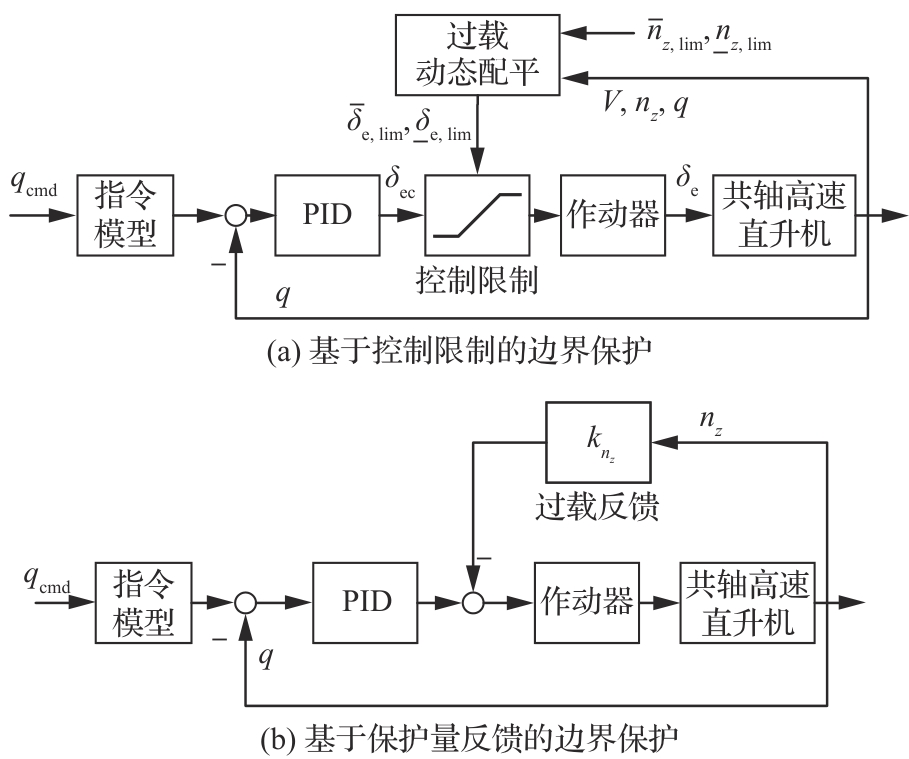
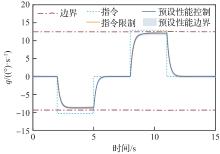
图 19
标称条件下基于状态约束边界保护的俯仰角速度响应
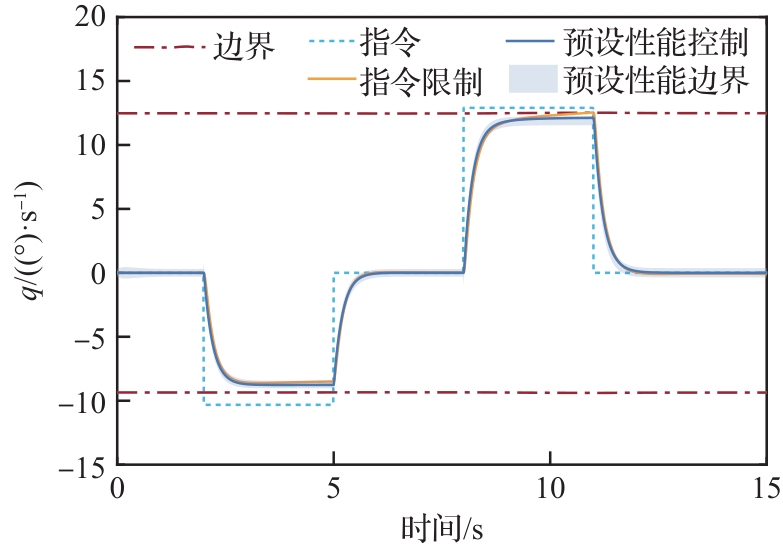
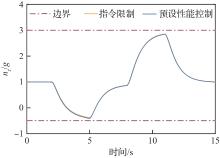
图 20
标称条件下基于状态约束边界保护的过载响应
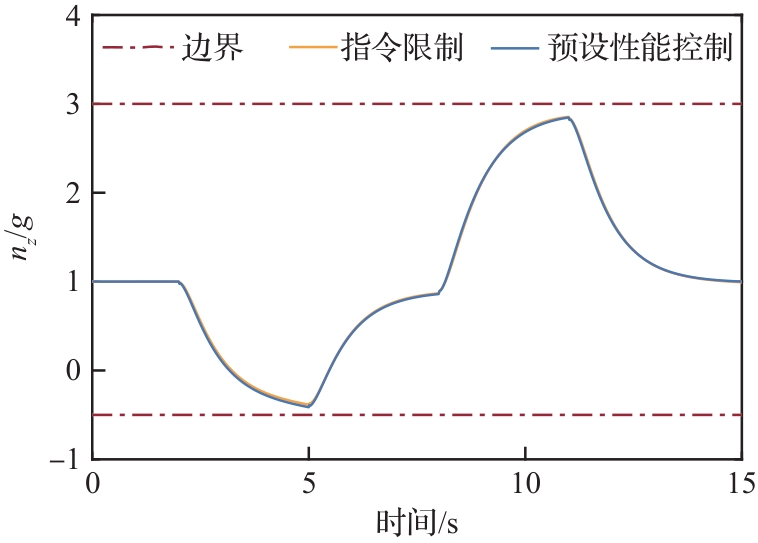
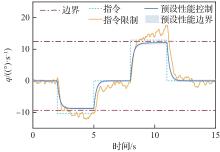
图 21
扰动条件下基于状态约束边界保护的俯仰角速度响应
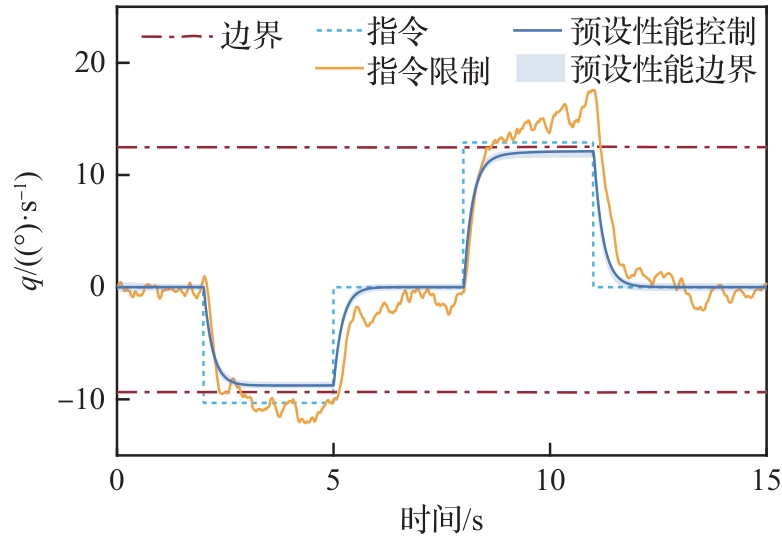
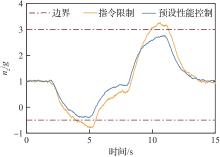
图 22
扰动条件下基于状态约束边界保护的过载响应
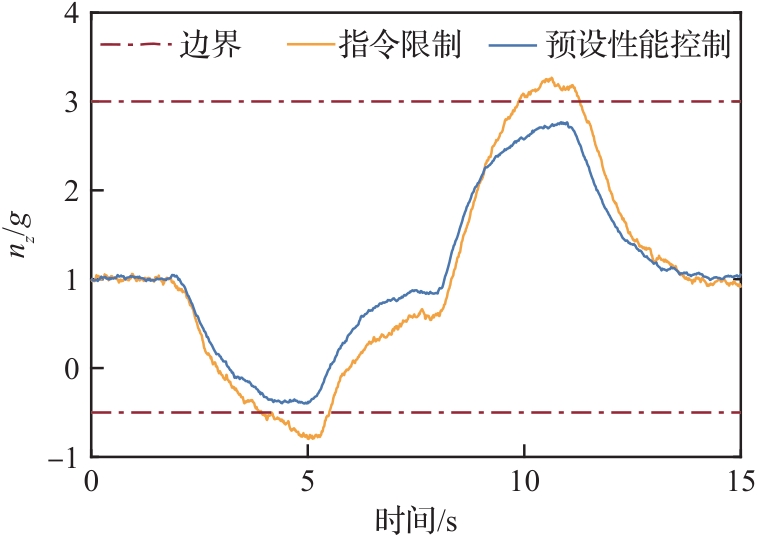
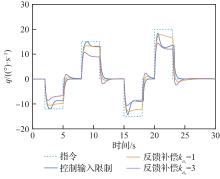
图 23
标称条件下基于输入约束边界保护的俯仰角速度响应
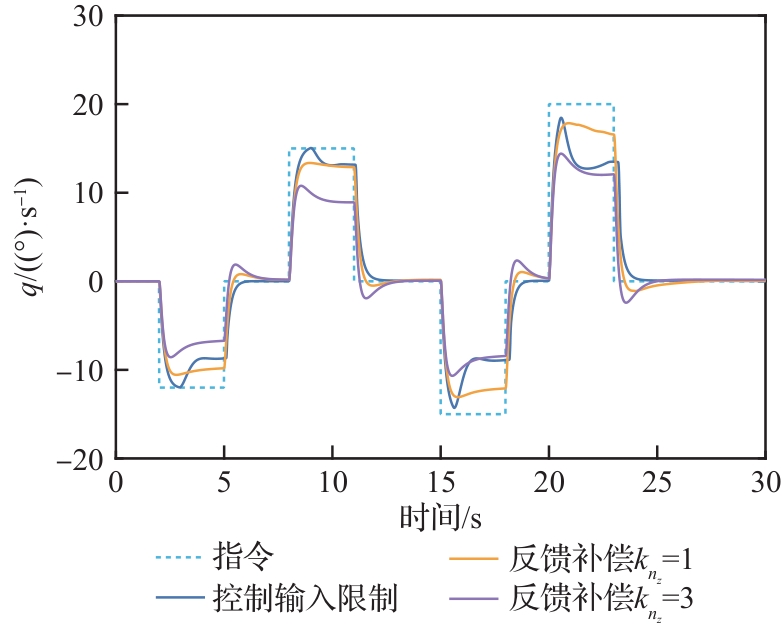
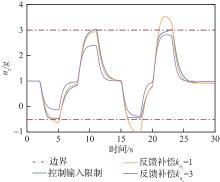
图 24
标称条件下基于输入约束边界保护的过载响应
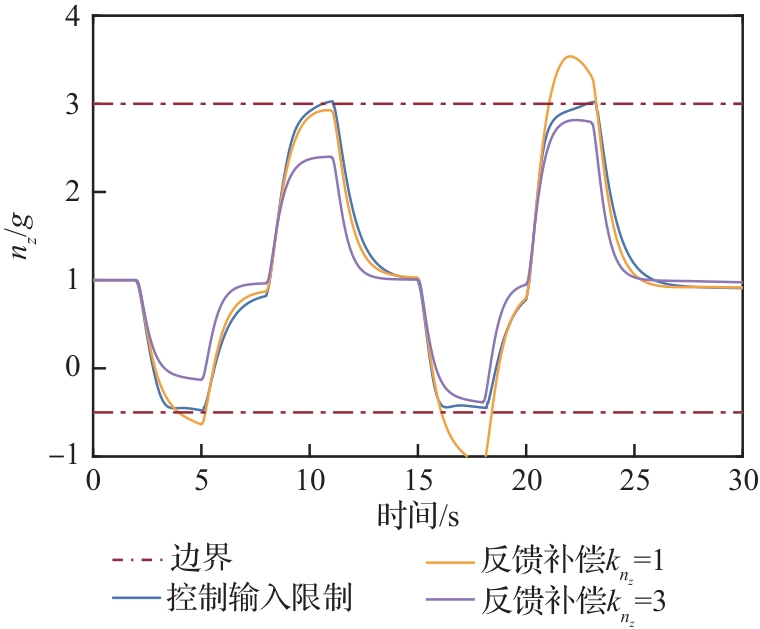
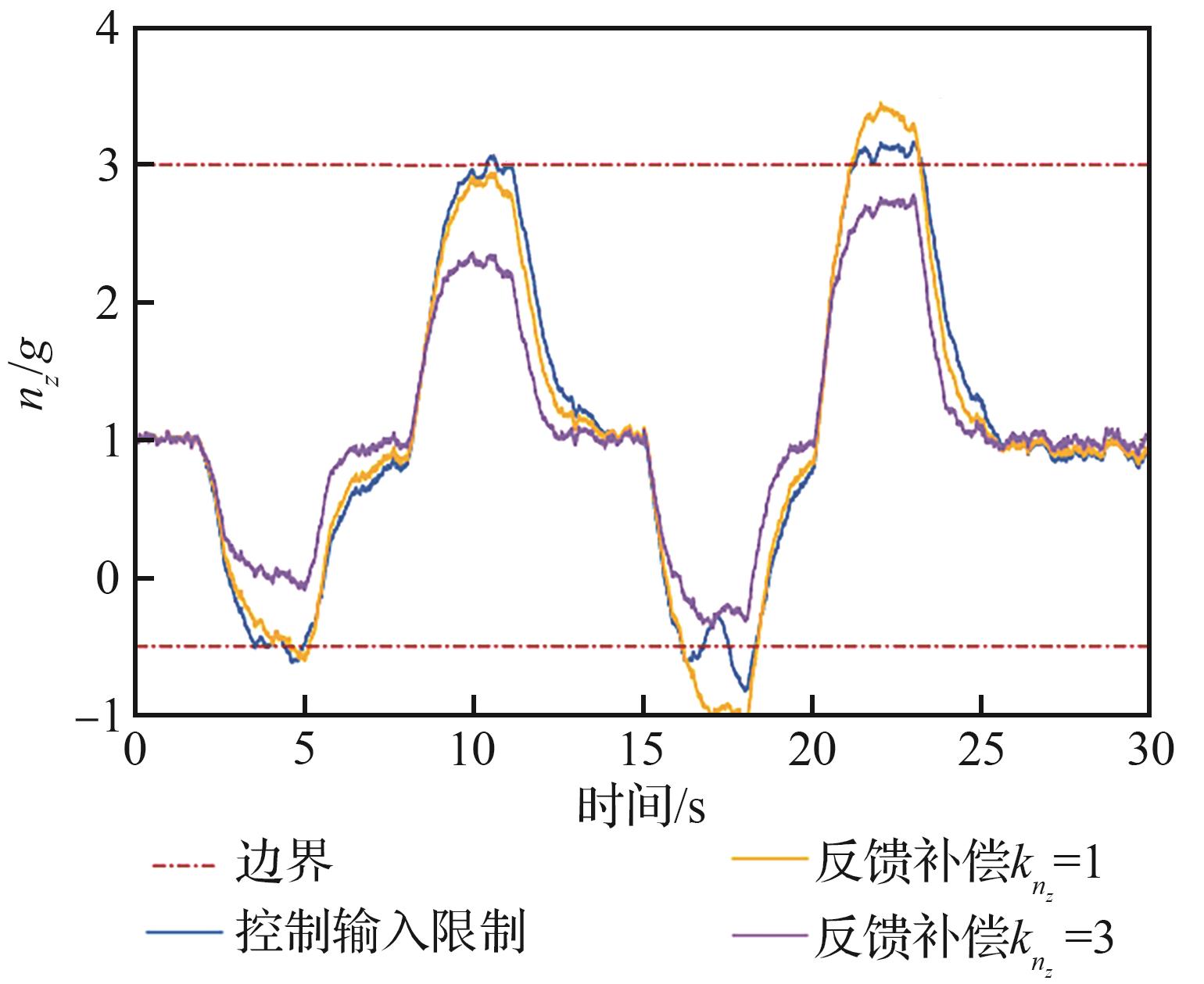
图 25
扰动条件下基于输入约束边界保护的俯仰角速度响应
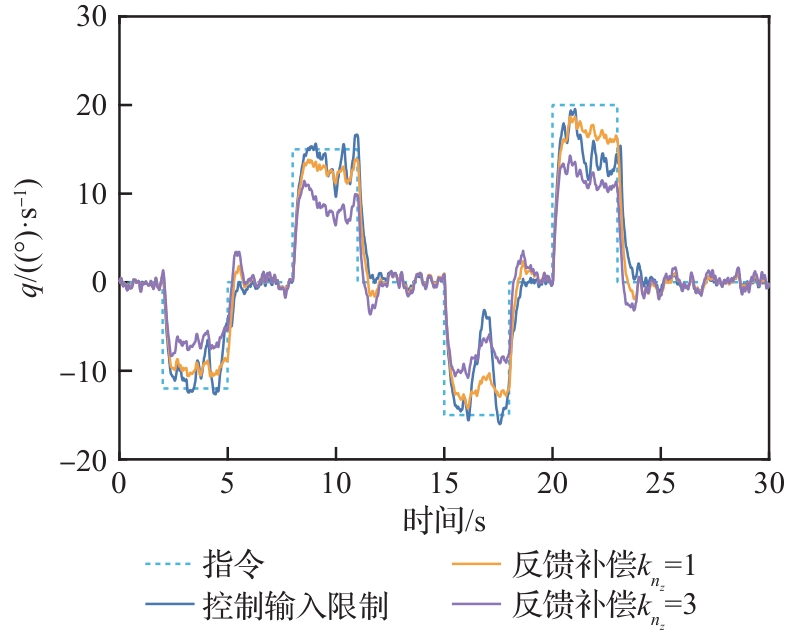
图26
扰动条件下基于输入约束边界保护的过载响应
| [1] | 陈谋, 马浩翔, 雍可南, 等. 无人机安全飞行控制综述[J]. 机器人, 2023, 45(3): 345-366. |
| CHEN M, MA H X, YONG K N, et al. Safety flight control of UAV: A survey[J]. Robot, 2023, 45(3): 345-366 (in Chinese). | |
| [2] | MASSEY C P. Carefree handling systems for helicopters[J]. Proceedings of the Institution of Mechanical Engineers, Part G: Journal of Aerospace Engineering, 1992, 206(1): 37-46. |
| [3] | MASSEY C P, HOWITT J. Advances in helicopter carefree handling and control augmentation[C]∥ Flight Vehicle Integration Panel Symposium. 1996. |
| [4] | STICH R. Clearance of flight control laws for carefree handling of advanced fighter aircraft[M]∥ Optimization based clearance of flight control laws. Berlin: Springer, 2012: 421-442. |
| [5] | PADFIELD G D. The making of helicopter flying qualities: A requirements perspective[J]. The Aeronautical Journal, 1998, 102(1018): 409-437. |
| [6] | MÜLLHÄUSER M. Pilot’s eyes-out capability with a haptic torque protection during helicopter takeoff[J]. Journal of the American Helicopter Society, 2025, 70 (2): 022007. |
| [7] | JEBAKUMAR S K, PASHILKAR A A, SUNDARARAJAN N. Design and verification of carefree maneuvering protection for a high performance fighter aircraft[J]. Defence Science Journal, 2023, 73(3): 263-273. |
| [8] | 吴希明, 牟晓伟. 直升机关键技术及未来发展与设想[J]. 空气动力学学报, 2021, 39(3): 1-10. |
| WU X M, MU X W. A perspective of the future development of key helicopter technologies[J]. Acta Aerodynamica Sinica, 2021, 39(3): 1-10 (in Chinese). | |
| [9] | 王爽, 王开通, 曹金华, 等. 国外高速直升机的现状与发展趋势分析[J]. 航空科学技术, 2023, 34(12): 1-8. |
| WANG S, WANG K T, CAO J H, et al. Current situation and development trend analysis of high-speed helicopter[J]. Aeronautical Science & Technology, 2023, 34(12): 1-8 (in Chinese). | |
| [10] | 王梓旭, 李攀, 沈俊彪, 等. 加/减速状态下倾转旋翼飞行器动态过渡走廊[J]. 航空学报, 2025, 46(11): 531377. |
| WANG Z X, LI P, SHEN J B, et al. Dynamic conversion corridor of tiltrotor aircraft under accelerating and decelerating conditions[J]. Acta Aeronautica et Astronautica Sinica, 2025, 46(11): 531377 (in Chinese). | |
| [11] | CASSINELLI C, PECORARO M. Next generation civil tilt-rotor technology demonstrator (NGCTR-TD) tail design[C]∥ Proceedings of the 48th European Rotorcraft Forum. 2022. |
| [12] | SAETTI U. Dynamic inversion flight control laws for automatic transition of tilt-rotor/wing aircraft[J]. Journal of the American Helicopter Society, 2025, 70(3): 032005. |
| [13] | DU Z Y, WANG J Q, HAN Y P, et al. An analytical study of the centre of gravity envelope of a tilt-rotor aircraft in full flight mode[C]∥ Proceedings of 2024 Chinese Intelligent Systems Conference. Singapore: Springer, 2024: 602-609. |
| [14] | 仇钰清, 李俨, 郎金溪, 等. 高速直升机过渡模态鲁棒自适应姿态控制[J]. 航空学报, 2024, 45(9): 529927. |
| QIU Y Q, LI Y, LANG J X, et al. Robust adaptive attitude control of high-speed helicopters in transition mode[J]. Acta Aeronautica et Astronautica Sinica, 2024, 45(9): 529927 (in Chinese). | |
| [15] | WANG M S, CAO Y H. A review of coaxial compound helicopters: Aerodynamics and flight dynamics[J]. Archives of Computational Methods in Engineering, 2025, 32(7): 4001-4031. |
| [16] | QIU Y Q, LI Y, LANG J X, et al. Dynamics analysis and control of coaxial high-speed helicopter in transition flight[J]. Aerospace Science and Technology, 2023, 137: 108278. |
| [17] | QIU Y Q, LI Y, LANG J X, et al. Robust-augmentation nonlinear dynamic inversion control of over-actuated coaxial high-speed helicopter in transition mode[J]. Chinese Journal of Aeronautics, 2024, 37(8): 404-420. |
| [18] | LANG J X, LI Y, QIU Y Q, et al. Nonlinear dynamic inversion based full envelope robust flight control for coaxial compound helicopter[J]. Aerospace Science and Technology, 2024, 154: 109526. |
| [19] | 邓景辉. 高速直升机关键技术与发展[J]. 航空学报, 2024, 45(9): 529085. |
| DENG J H. Key technologies and development for high-speed helicopters[J]. Acta Aeronautica et Astronautica Sinica, 2024, 45(9): 529085 (in Chinese). | |
| [20] | 聂博文, 王亮权, 黄志银, 等. 复合式高速无人直升机飞行动力学建模与控制策略设计[J]. 航空学报, 2024, 45(9): 529848. |
| NIE B W, WANG L Q, HUANG Z Y, et al. Flight dynamics modeling and control scheme design of compound high-speed unmanned helicopters[J]. Acta Aeronautica et Astronautica Sinica, 2024, 45(9): 529848 (in Chinese). | |
| [21] | JOHNSON C K, TISCHLER M B, MITTLEIDER D, et al. Analysis, design, & optimization of the helicopter active control technology (HACT) flight control system [C]∥ American Helicopter Society 58th Annual Forum. Alexandria: American Helicopter Society, 2002: 885-899. |
| [22] | TAKAHASHI M D, FUJIZAWA B T, LUSARDI J A, et al. Comparison of autonomous flight control performance between partial- and full-authority helicopters[J]. Journal of Guidance, Control, and Dynamics, 2022, 45(5): 885-901. |
| [23] | MILLER D G, EINTHOVEN P G, MORSE C S, et al. HACT flight control system (HFCS) control law overview[C]∥ American Helicopter Society 58th Annual Forum. Alexandria: American Helicopter Society, 2002: 867-884. |
| [24] | HORN J F, CALISE A J, PRASAD J V R. Flight envelope limit detection and avoidance for rotorcraft[J]. Journal of the American Helicopter Society, 2002, 47(4): 253-262. |
| [25] | HORN J F, SAHANI N. Detection and avoidance of main rotor hub moment limits on rotorcraft[J]. Journal of Aircraft, 2004, 41(2): 372-379. |
| [26] | SAHANI N A. Envelope protection systems for piloted and unmanned rotorcraft[D]. Philadelphia: The Pennsylvania State University, 2005. |
| [27] | YAVRUCUK I, PRASAD J V R. Online dynamic trim and control limit estimation[J]. Journal of Guidance, Control, and Dynamics, 2012, 35(5): 1647-1656. |
| [28] | VAN BAELEN D, VAN PAASSEN M M, ELLERBROEK J, et al. Flying by feeling: Communicating flight envelope protection through haptic feedback[J]. International Journal of Human-Computer Interaction, 2021, 37(7): 655-665. |
| [29] | DE ROOIJ G, VAN BAELEN D, BORST C, et al. Supplementing haptic feedback in flight envelope protection through visual display indications[J]. Journal of Aerospace Information Systems, 2023, 20(6): 351-367. |
| [30] | VAN BAELEN D, VAN PAASSEN R, ELLERBROEK J, et al. Evaluating stick stiffness and position guidance for feedback on flight envelope protection[C]∥ AIAA Scitech 2021 Forum. Reston: AIAA, 2021: 1013. |
| [31] | SCHWENZER M, AY M, BERGS T, et al. Review on model predictive control: An engineering perspective[J]. The International Journal of Advanced Manufacturing Technology, 2021, 117(5): 1327-1349. |
| [32] | FANG X, JIANG J J, CHEN W H. Model predictive control with wind preview for aircraft forced landing[J]. IEEE Transactions on Aerospace and Electronic Systems, 2023, 59(4): 3995-4004. |
| [33] | CAVANINI L, IPPOLITI G, CAMACHO E F. Model predictive control for a linear parameter varying model of an UAV[J]. Journal of Intelligent & Robotic Systems, 2021, 101(3): 57. |
| [34] | BU X W. Prescribed performance control approaches, applications and challenges: A comprehensive survey[J]. Asian Journal of Control, 2023, 25(1): 241-261. |
| [35] | LANG J X, WANG Z, LI Y. Prescribed performance-based envelope protection control for coaxial compound helicopter in high-speed flight[J]. IEEE Transactions on Aerospace and Electronic Systems, 2025, 61(5): 12219-12233. |
| [36] | CRUZ-ORTIZ D, CHAIREZ I, POZNYAK A. Sliding-mode control of full-state constraint nonlinear systems: A barrier Lyapunov function approach[J]. IEEE Transactions on Systems, Man, and Cybernetics: Systems, 2022, 52(10): 6593-6606. |
| [37] | MU D D, LI L, WANG G F, et al. State constrained control strategy for unmanned surface vehicle trajectory tracking based on improved barrier Lyapunov function[J]. Ocean Engineering, 2023, 277: 114276. |
| [38] | DUNFORD P, LUNN K, MAGNUSON R, et al. The V-22 osprey: A significant flight test challenge[EB/OL]. [2025-07-23]. . |
| [39] | SAHANI N A, HORN J F, JERAM G J J, et al. Hub moment limit protection using neural network prediction[J]. Journal of the American Helicopter Society, 2006, 51(4): 331-340. |
| [40] | SAHANI N A, HORN J F. Adaptive model inversion control of a helicopter with structural load limiting[J]. Journal of Guidance, Control, and Dynamics, 2006, 29(2): 411-420. |
| [41] | SAETTI U, HORN J F. Load alleviation control design using harmonic decomposition models, rotor state feedback, and redundant control effectors[C]∥ Proceedings of 74th American Helicopter Society International Annual Forum and Technology Display 2018: The Future of Vertical Flight. Alexandria: American Helicopter Society, 2018. |
| [42] | KING D W, DABUNDO C, KISOR R L, et al. V-22 load limiting control law development[C]∥ American Helicopter Society 49th Annual Forum. Alexandria: American Helicopter Society, 1993: 211-224. |
| [43] | 陈亚萍, 喻溅鉴, 胡磊, 等. 直升机旋翼轴弯矩特征及应用[J]. 航空学报, 2021, 42(5): 524168. |
| CHEN Y P, YU J J, HU L, et al. Characteristics and application of bending moments of helicopter rotor shaft[J]. Acta Aeronautica et Astronautica Sinica, 2021, 42(5): 524168 (in Chinese). | |
| [44] | GRAZIANI A, PREDERI D, TREZZINI A A, et al. Prediction of helicopter rotor loads and fatigue damage evaluation with neural networks[J]. Aerotecnica Missili & Spazio, 2025, 104(3): 223-231. |
| [45] | BERGER T, BLANKEN C L, LUSARDI J A, et al. Coaxial-compound helicopter flight control design and high-speed handling qualities assessment[J]. Journal of the American Helicopter Society, 2022, 67(3): 032008. |
| [46] | ZHAO Y Q, YUAN Y, CHEN R L. Influence of differential longitudinal cyclic pitch on flight dynamics of coaxial compound helicopter[J]. Chinese Journal of Aeronautics, 2023, 36(9): 207-220. |
| [47] | MCKAY M E, VAYALALI P, GANDHI F, et al. Control allocation reconfiguration for actuator failure on a coaxial-pusher helicopter[J]. Journal of the American Helicopter Society, 2023, 68(3): 032004. |
| [48] | BASSET P M, CHEN C, PRASAD J V R, et al. Prediction of vortex ring state boundary of a helicopter in descending flight by simulation[J]. Journal of the American Helicopter Society, 2008, 53(2): 139-151. |
| [49] | STANISLAWSKI J. A simulation investigation of helicopter ground resonance phenomenon[J]. Aircraft Engineering and Aerospace Technology, 2019, 91(3): 484-497. |
| [50] | GÜRSOY G. Direct adaptive flight envelope protection [D]. Ankara: Middle East Technical University, 2016. |
| [51] | JOHNSON W. Model for vortex ring state influence on rotorcraft flight dynamics[C]∥ Proceedings of the 4th Decennial Specialist’s Conference on Aeromechanics. Alexandria: American Helicopter Society, 2004. |
| [52] | COLEMAN R P, FEINGOLD A M. Theory of self-excited mechanical oscillations of helicopter rotors with hinged blades: NACA-TR-1351[R]. Washington, D.C.: NACA, 1958. |
| [53] | PICKLES D J, ZAGAGLIA D, BUSSE A, et al. Vortex ring state of a shrouded rotor: An experimental survey[J]. Experiments in Fluids, 2023, 64(4): 69. |
| [54] | Federal Aviation Administration. Helicopter flying handbook, Chapter 11: Helicopter emergencies and hazards: FAA-H-8083-21B [S]. Washington, D.C.: U.S. Department of Transportation, 2019. |
| [55] | Federal Aviation Administration. Helicopter Flying Handbook: Glossary and index: FAA-H-8083-21B [S]. Washington, D.C.: U.S. Department of Transportation, 2019. |
| [56] | IGNÁCIO DA SILVA J A, BUENO D D, DE ABREU G L C M. On the controllers’ design to stabilize ground resonance helicopter[J]. Journal of Vibration and Control, 2019, 25(23/24): 2894-2909. |
| [57] | YAVRUCUK I, PRASAD J V R, UNNIKRISHNAN S. Envelope protection for autonomous unmanned aerial vehicles[J]. Journal of Guidance, Control, and Dynamics, 2009, 32(1): 248-261. |
| [58] | SHIN H H, LEE S H, KIM Y D, et al. Design of a flight envelope protection system using a dynamic trim algorithm[J]. International Journal of Aeronautical and Space Sciences, 2011, 12(3): 241-251. |
| [59] | SHIN H, KIM Y. Flight envelope protection of aircraft using adaptive neural network and online linearisation[J]. International Journal of Systems Science, 2016, 47(4): 868-885. |
| [60] | KIM J H, KIM S, LEE J, et al. Limit protection systems for safety operational envelope of submarine[J]. International Journal of Naval Architecture and Ocean Engineering, 2024, 16: 100598. |
| [61] | PARK J Y, KIM N. Design of a safety operational envelope protection system for a submarine[J]. Ocean Engineering, 2018, 148: 602-611. |
| [62] | HORN J F, CALISE A J, PRASAD J V R. Flight envelope cueing on a tilt-rotor aircraft using neural network limit prediction[J]. Journal of the American Helicopter Society, 2001, 46(1): 23-31. |
| [63] | HORN J F, CALISE A J, PRASAD J V R. Flight envelope limiting systems using neural networks[C]∥ 23rd Atmospheric Flight Mechanics Conference. Reston: AIAA, 1998: 741-751. |
| [64] | XIE R, HE H H, MENG X B, et al. Neural-network-based dynamic flight envelop protection within integrated aircraft control system[J]. Journal of Guidance, Control, and Dynamics, 2023, 46(6): 1083-1094. |
| [65] | GOLD P J, DRYFOOS J B. Design and pilot evaluation of the RAH-66 Comanche selectable control modes: NASA-CP-3220[R]. Washington, D.C.: NASA, 1993. |
| [66] | JERAM G J. Open platform for limit protection with carefree maneuver applications [D]. Atlanta: Georgia Institute of Technology, 2004. |
| [67] | FELLAH K, GUIATNI M. Tactile display design for flight envelope protection and situational awareness[J]. IEEE Transactions on Haptics, 2019, 12(1): 87-98. |
| [68] | VAN BAELEN D, ELLERBROEK J, RENÉ VAN PAASSEN M M, et al. Design of a haptic feedback system for flight envelope protection[J]. Journal of Guidance, Control, and Dynamics, 2020, 43(4): 700-714. |
| [69] | WHALLEY M S, HINDSON W S, THIERS G, et al. A comparison of active sidestick and conventional inceptors for helicopter flight envelope tactile cueing[C]∥ American Helicopter Society 56th Annual Forum. Alexandria: American Helicopter Society, 2000. |
| [70] | EINTHOVEN P G, MILLER D G, NICHOLAS J S, et al. Tactile cueing experiments with a three axis sidestick[C]∥ American Helicopter Society 57th Annual Forum. Alexandria: American Helicopter Society, 2001. |
| [71] | GREENFIELD A, KUBIK S, FAYNBERG A, et al. CH-53K control law risk reduction flight testing on the RASCAL JUH-60A in-flight simulator[C]∥ American Helicopter Society 68th Annual Forum. Alexandria: American Helicopter Society, 2012. |
| [72] | TURPIN T S, DOWELL S R, SZOBOSZLAY Z. Comanche helmet-mounted display symbology simulation: Final report: NASA/CR-2006-212834[R]. Washington, D.C.: NASA, 2006. |
| [73] | MORCOS M T, FISHMAN S M, SAETTI U, et al. Spatial audio cueing algorithms for augmented pilot perception in degraded/denied visual environments[C]∥ Proceedings of the 49th European Rotorcraft Forum. 2023. |
| [74] | MILAM L, AKINS E, WILLIAMS H, et al. Spatial audio cueing aids pilot navigation during simulated helicopter flight in degraded visual environments[C]∥ Proceedings of the Human Factors and Ergonomics Society Annual Meeting.2019: 1634-1638. |
| [75] | MORCOS M T, FISHMAN M, COCCO A, et al. Full-body haptic cueing algorithms for augmented pilot perception in degraded/denied visual environments[C]∥ Proceedings of the Vertical Flight Society 79th Annual Forum and Technology Display. Fairfax: The Vertical Flight Society, 2023. |
| [76] | 戴兴安, 陈燕云, 盛守照. 基于RBF和动态配平的高速直升机边界保护控制[J]. 电光与控制, 2019, 26(10): 38-42. |
| DAI X A, CHEN Y Y, SHENG S Z. Envelope protection control for high-speed helicopter based on RBF and dynamic trimming[J]. Electronics Optics & Control, 2019, 26(10): 38-42 (in Chinese). | |
| [77] | THAISS C, MCCOLL C C, HORN J F, et al. Rotorcraft real time damage alleviation through load limiting control[C]∥ 55th AIAA/ASME/ASCE/AHS/ASC Structures, Structural Dynamics, and Materials Conference. Reston: AIAA, 2014: 1528. |
| [78] | FALKENA W, BORST C, CHU Q P, et al. Investigation of practical flight envelope protection systems for small aircraft[J]. Journal of Guidance, Control, and Dynamics, 2011, 34(4): 976-988. |
| [79] | LIANG S, XU B, SUN S S, et al. Dynamic-command-limiting-based AOA constraint control of hypersonic flight vehicle[J]. IEEE Transactions on Aerospace and Electronic Systems, 2025, 61(1): 1163-1174. |
| [80] | SAHANI N, HORN J F. Command limiting for full-envelope guidance and control of rotorcraft[C]∥ AIAA Guidance, Navigation, and Control Conference and Exhibit. Reston: AIAA, 2005: 6348. |
| [81] | SHIN H, KIM Y, KIM E T, et al. Flight envelope protection controller using dynamic trim algorithm[C]∥ 2009 ICCAS-SICE. Piscataway: IEEE Press, 2009: 3228-3232. |
| [82] | JOHNSON E N. Limited authority adaptive flight control[D]. Atlanta: Georgia Institute of Technology, 2000. |
| [83] | UNNIKRISHNAN S. Adaptive envelope protection methods for aircraft[D]. Atlanta: Georgia Institute of Technology, 2006. |
| [84] | UNNIKRISHNAN S, PRASAD J V R. Carefree handling using reactionary envelope protection method[C]∥AIAA Guidance, Navigation, and Control Conference and Exhibit. Reston: AIAA, 2006: 6219. |
| [85] | HOLKAR K S, WAGHMARE L M. An overview of model predictive control[J]. International Journal of Control and Automation, 2010, 3(4): 47-63. |
| [86] | KOUVARITAKIS B, CANNON M. Model predictive control[M]. Cham: Springer International Publishing, 2016. |
| [87] | GRÜNE L, PANNEK J. Nonlinear model predictive control: Theory and algorithms[M]. Cham: Springer International Publishing, 2017. |
| [88] | ZHAO K, SONG Y D, MA T D, et al. Prescribed performance control of uncertain Euler-Lagrange systems subject to full-state constraints[J]. IEEE Transactions on Neural Networks and Learning Systems, 2018, 29(8): 3478-3489. |
| [89] | SHI Y, YI B W, XIE W, et al. Enhancing prescribed performance of tracking control using monotone tube boundaries[J]. Automatica, 2024, 159: 111304. |
| [90] | TEE K P, GE S S, TAY E H. Barrier Lyapunov functions for the control of output-constrained nonlinear systems[J]. Automatica, 2009, 45(4): 918-927. |
| [91] | TEE K P, GE S S. Control of nonlinear systems with partial state constraints using a barrier Lyapunov function[J]. International Journal of Control, 2011, 84(12): 2008-2023. |
| [92] | HOSSEINNAJAD A, MOHAJER N, NAHAVANDI S. Barrier Lyapunov function-based backstepping controller design for path tracking of autonomous vehicles[J]. Journal of Intelligent & Robotic Systems, 2024, 110(3): 118. |
| [93] | BOTTASSO C L, MONTINARI P. Rotorcraft flight envelope protection by model predictive control[J]. Journal of the American Helicopter Society, 2015, 60(2): 1-13. |
| [94] | BAUERSFELD L, SPANNAGL L, DUCARD G J J, et al. MPC flight control for a tilt-rotor VTOL aircraft[J]. IEEE Transactions on Aerospace and Electronic Systems, 2021, 57(4): 2395-2409. |
| [95] | MA B, CHEN M. Safety flight envelope calculation and protection control of UAV based on disturbance observer[J]. Security and Safety, 2023, 2: 2023020. |
| [96] | YAN K, CHEN M, WU Q X. Neural network-based adaptive fault tolerant tracking control for unmanned autonomous helicopters with prescribed performance[J]. Proceedings of the Institution of Mechanical Engineers, Part G: Journal of Aerospace Engineering, 2019, 233(12): 4350-4362. |
| [97] | WANG Z, LANG J X, LI Y. Envelope protection for coaxial compound helicopter with prescribed performance[J]. Journal of Guidance, Control, and Dynamics, 2025, 48(12): 2908-2918. |
| [98] | SAETTI U, HORN J F. Load alleviation flight control design using high-order dynamic models[J]. Journal of the American Helicopter Society, 2020, 65(3): 032009. |
| [99] | SAETTI U. Rotorcraft flight control design with alleviation of unsteady rotor loads[D]. Philadelphia: The Pennsylvania State University, 2019. |
| [100] | SCARAMAL M, SAETTI U, HORN J F. Load alleviation control using dynamic inversion with direct load feedback[C]∥ Proceedings of the Vertical Flight Society 77th Annual Forum and Technology Display. Fairfax: The Vertical Flight Society, 2021. |
| [101] | MANIMALA B, PADFIELD G D, WALKER D. Load alleviation for a tilt-rotor aircraft in airplane mode[J]. Journal of Aircraft, 2006, 43(1): 147-156. |
| [102] | WALKER D J, VOSKUIJL M. Active control of flight path and critical loads in tilt-rotor aircraft[C]∥ American Helicopter Society 63rd Annual Forum. Alexandria: American Helicopter Society, 2007. |
| [103] | VOSKUIJL M, PAVEL M D, VAN DER VORST J. Active control technology for tiltrotor structural load alleviation[C]∥ 30th European Rotorcraft Forum. 2004. |
| [104] | SAETTI U, HORN J F, BERGER T, et al. Handling-qualities perspective on rotorcraft load alleviation control[J]. Journal of Guidance, Control, and Dynamics, 2020, 43(10): 1792-1804. |
| [105] | 陈谋, 黄正国, 申耀华, 等. 先进飞行器复合抗干扰控制技术综述[J]. 航空学报, 2025, 46(6): 531303. |
| CHEN M, HUANG Z G, SHEN Y H, et al. Overview of composite anti-disturbance control technology of advanced vehicles[J]. Acta Aeronautica et Astronautica Sinica, 2025, 46(6): 531303 (in Chinese). | |
| [106] | LU K, TIAN H Y, ZHEN P, et al. Conversion flight control for tiltrotor aircraft via active disturbance rejection control[J]. Aerospace, 2022, 9(3): 155. |
| [107] | DU Y W, CAO W H, SHE J H. Analysis and design of active disturbance rejection control with an improved extended state observer for systems with measurement noise[J]. IEEE Transactions on Industrial Electronics, 2023, 70(1): 855-865. |
| [108] | TANG S, YANG Q H, QIAN S K, et al. Height and attitude active disturbance rejection controller design of a small-scale helicopter[J]. Science China Information Sciences, 2015, 58(3): 1-17. |
| [109] | DUAN D Y, WANG Z G, LI J B, et al. Stabilization control for unmanned helicopter-slung load system based on active disturbance rejection control and improved sliding mode control[J]. Proceedings of the Institution of Mechanical Engineers, Part G: Journal of Aerospace Engineering, 2021, 235(13): 1803-1816. |
| [110] | SHEN S Y, XU J F. Trajectory tracking active disturbance rejection control of the unmanned helicopter and its parameters tuning[J]. IEEE Access, 2021, 9: 56773-56785. |
| [111] | 邓柏海, 徐锦法. 复合式无人直升机姿态自抗扰控制[J]. 北京航空航天大学学报, 2023, 49(11): 3100-3107. |
| DENG B H, XU J F. Active disturbance rejection control of attitude of compound unmanned helicopter[J]. Journal of Beijing University of Aeronautics and Astronautics, 2023, 49(11): 3100-3107 (in Chinese). | |
| [112] | 刘明皓, 周沛沅, 许敏捷, 等. 基于自抗扰控制的共轴直升机姿态控制律设计[J]. 海军航空大学学报, 2024, 39(1): 123-130, 146. |
| LIU M H, ZHOU P Y, XU M J, et al. Design of attitude control law for coaxial helicopter based on active disturbance rejection control[J]. Journal of Naval Aviation University, 2024, 39(1): 123-130, 146 (in Chinese). | |
| [113] | MA H X, CHEN M, WU Q X. Disturbance observer-based safe tracking control for unmanned helicopters with partial state constraints and disturbances[J]. IEEE/CAA Journal of Automatica Sinica, 2023, 10(11): 2056-2069. |
| [114] | YAVRUCUK I, UNNIKRISHNAN S, PRASAD J V R. Envelope protection in autonomous unmanned aerial vehicles[C]∥ American Helicopter Society 59th Annual Forum. Alexandria: American Helicopter Society, 2003: 2000-2010. |
| [115] | KRINGS M, THIELECKE F. A predictive envelope protection system using linear, parameter-varying models[J]. CEAS Aeronautical Journal, 2015, 6(1): 95-108. |
| [116] | KRINGS M, THIELECKE F. An integrated approach to predictive flight guidance and envelope protection[C]∥ AIAA Guidance, Navigation, and Control Conference. Reston: AIAA, 2012: 4712. |
| [117] | MBALLO C E, PRASAD J V R, BERGER T. Load limiting control: A handling qualities analysis[C]∥ 47th European Rotorcraft Forum. 2021. |
| [118] | 杨庶, 杨婷, 王欣然. 具有输出边界保护的飞行器姿态控制律设计[J]. 中国科学: 信息科学, 2024, 54(10): 2470-2486. |
| YANG S, YANG T, WANG X R. Attitude control law design for a flight vehicle with output boundary protections[J]. Scientia Sinica (Informationis), 2024, 54(10): 2470-2486 (in Chinese). | |
| [119] | 杨庶. 具有边界保护性能的直升机飞-发一体化控制律[J]. 航空学报, 2023, 44(S1): 727560. |
| YANG S. Helicopter integrated flight-engine control with envelope protections[J]. Acta Aeronautica et Astronautica Sinica, 2023, 44(S1): 727560 (in Chinese). | |
| [120] | RUDDELL A J, GROTH W, MCCUTCHEON R. Advancing blade concept (ABC) technology demonstrator: USAAVRADCOM-TR-81-D-5[R]. 1981. |
| [121] | LANG J X, LI Y, QIU Y Q, et al. Development of a mathematical model of a coaxial compound helicopter for trimming and stability analysis[J]. Journal of Aerospace Engineering, 2024, 37(5): 04024053. |
| [122] | CAO Y H, WANG M S, LI G Z. Flight dynamics modeling, trim, stability, and controllability of coaxial compound helicopters[J]. Journal of Aerospace Engineering, 2021, 34(6): 04021084. |
| [123] | BERGER T. Handling qualities requirements and control design for high-speed rotorcraft [D]. Philadelphia: The Pennsylvania State University, 2019. |
| [124] | CARAWAY D J, HARRIS Q C, COTTING M C. VISTA X-62A model following algorithm overview[C]∥ AIAA SCITECH 2023 Forum. Reston: AIAA, 2023: 1746. |
| [125] | BLANKEN C L, TISCHLER M B, LUSARDI J A, et al. Proposed revisions to Aeronautical Design Standard-33E (ADS-33E-PRF) toward ADS-33F-PRF: SR-FCDD-AMV-19-01[R]. 2019. |
| [126] | KUFELD R M, BOUSMAN W G. High load conditions measured on a UH-60A in maneuvering flight[J]. Journal of the American Helicopter Society, 1998, 43(3): 202-211. |
| [127] | ABRAMOVITZ M, SCHMIDT S F, VAN DYKE R D, Jr. Investigation of the use of a stick force proportional to pitching acceleration for normal-acceleration warning: NACA-RM-A53E21[R]. Washington, D.C.: NACA, 1953. |
| [1] | 雍可南, 陈谋. 多类多型约束下无人直升机迅猛机动安全控制[J]. 航空学报, 2026, 47(9): 532472-532472. |
| [2] | 李钊星, 杨林, 王霞, 许斌. 基于强迫振荡的战斗机有限时间深失速改出控制[J]. 航空学报, 2026, 47(9): 532491-532491. |
| [3] | 卢园, 张柯, 姜斌. 基于全驱系统方法的无人直升机分层容错编队控制[J]. 航空学报, 2026, 47(9): 532279-532279. |
| [4] | 金宇, 杨夏, 张雷, 唐家成, 朱波. 增强型ERG控制框架:模块设计与实验验证[J]. 航空学报, 2026, 47(9): 532465-532465. |
| [5] | 郝振洋, 曹尚, 张凤婷, 侯兰兰. 直升机桨毂顶置主动式作动系统设计[J]. 航空学报, 2026, 47(7): 432464-432464. |
| [6] | 陈国旺, 唐倩, 何刘. 基于图域泛化的直升机尾传动系统故障诊断方法[J]. 航空学报, 2026, 47(7): 232642-232642. |
| [7] | 王重, 任众孚, 白俊强, 郎金溪, 李俨. 基于鲁棒显模型跟踪的共轴高速直升机飞/发综合控制[J]. 航空学报, 2026, 47(7): 632745-632745. |
| [8] | 黄鑫, 邹嘉赫, 肖舒怡, 李小杭. 防御一类网络隐蔽攻击的自适应控制策略[J]. 航空学报, 2026, 47(4): 332290-332290. |
| [9] | 周永泽, 王玉齐, 胡锐锋, 朱伟, 王国华, 张卫国. 基于粗粒化离散元方法的旋翼沙尘云数值模拟[J]. 航空学报, 2026, 47(16): 133229-133229. |
| [10] | 韦康瑞, 周旭, 徐尤松, 曹宸恺, 招启军. 直升机发动机失效后旋翼转速自主恢复与稳定控制[J]. 航空学报, 2026, 47(16): 133109-133109. |
| [11] | 罗平根, 李彬, 王化吉, 李星萍, 夏文庆. 直升机余热回收热管理新构型及应用[J]. 航空学报, 2026, 47(1): 632007-632007. |
| [12] | 张振, 谭剑锋, 赵京龙, 陈林海, 闫羽泽, 林长亮. 直升机铝合金机身弹伤形态快速预测方法[J]. 航空学报, 2026, 47(1): 232015-232015. |
| [13] | 王莹, 李洋, 成超乾, 焦宗夏. 宽飞行剖面下机载滑油系统热负荷分析[J]. 航空学报, 2026, 47(1): 632005-632005. |
| [14] | 吴林波, 孟澍, 张威, 谭剑锋. 直升机近地飞行扬沙抑制的旋翼布局参数[J]. 航空学报, 2026, 47(1): 632003-632003. |
| [15] | 郑礼雄, 陈喆, 王鑫, 招启军. 融合数据自适应BPNN的倾转旋翼机回转颤振边界预测[J]. 航空学报, 2025, 46(S1): 732159-732159. |
| 阅读次数 | ||||||
|
全文 |
|
|||||
|
摘要 |
|
|||||
版权所有 © 航空学报编辑部
版权所有 © 2011航空学报杂志社
主管单位:中国科学技术协会 主办单位:中国航空学会 北京航空航天大学

 CJA

