马铁林1, 景彪2, 蒋崇文2, 乔南璇2,3( ), 付竟成1, 向锦武2
收稿日期:2025-03-31
修回日期:2025-07-21
接受日期:2025-08-10
出版日期:2025-08-19
发布日期:2025-10-30
通讯作者:
乔南璇
E-mail:qiaonanxuan@buaa.edu.cn
基金资助:
Tielin MA1, Biao JING2, Chongwen JIANG2, Nanxuan QIAO2,3(), Jingcheng FU1, Jinwu XIANG2
Received:2025-03-31
Revised:2025-07-21
Accepted:2025-08-10
Online:2025-08-19
Published:2025-10-30
Contact:
Nanxuan QIAO
E-mail:qiaonanxuan@buaa.edu.cn
Supported by:摘要:
跨速域飞行器在快速部署、持久侦察与高速投送等领域展现出广阔应用前景,其设计核心挑战在于依靠单一气动布局难以兼顾复杂飞行工况需求且单体平台尺寸较大难以向集群应用场景拓展。提出一种具备集群部署潜力且宽速域性能均衡的变体滑翔飞行器构型,融合乘波体与旋转伸缩机翼气动布局,建立了完整的设计、优化和性能评估框架,实现跨速域变体滑翔飞行器从任务需求到性能评价的完整闭环。在总体参数评估方面,提出了基于多阶段再入飞行走廊的总体参数评估方法;在气动外形优化方面,建立了乘波体尾部整流罩宽速域优化方法和变体机翼全局-梯度两阶段优化策略;在飞行器任务能力评估方面,基于hp-RPM (hp-adaptive Radau Pseudospectral Method)方法完成飞行器可达域计算和任务能力评估,探索出适用于该布局的俯冲-跃升减速策略,可在不改变布局的情况下突破准平衡滑翔软约束完成预定减速任务,使飞行器具备更强的载重能力。
中图分类号:
马铁林, 景彪, 蒋崇文, 乔南璇, 付竟成, 向锦武. 跨速域乘波体组合变体机翼布局及其任务能力评估[J]. 航空学报, 2026, 47(1): 632051.
Tielin MA, Biao JING, Chongwen JIANG, Nanxuan QIAO, Jingcheng FU, Jinwu XIANG. Configuration design and mission capability evaluation of a cross-speed-range waverider-integrated morphing wing[J]. Acta Aeronautica et Astronautica Sinica, 2026, 47(1): 632051.
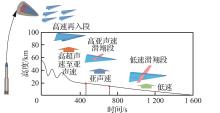
图 1
跨速域变体滑翔飞行器任务剖面
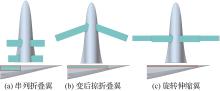
图 2
典型面内变体布局形式
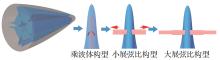
图 3
跨速域变体滑翔飞行器构型切换示意图
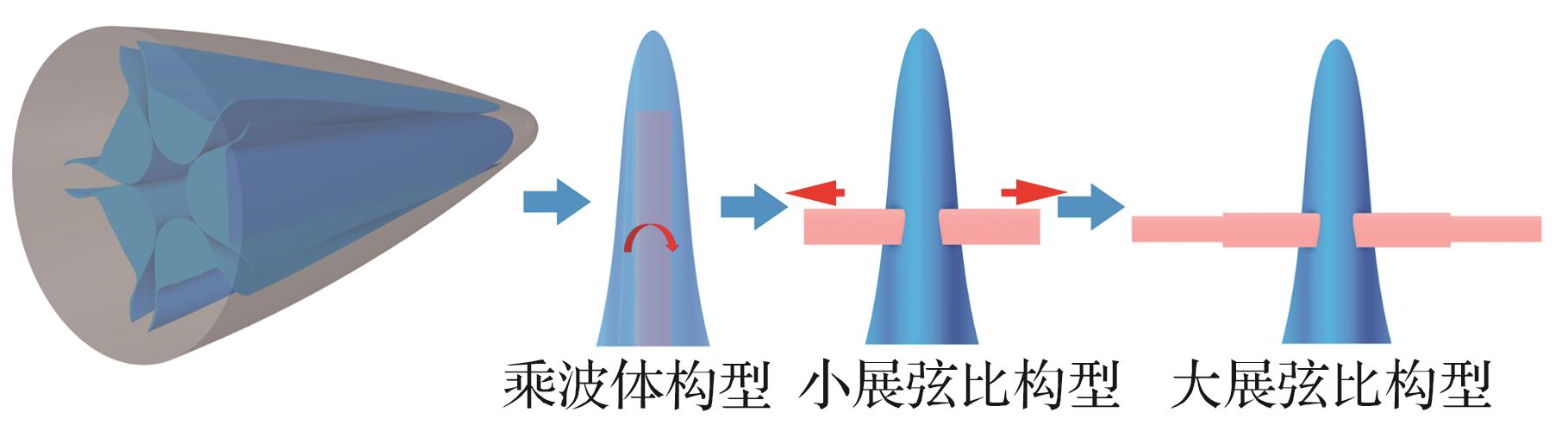

表1
不同构型飞行过程约束
| 飞行器构型 | 过载 | 最大动压/kPa | 最大热流密度/(kW∙m-2) |
|---|---|---|---|
| 乘波体构型 | [ | 150 | 2 000 |
| 小展弦比构型 | [ | 10 | 1 000 |
| 大展弦比构型 | [ | 5 | 500 |
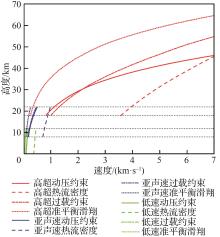
图 4
多阶段再入飞行走廊(速度线性坐标轴)
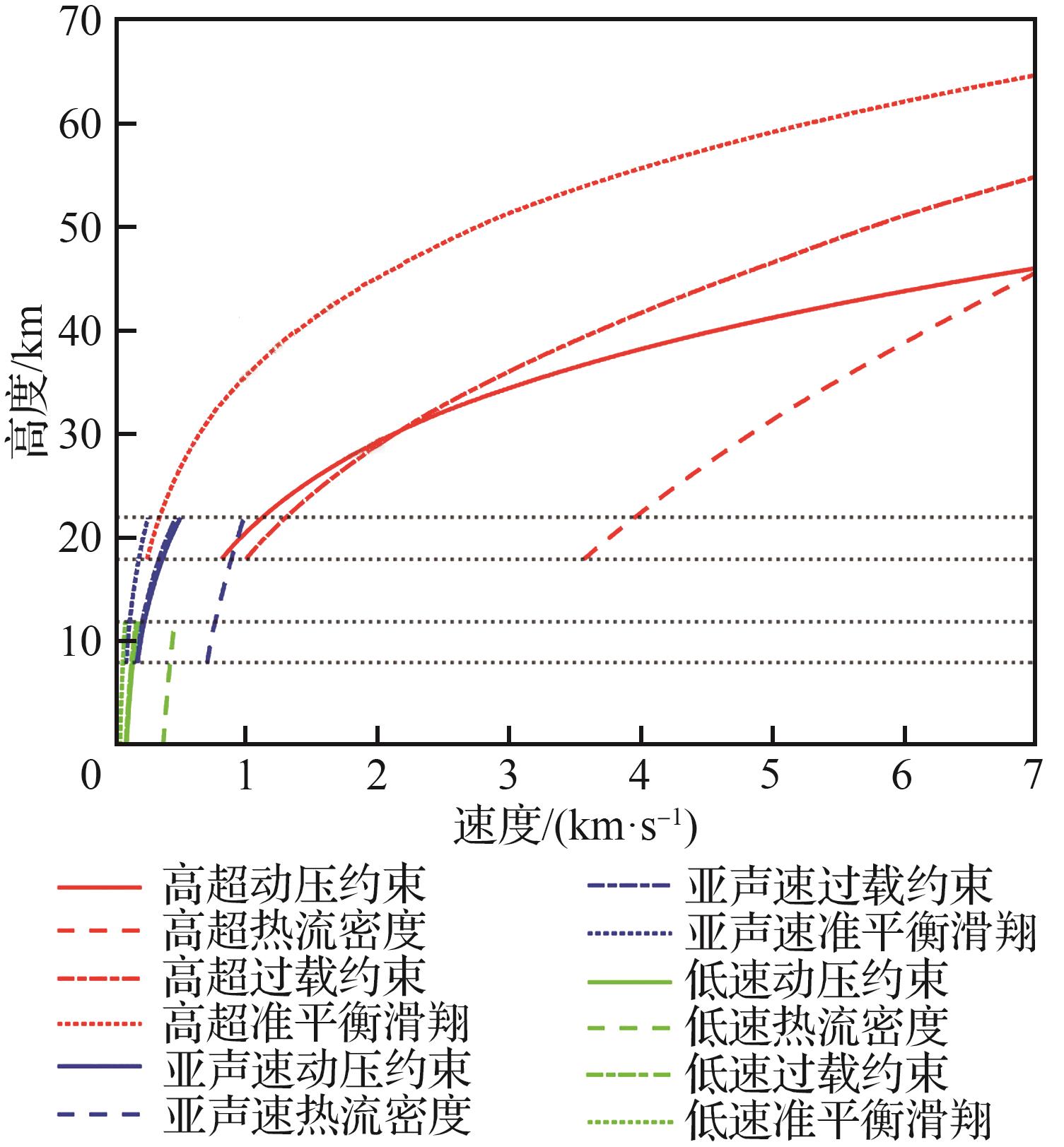
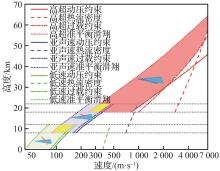
图 5
多阶段再入飞行走廊(速度对数坐标轴)
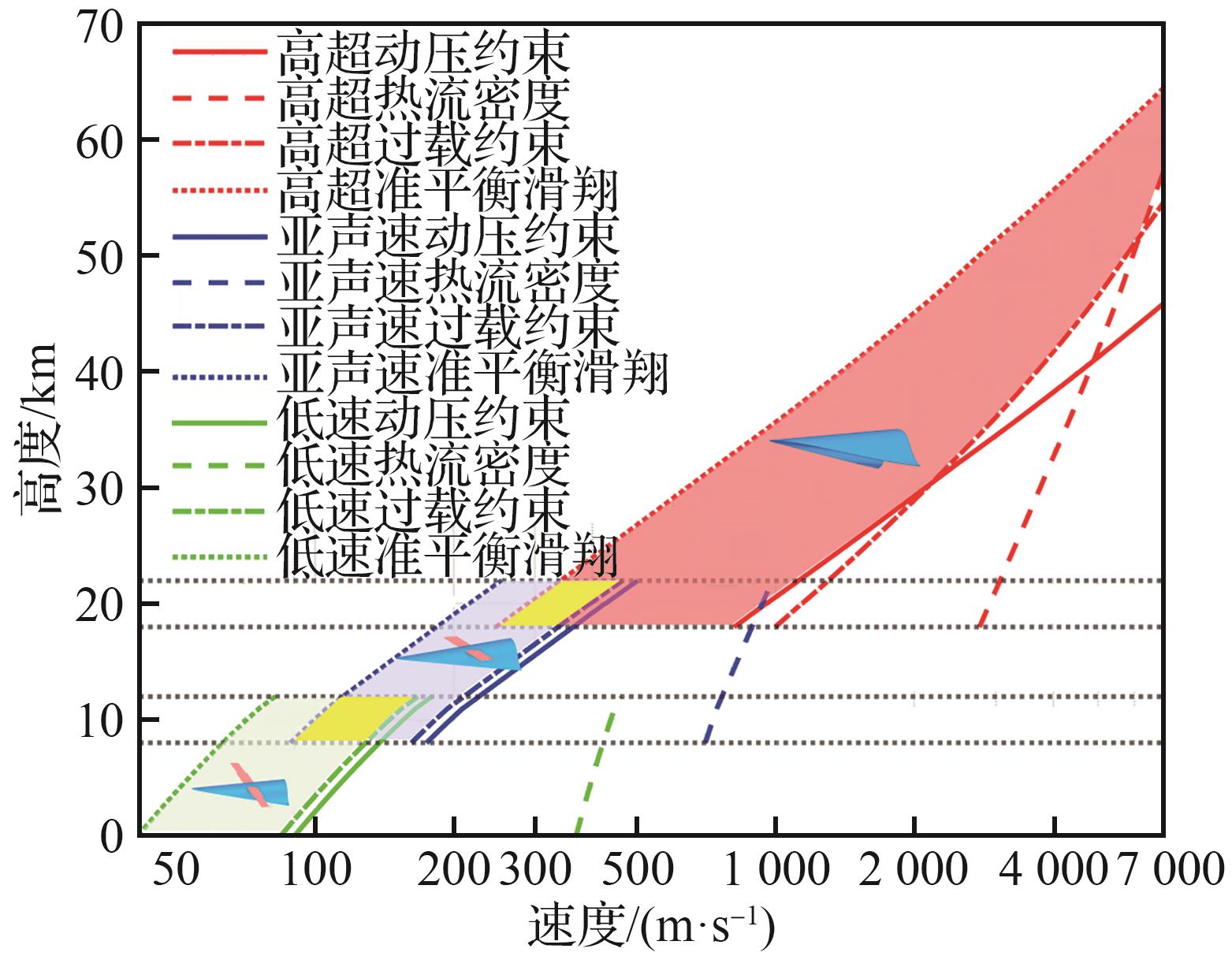
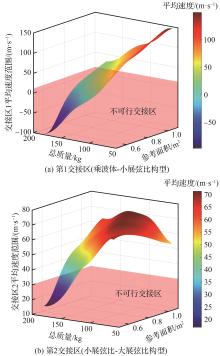
图 6
再入过程构型切换区间平均速度范围
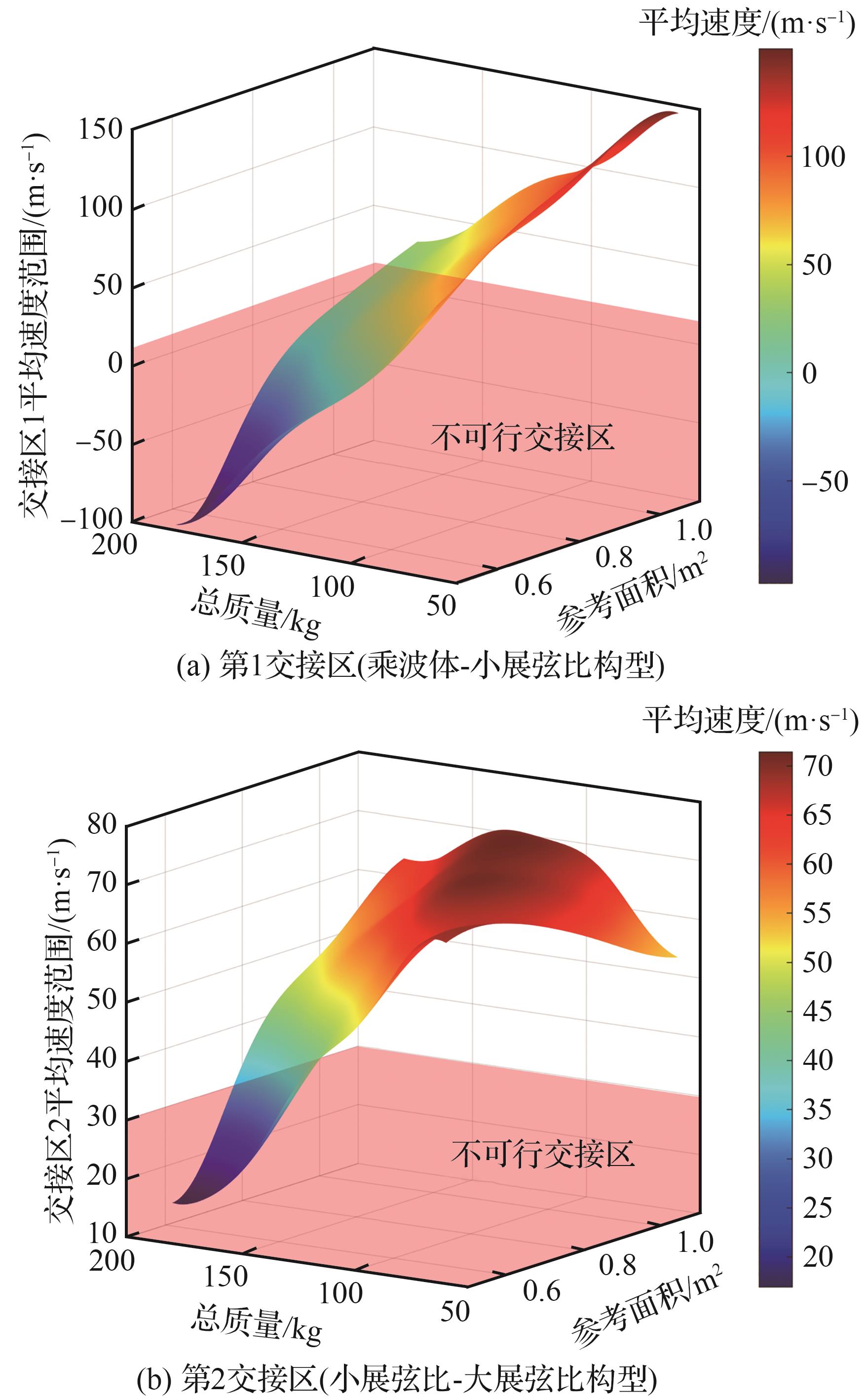
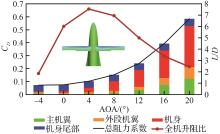
图 7
亚声速状态(Ma=0.3)全机各部件气动力
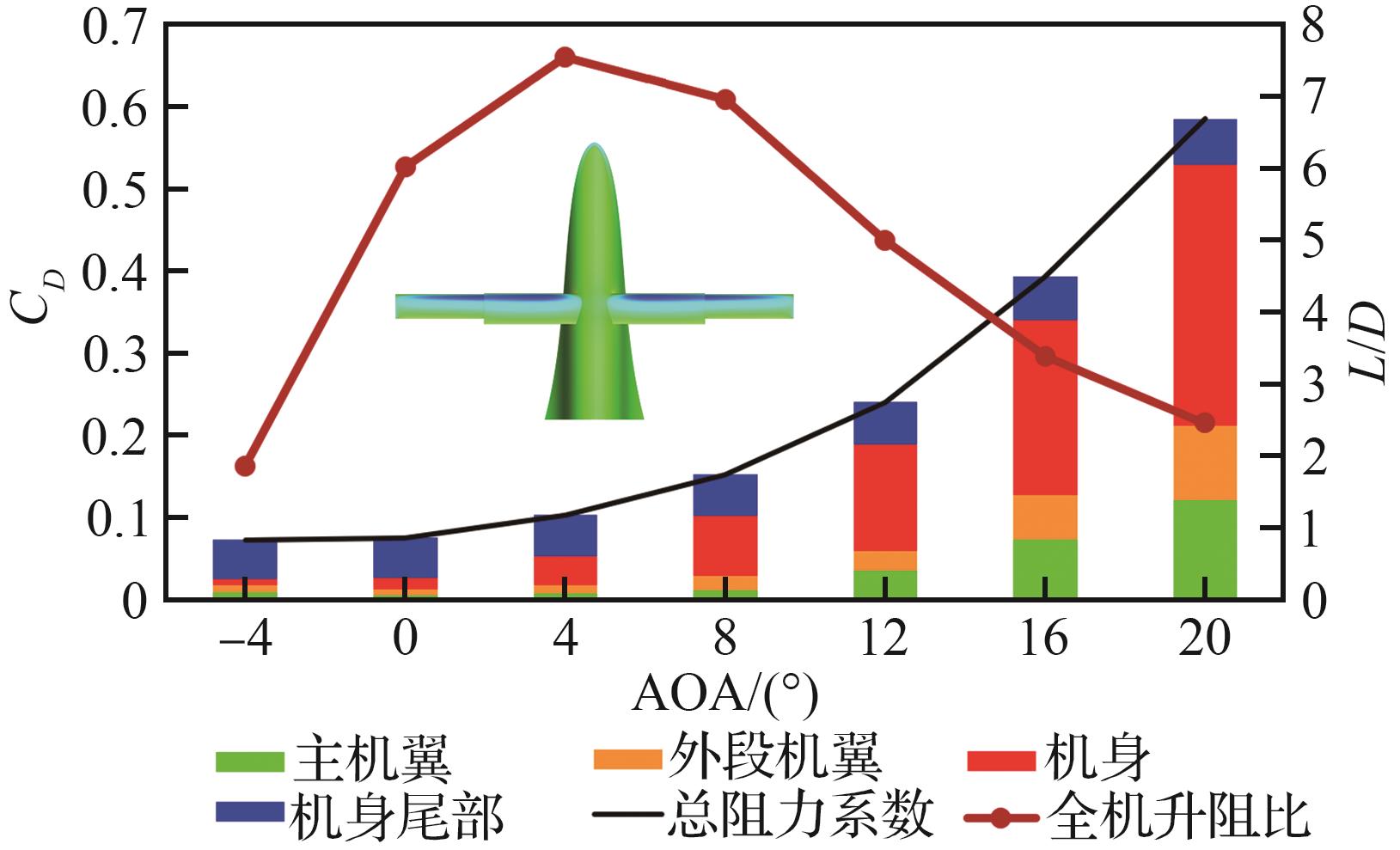
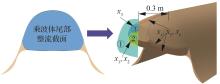
图 8
机身尾部整流罩参数化方法
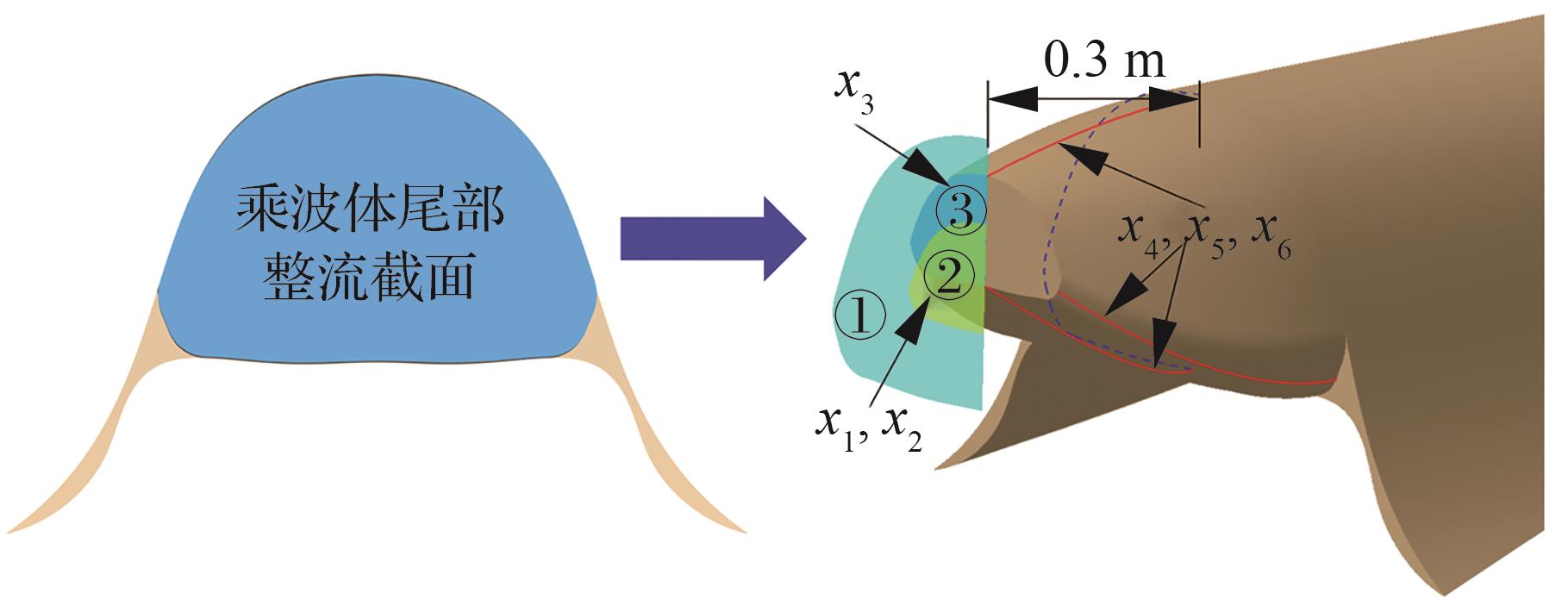
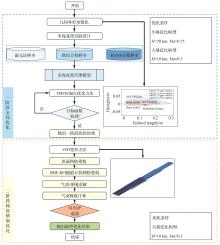
图 9
伸缩机翼优化流程TMFEI—Time Aware Multi Fidelity Expected Improvement;RBF-RFI—Radial Basis Function-Radial Function Interpolation;SLSQP—Sequential Least Squares Programming
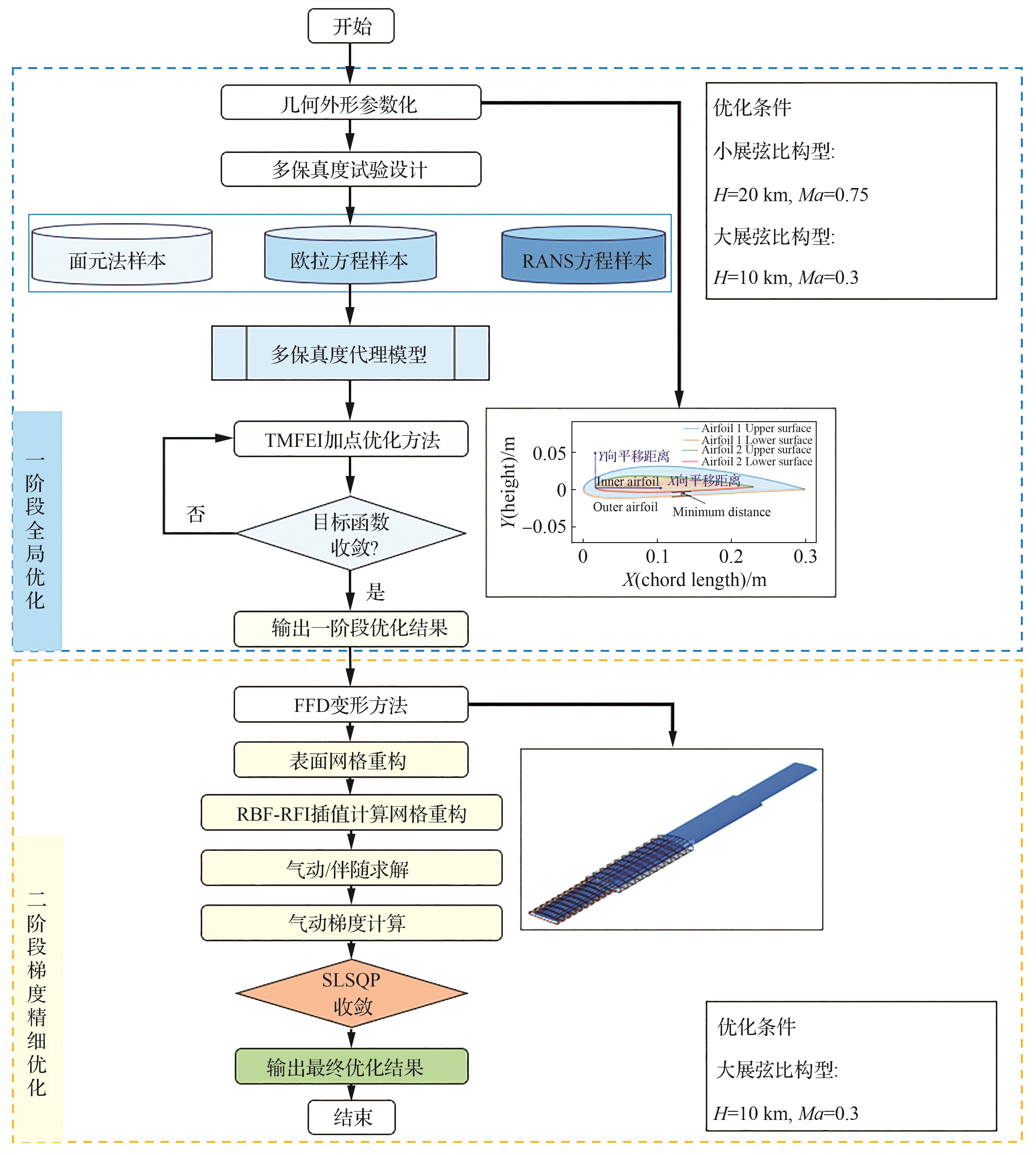
图 10
变体机翼两阶段优化结果
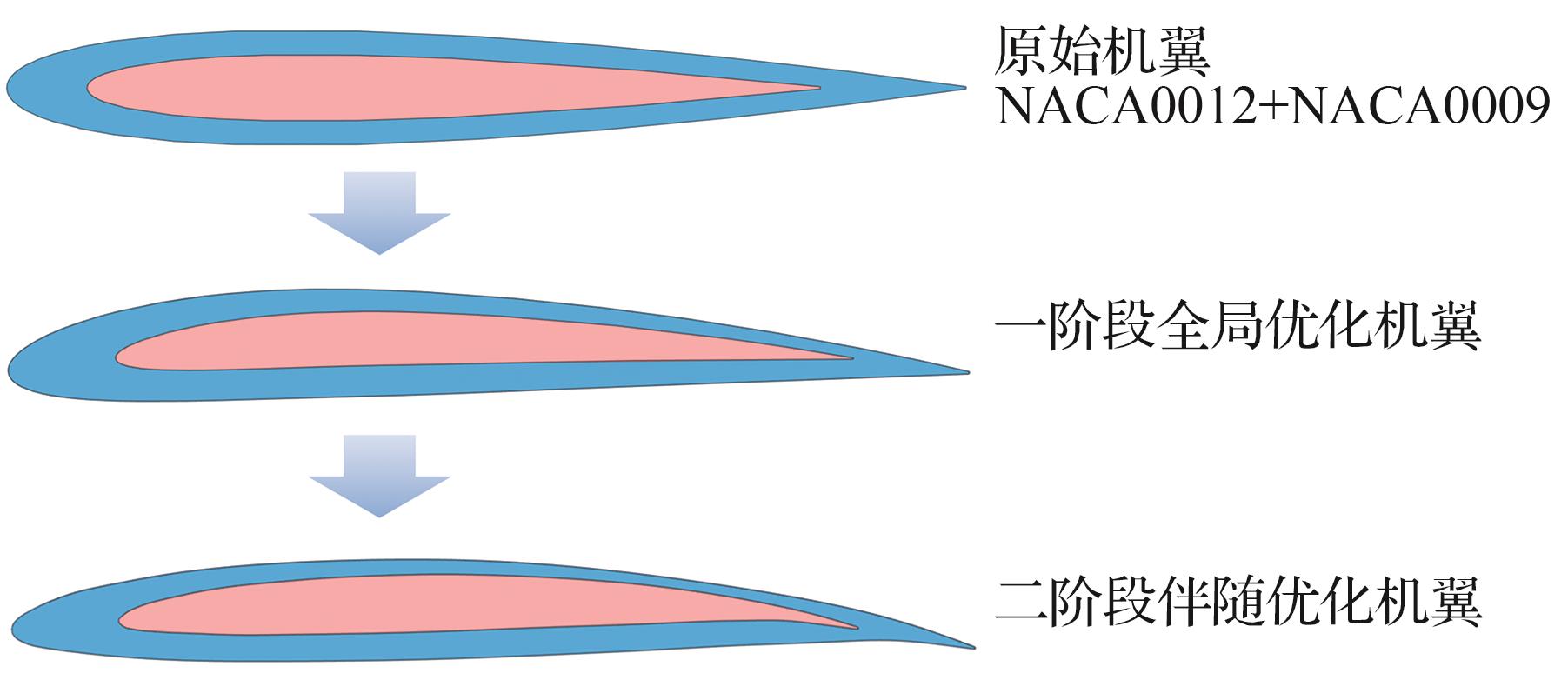
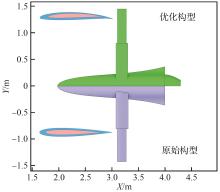
图 11
原始构型与优化构型对比
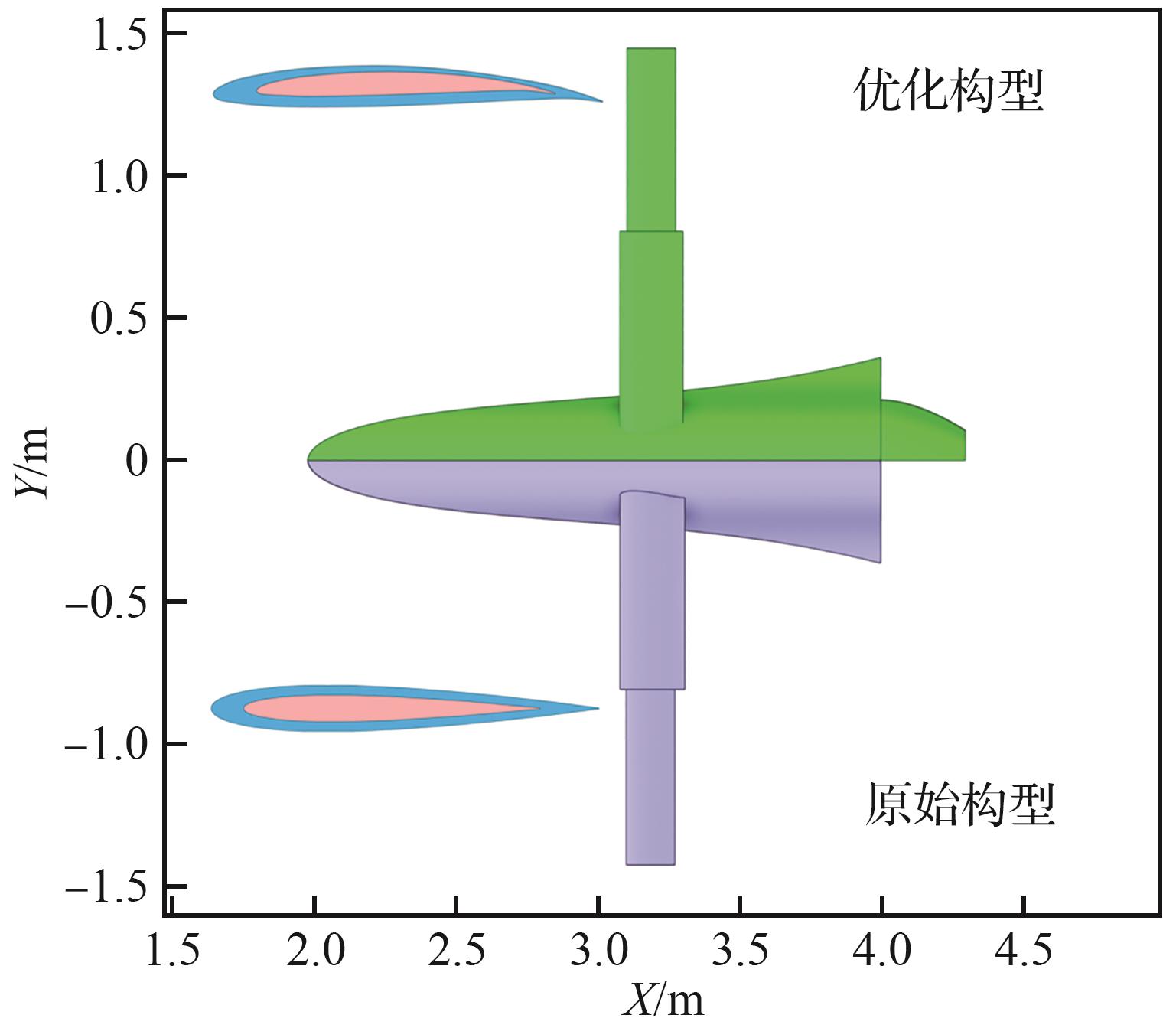
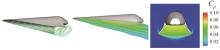
图 12
乘波体构型流场云图
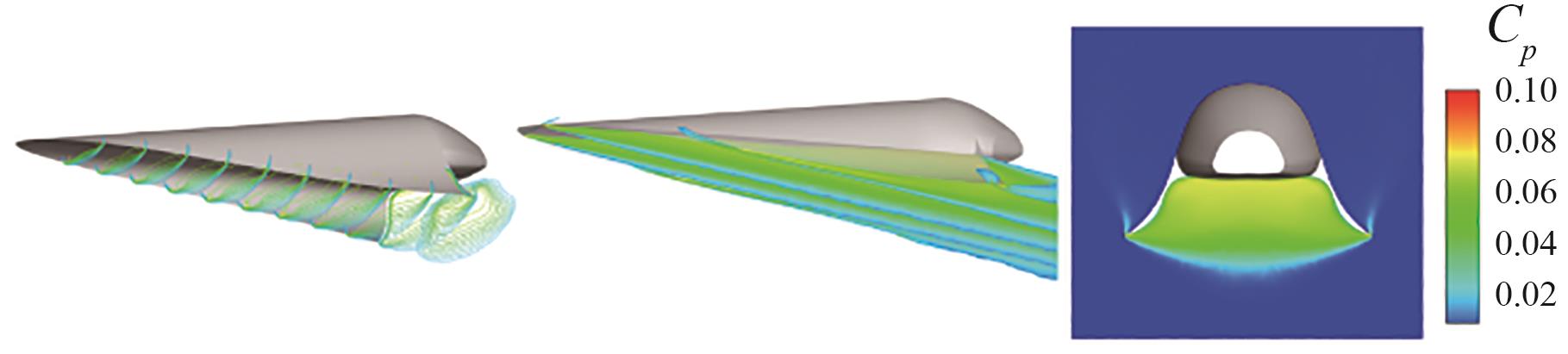
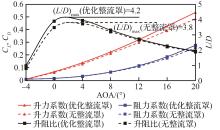
图 13
乘波体构型纵向气动性能
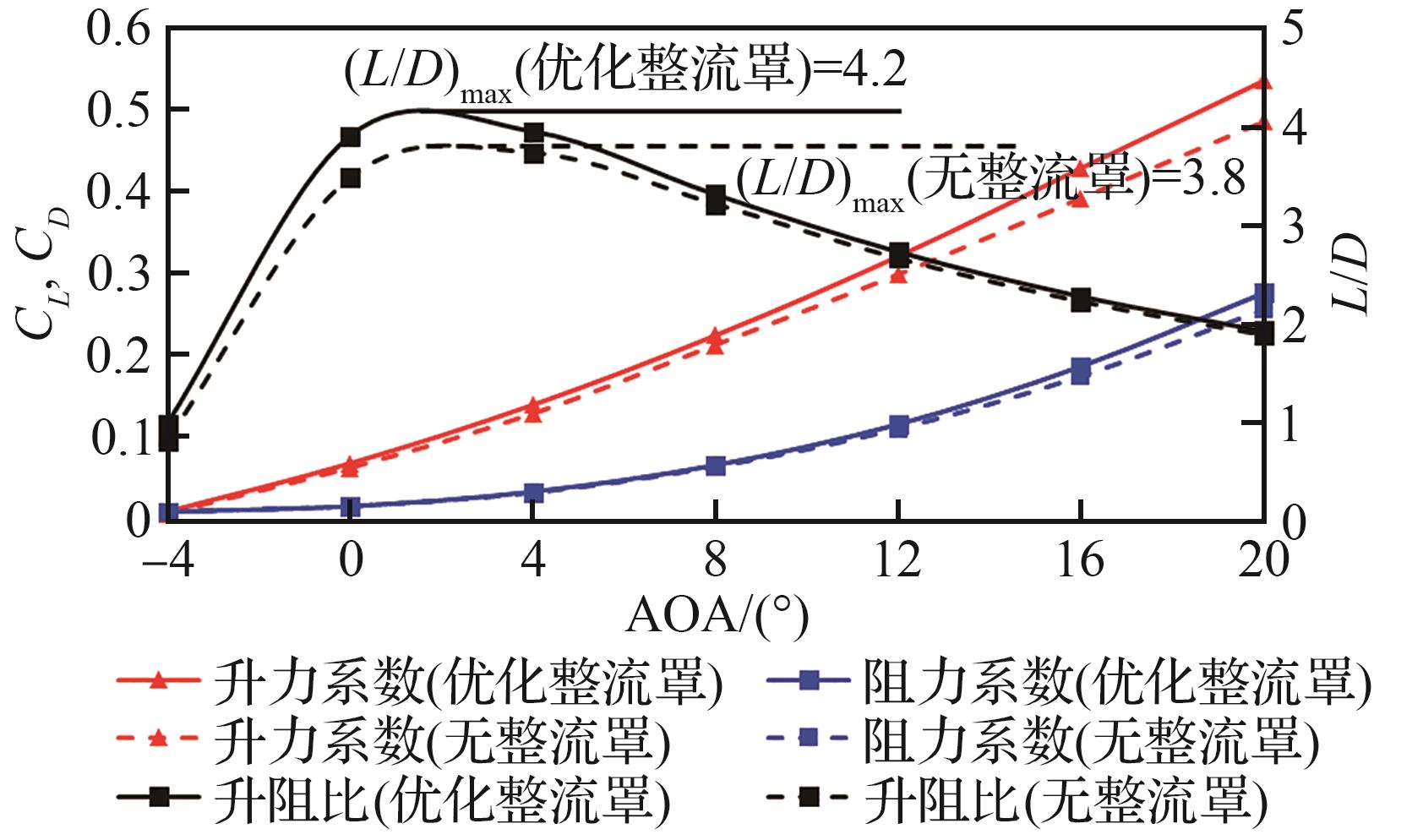
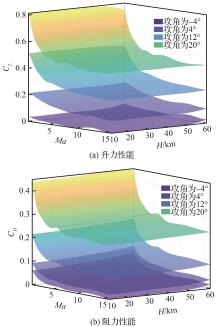
图 14
乘波体构型宽速域气动性能
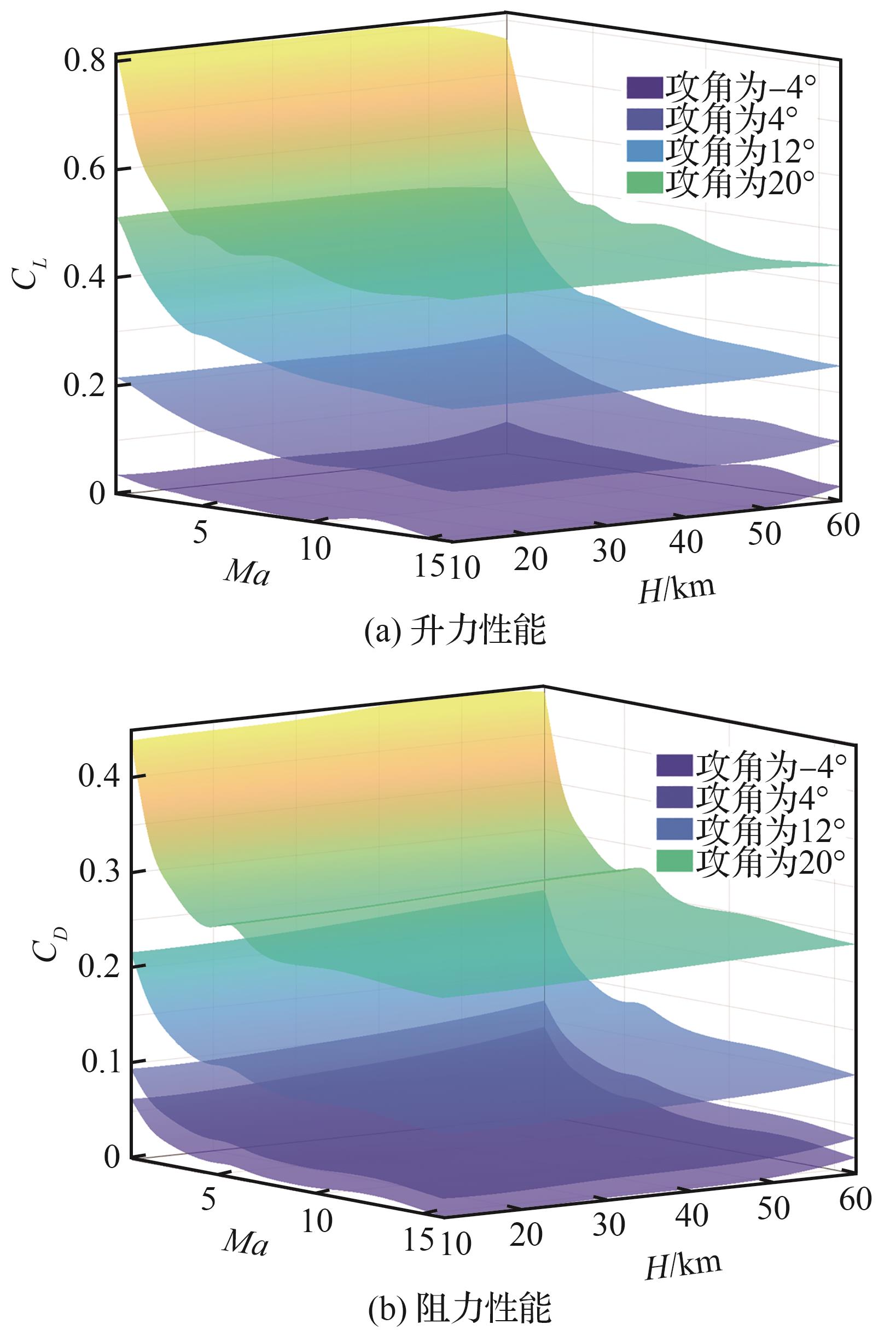
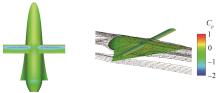
图 15
小展弦比构型流场云图
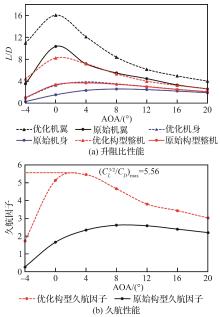
图 16
小展弦比构型纵向气动性能
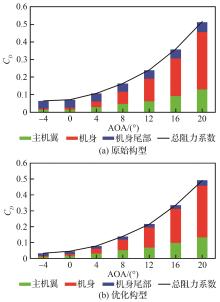
图 17
小展弦比构型各部件阻力系数占比
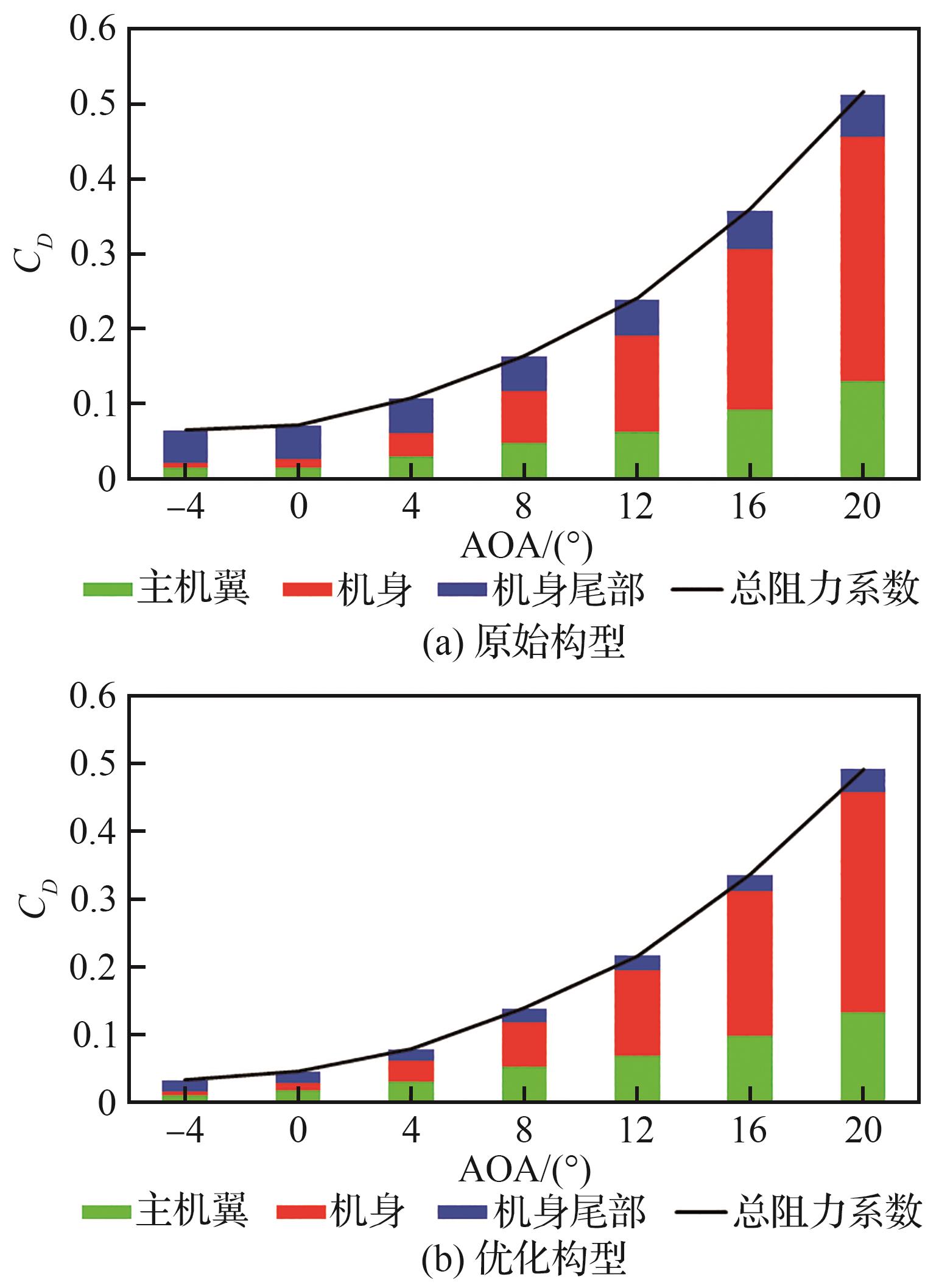
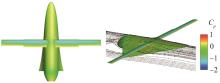
图 18
大展弦比构型流场云图
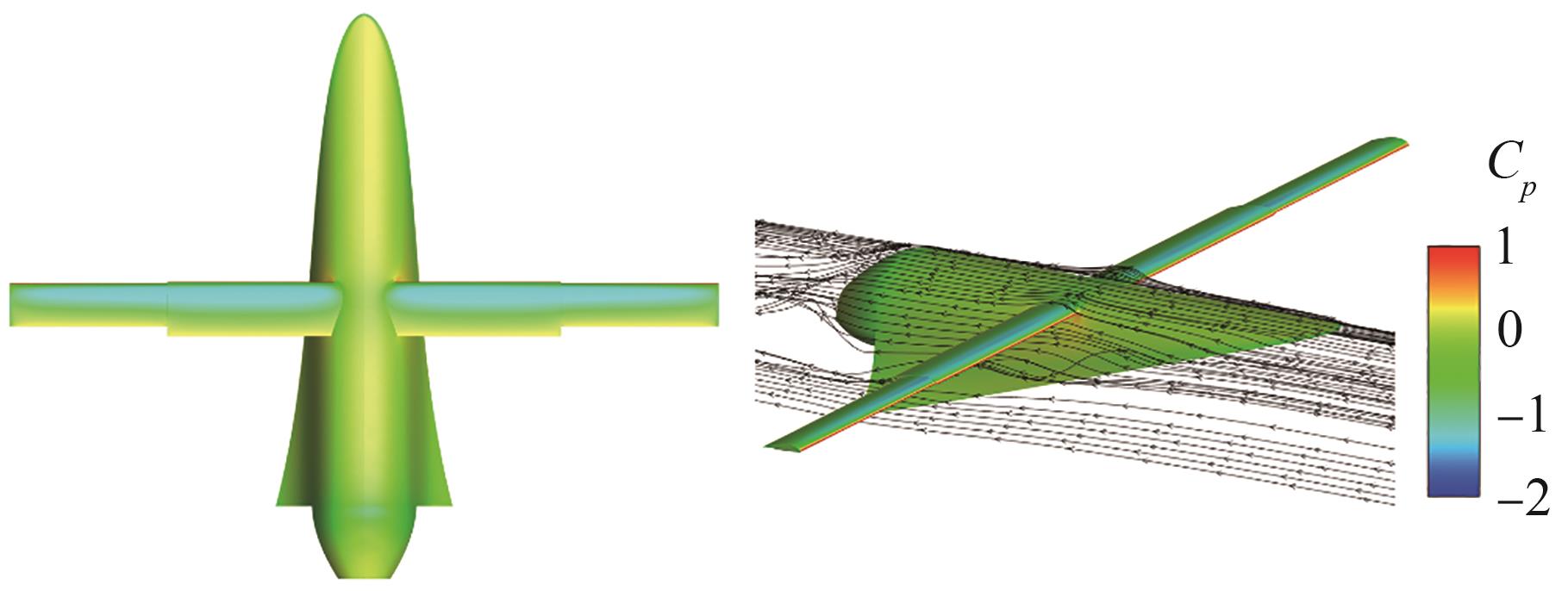
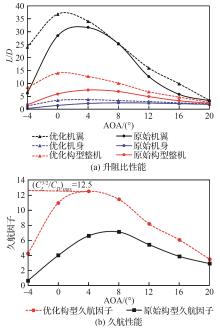
图 19
大展弦比构型纵向气动性能
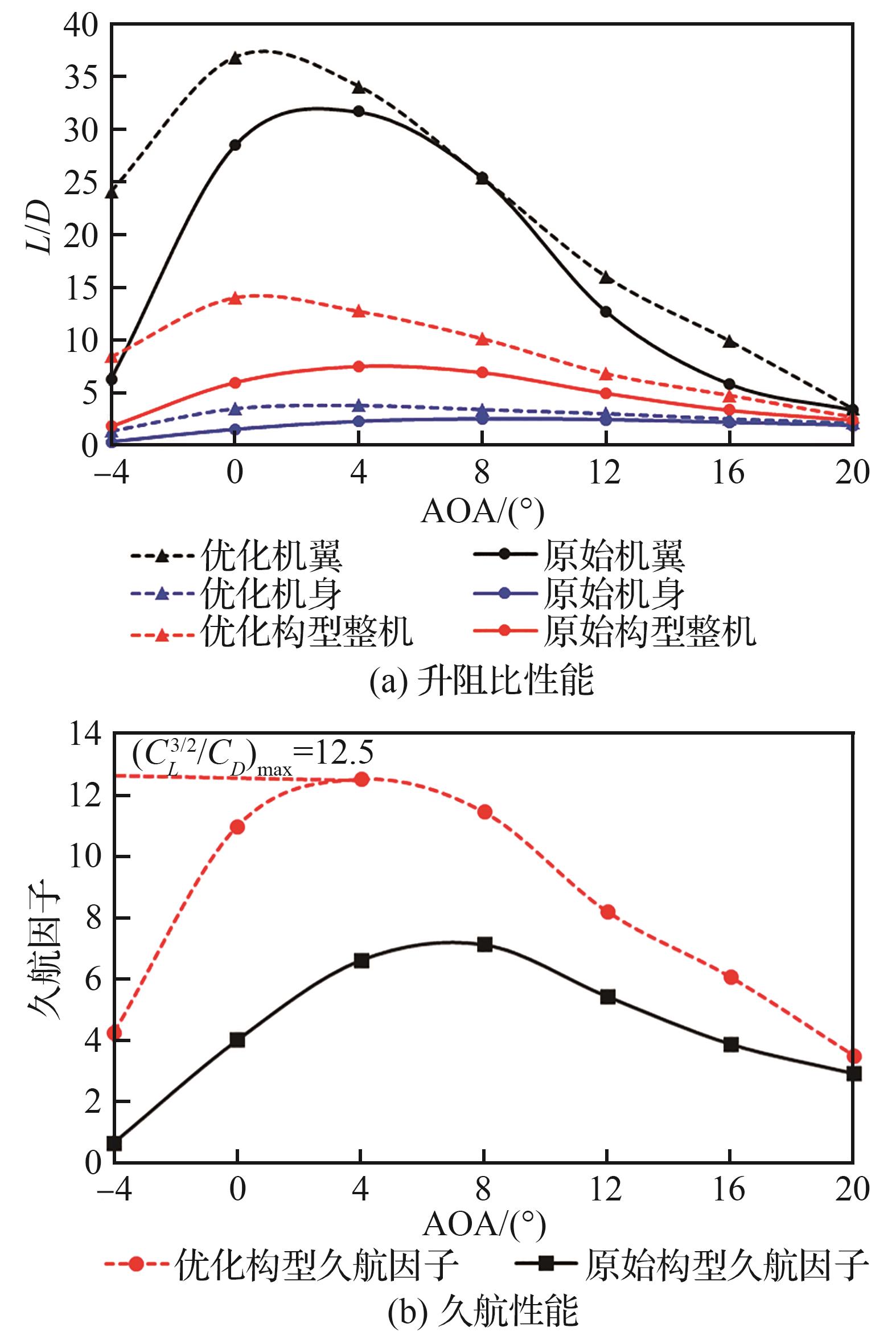
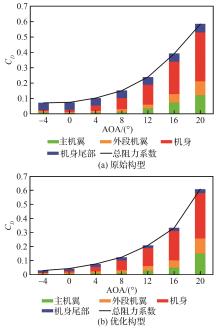
图 20
大展弦比构型各部件阻力系数占比
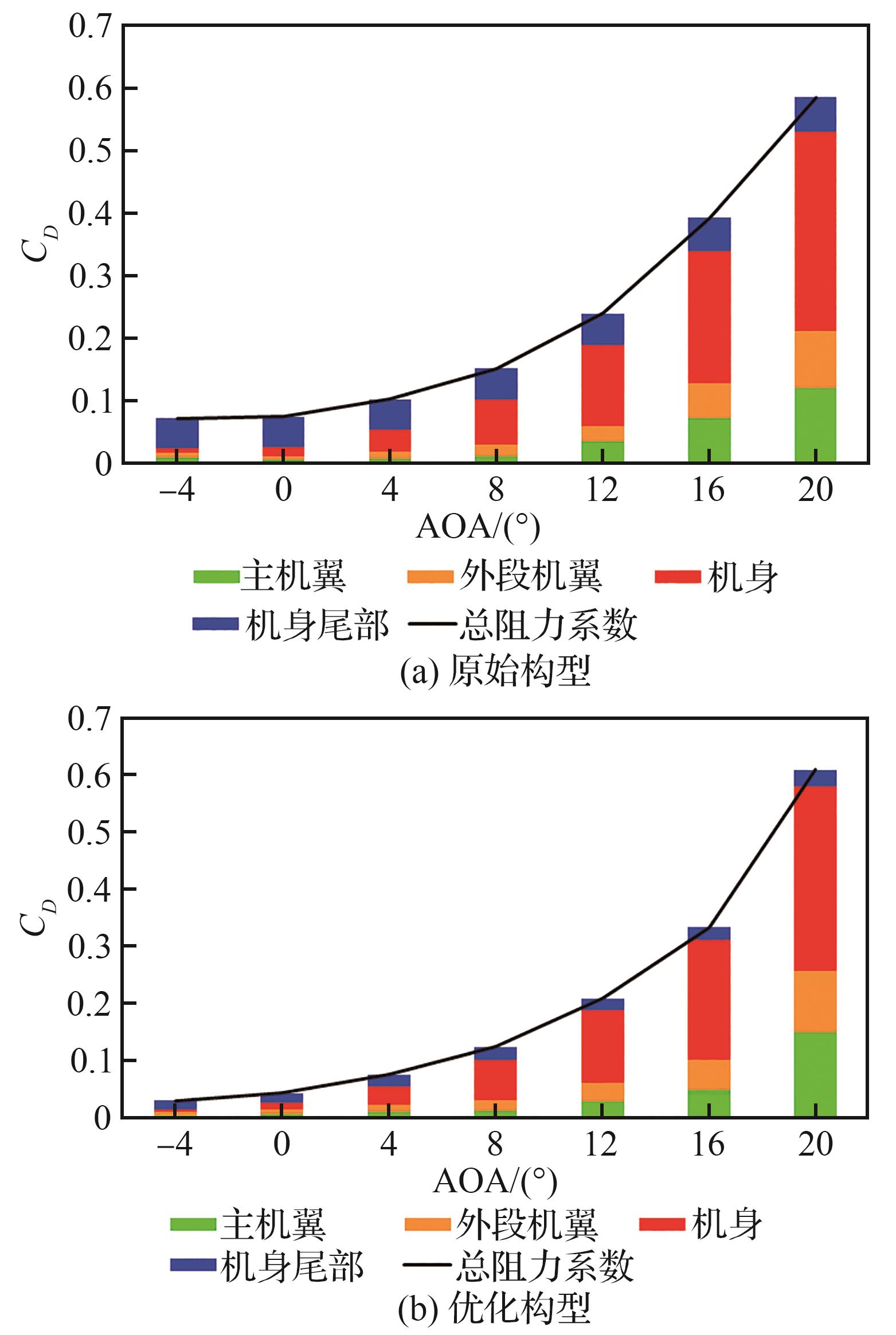
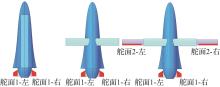
图 21
乘波体组合变体机翼布局舵面配置方案
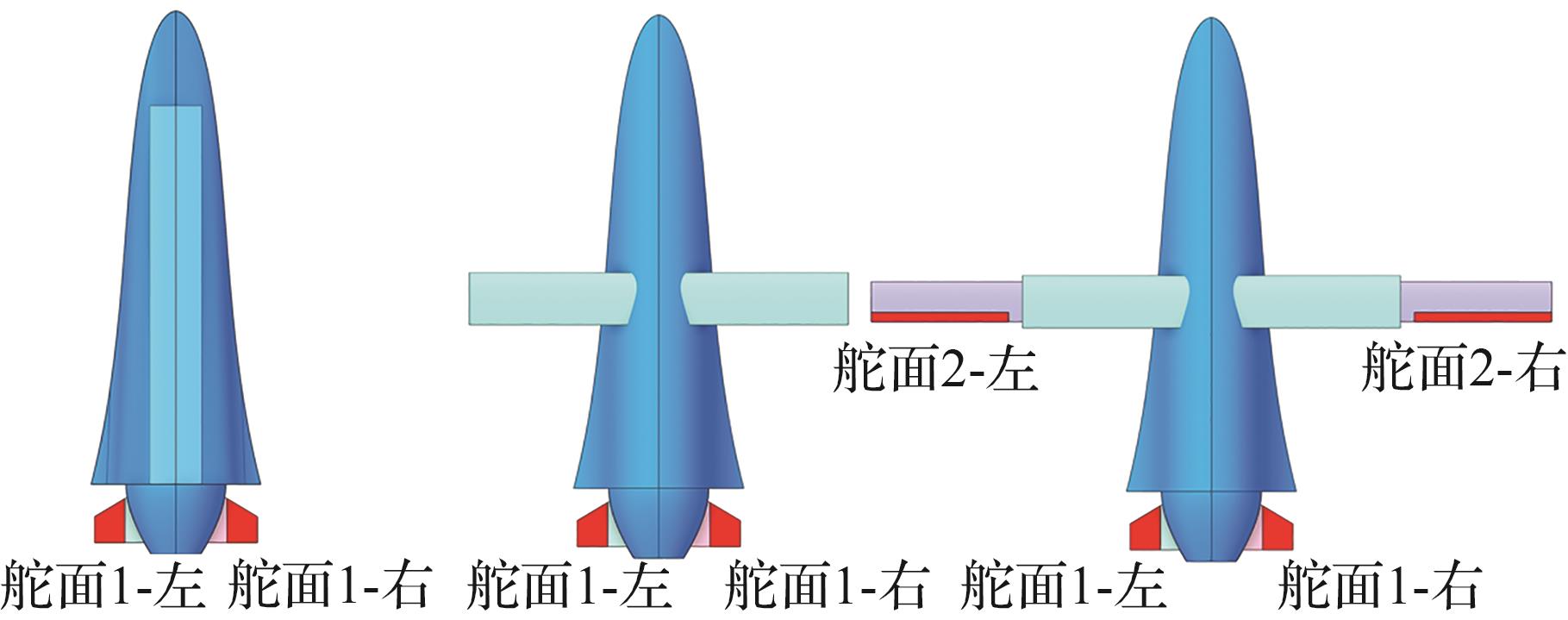
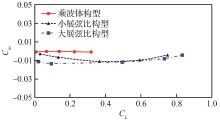
图 22
3种构型典型状态俯仰力矩系数曲线
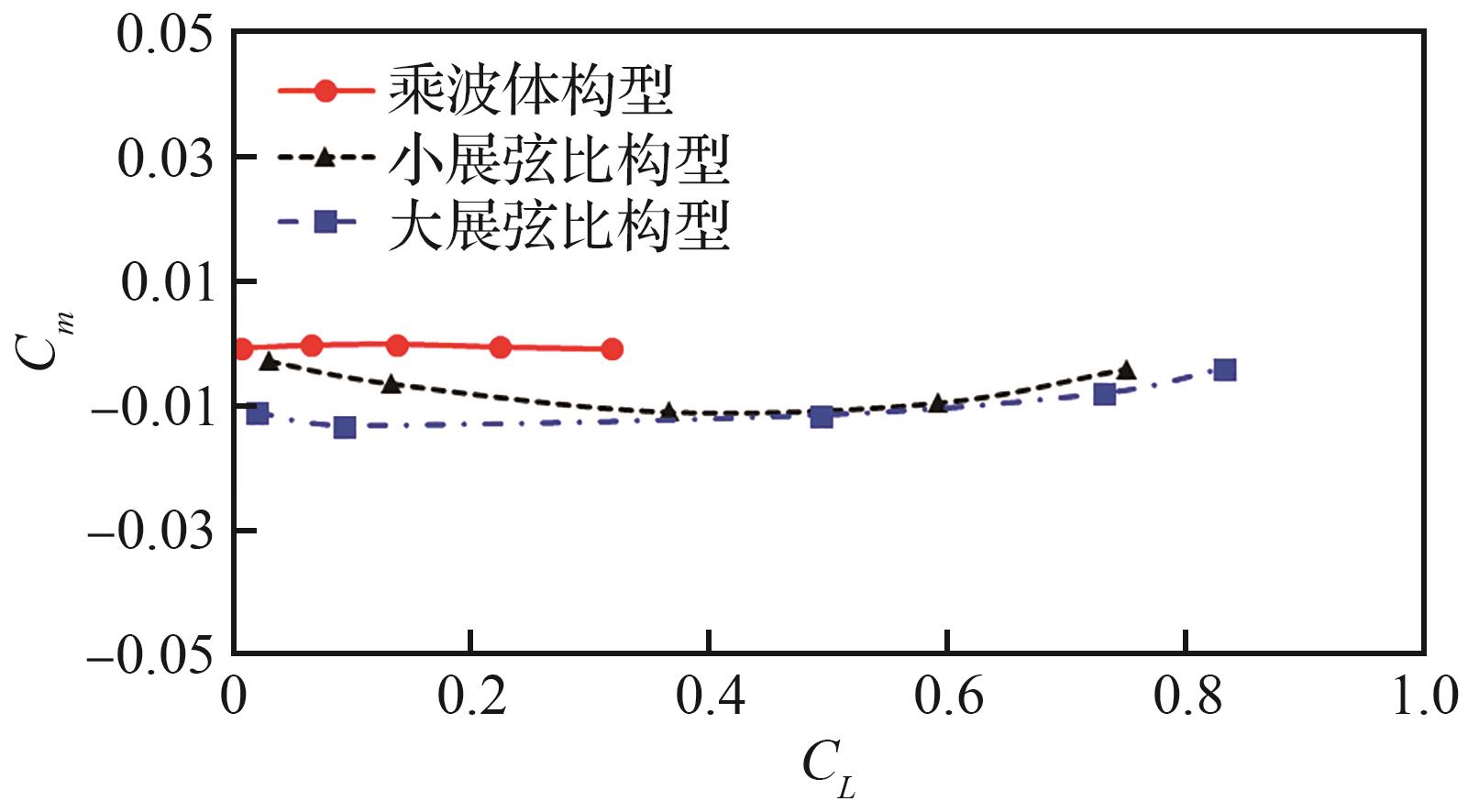
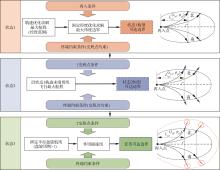
图 23
飞行器可达任务区域求解流程
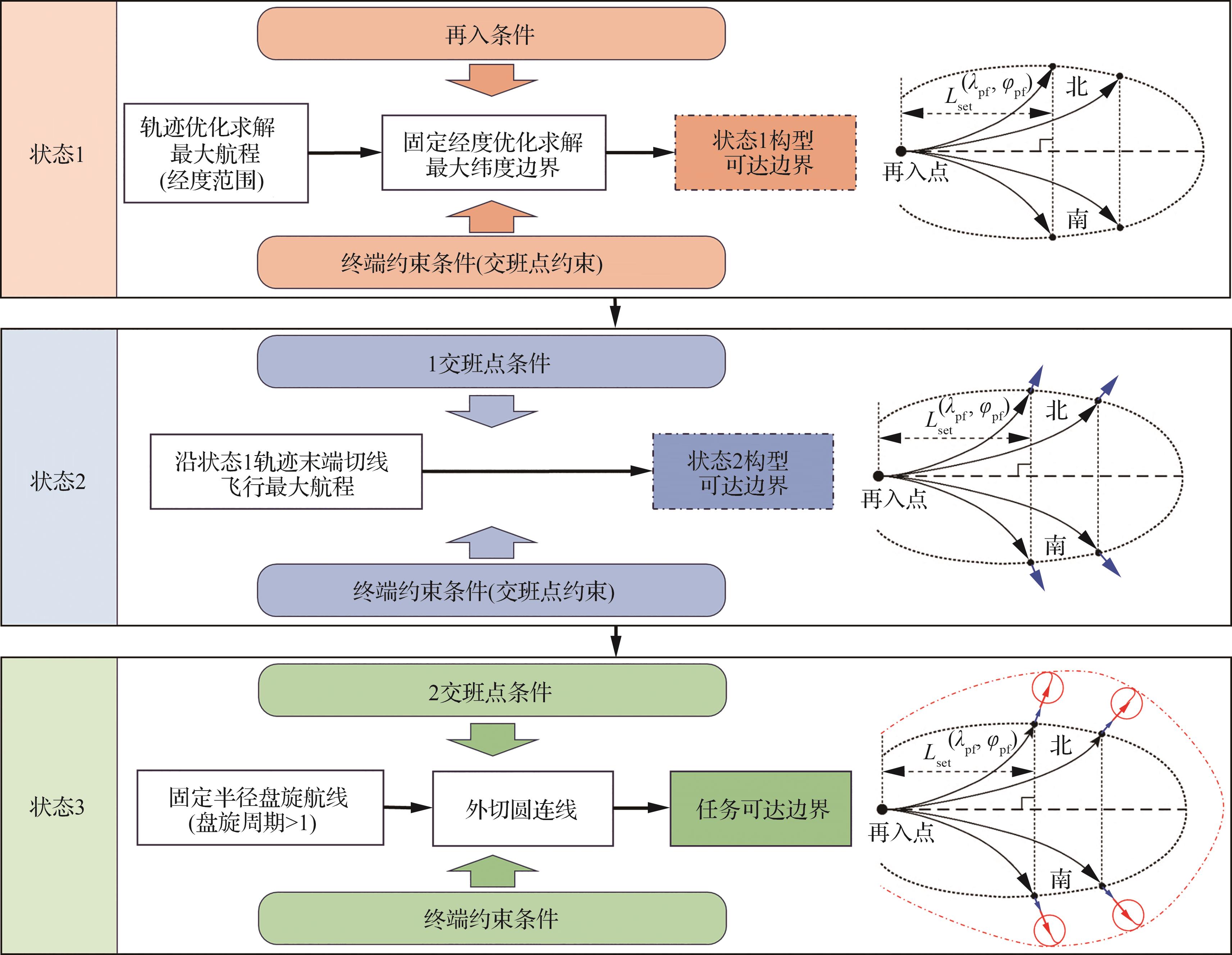
表2
初始再入条件及再入边界约束
| 边界条件 | 指标 |
|---|---|
| 再入高度/km | 60 |
| 再入速度/(m·s-1) | 5 500 |
| 乘波体构型法向过载 | [ |
| 小展弦比及大展弦比构型法向过载 | [ |
| 再入构型最大动压/kPa | 150 |
| 小展弦比构型最大动压/kPa | 10 |
| 大展弦比构型最大动压/kPa | 5 |
| 第1交班点高度/km | 20 |
| 第1交班点速度上限/(m·s-1) | 220 |
| 第1交班点航向倾角/(°) | 0 |
| 第2交班点高度/km | 10 |
| 第2交班点速度上限/(m·s-1) | 90 |
| 第2交班点航向倾角/(°) | 0 |
表3
再入过程控制量约束
| 控制量 | 指标 |
|---|---|
| 攻角/(°) | [ |
| 乘波体构型攻角变化率/((°)·s-1) | [-5,5] |
| 小展弦比及大展弦比构型攻角变化率/((°)·s-1) | [-10,10] |
| 滚转角/(°) | [-30,30] |
| 乘波体构型滚转角变化率/((°)·s-1) | [-10,10] |
| 小展弦比及大展弦比构型滚转角变化率/((°)·s-1) | [-15,15] |
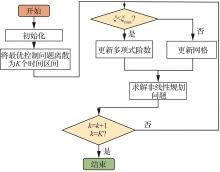
图 24
hp-RPM算法流程
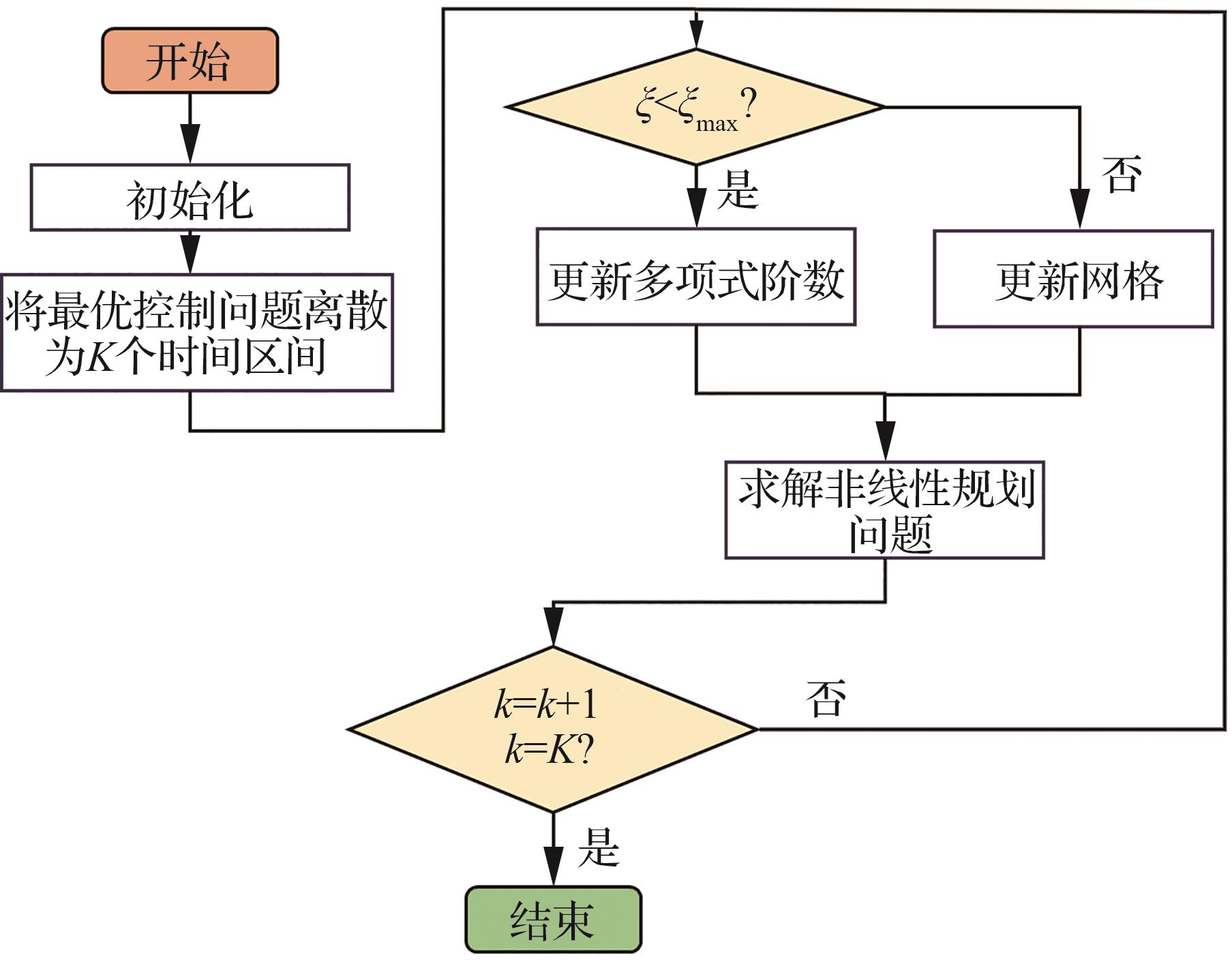
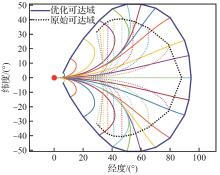
图 25
原始可达域与优化可达域对比(乘波体再入阶段)
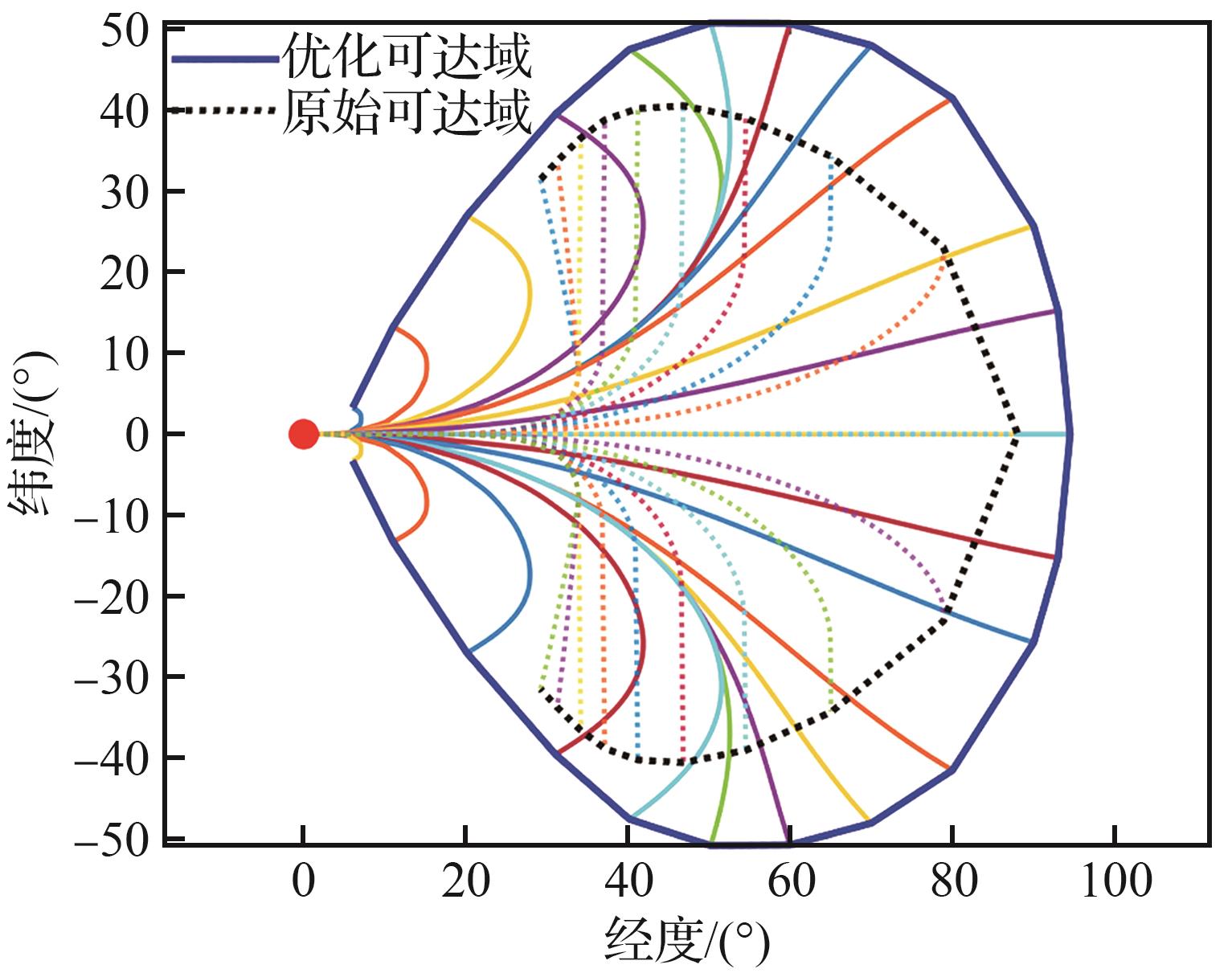
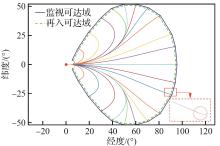
图 26
再入可达域及监视域计算结果
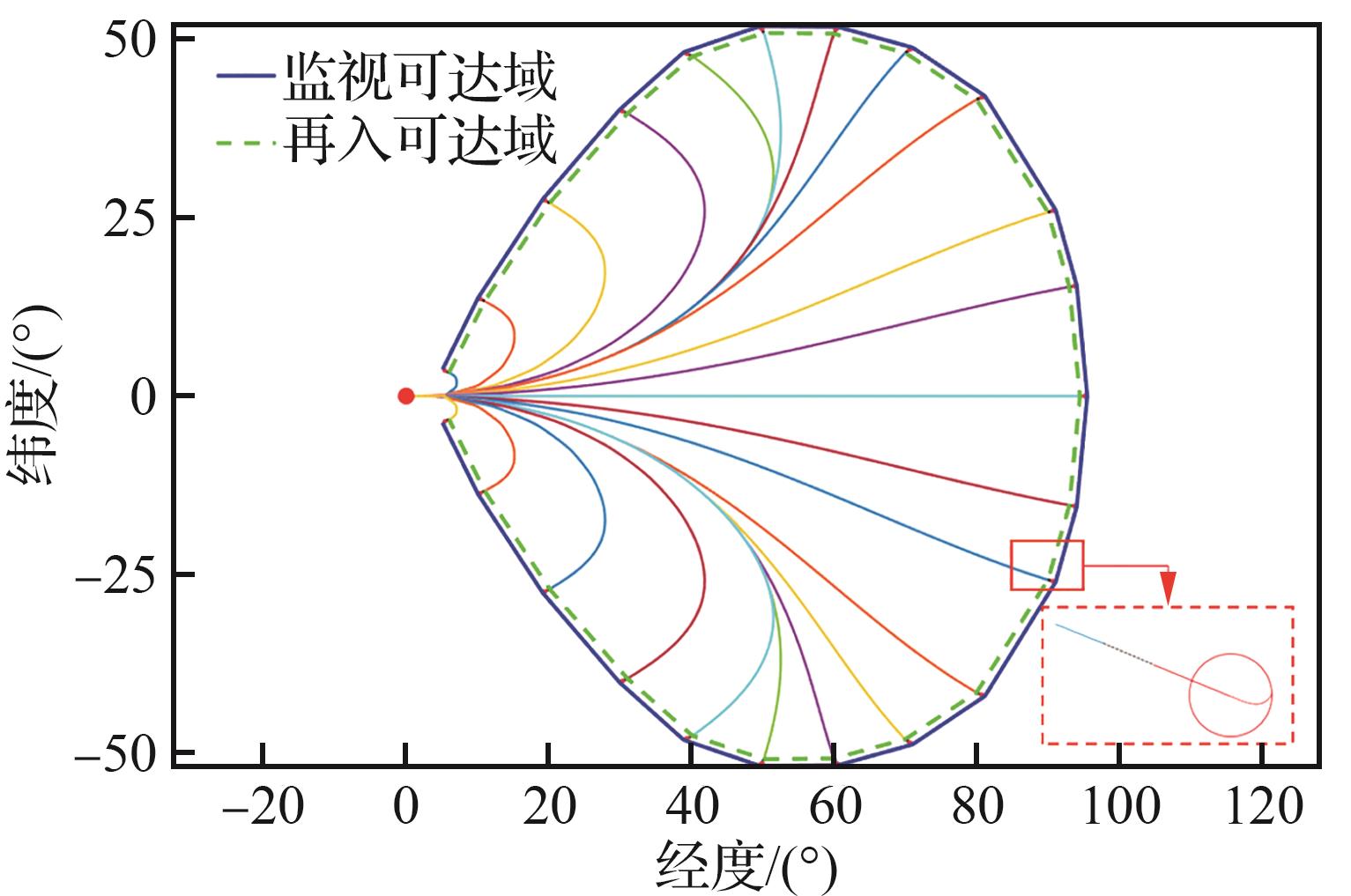
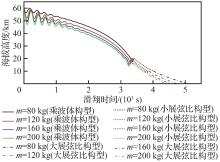
图 27
不同总质量飞行器滑翔高度-时间曲线(第2交班点高度为10 km)
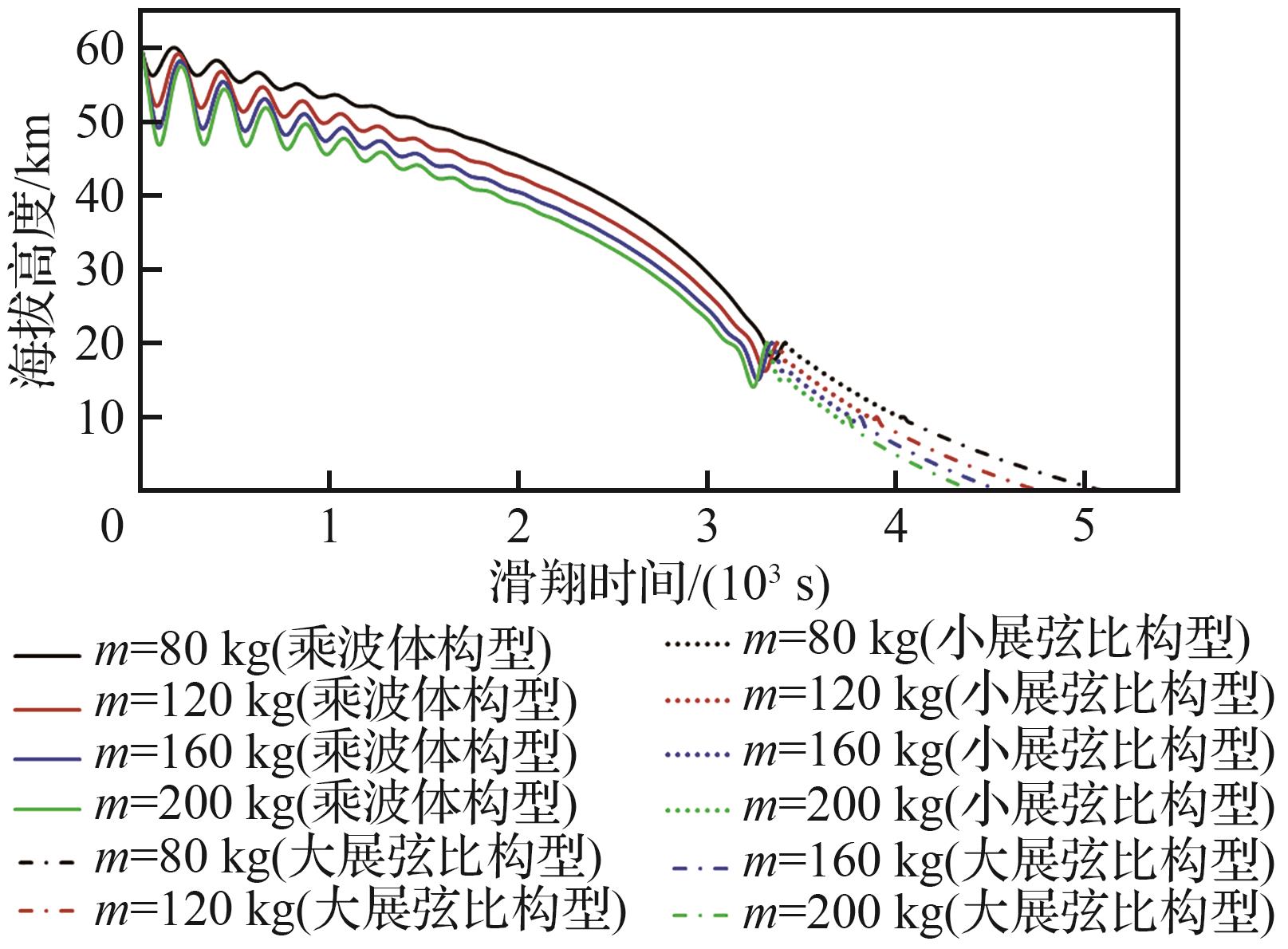
表4
不同总质量对应的滑翔时间和终点经度(第2交班点高度为10 km)
| 总质量/kg | 乘波体构型滑翔时间/s | 小展弦比构型滑翔时间/s | 大展弦比构型滑翔时间/s | 亚声速总滑翔时间/s | 终点经度/(°) |
|---|---|---|---|---|---|
| 80 | 3 412 | 628 | 1 055 | 1 683 | 95.97 |
| 120 | 3 372 | 528 | 872 | 1 400 | 96.09 |
| 160 | 3 341 | 468 | 761 | 1 229 | 96.06 |
| 200 | 3 319 | 425 | 680 | 1 105 | 96.01 |
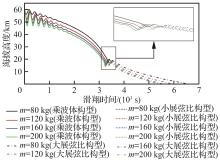
图 28
不同总质量飞行器滑翔高度-时间曲线(第2交班点无高度约束)
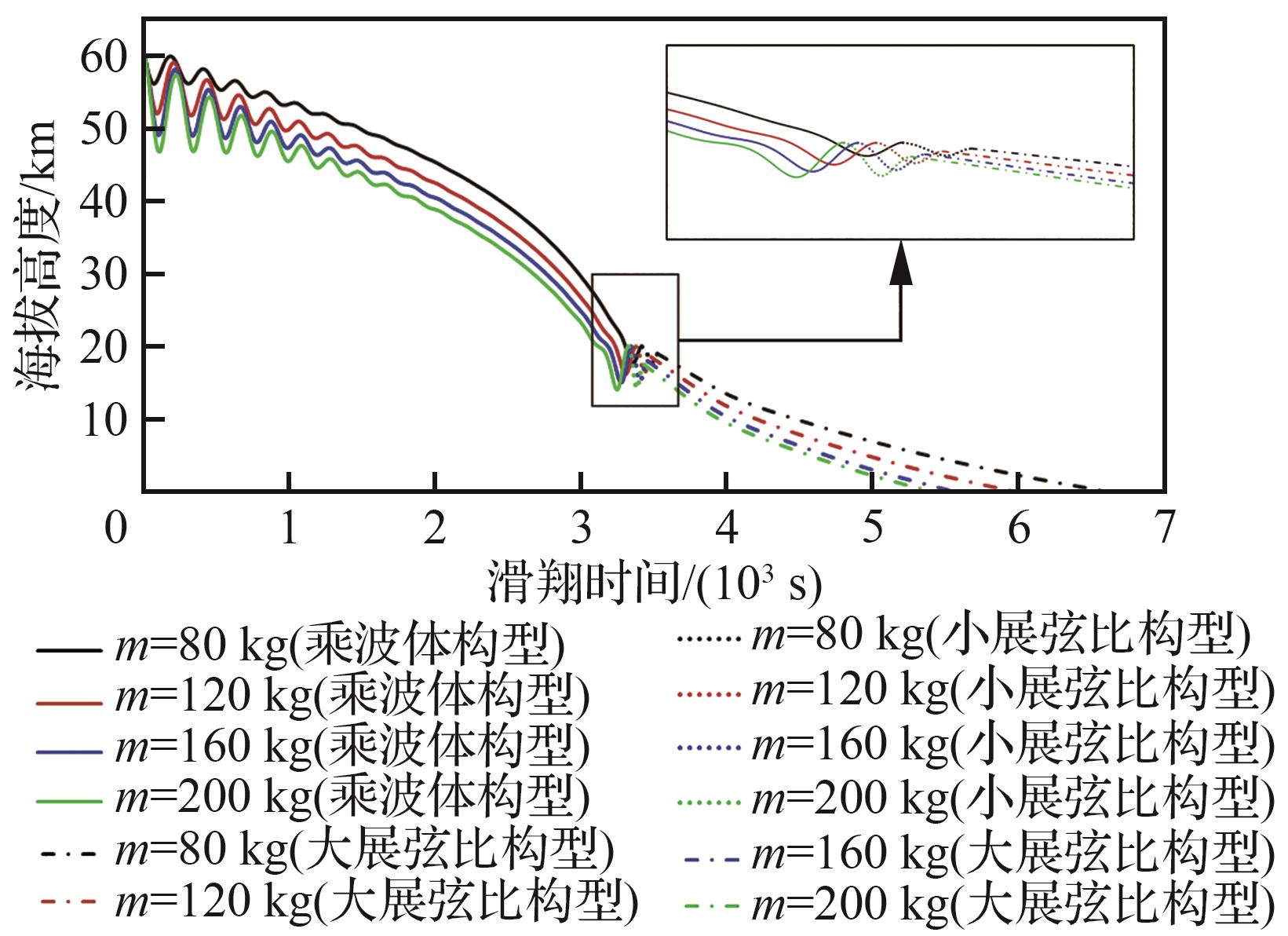
表5
不同总质量对应的滑翔时间和终点经度(第2交班点无高度约束)
| 总质量/kg | 乘波体构型滑翔时间/s | 小展弦比构型滑翔时间/s | 大展弦比构型滑翔时间/s | 亚声速总滑翔时间/s | 终点经度/(°) |
|---|---|---|---|---|---|
| 80 | 3 412 | 107 | 3 099 | 3 206 | 95.83 |
| 120 | 3 372 | 104 | 2 504 | 2 608 | 95.97 |
| 160 | 3 341 | 106 | 2 111 | 2 217 | 95.85 |
| 200 | 3 319 | 105 | 1 984 | 2 089 | 95.81 |
| [1] | 曲智国, 林强, 费太勇, 等. 美国高超声速武器发展与防御[J]. 战术导弹技术, 2023(2): 39-45. |
| QU Z G, LIN Q, FEI T Y, et al. Development and defense of American hypersonic weapon[J]. Tactical Missile Technology, 2023(2): 39-45 (in Chinese). | |
| [2] | 汪丰麟, 朱启超, 张杰. 俄罗斯高超声速武器发展简析[J]. 国防科技, 2021, 42(3): 57-64. |
| WANG F L, ZHU Q C, ZHANG J. The development history of Russian hypersonic weapons[J]. National Defense Technology, 2021, 42(3): 57-64 (in Chinese). | |
| [3] | HAN Z H, QIAO J L, ZHANG L W, et al. Recent progress of efficient low-boom design and optimization methods[J]. Progress in Aerospace Sciences, 2024, 146: 101007. |
| [4] | HILTON S, SABATINI R, GARDI A, et al. Space traffic management: Towards safe and unsegregated space transport operations[J]. Progress in Aerospace Sciences, 2019, 105: 98-125. |
| [5] | ZHAO Z T, HUANG W, YAN L, et al. An overview of research on wide-speed range waverider configuration[J]. Progress in Aerospace Sciences, 2020, 113: 100606. |
| [6] | LI Z H, JIANG C W, HU S Y, et al. Leading-edge cone method for waverider design[J]. AIAA Journal, 2023, 61(6): 2331-2346. |
| [7] | ZHANG T T, WANG Z G, HUANG W, et al. A design approach of wide-speed-range vehicles based on the cone-derived theory[J]. Aerospace Science and Technology, 2017, 71: 42-51. |
| [8] | ZHAO Z T, HUANG W, LI S B, et al. Variable Mach number design approach for a parallel waverider with a wide-speed range based on the osculating cone theory[J]. Acta Astronautica, 2018, 147: 163-174. |
| [9] | LI S B, LI L Q, HUANG W, et al. Design and investigation of equal cone-variable Mach number waverider in hypersonic flow[J]. Aerospace Science and Technology, 2020, 96: 105540. |
| [10] | 孟旭飞, 白鹏, 刘传振. 可变马赫数乘波体的宽速域性能优势探究[J]. 力学学报, 2024, 56(12): 3442-3454. |
| MENG X F, BAI P, LIU C Z. Advantage exploring of variable Mach number waverider in hypersonic wide-speed performances[J]. Chinese Journal of Theoretical and Applied Mechanics, 2024, 56(12): 3442-3454 (in Chinese). | |
| [11] | AJAJ R M, PARANCHEERIVILAKKATHIL M S, AMOOZGAR M, et al. Recent developments in the aeroelasticity of morphing aircraft[J]. Progress in Aerospace Sciences, 2021, 120: 100682. |
| [12] | LIU C Z, BAI P, YANG Y J, et al. Double swept waverider from osculating-cone method[J]. Journal of Aerospace Engineering, 2018, 31(6): 06018004. |
| [13] | WANG J F, LIU C Z, BAI P, et al. Design methodology of the waverider with a controllable planar shape[J]. Acta Astronautica, 2018, 151: 504-510. |
| [14] | 刘超宇, 屈峰, 李杰奇, 等. 涡波一体乘波飞行器宽速域气动优化设计研究[J]. 力学学报, 2023, 55(1): 70-83. |
| LIU C Y, QU F, LI J Q, et al. Aerodynamic optimization design of the vortex-shock integrated waverider in wide speed range[J]. Chinese Journal of Theoretical and Applied Mechanics, 2023, 55(1): 70-83 (in Chinese). | |
| [15] | LI Z H, JIANG C W, HU S Y, et al. Variable leading-edge cone method for waverider design[J]. Chinese Journal of Aeronautics, 2025, 38(3): 103225. |
| [16] | LIU C Z, BAI P. Waverider design using osculating method[J]. AIAA Journal, 2024, 62(5): 1643-1661. |
| [17] | PHOENIX A A, MAXWELL J R, ROGERS R E. Mach 5-3.5 morphing waverider accuracy and aerodynamic performance evaluation[J]. Journal of Aircraft, 2019, 56(5): 2047-2061. |
| [18] | DAI P, YAN B B, HUANG W, et al. Design and aerodynamic performance analysis of a variable-sweep-wing morphing waverider[J]. Aerospace Science and Technology, 2020, 98: 105703. |
| [19] | 罗世彬, 岳航, 刘俊. 高超声速变构型飞行器气动布局优化设计[J]. 电子技术与软件工程, 2023(2): 51-55. |
| LUO S B, YUE H, LIU J. Aerodynamic layout optimization design of hypersonic variable configuration aircraft[J]. Electronic Technology & Software Engineering, 2023(2): 51-55 (in Chinese). | |
| [20] | LIU B, LIANG H, HAN Z H, et al. Surrogate-based aerodynamic shape optimization of a morphing wing considering a wide Mach-number range[J]. Aerospace Science and Technology, 2022, 124: 107557. |
| [21] | LI H F, ZHANG R, LI Z Y, et al. Footprint problem with angle of attack optimization for high lifting reentry vehicle[J]. Chinese Journal of Aeronautics, 2012, 25(2): 243-251. |
| [22] | 吴楠, 王锋, 赵敏, 等. 高超声速滑翔再入飞行器的可达区快速预测[J]. 国防科技大学学报, 2021, 43(1): 1-6. |
| WU N, WANG F, ZHAO M, et al. Fast prediction for footprint of hypersonic glide reentry vehicle[J]. Journal of National University of Defense Technology, 2021, 43(1): 1-6 (in Chinese). | |
| [23] | ZHANG Y L, CHEN K J, LIU L H, et al. Rapid generation of landing footprint based on geometry-predicted trajectory[J]. Proceedings of the Institution of Mechanical Engineers, Part G: Journal of Aerospace Engineering, 2017, 231(10): 1851-1861. |
| [24] | GARG D, PATTERSON M, HAGER W W, et al. A unified framework for the numerical solution of optimal control problems using pseudospectral methods[J]. Automatica, 2010, 46(11): 1843-1851. |
| [25] | 李兆亭, 周祥, 张洪波, 等. 基于伪谱法的再入可达域影响因素分析[J]. 上海交通大学学报, 2022, 56(11): 1470-1478. |
| LI Z T, ZHOU X, ZHANG H B, et al. Analysis of entry footprint based on pseudospectral method[J]. Journal of Shanghai Jiao Tong University, 2022, 56(11): 1470-1478 (in Chinese). | |
| [26] | 王涛, 张洪波, 李永远, 等. Gauss伪谱法的再入可达域计算方法[J]. 国防科技大学学报, 2016, 38(3): 75-80. |
| WANG T, ZHANG H B, LI Y Y, et al. Landing footprint generation of entry vehicle based on Gauss pseudospectral method[J]. Journal of National University of Defense Technology, 2016, 38(3): 75-80 (in Chinese). | |
| [27] | 赵江, 周锐. 基于粒子群优化的再入可达区计算方法研究[J]. 兵工学报, 2015, 36(9): 1680-1687. |
| ZHAO J, ZHOU R. Landing footprint computation based on particle swarm optimization[J]. Acta Armamentarii, 2015, 36(9): 1680-1687 (in Chinese). | |
| [28] | GUO X L, HUANG Y R, LI T R, et al. Intelligent calculation of reachable domain under No-fly zone influence based on tangent flight trajectories[J]. Engineering Applications of Artificial Intelligence, 2024, 137: 109146. |
| [29] | HOLZINGER M J, SCHEERES D J, HAUSER J. Reachability using arbitrary performance indices[J]. IEEE Transactions on Automatic Control, 2015, 60(4): 1099-1103. |
| [30] | LIU K, ZHANG J L, GUO X L. Reentry flight capability assessment based on dynamics-informed neural network and piecewise guidance[J]. Aerospace, 2022, 9(12): 790. |
| [31] | CHAI R Q, TSOURDOS A, SAVVARIS A, et al. Trajectory planning for hypersonic reentry vehicle satisfying deterministic and probabilistic constraints[J]. Acta Astronautica, 2020, 177: 30-38. |
| [32] | PAN L, PENG S C, XIE Y, et al. 3D guidance for hypersonic reentry gliders based on analytical prediction[J]. Acta Astronautica, 2020, 167: 42-51. |
| [33] | ZHANG D, LIU L, WANG Y J. On-line reentry guidance algorithm with both path and no-fly zone constraints[J]. Acta Astronautica, 2015, 117: 243-253. |
| [34] | 张阳, 韩忠华, 张科施, 等. 高超声速飞行器宽速域气动布局设计与优化研究进展[J]. 空天技术, 2024(2): 1-14. |
| ZHANG Y, HAN Z H, ZHANG K S, et al. Progress in the research on aerodynamic layout design and optimization for wide-speed-range hypersonic vehicles[J]. Aerospace Technology, 2024(2): 1-14 (in Chinese). | |
| [35] | 刘文, 郭帅旗, 刘洋, 等. 乘波体设计与优化研究进展: 从高超声速至宽速域[J]. 力学学报, 2024, 56(6): 1655-1677. |
| LIU W, GUO S Q, LIU Y, et al. Advances in design and optimization of waverider: From hypersonic to wide-speed range[J]. Chinese Journal of Theoretical and Applied Mechanics, 2024, 56(6): 1655-1677 (in Chinese). | |
| [36] | 陈树生, 冯聪, 张兆康, 等. 基于全局/梯度优化方法的宽速域乘波-机翼布局气动设计[J]. 航空学报, 2024, 45(6): 629596. |
| CHEN S S, FENG C, ZHANG Z K, et al. Aerodynamic design of wide-speed-range waverider-wing configuration based on global & gradient optimization method[J]. Acta Aeronautica et Astronautica Sinica, 2024, 45(6): 629596 (in Chinese). | |
| [37] | 陈树生, 张兆康, 李金平, 等. 一种宽速域乘波三角翼气动布局设计[J]. 航空学报, 2023, 44(23): 128441. |
| CHEN S S, ZHANG Z K, LI J P, et al. Wide-speed aerodynamic layout adopting waverider-delta wing[J]. Acta Aeronautica et Astronautica Sinica, 2023, 44(23): 128441 (in Chinese). | |
| [38] | 孟旭飞, 白鹏, 刘传振. 基于可变马赫数锥形流场的定平面形状乘波体设计方法研究[J]. 力学学报, 2023, 55(9): 1809-1819. |
| MENG X F, BAI P, LIU C Z. Research on design method of planform-customized waverider from variable Mach number conical flow[J]. Chinese Journal of Theoretical and Applied Mechanics, 2023, 55(9): 1809-1819 (in Chinese). | |
| [39] | 李珺, 易怀喜, 王逗, 等. 基于投影法的双后掠乘波体气动性能[J]. 航空学报, 2021, 42(12): 124703. |
| LI J, YI H X, WANG D, et al. Aerodynamic performance of double swept waverider based on projection method[J]. Acta Aeronautica et Astronautica Sinica, 2021, 42(12): 124703 (in Chinese). | |
| [40] | 易怀喜, 王逗, 李珺, 等. 涡升力乘波体发展研究综述[J]. 航空工程进展, 2021, 12(6): 1-12. |
| YI H X, WANG D, LI J, et al. Overview on the development research of vortex lift waverider[J]. Advances in Aeronautical Science and Engineering, 2021, 12(6): 1-12 (in Chinese). | |
| [41] | 武宇飞, 龙腾, 史人赫, 等. 跨域变体飞行器气动力热非层次多模型融合降阶方法[J]. 航空学报, 2023, 44(21): 528259. |
| WU Y F, LONG T, SHI R H, et al. Non-hierarchical multi-model fusion order reduction based on aerodynamic and aerothermodynamic characteristics for cross-domain morphing aircraft[J]. Acta Aeronautica et Astronautica Sinica, 2023, 44(21): 528259 (in Chinese). | |
| [42] | 张龙, 田野, 李博骁. 应急快速抵近侦察监视技术发展现状与思考[J]. 兵工自动化, 2020, 39(6): 10-15. |
| ZHANG L, TIAN Y, LI B X. Development status and thinking of emergency fast close-in reconnaissance and surveillance techniques[J]. Ordnance Industry Automation, 2020, 39(6): 10-15 (in Chinese). | |
| [43] | 马铁林, 乔南璇, 付竟成, 等. 一种具备旋转伸缩功能的飞行器机翼: CN216086693U[P]. 2024-06-07. |
| MA T L, QIAO N X, FU J C, et al. An aircraft wing with rotatable and telescopic features: CN216086693U[P]. 2024-06-07 (in Chinese). | |
| [44] | QIAO N X, MA T L, JING B, et al. Design and aerodynamic analysis of the morphing waverider with rotating telescopic wing for wide-speed-range flight[J]. Aerospace Science and Technology, 2025, 158: 109941. |
| [45] | 乔南璇, 马铁林, 薛普, 等. 考虑多源模型时间成本的乘波体整流罩宽速域优化[J]. 力学学报, 2025, 57(3): 578-592. |
| QIAO N X, MA T L, XUE P, et al. Waverider fairing optimization incorporating multi-source model time cost[J]. Chinese Journal of Theoretical and Applied Mechanics, 2025, 57(3): 578-592 (in Chinese). | |
| [46] | 雍恩米, 唐国金, 陈磊. 高超声速无动力远程滑翔飞行器多约束条件下的轨迹快速生成[J]. 宇航学报, 2008, 29(1): 46-52. |
| YONG E M, TANG G J, CHEN L. Rapid trajectory planning for hypersonic unpowered long-range reentry vehicles with multi-constraints[J]. Journal of Astronautics, 2008, 29(1): 46-52 (in Chinese). |
| [1] | 孟旭飞, 白鹏, 刘传振. 内锥流场参数对定平面形状乘波体性能的影响[J]. 航空学报, 2026, 47(1): 632041-632041. |
| [2] | 段佳昕, 刘愿, 高亮杰, 钱战森. 展向多参数可变的新型宽速域乘波体设计方法[J]. 航空学报, 2026, 47(1): 632109-632109. |
| [3] | 杨凯, 张勐飞, 施崇广, 余耀堃, 郑晓刚, 朱呈祥, 尤延铖. 三维弯曲流面法及其在外流乘波体中的应用[J]. 航空学报, 2025, 46(2): 130492-130492. |
| [4] | 张伟, 聂旭涛, 欧李苇, 夏智勋, 陈磊. 基于频率加权的后缘拍动变体机翼流场模态分解[J]. 航空学报, 2024, 45(18): 129846-129846. |
| [5] | 喻世杰, 周兴华, 黄锐. 变弯度机翼参数化气动弹性建模与颤振特性分析[J]. 航空学报, 2023, 44(8): 227346-227346. |
| [6] | 刘超宇, 屈峰, 孙迪, 刘传振, 钱战森, 白俊强. 基于离散伴随的高超声速密切锥乘波体气动优化设计[J]. 航空学报, 2023, 44(4): 126664-126664. |
| [7] | 陈树生, 张兆康, 李金平, 冯聪, 高正红. 一种宽速域乘波三角翼气动布局设计[J]. 航空学报, 2023, 44(23): 128441-128441. |
| [8] | 刘传振, 孟旭飞, 刘荣健, 白鹏. 双后掠乘波体高超声速试验与数值分析[J]. 航空学报, 2022, 43(9): 126015-126015. |
| [9] | 孟旭飞, 白鹏, 李盾, 王荣, 刘传振. 上/下反翼对双后掠乘波体高超特性的影响[J]. 航空学报, 2022, 43(2): 124998-124998. |
| [10] | 李珺, 易怀喜, 王逗, 罗世彬. 基于投影法的双后掠乘波体气动性能[J]. 航空学报, 2021, 42(12): 124703-124703. |
| [11] | 周航, 金志光. 非均匀来流下三维激波反问题的微元密切轴对称解法[J]. 航空学报, 2020, 41(12): 124035-124035. |
| [12] | 刘传振, 田俊武, 白鹏, 刘强. 双后掠乘波体的非线性升力增长[J]. 航空学报, 2019, 40(10): 122864-122864. |
| [13] | 刘传振, 刘强, 白鹏, 陈冰雁, 周伟江. 涡波效应宽速域气动外形设计[J]. 航空学报, 2018, 39(7): 121824-121824. |
| [14] | 宋赋强, 阎超, 马宝峰, 鞠胜军. 锥导乘波体构型的气动特性不确定度分析[J]. 航空学报, 2018, 39(2): 121519-121519. |
| [15] | 贺旭照, 乐嘉陵. 曲外锥乘波体进气道实用构型设计和性能分析[J]. 航空学报, 2017, 38(6): 120690-120690. |
| 阅读次数 | ||||||
|
全文 |
|
|||||
|
摘要 |
|
|||||
版权所有 © 航空学报编辑部
版权所有 © 2011航空学报杂志社
主管单位:中国科学技术协会 主办单位:中国航空学会 北京航空航天大学

 CJA
CJA
