王雨桐1,2, 罗骁1,2, 刘红阳1,2, 宋超1,2, 赵莹1,3, 周铸1,2( )
)
收稿日期:2025-03-05
修回日期:2025-03-18
接受日期:2025-04-27
出版日期:2025-05-14
发布日期:2025-05-13
通讯作者:
周铸
E-mail:f-yforever@126.com
Yutong WANG1,2, Xiao LUO1,2, Hongyang LIU1,2, Chao SONG1,2, Ying ZHAO1,3, Zhu ZHOU1,2()
Received:2025-03-05
Revised:2025-03-18
Accepted:2025-04-27
Online:2025-05-14
Published:2025-05-13
Contact:
Zhu ZHOU
E-mail:f-yforever@126.com
摘要:
声爆作为制约超声速客机发展的核心问题,对其进行精确预测是开展超声速客机降噪设计的先决条件。在工程中主要采用计算流体力学(CFD)和声学传播理论相结合的声爆预测方法,其中近场超压分布的计算精度至关重要,但高精度解的获取成本高昂。为缓解声爆预测成本与精度之间的矛盾,采用多保真深度神经网络构建气动外形和近场超压分布之间的映射关系,并结合声学法实现快速准确的声爆预测。在剖析高低保真近场超压分布数据之间关联特性的基础上,本研究探讨了2种不同的多保真建模策略下深度神经网络的构建方法与预测性能。实验结果显示:通过增加自适应搜索方法,基于线性/非线性综合矫正策略的MF-DNN的兼顾鲁棒性与性能优势,而通过精细设计归一化方法和正则化系数,基于迁移学习的TF-DNN实现了最小的预测误差,相比于单保真深度神经网络,2个模型都可以在高保真数据较少的条件下,通过联合低保真度数据来显著提升近场超压分布和声爆值的预测精度,相关研究结果为超声速客机高效率低声爆设计提供支撑。
中图分类号:
王雨桐, 罗骁, 刘红阳, 宋超, 赵莹, 周铸. 基于多保真深度神经网络的超声速客机声爆预测[J]. 航空学报, 2025, 46(20): 531936.
Yutong WANG, Xiao LUO, Hongyang LIU, Chao SONG, Ying ZHAO, Zhu ZHOU. Sonic boom prediction of supersonic passenger aircraft based on multi-fidelity deep neural network[J]. Acta Aeronautica et Astronautica Sinica, 2025, 46(20): 531936.
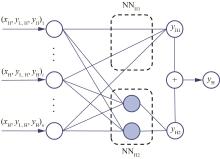
图 1
基于非线性组合的多保真深度神经网络结构
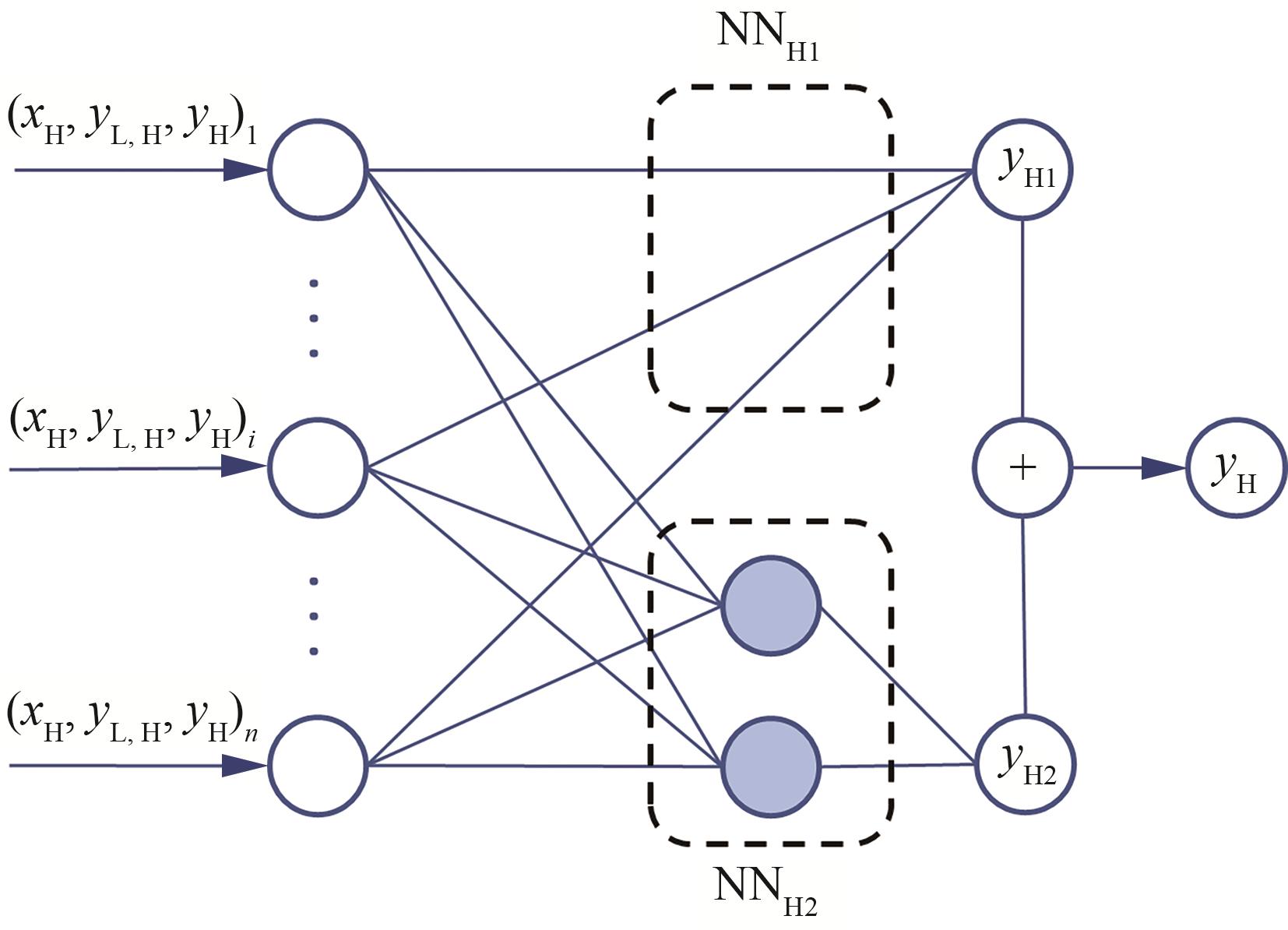
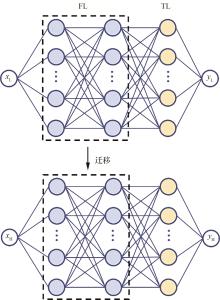
图 2
基于迁移学习的多保真深度神经网络架构
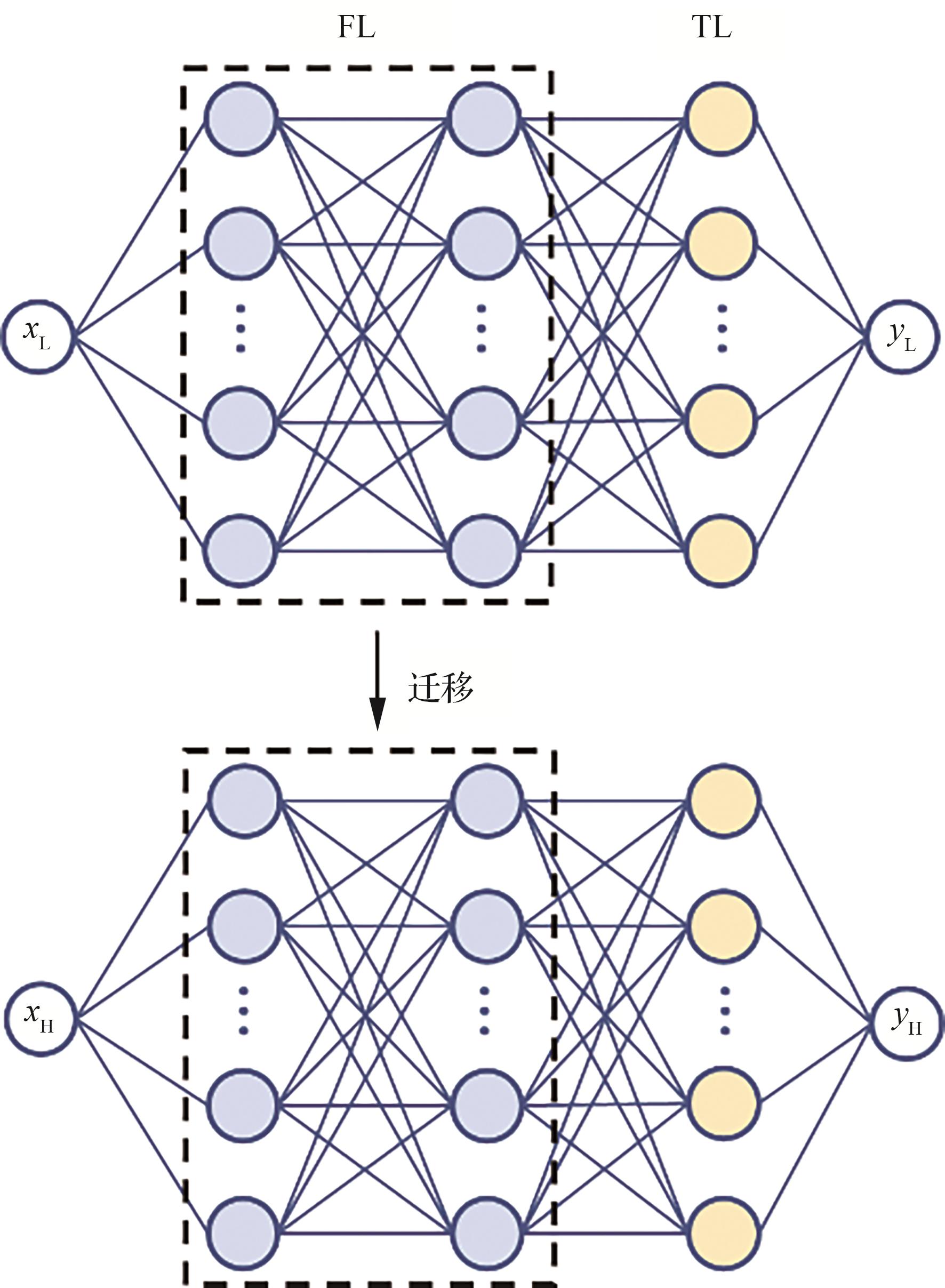

图 3
超声速客机初始外形
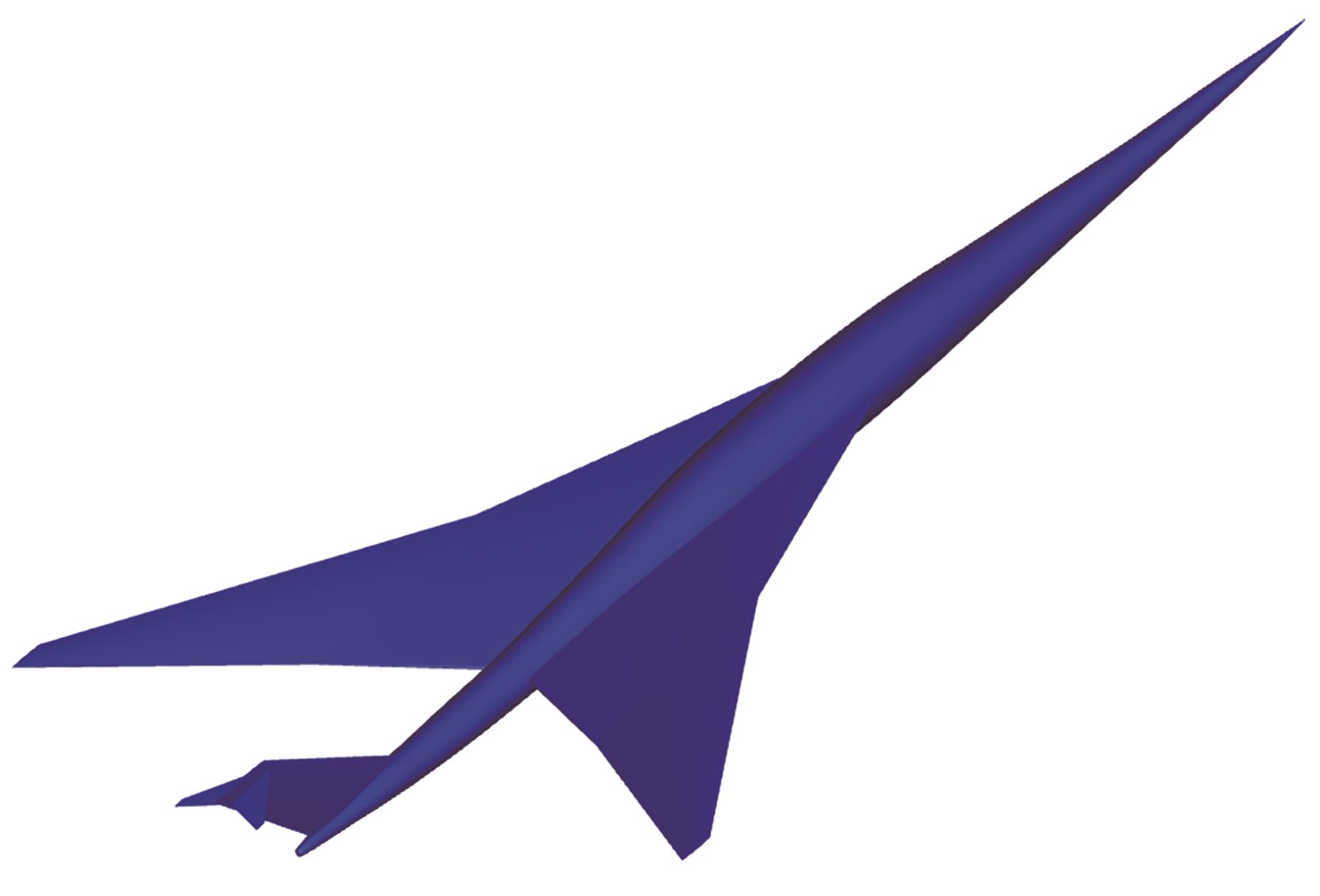
图 4
初始构型下不同保真度的网格及近场超压分布对比
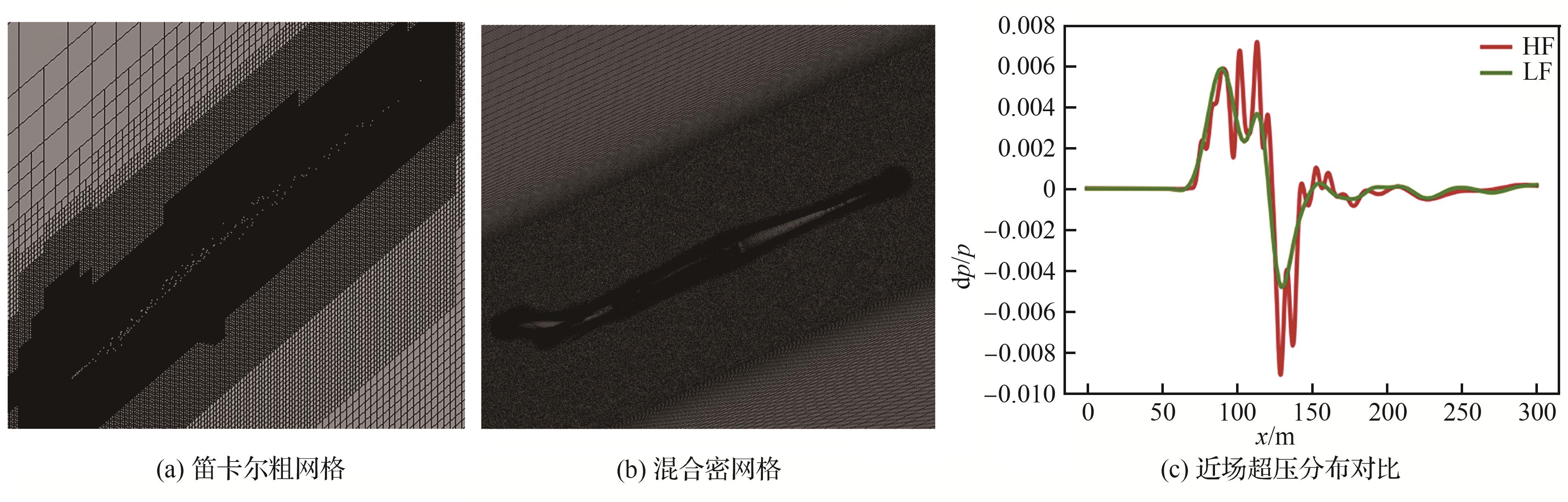
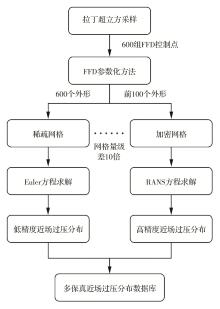
图 5
数据库构建流程
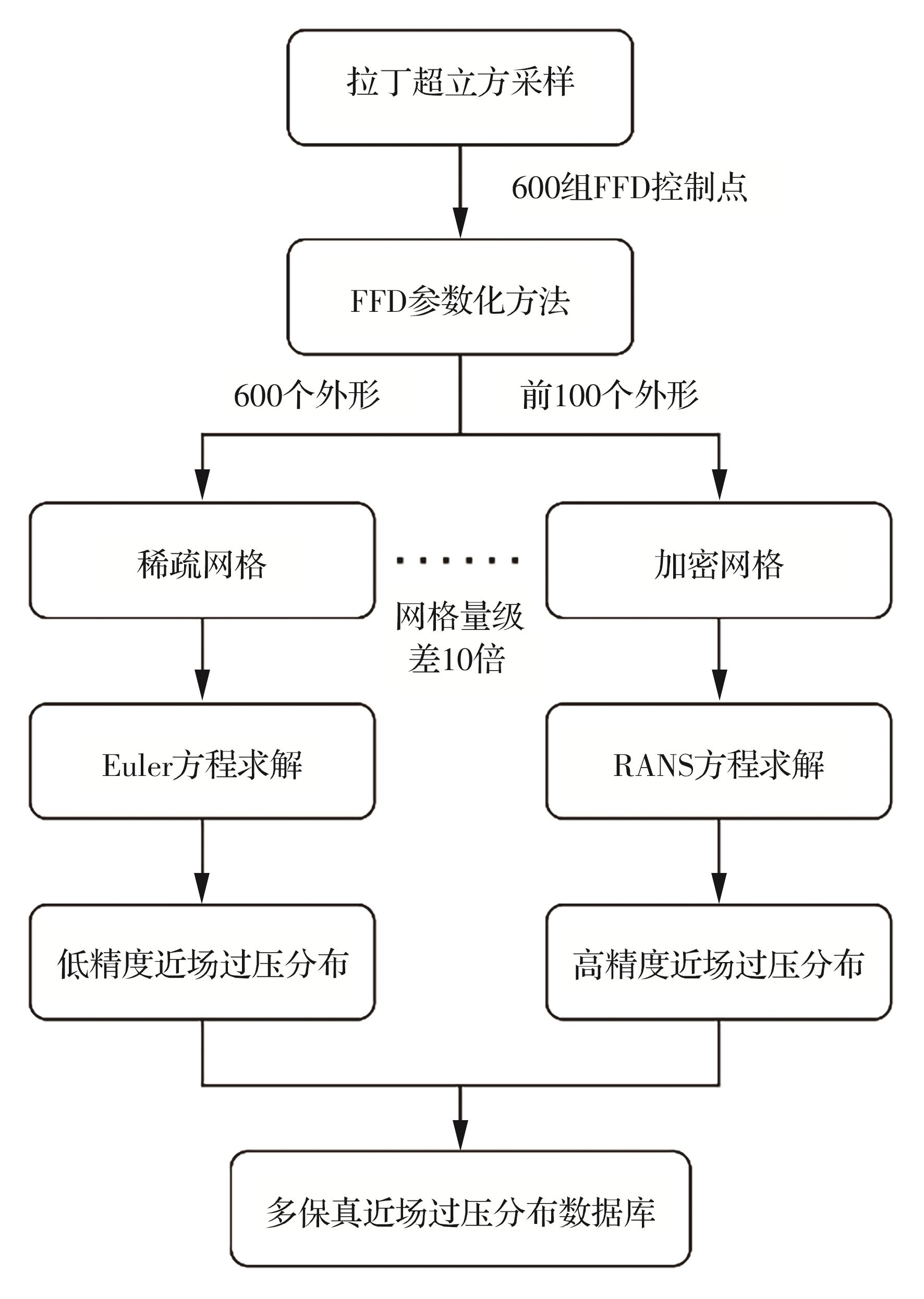
图 6
PCA降维后设计空间可视化
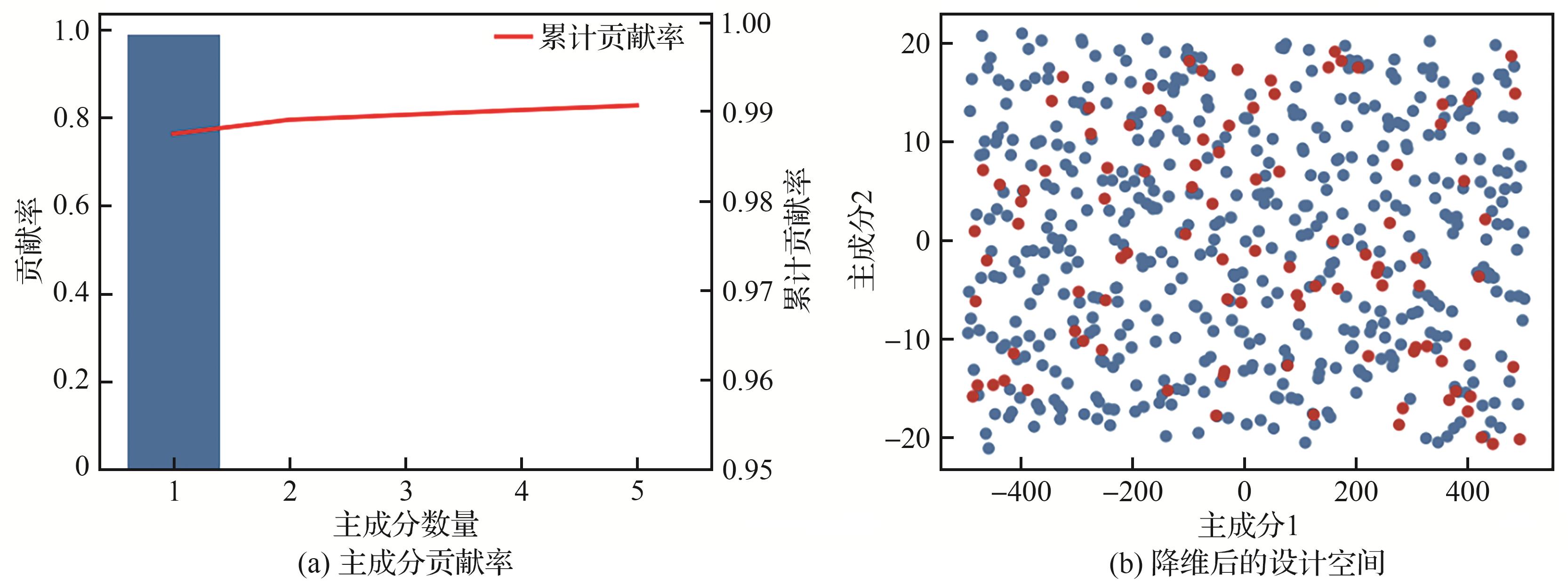
图 7
高低保真近场超压分布数据
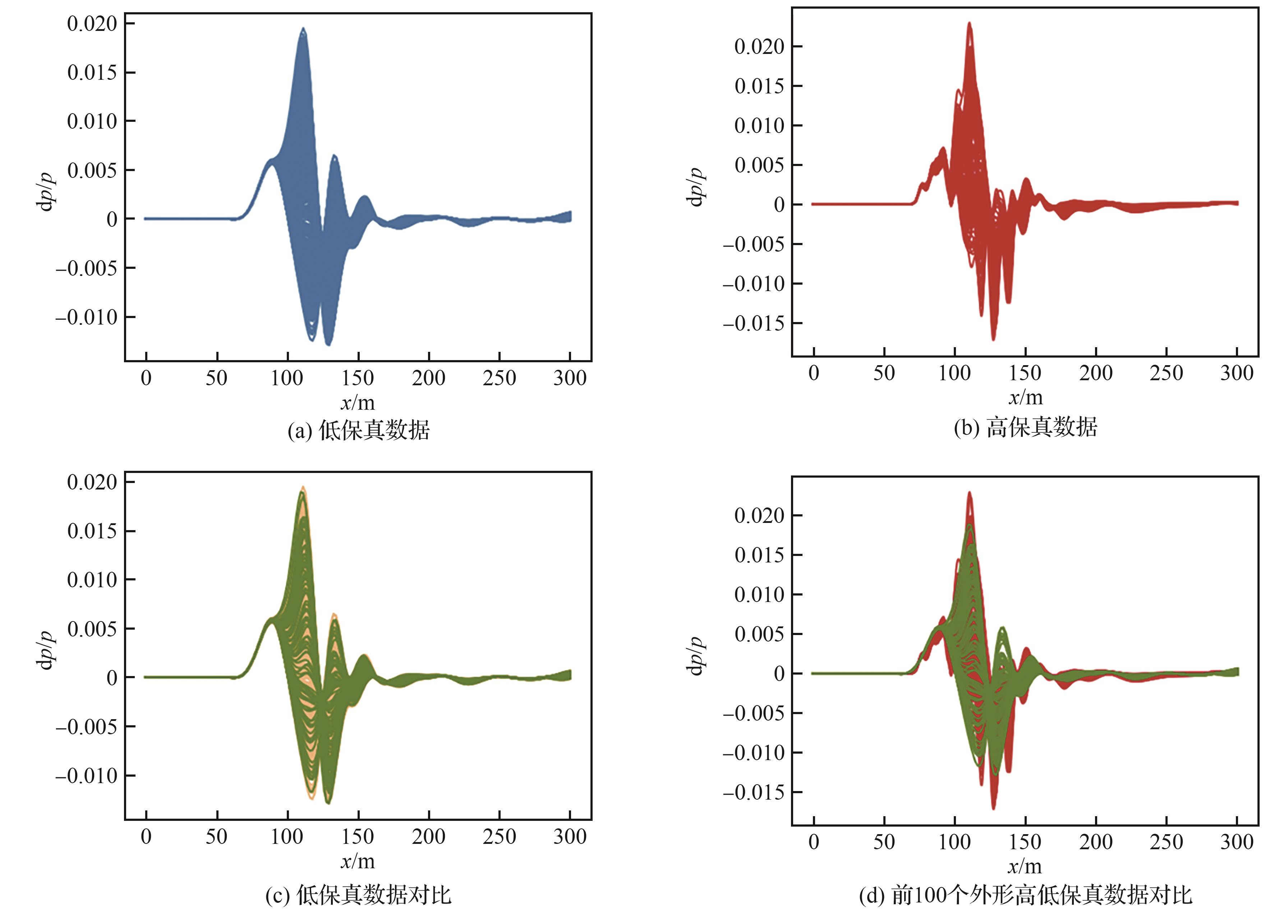
图 8
随机外形高低保真近场超压分布特征对比
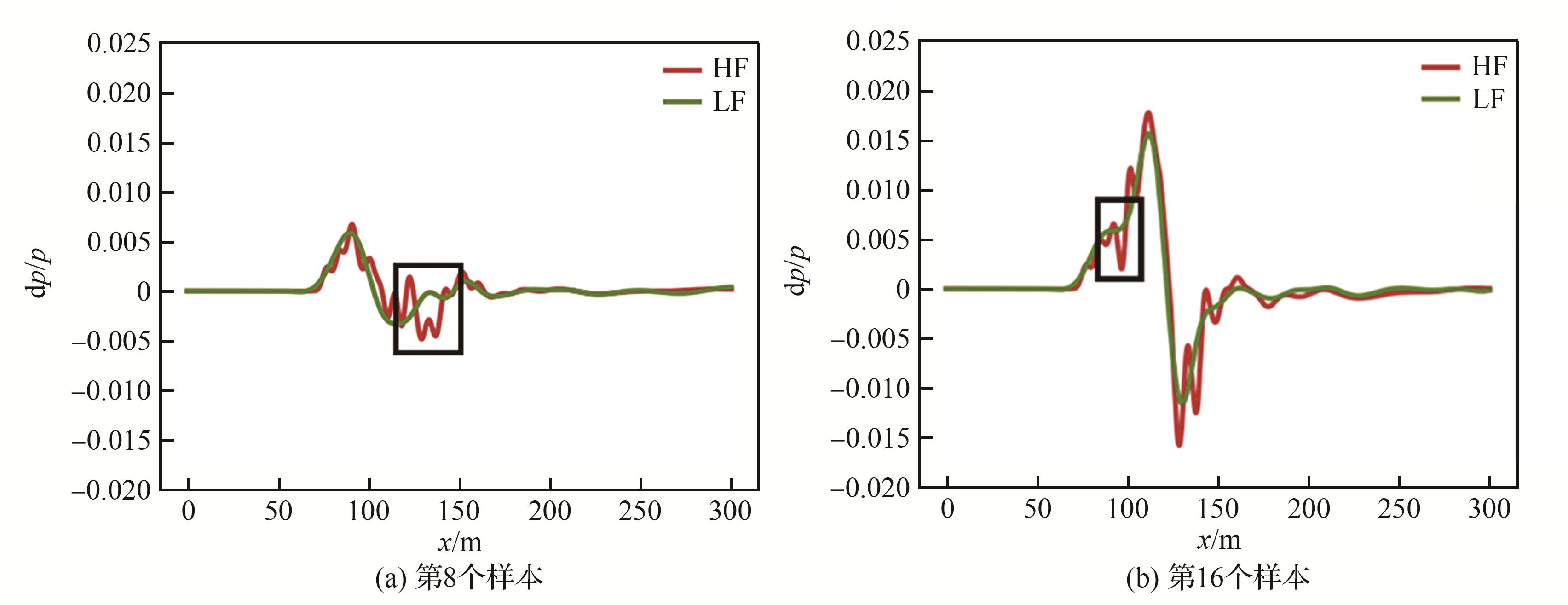
图 9
PCA降维后性能空间降维可视化
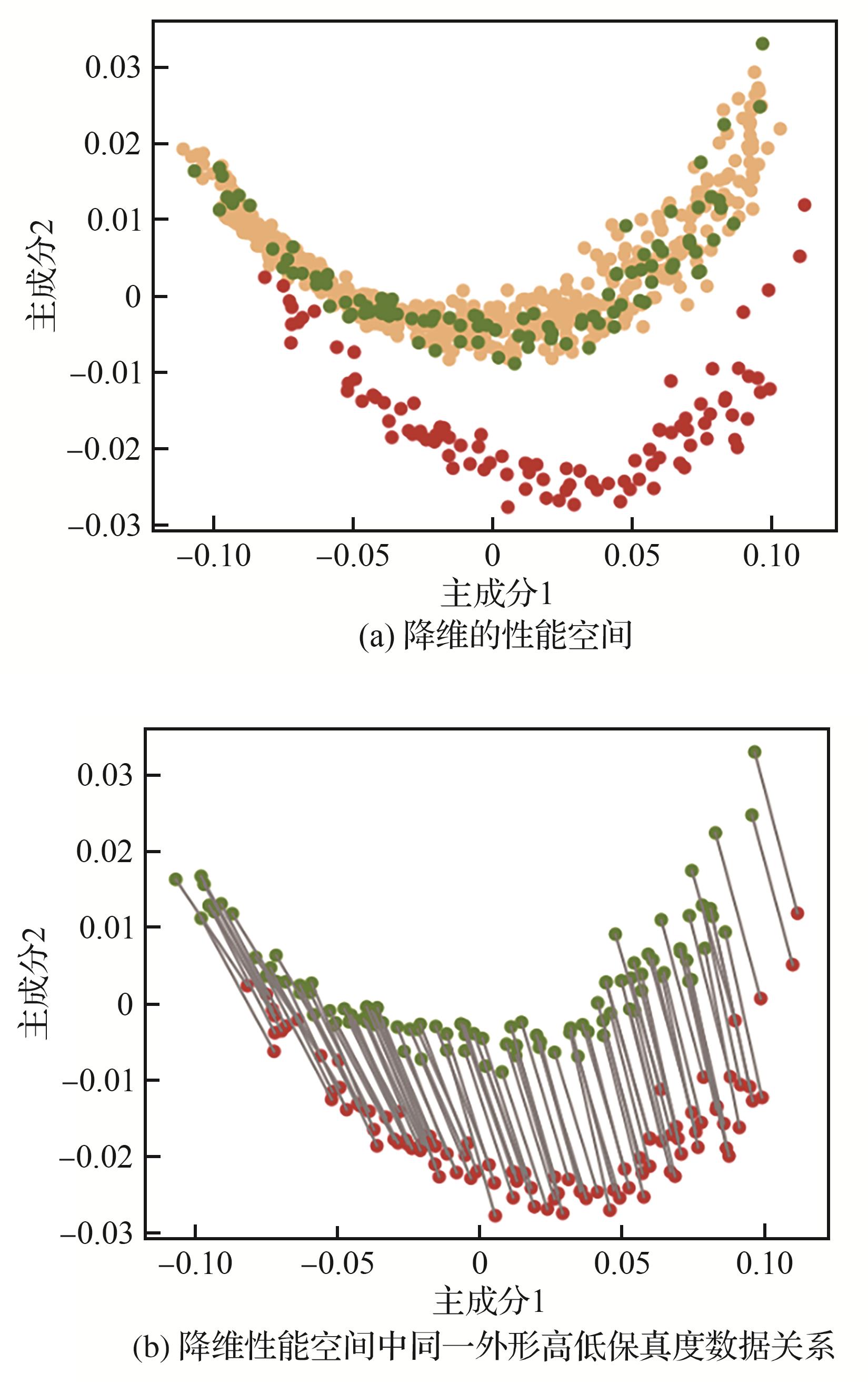

表 1
单保真深度神经网络架构设计
| 模型 | 输入层 | FC1 | FC2 | FC3 | FC4 | 输出层 |
|---|---|---|---|---|---|---|
| DNN-4096 | 33 | 128 | 512 | 2 048 | 4 096 | 1 000 |
| DNN-8192 | 33 | 128 | 512 | 2 048 | 8 192 | 1 000 |
| DNN-10000 | 33 | 128 | 512 | 2 048 | 10 000 | 1 000 |
表 2
单保真深度神经网络训练结果
| 模型 | λ | Loss | Train_MSE | Test_MSE |
|---|---|---|---|---|
| DNN-4096 | ||||
| DNN-8192 | ||||
| DNN-10000 | ||||
图 10
单保真深度神经网络预测结果
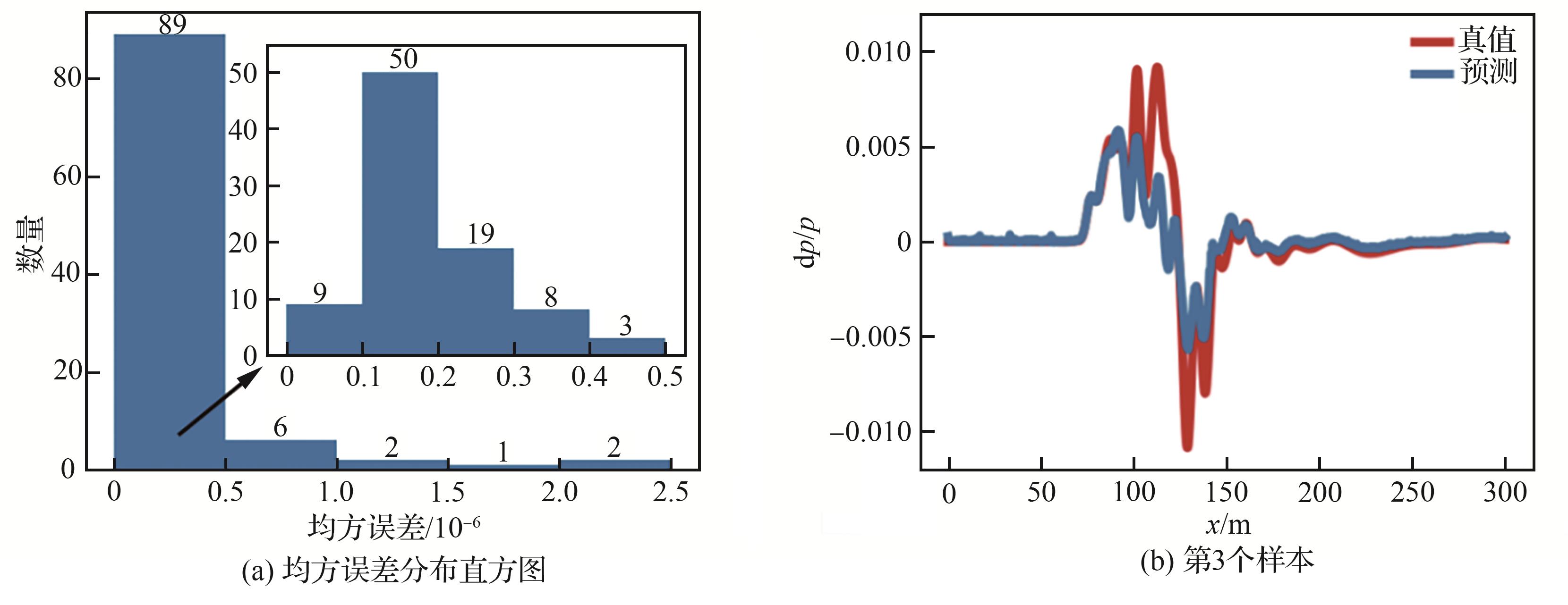
表 3
单保真深度神经网络预测声爆值对比
| 样本序号 | 3 | 14 | 17 | 28 | 31 | 35 | 81 | 94 |
|---|---|---|---|---|---|---|---|---|
| HF/PLdB | 87.49 | 94.84 | 87.55 | 85.70 | 86.87 | 85.88 | 96.40 | 86.24 |
| DNN/PLdB | 83.95 | 95.53 | 84.46 | 83.14 | 84.80 | 83.17 | 99.23 | 84.88 |
| 绝对误差 | 3.54 | 0.69 | 3.09 | 2.56 | 2.07 | 2.71 | 2.83 | 1.36 |
| 相对误差/% | 4.05 | 0.73 | 3.53 | 2.99 | 2.38 | 3.16 | 2.94 | 1.58 |
表 4
基于线性/非线性综合矫正的多保真深度神经网络架构
| 类名 | 模块名 | 输入维度 | 输出维度 |
|---|---|---|---|
| NN_H1 | FC1 | 1 033 | 10 000 |
| 输出层 | 10 000 | 1 000 | |
| NN_H2 | FC1 | 1 033 | 4 096 |
| FC2 | 4 096 | 10 000 | |
| FC3 | 10 000 | 10 000 | |
| 输出层 | 10 000 | 1 000 |
表 5
独立归一化后MF-DNN训练结果
| 模型 | λ | Loss | Train_MSE | Test_MSE | α 或 β |
|---|---|---|---|---|---|
| MF-DNN-hp-ind | 0.06 | ||||
| 0.07 | |||||
| 0.07 | |||||
| 0.07 | |||||
| AMF-DNN-ind | 0.002 | ||||
| 0.002 | |||||
| 0.002 | |||||
| 0.002 |
表 6
混合归一化后MF-DNN训练结果
| 模型 | λ | Loss | Train_MSE | Test_MSE | α 或 β |
|---|---|---|---|---|---|
| MF-DNN-hp-mix | 0.08 | ||||
| 0.09 | |||||
| 0.09 | |||||
| 0.09 | |||||
| AMF-DNN-mix | 0.002 | ||||
| 0.002 | |||||
| 0.002 | |||||
| 0.002 |
图 11
MF-DNN-hp模型预测结果
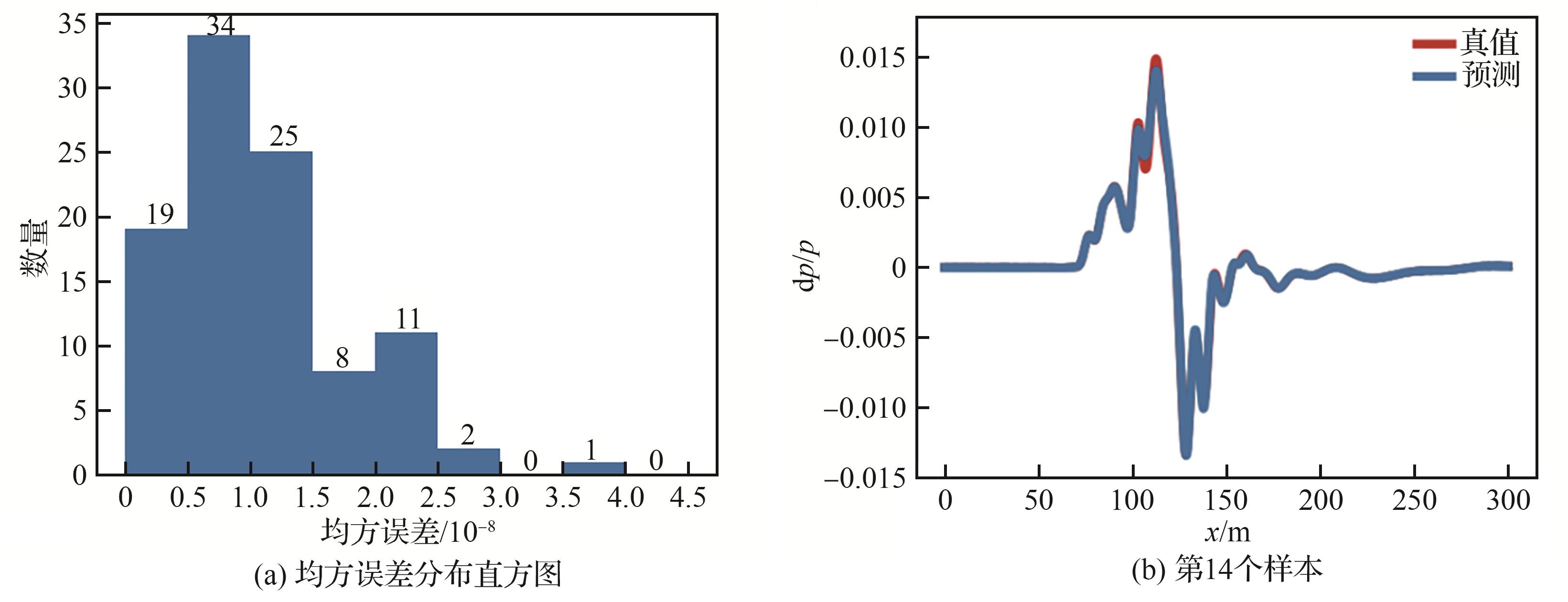
图 12
AMF-DNN模型预测结果
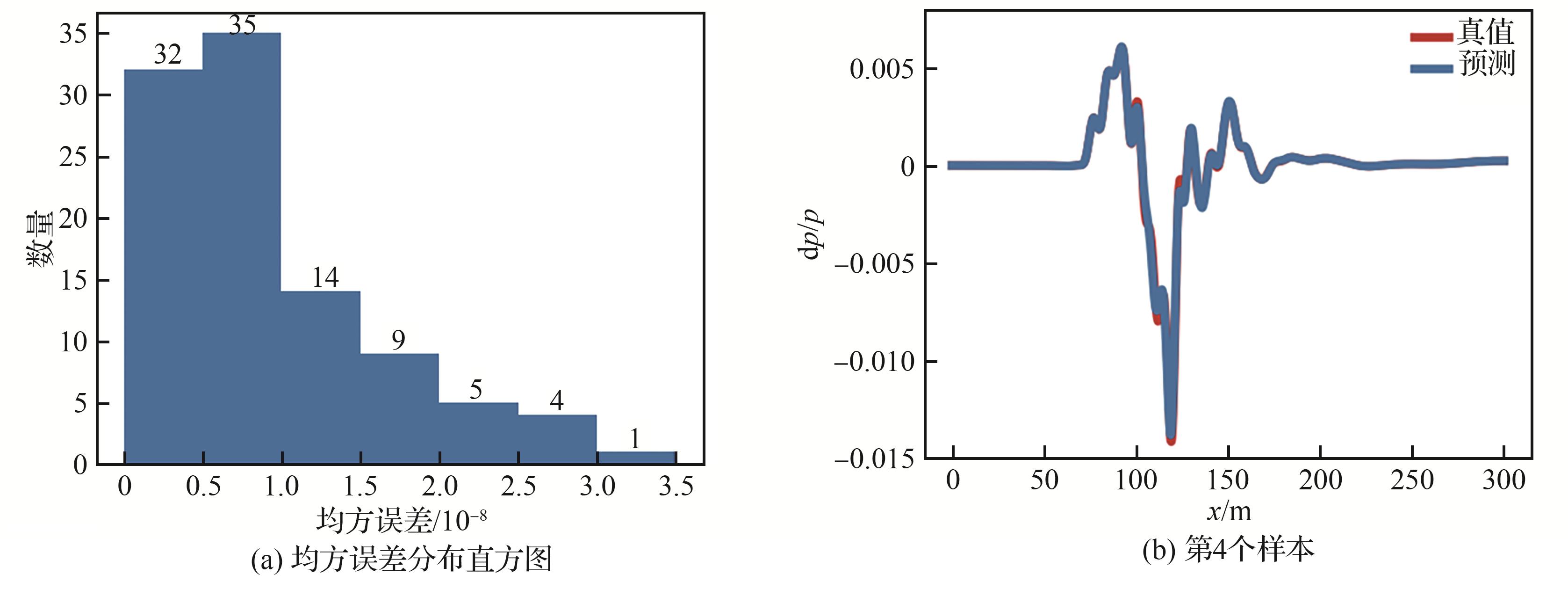
表 7
MF-DNN远场声爆值预测精度对比
| 样本序号 | 4 | 3 | 14 | 17 | 28 | 31 | 35 | 81 | 94 |
|---|---|---|---|---|---|---|---|---|---|
| HF/PLdB | 86.96 | 87.49 | 94.84 | 87.55 | 85.70 | 86.87 | 85.88 | 96.40 | 86.24 |
| MF-DNN-hp/PLdB | 87.05 | 87.52 | 94.70 | 87.56 | 85.83 | 86.41 | 86.20 | 96.38 | 85.83 |
| 绝对误差 | 0.09 | 0.03 | -0.14 | 0.01 | 0.13 | -0.46 | -0.32 | -0.02 | -0.41 |
| 相对误差/% | 0.10 | 0.03 | 0.15 | 0.01 | 0.15 | 0.53 | 0.37 | 0.02 | 0.48 |
| AMF-DNN/PLdB | 87.27 | 87.43 | 94.69 | 87.65 | 85.82 | 86.39 | 86.21 | 96.35 | 85.83 |
| 绝对误差 | 0.31 | -0.06 | -0.15 | 0.10 | 0.12 | -0.48 | -0.33 | -0.05 | -0.41 |
| 相对误差/% | 0.35 | 0.07 | 0.15 | 0.11 | 0.14 | 0.55 | 0.38 | 0.05 | 0.48 |
表 8
基于迁移学习的多保真深度神经网络架构
| 模型 | 输入层 | FL1 | FL2 | TL1 | TL2 | 输出层 |
|---|---|---|---|---|---|---|
| TF-DNN-4096 | 33 | 128 | 512 | 2 048 | 4 096 | 1 000 |
| TF-DNN-8192 | 33 | 128 | 512 | 2 048 | 8 192 | 1 000 |
| TF-DNN-10000 | 33 | 128 | 512 | 2 048 | 10 000 | 1 000 |
表 9
独立归一化时预训练阶段-低保真深度神经网络
| 模型 | λ | Loss | Train_MSE | Test_MSE |
|---|---|---|---|---|
| TF-NNL-ind-4096 | ||||
| TF-NNL-ind-8192 | ||||
| TF-NNL-ind-10000 | ||||
表 10
独立归一化时微调阶段-高保真深度神经网络
| 模型 | λ | FL | TL | Loss | Train_MSE | Test_MSE |
|---|---|---|---|---|---|---|
| TF-NNH-ind-4096 | 3 | 1 | ||||
| 2 | 2 | |||||
| 3 | 1 | |||||
| 2 | 2 | |||||
| 3 | 1 | |||||
| 2 | 2 | |||||
| 3 | 1 | |||||
| 2 | 2 | |||||
| TF-NNH-ind-8192 | 3 | 1 | ||||
| 2 | 2 | |||||
| 3 | 1 | |||||
| 2 | 2 | |||||
| 3 | 1 | |||||
| 2 | 2 | |||||
| 3 | 1 | |||||
| 2 | 2 | |||||
| TF-NNH-ind-10000 | 3 | 1 | ||||
| 2 | 2 | |||||
| 3 | 1 | |||||
| 2 | 2 | |||||
| 3 | 1 | |||||
| 2 | 2 | |||||
| 3 | 1 | 4.2 | ||||
| 2 | 2 |
图 13
TF-NNH-ind模型预测结果分析
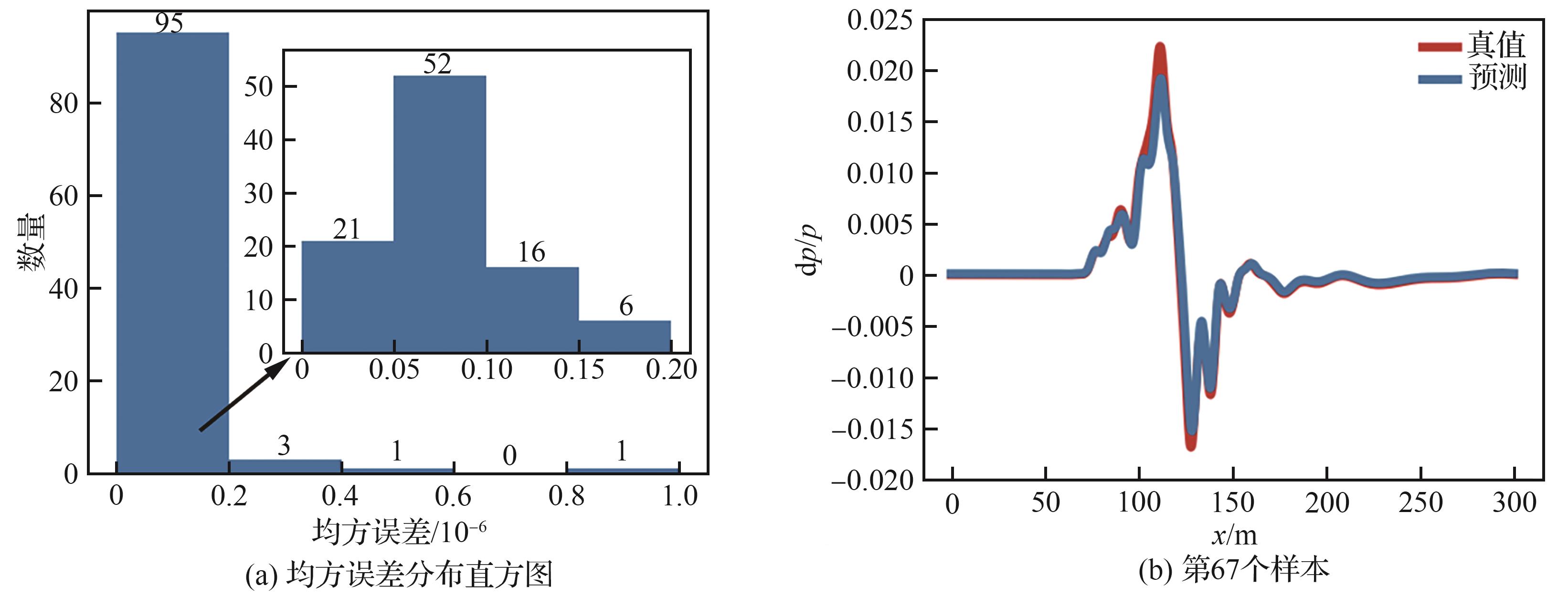
表 11
TF-DNNs-ind声爆值对比
| 样本序号 | 67 | 3 | 14 | 17 | 28 | 31 | 35 | 81 | 94 |
|---|---|---|---|---|---|---|---|---|---|
| HF/PLdB | 101.10 | 87.49 | 94.84 | 87.55 | 85.70 | 86.87 | 85.88 | 96.40 | 86.24 |
| TF-NNH-ind/PLdB | 98.35 | 87.82 | 92.32 | 88.26 | 84.42 | 85.59 | 85.75 | 96.23 | 85.86 |
| 绝对误差 | 2.65 | -0.33 | 2.52 | -0.71 | 1.28 | 1.28 | 0.13 | 0.17 | 0.38 |
| 相对误差/% | 2.62 | 0.38 | 2.66 | 0.81 | 1.49 | 1.47 | 0.15 | 0.18 | 0.44 |
表 12
混合归一化时预训练阶段-低保真深度神经网络
| 模型 | λ | Loss | Train_MSE | Test_MSE |
|---|---|---|---|---|
| TF-NNL-mix-4096 | ||||
| TF-NNL-mix-8192 | ||||
| TF-NNL-mix-10000 | ||||
表 13
混合归一化时微调阶段-高保真深度神经网络
| 模型 | λ | FL | TL | Loss | Train_MSE | Test_MSE |
|---|---|---|---|---|---|---|
| TF-NNH-mix-4096 | 3 | 1 | ||||
| 2 | 2 | |||||
| 3 | 1 | |||||
| 2 | 2 | |||||
| 3 | 1 | |||||
| 2 | 2 | |||||
| 3 | 1 | |||||
| 2 | 2 | |||||
| TF-NNH-mix-8192 | 3 | 1 | ||||
| 2 | 2 | |||||
| 3 | 1 | |||||
| 2 | 2 | |||||
| 3 | 1 | |||||
| 2 | 2 | |||||
| 3 | 1 | |||||
| 2 | 2 | |||||
| TF-NNH-mix-10000 | 3 | 1 | ||||
| 2 | 2 | |||||
| 3 | 1 | |||||
| 2 | 2 | |||||
| 3 | 1 | |||||
| 2 | 2 | |||||
| 3 | 1 | |||||
| 2 | 2 |
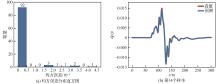
图 14
TF-NNH-mix模型预测结果
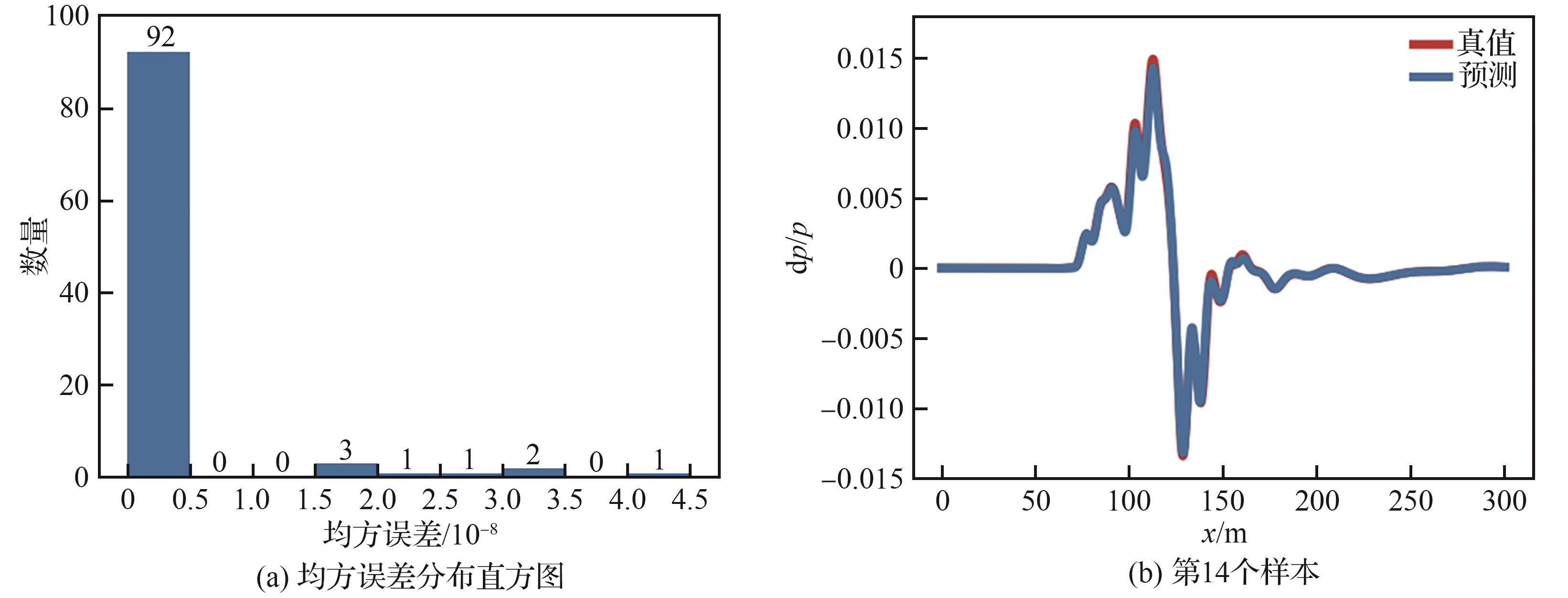
表 14
TF-DNNs-mix声爆值对比
| 样本序号 | 3 | 14 | 17 | 28 | 31 | 35 | 81 | 94 |
|---|---|---|---|---|---|---|---|---|
| HF/PLdB | 87.49 | 94.84 | 87.55 | 85.70 | 86.87 | 85.88 | 96.40 | 86.24 |
| TF-NNH-mix/PLdB | 87.37 | 94.34 | 87.55 | 84.61 | 86.62 | 85.76 | 96.44 | 86.14 |
| 绝对误差 | 0.12 | 0.5 | 0 | 1.09 | 0.25 | 0.12 | -0.04 | 0.1 |
| 相对误差/% | 0.14 | 0.53 | 0 | 1.27 | 0.29 | 0.14 | 0.04 | 0.12 |
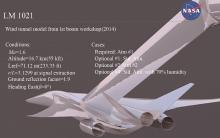
图 A1
LM1021几何外形
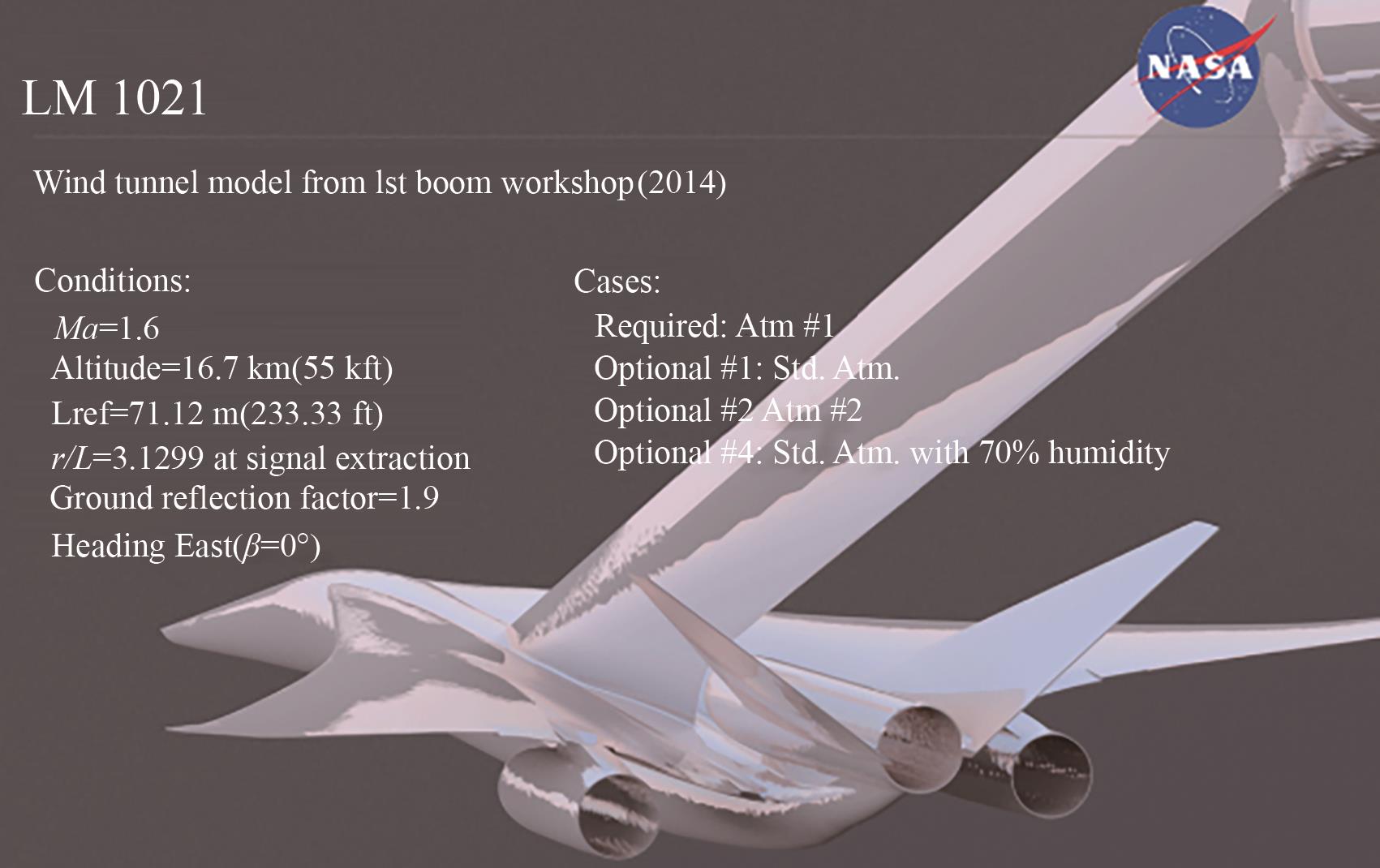
图 A2
0°周向角空间网格收敛性
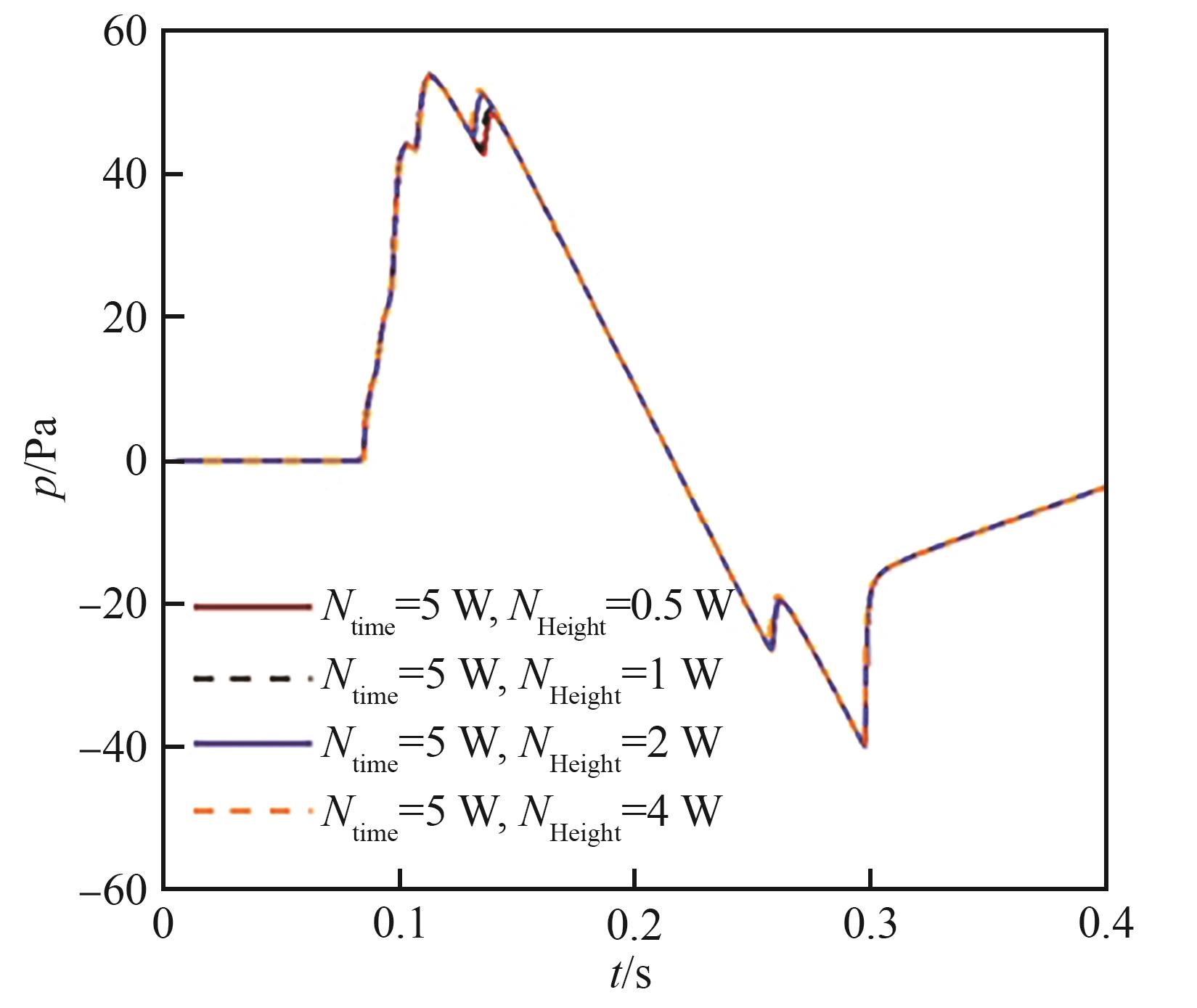
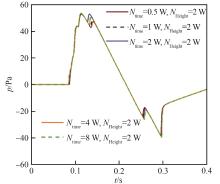
图 A3
0°周向角时间网格收敛性
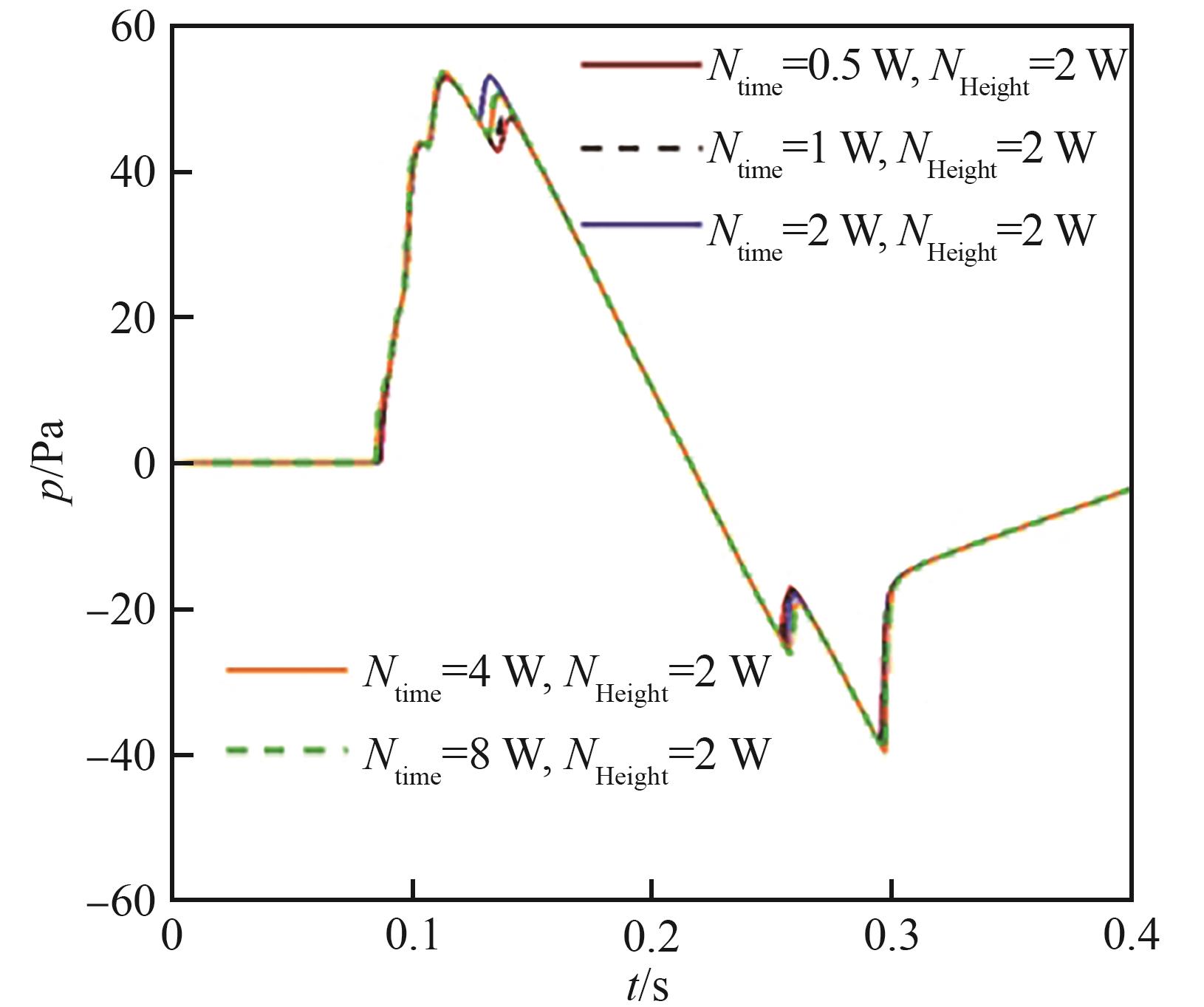
图 A4
30°周向角空间网格收敛性
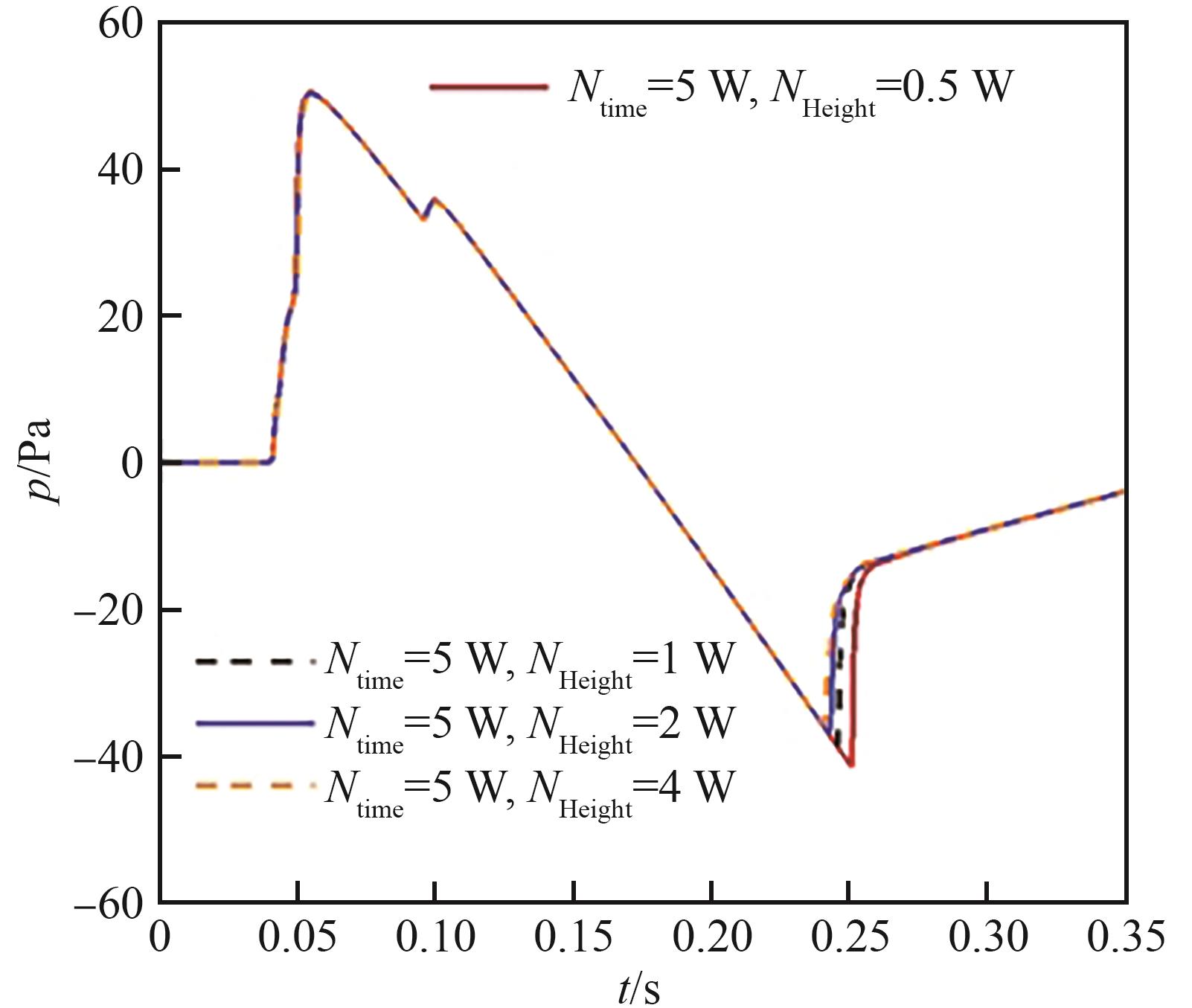
图 A5
30°周向角时间网格收敛性
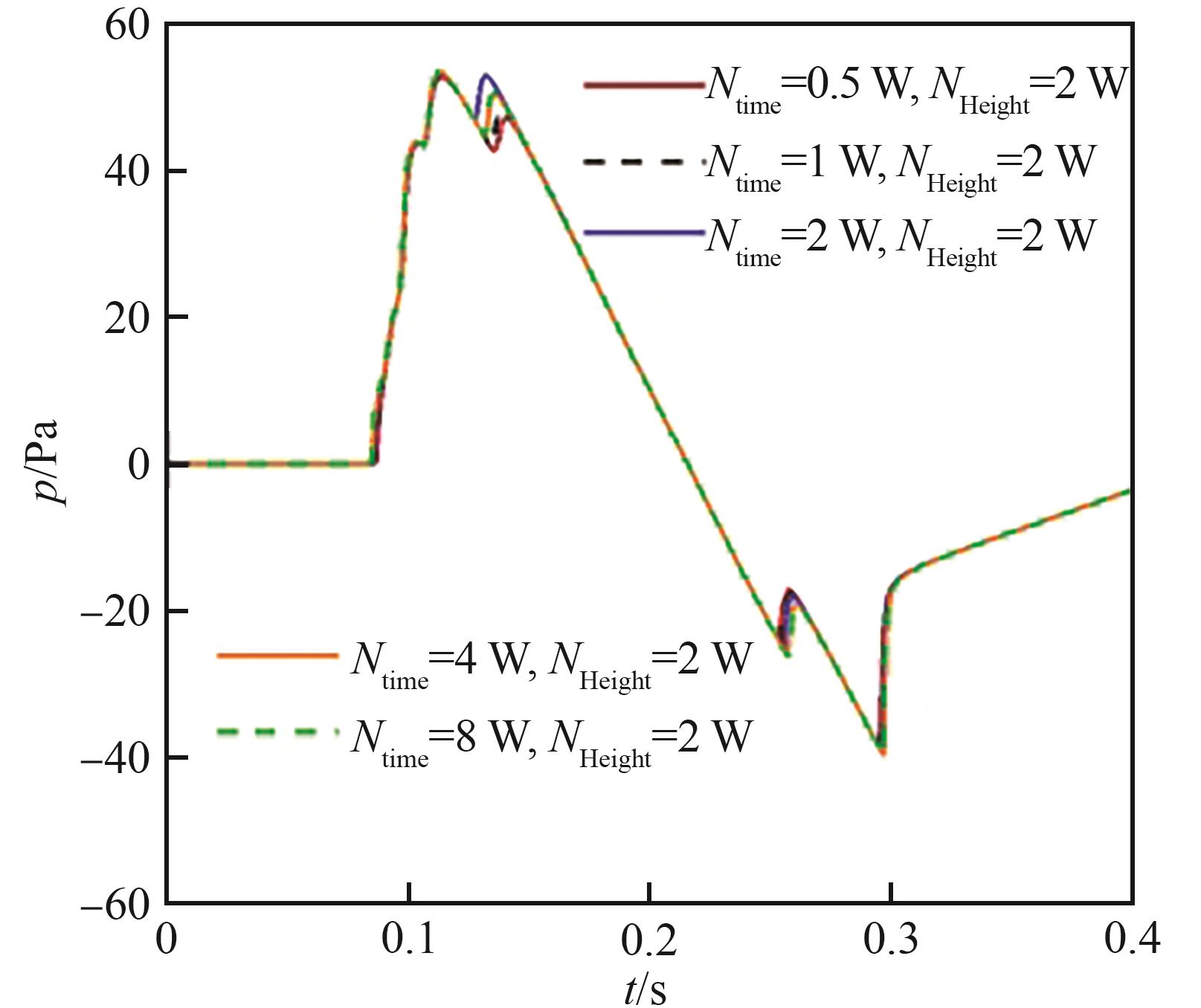
图 A7
30°周向角下的地面声爆信号
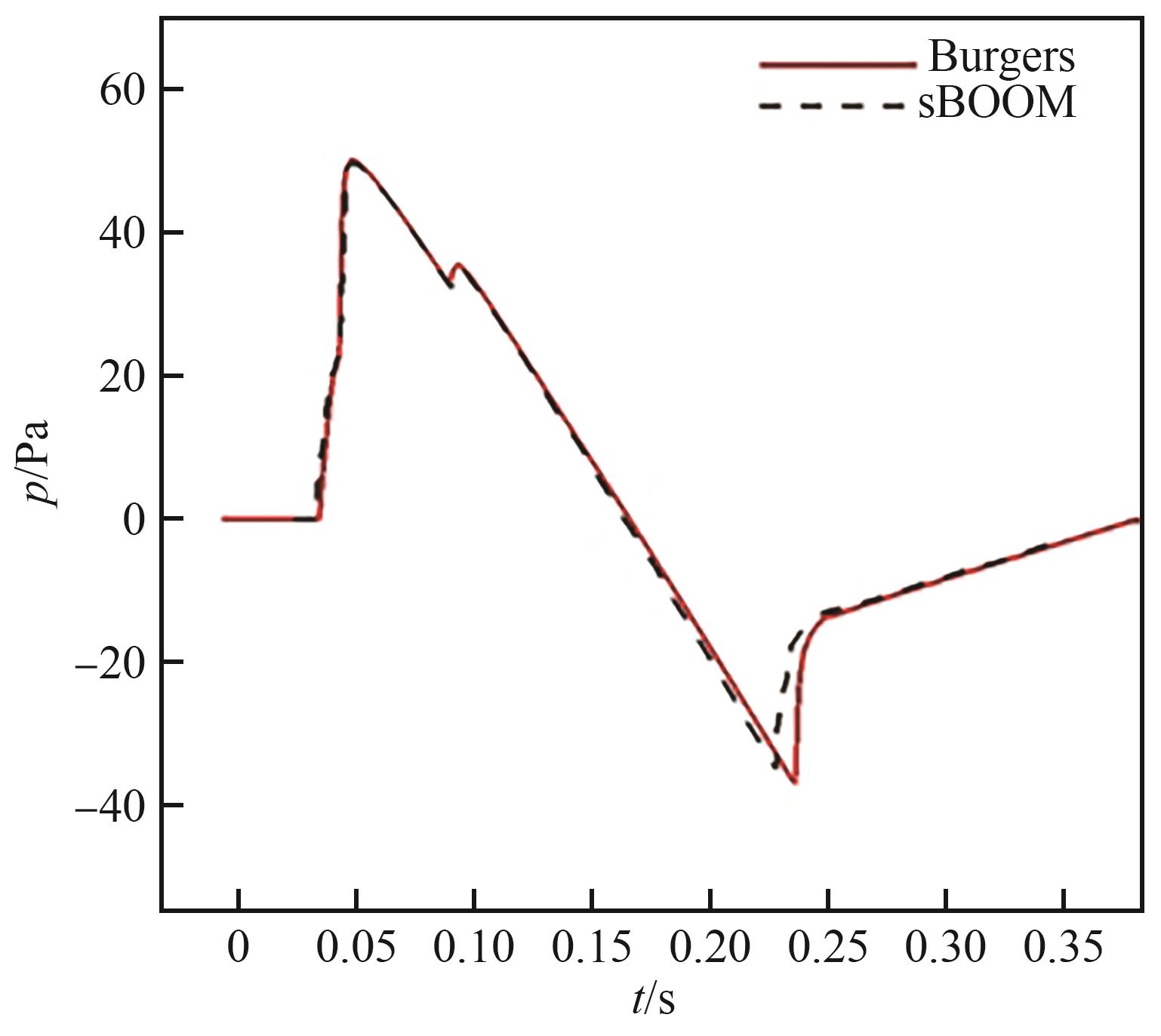
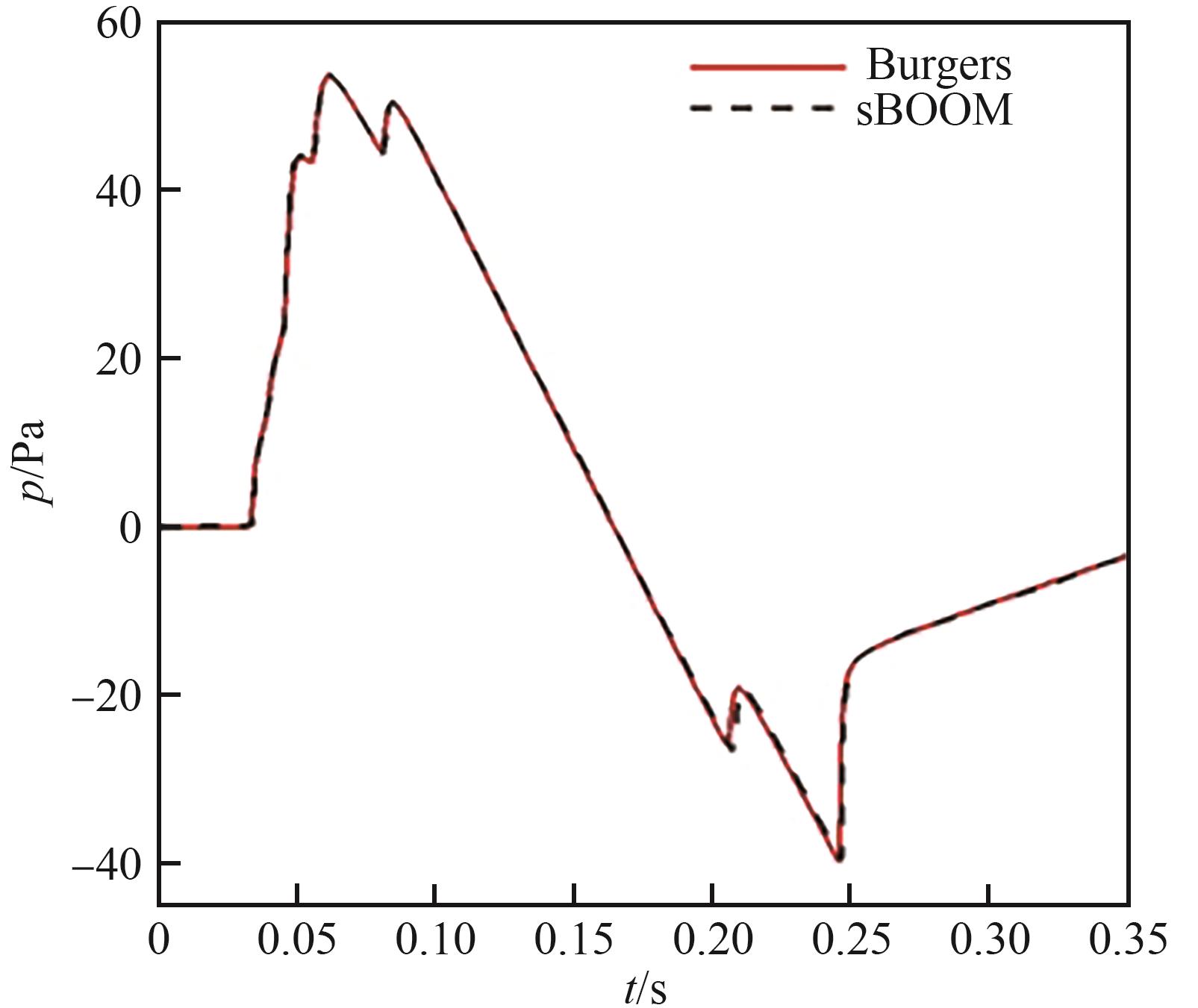
图 A6
0°周向角下的地面声爆信号
| [1] | LANDAU L D. On shock waves at large distances from the place of their origin[M]∥Collected Papers of L.D. Landau. Amsterdam: Elsevier, 1965: 437-444. |
| [2] | PLOTKIN K J. State of the art of sonic boom modeling[J]. The Journal of the Acoustical Society of America, 2002, 111(1 Pt 2): 530-536. |
| [3] | HENNE P A, HOWE D C, WOLZ R R, et al. Supersonic aircraft with spike for controlling and reducing sonic boom: United States Patent 8789789[P]. 2004-03-02. |
| [4] | BATDORF S. On alleviation of the sonic boom by thermal means[C]∥7th Annual Meeting and Technical Display. Reston: AIAA, 1970. |
| [5] | GOETHERT B H. Fundamental research on advanced techniques for sonic boom suppression[J]. The Journal of the Acoustical Society of America, 1973, 54(6): 1766. |
| [6] | ZHA G C, IM H, ESPINAL D. Toward zero sonic-boom and high efficiency supersonic flight, part Ⅰ: A novel concept of supersonic bi-directional flying wing[C]∥48th AIAA Aerospace Sciences Meeting Including the New Horizons Forum and Aerospace Exposition. Reston: AIAA, 2010. |
| [7] | ESPINAL D, LEE B, SPOSATO H, et al. Supersonic bi-directional flying wing, part Ⅱ: Conceptual design of A high speed civil transport[C]∥48th AIAA Aerospace Sciences Meeting Including the New Horizons Forum and Aerospace Exposition. Reston: AIAA, 2010. |
| [8] | HORINOUCHI S. Variable forward swept wing supersonic aircraft having both low-boom characteristics and low-drag characteristics: United States Patent Application 20050230531[P]. 2005-10-20. |
| [9] | KUSUNOSE K, MATSUSHIMA K, MARUYAMA D. Supersonic biplane: A review[J]. Progress in Aerospace Sciences, 2011, 47(1): 53-87. |
| [10] | CHEUNG S H, EDWARDS T A. Supersonic airplane design optimization method for aerodynamic performance and low sonic boom: 19920076743[R]. Washington, D.C.: NASA, 1992. |
| [11] | KIRZ J. Surrogate based shape optimization of a low boom axisymmetric body[C]∥2018 Applied Aerodynamics Conference. Reston: AIAA, 2018. |
| [12] | 乔建领, 韩忠华, 宋文萍. 基于代理模型的高效全局低音爆优化设计方法[J]. 航空学报, 2018, 39(5): 121736. |
| QIAO J L, HAN Z H, SONG W P. An efficient surrogate-based global optimization for low sonic boom design[J]. Acta Aeronautica et Astronautica Sinica, 2018, 39(5): 121736 (in Chinese). | |
| [13] | REUTHER J, JAMESON A. Supersonic wing and wing-body shape optimization using an adjoint formulation: NASA-CR-199150[R]. Washington, D.C.: NASA, 1995. |
| [14] | RALLABHANDI S K, NIELSEN E J, DISKIN B. Sonic-boom mitigation through aircraft design and adjoint methodology[J]. Journal of Aircraft, 2014, 51(2): 502-510. |
| [15] | 黄江涛, 张绎典, 高正红, 等. 基于流场/声爆耦合伴随方程的超声速公务机声爆优化[J]. 航空学报, 2019, 40(5): 122505. |
| HUANG J T, ZHANG Y D, GAO Z H, et al. Sonic boom optimization of supersonic jet based on flow/sonic boom coupled adjoint equations[J]. Acta Aeronautica et Astronautica Sinica, 2019, 40(5): 122505 (in Chinese). | |
| [16] | 马创, 黄江涛, 刘刚, 等. 超声速飞行器近场声爆信号反演技术[J]. 空气动力学学报, 2023, 41(4): 1-10. |
| MA C, HUANG J T, LIU G, et al. Inversion technology of near-field sonic boom signal of supersonic aircraft[J]. Acta Aerodynamica Sinica, 2023, 41(4): 1-10 (in Chinese). | |
| [17] | 单程军, 贡天宇, 易理哲, 等 . 超声速民机高效高可信度声爆/气动多学科优化方法[J]. 航空学报, 2024, 45(24):630573. |
| SHAN C J, GONG T Y, YI L Z, et al. High-efficiency and high-reliability sonic boom/aerodynamic multidisciplinary optimization method for supersonic civil aircraft[J]. Acta Aeronautica et Astronautica Sinica, 2024, 45(24): 630573 (in Chinese). | |
| [18] | 杨超, 谭玉婷, 王伟, 等 . 融入低声爆设计的超声速民机概念方案多学科优化[J]. 航空学报, 2025, 46(20): 531457. |
| YANG C, TAN Y T, WANG W, et al. Multidisciplinary optimization with low-boom design for supersonic civil aircraft conceptual design[J]. Acta Aeronautica et Astronautica Sinica, 2025, 46(20): 531457 (in Chinese). | |
| [19] | LI W, SHIELDS E, GEISELHART K. Mixed-fidelity approach for design of low-boom supersonic aircraft[J]. Journal of Aircraft, 2011, 48(4): 1131-1135. |
| [20] | 李军府, 陈晴, 王伟, 等. 一种先进超声速民机低声爆高效气动布局设计[J]. 航空学报, 2024, 45(6): 629613. |
| LI J F, CHEN Q, WANG W, et al. Design of low sonic boom high efficiency layout for advanced supersonic civil aircraft[J]. Acta Aeronautica et Astronautica Sinica, 2024, 45(6): 629613 (in Chinese). | |
| [21] | 谢睿轩, 章子洋, 李锦烨, 等. 远程超声速客机低声爆气动设计及评估[J/OL]. 航空学报, 2025: 1-14. (2025-03-14). . |
| XIE R X, ZHANG Z Y, LI J Y, et al. Aerodynamic design and evaluation of long-range supersonic passenger aircraft with low sound explosion[J/OL]. China Industrial Economics, 2025: 1-14. (2025-03-14). (in Chinese). | |
| [22] | SONG X G, LV L Y, SUN W, et al. A radial basis function-based multi-fidelity surrogate model: Exploring correlation between high-fidelity and low-fidelity models[J]. Structural and Multidisciplinary Optimization, 2019, 60(3): 965-981. |
| [23] | PERDIKARIS P, VENTURI D, ROYSET J O, et al. Multi-fidelity modelling via recursive co-Kriging and Gaussian-Markov random fields[J]. Proceedings Mathematical, Physical, and Engineering Sciences, 2015, 471(2179): 20150018. |
| [24] | MENG X H, KARNIADAKIS G E. A composite neural network that learns from multi-fidelity data: Application to function approximation and inverse PDE problems[J]. Journal of Computational Physics, 2020, 401: 109020. |
| [25] | ZHANG X S, XIE F F, JI T W, et al. Multi-fidelity deep neural network surrogate model for aerodynamic shape optimization[J]. Computer Methods in Applied Mechanics and Engineering, 2021, 373: 113485. |
| [26] | YANG H, CHEN S S, GAO Z H, et al. Reynolds number effect correction of multi⁃fidelity aerodynamic distributions from wind tunnel and simulation data[J]. Physics of Fluids, 2023, 35(10): 103113. |
| [27] | WEISS K, KHOSHGOFTAAR T M, WANG D. A survey of transfer learning[J]. Journal of Big Data, 2016, 3 (1): 1-40. |
| [28] | LIAO P, SONG W, DU P, et al. Multi-fidelity convolutional neural network surrogate model for aerodynamic optimization based on transfer learning[J]. Physics of Fluids. 2021, 33 (12). |
| [29] | SONG D H, TARTAKOVSKY D M. Transfer learning on multifidelity data[J]. Journal of Machine Learning for Modeling and Computing. 2022, 3 (1): 31-47. |
| [30] | 陈柏宁, 谢芳芳, 孟旭辉. 自适应多保真数据融合的神经网络模型[J]. 气体物理, 2024, 9(4): 1-8. |
| CHEN B N, XIE F F, MENG X H. Adaptive multi-fidelity composite deep neural networks[J]. Physics of Gases, 2024, 9(4): 1-8 (in Chinese). | |
| [31] | CASTNER R. Analysis of exhaust plume effects on sonic boom for a 59-degree wing body model[C]∥49th AIAA Aerospace Sciences Meeting Including the New Horizons Forum and Aerospace Exposition. Reston: AIAA, 2011. |
| [32] | KIRZ J. DLR TAU simulations for the third AIAA sonic boom prediction workshop near-field cases[C]∥AIAA Scitech 2021 Forum. Reston: AIAA, 2021. |
| [1] | 李荣祖, 刘莉, 杨盾. 基于多源域融合代理模型的氢能无人机优化设计[J]. 航空学报, 2025, 46(9): 630979-630979. |
| [2] | 焦阳, 陆雨婷, 许拔, 欧阳键. 基于时空相关性的卫星流量迁移预测[J]. 航空学报, 2025, 46(4): 330938-330938. |
| [3] | 郑可风, 宋文萍, 聂晗, 丁玉临, 乔建领, 陈晴, 王奕衡, 宋科, 张科施. 考虑全机声爆特性的超声速自然层流机翼设计方法[J]. 航空学报, 2025, 46(20): 531214-531214. |
| [4] | 杨超, 谭玉婷, 王伟, 赵彦, 余雄庆. 融入低声爆设计的超声速民机概念方案多学科优化[J]. 航空学报, 2025, 46(20): 531457-531457. |
| [5] | 谢睿轩, 章子洋, 李锦烨, 包晗, 陆方寒, 王祁旻, 吴大卫. 远程超声速客机低声爆气动设计及评估[J]. 航空学报, 2025, 46(20): 531589-531589. |
| [6] | 贡天宇, 单程军, 易理哲, 龙垚松, 成忠涛. 发动机几何参数对超声速民机声爆特性的影响[J]. 航空学报, 2025, 46(20): 531592-531592. |
| [7] | 李亚飞, 赵瑞. 基于噪声与油耗的超声速客机进近程序优化[J]. 航空学报, 2025, 46(20): 531919-531919. |
| [8] | 张力文, 韩忠华, 张科施, 宋科, 宋文萍. 面向超声速民机近/中场声爆传播的空间推进高精度数值模拟方法[J]. 航空学报, 2025, 46(20): 531935-531935. |
| [9] | 李祚泰, 陈树生, 金世轶, 高正红, 周卫国. 基于声爆高效预测的超声速民机优化设计与数据挖掘[J]. 航空学报, 2025, 46(20): 531920-531920. |
| [10] | 陈晴, 韩忠华, 张科施, 乔建领, 丁玉临, 宋文萍. 一种面向超声速民机低声爆布局的全声爆毯优化设计方法[J]. 航空学报, 2025, 46(20): 531909-531909. |
| [11] | 郭程洁, 徐典, 李进宝, 程超宇, 郭硕昌, 李锐. 基于数据融合-知识迁移方法的高温数字图像相关试验应力表征[J]. 航空学报, 2025, 46(19): 531574-531574. |
| [12] | 王鹏飞, 曾丽芳, 邵雪明, 黎军. 基于预训练微调的机翼气动载荷多源数据融合建模方法[J]. 航空学报, 2025, 46(19): 532297-532297. |
| [13] | 刘子超, 王江, 王鹏, 林德福, 何智川. 时间约束多导弹协同制导律[J]. 航空学报, 2024, 45(S1): 730607-730607. |
| [14] | 李军府, 陈晴, 王伟, 韩忠华, 谭玉婷, 丁玉临, 谢露, 乔建领, 宋科, 艾俊强. 一种先进超声速民机低声爆高效气动布局设计[J]. 航空学报, 2024, 45(6): 629613-629613. |
| [15] | 崔江, 周凡, 陈永凡, 于立, 张卓然. 一种基于GAMF-CNN的航空发电机整流器故障诊断技术[J]. 航空学报, 2024, 45(24): 330398-330398. |
| 阅读次数 | ||||||
|
全文 |
|
|||||
|
摘要 |
|
|||||
版权所有 © 航空学报编辑部
版权所有 © 2011航空学报杂志社
主管单位:中国科学技术协会 主办单位:中国航空学会 北京航空航天大学

 CJA
CJA
