Acta Aeronautica et Astronautica Sinica ›› 2026, Vol. 47 ›› Issue (8): 132736.doi: 10.7527/S1000-6893.2025.32736
• Fluid Mechanics and Flight Mechanics • Previous Articles
Haoning SHI1, Ke WANG1,2( ), Qiang XIAO1, Liwen CAO1, Wei FAN1,3
Received:2025-08-31
Revised:2025-10-10
Accepted:2025-11-10
Online:2025-11-21
Published:2025-11-20
Contact:
Ke WANG
E-mail:wangk@nwpu.edu.cn
Supported by:CLC Number:
Haoning SHI, Ke WANG, Qiang XIAO, Liwen CAO, Wei FAN. Impacts of non-uniform filling on propagation characteristics of detonation waves in curved channel with lateral expansion on inner side[J]. Acta Aeronautica et Astronautica Sinica, 2026, 47(8): 132736.
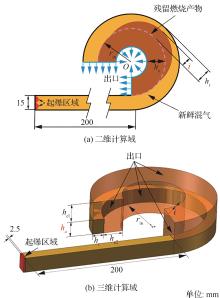
Fig.1
Physical model of detonation wave propagating in non-uniformly filled flow field
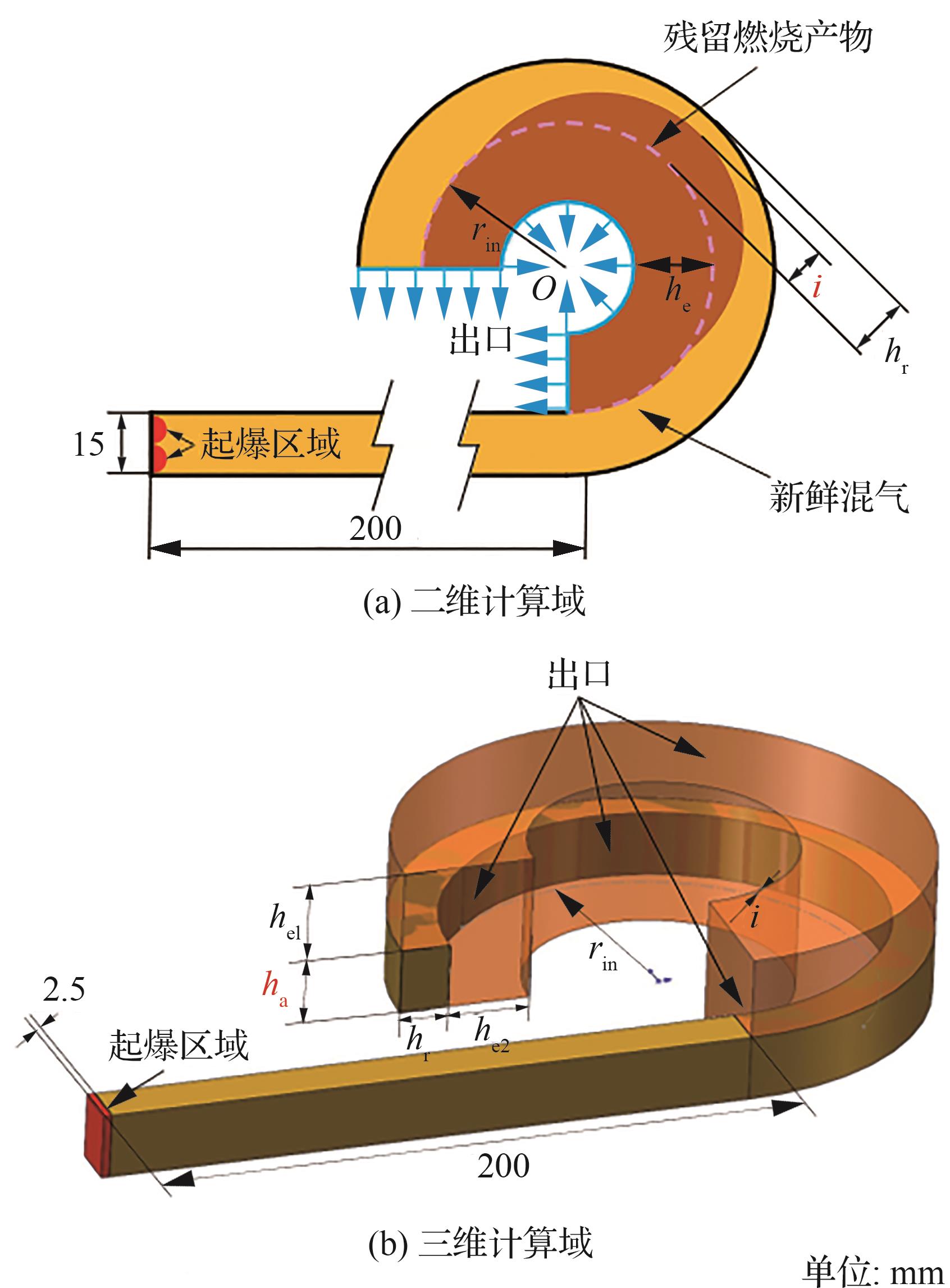
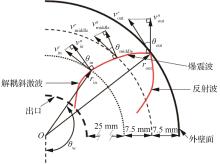
Fig.2
Velocity distribution schematic of detonation wave at virtual inner wall, centerline, and outer wall
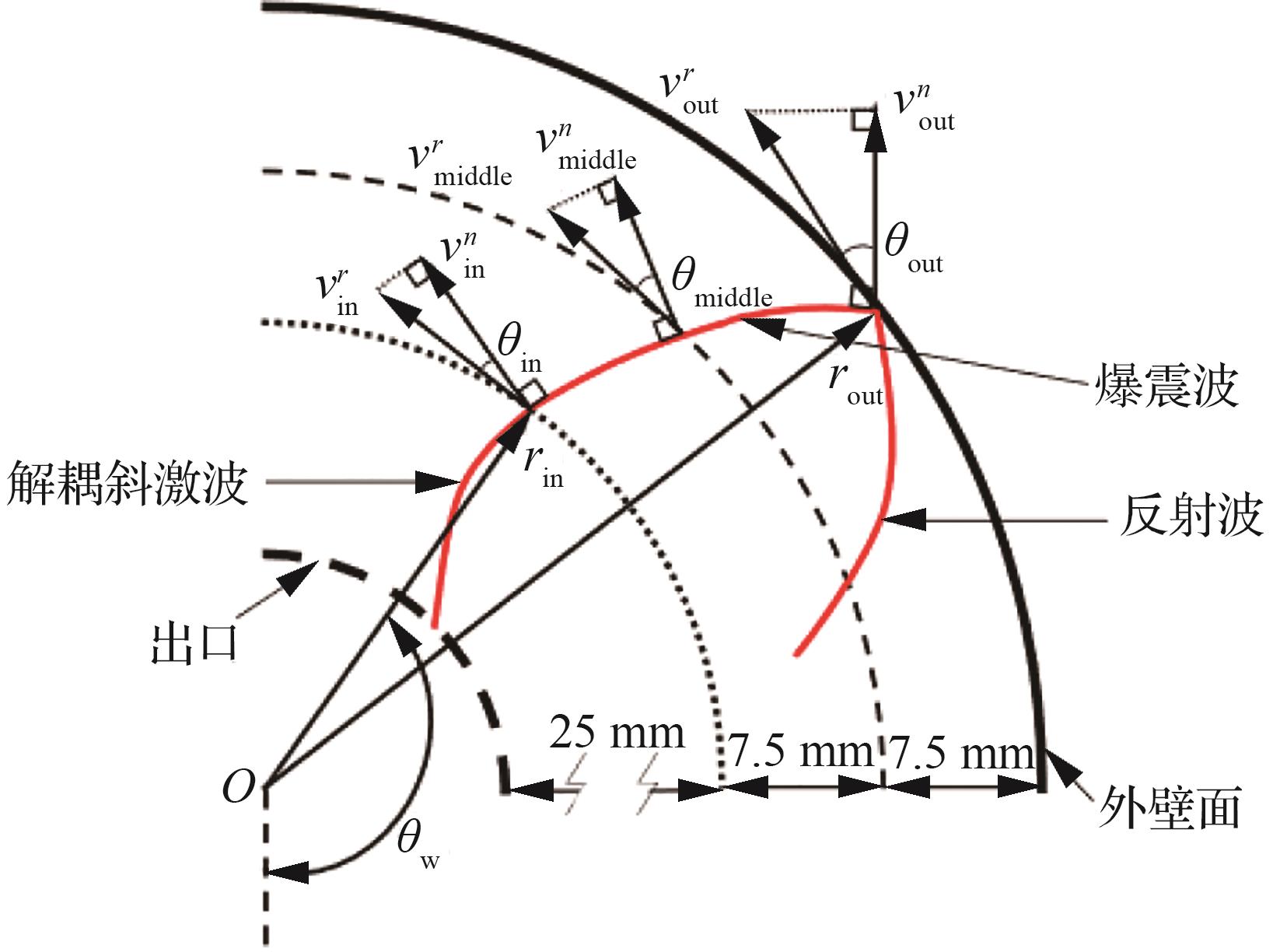
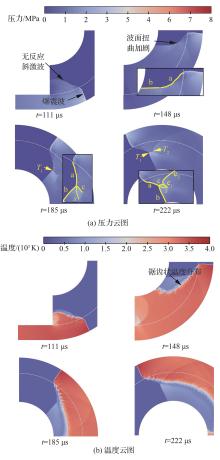
Fig.3
Pressure and temperature contours of detonation wave propagation at incomplete filling distance of 0 mm
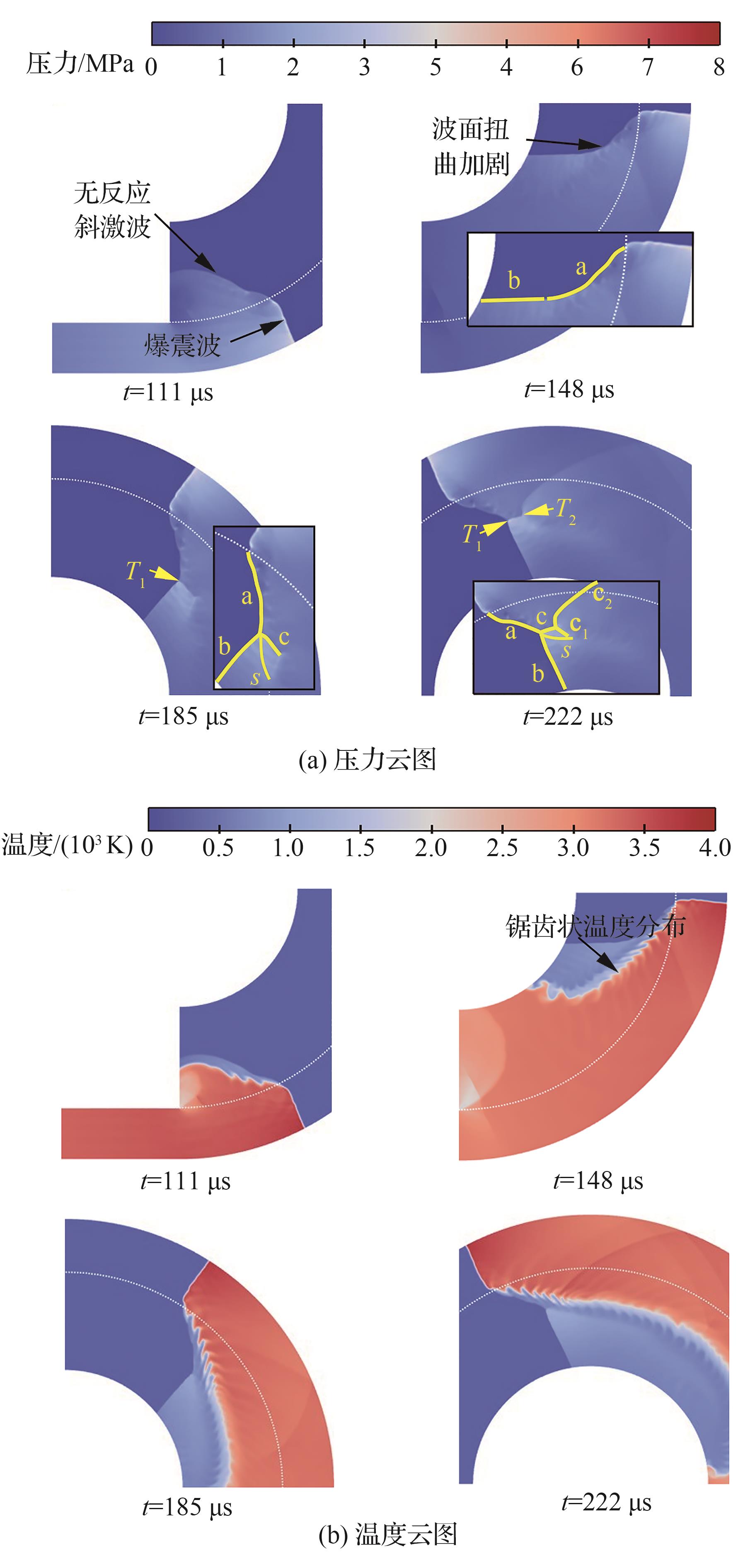
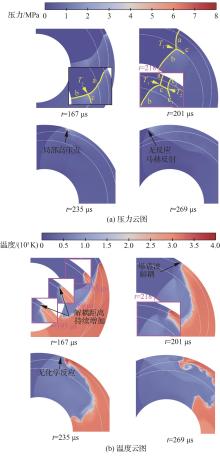
Fig.4
Pressure and temperature contours of detonation wave propagation at incomplete filling distance of 12 mm
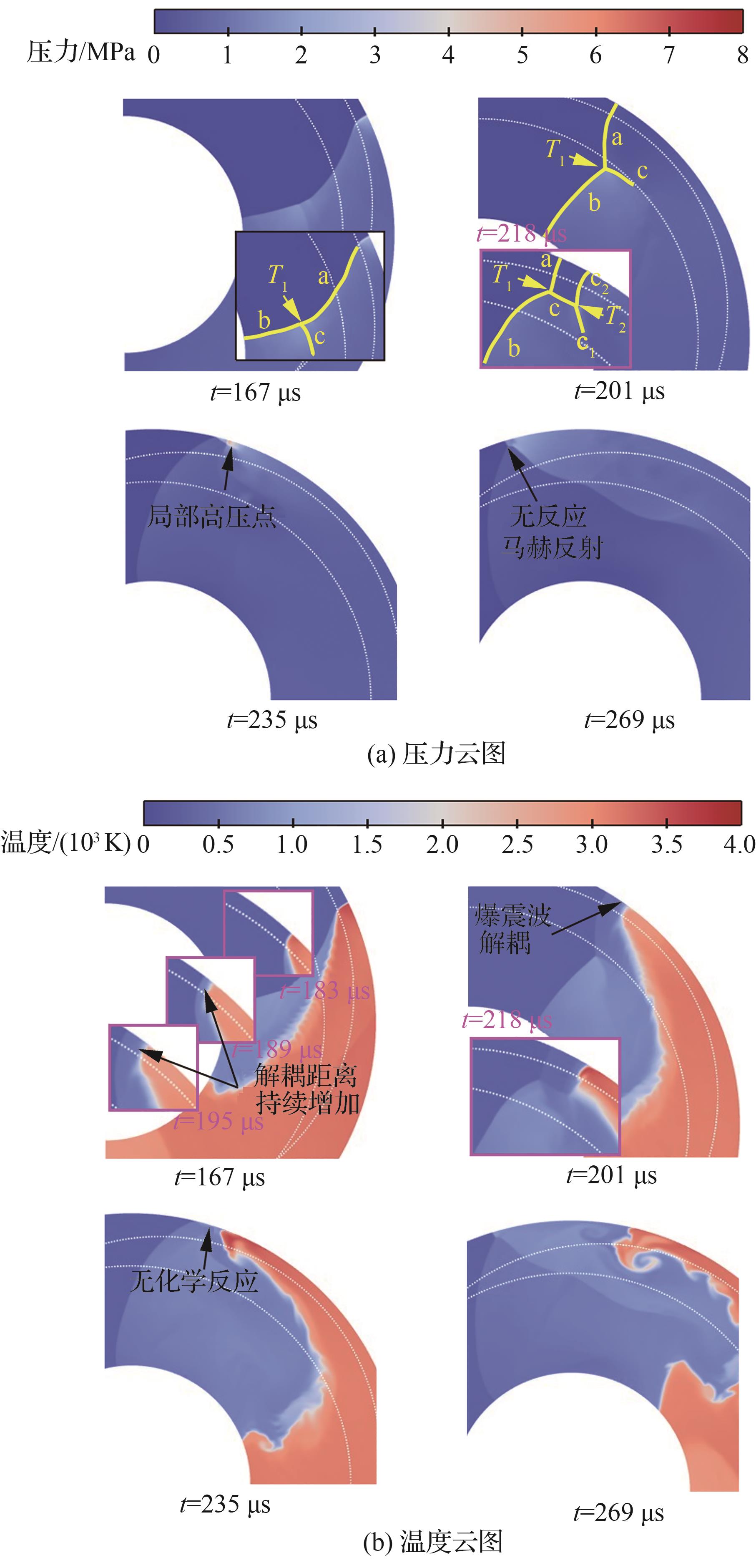
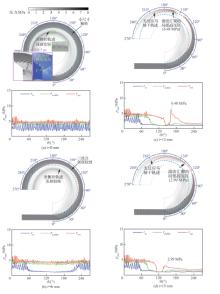
Fig.5
Cellular structures obtained while detonation wave propagates at different incomplete filling distances and maximum pressure along rin, rmiddle and rout
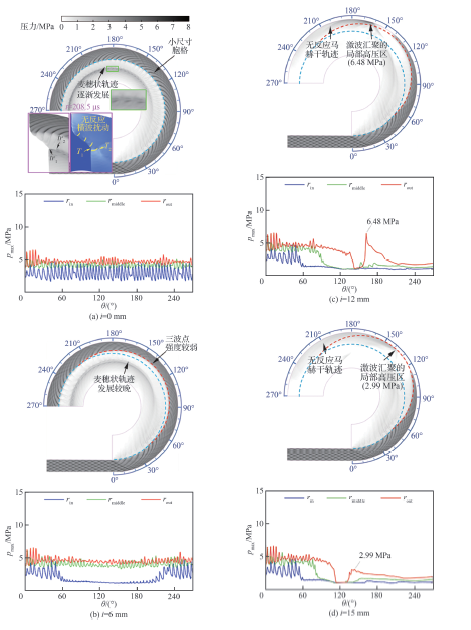
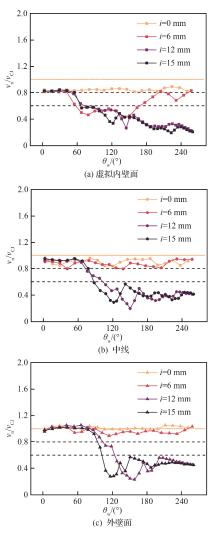
Fig.6
Variation of local normal velocities while detonation wave propagates at different non-uniform filling distances
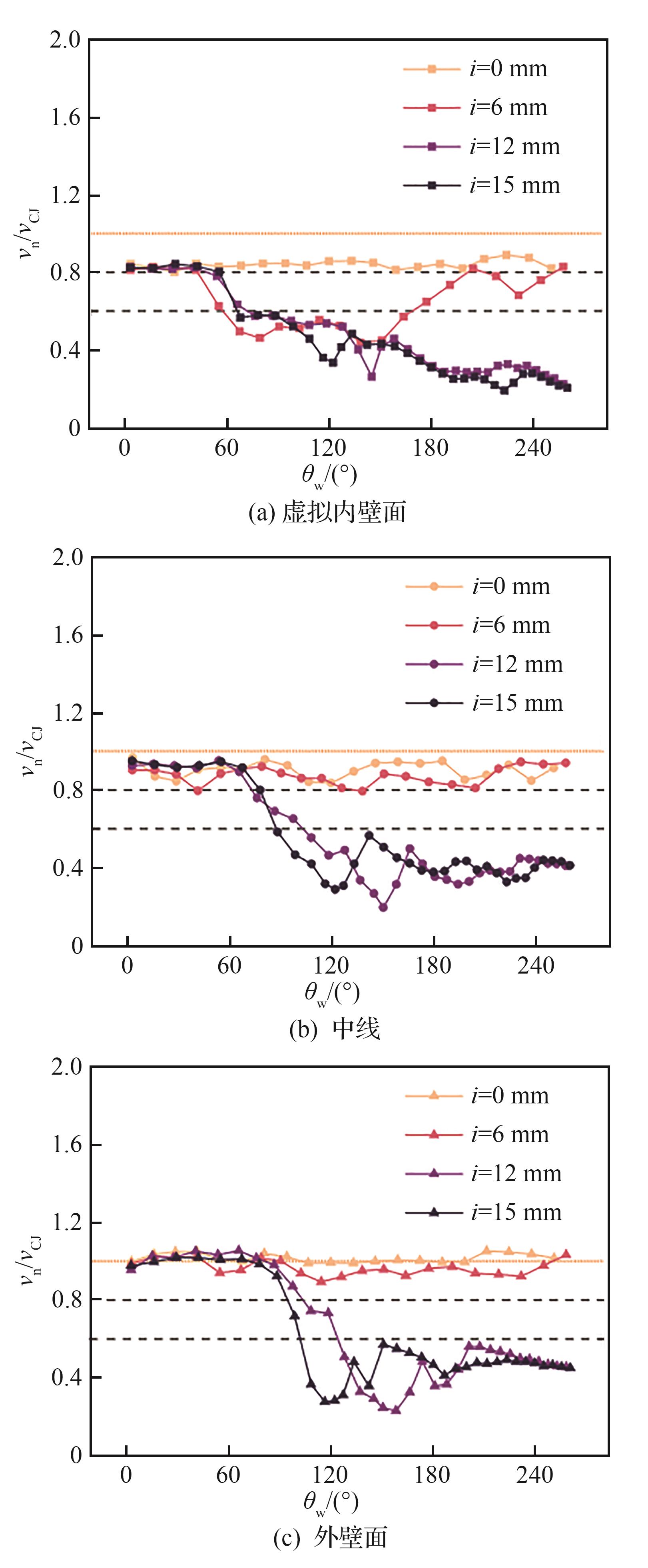
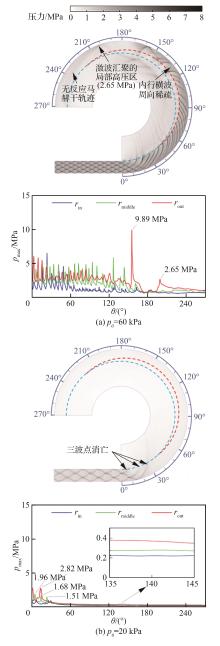
Fig.7
Cellular structures obtained while detonation wave propagates under different initial pressure and maximum pressure along rin, rmiddle and rout
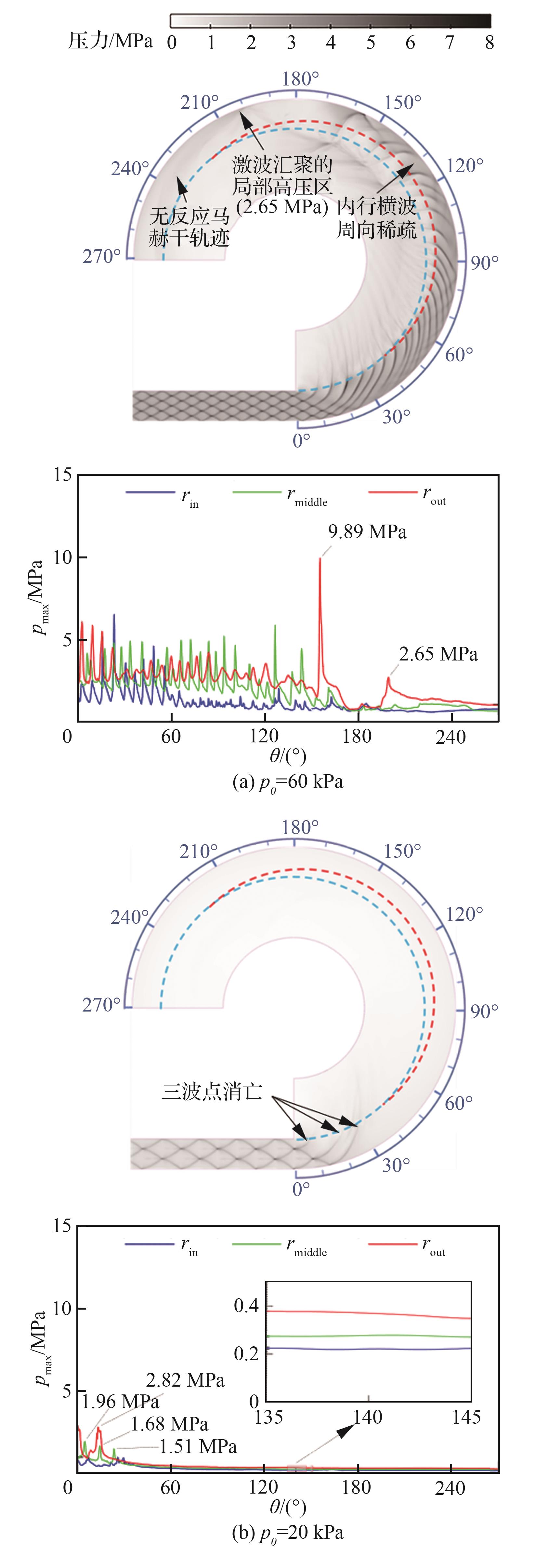
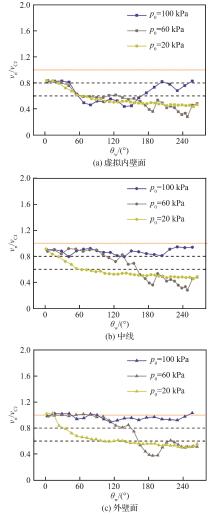
Fig.8
Variation of local normal velocities while detonation wave propagates under different initial pressure
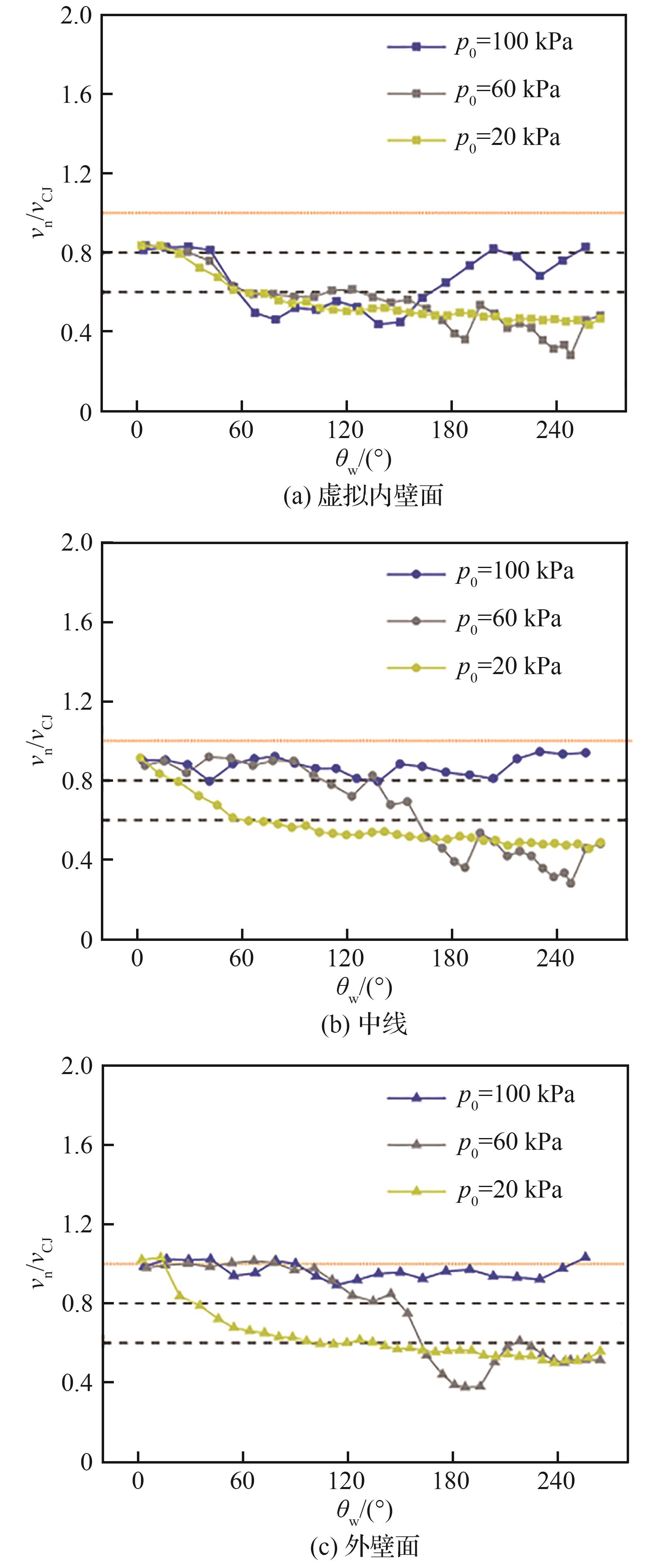
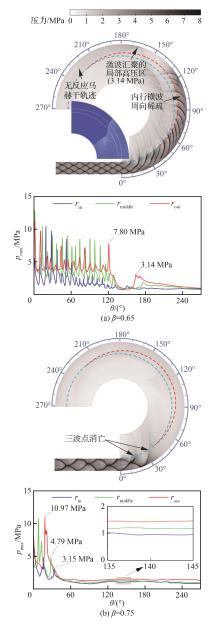
Fig.9
Cellular structures obtained while detonation wave propagates at different dilution ratios and maximum pressure along rin, rmiddle and rout
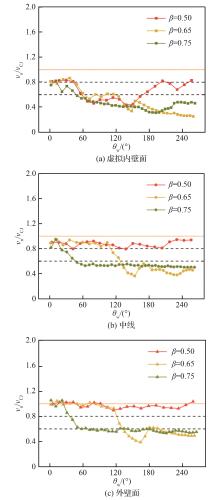
Fig.10
Variation of local normal velocities whil detonation wave propagates at different dilution ratios
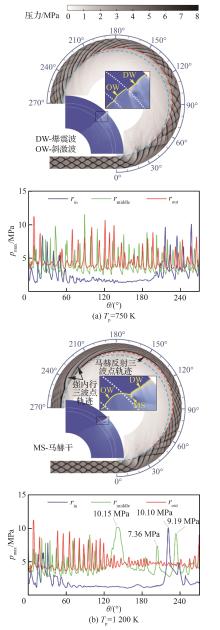
Fig.11
Cellular structures obtained while detonation wave propagates at different combustion product temperatures and maximum pressure along rin, rmiddle and rout
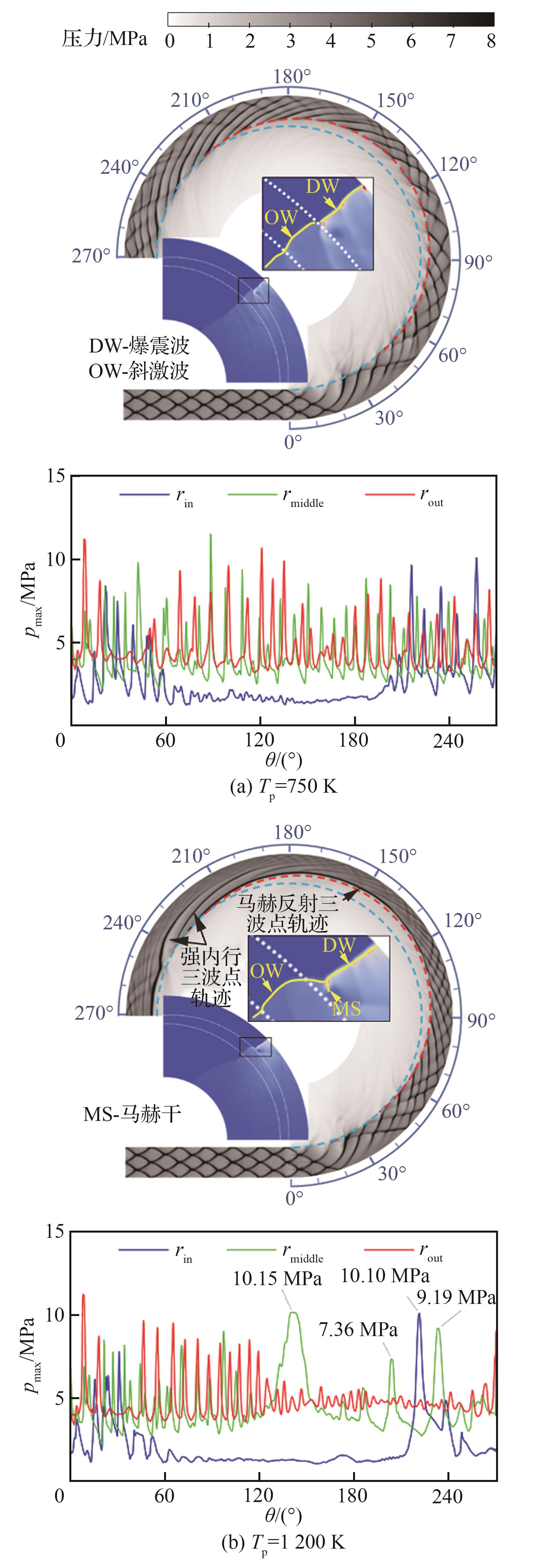
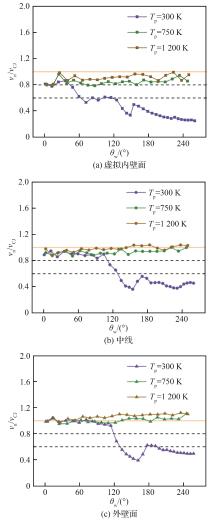
Fig.12
Variation of local normal velocities while detonation wave propagates under different combustion product temperatures
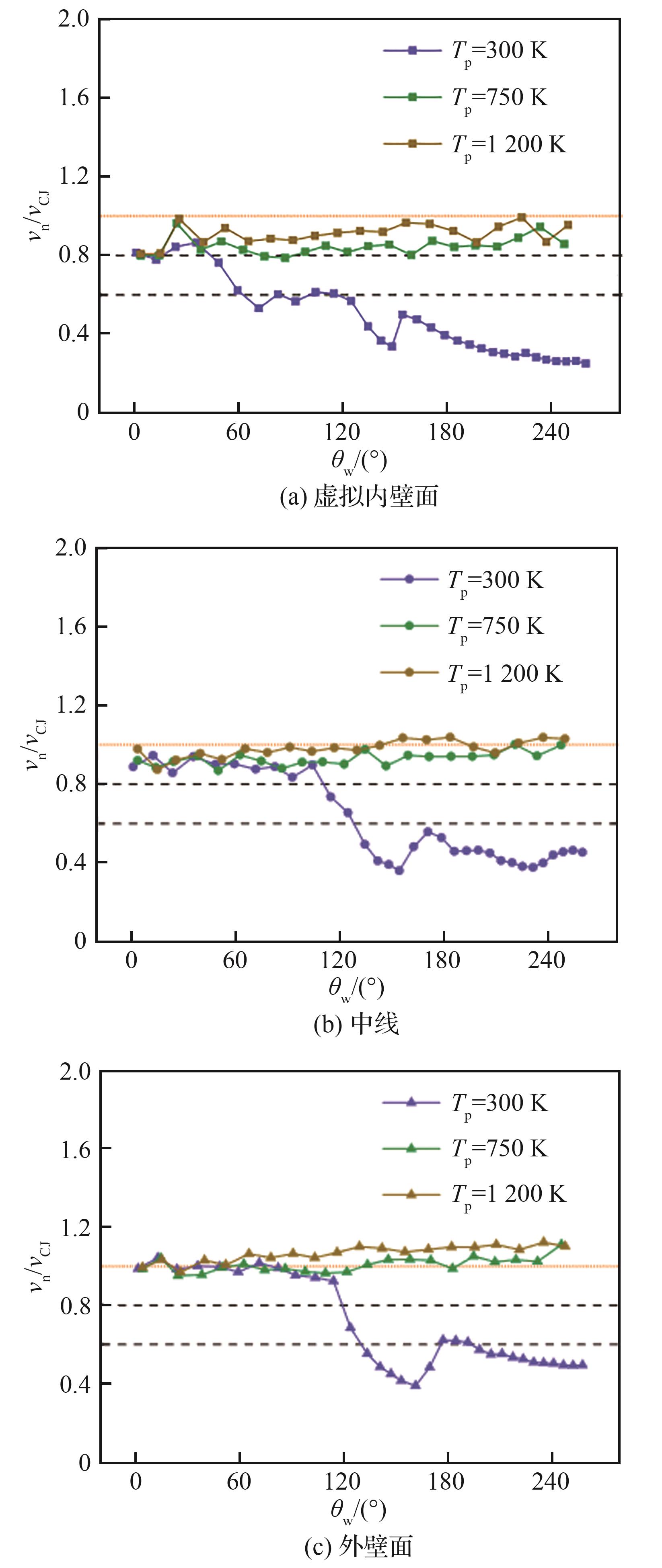
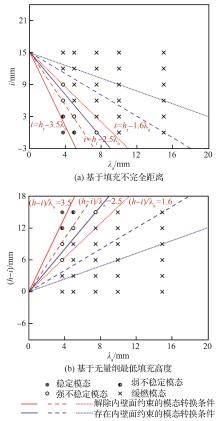
Fig.13
Distribution of detonation wave propagation modes under different operating conditions and comparison of critical criteria with and without inner wall confinement
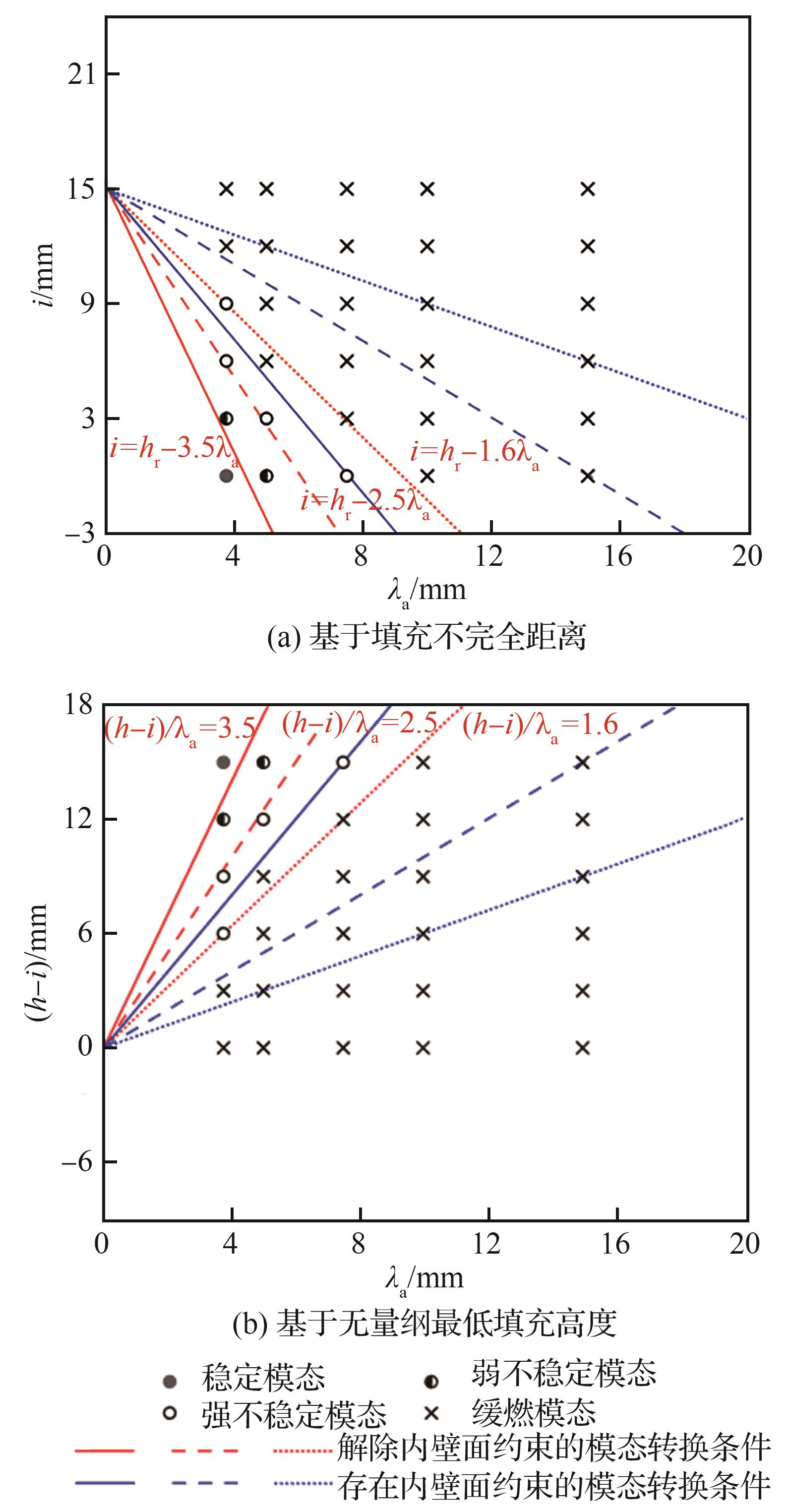
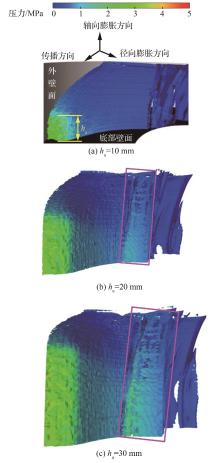
Fig.14
Pressure contours of detonation wave propagating to 135° position under different axial filling heights
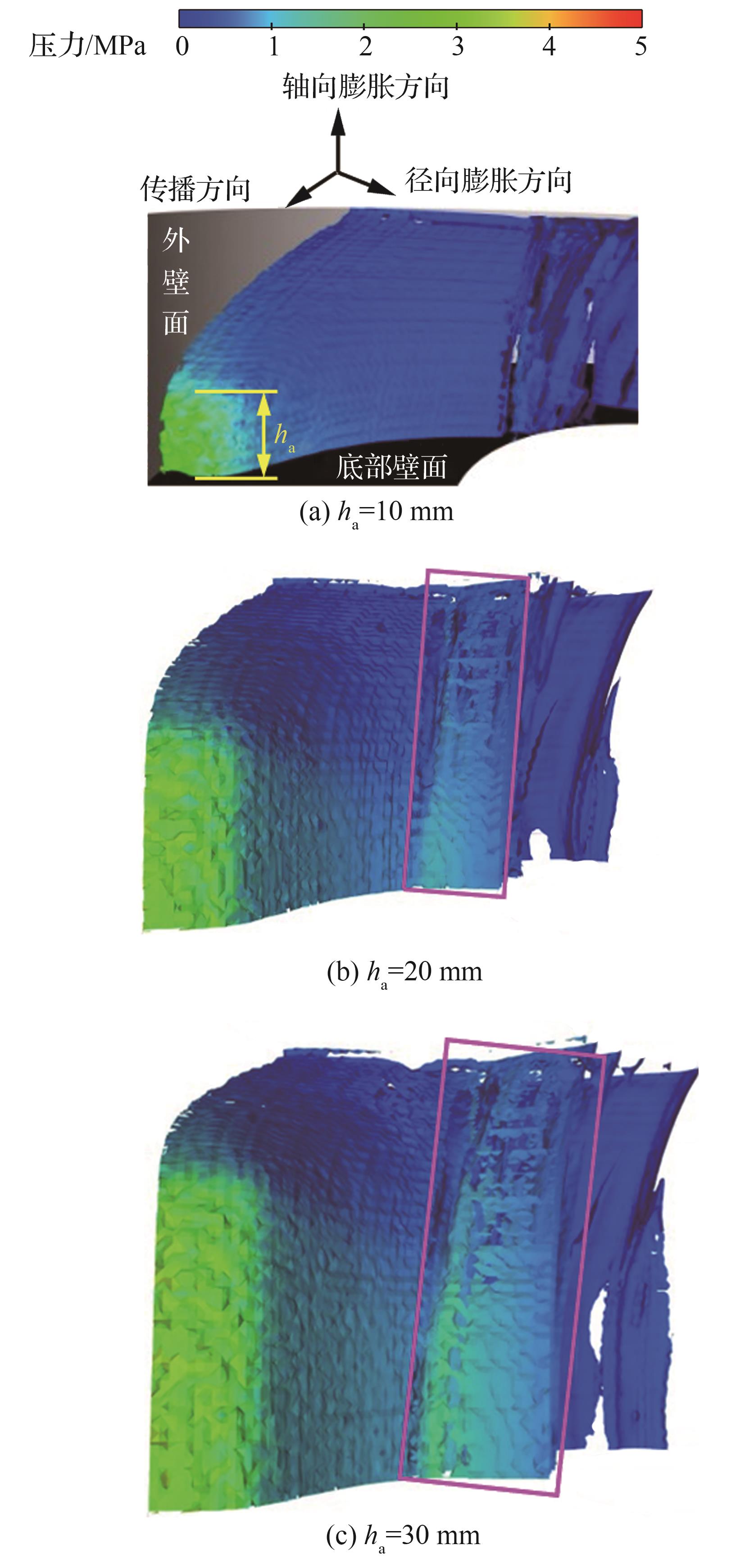
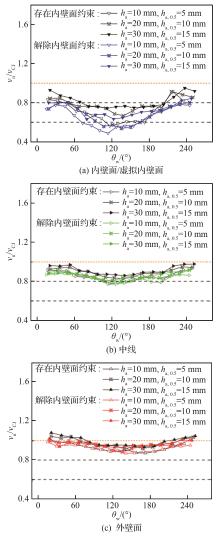
Fig.15
Variation of normal velocity of detonation wave along inner wall/virtual inner wall, centerline, and outer wall at half axial filling height
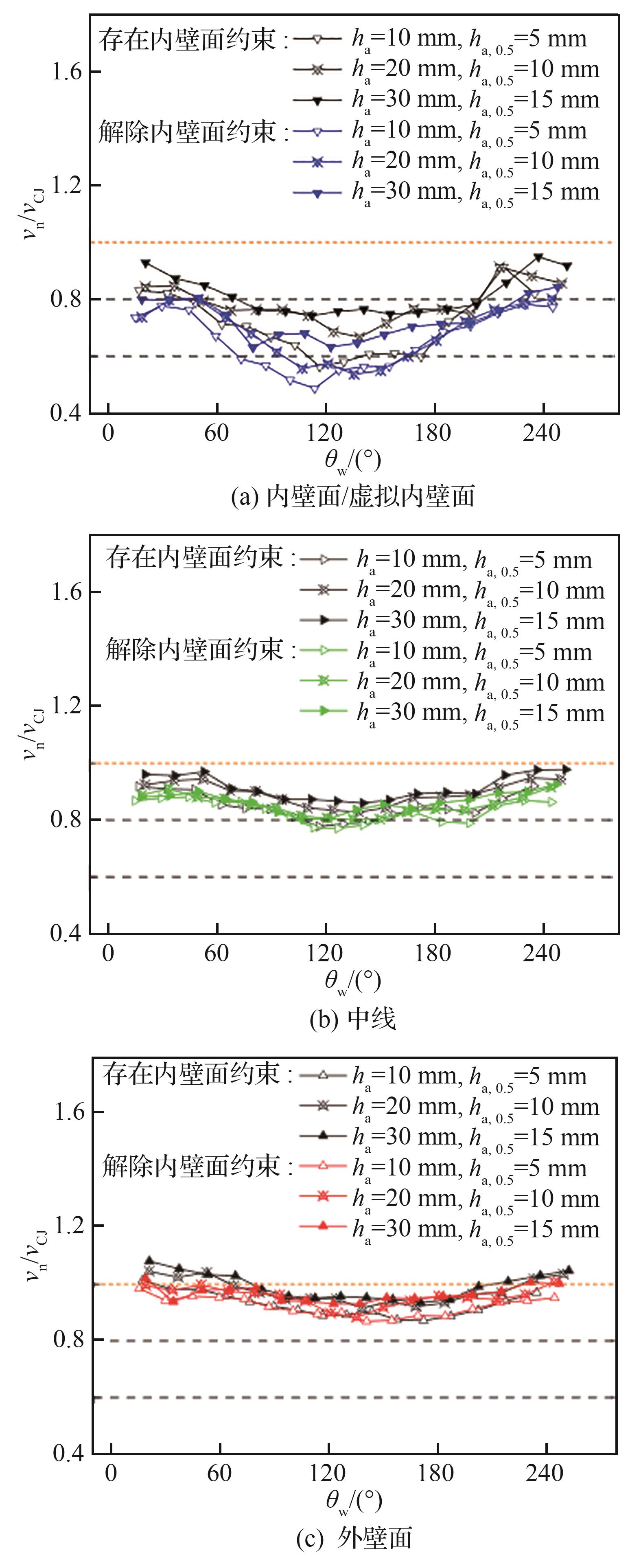
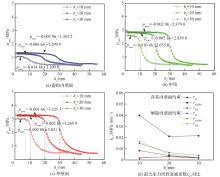
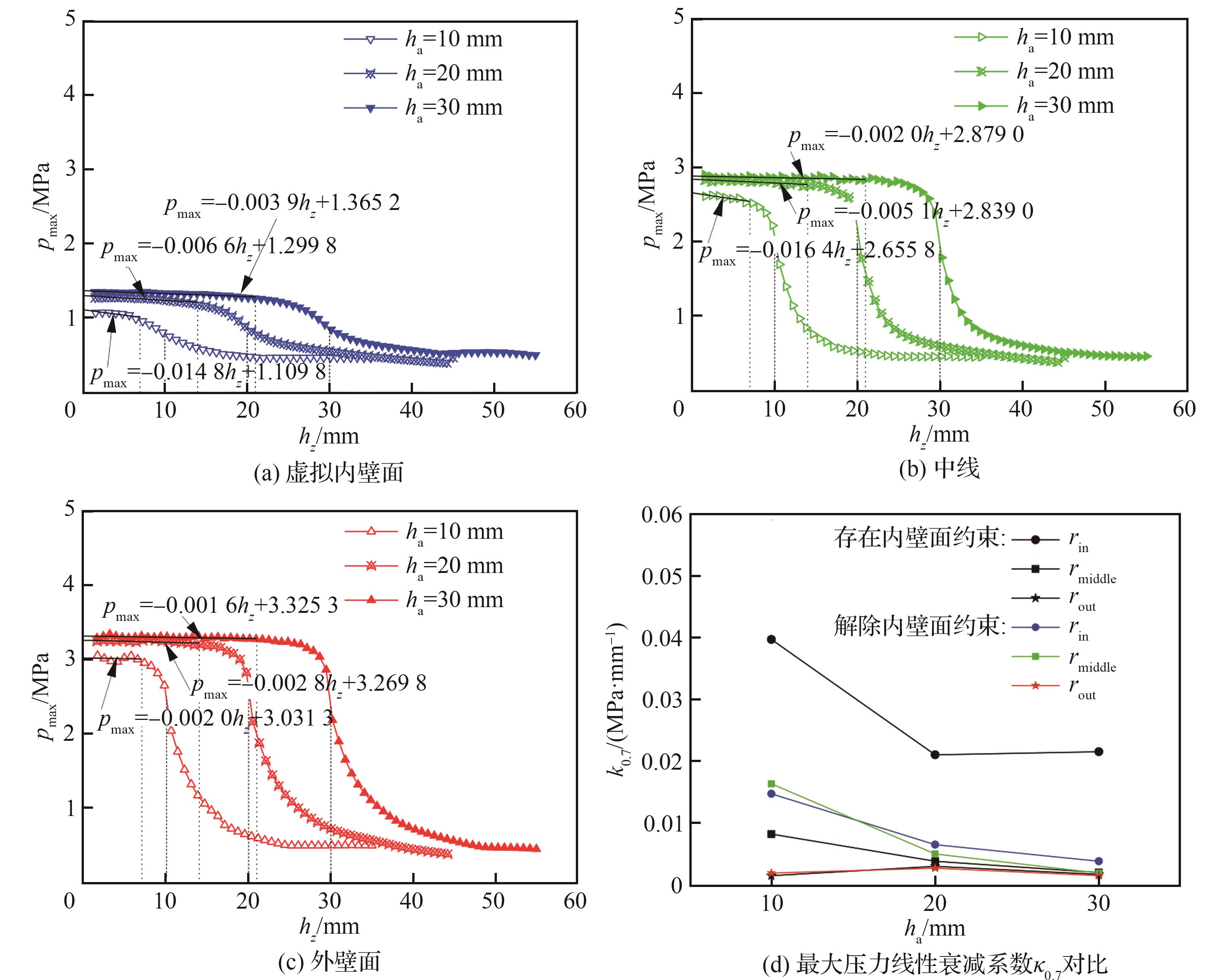
Fig.16
Axial distributions of detonation-wave maximum pressure at 135° azimuth, and comparison of linear decay coefficient κ₀.₇ of the maximum pressure
| [1] | 刘卫东, 彭皓阳, 刘世杰, 等. 旋转爆震燃烧及应用研究进展[J]. 航空学报, 2023, 44(15): 528875. |
| LIU W D, PENG H Y, LIU S J, et al. Research progresses of rotating detonation combustion and its application[J]. Acta Aeronautica et Astronautica Sinica, 2023, 44(15): 528875 (in Chinese). | |
| [2] | 王兵, 谢峤峰, 闻浩诚, 等. 爆震发动机研究进展[J]. 推进技术, 2021, 42(4): 721-737, 716. |
| WANG B, XIE Q F, WEN H C, et al. Research progress of detonation engines[J]. Journal of Propulsion Technology, 2021, 42(4): 721-737, 716 (in Chinese). | |
| [3] | 王可, 张禛瑞, 曹力文, 等. 外侧径向膨胀与通道曲率耦合影响下的爆震波传播特性[J]. 火箭推进, 2025, 51(3): 268-279. |
| WANG K, ZHANG Z R, CAO L W, et al. Propagation characteristics of detonation waves in curved channels with the effect of radial expansion on the outer side[J]. Journal of Rocket Propulsion, 2025, 51(3): 268-279 (in Chinese). | |
| [4] | CAO L W, WANG K, FAN W. Propagation characteristics of stable detonation waves in curved channels with the lateral expansion effect[J]. Physics of Fluids, 2025, 37, 1: 016137. |
| [5] | WANG Y H, LE J L. A hollow combustor that intensifies rotating detonation[J]. Aerospace Science and Technology, 2019, 85: 113-124. |
| [6] | ZHAO M H, WANG K, ZHU Y Y, al et, Effects of the exit convergent ratio on the propagation behavior of rotating detonations utilizing liquid kerosene[J]. Acta Astronautica, 2022, 193: 35-43. |
| [7] | NAKAGAMI S, MATSUOKA K, KASAHARA J, et al. Experimental visualization of the structure of rotating detonation waves in a disk-shaped combustor[J]. Journal of Propulsion and Power, 2017, 33(1): 80-88. |
| [8] | 夏镇娟. 圆盘结构下旋转爆震波的起始及传播机理研究[D]. 南京: 南京理工大学, 2019. |
| XIA Z J. Investigation on the initiation and propagation mechanism of rotating detonation wave[D]. Nanjing: Nanjing University of Science and Technology, 2019 (in Chinese). | |
| [9] | CAO L W, WANG K, FAN W. Experimental study on the propagation characteristics of detonation waves in a curved channel with the axial expansion influenced by the dilution ratio[J]. Combustion and Flame, 2026, 283: 114547. |
| [10] | 苏晓宇, 徐子阳, 曹力文, 等. 径向内侧侧向膨胀对环形通道内爆震波传播的影响[J]. 燃烧科学与技术, 2025, 31(6): 626-633. |
| SU X Y, XU Z Y, CAO L W, et al. Propagation characteristics of detonation waves in curved channels influenced by lateral expansion on the inner side[J]. Journal of Combustion Science and Technology, 2025, 31(6): 626-633 (in Chinese). | |
| [11] | THOMAS G O, WILLIAMS R L. Detonation interaction with wedges and bends[J]. Shock Waves, 2002, 11(6): 481-492. |
| [12] | LI J, REN H L, NING J G. Numerical application of additive Runge-Kutta methods on detonation interaction with pipe bends[J]. International Journal of Hydrogen Energy, 2013, 38(21): 9016-9027. |
| [13] | 李健, 赵慧, 宁建国. 爆轰波在60°光滑弯管中传播的动力响应过程研究[J]. 高压物理学报, 2013, 27(5): 691-698. |
| LI J, ZHAO H, NING J G. Dynamic processes of detonation waves propagating through a 60° smooth pipe bend[J]. Chinese Journal of High Pressure Physics, 2013, 27(5): 691-698 (in Chinese). | |
| [14] | LEE S, CHO D R, CHOI J Y. Effect of curvature on the detonation wave propagation characteristics in annular channels[C]∥46th AIAA Aerospace Sciences Meeting and Exhibit. Reno: AIAA, 2008. |
| [15] | LEE S H, JO D, CHOI J Y. Detonation wave propagation in annular channels[C]∥22nd International Colloquium on the Dynamics of Explosions and Reactive Systems. Minsk: Institute for Dynamics of Explosions and Reactive Systems, 2009: 0203. |
| [16] | KUDO Y, NAGURA Y, KASAHARA J, et al. Oblique detonation waves stabilized in rectangular-cross-section bent tubes[J]. Proceedings of the Combustion Institute, 2011, 33(2): 2319-2326. |
| [17] | NAKAYAMA H, MORIYA T, KASAHARA J, et al. Propagation of curved detonation waves stabilized in annular channels with a rectangular cross-section[J]. Transactions of the Japan Society for Aeronautical and Space Sciences, Aerospace Technology, 2012, 10(28): 7-14. |
| [18] | NAKAYAMA H, MORIYA T, KASAHARA J, et al. Stable detonation wave propagation in rectangular-cross-section curved channels[J]. Combustion and Flame, 2012, 159(2): 859-869. |
| [19] | NAKAYAMA H, KASAHARA J, MATSUO A, et al. Front shock behavior of stable curved detonation waves in rectangular-cross-section curved channels[J]. Procee-dings of the Combustion Institute, 2013, 34(2): 1939-1947. |
| [20] | PAN Z H, QI J, PAN J F, et al. Fabrication of a helical detonation channel: Effect of initial pressure on the detonation propagation modes of ethylene/oxygen mixtures[J]. Combustion and Flame, 2018, 192: 1-9. |
| [21] | ZHANG X D, GUI M Y, PAN Z H, et al. Numerical investigation on the rotating detonation critical mode for a methane-air mixture in an annular tube using reactive Navier-Stokes equations[J]. Journal of Thermal Analysis and Calorimetry, 2021, 144(6): 2285-2293. |
| [22] | SOMMERS W P, MORRISON R B. Simulation of condensed-explosive detonation phenomena with gases[J]. The Physics of Fluids, 1962, 5(2): 241-248. |
| [23] | DABORA E K, NICHOLLS J A, MORRISON R B. The influence of a compressible boundary on the propagation of gaseous detonations[J]. Symposium (International) on Combustion, 1965, 10(1): 817-830. |
| [24] | MURRAY S B, LEE J H. The influence of physical boundaries on gaseous detonation waves[M]∥Dynamics of explosions. New York: AIAA, 1986: 329-355. |
| [25] | 刘世杰, 覃慧, 林志勇, 等. 连续旋转爆震波细致结构及自持机理[J]. 推进技术, 2011, 32(3): 431-436. |
| LIU S J, QIN H, LIN Z Y, et al. Detailed structure and propagating mechanism research on continuous rotating detonation wave[J]. Journal of Propulsion Technology, 2011, 32(3): 431-436 (in Chinese). | |
| [26] | 周朱林, 刘卫东, 刘世杰, 等. 受侧向膨胀影响的爆震波传播过程研究[J]. 推进技术, 2013, 34(5): 713-720. |
| ZHOU Z L, LIU W D, LIU S J, et al. Investigation on propagation process of detonation wave influenced by lateral expansion[J]. Journal of Propulsion Technology, 2013, 34(5): 713-720 (in Chinese). | |
| [27] | WANG Z C, WANG K, ZHAO M H, et al. Experimental investigation on the propagation characteristics of detonations in a semi-confined straight channel[J]. Experimental Thermal and Fluid Science, 2021, 123: 110329. |
| [28] | CAO L W, WANG K, JIAO Z T. Propagation of detona-tion waves influenced by radial expansion on inner side in curved channels[J]. Chinese Journal of Aeronautics, 2025: 103936. |
| [29] | MELGUIZO-GAVILANES J, RODRIGUEZ V, VIDAL P, et al. Dynamics of detonation transmission and propagation in a curved chamber: a numerical and experimental analysis[J]. Combustion and Flame, 2021, 223: 460-473. |
| [30] | 史浩宁, 王可, 焦中天, 等. 填充不均匀对环形通道内爆震波传播特性的影响数值研究[J]. 推进技术, 2025, 46(8): 111-123. |
| SHI H N, WANG K, JIAO Z T, et al. Numerical study on impact of non-uniform filling on propagation characteristics of detonation waves in annular channel[J]. Journal of Propulsion Technology, 2025, 46(8): 111-123 (in Chinese). | |
| [31] | WANG Y H. Rotating detonation in a combustor of trapezoidal cross section for the hydrogen-air mixture[J]. International Journal of Hydrogen Energy, 2016, 41(12): 5605-5616. |
| [32] | ZHAO M J, ZHANG H W. Origin and chaotic propagation of multiple rotating detonation waves in hydrogen/air mixtures[J]. Fuel, 2020, 275: 117986. |
| [33] | STRAKEY P, FERGUSON D H. Validation of a computational fluid dynamics model of a methane-oxygen rotating detonation engine[C]∥AIAA SCITECH 2022 Forum. Orlando: AIAA, 2022. |
| [34] | ORAN E S, JONES D A, SICHEL M. Numerical simulations of detonation transmission[J]. Proceedings: Mathematical and Physical Sciences, 1992, 436: 267-297. |
| [35] | GAMEZO V N, DESBORDES D, ORAN E S. Formation and evolution of two-dimensional cellular detonations[J]. Combustion and Flame, 1999, 116(1/2): 154-165. |
| [36] | SUGIMURA T, FUJIWARA T, LEE J H. Cellular detonation-instability and sub-structure[R]. Nogaya: Memories of the Faculty of Engineering, Nogaya University, 1990. |
| [37] | CHEN W Q, LIANG J H, CAI X D, et al. Three-dimensional simulations of detonation propagation in circular tubes: Effects of jet initiation and wall reflection[J]. Physics of Fluids, 2020, 32(4): 046104. |
| [38] | KANESHIGE M, SHEPHERD J E. Detonation database[EB/OL]. [2025-08-31]. . |
| [39] | FRANZELLI B, RIBER E, SANJOSÉ M, et al. A two-step chemical scheme for kerosene-air premixed flames[J]. Combustion and Flame, 2010, 157(7): 1364-1373. |
| [40] | FRANZELLI B, RIBER E, GICQUEL L Y M, et al. Large eddy simulation of combustion instabilities in a lean partially premixed swirled flame[J]. Combustion and Flame, 2012, 159(2): 621-637. |
| [41] | SINGH D J, JACHIMOWSKI C J. Quasiglobal reaction model for ethylene combustion[J]. AIAA Journal, 1994, 32(1): 213-216. |
| [42] | WESTBROOK C K, DRYER F L. Simplified reaction mechanisms for the oxidation of hydrocarbon fuels in flames[J]. Combustion Science and Technology, 1981, 27(1/2): 31-43. |
| [43] | SHI H N, WANG K, XIAO Q, et al. Influence of the radial geometric dimensions on the propagation characteristics of detonation waves in an annular channel[J]. Phy-sics of Fluids, 2024, 36(12): 127124. |
| [44] | 曹力文, 王可, 徐子阳, 等. 弯曲通道内爆震波传播特性实验研究[J]. 航空学报, 2024, 45(24): 179-191. |
| CAO L W, WANG K, XU Z Y, et al. Experimental study on propagation characteristics of stable detonation waves in curved channels[J]. Acta Aeronautica et Astronautica Sinica, 2024, 45(24): 179-191 (in Chinese). | |
| [45] | 本多尔. 激波反射现象[M]. 白菡尘, 杨波, 译. 北京: 国防工业出版社, 2020. |
| BABI B D. Shock wave reflection phenomenon[M]. Translated by BAI H C, YANG B. Beijing: National Defence Industry Press, 2020 (in Chinese). | |
| [46] | HOUIM R W, FIEVISOHN R T. The influence of acoustic impedance on gaseous layered detonations bounded by an inert gas[J]. Combustion and Flame, 2017, 179: 185-198. |
| [47] | 刘劭, 翁春生, 肖强. 受侧向膨胀弱约束边界影响的爆轰波传播特性数值研究[J]. 弹道学报, 2024, 36(4): 21-29. |
| LIU S, WENG C S, XIAO Q. Numerical study on the propagation characteristics of detonation waves affected by weakly constrained boundary effects induced by lateral expansion[J]. Journal of Ballistics, 2024, 36(4): 21-29 (in Chinese). |
| [1] | Hao ZHENG, Yahui LU, Kuanliang WANG, Shengjia TU, Shuzhen NIU. Oblique detonation initiation via energy deposition based ignition control [J]. Acta Aeronautica et Astronautica Sinica, 2026, 47(3): 132166-132166. |
| [2] | Liwen CAO, Ke WANG, Ziyang XU, Xiaoyu SU, Wei FAN. Experimental study on propagation characteristics of stable detonation waves in curved channels [J]. Acta Aeronautica et Astronautica Sinica, 2024, 45(24): 130385-130385. |
| [3] | Haochen XIONG, Ruofan QIU, Xin HAN, Hao YAN, Tao ZHANG, Yancheng YOU. New method for detonation initiation induced by curved shock wave [J]. Acta Aeronautica et Astronautica Sinica, 2024, 45(18): 129682-129682. |
| [4] | Bowei MENG, Hu MA, Zhenjuan XIA, Changsheng ZHOU. Numerical study on characterization of integrated rotating detonation combustor and turbine guide vane [J]. Acta Aeronautica et Astronautica Sinica, 2024, 45(10): 129223-129223. |
| [5] | Weidong LIU, Haoyang PENG, Shijie LIU, Hailong ZHANG, Xueqiang YUAN. Research Progresses of rotating detonation combustion and its application [J]. Acta Aeronautica et Astronautica Sinica, 2023, 44(15): 528875-528875. |
| [6] | ZHAO Minghao, WANG Ke, WANG Zhicheng, ZHU Yiyuan, LI Qing'an, FAN Wei. Effect of combustor configurations on propagation characteristics of rotating detonation waves [J]. ACTA AERONAUTICAET ASTRONAUTICA SINICA, 2022, 43(5): 125372-125372. |
| [7] | TIAN Jia, ZHANG Jingzhou, TAN Xiaoming, WANG Yuanshuai. Thermal analysis model and validation for graded-composite thermal protection structure of rotating detonation combustor [J]. ACTA AERONAUTICAET ASTRONAUTICA SINICA, 2022, 43(3): 125271-125271. |
| [8] | ZHAO Minghao, WANG Ke, WANG Zhicheng, ZHU Yiyuan, YU Xiaodong, FAN Wei. Effects of ignition on initiation characteristics of hollow rotating detonation combustor [J]. ACTA AERONAUTICAET ASTRONAUTICA SINICA, 2022, 43(1): 124870-124870. |
| [9] | YANG Li, YUE Lianjie, ZHANG Xinyu. Preliminary study on wave angle and normal velocity-curvature relation of oblique detonation wave [J]. ACTA AERONAUTICAET ASTRONAUTICA SINICA, 2020, 41(11): 123701-123701. |
| [10] | XIA Zhenjuan, MA Hu, ZHUO Changfei, ZHOU Changsheng. Characteristics of unstable propagation of rotating detonation wave in plane-radial structure [J]. ACTA AERONAUTICAET ASTRONAUTICA SINICA, 2018, 39(2): 121438-121438. |
| [11] | XU Can, MA Hu, LI Jian, DENG Li, YU Ling. Propagation property of flame and pressure wave in rotating detonation engine [J]. ACTA AERONAUTICAET ASTRONAUTICA SINICA, 2017, 38(10): 121226-121226. |
| [12] | WANG Chao, LIU Weidong, LIU Shijie, JIANG Luxin, SU Yi. Interaction of air-breathing continuous rotating detonation with inflow [J]. ACTA AERONAUTICAET ASTRONAUTICA SINICA, 2016, 37(5): 1411-1418. |
| [13] | XU Xueyang, ZHUO Changfei, WU Xiaosong, LI Jie, MA Hu. Numerical simulation of injection schemes with separate supply of fuel and oxidizer effects on rotating detonation engine [J]. ACTA AERONAUTICAET ASTRONAUTICA SINICA, 2016, 37(4): 1184-1195. |
| [14] | ZHOU Rui, LI Xiaopeng. Numerical investigation of mixing characteristic of cold continuously rotating detonation engine [J]. ACTA AERONAUTICAET ASTRONAUTICA SINICA, 2016, 37(12): 3668-3674. |
| [15] | Wen Ming;Li Qian;Jin Xing;Ye Jifei. Effects of Focusing Angle on Laser-supported Detonation Wave in Air [J]. ACTA AERONAUTICAET ASTRONAUTICA SINICA, 2009, 30(9): 1571-1575. |
| Viewed | ||||||
|
Full text |
|
|||||
|
Abstract |
|
|||||
Address: No.238, Baiyan Buiding, Beisihuan Zhonglu Road, Haidian District, Beijing, China
Postal code : 100083
E-mail:hkxb@buaa.edu.cn
Total visits: 6658907 Today visits: 1341All copyright © editorial office of Chinese Journal of Aeronautics
All copyright © editorial office of Chinese Journal of Aeronautics
Total visits: 6658907 Today visits: 1341

 CJA
CJA
