Acta Aeronautica et Astronautica Sinica ›› 2026, Vol. 47 ›› Issue (7): 632715.doi: 10.7527/S1000-6893.2025.32715
• Special Topic: Aircraft-Engine Integration Technology • Previous Articles
Boyi WANG1, Limin WANG1( ), Libo WANG1, Huijun TAN2, Kun WANG2
Received:2025-08-27
Revised:2025-09-17
Accepted:2025-10-21
Online:2025-11-03
Published:2025-10-30
Contact:
Limin WANG
Supported by:CLC Number:
Boyi WANG, Limin WANG, Libo WANG, Huijun TAN, Kun WANG. Low flow rate instability characteristics of a subsonic irregular inlet[J]. Acta Aeronautica et Astronautica Sinica, 2026, 47(7): 632715.
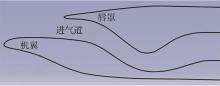
Fig.1
Structural configuration of aircraft and irregular inlet
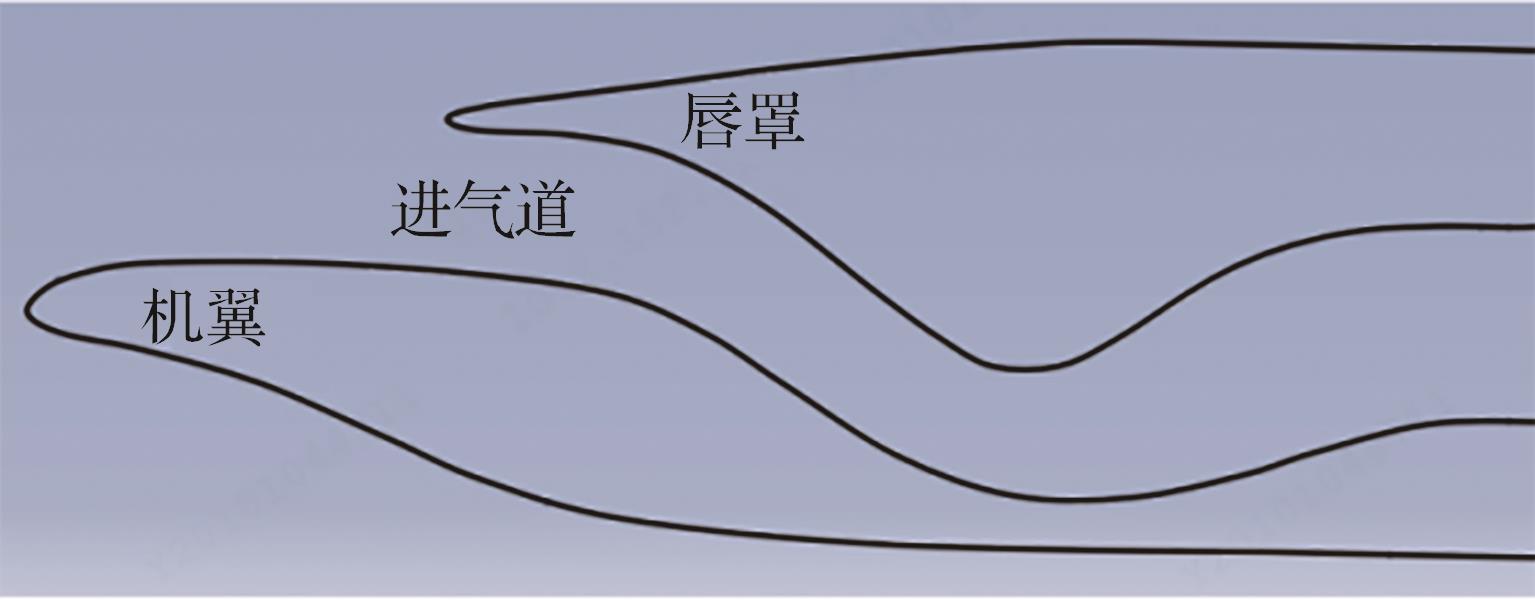
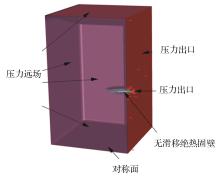
Fig.2
Boundary conditions of inlet
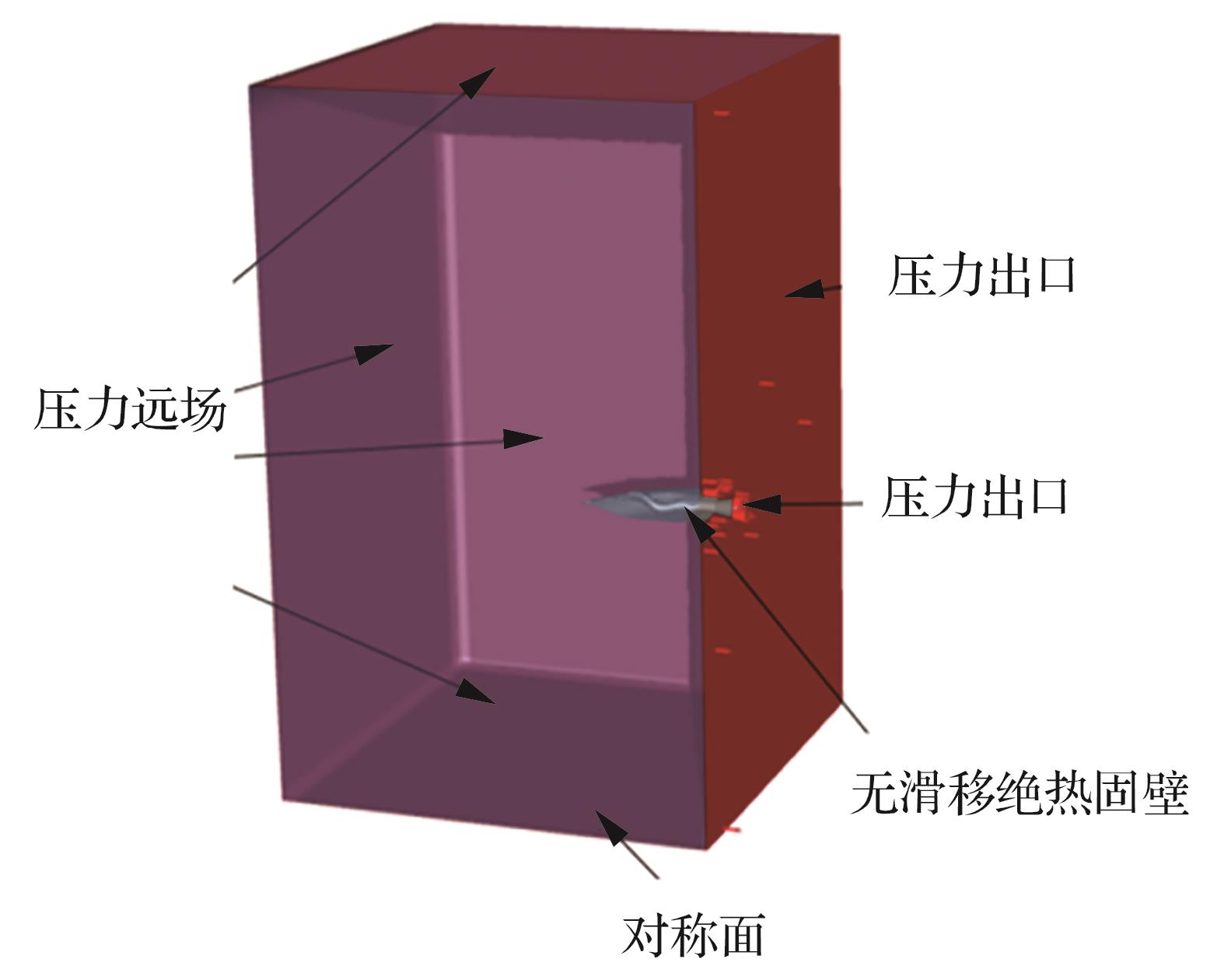
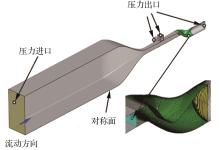
Fig.3
Details of computational domain and surface mesh[22]
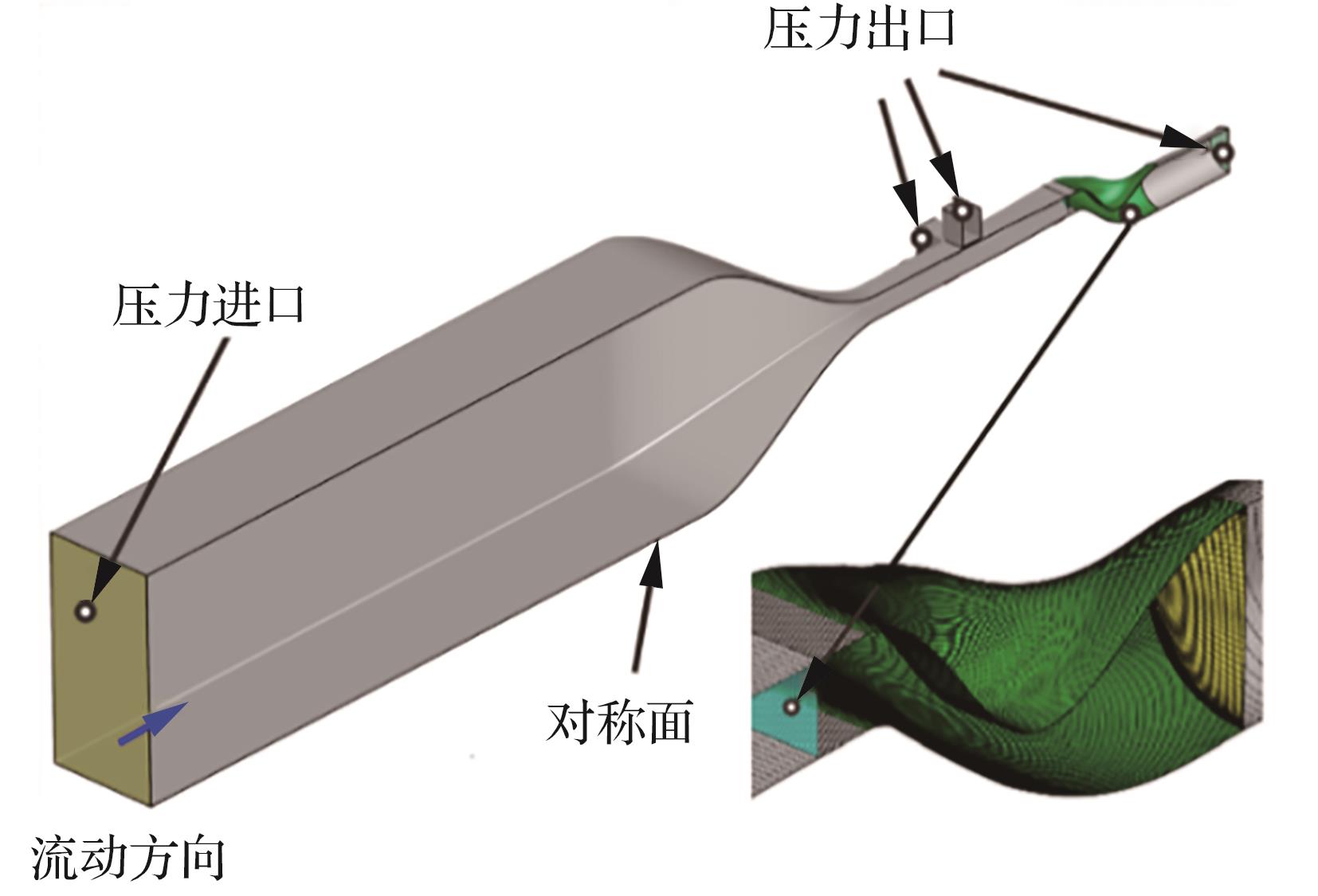
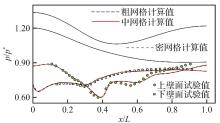
Fig.4
Surface pressure distribution of diffuser from experiments and numerical calculations under different grids (Ma AIP=0.464)[22]
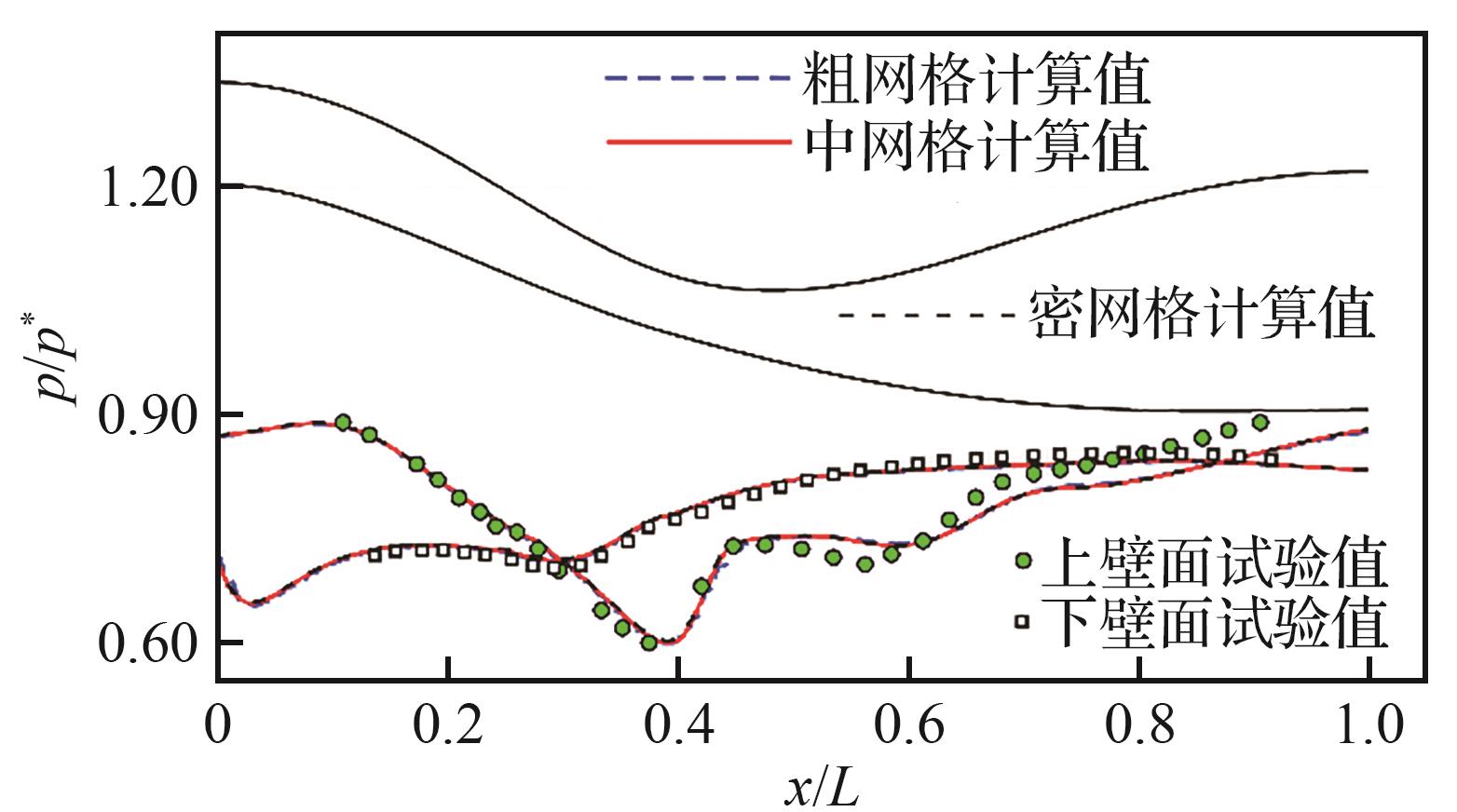
Fig.5
Mach number contours and streamline plots with different flow rates
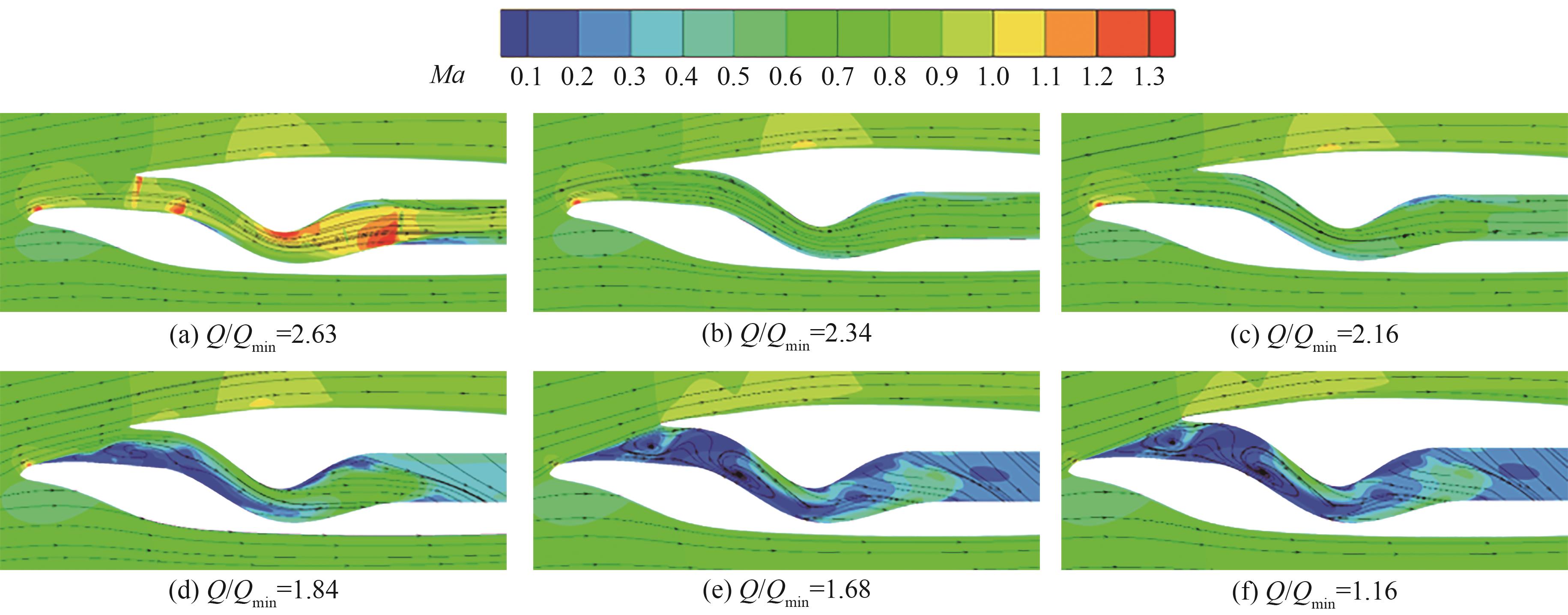
Fig.6
AIP total pressure recovery contours and streamline plots with different flow rates
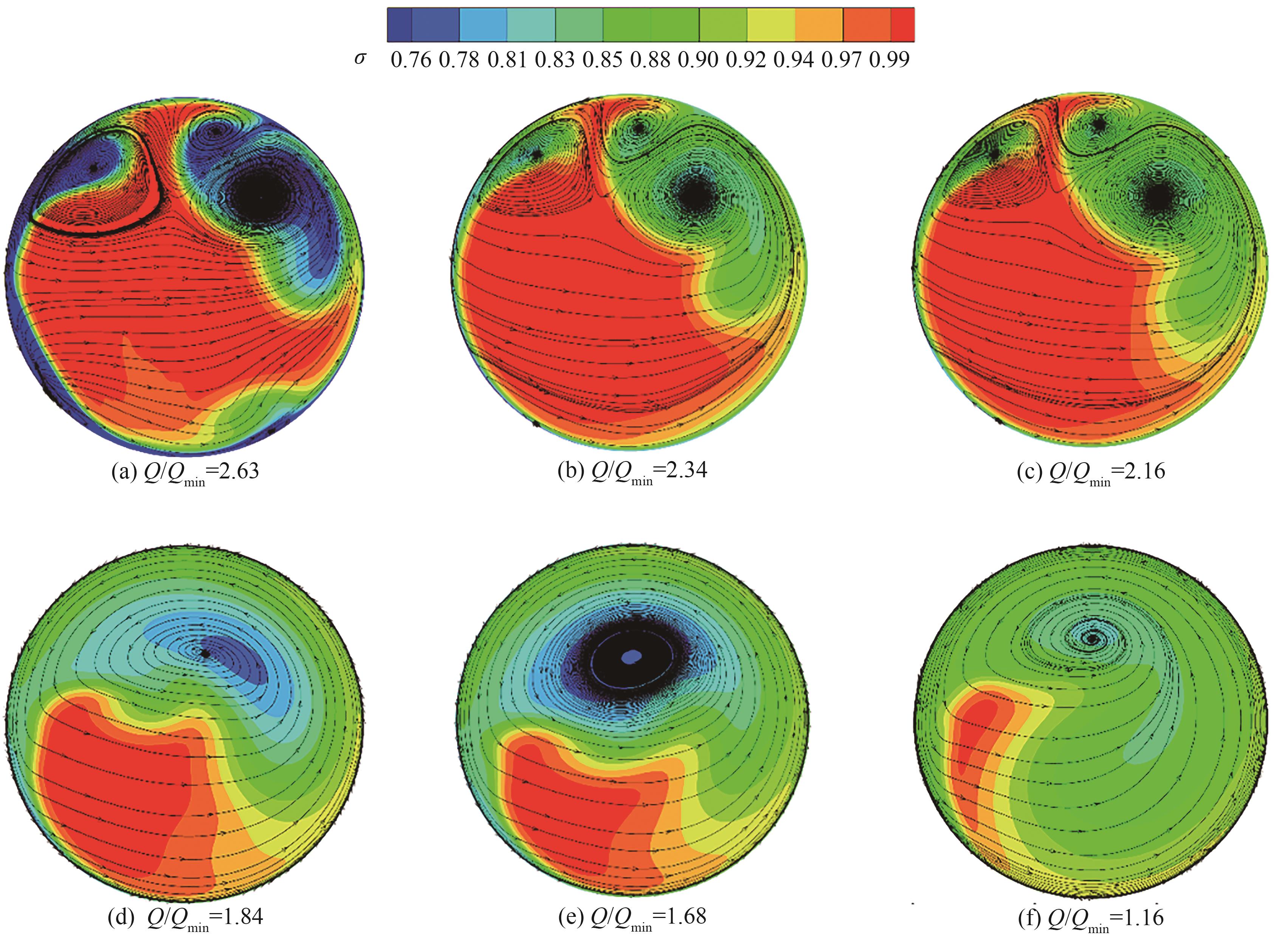
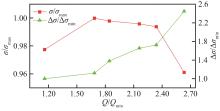
Fig.7
Variation law of total pressure recovery coefficient and steady circumferential distortion index with different flow rates
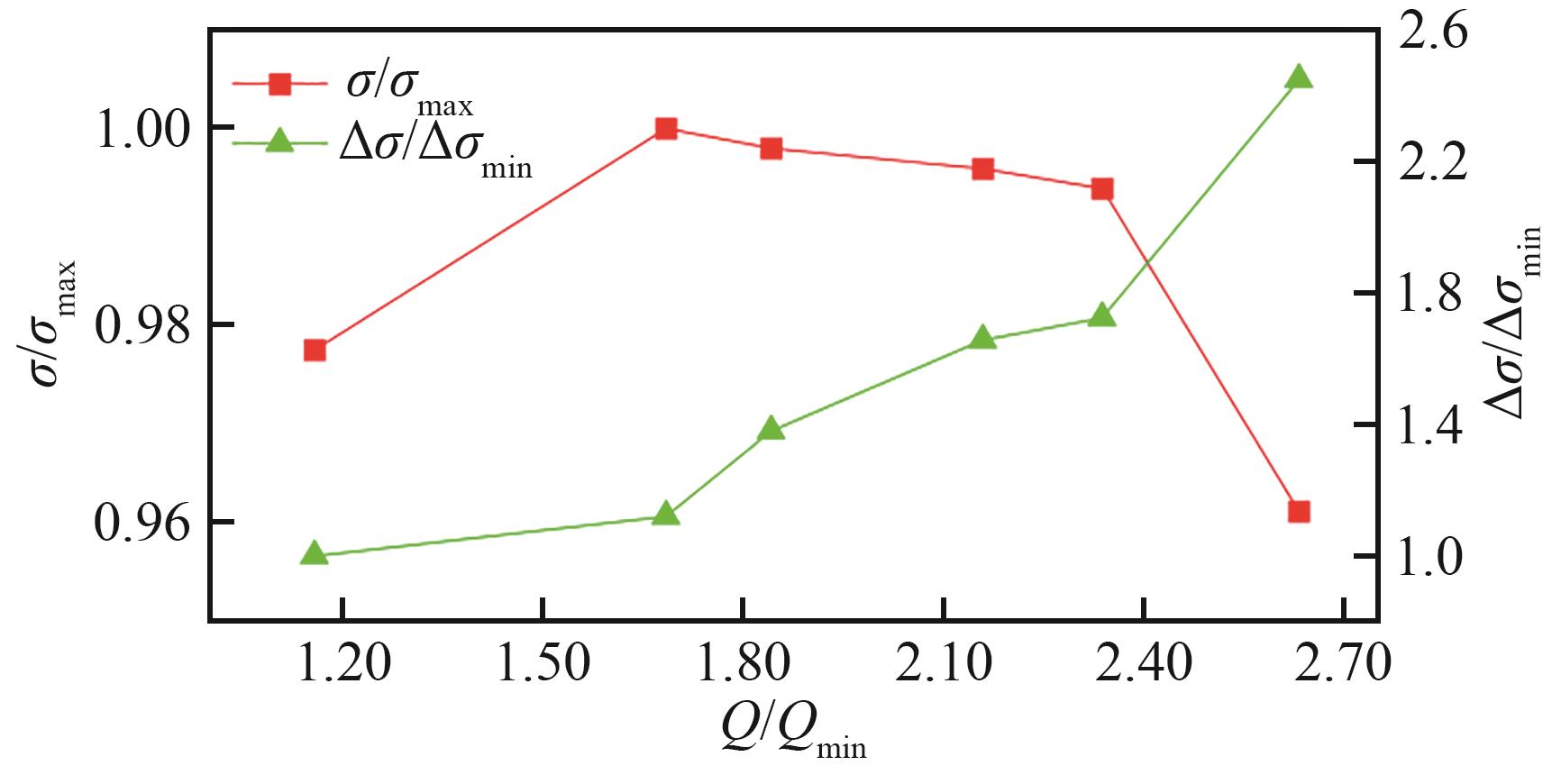
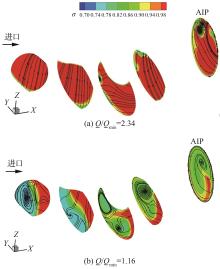
Fig.8
Local total pressure recovery coefficient and secondary flow distribution on cross-sections along inlet
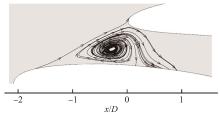
Fig.9
Reverse streamline plots on inlet symmetry plane (Ma=0.75,Q/Q min=1.68)
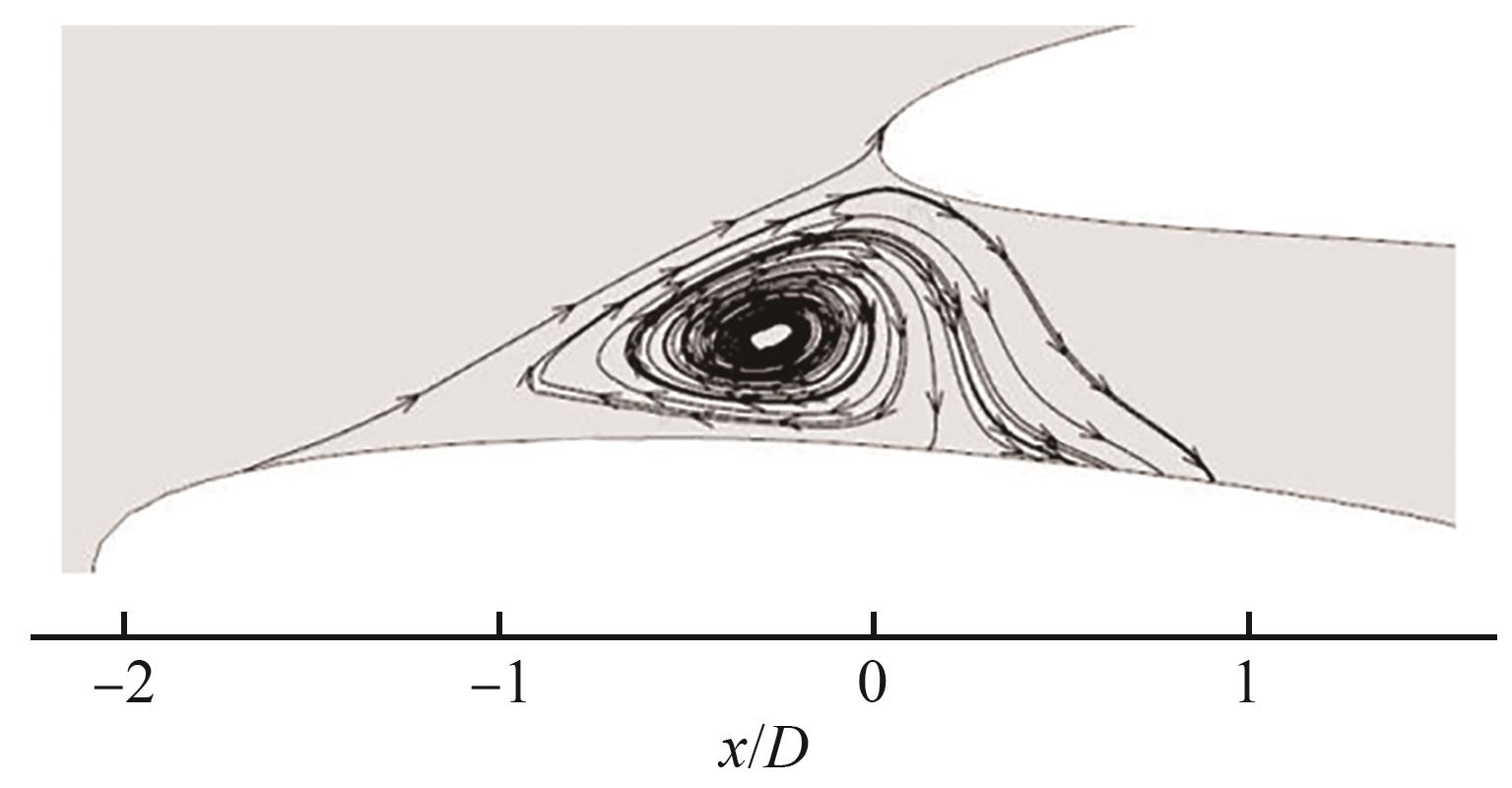
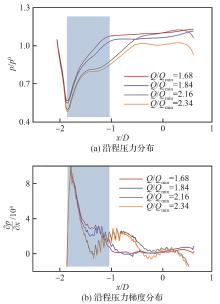
Fig.10
Wall pressure and pressure gradient distribution on inlet forebody with different flow rates
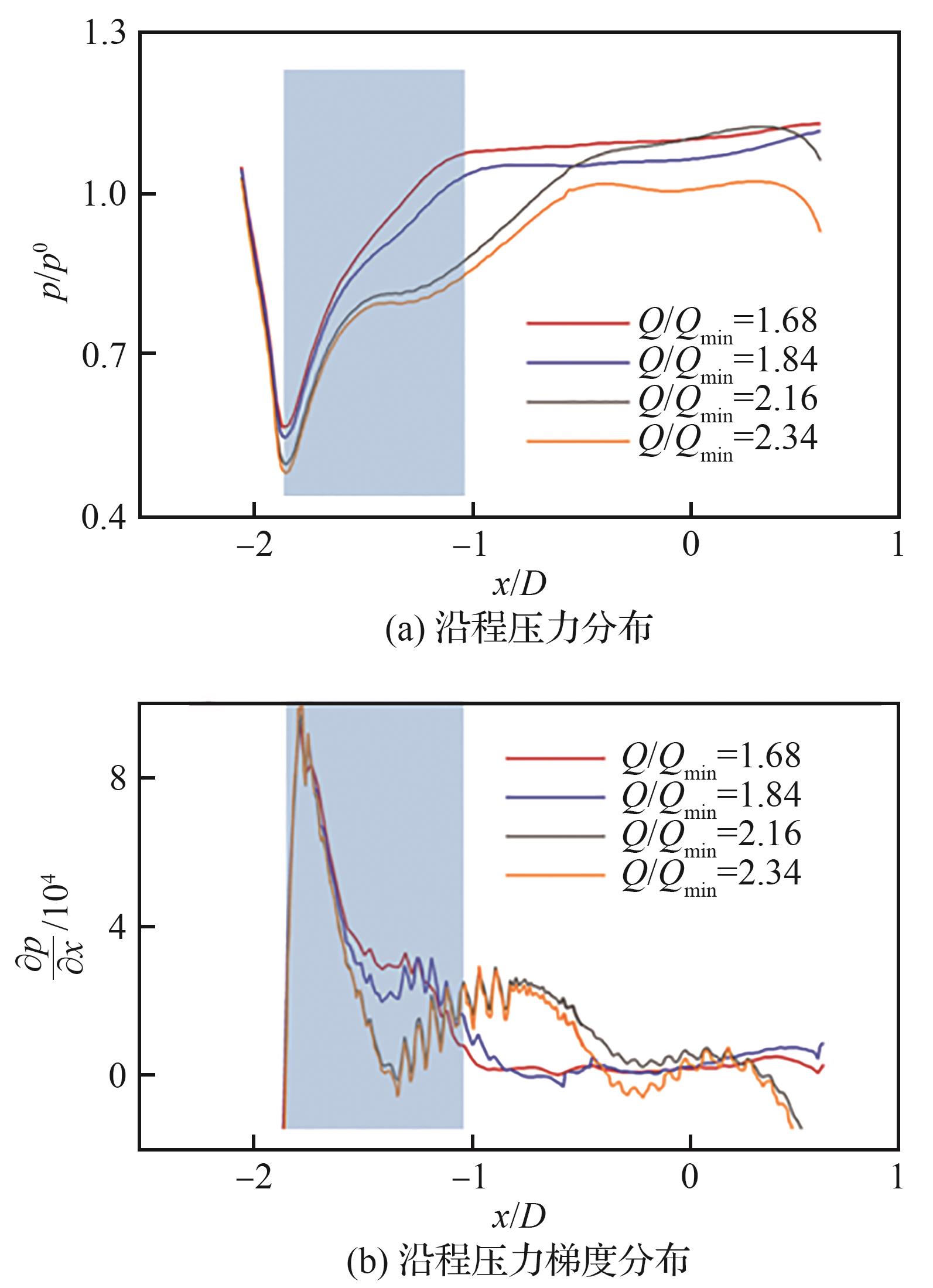
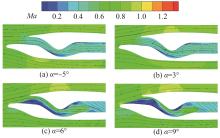
Fig.11
Mach number contours and streamline plots with different angles of attack
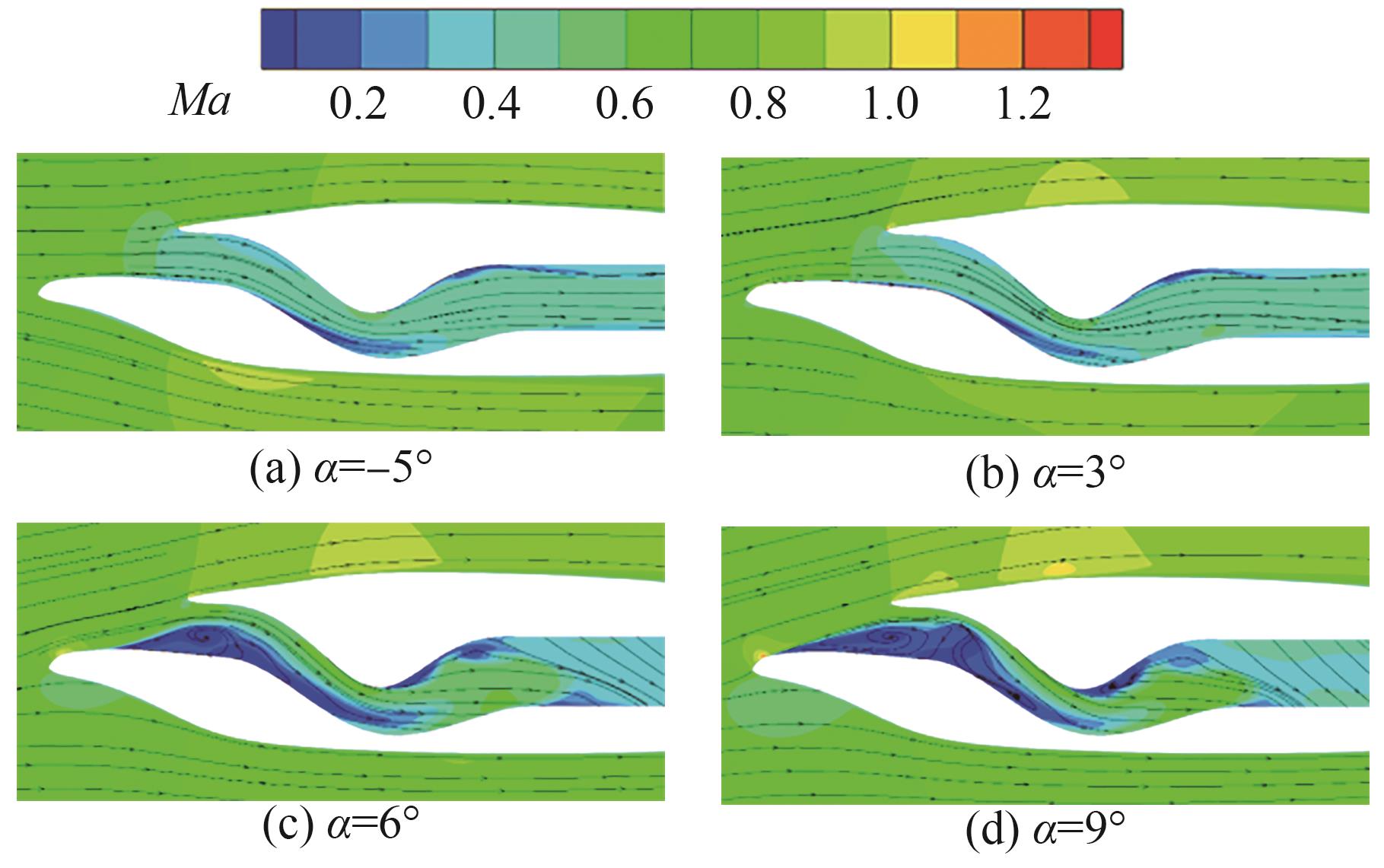
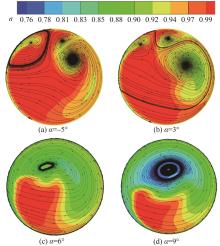
Fig.12
AIP total pressure recovery coefficient contours and streamline plots with different angles of attack
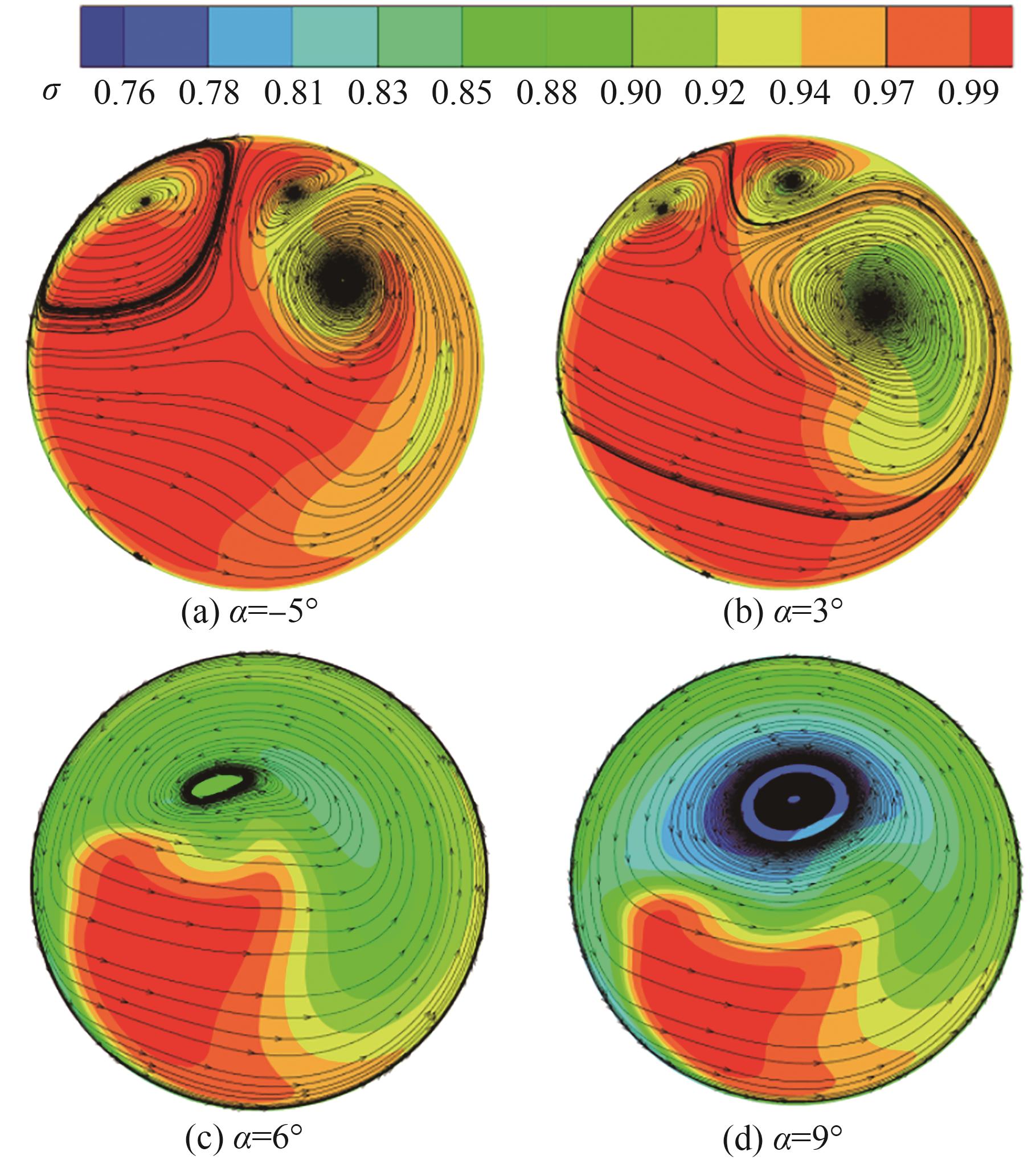
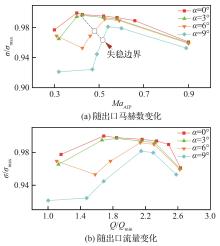
Fig.13
Variation law of total pressure recovery coefficient with exhaust Mach number and flow rate at different angles of attack
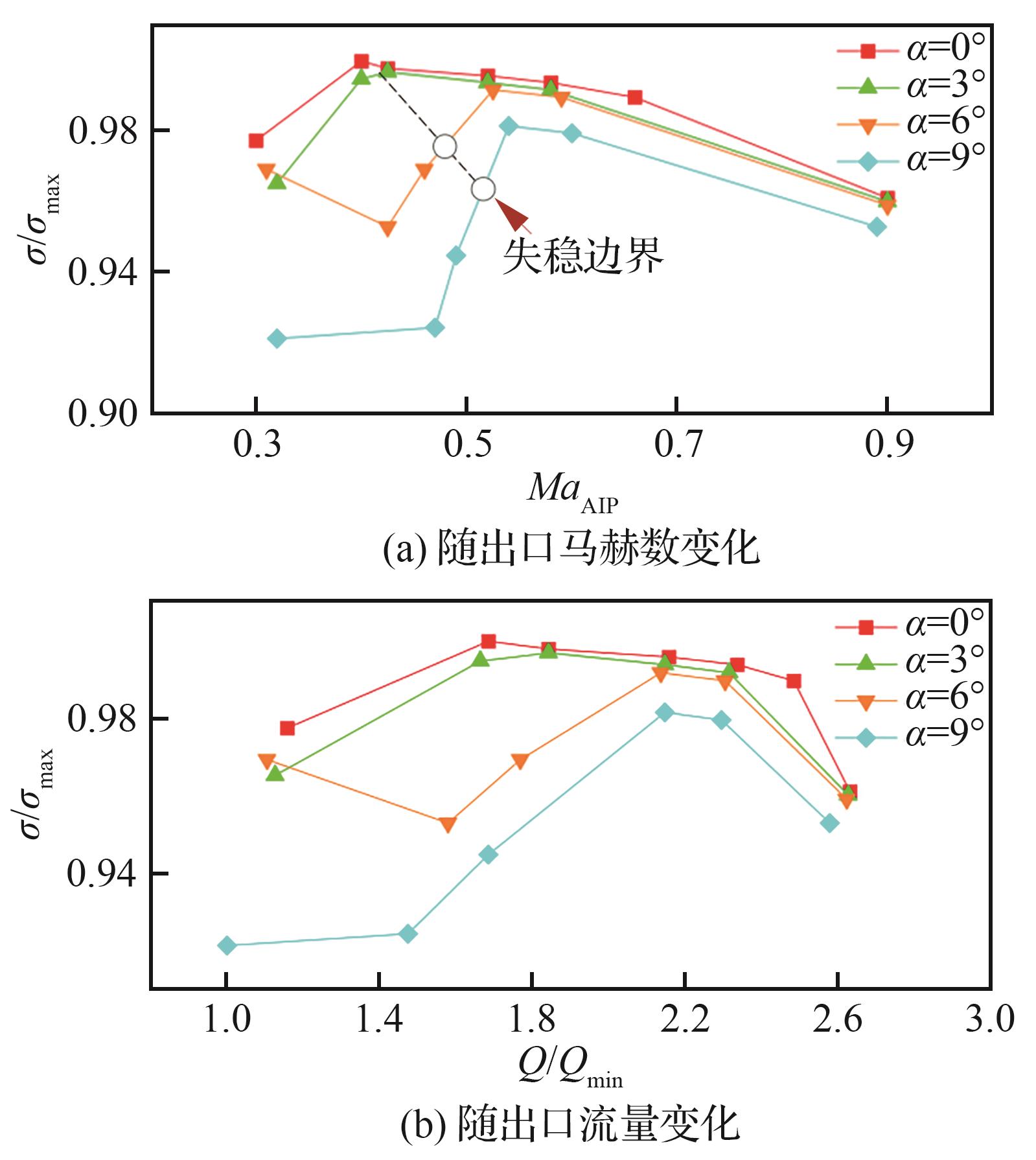
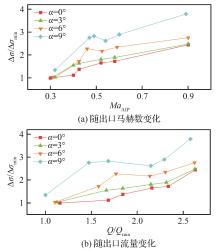
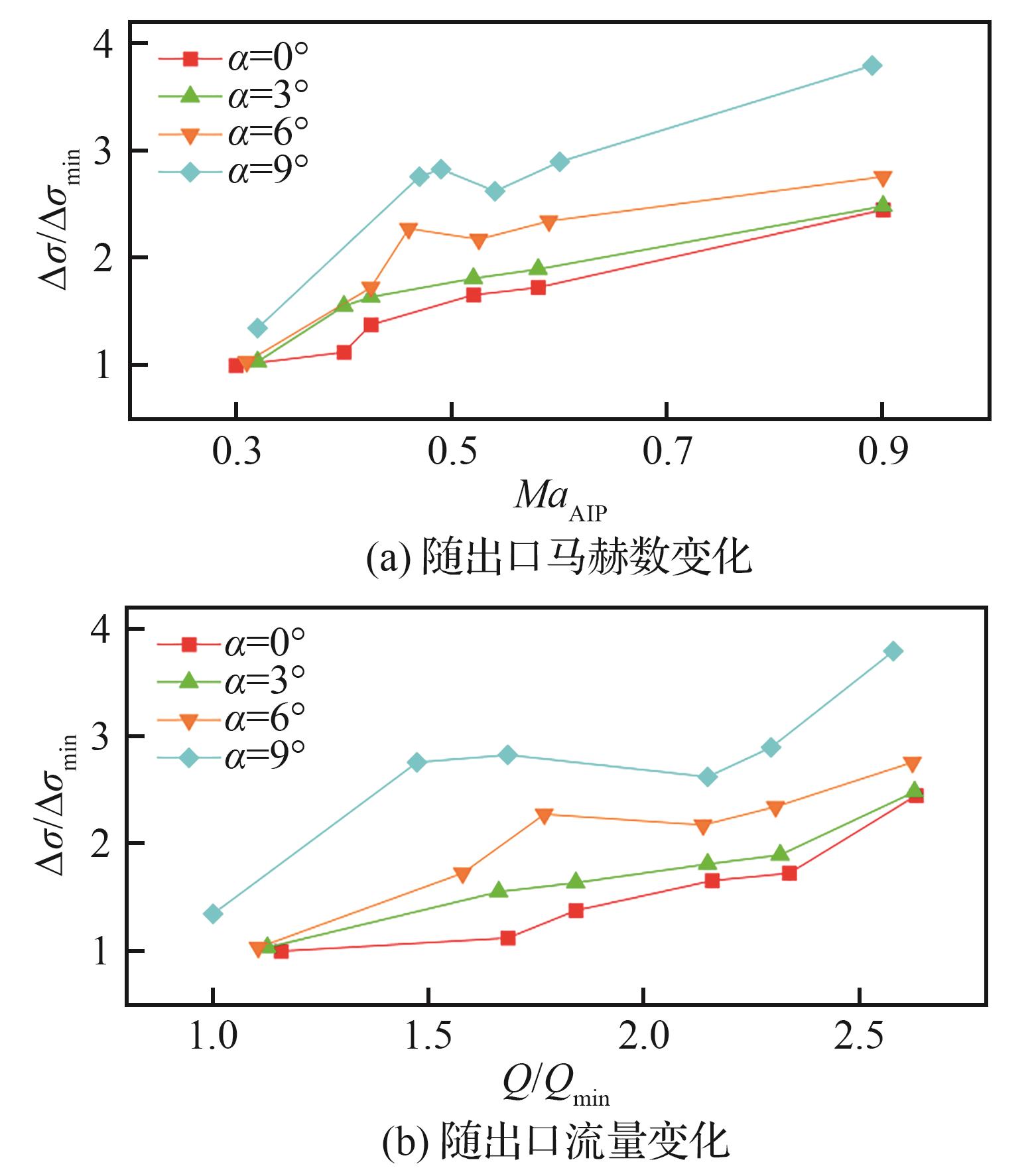
Fig.14
Variation law of steady circumferential distortion index with exhaust Mach number and flow rate at different angles of attack
| [1] |
|
| [2] |
|
| [3] |
|
| [4] |
黄河峡, 孙姝, 于航, 等. 亚声速S弯进气道研究的新进展[J]. 推进技术, 2020, 41(12): 2641-2658.
|
|
|
|
| [5] |
石磊, 郭荣伟. 蛇形进气道的电磁散射特性[J]. 航空学报, 2007, 28(6): 1296-1301.
|
|
|
|
| [6] |
安佳宁. 亚声速无人机背部S弯进气道设计与试验[J]. 航空发动机, 2020, 46(2): 51-55.
|
|
|
|
| [7] |
程邦勤, 王加乐, 冯路宁, 等. 航空发动机进气旋流畸变研究综述[J]. 航空动力学报, 2020, 35(12): 2465-2481.
|
|
|
|
| [8] |
赵伟辰. S弯进气道与跨音速风扇流动特性一体化研究[D]. 南京: 南京航空航天大学, 2019.
|
|
|
|
| [9] |
李岳锋, 杨青真, 高翔, 等. 基于迭代物理光学和等效边缘电流方法的S形进气道雷达散射截面研究[J]. 推进技术, 2013, 34(5): 577-582.
|
|
|
|
| [10] |
闫紫光, 杨青真, 陈立海, 等. 半埋入式进气道设计及RCS数值仿真研究[J]. 计算机仿真, 2012, 29(9): 99-103.
|
|
|
|
| [11] |
高翔, 周红, 邓文剑, 等. 不同进口的双S弯进气道气动及雷达特性研究[J]. 计算机仿真, 2018, 35(5): 35-39.
|
|
|
|
| [12] |
黄浩然, 王宏伟. S型进气道隐身与气动综合特性数值分析[J]. 航空计算技术, 2015, 45(2): 92-95.
|
|
|
|
| [13] |
|
| [14] |
|
| [15] |
|
| [16] |
翁小侪, 郭荣伟. 一种腹下S弯进气道低速大攻角下气动特性实验[J]. 航空动力学报, 2008, 23(9): 1573-1578.
|
|
|
|
| [17] |
赵庆伟, 谢文忠. 斜切口面进气道地面抽吸状态仿真研究[C]∥第十二届全国流体力学学术会议论文集. 北京: 中国力学学会流体力学专业委员会, 2022: 614.
|
|
|
|
| [18] |
|
| [19] |
|
| [20] |
林麒, 郭荣伟. S弯进气道内旋流的有源涡控研究[J]. 航空学报, 1989, 10(1): 35-40.
|
|
|
|
| [21] |
|
| [22] |
靖建朋, 郭荣伟. 蛇形进气道地面工作状态附面层抽吸试验研究[J]. 南京航空航天大学学报, 2007, 39(1): 30-36.
|
|
|
| [1] | Haoxiang WANG, Yao XIAO, Kaikai ZHANG, Guangli LI, Siyuan CHANG, Zhongwei TIAN, Kai CUI. Effect of body trailing edge shape on subsonic flow characteristics of high-pressure capturing wing configuration [J]. ACTA AERONAUTICAET ASTRONAUTICA SINICA, 2023, 44(6): 127215-127215. |
| [2] | Fangjian WANG, Ke XIE, Jin LIU, Yuhui SONG, Han QIN, Lan CHEN. Unsteady flow and wing rock characteristics of low aspect ratio flying-wing [J]. ACTA AERONAUTICAET ASTRONAUTICA SINICA, 2023, 44(4): 126449-126449. |
| [3] | JIANG Youxu, LI Jie, YANG Zhao. Data correction method of wind tunnel test for verification aircraft with laminar wing section [J]. ACTA AERONAUTICAET ASTRONAUTICA SINICA, 2022, 43(11): 526814-526814. |
| [4] | DU Yufeng, LIN Jun, WANG Xunnian, XIONG Neng. Analysis of modes of disturbances in compressible fluid in subsonic wind tunnel [J]. ACTA AERONAUTICAET ASTRONAUTICA SINICA, 2021, 42(6): 124424-124424. |
| [5] | LIU Jieping, MA Yuanhong, CAI Qiaoyan, REN Shaojie, WANG Suning, YANG Zimeng. Wind tunnel experiment on supersonic exhaust flow of symmetric reusable space vehicles [J]. ACTA AERONAUTICAET ASTRONAUTICA SINICA, 2021, 42(2): 624043-624043. |
| [6] | ZHOU Zhu, YU Yonggang, LIU Gang, CHEN Zuobin, HE Kaifeng. Comprehensive study on yaw control characteristic of combined control surfaces of flying wing configuration [J]. ACTA AERONAUTICAET ASTRONAUTICA SINICA, 2020, 41(6): 523422-523422. |
| [7] | WANG Bo, WU Yanhui. Vortex-dynamics mechanism of tip-region unsteady flow in compressor cascade [J]. ACTA AERONAUTICAET ASTRONAUTICA SINICA, 2020, 41(11): 123881-123881. |
| [8] | WANG Gang, ZHANG Binqian, ZHANG Minghui, SANG Weimin, YUAN Changsheng, LI Dong. Research progress and prospect for conceptual and aerodynamic technology of blended-wing-body civil aircraft [J]. ACTA AERONAUTICAET ASTRONAUTICA SINICA, 2019, 40(9): 623046-623046. |
| [9] | LIU Chuanzhen, BAI Peng, CHEN Bingyan. Design and property advantages analysis of double swept waverider [J]. ACTA AERONAUTICAET ASTRONAUTICA SINICA, 2017, 38(6): 120808-120808. |
| [10] | DUAN Xihuai, ZHENG Riheng, LI Lihan. Internal flowpath for hypersonic ramjet based on subsonic combustion [J]. ACTA AERONAUTICAET ASTRONAUTICA SINICA, 2015, 36(1): 232-244. |
| [11] | ZHANG Haideng, LI Yinghong, WU Yun, ZHAO Qin. Simulation Research of Nanosecond Pulsed Plasma Actuation Flow Control on High Speed Compressor Cascade [J]. ACTA AERONAUTICAET ASTRONAUTICA SINICA, 2014, 35(6): 1560-1570. |
| [12] | ZHANG Ke-shi;HAN Zhong-hua;LI Wei-ji;LI Xiang. Multidisciplinary Aerodynamic/Structural Design Optimization for High Subsonic Transport Wing Using Approximation Technique [J]. ACTA AERONAUTICAET ASTRONAUTICA SINICA, 2006, 27(5): 810-815. |
| [13] | Lin Bing-qiu. SEPARATED VORTEX SIMULATION OF WINGED VEHICLE AT HIGH ANGLES OF ATTACK [J]. ACTA AERONAUTICAET ASTRONAUTICA SINICA, 1992, 13(2): 1-6. |
| [14] | Xu Ming-chu;Gu Wen-ying. AERODYNAMIC SENSITIVITIES FOR SUBSONIC LIFTING-SURFACE [J]. ACTA AERONAUTICAET ASTRONAUTICA SINICA, 1992, 13(1): 91-95. |
| [15] | Fang Liangwei;Chen Xiao. SEPARATION CONTROL BY VORTEX GENERATORS IN SUBSONIC DIFFU [J]. ACTA AERONAUTICAET ASTRONAUTICA SINICA, 1991, 12(10): 470-475. |
| Viewed | ||||||
|
Full text |
|
|||||
|
Abstract |
|
|||||
Address: No.238, Baiyan Buiding, Beisihuan Zhonglu Road, Haidian District, Beijing, China
Postal code : 100083
E-mail:hkxb@buaa.edu.cn
Total visits: 6658907 Today visits: 1341All copyright © editorial office of Chinese Journal of Aeronautics
All copyright © editorial office of Chinese Journal of Aeronautics
Total visits: 6658907 Today visits: 1341

 CJA
CJA
