Acta Aeronautica et Astronautica Sinica ›› 2026, Vol. 47 ›› Issue (9): 532525.doi: 10.7527/S1000-6893.2025.32525
• Special Issue: Safety Control Technology of Advanced Aircraft • Previous Articles Next Articles
Yuwei CUI1( ), Xianfeng MENG2, Sicheng ZHANG2, Aijun LI1
Received:2025-07-07
Revised:2025-07-21
Accepted:2025-09-05
Online:2026-05-15
Published:2025-09-18
Contact:
Yuwei CUI
E-mail:cuiyuwei0505@163.com
Supported by:CLC Number:
Yuwei CUI, Xianfeng MENG, Sicheng ZHANG, Aijun LI. A fault-tolerant method for flight control system based on new network distributed architecture[J]. Acta Aeronautica et Astronautica Sinica, 2026, 47(9): 532525.
Fig.1
Control diagram of flight control and management functions
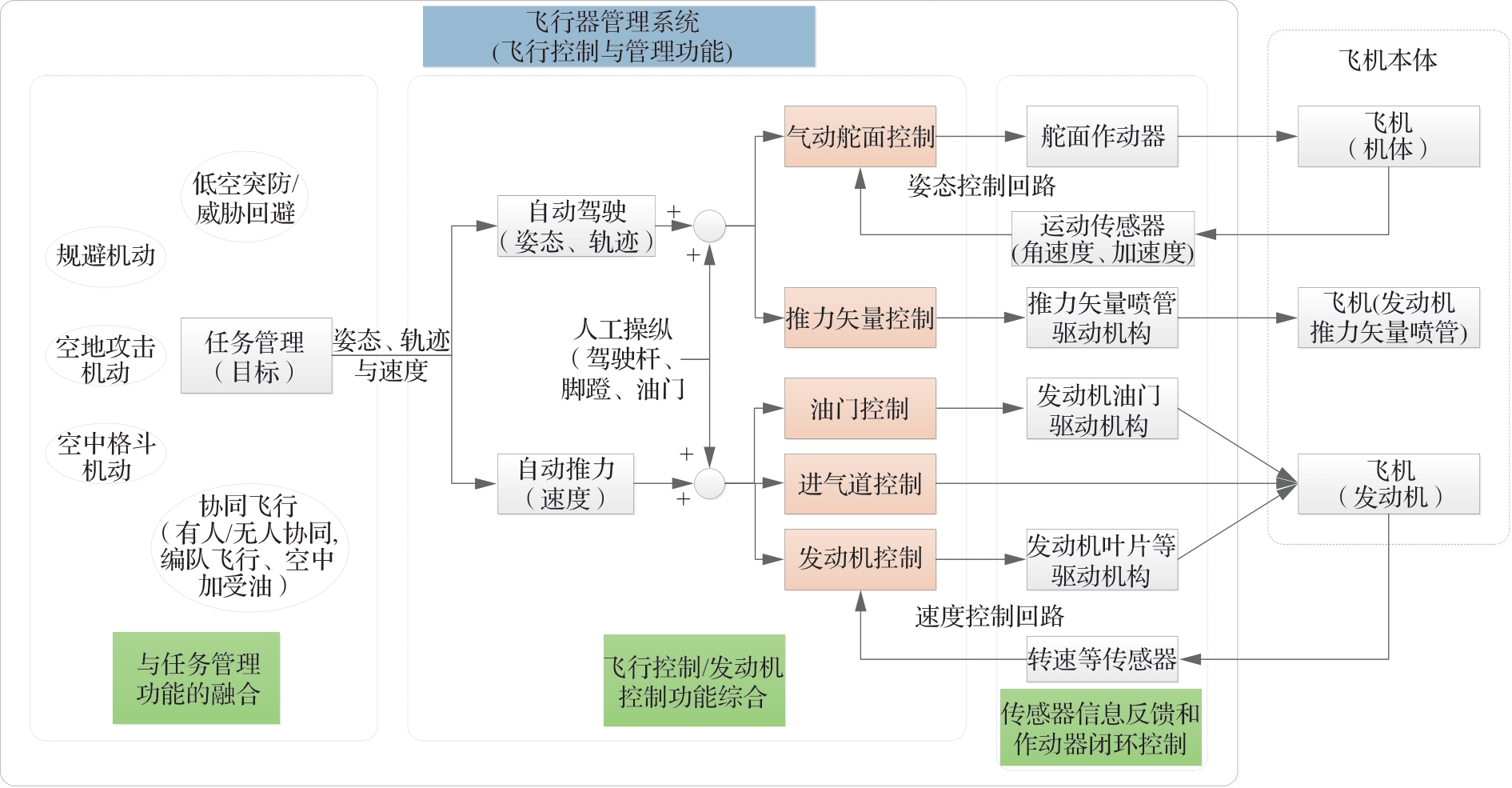
Fig.2
Physical architecture of distributed flight control and management system
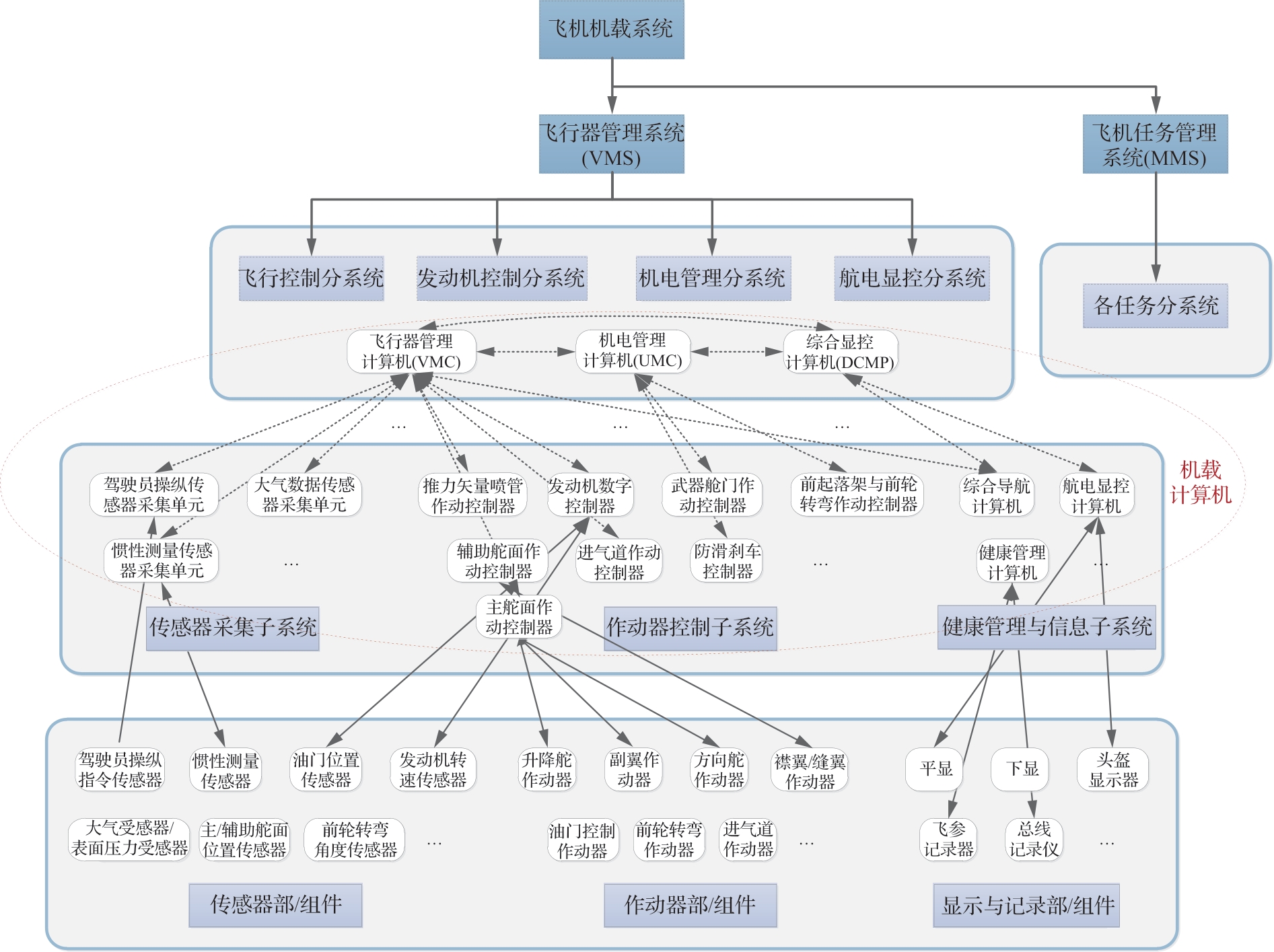
Fig.3
Fault-tolerance distributed system architecture design
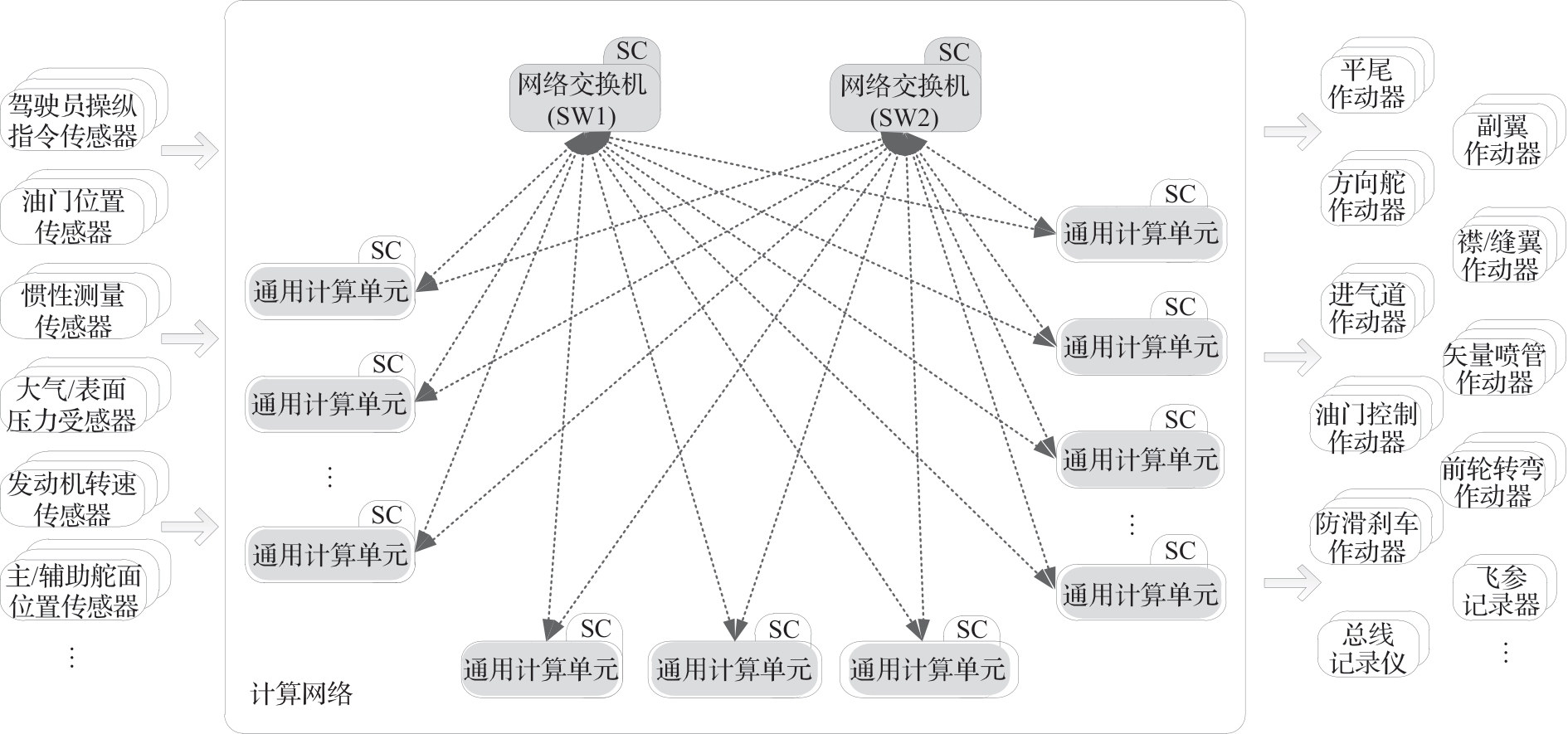

Table 1
Calculation cost matrix for flight control tasks
| 序号 | 任务名称 | 计算开销/μs | |||
|---|---|---|---|---|---|
| p1 | p2 | p3 | p4 | ||
| 1 | 虚拟入口任务 | 0.1 | 0.1 | 0.1 | 0.1 |
| 2 | 模拟传感器信号采集 | 432 | 432 | 432 | 432 |
| 3 | 离散开关信号采集 | 72 | 72 | 72 | 72 |
| 4 | 舵机1信号接收 | 72 | 72 | 72 | 72 |
| 5 | 舵机2信号接收 | 72 | 72 | 72 | 72 |
| 6 | 舵机3信号接收 | 72 | 72 | 72 | 72 |
| 7 | 大气数据传感器(总线1)信号采集 | 320 | 320 | 320 | 320 |
| 8 | 惯性测量组件(总线2)信号采集 | 253 | 253 | 253 | 253 |
| 9 | 模拟/离散输入信号表决 | 1 231 | 1 231 | 1 231 | 1 231 |
| 10 | 舵机信号表决 | 461 | 461 | 461 | 461 |
| 11 | 大气数据传感器(总线1)信号表决监控 | 809 | 809 | 809 | 809 |
| 12 | 惯性测量组件(总线2)信号表决监控 | 405 | 405 | 405 | 405 |
| 13 | 控制律计算 | 2 676 | 2 676 | 2 676 | 2 676 |
| 14 | 舵机控制指令信号输出 | 470 | 470 | 470 | 470 |
| 15 | 舵机控制指令信号监控 | 171 | 171 | 171 | 171 |
| 16 | 模拟/离散输入信号监控 | 456 | 456 | 456 | 456 |
| 17 | 计算机监控与管理 | 117 | 117 | 117 | 117 |
| 18 | 虚拟出口任务 | 0.1 | 0.1 | 0.1 | 0.1 |
Table 2
Communication cost matrix of flight control functional tasks
| 任务 | 通信开销/μs | |||||||||||||||||
|---|---|---|---|---|---|---|---|---|---|---|---|---|---|---|---|---|---|---|
| 1 | 2 | 3 | 4 | 5 | 6 | 7 | 8 | 9 | 10 | 11 | 12 | 13 | 14 | 15 | 16 | 17 | 18 | |
| 1 | 0 | 0.1 | 0.1 | 0.1 | 0.1 | 0.1 | 0.1 | 0.1 | 0 | 0 | 0 | 0 | 0 | 0 | 0 | 0 | 0 | 0 |
| 2 | 0 | 0 | 0 | 0 | 0 | 0 | 0 | 0 | 768 | 0 | 0 | 0 | 0 | 0 | 0 | 768 | 0 | 0 |
| 3 | 0 | 0 | 0 | 0 | 0 | 0 | 0 | 0 | 128 | 0 | 0 | 0 | 0 | 0 | 0 | 0 | 0 | 0 |
| 4 | 0 | 0 | 0 | 0 | 0 | 0 | 0 | 0 | 0 | 128 | 0 | 0 | 0 | 0 | 0 | 0 | 0 | 0 |
| 5 | 0 | 0 | 0 | 0 | 0 | 0 | 0 | 0 | 0 | 128 | 0 | 0 | 0 | 0 | 0 | 0 | 0 | 0 |
| 6 | 0 | 0 | 0 | 0 | 0 | 0 | 0 | 0 | 0 | 128 | 0 | 0 | 0 | 0 | 0 | 0 | 0 | 0 |
| 7 | 0 | 0 | 0 | 0 | 0 | 0 | 0 | 0 | 0 | 0 | 384 | 0 | 0 | 0 | 0 | 0 | 0 | 0 |
| 8 | 0 | 0 | 0 | 0 | 0 | 0 | 0 | 0 | 0 | 0 | 0 | 512 | 0 | 0 | 0 | 0 | 0 | 0 |
| 9 | 0 | 0 | 0 | 0 | 0 | 0 | 0 | 0 | 0 | 0 | 0 | 0 | 224 | 0 | 0 | 0 | 0 | 0 |
| 10 | 0 | 0 | 0 | 0 | 0 | 0 | 0 | 0 | 0 | 0 | 0 | 0 | 0 | 0 | 0 | 0 | 0 | 0.1 |
| 11 | 0 | 0 | 0 | 0 | 0 | 0 | 0 | 0 | 0 | 0 | 0 | 0 | 96 | 0 | 0 | 0 | 0 | 0 |
| 12 | 0 | 0 | 0 | 0 | 0 | 0 | 0 | 0 | 0 | 0 | 0 | 0 | 128 | 0 | 0 | 0 | 0 | 0 |
| 13 | 0 | 0 | 0 | 0 | 0 | 0 | 0 | 0 | 0 | 0 | 0 | 0 | 0 | 96 | 96 | 0 | 0 | 0 |
| 14 | 0 | 0 | 0 | 0 | 0 | 0 | 0 | 0 | 0 | 0 | 0 | 0 | 0 | 0 | 0 | 0 | 0 | 0.1 |
| 15 | 0 | 0 | 0 | 0 | 0 | 0 | 0 | 0 | 0 | 0 | 0 | 0 | 0 | 0 | 0 | 0 | 16 | 0 |
| 16 | 0 | 0 | 0 | 0 | 0 | 0 | 0 | 0 | 0 | 0 | 0 | 0 | 0 | 0 | 0 | 0 | 0 | 0.1 |
| 17 | 0 | 0 | 0 | 0 | 0 | 0 | 0 | 0 | 0 | 0 | 0 | 0 | 0 | 0 | 0 | 0 | 0 | 0.1 |
| 18 | 0 | 0 | 0 | 0 | 0 | 0 | 0 | 0 | 0 | 0 | 0 | 0 | 0 | 0 | 0 | 0 | 0 | 0 |
Fig.4
DAG of typical flight control system
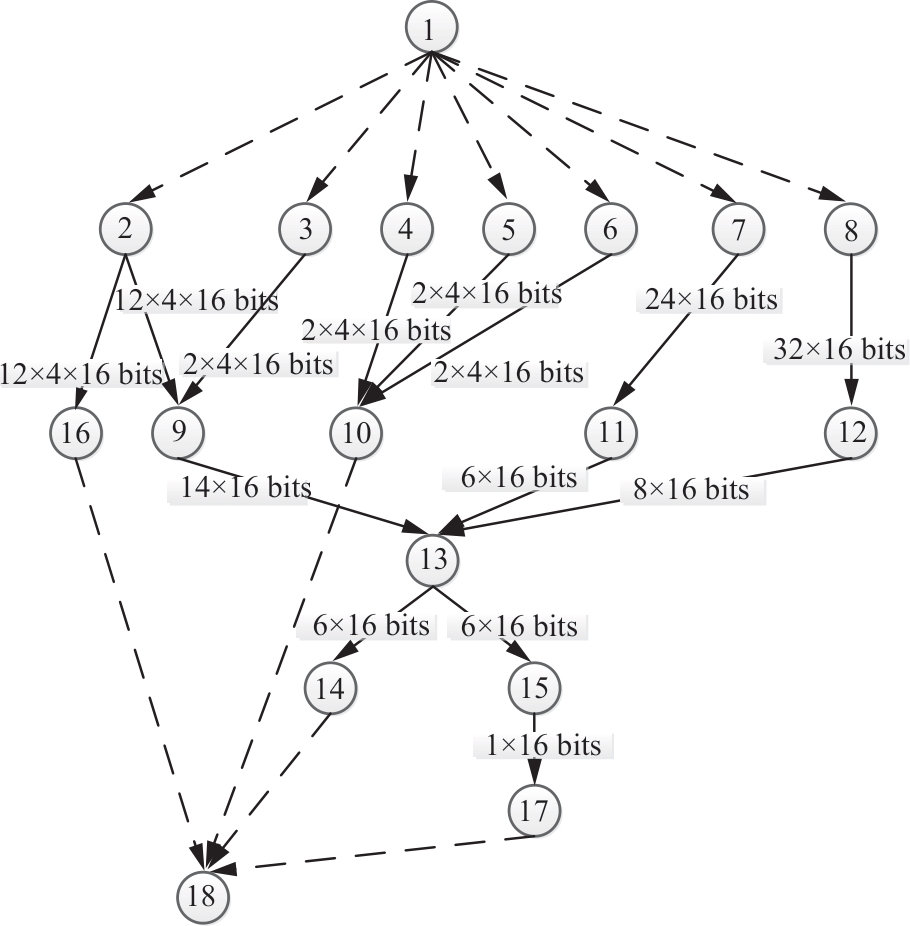
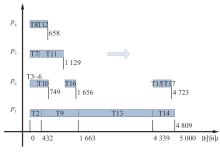
Fig.5
Design results of flight control tasks based on EFT algorithm
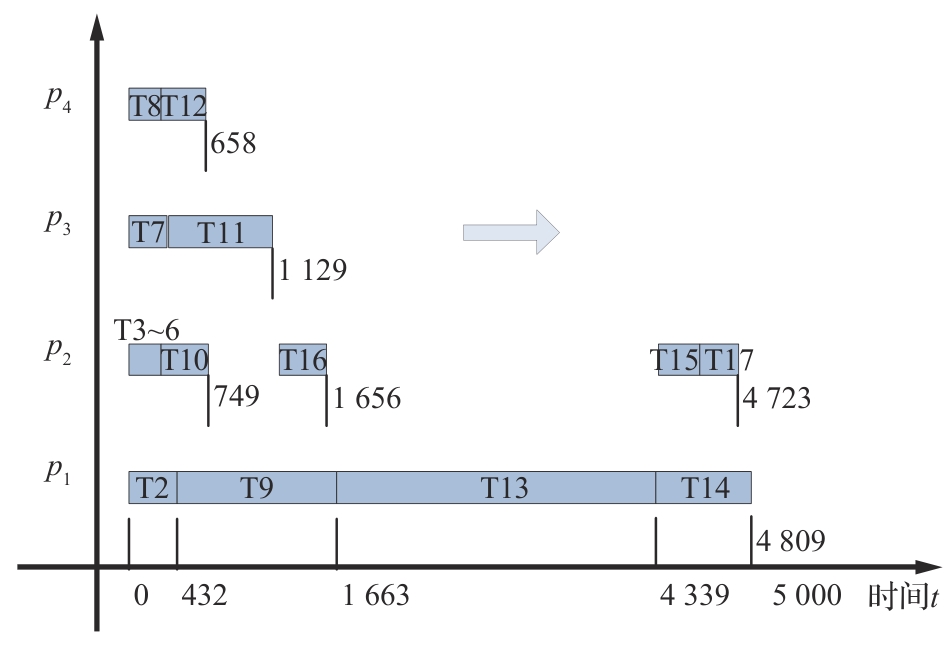
Fig.6
Design results of flight control tasks based on PB algorithm
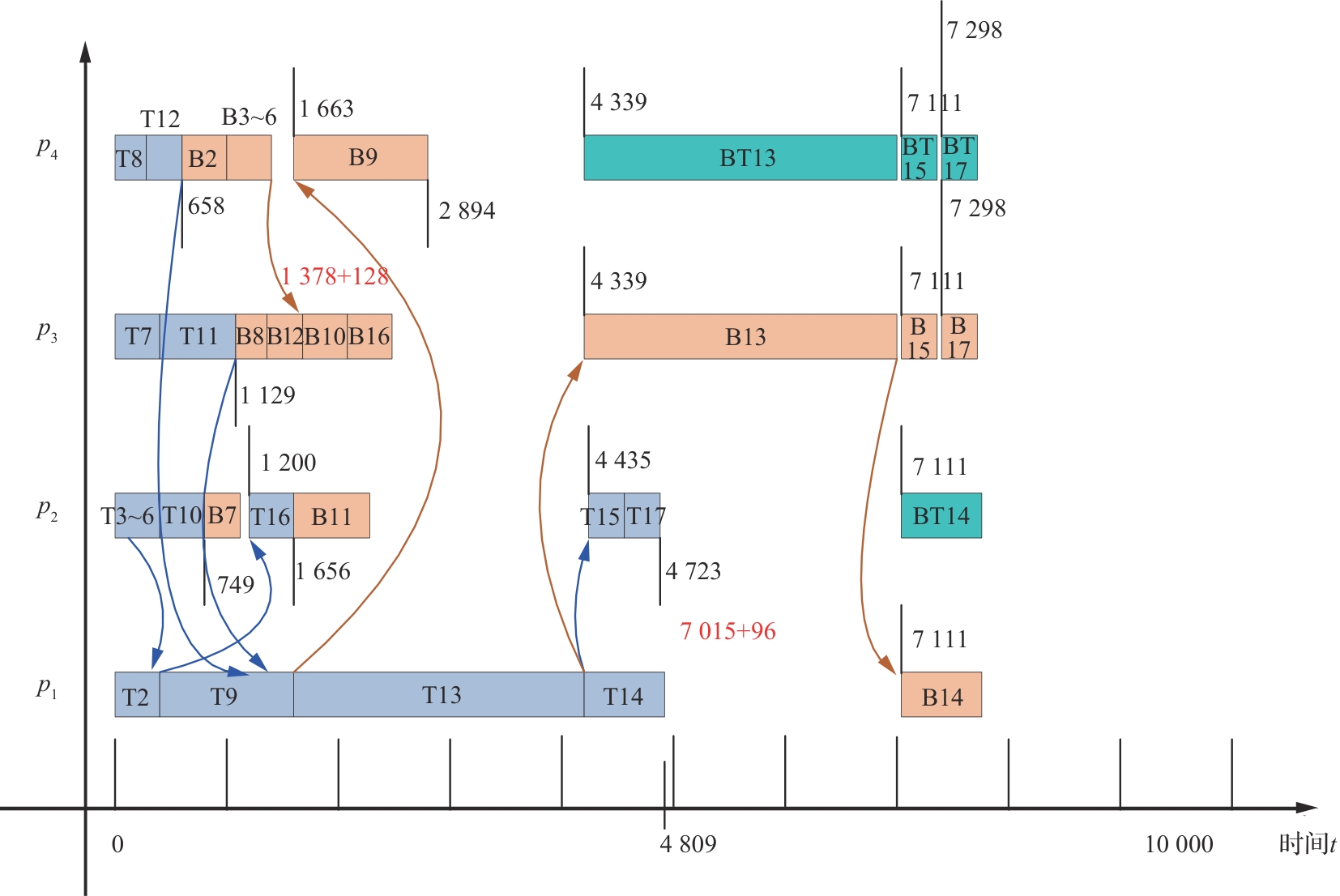
Fig.7
Semi-physical environment physical hardware composition
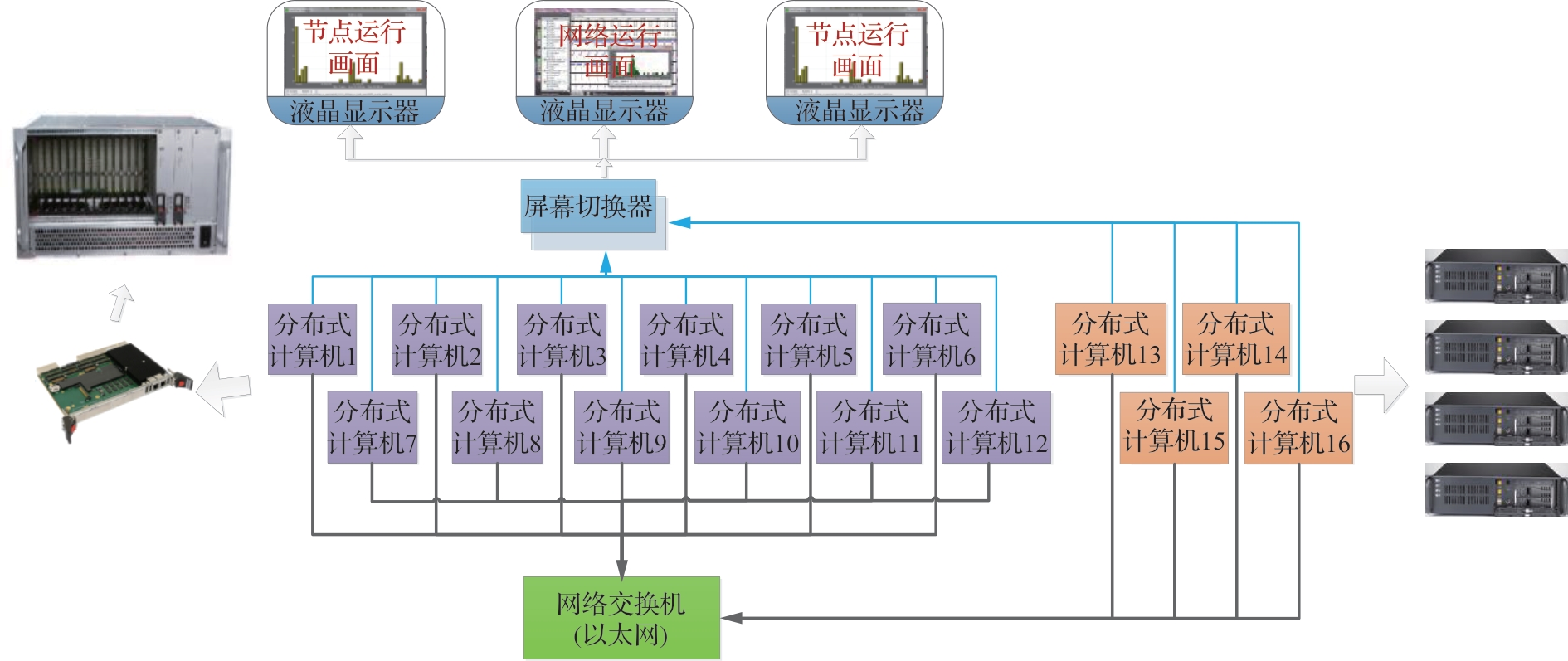
Fig.8
Fault injection diagram of Computer node 5
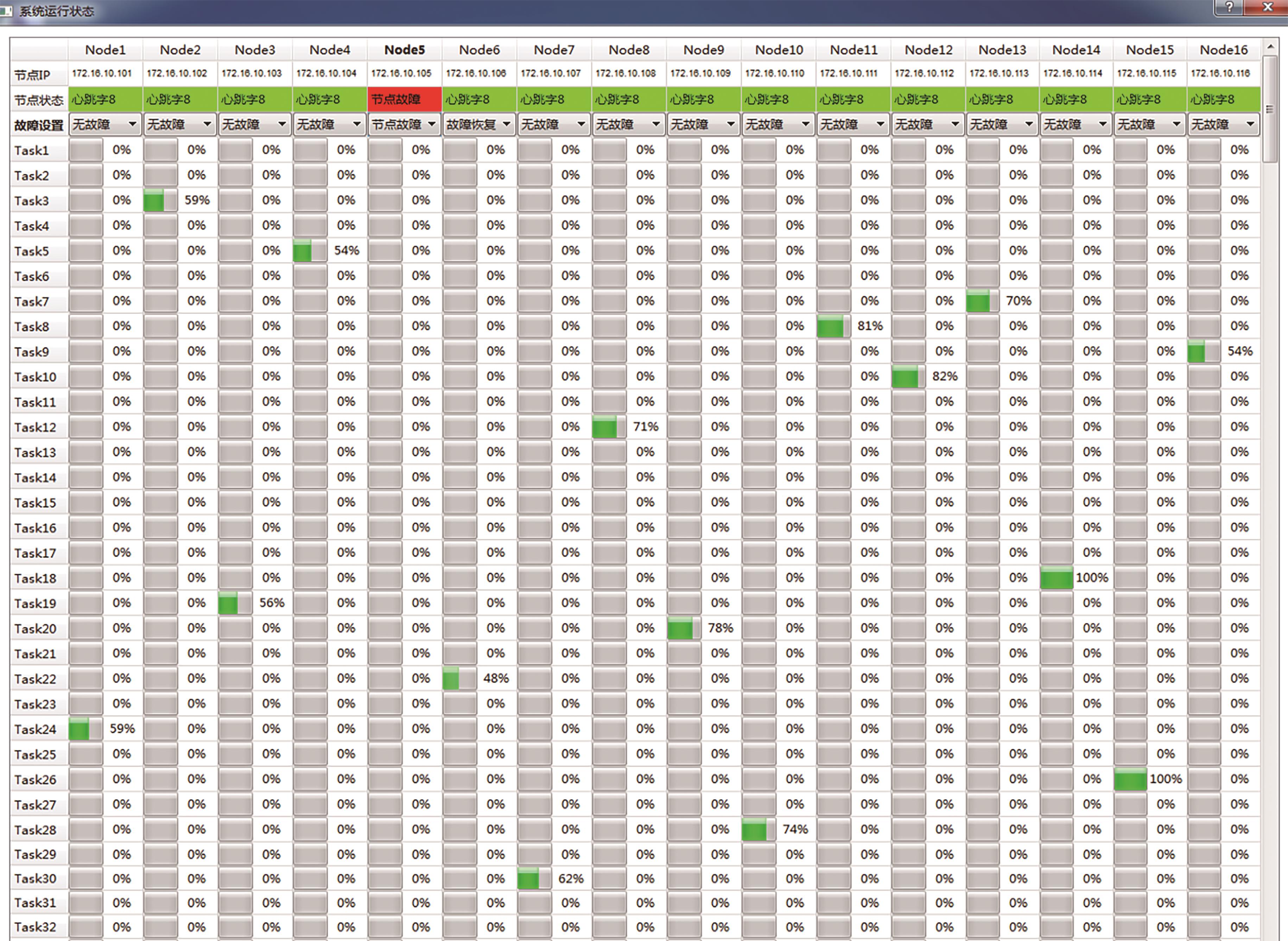
Fig.9
Execution diagram of System task 99
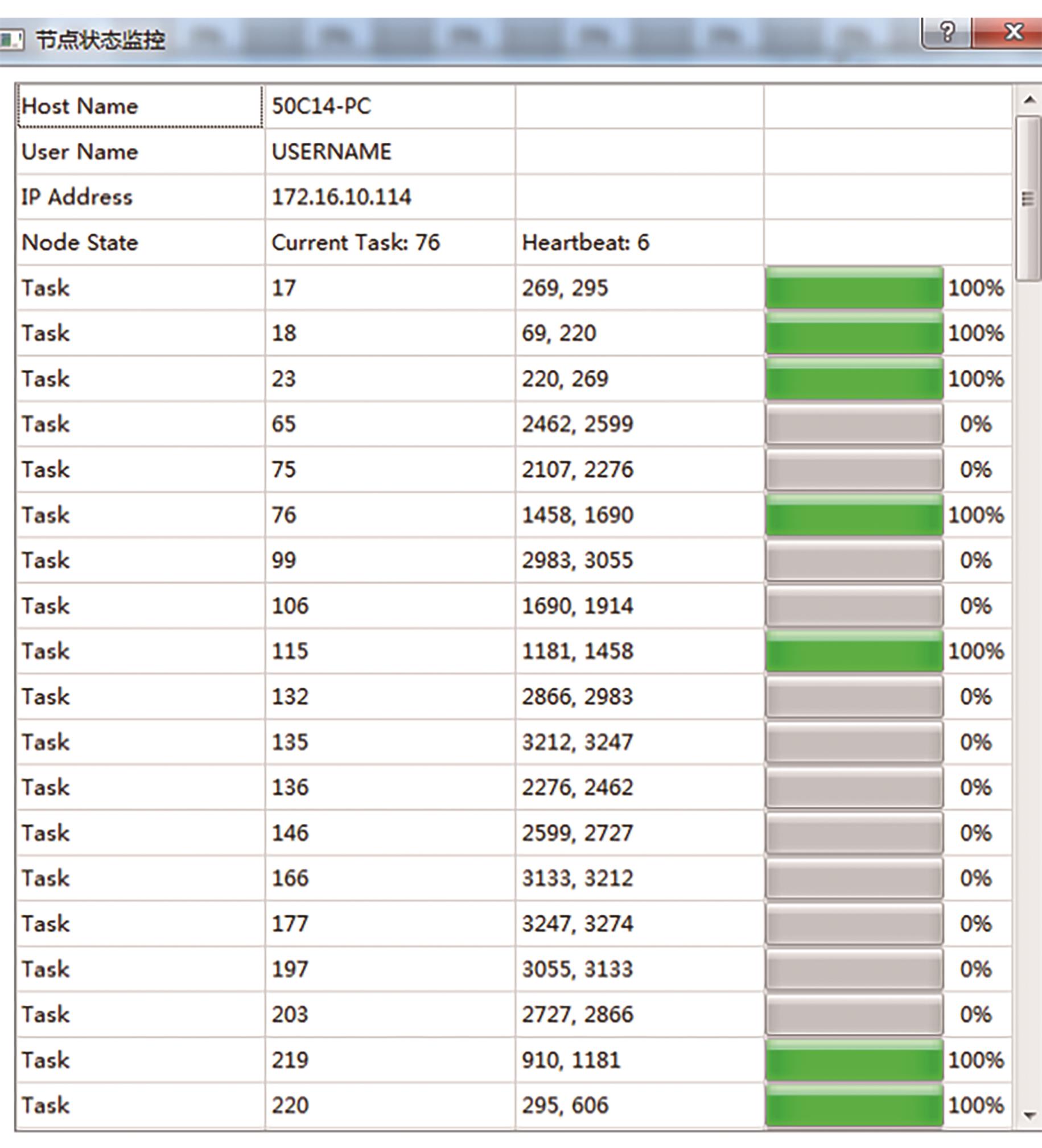
Fig.10
Fault recovery diagram of Computer node 5
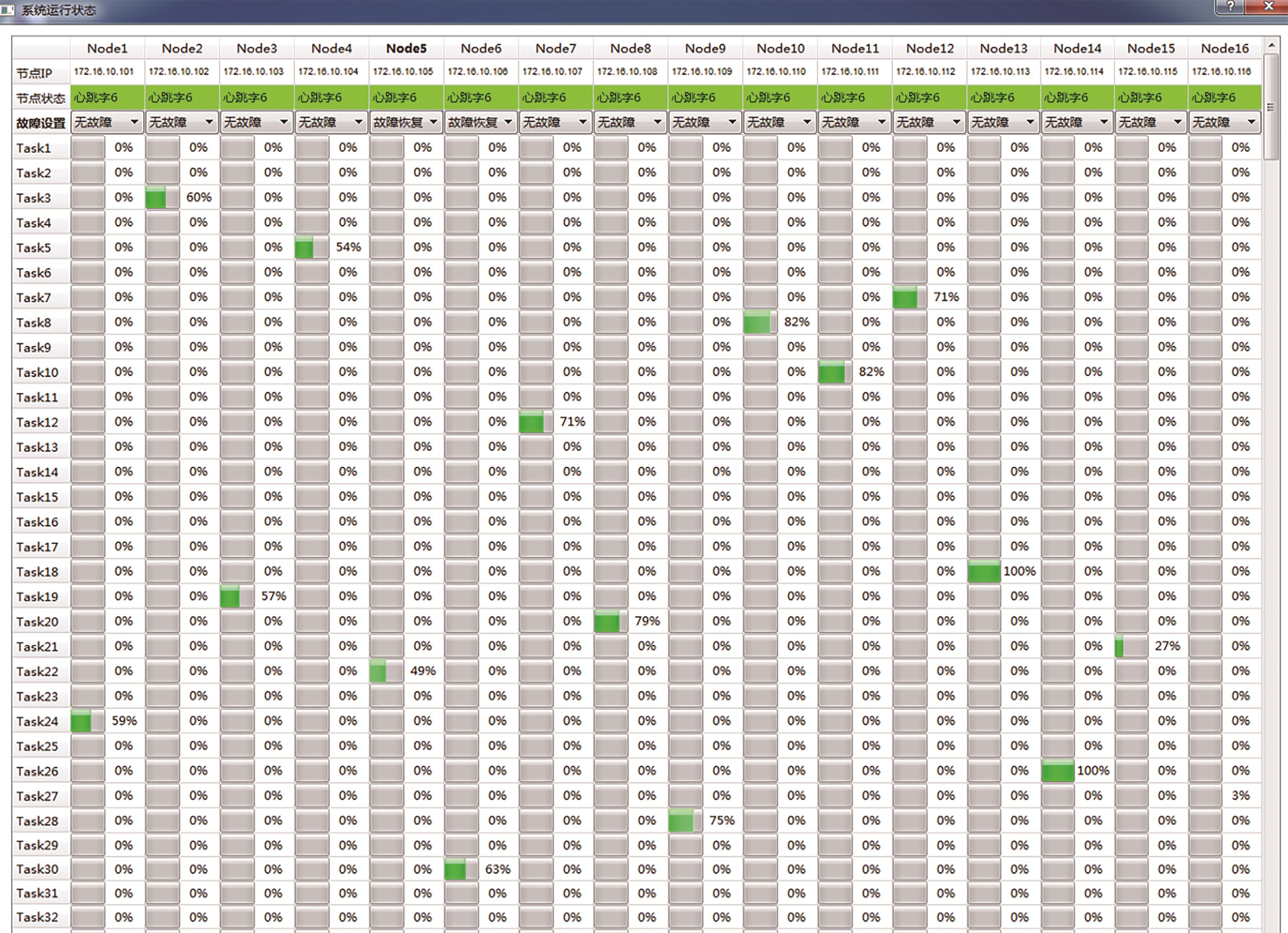
Fig.11
Recovery execution diagram of System task 99
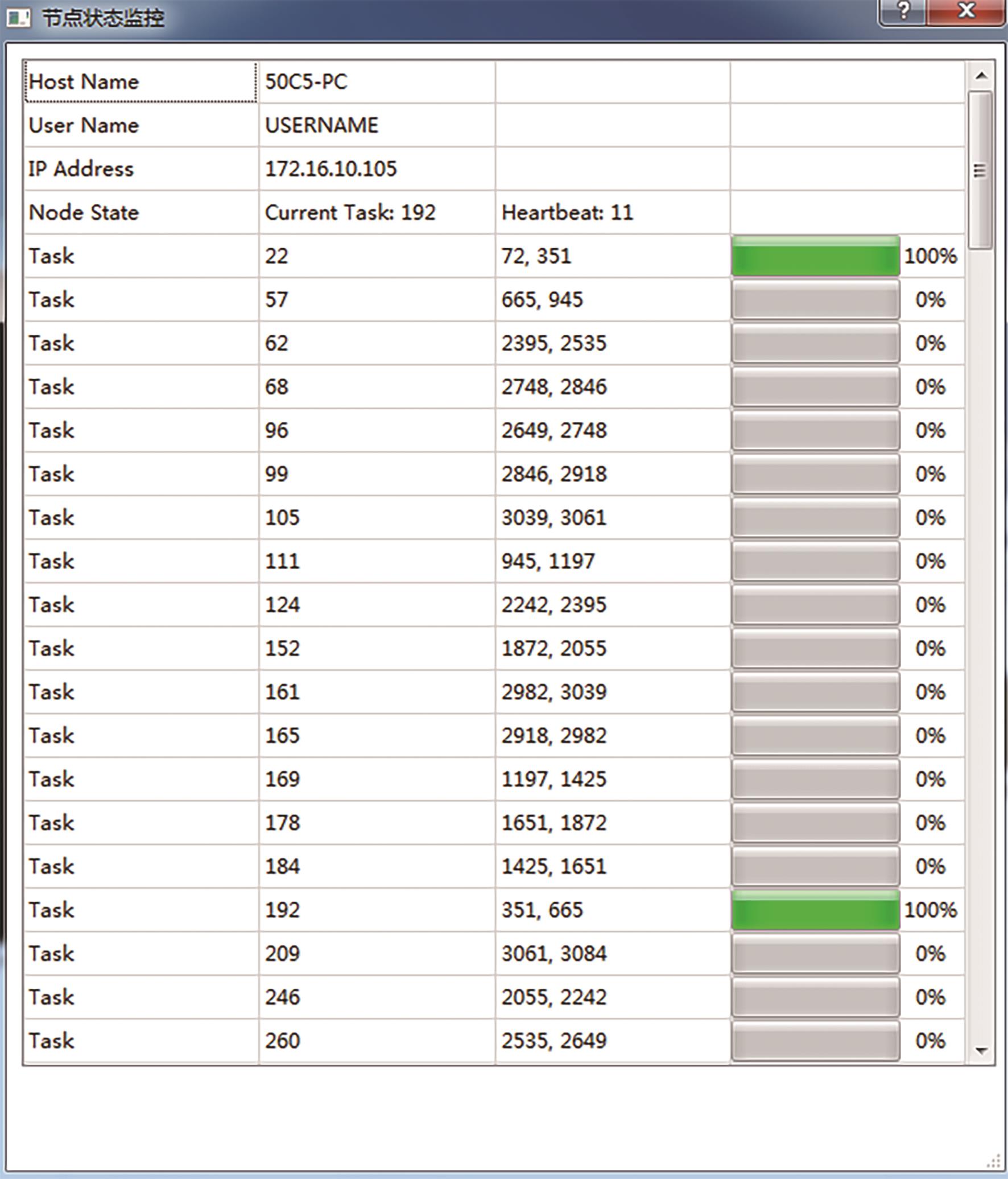
Fig.12
Fault injection diagram of Computer node 6
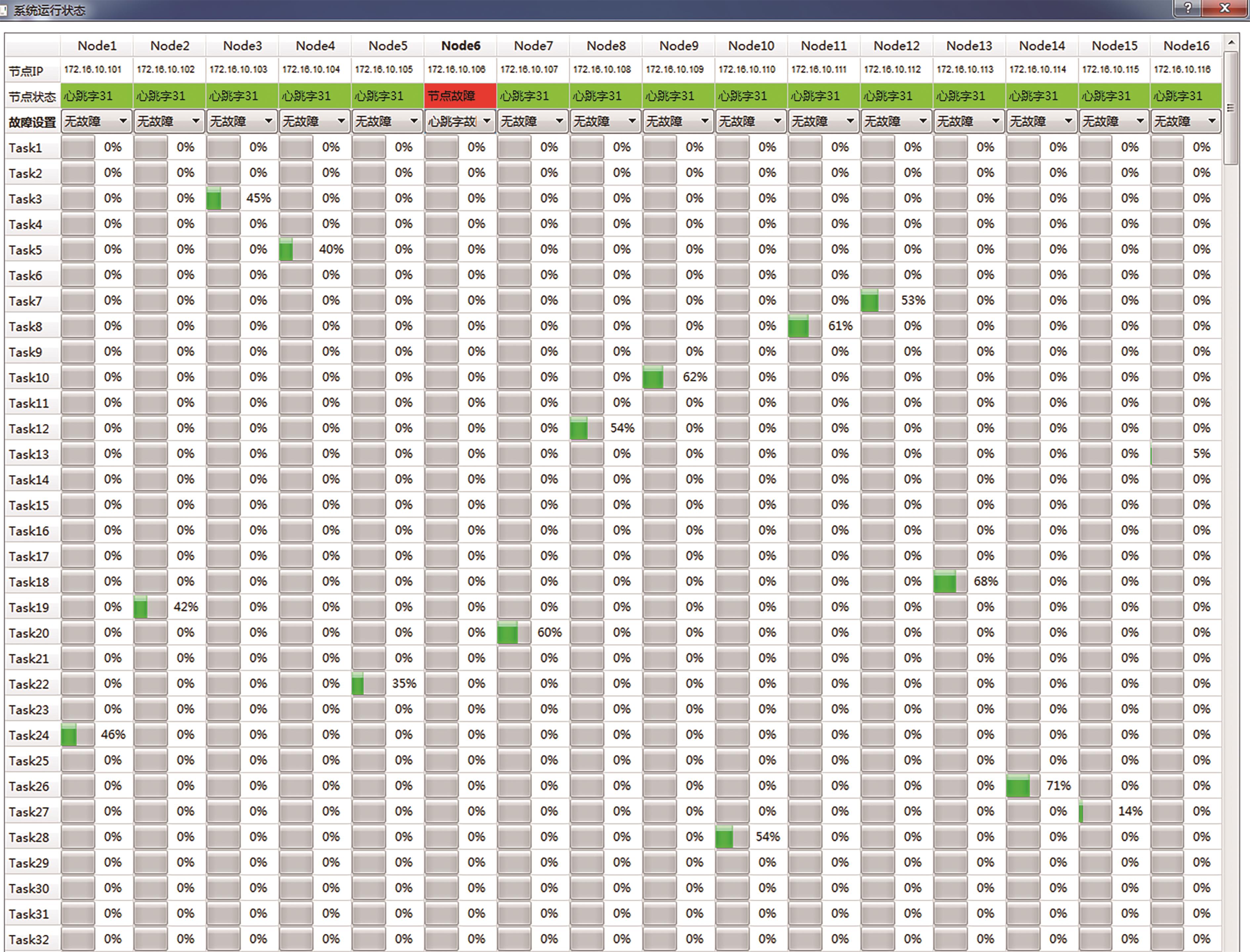
Fig.13
Sub-version task execution diagram of System task 285
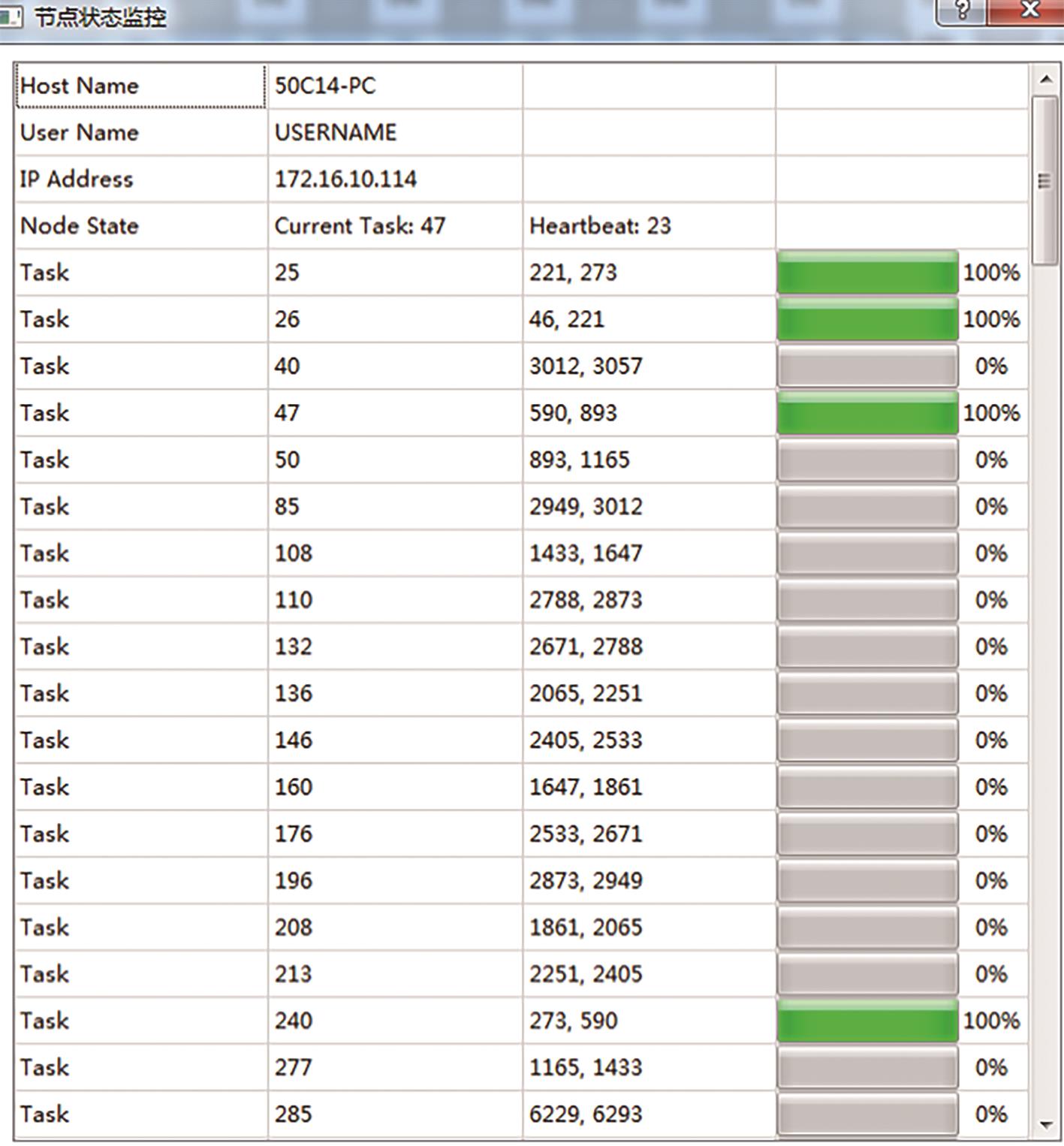
Fig.14
Fault recovery diagram of Computer node 6
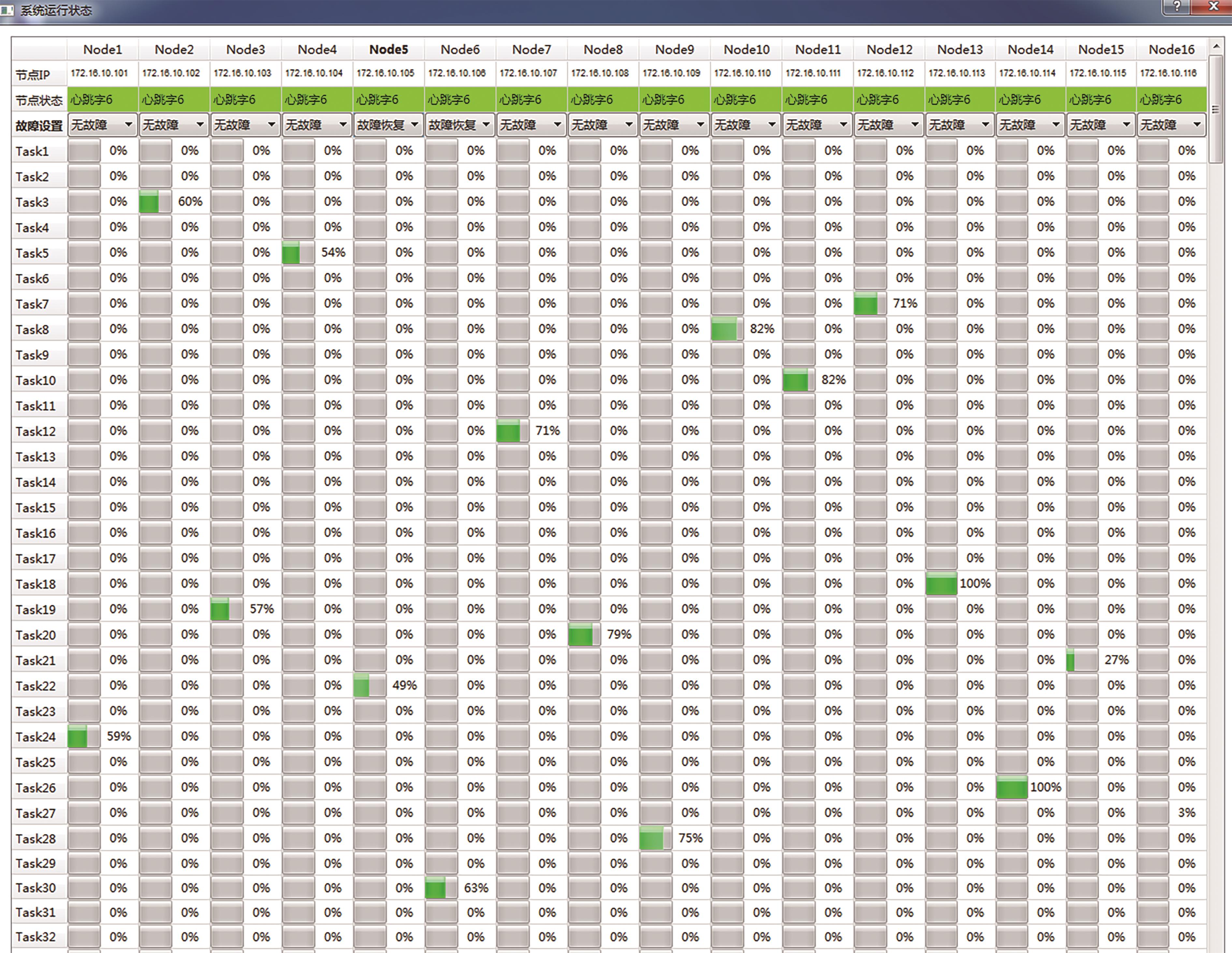
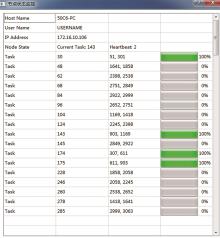
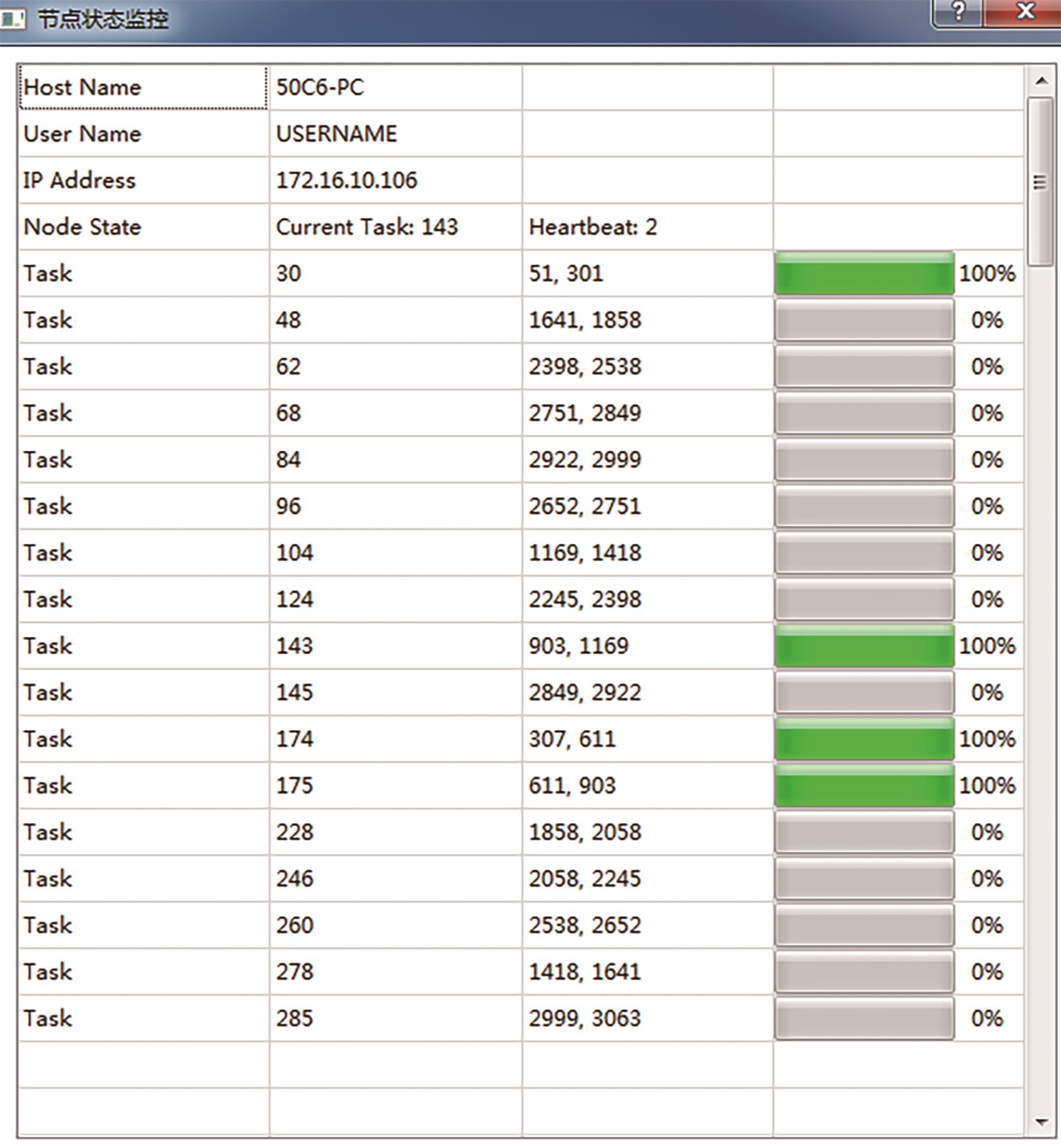
Fig.15
Recovery execution diagram of System task 285
| [1] | 杨朝旭, 杨林, 万天才, 等. 基于分布式系统构架的飞控系统容错设计研究[J]. 航空工程进展, 2024, 15(6): 209-215. |
| YANG Z X, YANG L, WAN T C, et al. Study the fault-tolerant design of flight control system based on distributed systems architecture[J]. Advances in Aeronautical Science and Engineering, 2024, 15(6): 209-215 (in Chinese). | |
| [2] | 杨绚, 魏小勇, 崔德龙. 舰载机飞行控制系统总线接口策略[J]. 航空学报, 2019, 40(4): 622283. |
| YANG X, WEI X Y, CUI D L. Bus interface strategy in flight control system for carrier-based aircraft[J]. Acta Aeronautica et Astronautica Sinica, 2019, 40(4): 622283 (in Chinese). | |
| [3] | 杨卫平. 新一代飞行器导航制导与控制技术发展趋势[J]. 航空学报, 2024, 45(5): 529720. |
| YANG W P. Development trend of navigation guidance and control technology for new generation aircraft[J]. Acta Aeronautica et Astronautica Sinica, 2024, 45(5): 529720 (in Chinese). | |
| [4] | 王璐, 王岩. 基于时间触发的分布式飞行控制系统架构研究[J]. 飞机设计, 2020, 40(3): 6-8. |
| WANG L, WANG Y. Research on time-triggered distributed flight control system architecture[J]. Aircraft Design, 2020, 40(3): 6-8 (in Chinese). | |
| [5] | 王兴坚, 杨新宇, 王少萍. 大型民机操纵系统容错控制技术综述[J]. 机械工程学报, 2024, 60(4): 50-65. |
| WANG X J, YANG X Y, WANG S P. Review of fault-tolerant control for flight control system[J]. Journal of Mechanical Engineering, 2024, 60(4): 50-65 (in Chinese). | |
| [6] | 张晓龙, 李荣, 阎高伟, 等. 小型无人直升机故障估计与容错控制[J]. 航空学报, 2024, 45(S1): 730802. |
| ZHANG X L, LI R, YAN G W, et al. Fault estimation and fault tolerant control for small unmanned helicopters[J]. Acta Aeronautica et Astronautica Sinica, 2024, 45(S1): 730802 (in Chinese). | |
| [7] | 周大鹏, 富佳伟, 杨大鹏. 高超声速飞行器主被动复合一体化容错控制方法[J]. 中国科学: 信息科学, 2024, 54(10): 2295-2307. |
| ZHOU D P, FU J W, YANG D P. Fault-tolerant control method for airbreathing hypersonic vehicles based on an active-passive composite approach[J]. Scientia Sinica (Informationis), 2024, 54(10): 2295-2307 (in Chinese). | |
| [8] | 吴豪, 郑永贵, 刘猛, 等. 飞机环控系统发动机动态引气地面试验设备总体设计方法[J]. 北京航空航天大学学报, 2025, 51(2): 573-583. |
| WU H, ZHENG Y G, LIU M, et al. Overall design method of ground test equipment for engine dynamic air bleed of aircraft environmental control system[J]. Journal of Beijing University of Aeronautics and Astronautics, 2025, 51(2): 573-583 (in Chinese). | |
| [9] | 王勇. 特征模型分散式自适应姿态控制在高超声速飞行器中的应用[J]. 宇航学报, 2012, 33(10): 1413-1422. |
| WANG Y. Application of characteristic model based decentralized adaptive attitude control in the hypersonic vehicle[J]. Journal of Astronautics, 2012, 33(10): 1413-1422 (in Chinese). | |
| [10] | 管庭筠, 张睿, 刘程. 典型民机电传飞控系统架构分析[J]. 机电信息, 2024(19): 75-80. |
| GUAN T Y, ZHANG R, LIU C. Architecture analysis of typical civil electromechanical flight control system[J]. Mechanical and Electrical Information, 2024(19): 75-80 (in Chinese). | |
| [11] | 刘念, 周炎, 祖家奎. 小型无人直升机分布式飞控系统的设计与实现[J]. 电子测量技术, 2019, 42(10): 120-125. |
| LIU N, ZHOU Y, ZU J K. Design and implementation of distributed flight control system for small unmanned helicopter[J]. Electronic Measurement Technology, 2019, 42(10): 120-125 (in Chinese). | |
| [12] | 周建平, 温求遒, 阮聪. 分布式架构的飞行器集群协同仿真系统设计[J]. 战术导弹技术, 2021(3): 75-82. |
| ZHOU J P, WEN Q Q, RUAN C. Design of aircraft cluster collaborative simulation system based on distributed architecture[J]. Tactical Missile Technology, 2021(3): 75-82 (in Chinese). | |
| [13] | 许聪, 张磊, 凌震. TTE在运载火箭控制系统中的应用[J]. 航天控制, 2017, 35(1): 86-91. |
| XU C, ZHANG L, LING Z. The application of TTE in the control system of launch vehicle[J]. Aerospace Control, 2017, 35(1): 86-91 (in Chinese). | |
| [14] | WANG Y C, WANG Q, WU C B, et al. BLO: A backtracking based layout optimization method for time-triggered Ethernet topology reconstruction[C]∥Technology-Inspired Smart Learning for Future Education. Singapore: Springer, 2020: 99-112. |
| [15] | ABUTEIR M, OBERMAISSER R. Simulation environment for time-triggered Ethernet[C]∥ 2013 11th IEEE International Conference on Industrial Informatics (INDIN). Piscataway: IEEE Press, 2013: 642-648. |
| [16] | 李文江, 赵利霞, 张文, 等. 一种新型时间触发航电系统数据调度算法研究[J]. 载人航天, 2020, 26(5): 598-605. |
| LI W J, ZHAO L X, ZHANG W, et al. Research on a novel time-triggered avionics data scheduling algorithm[J]. Manned Spaceflight, 2020, 26(5): 598-605 (in Chinese). | |
| [17] | 兰杰, 朱晓飞, 陈亚, 等. 时间触发以太网标准研究[J]. 航空标准化与质量, 2013(5): 24-27, 56. |
| LAN J, ZHU X F, CHEN Y, et al. Research on time-triggered Ethernet standard[J]. Aeronautic Standardization Quality, 2013(5): 24-27, 56 (in Chinese). | |
| [18] | 闫萍萍, 李晖, 陈银超, 等. 基于时间触发的机载统一网络协议一致性测试技术[J]. 电子科技, 2025, 38(1): 14-22. |
| YAN P P, LI H, CHEN Y C, et al. An airborne unified network protocol conformance testing technique based on time trigger[J]. Electronic Science and Technology, 2025, 38(1): 14-22 (in Chinese). | |
| [19] | INUNGANBI S C, TAMILSELVI M, MANIMARAN B. Handwritten character recognition using directed acyclic graph[C]∥ 2023 Eighth International Conference on Science Technology Engineering and Mathematics (ICONSTEM). Piscataway: IEEE Press, 2023: 1-10. |
| [20] | 杨定坤. 高可信的小型无人直升机机载软件建模、分析和验证[D]. 上海: 上海交通大学, 2014. |
| YANG D K. Modeling, analysis and verification of highly credible airborne software for small unmanned helicopter[D]. Shanghai: Shanghai Jiao Tong University, 2014 (in Chinese). | |
| [21] | 焦一鸣, 周川, 郭健, 等. 异构计算环境下一种新型的多DAG任务调度算法[J]. 计算机工程, 2019, 45(7): 1-5. |
| JIAO Y M, ZHOU C, GUO J, et al. A new multiple DAG task scheduling algorithm in heterogeneous computing environment[J]. Computer Engineering, 2019, 45(7): 1-5 (in Chinese). | |
| [22] | 汤峰. 面向无人机信息物理系统的资源调度关键技术研究[D]. 广州: 华南理工大学, 2017. |
| TANG F. Research on key technologies of resource scheduling for UAV cyber-physical systems[D]. Guangzhou: South China University of Technology, 2017 (in Chinese). | |
| [23] | 李晓剑. 异构多处理器上DAG任务调度算法研究[D]. 武汉: 华中科技大学, 2024. |
| LI X J. Research on DAG task scheduling algorithm on heterogeneous multiprocessors[D]. Wuhan: Huazhong University of Science and Technology, 2024 (in Chinese). | |
| [24] | LIU Y, LIU J, ZHU Z Q, et al. Adaptive fault-tolerant scheduling in heterogeneous real-time systems[C]∥ 2019 14th IEEE Conference on Industrial Electronics and Applications (ICIEA). Piscataway: IEEE Press, 2019: 982-987. |
| [25] | BITTENCOURT L F, SAKELLARIOU R, MADEIRA E R M. DAG scheduling using a lookahead variant of the heterogeneous earliest finish time algorithm[C]∥ 2010 18th Euromicro Conference on Parallel, Distributed and Network-based Processing. Piscataway: IEEE Press, 2010: 27-34. |
| [26] | GUO P Z, XUE Z. Improved task partition based fault-tolerant rate-monotonic scheduling algorithm[C]∥ 2016 International Conference on Security of Smart Cities, Industrial Control System and Communications (SSIC). Piscataway: IEEE Press, 2016: 1-5. |
| [27] | SAMAL A K, MALL R, TRIPATHY C. Fault tolerant scheduling of hard real-time tasks on multiprocessor system using a hybrid genetic algorithm[J]. Swarm and Evolutionary Computation, 2014, 14: 92-105. |
| [1] | Yu LI, Jiaxin CHEN, Kecheng LI, Chi-Yung WEN, Ni LI, Xiaoxiong LIU. Characteristic analysis of aircraft with asymmetric wing damage and incremental fault-tolerant control [J]. Acta Aeronautica et Astronautica Sinica, 2026, 47(9): 532501-532501. |
| [2] | Qie LIU, Junying LU, Fei XIE, Wenbo LI. Adaptive hybrid dynamic programming for fault-tolerant attitude control of underactuated spacecraft [J]. Acta Aeronautica et Astronautica Sinica, 2026, 47(9): 532531-532531. |
| [3] | Yuan LU, Ke ZHANG, Bin JIANG. Hierarchical fault-tolerant formation control for unmanned helicopters based on fully-actuated system approach [J]. Acta Aeronautica et Astronautica Sinica, 2026, 47(9): 532279-532279. |
| [4] | Jie WANG, Ming YANG, Bailing TIAN, Bohao LI, Zhishi CHEN. Dynamic event-triggered prescribed performance formation control for hypersonic morphing vehicles [J]. Acta Aeronautica et Astronautica Sinica, 2026, 47(9): 532499-532499. |
| [5] | Xin HUANG, Jiahe ZOU, Shuyi XIAO, Xiaohang LI. An adaptive control strategy for defending against cyber stealthy attacks [J]. Acta Aeronautica et Astronautica Sinica, 2026, 47(4): 332290-332290. |
| [6] | Yuying GUO, Lanxin LIAO, Xiaoqiang ZHANG, Youmin ZHANG, Kai WANG. Finite-time fault-tolerant control of compound actuator faults for unmanned aerial vehicles [J]. Acta Aeronautica et Astronautica Sinica, 2026, 47(4): 332659-332659. |
| [7] | Shan HUANG, Jingping SHI, Qi ZHU, Yongxi LYU, Xiaobo QU. Prescribed-time incremental backstepping fault-tolerant control for wing-damaged aircraft [J]. Acta Aeronautica et Astronautica Sinica, 2025, 46(15): 331503-331503. |
| [8] | Yuchun ZOU, Chenggang TAO, Ziyang ZHEN, Zhibin YIN, Yikun CHEN. Precision landing control based on direct force for flying-wing carrier-based aircraft [J]. Acta Aeronautica et Astronautica Sinica, 2025, 46(13): 531422-531422. |
| [9] | Tao CHEN, Jian CHEN. Learning-observer-based resilient fault-tolerant control for quadrotor unmanned aerial vehicles [J]. Acta Aeronautica et Astronautica Sinica, 2025, 46(11): 531346-531346. |
| [10] | Jie LI, Wenxin HUANG, Yiming CAI, Siyuan WANG, Yufei GAO, Xuefeng JIANG. Fault diagnosis and fault tolerant control of position sensor based on DFPMM [J]. Acta Aeronautica et Astronautica Sinica, 2024, 45(10): 329307-329307. |
| [11] | Bojian LIU, Aijun LI, Yong GUO, Changqing WANG. Fault-tolerant containment control for precise formation of UAVs with input saturation [J]. ACTA AERONAUTICAET ASTRONAUTICA SINICA, 2023, 44(9): 327414-327414. |
| [12] | Lu ZHUANG, Zhong LU, Haijing SONG, Li DONG, Yuting WU, Jia ZHOU. Safety analysis for fly⁃by⁃wire system based on fault injection model [J]. ACTA AERONAUTICAET ASTRONAUTICA SINICA, 2023, 44(9): 327329-327329. |
| [13] | Yajie MA, Juan WANG, Bin JIANG, Jianye GONG. A fault⁃tolerant control scheme for UAVs-UGVs formation systems [J]. ACTA AERONAUTICAET ASTRONAUTICA SINICA, 2023, 44(8): 327216-327216. |
| [14] | Zhongsen WANG, Yuxin LIAO, Caisheng WEI, Ting DAI. Fast terminal sliding mode fault⁃tolerant control of hypersonic vehicle with guaranteed performance [J]. Acta Aeronautica et Astronautica Sinica, 2023, 44(24): 328476-328476. |
| [15] | Wanli ZHAO, Yingqing GUO, Kejie XU, Cansen WANG, Haojie YING, Xinxin TAO. Review of key technologies for fault diagnosis and accommodation for multi⁃electric distributed engine control system [J]. ACTA AERONAUTICAET ASTRONAUTICA SINICA, 2023, 44(10): 27519-027519. |
| Viewed | ||||||
|
Full text |
|
|||||
|
Abstract |
|
|||||
Address: No.238, Baiyan Buiding, Beisihuan Zhonglu Road, Haidian District, Beijing, China
Postal code : 100083
E-mail:hkxb@buaa.edu.cn
Total visits: 6658907 Today visits: 1341All copyright © editorial office of Chinese Journal of Aeronautics
All copyright © editorial office of Chinese Journal of Aeronautics
Total visits: 6658907 Today visits: 1341

 CJA
CJA
