Acta Aeronautica et Astronautica Sinica ›› 2025, Vol. 46 ›› Issue (21): 532365.doi: 10.7527/S1000-6893.2025.32365
• Special Issue: 60th Anniversary of Aircraft Strength Research Institute of China • Previous Articles
Yunwen FENG1,2, Yuhang CUI1,2, Qian HE3,4, Xiaofeng XUE1,2( ), Jun LU5
Received:2025-06-03
Revised:2025-06-17
Accepted:2025-07-11
Online:2025-07-28
Published:2025-07-18
Contact:
Xiaofeng XUE
E-mail:xuexiaofeng@nwpu.edu.cn
Supported by:CLC Number:
Yunwen FENG, Yuhang CUI, Qian HE, Xiaofeng XUE, Jun LU. Reliability evaluation of full-scale structural test based on ISMA-Stacking ensemble modeling and Bayesian fusion[J]. Acta Aeronautica et Astronautica Sinica, 2025, 46(21): 532365.
Fig.1
Reliability evaluation method for FSST based on ISMA-Stacking ensemble modeling and Bayesian fusion
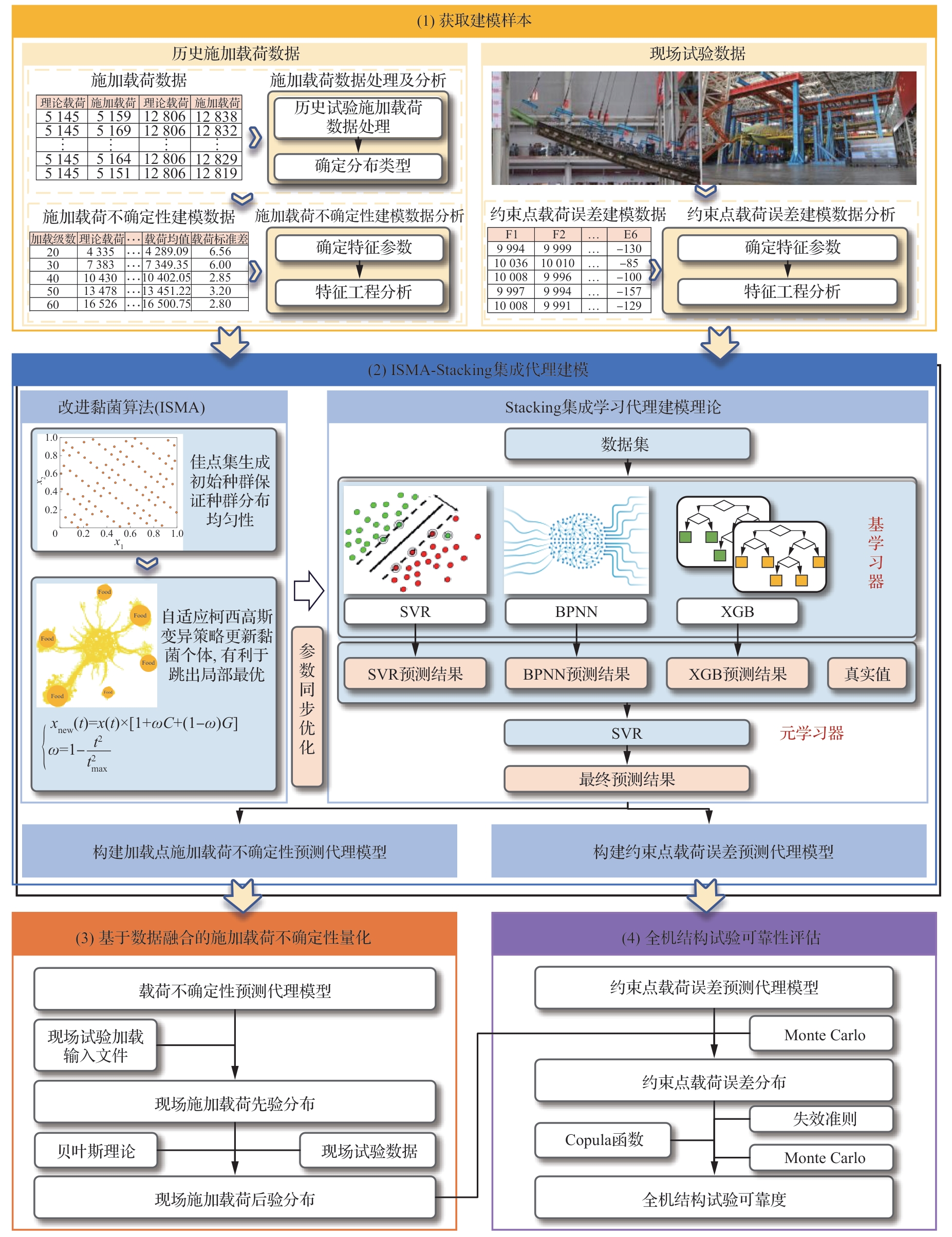
Fig.2
Framework of Stacking ensemble surrogate modeling
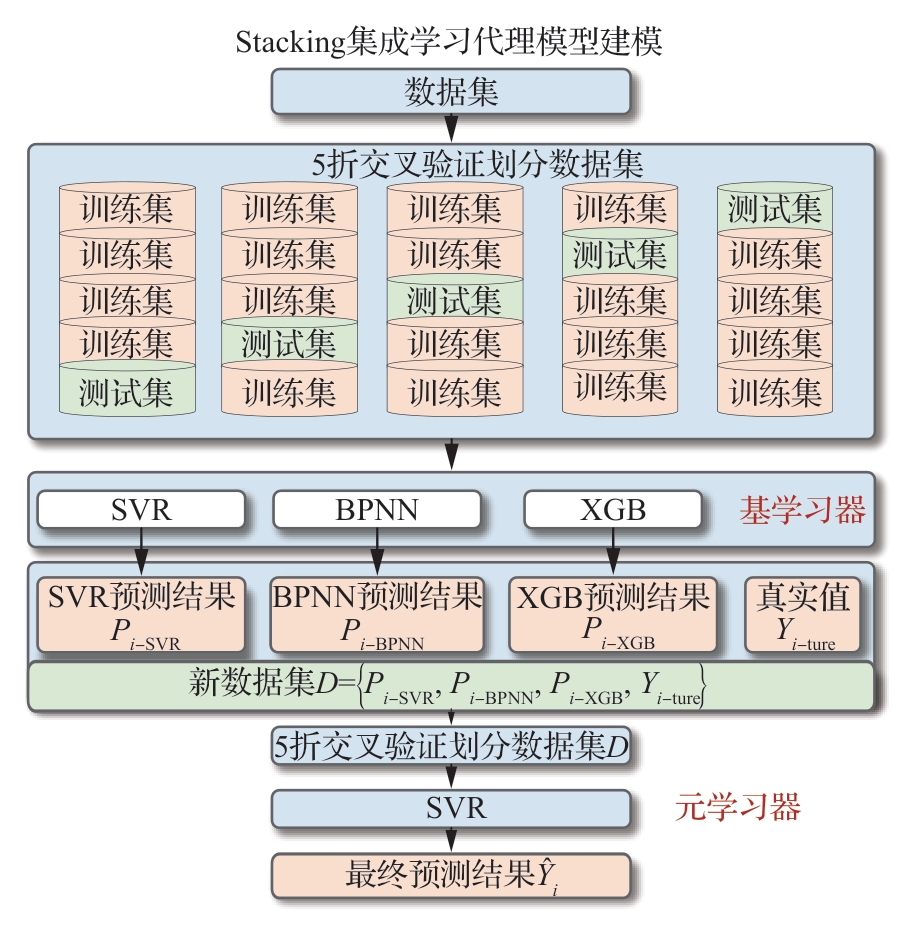
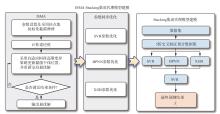
Fig.3
Process of ISMA-Stacking ensemble surrogate modeling
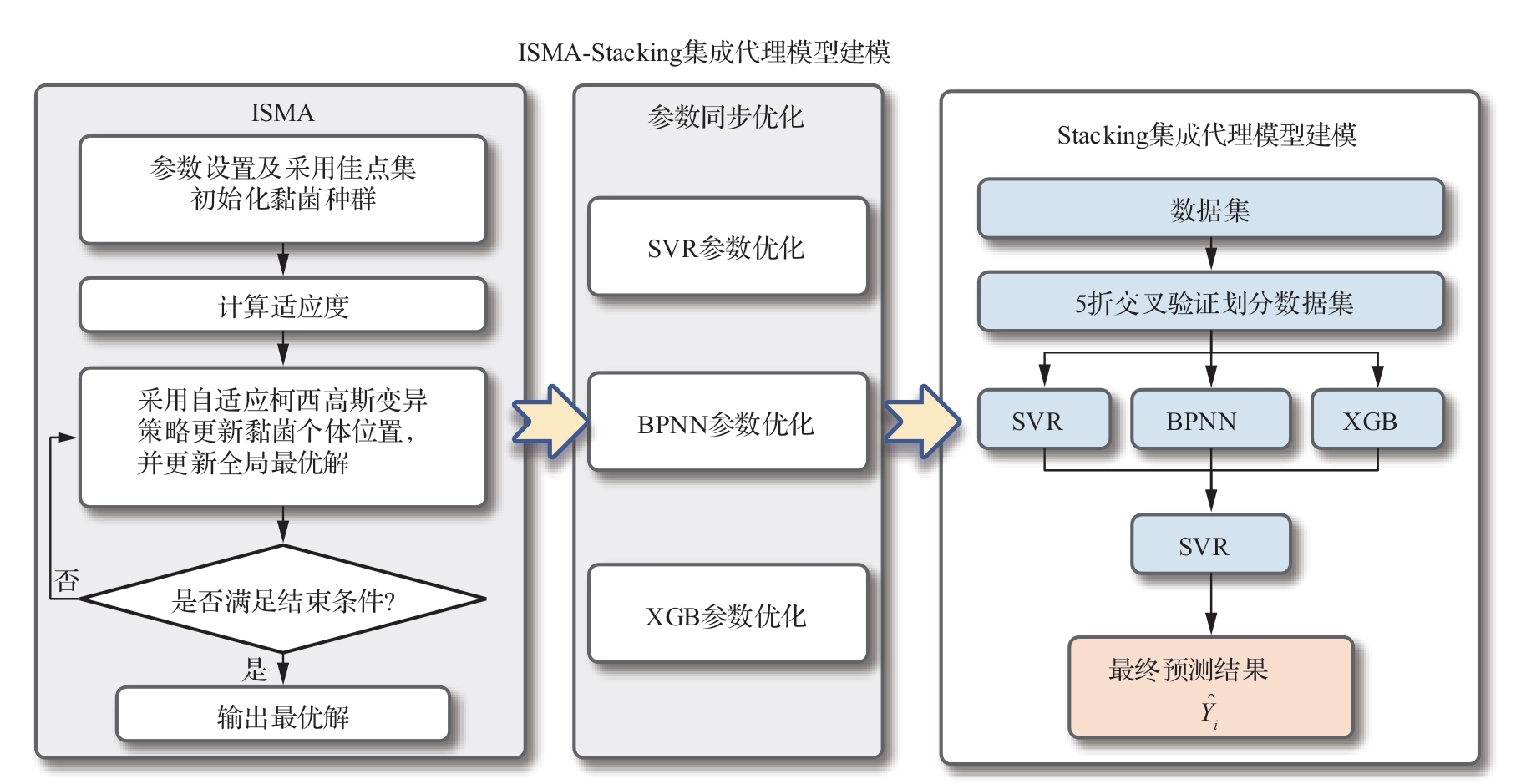
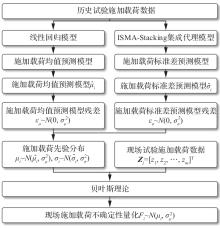
Fig.4
Uncertainty quantification method for applied load in FSST
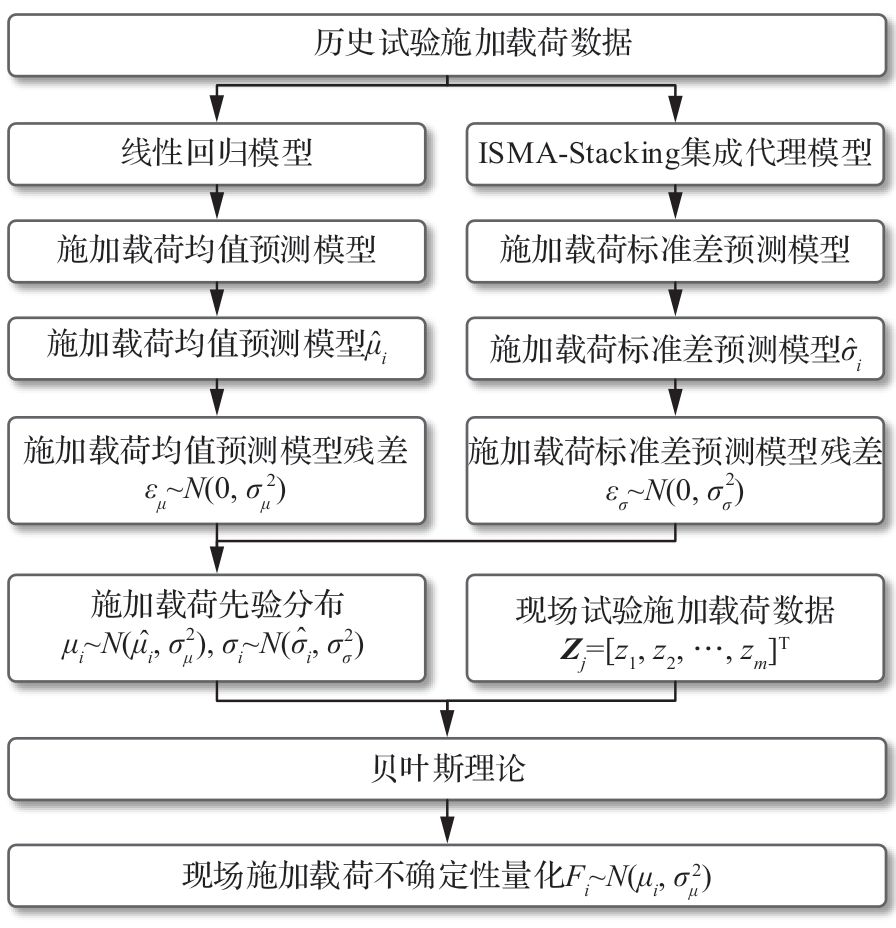
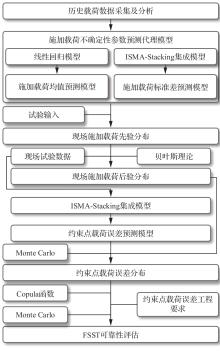
Fig.5
Process of FSST reliability evaluation
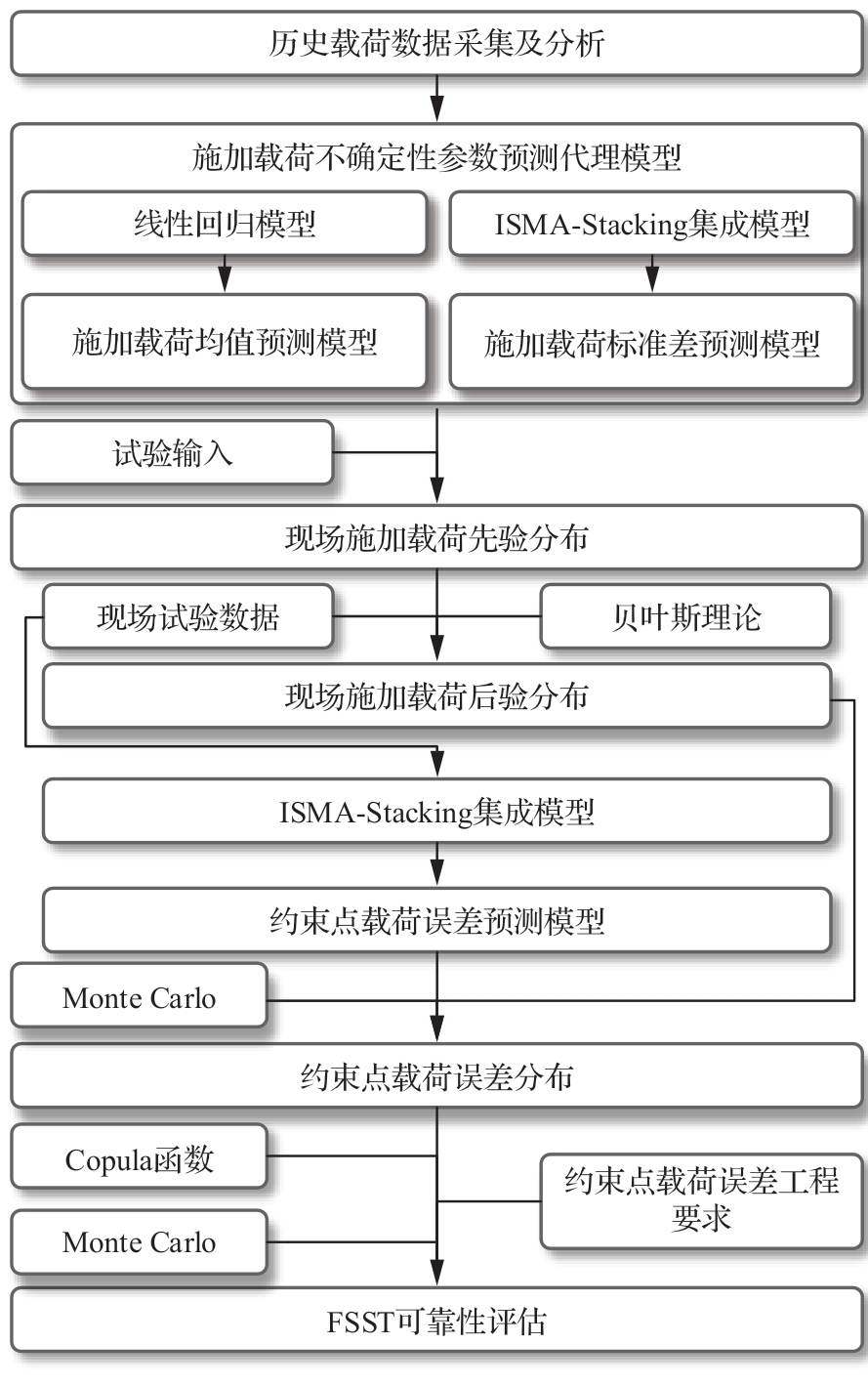
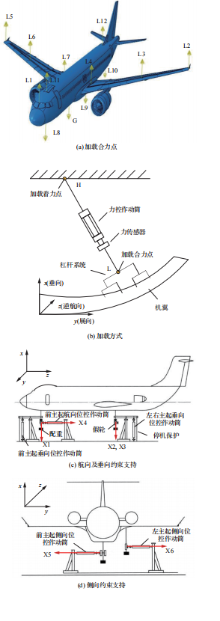
Fig.6
FSST design
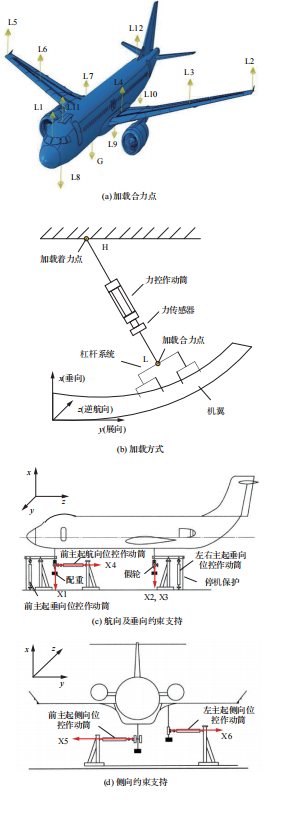

Table 1
Constraint point parameters
| 约束点 | i | j | k | x/mm | y/mm | z/mm |
|---|---|---|---|---|---|---|
| X1 | -1 | 0 | 0 | -3 000 | 0 | 5 070 |
| X2 | -1 | 0 | 0 | -1 500 | 3 795 | 17 710 |
| X3 | -1 | 0 | 0 | -1 500 | -3 795 | 17 710 |
| X4 | 0 | 0 | 1 | -2 000 | 0 | 5 070 |
| X5 | 0 | -1 | 0 | -2 000 | 0 | 5 070 |
| X6 | 0 | 1 | 0 | -1 500 | 3 795 | 17 710 |
Table 2
Coordinate parameters of load resultant points
| 加载点 | x/mm | y/mm | z/mm |
|---|---|---|---|
| L1 | 2 000 | 0 | 3 000 |
| L2 | 2 000 | 17 900 | 17 000 |
| L3 | 2 000 | 9 950 | 17 000 |
| L4 | 2 000 | 2 000 | 17 000 |
| L5 | 2 000 | -17 900 | 17 000 |
| L6 | 2 000 | -9 950 | 17 000 |
| L7 | 2 000 | -2 000 | 17 000 |
| L8 | -2 000 | 0 | 8 000 |
| L9 | -2 000 | 0 | 20 000 |
| L10 | -2 000 | 0 | 32 000 |
| L11 | 2 000 | 0 | 2 000 |
| L12 | 2 000 | 0 | 35 000 |
Table 3
Coordinate parameters of load application points
| 着力点 | x/mm | y/mm | z/mm |
|---|---|---|---|
| H1 | 10 000 | 3 915 | 9 910 |
| H2 | 10 000 | 17 900 | 17 000 |
| H3 | 10 000 | 9 950 | 17 000 |
| H4 | 10 000 | -17 900 | 17 000 |
| H5 | 10 000 | -9 950 | 17 000 |
| H6 | 10 000 | 2 000 | 17 000 |
| H7 | 10 000 | -2 000 | 17 000 |
| H8 | -4 000 | 0 | 8 000 |
| H9 | -4 000 | 0 | 20 000 |
| H10 | -4 000 | 0 | 32 000 |
| H11 | 10 000 | 0 | 2 000 |
| H12 | 10 000 | 0 | 35 000 |
Table 4
Aircraft gross weight parameters
| 重心 | i | j | k | x/mm | y/mm | z/mm | 重量/N |
|---|---|---|---|---|---|---|---|
| G | -1 | 0 | 0 | 0 | 0 | 16 000 | 70 000 |
Table 5
Load spectrum
加载 级数/% | ||||||||||||
|---|---|---|---|---|---|---|---|---|---|---|---|---|
| 10 | 1 000 | 1 000 | 1 500 | 2 000 | 1 000 | 1 500 | 2 000 | 5 167 | 3 333 | 1 500 | 34 000 | 34 000 |
| 20 | 2 000 | 2 000 | 3 000 | 4 000 | 2 000 | 3 000 | 4 000 | 10 333 | 6 667 | 3 000 | 34 000 | 34 000 |
| 30 | 3 000 | 3 000 | 4 500 | 6 000 | 3 000 | 4 500 | 6 000 | 15 500 | 10 000 | 4 500 | 34 000 | 34 000 |
| 40 | 4 000 | 4 000 | 6 000 | 8 000 | 4 000 | 6 000 | 8 000 | 20 667 | 13 333 | 6 000 | 34 000 | 34 000 |
| 50 | 5 000 | 5 000 | 7 500 | 10 000 | 5 000 | 7 500 | 10 000 | 25 833 | 16 667 | 7 500 | 34 000 | 34 000 |
| 60 | 6 000 | 6 000 | 9 000 | 12 000 | 6 000 | 9 000 | 12 000 | 31 000 | 20 000 | 9 000 | 34 000 | 34 000 |
| 70 | 7 000 | 7 000 | 10 500 | 14 000 | 7 000 | 10 500 | 14 000 | 36 167 | 23 333 | 10 500 | 34 000 | 34 000 |
| 80 | 8 000 | 8 000 | 12 000 | 16 000 | 8 000 | 12 000 | 16 000 | 41 333 | 26 667 | 12 000 | 34 000 | 34 000 |
| 90 | 9 000 | 9 000 | 13 500 | 18 000 | 9 000 | 13 500 | 18 000 | 46 500 | 30 000 | 13 500 | 34 000 | 34 000 |
| 100 | 10 000 | 10 000 | 15 000 | 20 000 | 10 000 | 15 000 | 20 000 | 51 667 | 33 333 | 15 000 | 34 000 | 34 000 |
Fig.7
Applied load distribution of FSST
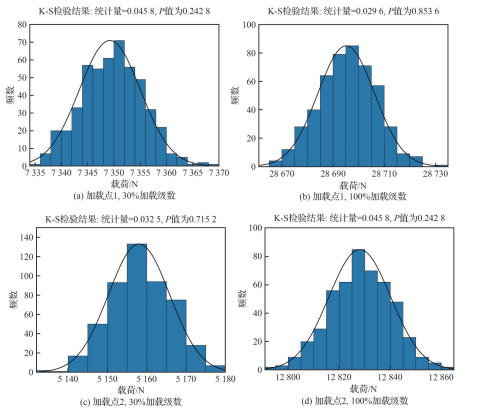
Table 6
Sample data for modeling the uncertainty of applied load
| 样本编号 | L/% | F/N | V/mm | ||
|---|---|---|---|---|---|
| 1 | 20 | 4 335 | 24.2 | 4 289.09 | 6.56 |
| 2 | 20 | 1 889 | 24.0 | 1 848.97 | 8.20 |
| 655 | 150 | 7 272 | 9.5 | 7 271.53 | 11.91 |
| 656 | 150 | 4 000 | 7.6 | 3 998.72 | 12.68 |
Fig.8
Parameters correlation analysis for applied load uncertainty modeling
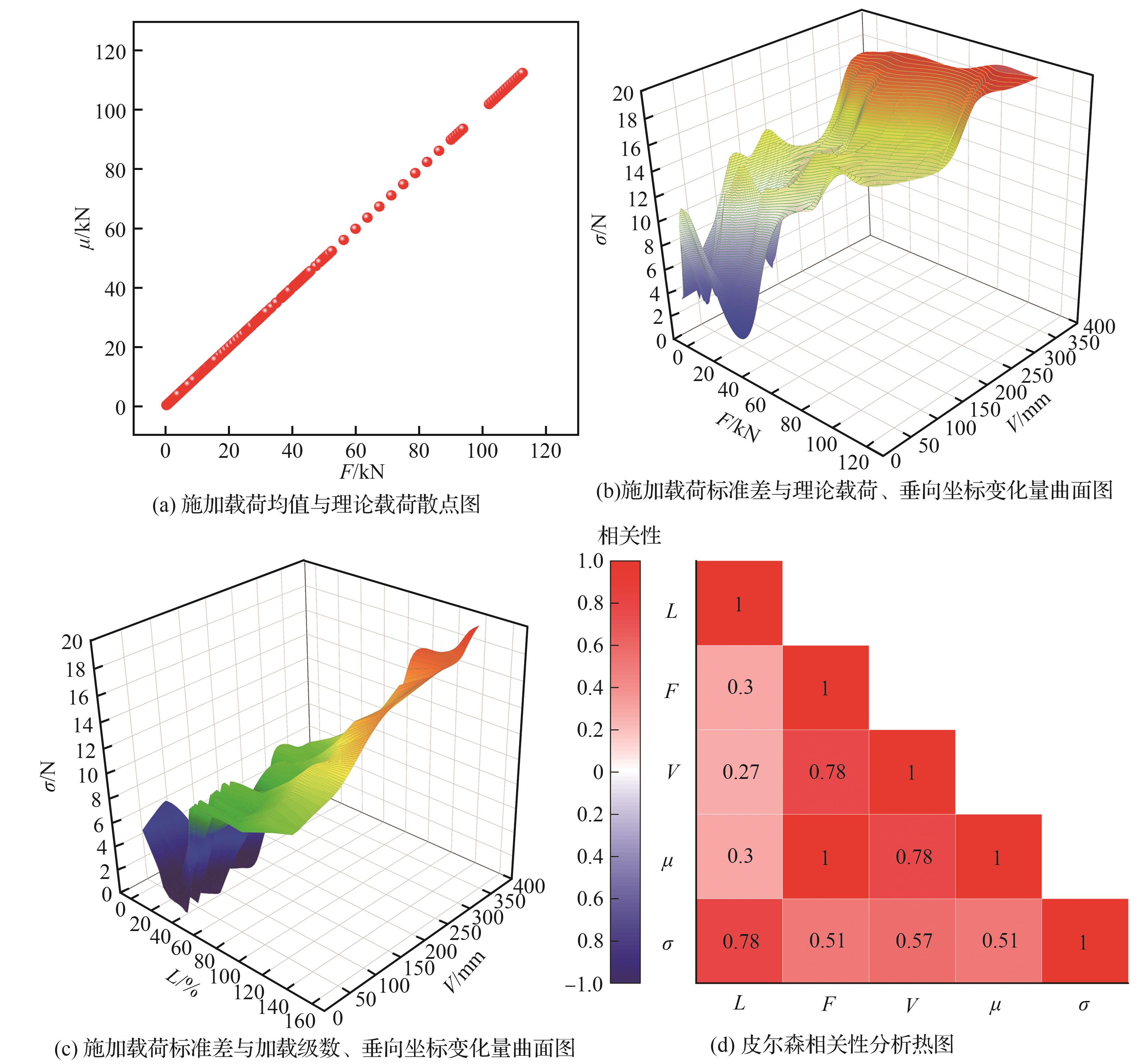
Fig.9
Fitting result of mean applied load
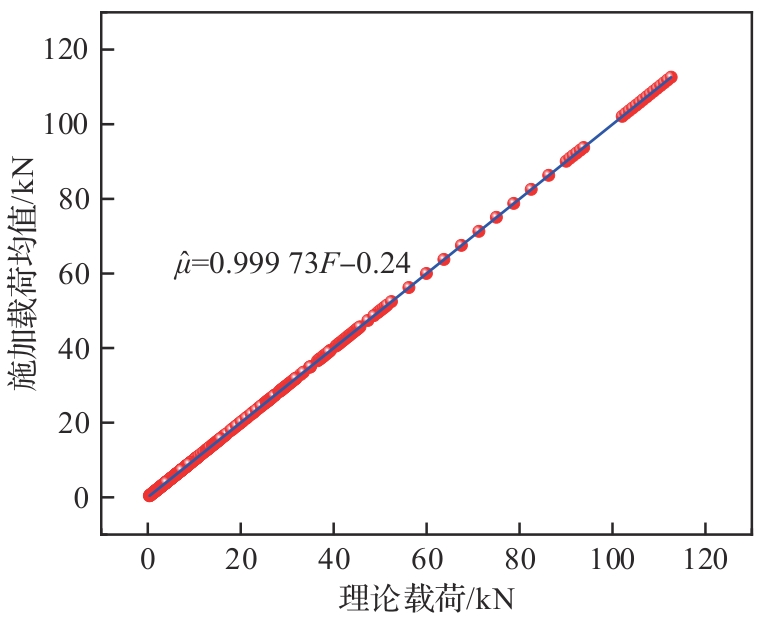
Fig.10
Residual distribution of mean prediction model for applied load
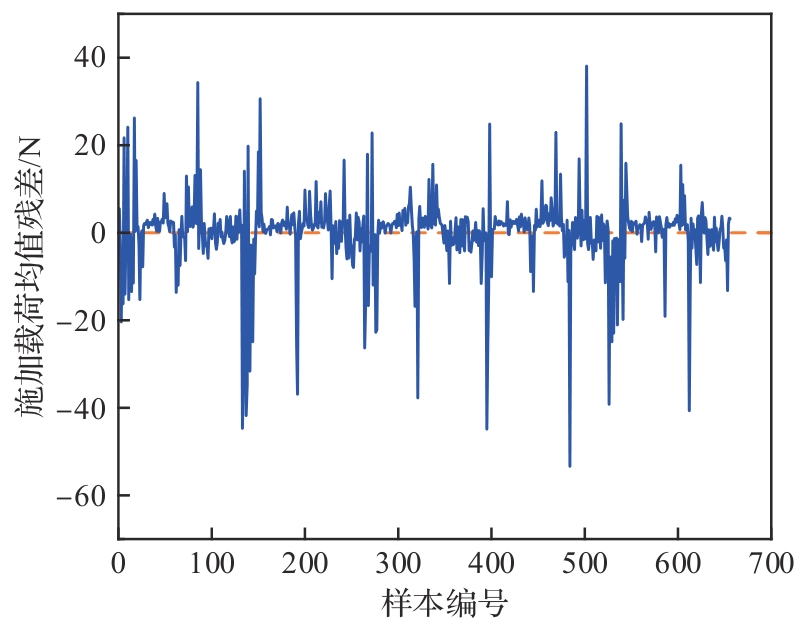
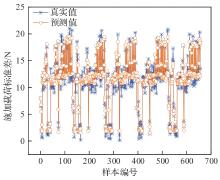
Fig.11
Prediction results of standard deviation of applied load
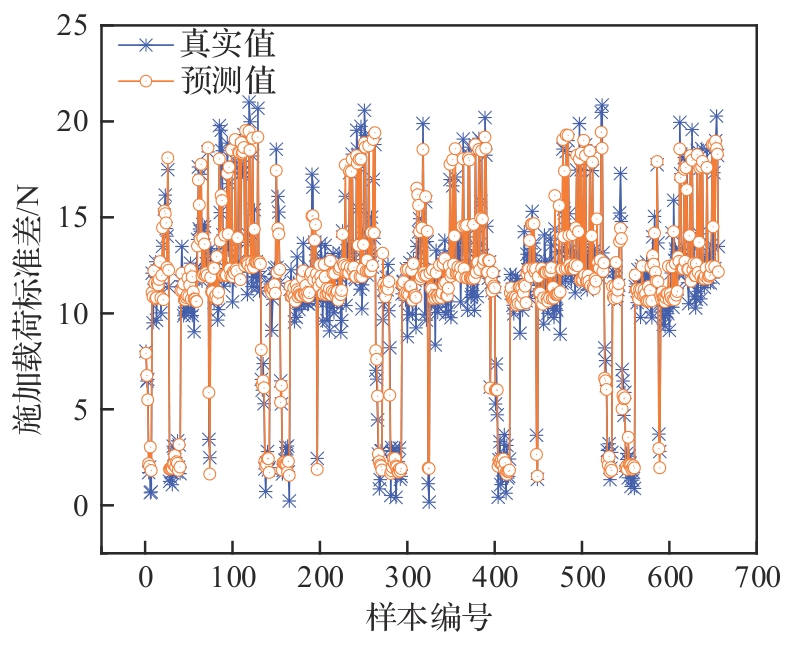
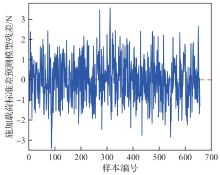
Fig.12
Residual distribution of standard deviation prediction model for applied load
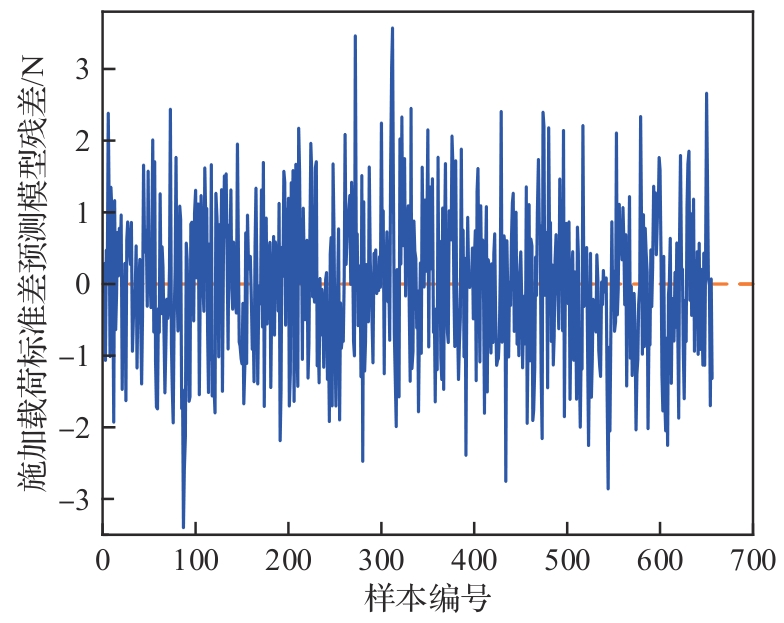
Table 7
Input data for prediction model of applied load uncertainty parameters under 90% loading level
| 加载点 | F/N | V/mm | 加载点 | F/N | V/mm |
|---|---|---|---|---|---|
| L1 | 9 000 | 0 | L7 | 13 500 | 1.03 |
| L2 | 9 000 | 28.61 | L8 | 46 500 | 0 |
| L3 | 13 500 | 11.57 | L9 | 30 000 | 0 |
| L4 | 13 500 | 1.03 | L10 | 13 500 | 0 |
| L5 | 9 000 | 28.61 | L11 | 34 000 | 0 |
| L6 | 13 500 | 11.57 | L12 | 34 000 | 0 |
Table 8
Input data for prediction model of applied load uncertainty parameters under 100% loading level
| 加载点 | F/N | V/mm | 加载点 | F/N | V/mm |
|---|---|---|---|---|---|
| L1 | 10 000 | 0 | L7 | 15 000 | 1.03 |
| L2 | 10 000 | 28.61 | L8 | 51 667 | 0 |
| L3 | 15 000 | 11.57 | L9 | 33 333 | 0 |
| L4 | 15 000 | 1.03 | L10 | 15 000 | 0 |
| L5 | 10 000 | 28.61 | L11 | 34 000 | 0 |
| L6 | 15 000 | 11.57 | L12 | 34 000 | 0 |
Table 9
Load distribution parameters of loading points under 90% loading level
| 加载点 | 均值 | 标准差 | 加载点 | 均值 | 标准差 |
|---|---|---|---|---|---|
| L1 | 8 997.28 | 12.54 | L7 | 13 498.54 | 12.26 |
| L2 | 9 001.65 | 11.95 | L8 | 46 486.02 | 11.18 |
| L3 | 13 493.89 | 10.62 | L9 | 29 993.37 | 12.20 |
| L4 | 13 498.90 | 12.28 | L10 | 13 496.88 | 10.69 |
| L5 | 8 997.32 | 10.70 | L11 | 33 989.77 | 11.88 |
| L6 | 13 494.52 | 11.48 | L12 | 33 990.43 | 12.11 |
Table 10
Load distribution parameters of loading points under 100% loading level
| 加载点 | 均值 | 标准差 | 加载点 | 均值 | 标准差 |
|---|---|---|---|---|---|
| L1 | 9 997.99 | 11.32 | L7 | 14 998.66 | 12.05 |
| L2 | 9 996.85 | 11.85 | L8 | 51 664.9 | 11.84 |
| L3 | 14 998.54 | 12.39 | L9 | 33 334.67 | 12.11 |
| L4 | 14 994.06 | 11.35 | L10 | 14 998.60 | 11.15 |
| L5 | 9 997.87 | 12.01 | L11 | 34 000.99 | 12.07 |
| L6 | 14 995.22 | 11.46 | L12 | 33 995.68 | 12.36 |
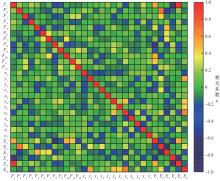
Fig.13
Correlation analysis of modeling parameters for constraint points load error under 90% loading level
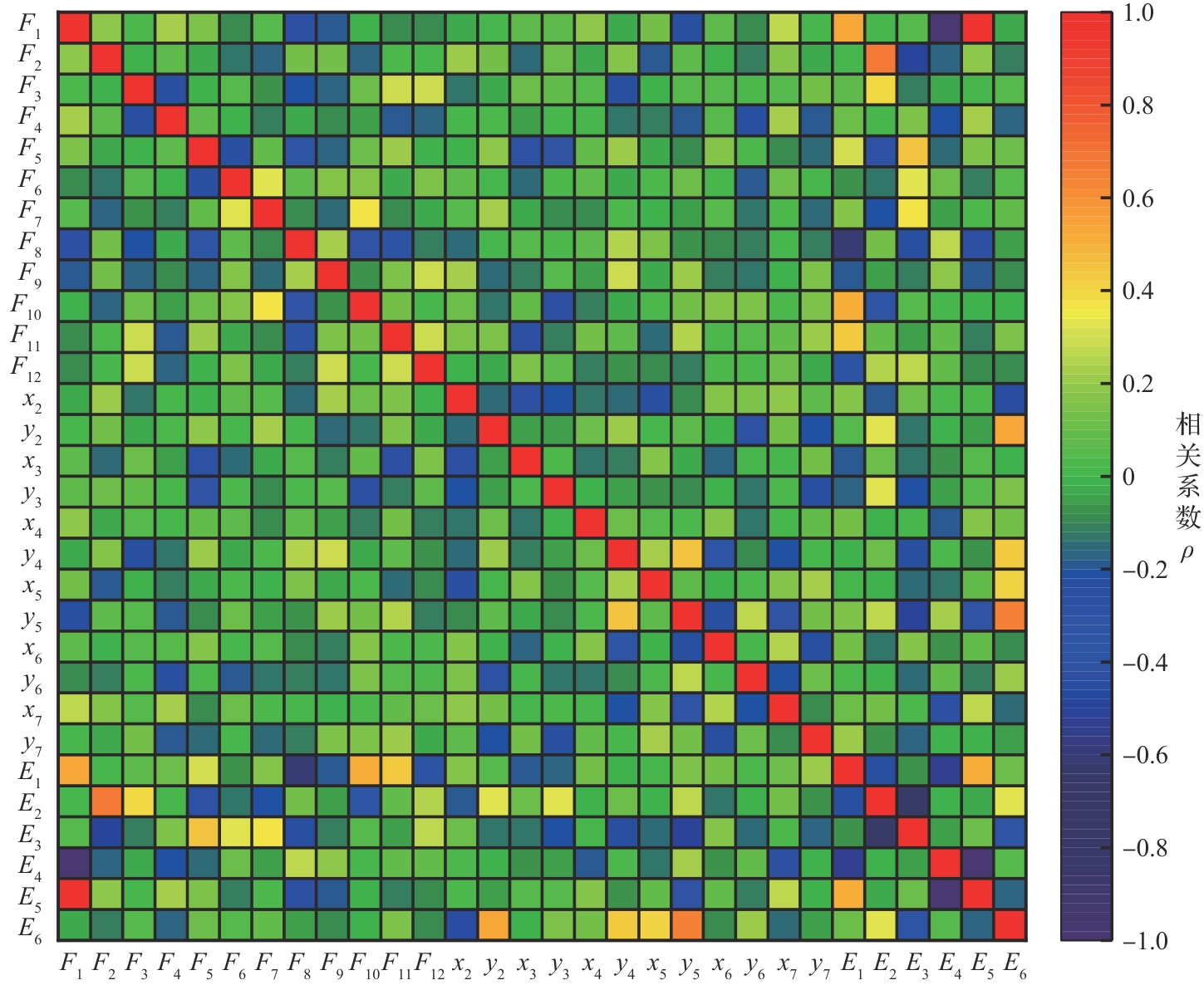
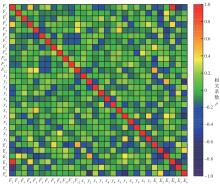
Fig.14
Correlation analysis of modeling parameters for constraint points load error under 100% loading level
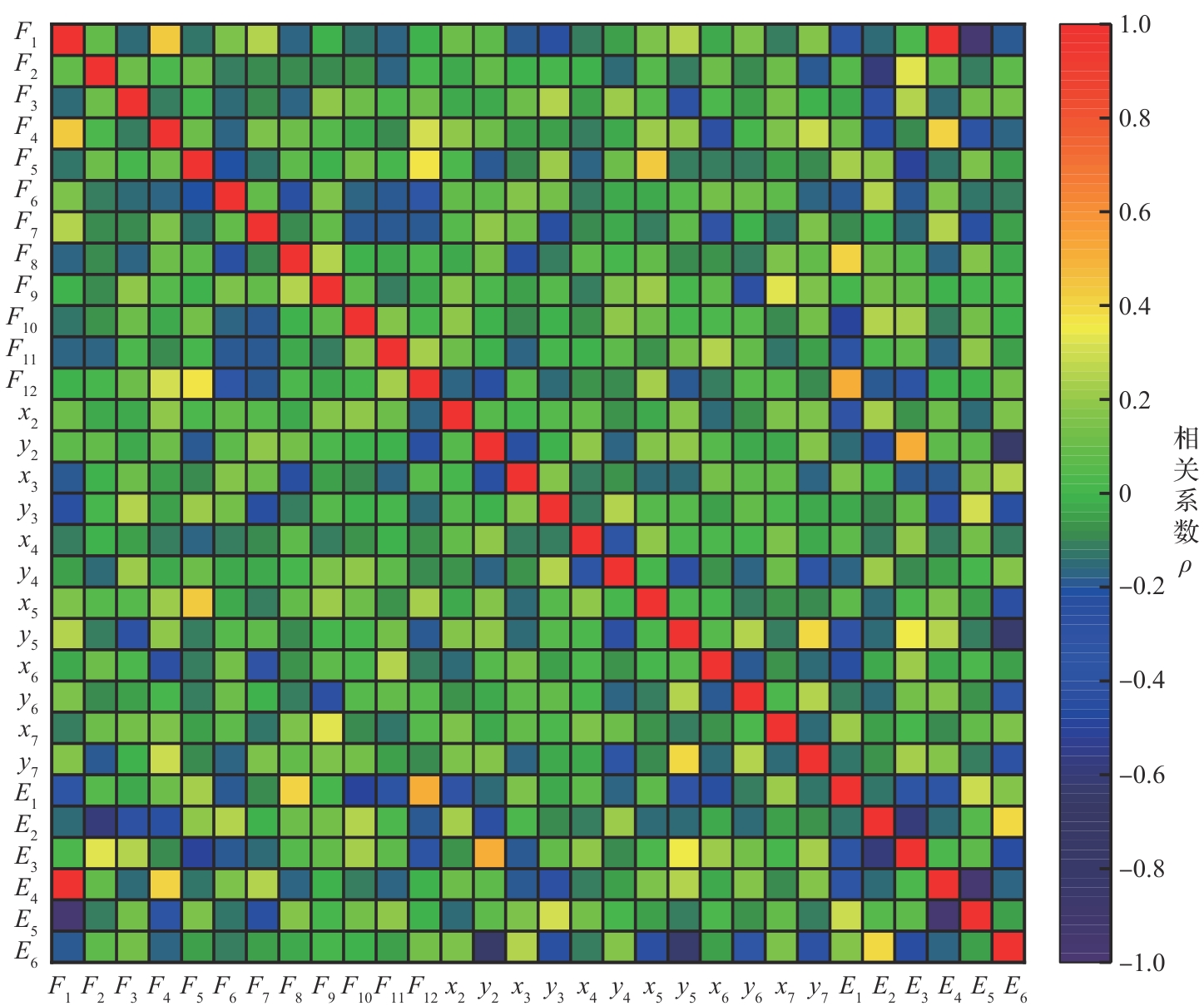
Fig.15
Prediction results of constraint points load error under 90% loading level
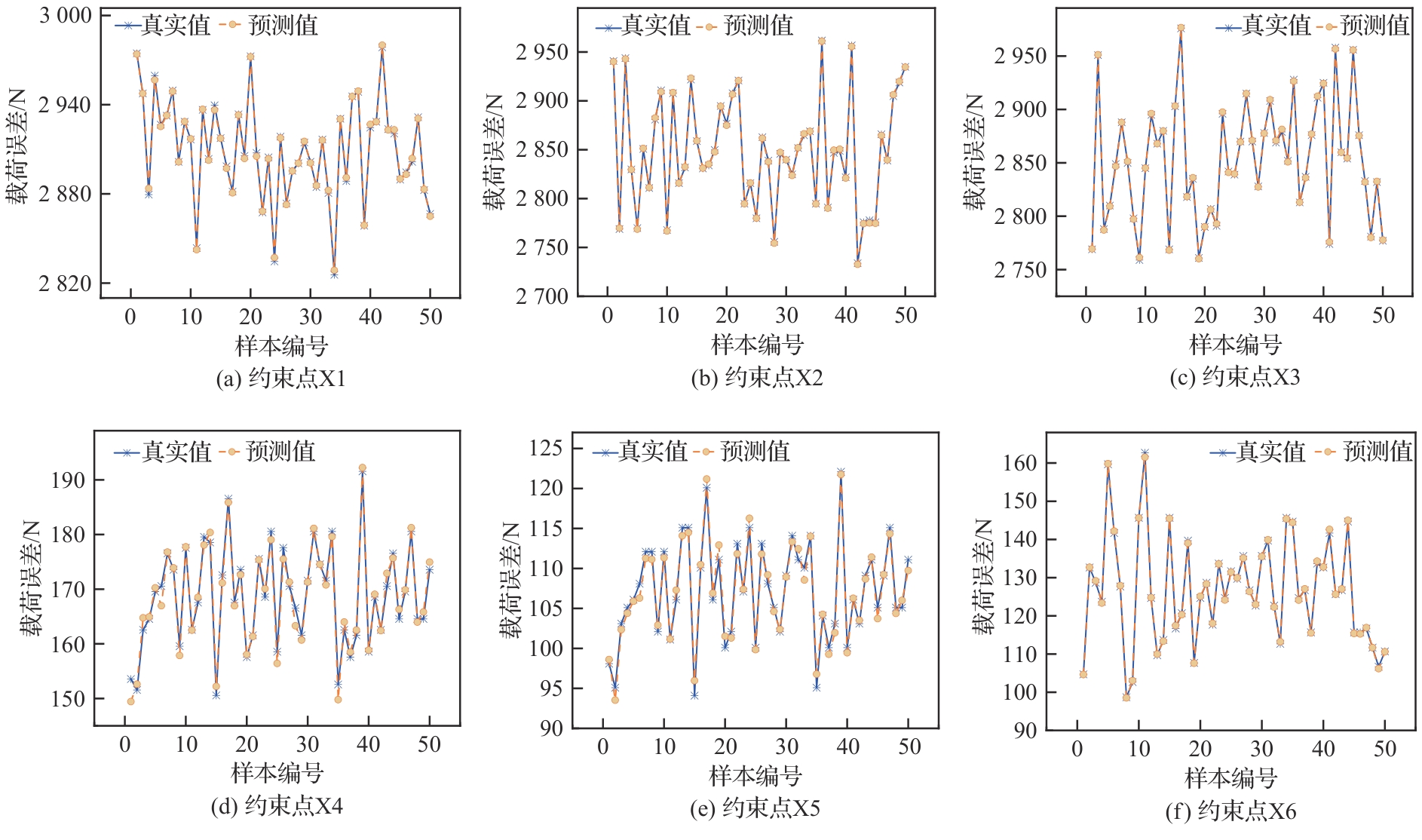
Fig.16
Prediction results of constraint points load error under 100% loading level
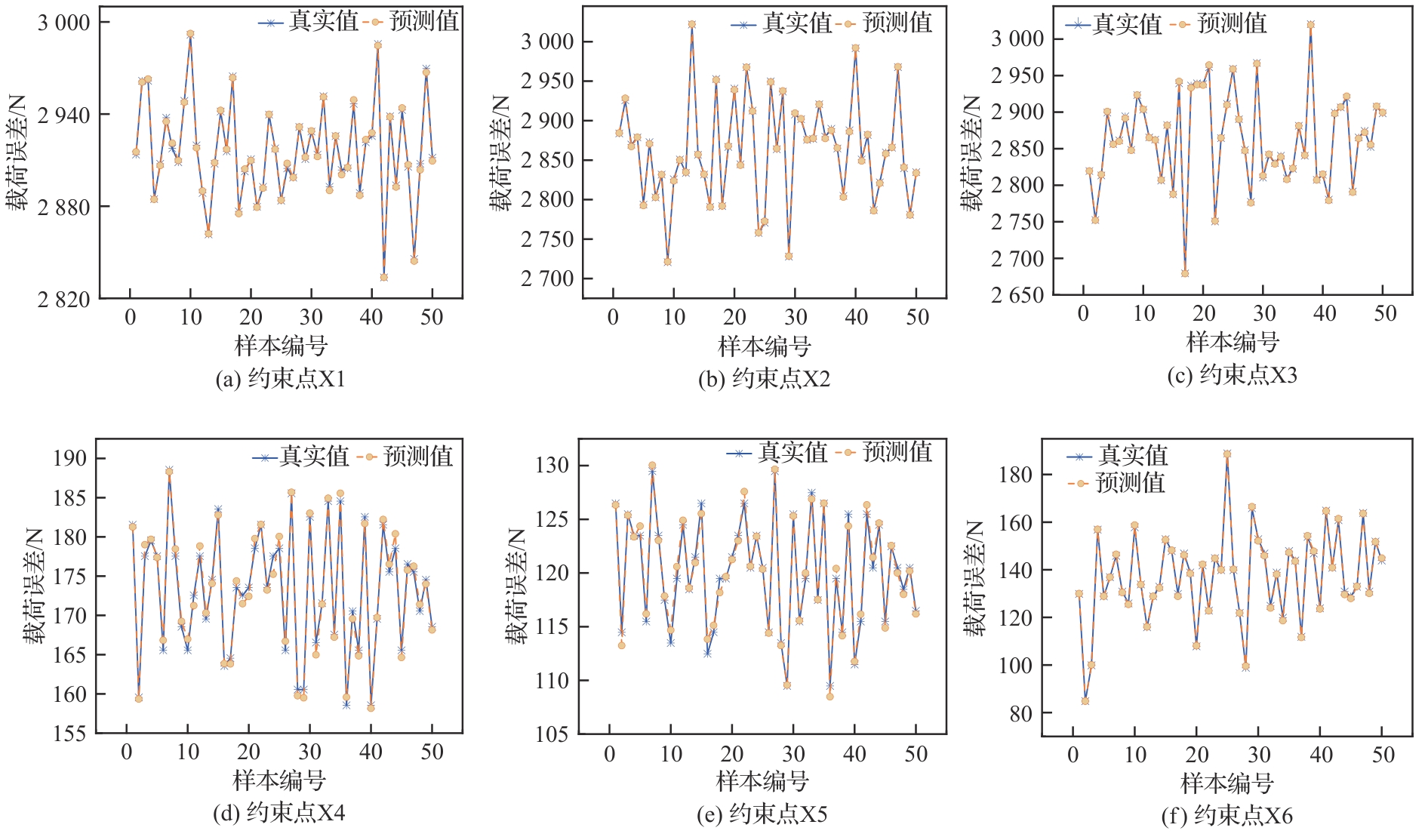
Table 11
Distribution characteristics of modeling parameters for constraint points load error under 90% loading level
| 变量 | 分布类型 | 均值 | 标准差 | 变量 | 分布类型 | 均值 | 标准差 |
|---|---|---|---|---|---|---|---|
| F1 | 正态分布 | 8 997.28 | 12.54 | x2 | 正态分布 | 4 572.88 | 15.52 |
| F2 | 正态分布 | 9 001.65 | 11.95 | y2 | 正态分布 | 17 128.13 | 5.00 |
| F3 | 正态分布 | 13 493.89 | 10.62 | x3 | 正态分布 | 3 043.74 | 9.69 |
| F4 | 正态分布 | 13 498.90 | 12.28 | y3 | 正态分布 | 9 648.91 | 2.09 |
| F5 | 正态分布 | 8 997.32 | 10.70 | x4 | 正态分布 | 2 092.27 | 1.07 |
| F6 | 正态分布 | 13 494.52 | 11.48 | y4 | 正态分布 | 1 973.98 | 0.09 |
| F7 | 正态分布 | 13 498.54 | 12.26 | x5 | 正态分布 | 4 577.97 | 17.44 |
| F8 | 正态分布 | 46 486.02 | 11.18 | y5 | 正态分布 | -17 125.99 | 5.13 |
| F9 | 正态分布 | 29 993.37 | 12.20 | x6 | 正态分布 | 3 041.40 | 9.04 |
| F10 | 正态分布 | 13 496.88 | 10.69 | y6 | 正态分布 | -9 648.54 | 2.04 |
| F11 | 正态分布 | 33 989.77 | 11.88 | x7 | 正态分布 | 2 092.01 | 0.92 |
| F12 | 正态分布 | 33 990.43 | 12.11 | y7 | 正态分布 | -1 974.01 | 0.08 |
Table 12
Distribution characteristics of modeling parameters for constraint points load error under 100% loading level
| 变量 | 分布类型 | 均值 | 标准差 | 变量 | 分布类型 | 均值 | 标准差 |
|---|---|---|---|---|---|---|---|
| F1 | 正态分布 | 9 997.99 | 11.32 | x2 | 正态分布 | 4 861.79 | 18.62 |
| F2 | 正态分布 | 9 996.85 | 11.85 | y2 | 正态分布 | 17 184.60 | 5.69 |
| F3 | 正态分布 | 14 998.54 | 12.39 | x3 | 正态分布 | 3 155.45 | 8.88 |
| F4 | 正态分布 | 14 994.06 | 11.35 | y3 | 正态分布 | 9 660.68 | 1.93 |
| F5 | 正态分布 | 9 997.87 | 12.01 | x4 | 正态分布 | 2 102.89 | 0.95 |
| F6 | 正态分布 | 14 995.22 | 11.46 | y4 | 正态分布 | 1 974.05 | 0.09 |
| F7 | 正态分布 | 14 998.66 | 12.05 | x5 | 正态分布 | 4 868.70 | 21.24 |
| F8 | 正态分布 | 51 664.9 | 11.84 | y5 | 正态分布 | -17 183.04 | 4.86 |
| F9 | 正态分布 | 33 334.67 | 12.11 | x6 | 正态分布 | 3 161.80 | 8.83 |
| F10 | 正态分布 | 14 998.6 | 11.15 | y6 | 正态分布 | -9 660.46 | 2.18 |
| F11 | 正态分布 | 34 000.99 | 12.07 | x7 | 正态分布 | 2 102.97 | 1.07 |
| F12 | 正态分布 | 33 995.68 | 12.36 | y7 | 正态分布 | -1 974.01 | 0.11 |
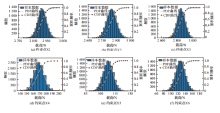
Fig.17
Distribution of constraint points load error under 90% loading level
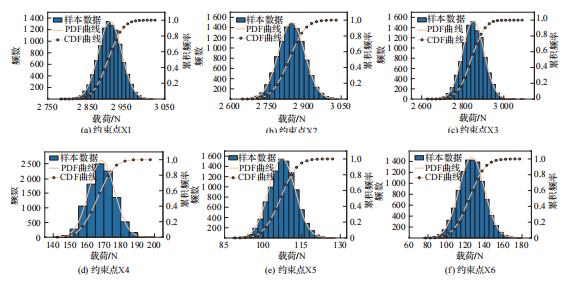
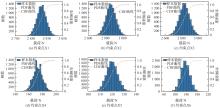
Fig.18
Distribution of constraint points load error under 100% loading level
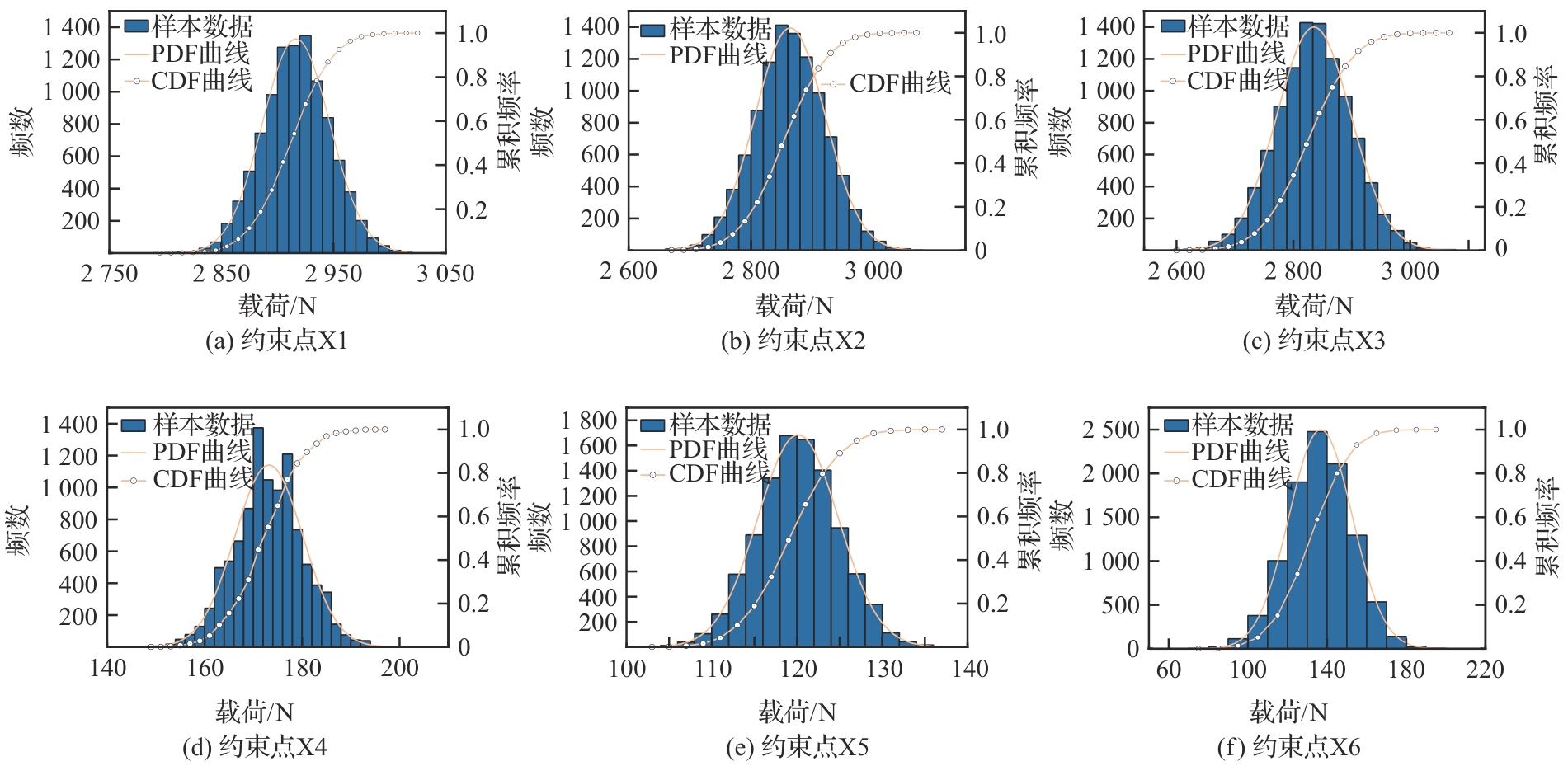
Table 13
Distribution characteristics of constraint points load error under 90% loading level
| 约束点 | 分布类型 | 均值 | 标准差 |
|---|---|---|---|
| X1 | 正态分布 | 2 433.68 | 29.79 |
| X2 | 正态分布 | 2 852.58 | 53.26 |
| X3 | 正态分布 | 2 875.19 | 52.29 |
| X4 | 正态分布 | 156.14 | 7.66 |
| X5 | 正态分布 | 107.56 | 5.12 |
| X6 | 正态分布 | 175.51 | 13.52 |
Table 14
Distribution characteristics of constraint points load error under 100% loading level
| 约束点 | 分布类型 | 均值 | 标准差 |
|---|---|---|---|
| X1 | 正态分布 | 2 916.59 | 30.06 |
| X2 | 正态分布 | 2 863.71 | 57.25 |
| X3 | 正态分布 | 2 861.64 | 57.03 |
| X4 | 正态分布 | 173.19 | 7.00 |
| X5 | 正态分布 | 120.12 | 4.74 |
| X6 | 正态分布 | 136.74 | 15.97 |
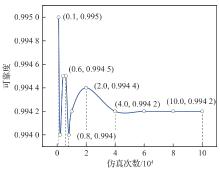
Fig.19
FSST reliability curve under 90% loading level
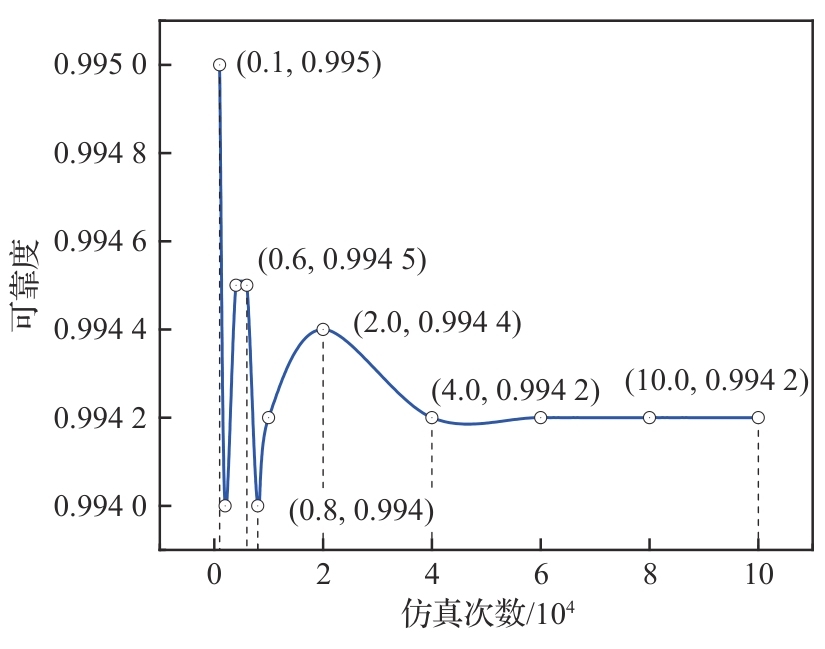
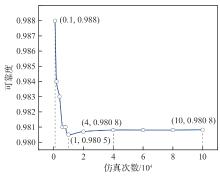
Fig.20
FSST reliability curve under 100% loading level
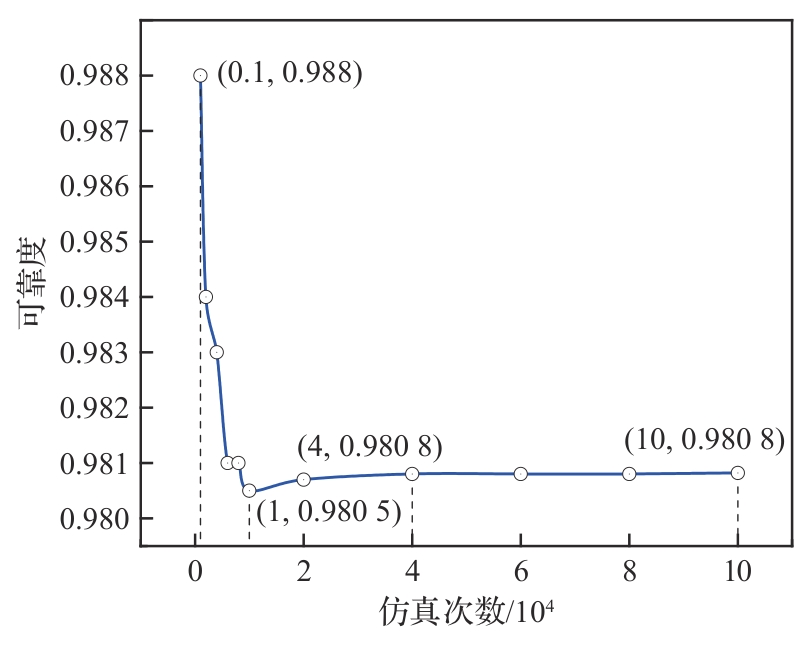
Table 15
Performance of applied load standard deviation model using different modeling methods
| 模型 | SVR | BPNN | XGB | Stacking |
|---|---|---|---|---|
| MAE | 1.440 4 | 1.009 6 | 0.883 8 | 0.866 2 |
| MSE | 3.652 5 | 1.706 0 | 1.189 9 | 1.159 7 |
| 0.825 2 | 0.918 1 | 0.943 1 | 0.944 6 | |
| 模型 | ISMA-SVR | ISMA-BPNN | ISMA-XGB | ISMA-Stacking |
| MAE | 1.309 4 | 0.967 6 | 0.867 5 | 0.822 5 |
| MSE | 3.029 2 | 1.645 5 | 1.169 5 | 1.126 4 |
| 0.855 0 | 0.921 1 | 0.942 1 | 0.955 1 |
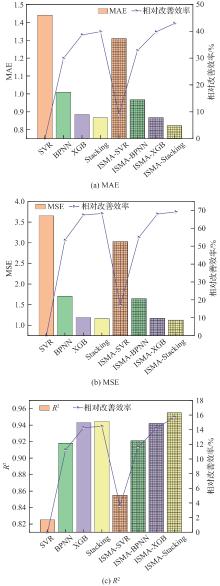
Fig.21
Performance of applied load standard deviation model using different modeling methods
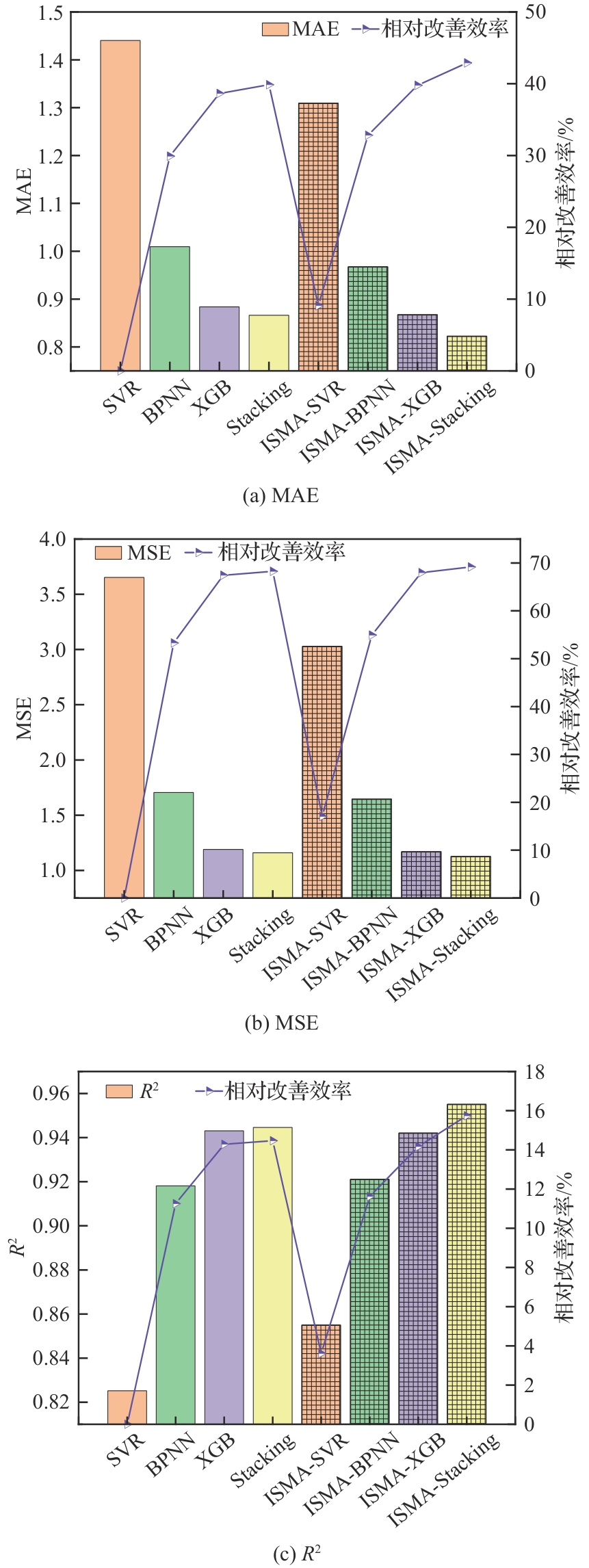
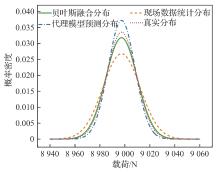
Fig.22
Comparison of applied load uncertainty quantification results at loading point L1 under 90% loading level
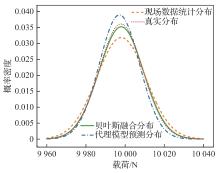
Fig.23
Comparison of applied load uncertainty quantification results at loading point L1 under 100% loading level
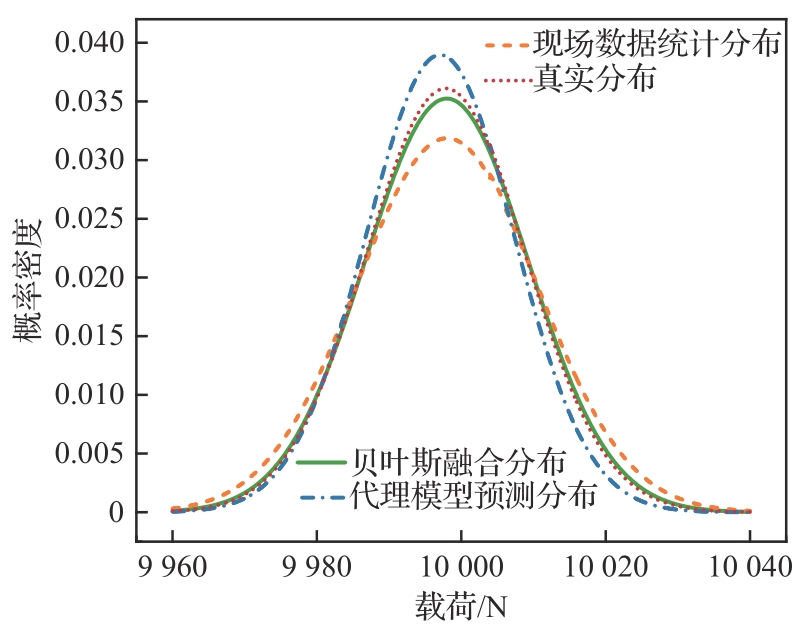
Table 16
Prediction performance of constraint points load errors under 90% loading level using different modeling methods
| 模型 | SVR | BPNN | XGB | Stacking |
|---|---|---|---|---|
| MMAE | 1.784 5 | 1.246 5 | 0.998 6 | 0.926 4 |
| MMSE | 4.398 2 | 2.126 8 | 1.386 9 | 1.468 8 |
| 0.966 4 | 0.984 1 | 0.987 5 | 0.989 2 | |
| 模型 | ISMA-SVR | ISMA-BPNN | ISMA-XGB | ISMA-Stacking |
| MMAE | 1.668 9 | 1.115 2 | 0.952 1 | 0.876 8 |
| MMSE | 4.175 2 | 2.051 6 | 1.498 4 | 1.324 2 |
| 0.974 5 | 0.987 2 | 0.988 3 | 0.991 0 |
Table 17
Prediction performance of constraint points load errors under 100% loading level using different modeling methods
| 模型 | SVR | BPNN | XGB | Stacking |
|---|---|---|---|---|
| MMAE | 1.648 2 | 1.158 8 | 0.988 6 | 0.915 6 |
| MMSE | 4.264 8 | 1.985 6 | 1.386 9 | 1.347 9 |
| 0.970 2 | 0.985 6 | 0.989 1 | 0.990 8 | |
| 模型 | ISMA-SVR | ISMA-BPNN | ISMA-XGB | ISMA-Stacking |
| MMAE | 1.564 3 | 1.058 4 | 0.938 4 | 0.866 2 |
| MMSE | 3.985 6 | 1.864 5 | 1.355 7 | 1.275 6 |
| 0.978 4 | 0.988 9 | 0.990 5 | 0.994 2 |
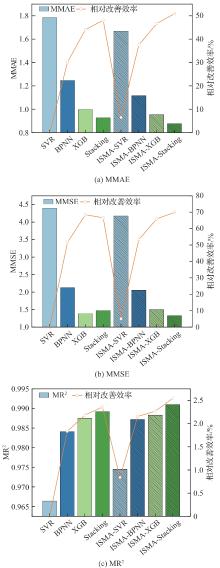
Fig.24
Prediction performance of constraint points load errors under 90% loading level using different modeling methods
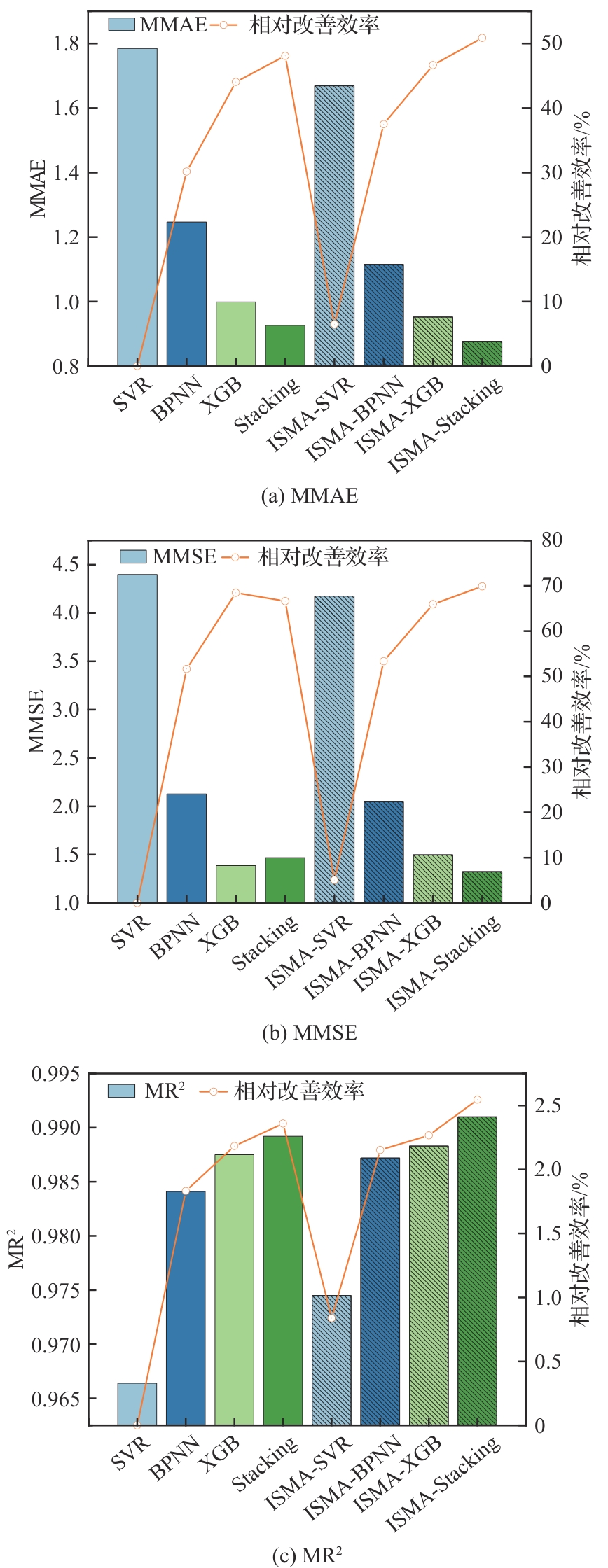
Fig.25
Prediction performance of constraint points load errors under 100% loading level using different modeling methods
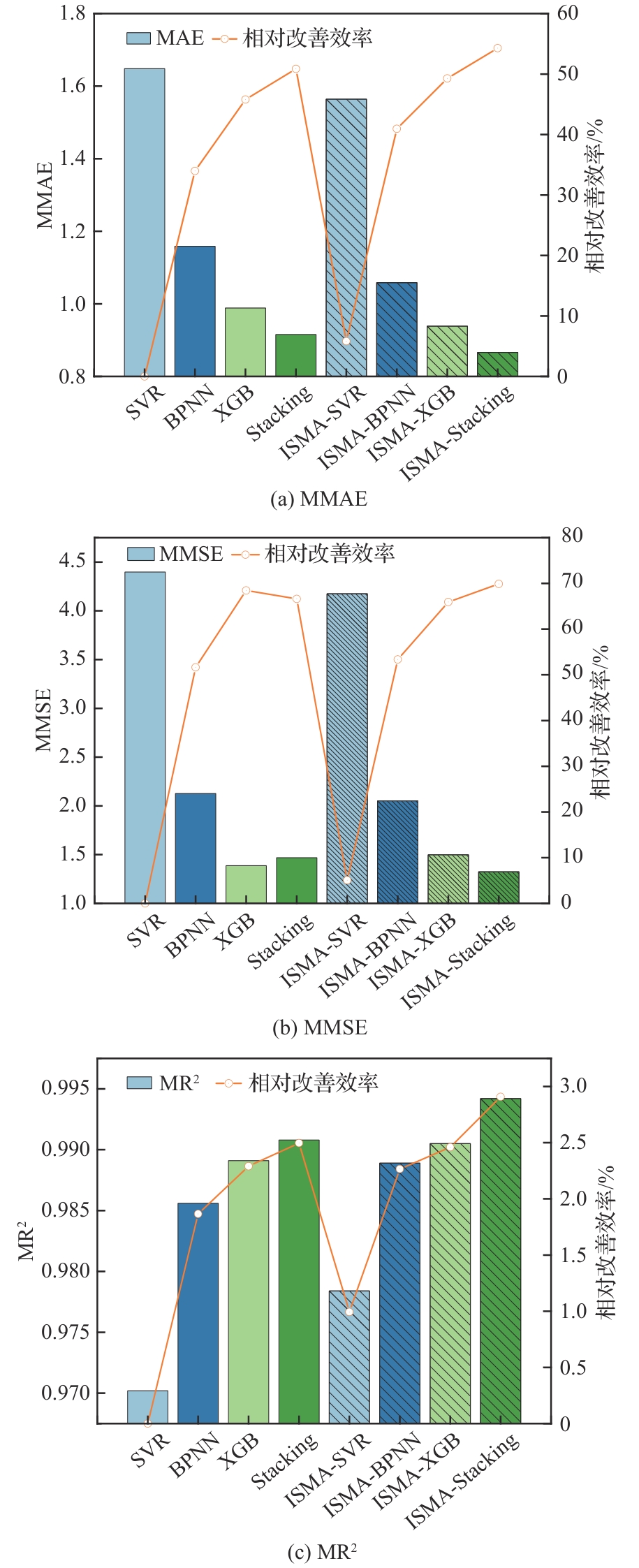
Table 18
Reliability assessment results of FSST under 90% loading level
| 方法 | 可靠度 | 方法 | 可靠度 |
|---|---|---|---|
| SVR | 0.990 3 | ISMA-SVR | 0.990 9 |
| BPNN | 0.991 9 | ISMA-BPNN | 0.992 3 |
| XGB | 0.992 4 | ISMA-XGB | 0.992 9 |
| Stacking | 0.993 8 | ISMA-Stacking | 0.994 2 |
Table 19
Reliability assessment results of FSST under 100% loading level
| 方法 | 可靠度 | 方法 | 可靠度 |
|---|---|---|---|
| SVR | 0.952 2 | ISMA-SVR | 0.958 9 |
| BPNN | 0.965 8 | ISMA-BPNN | 0.969 5 |
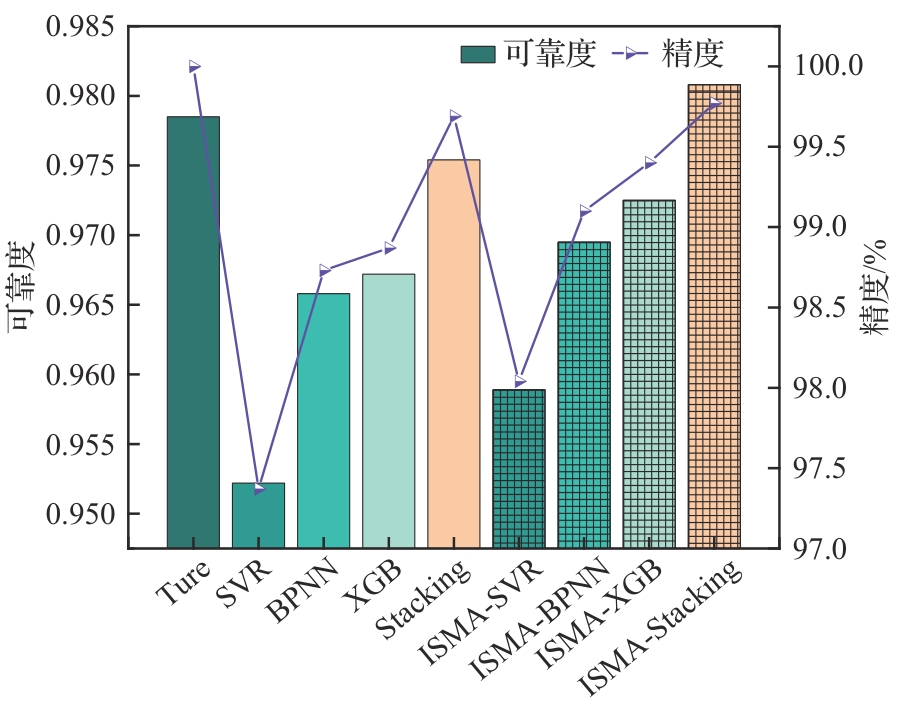
| XGB | 0.967 2 | ISMA-XGB | 0.972 5 |
| Stacking | 0.975 4 | ISMA-Stacking | 0.980 8 |
Fig. 26
Accuracy of FSST reliability assessment under 90% loading level using different modeling methods
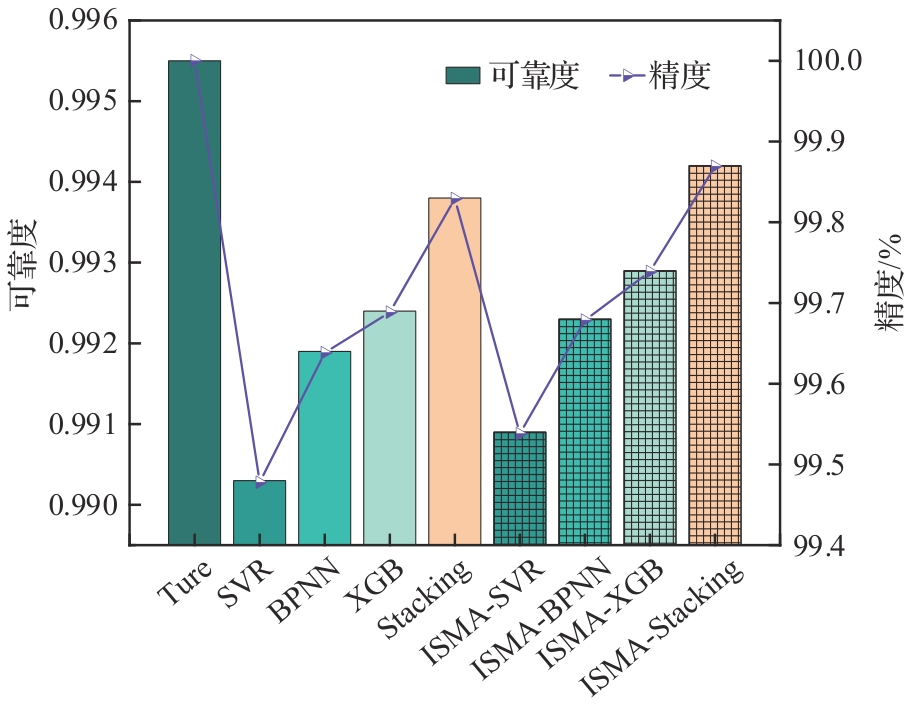
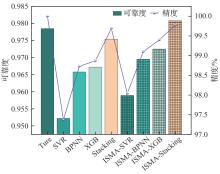
Fig.27
Accuracy of FSST reliability assessment under 100% loading level using different modeling methods
| [1] | 王彬文, 王育鹏. 飞机强度试验[M]. 北京: 航空工业出版社, 2021: 601. |
| WANG B W, WANG Y P. Aircraft strength test[M]. Beijing: Aviation Industry Press, 2021: 601 (in Chinese). | |
| [2] | 中国人民解放军总装备部. 军用飞机结构强度规范 第9部分:地面试验: [S]. 北京: 中国人民解放军总装备部, 2008. |
| General Equipment Department of Chinese People’S Liberation Army. Military airplane structural strength specification. Part 9: Ground tests: [S]. Beijing: General Equipment Department of Chinese People’s Liberation Army, 2008 (in Chinese). | |
| [3] | 中国民用航空局. 中国民用航空规章—第25部—运输类飞机适航标准: CCAR25-R4 [S]. 北京: 民用航空局政策法规司, 2016. |
| China Civil Aviation Administration. China civil aviation regulations-part 25-airworthiness standards for transport categories of aircraft: CCAR25-R4 [S]. Beijing: Department of Policy and Law, Civil Aviation Administration, 2016 (in Chinese). | |
| [4] | MAHER S, GRAHAME L, DUNTZ A. Airframe full scale static test guidance for part 25 certification[C]∥AIAA SCITECH 2022 Forum. Reston: AIAA, 2022. |
| [5] | SHCHERBAN K S, SURNACHEV A A, LIMONIN M V, et al. Combined static and fatigue tests of the full-scale structure of a transport aircraft[M]∥ICAF 2019-Structural Integrity in the Age of Additive Manufacturing. Cham: Springer International Publishing, 2019: 736-746. |
| [6] | 王彬文, 聂小华, 万春华, 等. 全机静强度虚拟试验技术研究及应用[J]. 航空学报, 2022, 43(6): 526273. |
| WANG B W, NIE X H, WAN C H, et al. Research and application of virtual test technology for static strength of full scale aircraft structure[J]. Acta Aeronautica et Astronautica Sinica, 2022, 43(6): 526273 (in Chinese). | |
| [7] | 王鑫涛, 杜星. 飞机结构强度试验应急载荷限定系统[J]. 航空学报, 2020, 41(2): 223332. |
| WANG X T, DU X. Emergency load limited system for aircraft structural strength test[J]. Acta Aeronautica et Astronautica Sinica, 2020, 41(2): 223332 (in Chinese). | |
| [8] | 刘冰. 大型飞机全机静力试验静定支持与约束技术及其应用[J]. 科学技术与工程, 2019, 19(11): 286-291. |
| LIU B. Research and application of statically determinate support and restraint technology for static test on large aircraft[J]. Science Technology and Engineering, 2019, 19(11): 286-291 (in Chinese). | |
| [9] | 王鑫涛, 夏龙, 刘兴科. 全机结构试验起落架位移补偿加载技术研究[J]. 机床与液压, 2021, 49(8): 55-59. |
| WANG X T, XIA L, LIU X K. Research on landing gear displacement compensation loading technology of the whole structural test[J]. Machine Tool & Hydraulics, 2021, 49(8): 55-59 (in Chinese). | |
| [10] | 郑建军, 唐吉运, 王彬文. C919飞机全机静力试验技术[J]. 航空学报, 2019, 40(1): 522364. |
| ZHENG J J, TANG J Y, WANG B W. Static test technology for C919 full-scale aircraft structure[J]. Acta Aeronautica et Astronautica Sinica, 2019, 40(1): 522364 (in Chinese). | |
| [11] | 杨鹏飞, 夏峰, 刘兴科. 起落架支持差动约束技术的研究与应用[J]. 工程与试验, 2020, 60(1): 94-95. |
| YANG P F, XIA F, LIU X K. Research and application of differential restraint technology for landing gear support[J]. Engineering & Test, 2020, 60(1): 94-95 (in Chinese). | |
| [12] | 覃湘桂, 徐维民, 刘海峰, 等. 大变形条件下机翼法向载荷的随动加载技术[J]. 南京航空航天大学学报, 2018, 50(5): 640-644. |
| QIN X G, XU W M, LIU H F, et al. Tracking loading technology of wing’s normal force under large deformation condition[J]. Journal of Nanjing University of Aeronautics & Astronautics, 2018, 50(5): 640-644 (in Chinese). | |
| [13] | 王高利, 唐吉运. 全尺寸飞机结构试验约束点载荷误差分析及优化[J]. 工程与试验, 2014, 54(2): 42-46. |
| WANG G L, TANG J Y. Error analysis & optimization for constraint point load of full scale aircraft test[J]. Engineering & Test, 2014, 54(2): 42-46 (in Chinese). | |
| [14] | ZHANG Z W, JIAO Z H, LI Y J, et al. Intelligent fault diagnosis of bearings driven by double-level data fusion based on multichannel sample fusion and feature fusion under time-varying speed conditions[J]. Reliability Engineering & System Safety, 2024, 251: 110362. |
| [15] | XIAO X Q, LI C S, HE H X, et al. Rotating machinery fault diagnosis method based on multi-level fusion framework of multi-sensor information[J]. Information Fusion, 2025, 113: 102621. |
| [16] | LIANG Q W, YANG C, HU S S, et al. Reliability evaluation method of torpedo loading based on zero-failure data[J]. Ocean Engineering, 2023, 278: 114431. |
| [17] | TENG D, FENG Y W, CHEN J Y, et al. Intelligent vectorial surrogate modeling framework for multi-objective reliability estimation of aerospace engineering structural systems[J]. Chinese Journal of Aeronautics, 2024, 37(12): 156-173. |
| [18] | LIU J Q, FENG Y W, LU C, et al. Operational reliability assessment of complex mechanical systems with multiple failure modes: An adaptive decomposition-synchronous-coordination approach[J]. Reliability Engineering & System Safety, 2025, 253: 110494. |
| [19] | HUANG C, BU S Q, FEI C W, et al. Reliability assessment for aeroengine blisks under low cycle fatigue with ensemble generalized constraint neural network[J]. IEEE Transactions on Reliability, 2024, 73(2): 922-936. |
| [20] | 张帆, 丛玮, 田润操, 等. 基于双层变权的异构数据融合及可靠性分析[J]. 航空学报, 2024, 45(22): 230297. |
| ZHANG F, CONG W, TIAN R C, et al. Heterogeneous data fusion and reliability analysis based on two-layer variable weights[J]. Acta Aeronautica et Astronautica Sinica, 2024, 45(22): 230297 (in Chinese). | |
| [21] | ZHANG X G, CHEN W, WANG H W, et al. A novel multi-stage precision reliability assessment method for mechanical system by Bayesian fusion[J]. Computers & Industrial Engineering, 2025, 200: 110744. |
| [22] | RENGANATHAN S A, HARADA K, MAVRIS D N. Aerodynamic data fusion toward the digital twin paradigm[J]. AIAA Journal, 2020, 58(9): 3902-3918. |
| [23] | TIAN R, ZHANG X F, LIU X W. Identification modeling of ship manoeuvring motion based on ISSA-SVR[J]. Ocean Engineering, 2024, 313: 119364. |
| [24] | LUO C Q, ZHU S P, KESHTEGAR B, et al. An enhanced uniform simulation approach coupled with SVR for efficient structural reliability analysis[J]. Reliability Engineering & System Safety, 2023, 237: 109377. |
| [25] | LI Y, MU D, WU H Q, et al. Derivation of marine water quality criteria for copper based on artificial neural network model[J]. Environmental Pollution, 2024, 363: 125172. |
| [26] | ZHANG Y M, LI J X, FEI L Y, et al. Operational performance estimation of vehicle electric coolant pump based on the ISSA-BP neural network[J]. Energy, 2023, 268: 126701. |
| [27] | KOUNLAVONG K, SADIK L, KEAWSAWASVONG S, et al. Novel hybrid XGBoost-based soft computing models for predicting penetration resistance of buried pipelines in cohesive soils[J]. Ocean Engineering, 2024, 311: 118948. |
| [28] | MEGAHED K. Prediction and reliability analysis of shear strength of RC deep beams[J]. Scientific Reports, 2024, 14(1): 14590. |
| [29] | YIN J N, MEDELLÍN-AZUARA J, ESCRIVA-BOU A, et al. Bayesian machine learning ensemble approach to quantify model uncertainty in predicting groundwater storage change[J]. Science of the Total Environment, 2021, 769: 144715. |
| [30] | 祝玉珊, 王晓玲, 崔博, 等. 坝基灌浆量预测ISSA-Stacking集成学习代理模型研究[J]. 天津大学学报(自然科学与工程技术版), 2024, 57(2): 174-185. |
| ZHU Y S, WANG X L, CUI B, et al. Research on an ISSA-stacking ensemble learning surrogate model of dam foundation grouting volume prediction[J]. Journal of Tianjin University (Science and Technology), 2024, 57(2): 174-185 (in Chinese). | |
| [31] | KE Q, LI M C, REN Q B, et al. Rockfill material uncertainty inversion analysis of concrete-faced rockfill dams using stacking ensemble strategy and Jaya optimizer[J]. Water Science and Engineering, 2023, 16(4): 419-428. |
| [32] | LI Z N, LI Q L, LIANG J H, et al. Stacking ensemble surrogate modeling method based on decomposed- coordinated strategy for structural low-cycle fatigue life reliability estimation[J]. Reliability Engineering & System Safety, 2025, 257: 110811. |
| [33] | 郭琼, 夏峰, 刘冰, 等. 全尺寸飞机结构静力试验约束点载荷计算及应用[J]. 科学技术与工程, 2020, 20(19): 7934-7940. |
| GUO Q, XIA F, LIU B, et al. Calculation and application of restraint load in full-scale aircraft static test[J]. Science Technology and Engineering, 2020, 20(19): 7934-7940 (in Chinese). | |
| [34] | 陈丽芳, 曹柯欣, 张思鹏, 等. 群智能优化算法最新进展[J]. 计算机工程与应用, 2024, 60(19): 46-67. |
| CHEN L F, CAO K X, ZHANG S P, et al. Recent progress of swarm intelligent optimization algorithms[J]. Computer Engineering and Applications, 2024, 60(19): 46-67 (in Chinese). | |
| [35] | 杨华, 陈树生, 高正红, 等. 基于贝叶斯框架的旋翼气动力数据融合[J]. 航空学报, 2024, 45(8): 128960. |
| YANG H, CHEN S S, GAO Z H, et al. Rotor aerodynamic data fusion based on Bayesian framework[J]. Acta Aeronautica et Astronautica Sinica, 2024, 45(8): 128960 (in Chinese). | |
| [36] | LIU X, LAI H, WANG X Y, et al. Aerospace structural reliability analysis method based on regular vine copula model with the asymmetric tail correlation[J]. Aerospace Science and Technology, 2023, 142: 108670. |
| [37] | ZHAO Y L, DONG S. Multivariate probability analysis of wind-wave actions on offshore wind turbine via copula-based analysis[J]. Ocean Engineering, 2023, 288: 116071. |
| [1] | Yunwen FENG, Da TENG, Cheng LU, Rui WANG, Junyu CHEN. Integrated mechanism and generative adversarial surrogate modeling for aircraft systems reliability evaluation [J]. Acta Aeronautica et Astronautica Sinica, 2025, 46(7): 230948-230948. |
| [2] | Shenfang YUAN, Qiuhui XU, Jian CHEN. Reliability evaluation: From non-destructive testing to structural health monitoring [J]. Acta Aeronautica et Astronautica Sinica, 2025, 46(5): 531442-531442. |
| [3] | Kairui TANG, Zhe WANG, Xiangming CHEN, Baorang CUI, Yanhui CHEN, Puhui CHEN. A multi-fidelity data-driven framework for predicting mechanical property distributions of composite structures and its validation [J]. Acta Aeronautica et Astronautica Sinica, 2025, 46(21): 532180-532180. |
| [4] | Yingjie SHI, Binchao LIU, Songsong LU, Liang CHEN, Hai SHANG, Rui BAO. Neural network model for wing strain-load relationship based on fusion of real and virtual data [J]. Acta Aeronautica et Astronautica Sinica, 2025, 46(19): 530921-530921. |
| [5] | Yiwei HUANG, Yibin GENG, Tianhe GAO, Xuanwei HU, Yuan WANG, Hongyan MA, Kuo TIAN. Digital twin driven high precision reconstruction method for full-field deformation of structure [J]. Acta Aeronautica et Astronautica Sinica, 2025, 46(19): 530967-530967. |
| [6] | Chengjie GUO, Dian XU, Jinbao LI, Chaoyu CHENG, Shuochang GUO, Rui LI. Stress characterization of high-temperature digital image correlation experiments based on a data fusion-knowledge transfer method [J]. Acta Aeronautica et Astronautica Sinica, 2025, 46(19): 531574-531574. |
| [7] | Pengfei WANG, Lifang ZENG, Xueming SHAO, Jun LI. Multi-source data fusion modeling method for aerodynamic load of aircraft wing based on pre-training and fine-tuning [J]. Acta Aeronautica et Astronautica Sinica, 2025, 46(19): 532297-532297. |
| [8] | Ligong LI, Chao ZHANG, Jingting SU. Distributed fusion technology for multi-source landing guidance information [J]. Acta Aeronautica et Astronautica Sinica, 2025, 46(13): 531461-531461. |
| [9] | Xianchao MENG, Jun TAO. An airfoil inverse design method based on target testing conditional generative adversarial network [J]. Acta Aeronautica et Astronautica Sinica, 2025, 46(10): 631182-631182. |
| [10] | Dengfeng HU, Yu XIANG, Jun ZHANG, Jiachen YANG, Wenyong WANG. Multi-source data fusion method based on radial basis function generative adversarial network [J]. Acta Aeronautica et Astronautica Sinica, 2025, 46(10): 631478-631478. |
| [11] | Hua YANG, Shusheng CHEN, Zhenghong GAO, Quanfeng JIANG, Wei ZHANG. Rotor aerodynamic data fusion based on Bayesian framework [J]. Acta Aeronautica et Astronautica Sinica, 2024, 45(8): 128960-128960. |
| [12] | Kuo TIAN, Zhiyong SUN, Zengcong LI. High-precision digital twin method for structural static test monitoring [J]. Acta Aeronautica et Astronautica Sinica, 2024, 45(7): 429134-429134. |
| [13] | Hailang SONG, Jiandong ZHANG, Guoqing SHI, Qiming YANG, Yaozhong ZHANG. Comprehensive evaluation techniques and methods for flight test of avionics fire control system [J]. Acta Aeronautica et Astronautica Sinica, 2024, 45(5): 529687-529687. |
| [14] | Ruitong ZHANG, Lei WANG, Jiajia LIU, Jihong ZHU. Lightweight design of space trusses considering joint parameterization [J]. Acta Aeronautica et Astronautica Sinica, 2024, 45(5): 529715-529715. |
| [15] | Fan ZHANG, Wei CONG, Runcao TIAN, Peng WANG. Heterogeneous data fusion and reliability analysis based on two-layer variable weights [J]. Acta Aeronautica et Astronautica Sinica, 2024, 45(22): 230297-230297. |
| Viewed | ||||||
|
Full text |
|
|||||
|
Abstract |
|
|||||
Address: No.238, Baiyan Buiding, Beisihuan Zhonglu Road, Haidian District, Beijing, China
Postal code : 100083
E-mail:hkxb@buaa.edu.cn
Total visits: 6658907 Today visits: 1341All copyright © editorial office of Chinese Journal of Aeronautics
All copyright © editorial office of Chinese Journal of Aeronautics
Total visits: 6658907 Today visits: 1341

 CJA
CJA
