Acta Aeronautica et Astronautica Sinica ›› 2025, Vol. 46 ›› Issue (20): 531214.doi: 10.7527/S1000-6893.2025.31214
• Special Issue: Key Technologies for Supersonic Civil Aircraft • Previous Articles
Kefeng ZHENG1,2, Wenping SONG1,2( ), Han NIE1,2, Yulin DING1,2, Jianling QIAO1,2, Qing CHEN1,2, Yiheng WANG1,2, Ke SONG1,2, Keshi ZHANG1,2
Received:2024-09-18
Revised:2024-10-08
Accepted:2025-01-07
Online:2025-01-10
Published:2025-01-10
Contact:
Wenping SONG
E-mail:wpsong@nwpu.edu.cn
Supported by:CLC Number:
Kefeng ZHENG, Wenping SONG, Han NIE, Yulin DING, Jianling QIAO, Qing CHEN, Yiheng WANG, Ke SONG, Keshi ZHANG. Natural laminar flow wing design method for supersonic civil aircraft considering full-aircraft sonic-boom characteristics[J]. Acta Aeronautica et Astronautica Sinica, 2025, 46(20): 531214.
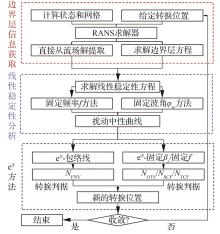
Fig.1
Framework of the RANS solver with automatic transition prediction capability[16]
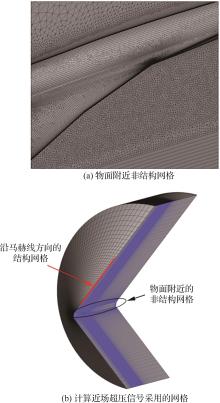
Fig.2
Sketch of mesh adopted for high-precision near-field overpressure signal calculation
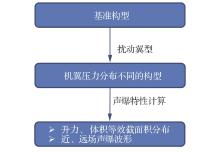
Fig.3
Framework of research on influence of wing pressure distribution on sonic-boom characteristics
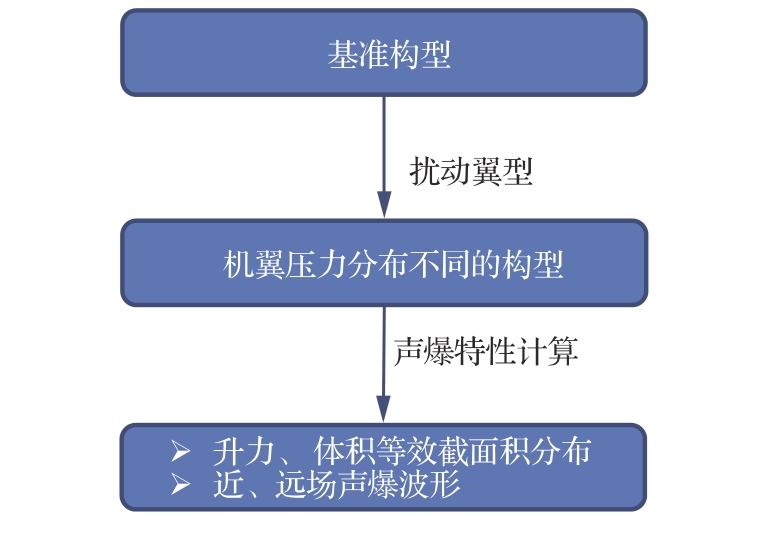
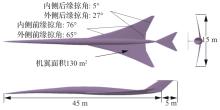
Fig.4
Geometry of the baseline 30 t supersonic civil aircraft
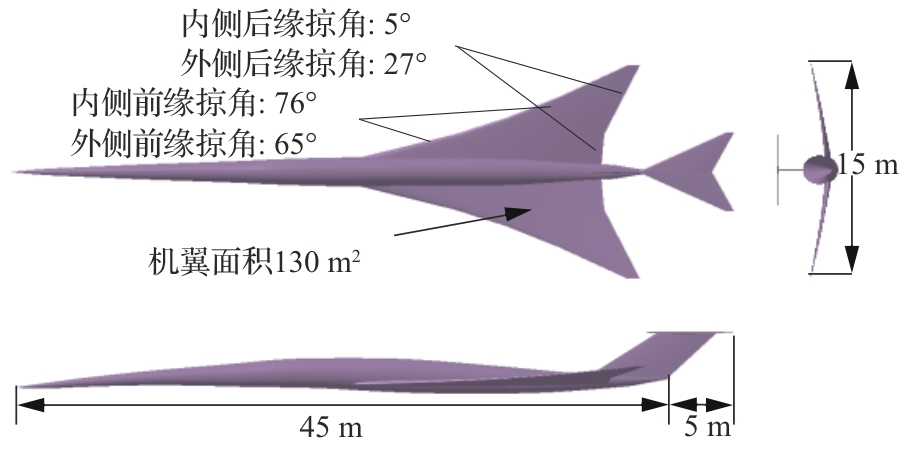
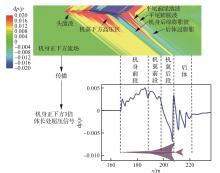
Fig.5
Overpressure contour and near-field overpressure signal at symmetry plane of baseline configuration
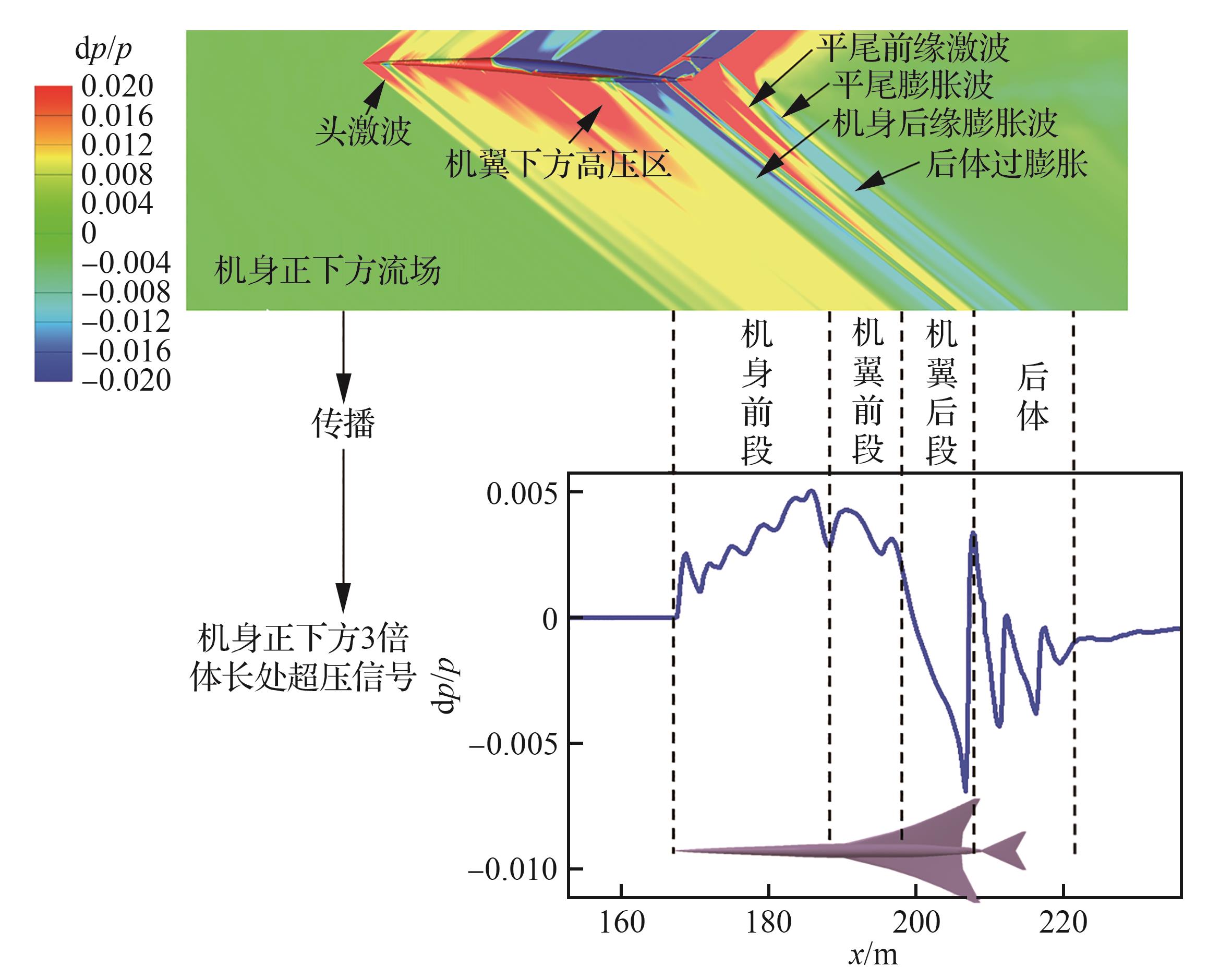
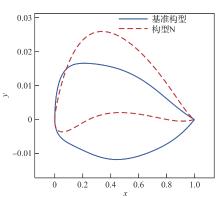
Fig.6
Airfoils of baseline configuration and Configuration N
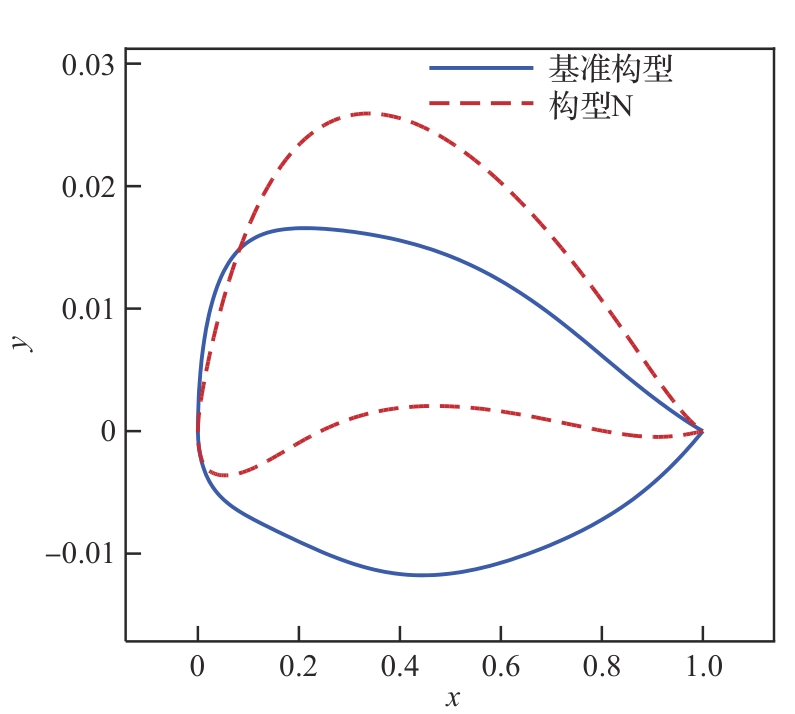
Fig.7
Pressure distributions at different spanwise stations of Configuration N and baseline configuration
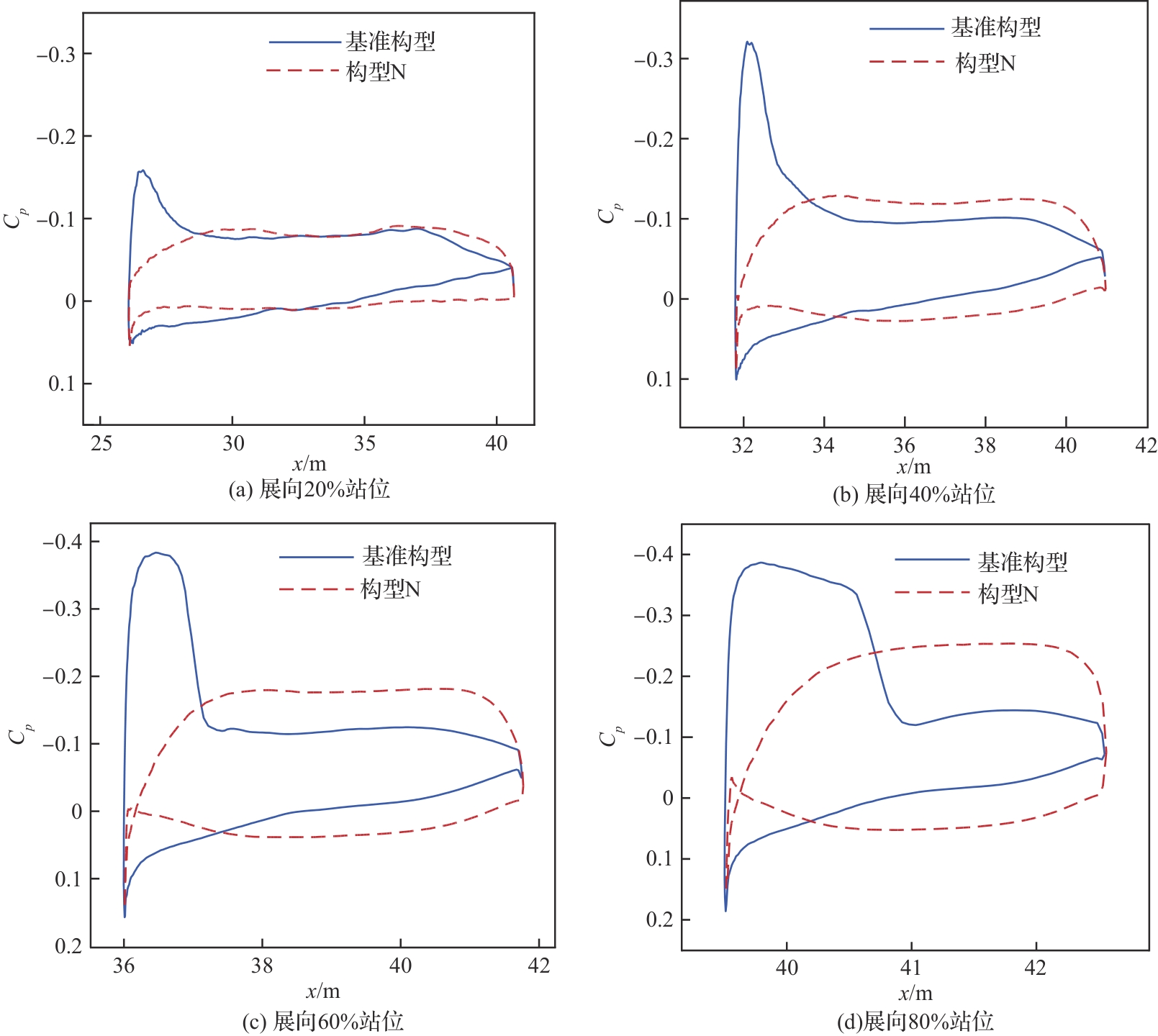
Fig.8
Near-field overpressure signal of baseline configuration and Configuration N
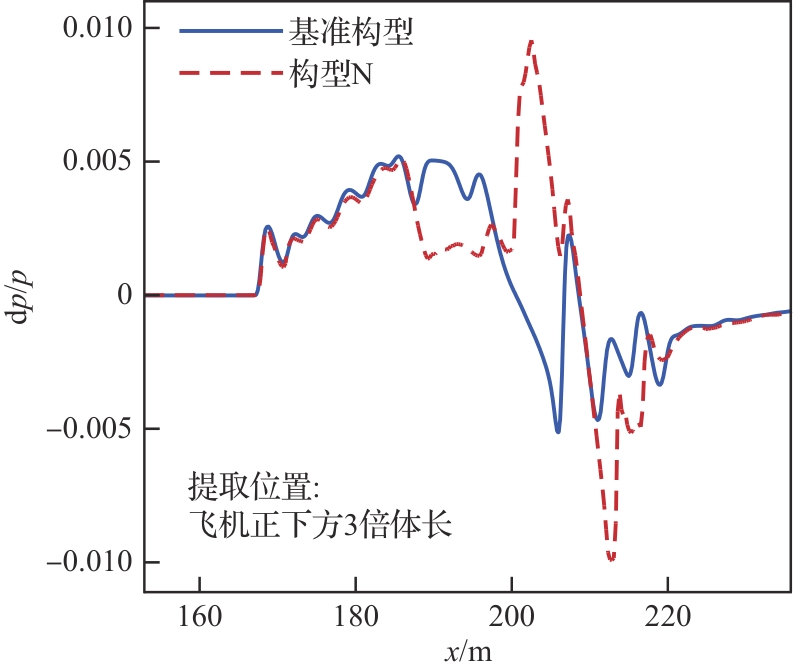
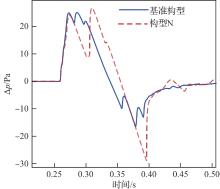
Fig.9
Far-field waveform of baseline configuration and Configuration N
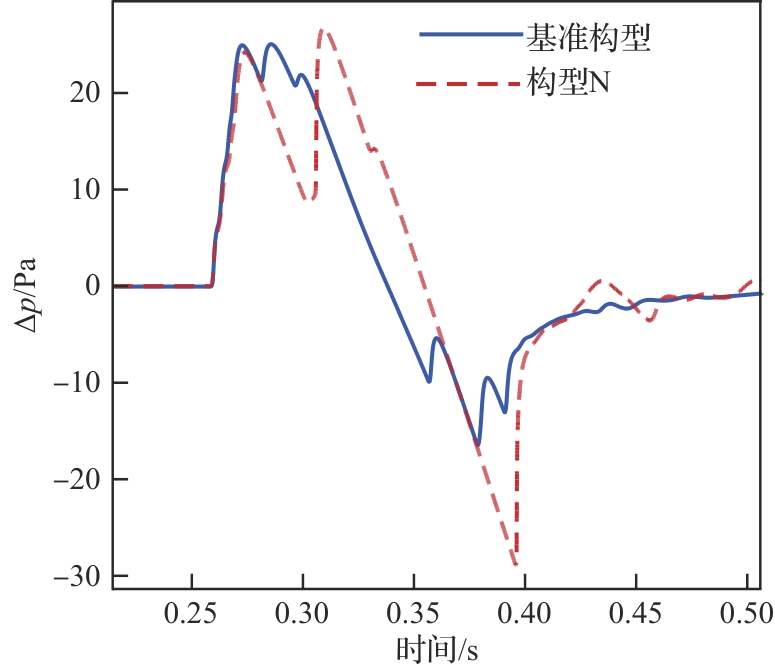
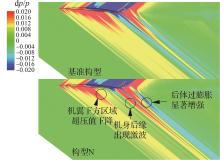
Fig.10
Near-field overpressure contour of baseline configuration and Configuration N
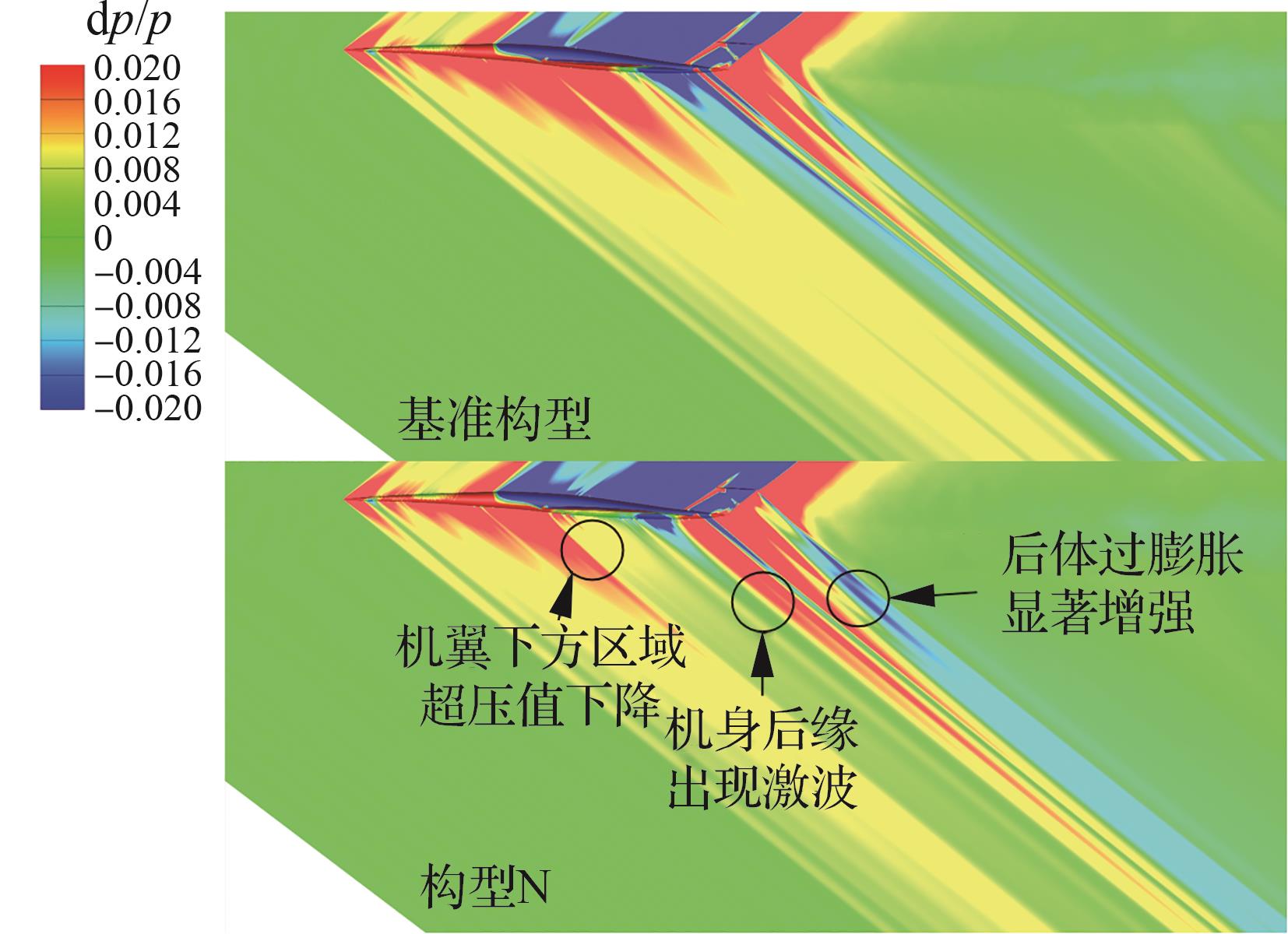
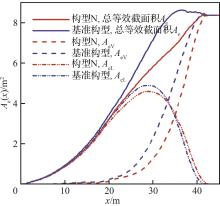
Fig.11
Comparison of equivalent areas of baseline configuration and Configuration N
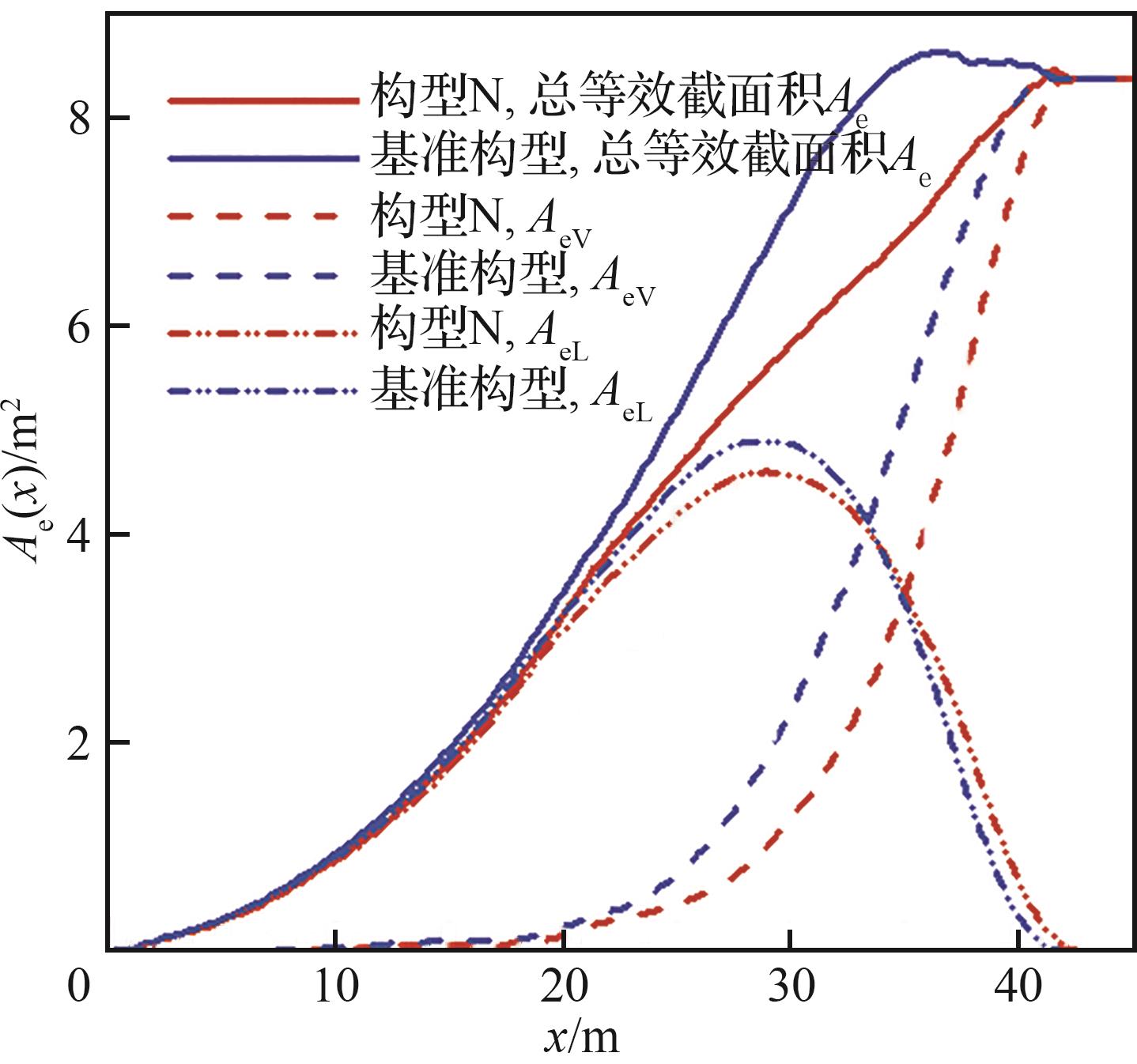
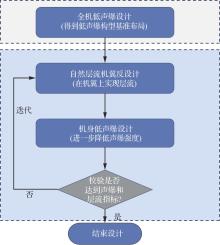
Fig.12
Framework of supersonic natural laminar flow wing design method considering sonic-boom characteristics
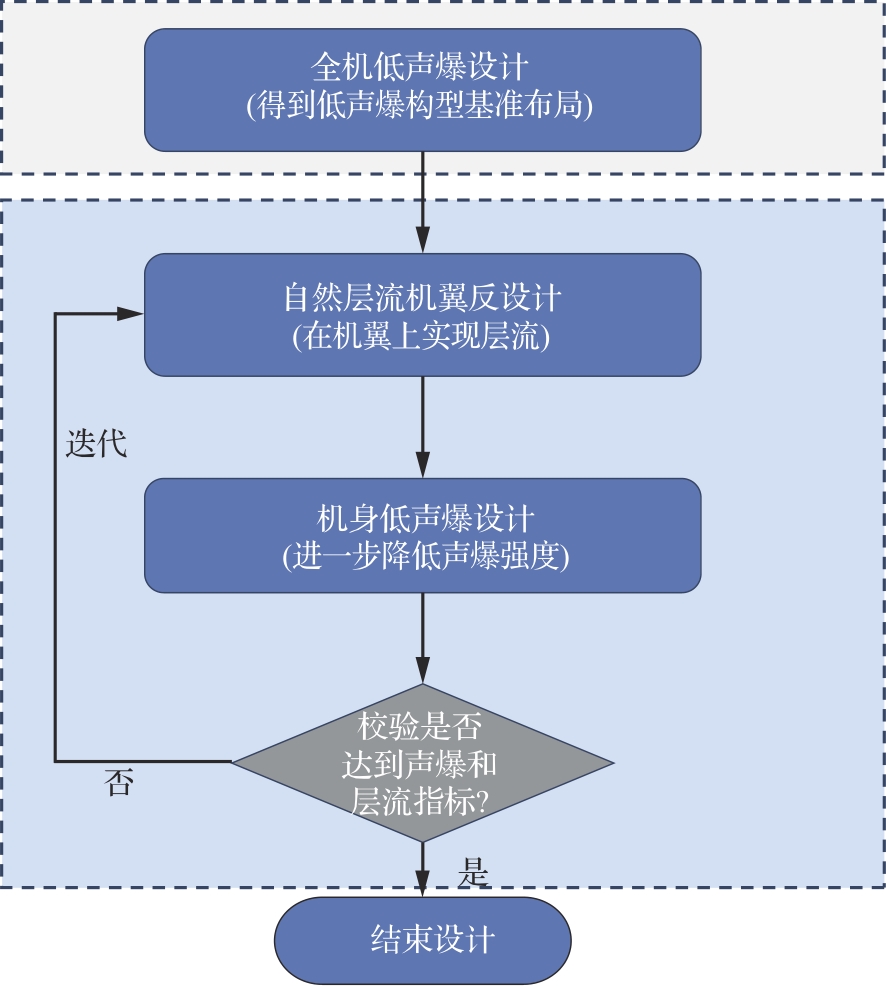
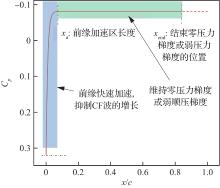
Fig.13
Sketch of target pressure distribution for supersonic natural laminar flow wing design
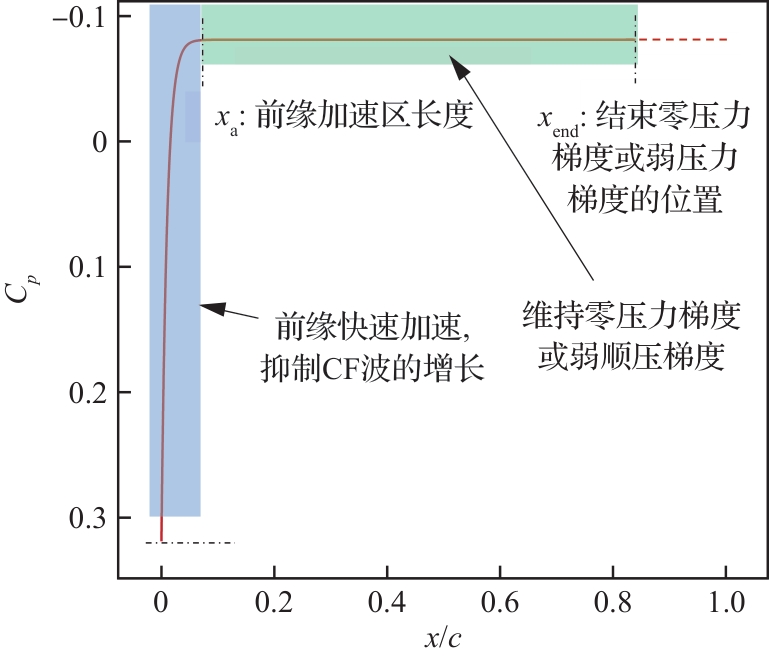
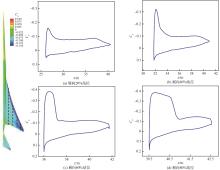
Fig.14
Pressure coefficient contour and pressure distributions on different spanwise stations of baseline configuration
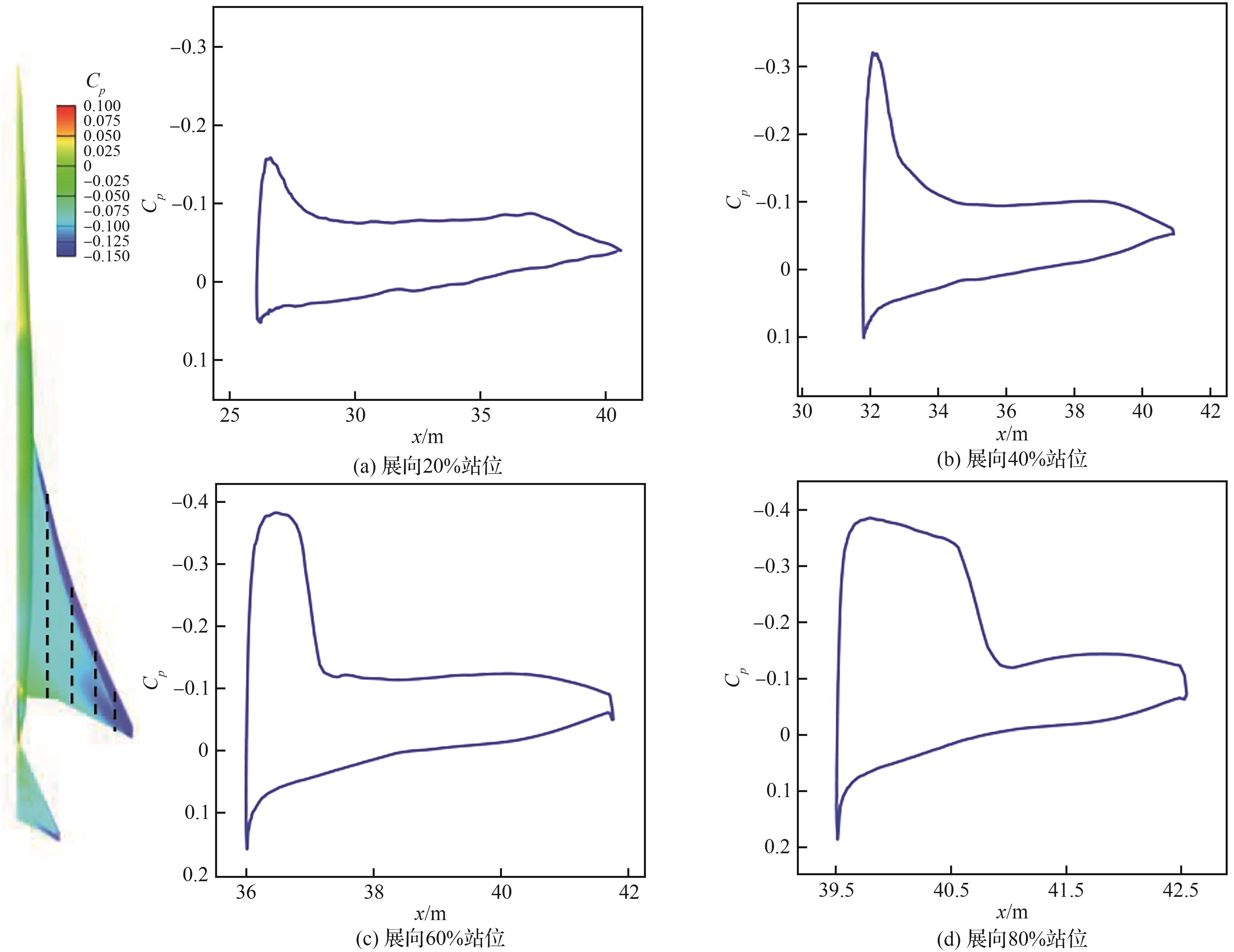
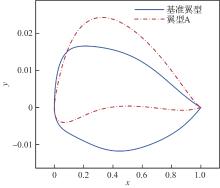
Fig.15
Geometry of baseline airfoil and Airfoil A
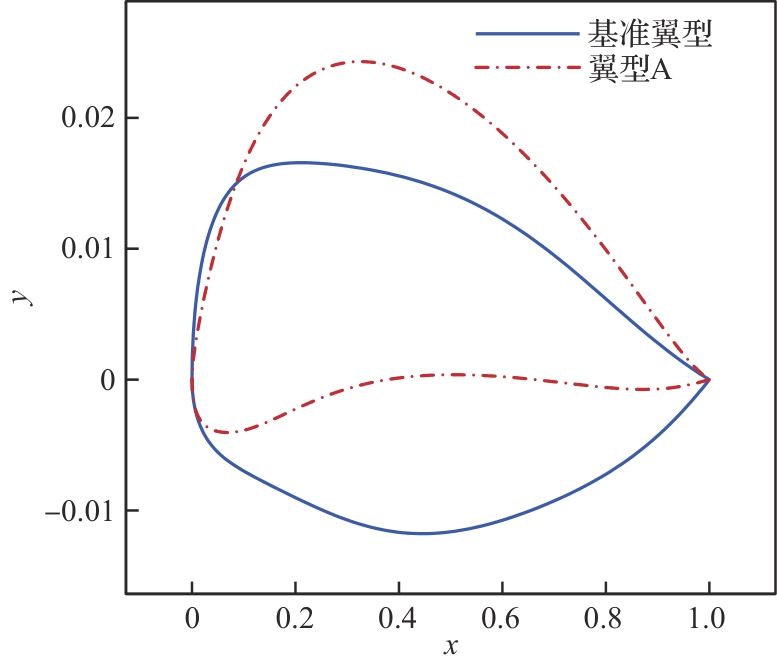
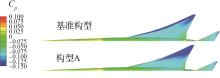
Fig.16
Pressure coefficient contour at upper surface of baseline configuration and Configuration A
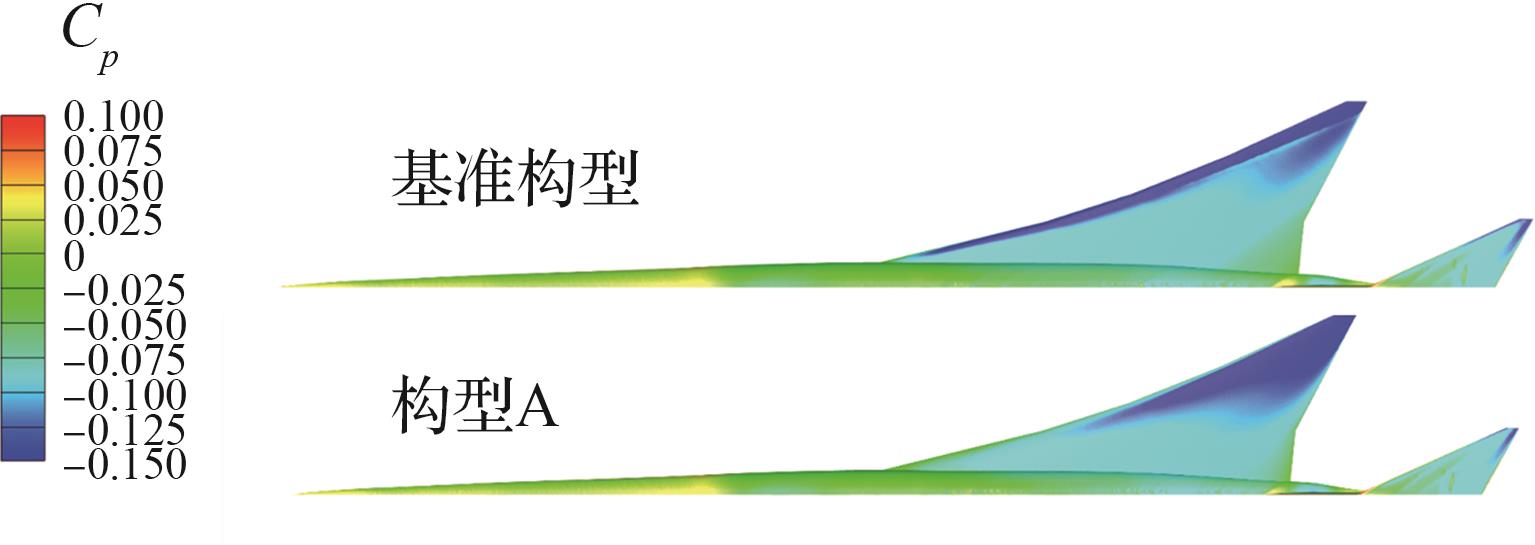
Fig.17
Pressure distribution on different spanwise stations of baseline configuration and Configuration A
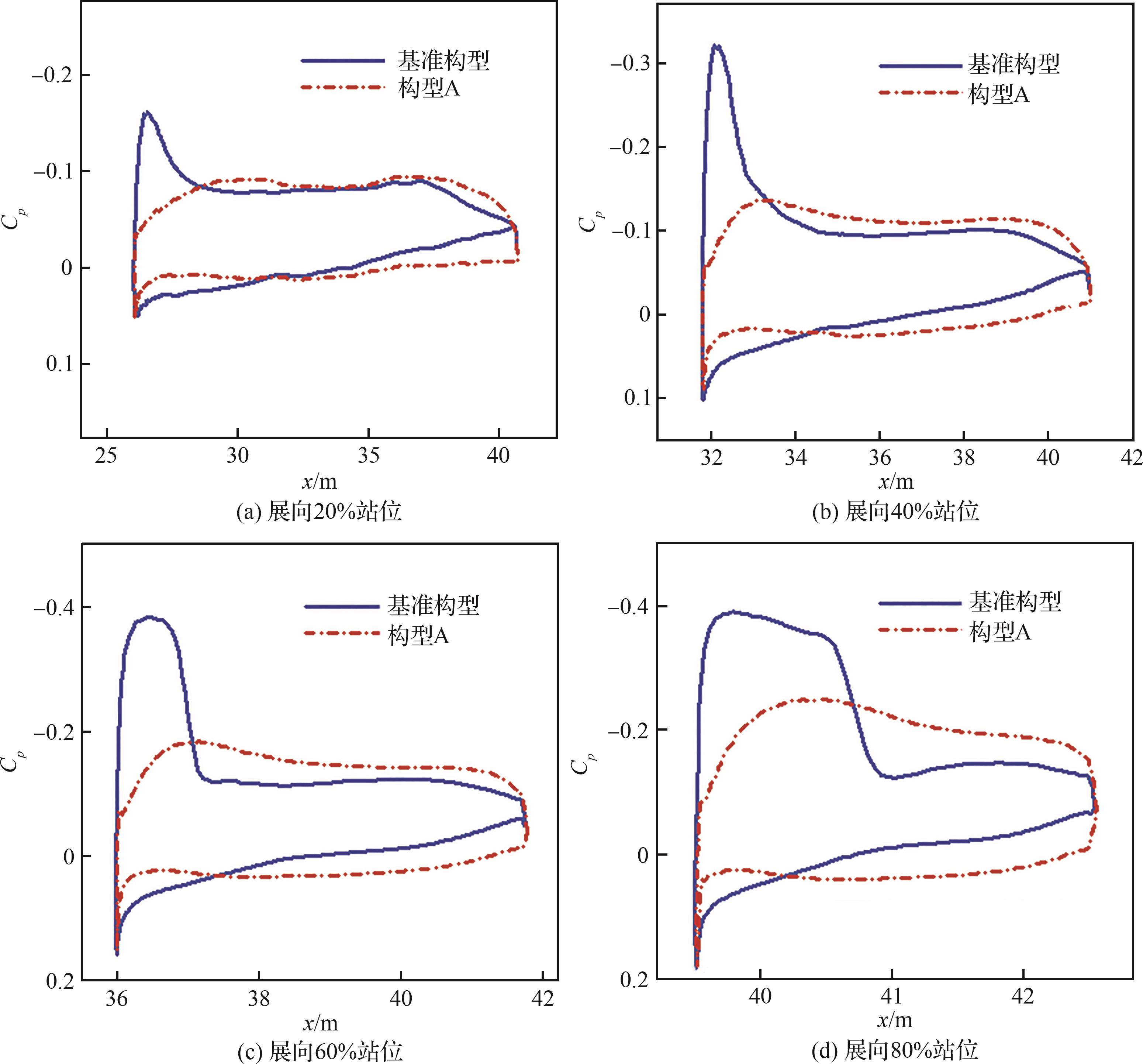
Fig.18
Spanwise stations selected to specify zero pressure gradient distribution of Configuration A
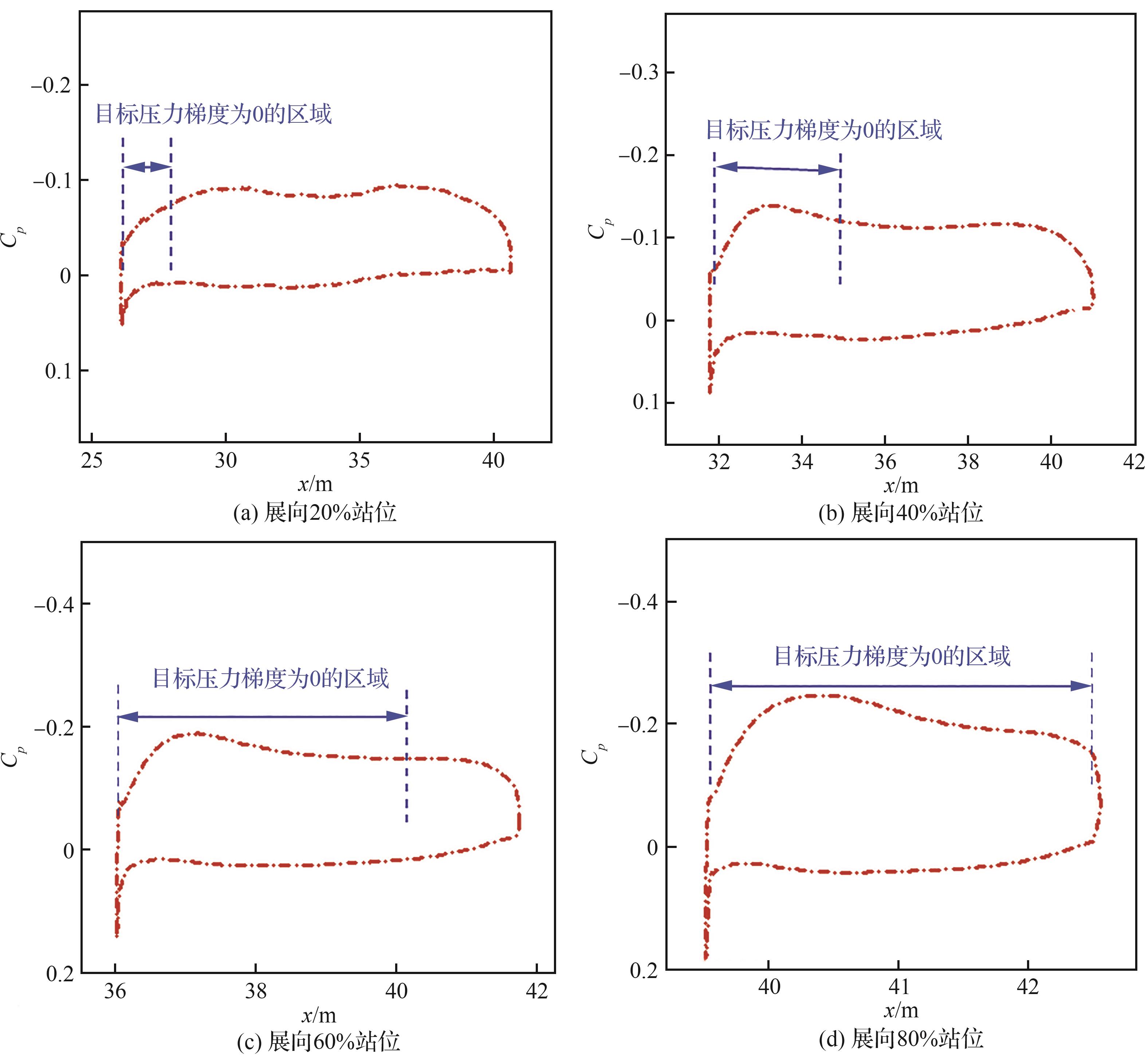
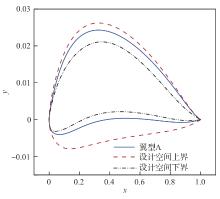
Fig.19
Sketch of airfoils corresponding to upper and lower boundaries in the first round inverse design
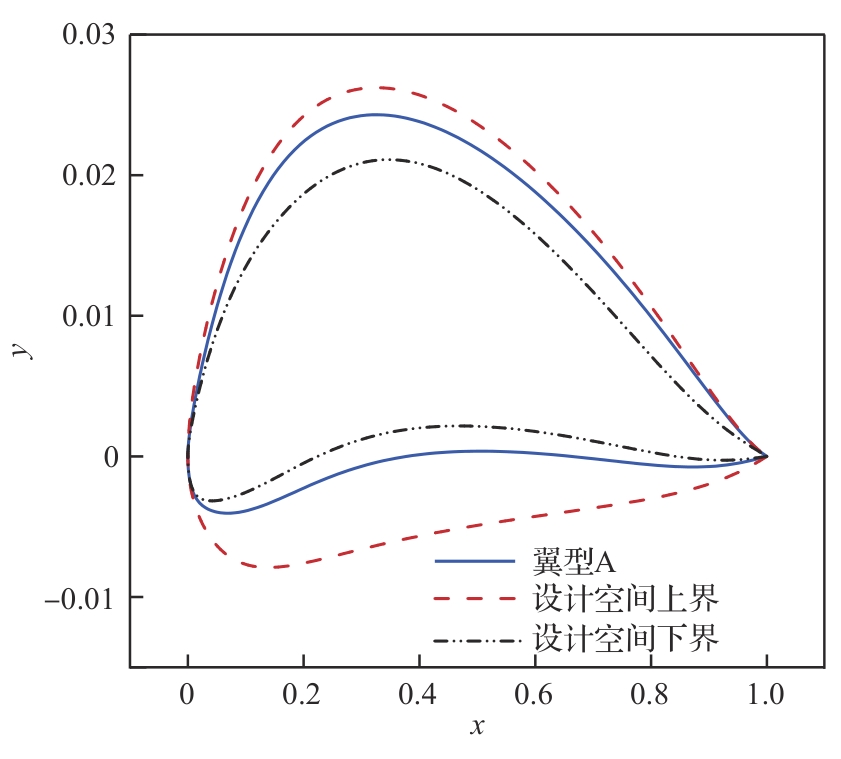
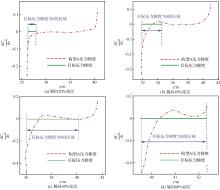
Fig.20
Current and target pressure gradient distribution at selected spanwise stations of Configuration A
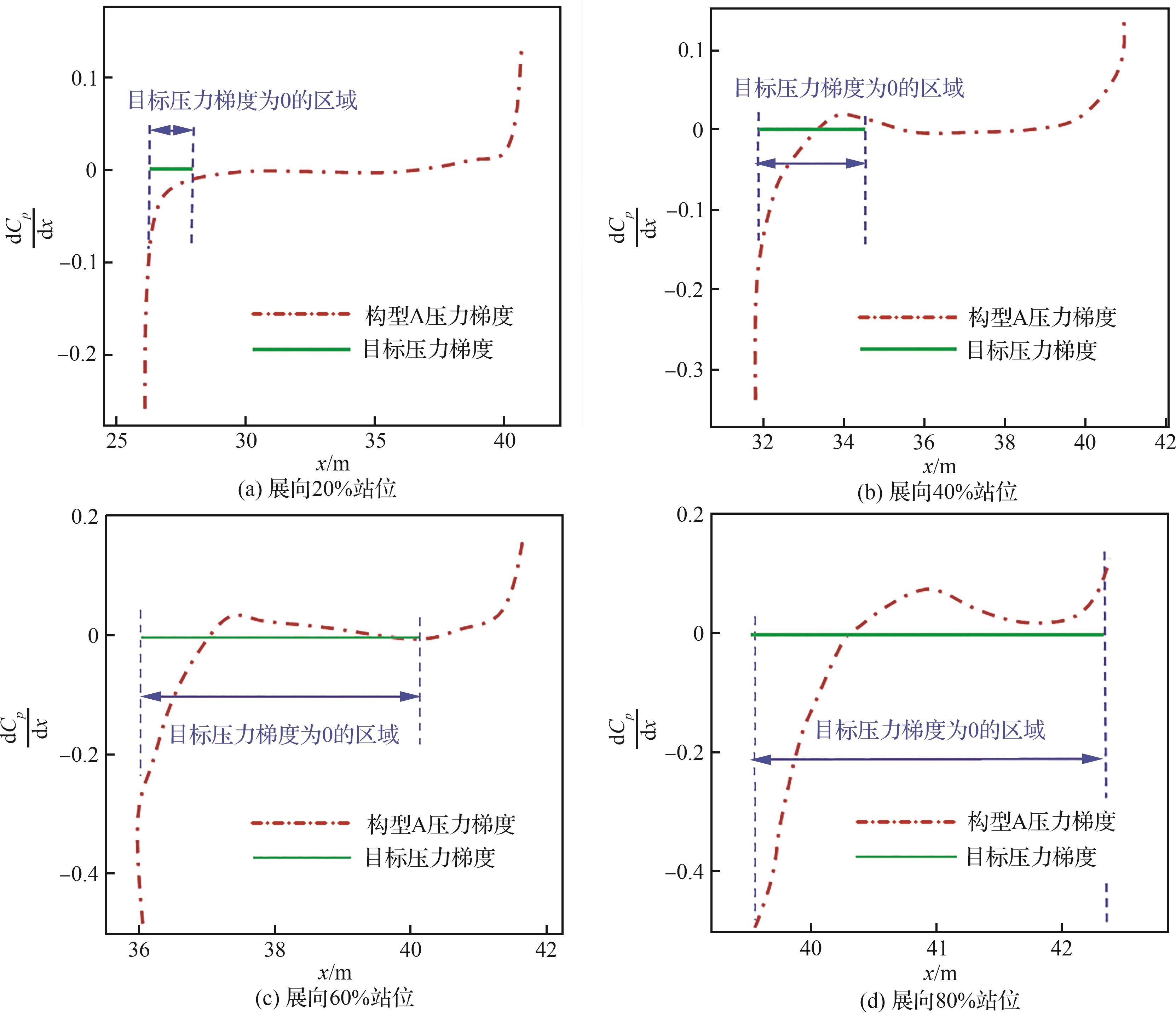
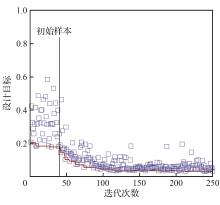
Fig.21
Convergence history of the first round inverse design based on pressure gradient distribution
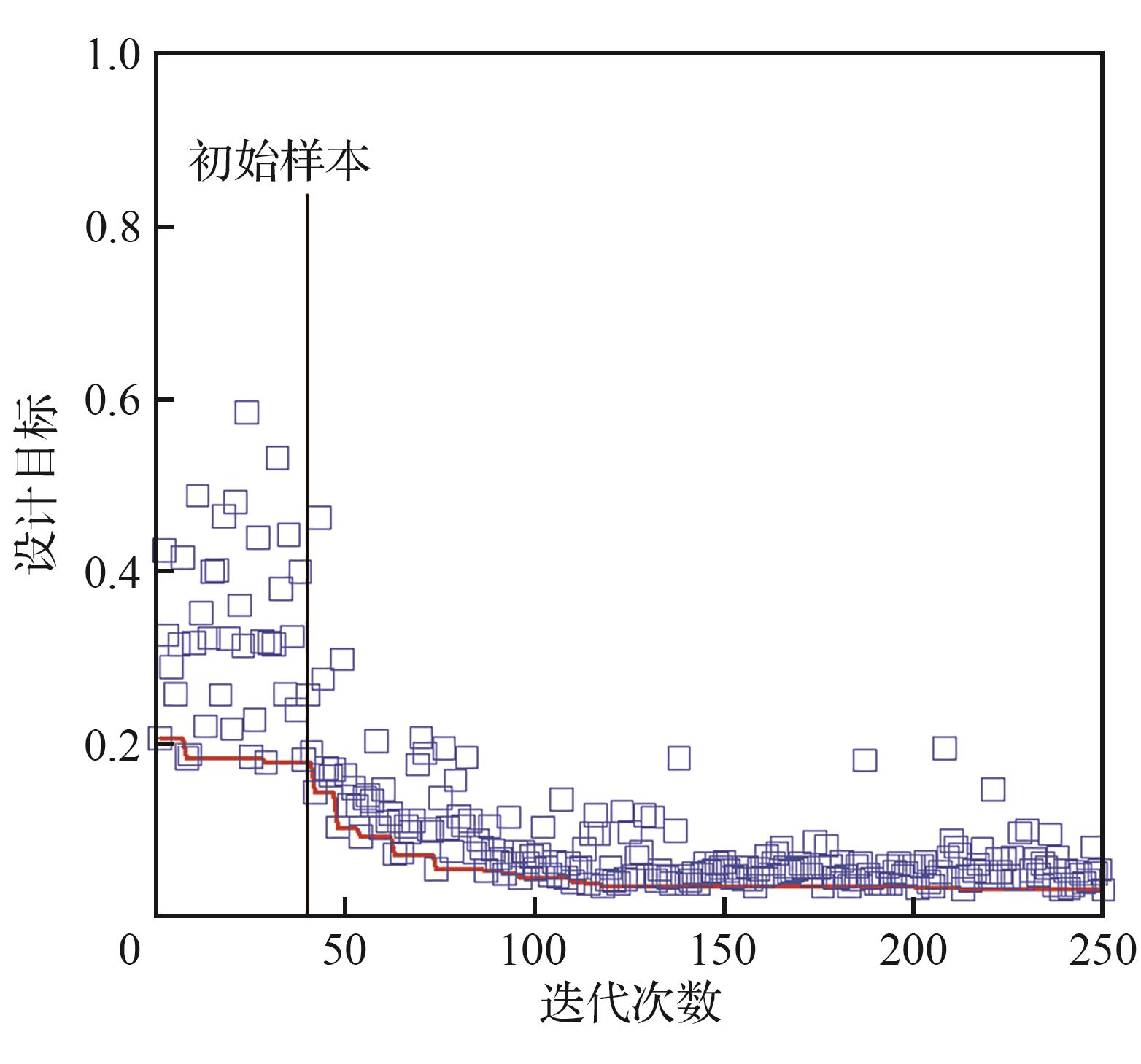
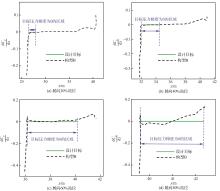
Fig.22
Pressure gradient distribution on different spanwise stations of Configuration B and target pressure gradient distribution designed by the first round inverse design
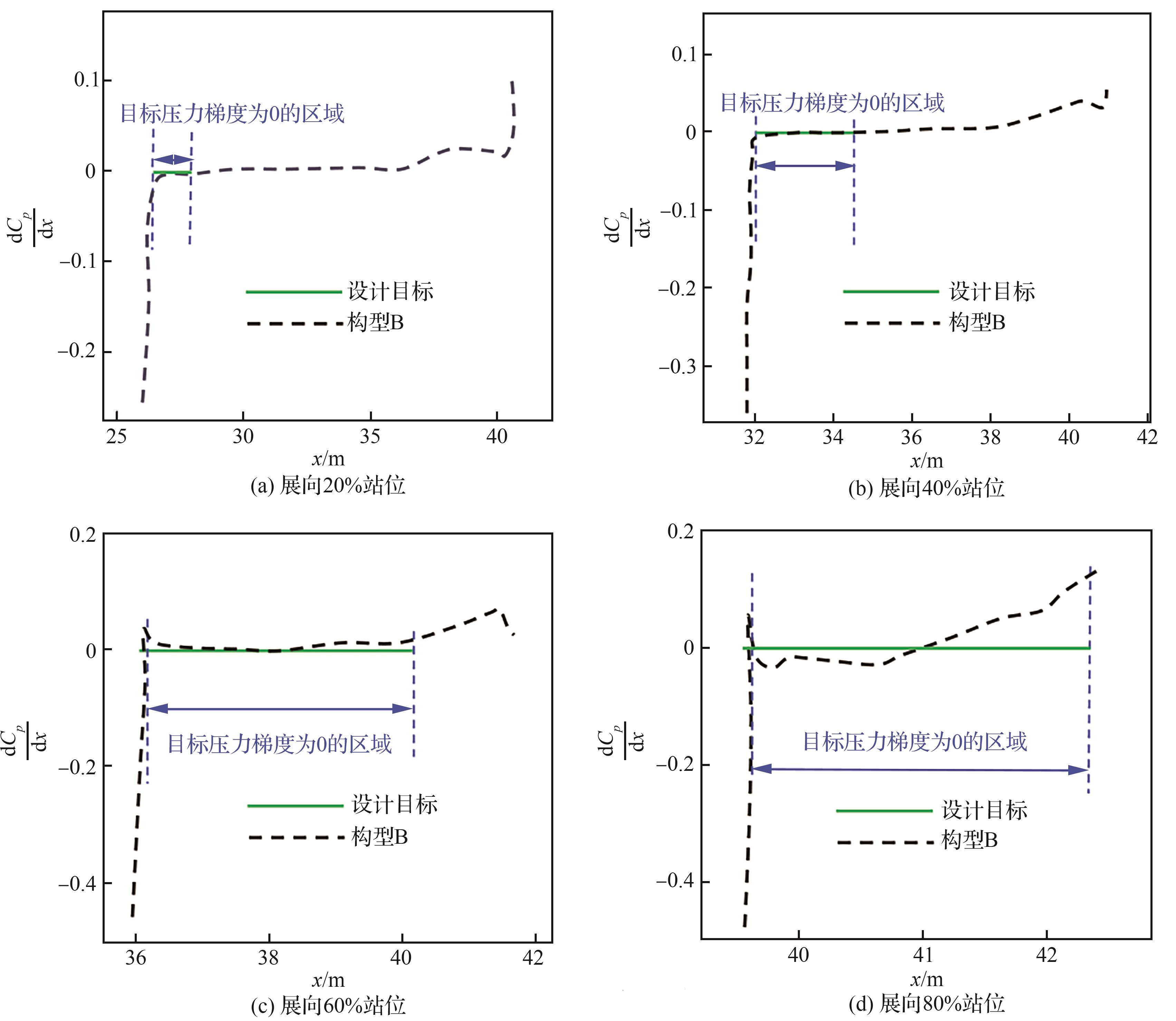
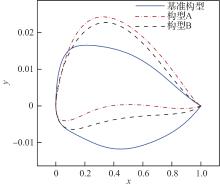
Fig.23
Geometry of Configurations A, B and baseline configuration
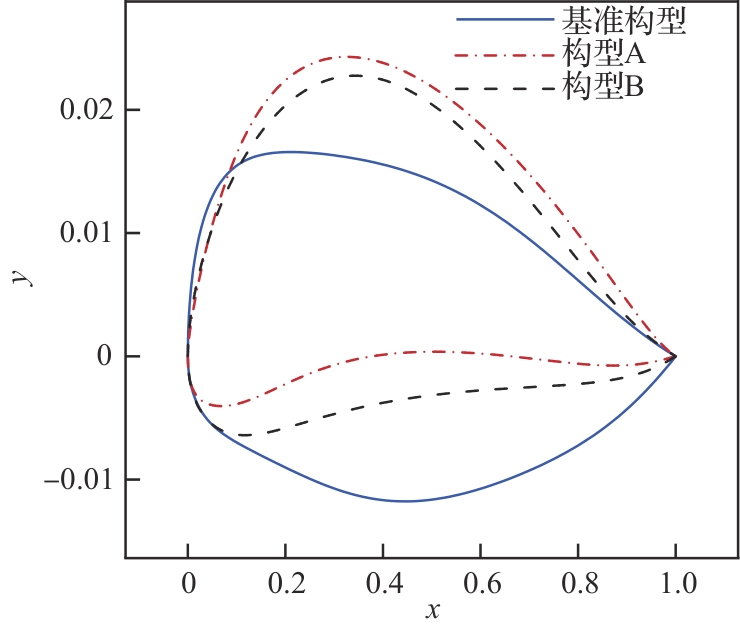
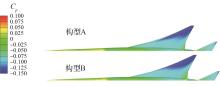
Fig.24
Pressure coefficient contour at upper surface of Configuration A and Configuration B
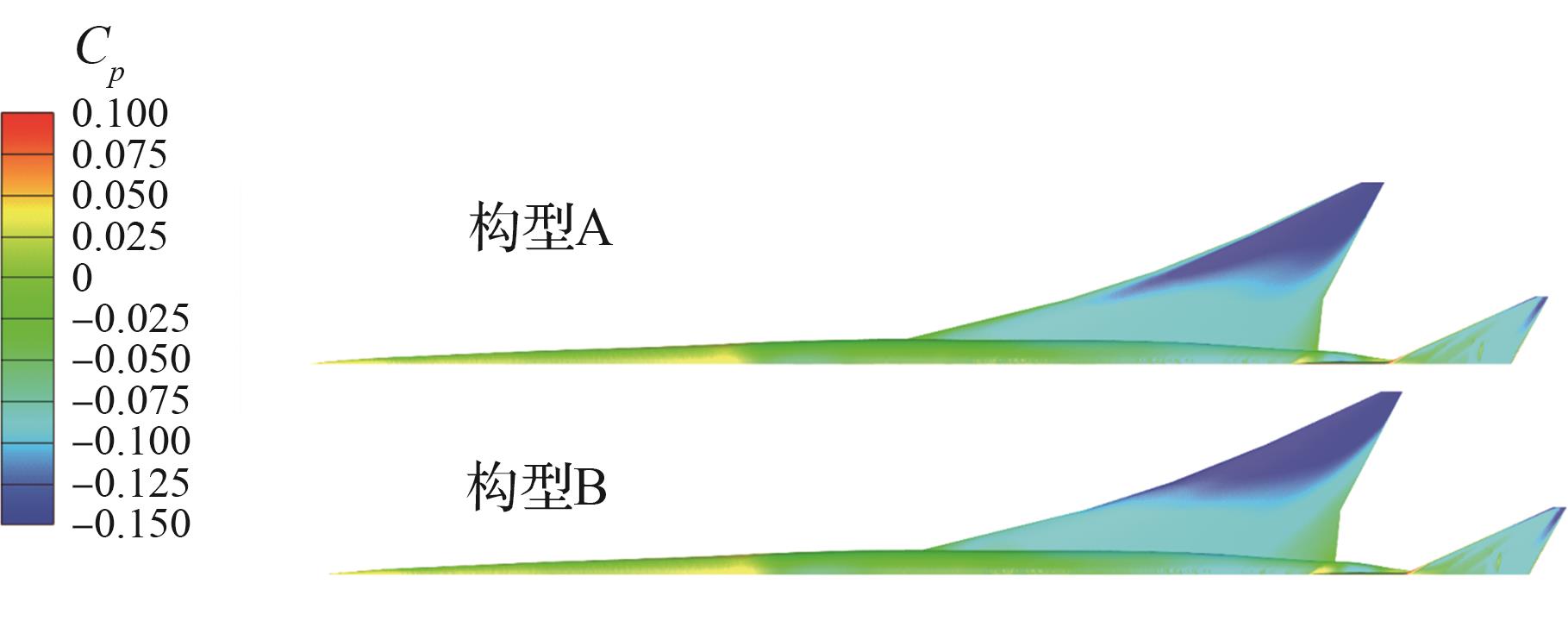
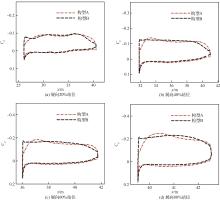
Fig.25
Pressure distributions on different spanwise stations of Configuration A and Configuration B
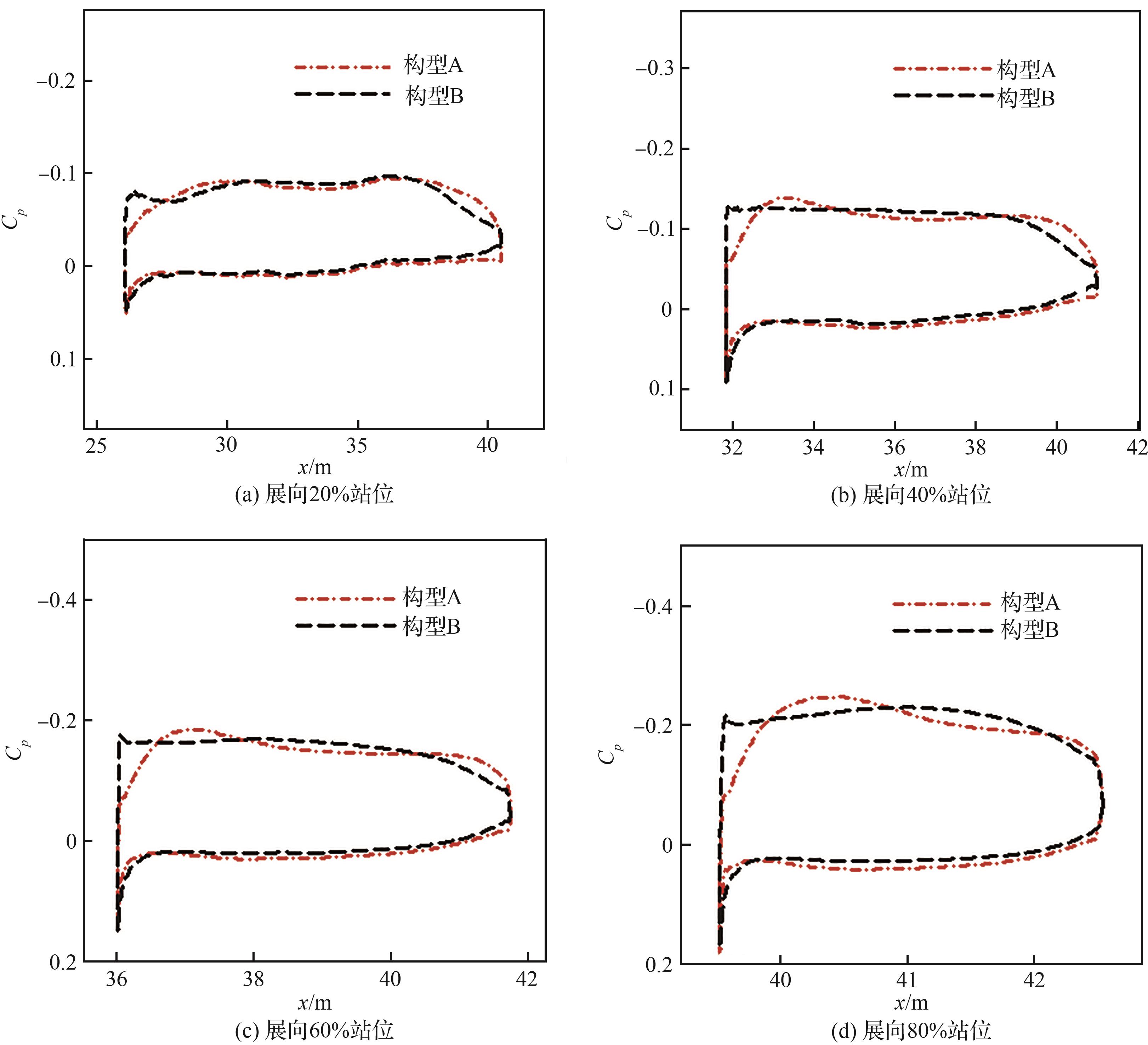
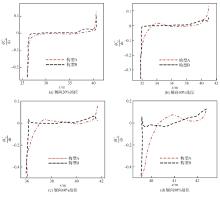
Fig.26
Pressure gradient distributions on different spanwise stations of Configuration A and Configuration B
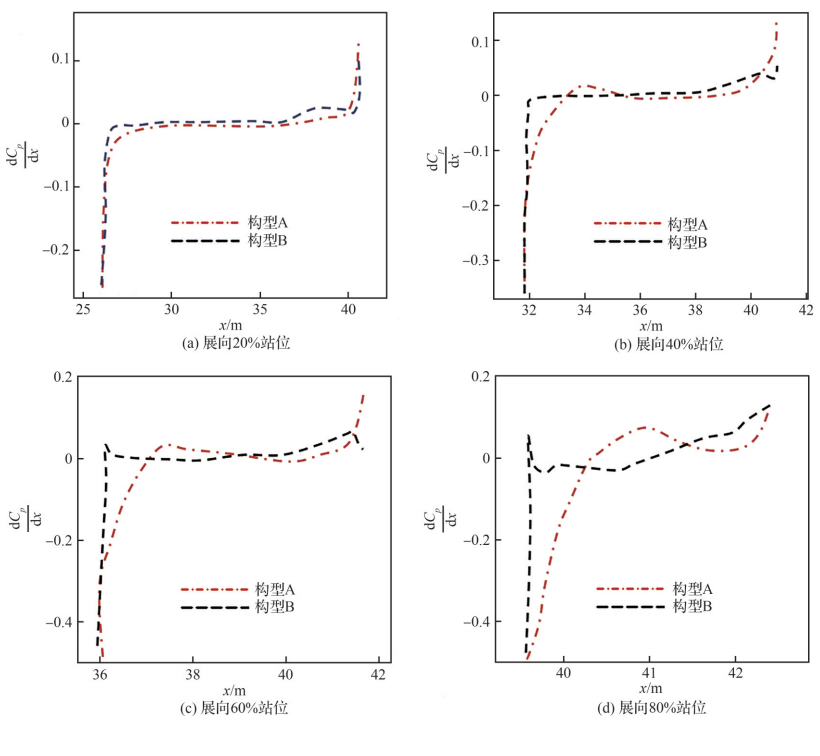
Fig.27
Pressure gradient distribution on different spanwise stations of Configuration B and Configuration C
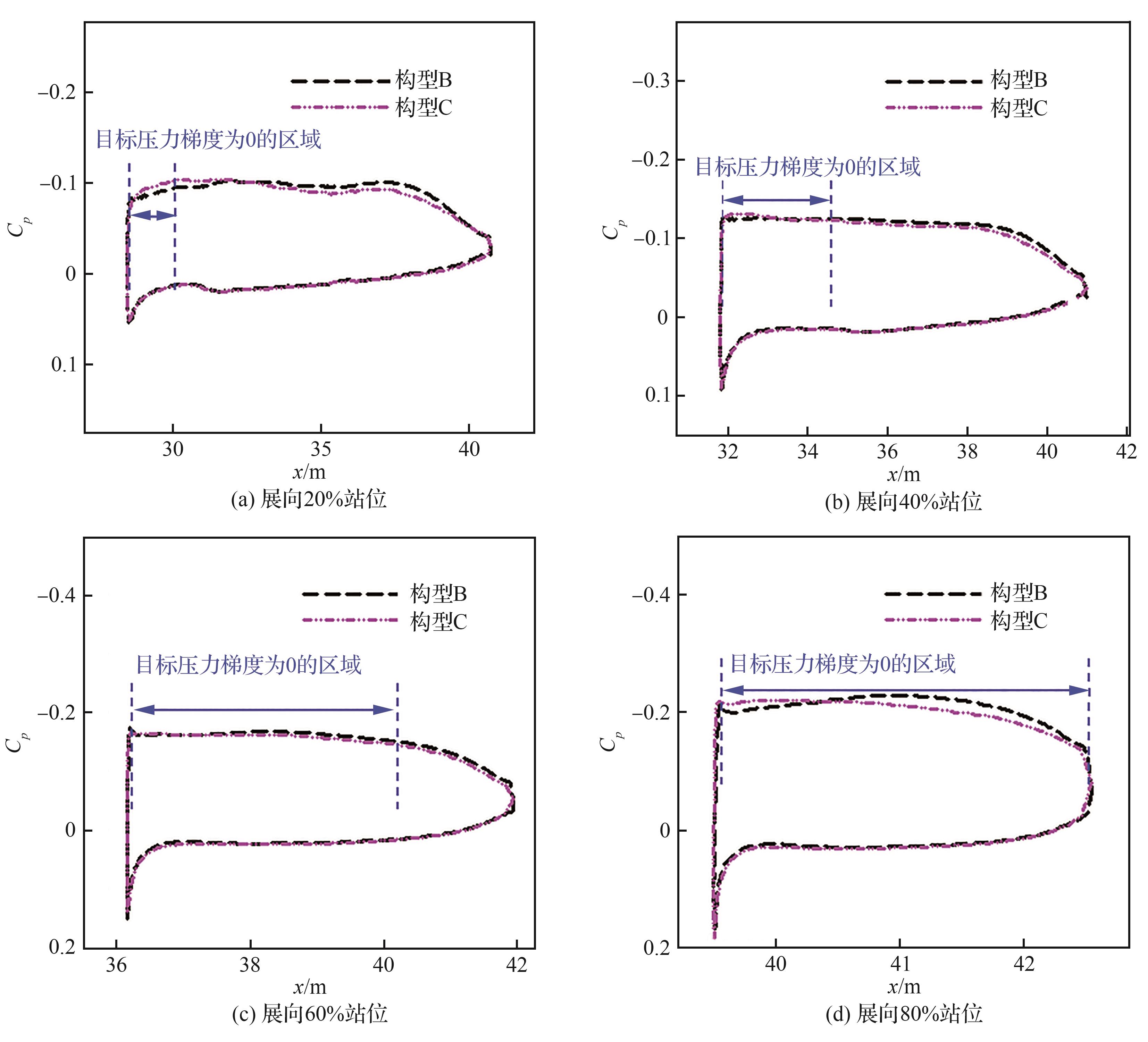
Fig.28
N factor envelopes of disturbances on different spanwise stations at upper surface of Configuration C (0~100 kHz disturbance frequency domain)
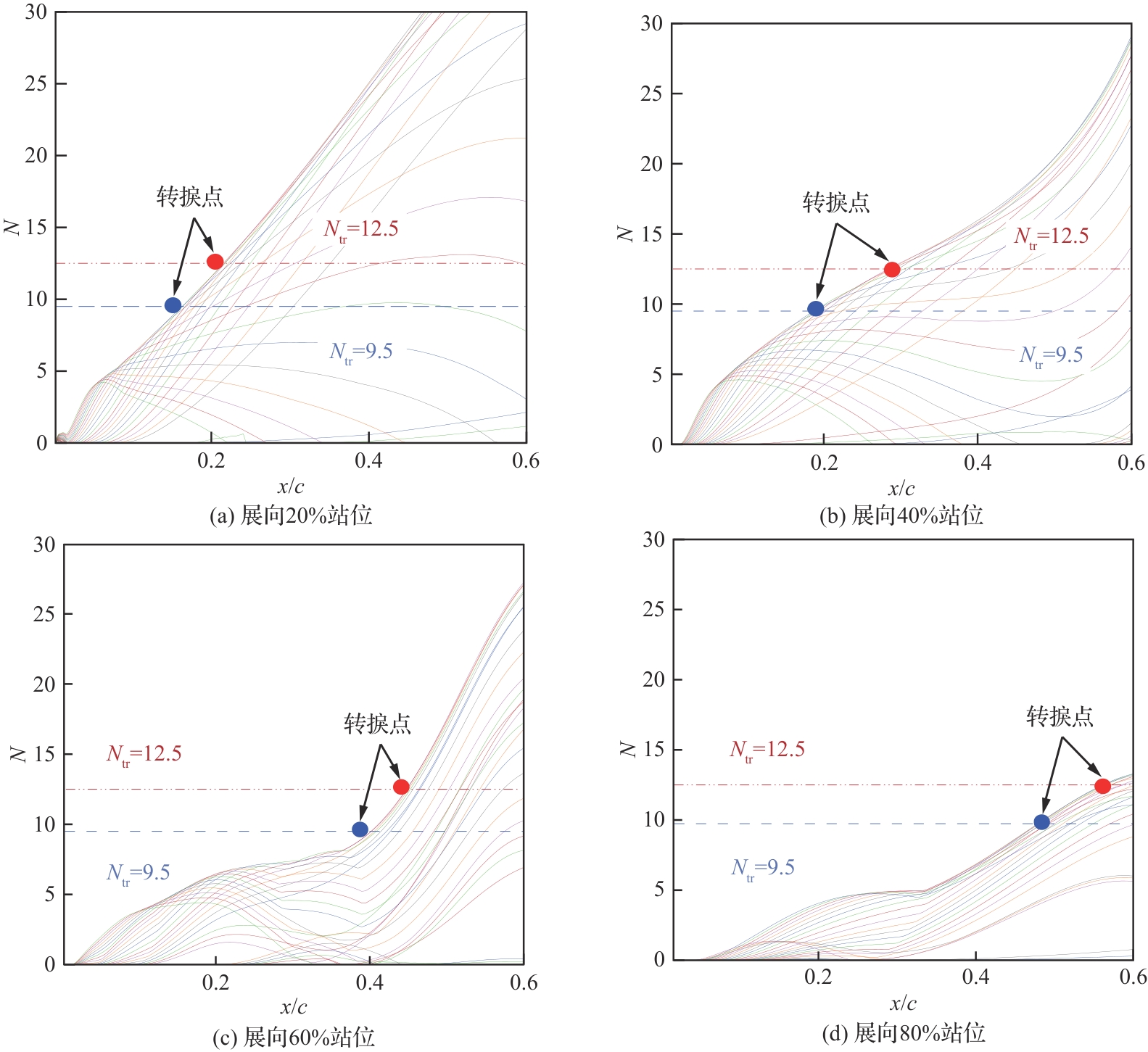
Fig.29
Laminar flow region at upper surface of Configuration C
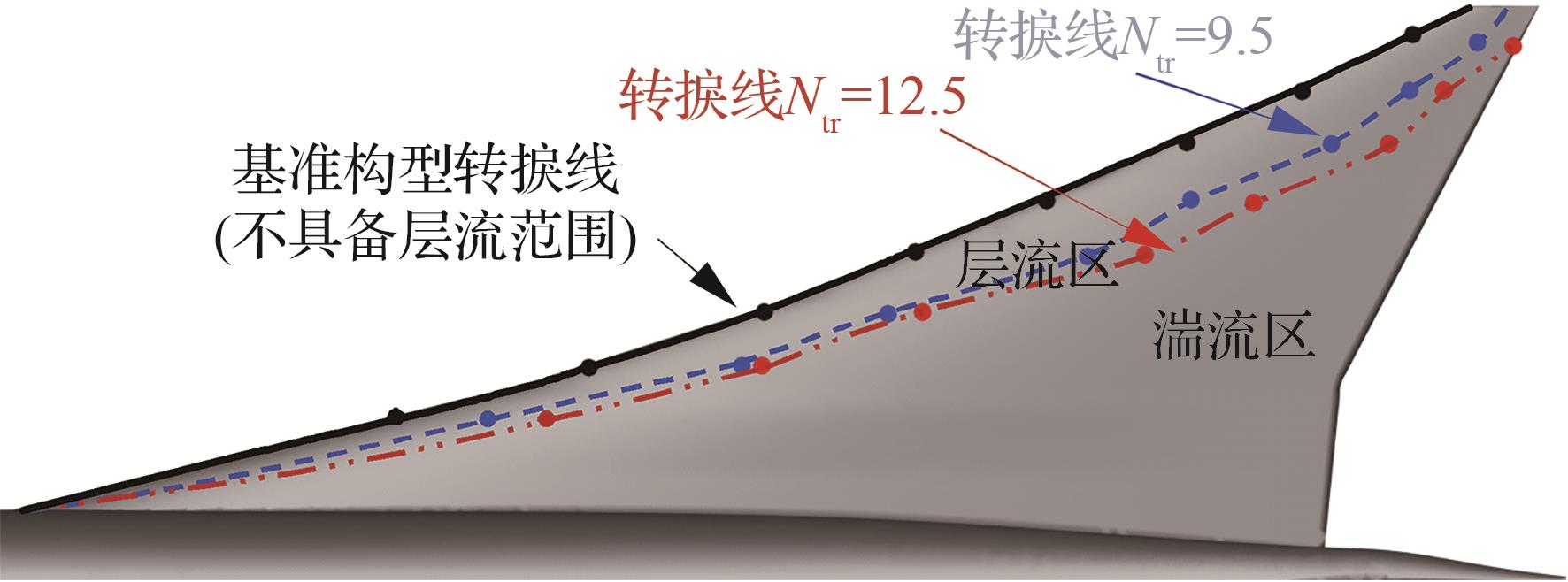
Fig.30
Near-field overpressure signal of Configuration A, B, C and baseline configuration (H/L=3)
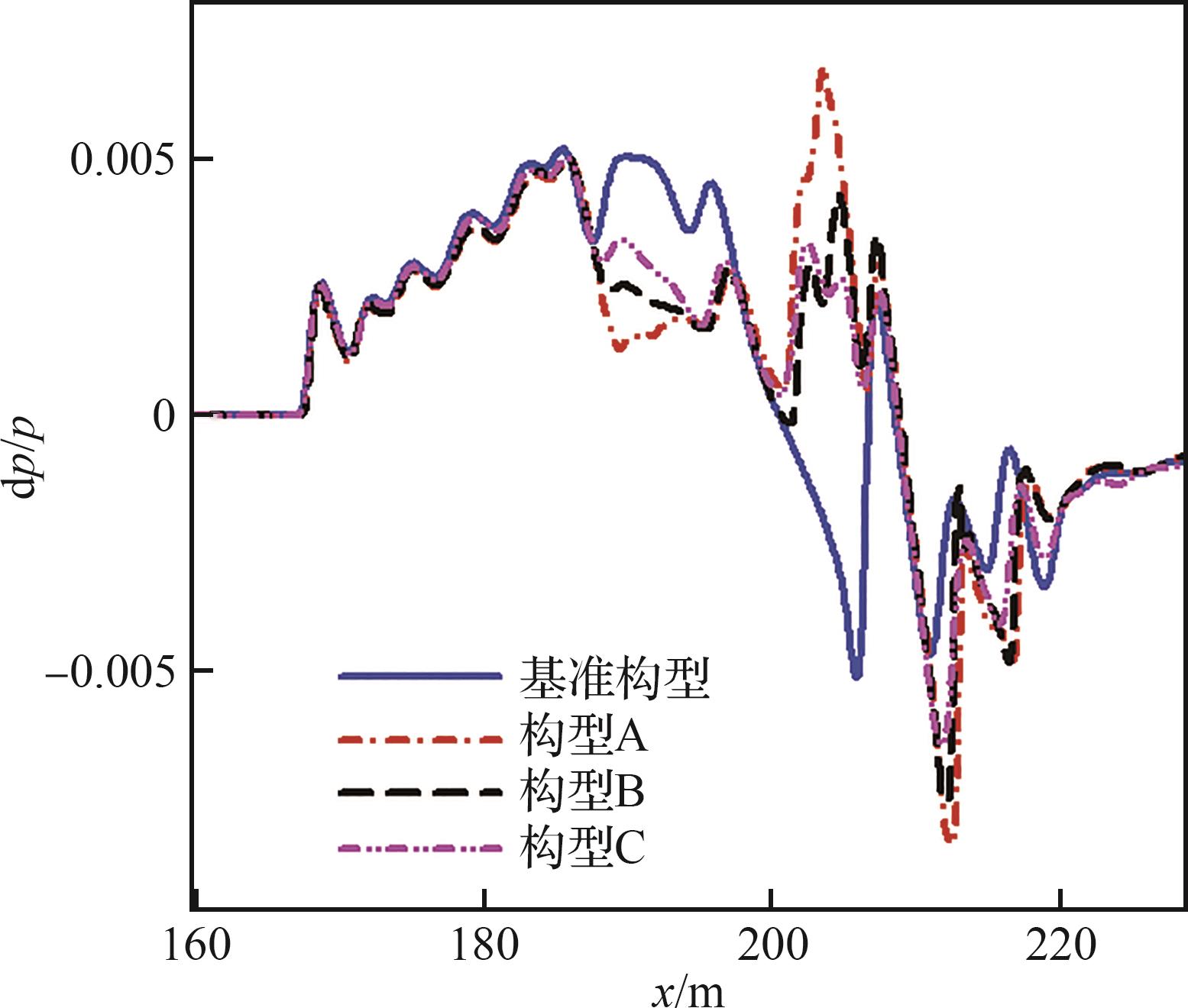
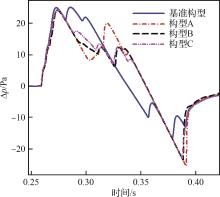
Fig.31
Far-field waveform of Configuration A, B, C and baseline configuration
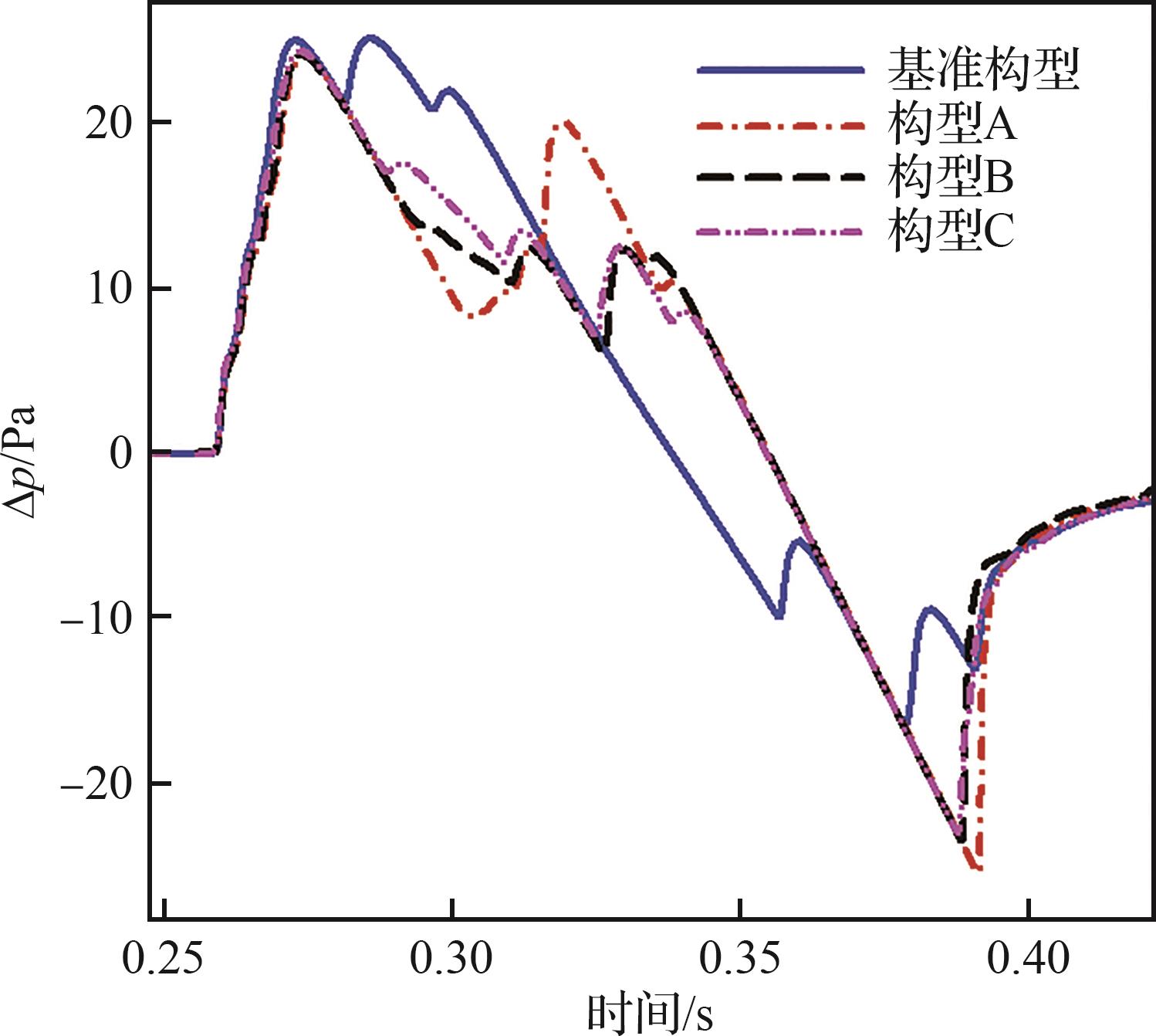
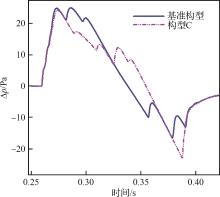
Fig.32
Far-field waveform of Configuration C and baseline configuration
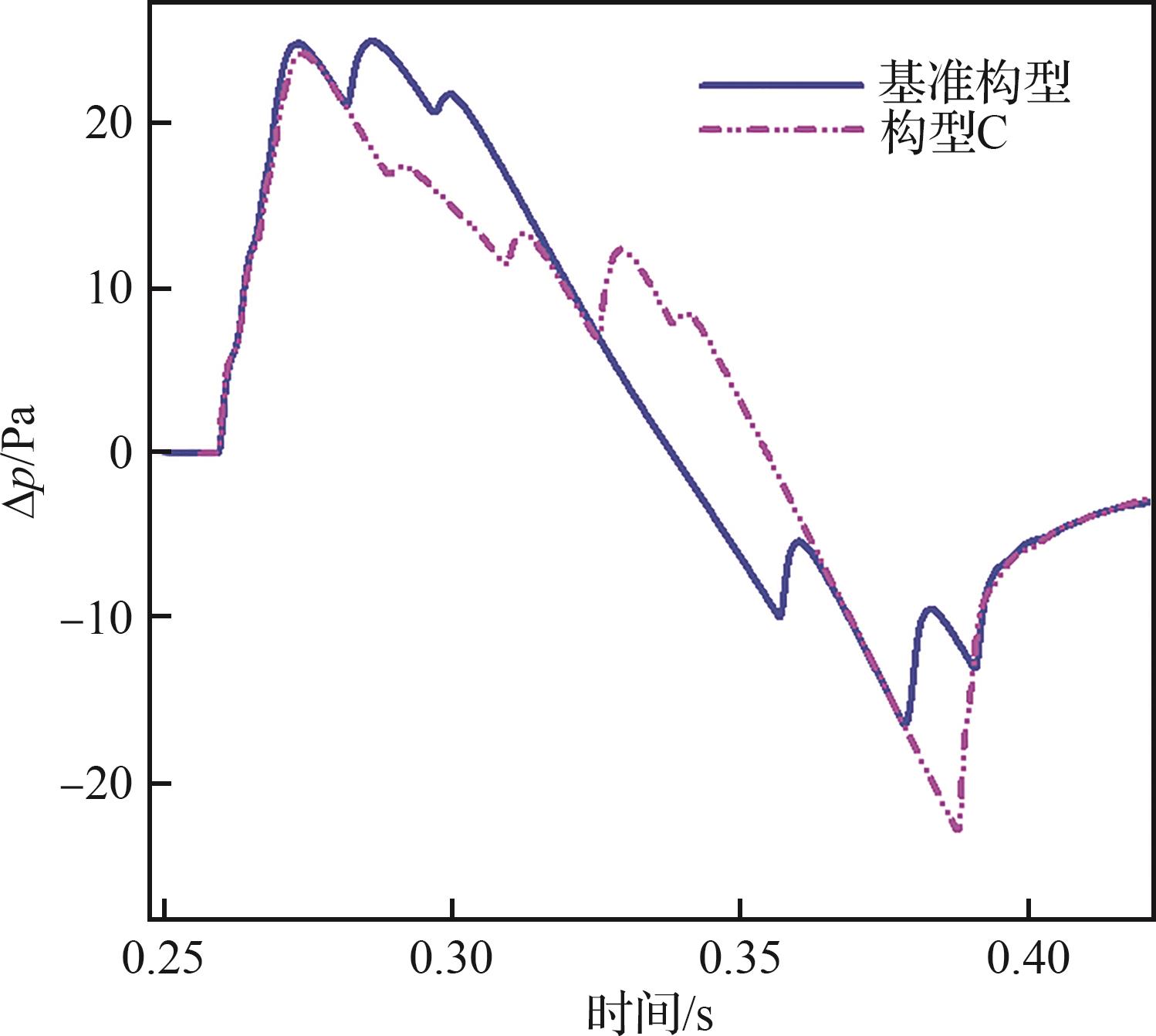
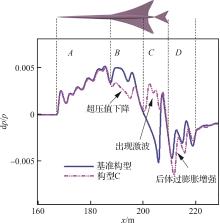
Fig.33
Near-field overpressure signal of Configuration C and baseline configuration (H/L=3)
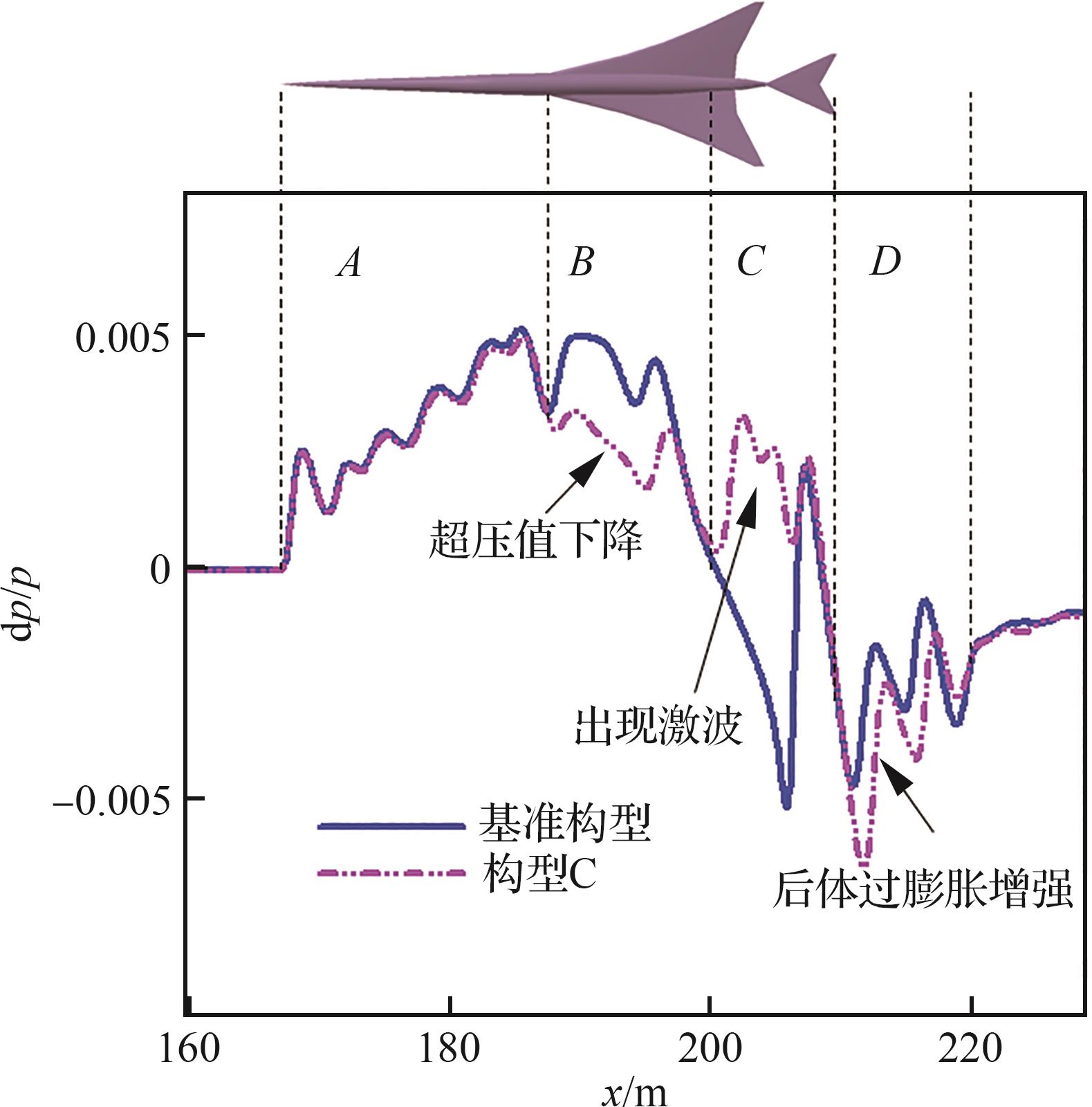
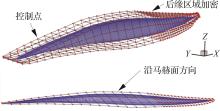
Fig.34
FFD control box for designing fuselage
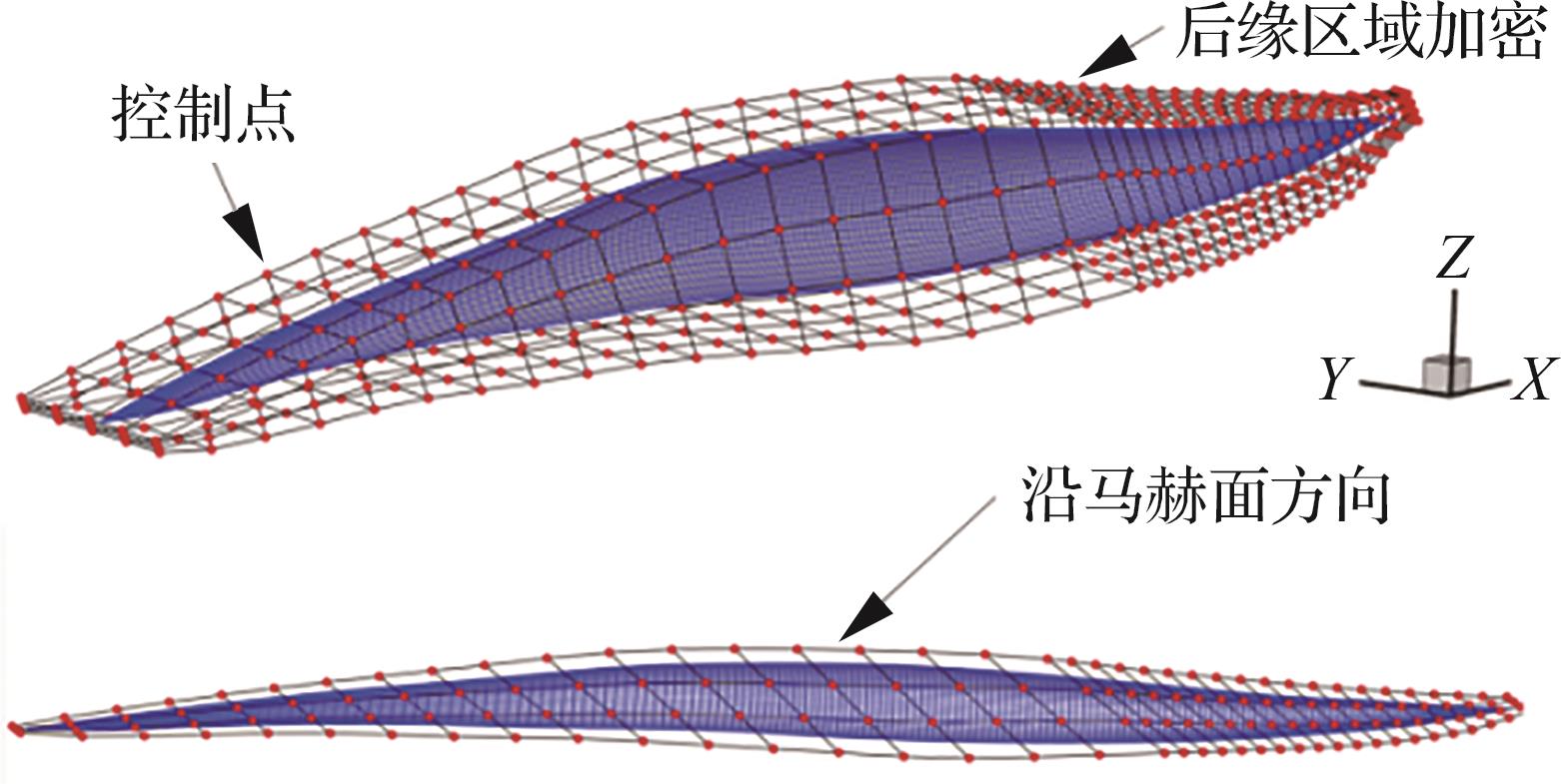
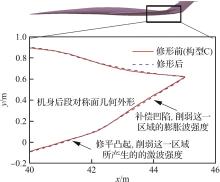
Fig.35
Geometry at symmetry plane of aft section of fuselage before and after design
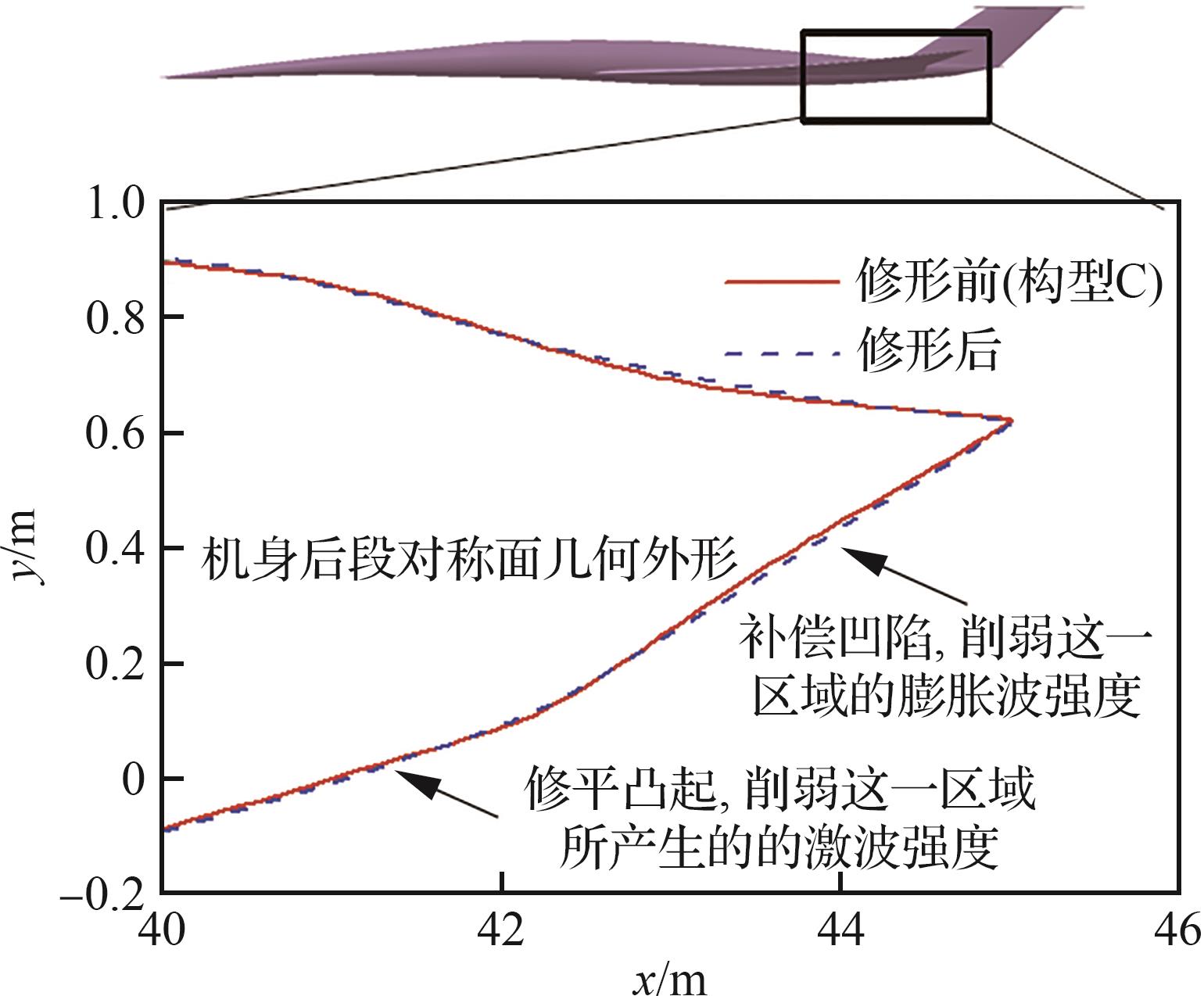
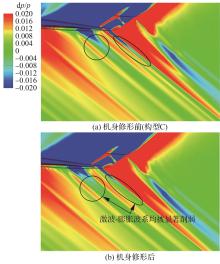
Fig.36
Comparison of shock-expansion waves before and after fuselage design
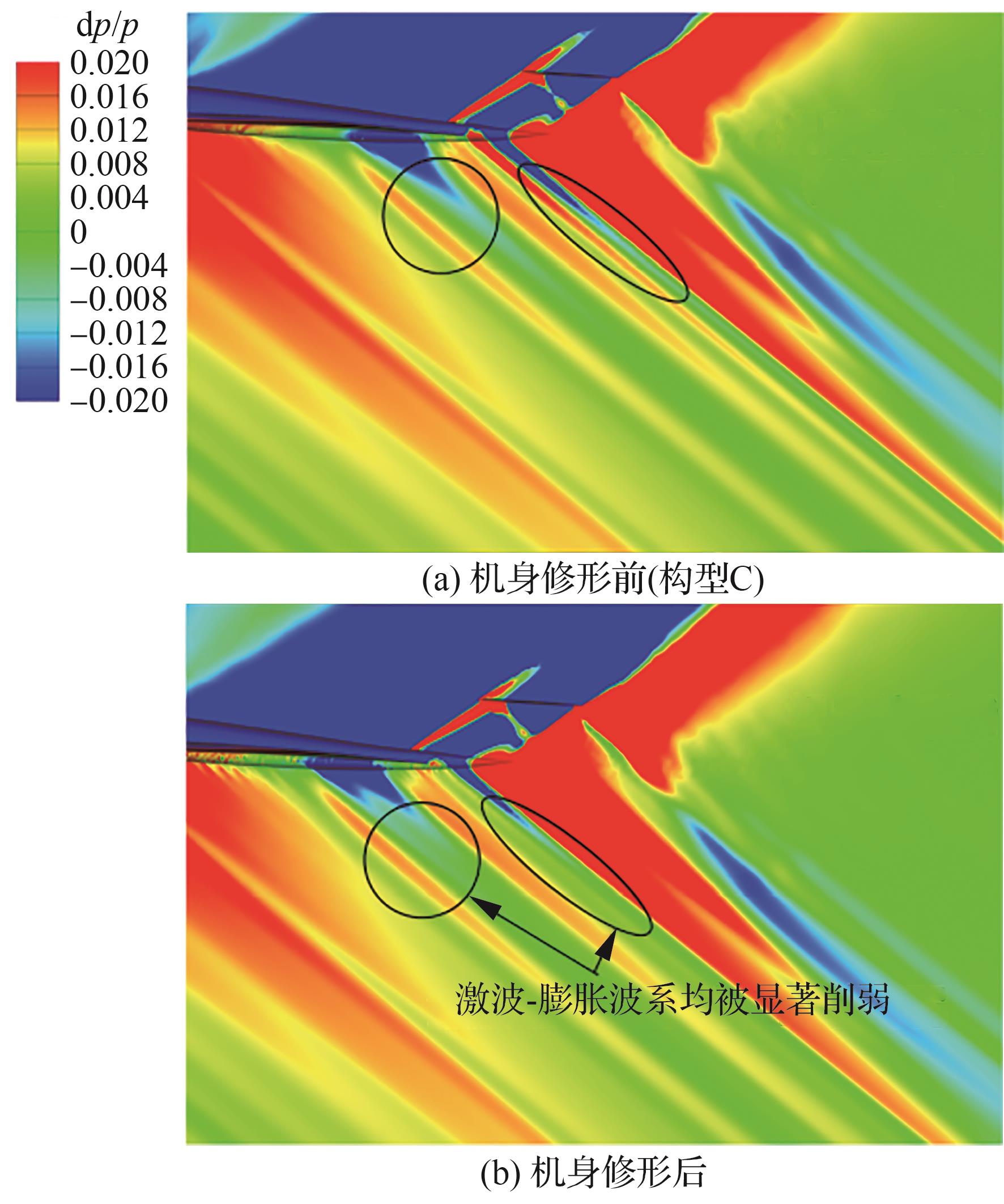
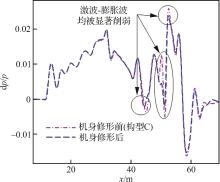
Fig.37
Comparison of near-field overpressure signal before and after fuselage design (H/L=0.3)
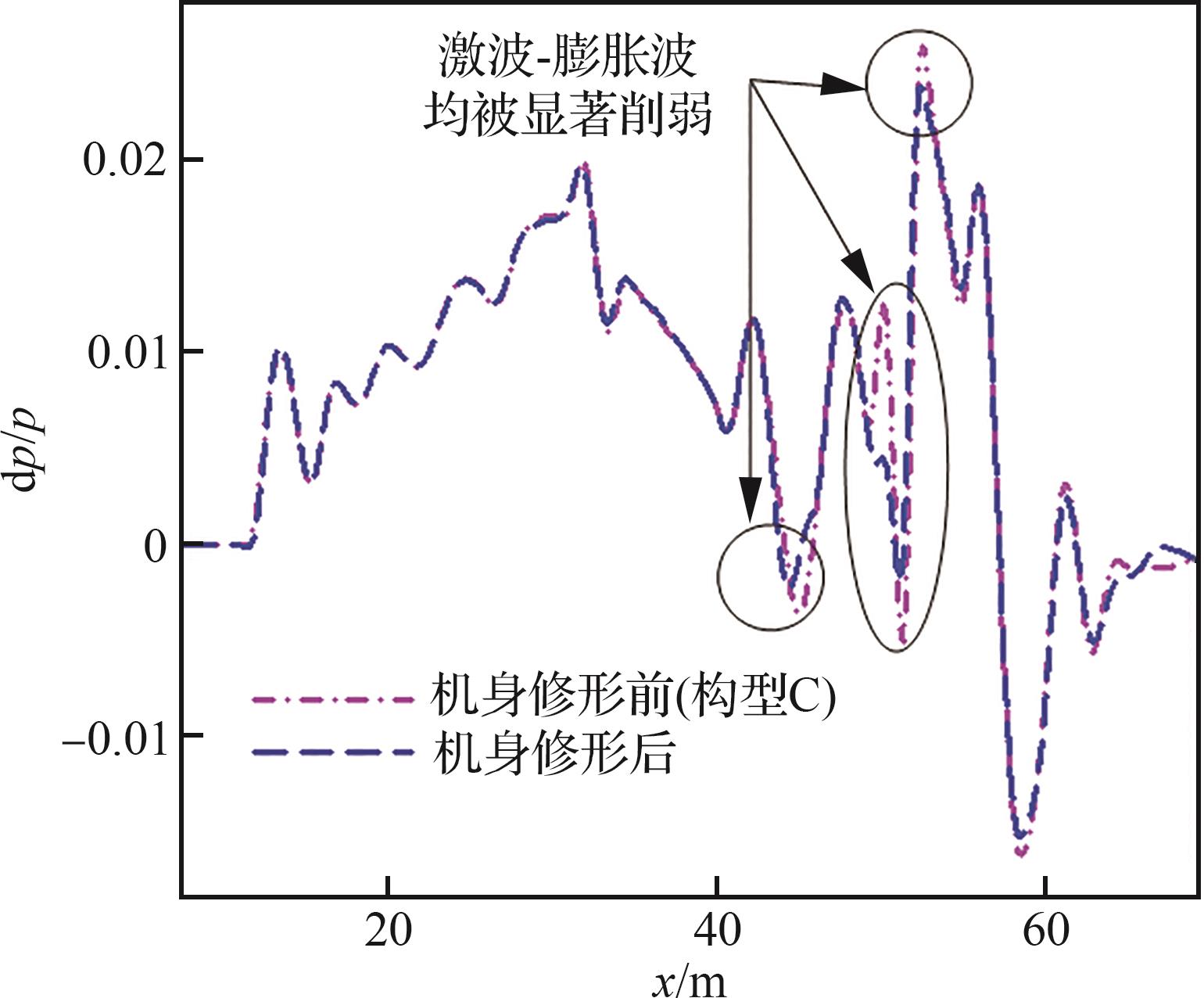
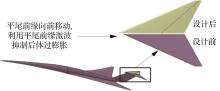
Fig.38
Geometry of horizontal stabilizer before and after design
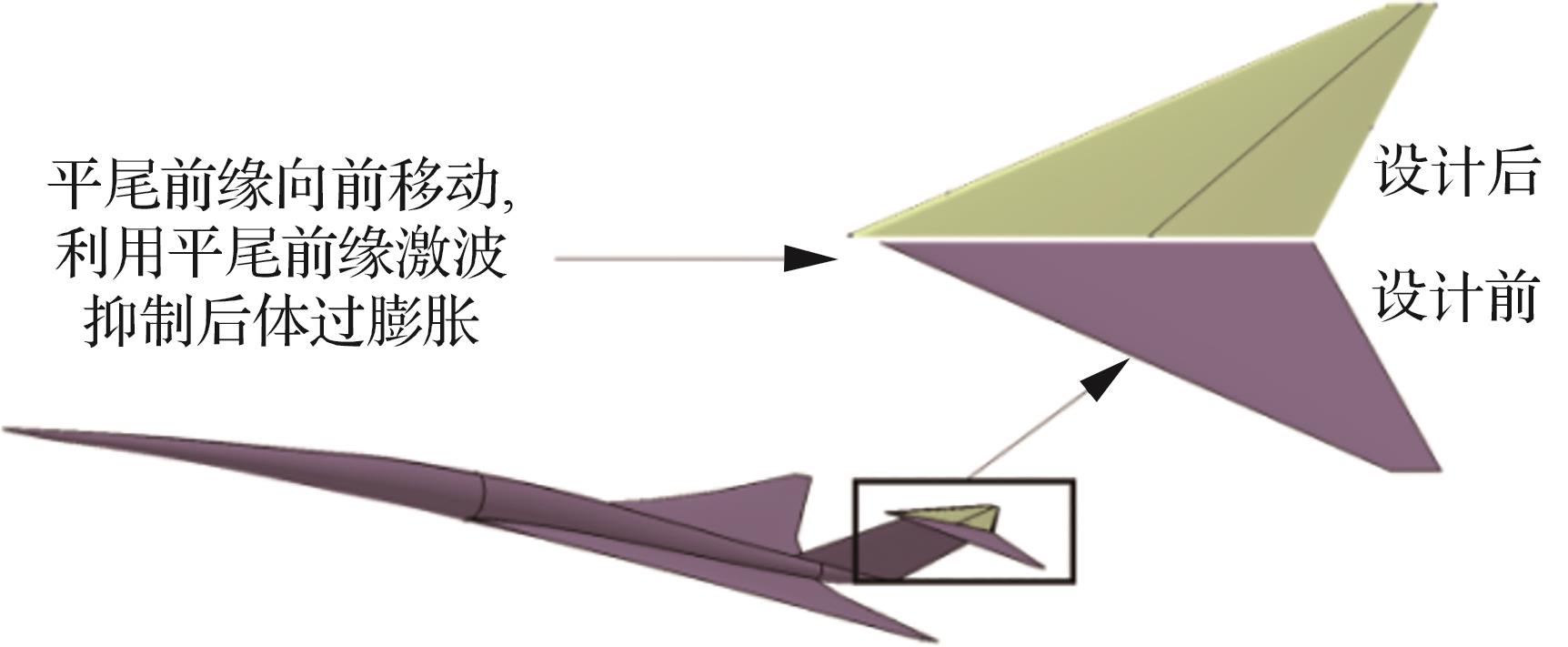
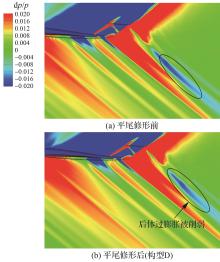
Fig.39
Comparison of shock-expansion waves before and after horizontal stabilizer design
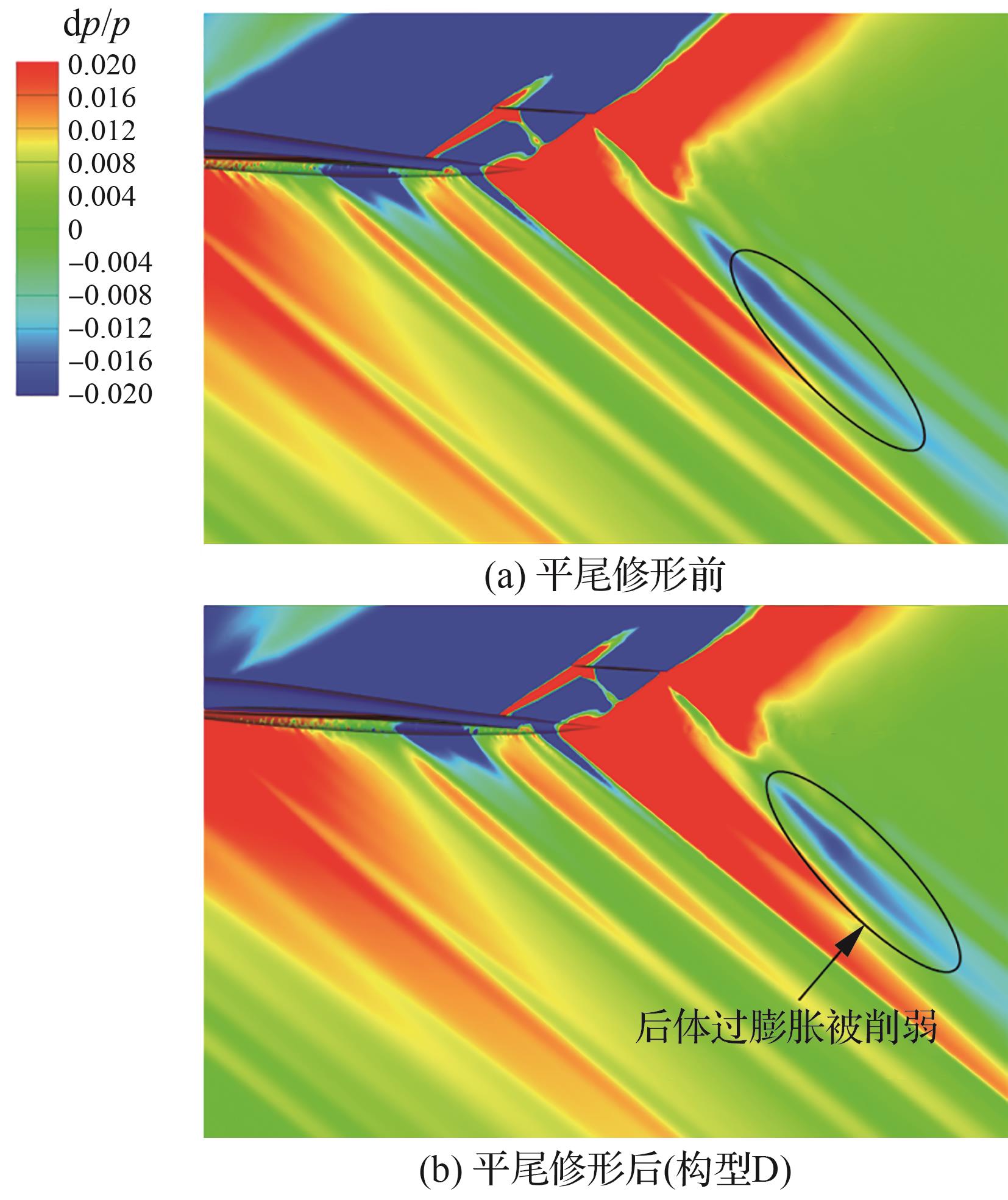
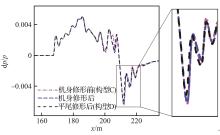
Fig.40
Comparison of near-field overpressure signal before and after horizontal stabilizer design (H/L=3)
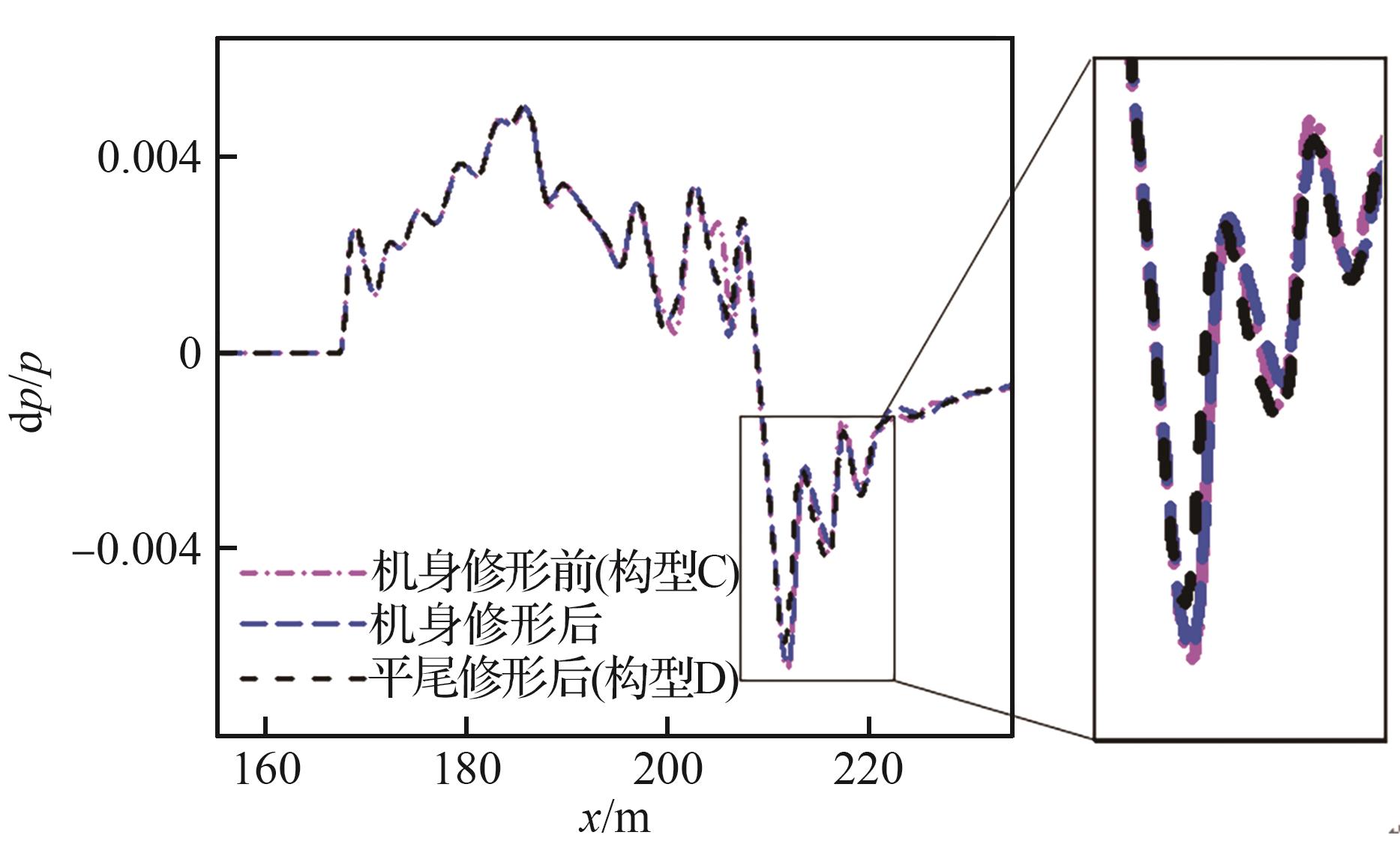
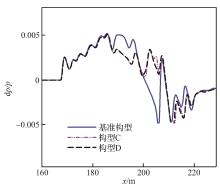
Fig.41
Near-field overpressure signal of Configurations C, D and baseline configuration (H/L=3)
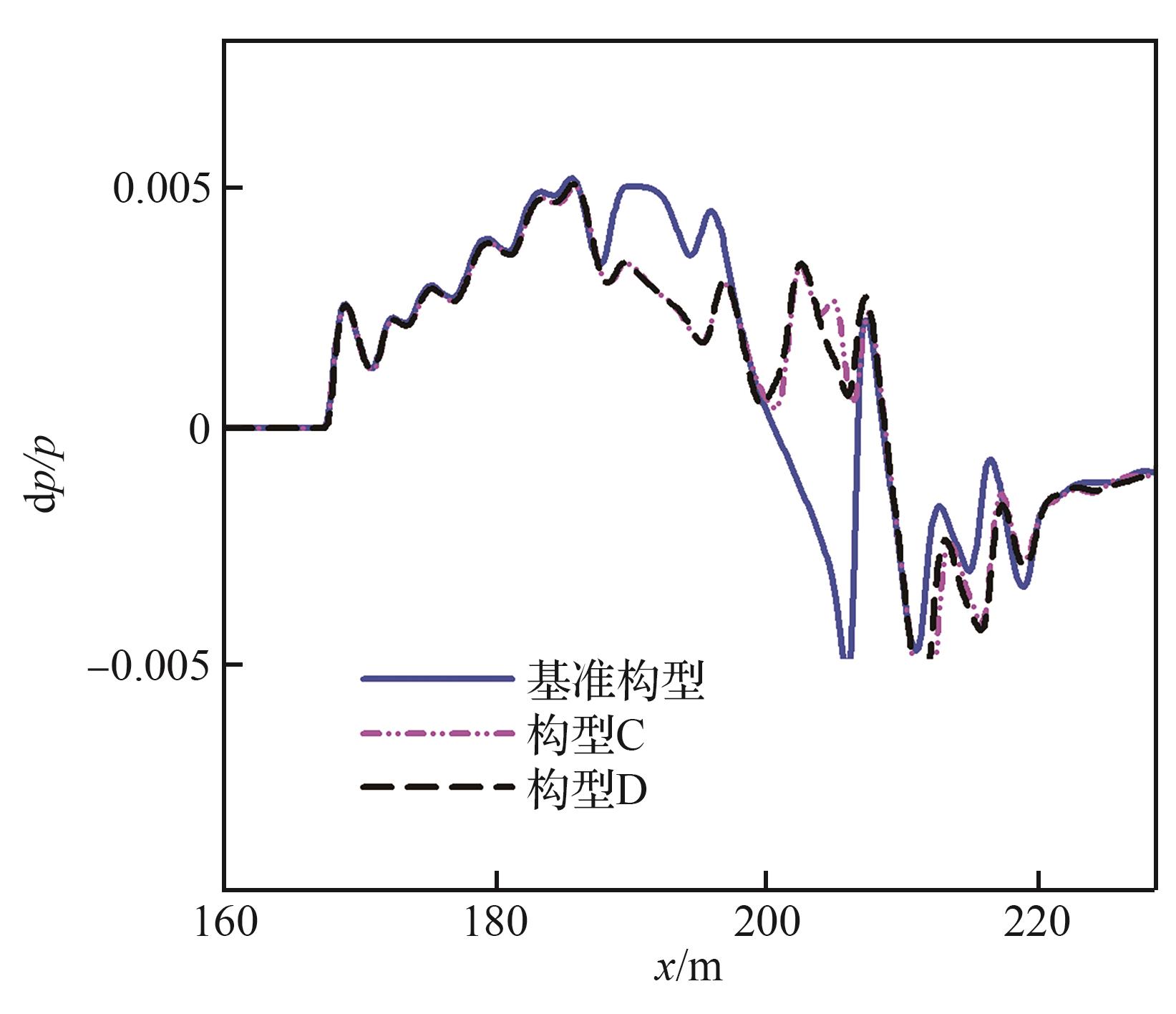
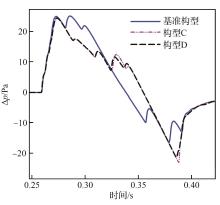
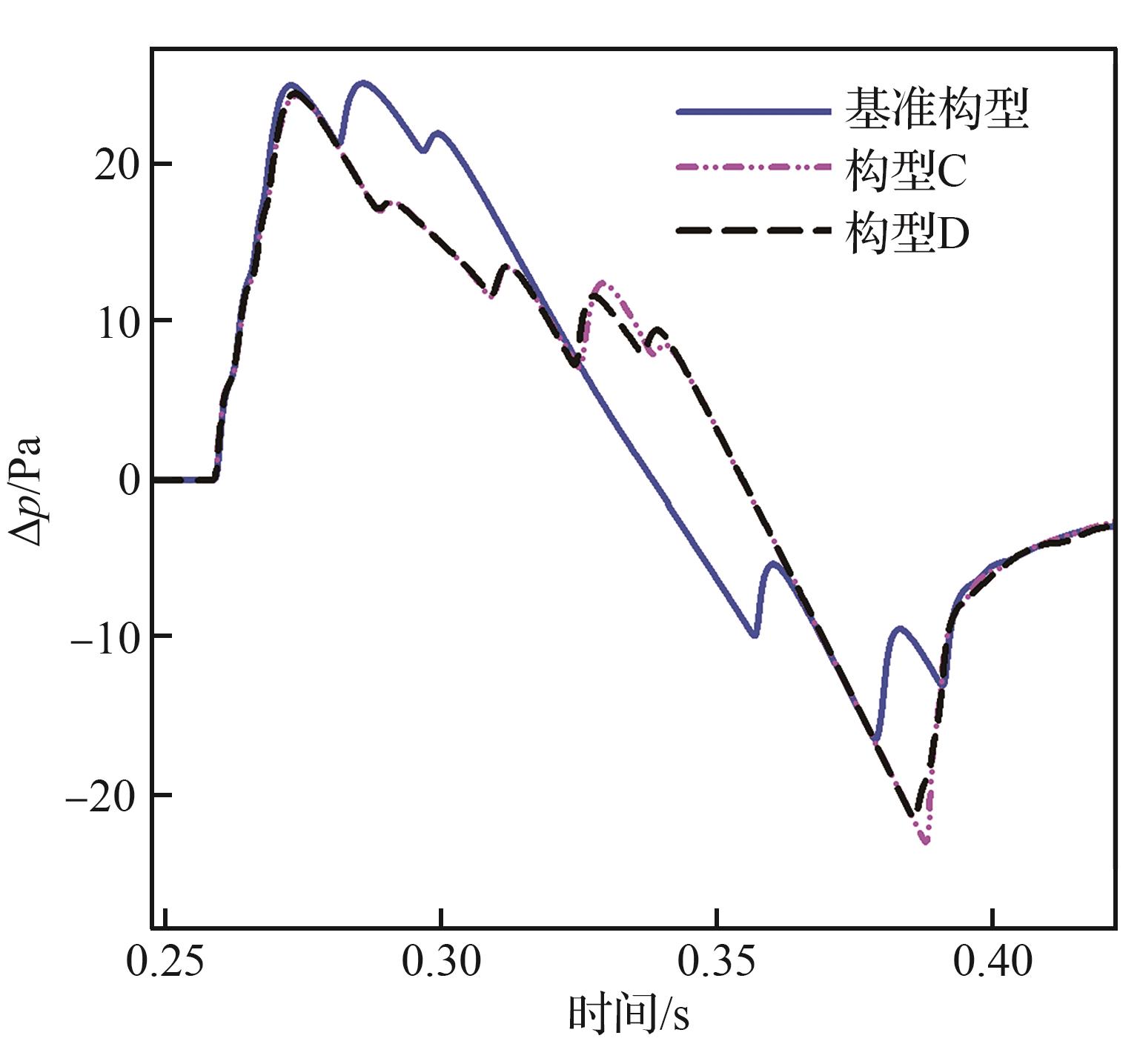
Fig.42
Far-field waveform of Configurations C, D and baseline configuration
| [1] | 韩忠华, 乔建领, 丁玉临, 等. 新一代环保型超声速客机气动相关关键技术与研究进展[J]. 空气动力学学报, 2019, 37(4): 620-635. |
| HAN Z H, QIAO J L, DING Y L, et al. Key technologies for next-generation environmentally-friendly supersonic transport aircraft: a review of recent progress[J]. Acta Aerodynamica Sinica, 2019, 37(4): 620-635 (in Chinese). | |
| [2] | 丁玉临, 韩忠华, 乔建领, 等. 超声速民机总体气动布局设计关键技术研究进展[J]. 航空学报, 2023, 44(2): 626310. |
| DING Y L, HAN Z H, QIAO J L, et al. Research progress in key technologies for conceptual-aerodynamic configuration design of supersonic transport aircraft[J]. Acta Aeronautica et Astronautica Sinica, 2023, 44(2): 626310 (in Chinese). | |
| [3] | 韩忠华, 钱战森, 乔建领. 声爆预测与低声爆设计方法[M]. 北京: 科学出版社, 2022: 7-8. |
| HAN Z H, QIAN Z S, QIAO J L. Prediction of sonic boom and design method of low sonic boom[M]. Beijing: Science Press, 2022: 7-8 (in Chinese). | |
| [4] | 张力文, 宋文萍, 韩忠华, 等. 声爆产生、传播和抑制机理研究进展[J]. 航空学报, 2022, 43(12): 025649. |
| ZHANG L W, SONG W P, HAN Z H, et al. Recent progress of sonic boom generation, propagation, and mitigation mechanism[J]. Acta Aeronautica et Astronautica Sinica, 2022, 43(12): 025649 (in Chinese). | |
| [5] | VERMEERSCH O, YOSHIDA K, UEDA Y, et al. Natural laminar flow wing for supersonic conditions: Wind tunnel experiments, flight test and stability computations[J]. Progress in Aerospace Sciences, 2015, 79: 64-91. |
| [6] | TOKUGAWA N, YOSHIDA K. Transition detection on supersonic natural laminar flow wing in the flight[C]∥24th AIAA Applied Aerodynamics Conference. Reston: AIAA, 2006. |
| [7] | TOKUGAWA N, KWAK D Y, YOSHIDA K, et al. Transition measurement of natural laminar flow wing on supersonic experimental airplane NEXST-1[J]. Journal of Aircraft, 2008, 45(5): 1495-1504. |
| [8] | YOSHIDA K. Supersonic drag reduction technology in the scaled supersonic experimental airplane project by JAXA[J]. Progress in Aerospace Sciences, 2009, 45 (4-5): 124-146. |
| [9] | UEDA Y, YOSHIDA K, MATSUSHIMA K, et al. Supersonic natural-laminar-flow wing-design concept at high-Reynolds-number conditions[J]. AIAA Journal, 2014, 52(6): 1294-1306. |
| [10] | ISHIKAWA H, UEDA Y, TOKUGAWA N. Natural laminar flow wing design for a low-boom supersonic aircraft[C]∥55th AIAA Aerospace Sciences Meeting. Reston: AIAA, 2017. |
| [11] | TRAORÉ A, LEMÉE P. Laminar design for supersonic civil transport[M]∥Aerodynamic Drag Reduction Technologies. Berlin, Heidelberg: Springer, 2001: 141-153. |
| [12] | IULIANO E, DIN I S EL, DONELLI R, et al. Natural laminar flow design of a supersonic transport jet wing body[C]∥47th AIAA Aerospace Sciences Meeting including the New Horizons Forum and Aerospace Exposition. Reston: AIAA, 2009. |
| [13] | IULIANO E, QUAGLIARELLA D, DONELLI R S, et al. Design of a supersonic natural laminar flow wing-body[J]. Journal of Aircraft, 2011, 48(4): 1147-1162. |
| [14] | LYNDE M N, CAMPBELL R L. Expanding the natural laminar flow boundary for supersonic transports[C]∥34th AIAA Applied Aerodynamics Conference. Reston: AIAA, 2016. |
| [15] | BOZEMAN M D, CAMPBELL R L, BANCHY M N. Progress towards the design of a natural laminar flow wing for a low boom concept using CDISC[C]∥AIAA SCITECH 2024 Forum. Reston: AIAA, 2024. |
| [16] | 聂晗, 宋文萍, 韩忠华, 等. 面向超声速民机层流机翼设计的转捩预测方法[J]. 航空学报, 2022, 43(11): 526342. |
| NIE H, SONG W P, HAN Z H, et al. Automatic transition prediction for natural-laminar-flow wing design of supersonic transports[J]. Acta Aeronautica et Astronautica Sinica, 2022, 43(11): 526342 (in Chinese). | |
| [17] | NIE H, SONG W P, HAN Z H, et al. Attenuation of boundary-layer instabilities for natural laminar flow design on supersonic highly swept wings[J]. Chinese Journal of Aeronautics, 2024, 37(11): 118-137. |
| [18] | 袁吉森, 孙爵, 李玲玉, 等. 超声速飞机层流布局设计与评估技术进展[J]. 航空学报, 2022, 43(11): 526316. |
| YUAN J S, SUN J, LI L Y, et al. Progress of supersonic aircraft laminar flow layout design and evaluation technologies[J]. Acta Aeronautica et Astronautica Sinica, 2022, 43(11): 526316 (in Chinese). | |
| [19] | YUAN J S, YU S H, GAO L J, et al. Measurement and identification of supersonic stationary crossflow waves based on sublimation method[J]. AIAA Journal, 2023, 61(6): 2369-2380. |
| [20] | 单程军, 贡天宇, 易理哲, 等. 超声速民机高效高可信度声爆/气动多学科优化方法[J]. 航空学报, 2024, 45(24): 630573. |
| SHAN C J, GONG T Y, YI L Z, et al. High-efficiency and high-reliability sonic boom/aerodynamic multidisciplinary optimization method for supersonic civil aircraft[J]. Acta Aeronautica et Astronautica Sinica, 2024, 45(24): 630573 (in Chinese). | |
| [21] | JONES L B. Lower bounds for sonic Bangs[J]. The Journal of the Royal Aeronautical Society, 1961, 65(606): 433-436. |
| [22] | JONES L B. Lower bounds for sonic Bangs in the far field[J]. Aeronautical Quarterly, 1967, 18(1): 1-21. |
| [23] | JONES L B. Lower bounds for the pressure jump of the bow shock of a supersonic transport[J]. Aeronautical Quarterly, 1970, 21(1): 1-17. |
| [24] | SEEBASS R, GEORGE A R. Sonic-boom minimization[J]. The Journal of the Acoustical Society of America, 1972, 51(2C): 686-694. |
| [25] | GEORGE A R. Lower bounds for sonic booms in the midfield[J]. AIAA Journal, 1969, 7(8): 1542-1545. |
| [26] | GEORGE A R, SEEBASS R. Sonic boom minimization including both front and rear shocks[J]. AIAA Journal, 1971, 9(10): 2091-2093. |
| [27] | DARDEN C M. Sonic-boom minimization with nose-bluntness relaxation: NASA-TP-1438[R]. Washington, D. C.: NASA, 1979. |
| [28] | MINELLI A, SALAH EL DIN I, CARRIER G. Inverse design approach for low-boom supersonic configurations[J]. AIAA Journal, 2014, 52(10): 2198-2212. |
| [29] | PLOTKIN K, RALLABHANDI S, LI W. Generalized formulation and extension of sonic boom minimization theory for front and aft shaping[C]∥47th AIAA Aerospace Sciences Meeting including The New Horizons Forum and Aerospace Exposition. Reston: AIAA, 2009. |
| [30] | HAAS A, KROO I. A multi-shock inverse design method for low-boom supersonic aircraft[C]∥48th AIAA Aerospace Sciences Meeting Including the New Horizons Forum and Aerospace Exposition. Reston: AIAA, 2010. |
| [31] | LI W, SHIELDS E, GEISELHART K. Mixed-fidelity approach for design of low-boom supersonic aircraft[J]. Journal of Aircraft, 2011, 48(4): 1131-1135. |
| [32] | LI W, RALLABHANDI S. Inverse design of low-boom supersonic concepts using reversed equivalent-area targets[J]. Journal of Aircraft, 2014, 51(1): 29-36. |
| [33] | DING Y L, HAN Z H, QIAO J L, et al. Inverse design method for low-boom supersonic transport with lift constraint[J]. AIAA Journal, 2023, 61(7): 2840-2853. |
| [34] | 李军府, 陈晴, 王伟, 等. 一种先进超声速民机低声爆高效气动布局设计[J]. 航空学报, 2024, 45(6): 629613. |
| LI J F, CHEN Q, WANG W, et al. Design of low sonic boom high efficiency layout for advanced supersonic civil aircraft[J]. Acta Aeronautica et Astronautica Sinica, 2024, 45(6): 629613 (in Chinese). | |
| [35] | PARK M A, CARTER M B. Low-boom demonstrator near-field summary for the third AIAA sonic boom prediction workshop[J]. Journal of Aircraft, 2021, 59(3): 563-577. |
| [36] | QIAO J L, HAN Z H, SONG W P, et al. Development of sonic boom prediction code for supersonic transports based on augmented Burgers equation[C]∥AIAA Aviation 2019 Forum. Reston: AIAA, 2019. |
| [37] | QIAO J L, HAN Z H, ZHANG L W, et al. Far-field sonic boom prediction considering atmospheric turbulence effects: An improved approach[J]. Chinese Journal of Aeronautics, 2022, 35(9): 208-225. |
| [38] | STEVENS S S. Perceived level of noise by mark Ⅶ and decibels (E)[J]. The Journal of the Acoustical Society of America, 1972, 51(2B): 575-601. |
| [39] | WHITHAM G B. The flow pattern of a supersonic projectile[J]. Communications on Pure and Applied Mathematics, 1952, 5(3): 301-348. |
| [40] | WALKDEN F. The shock pattern of a wing-body combination, far from the flight path[J]. Aeronautical Quarterly, 1958, 9(2): 164-194. |
| [41] | GEORGE A R. Reduction of sonic boom by azimuthal redistribution of overpressure[J]. AIAA Journal, 1969, 7(2): 291-298. |
| [42] | PAGE J, PLOTKIN K. An efficient method for incorporating computational fluid dynamics into sonic boom prediction[C]∥9th Applied Aerodynamics Conference. Reston: AIAA, 1991: 3275. |
| [43] | DING Y L, HAN Z H, QIAO J L, et al. Fast method and an integrated code for sonic boom prediction of supersonic commercial aircraft[C]∥32nd ICAS Congress. Bonn: ICAS, 2021: 2021-0600. |
| [44] | 聂晗. 超声速边界层转捩预测与自然层流机翼设计方法[D]. 西安: 西北工业大学, 2024. |
| NIE H. Supersonic boundary-layer flow transition prediction and natural laminar flow wing design method[D]. Xi’an: Northwestern Polytechnical University, 2024. | |
| [45] | KULFAN B M. Universal parametric geometry representation method[J]. Journal of Aircraft, 2008, 45(1): 142-158. |
| [46] | HAN Z H. Surroopt: A generic surrogate-based optimization code for aerodynamic and multidisciplinary design[C]∥30nd ICAS Congress. Bonn: ICAS, 2016: 0281. |
| [1] | Junfu LI, Qing CHEN, Wei WANG, Zhonghua HAN, Yuting TAN, Yulin DING, Lu XIE, Jianling QIAO, Ke SONG, Junqiang AI. Design of low sonic boom high efficiency layout for advanced supersonic civil aircraft [J]. Acta Aeronautica et Astronautica Sinica, 2024, 45(6): 629613-629613. |
| [2] | Chengjun SHAN, Tianyu GONG, Lizhe YI, Haohui YANG, Yaosong LONG. High-efficiency and high-reliability sonic boom/aerodynamic multidisciplinary optimization method for supersonic civil aircraft [J]. Acta Aeronautica et Astronautica Sinica, 2024, 45(24): 630573-630573. |
| [3] | Di WANG, Yan LENG, Long YANG, Zhonghua HAN, Zhansen QIAN. Atmospheric turbulence effects on sonic boom propagation based on augmented Burgers equation [J]. ACTA AERONAUTICAET ASTRONAUTICA SINICA, 2023, 44(2): 626318-626318. |
| [4] | ZHANG Liwen, SONG Wenping, HAN Zhonghua, QIAN Zhansen, SONG Bifeng. Recent progress of sonic boom generation, propagation, and mitigation mechanism [J]. ACTA AERONAUTICAET ASTRONAUTICA SINICA, 2022, 43(12): 25649-025649. |
| [5] | YUAN Jisen, SUN Jue, LI Lingyu, YU Shenghao, NIE Han, GAO Liangjie, HAN Zhonghua, QIAN Zhansen. Progress of supersonic aircraft laminar flow layout design and evaluation technologies [J]. ACTA AERONAUTICAET ASTRONAUTICA SINICA, 2022, 43(11): 526316-526316. |
| [6] | WANG Di, QIAN Zhansen, LENG Yan. High-order scheme discretization of sonic boom propagation model based on augmented Burgers equation [J]. ACTA AERONAUTICAET ASTRONAUTICA SINICA, 2022, 43(1): 124916-124916. |
| Viewed | ||||||
|
Full text |
|
|||||
|
Abstract |
|
|||||
Address: No.238, Baiyan Buiding, Beisihuan Zhonglu Road, Haidian District, Beijing, China
Postal code : 100083
E-mail:hkxb@buaa.edu.cn
Total visits: 6658907 Today visits: 1341All copyright © editorial office of Chinese Journal of Aeronautics
All copyright © editorial office of Chinese Journal of Aeronautics
Total visits: 6658907 Today visits: 1341

 CJA
CJA
