Acta Aeronautica et Astronautica Sinica ›› 2025, Vol. 46 ›› Issue (10): 431297.doi: 10.7527/S1000-6893.2024.31297
• Material Engineering and Mechanical Manufacturing • Previous Articles
Liangyu HAN1,2, Huan ZHAO1,2( ), Cheng CHANG3, Ping WANG3, Dan SUN1,2, Guozhe REN1,2
Received:2024-09-28
Revised:2024-10-23
Accepted:2024-11-25
Online:2024-12-06
Published:2024-12-05
Contact:
Huan ZHAO
E-mail:phd_zhaohuan@163.com
Supported by:CLC Number:
Liangyu HAN, Huan ZHAO, Cheng CHANG, Ping WANG, Dan SUN, Guozhe REN. Experiment on leakage flow characteristics of lubricating oil for a carbon seal system of bearing chamber based on air-bleeding oil-sealing mode[J]. Acta Aeronautica et Astronautica Sinica, 2025, 46(10): 431297.
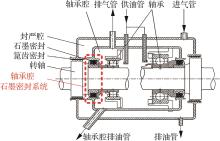
Fig.1
Working principle of oil seal in bearing chamber of an aero-engine [20]
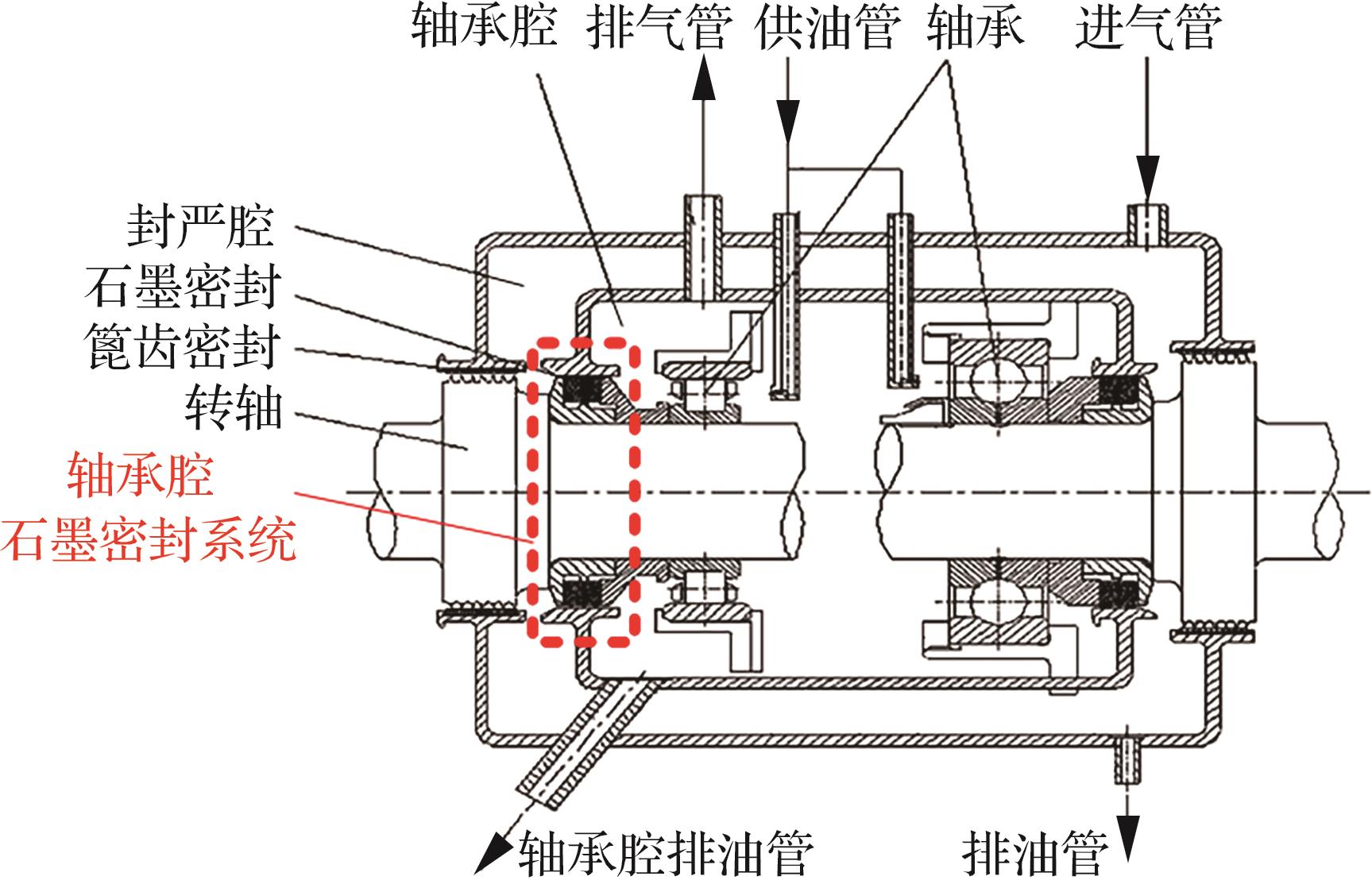
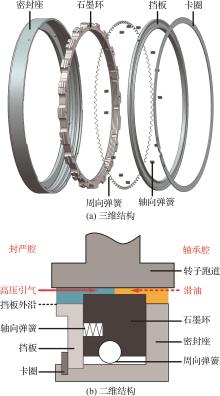
Fig.2
Structure diagram of carbon seal
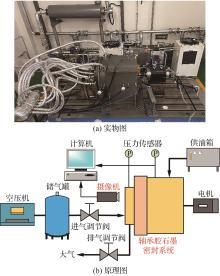
Fig.3
Experimental device of leakage and flow characteristics of oil for carbon seal
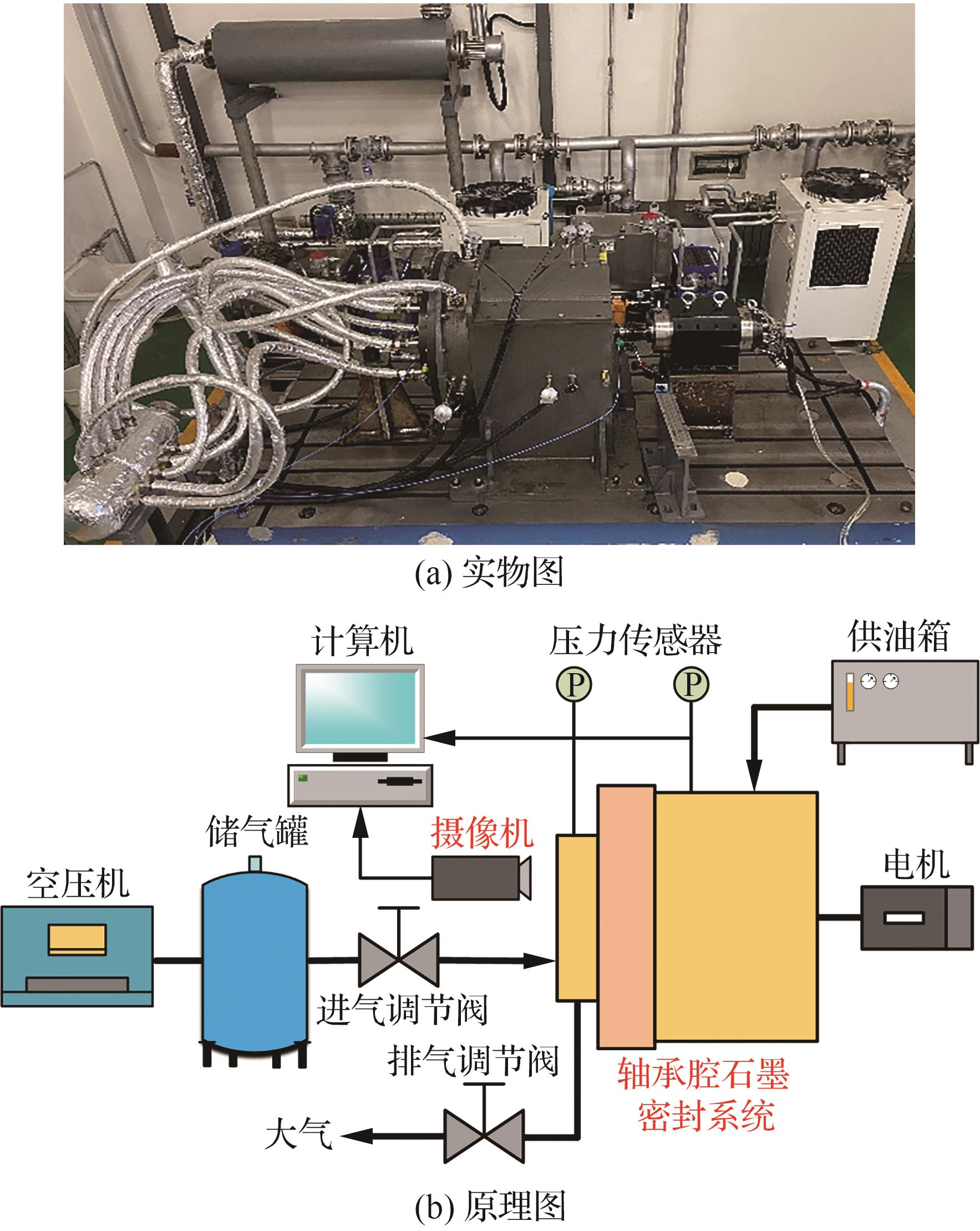
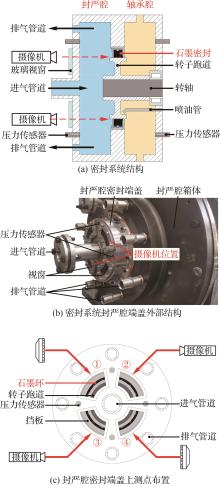
Fig.4
Carbon seal system of bearing chamber
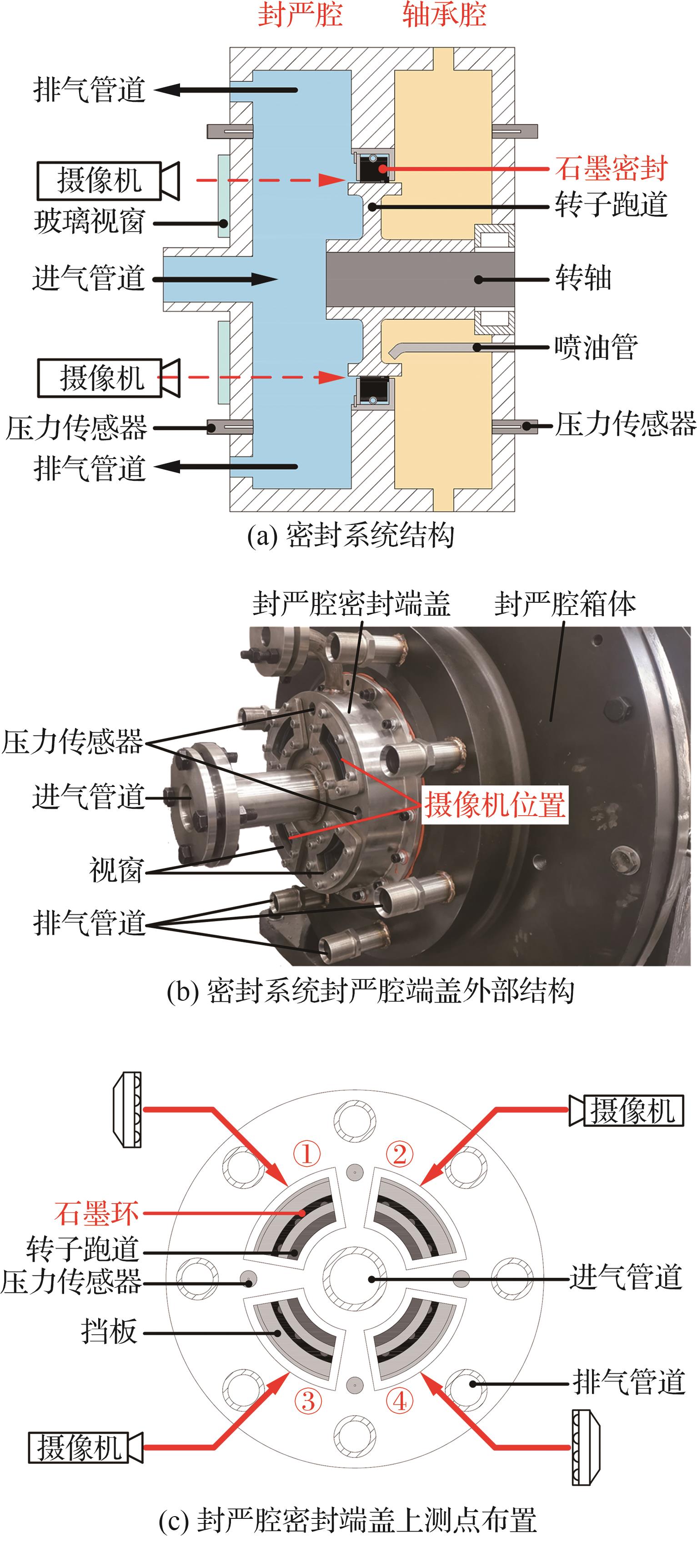
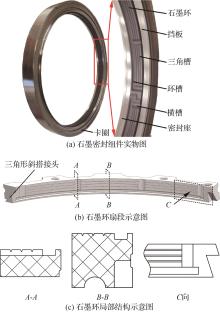
Fig.5
Structure of experimental piece for carbon seal
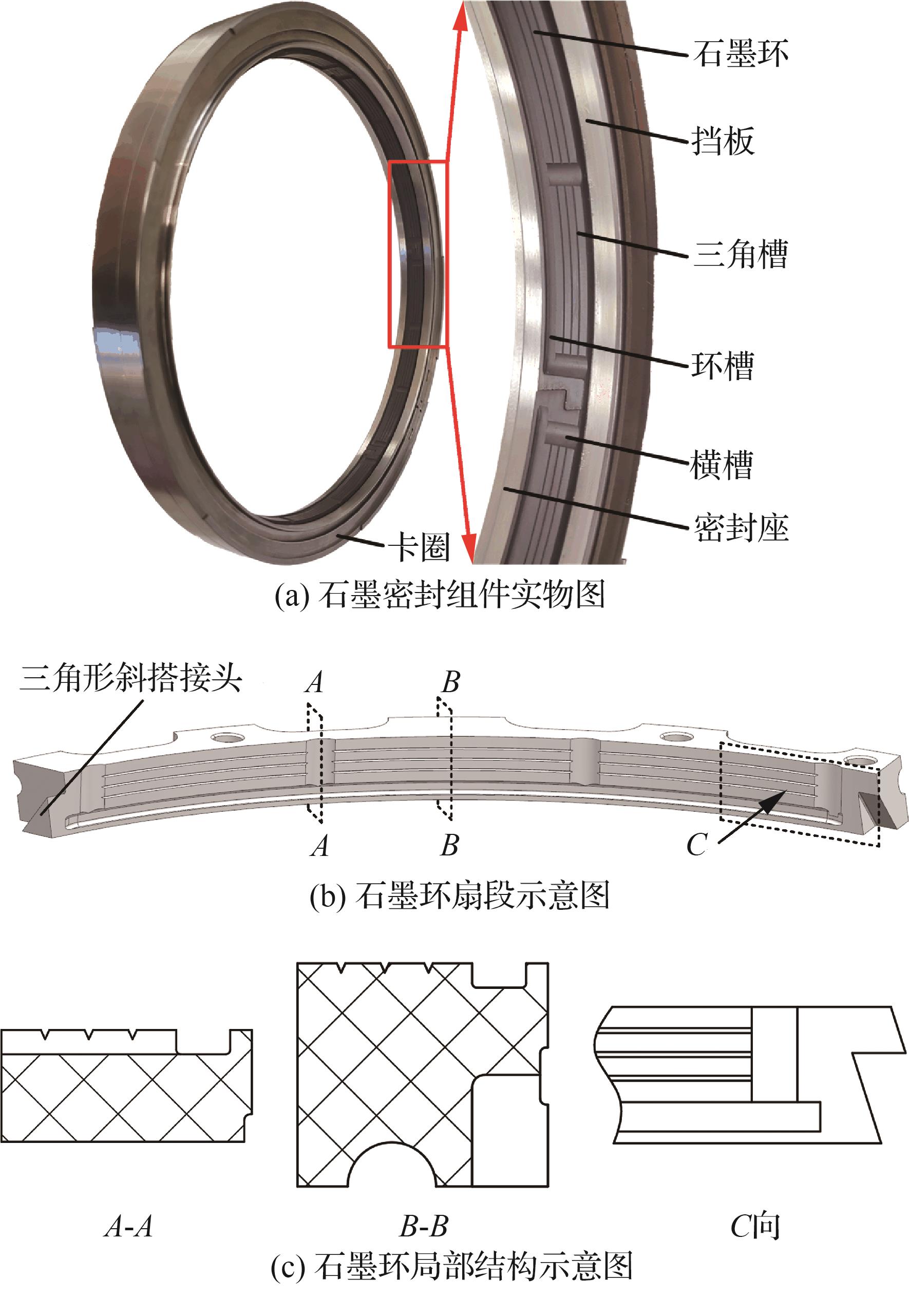
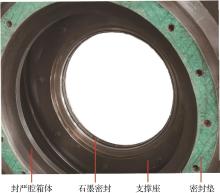
Fig.6
Assembly of carbon seal components
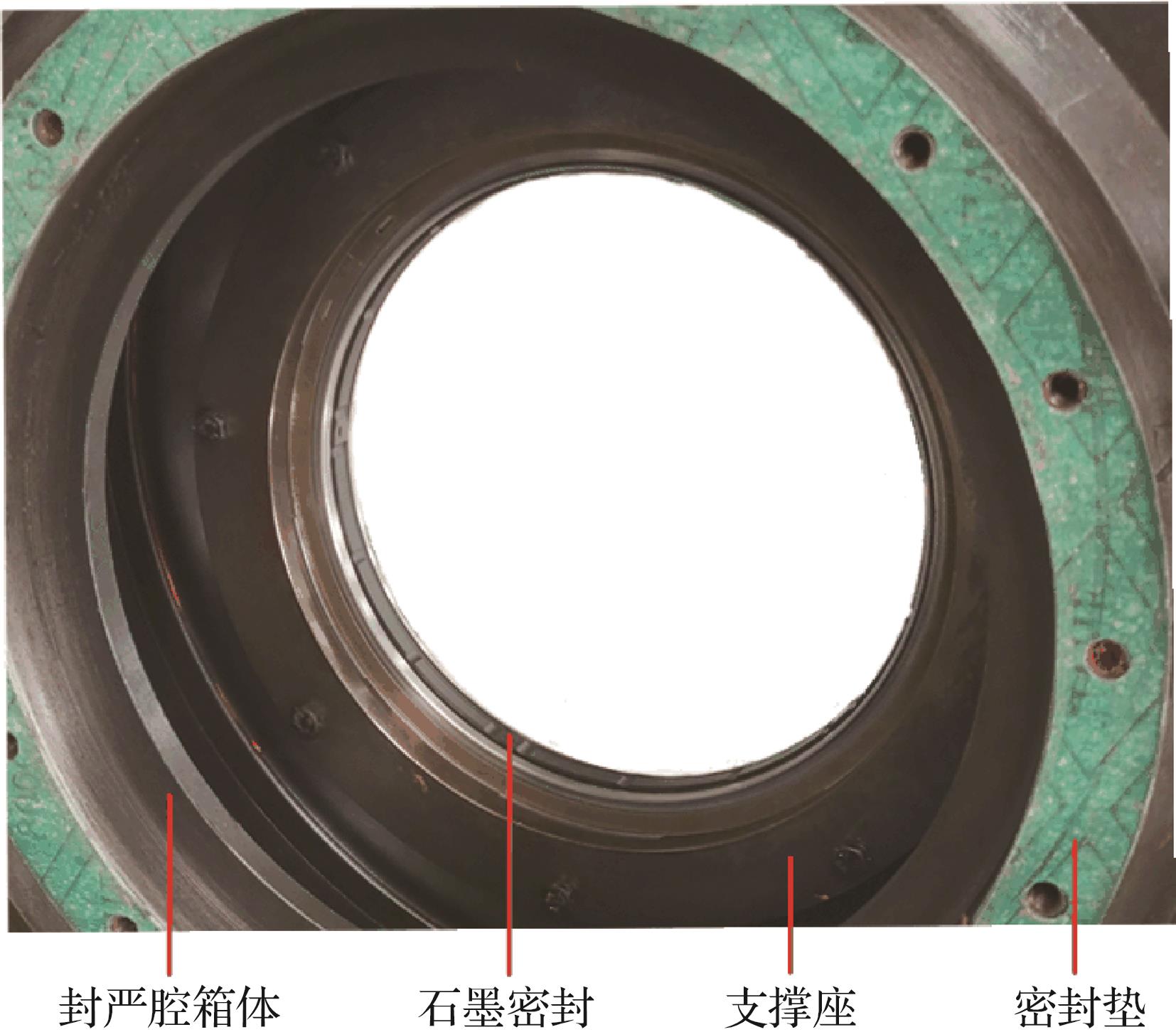
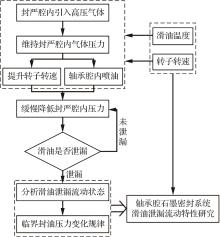
Fig.7
Experiment procedure
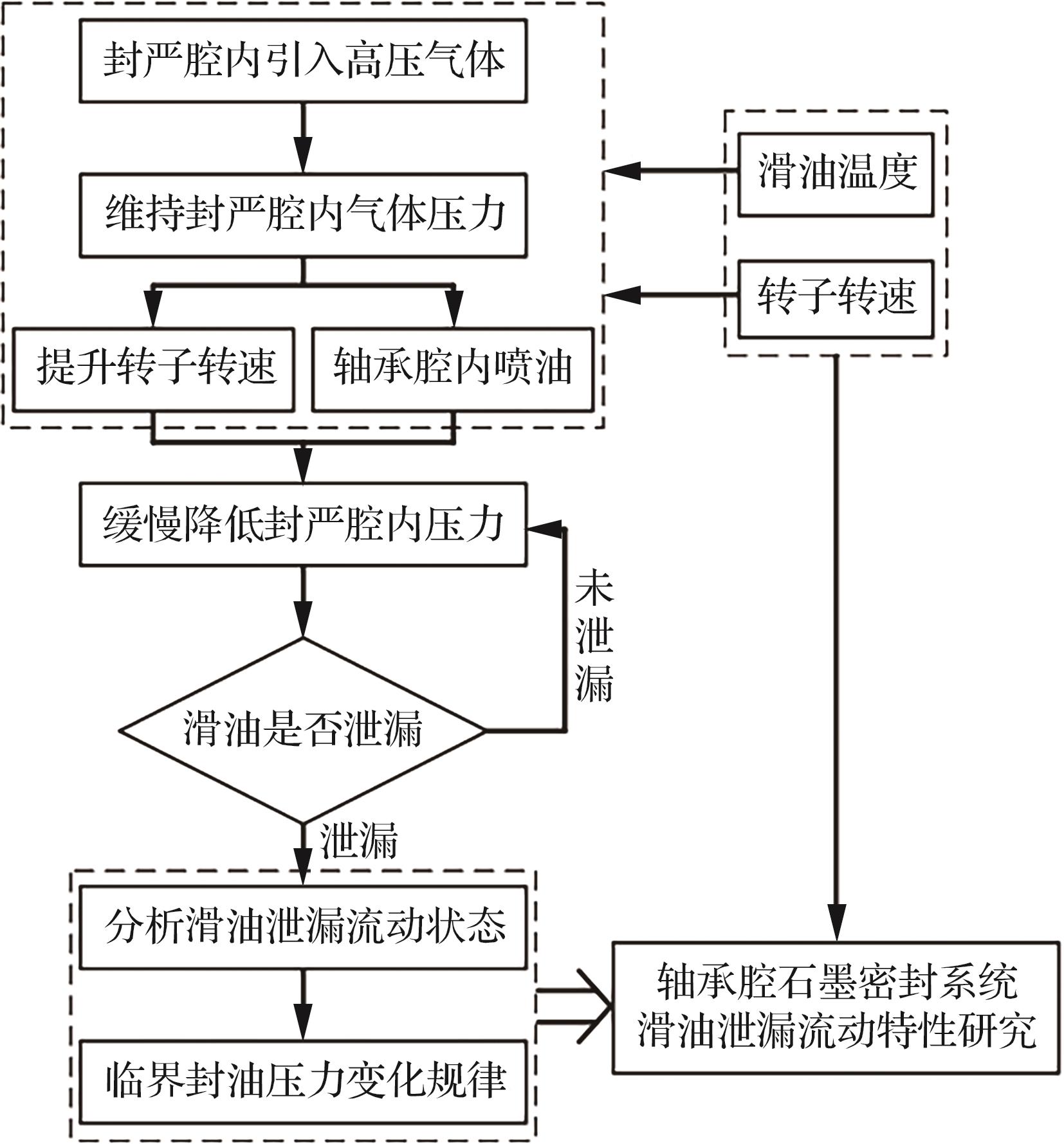
Fig.8
Observation for oil leakage states of carbon seal ring
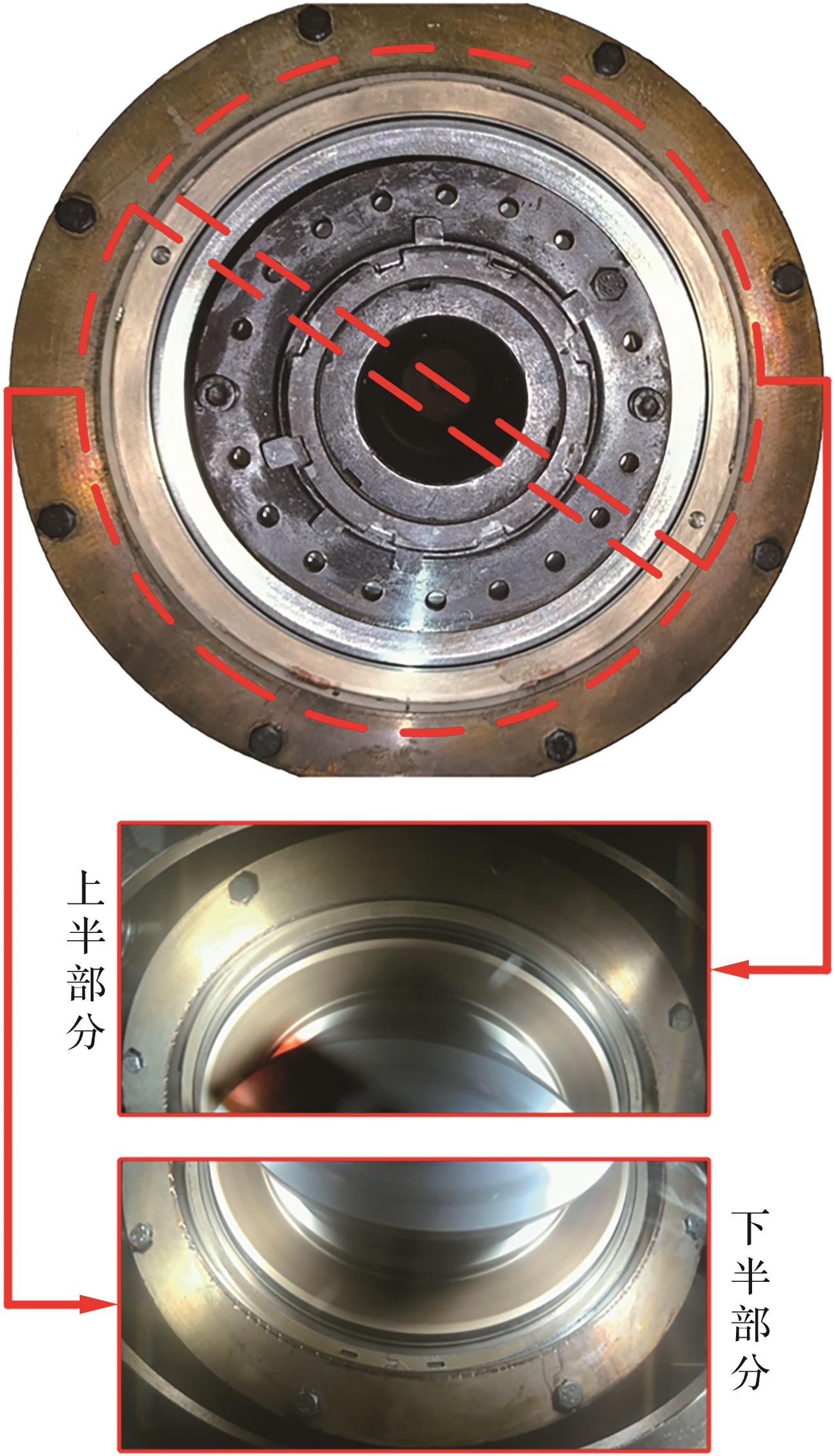
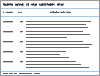
Table 1
Experimental working conditions
| 工况参数 | 数值 |
|---|---|
| 转子转速/(r·min-1) | 4 000, 7 000, 9 000, 11 000, 12 500 |
| 滑油温度/℃ | 40, 75, 100, 125 |
| 轴承腔供油量/(kg·s-1) | 0.1 |
| 进气温度/℃ | 25 |
| 封严压差/kPa | 0~120 |
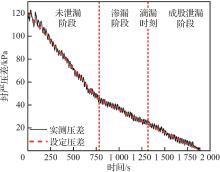
Fig.9
Variation curves of sealing pressure difference
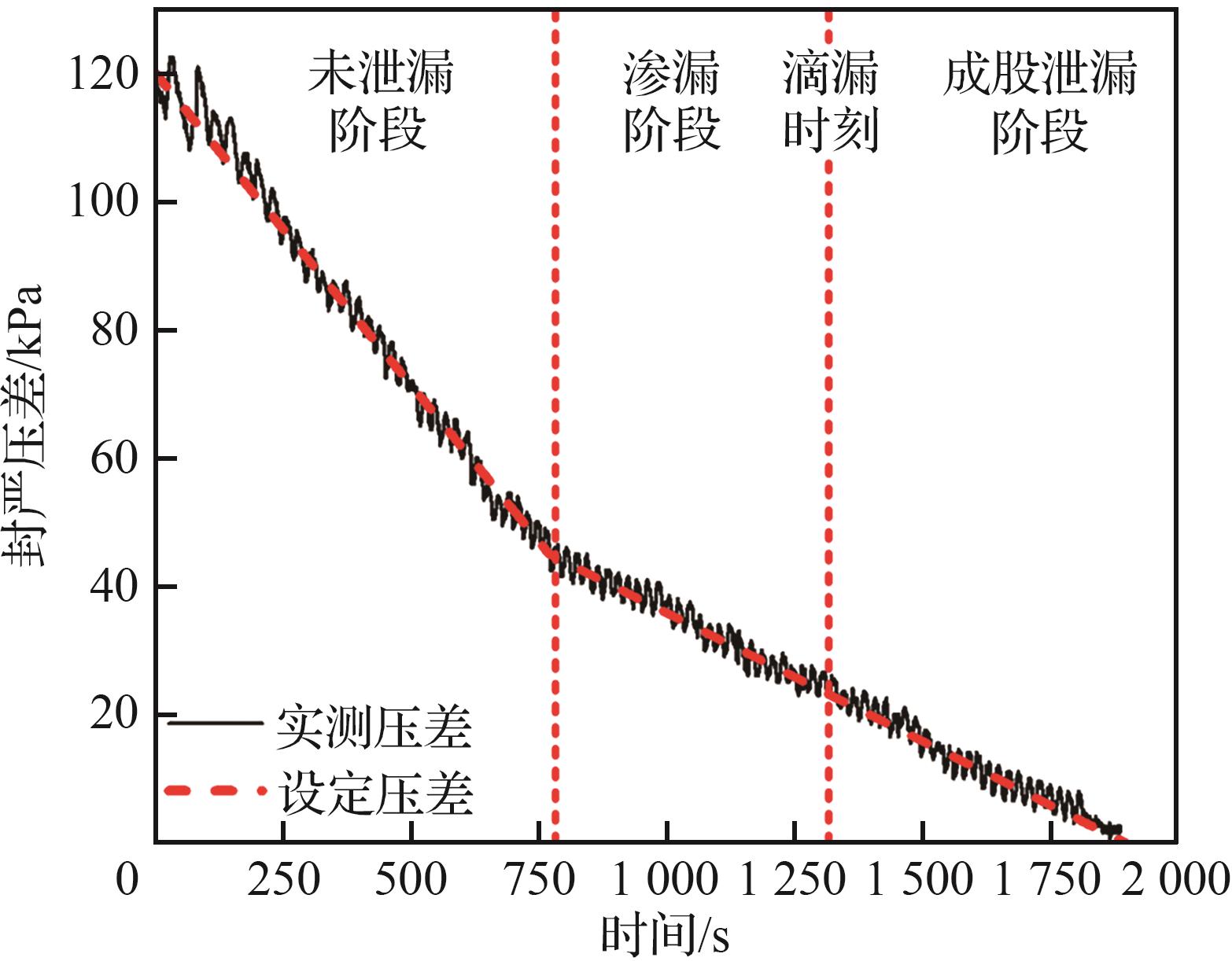

Fig.10
Evolution process of oil leakage states on lower half of carbon seal

Fig.11
Evolution process of oil leakage states on upper half of carbon seal
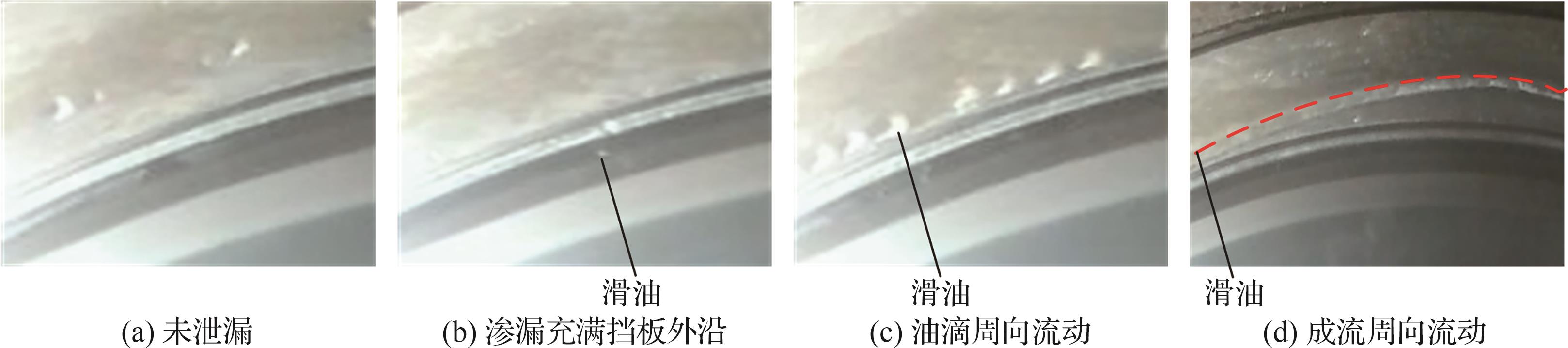
Fig.12
Schematic diagram about evolution process of oil leakage states for carbon seal
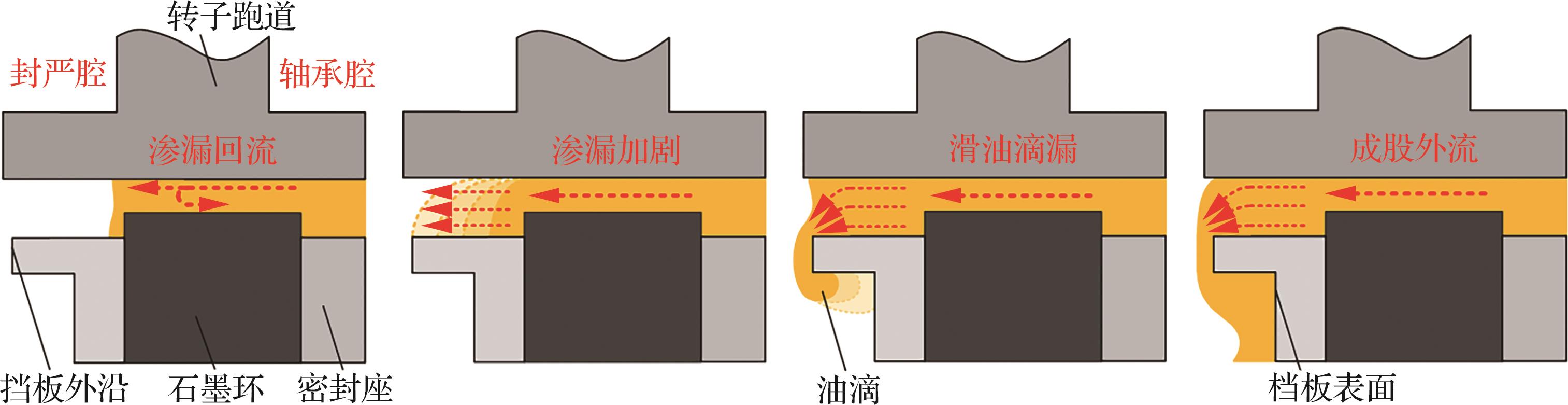
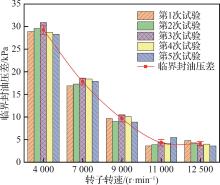
Fig.13
Change in critical oil-sealing pressure difference with rotational speed of rotor
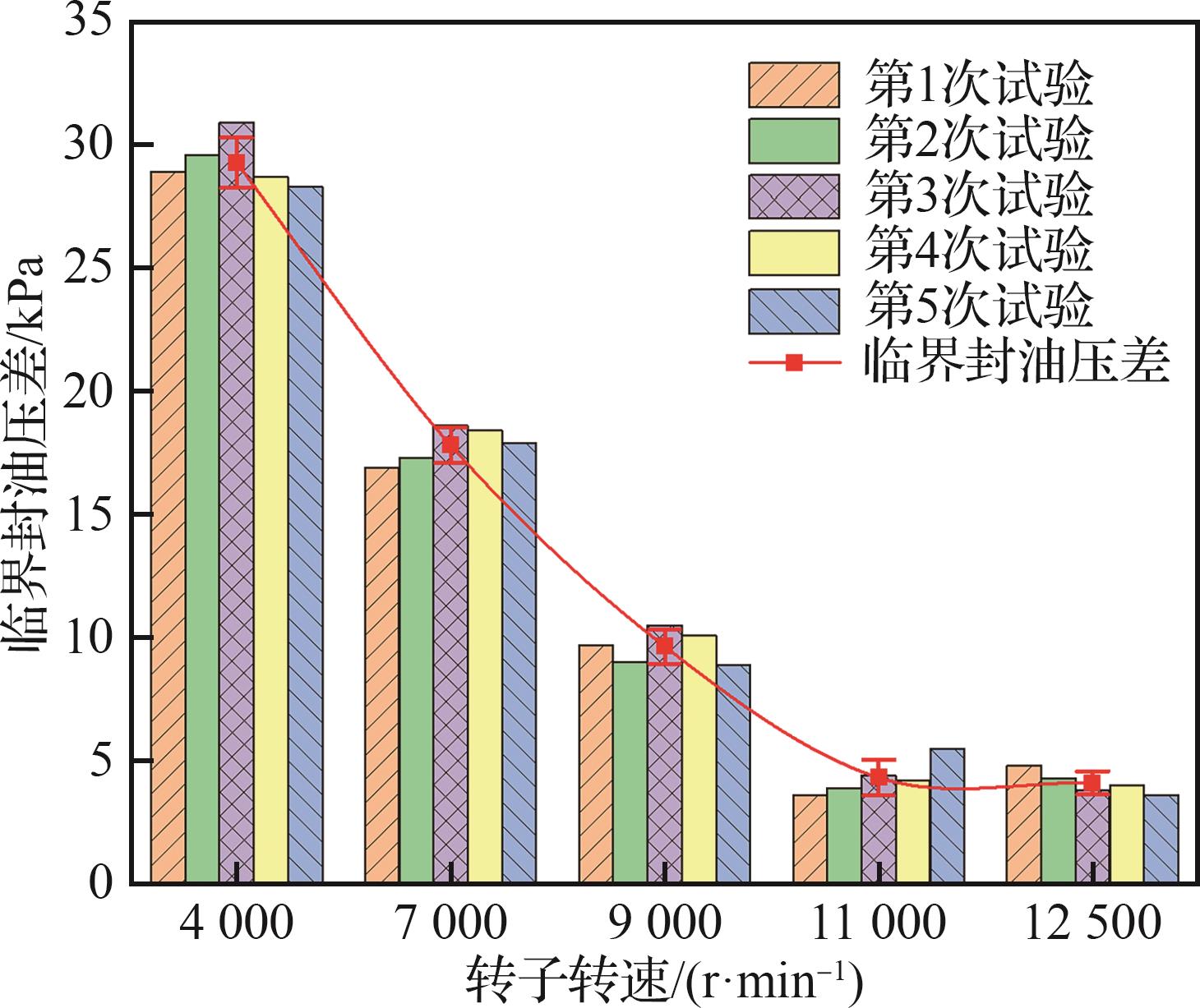
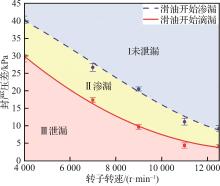
Fig.14
Transition boundaries of oil leakage states
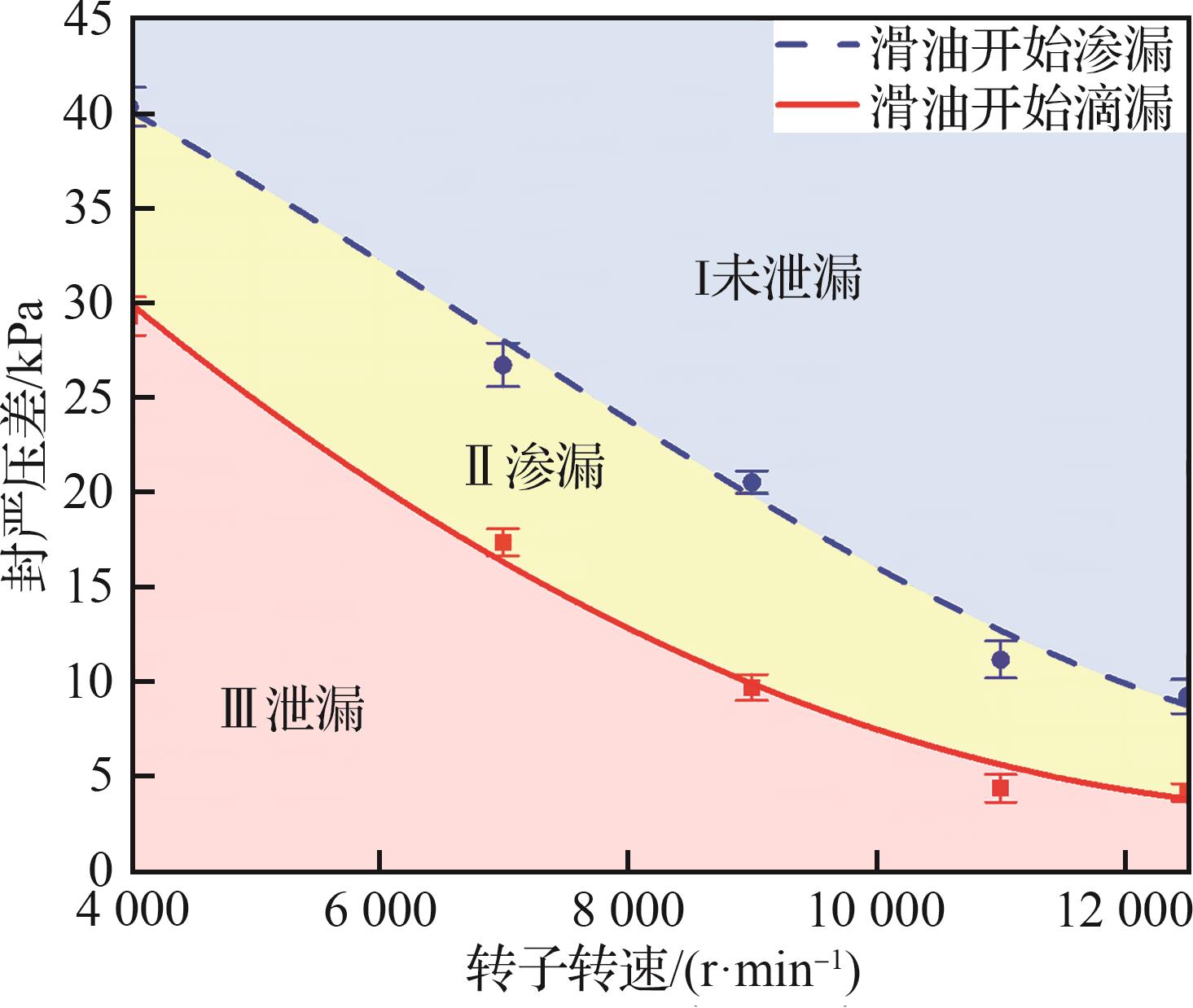
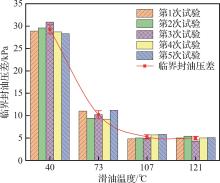
Fig.15
Change in critical oil-sealing pressure difference with oil temperature
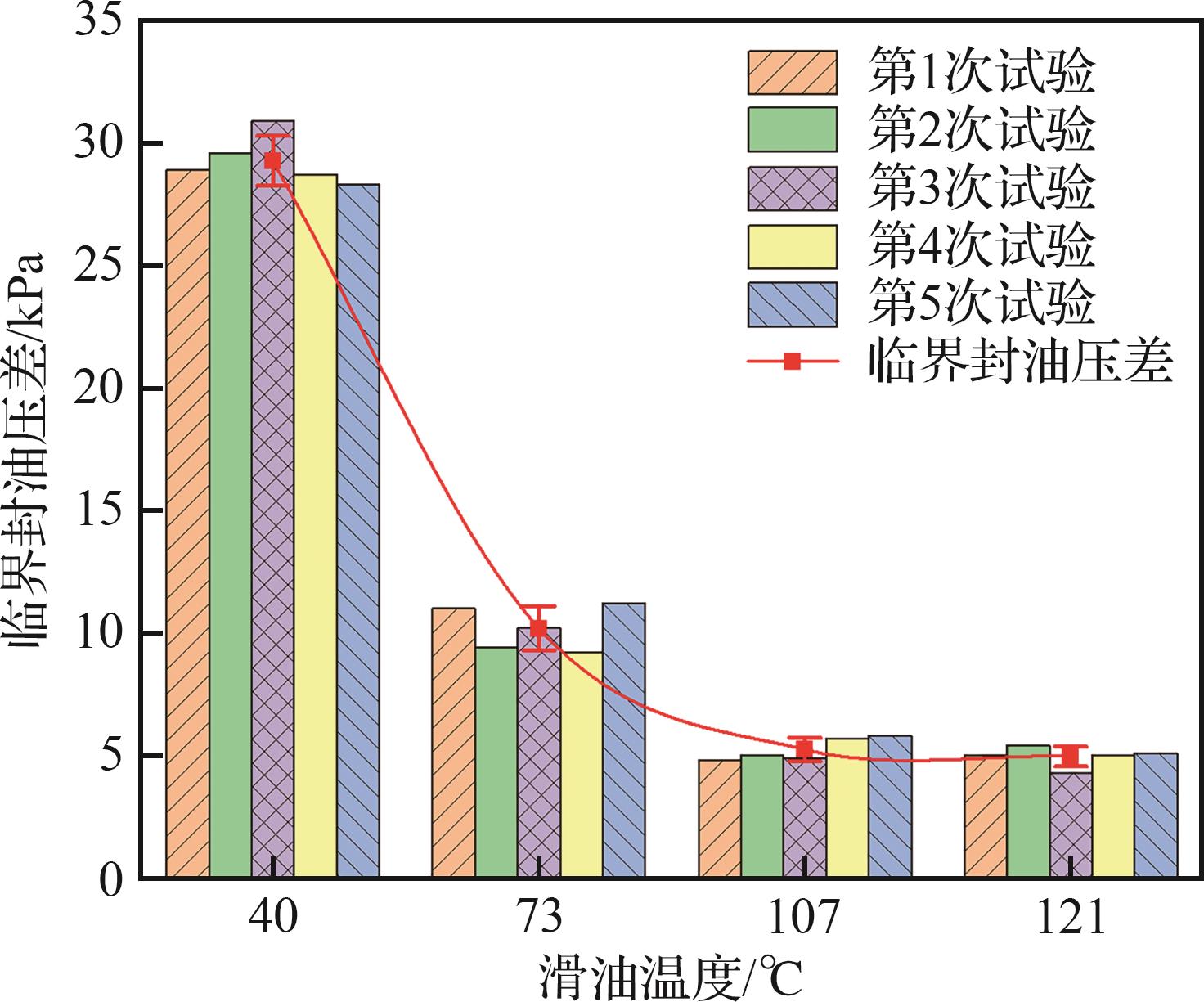
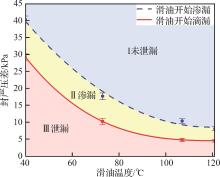
Fig.16
Transition boundaries of oil leakage states
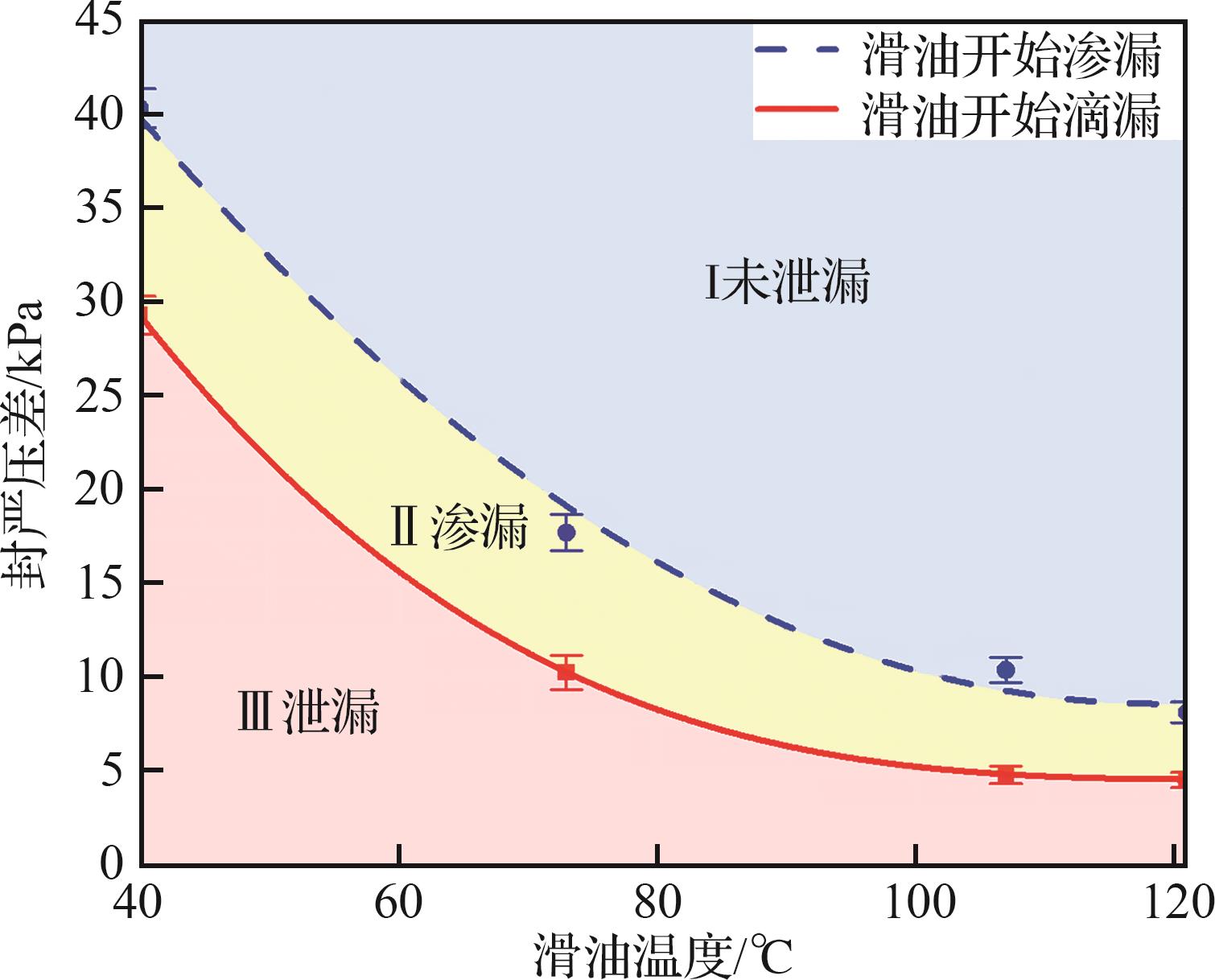
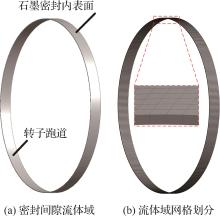
Fig.17
Simplified model of fluid domain in seal clearance
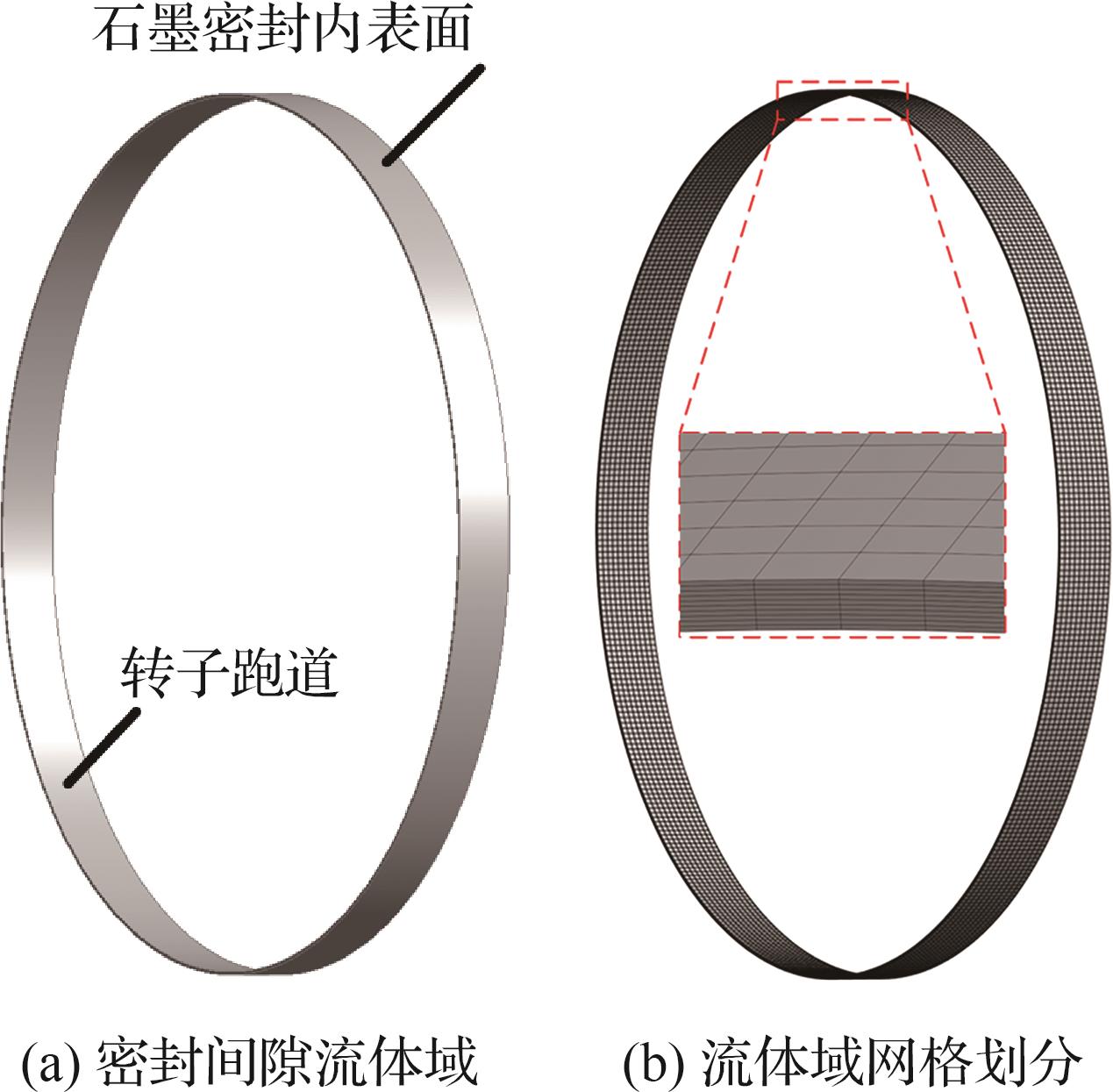
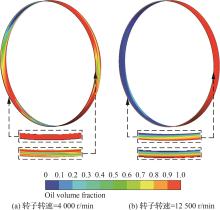
Fig.18
Distribution of oil volume fraction under different rotational speeds of rotor
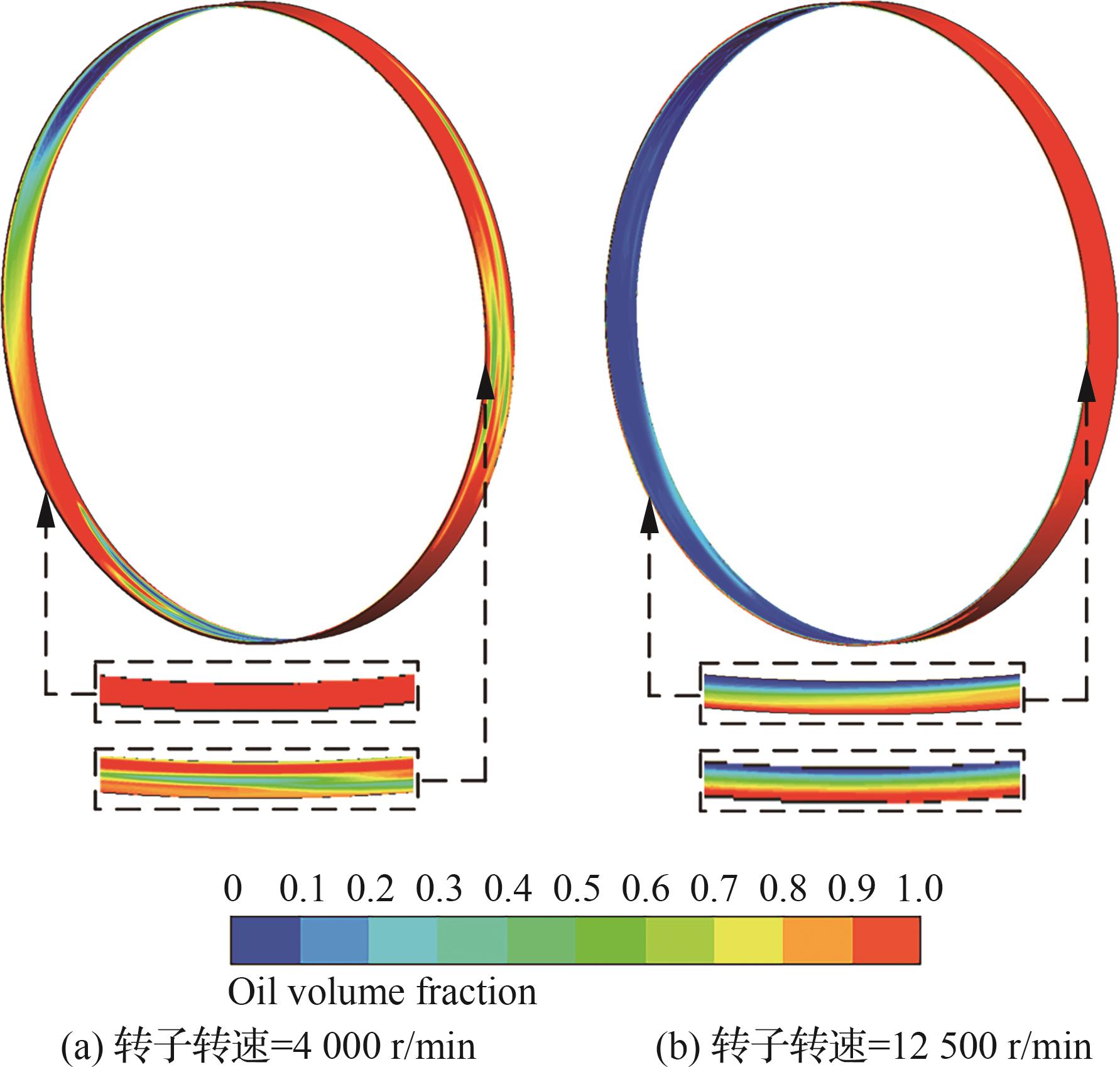
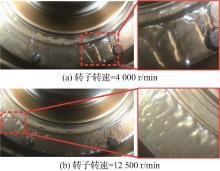
Fig.19
Flow states of oil after leakage under different rotational speeds of rotor
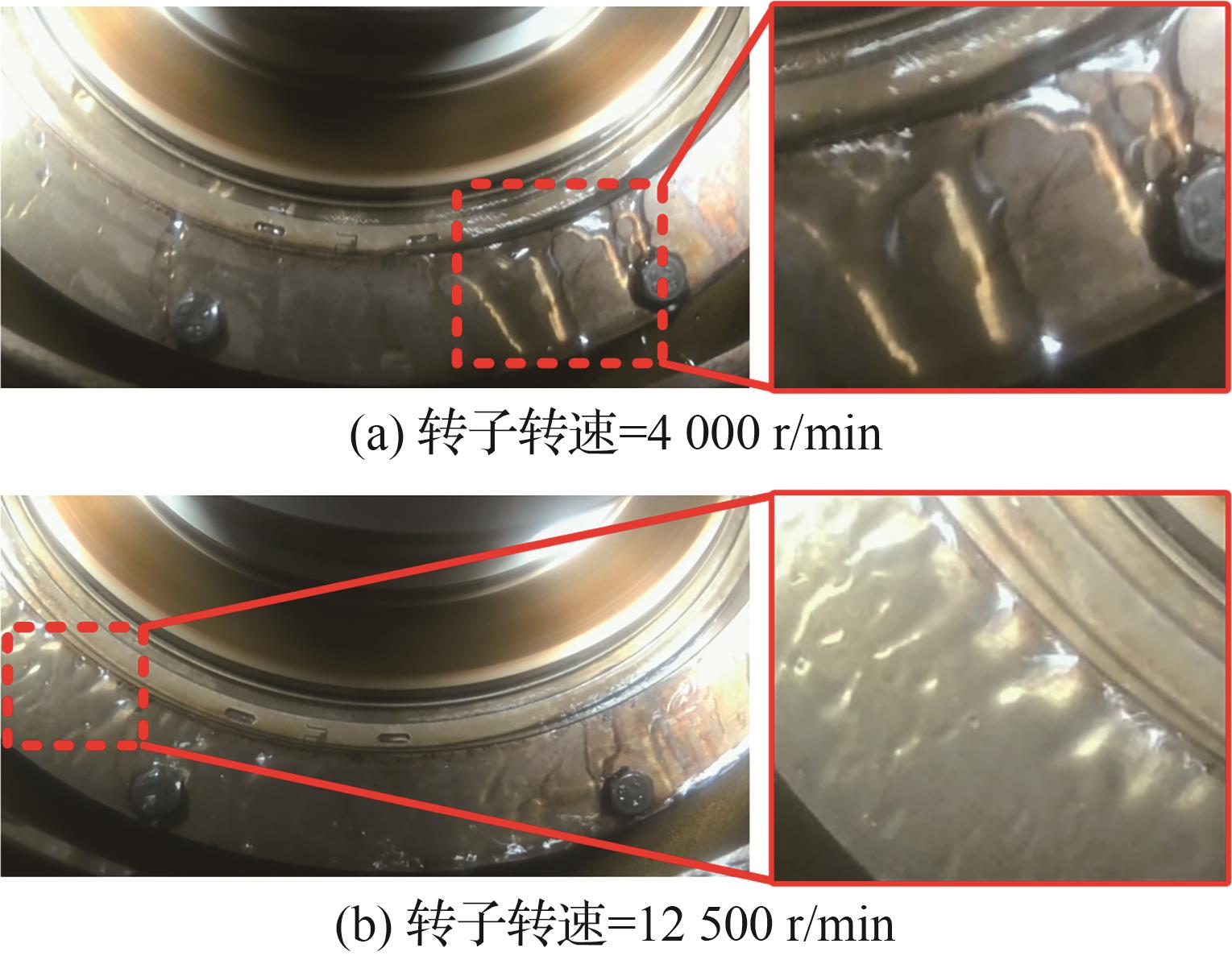
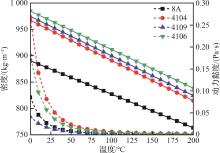
Fig.20
Change in density and dynamic viscosity of oil with oil temperature
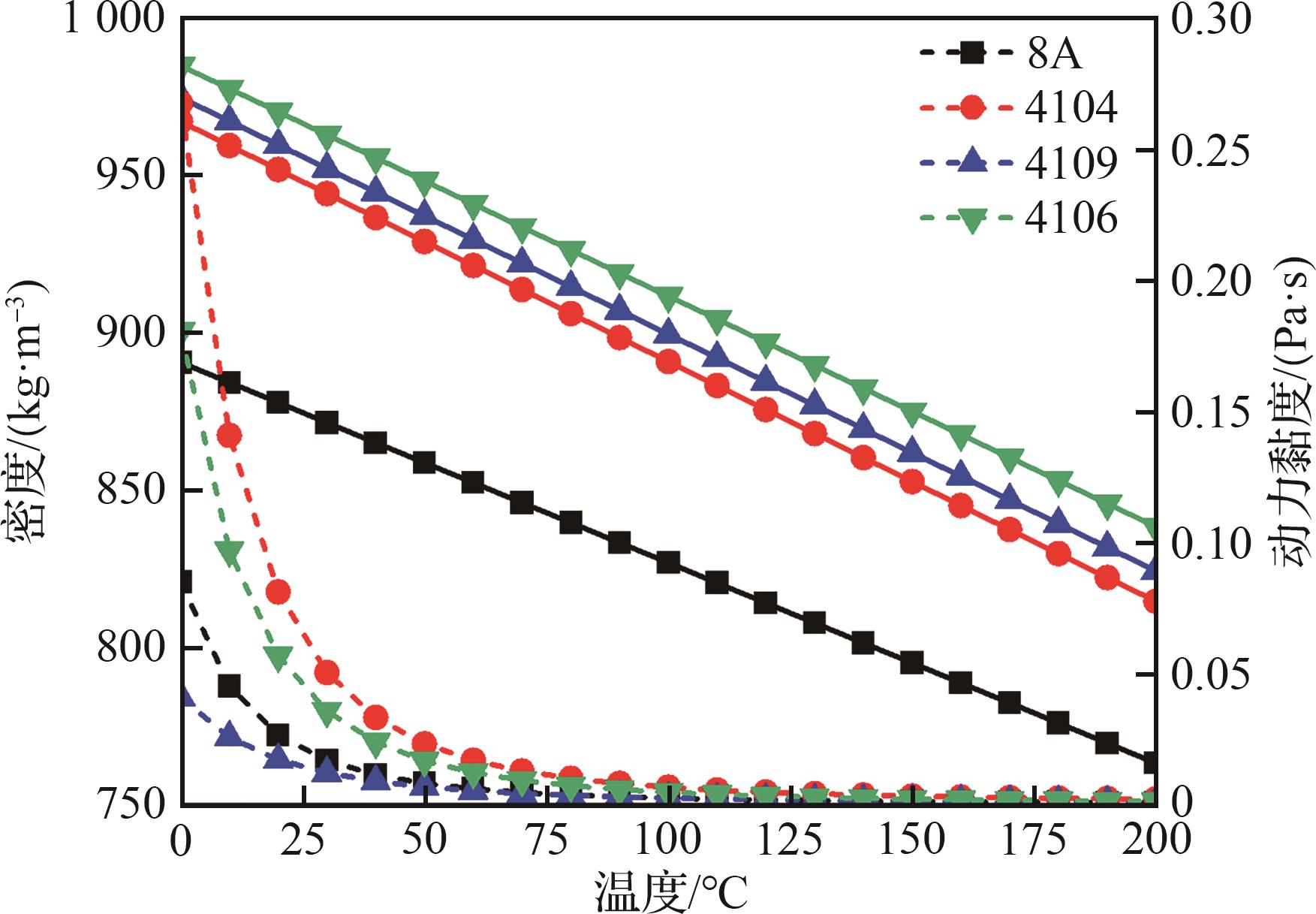
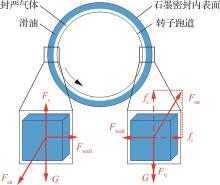
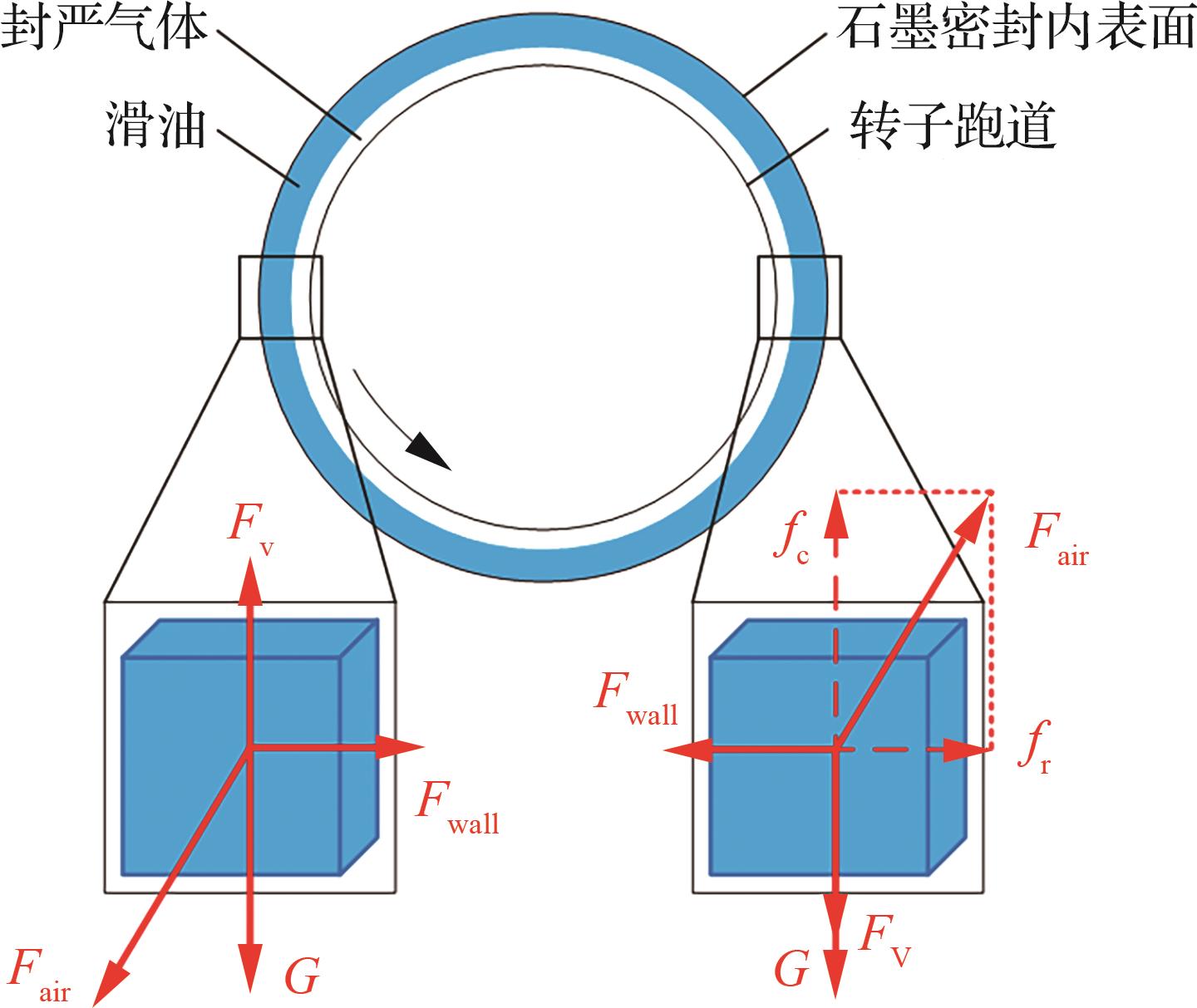
Fig.21
Force analysis for micro-element of oil in a seal clearance
| 1 | 黎林林, 谢光华. 某型号涡喷发动机滑油系统设计[J]. 推进技术, 2001, 22(6): 493-495. |
| LI L L, XIE G H. Oil system design of a certain turbo-jet engine[J]. Journal of Propulsion Technology, 2001, 22(6): 493-495 (in Chinese). | |
| 2 | FLOUROS M. The impact of oil and sealing air flow, chamber pressure, rotor speed, and axial load on the power consumption in an aeroengine bearing chamber[J]. Journal of Engineering for Gas Turbines and Power, 2005, 127(1): 182-186. |
| 3 | 航空发动机设计手册总编委会. 航空发动机设计手册:传动及润滑系统[M]. 北京: 航空工业出版社, 2002: 167-186. |
| Chief Editorial Committee of Aviation Engine Design Manual. Aviation engine design manual: Transmission and lubrication systems[M]. Beijing: Aviation Industry Press, 2002: 167-186 (in Chinese). | |
| 4 | MICHAELIS S. Oil bearing seals and aircraft cabin air contamination[J]. Sealing Technology, 2016, 2016(4): 7-10. |
| 5 | REN G Z, LI Y P, ZHAO H, et al. Research on oil-gas two-phase flow characteristics and improvement of aero-engine bearing chamber[J]. Lubricants, 2023, 11(9): 360. |
| 6 | KURZ W, BAUER H J. An approach for predicting the flow regime in an aero engine bearing chamber[C]∥Turbo Expo: Power for Land, Sea, and Air. American Society of Mechanical Engineers, 2014. |
| 7 | 孙恒超, 陈国定, 王莉娜, 等. 轴承腔油滴含率及油滴相与空气能量传递分析[J]. 航空学报, 2016, 37(3): 1060-1073. |
| SUN H C, CHEN G D, WANG L N, et al. Oil droplets fractions and oil droplets/air energy transfer analysis in bearing chamber[J]. Acta Aeronautica et Astronautica Sinica, 2016, 37(3): 1060-1073 (in Chinese). | |
| 8 | 王莉娜, 陈国定, 孙恒超. 轴承腔油滴沉积特性及油膜流动特征分析[J]. 航空学报, 2016, 37(10): 3159-3169. |
| WANG L N, CHEN G D, SUN H C. Characteristics analysis of oil droplet deposition and oil film flow in a bearing cavity[J]. Acta Aeronautica et Astronautica Sinica, 2016, 37(10): 3159-3169 (in Chinese). | |
| 9 | 任国哲. 基于油气两相流的航空发动机轴承腔流动换热研究及回油结构改进设计[D]. 西安: 西北工业大学, 2016: 48-53. |
| REN G Z. Study on flow and heat transfer and optimization of scavenge structure in bearing chamber based on oil/air two-phase flow[D]. Xi’an: Northwestern Polytechnical University, 2016: 48-53 (in Chinese). | |
| 10 | NICOLI A, JOHNSON K, JEFFERSON-LOVEDAY R. Simulation of a simplified aeroengine bearing chamber using a fully coupled two-way Eulerian thin film/discrete phase approach part I: Film behavior near the bearing[J]. Journal of Engineering for Gas Turbines and Power, 2021, 143(10): 101015. |
| 11 | NICOLI A, JOHNSON K, JEFFERSON-LOVEDAY R. Simulation of a simplified aeroengine bearing chamber using a fully coupled two-way Eulerian thin film/discrete phase approach part II: Droplet behavior in the chamber[J]. Journal of Engineering for Gas Turbines and Power, 2021, 143(10): 101016. |
| 12 | 李炎军, 杨富, 刘振侠, 等. 轴承腔油气两相介质流动与热分析[J]. 航空动力学报, 2021, 36(3): 606-615. |
| LI Y J, YANG F, LIU Z X, et al. Flow and thermal analysis of oil air two-phase medium in bearing chamber[J]. Journal of Aerospace Power, 2021, 36(3): 606-615 (in Chinese). | |
| 13 | LI S B, LI C X, WANG W. Simulation of unsteady flows of oil/gas in the ventless bearing chamber of an aero-engine[J]. Aerospace, 2022, 9(4): 211. |
| 14 | LU P, YE Q H, FANG L L, et al. Research on the air–oil two-phase flow regime in an aeroengine bearing chamber based on Hilbert-Huang transform[J]. Proceedings of the Institution of Mechanical Engineers, Part G: Journal of Aerospace Engineering, 2022, 236(1): 24-32. |
| 15 | FELIX C V P, MATTHIAS B K, CORINA H, et al. Experimental and numerical investigations on oil leakage across labyrinth seals in aero engine bearing chambers[C]∥Turbo Expo: Power for Land, Sea, and Air. American Society of Mechanical Engineers, 2016. |
| 16 | LI G, ZHANG Q, LEI Z, et al. Leakage performance of labyrinth seal for oil sealing of aero-engine[J]. Propulsion and Power Research, 2019, 8(1): 13-22. |
| 17 | LI Z T, LI Y F, CAO H, et al. Investigation of cavitation evolution and hydrodynamic performances of oil film seal with spiral groove[J]. Tribology International, 2021, 157: 106915. |
| 18 | LIU F Y, YU B, LI Y F, et al. Experimental study on lubrication characteristics and leakage inhibition of oil-lubricated seal with herringbone grooves[J]. Tribology International, 2023, 187: 108751. |
| 19 | 郭金道, 赵欢, 王平, 等. 基于引气封油方式的轴承腔密封间隙油气两相泄漏流动特性数值与试验研究[J]. 机械工程学报, 2024, 60(3): 214-225. |
| GUO J D, ZHAO H, WANG P, et al. Numerical and experimental study on oil-air two-phase leakage flow characteristics based on air-bleeding oil-sealing mode in seal clearance of bearing cavity[J]. Journal of Mechanical Engineering, 2024, 60(3): 214-225 (in Chinese). | |
| 20 | 何彬, 马正军, 李卓, 等. 某型燃气轮机轴承腔压力异常分析及改进[J]. 热能动力工程, 2021, 36(10): 187-192. |
| HE B, MA Z J, LI Z, et al. Analysis and improvement of abnormal pressure in bearing cavity of a gas turbine[J]. Journal of Engineering for Thermal Energy and Power, 2021, 36(10): 187-192 (in Chinese). |
| [1] | Hui LI, Tong HUANG, Xinrong SU, Xin YUAN. DDES analysis of unsteady characteristics of interaction between tip leakage flow and wake [J]. Acta Aeronautica et Astronautica Sinica, 2023, 44(14): 628325-628325. |
| [2] | HU Jianping, REN Guozhe, YI Jun, LIU Zhenxia, LYU Yaguo, ZHAO Jingyu. Numerical simulation and experiment for heat transfer between oil film and inner wall of bearing chamber [J]. ACTA AERONAUTICAET ASTRONAUTICA SINICA, 2017, 38(9): 521013-521013. |
| [3] | GAO Jie, ZHENG Qun, YUE Guoqiang, DONG Ping, JIANG Yuting. Research progress on turbine blade tip aerodynamics and heat transfer technology for gas turbines [J]. ACTA AERONAUTICAET ASTRONAUTICA SINICA, 2017, 38(9): 521019-521019. |
| [4] | LIU Chenyuan, LIU Huoxing. Mechanism of nonsteady leakage flow of wave rotors [J]. ACTA AERONAUTICAET ASTRONAUTICA SINICA, 2017, 38(5): 120606-120606. |
| [5] | SUN Hengchao, CHEN Guoding, WANG Li'na, WANG Fei. Oil droplets fractions and oil droplets/air energy transfer analysis in bearing chamber [J]. ACTA AERONAUTICAET ASTRONAUTICA SINICA, 2016, 37(3): 1060-1073. |
| [6] | WANG Zinan, GENG Shaojuan, ZHANG Hongwu. Influence of clearance variation on aerodynamic performance of a compressor stator cascade [J]. ACTA AERONAUTICAET ASTRONAUTICA SINICA, 2016, 37(11): 3304-3316. |
| [7] | WANG Li'na, CHEN Guoding, SUN Hengchao. Characteristics analysis of oil droplet deposition and oil film flow in a bearing chamber [J]. ACTA AERONAUTICAET ASTRONAUTICA SINICA, 2016, 37(10): 3159-3169. |
| [8] | LIU Deng, CHEN Guoding, FANG Long, SUN Hengchao. State identification and characteristics analysis of oil droplet's oblique impact onto solid wall [J]. ACTA AERONAUTICAET ASTRONAUTICA SINICA, 2015, 36(4): 1359-1366. |
| [9] | GAO Lipeng, DU Juan, LI Jichao, LIN Feng, NIE Chaoqun. Prestall process in low-speed axial compressor with single circumferential casing groove [J]. ACTA AERONAUTICAET ASTRONAUTICA SINICA, 2015, 36(12): 3822-3831. |
| [10] | LIU Dongjian, LI Jun, JIANG Aiwu, ZHOU Youtian, SONG Guoxing. Influence of axial gap on compressor passage blockage and aerodynamic performance [J]. ACTA AERONAUTICAET ASTRONAUTICA SINICA, 2015, 36(11): 3522-3533. |
| [11] | DUAN Zhenzhen, LIU Yangwei, LU Lipeng. Influence of Circumferential Casing Grooves on Transonic Compressor Rotor Performance [J]. ACTA AERONAUTICAET ASTRONAUTICA SINICA, 2014, 35(8): 2163-2173. |
| [12] | GAO Jie, ZHENG Qun, XU Tianbang, ZHANG Zhengyi. Effect of Tip Leakage Vortex Breakdown on Losses in Turbines [J]. ACTA AERONAUTICAET ASTRONAUTICA SINICA, 2014, 35(5): 1257-1264. |
| [13] | ZHANG Chenkai, HU Jun, WANG Zhiqiang, GAO Xiang. Numerical Study on Tip Clearance Flow Structure of an Axial Flow Compressor Rotor [J]. ACTA AERONAUTICAET ASTRONAUTICA SINICA, 2014, 35(5): 1236-1245. |
| [14] | CHEN Bo, CHEN Guoding, WANG Tao. Flow Characteristics Analysis of Wall Oil Film with Consideration of Oil Droplet Deformation and Secondary Oil Droplet Deposition in Aeroengine Bearing Chamber [J]. ACTA AERONAUTICAET ASTRONAUTICA SINICA, 2013, 34(8): 1980-1989. |
| [15] | GAO Jie, ZHENG Qun. Effect of Squealer Tip Geometry on Rotor Blade Aerodynamic Performance [J]. ACTA AERONAUTICAET ASTRONAUTICA SINICA, 2013, 34(2): 218-226. |
| Viewed | ||||||
|
Full text |
|
|||||
|
Abstract |
|
|||||
Address: No.238, Baiyan Buiding, Beisihuan Zhonglu Road, Haidian District, Beijing, China
Postal code : 100083
E-mail:hkxb@buaa.edu.cn
Total visits: 6658907 Today visits: 1341All copyright © editorial office of Chinese Journal of Aeronautics
All copyright © editorial office of Chinese Journal of Aeronautics
Total visits: 6658907 Today visits: 1341

 CJA
CJA
