Acta Aeronautica et Astronautica Sinica ›› 2026, Vol. 47 ›› Issue (5): 432311.doi: 10.7527/S1000-6893.2025.32311
• Material Engineering and Mechanical Manufacturing • Previous Articles
Zhi HAN1,2, Yusi WANG1,2, Wenyao ZHANG1,2, Bing LI3,4, Yuan CHEN1,2,3( )
)
Received:2025-05-27
Revised:2025-06-18
Accepted:2025-07-21
Online:2025-07-31
Published:2025-07-30
Contact:
Yuan CHEN
E-mail:chenyuan@sustech.edu.cn
Supported by:CLC Number:
Zhi HAN, Yusi WANG, Wenyao ZHANG, Bing LI, Yuan CHEN. Progress in modeling of additive manufacturing for continuous fiber-reinforced composites[J]. Acta Aeronautica et Astronautica Sinica, 2026, 47(5): 432311.
Fig.1
Applications of 3D printed continuous fiber composites[18-21]
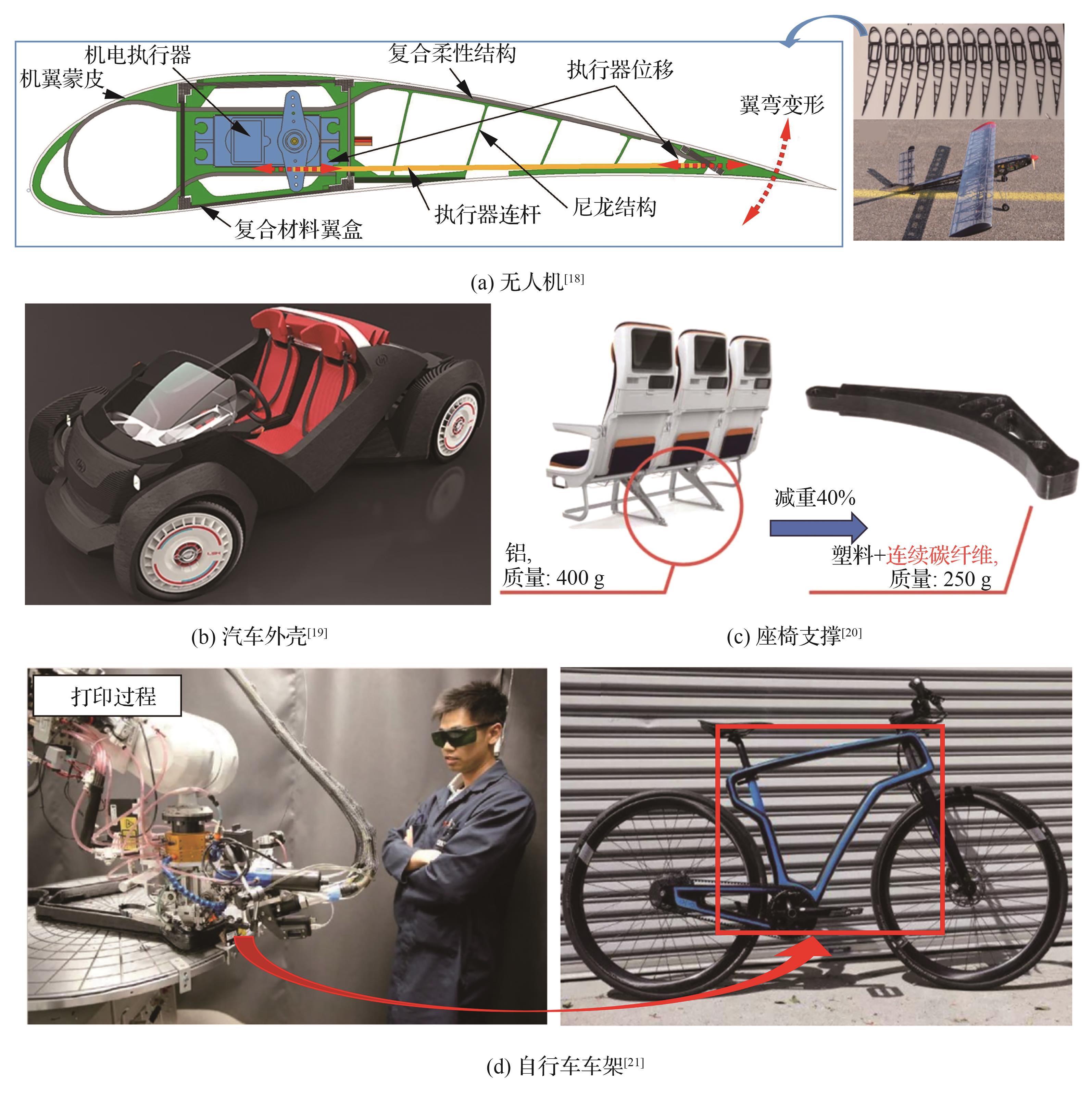
Fig.2
Paper framework[28-33]
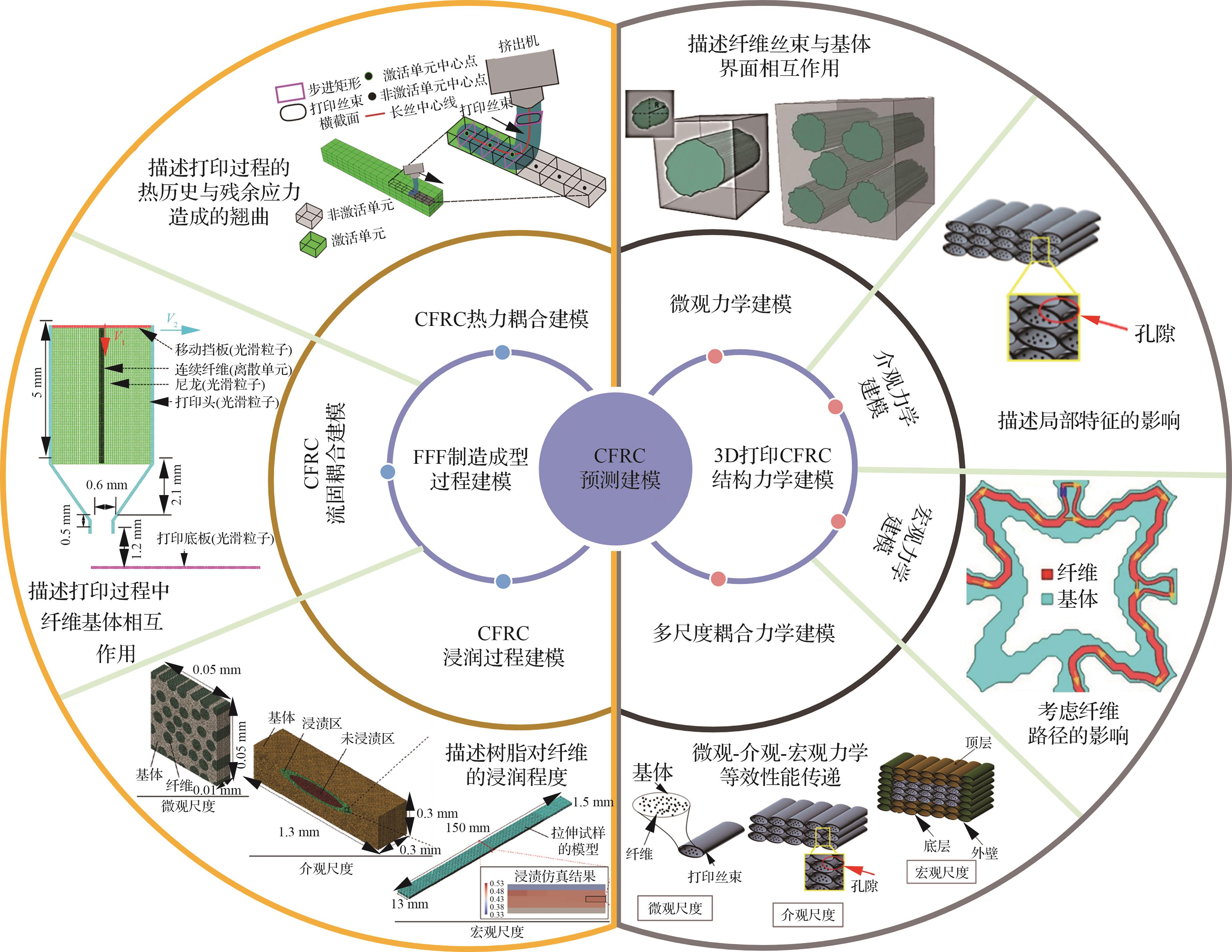
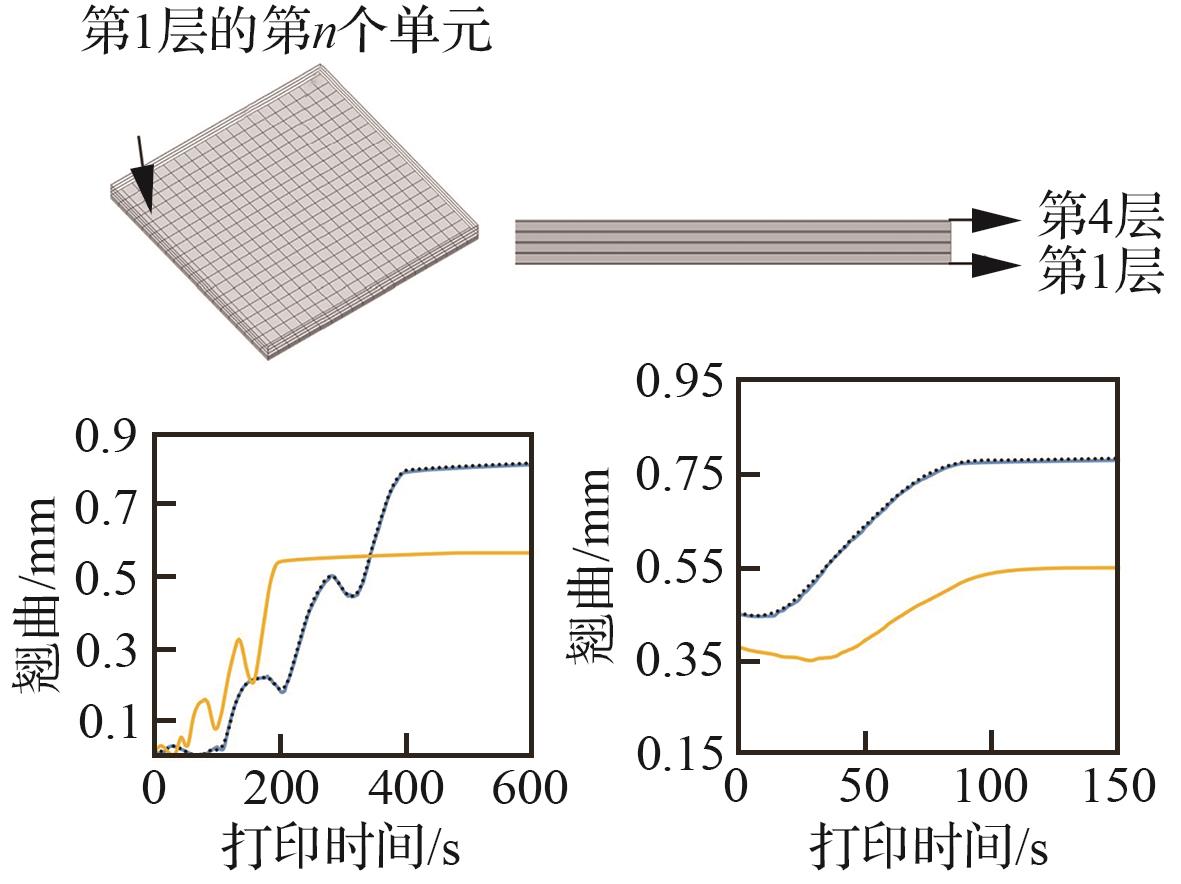
Fig.3
Simulation of thermal history in additive manufacturing based on the element birth and death method[28]
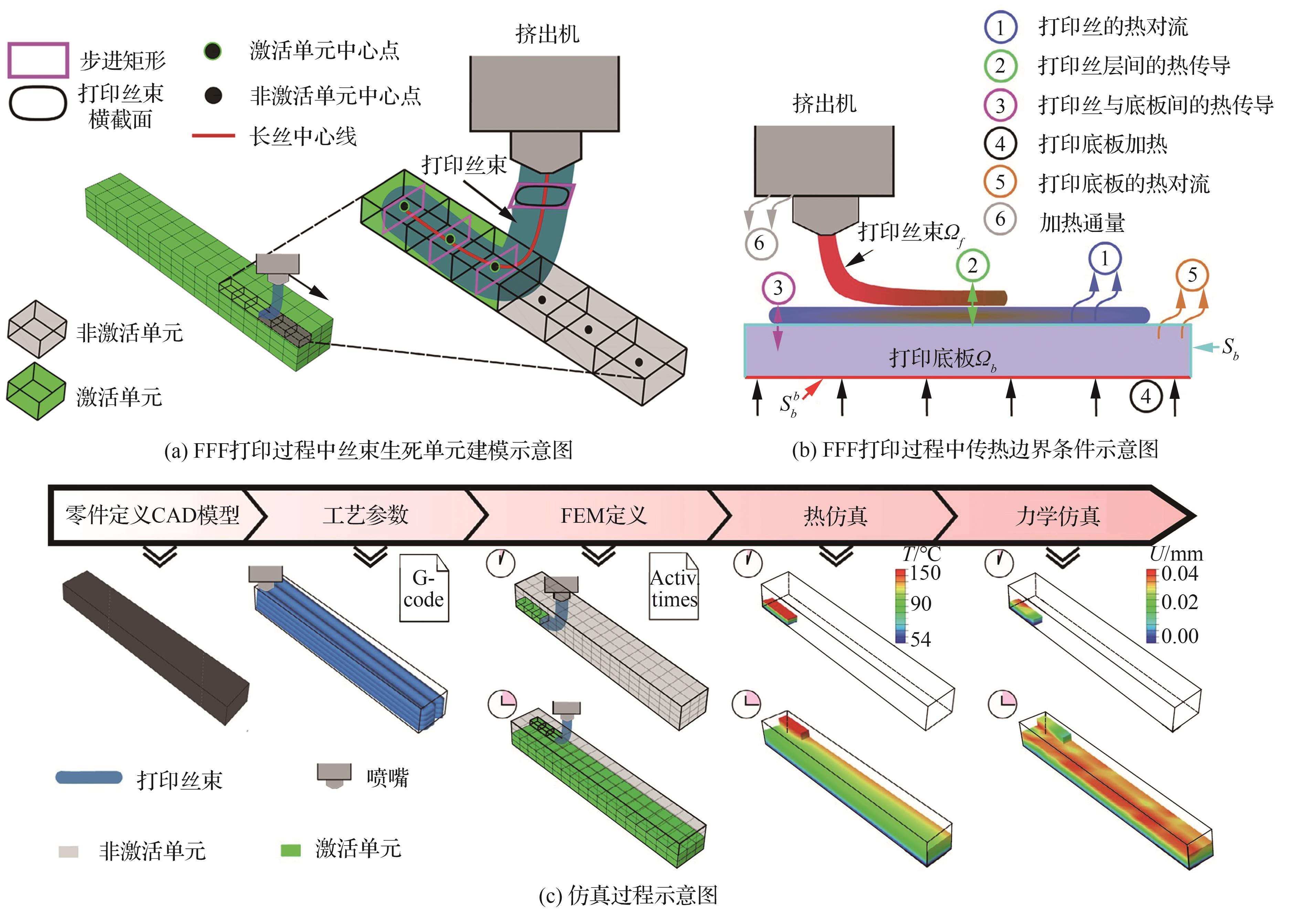
Fig.4
Cross-sectional views of pores in 3D printed continuous fiber composites at different printing time intervals[48]
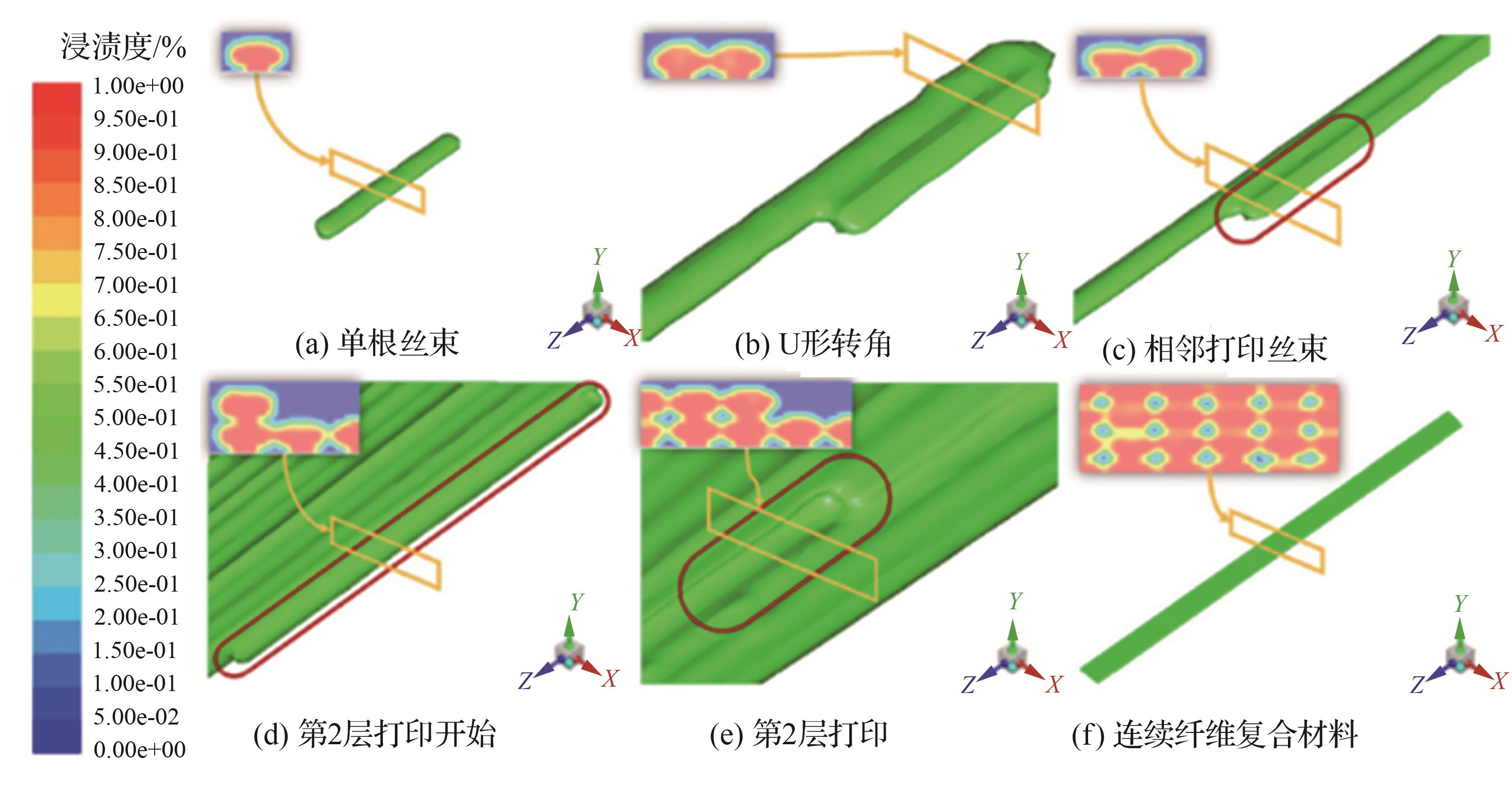
Fig.5
3D printed continuous fiber impregnation process[29]
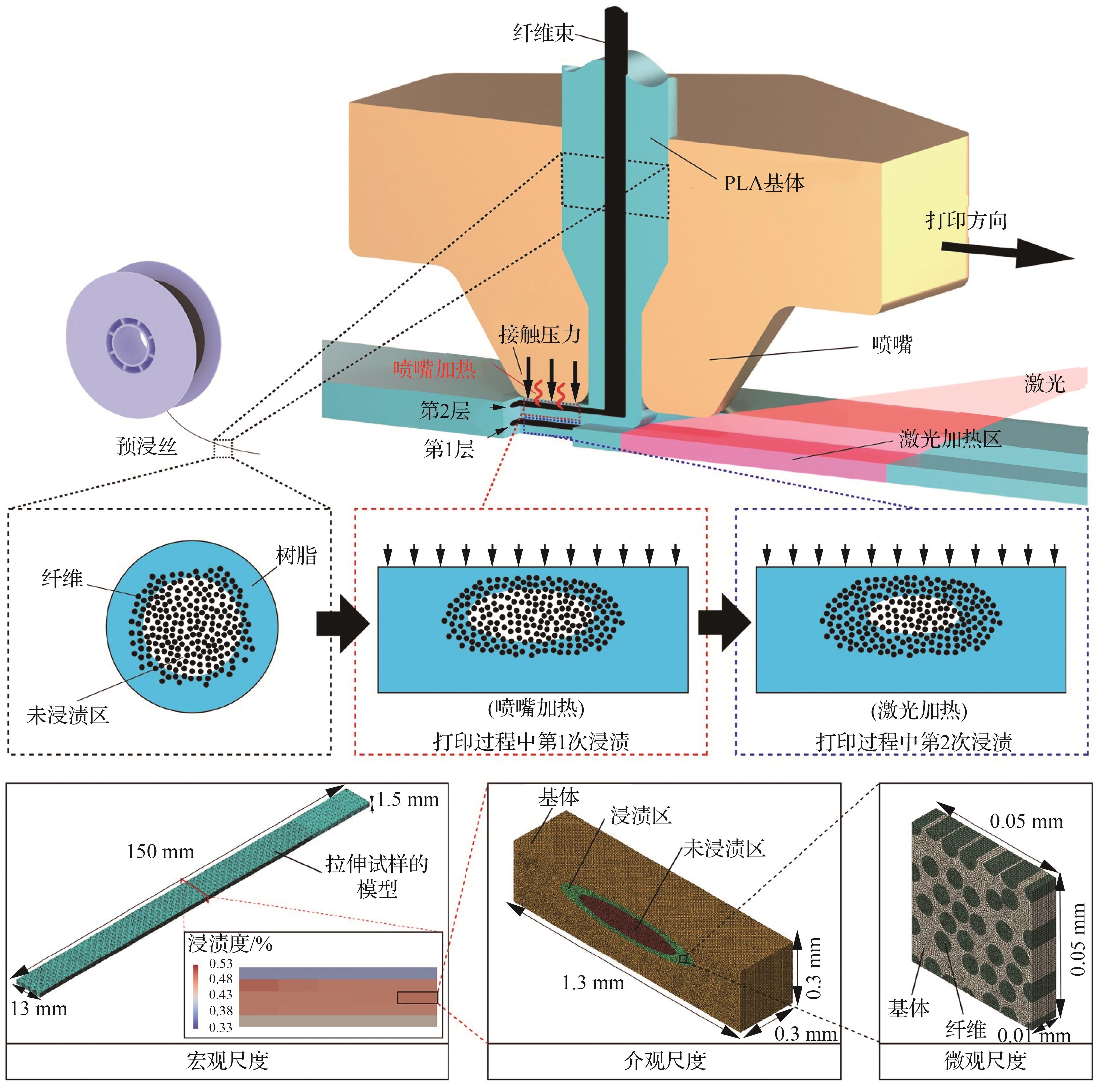
Fig.6
Modeling method for the interaction between the printing nozzle and the deposited filament
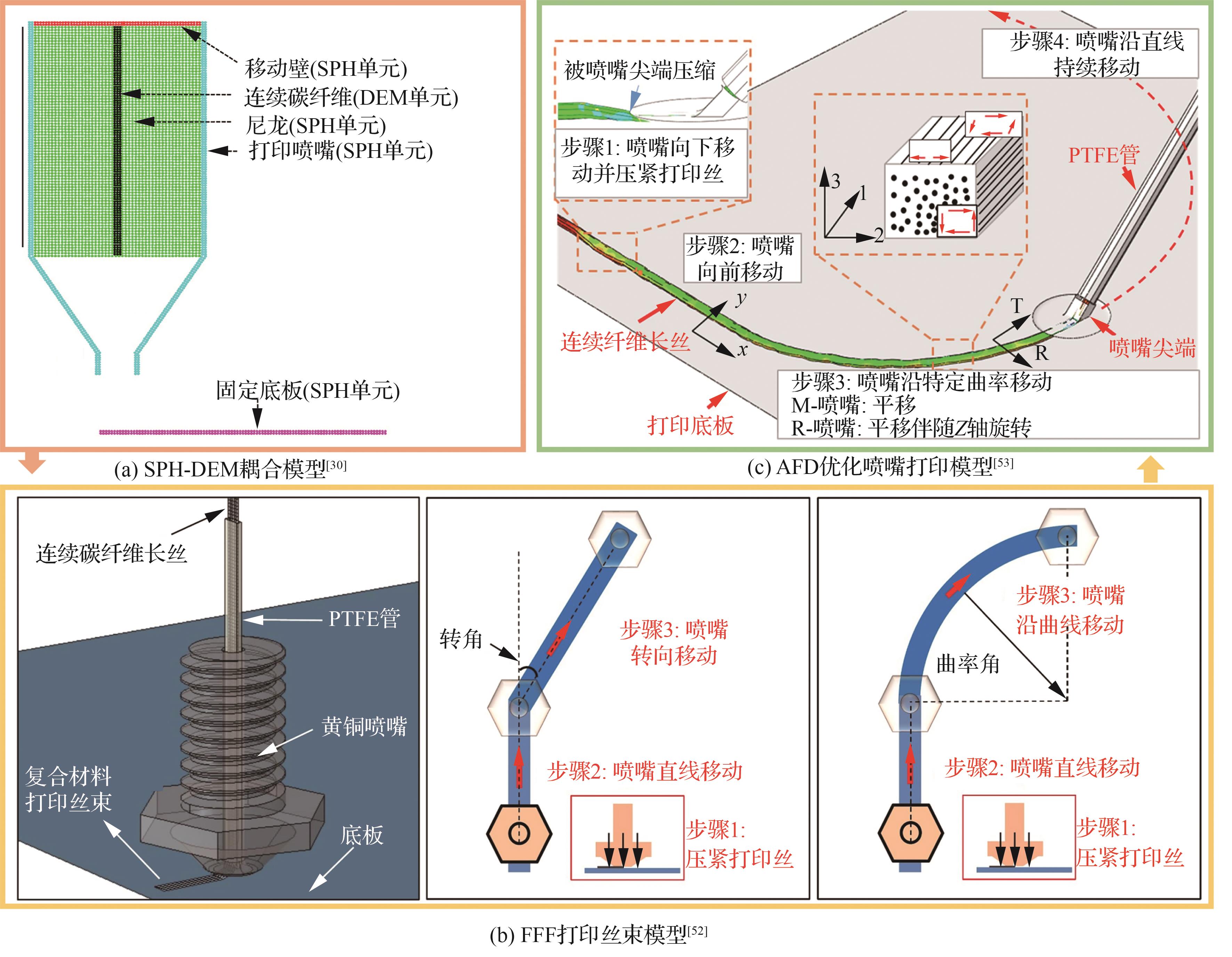
Fig.7
Fiber topology path optimization design and 3D printed specimens[55]
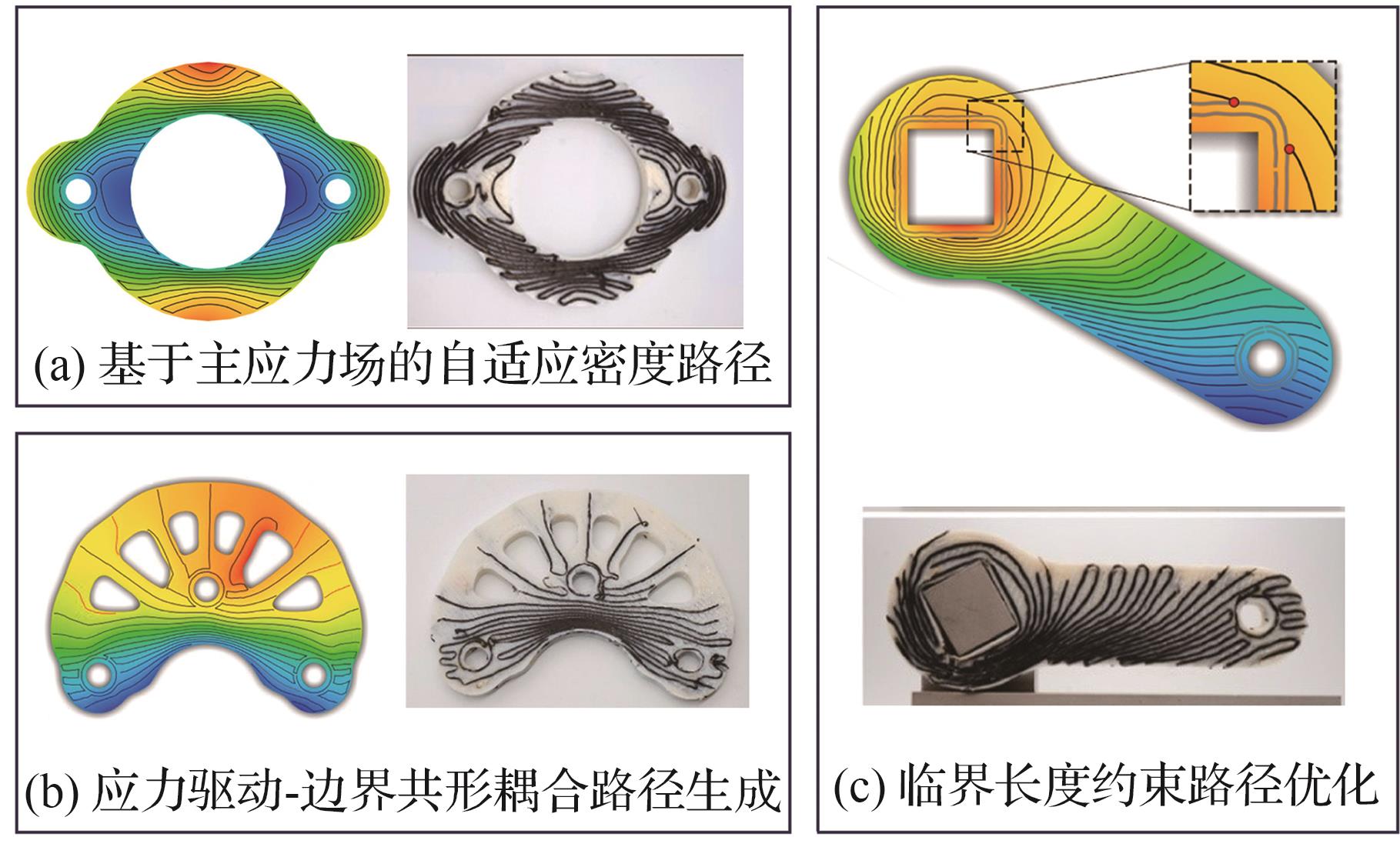
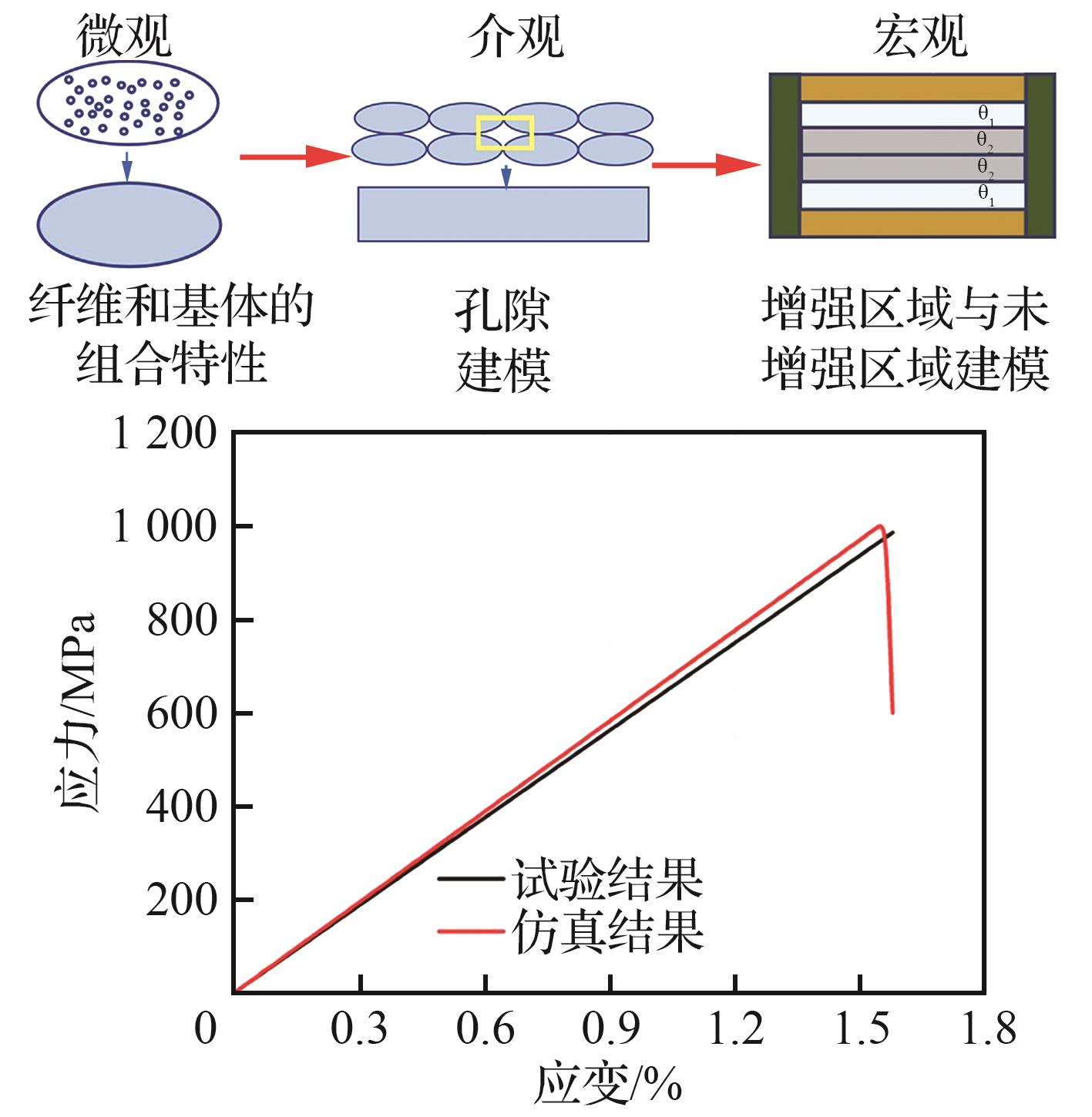
Fig.8
Schematic diagram of the multi-scale predictive model for structural performance (micro-scale filament morphology, mesoscopic pore characteristics, and macroscopic structural features) in 3D printed structures[31]
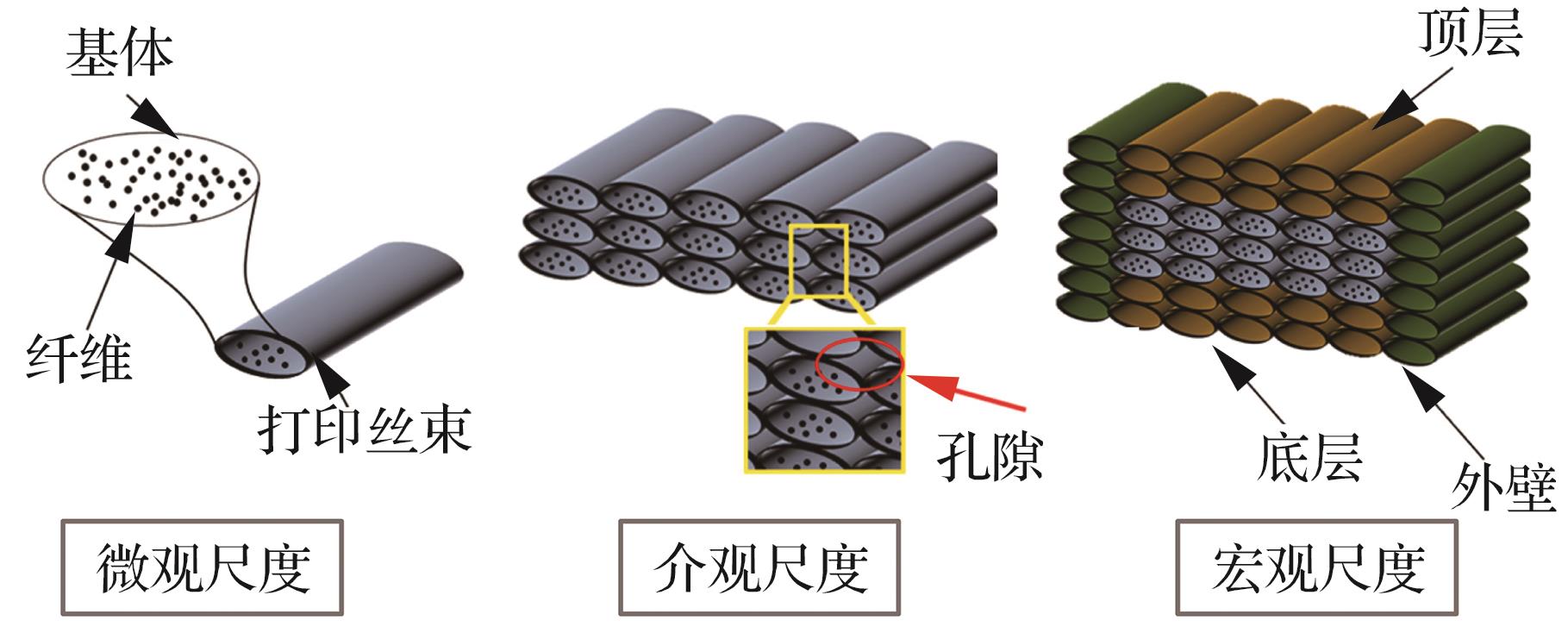
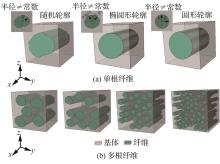
Fig.9
RVE model [32]
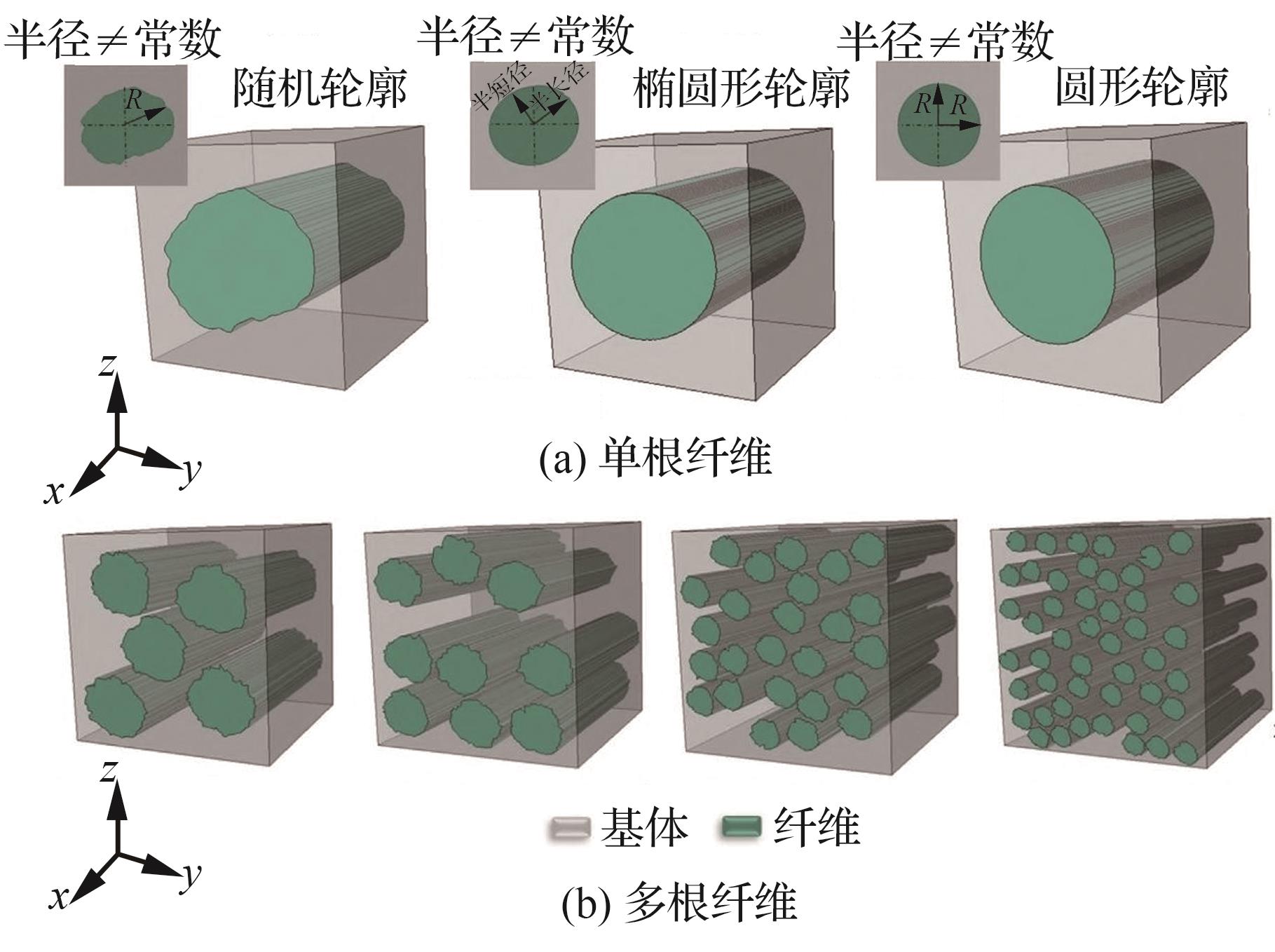
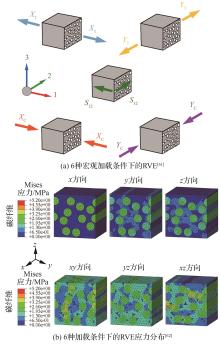
Fig.10
Six loading conditions and resulting stress distributions in RVE model
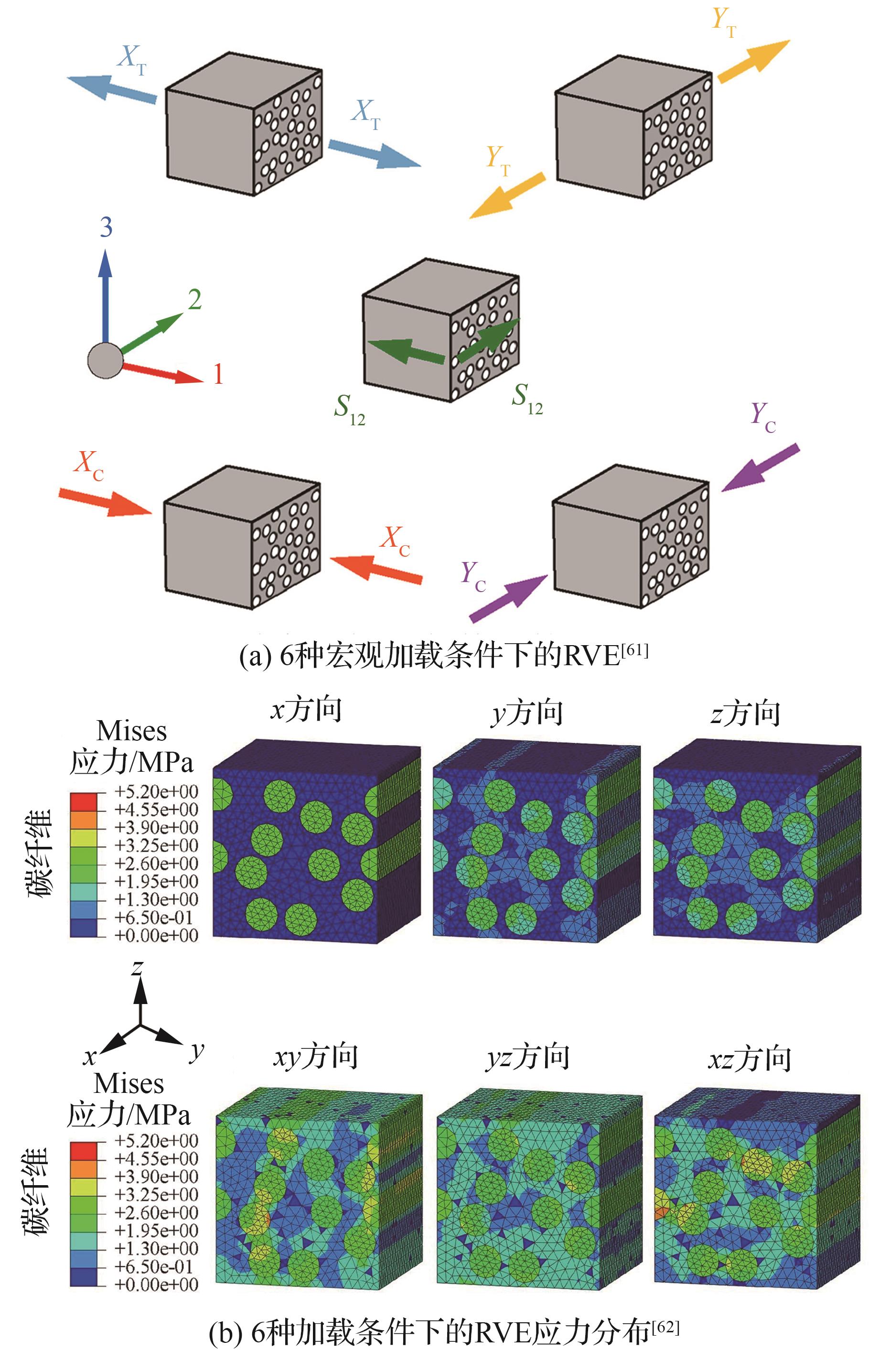
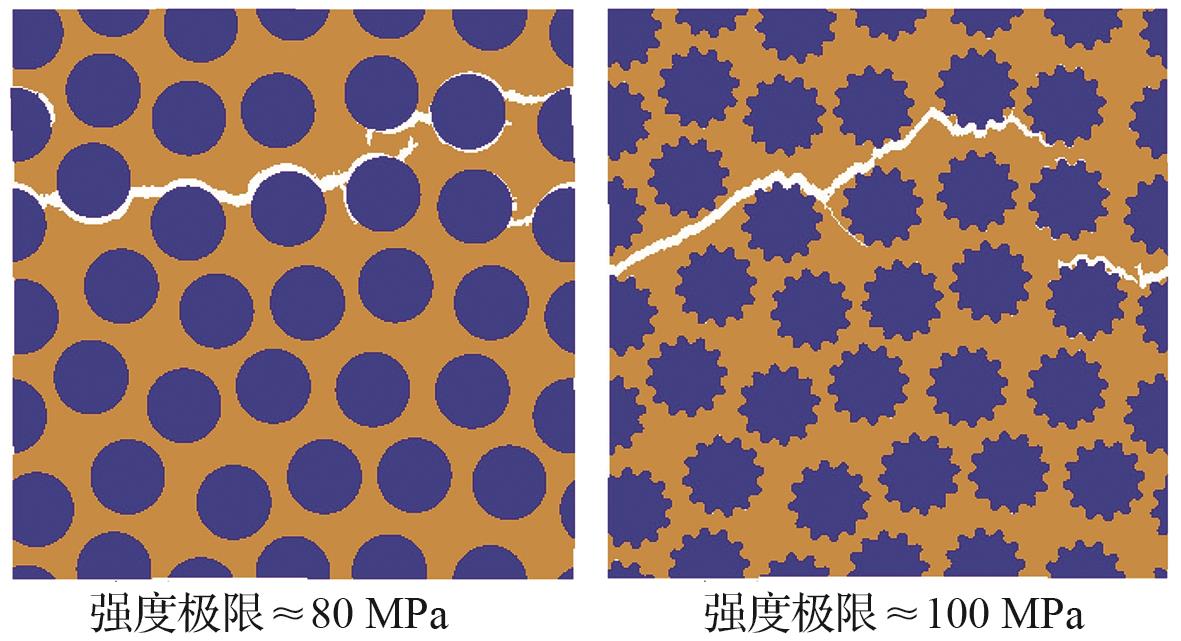
Fig.11
Mesoscale modeling of 3D printed CFRC
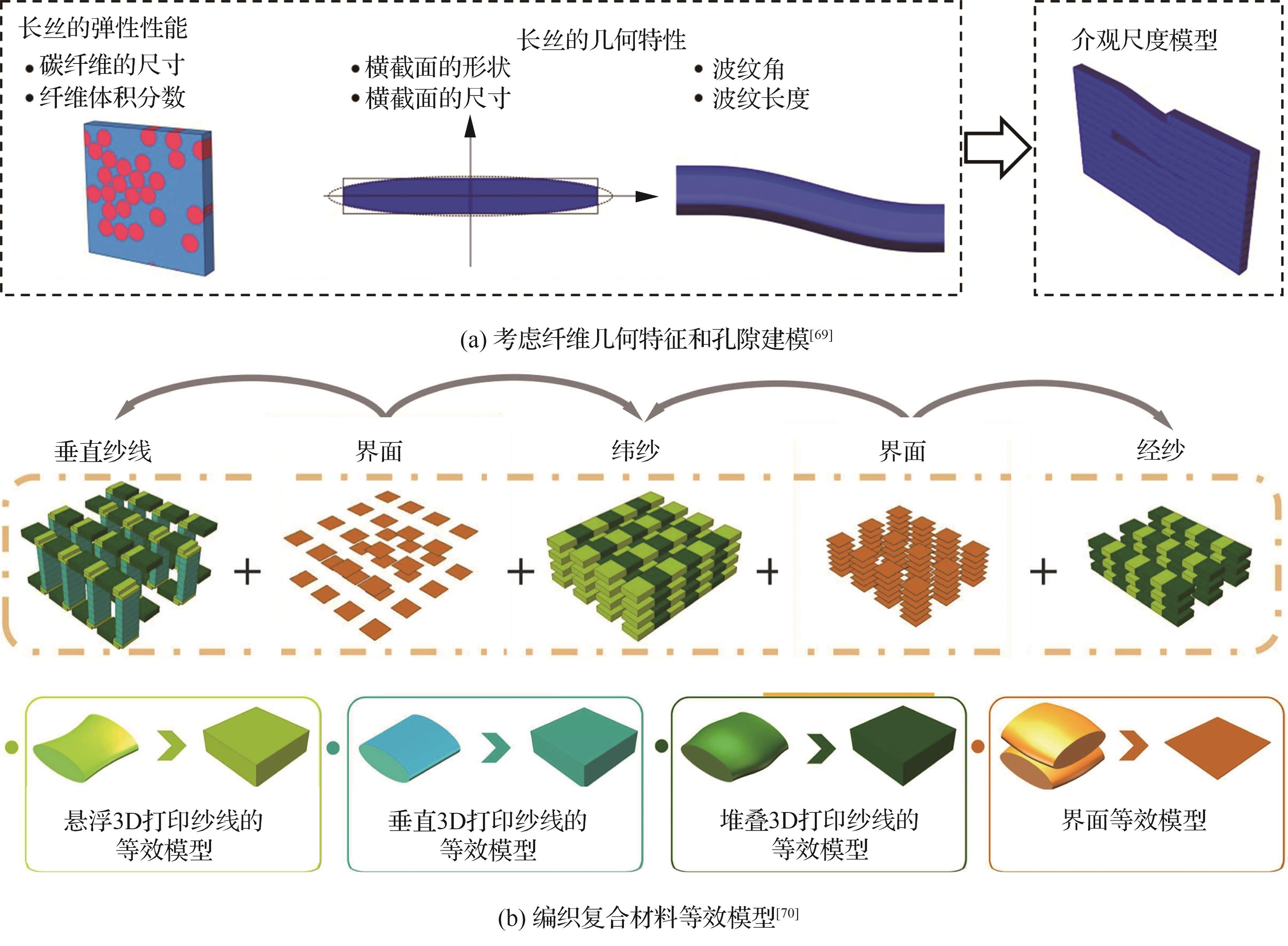
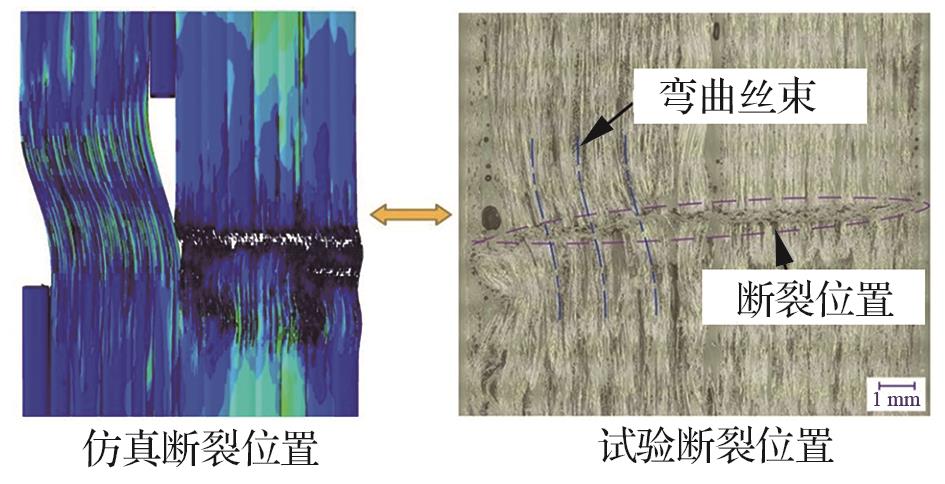
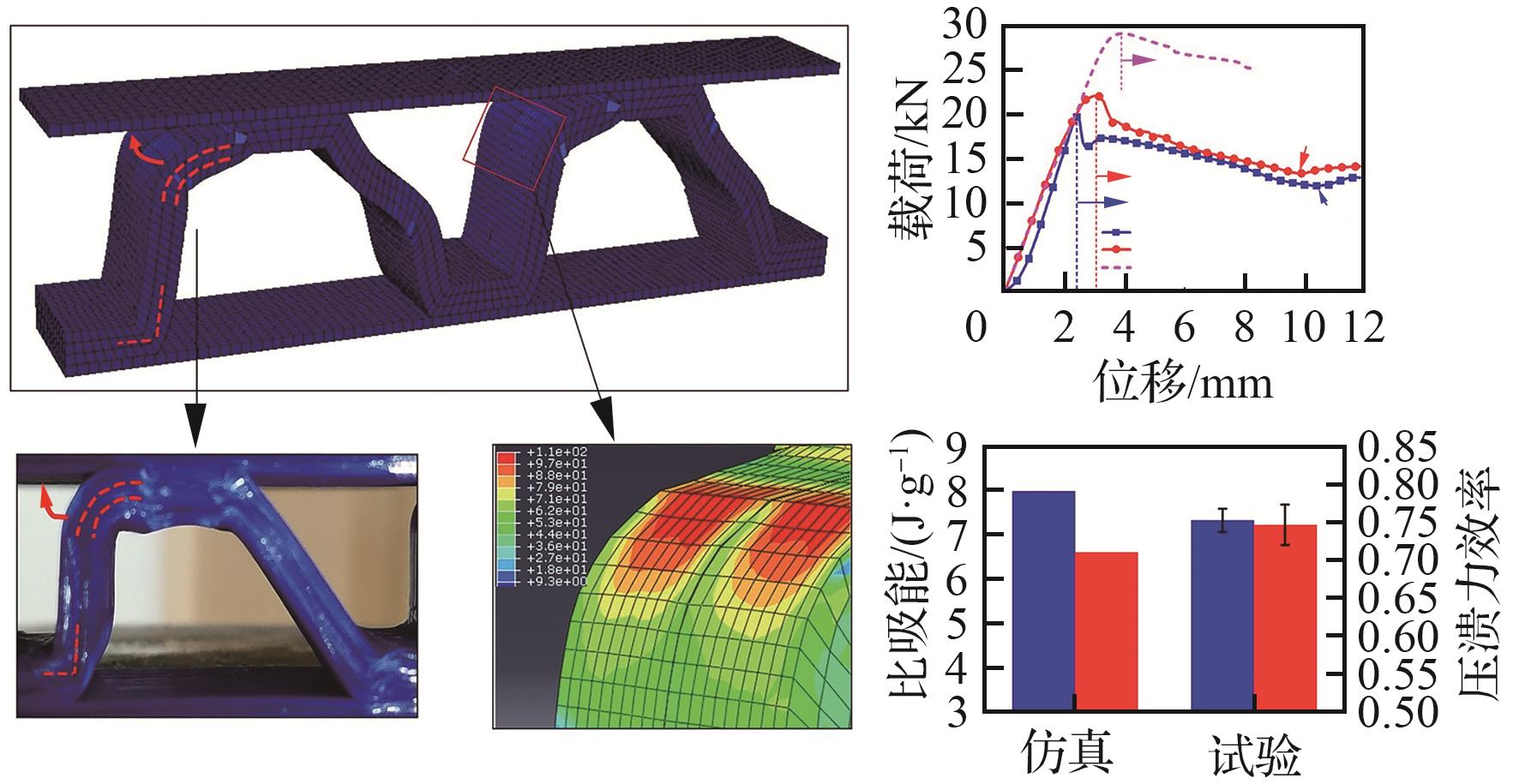
Fig.12
Modeling methods for 3D printed composite structures[79-80]
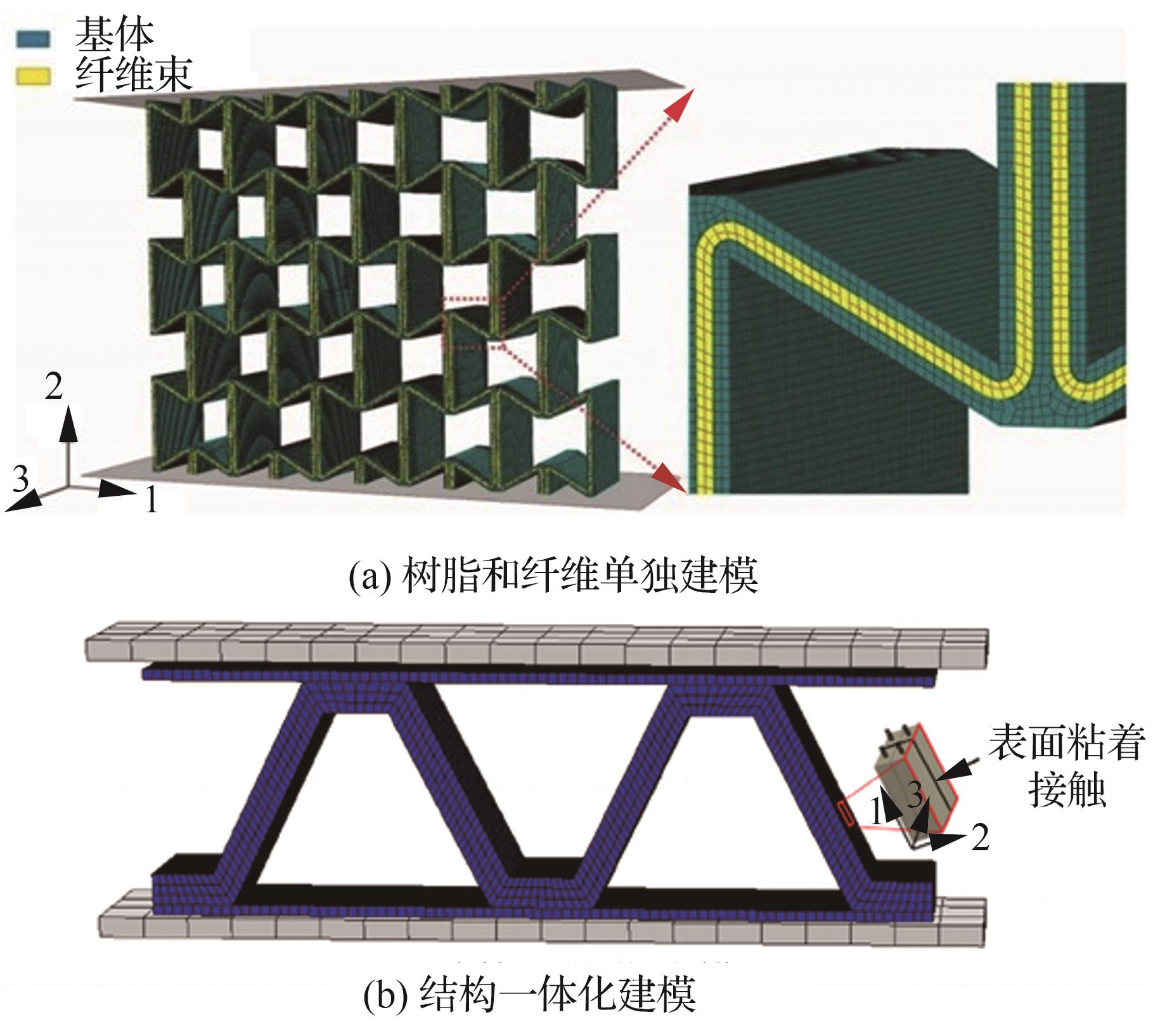
Fig.13
Schematic of continuous carbon fiber filament embedded unit[82]: As-printed 3D filament and idealized embedded cross-section
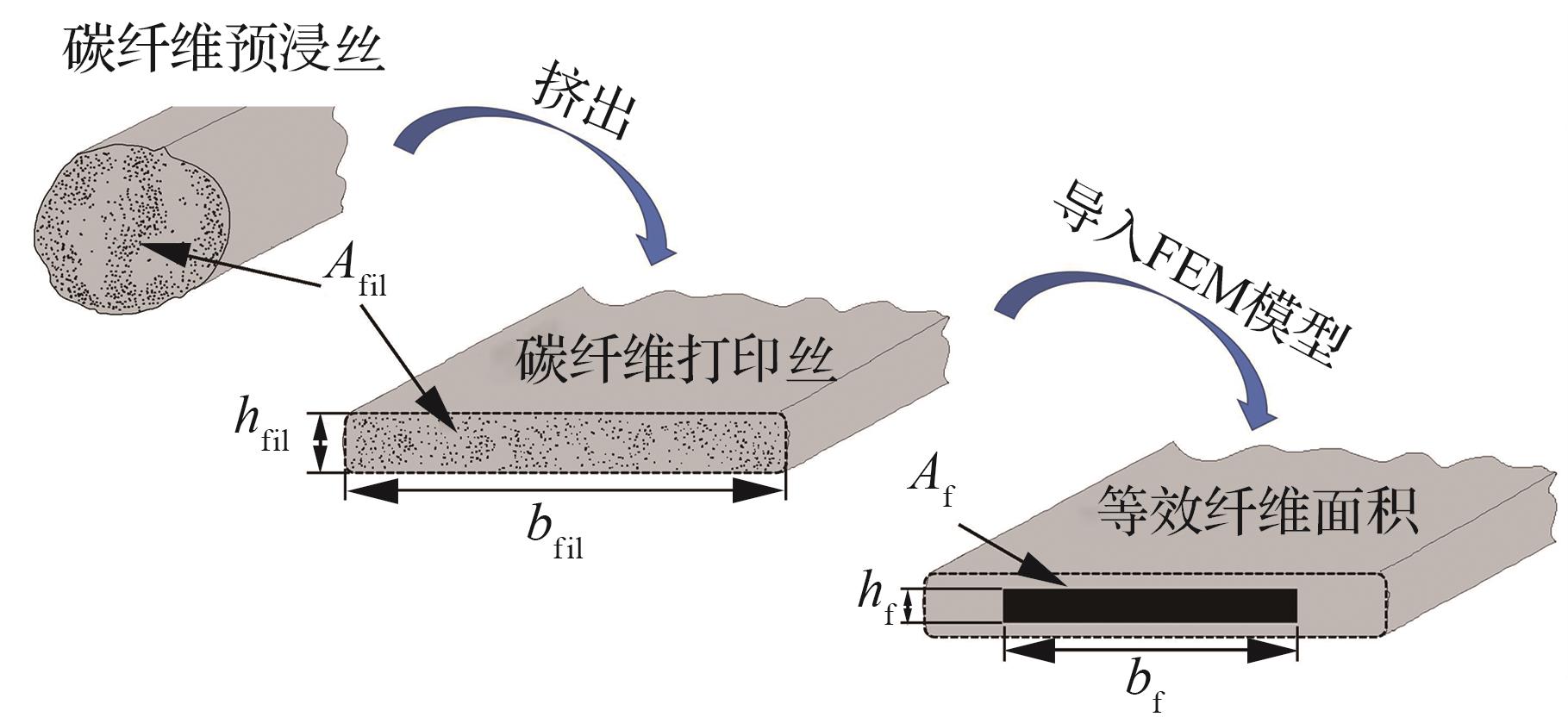
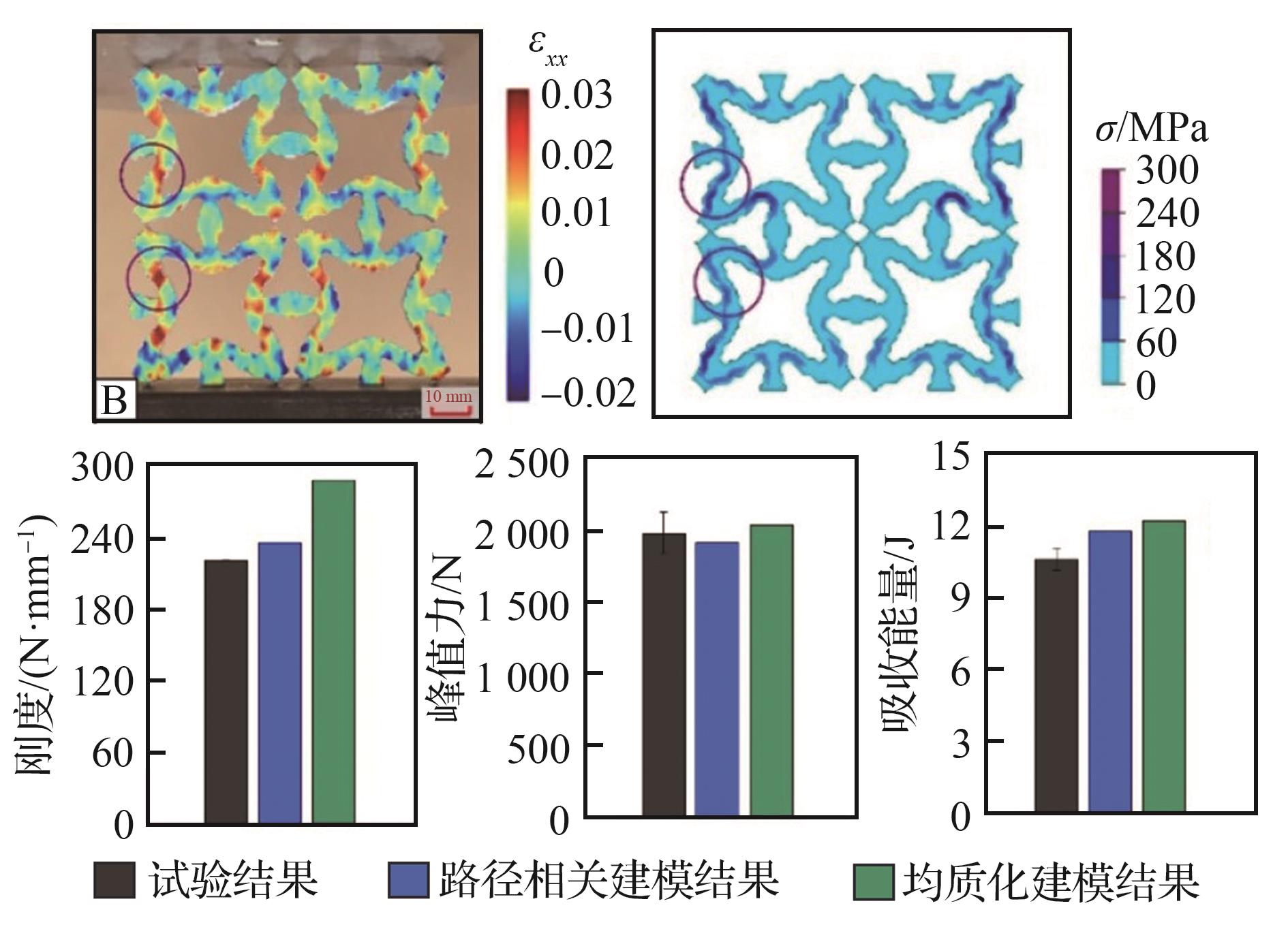
Fig.14
Path-dependent mechanical modeling of 3D printed composite structures (Elastic Regime)[9]
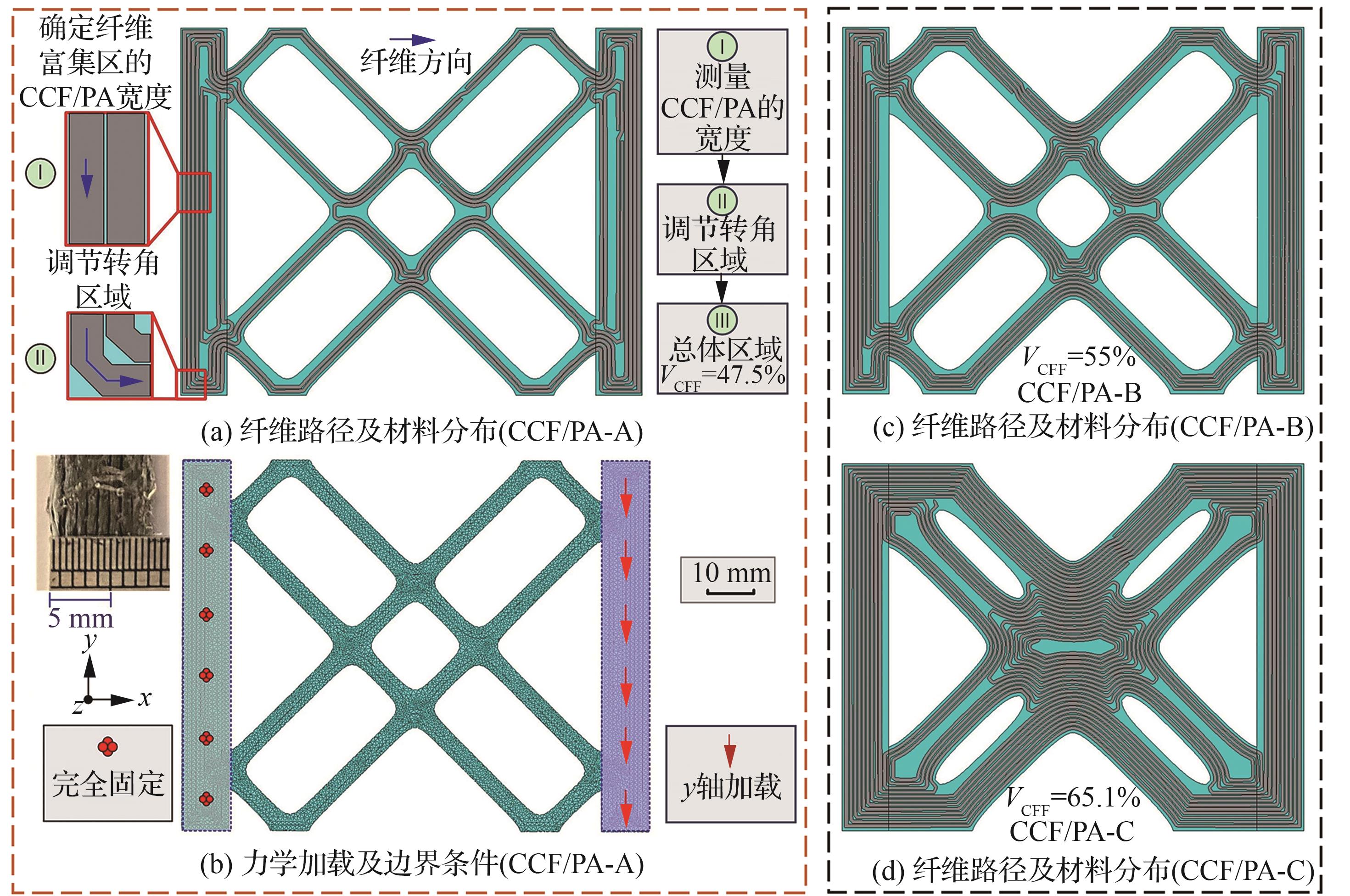
Fig.15
Path-dependent progressive damage modeling of 3D printed composite metamaterials (Inelastic Regime)[33]
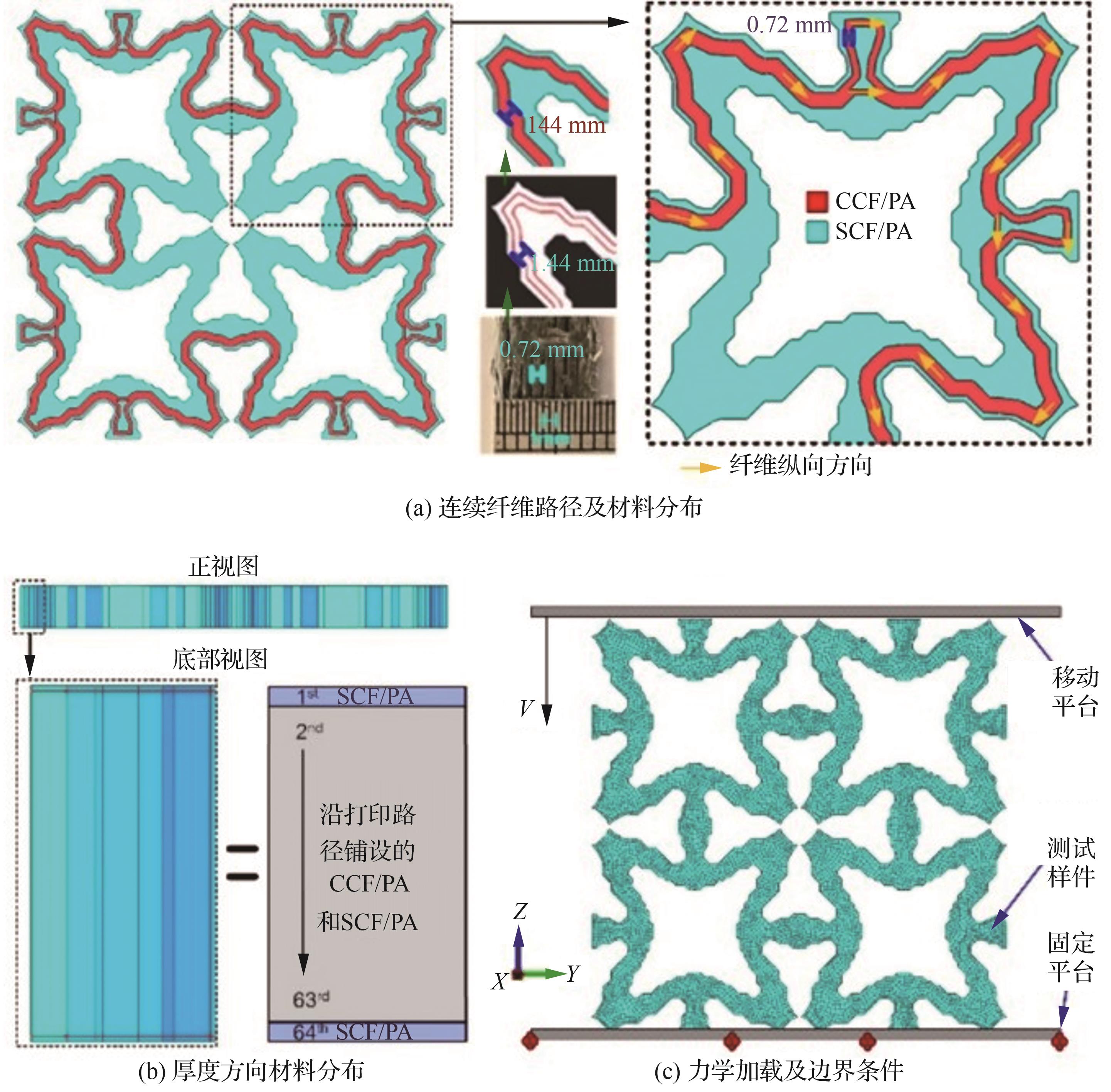
Fig.16
Equivalent model of 3D printed CFTPOF composites[70]
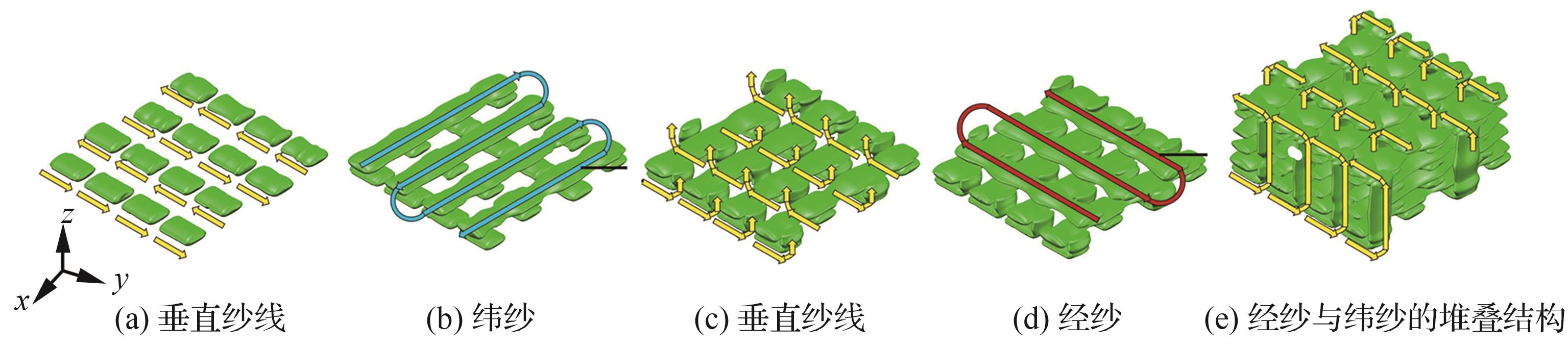
Table 1
Summary of modeling methods
| CFRC预测建模 | 建模方法 | 计算方法 | 网格类型 | 连续纤维类型 | 树脂类型 | 文献 |
|---|---|---|---|---|---|---|
3D打印CFRC 结构力学建模 | 微观尺度建模 | FEM(RVE) | 实体 | Carbon、Glass | PA | [ |
| 介观尺度建模 | FEM | 实体 | Carbon | PA | [ | |
| 一体化建模(宏观) | FEM | 实体、壳单元 | Carbon | PA、PLA | [ | |
| 路径相关建模(宏观) | FEM | 实体 | Carbon、Kevlar | PA、PLA | [ | |
| 多尺度建模 | FEM | 实体 | Carbon | PA | [ | |
FFF制造成型 过程建模 | 热-力耦合建模 | FEM(生死单元法) | 实体 | Carbon | PLA | [ |
| 多物理场耦合建模 | FEM | 实体 | Carbon | ABS | [ | |
| 流变及浸润过程建模 | FEM | 实体 | Carbon | PLA | [ | |
| 流固耦合建模 | SPH、DEM | 无网格 | Carbon、Short Glass | PA、ABS | [ |
Table 2
Advantages and disadvantages of 3D printing CFRC structural mechanics modeling methods with specific case studies
| 建模方法 | 优势 | 不足 | 具体案例数据 |
|---|---|---|---|
| 微观尺度建模 | 能够清晰展示纤维与树脂之间的力学特性及界面性能,揭示纤维和树脂的相互作用 | 难以直接应用于宏观结构的整体性能预测 | 与圆形纤维单胞模型相比,齿轮形纤维模型在横向拉伸方向上表现出更高的强度。这一增强主要归因于其复杂的截面几何形状,使应力在纤维与基体界面上呈交错分布,有效延缓了界面损伤的萌生与扩展过程,从而提升了整体承载能力[
|
| 介观尺度建模 | 能够获得3D打印纤维增强复合材料的整体结构特征,如内部缺陷和表面形状 | 界面及局部破坏机理展示不够精细,且难以完全预测宏观力学表现 | 引入弯曲丝束后,结构的纵向压缩破坏强度显著降低。弯曲丝束试样的破坏主要发生在弯曲丝束与规则丝束接触区域的界面截面,表明该区域为结构的应力集中与失效起始位置[
|
| 均质化建模(宏观) | 能够快速预测纤维增强效果和宏观力学性能,适用于相对简单的3D打印复合材料结构 | 无法反映纤维在局部的取向、分布等细节 | 除结构变形外,该模型还能模拟3D打印复合材料中常见的损伤形式(如层间分层)。此外,仿真预测的吸能和压溃力效率与试验结果的相对误差分别为8.23%和5.08%,表明模型在损伤响应预测方面具有良好的准确性[
|
路径相关建模 (宏观) | 能够精确模拟纤维铺放路径对复合材料性能的影响,适用于复杂形状的3D打印复合材料结构 | 当纤维路径和材料分布较为复杂时,建模和时间成本增加 | 在压缩载荷作用下,米塞斯应力主要集中于沿纤维路径排布的区域,尤其是在垂直于加载方向的纤维区域中表现得更为显著。这表明纤维路径的几何排列对局部应力分布具有重要影响,最终通过试验结果与路径相关建模和均质化建模发现,最终路径相关建模的刚度、峰值力还有吸收能量的精度相对均质化建模来说分别提高了15.8%,0.4%和2.6%[
|
| 多尺度耦合建模 | 通过从微观到宏观的多尺度结合,可更全面地分析纤维-树脂相互作用和失效机理 | 参数众多,标定成本高 | 在微观尺度上,RVE识别纤维增强打印丝束的均匀化弹性性能;在细观尺度上,利用该均匀化特性表征打印丝束行为,并进一步分析孔隙对性能的影响;在宏观尺度上,则基于细观数据确定整体结构的弹性响应。最终所预测的结构强度和弹性模量与试验结果的相对误差分别为3.55%和1.54%,表明所构建的多尺度建模方法具有较高的准确性和可靠性[
|
Table 3
Advantages and disadvantages of FFF manufacturing process modeling methods with specific case studies
| 建模方法 | 优势 | 不足 | 具体案例数据 |
|---|---|---|---|
| 热力耦合建模 | 能够预测3D打印过程或冷却阶段残余应力导致的翘曲变形,从而通过优化打印参数调控打印过程的温度场 | 模型复杂度高,且对材料参数依赖较大,材料参数随温度的非线性变化往往难以准确建模 | 以下为部分常见半结晶聚合物在翘曲试验与仿真对比中的误差范围:聚丙烯(PP)为2.5%~5.8%[
|
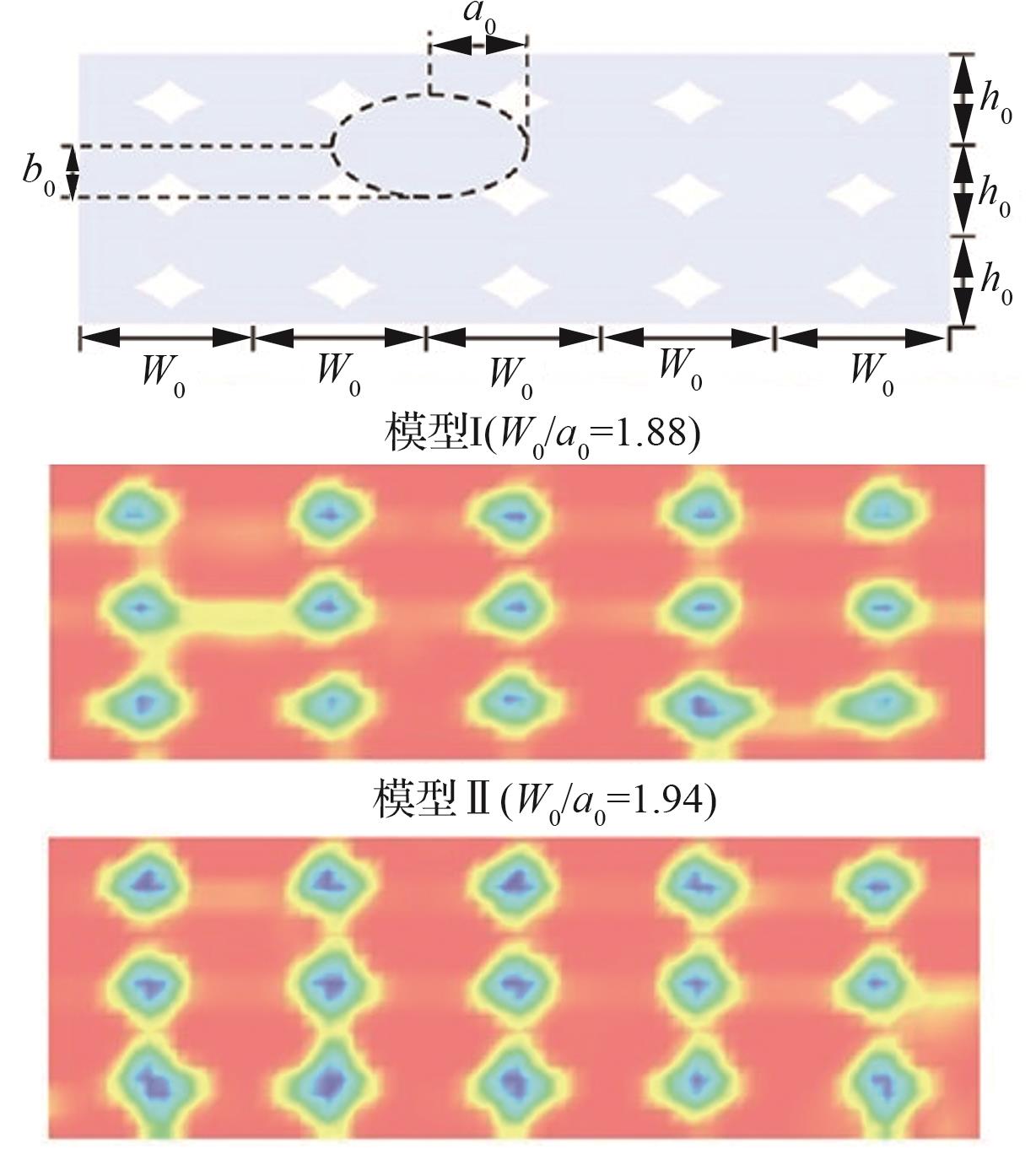
| 多物理场耦合建模 | 综合考虑材料结晶动力学、相变、应力场以及其他物理场的影响,对于半结晶聚合物在FFF等工艺中的形态演化和最终性能具有更强的指导意义 | 难以获取所有 所需的多物理 场参数 | 打印丝束之间的距离增大,相邻打印丝束的粘结面积变小,碳纤维未被树脂浸润的面积增大,模型Ⅱ的未浸润面积和纤维体积分数分别降低了2.68%和0.8%[
|
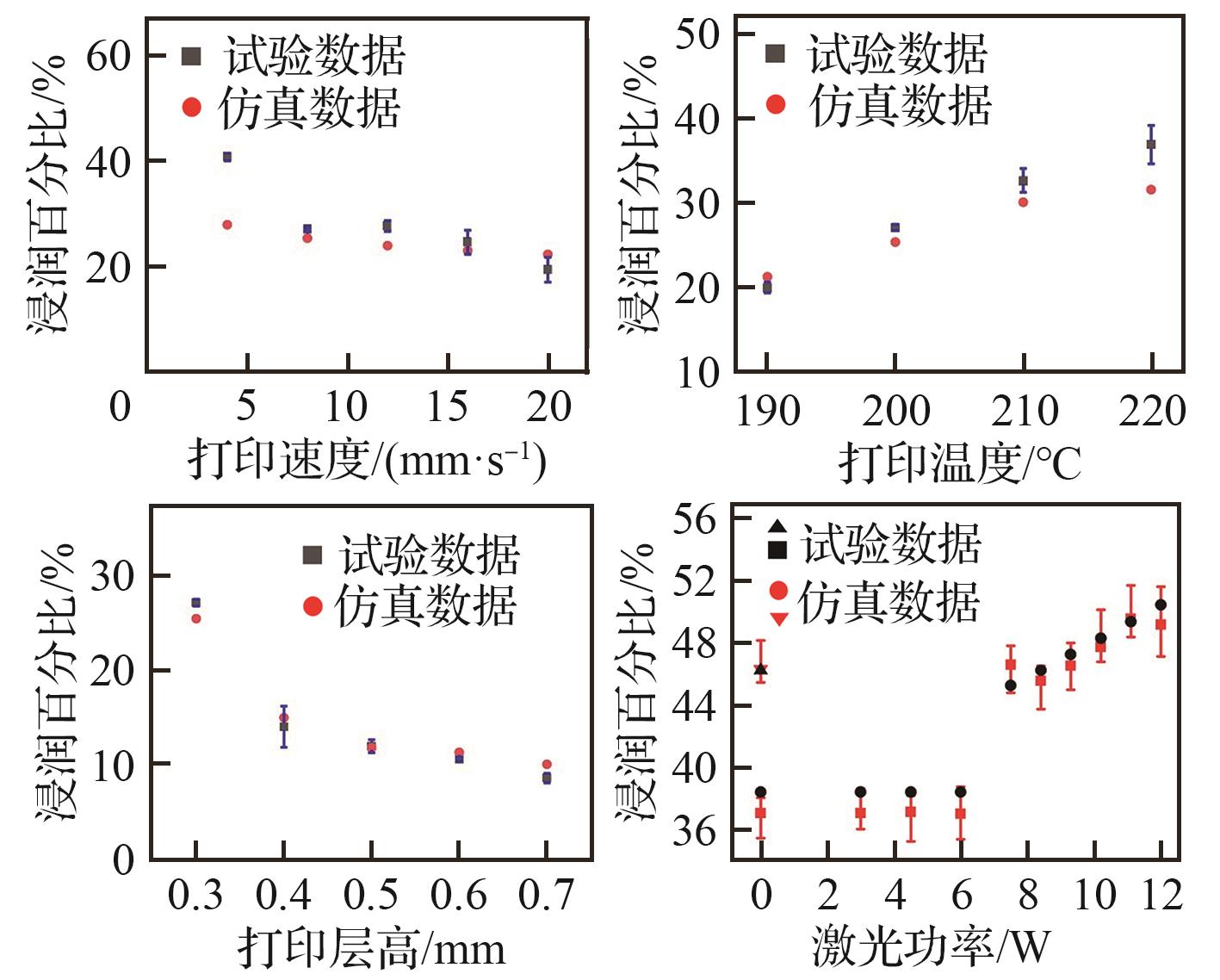
| 流变及浸润过程建模 | 研究树脂在连续纤维增强复合材料中的流动和浸润特性,能更好地揭示打印过程中材料融合、浸润和界面结合的机理 | 当纤维排布复杂时,计算或模型简化的难度较高 | 预测的浸渍率随各工艺参数增加的趋势与试验结果一致,除了在最低打印速度(4 mm·s-1)下得到的结果外,试验结果与预测值的相对误差平均值均小于10%[
|
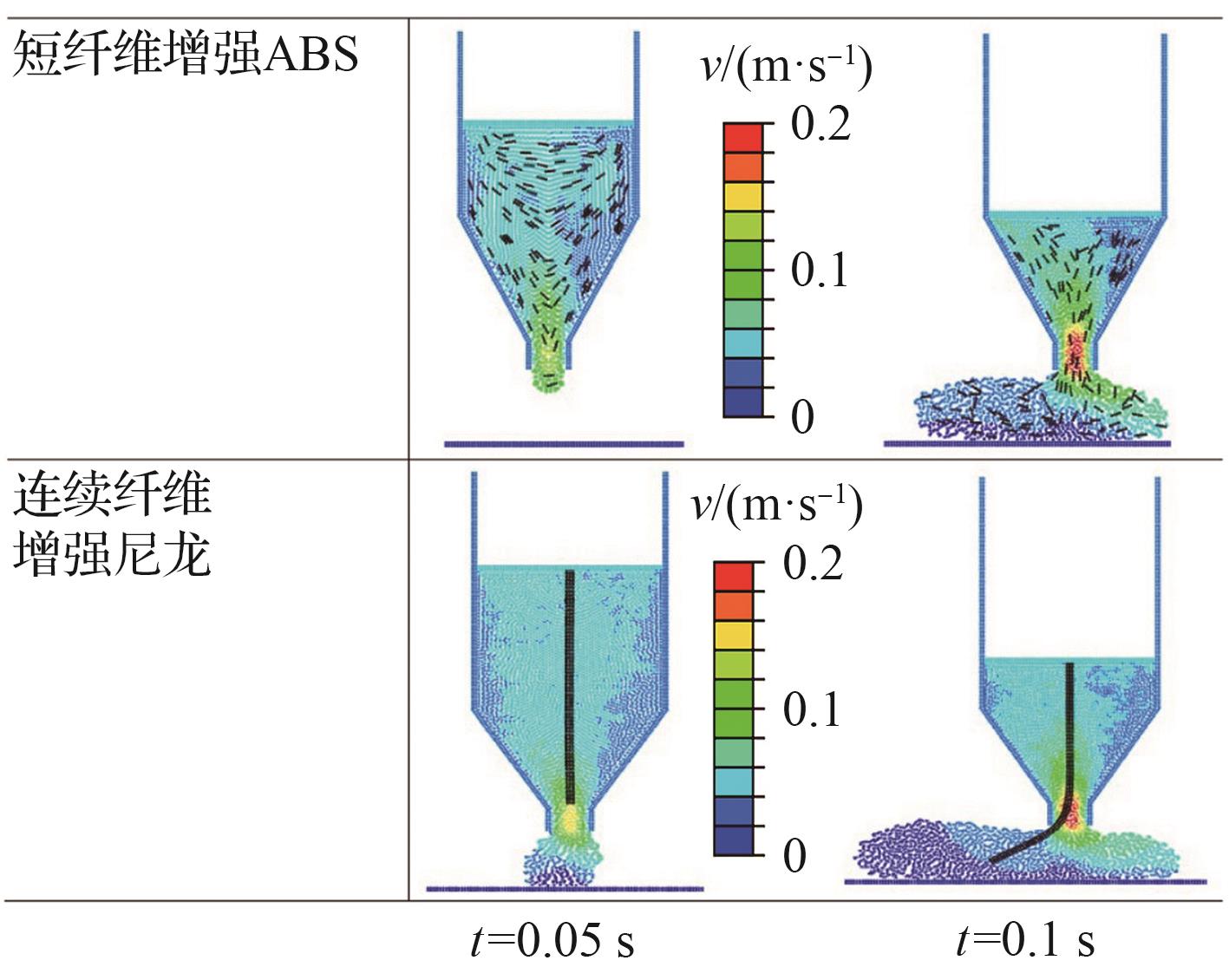
| 流固耦合建模 | 适用于模拟树脂流动以及纤维与树脂间的相互作用 | 仅适用于局部区域的小尺度分析 | 短纤维增强ABS在流动中呈现取向差异:流道中部纤维保持流动方向;接触打印床后纤维取向偏离;对于连续纤维增强尼龙:树脂挤出时形成双向分裂流,纤维被推向喷嘴内壁。打印头移动导致树脂速度左快右慢[
|
| [1] | CHACÓN J M, CAMINERO M A, NÚÑEZ P J, et al. Additive manufacturing of continuous fibre reinforced thermoplastic composites using fused deposition modelling: Effect of process parameters on mechanical properties[J]. Composites Science and Technology, 2019, 181: 107688. |
| [2] | 彭苗娇, 黄锦文, 胡殿印, 等. 航空发动机CFRP复合材料界面力学性能、损伤机理与强化策略研究进展[J]. 航空学报, 2025, 46(16): 031600. |
| PENG M J, HUANG J W, HU D Y, et al. Research progress on interfacial mechanical properties, damage mechanisms, and reinforcement strategies of CFRP composites for aero-engines[J]. Acta Aeronautica et Astronautica Sinica, 2025, 46(16): 031600 (in Chinese). | |
| [3] | 杨猛. 面向汽车轻量化的复合材料损伤机理及混杂设计方法研究[D]. 长春: 吉林大学, 2020. |
| YANG M. Research on damage mechanism and hybrid design of composites for automotive lightweighting [D]. Changchun: Jilin University, 2020 (in Chinese). | |
| [4] | 杨硕. 某高速列车碳纤维复合材料零部件优化设计[D]. 大连: 大连交通大学, 2023. |
| YANG S. Optimization design of carbon fiber composite parts and components for a high speed train[D]. Dalian: Dalian Jiaotong University, 2023 (in Chinese). | |
| [5] | 袁伏斌. 复合材料叶片的应力疲劳寿命分析[D]. 兰州: 兰州理工大学, 2023. |
| YUAN F B. Stress fatigue life analysis of composite blades[D]. Lanzhou: Lanzhou University of Technology, 2023 (in Chinese). | |
| [6] | 黄基, 刘家豪, 张凌鹤, 等. 连续丝材增强复合材料增材制造研究进展[J]. 机械设计与制造工程, 2022, 51(4): 7-20. |
| HUANG J, LIU J H, ZHANG L H, et al. Research progress on additive manufacturing of continuous wire reinforced composites[J]. Machine Design and Manufacturing Engineering, 2022, 51(4): 7-20 (in Chinese). | |
| [7] | CHEN Y, YE L. Designing and tailoring effective elastic modulus and negative Poisson’s ratio with continuous carbon fibres using 3D printing[J]. Composites Part A: Applied Science and Manufacturing, 2021, 150: 106625. |
| [8] | CHEN Y, YE L, DONG H. Lightweight 3D carbon fibre reinforced composite lattice structures of high thermal-dimensional stability[J]. Composite Structures, 2023, 304: 116471. |
| [9] | CHEN Y, KLINGLER A, FU K K, et al. 3D printing and modelling of continuous carbon fibre reinforced composite grids with enhanced shear modulus[J]. Engineering Structures, 2023, 286: 116165. |
| [10] | 杨乃宾. 国外复合材料飞机结构应用现状分析[J]. 航空制造技术, 2002, 45(9): 21-22, 29. |
| YANG N B. Present status analysis of application of composite airframe structures abroad[J]. Aeronautical Manufacturing Technology, 2002, 45(9): 21-22, 29 (in Chinese). | |
| [11] | 刘甲秋, 伊翠云, 彭德功, 等. 连续纤维复合材料增材制造的发展研究[J]. 纤维复合材料, 2020, 37(3): 91-94. |
| LIU J Q, YI C Y, PENG D G, et al. Development and research on additive manufacturing of continuous fiber composite materials[J]. Fiber Composites, 2020, 37(3): 91-94 (in Chinese). | |
| [12] | 史如静, 吴举, 周剑锋, 等. 模压成型工艺参数对CF/PEEK复合材料Ⅰ型层间断裂韧性的影响[J]. 高科技纤维与应用, 2020, 45(1): 26-32. |
| SHI R J, WU J, ZHOU J F, et al. Influence of hot-press molding parameters for processing CF/PEEK composites on type Ⅰ interlaminar fracture toughness[J]. Hi-Tech Fiber and Application, 2020, 45(1): 26-32 (in Chinese). | |
| [13] | 曹忠亮, 韩振宇, 富宏亚. 自动纤维铺丝机的设计与实验研究[J]. 玻璃钢/复合材料, 2017(3): 60-63. |
| CAO Z L, HAN Z Y, FU H Y. Design and experimental research of automated fiber placement equipment[J]. Fiber Reinforced Plastics/Composites, 2017(3): 60-63 (in Chinese). | |
| [14] | 彭公秋, 钟翔屿, 石峰晖, 等. 自动铺带和手工铺贴国产T800级碳纤维增强复合材料对比研究和等同性评价[J]. 复合材料科学与工程, 2021(11): 69-74. |
| PENG G Q, ZHONG X Y, SHI F H, et al. Comparative study and equivalence of domestic T800H carbon fiber composites manufactured by automated tape laying and manual layup method[J]. Composites Science and Engineering, 2021(11): 69-74 (in Chinese). | |
| [15] | 卜聪. 复合材料预制体自动化铺叠预成型工艺与控制方法[D]. 大连: 大连理工大学, 2022. |
| BU C. Automatic laying preforming process and control method of composite prefabric[D]. Dalian: Dalian University of Technology, 2022 (in Chinese). | |
| [16] | 叶红玲, 董永佳, 毛鹏琪, 等. 3D打印连续纤维复合材料工艺、结构优化研究进展[J]. 力学进展, 2024, 54(2): 391-425. |
| YE H L, DONG Y J, MAO P Q, et al. Research progress of process and structures optimization for 3D printed continuous fiber-reinforced polymers[J]. Advances in Mechanics, 2024, 54(2): 391-425 (in Chinese). | |
| [17] | LIU G, XIONG Y, ZHOU L M. Additive manufacturing of continuous fiber reinforced polymer composites: Design opportunities and novel applications[J]. Composites Communications, 2021, 27: 100907. |
| [18] | FASEL U, KEIDEL D, BAUMANN L, et al. Composite additive manufacturing of morphing aerospace structures[J]. Manufacturing Letters, 2020, 23: 85-88. |
| [19] | Plastics Machinery and Manufacturing. Additive manufacturing’s rise merits NPE spotlight [EB/OL]. (2015-03-19)[2025-03-28]. . |
| [20] | ZHUO P, LI S G, ASHCROFT I A, et al. Material extrusion additive manufacturing of continuous fibre reinforced polymer matrix composites: A review and outlook[J]. Composites Part B: Engineering, 2021, 224: 109143. |
| [21] | TIAN X Y, TODOROKI A, LIU T F, et al. 3D printing of continuous fiber reinforced polymer composites: Development, application, and prospective[J]. Chinese Journal of Mechanical Engineering: Additive Manufacturing Frontiers, 2022, 1(1): 100016. |
| [22] | FIJUL KABIR S M, MATHUR K, SEYAM A M. A critical review on 3D printed continuous fiber-reinforced composites: History, mechanism, materials and properties[J]. Composite Structures, 2020, 232: 111476. |
| [23] | CHENG P, PENG Y, LI S X, et al. 3D printed continuous fiber reinforced composite lightweight structures: A review and outlook[J]. Composites Part B: Engineering, 2023, 250: 110450. |
| [24] | O’CONNOR H J, DOWLING D P. Low-pressure additive manufacturing of continuous fiber-reinforced polymer composites[J]. Polymer Composites, 2019, 40(11): 4329-4339. |
| [25] | HE Q H, WANG H J, FU K K, et al. 3D printed continuous CF/PA6 composites: Effect of microscopic voids on mechanical performance[J]. Composites Science and Technology, 2020, 191: 108077. |
| [26] | PARLEVLIET P P, BERSEE H E N, BEUKERS A. Residual stresses in thermoplastic composites: A study of the literature: Part Ⅰ: Formation of residual stresses[J]. Composites Part A: Applied Science and Manufacturing, 2006, 37(11): 1847-1857. |
| [27] | HU G K, WENG G J. Influence of thermal residual stresses on the composite macroscopic behavior[J]. Mechanics of Materials, 1998, 27(4): 229-240. |
| [28] | TROFIMOV A, LE PAVIC J, PAUTARD S, et al. Experimentally validated modeling of the temperature distribution and the distortion during the Fused Filament Fabrication process[J]. Additive Manufacturing, 2022, 54: 102693. |
| [29] | ZHANG J M, YANG W D, LI Y. Process-dependent multiscale modeling for 3D printing of continuous fiber-reinforced composites[J]. Additive Manufacturing, 2023, 73: 103680. |
| [30] | YANG D M, WU K, WAN L, et al. A particle element approach for modelling the 3D printing process of fibre reinforced polymer composites[J]. Journal of Manufacturing and Materials Processing, 2017, 1(1): 10. |
| [31] | POLYZOS E, VAN HEMELRIJCK D, PYL L. Numerical modelling of the elastic properties of 3D-printed specimens of thermoplastic matrix reinforced with continuous fibres[J]. Composites Part B: Engineering, 2021, 211: 108671. |
| [32] | POLYZOS E, VAN HEMELRIJCK D, PYL L. Modeling elastic properties of 3D printed composites using real fibers[J]. International Journal of Mechanical Sciences, 2022, 232: 107581. |
| [33] | CHEN Y, YE L. Path-dependent progressive failure analysis for 3D-printed continuous carbon fibre reinforced composites[J]. Chinese Journal of Mechanical Engineering, 2024, 37(1): 72. |
| [34] | SAMY A A, GOLBANG A, HARKIN-JONES E, et al. Finite element analysis of residual stress and warpage in a 3D printed semi-crystalline polymer: Effect of ambient temperature and nozzle speed[J]. Journal of Manufacturing Processes, 2021, 70: 389-399. |
| [35] | ANTONY SAMY A, GOLBANG A, HARKIN-JONES E, et al. Prediction of part distortion in Fused Deposition Modelling (FDM) of semi-crystalline polymers via COMSOL: Effect of printing conditions[J]. CIRP Journal of Manufacturing Science and Technology, 2021, 33: 443-453. |
| [36] | 燕鑫, 王莘儒, 刘思琴, 等. 连续纤维增强热塑性复合材料构件增材制造工艺力学及机制的多尺度模拟研究进展[J]. 复合材料学报, 2024, 41(9): 4502-4517. |
| YAN X, WANG S R, LIU S Q, et al. Research progress in multi-scale modeling of processing mechanics and mechanism in additive manufacturing technology of continuous fiber reinforced thermoplastic composites[J]. Acta Materiae Compositae Sinica, 2024, 41(9): 4502-4517 (in Chinese). | |
| [37] | 陈飞国, 葛蔚. 多相流动的光滑粒子流体动力学方法研究综述[J]. 力学学报, 2021, 53(9): 2357-2373. |
| CHEN F G, GE W. A review of smoothed particle hydrodynamics family methods for multiphase flow[J]. Chinese Journal of Theoretical and Applied Mechanics, 2021, 53(9): 2357-2373 (in Chinese). | |
| [38] | 徐爽, 朱浮声, 张俊, 离散元法及其耦合算法的研究综述 [J]. 力学与实践, 2013, 35(1): 8-14,19. |
| XU S, ZHU F S, ZHANG J. A overview of the discreteelement method and its couplingalgorithms[J]. Mechanics in Engineering, 2013, 35(1): 8-14, 19 (in Chinese) | |
| [39] | 王猛. 碳纤维增强复合材料宏-细-微观损伤失效研究[D]. 南京: 东南大学, 2020. |
| WANG M. Damage and failure analysis of carbon fibre reinforced composites across macro-meso-micro scales[D]. Nanjing: Southeast University, 2020 (in Chinese). | |
| [40] | YU S, HYEONG H, YEON H, et al. Analytical study on the 3D-printed structure and mechanical properties of basalt fiber-reinforced PLA composites using X-ray microscopy[J]. Composites Science and Technology, 2019, 175: 18-27. |
| [41] | WANG J Y, PAPADOPOULOS P. Coupled thermomechanical analysis of fused deposition using the finite element method[J]. Finite Elements in Analysis and Design, 2021, 197: 103607. |
| [42] | FERREIRA R T L, DE MACEDO R Q. Residual thermal stress in fused deposition modelling[C]∥Procceedings of the 24th ABCM International Congress of Mechanicl Engineering. ABCM, 2017. |
| [43] | MOUMEN A EL, TARFAOUI M, LAFDI K. Modelling of the temperature and residual stress fields during 3D printing of polymer composites[J]. The International Journal of Advanced Manufacturing Technology, 2019, 104(5): 1661-1676. |
| [44] | CATTENONE A, MORGANTI S, ALAIMO G, et al. Finite element analysis of additive manufacturing based on fused deposition modeling: Distortions prediction and comparison with experimental data[J]. Journal of Manufacturing Science and Engineering, 2019, 141: 011010. |
| [45] | COSTA S F, DUARTE F M, COVAS J A. Estimation of filament temperature and adhesion development in fused deposition techniques[J]. Journal of Materials Processing Technology, 2017, 245: 167-179. |
| [46] | SYRLYBAYEV D, ZHARYLKASSYN B, SEISEKULOVA A, et al. Optimization of the warpage of fused deposition modeling parts using finite element method[J]. Polymers, 2021, 13(21): 3849. |
| [47] | LIU B S, DONG B X, LI H M, et al. 3D printing finite element analysis of continuous fiber reinforced composite materials considering printing pressure[J]. Composites Part B: Engineering, 2024, 277: 111397. |
| [48] | FU Y T, YAO X F. Multi-scale analysis for 3D printed continuous fiber reinforced thermoplastic composites[J]. Composites Science and Technology, 2021, 216: 109065. |
| [49] | GAROFALO J, WALCZYK D. In situ impregnation of continuous thermoplastic composite prepreg for additive manufacturing and automated fiber placement[J]. Composites Part A: Applied Science and Manufacturing, 2021, 147: 106446. |
| [50] | BANERJEE R, RAY S S. Role of rheology in morphology development and advanced processing of thermoplastic polymer materials: A review[J]. ACS Omega, 2023, 8(31): 27969-28001. |
| [51] | WANG F J, WANG G S, NING F D, et al. Fiber–matrix impregnation behavior during additive manufacturing of continuous carbon fiber reinforced polylactic acid composites[J]. Additive Manufacturing, 2021, 37: 101661. |
| [52] | ZHANG H Q, CHEN J Y, YANG D M. Fibre misalignment and breakage in 3D printing of continuous carbon fibre reinforced thermoplastic composites[J]. Additive Manufacturing, 2021, 38: 101775. |
| [53] | ZHANG K, ZHANG H Q, WU J, et al. Improved fibre placement in filament-based 3D printing of continuous carbon fibre reinforced thermoplastic composites[J]. Composites Part A: Applied Science and Manufacturing, 2023, 168: 107454. |
| [54] | MALAKHOV A V, POLILOV A N, ZHANG J K, et al. A modeling method of continuous fiber paths for additive manufacturing (3D printing) of variable stiffness composite structures[J]. Applied Composite Materials, 2020, 27(3): 185-208. |
| [55] | CHEN X J, FANG G X, LIAO W H, et al. Field-based toolpath generation for 3D printing continuous fibre reinforced thermoplastic composites[J]. Additive Manufacturing, 2022, 49: 102470. |
| [56] | SUZUKI T, FUKUSHIGE S, TSUNORI M. Load path visualization and fiber trajectory optimization for additive manufacturing of composites[J]. Additive Manufacturing, 2020, 31: 100942. |
| [57] | ZHANG H Q, WANG S, ZHANG K, et al. 3D printing of continuous carbon fibre reinforced polymer composites with optimised structural topology and fibre orientation[J]. Composite Structures, 2023, 313: 116914. |
| [58] | 白晓明. 基于数据挖掘的复合材料宏—细观力学模型研究[D]. 哈尔滨: 哈尔滨工业大学, 2016. |
| BAI X M. Research on macro-meso mechanical model of composite materials based on data mining[D]. Harbin: Harbin Institute of Technology, 2016 (in Chinese). | |
| [59] | 陈玉丽, 马勇, 潘飞, 等. 多尺度复合材料力学研究进展[J]. 固体力学学报, 2018, 39(1): 1-68. |
| CHEN Y L, MA Y, PAN F, et al. Research progress of multi-scale composite mechanics[J]. Chinese Journal of Solid Mechanics, 2018, 39(1): 1-68 (in Chinese). | |
| [60] | ALLAHKARAMI M, HANAN J C, BALE H A. Regeneration of surface roughness by the Langevin equation using stochastic analysis on AFM image of a carbon fiber[J]. Applied Surface Science, 2010, 257(3): 857-860. |
| [61] | DUTRA T A, FERREIRA R T L, RESENDE H B, et al. Mechanism based failure of 3D-printed continuous carbon fiber reinforced thermoplastic composites[J]. Composites Science and Technology, 2021, 213: 108962. |
| [62] | CAO X, ZHU G H, WANG Z, et al. On flexural behavior of 3D-printed continuous hybrid fiber reinforced composites: Experimental and multiscale modeling study[J]. Composite Structures, 2025, 359: 119034. |
| [63] | BERGAN A C, HERRÁEZ M, GONZÁLEZ C, et al. A constitutive model for fiber kinking: Formulation, finite element implementation, and verification[J]. Composites Part A: Applied Science and Manufacturing, 2020, 129: 105682. |
| [64] | ADENIRAN O, CONG W L, AREMU A, et al. Finite element model of fiber volume effect on the mechanical performance of additively manufactured carbon fiber reinforced plastic composites[J]. Forces in Mechanics, 2023, 10: 100160. |
| [65] | CHABAUD G, CASTRO M, DENOUAL C, et al. Hygromechanical properties of 3D printed continuous carbon and glass fibre reinforced polyamide composite for outdoor structural applications[J]. Additive Manufacturing, 2019, 26: 94-105. |
| [66] | KELLY C N, EVANS N T, IRVIN C W, et al. The effect of surface topography and porosity on the tensile fatigue of 3D printed Ti-6Al-4V fabricated by selective laser melting[J]. Materials Science and Engineering: C, 2019, 98: 726-736. |
| [67] | 鲁月. 多尺度孔隙对3D打印连续纤维复合材料刚强度影响研究[D]. 长沙: 中南大学, 2022. |
| LU Y. Investigation on stiffness and strength of 3D printed continuous fibre composites with multi-scale voids[D]. Changsha: Central South University, 2022 (in Chinese). | |
| [68] | WANG X, ZHAO L P, FUH J Y H, et al. Effect of porosity on mechanical properties of 3D printed polymers: Experiments and micromechanical modeling based on X-ray computed tomography analysis[J]. Polymers, 2019, 11(7): 1154. |
| [69] | TANG H B, SUN Q P, LI Z A, et al. Longitudinal compression failure of 3D printed continuous carbon fiber reinforced composites: An experimental and computational study[J]. Composites Part A: Applied Science and Manufacturing, 2021, 146: 106416. |
| [70] | FU Y T, DONG Y F. Multiscale coupling analysis of energy absorption in 3D printed continuous fiber reinforced thermoplastic orthogonal fabric composites[J]. Additive Manufacturing, 2024, 84: 104084. |
| [71] | FU Y T, KAN Y, FAN X, et al. Novel designable strategy and multi-scale analysis of 3D printed thermoplastic fabric composites[J]. Composites Science and Technology, 2022, 222: 109388. |
| [72] | KONG X R, SUN G Y, LUO Q T, et al. Experimental and theoretical studies on 3D printed short and continuous carbon fiber hybrid reinforced composites[J]. Thin-Walled Structures, 2024, 205: 112406. |
| [73] | XIAO J Z, LIU H R, DING T. Finite element analysis on the anisotropic behavior of 3D printed concrete under compression and flexure[J]. Additive Manufacturing, 2021, 39: 101712. |
| [74] | LIRAVI F, DAS S, ZHOU C. Separation force analysis and prediction based on cohesive element model for constrained-surface Stereolithography processes[J]. Computer-Aided Design, 2015, 69: 134-142. |
| [75] | CORVI A, COLLINI L. Combined RVE-Cohesive elements approach to the multi-scale modelling of FDM 3D-printed components[J]. Theoretical and Applied Fracture Mechanics, 2023, 128: 104140. |
| [76] | MANOJ I, KUMAR SHAH A, JAIN A. Strength and failure assessments of 3D printed PLA single lap joints: Experimental and numerical analysis[J]. Engineering Failure Analysis, 2024, 161: 108257. |
| [77] | KHOSRAVANI M R, REZAEI S, RUAN H, et al. Fracture behavior of anisotropic 3D-printed parts: Experiments and numerical simulations[J]. Journal of Materials Research and Technology, 2022, 19: 1260-1270. |
| [78] | BANDINELLI F, SCAPIN M, PERONI L. Effects of anisotropy and infill pattern on compression properties of 3D printed CFRP: Mechanical analysis and elasto-plastic finite element modelling[J]. Rapid Prototyping Journal, 2024, 30(11): 142-158. |
| [79] | QUAN C, HAN B, HOU Z H, et al. 3d printed continuous fiber reinforced composite auxetic honeycomb structures[J]. Composites Part B: Engineering, 2020, 187: 107858. |
| [80] | ZHANG Y, QIAO J, ZHANG G Y, et al. Prediction of deformation and failure behavior of continuous fiber reinforced composite fabricated by additive manufacturing[J]. Composite Structures, 2021, 265: 113738. |
| [81] | UM H J, LEE J S, SHIN J H, et al. 3D printed continuous carbon fiber reinforced thermoplastic composite sandwich structure with corrugated core for high stiffness/load capability[J]. Composite Structures, 2022, 291: 115590. |
| [82] | AVANZINI A, BATTINI D, GIORLEO L. Finite element modelling of 3D printed continuous carbon fiber composites: Embedded elements technique and experimental validation[J]. Composite Structures, 2022, 292: 115631. |
| [83] | YAVAS D, ZHANG Z Y, LIU Q Y, et al. Fracture behavior of 3D printed carbon fiber-reinforced polymer composites[J]. Composites Science and Technology, 2021, 208: 108741. |
| [84] | ZHU W Y, LI S X, LONG H M, et al. Simulation analysis and optimization of 3D printed continuous carbon fiber reinforced composites[J]. Composite Structures, 2025, 355: 118840. |
| [85] | NAYA F, HERRÁEZ M, LOPES C S, et al. Computational micromechanics of fiber kinking in unidirectional FRP under different environmental conditions[J]. Composites Science and Technology, 2017, 144: 26-35. |
| [86] | HUANG Y M, TIAN X Y, LI W D, et al. 3D printing of topologically optimized wing spar with continuous carbon fiber reinforced composites[J]. Composites Part B: Engineering, 2024, 272: 111166. |
| [87] | GOH G D, TOH W, YAP Y L, et al. Additively manufactured continuous carbon fiber-reinforced thermoplastic for topology optimized unmanned aerial vehicle structures[J]. Composites Part B: Engineering, 2021, 216: 108840. |
| [88] | 张容国, 盛冬发, 李忠君, 等. 周期性复合材料力学性能的多尺度分析[J]. 科学技术与工程, 2022, 22(36): 15994-16000. |
| ZHANG R G, SHENG D F, LI Z J, et al. Multiscale analysis of mechanical properties of periodic composite materials[J]. Science Technology and Engineering, 2022, 22(36): 15994-16000 (in Chinese). | |
| [89] | ABADI H AL, THAI H T, PATON-COLE V, et al. Elastic properties of 3D printed fibre-reinforced structures[J]. Composite Structures, 2018, 193: 8-18. |
| [90] | MELENKA G W, CHEUNG B K O, SCHOFIELD J S, et al. Evaluation and prediction of the tensile properties of continuous fiber-reinforced 3D printed structures[J]. Composite Structures, 2016, 153: 866-875. |
| [91] | SWOLFS Y, PINHO S T. Designing and 3D printing continuous fibre-reinforced composites with a high fracture toughness[C]∥Proceedings of the 31st Technical Conference of the American Society for Composites, 2016. |
| [92] | YANG C C, TIAN X Y, LIU T F, et al. 3D printing for continuous fiber reinforced thermoplastic composites: Mechanism and performance[J]. Rapid Prototyping Journal, 2017, 23(1): 209-215. |
| [93] | LI A N, ZHANG H Q, YANG D M. Bearing performance and progressive failure analysis of bolted joint in 3D printed pseudo-woven CFRP composite with fibre steering[J]. Composites Part A: Applied Science and Manufacturing, 2025, 188: 108526. |
| [94] | TAO W, LIU Z, ZHU P, et al. Multi-scale design of three dimensional woven composite automobile fender using modified particle swarm optimization algorithm[J]. Composite Structures, 2017, 181: 73-83. |
| [95] | MUNA I I, MIELOSZYK M. Numerical modeling of thermal effects on the mechanical behavior of additive manufactured continuous carbon fiber reinforced polymer: From microscale to macroscale[J]. Procedia Structural Integrity, 2024, 54: 437-445. |
| [96] | ZHANG H W, ZHANG S, BI J Y, et al. Thermo-mechanical analysis of periodic multiphase materials by a multiscale asymptotic homogenization approach[J]. International Journal for Numerical Methods in Engineering, 2007, 69(1): 87-113. |
| [1] | Shaoping ZHANG, Meili HOU, Heng LI, Huiming GUO. Analysis of new structural designs and requirements for new materials and manufacturing processes in next generation aircraft engines [J]. Acta Aeronautica et Astronautica Sinica, 2025, 46(23): 431793-431793. |
| [2] | Jun DU, Ao CUI, Zhiqiang LI, Zhihao WAN. Influence of droplet transition mode on deposition morphology in droplet-arc hybrid additive manufacturing [J]. Acta Aeronautica et Astronautica Sinica, 2025, 46(17): 431710-431710. |
| [3] | Rui SI, Yong CHEN. Application trends of additive manufacturing technology for civil aircraft [J]. Acta Aeronautica et Astronautica Sinica, 2024, 45(5): 529677-529677. |
| [4] | Zeyu SONG, Junpeng XUE, Zhichao XU, Wenbo LU, Min WANG, Ran JIA, Changzhi YU. Three-dimensional measurement method of geometric morphology in laser metal deposition forming process using ultraviolet structured light [J]. Acta Aeronautica et Astronautica Sinica, 2024, 45(18): 429722-429722. |
| [5] | Yi LI, Zhenzhong WANG, Yuhang XIAO, Pengfei ZHANG. Review of laser⁃metal additive manufacturing + X hybrid technology [J]. Acta Aeronautica et Astronautica Sinica, 2024, 45(13): 629349-629349. |
| [6] | Shaoping ZHANG, Huiming GUO, Tong GAO, Weihong ZHANG. Design and manufacturing method of multi-scale integrated load bearing thin-walled structure for application in next-generation aeroengine based on advanced laser processing technology [J]. Acta Aeronautica et Astronautica Sinica, 2024, 45(13): 630037-630037. |
| [7] | Kun LI, Chunlin ZUO, Ruobing LIAO, Chen JI, Bin JIANG, Fusheng PAN. Current status and prospects of research on residual stress in additive manufacturing of Al alloys [J]. Acta Aeronautica et Astronautica Sinica, 2024, 45(12): 29380-029380. |
| [8] | Lun TANG, Shengfu YU, Bo ZHENG, Yusheng SHI, Ying CHEN. Development and application of in⁃situ Al2O3 aluminum alloy powder core wire for cylindrical lattice [J]. ACTA AERONAUTICAET ASTRONAUTICA SINICA, 2023, 44(9): 626864-626864. |
| [9] | Weihong ZHANG, Han ZHOU, Shaoying LI, Jihong ZHU, Lu ZHOU. Material⁃structure integrated design for high⁃performance aerospace thin⁃walled component [J]. ACTA AERONAUTICAET ASTRONAUTICA SINICA, 2023, 44(9): 627428-627428. |
| [10] | Zhongqin LIN, Zhongqi YU, Donghua DAI, Xiaoguang FAN, Shengfu YU, Dongdong GU, Shuhui LI, Yusheng SHI. Development and prospect of metal spinning: Additive hybrid manufacturing technology for complex thin⁃walled component with high ribs [J]. ACTA AERONAUTICAET ASTRONAUTICA SINICA, 2023, 44(9): 627493-627493. |
| [11] | Mengqi GU, Jiacai ZHU, Wanlin GUO, Song XUE. Prospects for fatigue durability and reliability of reusable launch vehicle structures [J]. Acta Aeronautica et Astronautica Sinica, 2023, 44(23): 628299-628299. |
| [12] | Zhiqiang ZHANG, Qingze GOU, Xuecheng LU, Hao WANG, Yiran CAO, Zhiyong GUO. Droplet transfer behavior of high strength aluminum alloy CMT+P arc additive manufacturing [J]. Acta Aeronautica et Astronautica Sinica, 2023, 44(13): 427881-427881. |
| [13] | LI Zhiqiang, CHEN Wei. Application progress of power beam processing technology in aeronautical industry [J]. ACTA AERONAUTICAET ASTRONAUTICA SINICA, 2022, 43(4): 526882-526882. |
| [14] | LI Hui, LI Guangxian, GAO Ruilin, JIN Xin, LIU Lu, LI Chaojiang, Songlin DING. Research progress of post-processing of stainless steel additive manufacturing parts [J]. ACTA AERONAUTICAET ASTRONAUTICA SINICA, 2022, 43(4): 525847-525847. |
| [15] | ZHANG Peiyu, ZHOU Xin, LI Yinghong. Progress on high energy beam repair of single crystal turbine blades [J]. ACTA AERONAUTICAET ASTRONAUTICA SINICA, 2022, 43(4): 525610-525610. |
| Viewed | ||||||
|
Full text |
|
|||||
|
Abstract |
|
|||||
Address: No.238, Baiyan Buiding, Beisihuan Zhonglu Road, Haidian District, Beijing, China
Postal code : 100083
E-mail:hkxb@buaa.edu.cn
Total visits: 6658907 Today visits: 1341All copyright © editorial office of Chinese Journal of Aeronautics
All copyright © editorial office of Chinese Journal of Aeronautics
Total visits: 6658907 Today visits: 1341

 CJA
CJA