Acta Aeronautica et Astronautica Sinica ›› 2026, Vol. 47 ›› Issue (3): 631553.doi: 10.7527/S1000-6893.2025.31553
• Target State Collaboration and Intelligent Perception • Previous Articles
Enchun MA1,2, Xianglong BAI1,2, Quan PAN1,2( ), Zengfu WANG1,2
Received:2024-11-20
Revised:2024-12-19
Accepted:2025-01-10
Online:2025-02-24
Published:2025-02-21
Contact:
Quan PAN
E-mail:quanpan@nwpu.edu.cn
Supported by:CLC Number:
Enchun MA, Xianglong BAI, Quan PAN, Zengfu WANG. Classification information-assisted adaptive target detection and tracking method[J]. Acta Aeronautica et Astronautica Sinica, 2026, 47(3): 631553.
Table 1
Definition of factor nodes
因子 节点 | 定义 |
|---|---|
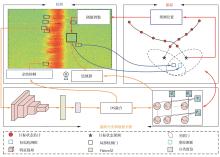
Fig.1
Framework of CIATDT
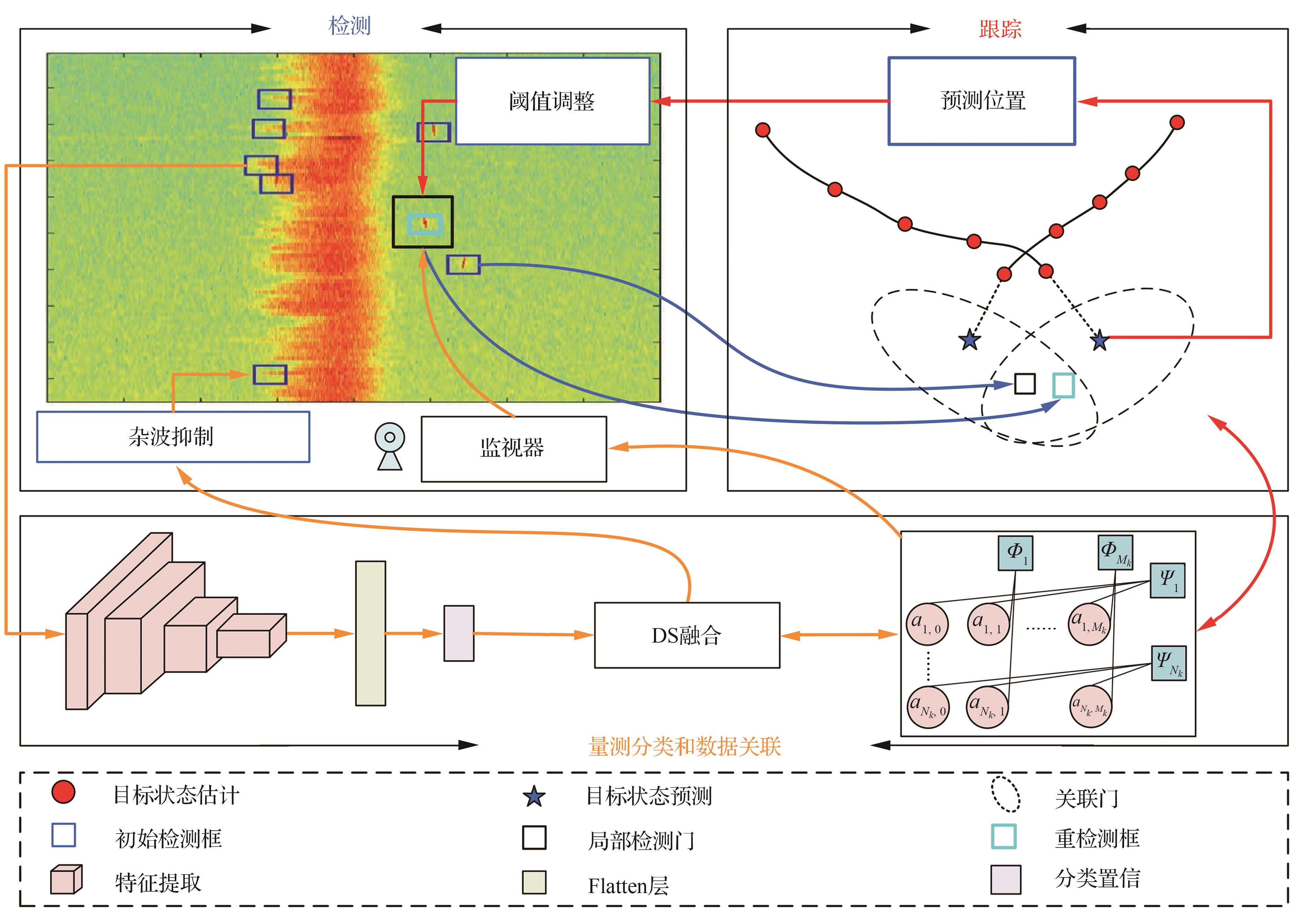
Table 2
Parameters of CNN
| 网络结构 | 作用 |
|---|---|
| Conv.(8,(2,2),(0,1),(1,2)) | 特征提取 |
| Batch normalization(8), ReLU | |
| MaxPooling(2,2) | |
| Conv.(16,(2,2),(0,1),(1,2)) | |
| Batch normalization(8),ReLU | |
| MaxPooling(2,2) | |
| Conv.(32,(2,2),(0,1),(1,2)) | |
| Batch normalization(8),ReLU | |
| MaxPooling(2,2) | |
| Flatten layer | |
| Linear(64,8),Sigmoid |
Table 3
Parameters of MLP
| 网络结构 | 作用 |
|---|---|
| Linear(9,8),ReLu | 量测分类 |
| Linear(8,4),ReLu | |
| Linear(4,1),Sigmoid |
Table 4
Parameters of radar datasets
| 雷达参数 | CSIR数据集 | IPIX数据集 |
|---|---|---|
| 中心频率/GHz | 9 | 9.39 |
| 工作模式 | 驻留模式 | 驻留模式 |
| 脉冲重复频率/kHz | 5 | 1 |
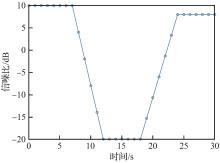
Fig.2
Curve of signal-to-noise ratio variation
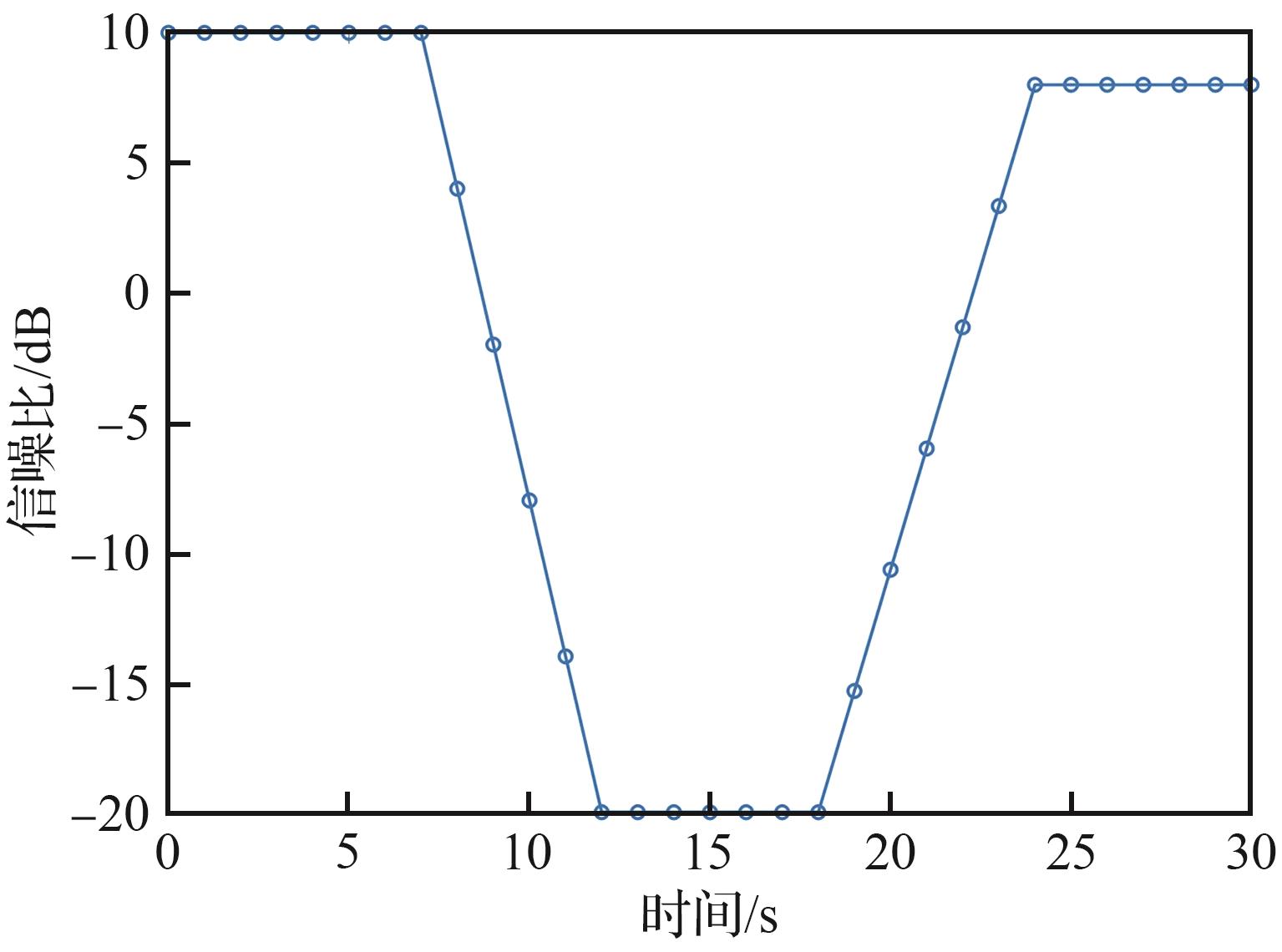
Fig.3
Simulated scenario (CSIR)
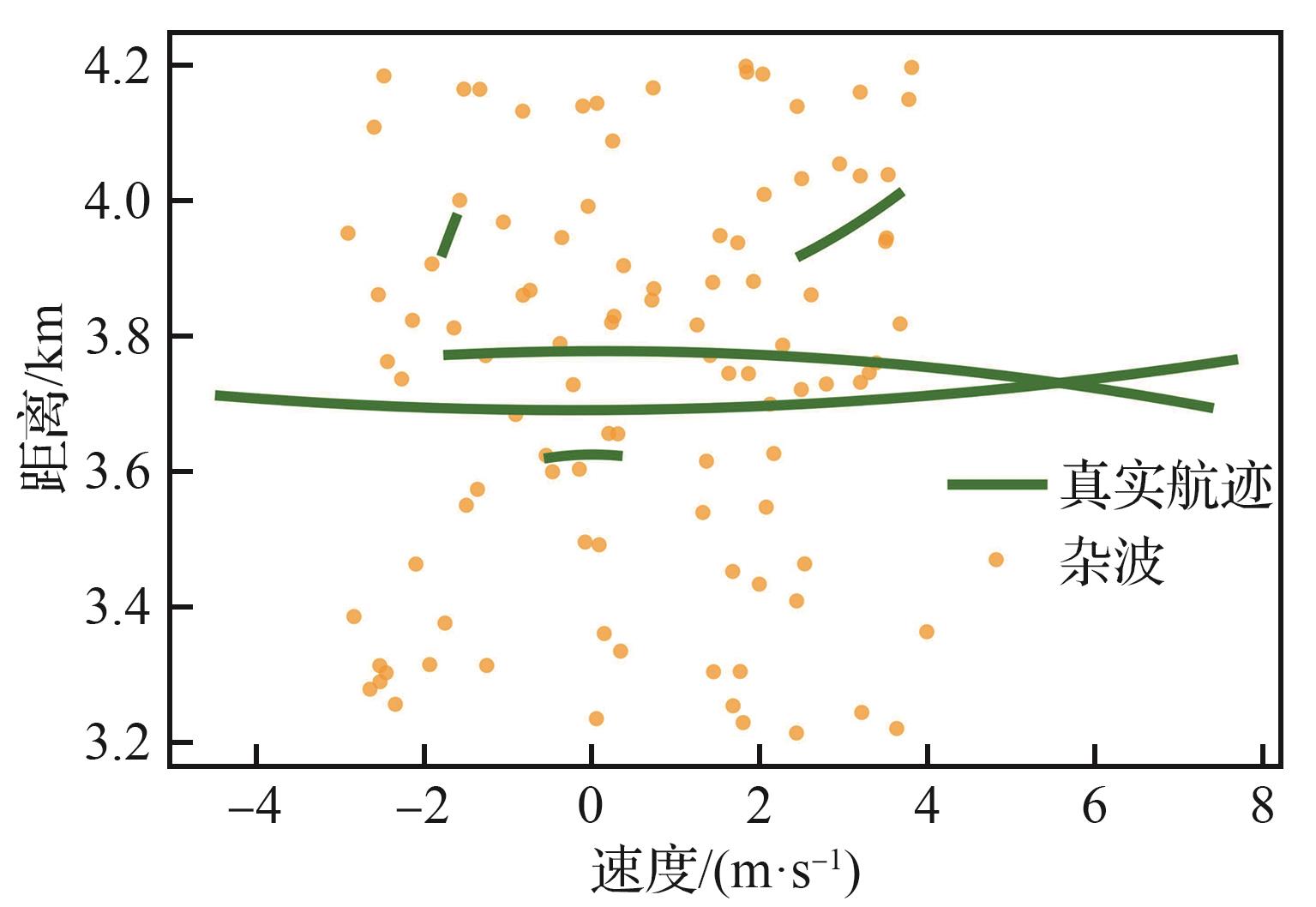
Fig.4
Simulated scenario after clutter rejection (CSIR)
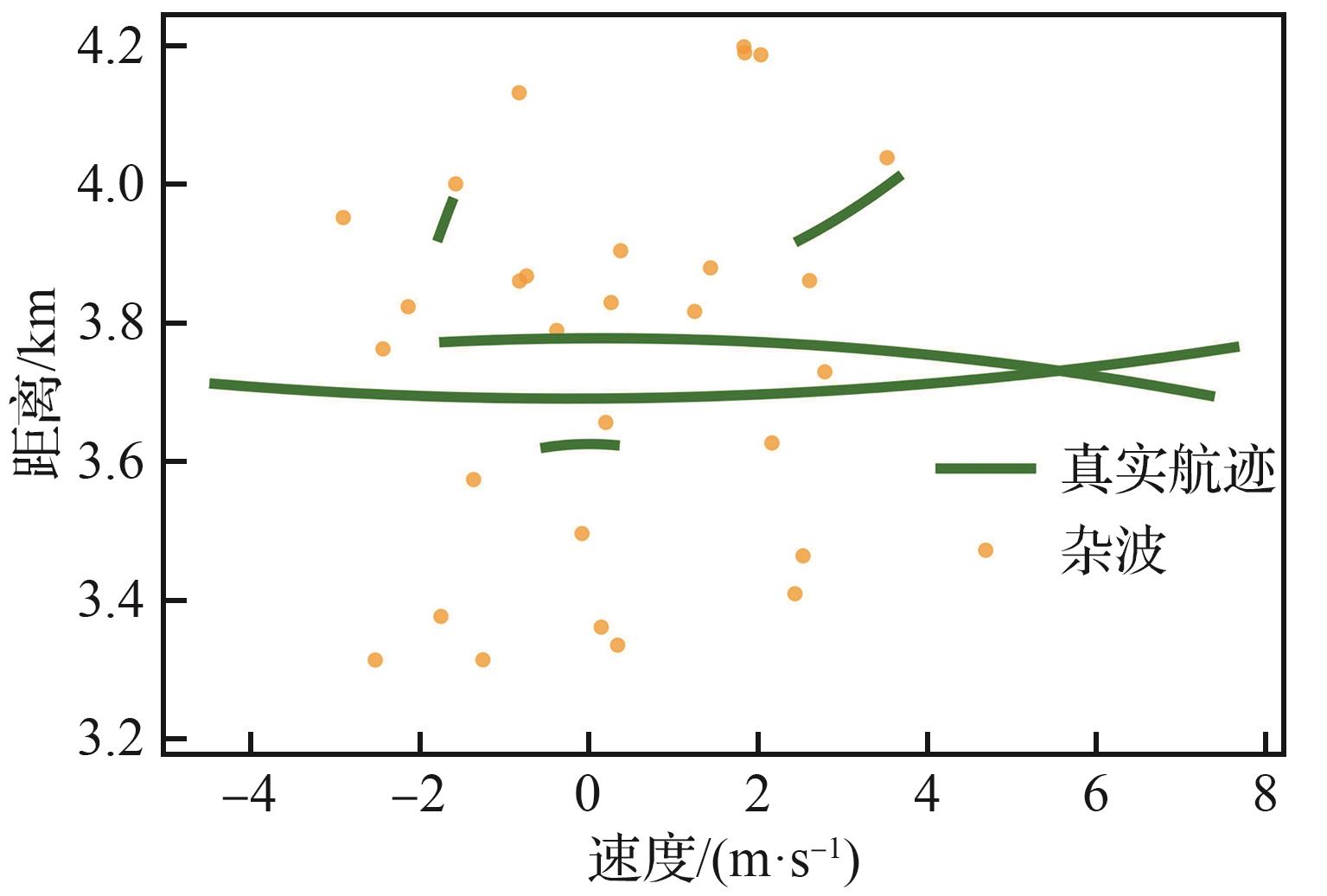
Fig.5
Example diagram of RD spectrum (CSIR)
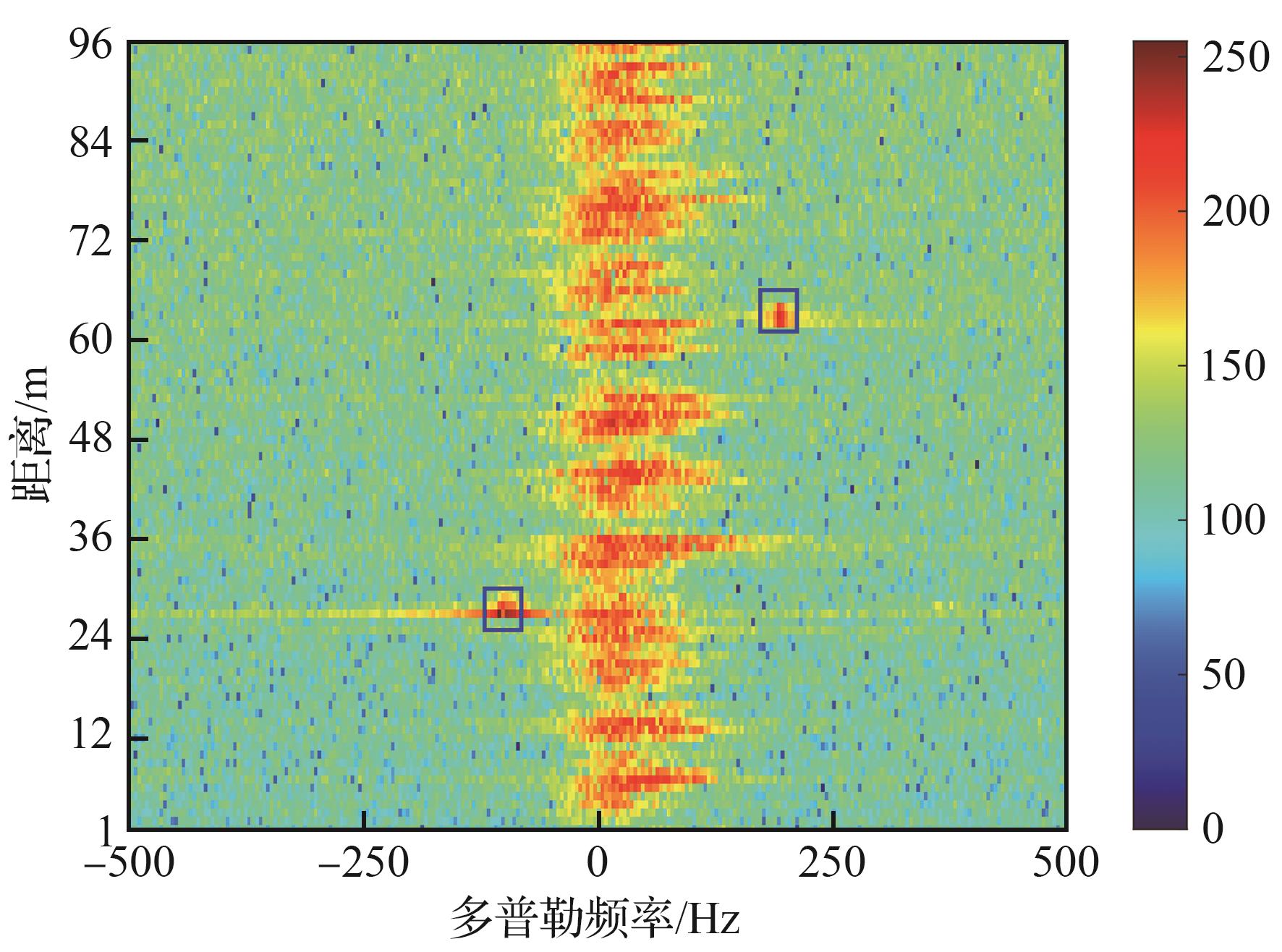
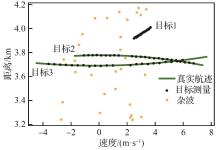
Fig.6
Measurements for partial targets and clutter (Ⅰ)
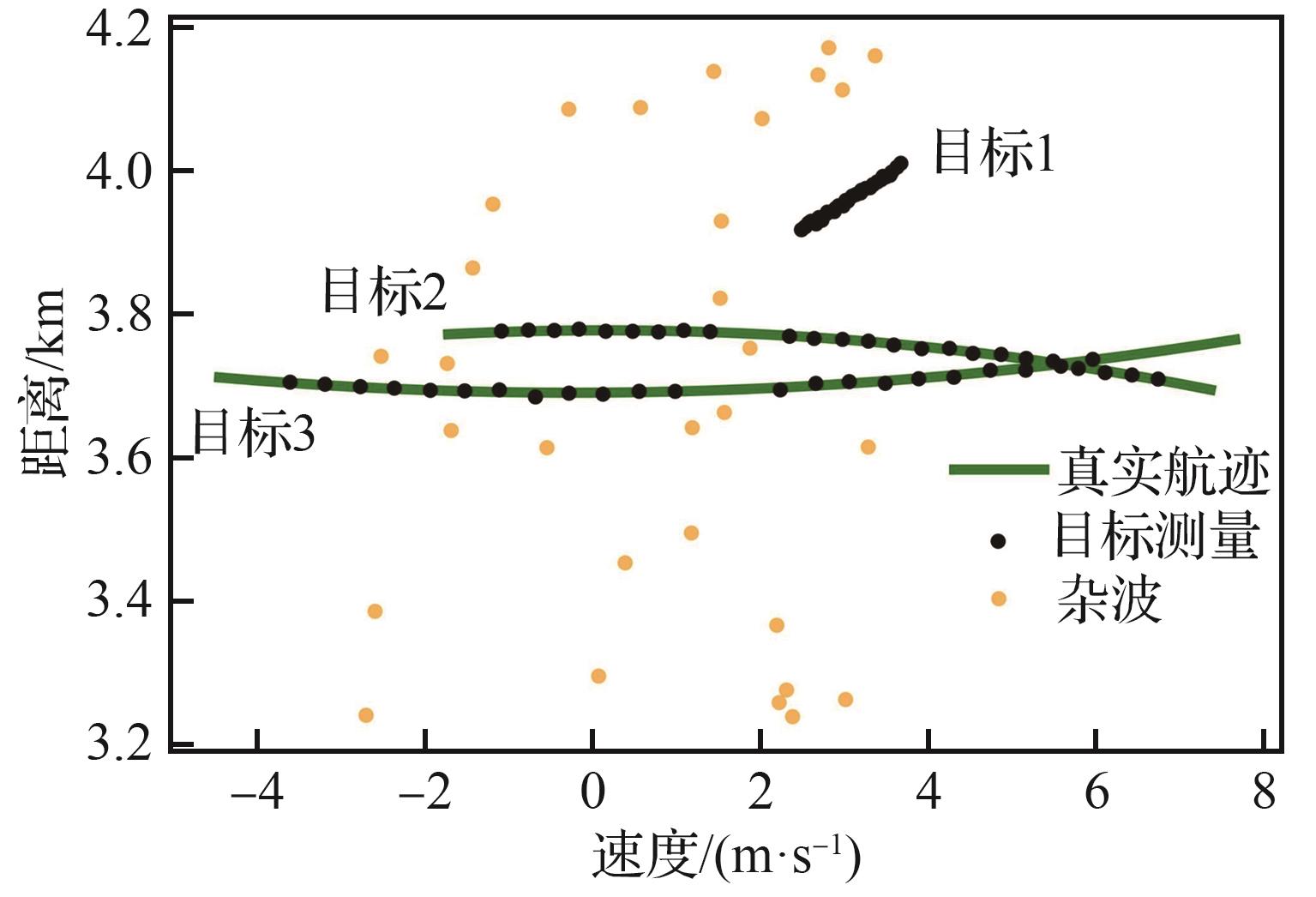
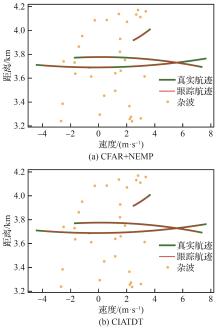
Fig.7
Experimental results (Ⅰ)
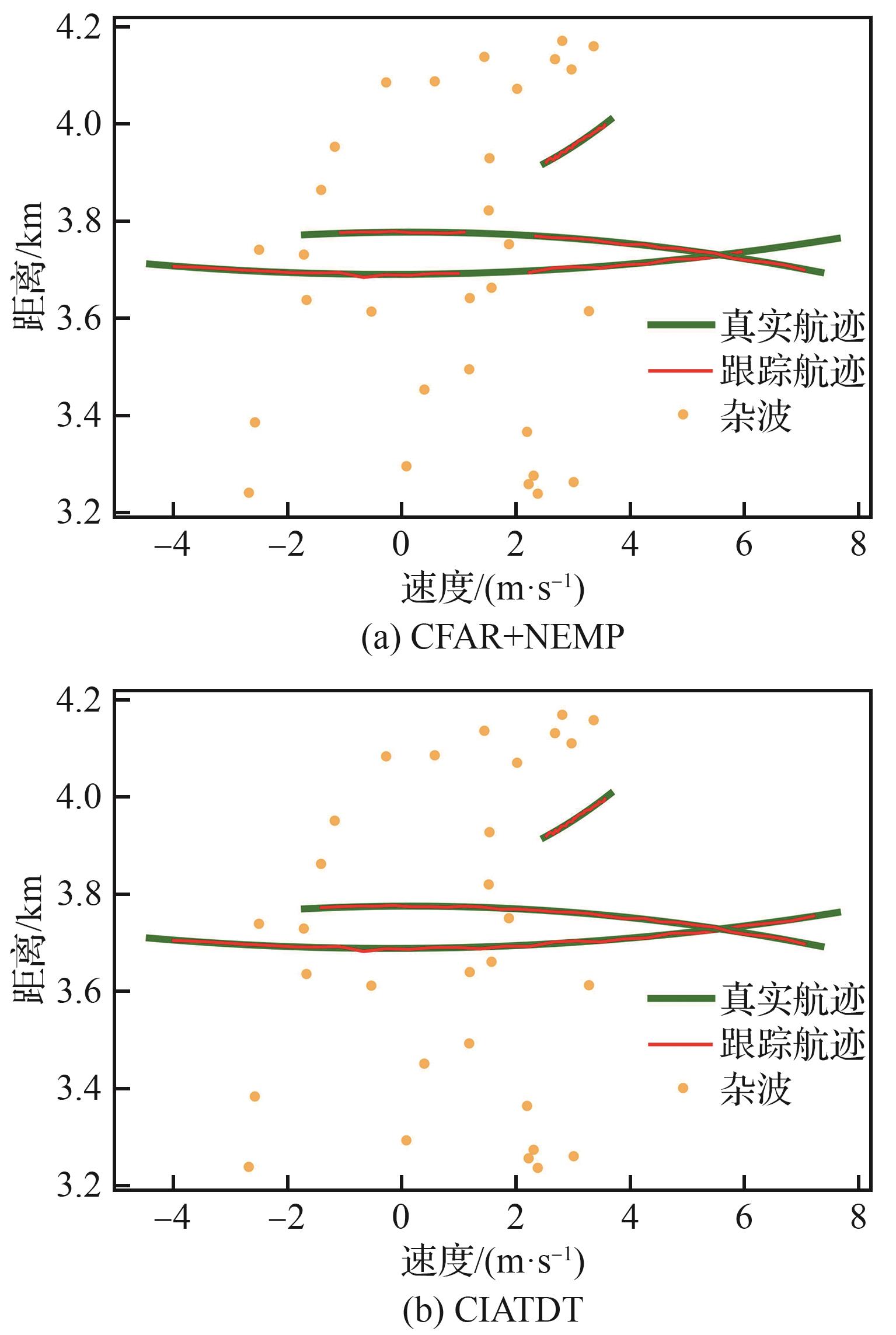
Table 5
Comparison of method performance (Ⅰ)
| 雷达参数 | CIATDT方法 | CFAR+NEMP方法 |
|---|---|---|
| ATMR | 0.975 | 0.768 |
| AMOTA | 0.864 | 0.767 |
| RMSE-R | 4.261 | 4.934 |
| RMSE-V | 0.046 | 0.044 |
| MOSPA | 5.512 | 5.704 |
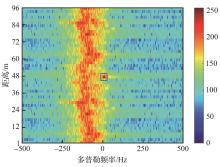
Fig.8
Example diagram of RD spectrum (IPIX)
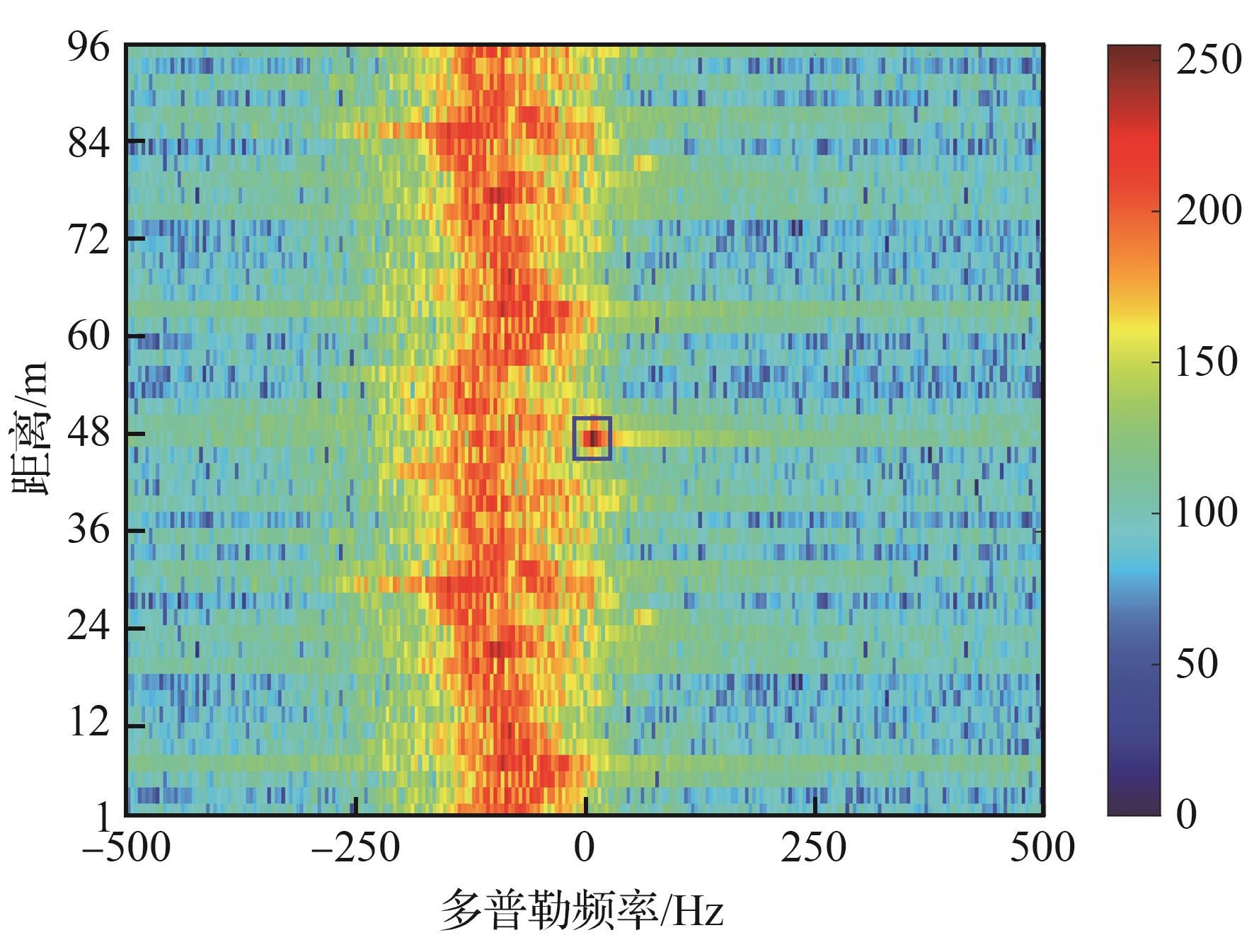
Fig.9
Simulated scenario (IPIX)
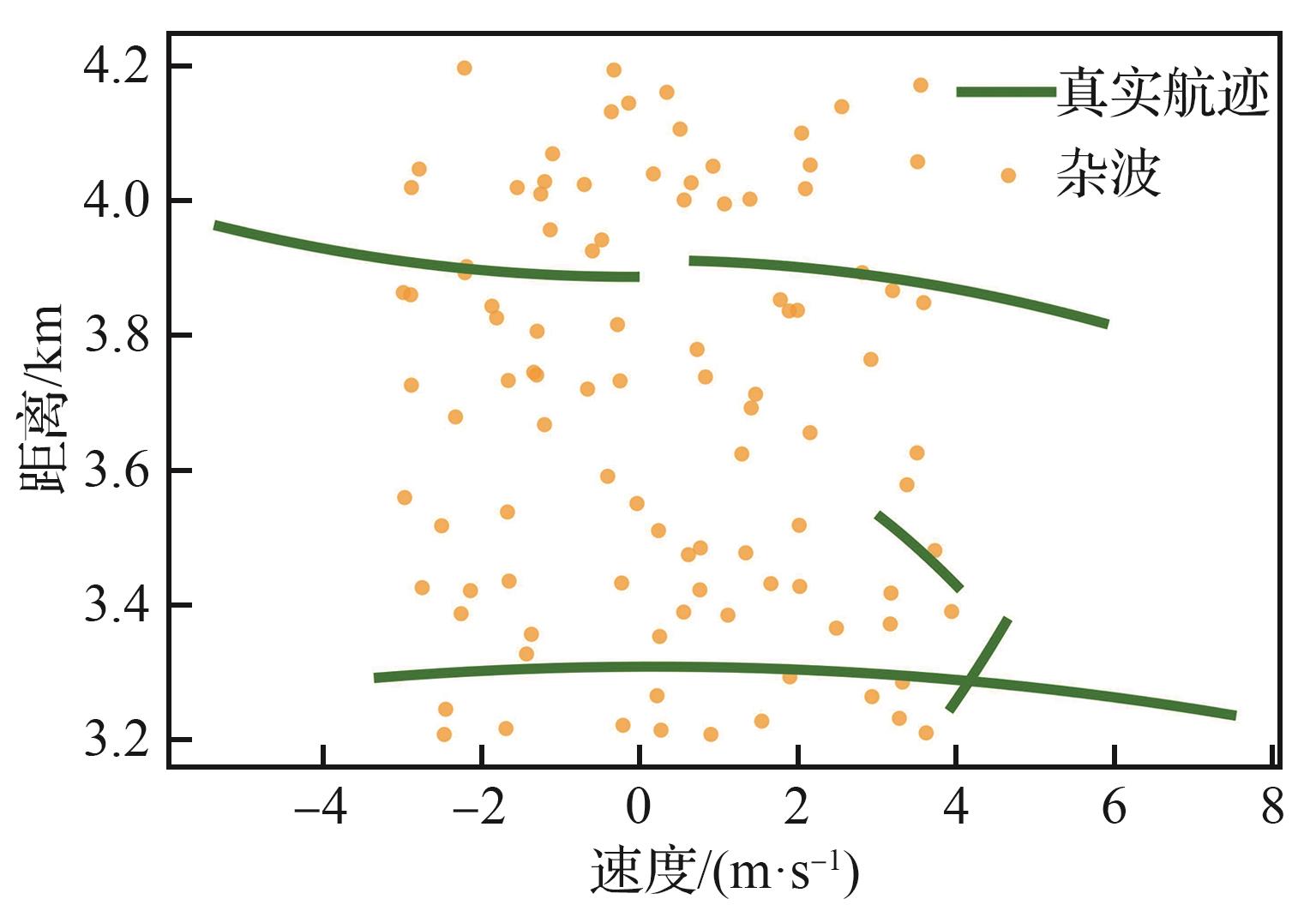
Fig.10
Simulated scenario after clutter rejection (IPIX)
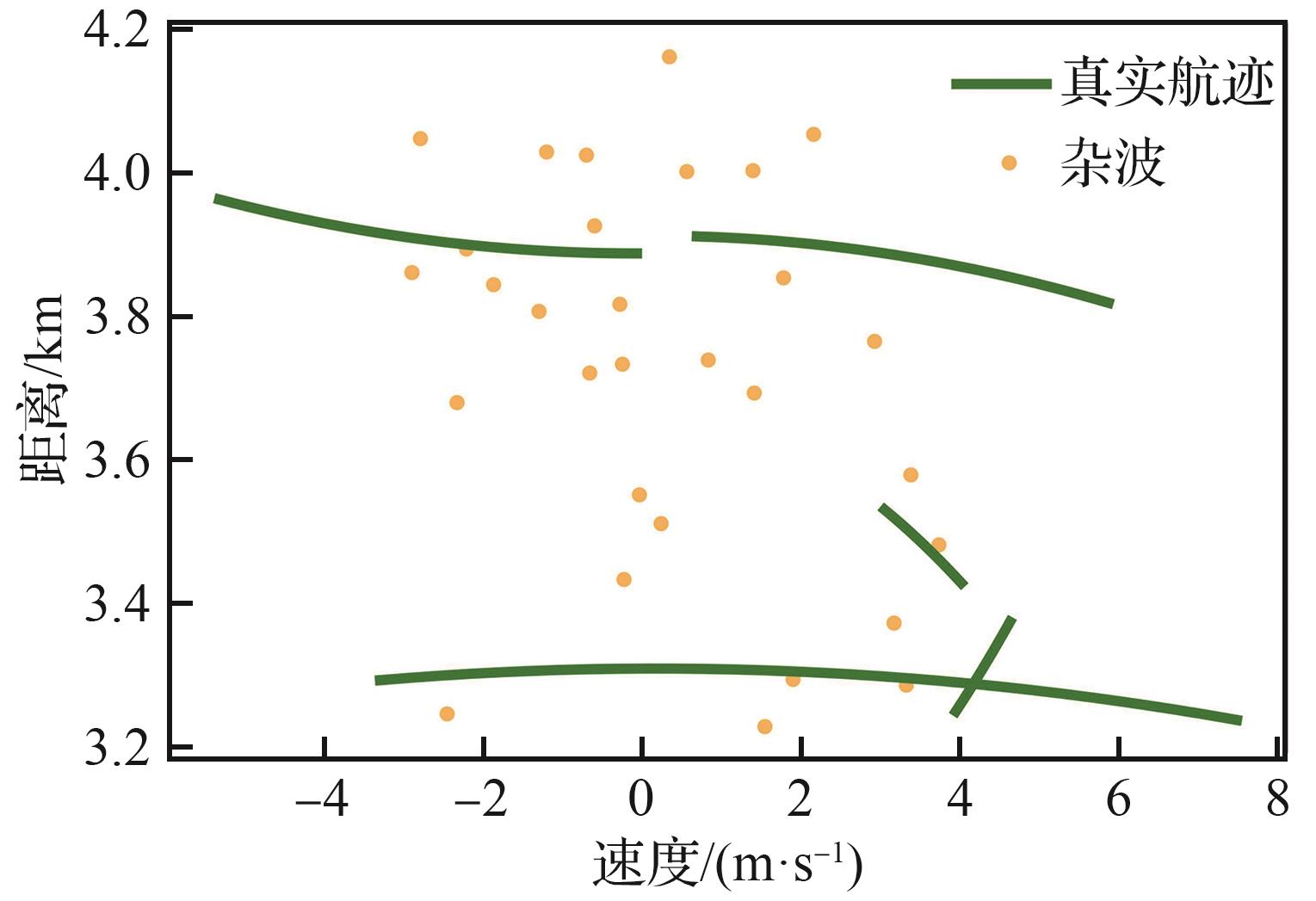
Fig.11
Measurements for partial targets and clutter (Ⅱ)
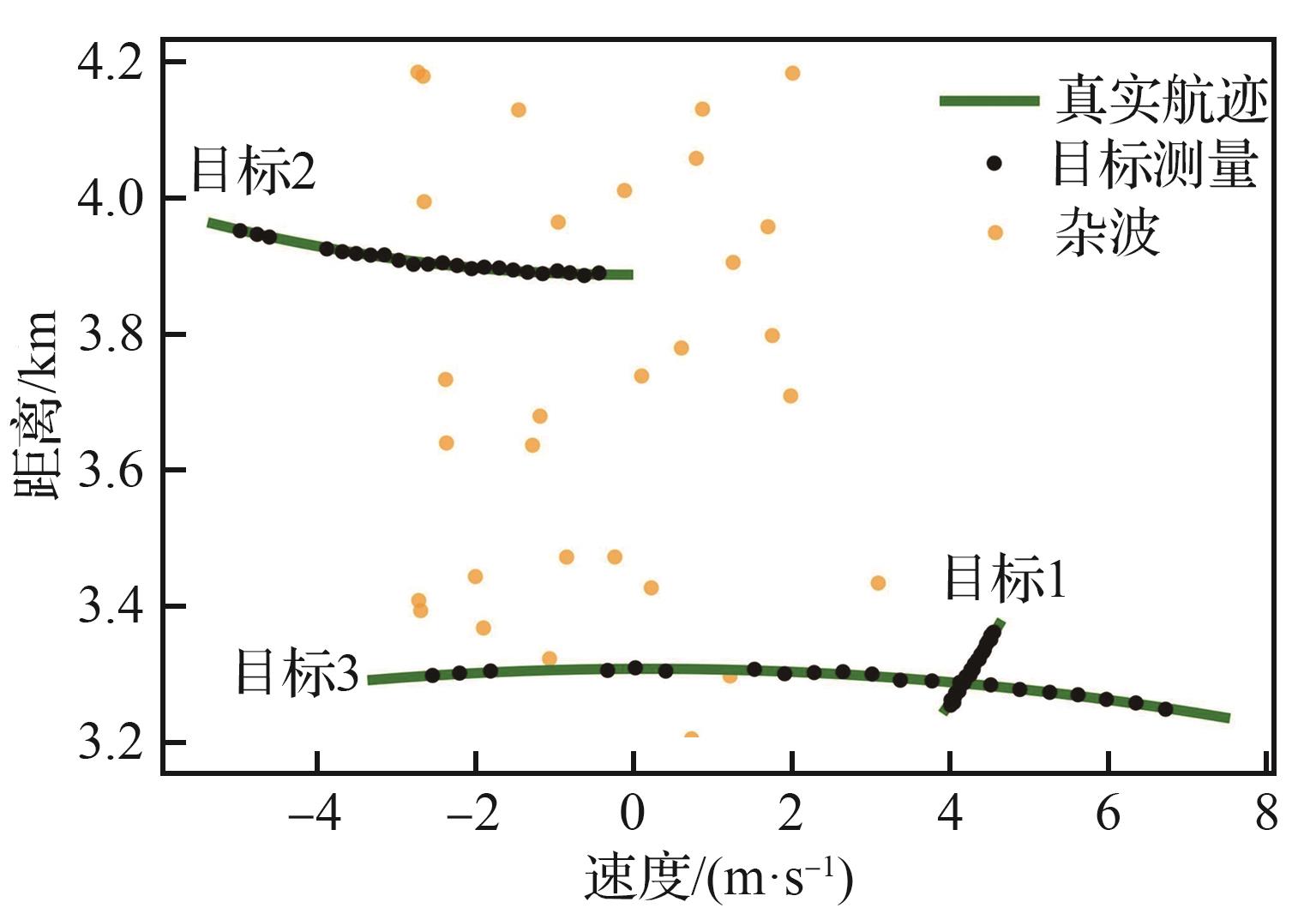
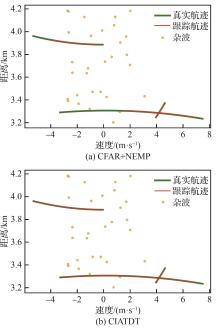
Fig.12
Experimental results (Ⅱ)
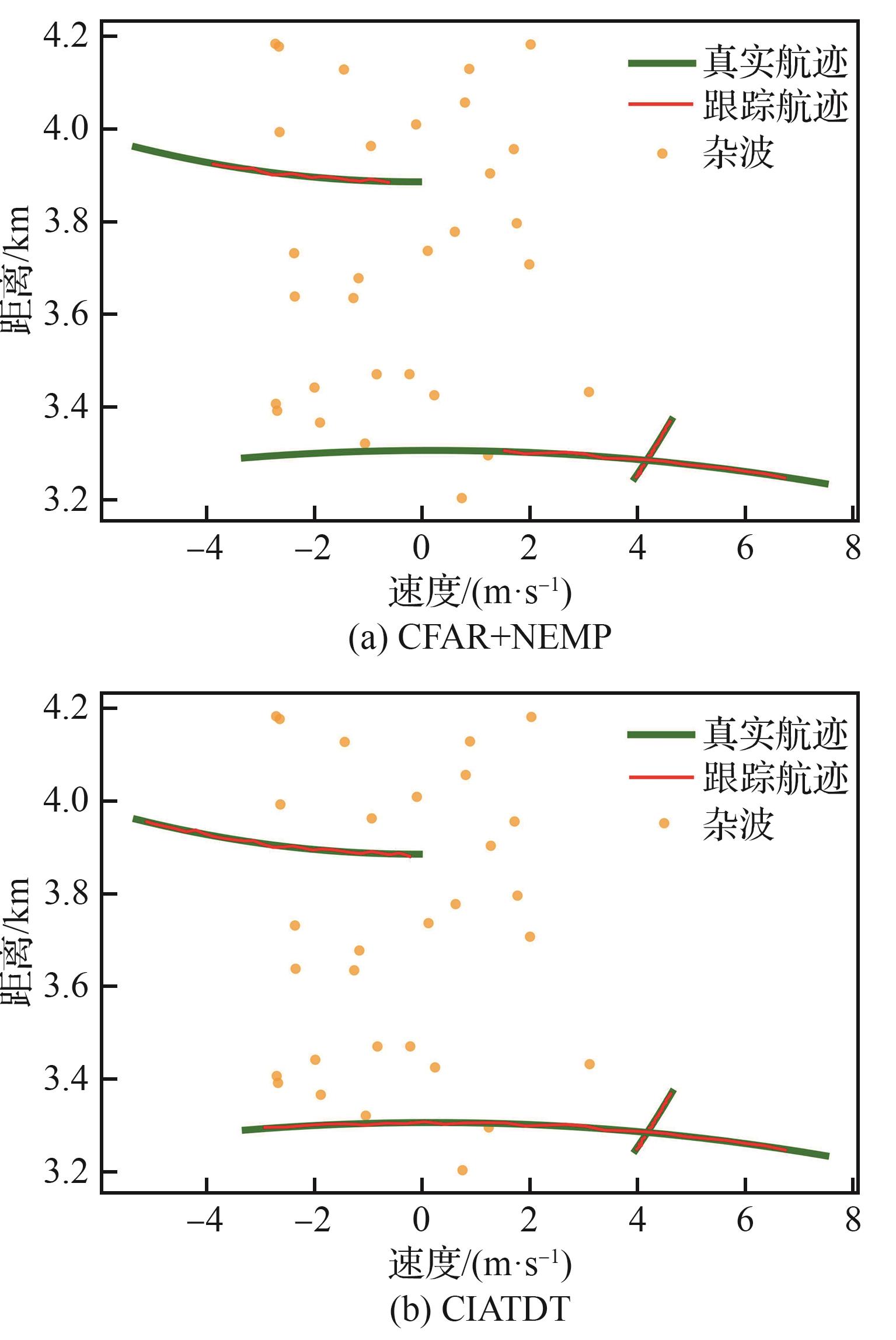
Table 6
Comparison of method performance (Ⅱ)
| 雷达参数 | CIATDT方法 | CFAR+NEMP方法 |
|---|---|---|
| ATMR | 0.967 | 0.467 |
| AMOTA | 0.804 | 0.750 |
| RMSE-R | 4.561 | 5.034 |
| RMSE-V | 0.032 | 0.029 |
| MOSPA | 5.635 | 5.644 |
Fig.13
Comparison of ATMR
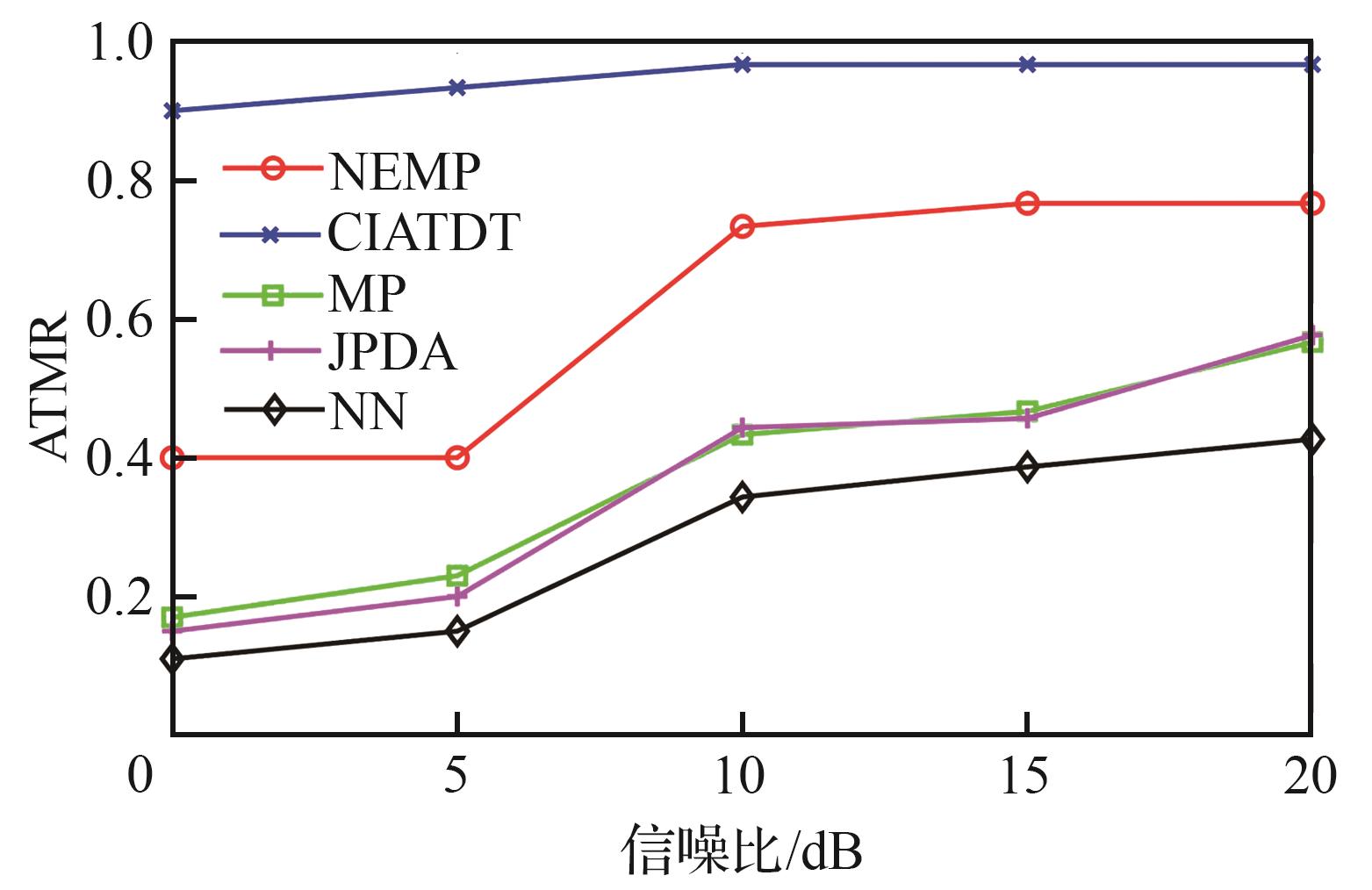
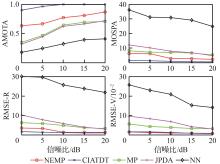
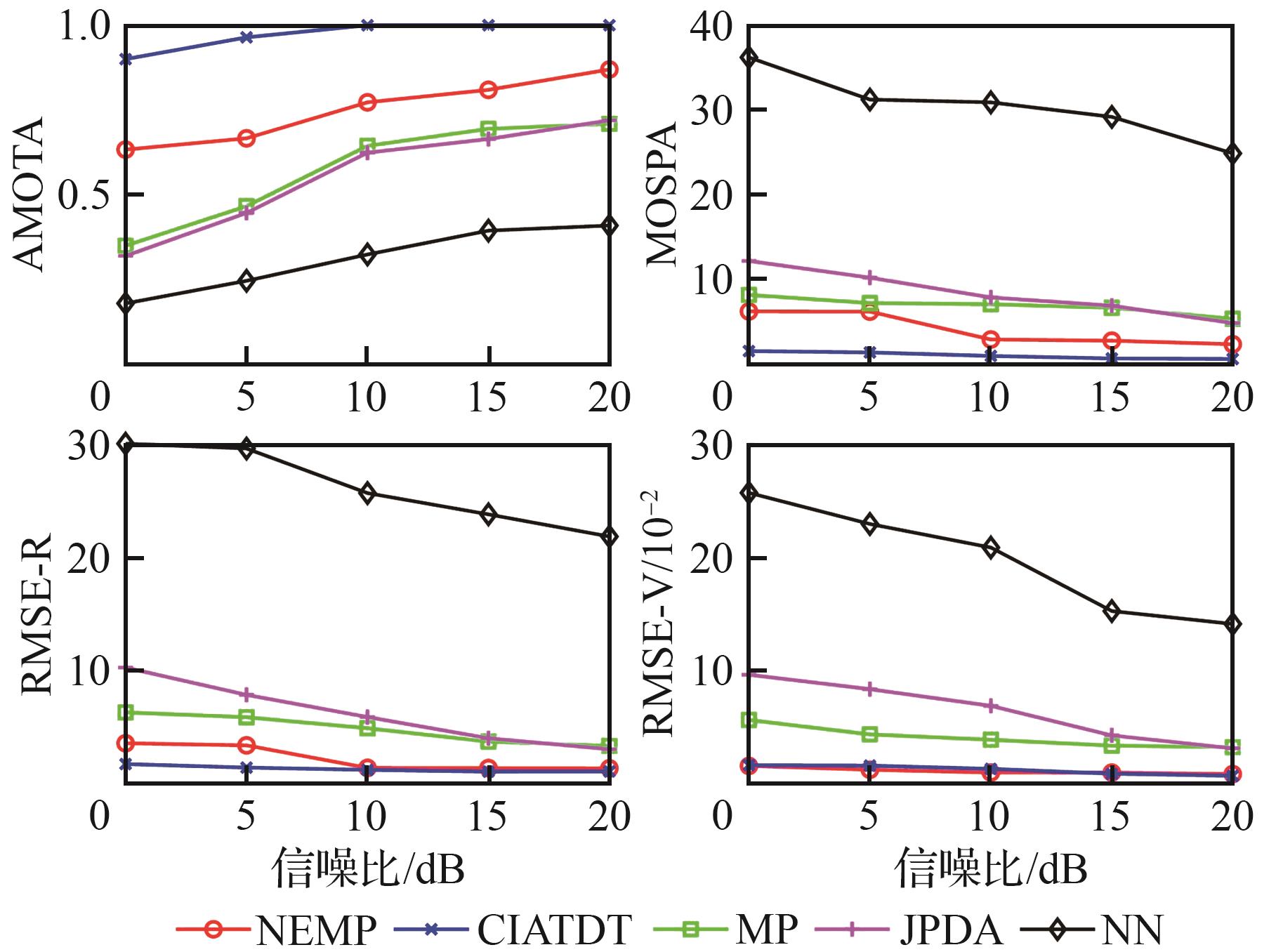
Fig.14
Comparison of other metrics
| [1] | GROSSI E, LOPS M, VENTURINO L. A novel dynamic programming algorithm for track-before-detect in radar systems[J]. IEEE Transactions on Signal Processing, 2013, 61(10): 2608-2619. |
| [2] | 邹鲲, 廖桂生, 李军, 等. 非高斯杂波下知识辅助检测器敏感性分析[J]. 电子与信息学报, 2014, 36(1): 181-186. |
| ZOU K, LIAO G S, LI J, et al. Sensitivity analysis of knowledge aided detector in non-Gaussian clutter[J]. Journal of Electronics & Information Technology, 2014, 36(1): 181-186 (in Chinese). | |
| [3] | 卢术平, 宋海洋, 易伟, 等. 基于雷达知识库的知识辅助恒虚警检测算法[J]. 现代雷达, 2017, 39(6): 46-49, 58. |
| LU S P, SONG H Y, YI W, et al. Knowledge-aided CFAR algorithm based on radar knowledge base[J]. Modern Radar, 2017, 39(6): 46-49, 58 (in Chinese). | |
| [4] | 刘红亮, 周生华, 刘宏伟, 等. 一种航迹恒虚警的目标检测跟踪一体化算法[J]. 电子与信息学报, 2016, 38(5): 1072-1078. |
| LIU H L, ZHOU S H, LIU H W, et al. An integrated target detection and tracking algorithm with constant track false alarm rate[J]. Journal of Electronics & Information Technology, 2016, 38(5): 1072-1078 (in Chinese). | |
| [5] | 鲁瑞莲. 基于信息辅助的雷达检测跟踪一体化方法研究[D]. 西安: 西安电子科技大学, 2018. |
| LU R L. Study of information aided radar detection and tracking coprocessing[D]. Xi’an: Xidian University, 2018 (in Chinese). | |
| [6] | ZHAO H, SHAO X W, KATABIRA K, et al. Joint tracking and classification of moving objects at intersection using a single-row laser range scanner[C]∥2006 IEEE Intelligent Transportation Systems Conference. Piscataway: IEEE Press, 2006: 287-294. |
| [7] | BAE S H. Survey of amplitude-aided multi-target tracking methods[J]. IET Radar, Sonar & Navigation, 2019, 13(2): 243-253. |
| [8] | ZHANG C, MU Y X, XIA Z H, et al. Feature extraction for moving targets based on the statistical characteristics of echo amplitude with the L-band fully polarimetric radar[J]. Remote Sensing, 2023, 15(1): 80. |
| [9] | ZHONG J S, LUO Y T, ZHANG Y, et al. A novel approach to maneuvering target tracking based on random motion model using random Kalman filtering[C]∥International Conference on Signal Processing and Communication Security (ICSPCS 2022). Washington, D.C.:SPIE, 2022: 22. |
| [10] | 刘红亮, 陈超, 岳凯. 基于跟踪信息的多帧联合检测方法[J]. 系统工程与电子技术, 2021, 43(8): 2124-2128. |
| LIU H L, CHEN C, YUE K. Multi-frame joint detection method based on tracking information[J]. Systems Engineering and Electronics, 2021, 43(8): 2124-2128 (in Chinese). | |
| [11] | GUAN Y S, WANG Y P. Joint detection and tracking scheme for target tracking in moving platform[C]∥2020 IEEE Radar Conference (RadarConf20). Piscataway: IEEE Press, 2020: 1-4. |
| [12] | 孙伟峰, 李小彤, 纪永刚, 等. 基于检测-跟踪联动的紧凑型高频地波雷达弱目标自适应检测方法[J]. 电子与信息学报, 2023, 45(8): 2955-2964. |
| SUN W F, LI X T, JI Y G, et al. An adaptive weak target detection method using joint detection and tracking for compact high frequency surface ware radar[J]. Journal of Electronics & Information Technology, 2023, 45(8): 2955-2964 (in Chinese). | |
| [13] | YANG W, FU Y W, LONG J Q, et al. Joint detection, tracking, and classification of multiple targets in clutter using the PHD filter[J]. IEEE Transactions on Aerospace and Electronic Systems, 2012, 48(4): 3594-3609. |
| [14] | RICHARDS M A, SCHEER J A, HOLM W A. Principles of modern radar: Basic principles[M]. London: Institution of Engineering and Technology, 2010. |
| [15] | LI Y G, ZHANG G F, DOVIAK R J. Ground clutter detection using the statistical properties of signals received with a polarimetric radar[J]. IEEE Transactions on Signal Processing, 2014, 62(3): 597-606. |
| [16] | SHI S N, LIANG X, SHUI P L, et al. Low-velocity small target detection with Doppler-guided retrospective filter in high-resolution radar at fast scan mode[J]. IEEE Transactions on Geoscience and Remote Sensing, 2019, 57(11): 8937-8953. |
| [17] | SHUI P L, GUO Z X, SHI S N. Feature-compression-based detection of sea-surface small targets[J]. IEEE Access, 2019, 8: 8371-8385. |
| [18] | GAO C, YAN J K, PENG X J, et al. Signal structure information-based target detection with a fully convolutional network[J]. Information Sciences, 2021, 576: 345-354. |
| [19] | BAR-SHALOM Y, KIRUBARAJAN T, GOKBERK C. Tracking with classification-aided multiframe data association[J]. IEEE Transactions on Aerospace and Electronic Systems, 2005, 41(3): 868-878. |
| [20] | BAI X L, WANG Z F, PAN Q, et al. Classification-aided robust multiple target tracking using neural enhanced message passing[J]. IEEE Transactions on Aerospace and Electronic Systems, 2025, 61(2): 3882-3903. |
| [21] | WEN L W, DING J S, XU Z. Multiframe detection of sea-surface small target using deep convolutional neural network[J]. IEEE Transactions on Geoscience and Remote Sensing, 2021, 60: 5107116. |
| [22] | ZAECH J N, LINIGER A, DAI D X, et al. Learnable online graph representations for 3D multi-object tracking[J]. IEEE Robotics and Automation Letters, 2022, 7(2): 5103-5110. |
| [23] | LUNA E, SANMIGUEL J C, MARTÍNEZ J M, et al. Graph neural networks for cross-camera data association[J]. IEEE Transactions on Circuits and Systems for Video Technology, 2023, 33(2): 589-601. |
| [24] | WANG Z H, LI Z Y, LENG J X, et al. Multiple pedestrian tracking with graph attention map on urban road scene[J]. IEEE Transactions on Intelligent Transportation Systems, 2023, 24(8): 8567-8579. |
| [25] | TEDESCHINI B C, BRAMBILLA M, BARBIERI L, et al. Cooperative lidar sensing for pedestrian detection: Data association based on message passing neural networks[J]. IEEE Transactions on Signal Processing, 2023, 71: 3028-3042. |
| [26] | JOHNSON M J, DUVENAUD D, WILTSCHKO A B, et al. Composing graphical models with neural networks for structured representations and fast inference[C]∥Proceedings of the 30th International Conference on Neural Information Processing Systems. New York: ACM, 2016: 2954-2962. |
| [27] | KUCK J, CHAKRABORTY S, TANG H, et al. Belief propagation neural networks[C]∥Proceedings of the 34th International Conference on Neural Information Processing Systems. New York: ACM, 2020: 667-678. |
| [28] | SATORRAS V G, AKATA Z, WELLING M. Combining generative and discriminative models for hybrid inference[C]∥Proceedings of the 33rd International Conference on Neural Information Processing Systems. New York: ACM, 2019: 13820-13830. |
| [29] | SATORRAS V G, WELLING M. Neural enhanced belief propagation on factor graphs[C]∥International Conference on Artificial Intelligence and Statistics., 2020 |
| [30] | SHAFER G. A Mathematical Theory of Evidence[M]. Princeton: Princeton University Press, 1976. |
| [31] | 何友, 修建娟, 关欣, 等. 雷达数据处理及应用[M]. 3版. 北京: 电子工业出版社, 2013. |
| HE Y, XIU J J, GUAN X. Radar data processing with applications[M]. 3rd ed. Beijing: Publishing House of Electronics Industry, 2013 (in Chinese). | |
| [32] | 卜月华, 王维凡, 吕新忠. 图论及其应用[M]. 2版. 南京: 东南大学出版社, 2015. |
| BU Y H, WANG W F, LV X Z. Graph theory and its application[M]. 2nd ed. Nanjing: Southeast University Press, 2015 (in Chinese). | |
| [33] | 梁建. 高频地波雷达目标二维CFAR检测及软件实现[D]. 青岛: 中国海洋大学, 2014. |
| LIANG J. Target CFAR detection method and software implementation with two-dimension data for HFSWR[D]. Qingdao: Ocean University of China, 2014 (in Chinese). | |
| [34] | OH S, RUSSELL S, SASTRY S. Markov chain Monte Carlo data association for multi-target tracking[J]. IEEE Transactions on Automatic Control, 2009, 54(3): 481-497. |
| [35] | DE WIND H J, CILLIERS J E, HERSELMAN P L. DataWare: Sea clutter and small boat radar reflectivity databases[J]. IEEE Signal Processing Magazine, 2010, 27(2): 145-148. |
| [36] | BAKKER R, CURRIE B. The McMaster IPIX radar sea clutter database[EB/OL]. (2023-11-01)[2024-11-01]. . |
| [37] | WENG X S, WANG J R, HELD D, et al. 3D multi-object tracking: A baseline and new evaluation metrics[C]∥2020 IEEE/RSJ International Conference on Intelligent Robots and Systems (IROS). Piscataway: IEEE Press, 2020: 10359-10366. |
| [38] | SCHUHMACHER D, VO B T, VO B N. A consistent metric for performance evaluation of multi-object filters[J]. IEEE Transactions on Signal Processing, 2008, 56(8): 3447-3457. |
| [1] | Lixiong ZHENG, Zhe CHEN, Xin WANG, Qijun ZHAO. Prediction of whirl flutter boundary for tiltrotor aircraft based on BPNN with adaptive data [J]. Acta Aeronautica et Astronautica Sinica, 2025, 46(S1): 732159-732159. |
| [2] | Jiong HE, Binwu REN, Siliang DU, Yousong XU, Bo WANG. Adaptive attitude control for tilt-quadrotor UAV based on ADRC-RBF [J]. Acta Aeronautica et Astronautica Sinica, 2025, 46(S1): 732189-732189. |
| [3] | Tao ZHANG, Pan LI, Zixu WANG, Zhenhua ZHU. Design of reward functions for helicopter attitude control in reinforcement learning [J]. Acta Aeronautica et Astronautica Sinica, 2025, 46(S1): 732184-732184. |
| [4] | Ronghai KOU, Wenbo LI, Qingqing DANG, Jinjin XIE. Fault diagnosis of spacecraft attitude control system driven by data and model [J]. Acta Aeronautica et Astronautica Sinica, 2025, 46(S1): 732259-732259. |
| [5] | Bichen HU, Liangliang HU, Yuxi LIU, Shujun TAN. Aerodynamic parameter identification of launch vehicle based on offline learning and online correction [J]. Acta Aeronautica et Astronautica Sinica, 2025, 46(S1): 732407-732407. |
| [6] | Haipeng CHEN, Wenxing FU, Jie YAN. Fault diagnosis of thrust offset loss of launch vehicle based on AGABP neural network [J]. Acta Aeronautica et Astronautica Sinica, 2025, 46(8): 231148-231148. |
| [7] | Mou CHEN, Zhengguo HUANG, Yaohua SHEN, Fan LIU. Overview of composite anti-disturbance control technology of advanced vehicles [J]. Acta Aeronautica et Astronautica Sinica, 2025, 46(6): 531303-531303. |
| [8] | Zhichun YANG, Te YANG. Physical embedded neural network model and method for dynamic load identification [J]. Acta Aeronautica et Astronautica Sinica, 2025, 46(5): 531450-531450. |
| [9] | Lei WANG, Qiuxuan YE, Jin ZHANG. Spectrum sensing method for DME using combined wavelet transform and deep convolutional neural network [J]. Acta Aeronautica et Astronautica Sinica, 2025, 46(24): 332044-332044. |
| [10] | Erchao RONG, Yuying ZHANG, Junning LIANG, Ximin LYU. Neural-network aerodynamics-based NMPC trajectory tracking control for a tail-sitter VTOL UAV [J]. Acta Aeronautica et Astronautica Sinica, 2025, 46(24): 331995-331995. |
| [11] | Yubin LU, Xiaohua NIE, Zhen WU. A residual stiffness prediction approach for carbon fiber reinforced composite materials based on interpretable machine learning algorithms [J]. Acta Aeronautica et Astronautica Sinica, 2025, 46(21): 532249-532249. |
| [12] | Jiakun FAN, Junqiang AI, Ningjuan DONG, Jiakuan XU, Lei QIAO, Junqiang BAI. Stationary crossflow induced transition prediction method for supersonic swept-wing based on convolutional neural networks [J]. Acta Aeronautica et Astronautica Sinica, 2025, 46(20): 532012-532012. |
| [13] | Yutong WANG, Xiao LUO, Hongyang LIU, Chao SONG, Ying ZHAO, Zhu ZHOU. Sonic boom prediction of supersonic passenger aircraft based on multi-fidelity deep neural network [J]. Acta Aeronautica et Astronautica Sinica, 2025, 46(20): 531936-531936. |
| [14] | Chenhao ZHAO, Dewei WU, Jing HE, Qian WU. A semantic feature matching algorithm for UAV visual pose estimation [J]. Acta Aeronautica et Astronautica Sinica, 2025, 46(2): 330406-330406. |
| [15] | Yingjie SHI, Binchao LIU, Songsong LU, Liang CHEN, Hai SHANG, Rui BAO. Neural network model for wing strain-load relationship based on fusion of real and virtual data [J]. Acta Aeronautica et Astronautica Sinica, 2025, 46(19): 530921-530921. |
| Viewed | ||||||
|
Full text |
|
|||||
|
Abstract |
|
|||||
Address: No.238, Baiyan Buiding, Beisihuan Zhonglu Road, Haidian District, Beijing, China
Postal code : 100083
E-mail:hkxb@buaa.edu.cn
Total visits: 6658907 Today visits: 1341All copyright © editorial office of Chinese Journal of Aeronautics
All copyright © editorial office of Chinese Journal of Aeronautics
Total visits: 6658907 Today visits: 1341

 CJA
CJA
