Acta Aeronautica et Astronautica Sinica ›› 2026, Vol. 47 ›› Issue (19): 333222.doi: 10.7527/S1000-6893.2026.33222
• Electronics and Electrical Engineering and Control • Previous Articles
Xiaolu LI, Changqing WANG, Yong GUO( ), Aijun LI
Received:2025-12-11
Revised:2026-01-12
Accepted:2026-02-04
Online:2026-02-28
Published:2026-02-27
Contact:
Yong GUO
E-mail:guoyong@nwpu.edu.cn
Supported by:CLC Number:
Xiaolu LI, Changqing WANG, Yong GUO, Aijun LI. Prescribed-time fault-tolerant control for small tandem-rotor UAV formation with input saturation[J]. Acta Aeronautica et Astronautica Sinica, 2026, 47(19): 333222.
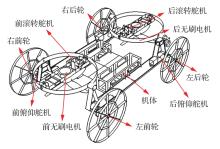
Fig.1
Schematic diagram of STR-UAV model structure
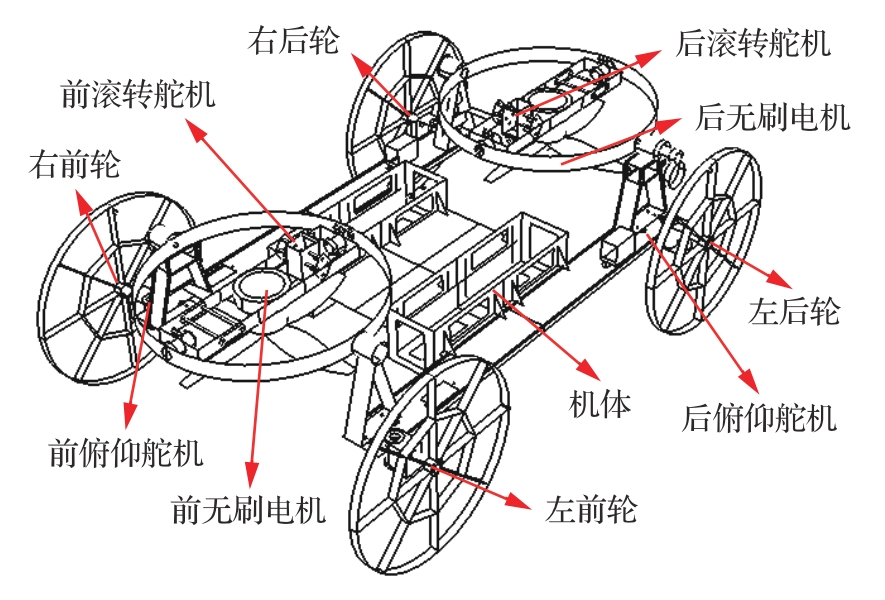
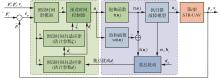
Fig.2
Schematic diagram of the STR-UAV formation prescribed-time fault-tolerant control strategy
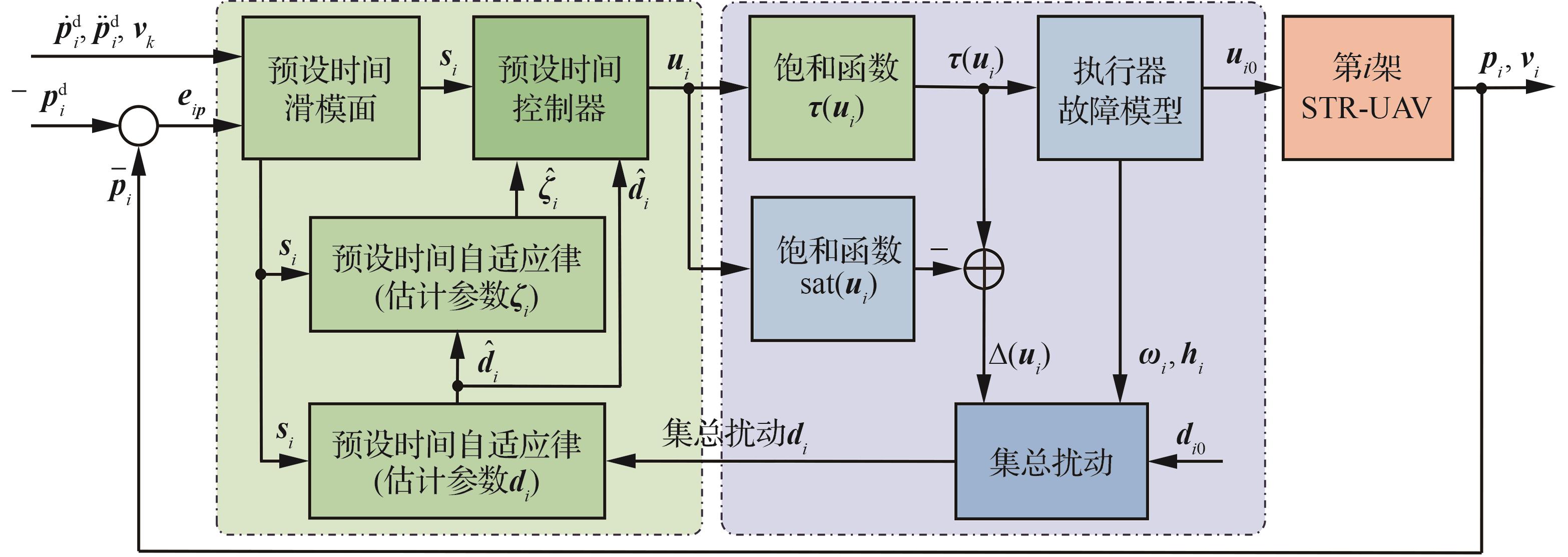
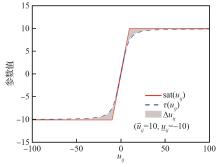
Fig.3
Saturation function, smooth function, and fitting error
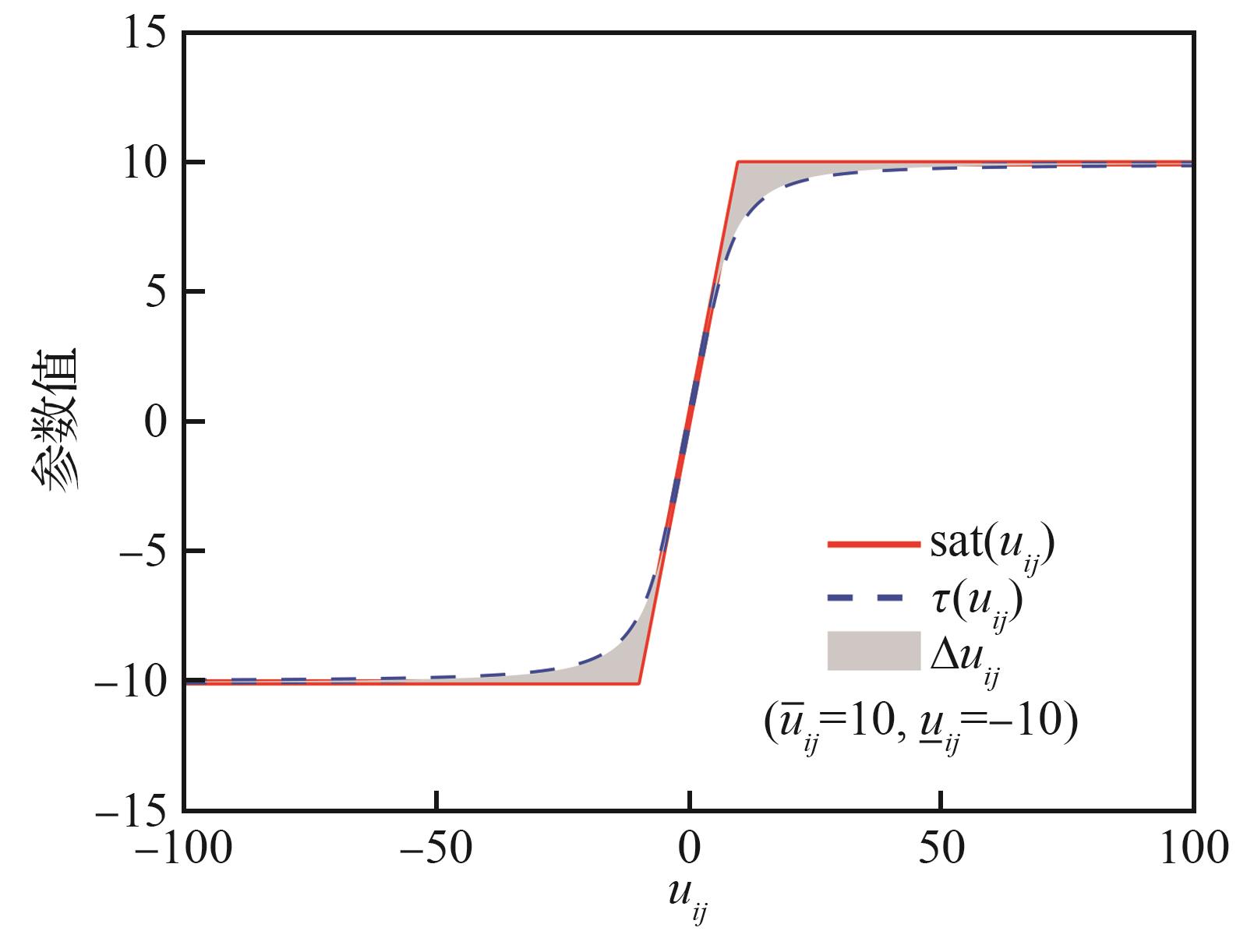
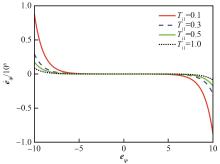
Fig.4
Convergence of the error eip in phase plane
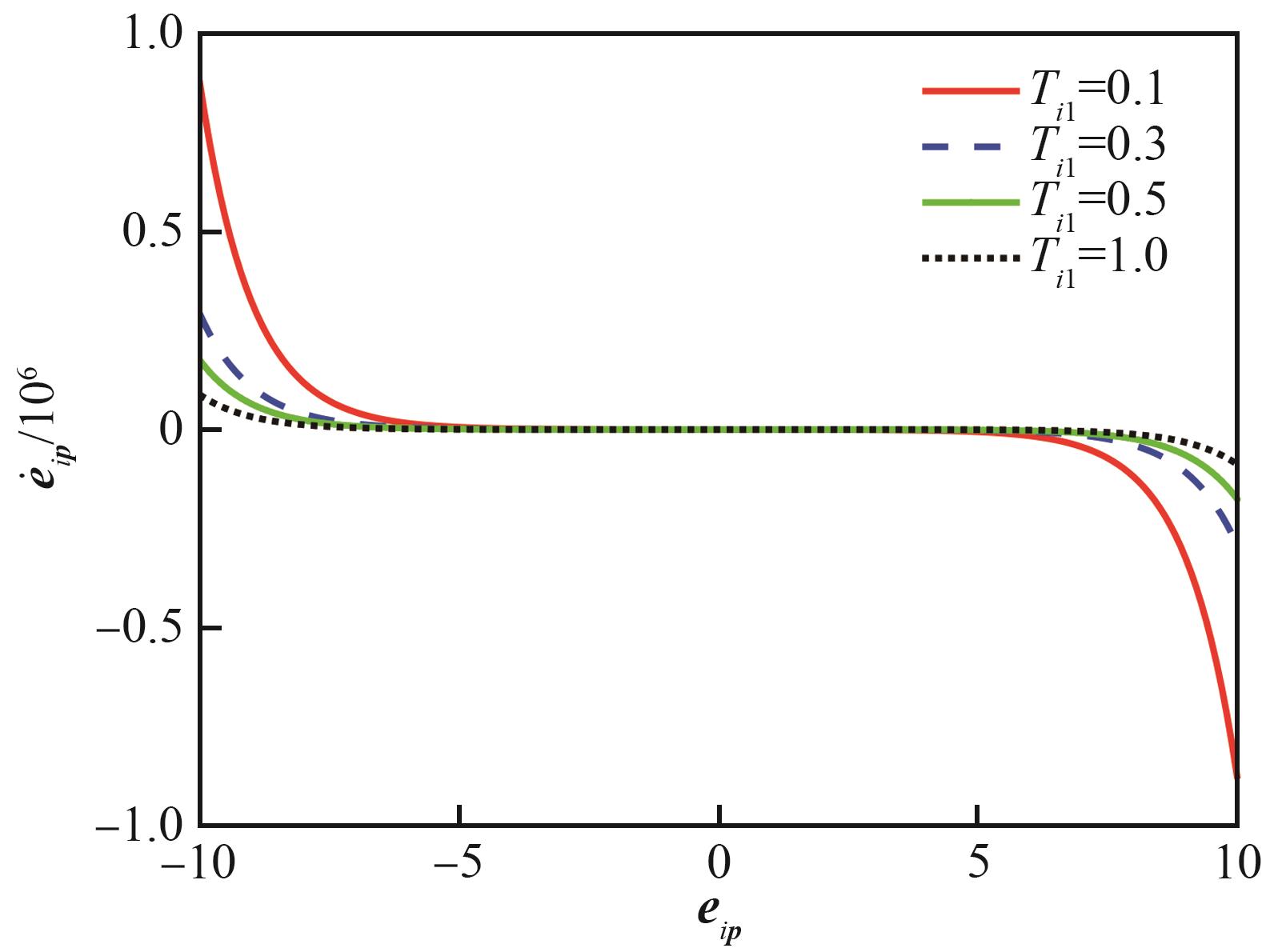
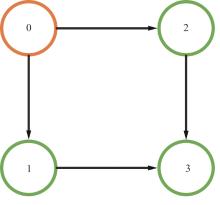
Fig.5
Communication network of formation
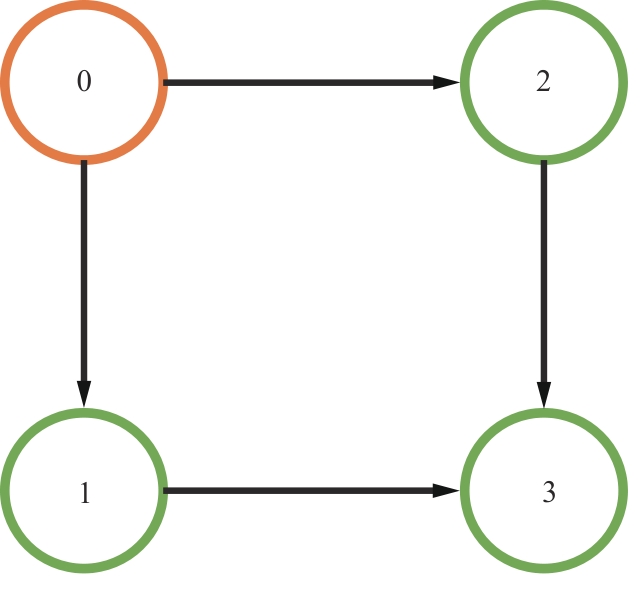
Table 1
Initial status information for STR-UAV formation members
| STR-UAV | ||
|---|---|---|
| 领导者0 | ||
| 跟随者1 | ||
| 跟随者2 | ||
| 跟随者3 |
Table 2
Failure information for STR-UAV formation members
| STR-UAV | 故障时间 | ||
|---|---|---|---|
| 跟随者1 | |||
| 跟随者2 | |||
| 跟随者3 |
Table 3
Control parameters information table for STR-UAV formation
| 控制参数 | 数值 |
|---|---|
| λi1,λi2 | 700,700 |
Table 4
Preset positions information table for STR-UAV formation
| 位置参数 | 数值 |
|---|---|
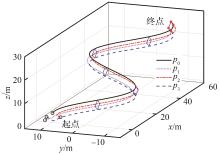
Fig.6
Flight trajectories of STR-UAV formation
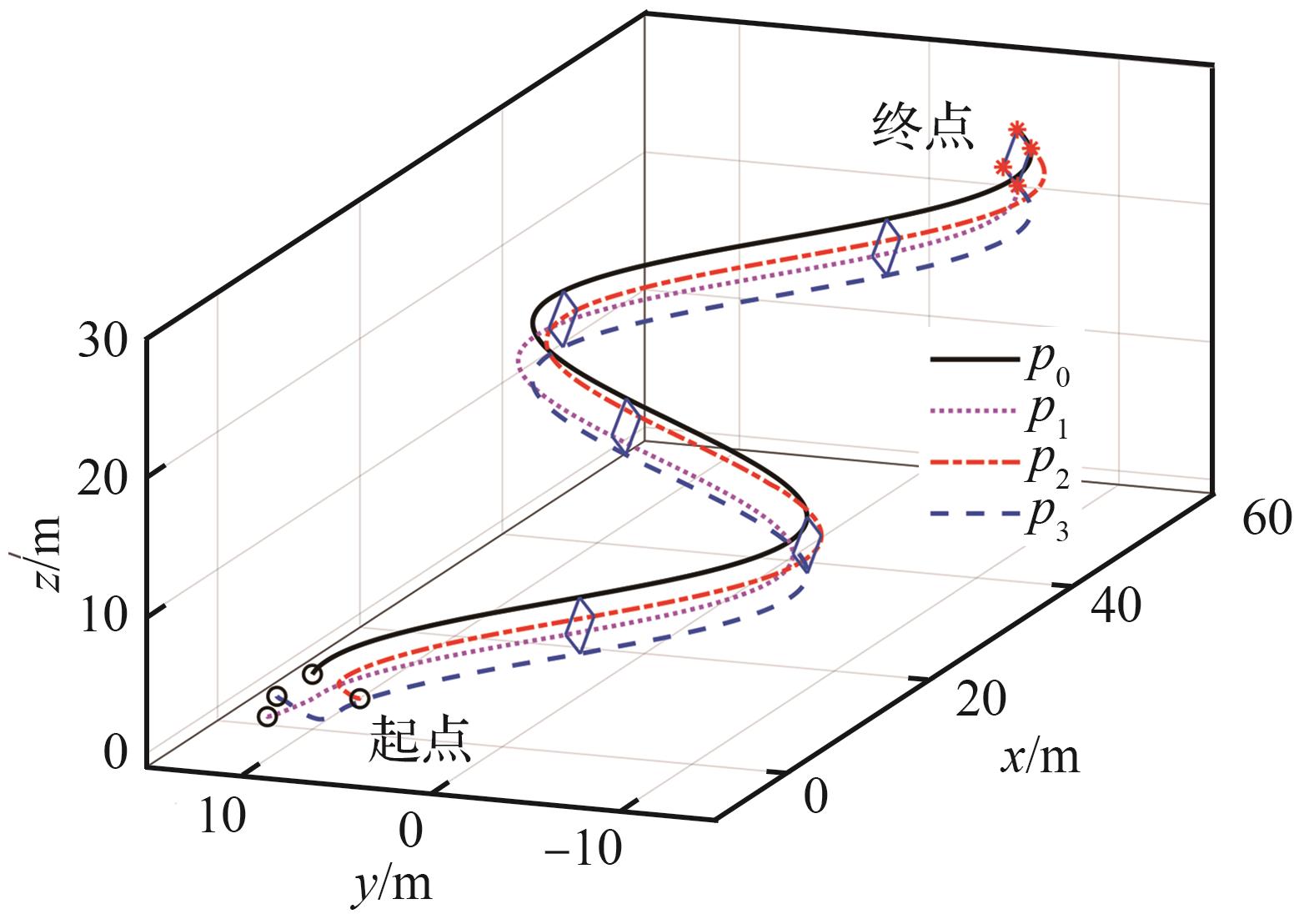
Fig.7
Position errors of each formation member
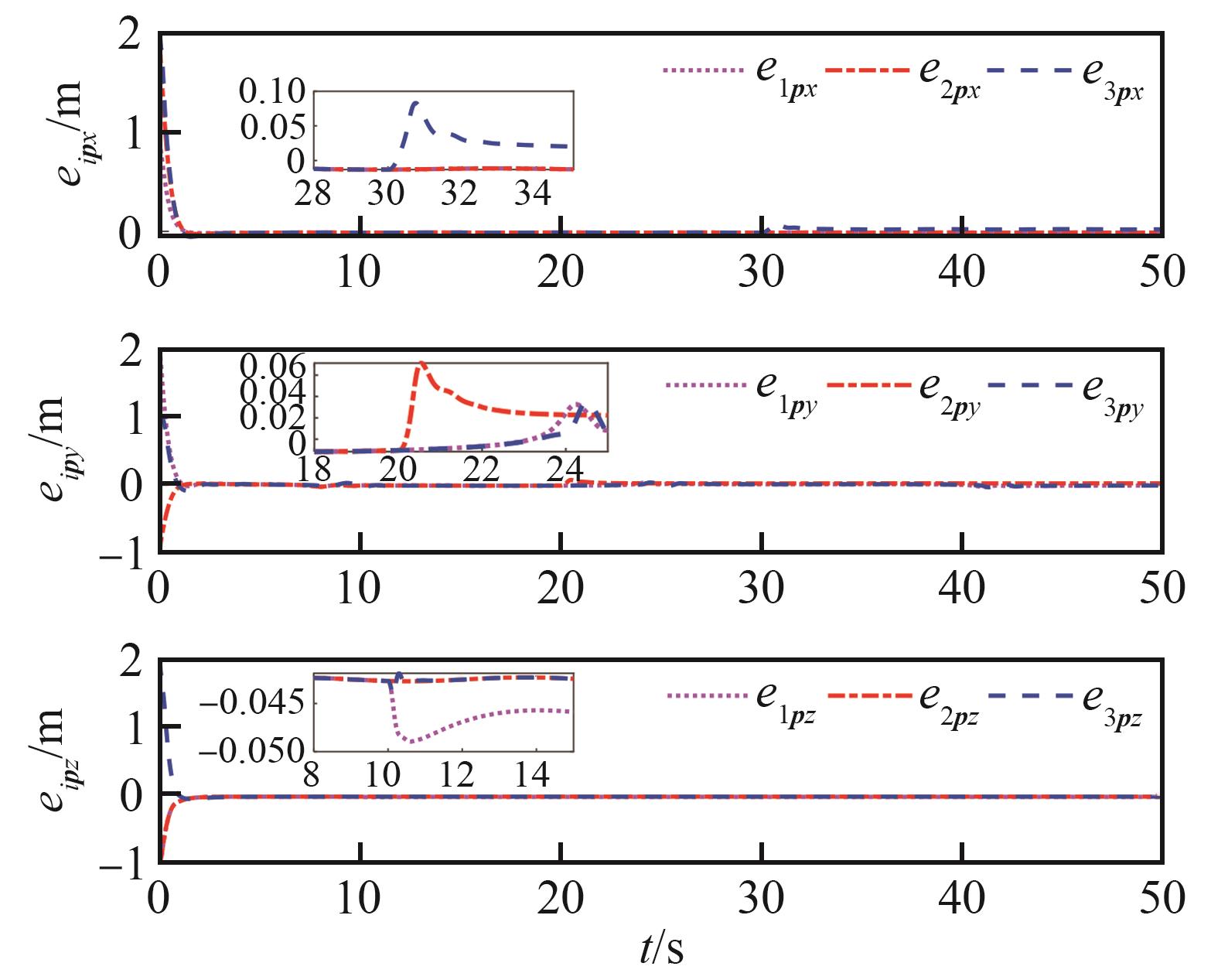
Fig.8
Speed errors of each formation member
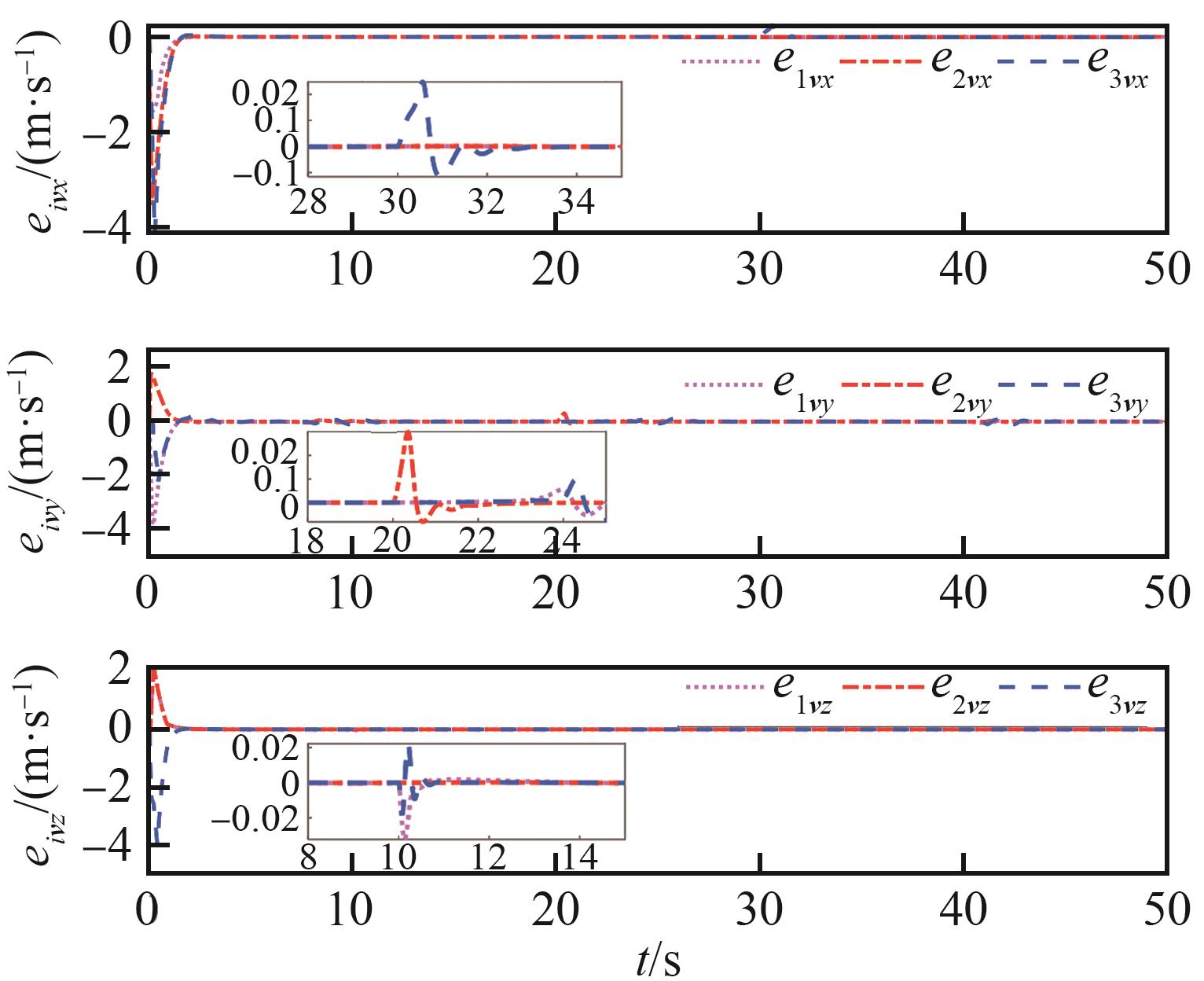
Fig.9
Changes of sliding mode surfaces state with time
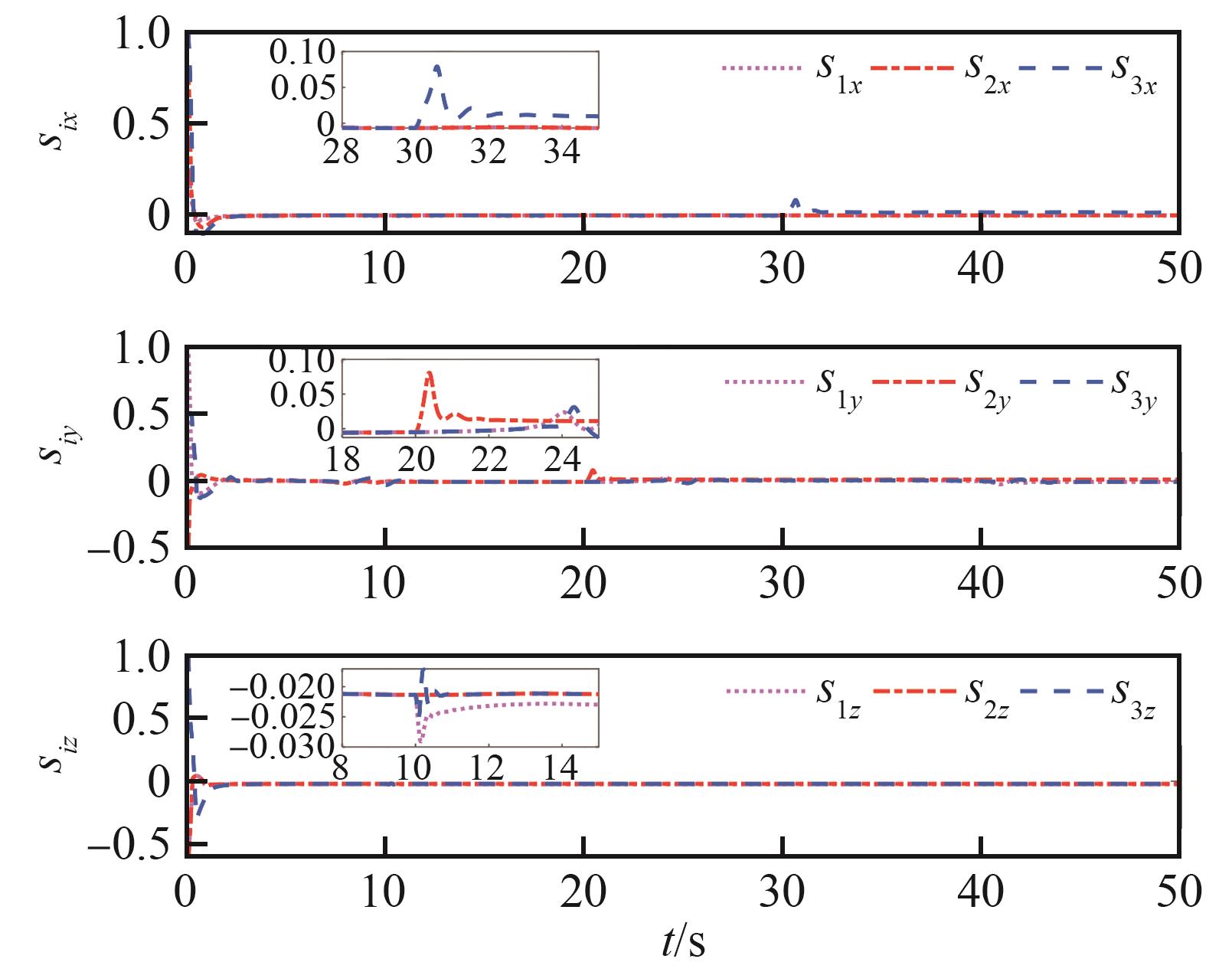
Fig.10
Changes of adaptive parameters d^i with time
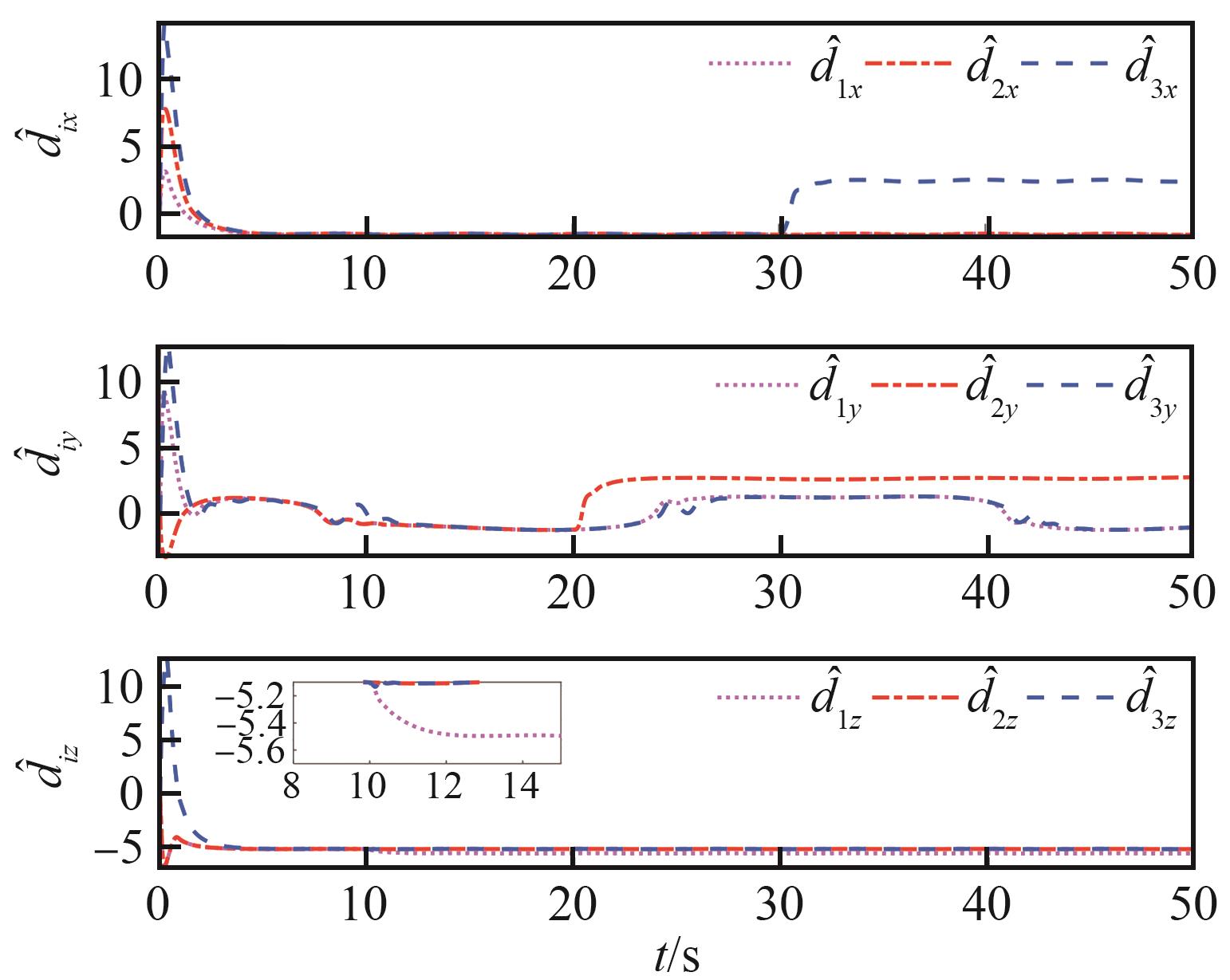
Fig.11
Changes of adaptive parameters ζ^i with time
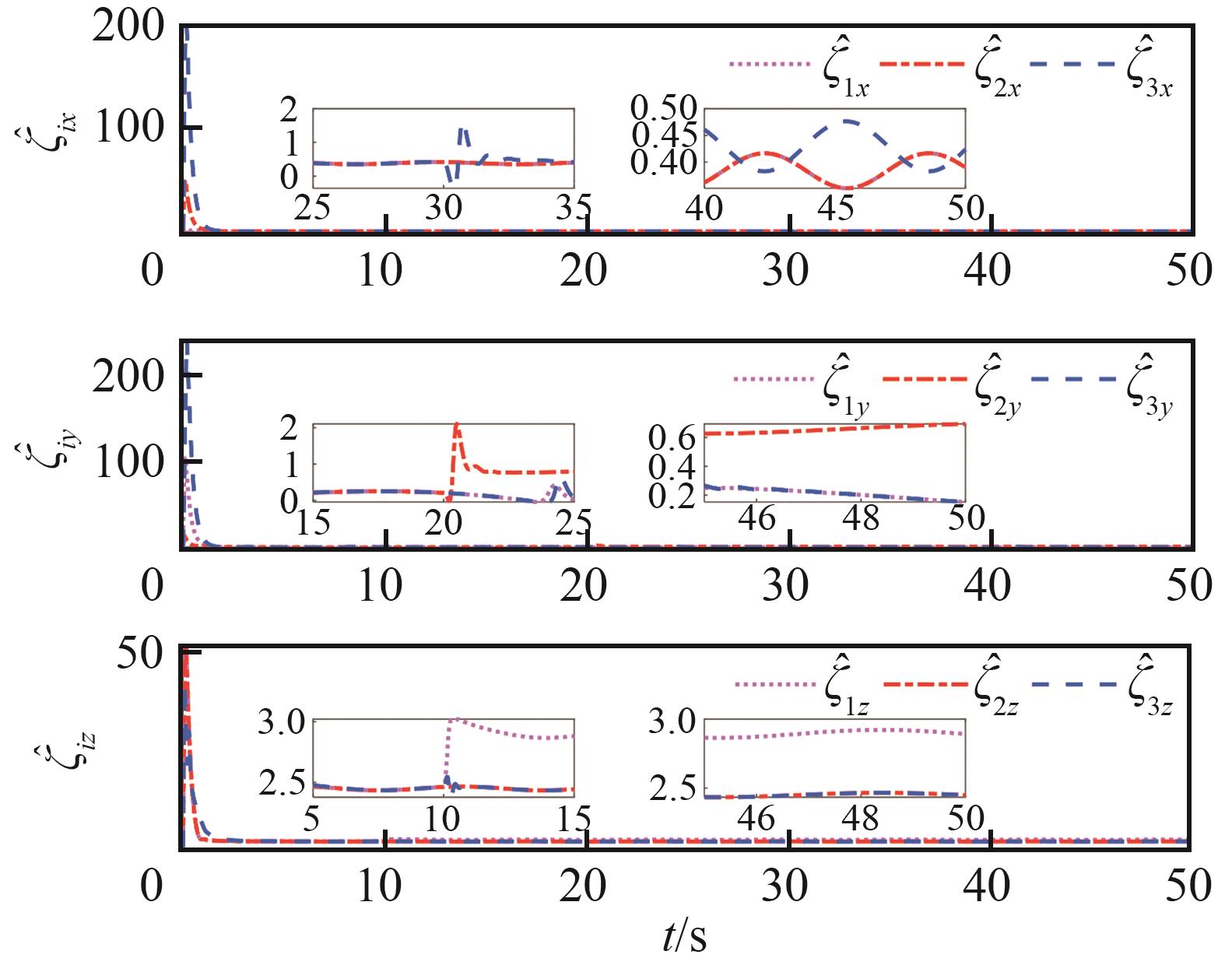
Fig.12
Control input signals of STR-UAV formation
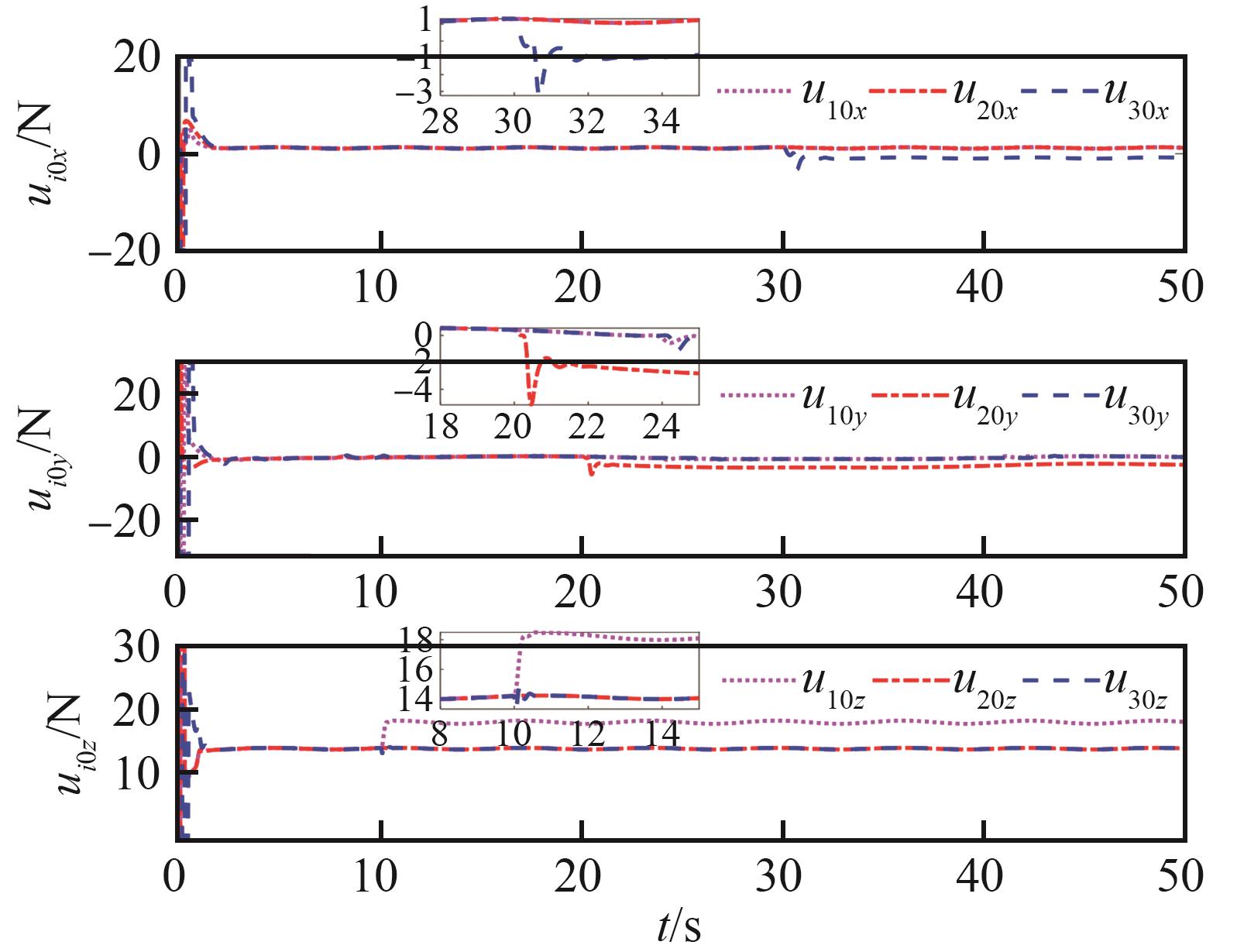
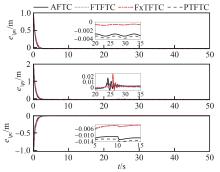
Fig.13
Position errors of Follower 1
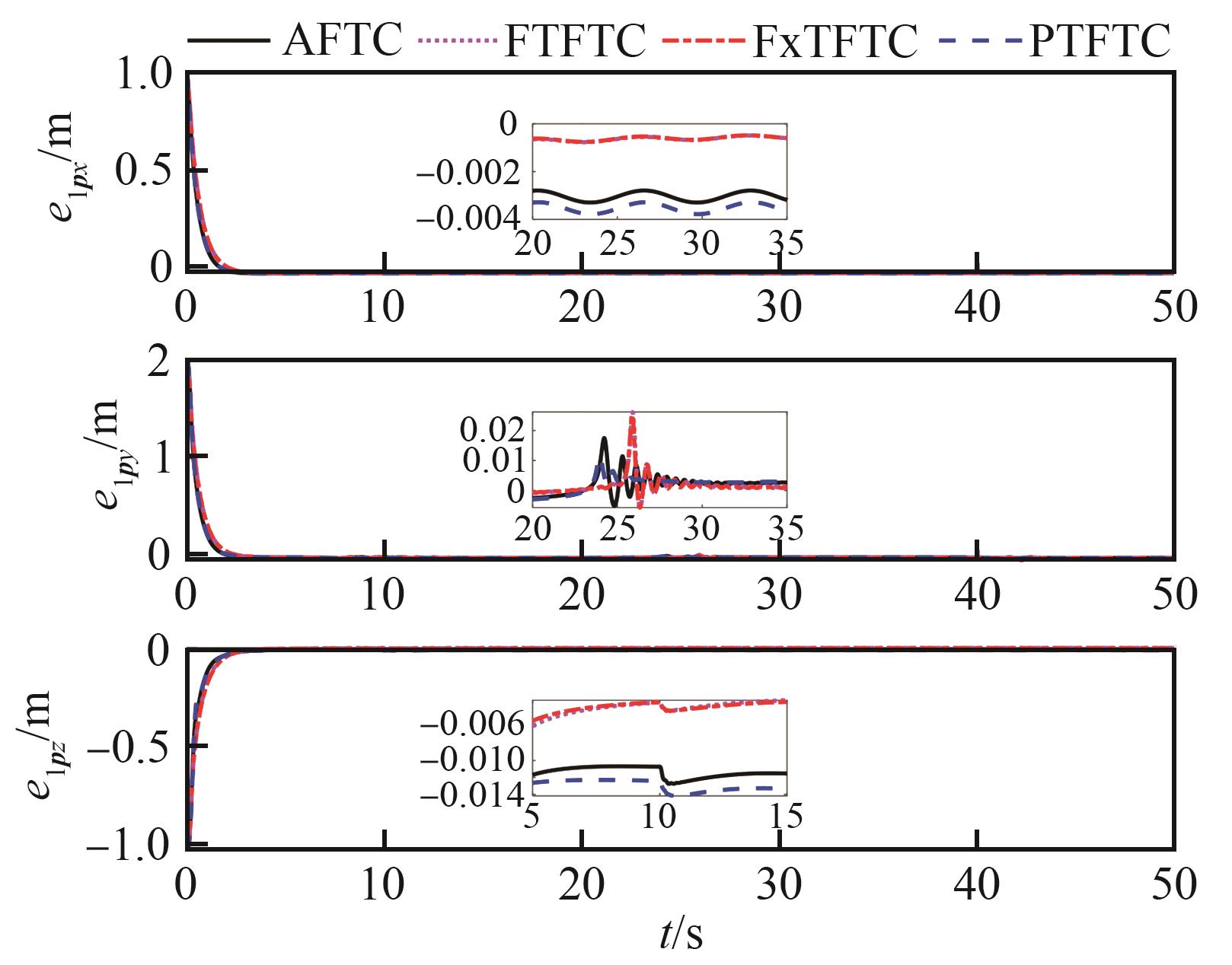
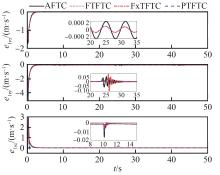
Fig.14
Speed errors of Follower 1
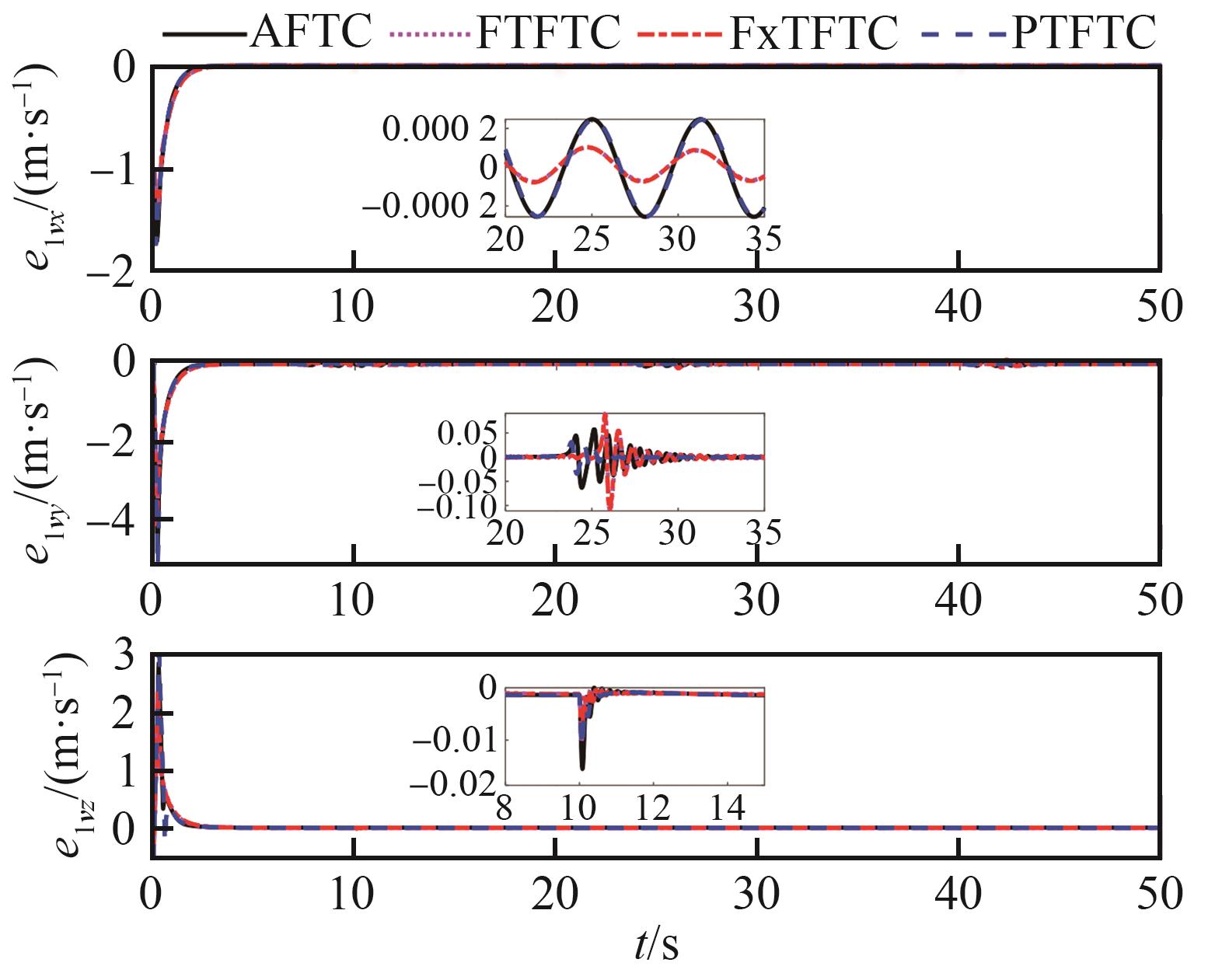
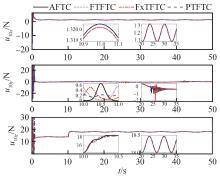
Fig.15
Control input of Follower 1
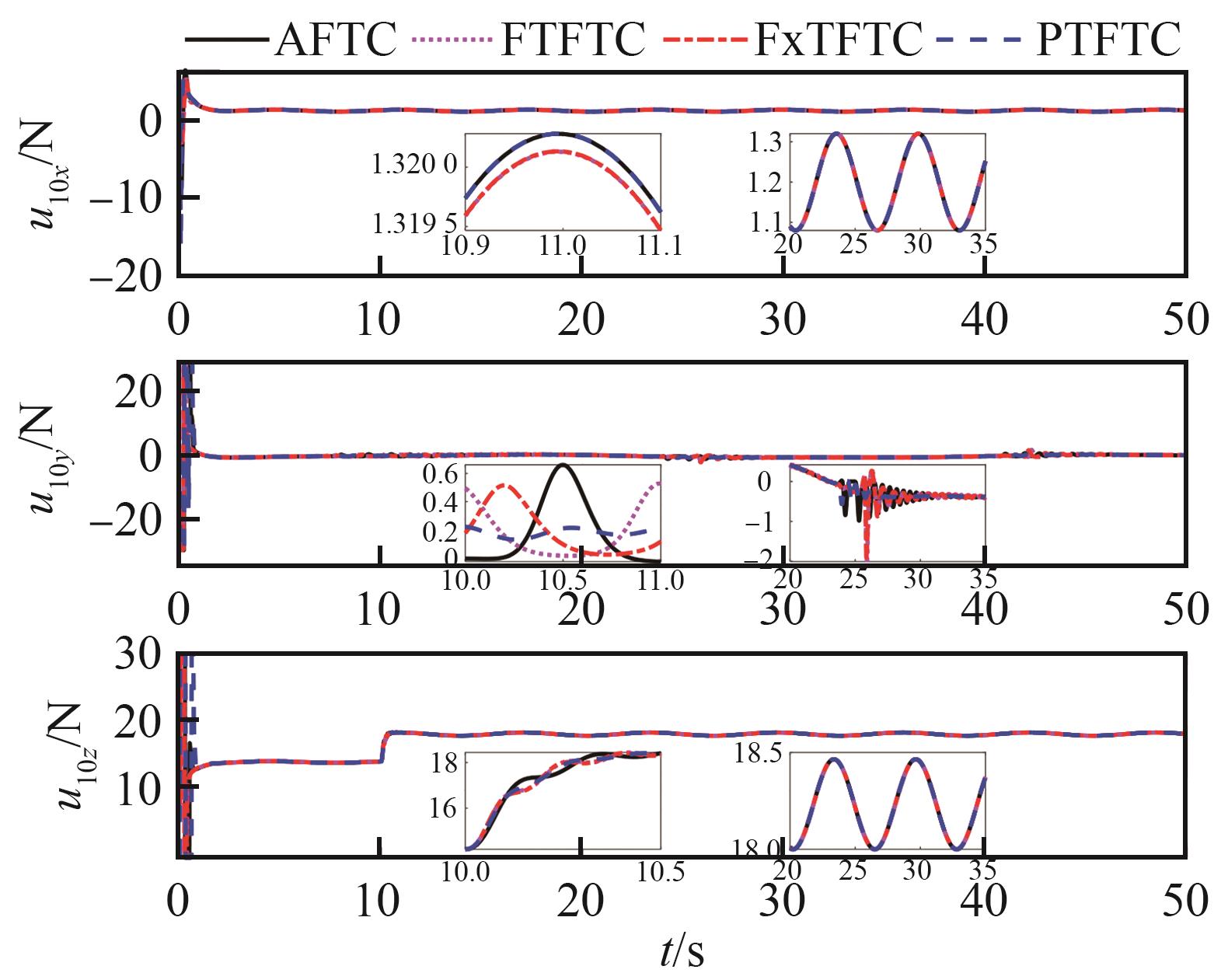
Table 5
Performance metrics under different fault-tolerant control strategies
| 控制策略 | |||
|---|---|---|---|
| AFTC | 0.035 0 | 1.718 0 | 0.583 4 |
| FTFTC | 0.039 8 | 1.958 6 | 0.567 7 |
| FxTFTC | 0.039 8 | 1.961 6 | 0.572 0 |
| PTFTC | 0.035 0 | 1.721 4 | 0.538 5 |
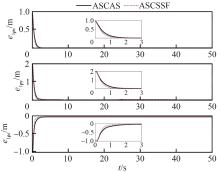
Fig.16
Position errors of Follower 1 with anti-saturation control
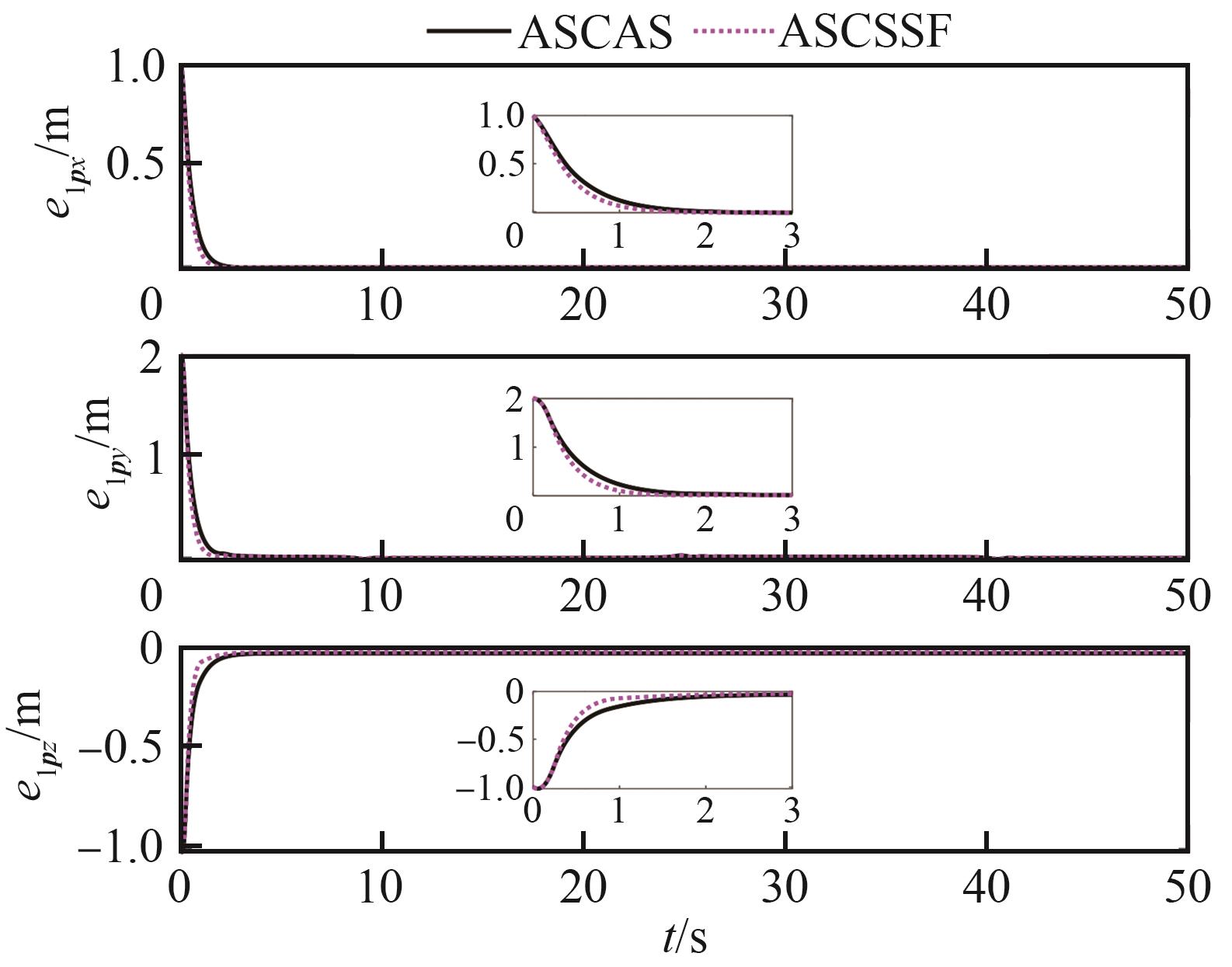
Fig.17
Speed errors of Follower 1 with anti-saturation control
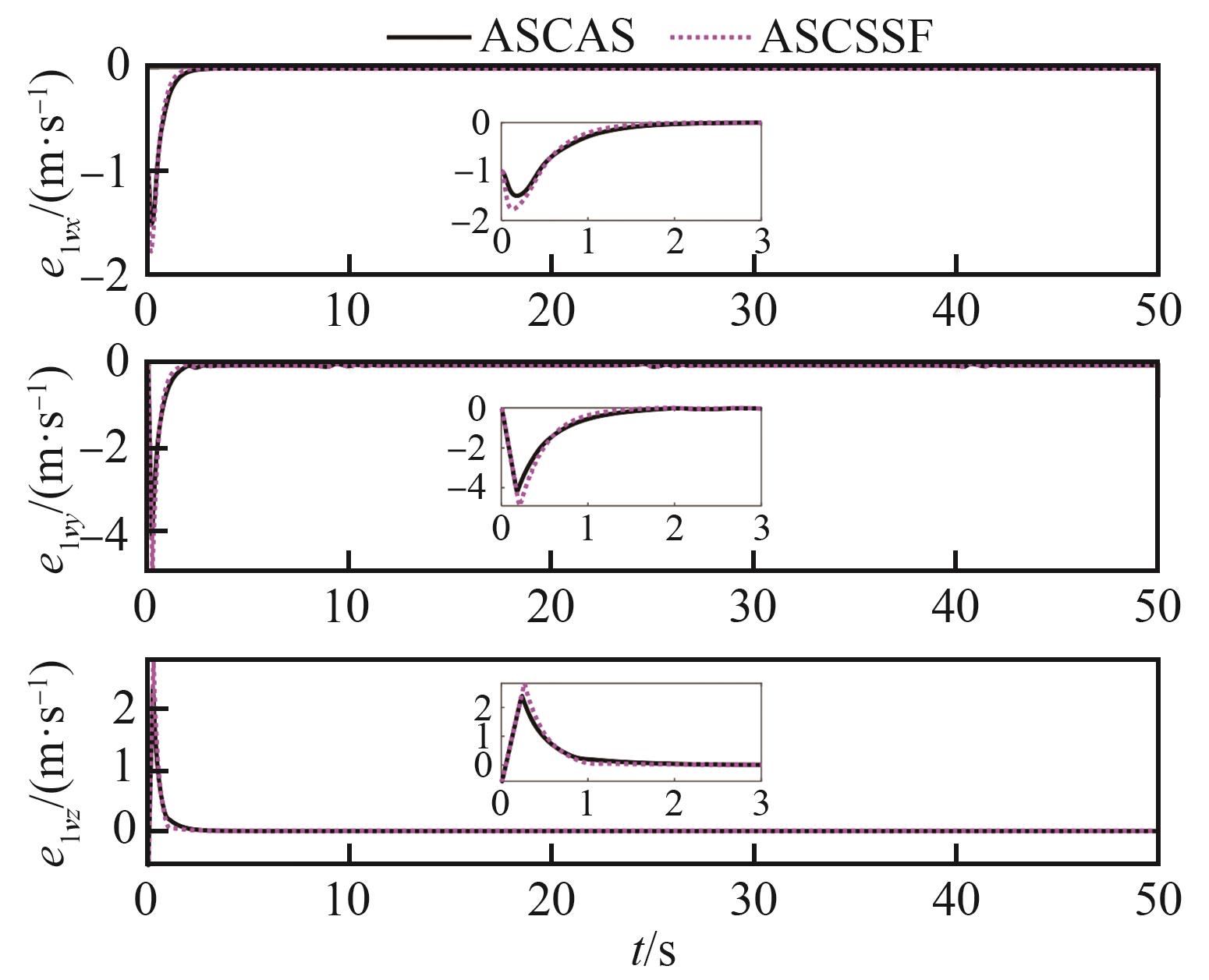
Fig.18
Control input of Follower 1 with anti-saturation control
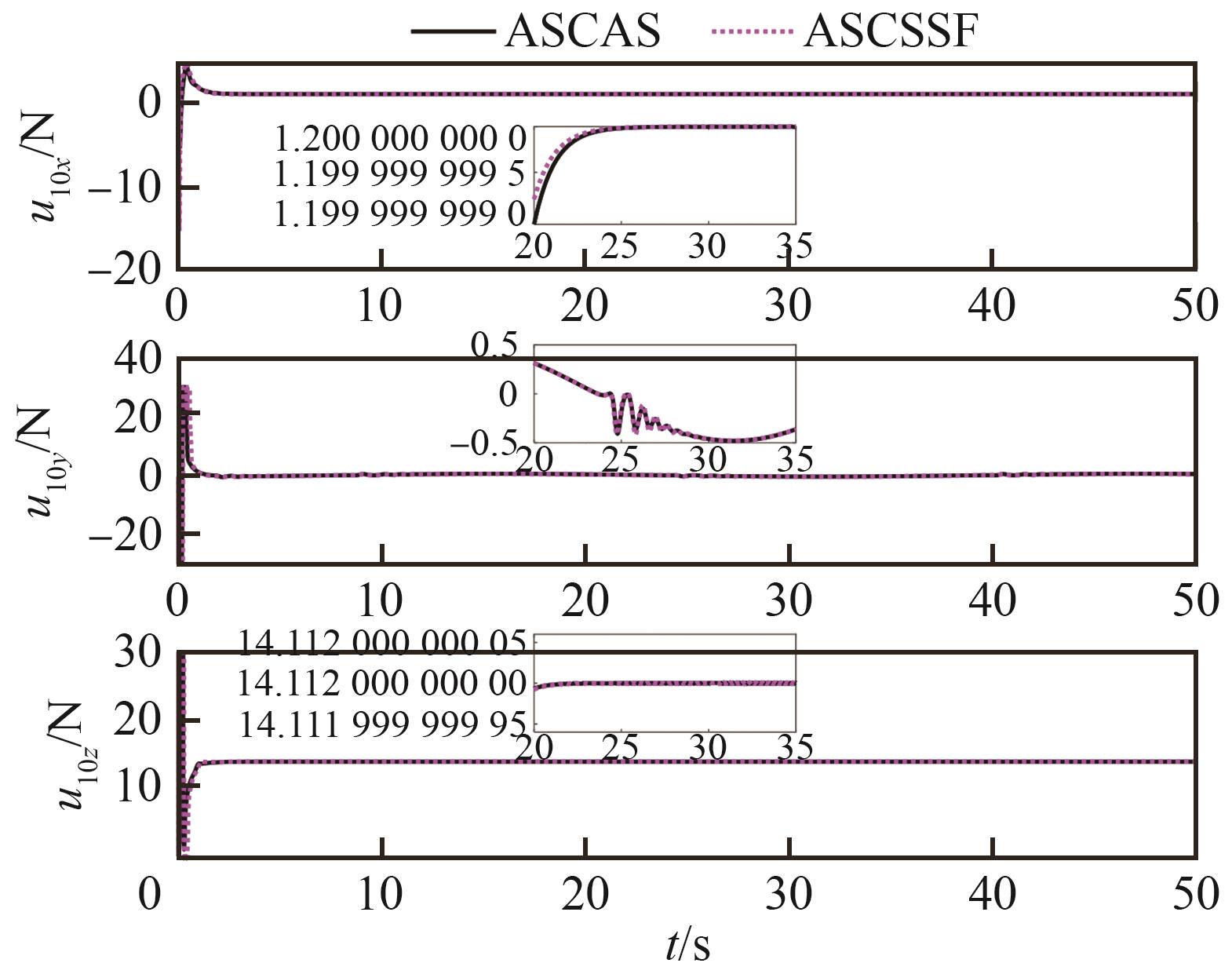
Table 6
Performance metrics under different anti-saturation control strategies
| 控制策略 | |||
|---|---|---|---|
| ASCAS | 0.037 6 | 1.848 5 | 1.491 6 |
| ASCSSF | 0.032 7 | 1.605 8 | 0.976 3 |
| [1] | LI Z B, LI S, LUO X. An overview of calibration technology of industrial robots[J]. IEEE/CAA Journal of Automatica Sinica, 2021, 8(1): 23-36. |
| [2] | OLIVEIRA L F P, MOREIRA A P, SILVA M F. Advances in agriculture robotics: A state-of-the-art review and challenges ahead[J]. Robotics, 2021, 10(2): 52. |
| [3] | GANS N R, ROGERS J G. Cooperative multirobot systems for military applications[J]. Current Robotics Reports, 2021, 2(1): 105-111. |
| [4] | TONG K L, HU Y X, DIKIC B, et al. Robots saving lives: A literature review about search and rescue (SAR) in harsh environments[C]∥2024 IEEE Intelligent Vehicles Symposium (IV). Piscataway: IEEE Press, 2024. |
| [5] | LYU M Y, ZHAO Y B, HUANG C, et al. Unmanned aerial vehicles for search and rescue: A survey[J]. Remote Sensing, 2023, 15(13): 3266. |
| [6] | LI X L, WANG C Q, GUO Y, et al. Dynamic surface-based distributed practical predefined-time cooperative control for flight formation of a novel small tandem-rotor wheeled UAV[J]. ISA Transactions, 2025, 167: 575-588. |
| [7] | SUN Y, GUO Y, LI A J. Tracking control and experiment for propeller-driven wall-climbing robot considering actuator dynamics and saturation[J]. Journal of Field Robotics, 2025, 42(8): 4115-4132. |
| [8] | SUN Y, GUO Y, LI A J. Formation control and experiment for propeller-driven car-like robots with amplitude and rate saturation under jointly connected topology[J]. Journal of Field Robotics, 2026, 43(3): 1432-1453. |
| [9] | SHI P, YAN B. A survey on intelligent control for multiagent systems[J]. IEEE Transactions on Systems, Man, and Cybernetics: Systems, 2021, 51(1): 161-175. |
| [10] | CUI G Z, XU H, CHEN X K, et al. Fixed-time distributed adaptive formation control for multiple QUAVs with full-state constraints[J]. IEEE Transactions on Aerospace and Electronic Systems, 2023, 59(4): 4192-4206. |
| [11] | KHALILI M, ZHANG X D, POLYCARPOU M M, et al. Distributed adaptive fault-tolerant control of uncertain multi-agent systems[J]. Automatica, 2018, 87: 142-151. |
| [12] | LIU B J, LI A J, GUO Y, et al. Distributed finite-time backstepping adaptive containment control for multiple unmanned aerial vehicles with input saturation[J]. International Journal of Robust and Nonlinear Control, 2024, 34(12): 7837-7858. |
| [13] | 刘伯健, 李爱军, 郭永 等. 带有输入受限的无人机精确编队合围容错控制[J]. 航空学报,2023,44(9): 327414. |
| LIU B J, LI A J, GUO Y, et al. Fault-tolerant containment control for precise formation of UAVs with input saturation[J]. Acta Aeronautica et Astronautica Sinica, 2023, 44(9): 327414 (in Chinese). | |
| [14] | CHENG W L, ZHANG K, JIANG B, et al. Fixed-time fault-tolerant formation control for heterogeneous multi-agent systems with parameter uncertainties and disturbances[J]. IEEE Transactions on Circuits and Systems I: Regular Papers, 2021, 68(5): 2121-2133. |
| [15] | WANG J H, LI Y H, WU Y S, et al. Fixed-time formation control for uncertain nonlinear multiagent systems with time-varying actuator failures[J]. IEEE Transactions on Fuzzy Systems, 2024, 32(4): 1965-1977. |
| [16] | ZENG D H, CAI C T, LIU Y C, et al. Practical prescribed-time control for underactuated marine surface vessels: theory and experiment[J]. IEEE Transactions on Automation Science and Engineering, 2025, 22: 14074-14083. |
| [17] | GAO M J, LI Q C, CHEN K, et al. Prescribed-time formation control considering delay effects based on enhanced sliding modes and composite learning[J]. Aerospace Science and Technology, 2026, 168: 110756. |
| [18] | LI Y D, LIU Y A, ZHU L, et al. Fault-tolerant formation control of heterogeneous multi-agent systems with unknown inputs and external disturbances[J]. Scientific Reports, 2025, 15: 20773. |
| [19] | XU W D, GUO X G, LI Q, et al. PTNDO-based distributed active fault-tolerant control for leader-follower vehicular formation with unknown direction faults[J]. Automatica, 2025, 182: 112540. |
| [20] | VARGAS S, BECERRA H M, HAYET J B. MPC-based distributed formation control of multiple quadcopters with obstacle avoidance and connectivity maintenance[J]. Control Engineering Practice, 2022, 121: 105054. |
| [21] | QIN H D, SI J S, WANG N, et al. Fast fixed-time nonsingular terminal sliding-mode formation control for autonomous underwater vehicles based on a disturbance observer[J]. Ocean Engineering, 2023, 270: 113423. |
| [22] | JIN X Z, CHE W W, WU Z G, et al. Robust adaptive general formation control of a class of networked quadrotor aircraft[J]. IEEE Transactions on Systems, Man, and Cybernetics: Systems, 2022, 52(12): 7714-7726. |
| [23] | HAN Z Q, WANG Y T, SUN Q. Straight-path following and formation control of USVs using distributed deep reinforcement learning and adaptive neural network[J]. IEEE/CAA Journal of Automatica Sinica, 2023, 10(2): 572-574. |
| [24] | ZHAO W B, LIU H, LEWIS F L. Robust formation control for cooperative underactuated quadrotors via reinforcement learning[J]. IEEE Transactions on Neural Networks and Learning Systems, 2021, 32(10): 4577-4587. |
| [25] | ZHONG Y J, ZHANG Y M, GE S S, et al. Robust distributed sensor fault detection and diagnosis within formation control of multiagent systems[J]. IEEE Transactions on Aerospace and Electronic Systems, 2023, 59(2): 1340-1353. |
| [26] | LI S S, WANG S P, ZHANG Y W, et al. Distributed bearing-based fault-tolerant formation control of fixed-wing UAV swarm with prescribed performance[J]. Aerospace Science and Technology, 2026, 168: 110897. |
| [27] | LIU B J, GUO Y, LI A J, et al. Distributed Nussbaum-based finite-time containment control for multi-UAVs with actuator saturation and faults[J]. IEEE Transactions on Aerospace and Electronic Systems, 2023, 59(4): 3505-3520. |
| [28] | WANG G, LIU H L, DONG Z, et al. Neural prescribed formation-containment control for air-breathing hypersonic vehicles with input saturation and actuator faults[J]. Aerospace Science and Technology, 2025, 162: 110190. |
| [29] | YU J P, SHI P, LIN C, et al. Adaptive neural command filtering control for nonlinear MIMO systems with saturation input and unknown control direction[J]. IEEE Transactions on Cybernetics, 2020, 50(6): 2536-2545. |
| [30] | HUANG B, SONG S, ZHU C, et al. Finite-time distributed formation control for multiple unmanned surface vehicles with input saturation[J]. Ocean Engineering, 2021, 233: 109158. |
| [31] | HU Q L. Robust adaptive sliding mode attitude maneuvering and vibration damping of three-axis-stabilized flexible spacecraft with actuator saturation limits[J]. Nonlinear Dynamics, 2009, 55(4): 301-321. |
| [1] | Xiaolong HE, Qifeng CHEN, Wenkang HAO. Distributed control of UAVs formation based on passivity-based sliding mode method [J]. Acta Aeronautica et Astronautica Sinica, 2026, 47(S1): 732965-732965. |
| [2] | Yaping SUN, Yong WANG, Shuang YUAN, Housheng SU, Suoxia MIAO, Xinsong YANG. Fully distributed scaled consensus for switched multi-agent systems [J]. Acta Aeronautica et Astronautica Sinica, 2026, 47(S1): 732998-732998. |
| [3] | Yuhan ZHANG, Cheng XU, Hua JI, Mingjun WEI. Adaptive formation rendezvous control for aerial refueling based on total energy method [J]. Acta Aeronautica et Astronautica Sinica, 2026, 47(S1): 732997-732997. |
| [4] | Ruiping ZHENG, Jingping SHI, Tianyu LI, Yongxi LYU. Prescribed-time coordinated control for fixed-wing UAV close formation [J]. Acta Aeronautica et Astronautica Sinica, 2026, 47(9): 532496-532496. |
| [5] | Yu LI, Jiaxin CHEN, Kecheng LI, Chi-Yung WEN, Ni LI, Xiaoxiong LIU. Characteristic analysis of aircraft with asymmetric wing damage and incremental fault-tolerant control [J]. Acta Aeronautica et Astronautica Sinica, 2026, 47(9): 532501-532501. |
| [6] | Qie LIU, Junying LU, Fei XIE, Wenbo LI. Adaptive hybrid dynamic programming for fault-tolerant attitude control of underactuated spacecraft [J]. Acta Aeronautica et Astronautica Sinica, 2026, 47(9): 532531-532531. |
| [7] | Jianfeng WU, Yi DING, Bin ZHOU. Prescribed-time attitude tracking control for spacecraft based on periodic delayed feedback [J]. Acta Aeronautica et Astronautica Sinica, 2026, 47(9): 0-532776-. |
| [8] | Yuan LU, Ke ZHANG, Bin JIANG. Hierarchical fault-tolerant formation control for unmanned helicopters based on fully-actuated system approach [J]. Acta Aeronautica et Astronautica Sinica, 2026, 47(9): 532279-532279. |
| [9] | Jie WANG, Ming YANG, Bailing TIAN, Bohao LI, Zhishi CHEN. Dynamic event-triggered prescribed performance formation control for hypersonic morphing vehicles [J]. Acta Aeronautica et Astronautica Sinica, 2026, 47(9): 532499-532499. |
| [10] | Wenyu ZHOU, Yingjie WANG, Chenhao OUYANG, Zixuan ZHENG, Xiaokui YUE. Bearing-based collision-avoidance formation control of quadrotor UAVs under internal and external disturbances [J]. Acta Aeronautica et Astronautica Sinica, 2026, 47(9): 533224-533224. |
| [11] | Qi QI, Jinhua ZHOU, Junxue REN, Zongyuan WANG. Residual stress deformation control method of composite blade leading edge protection cap machining [J]. Acta Aeronautica et Astronautica Sinica, 2026, 47(8): 432693-432693. |
| [12] | Xin HUANG, Jiahe ZOU, Shuyi XIAO, Xiaohang LI. An adaptive control strategy for defending against cyber stealthy attacks [J]. Acta Aeronautica et Astronautica Sinica, 2026, 47(4): 332290-332290. |
| [13] | Yuying GUO, Lanxin LIAO, Xiaoqiang ZHANG, Youmin ZHANG, Kai WANG. Finite-time fault-tolerant control of compound actuator faults for unmanned aerial vehicles [J]. Acta Aeronautica et Astronautica Sinica, 2026, 47(4): 332659-332659. |
| [14] | Yi YANG, Hanlin SHENG, Bingxiong YIN, Duoduo GU, Wenzhe CAI, Jiacheng LI, Qian CHEN. Direct thrust control method for multi-companion vectoring engines [J]. Acta Aeronautica et Astronautica Sinica, 2026, 47(15): 632680-632680. |
| [15] | Pengxuan WEI, Hanlin SHENG, Fengyun LI, Yijie WANG, Haolan SHI, Jiacheng LI, Qian CHEN. Hierarchical adaptive multi-mode fault-tolerant control method for UAVs [J]. Acta Aeronautica et Astronautica Sinica, 2026, 47(15): 333091-333091. |
| Viewed | ||||||
|
Full text |
|
|||||
|
Abstract |
|
|||||
Address: No.238, Baiyan Buiding, Beisihuan Zhonglu Road, Haidian District, Beijing, China
Postal code : 100083
E-mail:hkxb@buaa.edu.cn
Total visits: 6658907 Today visits: 1341All copyright © editorial office of Chinese Journal of Aeronautics
All copyright © editorial office of Chinese Journal of Aeronautics
Total visits: 6658907 Today visits: 1341

 CJA