Acta Aeronautica et Astronautica Sinica ›› 2025, Vol. 46 ›› Issue (5): 531575.doi: 10.7527/S1000-6893.2024.31575
• Fluid Mechanics and Flight Mechanics • Previous Articles
Xian YI1,2( ), Jinghao REN1,2, Qingren LAI1, Yu LIU1,2, Qiang WANG1,2
Received:2024-11-27
Revised:2024-12-02
Accepted:2024-12-24
Online:2025-01-07
Published:2025-01-07
Contact:
Xian YI
E-mail:yixian_2000@163.com
Supported by:CLC Number:
Xian YI, Jinghao REN, Qingren LAI, Yu LIU, Qiang WANG. Icing characteristics of full-scale multi-element configurations of large aircraft: Computation and experiment[J]. Acta Aeronautica et Astronautica Sinica, 2025, 46(5): 531575.
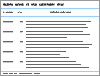
Table 1
Simulation conditions
| 工况 | 来流速度V/(m·s-1) | 攻角AoA/(°) | 液滴粒径MVD/μm | 液态水含量/(g·m-3) | 温度/℃ | 时间/s |
|---|---|---|---|---|---|---|
| 1 | 78 | 0 | 21.0 | |||
| 2 | 85 | 8 | 20.0 | 0.6 | -4.95 | 360 |
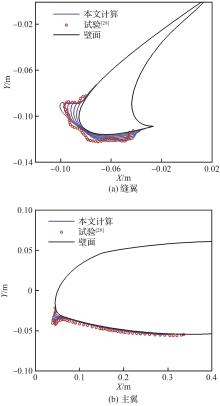
Fig.1
Comparison of computational and experimental collection efficiency
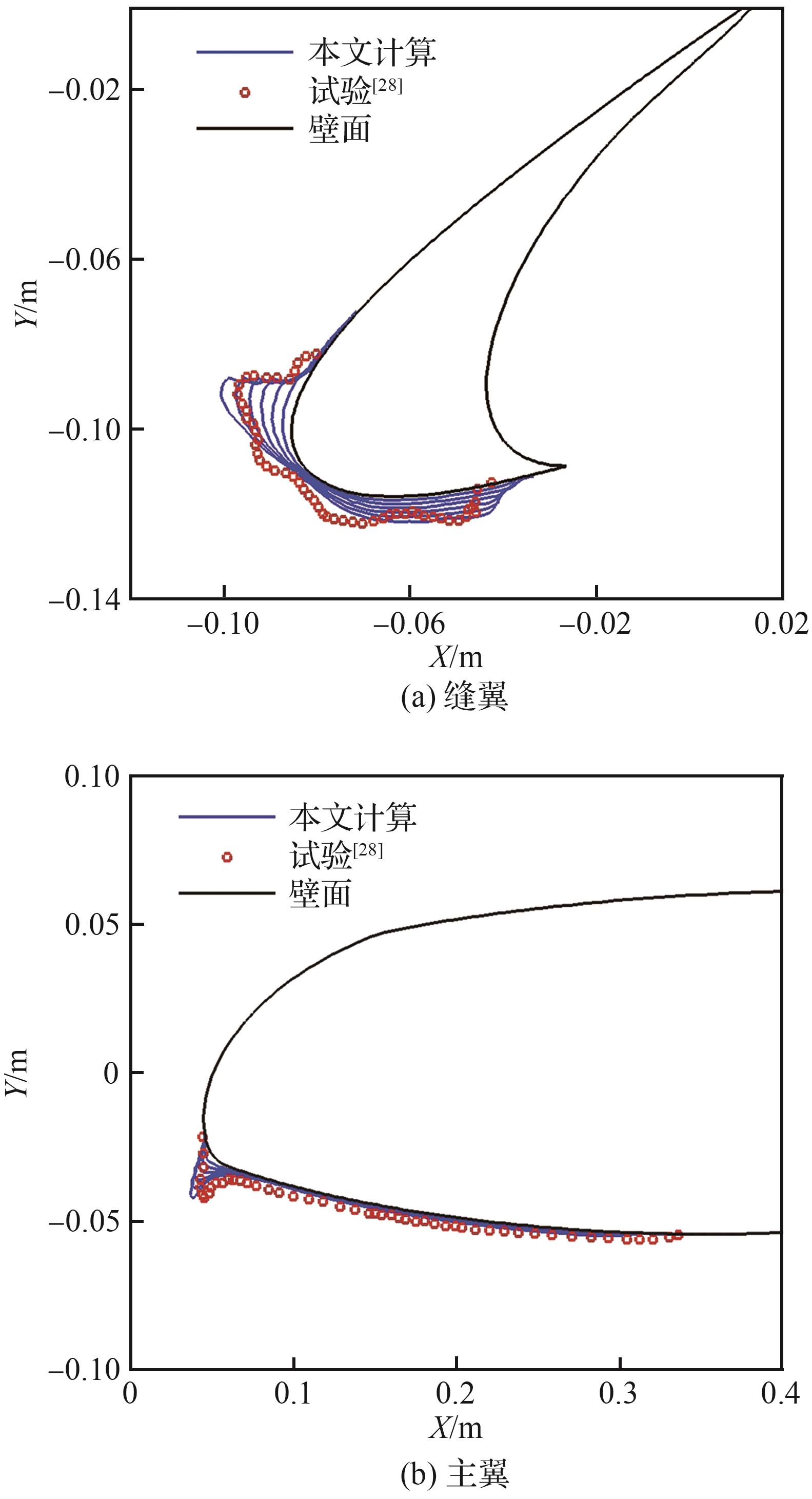
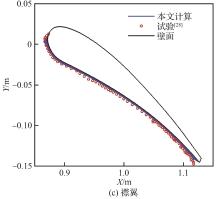
Fig.2
Comparison of computational and experimental ice shape
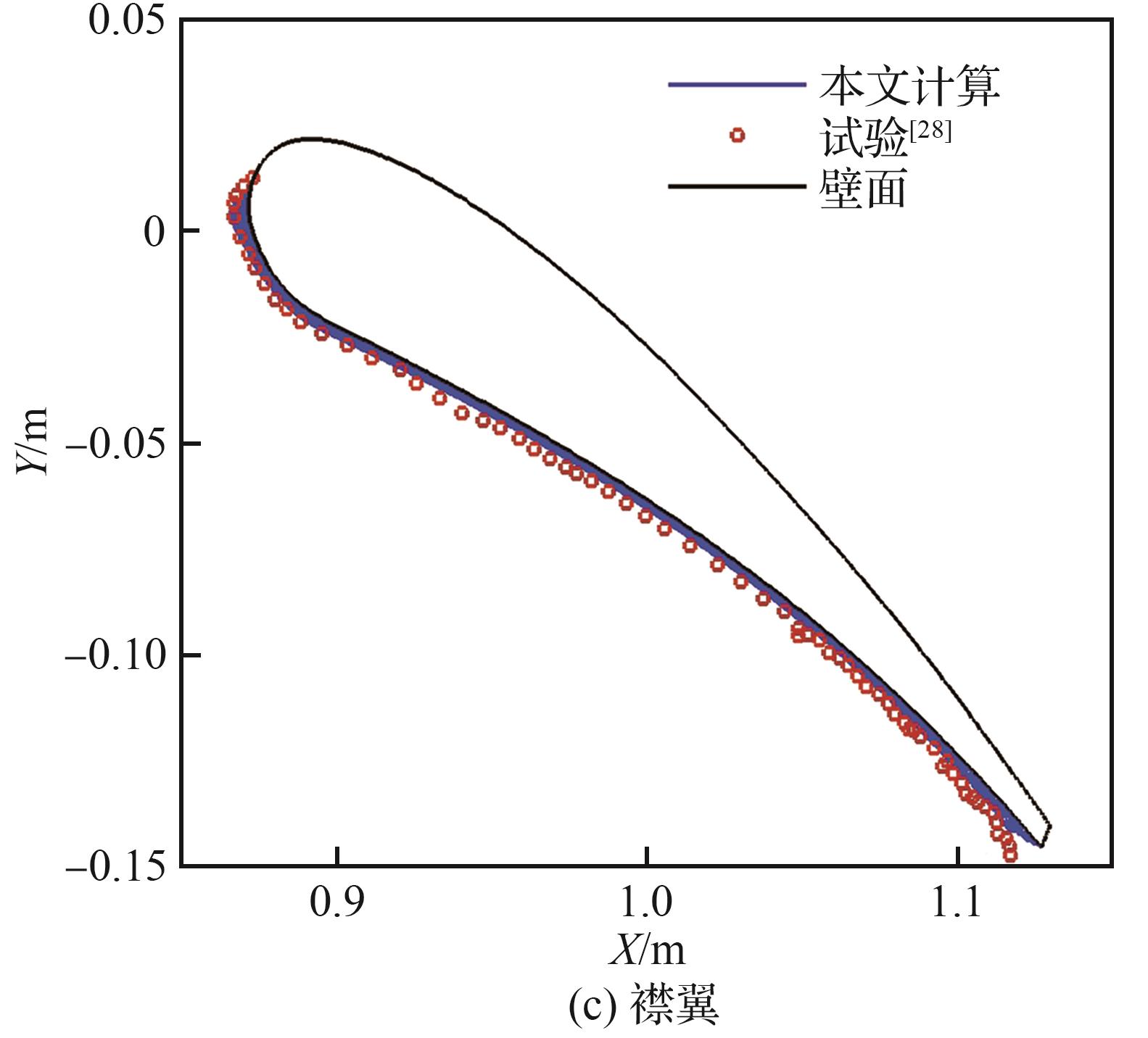
Fig.3
Sketch of FL16 Icing Wind Tunnel[30]
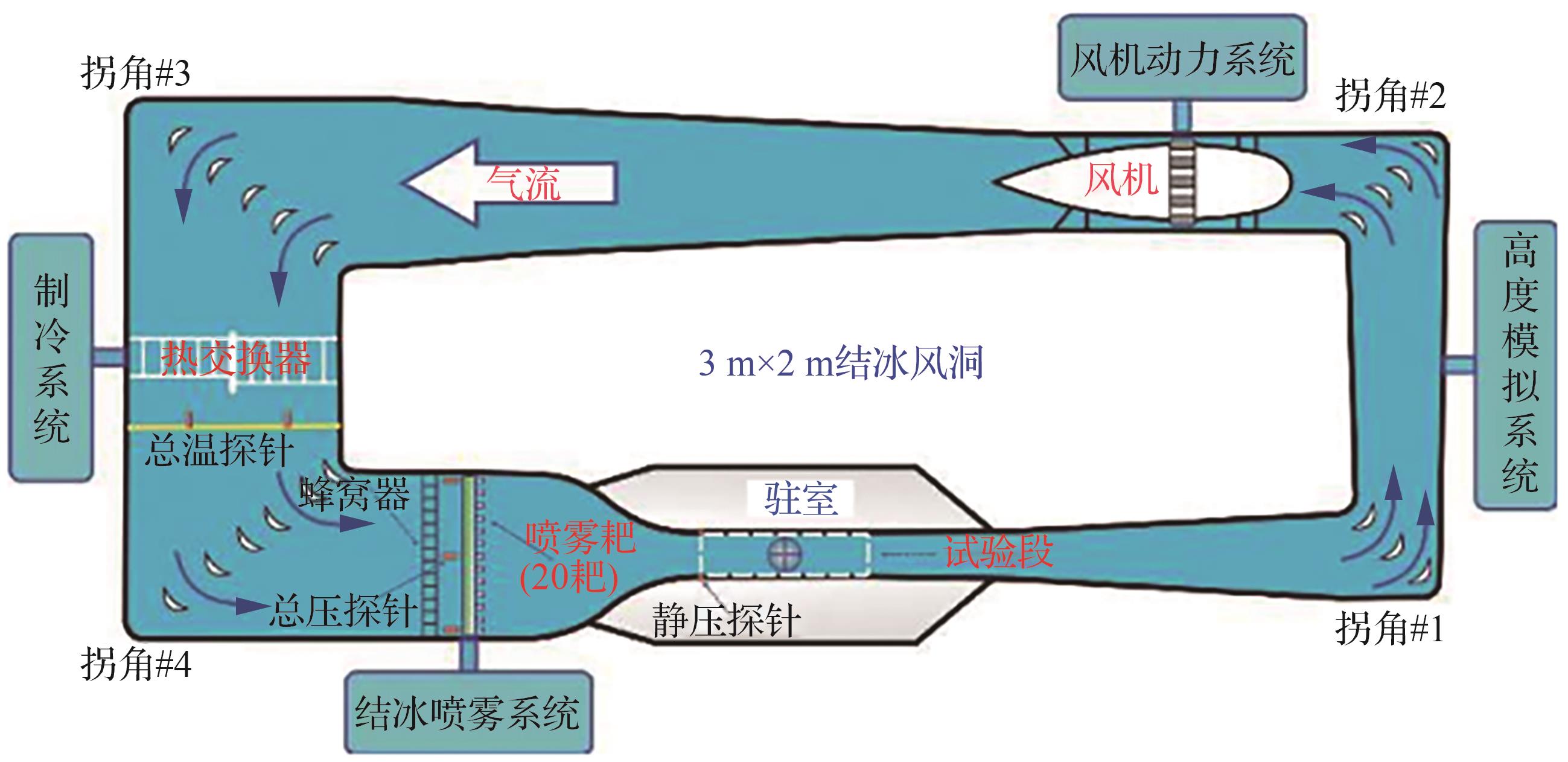

Fig.4
Absolute articulated arm scanner
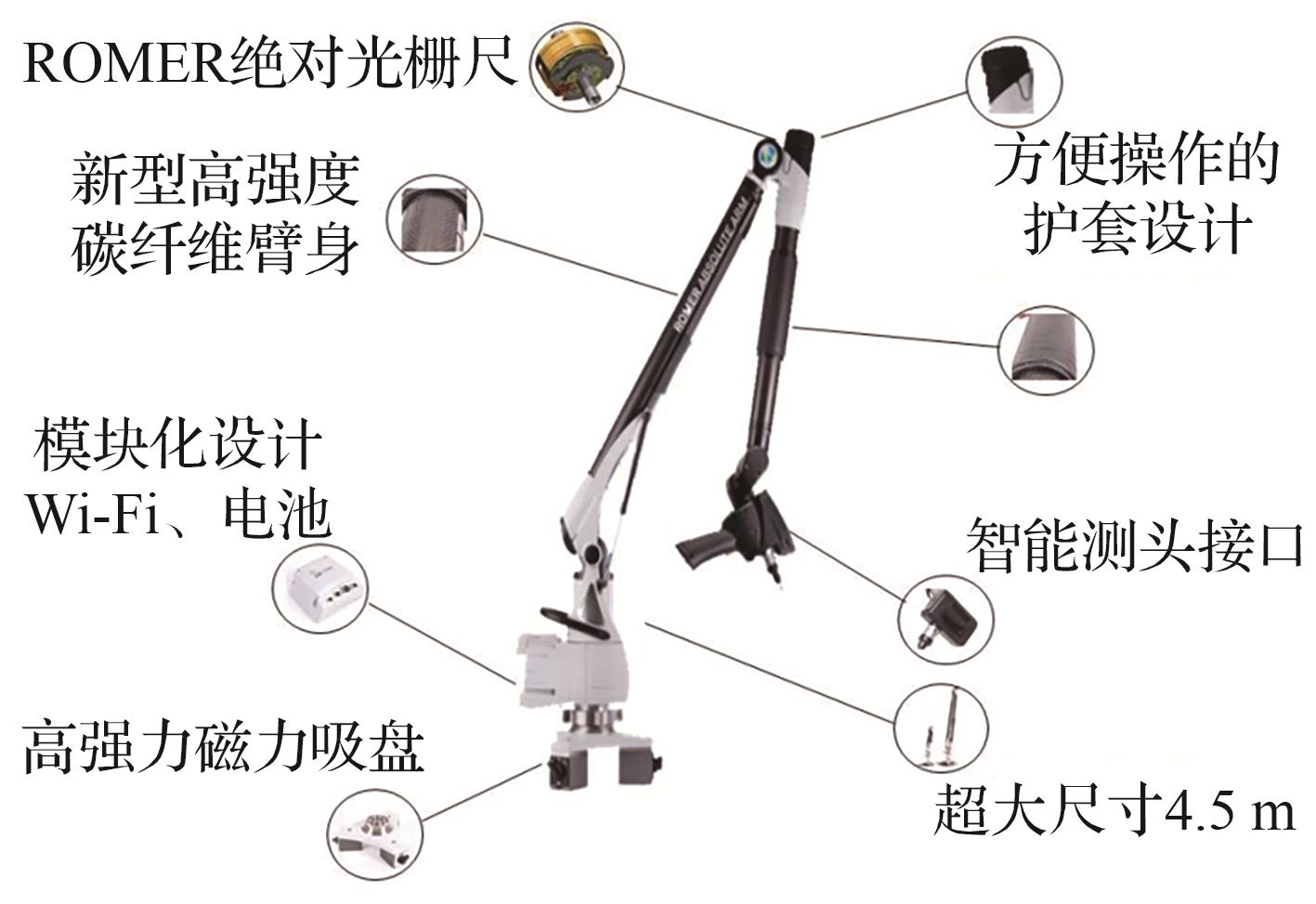
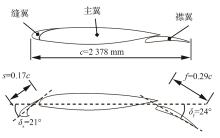
Fig.5
Three-element airfoil for this research
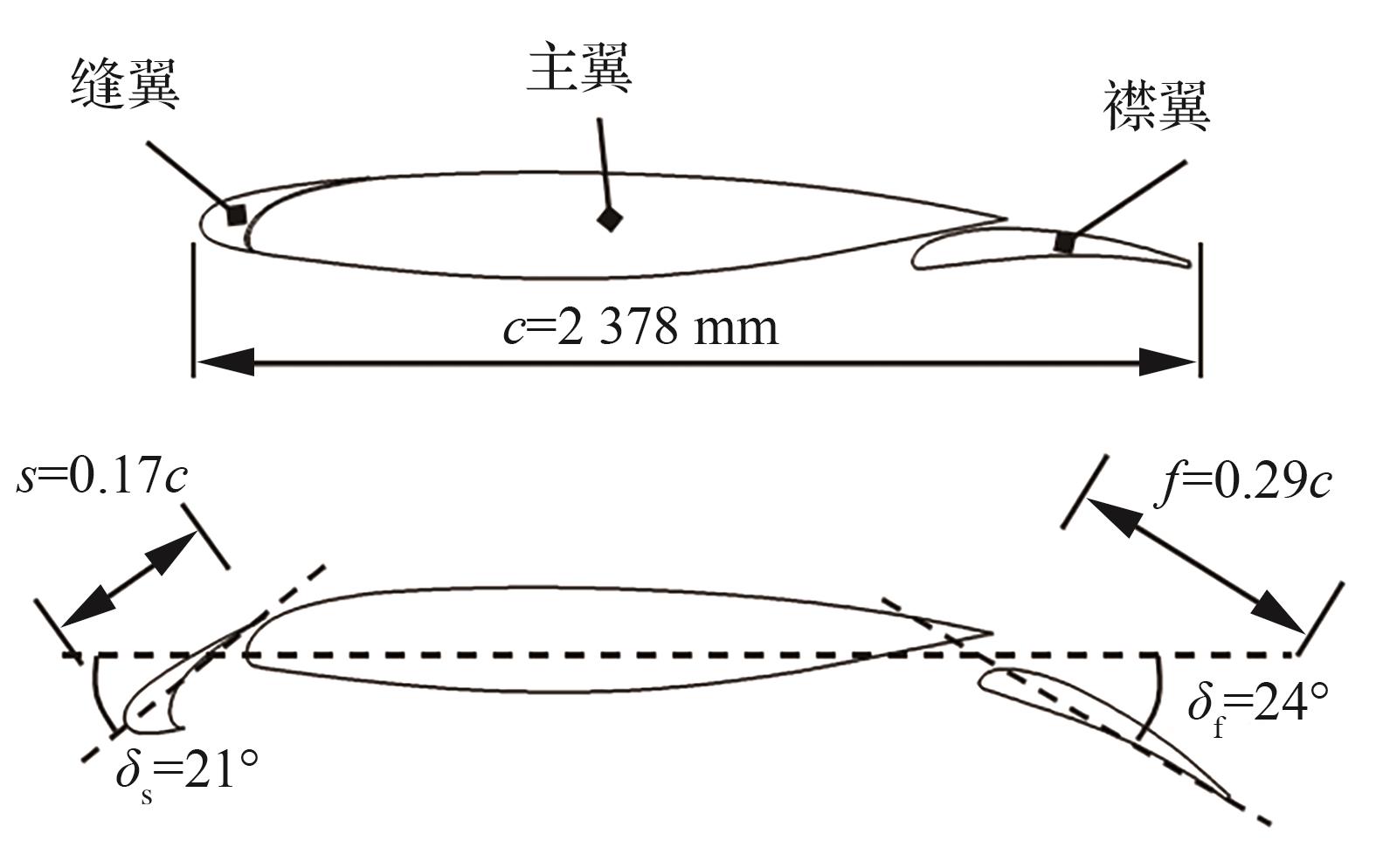
Fig.6
Test model installed in wind tunnel
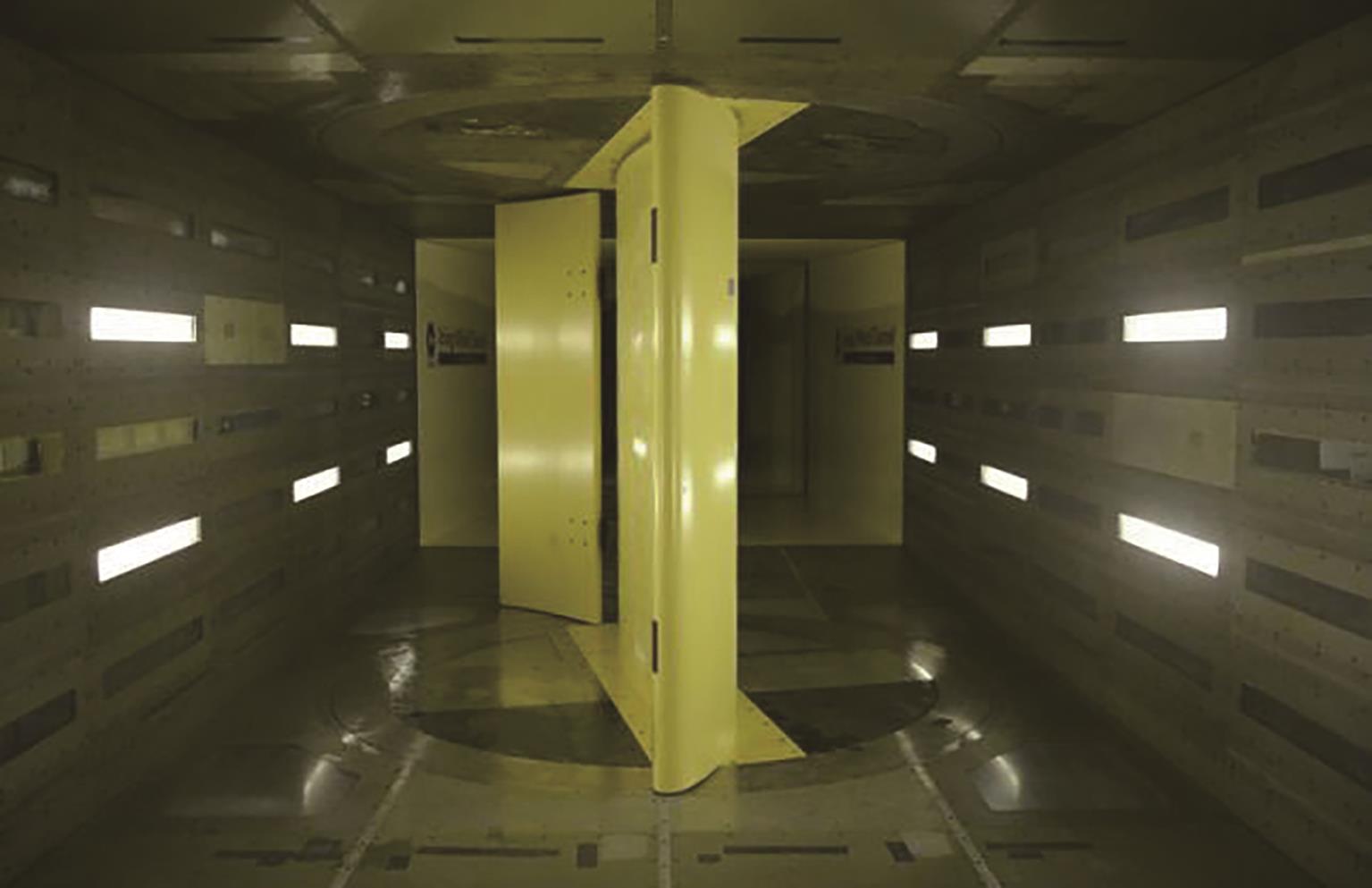
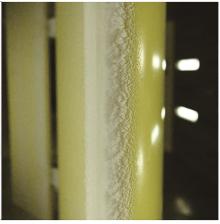
Fig.7
Photo of test result of icing on leading edge of slat wing
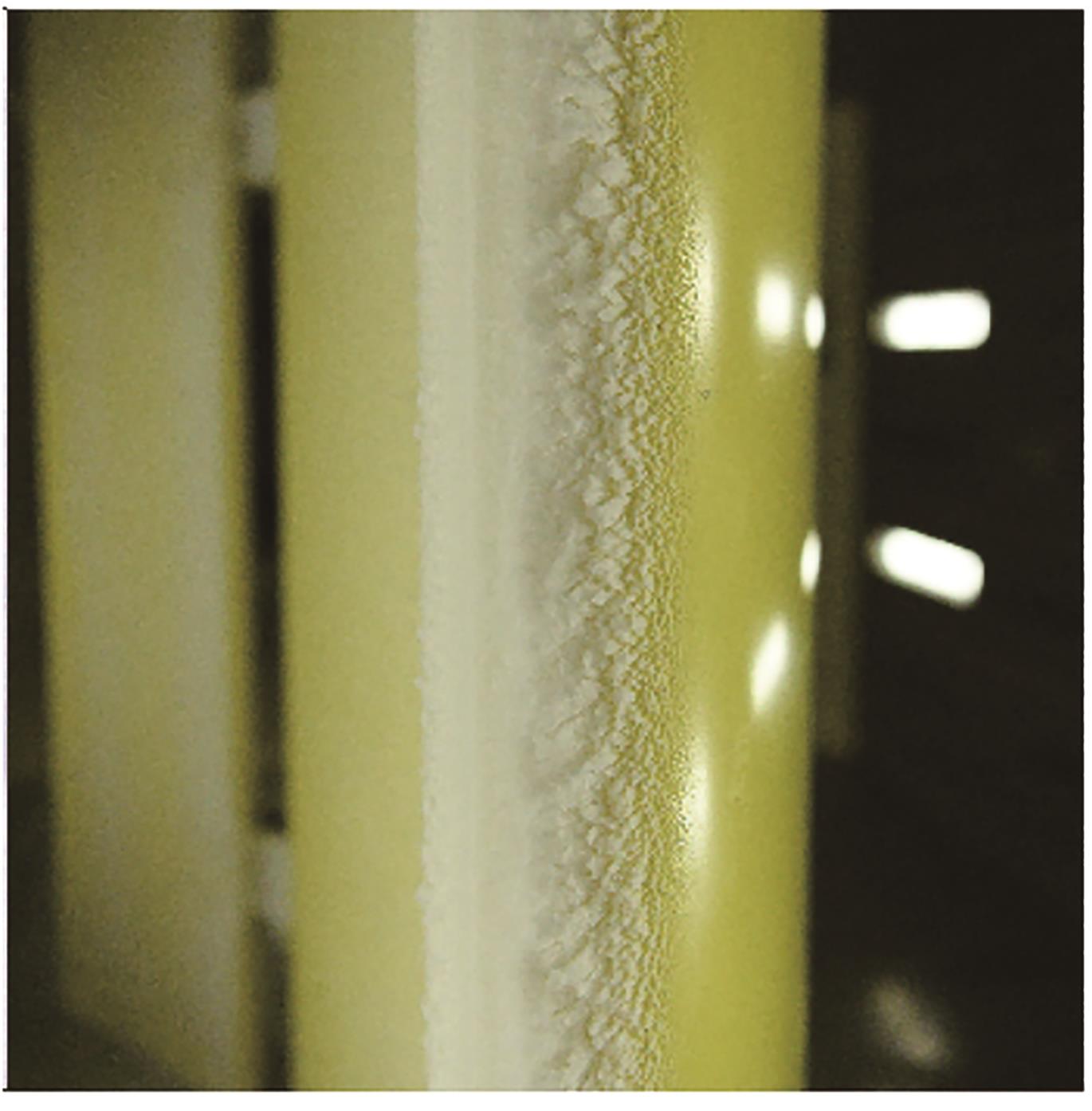
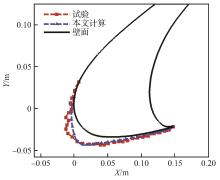
Fig.8
Comparison of ice shape on leading edge of slat wing between simulation and experiment
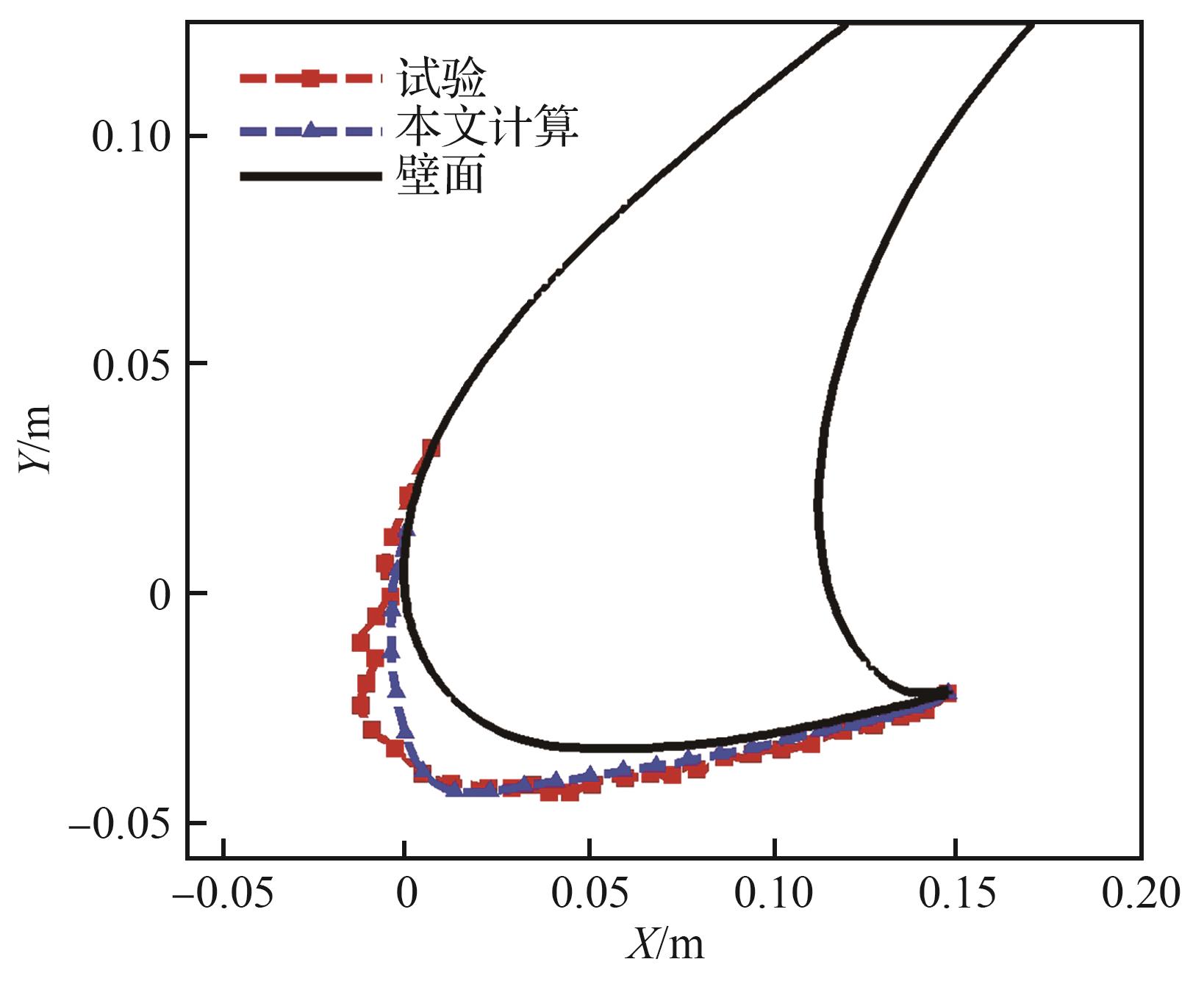
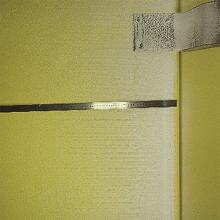
Fig.9
Photo of icing test result on lower surface of main wing
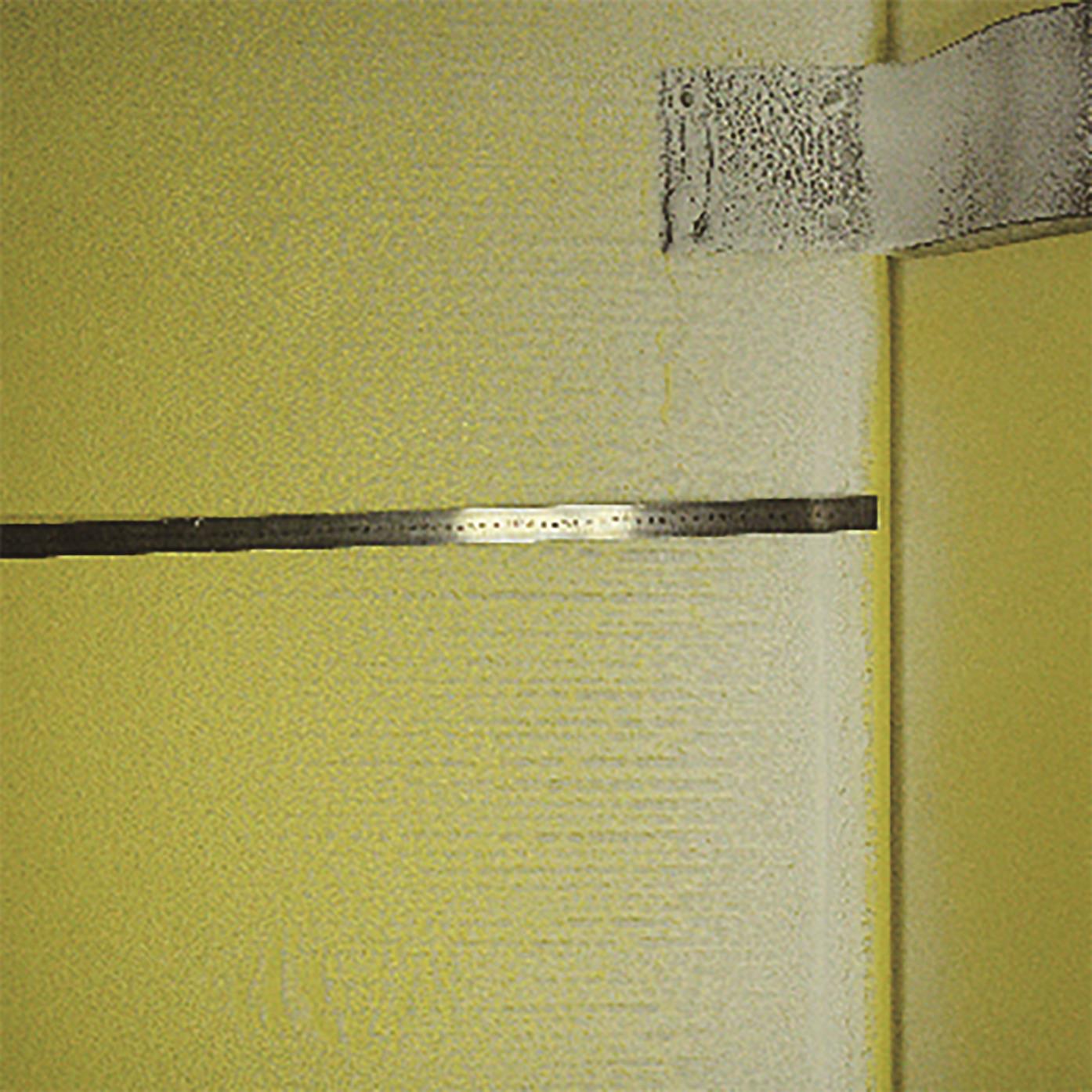
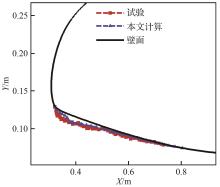
Fig.10
Comparison of ice shape on lower surface of main wing between simulation and experiment
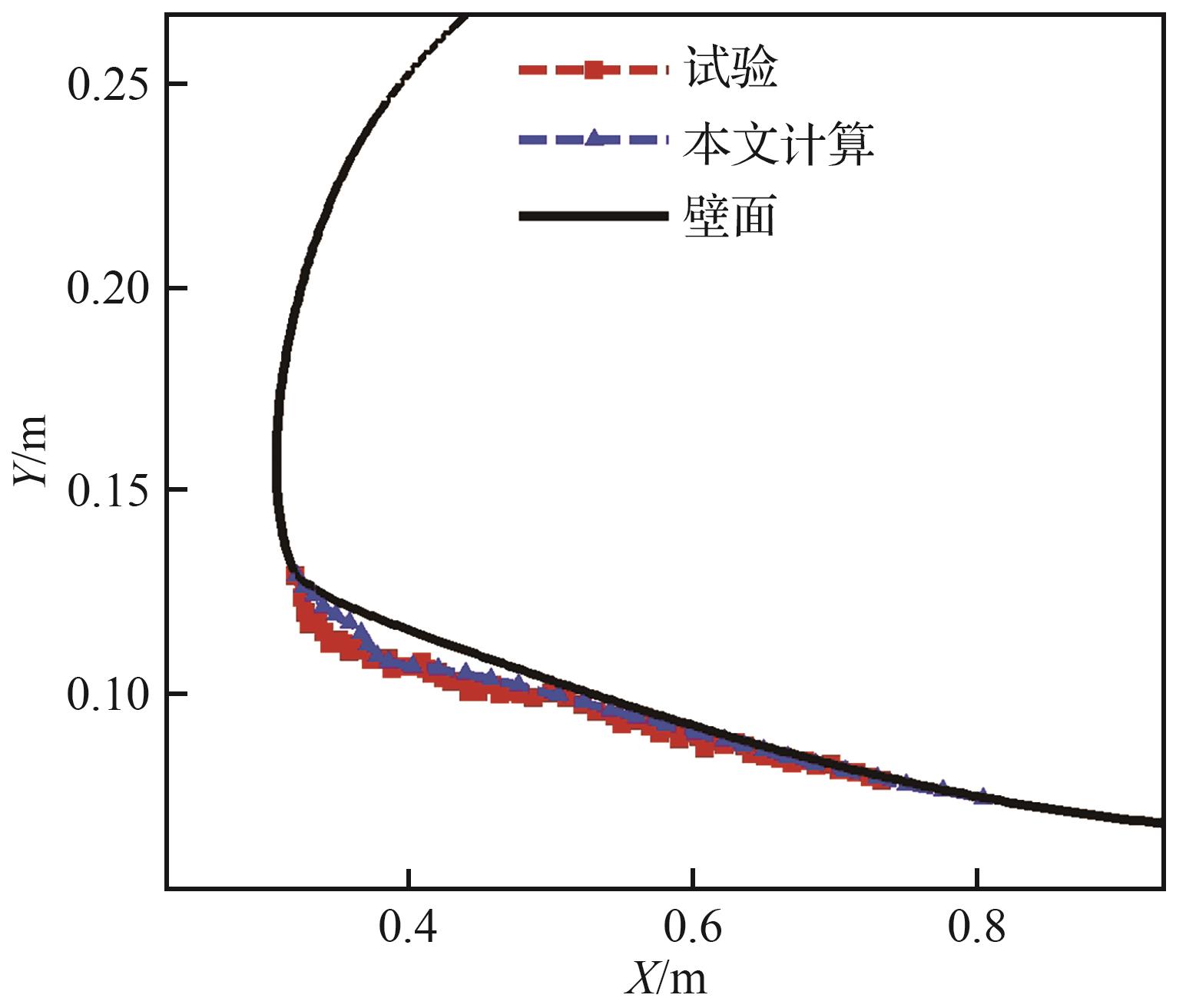
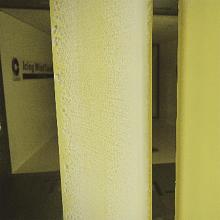
Fig.11
Photo of test result of icing on lower surface of flap wing
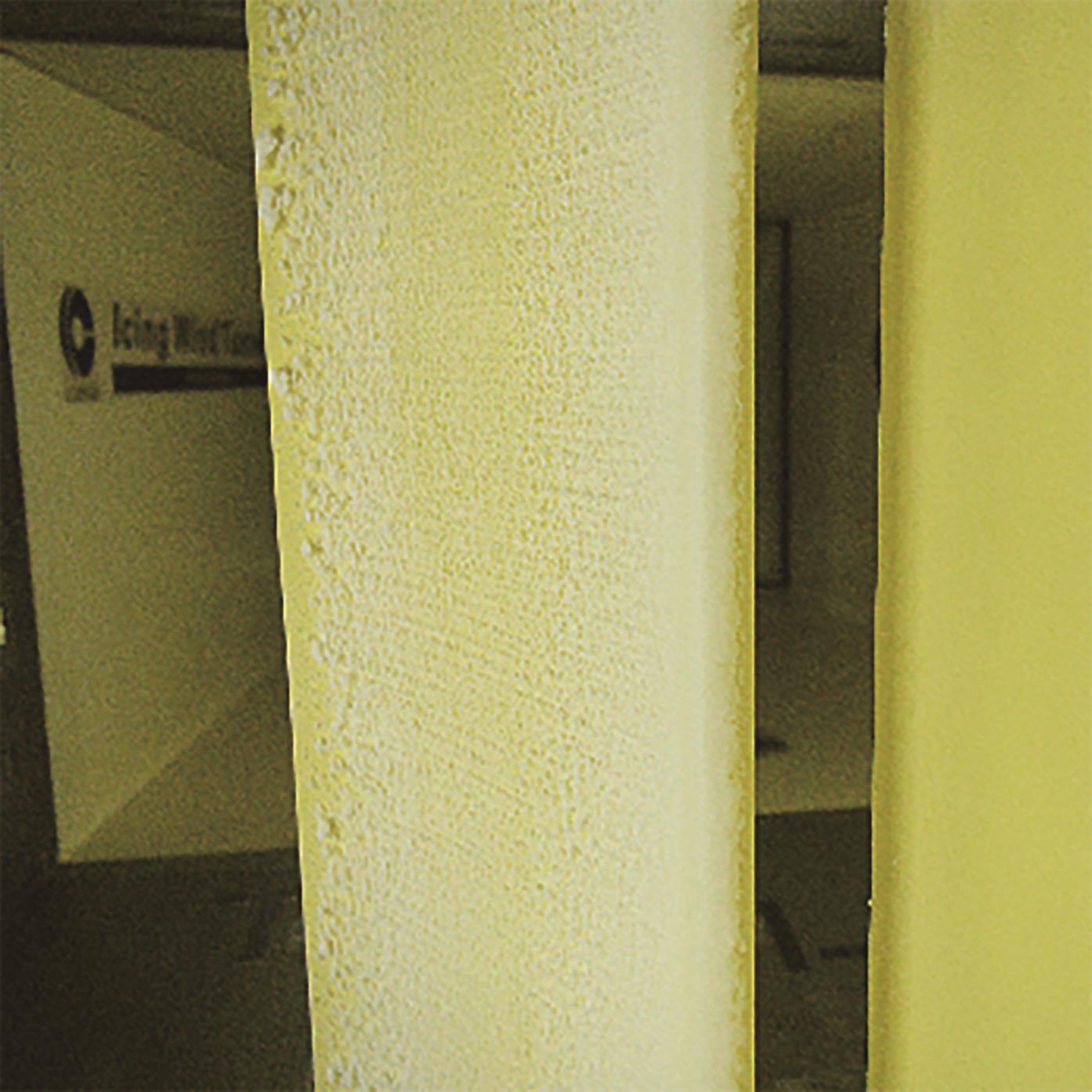
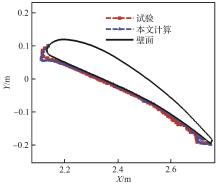
Fig.12
Comparison of ice shape on lower surface of flap wing between simulation and Experiment
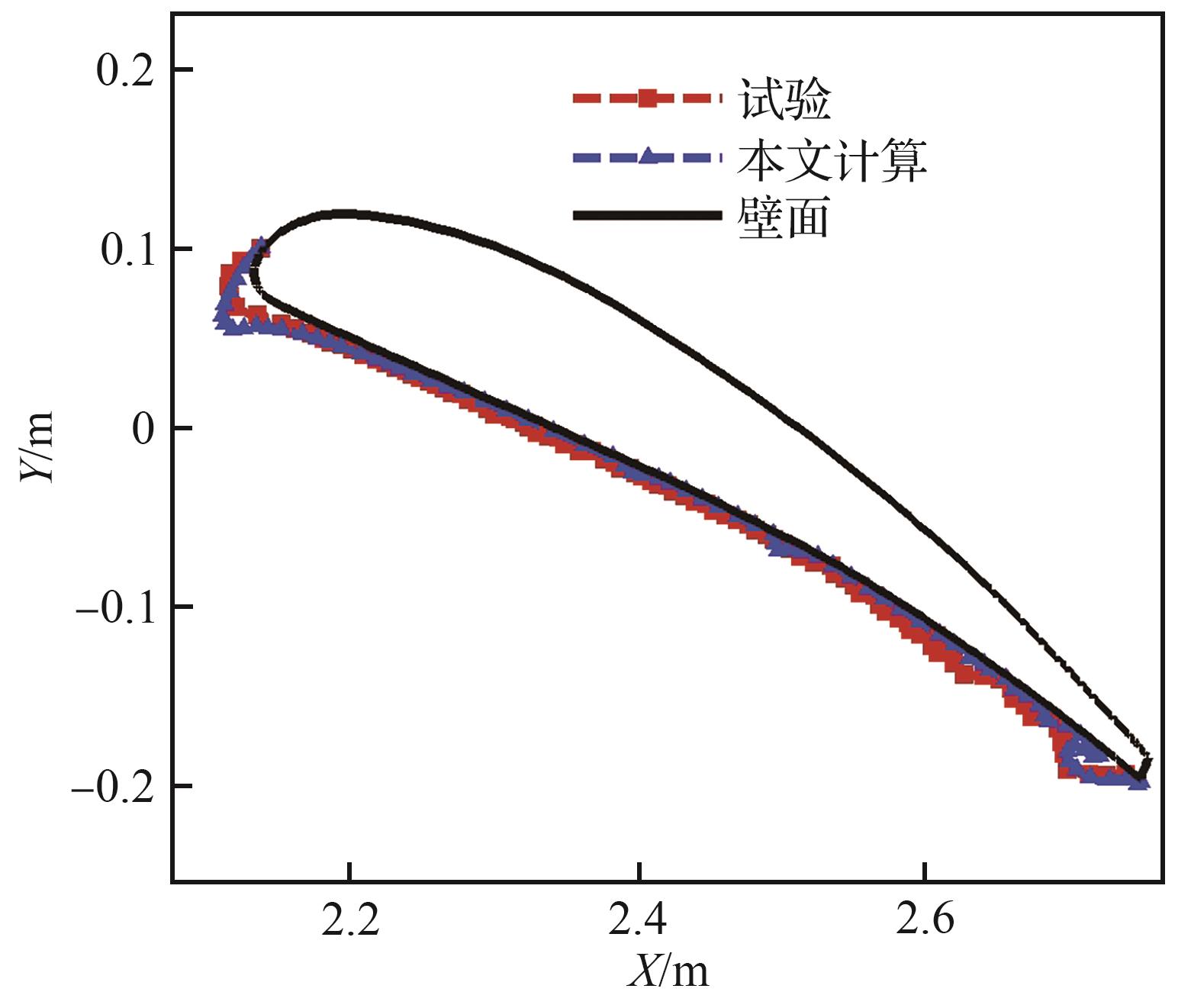
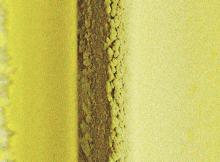
Fig.13
Photo of test result of icing on tailing edge of slat wing
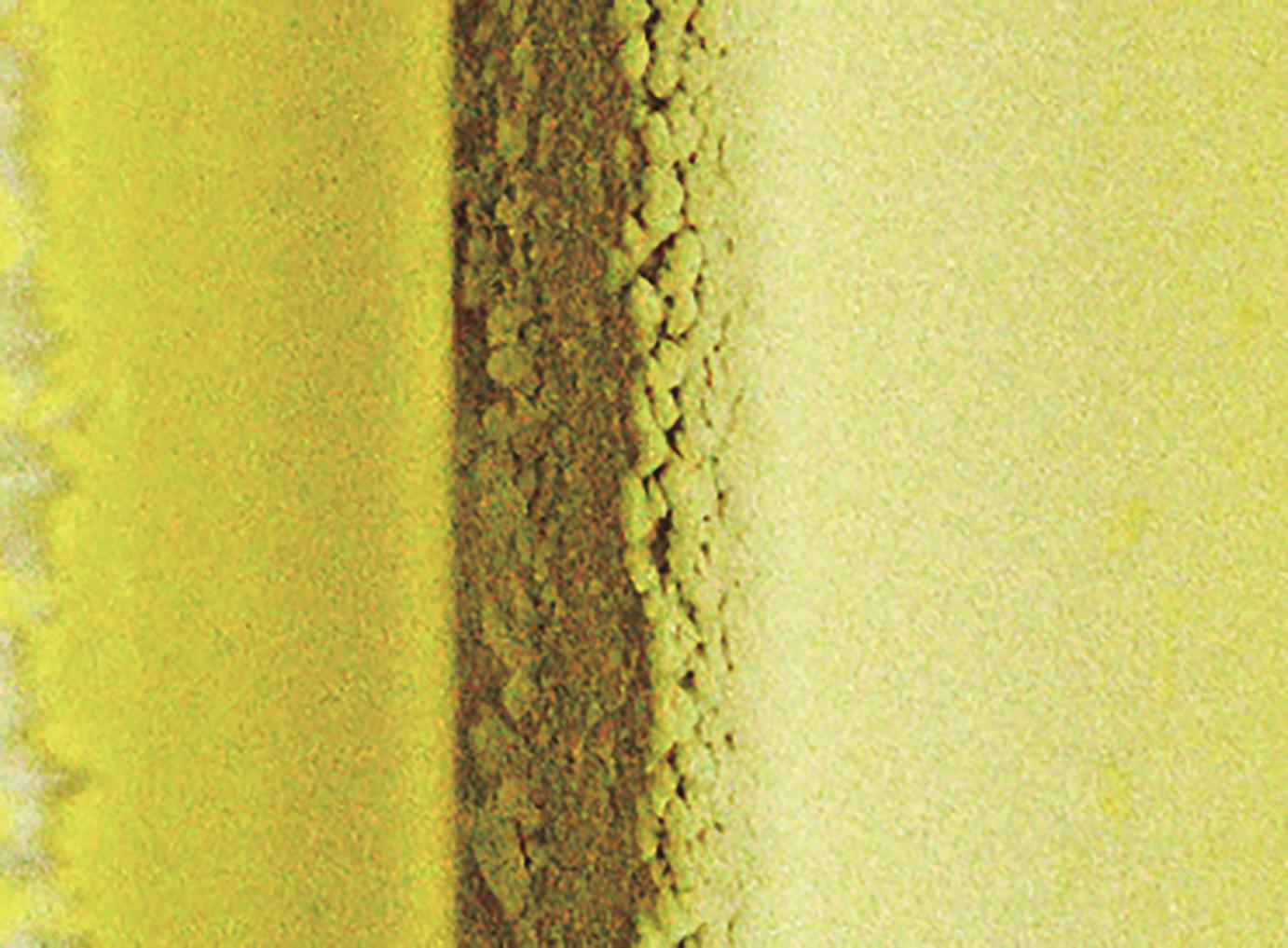
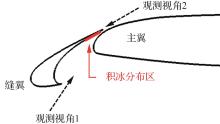
Fig.14
Different observation perspectives of icing area on the back of slat wing
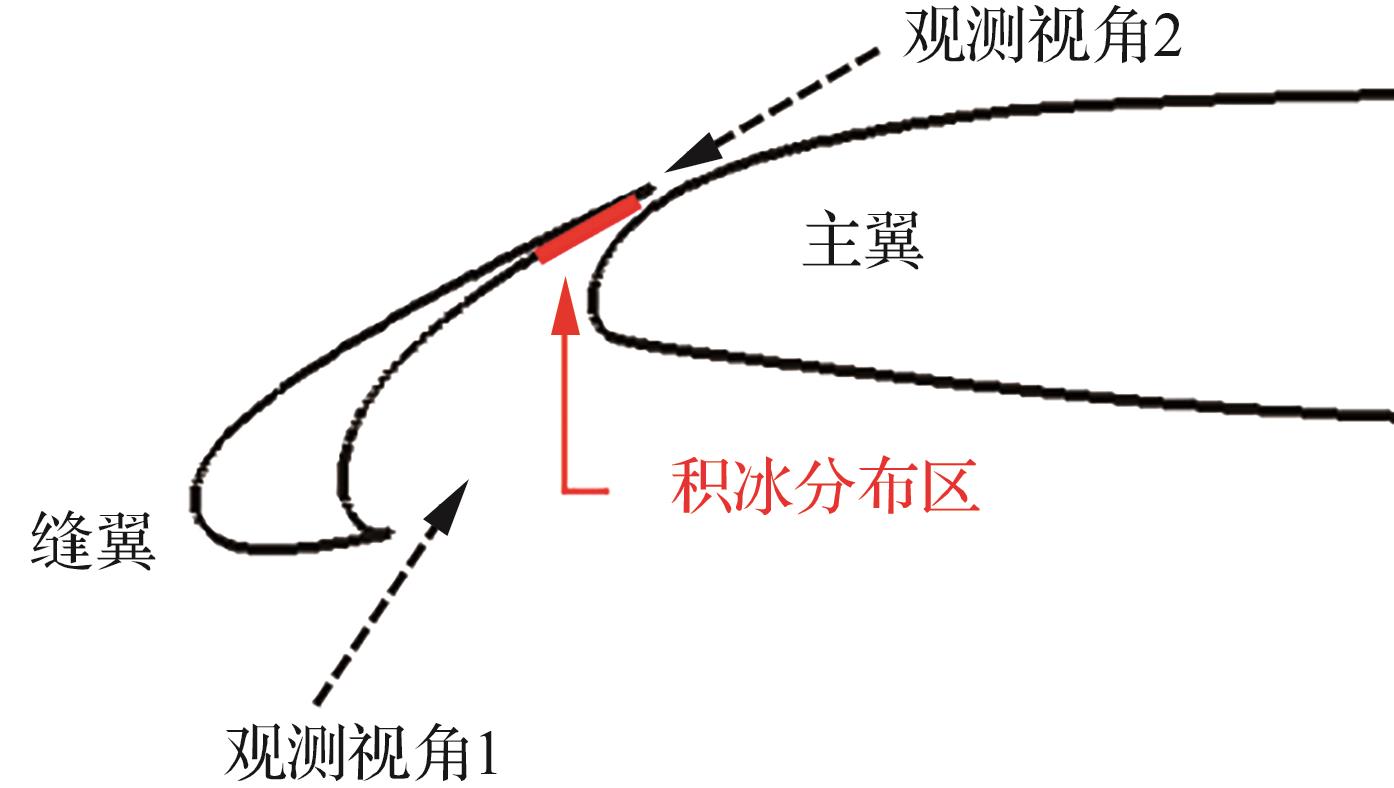
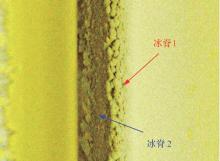
Fig.15
Icing test result from Perspective 1
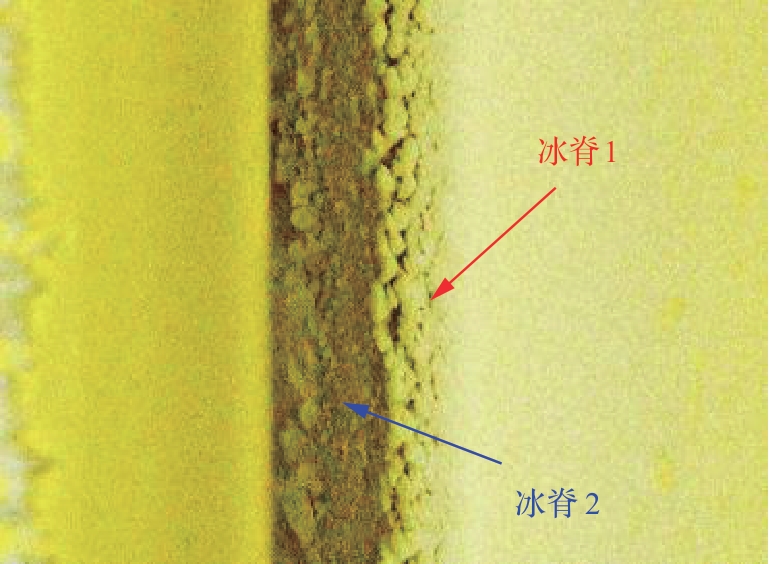
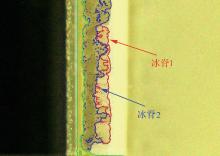
Fig.16
Icing test result from Perspective 2
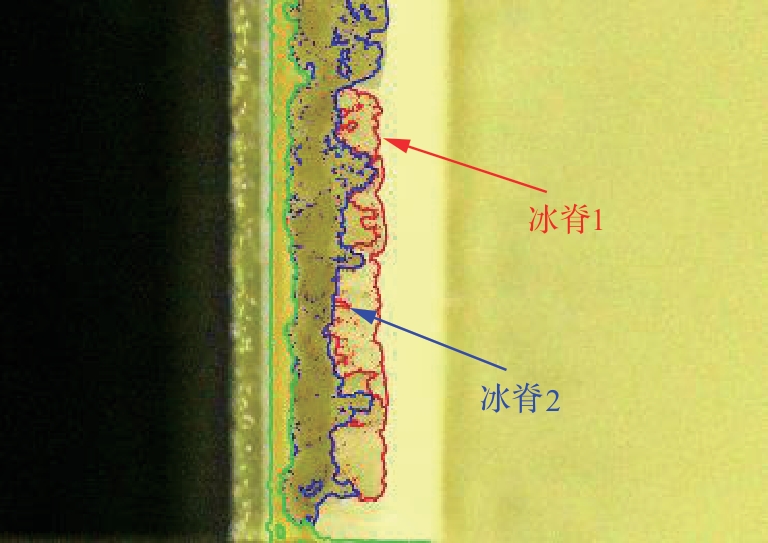
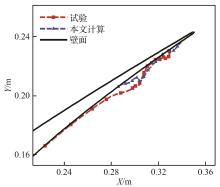
Fig.17
Comparison of ice shape of tailing edge of slat wing between simulation and experiment
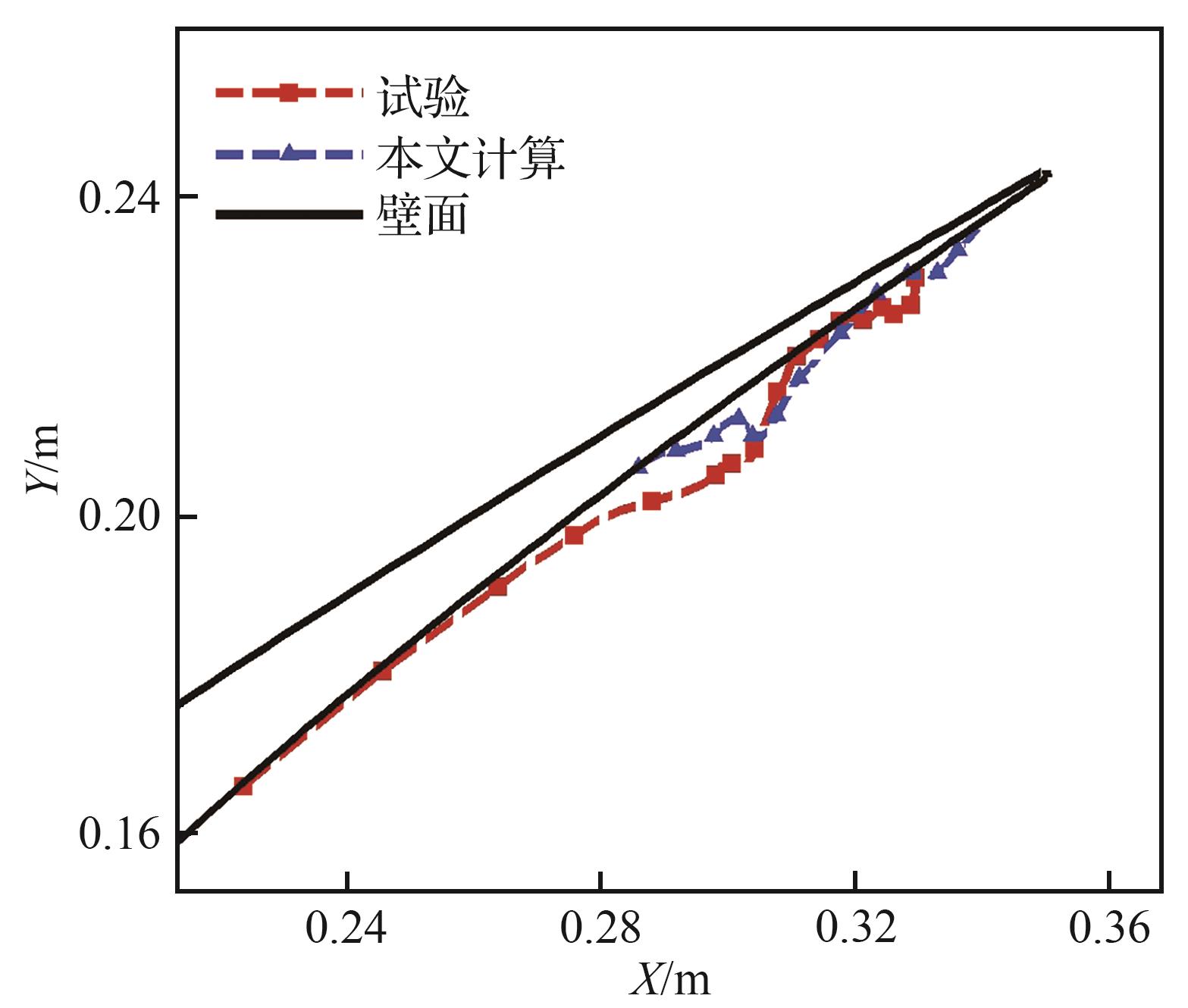
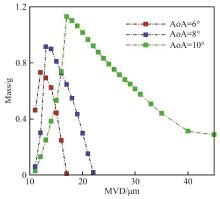
Fig.18
Total liquid water collection on the back of slat wing with different AoAs
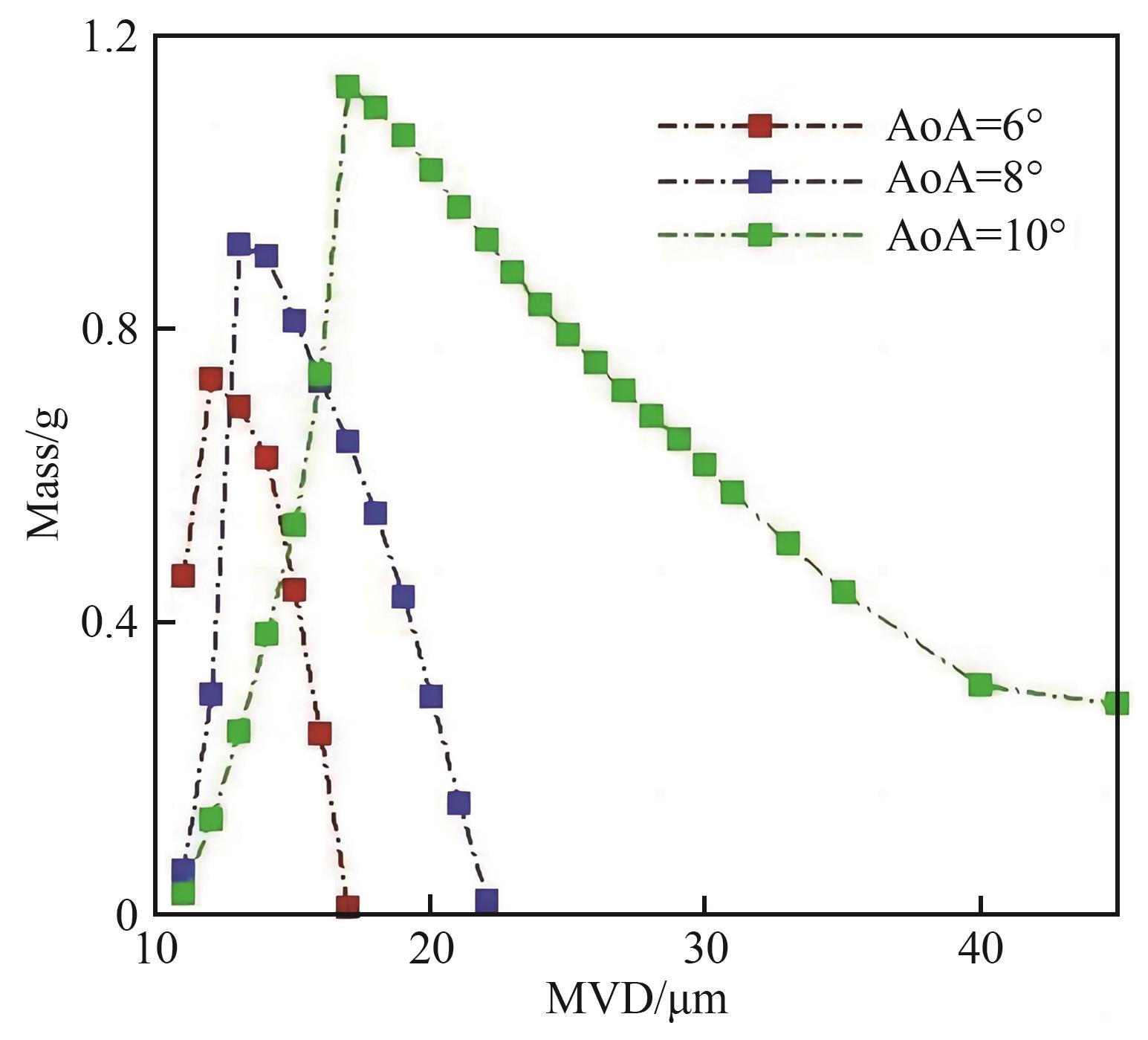
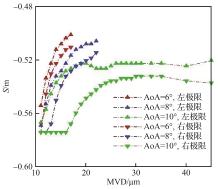
Fig.19
Impingement limits on the back of slat wing with different AoA
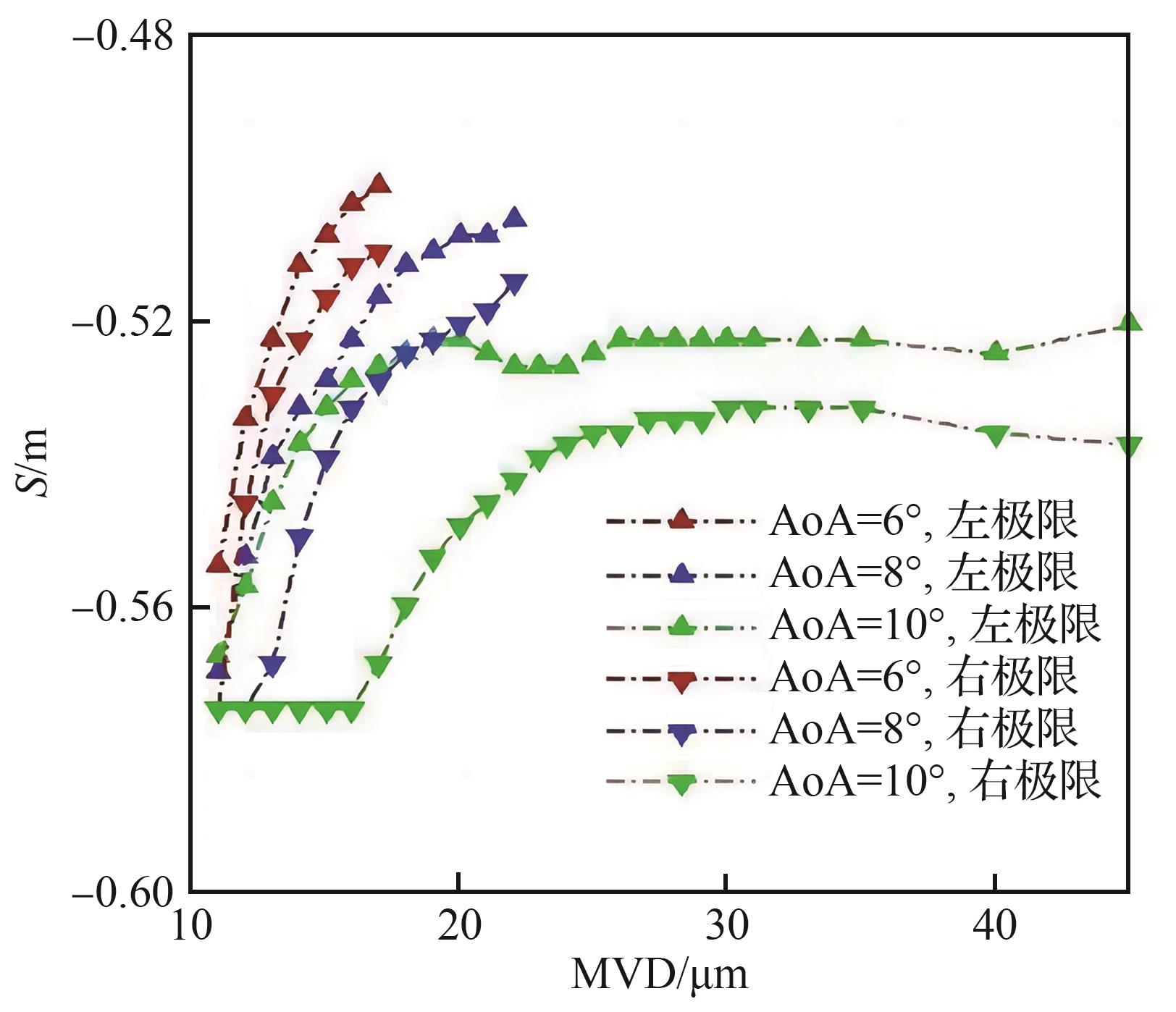
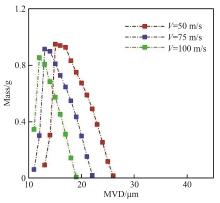
Fig.20
Total liquid water collection on the back of slat wing with different air velocity
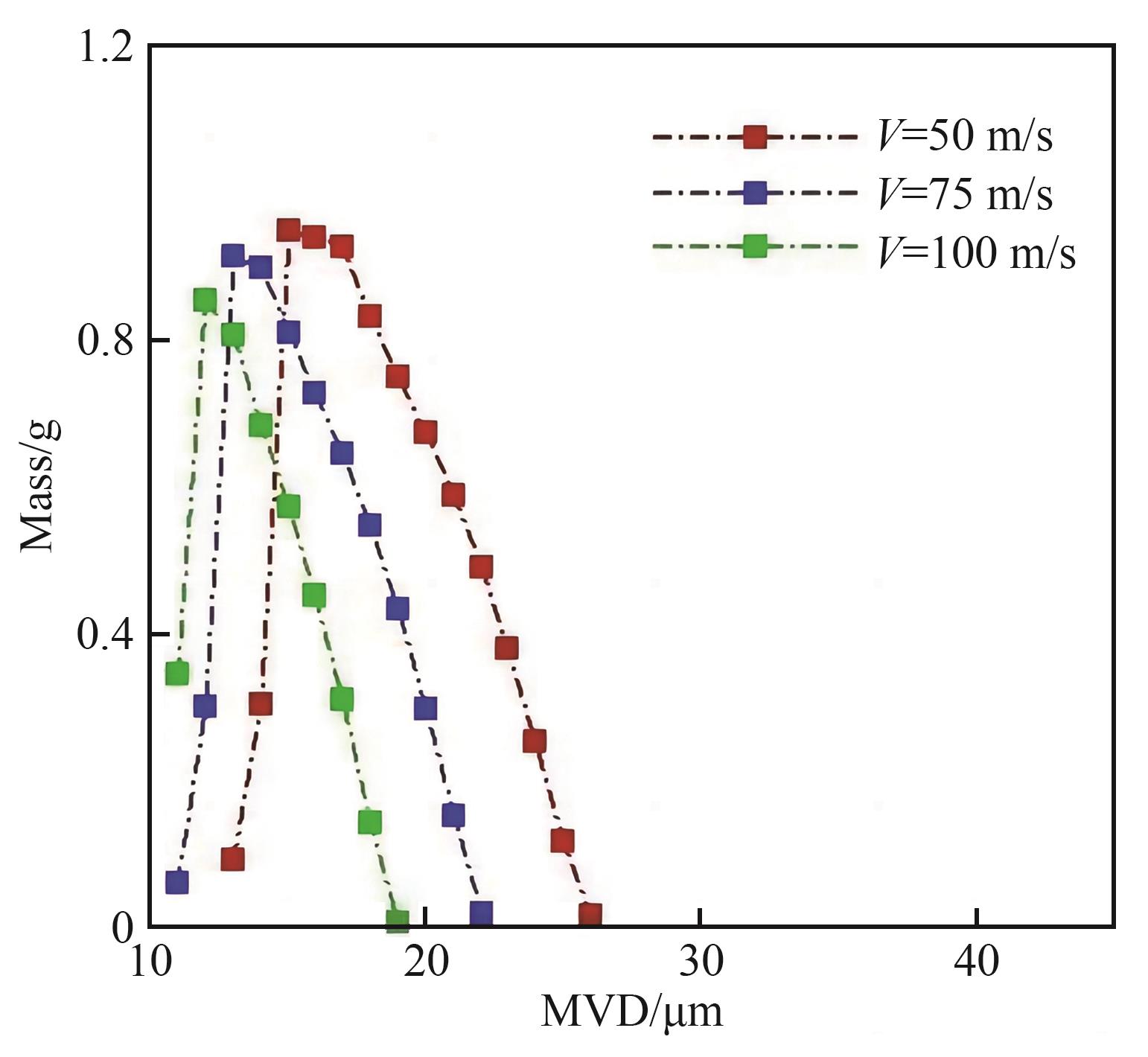
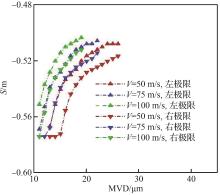
Fig.21
Impingement limits on the back of slat wing with different air velocity
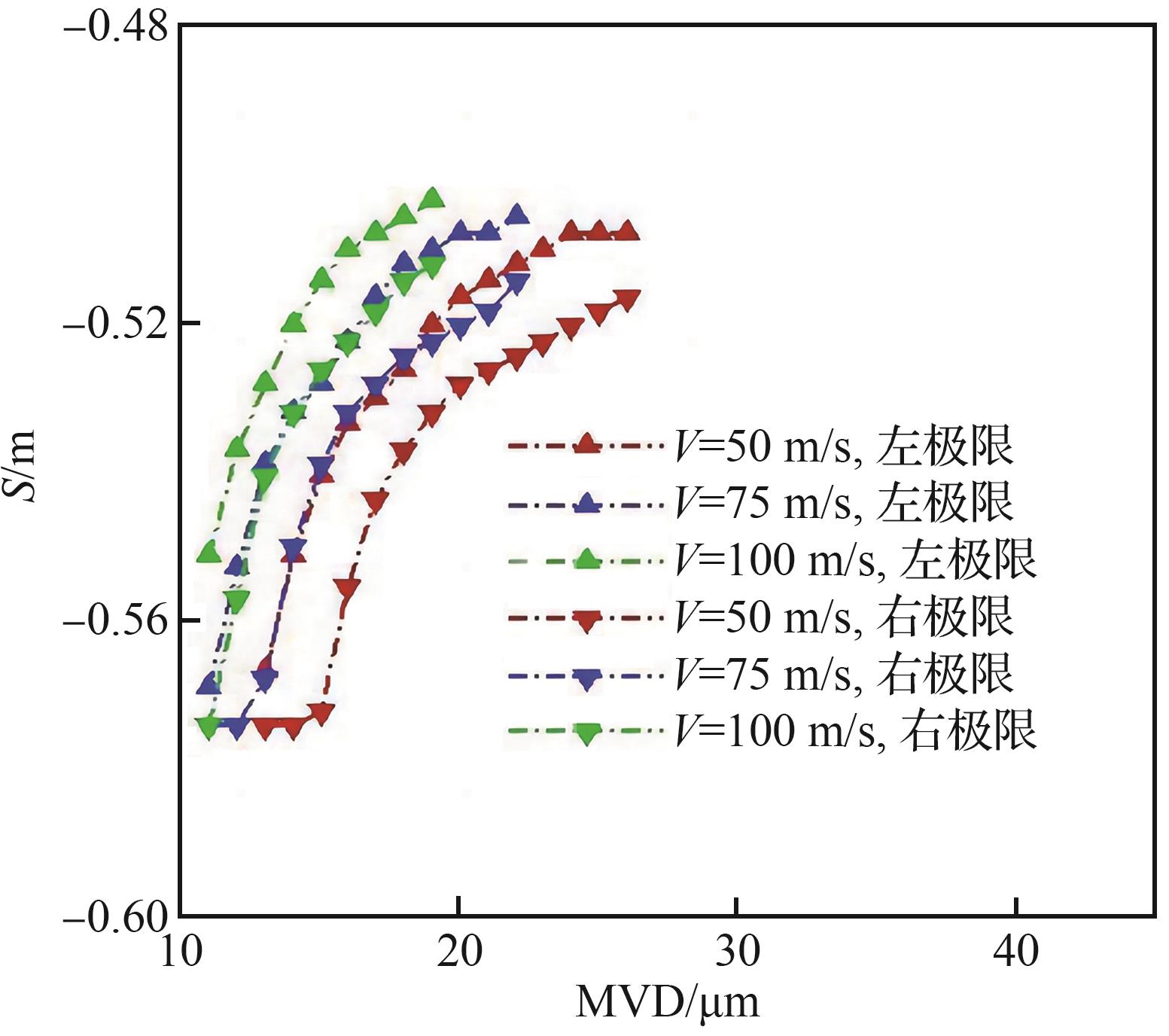
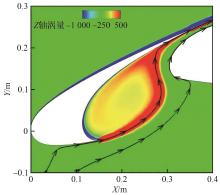
Fig.22
Air stream lines and vorticity contour on the back of slat wing
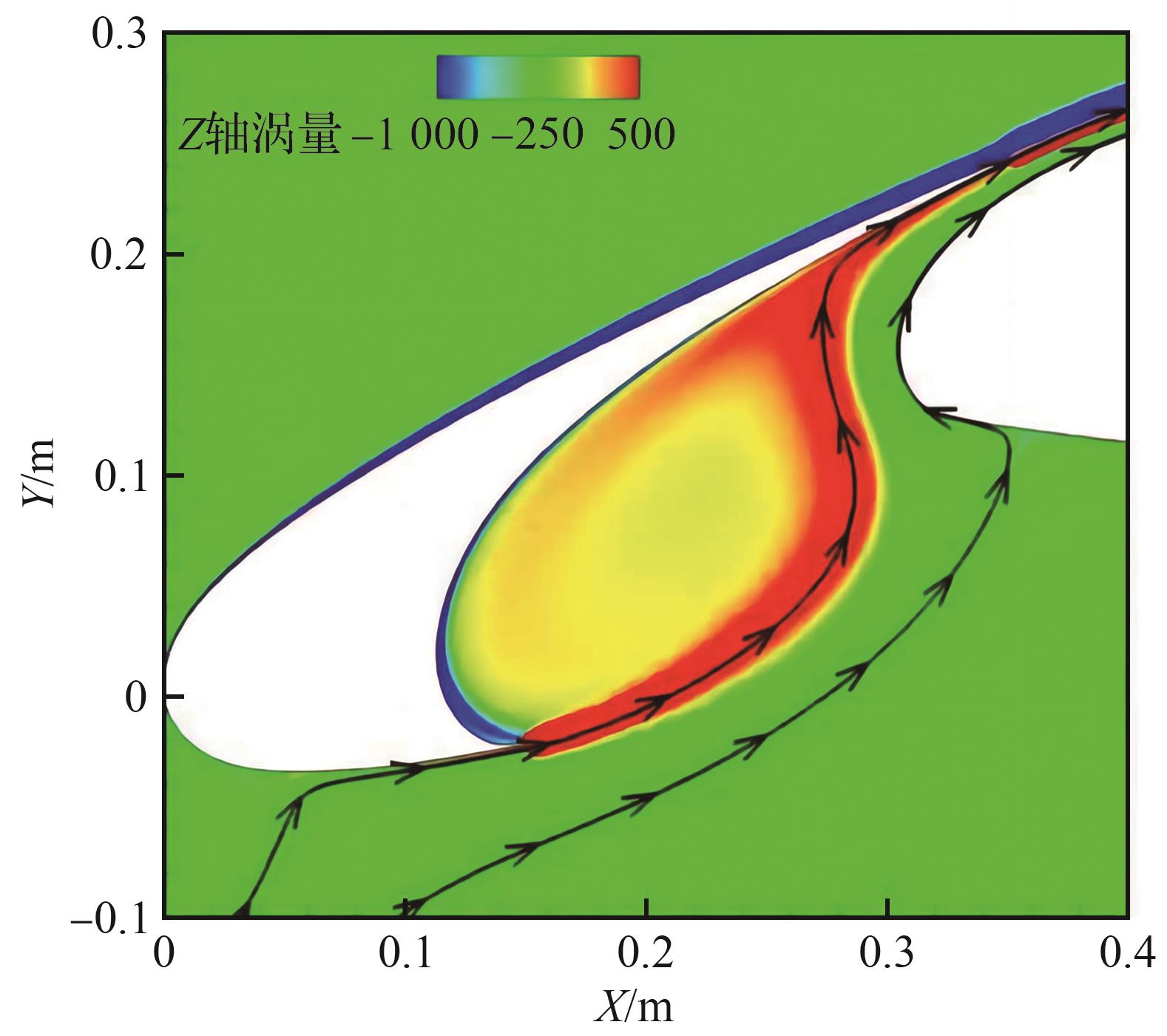
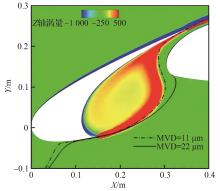
Fig.23
Trajectories and vorticity contour of different-size droplets on the back of slat wing
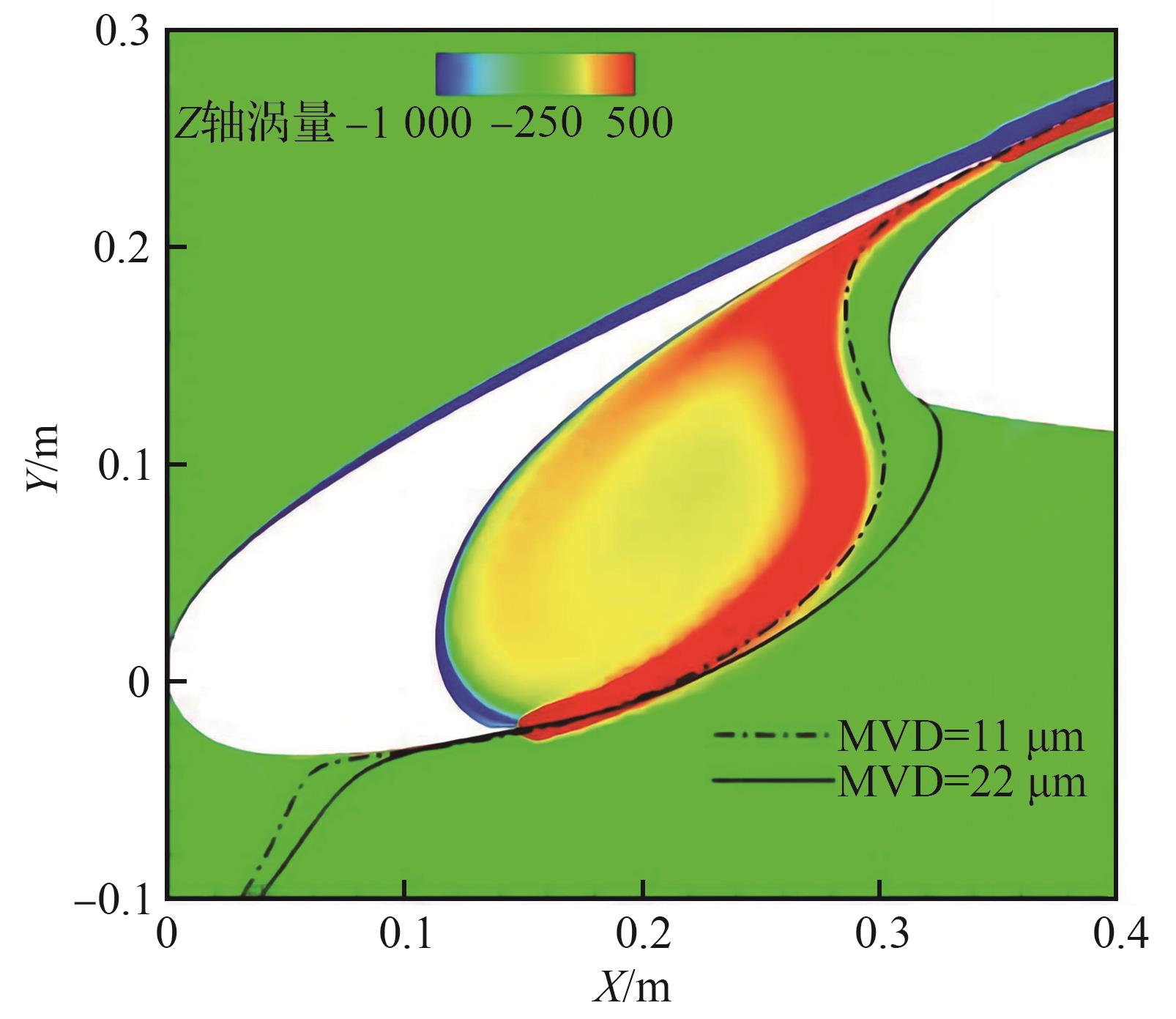
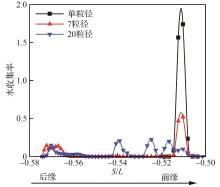
Fig.24
Comparison of collection efficiency for different distribution of droplet sizes
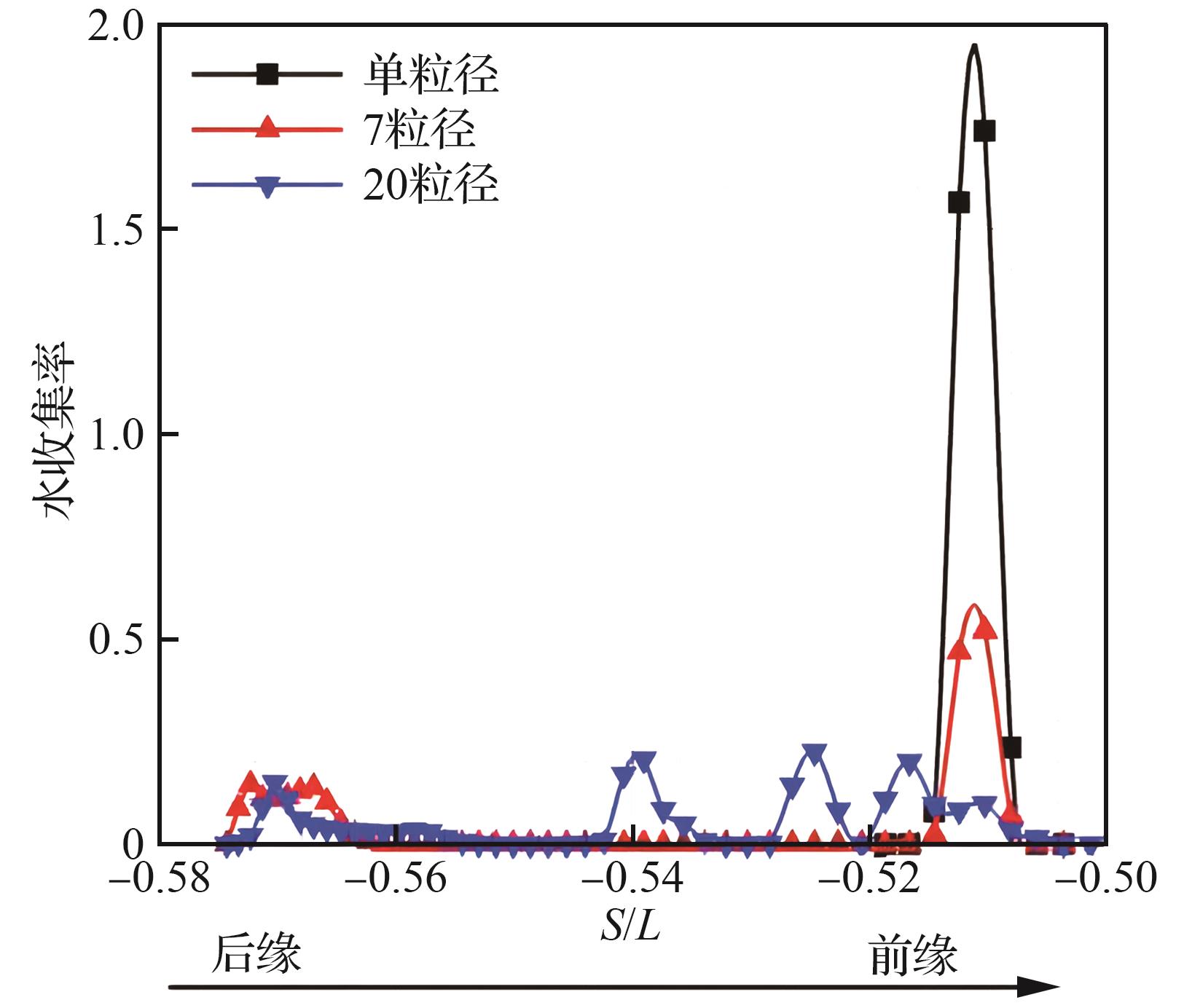
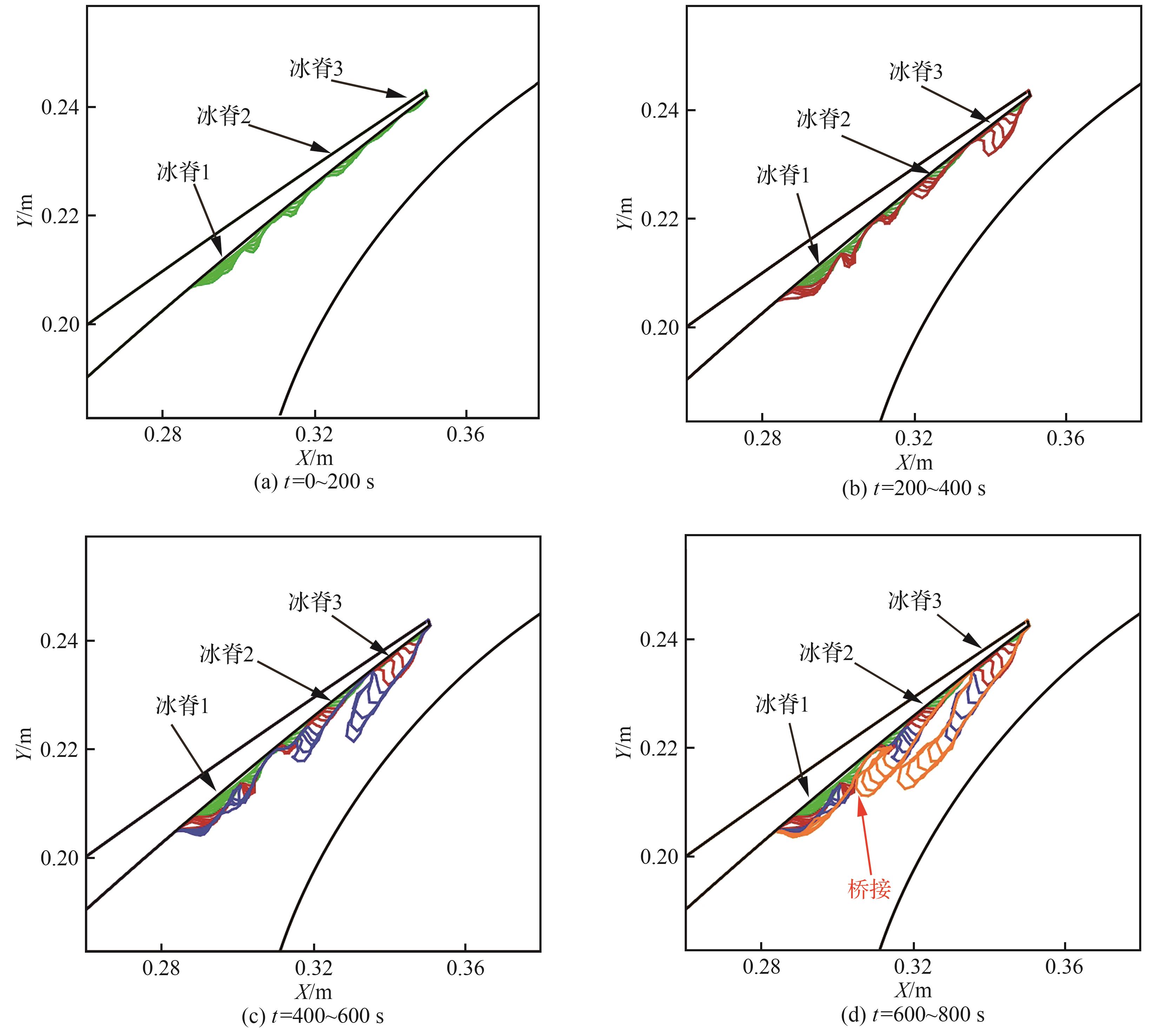
Fig.25
Ice shape on the back of slat wing at different time points
| 1 | CAO Y H, TAN W Y, WU Z L. Aircraft icing: an ongoing threat to aviation safety[J]. Aerospace Science and Technology, 2018, 75: 353-385. |
| 2 | VAN DAM C P. The aerodynamic design of multi-element high-lift systems for transport airplanes[J]. Progress in Aerospace Sciences, 2002, 38(2): 101-144. |
| 3 | TONG X L, LUKE E. Eulerian simulations of icing collection efficiency using a singularity diffusion model[C]∥43rd AIAA Aerospace Sciences Meeting and Exhibit. Reston: AIAA, 2005. |
| 4 | TONG X, THOMPSON D, ARNOLDUS Q, et al. Three-dimensional surface evolution and mesh deformation for aircraft icing applications[J]. Journal of Aircraft, 2016, 54(3): 1047-1063. |
| 5 | DAI J Z, LI H R, ZHANG Y F, et al. Optimization of multi-element airfoil settings considering ice accretion effect[J]. Chinese Journal of Aeronautics, 2023, 36(2): 41-57. |
| 6 | BIDWELL C S. Icing analysis of a swept NACA 0012 wing using LEWICE3D version 3.48[C]∥6th AIAA Atmospheric and Space Environments Conference. Reston: AIAA, 2014. |
| 7 | CAPIZZANO F, CATALANO P, CAROZZA A, et al. CIRA contribution to the first AIAA ice prediction workshop[C]∥AIAA Aviation 2022 Forum. Reston: AIAA, 2022. |
| 8 | WANG Q, CHEN N L, WANG Y B, et al. Scallop ice shape characteristics of swept wing based on large-scale icing wind tunnel experiment[J]. Chinese Journal of Aeronautics, 2023, 36(12): 214-230. |
| 9 | POTAPCZUK M G, BERKOWITZ B M. Experimental investigation of multielement airfoil ice accretion andresulting performance degradation[J]. Journal of Aircraft, 1990, 27(8): 679-691. |
| 10 | BERKOWITZ B, POTAPCZUK M, NAMDAR B, et al. Experimental ice shape and performance characteristics for a multi-element airfoil in the NASA Lewis Icing Research Tunnel[R]. Brook Park: Sverdrup Technology, Inc., 1991. |
| 11 | SHIN J, WILCOX P A, CHIN V, et al. Icing test results on an advanced two-dimensional high-lift multi-element airfoil[R]. Washington, D. C.: NASA, 1994. |
| 12 | SANG W M, LI F W, SHI Y Y. Icing effect study for wing/body and high-lift wing configurations[C]∥45th AIAA Aerospace Sciences Meeting and Exhibit. Reston: AIAA, 2007. |
| 13 | 任靖豪, 王强, 陈宁立, 等. 多段翼构型结冰计算方法及结冰影响分析[J]. 航空学报, 2024, 45(14): 129328. |
| REN J H, WANG Q, CHEN N L, et al. Numerical simulation and aerodynamic performance effects of multi-element airfoil ice accretion[J]. Acta Aeronautica et Astronautica Sinica, 2024, 45(14): 129328 (in Chinese). | |
| 14 | CAO Y H, ZHONG G, MA C. Numerical simulation of ice accretion prediction on multiple element airfoil[J]. Science China Technological Sciences, 2011, 54(9): 2296-2304. |
| 15 | PRINCE RAJ L, LEE J W, MYONG R S. Ice accretion and aerodynamic effects on a multi-element airfoil under SLD icing conditions[J]. Aerospace Science and Technology, 2019, 85: 320-333. |
| 16 | KHODADOUST A, SHIN J. Effect of in-flight ice accretion on the performance of a multi-element airfoil[C]∥SAE/AHS International Icing Symposium. Fairfax: The American Helicopter Society, Inc, 1995. |
| 17 | XIAO M C, ZHANG Y F, ZHOU F. Numerical investigation of the unsteady flow past an iced multi-element airfoil[J]. AIAA Journal, 2020, 58(9): 3848-3862. |
| 18 | 张恒, 李杰, 龚志斌. 多段翼型缝翼前缘结冰大迎角分离流动数值模拟[J]. 航空学报, 2017, 38(2): 520746. |
| ZHANG H, LI J, GONG Z B. Numerical simulation of separated flow around a multi-element airfoil at high angle of attack with iced slat[J]. Acta Aeronautica et Astronautica Sinica, 2017, 38(2): 520746 (in Chinese). | |
| 19 | 陈宁立, 易贤, 王强, 等. NNW-ICE软件的三维结冰模型及精度验证[J]. 航空学报, 2024, 45(12): 129188. |
| CHEN N L, YI X, WANG Q, et al. Three-dimensional model for ice accretion in NNW-ICE software and validation of its precision[J]. Acta Aeronautica et Astronautica Sinica, 2024, 45(12): 129188 (in Chinese). | |
| 20 | 任靖豪, 王强, 刘宇, 等. 大型商用运输机机翼增升构型水滴撞击特性计算[J]. 空气动力学学报, 2021, 39(1): 52-58, 72. |
| REN J H, WANG Q, LIU Y, et al. Numerical simulation of droplet impingement characteristics on a high-lift configuration of a large commercial transport aircraft[J]. Acta Aerodynamica Sinica, 2021, 39(1): 52-58, 72 (in Chinese). | |
| 21 | SHEN X B, ZHAO W Z, QI Z C, et al. Analysis of numerical methods for droplet impingement characteristics under aircraft icing conditions[J]. Aerospace, 2022, 9(8): 416. |
| 22 | WANG Q, XIAO J P, ZHANG T T, et al. A new wind turbine icing computational model based on Free Wake Lifting Line Model and Finite Area Method[J]. Renewable Energy, 2020, 146: 342-358. |
| 23 | BAKER J L, BARKER T, GRAY J M N T. A two-dimensional depth-averaged-rheology for dense granular avalanches[J]. Journal of Fluid Mechanics, 2016, 787: 367-395. |
| 24 | MEREDITH K V, DE VRIES J, XIN Y. A numerical model for partially-wetted flow of thin liquid films[M]∥WIT Transactions on Engineering Sciences, Vol 70. Ashurst: WIT Press, 2011. |
| 25 | 易贤. 飞机积冰的数值计算与积冰试验相似准则研究[D]. 绵阳: 中国空气动力研究与发展中心, 2007. |
| YI X. Study on similarity criterion between numerical calculation and icing test of aircraft icing[D]. Mianyang: China Aerodynamics Research and Development Center, 2007 (in Chinese). | |
| 26 | LO S H. Dynamic grid for mesh generation by the advancing front method[J]. Computers & Structures, 2013, 123: 15-27. |
| 27 | PAPADAKIS M, HUNG K E, VU G T, et al. Experimental investigation of water droplet impingement on airfoils, finite wings, and an S-duct engine inlet[R]. Washington, D. C.: NASA, 2002. |
| 28 | PETROSINO F, MINGIONE G, CAROZZA A, et al. Ice accretion model on multi-element airfoil[J]. Journal of Aircraft, 2011, 48(6): 1913-1920. |
| 29 | YU C X, KE P, YU G F, et al. Investigation of water impingement on a multi-element high-lift airfoil by Lagrangian and Eulerian approach[J]. Propulsion and Power Research, 2015, 4(3): 161-168. |
| 30 | 刘森云, 王桥, 易贤, 等. 3 m×2 m结冰风洞试验技术新进展(2020—2022年)[J]. 空气动力学学报, 2023, 41(1): 57-65. |
| LIU S Y, WANG Q, YI X, et al. New progress of 3 m×2 m icing wind tunnel test technology from 2020 to 2022[J]. Acta Aerodynamica Sinica, 2023, 41(1): 57-65 (in Chinese). | |
| 31 | AC-9C Aircraft Icing Technology Committee. Calibration and acceptance of icing wind tunnels: SAE ARP 5905-2003 [S]. Warrendale: SAE International, 2003. |
| [1] | Jinghao REN, Qiang WANG, Ningli CHEN, Yu LIU, Xian YI. Numerical simulation and aerodynamic performance effects of multi-element airfoil ice accretion [J]. Acta Aeronautica et Astronautica Sinica, 2024, 45(14): 129328-129328. |
| [2] | Qiuming YANG, Yongfeng ZHU, Huawei CHEN, Xiaolin LIU. Anti-icing performance test investigation on hollowed patterning electric heating module [J]. Acta Aeronautica et Astronautica Sinica, 2023, 44(S2): 729334-729334. |
| [3] | Jiangsheng WANG, Jinjun WANG. Vortex/boundary⁃layer interactions over multi⁃element airfoil at low Reynolds number [J]. ACTA AERONAUTICAET ASTRONAUTICA SINICA, 2023, 44(12): 127652-127652. |
| [4] | Jun SHU, Dongguang XU, Zhirong HAN, Si LI, Xiong HUANG. Hybrid wing design of icing wind tunnel supercooled large droplet icing test [J]. ACTA AERONAUTICAET ASTRONAUTICA SINICA, 2023, 44(1): 627182-627182. |
| [5] | LIU Xuecheng, LIANG Hua, ZONG Haohua, XIE Like, SU Zhi. Experiment on plasma ice shape modulation based on NACA0012 airfoil [J]. ACTA AERONAUTICAET ASTRONAUTICA SINICA, 2022, 43(9): 126283-126283. |
| [6] | WANG Kai, LEI Fanpei, YANG Anlong, YANG Baoe, ZHOU Lixin. Effect of radial orifice shape on leakage rate of liquid sheet in pintle injector [J]. ACTA AERONAUTICAET ASTRONAUTICA SINICA, 2021, 42(6): 124384-124384. |
| [7] | LEI Guilin, ZHENG Mei, DONG Wei, ZHOU Zhixiang, DONG Qi. Test on electrothermal anti-icing of aero-engine inlet strut [J]. ACTA AERONAUTICAET ASTRONAUTICA SINICA, 2017, 38(8): 121066-121066. |
| [8] | ZHANG Zhenhui, LI Dong, YANG Yin. Passive flow control of multi-element airfoils using slat mini-trailing edge device [J]. ACTA AERONAUTICAET ASTRONAUTICA SINICA, 2017, 38(5): 120650-120650. |
| [9] | LI Yan, WANG Shaolong, YI Xian, ZHOU Zhihong, GUO Long. An icing wind tunnel test on icing characteristics of cylinder rotating around a shaft [J]. ACTA AERONAUTICAET ASTRONAUTICA SINICA, 2017, 38(2): 520693-520703. |
| [10] | ZHANG Heng, LI Jie, GONG Zhibin. Numerical simulation of separated flow around a multi-element airfoil at high angle of attack with iced slat [J]. ACTA AERONAUTICAET ASTRONAUTICA SINICA, 2017, 38(2): 520733-520746. |
| [11] | GUI Yewei, ZHOU Zhihong, LI Yinghui, XU Haojun. Multiple safety boundaries protection on aircraft icing [J]. ACTA AERONAUTICAET ASTRONAUTICA SINICA, 2017, 38(2): 520723-520734. |
| [12] | YI Xian, WANG Bin, LI Weibin, GUO Long. Research progress on ice shape measurement approaches for aircraft icing [J]. ACTA AERONAUTICAET ASTRONAUTICA SINICA, 2017, 38(2): 520700-520711. |
| [13] | LI Weibin, YI Xian, DU Yanxia, ZHOU Zhihong. A measurement approach for ice shape based on variational segmentation model [J]. ACTA AERONAUTICAET ASTRONAUTICA SINICA, 2017, 38(1): 120167-120167. |
| [14] | ZHANG Zhenhui, LI Dong, YANG Yin. Numerical Investigation of Effects of Gurney Flaps on Aerodynamic Performance of Multi-element Airfoils [J]. ACTA AERONAUTICAET ASTRONAUTICA SINICA, 2014, 35(4): 995-1003. |
| [15] | WANG Chao, CHANG Shinan, WU Menglong, JIN Jun. Numerical Investigation of Splashing Characteristics in Super-cooled Large Droplet Regime [J]. ACTA AERONAUTICAET ASTRONAUTICA SINICA, 2014, 35(4): 1004-1011. |
| Viewed | ||||||
|
Full text |
|
|||||
|
Abstract |
|
|||||
Address: No.238, Baiyan Buiding, Beisihuan Zhonglu Road, Haidian District, Beijing, China
Postal code : 100083
E-mail:hkxb@buaa.edu.cn
Total visits: 6658907 Today visits: 1341All copyright © editorial office of Chinese Journal of Aeronautics
All copyright © editorial office of Chinese Journal of Aeronautics
Total visits: 6658907 Today visits: 1341

 CJA
CJA
