Acta Aeronautica et Astronautica Sinica ›› 2025, Vol. 46 ›› Issue (2): 130709.doi: 10.7527/S1000-6893.2024.30709
• Fluid Mechanics and Flight Mechanics • Previous Articles
Yong KONG, Jinxing DING, Tao PAN, Bo RUAN( ), Kai YANG, Xiaowei GAO
Received:2024-05-21
Revised:2024-06-14
Accepted:2024-08-20
Online:2024-09-19
Published:2024-09-09
Contact:
Bo RUAN
E-mail:ruanbo@dlut.edu.cn
Supported by:CLC Number:
Yong KONG, Jinxing DING, Tao PAN, Bo RUAN, Kai YANG, Xiaowei GAO. Transient simulation of thermo-fluid-structure-acoustic coupling in regenerative cooling[J]. Acta Aeronautica et Astronautica Sinica, 2025, 46(2): 130709.
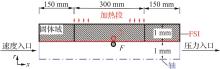
Fig.1
Schematic diagram of computational model
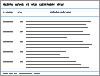
Table 1
Operating conditions
| 对象 | 边界条件 | 数值 |
|---|---|---|
| 入口 | 入口速度 | 1 m/s |
| 出口 | 出口压力 | 2 MPa |
| 加热段 | 恒温壁面,固定约束 | 800 K |
| 其他壁面 | 绝热,固定约束 | |
| 交界面 | 流固耦合面 |
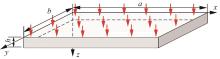
Fig.2
Geometric model of test case
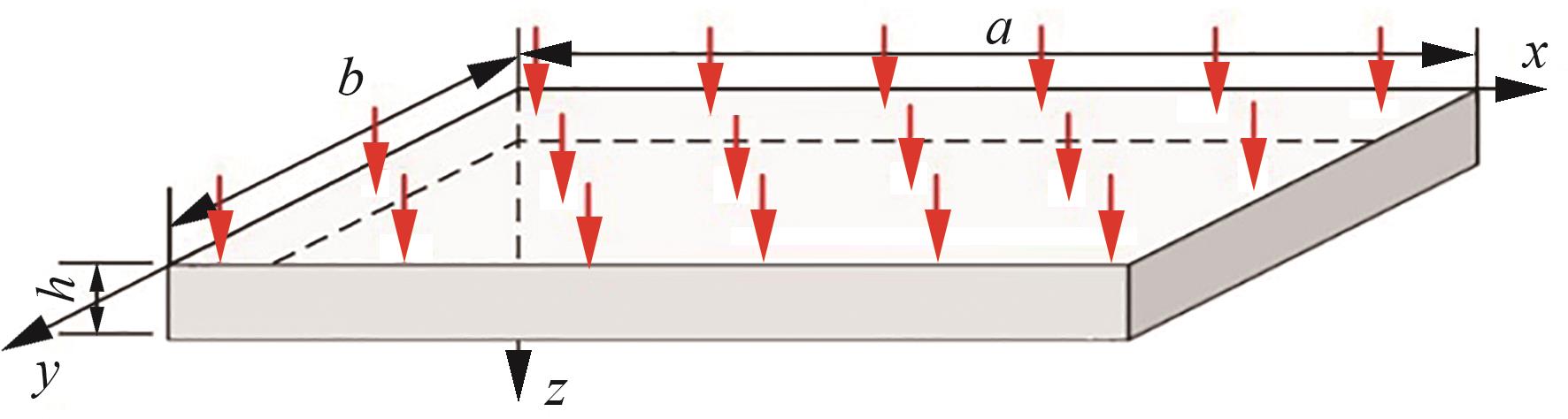
Table 2
Parameters of aluminum
| 参数 | 数值 |
|---|---|
| E/GPa | 72.4 |
| υ | 0.33 |
| ρ/(kg·m-3) | 2 789.28 |
| λ/(W·m-1·K-1) | 131.59 |
| α/(10-6K-1) | 22.3 |
| Cv /(J·kg-1·K-1) | 964.7 |
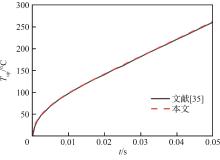
Fig.3
Temperature at center point of upper surface
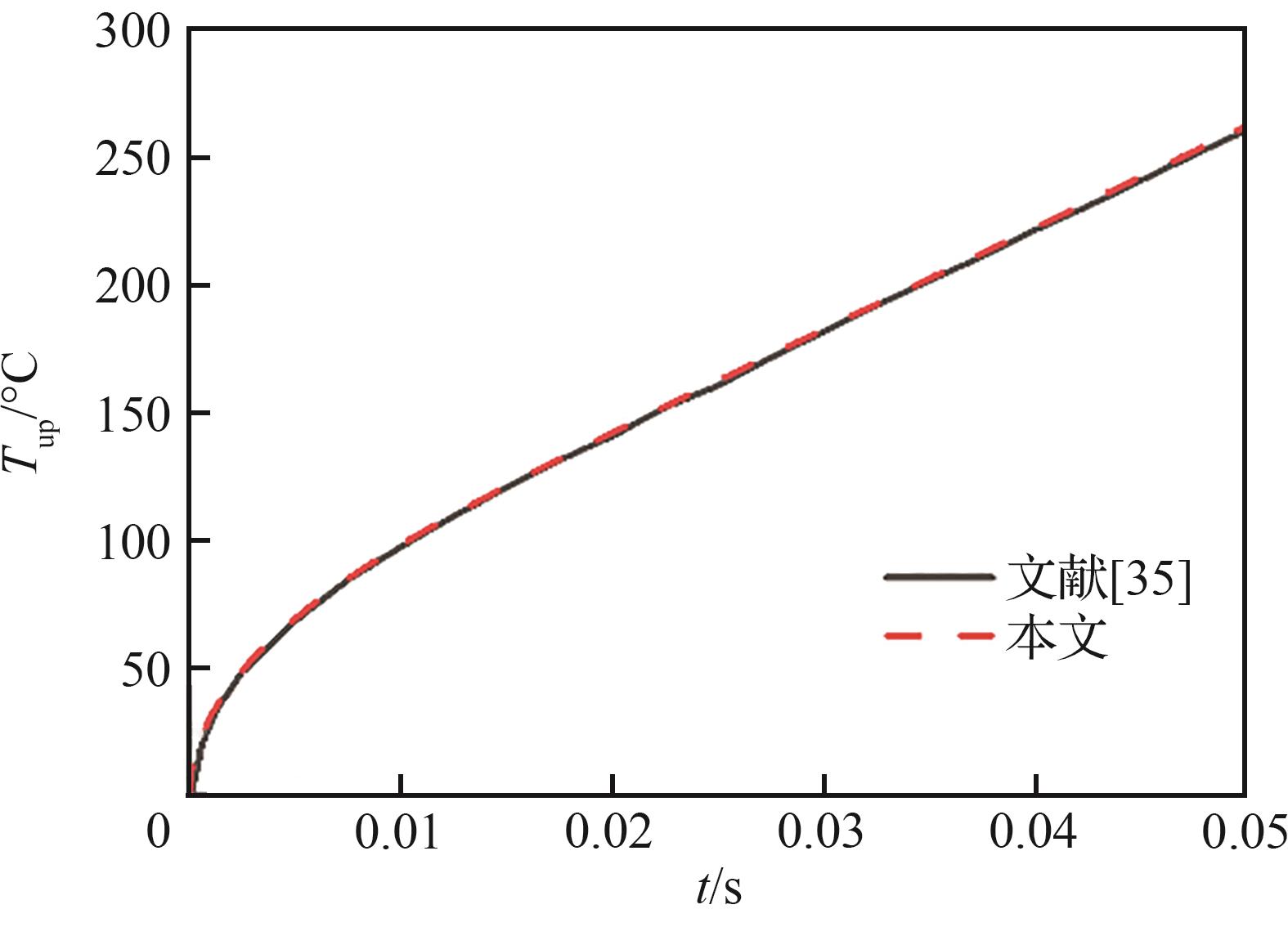
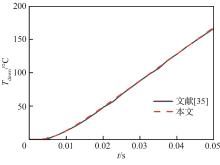
Fig.4
Temperature at the center point of the lower surface
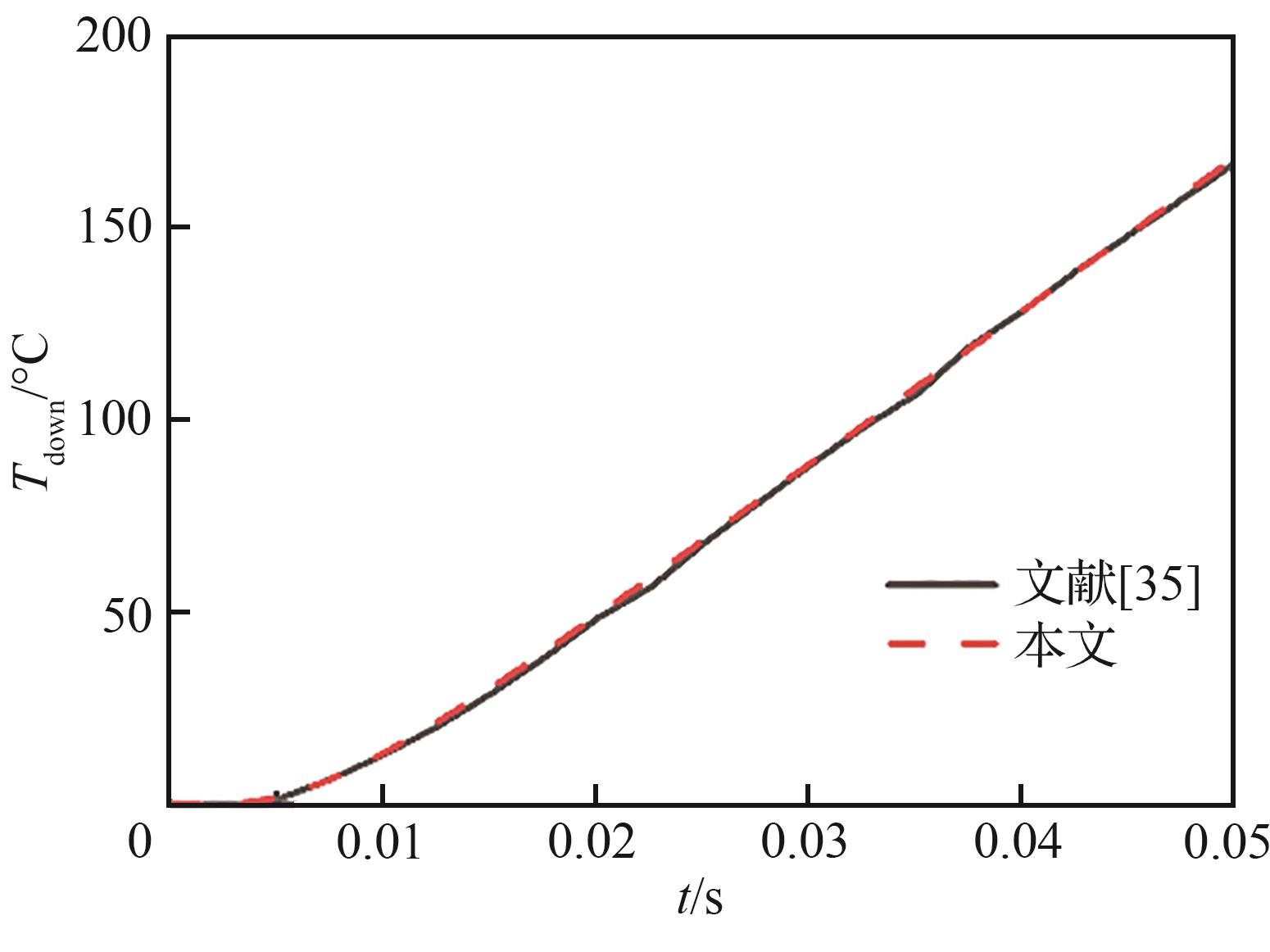
Fig.5
Displacement in z-direction from centroid
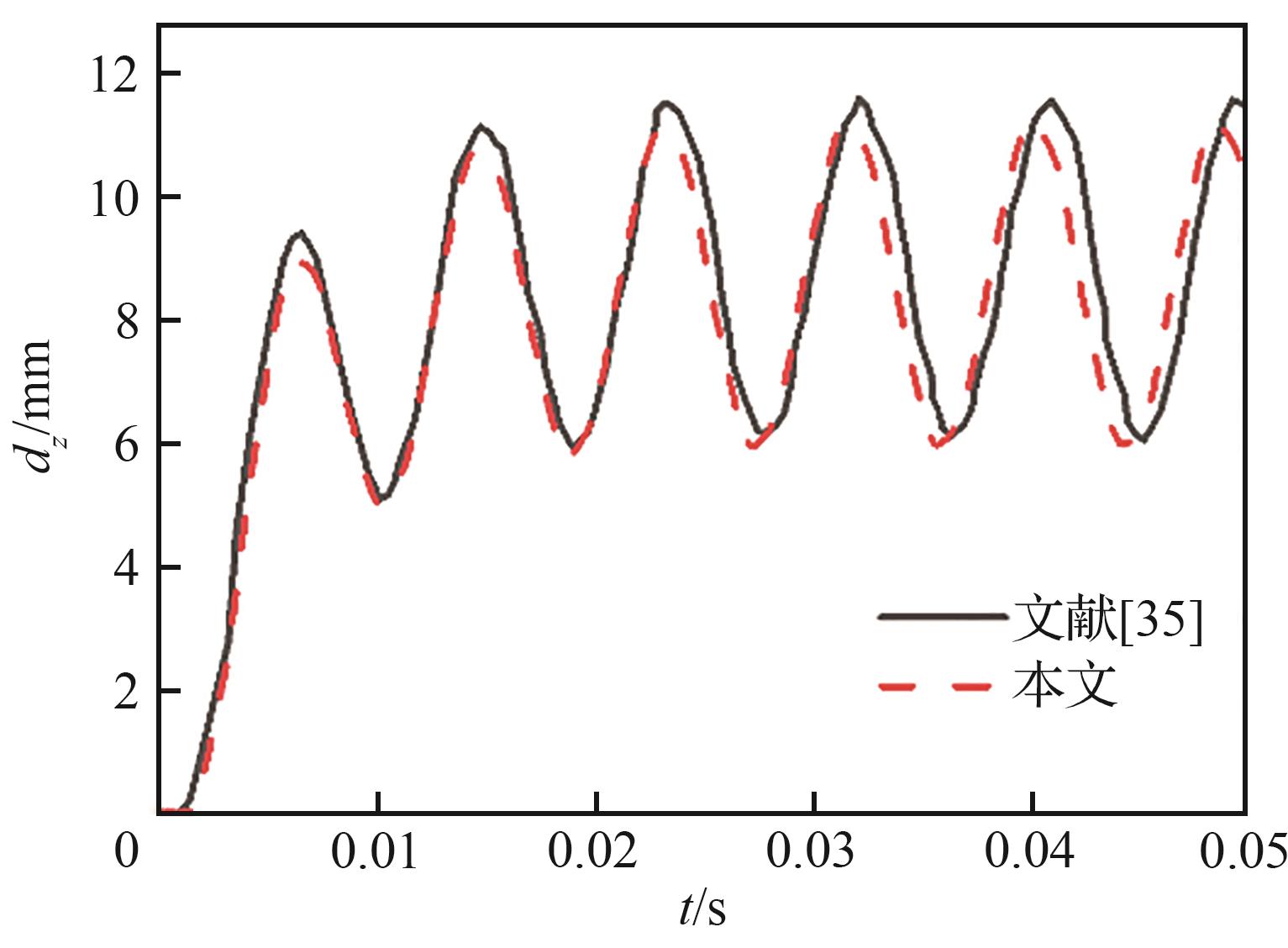
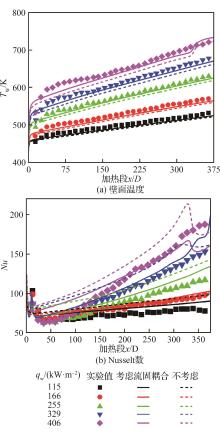
Fig.6
Validation of fluid-solid conjugate heat transfer
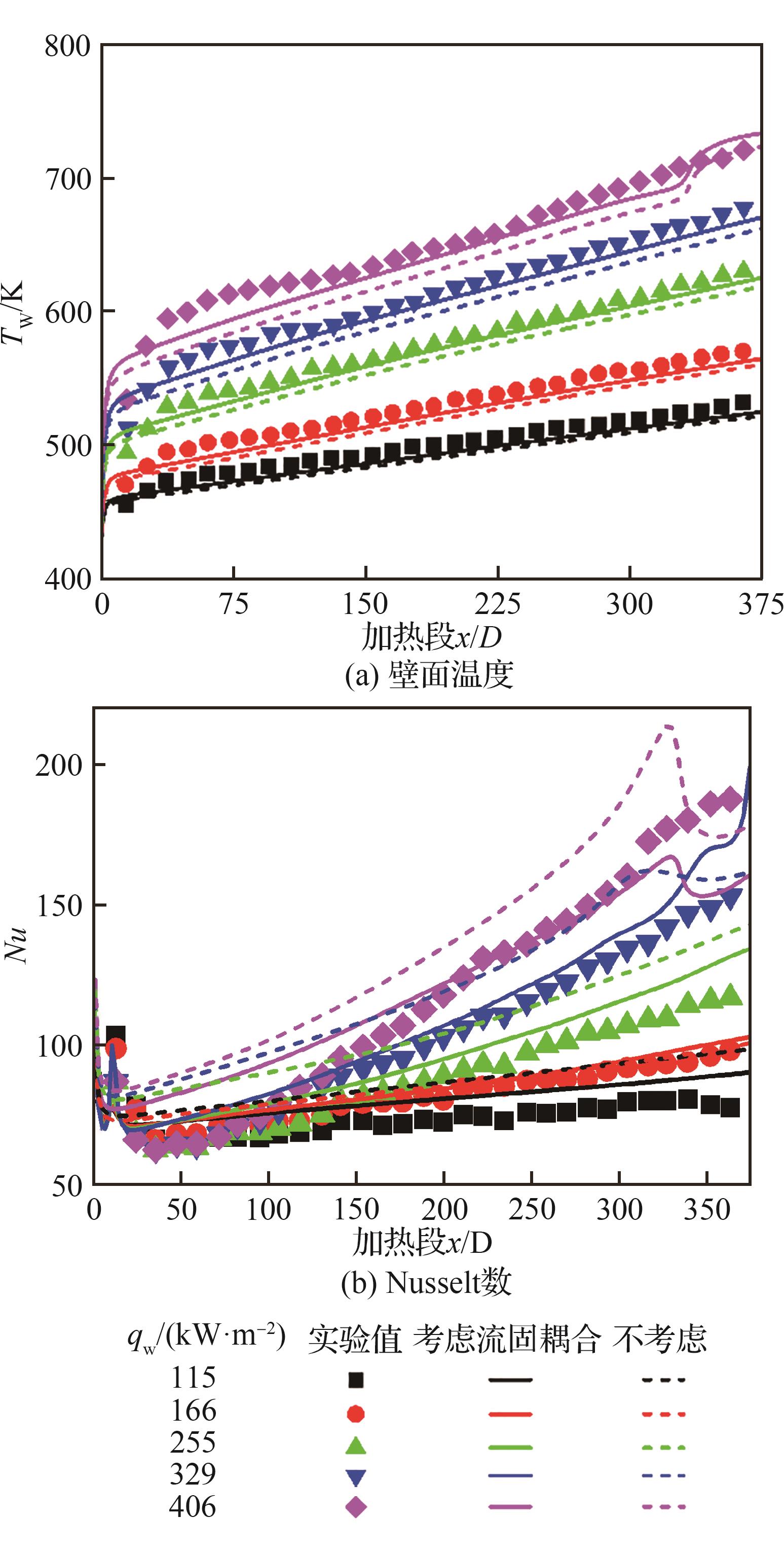
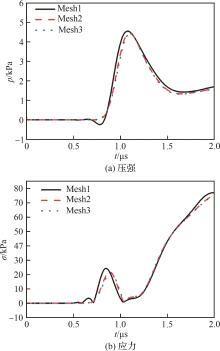
Fig.7
Grid independence analysis
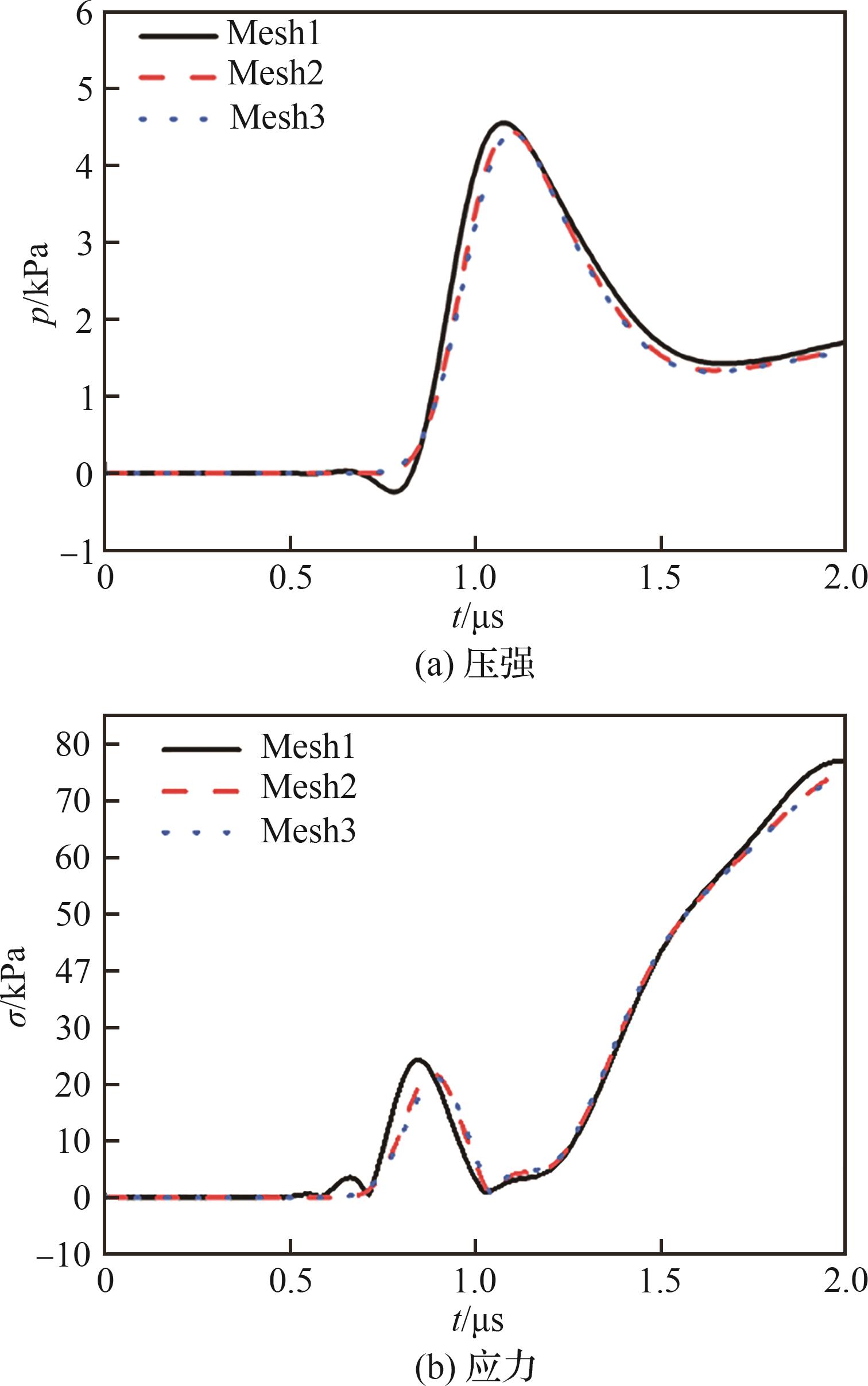
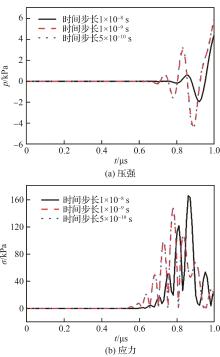
Fig.8
Time independence analysis
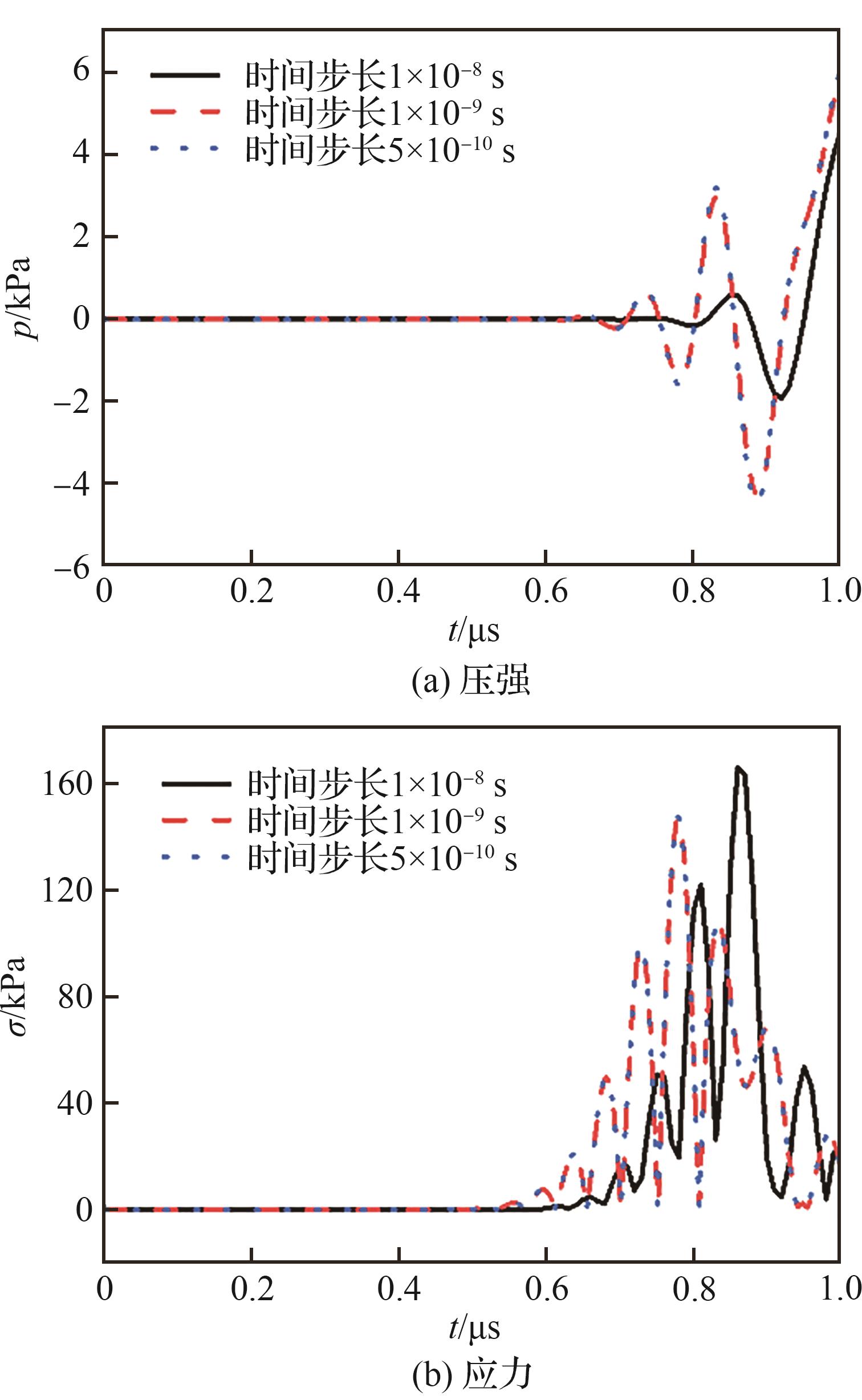
Fig.9
Propagation of thermoacoustic waves in solid zone
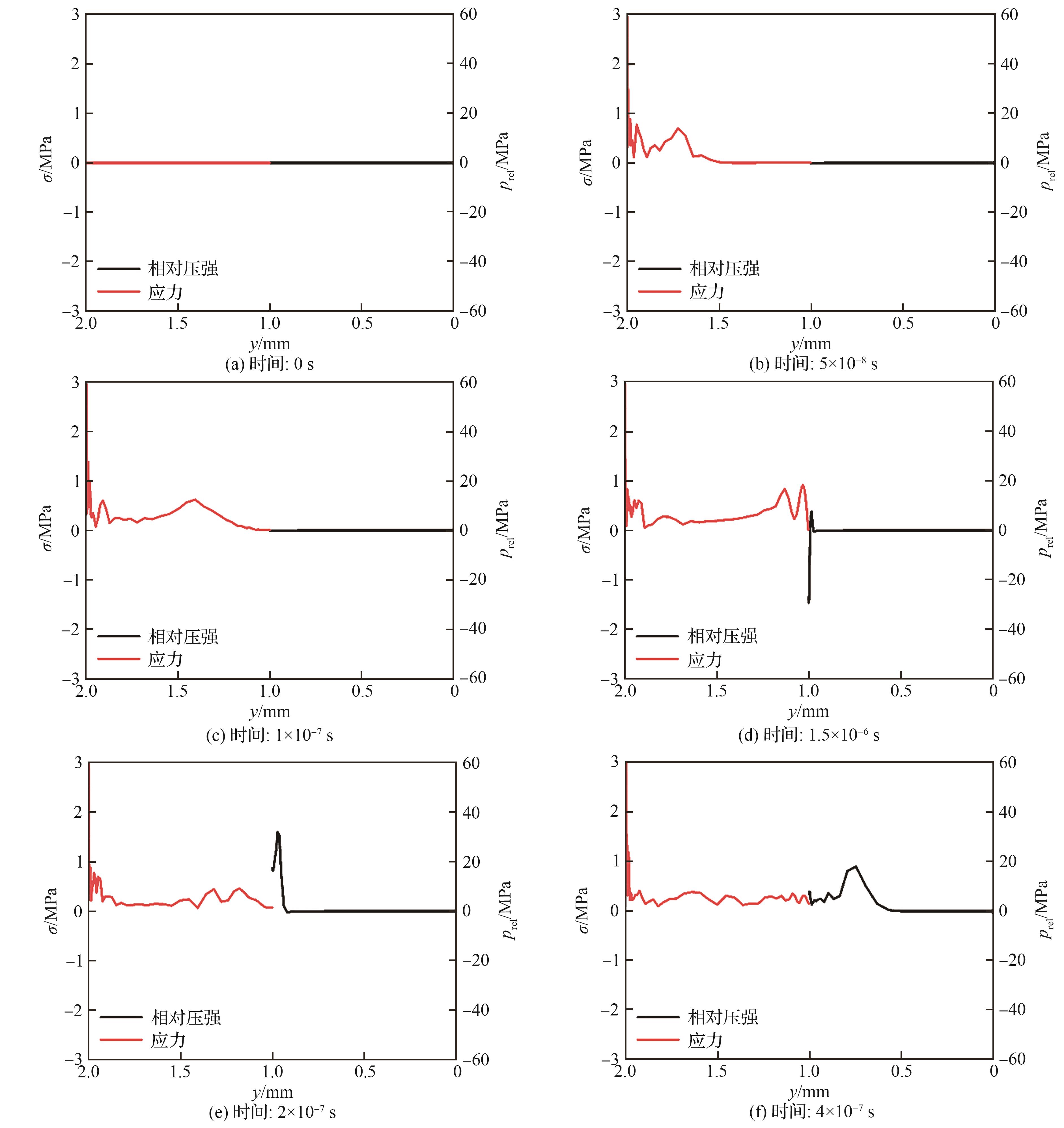
Table 3
Operating parameters
| 参数 | λs/(W·m-1·K-1) | α/(10-6 K-1) | E/GPa | ρ/(kg·m-3) |
|---|---|---|---|---|
| 数值 | 16 | 1 | 200 | 8 030 |
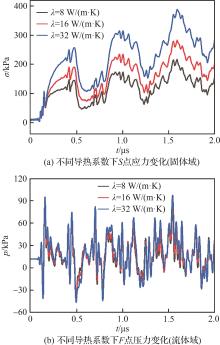
Fig.10
Transient response of thermoacoustic waveat fluid-solid interface with different thermalconductivities
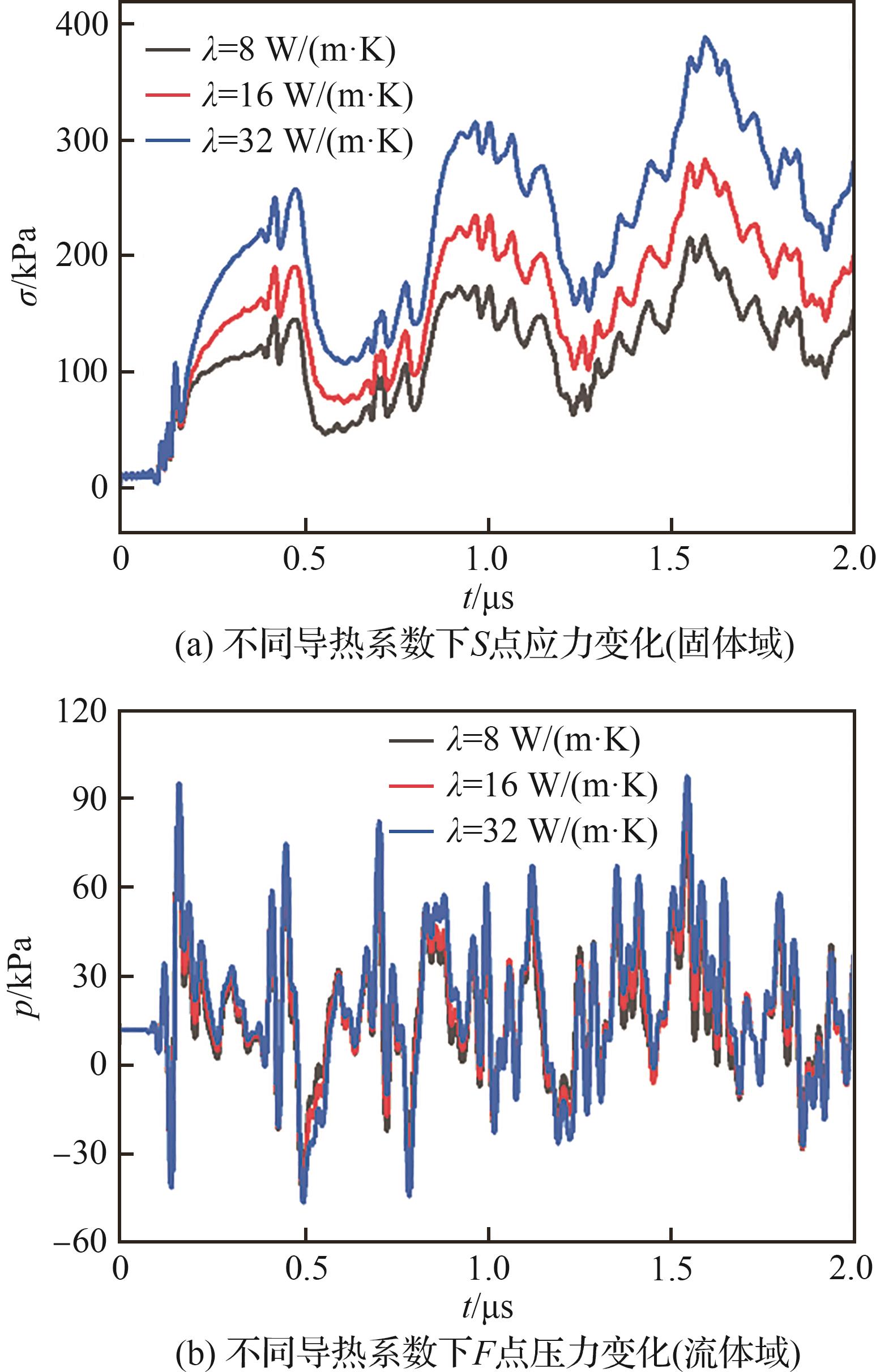
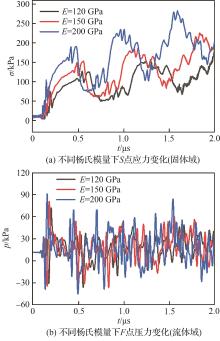
Fig.11
Transient response of thermoacoustic wave at fluid-solid interface with different Young’s moduli
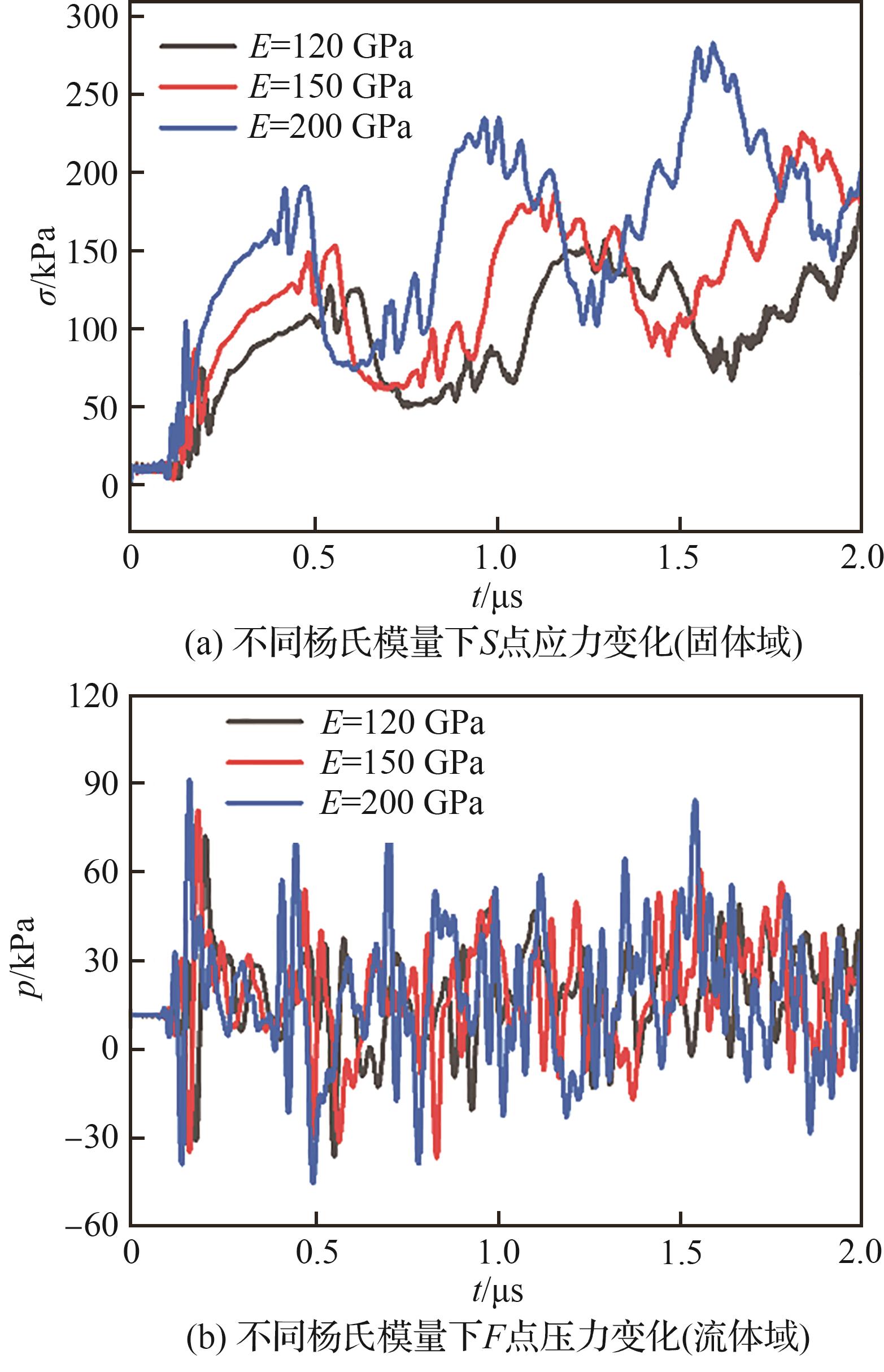
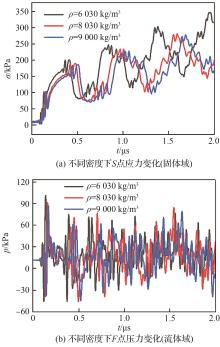
Fig.12
Transient response of thermoacoustic wave at the fluid-solid interface with different densities
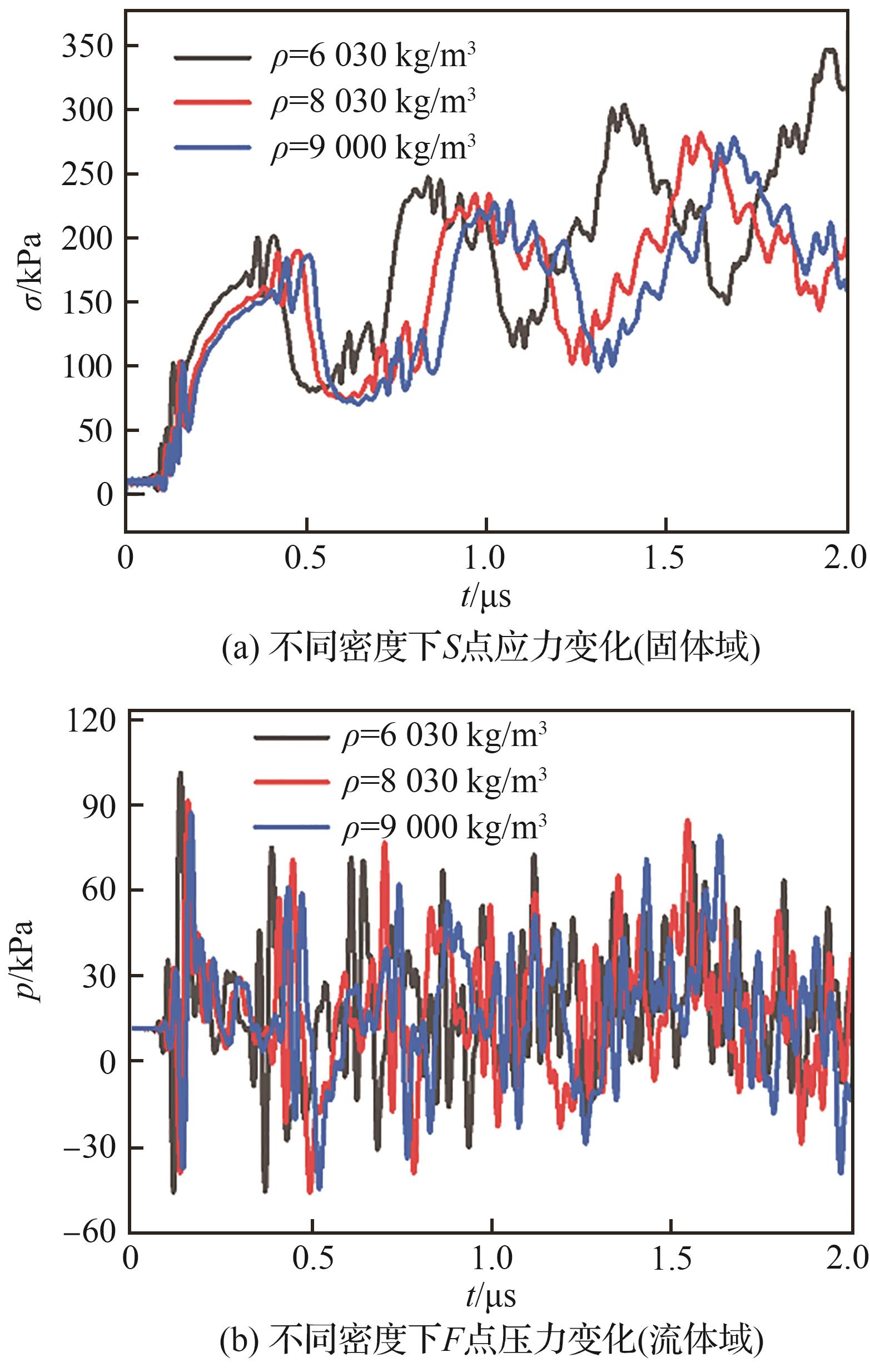
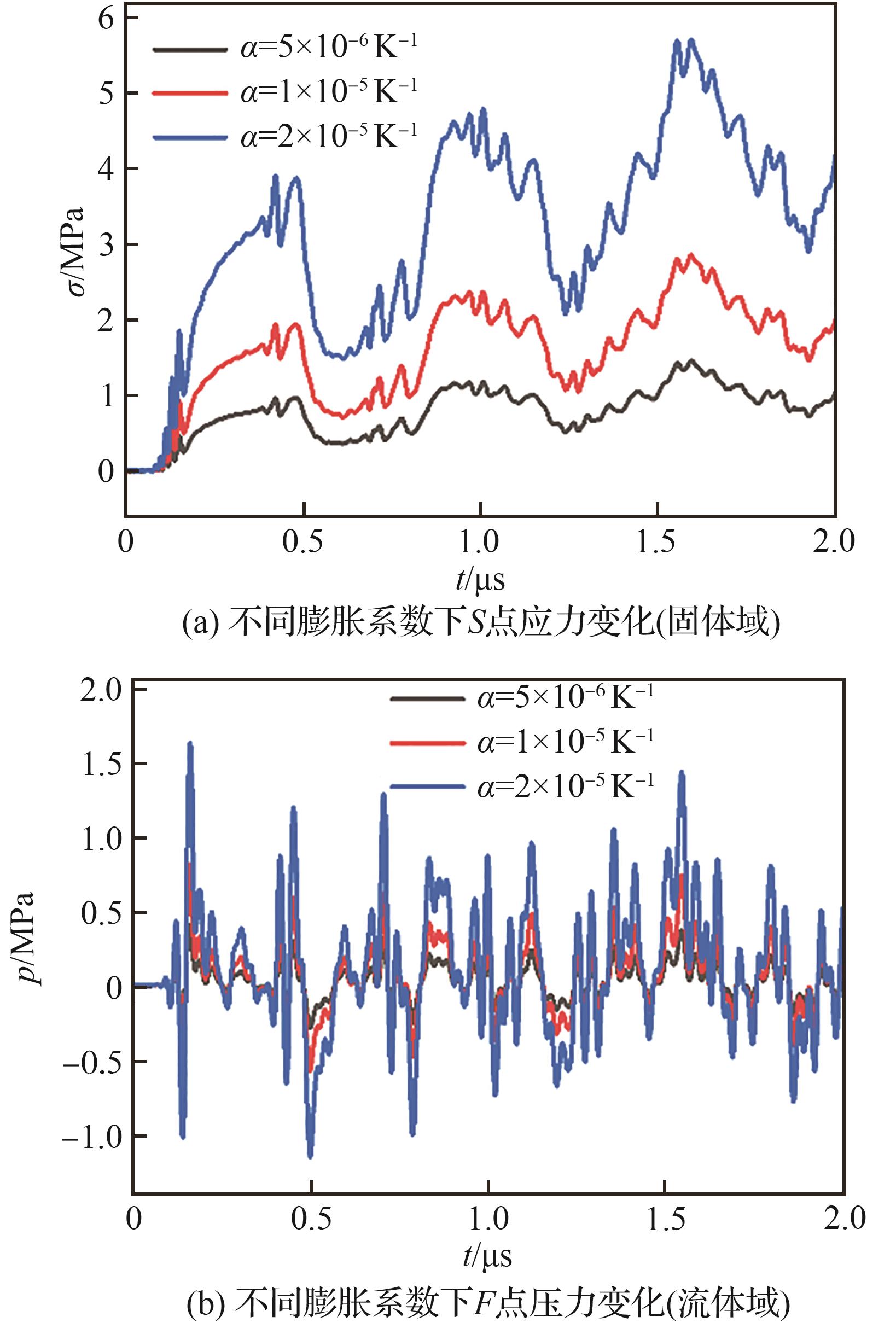
Fig.13
Transient response of thermoacoustic wave at fluid-solid interface with different thermal expansion coefficients
| 1 | 罗世彬, 庙智超, 宋佳文. 高超声速飞行器前缘主动冷却影响-因素[J]. 航空学报, 2022, 43(12): 627023. |
| LUO S B, MIAO Z C, SONG J W. Influencing factors of active cooling at leading edge of hypersonic vehicles[J]. Acta Aeronautica et Astronautica Sinica, 2022, 43(12): 627023 (in Chinese). | |
| 2 | ZHU Y H, PENG W, XU R N, et al. Review on active thermal protection and its heat transfer for airbreathing hypersonic vehicles[J]. Chinese Journal of Aeronautics, 2018, 31(10): 1929-1953. |
| 3 | PU H, LI S F, DONG M, et al. Numerical method for coupled thermal analysis of the regenerative cooling structure[J]. Journal of Thermophysics and Heat Transfer, 2018, 32(2): 326-336. |
| 4 | XIE W H, PENG Z J, MENG S H, et al. Thermal stress analysis of the FGLCS in hypersonic vehicles: Their application to fuel injection struts in scramjets[J]. Composites Part A: Applied Science and Manufacturing, 2017, 99: 157-165. |
| 5 | CHANDRASEKHAR C S, RAMANUJACHARI V K, REDDY K G. Experimental investigations of hydrocarbon fueled scramjet combustor by employing high temperature materials for the construction of fuel injection struts[J], International Journal of Science and Technology, 2012, 1(12): 671-678. |
| 6 | ZHE Z. Study on heat transfer and flow instability of supercritical water in vertical tube[J]. Atomic Energy Science and Technology, 2015, 49(11): 2011-2016. |
| 7 | THIEDE R G, RICCIUS J R, REESE S. Life prediction of rocket combustion-chamber-type thermomechanical fatigue panels[J]. Journal of Propulsion and Power, 2017, 33(6): 1529-1542. |
| 8 | YANG Z Q, BI Q C, LIU Z H, et al. Heat transfer to supercritical pressure hydrocarbons flowing in a horizontal short tube[J]. Experimental Thermal and Fluid Science, 2015, 61: 144-152. |
| 9 | HAO H T, SCALO C, SEN M, et al. Thermoacoustics of solids: a pathway to solid state engines and refrigerators[J]. Journal of Applied Physics, 2018, 123(2): 024903. |
| 10 | HAO H T, SCALO C, SEMPERLOTTI F. Traveling and standing thermoacoustic waves in solid media[J]. Journal of Sound and Vibration, 2019, 449: 30-42. |
| 11 | HAO H T, SCALO C, SEMPERLOTTI F. Axial-mode solid-state thermoacoustic instability: An analytical parametric study[J]. Journal of Sound and Vibration, 2020, 470: 115159. |
| 12 | HAO H T, SCALO C, SEMPERLOTTI F. On the use of negative thermal expansion engineered structures in flexural-mode solid-state thermoacoustics[J]. Journal of Sound and Vibration, 2022, 538: 117223. |
| 13 | GOPINATH N K, GOVINDARAJAN K V, MAHAPATRA D R. Fluid-thermo-structural response of actively cooled scramjet combustor in hypersonic accelerating-cruise flight[J]. International Journal of Heat and Mass Transfer, 2022, 194: 123060. |
| 14 | FERRAIUOLO M, PETRILLO W, RICCIO A. On the thermo-structural response of a composite closeout in a regeneratively cooled thrust chamber[J]. Aerospace Science and Technology, 2017, 71: 402-411. |
| 15 | EVRIM C, CHU X, SILBER F E, et al. Flow features and thermal stress evaluation in turbulent mixing flows[J]. International Journal of Heat and Mass Transfer, 2021, 178: 121605. |
| 16 | HOU G N, WANG J, LAYTON A. Numerical methods for fluid-structure interaction-a review[J]. Communications in Computational Physics, 2012, 12(2): 337-377. |
| 17 | MOSER F, JACOBS L J, QU J M. Modeling elastic wave propagation in waveguides with the finite element method[J]. NDT & E International, 1999, 32(4): 225-234. |
| 18 | ZONG Z Y, CHEN F B, YIN X Y, et al. Effect of stress on wave propagation in fluid-saturated porous thermoelastic media[J]. Surveys in Geophysics, 2023, 44(2): 425-462. |
| 19 | SAFARI-KAHNAKI A, HOSSEINI S M, TAHANI M. Thermal shock analysis and thermo-elastic stress waves in functionally graded thick hollow cylinders using analytical method[J]. International Journal of Mechanics and Materials in Design, 2011, 7(3): 167-184. |
| 20 | SONG J W, SUN B. Thermal-structural analysis of regeneratively-cooled thrust chamber wall in reusable LOX/Methane rocket engines[J]. Chinese Journal of Aeronautics, 2017, 30(3): 1043-1053. |
| 21 | LI Y, XIE G N, FU J H, et al. Transient flow and heat transfer in a horizontal rectangular channel considering thermal–fluid–structure interaction[J]. Journal of Energy Resources Technology, 2022, 144(11): 112107. |
| 22 | LI N, XU H. Fluid-thermal-structural characteristics of spiral square channel[J]. Journal of Thermal Science and Engineering Applications, 2021, 13(3): 031008. |
| 23 | GAO F, ZHANG Q, XIAO H Y, et al. Analysis of influence of structural parameters of regenerative cooling channel of scramjet[J]. Journal of Physics: Conference Series, 2020, 1634(1): 012159. |
| 24 | SU W Y, AN H, WANG M Y. Fluid–thermal–structure interaction of hypersonic inlets under different aspect ratios[J]. AIAA Journal, 2023, 61(9): 3722-3734. |
| 25 | LIU H Y, GAO X W, XU B B. An implicit free element method for simulation of compressible flow[J]. Computers & Fluids, 2019, 192: 104276. |
| 26 | JIANG W W, GAO X W. Analysis of thermo-electro-mechanical dynamic behavior of piezoelectric structures based on zonal Galerkin free element method[J]. European Journal of Mechanics A, 2023, 99: 104939. |
| 27 | 高效伟, 丁金兴, 刘华雩. 有限线法及其在流固域间耦合传热中的应用[J]. 物理学报, 2022, 71(19): 1-12. |
| GAO X W, DING J X, LIU H Y. Finite line method and its application in coupled heat transfer between fluid-solid domains[J]. Acta Physica Sinica, 2022, 71(19): 1-12 (in Chinese). | |
| 28 | ZHU Y M, GAO X W. Element differential method for computational acoustics in time domain[J]. International Journal of Computational Methods, 2023, 20(1): 2250031. |
| 29 | HUANG S Z, RUAN B, MENG H, et al. Boundary effects on flow oscillations in transient heat transfer of n-decane at supercritical pressure[J]. International Journal of Heat and Mass Transfer, 2018, 123: 821-825. |
| 30 | RUAN B, HUANG S Z, MENG H, et al. Flow dynamics in transient heat transfer of n-decane at supercritical pressure[J]. International Journal of Heat and Mass Transfer, 2017, 115: 206-215. |
| 31 | RUAN B, HUANG S Z, MENG H, et al. Transient responses of turbulent heat transfer of cryogenic methane at supercritical pressures[J]. International Journal of Heat and Mass Transfer, 2017, 109: 326-335. |
| 32 | ANSYS, Inc. Ansys® Fluent, Release 2021 R2, help system, theory guide[M]. Canonsburg:ANSYS, Inc., 2021. |
| 33 | 李家齐, 阮波, 高效伟. 超临界正癸烷同轴剪切喷注热声振荡数值模拟[J]. 航空学报, 2020, 41(11): 123708. |
| LI J Q, RUAN B, GAO X W. Numerical simulation of thermoacoustic oscillations during n-decane shear-coaxial injection processes at supercritical pressure[J]. Acta Aeronautica et Astronautica Sinica, 2020, 41(11): 123708 (in Chinese). | |
| 34 | 王亚洲, 华益新, 孟华. 超临界压力下低温甲烷的湍流传热数值研究[J]. 推进技术, 2010, 31(5): 606-611, 622. |
| WANG Y Z, HUA Y X, MENG H. Numerical investigation of turbulent heat transfer of cryogenic-propellant methane under supercritical pressures[J]. Journal of Propulsion Technology, 2010, 31(5): 606-611, 622 (in Chinese). | |
| 35 | ALIPOUR S M, KIANI Y, ESLAMI M R. Rapid heating of FGM rectangular plates[J]. Acta Mechanica, 2016, 227(2): 421-436. |
| 36 | 刘波. 超临界压力流体在圆管内对流换热及热裂解研究[D]. 北京: 清华大学, 2013. |
| LIU B. Study on convective heat transfer and thermal cracking of supercritical pressure fluid in circular tube[D].Beijing: Tsinghua University, 2013 (in Chinese). | |
| 37 | LIU B, ZHU Y H, YAN J J, et al. Experimental investigation of convection heat transfer of n-decane at supercritical pressures in small vertical tubes[J]. International Journal of Heat and Mass Transfer, 2015, 91: 734-746. |
| 38 | 杜功焕, 朱哲民, 龚秀芬. 声学基础[M]. 3版. 南京: 南京大学出版社, 2012. |
| DU G H, ZHU Z M, GONG X F. Acoustics foundation[M]. 3rd ed. Nanjing: Nanjing University Press, 2012 (in Chinese). |
| [1] | He JIA, Wei JIANG, Wenlong BAO, Xin XU, Wei RONG, Li YU. Transonic/supersonic aerodynamic characteristics and fluid-structure interaction mechanism of flexible parachutes for planetary exploration [J]. Acta Aeronautica et Astronautica Sinica, 2025, 46(1): 630369-630369. |
| [2] | Tianqi ZOU, Xiaopeng XUE, Dangjun ZHAO, Degui YANG, Buge LIANG. Influence of air permeability on inflation process and aerodynamic characteristics of disksail parachutes [J]. Acta Aeronautica et Astronautica Sinica, 2025, 46(1): 630373-630373. |
| [3] | Yurou DAI, Jian LI, Xiaopeng XUE, Wei RONG. Aerodynamic characteristics of supersonic disk-gap-band parachute with different reefing ways [J]. Acta Aeronautica et Astronautica Sinica, 2024, 45(7): 128811-128811. |
| [4] | Xiaoyong LIU, Mingfu WANG, Jianwen LIU, Xin REN, Xuan ZHANG. Review and prospect of research on scramjet [J]. Acta Aeronautica et Astronautica Sinica, 2024, 45(5): 529878-529878. |
| [5] | Wenlong BAO, He JIA, Xiaopeng XUE, Xuejiao HUANG, Shuyi GAO, Wei RONG, Qi WANG, Zhuangzhi WU. Influence of ‘windows’ structure on inflation process of ringsail parachute [J]. ACTA AERONAUTICAET ASTRONAUTICA SINICA, 2023, 44(5): 226936-226936. |
| [6] | Chang LIU, Yunlong ZHANG, Zhijiang YAN, Lei ZHAO, Chen JI. Wind tunnel test of fluctuating pressure on aeroelastic scaled model of hammerhead launch vehicle [J]. Acta Aeronautica et Astronautica Sinica, 2023, 44(23): 128384-128384. |
| [7] | Jianqiao LUO, Chunlei XIE, Zehua JIN, Junhui MENG. Water-skipping fluid-structure interaction simulation and slippable area study of trans-medium vehicle [J]. Acta Aeronautica et Astronautica Sinica, 2023, 44(21): 528632-528632. |
| [8] | Qiulin LI, Li ZHOU, Peng SUN, Jingwei SHI, Zhanxue WANG. Influence mechanism of aspect ratio on fluid-structure interaction characteristics of serpentine nozzle [J]. Acta Aeronautica et Astronautica Sinica, 2023, 44(14): 628204-628204. |
| [9] | LI Jiaqi, RUAN Bo, GAO Xiaowei. Numerical simulation of thermoacoustic oscillations during n-decane shear-coaxial injection processes at supercritical pressure [J]. ACTA AERONAUTICAET ASTRONAUTICA SINICA, 2020, 41(11): 123708-123708. |
| [10] | YANG Shanglin, CHEN Xiaofeng, DU Faxi, LEI Zhongqi, YAO Xiaohu. Dynamic analysis of fluid-structure interaction on aircraft fuel tank sloshing during maneuver [J]. ACTA AERONAUTICAET ASTRONAUTICA SINICA, 2019, 40(3): 222471-222471. |
| [11] | QIU Zihua, XU Min, ZHANG Bin, LIANG Chunlei. A parallel high-order method for simulating vortex-induced vibrations [J]. ACTA AERONAUTICAET ASTRONAUTICA SINICA, 2019, 40(3): 122483-122483. |
| [12] | HUANG Shizhang, RUAN Bo, GAO Xiaowei, LIU Huayu. A fast algorithm for simulating hydrocarbon fuel heat transfer with endothermic pyrolysis under supercritical pressures [J]. ACTA AERONAUTICAET ASTRONAUTICA SINICA, 2018, 39(4): 121650-121650. |
| [13] | ZHUANG Shenglun, HUANG Wenxin, BU Feifei, SU Ning. Short circuit transient analysis of dual stator-winding induction generator based on aircraft variable frequency AC generating system [J]. ACTA AERONAUTICAET ASTRONAUTICA SINICA, 2017, 38(8): 320929-320929. |
| [14] | HUANG Shizhang, RUAN Bo, GAO Xiaowei. Numerical investigation of heat transfer enhancement of cryogenic-propellant methane in corrugated tubes at supercritical pressures [J]. ACTA AERONAUTICAET ASTRONAUTICA SINICA, 2017, 38(5): 120515-120515. |
| [15] | LI Hongrui, XU Xiaoxiao, LIU Chao, LIU Xinxin. Flow direction effect on heat transfer of supercritical CO2 in helically coiled tube [J]. ACTA AERONAUTICAET ASTRONAUTICA SINICA, 2016, 37(7): 2123-2131. |
| Viewed | ||||||
|
Full text |
|
|||||
|
Abstract |
|
|||||
Address: No.238, Baiyan Buiding, Beisihuan Zhonglu Road, Haidian District, Beijing, China
Postal code : 100083
E-mail:hkxb@buaa.edu.cn
Total visits: 6658907 Today visits: 1341All copyright © editorial office of Chinese Journal of Aeronautics
All copyright © editorial office of Chinese Journal of Aeronautics
Total visits: 6658907 Today visits: 1341

 CJA
CJA
