Acta Aeronautica et Astronautica Sinica ›› 2025, Vol. 46 ›› Issue (19): 531273.doi: 10.7527/S1000-6893.2024.31273
• Special Issue: Aircraft Digital Twin Technology • Previous Articles Next Articles
Junqi LEI1, Yuehua CHENG1( ), Bin JIANG1, Cheng XU2, Guili XU1, Tianyu SUN1
Received:2024-09-27
Revised:2024-10-21
Accepted:2024-12-05
Online:2024-12-10
Published:2024-12-10
Contact:
Yuehua CHENG
E-mail:chengyuehua@nuaa.edu.cn
Supported by:CLC Number:
Junqi LEI, Yuehua CHENG, Bin JIANG, Cheng XU, Guili XU, Tianyu SUN. Digital-twin’s modelling and dynamic adjustment mechanism of rudder-loop-system under fault conditions[J]. Acta Aeronautica et Astronautica Sinica, 2025, 46(19): 531273.
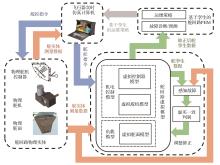
Fig.1
Digital twin framework of rudder loop system
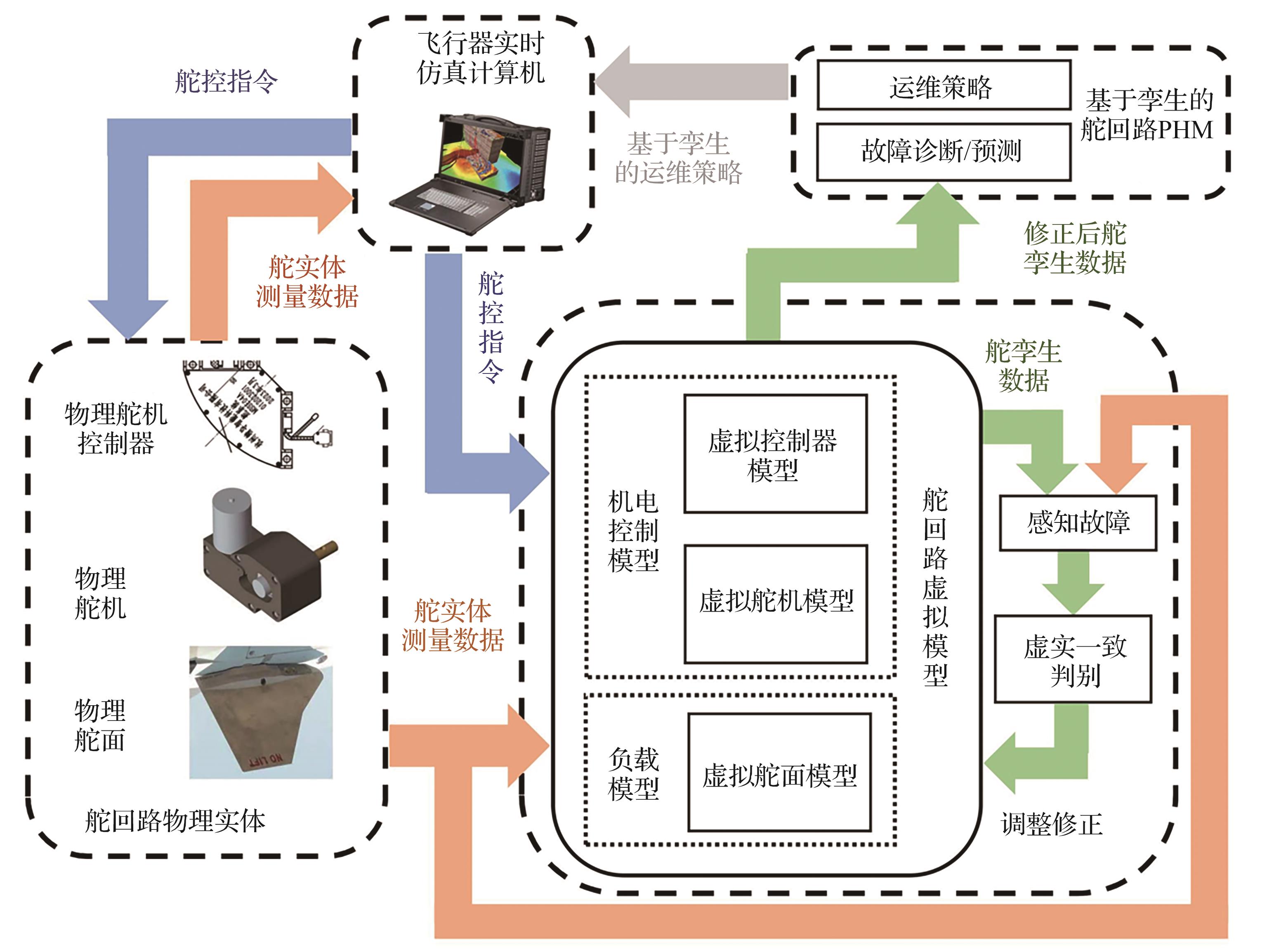
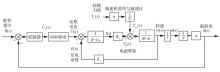
Fig.2
Electrical and control model of rudder loop in closed-loop control system
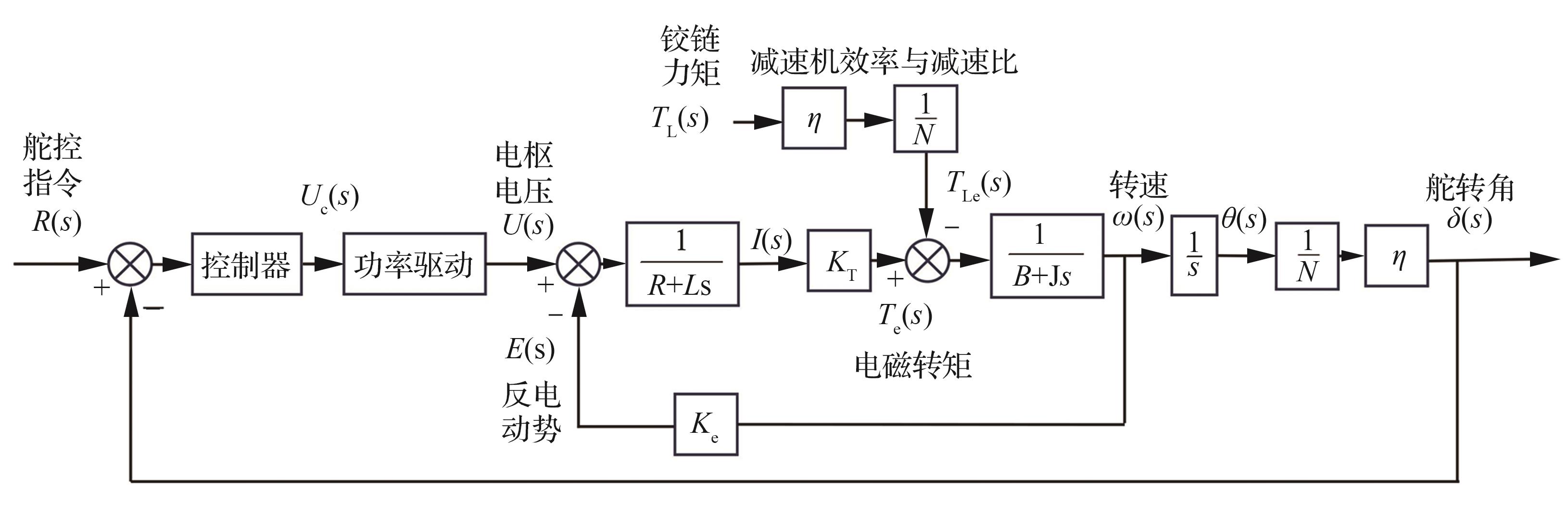
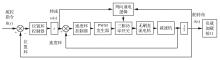
Fig.3
Principle diagram of electromechanical and control model of rudder loop system based on AMESim
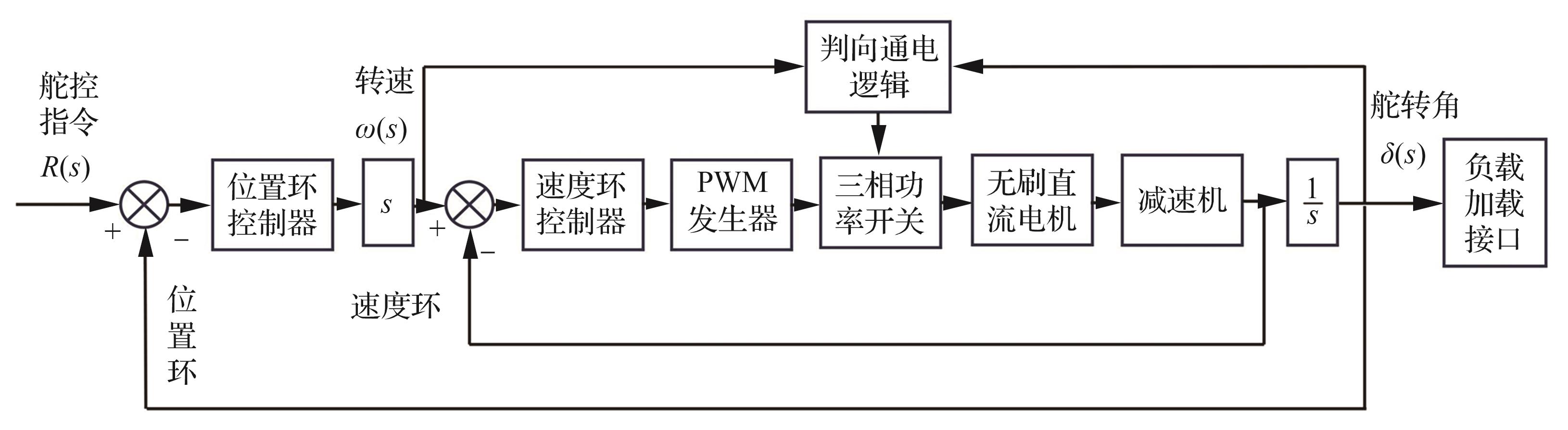
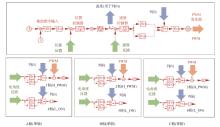
Fig.4
Control closed-loop and inverter direction determination logic model based on AMESim
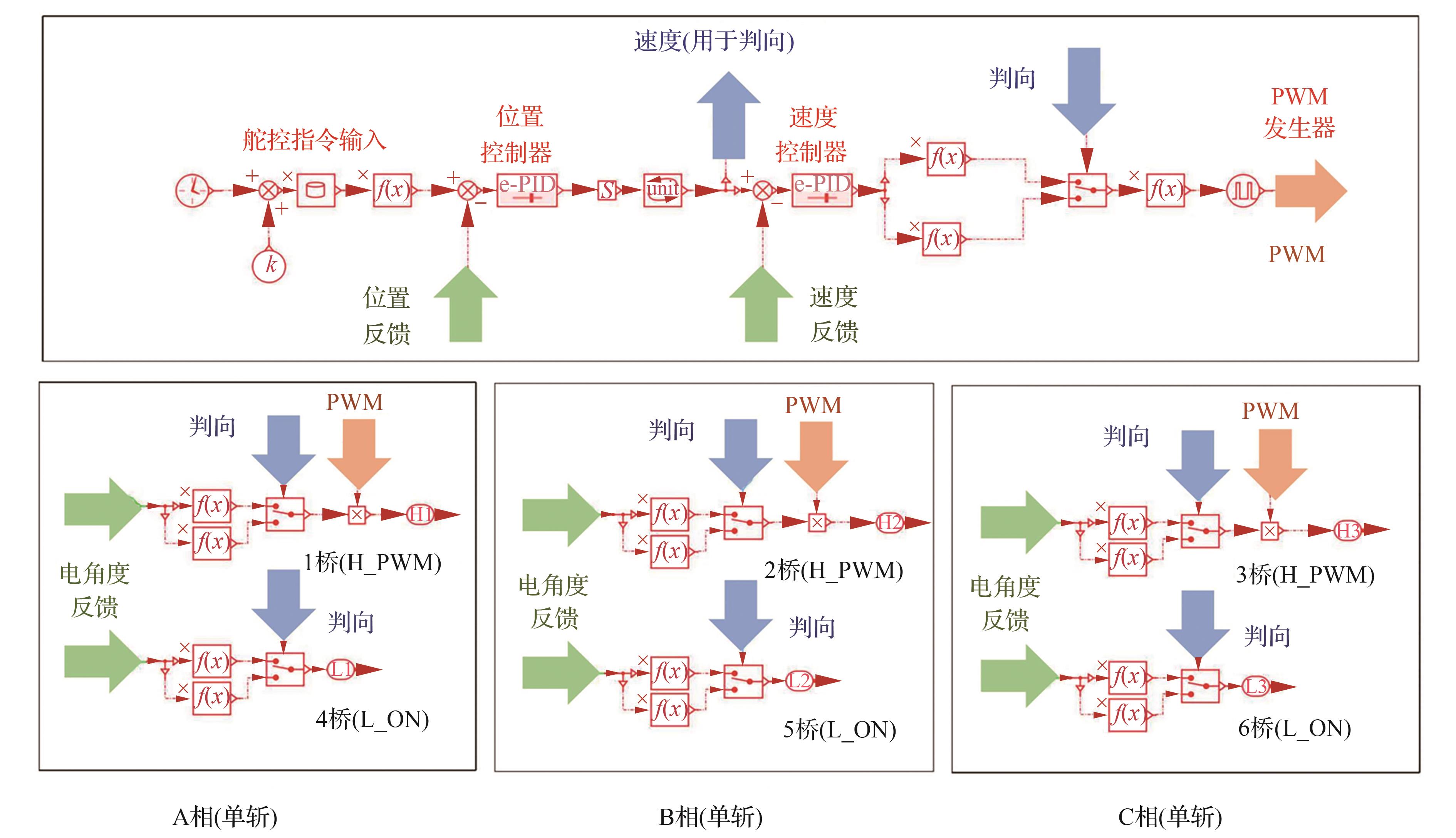

Table 1
Power-driver-circuit’s 3-phase on-off logic
| 角度/(°) | 正转(顺时针) | 反转(逆时针) | ||
|---|---|---|---|---|
| 导通相 | 导通桥 | 导通相 | 导通桥 | |
| 0~60 | A-C | 1-6 | C-A | 3-4 |
| 60~120 | B-C | 2-6 | C-B | 3-5 |
| 120~180 | B-A | 2-4 | A-B | 1-5 |
| 180~240 | C-A | 3-4 | A-C | 1-6 |
| 240~300 | C-B | 3-5 | B-C | 2-6 |
| 300~360 | A-B | 1-5 | B-A | 2-4 |
Fig.5
Model of power switch and brushless DC motor based on AMESim
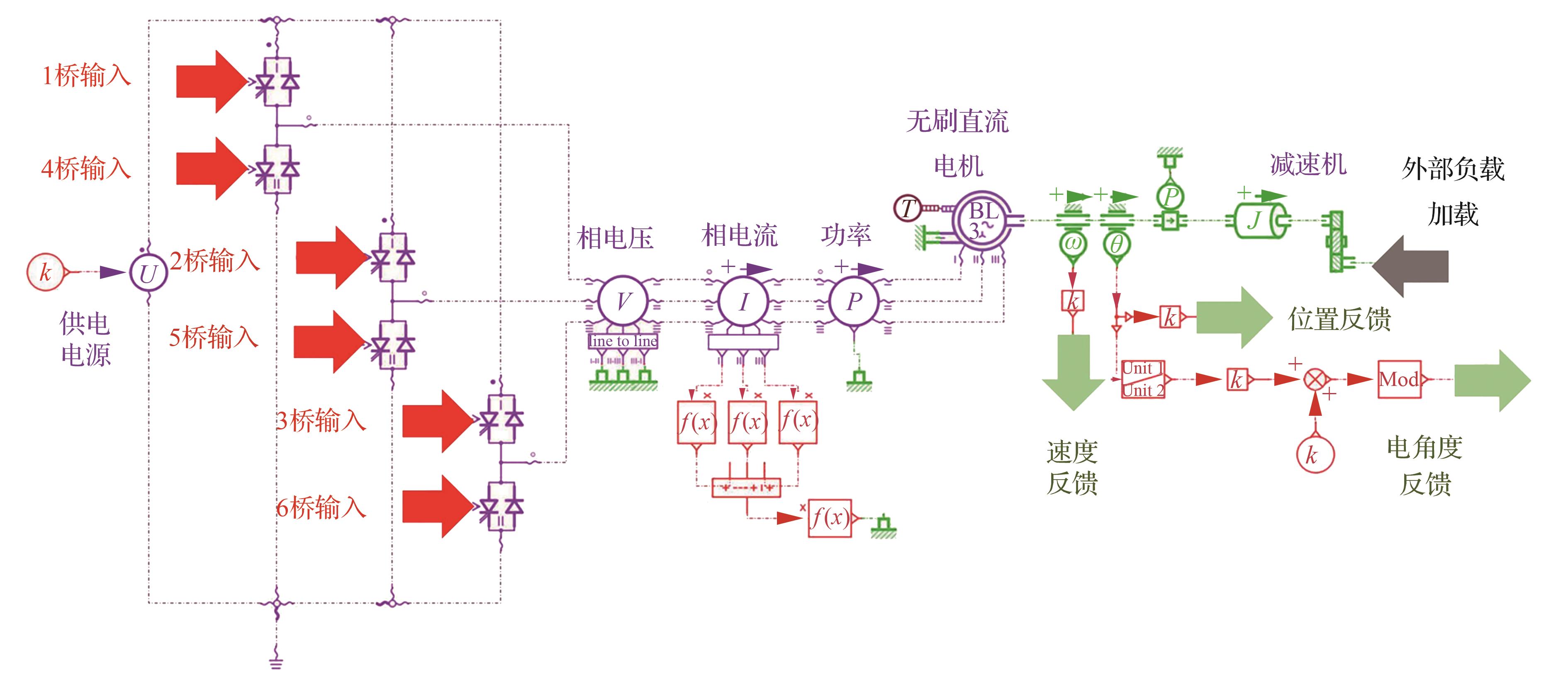
Fig.6
Illustration of vehicle’s X-rudder layout
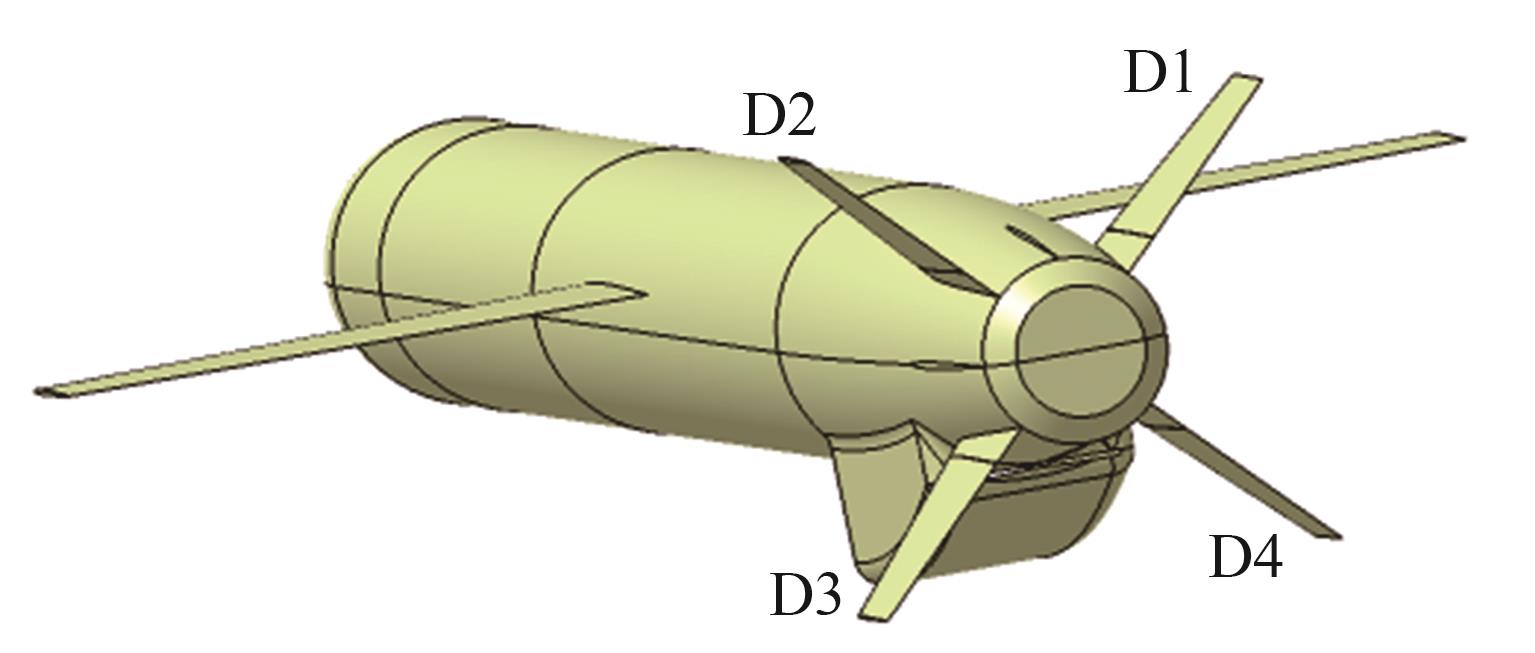
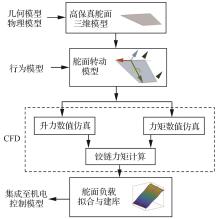
Fig.7
Flowchart of hinge moment modelling process
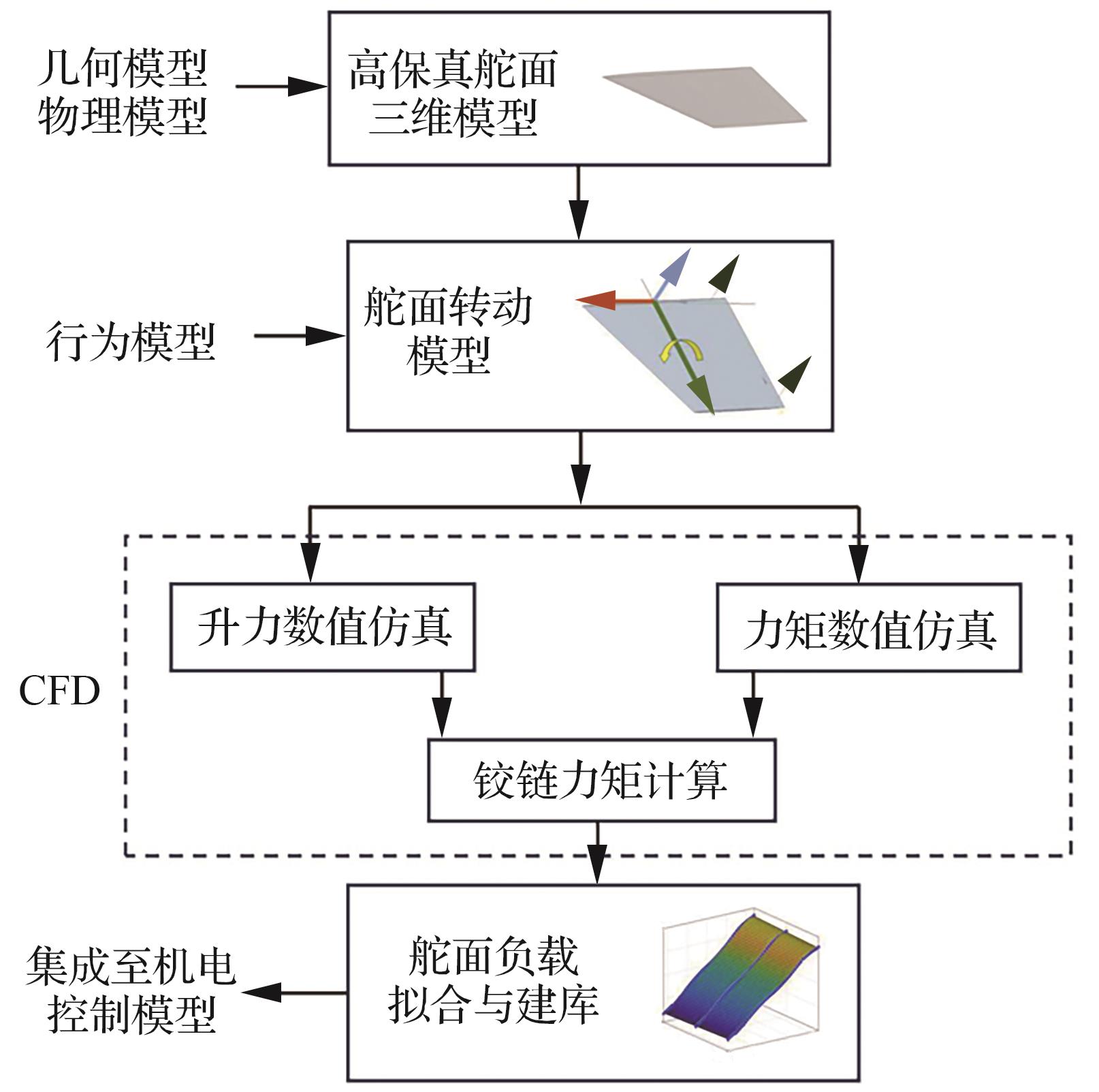
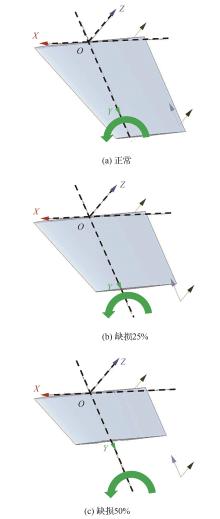
Fig.8
Illustration of rudder defect model and rotation model
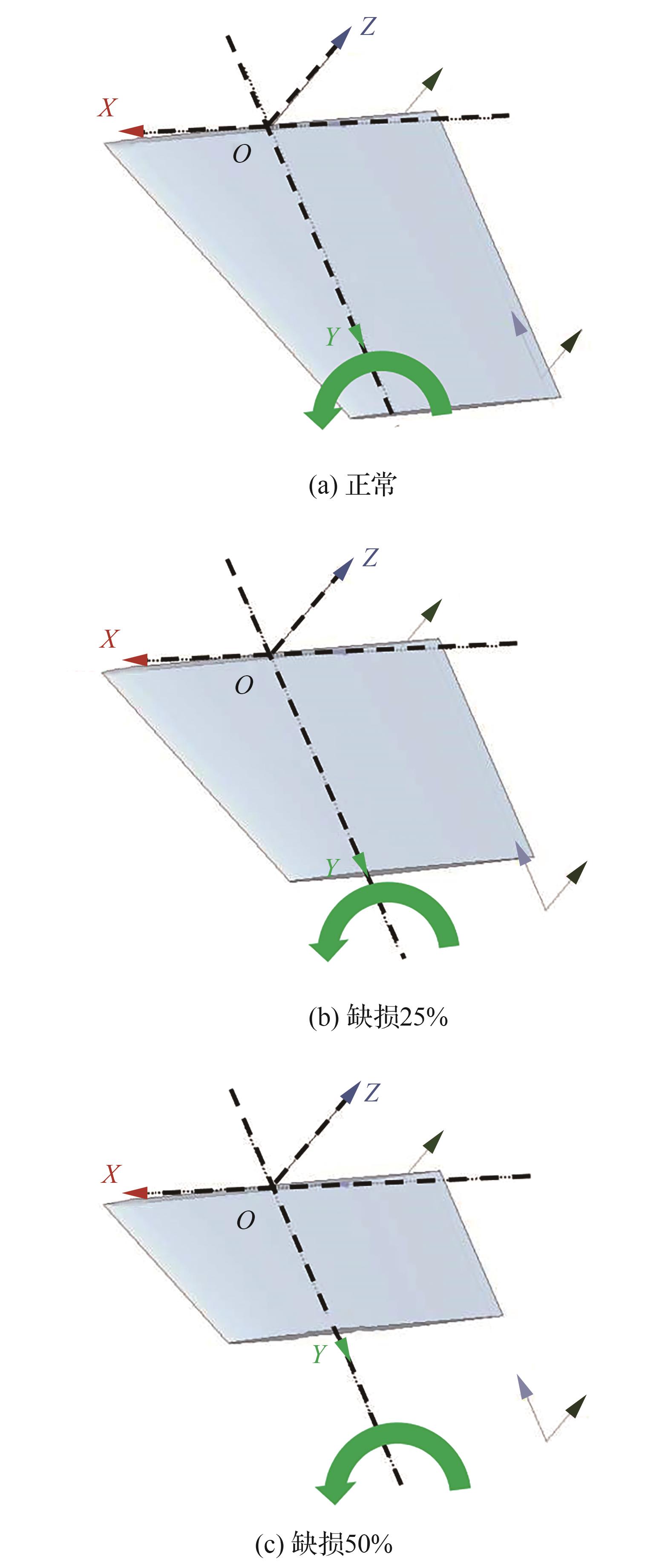
Table 2
Boundary conditions and values for simulations
| 取值类型 | 空速/(m·s-1) | 攻角/(°) | 侧滑角/(°) |
|---|---|---|---|
| 上限 | 245 | 5 | 2.2 |
| 中间值 | 240 | 2.5 | 0.7 |
| 下限 | 235 | 0 | -0.8 |
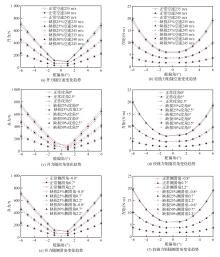
Fig.9
Illustration of lift and hinge moment trends
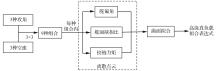
Fig.10
Logic diagram of rudder dynamic moment fitting and modelling
Table 3
Fifth-order polynomial fit coefficients
| 项 | 项系数 | 项 | 项系数 | 项 | 项系数 |
|---|---|---|---|---|---|
| a | 5.664 7 | f·y2 | 0.312 2 | k·x·y3 | 0 |
| b·x | -0.095 3 | g·x2·y | 0 | l·y4 | 0.001 9 |
| c·y | -0.003 5 | h·y2·x | -0.008 5 | m·x2·y3 | 0 |
| d·x2 | 0.000 3 | i·y3 | -0.001 4 | n·x·y4 | 0 |
| e·x·y | 0.000 4 | j·x2·y2 | 0.000 1 | p·y5 | 0.000 1 |
Fig.11
Results of dynamic moment fitting
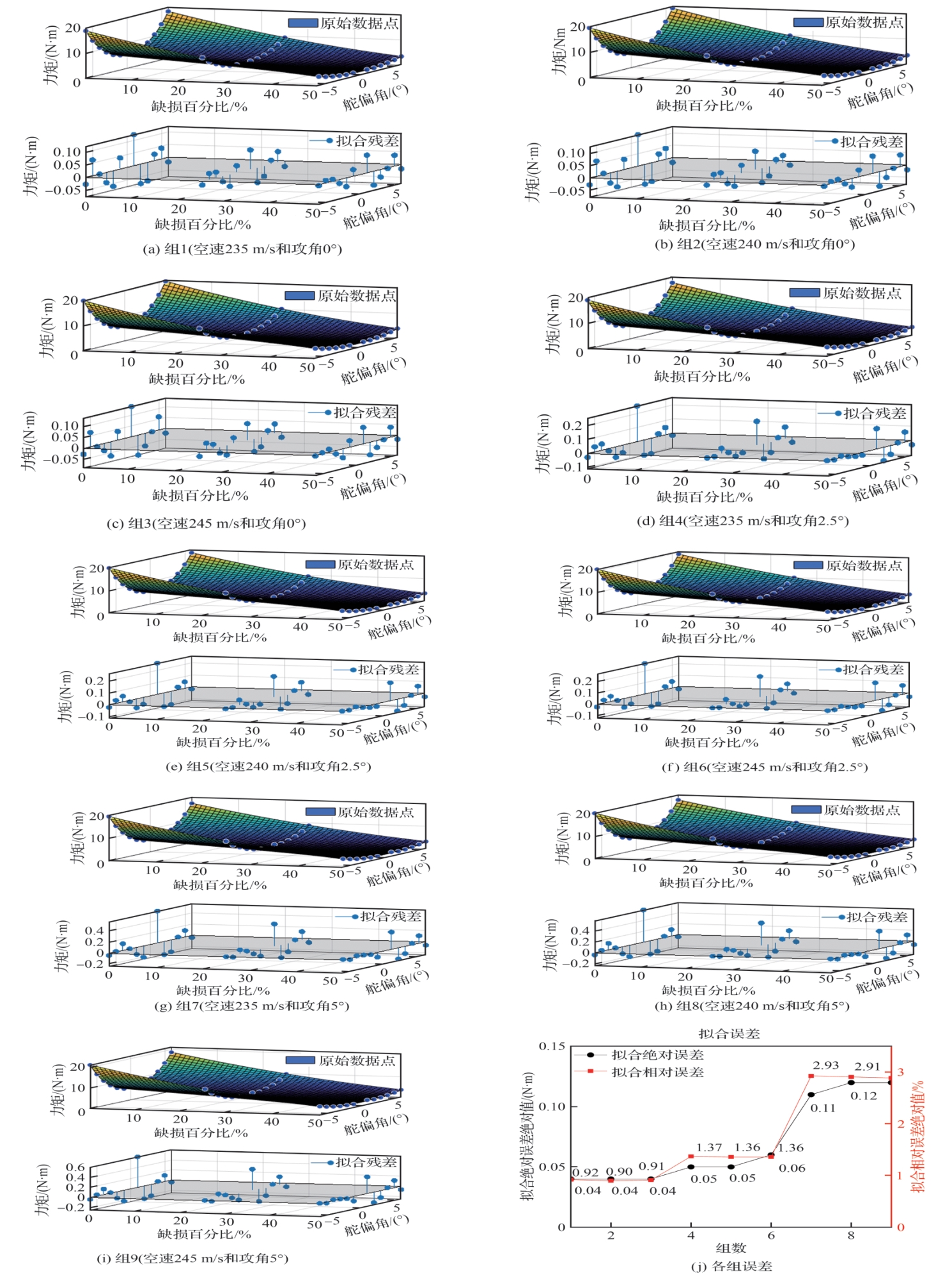
Fig.12
Framework diagram of virtual-physical consistency perception and twin dynamic adjustment mechanism
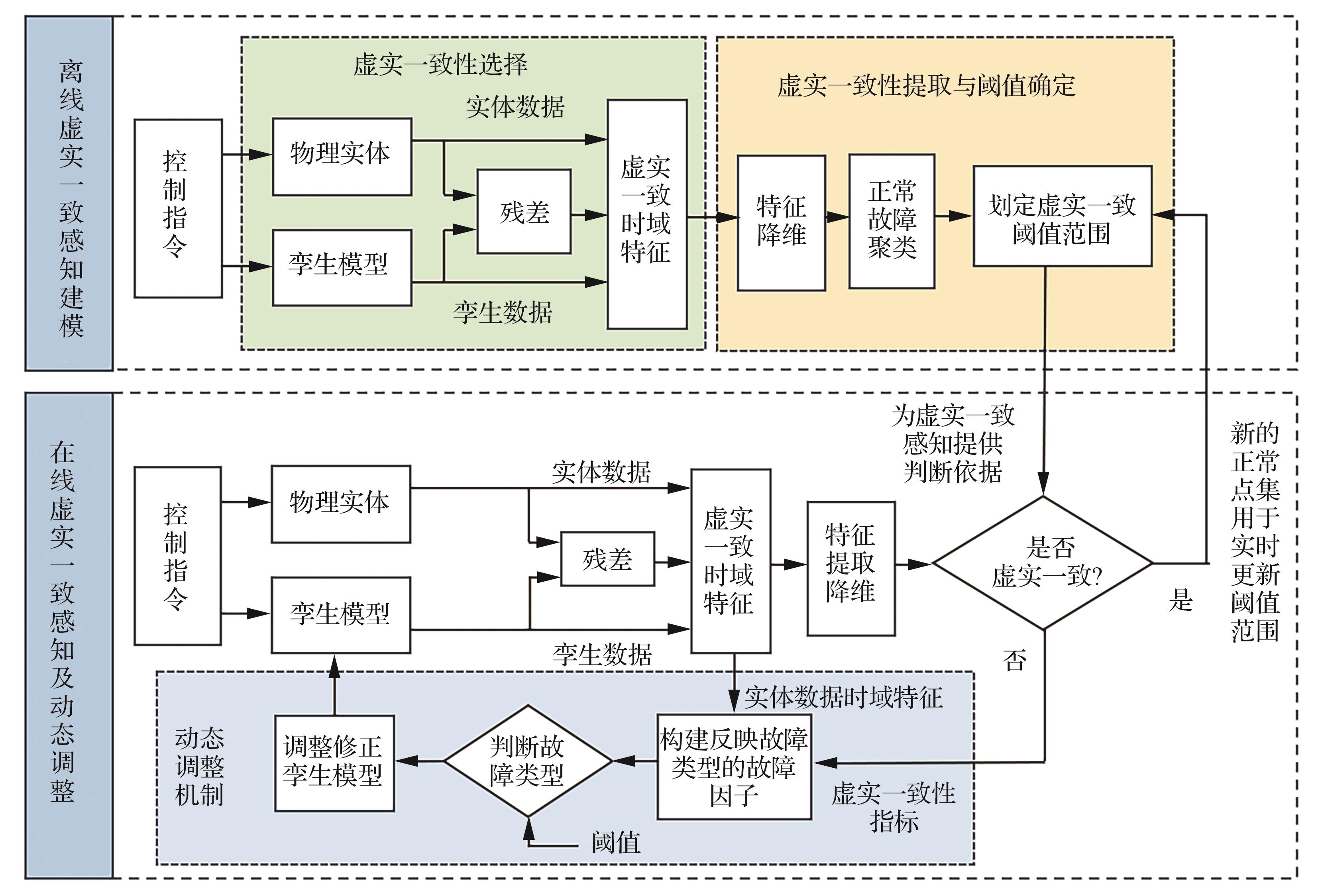
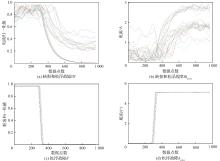
Fig.13
Illustration of current and rudder angle indicators before and after faults
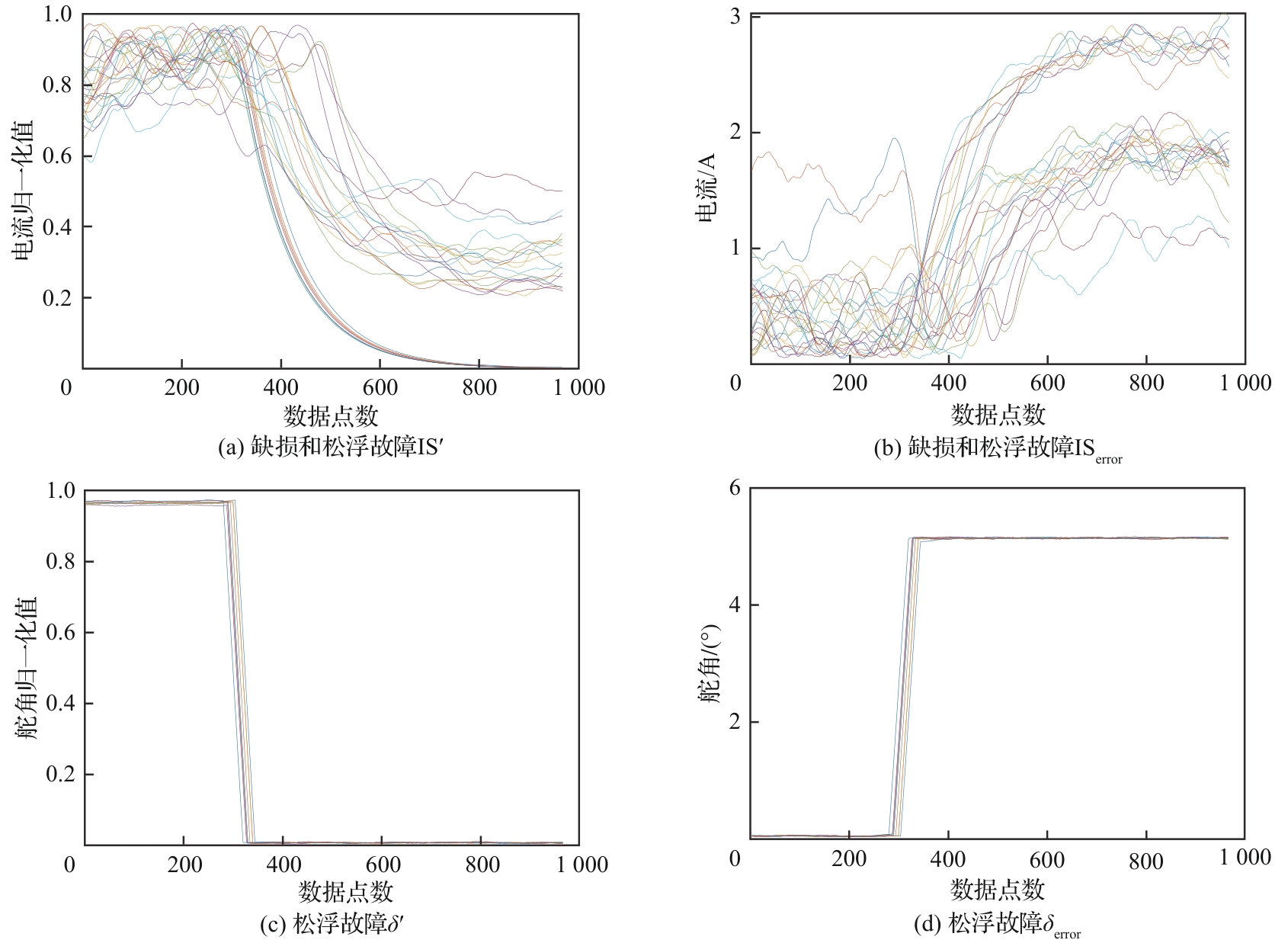
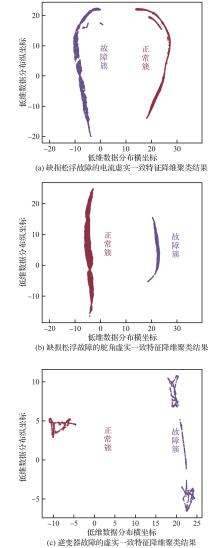
Fig.14
Illustration of dimensionality reduction and clustering results of virtual-physical consistency features
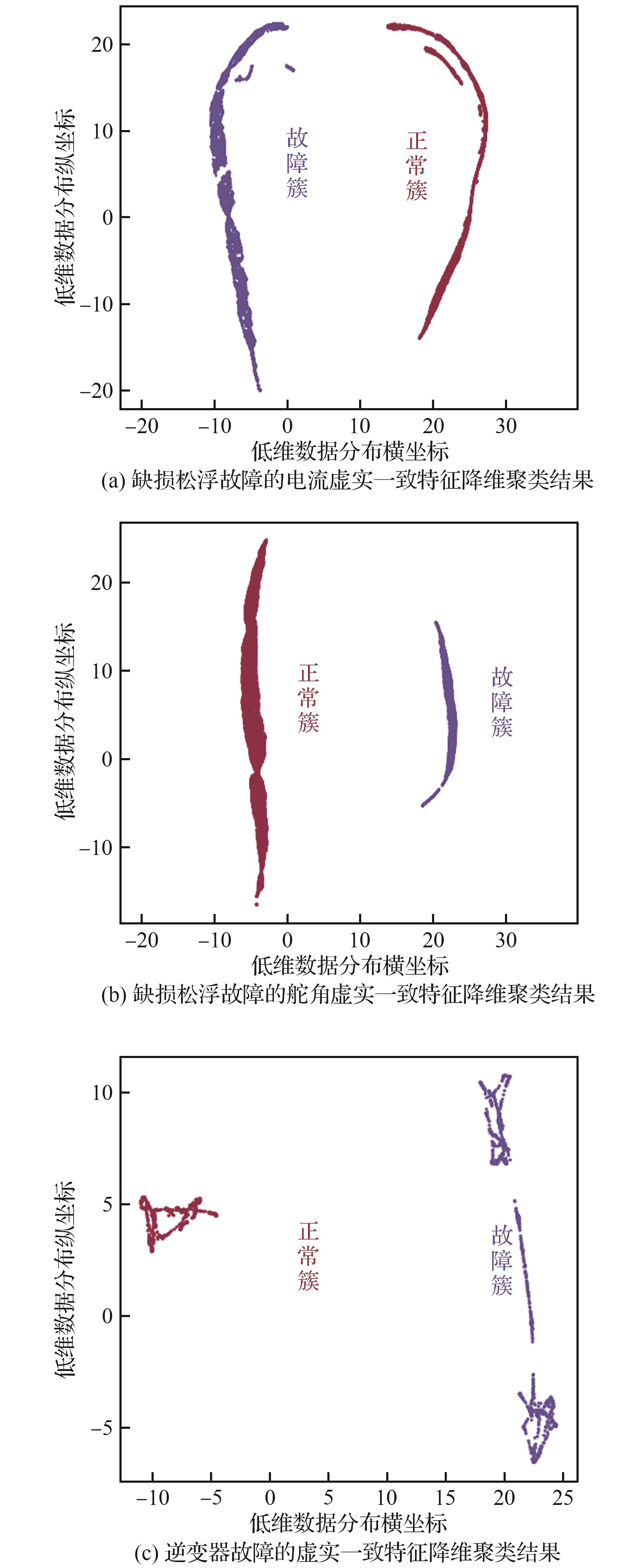
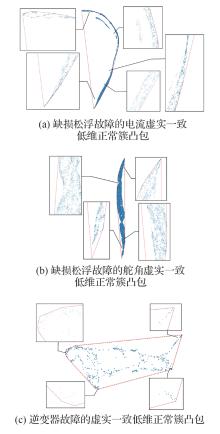
Fig.15
Illustration of threshold model based on convex hull
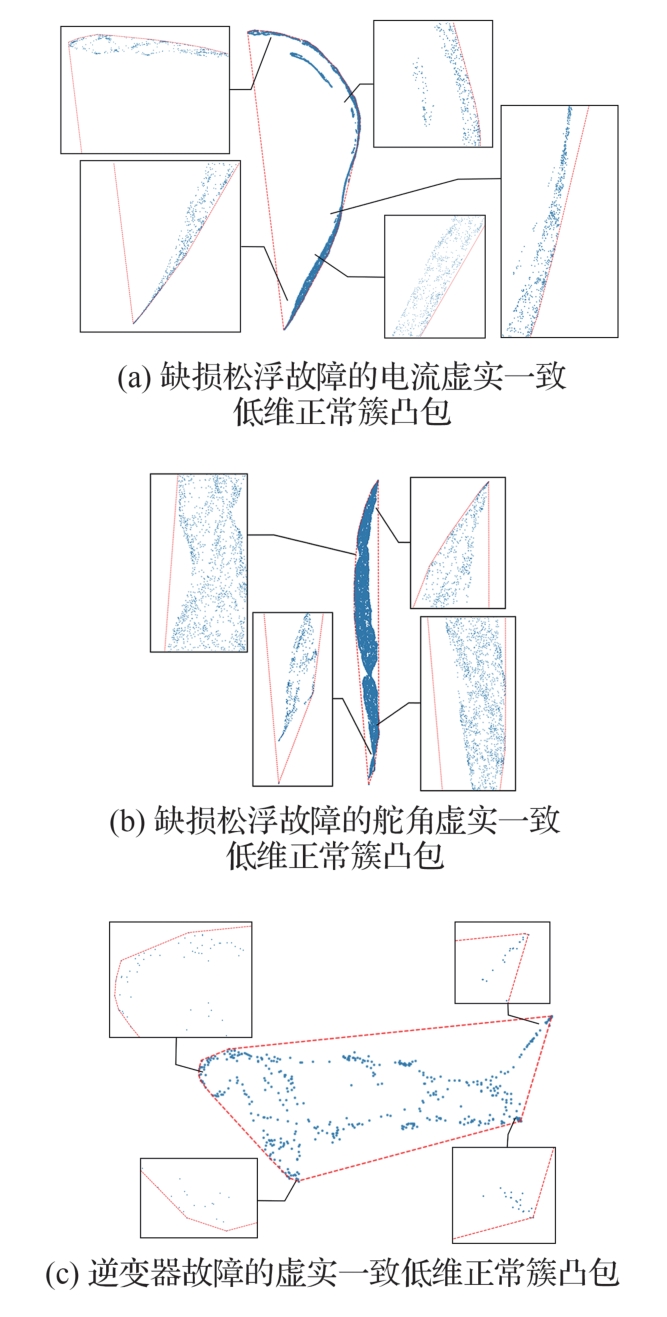
Table 4
Results of threshold test
| 组别 | 点集总数 | 非正常点数 | 占比/% |
|---|---|---|---|
| 正常电流训练集 | 7 586 | 401 | 5.286 |
| 故障电流训练集 | 10 978 | 10 377 | 94.525 |
| 正常电流测试集 | 1 898 | 112 | 5.901 |
| 故障电流测试集 | 2 746 | 2 611 | 95.083 |
| 正常舵角训练集 | 14 498 | 142 | 0.979 |
| 故障舵角训练集 | 4 839 | 4 839 | 100 |
| 正常舵角测试集 | 3 626 | 27 | 0.744 |
| 故障舵角测试集 | 1 212 | 1 212 | 100 |
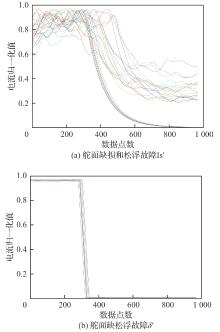
Fig.16
Illustration of entity’s fault indicators under normal and faulty conditions
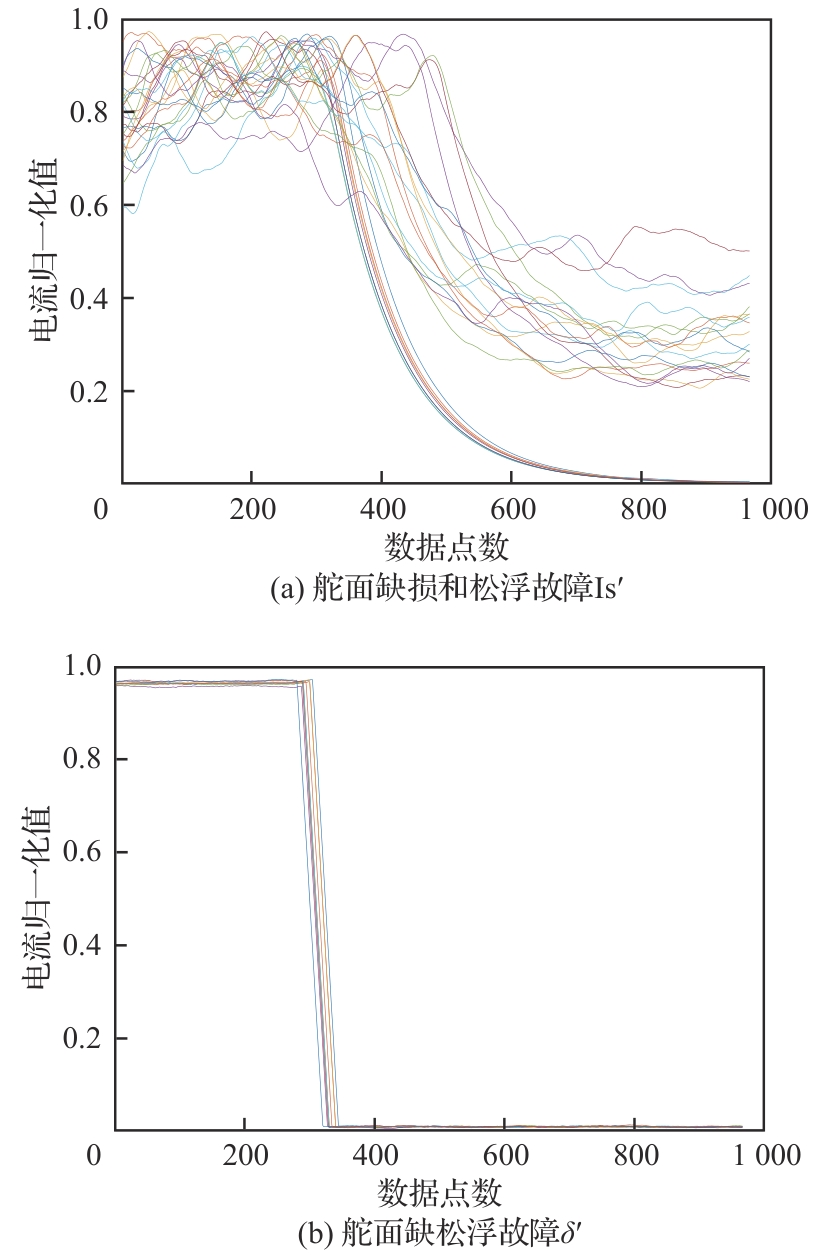
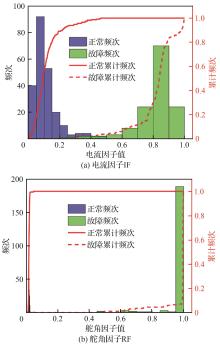
Fig.17
Illustration of current-factor and rudder-factor’s frequency and cumulative frequency
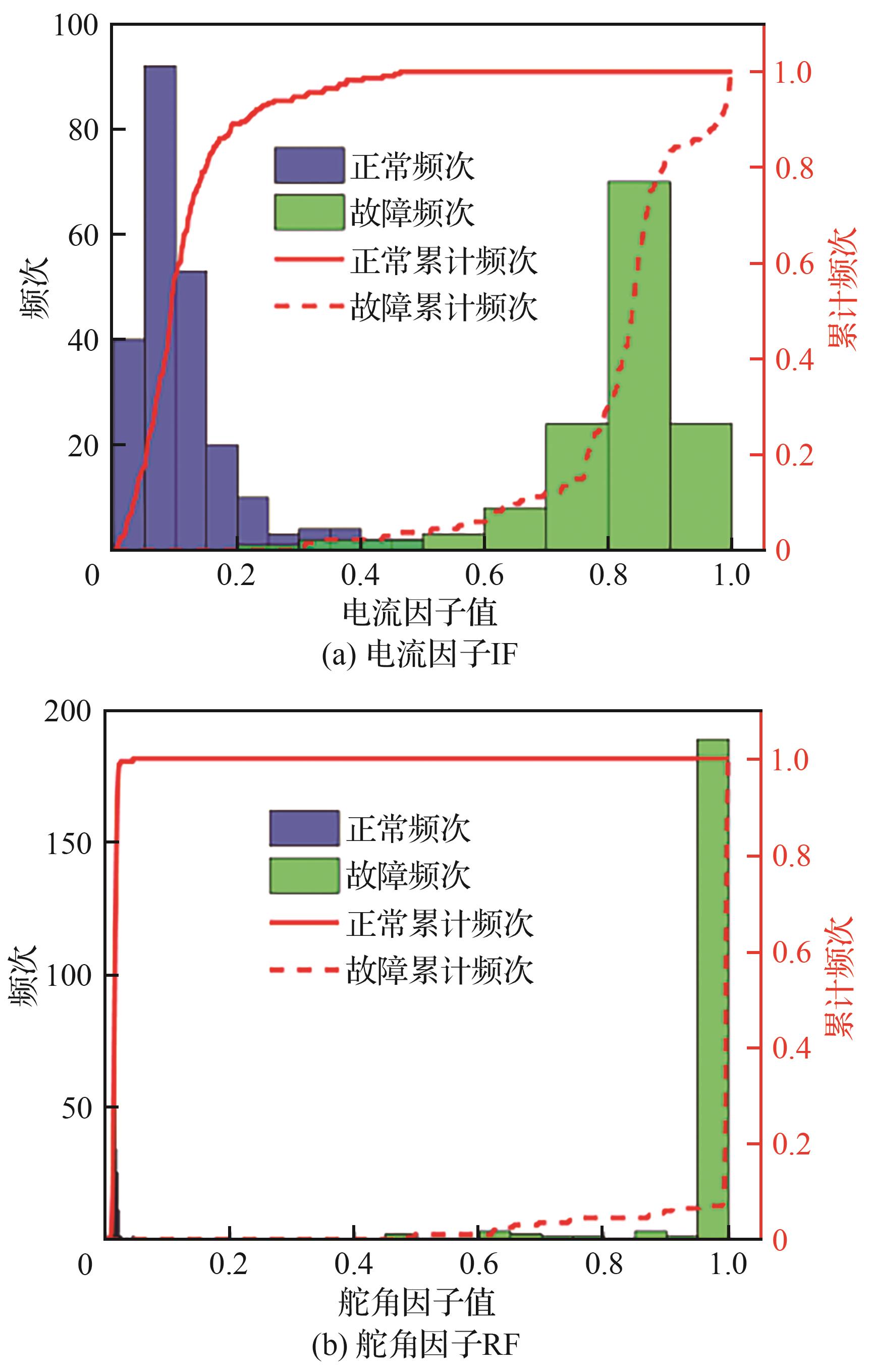
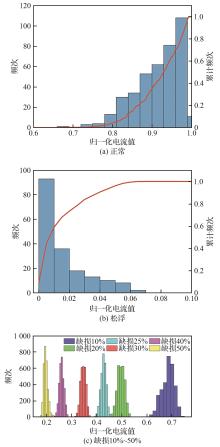
Fig.18
Illustration of normalized current’s frequency and cumulative frequency
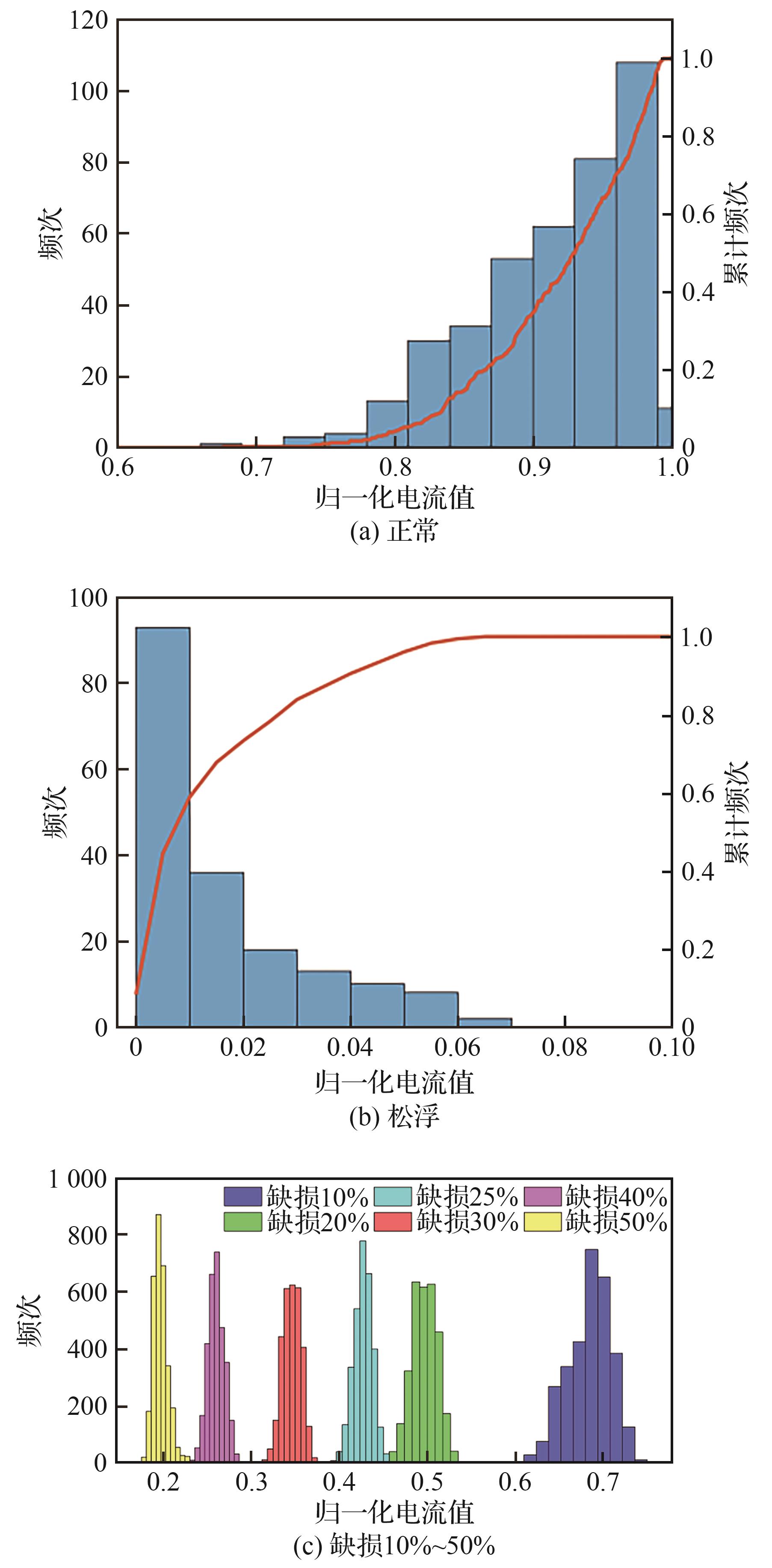
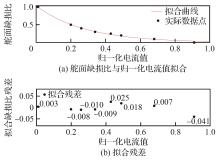
Fig.19
Illustration of the fitting result between normalized current and rudder defect rate
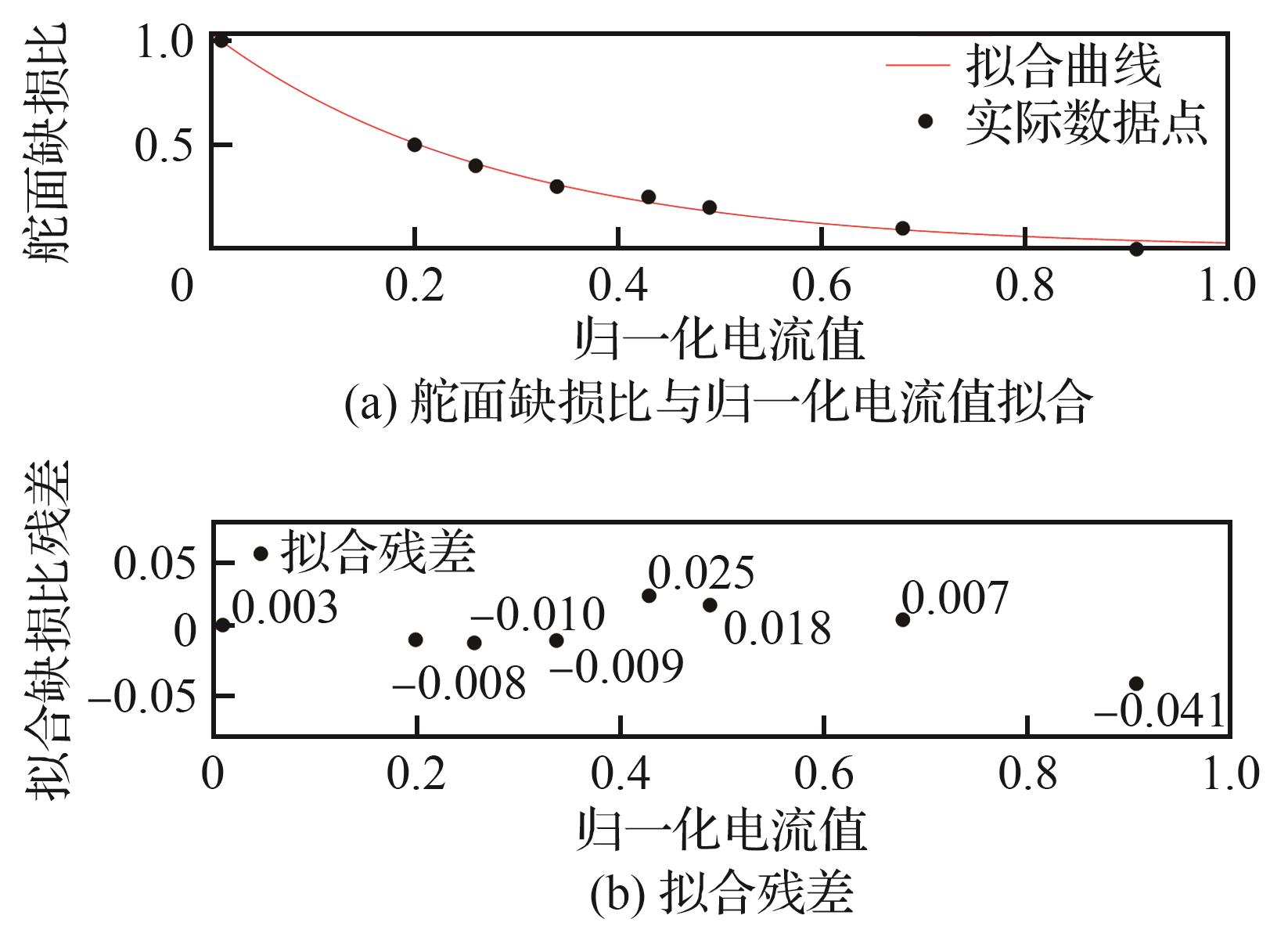
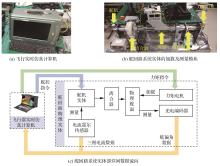
Fig.20
Illustration of rudder system’s physical-entity and platform for simulation, loading and measurement
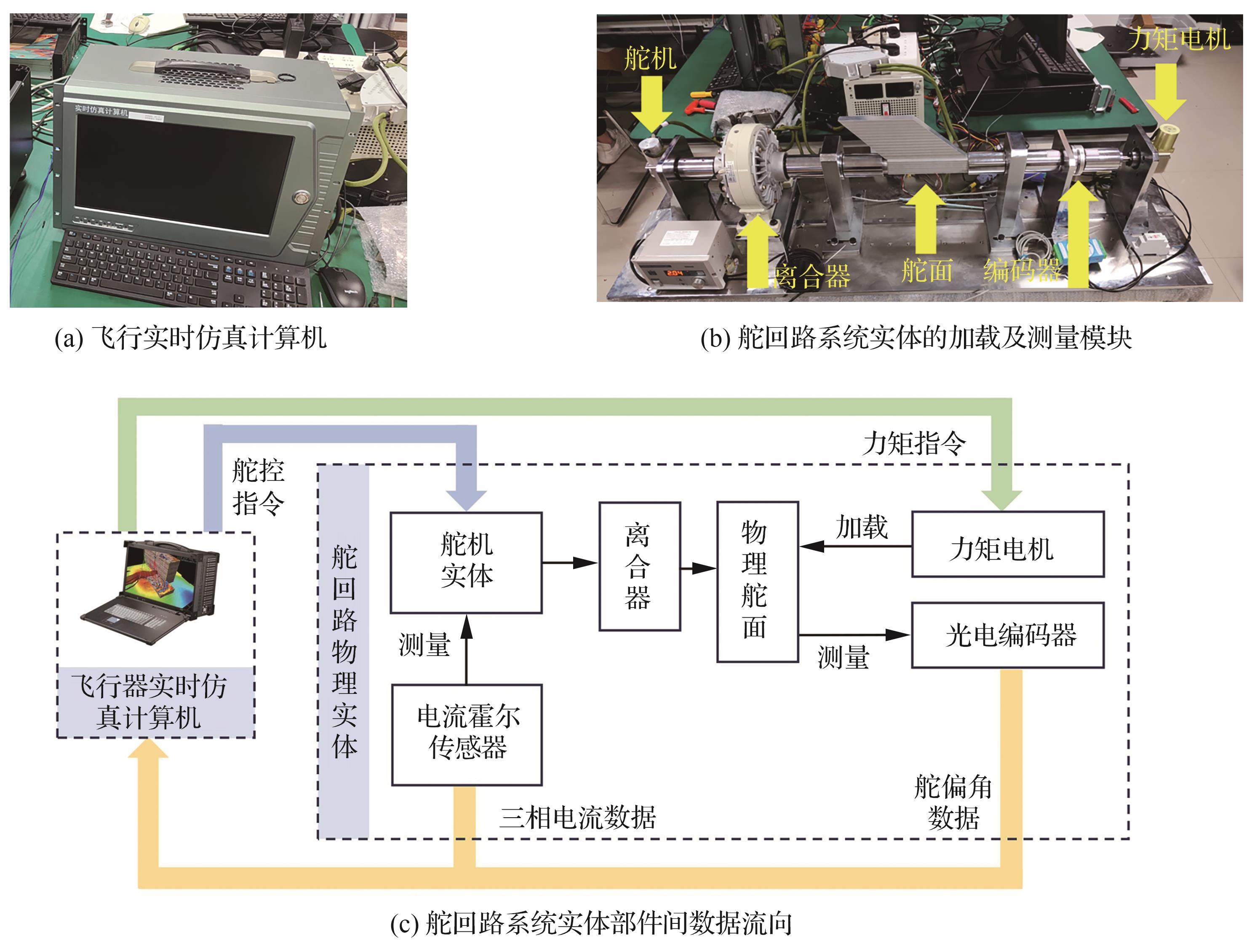
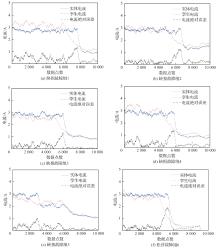
Fig.21
Illustration of fault current tracking results of digital twin
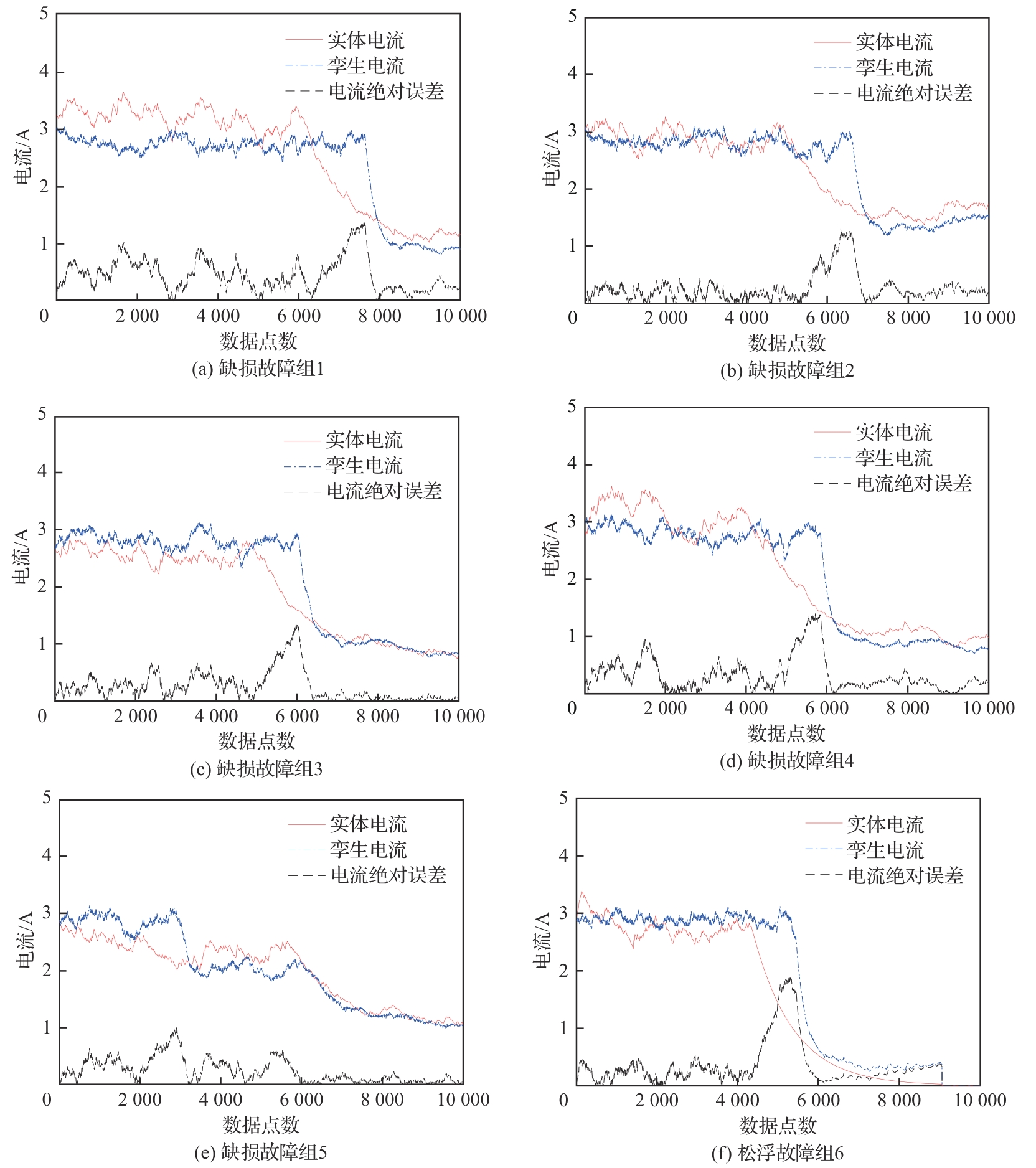
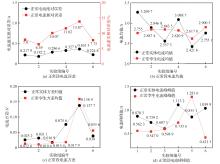
Fig.22
Illustration of virtual-physical consistency for time-domain current metrics in normal segment
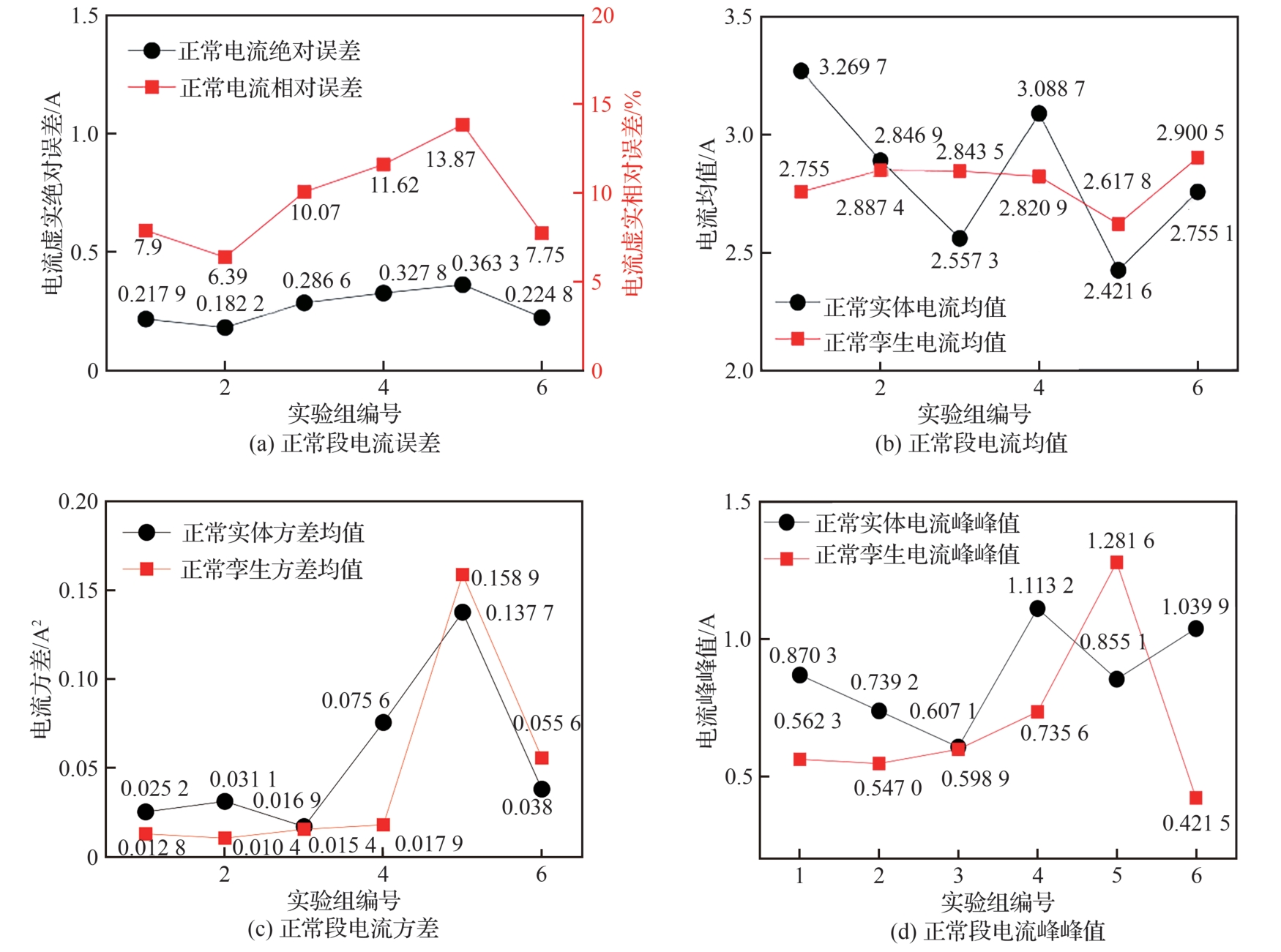
Fig.23
Illustration of virtual-physical consistency for time-domain current metrics in fault segment
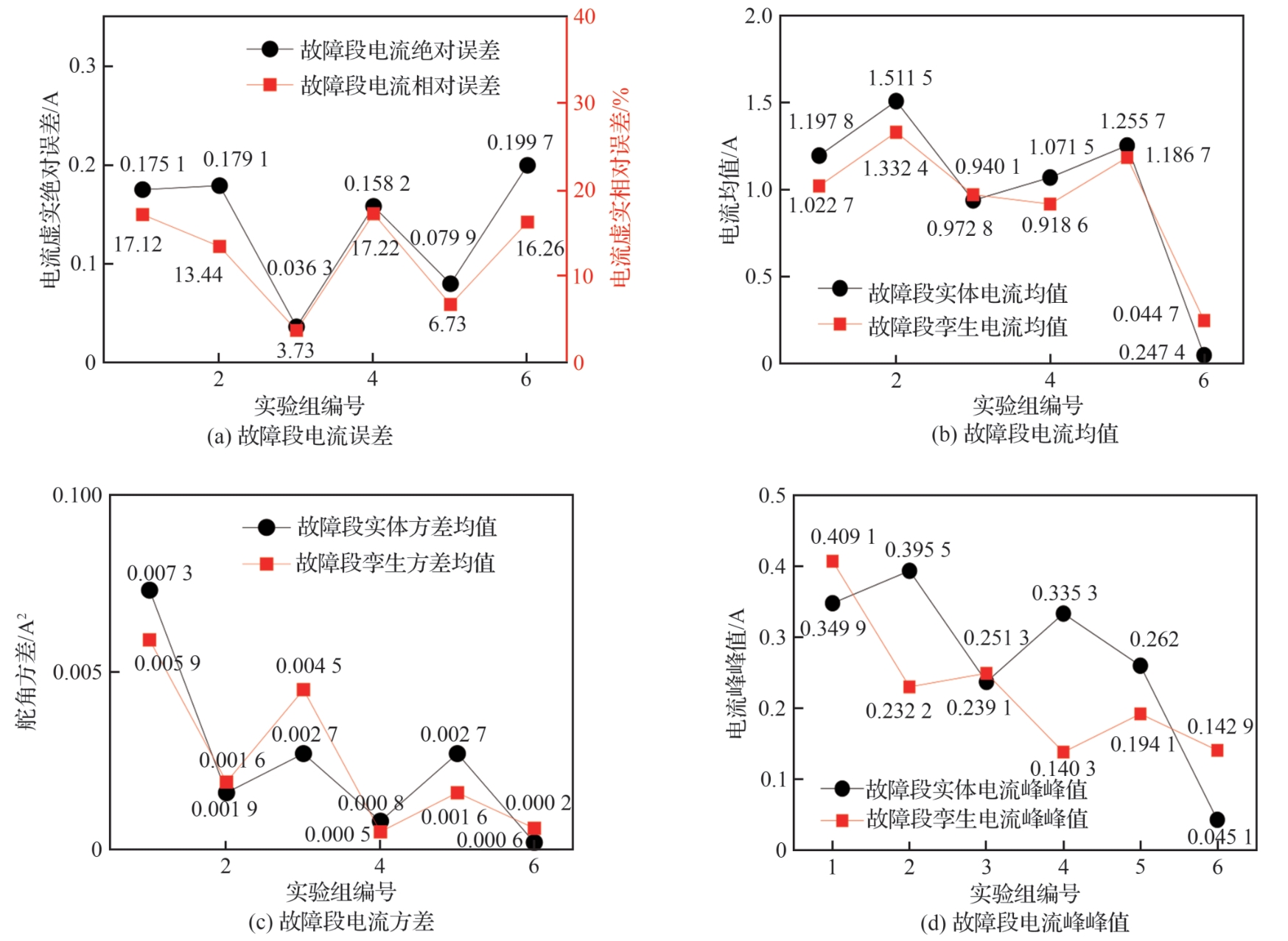
Fig.24
Illustration of fault rudder tracking results of digital twin
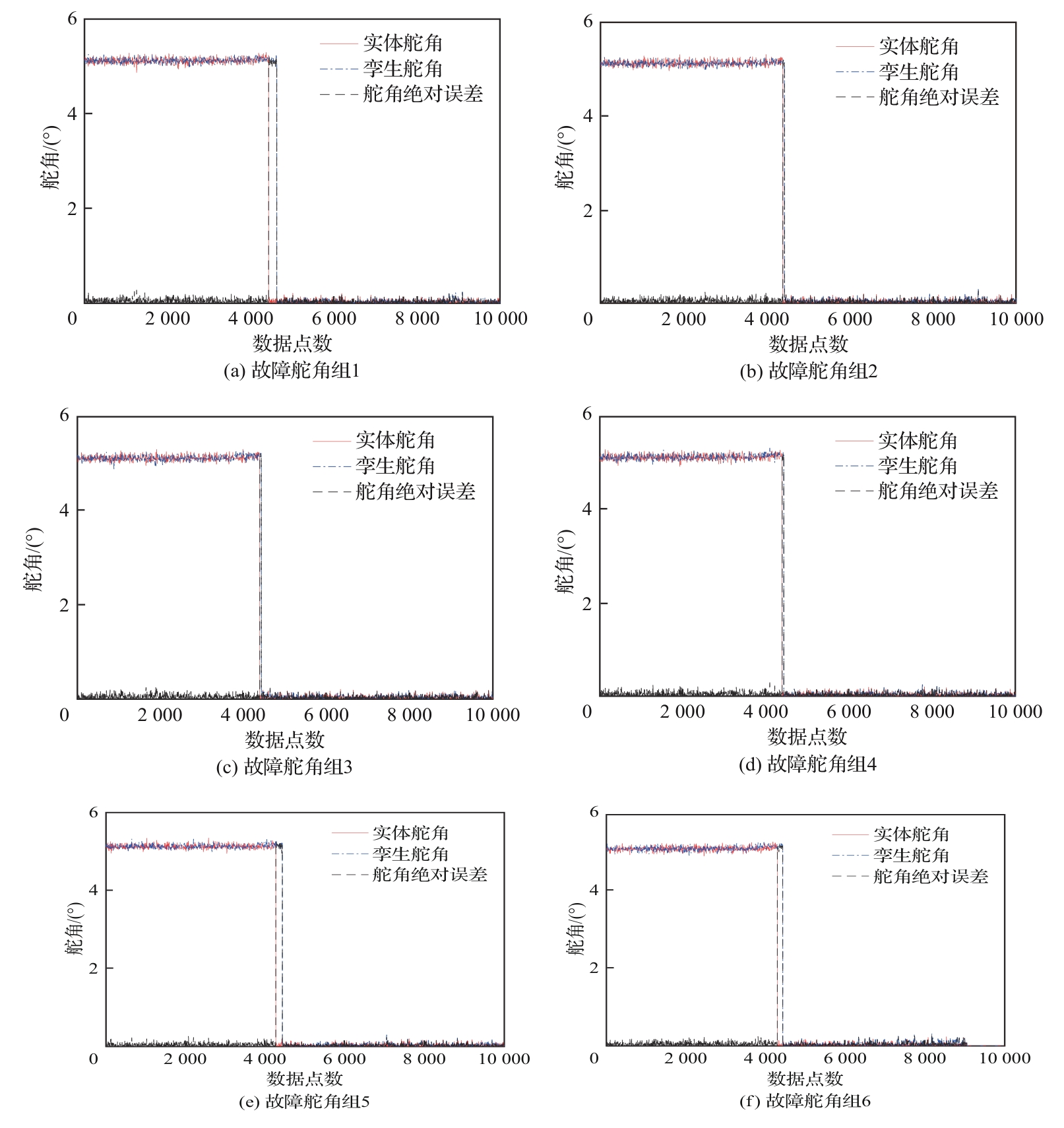
Fig.25
Illustration of virtual-physical consistency for time-domain rudder metrics in normal segment
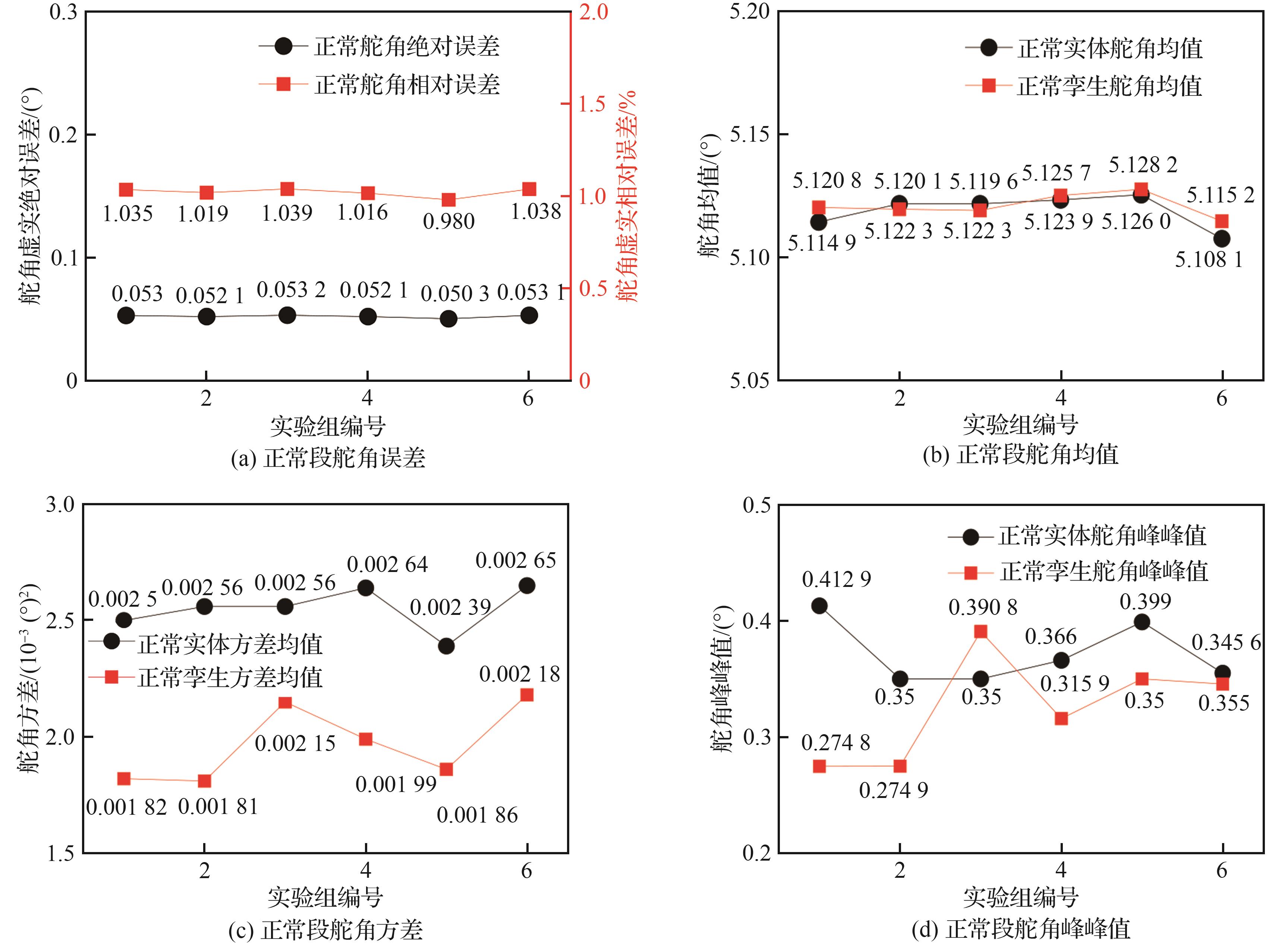
Fig.26
Illustration of virtual-physical consistency for time-domain rudder metrics in fault segment
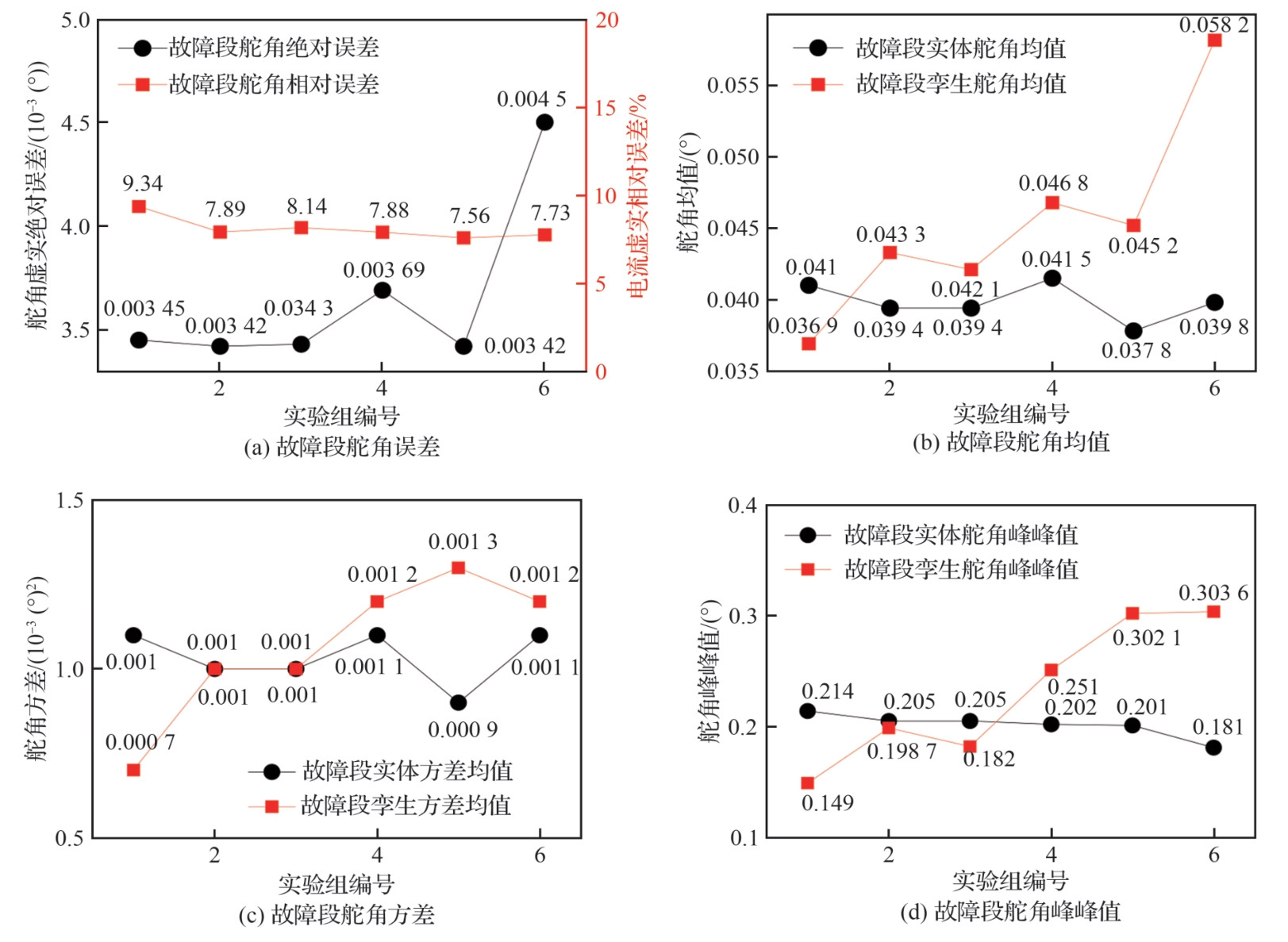
Table 5
Comparison of virtual and actual current rudder angle metrics under normal and fault conditions
| 指标/运行状态 | 正常段 | 舵面缺损和松浮故障段 | ||
|---|---|---|---|---|
| 实体 | 孪生 | 实体 | 孪生 | |
| Is均值/A | 2.830 0 | 2.797 4 | ||
| Is方差 | 0.054 1 | 0.045 2 | 0.002 5 | 0.002 5 |
| Is峰峰值/A | 0.870 8 | 0.691 2 | 0.271 2 | 0.228 3 |
| 舵角均值/(°) | 5.121 6 | 5.119 6 | 0.039 8 | 0.045 4 |
| 舵角方差 | 0.002 0 | 0.002 5 | 0.001 0 | 0.001 1 |
| 舵角峰峰值/(°) | 0.325 3 | 0.372 1 | 0.201 3 | 0.231 1 |
| 虚实Is绝对误差均值/A | 0.267 1 | 0.138 0 | ||
| 虚实Is相对误差均值/% | 9.600 0 | 12.410 0 | ||
| 虚实舵角绝对误差均值/(°) | 0.052 3 | 0.003 7 | ||
| 虚实舵角相对误差均值/% | 1.021 2 | 8.090 0 | ||
Table 6
Comparison of fidelity results of different rudder modelling methods
| 方法 | 建模维度 | 指标 | 多运行状态下自调整能力 |
|---|---|---|---|
| 本文模型 | 机、电、控制及外部负载耦合的精细化建模 | 无故障下,虚实电流虚实误差<9.6%,舵角相对误差<1.02%;故障下,虚实电流虚实误差<12.41%,舵角相对误差<8.09% | 虚实一致判别模型误诊率<6%,虚实非一致判别正确率>94.5,具备在舵面缺损、松浮和逆变器故障下的虚实一致自判别自调整能力 |
| 模型1[ | 电机、传动、伺服控制耦合的动力学建模 | 考虑多环节非线性间隙下,虚实共振频率相对误差<10% | |
| 模型2[ | 舵机控制特征建模 | 忽略舵机内部其他特征,虚实控制系统输出频率特性误差-22 dB,相对误差<8% | |
| 模型3[ | 舵机传动的动力学建模 | 带载运行下,舵轴虚实输出角相对误差<21.9% |
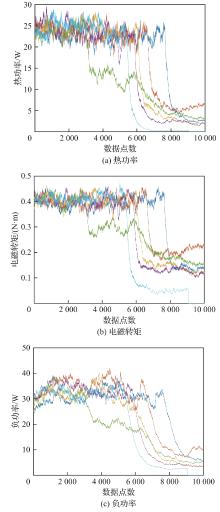
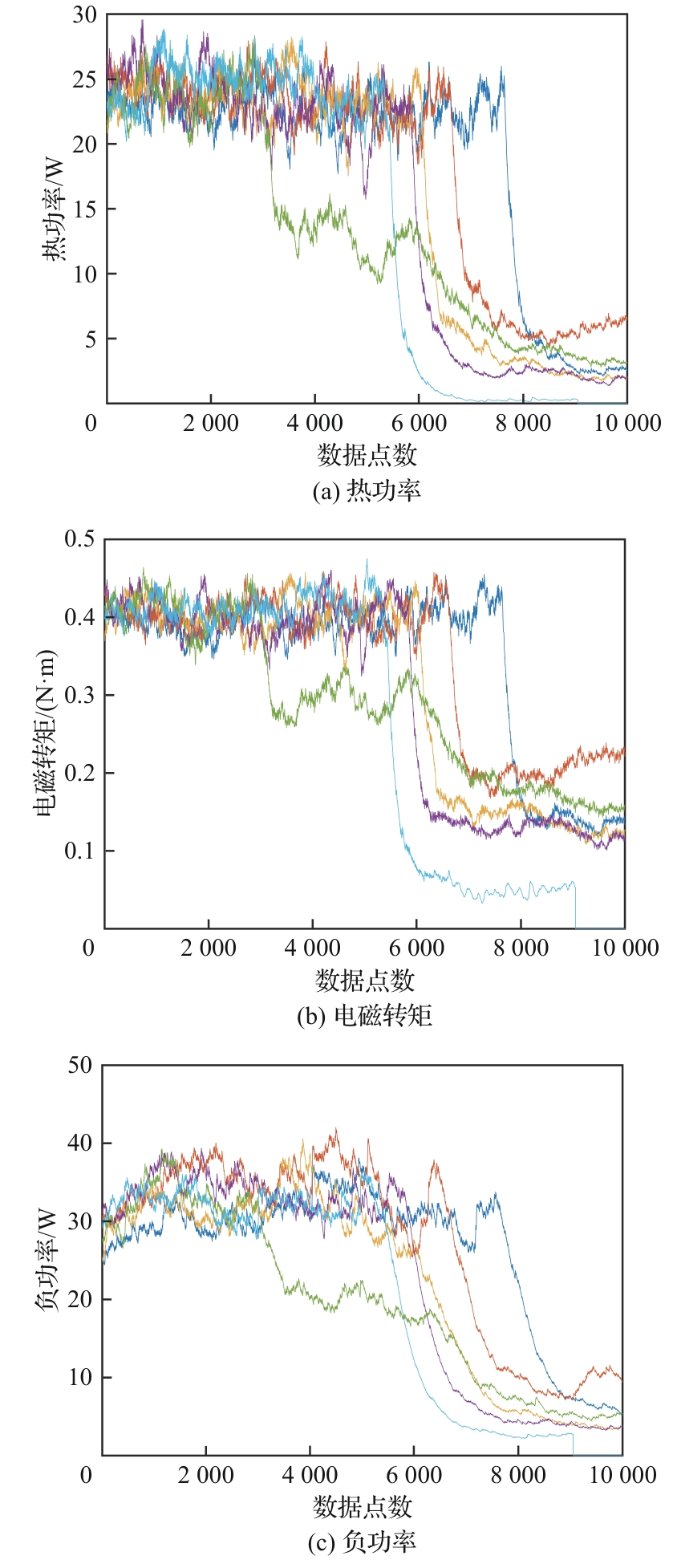
Fig.27
Illustration of digital-twin’s extended parameter variation with fault
| [1] | 佘文学, 刘凯, 刘晶. 空天飞行器制导控制技术发展思考[J]. 战术导弹技术, 2017(4): 1-10. |
| SHE W X, LIU K, LIU J. Thoughts on the development of guidance and control technology for aerospace vehicle[J]. Tactical Missile Technology, 2017(4): 1-10 (in Chinese). | |
| [2] | 丛斌, 孟祥瑞, 张迪. 飞翼飞机新型操纵舵面故障效能影响分析[J]. 战术导弹技术, 2020(2): 29-33. |
| CONG B, MENG X R, ZHANG D. Influences of control efficiency of flying-wing’s new-type control surface faults[J]. Tactical Missile Technology, 2020(2): 29-33 (in Chinese). | |
| [3] | 武天才, 王宏伦, 任斌, 等. 基于学习的高超声速飞行器分层协调容错方法[J]. 航空学报, 2024, 45(22): 330191. |
| WU T C, WANG H L, REN B, et al. Learning-based hierarchical coordination fault-tolerant method for hypersonic vehicles[J]. Acta Aeronautica et Astronautica Sinica, 2024, 45(22): 330191 (in Chinese). | |
| [4] | 刘剑慰. 基于模型的飞行控制系统故障诊断方法研究[D]. 南京: 南京航空航天大学, 2014. |
| LIU J W. Research on fault diagnosis method of flight control system based on model[D]. Nanjing: Nanjing University of Aeronautics and Astronautics, 2014 (in Chinese). | |
| [5] | 朱纪洪, 和阳, 黄志毅. 舵机特征模型及其故障检测方法[J]. 航空学报, 2015, 36(2): 640-650. |
| ZHU J H, HE Y, HUANG Z Y. Characteristic model-based approach for actuator fault diagnosis[J]. Acta Aeronautica et Astronautica Sinica, 2015, 36(2): 640-650 (in Chinese). | |
| [6] | 刘聪, 钱坤, 丁奇. 飞翼飞机非线性电动舵回路鲁棒滑模故障估计观测器设计[J/OL]. 机械科学与技术, (2023-11-24)[2025-06-03]. . |
| LIU C, QIAN K, DING Q. Design of robust sliding mode fault estimation observer for nonlinear electric rudder loop of flying wing aircraft[J/OL]. (in Chinese). | |
| [7] | 杨石琳, 乔凯俐, 万晓忠, 等. 考虑多环节间隙非线性的电动舵机多学科耦合动力学建模[J/OL]. 北京航空航天大学学报, (2024-04-22)[2025-06-03]. . |
| YANG S L, QIAO K L, WAN X Z, et al. Multidisciplinary coupling dynamics modeling of electric steering gear considering multi-link gap nonlinearity[J/OL]. Journal of Beijing University of Aeronautics and Astronautics, (2024-04-22)[2025-06-03]. (in Chinese). | |
| [8] | KIM S H, TAHK M J. Dynamic stiffness transfer function of an electromechanical actuator using system identification[J]. International Journal of Aeronautical and Space Sciences, 2018, 19(1): 208-216. |
| [9] | KARPENKO M, SEPEHRI N, SCUSE D. Diagnosis of process valve actuator faults using a multilayer neural network[J]. Control Engineering Practice, 2003, 11(11): 1289-1299. |
| [10] | SIMANI S, FARSONI S, CASTALDI P, et al. Actuator fault reconstruction via dynamic neural networks for an autonomous underwater vehicle model[J]. IFAC-PapersOnLine, 2022, 55(6): 755-759. |
| [11] | QIN H, YANG R F, GUO C X, et al. Fault diagnosis of electric rudder system using PSOFOA-BP neural network[J]. Measurement, 2021, 186: 110058. |
| [12] | 崔乃刚, 郭冬子, 王瑞鸣, 等. 飞航导弹智能故障诊断与容错控制[J]. 战术导弹技术, 2020(4): 125-134. |
| CUI N G, GUO D Z, WANG R M, et al. Intelligent fault diagnosis and fault tolerant control for cruise missile[J]. Tactical Missile Technology, 2020(4): 125-134 (in Chinese). | |
| [13] | 姜斌, 程月华, 孙颢, 等. 一种利用LSTM-FCN的导弹舵回路故障诊断算法[J]. 宇航学报, 2023, 44(5): 687-698. |
| JIANG B, CHENG Y H, SUN H, et al. A fault diagnosis algorithm of missile rudder loop using LSTM-FCN[J]. Journal of Astronautics, 2023, 44(5): 687-698 (in Chinese). | |
| [14] | 曾聪. 飞控系统故障诊断方法研究与实现[D]. 成都: 电子科技大学, 2019. |
| ZENG C. Research and implementation of fault diagnosis method for flight control system[D]. Chengdu: University of Electronic Science and Technology of China, 2019 (in Chinese). | |
| [15] | 郭璐, 刘晓东, 魏东涛, 等. 基于改进PCA的导弹装备健康表征参数提取方法[J]. 系统工程与电子技术, 2022, 44(10): 3275-3281. |
| GUO L, LIU X D, WEI D T, et al. Extraction method of missile equipment health characterization parameters based on improved PCA[J]. Systems Engineering and Electronics, 2022, 44(10): 3275-3281 (in Chinese). | |
| [16] | 刘笑炎, 陈立平, 丁建完, 等. 迁移学习在变工况方向舵故障诊断中的应用[J]. 航天控制, 2024, 42(3): 75-81. |
| LIU X Y, CHEN L P, DING J W, et al. Application of transfer learning in rudder fault diagnosis under variable operating conditions[J]. Aerospace Control, 2024, 42(3): 75-81 (in Chinese). | |
| [17] | 马兴瑞, 马嵩华, 胡天亮. 基于数字孪生模型的故障特征生成与诊断[J]. 组合机床与自动化加工技术, 2022(8): 94-98, 104. |
| MA X R, MA S H, HU T L. Fault feature generation and fault diagnosis based on digital twin model[J]. Modular Machine Tool & Automatic Manufacturing Technique, 2022(8): 94-98, 104 (in Chinese). | |
| [18] | GRIEVES M, VICKERS J. Digital twin: Mitigating unpredictable, undesirable emergent behavior in complex systems[M]∥Transdisciplinary Perspectives on Complex Systems. Cham: Springer International Publishing, 2016: 85-113. |
| [19] | GLAESSGEN E, STARGEL D. The digital twin paradigm for future NASA and U.S. air force vehicles[C]∥53rd AIAA/ASME/ASCE/AHS/ASC Structures, Structural Dynamics and Materials Conference. Reston: AIAA, 2012. |
| [20] | ROJEK I, MIKOŁAJEWSKI D, DOSTATNI E. Digital twins in product lifecycle for sustainability in manufacturing and maintenance[J]. Applied Sciences, 2021, 11(1): 31. |
| [21] | FULLER A, FAN Z, DAY C, et al. Digital twin: Enabling technologies, challenges and open research[J]. IEEE Access, 2020, 8: 108952-108971. |
| [22] | 陶飞, 刘蔚然, 张萌, 等. 数字孪生五维模型及十大领域应用[J]. 计算机集成制造系统, 2019, 25(1): 1-18. |
| TAO F, LIU W R, ZHANG M, et al. Five-dimension digital twin model and its ten applications[J]. Computer Integrated Manufacturing Systems, 2019, 25(1): 1-18 (in Chinese). | |
| [23] | 陶飞, 张贺, 戚庆林, 等. 数字孪生模型构建理论及应用[J]. 计算机集成制造系统, 2021, 27(1): 1-15. |
| TAO F, ZHANG H, QI Q L, et al. Theory of digital twin modeling and its application[J]. Computer Integrated Manufacturing Systems, 2021, 27(1): 1-15 (in Chinese). | |
| [24] | 陶飞, 张贺, 戚庆林, 等. 数字孪生十问: 分析与思考[J]. 计算机集成制造系统, 2020, 26(1): 1-17. |
| TAO F, ZHANG H, QI Q L, et al. Ten questions towards digital twin: Analysis and thinking[J]. Computer Integrated Manufacturing Systems, 2020, 26(1): 1-17 (in Chinese). | |
| [25] | TSITSILONIS K M, THEOTOKATOS G, PATIL C, et al. Health assessment framework of marine engines enabled by digital twins[J]. International Journal of Engine Research, 2023, 24(7): 3264-3281. |
| [26] | 周标, 谢诚语, BATTIATO G, 等. 面向结构动力学测试的整体叶盘数字孪生技术[J/OL]. 航空动力学报, (2024-05-23)[2025-06-03]. . |
| ZHOU B, XIE C Y, BATTIATO G, et al. Digital twinning technology of integral bladed disk for structural dynamics test[J/OL]. Journal of Aerospace Dynamics, (2024-05-23)[2025-06-03]. (in Chinese). | |
| [27] | 付洋, 曹宏瑞, 郜伟强, 等. 数字孪生驱动的航空发动机涡轮盘剩余寿命预测[J]. 机械工程学报, 2021, 57(22): 106-113. |
| FU Y, CAO H R, GAO W Q, et al. Digital twin driven remaining useful life prediction for aero-engine turbine discs[J]. Journal of Mechanical Engineering, 2021, 57(22): 106-113 (in Chinese). | |
| [28] | 项浩圆. 基于数字孪生的电静液作动器热特性研究[D]. 杭州: 浙江大学, 2023. |
| XIANG H Y. Study on thermal characteristics of electrohydrostatic actuator based on digital twin[D]. Hangzhou: Zhejiang University, 2023 (in Chinese). | |
| [29] | 郭丞皓, 于劲松, 宋悦, 等. 基于数字孪生的飞机起落架健康管理技术[J]. 航空学报, 2023, 44(11): 227629. |
| GUO C H, YU J S, SONG Y, et al. Application of digital twin-based aircraft landing gear health management technology[J]. Acta Aeronautica et Astronautica Sinica, 2023, 44(11): 227629 (in Chinese). | |
| [30] | 董雷霆, 周轩, 赵福斌, 等. 飞机结构数字孪生关键建模仿真技术[J]. 航空学报, 2021, 42(3): 023981. |
| DONG L T, ZHOU X, ZHAO F B, et al. Key technologies for modeling and simulation of airframe digital twin[J]. Acta Aeronautica et Astronautica Sinica, 2021, 42(3): 023981 (in Chinese). | |
| [31] | 陈健, 孟义兴, 袁慎芳, 等. 融合导波监测的搭接结构裂纹扩展寿命孪生预测[J]. 机械工程学报, 2024, 60(16): 34-42. |
| CHEN J, MENG Y X, YUAN S F, et al. Digital twins prediction of crack growth life for the lap joint structure combined with guided wave monitoring data[J]. Journal of Mechanical Engineering, 2024, 60(16): 34-42 (in Chinese). | |
| [32] | 陶飞, 马昕, 戚庆林, 等. 数字孪生连接交互理论与关键技术[J]. 计算机集成制造系统, 2023, 29(1): 1-10. |
| TAO F, MA X, QI Q L, et al. Theory and key technologies of digital twin connection and interaction[J]. Computer Integrated Manufacturing Systems, 2023, 29(1): 1-10 (in Chinese). | |
| [33] | 刘大同, 郭凯, 王本宽, 等. 数字孪生技术综述与展望[J]. 仪器仪表学报, 2018, 39(11): 1-10. |
| LIU D T, GUO K, WANG B K, et al. Summary and perspective survey on digital twin technology[J]. Chinese Journal of Scientific Instrument, 2018, 39(11): 1-10 (in Chinese). | |
| [34] | 陶飞, 刘蔚然, 刘检华, 等. 数字孪生及其应用探索[J]. 计算机集成制造系统, 2018, 24(1): 1-18. |
| TAO F, LIU W R, LIU J H, et al. Digital twin and its potential application exploration[J]. Computer Integrated Manufacturing Systems, 2018, 24(1): 1-18 (in Chinese). | |
| [35] | 陈墨, 胡昌华, 张伟, 等. 新型无刷直流电动伺服机构设计与分析[J]. 电机与控制应用, 2015, 42(5): 6-10, 16. |
| CHEN M, HU C H, ZHANG W, et al. Design and analysis of A new BLDCM servomechanism[J]. Electric Machines & Control Application, 2015, 42(5): 6-10, 16 (in Chinese). | |
| [36] | 黄璐, 文军, 姜杰. 电动舵机系统建模与仿真研究[J]. 自动化与仪器仪表, 2020(12): 237-239, 244. |
| HUANG L, WEN J, JIANG J. Research on modeling and simulation of electric servo system[J]. Automation & Instrumentation, 2020(12): 237-239, 244 (in Chinese). | |
| [37] | 卢晋, 吴志刚, 杨超. 电动舵机模块化建模及动刚度仿真[J]. 北京航空航天大学学报, 2021, 47(4): 765-778. |
| LU J, WU Z G, YANG C. Modular modeling and dynamic stiffness simulation of electromechanical actuator[J]. Journal of Beijing University of Aeronautics and Astronautics, 2021, 47(4): 765-778 (in Chinese). | |
| [38] | 李朋, 高智刚, 周军, 等. 高性能电动舵机系统高保真建模方法研究[J]. 西北工业大学学报, 2018, 36(1): 7-12. |
| LI P, GAO Z G, ZHOU J, et al. High fidelity modeling method of high performance electromechanical actuator[J]. Journal of Northwestern Polytechnical University, 2018, 36(1): 7-12 (in Chinese). | |
| [39] | 韩强. 小型高精度弹载舵机系统设计[D]. 西安: 西安石油大学, 2021. |
| HAN Q. Design of small and high precision missile-borne steering gear system[D]. Xi’an: Xi’an Shiyou University, 2021 (in Chinese). | |
| [40] | 白滢. 小型高精度电动舵机伺服控制系统设计[D]. 大连: 大连理工大学, 2018. |
| BAI Y. Design of servo control system for small high precision electric steering gear[D]. Dalian: Dalian University of Technology, 2018 (in Chinese). | |
| [41] | 高翔. 基于强化学习的X舵AUV控制分配与故障诊断[D]. 哈尔滨: 哈尔滨工程大学, 2023. |
| GAO X. Control allocation and fault diagnosis of X-rudder AUV based on reinforcement learning[D]. Harbin: Harbin Engineering University, 2023 (in Chinese). | |
| [42] | 王小平. X舵AUV控制分配优化与容错控制方法研究[D]. 哈尔滨: 哈尔滨工程大学, 2020. |
| WANG X P. Research on control allocation optimization and fault-tolerant control method of X rudder AUV[D]. Harbin: Harbin Engineering University, 2020 (in Chinese). | |
| [43] | 彭钱诚, 裴扬, 王文宽. 飞机舵面易损特性与毁伤评估方法研究综述[J]. 空天防御, 2024, 7(3): 14-26. |
| PENG Q C, PEI Y, WANG W K. Review of vulnerability characteristics and damage assessment methods of aircraft rudder surface[J]. Air & Space Defense, 2024, 7(3): 14-26 (in Chinese). | |
| [44] | 顾君垚, 丁强, 夏宇栋, 等. 基于UMAP-AdamDD的冷水机组故障诊断方法[J]. 低温与超导, 2022, 50(1): 81-87. |
| GU J Y, DING Q, XIA Y D, et al. An effective fault diagnosis method for water chillers using UMAP-AdamDD[J]. Cryogenics & Superconductivity, 2022, 50(1): 81-87 (in Chinese). | |
| [45] | 易灿灿, 庹帅, 涂闪, 等. 基于UMAP辅助的模糊C聚类方法进行太赫兹光谱识别[J]. 光谱学与光谱分析, 2022, 42(9): 2694-2701. |
| YI C C, TUO S, TU S, et al. UMAP-assisted fuzzy C-clustering method for recognition of terahertz spectrum[J]. Spectroscopy and Spectral Analysis, 2022, 42(9): 2694-2701 (in Chinese). | |
| [46] | 万琦, 刘更, 马尚君. 舵机传动系统动力学联合仿真建模及实验研究[J]. 机床与液压, 2024, 52(11): 132-137. |
| WAN Q, LIU G, MA S J. Research on co-simulation modeling and experiments of rudder transmission system[J]. Machine Tool & Hydraulics, 2024, 52(11): 132-137 (in Chinese). |
| [1] | Yiwei HUANG, Yibin GENG, Tianhe GAO, Xuanwei HU, Yuan WANG, Hongyan MA, Kuo TIAN. Digital twin driven high precision reconstruction method for full-field deformation of structure [J]. Acta Aeronautica et Astronautica Sinica, 2025, 46(19): 530967-530967. |
| [2] | Dingqiang DAI, Xuan ZHOU, Leiting DONG, Xiasheng SUN. Research progress and prospects of digital engineering and digital twin in field of aeronautical fatigue and structural integrity [J]. Acta Aeronautica et Astronautica Sinica, 2025, 46(19): 531022-531022. |
| [3] | Shangyu LI, Hang FENG, Junquan CHEN, Bin CHEN, Dan MEI. A design architecture and conceptual modeling approach for digital twins [J]. Acta Aeronautica et Astronautica Sinica, 2025, 46(19): 531118-531118. |
| [4] | Liang CHEN, Lei HUANG, Yuxuan GU, Cong GUO, Kexin LIN, Yu GUAN, Jian SONG. Twinning technology of key part load based on flight parameters [J]. Acta Aeronautica et Astronautica Sinica, 2025, 46(19): 531292-531292. |
| [5] | Yuxuan GU, Cong GUO, Lei HUANG, Yifei DONG, Hongda DONG, Zhilun DENG. Refined management of fleet life driven by digital twins [J]. Acta Aeronautica et Astronautica Sinica, 2025, 46(19): 531290-531290. |
| [6] | Yinxuan ZHANG, Qi ZHANG, Zhenyong XU, Linshu MENG. Predicting method of aircraft mechanical response based on residual neural networks [J]. Acta Aeronautica et Astronautica Sinica, 2025, 46(19): 531295-531295. |
| [7] | Ruoyao XIAO, Lianyu ZHENG, Jian ZHOU, Siru ZHAO, Jieru ZHANG, Yuwu CHEN. Online optimization method for positioning accuracy in cylindrical components aligning based on digital twins [J]. Acta Aeronautica et Astronautica Sinica, 2025, 46(19): 531978-531978. |
| [8] | Jialiang HU, Jiangpeng WU, Sixu HUO, Yidi GAO, Hua ZHENG. Modal parameter estimation based on reconstruction of digital twin sweep data in flutter flight test [J]. Acta Aeronautica et Astronautica Sinica, 2025, 46(19): 531602-531602. |
| [9] | Pengfei WANG, Lifang ZENG, Xueming SHAO, Jun LI. Multi-source data fusion modeling method for aerodynamic load of aircraft wing based on pre-training and fine-tuning [J]. Acta Aeronautica et Astronautica Sinica, 2025, 46(19): 532297-532297. |
| [10] | Yifei WANG, Geyong CAO, Yang CAO, Xiaojun WANG. Uncertainty technologies in aircraft digital strength twins [J]. Acta Aeronautica et Astronautica Sinica, 2025, 46(19): 532408-532408. |
| [11] | Liang CHEN, Fanxing MENG, Chengbo WANG, Yinxuan ZHANG, Linshu MENG. Development and application of digital twins technology in aircraft strength design [J]. Acta Aeronautica et Astronautica Sinica, 2025, 46(19): 532252-532252. |
| [12] | Ran ZHUO, Chuliang YAN. A key component in digital twin of aircraft structures: Multi-dimensional flight parameter measurements [J]. Acta Aeronautica et Astronautica Sinica, 2025, 46(19): 532375-532375. |
| [13] | Lin LIN, Shiwei SUO, Dan LIU, Yinxuan ZHANG, Lingyu YUE, Sihao ZHANG, Yikun LIU, Song FU. A deep feature fusion network based on multi-scale kernel construction for filling wing stress field data [J]. Acta Aeronautica et Astronautica Sinica, 2025, 46(19): 532343-532343. |
| [14] | Jiayu CHEN, Qinhua LU, Xuhang WANG, Zhilong SHI, Hongjuan GE, Min XIE. Intelligent health evaluation and degradation warning of aircraft air-conditioning systems: A method fusing mission profile and PCA-MD [J]. Acta Aeronautica et Astronautica Sinica, 2025, 46(15): 231604-231604. |
| [15] | Ronghui CHENG, Zhishu ZHANG, Wenbo RUAN, Jianfeng WANG. Core key technologies of advanced aircraft engine [J]. Acta Aeronautica et Astronautica Sinica, 2025, 46(12): 31220-031220. |
| Viewed | ||||||
|
Full text |
|
|||||
|
Abstract |
|
|||||
Address: No.238, Baiyan Buiding, Beisihuan Zhonglu Road, Haidian District, Beijing, China
Postal code : 100083
E-mail:hkxb@buaa.edu.cn
Total visits: 6658907 Today visits: 1341All copyright © editorial office of Chinese Journal of Aeronautics
All copyright © editorial office of Chinese Journal of Aeronautics
Total visits: 6658907 Today visits: 1341

 CJA
CJA
