Acta Aeronautica et Astronautica Sinica ›› 2025, Vol. 46 ›› Issue (15): 331570.doi: 10.7527/S1000-6893.2024.31570
• Electronics and Electrical Engineering and Control • Previous Articles
Yi GU1, Huilin WANG2, Hehe GUO3, Guohua WU4, Zhiqiang ZENG5( )
)
Received:2024-11-25
Revised:2024-12-01
Accepted:2024-12-10
Online:2024-12-18
Published:2024-12-18
Contact:
Zhiqiang ZENG
E-mail:zhiqiangzeng2018@buaa.edu.cn
Supported by:CLC Number:
Yi GU, Huilin WANG, Hehe GUO, Guohua WU, Zhiqiang ZENG. Analysis of GEO target observation coverage based on field of view mapping model[J]. Acta Aeronautica et Astronautica Sinica, 2025, 46(15): 331570.
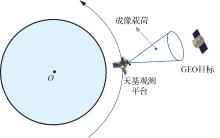
Fig.1
Schematic diagram of space-based space situational awareness scenario
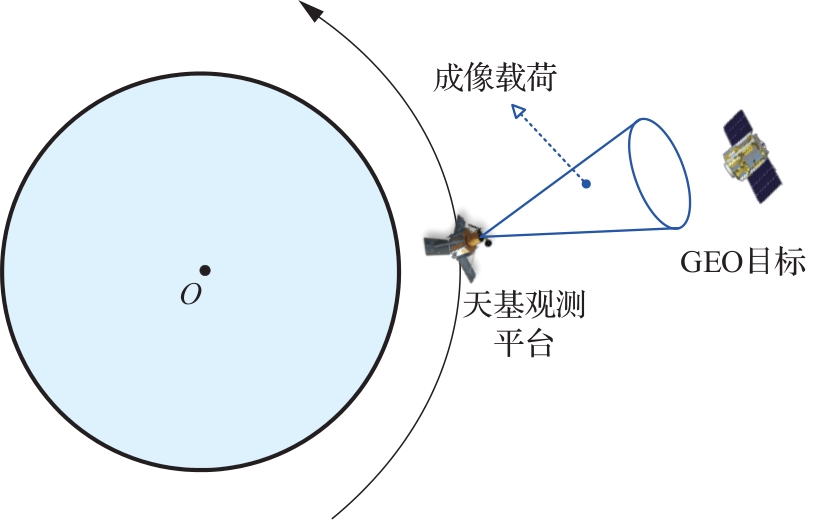
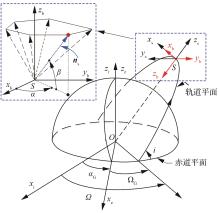
Fig.2
Schematic diagram of coordinate system and sensor element of space-based observation platform
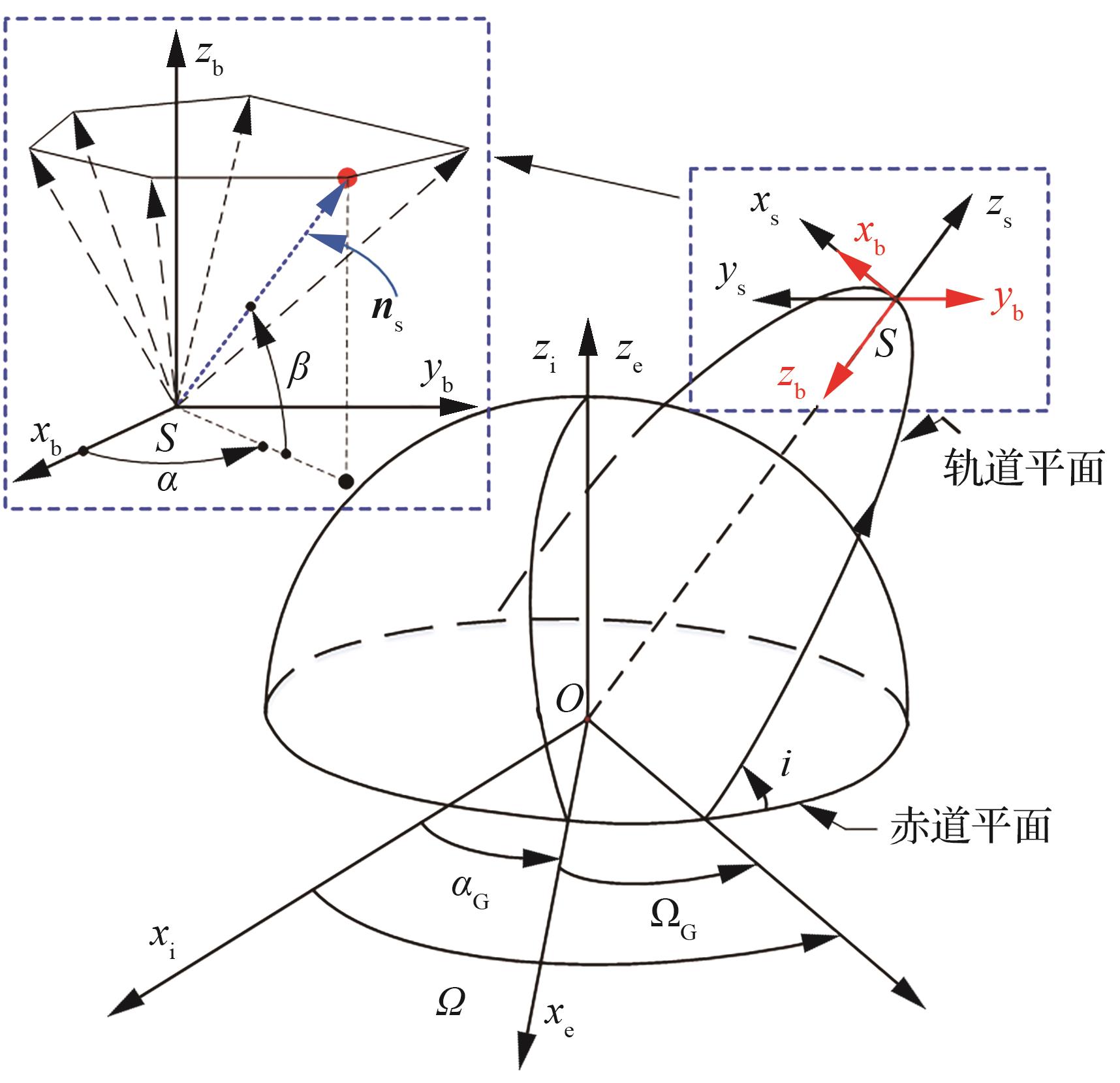
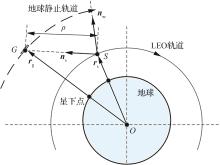
Fig.3
Schematic diagram of GEO target observation by sensor view element of on-orbit platform
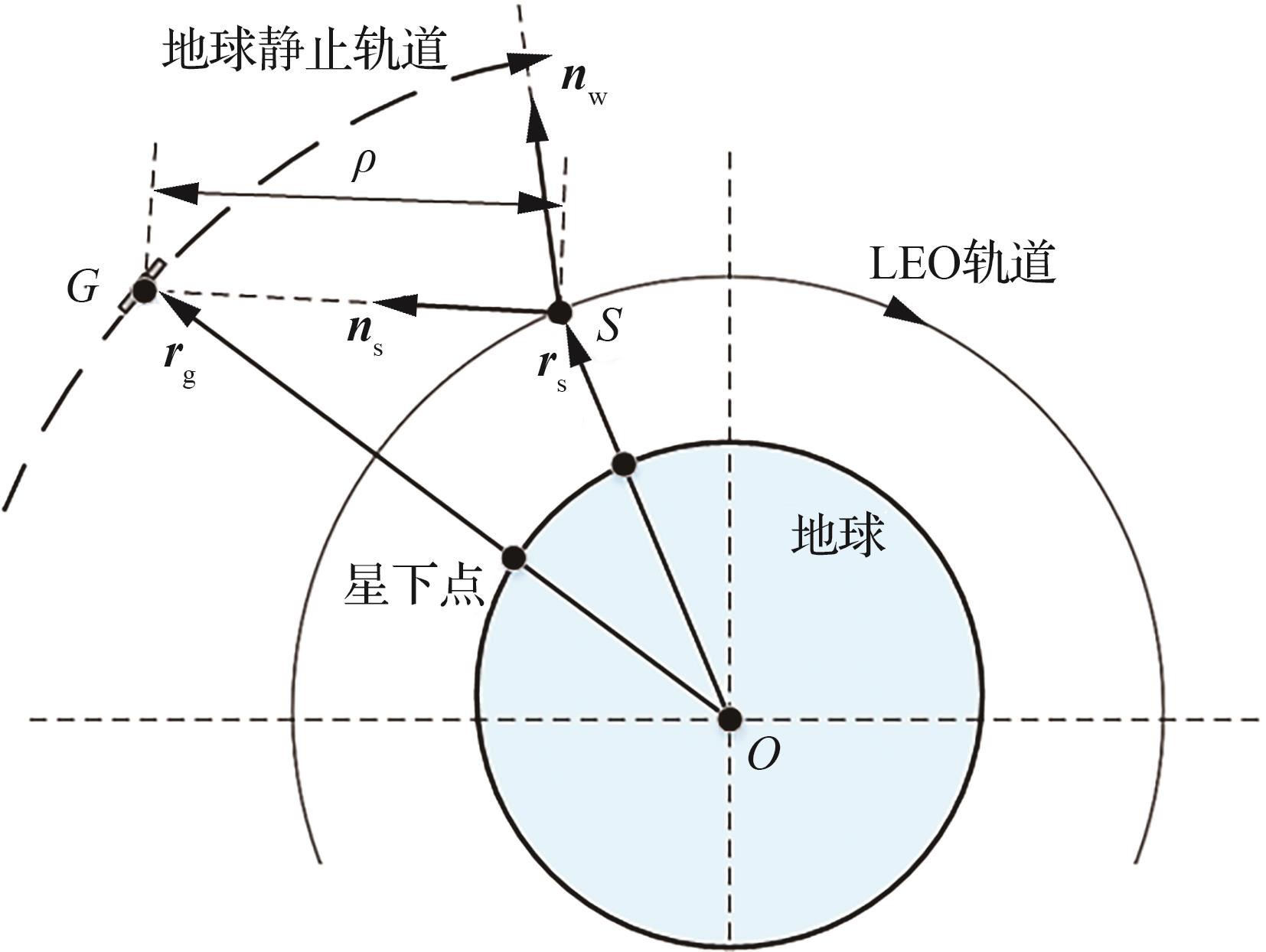
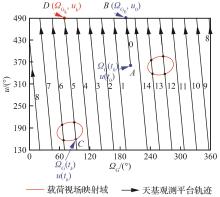
Fig.4
Relation of observation platform operation track and field of view mapping domain
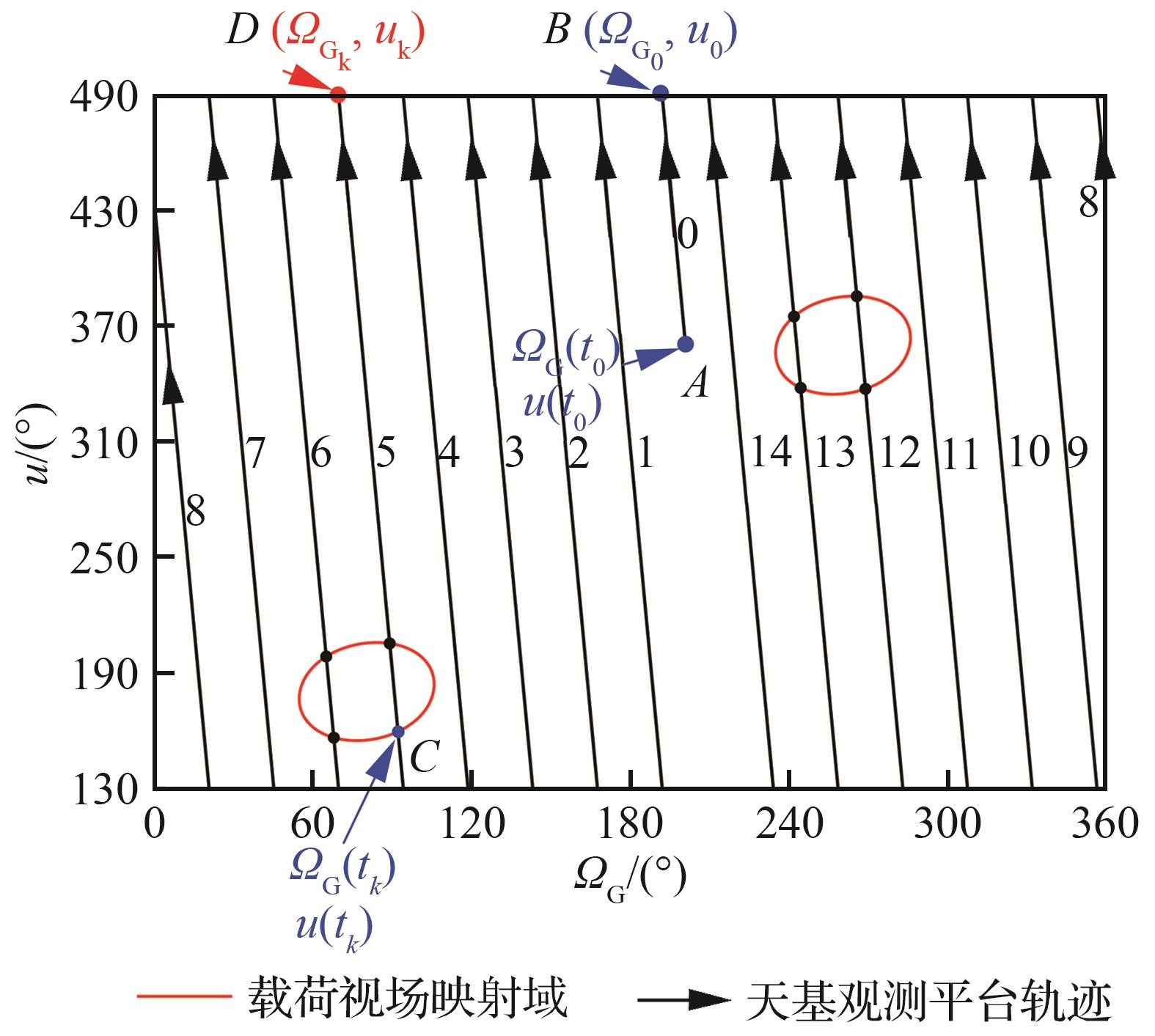
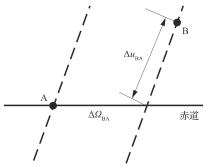
Fig.5
Schematic diagram of relative position relationship between Satellites A and B
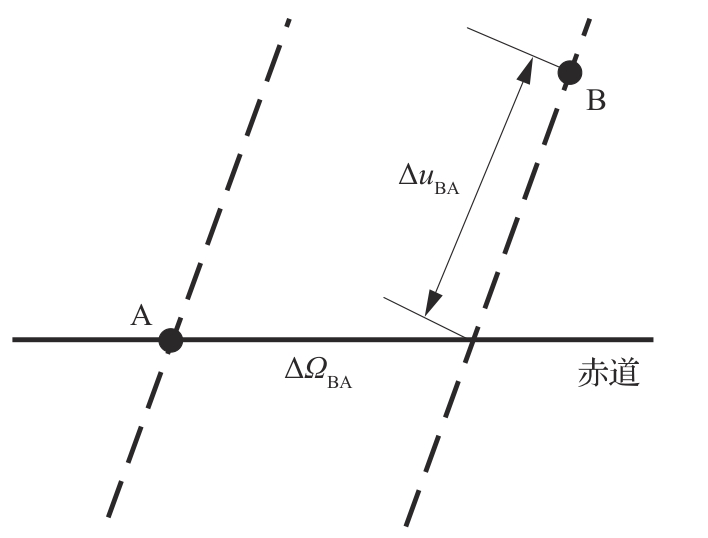
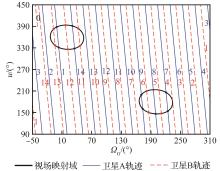
Fig.6
Relationship between two-dimensional plane motion trajectory of Satellites A/B and field of view mapping domain
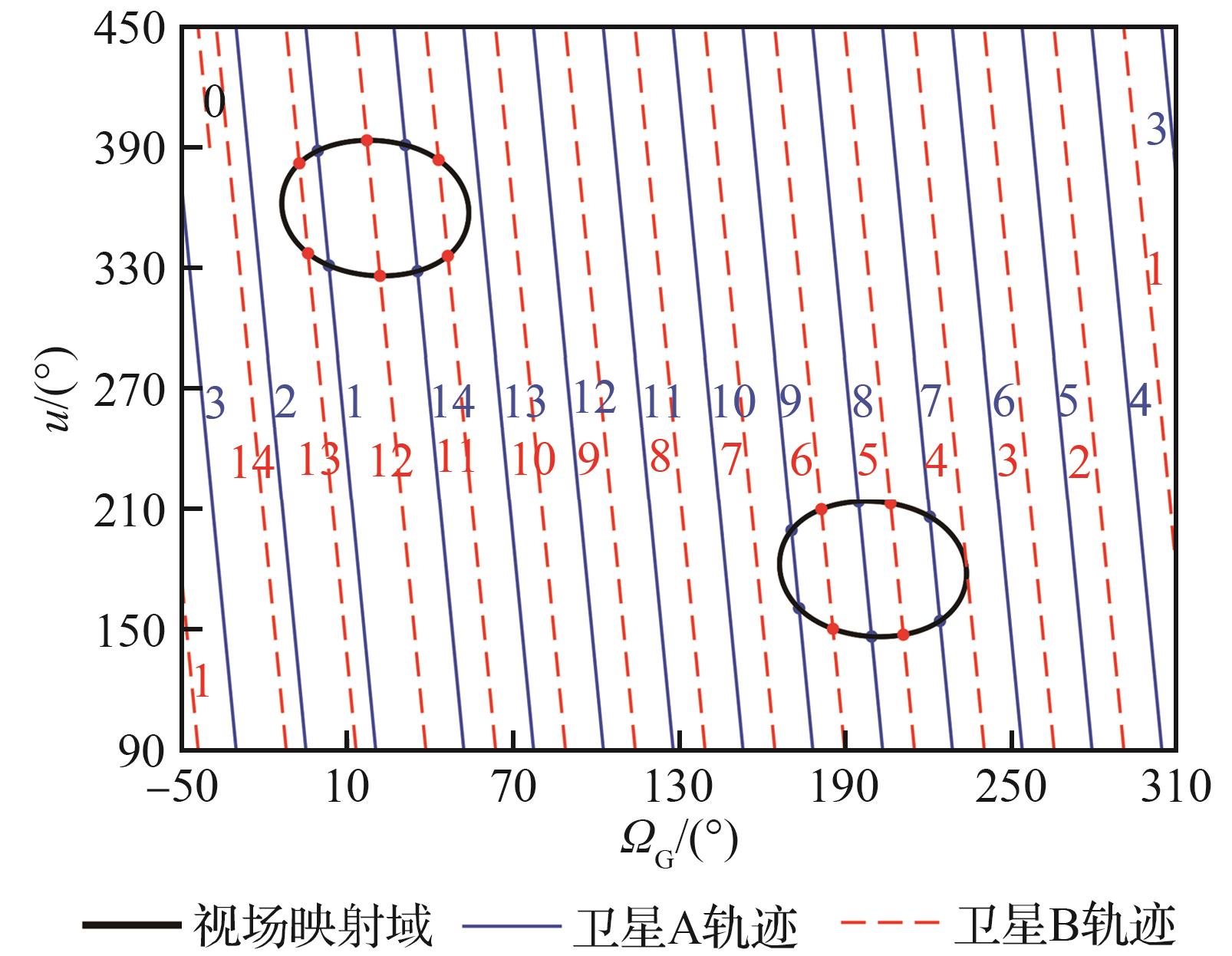
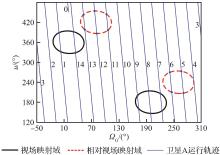
Fig.7
Relationship between two-dimensional plane motion trajectory of Satellite A and mapping domain
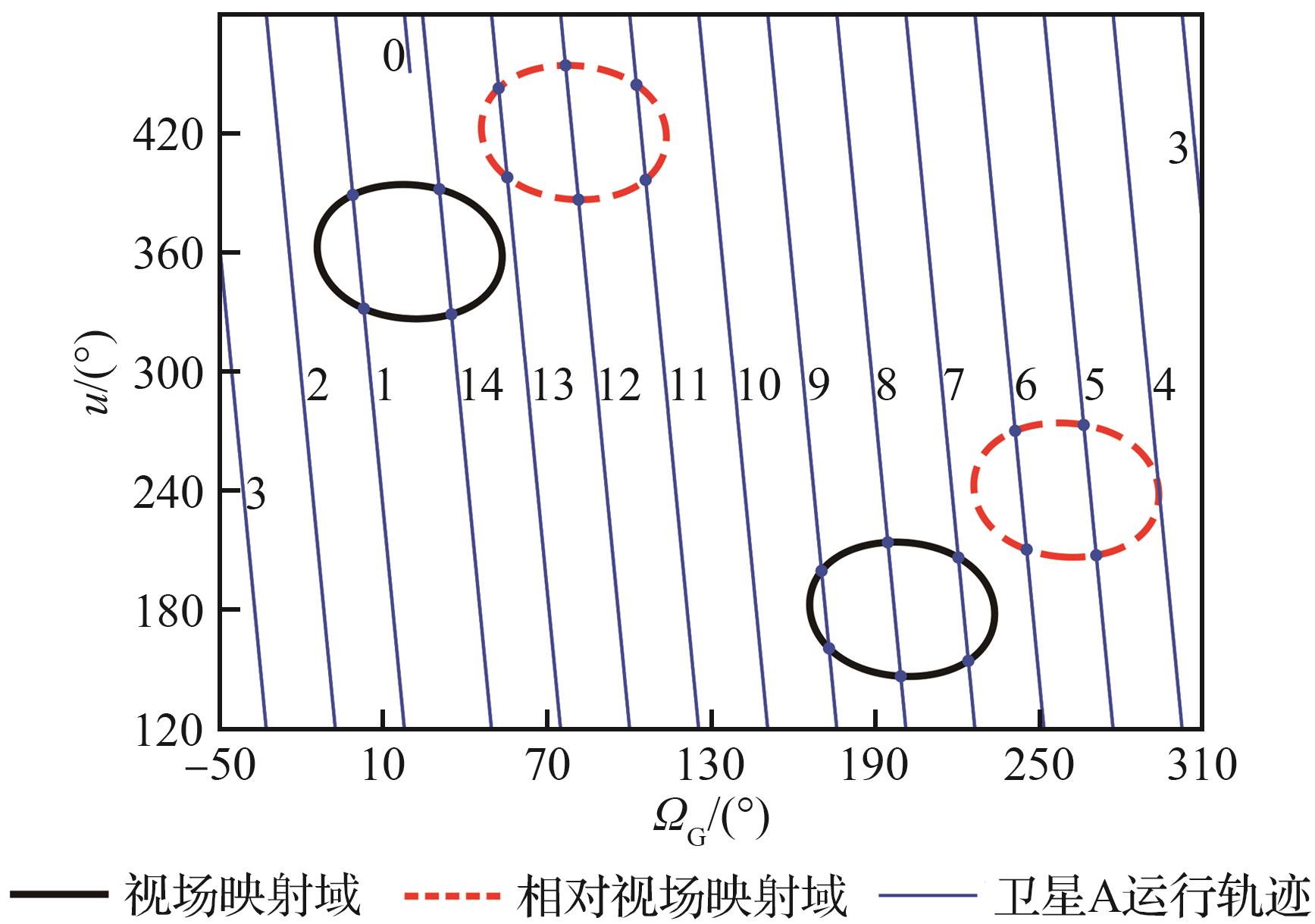

Table 1
Satellite orbit elements
| a/(km) | e | i/(°) | Ω/(°) | ω/(°) | u/(°) |
|---|---|---|---|---|---|
| 7 228.137 | 0 | 98.821 2 | 0 | 0 | 0 |
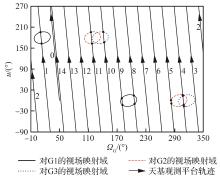
Fig.8
Field of view mapping of different GEO targets by space-based observation platforms
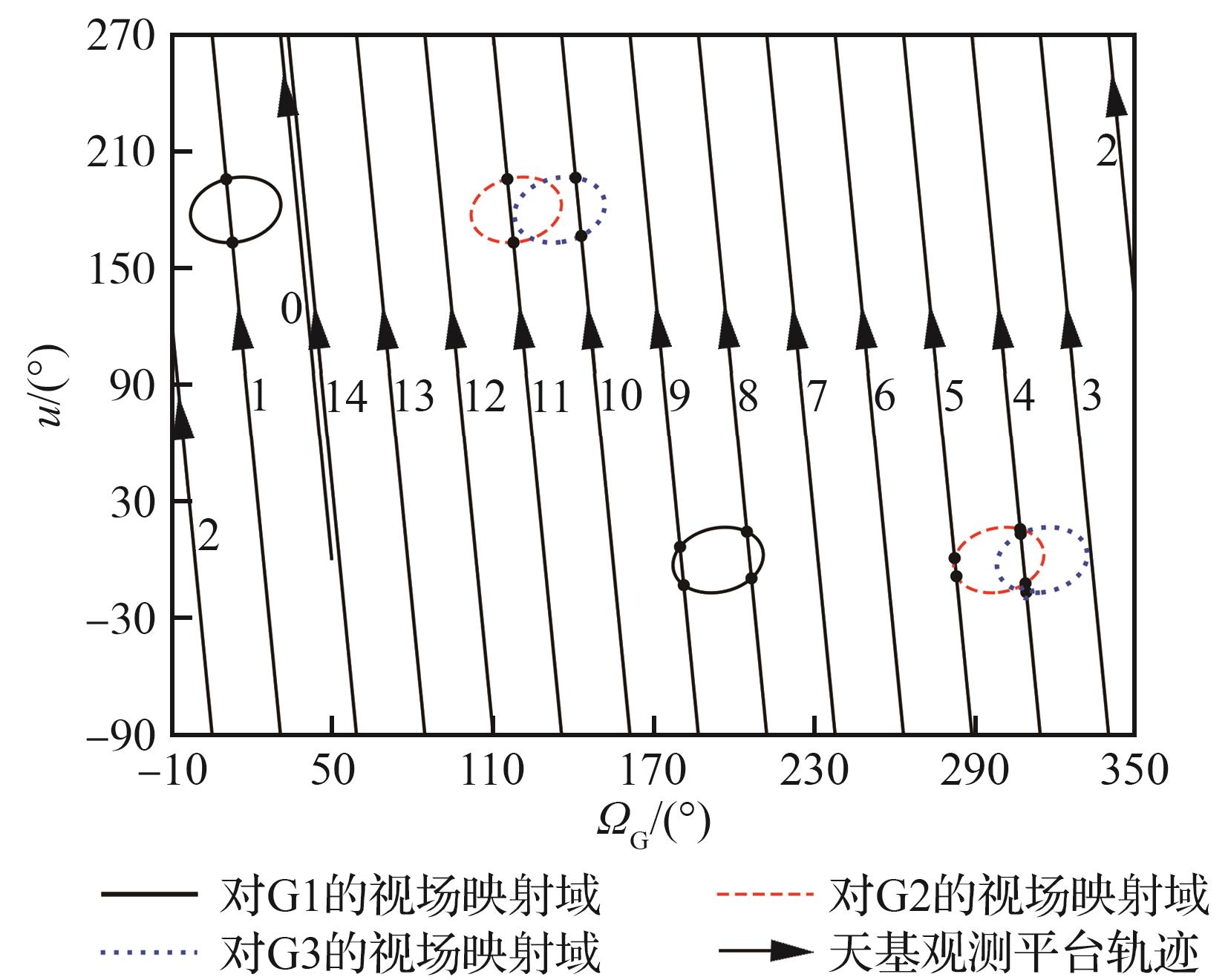
Table 2
Calculation results of visible window of different GEO targets
| 观测目标 | 轨迹相交法/s | STK/s | 绝对误差/s | ||||||
|---|---|---|---|---|---|---|---|---|---|
| 起始时间 | 结束时间 | 时长 | 起始时间 | 结束时间 | 时长 | ||||
| G1 | 8 898.724 | 9 451.855 | 553.131 | 8 898.724 | 9 451.847 | 553.123 | 0.003 8 | ||
| 48 822.748 | 49 229.816 | 407.068 | 48 822.715 | 49 229.806 | 407.091 | 0.020 9 | |||
| 54 886.151 | 55 220.208 | 334.057 | 54 886.167 | 55 220.169 | 334.002 | 0.027 3 | |||
| G2 | 24 288.166 | 24 761.931 | 473.765 | 24 288.148 | 24 761.926 | 473.778 | 0.011 1 | ||
| 30 472.220 | 30 630.776 | 158.556 | 30 472.259 | 30 630.722 | 158.463 | 0.046 7 | |||
| 70 126.774 | 70 680.748 | 553.974 | 70 126.758 | 70 680.724 | 553.966 | 0.019 9 | |||
| G3 | 24 210.072 | 24 719.911 | 509.839 | 24 210.072 | 24 719.897 | 509.825 | 0.007 2 | ||
| 64 061.240 | 64 569.883 | 508.643 | 64 061.207 | 64 569.866 | 508.658 | 0.024 7 | |||
Table 3
Comparison of results between long-term/short-term J2 orbit prediction models
观测 目标 | 数值积分结果/s | 误差/s | ||
|---|---|---|---|---|
| 起始时间 | 结束时间 | 起始时间 | 结束时间 | |
| G1 | 8 898.728 | 9 451.863 | ||
| 48 822.683 | 49 229.827 | 0.064 5 | ||
| 54 886.238 | 55 220.068 | 0.139 4 | ||
| G2 | 24 288.210 | 24 761.893 | 0.037 7 | |
| 30 472.099 | 30 630.911 | 0.120 6 | ||
| 70 126.754 | 70 680.704 | 0.019 8 | 0.044 1 | |
| G3 | 24 210.061 | 24 719.938 | 0.010 8 | |
| 64 061.166 | 64 569.878 | 0.073 3 | 0.004 8 | |
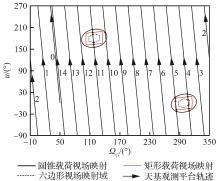
Fig.9
Field of view mapping domain of targets with different observation payloads
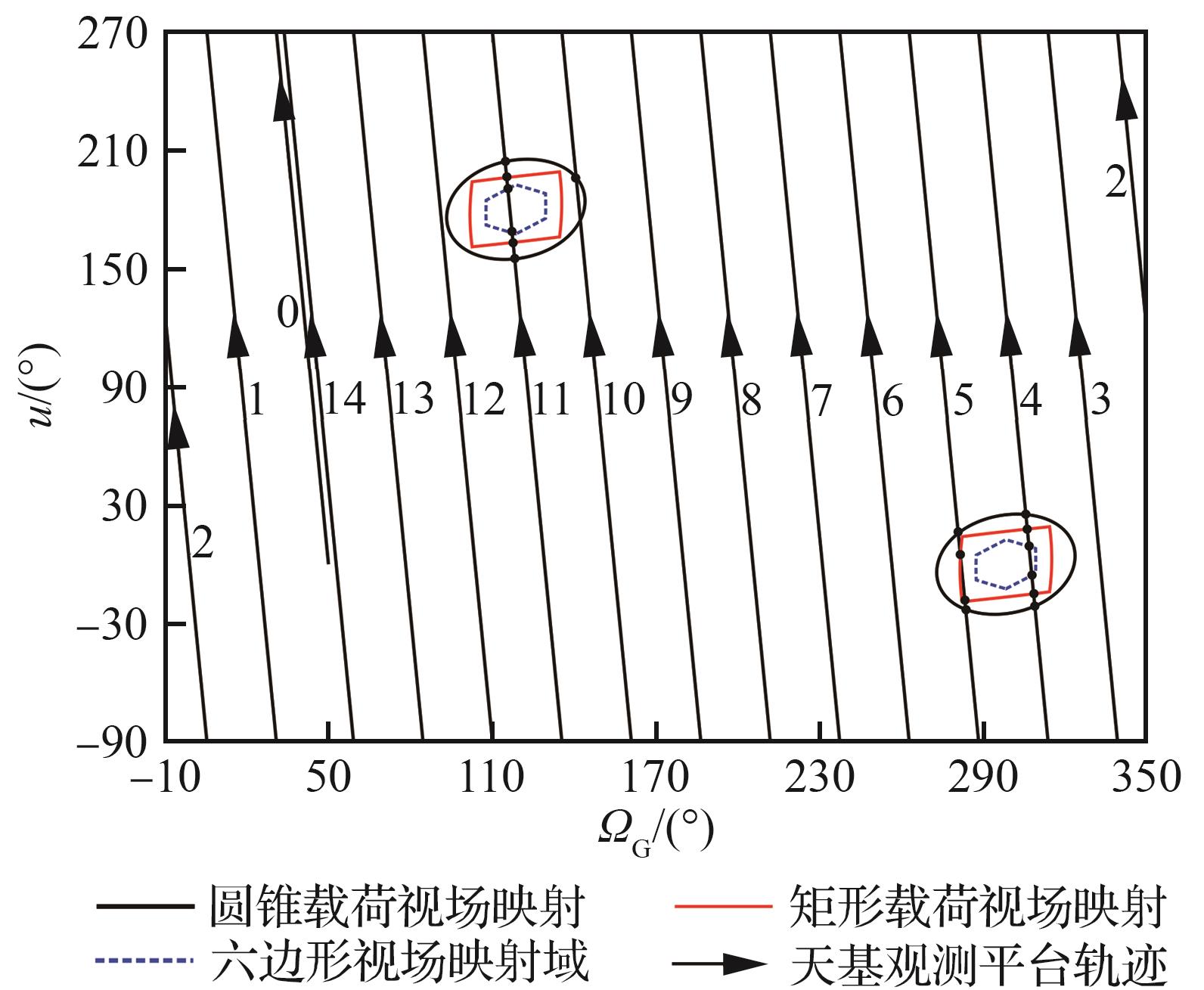
Table 4
Calculation results of visible window of GEO targets with different sensors
| 观测载荷 | 轨迹相交法/s | STK/s | 绝对误差/s | ||||
|---|---|---|---|---|---|---|---|
| 起始时间 | 结束时间 | 时长 | 起始时间 | 结束时间 | 时长 | ||
| 圆锥载荷 | 24 129.537 | 24 919.834 | 790.297 | 24 129.524 | 24 919.824 | 790.300 | 0.011 5 |
| 30 223.582 | 30 880.763 | 657.182 | 30 223.590 | 30 880.744 | 657.154 | 0.013 7 | |
| 64 196.040 | 64 563.843 | 367.803 | 64 195.974 | 64 563.840 | 367.866 | 0.034 4 | |
| 69 984.244 | 70 823.445 | 839.202 | 69 984.224 | 70 823.418 | 839.194 | 0.023 7 | |
| 矩形载荷 | 24 235.854 | 24 794.190 | 558.335 | 24 235.849 | 24 794.175 | 558.326 | 0.009 8 |
| 30 292.713 | 30 688.857 | 396.144 | 30 292.711 | 30 688.724 | 396.013 | 0.067 6 | |
| 70 126.269 | 70 686.049 | 559.780 | 70 126.252 | 70 686.027 | 559.775 | 0.019 2 | |
| 六边形载荷 | 24 395.352 | 24 644.376 | 249.023 | 24 395.336 | 24 644.369 | 249.033 | 0.011 3 |
| 70 209.336 | 70 588.334 | 378.998 | 70 209.329 | 70 588.304 | 378.975 | 0.018 6 | |
Table 5
Calculation results of visible window for quasi-GEO targets at different heights
| 目标-半长轴/km | 轨迹相交法/s | STK/s | 绝对误差/s | ||||
|---|---|---|---|---|---|---|---|
| 起始时间 | 结束时间 | 时长 | 起始时间 | 结束时间 | 时长 | ||
| G4-20000 | 5 868.464 | 6 566.342 | 697.878 | 5 868.454 | 6 566.337 | 697.884 | 0.007 5 |
| 21 007.266 | 21 864.039 | 856.773 | 21 007.262 | 21 864.028 | 856.766 | 0.007 9 | |
| 36 284.896 | 37 024.900 | 740.004 | 36 284.895 | 37 024.878 | 739.983 | 0.011 1 | |
| 76 280.168 | 76 978.319 | 698.151 | 76 280.123 | 76 978.292 | 698.170 | 0.035 6 | |
| G5-25000 | 11 757.050 | 12 568.449 | 811.399 | 11 757.056 | 12 568.436 | 811.380 | 0.009 7 |
| 27 345.479 | 27 992.436 | 646.957 | 27 345.452 | 27 992.427 | 646.975 | 0.017 9 | |
| 48 547.511 | 49 485.391 | 937.879 | 48 547.488 | 49 485.369 | 937.880 | 0.022 6 | |
| 69 907.449 | 70 833.634 | 926.185 | 69 907.439 | 70 833.607 | 926.168 | 0.018 1 | |
| G6-35000 | 12 045.128 | 12 681.837 | 636.709 | 12 045.106 | 12 681.838 | 636.731 | 0.011 3 |
| 17 811.749 | 18 875.710 | 1 063.961 | 17 811.748 | 18 875.699 | 1 063.951 | 0.005 5 | |
| 45 592.987 | 46 429.200 | 836.213 | 45 592.953 | 46 429.185 | 836.232 | 0.024 5 | |
| 51 488.188 | 52 504.129 | 1 015.940 | 51 488.189 | 52 504.105 | 1 015.916 | 0.012 3 | |
| 79 182.383 | 80 139.768 | 957.385 | 79 182.342 | 80 139.736 | 957.394 | 0.035 9 | |
| 85 181.964 | 86 112.876 | 930.912 | 85 181.965 | 86 112.844 | 930.879 | 0.016 3 | |
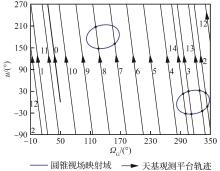
Fig.10
Coverage analysis results of quasi GEO target with semi major axis of 35 000 km
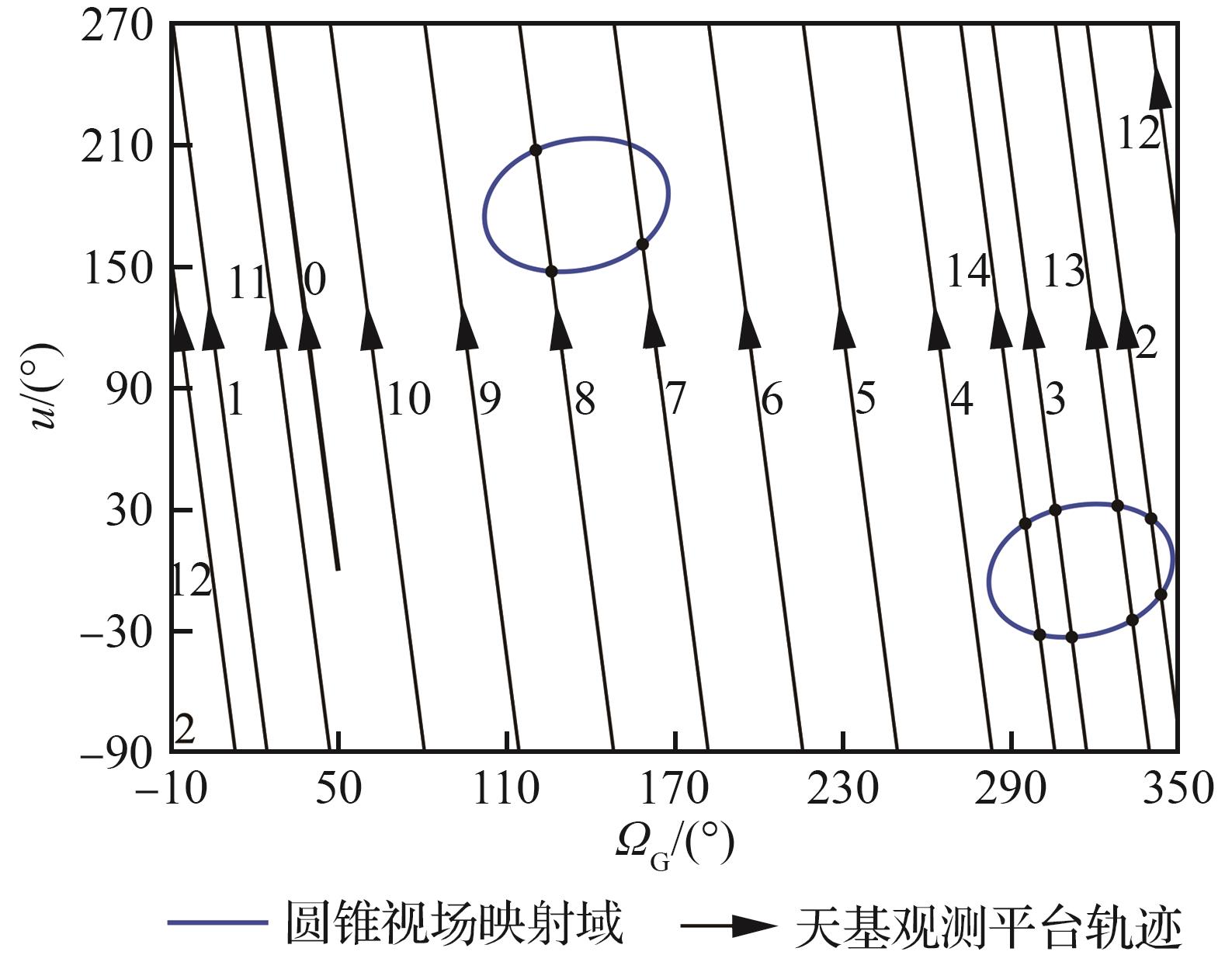
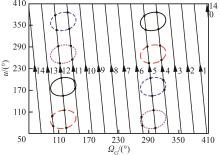
Fig.11
Field of view mapping results of constellations with conical sensors to GEO targets
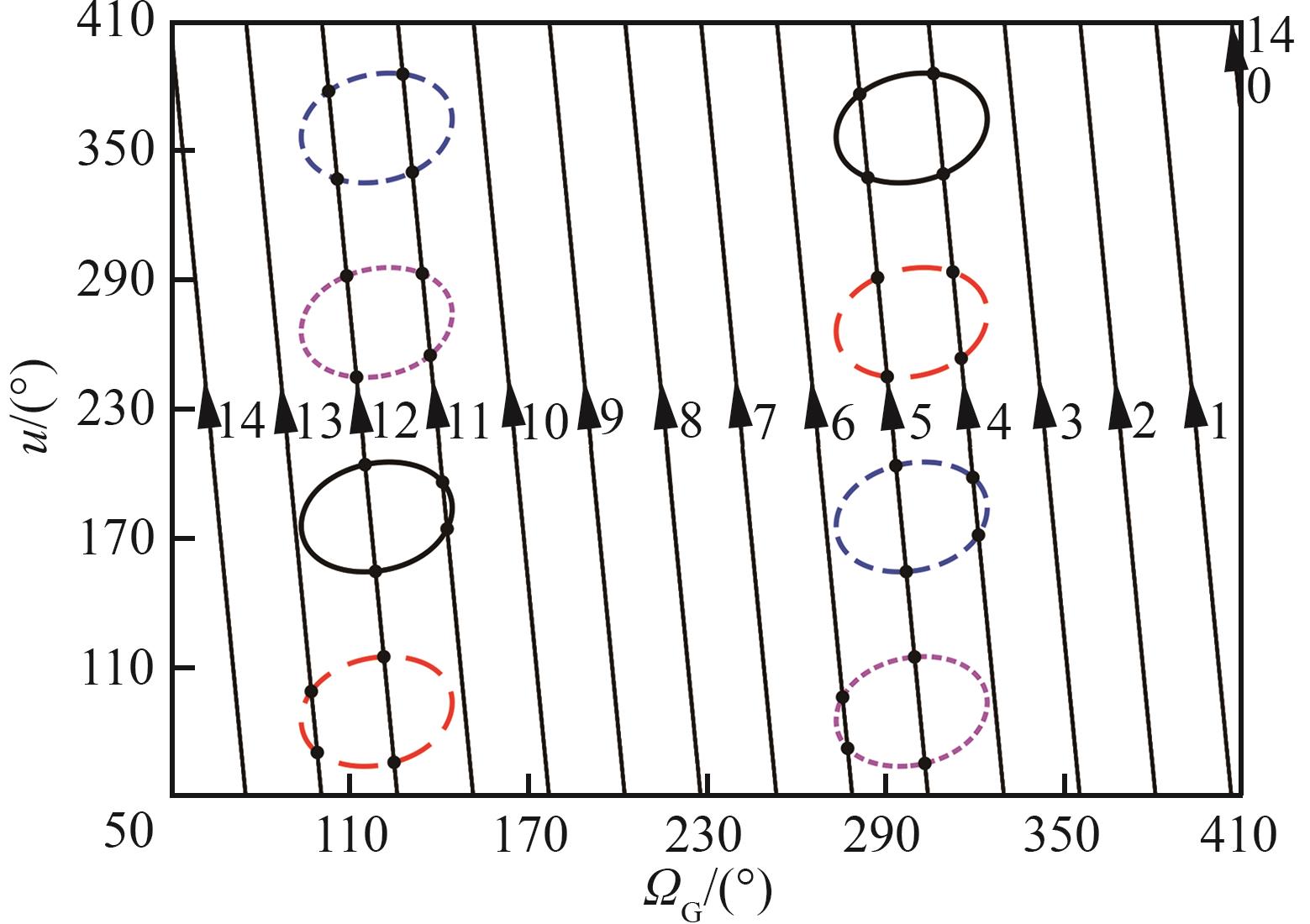
Table 6
Calculation results of visible window of constellations for GEO targets
| 卫星序号 | 轨道圈次 | 轨迹相交法/s | STK/s | 绝对误差/s | ||||
|---|---|---|---|---|---|---|---|---|
| 起始时间 | 结束时间 | 时长 | 起始时间 | 结束时间 | 时长 | |||
| Sat1 | 4 | 24 129.537 | 24 919.834 | 790.297 | 24 129.524 | 24 919.824 | 790.300 | 0.011 4 |
| 5 | 30 223.582 | 30 880.763 | 657.181 | 30 223.590 | 30 880.744 | 657.154 | 0.013 6 | |
| 11 | 64 196.039 | 64 563.844 | 367.805 | 64 195.974 | 64 563.840 | 367.866 | 0.034 3 | |
| 12 | 69 984.243 | 70 823.445 | 839.202 | 69 984.224 | 70 823.418 | 839.194 | 0.023 6 | |
| Sat2 | 4 | 22 678.828 | 23 358.310 | 679.482 | 22 678.813 | 23 358.302 | 679.489 | 0.011 3 |
| 5 | 28 656.650 | 29 435.877 | 779.227 | 28 656.649 | 29 435.860 | 779.212 | 0.008 8 | |
| 12 | 68 480.607 | 69 312.255 | 831.648 | 68 480.584 | 69 312.230 | 831.646 | 0.023 7 | |
| 13 | 74 681.357 | 75 162.086 | 480.729 | 74 681.381 | 75 162.039 | 480.659 | 0.035 2 | |
| Sat3 | 4 | 21 287.393 | 21 741.185 | 453.792 | 21 287.366 | 21 741.189 | 453.824 | 0.015 7 |
| 5 | 27 122.145 | 27 956.319 | 834.175 | 27 122.140 | 27 956.304 | 834.164 | 0.009 6 | |
| 11 | 67 003.471 | 67 775.456 | 771.985 | 67 003.439 | 67 775.431 | 771.992 | 0.028 4 | |
| 12 | 73 071.305 | 73 763.199 | 691.894 | 73 071.309 | 73 763.166 | 691.856 | 0.018 7 | |
| Sat4 | 5 | 25 613.016 | 26 450.609 | 837.593 | 25 613.010 | 26 450.597 | 837.587 | 0.008 7 |
| 6 | 31 854.590 | 32 257.657 | 403.067 | 31 854.613 | 32 257.622 | 403.010 | 0.028 7 | |
| 11 | 65 562.310 | 66 205.068 | 642.758 | 65 562.265 | 66 205.048 | 642.783 | 0.032 0 | |
| 12 | 71 512.819 | 72 309.226 | 796.406 | 71 512.811 | 72 309.200 | 796.389 | 0.016 9 | |
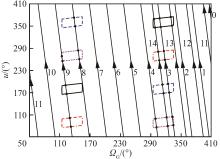
Fig.12
Field of view mapping results of constellations with rectangular sensors to quasi-GEO targets
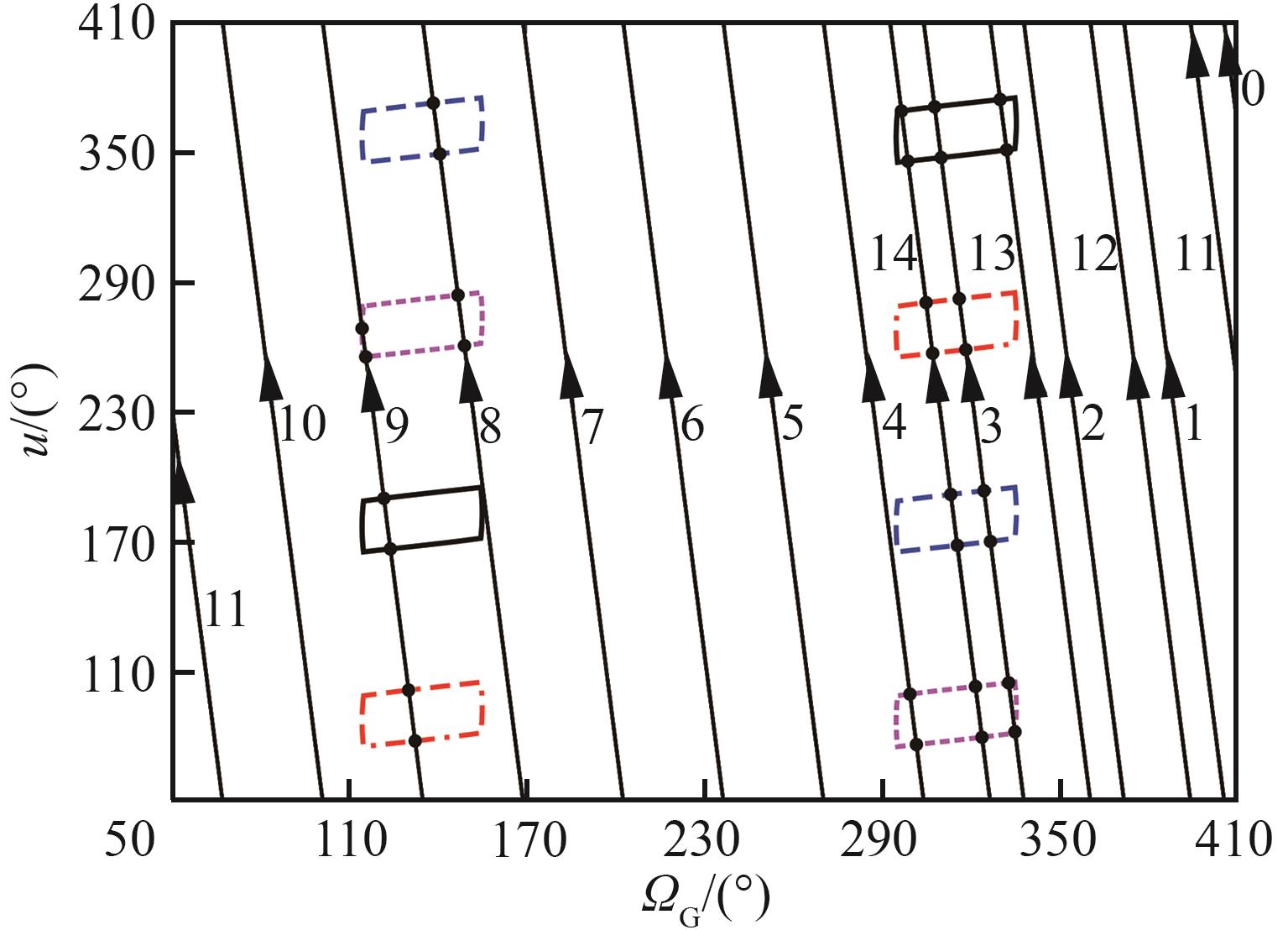
Table 7
Calculation results of visible window of constellations for quasi-GEO targets
| 卫星序号 | 轨道圈次 | 轨迹相交法/s | STK/s | 绝对误差/s | ||||
|---|---|---|---|---|---|---|---|---|
| 起始时间 | 结束时间 | 时长 | 起始时间 | 结束时间 | 时长 | |||
| Sat1 | 3 | 18 152.227 | 18 551.807 | 399.580 | 18 152.225 | 18 551.797 | 399.573 | 0.005 7 |
| 9 | 51 813.309 | 52 211.144 | 397.835 | 51 813.300 | 52 211.132 | 397.832 | 0.010 1 | |
| 13 | 79 441.024 | 79 836.821 | 395.797 | 79 440.991 | 79 836.785 | 395.794 | 0.034 6 | |
| 14 | 85 474.375 | 85 869.285 | 394.909 | 85 474.362 | 85 869.270 | 394.908 | 0.013 8 | |
| Sat2 | 3 | 16 643.157 | 17 043.313 | 400.156 | 16 643.152 | 17 043.302 | 400.150 | 0.007 9 |
| 9 | 50 303.785 | 50 703.814 | 400.030 | 50 303.772 | 50 703.799 | 400.027 | 0.014 1 | |
| 14 | 83 964.781 | 84 363.608 | 398.827 | 83 964.765 | 84 363.587 | 398.822 | 0.018 0 | |
| Sat3 | 3 | 15 135.510 | 15 533.862 | 398.352 | 15 135.504 | 15 533.853 | 398.349 | 0.007 1 |
| 8 | 48 795.079 | 49 194.910 | 399.831 | 48 795.065 | 49 194.889 | 399.824 | 0.017 0 | |
| 14 | 82 455.430 | 82 855.655 | 400.225 | 82 455.405 | 82 855.629 | 400.224 | 0.025 0 | |
| Sat4 | 3 | 13 639.152 | 14 024.312 | 385.159 | 13 639.084 | 14 024.301 | 385.217 | 0.039 7 |
| 4 | 19 661.833 | 20 058.397 | 396.564 | 19 661.833 | 20 058.392 | 396.559 | 0.002 7 | |
| 8 | 47 288.114 | 47 685.332 | 397.218 | 47 288.094 | 47 685.308 | 397.214 | 0.021 5 | |
| 9 | 53 322.794 | 53 546.109 | 223.314 | 53 322.788 | 53 545.921 | 223.133 | 0.096 9 | |
| 14 | 80 947.186 | 81 346.435 | 399.249 | 80 947.156 | 81 346.403 | 399.247 | 0.030 7 | |
| [1] | CAI H, YANG Y, GEHLY S, et al. Sensor tasking for search and catalog maintenance of geosynchronous space objects[J]. Acta Astronautica, 2020, 175: 234-248. |
| [2] | 郝雅楠, 陈杰, 祝彬, 等. 美军地基空间态势感知系统的现状与趋势[J]. 国防科技工业, 2019(3): 34-37. |
| HAO Y N, CHEN J, ZHU B, et al. Present situation and trend of ground-based space situational awareness system of US military[J]. Defence Science & Technology Industry, 2019(3): 34-37 (in Chinese). | |
| [3] | 宫经刚, 宁宇, 吕楠. 美国高轨天基态势感知技术发展与启示[J]. 空间控制技术与应用, 2021, 47(1): 1-7. |
| GONG J G, NING Y, LYU N. Development and enlightenment of space based situational awareness technology for high orbit in the United States[J]. Aerospace Control and Application, 2021, 47(1): 1-7 (in Chinese). | |
| [4] | HU Y P, LI K B, LIANG Y G, et al. Review on strategies of space-based optical space situational awareness[J]. Journal of Systems Engineering and Electronics, 2021, 32(5): 1152-1166. |
| [5] | WANG Y D, SUN S M, LI L. Adaptively robust unscented Kalman filter for tracking a maneuvering vehicle[J]. Journal of Guidance, Control, and Dynamics, 2014, 37(5): 1696-1701. |
| [6] | YU J Y, HUANG D, LI W J, et al. Parallel accelerated computing architecture for dim target tracking on-board[J]. Computational Intelligence, 2024, 40(1): e12604. |
| [7] | 范志涵, 蔡亚星, 李凤簪. 针对GEO目标的美国天基态势感知技术发展研究[J]. 航天器工程, 2019, 28(6): 87-95. |
| FAN Z H, CAI Y X, LI F Z. Study on development of American space-based situational awareness technology for GEO objects[J]. Spacecraft Engineering, 2019, 28(6): 87-95 (in Chinese). | |
| [8] | 刘付成, 叶立军. 基于多星编队的GEO目标巡视策略[J]. 空间控制技术与应用, 2022, 48(3): 29-38. |
| LIU F C, YE L J. Patrol strategy of the GEO targets based on muti-satellite formation[J]. Aerospace Control and Application, 2022, 48(3): 29-38 (in Chinese). | |
| [9] | 胡海鹰, 朱永生, 江新华. 美国高轨空间安全发展态势及其关键技术[J]. 空间控制技术与应用, 2022, 48(3): 1-10. |
| HU H Y, ZHU Y S, JIANG X H. The development trend of high earth orbit space security and key technologies[J]. Aerospace Control and Application, 2022, 48(3): 1-10 (in Chinese). | |
| [10] | 伍国华, 王天宇. 基于自适应模拟退火的大规模星座测控资源调度算法[J]. 航空学报, 2023, 44(12): 327759. |
| WU G H, WANG T Y. Large-scale constellation TT & C resource scheduling algorithm based on adaptive simulated annealing[J]. Acta Aeronautica et Astronautica Sinica, 2023, 44(12): 327759 (in Chinese). | |
| [11] | 李恒伟, 罗启章, 顾轶, 等. 基于滚动时域策略的中继卫星多目标动态调度优化方法[J]. 航空学报, 2024, 45(16): 329706. |
| LI H W, LUO Q Z, GU Y, et al. Multi-objective dynamic scheduling optimization method for relay satellites based on rolling horizon strategy[J]. Acta Aeronautica et Astronautica Sinica, 2024, 45(16): 329706 (in Chinese). | |
| [12] | 李宗凌, 龙腾, 赵保军, 等. 面向预警场景的大规模星座协同调度标准建模与求解方法[J]. 航空学报, 2024, 45(22): 330181. |
| LI Z L, LONG T, ZHAO B J, et al. Standard modeling and solving methods for large-scale constellation collaborative scheduling for early warning scenarios[J]. Acta Aeronautica et Astronautica Sinica, 2024, 45(22): 330181 (in Chinese). | |
| [13] | CAI H, GEHLY S, YANG Y, et al. Multisensor tasking using analytical rényi divergence in labeled multi-bernoulli filtering[J]. Journal of Guidance, Control, and Dynamics, 2019, 42(9): 2078-2085. |
| [14] | HAN C, GAO X J, SUN X C. Rapid satellite-to-site visibility determination based on self-adaptive interpolation technique[J]. Science China Technological Sciences, 2017, 60(2): 264-270. |
| [15] | GU Y, HAN C, WANG X W. A Kriging based framework for rapid satellite-to-site visibility determination[C]∥2019 IEEE 10th International Conference on Mechanical and Aerospace Engineering (ICMAE).Piscataway: IEEE, 2019: 262-267. |
| [16] | HAN C, ZHANG Y J, BAI S Z. Geometric analysis of ground-target coverage from a satellite by field-mapping method[J]. Journal of Guidance, Control, and Dynamics, 2021, 44(8): 1469-1480. |
| [17] | WANG X W, HAN C, YANG P B, et al. Onboard satellite visibility prediction using metamodeling based framework[J]. Aerospace Science and Technology, 2019, 94: 105377. |
| [18] | LAWTON J A. Numerical method for rapidly determining satellite-satellite and satellite-ground station in-view periods[J]. Journal of Guidance, Control, and Dynamics, 1987, 10(1): 32-36. |
| [19] | SUN X, CUI H, HAN C, et al. APCHI technique for rapidly and accurately predicting multi-restriction satellite visibility[C]∥Proceedings of the 22nd AAS/AIAA Space Flight Mechanics Meeting. San Francisco: AAS, 2012: 212-216. |
| [20] | LI S, HOU K H, CHENG C Q, et al. A space-interconnection algorithm for satellite constellation based on spatial grid model[J]. Remote Sensing, 2020, 12(13): 2131. |
| [21] | YANG H W, ZHANG Y, LI S, et al. Rapid determination of low-earth-orbit occultation-event windows[J]. Journal of Guidance, Control, and Dynamics, 2024, 47(5): 979-985. |
| [22] | LI J, ZHANG G, TIAN L F. Orbit design and optimization for point target revisit in LEO-LEO occultation[J]. Journal of Aerospace Engineering, 2024, 37(6): 04024083. |
| [23] | ZHANG Y J, HAN C, SUN W, et al. Geometric-based method for regional-target coverage analysis[J]. IEEE Transactions on Aerospace and Electronic Systems, 2023, 59(3): 2252-2265. |
| [24] | 顾轶, 孙秀聪, 范黎明, 等. 基于仰角视元模型的星地快速覆盖分析方法[J]. 航空学报, 2024, 45(23): 330372. |
| GU Y, SUN X C, FAN L M, et al. A rapid satellite-ground coverage analysis method based on elevation view element model[J]. Acta Aeronautica et Astronautica Sinica, 2024, 45(23): 330372 (in Chinese). | |
| [25] | YU J Y, HUANG D, LI W J, et al. Dim staring debris targets detection method with dense long trailing star[J]. Applied Sciences, 2023, 13(16): 9148. |
| [26] | LIU D, ZONG Q, ZHANG X Y, et al. Enhancing space-based situational awareness: real-time observation of dynamic targets with meta-cooperative-scheduling net[J]. IEEE Transactions on Aerospace and Electronic Systems, 2024, 60(6): 8198-8211. |
| [27] | YANG H W, ZHANG Y Y, BAI X L, et al. Real-time satellite constellation scheduling for event-triggered cooperative tracking of space objects[J]. IEEE Transactions on Aerospace and Electronic Systems, 2024, 60(2): 2169-2182. |
| [28] | 张洪波. 航天器轨道力学理论与方法[M]. 北京: 国防工业出版社, 2015: 210-214. |
| ZHANG H B. Theories and methods of spacecraft orbital mechanics[M]. Beijing: National Defense Industry Press, 2015: 210-214 (in Chinese). |
| [1] | Honghong ZHANG, Wenhua LI, Jiayi ZHENG, Hongbin LIU, Peng ZHANG, Peng GAO, Xusheng GAN. Manned/unmanned aerial vehicle cooperative combat system: Concepts, technologies, and challenges [J]. Acta Aeronautica et Astronautica Sinica, 2024, 45(15): 29653-029653. |
| [2] | PEI Binbin, XU Haojun, XUE Yuan, LI Zhe, LIU Dongliang. Development of flight safety window in icing conditions based on complex dynamics simulation [J]. ACTA AERONAUTICAET ASTRONAUTICA SINICA, 2017, 38(2): 520695-520708. |
| Viewed | ||||||
|
Full text |
|
|||||
|
Abstract |
|
|||||
Address: No.238, Baiyan Buiding, Beisihuan Zhonglu Road, Haidian District, Beijing, China
Postal code : 100083
E-mail:hkxb@buaa.edu.cn
Total visits: 6658907 Today visits: 1341All copyright © editorial office of Chinese Journal of Aeronautics
All copyright © editorial office of Chinese Journal of Aeronautics
Total visits: 6658907 Today visits: 1341

 CJA
CJA
