Acta Aeronautica et Astronautica Sinica ›› 2025, Vol. 46 ›› Issue (15): 131530.doi: 10.7527/S1000-6893.2025.31530
• Fluid Mechanics and Flight Mechanics • Previous Articles
Haocheng SHU1,2, Xiaozhi KONG1,2( ), Wenbin GONG1,2, Gaowen LIU1,2, Aqiang LIN1,2
Received:2024-11-13
Revised:2024-12-27
Accepted:2025-02-13
Online:2025-03-07
Published:2025-02-28
Contact:
Xiaozhi KONG
E-mail:kongxiaozhi_lx@163.com
Supported by:CLC Number:
Haocheng SHU, Xiaozhi KONG, Wenbin GONG, Gaowen LIU, Aqiang LIN. Effects of swirl flow and rotational Reynolds number on sealing performance of turbine rim[J]. Acta Aeronautica et Astronautica Sinica, 2025, 46(15): 131530.
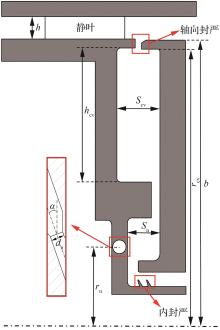
Fig.1
Axial rim seal geometry model
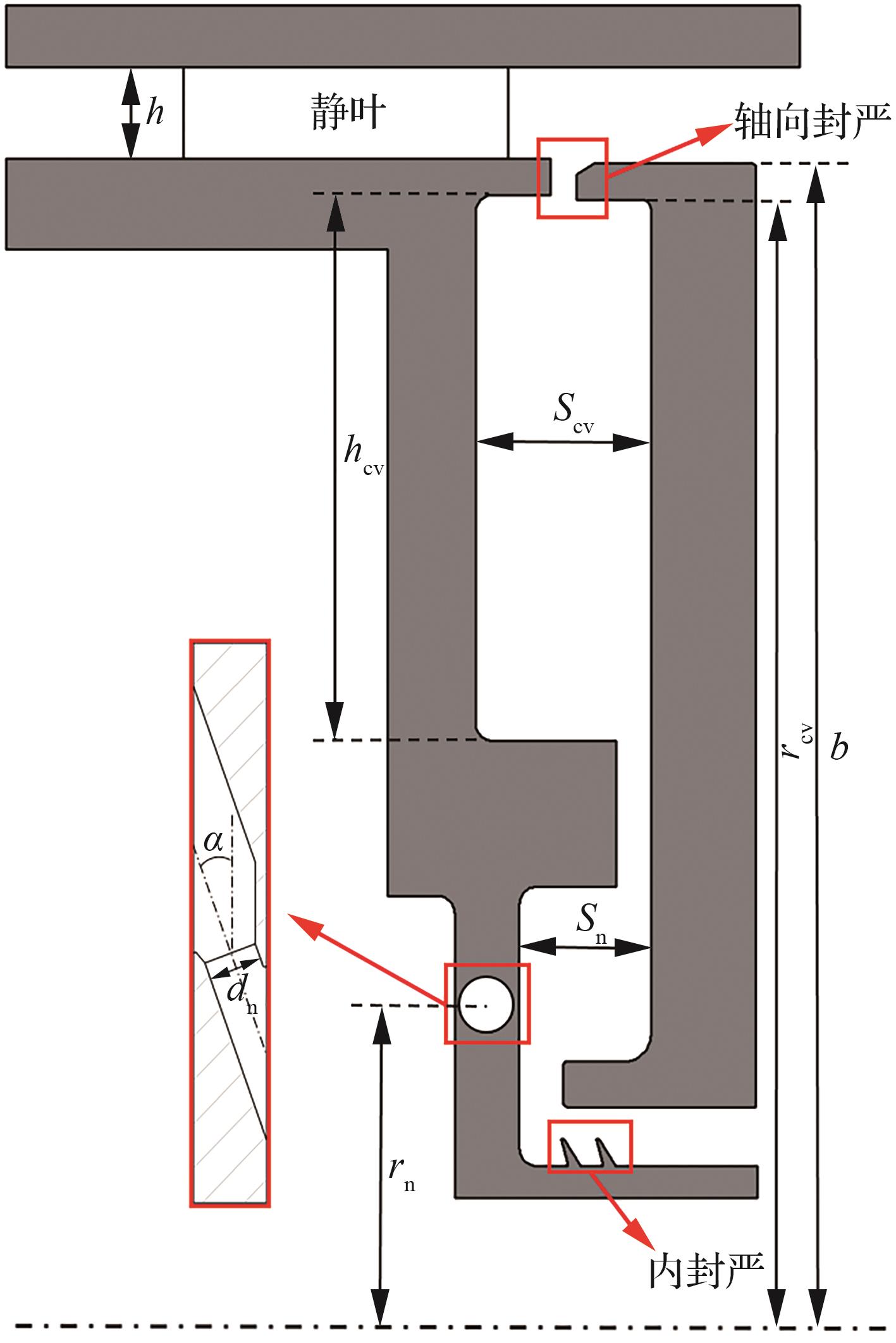
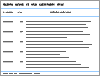
Table 1
Geometry parameters of the rim seal
| 参数 | 数值 |
|---|---|
| 涡轮盘缘半径b/mm | 312.8 |
| 涡轮导叶高度h/mm | 10 |
| 预旋喷嘴出气角度α/(°) | 70 |
| 无量纲喷嘴喉部直径dn/b | 0.017 3 |
| 无量纲预旋半径rn/b | 0.704 3 |
| 无量纲预旋腔宽度Sn/b | 0.048 0 |
| 无量纲盘腔外环半径rcv/b | 0.988 8 |
| 无量纲盘腔宽度Scv/b | 0.063 9 |
| 无量纲盘腔高度hcv/b | 0.191 8 |
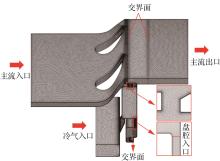
Fig.2
Grid of the rim seal
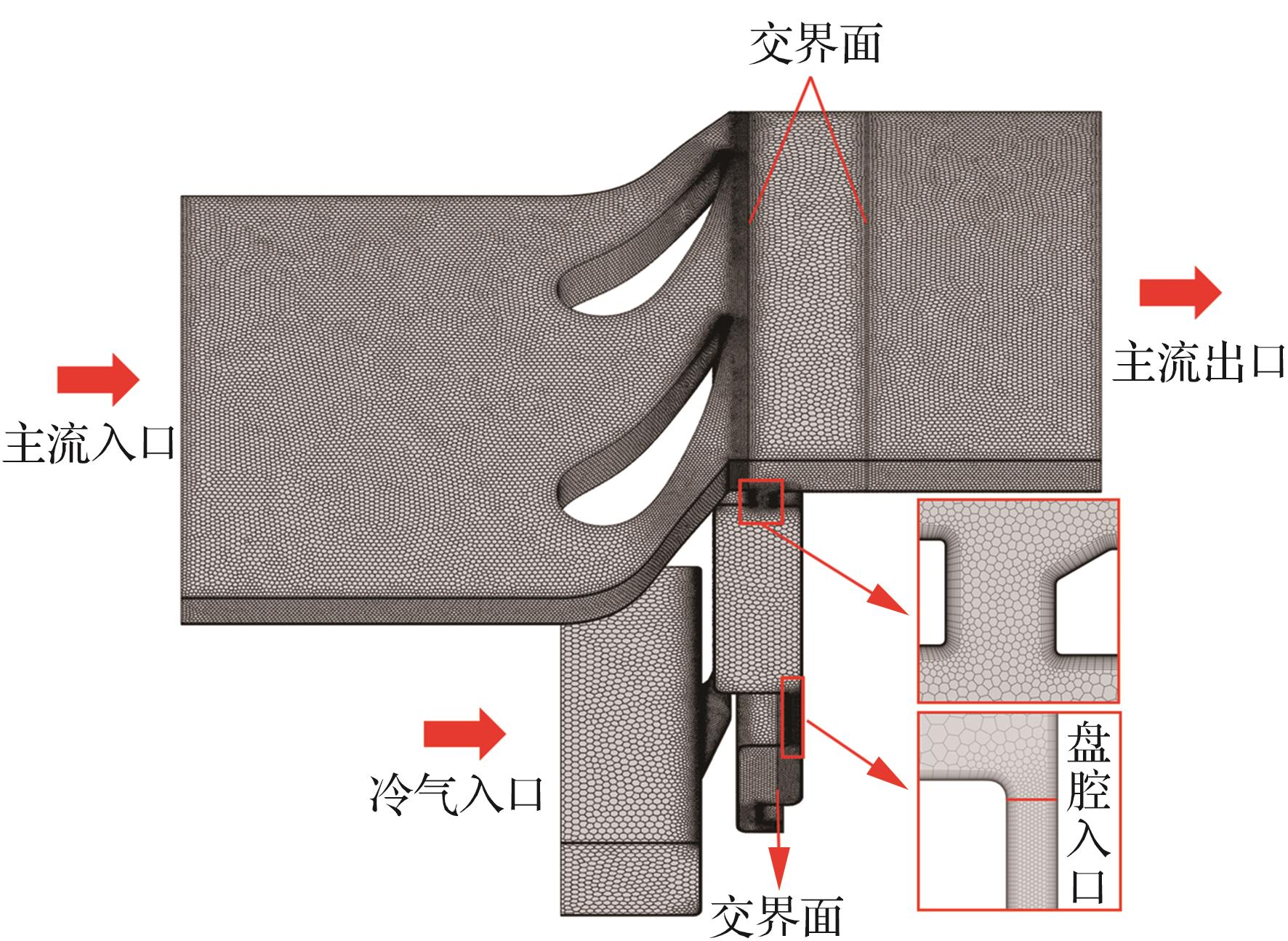
Table 2
Calculation cases and boundary conditions
| 边界条件 | 工况1~5 | 工况6~11 |
|---|---|---|
| 主流进口总压Pt,in/kPa | 131.50 | 129.56 |
| 主流进口总温Tt,in/K | 336 | 332 |
| 冷气进口总压Tt,c/K | 296 | 292 |
| 盘腔进口冷气旋转比β | 0.36~1.08 | |
| 旋转雷诺数Reφ | 1.39×10⁶~4.87×10⁶ |
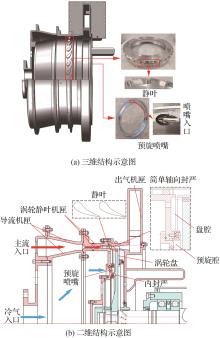
Fig.3
Rim seal test rig
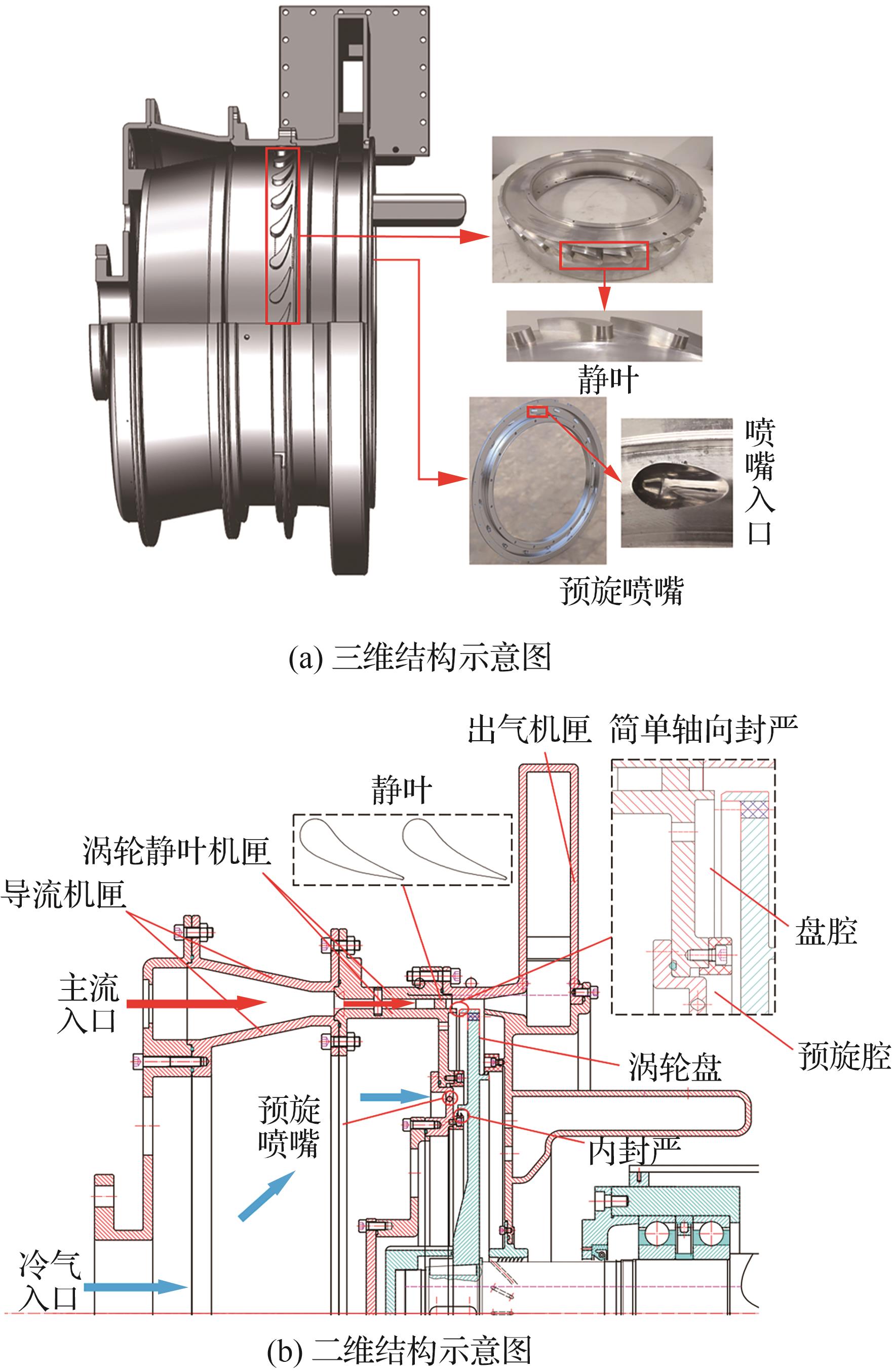
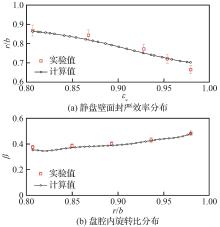
Fig.4
Comparison between numerical results and experimental data
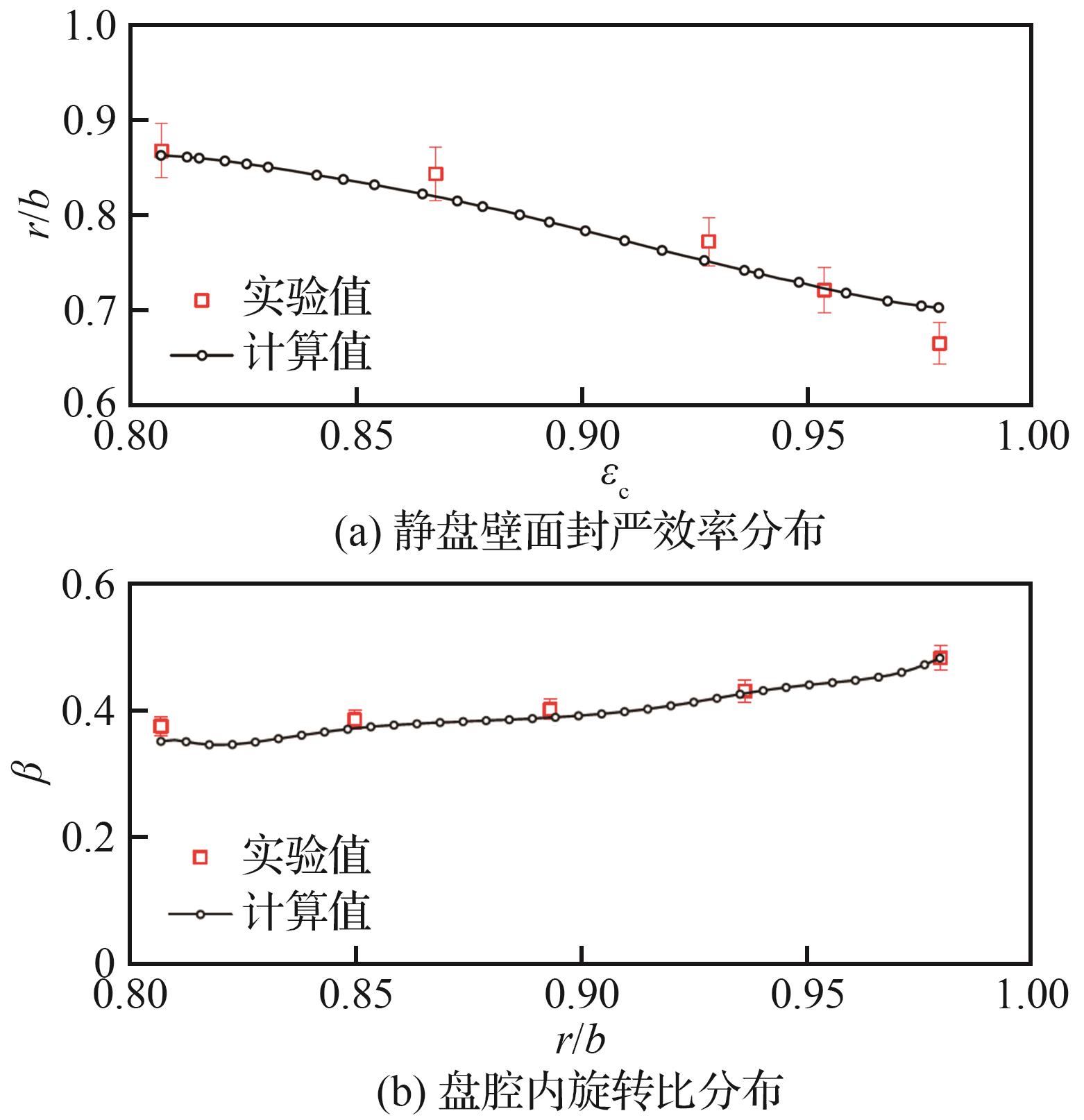
Fig.5
Flow field in disc cavity for different swirl ratios
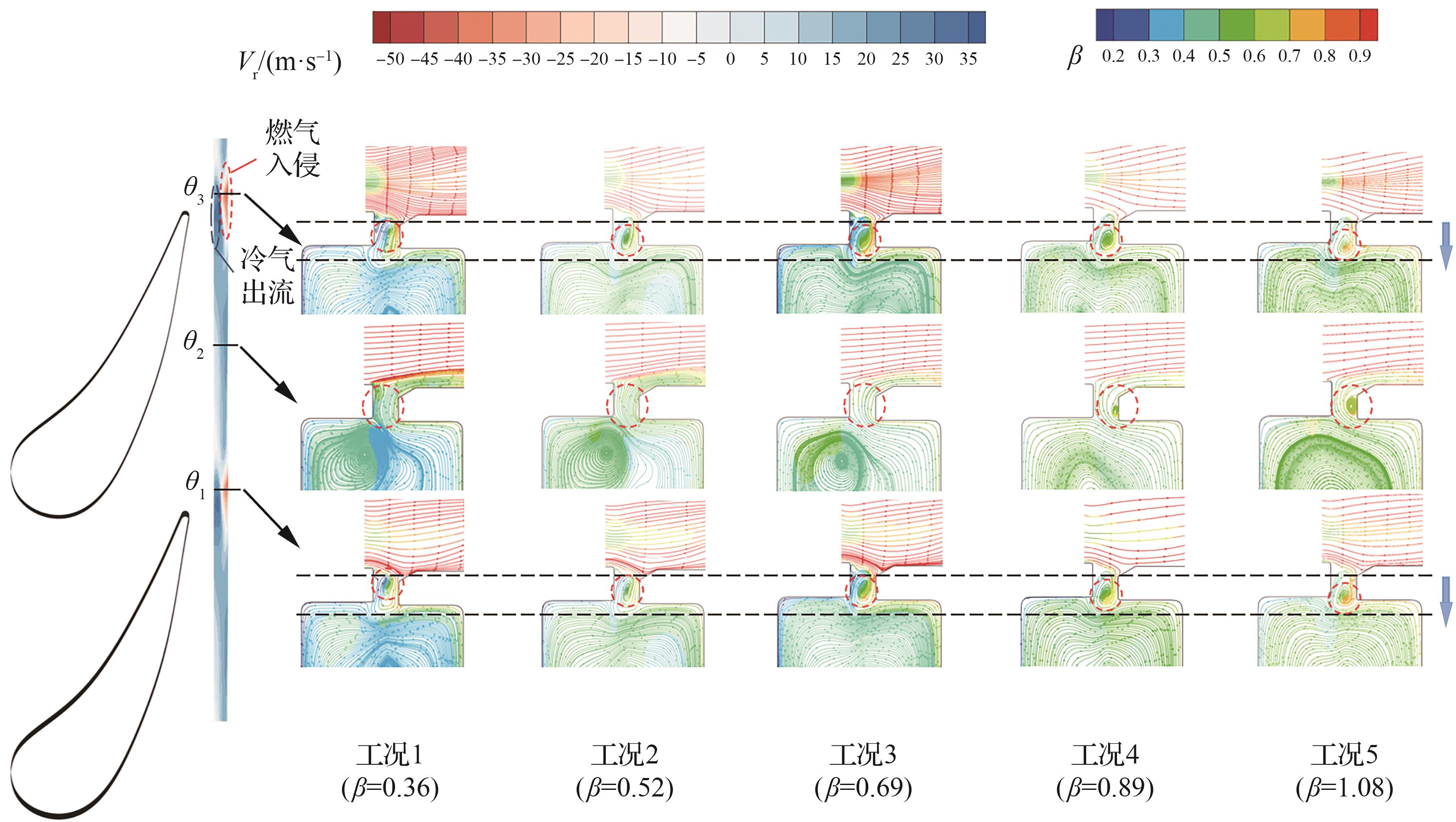
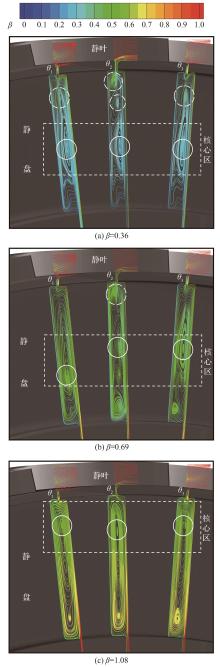
Fig.6
Flow field at different circumferential locations
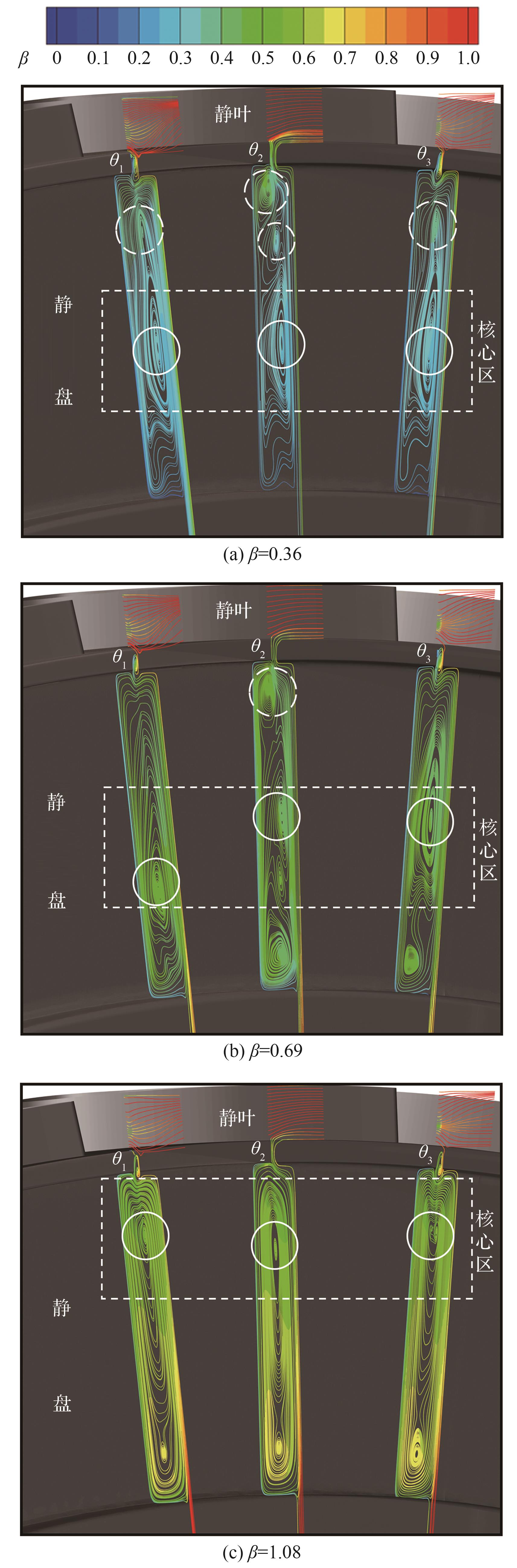
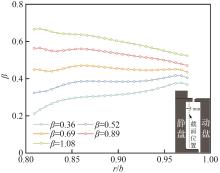
Fig.7
Distribution of swirl ratio for disc cavity
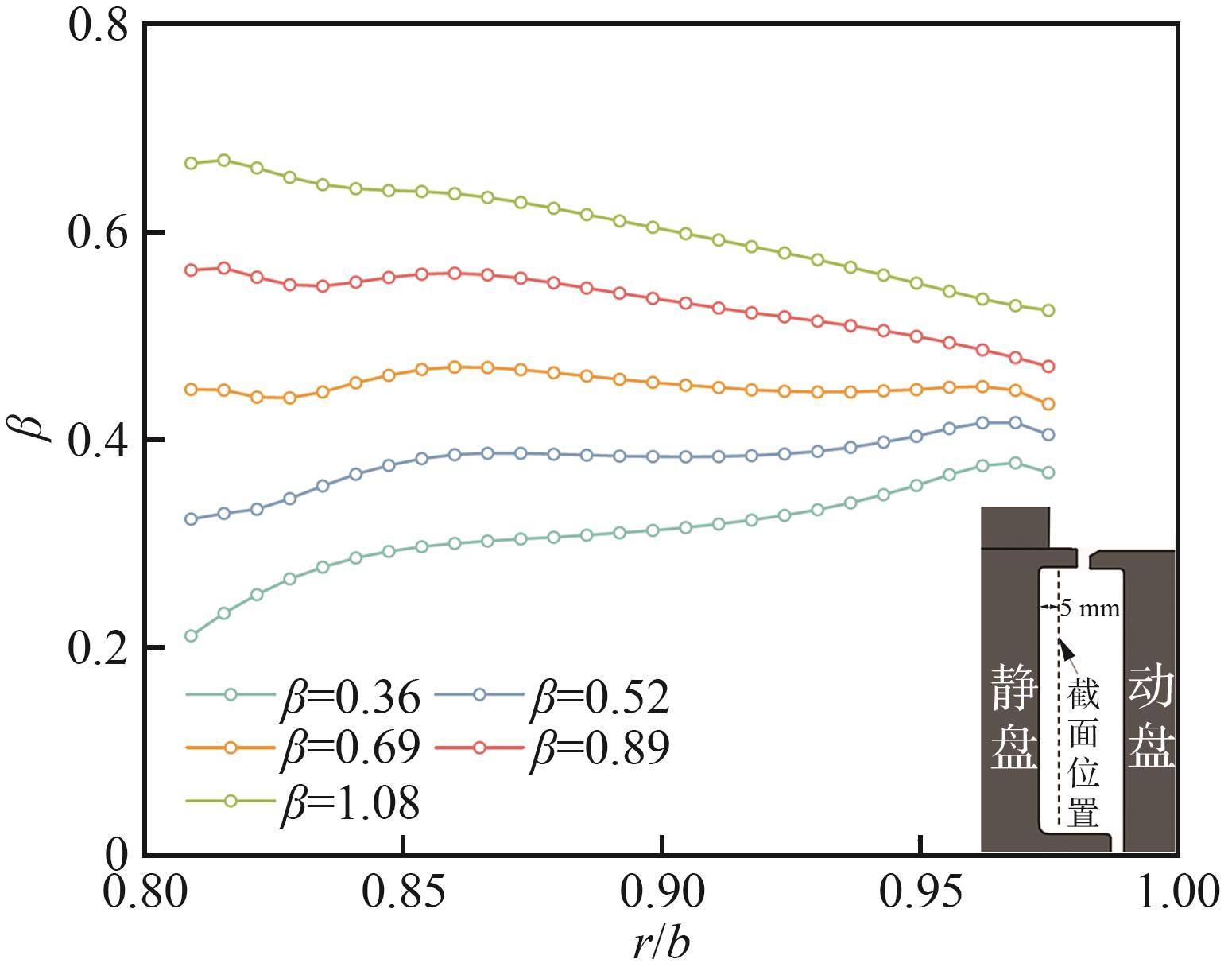
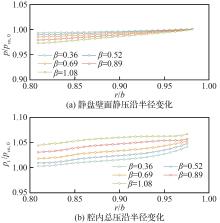
Fig.8
Distribution of pressure for disc cavity
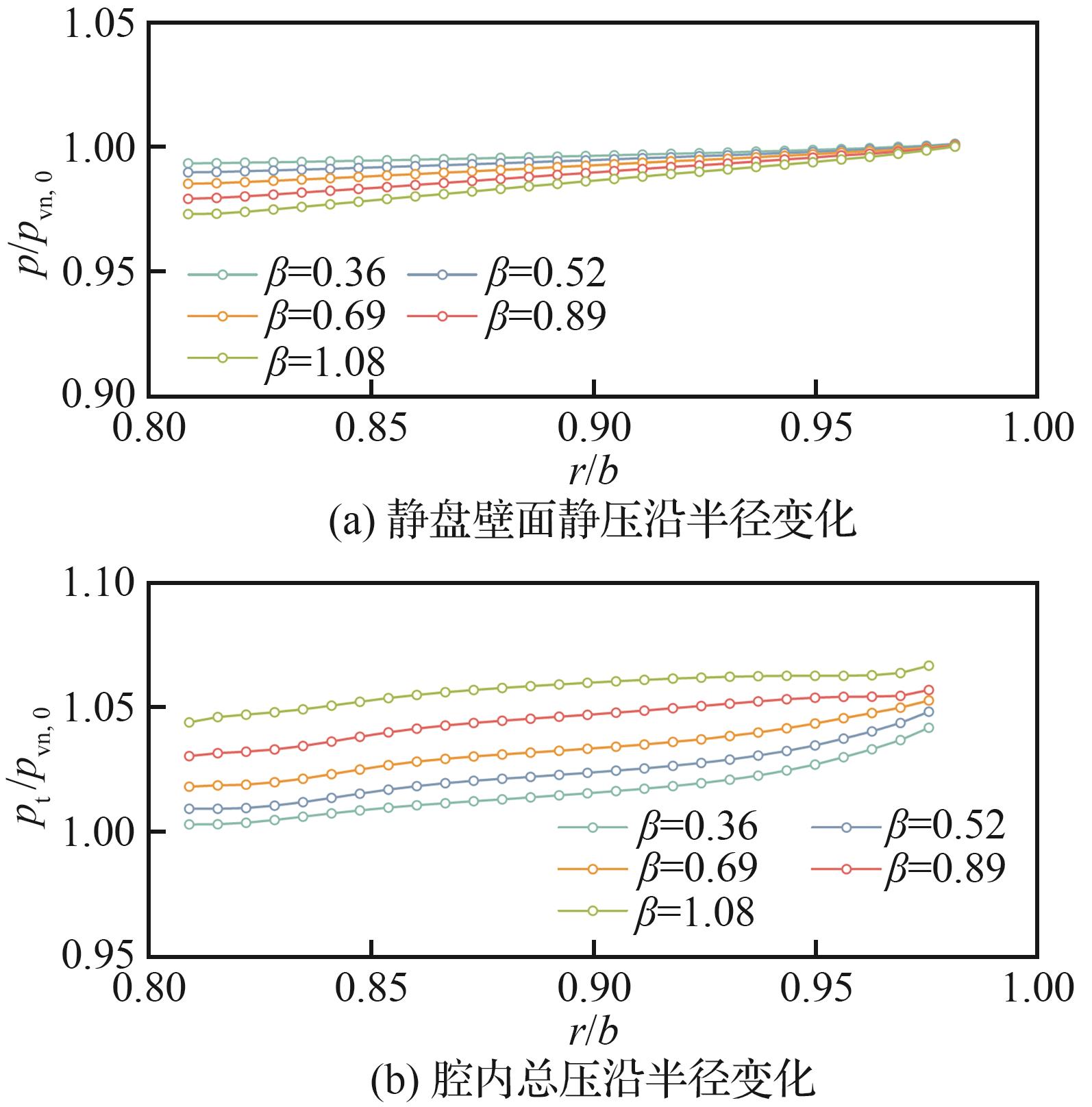
Fig.9
Distribution of sealing effectiveness for disc cavity
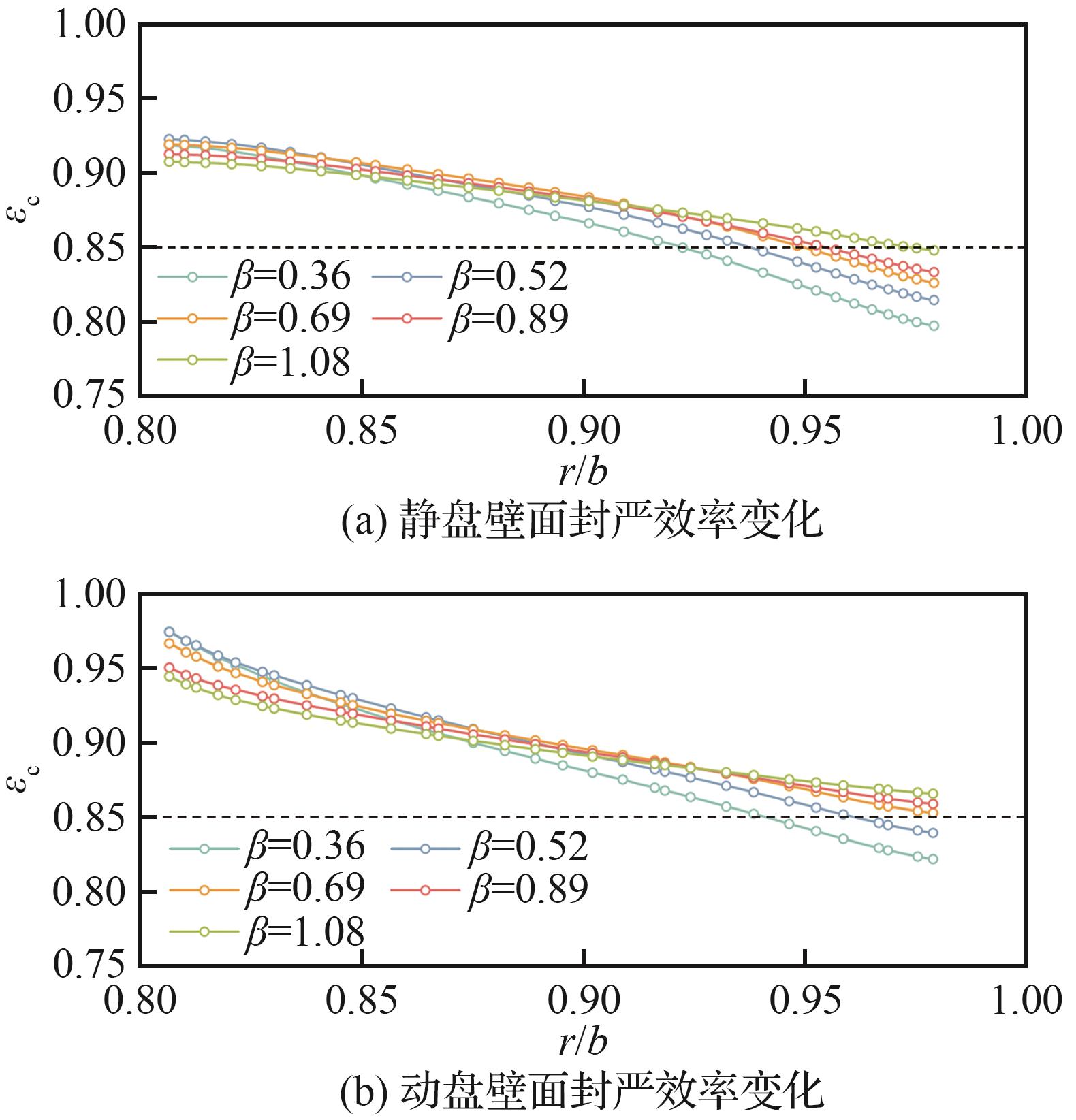
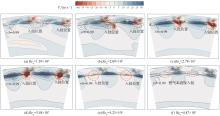
Fig.10
Contour of radial velocity
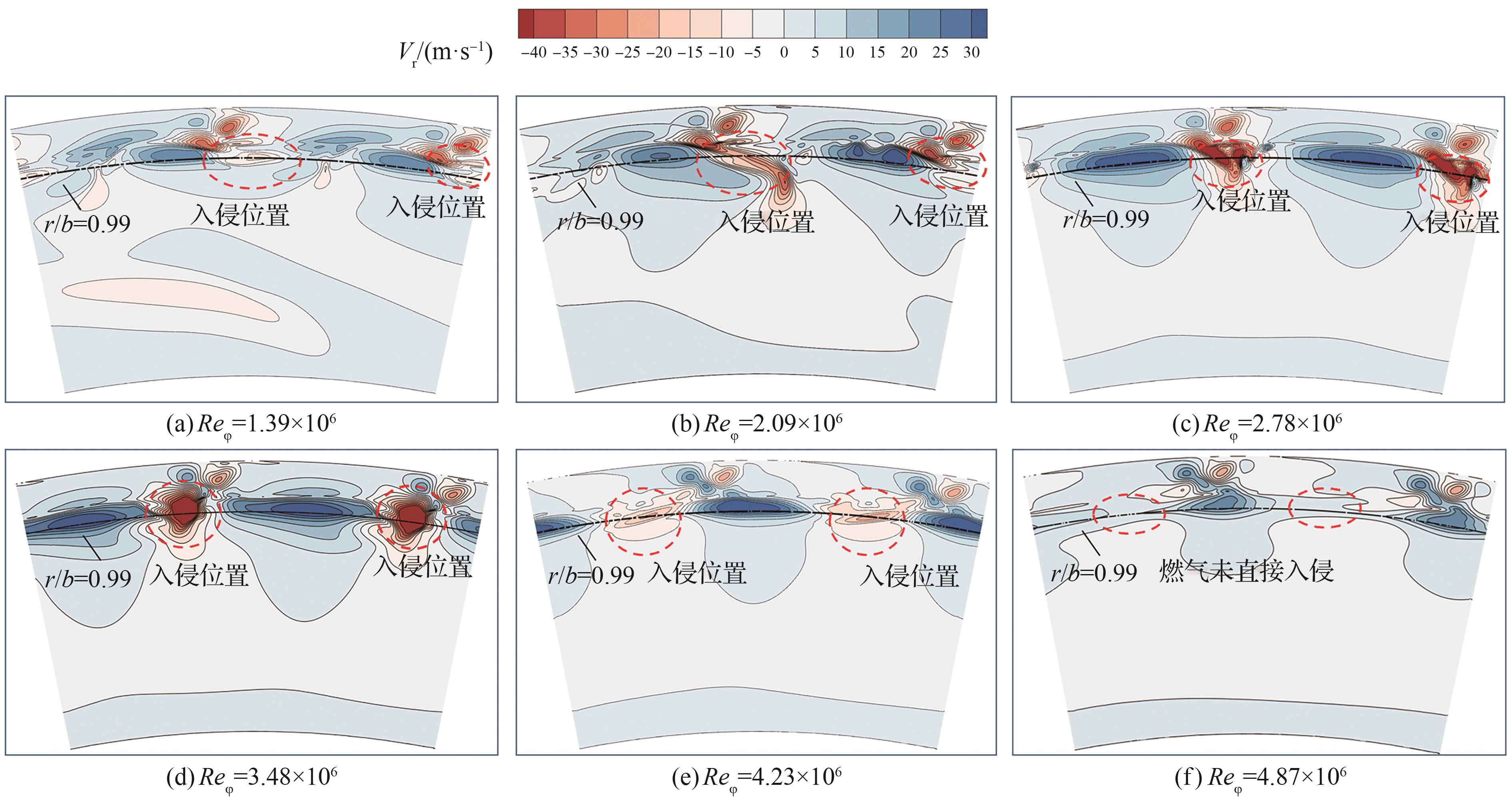
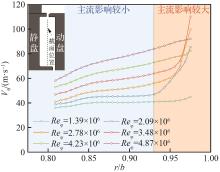
Fig.11
Radial distribution of tangential velocity
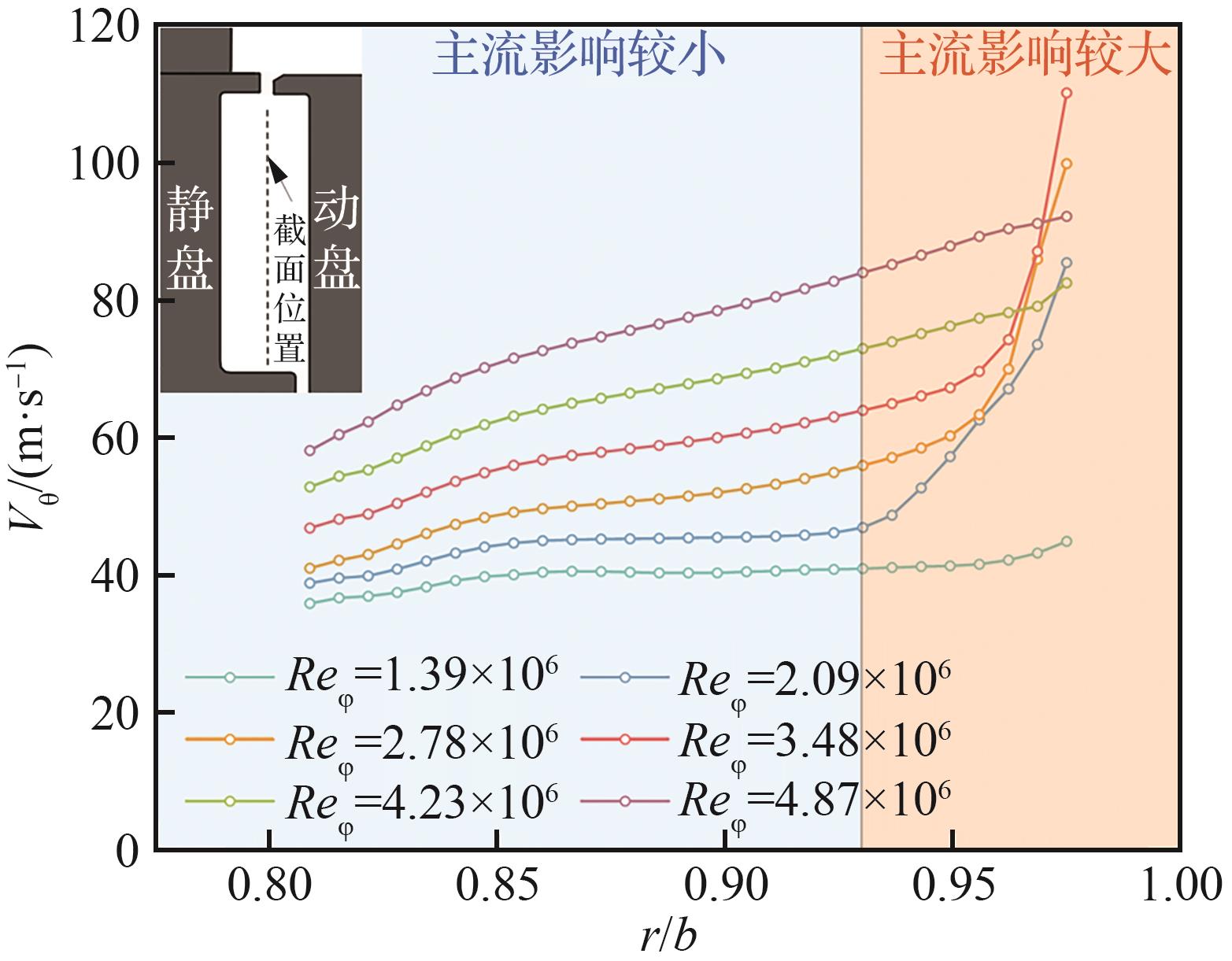
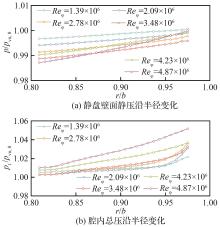
Fig.12
Distribution of pressure for disc cavity
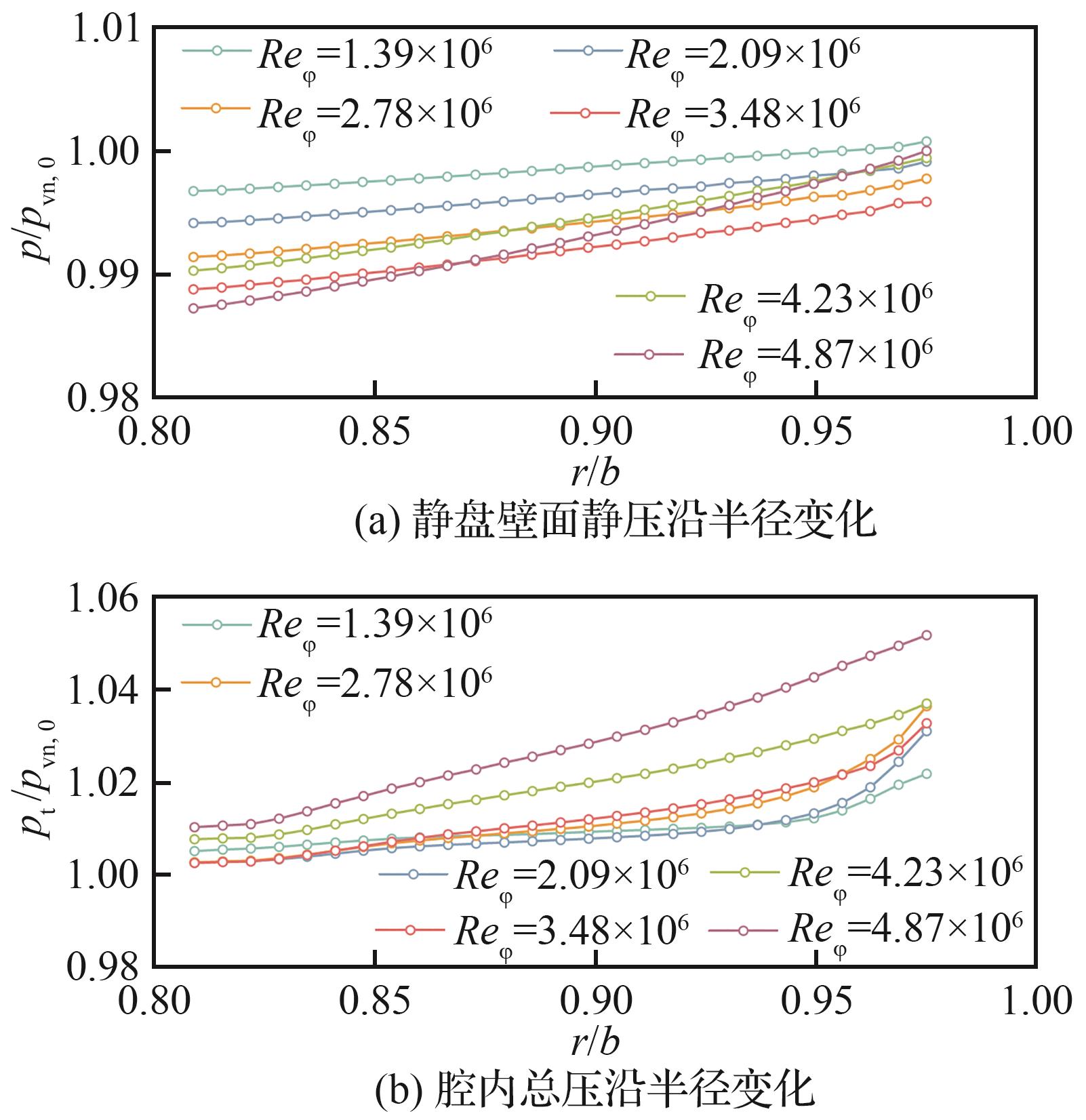
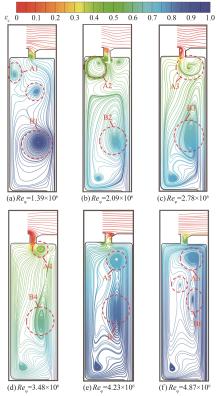
Fig.13
Flow field for six rotational Reynolds number
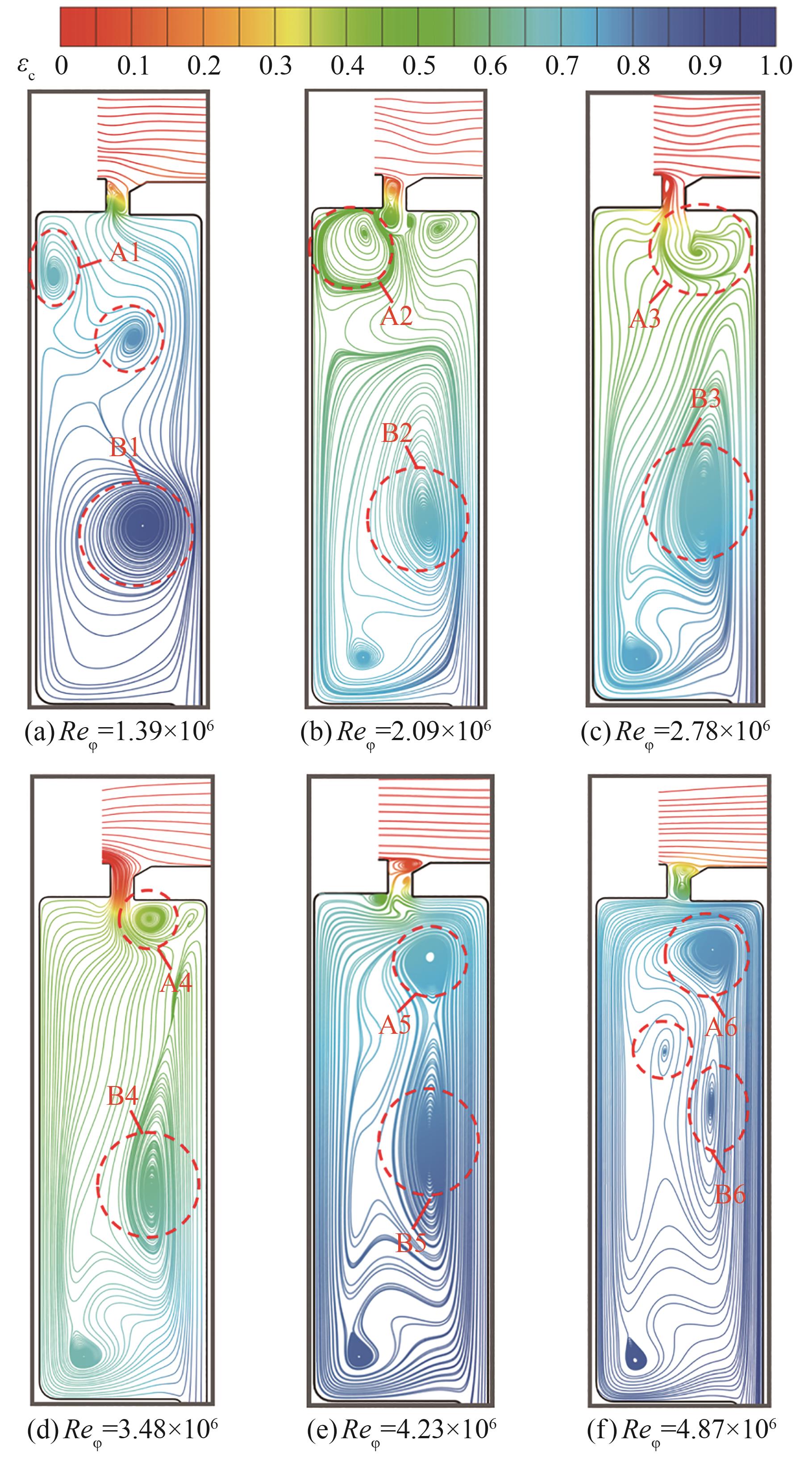
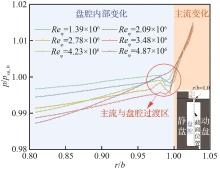
Fig.14
Distribution of static pressure for disc cavity and mainstream
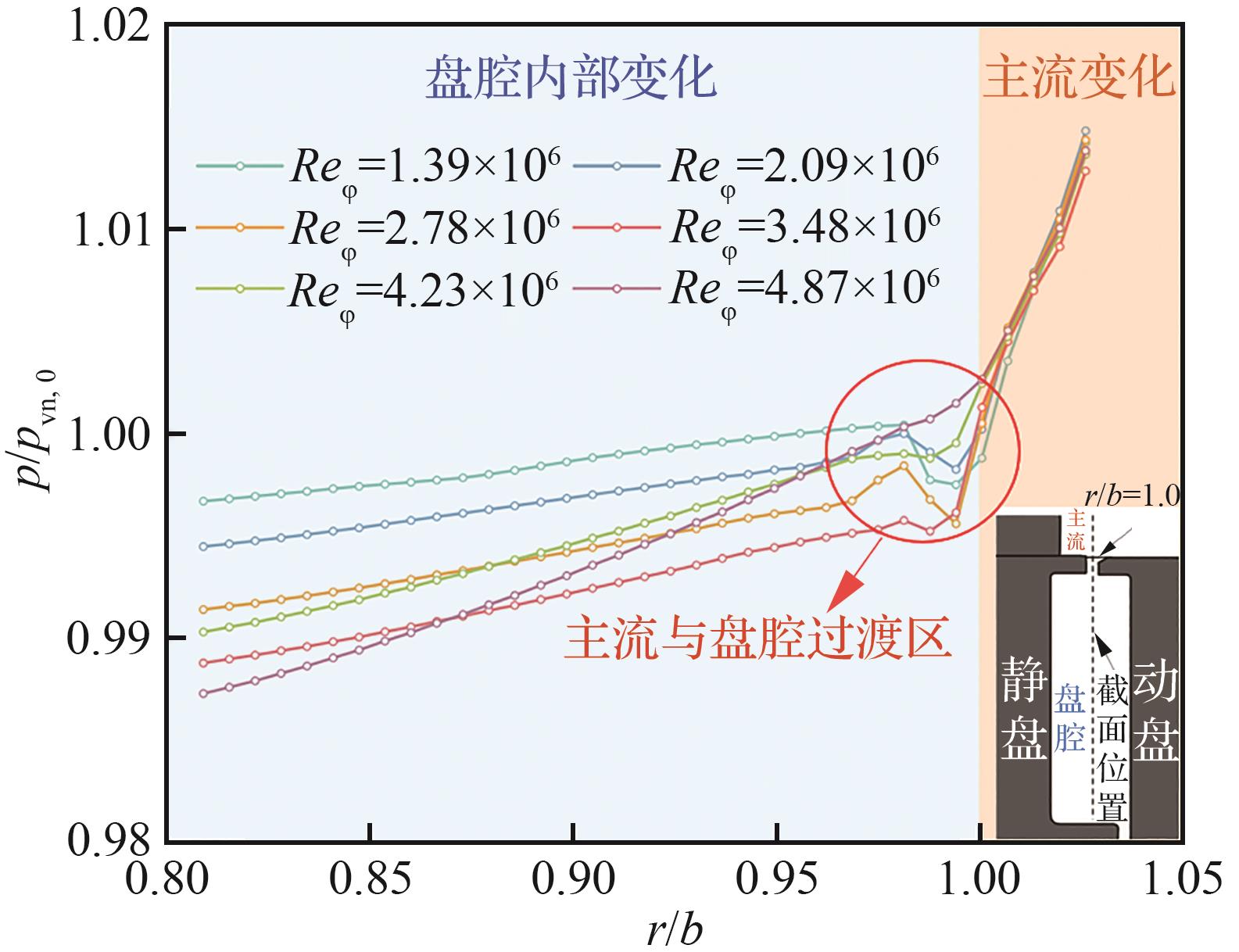
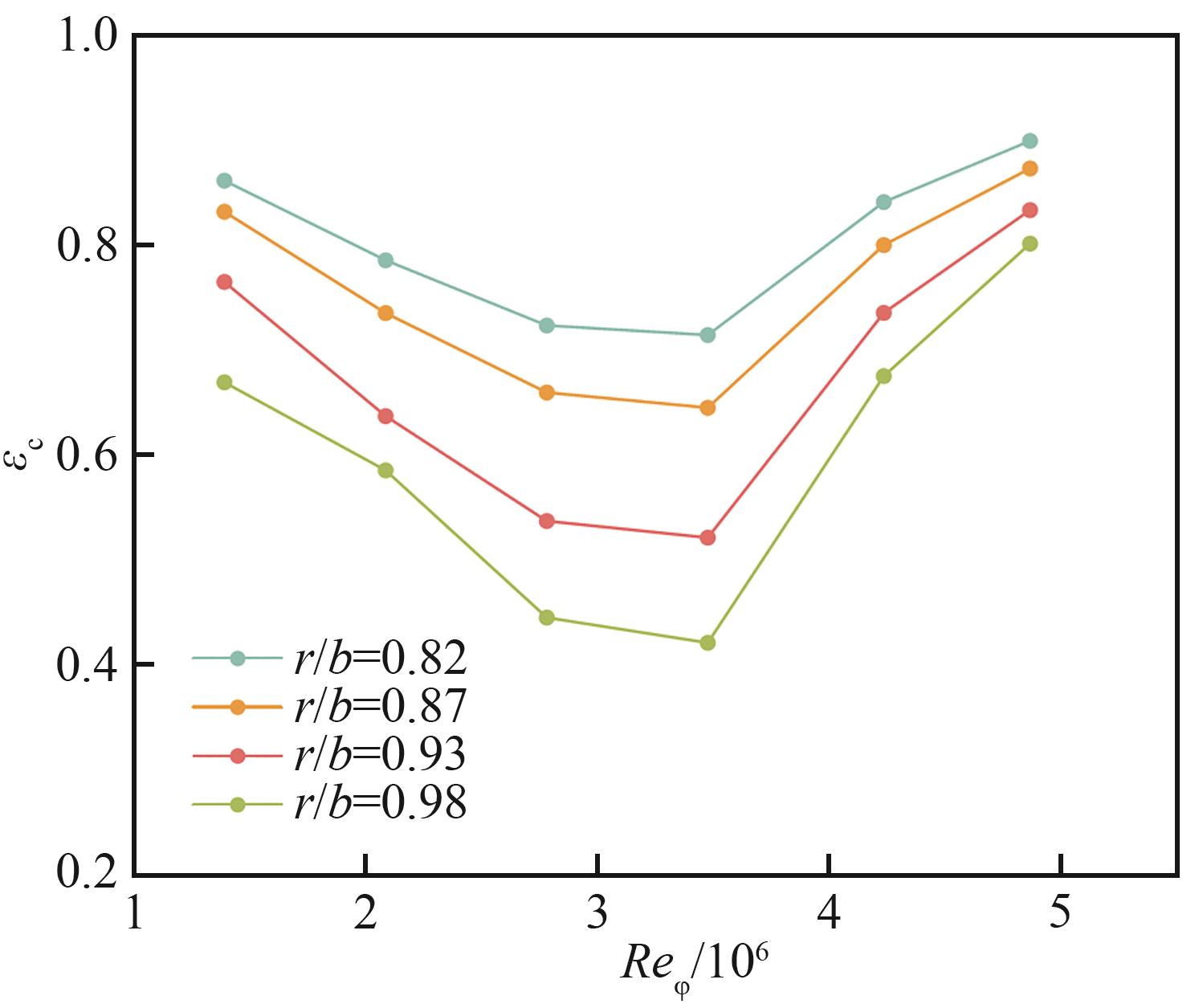
Fig.15
Sealing effectiveness of static wall
| [1] | LIN A Q, LIU G W, CHANG R, et al. Comprehensive evaluations of heat transfer performance with conjugate heat dissipation effect in high-speed rotating free-disk system of aero-engines[J]. Funda-mental Research, 2022, 2(5): 1-1. |
| [2] | LIN A Q, LIU G W, LI P F, et al. Theoretical and experimental evaluations of pre-swirl rotor-stator system with inner seal bypass configuration for turbine performance improvement[J]. Energy, 2022, 258: 124760. |
| [3] | 贾兴运. 涡轮转静盘腔燃气入侵及封严机理研究[D]. 哈尔滨: 哈尔滨工程大学, 2019. |
| JIA X Y. Research on gas ingestion and sealing mechanism of turbine rotor-stator cavity[D]. Harbin: Harbin Engineering University, 2019 (in Chinese). | |
| [4] | BEHR T, KALFAS A I, ABHARI R S. Unsteady flow physics and performance of a one-and-1∕2-stage unshrouded high work turbine[J]. Journal of Turbomachinery, 2007, 129(2): 348-359. |
| [5] | SCHUEPBACH P, ABHARI R S, ROSE M G, et al. Effects of suction and injection purge-flow on the secondary flow structures of a high-work turbine[J]. Journal of Turbomachinery, 2010, 132(2): 021021. |
| [6] | OWEN J M. Prediction of ingestion through turbine rim seals: part Ⅱ: externally induced and combined ingress[J]. Journal of Turbomachinery, 2011, 133(3): 031006. |
| [7] | SANGAN C M, POUNTNEY O J, ZHOU K Y, et al. Experimental measurements of ingestion through turbine rim seals: part Ⅰ: externally induced ingress[J]. Journal of Turbomachinery, 2013, 135(2): 021012. |
| [8] | DU Q, WANG R N, XIE L, et al. A novel design of rim sealing flow for improving sealing effectiveness[J]. Journal of Engineering for Gas Turbines and Power, 2023, 145(7): 071003. |
| [9] | CHOI M, GOO B, CHO G, et al. Swirl enhancement effect on turbine rim seal performance[J]. Journal of Turbomachinery, 2024, 146(5): 051002. |
| [10] | BURDEN S, CHEW J W, GAO F, et al. Effect of rim seal geometry on rotationally-driven ingestion[J]. Journal of Engineering for Gas Turbines and Power, 2024, 146(9): 091013. |
| [11] | MONGE-CONCEPCIÓN I, SIROKA S, BERDANIER R A, et al. Influence of vane trailing edge flow on the formation of cavity cells and rim sealing[J]. Journal of Turbomachinery, 2022, 144(6): 061014. |
| [12] | WANG R N, DU Q, LIU G, et al. Influence of secondary sealing flow on performance of turbine axial rim seals[J]. Journal of Thermal Science, 2020, 29(3): 840-851. |
| [13] | GREEN B R, MATHISON R M, DUNN M G. Time-averaged and time-accurate aerodynamic effects of forward rotor cavity purge flow for a high-pressure turbine: part Ⅰ: analytical and experimental comparisons[J]. Journal of Turbomachinery, 2014, 136(1): 011004. |
| [14] | GREEN B R, MATHISON R M, DUNN M G. Time-averaged and time-accurate aerodynamic effects of rotor purge flow for a modern, one and one-half stage high-pressure turbine: part Ⅱ: analytical flow field analysis[J]. Journal of Turbomachinery, 2014, 136(1): 011009. |
| [15] | ZLATINOV M B, SOOI TAN C, MONTGOMERY M, et al. Turbine hub and shroud sealing flow loss mechanisms[J]. Journal of Turbomachinery, 2012, 134(6): 061027. |
| [16] | 杨帆, 周莉, 王占学. 轮缘封严气流与主流干涉的损失机理研究[J]. 推进技术, 2020, 41(2): 285-293. |
| YANG F, ZHOU L, WANG Z X. Investigation on interaction loss mechanism between rim seal flow and mainstream[J]. Journal of Propulsion Technology, 2020, 41(2): 285-293 (in Chinese). | |
| [17] | 田淑青, 陶智, 丁水汀,等. 轴向通流旋转盘腔内类Rayleigh-Benard对流稳定性研究[J]. 热科学与技术, 2003(3): 260-265. |
| TIAN S Q, TAO Z, DING S T, et al. Investigation of Rayleigh-Benard-like convection stabilities in rotating cavity with axial throughflow of cooling air[J]. Journal of Thermal Science and Technology, 2003(3): 260-265 (in Chinese). | |
| [18] | 田淑青, 陶智, 丁水汀, 等. 轴向通流旋转盘腔内流动不稳定性研究[J]. 北京航空航天大学学报, 2005(4): 393-396. |
| TIAN S Q, TAO Z, DING S T, et al. Investigation of flow instability in rotating cavity with axial throughflow of cooling air[J]. Journal of Beijing University of Aeronautics and Astronautics, 2005(4): 393-396 (in Chinese). | |
| [19] | 张晶辉, 马宏伟. 涡轮盘腔轴向封严流动的数值研究[J]. 航空动力学报, 2014, 29(4): 927-934. |
| ZHANG J H, MA H W. Numerical investigation of axial seal flow in turbine cavity[J]. Journal of Aerospace Power, 2014, 29(4): 927-934 (in Chinese). | |
| [20] | 何振鹏, 周佳星, 王宇博, 等. 1.5级涡轮前后轮缘密封封严流动特性研究[J]. 推进技术, 2022, 43(5): 142-149. |
| HE Z P, ZHOU J X, WANG Y B, et al. Flow characteristics of front and aft rim seal for 1.5-stage turbine[J]. Journal of Propulsion Technology, 2022, 43(5): 142-149 (in Chinese). | |
| [21] | 高庆, 陶加银, 宋立明, 等. 涡轮轮缘密封封严效率的数值研究[J]. 西安交通大学学报, 2013, 47(5): 12-17. |
| GAO Q, TAO J Y, SONG L M, et al. Numerical investigation on the sealing efficiency of the turbine rim seal[J]. Journal of Xi’an Jiaotong University, 2013, 47(5): 12-17 (in Chinese). | |
| [22] | GONG W B, LIU G W, CHEN K, et al. General method and application for evaluating system performance and sealing effectiveness of turbine rim seal flow and mainstream at large temperature difference[J]. International Journal of Thermal Sciences, 2023, 193: 108438. |
| [23] | 吴康, 任静, 蒋洪德, 等. 整级透平中转静轮缘封严问题研究PartⅠ: 封严与入侵[J]. 工程热物理学报, 2014, 35(5): 873-877. |
| WU K, REN J, JIANG H D, et al. Rotor-stator rim seal analysis in one stage gas turbine part Ⅰ: ingestion and seal[J]. Journal of Engineering Thermophysics, 2014, 35(5): 873-877 (in Chinese). | |
| [24] | 高庆, 李军. 径向轮缘密封封严效率的数值研究[J]. 西安交通大学学报, 2014, 48(9): 55-61. |
| GAO Q, LI J. Numerical investigations for sealing efficiency of the turbine rim radial seal[J]. Journal of Xi’an Jiaotong University, 2014, 48(9): 55-61 (in Chinese). | |
| [25] | 王启杰. 对流传热传质分析[M]. 西安: 西安交通大学出版社, 1991. |
| WANG Q J. Analysis of heat and mass transfer[M]. Xi’an: Xi’an Jiaotong University Press, 1991 (in Chinese). | |
| [26] | RIDAURA J A R. Correlation analysis between HPC blade chord and compressor efficiency for the CFM56-3[D]. Lisboa: Técnico Lisboa, 2014. |
| [27] | SANGAN C M. Measurement of ingress through gas turbine rim seals[D]. Bath: University of Bath, 2011. |
| [28] | HUALCA F P, HORWOOD J T M, SANGAN C M, et al. The effect of vanes and blades on ingress in gas turbines[J]. Journal of Engineering for Gas Turbines and Power, 2020, 142(2): 021020. |
| [1] | Yousheng WANG, Liguo SUN, Jinpeng WEI, Wenqian TAN, Yonghao PAN. Optimization of climb trajectory of combined-cycle engine powered aircraft based on improved CSO-Gauss pseudospectral method [J]. Acta Aeronautica et Astronautica Sinica, 2025, 46(2): 230737-230737. |
| [2] | Haipeng DING, Zheng LYU, Ke TIAN, Tao YE, Kuangshi CHEN, Jinglei XU. Design and performance analysis of a three-dimensional TBCC exhaust system [J]. Acta Aeronautica et Astronautica Sinica, 2025, 46(15): 131104-131104. |
| [3] | Lei ZHAO, Jie LI, Jingying XU. Effects of low-pressure turbine rig test method on measurement accuracy of efficiency [J]. Acta Aeronautica et Astronautica Sinica, 2025, 46(15): 131142-131142. |
| [4] | Zhihao ZHU, Xiuming SUI, Jian PU, Long HAO, Wei ZHAO, Qingjun ZHAO. Aerodynamic load of multistage vaneless counterrotating turbine under wake/shock rotor/rotor interactions [J]. Acta Aeronautica et Astronautica Sinica, 2024, 45(24): 630582-630582. |
| [5] | Zhe WANG, Zhiping WANG, Kunying DING, Tao ZHANG, Yuanhang WANG. Reliability analysis of thermal barrier coatings on turbine guide vanes of a certain type of aero-engine [J]. Acta Aeronautica et Astronautica Sinica, 2024, 45(22): 430141-430141. |
| [6] | Minghui HU, Shaopeng LIU, Hao WANG, Chenyang LI, Weimin WANG, Zhinong JIANG. Characterization and identification of gas turbine blade fracture faults based on broadband vibration [J]. Acta Aeronautica et Astronautica Sinica, 2024, 45(20): 230098-230098. |
| [7] | Ming HUANG, Kaiyuan ZHANG, Zhigang LI, Jun LI. Uncertainty quantification of aerothermal performance of squealer tip with film cooling structure [J]. Acta Aeronautica et Astronautica Sinica, 2024, 45(19): 629979-629979. |
| [8] | Zhendong GUO, Haojie LI, Liming SONG, Hualiang ZHANG, Zhao YIN. Robust optimization method based on adaptive sparse polynomial chaos [J]. Acta Aeronautica et Astronautica Sinica, 2024, 45(19): 630273-630273. |
| [9] | Weiqing HUANG, Ning LI, Kailin LIU, Zhizhong FU, Pengfei JI, Shengliang ZHANG, Liwei DONG, Yantao SUN. Damage state evaluation method of service turbine blades based on MAML-LSTM [J]. Acta Aeronautica et Astronautica Sinica, 2024, 45(18): 429547-429547. |
| [10] | Bowei MENG, Hu MA, Zhenjuan XIA, Changsheng ZHOU. Numerical study on characterization of integrated rotating detonation combustor and turbine guide vane [J]. Acta Aeronautica et Astronautica Sinica, 2024, 45(10): 129223-129223. |
| [11] | Siji WANG, Yuwei ZHANG, Kaiming HUANG, Biao LYU, Haifeng ZHAO, Hu WANG, Mingfu LIAO. An optimization method for helicopter power turbine rotor system based on improved particle swarm optimization algorithm [J]. Acta Aeronautica et Astronautica Sinica, 2024, 45(1): 228608-228608. |
| [12] | Jiaqi LUO, Zeshuai CHEN, Zhengping ZOU, Fei ZENG, Pengcheng DU. Statistics on geometric uncertainties of casting blades in low-pressure turbines [J]. ACTA AERONAUTICAET ASTRONAUTICA SINICA, 2023, 44(6): 427203-427203. |
| [13] | Qingcai ZHANG, Song LIU, Qinqin WANG, Xiaoming TAN, Jingzhou ZHANG, Wen GUO. Experiment on composite rim seal with deep cavity in static disc and modified platform [J]. ACTA AERONAUTICAET ASTRONAUTICA SINICA, 2023, 44(5): 126719-126719. |
| [14] | Zeyong YIN, Yancheng YOU, Chengxiang ZHU, Jianfeng ZHU, Liaoni WU, Yue HUANG. Multi-ducted twin-turbines ejector-ramjet/scramjet combined cycle engine for hypersonic civil vehicles [J]. ACTA AERONAUTICAET ASTRONAUTICA SINICA, 2023, 44(2): 627181-627181. |
| [15] | Youkui LAI, Haiteng MA, Yisu LIU, Hua OUYANG. Flow measurement and analysis of a turbine blade with multiple cooling structures based on magnetic resonance velocimetry [J]. Acta Aeronautica et Astronautica Sinica, 2023, 44(14): 627920-627920. |
| Viewed | ||||||
|
Full text |
|
|||||
|
Abstract |
|
|||||
Address: No.238, Baiyan Buiding, Beisihuan Zhonglu Road, Haidian District, Beijing, China
Postal code : 100083
E-mail:hkxb@buaa.edu.cn
Total visits: 6658907 Today visits: 1341All copyright © editorial office of Chinese Journal of Aeronautics
All copyright © editorial office of Chinese Journal of Aeronautics
Total visits: 6658907 Today visits: 1341

 CJA
CJA
