Acta Aeronautica et Astronautica Sinica ›› 2025, Vol. 46 ›› Issue (15): 130791.doi: 10.7527/S1000-6893.2024.30791
• Fluid Mechanics and Flight Mechanics •
Chengxi WANG1, Li ZHOU1,2( ), Xiaolin SUN3, Xiaobo ZHANG1,2, Zhanxue WANG1
Received:2024-06-04
Revised:2024-07-25
Accepted:2024-10-15
Online:2024-10-30
Published:2024-10-29
Contact:
Li ZHOU
E-mail:zhouli@nwpu.edu.cn
Supported by:CLC Number:
Chengxi WANG, Li ZHOU, Xiaolin SUN, Xiaobo ZHANG, Zhanxue WANG. Multi-dimensional simulation between serpentine nozzle and turbofan based on neural network[J]. Acta Aeronautica et Astronautica Sinica, 2025, 46(15): 130791.
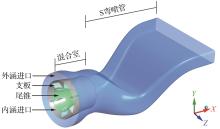
Fig.1
Geometric model of serpentine nozzle
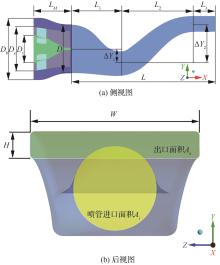
Fig.2
Design parameters of serpentine nozzle

Table 1
Key design parameters of geometric model
| 参数所属部件 | 参数名称 | 参数符号 |
|---|---|---|
| 混合室 | 长度 | LM |
| 外涵直径 | Db | |
| 内涵直径 | Dc | |
| 喷管 | 进口直径 | D |
| 总长度 | L | |
| 出口宽度 | W | |
| 出口高度 | Hn | |
| 进口面积 | Ai | |
| 出口面积 | Ae | |
| 长径比 | L/D | |
| 出口宽高比 | W/Hn | |
| 出进口面积比 | Ae/Ai |
Table 2
Parameters range of serpentine nozzle
| 参数 | 下限 | 上限 |
|---|---|---|
| L/D | 2.2 | 3 |
| W/Hn | 2 | 11 |
| Ae/Ai | 0.5 | 0.9 |
| P | 0.9 | 1.1 |
| NPRc | 1.5 | 4.5 |
| T | 600 | 1 000 |
| T | 250 | 500 |
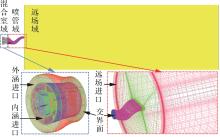
Fig.3
Computational domain of the model
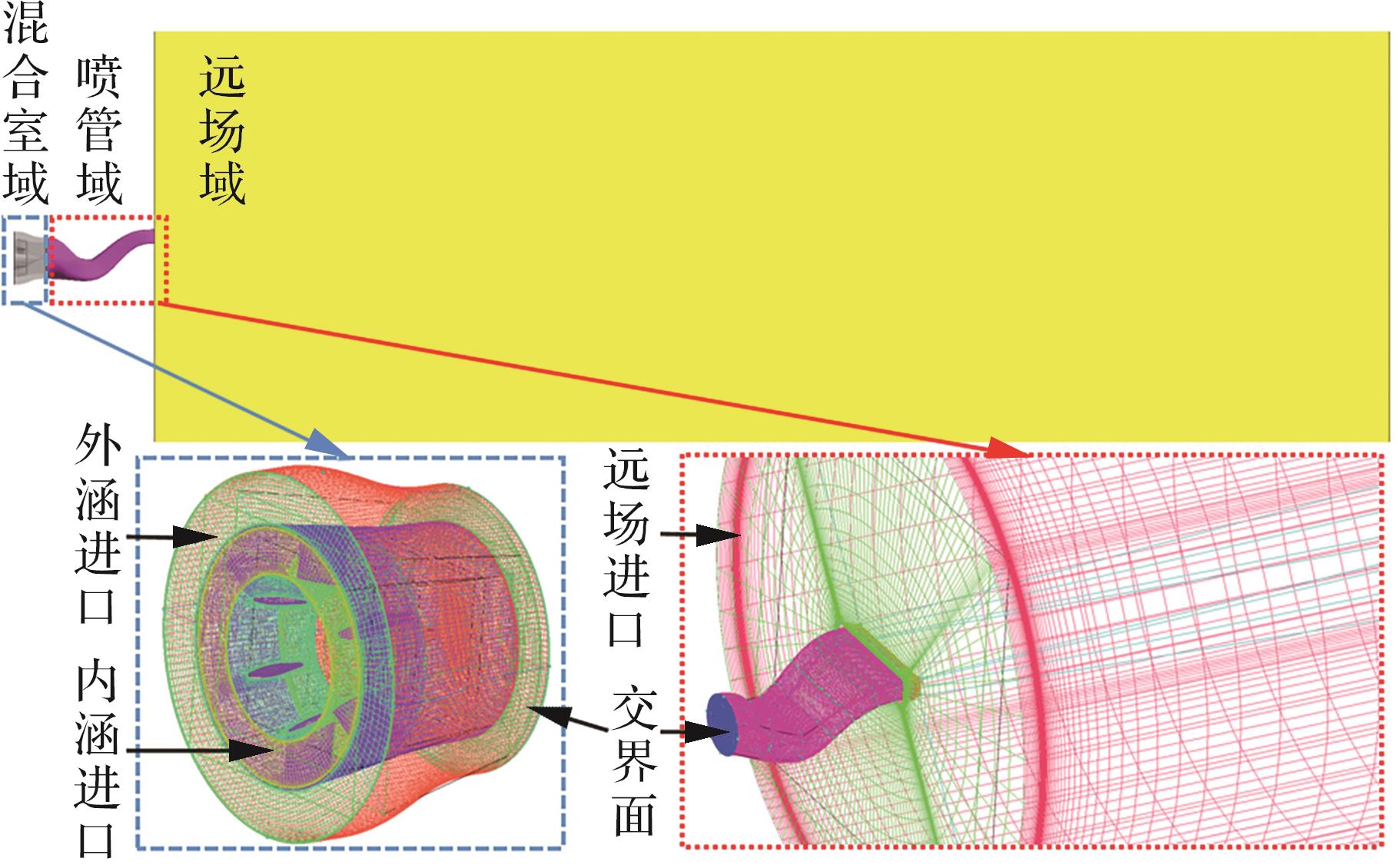
Table 3
Model boundary conditions
| 边界名称 | 边界类型 |
|---|---|
| 混合室外涵进口 | 压力进口 |
| 混合室内涵进口 | 压力进口 |
| 混合室-喷管交界面 | interface |
| 混合室壁面 | 绝热无滑移壁面 |
| 喷管壁面 | 绝热无滑移壁面 |
| 喷管-远场交界面 | interface |
| 远场进口 | 压力进口 |
| 远场边界 | 开放边界(Opening) |
| 远场出口 | 压力出口 |
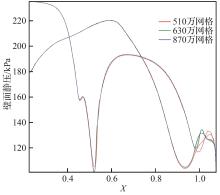
Fig.4
Grid independence verification
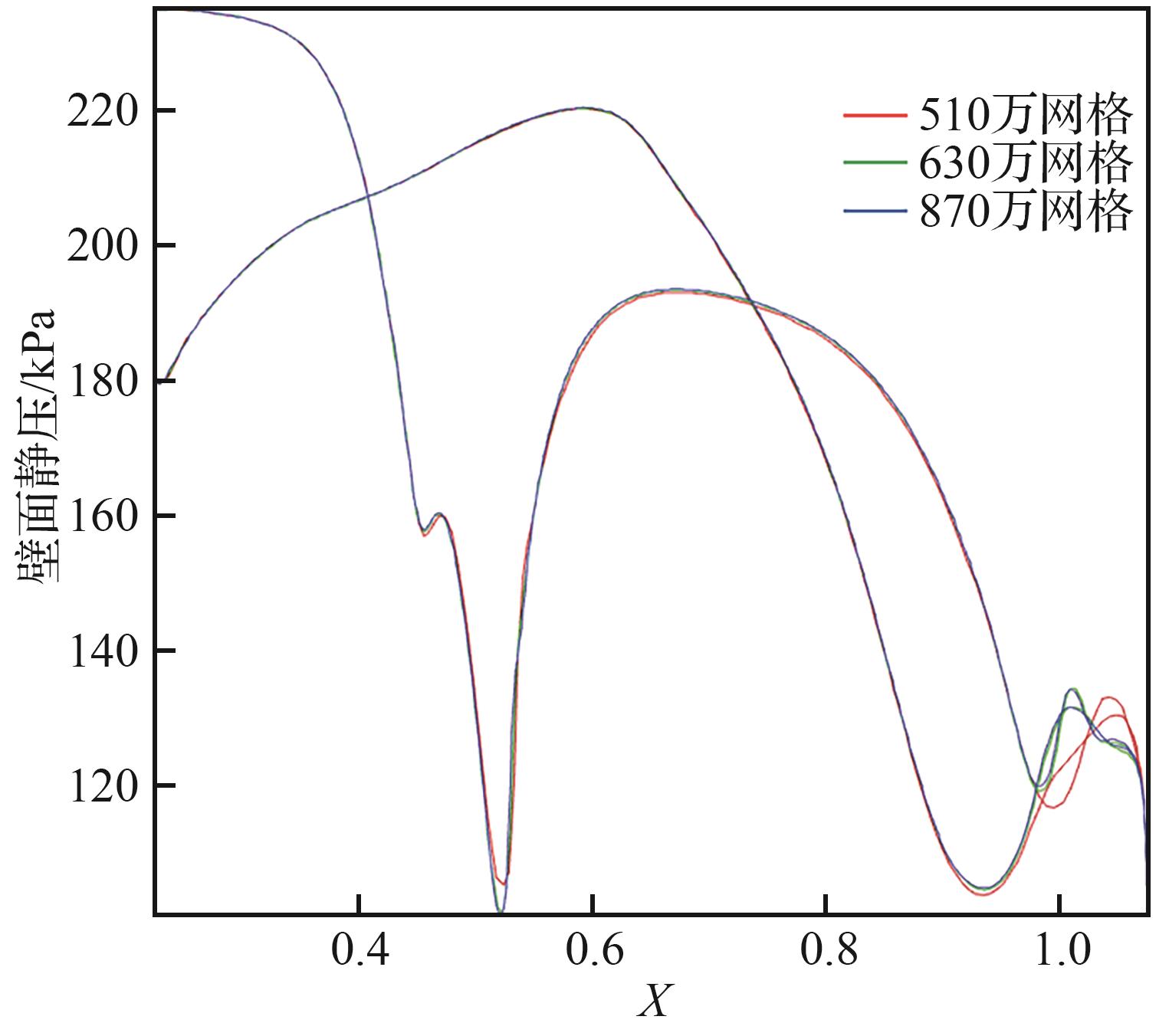
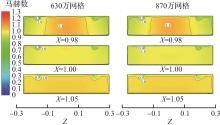
Fig.5
Mach contours at slices near X=1.00 with different grid levels
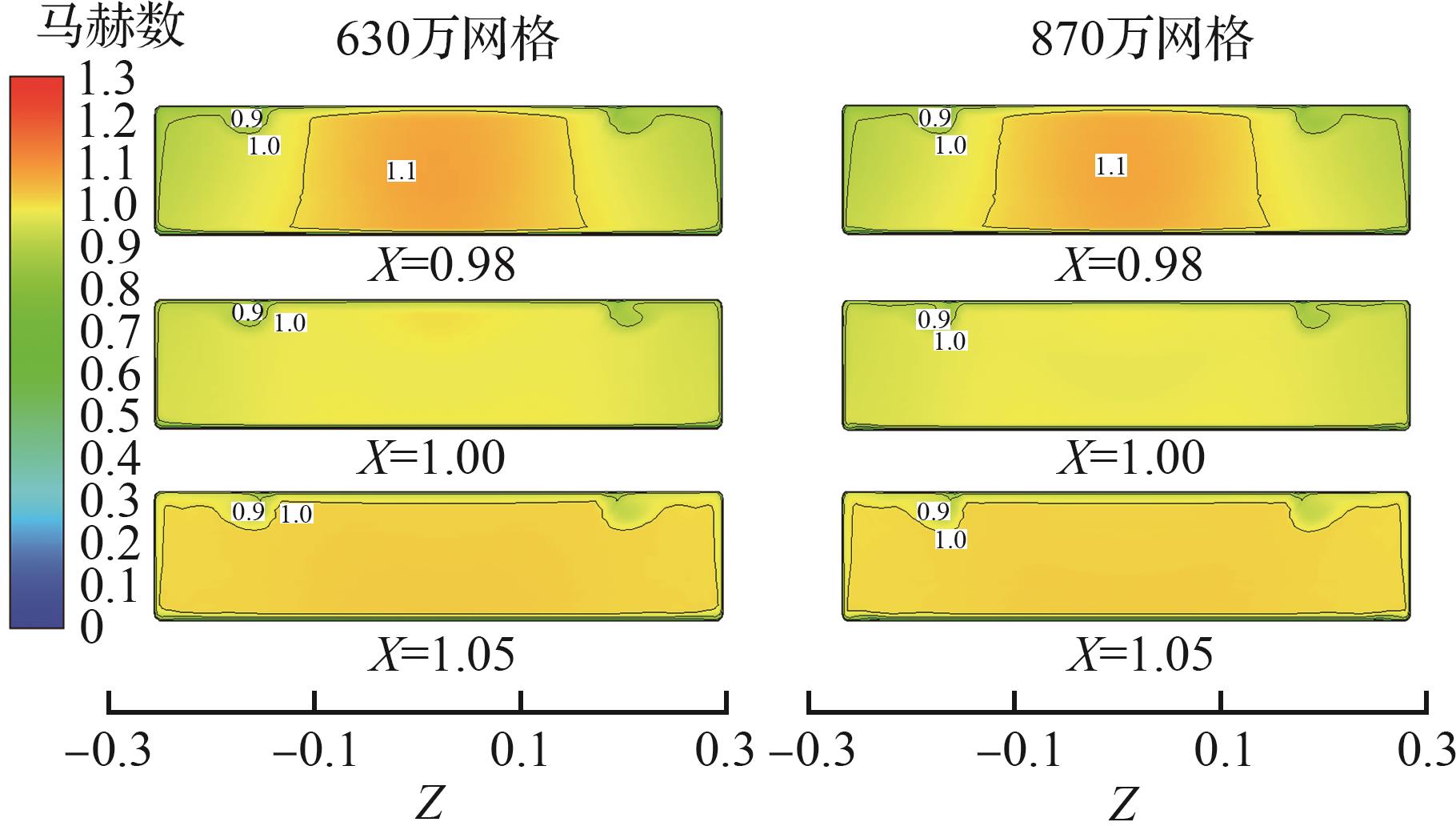
Table 4
Relative errors of nozzle performance at different grid levels
| 网格数量/104 | 推力系数 | 流量系数 |
|---|---|---|
| 相对误差/% | 0.06 | 0.05 |
| 630 | 0.977 213 | 0.983 522 |
| 870 | 0.977 776 | 0.983 996 |
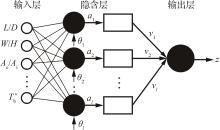
Fig.6
BP neural network design
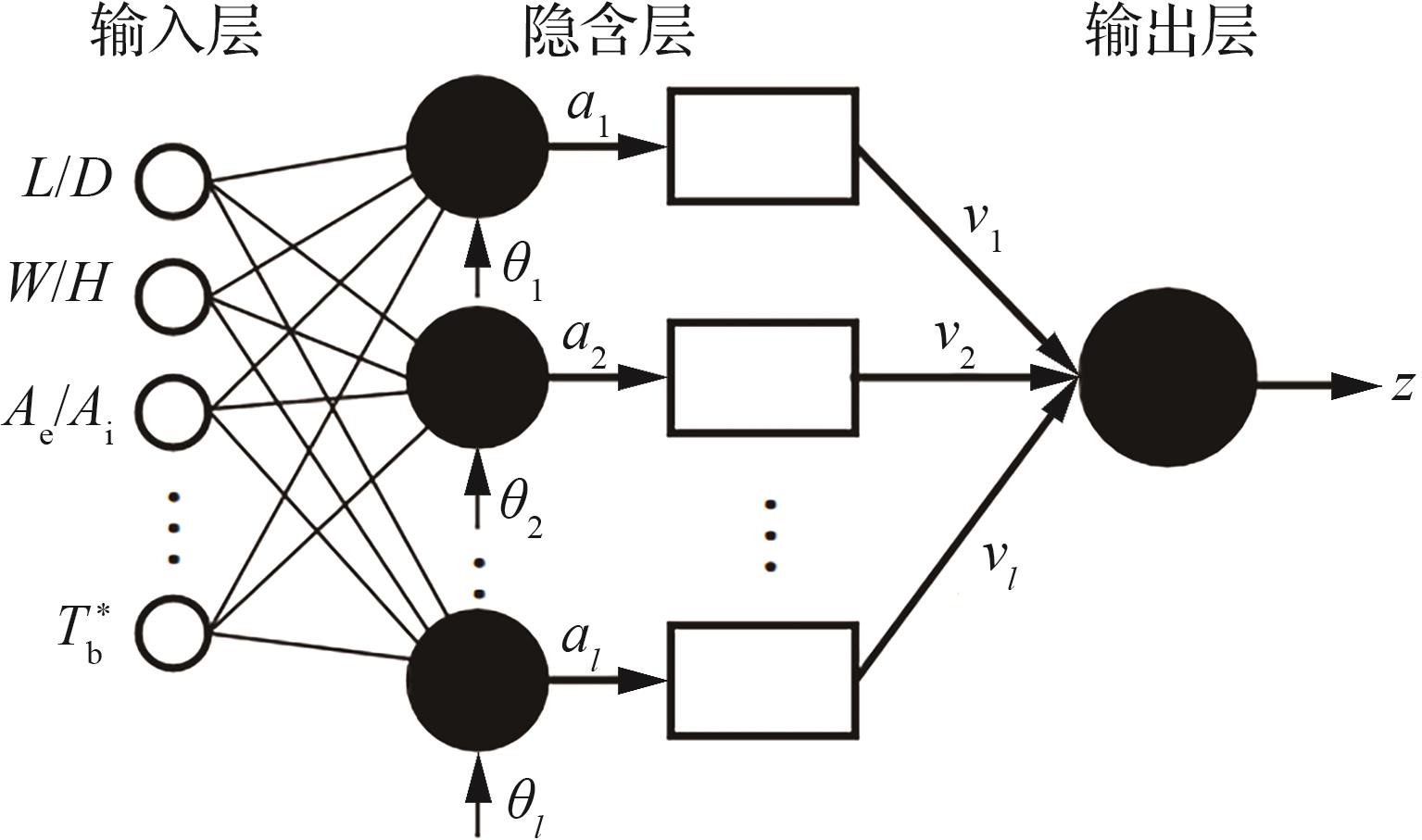

Fig.7
Schematic of zero-dimensional turbofan model
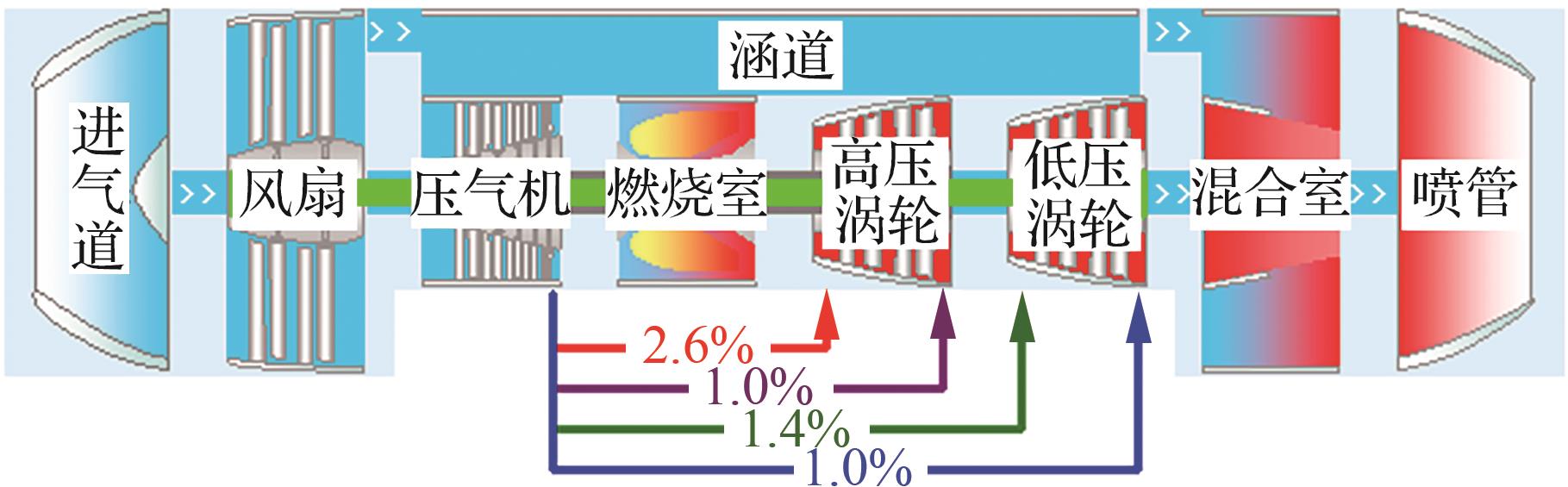
Table 5
Engine design parameters
| 设计参数 | 数值 |
|---|---|
| 飞行高度/km | 0 |
| 飞行马赫数 | 0 |
| 风扇压比 | 1.81 |
| 涵道比 | 2.01 |
| 压气机压比 | 4.36 |
| 涡轮前总温/K | 1 255.00 |
Table 6
Iterative variables and balance equations of the engine
| 部件 | 迭代变量 | 残差变量 |
|---|---|---|
| 风扇 | 涵道比、β | 质量流量 |
| 高压压气机 | β | 质量流量 |
| 燃烧室 | 出口总温Tt4 | 质量流量 |
| 高压涡轮 | β | 质量流量 |
| 低压涡轮 | β | 质量流量 |
| 混合室 | 静压 | |
| 喷管 | 质量流量 | |
| 低压轴 | 转速 | 功率 |
| 高压轴 | 转速 | 功率 |
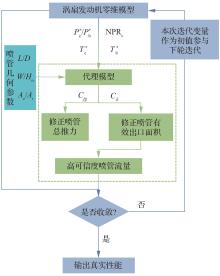
Fig.8
Flowchart of coupling
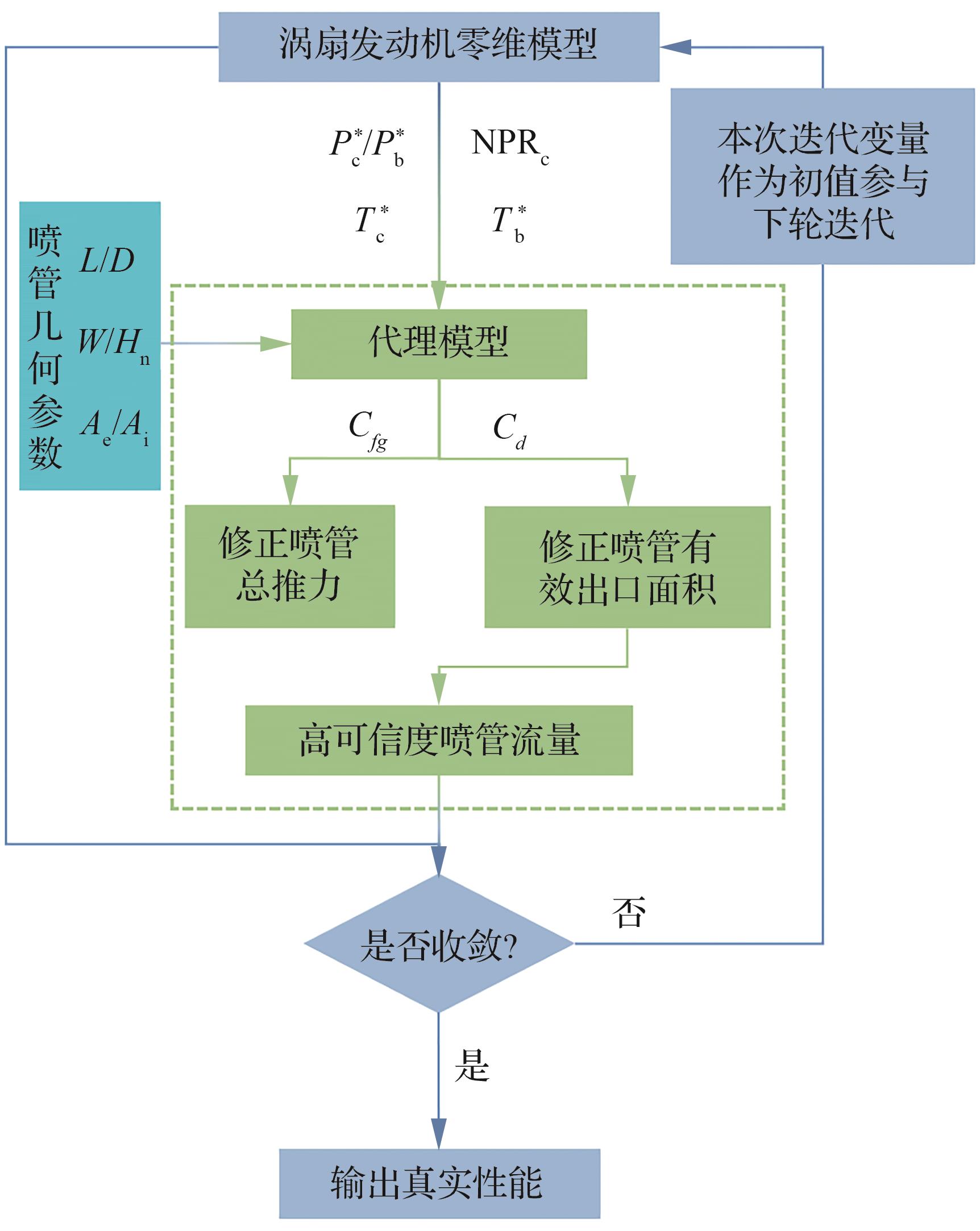
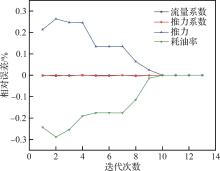
Fig.9
Parameter iteration residuals variation
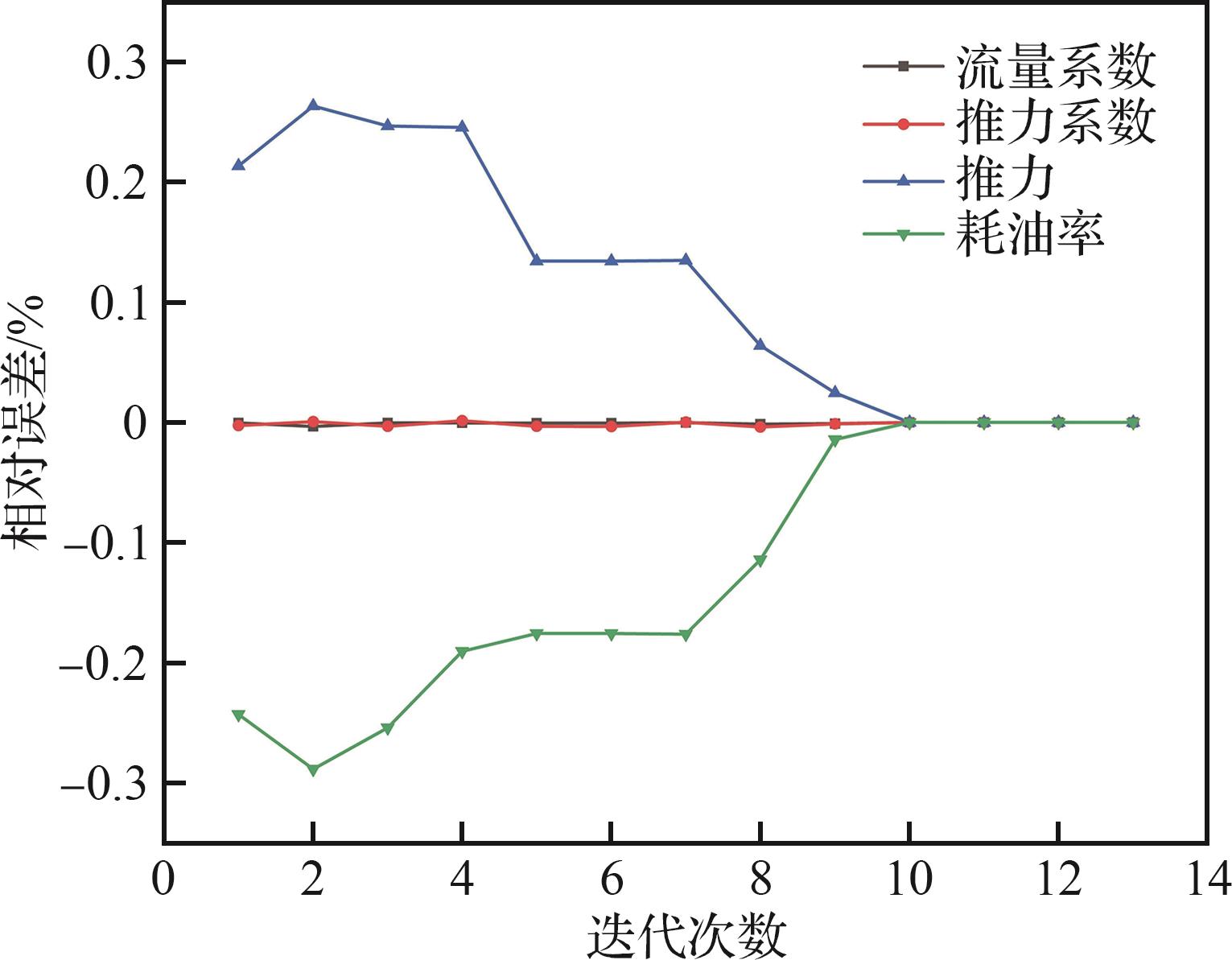
Table 7
Comparison between model calculation results and experimental data
| 结果 | F/F0,e | Gsfc/Gsfc0,e | Pt3/Pt3,0,e |
|---|---|---|---|
| 相对误差/% | 0.357 3 | 0.348 7 | 0.508 6 |
| 实验数据 | 0.951 62 | 1.043 83 | 0.994 97 |
| 模型计算 | 0.955 02 | 1.047 47 | 1.000 03 |
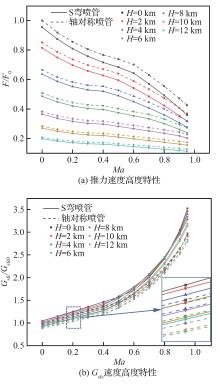
Fig.10
Speed and altitude characteristics of engine
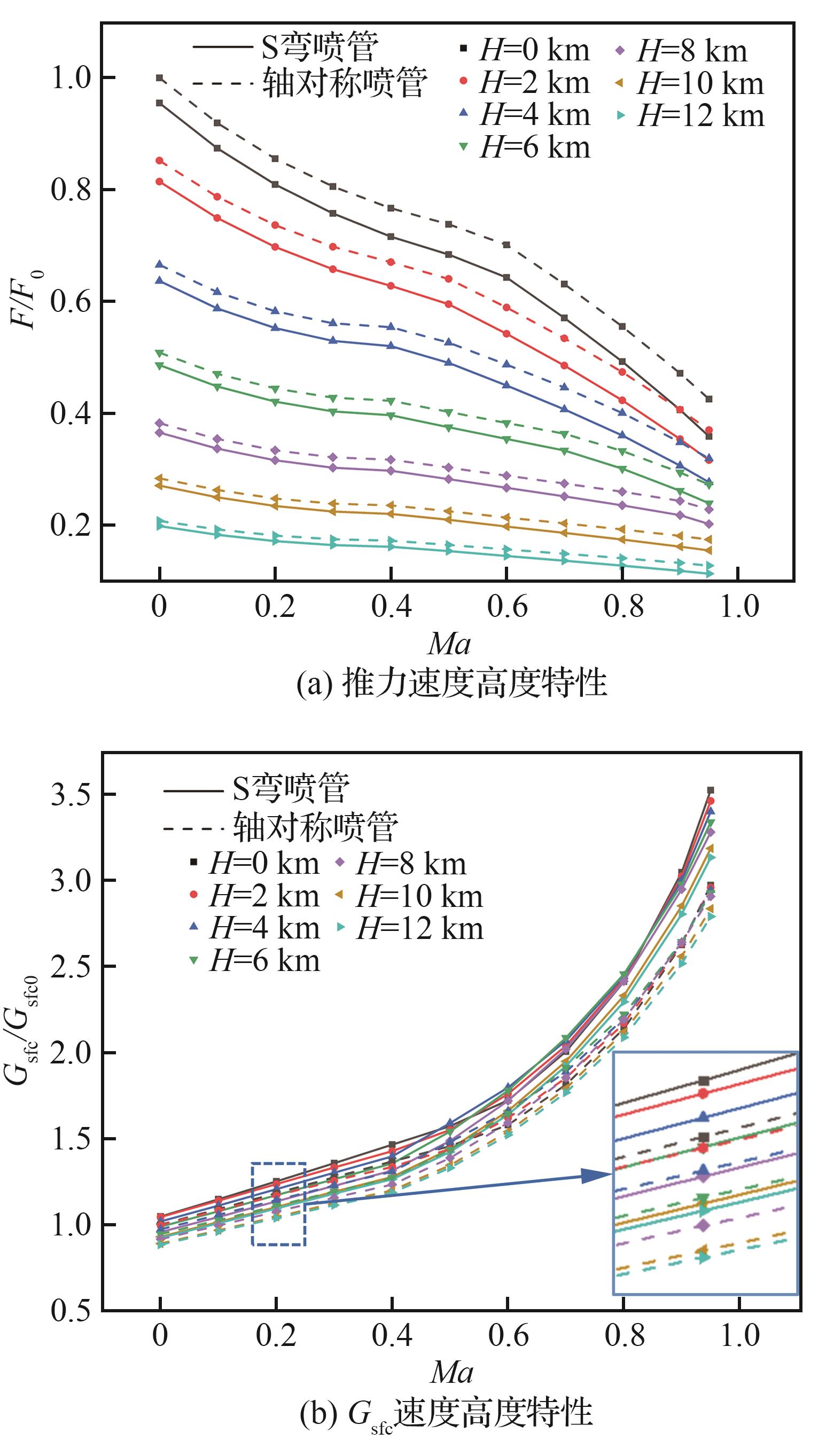
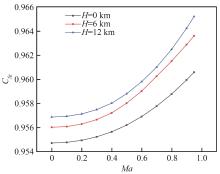
Fig.11
Variation of Cfg with Ma and H
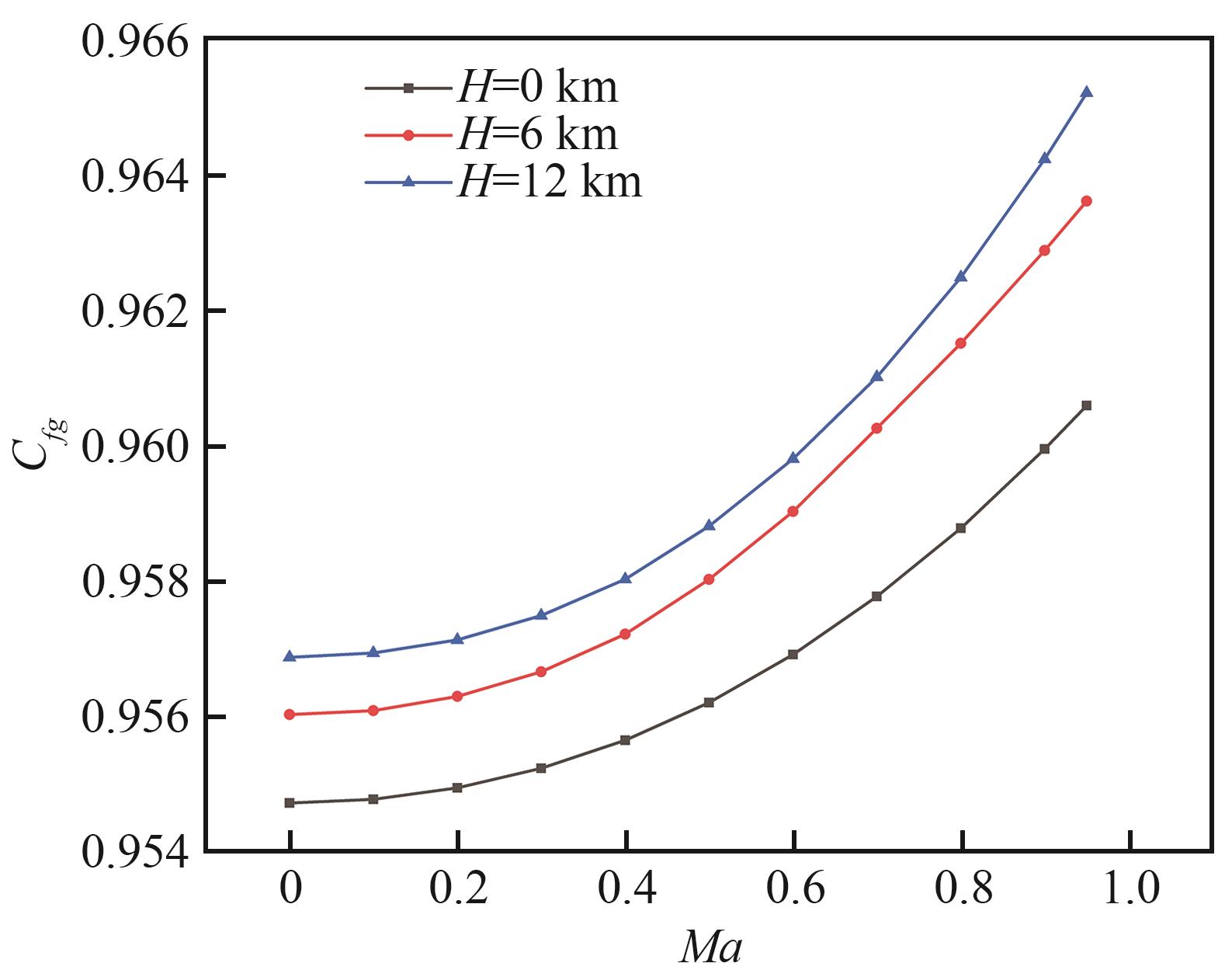
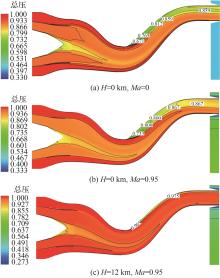
Fig.12
Contours of total pressure on the symmetrical section at different Ma,H
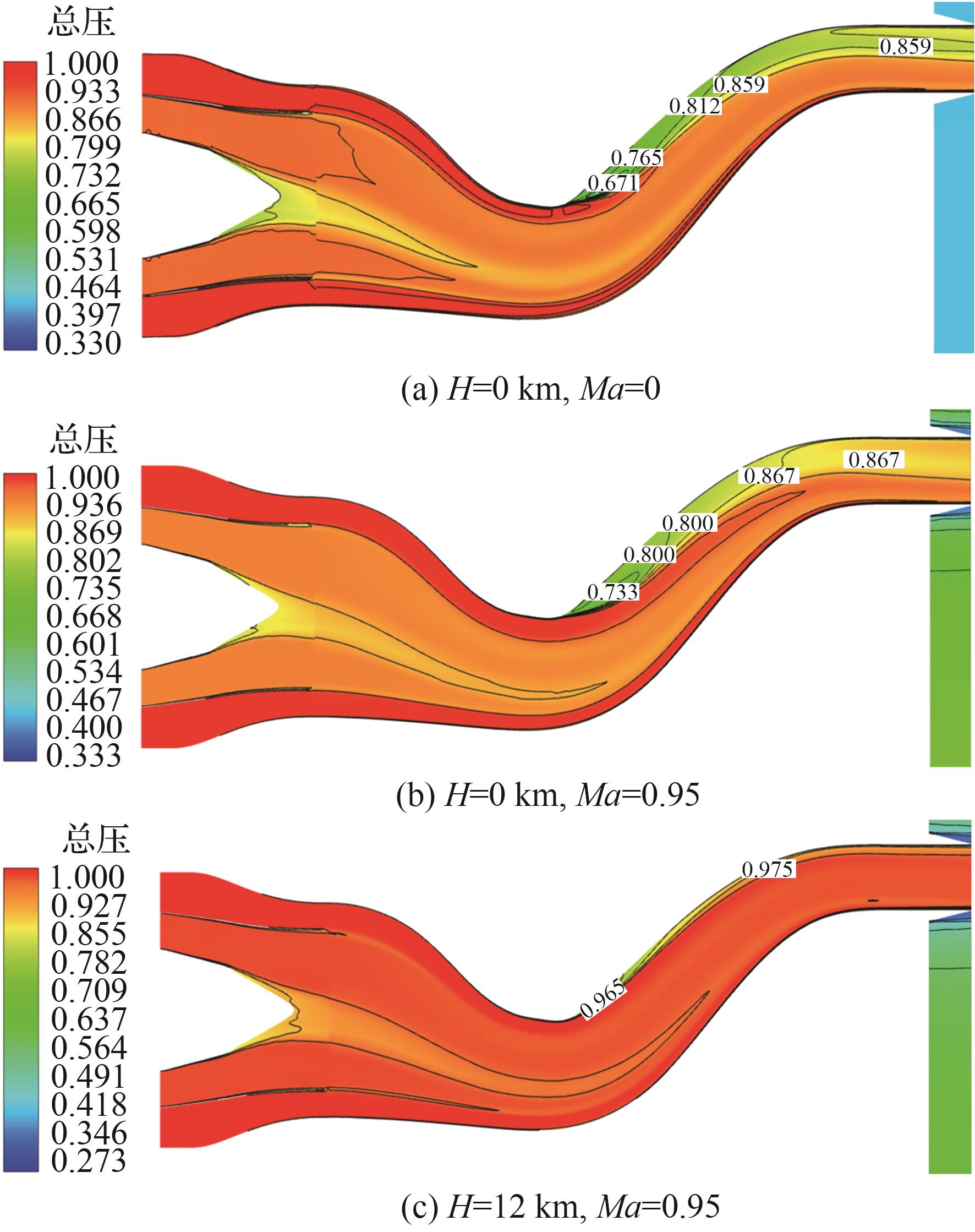
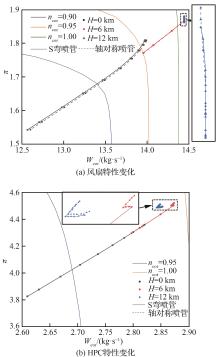
Fig.13
Characteristic changes of fan and HPC after installation of serpentine nozzle
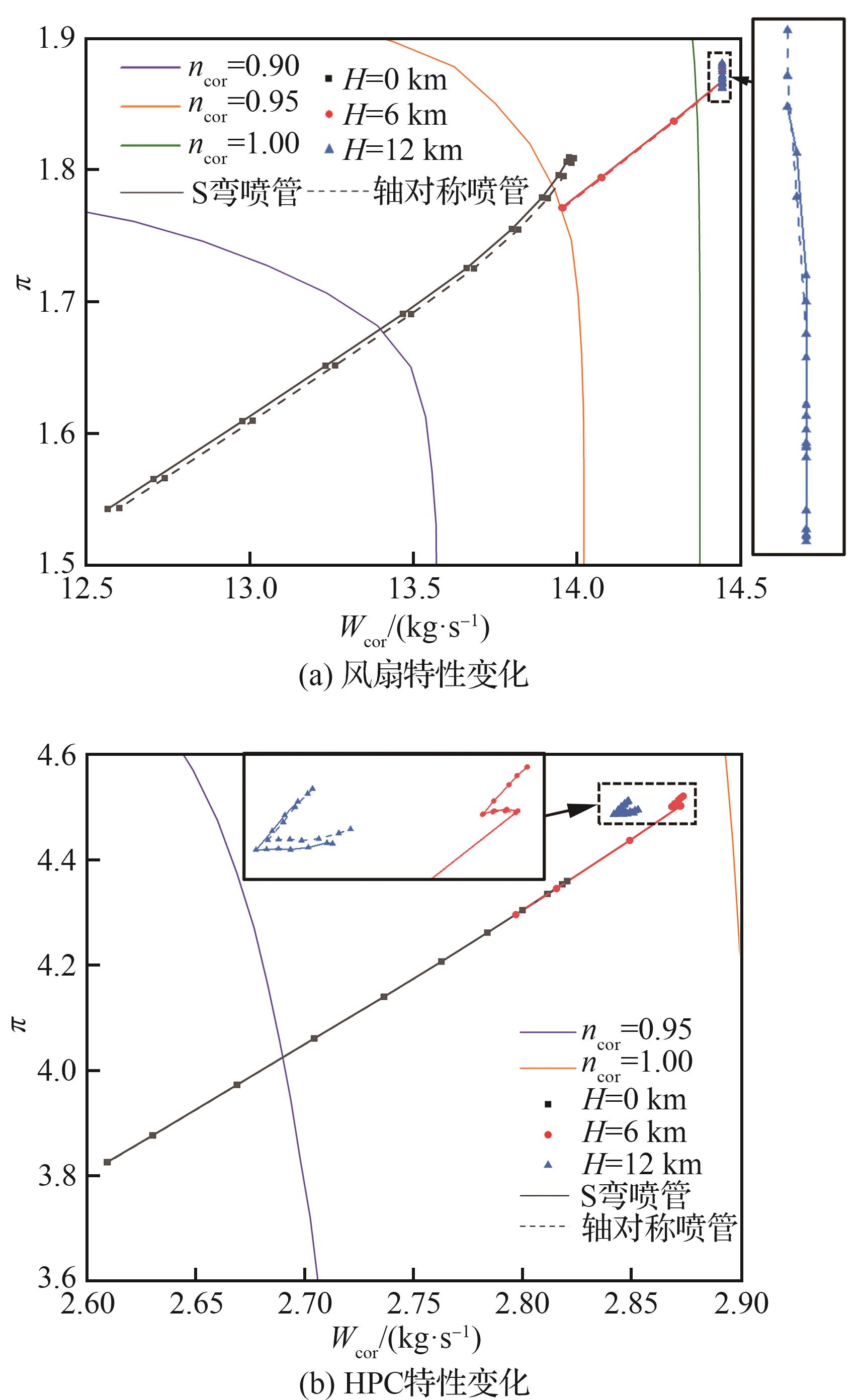
Fig.14
Variation of fan BPRafter installation of serpentine nozzle
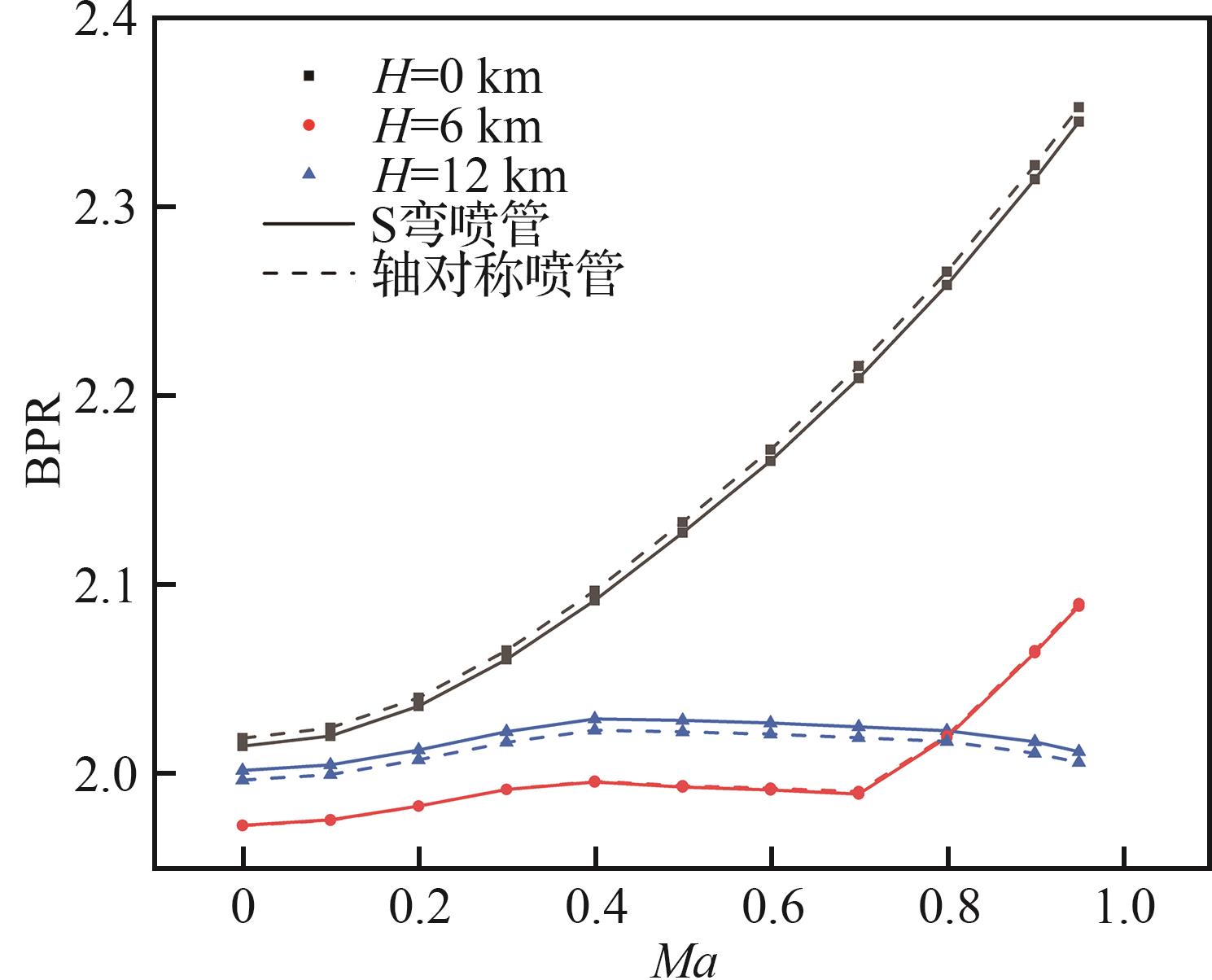
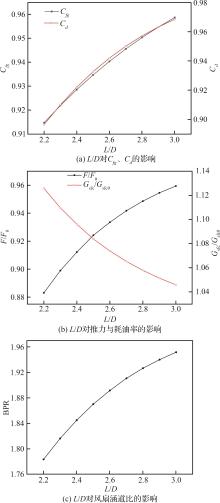
Fig.15
Impacts of L/D on engine and nozzle performance
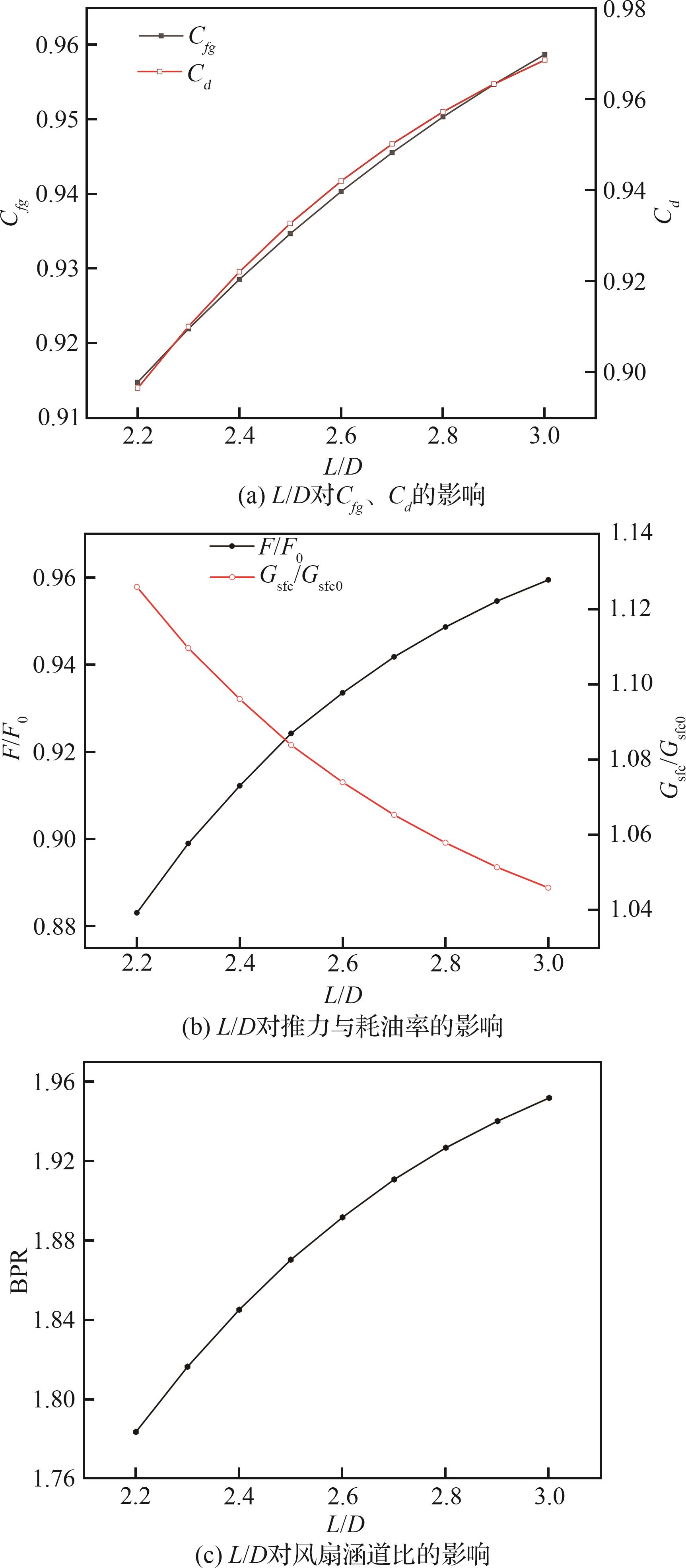
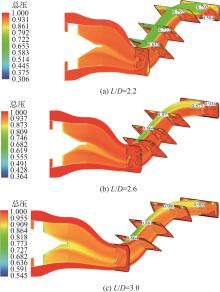
Fig.16
Total pressure contours of critical cross-sections at different L/D
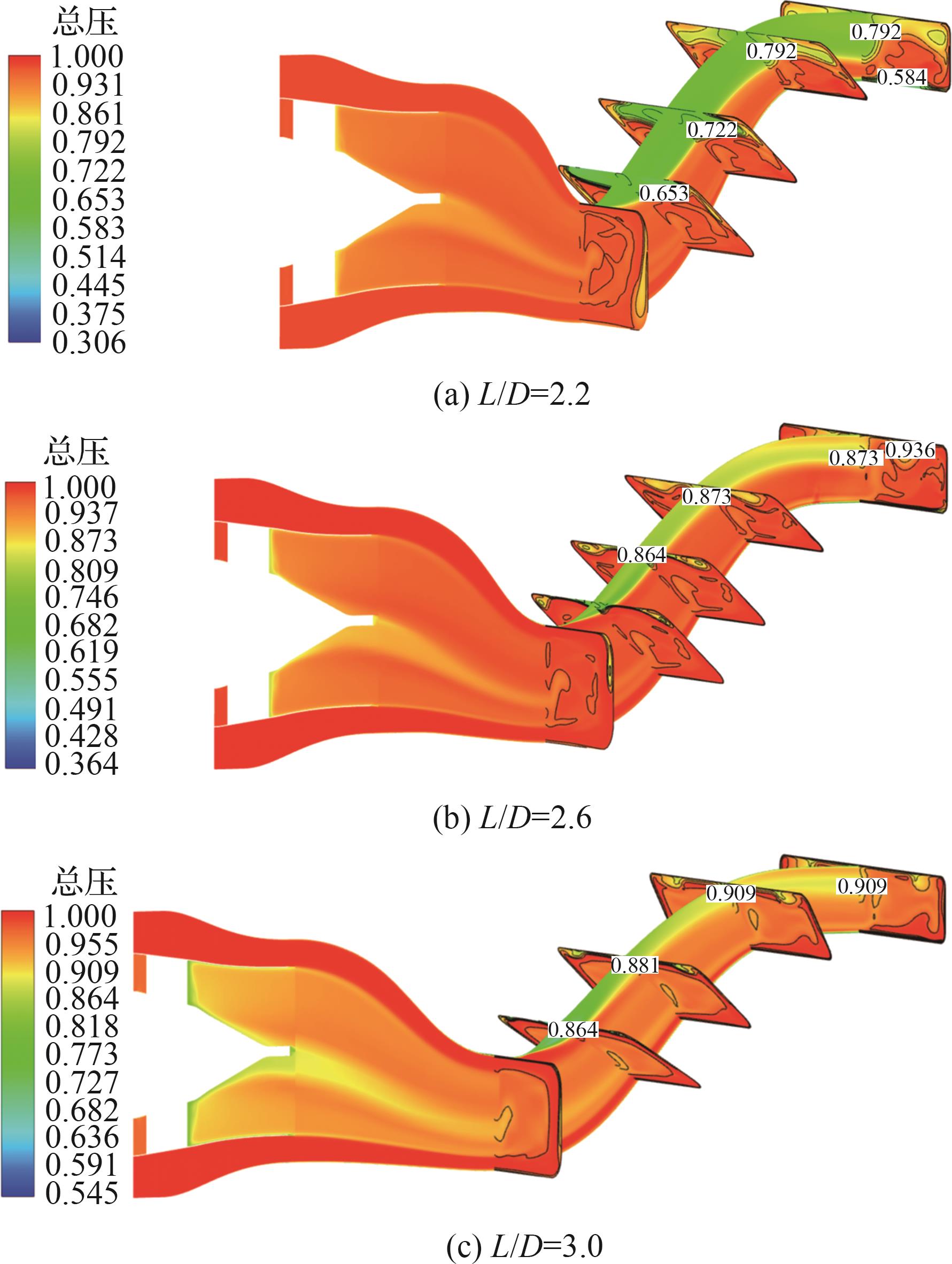
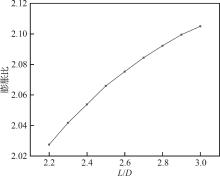
Fig.17
Turbine expansion ratio at different L/D
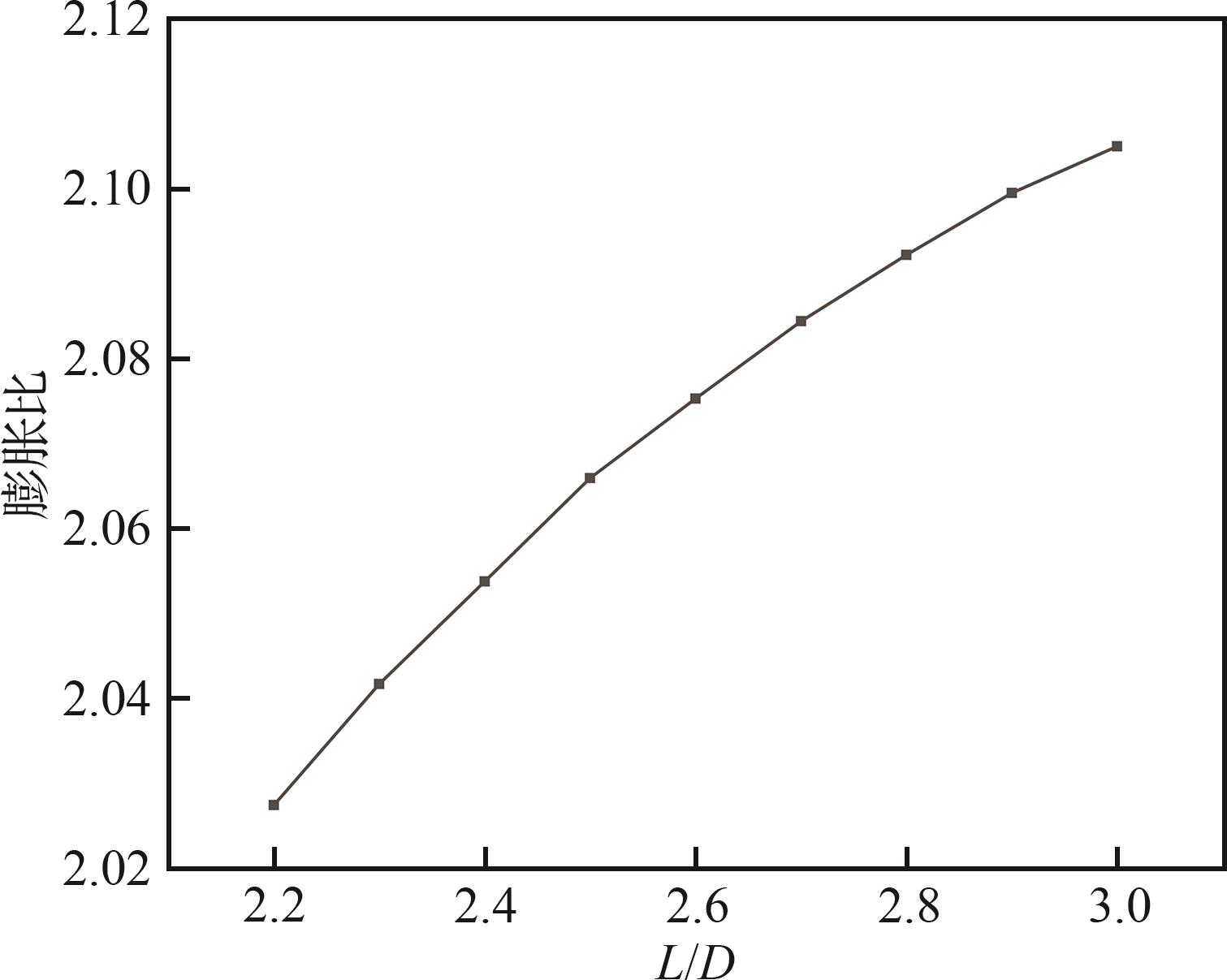
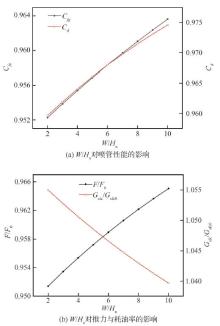
Fig.18
Impact of W/Hn on engine performance
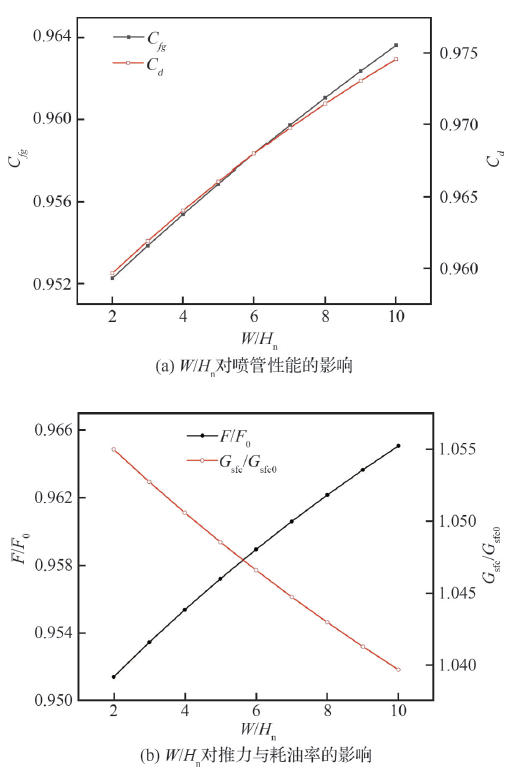
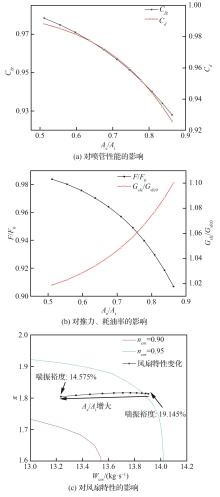
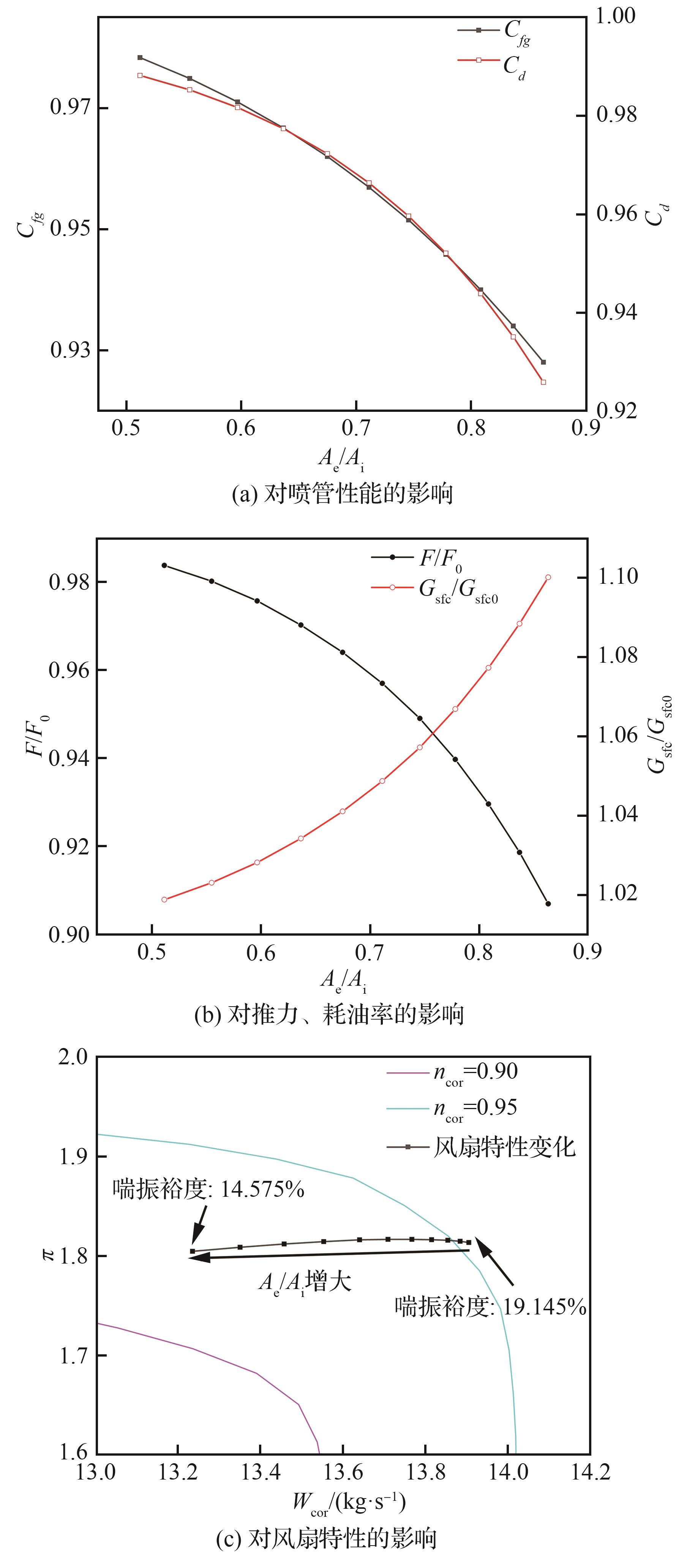
Fig.19
Impact of Ae/Ai on engine performance
| [1] | 刘大响. 航空发动机设计手册: 进排气装置[M]. 北京: 航空工业出版社, 2002: 276. |
| LIU D X. Aeroengine design manual: Inlet and exhaust system [M]. Beijing: Aviation Industry Press, 2002: 276 (in Chinese). | |
| [2] | 高翔. 飞行器/排气系统红外辐射及电磁散射特性数值研究[D]. 西安: 西北工业大学, 2016: 4-6. |
| GAO X. Numerical study on infrared radiation and electromagnetic scattering characteristics of aircraft/exhaust system[D]. Xi’an: Northwestern Polytechnical University, 2016: 4-6 (in Chinese). | |
| [3] | 是介, 周莉, 史经纬, 等. 复杂来流条件下设计参数对S弯喷管红外辐射特征影响[J]. 航空学报, 2024, 45(17): 530082. |
| SHI J, ZHOU L, SHI J W, et al. Influence of design parameters on infrared radiation characteristics of serpentine nozzles under complex flow conditions[J]. Acta Aeronautica et Astronautica Sinica, 2024, 45(17): 530082 (in Chinese). | |
| [4] | GRIDLEY M C, WALKER S H. Inlet and nozzle technology for 21st century fighter aircraft[C]∥ASME 1996 International Gas Turbine and Aeroengine Congress and Exhibition. New York: ASME, 2015. |
| [5] | MAHULIKAR S P, SONAWANE H R, ARVIND RAO G. Infrared signature studies of aerospace vehicles[J]. Progress in Aerospace Sciences, 2007, 43(7-8): 218-245. |
| [6] | STACK C M, GAITONDE D V. Shear layer dynamics in a supersonic rectangular multistream nozzle with an aft-deck[J]. AIAA Journal, 2018, 56(11): 4348-4360. |
| [7] | 孙啸林. 低可探测S弯喷管设计及性能评估方法研究[D]. 西安: 西北工业大学, 2018. |
| SUN X L. Study on design and performance evaluation method of low detectable S-bend nozzle[D]. Xi’an: Northwestern Polytechnical University, 2018 (in Chinese). | |
| [8] | 孟钰博, 史经纬, 周莉, 等. 异型喷口的多维偏转S弯喷管设计方法[J]. 航空学报, 2024, 45(8): 128930. |
| MENG Y B, SHI J W, ZHOU L, et al. Design method for multi-dimensional deflected serpentine nozzle with abnormal exit[J]. Acta Aeronautica et Astronautica Sinica, 2024, 45(8): 128930 (in Chinese). | |
| [9] | 王明新, 周莉, 史经纬, 等. S弯收扩喷管过膨胀状态下流动分离特性研究[J]. 推进技术, 2024, 45(9): 76-87. |
| WANG M X, ZHOU L, SHI J W, et al. Flow separation characteristics of S-shaped convergent-divergent nozzle under overexpanded condition[J]. Journal of Propulsion Technology, 2024, 45(9): 76-87 (in Chinese). | |
| [10] | 周莉, 孟钰博, 王占学. S弯收扩喷管流动特性数值研究[J]. 推进技术, 2021, 42(1): 103-113, 2. |
| ZHOU L, MENG Y B, WANG Z X. Numerical study on flow characteristics of serpentine convergent-divergent nozzle[J]. Journal of Propulsion Technology, 2021, 42(1): 103-113, 2 (in Chinese). | |
| [11] | MENG Y B, SHI J W, ZHOU L, et al. Numerical investigation on flow characteristics of multi-stream supersonic nozzle with serpentine configuration[J]. Aerospace Science and Technology, 2024, 144: 108799. |
| [12] | 李秋琳, 周莉, 孙鹏, 等. 出口宽高比对S弯喷管流固耦合特性影响[J]. 航空学报, 2023, 44(14): 628204. |
| LI Q L, ZHOU L, SUN P, et al. Influence mechanism of aspect ratio on fluid-structure interaction characteristics of serpentine nozzle[J]. Acta Aeronautica et Astronautica Sinica, 2023, 44(14): 628204 (in Chinese). | |
| [13] | HUI Z H, SHI J W, ZHOU L, et al. Experimental investigation on the effects of complex pressure gradients on the film cooling effectiveness of a serpentine nozzle[J]. Applied Thermal Engineering, 2024, 254: 123894. |
| [14] | CLAUS R, LAVELLE T, TOWNSEND S, et al. Variable fidelity analysis of complete engine systems[C]∥43rd AIAA/ASME/SAE/ASEE Joint Propulsion Conference & Exhibit. Reston: AIAA, 2007. |
| [15] | EVANS A, FOLLEN G, NAIMAN C, et al. Numerical propulsion system simulation’s national cycle program[C]∥34th AIAA/ASME/SAE/ASEE Joint Propulsion Conference and Exhibit. Reston: AIAA, 1998. |
| [16] | NICHOLS L, CHAMIS C. Numerical propulsion system simulation-An interdisciplinary approach[C]∥Conference on Advanced SEI Technologies. Reston: AIAA, 1991. |
| [17] | CLAUS R W, EVANS A L, LYLTE J K, et al. Numerical propulsion system simulation[J]. Computing Systems in Engineering, 1991, 2(4): 357-364. |
| [18] | LYTEL J, FOLLEN G, NAIMAN C, et al. 2001 numerical propulsion system simulation review: NASA/TM-2002-211197[R]. Washington, D. C.: NASA, 2002. |
| [19] | REITENBACH S, SCHNÖS M, BECKER R G, et al. Optimization of compressor variable geometry settings using multi-fidelity simulation[C]∥ASME Turbo Expo 2015: Turbine Technical Conference and Exposition. New York: ASME, 2015, doi:10.1115/GT2015-42832 . |
| [20] | FOLLEN G, AUBUCHON M. Numerical zooming between a NPSS engine system simulation and a one-dimensional high compressor analysis code: NASA/TM-2000-209913[R]. Washington, D. C.: NASA, 2020. |
| [21] | 宋甫, 周莉, 王占学, 等. 部件三维仿真模型与发动机循环参数分析的耦合方法研究[J]. 推进技术, 2022, 43(7): 80-87. |
| SONG F, ZHOU L, WANG Z X, et al. Coupling method between three-dimensional component simulation model and aero-engine cycle parameter analysis[J]. Journal of Propulsion Technology, 2022, 43(7): 80-87 (in Chinese). | |
| [22] | XU Y B, YAN C, PIAO Y. Analysis of discrepancies between 3-D coupled and uncoupled schemes based on CFD in full engine simulation[J]. Aerospace Science and Technology, 2022, 131: 107978. |
| [23] | SONG F, ZHOU L, WANG Z X, et al. Integration of high-fidelity model of forward variable area bypass injector into zero-dimensional variable cycle engine model[J]. Chinese Journal of Aeronautics, 2021, 34(8): 1-15. |
| [24] | 许哲文, 唐海龙, 陈敏, 等. 基于混合维度仿真的自适应循环发动机引射喷管安装性能研究[J]. 推进技术, 2023, 44(9): 20-34. |
| XU Z W, TANG H L, CHEN M, et al. Installed performance of adaptive cycle engine ejector nozzle based on multi-fidelity simulation[J]. Journal of Propulsion Technology, 2023, 44(9): 20-34 (in Chinese). | |
| [25] | CONNOLLY J W, FRIEDLANDER D J, KOPASAKIS G. Computational fluid dynamics modeling of a supersonic nozzle and integration into a variable cycle engine model[C]∥50th AIAA/ASME/SAE/ASEE Joint Propulsion Conference. Reston: AIAA, 2014: 3687. |
| [26] | 陈玉春, 黄兴, 高本兵, 等. 发动机总体与尾喷管三维并行设计研究[J]. 航空动力学报, 2007, 22(10): 1695-1699. |
| CHEN Y C, HUANG X, GAO B B, et al. Parallel design of turbo engine and three-dimensional nozzle[J]. Journal of Aerospace Power, 2007, 22(10): 1695-1699 (in Chinese). | |
| [27] | 亚历山大·I . J. 福瑞斯特,安德瑞斯·索比斯特, 安迪·J . 肯尼. 基于代理模型的工程设计: 实用指南[M]. 韩忠华,张科施,译. 北京: 航空工业出版社, 2018: 17-26. |
| ALEXANDER I J F, ANDRÁS S, ANDY J K. Engineering design via surrogate modelling[M]. HAN Z H, ZHANG K S, translated.Beijing: Aviation Industry Press, 2018: 17-26 (in Chinese). | |
| [28] | 周红. 变循环发动机特性分析及其与飞机一体化设计研究[D]. 西安: 西北工业大学, 2016: 42-44. |
| ZHOU H. Characteristic analysis of variable cycle engine and its integrated design with aircraft[D]. Xi’an: Northwestern Polytechnical University, 2016: 42-44 (in Chinese). |
| [1] | Haipeng CHEN, Wenxing FU, Jie YAN. Fault diagnosis of thrust offset loss of launch vehicle based on AGABP neural network [J]. Acta Aeronautica et Astronautica Sinica, 2025, 46(8): 231148-231148. |
| [2] | Mou CHEN, Zhengguo HUANG, Yaohua SHEN, Fan LIU. Overview of composite anti-disturbance control technology of advanced vehicles [J]. Acta Aeronautica et Astronautica Sinica, 2025, 46(6): 531303-531303. |
| [3] | Zhichun YANG, Te YANG. Physical embedded neural network model and method for dynamic load identification [J]. Acta Aeronautica et Astronautica Sinica, 2025, 46(5): 531450-531450. |
| [4] | Chenhao ZHAO, Dewei WU, Jing HE, Qian WU. A semantic feature matching algorithm for UAV visual pose estimation [J]. Acta Aeronautica et Astronautica Sinica, 2025, 46(2): 330406-330406. |
| [5] | Wei CHEN, Lulu LI, Dong CHEN, Shaohui ZHANG, Yafei LI, Ke WANG, Yuanyuan JIN, Mingliang XU. Multi-aircraft cooperative decision-making methods driven by differentiated support demands for carrier-based aircraft [J]. Acta Aeronautica et Astronautica Sinica, 2025, 46(13): 531274-531274. |
| [6] | Ming YAN, Jiaxing WANG, Heqi LI, Kai LIU. Active disturbance rejection control of carrier-based aircraft based on offline network/online identification [J]. Acta Aeronautica et Astronautica Sinica, 2025, 46(13): 531317-531317. |
| [7] | Sisi YUAN, Xuming NIU, Zhigang SUN, Yingdong SONG. Load spectrum correction method considering performance degradation [J]. Acta Aeronautica et Astronautica Sinica, 2025, 46(12): 231312-231312. |
| [8] | Yubo MENG, Jingwei SHI, Li ZHOU, Yi ZHANG, Zhanxue WANG. Design method for multi-dimensional deflected serpentine nozzle with abnormal exit [J]. Acta Aeronautica et Astronautica Sinica, 2024, 45(8): 128930-128930. |
| [9] | Fei MA, Qiong ZHANG, Peijun LAI, Yidi YUE. BP neural network⁃based quantitative classification model for safety in experimental flight training [J]. Acta Aeronautica et Astronautica Sinica, 2024, 45(5): 529957-529957. |
| [10] | Yude NI, Miaoyu YAN, Ruihua LIU. Short-term prediction of ionospheric TEC based on DOA-BP neural network [J]. Acta Aeronautica et Astronautica Sinica, 2024, 45(4): 328707-328707. |
| [11] | Jiahao GE, Jinwu XIANG, Daochun LI. Online prediction of non-stationary chaotic time series with noise based on combinational NARX neural network [J]. Acta Aeronautica et Astronautica Sinica, 2024, 45(21): 330128-330128. |
| [12] | Junshen LI, Xiangyan MENG, Nuannuan SHI, Wei LI, Ninghua ZHU, Ming LI. Intelligent processing of optical neural networks: Technological evolution and future prospects [J]. Acta Aeronautica et Astronautica Sinica, 2024, 45(20): 630439-630439. |
| [13] | Yonggang CHEN, Kangni LIU, Shuai WANG. Fault knowledge graph construction for aviation equipment based on BiGRU⁃Attention improvement [J]. Acta Aeronautica et Astronautica Sinica, 2024, 45(18): 229916-229916. |
| [14] | Weiqing HUANG, Ning LI, Kailin LIU, Zhizhong FU, Pengfei JI, Shengliang ZHANG, Liwei DONG, Yantao SUN. Damage state evaluation method of service turbine blades based on MAML-LSTM [J]. Acta Aeronautica et Astronautica Sinica, 2024, 45(18): 429547-429547. |
| [15] | Jie SHI, Li ZHOU, Jingwei SHI, Zhanxue WANG. Influence of design parameters on infrared radiation characteristics of serpentine nozzles under complex flow conditions [J]. Acta Aeronautica et Astronautica Sinica, 2024, 45(17): 530082-530082. |
| Viewed | ||||||
|
Full text |
|
|||||
|
Abstract |
|
|||||
Address: No.238, Baiyan Buiding, Beisihuan Zhonglu Road, Haidian District, Beijing, China
Postal code : 100083
E-mail:hkxb@buaa.edu.cn
Total visits: 6658907 Today visits: 1341All copyright © editorial office of Chinese Journal of Aeronautics
All copyright © editorial office of Chinese Journal of Aeronautics
Total visits: 6658907 Today visits: 1341

 CJA
CJA
