Acta Aeronautica et Astronautica Sinica ›› 2026, Vol. 47 ›› Issue (13): 533221.doi: 10.7527/S1000-6893.2026.33221
• Special Issue: Flow Control and Thermal Management • Previous Articles Next Articles
Mu LI1,2, Liguo LIN1,2, Feng GUI1,3, Hong YAN1,2,4,5, Fuzhen CHEN1,2,4,5, Fan LIU1,2,4,5( )
)
Received:2025-12-10
Revised:2025-12-24
Accepted:2026-02-03
Online:2026-03-24
Published:2026-02-27
Contact:
Fan LIU
E-mail:liufan1990@outlook.com
Supported by:CLC Number:
Mu LI, Liguo LIN, Feng GUI, Hong YAN, Fuzhen CHEN, Fan LIU. Mechanism and evaluation of plasma chemical effects in laser ignition process[J]. Acta Aeronautica et Astronautica Sinica, 2026, 47(13): 533221.
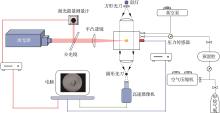
Fig.1
Schematic diagram of experiments
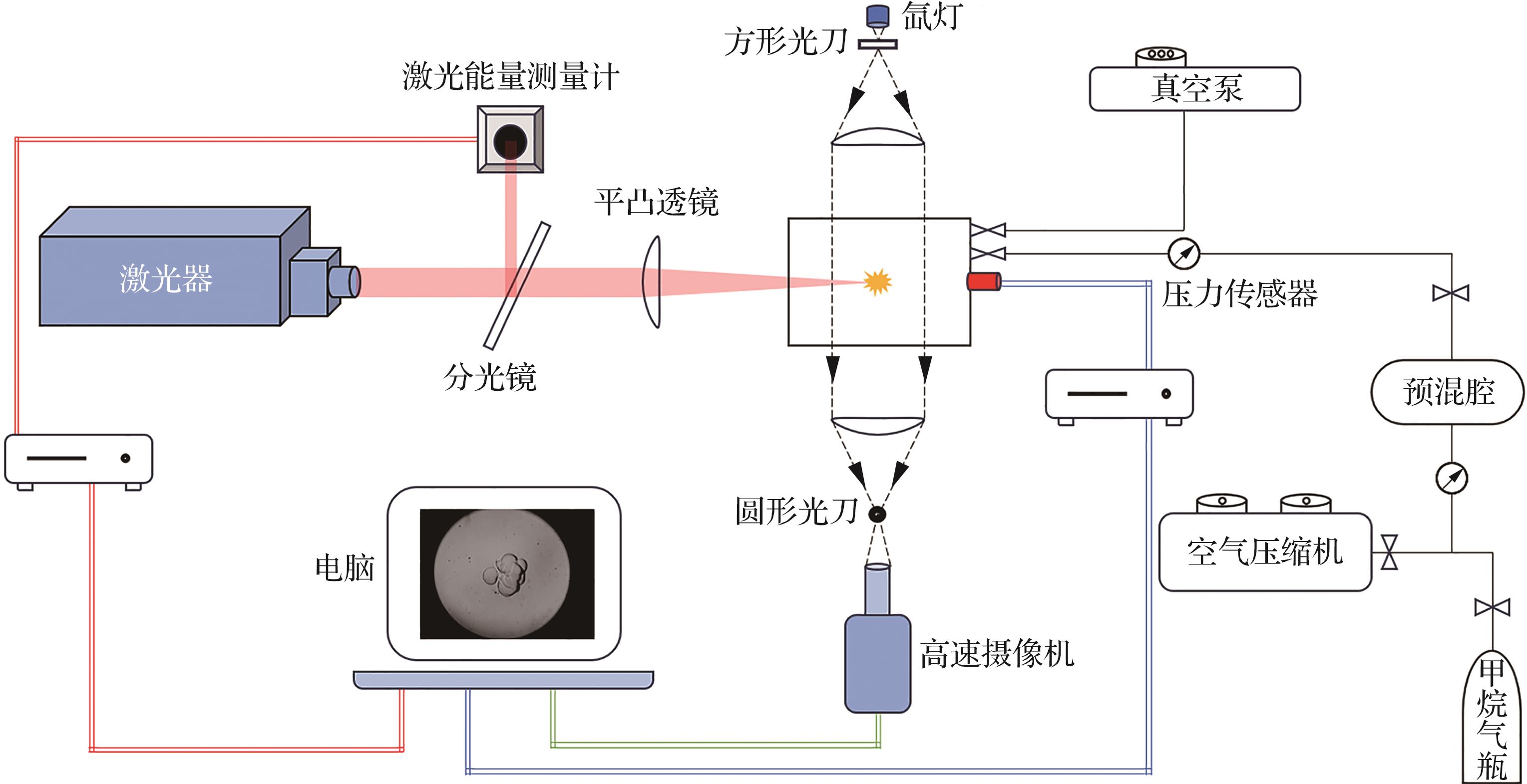
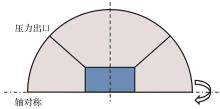
Fig.2
Computational domain and grid partitioning
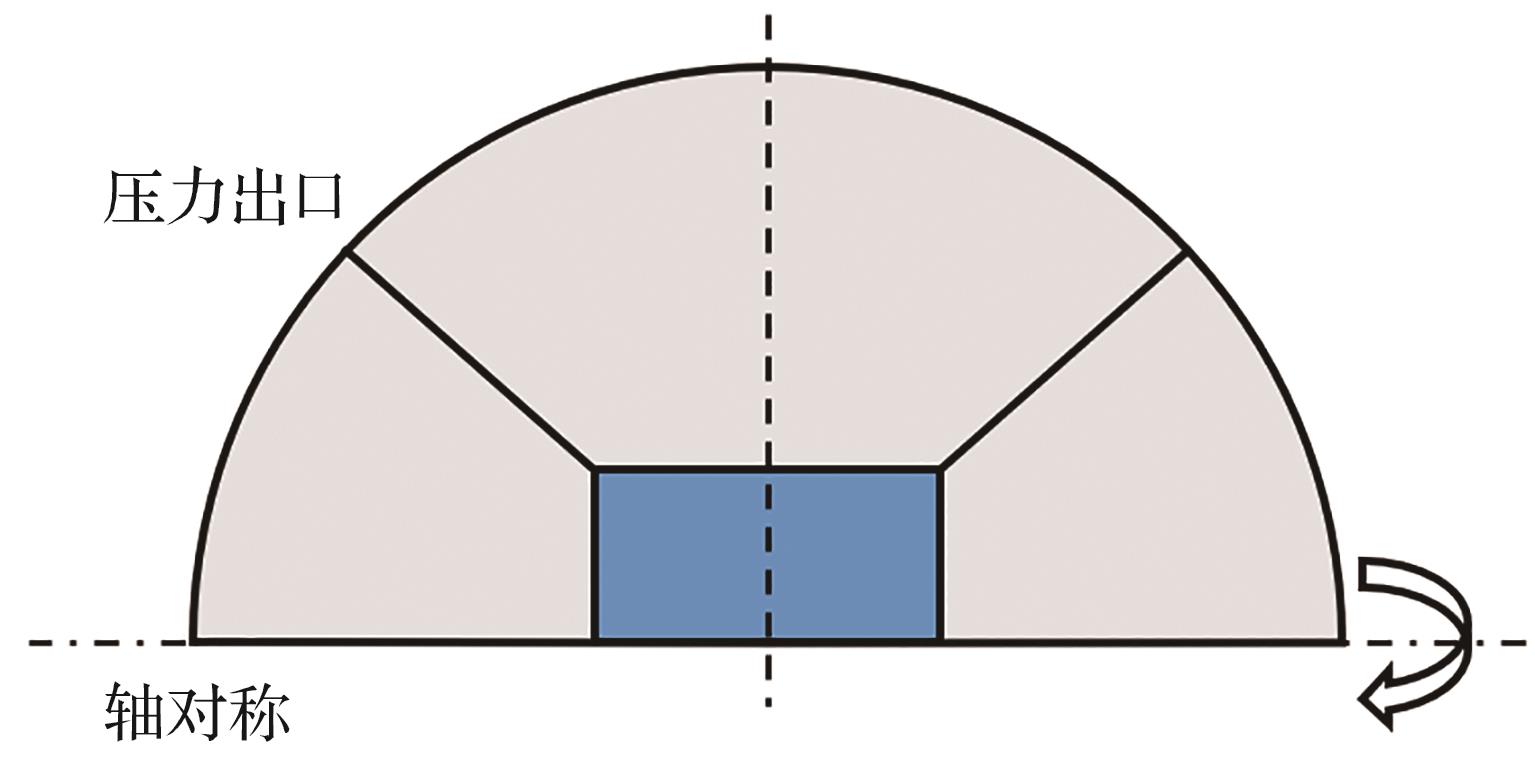
Fig.3
Laser induced air breakdown and combustible mixture ignition with E0=50 mJ
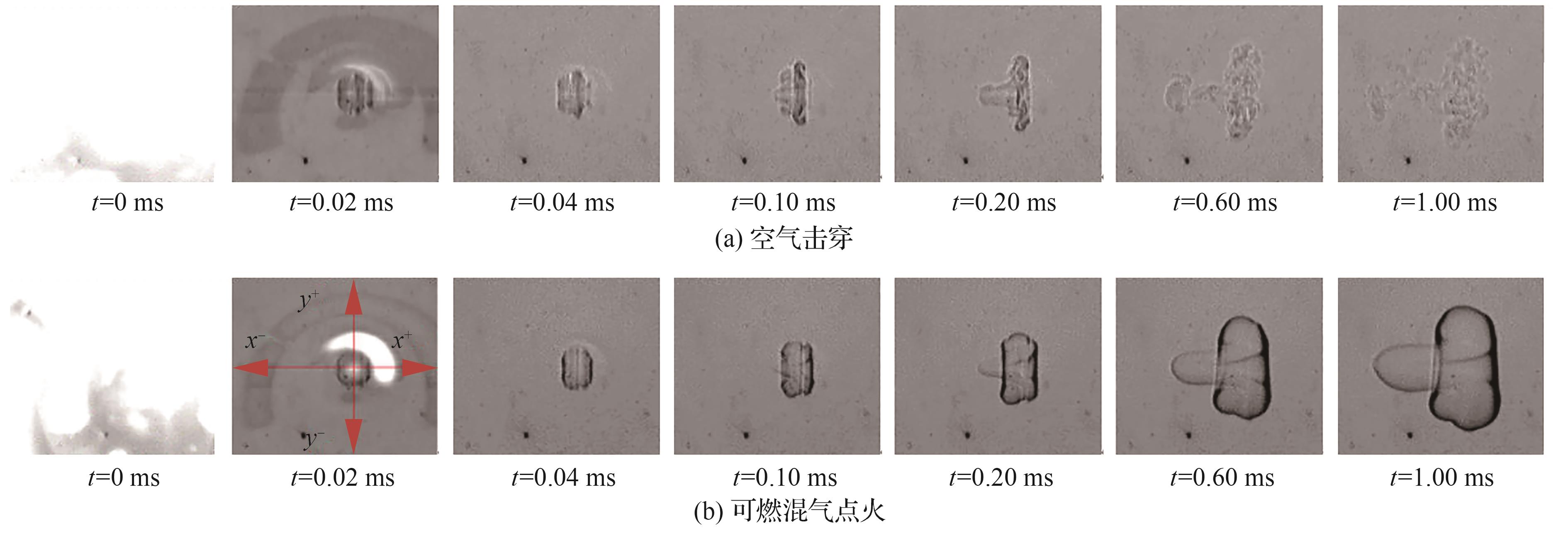
Fig.4
Thermonuclear flow field[28]
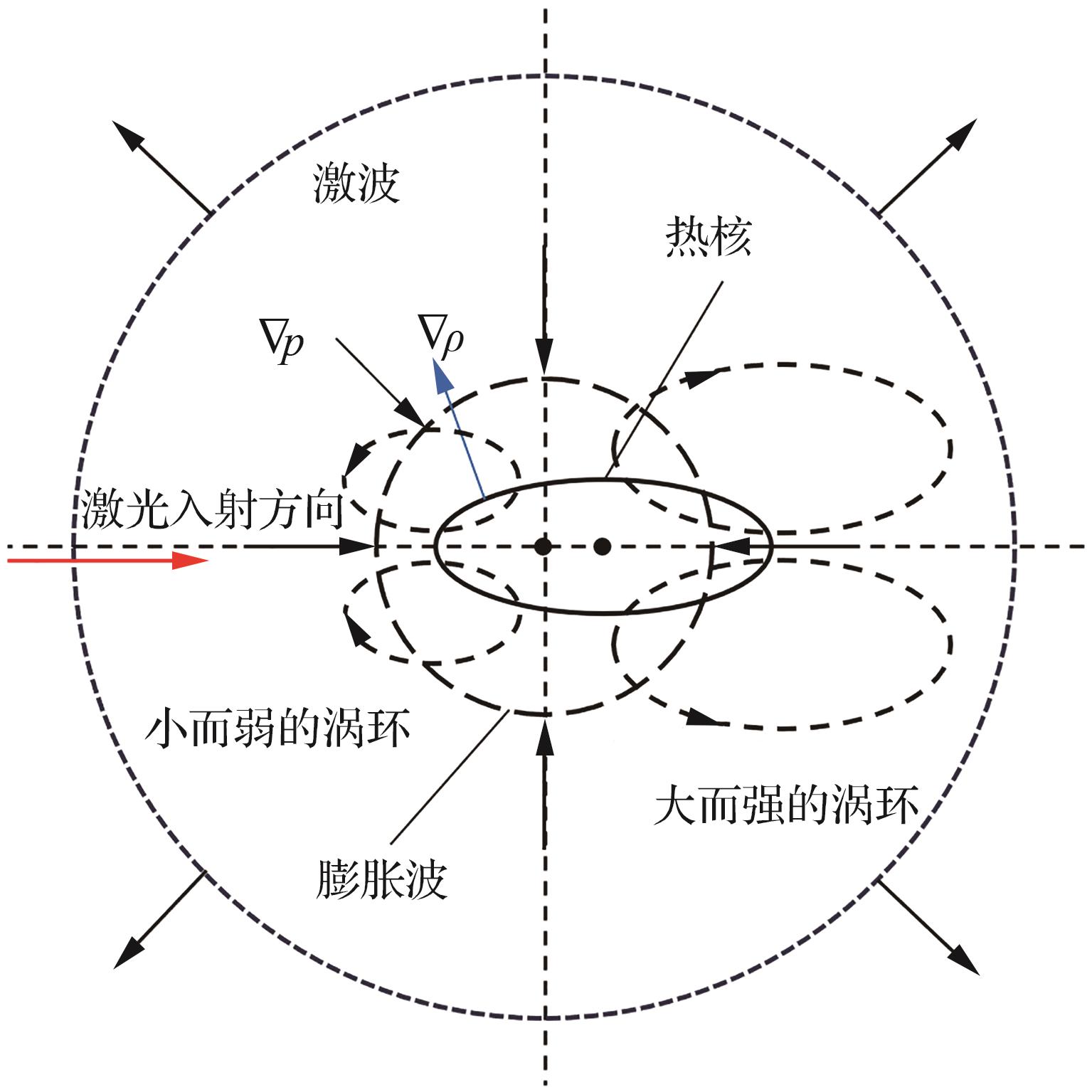
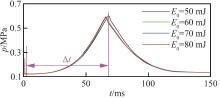
Fig.5
Pressure changes in constant volume combustion chamber at different energies
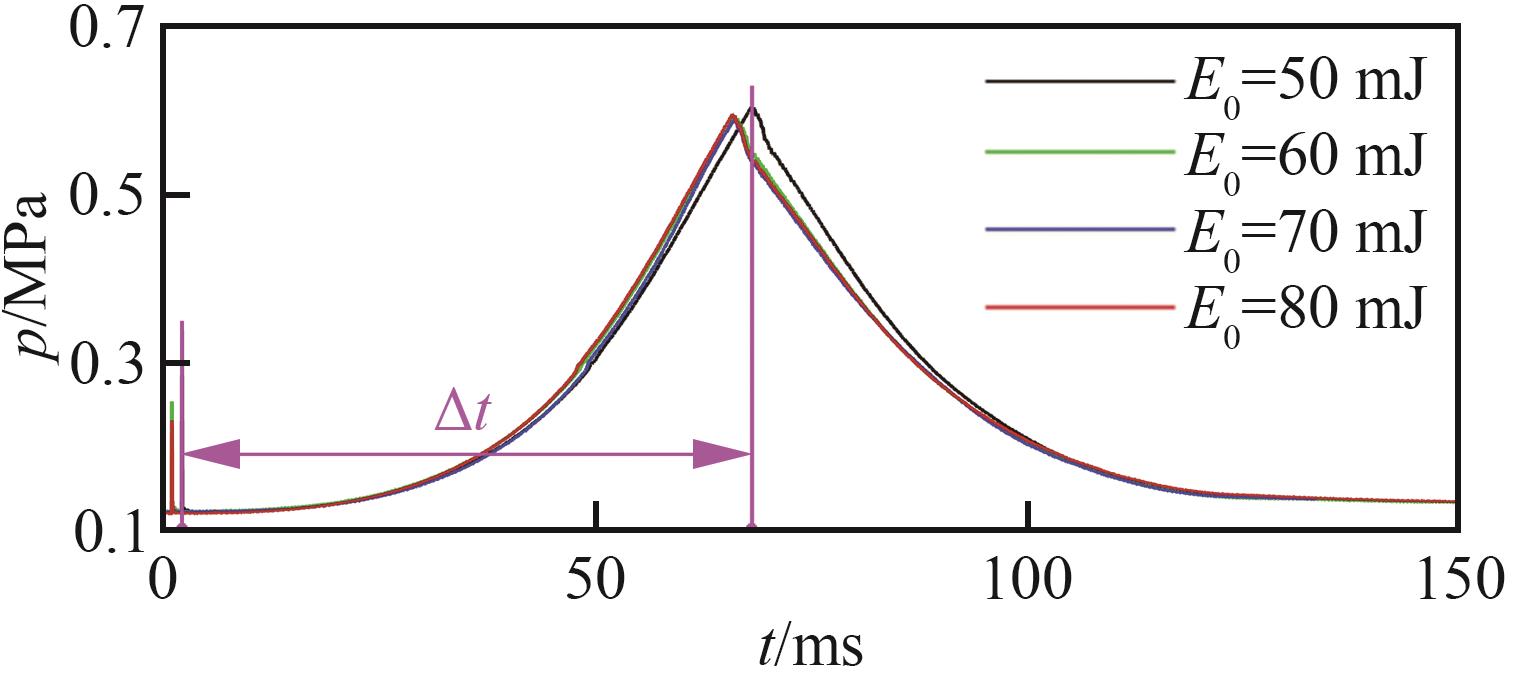
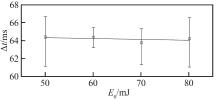
Fig.6
Flame propagation time (Δt) variation with laser energy
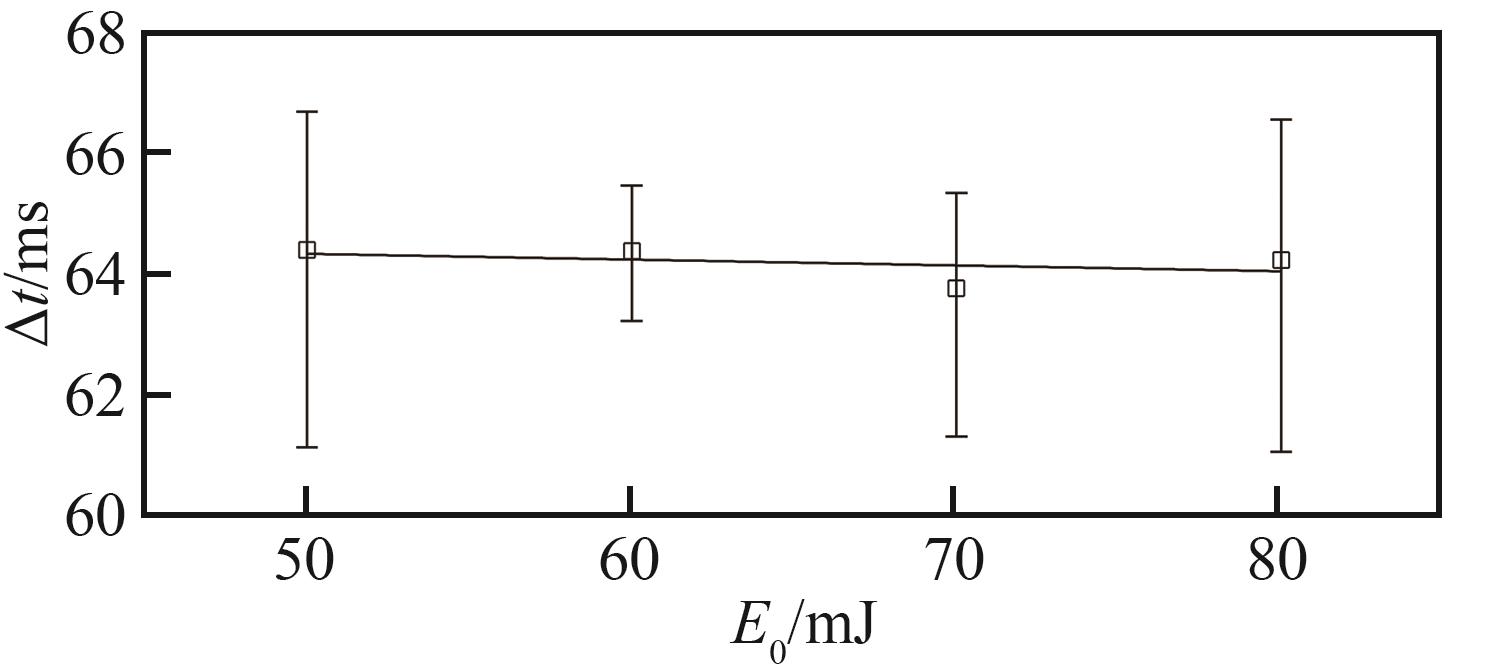
Fig.7
Experimental and calculation thermonuclear temperature contours
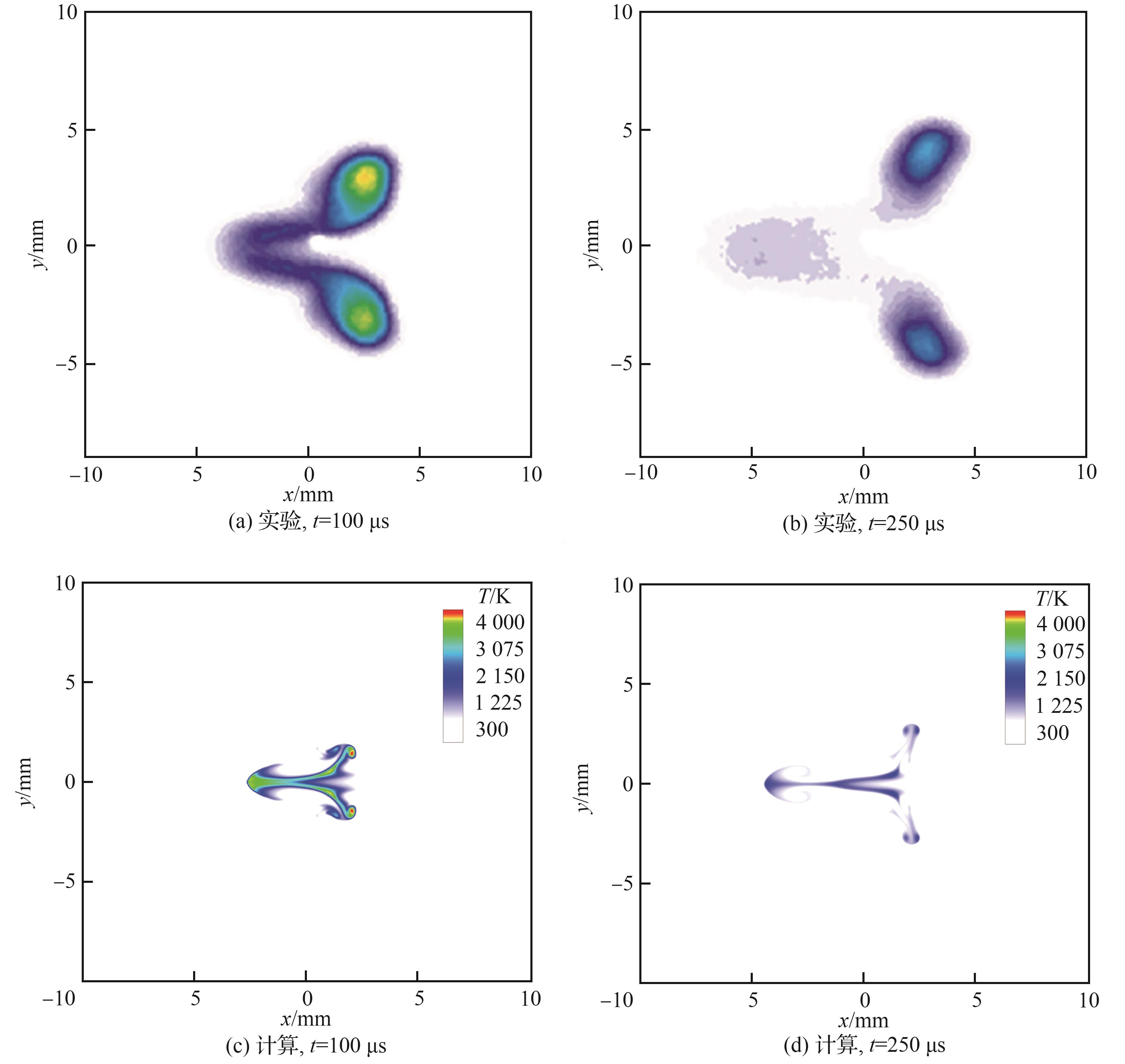
Fig.8
Maximum temperature of thermonuclear in experiments and with/without air ionization reactions
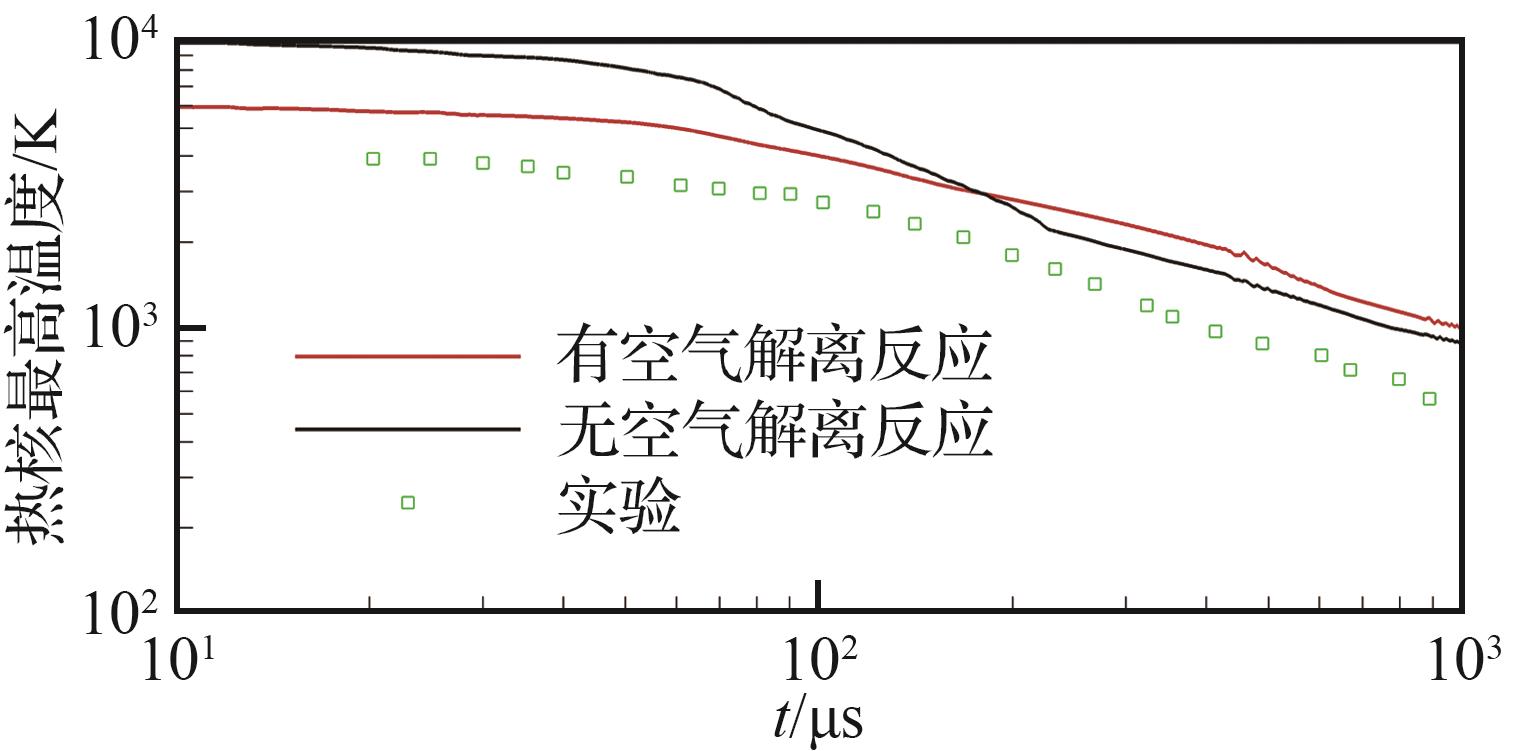
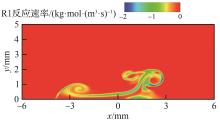
Fig.9
Contours of reaction rate for 200 μs elementary reaction R1
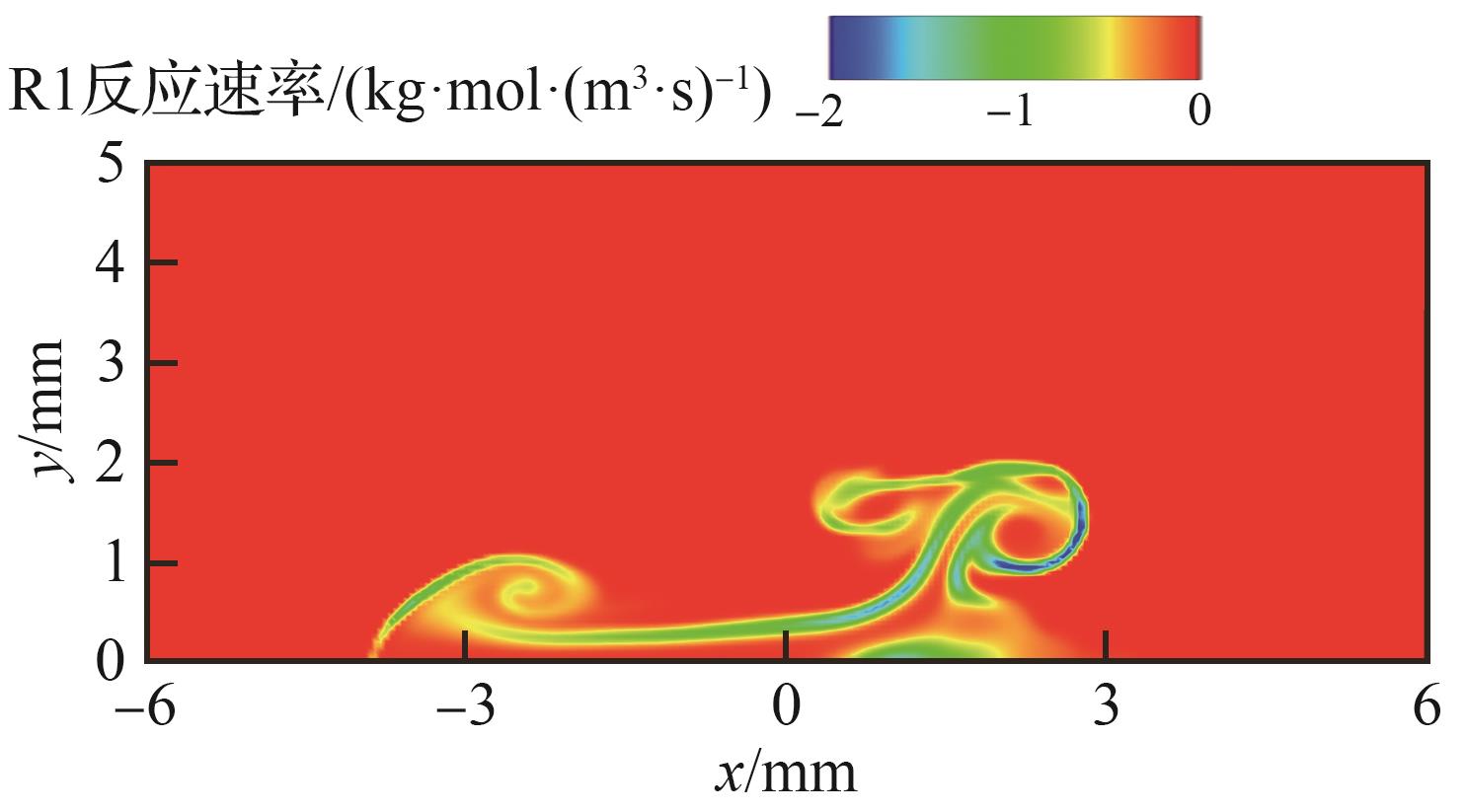
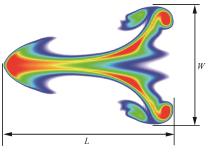
Fig.10
Schematic diagram of characteristic size of thermonuclear
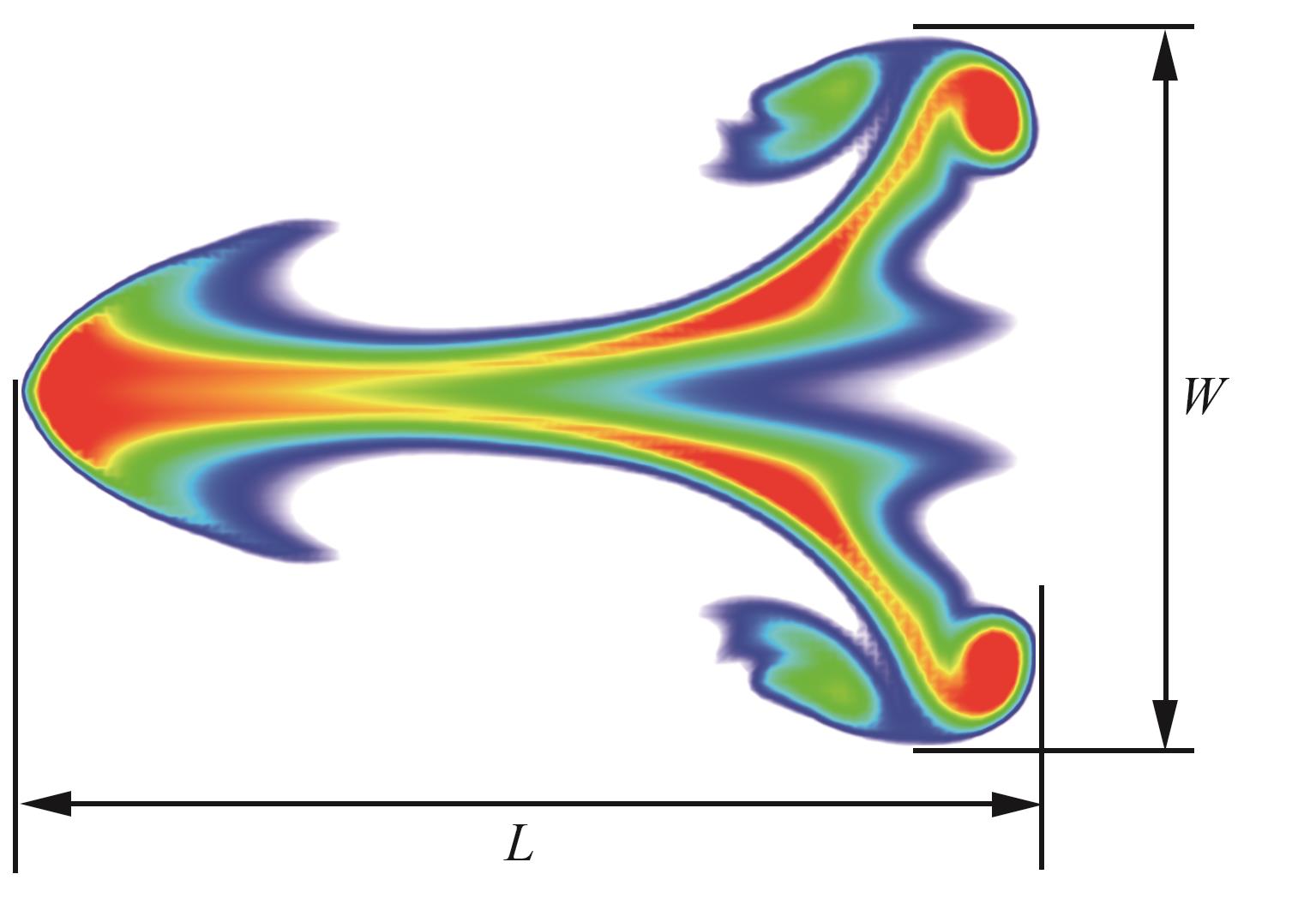
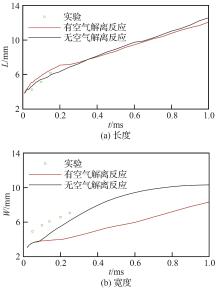
Fig.11
Thermonuclear sizes at different time
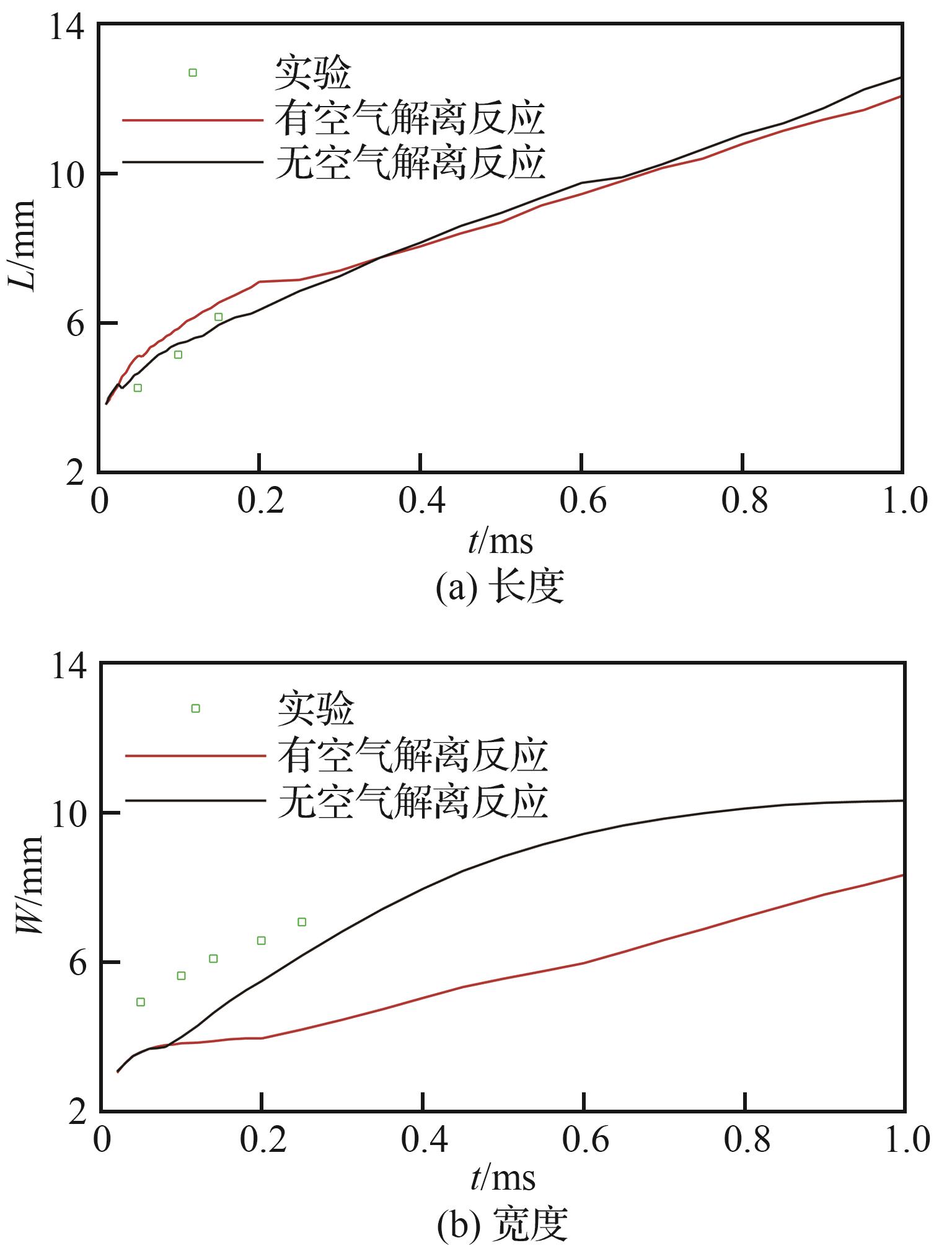
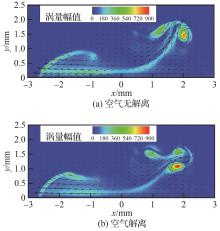
Fig.12
Thermonuclear velocity fields at 100 μs
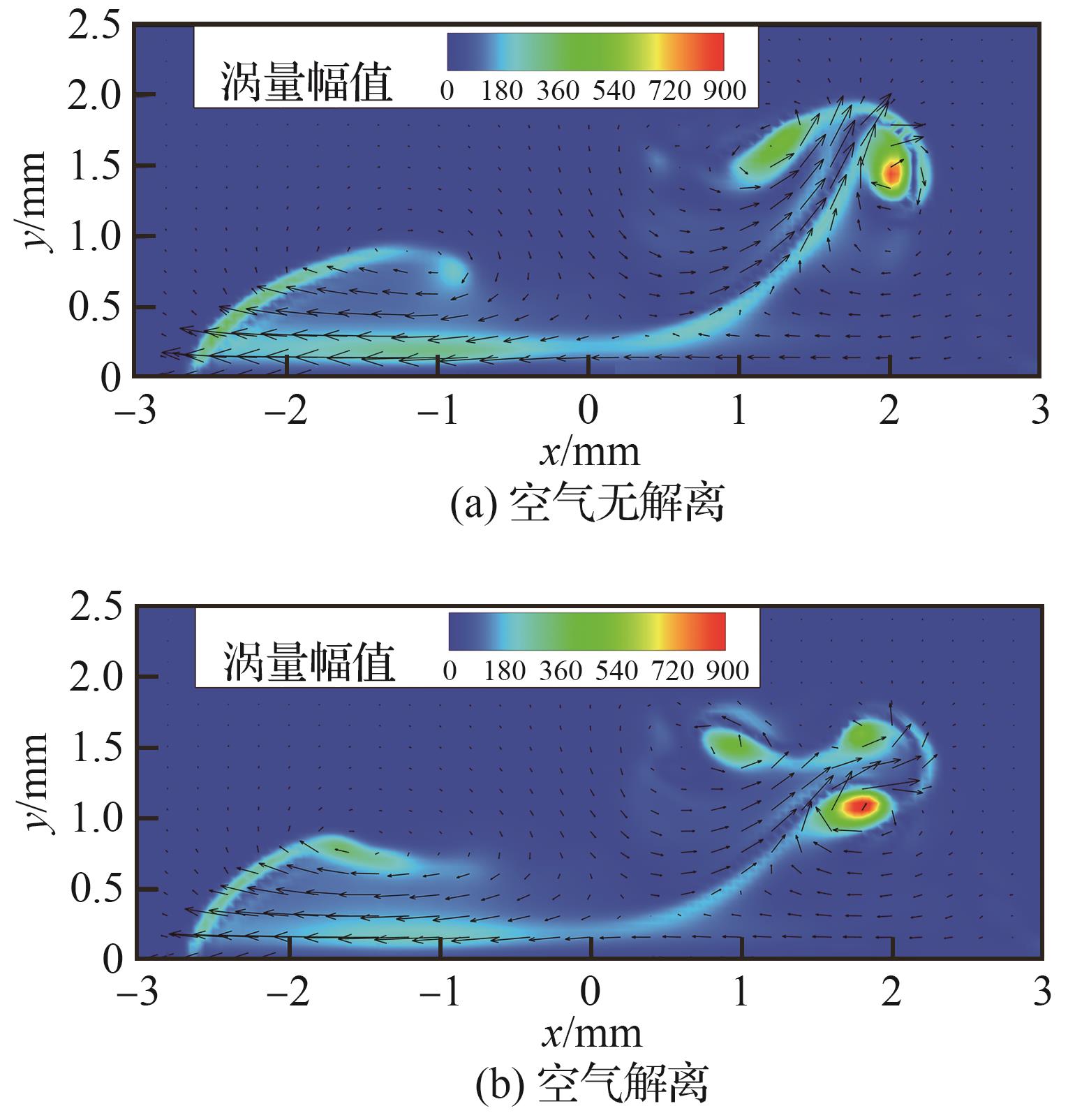
Fig.13
Flame nuclei temperature contour
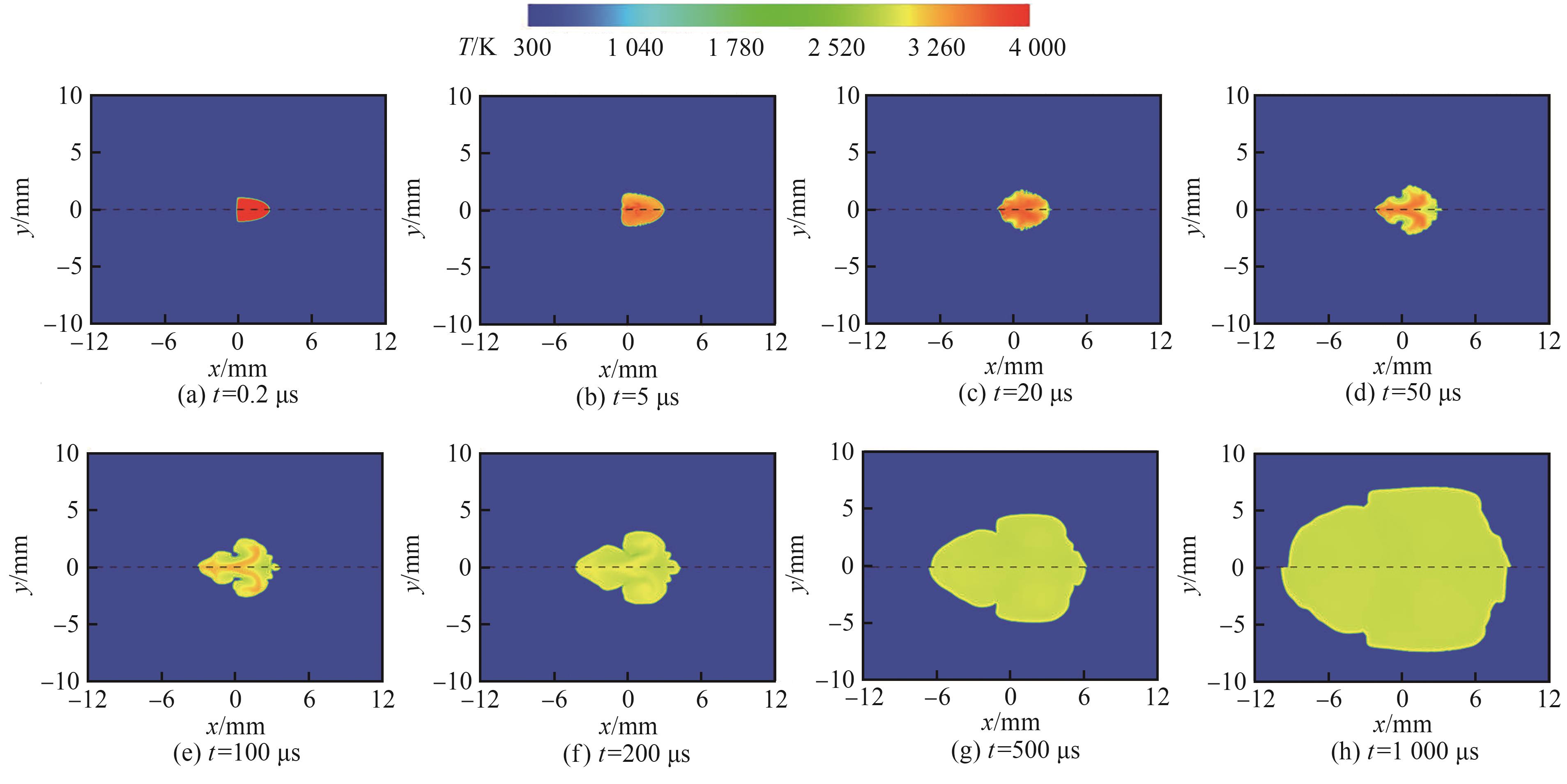
Fig.14
Propagation displacements and velocities of flame nuclei in different directions
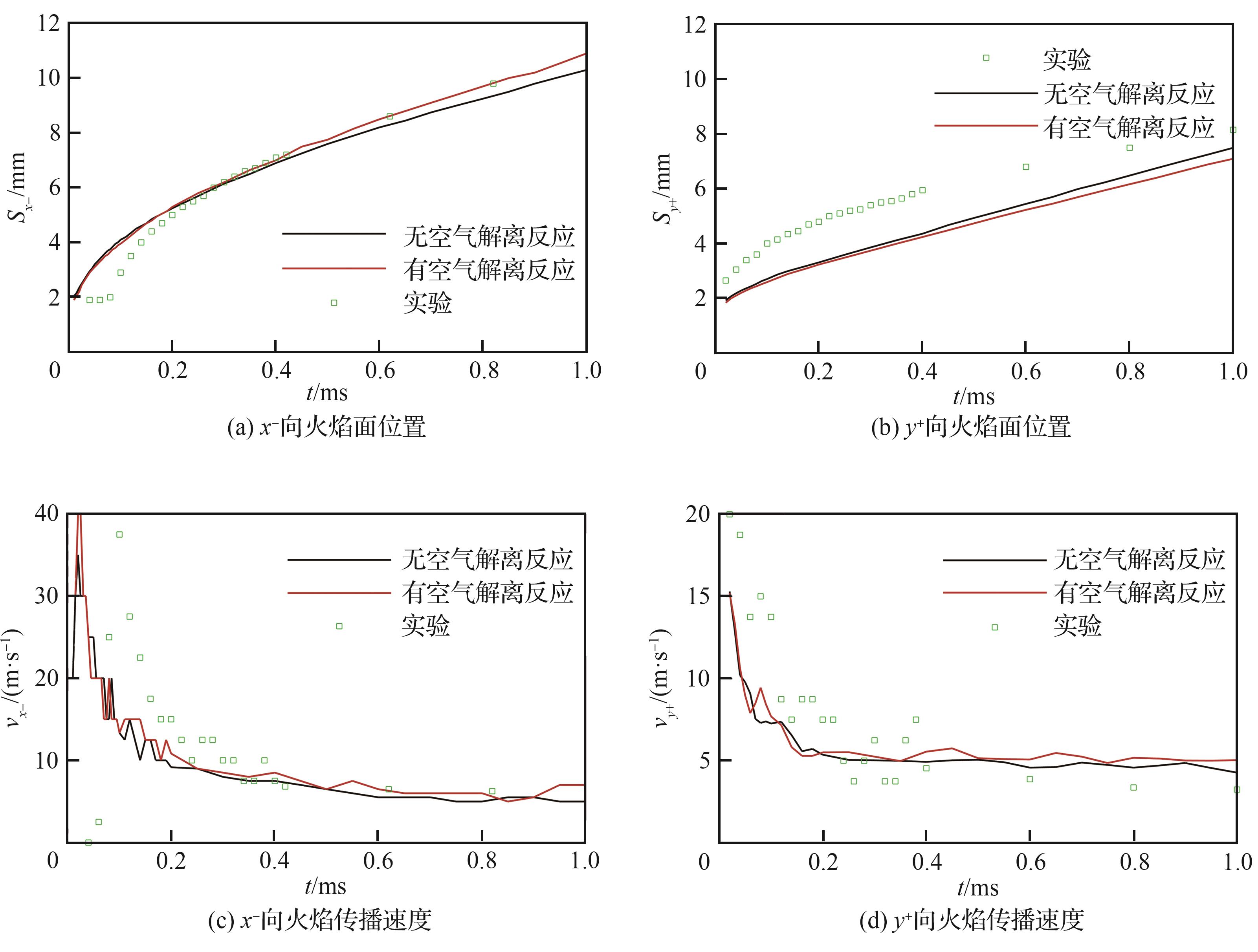

Table A1
Mechanism of 20 step ionization reaction of 11 components in air
| 基元反应 | A/(cm3·(mol·s)-1) | b | Ea/(cal·mol-1) |
|---|---|---|---|
| O2+I1⇔2O+I1 | 3.61×10¹⁸ | -1.00 | 59 400 |
| N2+I2⇔2N+I2 | 1.92×10¹⁷ | -0.50 | 113 100 |
| N2+N⇔2N+N | 4.15×10²² | -1.50 | 113 100 |
| NO+I3⇔N+O+I3 | 3.97×10²⁰ | -1.50 | 75 600 |
| NO+O⇔O2+N | 3.18×10⁹ | 1.00 | 19 700 |
| N2+O⇔NO+N | 6.75×10¹³ | 0 | 37 500 |
| N+O⇔NO++e- | 9.03×10⁹ | 0.50 | 32 400 |
| O+e-⇔O++e-+e- | 3.60×1031 | -2.91 | 158 000 |
| N+e-⇔N++e-+e- | 1.10×1032 | -3.14 | 169 000 |
| O+O⇔O | 1.60×10¹⁷ | -0.98 | 80 800 |
| O+O | 2.92×10¹⁸ | -1.11 | 28 000 |
| N2+N+⇔N+N | 2.02×10¹¹ | 0.81 | 13 000 |
| N+N⇔N | 1.40×10¹³ | 0 | 67 800 |
| N2+O2⇔NO+NO+e- | 1.38×10²⁰ | -1.84 | 141 000 |
| NO+I4⇔NO++e-+I4 | 2.20×10¹⁵ | -0.35 | 108 000 |
| O+NO+⇔NO+O+ | 3.63×10¹⁵ | -0.60 | 50 800 |
| N2+O+⇔O+N | 3.40×10¹⁹ | -2.00 | 23 000 |
| N+NO+⇔NO+N+ | 1.00×10¹⁹ | -0.93 | 61 000 |
| O2+NO+⇔NO+O | 1.80×10¹⁵ | 0.17 | 33 000 |
| O+NO+⇔N++O2 | 1.34×10¹³ | 0.31 | 77 270 |
Table A2
19 step simplified mechanism of methane/air
| 基元反应 | A/(cm3·(mol·s)-1) | b | Ea/(cal·mol-1) |
|---|---|---|---|
| O+H2⇔H+OH | 0.315 819 6×10⁵ | 0.252 178 5×10 | 0.740 817 2×10⁴ |
| O+CH3⇔H+CH2O | 0.602 333 8×10¹⁴ | 0.173 711 4 | -0.443 896 1×10³ |
| H+O2+M⇔HO2+M | 0.332 195 6×10¹⁹ | -0.792 327 5 | -0.451 776 9×10³ |
| H+O2⇔O+OH | 0.293 712 2×10¹⁷ | -0.702 733 8 | 0.168 057 9×10⁵ |
| 2H+M1⇔H2+M1 | 0.114 043 3×10¹⁹ | -0.814 723 8 | -0.331 032 9×10³ |
| H+ОH+M2⇔H2O+M2 | 0.247 527 9×10²³ | -0.184 024 4×10 | -0.393 352 6×10³ |
| H+HO2⇔O2+H2 | 0.430 739 9×10¹⁴ | -0.719 366 5×10⁻² | 0.106 663 7×10⁴ |
| H+HO2⇔2OH | 0.977 250 9×10¹⁴ | 0.294 893 0×10-1 | 0.556 776 5×10³ |
| H+CH3(+M3)⇔CH4(+M3) | 0.150 890 3×10¹⁷ | -0.456 857 8 | 0.530 308 9×10³ |
| H+CH4⇔CH3+H2 | 0.652 011 6×10⁹ | 0.162 138 8×10 | 0.106 332 4×10⁵ |
| H+HCO⇔H2+CO | 0.652 939 0×1014 | 0.761 251 5×10⁻¹ | 0.250 207 0×103 |
| H+CH2O⇔HCO+H2 | 0.503 933 5×10⁸ | 0.197 388 7×10 | 0.313 873 1×10⁴ |
| OH+H2⇔H+H2O | 0.213 300 9×10⁹ | 0.161 649 8×10 | 0.346 420 2×10⁴ |
| 2OH⇔O+H2O | 0.376 204 8×10⁵ | 0.228 679 8×10 | -0.238 347 0×104 |
| OH+HO2⇔O2+H2O | 0.167 710 2×10¹⁴ | 0.907 382 0×10-1 | -0.553 369 6×10³ |
| OH+CH4⇔CH3+H2O | 0.106 393 2×10⁹ | 0.162 575 5×10 | 0.298 493 4×10⁴ |
| OH+CO⇔H+CO2 | 0.512 983 8×10⁸ | 0.124 924 7×10 | 0.704 339 1×10² |
| OH+CH2O⇔HCO+H2O | 0.402 114 0×1010 | 0.128 922 0×10 | -0.504 729 9×10³ |
| HCO+M⇔H+CO+M | 0.183 603 9×10¹⁸ | -0.869 677 4 | 0.142 103 7×10⁵ |
| [1] | NAEGELI D W, DODGE L G. Ignition study in a gas turbine combustor[J]. Combustion Science and Technology, 1991, 80(4-6): 165-184. |
| [2] | ABDULRAHMAN G A Q, QASEM N A A, IMTEYAZ B, et al. A review of aircraft subsonic and supersonic combustors[J]. Aerospace Science and Technology, 2023, 132: 108067. |
| [3] | YU S, ZHENG M. Future gasoline engine ignition: A review on advanced concepts[J]. International Journal of Engine Research, 2021, 22(6): 1743-1775. |
| [4] | SHUKLA A, VAGHASIA J, MISTRY M. Effect of laser ignition on combustion and performance of internal combustion engine: A Review[J]. Energy Conversion and Management: X, 2022, 13: 100166. |
| [5] | XU C S, FANG D H, LUO Q Y, et al. A comparative study of laser ignition and spark ignition with gasoline-air mixtures[J]. Optics & Laser Technology, 2014, 64: 343-351. |
| [6] | PHUOC T X. Single-point versus multi-point laser ignition: Experimental measurements of combustion times and pressures[J]. Combustion and Flame, 2000, 122(4): 508-510. |
| [7] | MORSY M H, CHUNG S H. Laser-induced multi-point ignition with a single-shot laser using two conical cavities for hydrogen/air mixture[J]. Experimental Thermal and Fluid Science, 2003, 27(4): 491-497. |
| [8] | O’BRIANT S A, GUPTA S B, VASU S S. Review: Laser ignition for aerospace propulsion[J]. Propulsion and Power Research, 2016, 5(1): 1-21. |
| [9] | BRISH A A, GALEEV I A, ZAITSEV B N, et al. Mechanism of initiation of condensed explosives by laser radiation[J]. Combustion, Explosion and Shock Waves, 1969, 5(4): 326-328. |
| [10] | KELLEY A P, JOMAAS G, LAW C K. Critical radius for sustained propagation of spark-ignited spherical flames[J]. Combustion and Flame, 2009, 156(5): 1006-1013. |
| [11] | JU Y G, SUN W T. Plasma assisted combustion: Dynamics and chemistry[J]. Progress in Energy and Combustion Science, 2015, 48: 21-83. |
| [12] | 卿泽旭, 洪延姬, 王殿恺, 等. 静止空气中单脉冲激光能量非对称沉积实验与数值模拟[J]. 推进技术, 2017, 38(7): 1661-1668. |
| QING Z X, HONG Y J, WANG D K, et al. Experimental and numerical study of nanosecond pulsed laser energy asymetric deposition in quiescent air[J]. Journal of Propulsion Technology, 2017, 38(7): 1661-1668 (in Chinese). | |
| [13] | 王朝君, 黄诗晗, 胡二江, 等. 甲烷/氢气/空气混合气激光诱导等离子体点火特性[J]. 中南大学学报(自然科学版), 2022, 53(6): 2111-2121. |
| WANG C J, HUANG S H, HU E J, et al. Laser-induced plasma ignition characteristics of methane/hydrogen/air mixture[J]. Journal of Central South University (Science and Technology), 2022, 53(6): 2111-2121 (in Chinese). | |
| [14] | ZHANG W, ZANG H W, WANG S, et al. Non-resonant photochemical ignition of lean methane/air mixtures by femtosecond laser filamentation[J]. Combustion and Flame, 2024, 266: 113542. |
| [15] | 吴云, 张志波, 朱益飞, 等. 等离子体燃烧调控研究进展与展望[J]. 航空学报, 2025, 46(5): 531879. |
| WU Y, ZHANG Z B, ZHU Y F, et al. Research progress and outlook of plasma combustion control[J]. Acta Aeronautica et Astronautica Sinica, 2025, 46(5): 531879 (in Chinese). | |
| [16] | WERMER L, HANSSON J, IM S K. Dual-pulse laser-induced spark ignition and flame propagation of a methane diffusion jet flame[J]. Proceedings of the Combustion Institute, 2017, 36(3): 4427-4434. |
| [17] | WERMER L, LEFKOWITZ J K, OMBRELLO T, et al. Spark and flame kernel interaction with dual-pulse laser-induced spark ignition in a lean premixed methane-air flow[J]. Energy, 2021, 215: 119162. |
| [18] | LI X P, LIU W D, PAN Y, et al. Characterization of ignition transient processes in kerosene-fueled model scramjet engine by dual-pulse laser-induced plasma[J]. Acta Astronautica, 2018, 144: 23-29. |
| [19] | TIAN Y F, CAI Z, SUN M B, et al. Ignition characteristics of scramjet combustor with laser ablation and laser-induced breakdown[J]. Journal of Propulsion and Power, 2022, 38(5): 799-808. |
| [20] | GUPTA R N, YOS J M, THOMPSON R A. A review of reaction rates and thermodynamic and transport properties for an 11-species air model for chemical and thermal nonequilibrium calculations to 30 000 K: NASA RP-1232[R]. Washington, D.C.: National Aeronautics and Space Administration, 1990. |
| [21] | 牛宝柱. 遗传算法在反应动力学机理简化中的应用研究[D]. 合肥: 中国科学技术大学, 2009. |
| NIU B Z. Research on genetic algorithm to simplify the mechanism of reaction kinetics[D]. Hefei: University of Science and Technology of China, 2009 (in Chinese). | |
| [22] | PATANKAR S V. A calculation procedure for two-dimensional elliptic situations[J]. Numerical Heat Transfer, 1981, 4(4): 409-425. |
| [23] | PETERS N D, COOMBS D M, AKIH-KUMGEH B. Thermomechanics of laser-induced shock waves in combustiblemixtures[J]. Shock Waves, 2018, 28(5): 1039-1051. |
| [24] | ZHELTOVODOV A A, PIMONOV E A. Numerical simulation of an energy deposition zone in quiescent air and in a supersonic flow under the conditions of interaction with a normal shock[J]. Technical Physics, 2013, 58(2): 170-184. |
| [25] | LIU F, YAN H, ZHELTOVODOV A A. Mixing enhancement by pulsed energy deposition in jet/shock wave interaction[J]. AIAA Journal, 2021, 59(7): 2467-2477. |
| [26] | DORS I G, PARIGGER C G. Computational fluid-dynamic model of laser-induced breakdown in air[J]. Applied Optics, 2003, 42(30): 5978-5985. |
| [27] | YAN H, ADELGREN R, BOGUSZKO M, et al. Laser energy deposition in quiescent air[J]. AIAA Journal, 2003, 41(10): 1988-1995. |
| [28] | BRADLEY D, SHEPPARD C G W, SUARDJAJA I M, et al. Fundamentals of high-energy spark ignition with lasers[J]. Combustion and Flame, 2004, 138(1-2): 55-77. |
| [29] | PHUOC T X. Laser-induced spark ignition fundamental and applications[J]. Optics and Lasers in Engineering, 2006, 44(5): 351-397. |
| [30] | HARILAL S S, BRUMFIELD B E, PHILLIPS M C. Lifecycle of laser-produced air sparks[J]. Physics of Plasmas, 2015, 22(6): 063301. |
| [31] | BAO X C, SAHU A, JIANG Y, et al. Flame kernel evolution and shock wave propagation with laser ignition in ethanol-air mixtures[J]. Applied Energy, 2019, 233-234: 86-98. |
| [32] | GLUMAC N, ELLIOTT G, BOGUSZKO M. Temporal and spatial evolution of a laser spark in air[J]. AIAA Journal, 2005, 43(9): 1984-1994. |
| [33] | 李勇, 沈怀荣. 非平衡等离子体对甲烷点火和火焰传播影响的机理分析[J]. 推进技术, 2013, 34(11): 1530-1536. |
| LI Y, SHEN H R. Mechanism analysis of non-equilibrium plasma effects on ignition and flame propagation of methane/air mixture[J]. Journal of Propulsion Technology, 2013, 34(11): 1530-1536 (in Chinese). |
| [1] | Yu ZHANG, Tao FANG, Chenwen WANG, Peng ZHENG, Jianjun WU, Yuxuan ZHONG. Influence of propellant on radio-frequency discharge modes transition characteristics [J]. Acta Aeronautica et Astronautica Sinica, 2026, 47(8): 132732-132732. |
| [2] | Zhiming MA, Xin ZHANG. Flow field control over a high-aspect-ratio wing using a plasma actuator at low Reynolds number [J]. Acta Aeronautica et Astronautica Sinica, 2026, 47(5): 132359-132359. |
| [3] | Yakang KONG, Haohua ZONG, Cheng WANG, Jinping LI, Zhi SU, Yun WU, Min JIA, Hua LIANG. Multiphase-modulated arc matrix control of supersonic cavity flow fields [J]. Acta Aeronautica et Astronautica Sinica, 2026, 47(5): 132504-132504. |
| [4] | Xi GENG, Pengchang DONG, Qijie SUN, Zhikun SUN, He ZHU, Xiaohui QIAN, Keming CHENG, Zhiwei SHI. Tests on in-flight drag reduction using AC-DBD plasma flow control [J]. Acta Aeronautica et Astronautica Sinica, 2026, 47(13): 533206-533206. |
| [5] | Tianyu YANG, Zhi SU, Hua LIANG, Haohua ZONG, Yun WU. Test of flow separation control utilizing pulsed DC plasma actuation [J]. Acta Aeronautica et Astronautica Sinica, 2026, 47(13): 533178-533178. |
| [6] | Kaiqiang CAO, Pan CHENG, Xiangrong JING, Zhenbing LUO, Tianxiang GAO, Wenjie FENG, Yan ZHOU, Wenqiang PENG. Mechanism and experiment on de-icing by plasma synthetic jet actuator with oblique jet outlet [J]. Acta Aeronautica et Astronautica Sinica, 2026, 47(11): 633381-633381. |
| [7] | Chen LI, Dong SUN, Pengxin LIU, Qilong GUO, Xianxu YUAN. Direct numerical simulation of supersonic turbulent boundary layer with plasma actuation [J]. Acta Aeronautica et Astronautica Sinica, 2025, 46(S1): 732187-732187. |
| [8] | Jiajian ZHU, Tiangang LUO, Yifu TIAN, Minggang WAN, Mingbo SUN. Enhanced ignition method with synergy of multi-channel gliding arc plasma and fuel injection in a scramjet [J]. Acta Aeronautica et Astronautica Sinica, 2025, 46(7): 131037-131037. |
| [9] | Yun WU, Zhibo ZHANG, Yifei ZHU, Min JIA, Yinghong LI. Research progress and outlook of plasma combustion control [J]. Acta Aeronautica et Astronautica Sinica, 2025, 46(5): 531879-531879. |
| [10] | Yahang SONG, Xin ZHANG, Zhiming MA, Zhengyu ZUO. Airfoil gust alleviation using a plasma actuator in low-speed wind tunnel test [J]. Acta Aeronautica et Astronautica Sinica, 2025, 46(22): 131975-131975. |
| [11] | Xiaoping LI, Min YANG, Haoyan LIU, Longjie QIAO, Chengguang LI, Qiongjie ZHANG. Coherence time estimation algorithm and experimental verification for dynamic plasma sheath channel [J]. Acta Aeronautica et Astronautica Sinica, 2025, 46(22): 331613-331613. |
| [12] | Shanyue GUAN, Zhengyu TIAN, Wenjia XIE, Qianyue FU, Yuhang CHU, Jiajun ZHU. Analysis of plasma chemical reactions of hypersonic reentry blunt in flight corridor [J]. Acta Aeronautica et Astronautica Sinica, 2025, 46(18): 131735-131735. |
| [13] | Hongyu WANG, Gang WANG, Tao LI, Zhenhou CHAO, Feng GAO. Transverse jet mixing based on energy deposition control via pulsed discharge [J]. Acta Aeronautica et Astronautica Sinica, 2025, 46(14): 131520-131520. |
| [14] | Qiyu ZHOU, Jiaqi ZHANG. Observation on ignition process in small rocket thruster fueled by gaseous oxygen and gaseous methane [J]. Acta Aeronautica et Astronautica Sinica, 2024, 45(8): 128876-128876. |
| [15] | Xiong YANG, Xiaokang LI, Dawei GUO, Mousen CHENG, Fan ZHANG, Bixuan CHE, Qingyun LEI. Research status and prospect of high⁃power wave⁃heating magnetoplasma thruster [J]. Acta Aeronautica et Astronautica Sinica, 2024, 45(7): 28761-028761. |
| Viewed | ||||||
|
Full text |
|
|||||
|
Abstract |
|
|||||
Address: No.238, Baiyan Buiding, Beisihuan Zhonglu Road, Haidian District, Beijing, China
Postal code : 100083
E-mail:hkxb@buaa.edu.cn
Total visits: 6658907 Today visits: 1341All copyright © editorial office of Chinese Journal of Aeronautics
All copyright © editorial office of Chinese Journal of Aeronautics
Total visits: 6658907 Today visits: 1341

 CJA
CJA
