李红光1, 刘泽伟2( ), 李新军1, 顾颖彦3
收稿日期:2025-11-17
修回日期:2025-12-25
接受日期:2026-02-27
出版日期:2026-03-17
发布日期:2026-03-16
通讯作者:
刘泽伟
E-mail:13791340187@163.com
基金资助:
Hongguang LI1, Zewei LIU2(), Xinjun LI1, Yingyan GU3
Received:2025-11-17
Revised:2025-12-25
Accepted:2026-02-27
Online:2026-03-17
Published:2026-03-16
Contact:
Zewei LIU
E-mail:13791340187@163.com
Supported by:摘要:
无人机(UAV)视觉定位是复杂环境下自主飞行的关键技术。在全球卫星导航系统(GNSS)受限或拒止条件下,传统惯性测量单元(IMU)/视觉里程计(VO)融合及人工特征匹配方法难以适应跨视角、大尺度和复杂光照场景。近年来,深度学习的发展显著提升了无人机视觉定位的精度与鲁棒性。围绕近年来基于深度学习的无人机视觉定位技术开展系统综述,梳理了相关研究的发展脉络并依据技术路线将现有方法归纳为基于模板相似度匹配、基于特征描述算子匹配和基于端到端位姿回归3大类;进一步对各类方法的关键技术进行了细化分类,系统分析了代表性方法的核心思想、技术特点、适用场景及性能表现,并比较了不同方法在定位精度、鲁棒性和实时性等方面的优势与不足。在此基础上总结了当前研究面临的地图不完备、跨视角变化、复杂环境适应性及定位可靠性等关键挑战,并对多传感器融合、运动连续性约束及智能自主定位等未来发展方向进行了展望,以期为无人机视觉定位技术研究提供参考。
中图分类号:
李红光, 刘泽伟, 李新军, 顾颖彦. 基于深度学习的无人机视觉定位技术研究进展[J]. 航空学报, 2026, 47(17): 333094.
Hongguang LI, Zewei LIU, Xinjun LI, Yingyan GU. Advances in UAV visual positioning technology based on deep learning[J]. Acta Aeronautica et Astronautica Sinica, 2026, 47(17): 333094.
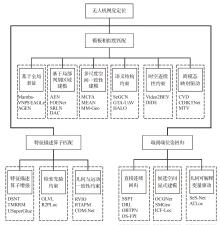
图 1
定位方法分类
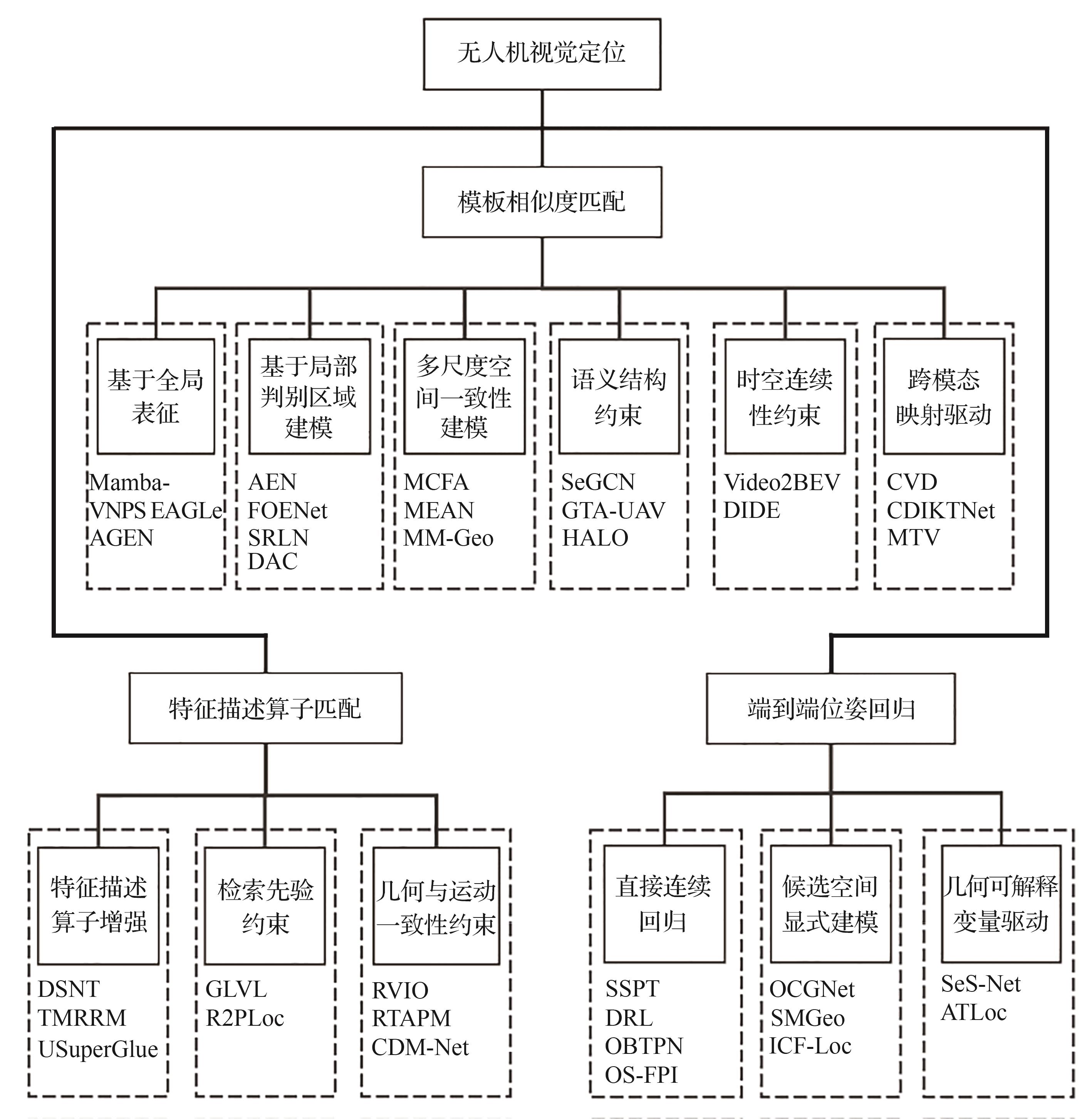
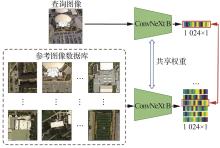
图 2
基于模板相似度的匹配算法示意图[3]
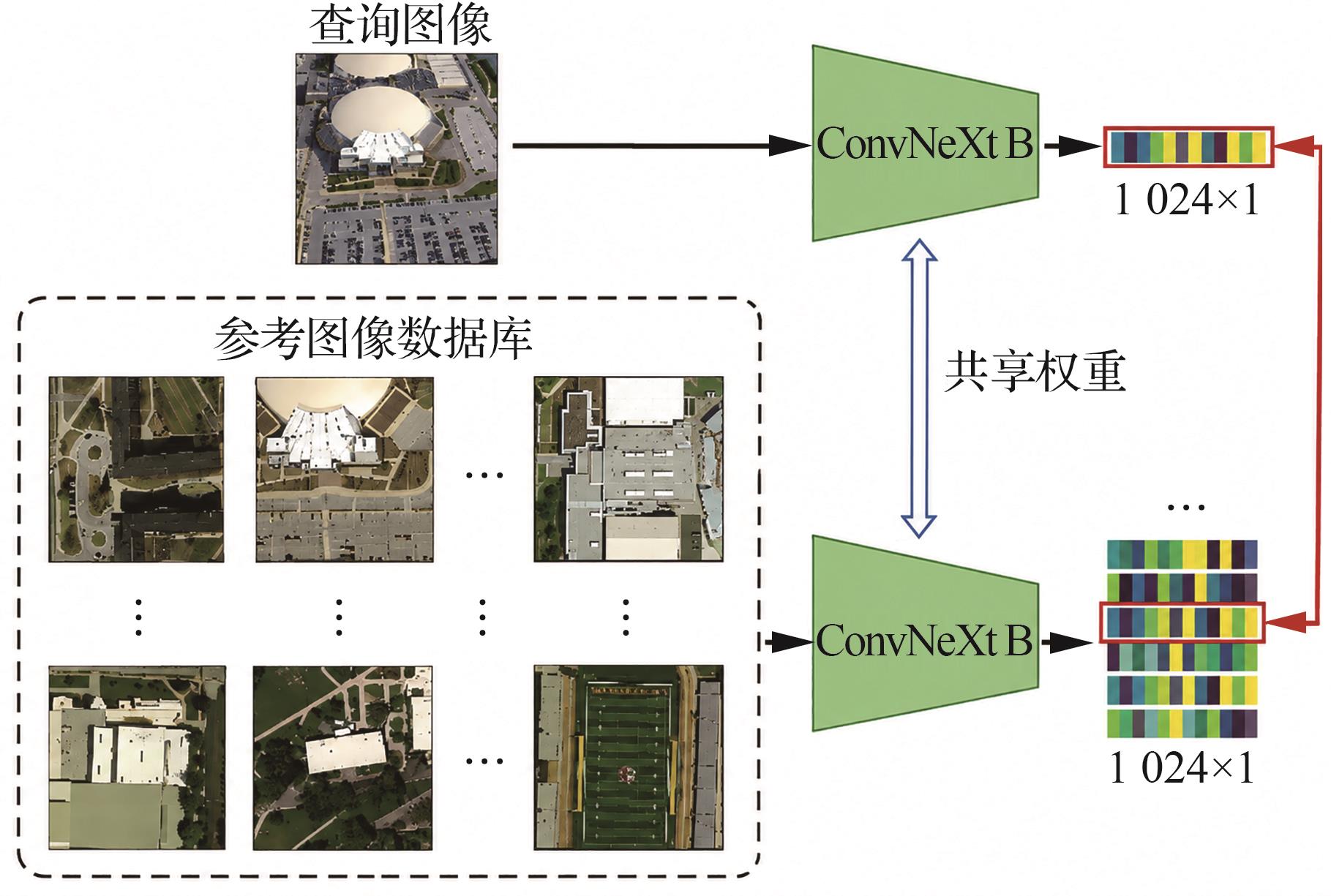
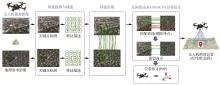
图 3
基于特征描述算子匹配的视觉定位方法示意图
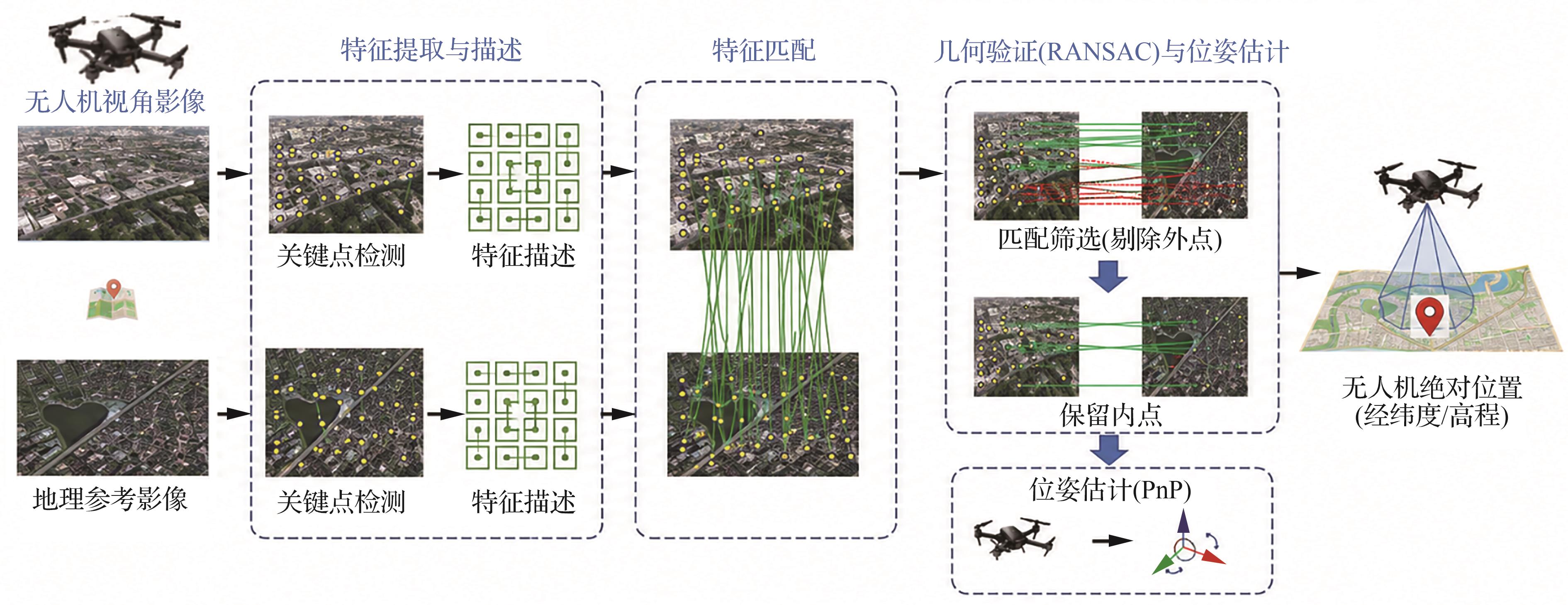
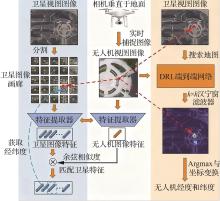
图 4
端到端视觉定位与模板相似度匹配对比[64]
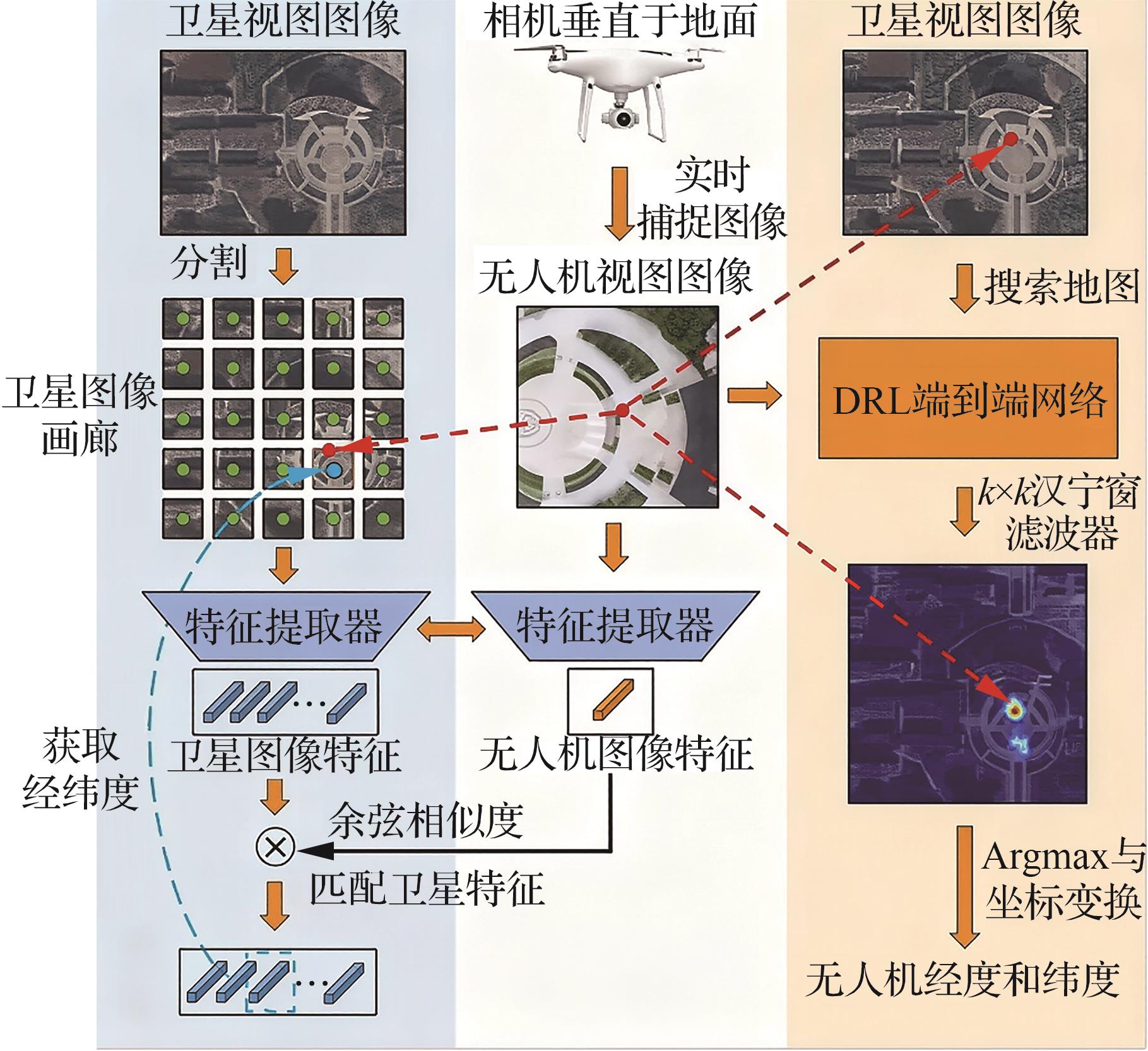
表1
代表性方法汇总
| 类别 | 文献 | 输入数据类型 | 网络架构 | 是否需要语义地图 | 是否有监督 | 优点 | 缺点 |
|---|---|---|---|---|---|---|---|
| 模板相似度匹配 | [ | UAV+卫星图像 | VLAD+聚类空间约束 | 否 | 否 | 保留空间连贯性 | 极端视角下鲁棒性有限 |
| [ | UAV+卫星图像 | ResNet+OSM模块 | 否 | 是 | 精细局部匹配 | 极端视角或模态缺失受限 | |
| [ | UAV+卫星图像 | 全局-局部注意力 | 否 | 是 | 缓解尺度干扰 | 缺乏明确尺度对应约束 | |
| [ | UAV+卫星图像 | 语义图卷积 | 是 | 是 | 利用语义结构 | 依赖语义分割准确性 | |
| [ | UAV+卫星图像 | 语义置信度建模 | 是 | 是 | 降低语义噪声影响 | 依赖置信估计准确性 | |
| [ | UAV视频帧+卫星图像 | Video2BEV+特征融合 | 否 | 是 | 时间一致性嵌入 | 对帧间运动估计敏感 | |
| 特征描述子匹配 | [ | UAV+卫星图像 | SuperPoint+无监督图匹配网络 | 否 | 否 | 无需人工标注匹配对 | 依赖邻域关系建模质量 |
| [ | UAV热图像+卫星影像 | 深度单应估计+热图生成网络 | 否 | 是 | 低可视度/夜间定位有效 | 对跨模态适应性依赖高 | |
| [ | UAV+卫星图像+IMU | RVIO+CNN | 否 | 是 | 多传感器融合,提高稳定性 | 对传感器精度依赖高 | |
| [ | UAV+卫星图像+IMU | SuperPoint+SuperGlue+几何一致性约束 | 否 | 是 | 复杂视角匹配稳定 | 计算开销大 | |
| [ | UAV+卫星图像+IMU | 点线特征+条件扩散模型 | 否 | 是 | 多模态融合减少视角差异,提高鲁棒性 | 对建筑特征依赖强 | |
| [ | UAV多模态图像+卫星图像 | 递归门控卷积网络 | 否 | 是 | 跨模态多尺度匹配,实时性较好 | 对特征交互要求高 | |
| 位姿回归 | [ | UAV视频帧+卫星图像 | CNN+长短期记忆网络 | 否 | 是 | 利用时序信息平滑位姿估计 | 对长序列漂移敏感 |
| [ | UAV视频帧+卫星图像 | CNN+双流特征融合 | 否 | 是 | 融合多帧上下文信息,提高精度 | 跨视角变化大时鲁棒性低 | |
| [ | UAV视频帧+卫星图像 | 长短期记忆网络+视觉特征CNN | 否 | 是 | 处理动态场景效果好 | 长序列训练成本高 | |
| [ | UAV+卫星图像+IMU | CNN-长短期记忆网络+融合IMU模块 | 否 | 是 | IMU辅助,减小累积漂移 | 依赖IMU标定精度 | |
| [ | UAV+卫星图像+深度 | CNN特征+回归模块 | 否 | 是 | 多模态融合,精度提升 | 传感器依赖高 | |
| [ | UAV+卫星图像 | 多尺度卷积+长短期记忆网络 | 否 | 是 | 跨尺度特征提升估计精度 | 对极端视角变化鲁棒性不足 | |
| [ | UAV+卫星图像 | DenseNet+回归层 | 否 | 是 | 特征利用充分,训练稳定 | 对光照变化敏感 | |
| [ | UAV+卫星图像 | 卷积+注意力模块 | 否 | 是 | 注意力增强关键区域特征 | 计算复杂度增加 | |
| [ | UAV+卫星图像+IMU | Transformer | 否 | 是 | 跨模态融合精度高,抑制漂移 | 对算力要求高 |
表2
数据集对比
| 数据集名称 | UAV数据量/张 | UAV图像来源 | 是否不同高度采集 | 采样策略 | 评估指标 |
|---|---|---|---|---|---|
| University-1652[ | 701类×71.64 | 合成UAV-View | 否 | 多源、多视角合成采样 | Recall@K,mAP |
| SUES-200[ | 120类×51 | 真实UAV图像 | 是(150~300 m) | 固定高度圆形轨迹采样 | Recall@K,mAP |
| DenseUAV[ | 2 256类×9 | 真实UAV图像 | 是(不同低空高度) | 城市低空环境密集采样 | Recall@K,SDM(Spatial Distance Metric)@K |
| UAV-VisLoc[ | 6 742 | 真实UAV图像 | 是(400~2 000 m) | 多高度、多航向角采样 | Recall@K |
| UL14[ | 9 099 | 真实UAV图像 | 是(80,90,100 m) | 高分辨率卫星多尺度配对采样 | RDS (Relative Distance Score) |
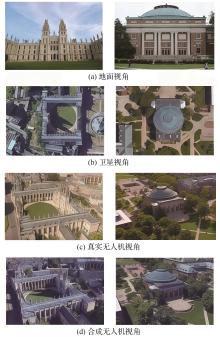
图 5
University-1652数据集[84]
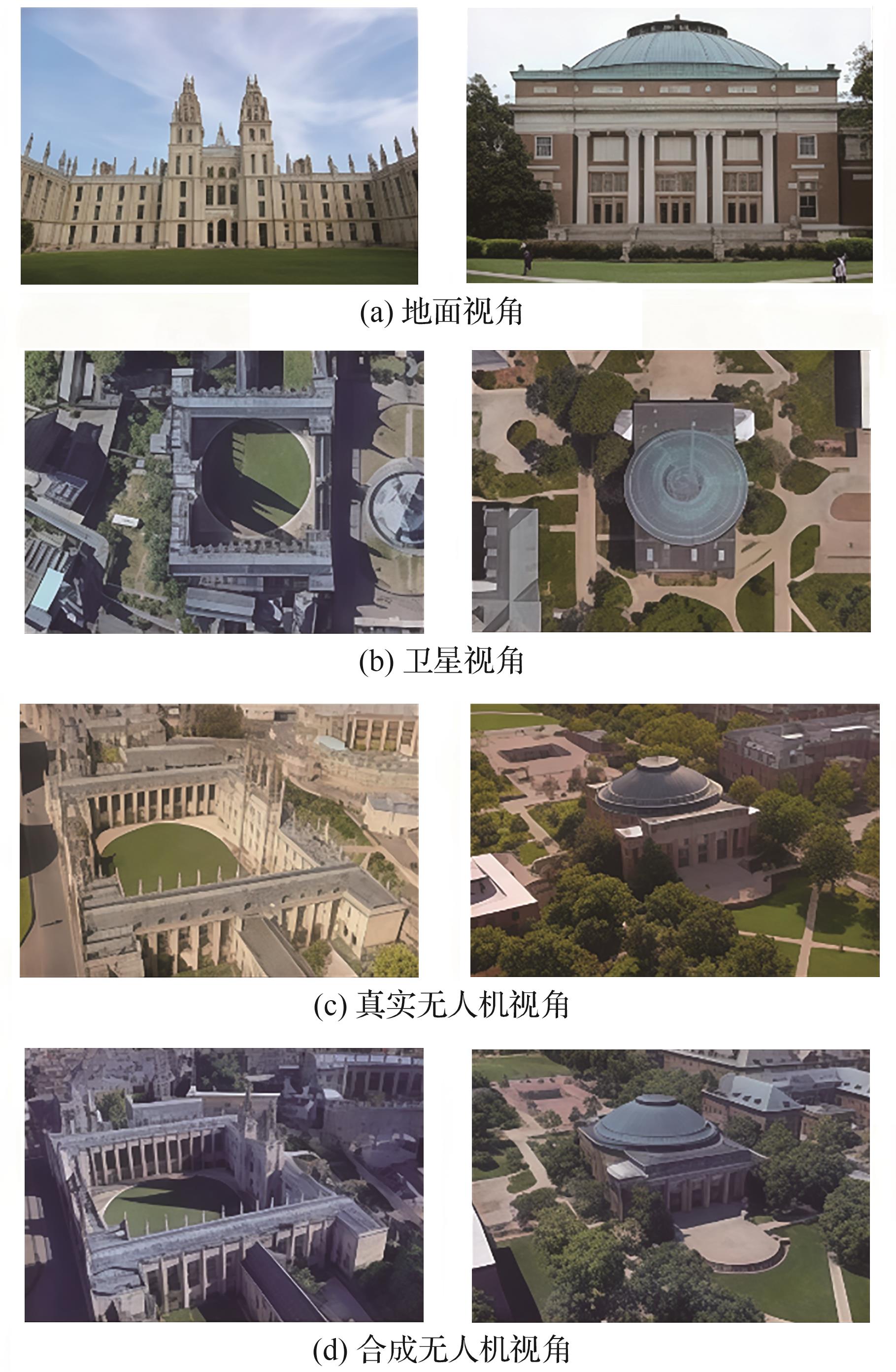
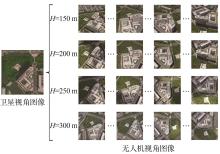
图 6
SUES-200数据集[85]
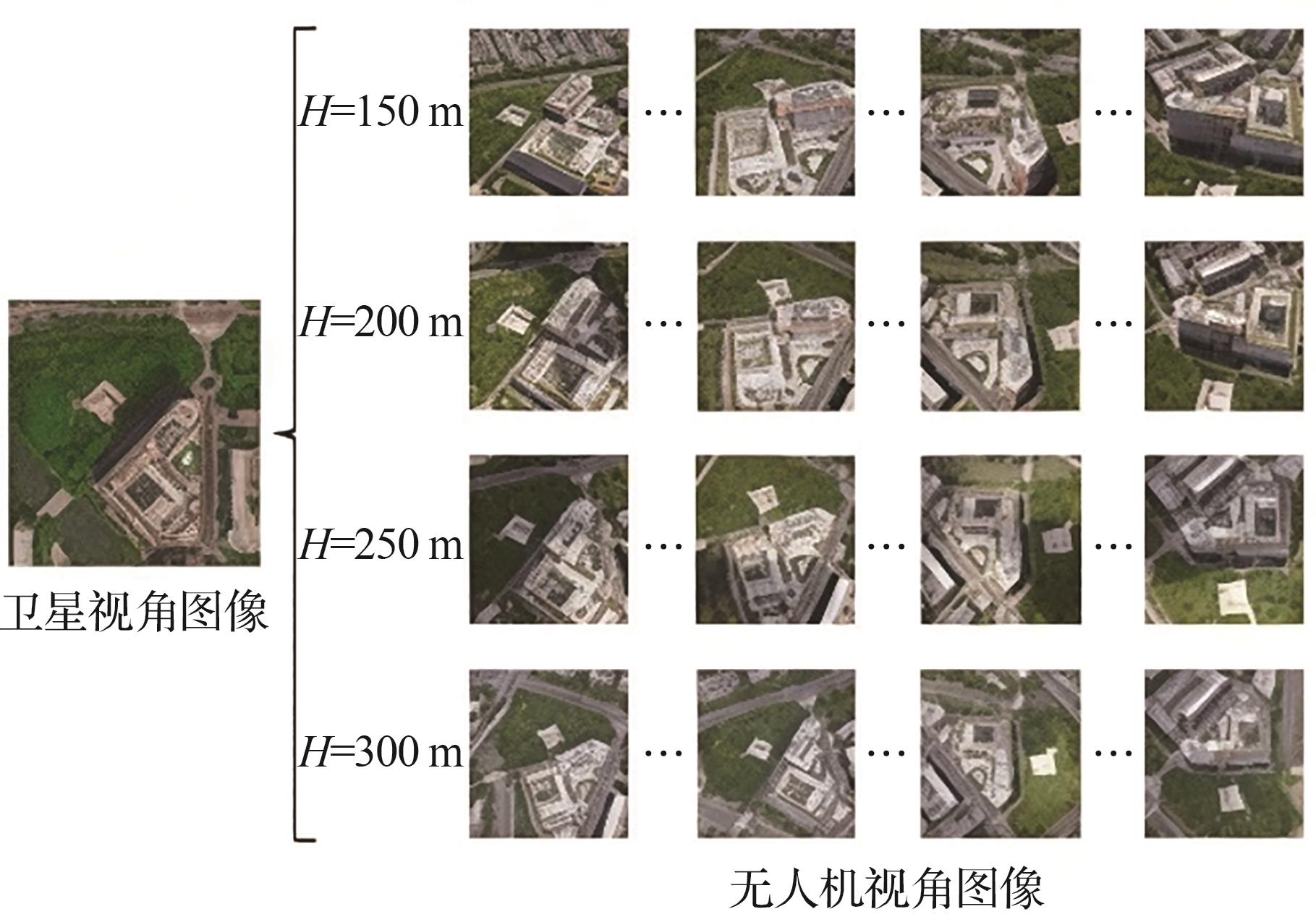
图 7
DenseUAV数据集[68]
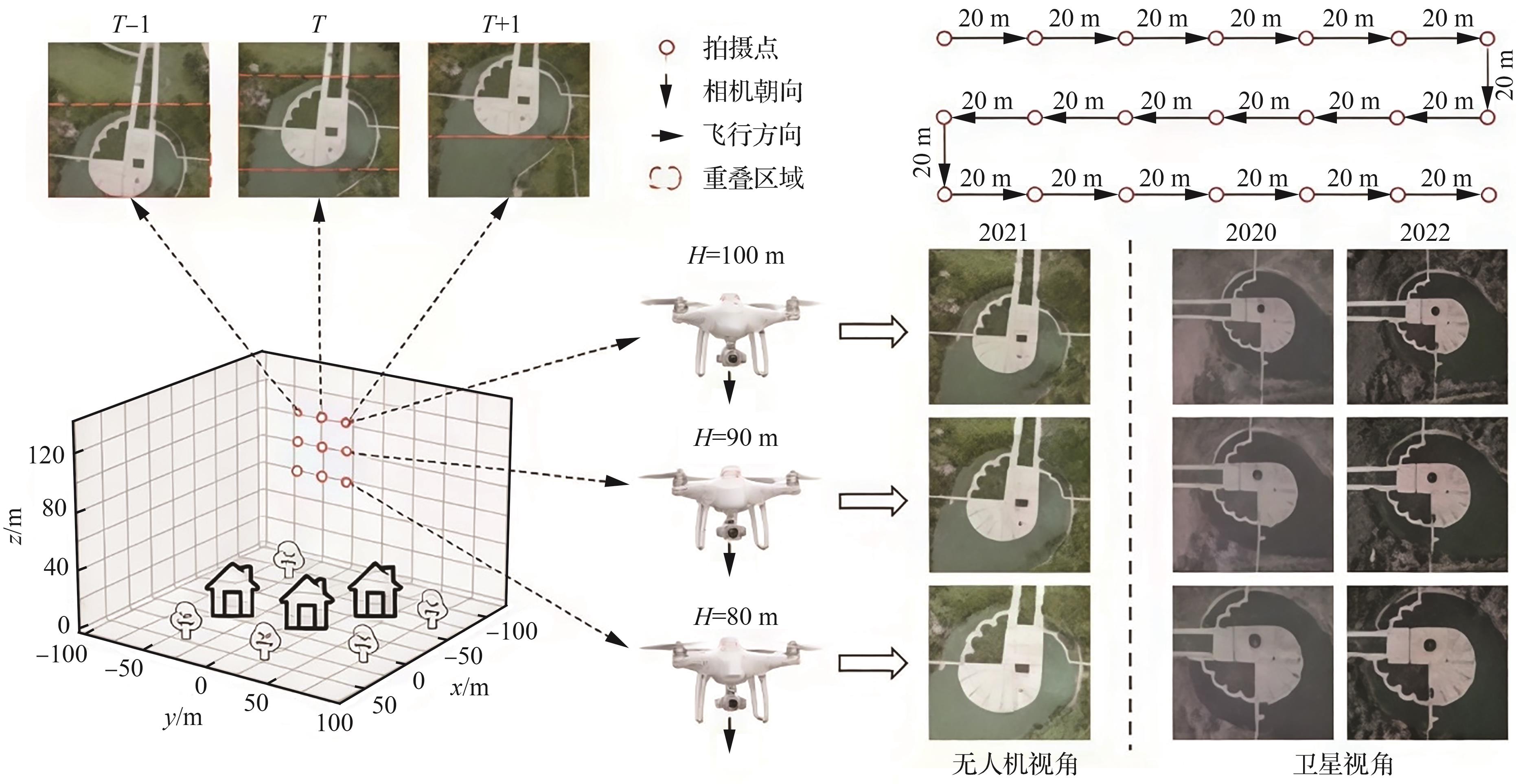
图 8
UL14数据集[64]
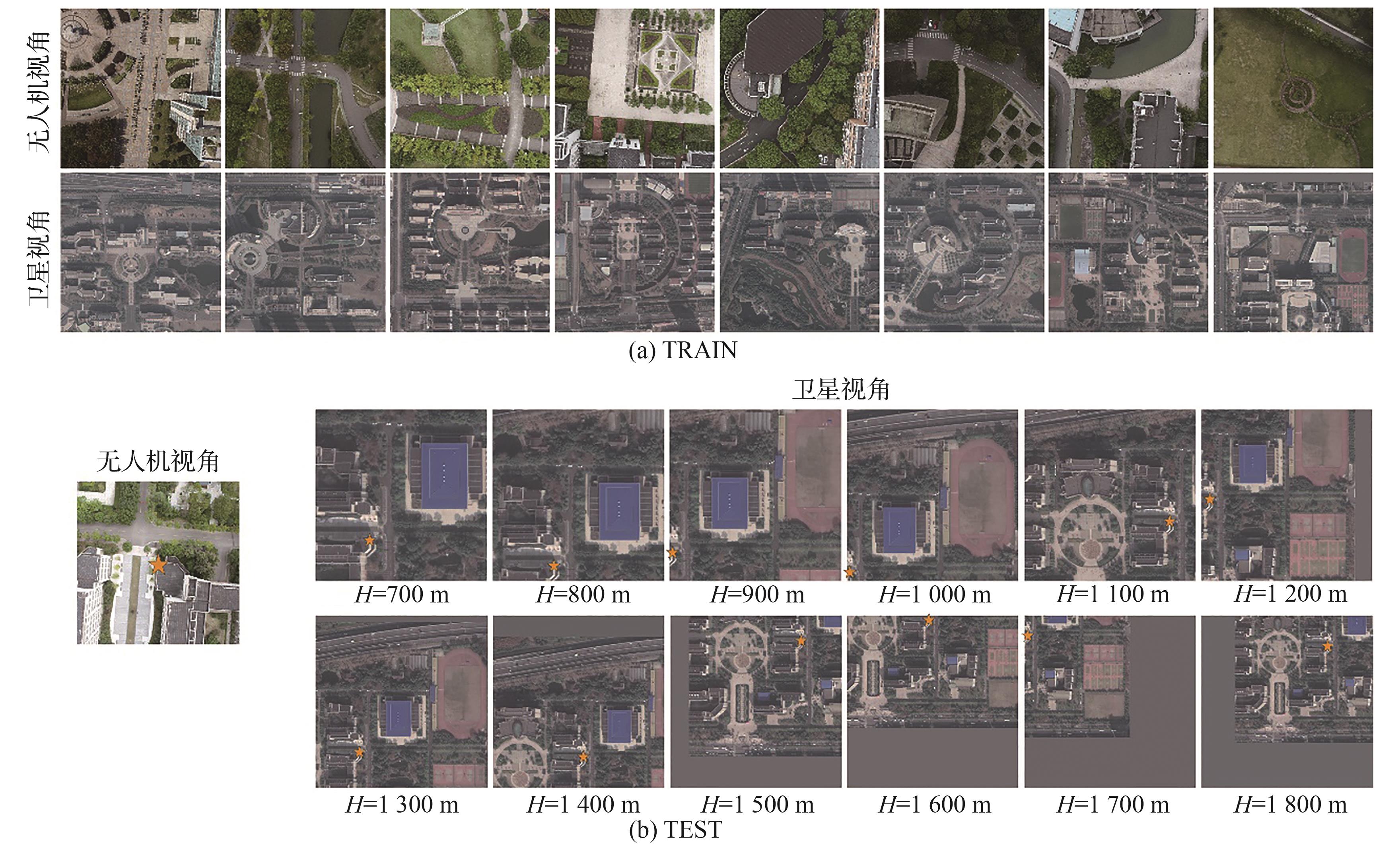
表3
University-1652上的实验结果对比
| 方法 | Recall@1/% | AP/% | Params/M | FLOPs/G |
|---|---|---|---|---|
| DAC[ | 94.67 | 95.50 | 28.12 | 4.56 |
| VimGeo[ | 91.27 | 92.61 | 26.00 | 26.18 |
| EAGLe[ | 68.86 | 72.62 | ||
| AGEN[ | 95.43 | 96.18 | ||
| MSM-Transformer[ | 89.22 | 91.04 | 28.4 | 4.54 |
| AEN[ | 87.26 | 89.11 | ||
| FOENet[ | 70.22 | 74.02 | ||
| SRLN[ | 92.70 | 93.77 | 193.03 | 42.15 |
| IFSs[ | 86.06 | 88.08 | ||
| TirSA[ | 93.37 | 94.53 | ||
| QDFL[ | 95.00 | 95.83 | 108.87 | 40.12 |
| MCFA[ | 94.53 | 95.40 | 97.57 | 11.25 |
| MEAN[ | 93.55 | 94.53 | 36.50 | 8.21 |
| MM-Geo[ | 73.16 | 76.91 | ||
| SeGCN[ | 89.18 | 90.89 | ||
| WeatherPrompt[ | 77.14 | 80.20 | 838.30 | 90.63 |
| CDIKTNet[ | 95.02 | 95.79 | ||
| TMRRM[ | 75.15 | 80.02 | ||
| R2PLoc[ | 86.54 | 88.57 | 18.72 | 2.61 |
| CDM-Net[ | 95.13 | 96.04 | 26.80 | 138.18 |
| GeoFormer[ | 89.08 | 90.08 | 157 | 37.7 |
表4
SUE-200上的实验结果对比
| 方法 | Recall@1/% | AP/% | Params/M | FLOPs/G |
|---|---|---|---|---|
| DAC[ | 96.80 | 97.54 | 28.12 | 4.56 |
| AGEN[ | 94.38 | 95.58 | ||
| SRLN[ | 89.90 | 91.90 | 193.03 | 42.15 |
| IFSs[ | 77.57 | 81.30 | ||
| QDFL[ | 93.97 | 95.42 | 108.87 | 40.12 |
| MCFA[ | 96.00 | 96.89 | 97.57 | 11.25 |
| SeGCN[ | 93.75 | 92.45 | ||
| CDIKTNet[ | 96.03 | 96.87 | ||
| CDM-Net[ | 93.78 | 95.16 | 26.80 | 138.18 |
表5
UL14上的实验结果对比
| 方法 | RDS | Params/M | FLOPs/G |
|---|---|---|---|
| DRL[ | 0.758 | 76.6 | 22.35 |
| SSPT[ | 82.21 | 22.81 | 7.23 |
| OBTPN[ | 86.32 | ||
| OS-FPI[ | 76.25 | 28.17 | 14.28 |
| [1] | 袁媛, 孙柏, 刘赶超. 景象匹配无人机视觉定位[J]. 自动化学报, 2025(2): 287-311. |
| YUAN Y, SUN B, LIU G C. Drone-based scene matching visual geo-localization[J]. Acta Automatica Sinica, 2025(2): 287-311 (in Chinese). | |
| [2] | 谷美颖, 李航, 张家伟, 等. 基于视觉的无人机定位与导航方法研究综述[J]. 电子学报, 2025, 53(3): 651-685. |
| GU M Y, LI H, ZHANG J W, et al. A review of vision-based UAV localization and navigation methods[J]. Acta Electronica Sinica, 2025, 53(3): 651-685 (in Chinese). | |
| [3] | XIA P W, WAN Y, ZHENG Z, et al. Enhancing cross-view geo-localization with domain alignment and scene consistency[J]. IEEE Transactions on Circuits and Systems for Video Technology, 2024, 34(12): 13271-13281. |
| [4] | CHEN C, HE M F, WANG J, et al. GeoCluster: Enhancing visual place recognition in spatial domain on aerial vehicle platforms[J]. IEEE Robotics and Automation Letters, 2024, 9(3): 3013-3020. |
| [5] | CUI Z F, ZHOU P W, WANG X L, et al. A novel geo-localization method for UAV and satellite images using cross-view consistent attention[J]. Remote Sensing, 2023, 15(19): 4667. |
| [6] | HUANG L Y, WANG Z Y, XIONG Q K, et al. Mamba-VNPS: A visual navigation and positioning system with state-selection space[J]. Drones, 2024, 8(11): 663. |
| [7] | YANG K Q, ZHANG Y J, WANG L, et al. VimGeo: An efficient visual model for cross-view geo-localization[J]. Electronics, 2025, 14(19): 3906. |
| [8] | LIU C W, PENG S T, LI S S, et al. A novel EAGLe framework for robust UAV-view geo-localization[J]. IEEE Transactions on Geoscience and Remote Sensing, 2025, 63: 5629917. |
| [9] | XU M M, LV H X, ZHU H, et al. AGEN: Adaptive error control-driven cross-view geo-localization under extreme weather conditions[J]. Sensors, 2025, 25(12): 3749. |
| [10] | GAN W J, ZHOU Y, HU X F, et al. Learning robust feature representation for cross-view image geo-localization[J]. IEEE Geoscience and Remote Sensing Letters, 2025, 22: 6004405. |
| [11] | HE Q Y, XU A, ZHANG Y F, et al. A contrastive learning based multiview scene matching method for UAV view geo-localization[J]. Remote Sensing, 2024, 16(16): 3039. |
| [12] | 王东明, 王晓春. 基于多源图像特征学习的无人机视觉定位[J]. 传感器与微系统, 2025, 44(10): 39-43. |
| WANG D M, WANG X C. Vision‑based unmanned aerial vehicle localization using multi‑source image feature learning[J]. Transducer and Microsystem Technologies, 2025, 44(10): 39‑43 (in Chinese). | |
| [13] | LIU C W, LI S S, DU C, et al. Adaptive global embedding learning: A two-stage framework for UAV-view geo-localization[J]. IEEE Signal Processing Letters, 2024, 31: 1239-1243. |
| [14] | SONG Z, KANG X D, WEI X H, et al. Unified and real-time image geo-localization via fine-grained overlap estimation[J]. IEEE Transactions on Image Processing, 2024, 33: 5060-5072. |
| [15] | LV H X, ZHU H, ZHU R Z, et al. Direction-guided multiscale feature fusion network for geo-localization[J]. IEEE Transactions on Geoscience and Remote Sensing, 2024, 62: 5622813. |
| [16] | GE F W, ZHANG Y Z, LIU Y X, et al. Multibranch joint representation learning based on information fusion strategy for cross-view geo-localization[J]. IEEE Transactions on Geoscience and Remote Sensing, 2024, 62: 5909516. |
| [17] | SUN J, SUN H, LEI L, et al. TirSA: A three stage approach for UAV-satellite cross-view geo-localization based on self-supervised feature enhancement[J]. IEEE Transactions on Circuits and Systems for Video Technology, 2024, 34(9): 7882-7895. |
| [18] | PAN K Y, GUO W, LIU Y, et al. Large-scale geo-localization of remote sensing images: A three-stage framework leveraging maximal clique theory[J]. IEEE Transactions on Geoscience and Remote Sensing, 2025, 63: 3001219. |
| [19] | HU S Y, SHI Z L, JIN T, et al. Query-driven feature learning for cross-view geo-localization[J]. IEEE Transactions on Geoscience and Remote Sensing, 2025, 63: 5620815. |
| [20] | GONG N Q, LI L W, SHA J J, et al. A satellite-drone image cross-view geolocalization method based on multi-scale information and dual-channel attention mechanism[J]. Remote Sensing, 2024, 16(6): 941. |
| [21] | ZHANG W H, ZHONG Z N, CHEN H, et al. GeoViewMatch: A multi-scale feature-matching network for cross-view geo-localization using Swin-Transformer and contrastive learning[J]. Remote Sensing, 2024, 16(4): 678. |
| [22] | HOU K J, TONG Q, YAN N, et al. MCFA: Multi-scale cascade and feature adaptive alignment network for cross-view geo-localization[J]. Sensors, 2025, 25(14): 4519. |
| [23] | XU Y Z, DAI M, YANG W K. Precise GPS-denied UAV self-positioning via context-enhanced cross-view geo-localization[M]∥ Pattern Recognition and Computer Vision. Singapore: Springer Nature Singapore, 2026: 374-388. |
| [24] | CHEN Z W, YANG Z X, RONG H J. Multilevel embedding and alignment network with consistency and invariance learning for cross-view geo-localization[J]. IEEE Transactions on Geoscience and Remote Sensing, 2025, 63: 5625615. |
| [25] | AI P, ZHANG X C, CHENG S M, et al. MM-Geo: Multi-scale and multi-positive UAV-view geo-localization[C]∥ 2025 IEEE/RSJ International Conference on Intelligent Robots and Systems (IROS). Piscataway: IEEE Press, 2025: 9784-9791. |
| [26] | 屈若锟, 王致远, 刘晔璐, 等. 面向城市空中交通的无人机视觉定位技术[J]. 航空学报, 2025, 46(11): 531168. |
| QU R K, WANG Z Y, LIU Y L, et al. UAV visual positioning technology for urban air mobility[J]. Acta Aeronautica et Astronautica Sinica, 2025, 46(11): 531168 (in Chinese). | |
| [27] | LIU X Z, WANG Z Y, WU Y, et al. SeGCN: A semantic-aware graph convolutional network for UAV geo-localization[J]. IEEE Journal of Selected Topics in Applied Earth Observations and Remote Sensing, 2024, 17: 6055-6066. |
| [28] | JI Y X, HE B Y, TAN Z Y, et al. Game4Loc: A UAV geo-localization benchmark from game data[J]. Proceedings of the AAAI Conference on Artificial Intelligence, 2025, 39(4): 3913-3921. |
| [29] | ZHANG Z H, SUN Y Q, DING L, et al. HALO: Hierarchical adaptive feature learning and cross-view interaction for object-level geo-localization[J]. IEEE Transactions on Geoscience and Remote Sensing, 2025, 63: 5647415. |
| [30] | FENG M T, TIAN F H, LUO J Q, et al. Semantic ambiguity modeling and propagation for fine-grained visual cross view geo-localization[J]. Proceedings of the AAAI Conference on Artificial Intelligence, 2025, 39(3): 2978-2986. |
| [31] | ZHAO H, REN K Y, YUE T Y, et al. TransFG: A cross-view geo-localization of satellite and UAVs imagery pipeline using Transformer-based feature aggregation and gradient guidance[J]. IEEE Transactions on Geoscience and Remote Sensing, 2024, 62: 4700912. |
| [32] | WEN J H, YU H, ZHENG Z D. WeatherPrompt: Multi-modality representation learning for all-weather drone visual geo-localization[DB/OL]. arXiv preprint: 2508.09560, 2025. |
| [33] | SUN J, JIANG X Y, XU X, et al. WAGL: Extreme weather adaptive method for robust and generalizable UAV-based cross-view geo-localization[C]∥ Proceedings of the 2nd Workshop on UAVs in Multimedia: Capturing the World from a New Perspective. New York: ACM, 2024: 14-18. |
| [34] | JU H, HUANG S F, LIU S, et al. Video2BEV: Transforming drone videos to BEVs for video-based geo-localization[C]∥ 2025 IEEE/CVF International Conference on Computer Vision (ICCV). Piscataway: IEEE Press, 2025: 27073-27083. |
| [35] | HE M F, LIU J C, GU P F, et al. Leveraging map retrieval and alignment for robust UAV visual geo-localization[J]. IEEE Transactions on Instrumentation and Measurement, 2024, 73: 2523113. |
| [36] | WANG Z, SHI D X, QIU C P, et al. Sequence matching for image-based UAV-to-satellite geolocalization[J]. IEEE Transactions on Geoscience and Remote Sensing, 2024, 62: 5607815. |
| [37] | TANG Y, ZHANG J Y, GONG J H, et al. City-level aerial geo-localization based on map matching network[J]. ISPRS Journal of Photogrammetry and Remote Sensing, 2025, 229: 65-77. |
| [38] | 刘春江, 张鹏宇. 一种基于边缘特征的无人机视觉定位方法[J]. 遥测遥控, 2024, 45(6): 93-98. |
| LIU C J, ZHANG P Y. A visual localization method for unmanned aerial vehicles based on edge features[J]. Journal of Telemetry, Tracking and Command, 2024, 45(6): 93-98 (in Chinese). | |
| [39] | CHEN Z Y, LI T Y, LI D L, et al. Leveraging multi-view images to learn domain-invariant discriminative embeddings for cross-view geo-localization[J]. IEEE Transactions on Circuits and Systems for Video Technology, 2026, 36(3): 2669-2684. |
| [40] | JI Y X, HE B Y, TAN Z Y, et al. MMGeo: Multimodal compositional geo-localization for UAVs[C]∥ 2025 IEEE/CVF International Conference on Computer Vision (ICCV). Piscataway: IEEE Press, 2025: 25165-25175. |
| [41] | LI H Y, XU C, YANG W, et al. Unsupervised multiview UAV image geolocalization via iterative rendering[J]. IEEE Transactions on Geoscience and Remote Sensing, 2025, 63: 1-15. |
| [42] | LI H Y, XU C, YANG W, et al. Learning cross-view visual geo-localization without ground truth[J]. IEEE Transactions on Geoscience and Remote Sensing, 2024, 62: 5632017. |
| [43] | SONG B P, WANG C, MA X S. Localization by fine-grained map retrieval: Geo-localization of remote sensing images using vector map tiles[J]. IEEE Transactions on Geoscience and Remote Sensing, 2025, 63: 3001716. |
| [44] | LI K, WANG D, WANG X W, et al. Robust drone-view geo-localization via content-viewpoint disentanglement[DB/OL]. arXiv preprint: 2505.11822, 2025. |
| [45] | CHEN Z W, YANG Z X, RONG H J, et al. From limited labels to open domains: An efficient learning method for drone-view geo-localization[DB/OL]. arXiv preprint: 2503.07520, 2025. |
| [46] | LIU Y X, LIU Y, YAN S, et al. A multi-view thermal-visible image dataset for cross-spectral matching[J]. Remote Sensing, 2023, 15(1): 174. |
| [47] | GURGU M M, QUERALTA J P, WESTERLUND T. Vision-based GNSS-free localization for UAVs in the wild[C]∥ 2022 7th International Conference on Mechanical Engineering and Robotics Research (ICMERR). Piscataway: IEEE Press, 2022: 7-12. |
| [48] | SUI H G, LI J J, LEI J F, et al. A fast and robust heterologous image matching method for visual geo-localization of low-altitude UAVs[J]. Remote Sensing, 2022, 14(22): 5879. |
| [49] | YE Q, LUO J Q, LIN Y. A coarse-to-fine visual geo-localization method for GNSS-denied UAV with oblique-view imagery[J]. ISPRS Journal of Photogrammetry and Remote Sensing, 2024, 212: 306-322. |
| [50] | ZHOU Y T, GUO Y, LIN K P, et al. USuperGlue: An unsupervised UAV image matching network based on local self-attention[J]. Soft Computing, 2024, 28(15-16): 8889-8909. |
| [51] | 侯慧太, 蓝朝桢, 徐青. 基于卫星影像全局和局部深度学习特征检索的无人机绝对定位方法[J]. 地球信息科学学报, 2023, 25(5): 1064-1074. |
| HOU H T, LAN C Z, XU Q. UAV absolute positioning method based on global and local deep learning feature retrieval from satellite images[J]. Journal of Geo-Information Science, 2023, 25(5): 1064-1074 (in Chinese). | |
| [52] | 眭海刚, 李嘉杰, 苟国华. 基于异源影像匹配的无人机在线快速定位方法[J]. 系统工程与电子技术, 2023, 45(10): 3008-3015. |
| SUI H G, LI J J, GOU G H. Online fast localization method of UAVs based on heterologous image matching[J]. Systems Engineering and Electronics, 2023, 45(10): 3008-3015 (in Chinese). | |
| [53] | LI H, WANG J, WEI Z, et al. Jointly optimized global-local visual localization of UAVs[DB/OL]. arXiv preprint: 2310.08082, 2023. |
| [54] | 翟雨鹏, 李昊洋, 蒋长辉, 等. GNSS拒止条件下卫星遥感影像辅助无人机视觉绝对定位方法研究[J]. 战术导弹技术, 2025(5): 141-151. |
| DI Y P, LI H Y, JIANG C H, et al. Research on visual absolute localization method of UAV assisted by remote sensing image in GNSS denied environment[J]. Tactical Missile Technology, 2025(5): 141-151 (in Chinese). | |
| [55] | XIAO J H, ZHANG N, TORTEI D, et al. STHN: Deep homography estimation for UAV thermal geo-localization with satellite imagery[J]. IEEE Robotics and Automation Letters, 2024, 9(10): 8754-8761. |
| [56] | TANG B, LU R T, YANG X G, et al. R2PLoc: A region-to-point UAV visual geo-localization framework leveraging hierarchical semantic representation[J]. IEEE Transactions on Geoscience and Remote Sensing, 2025, 63: 5643818. |
| [57] | WANG X Y, ZHANG L L, FAN Z, et al. From coarse to fine: A matching and alignment framework for unsupervised cross-view geo-localization[J]. Proceedings of the AAAI Conference on Artificial Intelligence, 2025, 39(8): 8024-8032. |
| [58] | HAO Y, HE M F, LIU Y Z, et al. Range-visual-inertial odometry with coarse-to-fine image registration fusion for UAV localization[J]. Drones, 2023, 7(8): 540. |
| [59] | 尚克军, 赵亮, 张伟建, 等. 基于深度特征正射匹配的无人机视觉定位方法[J]. 中国惯性技术学报, 2024, 32(1): 52-57. |
| SHANG K J, ZHAO L, ZHANG W J, et al. Unmanned aerial vehicle visual localization method based on deep feature orthorectification matching[J]. Journal of Chinese Inertial Technology 2024, 32(1): 52-57 (in Chinese). | |
| [60] | TONG P F, YANG X R, PENG X Z, et al. RTAPM: A robust top-view absolute positioning method with visual-inertial assisted joint optimization[J]. Drones, 2025, 9(1): 37. |
| [61] | ZHOU X, YANG X R, ZHANG Y C. CDM-Net: A framework for cross-view geo-localization with multimodal data[J]. IEEE Transactions on Geoscience and Remote Sensing, 2025, 63: 4706416. |
| [62] | ZHANG X P, QIN H L, MA L, et al. Deep feature matching of different-modal images for visual geo-localization of AAVs[J]. IEEE Transactions on Aerospace and Electronic Systems, 2025, 61(2): 2784-2801. |
| [63] | XING X H, HE X F, LIU K, et al. Long-duration UAV localization across day and night by fusing dual-vision geo-registration with inertial measurements[J]. Drones, 2025, 9(5): 373. |
| [64] | DAI M, ZHENG E H, CHENG W X, et al. DRL: An efficient heterogeneous spatial feature interaction framework for UAV self-localization[J]. Pattern Recognition, 2026, 177: 113330. |
| [65] | FAN J Q, ZHENG E H, HE Y F, et al. A cross-view geo-localization algorithm using UAV image and satellite image[J]. Sensors, 2024, 24(12): 3719. |
| [66] | CHEN N X, FAN J Q, YUAN J Y, et al. OBTPN: A vision-based network for UAV geo-localization in multi-altitude environments[J]. Drones, 2025, 9(1): 33. |
| [67] | CHEN J H, ZHENG E H, DAI M, et al. OS-FPI: A coarse-to-fine one-stream network for UAV geolocalization[J]. IEEE Journal of Selected Topics in Applied Earth Observations and Remote Sensing, 2024, 17: 7852-7866. |
| [68] | DAI M, ZHENG E H, FENG Z H, et al. Vision-based UAV self-positioning in low-altitude urban environments[J]. IEEE Transactions on Image Processing, 2024, 33: 493-508. |
| [69] | JU C J, XU W P, CHEN N X, et al. An efficient pyramid Transformer network for cross-view geo-localization in complex terrains[J]. Drones, 2025, 9(5): 379. |
| [70] | WANG Z, SHI D X, QIU C P, et al. VecMapLocNet: Vision-based UAV localization using vector maps in GNSS-denied environments[J]. ISPRS Journal of Photogrammetry and Remote Sensing, 2025, 225: 362-381. |
| [71] | HUANG Z Y, ARYAL J, NAHAVANDI S, et al. Object-level cross-view geo-localization with location enhancement and multi-head cross attention[DB/OL]. arXiv preprint: 2505.17911, 2025. |
| [72] | MENG X Z, GUO W L, ZHOU K, et al. AirGeoNet: A map-guided visual geo-localization approach for aerial vehicles[J]. IEEE Transactions on Geoscience and Remote Sensing, 2024, 62: 1-14. |
| [73] | ZHANG F, REN H Y, MA F, et al. SMGeo: Cross-view object geo-localization with grid-level mixture-of-experts[DB/OL]. arXiv preprint: 2511.14093, 2025. |
| [74] | WANG Z, SHI D X, QIU C P, et al. ICF-Loc: An infrared-based coarse-to-fine approach for UAV visual geolocation under GPS-denied environments[C]∥ 2024 IEEE International Conference on Multimedia and Expo (ICME). Piscataway: IEEE Press, 2024: 1-6. |
| [75] | ZHANG Z Y, CHU J K, SONG T, et al. GeoRVLF: A robust drone-satellite visual geo-localization framework for small unmanned aerial vehicle platforms[J]. IEEE Robotics and Automation Letters, 2025, 10(7): 7380-7387. |
| [76] | ZHU J L, PENG S B, WANG L, et al. LoD-Loc v2: Aerial visual localization over low level-of-detail city models using explicit silhouette alignment[C]∥ 2025 IEEE/CVF International Conference on Computer Vision (ICCV). Piscataway: IEEE Press, 2025: 26610-26621. |
| [77] | QIU X, LIAO S Y, YANG D F, et al. High-precision visual geo-localization of UAV based on hierarchical localization[J]. Expert Systems with Applications, 2025, 267: 126064. |
| [78] | CHEN Y, JIANG J. An oblique-robust absolute visual localization method for GPS-denied UAV with satellite imagery[J]. IEEE Transactions on Geoscience and Remote Sensing, 2024, 62: 5601713. |
| [79] | YAO Y W, SUN C, WANG T, et al. UAV geo-localization dataset and method based on cross-view matching[J]. Sensors, 2024, 24(21): 6905. |
| [80] | YAN S, LIU Y, WANG L, et al. Long-term visual localization with mobile sensors[C]∥ Proceedings of the 2023 IEEE/CVF Conference on Computer Vision and Pattern Recognition (CVPR). Piscataway: IEEE Press, 2023: 17245‑17255. |
| [81] | LIU Y X, WU R W, YAN S, et al. ATLoc: Aerial thermal images localization via view synthesis[J]. IEEE Transactions on Geoscience and Remote Sensing, 2024, 62: 5001113. |
| [82] | QIU X, LIAO S Y, YANG D F, et al. Visual geo-localization and attitude estimation using satellite imagery and topographical elevation for unmanned aerial vehicles[J]. Engineering Applications of Artificial Intelligence, 2025, 153: 110759. |
| [83] | KHURSHID M, SHAHZAD M, KHATTAK H ALI, et al. Vision-based 3-D localization of UAV using deep image matching[J]. IEEE Journal of Selected Topics in Applied Earth Observations and Remote Sensing, 2024, 17: 12020-12030. |
| [84] | ZHENG Z D, WEI Y C, YANG Y. University-1652: A multi-view multi-source benchmark for drone-based geo-localization[C]∥ Proceedings of the 28th ACM International Conference on Multimedia. New York: ACM, 2020: 1395-1403. |
| [85] | ZHU R Z, YIN L, YANG M Z, et al. SUES-200: A multi-height multi-scene cross-view image benchmark across drone and satellite[J]. IEEE Transactions on Circuits and Systems for Video Technology, 2023, 33(9): 4825-4839. |
| [86] | XU W, YAO Y, CAO J, et al. UAV-VisLoc: A large-scale dataset for UAV visual localization[DB/OL]. arXiv preprint: 2405.11936, 2024. |
| [87] | LI Q G, YANG X G, FAN J W, et al. GeoFormer: An effective Transformer-based Siamese network for UAV geolocalization[J]. IEEE Journal of Selected Topics in Applied Earth Observations and Remote Sensing, 2024, 17: 9470-9491. |
| [1] | 韩德强, 熊伟, 王子玲. 深度多模态时代低空经济与信息融合[J]. 航空学报, 2026, 47(S1): 732853-732853. |
| [2] | 何孝龙, 陈琪锋, 郝文康. 基于无源滑模的无人机编队分布式控制[J]. 航空学报, 2026, 47(S1): 732965-732965. |
| [3] | 赵子俊, 陈士涛, 贺维艳, 刘龙浩, 张政浩. 有人/无人机协同作战效能智能评估方法[J]. 航空学报, 2026, 47(S1): 732887-732887. |
| [4] | 孙钦伯, 党朝辉. 基于运动意图识别的空间护卫策略设计[J]. 航空学报, 2026, 47(S1): 733013-733013. |
| [5] | 杨彬, 卞俊, 章健淳, 郭克信, 杨懿. 多源风险因素下多无人机分布式安全协同控制[J]. 航空学报, 2026, 47(S1): 733010-733010. |
| [6] | 高龙, 周传翔, 刘超慧, 张威, 吕友彬, 李煊, 李湉雨, 郑晓梅. AADD:空中飞机目标检测数据集[J]. 航空学报, 2026, 47(S1): 733255-733255. |
| [7] | 郑锐平, 史静平, 李天宇, 吕永玺. 基于预设时间的固定翼无人机紧密编队控制[J]. 航空学报, 2026, 47(9): 532496-532496. |
| [8] | 敖颖, 陈浩, 李慧铭, 肖昆, 王祥科. 固定翼无人机集群仿射编队分层控制方法[J]. 航空学报, 2026, 47(9): 532494-532494. |
| [9] | 袁荣, 吴陈远, 邵书义, 陈谋. 干扰与传感器故障下固定翼无人机抗饱和控制[J]. 航空学报, 2026, 47(9): 532487-532487. |
| [10] | 王晓娟, 田广泰, 李彬, 何振清. 基于动态补偿器的四旋翼无人机全驱抗干扰控制[J]. 航空学报, 2026, 47(9): 123-135. |
| [11] | 周文禹, 王英杰, 欧阳辰昊, 郑子轩, 岳晓奎. 内外干扰下四旋翼无人机防撞方位编队控制[J]. 航空学报, 2026, 47(9): 533224-533224. |
| [12] | 陈谋, 甄子涵, 姜斌. 低空无人机智能避障决策与安全控制技术综述[J]. 航空学报, 2026, 47(9): 533388-533388. |
| [13] | 马宇卓, 任侃, 李涛, 陈钱. 基于距离损失提升航空图像语义分割研究[J]. 航空学报, 2026, 47(8): 332780-332780. |
| [14] | 刘芳, 崔静虎, 卢晨阳, 王鑫, 浦昭辉. 基于频域特征和Transformer的无人机目标跟踪算法[J]. 航空学报, 2026, 47(8): 332791-332791. |
| [15] | 徐淑芳, 费文轩, 李恒, 高红民. 基于三阶段优化的无人机-无人车空地协同路径规划方法[J]. 航空学报, 2026, 47(7): 332649-332649. |
| 阅读次数 | ||||||
|
全文 |
|
|||||
|
摘要 |
|
|||||
版权所有 © 航空学报编辑部
版权所有 © 2011航空学报杂志社
主管单位:中国科学技术协会 主办单位:中国航空学会 北京航空航天大学

 CJA

