Acta Aeronautica et Astronautica Sinica ›› 2026, Vol. 47 ›› Issue (17): 333230.doi: 10.7527/S1000-6893.2026.33230
• Electronics and Electrical Engineering and Control • Previous Articles
Zihan XIA1, Jin LIU2( ), Xingru HUANG1, Zhiwen ZHENG1, Xiaoshuai ZHANG3
Received:2025-12-15
Revised:2025-12-31
Accepted:2026-03-04
Online:2026-03-20
Published:2026-03-19
Contact:
Jin LIU
E-mail:jinliu@hdu.edu.cn
Supported by:CLC Number:
Zihan XIA, Jin LIU, Xingru HUANG, Zhiwen ZHENG, Xiaoshuai ZHANG. SAR image segmentation based on cross-domain transfer of frequency-spatial priors[J]. Acta Aeronautica et Astronautica Sinica, 2026, 47(17): 333230.
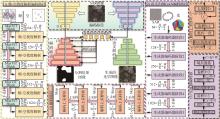
Fig.1
Architecture of the semantic induction dual-domain anisotropic reconstruction with generative adversarial networks
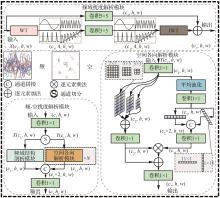
Fig.2
Frequency-spatial disturbance parsing module
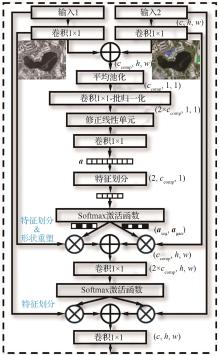
Fig.3
Dual-domain structural alignment module
Table 1
Comparison of different methods on SARBuD dataset
| 方法 | 类型 | HD95↓ | Dice/%↑ | mIoU/%↑ | Kappa/%↑ | MCC/%↑ |
|---|---|---|---|---|---|---|
| U-Net[ | CNN | 5.96(±2.00) | 74.37(±19.74) | 62.33(±20.33) | 70.05(±19.73) | 71.36(±18.66) |
| MRUNet[ | 6.08(±2.12) | 74.40(±19.51) | 62.35(±20.43) | 70.08(±19.60) | 71.46(±18.40) | |
| DconnNet[ | 5.98(±2.05) | 74.34(±18.74) | 62.09(±20.04) | 69.61(±19.03) | 71.28(±17.40) | |
| ICNet[ | 6.29(±2.11) | 66.17(±22.67) | 53.19(±22.50) | 60.33(±22.37) | 62.55(±20.94) | |
| PSPNet[ | 6.15(±2.07) | 71.08(±19.99) | 58.29(±20.66) | 65.99(±20.07) | 67.54(±18.84) | |
| LEDNet[ | 6.17(±2.05) | 70.19(±20.57) | 57.34(±20.99) | 64.76(±21.08) | 66.52(±19.73) | |
| U-Net+Att[ | CNN+Att | 5.87(±1.99) | 75.30(±19.09) | 63.42(±20.26) | 70.60(±19.32) | 71.97(±18.06) |
| PAttUNet[ | 6.01(±2.08) | 74.10(±18.72) | 61.78(±20.01) | 69.02(±19.40) | 70.64(±17.87) | |
| DAttUNet[ | 6.13(±2.12) | 72.88(±19.78) | 60.52(±20.87) | 67.88(±20.29) | 69.62(±18.77) | |
| DANet[ | 6.06(±2.06) | 73.28(±18.63) | 60.72(±19.99) | 68.00(±19.13) | 69.69(±17.60) | |
| BAT[ | Transformer | 6.18(±2.04) | 72.93(±18.66) | 60.22(±19.68) | 67.69(±19.02) | 68.98(±17.88) |
| MISSFormer[ | 6.11(±2.07) | 70.87(±20.33) | 58.18(±21.28) | 65.54(±20.67) | 67.61(±19.00) | |
| TransUNet[ | CNN+Transformer | 6.11(±2.01) | 69.52(±20.66) | 56.57(±21.18) | 64.32(±20.57) | 66.10(±19.20) |
| UNeXt[ | 6.17(±2.00) | 70.45(±21.68) | 58.00(±22.00) | 65.31(±21.59) | 67.06(±20.26) | |
| CMTFNet[ | 6.00(±2.05) | 73.64(±19.66) | 61.43(±20.67) | 69.03(±19.82) | 70.79(±18.09) | |
| SGCNet[ | CNN+GCN | 6.04(±2.01) | 72.63(±19.68) | 60.13(±20.49) | 67.67(±19.91) | 69.60(±18.25) |
| MambaHSI[ | Mamba | 6.04(±1.90) | 64.93(±20.63) | 51.18(±20.66) | 58.88(±20.01) | 60.44(±19.03) |
| VMUNet[ | 6.06(±2.06) | 72.47(±20.00) | 60.06(±21.02) | 67.45(±20.23) | 69.12(±18.76) | |
| 本文方法 | 5.84(±2.00) | 77.66(±16.37) | 66.30(±18.51) | 73.43(±16.94) | 75.15(±15.51) |
Table 2
Comparison of different methods on HRSID dataset
| 方法 | 类型 | HD95↓ | Dice/%↑ | mIoU/%↑ | Kappa/%↑ | MCC/%↑ |
|---|---|---|---|---|---|---|
| U-Net[ | CNN | 2.85(±1.54) | 89.97(±8.95) | 82.73(±12.05) | 89.88(±9.15) | 90.12(±8.68) |
| MRUNet[ | 2.78(±1.52) | 91.10(±8.62) | 84.57(±11.57) | 91.07(±8.59) | 91.23(±8.34) | |
| DconnNet[ | 2.78(±1.50) | 90.55(±9.53) | 83.76(±12.15) | 90.52(±9.45) | 90.70(±9.09) | |
| ICNet[ | 3.14(±1.60) | 85.45(±11.58) | 76.04(±14.35) | 85.40(±11.60) | 85.77(±11.05) | |
| PSPNet[ | 2.84(±1.50) | 90.16(±9.80) | 83.21(±12.76) | 90.12(±9.81) | 90.34(±9.29) | |
| LEDNet[ | 3.10(±1.65) | 86.55(±12.22) | 77.87(±14.80) | 86.47(±12.34) | 86.84(±11.56) | |
| U-Net+Att[ | CNN+Att | 2.81(±1.61) | 90.82(±9.63) | 84.27(±12.52) | 90.78(±9.63) | 90.97(±9.26) |
| PAttUNet[ | 2.82(±1.54) | 90.46(±9.55) | 83.66(±12.51) | 90.42(±9.55) | 90.60(±9.23) | |
| DAttUNet[ | 2.82(±1.55) | 90.48(±9.43) | 83.66(±12.35) | 90.44(±9.42) | 90.60(±9.18) | |
| DANet[ | 2.89(±1.57) | 89.88(±10.15) | 82.80(±13.00) | 89.84(±10.16) | 90.08(±9.61) | |
| BAT[ | Transformer | 3.34(±1.37) | 85.14(±9.46) | 75.13(±12.25) | 85.06(±9.56) | 85.40(±9.20) |
| MISSFormer[ | 2.92(±1.63) | 89.17(±9.79) | 81.59(±13.00) | 89.08(±10.01) | 89.35(±9.46) | |
| TransUNet[ | CNN+Transformer | 2.84(±1.59) | 89.89(±10.95) | 83.05(±14.31) | 89.84(±10.97) | 90.08(±10.50) |
| UNeXt[ | 2.96(±1.61) | 88.00(±10.96) | 79.90(±13.81) | 87.94(±10.99) | 88.22(±10.50) | |
| CMTFNet[ | 2.77(±1.55) | 91.03(±9.13) | 84.56(±12.44) | 90.93(±9.36) | 91.17(±8.79) | |
| SGCNet[ | CNN+GCN | 2.75(±1.55) | 91.42(±8.30) | 85.06(±11.50) | 91.33(±8.53) | 91.54(±7.98) |
| MambaHSI[ | Mamba | 3.12(±1.66) | 84.97(±15.10) | 76.18(±17.83) | 84.88(±15.23) | 85.22(±14.66) |
| VMUNet[ | 2.81(±1.48) | 90.36(±9.07) | 83.39(±11.99) | 90.28(±9.25) | 90.52(±8.59) | |
| 本文方法 | 2.62(±1.50) | 92.28(±8.25) | 86.58(±11.90) | 92.21(±8.42) | 92.38(±8.02) |
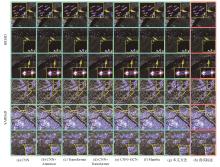
Fig.4
Visual comparison of multi-model segmentation results on SARBuD and HRSID datasets
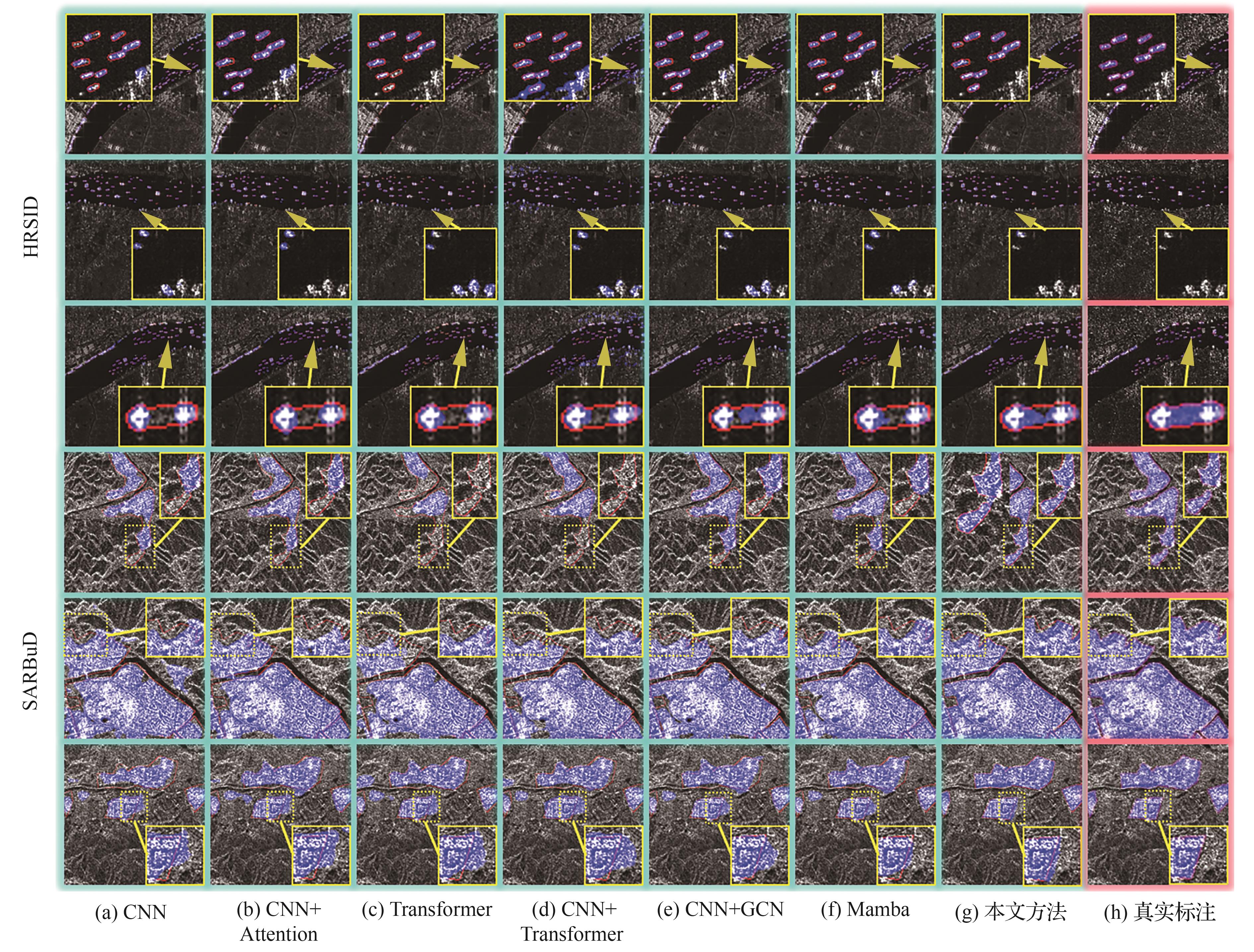
Fig.5
Image translation results from SAR to optical domain
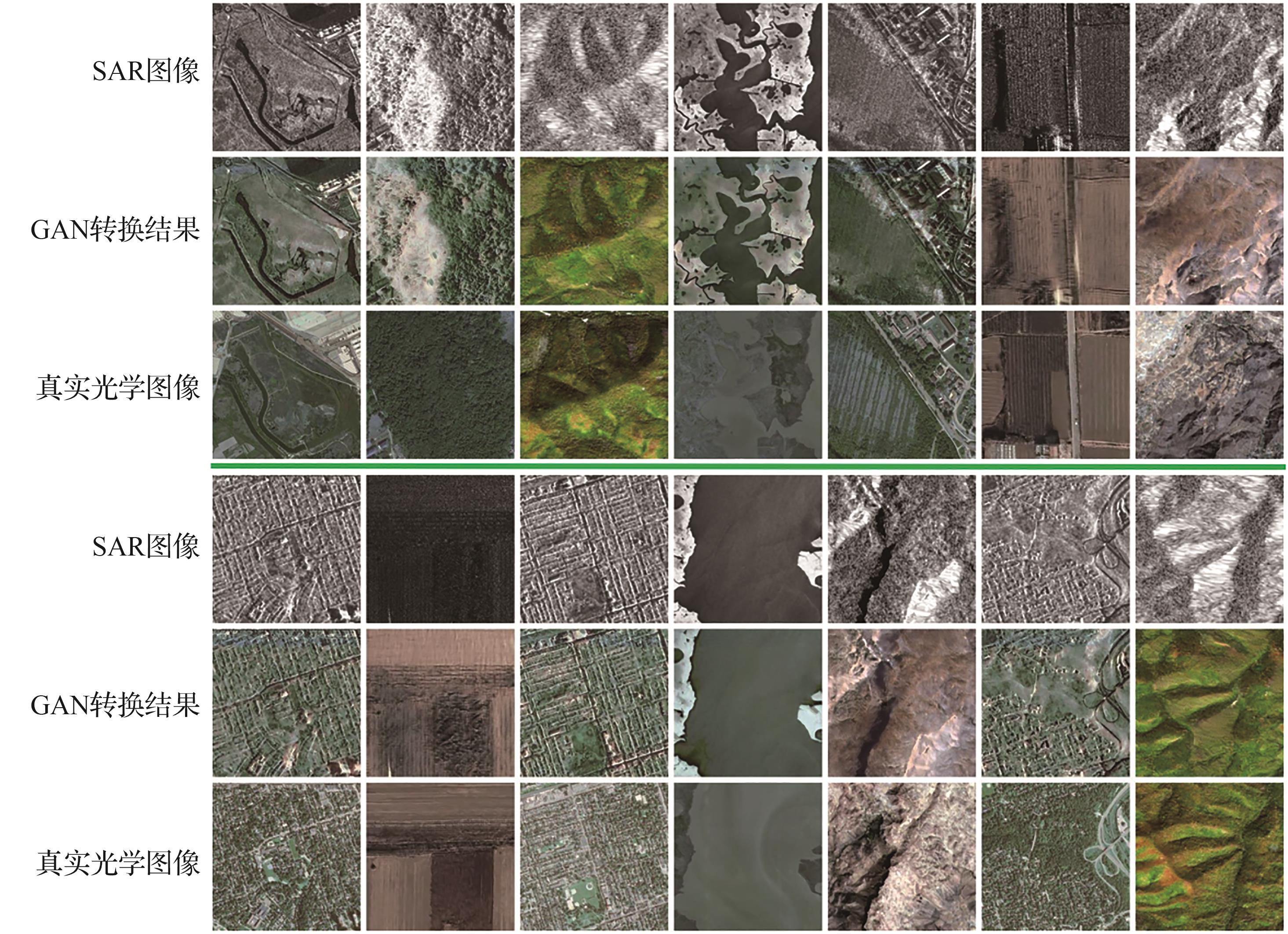
Table 3
Quantitative results of SAR-to-optical translation
| 区域 | PSNR/dB | LPIPS |
|---|---|---|
| 草地 | 19.46 ± 0.27 | 0.48 ± 0.06 |
| 山地 | 15.89 ± 0.27 | 0.46 ± 0.06 |
| 农田 | 14.38 ± 0.29 | 0.59 ± 0.05 |
| 城市 | 14.41 ± 0.39 | 0.55 ± 0.04 |
Table 4
Ablation experiments of SARBuD dataset on key modules of SPD, ASP and SI-GAN
| SPD | ASP | SI-GAN | HD95↓ | Dice/%↑ | mIoU/%↑ | Kappa/%↑ | MCC/%↑ |
|---|---|---|---|---|---|---|---|
| √ | √ | √ | 5.84(±2.00) | 77.66(±16.37) | 66.30(±18.51) | 73.43(±16.94) | 75.15(±15.51) |
| √ | √ | 5.87(±2.02) | 76.29(±17.74) | 64.38(±19.31) | 71.88(±18.08) | 73.16(±16.73) | |
| √ | √ | 5.87(±2.01) | 77.00(±17.82) | 65.36(±19.44) | 72.64(±18.19) | 74.40(±16.12) | |
| √ | √ | 5.85(±2.02) | 76.48(±17.44) | 64.59(±19.29) | 71.80(±17.93) | 73.39(±16.14) | |
| √ | 6.00(±2.08) | 75.56(±18.33) | 63.57(±19.72) | 71.00(±18.72) | 72.75(±16.96) |
Table 5
Ablation experiments of the SARBuD dataset on key modules of DDSA
| 方法 | HD95↓ | Dice/%↑ | mIoU/%↑ | Kappa/%↑ | MCC/%↑ |
|---|---|---|---|---|---|
| DDSA | 5.84(±2.00) | 77.66(±16.37) | 66.30(±18.51) | 73.43(±16.94) | 75.15(±15.51) |
| Cat | 5.98(±2.10) | 76.11(±17.95) | 64.21(±19.49) | 71.26(±18.56) | 73.02(±16.74) |
| ⊕ | 5.88(±2.00) | 75.31(±18.25) | 63.24(±19.80) | 70.43(±18.70) | 72.34(±16.62) |
| TFAM(TGRS.2023) | 5.92(±2.03) | 76.92(±17.52) | 65.18(±19.16) | 72.44(±18.01) | 73.95(±16.22) |
| MAFM(KBS.2024) | 5.85(±2.06) | 76.39(±18.18) | 64.63(±19.58) | 71.98(±18.40) | 73.58(±16.54) |
| CAFM(TGRS.2023) | 5.86(±2.01) | 76.51(±17.71) | 64.71(±19.40) | 71.92(±18.23) | 73.45(±16.58) |
Table 6
Ablation experiments of directional convolution in inter-directional parsing module of SARBuD dataset
| 方法 | HD95↓ | Dice/%↑ | mIoU/%↑ | Kappa/%↑ | MCC/%↑ |
|---|---|---|---|---|---|
| 1 | 5.84(±2.00) | 77.66(±16.37) | 66.30(±18.51) | 73.43(±16.94) | 75.15(±15.51) |
| 2 | 5.84(±2.05) | 77.10(±17.28) | 65.37(±19.05) | 72.83(±17.70) | 74.09(±16.32) |
| 3 | 5.92(±2.07) | 76.85(±17.67) | 65.14(±19.42) | 72.33(±18.30) | 73.67(±16.88) |
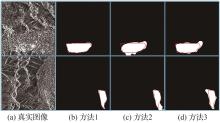
Fig.6
Qualitative comparison of segmentation results for ablation study of spatial anisotropic parsing module (SARBuD dataset)
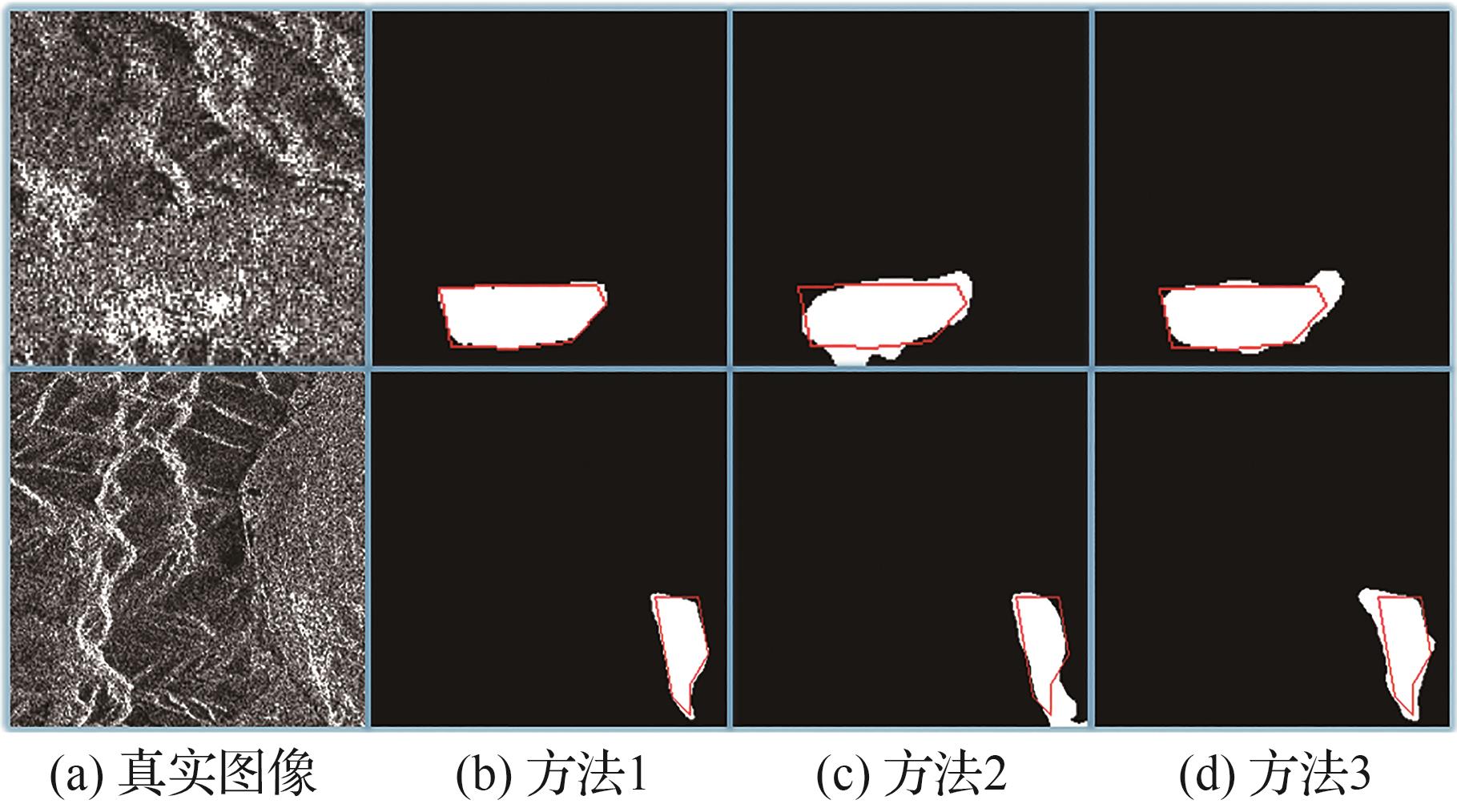
Table 7
Complexity comparison of key modules
| 模块 | 参数量 | 模型大小/MB |
|---|---|---|
| SI-GAN | 31.04×10⁶ | 118.50 |
| FSDP | 69.34×10³ | 0.34 |
| DDSA | 55.43×10³ | 0.22 |
| SPD | 5.22×10³ | 0.03 |
| ASP | 25.73×10³ | 0.12 |
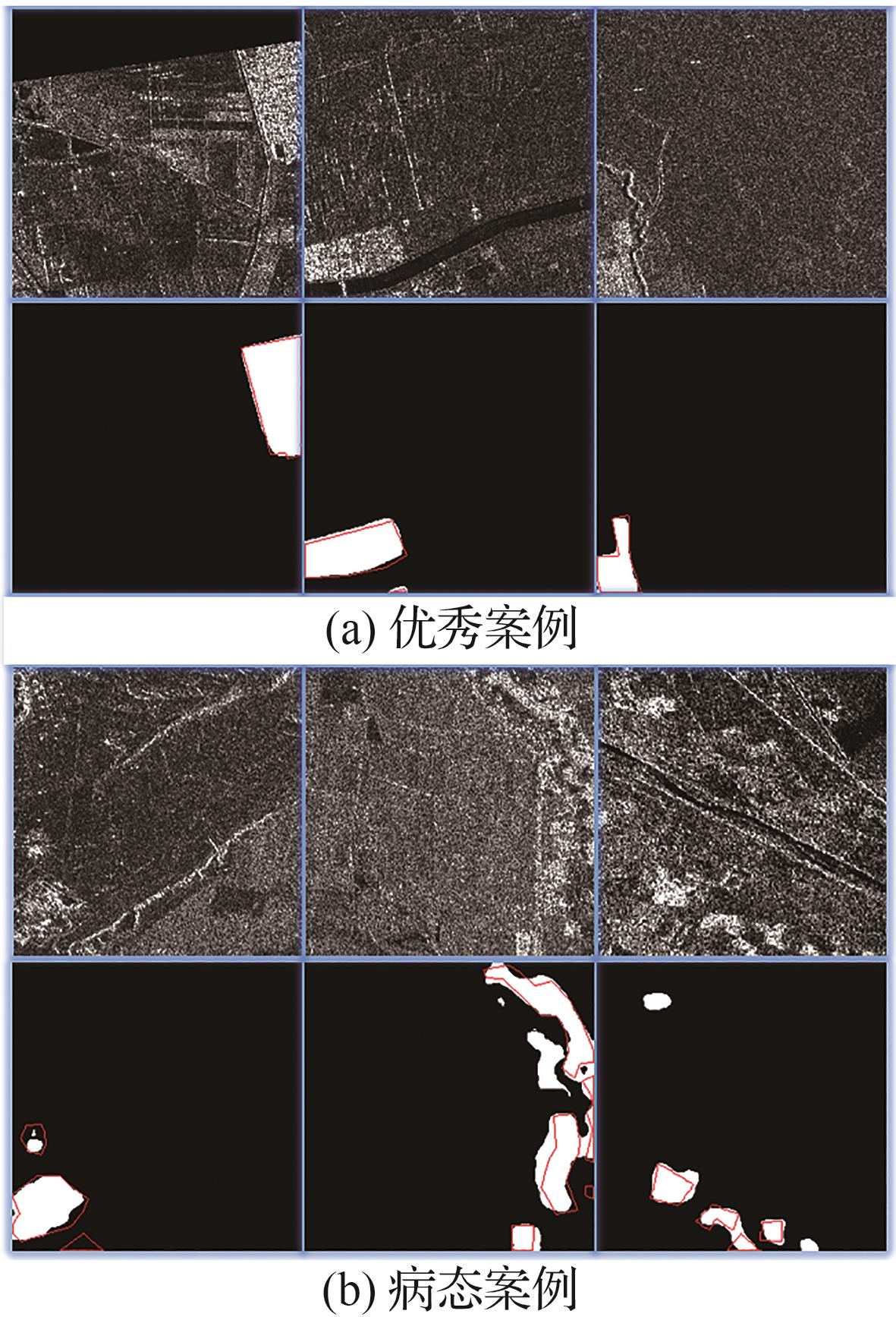
Fig.7
Representative good and bad cases of proposed method on SARBuD dataset
| [1] | CHAN Y K, KOO V C. An introduction to synthetic aperture radar (SAR)[J]. Progress in Electromagnetics Research B, 2008, 2: 27-60. |
| [2] | NOBRE R H, RODRIGUES F A A, MARQUES R C P, et al. SAR image segmentation with Rényi’s entropy[J]. IEEE Signal Processing Letters, 2016, 23(11): 1551-1555. |
| [3] | LIU F, DUAN Y P, LI L L, et al. SAR image segmentation based on hierarchical visual semantic and adaptive neighborhood multinomial latent model[J]. IEEE Transactions on Geoscience and Remote Sensing, 2016, 54(7): 4287-4301. |
| [4] | GUO Y M, LIU Y, GEORGIOU T, et al. A review of semantic segmentation using deep neural networks[J]. International Journal of Multimedia Information Retrieval, 2018, 7(2): 87-93. |
| [5] | SHELHAMER E, LONG J, DARRELL T. Fully convolutional networks for semantic segmentation[C]∥IEEE Transactions on Pattern Analysis and Machine Intelligence. Piscataway: IEEE Press, 2016: 640-651. |
| [6] | ZHU X X, TUIA D, MOU L C, et al. Deep learning in remote sensing: A comprehensive review and list of resources[J]. IEEE Geoscience and Remote Sensing Magazine, 2017, 5(4): 8-36. |
| [7] | MALMGREN-HANSEN D, NOBEL-J⊘RGENSEN M. Convolutional neural networks for SAR image segmentation[C]∥2015 IEEE International Symposium on Signal Processing and Information Technology (ISSPIT). Piscataway: IEEE Press, 2016: 231-236. |
| [8] | LI J G, ZHANG R, LI Y. Multiscale convolutional neural network for the detection of built-up areas in high-resolution SAR images[C]∥2016 IEEE International Geoscience and Remote Sensing Symposium (IGARSS). Piscataway: IEEE Press, 2016: 910-913. |
| [9] | SHAHZAD M, MAURER M, FRAUNDORFER F, et al. Buildings detection in VHR SAR images using fully convolution neural networks[J]. IEEE Transactions on Geoscience and Remote Sensing, 2019, 57(2): 1100-1116. |
| [10] | WANG X Y, CAVIGELLI L, EGGIMANN M, et al. HR-SAR-Net: A deep neural network for urban scene segmentation from high-resolution SAR data[C]∥2020 IEEE Sensors Applications Symposium (SAS). Piscataway: IEEE Press, 2020: 1-6. |
| [11] | 李煜, 杨静飞, 张鸿生, 等. 极化合成孔径雷达遥感地物分类研究进展[J]. 遥感学报, 2024, 28(8): 1835-1853. |
| LI Y, YANG J F, ZHANG H S, et al. Review of the studies on remote sensing classification based on polarimetric synthetic aperture radar[J]. National Remote Sensing Bulletin, 2024, 28(8): 1835-1853 (in Chinese). | |
| [12] | 王俊, 郑彤, 雷鹏, 等. 深度学习在雷达中的研究综述[J]. 雷达学报, 2018, 7(4): 395-411. |
| WANG J, ZHENG T, LEI P, et al. Study on deep learning in radar[J]. Journal of Radars, 2018, 7(4): 395-411 (in Chinese). | |
| [13] | 蒋弥, 丁晓利, 李志伟, 等. 基于时间序列的InSAR相干性量级估计[J]. 地球物理学报, 2013, 56(3): 799-811. |
| JIANG M, DING X L, LI Z W, et al. InSAR coherence magnitude estimation based on data stack[J]. Chinese Journal of Geophysics, 2013, 56(3): 799-811 (in Chinese). | |
| [14] | 刘鹏, 李真芳, 楼良盛, 等. 基于超像素分割与多信息融合的叠掩和阴影区域检测法[J]. 测绘学报, 2022, 51(12): 2517-2530. |
| LIU P, LI Z F, LOU L S, et al. Layover and shadow regions detection based on superpixel segmentation and multi-information fusion[J]. Acta Geodaetica et Cartographica Sinica, 2022, 51(12): 2517-2530 (in Chinese). | |
| [15] | LI X, ZHANG G, CUI H, et al. MCANet: A joint semantic segmentation framework of optical and SAR images for land use classification[J]. International Journal of Applied Earth Observation and Geoinformation, 2022, 106: 102638. |
| [16] | HUANG H L, GUO J C, LIN H X, et al. Domain adaptive oriented object detection from optical to SAR images[J]. IEEE Transactions on Geoscience and Remote Sensing, 2025, 63: 5200314. |
| [17] | WANG L, XU X, YU Y, et al. SAR-to-optical image translation using supervised cycle-consistent adversarial networks[J]. IEEE Access, 2019, 7: 129136-129149. |
| [18] | FUENTES REYES M, AUER S, MERKLE N, et al. SAR-to-optical image translation based on conditional generative adversarial networks: Optimization, opportunities and limits[J]. Remote Sensing, 2019, 11(17): 2067. |
| [19] | GOODFELLOW I J, POUGET-ABADIE J, MIRZA M, et al. Generative adversarial networks[DB/OL]. arXiv preprint: 1406.2661, 2014. |
| [20] | 吴樊, 张红, 王超, 等. 2022.SARBuD 1.0: 面向深度学习的GF-3精细模式SAR建筑数据集[J]. 遥感学报, 26(4): 620-631. |
| WU F, ZHANG H, WANG C, et al. SARBuD1.0: A SAR building dataset based on GF-3 FSII imageries for built-up area extraction with deep learning method[J]. National Remote Sensing Bulletin, 2022, 26(4): 620-631 (in Chinese). | |
| [21] | WEI S J, ZENG X F, QU Q Z, et al. HRSID: A high-resolution SAR images dataset for ship detection and instance segmentation[J]. IEEE Access, 2020, 8: 120234-120254. |
| [22] | RONNEBERGER O, FISCHER P, BROX T. U-Net: Convolutional networks for biomedical image segmentation[C]∥Medical Image Computing and Computer-Assisted Intervention-MICCAI 2015. Cham: Springer, 2015: 234-241. |
| [23] | WANG F K, HUANG Y Q, HUANG Z C, et al. MRUNet: A two-stage segmentation model for small insect targets in complex environments[J]. Journal of Integrative Agriculture, 2023, 22(4): 1117-1130. |
| [24] | YANG Z Y, FARSIU S. Directional connectivity-based segmentation of medical images[C]∥2023 IEEE/CVF Conference on Computer Vision and Pattern Recognition (CVPR). Piscataway: IEEE Press, 2023: 11525-11535. |
| [25] | ZHAO H S, QI X J, SHEN X Y, et al. ICNet for real-time semantic segmentation on high-resolution images[C]∥Computer Vision-ECCV 2018. Cham: Springer, 2018: 418-434. |
| [26] | ZHAO H S, SHI J P, QI X J, et al. Pyramid scene parsing network[C]∥2017 IEEE Conference on Computer Vision and Pattern Recognition (CVPR). Piscataway: IEEE Press, 2017: 6230-6239. |
| [27] | WANG Y, ZHOU Q, LIU J, et al. LEDNet: A lightweight encoder-decoder network for real-time semantic segmentation[C]∥2019 IEEE International Conference on Image Processing (ICIP). Piscataway: IEEE Press, 2019: 1860-1864. |
| [28] | OKTAY O, SCHLEMPER J, LE FOLGOC L, et al. Attention U-Net: Learning where to look for the pancreas[DB/OL]. arXiv preprint: 1804.03999, 2018. |
| [29] | BOUGOURZI F, DISTANTE C, DORNAIKA F, et al. PDAtt-UNet: Pyramid dual-decoder attention unet for covid-19 infection segmentation from CT-scans[J]. Medical Image Analysis, 2023, 86: 102797. |
| [30] | FU J, LIU J, TIAN H J, et al. Dual attention network for scene segmentation[C]∥2019 IEEE/CVF Conference on Computer Vision and Pattern Recognition (CVPR). Piscataway: IEEE Press, 2020: 3141-3149. |
| [31] | WANG J C, WEI L, WANG L S, et al. Boundary-aware transformers for skin lesion segmentation[C]∥Medical Image Computing and Computer Assisted Intervention-MICCAI 2021. Cham: Springer, 2021: 206-216. |
| [32] | HUANG X H, DENG Z F, LI D D, et al. MISSFormer: An effective transformer for 2D medical image segmentation[J]. IEEE Transactions on Medical Imaging, 2023, 42(5): 1484-1494. |
| [33] | CHEN J N, LU Y Y, YU Q H, et al. TransUNet: Transformers make strong encoders for medical image segmentation[DB/OL]. arXiv preprint: 2102.04306, 2021. |
| [34] | VALANARASU J M J, PATEL V M. UNeXt: MLP-based rapid medical image segmentation network[C]∥Medical Image Computing and Computer Assisted Intervention-MICCAI 2022. Cham: Springer, 2022: 23-33. |
| [35] | WU H L, HUANG P, ZHANG M, et al. CMTFNet: CNN and multiscale transformer fusion network for remote-sensing image semantic segmentation[J]. IEEE Transactions on Geoscience and Remote Sensing, 2023, 61: 2004612. |
| [36] | ZHOU G D, CHEN W T, GUI Q S, et al. Split depth-wise separable graph-convolution network for road extraction in complex environments from high-resolution remote-sensing images[J]. IEEE Transactions on Geoscience and Remote Sensing, 2022, 60: 5614115. |
| [37] | LI Y P, LUO Y, ZHANG L F, et al. MambaHSI: Spatial-spectral mamba for hyperspectral image classification[J]. IEEE Transactions on Geoscience and Remote Sensing, 2024, 62: 5524216. |
| [38] | RUAN J C, LI J C, XIANG S C. VM-UNet: Vision mamba UNet for medical image segmentation[J]. ACM Transactions on Multimedia Computing, Communications, and Applications, 2025: 3767748. |
| [1] | Deqiang HAN, Wei XIONG, Ziling WANG. Low-attitude economy and information fusion in era of deep multi-modality [J]. Acta Aeronautica et Astronautica Sinica, 2026, 47(S1): 732853-732853. |
| [2] | Qinbo SUN, Zhaohui DANG. Spacecraft guardian strategy design via motion-intent recognition [J]. Acta Aeronautica et Astronautica Sinica, 2026, 47(S1): 733013-733013. |
| [3] | Long GAO, Chuanxiang ZHOU, Chaohui LIU, Wei ZHANG, Youbin LYU, Xuan LI, Tianyu LI, Xiaomei ZHENG. AADD: Aerial aircraft detection dataset [J]. Acta Aeronautica et Astronautica Sinica, 2026, 47(S1): 733255-733255. |
| [4] | Yuzhuo MA, Kan REN, Tao LI, Qian CHEN. Improving remote sensing image semantic segmentation based on distance loss [J]. Acta Aeronautica et Astronautica Sinica, 2026, 47(8): 332780-332780. |
| [5] | Yunwen FENG, Wanyi LIU, Qianyun KE, Cheng LU, Rui WANG. Operational reliability evaluation method for civil aircraft based on mechanism-enhanced conditional generative adversarial [J]. Acta Aeronautica et Astronautica Sinica, 2026, 47(6): 232483-232483. |
| [6] | Youzheng YU, Jiaqing KOU, Weiwei ZHANG. A generative adversarial network based method for aerodynamic configuration design of general aviation aircraft [J]. Acta Aeronautica et Astronautica Sinica, 2026, 47(6): 132518-132518. |
| [7] | Jun HUANG, Jing ZHANG, Shiqian WENG. Airborne electro-optical target recognition algorithms [J]. Acta Aeronautica et Astronautica Sinica, 2026, 47(6): 332601-332601. |
| [8] | Leyan LI, Rennong YANG, Anxin GUO, Qi SONG, Jialiang ZUO. Beyond-visual-range air combat threat prediction and dynamic evasion method based on all-domain fire field theory [J]. Acta Aeronautica et Astronautica Sinica, 2026, 47(4): 332205-332205. |
| [9] | Zicheng FENG, Wenlong ZHANG, Donghui LIU, Qifeng YU. Robust infrared target tracking algorithm for anti-UAV in complexbackgrounds [J]. Acta Aeronautica et Astronautica Sinica, 2026, 47(4): 332264-332264. |
| [10] | Zhaoqin PENG, Qicong LI, Haini ZHANG, Hong WU, Yunpeng MA. Improved ACGAN for fault diagnosis based on GRU and convolutional block attention module [J]. Acta Aeronautica et Astronautica Sinica, 2026, 47(2): 431929-431929. |
| [11] | Hongguang LI, Zewei LIU, Xinjun LI, Yingyan GU. Advances in UAV visual positioning technology based on deep learning [J]. Acta Aeronautica et Astronautica Sinica, 2026, 47(17): 333094-333094. |
| [12] | Yizhe LUO, Jiabao WANG, Xinde YU, Xudong CHEN, Zhao JIN, Shuo FENG, Yucheng SHI, Mingliang XU. Scheduling algorithm for carrier-based aircraft support operations based on deck environment model [J]. Acta Aeronautica et Astronautica Sinica, 2026, 47(17): 333180-333180. |
| [13] | Siyuan LI, Deqiang HAN, Jean DEZERT, Yi YANG. Learning-based BBA modeling approach with multi-method fusion [J]. Acta Aeronautica et Astronautica Sinica, 2026, 47(12): 332927-332927. |
| [14] | Ruotian REN, Lijun ZHAO, Xuyang ZHAO, Zheng ZHANG, Hongyi LI, Xinhua XUE, Ping TANG. A review of knowledge-guided intelligent interpretation methods for remote sensing imagery [J]. Acta Aeronautica et Astronautica Sinica, 2026, 47(10): 632103-632103. |
| [15] | Shaohua DUAN, Chunjie ZHANG, Chuankai LIU, Xiaolong ZHENG, Jitao ZHANG. AFAR-Net: Autoregressive and feedback-driven adaptive rectangular convolution network for pansharpening [J]. Acta Aeronautica et Astronautica Sinica, 2026, 47(10): 532432-532432. |
| Viewed | ||||||
|
Full text |
|
|||||
|
Abstract |
|
|||||
Address: No.238, Baiyan Buiding, Beisihuan Zhonglu Road, Haidian District, Beijing, China
Postal code : 100083
E-mail:hkxb@buaa.edu.cn
Total visits: 6658907 Today visits: 1341All copyright © editorial office of Chinese Journal of Aeronautics
All copyright © editorial office of Chinese Journal of Aeronautics
Total visits: 6658907 Today visits: 1341

 CJA

