Acta Aeronautica et Astronautica Sinica ›› 2026, Vol. 47 ›› Issue (11): 332544.doi: 10.7527/S1000-6893.2026.32544
• Electronics and Electrical Engineering and Control • Previous Articles
Dapeng ZHOU1( ), Chong ZHEN1, Xiaolei QU1, Fei LUO2
Received:2025-07-10
Revised:2025-10-16
Accepted:2026-02-04
Online:2026-03-05
Published:2026-02-27
Contact:
Dapeng ZHOU
E-mail:18624064969@buaa.edu.cn
CLC Number:
Dapeng ZHOU, Chong ZHEN, Xiaolei QU, Fei LUO. Hybrid active-passive fault-tolerant control for carrier landing subject to control surface effectiveness loss[J]. Acta Aeronautica et Astronautica Sinica, 2026, 47(11): 332544.
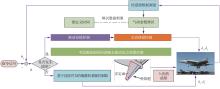
Fig.1
Fault tolerant control method for direct lift landing of carrier based aircraft considering rudder damage faults
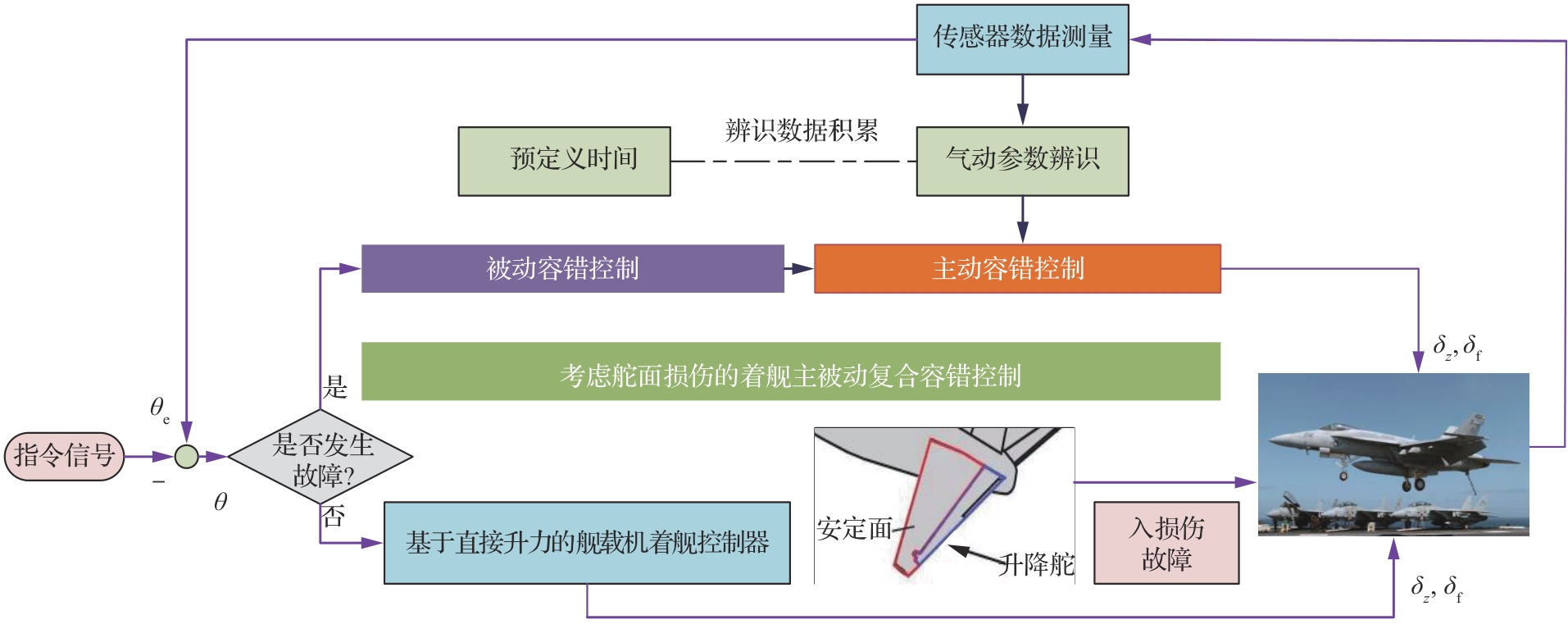
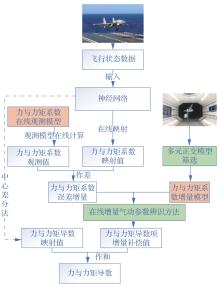
Fig.2
Hybrid intelligent identification strategy for aerodynamic parameters
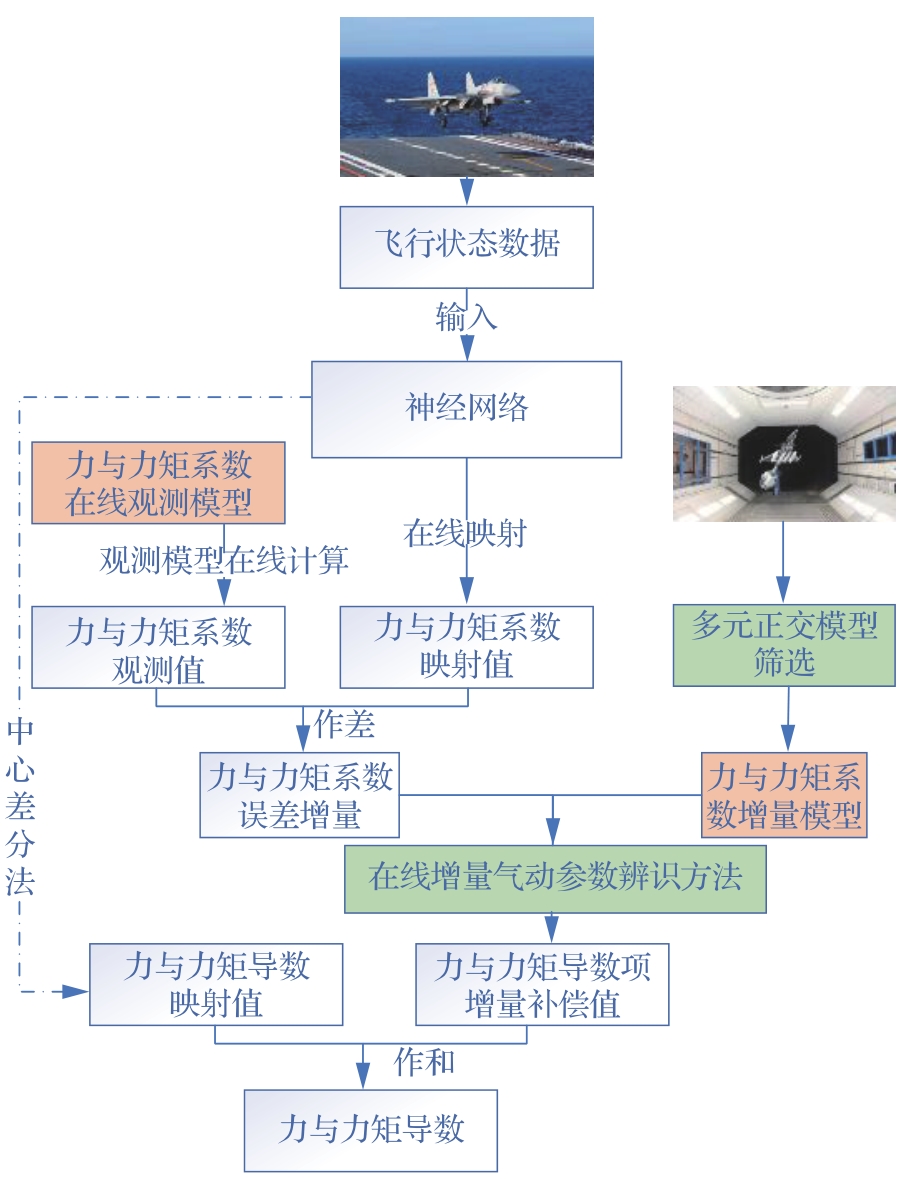

Table 1
Control parameter design of active-passive combined landing fault-tolerant control method
| 状态参数 | 数值 |
|---|---|
| 0.8 | |
| 0.3 | |
| 0.6 | |
| 0.3 | |
| 8 |
Table 2
Simulation initial input
| 状态参数 | 数值 |
|---|---|
| 初始高度/m | 110 |
| 初始速度/( | 80 |
| 初始迎角/(°) | 12 |
| 初始轨迹角/(°) | -4 |
| 故障发生时刻/s | 2 |
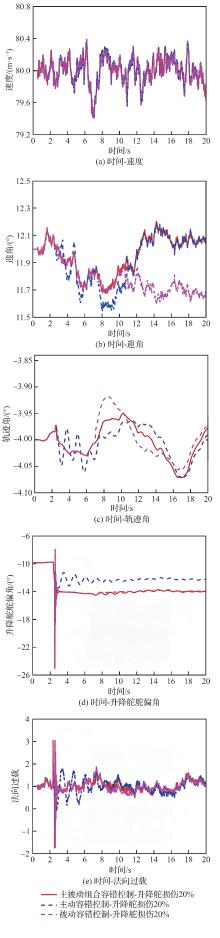
Fig.3
Active-passive combined fault-tolerant control-elevator damage 20 % fault simulation
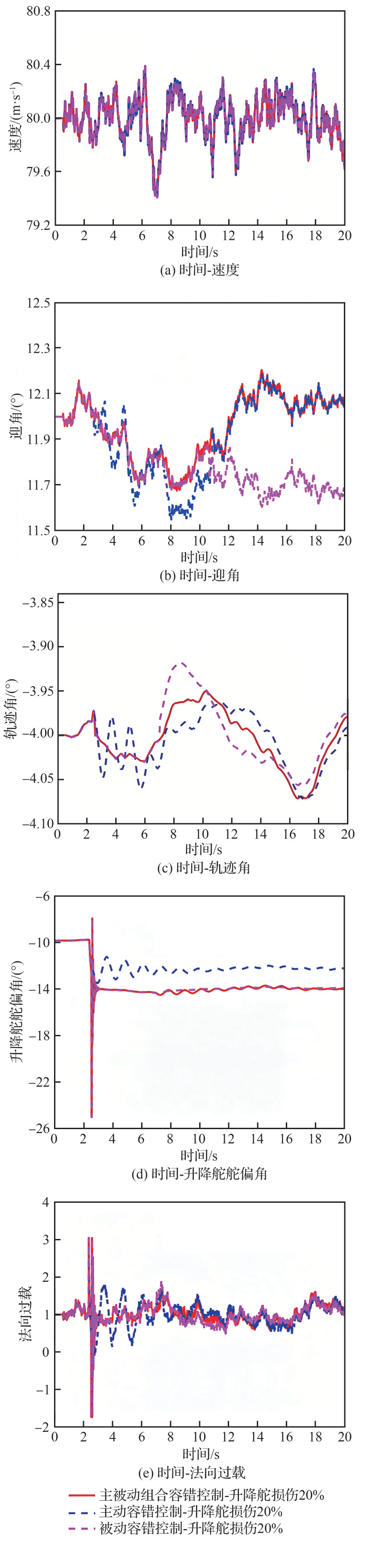

Fig.4
Numerical simulation results of lifting elevator damage fault


Fig.5
Numerical simulation results of flap damage fault

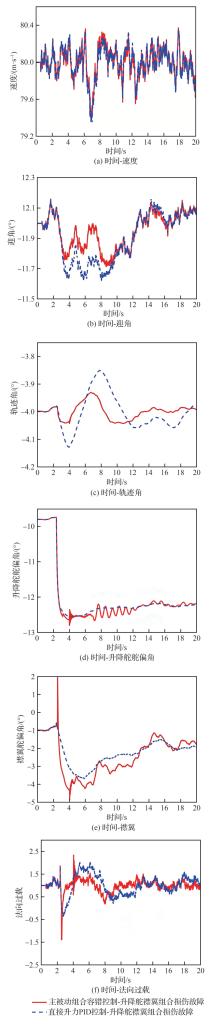
Fig.6
Numerical simulation results of lifting elevator flap composite damage fault
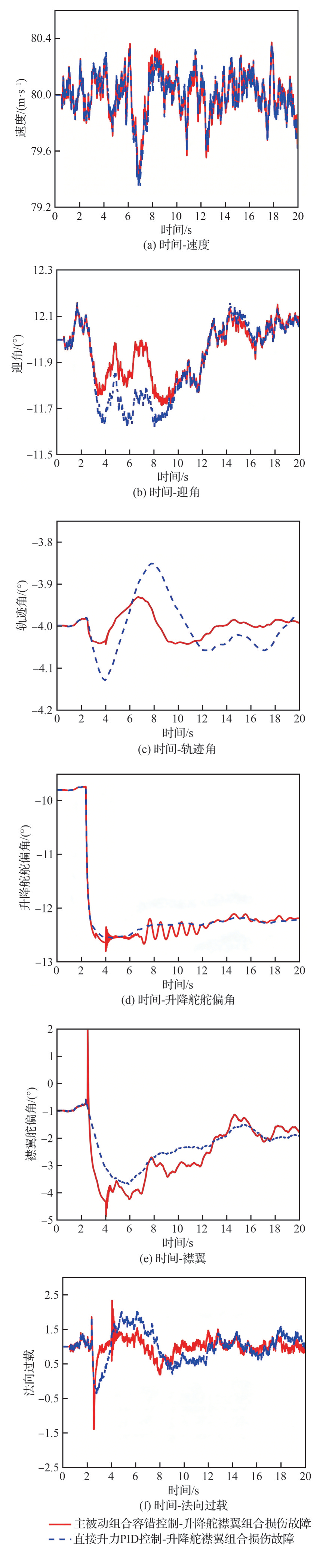
Table 3
Hardware-in-the-loop equipment parameters
| 属性 | 参数 |
|---|---|
| 主控单元 | 120 MHz主频,3 MFlash,256 k Flash零等待 |
| 串口数量 | 12 |
| 运行周期/ms | 10 |
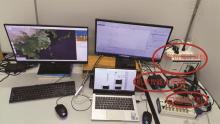
Fig.7
Hardware in the loop simulation system physical connection diagram
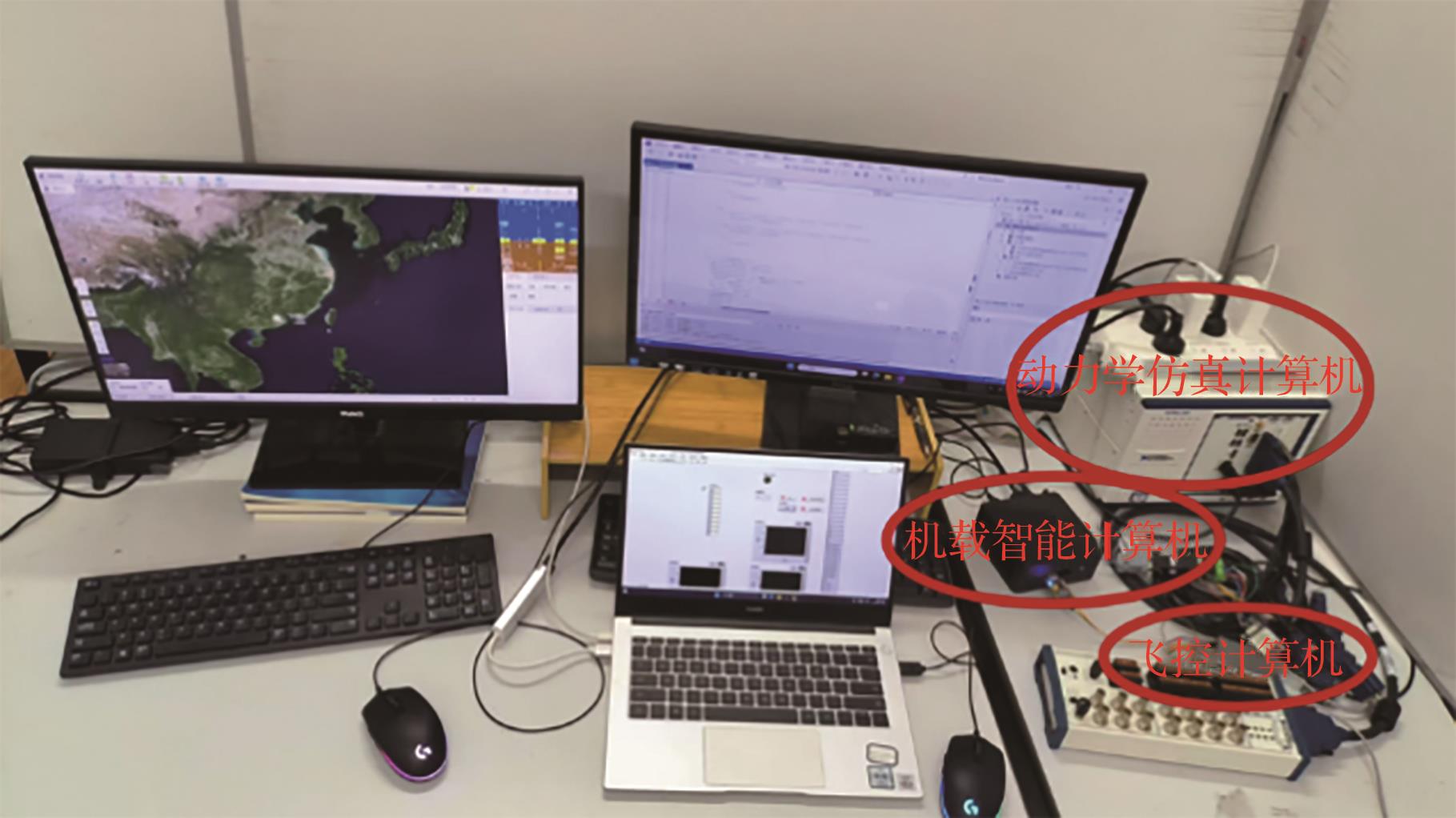
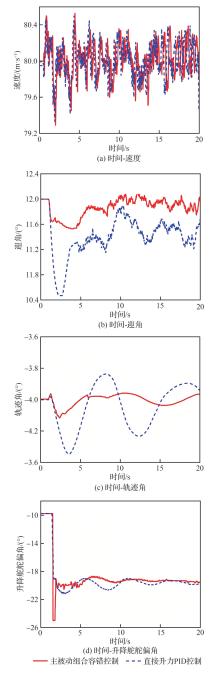
Fig.8
Hardware-in-the-loop simulation results of elevator damage
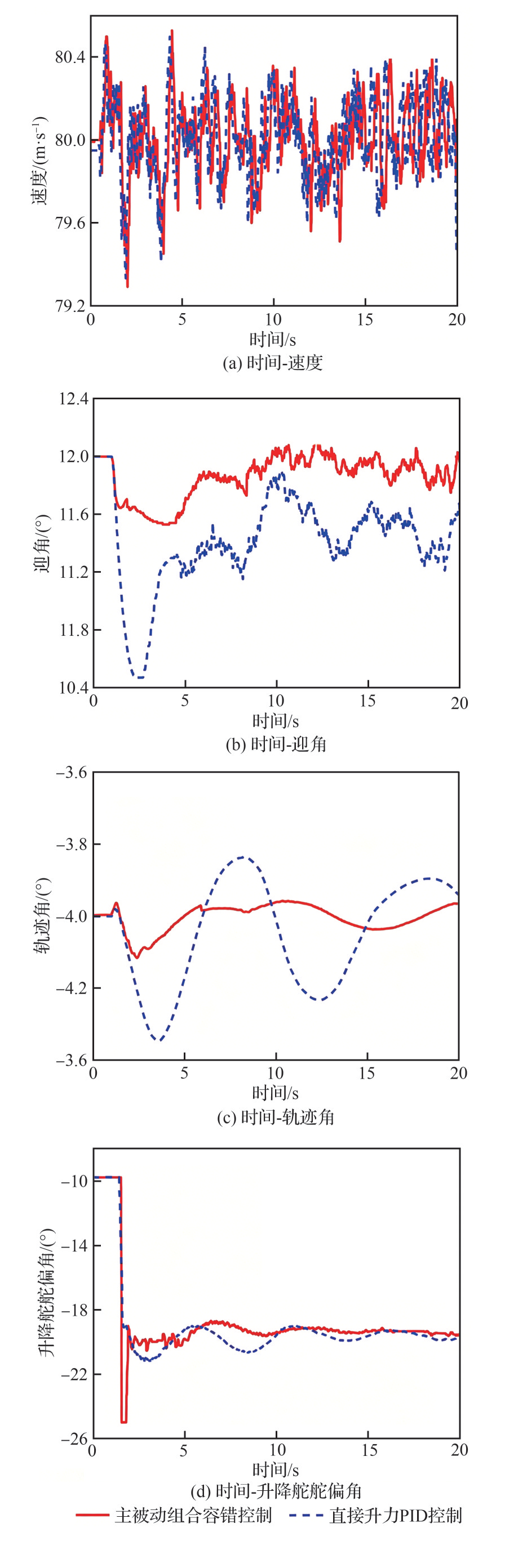
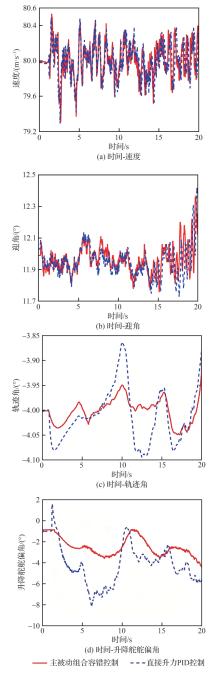
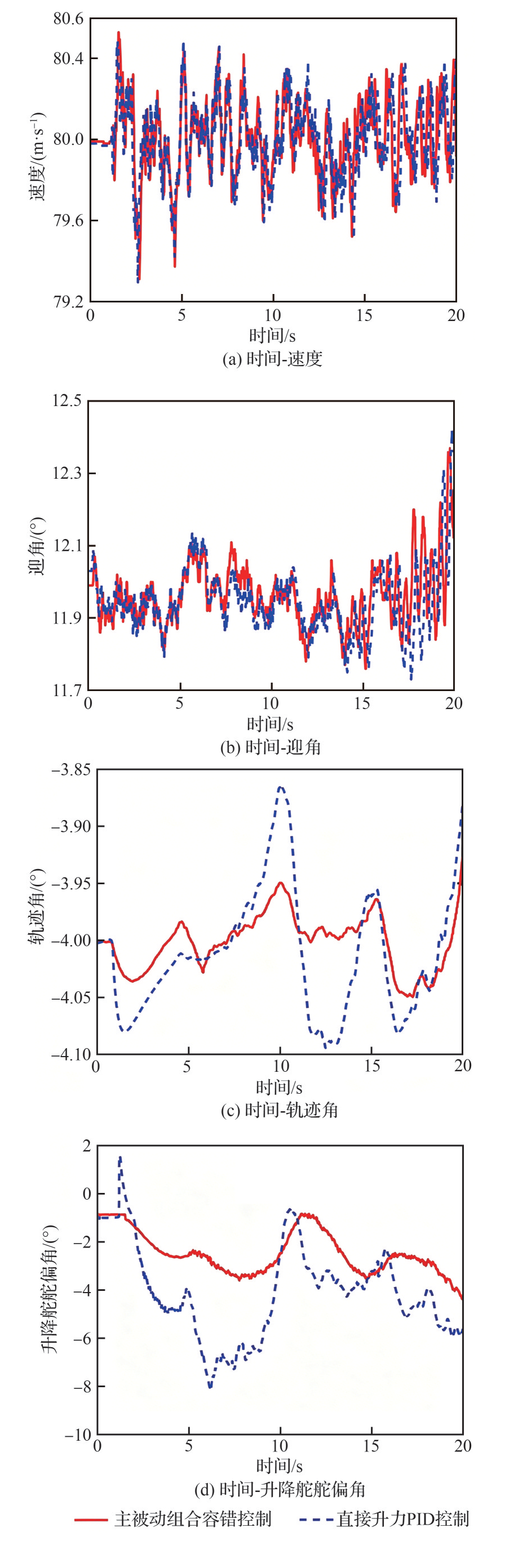
Fig.9
Hardware-in-the-loop simulation results of flap damage
| [1] | YANG G H, WANG J L, SOH Y C. Reliable H∞ controller design for linear systems[J]. Automatica, 2001, 37(5): 717-725. |
| [2] | TAO G, JOSHI S M, MA X. Adaptive state feedback and tracking control of systems with actuator failures[J]. IEEE Transactions on Automatic Control, 2001, 46(1): 78-95. |
| [3] | WU H N. Reliable LQ fuzzy control for continuous-time nonlinear systems with actuator faults[J]. IEEE Transactions on Systems, Man, and Cybernetics, Part B (Cybernetics), 2004, 34(4): 1743-1752. |
| [4] | 马亚杰, 姜斌, 任好. 航天器位姿运动一体化直接自适应容错控制研究[J]. 自动化学报, 2023, 49(3): 678-686. |
| MA Y J, JIANG B, REN H. Adaptive direct fault-tolerant control design for spacecraft integrated attitude and orbit system[J]. Acta Automatica Sinica, 2023, 49(3): 678-686 (in Chinese). | |
| [5] | 王兴坚, 杨新宇, 王少萍. 大型民机操纵系统容错控制技术综述[J]. 机械工程学报, 2024, 60(4): 50-65. |
| WANG X J, YANG X Y, WANG S P. Review of fault-tolerant control for flight control system[J]. Journal of Mechanical Engineering, 2024, 60(4): 50-65 (in Chinese). | |
| [6] | WU H N. ZHANG H.Y. Reliable mixed L2/H∞fuzzy static output feedback control for nonlinear systems with sensor faults[J]. Automatica, 2005, 41(11): 1924-1932. |
| [7] | 王敏, 周东华, 陈茂银. 一类非线性系统的输出反馈容错控制[J]. 控制理论与应用, 2006, 23(6): 861-866. |
| WANG M, ZHOU D H, CHEN M Y. Output feedback fault-tolerant control of a class of nonlinear systems[J]. Control Theory & Applications, 2006, 23(6): 861-866 (in Chinese). | |
| [8] | 罗小元, 武晓晶, 关新平. 非线性时滞系统的鲁棒完整性容错控制[J]. 弹箭与制导学报, 2007, 27(5): 179-182. |
| LUO X Y, WU X J, GUAN X P. Robust integrity fault-tolerant control for nonlinear time-delay systems[J]. Journal of Projectiles, Rockets, Missiles and Guidance, 2007, 27(5): 179-182 (in Chinese). | |
| [9] | 王友清, 周东华. 非线性系统的鲁棒容错控制[J]. 系统工程与电子技术, 2006, 28(9): 1378-1383. |
| WANG Y Q, ZHOU D H. Robust fault-tolerant control of nonlinear systems[J]. Systems Engineering and Electronics, 2006, 28(9): 1378-1383 (in Chinese). | |
| [10] | MAO Z H, JIANG B, SHI P. Observer based fault-tolerant control for a class of nonlinear networked control systems[J]. Journal of the Franklin Institute, 2010, 347(6): 940-956. |
| [11] | YANG H, JIANG B, STAROSWIECKI M. Supervisory fault tolerant control for a class of uncertain nonlinear systems[J]. Automatica, 2009, 45(10): 2319-2324. |
| [12] | JIANG Y, HU Q L, MA G F. Adaptive backstepping fault-tolerant control for flexible spacecraft with unknown bounded disturbances and actuator failures[J]. ISA Transactions, 2010, 49(1): 57-69. |
| [13] | GUO Y Y, JIANG B, ZHANG Y M, et al. Novel robust fault diagnosis method for flight control systems[J]. Journal of Systems Engineering and Electronics, 2008, 19(5): 1017-1023. |
| [14] | 姜斌, 杨浩. 飞控系统主动容错控制技术综述[J]. 系统工程与电子技术, 2007, 29(12): 2106-2110. |
| JIANG B, YANG H. Survey of the active fault-tolerant control for flight control system[J]. Systems Engineering and Electronics, 2007, 29(12): 2106-2110 (in Chinese). | |
| [15] | 王忠森, 廖宇新, 魏才盛, 等. 高超声速飞行器快速终端滑模保性能容错控制[J]. 航空学报, 2023, 44(24): 328476. |
| WANG Z S, LIAO Y X, WEI C S, et al. Fast terminal sliding mode fault-tolerant control of hypersonic vehicle with guaranteed performance[J]. Acta Aeronautica et Astronautica Sinica, 2023, 44(24): 328476 (in Chinese). | |
| [16] | 刘浩, 黄山, 涂海燕. 基于预定义时间的四旋翼滑模控制[J]. 北京航空航天大学学报, 2024, 50(5): 1665-1674. |
| LIU H, HUANG S, TU H Y. Quadrotor sliding mode control based on predefined time[J]. Journal of Beijing University of Aeronautics and Astronautics, 2024, 50(5): 1665-1674 (in Chinese). | |
| [17] | 许域菲, 姜斌, 齐瑞云, 等. 基于模糊T-S自适应观测器的近空间飞行器故障诊断与容错控制[J]. 东南大学学报(自然科学版), 2009, 39(S1): 189-194. |
| XU Y F, JIANG B, QI R Y, et al. T-S fuzzy adaptive observer based fault diagnosis and fault tolerant control for near space vehicle[J]. Journal of Southeast University (Natural Science Edition), 2009, 39(S1): 189-194 (in Chinese). | |
| [18] | BUSTAN D, PARIZ N, SANI S K H. Robust fault-tolerant tracking control design for spacecraft under control input saturation[J]. ISA Transactions, 2014, 53(4): 1073-1080. |
| [19] | ZHAO D, YANG H, JIANG B, et al. Attitude stabilization of a flexible spacecraft under actuator complete failure[J]. Acta Astronautica, 2016, 123: 129-136. |
| [20] | 徐斌彦, 齐瑞云, 姚雪莲. 高超声速飞行器舵面故障Nussbaum增益自适应容错控制[J]. 战术导弹技术, 2017(4): 103-112. |
| XU B Y, QI R Y, YAO X L. Nussbaum gain adaptive fault tolerant control for hypersonic vehicle with elevator faults[J]. Tactical Missile Technology, 2017(4): 103-112 (in Chinese). | |
| [21] | IJAZ S, YAN L, HAMAYUN M T, et al. Active fault tolerant control scheme for aircraft with dissimilar redundant actuation system subject to hydraulic failure[J]. Journal of the Franklin Institute, 2019, 356(3): 1302-1332. |
| [22] | 朱齐丹, 孟雪. 舰载机纵向容错着舰系统设计[J]. 控制理论与应用, 2017, 34(10): 1311-1320. |
| ZHU Q D, MENG X. Fault tolerant control for longitudinal carrier landing system with application to aircraft[J]. Control Theory & Applications, 2017, 34(10): 1311-1320 (in Chinese). | |
| [23] | 段海滨, 袁洋, 张秀林. 干扰和执行器故障下的舰载机着舰容错控制系统[J]. 南京航空航天大学学报, 2022, 54(5): 949-957. |
| DUAN H B, YUAN Y, ZHANG X L. Design of a carrier based aircraft landing fault tolerant control system with disturbances and actuator faults[J]. Journal of Nanjing University of Aeronautics & Astronautics, 2022, 54(5): 949-957 (in Chinese). | |
| [24] | 杨广慧, 杜立夫, 李辉, 等. 基于BP神经网络的飞行器参数辨识与自适应控制[J]. 航天控制, 2021, 39(5): 3-7. |
| YANG G H, DU L F, LI H, et al. Parameter identification and adaptive control of aircraft based on BP neural network[J]. Aerospace Control, 2021, 39(5): 3-7 (in Chinese). | |
| [25] | MORELLI E. Nonlinear aerodynamic modeling using multivariate orthogonal functions[C]∥Flight Simulation and Technologies. Reston: AIAA, 1993. |
| [26] | WU C H, YAN J G, SHEN J H, et al. Predefined-time attitude stabilization of receiver aircraft in aerial refueling[J]. IEEE Transactions on Circuits and Systems Ⅱ: Express Briefs, 2021, 68(10): 3321-3325. |
| [27] | 管萍, 蒋恒, 戈新生. 高超声速飞行器的终端滑模姿态控制[J]. 导弹与航天运载技术, 2017(6): 60-64. |
| GUAN P, JIANG H, GE X S. Terminal sliding mode attitude control for hypersonic vehicles[J]. Missiles and Space Vehicles, 2017(6): 60-64 (in Chinese). | |
| [28] | 黄益绍, 庄迪. 基于干扰观测器与终端滑模的车辆纵向控制[J]. 江苏大学学报(自然科学版), 2024, 45(5): 513-520. |
| HUANG Y S, ZHUANG D. Vehicle longitudinal control based on disturbance observer and terminal sliding mode[J]. Journal of Jiangsu University (Natural Science Edition), 2024, 45(5): 513-520 (in Chinese). | |
| [29] | 何胜涛, 江驹, 余朝军, 等. 基于自适应固定时间的直接升力着舰容错控制[J]. 电光与控制, 2023, 30(9): 29-35, 98. |
| HE S T, JIANG J, YU C J, et al. Fault-tolerant control of direct lift carrier landing based on adaptive fixed time[J]. Electronics Optics & Control, 2023, 30(9): 29-35, 98 (in Chinese). | |
| [30] | 陈谋, 邹庆元, 姜长生, 等. 基于神经网络干扰观测器的动态逆飞行控制[J]. 控制与决策, 2008, 23(3): 283-287. |
| CHEN M, ZOU Q Y, JIANG C S, et al. Dynamical inversion flight control based on neural network disturbance observer[J]. Control and Decision, 2008, 23(3): 283-287 (in Chinese). | |
| [31] | 孟雪. 舰载机故障状态下着舰容错控制策略研究[D]. 哈尔滨: 哈尔滨工程大学, 2017. |
| MENG X. Research on fault tolerant control strategy of landing with aircraft faults[D]. Harbin: Harbin Engineering University, 2017 (in Chinese). | |
| [32] | 刘子博, 张冉, 薛文超, 等. 考虑弹性影响的运载火箭自抗扰减载控制方法[J]. 航空学报, 2025, 46(1): 330319. |
| LIU Z B, ZHANG R, XUE W C, et al. Active disturbance rejection control for load relief of launch vehicles considering elastic effects[J]. Acta Aeronautica et Astronautica Sinica, 2025, 46(1): 330319 (in Chinese). | |
| [33] | LIU L, LIU Y X, ZHOU L L, et al. Cascade ADRC with neural network-based ESO for hypersonic vehicle[J]. Journal of the Franklin Institute, 2023, 360(12): 9115-9138. |
| [34] | ZHANG S H, QI X H, YANG S. An extended state observer with adjustable bandwidth for measurement noise[J]. Journal of Systems Engineering and Electronics, 2024, 35(1): 233-241. |
| [1] | Jing ZHAO, Long PAN, Ningyun LU, Haiyun HUANG, Yajie MA, Fengyu XU. A novel nonsingular terminal sliding mode control for aerial robot based on fixed-time disturbance observer [J]. Acta Aeronautica et Astronautica Sinica, 2026, 47(9): 532278-532278. |
| [2] | Jianfeng WU, Yi DING, Bin ZHOU. Prescribed-time attitude tracking control for spacecraft based on periodic delayed feedback [J]. Acta Aeronautica et Astronautica Sinica, 2026, 47(9): 0-532776-. |
| [3] | Xin HUANG, Jiahe ZOU, Shuyi XIAO, Xiaohang LI. An adaptive control strategy for defending against cyber stealthy attacks [J]. Acta Aeronautica et Astronautica Sinica, 2026, 47(4): 332290-332290. |
| [4] | Yuying GUO, Lanxin LIAO, Xiaoqiang ZHANG, Youmin ZHANG, Kai WANG. Finite-time fault-tolerant control of compound actuator faults for unmanned aerial vehicles [J]. Acta Aeronautica et Astronautica Sinica, 2026, 47(4): 332659-332659. |
| [5] | Di ZHOU, Huan WANG, Yiqun ZHANG, Chaofei LOU. Compound control method of high speed vehicle based on time-varying sliding mode [J]. Acta Aeronautica et Astronautica Sinica, 2025, 46(6): 531465-531465. |
| [6] | Naigang CUI, Guoxin QU, Xinhai MA, Shihao XU, Changzhu WEI. Adaptive prescribed-time/performance control for plane-symmetric aircraft in boost phase [J]. Acta Aeronautica et Astronautica Sinica, 2025, 46(6): 531470-531470. |
| [7] | Zhengyu SONG. Promoting continuous innovation in space transportation systems: Control technologies and challenges [J]. Acta Aeronautica et Astronautica Sinica, 2025, 46(6): 531446-531446. |
| [8] | Zhicheng ZHANG, Yuan ZHOU, Yu ZHAO, Weimin BAO. Cooperative formation control for multi-satellite system applied to distributed prescribed-time networking [J]. Acta Aeronautica et Astronautica Sinica, 2025, 46(4): 330932-330932. |
| [9] | Honglin LIU, Guan WANG, Shuaibin AN, Shaojie MA, Kai LIU. Online identification based strong adaptive control of hypersonic morphing vehicles [J]. Acta Aeronautica et Astronautica Sinica, 2025, 46(17): 331654-331654. |
| [10] | Hao HE, Peng WANG. Integrated guidance and control method for high-speed morphing wing aircraft [J]. Acta Aeronautica et Astronautica Sinica, 2024, 45(S1): 730692-730692. |
| [11] | Shuai LIANG, Guangle GAO, Xiaolei QU, Yajun LI. Asymptotic control of hypersonic flight vehicle based on error accumulation factor [J]. Acta Aeronautica et Astronautica Sinica, 2024, 45(S1): 730745-730745. |
| [12] | Ji MA, Xiangyong CHEN, Guanghui WEN, Long CHENG, Jianlong QIU. Predefined time tracking control of unmanned aerial vehicles under stochastic switching topology [J]. Acta Aeronautica et Astronautica Sinica, 2024, 45(S1): 730793-730793. |
| [13] | Yuxin GAO, Shaojie ZHANG, Chunsheng LIU. Adaptive event-triggered guidance law of missile under cyber attacks [J]. Acta Aeronautica et Astronautica Sinica, 2024, 45(S1): 730892-730892. |
| [14] | Xiaolong ZHANG, Rong LI, Gaowei YAN, Shuyi XIAO, Guoqing LI. Fault estimation and fault tolerant control for small unmanned helicopters [J]. Acta Aeronautica et Astronautica Sinica, 2024, 45(S1): 730802-730802. |
| [15] | Fengying ZHENG, Zhimin SHEN, Yaqin LI, Kaizhao XU, Xinhua WANG. Gain adaptive multi-mode switching control for coaxial high-speed helicopter [J]. Acta Aeronautica et Astronautica Sinica, 2024, 45(9): 529088-529088. |
| Viewed | ||||||
|
Full text |
|
|||||
|
Abstract |
|
|||||
Address: No.238, Baiyan Buiding, Beisihuan Zhonglu Road, Haidian District, Beijing, China
Postal code : 100083
E-mail:hkxb@buaa.edu.cn
Total visits: 6658907 Today visits: 1341All copyright © editorial office of Chinese Journal of Aeronautics
All copyright © editorial office of Chinese Journal of Aeronautics
Total visits: 6658907 Today visits: 1341

 CJA
CJA
