Acta Aeronautica et Astronautica Sinica ›› 2026, Vol. 47 ›› Issue (8): 332954.doi: 10.7527/S1000-6893.2025.32954
• Electronics and Electrical Engineering and Control • Previous Articles
Yang YUE1( ), Jiayi WANG1, Shengqing YANG1,2, Yaoke DU1,2, Wenyan WANG1,2
Received:2025-10-22
Revised:2025-11-13
Accepted:2025-12-15
Online:2025-12-29
Published:2025-12-25
Contact:
Yang YUE
E-mail:1546232863@qq.com
CLC Number:
Yang YUE, Jiayi WANG, Shengqing YANG, Yaoke DU, Wenyan WANG. Convex optimization based autonomous trajectory capture for strictly-regressive orbit[J]. Acta Aeronautica et Astronautica Sinica, 2026, 47(8): 332954.
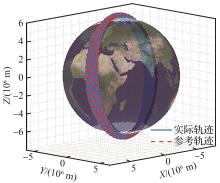
Fig.1
Trajectory in inertial frame
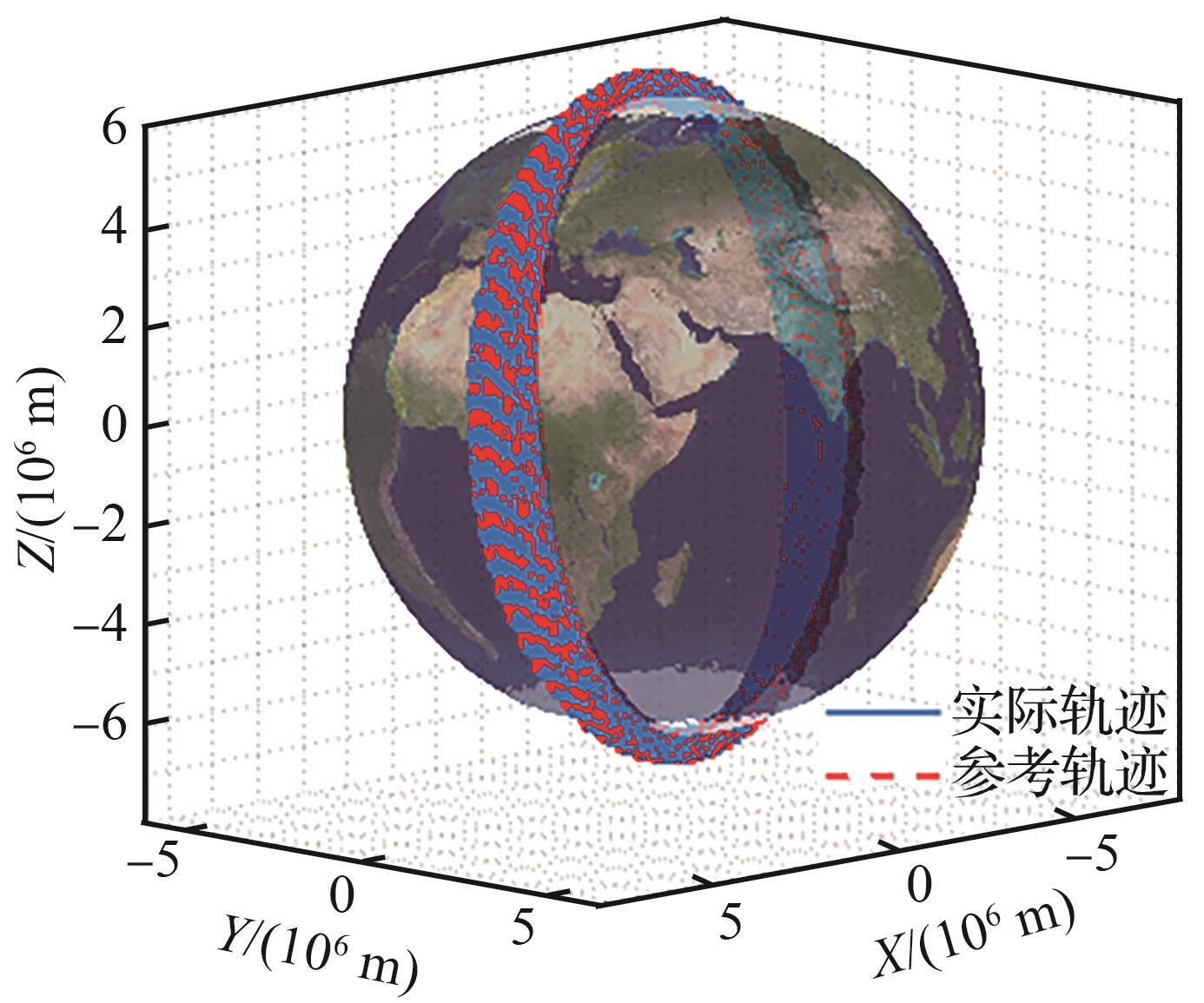
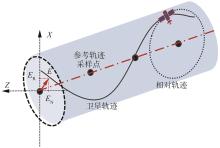
Fig.2
Pipe diameter schematic
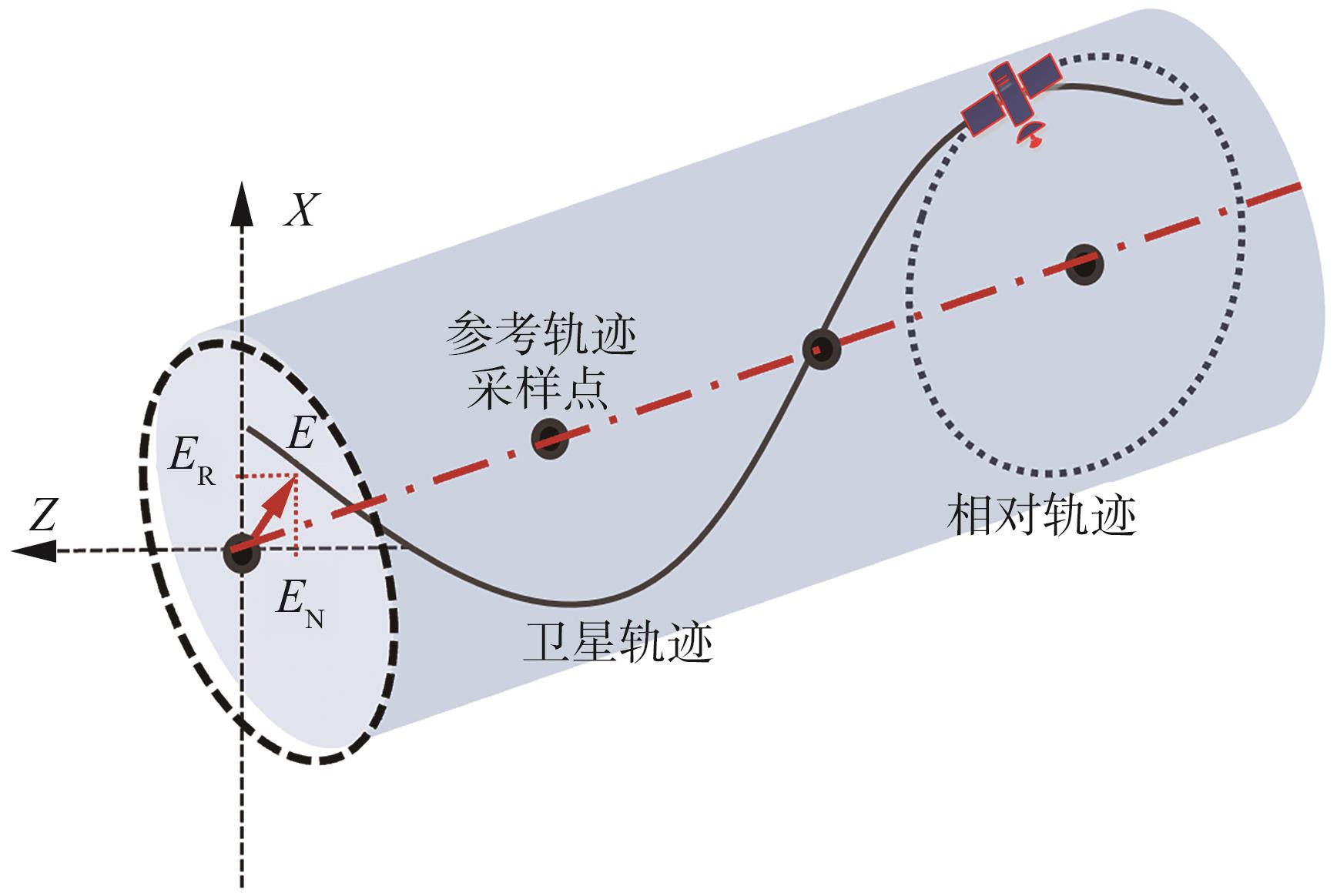
Fig.3
Convex optimization and regularization curves
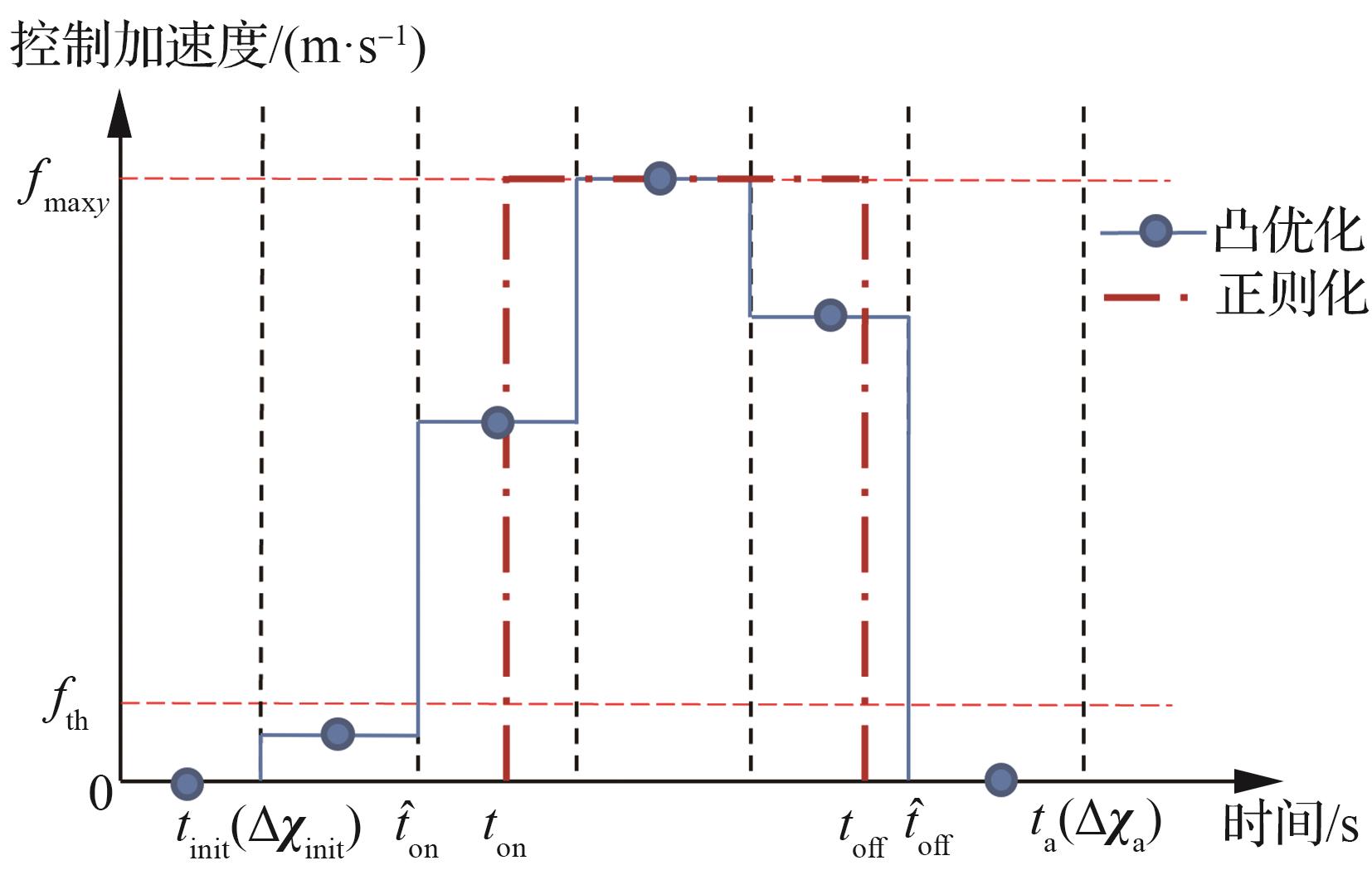
Fig.4
Model predictive control framework schematic
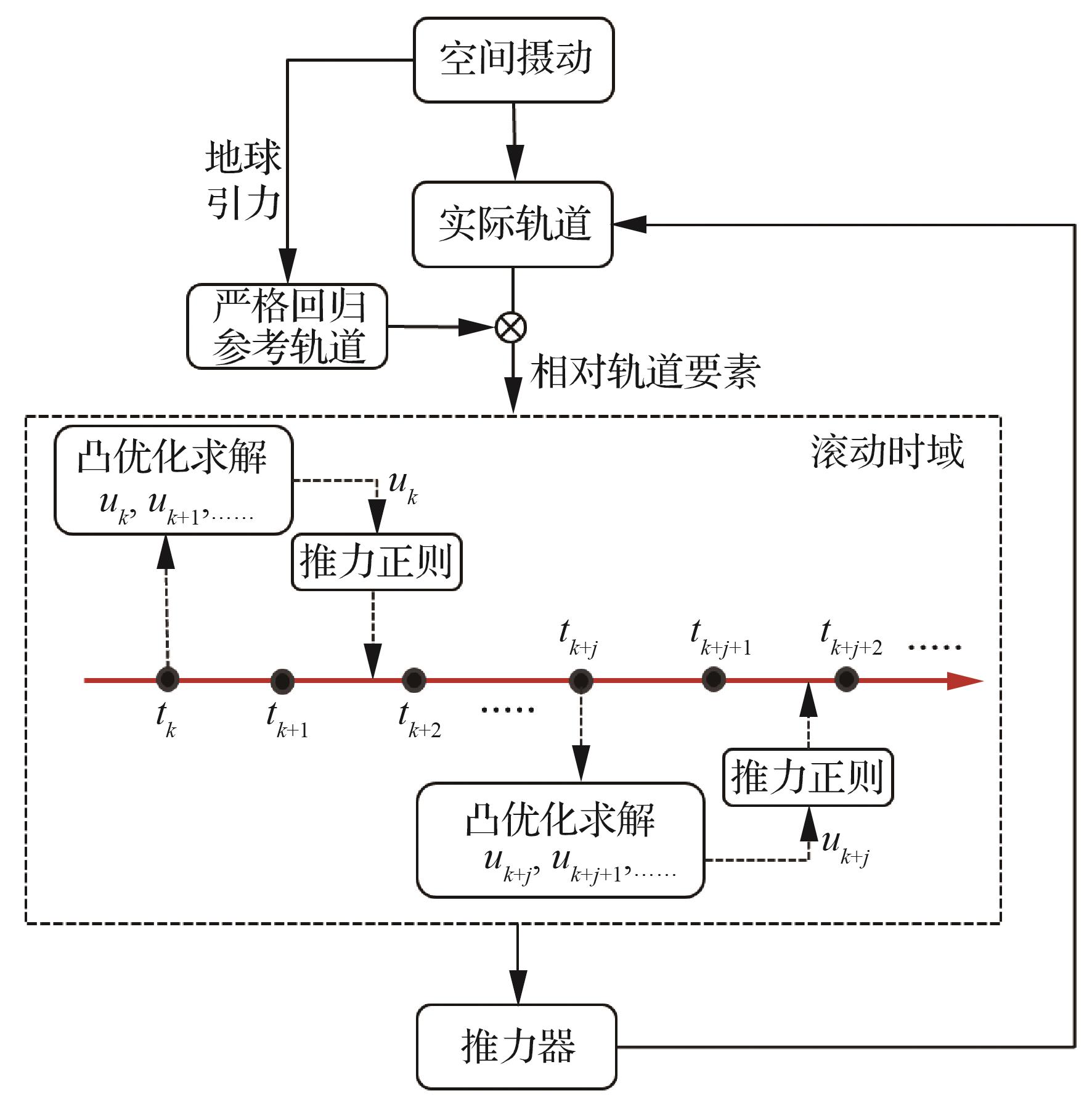
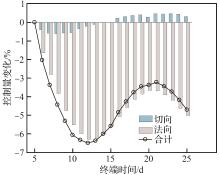
Fig.5
Effect of terminal time on control effort curves
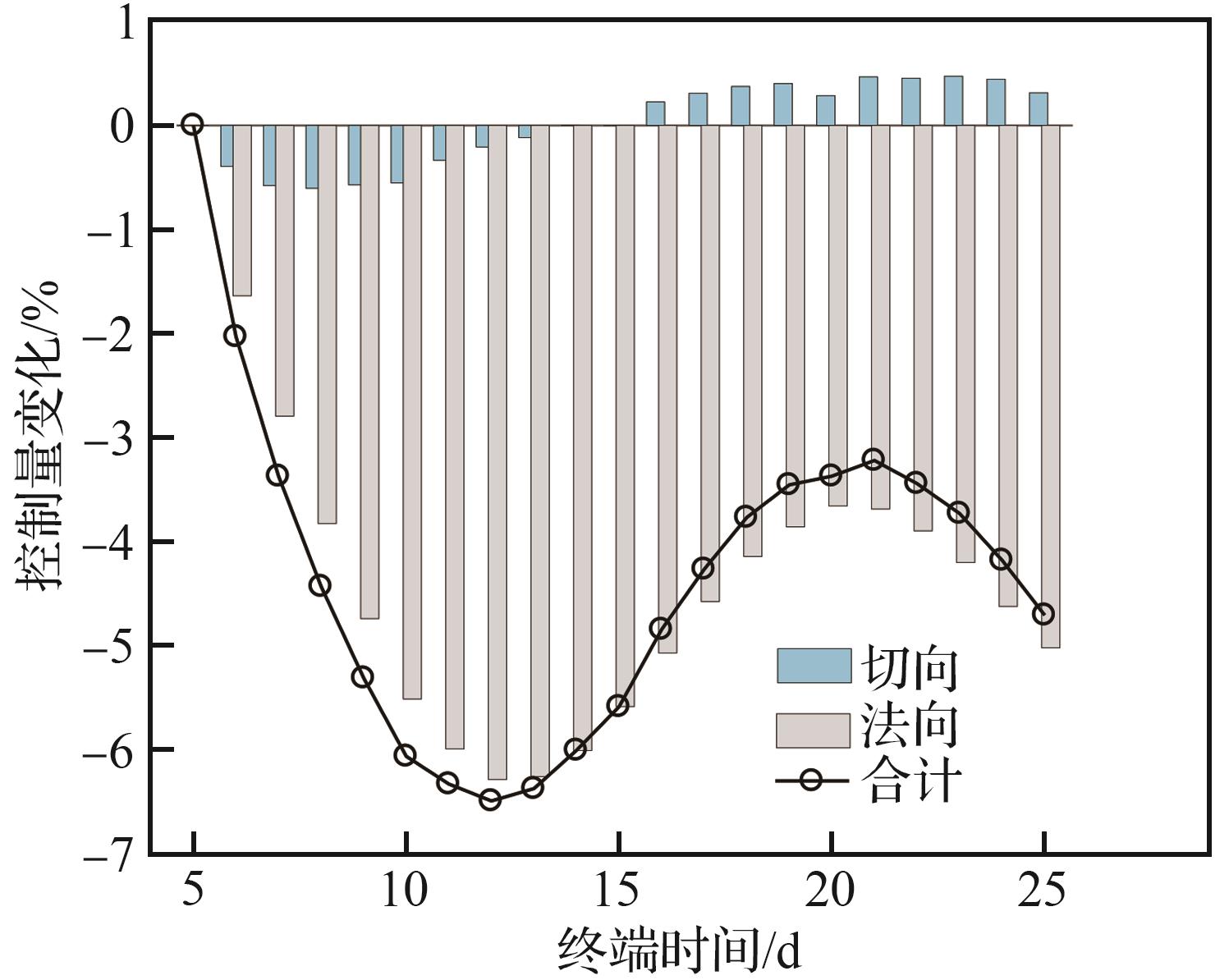
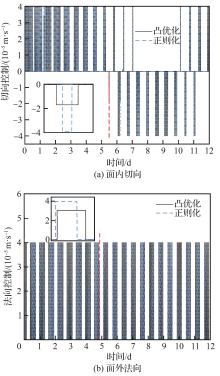
Fig.6
Control acceleration curves
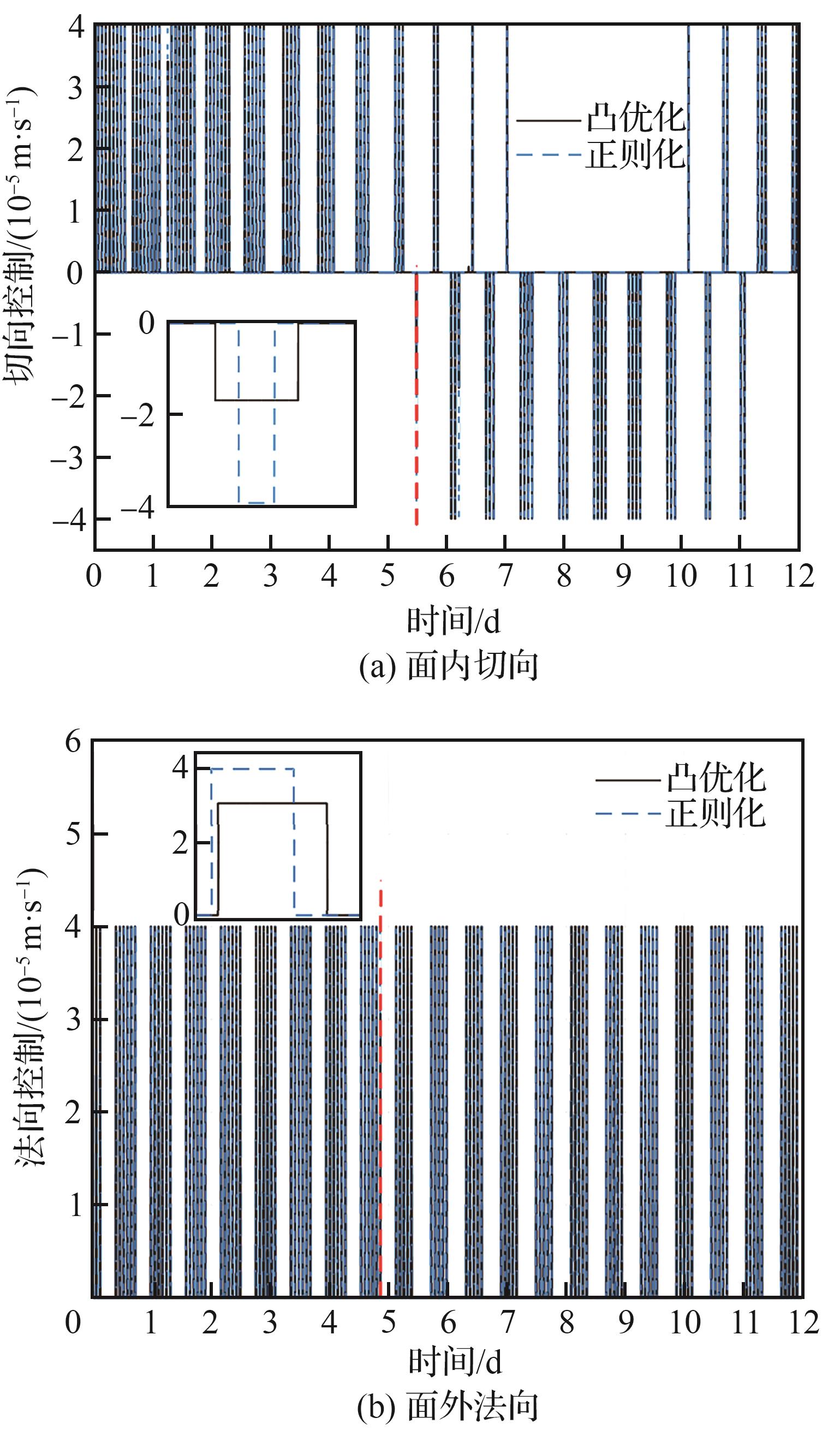
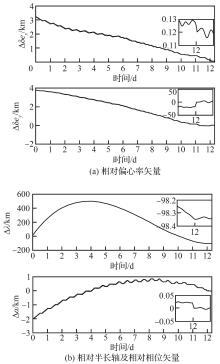
Fig.7
In-plane relative orbital elements during control
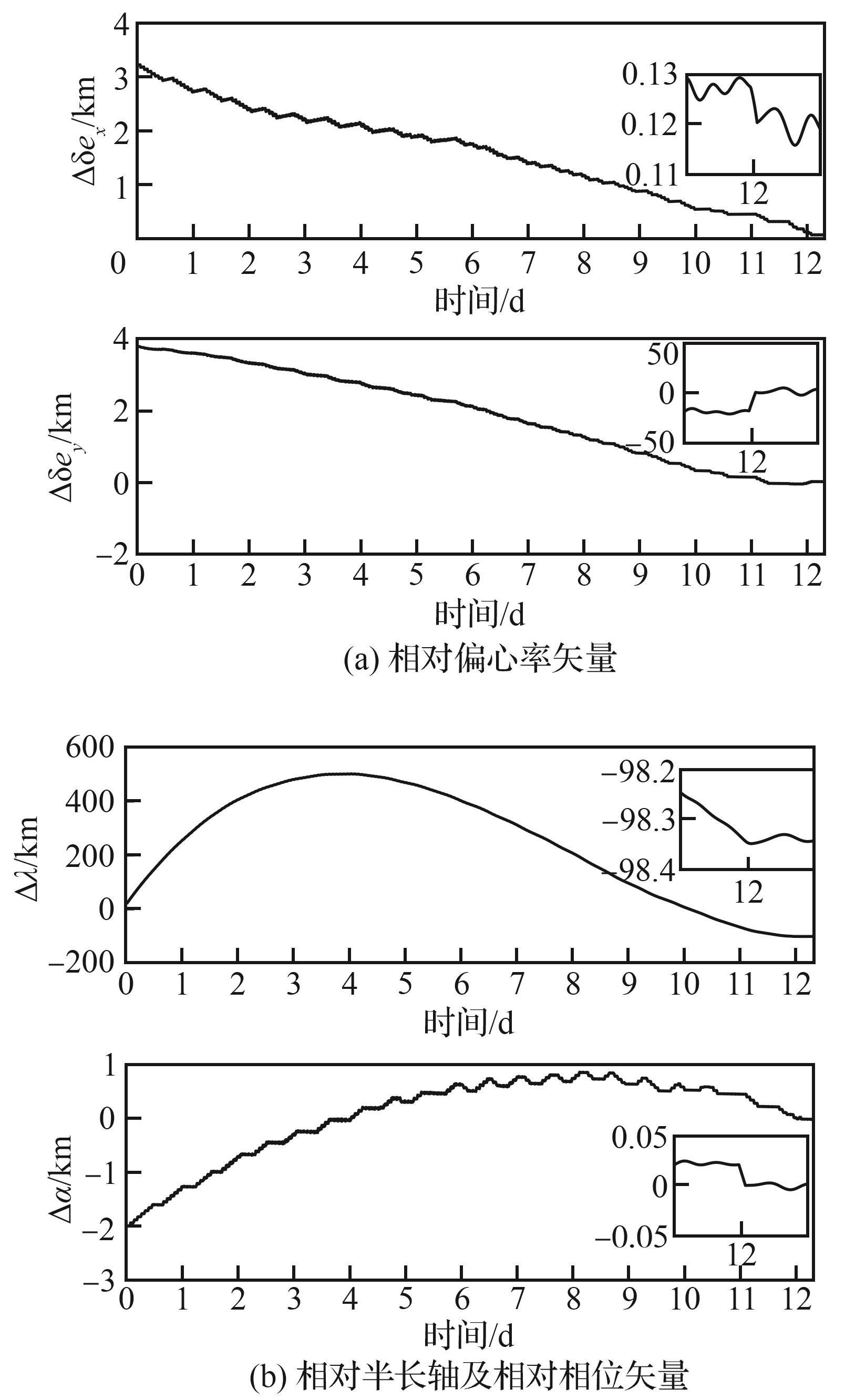
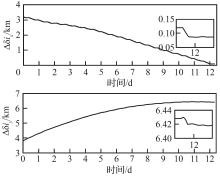
Fig.8
Out-plane relative orbital elements during control
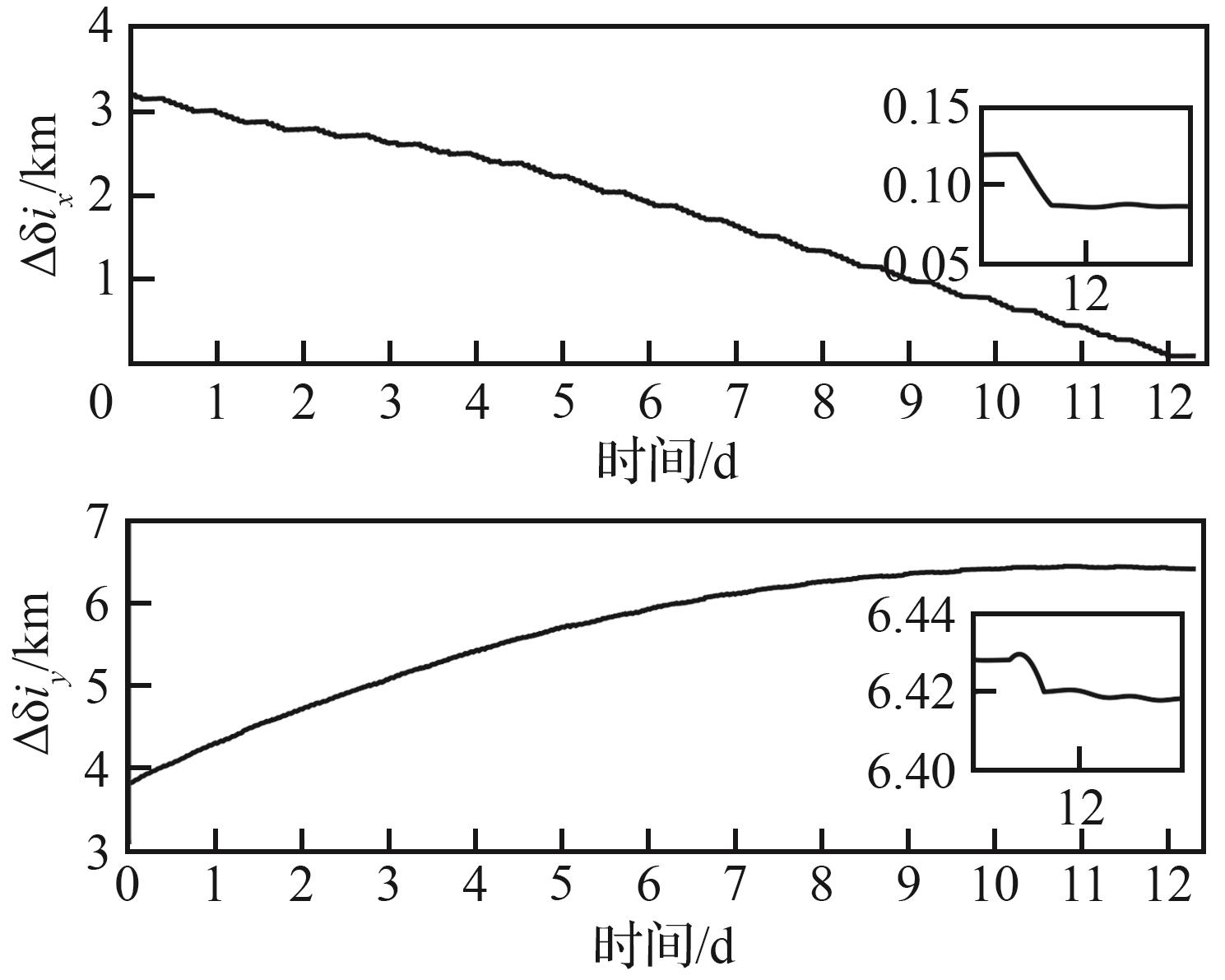
Fig.9
Pipe diameter component curves
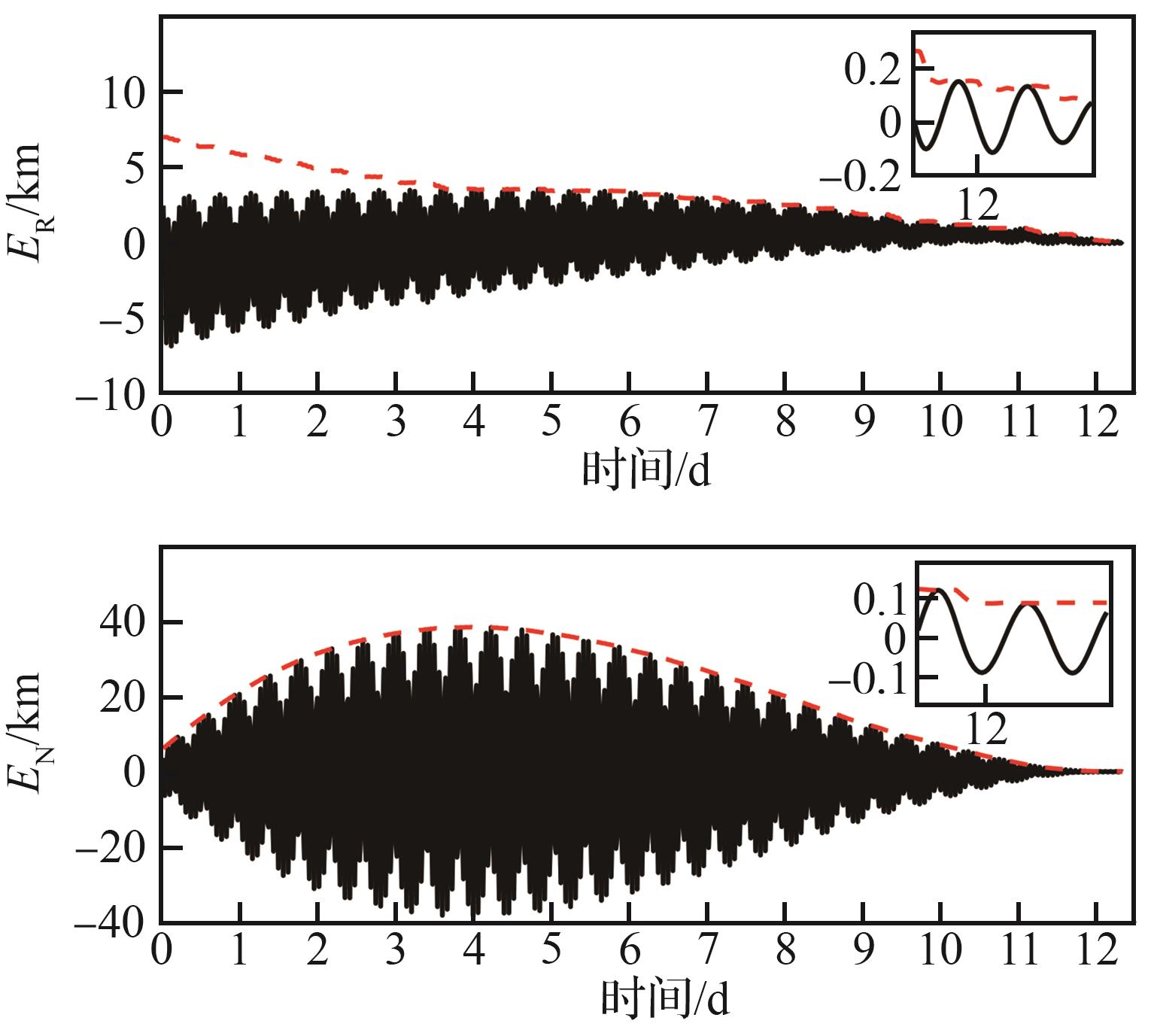
Fig.10
Pipe diameter deviation curves
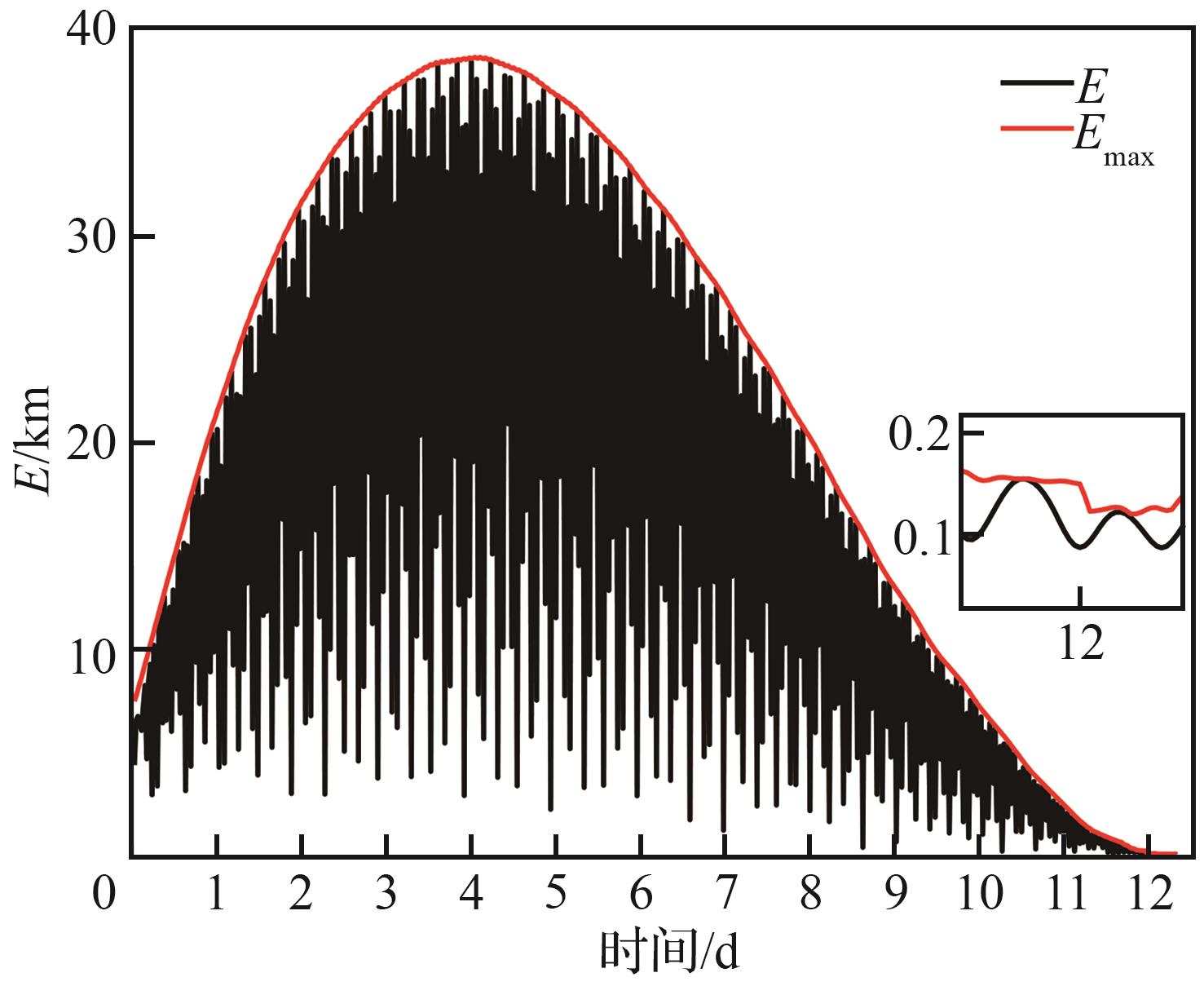
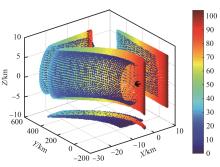
Fig.11
Relative trajectory in formation frame
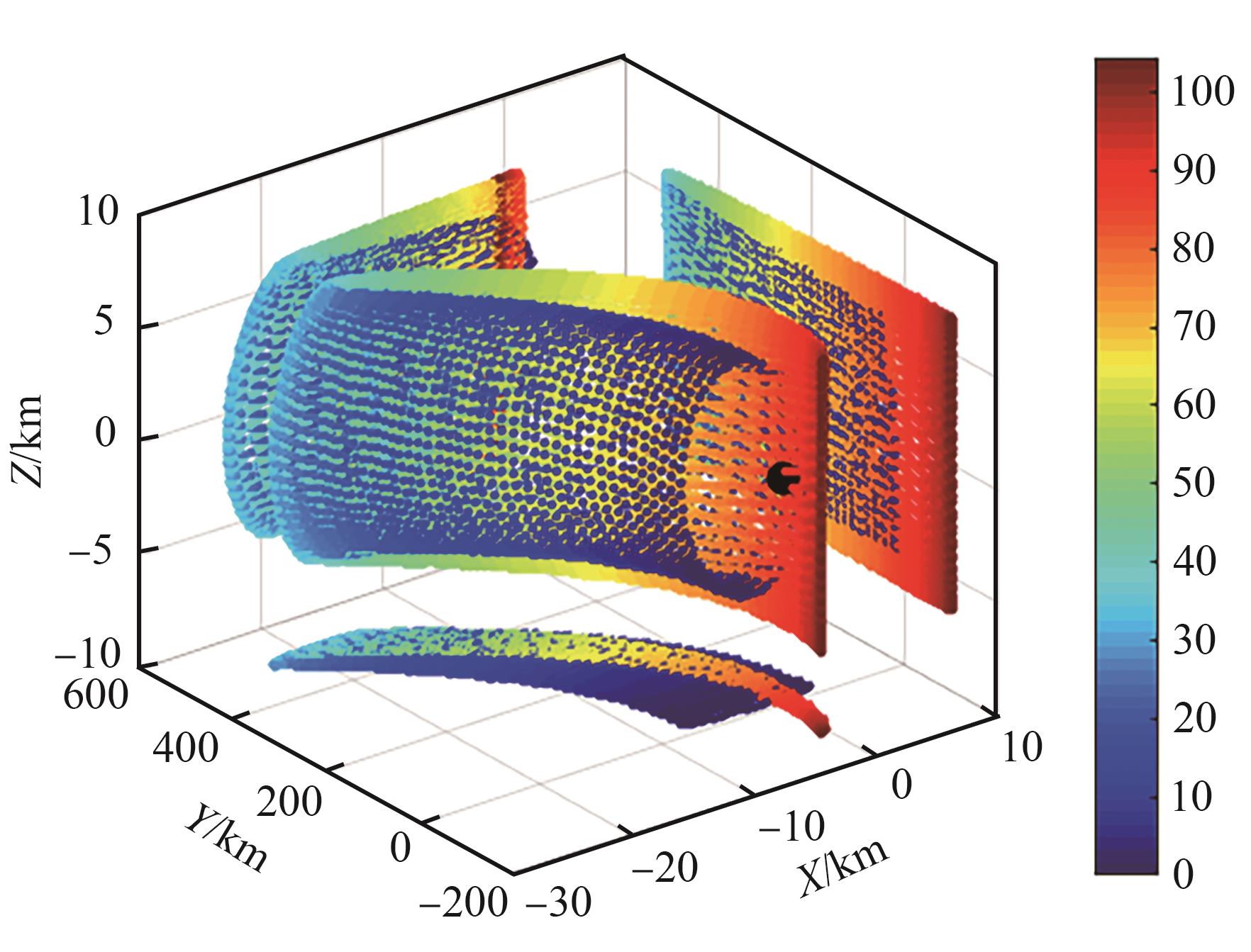

Table 1
Comparison of algorithmic control results
| 算法 | 面内控制量/(m·s-1) | 面外控制量/(m·s-1) | 总控制量/(m·s-1) | 总开关数 |
|---|---|---|---|---|
| 传统算法 | 3.27 | 4.32 | 7.59 | 120 |
| 本文算法 | 3.22 | 3.67 | 6.89 | 229 |
| [1] | PRATS-IRAOLA P, RODRIGUEZ-CASSOLA M, DE ZAN F, et al. Role of the orbital tube in interferometric spaceborne SAR missions[J]. IEEE Geoscience and Remote Sensing Letters, 2015, 12(7): 1486-1490. |
| [2] | 杨盛庆, 杜耀珂, 陈筠力. 基于迭代修正方法的严格回归轨道设计[J]. 宇航学报, 2016, 37(4): 420-426. |
| YANG S Q, DU Y K, CHEN J L. Design of strictly-regressive orbit based on iterative adjustment method[J]. Journal of Astronautics, 2016, 37(4): 420-426 (in Chinese). | |
| [3] | 李楠, 温俊健, 刘艳阳, 等. L波段差分干涉SAR卫星严格回归轨道优化设计方法[J]. 测绘学报, 2024, 53(10): 1873-1880. |
| LI N, WEN J J, LIU Y Y, et al. An strictly-regressive orbit optimization algorithm for L-band differential interferometric SAR satellite[J]. Acta Geodaetica et Cartographica Sinica, 2024, 53(10): 1873-1880 (in Chinese). | |
| [4] | 岳杨, 杜耀珂, 陈筠力, 等. 陆地探测一号卫星严格回归轨道控制实践[J]. 航天控制, 2023, 41(6): 37-43. |
| YUE Y, DU Y K, CHEN J L, et al. Strictly-regressive orbit control practice for LT-1 satellite[J]. Aerospace Control, 2023, 41(6): 37-43 (in Chinese). | |
| [5] | DE FLORIO S, D’AMICO S, RADICE G. Precise autonomous orbit control in low earth orbit[C]∥ AIAA/AAS Astrodynamics Specialist Conference. Reston:AIAA, 2012. |
| [6] | 杜耀珂, 杨盛庆, 完备, 等. 近地卫星严格回归轨道保持控制[J]. 航空学报, 2018, 39(12): 322449. |
| DU Y K, YANG S Q, WAN B, et al. Strictly-regressive orbit maintenance control of near earth satellites[J]. Acta Aeronautica et Astronautica Sinica, 2018, 39(12): 322449 (in Chinese). | |
| [7] | KAHLE R, SCHLEPP B, MEISSNER F, et al. TerraSAR-X/TanDEM-X formation acquisition analysis and flight results[C]∥21st AAS/AIAA Space Flight Mechanics Meeting, 2011: 13-17. |
| [8] | CHERNICK M, D’AMICO S. Closed-form optimal impulsive control of spacecraft formations using reachable set theory[J]. Journal of Guidance, Control, and Dynamics, 2021, 44(1): 25-44. |
| [9] | CHERNICK M, D’AMICO S. New closed-form solutions for optimal impulsive control of spacecraft relative motion[J]. Journal of Guidance, Control, and Dynamics, 2018, 41(2): 301-319. |
| [10] | 迟哲敏, 李俊峰, 蒋方华, 等. 变比冲连续小推力轨迹优化方法综述[J]. 飞控与探测, 2020, 3(4): 58-67. |
| CHI Z M, LI J F, JIANG F H, et al. Survey of variable-specific-impulse continuous low-thrust trajectory optimization methods[J]. Flight Control & Detection, 2020, 3(4): 58-67 (in Chinese). | |
| [11] | WANG Z B. A survey on convex optimization for guidance and control of vehicular systems[J]. Annual Reviews in Control, 2024, 57: 100957. |
| [12] | BETTS J T. Survey of numerical methods for trajectory optimization[J]. Journal of Guidance, Control, and Dynamics, 1998, 21(2): 193-207. |
| [13] | BOYD S, VANDENBERGHE L. 凸优化[M]. 王书宁, 许鋆, 黄晓霖,译. 北京: 清华大学出版社, 2013: 1-10. |
| BOYD S, VANDENBERGHE L. Convex optimization[M]. WANG S N, XU J, HUANG X L, translated. Beijing: Tsinghua University Press, 2013: 1-10 (in Chinese). | |
| [14] | LIU X F, LU P, PAN B F. Survey of convex optimization for aerospace applications[J]. Astrodynamics, 2017, 1(1): 23-40. |
| [15] | WANG Z B, GRANT M J. Minimum-fuel low-thrust transfers for spacecraft: A convex approach[J]. IEEE Transactions on Aerospace and Electronic Systems, 2018, 54(5): 2274-2290. |
| [16] | ACIKMESE B, PLOEN S R. Convex programming approach to powered descent guidance for Mars landing[J]. Journal of Guidance, Control, and Dynamics, 2007, 30(5): 1353-1366. |
| [17] | WU Y H, CAO X B, XING Y J, et al. Relative motion coupled control for formation flying spacecraft via convex optimization[J]. Aerospace Science and Technology, 2010, 14(6): 415-428. |
| [18] | MONTERO MIÑAN A, SCALA F, COLOMBO C. Manoeuvre planning algorithm for satellite formations using mean relative orbital elements[J]. Advances in Space Research, 2023, 71(1): 585-603. |
| [19] | 刘幸川, 陈丹鹤, 徐根, 等. 利用凸优化方法的多航天器编队重构轨迹规划[J]. 宇航学报, 2023, 44(6): 934-945. |
| LIU X C, CHEN D H, XU G, et al. Trajectory planning of multi-spacecraft formation reconfiguration using convex optimization method[J]. Journal of Astronautics, 2023, 44(6): 934-945 (in Chinese). | |
| [20] | SARNO S, GUO J, D’ERRICO M, et al. A guidance approach to satellite formation reconfiguration based on convex optimization and genetic algorithms[J]. Advances in Space Research, 2020, 65(8): 2003-2017. |
| [21] | BANDO M, ICHIKAWA A. Periodic orbits of nonlinear relative dynamics and satellite formation[J]. Journal of Guidance, Control, and Dynamics, 2009, 32(4): 1200-1208. |
| [22] | MAYNE D Q. Model predictive control: Recent developments and future promise[J]. Automatica, 2014, 50(12): 2967-2986. |
| [23] | 王一鸣, 梅杰, 龚有敏, 等. 考虑碰撞约束的无人机集群分布式编队控制[J]. 飞控与探测, 2025, 8(2): 1-8. |
| WANG Y M, MEI J, GONG Y M, et al. Distributed formation control of unmanned aerial vehicle clusters considering collision constraints[J]. Flight Control & Detection, 2025, 8(2): 1-8 (in Chinese). | |
| [24] | MORGAN D, CHUNG S J, HADAEGH F Y. Model predictive control of swarms of spacecraft using sequential convex programming[J]. Journal of Guidance, Control, and Dynamics, 2014, 37(6): 1725-1740. |
| [25] | BELLONI E, SILVESTRINI S, PRINETTO J, et al. Relative and absolute on-board optimal formation acquisition and keeping for scientific activities in high-drag low-orbit environment[J]. Advances in Space Research, 2024, 73(11): 5595-5613. |
| [26] | GAIAS G, ARDAENS J S. Flight demonstration of autonomous noncooperative rendezvous in low earth orbit[J]. Journal of Guidance, Control, and Dynamics, 2018, 41(6): 1337-1354. |
| [27] | CATANOSO D, KEMPF F, SCHILLING K, et al. Networked model predictive control for satellite formation flying[C]∥10th International Workshop of Satellites Constellations and Formation Flying, 2019. |
| [28] | MAHFOUZ A, GAIAS G, VENKATESWARA RAO D M K K, et al. Autonomous optimal absolute orbit keeping through formation flying techniques[J]. Aerospace, 2023, 10(11): 959. |
| [29] | DI MAURO G, BEVILACQUA R, SPILLER D, et al. Continuous maneuvers for spacecraft formation flying reconfiguration using relative orbit elements[J]. Acta Astronautica, 2018, 153: 311-326. |
| [30] | COOK G E. Luni-solar perturbations of the orbit of an earth satellite[J]. Geophysical Journal of the Royal Astronomical Society, 1962, 6(3): 271-291. |
| [31] | MORELLI A C, MORSELLI A, GIORDANO C, et al. Convex trajectory optimization using thrust regularization[J]. Journal of Guidance, Control, and Dynamics, 2024, 47(2): 339-346. |
| [32] | YAMAMOTO T, YOSHIHISA A, YASUSHI U, et al. Autonomous precision orbit control considering observation planning: ALOS-2 flight results[J]. Journal of Guidance Control and Dynamic, 2016, 39(6): 1244-1264. |
| [1] | Junyi DUAN, Kai LIU, Shuaibin AN, Guoqing WANG, Zhe DONG. Dynamic compound control method of carrier-based aircraft based on model predictive control [J]. Acta Aeronautica et Astronautica Sinica, 2026, 47(2): 332040-332040. |
| [2] | Zhihao HE, Peng KOU, Bohua LIANG, Deliang LIANG. Powered yaw predictive control of distributed electric propulsion aircraft considering slipstream effects [J]. Acta Aeronautica et Astronautica Sinica, 2025, 46(S1): 732305-732305. |
| [3] | Zhichun YANG, Te YANG. Physical embedded neural network model and method for dynamic load identification [J]. Acta Aeronautica et Astronautica Sinica, 2025, 46(5): 531450-531450. |
| [4] | Cong XIE, Zhen YANG, Yangang LIANG. Homotopic perturbed lambert algorithm based on A* algorithm [J]. Acta Aeronautica et Astronautica Sinica, 2025, 46(4): 330780-330780. |
| [5] | Yu WU, Linke HE, Ruizhen LI, Zirui LIU, Zixiao XU, Weilin LI. Energy management strategy of hybrid aircraft based on stability [J]. Acta Aeronautica et Astronautica Sinica, 2025, 46(22): 331937-331937. |
| [6] | Yiyu WANG, Zexu ZHANG, Weimin BAO, Shuai YUAN, Hutao CUI. Approaching trajectory planning with field-of-view constraints for non-cooperative spacecraft rendezvous [J]. Acta Aeronautica et Astronautica Sinica, 2025, 46(16): 331702-331702. |
| [7] | Jianye SUN, Dong YE, Yan XIAO. Active observation trajectory planning for non-cooperative spacecraft [J]. Acta Aeronautica et Astronautica Sinica, 2025, 46(15): 331587-331587. |
| [8] | Xinze XU, Guanxin HONG, Liang DU, Gang LIU. Manual approach and landing model of carrier-based aircraft in complex environments [J]. Acta Aeronautica et Astronautica Sinica, 2025, 46(13): 531802-531802. |
| [9] | Yin DIAO, Zhi ZHANG, Yue PENG, Yang LI, Borong ZHANG, Zhiguo ZHANG. Energy management and trajectory optimization technology for rocket landing [J]. Acta Aeronautica et Astronautica Sinica, 2024, 45(15): 229634-229634. |
| [10] | Zhe LIU, Xige ZHANG, Changzhu WEI, Naigang CUI. High-precision adaptive convex programming for reentry trajectories of suborbital vehicles [J]. Acta Aeronautica et Astronautica Sinica, 2023, 44(S2): 729430-729430. |
| [11] | Xin HE, Zongying SHI, Yisheng ZHONG. Multi⁃USV cooperative collision avoidance based on velocity obstacle [J]. Acta Aeronautica et Astronautica Sinica, 2023, 44(S2): 729758-729758. |
| [12] | Xunliang YAN, Peichen WANG, Shumei WANG, Yuxuan YANG, Kuan WANG. Rapid robust trajectory optimization for RBCC vehicle ascent based on polynomial chaos [J]. Acta Aeronautica et Astronautica Sinica, 2023, 44(21): 528349-528349. |
| [13] | Chenglei YUE, Xuechuan WANG, Xiaokui YUE, Ting SONG. A spacecraft rendezvous and docking method based on inverse reinforcement learning [J]. Acta Aeronautica et Astronautica Sinica, 2023, 44(19): 328420-328420. |
| [14] | Yue WANG, Yunpeng WANG, Zonglin JIANG. Test technology of longitudinal stage separation for two-stage-to-orbit vehicle in shock tunnel [J]. Acta Aeronautica et Astronautica Sinica, 2023, 44(17): 128126-128126. |
| [15] | Chao WEN, Wenhan DONG, XIE Wujie, Ming CAI, Ri LIU. Distributed cooperative area search method for UAV swarms based on revisit mechanism [J]. ACTA AERONAUTICAET ASTRONAUTICA SINICA, 2023, 44(11): 327561-327561. |
| Viewed | ||||||
|
Full text |
|
|||||
|
Abstract |
|
|||||
Address: No.238, Baiyan Buiding, Beisihuan Zhonglu Road, Haidian District, Beijing, China
Postal code : 100083
E-mail:hkxb@buaa.edu.cn
Total visits: 6658907 Today visits: 1341All copyright © editorial office of Chinese Journal of Aeronautics
All copyright © editorial office of Chinese Journal of Aeronautics
Total visits: 6658907 Today visits: 1341

 CJA
CJA
