Acta Aeronautica et Astronautica Sinica ›› 2025, Vol. 46 ›› Issue (21): 532382.doi: 10.7527/S1000-6893.2025.32382
• Special Issue: 60th Anniversary of Aircraft Strength Research Institute of China • Previous Articles
Lei HUANG1, Cong GUO1, Xiaobo ZHANG2, Liangchen SUN2, Yinghui ZUO1, Bo WANG1,3, Kuo TIAN1,3( )
)
Received:2025-06-06
Revised:2025-06-17
Accepted:2025-07-15
Online:2025-07-22
Published:2025-07-15
Contact:
Kuo TIAN
E-mail:tiankuo@dlut.edu.cn
Supported by:CLC Number:
Lei HUANG, Cong GUO, Xiaobo ZHANG, Liangchen SUN, Yinghui ZUO, Bo WANG, Kuo TIAN. Aircraft structural health management method based on flight parameter-load-life digital twin models[J]. Acta Aeronautica et Astronautica Sinica, 2025, 46(21): 532382.
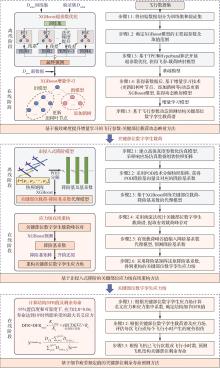
Fig.1
A flight parameter-load-life digital twin modeling approach
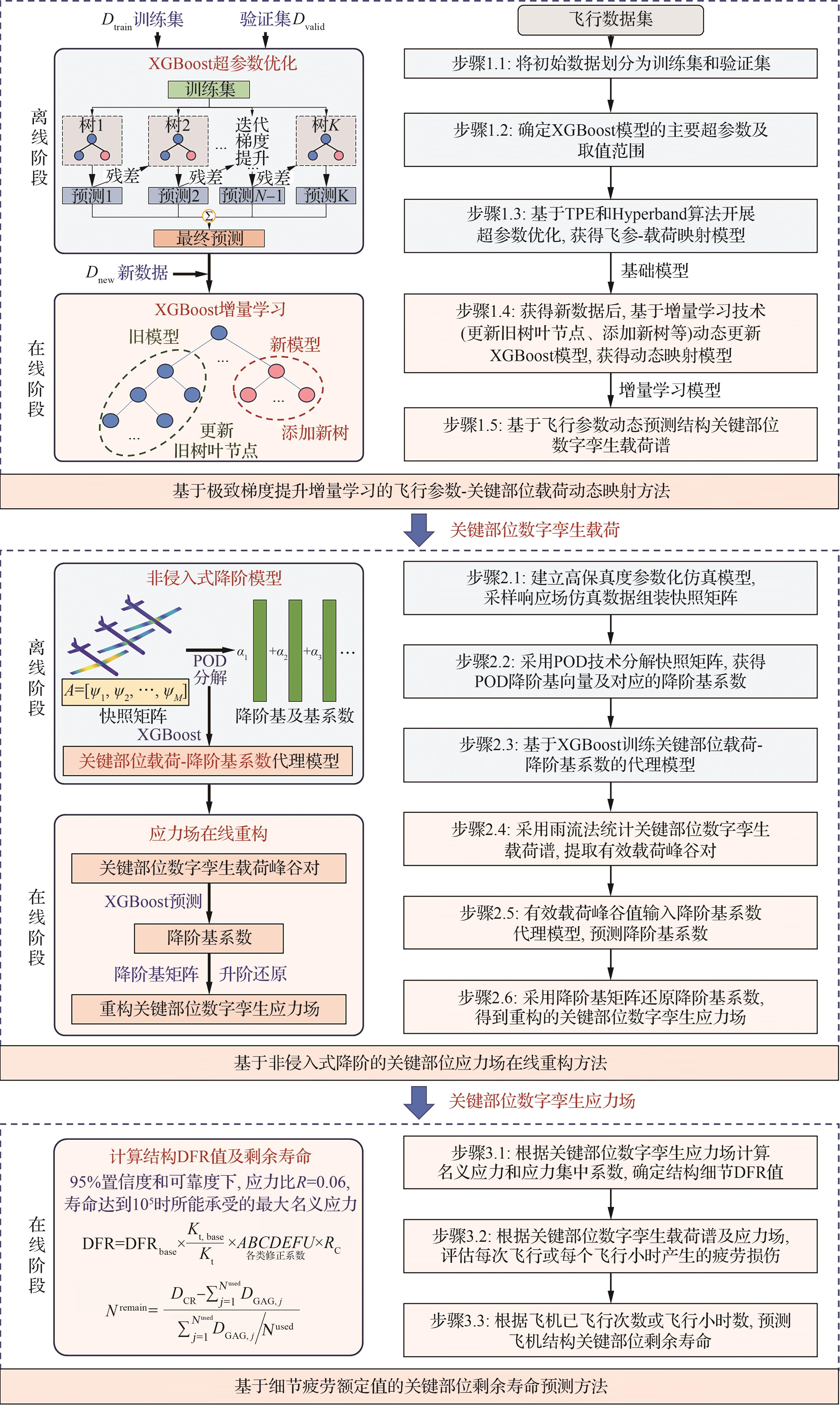

Table 1
Primary hyperparameters of flight parameter-key part load mapping model
| 超参数名称 | 符号 | 取值范围 |
|---|---|---|
| n_estimators:决策树数量 | K | [50,500] |
| max_depth:树最大深度 | dmax | [ |
| learning_rate:学习率 | [0.01,1] | |
| gamma:叶子节点数惩罚系数 | [0,1] | |
| reg_alpha:L1正则化系数 | [0,10] | |
| reg_lambda:L2正则化系数 | [0,10] | |
| min_child_weight:子节点样本的最小权重和 | wmin | [ |
| subsample:样本采样率 | Ssub | [0.5,1] |
| colsample_bytree:特征采样率 | Scol | [0.5,1] |
| freq:训练集数据均匀采样间隔 | Q | [ |
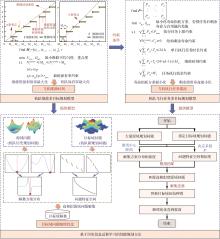
Fig.2
An intelligent planning method for fleet maintenance and flight task based on transfer learning of historical information

Table 2
Flight parameters in AirLoadBench dataset
| 序号 | 数据集参数名称 | 参数含义 | 序号 | 数据集参数名称 | 参数含义 |
|---|---|---|---|---|---|
| 0 | Relative_Time | 相对时间(不作为输入) | 20 | R_Eng_Start | 右发起动 |
| 1 | Nz | 法向过载 | 21 | L_Throttle_Pos | 左发油门杆位置 |
| 2 | Nx | 纵向过载 | 22 | R_Throttle_Pos | 右发油门杆位置 |
| 3 | Roll_Angle | 横滚角 | 23 | L_Eng_N1 | 左发低压转子转速 |
| 4 | Pitch_Angle | 俯仰角 | 24 | R_Eng_N1 | 右发低压转子转速 |
| 5 | True_AOA | 真迎角 | 25 | L_Eng_N2 | 左发高压转子转速 |
| 6 | True_Sideslip | 真侧滑角 | 26 | R_Eng_N2 | 右发高压转子转速 |
| 7 | FPA | 航迹角 | 27 | L_Gear_Down | 左起落架放下 |
| 8 | True_Heading | 真航向 | 28 | R_Gear_Down | 右起落架放下 |
| 9 | CAS | 校正空速 | 29 | N_Gear_Down | 前起落架放下 |
| 10 | TAS | 真空速 | 30 | L_Flaperon_Pos | 左副襟翼位置 |
| 11 | Mach | 马赫数 | 31 | R_Flaperon_Pos | 右副襟翼位置 |
| 12 | SAT | 总温 | 32 | L_LEF_Pos | 左前缘襟翼位置 |
| 13 | Baro_Alt | 气压高度 | 33 | R_LEF_Pos | 右前缘襟翼位置 |
| 14 | Roll_Rate | 横滚角速率 | 34 | L_Rudder_Pos | 左方向舵位置 |
| 15 | Pitch_Rate | 俯仰角速率 | 35 | L_Stab_Pos | 左平尾位置 |
| 16 | Heading_Rate | 航向角速率 | 36 | R_Stab_Pos | 右平尾位置 |
| 17 | Fuel_Qty1 | 燃油油量1 | 37 | Stick_Pitch | 操纵杆俯仰位置 |
| 18 | Fuel_Qty2 | 燃油油量2 | 38 | Stick_Roll | 操纵杆倾斜位置 |
| 19 | L_Eng_Start | 左发起动 | 39 | Pedal_Pos | 脚蹬位置 |
Table 3
Prediction errors and training time of various machine learning models
| 模型 | ENRMSE/% | 训练耗时/s |
|---|---|---|
| GPR (1 000样本点) | 7.91 | 11 |
| GPR (10 000样本点) | 7.00 | 2 371 |
| 决策树 | 9.09 | 544 |
| RF | 6.70 | 36 882 |
| DNN | 5.97 | 4 453 |
| LSTM | 5.65 | 155 983 |
| XGBoost | 5.50 | 267 |
| XGBoost-IL | 5.30 | 12 504 |
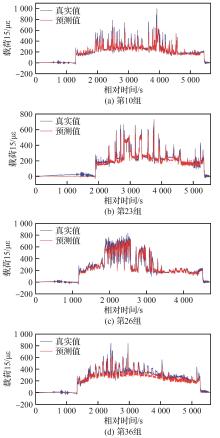
Fig.3
Comparison of predicted and true values of Load15
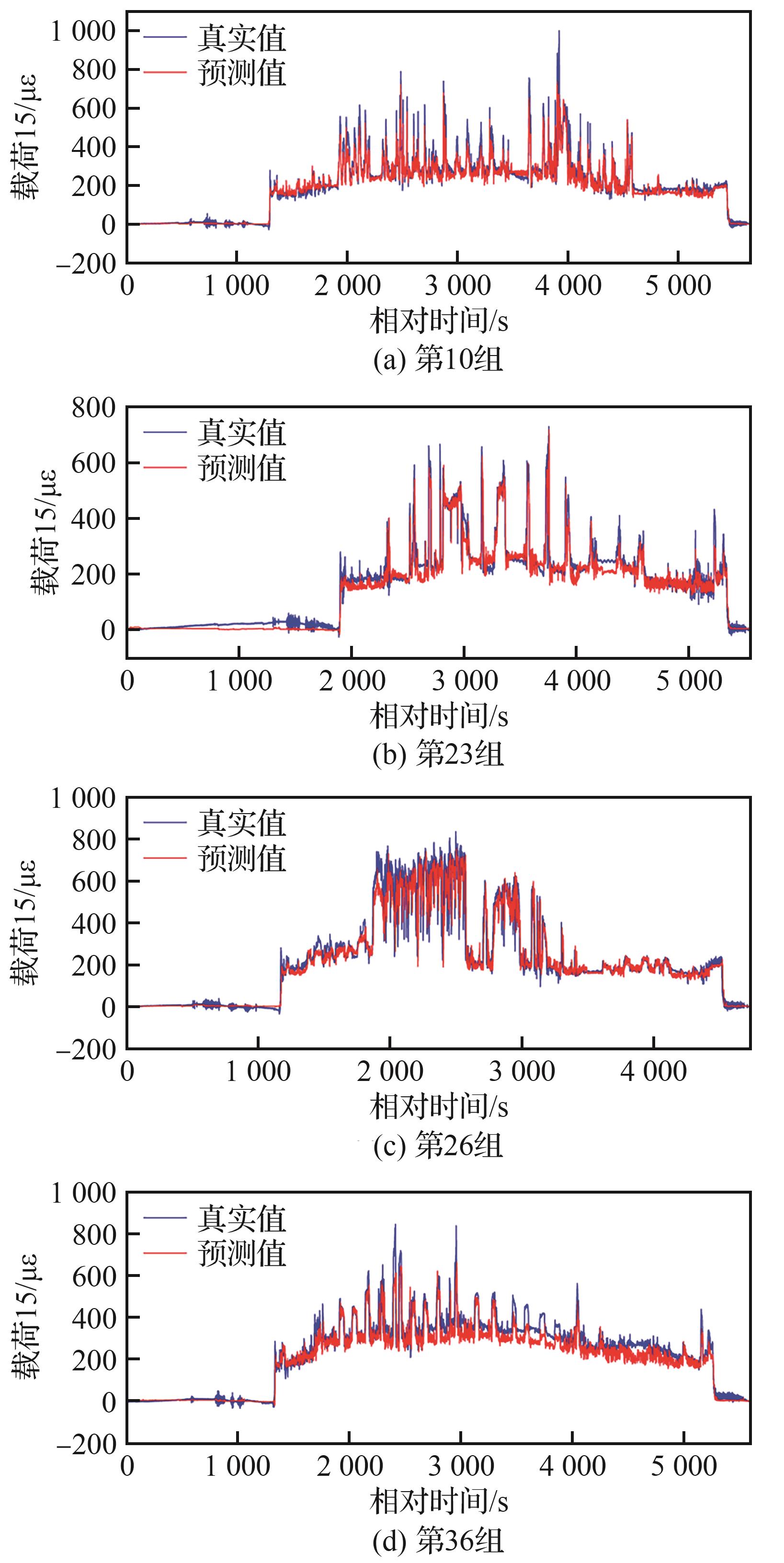
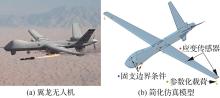
Fig.4
Schematic of an example

Table 4
Prediction accuracy of non-intrusive reduced-order model on test set
| 测试工况 | R2 | ENRMSE |
|---|---|---|
| 1 | 0.999 9 | 5.46×10⁻⁴ |
| 2 | 1.000 0 | 1.60×10⁻⁴ |
| 3 | 0.999 7 | 8.17×10⁻⁴ |
| 4 | 0.999 9 | 3.29×10⁻⁴ |
| 5 | 0.999 8 | 6.97×10⁻⁴ |
| 6 | 1.000 0 | 2.78×10⁻⁴ |
| 7 | 0.998 4 | 2.15×10⁻³ |
| 8 | 0.999 8 | 5.76×10⁻⁴ |
| 9 | 0.999 8 | 6.10×10⁻⁴ |
| 10 | 0.999 4 | 1.12×10⁻³ |
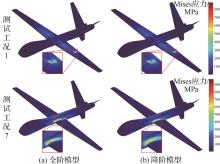
Fig.5
Stress field contours of the test set
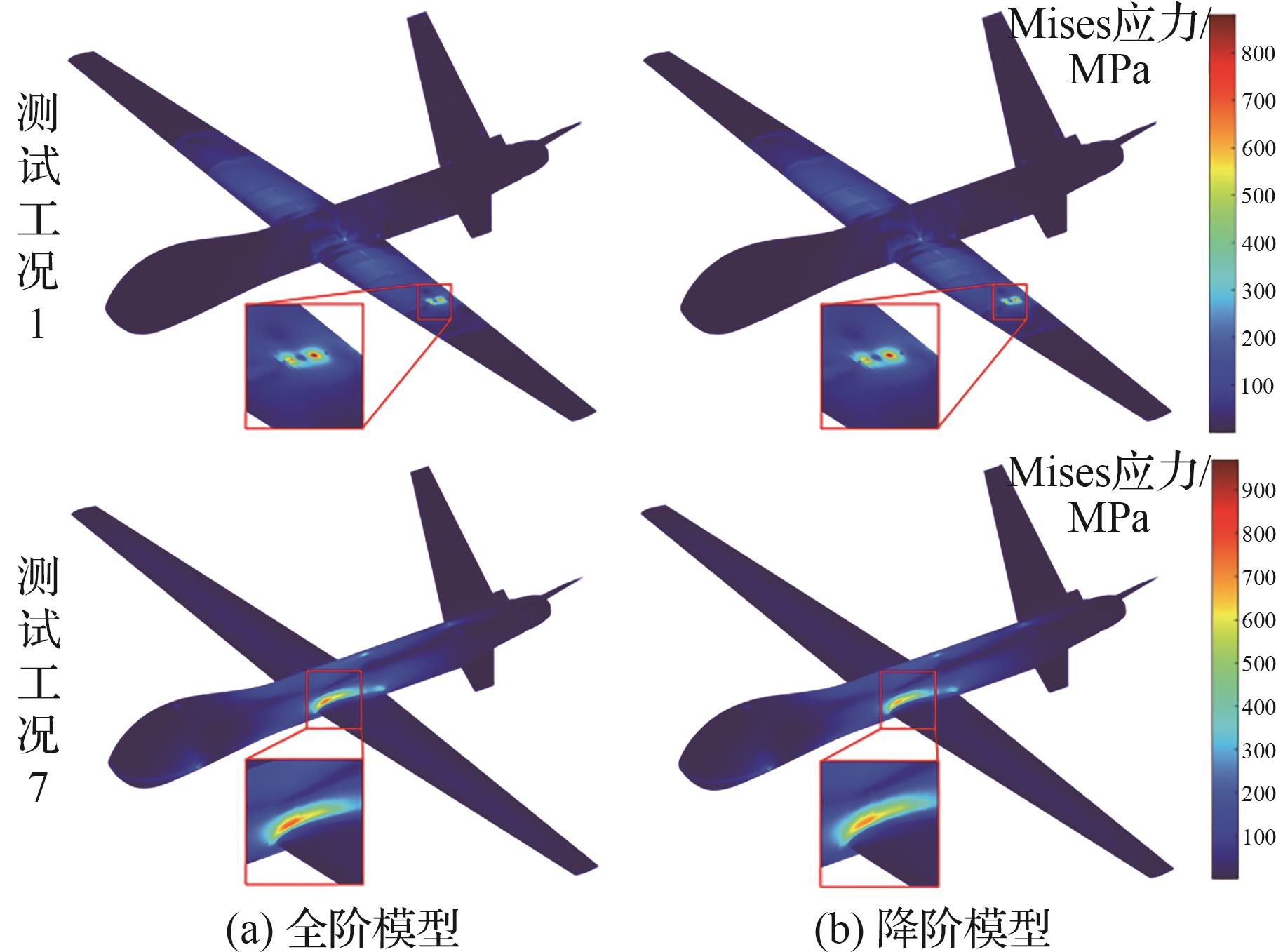

Fig. 6
Filter results of Load15 predicted values
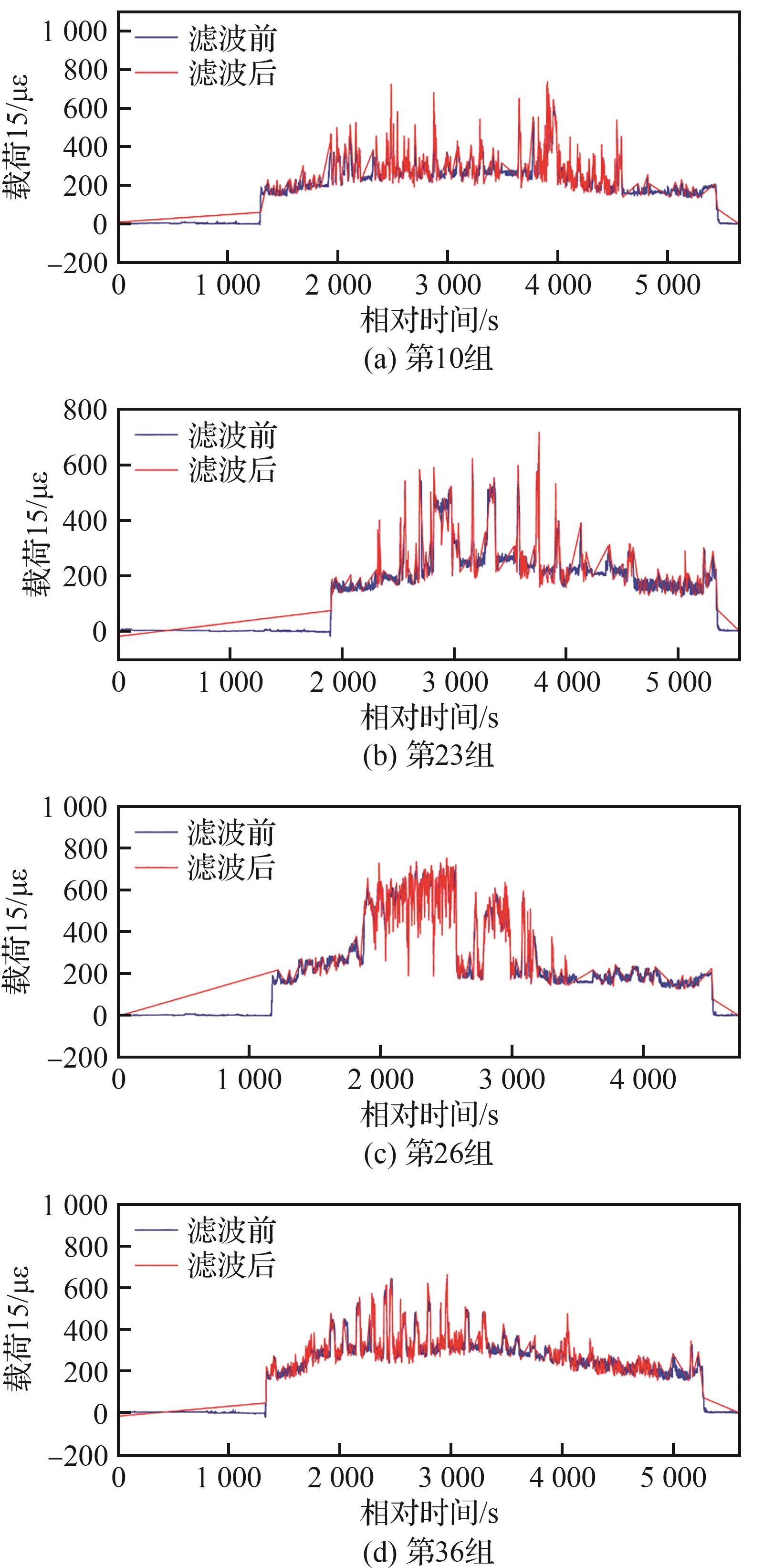
Table 5
Fatigue damage and life of key part corresponding to Load15 of test set
| 测试集飞行工况 | 真实疲劳损伤/10-5 | 对应疲劳寿命/次数 | 预测疲劳损伤/10-5 | 对应疲劳寿命/次数 |
|---|---|---|---|---|
| 第10组 | 37.70 | 2 652 | 32.34 | 3 092 |
| 第23组 | 13.16 | 7 601 | 20.30 | 4 925 |
| 第26组 | 31.25 | 3 199 | 37.75 | 2 648 |
| 第36组 | 15.58 | 6 418 | 14.87 | 6 726 |
| 4次飞行合计 | 97.69 | 4 094 | 105.26 | 3 800 |
Table 6
A fleet’s maintenance time planning result in the Pareto front
| 飞机 | MT/h | 飞机 | MT/h |
|---|---|---|---|
| 1 | 156 | 11 | 15 085 |
| 2 | 1 674 | 12 | 16 309 |
| 3 | 3 438 | 13 | 17 934 |
| 4 | 4 592 | 14 | 19 283 |
| 5 | 5 979 | 15 | 20 969 |
| 6 | 7 552 | 16 | 22 252 |
| 7 | 9 269 | 17 | 23 809 |
| 8 | 10 545 | 18 | 25 305 |
| 9 | 12 066 | 19 | 26 782 |
| 10 | 13 447 | 20 | 28 229 |
Table 7
Similarity between source domain problem and target domain problem in fleet maintenance planning
| 源域问题 | Isim | R2 |
|---|---|---|
| 1 | 0.88 | -0.86 |
| 2 | 0.85 | 0.99 |
| 3 | 0.91 | 0.97 |
| 4 | 0.90 | -0.83 |
| 5 | 0.87 | 0.84 |
| 6 | 0.94 | 0.98 |
| 7 | 0.87 | -0.81 |

Fig.7
Pareto fronts for fleet maintenance planning obtained by two methods
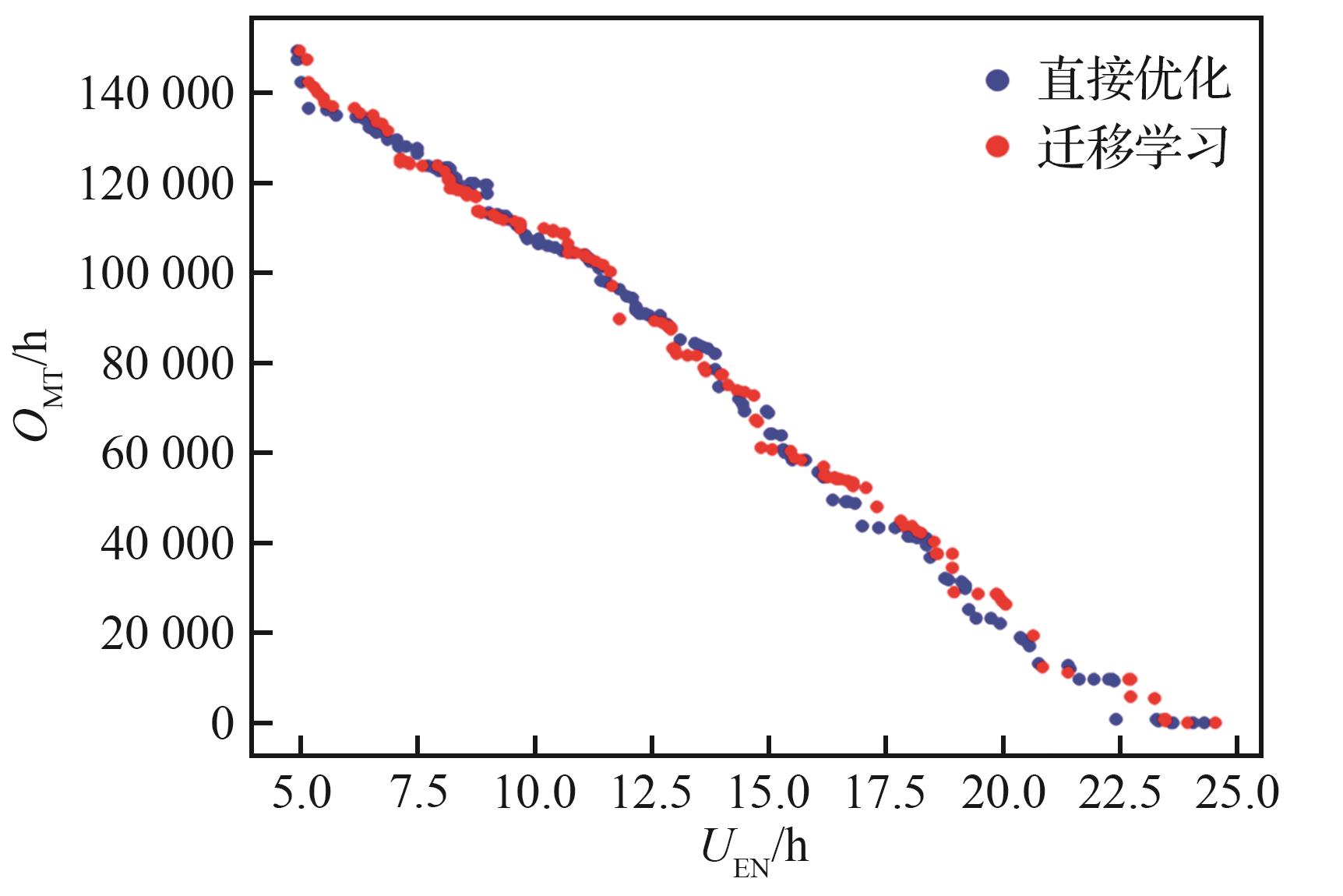
Table 8
A fleet’s flight task planning result in the Pareto front
| 飞机 | 任务1 | 任务2 | 任务4 | 任务6 | 任务7 | 任务10 |
|---|---|---|---|---|---|---|
| 4 | \ | \ | \ | 1 | 1 | \ |
| 6 | \ | \ | 1 | \ | \ | 1 |
| 11 | 1 | \ | \ | \ | \ | \ |
| 13 | \ | 1 | \ | \ | 1 | 1 |
| 19 | \ | \ | 1 | \ | \ | \ |
Table 9
Similarity between source domain problem and target domain problem in fleet flight task planning
| 源域问题 | Isim | R2 |
|---|---|---|
| 1 | 1.14 | 0.87 |
| 2 | 1.01 | 0.78 |
| 3 | 0.97 | 0.57 |
| 4 | 0.99 | 0.77 |
| 5 | 0.88 | 0.77 |

Fig.8
Pareto fronts for fleet flight task planning obtained by two methods

| [1] | 张彦军, 王斌团, 宁宇, 等. 基于健康监测的飞机结构寿命预测技术[J]. 航空工程进展, 2024, 15(1): 1-14. |
| ZHANG Y J, WANG B T, NING Y, et al. Life prediction technology of aircraft structures based on structural health monitoring[J]. Advances in Aeronautical Science and Engineering, 2024, 15(1): 1-14 (in Chinese). | |
| [2] | 魏元雷, 高飞鹏. 民用飞机结构健康监测系统的设计方法[J]. 计算机测量与控制, 2022, 30(8): 38-43. |
| WEI Y L, GAO F P. Architecture design method for structural health monitoring system (SHM) of civil aircraft[J]. Computer Measurement & Control, 2022, 30(8): 38-43 (in Chinese). | |
| [3] | 董雷霆, 周轩, 赵福斌, 等. 飞机结构数字孪生关键建模仿真技术[J]. 航空学报, 2021, 42(3): 113-141. |
| DONG L T, ZHOU X, ZHAO F B, et al. Key technologies for modeling and simulation of airframe digital twin[J]. Acta Aeronautica et Astronautica Sinica, 2021, 42(3): 113-141 (in Chinese). | |
| [4] | 谢克诚, 周轩, 董雷霆. 基于长短期记忆网络与小波变换的直升机飞参-载荷预测[J]. 航空科学技术, 2024, 35(11): 51-57. |
| XIE K C, ZHOU X, DONG L T. Flight-parameter-based load prediction of helicopter using LSTM network and wavelet transform[J]. Aeronautical Science & Technology, 2024, 35(11): 51-57 (in Chinese). | |
| [5] | CANDON M, ESPOSITO M, FAYEK H, et al. Advanced multi-input system identification for next generation aircraft loads monitoring using linear regression, neural networks and deep learning[J]. Mechanical Systems and Signal Processing, 2022, 171: 108809. |
| [6] | 兑红娜, 王勇军, 董江, 等. 基于飞行参数的飞机结构载荷最优回归模型[J]. 航空学报, 2018, 39(11): 80-89. |
| DUI H N, WANG Y J, DONG J, et al. Optimal regression model for aircraft structural load based on flight data[J]. Acta Aeronautica et Astronautica Sinica, 2018, 39(11): 80-89 (in Chinese). | |
| [7] | 李文龙, 杨美娟, 唐宁, 等. 某型飞机关键部位结构应变预测[J]. 应用力学学报, 2021, 38(2): 649-654. |
| LI W L, YANG M J, TANG N, et al. Structural strain prediction of key parts of an aircraft[J]. Chinese Journal of Applied Mechanics, 2021, 38(2): 649-654 (in Chinese). | |
| [8] | 顾宇轩, 隋福成, 宋恩鹏. 神经网络技术在单机应变寿命监控中的应用研究[J]. 装备环境工程, 2018, 15(12): 74-77. |
| GU Y X, SUI F C, SONG E P. Application of neural network technique in individual strain life monitoring[J]. Equipment Environmental Engineering, 2018, 15(12): 74-77 (in Chinese). | |
| [9] | WANG S, LAI X N, HE X W, et al. Building a trustworthy product-level shape-performance integrated digital twin with multifidelity surrogate model[J]. Journal of Mechanical Design, 2022, 144(3): 031703. |
| [10] | NOVAIS H C, SILVA S DA, FIGUEIREDO E. Co-Kriging strategy for structural health monitoring of bridges[J]. Structural Health Monitoring, 2024: 14759217241265375. |
| [11] | LIU L X, SONG X G, ZHANG C, et al. GAN-MDF: An enabling method for multifidelity data fusion[J]. IEEE Internet of Things Journal, 2022, 9(15): 13405-13415. |
| [12] | 田阔, 孙志勇, 李增聪. 面向结构静力试验监测的高精度数字孪生方法[J]. 航空学报, 2024, 45(7): 288-299. |
| TIAN K, SUN Z Y, LI Z C. High-precision digital twin method for structural static test monitoring[J]. Acta Aeronautica et Astronautica Sinica, 2024, 45(7): 288-299 (in Chinese). | |
| [13] | WANG B, LI Z C, XU Z Y, et al. Digital twin modeling for structural strength monitoring via transfer learning-based multi-source data fusion[J]. Mechanical Systems and Signal Processing, 2023, 200: 110625. |
| [14] | XU Z Y, GAO T H, LI Z C, et al. Digital twin modeling method for hierarchical stiffened plate based on transfer learning[J]. Aerospace, 2023, 10(1): 66. |
| [15] | 黄熠玮, 耿一斌, 高天贺, 等. 数字孪生驱动的结构全场变形高精度反演方法[J/OL]. 航空学报, (2024-10-16) [2025-08-23]. . |
| HUANG Y W, GENG Y B, GAO T H, et al. Digital twin driven high precision reconstruction method for full-field deformation of structure[J/OL]. Acta Aeronautica et Astronautica Sinica, (2024-10-16) [2025-08-23]. (in Chinese). | |
| [16] | HUANG L, XU Z Y, GAO T H, et al. Digital twin-based non-destructive testing method for ultimate load-carrying capacity prediction[J]. Thin-Walled Structures, 2024, 204: 112223. |
| [17] | 郭聪, 毕清洁, 张澍, 等. 面向空间压紧堆叠结构的数字孪生模态试验方法[J]. 中国空间科学技术(中英文), 2024, 44(6): 72-80. |
| GUO C, BI Q J, ZHANG S, et al. Digital twin modal testing method for space compressed stacking structures[J]. Chinese Space Science and Technology, 2024, 44(6): 72-80 (in Chinese). | |
| [18] | HARTMANN D, HERZ M, WEVER U. Model order reduction a key technology for digital twins[M]. Reduced-Order Modeling (ROM) for Simulation and Optimization: Powerful Algorithms as Key Enablers for Scientific Computing. Cham: Springer International Publishing, 2018: 167-179. |
| [19] | ABADÍA-HEREDIA R, LÓPEZ-MARTÍN M, CARRO B, et al. A predictive hybrid reduced order model based on proper orthogonal decomposition combined with deep learning architectures[J]. Expert Systems with Applications, 2022, 187: 115910. |
| [20] | 崔凯, 杨靖, 常思源, 等. 基于POD和代理模型的高压捕获翼表面流场快速预测方法[J]. 力学学报, 2025, 57(4): 883-894. |
| CUI K, YANG J, CHANG S Y, et al. Rapid prediction method for high-pressure capturing wing surface flow field based on proper orthogonal decomposition and surrogate model[J]. Chinese Journal of Theoretical and Applied Mechanics, 2025, 57(4): 883-894 (in Chinese). | |
| [21] | VIZZACCARO A, GIVOIS A, LONGOBARDI P, et al. Non-intrusive reduced order modelling for the dynamics of geometrically nonlinear flat structures using three-dimensional finite elements[J]. Computational Mechanics, 2020, 66(6): 1293-1319. |
| [22] | 刘斌超, 鲁嵩嵩, 曾苇鹏, 等. 从金属材料疲劳性能的力学描述到飞机结构疲劳寿命评定: 现状与展望[J]. 固体力学学报, 2023, 44(4): 417-457. |
| LIU B C, LU S S, ZENG W P, et al. From mechanical description for metal fatigue properties to service life evaluation of aircraft structural components: status and challenges[J]. Chinese Journal of Solid Mechanics, 2023, 44(4): 417-457 (in Chinese). | |
| [23] | ELATTAR H M, ELMINIR H K, RIAD A M. Prognostics: A literature review[J]. Complex & Intelligent Systems, 2016, 2(2): 125-154. |
| [24] | WANG H K, HAYNES R, HUANG H Z, et al. The use of high-performance fatigue mechanics and the extended Kalman/particle filters, for diagnostics and prognostics of aircraft structures[J]. CMES-Computer Modeling in Engineering and Sciences, 2015, 105(1): 1-24. |
| [25] | BARTRAM G, MAHADEVAN S. Integration of heterogeneous information in SHM models[J]. Structural Control and Health Monitoring, 2014, 21(3): 403-422. |
| [26] | ZHANG Q, LIU Y, XIAHOU T, et al. A heuristic maintenance scheduling framework for a military aircraft fleet under limited maintenance capacities[J]. Reliability Engineering & System Safety, 2023, 235: 109239. |
| [27] | CHA G, PARK J, MOON I. Military aircraft flight and maintenance planning model considering heterogeneous maintenance tasks[J]. Reliability Engineering & System Safety, 2023, 239: 109497. |
| [28] | JIANG M, HUANG Z Q, QIU L M, et al. Transfer learning-based dynamic multiobjective optimization algorithms[J]. IEEE Transactions on Evolutionary Computation, 2018, 22(4): 501-514. |
| [29] | LIM R, GUPTA A, ONG Y S, et al. Non-linear domain adaptation in transfer evolutionary optimization[J]. Cognitive Computation, 2021, 13(2): 290-307. |
| [30] | CHEN T Q, GUESTRIN C. XGBoost: A scalable tree boosting system[C]∥Proceedings of the 22nd ACM SIGKDD International Conference on Knowledge Discovery and Data Mining. New York: ACM, 2016. |
| [31] | SHEKHAR S, BANSODE A, SALIM A. A comparative study of hyper-parameter optimization tools[C]∥ 2021 IEEE Asia-Pacific Conference on Computer Science and Data Engineering (CSDE). Piscataway: IEEE Press, 2021. |
| [32] | LI L S, JAMIESON K, DESALVO G, et al. Hyperband: A novel bandit-based approach to hyperparameter optimization[J]. Journal of Machine Learning Research, 2018, 18(185): 1-52. |
| [33] | 陶雪菲, 王瑞, 高玉魁, 等. 基于DFR法的螺栓连接件疲劳性能研究[J]. 民用飞机设计与研究, 2021(4): 28-36. |
| TAO X F, WANG R, GAO Y K, et al. Investigation of fatigue properties of bolted connectors based on detail fatigue rating[J]. Civil Aircraft Design & Research, 2021(4): 28-36 (in Chinese). | |
| [34] | 刘庆刚, 魏青, 韩伟信, 等. 基于有限元法的V型缺口平板应力集中系数研究[J]. 河北工业科技, 2019, 36(4): 240-245. |
| LIU Q G, WEI Q, HAN W X, et al. Study of the stress concentration factors of a V-notched plate by using finite element method[J]. Hebei Journal of Industrial Science and Technology, 2019, 36(4): 240-245 (in Chinese). | |
| [35] | MA H P, ZHANG Y J, SUN S Y, et al. A comprehensive survey on NSGA-II for multi-objective optimization and applications[J]. Artificial Intelligence Review, 2023, 56(12): 15217-15270. |
| [36] | HUANG L, ZUO Y H, GUO C, et al. AirLoadBench: An original dataset for flight parameter-based structural load prediction[DB/OL]. Zenodo: 14917880, 2025. |
| [37] | HU J C, SZYMCZAK S. A review on longitudinal data analysis with random forest[J]. Briefings in Bioinformatics, 2023, 24(2): 1-11. |
| [38] | SALEEM R, YUAN B, KURUGOLLU F, et al. Explaining deep neural networks: A survey on the global interpretation methods[J]. Neurocomputing, 2022, 513: 165-180. |
| [39] | VAN HOUDT G, MOSQUERA C, NÁPOLES G. A review on the long short-term memory model[J]. Artificial Intelligence Review, 2020, 53(8): 5929-5955. |
| [40] | 顾宇轩, 陈亮, 董一飞, 等. 数字孪生驱动的机群寿命精细化管理研究[J/OL]. 航空学报, (2025-02-26) [2025-08-23]. . |
| GU Y X, CHEN L, DONG Y F, et al. Research on the refined management of fleet life driven by digital twins[J/OL]. Acta Aeronautica et Astronautica Sinica, (2025-02-26) [2025-08-23]. (in Chinese). |
| [1] | Yiwei HUANG, Yibin GENG, Tianhe GAO, Xuanwei HU, Yuan WANG, Hongyan MA, Kuo TIAN. Digital twin driven high precision reconstruction method for full-field deformation of structure [J]. Acta Aeronautica et Astronautica Sinica, 2025, 46(19): 530967-530967. |
| [2] | Dingqiang DAI, Xuan ZHOU, Leiting DONG, Xiasheng SUN. Research progress and prospects of digital engineering and digital twin in field of aeronautical fatigue and structural integrity [J]. Acta Aeronautica et Astronautica Sinica, 2025, 46(19): 531022-531022. |
| [3] | Shangyu LI, Hang FENG, Junquan CHEN, Bin CHEN, Dan MEI. A design architecture and conceptual modeling approach for digital twins [J]. Acta Aeronautica et Astronautica Sinica, 2025, 46(19): 531118-531118. |
| [4] | Junqi LEI, Yuehua CHENG, Bin JIANG, Cheng XU, Guili XU, Tianyu SUN. Digital-twin’s modelling and dynamic adjustment mechanism of rudder-loop-system under fault conditions [J]. Acta Aeronautica et Astronautica Sinica, 2025, 46(19): 531273-531273. |
| [5] | Liang CHEN, Lei HUANG, Yuxuan GU, Cong GUO, Kexin LIN, Yu GUAN, Jian SONG. Twinning technology of key part load based on flight parameters [J]. Acta Aeronautica et Astronautica Sinica, 2025, 46(19): 531292-531292. |
| [6] | Yuxuan GU, Cong GUO, Lei HUANG, Yifei DONG, Hongda DONG, Zhilun DENG. Refined management of fleet life driven by digital twins [J]. Acta Aeronautica et Astronautica Sinica, 2025, 46(19): 531290-531290. |
| [7] | Yinxuan ZHANG, Qi ZHANG, Zhenyong XU, Linshu MENG. Predicting method of aircraft mechanical response based on residual neural networks [J]. Acta Aeronautica et Astronautica Sinica, 2025, 46(19): 531295-531295. |
| [8] | Ruoyao XIAO, Lianyu ZHENG, Jian ZHOU, Siru ZHAO, Jieru ZHANG, Yuwu CHEN. Online optimization method for positioning accuracy in cylindrical components aligning based on digital twins [J]. Acta Aeronautica et Astronautica Sinica, 2025, 46(19): 531978-531978. |
| [9] | Jialiang HU, Jiangpeng WU, Sixu HUO, Yidi GAO, Hua ZHENG. Modal parameter estimation based on reconstruction of digital twin sweep data in flutter flight test [J]. Acta Aeronautica et Astronautica Sinica, 2025, 46(19): 531602-531602. |
| [10] | Pengfei WANG, Lifang ZENG, Xueming SHAO, Jun LI. Multi-source data fusion modeling method for aerodynamic load of aircraft wing based on pre-training and fine-tuning [J]. Acta Aeronautica et Astronautica Sinica, 2025, 46(19): 532297-532297. |
| [11] | Yifei WANG, Geyong CAO, Yang CAO, Xiaojun WANG. Uncertainty technologies in aircraft digital strength twins [J]. Acta Aeronautica et Astronautica Sinica, 2025, 46(19): 532408-532408. |
| [12] | Liang CHEN, Fanxing MENG, Chengbo WANG, Yinxuan ZHANG, Linshu MENG. Development and application of digital twins technology in aircraft strength design [J]. Acta Aeronautica et Astronautica Sinica, 2025, 46(19): 532252-532252. |
| [13] | Ran ZHUO, Chuliang YAN. A key component in digital twin of aircraft structures: Multi-dimensional flight parameter measurements [J]. Acta Aeronautica et Astronautica Sinica, 2025, 46(19): 532375-532375. |
| [14] | Lin LIN, Shiwei SUO, Dan LIU, Yinxuan ZHANG, Lingyu YUE, Sihao ZHANG, Yikun LIU, Song FU. A deep feature fusion network based on multi-scale kernel construction for filling wing stress field data [J]. Acta Aeronautica et Astronautica Sinica, 2025, 46(19): 532343-532343. |
| [15] | Chao AN, Rui ZHAO, Changchuan XIE, Chao YANG. Reduced-order modeling and aeroelastic analysis of geometrically nonlinear structures of large flexible wings [J]. Acta Aeronautica et Astronautica Sinica, 2024, 45(S1): 730569-730569. |
| Viewed | ||||||
|
Full text |
|
|||||
|
Abstract |
|
|||||
Address: No.238, Baiyan Buiding, Beisihuan Zhonglu Road, Haidian District, Beijing, China
Postal code : 100083
E-mail:hkxb@buaa.edu.cn
Total visits: 6658907 Today visits: 1341All copyright © editorial office of Chinese Journal of Aeronautics
All copyright © editorial office of Chinese Journal of Aeronautics
Total visits: 6658907 Today visits: 1341

 CJA
CJA
